



A tired evening has a nasty way of shrinking the kitchen. The fridge looks half full, the clock looks rude, and the idea of making a real dinner starts to feel like a joke. That’s when a quick dinner for busy weeknights earns its place — not by acting fancy, but by getting food on the table fast, using ingredients that don’t cost much, and still tasting like somebody cared.
The best weeknight meals are built on small, smart moves. Thin-sliced chicken cooks before you lose patience. Ground meat stretches farther when it meets beans, pasta, or rice. Frozen vegetables can save a skillet dinner that would otherwise slide into takeout territory, and canned tomatoes do more work than most fresh ones ever will. A good finish matters too — lemon, vinegar, hot sauce, a little cheese, a few herbs — because that’s usually the difference between “fine” and “I’d make that again.”
These 16 dinners lean hard on that kind of practical cooking. They don’t ask for a long shopping list. They don’t leave a mountain of dishes behind. And they’re the sort of meals you can keep in your back pocket for the nights when you need dinner to behave itself.
Why These Dinners Earn Their Spot in the Rotation
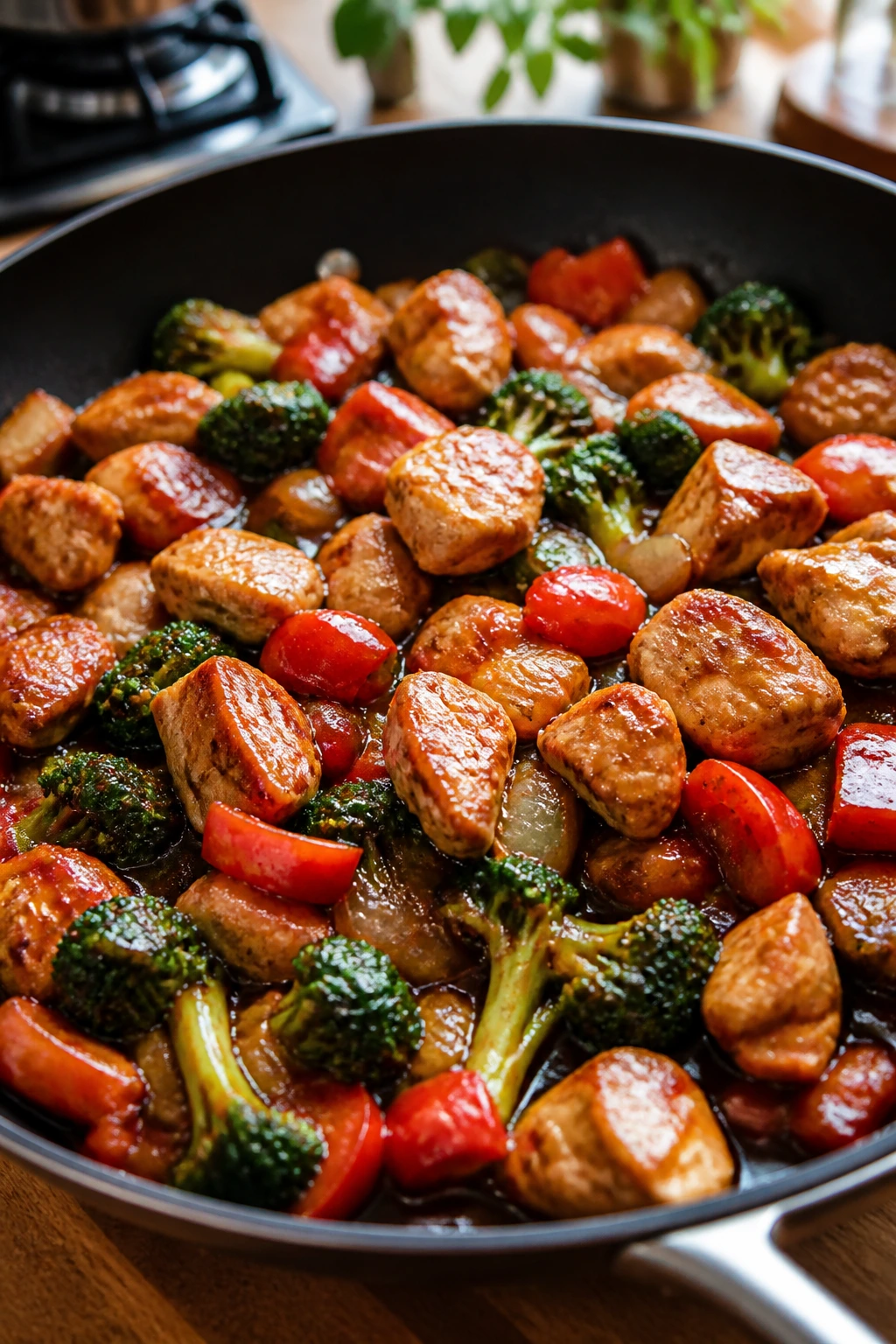
-
Short ingredient lists: Most of these recipes use 8 ingredients or fewer, and several lean on pantry staples like beans, pasta, rice, and canned tomatoes.
-
Fast cooking, not fake fast: A real weeknight dinner should be on the table in about 20 to 35 minutes, not “quick” in the way some recipes hide a 90-minute bake behind the word.
-
Cheap proteins do the heavy lifting: Ground meat, eggs, tuna, chickpeas, sausage, and rotisserie chicken all stretch farther when they’re paired with starch or vegetables.
-
Cleanup stays sane: One skillet, one pot, or one sheet pan is the sweet spot. Dinner should not leave your sink looking like a catering shift.
-
Leftovers still make sense: Several of these recipes taste even better the next day because the sauce settles in and the flavors stop arguing with each other.
-
Easy to shop for: You can find everything here in a regular grocery store, and a lot of it lives happily in the pantry, freezer, or vegetable drawer until you need it.
1. Garlic Butter Chicken and Green Beans Skillet
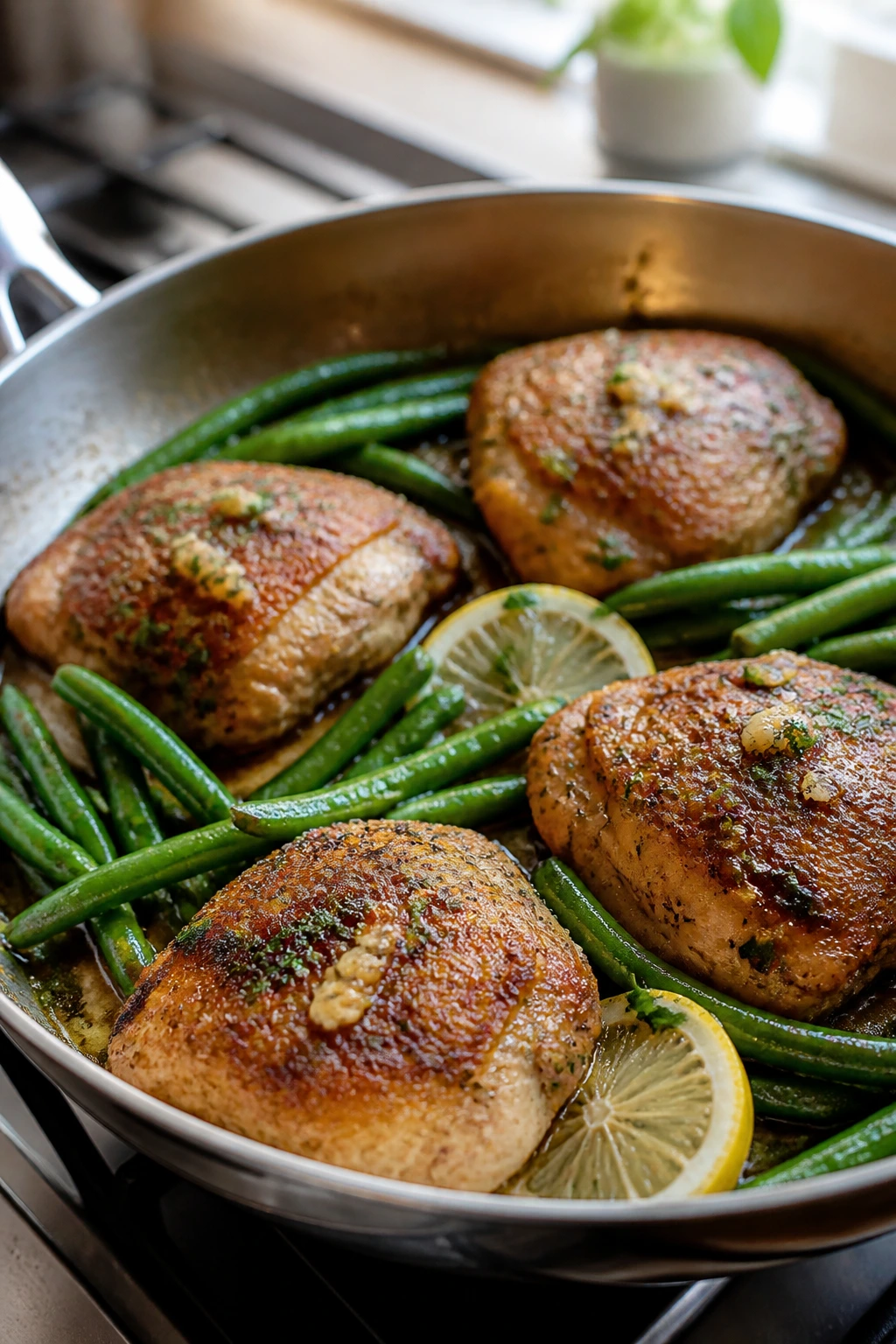
A hot skillet, a little garlic, and chicken thighs with some fat on them — that combination fixes more Tuesday nights than people admit. The green beans blister in the butter and broth, the chicken stays juicy, and the whole pan smells like dinner got its act together.
Why It Works: Chicken thighs forgive a busy cook better than breasts do, because they stay tender even if the pan runs a minute hot. Green beans cook fast enough to keep this in the 20-minute zone, and the lemon at the end keeps the butter from feeling heavy. This is the kind of dinner that tastes like more work than it is.
Key Ingredients:
- 1½ pounds boneless, skinless chicken thighs, trimmed of excess fat
- 1 pound green beans, trimmed so they cook evenly
- 2 tablespoons olive oil, for searing the chicken
- 3 tablespoons unsalted butter, cut into pieces for a quick sauce
- 4 cloves garlic, minced fine so it doesn’t burn
- 1 teaspoon smoked paprika, for a little color and depth
- ½ cup low-sodium chicken broth, to loosen the pan juices
- 1 tablespoon lemon juice, for a sharp finish
- 2 tablespoons chopped parsley, for a fresh top note
Quick Steps:
- Season the chicken: Pat the thighs dry, then season both sides with salt, pepper, and smoked paprika.
- Sear the meat: Heat olive oil in a large skillet over medium-high heat. Cook the chicken for 4 to 5 minutes per side, until deeply golden and cooked through to 165°F. Remove to a plate.
- Cook the beans: Add the green beans to the same skillet with a pinch of salt and 2 tablespoons of broth. Stir for 3 to 4 minutes, until bright green and tender-crisp.
- Build the sauce: Add the butter and garlic. Stir for 30 seconds, just until fragrant, then pour in the remaining broth and lemon juice.
- Finish and serve: Return the chicken to the skillet, turn it in the sauce, and let everything bubble for 1 minute. Scatter parsley over the top and serve hot.
Equipment for This Recipe:
- 12-inch skillet, wide enough to fit the chicken without crowding
- Tongs, for flipping the chicken cleanly
- Instant-read thermometer, so you don’t guess on doneness
How to Serve This Dish: Spoon it over rice, buttered noodles, or mashed potatoes if you want something to catch the garlic butter. A chunk of crusty bread does the same job in a cheaper, rougher way, which I also respect.
Pro Tips for This Recipe:
- Dry chicken matters: Moisture on the surface keeps the chicken from browning; a paper towel before seasoning is worth the 20 seconds.
- Don’t rush the beans: If they stay too firm, add another tablespoon of broth and cover the skillet for 1 minute.
- Finish with acid: Lemon at the end keeps the sauce from feeling flat, especially if you use thighs.
Variations on This Dish:
- Cajun Butter Version: Swap the paprika for Cajun seasoning and add a pinch of cayenne for heat.
- Chicken Breast Shortcut: Use thin-sliced chicken breasts and cut the sear time to about 3 minutes per side.
- Mushroom Green Bean Pan: Add 8 ounces of sliced mushrooms after the chicken comes out, and let them brown before the garlic goes in.
Common Mistakes to Avoid with This Dish:
- Crowding the pan: If the chicken overlaps, it steams instead of sears. Use a bigger skillet or cook in two batches.
- Adding garlic too early: Garlic burns fast in a hot pan and turns bitter. Keep it for the butter stage.
- Skipping the thermometer: Chicken that looks done can still be undercooked inside. Pull it at 165°F and stop guessing.
2. Ground Beef and Broccoli Rice Skillet
Need dinner that tastes like takeout but cooks in one skillet and doesn’t cost much? This is the one. The beef browns, the broccoli softens just enough to stay green, and the soy-ginger sauce clings to the rice instead of sitting in a puddle at the bottom of the pan.
Why It Works: Ground beef cooks quickly and brings enough fat to carry the sauce. Broccoli is sturdy, which means it can handle a fast stir-fry without turning mushy, especially if you add a splash of water and cover the pan for a minute. Rice turns the whole thing into a real meal instead of a side dish wearing a disguise.
Key Ingredients:
- 1 pound ground beef, preferably 85/15 so it has enough flavor
- 4 cups broccoli florets, fresh or frozen
- 2 cups cooked rice, preferably chilled so it doesn’t clump
- 3 cloves garlic, minced
- 1 tablespoon fresh ginger, grated fine
- ¼ cup low-sodium soy sauce
- 1 tablespoon brown sugar
- 1 teaspoon sesame oil, for the last minute
- 1 teaspoon cornstarch mixed with 2 tablespoons water
- 2 scallions, sliced thin
Quick Steps:
- Brown the beef: Cook the beef in a large skillet over medium-high heat for 6 to 7 minutes, breaking it up until no pink remains. Drain excess grease if needed.
- Add the aromatics: Stir in the garlic and ginger and cook for 30 seconds, just until the pan smells sharp and warm.
- Cook the broccoli: Add the broccoli and 3 tablespoons of water. Cover the skillet for 2 minutes if using fresh broccoli, or 3 minutes if frozen, until bright and tender.
- Make the sauce: Stir in the soy sauce, brown sugar, cornstarch slurry, and rice. Cook for 2 to 3 minutes, until the sauce lightly coats everything.
- Finish: Drizzle with sesame oil, scatter scallions on top, and serve right away.
Equipment for This Recipe:
- Large skillet or wok
- Wooden spoon or spatula, for breaking up the beef
- Small bowl, for the cornstarch slurry
How to Serve This Dish: I like this piled into shallow bowls with a few sesame seeds on top and a tiny splash of chili crisp if the table likes heat. It also does fine with a fried egg on top, which is a very efficient upgrade.
Pro Tips for This Recipe:
- Use cold rice: Fresh rice gets sticky and clumpy; chilled rice separates better and soaks up the sauce.
- Watch the broccoli texture: Overcooked broccoli gets dull and soft fast. Stop when it still has some snap.
- Keep the sauce modest: Too much soy sauce makes the whole pan taste salty instead of balanced.
Variations on This Dish:
- Turkey Broccoli Bowl: Swap in ground turkey and add an extra teaspoon of sesame oil for richness.
- Spicy Takeout Style: Stir in 1 to 2 teaspoons of chili garlic sauce with the soy sauce.
- Cauliflower Rice Version: Use 3 cups cauliflower rice and cook it for just 2 minutes at the end so it doesn’t turn wet.
Common Mistakes to Avoid with This Dish:
- Using watery broccoli straight from the freezer: Give frozen broccoli a minute longer and let excess ice melt off in the pan.
- Dumping in too much sauce at once: The rice can only absorb so much. Start with the listed amount and add more soy only if needed.
- Skipping the rest of the pan juices: The browned bits stuck to the skillet are flavor. Scrape them up when the sauce goes in.
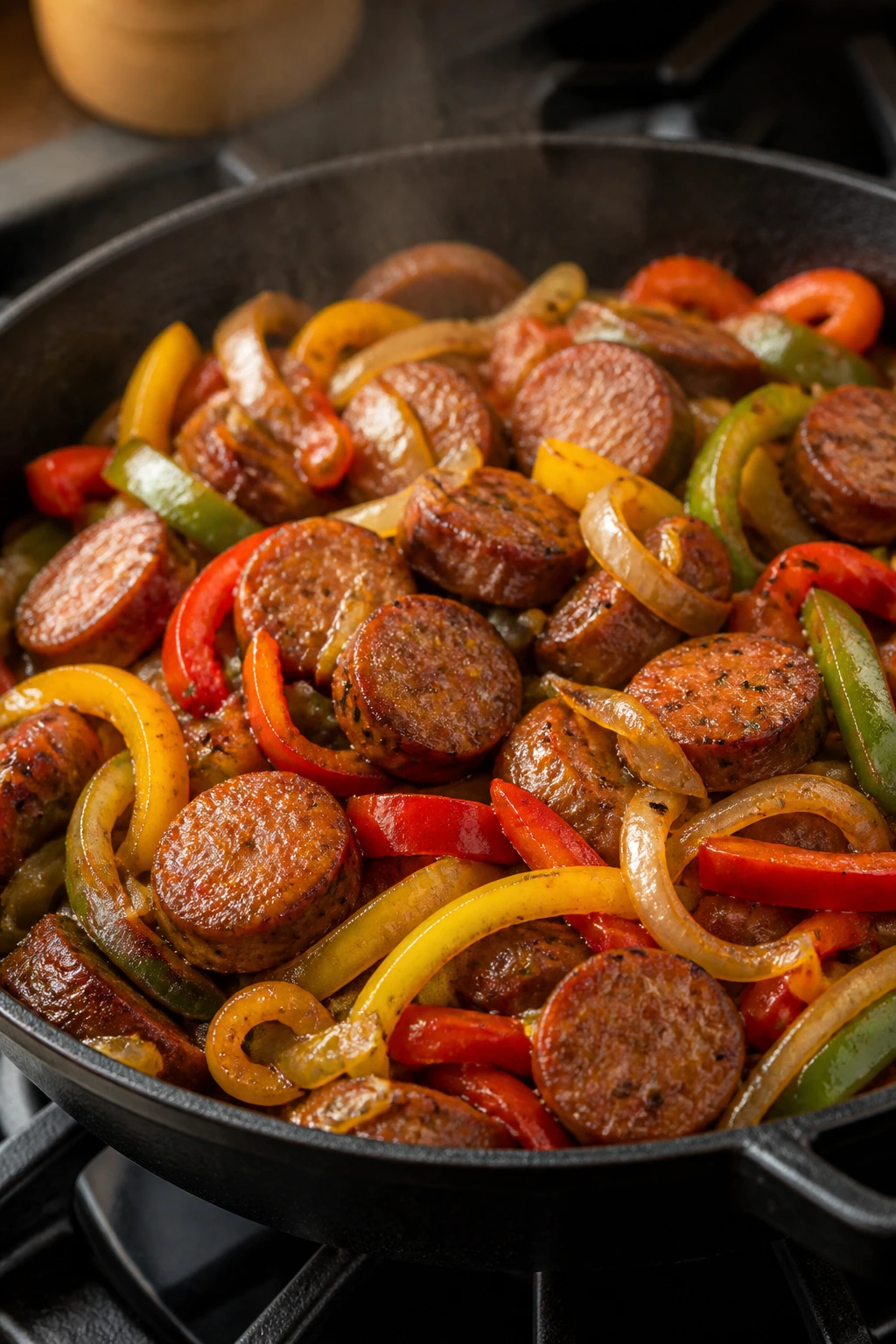
3. Sausage, Peppers, and Onions Skillet
If your pantry only has sausage, onions, and peppers, you’re still in business. This skillet dinner has a deep, sweet smell when the onions soften, and the sausage fat gives the vegetables the kind of flavor that makes people think you planned ahead.
Why It Works: Sausage brings seasoning with it, which saves you from building flavor one spice jar at a time. Peppers and onions cook fast when sliced thin, and a small splash of broth helps everything soften without turning soggy. It’s cheap, quick, and a little old-school in the best way.
Key Ingredients:
- 1 pound Italian sausage links or bulk sausage
- 2 bell peppers, sliced into narrow strips
- 1 large yellow onion, sliced thin
- 3 cloves garlic, minced
- 1 tablespoon olive oil, if the sausage is very lean
- ½ cup low-sodium chicken broth
- 1 tablespoon balsamic vinegar
- 1 teaspoon dried oregano
- 4 hoagie rolls, toasted, if you want sandwiches
- Salt and black pepper, only if the sausage needs a nudge
Quick Steps:
- Brown the sausage: Cook the sausage in a large skillet over medium heat until browned on all sides and cooked through, about 10 minutes. Remove and slice if using links.
- Soften the vegetables: Add the onion and peppers to the skillet. Cook for 6 to 8 minutes, stirring often, until the onions go translucent and the peppers start to slump.
- Add garlic and oregano: Stir in the garlic and oregano for 30 seconds.
- Deglaze: Pour in the broth and balsamic vinegar, scraping the bottom of the pan until the browned bits lift into the sauce.
- Bring it together: Return the sausage to the skillet and simmer for 2 minutes before piling onto rolls or serving as is.
Equipment for This Recipe:
- Large skillet
- Sharp knife, because thin slices cook better
- Spatula or tongs
How to Serve This Dish: Stuff it into toasted rolls with a little mustard, or serve it over rice if you want the sausage juices to soak in. A side salad keeps the plate from feeling heavy.
Pro Tips for This Recipe:
- Slice the peppers evenly: Thin strips cook at the same speed and avoid the annoying mix of raw and mushy pieces.
- Use the pan drippings: Sausage leaves behind flavor; don’t wipe the skillet clean before the vegetables go in.
- Balsamic is enough: You only need a small amount to brighten the onions. Too much makes the pan taste sugary.
Variations on This Dish:
- Turkey Sausage Version: Use turkey sausage and add an extra tablespoon of olive oil to keep the pan from drying out.
- Spicy Pepper Skillet: Swap in hot sausage and add one sliced jalapeño with the peppers.
- Pizza-Style Version: Stir in ½ cup marinara at the end and top with mozzarella before serving on rolls.
Common Mistakes to Avoid with This Dish:
- Cooking the sausage over heat that’s too high: The outside burns before the inside cooks. Medium heat is safer here.
- Leaving the peppers thick: Thick slices take too long and can feel underdone while the sausage gets cold.
- Forgetting to scrape the pan: The browned bits matter; they’re the whole reason the broth tastes like something.
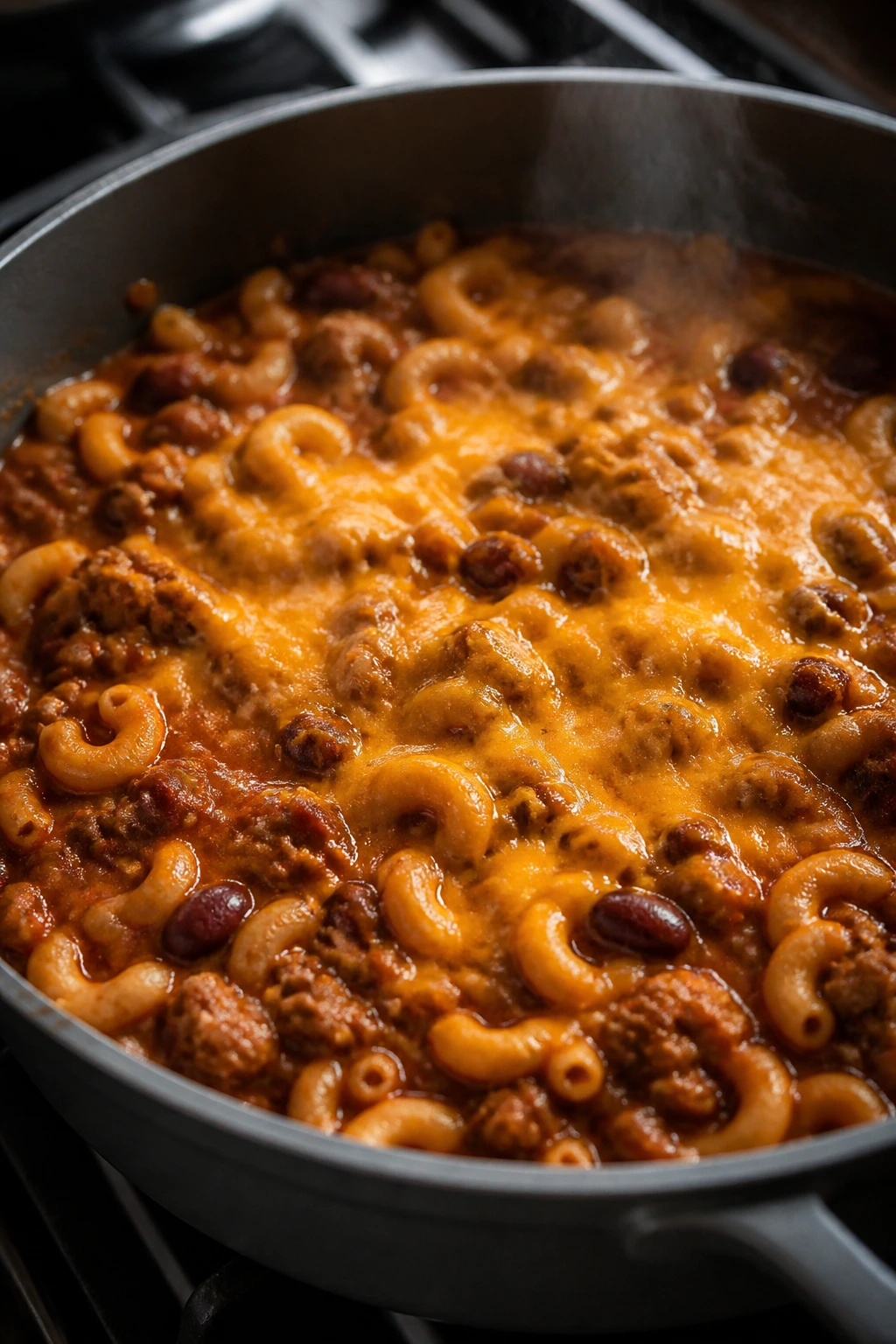
4. Chili Mac with Beans and Cheddar
This is the dinner I make when the day ran long and the pantry has one can too many. It’s part chili, part macaroni, and fully shameless in the way it leans on beans and cheese to turn a cheap pot of pasta into something that sticks to your ribs.
Why It Works: Pasta cooks right in the seasoned liquid, which means it picks up flavor instead of being boiled separately and forgotten. Beans stretch the meat without making the dish feel sparse, and cheddar melts into the sauce without much fuss. It’s a one-pot situation that actually earns the name.
Key Ingredients:
- 1 pound ground beef or ground turkey
- 1 small onion, diced fine
- 2 cloves garlic, minced
- 2 cups elbow macaroni
- 1 can (15 ounces) kidney beans or black beans, drained and rinsed
- 1 can (14.5 ounces) diced tomatoes
- 2 cups low-sodium broth
- 2 tablespoons chili powder
- 1 teaspoon ground cumin
- 1½ cups shredded cheddar cheese
Quick Steps:
- Brown the meat: Cook the ground beef and onion in a deep skillet over medium-high heat for 6 to 7 minutes, until the meat is browned and the onion softens.
- Season it up: Stir in the garlic, chili powder, and cumin for 30 seconds.
- Add the liquid and pasta: Pour in the tomatoes and broth, then add the macaroni and beans. Stir well and bring to a simmer.
- Cook until tender: Reduce the heat to medium-low and cook for 10 to 12 minutes, stirring often, until the pasta is al dente and the sauce has thickened.
- Melt the cheese: Turn off the heat, stir in the cheddar, and let it sit for 2 minutes before serving.
Equipment for This Recipe:
- Deep skillet or Dutch oven
- Wooden spoon
- Box grater if you’re grating your own cheese
How to Serve This Dish: Spoon it into bowls and top with a little sour cream, chopped cilantro, or sliced scallions if you have them. A handful of crushed tortilla chips on top gives it some crunch that the pot itself can’t provide.
Pro Tips for This Recipe:
- Stir often near the end: Macaroni loves to stick when the liquid drops low.
- Use a sharp cheddar: It melts cleaner and tastes less flat than pre-shredded cheese, though pre-shredded still works in a pinch.
- Keep the pasta a little firm: It softens more as it sits.
Variations on This Dish:
- Vegetarian Chili Mac: Skip the meat and use an extra can of beans plus 1 cup of frozen corn.
- Smoky Chipotle Version: Add 1 chopped chipotle in adobo or 1 teaspoon smoked paprika.
- Baked Topper Option: Transfer to a baking dish, cover with more cheddar, and broil for 2 to 3 minutes.
Common Mistakes to Avoid with This Dish:
- Adding too little liquid: Pasta needs enough broth to cook without drying out. If the pan looks tight, add ¼ cup water.
- Throwing in the cheese while the sauce is boiling hard: It can turn grainy. Turn off the heat first.
- Walking away from the pot: Pasta at the bottom can catch fast once the liquid gets low.
5. Chickpea Coconut Curry
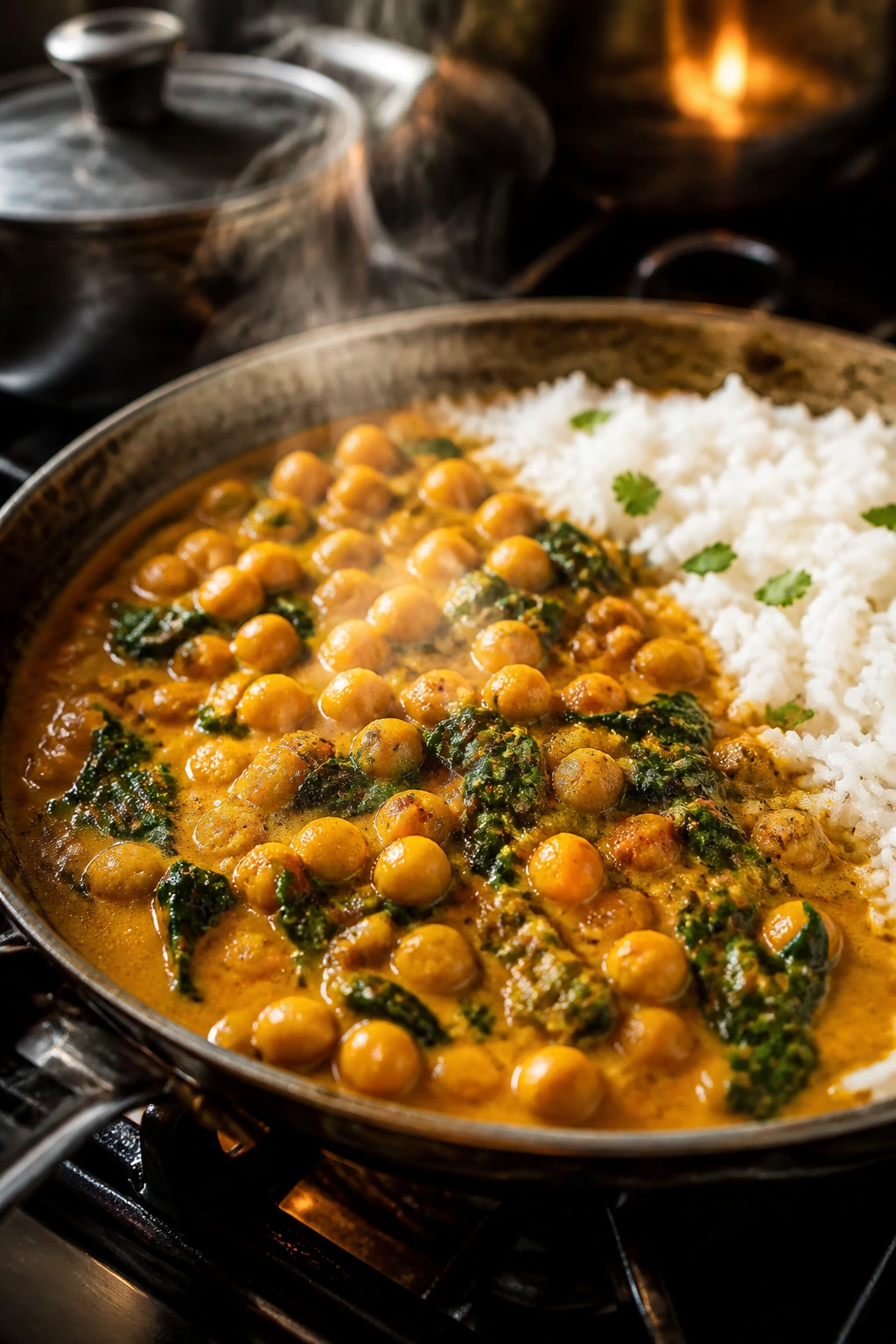
Canned chickpeas turn into something richer once coconut milk and curry spice hit the pan. The sauce comes out creamy and warm, with enough body to coat rice without needing cream, flour, or a long simmer.
Why It Works: Chickpeas hold their shape under heat, so they stay satisfying instead of collapsing into mush. Coconut milk brings fat and body in one can, which means you don’t need a long reduction to get a proper sauce. A handful of spinach at the end turns the bowl greener without adding more cooking time.
Key Ingredients:
- 1 tablespoon neutral oil
- 1 medium onion, diced small
- 3 cloves garlic, minced
- 1 tablespoon fresh ginger, grated
- 2 tablespoons curry powder or 1½ tablespoons curry paste
- 2 cans (15 ounces each) chickpeas, drained and rinsed
- 1 can (13.5 ounces) full-fat coconut milk
- 1 cup diced tomatoes or 2 tablespoons tomato paste
- 2 cups baby spinach
- 1 tablespoon lime juice
- 3 cups cooked rice, for serving
Quick Steps:
- Soften the onion: Heat the oil in a skillet over medium heat and cook the onion for 4 to 5 minutes until translucent.
- Wake up the spices: Stir in the garlic, ginger, and curry powder for 30 seconds until fragrant.
- Build the sauce: Add the chickpeas, coconut milk, and tomatoes. Simmer gently for 10 minutes.
- Finish the greens: Stir in the spinach and cook for 1 minute, just until wilted.
- Brighten and serve: Add lime juice, taste for salt, and spoon over rice.
Equipment for This Recipe:
- Large skillet or saucepan
- Wooden spoon
- Measuring spoon for the curry spice, because eyeballing gets messy fast
How to Serve This Dish: Serve it over rice with a spoonful of yogurt if you want a cooler contrast. Naan or flatbread makes sense here too, especially if you like chasing the sauce around the bowl.
Pro Tips for This Recipe:
- Use full-fat coconut milk: Light coconut milk makes a thin sauce that tastes a little tired.
- Keep the simmer gentle: Hard boiling can make the coconut milk separate.
- Salt at the end: Curry paste and canned tomatoes can already bring salt to the party.
Variations on This Dish:
- Peanut Curry Twist: Stir in 2 tablespoons of peanut butter with the coconut milk for a deeper sauce.
- Cauliflower Chickpea Version: Add 2 cups of small cauliflower florets with the chickpeas.
- Mild Pantry Curry: Use curry powder instead of paste and skip the ginger if the heat needs to stay low.
Common Mistakes to Avoid with This Dish:
- Boiling the sauce hard: Coconut milk can split and look grainy. Keep it at a lazy simmer.
- Using dry spices that are too old: If the curry powder smells like dust, the sauce will taste flat.
- Skipping the lime: Acid at the end keeps the sauce from feeling one-note.
6. Tuna Pea Pasta
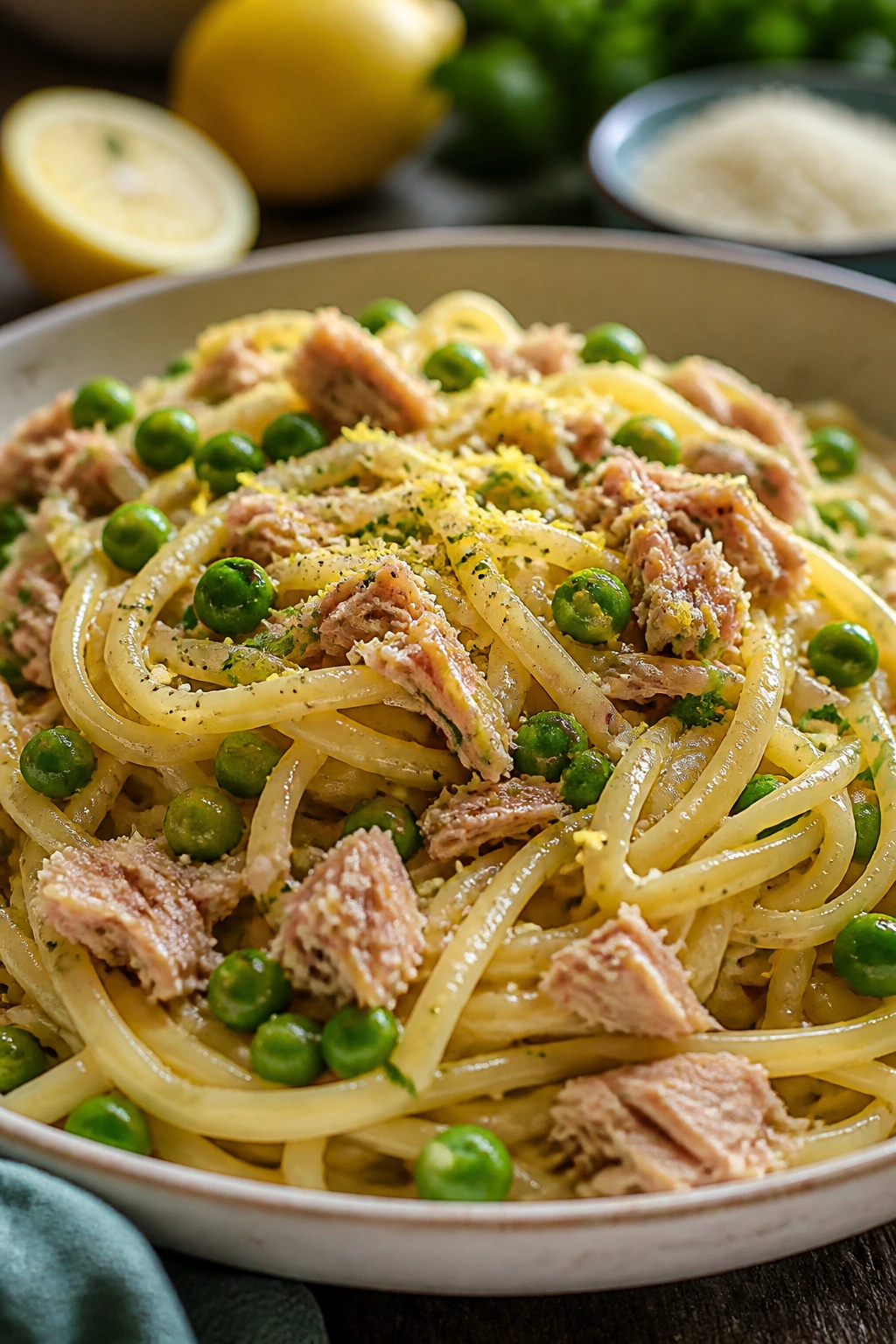
A can of tuna, frozen peas, and a lemon can rescue a night faster than takeout can arrive. This one tastes clean and a little briny, with just enough garlic and Parmesan to make the whole bowl feel intentional instead of improvised.
Why It Works: Tuna brings protein without a long cook time, and peas add sweetness and color with almost no work. Pasta water helps the olive oil and cheese cling to the noodles, which matters more than people think. This is pantry cooking that stays honest.
Key Ingredients:
- 12 ounces spaghetti, linguine, or penne
- 2 cans tuna, drained
- 1½ cups frozen peas
- 2 tablespoons olive oil
- 3 cloves garlic, sliced thin
- 1 lemon, zested and juiced
- ½ cup grated Parmesan
- ¼ teaspoon red pepper flakes
- Salt and black pepper, to taste
- ¼ cup reserved pasta water
Quick Steps:
- Cook the pasta: Boil the pasta in salted water until al dente. Reserve ¼ cup of the pasta water before draining.
- Warm the garlic: Heat olive oil in a large skillet over medium heat. Add the garlic and red pepper flakes and cook for 30 seconds.
- Add peas and tuna: Stir in the peas and tuna, breaking the tuna into small flakes.
- Toss with pasta: Add the drained pasta and reserved water. Toss for 1 to 2 minutes until glossy.
- Finish: Stir in lemon zest, lemon juice, Parmesan, and black pepper. Serve immediately.
Equipment for This Recipe:
- Large pot for pasta
- Large skillet or sauté pan
- Colander
- Microplane or fine grater for the lemon zest
How to Serve This Dish: A green salad with a sharp vinaigrette makes this feel like a fuller meal without much effort. If you want it a little richer, add an extra drizzle of olive oil right before serving.
Pro Tips for This Recipe:
- Choose tuna packed in oil if you can: It gives the sauce a rounder taste, though water-packed tuna still works.
- Save the pasta water: That starchy liquid is what helps the sauce cling.
- Add the lemon at the end: If it goes in too early, the flavor gets dim.
Variations on This Dish:
- Capers and Herb Version: Add 1 tablespoon capers and a handful of chopped parsley.
- Creamy Tuna Pasta: Stir in 2 tablespoons of plain Greek yogurt off the heat.
- Pantry Puttanesca Style: Add chopped olives and a spoonful of tomato paste with the garlic.
Common Mistakes to Avoid with This Dish:
- Overcooking the pasta: It will soften again in the skillet. Pull it while it still has some bite.
- Skipping the salt in the pasta water: Tuna needs that seasoned base or the whole dish tastes thin.
- Mashing the tuna into paste: Flakes are better here; they keep the texture lively.
7. Egg Roll in a Bowl
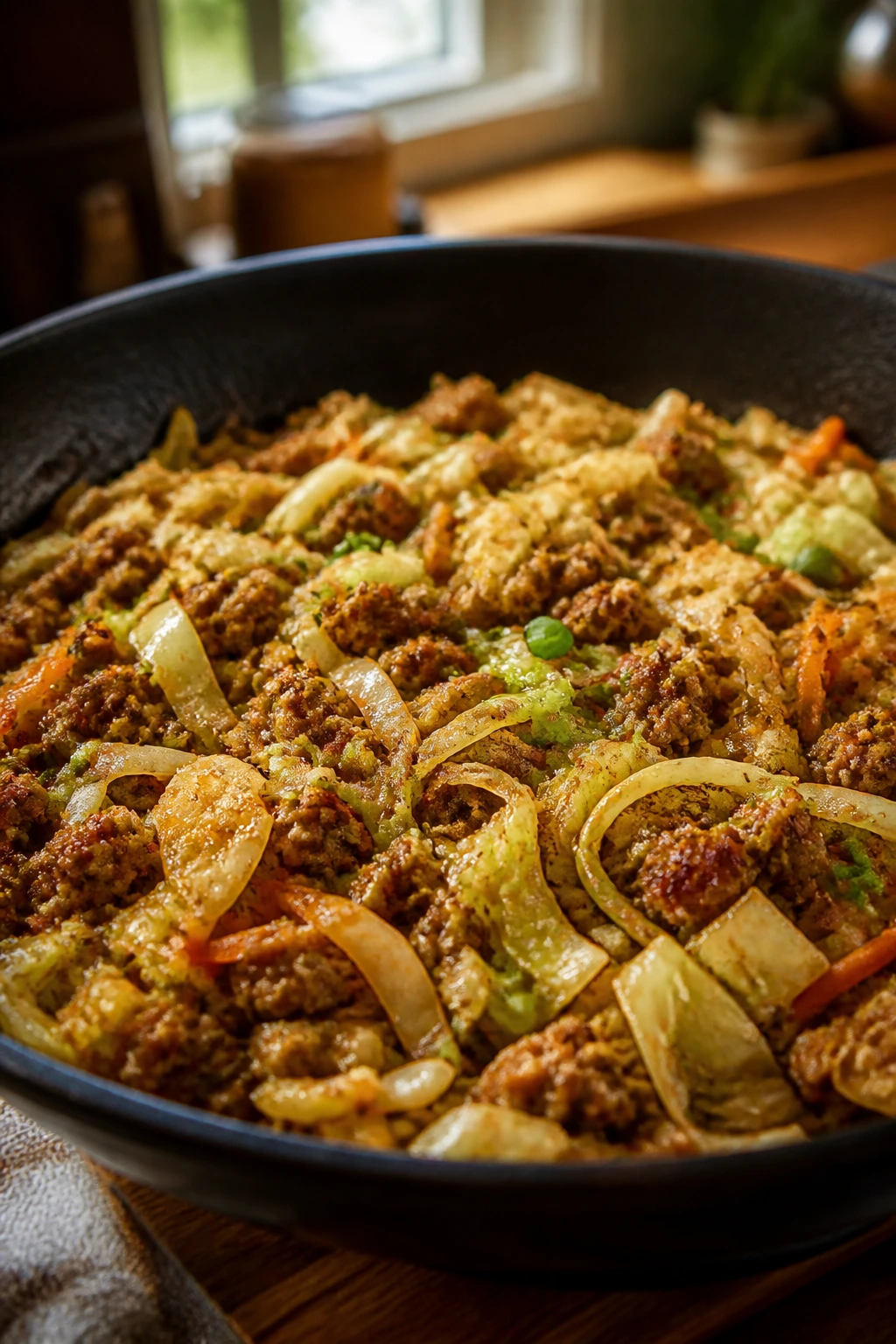
You get the cabbage, pork, ginger, and soy sauce without wrangling wrappers or a pot of oil. That’s the whole appeal, and it’s a good one. The cabbage turns tender in minutes, the pork browns in little crisp bits, and the sesame oil at the end makes the bowl smell like a better idea than it looked in the fridge.
Why It Works: Coleslaw mix saves all the chopping and still gives you the right texture. Ground pork has enough fat to season the vegetables without much help, and rice vinegar keeps the whole pan from tasting heavy. It’s cheap, fast, and strangely satisfying.
Key Ingredients:
- 1 pound ground pork or ground turkey
- 1 bag (14 to 16 ounces) coleslaw mix
- 3 cloves garlic, minced
- 1 tablespoon fresh ginger, grated
- 3 tablespoons low-sodium soy sauce
- 1 tablespoon rice vinegar
- 1 teaspoon sesame oil
- 2 scallions, sliced
- 1 tablespoon neutral oil, if using lean turkey
- Sriracha, for serving if you want heat
Quick Steps:
- Brown the meat: Heat the oil in a large skillet over medium-high heat and cook the pork for 6 to 7 minutes until browned.
- Add garlic and ginger: Stir them in for 30 seconds.
- Cook the cabbage: Add the coleslaw mix and toss for 3 to 4 minutes, until it softens but still has some crunch.
- Season the pan: Stir in soy sauce and rice vinegar, cooking for another minute.
- Finish: Turn off the heat, add sesame oil and scallions, and serve hot.
Equipment for This Recipe:
- Large skillet
- Spatula for breaking up the meat
- Measuring spoons, because sesame oil should stay measured and not free-poured
How to Serve This Dish: I like it in bowls with a little sriracha and extra scallions on top. If you need more starch, spoon it over rice, but it’s also fine on its own.
Pro Tips for This Recipe:
- Don’t overcook the cabbage: A little crunch keeps the texture close to an actual egg roll.
- Use rice vinegar, not random vinegar: It keeps the flavor cleaner and less sharp.
- Add sesame oil last: It smells best when it doesn’t get cooked hard.
Variations on This Dish:
- Turkey Version: Use lean ground turkey and add an extra teaspoon of oil to keep it from drying out.
- Mushroom Egg Roll Bowl: Add 8 ounces of sliced mushrooms with the meat for more bulk.
- Low-Carb Bowl: Skip rice and add shredded carrots or extra cabbage instead.
Common Mistakes to Avoid with This Dish:
- Soggy cabbage: That happens when the pan is too crowded or the heat is too low. Keep the skillet hot.
- Too much soy sauce: The dish should taste savory, not salty and dark.
- Forgetting the acid: Rice vinegar brightens the bowl and keeps it from feeling greasy.
8. Black Bean Enchilada Skillet
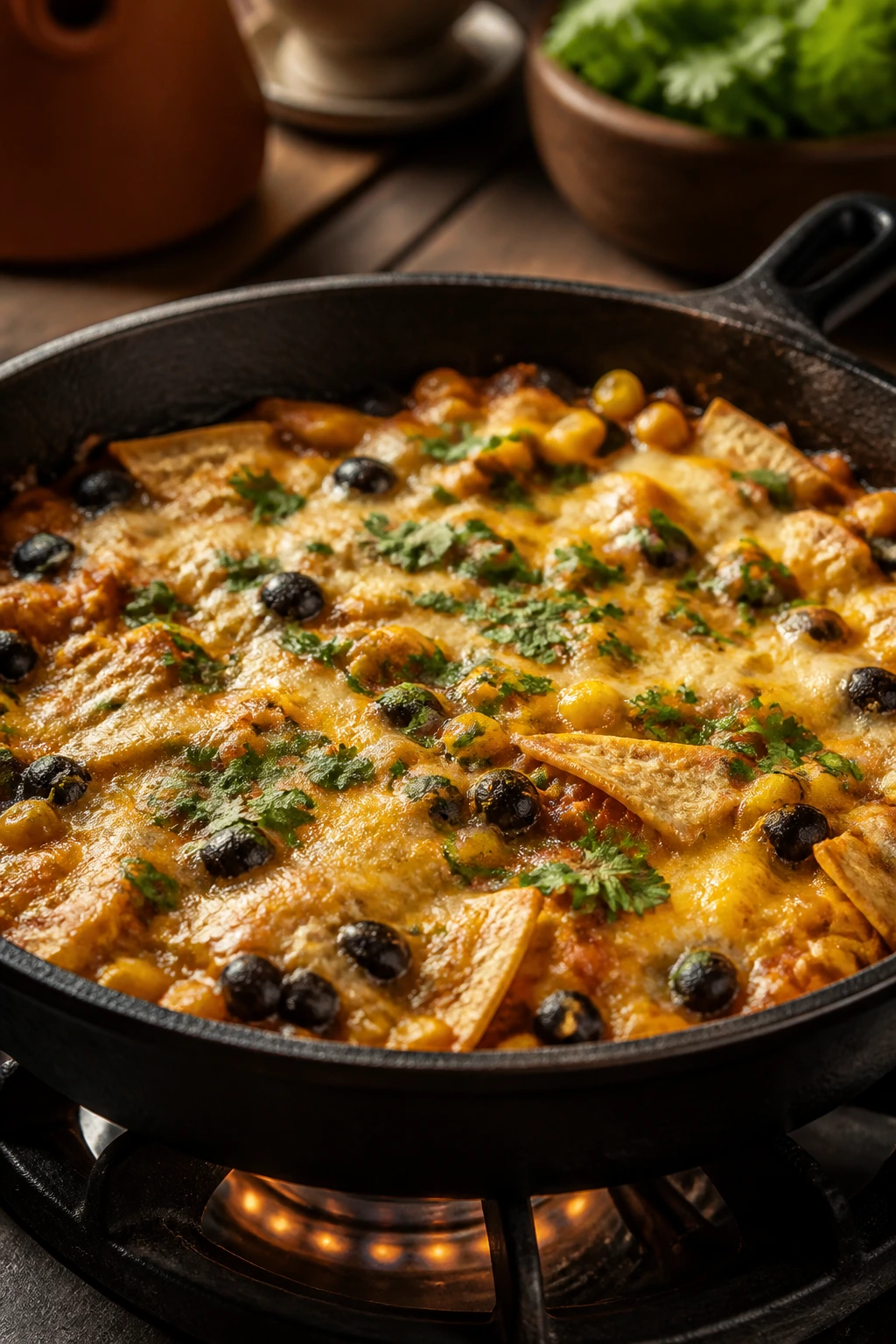
This one tastes like enchiladas with the paperwork stripped out. Beans, corn, tortillas, sauce, and cheese all melt together in one pan, and the result is the kind of dinner that lets you stop measuring and start eating.
Why It Works: Black beans and corn stretch the skillet without making it feel skimpy. Torn tortillas thicken the sauce as they soften, which gives the dish a cozy texture without needing a roux. The oven-safe skillet finish is what turns the top into a little browned, cheesy lid.
Key Ingredients:
- 1 tablespoon neutral oil
- 1 small onion, diced
- 2 cans black beans, drained and rinsed
- 1 can corn, drained
- 1½ cups enchilada sauce
- 6 small corn tortillas, torn into pieces
- 2 cups shredded Monterey Jack or cheddar
- 1 teaspoon cumin
- ¼ cup chopped cilantro
- Sour cream, for serving
Quick Steps:
- Cook the onion: Heat the oil in an oven-safe skillet over medium heat and cook the onion for 4 minutes.
- Add the filling: Stir in the beans, corn, cumin, and enchilada sauce. Bring to a gentle simmer.
- Add the tortillas: Stir in the torn tortilla pieces and let them soften for 2 minutes.
- Top with cheese: Scatter the cheese over the top and either cover the pan for 2 minutes or place it under the broiler for 1 to 2 minutes.
- Finish and serve: Top with cilantro and spoon into bowls with sour cream.
Equipment for This Recipe:
- Oven-safe skillet
- Wooden spoon
- Broiler-safe oven mitts, because the handle gets hot fast
How to Serve This Dish: Serve it straight from the skillet with a spoon and a bowl of salsa on the side. A few avocado slices make the plate look calmer and give the cheese something cool to land on.
Pro Tips for This Recipe:
- Use small tortillas: They break and soften more evenly than giant ones.
- Watch the broiler closely: Cheese goes from browned to burnt in a blink.
- Taste the sauce before adding salt: Enchilada sauce can already be salty enough.
Variations on This Dish:
- Chicken Enchilada Skillet: Add 2 cups shredded cooked chicken with the beans.
- Green Sauce Version: Swap red enchilada sauce for salsa verde.
- Vegan Skillet: Use vegan cheese or skip it and finish with avocado and cilantro.
Common Mistakes to Avoid with This Dish:
- Too much sauce in the pan: The tortillas can’t thicken an endless flood. Stick to the listed amount.
- Letting the tortillas stay in big pieces: Tear them small enough to soften and blend into the skillet.
- Broiling too long: A minute too much and the cheese turns bitter.
9. Sloppy Joe Pasta
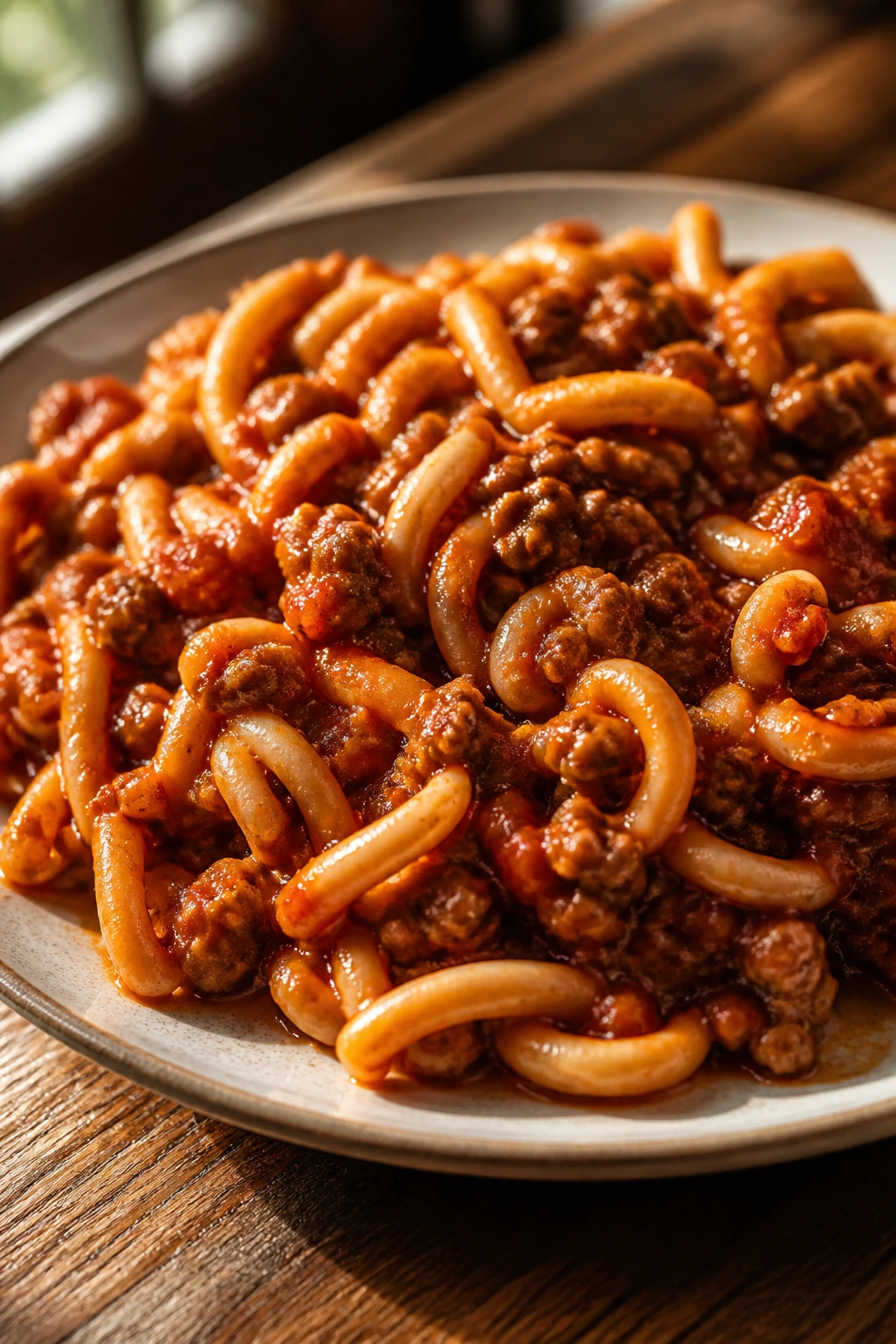
It’s the messy, tomatoey skillet that makes a box of pasta feel like dinner with a plan. The ketchup and Worcestershire give you that familiar Sloppy Joe flavor, but the pasta catches the sauce in a way sandwich buns never can.
Why It Works: Ground meat browns fast and carries the sauce well. Pasta gives the dish body, and the sweet-tangy sauce clings to every noodle instead of sliding off the plate. It’s a cheap crowd-feeder that doesn’t act fussy.
Key Ingredients:
- 1 pound ground beef or ground turkey
- 1 small onion, diced
- 2 cups elbow macaroni
- 1 cup tomato sauce
- ½ cup ketchup
- 1 tablespoon Worcestershire sauce
- 1 tablespoon yellow mustard
- 1 tablespoon brown sugar
- 1½ cups water or broth
- 1 cup shredded cheddar, optional
Quick Steps:
- Brown the meat: Cook the ground beef and onion in a deep skillet over medium-high heat for 6 to 7 minutes.
- Add the sauce ingredients: Stir in garlic if you like, then add tomato sauce, ketchup, Worcestershire, mustard, and brown sugar.
- Cook the pasta: Add the macaroni and water or broth. Bring to a simmer.
- Reduce and stir: Cook for 10 minutes, stirring often, until the pasta is tender and the sauce thickens.
- Finish: Stir in cheddar if using and let it melt for 1 minute before serving.
Equipment for This Recipe:
- Deep skillet or Dutch oven
- Wooden spoon
- Lid, if your pot needs a little help finishing the pasta
How to Serve This Dish: Pickles on the side make more sense than they should here. A chopped salad or some steamed peas also work if you want a plate with a little freshness on it.
Pro Tips for This Recipe:
- Taste before adding more sugar: Ketchup already brings sweetness.
- Stir near the end: Pasta likes to catch when the sauce gets tight.
- Keep the heat moderate: If the sauce boils hard, it can reduce too fast and leave the pasta dry.
Variations on This Dish:
- Barbecue Joe Pasta: Replace half the ketchup with barbecue sauce.
- Cheesy Bake: Transfer to a baking dish, top with more cheddar, and broil for a minute.
- Lentil Joe Version: Use cooked brown lentils instead of meat for a cheaper vegetarian option.
Common Mistakes to Avoid with This Dish:
- Making it too sweet: Sloppy Joe flavor should be tangy first, sweet second.
- Adding too little liquid: The pasta needs enough to cook through.
- Letting the sauce boil away too fast: If it dries before the pasta is done, add ¼ cup water.
10. Fried Rice with Eggs and Frozen Veggies
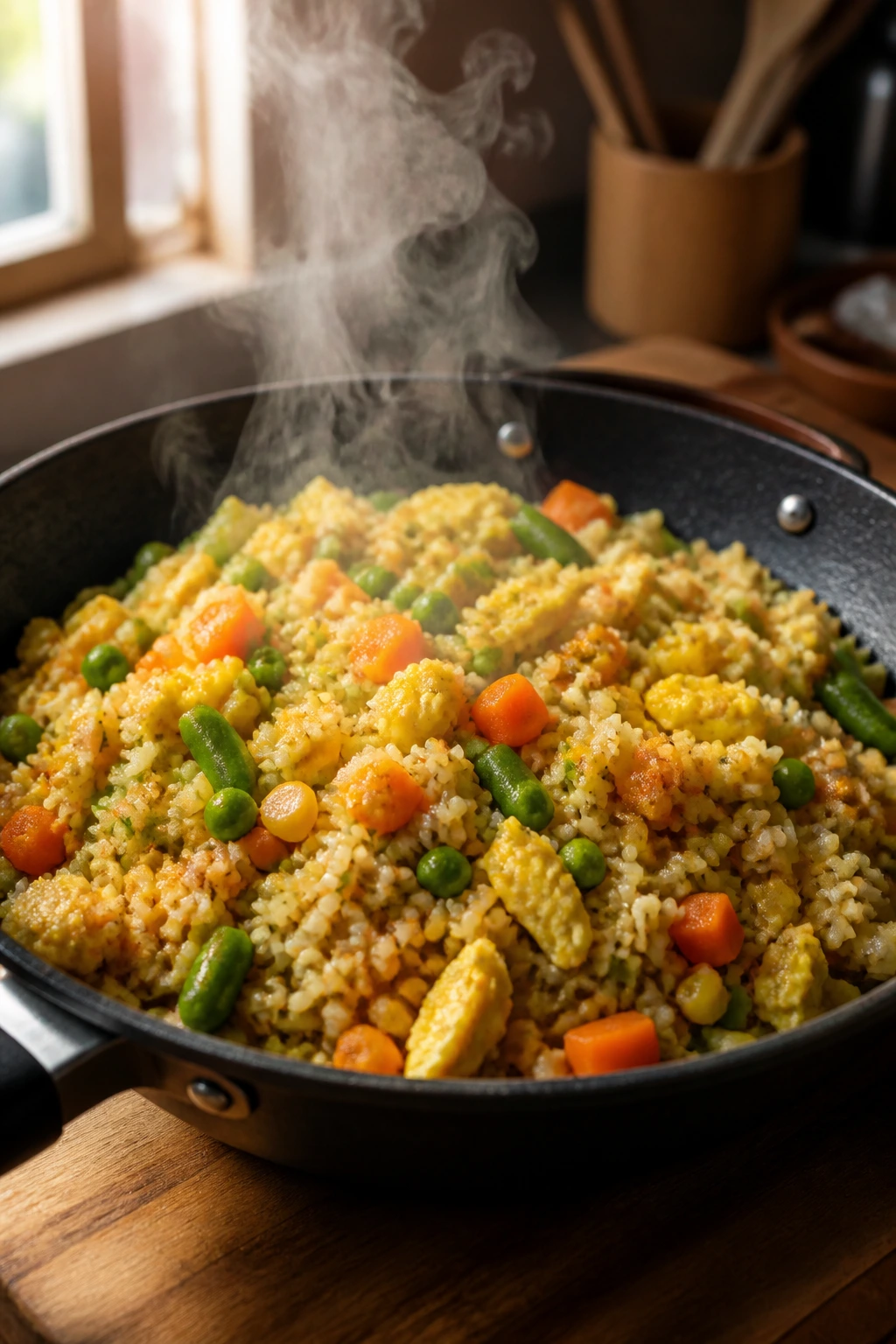
Cold rice from the fridge is the whole trick here, and I mean that in the nicest way. Once it hits a hot skillet with eggs, frozen vegetables, and soy sauce, it stops being leftovers and starts acting like dinner.
Why It Works: Day-old rice stays separate and fries instead of turning mushy. Eggs bring protein and a little richness, and frozen mixed vegetables cut the prep down to almost nothing. This is one of the cheapest dinners in the whole collection if you already have rice around.
Key Ingredients:
- 3 cups cooked rice, chilled overnight if possible
- 3 large eggs
- 2 cups frozen mixed vegetables
- 2 tablespoons neutral oil
- 3 tablespoons low-sodium soy sauce
- 2 scallions, sliced
- 1 teaspoon sesame oil
- 1 clove garlic, minced
- ½ cup diced ham, optional
- 1 teaspoon rice vinegar, optional
Quick Steps:
- Scramble the eggs: Heat 1 tablespoon of oil in a large skillet or wok over medium-high heat. Cook the eggs until just set, then move them to a plate.
- Cook the vegetables: Add the remaining oil, garlic, and frozen vegetables. Stir-fry for 3 to 4 minutes until hot and dry-looking.
- Add the rice: Break up the chilled rice with your hands or a spoon and add it to the skillet.
- Season: Pour in the soy sauce and toss everything for 2 to 3 minutes until the rice is hot and lightly browned.
- Finish: Return the eggs, stir in sesame oil, scallions, and rice vinegar if using, then serve immediately.
Equipment for This Recipe:
- Large skillet or wok
- Spatula with a thin edge, so you can break up rice clumps
- Small bowl for the eggs
How to Serve This Dish: Serve it hot with cucumber slices, chili sauce, or a squeeze of lime. If you’ve got leftover protein, fried rice is the kind of dinner that happily takes it in.
Pro Tips for This Recipe:
- Use cold rice: Warm rice sticks and smears instead of frying.
- Don’t drown the pan in soy sauce: Too much makes the rice wet and dark.
- High heat helps, but not chaos: You want sizzle, not smoke.
Variations on This Dish:
- Ham and Pea Version: Use diced ham and extra peas for a classic diner feel.
- Vegetable-Heavy Version: Add shredded cabbage or diced carrots for more bulk.
- Spicy Garlic Fried Rice: Add chili crisp or crushed red pepper with the garlic.
Common Mistakes to Avoid with This Dish:
- Using fresh rice straight from the pot: It turns sticky fast.
- Crowding the skillet: Fried rice needs space to dry and brown.
- Adding sesame oil too early: It can lose its aroma if it fries too long.
11. One-Pot Tomato Spinach Pasta
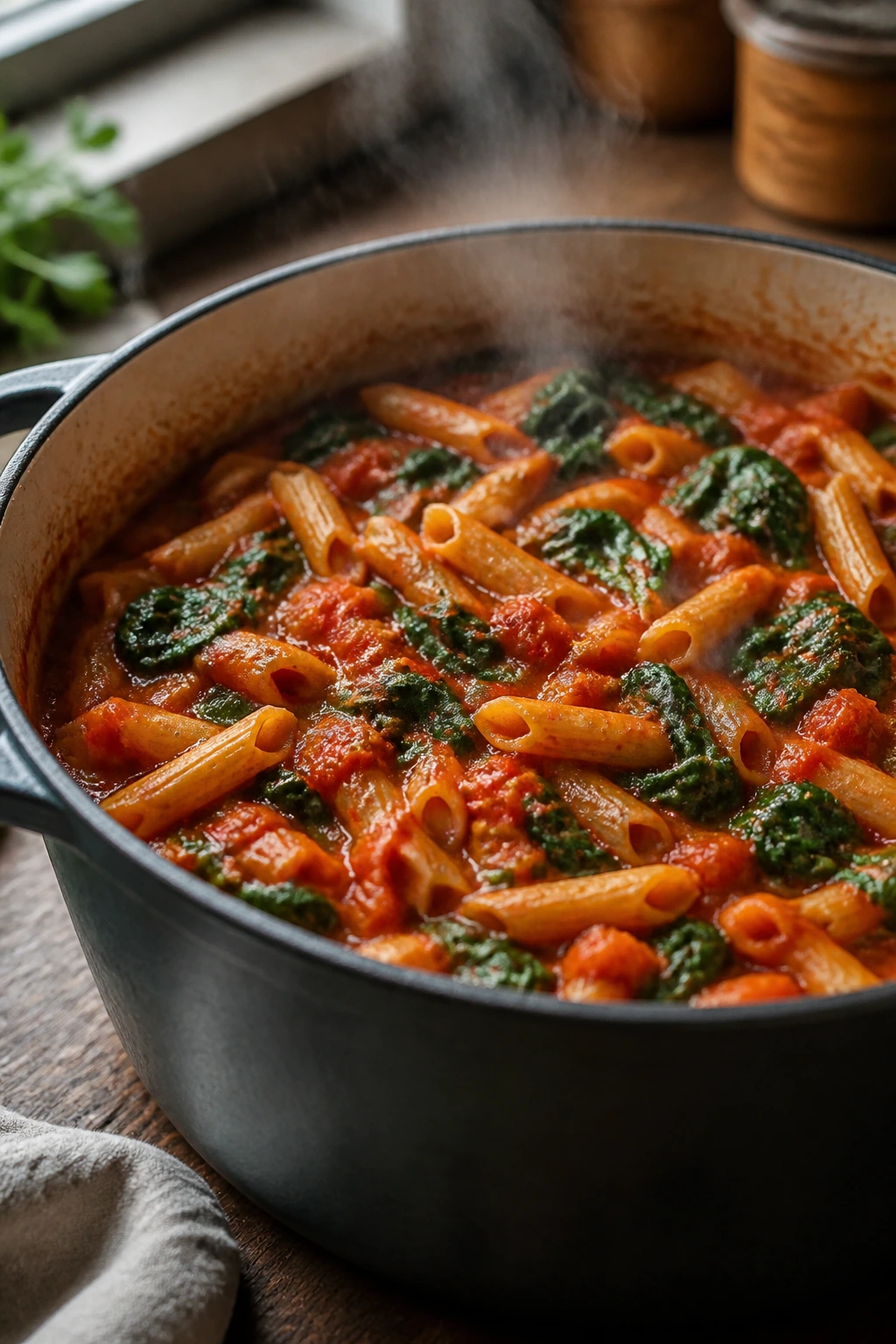
If your idea of good weeknight cooking is one pot and a pot that doesn’t need babysitting every minute, this is it. The pasta cooks in tomato broth, the starch thickens the sauce naturally, and the spinach melts into the pot at the very end like it knows its place.
Why It Works: The pasta releases starch into the sauce while it cooks, which gives you body without flour or cream. Canned tomatoes bring dependable flavor, and spinach needs only a minute to wilt, so it fits neatly into the timeline. This is one of the cleanest ways to get dinner done fast.
Key Ingredients:
- 12 ounces linguine, spaghetti, or penne
- 1 tablespoon olive oil
- 1 small onion, diced
- 4 cloves garlic, minced
- 1 can (28 ounces) crushed tomatoes
- 3 cups low-sodium broth
- 2 cups baby spinach
- ½ cup grated Parmesan
- ¼ teaspoon red pepper flakes
- Salt and black pepper, to taste
Quick Steps:
- Soften the onion: Heat the olive oil in a wide pot over medium heat and cook the onion for 4 minutes.
- Add garlic: Stir in the garlic and red pepper flakes for 30 seconds.
- Cook the pasta in the sauce: Add the crushed tomatoes, broth, pasta, salt, and pepper. Bring to a simmer and cook for 10 to 12 minutes, stirring often.
- Wilt the spinach: Stir in the spinach and cook for 1 minute until it softens.
- Finish: Turn off the heat, stir in Parmesan, and let the pasta sit for 2 minutes before serving.
Equipment for This Recipe:
- Wide pot or deep sauté pan
- Wooden spoon
- Measuring cup for the broth
How to Serve This Dish: Bread is the obvious move, and I am not above garlic bread with this. A simple Caesar-style salad or any crisp green salad keeps the bowl from getting too soft and cozy.
Pro Tips for This Recipe:
- Stir often: Pasta cooking in sauce sticks if you ignore it.
- Use a wide pot: More surface area means the pasta cooks evenly.
- Add cheese off the heat: Parmesan melts smoother and doesn’t clump as much.
Variations on This Dish:
- Sausage Spinach Pasta: Add sliced cooked sausage after the onion softens.
- Mushroom Version: Brown 8 ounces of sliced mushrooms with the onion.
- Dairy-Free Bowl: Skip the Parmesan and finish with olive oil and lemon juice.
Common Mistakes to Avoid with This Dish:
- Using too little broth: The pasta needs enough liquid to cook through.
- Letting it sit without stirring: Pasta can stick to the bottom in a tight pot.
- Adding the spinach too early: It disappears if it cooks for too long.
12. Rotisserie Chicken Ramen Soup
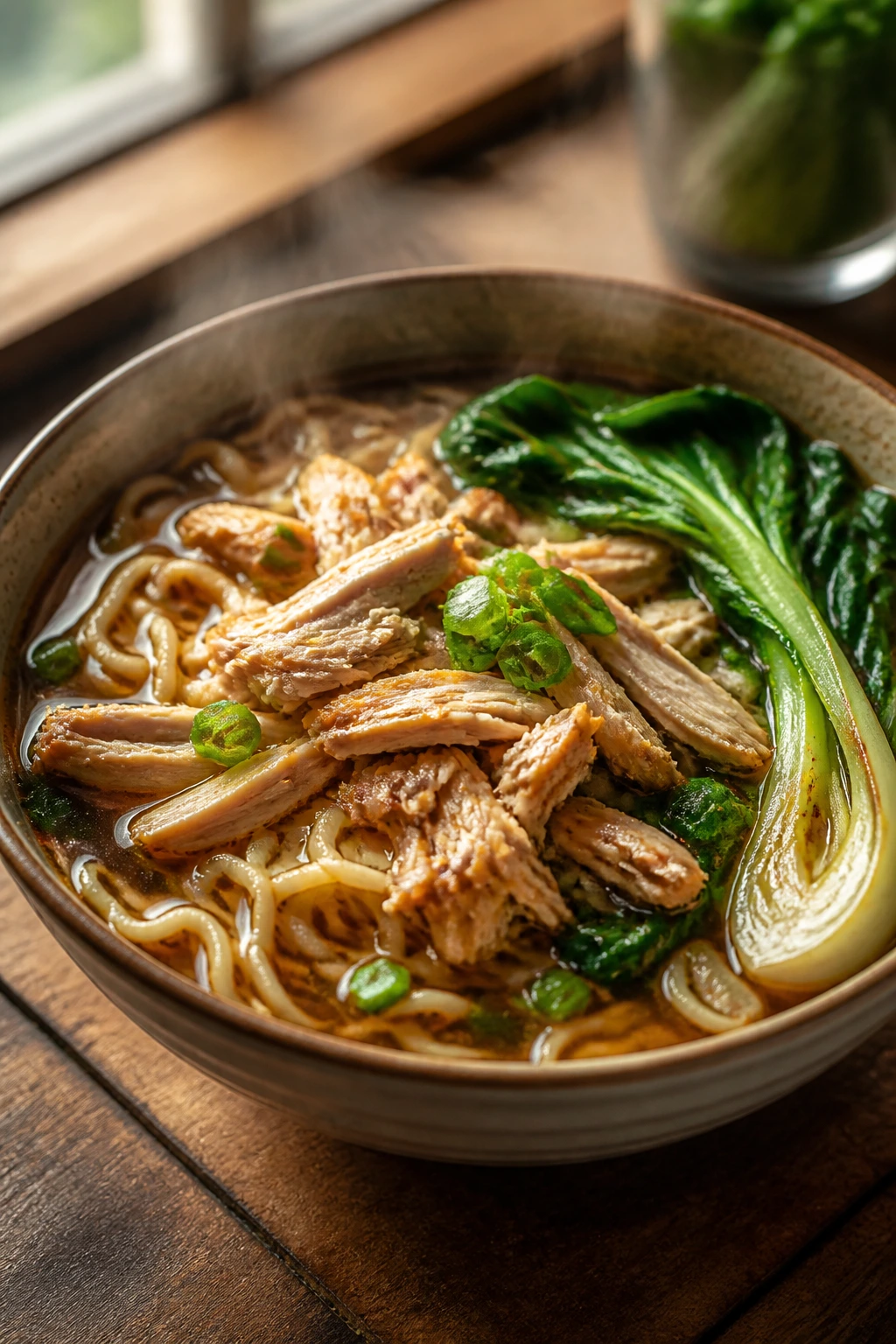
A roasted supermarket chicken turns into a broth bowl that tastes like more work than it is. Ramen noodles cook in minutes, the broth gets depth from ginger and soy, and the whole thing feels like a proper supper without asking you to roast anything yourself.
Why It Works: Rotisserie chicken brings cooked protein and a little built-in seasoning. Ramen noodles cook fast enough to keep the soup from dragging, and frozen vegetables slip into the broth without extra chopping. This is a clean, smart use for a store-bought shortcut.
Key Ingredients:
- 1 rotisserie chicken, meat shredded from the bones
- 4 cups low-sodium chicken broth
- 2 cups water
- 2 blocks ramen noodles or 3 standard packs, seasoning packets discarded
- 2 cups frozen vegetables or baby bok choy
- 2 tablespoons soy sauce
- 1 tablespoon grated ginger
- 2 cloves garlic, minced
- 2 soft-boiled eggs, optional
- 2 scallions, sliced
Quick Steps:
- Build the broth: Bring the broth, water, garlic, ginger, and soy sauce to a simmer in a soup pot.
- Add the vegetables: Stir in the frozen vegetables or bok choy and cook for 3 to 4 minutes.
- Cook the noodles: Add the ramen noodles and cook for 2 to 3 minutes, until just tender.
- Warm the chicken: Stir in the shredded chicken and heat for 1 minute, just enough to take the chill off.
- Finish: Ladle into bowls and top with scallions and soft-boiled eggs if using.
Equipment for This Recipe:
- Soup pot
- Ladle
- Tongs or chopsticks for lifting noodles cleanly
How to Serve This Dish: I like a few drops of chili oil or a squeeze of lime on top. Serve it in deep bowls so the broth stays hot while you eat, because shallow bowls lose steam too fast.
Pro Tips for This Recipe:
- Drop the noodles in last: They go from perfect to limp fast.
- Use low-sodium broth: The soy sauce and ramen can add salt quickly.
- Shred the chicken into bite-size pieces: Big chunks feel clumsy in soup.
Variations on This Dish:
- Miso Chicken Soup: Stir in 1 tablespoon of miso paste at the end.
- Vegetable Bowl: Skip the chicken and add mushrooms plus extra bok choy.
- Peanut Ramen Twist: Add 1 tablespoon peanut butter for a richer broth.
Common Mistakes to Avoid with This Dish:
- Cooking the noodles too long: They keep softening after the heat is off.
- Using the ramen seasoning packets by default: They can push the broth into salt overload.
- Adding cold chicken too early: Warm it only at the end so it stays tender.
13. Turkey Taco Rice Bowls
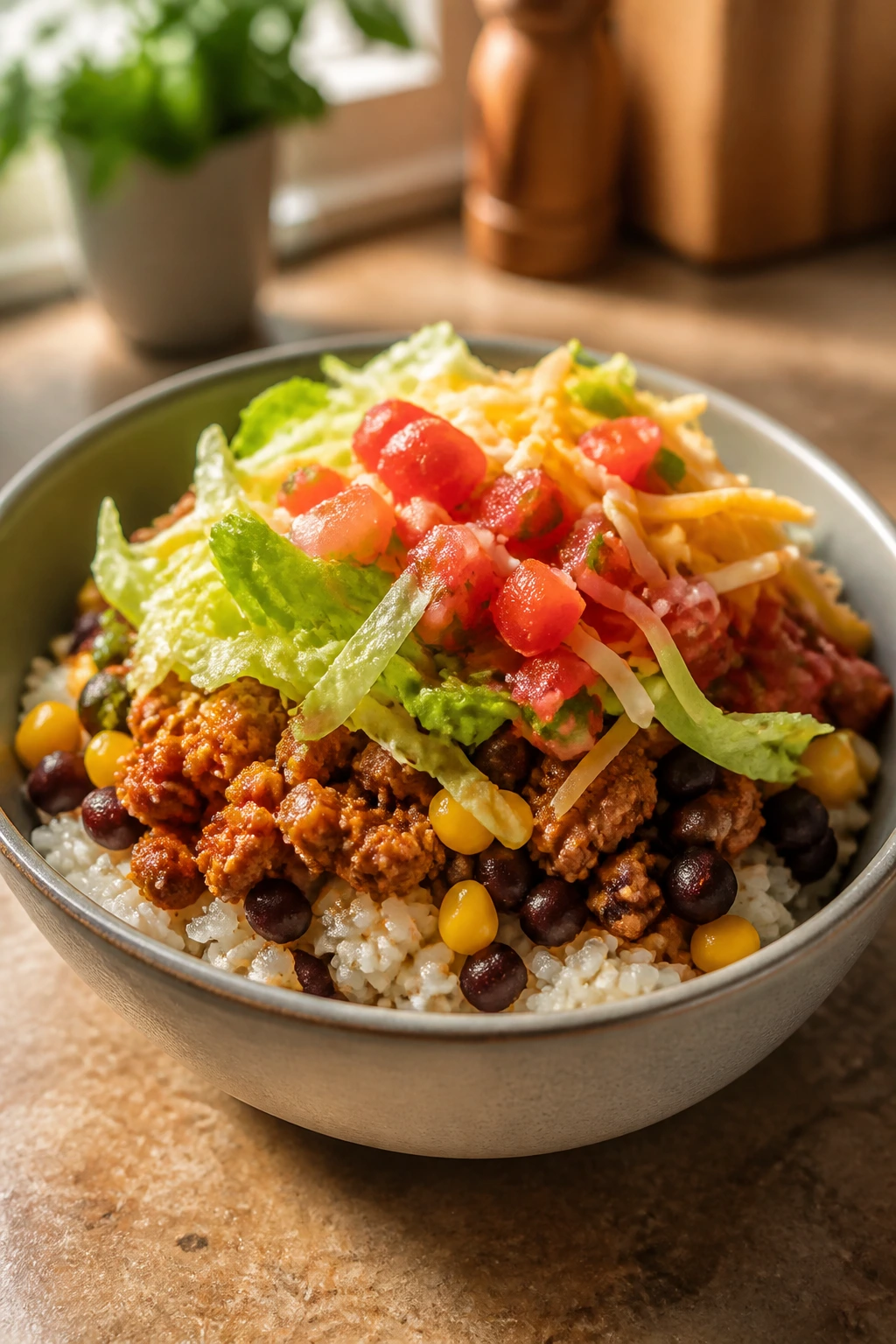
The quickest dinner wins are often bowls, because bowls forgive everything. If the turkey is a little saucy, the rice catches it. If the beans are plain, salsa fixes them. If the lettuce is cold and crunchy, the whole thing feels sharper and more awake.
Why It Works: Ground turkey takes taco seasoning well and cooks in a flash. Rice and beans stretch the protein into a full meal, and the toppings do the finishing work without making you stand over a stove longer. It’s a modular dinner, which is useful on nights when the family wants different things.
Key Ingredients:
- 1 pound ground turkey
- 1 packet taco seasoning or 2 tablespoons homemade taco seasoning
- 2 cups cooked rice
- 1 can black beans, drained and rinsed
- 1 cup corn, frozen or canned
- 1 cup salsa
- 1 cup shredded lettuce
- 1 cup shredded cheese
- 1 lime, cut into wedges
- 1 avocado, sliced, optional
Quick Steps:
- Cook the turkey: Brown the turkey in a skillet over medium-high heat for 6 to 7 minutes.
- Season it: Stir in the taco seasoning with ¼ cup water and simmer for 2 minutes.
- Warm the beans and corn: Heat them in a small pot or microwave until hot.
- Build the bowls: Divide rice between bowls, then top with turkey, beans, corn, lettuce, cheese, and salsa.
- Finish: Squeeze lime over the top and add avocado if you’ve got it.
Equipment for This Recipe:
- Skillet
- Small saucepan or microwave-safe bowl
- Lime squeezer or fork, if your lime is stubborn
How to Serve This Dish: Serve with tortilla chips on the side if you want crunch. A spoonful of sour cream or plain yogurt cools down the taco seasoning without making the bowl heavy.
Pro Tips for This Recipe:
- Don’t let the turkey dry out: A splash of water after seasoning keeps it from turning crumbly in the wrong way.
- Keep toppings separate until serving: Lettuce goes limp fast if it sits under hot rice too long.
- Use lime at the end: The acid sharpens the whole bowl.
Variations on This Dish:
- Beef Taco Bowls: Swap ground beef for turkey if you want a deeper flavor.
- Vegetarian Taco Bowls: Use black beans and extra corn in place of turkey.
- Cauliflower Rice Bowl: Replace regular rice with cauliflower rice for a lighter base.
Common Mistakes to Avoid with This Dish:
- Overseasoning the turkey: Taco seasoning should support the meat, not bury it.
- Putting wet salsa directly on the rice too early: It can make the bowl soggy.
- Forgetting texture: You need something cold or crisp on top, or the bowl gets monotonous.
14. Pasta e Fagioli with Beans
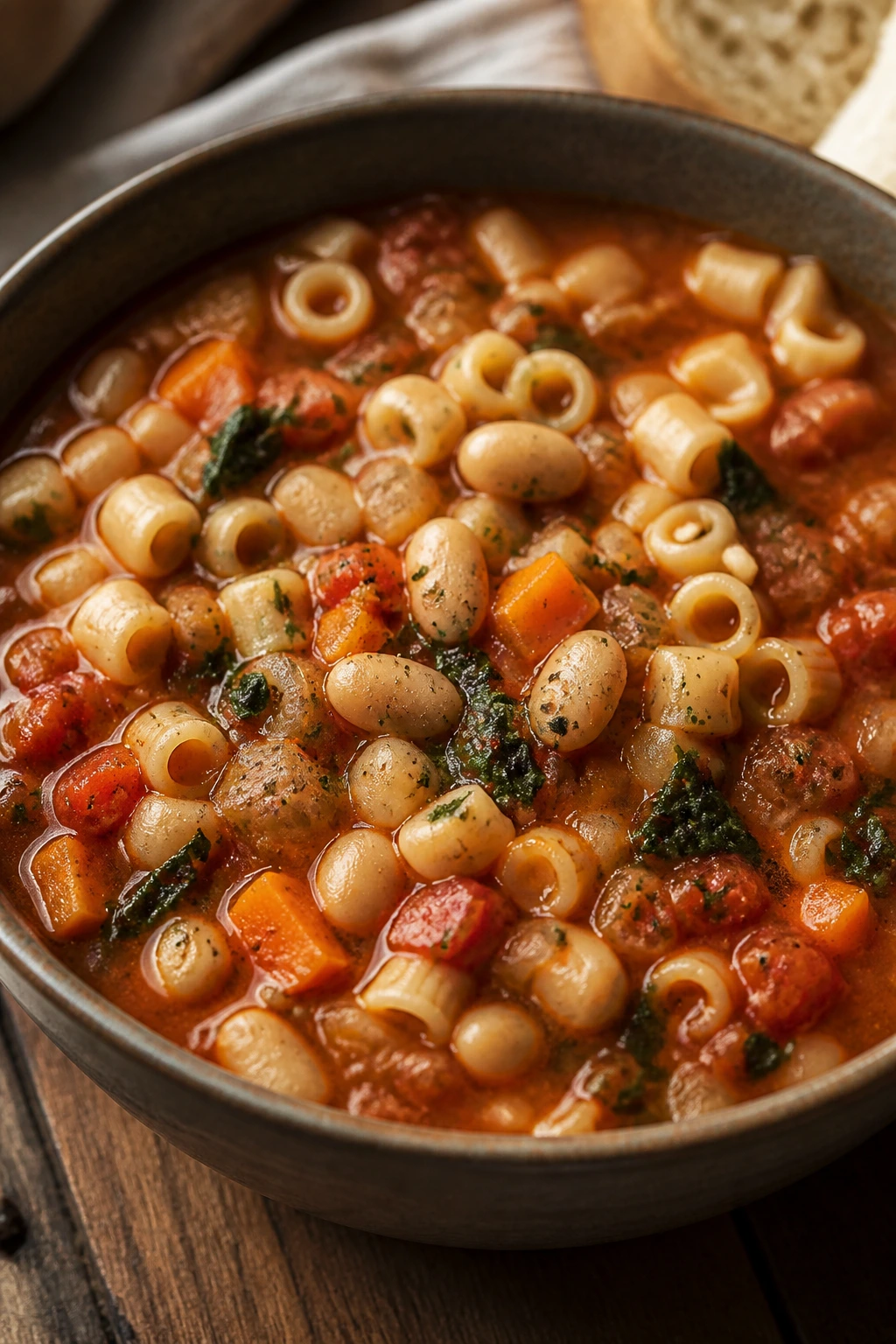
This is the pot I make when I want something cheap, soupy, and sturdier than it looks. Pasta e fagioli sounds like a dish that requires a long story, but what it really needs is onion, beans, broth, and a short pasta that can soak up tomato-rich liquid without falling apart.
Why It Works: Beans bring body and protein, while the pasta makes the soup feel like dinner instead of a starter. Carrots and celery add a little sweetness and base flavor, and the broth thickens naturally as the pasta cooks. This is pantry cooking with a proper backbone.
Key Ingredients:
- 1 tablespoon olive oil
- 1 small onion, diced
- 2 carrots, diced small
- 2 celery stalks, diced small
- 3 cloves garlic, minced
- 1 can (14.5 ounces) diced tomatoes
- 1 can cannellini beans, drained and rinsed
- 1 can kidney beans, drained and rinsed
- 6 cups low-sodium broth
- 1 cup small pasta, like ditalini or small shells
- 1 teaspoon Italian seasoning
- Parmesan, for serving
Quick Steps:
- Soften the vegetables: Heat the olive oil in a soup pot over medium heat. Cook the onion, carrots, and celery for 6 to 7 minutes.
- Add garlic and seasoning: Stir in the garlic and Italian seasoning for 30 seconds.
- Build the soup: Add the tomatoes, beans, and broth. Bring to a simmer.
- Cook the pasta: Stir in the pasta and simmer for 8 to 10 minutes, until tender.
- Serve: Ladle into bowls and top with Parmesan.
Equipment for This Recipe:
- Soup pot or Dutch oven
- Ladle
- Sharp knife for small, even vegetable dice
How to Serve This Dish: A hunk of bread is the obvious move, especially if you like dipping. If you want a slightly fresher plate, serve a simple salad with a sharp vinaigrette next to the bowl.
Pro Tips for This Recipe:
- Dice the vegetables small: They cook faster and disappear into the soup in a good way.
- Salt carefully: Broth and Parmesan already bring salt, so taste first.
- If you want leftovers, cook the pasta separately: It keeps the soup from turning thick and soft the next day.
Variations on This Dish:
- Sausage Version: Brown 8 ounces of sausage with the onions.
- Kale Bean Soup: Stir in chopped kale during the last 3 minutes.
- Gluten-Free Option: Use gluten-free small pasta and check the broth label.
Common Mistakes to Avoid with This Dish:
- Cutting the vegetables too large: They’ll still be crunchy when the soup is done.
- Adding too much pasta: It drinks up broth fast and turns the pot into stew.
- Skipping the final taste: Beans and broth vary a lot, so the soup needs a check at the end.
15. Shakshuka with Chickpeas
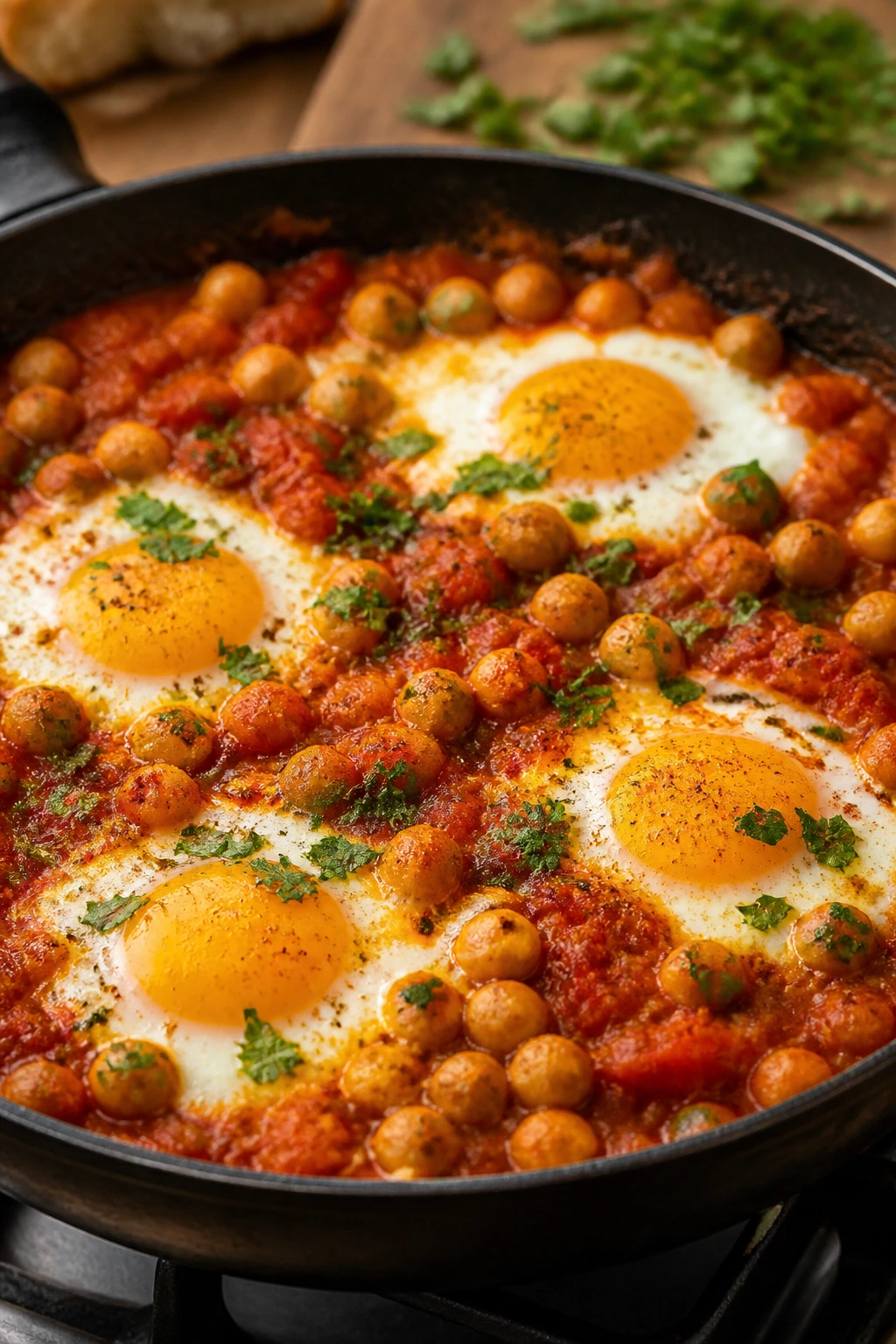
Eggs poached in spiced tomatoes look far fancier than the 20-minute effort they demand. Chickpeas make the skillet feel complete, the yolks turn the sauce silky, and the bread on the side ends up doing some of the best work on the plate.
Why It Works: The tomato base cooks quickly, and the eggs poach right in the sauce without needing a separate pan. Chickpeas bulk up the meal so it doesn’t feel like brunch wearing dinner clothes. A lid on the skillet traps the steam and sets the whites without overcooking the yolks.
Key Ingredients:
- 1 tablespoon olive oil
- 1 small onion, diced
- 1 bell pepper, diced
- 3 cloves garlic, minced
- 1 teaspoon cumin
- 1 teaspoon smoked paprika
- 1 can (28 ounces) crushed tomatoes
- 1 can chickpeas, drained and rinsed
- 4 to 6 large eggs
- 2 tablespoons chopped parsley or cilantro
- Bread or pita, for serving
Quick Steps:
- Cook the vegetables: Heat the olive oil in a skillet over medium heat. Cook the onion and bell pepper for 5 minutes until softened.
- Add garlic and spices: Stir in the garlic, cumin, and paprika for 30 seconds.
- Simmer the sauce: Pour in the tomatoes and chickpeas. Cook for 8 minutes until slightly thickened.
- Add the eggs: Make small wells in the sauce and crack in the eggs. Cover and cook for 4 to 6 minutes, until the whites are set and the yolks still wobble a little.
- Finish: Top with herbs and serve hot with bread.
Equipment for This Recipe:
- Large skillet with a lid
- Wooden spoon
- Small bowl for cracking eggs, if you like a cleaner handoff
How to Serve This Dish: Serve it straight from the skillet with pita, toast, or a loaf of bread for scooping. A little yogurt on the side can calm the spices if the table wants a gentler bowl.
Pro Tips for This Recipe:
- Use a skillet with a lid: Steam is what sets the egg whites evenly.
- Keep the sauce at a simmer, not a boil: Boiling splashes the tomatoes and overcooks the eggs.
- Crack eggs into a bowl first: It’s cleaner and helps you drop them exactly where you want them.
Variations on This Dish:
- Feta Finish: Crumble feta over the top before serving.
- Harissa Shakshuka: Stir 1 tablespoon harissa into the tomatoes for heat.
- Spinach Version: Add a few handfuls of spinach right before the eggs go in.
Common Mistakes to Avoid with This Dish:
- Stirring after the eggs go in: The whites need to stay where they land.
- Making the sauce too thin: Runny sauce makes the eggs slide around.
- Cooking until the yolks are solid: The best part is when the yolk spills into the tomatoes.
16. Crispy Bean and Cheese Quesadillas
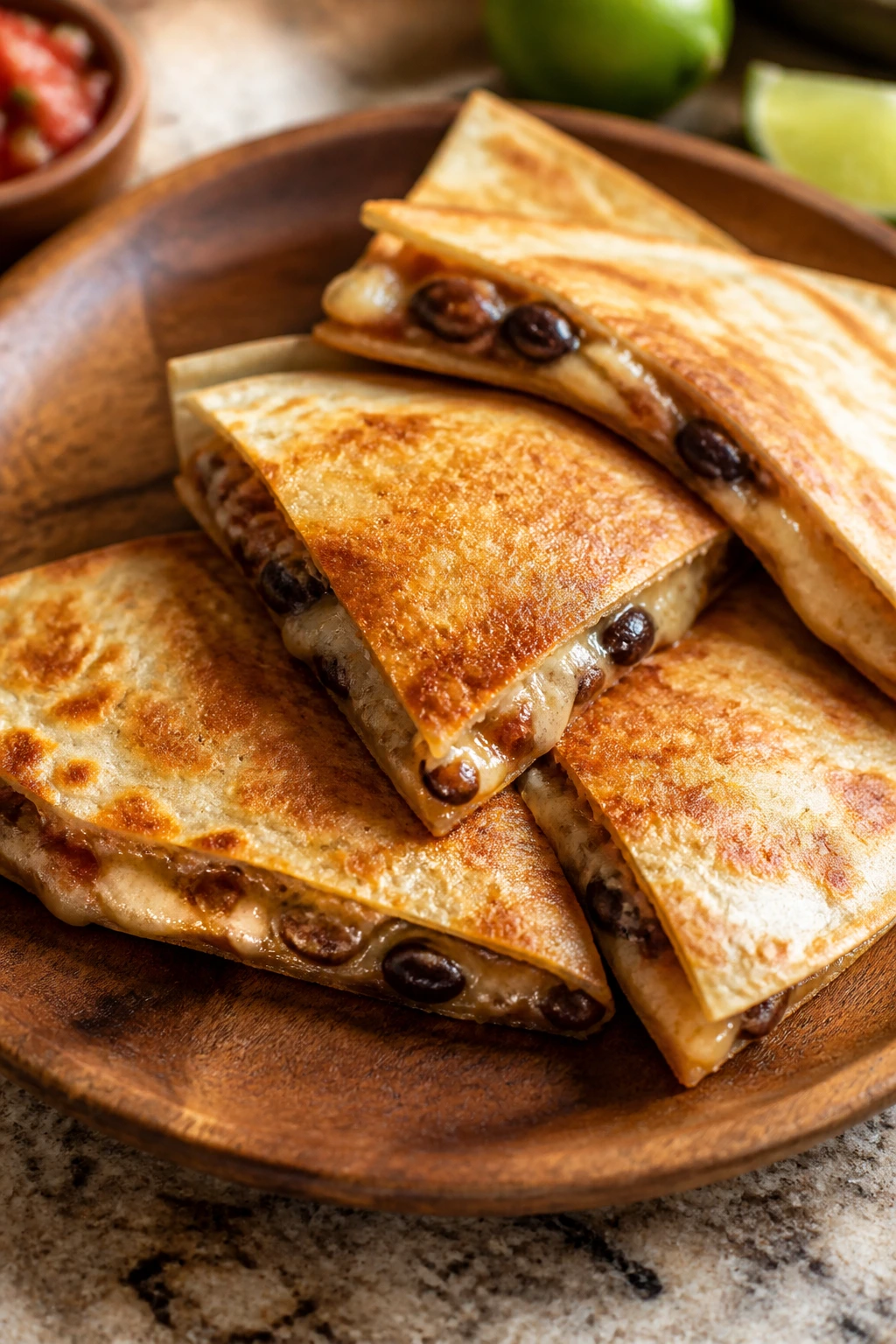
When the budget is thin and the fridge is nearly empty, a hot tortilla with beans and cheese is still a proper dinner. The outside gets crisp, the inside goes creamy, and salsa or sour cream on the side turns a simple skillet move into a meal that feels finished.
Why It Works: Refried beans spread smoothly and keep the filling from falling apart. Cheese acts like glue, and the skillet gives you a brown, crisp tortilla in just a few minutes per side. It’s cheap, fast, and easy to scale up when people wander into the kitchen hungry.
Key Ingredients:
- 8 flour tortillas
- 1 can refried beans
- 1 cup black beans, drained and rinsed
- 2 cups shredded cheddar or Monterey Jack
- 1 small onion, finely diced and sautéed, optional
- 1 tablespoon butter or neutral oil
- 1 jalapeño, sliced thin, optional
- Salsa, for serving
- Cilantro, for serving if you have it
Quick Steps:
- Warm the filling: If using onion or jalapeño, cook them in a skillet for 2 to 3 minutes until softened.
- Assemble: Spread refried beans on one half of each tortilla, add a spoonful of black beans, and top with cheese.
- Fold: Close the tortillas and press lightly.
- Crisp: Cook in a skillet over medium heat with butter or oil for 2 to 3 minutes per side, until golden and the cheese melts.
- Rest and cut: Let the quesadillas sit for 1 minute, then slice into wedges and serve.
Equipment for This Recipe:
- Skillet or griddle
- Spatula
- Knife or pizza cutter for clean wedges
How to Serve This Dish: Serve with salsa, shredded lettuce, or a simple chopped salad if you want the plate to feel less like a snack and more like dinner. Guacamole helps, but it’s not required for the quesadilla to work.
Pro Tips for This Recipe:
- Don’t overfill: Too much filling leaks out before the tortilla crisps.
- Medium heat is your friend: High heat burns the tortilla before the cheese melts.
- Let them rest before slicing: The cheese sets a little and keeps the filling from spilling everywhere.
Variations on This Dish:
- Chicken Quesadilla: Add shredded cooked chicken to the filling.
- Spinach and Bean Version: Add a handful of baby spinach and let it wilt inside.
- Corn and Pepper Version: Stir in a few tablespoons of corn or diced bell pepper.
Common Mistakes to Avoid with This Dish:
- Using heat that’s too high: The tortilla will brown too fast and the cheese will stay firm.
- Packing in too much filling: It makes flipping messy and uneven.
- Cutting immediately: The hot filling runs out if you slice too soon.
Why These Dinners Work When the Clock Is Loud
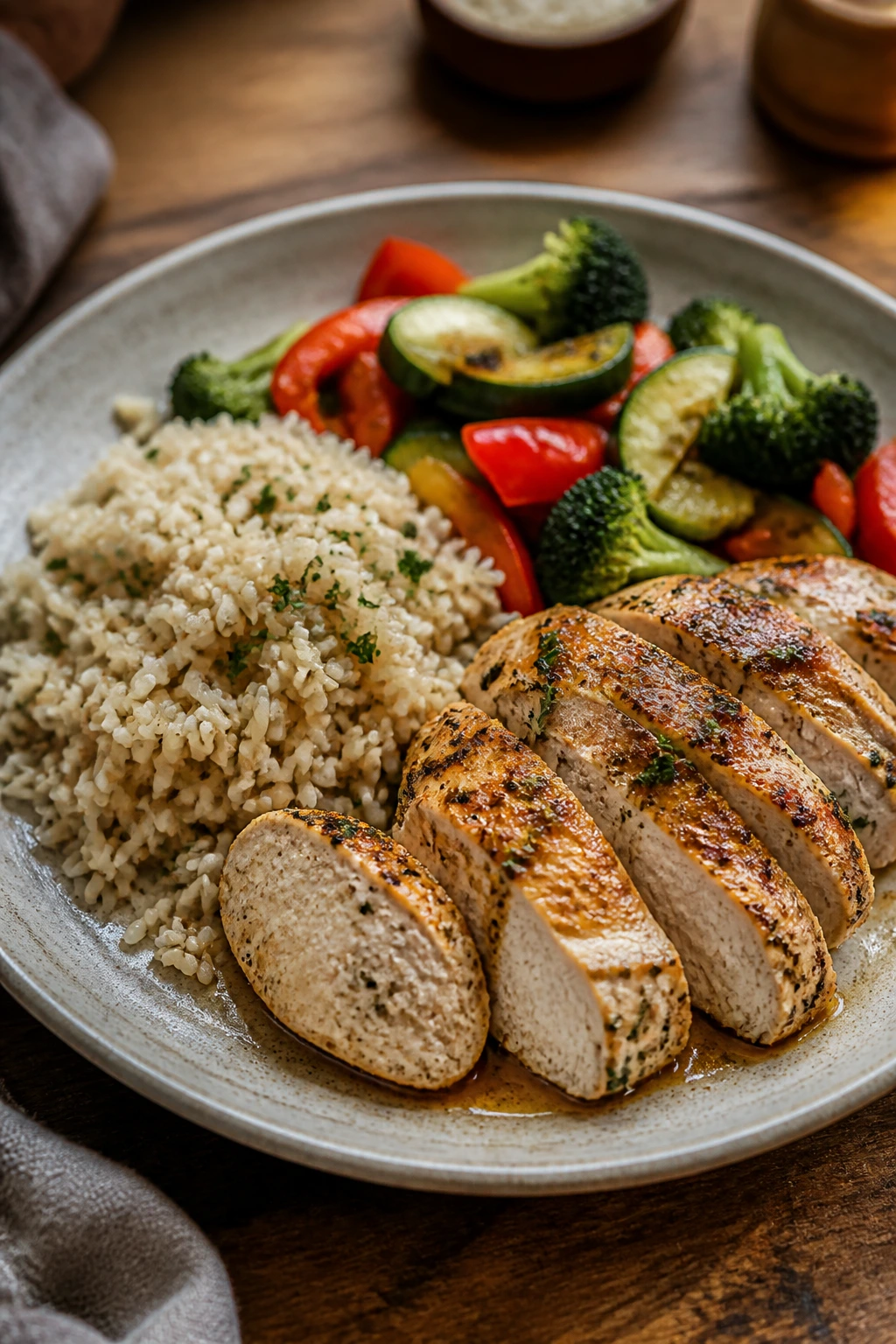
A fast dinner is not only about speed. It’s about ingredient architecture — a little protein, a little starch, a vegetable that cooks in minutes, and a sauce that does more than sit there. That’s why ground beef with rice works, why chickpeas can carry curry, and why a can of tuna becomes dinner once pasta water and lemon get involved.
The other trick is accepting that weeknight cooking gets easier when each ingredient has more than one job. Beans stretch meat. Tortillas thicken sauce. Rice soaks up pan juices. Frozen vegetables save chopping and still give texture if you stop cooking them before they collapse. That’s the whole engine behind this kind of cooking. Not drama. Just good parts doing multiple jobs at once.
Essential Equipment for These Recipes
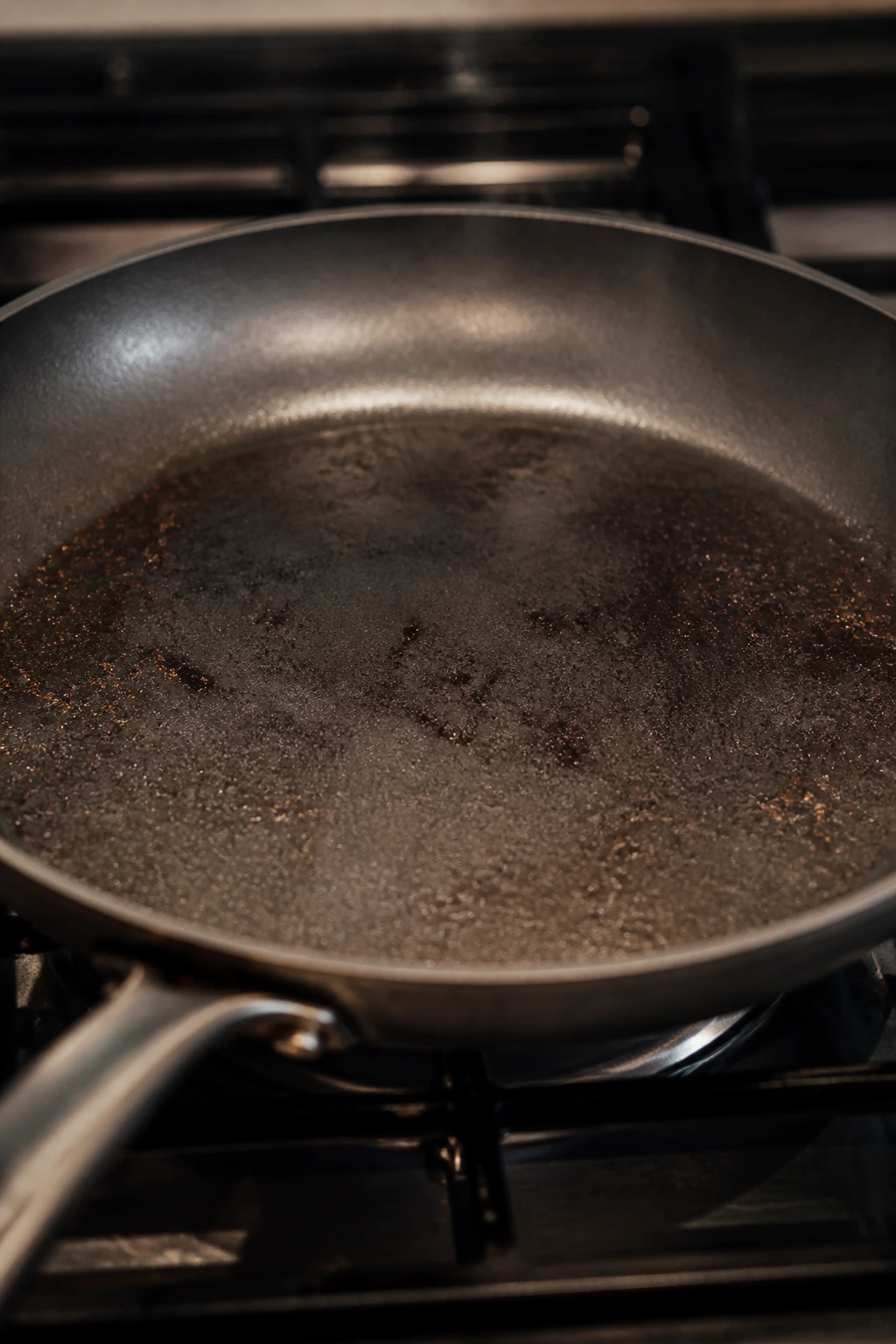
- 12-inch skillet: The workhorse for chicken, stir-fries, egg roll bowls, and quesadillas.
- Deep skillet or Dutch oven: Best for chili mac, pasta e fagioli, and saucy one-pot pasta.
- Soup pot: Useful for ramen soup and bean-heavy soups that need room.
- Sheet pan, optional but handy: Not required here, but helpful if you want to roast vegetables or reheat leftovers without sogginess.
- Wooden spoon or heatproof spatula: Better than a thin metal spoon for breaking meat and scraping browned bits.
- Tongs: Clean chicken flipping, sausage turning, and noodle lifting all get easier.
- Instant-read thermometer: The quickest way to keep chicken safe without drying it out.
- Colander: Still useful, even when most dinners are one-pan.
- Sharp chef’s knife: Thin, even slices matter for peppers, onions, and chicken.
- Measuring cups and spoons: Fast food still needs correct salt and liquid.
Smart Shopping and Ingredient Tips That Save Time and Cash
The cheapest dinner ingredients are usually the ones that do more than one job. Canned beans bring protein and bulk. Eggs can be dinner, garnish, or sauce. Rice and pasta stretch a small amount of meat into a full plate. Frozen vegetables are worth keeping around because they’re picked and frozen at a good point, which means they often taste better than tired produce hiding in the crisper drawer.
For protein, choose the cut that fits the clock. Chicken thighs stay juicier than breasts and cost less in many stores. Ground turkey is leaner and fine for taco bowls, sloppy joe pasta, or chili mac, but it needs seasoning and a little fat so it doesn’t taste dusty. Rotisserie chicken is the fastest shortcut in the building, and I’m not embarrassed to say that out loud. It saves time in soup, pasta, bowls, and quesadillas.
Store-brand pantry items are usually fine here. Canned tomatoes, broth, pasta, rice, beans, and even frozen corn rarely need a premium label to do their job. If you want one place to spend a little extra, buy a good olive oil, decent Parmesan, and low-sodium broth. Those three change the taste of a pan faster than any fancy spice blend.
For vegetables, think in terms of cut size and sturdiness. Slaw mix, broccoli florets, green beans, spinach, peppers, onions, and frozen peas all behave well on a busy night. A head of cauliflower or a bag of carrots can be useful too, but only if you’re willing to slice them thin enough to finish before everyone gets restless.
How to Serve These Recipes Without Extra Work
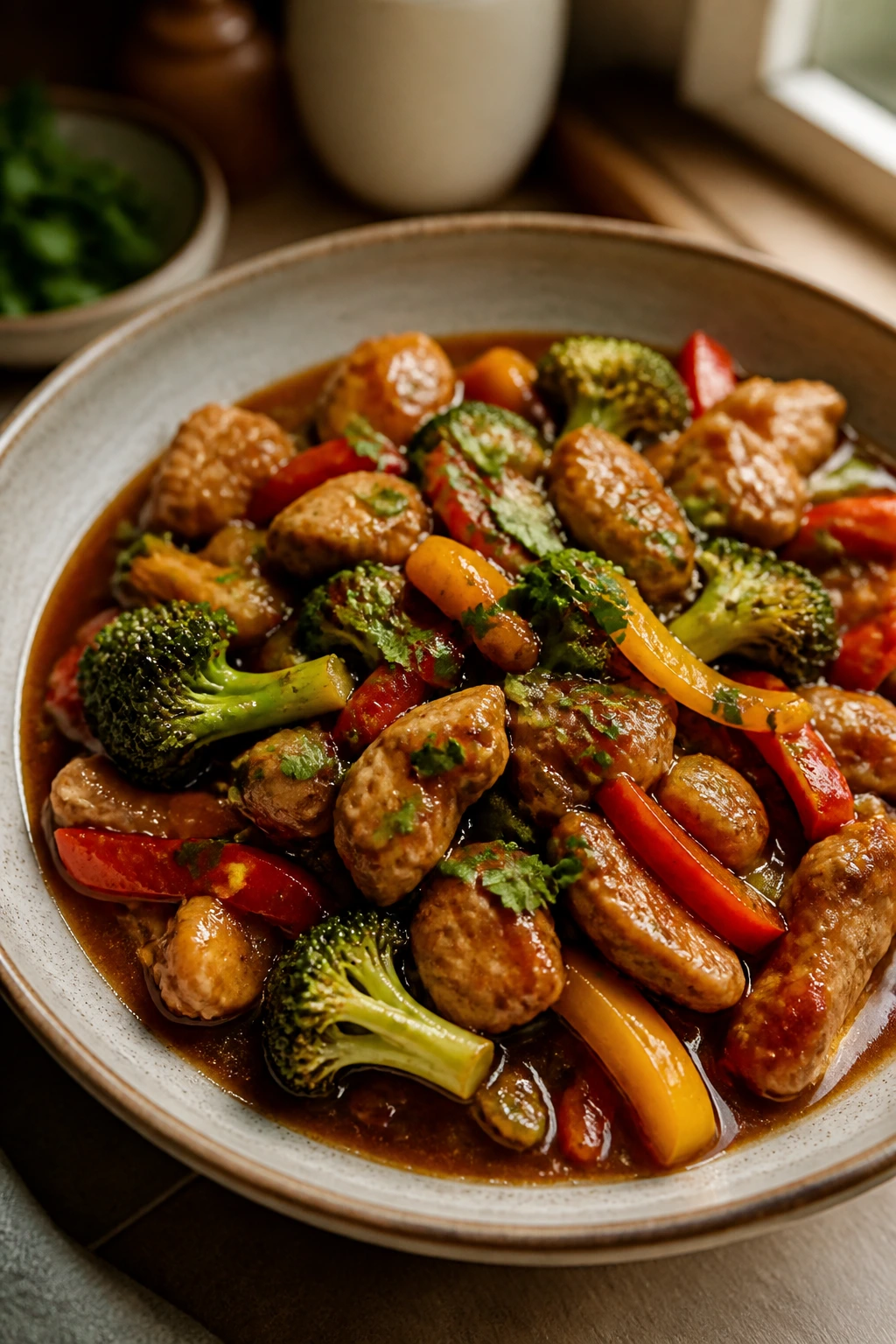
Presentation: Keep the plating simple and use contrast. Put saucy dinners in shallow bowls, scatter herbs or scallions on top, and add something bright — lemon wedges, lime wedges, chopped parsley, cilantro, or a spoon of yogurt — so the color doesn’t all collapse into one brown note.
Accompaniments: Rice, buttered noodles, crusty bread, pita, tortilla chips, and a plain green salad all pull weight across this group. If the main dish is already starchy, add a crisp side instead of another starch. A bagged salad dressed with olive oil, vinegar, and salt is not glamorous, but it works.
Portions: Most of these recipes feed 4, with the pasta and bean dishes stretching to 5 or 6 if the portions are modest. For hungrier eaters, add bread, rice, or chips rather than trying to force the main dish to become something it isn’t. That’s cheaper than doubling meat, and usually smarter.
Beverage Pairing: Sparkling water with lime keeps everything feeling lighter. Iced tea, a simple beer, or even cold water with cucumber slices works too. These are dinner-table drinks, not a ceremony.
Additional Tips and Flavor Boosters
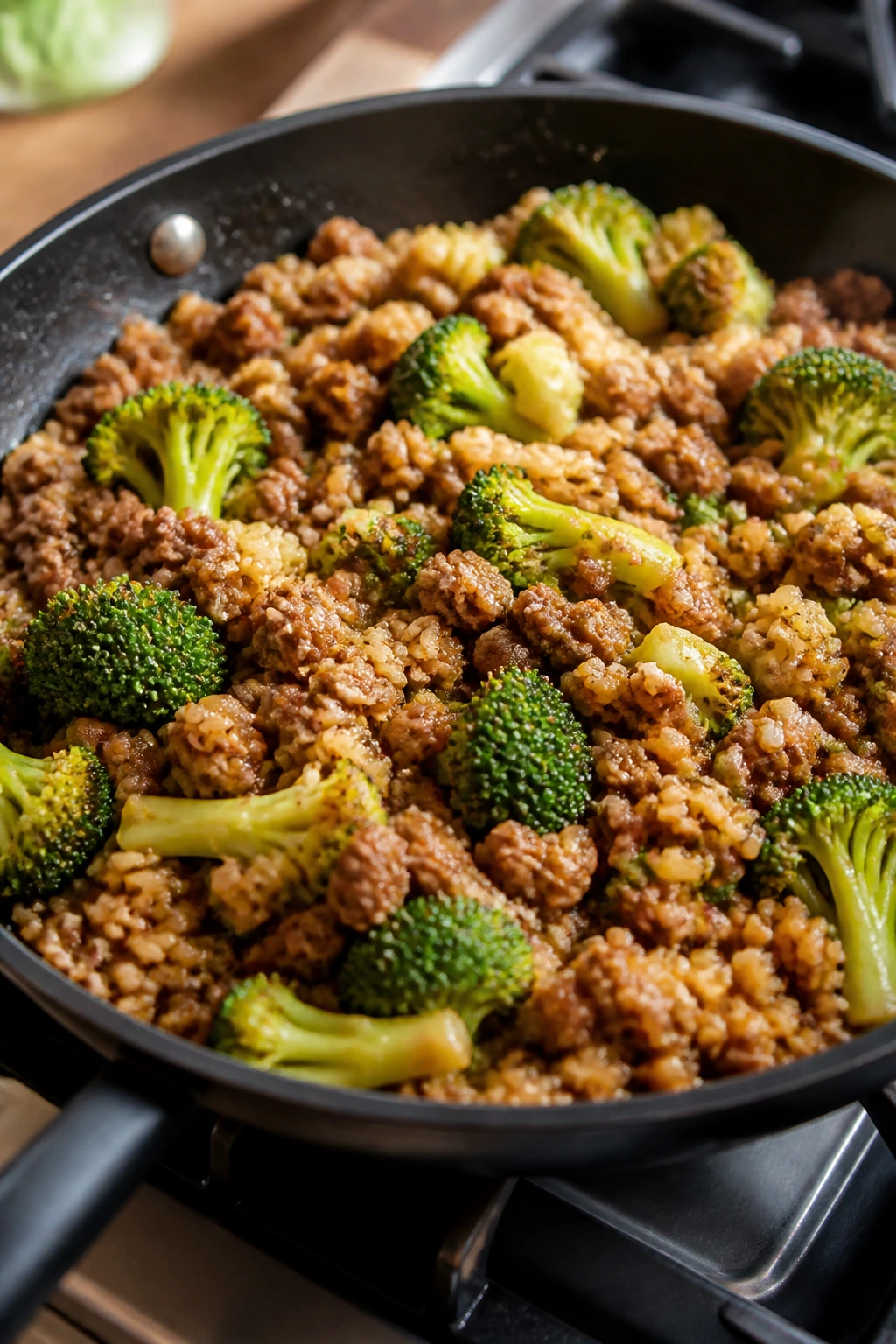
Flavor Enhancement: Keep one acidic finish in the house — lemon juice, lime juice, rice vinegar, or red wine vinegar. A teaspoon or two at the end can wake up an otherwise plain skillet and stop it from tasting flat.
Customization: Use what’s already in the kitchen before buying a specialty ingredient. Frozen peas can stand in for green beans, cabbage can stand in for broccoli slaw, and cooked rice can replace pasta in half the recipes here. The dinner still works if you keep the texture and seasoning logic intact.
Serving Suggestions: A sharp garnish matters more than people think. Scallions, herbs, sesame seeds, grated cheese, or a spoonful of sour cream give a bowl some finish, and finish is what makes a weeknight meal feel complete.
Make-It-Yours: For dairy-free meals, skip cheese-heavy finishes and lean on olive oil, herbs, and acid. For gluten-free versions, use rice, corn tortillas, or gluten-free pasta. For low-sodium cooking, choose broth and soy sauce with less salt, then season at the end instead of chasing it early.
Make-Ahead, Storage, and Reheating Guidance
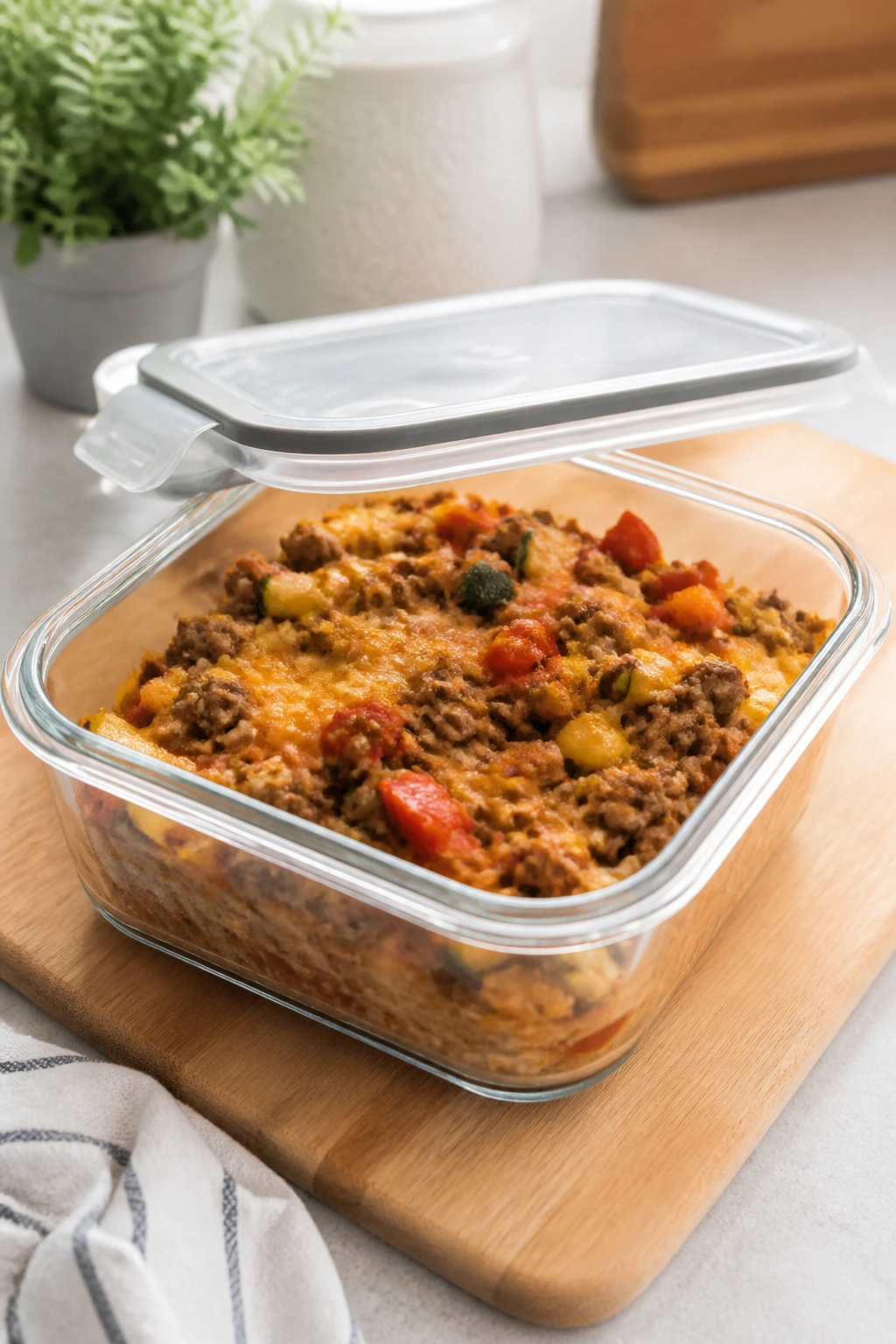
Most of these dinners hold up in the fridge for 3 to 4 days, though a few need a small fix when they reheat. Soups like ramen and pasta e fagioli can go up to 4 days refrigerated and 2 to 3 months frozen if you cool them in shallow containers first. Chili mac, sloppy joe pasta, and tomato pasta also freeze well for about 2 months, though the pasta will soften a bit after thawing.
Rice dishes and skillet meals reheat best with a splash of water or broth. Cover the bowl and microwave in 30- to 45-second bursts, stirring once or twice, or rewarm them in a skillet over medium-low heat until steaming. That little bit of added liquid keeps the rice or pasta from drying into a brick.
Chicken and sausage dishes reheat well in a skillet at low heat with the lid on for a few minutes. Quesadillas are the exception. They’re better cooked fresh and eaten right away, because the tortilla loses its crisp edge once it sits. If you need to make them ahead, assemble the filling, keep it chilled, and cook them at the last minute.
For make-ahead work, cook rice, chop vegetables, and mix sauces earlier in the day if you can. Keep wet ingredients separate from crisp ones until the pan is hot. That keeps lettuce from wilting, tortillas from tearing, and rice from clumping into a stubborn lump.
Variations and Adaptations to Try
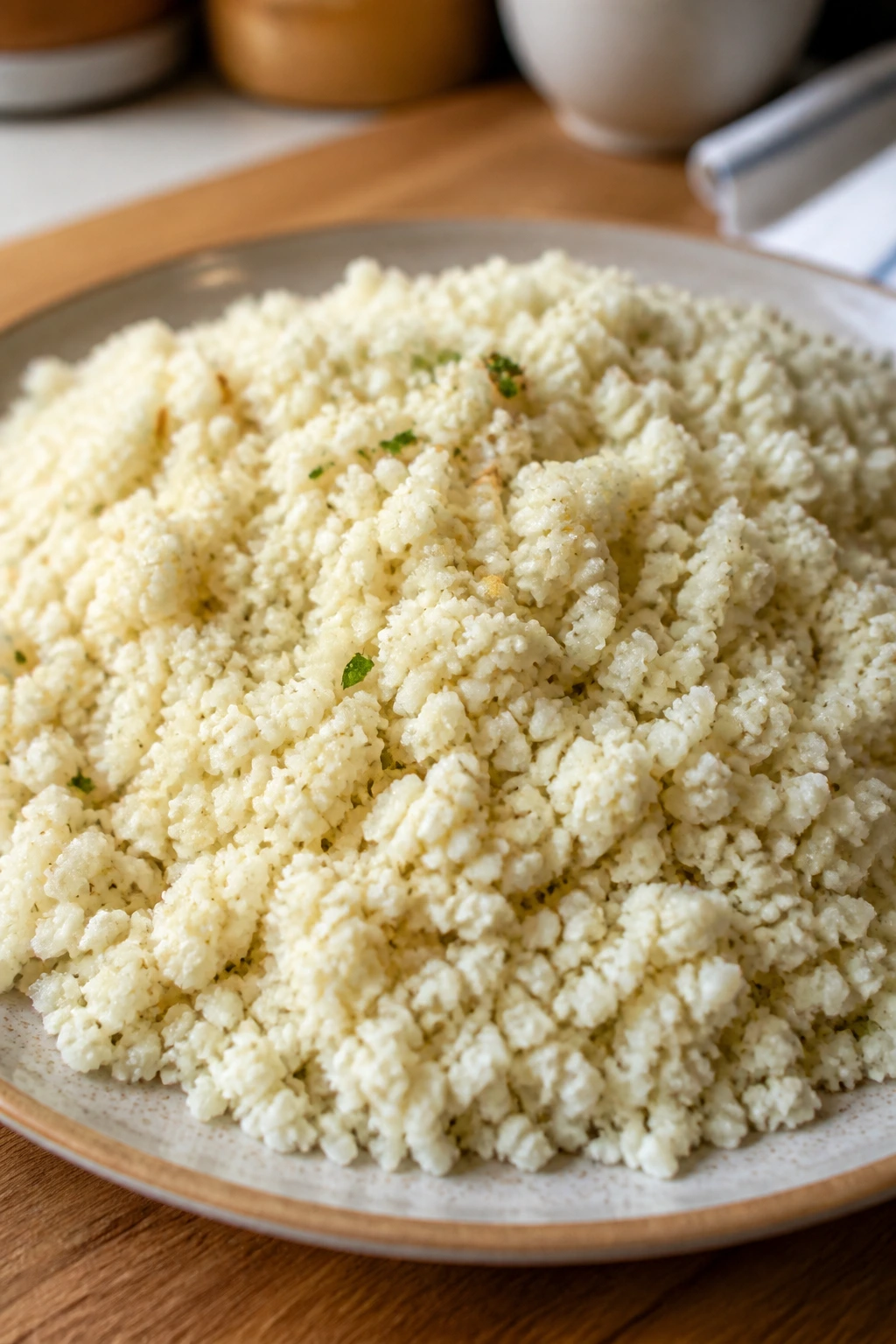
Pantry-Only Rescue Night: Build dinner around canned beans, pasta, rice, tuna, tomatoes, and frozen vegetables. This is the version to use when the grocery run didn’t happen and you need something that still feels like a meal.
Meatless Monday Switch: Swap ground meat for lentils, chickpeas, or extra beans in chili mac, sloppy joe pasta, taco bowls, and pasta e fagioli. The dishes still hold together because the sauce and starch are doing part of the work.
Low-Carb Bowl Swap: Replace rice or pasta with cauliflower rice, shredded cabbage, or a pile of sautéed greens. That works especially well for fried rice, taco bowls, and egg roll in a bowl, where the texture matters more than the grain itself.
Kid-Friendly Mild Mode: Pull the hot sauce, chili flakes, and jalapeños back a notch, then put them on the table instead of in the pan. Kids usually do better with a plain base and a few toppings they can choose themselves.
Double-Batch Sunday Prep: Make a bigger batch of one or two recipes — chili mac, taco turkey, or pasta e fagioli — and portion half for later in the week. The second meal takes almost no extra effort, which is the whole point.
Bright Finish Upgrade: Add lemon, lime, vinegar, herbs, or scallions at the very end of the cook. That one habit makes a cheap dinner taste finished instead of merely hot.
Common Mistakes to Avoid
-
Trying to make every dinner from scratch: If you chop every vegetable by hand and make every sauce from nothing, the night gets longer than the recipe promised. Use frozen vegetables, canned beans, and rotisserie chicken when they save time without wrecking the dish.
-
Overcooking lean protein: Ground turkey, chicken breast, and tuna all dry out fast if you leave them on heat too long. Pull them as soon as they’re cooked through and let the sauce do the rest.
-
Cooking with a cold or overcrowded pan: Meat won’t brown properly if the skillet is packed. Work in batches when needed, and give the pan a minute to heat before food goes in.
-
Under-seasoning early and late: A little salt goes into the pan before cooking, and a little acid or herb finish goes in at the end. If you only season once, the food usually tastes flat.
-
Letting starch go soft and soggy: Pasta and rice keep cooking after the heat is off. Pull them a little early and stop them from going mushy while they sit.
-
Ignoring texture: A good weeknight dinner needs something soft, something crisp, and something saucy. If every bite feels the same, the meal loses energy fast.
Frequently Asked Questions
Can I swap frozen vegetables for fresh in these dinners?
Yes, and in some recipes I’d actually do it on purpose. Frozen broccoli, peas, mixed vegetables, and spinach are picked for quick cooking, so they often work better than tired fresh produce on a weeknight.
Which of these dinners make the best leftovers?
Chili mac, pasta e fagioli, taco turkey bowls, curry, and soup are the strongest leftover dishes here. Quesadillas are the weakest, because the crisp tortilla softens once stored.
How do I stretch one recipe to feed a bigger family?
Add rice, beans, bread, or a side salad before you double the meat. A can of beans and a bag of frozen vegetables cost less than another pound of protein and usually make the meal feel more complete.
Do I need an instant-read thermometer for chicken recipes?
You don’t need one, but it saves guesswork and keeps chicken from drying out. For chicken thighs and breasts, 165°F is the target, and it takes seconds to check.
What if I only have 20 minutes?
Go straight for tuna pasta, quesadillas, egg roll in a bowl, fried rice, or garlicky chicken thighs cut thin. Those are the quickest dinners in the group because they use ingredients that cook fast or are already cooked.
Can I use ground turkey in place of beef?
Absolutely. It works in chili mac, taco bowls, sloppy joe pasta, and egg roll in a bowl. Just add a little oil and enough seasoning, because turkey needs more help than beef does.
Which recipes freeze best?
Soup, chili mac, sloppy joe pasta, curry, and pasta e fagioli freeze well for about 2 months. Cooked pasta will soften after freezing, so if texture matters, undercook it a little or freeze the sauce separately.
How do I keep rice from turning clumpy or dry when reheating?
Add 1 to 2 tablespoons of water or broth, cover the container, and reheat in short bursts. A skillet over medium-low heat works too, especially if you stir once or twice while it warms.
Keeping Dinner Moving
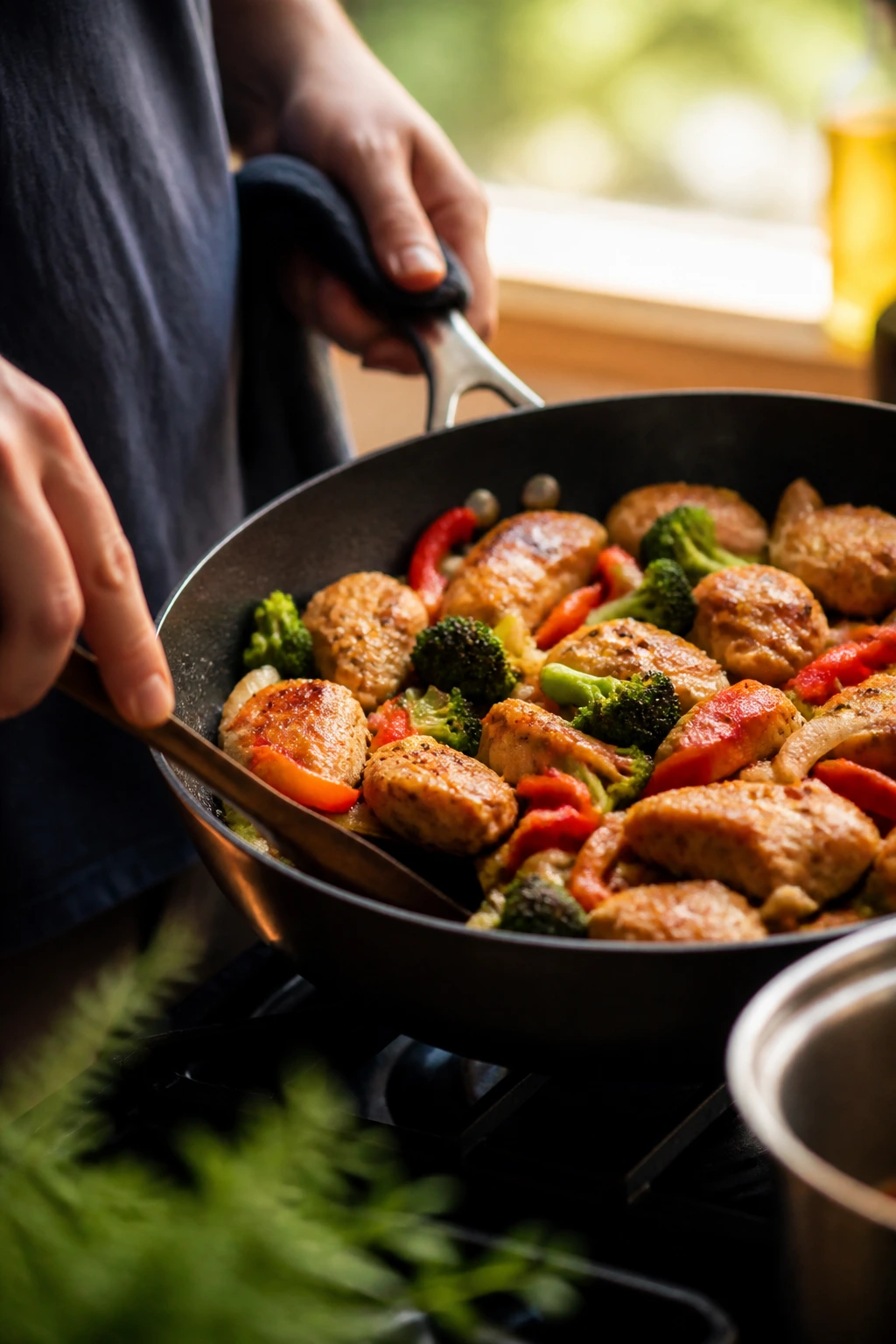
The real win here is not a fancy technique. It’s having a handful of dinners you can make without standing in the kitchen wondering what to do with your life after 6 p.m. A skillet of chicken, a pot of pasta, a bowl of beans and rice — they all buy you the same thing: a normal dinner, on a normal night, without the drama.
Keep a few of the right ingredients on hand, and the whole week loosens up. A bag of rice, a can of beans, a box of pasta, one decent skillet, and a couple of vegetables that don’t mind being cooked hard. That’s enough to get dinner done more than once, and it’s enough to make the next busy night feel less like a problem and more like a recipe you already know how to solve.