



A hot skillet of smoked sausage does a particular kind of magic in the kitchen. The first few slices hit the pan and start to brown at the edges, and suddenly the whole room smells like you’ve already done half the work. For bacon lovers, that’s the appeal in a nutshell: you get the salty, smoky, savory punch and the crisped bits, but without standing over a skillet of delicate strips that need constant babysitting.
Smoked sausage plays a different role than bacon, and that’s why it’s useful. It stays meaty. It slices cleanly. It can carry potatoes, beans, pasta, rice, cabbage, peppers, and cheese without falling apart, which means you can build a real dinner around it instead of sprinkling it over something and hoping it behaves. The trick is to brown it hard enough that the edges darken; that’s where the flavor lives.
Once you learn how to lean on that browned sausage-and-pan-drip combination, the rest gets easy. Onions soften in the fat. Garlic smells sweet instead of sharp. Potatoes pick up the flavor from the bottom of the pan. Rice, beans, and pasta stop tasting like separate ingredients and start tasting like they were meant to be together. That’s the reason these dishes keep showing up in home kitchens. They’re practical, but they don’t taste like a compromise.
Why Smoked Sausage Keeps Bacon Fans Coming Back
-
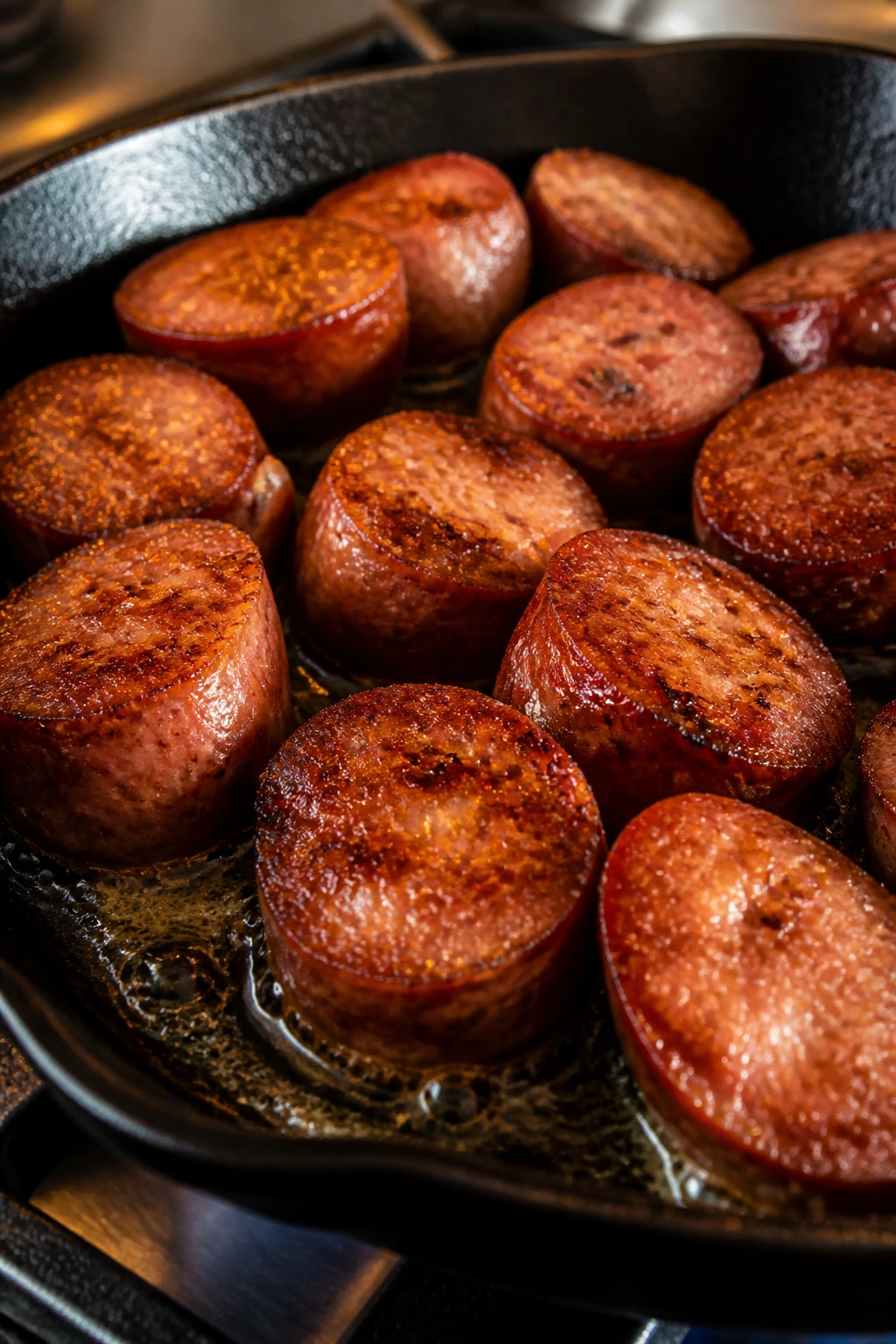
Browning matters: A good smoked sausage sear gives you the crisp, salty edge that bacon lovers chase, especially when the cut faces sit flat in the pan for a minute or two.
-
The fat does real work: Smoked sausage leaves behind enough rendered fat to coat potatoes, cabbage, onions, and rice, so the dish starts tasting finished before you’ve added much else.
-
The flavor is built in: Garlic, paprika, pepper, and smoke are already part of the package, which means you don’t have to fight to create depth from scratch.
-
It stretches well: One pound of sausage can anchor a skillet, soup, or casserole for four to six people when you pair it with beans, pasta, or vegetables.
-
It handles leftovers better than bacon: Reheated sausage keeps its shape, so next-day fried rice, soup, or pasta still feels like dinner instead of a pile of limp pieces.
-
It plays well with acid: A splash of vinegar, mustard, pickled onions, or tomatoes keeps the richness from turning flat. That little sharp note is what makes the whole plate pop.
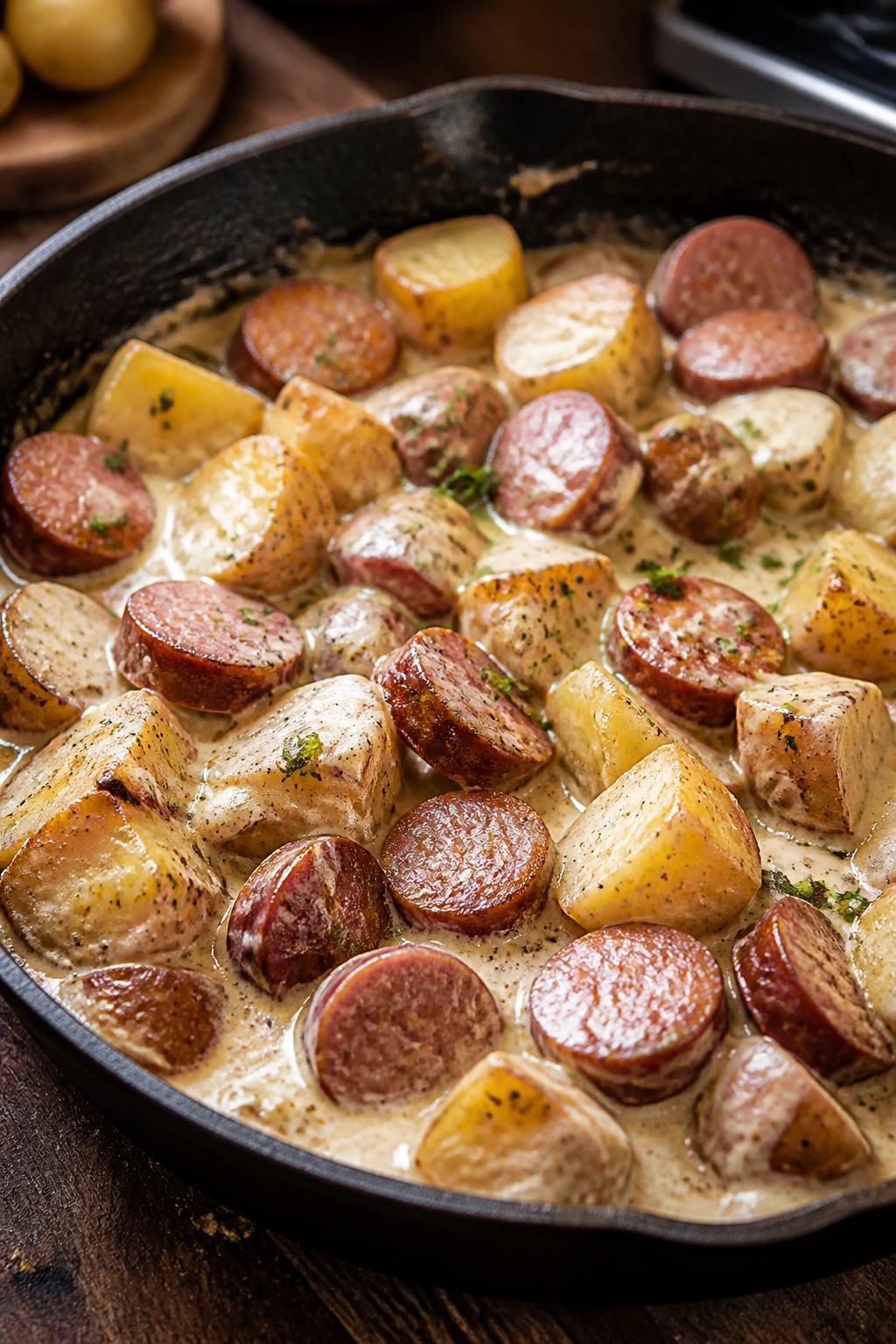
1. Creamy Smoked Sausage and Potato Skillet
The edges of the potatoes go golden, the sausage gets those dark, sticky brown spots, and the whole skillet ends up tasting like it came from a diner that knows exactly when to stop cooking. This is the kind of pan meal that smells better than it has any right to.
Why It Works:
Smoked sausage and potatoes are a very old, very smart pairing. The sausage gives you the smoky, bacon-like note; the potatoes soak up the fat and seasoning; the cream or sour cream at the end smooths out the rough edges without making the pan heavy. Use Yukon Gold potatoes if you can. They hold their shape better than russets and turn soft at the center while still catching a little crisp on the outside.
Key Ingredients:
- 1 lb smoked sausage, sliced into 1/2-inch coins
- 1 1/2 lbs Yukon Gold potatoes, diced into 1/2-inch pieces
- 1 small yellow onion, thinly sliced
- 2 cloves garlic, minced
- 1 teaspoon smoked paprika
- 1/2 teaspoon black pepper
- 1/2 cup chicken broth
- 1/3 cup sour cream
- 1 cup shredded sharp cheddar
- 2 tablespoons chopped parsley
Quick Steps:
- Par-cook the potatoes: Simmer the diced potatoes in salted water for 6 to 7 minutes, just until the outside gives a little but the centers are still firm. Drain well.
- Brown the sausage: Heat a large skillet over medium-high heat with no extra fat. Cook the sausage for 3 to 4 minutes per side until the edges darken.
- Cook the onion: Add the onion and cook for 3 minutes, stirring into the sausage drippings, until soft and glossy.
- Crisp the potatoes: Add the potatoes, garlic, smoked paprika, and pepper. Cook for 8 to 10 minutes, turning only now and then so the potatoes can brown.
- Finish creamy: Pour in the broth, scrape up the browned bits, then stir in the sour cream and cheddar. Cook just until melted and thick.
Equipment for This Recipe:
- Large 12-inch skillet
- Medium pot for par-cooking potatoes
- Wooden spoon or spatula
- Colander
- Sharp chef’s knife
How to Serve This Dish:
Pile it into shallow bowls and finish with parsley and a few extra grinds of pepper. A crisp green salad or buttered green beans on the side keeps the plate from feeling too heavy.
Pro Tips for This Recipe:
- Slice the sausage on a bias if you want more browned surface area.
- Don’t skip the par-cook on the potatoes; raw cubes take forever and soak up too much fat.
- Add the sour cream off the heat if your stove runs hot.
- A teaspoon of Dijon stirred in at the end makes the whole skillet taste sharper.
Variations on This Dish:
- Pepper Jack Version: Swap the cheddar for pepper jack and add diced jalapeño with the onions.
- Loaded Baked Potato Style: Top with chives, extra cheese, and a spoonful of Greek yogurt.
- Cabbage Swap: Replace half the potatoes with thin-sliced cabbage for a lighter, sweeter skillet.
Common Mistakes to Avoid with This Dish:
- Skipping the potato pre-cook: The centers stay hard while the sausage is already done.
- Stirring too often: You’ll lose the crisp edges. Let the pan sit.
- Adding dairy before the heat drops: Sour cream can break or look grainy if the skillet is screaming hot.
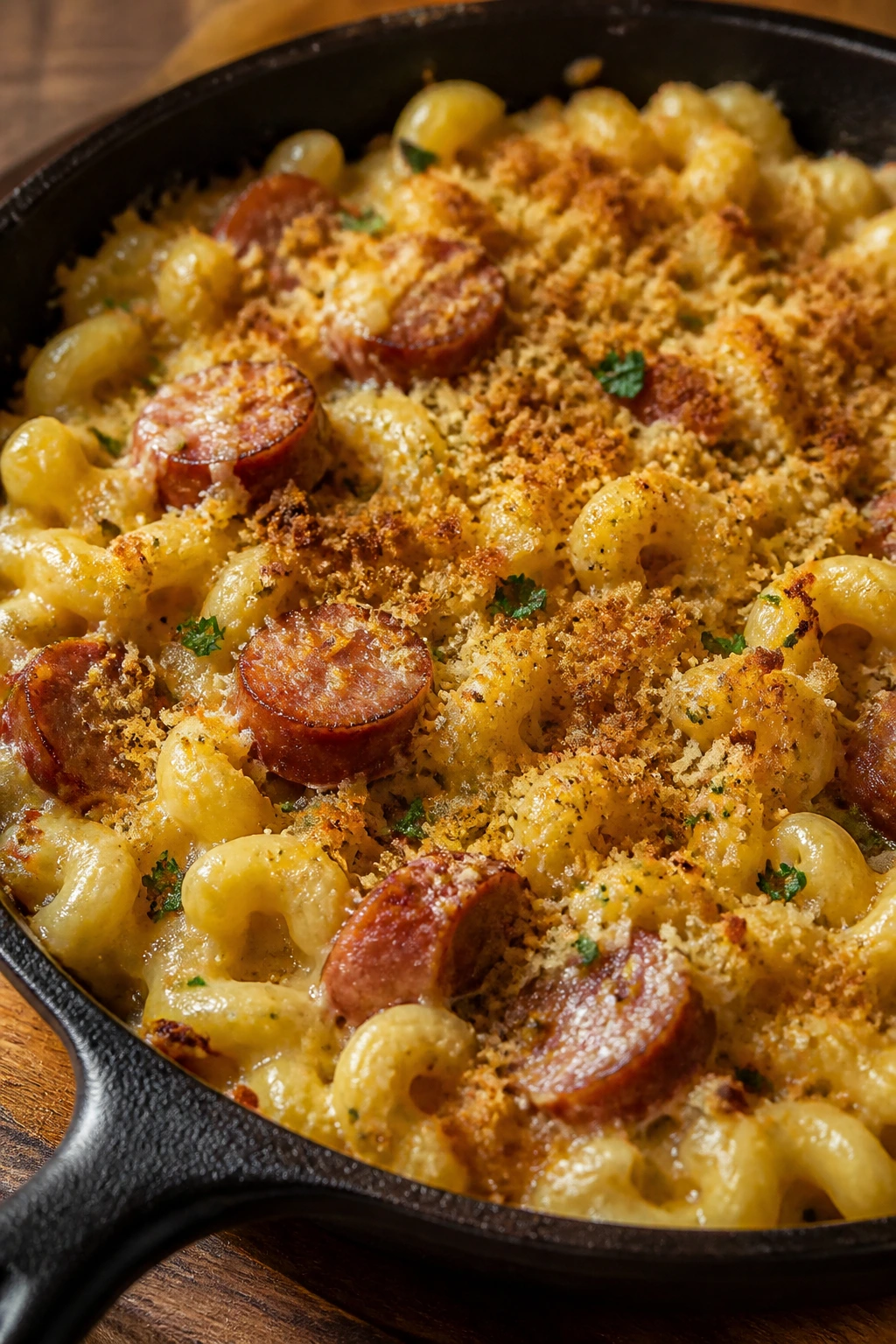
2. Smoked Sausage Mac and Cheese with Crispy Topping
This is mac and cheese for people who want dinner to feel a little louder. The sausage brings smoky, salty chunks, and the top bakes into a crunchy lid that cracks when you spoon through it.
Why It Works:
Mac and cheese needs contrast. Soft pasta alone can feel flat, but smoked sausage gives you chew, salt, and fat in every bite. A little Dijon in the cheese sauce keeps the whole dish from tasting one-note, and the panko topping gives you the toasted edge bacon lovers tend to chase in casseroles.
Key Ingredients:
- 12 oz elbow macaroni or cavatappi
- 12 oz smoked sausage, halved and sliced
- 3 tablespoons butter
- 3 tablespoons all-purpose flour
- 2 cups whole milk
- 1 cup half-and-half
- 2 1/2 cups shredded sharp cheddar
- 1 cup shredded Monterey Jack
- 1 teaspoon Dijon mustard
- 3/4 cup panko breadcrumbs
Quick Steps:
- Cook the pasta in salted water until just shy of al dente, about 1 minute less than the box says. Drain and set aside.
- Brown the sausage in a skillet over medium-high heat for 4 to 5 minutes, then spoon it onto a plate.
- Make a roux with butter and flour over medium heat for 1 minute, then whisk in the milk and half-and-half until smooth.
- Simmer the sauce for 3 to 4 minutes until it lightly coats the back of a spoon, then stir in the cheeses and Dijon.
- Fold in the pasta and sausage, pour into a buttered baking dish, top with panko, and bake at 375°F for 15 to 20 minutes until bubbling.
Equipment for This Recipe:
- Large pot
- Deep skillet or saucepan
- 9×13-inch baking dish
- Whisk
- Box grater
How to Serve This Dish:
Serve it hot from the oven with a sharp salad dressed in vinaigrette. A spoonful on the plate should show stretchy cheese, browned crumbs, and sausage on top.
Pro Tips for This Recipe:
- Grate the cheese yourself if you want the sauce to melt smoothly.
- Pull the pasta early; it finishes cooking in the oven.
- Let the sauce cool for a minute before adding cheese so it stays silky.
- If you like a little bite, add 1/2 teaspoon cayenne.
Variations on This Dish:
- Smoky Broccoli Bake: Stir in 2 cups blanched broccoli florets before baking.
- White Cheddar Route: Use white cheddar and swap Dijon for a pinch of dry mustard.
- Jalapeño Popper Style: Add diced jalapeños and a handful of cream cheese to the sauce.
Common Mistakes to Avoid with This Dish:
- Boiling the cheese sauce hard: It can turn grainy or oily. Keep the heat moderate.
- Using dry, overcooked pasta: It absorbs too much sauce and turns pasty.
- Skipping the browning step: You lose the smoky edge that makes this dish worth making.
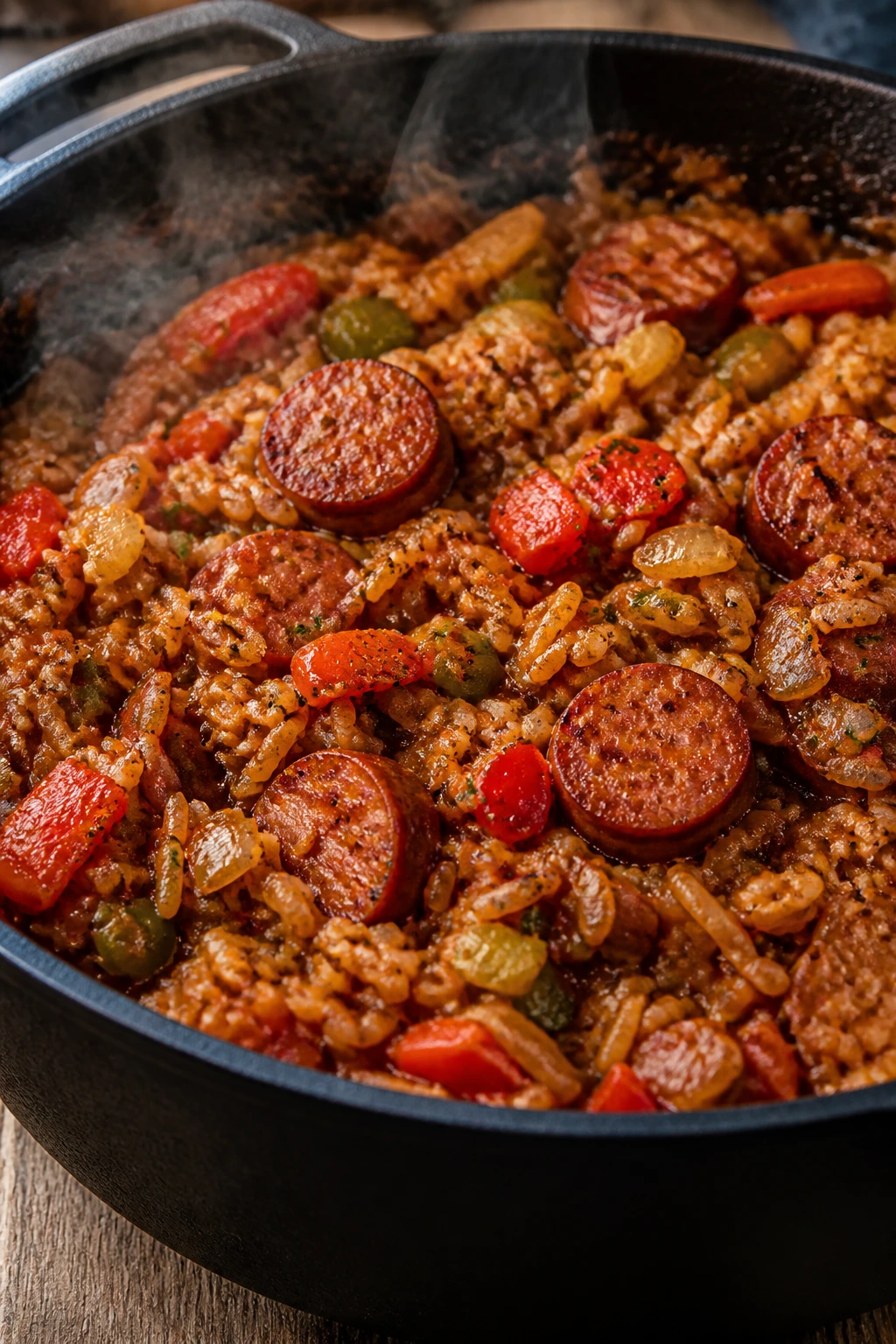
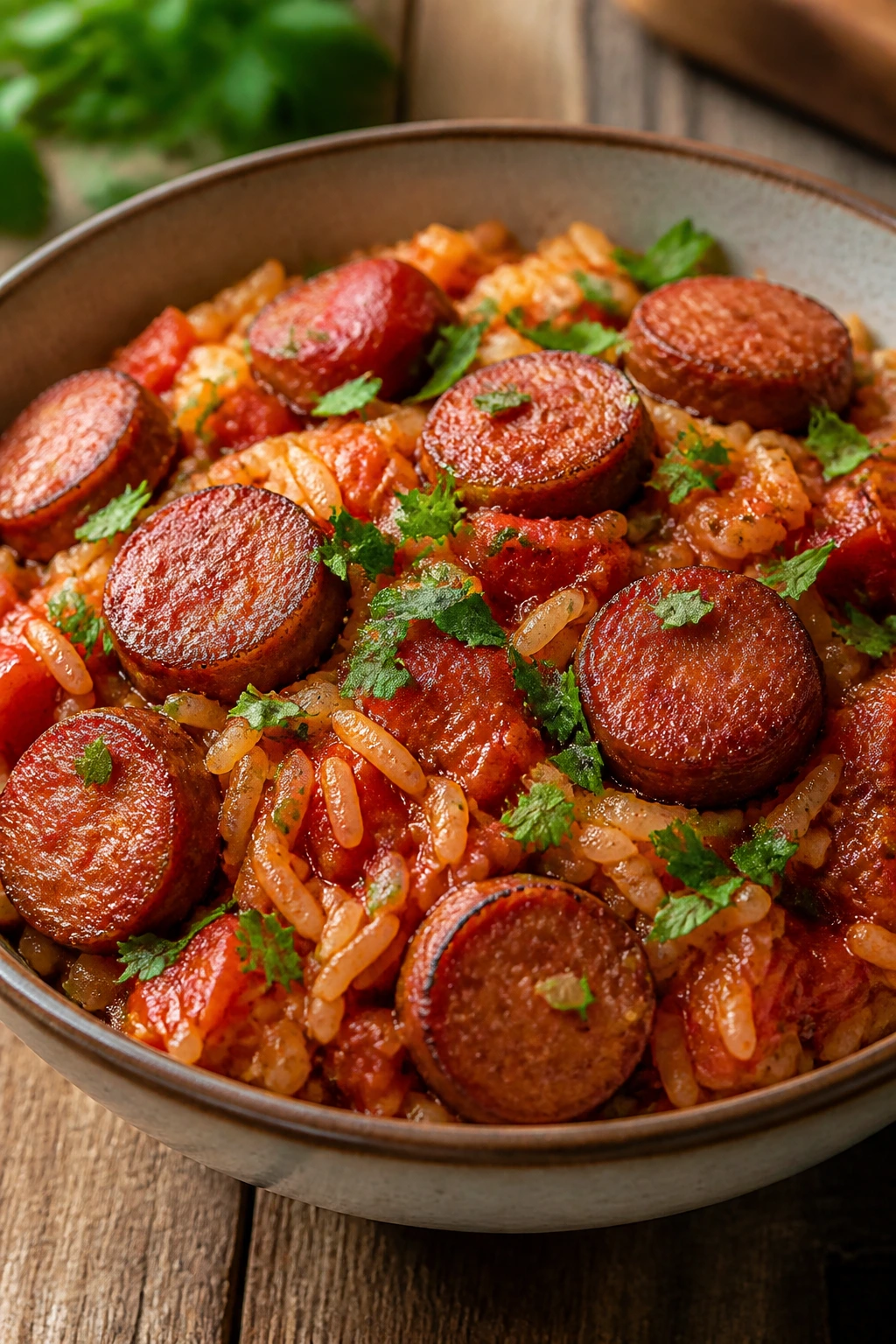
3. One-Pot Cajun Smoked Sausage Jambalaya
The best jambalaya has a little stubbornness to it. The rice should come out seasoned all the way through, the sausage should be browned at the edges, and the bottom should catch a few toasty bits that you hear when you scrape the pot.
Why It Works:
Smoked sausage is built for rice dishes because it seasons the pot from the start. Cajun seasoning, tomato, onion, celery, and bell pepper all build a dark, savory base, and the rice absorbs that liquid like it was waiting for it. If you’ve ever wanted something with the richness of bacon but more substance in the bowl, this is the lane.
Key Ingredients:
- 1 lb smoked andouille or kielbasa, sliced
- 1 1/2 cups long-grain white rice
- 1 medium onion, diced
- 1 green bell pepper, diced
- 2 celery ribs, diced
- 3 cloves garlic, minced
- 1 can (14.5 oz) diced tomatoes
- 3 cups chicken broth
- 2 teaspoons Cajun seasoning
- 2 tablespoons sliced green onions
Quick Steps:
- Brown the sausage in a heavy pot over medium-high heat for 4 minutes, then remove it.
- Cook the onion, bell pepper, and celery in the same pot for 5 to 6 minutes until softened and slightly glossy.
- Add the garlic and Cajun seasoning, then stir for 30 seconds until fragrant.
- Stir in the rice, tomatoes, broth, and sausage. Bring to a boil, then drop to low, cover, and cook for 18 minutes.
- Turn off the heat, rest covered for 10 minutes, then fluff and finish with green onions.
Equipment for This Recipe:
- Heavy Dutch oven or deep pot
- Wooden spoon
- Measuring cups
- Sharp knife and cutting board
How to Serve This Dish:
Spoon it into wide bowls and add hot sauce at the table. A little crisp cucumber salad on the side cuts the richness without getting in the way.
Pro Tips for This Recipe:
- Use long-grain rice so the grains stay separate.
- Don’t stir once the pot is covered. That’s how you turn jambalaya into mush.
- A splash of Worcestershire deepens the background flavor.
- If the rice looks dry before it’s tender, add 1/4 cup broth and keep going.
Variations on This Dish:
- Chicken-and-Sausage Blend: Add 1 cup cooked shredded chicken for a heavier pot.
- Extra-Hot Version: Use andouille plus cayenne and chopped jalapeño.
- Tomato-Lighter Style: Cut the tomatoes in half and add more broth for a looser finish.
Common Mistakes to Avoid with This Dish:
- Using quick-cooking rice: It breaks down too fast and goes sticky.
- Lifting the lid too often: You lose steam and undercook the rice.
- Underseasoning the liquid: Rice needs the broth to taste assertive before it cooks.
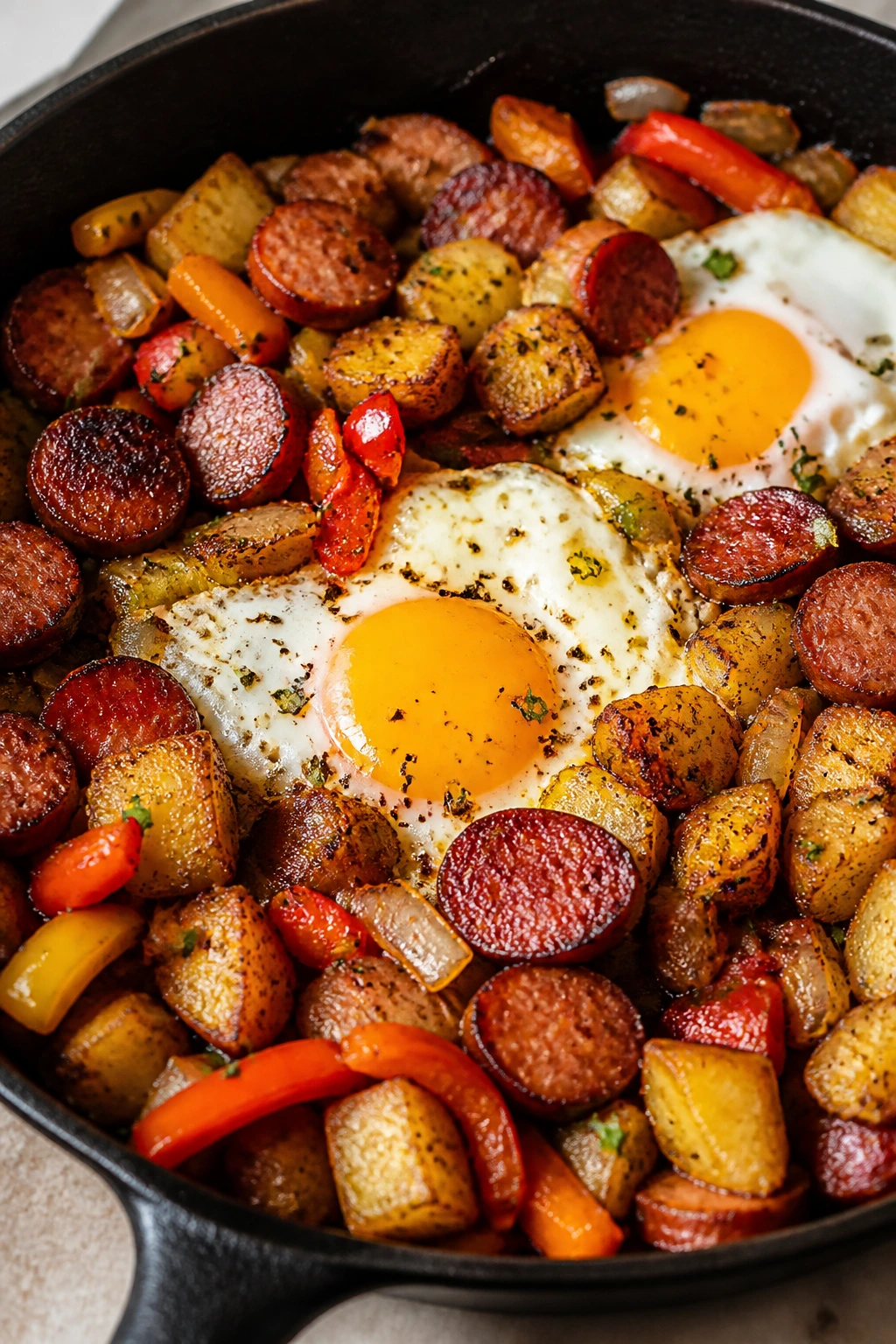
4. Smoked Sausage Breakfast Hash with Crispy Potatoes and Eggs
There’s something almost unfair about a breakfast hash that comes out with crunchy potato edges and browned sausage in the same bite. Add runny yolks, and the whole plate starts acting like brunch without the restaurant bill.
Why It Works:
Hash is one of the few breakfasts where a little fat is the point. Smoked sausage gives the pan enough richness to crisp the potatoes properly, and the peppers and onions keep the dish from tasting heavy. Bacon lovers usually care about texture first, and this is a texture show: crisp, soft, jammy, and gooey all in one skillet.
Key Ingredients:
- 1 lb smoked sausage, diced
- 1 1/2 lbs russet or Yukon Gold potatoes, diced small
- 1 red bell pepper, diced
- 1 small onion, diced
- 4 large eggs
- 1 teaspoon paprika
- 1/2 teaspoon salt
- 1/2 teaspoon black pepper
- 2 tablespoons chopped chives
Quick Steps:
- Par-cook the potatoes in salted water for 5 minutes, then drain and dry them well.
- Brown the sausage in a large skillet over medium-high heat for 4 minutes.
- Add the potatoes, onion, pepper, paprika, salt, and pepper. Cook for 12 to 15 minutes, stirring only enough to keep things from sticking.
- Make four small wells in the hash, crack in the eggs, and cover the skillet. Cook for 4 to 6 minutes, until the whites are set and the yolks are still soft.
- Finish with chives and serve straight from the pan.
Equipment for This Recipe:
- Large cast-iron skillet
- Slotted spoon
- Medium pot for par-cooking
- Lid for the skillet
How to Serve This Dish:
Put the skillet on the table and let people break their own yolks. Toast or warm tortillas work well if you want a more filling plate.
Pro Tips for This Recipe:
- Dry the potatoes thoroughly so they fry instead of steaming.
- If your skillet is thin, lower the heat a notch after the sausage browns.
- A spoonful of salsa on top wakes up the whole pan.
- Use a spatula to press the hash lightly against the skillet for extra crisping.
Variations on This Dish:
- Cheddar Melt Hash: Scatter shredded cheddar over the eggs during the last minute.
- Peppery Southern Hash: Add a pinch of cayenne and diced poblano.
- Sweet Potato Route: Swap in sweet potatoes, but give them an extra 3 to 4 minutes.
Common Mistakes to Avoid with This Dish:
- Overcrowding the pan: You’ll steam the potatoes instead of browning them.
- Adding eggs too soon: The hash should be mostly crisp first.
- Using too much salt at the start: Sausage already brings plenty.
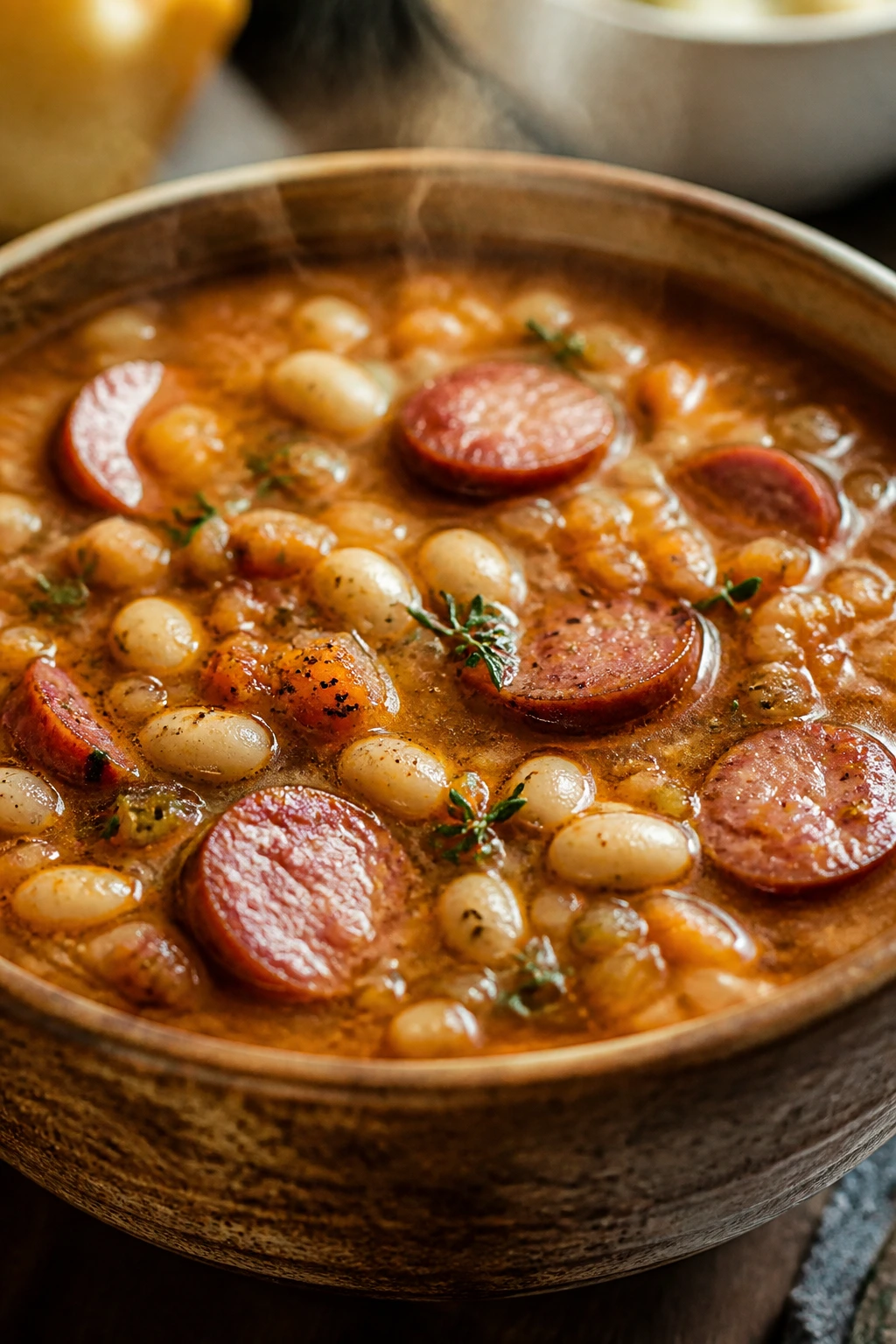
5. Smoked Sausage and White Bean Soup
This soup smells like a long simmer, even when it comes together fast. The beans go creamy, the sausage adds smoke, and the broth gets that round, savory depth that keeps you going back for another spoonful.
Why It Works:
White beans are mild enough to let the sausage lead, but sturdy enough to thicken the broth without cream. A little tomato paste and thyme make the soup taste like it cooked longer than it did, which is useful on a night when you want something that feels slow and steady but doesn’t ask for half the evening.
Key Ingredients:
- 1 lb smoked sausage, sliced
- 2 cans (15 oz each) cannellini or great northern beans, drained and rinsed
- 1 onion, diced
- 2 carrots, diced
- 2 celery ribs, diced
- 2 tablespoons tomato paste
- 4 cups chicken broth
- 1 teaspoon dried thyme
- 2 cups chopped kale or spinach
- 1 tablespoon red wine vinegar
Quick Steps:
- Brown the sausage in a soup pot over medium heat for 4 to 5 minutes, then remove half for topping if you like.
- Cook the onion, carrots, and celery in the remaining fat for 6 minutes until soft.
- Stir in the tomato paste and thyme and cook for 1 minute.
- Add the beans and broth, then simmer uncovered for 15 minutes. Mash a few beans against the side of the pot to thicken the soup.
- Stir in the greens and vinegar, then cook for 2 more minutes and serve.
Equipment for This Recipe:
- Large soup pot or Dutch oven
- Wooden spoon
- Potato masher or sturdy spoon
- Ladle
How to Serve This Dish:
Ladle it into bowls with crusty bread for dipping. A drizzle of olive oil or a small handful of grated Parmesan on top works nicely.
Pro Tips for This Recipe:
- Rinse canned beans to keep the broth from tasting tinny.
- The vinegar at the end matters; it keeps the soup from feeling muddy.
- If you want a thicker bowl, blend 1 cup of the soup and stir it back in.
- Kale holds up better than spinach if you plan to reheat leftovers.
Variations on This Dish:
- Rosemary Bean Pot: Swap thyme for rosemary and add a bay leaf.
- Creamier Finish: Stir in 1/2 cup cream right before serving.
- Tuscan Spin: Add chopped sun-dried tomatoes and a pinch of chili flakes.
Common Mistakes to Avoid with This Dish:
- Adding greens too early: They turn drab and collapse.
- Forgetting acid: The soup tastes heavy without that final splash.
- Cooking the sausage too long in the broth: Brown it first, then let it rest until the end if you want firmer slices.
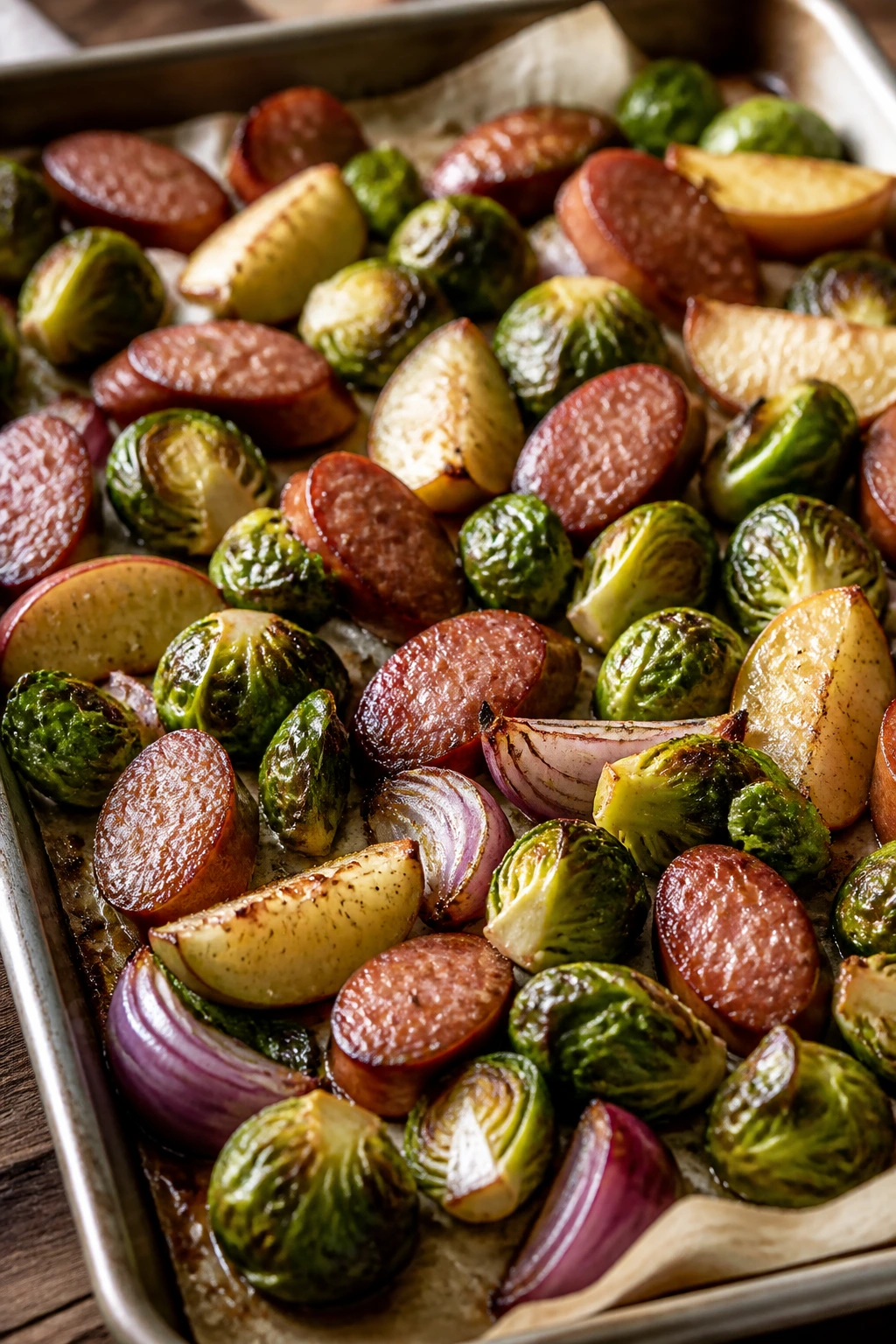
6. Sheet-Pan Smoked Sausage with Brussels Sprouts and Apples
Brussels sprouts and apples sound like a polite side dish. Put smoked sausage on the pan, and suddenly they become dinner with some swagger. The sprouts blister, the apples soften at the edges, and the sausage drips just enough fat to glue the whole tray together.
Why It Works:
This is the rare sheet-pan meal that actually deserves its shortcut status. The sausage seasons the tray, the Brussels sprouts take on those dark roasted edges, and the apples bring a sweet sharpness that keeps the whole thing from getting monotonous. Bacon lovers usually like the sweet-salty hit of bacon with Brussels; sausage gets you there with less tending.
Key Ingredients:
- 1 lb smoked sausage, sliced on a bias
- 1 1/2 lbs Brussels sprouts, halved
- 2 firm apples, cored and cut into wedges
- 1 small red onion, cut into wedges
- 2 tablespoons olive oil
- 1 tablespoon Dijon mustard
- 1 tablespoon maple syrup
- 1/2 teaspoon kosher salt
- 1/2 teaspoon black pepper
Quick Steps:
- Heat the oven to 425°F and line a sheet pan with parchment.
- Toss the Brussels sprouts, apple wedges, and onion with olive oil, salt, and pepper.
- Spread the vegetables out and roast for 12 minutes.
- Add the sausage, Dijon, and maple syrup, then toss lightly and roast 12 to 15 minutes more until the Brussels sprouts are browned and the sausage edges are crisp.
- Serve right away while the apples are still holding their shape.
Equipment for This Recipe:
- Rimmed sheet pan
- Large mixing bowl
- Silicone spatula
- Sharp knife
How to Serve This Dish:
Serve it as a main course with mustard on the side or as a strong side next to roast chicken. The pan should look glossy, browned, and a little sticky from the maple-Dijon glaze.
Pro Tips for This Recipe:
- Give the pan space. Crowding turns roasting into steaming.
- Use firm apples like Honeycrisp or Pink Lady so they don’t vanish.
- If the sausage is already salty, keep the seasoning light.
- A splash of cider vinegar at the end sharpens the whole tray.
Variations on This Dish:
- Mustard-Herb Version: Add chopped thyme and swap maple for honey.
- Spicy Trail Mix: Toss in sliced red chili or crushed red pepper flakes.
- Pork-Free Swap: Use smoked chicken sausage and keep the same method.
Common Mistakes to Avoid with This Dish:
- Adding everything at once: The apples overcook before the sprouts brown.
- Using soft apples: They collapse and turn pasty.
- Skipping the acid finish: The tray tastes dull without it.
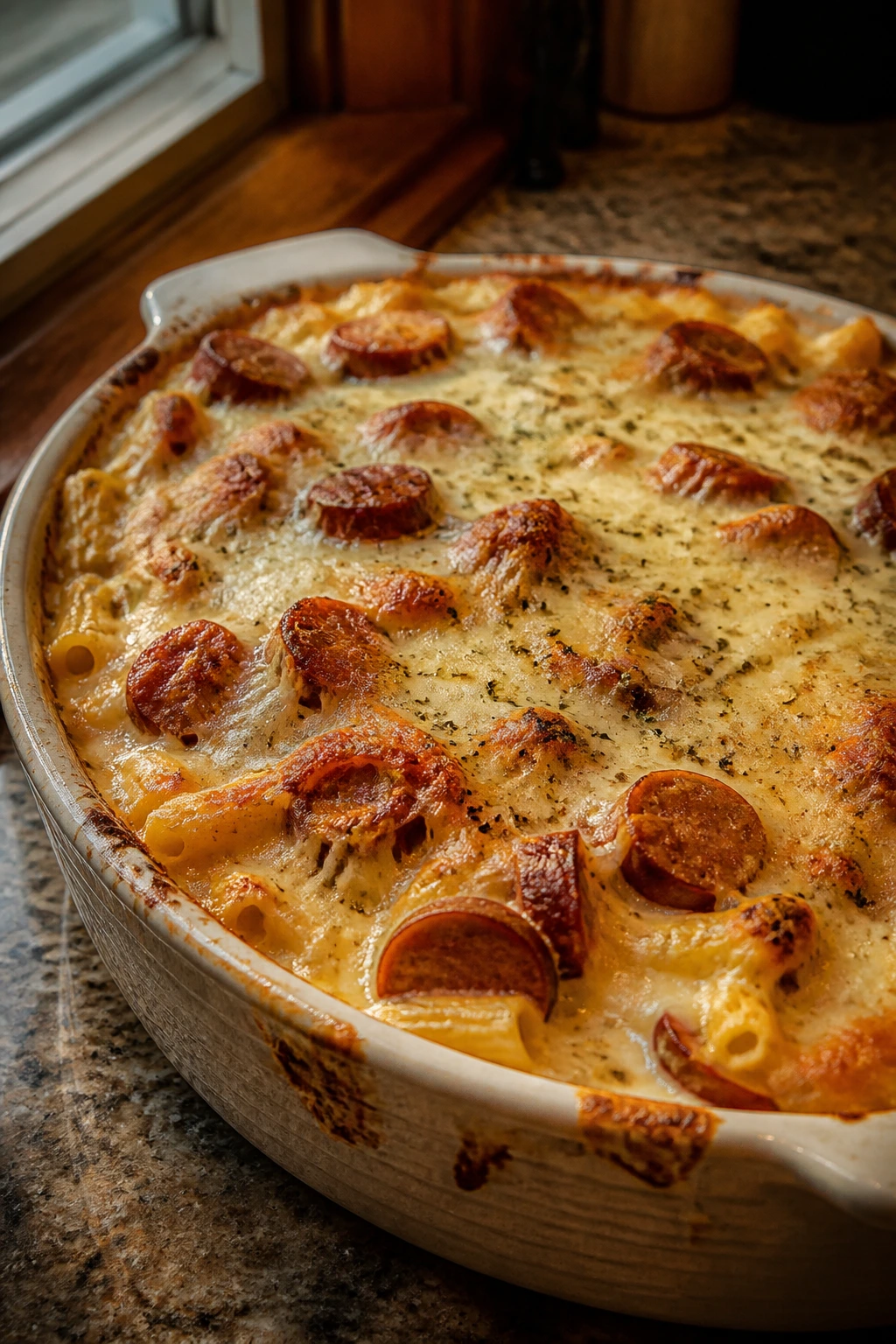
7. Smoked Sausage Alfredo Pasta Bake
This is the kind of baked pasta that comes out bubbling around the edges and has just enough browned top to make people hover near the oven. The sausage turns every forkful into something richer and more stubborn than plain Alfredo ever manages.
Why It Works:
Alfredo sauce can get a little sleepy if it only has pasta in it. Smoked sausage cuts through that by bringing garlic, smoke, and salt. A handful of spinach or peas keeps the bake from feeling too heavy, and the oven gives you the browned cheese top that Alfredo sauce rarely gets on its own.
Key Ingredients:
- 12 oz penne or rigatoni
- 12 oz smoked sausage, sliced
- 2 tablespoons butter
- 2 cloves garlic, minced
- 1 1/2 cups heavy cream
- 1 cup grated Parmesan
- 1 cup shredded mozzarella
- 2 cups baby spinach
- 1/4 teaspoon nutmeg
- 1/2 cup reserved pasta water
Quick Steps:
- Cook the pasta until just al dente and reserve 1/2 cup pasta water.
- Brown the sausage in a skillet over medium heat for 4 to 5 minutes.
- Melt the butter, add garlic, then stir in cream and simmer 2 to 3 minutes.
- Stir in Parmesan, nutmeg, and pasta water until the sauce turns glossy. Fold in pasta, sausage, and spinach.
- Transfer to a baking dish, top with mozzarella, and bake at 400°F for 12 to 15 minutes until bubbling.
Equipment for This Recipe:
- Large pot
- Skillet
- 9×13-inch baking dish
- Cheese grater
How to Serve This Dish:
Serve it with lemony greens or roasted broccoli. The plate needs something bright next to all that cream.
Pro Tips for This Recipe:
- Use the pasta water; it helps the sauce cling instead of pooling.
- Don’t boil the cream hard or it can split.
- Let the bake rest 5 minutes before serving so it sets.
- Freshly grated Parmesan gives the cleanest flavor.
Variations on This Dish:
- Garlic-Bomb Version: Add another clove or two of garlic and extra black pepper.
- Broccoli Alfredo Bake: Replace spinach with small broccoli florets.
- Spice Finish: A little Calabrian chile paste wakes up the sauce fast.
Common Mistakes to Avoid with This Dish:
- Overcooking the pasta before baking: It turns soft and sodden.
- Using sauce that’s too thin: The bake will slump instead of hold.
- Skipping the rest time: The sauce needs a minute to settle.
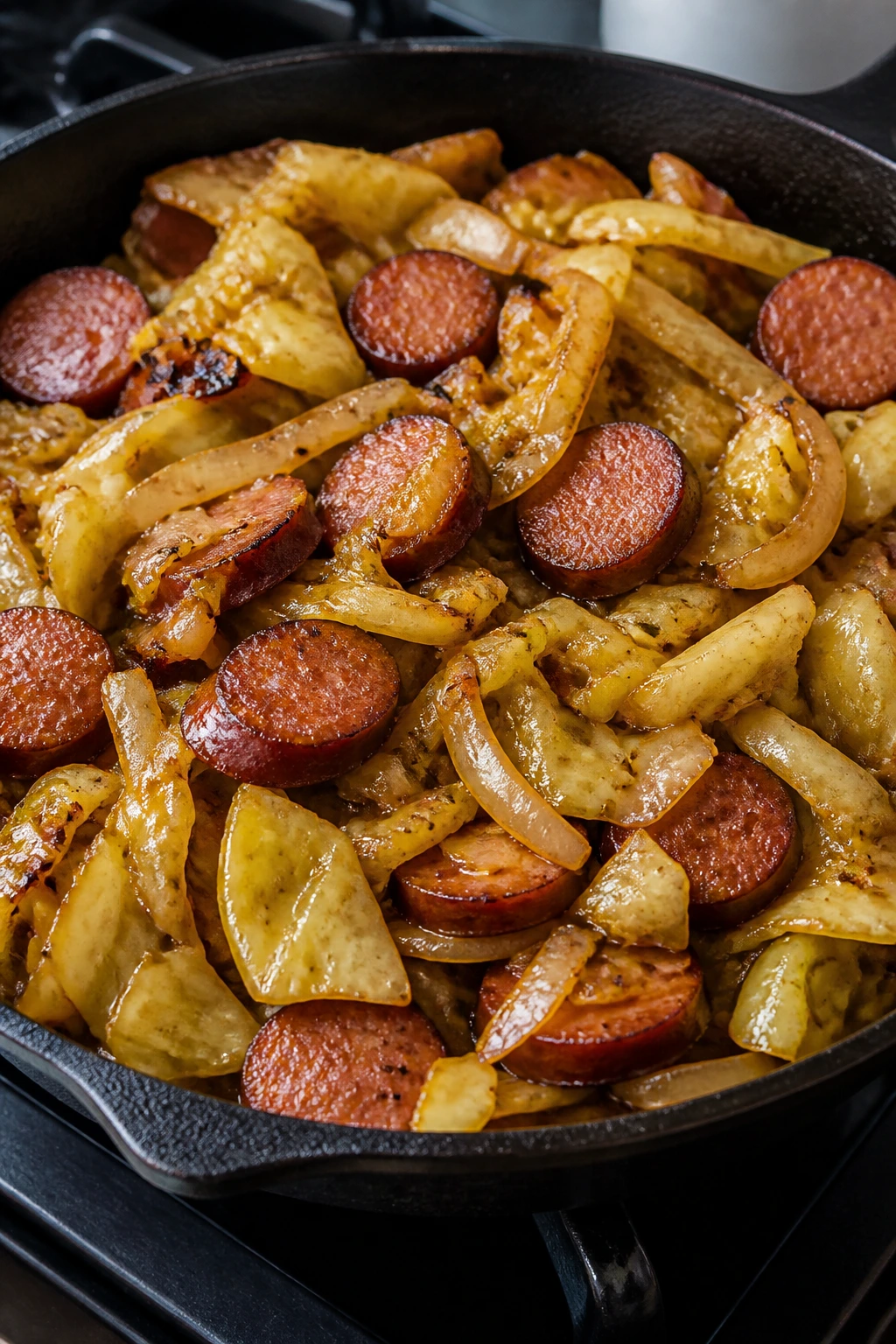
8. Smoked Sausage and Cabbage Skillet
Cabbage gets a bad reputation from people who’ve only had it boiled. In a hot skillet with smoked sausage, it turns sweet, silky, and browned around the edges, with enough bite left to keep the texture interesting.
Why It Works:
Cabbage and smoked sausage are cheap, sturdy, and much better together than either one is alone. The cabbage soaks up the smoky drippings, the onion adds sweetness, and a splash of vinegar at the end keeps the skillet from tasting one-note. Bacon lovers usually like cabbage because it carries salty fat well; sausage does the same job while staying meaty.
Key Ingredients:
- 1 lb smoked sausage, sliced
- 1 small green cabbage, cored and sliced
- 1 onion, sliced
- 2 cloves garlic, minced
- 2 tablespoons butter or oil
- 1/4 cup chicken broth
- 1 tablespoon apple cider vinegar
- 1 teaspoon caraway seeds, optional
- Salt and black pepper
Quick Steps:
- Brown the sausage in a large skillet for 4 minutes, then remove it.
- Add butter and onion, cook 3 minutes, then stir in garlic and caraway seeds for 30 seconds.
- Add the cabbage, salt, and pepper. Cook for 10 to 12 minutes, stirring now and then, until the edges start to caramelize.
- Pour in the broth and scrape the pan.
- Return the sausage, add vinegar, and cook 2 more minutes until glossy.
Equipment for This Recipe:
- Extra-large skillet or Dutch oven
- Wooden spoon
- Sharp knife
- Cutting board
How to Serve This Dish:
Serve it in bowls with mustard on the side, or spoon it over mashed potatoes if you want a fuller meal. The cabbage should look soft with browned freckles, not pale and limp.
Pro Tips for This Recipe:
- Slice the cabbage a little thick so it doesn’t disappear.
- Don’t drown the pan in liquid; cabbage should sauté, not stew.
- A spoonful of whole-grain mustard at the end changes everything.
- Let the cabbage sit undisturbed for a minute to pick up color.
Variations on This Dish:
- Apple-Cabbage Version: Add thin apple slices with the cabbage.
- Smoky Mustard Pan: Stir in Dijon and grainy mustard at the finish.
- Noodle Bowl Spin: Toss the skillet with buttered egg noodles.
Common Mistakes to Avoid with This Dish:
- Overcooking the cabbage: It goes sulfurous and mushy.
- Leaving out vinegar: The dish needs something sharp.
- Cutting the sausage too thin: It can dry out before the cabbage finishes.
9. Smoky Sausage and Tomato Rice Bowls
This is not a fussy recipe, and that’s part of the charm. The rice picks up tomato, garlic, and sausage fat, then gets topped with crispy sausage coins and whatever green herb you’ve got within reach.
Why It Works:
Rice bowls need a strong base or they taste like separate parts on the same plate. Smoked sausage solves that by bringing smoke and salt directly into the pan, while tomatoes add acidity and body. It’s a straightforward way to make a bowl that feels rich enough for bacon fans but lighter than a casserole.
Key Ingredients:
- 1 lb smoked sausage, sliced
- 1 cup long-grain rice
- 1 small onion, diced
- 2 cloves garlic, minced
- 1 can (14.5 oz) diced tomatoes
- 2 cups chicken broth
- 1 teaspoon smoked paprika
- 1/2 teaspoon oregano
- 2 tablespoons chopped parsley
Quick Steps:
- Brown the sausage in a saucepan for 4 minutes, then remove it.
- Cook the onion in the drippings for 4 minutes, then add garlic, paprika, and oregano for 30 seconds.
- Stir in rice, tomatoes, and broth. Bring to a boil, then lower to a simmer, cover, and cook 18 minutes.
- Rest off heat for 10 minutes, fluff with a fork, and fold the sausage back in.
- Finish with parsley and a squeeze of lemon.
Equipment for This Recipe:
- Medium saucepan with lid
- Wooden spoon
- Measuring cups
- Fork for fluffing
How to Serve This Dish:
Serve in deep bowls with a spoonful of yogurt or sour cream on the side. A crunchy salad with cucumbers and onions works well next to the rice.
Pro Tips for This Recipe:
- Rinse the rice if it tends to clump.
- Let the rice rest; the steam finishes the grains.
- Add a pinch of chili flakes if you want more bite.
- Lemon at the end keeps the tomato from feeling flat.
Variations on This Dish:
- Spanish-Inspired Bowl: Add smoked paprika, peas, and olives.
- Cheesy Finish: Fold in grated Parmesan right before serving.
- Veg-Heavy Version: Stir in chopped zucchini or spinach near the end.
Common Mistakes to Avoid with This Dish:
- Using too much liquid: You’ll get wet rice.
- Skipping the rest: The grains stay tight and underdone.
- Adding herbs too early: They lose freshness.
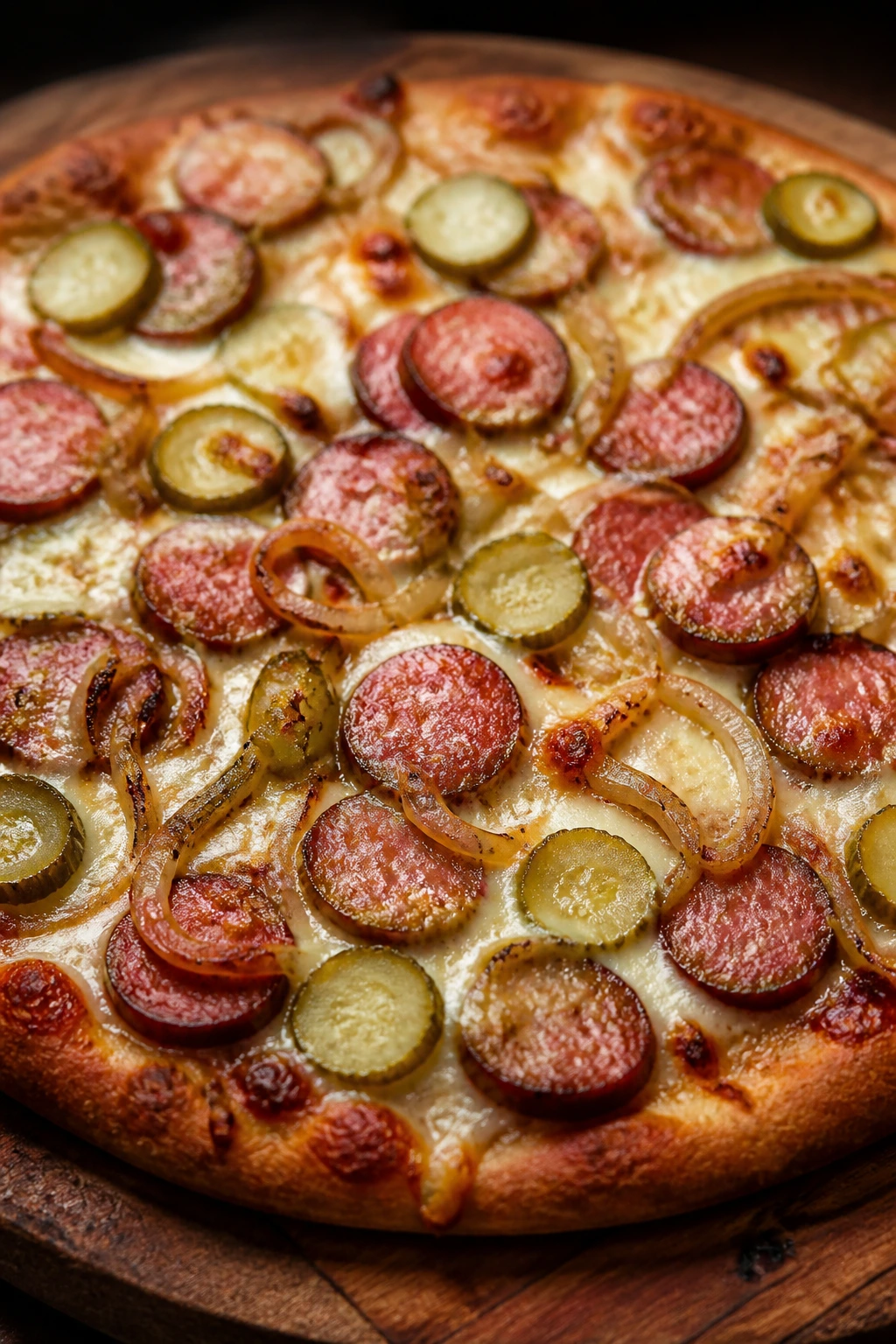
10. Smoked Sausage Pizza with Onion and Pickle
Yes, pickle on pizza. Don’t roll your eyes until you’ve tried the salty-sour bite with smoked sausage and melted mozzarella. It’s a little loud, and that’s the point.
Why It Works:
Bacon lovers usually respond to salt, smoke, and sharp contrast. This pizza gives them all three. The sausage handles the smoky base, the onion goes sweet in the oven, and the pickles or pickled jalapeños cut through the cheese so the slice doesn’t feel heavy after the second bite.
Key Ingredients:
- 1 ball pizza dough, about 1 lb
- 1/2 cup pizza sauce
- 8 oz smoked sausage, thinly sliced
- 2 cups shredded mozzarella
- 1/2 small red onion, thinly sliced
- 1/3 cup dill pickle chips, patted dry
- 1 tablespoon olive oil
- 1 teaspoon dried oregano
- Crushed red pepper, optional
Quick Steps:
- Heat the oven to 475°F with a stone or sheet pan inside if you have one.
- Stretch the dough into a 12- to 14-inch round and brush the edge lightly with oil.
- Spread the sauce, add mozzarella, then arrange sausage, onion, and pickles.
- Bake for 12 to 15 minutes until the crust is browned and the cheese bubbles.
- Rest for 2 minutes, then finish with oregano and crushed red pepper.
Equipment for This Recipe:
- Pizza stone or rimmed sheet pan
- Pizza peel or flat spatula
- Rolling pin, optional
- Sharp knife or rocker cutter
How to Serve This Dish:
Slice it into wedges and serve with a cold beer or iced tea. A simple green salad keeps the meal from leaning too far into salty territory.
Pro Tips for This Recipe:
- Dry the pickles so the crust doesn’t go soggy.
- Thin slices of sausage brown better than thick chunks.
- A light brush of garlic oil on the crust edge helps.
- Don’t overload the toppings or the center turns soft.
Variations on This Dish:
- Hot Honey Finish: Drizzle hot honey over the baked pie.
- Mustard Base: Swap half the sauce for a thin layer of mustard.
- Extra-Smoky Slice: Add a few roasted red peppers.
Common Mistakes to Avoid with This Dish:
- Wet toppings: They water down the crust.
- Too much cheese: The pizza turns greasy and heavy.
- Underbaking the dough: The center stays pale and doughy.
11. Smoked Sausage, Corn, and Cheddar Chowder

This chowder is thick, sweet, and salty in a way that feels almost designed for cold nights, except the date doesn’t matter. Corn gives it pop, potatoes make it hearty, and sausage slips in the savory note that bacon usually owns in chowders.
Why It Works:
Corn chowder needs an anchor or it can turn sweet in a hurry. Smoked sausage adds the anchor. The potatoes thicken the pot without flour if you mash a few chunks, and cheddar gives you a sharp finish that keeps the cream from getting sleepy.
Key Ingredients:
- 12 oz smoked sausage, sliced
- 3 cups corn kernels, fresh or frozen
- 2 medium potatoes, diced
- 1 onion, diced
- 2 tablespoons butter
- 3 cups chicken broth
- 1 cup whole milk
- 1 cup heavy cream
- 1 cup shredded sharp cheddar
- 2 tablespoons chopped chives
Quick Steps:
- Brown the sausage in a soup pot for 4 to 5 minutes, then set it aside.
- Cook onion in the butter for 4 minutes, then add potatoes, corn, and broth. Simmer 15 minutes until the potatoes are tender.
- Mash a few potato pieces against the pot to thicken the chowder.
- Stir in milk, cream, and sausage, then heat gently until steaming.
- Add cheddar off the heat and finish with chives.
Equipment for This Recipe:
- Large soup pot
- Potato masher or spoon
- Ladle
- Sharp knife
How to Serve This Dish:
Serve in wide bowls with oyster crackers or a piece of buttered toast. It should look creamy with yellow corn and sausage coins peeking through.
Pro Tips for This Recipe:
- Add the cheese off the heat to keep it smooth.
- Frozen corn works well and saves shucking time.
- If the chowder gets too thick, loosen it with a splash of broth.
- A pinch of smoked paprika deepens the sausage flavor.
Variations on This Dish:
- Pepper Jack Chowder: Use pepper jack instead of cheddar.
- Bacon-Like Finish: Top with crisp fried onions for extra crunch.
- Lighter Bowl: Use half-and-half instead of cream.
Common Mistakes to Avoid with This Dish:
- Boiling after the dairy goes in: It can separate.
- Forgetting to season the potatoes: They need salt in the broth.
- Using watery frozen corn without adjusting broth: The soup can get thin.
12. Smoked Sausage Stuffed Peppers
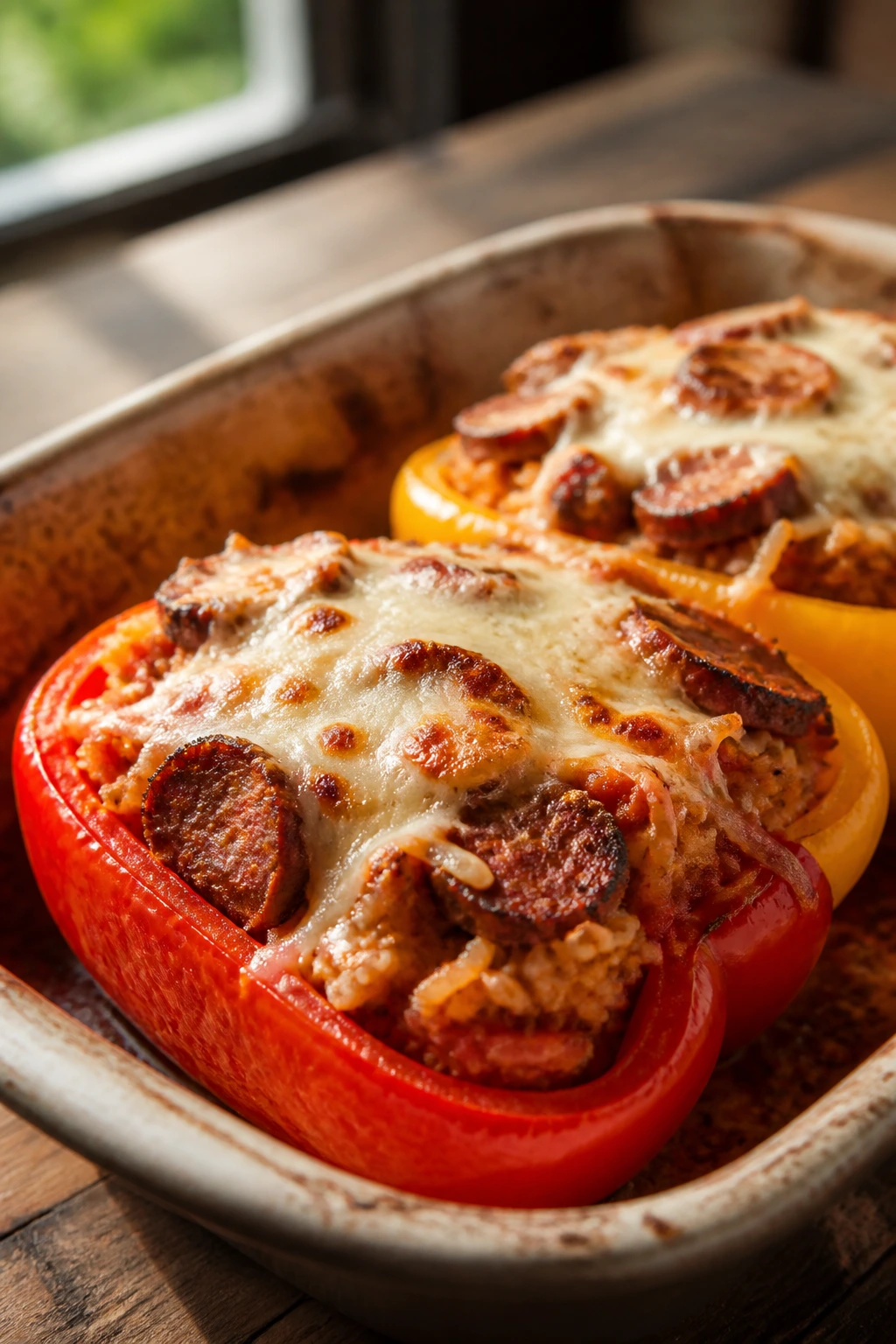
Stuffed peppers can be bland if you’re careless. With smoked sausage, rice, tomato, and a browned cheese cap, they turn into neat little dinner boats with a strong smoky core.
Why It Works:
The pepper shell gives sweetness and structure, while the sausage fills the middle with a savory, almost meaty bacon-like depth. Rice keeps the stuffing from collapsing, and cheese on top turns the whole thing into a proper dinner instead of a side dish pretending to be one.
Key Ingredients:
- 4 large bell peppers, halved and seeded
- 1 lb smoked sausage, diced
- 1 cup cooked rice
- 1 small onion, diced
- 1 cup marinara sauce
- 1 cup shredded mozzarella
- 1 teaspoon Italian seasoning
- 2 tablespoons Parmesan
- Salt and pepper
Quick Steps:
- Heat the oven to 400°F and place the pepper halves cut side up in a baking dish.
- Brown the sausage and onion in a skillet for 5 minutes.
- Stir in rice, marinara, and Italian seasoning.
- Fill the pepper halves, top with mozzarella and Parmesan, and add a splash of water to the baking dish.
- Bake covered for 25 minutes, then uncover and bake 10 minutes more until the cheese browns.
Equipment for This Recipe:
- Baking dish
- Skillet
- Mixing spoon
- Foil
How to Serve This Dish:
Serve two pepper halves per person with a green salad or garlic bread. The tops should be glossy and browned, with some sauce bubbling around the edges.
Pro Tips for This Recipe:
- Pre-bake the pepper shells for 10 minutes if you like them softer.
- Use cooked rice so the filling doesn’t dry out.
- A little red pepper flake adds needed heat.
- If the peppers wobble, trim a thin slice from the bottom.
Variations on This Dish:
- Mexican-Style Peppers: Use salsa, cumin, and pepper jack.
- Cauliflower Rice Version: Replace rice with well-drained cauliflower rice.
- Extra-Cheesy Top: Add provolone for a gooier finish.
Common Mistakes to Avoid with This Dish:
- Overstuffing the peppers: Filling spills everywhere and cooks unevenly.
- Skipping the water in the dish: The peppers dry out.
- Using raw rice: It won’t cook fully in the bake.
13. Smoked Sausage and Sauerkraut Skillet
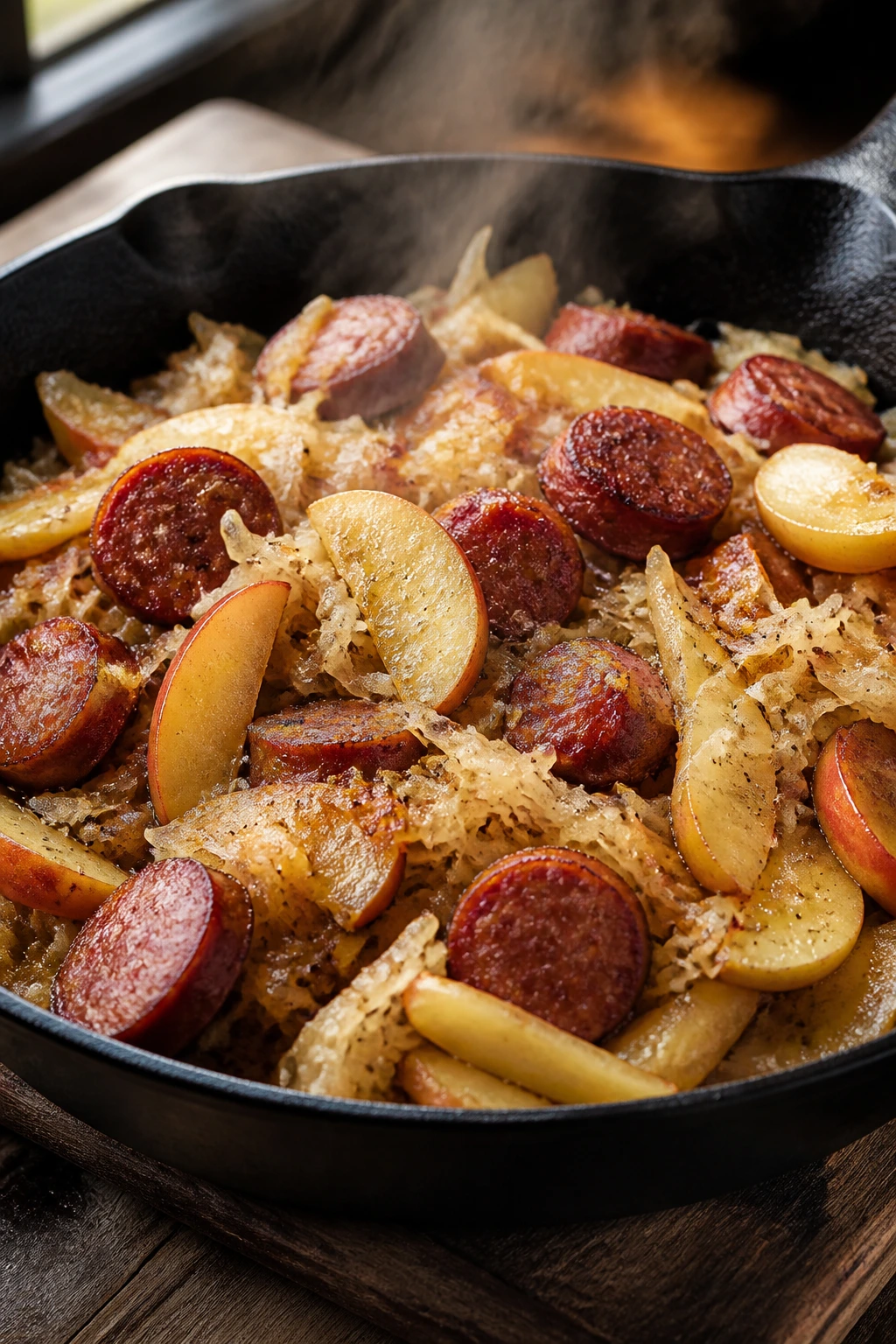
If you like sharp, salty, smoky food, this skillet is going to make sense fast. Sauerkraut brings the tang, apples add a little sweetness, and the sausage keeps the whole thing grounded and satisfying.
Why It Works:
Sauerkraut can be aggressive on its own. Smoked sausage tones that down by adding fat and smoke, while apples and onions round the edges. Bacon lovers often lean into dishes that mix salty with sour; this one does that without asking for much work.
Key Ingredients:
- 1 lb smoked sausage, sliced
- 1 jar or bag (about 16 oz) sauerkraut, drained
- 1 onion, thinly sliced
- 1 apple, thinly sliced
- 2 tablespoons butter
- 1 teaspoon caraway seeds
- 1/4 cup chicken broth
- 1 teaspoon brown sugar, optional
Quick Steps:
- Brown the sausage in a skillet for 4 minutes.
- Add butter, onion, and caraway seeds, then cook 4 minutes until the onion softens.
- Stir in the sauerkraut and apple slices.
- Add broth and brown sugar, cover, and simmer 8 to 10 minutes.
- Uncover and cook 2 more minutes so the pan dries slightly.
Equipment for This Recipe:
- Large skillet
- Wooden spoon
- Knife and cutting board
- Lid
How to Serve This Dish:
Serve it with boiled potatoes, rye bread, or a pile of mashed potatoes. The skillet should taste sharp, salty, and just a little sweet.
Pro Tips for This Recipe:
- Taste the sauerkraut first; some brands are much saltier than others.
- Keep the apple slices thin so they soften but don’t disappear.
- Don’t rinse the kraut unless it’s extremely bracing.
- A spoonful of mustard on the plate makes sense here.
Variations on This Dish:
- German Pub Style: Add a splash of beer and extra mustard.
- Sweeter Route: Use a second apple and skip the brown sugar.
- Extra Tangy: Add a teaspoon of pickle brine at the end.
Common Mistakes to Avoid with This Dish:
- Starting with wet kraut: It waters down the skillet.
- Overcooking the apple: It turns to mush.
- Ignoring the salt level: Sausage and kraut can add up fast.
14. Smoked Sausage Fried Rice
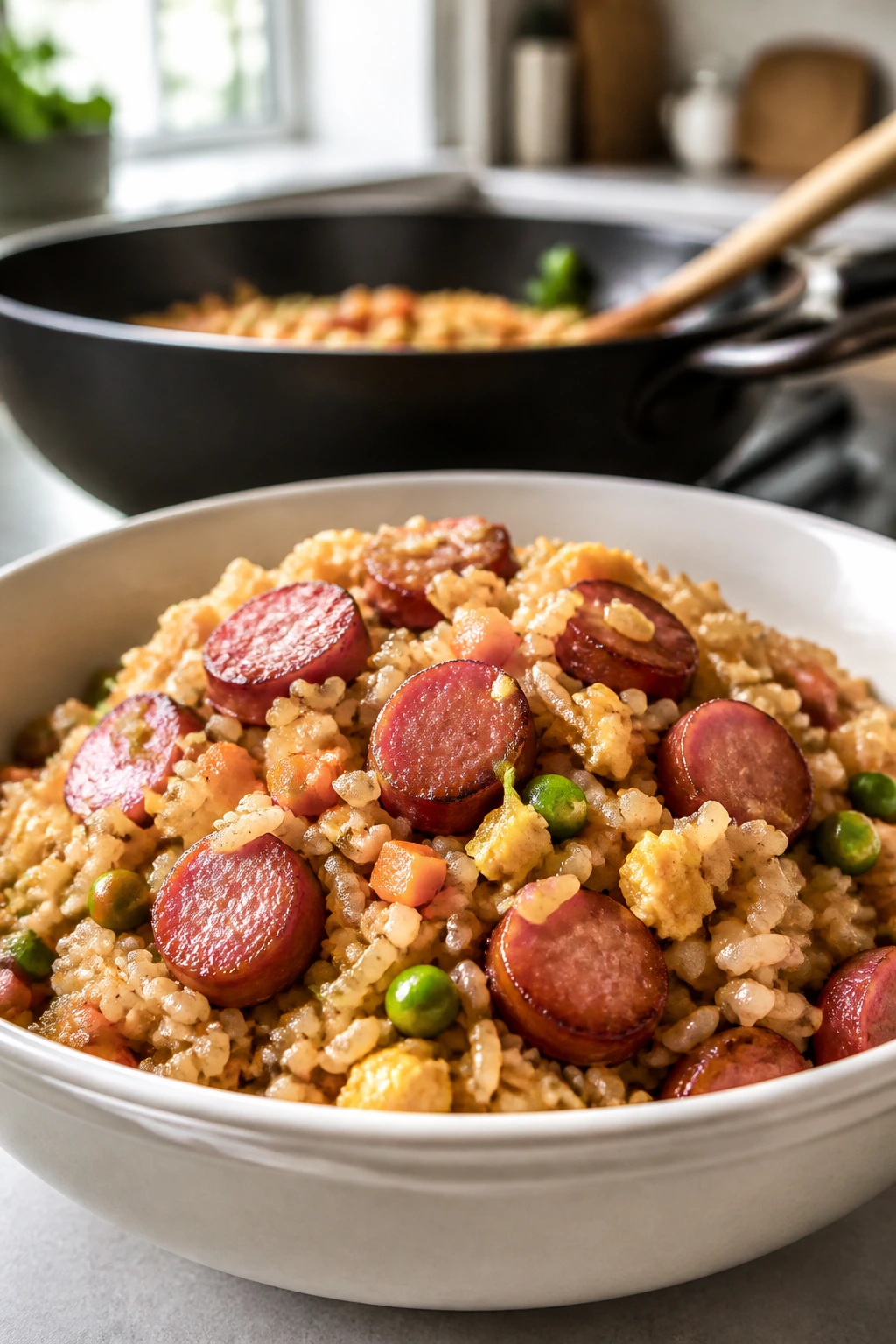
Fried rice rewards leftover rice and a hot pan. Smoked sausage brings the salty, browned bits bacon lovers crave, and the soy-sesame finish makes the whole thing taste like you planned it rather than raided the fridge.
Why It Works:
Cold rice fries better because the grains stay separate. Smoked sausage gives the pan enough fat and flavor to coat the rice, while peas, carrots, and egg keep the bowl balanced. This is one of those rare fast dinners that tastes better if you pay attention to the heat.
Key Ingredients:
- 3 cups cooked cold rice
- 10 oz smoked sausage, diced
- 2 eggs, beaten
- 1 cup frozen peas and carrots
- 2 scallions, sliced
- 2 tablespoons soy sauce
- 1 teaspoon sesame oil
- 1 tablespoon neutral oil
- 1 clove garlic, minced
Quick Steps:
- Heat a wok or skillet over high heat with the oil.
- Cook the sausage for 3 to 4 minutes until browned.
- Push it aside, scramble the eggs in the empty space, then add garlic and vegetables.
- Add the rice and break up clumps with a spatula. Stir-fry for 3 to 5 minutes until the rice starts to crackle.
- Add soy sauce, sesame oil, and scallions, then toss once more and serve hot.
Equipment for This Recipe:
- Wok or large skillet
- Spatula
- Bowl for beaten eggs
- Measuring spoons
How to Serve This Dish:
Serve in bowls with chili crisp or extra soy sauce on the side. A fried egg on top turns it into a bigger meal.
Pro Tips for This Recipe:
- Use day-old rice. Fresh rice goes sticky.
- High heat matters more than people think here.
- Add soy sauce around the edge of the pan so it sizzles before mixing.
- Don’t overcrowd; if your skillet is small, fry in batches.
Variations on This Dish:
- Pineapple Fried Rice: Add diced pineapple with the vegetables.
- Kimchi Route: Stir in chopped kimchi and a little gochujang.
- Green Version: Use peas, spinach, and scallions for a fresher bowl.
Common Mistakes to Avoid with This Dish:
- Using hot rice: It clumps and steams.
- Low heat: You’ll get soft rice, not fried rice.
- Too much soy sauce: The bowl turns dark and salty fast.
15. Smoked Sausage and Lentil Stew
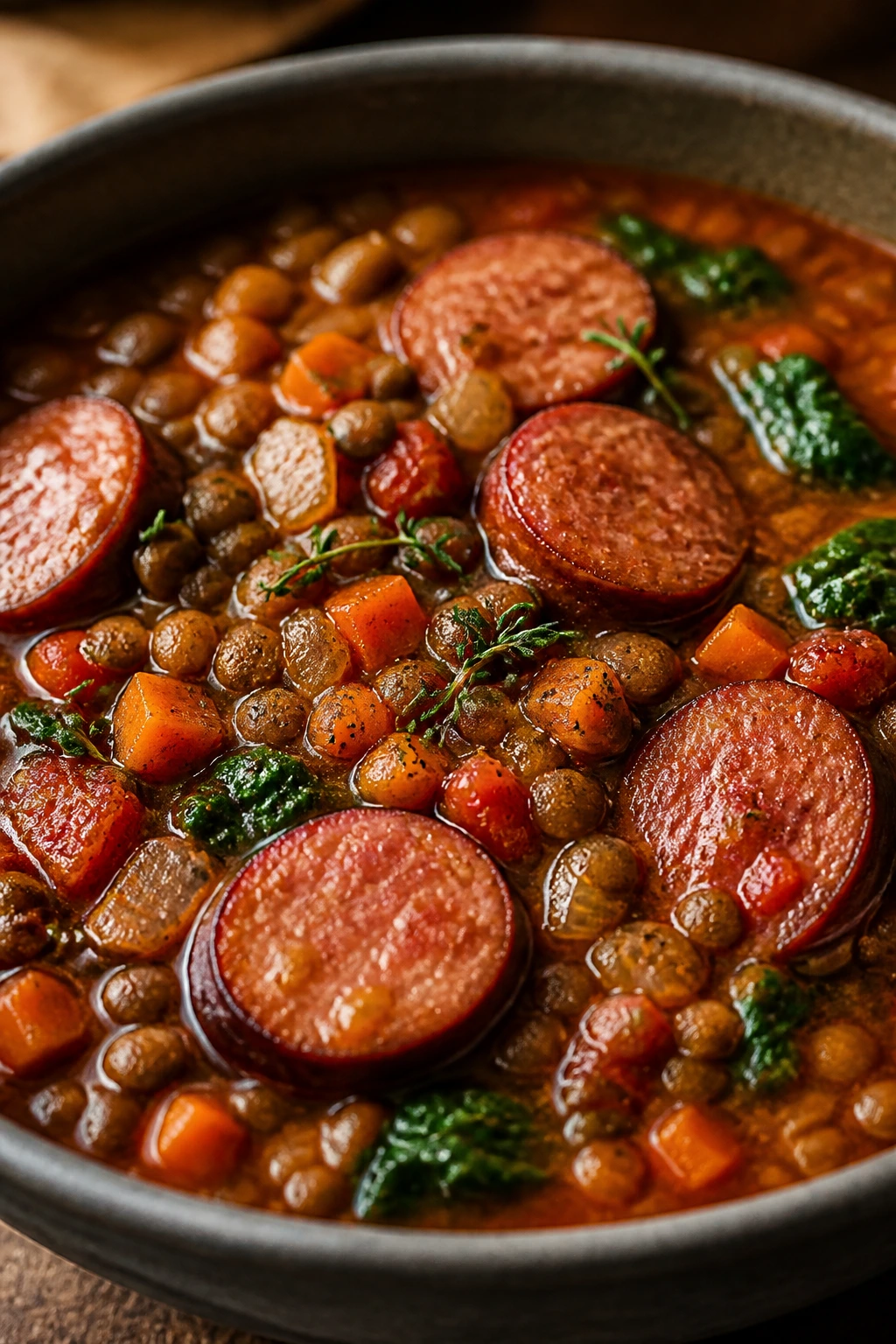
Lentils are quiet workers. Pair them with smoked sausage and they pick up a deep, peppery flavor that feels far richer than the ingredient list suggests. This is sturdy food, the kind you want when a bowl of soup wouldn’t be enough.
Why It Works:
Lentils cook fast, hold their shape, and take on smoke like a sponge. The sausage gives the stew body, tomato adds brightness, and a splash of vinegar at the end keeps the lentils from tasting flat. Bacon lovers usually respond to stews that have a little edge, and this one has it.
Key Ingredients:
- 1 lb smoked sausage, sliced
- 1 1/2 cups brown or green lentils, rinsed
- 1 onion, diced
- 2 carrots, diced
- 2 celery ribs, diced
- 2 tablespoons tomato paste
- 6 cups chicken broth
- 1 teaspoon thyme
- 1 tablespoon red wine vinegar
- 2 cups chopped spinach
Quick Steps:
- Brown the sausage in a pot for 4 minutes, then remove it.
- Cook onion, carrots, and celery for 6 minutes in the drippings.
- Stir in tomato paste and thyme for 1 minute.
- Add lentils and broth, then simmer 25 to 30 minutes until the lentils are tender but not falling apart.
- Stir the sausage, vinegar, and spinach back in and cook 2 minutes.
Equipment for This Recipe:
- Dutch oven or large soup pot
- Wooden spoon
- Ladle
- Knife and board
How to Serve This Dish:
Serve with crusty bread or spoon it over mashed potatoes. A little parsley on top keeps the bowl from looking dark and heavy.
Pro Tips for This Recipe:
- Brown the tomato paste; it gets rid of the raw edge.
- Green or brown lentils hold better than red lentils here.
- Add extra broth if you want it soupier the next day.
- The vinegar should go in at the end, not at the start.
Variations on This Dish:
- Smoked Paprika Stew: Add an extra teaspoon of smoked paprika.
- Root Vegetable Version: Toss in diced parsnip or turnip.
- Creamier Bowl: Stir in a splash of cream at the end.
Common Mistakes to Avoid with This Dish:
- Overcooking the lentils: They go mushy and muddy.
- Skipping the acid finish: The stew tastes heavy.
- Adding greens too early: They lose color and texture.
16. Smoked Sausage Breakfast Casserole
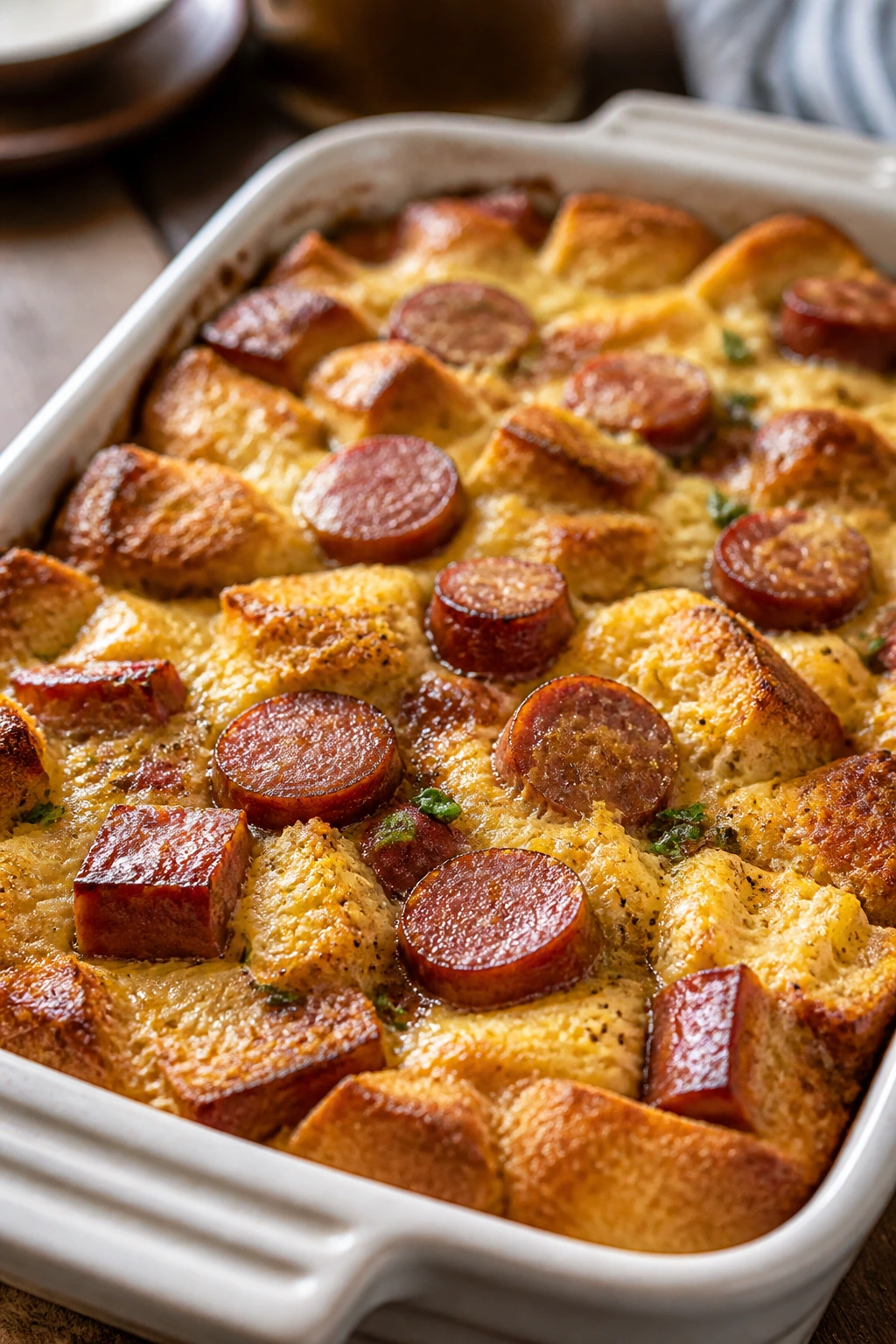
Breakfast casseroles have a reputation for being bland or soggy. This one avoids both problems by browning the sausage first, drying out the bread cubes a bit, and baking until the edges puff and the top turns gold.
Why It Works:
Eggs need structure, and this casserole gives them plenty. Smoked sausage brings smoky savoriness, bread or potatoes soak up the custard, and cheese on top gives you those browned, slightly crisp spots that bacon fans usually hunt for first. It also holds well for a crowd, which is the sort of practical detail that matters more than fancy words.
Key Ingredients:
- 1 lb smoked sausage, diced
- 8 cups cubed bread, slightly stale
- 8 large eggs
- 2 cups milk
- 1 1/2 cups shredded cheddar
- 1 small onion, diced
- 1 cup chopped spinach
- 1 teaspoon salt
- 1/2 teaspoon black pepper
Quick Steps:
- Brown the sausage and onion in a skillet for 5 minutes.
- Scatter the bread cubes in a greased baking dish.
- Whisk eggs, milk, salt, and pepper together.
- Add the sausage, onion, spinach, and cheese over the bread, then pour the egg mixture on top. Press lightly so the bread absorbs the custard.
- Bake at 350°F for 35 to 40 minutes until the center is set and the top is browned.
Equipment for This Recipe:
- 9×13-inch baking dish
- Mixing bowl
- Whisk
- Skillet
How to Serve This Dish:
Cut into squares and serve with fruit or a light salad if you want balance. A spoonful of hot sauce at the table never hurts.
Pro Tips for This Recipe:
- Stale bread works better than fresh, soft bread.
- Let the casserole sit 10 minutes before slicing.
- If you like a firmer custard, bake it a few minutes longer until the center barely jiggles.
- A handful of diced peppers fits nicely here.
Variations on This Dish:
- Hash Brown Base: Use thawed shredded potatoes instead of bread.
- Southwestern Style: Add salsa and pepper jack.
- Make-Ahead Version: Assemble it the night before and bake in the morning.
Common Mistakes to Avoid with This Dish:
- Too much milk: The casserole turns wet.
- Skipping the browning step: The sausage flavor stays flat.
- Cutting it too soon: The squares fall apart.
17. Smoked Sausage with Green Beans and Potatoes
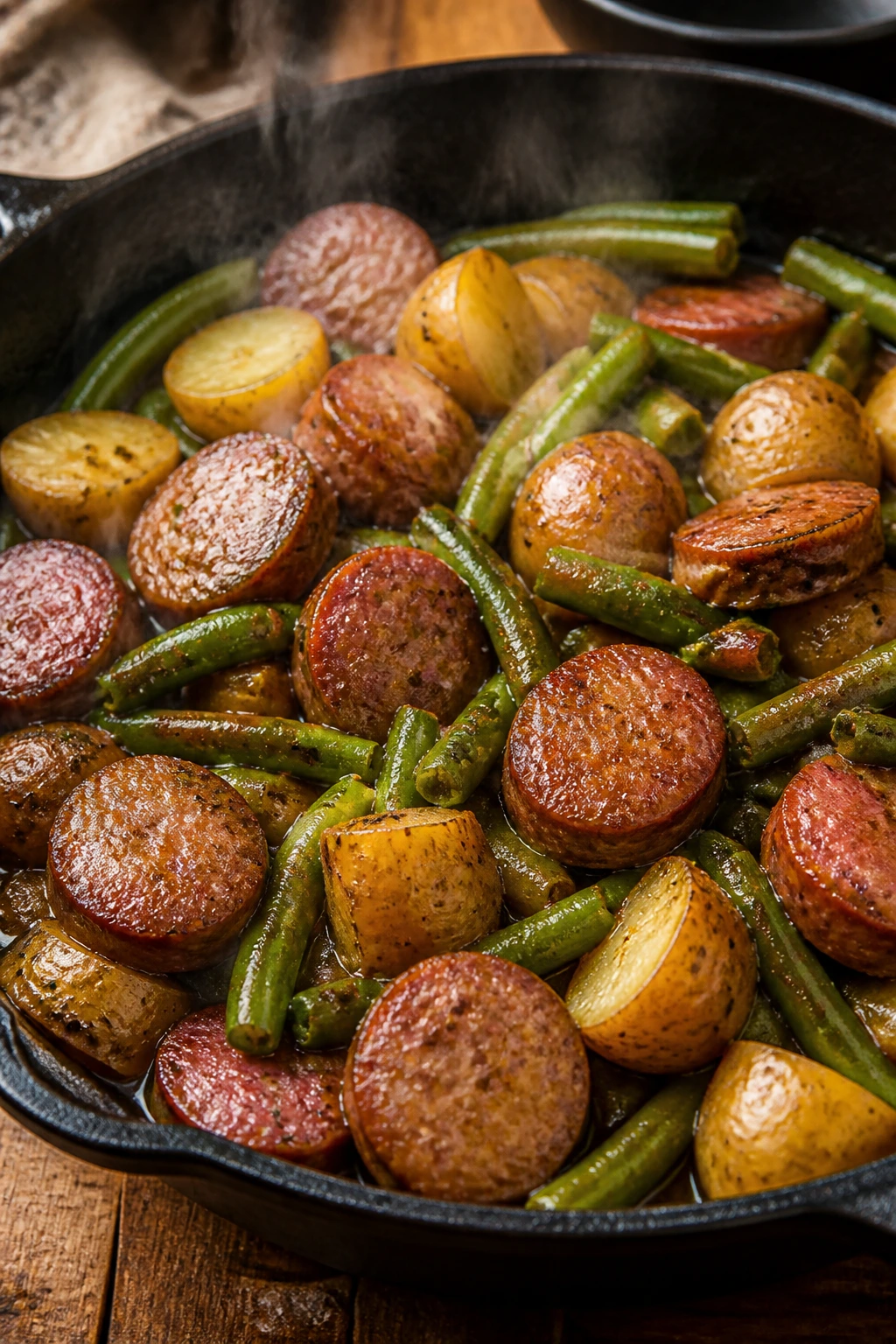
This is one of those skillet dinners that feels older than any recipe card. Green beans, potatoes, onions, and smoked sausage land in the same pan and come out tasting like they belong there, which is more satisfying than it sounds.
Why It Works:
Potatoes bring bulk, green beans add snap, and the sausage seasons everything in between. A little broth and butter make the vegetables glossy, while vinegar at the finish keeps the dish from getting too soft or too rich. If bacon-and-green-bean dinners are your thing, this scratches the same itch.
Key Ingredients:
- 1 lb smoked sausage, sliced
- 1 1/2 lbs small potatoes, halved or quartered
- 12 oz green beans, trimmed
- 1 onion, sliced
- 2 tablespoons butter
- 1/2 cup chicken broth
- 1 tablespoon apple cider vinegar
- 1 teaspoon garlic powder
- Salt and black pepper
Quick Steps:
- Par-cook the potatoes in salted water for 8 minutes, then drain.
- Brown the sausage in a large skillet for 4 minutes.
- Add onion and cook 3 minutes.
- Add potatoes, green beans, broth, garlic powder, salt, and pepper. Cover and cook 10 to 12 minutes until the beans are tender and the potatoes are creamy inside.
- Uncover, add vinegar and butter, and cook 2 minutes to gloss the pan.
Equipment for This Recipe:
- Large skillet with lid
- Medium pot
- Slotted spoon
- Wooden spoon
How to Serve This Dish:
Serve it as a complete dinner with cornbread or biscuits. The pan should look rustic and glossy, not dry.
Pro Tips for This Recipe:
- Small potatoes cook more evenly than big chunks.
- Don’t overcook the beans; they should still have some snap.
- A spoonful of mustard on the side works better than you’d think.
- If the pan dries out, add a splash more broth.
Variations on This Dish:
- Garlic Butter Finish: Increase the butter and add fresh parsley.
- Cajun Twist: Use Cajun seasoning instead of garlic powder.
- Tomato-Braised Version: Add a handful of cherry tomatoes near the end.
Common Mistakes to Avoid with This Dish:
- Starting with raw potatoes in the skillet: They can brown outside and stay hard inside.
- Overcrowding the pan: The vegetables steam.
- Leaving out the vinegar: The dish tastes heavy and dull.
18. Smoked Sausage Tortellini Soup with Spinach and Parmesan
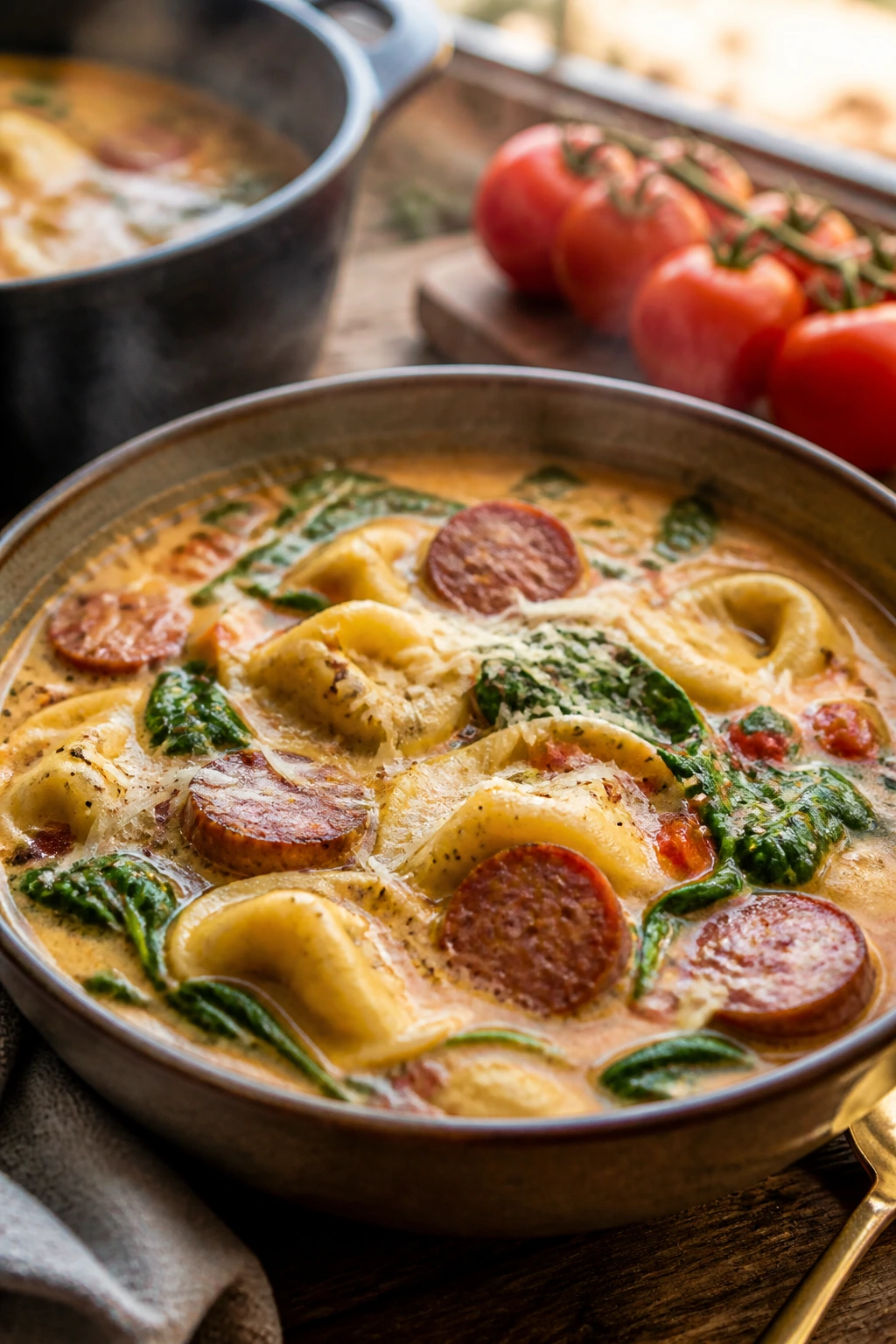
This soup has the cozy pull of a creamy pasta bowl, but it still behaves like soup. The tortellini swell in the broth, the sausage brings that familiar smoky backbone, and the Parmesan at the end makes the broth taste rich without turning it into sauce.
Why It Works:
Tortellini is a smart shortcut here because it gives you built-in filling and a tender bite. Smoked sausage takes care of the savory base, spinach adds color and a little freshness, and tomatoes keep the soup from feeling too creamy. Bacon lovers usually appreciate a soup that eats like a meal, and this one absolutely does.
Key Ingredients:
- 1 lb smoked sausage, sliced
- 1 package (9 oz) cheese tortellini
- 1 onion, diced
- 2 cloves garlic, minced
- 1 can (14.5 oz) diced tomatoes
- 5 cups chicken broth
- 2 cups baby spinach
- 1/2 cup grated Parmesan
- 1/2 teaspoon Italian seasoning
- Black pepper
Quick Steps:
- Brown the sausage in a soup pot for 4 minutes, then add onion and cook 4 more minutes.
- Stir in garlic and Italian seasoning for 30 seconds.
- Add tomatoes and broth, bring to a simmer, and cook 8 minutes.
- Add tortellini and simmer according to the package, usually 4 to 6 minutes, until tender.
- Stir in spinach and Parmesan, then turn off the heat and serve after 1 minute.
Equipment for This Recipe:
- Large soup pot
- Ladle
- Wooden spoon
- Cheese grater
How to Serve This Dish:
Serve in deep bowls with extra Parmesan and black pepper on top. Garlic bread is useful, but a good crusty loaf does the job too.
Pro Tips for This Recipe:
- Add the tortellini near the end so it doesn’t burst.
- If you want a brothier soup, add another cup of stock.
- Freshly grated Parmesan melts into the soup better than pre-shredded.
- A pinch of red pepper flakes gives the broth some lift.
Variations on This Dish:
- Creamy Version: Stir in 1/2 cup cream right before the tortellini goes in.
- Mushroom Add-In: Sauté sliced mushrooms with the onion.
- Sausage-and-Kale Swap: Use kale instead of spinach for a heartier bowl.
Common Mistakes to Avoid with This Dish:
- Cooking the tortellini too long: It can split open.
- Adding cheese while the soup is boiling hard: It may clump.
- Leaving the sausage pale: Browned sausage gives the soup its backbone.
Why This Kind of Cooking Wins on Busy Nights
Smoked sausage is one of the few ingredients that can slide into a skillet, a soup pot, a casserole dish, or a sheet pan and act like it belongs there. That’s rare. It’s already seasoned, it keeps its shape, and it gives off enough fat to help vegetables and starches brown instead of steam. That alone saves you from a lot of bland dinner problems.
It also gives you a built-in decision point: do you want the sausage just heated through, or do you want the edges dark and almost crisp? I vote for the second one every time. Those browned spots are where the flavor gets louder. You can build a lot around them with onions, garlic, vinegar, mustard, tomatoes, cheese, or a handful of herbs, and the meal still stays grounded.
The other reason these dishes work is that they don’t demand perfect sides. A skillet of smoked sausage and potatoes can stand on its own. A soup can be dinner with bread. A pasta bake can feed a group without turning into a production. That makes smoked sausage a useful thing to keep in the fridge or freezer when you want dinner to feel hearty without turning your kitchen into a project.
Essential Equipment for These Recipes
- 12-inch skillet: Best for browning sausage and giving vegetables room to caramelize instead of steam.
- Dutch oven or soup pot: Useful for soups, stews, jambalaya, and rice dishes that need steady heat.
- Rimmed sheet pan: Gives roasted sausage and vegetables enough surface area to brown properly.
- 9×13-inch baking dish: Needed for pasta bakes, stuffed peppers, and breakfast casseroles.
- Sharp chef’s knife: Smoked sausage cuts cleaner with a sharp blade, especially when you want even coins.
- Cutting board: A stable board matters because sausage can slide around once it’s sliced.
- Wooden spoon or heatproof spatula: Helps scrape up browned bits without scratching pans.
- Whisk: Handy for cheese sauces, egg casseroles, and chowder.
- Colander: Useful for draining pasta, potatoes, beans, or rice if needed.
- Lid for skillet or pot: Several of these dishes need steam for finishing, even if the first step is a good browning.
Smart Shopping and Ingredient Tips
Not all smoked sausage tastes the same, and that matters here. Look for links that list pork, beef, or chicken near the top, with smoke, garlic, and spice in the flavor profile. If the package reads like a chemistry set, I’d keep moving. The sausage should smell meaty and smoky, not faintly sweet or rubbery.
Cut size also matters more than people think. Wider coins work well in soups, rice dishes, and skillet dinners because they keep their shape. Thin bias slices are better for pizza, fried rice, and sheet-pan meals because they get more browned surface area. If you want that bacon-like edge, give the sausage room to sit flat in the pan.
For vegetables, choose sturdy partners. Yukon Gold potatoes hold better than russets in skillet meals. Firm apples beat soft ones on the sheet pan. Cabbage and Brussels sprouts need their outer leaves trimmed so they brown instead of drying out. For soups, canned beans are fine, and honestly, they’re often better than dry beans here because the sausage is already doing most of the flavor work.
Cheese deserves a quick note too. Sharp cheddar brings more punch than mild cheddar, and Parmesan gives soups and pasta bakes a salty, nutty finish. If you’re buying pre-shredded cheese for speed, that’s fine for casseroles, but a block grated at home melts more smoothly in sauces.
How to Serve These Recipes
Presentation:
Keep the serving style honest. A smoked sausage skillet looks best in shallow bowls or straight from the pan, with browned edges and a little gloss from the cooking fat. Baked dishes want a clean square or wedge so the layers show. Soups should have a visible garnish — parsley, chives, Parmesan, or cracked pepper — because a plain bowl can look muddy.
Accompaniments:
Crisp greens, vinegar-dressed slaw, buttered bread, cornbread, biscuits, roasted broccoli, or a basic cucumber salad all work well across this group. The richer the dish, the sharper the side should be. If the recipe already has potatoes, rice, pasta, or bread inside it, keep the side simple.
Portions:
Most of these dishes feed 4 to 6 people when served with a side salad or bread. If you’re serving the meal as the main event, plan on 1/4 of a casserole, 1 1/2 cups of soup, or a generous skillet portion per person. For bigger appetites, add bread and a vegetable rather than just making the sausage part heavier.
Beverage Pairing:
Cold beer fits the salty, smoky side of these recipes, especially the jambalaya, pizza, and sauerkraut skillet. For a non-alcoholic option, iced tea with lemon or sparkling water with a squeeze of citrus keeps the meal from feeling too dense.
Additional Tips and Flavor Boosters
Flavor Enhancement:
A little acid changes everything. Keep cider vinegar, red wine vinegar, lemon juice, mustard, or pickle brine nearby and use them at the end, not the start. Smoked sausage brings the richness; acid keeps it awake.
Customization:
If you like heat, add crushed red pepper, hot sauce, pickled jalapeños, or a little cayenne in the cooking fat. If you like a softer, sweeter profile, lean on onions, apples, roasted peppers, or a touch of maple. The sausage is sturdy enough to handle either direction.
Serving Suggestions:
Fresh herbs matter more than they seem. Parsley, chives, scallions, and thyme give the plate a fresh smell that cuts through the smoke. A little extra black pepper on top also helps, especially on creamy dishes and soups.
Make-It-Yours:
For a lighter plate, pair sausage with cabbage, green beans, or spinach instead of a big mound of pasta or potatoes. For a dairy-free version, skip cream sauces and lean on broth, tomatoes, mustard, and olive oil. For gluten-free cooking, most of these dishes already work with rice, beans, potatoes, or corn tortillas.
Make-Ahead, Storage, and Reheating Guidance
Most smoked sausage dishes hold up well in the fridge for 3 to 4 days in airtight containers. Soups and stews can sometimes stretch to 4 days if they were cooled quickly. Pasta bakes and rice dishes are best within 3 days because the starch keeps drinking up liquid and softening.
Freezing depends on the recipe. Bean soups, lentil stews, jambalaya, cabbage skillets, and sausage-and-potato dishes freeze well for up to 2 to 3 months. Creamy pasta bakes, chowders, and cheese-heavy casseroles are fussier; they can still freeze, but the texture may separate or turn grainy after thawing. If you know a dish will be frozen, keep the cream or cheese sauce lighter and add fresh cheese after reheating.
Reheat skillet meals in a covered pan over medium-low heat with a splash of broth or water. Soups do best on the stove over gentle heat, not a hard boil. Rice dishes and fried rice reheat well in a skillet, which brings back some texture better than the microwave. Pasta bakes can go in a 325°F oven, covered with foil, until heated through; uncover for the last few minutes if you want the top to crisp again.
You can also make parts ahead. Brown the sausage and chop the vegetables a day early. For casseroles, assemble the dish in advance and bake later. For soup, cook the base and add delicate greens or cream only when reheating. That’s the part people forget: the sausage is forgiving, but the dairy and pasta are not.
Variations and Adaptations to Try
Low-Sodium Lane:
Use lower-sodium broth, rinse canned beans, and choose a less salty sausage if you can find one. The dish will still taste smoky, but it won’t land as heavily on the tongue. Finish with acid and herbs so you don’t miss the salt as much.
Dairy-Free Route:
Choose skillet meals, rice bowls, soups with beans, and sheet-pan dinners. Skip cream, sour cream, and cheese, then lean on onions, tomatoes, mustard, and a little olive oil for depth. Sausage already gives a strong backbone, so you’re not starting from zero.
Gluten-Free Plate:
Most of the skillet, soup, rice, and roasted recipes are naturally close to gluten-free already. Use certified gluten-free sausage, broth, and seasonings, and swap regular pasta or breadcrumbs for gluten-free versions where needed. Polenta, potatoes, and rice make easy stand-ins.
Kid-Friendly Mild Mode:
Use kielbasa or a mild smoked sausage and keep the pepper flakes, hot sauce, and mustard on the side. Stick to the sweeter dishes first: sheet-pan sausage with apples, breakfast hash, stuffed peppers, and chowder usually land well with younger eaters.
Heat-Seeker Upgrade:
Andouille, cayenne, jalapeños, pepper jack, hot sauce, and chili crisp all fit naturally with this group. Add heat in layers instead of dumping it all in at once. A little in the sausage dish, a little at the table, and the bowl feels more balanced.
Vegetable-Heavy Swap:
Increase the cabbage, Brussels sprouts, green beans, spinach, or peppers and reduce the starch a little. Smoked sausage is powerful enough to keep the dish feeling satisfying even when the vegetables take center stage.
Common Mistakes to Avoid
Not browning the sausage enough:
If the slices look pale, the dish tastes flatter than it should. You want dark edges and a little stickiness on the pan; that’s where the flavor comes from. Give the sausage room and let it sit.
Treating sausage like bacon:
It’s not bacon, so it doesn’t need constant stirring or ultra-hot, all-out crisping. Smoked sausage likes medium-high heat and enough time to take on color without drying out. Slice it too thin and it can get leathery.
Forgetting the acid:
A skillet full of sausage, potatoes, cheese, or rice can turn heavy fast. Vinegar, lemon, pickles, mustard, or tomatoes keep the food lively. Skip that last bright note and you’ll notice the difference by the second bite.
Overcooking the vegetables:
Brussels sprouts turn dull, cabbage turns sulfurous, green beans lose snap, and peppers collapse if you leave them in the heat too long. The fix is simple: cook them until tender, not anonymous.
Using too much liquid too soon:
Soups and rice dishes need enough broth to cook, but not so much that the pot turns watery. Add a little at a time if you’re unsure, and remember that canned tomatoes, sausage fat, and vegetable juices all count toward the final moisture.
Serving it straight from the heat without a pause:
Cheese sauces split, casseroles slump, and rice can seem wetter than it really is. Let the dish sit for 5 to 10 minutes whenever the recipe asks for it. That short wait pays off.
Frequently Asked Questions
Can I use any smoked sausage, or do I need a specific kind?
Any good smoked sausage will work, but the flavor changes a lot from one style to another. Kielbasa is garlicky and mild, andouille is spicier and deeper, and beef smoked sausage often tastes a little firmer and saltier. Pick the one that matches the dish’s mood.
Do I need to cook smoked sausage all the way through?
Most smoked sausage is already fully cooked, so you’re usually heating and browning it rather than cooking it from raw. Still, check the package; some versions are only partially cooked and need more time. Either way, browning the outside is worth doing.
What’s the best way to keep smoked sausage from drying out?
Don’t cook it on high heat for too long once it’s already browned. Add it back near the end of soups, pasta, or rice dishes if you want it tender. In casseroles, it stays juicier when it’s surrounded by sauce or custard.
Can these recipes be made in a slow cooker?
Some can, but not all of them should be. Soups, stews, and bean dishes work well in a slow cooker, while skillet meals, sheet-pan recipes, and anything that depends on crisp edges are better on the stove or in the oven. If browning matters, do that part first.
How do I stop the dish from tasting too salty?
Use low-sodium broth, rinse canned beans, and don’t season aggressively until the sausage is in the pan. Acid helps too; a little vinegar or lemon can make a salty dish taste more balanced without diluting it. Fresh herbs also help lift the flavor.
Can I swap in turkey or chicken smoked sausage?
Yes, and it works especially well in pasta bakes, soups, fried rice, and casseroles. The dish will taste a little lighter and may need a touch more oil or butter for browning. That’s not a bad trade if you want a less rich plate.
What should I do if my skillet dish turns watery?
Keep cooking it uncovered over medium heat so the liquid can evaporate. If potatoes or cabbage are involved, make sure the heat is high enough to encourage browning instead of steaming. A final squeeze of lemon or splash of vinegar can help the flavor recover too.
Which of these recipes is best for leftovers?
Soups, stews, jambalaya, lentil dishes, and breakfast casseroles reheat well and often taste even better the next day. Fried rice and skillet potato dishes are fine, but they need a hot pan rather than the microwave if you want the texture to stay lively.
The Kind of Dinner Shortcut Worth Keeping
Smoked sausage earns its place because it does several jobs at once. It seasons the pan, gives you enough fat to brown onions and potatoes, and brings the smoky backbone that bacon lovers usually miss when a dish tries to be hearty without being fussy. That’s a useful trick, and it shows up over and over in these recipes.
The best part is how little ceremony it asks for. A good knife, a hot skillet, and the right supporting cast — cabbage, rice, beans, pasta, potatoes, or peppers — are usually enough. If you remember to brown the sausage properly and finish with a little acid, the rest falls into place with less drama than people expect.
Keep one pack in the fridge or freezer, and dinner gets a lot more flexible. That’s the whole point.