



The first time I made pork carnitas with brown sugar glaze, the whole kitchen smelled like orange peel, garlic, and hot caramel long before the meat came out of the oven. That matters more than people admit. If the pork never browns, never picks up a little sticky edge, never gives you that mix of tender shreds and crisp bits, it ends up tasting like polite pot roast wearing a taco shell.
A lot of carnitas recipes stop at “fork-tender.” That’s only half the job. Tender is the inside. The part people remember is the finish: the glossy surface, the little chewy corners, the way a shard of pork clings to a warm tortilla instead of falling apart the second you bite it. Brown sugar glaze sounds like a small detail, but here it acts like a thin lacquer, helping the seasoning settle into the meat and coaxing the edges into that deep mahogany color you want from a proper broil.
Pork shoulder is the cut that makes this work. Not loin. Not chops. Shoulder has enough fat and connective tissue to stay juicy through a long braise, then shred into loose strands instead of dry crumbs. And the glaze? It’s not there to turn the dish into dessert. When you balance brown sugar with lime, vinegar, citrus juice, and the pork’s own cooking liquid, you get a sticky finish that tastes savory first and sweet only at the very end. That’s the sweet spot. Literally.
Why Pork Carnitas with Brown Sugar Glaze Works So Well
Rich fat, lean edges, and a glossy finish: Pork shoulder gives you the marbling you need for tenderness, then the broiler gives you the browned ridges that keep every bite from feeling soft all the way through.
The glaze is a finisher, not a sauce dump: A half-cup of brown sugar reduced with the braising liquid turns syrupy in minutes, which means it clings to the pork instead of soaking the whole batch into mush.
Orange and lime keep the sweetness honest: Citrus cuts through the sugar and the fat at the same time, so the dish lands bright instead of cloying. That little hit of acidity is doing real work.
You can make it ahead without wrecking it: The pork braises beautifully, chills well, and crisps back up fast. Honestly, the texture is easier to manage on a second-day reheat.
It feeds a crowd without fussing over individual portions: Four pounds of shoulder turns into a generous tray of carnitas, which makes this a smart choice for taco night, bowls, or a platter with rice and beans.
The final broil changes everything: Three to six minutes under high heat gives you crisp edges and caramelized spots that a slow braise alone can’t create. That last step is not optional in my kitchen.
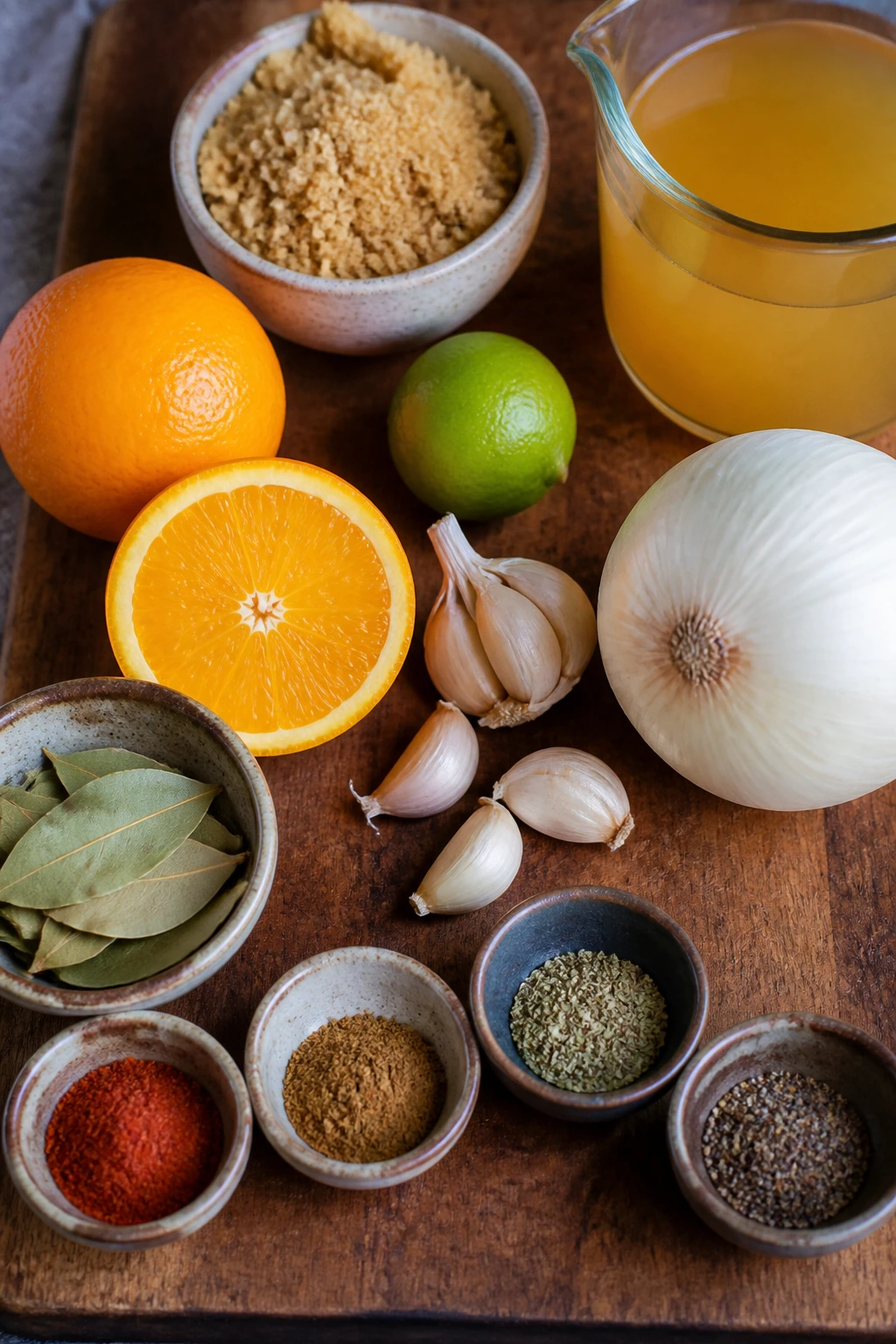
The Pantry Lineup for the Pork and the Glaze
Yield: Serves 8
Prep Time: 25 minutes
Cook Time: 3 hours 30 minutes
Total Time: 3 hours 55 minutes
Rest Time: 15 minutes
Difficulty: Intermediate — the method is straightforward, but the sear, braise, glaze, and broil each need a little attention.
Best Served: Warm, right after the final broil, while the glaze still looks shiny and the edges still feel crisp.
For the Carnitas:
- 4 pounds boneless pork shoulder, cut into 2-inch chunks
- 2 tablespoons kosher salt
- 2 teaspoons black pepper
- 2 teaspoons ground cumin
- 2 teaspoons dried oregano
- 1 teaspoon smoked paprika
- 1 teaspoon garlic powder
- 2 tablespoons neutral oil, such as avocado or canola
- 1 large yellow onion, sliced
- 6 garlic cloves, smashed
- 1 orange, zested and juiced
- 1 lime, juiced
- 1 cup low-sodium chicken broth
- 1 cup water
- 2 bay leaves
- 1 chipotle pepper in adobo, minced, optional
For the Brown Sugar Glaze:
- 1/2 cup packed dark brown sugar
- 1/4 cup reserved braising liquid, skimmed of fat
- 1 tablespoon apple cider vinegar
- 1 tablespoon fresh orange juice
- 1 tablespoon unsalted butter
For Serving:
- 12 to 16 warm corn tortillas
- 1/2 cup diced white onion
- 1/2 cup chopped cilantro
- 2 limes, cut into wedges
- 1 avocado, sliced
- 1/2 cup crumbled cotija cheese
Why Each Ingredient Matters in This Carnitas Batch
Main Pork
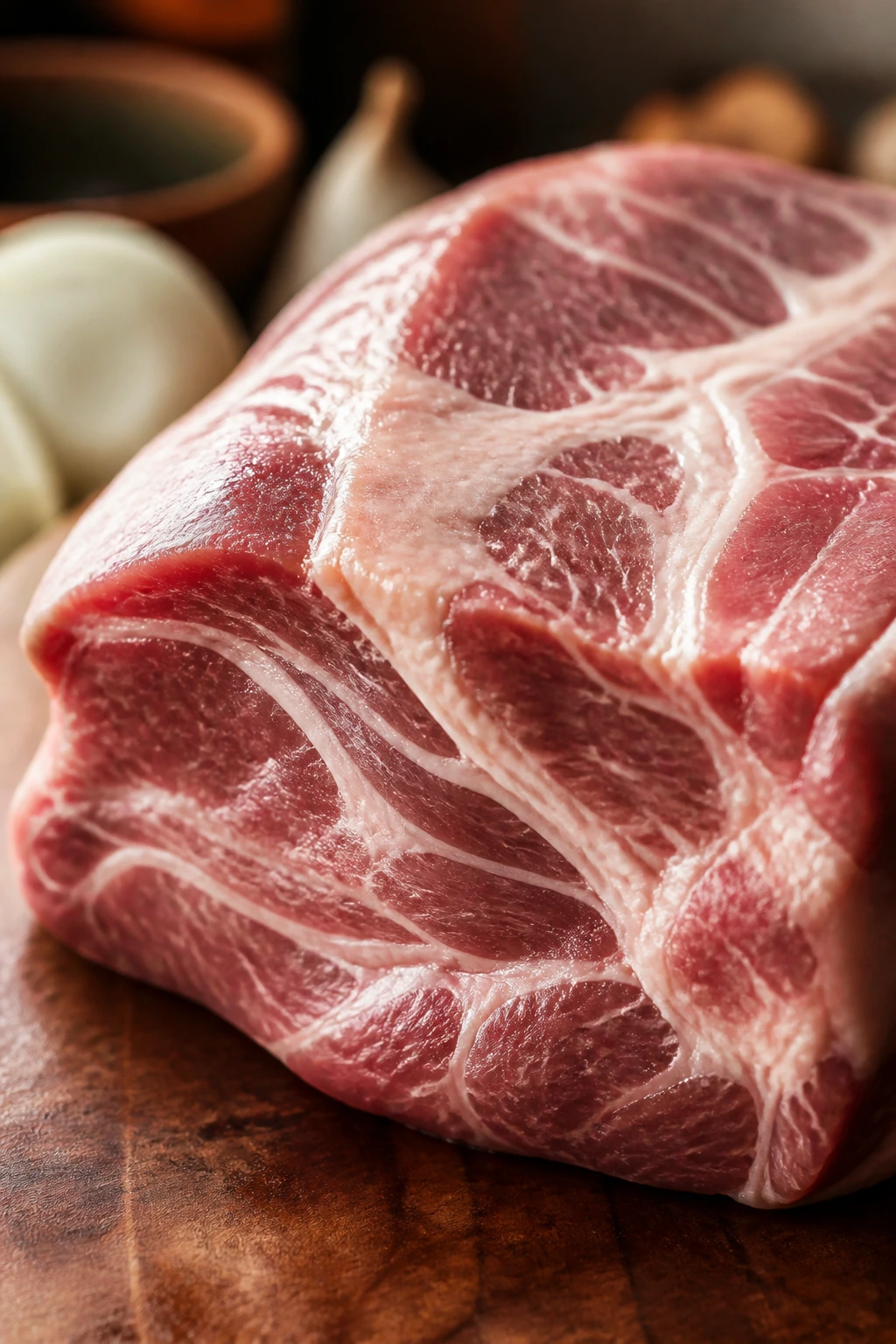
What to use: 4 pounds boneless pork shoulder, cut into 2-inch chunks. That size gives you enough surface area for browning, but not so much that the pieces dry out before the center softens.
Preparation: Pat the pork dry with paper towels before seasoning. Moisture on the surface fights browning, and browning is where the flavor starts building.
Substitutions: Bone-in pork shoulder works too; just add 20 to 30 minutes to the braise and pull the bones out before shredding. Pork butt is interchangeable here because it’s the same general cut.
Tips: Look for pieces with visible marbling and a decent fat cap. You want fat, not a block of white trim; the fat should melt into the meat as it cooks and keep the shreds plush.
Braising Liquid & Aromatics
What to use: 1 large yellow onion, 6 smashed garlic cloves, 1 orange juiced and zested, 1 lime juiced, 1 cup low-sodium chicken broth, 1 cup water, 2 bay leaves, and 1 minced chipotle pepper in adobo if you want a little heat.
Preparation: Slice the onion into thick wedges so it softens without disappearing. Smash the garlic just enough to open it up; no need to mince it to paste.
Substitutions: If you don’t have orange, use 1/2 cup apple juice plus an extra teaspoon of lime juice. Vegetable broth also works if that’s what’s in the fridge.
Tips: Keep the liquid modest. You’re braising, not boiling. The pork should sit in enough liquid to come partway up the sides, not drown under it.
Spice Rub
What to use: 2 tablespoons kosher salt, 2 teaspoons black pepper, 2 teaspoons cumin, 2 teaspoons dried oregano, 1 teaspoon smoked paprika, and 1 teaspoon garlic powder.
Preparation: Mix the spices in a small bowl before they touch the pork. Even seasoning matters because you want every piece to taste seasoned after shredding.
Substitutions: Mexican oregano has a slightly brighter, almost citrusy edge if you can find it. If not, regular dried oregano is fine. Ground coriander can stand in for a small portion of the cumin if you want a softer spice note.
Tips: Salt is the backbone here. If you cut the salt too much, the glaze will taste sugary instead of balanced, and the pork itself will taste flatter than it should.
Brown Sugar Glaze
What to use: 1/2 cup packed dark brown sugar, 1/4 cup skimmed braising liquid, 1 tablespoon apple cider vinegar, 1 tablespoon orange juice, and 1 tablespoon butter.
Preparation: Reduce the braising liquid first so the glaze thickens quickly. Once the sugar dissolves, keep it at a bare simmer until it looks like thin maple syrup.
Substitutions: Light brown sugar works if that’s what you’ve got, though the molasses note will be gentler. Honey can replace part of the sugar, but keep some brown sugar in the mix so the glaze still caramelizes.
Tips: Dark brown sugar gives you a deeper, more cooked flavor. It also makes the pork look lacquered faster under the broiler, which is exactly what you want.
Serving Fixings
What to use: Warm corn tortillas, diced white onion, chopped cilantro, lime wedges, avocado, and cotija.
Preparation: Warm the tortillas in a dry skillet or over a low gas flame until they puff and spot slightly. Cold tortillas make even excellent carnitas feel dull.
Substitutions: Flour tortillas are fine if you like a softer, larger wrap. Pickled onions or sliced radish work when you want a sharper bite.
Tips: Keep the toppings simple. The pork already carries garlic, citrus, spice, and glaze; too many extras can make the plate muddy.
The Tools That Make the Process Easier
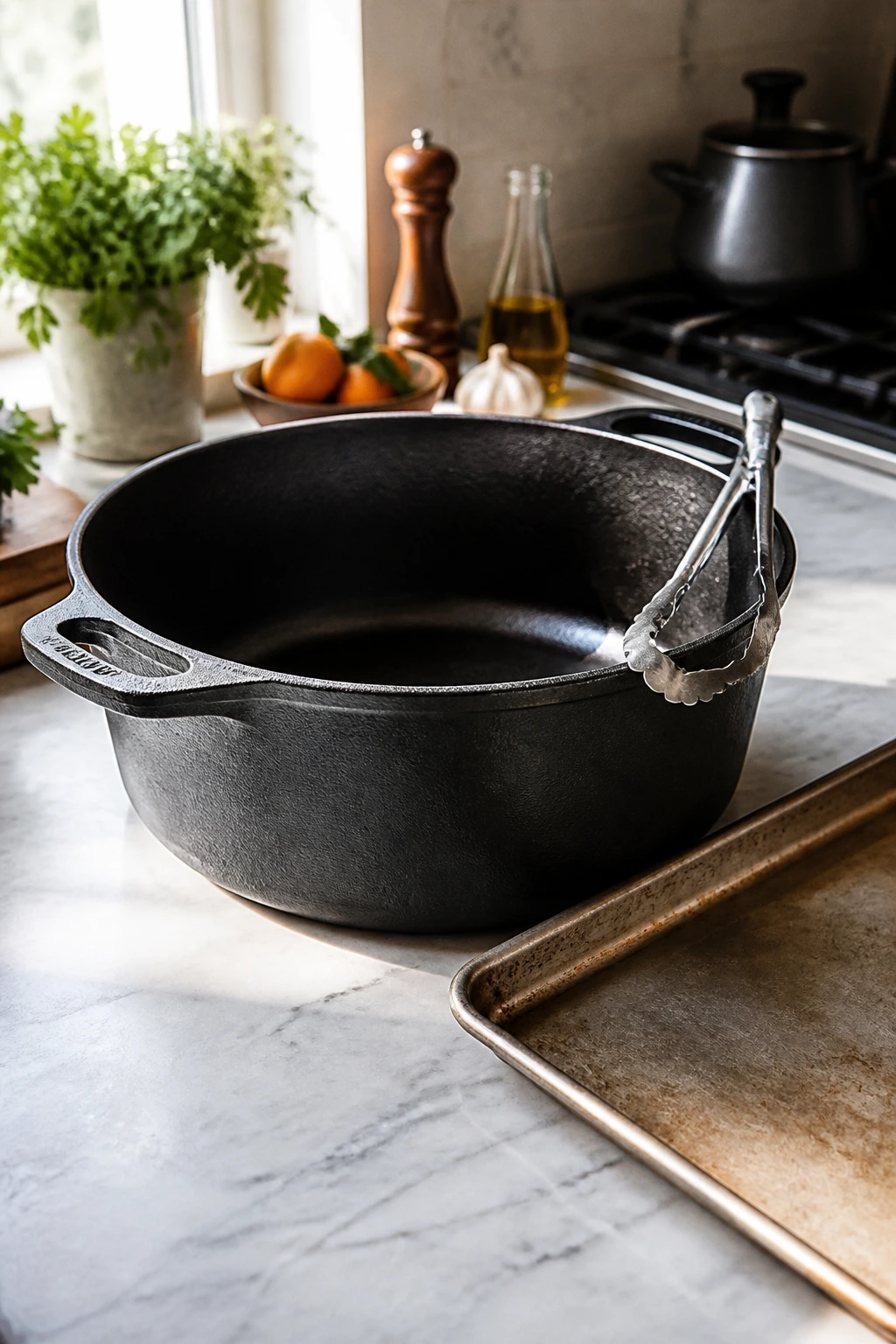
A recipe like this doesn’t ask for fancy gear, but a few specific tools make the process smoother and less annoying.
- Large Dutch oven or heavy oven-safe pot with a lid: This is the best vessel for searing, braising, and reducing in one place.
- Tongs: You’ll use them for flipping the pork, moving it between batches, and tossing it with glaze.
- Rimmed sheet pan: The pork needs space under the broiler so the edges can crisp instead of steam.
- Meat thermometer: Not mandatory, but useful. It helps you spot the difference between “safe” and “shreds apart properly.”
- Fine-mesh strainer: Handy for skimming fat from the braising liquid before you reduce it.
- Large mixing bowl: Good for tossing the shredded pork with glaze without breaking the strands too much.
- Wooden spoon or heatproof spatula: Useful for scraping up browned bits after the sear. Those bits are flavor, not debris.
- Microplane or fine grater: Optional, but it makes zesting the orange fast and clean.
How to Make Pork Carnitas with Brown Sugar Glaze
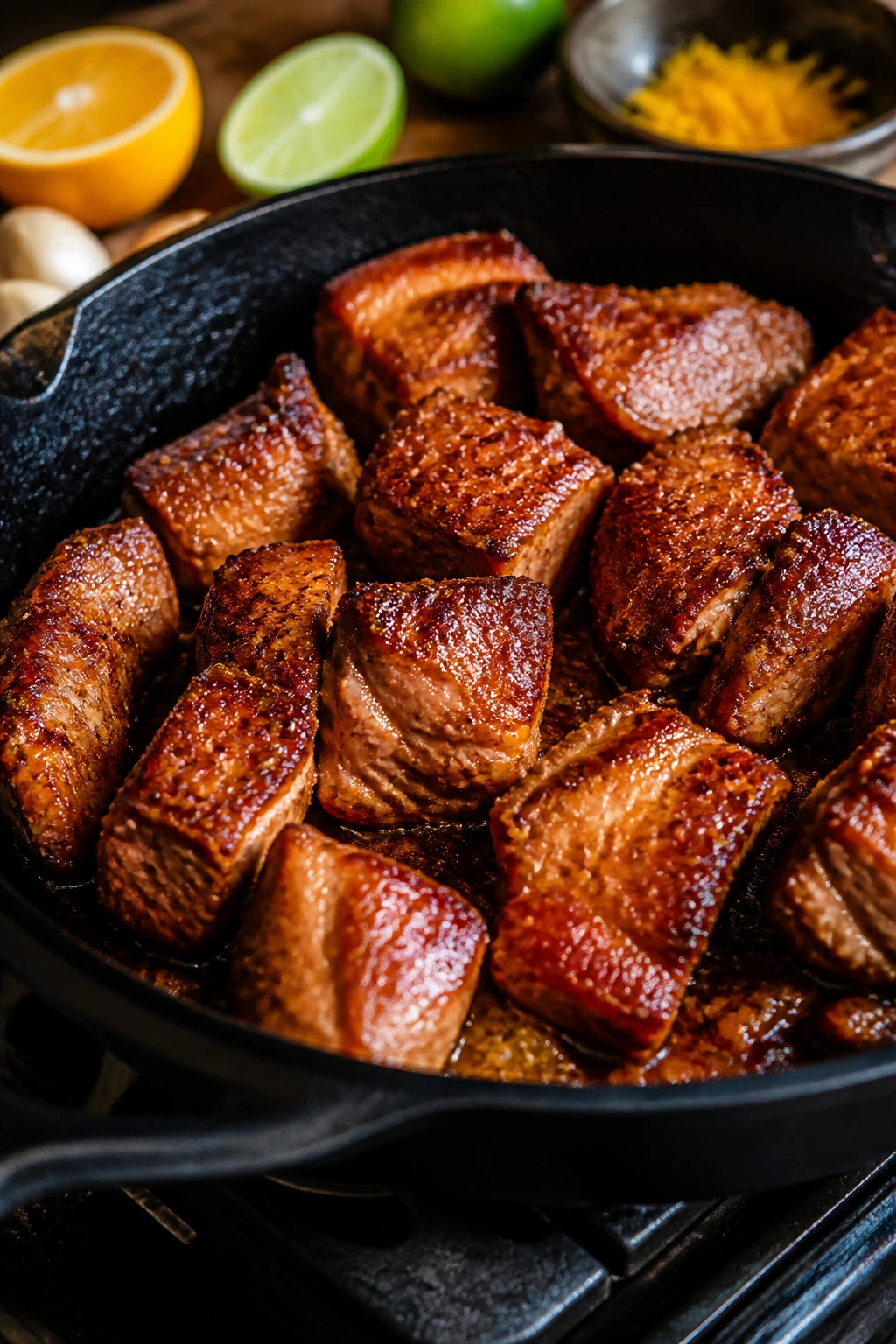
Prep the Pork and Oven
-
Preheat the oven to 300°F (150°C) and position a rack in the center. Take a Dutch oven out and set it on the stove so you’re not hunting for cookware after the pork is seasoned.
-
Pat the pork shoulder dry with paper towels, then toss it in a large bowl with the kosher salt, black pepper, cumin, oregano, smoked paprika, and garlic powder. Coat every side. The pieces should look evenly dusted, not caked in spice.
-
Heat the oil in the Dutch oven over medium-high heat until it shimmers. Add half the pork pieces in a single layer and sear for 3 to 4 minutes per side, turning with tongs until you get deep brown patches. Transfer the browned pork to a plate and repeat with the rest. Do not crowd the pot; if the pieces touch too much, they steam and never build that flavor crust.
Build the Braise
-
Lower the heat to medium and add the sliced onion to the same pot. Cook for 4 to 5 minutes, stirring now and then, until the onion softens and picks up browned edges. Add the smashed garlic and minced chipotle, if using, and stir for 30 seconds until fragrant. Don’t let the garlic scorch.
-
Pour in the orange juice, lime juice, chicken broth, water, and orange zest, scraping the bottom of the pot with a wooden spoon to lift up the browned bits. Add the bay leaves and stir once.
-
Return the pork and any juices to the pot. The liquid should come partway up the meat, not bury it. Cover with the lid and move the pot to the oven. Braise for 3 to 3 1/2 hours, until the pork is fork-tender and registers about 195°F to 205°F in the thickest chunk. If a fork does not slide in with almost no resistance, the meat needs more time.
-
Let the pork rest for 15 minutes after removing the pot from the oven. Transfer the pork to a large bowl or sheet pan, then skim off the fat from the surface of the braising liquid. You want the liquid, not the grease.
Glaze and Crisp
-
Measure 1/4 cup of the skimmed braising liquid into a small saucepan. Add the dark brown sugar, apple cider vinegar, orange juice, and butter. Bring it to a gentle simmer over medium heat, stirring until the sugar dissolves. Cook for 4 to 6 minutes, until the glaze looks glossy and lightly syrupy and coats the back of a spoon in a thin layer.
-
Shred the pork with two forks into loose, uneven pieces. Discard any large lumps of fat or gristle. Spoon half the glaze over the pork and toss just enough to coat the surface. The meat should look shiny, but not wet enough to puddle.
-
Spread the pork on a rimmed sheet pan in an even layer and broil 6 to 8 inches from the heat for 3 to 6 minutes, until the edges darken and crisp in spots. Watch it closely; sugar goes from browned to burnt fast under the broiler. If your broiler runs hot, move the pan down one rack.
-
Toss the crisped pork with the remaining glaze and taste a piece. Add a pinch more salt or a squeeze of lime if it tastes sweet without enough lift. Serve right away with warm tortillas and the toppings you chose.
How to Serve a Plate That Still Tastes Like Carnitas
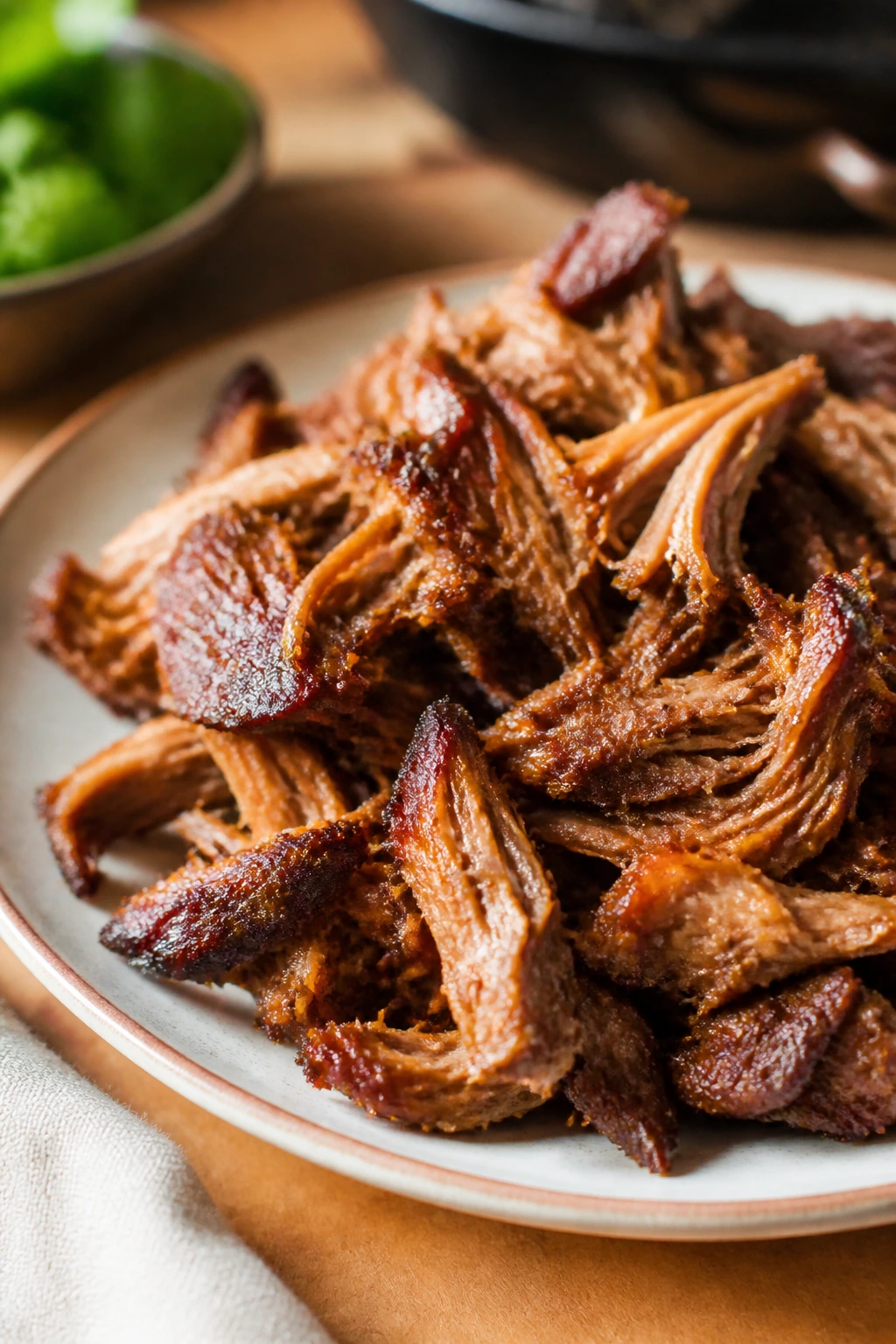
Presentation: Spoon the carnitas into a shallow bowl or platter instead of piling them in a deep mound. That keeps the glossy, crisped pieces visible and lets steam escape instead of softening the edges. I like to tuck the tortillas into a folded kitchen towel so they stay warm and pliable until the last bite.
Accompaniments: Keep the sides clean and sharp. Warm corn tortillas, diced white onion, chopped cilantro, lime wedges, avocado slices, and cotija are enough for a proper plate. If you want a bigger meal, add black beans or a simple rice side, but don’t drown the pork under three heavy extras.
Portions: Plan on about 1/2 pound of raw pork shoulder per person, which usually turns into a generous taco filling after braising and shredding. For smaller appetites, two tacos is often enough. For hungry guests, three tacos plus rice is more realistic. This recipe comfortably feeds 8 if the table has sides.
Beverage Pairing: A cold lager, a crisp Mexican-style beer, or a tart lime drink keeps the glaze from feeling heavy. If you want something nonalcoholic, sparkling water with lime or a chilled hibiscus drink works well. I would avoid anything too sweet; the pork already brings enough caramel notes to the party.
Practical Tips for Better Flavor and Crispier Edges
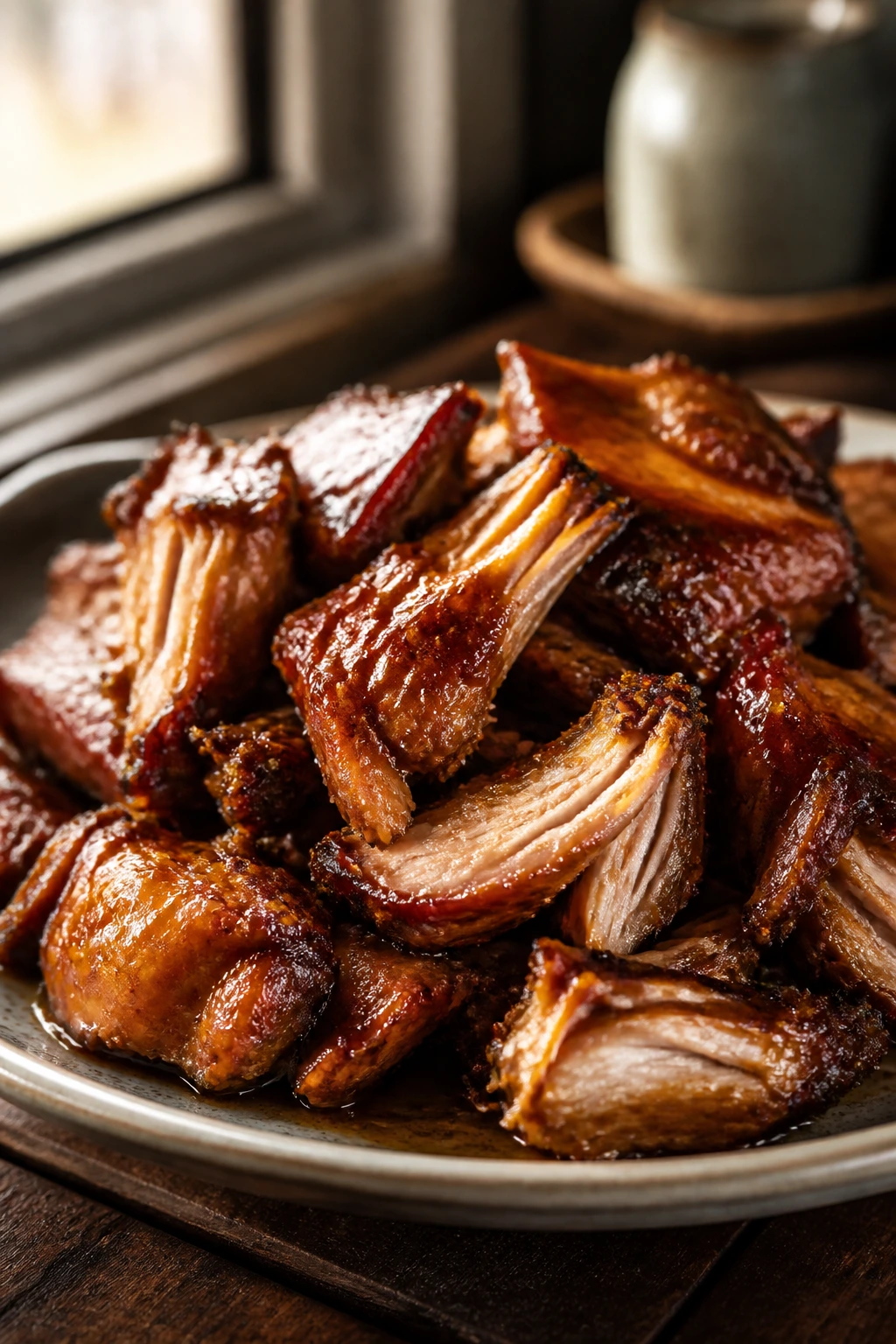
Flavor Enhancement: Save a little orange zest and stir it into the glaze right at the end. It wakes up the whole pan and keeps the sugar from tasting flat. A pinch of flaky salt on the finished pork does the same thing, especially if your broth was low in sodium.
Time-Saver: Braise the pork the day before you plan to serve it. Chill the meat in its cooking liquid, then lift out the solidified fat, shred the pork cold, and reduce the liquid with the brown sugar the next day. The texture is easier to handle, and the flavor settles in nicely overnight.
Pro Move: If you want extra crisp bits, reserve a handful of the shredded pork and broil it plain for the first two minutes before tossing it in the glaze. Then add the glaze and give it one more short blast. That gives you mixed texture: some pieces chewy, some lacquered, some properly crunchy at the edges.
Cost-Saver: Buy the whole pork shoulder and trim only the loose exterior fat. The tougher connective tissue inside is what turns silky during the braise, and that’s the part you actually want. Pre-cut pork “stew meat” often costs more and gives you less control over the size of the pieces.
Heat Control: If you like the brown sugar glaze darker, use dark brown sugar and let it reduce a minute longer. If your broiler runs fierce, switch to a very hot oven — around 450°F — for the last 6 to 8 minutes instead. It takes a little longer, but it lowers the odds of burnt sugar.
Common Carnitas Mistakes and How to Avoid Them
-
Using pork loin because it looks leaner. The symptom is dry, stringy meat that never quite tastes rich enough. Pork loin can be fine for fast roasting, but it doesn’t have enough fat and connective tissue for this braise. Use shoulder or butt, and don’t try to make the cut do a job it wasn’t built for.
-
Skipping the sear because you’re impatient. The pork will still cook through, but the flavor gets flatter and the glaze has less to cling to. Browning in batches adds time, yes. It also builds the dark edges that make the final broil taste like more than sweet pork.
-
Reducing the glaze too far before it hits the meat. If the syrup turns thick in the saucepan, it can seize up and taste sticky instead of balanced. Stop when it lightly coats a spoon and still flows in a ribbon. It should cling. It should not behave like taffy.
-
Broiling the pork in a pile. The top bits get scorched while the middle stays soft and gray. Spread the meat out in a thin layer on a rimmed sheet pan so every piece gets a shot at the heat. If needed, use two pans. That’s not fussy. That’s the difference between crisp edges and a steam bath.
-
Shredding too soon. If the pork resists the forks, it needs more time in the oven. Forcing it apart early gives you dry little ropes instead of loose, juicy strands. Wait until it practically falls apart when you nudge it.
-
Forgetting to taste after glazing. The glaze softens the salt level and can make the pork read sweeter than it should. A final squeeze of lime and a small pinch of salt usually fix that in seconds. Taste before serving, not after everyone has already sat down.
Variations That Change the Heat, Sweetness, or Cooking Method
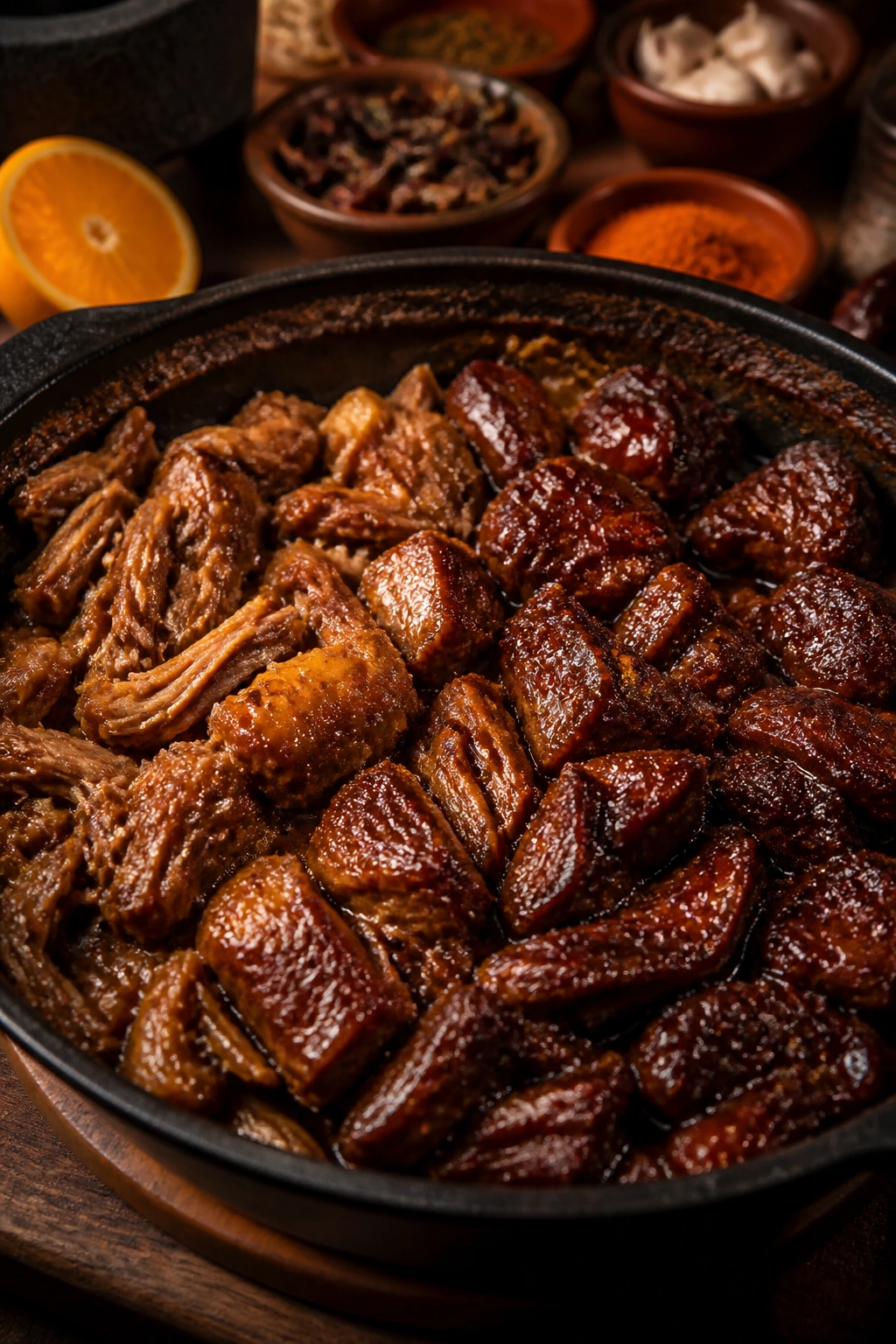
Chipotle Fire Carnitas: Add one extra chipotle pepper in adobo and 1 teaspoon of the adobo sauce to the braising liquid. The smoke lands deeper, and the brown sugar glaze keeps the heat from feeling rough. This version is for people who want the pork to linger on the tongue a little longer.
Orange-Ancho Carnitas: Stir 1 tablespoon ancho chile powder into the spice rub and add an extra teaspoon of orange zest to the glaze. The result tastes rounder and less sharp than the chipotle version, with a warm chile note that hangs in the background. It’s a good middle ground if you want more depth than heat.
Less-Sweet Street-Style Finish: Cut the brown sugar to 1/4 cup and bump the vinegar up by another teaspoon. You’ll get a thinner glaze with more tang and a little less lacquer. I reach for this when I want the pork to lean more savory than sticky.
Slow-Cooker Braise, Broiler Finish: Sear the pork on the stove, then move everything to a slow cooker and cook on low for 8 to 9 hours or high for 4 to 5 hours. Strain and reduce the liquid on the stove afterward, then glaze and broil as written. It’s a looser schedule, though the flavor still benefits from that final crisping pass.
Pressure-Cooker Shortcut: Sear the pork in the pressure cooker insert if it allows it, then cook at high pressure for 45 minutes with a 15-minute natural release. Reduce the liquid after, glaze, and broil. The texture is slightly different from the oven version — a touch less layered — but the method works when time is tight.
Make-Ahead, Storage, and Reheating Without Losing Texture
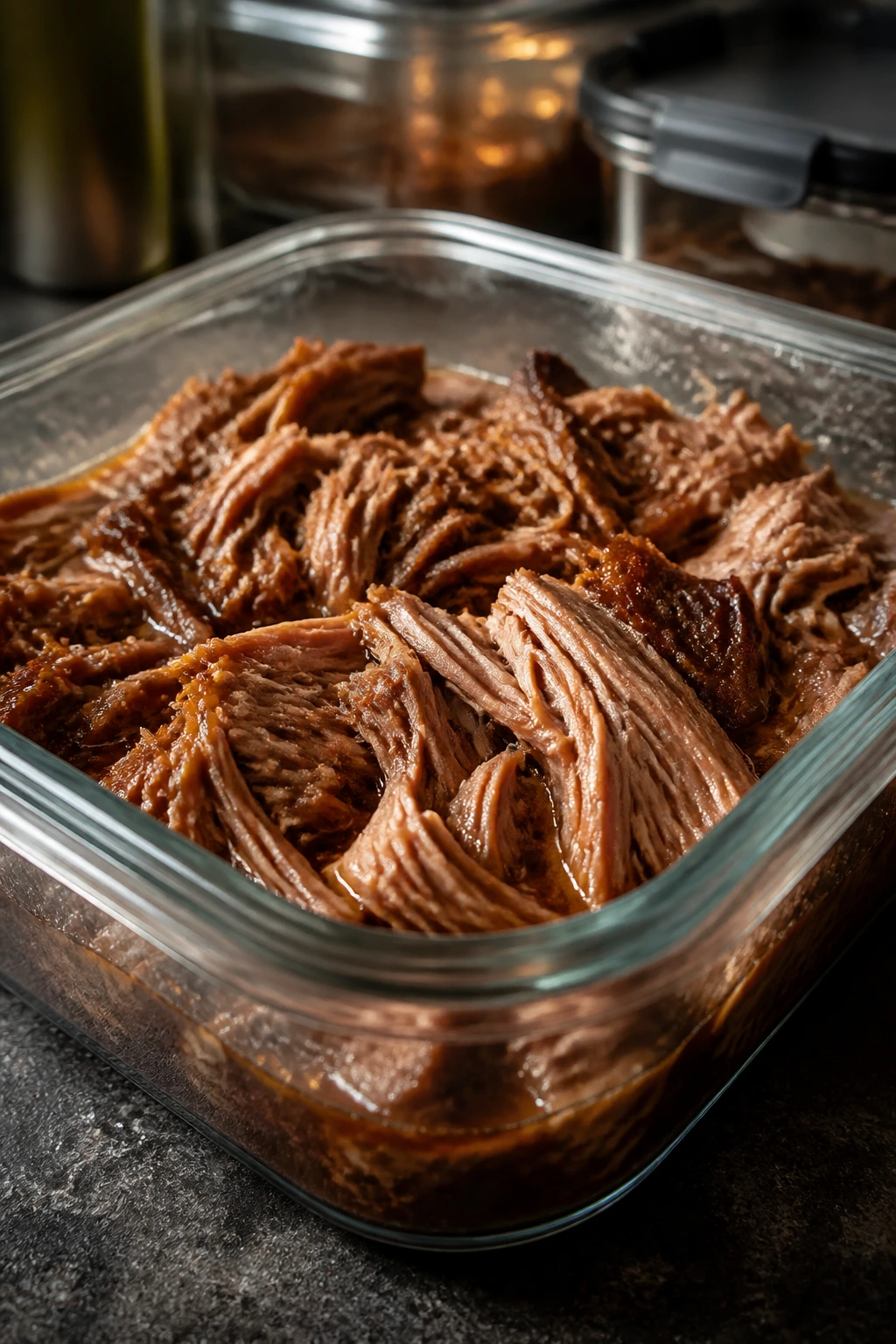
If you’re planning ahead, this recipe is friendly to it. The pork can be braised, cooled in its liquid, and refrigerated for up to 4 days before you glaze and crisp it. In fact, that overnight rest often helps the seasoning settle into the meat. The flavor tastes more joined up the next day, which is one of the few gifts that a refrigerator can give you.
For storage, keep the shredded pork and the glaze separate if you can. Put the pork in an airtight container with a few spoonfuls of its braising liquid so it doesn’t dry out. Store the glaze in a small jar or sealed container for up to 5 days in the fridge. If the glaze thickens too much, warm it with a teaspoon of water or orange juice.
Freezing works well too. Freeze the cooled pork in flat portions with a little braising liquid for up to 3 months. The glaze can be frozen separately, though I usually make a fresh batch from the reserved liquid if I have enough left. Thaw overnight in the refrigerator before reheating; skip the counter thaw unless you enjoy guessing games with food safety.
For reheating, a skillet over medium heat is my favorite method. Add the pork with a splash of broth or water, cover for a minute or two, then uncover and stir until the edges start to wake back up. If you want a bigger batch crispy again, spread it on a sheet pan at 375°F (190°C) for 10 to 12 minutes, then hit it with a short broil at the end. The microwave will work in a pinch, but it softens the glaze and steals some of the edge, so I treat that as emergency equipment only.
Frequently Asked Questions
Can I make these carnitas in a slow cooker instead of the oven?
Yes. Sear the pork first if you can, then cook everything on low for 8 to 9 hours until the meat falls apart easily. You’ll still want to reduce the braising liquid on the stove and broil the shredded pork at the end, because the slow cooker gets tenderness but not crisp edges.
Do I have to use dark brown sugar?
No, but I prefer it. Dark brown sugar brings more molasses depth, which makes the glaze taste cooked rather than candy-sweet. Light brown sugar still works; white sugar does not give the same flavor or body.
What if my pork is tender but still holds together in big pieces?
It needs more time. Shoulder can be safe to eat before it’s truly carnitas-tender, and those are not the same thing. Keep braising until a fork slides through with almost no resistance and the meat shreds in loose strands, not chunks.
Can I make the glaze less sweet?
Yes. Cut the brown sugar back by 2 tablespoons and add a touch more vinegar or lime juice. You’ll get a sharper, less sticky finish. I like that adjustment when I’m serving the pork in bowls with rice, where a lighter glaze feels better.
What’s the best way to keep the pork crispy after glazing?
Use a hot sheet pan and don’t pile the meat too high. If it sits in a heap, the steam softens the crust almost immediately. Serve it quickly after broiling, and keep extra glaze on the side instead of soaking the whole batch at once.
Can I freeze the finished carnitas after I glaze them?
Yes, but the texture is a little better if you freeze the shredded pork before the final broil and glaze. If you freeze the finished version, re-crisp it in a hot skillet or under the broiler after thawing. It won’t be identical, but it still eats well.
Can I make this less smoky for kids or spice-shy guests?
Definitely. Skip the chipotle pepper and use only the spice rub, citrus, and glaze. You still get pork that tastes layered and rich, just without the little smoky kick that lingers on the back of the tongue.
Sticky Edges and Tender Centers
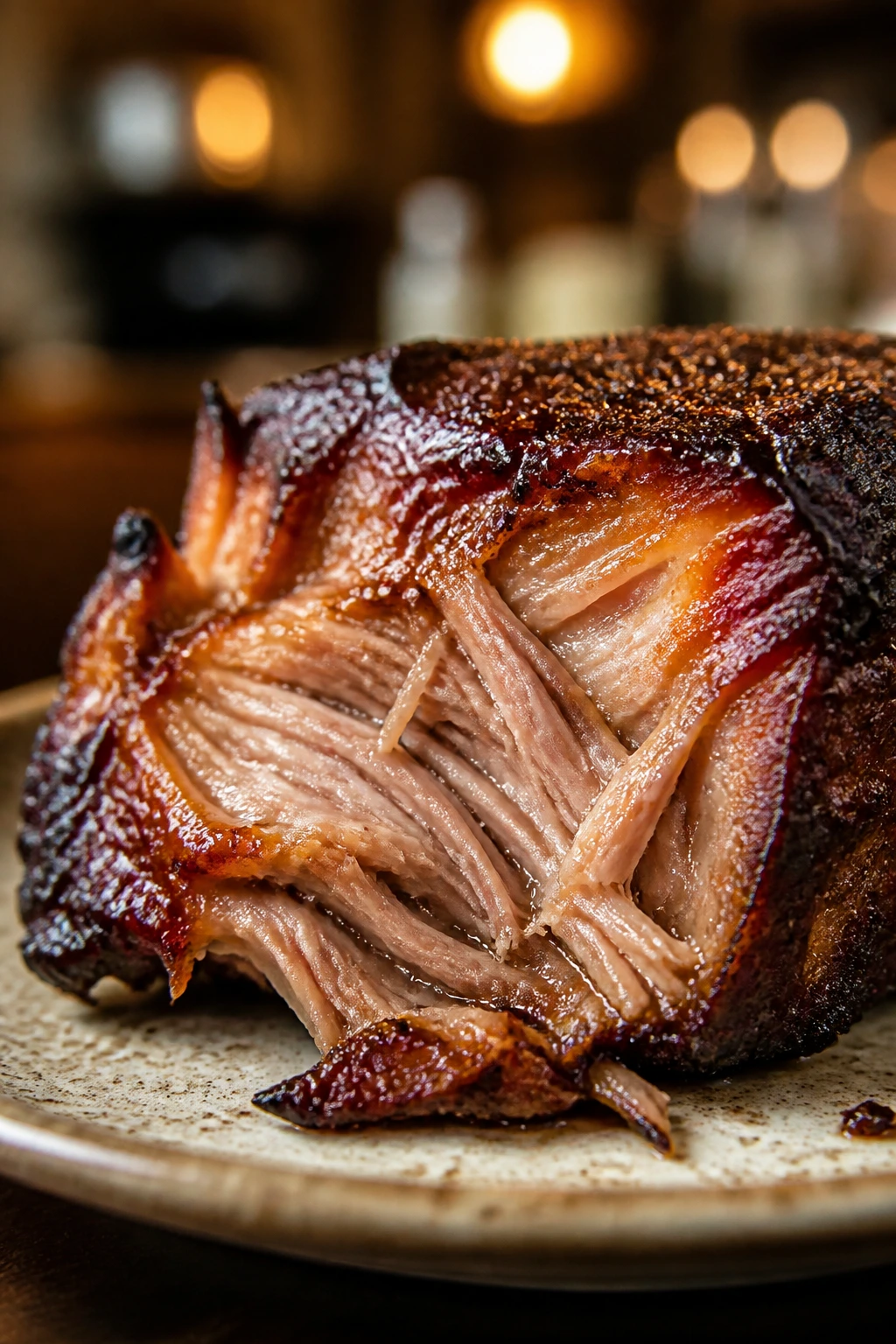
The reason this dish keeps working is simple: it respects the pork shoulder. It gives the meat time to soften, then uses the glaze and broiler to turn the outside into something you can taste before the tortilla even reaches your mouth. That contrast matters more than a big pile of toppings ever will.
A good batch of carnitas doesn’t need to shout. It just needs the right cut, enough salt, a little patience, and a finish that actually finishes the job. Once you’ve tasted the sticky browned edges against the citrusy shreds underneath, you’ll know exactly why the glaze belongs here — and you’ll probably start buying pork shoulder in bigger packages than you planned.
Tender Pork Carnitas with Brown Sugar Glaze — Recipe Card
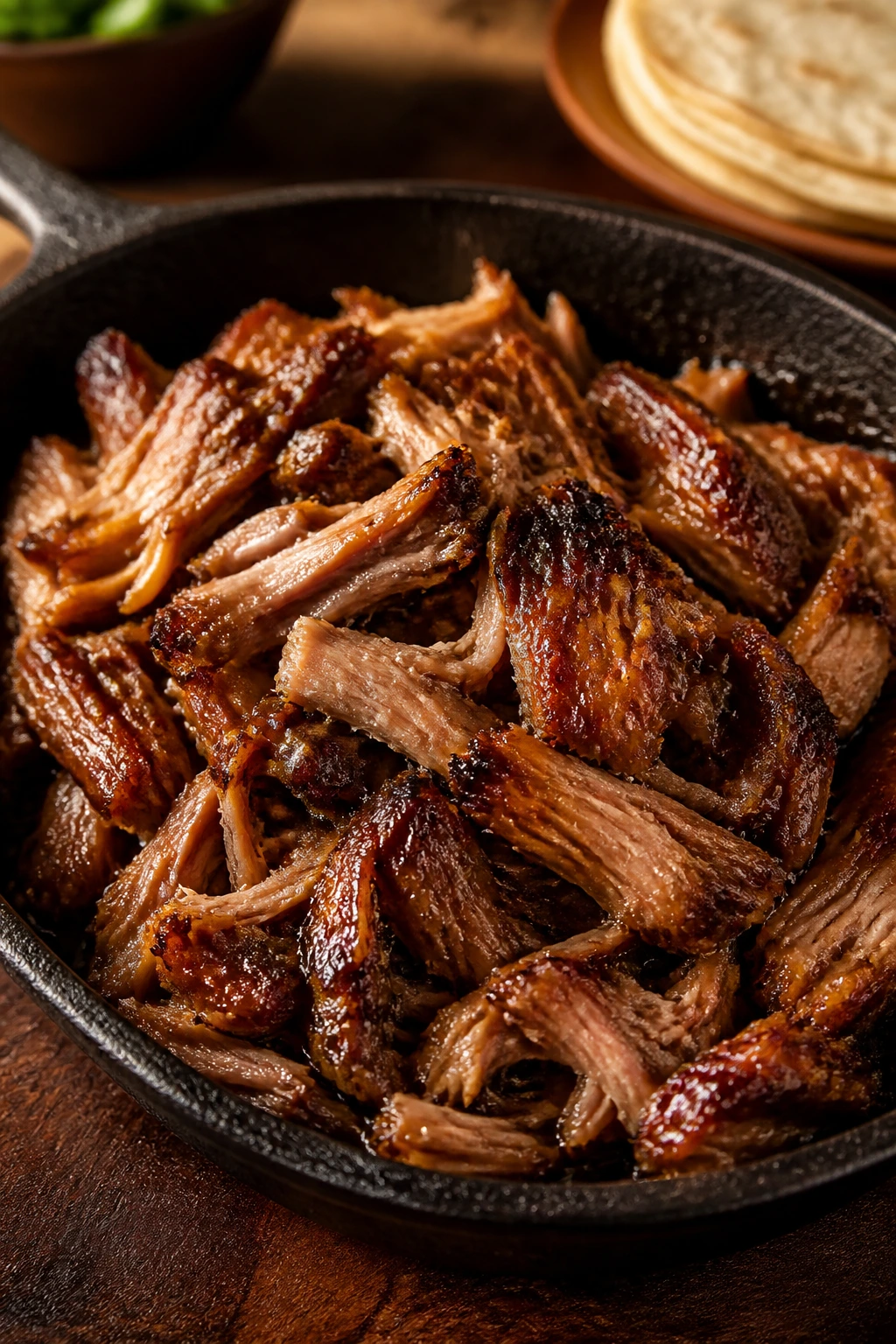
Recipe Name: Tender Pork Carnitas with Brown Sugar Glaze
Description: Slow-braised pork shoulder is shredded, glazed with a reduced brown sugar pan sauce, and broiled until the edges turn crisp and sticky. Serve it in warm tortillas with lime, cilantro, onion, and cotija.
Prep Time: 25 minutes
Cook Time: 3 hours 30 minutes
Total Time: 3 hours 55 minutes
Course: Dinner, Main Course
Cuisine: Mexican-American
Servings: 8 servings
Calories: About 430 kcal per serving
Ingredients
For the Carnitas:
- 4 pounds boneless pork shoulder, cut into 2-inch chunks
- 2 tablespoons kosher salt
- 2 teaspoons black pepper
- 2 teaspoons ground cumin
- 2 teaspoons dried oregano
- 1 teaspoon smoked paprika
- 1 teaspoon garlic powder
- 2 tablespoons neutral oil
- 1 large yellow onion, sliced
- 6 garlic cloves, smashed
- 1 orange, zested and juiced
- 1 lime, juiced
- 1 cup low-sodium chicken broth
- 1 cup water
- 2 bay leaves
- 1 chipotle pepper in adobo, minced, optional
For the Brown Sugar Glaze:
- 1/2 cup packed dark brown sugar
- 1/4 cup skimmed braising liquid
- 1 tablespoon apple cider vinegar
- 1 tablespoon fresh orange juice
- 1 tablespoon unsalted butter
For Serving:
- 12 to 16 warm corn tortillas
- 1/2 cup diced white onion
- 1/2 cup chopped cilantro
- 2 limes, cut into wedges
- 1 avocado, sliced
- 1/2 cup crumbled cotija cheese
Instructions
-
Preheat the oven to 300°F (150°C) and season the pork with salt, pepper, cumin, oregano, smoked paprika, and garlic powder.
-
Heat the oil in a Dutch oven over medium-high heat and sear the pork in batches until browned on multiple sides. Transfer to a plate.
-
Cook the onion in the same pot until softened, then add the garlic and chipotle, if using, and stir for 30 seconds.
-
Add the orange juice, lime juice, broth, water, orange zest, and bay leaves, scraping up the browned bits from the bottom.
-
Return the pork and any juices to the pot, cover, and braise in the oven for 3 to 3 1/2 hours until fork-tender.
-
Rest the pork for 15 minutes, then shred it and skim the fat from the braising liquid.
-
Simmer the brown sugar, braising liquid, vinegar, orange juice, and butter until glossy and lightly syrupy.
-
Toss the shredded pork with half of the glaze, spread it on a sheet pan, and broil until the edges crisp.
-
Toss with the remaining glaze, taste for salt and lime, and serve with warm tortillas and toppings.
Notes: Dark brown sugar gives the glaze a deeper flavor; braise the pork a day ahead if you want easier shredding; add a squeeze of lime at the table to keep the sweetness in balance.