



The first good smell here is smoke. The second is sugar catching the edge of a hot pan—just enough to smell like caramel, not enough to turn bitter.
That’s the whole trick with savory one pot smoked sausage with brown sugar glaze. You’re not making candy. You’re building a glossy, sweet-salty coat that clings to browned sausage, soft onions, tender potatoes, and peppers that still have a little bite. The glaze needs acidity. The sausage needs a hard sear. The vegetables need space. Miss any of those, and the dish gets flat fast.
What I like about this kind of skillet dinner is how honest it is. Smoked sausage is already cooked, so the job is not to “finish” raw meat. The job is to get color, balance the sweetness, and keep everything from sliding into one-note heaviness. When it works, the pan smells rich and sharp at the same time—brown sugar, mustard, vinegar, smoked paprika, and the faint edge of browning on the sausage coins.
Why This Sausage-and-Glaze Combo Works So Well
Fast browning without a long wait: Smoked sausage is already cooked, so you can spend your energy on browning the sliced edges and building flavor in the pan instead of babysitting raw meat.
A glaze with a backbone: Brown sugar alone would turn sticky and flat, but Dijon mustard, apple cider vinegar, and soy sauce keep the sweetness in check and give the sauce a salty, tangy finish.
One pot, real texture: Potatoes soften under a lid, peppers stay bright, onions melt a little at the edges, and the sausage keeps its snap. That mix matters more than a lot of people think.
Easy to scale up or down: The ingredient list tolerates a little flexibility. Add more potatoes if you want it to eat like a full dinner, or lean harder on peppers and onions if you want a lighter pan.
Better the moment the glaze tightens: The sauce should look loose for a minute, then turn shiny and clingy as it reduces. That change is the whole payoff.
A Fast Look at Yield, Timing, and Difficulty
Yield: Serves 4 to 6
Prep Time: 15 minutes
Cook Time: 30 minutes
Total Time: 45 minutes
Difficulty: Beginner — the steps are straightforward, but the brown sugar glaze needs your attention near the end so it doesn’t scorch.
Best Served: Right away, while the glaze is glossy and the potatoes are tender but still hold their shape.
What Goes Into the Skillet
For the Skillet:
- 1 1/2 pounds smoked sausage or kielbasa, sliced into 1/2-inch coins
- 1 1/2 pounds baby Yukon Gold or red potatoes, halved; quarter any larger ones
- 1 large yellow onion, cut into 1/2-inch wedges
- 2 medium bell peppers, seeded and sliced into 1/2-inch strips
- 3 garlic cloves, minced
- 2 tablespoons olive oil
- 1/2 teaspoon kosher salt
- 1/2 teaspoon freshly ground black pepper
- 1/2 cup low-sodium chicken broth
- 1 tablespoon unsalted butter
- 1 tablespoon chopped fresh parsley, for garnish
For the Brown Sugar Glaze:
- 1/2 cup packed light brown sugar
- 2 tablespoons Dijon mustard
- 2 tablespoons apple cider vinegar
- 2 tablespoons low-sodium soy sauce or tamari
- 1 tablespoon ketchup
- 1 teaspoon smoked paprika
- 1/4 teaspoon crushed red pepper flakes, optional
Why Each Ingredient Matters
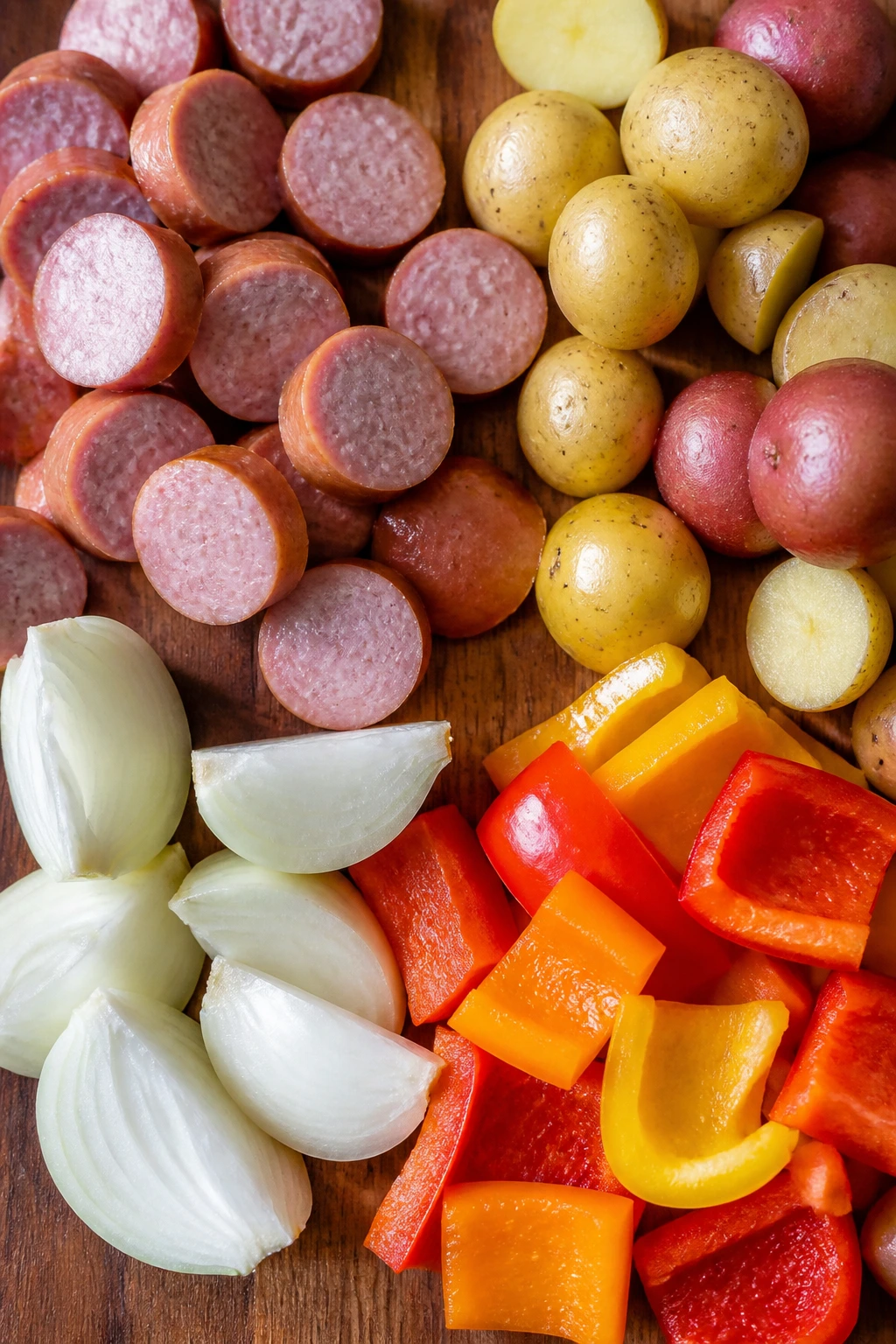
Smoked Sausage
What to use: 1 1/2 pounds fully cooked smoked sausage, kielbasa, or a similar link sausage, sliced into 1/2-inch coins.
Preparation: Pat the sausage dry before slicing if it looks damp from the package. Dry sausage browns faster, and 1/2-inch slices give you enough surface area to pick up color without falling apart.
Substitutions: Turkey sausage works if you want something leaner. Andouille brings heat and a little extra smoke. Chicken sausage works too, but it is milder and benefits from an extra pinch of smoked paprika.
Tips: Choose a sausage that feels firm and slices cleanly. If it looks soft or watery, it tends to steam before it browns, and that steals a lot of the flavor you want here.
Potatoes and Vegetables
What to use: 1 1/2 pounds baby Yukon Gold or red potatoes, 1 large yellow onion, and 2 medium bell peppers.
Preparation: Cut the potatoes into even pieces so they cook at the same pace. Halve the smallest ones, quarter any that are larger than a golf ball, and slice the onion and peppers thick enough to hold their shape.
Substitutions: Baby reds work well, and so do small Yukon Golds. If you want to cut the starch, use Brussels sprouts, cauliflower florets, or green beans instead of some of the potatoes.
Tips: Keep the potato pieces roughly the same size. That matters more than the exact variety. Uneven pieces mean a pan with both hard centers and collapsing edges, and nobody wants that contrast in the same bite.
The Brown Sugar Glaze
What to use: 1/2 cup packed light brown sugar, 2 tablespoons Dijon mustard, 2 tablespoons apple cider vinegar, 2 tablespoons low-sodium soy sauce or tamari, 1 tablespoon ketchup, 1 teaspoon smoked paprika, and optional crushed red pepper flakes.
Preparation: Whisk the glaze in a small bowl before it hits the pan. Brown sugar likes to clump, and it melts more evenly if you break it up first.
Substitutions: Dark brown sugar gives a deeper molasses note. Honey or maple syrup can stand in for part of the sugar, though the sauce will taste looser and less sticky. Tamari is an easy swap if you need gluten-free.
Tips: Acid is not optional here. The vinegar and mustard stop the glaze from reading like dessert and keep it bright enough to cut through sausage fat.
Fat, Broth, and Finishing Touches
What to use: 2 tablespoons olive oil, 1/2 cup low-sodium chicken broth, 1 tablespoon unsalted butter, black pepper, and parsley.
Preparation: Measure the broth before you start cooking. Once the potatoes are browning and the onions are in the pan, you do not want to be rummaging through cabinets.
Substitutions: Bacon fat can replace some or all of the olive oil if you want a deeper pork note. Vegetable broth works fine too, and water will do in a pinch if the pantry is bare.
Tips: Low-sodium broth gives you room to adjust at the end. That matters because smoked sausage, soy sauce, and brown sugar can stack up fast, and once the pan is too salty, there is no tidy fix.
The Gear That Keeps the Pan Moving

- 12-inch deep skillet or Dutch oven: This gives the sausage and vegetables enough room to brown instead of steam. A shallow skillet can work, but it gets crowded quickly.
- Tight-fitting lid: Needed for softening the potatoes without dumping in too much liquid.
- Wooden spoon or silicone spatula: Good for scraping up browned bits and stirring the glaze without scratching the pan.
- Sharp chef’s knife: Sausage coins, potato halves, and pepper strips all go faster when the blade is sharp.
- Sturdy cutting board: A damp towel under the board helps keep it from slipping when you cut the sausage or onions.
- Small bowl and whisk: You want the glaze mixed before it enters the hot pan.
- Slotted spoon, optional: Useful if you brown the sausage in batches and want to pull it out cleanly.
How to Cook It Step by Step
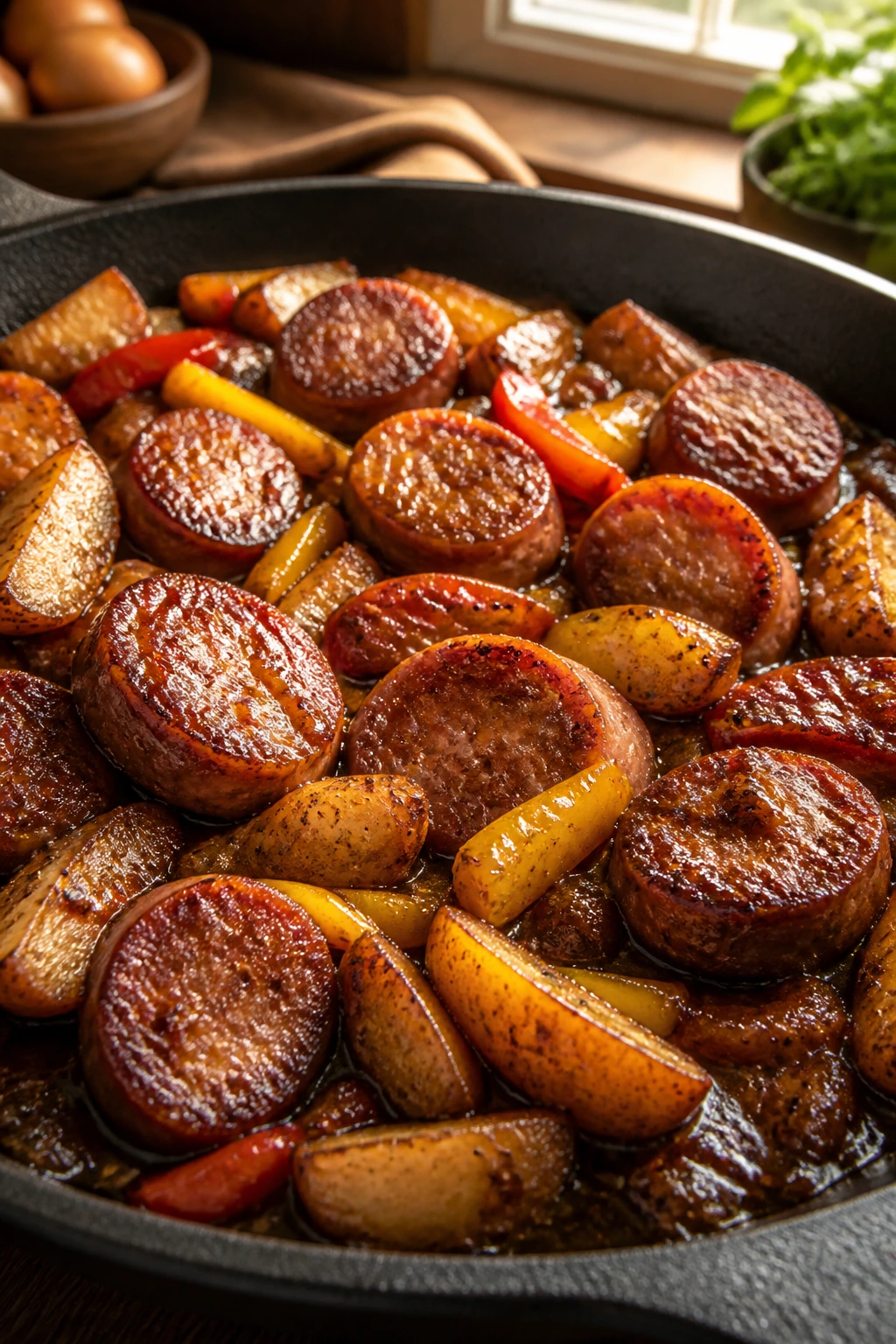
Prep the Pan and the Glaze:
-
Slice the smoked sausage into 1/2-inch coins. Halve the baby potatoes, quarter any larger ones, slice the onion into wedges, and cut the peppers into thick strips.
-
In a small bowl, whisk together the brown sugar, Dijon mustard, apple cider vinegar, soy sauce, ketchup, smoked paprika, and crushed red pepper flakes if you want a little heat. Stir until the sugar looks mostly dissolved and the mixture is smooth.
Brown the Sausage and Start the Vegetables:
-
Heat 1 tablespoon of the olive oil in a 12-inch deep skillet over medium-high heat until it shimmers. Add the sausage in a single layer and cook for 2 to 3 minutes per side, until the cut edges are browned and a little crisp. Transfer the sausage to a plate. If your skillet is small, brown the sausage in two batches; crowding it will steam the slices instead of coloring them.
-
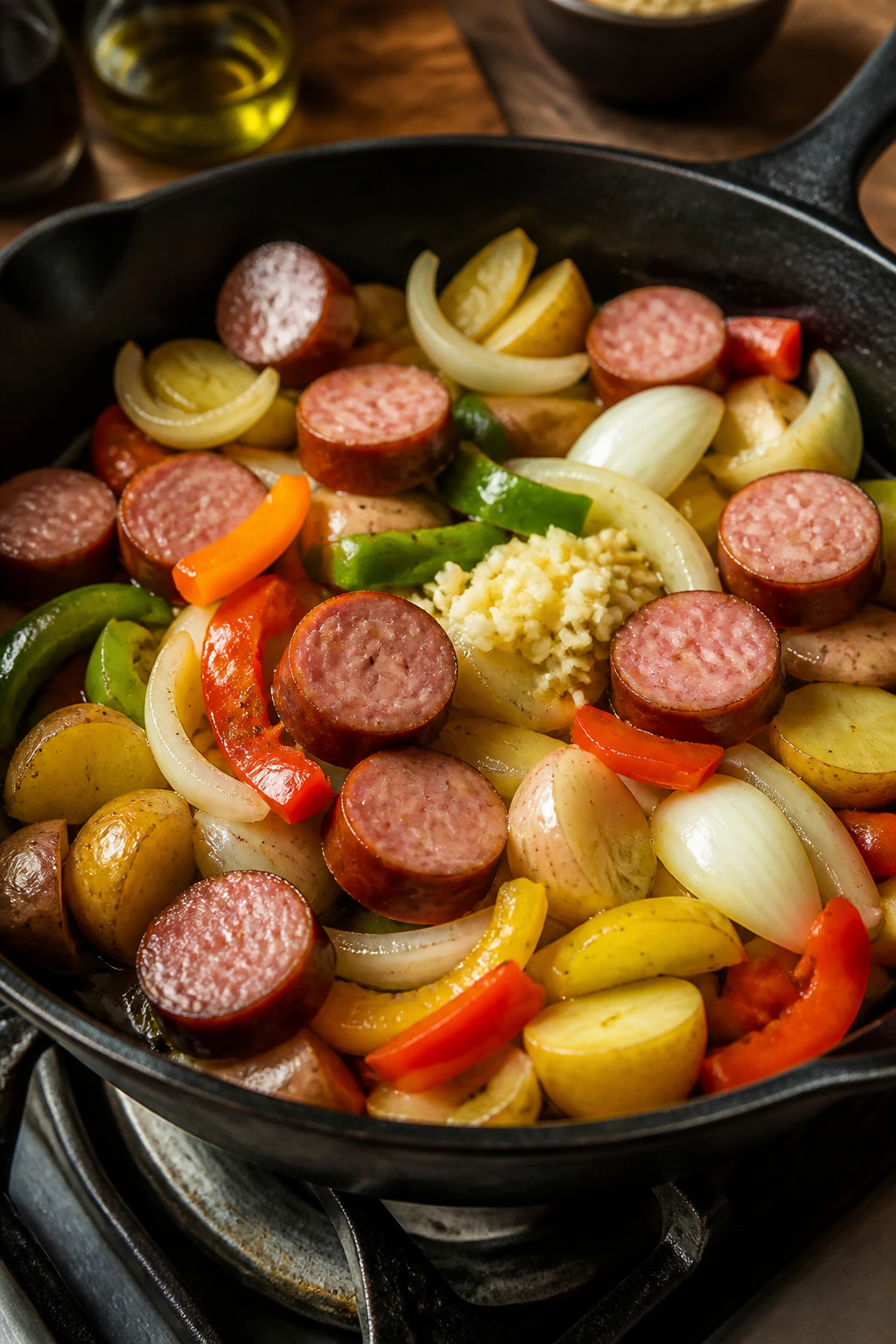
Add the remaining tablespoon of olive oil to the skillet. Add the potatoes cut-side down and cook for 4 minutes without stirring, so they can pick up color on one side. Sprinkle in the kosher salt and black pepper, then add the onion and bell peppers. Cook for 3 to 4 minutes, stirring once or twice, until the onion starts to soften at the edges.
Soften the Potatoes:
- Pour in the chicken broth and scrape the bottom of the pan with a wooden spoon to lift the browned bits. Cover the skillet, reduce the heat to medium-low, and cook for 10 to 12 minutes, until the potatoes are fork-tender and most of the broth has absorbed. If the liquid disappears before the potatoes are tender, add 2 to 3 tablespoons of water or broth and keep going.
Finish with the Glaze:
-
Stir in the minced garlic and cook for 30 seconds, just until it smells sweet and sharp, not raw. Return the sausage to the skillet and pour the glaze over everything. Toss well so the sausage and vegetables are coated from edge to edge.
-
Cook uncovered for 2 to 4 minutes over medium heat, stirring often, until the glaze bubbles and turns thick enough to coat the back of a spoon. Add the butter and stir until it melts into the sauce and gives it a glossy finish. Remove the pan from the heat, taste, and add a little more black pepper or a tiny splash of vinegar if the glaze needs brightness.
-
Scatter the parsley over the top and let the pan sit for 2 minutes before serving. The glaze will tighten a touch as it rests, which is exactly what you want.
What the Finished Plate Should Look and Smell Like
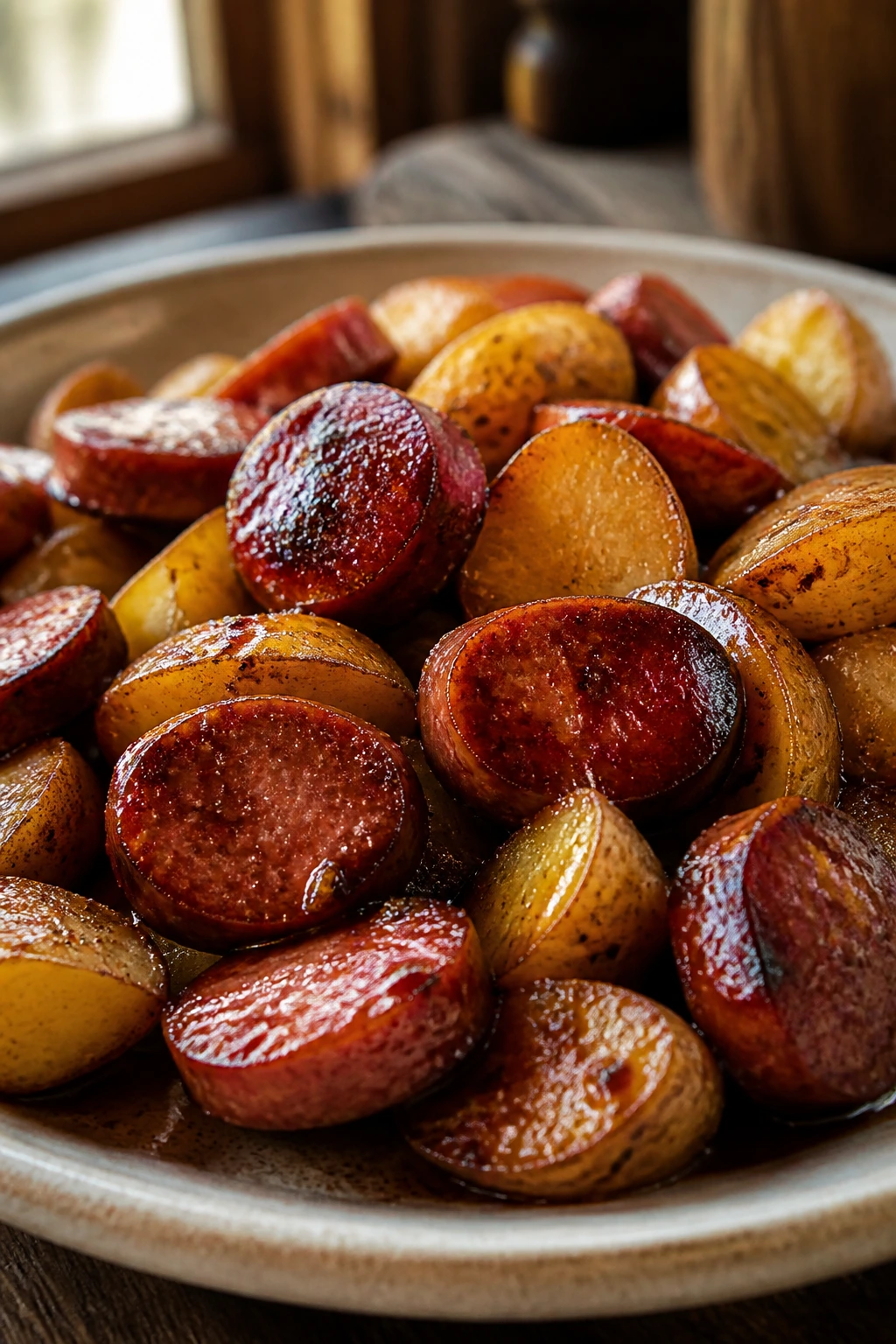
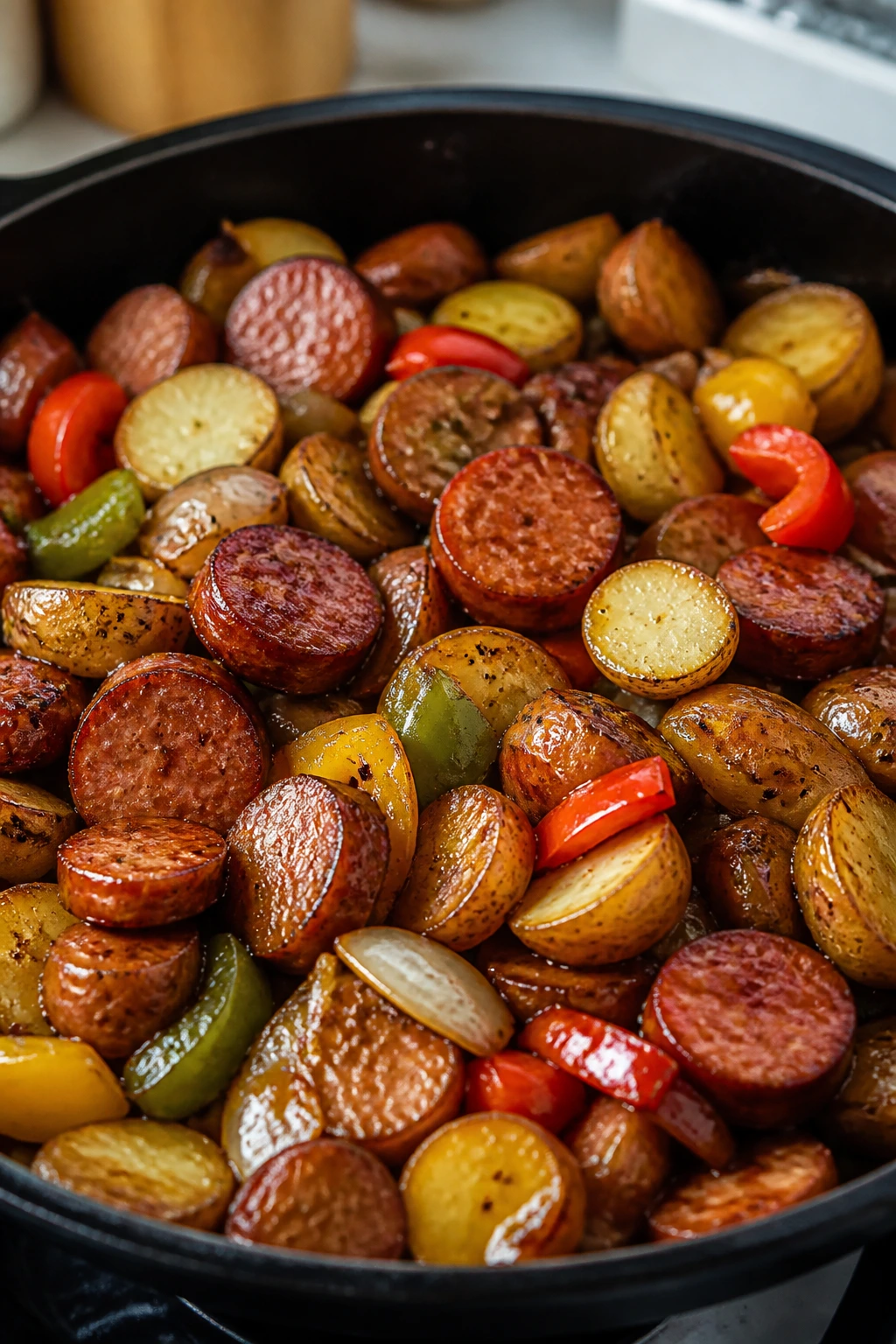
The good version of this dish looks shiny, not wet. The sausage should have browned edges and darker spots where the glaze caught the heat. The potatoes should be tender enough to bite cleanly, but not so soft that they break apart when you scoop them.
Smell matters here. If the pan still smells raw and sugary, it needs another minute or two. If it smells like toasted caramel with mustard and smoke underneath, you are there.
I like to serve it from the skillet when the glaze is still clinging to the spoon and pooling in small streaks around the sausage coins. That sticky stage is the whole personality of the dish.
What to Serve Alongside the Sticky Sausage
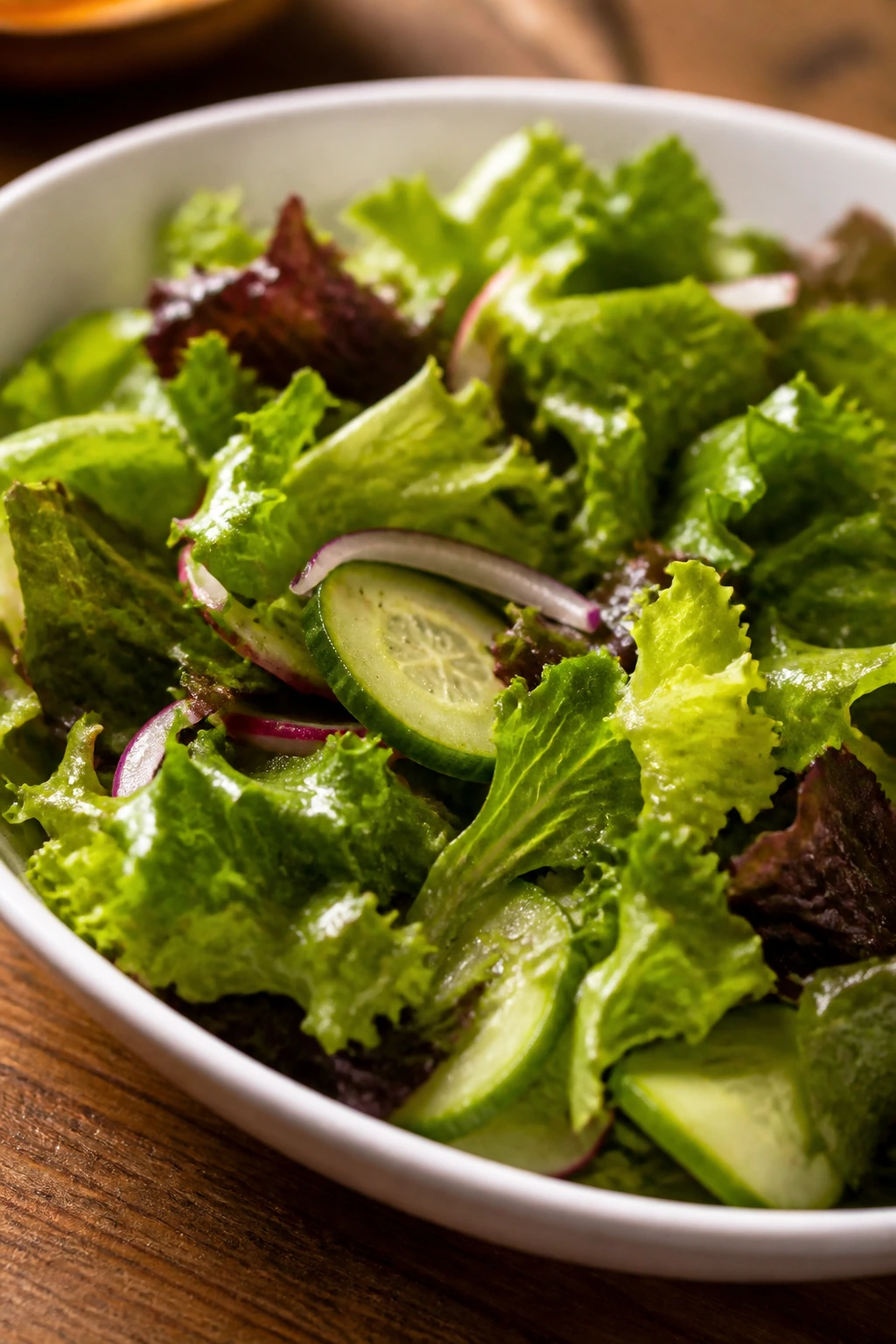
Presentation: Spoon the sausage, potatoes, onions, and peppers into a wide shallow bowl or straight onto warm plates, then drizzle any glaze left in the skillet over the top. The finished dish looks better when the glossy sauce sits on the food instead of soaking to the bottom of a deep bowl.
Accompaniments: A sharp green salad with a simple vinegar dressing is the cleanest match, because it cuts the sweetness and gives the plate some crunch. If you want something warmer, buttered green beans, roasted broccoli, or a thick slice of crusty bread all work well with the glaze.
Portions: Count on about 1 1/2 cups per person for a main dinner serving. If you are serving this as part of a bigger spread, 4 servings is comfortable; if it is the whole meal, it stretches cleanly to 6.
Beverage Pairing: A crisp lager, dry hard cider, or unsweetened iced tea keeps the sweetness from piling up. If you want a nonalcoholic route with a little more edge, sparkling water with lemon does the job without fighting the glaze.
Small Adjustments That Improve the Pan
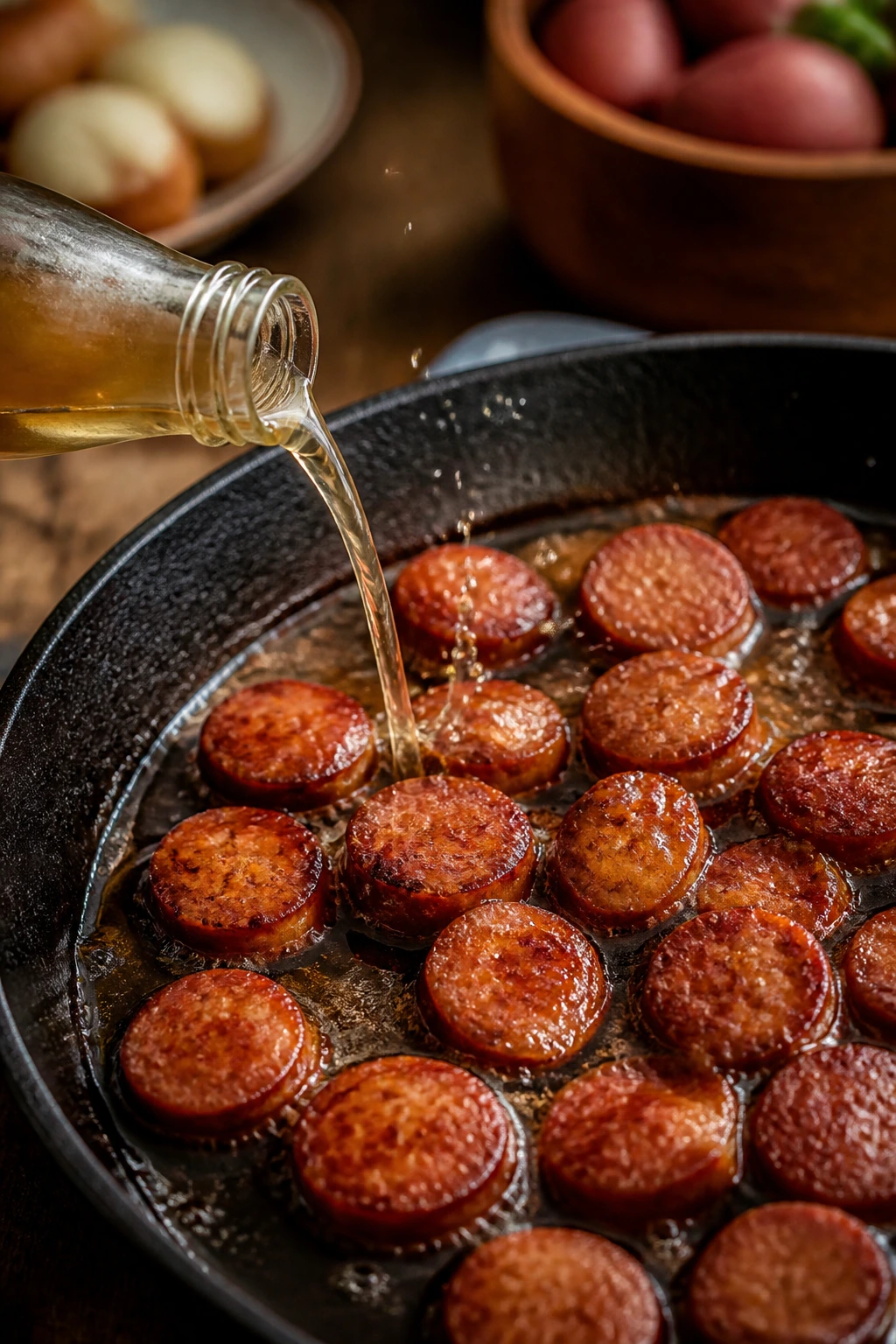
Flavor Enhancement: A teaspoon of apple cider vinegar stirred in at the very end makes the glaze taste less heavy and keeps the brown sugar from flattening out. It sounds tiny. It is not tiny.
Time-Saver: Buy pre-sliced smoked sausage and use baby potatoes that are close in size. You still need to cut a few larger ones, but you can shave several minutes off prep without changing the flavor.
Texture Move: Let the sausage sit undisturbed long enough to brown before you start stirring it around. Those browned spots are where the flavor lives, and they disappear fast if you keep tossing the pan too soon.
Heat Control: If your burner runs hot, slide the skillet halfway off the heat while the glaze bubbles. Sugar can move from glossy to scorched in a minute, especially if the pan has hotspots near the edge.
Serving Trick: Hold back a spoonful of glaze before you finish the pan. A small drizzle over the plated sausage right at the end makes the whole dish look and taste fresher.
Common Mistakes That Lead to Burnt Sugar or Soggy Potatoes
-
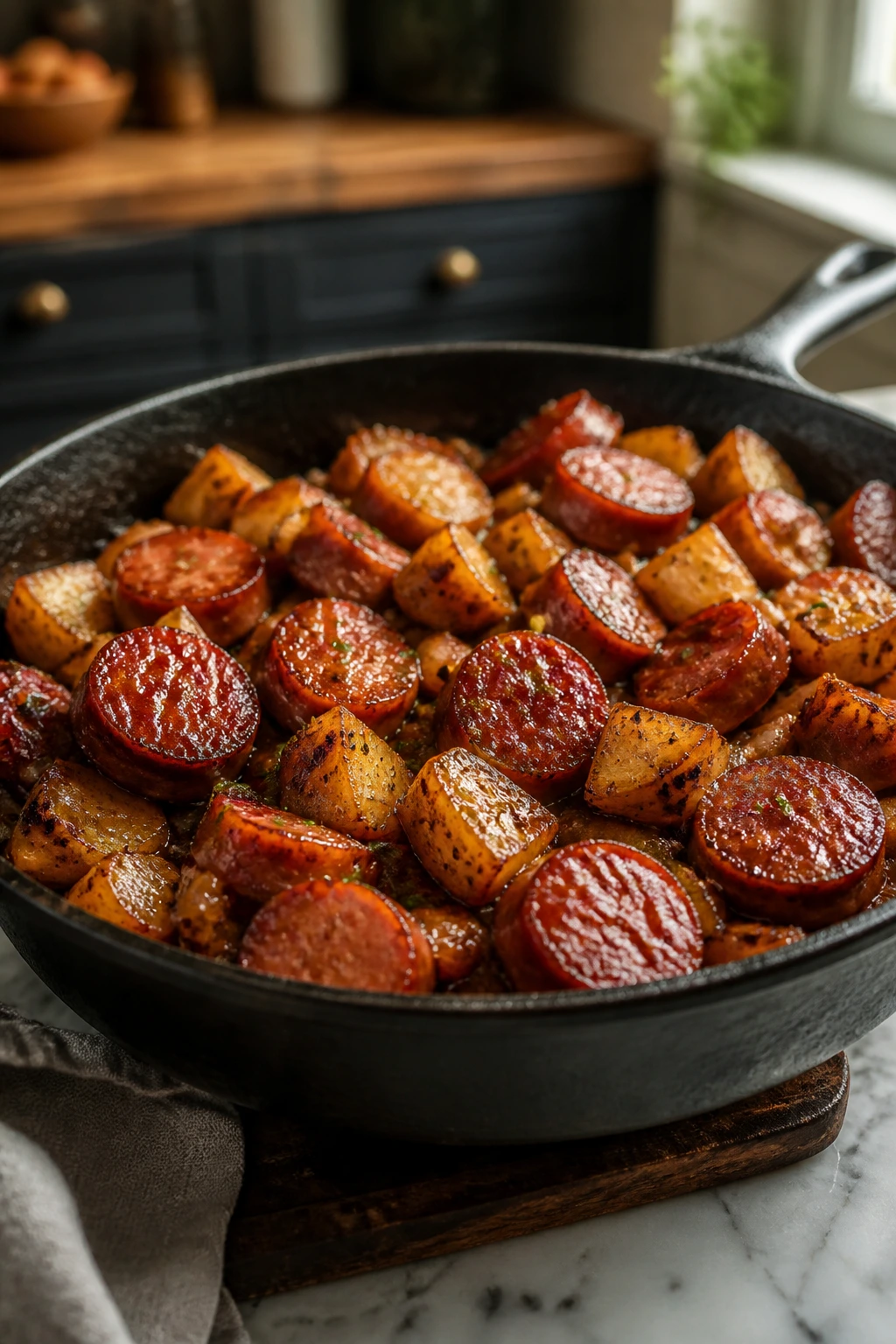
Adding the glaze too early: Brown sugar burns fast when it hits a dry, screaming-hot pan. The fix is simple—build the potatoes and vegetables first, then add the glaze only after there is enough moisture in the skillet to protect it.
-
Crowding the sausage in one layer that overlaps itself: Overcrowding keeps the slices pale and soft. If your pan is smaller than 12 inches, brown the sausage in batches so each coin gets direct contact with the metal.
-
Cutting the potatoes too large: Big chunks stay firm while the glaze reduces, which means the sauce can overcook before the potatoes are done. Halve small potatoes and quarter the bigger ones so they finish together.
-
Skipping the vinegar or mustard: Without acid, the glaze tastes sticky and one-dimensional. If you taste the sauce and it feels too sweet, add 1 to 2 teaspoons of vinegar before you call it finished.
-
Walking away during the final simmer: The last few minutes matter most. Once the sugar starts reducing, the difference between glossy and burnt can be a single distracted minute.
-
Serving it straight from a boiling-hot pan: The glaze needs a brief rest to thicken. Give it 2 minutes off heat, and it will cling better to the sausage instead of running off the plate.
Flavor Variations Worth Trying
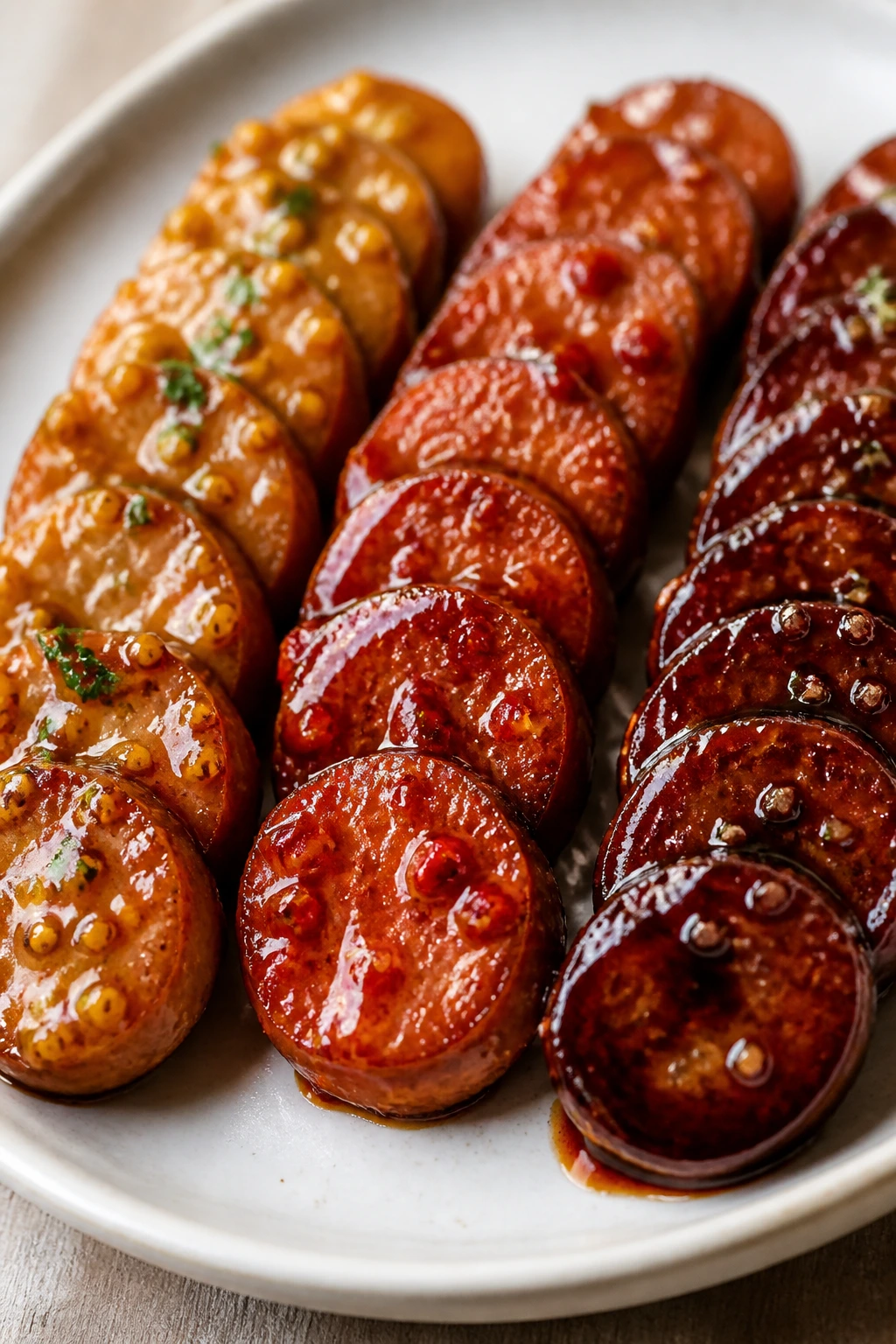
Maple-Dijon Skillet: Swap half the brown sugar for pure maple syrup and add an extra teaspoon of Dijon. The flavor turns deeper and less candy-like, with a rounder finish that sits well on pork sausage.
Spicy Andouille Version: Use andouille instead of mild smoked sausage, then add another 1/4 teaspoon of crushed red pepper flakes and a small splash of hot sauce to the glaze. The heat makes the sweetness feel sharper and gives the whole pan more bite.
Apple-Onion Twist: Add 1 firm apple, peeled if you want it softer, and sliced into thick wedges when the onions go in. The apple breaks down just enough to sweeten the pan, but not enough to disappear.
Lower-Sugar Pan Dinner: Cut the brown sugar to 1/4 cup and add 1 extra tablespoon of apple cider vinegar plus 1 teaspoon of Worcestershire sauce. You still get a sticky glaze, but the finish lands closer to savory than sweet.
Vegetable-Heavy Swap: Replace half the potatoes with Brussels sprouts or cauliflower florets. Brussels sprouts caramelize nicely under the glaze, while cauliflower soaks up the sauce without turning mushy if you keep the pieces large.
Leftovers, Make-Ahead Prep, and Reheating
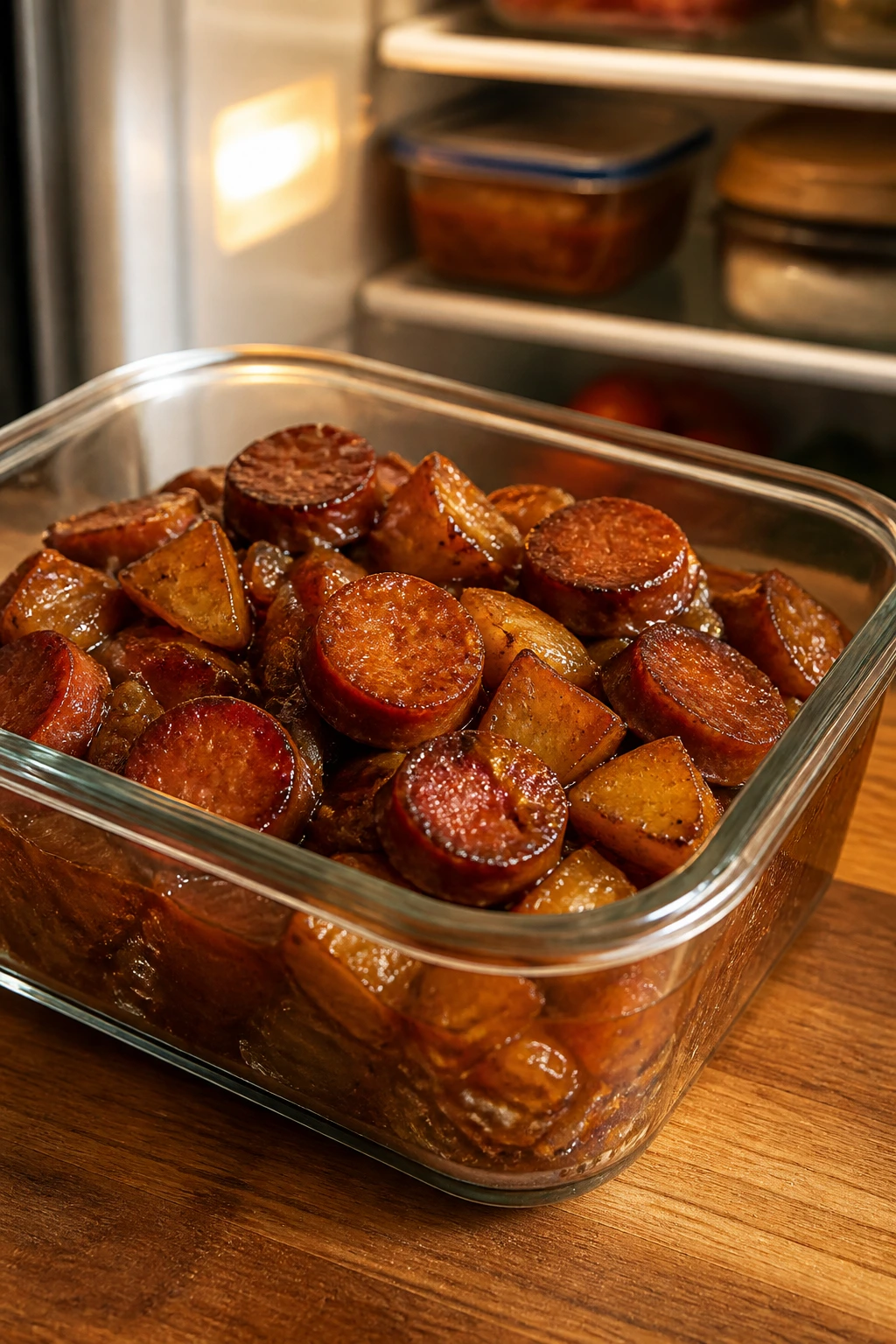
Keep the cooked sausage and vegetables at room temperature for no more than 2 hours. After that, get them into the fridge. Sweet glazes hold heat longer than you think, and the center of a deep container stays warm for a while.
Stored in an airtight container, the dish keeps in the refrigerator for 3 to 4 days. The glaze thickens as it chills, which is normal. The potatoes soften a little on day two, but the flavor holds up well if you reheat it gently.
Freezing works best if you plan for it. The sausage and glaze freeze for up to 2 months, but the potatoes get grainy after thawing, so I would freeze a portion only if you are okay with a softer texture. If you know ahead of time that you want freezer meals, make the recipe without the potatoes and add fresh ones when you reheat.
For reheating, the skillet is the best tool. Add the leftovers to a pan with 1 to 2 tablespoons of broth or water, cover for a minute, then stir over medium-low heat until the sausage is hot and the glaze loosens again. In the microwave, use a covered dish and heat in 60 to 90 second bursts, stirring once between bursts so the sugar doesn’t go patchy and hot in spots.
Make-ahead prep is easy. You can slice the sausage, cut the vegetables, and whisk the glaze a day ahead and keep everything refrigerated separately. The potatoes should be cut the same day if possible; once they are cut, they brown on the edges and can look dull, even if they are still perfectly fine to cook.
Questions Home Cooks Ask Most
Can I use turkey sausage instead of pork sausage?
Yes. Turkey sausage works, but it needs help because it has less fat and less built-in smoke. Add a touch more olive oil and keep the smoked paprika in the glaze; otherwise the pan can taste a little thin.
Do I need to peel the potatoes?
No. Baby Yukon Gold and red potatoes are better left unpeeled because the skins help them hold together in the skillet. If you use larger potatoes with thicker skins, peel them if the texture bugs you, but it is not required.
How do I keep the brown sugar glaze from burning?
The biggest fix is timing. Don’t add the glaze until the potatoes are already tender and there is a little moisture in the pan, then keep the heat at medium rather than high during the final simmer. If the sauce starts to smell sharp or bitter, pull the pan off the burner right away.
Can I make this without potatoes?
Absolutely. If you want a lighter pan, replace the potatoes with Brussels sprouts, cauliflower florets, or green beans. Brussels sprouts and cauliflower handle the glaze especially well because their surfaces brown instead of turning watery.
What if my glaze is too thin?
Let it simmer uncovered for another 1 to 2 minutes, stirring often. If it still looks loose, add another teaspoon of brown sugar and keep it moving until the sauce thickens enough to coat the spoon.
Can I make this in the oven instead of on the stovetop?
Yes, though the skillet gives better browning. Brown the sausage first, then roast the sausage, potatoes, onions, and peppers at 425°F on a sheet pan for about 20 minutes, add the glaze near the end, and roast 5 more minutes until sticky. It works, but the sauce is a little less concentrated than in the pan.
How spicy is it?
As written, it is mild with a small smoky edge. The heat comes mostly from the optional red pepper flakes and whatever sausage you choose, so you can keep it tame with mild kielbasa or push it hotter with andouille.
A Sticky Pan Worth Repeating
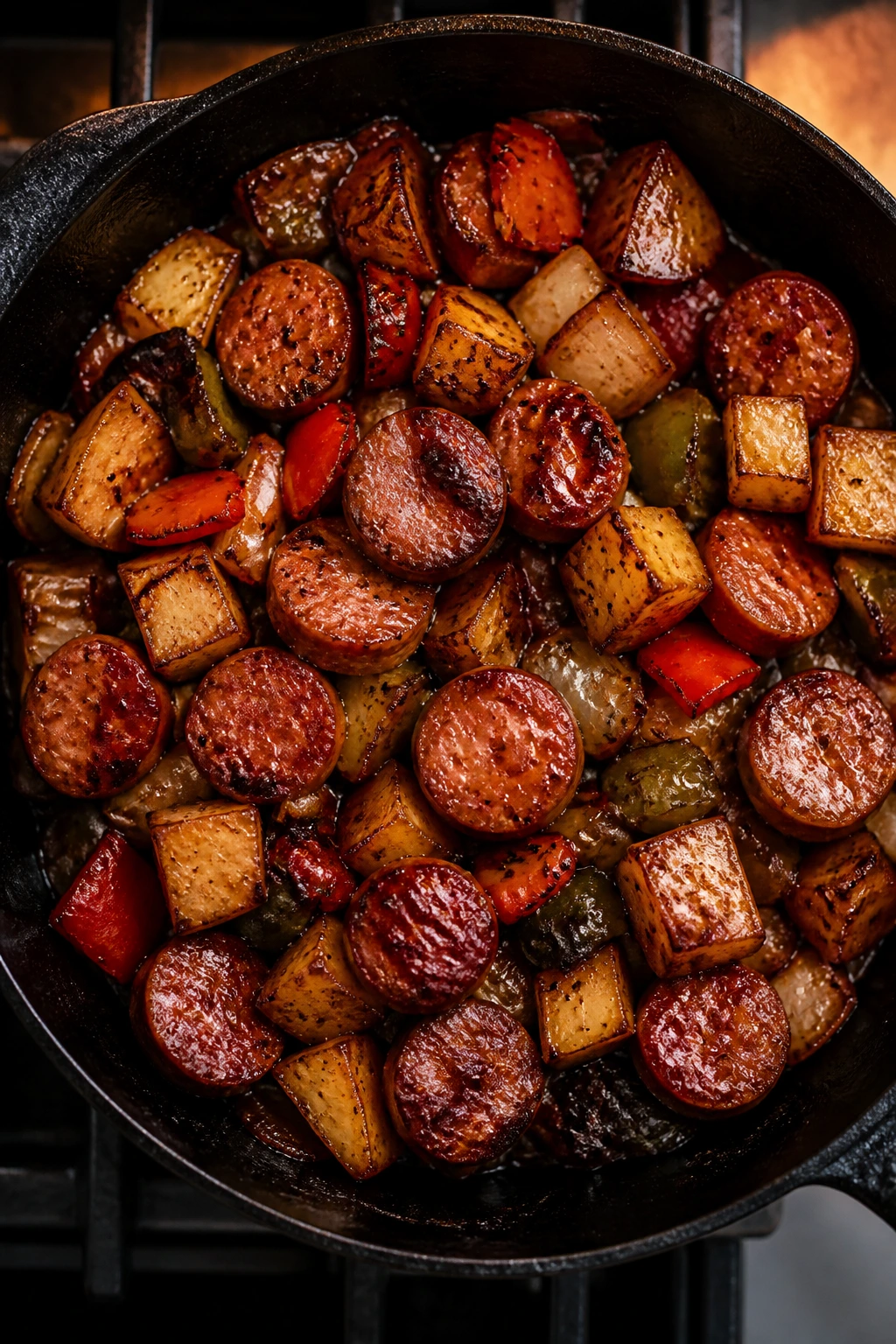
There is a reason this sort of skillet keeps showing up in real kitchens: it gives you contrast without making you juggle a dozen pans. Smoky sausage, tender potatoes, sweet onions, crisp-edged peppers, and a brown sugar glaze that lands somewhere between savory and lacquered. That combination is doing a lot, and it still feels simple.
The part I come back to is the balance. A brown sugar glaze can get cloying fast, but the mustard, vinegar, and soy keep it honest. Once you get the heat under control and let the sausage brown before the sauce goes in, the whole pan turns glossy in the best way.
Savory One Pot Smoked Sausage with Brown Sugar Glaze — Recipe Card
Recipe Name: Savory One Pot Smoked Sausage with Brown Sugar Glaze
Description: Smoked sausage, tender potatoes, onions, and bell peppers cook in one skillet and get finished with a glossy brown sugar glaze that lands sweet, salty, smoky, and sharp all at once. It eats like a full dinner and comes together without any fancy steps.
Prep Time: 15 minutes
Cook Time: 30 minutes
Total Time: 45 minutes
Course: Dinner, Main Course
Cuisine: American
Servings: 4 to 6 servings
Calories: About 425 kcal per serving
Ingredients
For the Skillet:
- 1 1/2 pounds smoked sausage or kielbasa, sliced into 1/2-inch coins
- 1 1/2 pounds baby Yukon Gold or red potatoes, halved; quarter any larger ones
- 1 large yellow onion, cut into 1/2-inch wedges
- 2 medium bell peppers, seeded and sliced into 1/2-inch strips
- 3 garlic cloves, minced
- 2 tablespoons olive oil
- 1/2 teaspoon kosher salt
- 1/2 teaspoon freshly ground black pepper
- 1/2 cup low-sodium chicken broth
- 1 tablespoon unsalted butter
- 1 tablespoon chopped fresh parsley, for garnish
For the Brown Sugar Glaze:
- 1/2 cup packed light brown sugar
- 2 tablespoons Dijon mustard
- 2 tablespoons apple cider vinegar
- 2 tablespoons low-sodium soy sauce or tamari
- 1 tablespoon ketchup
- 1 teaspoon smoked paprika
- 1/4 teaspoon crushed red pepper flakes, optional
Instructions
-
Slice the sausage, halve or quarter the potatoes, cut the onion and peppers, mince the garlic, and whisk the glaze ingredients together in a small bowl.
-
Heat 1 tablespoon olive oil in a 12-inch deep skillet over medium-high heat. Brown the sausage for 2 to 3 minutes per side, then transfer it to a plate.
-
Add the remaining olive oil, then the potatoes cut-side down. Cook for 4 minutes without stirring. Add the salt, black pepper, onion, and bell peppers; cook 3 to 4 minutes more.
-
Pour in the chicken broth and scrape up the browned bits. Cover, reduce heat to medium-low, and cook 10 to 12 minutes until the potatoes are fork-tender.
-
Stir in the garlic and cook 30 seconds. Return the sausage to the skillet and pour in the glaze.
-
Cook uncovered over medium heat for 2 to 4 minutes, stirring often, until the glaze thickens and coats the sausage and vegetables. Stir in the butter.
-
Remove from heat, rest 2 minutes, and finish with parsley before serving.
Notes: Use a 12-inch skillet or Dutch oven for the best browning. If the glaze starts to taste too sweet, add a small splash of vinegar at the end. Leftovers keep 3 to 4 days in the fridge; potatoes soften a bit after freezing.