



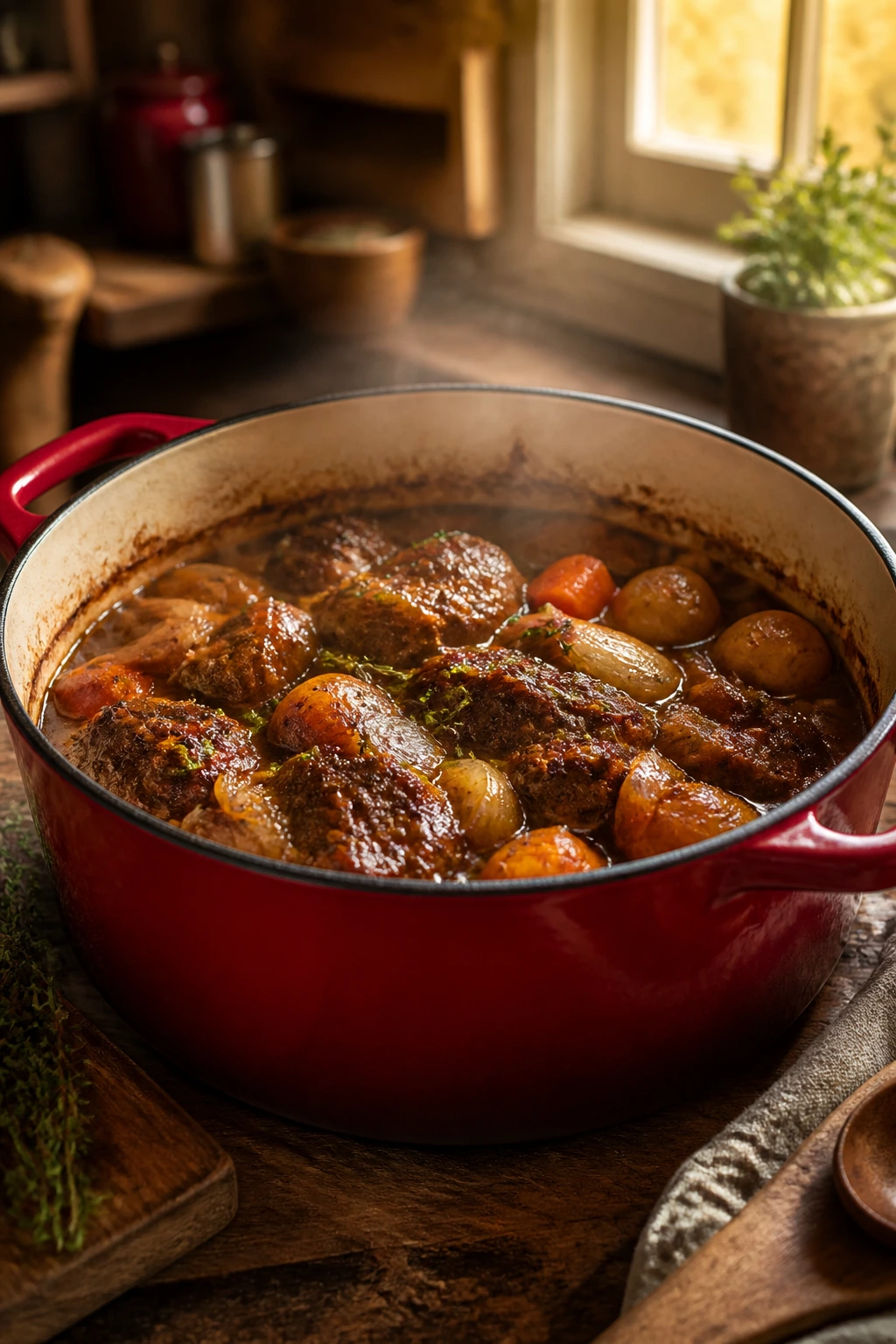
By the time the wind starts rattling the windows, a Dutch oven stops looking like cookware and starts looking like a plan. It’s the one pot that can brown onions until they smell sweet, coax beef into falling-apart tenderness, and keep a stew warm enough that nobody minds going back for a second bowl. That’s why Dutch oven dinners feel made for cold nights: they don’t rush, they don’t dry out, and they make the whole kitchen smell like something worth staying home for.
I’ve always thought the best cold-weather meals are the ones that do more than fill a plate. They give the house a little warmth, a little patience, and a very convincing reason to slow down. A Dutch oven handles that job better than most pans because it holds heat evenly, moves from stovetop to oven without drama, and traps enough moisture to keep braises glossy instead of dusty. Once you learn how to use that heavy lid well, dinner starts feeling less like a chore and more like a ritual.
The recipes below lean into that comfort hard, but not lazily. Some are brothy and bright, some are deep and winey, some are thick enough to eat with a spoon and a good hunk of bread. They all share the same practical promise: one sturdy pot, a smart layering of flavor, and enough heft to make a cold night feel smaller.
Why These Dutch Oven Dinners Win on Cold Nights
-
Heat stays where you want it: A Dutch oven holds steady heat better than a thin pot, so meat braises evenly and soups simmer without wild hot spots.
-
Browning actually matters here: The pot lets you sear meat, soften onions, and deglaze in the same vessel, which means fewer dishes and a deeper base flavor.
-
The lid does real work: Moisture stays inside, so chuck roast, chicken thighs, short ribs, and beans finish tender instead of dry.
-
They stretch a pantry well: Broth, tomatoes, onions, carrots, beans, pasta, and a few cuts of meat can turn into a full dinner with very little fuss.
-
Most of them taste better later: Stews, chili, and braises settle overnight, so the leftovers often beat the first bowl.
-
They don’t need a fancy sidekick: A loaf of bread, mashed potatoes, or a simple salad is usually enough. That’s part of the charm.
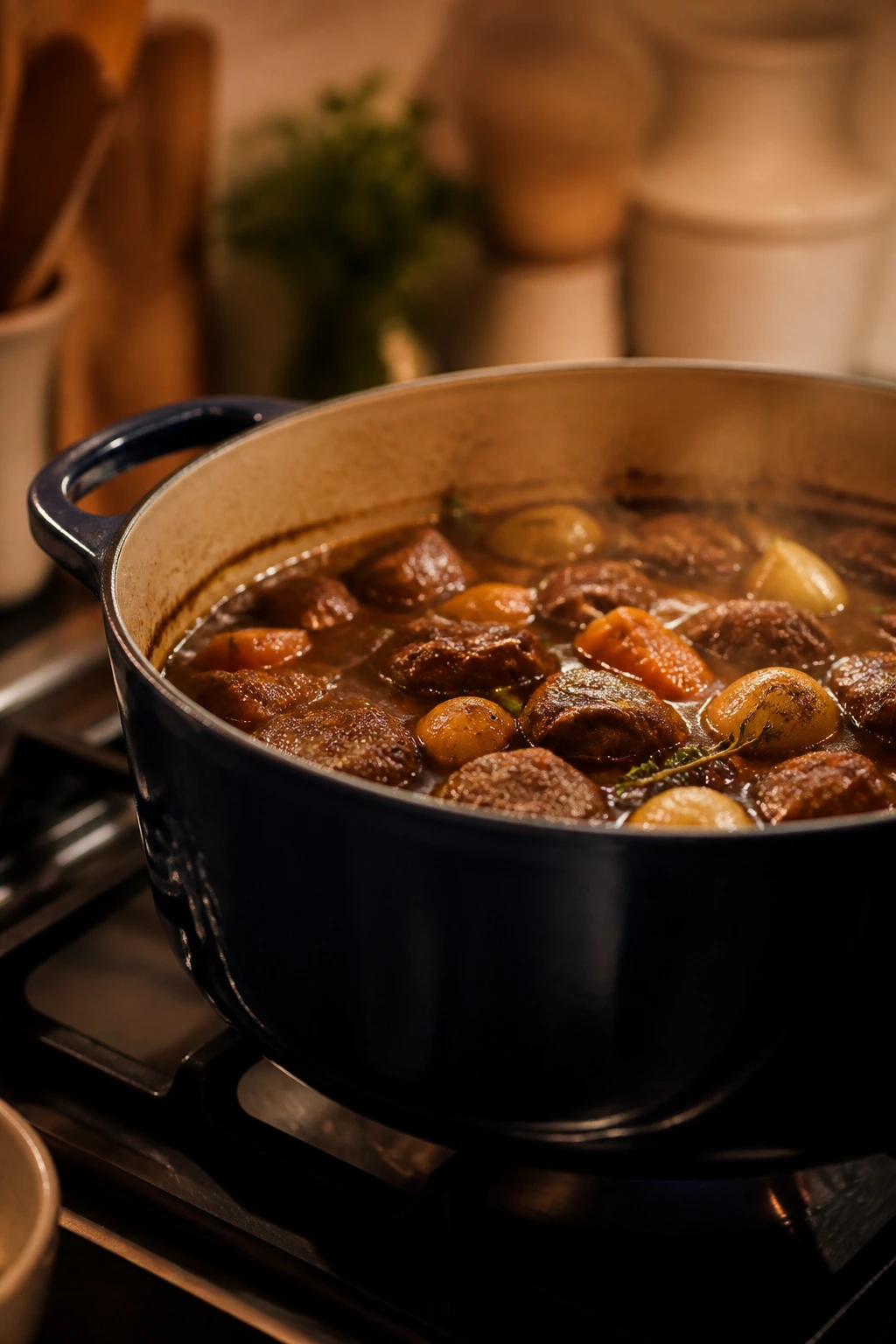
1. Red Wine Beef Stew
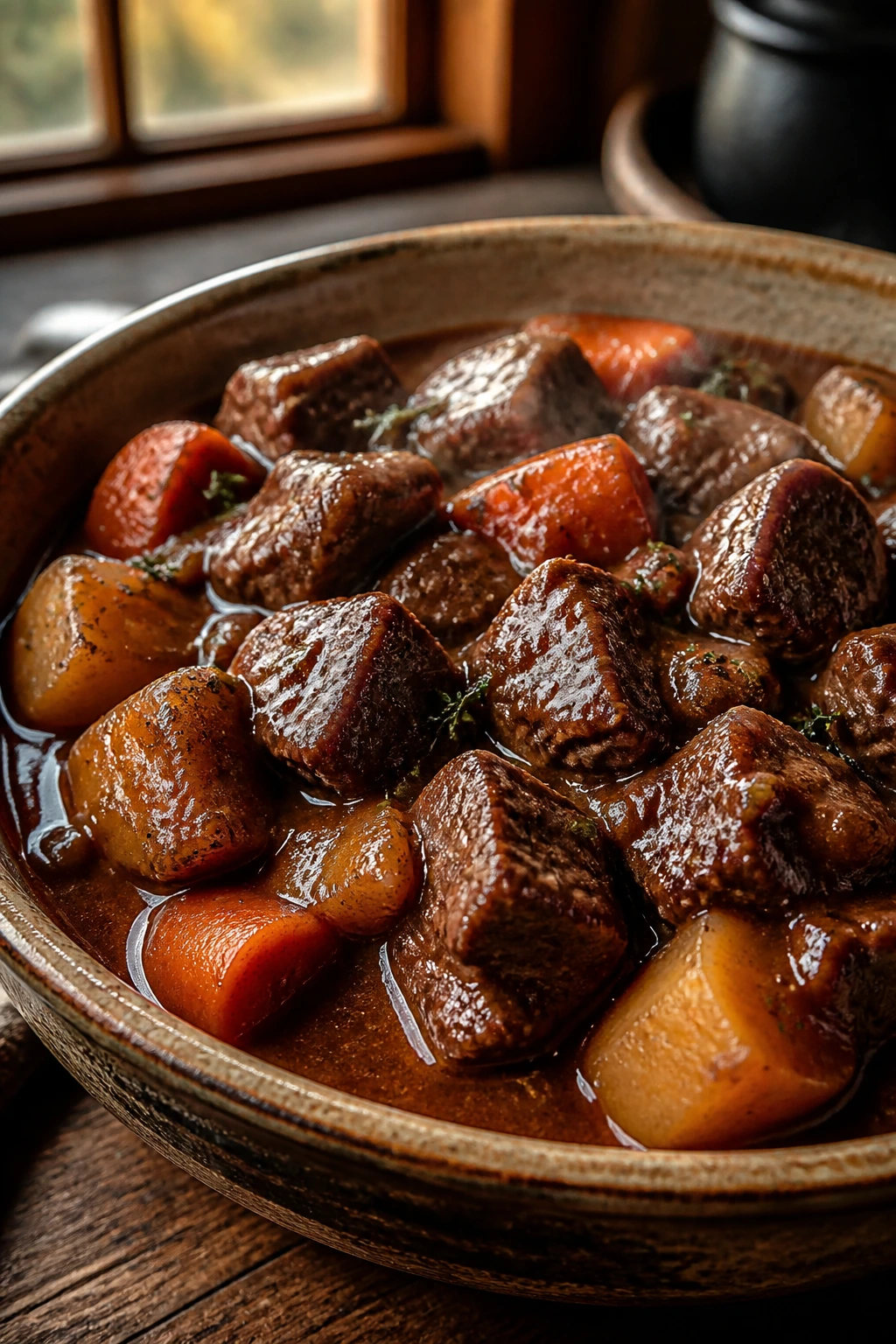
The smell alone can fix a mood. Red wine beef stew starts with browned beef and ends with a sauce that tastes deep, dark, and a little glossy around the edges, the kind of dinner that makes the kitchen feel warmer before anyone sits down.
Chuck is the right cut here because it has enough fat and connective tissue to soften during a long, gentle braise. The Dutch oven does the heavy lifting, keeping the simmer calm so the beef loosens instead of tightening up, and the red wine brings a round, savory edge that plain broth can’t fake.
Why It Works:
A good beef stew needs three things: solid browning, enough liquid to braise, and time that doesn’t feel hurried. In a 325°F oven, the meat softens over roughly 2½ hours without turning stringy, and the potatoes stay intact if you add them late. The wine deglazes the pot and pulls up the browned bits on the bottom, which is where a lot of the flavor hides. No shortcuts there.
Key Ingredients:
- 2½ lbs beef chuck, cut into 1½-inch cubes
- 1½ teaspoons kosher salt
- 1 teaspoon black pepper
- 2 tablespoons olive oil
- 1 large yellow onion, chopped
- 3 carrots, cut into 1-inch pieces
- 3 celery stalks, sliced
- 4 garlic cloves, minced
- 2 tablespoons tomato paste
- 3 tablespoons all-purpose flour
- 1 cup dry red wine
- 4 cups beef broth
- 2 bay leaves
- 1 teaspoon dried thyme
- 1 lb Yukon Gold potatoes, chunked
- 1 cup frozen peas
- 2 tablespoons chopped parsley
Quick Steps:
- Preheat the oven to 325°F (165°C). Pat the beef dry, season it with salt and pepper, and let the surface feel dry before it hits the pot.
- Heat the oil in a 5- to 7-quart Dutch oven over medium-high heat. Brown the beef in batches for 2 to 3 minutes per side until you get a dark crust; do not crowd the pot or the meat will steam.
- Add the onion, carrots, and celery. Cook for 5 to 6 minutes, stirring often, until the onion turns translucent and the edges pick up a little color.
- Stir in the garlic and tomato paste, then cook for 1 minute. Sprinkle in the flour and stir until the vegetables look coated.
- Pour in the wine and scrape the bottom well. Add the broth, bay leaves, and thyme, then return the beef and any juices to the pot.
- Cover and braise for 1 hour 45 minutes. Add the potatoes and continue cooking for 40 to 50 minutes, until the beef breaks apart with a fork.
- Stir in the peas for the last 5 minutes, then finish with parsley and a final pinch of salt if the broth tastes flat.
Tips and Variations:
- Thicker Gravy: Mash a few potato pieces against the side of the pot before serving.
- Wine Swap: If you don’t want to cook with wine, use extra broth plus 1 tablespoon red wine vinegar at the end.
- Make-Ahead Boost: This stew tastes better the next day, after the broth settles into the beef.
2. Chicken and Dumplings
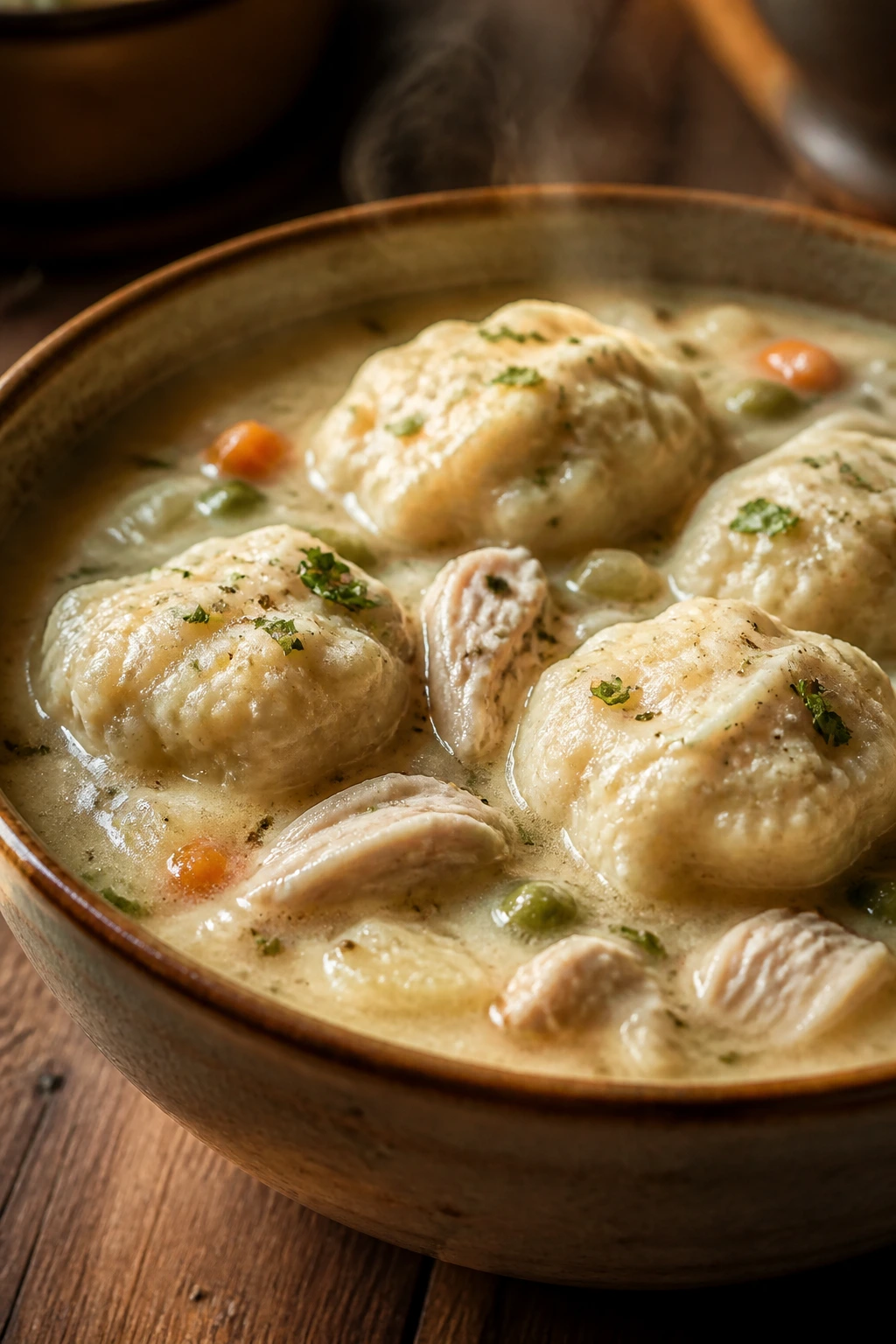
This one smells like the kind of supper people remember. The broth turns silky, the chicken gets tender, and the dumplings puff into soft little pillows that soak up just enough liquid to taste rich without going soggy.
I prefer chicken thighs here because they stay juicy through the simmer. The stew base is straightforward, which is exactly the point; the dumplings do the dramatic work, and the Dutch oven keeps the steam trapped so they cook from the top and bottom at the same time.
Why It Works:
Chicken and dumplings need a gentle boil, not a hard one. A covered Dutch oven creates a steady pocket of steam that cooks the dumplings through in about 15 minutes while keeping the broth hot enough to thicken around them. If the lid leaks too much heat, the dumplings come out heavy. Seal matters.
Key Ingredients:
For the Stew:
- 2 lbs boneless, skinless chicken thighs, cut into large pieces
- 2 tablespoons butter
- 1 onion, diced
- 2 carrots, diced
- 2 celery stalks, diced
- 3 garlic cloves, minced
- 1/4 cup all-purpose flour
- 6 cups chicken broth
- 1 teaspoon dried thyme
- 1 teaspoon poultry seasoning
- 1/2 cup frozen peas
- 1/2 cup heavy cream
- Salt and black pepper
For the Dumplings:
- 2 cups all-purpose flour
- 1 tablespoon baking powder
- 1/2 teaspoon kosher salt
- 3 tablespoons cold butter, cubed
- 3/4 cup buttermilk
- 2 tablespoons chopped parsley
Quick Steps:
- Melt the butter in the Dutch oven over medium heat. Add the onion, carrots, and celery, then cook for 6 to 7 minutes until they soften and smell sweet.
- Add the garlic, then stir in the flour and cook for 1 minute. Slowly whisk in the broth so the base turns smooth rather than lumpy.
- Add the chicken, thyme, poultry seasoning, salt, and pepper. Simmer uncovered for 15 to 18 minutes, until the chicken reaches 165°F and the broth lightly coats a spoon.
- Stir in the peas and cream. Taste the broth now; it should be savory and a little richer than you think you need.
- Mix the dumpling flour, baking powder, and salt in a bowl. Cut in the butter, then stir in the buttermilk and parsley just until a shaggy dough forms.
- Drop 8 to 10 spoonfuls of dough over the simmering stew. Cover tightly and cook for 15 minutes without lifting the lid.
- Uncover and test a dumpling in the center. It should feel cooked through, springy, and not damp in the middle.
Tips and Variations:
- Lighter Version: Use half-and-half instead of heavy cream if you want a slightly thinner broth.
- Herb Move: Add a little fresh dill at the end if you like a brighter finish.
- Timing Note: The dumplings are best the day you make them; leftovers soften fast.
3. Sunday Pot Roast with Carrots and Potatoes
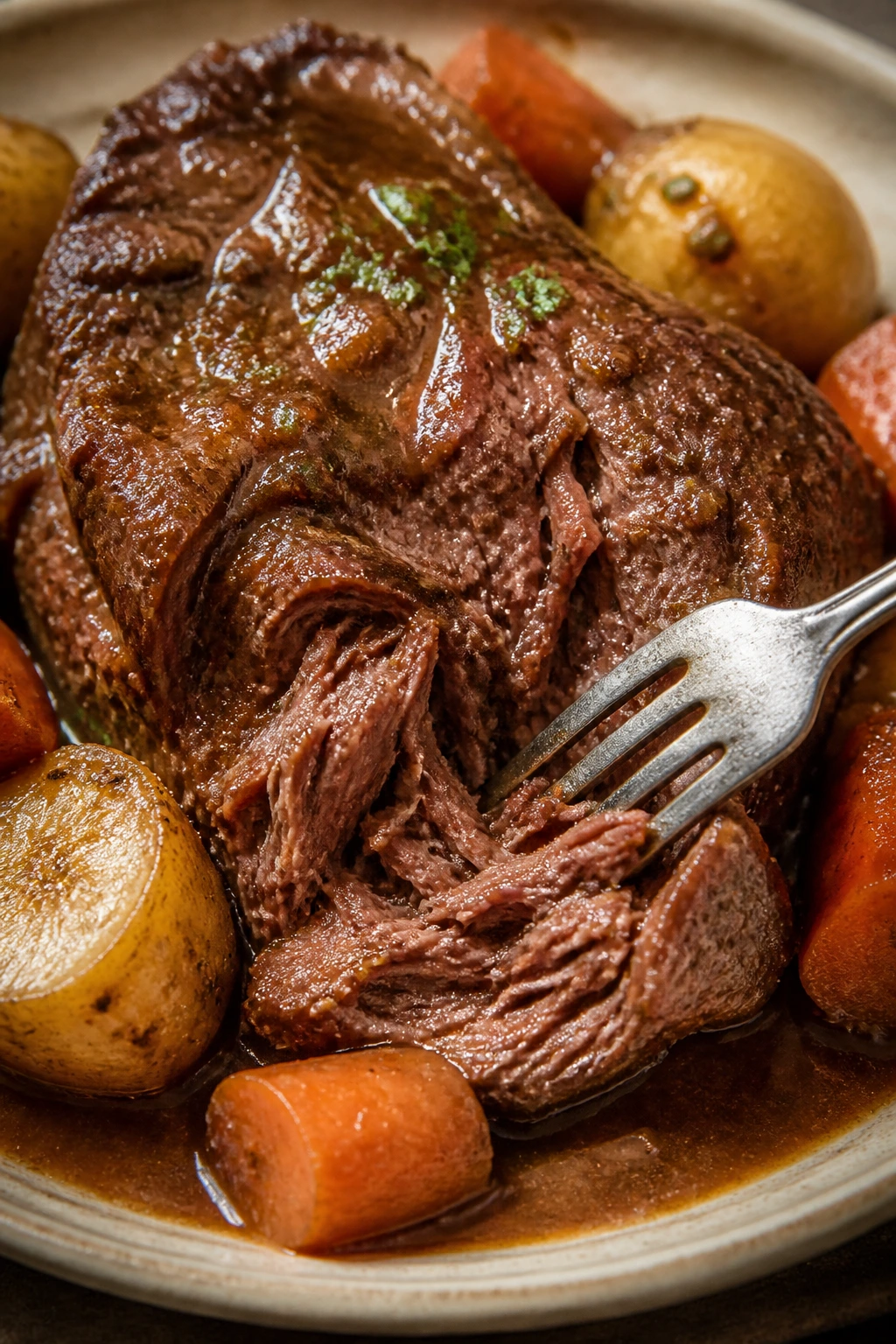
Pot roast is old-school in the best way. The meat gives up its stiffness, the carrots turn glossy, and the potatoes soak up the broth until they taste like they were born there.
A Dutch oven is almost unfairly good at this kind of dinner. It lets you sear the roast first, then braise it slowly in the same pot so the juices, browned bits, wine, and broth all end up in one rich sauce instead of a scattered mess.
Why It Works:
A chuck roast has the fat and connective tissue that need time to soften. A 300°F oven gives you that time without drying out the outer layers, and adding the vegetables later keeps them from collapsing into mush. The result should pull apart with a fork, but still hold enough shape to look like dinner and not a pot of debris.
Key Ingredients:
- 3½ to 4 lbs chuck roast
- 2 teaspoons kosher salt
- 1 teaspoon black pepper
- 2 tablespoons olive oil
- 1 onion, sliced
- 4 garlic cloves, smashed
- 2 tablespoons tomato paste
- 2 tablespoons all-purpose flour
- 1 cup dry red wine
- 2 cups beef broth
- 2 tablespoons Worcestershire sauce
- 2 bay leaves
- 2 teaspoons dried thyme
- 1½ lbs carrots, cut into thick pieces
- 1½ lbs Yukon Gold potatoes, halved
- 1 lb pearl onions, peeled or frozen
Quick Steps:
- Preheat the oven to 300°F (150°C). Pat the roast dry and season it generously with salt and pepper.
- Heat the oil in the Dutch oven over medium-high heat. Brown the roast for 4 to 5 minutes per side until a dark crust forms; skip the urge to move it around.
- Add the onion and garlic, then stir in the tomato paste and flour. Cook for 1 minute to take the raw edge off.
- Pour in the wine and scrape up the browned bits. Add the broth, Worcestershire, bay leaves, and thyme.
- Return the roast to the pot, cover, and braise for 2 hours.
- Add the carrots, potatoes, and pearl onions. Cover again and cook for 1 to 1½ hours more, until the beef is fork-tender and the vegetables are soft at the edges.
- Rest the roast for 10 minutes before serving. Spoon the broth over the top so the meat doesn’t look dry.
Tips and Variations:
- More Sauce: Remove the roast and reduce the liquid on the stovetop for 5 to 10 minutes.
- Flavor Lift: A spoonful of Dijon stirred into the sauce at the end sharpens everything.
- Shortcut: Baby carrots and halved baby potatoes cut the prep time without changing the feel of the dish.
4. Smoky Turkey Chili
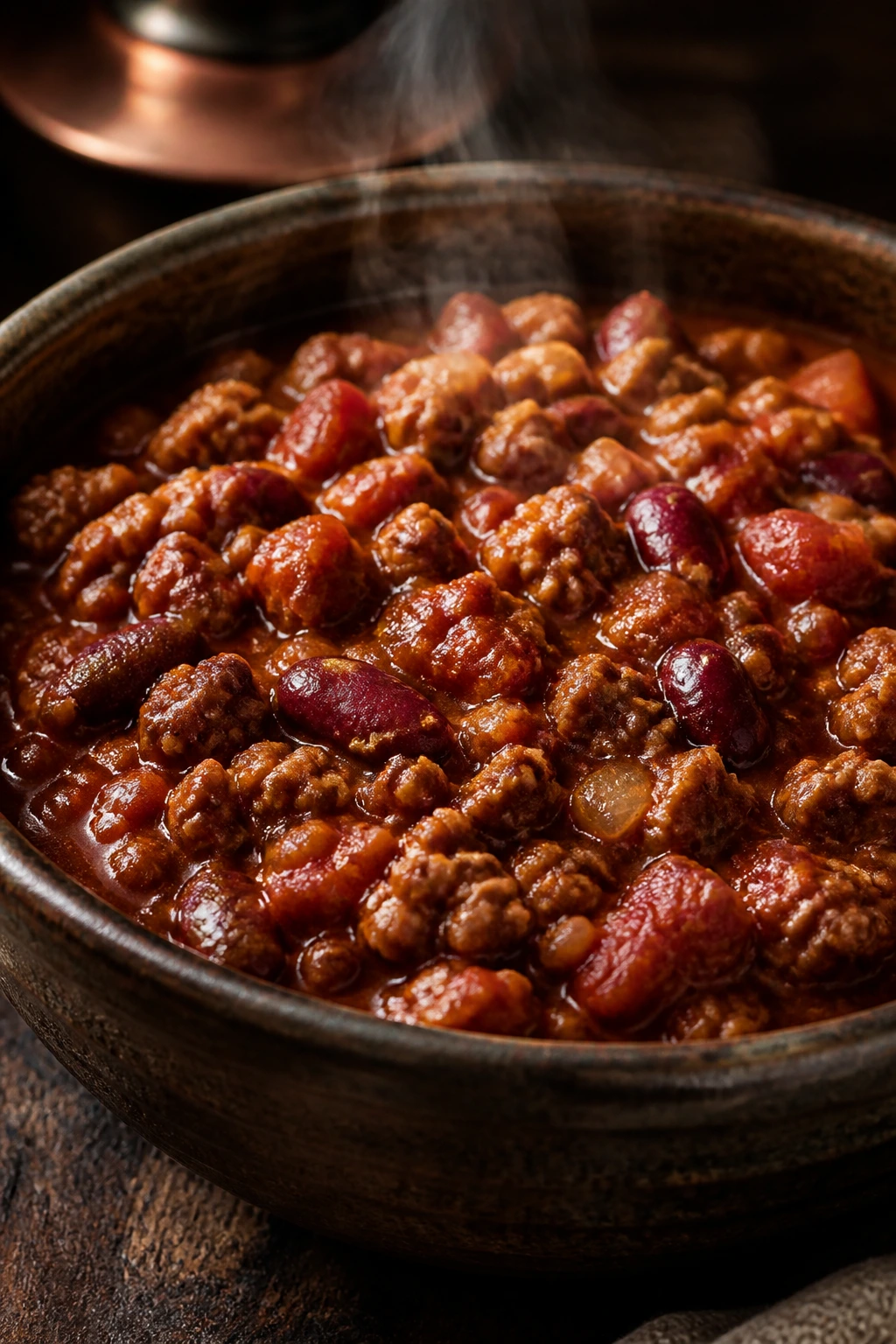
Turkey chili can be boring if you let it be boring. With the right amount of smoke, cumin, and tomato paste, it turns into something thick, spoonable, and warming enough to make you stop pretending you want a sandwich instead.
The Dutch oven gives the spices a chance to bloom in oil before the beans and tomatoes go in, which is the whole trick. Ground turkey needs help, and this is a good way to give it some backbone without turning the pot heavy.
Why It Works:
Lean ground turkey cooks fast, so it benefits from a pot that holds heat evenly and lets the onion, chile, and spice mixture develop first. The tomato paste cooks down for a minute before the liquid goes in, which removes that metallic raw taste and adds body. Chili tastes better after a 20-minute rest, too, because the beans and meat settle into the sauce instead of floating in it.
Key Ingredients:
- 2 lbs ground turkey
- 2 tablespoons olive oil
- 1 onion, diced
- 1 bell pepper, diced
- 3 garlic cloves, minced
- 2 tablespoons chili powder
- 1 tablespoon ground cumin
- 1 teaspoon smoked paprika
- 2 tablespoons tomato paste
- 1 can (28 oz) crushed tomatoes
- 2 cans beans, drained and rinsed
- 2 cups chicken broth
- 1 teaspoon kosher salt, plus more to taste
- 1/2 teaspoon black pepper
- 1 jalapeño, minced, optional
- Toppings: shredded cheese, sour cream, cilantro, or sliced scallions
Quick Steps:
- Heat the oil over medium heat. Add the onion and bell pepper and cook for 5 minutes, until softened and just starting to brown.
- Add the turkey and break it up with a spoon. Cook for 6 to 8 minutes, until no pink remains and the turkey takes on a little color.
- Stir in the garlic, chili powder, cumin, paprika, and tomato paste. Cook for 1 minute so the spices smell toasted rather than dusty.
- Add the crushed tomatoes, beans, broth, salt, pepper, and jalapeño if using. Bring to a simmer.
- Cover partially and cook for 30 to 40 minutes, stirring now and then, until the chili thickens and the sauce looks glossy.
- Taste and adjust salt. If it needs more depth, let it simmer uncovered for another 5 to 10 minutes.
- Serve hot with toppings and a little crunch on the side.
Tips and Variations:
- Bean Choice: Black beans make it darker; kidney beans make it meatier.
- Heat Control: Use chipotle powder for smoke, or leave out the jalapeño for a softer version.
- Thicker Bowl: A handful of crushed tortilla chips stirred in at the end helps bind the chili a bit.
5. Coq au Vin
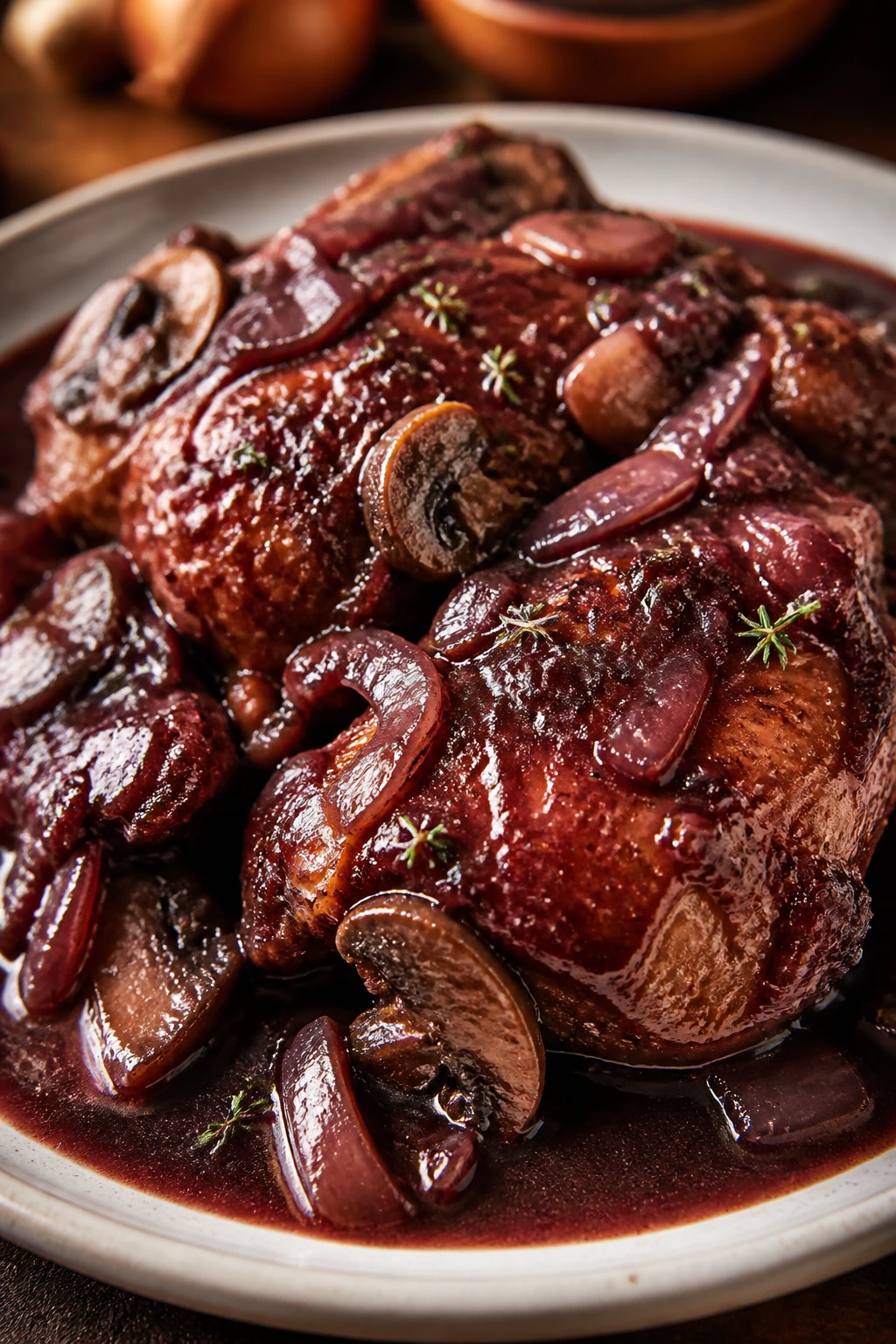
There’s a reason this dish has a reputation. Red wine, bacon, mushrooms, and chicken thighs make a sauce that tastes deeply cooked, almost velvet-like, with a little tang from the wine and a lot of savoriness from the bacon.
A Dutch oven suits coq au vin because it handles a sequence of jobs without complaint. It renders bacon, browns chicken, softens vegetables, and braises the whole thing slowly enough that the sauce doesn’t split or boil itself apart.
Why It Works:
Coq au vin is all about layering fat and acid in the right order. The bacon gives you salt and depth, the wine brings structure, and the chicken thighs stay tender because they braise instead of roast dry. Keeping the simmer low matters here; if the liquid boils hard, the chicken goes stringy and the sauce turns rough around the edges.
Key Ingredients:
- 3 lbs bone-in, skin-on chicken thighs
- 6 oz bacon, diced
- 1 onion, chopped
- 2 carrots, sliced
- 8 oz mushrooms, halved
- 4 garlic cloves, minced
- 2 tablespoons all-purpose flour
- 2 cups dry red wine
- 1 cup chicken broth
- 2 tablespoons tomato paste
- 1 teaspoon dried thyme
- 1 bay leaf
- 1 cup pearl onions, fresh or frozen
- 2 tablespoons butter
- Salt and black pepper
- Chopped parsley, for finishing
Quick Steps:
- Cook the bacon in the Dutch oven over medium heat until crisp. Remove it with a slotted spoon and leave about 2 tablespoons of fat in the pot.
- Season the chicken with salt and pepper, then brown it skin-side down for 5 to 6 minutes per side. Set it aside.
- Add the onion and carrots. Cook for 5 minutes, then add the mushrooms and garlic and cook for 3 minutes more.
- Stir in the flour and tomato paste, then pour in the wine and broth. Scrape the bottom well and add the thyme, bay leaf, and bacon.
- Return the chicken and any juices to the pot. Cover and braise at 325°F (165°C) for 40 minutes.
- Add the pearl onions and cook uncovered for 15 to 20 minutes more, until the sauce thickens a little and the chicken reaches 165°F.
- Finish with butter and parsley. That last bit makes the sauce look and taste richer.
Tips and Variations:
- Wine Pick: Use a dry red that isn’t too tannic or the sauce can turn sharp.
- Mushroom Note: Cremini mushrooms hold up well; button mushrooms are fine if that’s what you have.
- Serving Move: Spoon it over mashed potatoes, buttered noodles, or soft polenta.
6. Sausage, Kale, and White Bean Soup
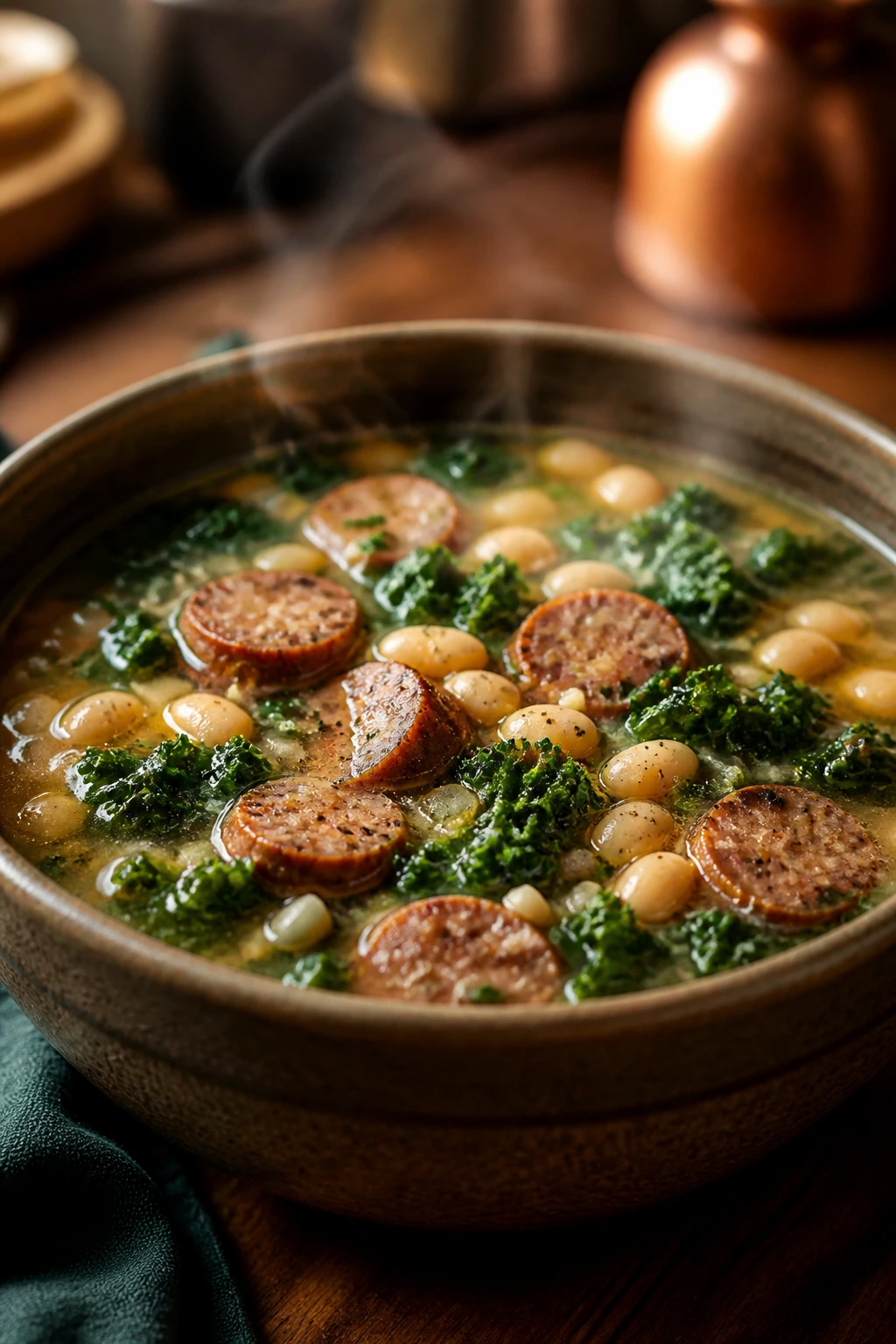
This soup comes in loud and then settles down. The sausage brings spice, the beans turn creamy at the edges, and the kale softens into the broth without disappearing entirely.
I like this one because it cooks fast but still feels substantial. The Dutch oven browns the sausage first, which leaves behind a seasoned base that plain soup pots never seem to match, and the beans help the broth thicken without any flour at all.
Why It Works:
Italian sausage already carries fennel, pepper, and fat, so it builds flavor quickly. A short simmer gives the beans time to release starch and the kale time to wilt, which keeps the soup hearty without making it heavy. If you finish with a little lemon juice, the whole pot wakes up.
Key Ingredients:
- 1 lb Italian sausage, mild or spicy
- 2 tablespoons olive oil, if needed
- 1 onion, diced
- 2 carrots, diced
- 2 celery stalks, diced
- 4 garlic cloves, minced
- 6 cups chicken broth
- 2 cans cannellini beans, drained and rinsed
- 1 bunch kale, stems removed and leaves chopped
- 1 teaspoon dried thyme
- 1/2 teaspoon red pepper flakes
- 1 Parmesan rind, optional
- 1 tablespoon lemon juice
- Salt and black pepper
Quick Steps:
- Brown the sausage in the Dutch oven over medium heat, breaking it up as it cooks. If the sausage is lean, add a little oil.
- Add the onion, carrots, and celery. Cook for 5 to 6 minutes until softened.
- Stir in the garlic, thyme, and red pepper flakes. Cook for 30 seconds, just until fragrant.
- Add the broth, beans, and Parmesan rind if using. Simmer for 20 minutes so the beans turn soft around the edges.
- Stir in the kale and cook for 5 to 7 minutes, until it turns dark green and tender.
- Add lemon juice, taste for salt, and serve hot.
Tips and Variations:
- Creamier Finish: Mash some of the beans against the side of the pot.
- Greens Swap: Swiss chard works if you want a softer texture than kale.
- Bread Partner: A thick slice of sourdough makes this feel like a full meal.
7. Lamb Stew with Rosemary and Parsnips
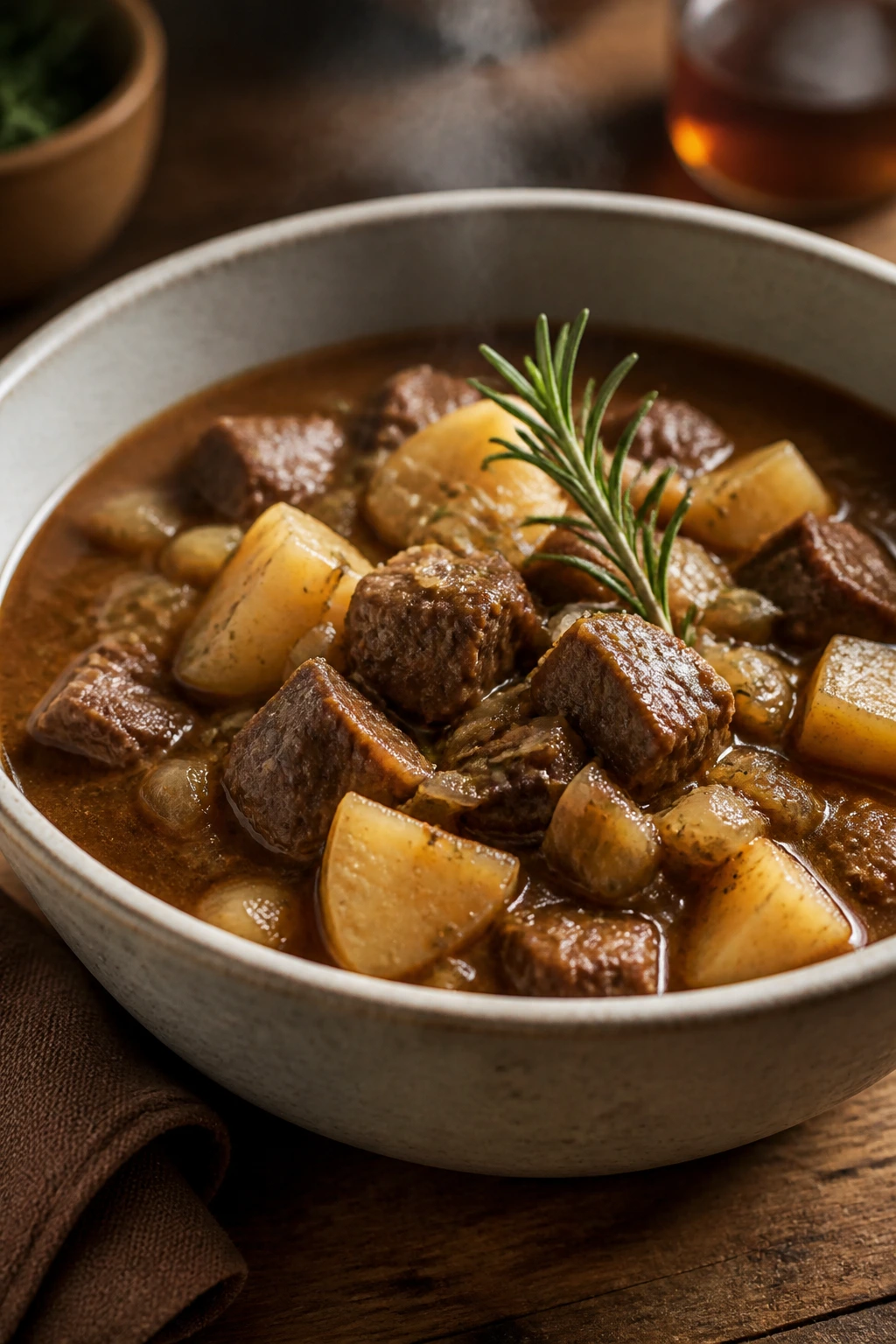
Lamb stew has a different kind of warmth. It’s earthy and slightly sweet, with rosemary running through it like a thread and parsnips adding a clean, almost nutty edge that carrots can’t quite mimic.
The Dutch oven is especially useful here because lamb shoulder likes time. A long braise turns the meat soft without stripping away its flavor, and the enclosed pot keeps the broth from evaporating before the vegetables get a chance to finish.
Why It Works:
Lamb shoulder has enough connective tissue to reward a slow cook, and a gentle oven braise breaks that tissue down while keeping the meat juicy. Parsnips hold their shape better than people expect, which makes them ideal for long stews. The rosemary should be present but not loud; one or two sprigs are enough if you want the broth to taste like lamb and herbs, not like a pine candle.
Key Ingredients:
- 2½ lbs lamb shoulder, cut into 1½-inch cubes
- 2 teaspoons kosher salt
- 1 teaspoon black pepper
- 2 tablespoons flour
- 2 tablespoons olive oil
- 1 onion, chopped
- 3 carrots, cut into chunks
- 2 parsnips, cut into chunks
- 3 garlic cloves, minced
- 2 tablespoons tomato paste
- 1 cup dry red wine
- 3 cups beef broth
- 2 rosemary sprigs
- 1 teaspoon dried thyme
- 1 lb baby potatoes
- 1 cup frozen peas
Quick Steps:
- Season the lamb with salt, pepper, and flour. Shake off the excess so the coating stays light.
- Heat the oil over medium-high heat and brown the lamb in batches until well colored on all sides. Set it aside.
- Add the onion, carrots, parsnips, and garlic. Cook for 5 minutes, then stir in the tomato paste for 1 minute.
- Pour in the wine and scrape the bottom clean. Add the broth, rosemary, thyme, and browned lamb.
- Cover and braise at 325°F (165°C) for 1 hour 45 minutes.
- Add the potatoes and cook for 35 to 45 minutes more, until the lamb is tender and the potatoes give easily when pierced.
- Stir in the peas during the last 5 minutes and rest the stew for 10 minutes before serving.
Tips and Variations:
- Rosemary Control: Strip the needles from the sprig if you want a cleaner herb flavor.
- Vegetable Swap: Rutabaga can replace parsnips if you want something even sturdier.
- Serving Idea: Spoon it over buttered egg noodles if you want a bigger, more filling bowl.
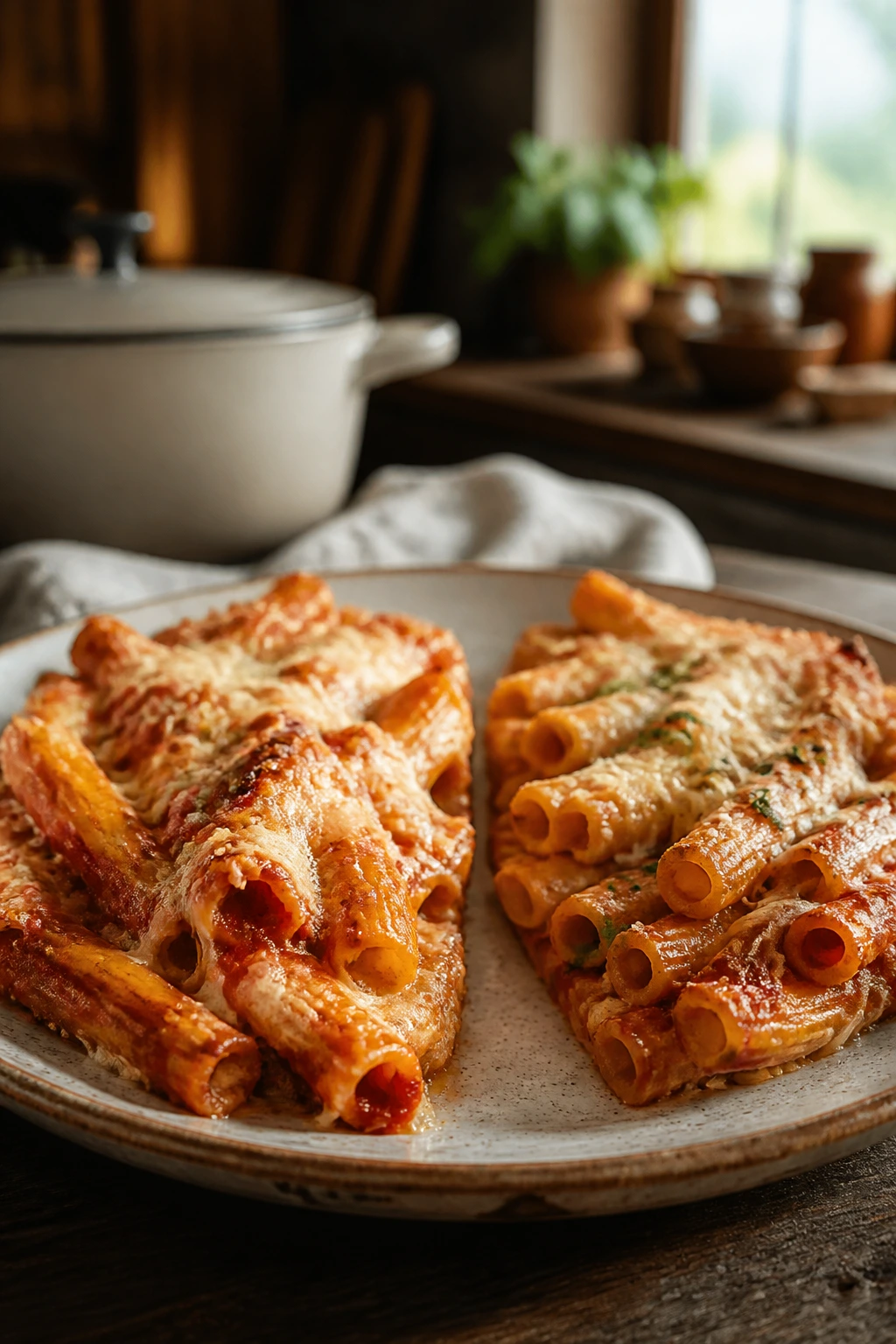
8. Dutch Oven Baked Ziti with Sausage
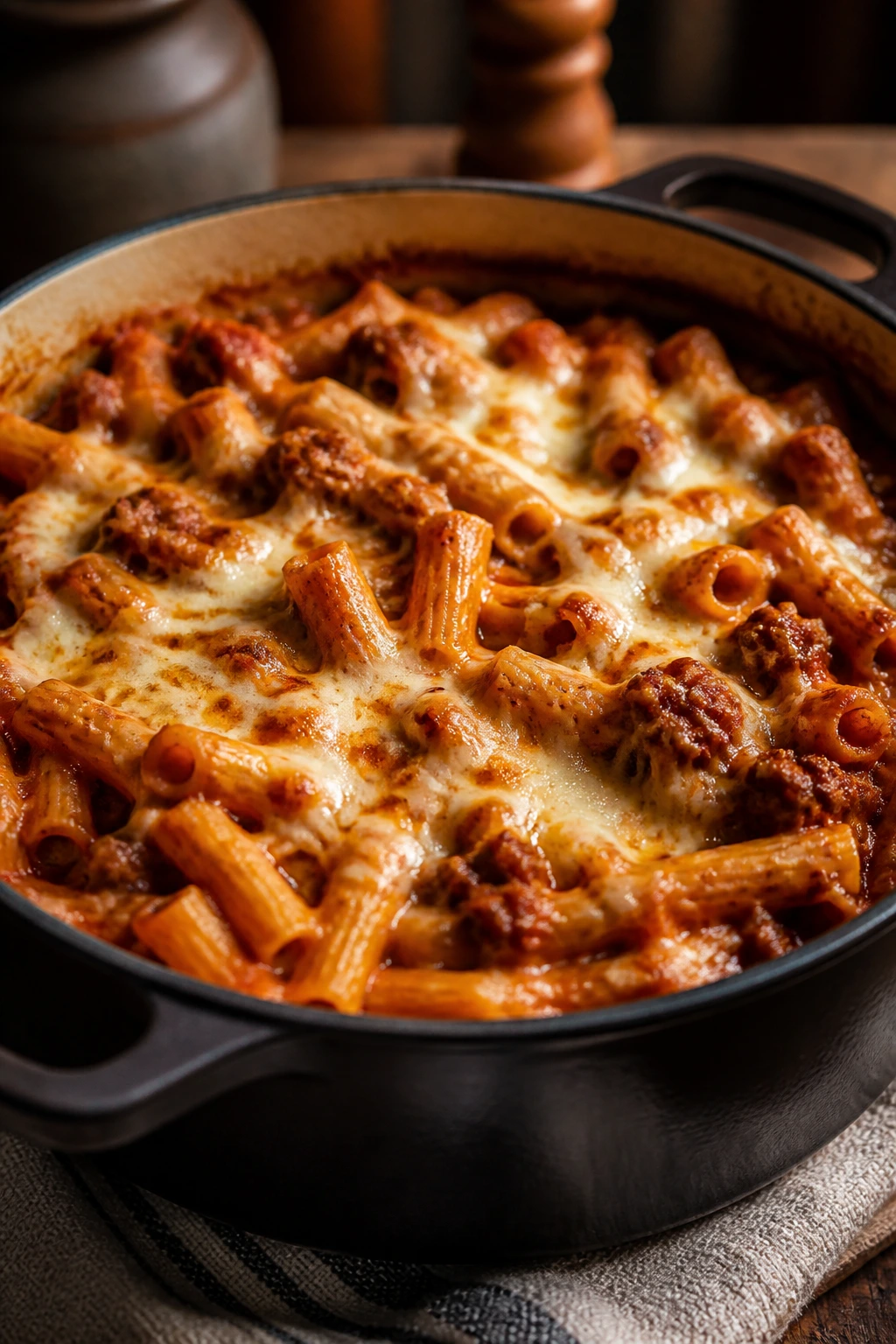
A steaming pan of baked pasta has its own kind of cold-night magic. The sauce bubbles up around the noodles, the cheese browns at the top, and the whole thing comes out with that irresistible mix of creamy center and crispy edges.
Dutch ovens are made for this sort of dinner because they hold heat evenly from the bottom and the sides. That means the pasta can finish in the sauce without scorching, and the lid keeps the moisture where it belongs until the cheese is ready to brown.
Why It Works:
This dish borrows from a casserole but cooks like a one-pot meal. The pasta absorbs some of the sauce as it bakes, which is why the Dutch oven needs enough liquid to begin with. If the pot is too dry before it goes into the oven, the ziti will come out chalky instead of lush.
Key Ingredients:
For the Pasta and Sauce:
- 1 lb Italian sausage
- 1 onion, diced
- 3 garlic cloves, minced
- 1 jar (24 oz) marinara sauce
- 1 can (28 oz) crushed tomatoes
- 1 cup water
- 12 oz ziti
- 1 teaspoon dried oregano
- 1/2 teaspoon red pepper flakes
- Salt and black pepper
For the Cheese Layer:
- 1 cup ricotta
- 2 cups shredded mozzarella
- 1/2 cup grated Parmesan
- 2 tablespoons chopped basil
Quick Steps:
- Preheat the oven to 400°F (205°C). Brown the sausage in the Dutch oven over medium heat, breaking it into pieces.
- Add the onion and cook for 4 to 5 minutes, then add the garlic and cook for 30 seconds.
- Stir in the marinara, crushed tomatoes, water, oregano, red pepper flakes, and a little salt and pepper. Bring the sauce to a simmer.
- Stir in the ziti and make sure the pasta is mostly submerged. Cover and bake for 18 minutes.
- Uncover, stir once, and dollop ricotta over the top. Sprinkle mozzarella and Parmesan evenly over the surface.
- Bake uncovered for 12 to 15 minutes, until the cheese melts and the edges bubble. Let it rest for 10 minutes so the sauce settles.
- Finish with basil and serve while the top is still stretchy.
Tips and Variations:
- Sauce Check: If the pasta looks dry before baking, add 1/4 cup more water.
- Meatless Move: Skip the sausage and add sautéed mushrooms for a heavier vegetarian version.
- Cheese Trick: A little provolone mixed into the mozzarella gives the top more character.
9. Lentil and Vegetable Stew
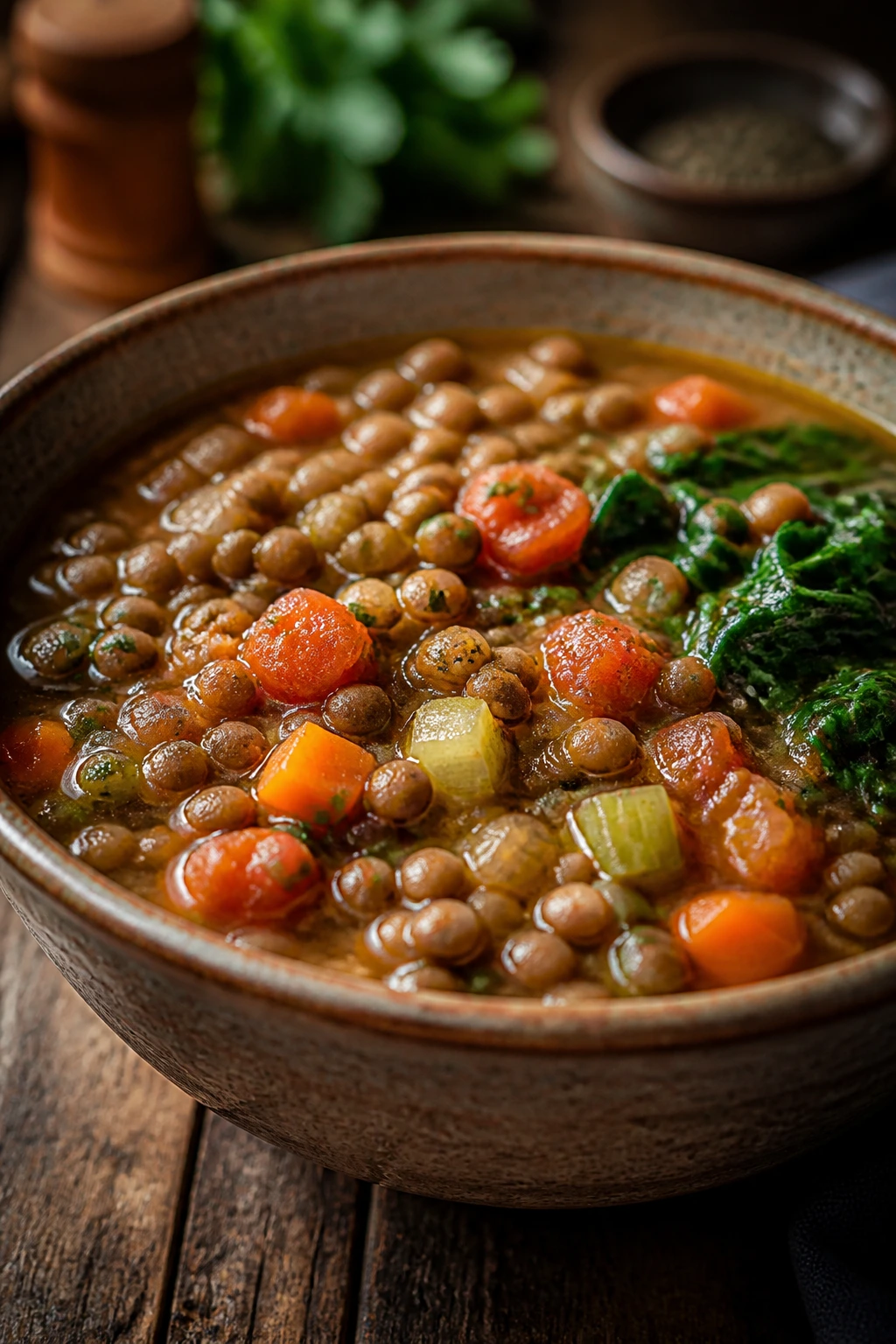
This is the bowl I reach for when the fridge looks spare but the weather still demands something substantial. Lentils bring a soft, earthy depth, while carrots, celery, and tomatoes keep the broth lively enough that it never tastes like punishment.
A Dutch oven helps lentils cook evenly without turning mushy at the bottom. It also gives the vegetables room to soften before the liquid goes in, which is what makes a simple stew taste layered instead of flat.
Why It Works:
Brown or green lentils hold their shape better than red ones, so they’re the right choice for a stew like this. The tomatoes add acidity, the balsamic at the end sharpens the flavor, and the greens wilt in the last few minutes so they stay bright. If you want a vegetarian dinner that still eats like dinner, this is a strong one.
Key Ingredients:
- 2 tablespoons olive oil
- 1 onion, diced
- 2 carrots, diced
- 2 celery stalks, diced
- 3 garlic cloves, minced
- 1½ cups brown or green lentils, rinsed
- 1 can (14.5 oz) diced tomatoes
- 6 cups vegetable broth
- 1 bay leaf
- 1 teaspoon dried thyme
- 1 medium sweet potato, peeled and cubed
- 2 cups chopped kale or spinach
- 1 tablespoon balsamic vinegar
- Salt and black pepper
Quick Steps:
- Heat the oil over medium heat. Add the onion, carrots, and celery, then cook for 6 minutes until softened.
- Stir in the garlic and thyme, then add the lentils, tomatoes, broth, bay leaf, and sweet potato.
- Bring to a simmer, cover, and cook for 30 to 35 minutes until the lentils are tender but still intact.
- Stir in the kale or spinach and cook for 5 minutes more.
- Add balsamic vinegar, salt, and pepper. Taste before serving; lentils need a firmer hand with seasoning than most soups.
- Serve hot with bread or over rice if you want to stretch it further.
Tips and Variations:
- Protein Boost: Stir in a cup of cooked shredded chicken if you want a mixed version.
- Creamier Texture: Mash a few spoonfuls of lentils into the broth.
- Tomato Swap: Fire-roasted diced tomatoes add more smoke and depth.
10. Chicken Cacciatore
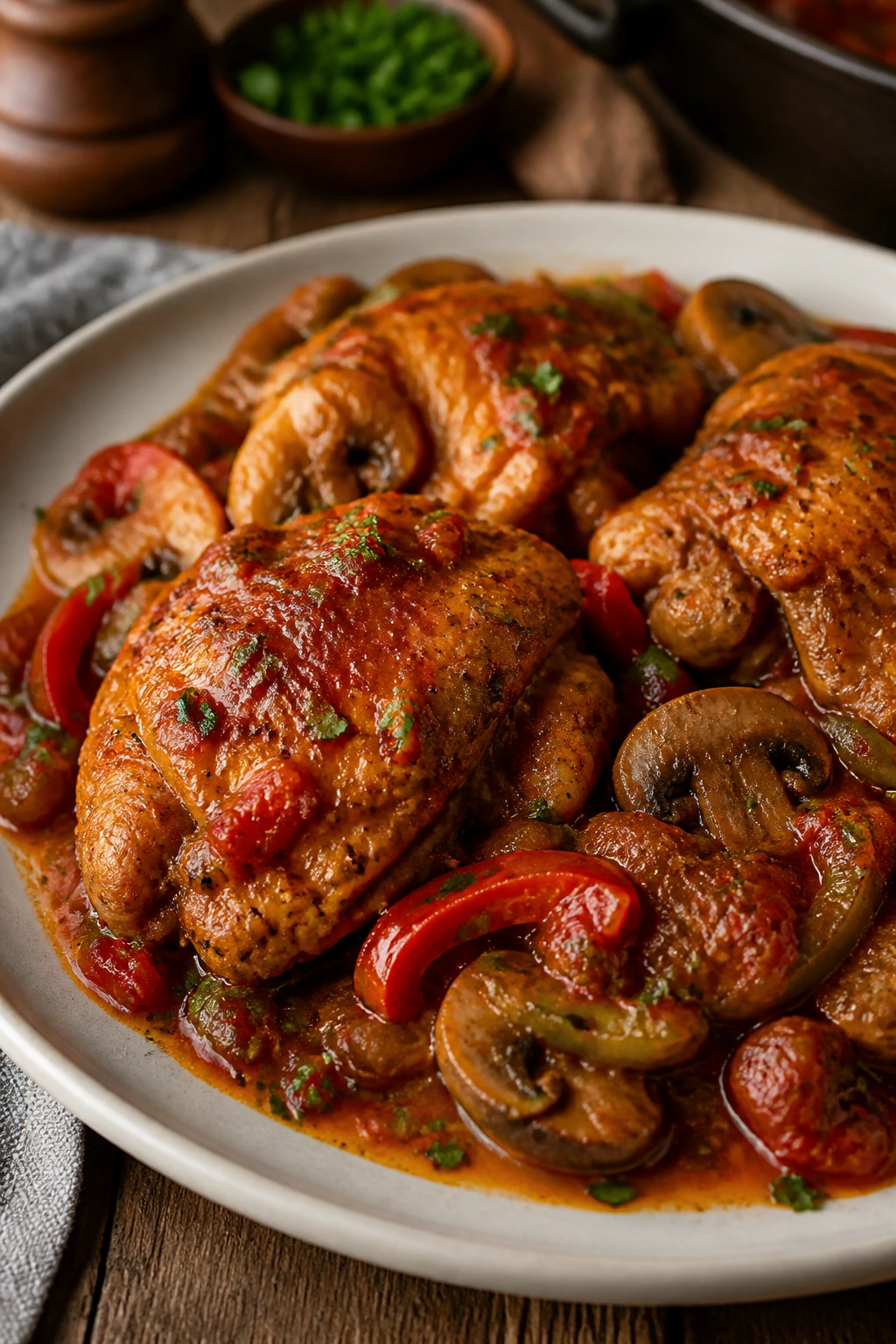
Chicken cacciatore smells like garlic, wine, peppers, and tomatoes all arguing in the same pot — in a good way. The chicken ends up tender and the sauce turns deep and savory, with mushrooms soaking up the edges of the broth.
The Dutch oven is the right tool because it can brown the chicken, soften the vegetables, and finish the braise without switching pans. That means the sauce keeps all the flavor from the chicken skin and the browned onion bits, which is half the reason to make it at all.
Why It Works:
Bone-in thighs hold up better than boneless pieces in a braise like this. They release flavor into the sauce as they cook, and the tomatoes, wine, and peppers keep the dish bright instead of muddy. A simmer of 35 to 40 minutes is enough to make the chicken tender while keeping the vegetables from dissolving into the sauce.
Key Ingredients:
- 2 lbs bone-in chicken thighs
- 1 teaspoon kosher salt
- 1/2 teaspoon black pepper
- 2 tablespoons olive oil
- 1 onion, sliced
- 2 bell peppers, sliced
- 8 oz mushrooms, sliced
- 4 garlic cloves, minced
- 1 cup dry white wine
- 1 can (28 oz) crushed tomatoes
- 1 tablespoon tomato paste
- 1 teaspoon dried oregano
- 1 teaspoon dried basil
- 1/2 teaspoon red pepper flakes
- 1/2 cup chicken broth
- Chopped parsley, for finishing
Quick Steps:
- Season the chicken with salt and pepper. Brown it in the oil over medium-high heat for 4 minutes per side, then set it aside.
- Add the onion, peppers, and mushrooms to the pot. Cook for 7 minutes until the vegetables soften and the pan looks glossy.
- Stir in the garlic, tomato paste, oregano, basil, and red pepper flakes for 30 seconds.
- Pour in the wine and scrape the bottom. Add the tomatoes and broth, then return the chicken and any juices to the pot.
- Cover and simmer over low heat or in a 325°F (165°C) oven for 35 to 40 minutes, until the chicken reaches 165°F.
- Uncover for the last 10 minutes if you want the sauce a little thicker.
- Finish with parsley and serve over polenta, rice, or crusty bread.
Tips and Variations:
- Pepper Note: Red and yellow peppers bring more sweetness than green.
- Extra Body: A handful of olives at the end gives the sauce a briny edge.
- Serving Move: This is especially good over soft polenta because it catches the sauce.
11. Braised Short Ribs with Garlic and Thyme
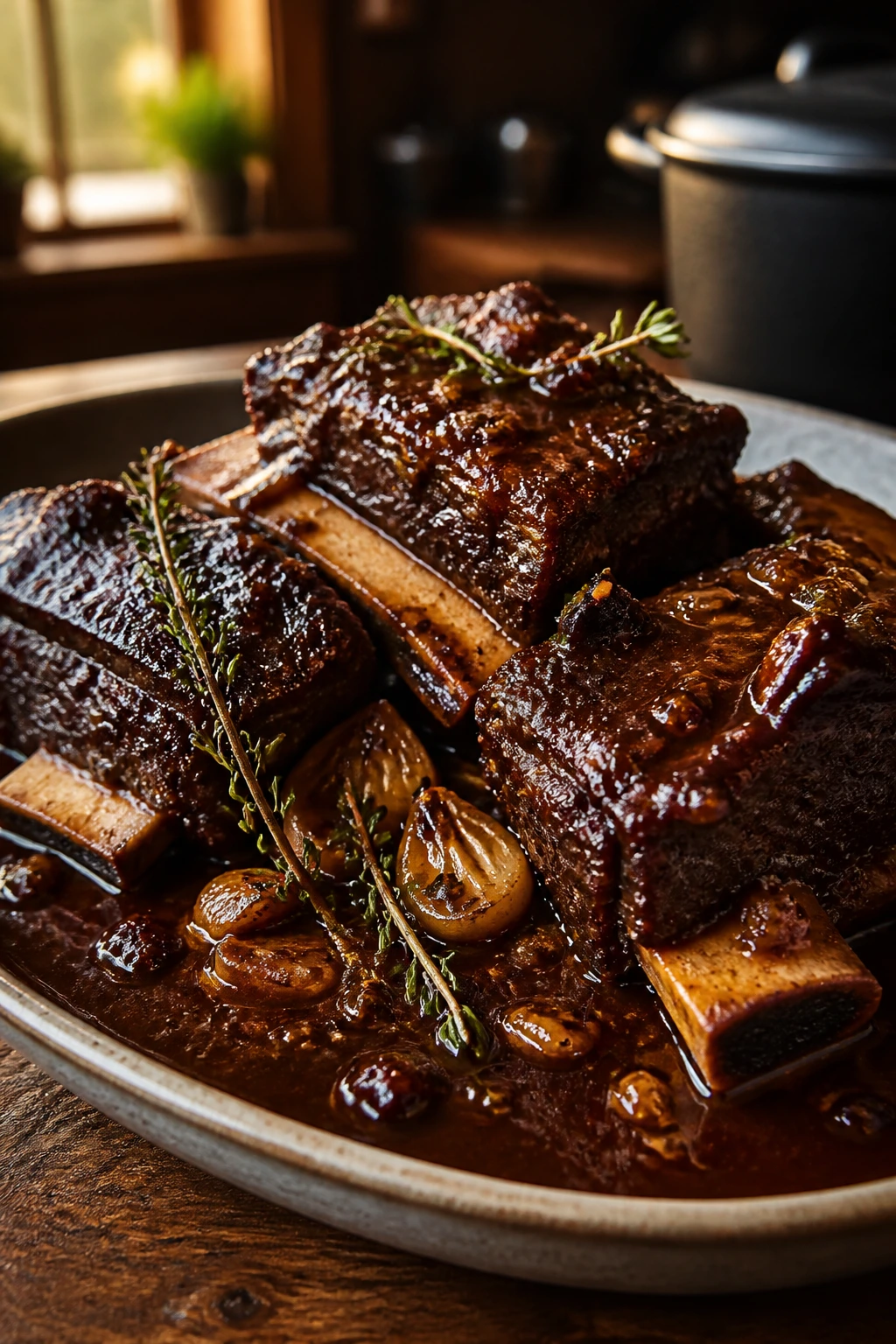
Short ribs are not shy. They bring fat, collagen, and a lot of flavor, and when you braise them well, the sauce turns almost silky from the meat alone.
A Dutch oven is nearly ideal for this because short ribs need a steady, enclosed braise at low heat. The pot keeps the surface from drying out and gives the vegetables enough time to melt into the wine-dark sauce without losing their shape completely.
Why It Works:
The heavy marbling in short ribs turns into richness during a long braise, and the bone adds extra depth to the pot. A 275°F oven gives you slow enough heat to soften the meat without shredding it into stringy pieces too soon. The sauce should end up thick enough to coat a spoon, not watery and not greasy.
Key Ingredients:
- 4 lbs bone-in beef short ribs
- 2 teaspoons kosher salt
- 1 teaspoon black pepper
- 2 tablespoons flour
- 2 tablespoons olive oil
- 1 onion, chopped
- 2 carrots, chopped
- 2 celery stalks, chopped
- 4 garlic cloves, smashed
- 2 tablespoons tomato paste
- 2 cups dry red wine
- 2 cups beef broth
- 2 sprigs thyme
- 2 bay leaves
- 8 oz cremini mushrooms, halved
- Chopped parsley, for finishing
Quick Steps:
- Preheat the oven to 275°F (135°C). Season the short ribs and dust them lightly with flour.
- Brown the ribs in oil over medium-high heat for 3 to 4 minutes per side. Work in batches so the pot stays hot.
- Add the onion, carrots, celery, and garlic. Cook for 6 minutes, then stir in the tomato paste for 1 minute.
- Pour in the wine and scrape up the browned bits. Add the broth, thyme, and bay leaves.
- Return the short ribs to the pot, cover, and braise for 2½ to 3 hours, until the meat slides off the bone with little effort.
- Add the mushrooms for the final 30 minutes so they stay meaty instead of spongy.
- Skim a little fat from the surface before serving, then spoon the sauce over mashed potatoes or creamy grits.
Tips and Variations:
- Wine Choice: A dry red with medium body works better than an ultra-tannic bottle.
- Finish: A tiny splash of vinegar at the end cuts through the richness.
- Leftovers: Pull the meat off the bone and spoon it over toasted bread the next day.
12. Split Pea Soup with Ham
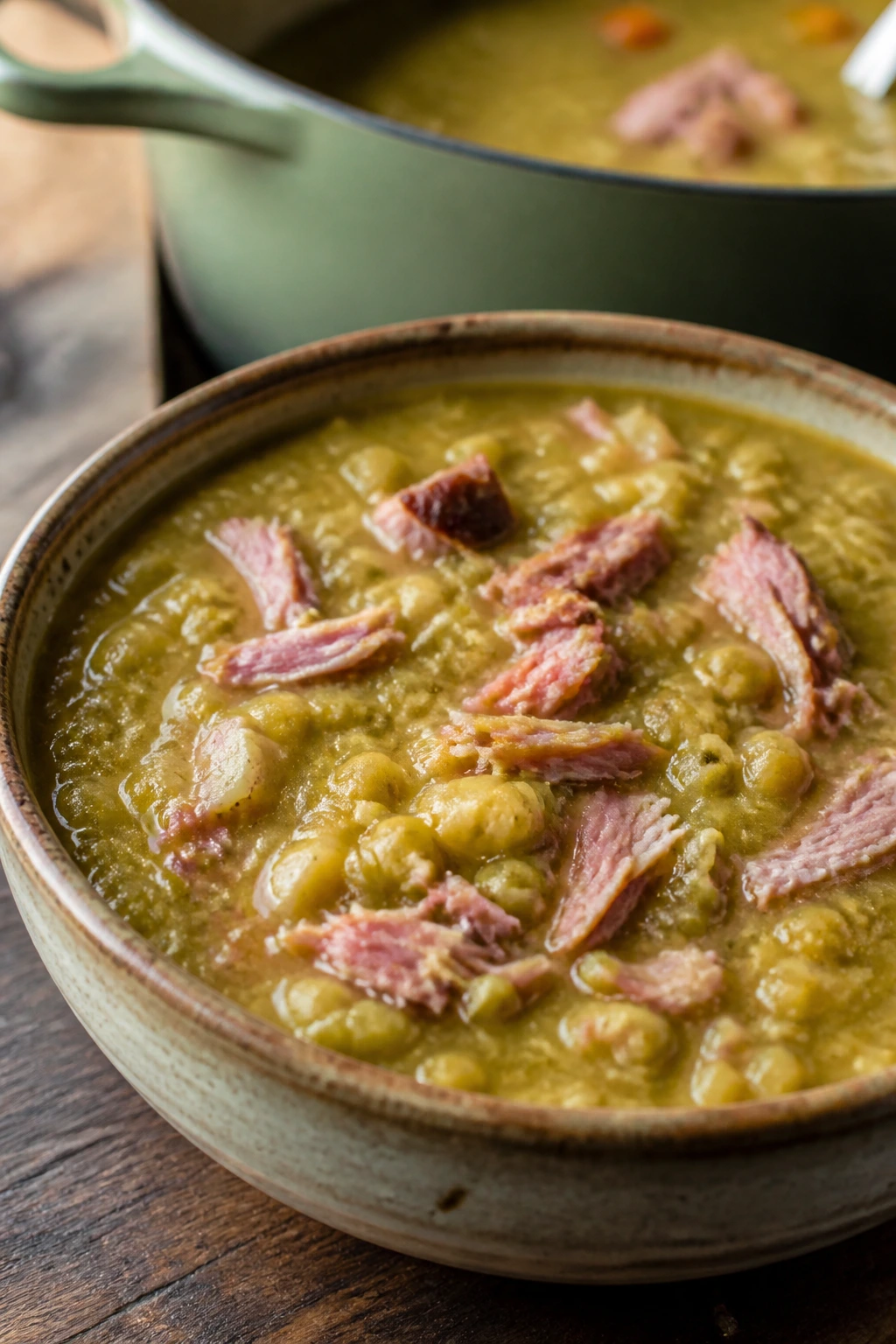
This soup is thick in the best way, the kind that clings to the spoon and gets more savory as it simmers. The ham gives it a smoky backbone, and the peas soften into a green-gold puree that still leaves some texture behind.
A Dutch oven helps split peas cook evenly while the ham hock or diced ham infuses the broth. The pot’s steady heat keeps the soup from sticking on the bottom, which matters because split peas can settle fast if you ignore them.
Why It Works:
Split peas do not need soaking, which makes this a good pantry dinner. They break down on their own over about 1½ hours, and the starch they release thickens the soup without cream or flour. A splash of vinegar at the end wakes up the whole pot and stops the ham from tasting sleepy.
Key Ingredients:
- 2 tablespoons butter or olive oil
- 1 onion, diced
- 2 carrots, diced
- 2 celery stalks, diced
- 3 garlic cloves, minced
- 1 lb dried split peas, rinsed
- 1 ham hock or 2 cups diced ham
- 6 cups chicken broth
- 2 cups water
- 1 bay leaf
- 1 teaspoon dried thyme
- Black pepper, to taste
- 1 tablespoon cider vinegar
Quick Steps:
- Melt the butter in the Dutch oven over medium heat. Add the onion, carrots, and celery and cook for 6 to 7 minutes.
- Stir in the garlic and thyme, then add the split peas, ham hock or ham, broth, water, and bay leaf.
- Bring to a simmer, then lower the heat and cook partially covered for 1 hour 30 minutes, stirring now and then.
- If using a ham hock, remove it, shred the meat, and return it to the pot.
- Simmer 10 to 15 minutes more until the peas mostly collapse and the soup turns thick.
- Stir in the vinegar and black pepper. Taste before salting; ham can be saltier than it looks.
Tips and Variations:
- Chunkier Soup: Blend only 1 to 2 cups if you want more texture.
- Ham Swap: A smoked turkey leg works if you want a lighter version.
- Thinner Bowl: Add extra broth when reheating; split pea soup tightens up overnight.
13. Coconut Chickpea Curry
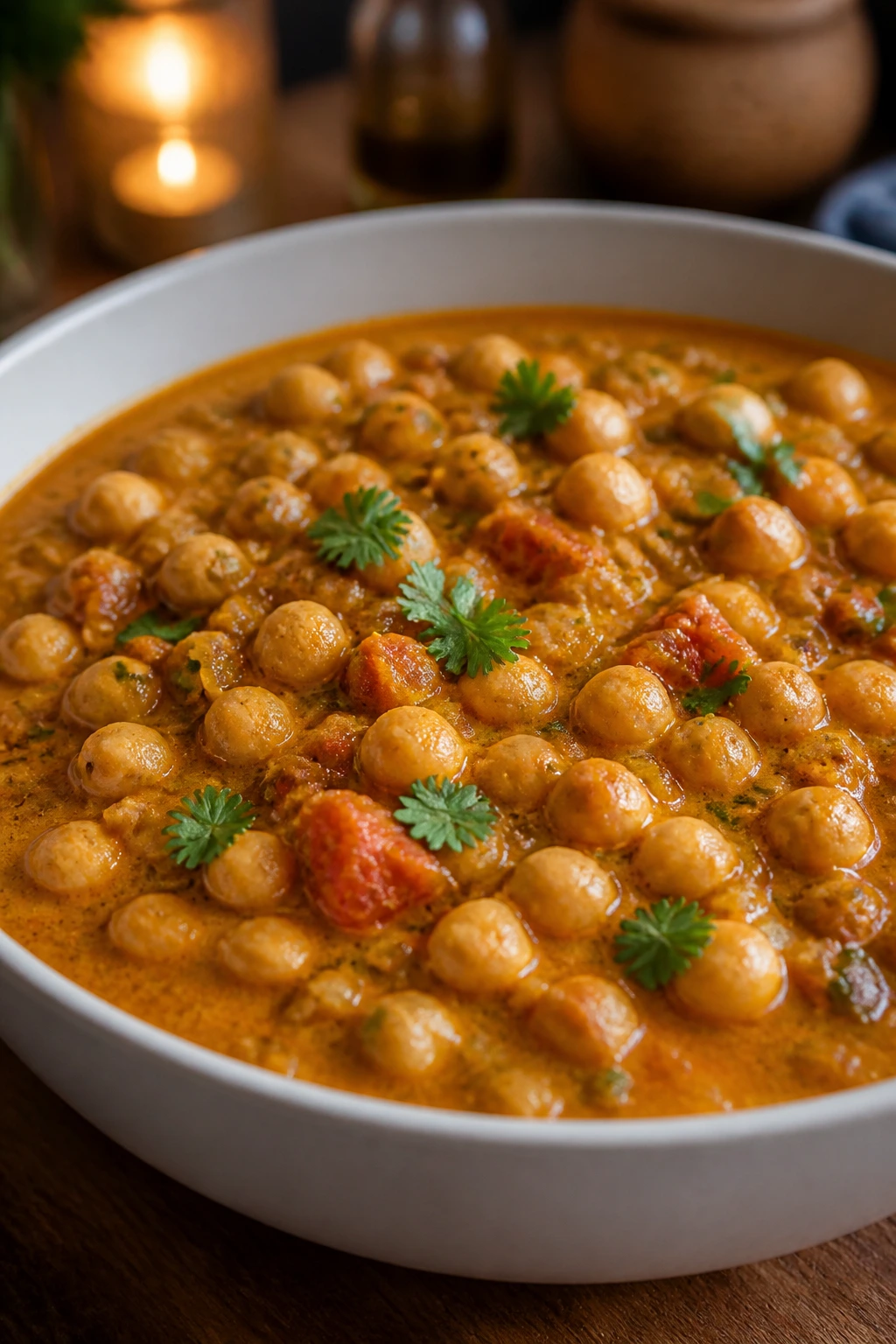
This curry is warm, creamy, and quick enough that you don’t need to talk yourself into making it. Chickpeas bring substance, coconut milk brings silk, and the spices turn the whole pot fragrant in minutes.
The Dutch oven helps the aromatics soften before the liquid goes in, which is where a lot of the flavor comes from. It also gives the curry enough surface area to reduce slightly, so you end up with a sauce that coats the chickpeas instead of drowning them.
Why It Works:
Curry powder and toasted cumin need a little fat to bloom, and the pot handles that without scorching the spices. Coconut milk mellows the heat while tomatoes add brightness, and the chickpeas keep the dish filling enough to stand on its own. If you want dinner in under an hour that still feels generous, this one earns its place.
Key Ingredients:
- 2 tablespoons olive oil
- 1 onion, diced
- 3 garlic cloves, minced
- 1 tablespoon fresh ginger, grated
- 2 tablespoons curry powder
- 1 teaspoon ground cumin
- 1/2 teaspoon turmeric
- 2 cans chickpeas, drained and rinsed
- 1 can (13.5 oz) coconut milk
- 1 can (14.5 oz) diced tomatoes
- 2 cups vegetable broth
- 2 cups cauliflower florets or chopped spinach
- 1 lime, juiced
- Salt, to taste
- Chopped cilantro, for serving
Quick Steps:
- Heat the oil over medium heat. Add the onion and cook for 5 minutes until softened.
- Stir in the garlic and ginger, then add the curry powder, cumin, and turmeric for 30 seconds.
- Add the chickpeas, coconut milk, tomatoes, and broth. Bring the pot to a simmer.
- Cook uncovered for 20 minutes, stirring now and then, until the sauce thickens slightly.
- Add the cauliflower during the last 10 minutes or the spinach during the last 2 minutes.
- Stir in lime juice and salt. Serve over rice or with naan.
Tips and Variations:
- Heat Level: Add chopped fresh chile or a pinch of cayenne if you want more bite.
- Texture Trick: Mash a small portion of the chickpeas to thicken the sauce.
- Fresh Finish: Extra lime and cilantro keep it from tasting heavy.
14. Beef Bourguignon
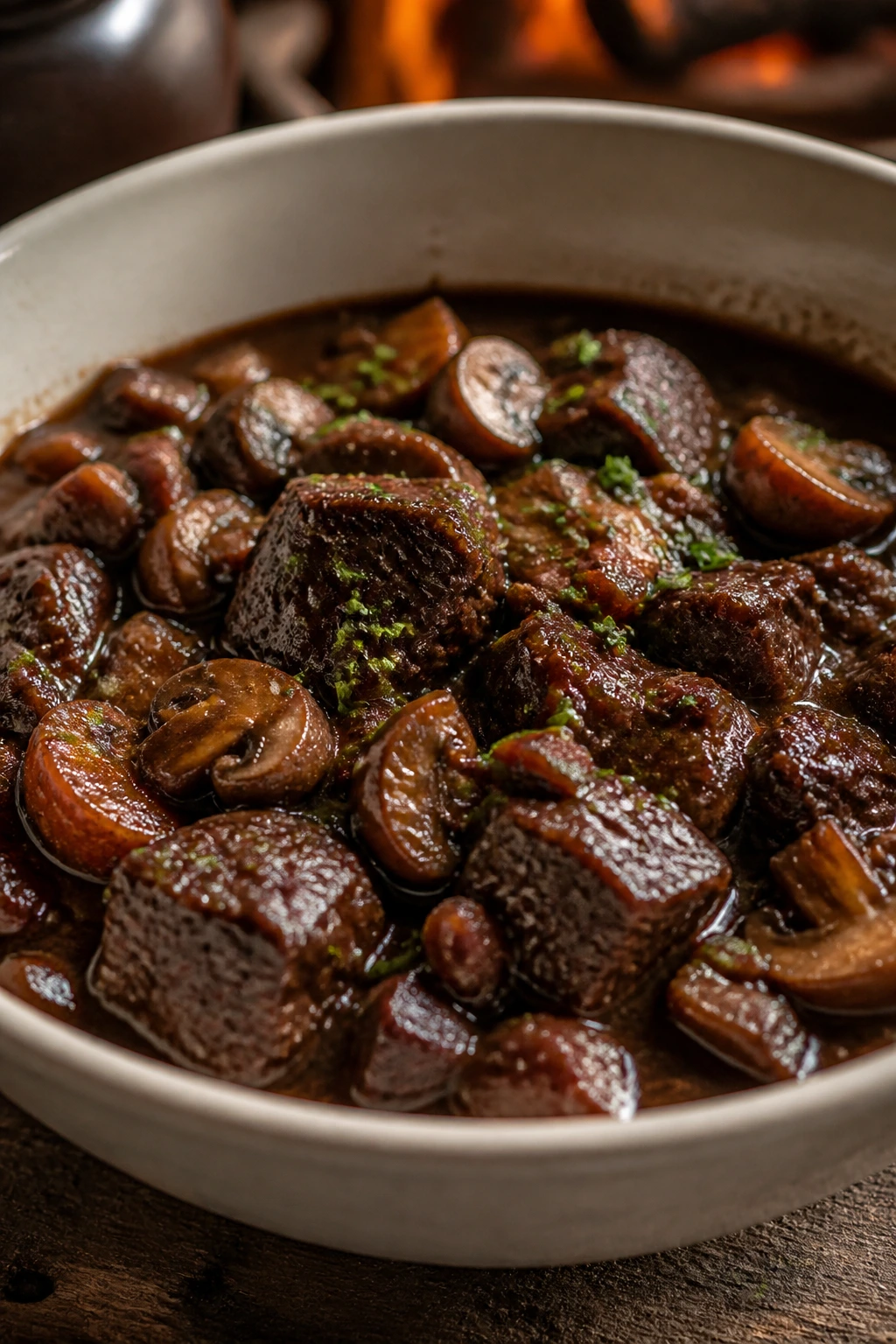
Beef bourguignon is one of those dishes that makes a pot feel ceremonial. Bacon, mushrooms, red wine, and beef cook together until the sauce gets deep and the meat gives up all resistance.
A Dutch oven is the right vessel because it can do the browning, the simmering, and the long oven braise without losing heat. That matters here, because this dish has enough steps to reward patience and enough flavor to punish carelessness.
Why It Works:
The beef needs to brown first, not stew in its own juices from the beginning. After that, the wine and broth braise it slowly at 325°F, while the mushrooms and pearl onions come in late so they keep their shape. The sauce should taste rich and winey, but not boozy; long cooking softens that edge.
Key Ingredients:
- 3 lbs beef chuck, cut into cubes
- 2 teaspoons kosher salt
- 1 teaspoon black pepper
- 2 tablespoons flour
- 6 oz bacon, chopped
- 2 tablespoons olive oil
- 1 onion, chopped
- 2 carrots, sliced
- 4 garlic cloves, minced
- 2 tablespoons tomato paste
- 2 cups dry red wine
- 2 cups beef broth
- 2 sprigs thyme
- 2 bay leaves
- 8 oz mushrooms, halved
- 1 cup pearl onions
- Chopped parsley
Quick Steps:
- Preheat the oven to 325°F (165°C). Season the beef and dust it lightly with flour.
- Cook the bacon in the Dutch oven until crisp. Remove it and leave a little fat behind.
- Brown the beef in batches in the bacon fat and oil. Set it aside once well colored.
- Add the onion, carrots, and garlic. Cook for 5 minutes, then stir in the tomato paste for 1 minute.
- Pour in the wine and broth, scraping the bottom clean. Add thyme, bay leaves, bacon, and beef.
- Cover and braise for 2½ hours. Add mushrooms and pearl onions for the last 30 minutes.
- Remove the bay leaves and serve with parsley over mashed potatoes, noodles, or bread.
Tips and Variations:
- Mushroom Choice: Cremini mushrooms have enough body for the long cook.
- Sauce Control: If the sauce looks thin, simmer uncovered for a few minutes after braising.
- Best Leftovers: The sauce firms up a bit overnight and tastes even better the next day.
15. Sausage, Sauerkraut, Apples, and Potatoes
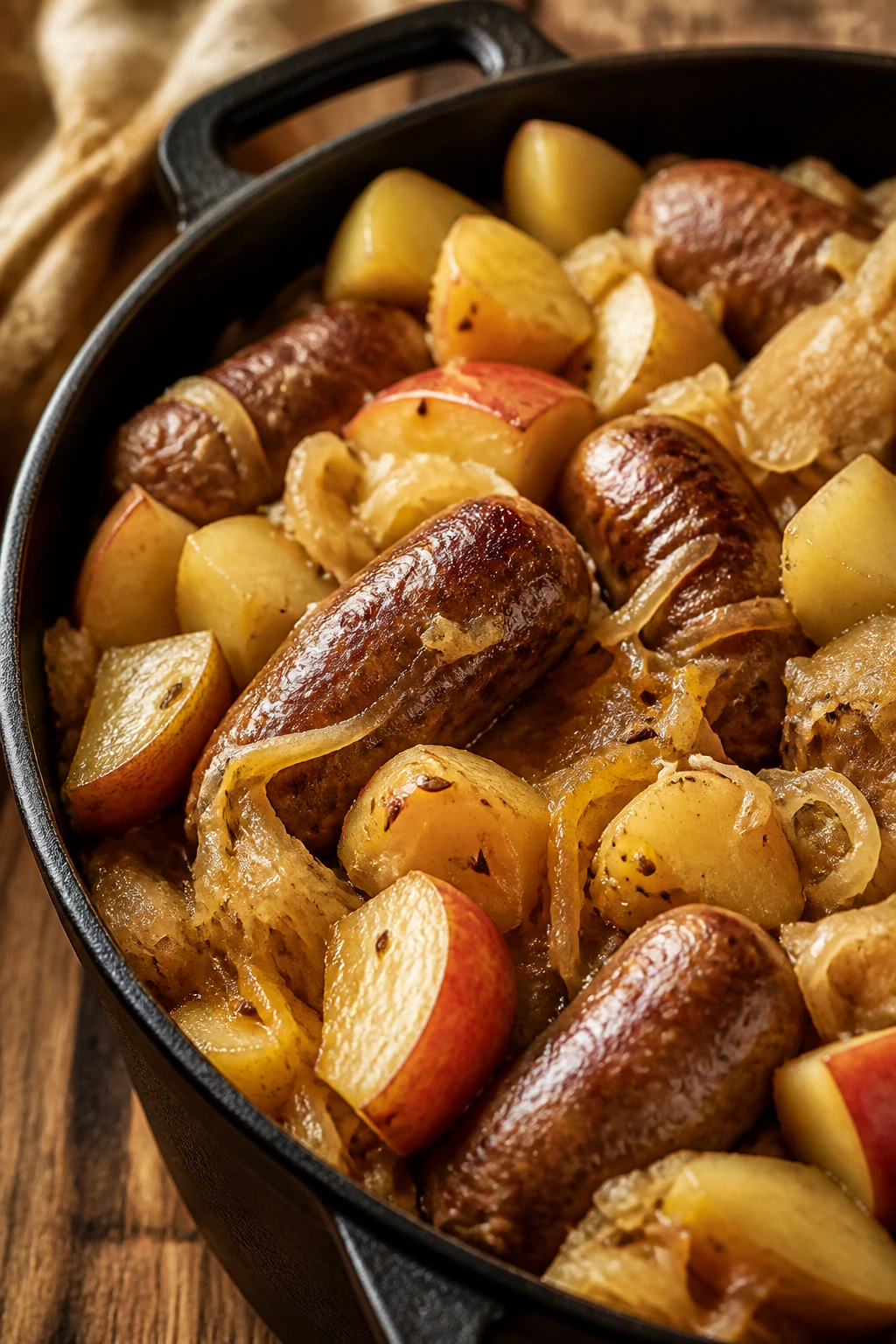
Tart, salty, smoky, sweet — this pot has range. The sauerkraut brings brightness, the apples soften into the broth, and the sausage carries the whole thing so it doesn’t feel like a side dish pretending to be dinner.
I like this recipe because it’s a little old-world without being fussy. The Dutch oven helps the flavors mingle without drying out the sausage, and the potatoes soak up just enough cider and mustard to keep each bite interesting.
Why It Works:
Sauerkraut can taste harsh if it’s cooked too hard or too long, but a gentle braise keeps it bright. Apples add body and a little sweetness, which softens the kraut’s edge and makes the whole pot more balanced. The mustard and caraway are not decoration; they give the dish the kind of backbone it needs.
Key Ingredients:
- 1½ lbs smoked sausage or bratwurst
- 2 tablespoons butter or oil
- 1 onion, sliced
- 2 apples, peeled and sliced
- 2 garlic cloves, minced
- 1 jar (32 oz) sauerkraut, drained
- 1 cup apple cider
- 1 cup chicken broth
- 1 tablespoon whole-grain mustard
- 1 teaspoon caraway seeds
- 1 lb baby potatoes, halved
- Black pepper, to taste
- Chopped dill or parsley, optional
Quick Steps:
- Brown the sausage in the Dutch oven over medium heat. Remove it and set it aside.
- Add the butter or oil, then cook the onion and apples for 5 minutes until softened.
- Stir in the garlic and caraway for 30 seconds.
- Add the sauerkraut, cider, broth, mustard, potatoes, and pepper. Stir well.
- Nestle the sausage back into the pot. Cover and simmer on low or bake at 375°F (190°C) for 35 to 40 minutes.
- Uncover for the last 10 minutes if you want the liquid a little reduced.
- Finish with dill or parsley and serve with extra mustard on the table.
Tips and Variations:
- Sweeter Edge: Use sweeter apples like Gala or Honeycrisp.
- More Tang: A spoonful of extra sauerkraut juice at the end sharpens the flavor.
- Bread Pairing: Rye bread fits this meal better than white sandwich bread does.
16. Chicken Tortilla Soup

This soup has lift. Lime, tomato, cumin, and chile make the broth bright, while chicken and black beans keep it grounded enough to count as dinner and not just a snack with ambition.
A Dutch oven helps because it lets you build the spice base first, then simmer the chicken gently so it stays juicy. The toppings are half the fun, but the broth needs to be solid before any tortilla strips hit the bowl.
Why It Works:
Chicken thighs are forgiving here; they can simmer in the broth until they reach 165°F and still stay tender enough to shred. The tortilla strips add crunch, but the real trick is the layered seasoning in the broth — cumin, chili powder, and smoked paprika give it more depth than a one-note tomato soup. Finish with lime, and the whole pot gets sharper and cleaner.
Key Ingredients:
- 2 lbs boneless, skinless chicken thighs
- 1 onion, diced
- 2 jalapeños, seeded and diced, optional
- 3 garlic cloves, minced
- 1 tablespoon chili powder
- 1 teaspoon ground cumin
- 1 teaspoon smoked paprika
- 1 can (14.5 oz) diced tomatoes
- 6 cups chicken broth
- 1 can black beans, drained and rinsed
- 1 cup corn kernels
- 1 lime, juiced
- Tortilla strips, avocado, cilantro, shredded cheese, for serving
- Salt and black pepper
Quick Steps:
- Heat the Dutch oven over medium heat. Add the onion and jalapeños and cook for 5 minutes.
- Stir in the garlic, chili powder, cumin, and paprika for 30 seconds.
- Add the tomatoes and broth. Bring the soup to a simmer.
- Nestle in the chicken thighs and simmer gently for 20 to 25 minutes, until the chicken reaches 165°F.
- Remove the chicken, shred it, and return it to the pot.
- Stir in the beans, corn, and lime juice. Simmer for 5 more minutes.
- Taste and adjust salt, then top each bowl with tortilla strips and the rest of the garnishes.
Tips and Variations:
- Toppings Matter: Crisp the tortilla strips in the oven with a little oil if you want them sturdier.
- Milder Bowl: Skip the jalapeños and use sweet paprika only.
- Creamy Option: A spoonful of sour cream softens the broth nicely.
17. Shepherd’s Pie with Cheddar Mash
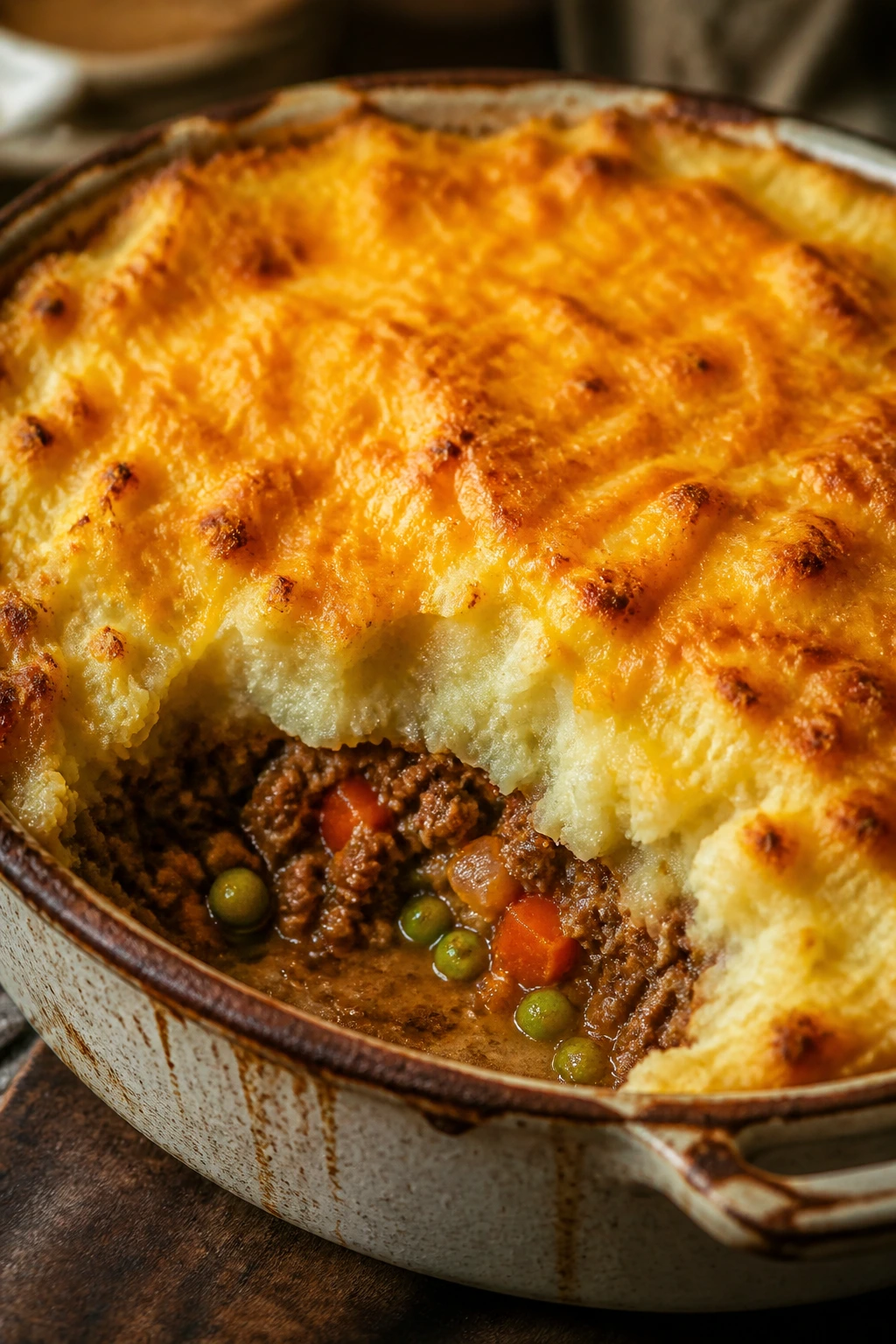
Shepherd’s pie is all about layers that make sense together. Savory meat underneath, creamy potatoes on top, and a browned crust that gives way to steam when you crack the first spoonful.
A Dutch oven is handy because you can cook the filling and bake the pie in the same vessel, which keeps the flavors concentrated and saves you from transferring hot meat into another dish. The potato topping browns best when it has a little butter and cheese in it. Plain mash is fine. Cheddar mash is better.
Why It Works:
Ground lamb has a richer flavor, but ground beef works well if that’s what you keep around. The filling needs to be thick before the potatoes go on, or the top slides apart when you serve it. A quick bake at 400°F firms the top and lets the cheese turn golden at the edges.
Key Ingredients:
For the Filling:
- 1½ lbs ground lamb or beef
- 1 onion, diced
- 2 carrots, diced
- 2 garlic cloves, minced
- 2 tablespoons tomato paste
- 2 tablespoons flour
- 1 cup beef broth
- 1 tablespoon Worcestershire sauce
- 1 teaspoon dried thyme
- 1 cup frozen peas
- Salt and black pepper
For the Cheddar Mash:
- 2 lbs Yukon Gold potatoes, peeled and chunked
- 4 tablespoons butter
- 1/2 cup milk, warmed
- 1 cup shredded cheddar
- 1 egg yolk, optional for extra browning
Quick Steps:
- Boil the potatoes in salted water until tender, about 15 to 20 minutes. Drain and mash with butter, milk, cheddar, and the egg yolk if using.
- While the potatoes cook, brown the lamb or beef in the Dutch oven over medium heat.
- Add the onion and carrots, then cook for 6 minutes. Stir in the garlic, tomato paste, flour, broth, Worcestershire sauce, thyme, salt, and pepper.
- Simmer for 5 to 8 minutes until the filling thickens. Stir in the peas at the end.
- Spoon the mashed potatoes over the meat mixture and spread them to the edges with a spoon.
- Bake at 400°F (205°C) for 20 to 25 minutes until the top turns golden and the edges bubble.
- Rest for 10 minutes before serving so the layers hold together.
Tips and Variations:
- Extra Brown Top: Broil for 1 to 2 minutes at the end if your pot is broiler-safe.
- Veg Swap: Corn works well alongside or instead of peas.
- Make It Richer: A little sour cream in the mash makes the top tangier.
18. Minestrone with Parmesan Rind
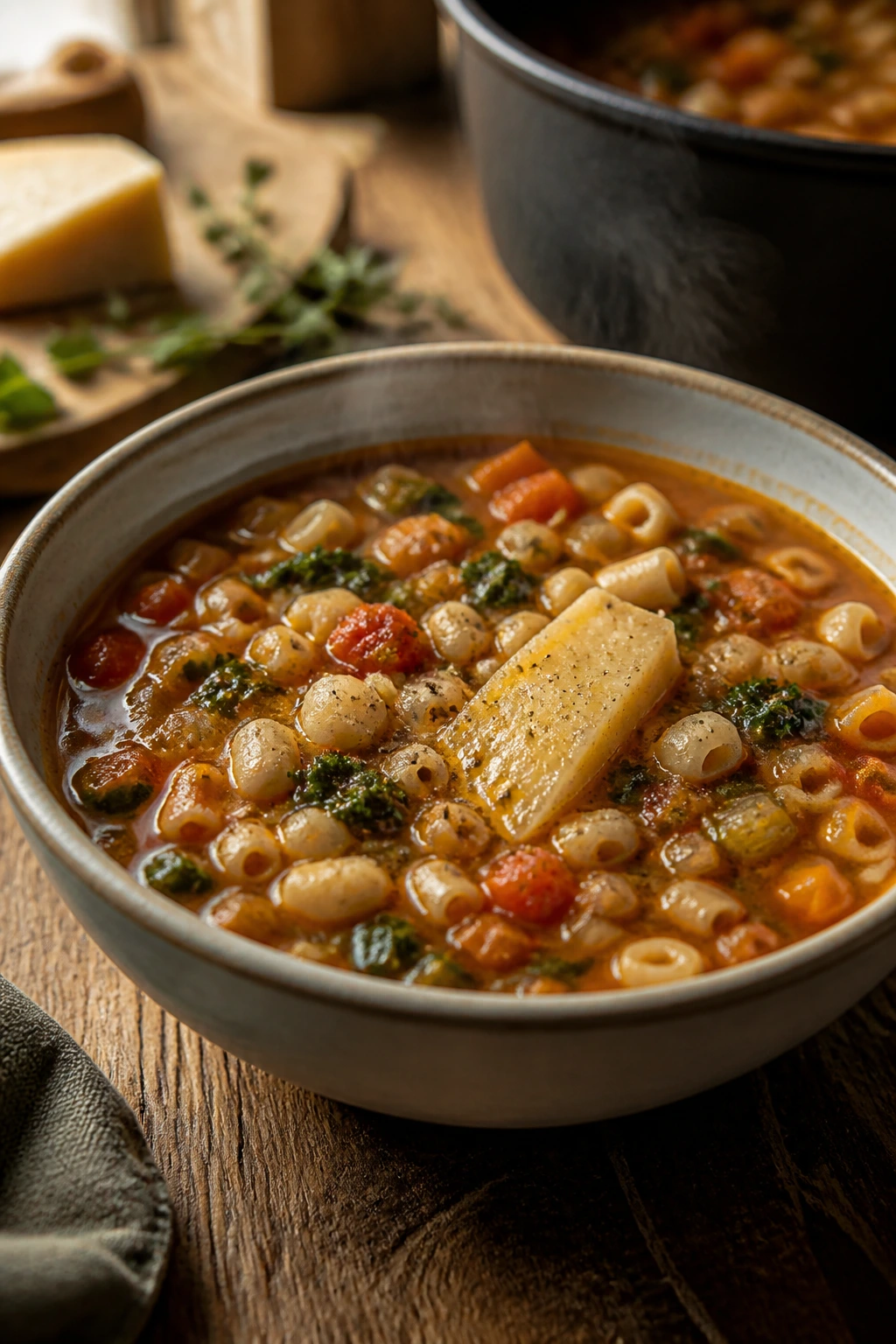
Minestrone is the kind of soup that doesn’t look dramatic in the pot and then quietly wins the evening. It’s brothy, vegetable-heavy, and just hearty enough from beans and pasta to feel like dinner without crossing into heavy.
A Dutch oven is a good match because it lets the aromatics soften gently, then keeps the simmer low while the vegetables and pasta cook. The Parmesan rind is the small thing that changes everything; it melts flavor into the broth without turning the soup creamy.
Why It Works:
A good minestrone has to stay lively. The vegetables should soften but not collapse, the beans should add body, and the pasta should cook right in the broth so it picks up all the seasoning. Parmesan rind gives the soup a savory depth that tastes like you worked harder than you did.
Key Ingredients:
- 2 tablespoons olive oil
- 1 onion, diced
- 2 carrots, diced
- 2 celery stalks, diced
- 3 garlic cloves, minced
- 1 can (14.5 oz) diced tomatoes
- 6 cups vegetable broth
- 1 Parmesan rind
- 1 can cannellini beans, drained and rinsed
- 1 cup small pasta, such as ditalini
- 2 cups chopped cabbage or kale
- 1 teaspoon Italian seasoning
- Salt and black pepper
- Olive oil and grated Parmesan, for serving
Quick Steps:
- Heat the olive oil over medium heat. Add the onion, carrots, and celery and cook for 6 minutes.
- Stir in the garlic and Italian seasoning for 30 seconds.
- Add the tomatoes, broth, Parmesan rind, beans, salt, and pepper. Bring to a simmer and cook for 15 minutes.
- Stir in the pasta and cabbage or kale. Simmer for 8 to 10 minutes, until the pasta is tender.
- Remove the Parmesan rind. Taste the broth and adjust seasoning.
- Serve hot with a drizzle of olive oil and more Parmesan on top.
Tips and Variations:
- Pasta Control: Cook the pasta separately if you want leftovers that stay brothy.
- Bean Swap: Great Northern beans work if cannellini aren’t in the cupboard.
- Bright Finish: A little lemon zest at the end wakes up the whole bowl.
Why the Dutch Oven Pulls More Weight Than a Soup Pot
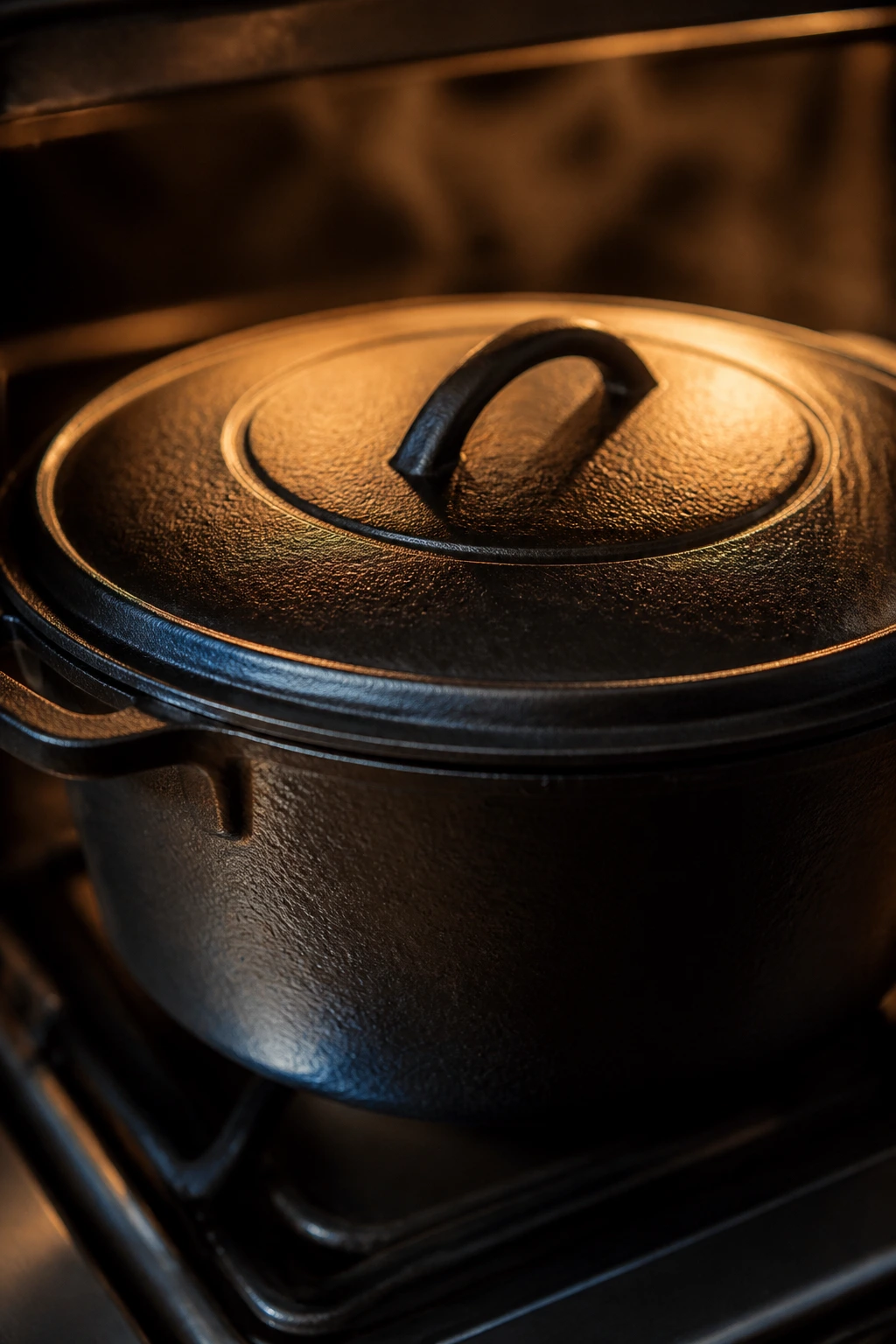
A Dutch oven earns its spot because it does three jobs at once and does them without sulking. It browns meat, which gives you the good browned bits on the bottom. It braises, which means low, even heat and tender meat. It holds temperature well enough that the sauce doesn’t swing from lazy simmer to angry boil every time you turn your back for a minute.
That steady heat matters more than most people think. Chuck roast, short ribs, chicken thighs, and lamb shoulder all like gentle cooking. A thin pot can hot-spot them, and a slow cooker can make browning awkward unless you dirty another pan first. A Dutch oven lets you build flavor in one place, which is why the finished dinner tends to taste deeper and more complete.
It also helps with the practical side of winter cooking. You can move a pot from burner to oven, bring it to the table, and keep food warm for seconds without it drying out. That sounds small until you’ve made a stew that went cold halfway through dinner. Then it sounds very smart.
Essential Equipment for These Recipes
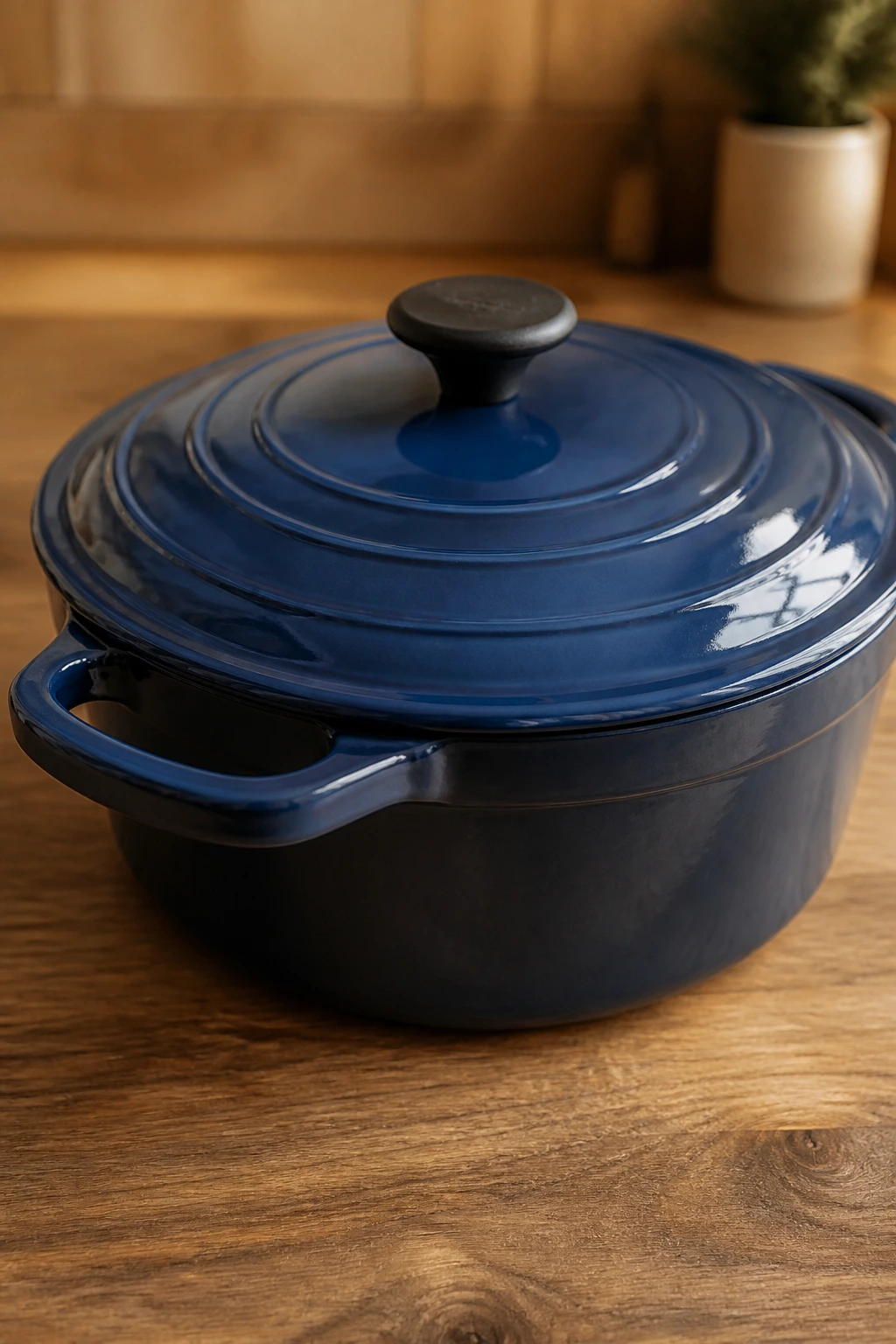
- 5- to 7-quart Dutch oven: The workhorse for braises, soups, pasta bakes, and stews; enameled cast iron is easiest to manage.
- Tight-fitting lid: Keeps steam and moisture where they belong, especially for dumplings and long braises.
- Long-handled tongs: Helpful for turning meat without tearing the crust off too soon.
- Wooden spoon or flat spatula: Better than a sharp tool for scraping up browned bits and stirring thick sauces.
- Chef’s knife: Makes all the chopping faster, and winter vegetables need a good blade.
- Cutting board: A large one saves time when you’re working with carrots, onions, potatoes, and herbs.
- Instant-read thermometer: Useful for chicken dishes; 165°F is the line you want to hit in the thickest part.
- Ladle: Makes serving soups and stews cleaner, especially once the broth thickens.
- Potato masher: Handy for shepherd’s pie, potato-topped casseroles, and thickening a stew in a pinch.
- Oven mitts or dry towels: Dutch ovens stay hot for a long time, and the handles keep that heat.
Smart Shopping and Ingredient Tips
The best Dutch oven dinners start with ingredients that can stand up to heat. For beef stews, pot roasts, and short ribs, choose cuts with visible marbling and connective tissue — chuck, shoulder, and ribs are the parts that get better as they cook. Lean cuts turn dry before they ever turn tender, and that’s a waste of a good pot.
For chicken dishes, thighs usually beat breasts. They stay juicier during braising, and they forgive a longer simmer if the sauce needs a little extra time. Bone-in pieces add more flavor; boneless ones are faster, but they need a more careful hand so they don’t overcook.
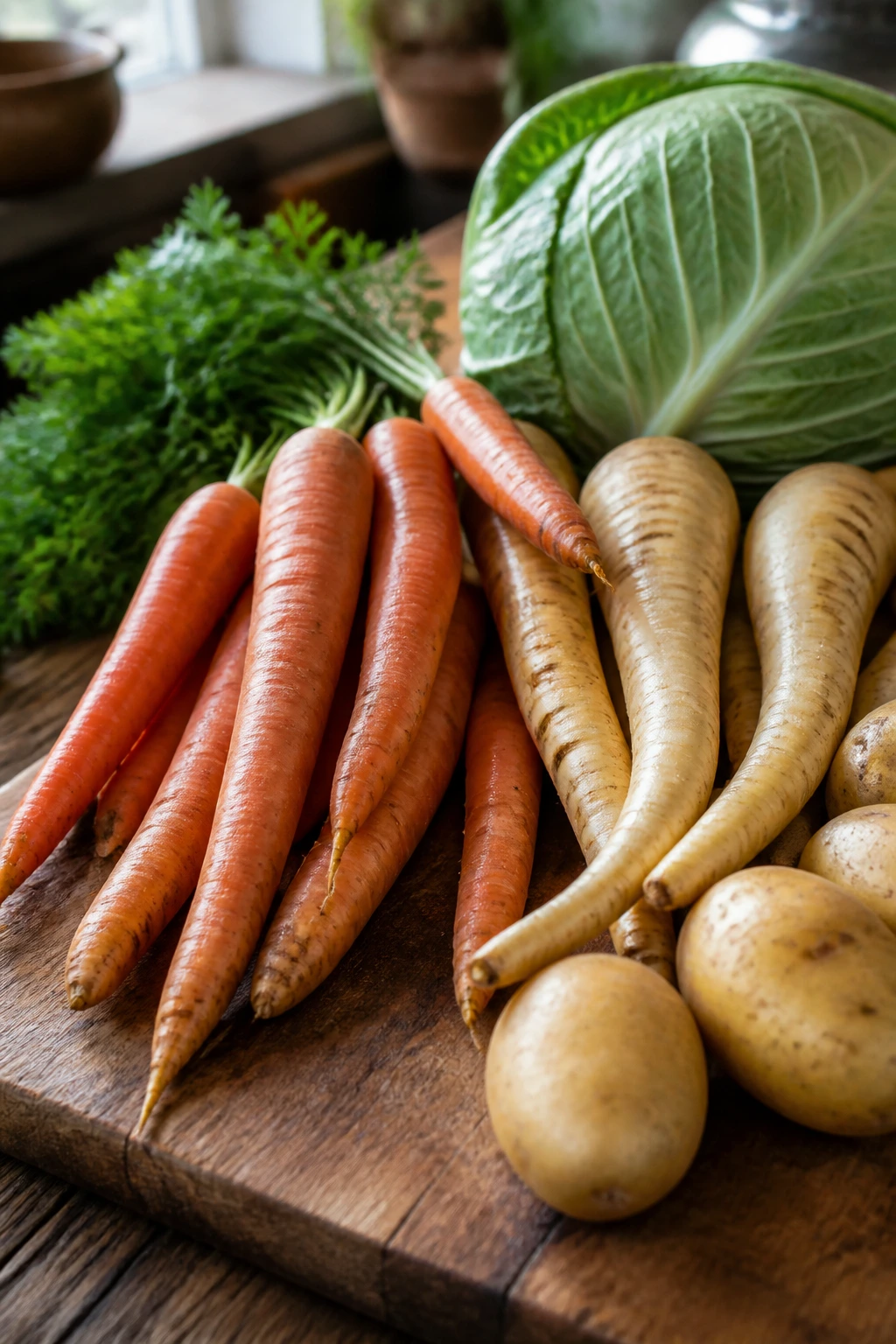
Winter vegetables deserve some attention too. Yukon Gold potatoes hold their shape better than russets in stews. Carrots with a firm snap taste sweeter after a long cook. Parsnips, turnips, and cabbage all work well in cold-night dinners because they don’t collapse into nothing the way delicate vegetables can.
Broth matters more than people admit. Low-sodium broth gives you room to season properly, especially when bacon, sausage, ham, or Parmesan rind are already doing part of the work. Canned tomatoes should taste clean and bright, not tinny; crushed tomatoes give you a silkier sauce, while diced tomatoes keep more texture.
A few pantry items are worth keeping around because they show up everywhere in this collection: tomato paste, dried thyme, bay leaves, beans, pasta, red wine you’d actually drink, and frozen peas or corn. Frozen vegetables are fine here. In fact, they’re often better than tired fresh ones when all you need is a good finish at the end.
How to Serve These Recipes
Presentation:
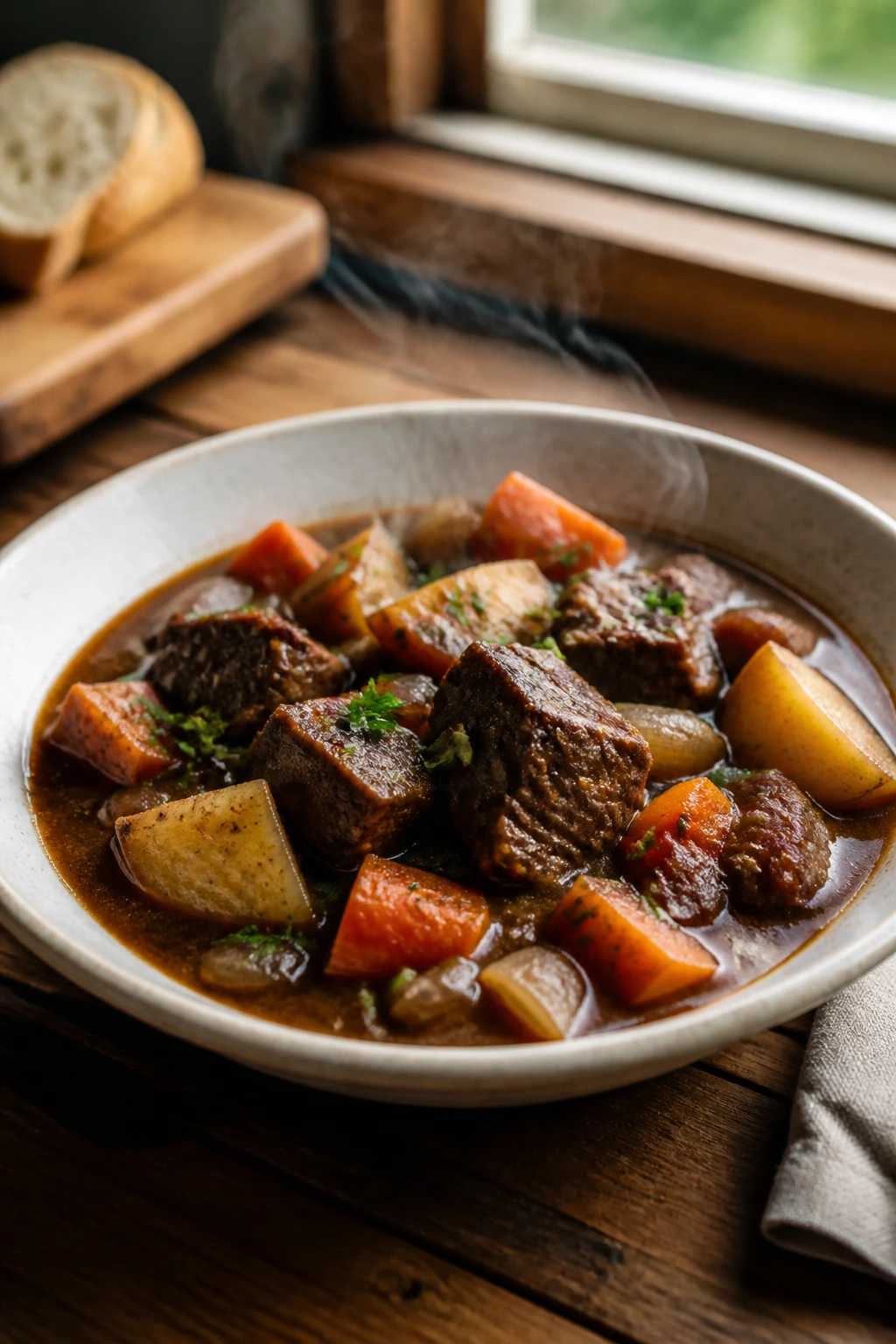
Use shallow bowls for stews and chili so the steam and garnish sit on top instead of disappearing. Braises look best when the meat is nestled over potatoes, polenta, or noodles with a little sauce spooned around the edges. Casseroles and baked pastas need a short rest before serving so the slices hold together.
Accompaniments:
Crusty bread is the universal answer for beef stew, split pea soup, minestrone, and chicken cacciatore. Mashed potatoes work for pot roast and short ribs. Polenta loves coq au vin and cacciatore. A green salad with sharp vinaigrette cuts the richness of the heavier dishes, and buttery dinner rolls never hurt.
Portions:
Most of these recipes feed 4 to 6 people comfortably, though the soups and chili stretch to 6 to 8. For larger groups, plan on about 1½ cups of stew or soup per adult and 2 cups for heartier bowls like chili or minestrone with pasta. Braises are easy to scale up if your pot is big enough, but do not crowd the pot when browning.
Beverage Pairing:
Dry red wine suits beef stew, pot roast, short ribs, and bourguignon. A malty beer works with chili, sausage dishes, and sausage bake recipes. For chicken and vegetable bowls, sparkling water with lemon or a crisp apple cider gives the meal a clean finish.
Additional Tips and Flavor Boosters
Flavor Enhancement:
A small splash of acid at the end — red wine vinegar, cider vinegar, sherry vinegar, or lemon juice — keeps a heavy braise from tasting flat. It does not take much. Start with 1 teaspoon, taste, then add more only if the pot needs it.
Customization:
A spoonful of Dijon mustard in pot roast or beef stew adds depth without making the dish taste mustardy. Parmesan rind in soup, a few olives in chicken cacciatore, or smoked paprika in chili all push the pot in a clear direction without rewriting the recipe.
Serving Suggestions:
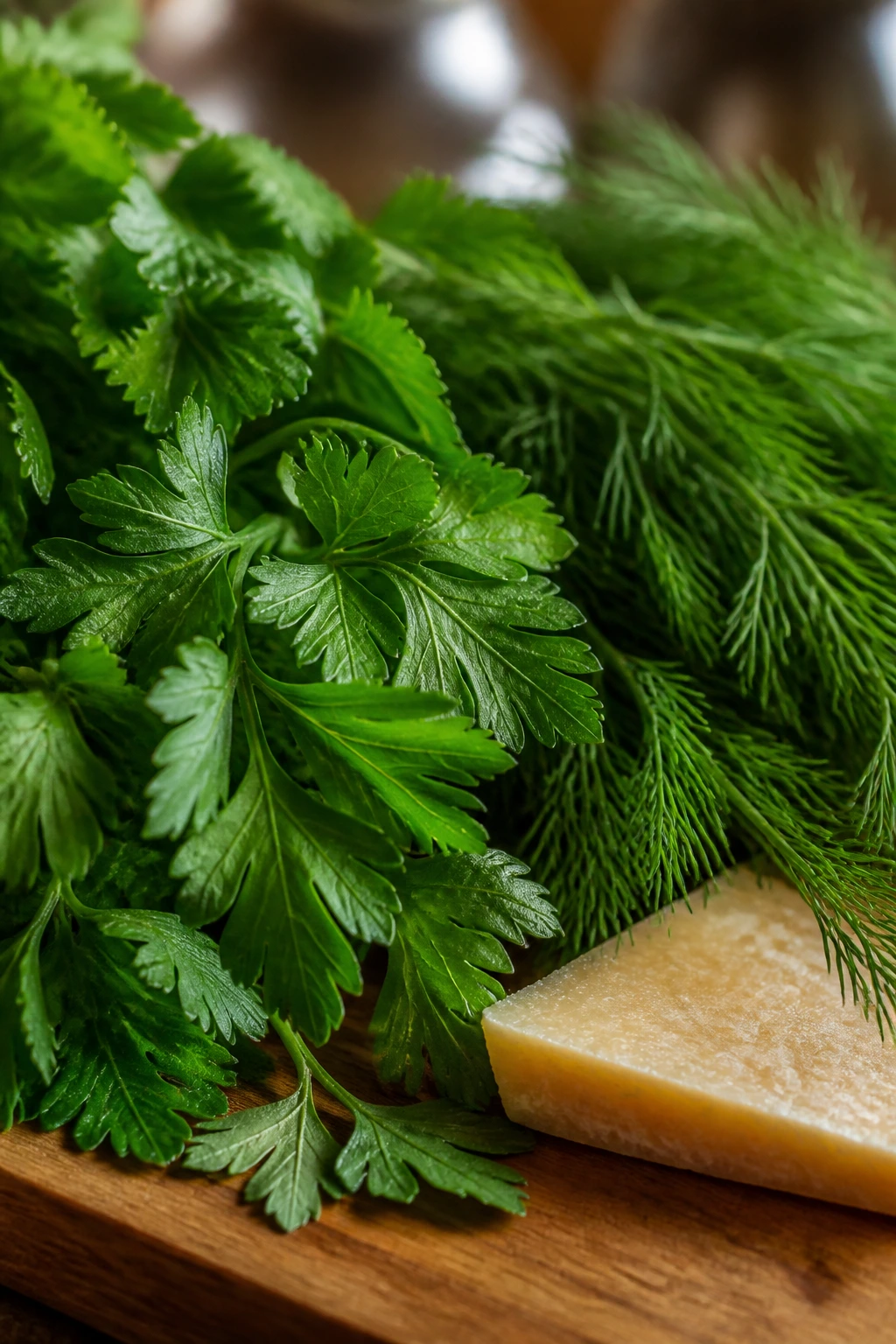
Fresh herbs matter more than their price suggests. Parsley, dill, basil, and cilantro turn dark, slow-cooked food into something that tastes awake. A dollop of sour cream or yogurt on chili and tortilla soup gives the broth a softer finish, while grated Parmesan works on pasta, minestrone, and chicken soups.
Make-It-Yours:
For dairy-free cooking, skip cream finishes and use olive oil, coconut milk, or a little extra broth instead. For gluten-free meals, thicken stews with cornstarch slurry or use gluten-free pasta in the ziti. For a spicier table, keep hot sauce or chili oil nearby and let people take dinner in their own direction.
Make-Ahead, Storage, and Reheating Guidance
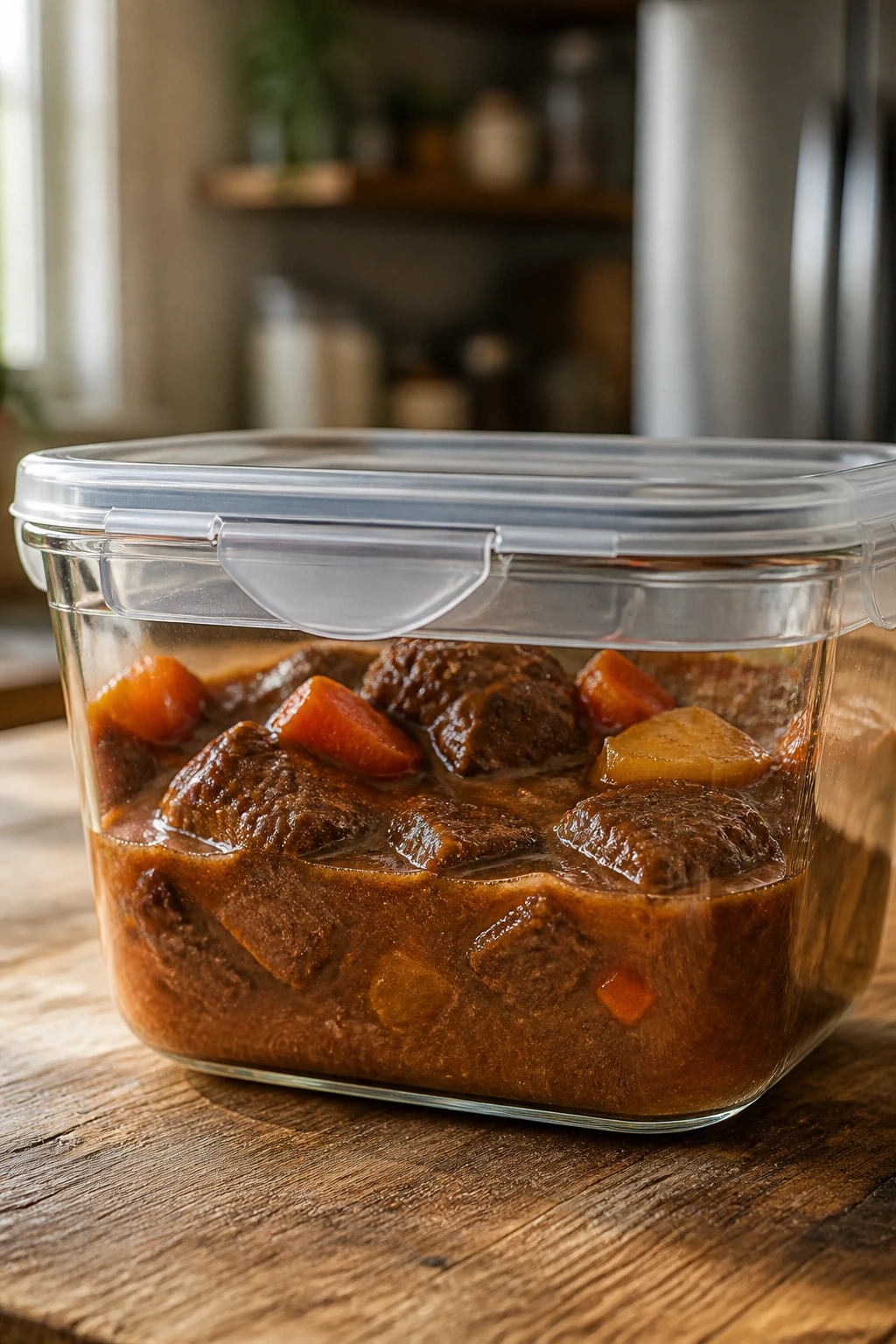
Most of these Dutch oven dinners keep well, and a few get better after a night in the fridge. Beef stew, chili, pot roast, bourguignon, split pea soup, lentil stew, and minestrone all hold for 3 to 4 days refrigerated in airtight containers. Most of them freeze well for up to 2 to 3 months, though pasta dishes and potato-topped pies are a little fussier and deserve more careful reheating.
For soups and stews, let the pot cool for no more than 2 hours before packing it away. Shallow containers cool faster than a deep bowl, and that small detail helps food stay safe and taste fresher. Reheat soups and chili on the stovetop over medium-low heat, stirring every few minutes so the bottom doesn’t catch. If the broth thickens in the fridge, add a splash of broth or water before heating.
Chicken and dumplings are the one dish here I would not stash carelessly. The stew base can be made ahead and refrigerated for 2 to 3 days, but the dumplings are best cooked fresh. If you must save leftovers, store the dumplings separately from the broth if you can; otherwise they’ll soak up liquid and get heavy.
Baked ziti, shepherd’s pie, and minestrone with pasta reheat well, but each one needs a little moisture. Cover the dish and warm it in a 325°F oven until hot in the center, adding a few tablespoons of broth or water if it looks dry. Shepherd’s pie can be reheated in the oven at 350°F until the filling bubbles at the edges and the top is hot all the way through.
When freezing braises, leave a little room at the top of the container because sauces expand. Short ribs, pot roast, and beef stew freeze especially well because the meat stays tender after thawing. For the best texture, thaw in the fridge overnight and reheat slowly; high heat can make the sauce separate or the meat tighten up.
Variations and Adaptations to Try
Gluten-Free Comfort Route
Skip the flour dredge and thicken with a cornstarch slurry near the end, or use a gluten-free all-purpose blend when a recipe calls for flour. For baked ziti, choose gluten-free pasta that can hold up to an oven finish. Shepherd’s pie and chili need almost no change at all.
Dairy-Free Cozy Night Plan
Leave out cream, butter, and cheese finishes, then build richness with olive oil, coconut milk, or extra broth reduction. Coconut chickpea curry already fits this lane easily, and chicken tortilla soup can stay creamy enough if you use avocado and lime instead of sour cream. A final drizzle of good olive oil goes further than people expect.
Short-List Weeknight Version
Use pre-cut stew meat, bagged mirepoix, canned beans, and frozen vegetables when the clock is loud. Rotisserie chicken can stand in for braised chicken in tortilla soup or a quick chicken stew, though the broth should still simmer long enough to pick up flavor. The point isn’t to fake the slow cook; it’s to make the slow cook less annoying.
Extra-Spice Night
Chipotle powder, hot Italian sausage, red pepper flakes, harissa, or a spoonful of chili crisp can push several of these dinners in a hotter direction. Start with a small amount and taste before adding more, because heat compounds as the pot cooks. A spicy bowl should still taste like dinner, not a dare.
Root-Cellar Vegetarian Swap
Lentils, cannellini beans, chickpeas, mushrooms, cabbage, carrots, potatoes, and parsnips can build a very satisfying meat-free Dutch oven dinner. Use vegetable broth with a Parmesan rind if dairy is allowed, or add soy sauce and tomato paste for extra depth. The trick is to get enough browning at the start so the pot has a backbone.
Big-Batch Sunday Edition
Most of these recipes scale up well if your Dutch oven has room. Increase the ingredients by half, not by double, unless you’re using a very large pot. Crowding is the enemy of good browning, and a pot that looks too full at the beginning usually looks messy by the end.
Common Mistakes to Avoid
The biggest mistake is crowding the pot when you brown meat. If the pieces sit too close together, they steam instead of sear, and you lose the browned crust that gives the whole dish depth. The fix is simple: work in batches and keep the heat steady.
A second problem is rushing the simmer. Beef, lamb, and short ribs need low, calm heat; if the pot boils hard, the meat can tighten and the sauce can turn rough. Keep the oven around 275°F to 325°F for braises, and use the lowest stove setting that still keeps the liquid moving gently.
Adding delicate vegetables too early is another classic blunder. Peas, spinach, kale, and zucchini do not need the same cooking time as carrots or potatoes. If they go in too soon, they lose color and texture, and the pot starts tasting tired.
Underseasoning is sneaky because it often sounds harmless. A long braise can swallow salt, especially when there are potatoes, beans, pasta, or tomatoes in the mix. Season in layers, taste at the end, and add acid if the flavor feels muddy.
People also lift the lid too often. Every peek lets steam escape, which makes dumplings dense, pasta dry, and braises slower than they need to be. Trust the clock more than the urge to check. A good Dutch oven likes being left alone.
Finally, plenty of cooks skip the rest time. Stews thicken as they sit, pot roast slices better after a short pause, and shepherd’s pie holds together more cleanly once the filling settles. Five to ten minutes can change the whole bowl.
Frequently Asked Questions About Dutch Oven Dinners
What size Dutch oven works best for these recipes?
A 5½- to 7-quart Dutch oven covers most of this collection well. That size gives you enough room for browning without spilling over when you add broth, potatoes, pasta, or dumplings.
Do I need an enameled Dutch oven, or will bare cast iron work?
Bare cast iron can do the job if it’s well seasoned, but enameled cast iron is easier for acidic sauces like tomato, wine, and vinegar-based recipes. It also needs less babying during cleanup, which matters when dinner is already running long.
Can I make these on the stovetop instead of in the oven?
Yes, many of them can simmer on low heat on the stove, especially chili, soups, and some braises. The oven tends to be gentler and more even, though, so it’s often the better choice for long cooks like pot roast and short ribs.
What if my stew is too thin?
Take the lid off and simmer for 10 to 15 minutes, or mash a few potato pieces or beans against the side of the pot. A cornstarch slurry works too, but I’d use it only if the stew still feels loose after a little reduction.
Can I freeze chicken and dumplings?
The stew base freezes fine, but the dumplings do not hold their texture well after thawing. If freezing, store the base on its own and make fresh dumplings when you reheat.
What can I use instead of wine in braised dishes?
Use extra broth plus a small splash of vinegar or lemon juice to keep the sauce from tasting flat. You won’t get the same depth as wine, but you’ll keep the braise balanced.
Why do some of these recipes need browned meat first?
Browning builds flavor through the crust that forms on the surface and leaves browned bits on the bottom of the pot. Those bits dissolve into the sauce when you deglaze, which is where a lot of the deep savory taste comes from.
Which of these dinners taste best the next day?
Beef stew, chili, pot roast, bourguignon, and split pea soup all improve after a rest in the fridge. The flavors settle and deepen, and the sauce usually tastes more complete after overnight cooling.
A Pot Worth Keeping on the Stove
Cold nights make people want food that behaves itself. Not flashy, not fussy. Just steady heat, a deep broth, and a pot that does not demand a second thought every five minutes.
That’s the real charm of a Dutch oven. It gives you dinners with bones in them — beef stew, short ribs, chicken and dumplings, curry, soup, pasta, all of it — and it makes them feel like they were cooked by someone who knows how to wait.
The next time the air outside feels sharp enough to cut through a sweater, put the pot on the stove, brown something properly, and let the kitchen do what kitchens are supposed to do.
| Recipe | Prep Time | Cook Time | Total Time | Servings | Standout Detail |
|---|---|---|---|---|---|
| Red Wine Beef Stew | 25 min | 2 hr 30 min | 2 hr 55 min | 6 | deepest broth in the bunch |
| Chicken and Dumplings | 25 min | 45 min | 1 hr 10 min | 6 | fluffy dumplings, silky stew |
| Sunday Pot Roast with Carrots and Potatoes | 20 min | 3 hr 15 min | 3 hr 35 min | 6 | fork-tender roast, built-in gravy |
| Smoky Turkey Chili | 20 min | 1 hr 10 min | 1 hr 30 min | 6 to 8 | fast, smoky, and filling |
| Coq au Vin | 30 min | 1 hr 20 min | 1 hr 50 min | 4 to 6 | wine-braised chicken with bacon |
| Sausage, Kale, and White Bean Soup | 15 min | 40 min | 55 min | 6 | fastest cozy bowl on the list |
| Lamb Stew with Rosemary and Parsnips | 25 min | 2 hr 20 min | 2 hr 45 min | 6 | earthy, herb-heavy braise |
| Dutch Oven Baked Ziti with Sausage | 25 min | 35 min | 1 hr | 8 | cheesy baked pasta with crisp edges |
| Lentil and Vegetable Stew | 20 min | 45 min | 1 hr 5 min | 6 | pantry-friendly and meatless |
| Chicken Cacciatore | 20 min | 55 min | 1 hr 15 min | 6 | bright tomato sauce with peppers |
| Braised Short Ribs with Garlic and Thyme | 25 min | 3 hr | 3 hr 25 min | 4 to 6 | richest sauce of the collection |
| Split Pea Soup with Ham | 15 min | 1 hr 45 min | 2 hr | 6 to 8 | smoky, thick, and old-school |
| Coconut Chickpea Curry | 15 min | 30 min | 45 min | 4 to 6 | creamy curry with lime finish |
| Beef Bourguignon | 30 min | 2 hr 45 min | 3 hr 15 min | 6 | classic wine sauce and mushrooms |
| Sausage, Sauerkraut, Apples, and Potatoes | 20 min | 50 min | 1 hr 10 min | 6 | tangy-sweet with a salty edge |
| Chicken Tortilla Soup | 20 min | 35 min | 55 min | 6 | best topping bar of the group |
| Shepherd’s Pie with Cheddar Mash | 30 min | 45 min | 1 hr 15 min | 6 | creamy top, savory filling |
| Minestrone with Parmesan Rind | 20 min | 40 min | 1 hr | 6 to 8 | brothy, bright, and budget-friendly |