



A lot of kid approved dinners for picky eaters fail for the same boring reason: they ask a child to like too many new things at once. A new sauce, a mixed texture, a green speck, a chunky onion hiding in the corner — dinner turns into a negotiation before anyone has even picked up a fork.
What actually works is plainer, and a little smarter. Familiar shapes. Mild flavors that stay mild. Crisp edges, soft centers, cheese that melts the same way every time, and sauces that can be kept off to the side if needed. Kids notice texture faster than adults give them credit for, and they absolutely notice if dinner slides around on the plate or arrives with a surprise ingredient they did not consent to.
So the best family dinners for picky eaters are not about tricking anyone. They are about making dinner feel safe enough to try. You’ll see crispy chicken tenders that stay crunchy, pasta bakes with a real cheese pull, handheld pizzas, skillet meals, and a few soft landings for the nights when the table wants comfort food and nothing else.
Why This Collection Works When Dinner Gets Fussy
- Familiar shapes: Tenders, noodles, meatballs, flatbreads, and sandwiches are easier to accept than a bowl of mystery everything.
- Mild flavors first: These recipes lean on cheese, pasta, chicken, beef, and gentle sauces, so the first bite doesn’t come with a shock.
- Texture control: Crispy, creamy, soft, and chewy are all here, but they’re separated in ways that keep the plate predictable.
- Easy to split apart: Many of these dinners let you hold back sauce, onions, peppers, or extra toppings for the people who don’t want them.
- Good leftovers: Several of these reheat without turning into mush, which matters more than most people admit.
- Works for mixed ages: A toddler, a parent, and a teenager can eat the same dinner here without everyone needing a different main plan.
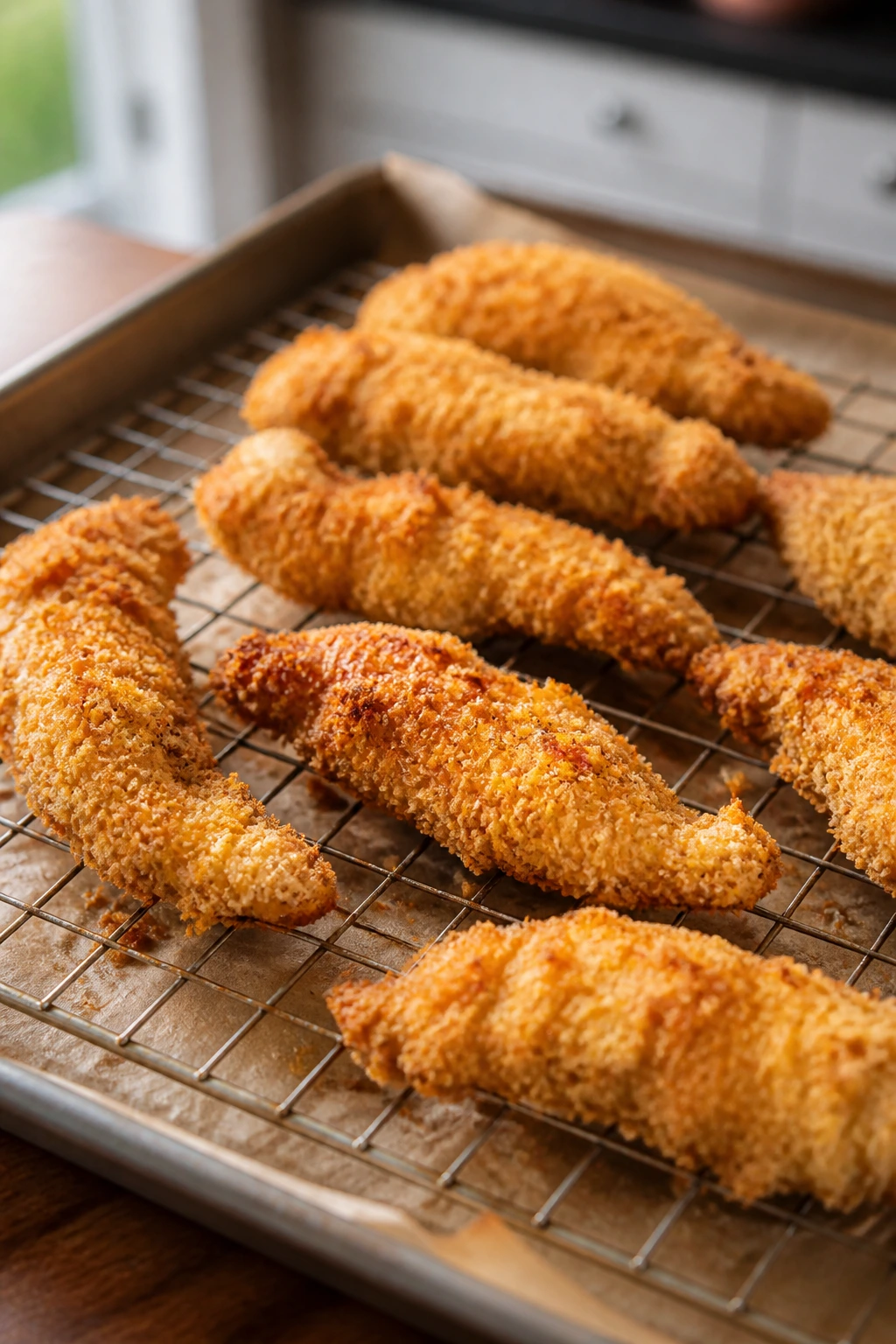
1. Crispy Oven Chicken Tenders
A chicken tender with a crunchy coat can rescue a night that’s already gone sideways. These stay crisp because the breading is dry, the heat is hot, and the chicken gets enough space on the pan to brown instead of steam.
Why It Works:
Panko and finely grated parmesan make a crust that bakes up with real texture, not that soft, pale coating that goes limp the moment it leaves the oven. A rack under the chicken lets hot air move underneath, which is the difference between “fine” and “why are these actually crunchy?”
Key Ingredients:
- 2 lbs chicken tenders — Keep them about the same size so they bake evenly.
- 1 cup all-purpose flour — The first layer helps the egg cling.
- 2 large eggs — Beat them with a splash of milk for better coverage.
- 2 tablespoons milk — Loosens the egg just enough.
- 2 cups panko breadcrumbs — The crunchy part; don’t swap in soft crumbs.
- 1 cup finely grated parmesan — Adds salt and helps the coating brown.
- 1 teaspoon garlic powder — Gentle flavor that kids usually accept.
- 1 teaspoon paprika — Gives the crust a warmer color.
- 1 teaspoon kosher salt — Season the coating so the chicken isn’t bland.
- 2 tablespoons olive oil spray — Helps the crumbs toast instead of drying out.
Quick Steps:
- Preheat the oven to 425°F and set a wire rack over a rimmed baking sheet.
- Set up three shallow bowls: flour in one, beaten eggs and milk in the second, panko, parmesan, garlic powder, paprika, and salt in the third.
- Dredge each chicken tender in flour, dip it in egg, then press it into the crumb mixture so the coating sticks in a thick layer.
- Arrange the tenders on the rack, spray the tops lightly with oil, and bake for 18 to 20 minutes, flipping once halfway through.
- Check that the thickest piece reaches 165°F and the crust is deep golden before serving.
Equipment for This Recipe:
- Rimmed baking sheet — Keeps oil and crumbs contained.
- Wire rack — Helps the tenders crisp underneath.
- Three shallow bowls — Makes the breading easy.
- Tongs — Keeps your hands cleaner and your coating thicker.
How to Serve This Dish:
Pile these on a plate with ketchup, honey mustard, or ranch in small cups so dipping feels like part of the meal. I like them with roasted potato wedges and carrot sticks; the whole plate looks simple and nobody has to dig through a saucy pile.
Pro Tips for This Recipe:
- Press the crumb coating on firmly. Loose crumbs fall off in the oven.
- Fine parmesan works better than big shreds here. It binds the crust.
- If your oven runs cool, give them 2 extra minutes and check the center, not the edge.
- Rest the tenders for 3 minutes before serving so the crust sets.
Variations on This Dish:
- Parmesan-Ranch Tenders: Add 1 teaspoon dried dill and 1 teaspoon onion powder to the crumb mix.
- Cornflake Crunch Tenders: Swap the panko for crushed cornflakes for a sweeter, louder crunch.
- Air-Fryer Version: Cook at 400°F for 10 to 12 minutes, flipping once and spraying lightly with oil.
Common Mistakes to Avoid with This Dish:
- Skipping the rack: The bottoms turn soft fast. Use the rack or at least flip halfway and keep space between pieces.
- Coating too lightly: Thin breading burns before it crisps. Press the crumbs on until the chicken looks shaggy.
- Overbaking: Dry chicken gets rejected at the table. Pull it at 165°F and let carryover heat finish the job.
2. Creamy Stovetop Mac and Cheese
Why does mac and cheese vanish first when dinner gets fussy? Because it hits three safe notes at once: soft pasta, creamy sauce, and cheese that melts into every corner without asking for a second opinion.
Why It Works:
A simple roux gives the sauce body, and evaporated milk keeps it smooth without making it heavy in a greasy way. The cheese goes in off the heat, which keeps it from turning grainy. That one move matters.
Key Ingredients:
- 12 oz elbow macaroni — Small pasta holds sauce in the curves.
- 3 tablespoons unsalted butter — Starts the sauce.
- 3 tablespoons all-purpose flour — Thickens the milk.
- 2 cups whole milk — The main liquid.
- 1 cup evaporated milk — Adds creaminess and helps the sauce stay silky.
- 3 cups shredded sharp cheddar — The flavor you want in every bite.
- 1 cup shredded Monterey Jack — Melts smoothly.
- 1 teaspoon kosher salt — Season the sauce, not just the pasta water.
- 1/2 teaspoon dry mustard — Barely noticeable, but it wakes up the cheese.
- 1/4 teaspoon paprika — Gives the sauce a warmer finish.
Quick Steps:
- Boil the macaroni in salted water until just al dente, then drain and keep 1/2 cup of the pasta water.
- Melt the butter in a medium saucepan over medium heat, whisk in the flour, and cook for 1 minute until it smells nutty.
- Whisk in the milk and evaporated milk slowly, then simmer for 3 to 4 minutes until the sauce lightly coats the back of a spoon.
- Turn off the heat and stir in the cheddar, Monterey Jack, salt, mustard, and paprika until smooth.
- Fold in the macaroni, adding a splash of pasta water only if the sauce feels too thick.
Equipment for This Recipe:
- Medium saucepan — For the sauce.
- Large pot — For boiling pasta.
- Whisk — Prevents lumps.
- Colander — Drains the macaroni fast.
How to Serve This Dish:
Serve it in shallow bowls with steamed peas, broccoli florets, or apple slices on the side. If you’re feeding a kid who likes plain food, keep the toppings off the table and let the bowl stay clean.
Pro Tips for This Recipe:
- Shred the cheese yourself if you can. Pre-shredded cheese can make the sauce sandy.
- Pull the pasta when it still has a tiny bit of bite. It softens again in the sauce.
- If the sauce gets too thick, a tablespoon of pasta water fixes it faster than more milk.
- Keep the heat low once the cheese goes in. Boiling cheese sauce is a mistake.
Variations on This Dish:
- Extra-Cheesy Bake: Pour the finished mac into a dish, top with buttered crumbs, and bake at 375°F for 15 minutes.
- Hidden Cauliflower Mac: Blend 1 cup cooked cauliflower into the milk before thickening.
- Mild White Cheddar Mac: Swap the sharp cheddar for white cheddar and skip the paprika.
Common Mistakes to Avoid with This Dish:
- Adding cheese over high heat: The sauce can break and look oily. Turn the burner off first.
- Overcooking the noodles: Soft pasta turns mushy fast. Stop at al dente.
- Using too much flour: A gluey sauce is nobody’s friend. Measure the roux, don’t guess.
3. Spaghetti with Simple Turkey Meatballs
Spaghetti night gets easier when the meatballs are small, soft, and seasoned in a way that doesn’t fight the sauce. This version leans gentle, not flat, and the turkey stays tender if you don’t manhandle it.
Why It Works:
Turkey meatballs can get dry if you cram in too many breadcrumbs or overmix them. Here, the egg and parmesan hold things together while the marinara does most of the flavor work. Kids tend to trust a meatball more than a big piece of meat, which is fair. They can spear it, cut it, or leave it whole.
Key Ingredients:
- 1 lb ground turkey — Choose 93% lean for the best balance.
- 1/2 cup fine breadcrumbs — Keeps the meatballs soft.
- 1 large egg — Binds the mixture.
- 1/4 cup finely grated parmesan — Salty, mellow flavor.
- 1 teaspoon garlic powder — Enough flavor without little garlic bits.
- 1 teaspoon kosher salt — Needed more than you think.
- 1/2 teaspoon black pepper — Keep it light.
- 1 tablespoon olive oil — For browning.
- 24 oz marinara sauce — A smooth jarred sauce works fine here.
- 12 oz spaghetti — The classic base.
- 2 tablespoons chopped parsley — Optional, but brightens the plate.
Quick Steps:
- Mix the turkey, breadcrumbs, egg, parmesan, garlic powder, salt, and pepper in a bowl until just combined.
- Roll the mixture into 16 to 18 small meatballs, about 1 tablespoon each.
- Brown them in olive oil over medium heat for 6 to 8 minutes, turning gently so they don’t flatten.
- Pour in the marinara, cover loosely, and simmer for 10 to 12 minutes until the meatballs reach 165°F.
- Cook the spaghetti, drain it, and toss with a ladle of sauce before topping with meatballs.
Equipment for This Recipe:
- Large skillet with lid — Browns and simmers in one pan.
- Mixing bowl — For the meatballs.
- Pot and colander — For the spaghetti.
- Wooden spoon — Gentle enough for sauce.
How to Serve This Dish:
Twirl the pasta into low mounds and tuck the meatballs on top so they’re visible. Kids do better when they can see what they’re getting. A little garlic bread on the side doesn’t hurt either.
Pro Tips for This Recipe:
- Wet your hands before rolling. The mixture sticks less.
- Small meatballs cook more evenly and feel less intimidating on the plate.
- If your marinara is sharp, stir in 1 teaspoon of sugar or a splash of cream.
- Let the meatballs simmer in the sauce long enough to pick up color from it.
Variations on This Dish:
- Mini Meatball Subs: Tuck the cooked meatballs into split rolls with mozzarella.
- Beef-Turkey Blend: Use half ground beef and half turkey for a richer bite.
- Baked Spaghetti Casserole: Mix the sauced pasta with meatballs, top with mozzarella, and bake 15 minutes.
Common Mistakes to Avoid with This Dish:
- Overmixing the meatball mix: The texture gets dense and springy. Mix until the ingredients disappear, then stop.
- Boiling the sauce hard: The meatballs can toughen. Keep it at a gentle simmer.
- Using huge meatballs: They take longer and can dry out inside. Keep them small.
4. Cheesy Taco Beef Casserole
Taco night gets a lot less chaotic when everything lands in one pan and no one has to assemble their own dinner like a tiny restaurant manager. This casserole keeps the flavor mild, the cheese abundant, and the spice level easy to control.
Why It Works:
Rotini catches the sauce, the beef gives the dish enough heft, and the cheese melts into a top layer that feels familiar even to wary eaters. A little salsa brings flavor without turning the whole pan into a heat test. That’s the sweet spot.
Key Ingredients:
- 12 oz rotini pasta — The curls hold the sauce.
- 1 lb ground beef — Choose 85% lean for good flavor.
- 1 tablespoon olive oil — Helps the beef brown if it’s very lean.
- 1 cup mild salsa — Use a smooth one, not a chunky hot version.
- 1 cup tomato sauce — Keeps the mixture saucy.
- 2 teaspoons mild chili powder — Gives taco flavor without much heat.
- 1 teaspoon ground cumin — Adds the familiar taco smell.
- 2 cups shredded cheddar — The melty top layer.
- 1/2 cup sour cream — Makes the filling creamy.
- 1/2 cup crushed tortilla chips — For a little crunch on top.
Quick Steps:
- Boil the rotini in salted water until just shy of done, then drain.
- Brown the beef in a skillet over medium heat, breaking it up until no pink remains, then drain excess fat.
- Stir in salsa, tomato sauce, chili powder, cumin, and sour cream, then fold in the pasta and 1 1/2 cups of the cheddar.
- Transfer the mixture to a greased 9×13-inch dish and top with the remaining cheddar.
- Bake at 375°F for 15 to 18 minutes, then add crushed chips on top right before serving.
Equipment for This Recipe:
- 9×13-inch baking dish — For the casserole.
- Large skillet — For the beef.
- Large pot — For the pasta.
- Colander — To drain quickly.
How to Serve This Dish:
Serve it with plain lettuce, sliced cucumbers, or corn on the side so anyone can keep the plate calm. A dollop of sour cream on top is enough. No need to pile on extras unless the table asks for them.
Pro Tips for This Recipe:
- Use mild salsa. Hot salsa changes the whole dish fast.
- Add the tortilla chips at the very end so they stay crisp.
- If the mixture looks dry before baking, splash in 1/4 cup water or broth.
- Let it sit for 5 minutes after baking so the squares hold together.
Variations on This Dish:
- Chicken Taco Casserole: Swap in shredded rotisserie chicken for the ground beef.
- Bean-Boost Version: Stir in 1 cup rinsed black beans if your crowd accepts them.
- Skillet Taco Pasta: Skip the baking step and serve it straight from the pan.
Common Mistakes to Avoid with This Dish:
- Using spicy salsa: It overwhelms everything. Mild salsa keeps the flavor kid-friendly.
- Baking too long: The pasta dries out and the cheese gets rubbery. Stop when the top is melted and hot.
- Adding chips too early: They turn limp. Always finish with them.
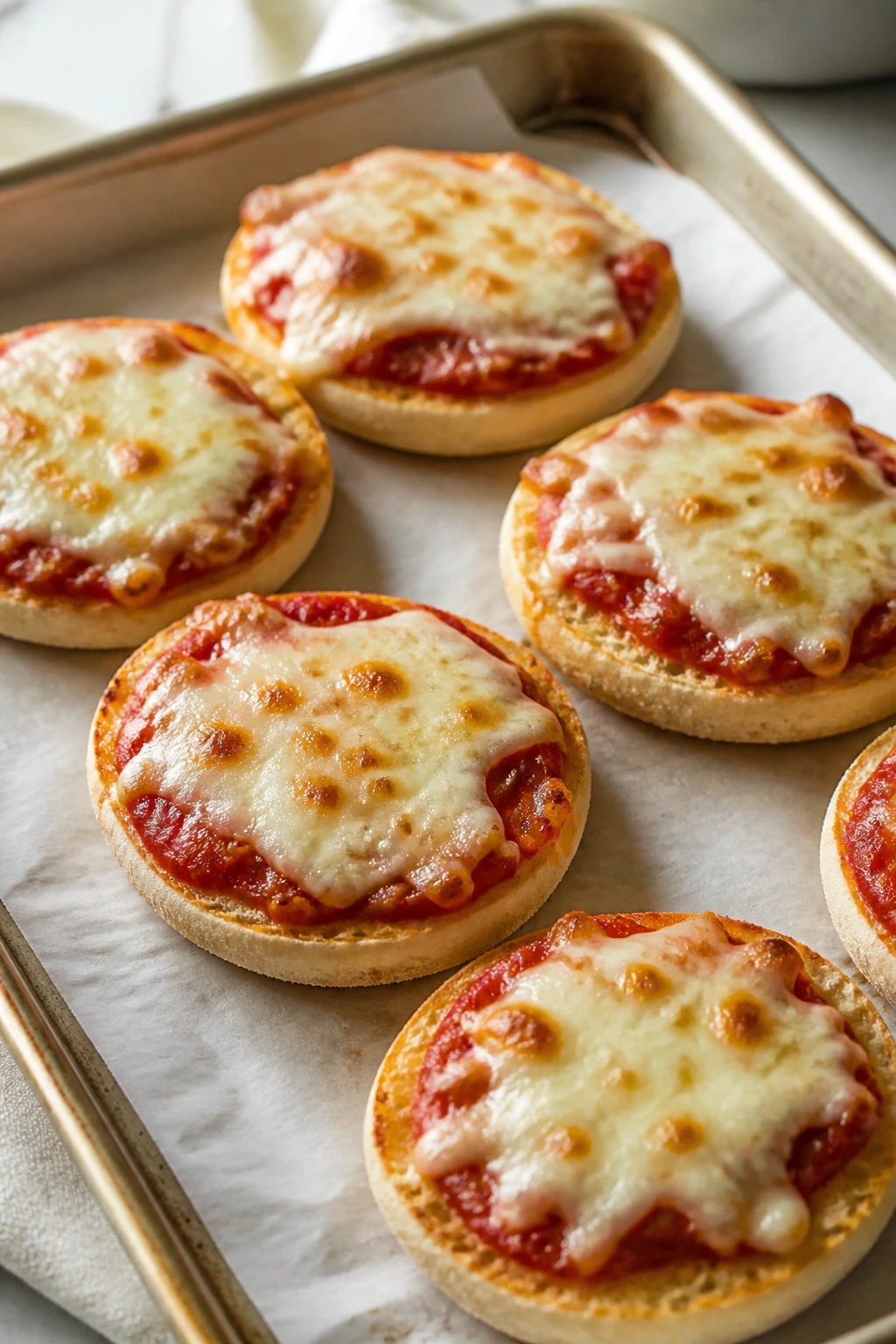
5. Mini English Muffin Pizzas
The charm here is obvious: tiny pizzas feel personal, and personal food gets eaten with less drama. These are crisp around the edges, soft in the middle, and easy to customize without turning dinner into a debate.
Why It Works:
English muffins toast well, which means the bottom won’t collapse under sauce. The cheese melts fast, pepperoni stays familiar, and the whole thing bakes in a time frame that doesn’t require patient children. That helps more than any fancy topping ever could.
Key Ingredients:
- 6 English muffins, split — The nooks and crannies grab sauce.
- 1 cup pizza sauce — Use a smooth jarred sauce.
- 2 cups shredded mozzarella — The melt matters here.
- 24 pepperoni slices — Optional, but usually welcome.
- 1 teaspoon dried oregano — Gives the pizza smell people expect.
- 1 tablespoon olive oil — For toasting the muffins.
- Pinch of salt — Only if your sauce needs it.
Quick Steps:
- Preheat the oven to 425°F and line a baking sheet with parchment.
- Brush the cut sides of the English muffins lightly with olive oil, then toast them on the sheet for 3 minutes.
- Spread each half with 1 to 2 tablespoons of pizza sauce, then top with mozzarella and pepperoni.
- Bake for 8 to 10 minutes, until the cheese bubbles and the edges turn golden.
- Cool for 2 minutes before serving so the cheese doesn’t slide off in one hot sheet.
Equipment for This Recipe:
- Baking sheet — For the pizzas.
- Parchment paper — Keeps cleanup easy.
- Spoon — For the sauce.
- Knife — For cutting once they cool.
How to Serve This Dish:
Set them out with carrot sticks, grapes, or a small salad and let everyone take two halves. They look especially good on a big cutting board, which somehow makes them feel like a real meal instead of a snack pretending to be dinner.
Pro Tips for This Recipe:
- Toast the muffins first. Otherwise the sauce soaks in and makes the base soggy.
- Keep the sauce layer thin. Thick sauce slides off the edges.
- Use low-moisture mozzarella if you want less water on the pan.
- Let kids build their own if they are old enough; the buy-in is half the battle.
Variations on This Dish:
- Cheese-Only Pizzas: Skip the pepperoni and add a little extra oregano.
- Pepperoni Cup Version: Use mini pepperoni for more even coverage.
- Garlic Bread Pizza: Rub the muffins with a cut garlic clove before topping.
Common Mistakes to Avoid with This Dish:
- Loading on too much sauce: The muffins get soggy. A thin layer is enough.
- Baking un-toasted muffins: They never crisp up properly.
- Cutting too soon: The cheese needs a minute to settle.
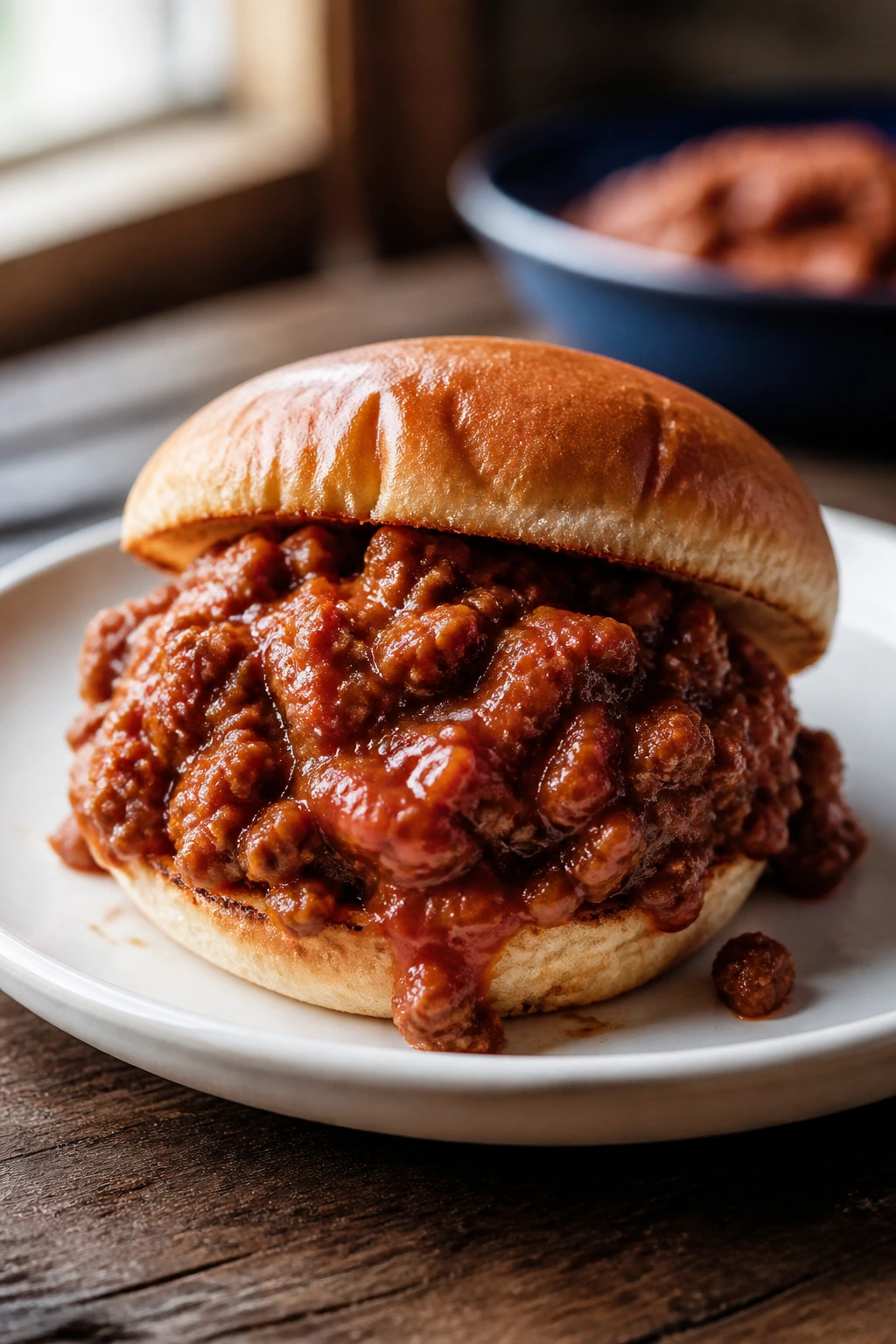
6. Classic Sloppy Joes
Sloppy Joes are one of those dinners that look messy on purpose, which oddly makes them easier to accept. The filling is soft, sweet-savory, and forgiving, and the bun does half the work.
Why It Works:
The sauce leans on ketchup and tomato paste, which keeps the flavor familiar instead of sharp. A little Worcestershire and mustard deepen it just enough so it tastes like more than canned nostalgia. The mixture should be thick, not runny; if it pools on the plate, the bun loses the fight.
Key Ingredients:
- 1 1/2 lbs ground beef — Gives the filling enough body.
- 1/2 cup finely chopped onion — Cook until soft so it disappears a bit.
- 1 cup ketchup — The main sauce base.
- 2 tablespoons tomato paste — Adds depth and thickness.
- 1 tablespoon Worcestershire sauce — Brings savory flavor.
- 1 tablespoon brown sugar — Balances the tomato.
- 1 teaspoon yellow mustard — A small sharp note.
- 1/2 cup water — Helps everything simmer.
- 6 hamburger buns — Soft buns hold up best.
- 2 tablespoons butter — Optional, for toasting buns.
Quick Steps:
- Brown the beef and onion in a large skillet over medium heat until the meat is cooked through and the onion is soft.
- Drain excess grease, then stir in ketchup, tomato paste, Worcestershire, brown sugar, mustard, and water.
- Simmer for 8 to 10 minutes, stirring often, until the mixture is thick and glossy.
- Toast the buns lightly with butter, if using, so they don’t get soggy.
- Spoon the filling onto the buns and serve right away.
Equipment for This Recipe:
- Large skillet — For the filling.
- Wooden spoon — For breaking up the beef.
- Small brush or butter knife — For the buns.
How to Serve This Dish:
Plate the filling with a pile of oven fries or potato chips and a few pickle slices nearby. It’s the kind of meal that works best when everything is easy to grab. Keep napkins close. That’s not a warning. It’s a promise.
Pro Tips for This Recipe:
- Cook the onions until soft before adding the sauce. Raw onion stands out too much for picky eaters.
- If the filling looks loose, simmer it another 2 minutes rather than adding more ketchup.
- Buttering the buns is worth the extra minute.
- Make the filling slightly sweeter if that’s what your table likes; a teaspoon more brown sugar does the trick.
Variations on This Dish:
- Turkey Joe: Use ground turkey instead of beef and add 1 extra tablespoon of ketchup.
- Baked Joe Slider Tray: Spoon the filling onto slider buns, add cheese, and bake until warm.
- BBQ Joe: Swap half the ketchup for barbecue sauce.
Common Mistakes to Avoid with This Dish:
- Leaving the filling too wet: It spills out fast. Simmer until it mounds on the spoon.
- Skipping the onion softening step: Tiny crunchy onion bits can turn kids off.
- Using stale buns: Soft, fresh buns are part of the appeal.
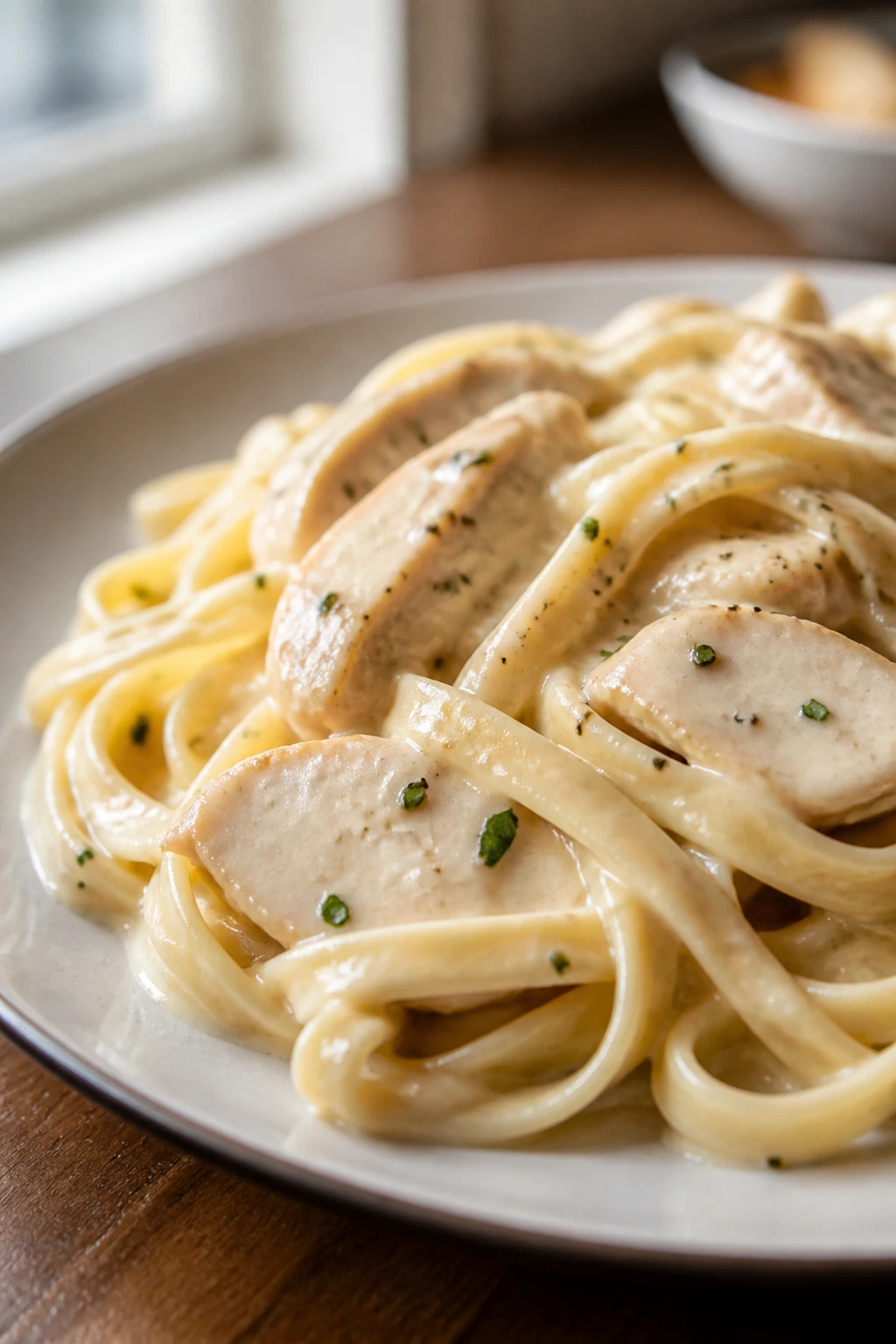
7. Chicken Alfredo Pasta
A good Alfredo is creamy, not greasy, and it should coat the noodles instead of drowning them. Add chicken, keep the garlic gentle, and you’ve got a dinner that feels richer than the ingredient list would suggest.
Why It Works:
The sauce comes together from butter, cream, and parmesan, so it tastes familiar and smooth instead of sharply cheesy. Thin chicken cutlets cook quickly and stay tender, which matters because dry chicken is one of the fastest ways to lose a picky eater.
Key Ingredients:
- 12 oz fettuccine — The flat noodles carry sauce well.
- 1 1/2 lbs chicken breast cutlets — Slice thicker breasts in half lengthwise.
- 2 tablespoons butter — For the sauce base.
- 1 tablespoon olive oil — Helps the chicken brown.
- 2 cloves garlic, minced — Keep it modest.
- 1 1/2 cups heavy cream — Makes the sauce rich.
- 1 cup chicken broth — Lightens the sauce a bit.
- 1 1/2 cups finely grated parmesan — Melts into the sauce.
- 1 teaspoon kosher salt — Season in layers.
- 1/2 teaspoon black pepper — Enough to notice, not enough to bite.
Quick Steps:
- Cook the fettuccine in salted water until al dente, then reserve 1/2 cup of the pasta water.
- Sear the chicken in olive oil over medium-high heat for 4 to 5 minutes per side until golden and cooked to 165°F, then rest and slice.
- Melt the butter in the same pan, add garlic, and cook for 30 seconds until fragrant.
- Pour in the cream and broth, simmer for 3 to 4 minutes, then stir in parmesan until the sauce is smooth and slightly thick.
- Toss the pasta in the sauce with a splash of pasta water if needed, then top with sliced chicken.
Equipment for This Recipe:
- Large skillet — For chicken and sauce.
- Large pot — For the pasta.
- Colander — Drains the noodles.
- Tongs — Tosses everything together.
How to Serve This Dish:
Serve it in wide bowls with a little extra parmesan and a plain green side, like peas or steamed broccoli, for anyone who wants it. The pasta should look glossy, not soupy. That’s the visual cue that the sauce behaved.
Pro Tips for This Recipe:
- Slice the chicken before serving if your crowd likes smaller bites.
- Keep the sauce at a gentle simmer. Hard boiling can make it split.
- Use fine parmesan so it melts into the cream faster.
- If the sauce gets tight, pasta water loosens it better than plain milk.
Variations on This Dish:
- Broccoli Alfredo: Stir in steamed broccoli florets at the end.
- Mild Cajun-Free Alfredo: Add a pinch of nutmeg instead of spice.
- Baked Alfredo Casserole: Mix everything, top with mozzarella, and bake until bubbly.
Common Mistakes to Avoid with This Dish:
- Overcooking the chicken: It dries out fast. Pull it at 165°F.
- Boiling the cream sauce hard: The texture turns greasy. Keep it gentle.
- Using coarse parmesan: It can turn stringy and gritty.
8. Chicken Fried Rice with Peas and Carrots
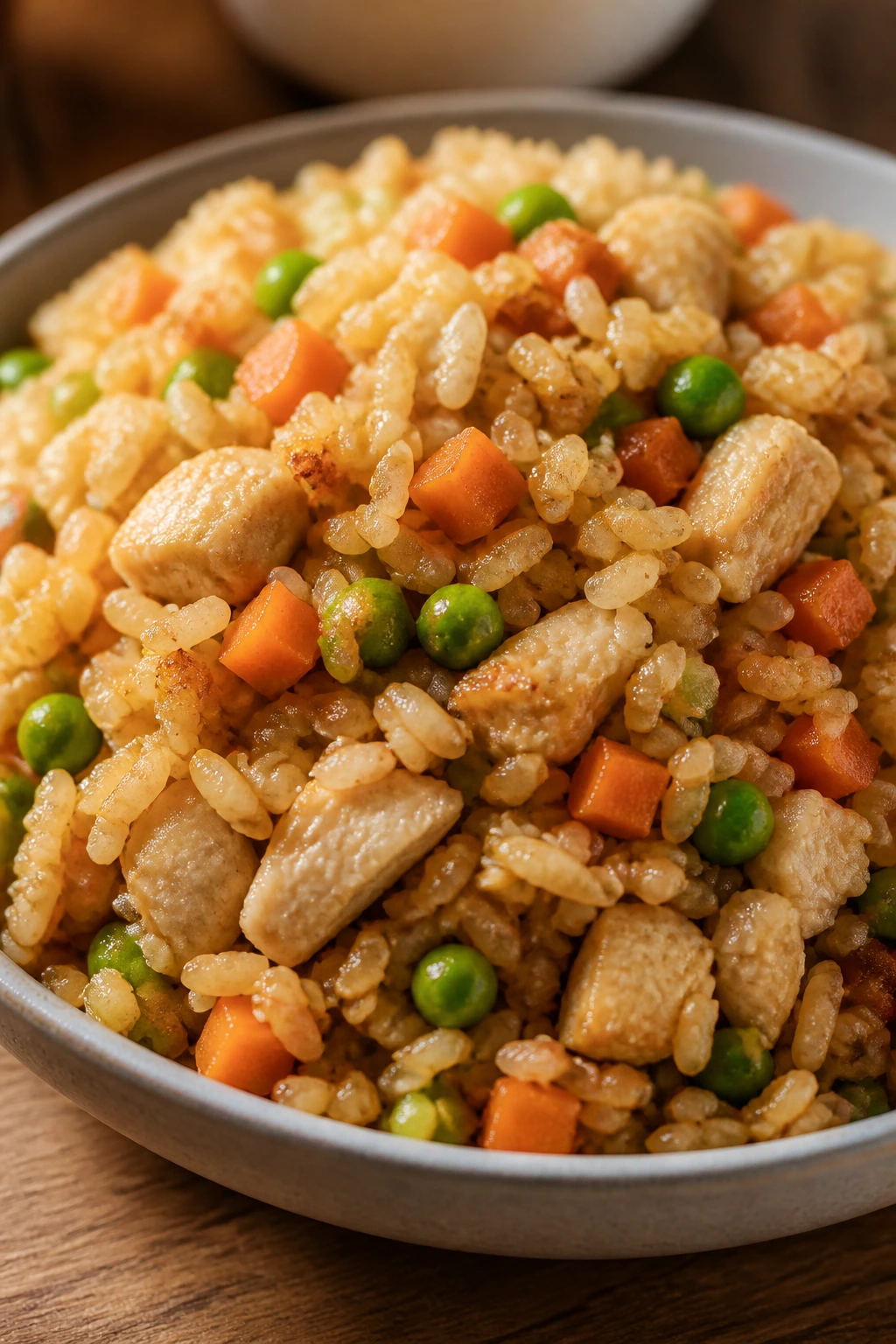
Fried rice is one of those dinners that looks like leftovers and tastes like you planned ahead. The trick is cold rice, hot pan, and small vegetables that don’t turn the whole bowl into a texture surprise.
Why It Works:
Day-old rice fries instead of steaming, which keeps the grains separate and a little chewy. The peas and carrots are tiny enough to blend into the dish without stealing the show, and the soy sauce stays in the background where it belongs.
Key Ingredients:
- 3 cups cooked, chilled white rice — Cold rice is the whole trick.
- 1 lb boneless chicken thighs or breasts, diced small — Thighs stay juicier.
- 2 tablespoons neutral oil — For a hot skillet.
- 2 large eggs — Scrambled into the rice.
- 1 cup frozen peas and carrots — Small enough for picky eaters to accept.
- 3 tablespoons soy sauce — Start here; add more only if needed.
- 1 teaspoon sesame oil — A small finish with a lot of smell.
- 2 green onions, sliced thin — Optional, but nice.
- Salt and pepper — Only if the soy sauce is light.
Quick Steps:
- Heat 1 tablespoon of oil in a large skillet or wok over medium-high heat and cook the chicken until browned and fully cooked.
- Push the chicken to one side, add the remaining oil, and scramble the eggs until just set.
- Stir in the peas and carrots and cook for 2 minutes until hot.
- Add the rice and break up any clumps with your spoon, then pour in the soy sauce and sesame oil.
- Cook for 3 to 4 minutes, stirring often, until the rice is hot and slightly toasted.
Equipment for This Recipe:
- Large skillet or wok — Needs room to move.
- Wooden spoon or spatula — Breaks up rice clumps.
- Small bowl — Useful for the eggs.
How to Serve This Dish:
Serve fried rice in bowls with cucumber slices or pineapple chunks on the side if your people like fruit with dinner. It’s one of those plates that looks calm and tastes a little better when it isn’t buried under extra sauce.
Pro Tips for This Recipe:
- Chill the rice ahead of time. Warm rice turns sticky.
- Dice the chicken small so it cooks fast and stays in sync with the rice.
- Keep the pan hot enough to hear a soft sizzle.
- Add soy sauce a little at a time. You can always add more.
Variations on This Dish:
- Egg-Heavy Version: Add an extra egg for a softer, richer bowl.
- Veggie Dice Version: Finely dice carrots, zucchini, and bell pepper if your crowd will accept them.
- Soy-Free Bowl: Use coconut aminos instead of soy sauce.
Common Mistakes to Avoid with This Dish:
- Using fresh rice: It goes clumpy and damp. Chill it first.
- Crowding the pan: The rice steams instead of frying. Cook in batches if needed.
- Pouring in too much soy: The rice turns dark and salty fast. Go slowly.
9. Honey Garlic Meatballs and Rice
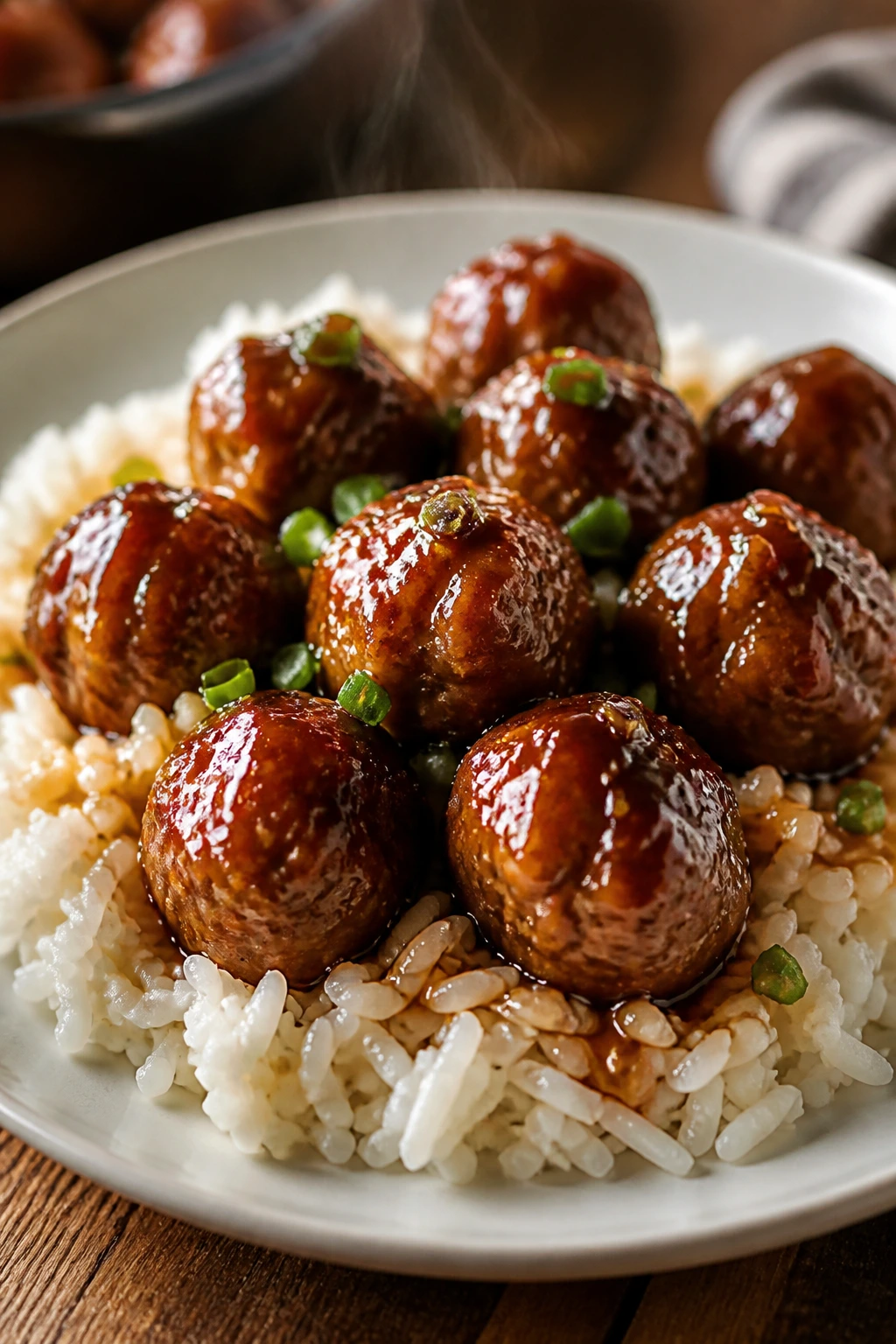
These meatballs are soft, glossy, and sweet enough to feel friendly without tasting like dessert. The sauce clings in a way that makes rice more than just a side; it becomes the thing that catches the extra glaze.
Why It Works:
Honey, soy, and garlic make a sauce that reads familiar almost immediately. The cornstarch thickens it just enough to coat the meatballs instead of soaking through them. Kids usually go for round food faster than you’d think. Meatballs have that built-in advantage.
Key Ingredients:
- 1 lb ground beef or ground turkey — Either one works.
- 1/3 cup breadcrumbs — Keeps the meatballs light.
- 1 large egg — Binds the mixture.
- 2 cloves garlic, minced — Use a fine mince so it disappears.
- 1 teaspoon kosher salt — For the meatballs.
- 1/2 teaspoon black pepper — Gentle seasoning.
- 1/3 cup honey — The sauce’s sweetness.
- 1/4 cup soy sauce — Adds salt and depth.
- 2 tablespoons ketchup — Makes the glaze feel familiar.
- 1 tablespoon rice vinegar — Keeps the sauce from tasting flat.
- 1 teaspoon cornstarch mixed with 2 tablespoons water — Thickens the glaze.
- 2 cups cooked rice — For serving.
Quick Steps:
- Mix the meat, breadcrumbs, egg, garlic, salt, and pepper until just combined.
- Roll into 16 meatballs and place them on a lined sheet pan.
- Bake at 400°F for 14 to 16 minutes until cooked through.
- Simmer honey, soy, ketchup, and vinegar in a skillet for 2 minutes, then whisk in the cornstarch slurry until glossy.
- Toss the meatballs in the sauce and serve over warm rice.
Equipment for This Recipe:
- Sheet pan — For baking.
- Parchment paper — Helps with cleanup.
- Small skillet — For the sauce.
- Mixing bowl — For the meatballs.
How to Serve This Dish:
Spoon the rice into bowls, add the meatballs, and drizzle any extra glaze over the top. A few sesame seeds on the surface are enough to make it feel finished. I would keep the vegetables on the side, not in the bowl, unless your crowd is already on board.
Pro Tips for This Recipe:
- Make the meatballs all the same size so they cook evenly.
- Don’t simmer the glaze before the slurry goes in for too long; it can get too thick.
- If the sauce tastes sharp, add another teaspoon of honey.
- Use a cookie scoop if you want tidy, even meatballs.
Variations on This Dish:
- Orange-Honey Glaze: Swap 2 tablespoons of the water for orange juice.
- Meatball Sub Version: Tuck the glazed meatballs into toasted rolls with mozzarella.
- Sauce-on-the-Side: Serve the glaze separately if your eater likes plain meatballs.
Common Mistakes to Avoid with This Dish:
- Overmixing the meat: The texture gets dense. Stop when everything is combined.
- Skipping the bake: Pan-frying alone can leave them uneven. Baking first makes them easier to glaze.
- Letting the sauce stay thin: It won’t cling. Use the slurry.
10. Baked Ziti with Ricotta
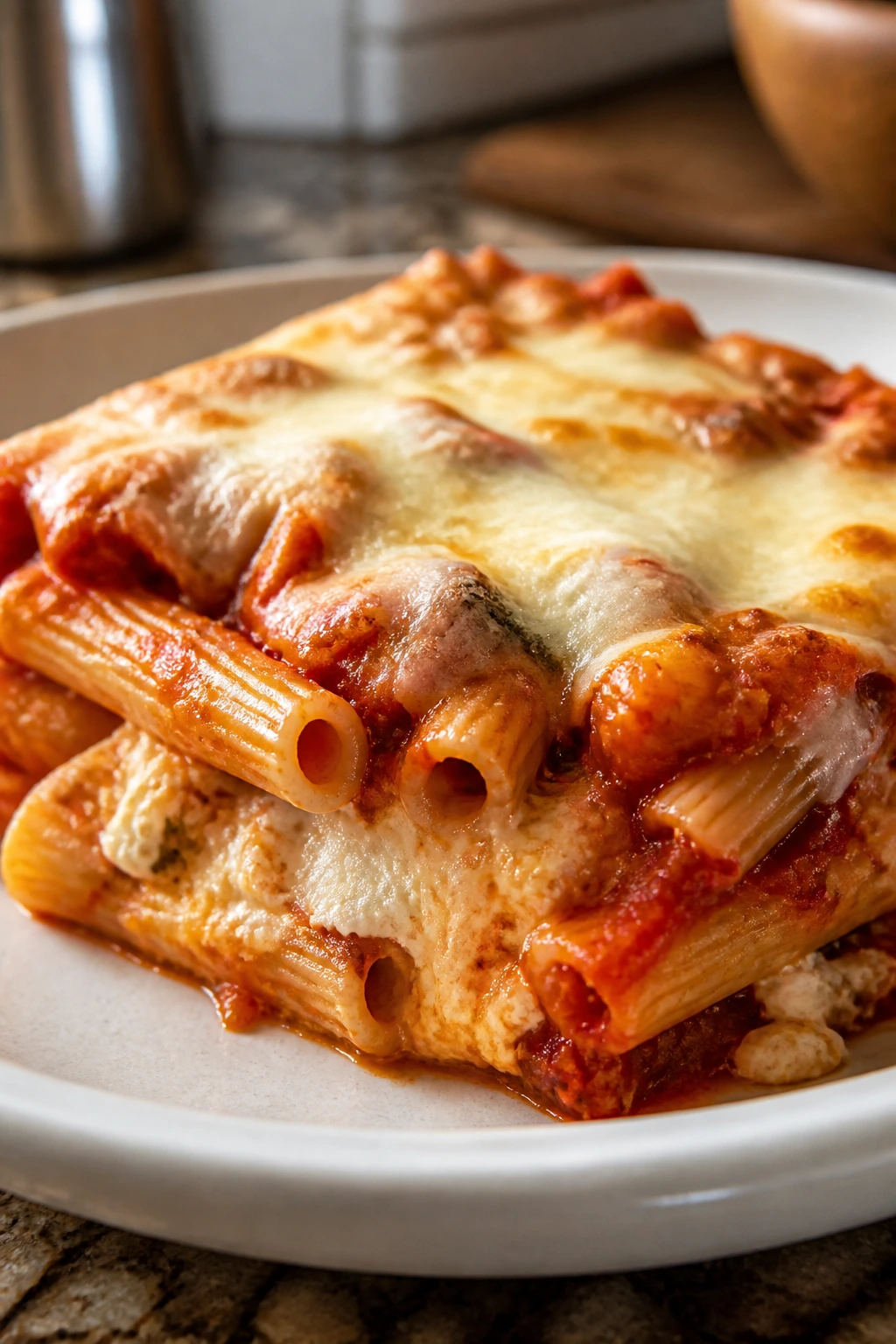
Baked ziti has a soft center, a cheesy top, and enough familiarity to slide onto a picky eater’s plate without a fight. It’s pasta first, casserole second, which is why it works.
Why It Works:
Ricotta keeps the middle creamy, mozzarella gives you the melt, and marinara holds the whole thing together without turning it into soup. The pasta should be undercooked by a minute or two before baking so it doesn’t go mushy in the oven. That detail matters a lot.
Key Ingredients:
- 1 lb ziti pasta — Penne works too if that’s what you have.
- 24 oz marinara sauce — Smooth and mild is the safest bet.
- 15 oz ricotta — Whole milk ricotta is creamier.
- 2 cups shredded mozzarella — For the top and layers.
- 1/2 cup grated parmesan — Adds salty depth.
- 1 large egg — Helps the ricotta set.
- 1 teaspoon Italian seasoning — A familiar blend.
- 1/2 teaspoon kosher salt — For the ricotta mixture.
- 1/4 teaspoon black pepper — Keep it light.
Quick Steps:
- Cook the ziti until 1 to 2 minutes shy of al dente, then drain.
- Mix ricotta, egg, parmesan, Italian seasoning, salt, and pepper in a bowl.
- Combine the pasta with half the marinara and half the mozzarella.
- Layer half the pasta in a greased 9×13-inch baking dish, dollop on the ricotta mixture, then top with the rest of the pasta and remaining sauce.
- Scatter the rest of the mozzarella over the top and bake at 375°F for 25 minutes until bubbly and lightly browned.
Equipment for This Recipe:
- 9×13-inch baking dish — Standard for ziti.
- Large pot — For boiling pasta.
- Mixing bowl — For the ricotta layer.
- Wooden spoon — For folding the pasta.
How to Serve This Dish:
Let it rest for 10 minutes before slicing so the pieces hold their shape. Serve with breadsticks or garlic toast if you want, but the casserole already does most of the heavy lifting. A small side salad or cucumber slices keeps the plate from feeling too heavy.
Pro Tips for This Recipe:
- Undercook the pasta. Baking finishes it.
- Use smooth marinara, not chunky, if your table is texture-sensitive.
- Let the dish rest before serving so the cheese sets.
- If you want a little meat, add cooked ground beef or Italian sausage to the sauce.
Variations on This Dish:
- Meat Sauce Ziti: Stir 1 lb cooked ground beef into the marinara.
- Spinach-Blend Ziti: Blend 1 cup cooked spinach into the ricotta if your crowd tolerates it.
- No-Bake Skillet Ziti: Finish it on the stovetop for a quicker weeknight version.
Common Mistakes to Avoid with This Dish:
- Overcooking the pasta before baking: It turns soft and loses shape.
- Using watery ricotta: Drain it a bit first if it looks loose.
- Cutting immediately: The layers slide apart. Resting matters.
11. Cheeseburger Pasta Skillet
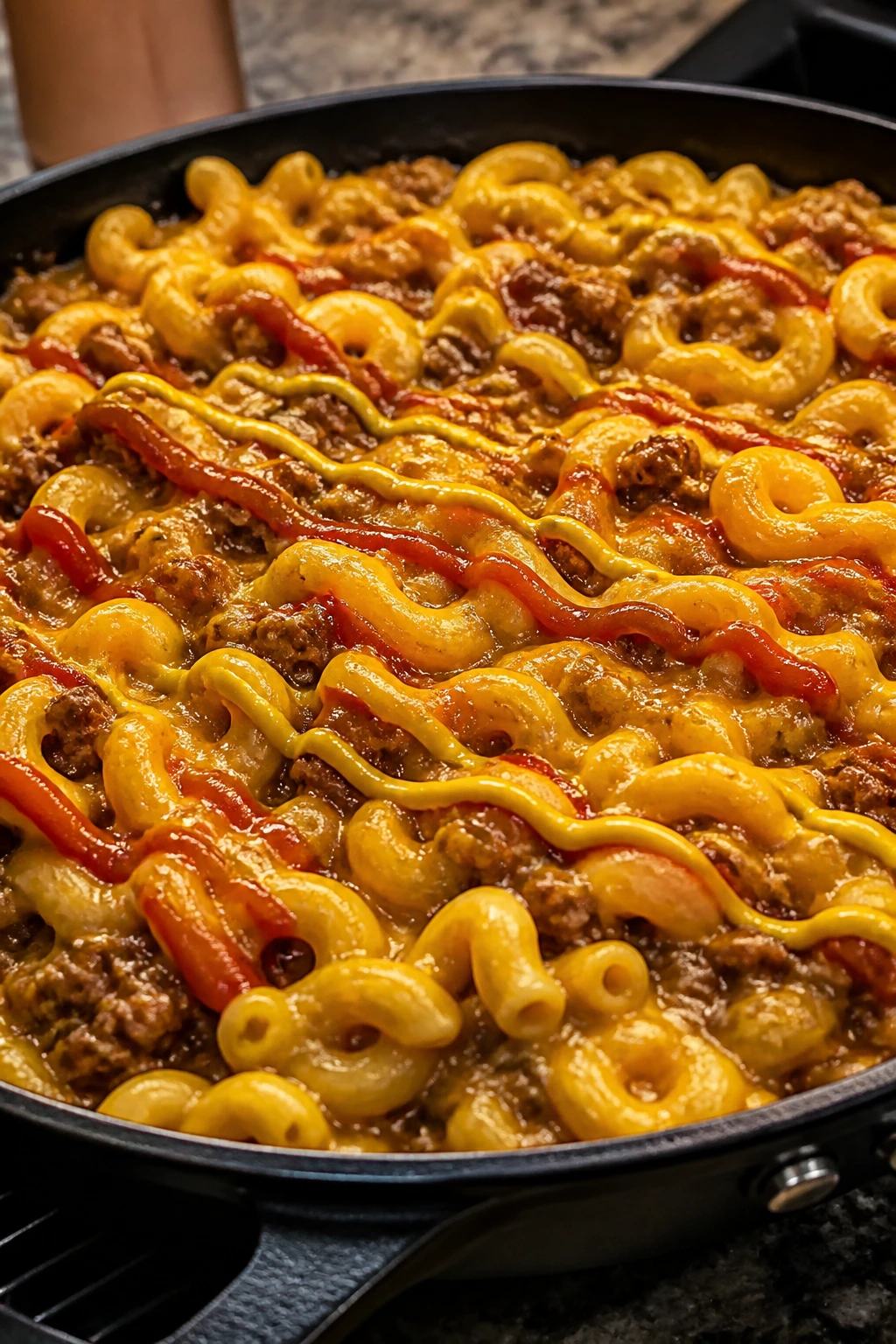
This is what happens when burger night and pasta night stop arguing and decide to cooperate. It tastes familiar, fills the same need as a cheeseburger, and stays soft enough for kids who prefer easy bites.
Why It Works:
The beef gives the skillet that burger flavor, while ketchup and mustard make the sauce read clearly as “cheeseburger” without needing actual buns. Pasta cooks right in the pan, which means the starch thickens the sauce naturally. That keeps the whole thing cozy and contained.
Key Ingredients:
- 12 oz elbow macaroni — Small enough to eat with a spoon if needed.
- 1 lb ground beef — The main flavor.
- 1/2 cup finely chopped onion — Optional, but nice if cooked soft.
- 1 cup beef broth — Helps the pasta cook.
- 1 cup tomato sauce — Builds the base.
- 2 tablespoons ketchup — Adds burger-style sweetness.
- 1 tablespoon yellow mustard — Just enough for the burger note.
- 2 cups shredded cheddar — Stirred in at the end.
- 1/2 teaspoon kosher salt — Adjust after tasting.
- 1/4 teaspoon black pepper — Light seasoning.
- 1/2 cup diced pickles — Optional topping, not mandatory.
Quick Steps:
- Brown the beef and onion in a large skillet over medium heat, then drain excess fat.
- Stir in the broth, tomato sauce, ketchup, mustard, salt, pepper, and uncooked macaroni.
- Simmer covered for 10 to 12 minutes, stirring once or twice, until the pasta is tender and most of the liquid is absorbed.
- Turn off the heat and fold in the cheddar until melted.
- Top with pickles if you want the full burger effect.
Equipment for This Recipe:
- Large deep skillet with lid — The whole dinner happens here.
- Wooden spoon — For stirring.
- Measuring cups — Keeps the liquid right.
How to Serve This Dish:
Serve it in bowls, not plates. The sauce is part of the point. If you put pickles on the table, keep them in a separate little bowl so the people who dislike tangy bits never have to meet them.
Pro Tips for This Recipe:
- Keep the simmer gentle so the pasta doesn’t stick.
- Use mild cheddar if sharp cheese feels too aggressive for your crowd.
- A splash more broth at the end fixes skillet dinners that tighten up.
- If you like the burger flavor more than the tomato flavor, add a tiny bit more mustard.
Variations on This Dish:
- Bacon Cheeseburger Skillet: Add cooked chopped bacon on top at serving.
- Turkey Burger Pasta: Use ground turkey and a little extra salt.
- Big Mac Style: Stir in shredded lettuce only at the table, not in the pan.
Common Mistakes to Avoid with This Dish:
- Letting the pasta stick to the bottom: Stir once or twice while it simmers.
- Using too much mustard: It turns sharp fast. Measure carefully.
- Adding cheese while the skillet is still boiling: It can clump. Turn off the heat first.
12. BBQ Chicken Flatbreads
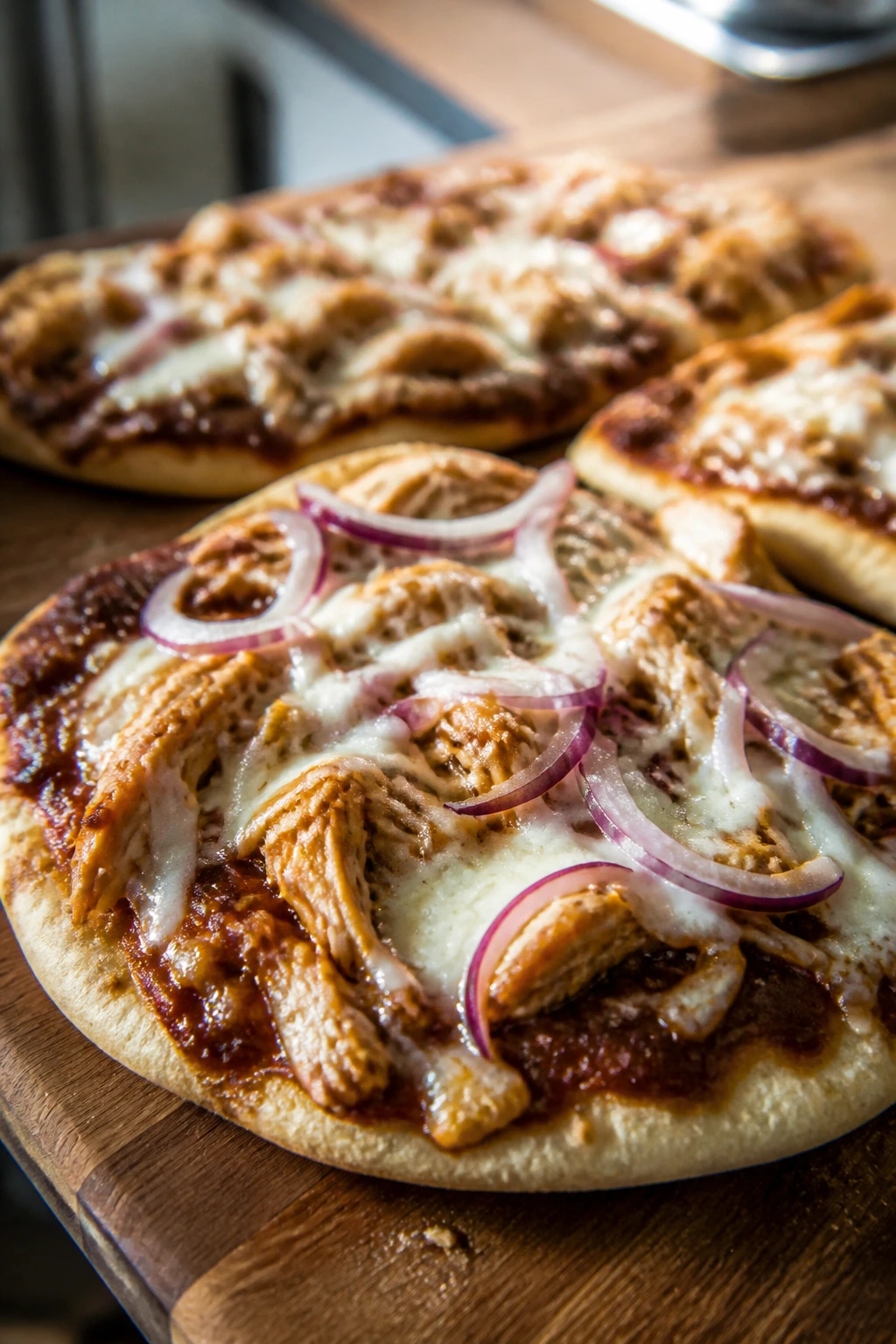
A flatbread pizza feels casual enough for a busy night, but the BBQ sauce gives it a sweeter edge that most kids will go for without a speech. The crust should stay crisp, the chicken should be shredded, and the onions should stay optional.
Why It Works:
Flatbreads cook fast, which means the cheese melts before the bread dries out. BBQ sauce offers a sweet-savory note that reads friendly even to kids who usually dodge “special sauce” dinners. This is one of the easier ways to make chicken feel new without making it strange.
Key Ingredients:
- 4 naan or flatbreads — Thick enough to hold toppings.
- 2 cups shredded cooked chicken — Rotisserie chicken works well.
- 3/4 cup BBQ sauce — Choose a mild, not smoky-hot, version.
- 2 cups shredded mozzarella — Melts smoothly.
- 1/2 small red onion, thinly sliced — Optional and better cooked lightly.
- 1 tablespoon olive oil — Helps crisp the bread.
- 2 tablespoons chopped cilantro — Optional finish.
Quick Steps:
- Preheat the oven to 450°F and place the flatbreads on a baking sheet brushed with olive oil.
- Warm the flatbreads for 3 minutes so the base starts crisping.
- Mix the chicken with BBQ sauce, then spread it evenly over the breads.
- Top with mozzarella and red onion, then bake for 8 to 10 minutes until the cheese is melted and the edges are golden.
- Finish with cilantro if you’re using it, then slice.
Equipment for This Recipe:
- Baking sheet — For the flatbreads.
- Pastry brush — For the oil.
- Mixing bowl — For the chicken and sauce.
- Pizza cutter or sharp knife — For slicing.
How to Serve This Dish:
Serve the flatbreads in strips with corn, apple slices, or a crisp salad on the side. I like this dinner because it looks like something fun but doesn’t require any hard negotiation at the table.
Pro Tips for This Recipe:
- Prebake the bread briefly so the center doesn’t stay soft.
- Use just enough sauce to coat the chicken. Too much makes the crust floppy.
- Slice after a one-minute rest so the cheese stops sliding around.
- If onions are a problem, leave them out entirely. The pizza still works.
Variations on This Dish:
- BBQ Ranch Flatbread: Drizzle ranch over the top after baking.
- Chicken and Cheddar Flatbread: Swap some mozzarella for cheddar.
- Spicy Adult Finish: Add red pepper flakes only to the grown-up slices.
Common Mistakes to Avoid with This Dish:
- Over-saucing: It softens the bread fast.
- Skipping the prebake: The crust stays limp in the middle.
- Using too many toppings: Flatbreads are not deep-dish pizza.
13. Sweet Teriyaki Chicken Bowls
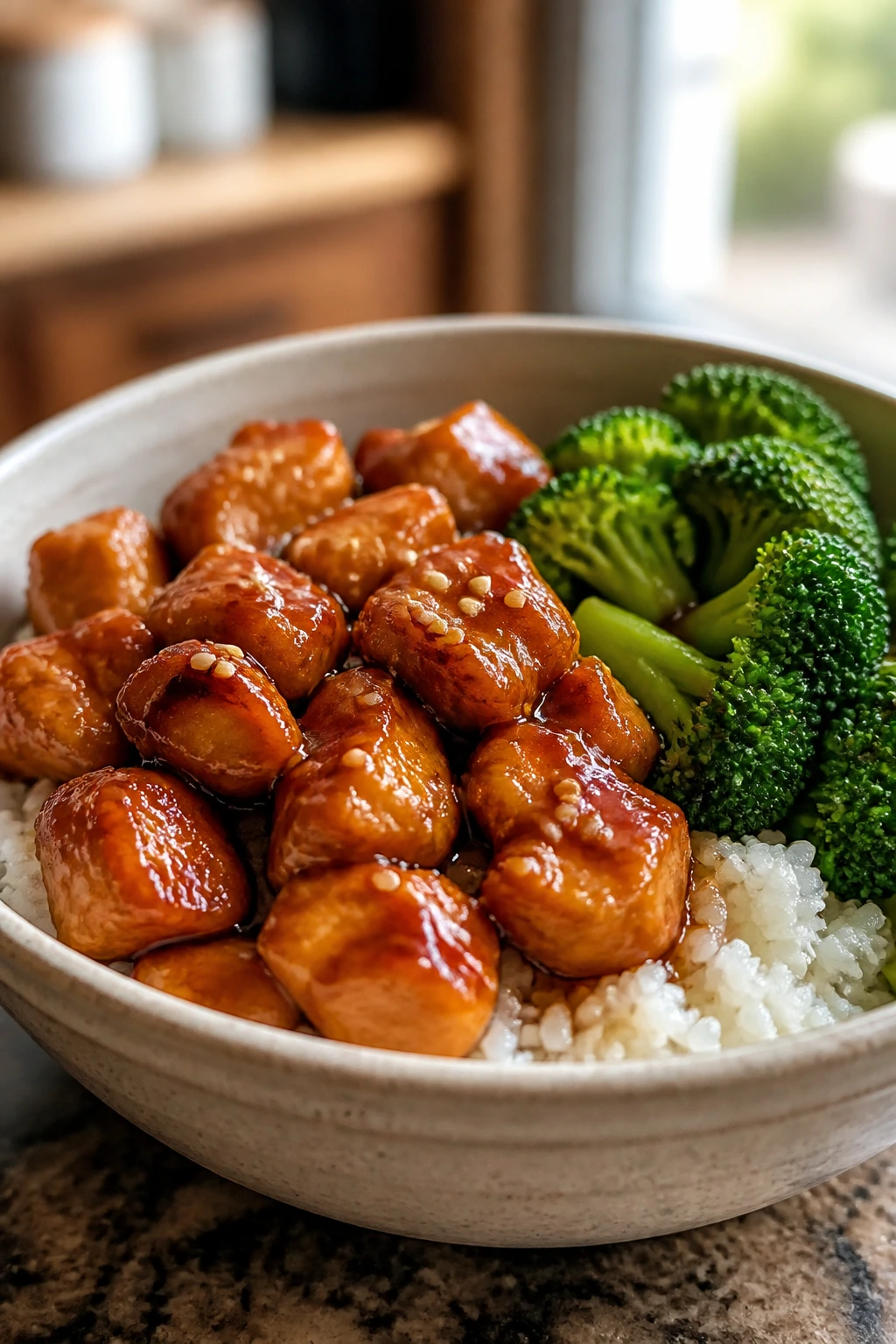
The sweet side of teriyaki is what wins the room here. Keep the chicken bite-sized, the rice plain, and the sauce glossy enough to cling without soaking the whole bowl.
Why It Works:
The sauce leans on honey and soy, which makes it familiar without going too far in any direction. Cooking it down with a little cornstarch gives it that shiny finish kids seem to trust. A bowl meal also gives you room to keep vegetables off to the side if needed.
Key Ingredients:
- 1 1/2 lbs boneless chicken thighs or breasts, diced — Thighs stay juicier.
- 1 tablespoon neutral oil — For the skillet.
- 3 cups cooked white rice — The bowl base.
- 1/2 cup soy sauce — Use low-sodium if you want more control.
- 1/3 cup honey — The sweet note.
- 2 tablespoons brown sugar — Helps the glaze.
- 1 tablespoon rice vinegar — Keeps it from tasting flat.
- 2 cloves garlic, minced — Small but important.
- 1 teaspoon grated ginger — Optional, but gentle.
- 1 teaspoon cornstarch mixed with 2 tablespoons water — Thickens the sauce.
- 1 cup steamed broccoli — Optional on the side.
- 1 tablespoon sesame seeds — For finishing.
Quick Steps:
- Cook the rice and set it aside warm.
- Brown the chicken in oil over medium-high heat until cooked through and lightly golden.
- Whisk soy sauce, honey, brown sugar, vinegar, garlic, and ginger in a small bowl.
- Pour the sauce into the skillet and simmer for 2 minutes, then stir in the cornstarch slurry until glossy and thick enough to coat the chicken.
- Spoon over rice and finish with sesame seeds.
Equipment for This Recipe:
- Large skillet — For the chicken and sauce.
- Small bowl — For the sauce.
- Measuring cups and spoons — Keeps the balance right.
How to Serve This Dish:
Build bowls with rice first, then chicken, then a spoonful of extra sauce. Keep broccoli or other vegetables in a separate pile if your table prefers food that doesn’t touch. That tiny choice matters more than people think.
Pro Tips for This Recipe:
- Dice the chicken small so it cooks fast and stays tender.
- Reduce the sauce until it shines. Thin teriyaki feels unfinished.
- Keep the rice plain and let the sauce do the talking.
- If your soy sauce is salty, use less and add a touch more honey.
Variations on This Dish:
- Pineapple Teriyaki Bowl: Add small pineapple chunks at the end.
- Sesame Noodle Bowl: Serve the chicken over noodles instead of rice.
- Sheet Pan Version: Roast the chicken and broccoli together, then glaze.
Common Mistakes to Avoid with This Dish:
- Using sauce that is too salty: It overwhelms the bowl. Start with less soy.
- Overcooking the chicken: Dice it smaller so it finishes fast.
- Skipping the thickening step: Thin sauce slides right off the rice.
14. Mini Meatloaf Muffins
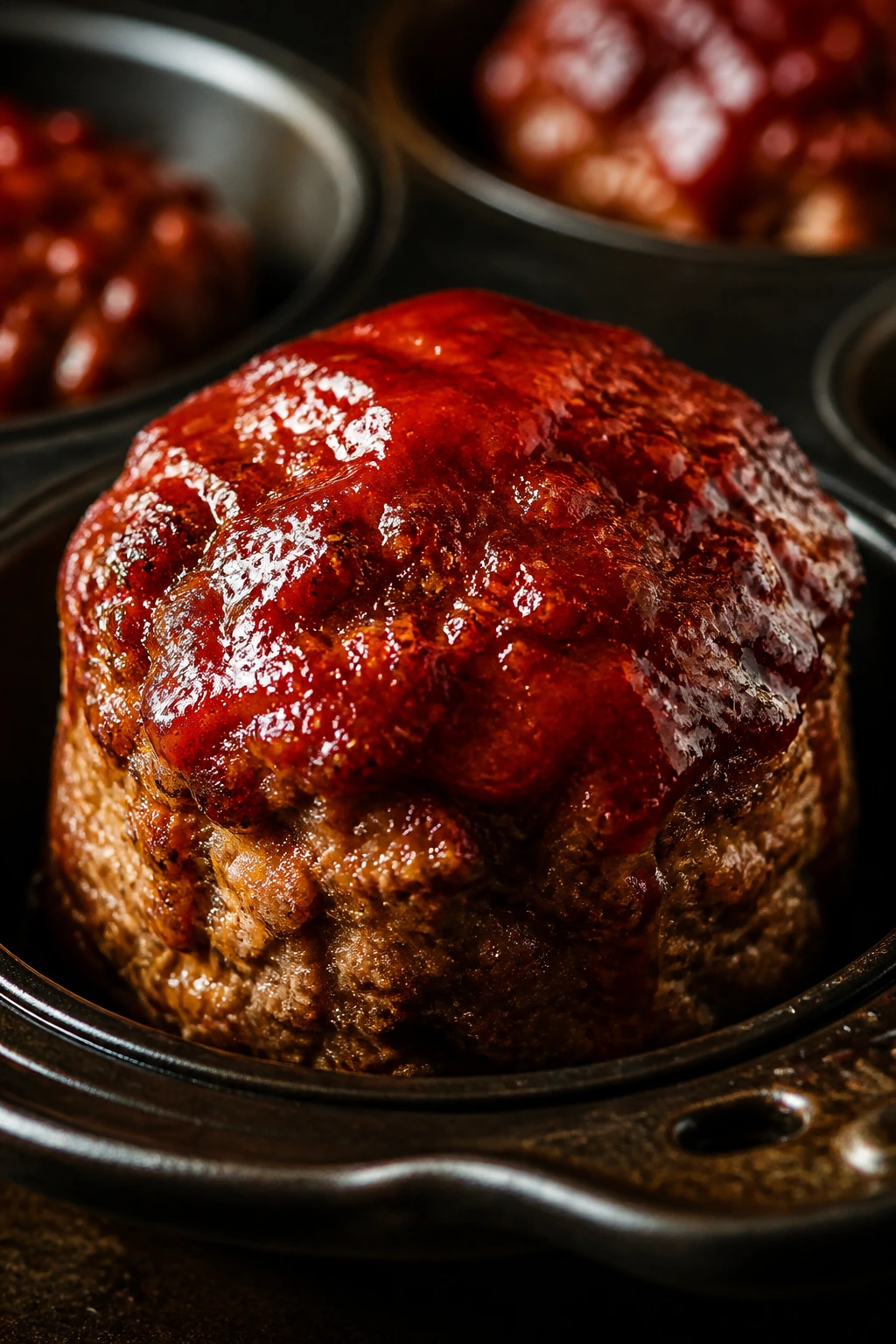
Meatloaf gets eaten more often when it arrives in muffin form. The edges caramelize, the centers stay juicy, and nobody has to cut through a big loaf that looks suspicious before the first bite.
Why It Works:
Smaller portions cook faster and more evenly than a full loaf, which means you avoid the dry edge problem that ruins so many meatloafs. The ketchup glaze bakes onto the top in a sticky layer that feels familiar right away. Little forms help a lot here. They really do.
Key Ingredients:
- 1 1/2 lbs ground beef — 85% lean is a good middle ground.
- 1/2 cup breadcrumbs — Keeps the loaf tender.
- 1 large egg — Holds it together.
- 1/3 cup milk — Moistens the mixture.
- 1/4 cup ketchup — For the meat mixture.
- 2 tablespoons Worcestershire sauce — Adds savory depth.
- 1 teaspoon onion powder — Easier than chopped onion for picky eaters.
- 1 teaspoon kosher salt — Needed for flavor.
- 1/2 teaspoon black pepper — Keep it mild.
- 1/4 cup ketchup mixed with 1 tablespoon brown sugar — The glaze.
Quick Steps:
- Preheat the oven to 400°F and grease a 12-cup muffin tin.
- Mix the beef, breadcrumbs, egg, milk, ketchup, Worcestershire, onion powder, salt, and pepper until just combined.
- Divide the mixture among the muffin cups and press lightly so they’re even, not packed hard.
- Top each one with a spoonful of the ketchup glaze and bake for 20 to 22 minutes until the centers reach 165°F.
- Rest for 5 minutes before removing from the tin.
Equipment for This Recipe:
- Muffin tin — The shape matters here.
- Mixing bowl — For the meat mixture.
- Spoon — For portioning.
- Instant-read thermometer — Useful for doneness.
How to Serve This Dish:
Serve two muffins per child with mashed potatoes and peas or green beans. They also look good with a little extra glaze brushed over the top right before serving. That glossy finish does half the selling.
Pro Tips for This Recipe:
- Don’t pack the meat into the cups too hard. Air helps keep them tender.
- Use a cookie scoop if you want even portions.
- Let the muffins rest so the juices settle.
- If the tops brown too fast, tent loosely with foil for the last few minutes.
Variations on This Dish:
- Cheddar-Stuffed Muffins: Press a small cube of cheddar into the center of each one.
- Turkey Muffins: Swap in ground turkey and add 1 extra tablespoon of milk.
- Freezer Meatloaf Cups: Bake, cool, and freeze individually for fast reheating.
Common Mistakes to Avoid with This Dish:
- Overmixing: The texture gets tough. Mix only until the ingredients disappear.
- Using extra-lean meat: It can dry out. Keep some fat in the mix.
- Pulling them too soon: The center needs to hit 165°F.
15. Grilled Cheese and Tomato Soup
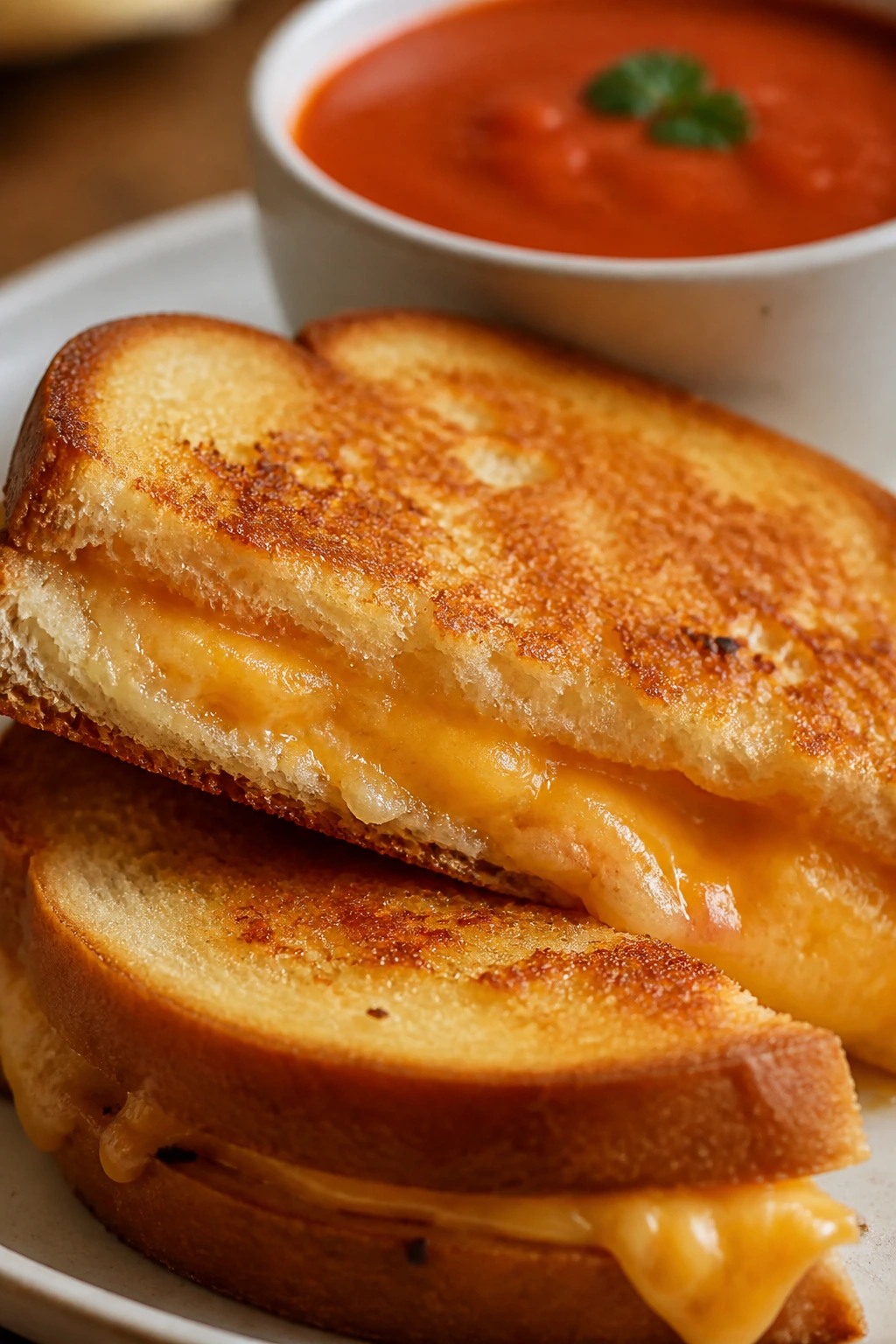
There’s a reason grilled cheese and tomato soup never stopped showing up at the table. The sandwich is buttery, crisp, and soft in the middle; the soup is smooth, warm, and good for dunking. That combination still works.
Why It Works:
The soup gets its body from simmered tomatoes and a small splash of cream, so it tastes round instead of acidic. The sandwich uses steady medium heat, which gives you a golden crust before the cheese burns. This is one of those dinners that seems plain until you realize how hard it is to mess up when it’s done right.
Key Ingredients:
- For the Tomato Soup:
- 2 tablespoons butter — For the base.
- 1 small onion, chopped very fine — Optional, but cook it soft.
- 2 cloves garlic, minced — Small amount, big payoff.
- 2 cans crushed tomatoes, 28 oz each — Smooth texture works best.
- 2 cups low-sodium chicken or vegetable broth — Keeps it from being too thick.
- 1/2 cup heavy cream — Rounds out the flavor.
- 1 teaspoon sugar — Takes the edge off the tomatoes.
- 1 teaspoon kosher salt — Adjust to taste.
- For the Grilled Cheese:
- 8 slices sandwich bread — Soft white or sturdy sourdough both work.
- 8 slices American cheese or 2 cups shredded cheddar — American melts easiest.
- 4 tablespoons butter, softened — For the bread.
Quick Steps:
- Melt the butter in a saucepan over medium heat and cook the onion until soft, about 5 minutes.
- Stir in the garlic, then the tomatoes, broth, sugar, and salt; simmer for 15 minutes.
- Blend the soup until smooth, then stir in the cream and keep warm over low heat.
- Build the sandwiches with cheese between bread slices and butter the outsides.
- Cook the sandwiches in a skillet over medium heat for 3 to 4 minutes per side until golden and the cheese melts, then serve with the soup.
Equipment for This Recipe:
- Saucepan — For the soup.
- Blender or immersion blender — Makes the soup smooth.
- Skillet — For the sandwiches.
- Spatula — For flipping.
How to Serve This Dish:
Serve the soup in mugs or bowls and cut the sandwiches into halves or strips for dunking. It’s a simple plate, but it looks intentional when the sandwich is crisp and the soup is bright red and smooth.
Pro Tips for This Recipe:
- Cook the onion until soft so it disappears into the soup.
- Use medium heat on the sandwich; high heat burns bread before cheese melts.
- Blend carefully if the soup is hot. Steam can push the lid up.
- If the soup tastes too sharp, add another teaspoon of sugar, not more cream.
Variations on This Dish:
- Extra-Cheesy Melt: Add a second cheese layer inside the sandwich.
- Tomato Basil Soup: Stir in chopped basil at the end.
- Crunchy Crouton Version: Skip the sandwich and serve with buttered toast cubes.
Common Mistakes to Avoid with This Dish:
- Rushing the soup simmer: The flavor stays flat. Give the tomatoes time.
- Using high heat for grilled cheese: The outside burns first.
- Cutting too fast: Let the cheese settle for a minute or two.
16. Chicken Quesadillas
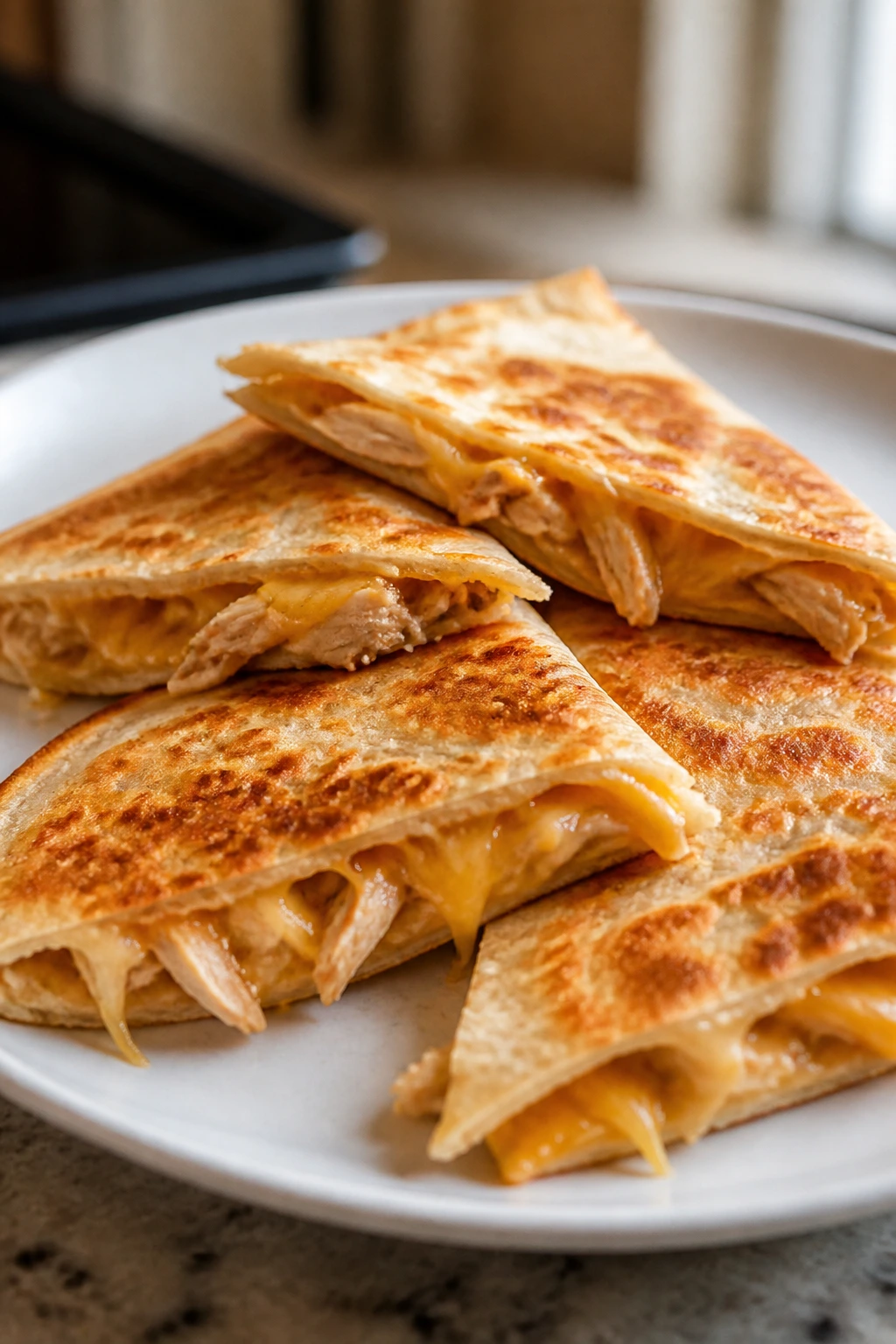
Chicken quesadillas are a tidy dinner, which is half the appeal. They’re crisp on the outside, soft and cheesy inside, and easy to slice into triangles that feel a little less intimidating than a giant sandwich.
Why It Works:
The tortilla gets crunchy in the skillet while the cheese melts into the chicken and holds everything together. A small amount of salsa or cream cheese gives you moisture without making the filling wet. Wet is the enemy here.
Key Ingredients:
- 4 large flour tortillas — Soft but sturdy.
- 2 cups shredded cooked chicken — Rotisserie chicken saves time.
- 2 cups shredded cheddar or Monterey Jack — Use one or both.
- 1/2 cup mild salsa — Optional for extra moisture.
- 1 tablespoon butter or neutral oil — For the skillet.
- 1/4 teaspoon garlic powder — Optional and gentle.
- Sour cream for serving — Optional.
Quick Steps:
- Warm a skillet over medium heat and melt a little butter or oil.
- Layer half a tortilla with cheese, chicken, salsa if using, and a little more cheese.
- Fold the tortilla over and cook for 2 to 3 minutes per side until golden and the cheese melts.
- Repeat with the remaining tortillas.
- Rest for 1 minute, then cut into wedges.
Equipment for This Recipe:
- Skillet — For crisping.
- Spatula — Helps flip cleanly.
- Knife or pizza cutter — For wedges.
How to Serve This Dish:
Serve quesadilla wedges with sour cream, corn, or sliced cucumbers. If the eater likes plain food, leave the dip on the side and let the triangle do the work by itself.
Pro Tips for This Recipe:
- Don’t overfill. Too much filling makes the tortilla tear.
- Keep the cheese near the edges so the wedge seals after melting.
- Let the quesadillas rest briefly before cutting.
- Shredding chicken finely helps it stay inside the tortilla.
Variations on This Dish:
- Chicken and Corn Quesadillas: Add 1/2 cup corn for a little sweetness.
- Bean-Free Version: Keep them purely chicken and cheese.
- Air-Fryer Quesadillas: Cook at 375°F for 6 to 8 minutes, flipping once.
Common Mistakes to Avoid with This Dish:
- Using too much salsa: It makes the filling wet and slippery.
- Cooking on high heat: The tortilla browns before the cheese melts.
- Cutting immediately: The filling can spill out. Wait a minute.
17. Buttery Garlic Parmesan Noodles
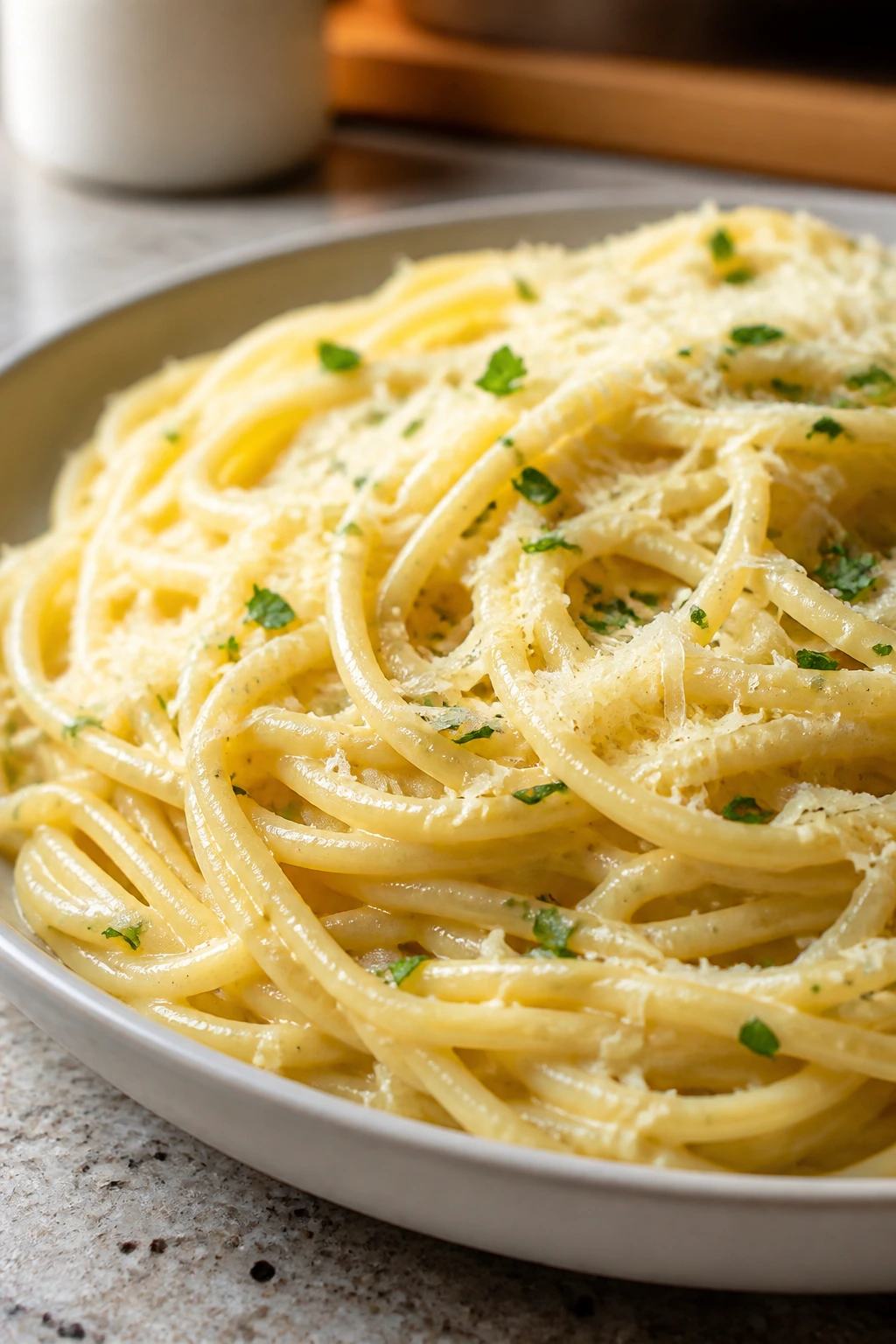
This is the plain-food dinner that still gets eaten enthusiastically. It’s glossy, salty, and soft enough for children who prefer their dinner to stay recognizable from start to finish.
Why It Works:
Butter, garlic, and parmesan create a sauce that clings to noodles without needing cream or a long simmer. The whole dish comes together fast, which is helpful when the table has already decided it wants something uncomplicated. Add chicken if you need more protein, or leave it as a simple bowl.
Key Ingredients:
- 12 oz spaghetti or linguine — Long noodles help the sauce spread.
- 4 tablespoons unsalted butter — The sauce base.
- 3 cloves garlic, minced — Don’t let it brown too much.
- 1/2 cup reserved pasta water — Helps the sauce turn silky.
- 1 cup finely grated parmesan — The main flavor.
- 1/2 teaspoon kosher salt — Add carefully.
- 1/4 teaspoon black pepper — Optional.
- 2 tablespoons chopped parsley — Optional garnish.
- 2 cups shredded rotisserie chicken — Optional if you want a fuller dinner.
Quick Steps:
- Boil the pasta in salted water until al dente, then save 1/2 cup of the water and drain.
- Melt the butter in the empty pot over low to medium-low heat, then cook the garlic for 30 seconds until fragrant.
- Add the pasta and a splash of pasta water, tossing until the noodles look glossy.
- Stir in the parmesan a handful at a time, adding more water if needed so the sauce coats the noodles.
- Finish with parsley and chicken, if using, then serve immediately.
Equipment for This Recipe:
- Large pot — For boiling and tossing.
- Colander — For draining.
- Tongs — Toss the noodles well.
- Microplane or fine grater — Helps parmesan melt fast.
How to Serve This Dish:
Serve it in wide bowls with chicken on the side or mixed in, plus steamed broccoli or green beans if anyone wants a vegetable. The noodles should look shiny, not soupy, and the parmesan should cling in fine threads.
Pro Tips for This Recipe:
- Keep the heat low when the garlic goes in so it doesn’t turn bitter.
- Use fine parmesan for a smoother finish.
- Add pasta water a little at a time; it takes only a splash to loosen things.
- If you want extra richness, a tablespoon of cream at the end helps.
Variations on This Dish:
- Lemon Garlic Noodles: Add a little lemon zest right before serving.
- Chicken Noodle Dinner: Toss in rotisserie chicken for more protein.
- Creamier Version: Add 2 tablespoons of cream with the pasta water.
Common Mistakes to Avoid with This Dish:
- Adding cheese to a dry pot: It clumps. Use the pasta water.
- Burning the garlic: It turns bitter fast. Watch it closely.
- Oversalting the water and the sauce: Parmesan already brings salt.
18. Cheesy Ham and Potato Bake
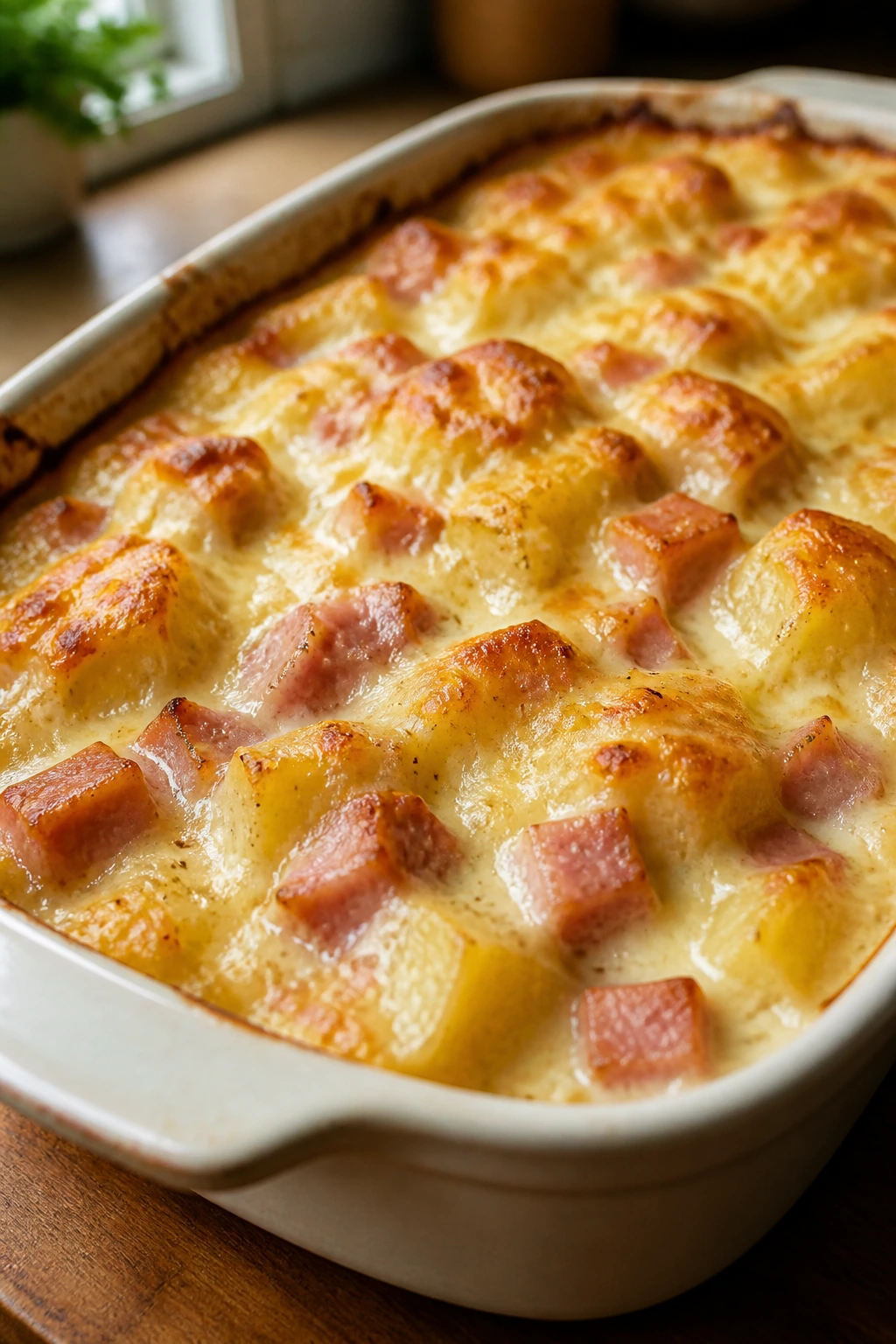
Potatoes, ham, and cheese are a safe landing strip for picky eaters. This bake is soft in the middle, browned on top, and sturdy enough to serve as dinner without needing much else.
Why It Works:
Hash browns keep the texture familiar, ham adds salt and substance, and the cream sauce keeps everything from feeling dry or stern. A baked potato dish usually wins because the flavors are plain in the best way. Nothing here is trying too hard.
Key Ingredients:
- 4 cups frozen diced hash browns, thawed — Thaw first so they bake evenly.
- 2 cups diced ham — Small cubes distribute best.
- 3 tablespoons unsalted butter — For the sauce.
- 1/4 cup all-purpose flour — Thickens the milk.
- 2 cups milk — Forms the base of the sauce.
- 1 cup sour cream — Adds tang and creaminess.
- 2 cups shredded cheddar — Half in, half on top.
- 1 teaspoon garlic powder — Mild flavor.
- 1/2 teaspoon kosher salt — Taste before adding more.
- 1/4 teaspoon black pepper — Optional and light.
Quick Steps:
- Preheat the oven to 400°F and grease a 9×13-inch baking dish.
- Melt the butter in a saucepan, whisk in the flour, and cook for 1 minute.
- Whisk in the milk and simmer for 3 to 4 minutes until the sauce thickens enough to coat a spoon.
- Stir in the sour cream, 1 cup of the cheddar, garlic powder, salt, and pepper, then fold in the hash browns and ham.
- Bake for 35 to 40 minutes, top with the remaining cheddar, and bake 5 minutes more until bubbly.
Equipment for This Recipe:
- 9×13-inch baking dish — The casserole pan.
- Saucepan — For the cream sauce.
- Whisk — Keeps the sauce smooth.
- Mixing spoon — For folding the potatoes.
How to Serve This Dish:
Serve it with apple slices, a simple salad, or green beans. The bake slices best after a 10-minute rest, so don’t rush it out of the dish. That pause is what keeps it from becoming a scooped mess.
Pro Tips for This Recipe:
- Thaw the hash browns fully so they don’t water down the sauce.
- Cut the ham into small cubes so it spreads through the casserole.
- If the sauce seems thin, simmer it one minute longer before adding the potatoes.
- Rest the bake before serving so the pieces hold together.
Variations on This Dish:
- Broccoli Add-In: Stir in 1 cup finely chopped steamed broccoli.
- Turkey Ham Swap: Use diced turkey ham if that’s what you keep around.
- Crunchy Top Version: Add 1/2 cup buttered breadcrumbs during the last 10 minutes.
Common Mistakes to Avoid with This Dish:
- Using frozen hash browns without thawing: The casserole turns watery.
- Underseasoning the sauce: Potatoes need more salt than you might expect.
- Cutting too soon: The pieces need time to settle.
Why Familiar Food Shapes Calm the Table
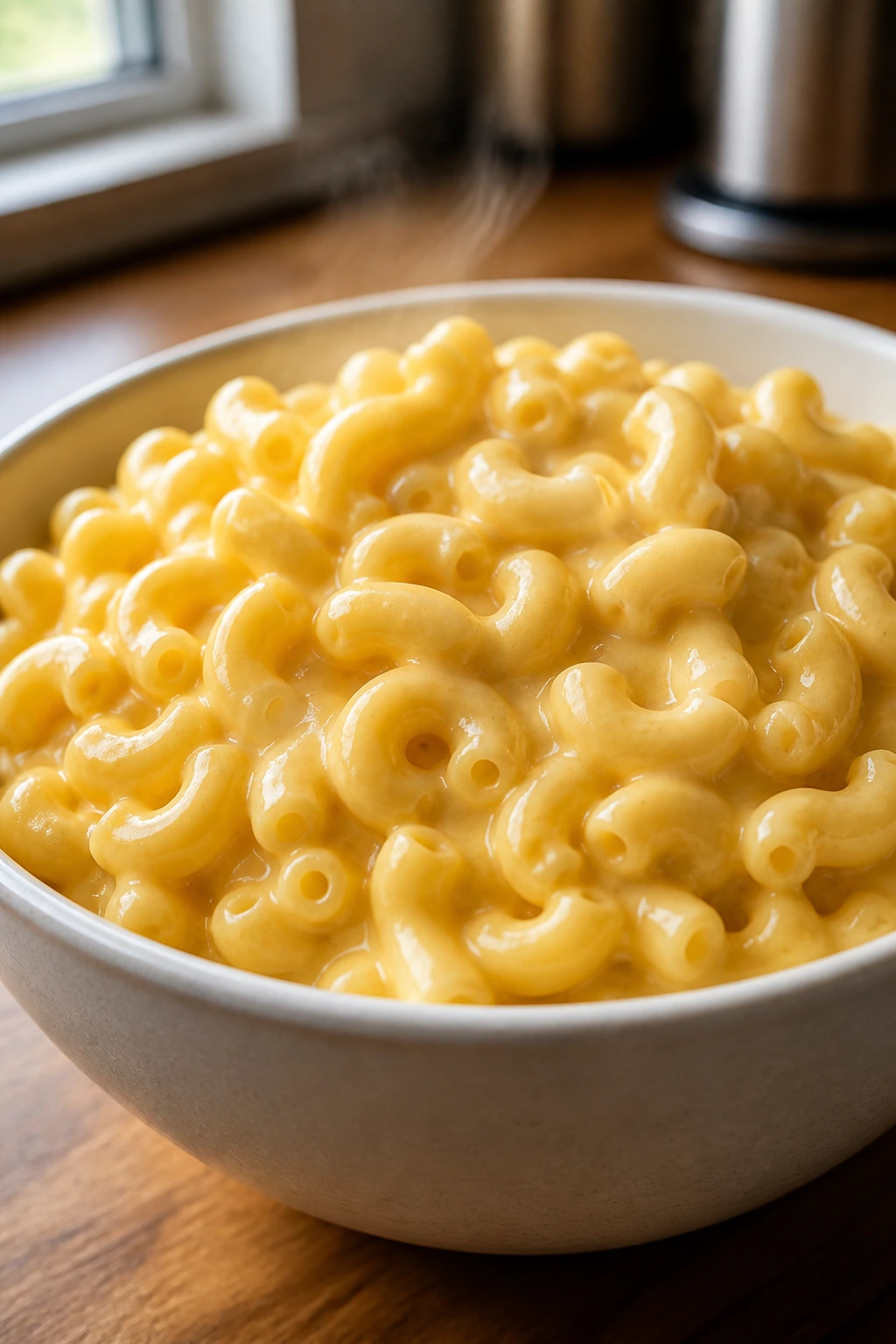
A picky eater does not usually reject dinner because it tastes bad in some abstract way. More often, the problem starts before the first bite. The shape looks odd. The sauce hides the meat. The vegetables are mixed into the rice like a surprise attack. You can feel the hesitation from across the table.
That’s why these dinners lean so hard on familiar forms. Chicken tenders. Mac and cheese. Spaghetti. Quesadillas. Meatballs. If the food looks like something the child has already eaten, half the battle is gone before the fork comes out. A casserole cut into squares feels safer than a loose pile in a bowl. A wrap sliced into triangles feels friendlier than a full-size sandwich that might fall apart.
I also think texture matters more than people want to admit. Crispy things get trusted faster. Creamy things get accepted when they’re smooth, not gluey. Saucy food needs enough body to stay where it lands. And if a recipe can let you serve the sauce on the side for one child and on top for another, that’s not a gimmick. That’s dinner diplomacy.
The best part is that none of this requires cooking badly. It just means cooking with a little more attention to shape, moisture, and temperature than a lot of family recipes bother with.
Essential Equipment for These Dinners
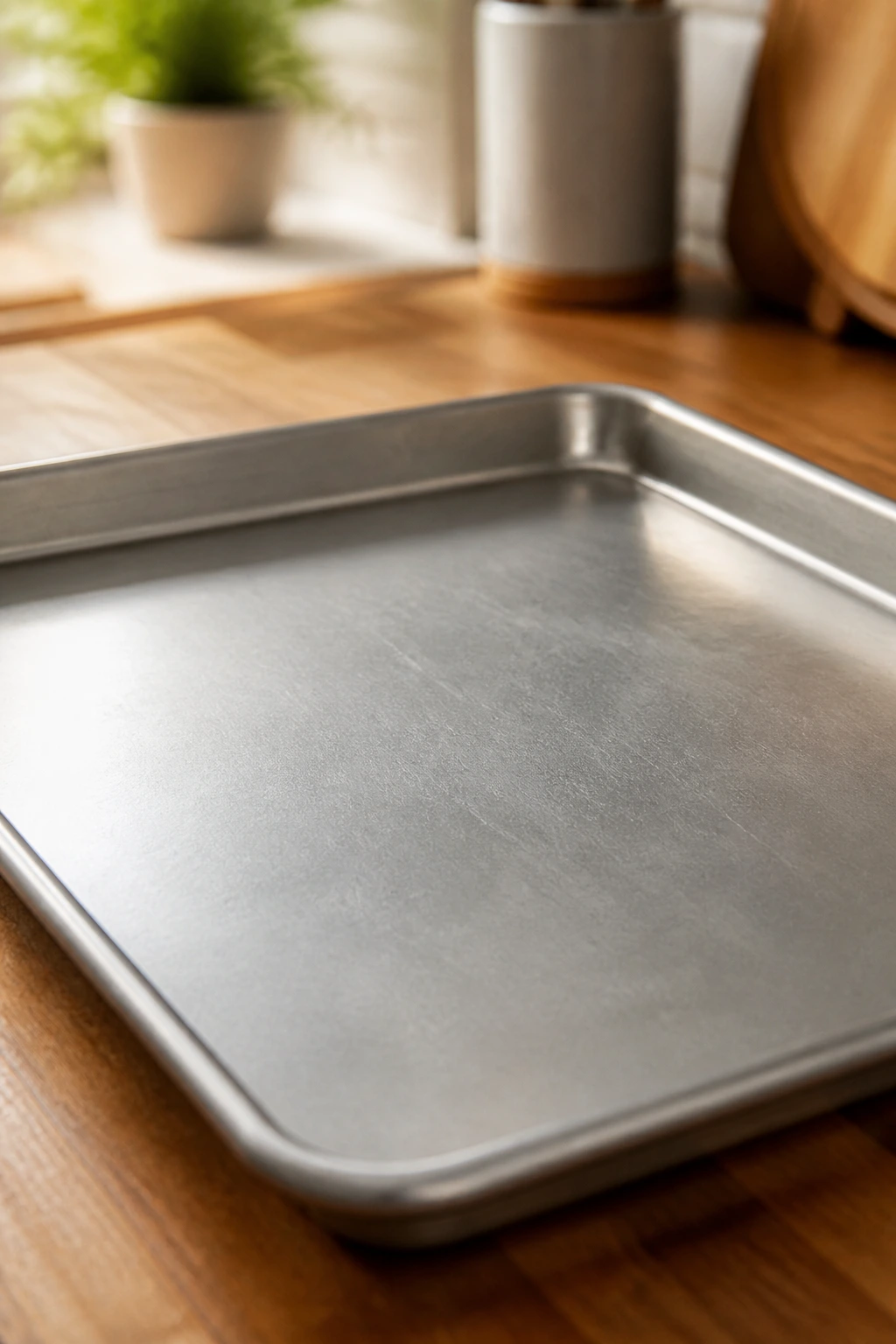
- Rimmed baking sheets — Needed for chicken tenders, flatbreads, and meatballs.
- Wire rack — Keeps breaded items crisp underneath.
- Large skillet or sauté pan — The workhorse for skillet dinners, fried rice, and sauces.
- 9×13-inch baking dish — Useful for casseroles like ziti and potato bake.
- Large pot — For pasta, soup, and boiling anything that needs water.
- Colander — Drains pasta fast so it doesn’t keep cooking.
- Mixing bowls in 2 or 3 sizes — Helpful for breading, mixing meat, and tossing casseroles.
- Whisk — Prevents lumps in sauces and cream bases.
- Tongs — Good for turning tenders, chicken, and pasta.
- Instant-read thermometer — The easiest way to check chicken and meatloaf for 165°F.
- Box grater or microplane — Better cheese texture than the bagged stuff for many of these recipes.
- Spatula and wooden spoon — Both earn their keep, especially for skillet meals.
Smart Shopping for Mild Sauces, Better Cheese, and Tender Protein
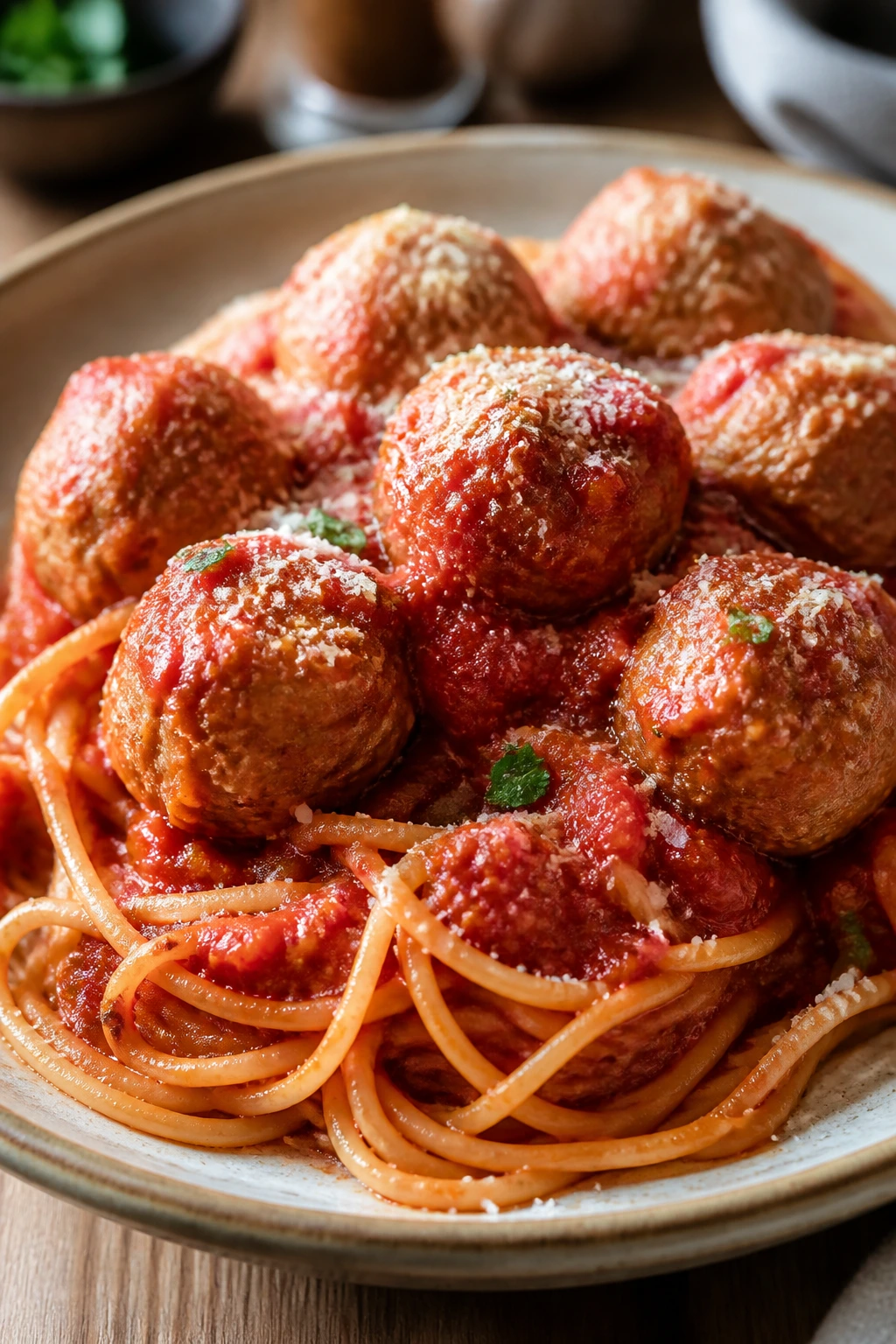
If you want these dinners to work well, the shopping matters more than people think. Buy the mild marinara, not the one that tastes like pepper flakes in a jar. Pick a barbecue sauce that’s sweet first and smoky second. If the sauce tastes too loud before it even hits the pan, the kids will notice.
Cheese is worth being picky about too. For mac and cheese, alfredo, quesadillas, and baked casseroles, a block of cheese you shred yourself melts more smoothly than the pre-shredded bag. Pre-shredded cheese has anti-caking powder on it, which is handy for storage but not always lovely in a silky sauce. That’s not a moral judgment. It’s just a texture thing.
For chicken, cutlets, tenders, or small cubes cook faster and stay more tender than giant pieces. If you buy breasts, slice them down yourself. For ground beef, 85% lean is a useful middle ground for sloppy joes, pasta skillets, and meatloaf muffins. Too lean and the dish dries out. Too fatty and you spend dinner draining the pan.
A few pantry buys pay off across the whole collection: panko breadcrumbs, elbow macaroni, ziti, rotini, tortillas, English muffins, rotisserie chicken, low-sodium broth, and frozen peas and carrots. Frozen vegetables are one of the rare shortcuts that don’t feel like a shortcut once they’re cooked. They’re already trimmed, they’re usually picked at the right stage, and they’re small enough to stay out of the “gross, a piece of broccoli” territory.
How to Serve These Recipes
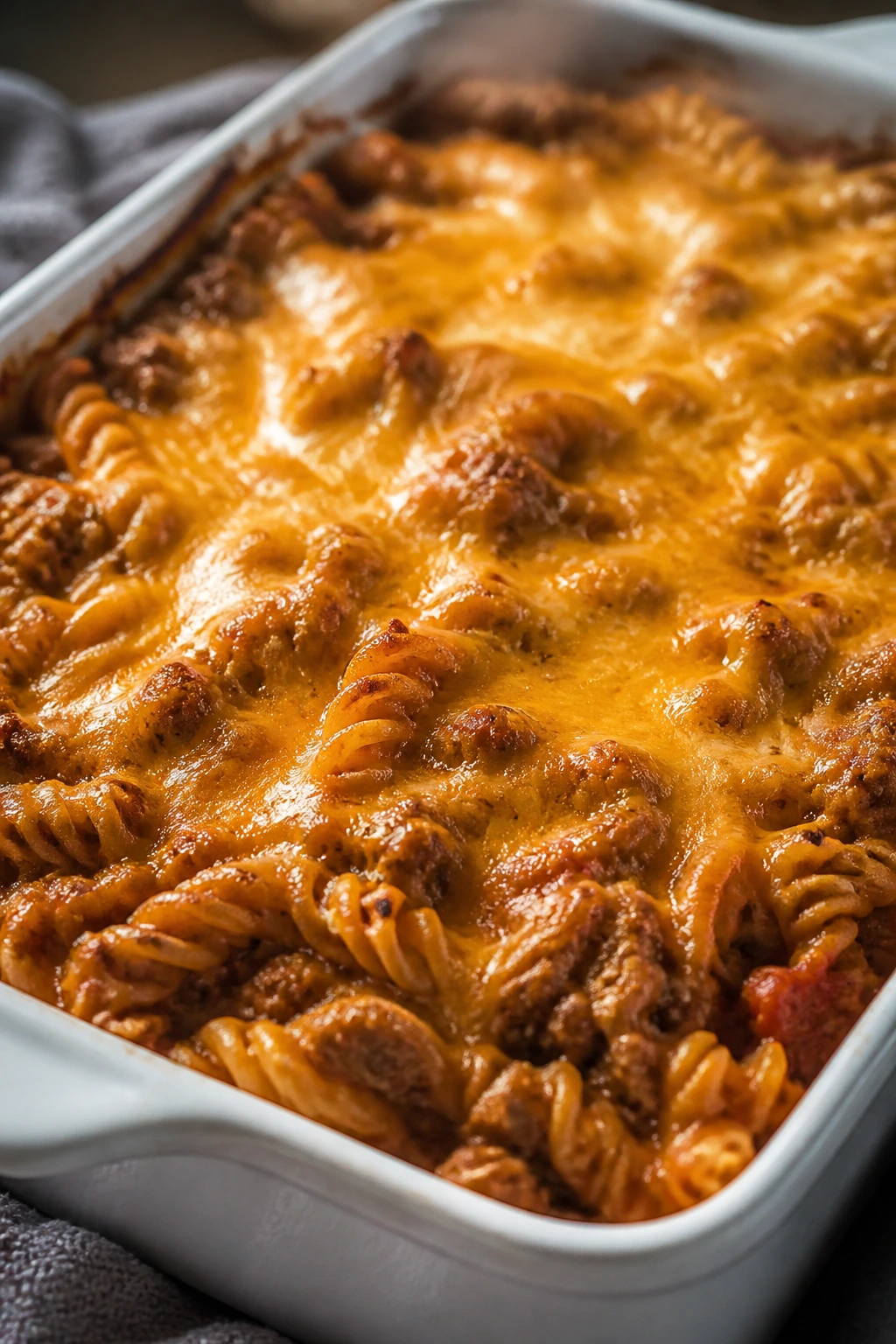
Presentation:
Use small piles, not giant heaps. A few crispy tenders on one side of the plate, a scoop of pasta or rice on the other, and one clearly visible green or fruit side makes the dinner look intentional. Triangles, rounds, and neat mounds are easier on wary eaters than a big mixed bowl.
Accompaniments:
Keep the sides plain and familiar: cucumber slices, apple wedges, peas, corn, roasted carrots, steamed broccoli, breadsticks, garlic toast, or simple green beans. Dips help too — ketchup, ranch, sour cream, and honey mustard are all useful because they let a child control the flavor.
Portions:
Younger kids usually do fine with 3 to 4 ounces of protein or about 1 cup of pasta, rice, or casserole. Older kids and adults often take 1 1/2 cups of the starch-based dishes plus the protein that comes with it. A good rule: start small and let people ask for more. A smaller plate looks less like a challenge.
Beverage Pairing:
Milk, sparkling water, or a lightly diluted lemonade works across most of these dinners. For soup nights and mac and cheese, cold milk is still the quiet champion. For BBQ or taco flavors, water with a squeeze of citrus keeps things clean between bites.
Additional Tips and Flavor Boosters
Flavor Enhancement:
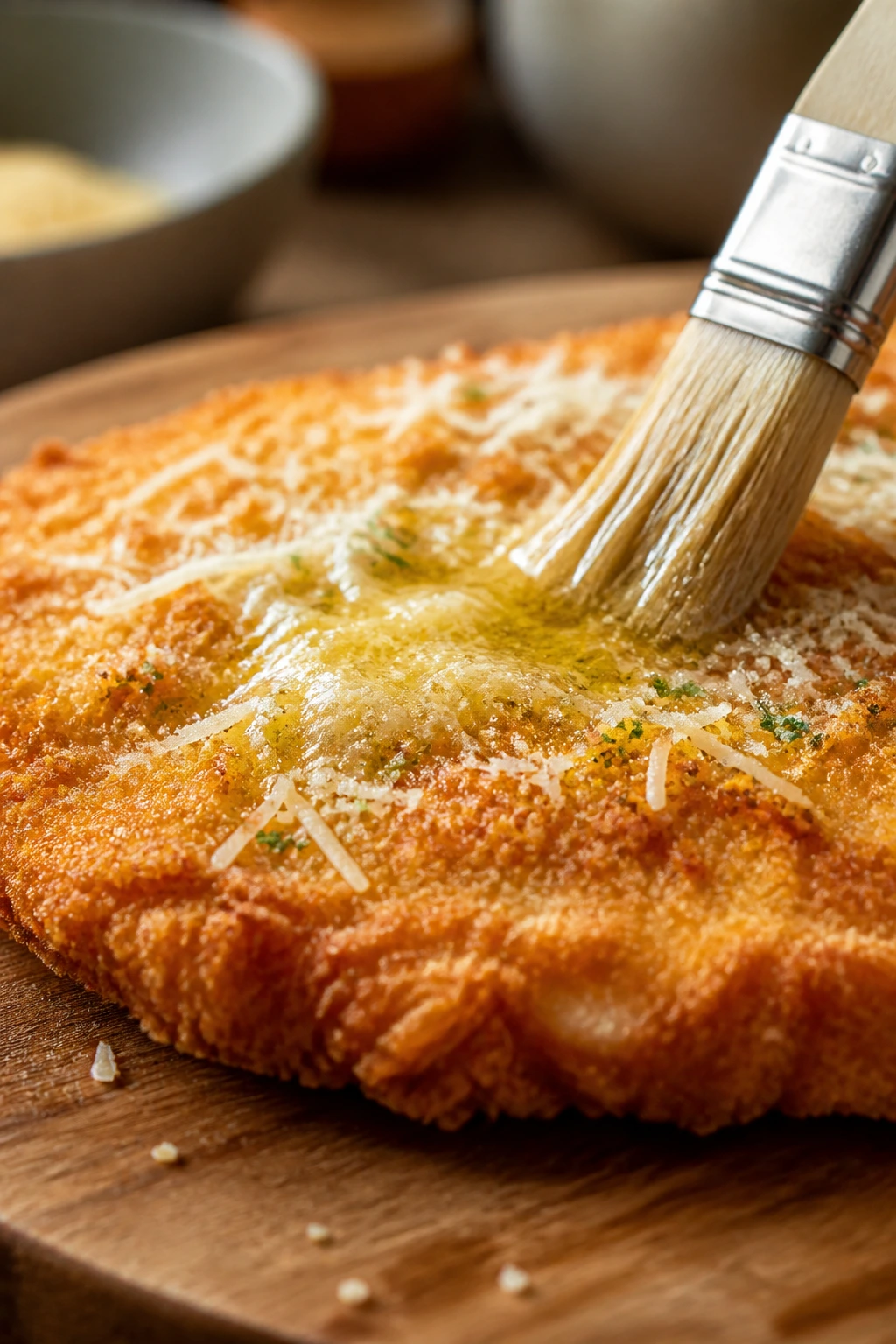
Keep one finishing move in your pocket: a dusting of parmesan, a few sesame seeds, a spoon of extra sauce, or a tiny brush of melted butter on breaded items right before serving. That last little touch can make a dinner feel finished without changing the flavor profile enough to scare anyone.
Customization:
Let the table split into camps. Sauce on the side for one person, sauce on top for another. Pickles in a separate bowl. Green onions reserved for adults. It sounds fussy until you see the meal get eaten instead of argued over.
Serving Suggestions:
Use small bowls for dips, shallow plates for tenders and quesadillas, and wide pasta bowls for anything saucy. A food looks calmer when it isn’t buried. Sprinkle parsley, parmesan, or a few chopped scallions only after the first serving is already on the table.
Make-It-Yours:
For gluten-free diners, use GF pasta, corn tortillas, GF breadcrumbs, and a certified gluten-free soy sauce or tamari. For dairy-light plates, lean harder on olive oil, broth, and tomato-based sauces, and keep the cheese as a garnish instead of the base. For lower-sodium meals, buy low-sodium broth and soy sauce and season with garlic, onion powder, lemon, and herbs rather than just salt.
Make-Ahead, Storage, and Reheating Guidance
Most of these dinners keep well in the fridge for 3 to 4 days in a covered container. The exceptions are the crisped items, which always soften a little after refrigeration. Chicken tenders, quesadillas, and grilled cheese are best reheated in a skillet or oven rather than the microwave if you care about texture.
Casseroles, meatballs, sloppy joe filling, ziti, pasta bakes, and meatloaf muffins freeze well for about 2 months. Cool them completely first, then wrap tightly or store in freezer-safe containers. If you can freeze the sauce separately from the starch, do it. That extra step keeps pasta and rice from turning heavy or gummy when thawed.
For reheating, use the method that matches the food. Breaded items go in a 375°F oven for 10 to 12 minutes or in a skillet over medium heat. Pasta bakes and casseroles reheat best covered at 350°F with a splash of milk or sauce added to the pan. Fried rice and skillet meals like sloppy joes or cheeseburger pasta do well in a pan over medium heat with a spoonful of water or broth to wake them up.
Room temperature is the one place to be firm. Don’t leave cooked dinner out for more than 2 hours. That goes for the cheesy stuff too, even when the table is slow and everyone is “still eating.” Safe food is better than perfectly timed food.
Variations and Adaptations to Try
Hidden-Veggie Helper:
Blend cooked cauliflower into mac and cheese sauce, stir grated zucchini into meatloaf muffins, or fold finely chopped spinach into ziti. Keep the texture smooth and the amount modest; the point is not to trick anyone, it’s to make the dish more forgiving.
Gluten-Free Dinner Basket:
Use gluten-free pasta in the mac, ziti, and skillet recipes; GF breadcrumbs in tenders and meatballs; corn tortillas for quesadillas; and a certified GF soy sauce or tamari for fried rice and teriyaki bowls. The important part is keeping the sauce texture stable, since some GF pastas soften faster.
Dairy-Light Route:
Lean on tomato sauces, teriyaki, BBQ, and fried rice if dairy needs to stay low. For the creamy dinners, use lactose-free milk and keep cheese as a topping instead of a heavy layer. The food still feels like comfort food, just a little less rich.
Lower-Sodium Lane:
Buy low-sodium broth, use less soy sauce, and season with garlic powder, onion powder, pepper, and a pinch of sugar before reaching for more salt. Kids often accept this better than adults do because they’re more sensitive to sharp saltiness anyway.
Spice Split Table:
Cook everything mild, then keep hot sauce, chili flakes, pepper jack, or jalapeños on the side for the people who want more heat. This is the cleanest way to serve one dinner to mixed preferences without making the whole pan unrecognizable.
Freezer Batch Night:
Double the meatballs, ziti, sloppy joe filling, or meatloaf muffins and freeze half in smaller containers. It’s a smart move for nights when nobody wants to cook, and the flavors in tomato-based or baked dishes usually survive freezing better than the fried or breaded ones.
Common Mistakes to Avoid With Picky-Eater Dinners
Too Many Surprises on One Plate:
If the sauce is new, the vegetable is new, and the texture is new, you’ve built a tiny obstacle course. Fix it by keeping one part of the plate familiar and letting the rest stay plain.
Serving Everything Wet:
Saucy food is fine. Watery food is not. Pasta, quesadillas, and tenders all lose appeal if liquid is pooling underneath them, so let sauces thicken and let casseroles rest before cutting.
Pushing Vegetables Too Hard:
A child who sees a giant green piece in the middle of dinner may stop trusting the whole plate. Use small pieces, familiar shapes, or keep the vegetables on the side until they’re accepted.
Overcooking the Proteins:
Dry chicken, dry meatballs, and dry meatloaf are hard sells. Use a thermometer when you can, and pull poultry at 165°F instead of waiting for it to look “extra done.”
Forgetting the Finish:
A little parmesan, a glossy sauce, a toasted bun, or a crisp edge makes a big difference. Plain food can work, but flat-looking food loses attention fast.
Making Everything Too Big:
Large portions can look like a challenge, especially to a hesitant eater. Smaller pieces, slices, triangles, and muffin-sized portions feel less demanding and get eaten more often.
Questions Parents Ask at Dinner Time

What dinners work best for kids who hate mixed foods?
Handhelds and separated plates usually win. Think chicken tenders, quesadillas, mini pizzas, grilled cheese with soup on the side, or bowls where the sauce can be controlled. The less the food looks like a jumble, the better.
Can I make these ahead and reheat them without wrecking the texture?
Yes, but choose the right reheating method. Pasta bakes, meatballs, sloppy joe filling, and casseroles handle the fridge well; breaded items and sandwiches need the oven or skillet to come back to life.
How do I add vegetables without starting a fight at the table?
Use small-cut vegetables, soft-cooked versions, or blended sauces rather than big, obvious chunks. Peas in fried rice, cauliflower in mac and cheese, or finely chopped broccoli in a casserole usually get a better reception than a full floret staring back at the child.
What if one child wants plain food and another wants sauce?
Serve the sauce separately. That single move solves a surprising number of arguments. It also keeps the food from getting soggy while giving the sauce-loving eater what they want.
Which recipes freeze the best?
Meatballs, meatloaf muffins, sloppy joe filling, baked ziti, taco casserole, and ham-and-potato bake all freeze well. Quesadillas, grilled cheese, and fried rice are less friendly to the freezer once fully assembled, so make those fresh when you can.
Can I swap chicken for turkey or beef in these dinners?
Usually, yes. Turkey works well in meatballs, skillet pastas, and meatloaf; beef works well in tacos, sloppy joes, and casseroles. Just watch the fat level so the dish doesn’t turn dry or greasy.
How do I keep breaded foods crispy if I’m serving a crowd?
Use a wire rack, keep them in a low oven if needed, and don’t stack them. Once they’re piled together, steam softens the crust fast. A sheet pan in a 200°F oven is better than a closed container.
What if my picky eater hates cheese?
Lean on tomato-based sauces, BBQ chicken, teriyaki bowls, fried rice, and sloppy joes. Cheese is useful here, but it’s not the only path. Familiar flavor matters more than dairy.
Dinner That Lands Softly
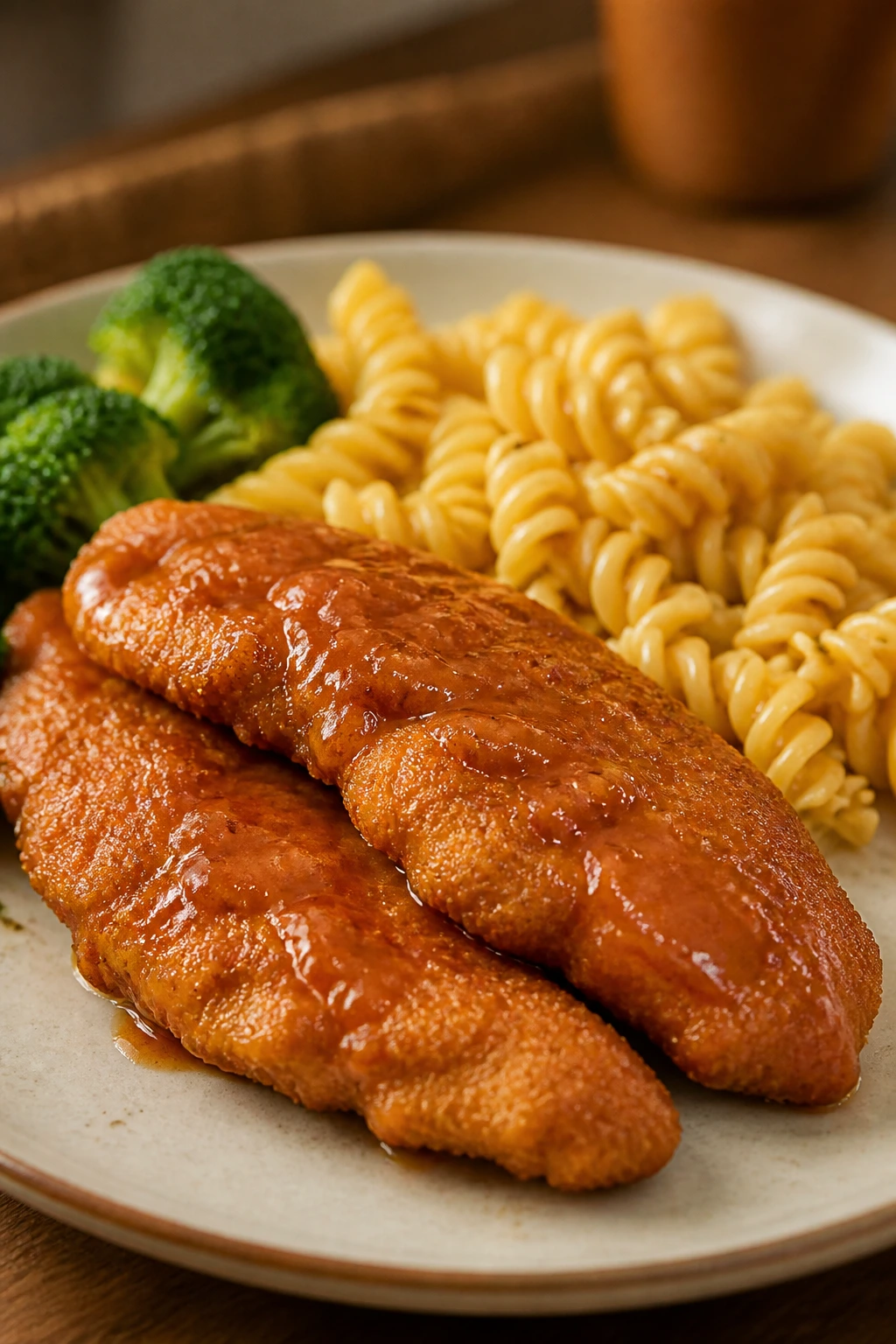
The best family dinners for picky eaters usually do one simple thing well: they keep dinner from feeling like a test. A crisp coating, a smooth sauce, a familiar pasta shape, or a sandwich cut into neat triangles can change the whole mood at the table before anyone says a word.
That’s the part I like most about this collection. It gives you choices without turning dinner into a project. Some nights call for chicken tenders and fries. Other nights call for mac, ziti, or a skillet that comes straight from the stove to the table. And on the rough nights, that kind of flexibility is worth more than a perfect menu ever would be.