



A skewer can do a strange little bit of kitchen magic. Put the right mix of salt, fat, acid, and heat on a stick, and dinner suddenly feels bigger than the sum of its parts. Veggie kebabs filling without meat work because the grill or broiler hits every surface at once; that means browned edges, quicker caramelization, and vegetables that taste concentrated instead of watery.
I’ve never had much patience for kebabs that lean on two sad zucchini coins and a bell pepper chunk that barely made it past the cutting board. The good ones have heft. They need a chewy element, a creamy element, or a starch that can handle heat without collapsing into a tray of soft mush. Halloumi, tofu, paneer, seitan, potatoes, gnocchi, polenta — those are the ingredients that make a meatless skewer feel like dinner, not garnish.
This collection leans into that idea from a few different angles. Some kebabs are salty and blistered. Some go sticky-sweet with fruit. Some are smoky, some herby, some sharply spiced. All of them are built to be eaten hot, straight off the platter, with enough substance that nobody at the table starts hunting for a second main dish.
Why These Meatless Kebabs Earn a Spot at the Table
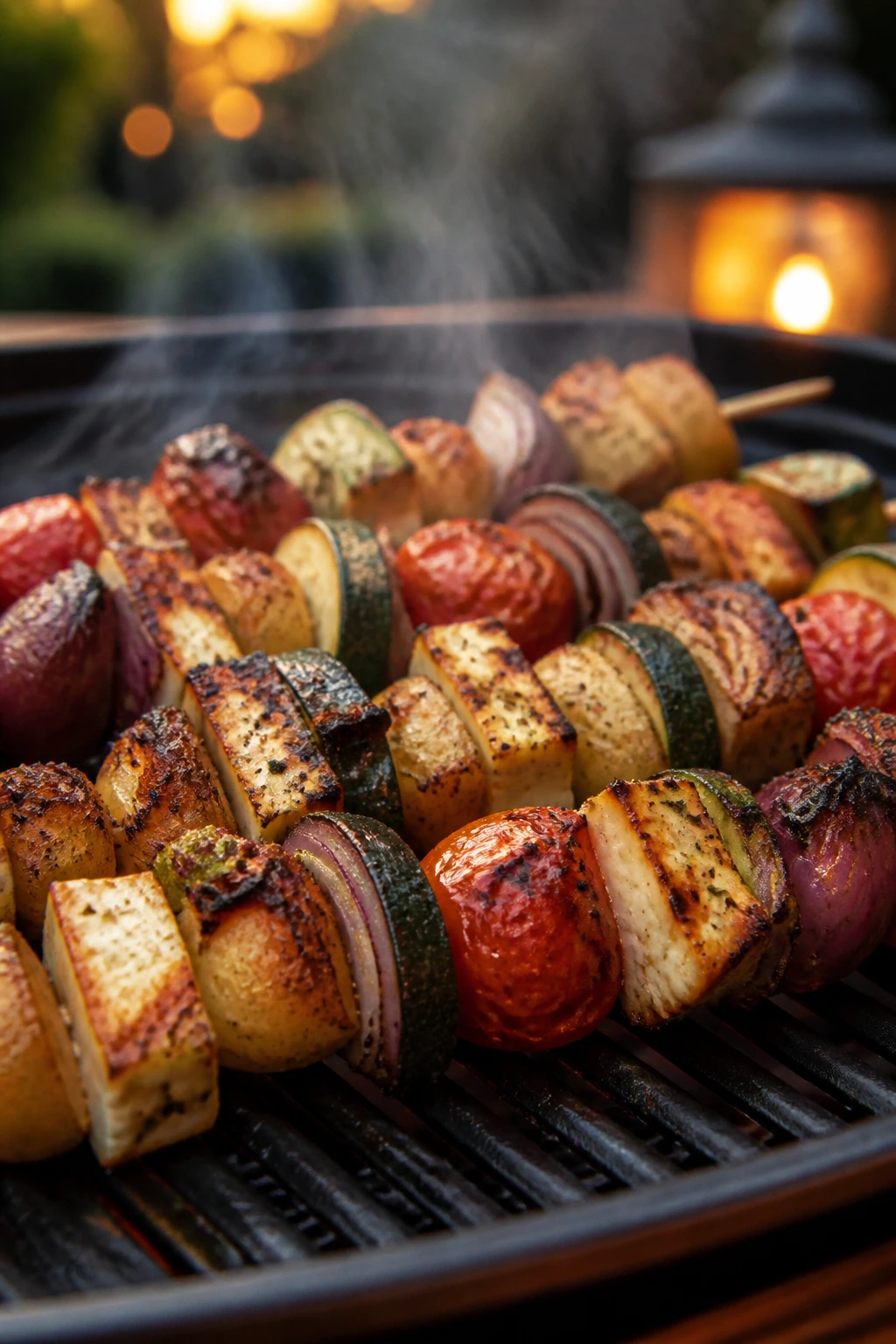
- Built-in heft: Halloumi, tofu, seitan, gnocchi, polenta, and potatoes give these skewers enough chew to stand in for meat.
- Fast hot cooking: Most of these kebabs finish in 8 to 14 minutes, which keeps the vegetables crisp at the edges instead of limp in the center.
- Strong flavors first: Every recipe uses a salty, spicy, smoky, or tangy coating, because plain vegetables on a stick are a waste of flame.
- Easy to serve: A platter of kebabs with rice, flatbread, salad, or yogurt sauce can feed a table without much drama.
- Broiler-friendly: If an outdoor grill isn’t part of your setup, a hot broiler or grill pan can still give you the char you want.
- Flexible by design: Most of these swap cleanly between halloumi, paneer, tofu, seitan, or a bigger vegetable mix, so you can work with what’s in the fridge.
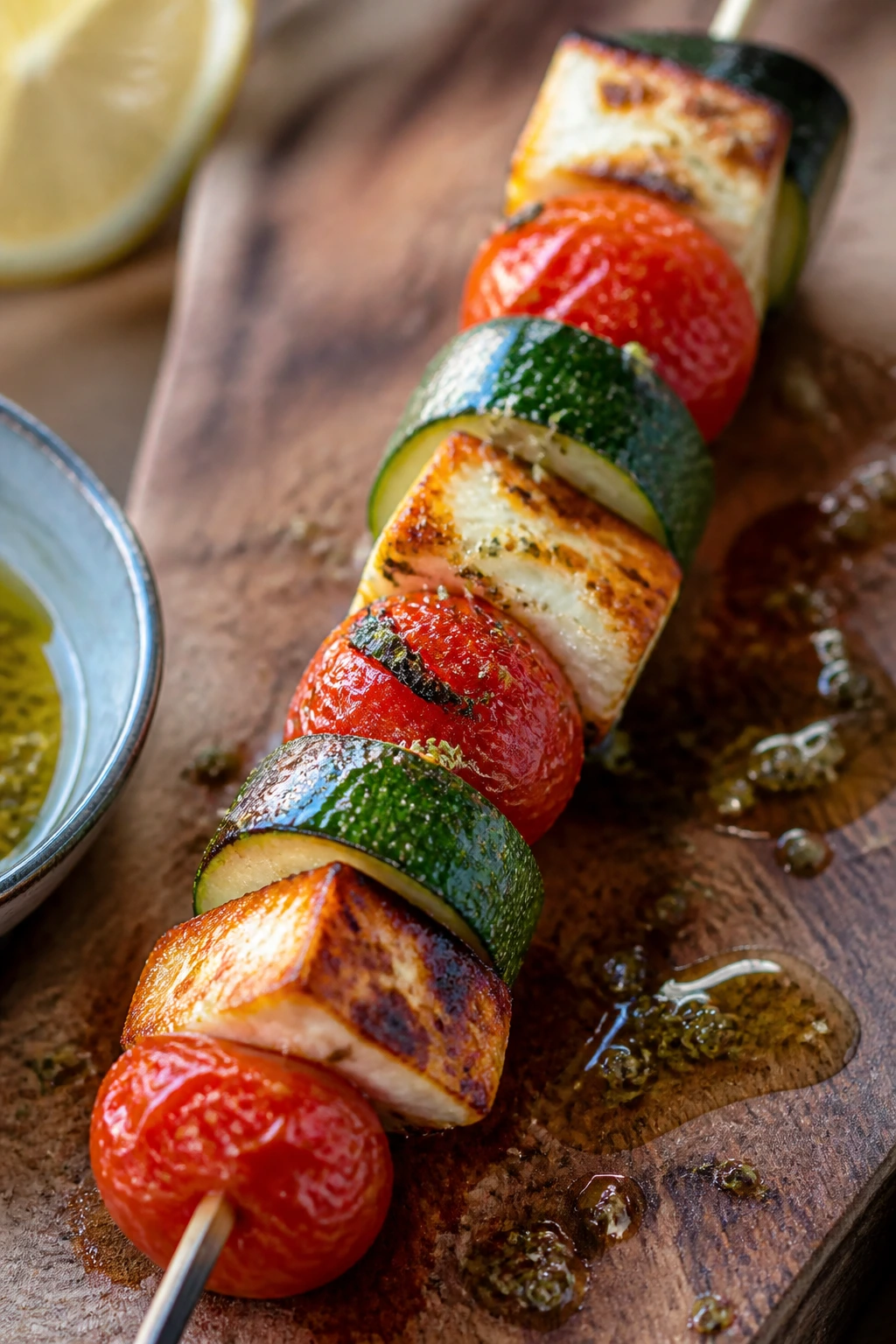
1. Halloumi, Zucchini, and Cherry Tomato Skewers
Halloumi is the cheese that knows how to hold its shape. It goes from firm and squeaky to bronzed and salty in a matter of minutes, which makes it one of the easiest ways to make veggie kebabs filling without meat. The zucchini softens just enough, the tomatoes slump and burst, and the whole skewer ends up tasting brighter than the short ingredient list suggests.
Why It Works:
Salt, heat, and acid do the heavy lifting here. Halloumi gives you chew and protein, while zucchini and tomatoes bring moisture without making the skewer soggy. A lemon-oregano oil keeps the cheese from tasting flat, and the quick grill time — usually about 8 to 10 minutes — means the tomatoes blister before the halloumi dries out.
Key Ingredients:
- 8 ounces halloumi, cut into 1-inch cubes
- 2 medium zucchini, cut into thick half-moons
- 12 to 16 cherry tomatoes
- 1 red onion, cut into 1-inch wedges
- 3 tablespoons olive oil
- 2 tablespoons lemon juice
- 1 teaspoon dried oregano
- 1 garlic clove, finely grated
- 1/2 teaspoon black pepper
Quick Steps:
- Soak wooden skewers in water for 20 minutes if needed.
- Whisk the olive oil, lemon juice, oregano, garlic, and black pepper in a large bowl.
- Toss the zucchini, tomatoes, onion, and halloumi gently in the oil mixture.
- Thread the pieces onto skewers, leaving a little space between items so the heat can move around them.
- Grill over medium-high heat for 8 to 10 minutes, turning once, until the halloumi is browned and the zucchini has visible grill marks.
Equipment for This Recipe:
- 8 to 10 metal or soaked bamboo skewers
- Grill or grill pan
- Large mixing bowl
- Tongs
- Sharp knife and cutting board
How to Serve This Dish:
Pile these over herbed couscous or spoon them onto warm pita with yogurt. They also sit well next to a chopped cucumber salad, where the cold crunch plays off the salty cheese.
Pro Tips for This Recipe:
- Cut the halloumi into generous cubes; thin slices can split on the skewer.
- Dry the zucchini after washing it. Wet surfaces fight browning.
- Use cherry tomatoes on the smaller side so they hold together until the cheese is ready.
Variations on This Dish:
- Mint-Lemon Halloumi: Add chopped mint and a little lemon zest to the oil mixture for a sharper finish.
- Paneer Swap: Use firm paneer in place of halloumi if you want a milder, less salty skewer.
- Olive Add-In: Thread in kalamata olives between the cheese and zucchini for a briny, Mediterranean edge.
Common Mistakes to Avoid with This Dish:
- Cutting the cheese too small: Tiny halloumi cubes overcook fast. Keep them around 1 inch.
- Grilling over screaming-hot flames: The outside can blacken before the zucchini softens. Medium-high is enough.
- Skipping the acid: Without the lemon juice, the skewer tastes heavy and a little dull.
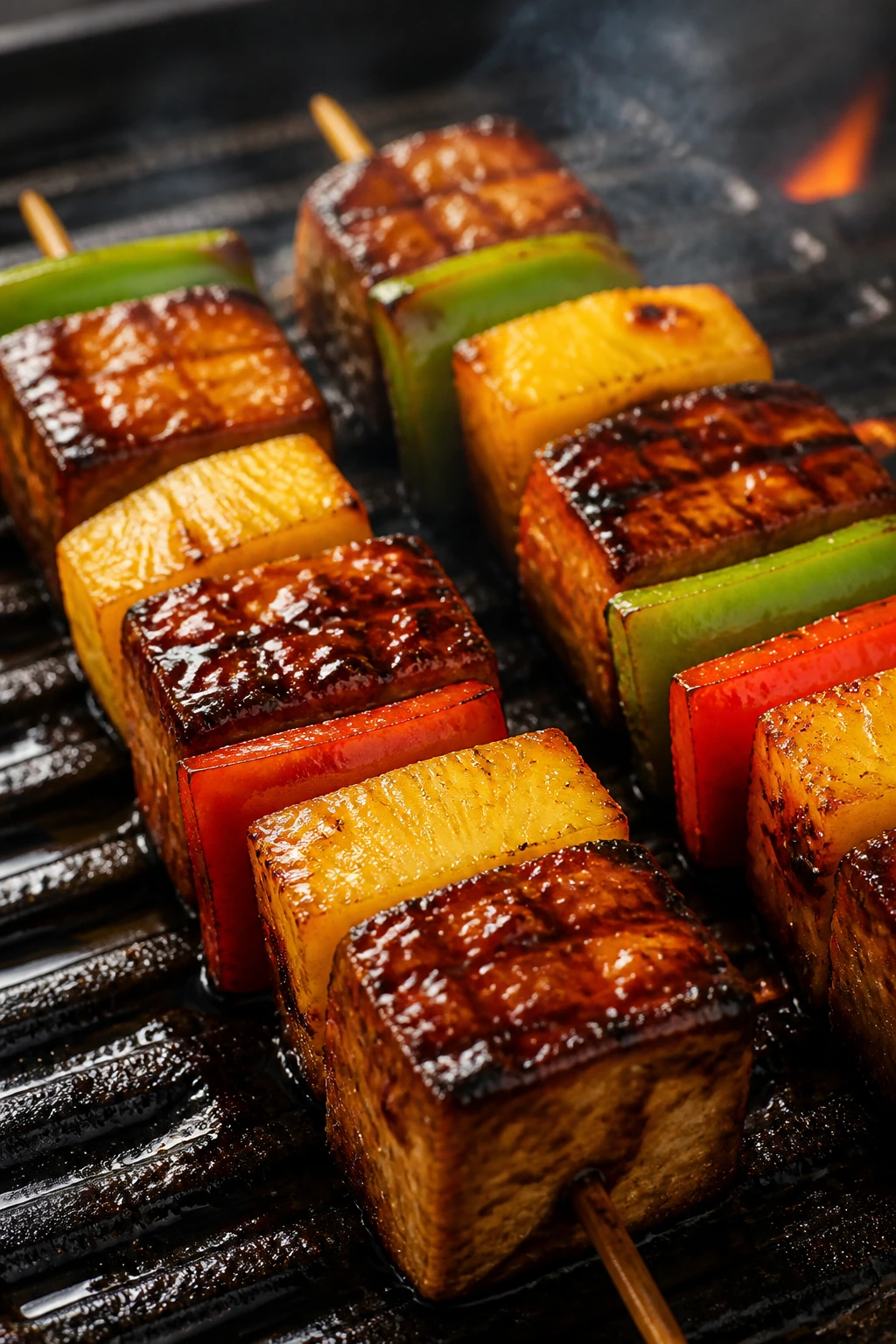
2. Teriyaki Tofu, Pineapple, and Bell Pepper Skewers
Extra-firm tofu gets a bad rap from people who never pressed it. Once you squeeze out the water and let it sit in a glossy teriyaki glaze, it picks up the edges of the grill and tastes almost juicy. Pineapple brings the sweet tang, bell pepper stays crisp, and the whole thing eats like a takeout platter that got dressed for the backyard.
Why It Works:
Tofu is the spine here. It absorbs marinade, takes on smoke, and gives the skewer enough substance to feel like a full meal. Pineapple adds moisture and sugar, which helps with browning, while the teriyaki sauce clings to the surface instead of running into the fire. The result is best when the skewers hit a hot grill for about 10 to 12 minutes.
Key Ingredients:
- 14 ounces extra-firm tofu, pressed and cut into 1-inch cubes
- 1 1/2 cups pineapple chunks
- 2 bell peppers, cut into 1-inch squares
- 1 small red onion, cut into wedges
- 1/4 cup soy sauce
- 2 tablespoons maple syrup or brown sugar
- 1 tablespoon rice vinegar
- 1 teaspoon grated fresh ginger
- 1 teaspoon sesame oil
- 1 teaspoon cornstarch mixed with 1 tablespoon water
- 1 tablespoon sesame seeds, for finishing
Quick Steps:
- Press the tofu for 15 to 20 minutes, then cut it into even cubes.
- Whisk the soy sauce, maple syrup, rice vinegar, ginger, and sesame oil in a bowl.
- Marinate the tofu for at least 20 minutes, then stir the cornstarch slurry into the remaining sauce and simmer it for 1 to 2 minutes until glossy.
- Thread the tofu, pineapple, pepper, and onion onto skewers.
- Grill over medium-high heat for 10 to 12 minutes, brushing with the thickened glaze during the last 2 minutes.
Equipment for This Recipe:
- Skewers
- Grill or broiler
- Tofu press or clean kitchen towel with a weighted plate
- Small saucepan
- Tongs
How to Serve This Dish:
Serve with jasmine rice and a spoonful of the leftover glaze. A pile of shredded cabbage or a quick cucumber salad keeps the sweetness from taking over.
Pro Tips for This Recipe:
- Choose extra-firm tofu, not silken tofu. Soft tofu falls apart the moment you thread it.
- Pat the pineapple dry before skewering so the glaze sticks.
- Brush the glaze on late. Sugar burns fast.
Variations on This Dish:
- Spicy Gochujang Tofu: Stir 1 tablespoon gochujang into the marinade for heat and a deeper red color.
- Mango Version: Swap the pineapple for firm mango chunks when you want a softer, rounder sweetness.
- Sesame-Garlic Finish: Add a final drizzle of toasted sesame oil and sliced scallions after grilling.
Common Mistakes to Avoid with This Dish:
- Skipping the press: Wet tofu gives you pale, mushy cubes instead of browned ones.
- Adding glaze too early: Sugar-heavy sauce can scorch before the tofu is ready.
- Packing fruit too tightly: Leave room so the pineapple can caramelize instead of steaming.
3. Paneer Tikka Skewers with Peppers and Onion
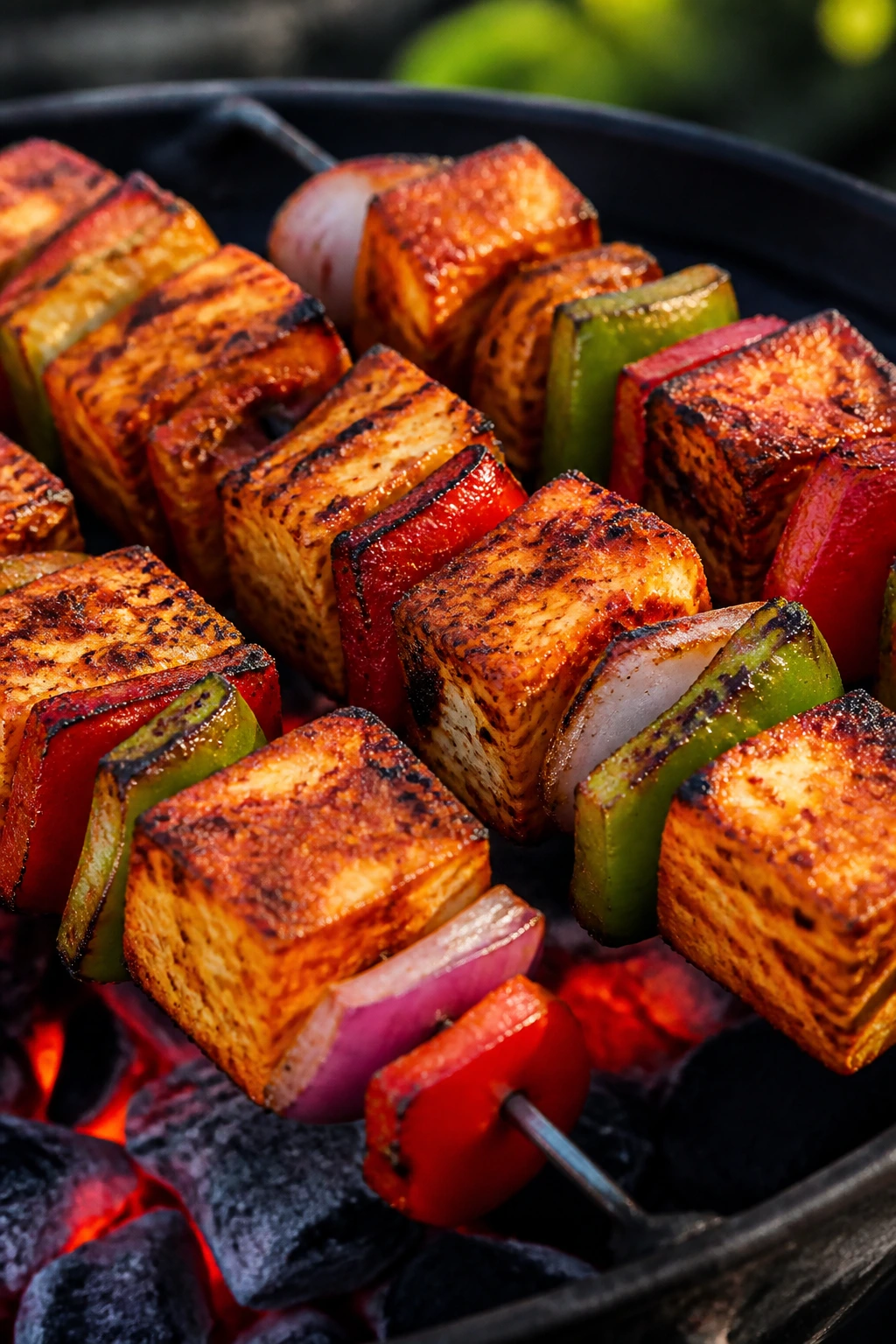
Paneer behaves like tofu’s sturdier cousin. It doesn’t melt, it doesn’t sulk, and it loves a strong marinade. In this paneer tikka version, yogurt, ginger, garlic, and warm spices seep into the cheese and give you those orange-edged cubes that smell like they’ve been standing over a charcoal fire all afternoon.
Why It Works:
Paneer has the body to survive high heat, which matters because the best tikka flavor comes from a proper char. The yogurt marinade softens the edges without turning the cheese fragile, and the spice mix — garam masala, cumin, turmeric, and chili — gives the skewer a red-gold crust. A short broil or grill of 8 to 10 minutes is enough.
Key Ingredients:
- 14 ounces paneer, cut into 1-inch cubes
- 1/2 cup plain full-fat yogurt
- 1 tablespoon lemon juice
- 1 tablespoon grated ginger
- 2 garlic cloves, grated
- 1 teaspoon garam masala
- 1 teaspoon ground cumin
- 1/2 teaspoon turmeric
- 1/2 teaspoon chili powder
- 1 bell pepper, cut into squares
- 1 red onion, cut into wedges
- 1 tablespoon oil, for brushing
- Chopped cilantro, for finishing
Quick Steps:
- Whisk the yogurt, lemon juice, ginger, garlic, garam masala, cumin, turmeric, and chili powder into a thick marinade.
- Toss the paneer, pepper, and onion in the marinade and rest for 30 minutes.
- Thread the marinated pieces onto skewers, alternating cheese and vegetables.
- Brush lightly with oil, then broil or grill for 8 to 10 minutes, turning once, until the paneer has browned edges and the onion softens.
- Finish with cilantro and a squeeze of lemon.
Equipment for This Recipe:
- Skewers
- Sheet pan or grill pan
- Mixing bowl
- Pastry brush
- Tongs
How to Serve This Dish:
These belong with mint chutney, warm naan, and a spoonful of sliced red onion. If you want a fuller plate, add basmati rice and a tomato-cucumber salad.
Pro Tips for This Recipe:
- Use firm, fresh paneer. Crumbly paneer falls apart on the skewer.
- Do not marinate for hours on end; the yogurt can make the surface too soft.
- A little oil on the outside helps the spices brown instead of sticking.
Variations on This Dish:
- Smoky Oven Tikka: Add a pinch of smoked paprika if you want more grill-house flavor from the broiler.
- Green Herb Tikka: Blend cilantro and mint into the yogurt marinade for a fresher profile.
- Dairy-Light Version: Use extra-firm tofu in place of paneer and press it well before marinating.
Common Mistakes to Avoid with This Dish:
- Using watery yogurt: Thin marinade slides off. Use thick yogurt.
- Crowding the skewers: Leave a little space so the paneer browns on the edges.
- Skipping the oil brush: Dry paneer can look pale and grainy instead of bronzed.
4. Portobello, Baby Potato, and Bell Pepper Skewers
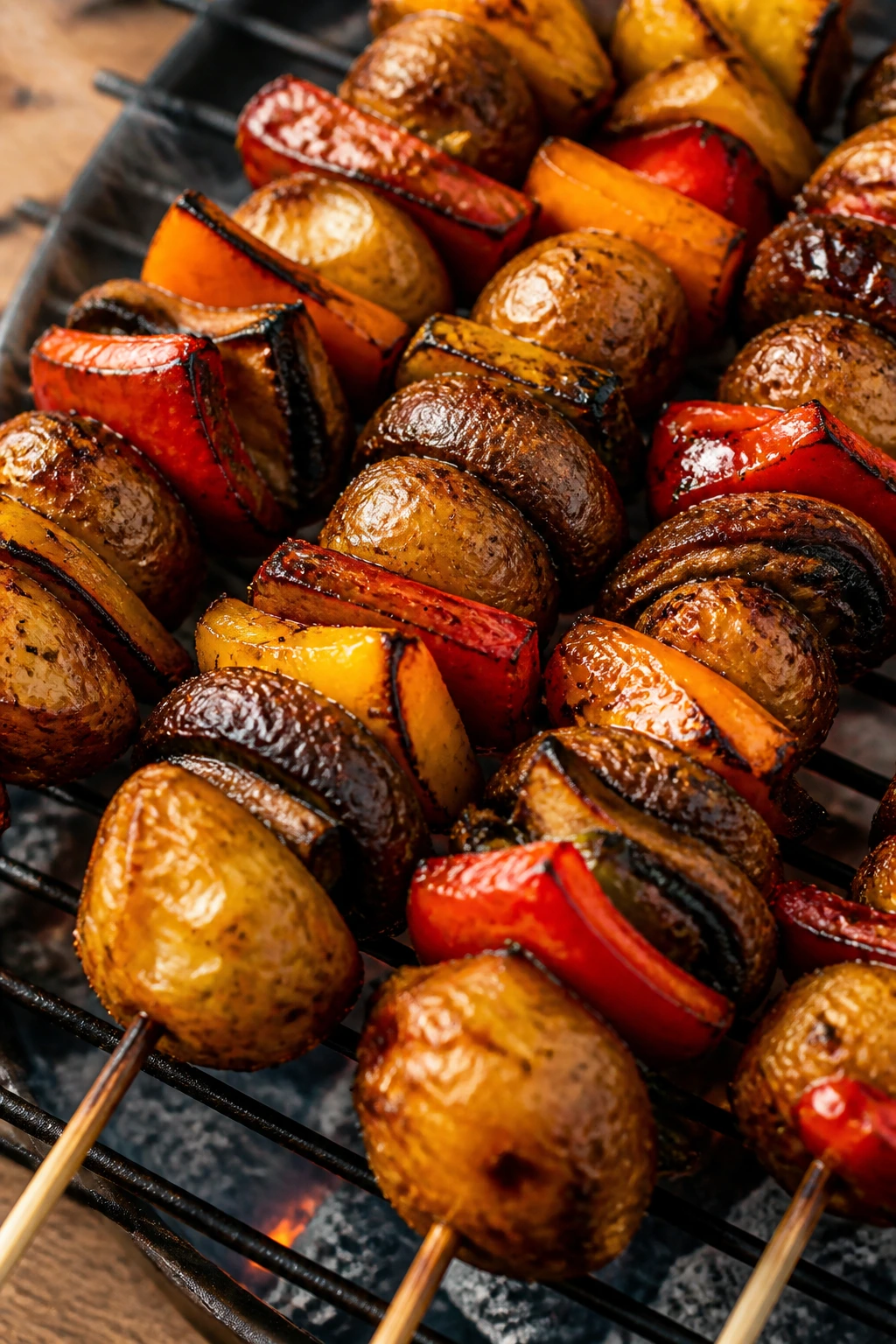
Portobello caps earn their keep when you cut them thick and let the edges blacken. Add parboiled baby potatoes and sweet bell peppers, and suddenly you’ve got a skewer with actual heft. It’s earthy, smoky, and far more substantial than the usual mushroom side dish.
Why It Works:
Mushrooms bring savory depth, but they need a little support, and the potatoes do that job beautifully. Parboiling the potatoes first keeps them from staying hard in the center while the mushrooms finish. A balsamic-rosemary glaze ties the whole thing together and gives you glossy edges after 12 to 14 minutes on the grill.
Key Ingredients:
- 4 portobello caps, cut into 1 1/2-inch pieces
- 1 pound baby potatoes, halved
- 2 bell peppers, cut into squares
- 1 red onion, cut into wedges
- 3 tablespoons olive oil
- 2 tablespoons balsamic vinegar
- 1 teaspoon chopped fresh rosemary or 1/2 teaspoon dried
- 2 garlic cloves, minced
- 1/2 teaspoon salt
- 1/2 teaspoon black pepper
Quick Steps:
- Parboil the baby potatoes in salted water for 8 minutes, then drain well.
- Whisk the olive oil, balsamic vinegar, rosemary, garlic, salt, and pepper in a bowl.
- Toss the potatoes, mushroom pieces, peppers, and onion in the glaze.
- Thread everything onto skewers, using the potatoes as anchors between softer pieces.
- Grill over medium heat for 12 to 14 minutes, turning occasionally, until the potatoes are tender and the mushrooms look dark and glossy.
Equipment for This Recipe:
- Skewers
- Medium saucepan
- Grill or grill pan
- Mixing bowl
- Slotted spoon
How to Serve This Dish:
Serve these with garlicky yogurt or a white bean puree. They’re solid next to crusty bread and a bitter greens salad, which balances the earthy mushroom flavor.
Pro Tips for This Recipe:
- Parboiling the potatoes is not optional here. Raw potatoes won’t finish in time.
- Cut the portobellos into broad pieces so they don’t shred on the skewer.
- Dry the mushrooms after cleaning; extra water keeps them from browning.
Variations on This Dish:
- Smoked Paprika Version: Add 1 teaspoon smoked paprika to the glaze for a deeper, campfire note.
- Feta Finish: Crumble feta over the finished skewers for a salty pop.
- Herb Garden Swap: Use thyme or oregano instead of rosemary if that’s what you have.
Common Mistakes to Avoid with This Dish:
- Skipping the potato pre-cook: The mushrooms will be done before the potatoes are tender.
- Using tiny mushroom scraps: Small pieces dry out fast. Bigger chunks hold up better.
- Overturning every minute: Let the mushrooms sit long enough to color before you move them.
5. Shawarma-Spiced Cauliflower and Feta Skewers
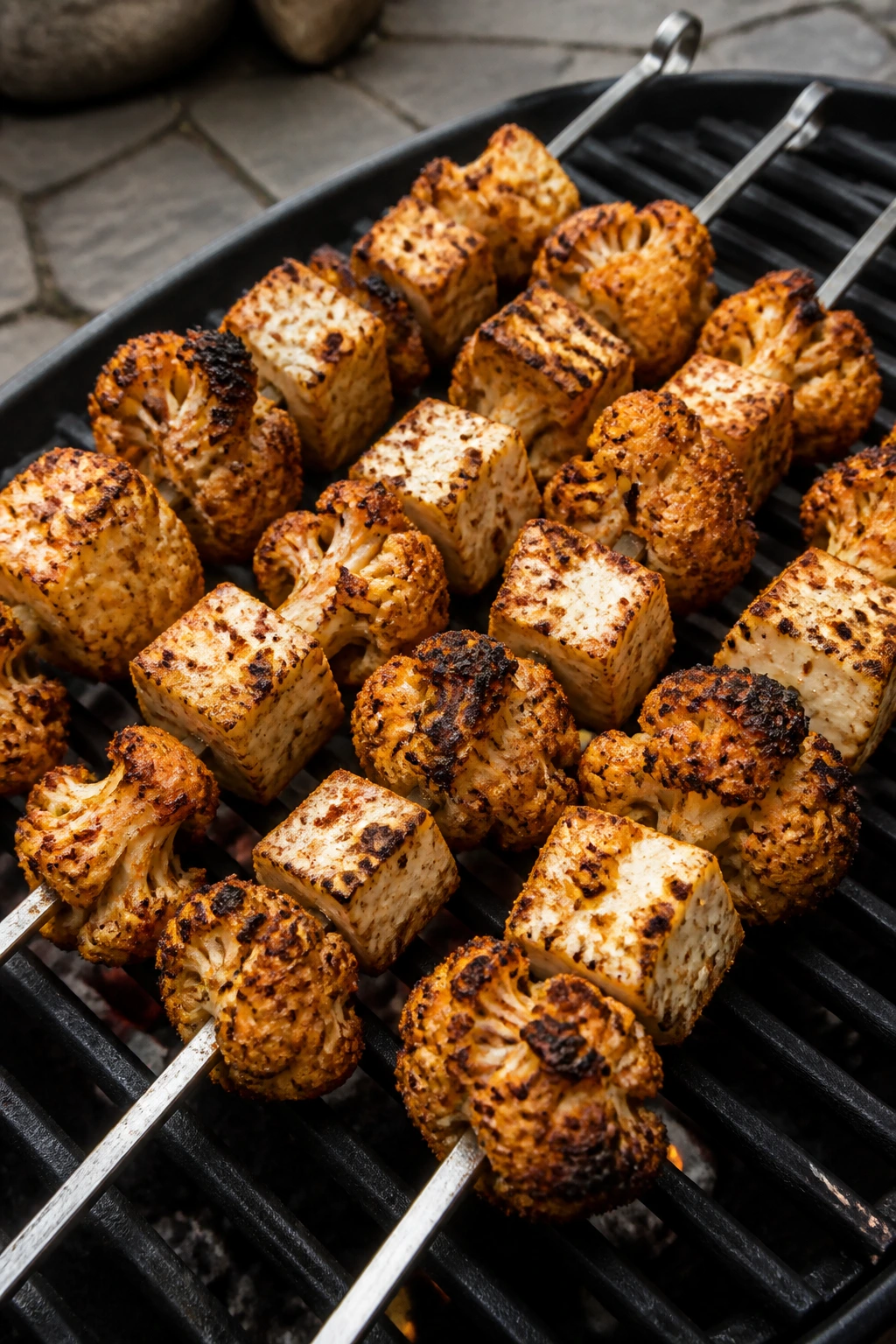
Shawarma spice makes cauliflower taste like it belongs on a crowded street cart instead of in a roasting pan. The florets pick up cumin, coriander, paprika, and a little cinnamon, while feta adds salty pockets that turn soft and creamy at the edges. It’s a smart skewer when you want something meatless but still deeply seasoned.
Why It Works:
Cauliflower can be bland if you treat it gently, but high heat and a strong spice blend fix that fast. The florets char around the edges, the feta softens without fully melting, and the lemon-tahini drizzle gives the skewer the acid it needs. Because cauliflower cooks quickly once cut small, this one usually finishes in about 10 to 12 minutes.
Key Ingredients:
- 1 medium head cauliflower, cut into 1 1/2-inch florets
- 6 ounces feta, cut into thick cubes
- 1 red onion, cut into wedges
- 3 tablespoons olive oil
- 1 1/2 teaspoons ground cumin
- 1 teaspoon ground coriander
- 1 teaspoon paprika
- 1/4 teaspoon cinnamon
- 1/2 teaspoon salt
- 2 tablespoons tahini
- 1 tablespoon lemon juice
- 1 to 2 tablespoons warm water
Quick Steps:
- Whisk the olive oil, cumin, coriander, paprika, cinnamon, and salt in a bowl.
- Toss the cauliflower and onion in the spice oil until well coated.
- Thread the cauliflower, onion, and feta onto skewers, keeping the feta pieces tucked between sturdier florets.
- Grill or broil for 10 to 12 minutes, turning once, until the cauliflower has browned edges and the feta looks softened.
- Stir the tahini, lemon juice, and warm water into a pourable sauce and drizzle over the finished skewers.
Equipment for This Recipe:
- Skewers
- Large bowl
- Grill, grill pan, or broiler
- Small bowl for sauce
- Tongs
How to Serve This Dish:
Put these on a platter with pita, chopped cucumbers, and tomato salad. They also work well over rice if you want the meal to lean even more filling.
Pro Tips for This Recipe:
- Cut the cauliflower florets evenly so they finish together.
- Add the feta near the center of the skewer; it cooks more gently there.
- Thin the tahini sauce only a little. You want it to cling, not pour away.
Variations on This Dish:
- Harissa Heat: Add 1 teaspoon harissa paste to the spice oil for a hotter, redder skewer.
- No-Dairy Version: Skip the feta and toss in cubes of firm tofu instead.
- Caramelized Onion Twist: Grill the onions a bit longer and thread them in larger pieces for extra sweetness.
Common Mistakes to Avoid with This Dish:
- Cutting cauliflower too small: Tiny florets dry out and fall off the skewer.
- Using watery feta: Soft feta turns mushy under heat. Choose a firm block.
- Skipping the sauce: Cauliflower needs a finishing acid or it tastes flat.
6. Miso Eggplant, Shiitake, and Scallion Skewers
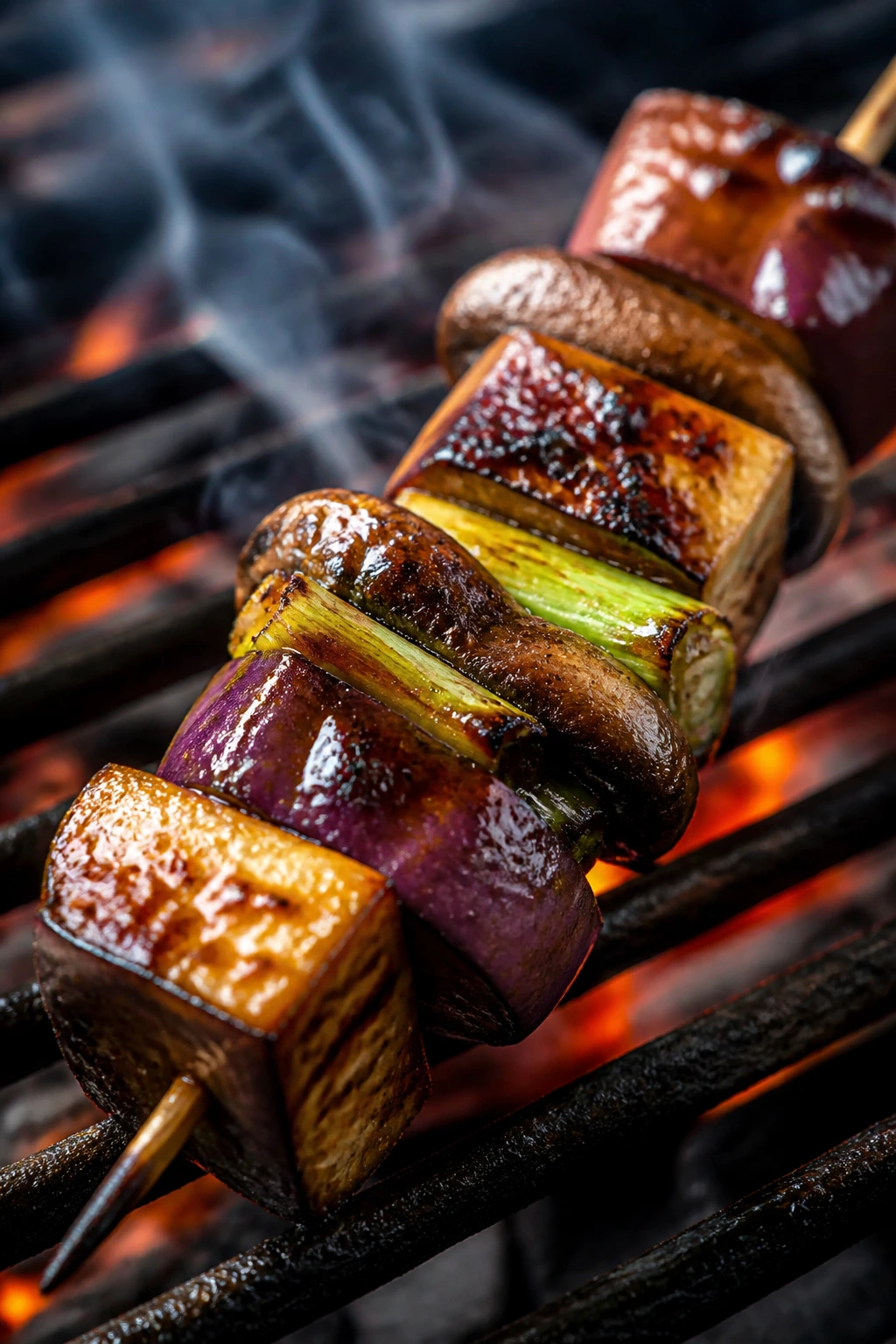
Eggplant turns silky when the glaze is salty and dark. Add shiitake mushrooms and scallions, and you get a skewer that tastes smoky, a little sweet, and deeply savory. This is the one that surprises people who think meatless kebabs can’t have much character.
Why It Works:
Miso gives the glaze body, salt, and that slow-burn savoriness that eggplant loves. Eggplant soaks up flavor like a sponge, but it needs hot heat to keep from turning soft in a bland way. Shiitakes bring chew and scallions bring a sharp, grassy finish, which keeps the whole skewer from feeling heavy.
Key Ingredients:
- 1 large eggplant, cut into 1 1/2-inch cubes
- 8 ounces shiitake mushrooms, stems removed
- 6 scallions, cut into 2-inch lengths
- 2 tablespoons white miso paste
- 1 tablespoon soy sauce
- 1 tablespoon mirin
- 1 tablespoon sesame oil
- 1 teaspoon grated ginger
- 1 teaspoon rice vinegar
- Sesame seeds, for finishing
Quick Steps:
- Whisk the miso, soy sauce, mirin, sesame oil, ginger, and vinegar into a smooth glaze.
- Toss the eggplant and shiitakes in the glaze and rest for 15 minutes.
- Thread the eggplant, mushrooms, and scallions onto skewers.
- Grill over medium-high heat for 10 to 12 minutes, brushing once more during the last few minutes, until the eggplant is browned and the mushrooms are tender.
- Scatter sesame seeds over the top before serving.
Equipment for This Recipe:
- Skewers
- Mixing bowl
- Grill or broiler
- Pastry brush
- Tongs
How to Serve This Dish:
Serve over steamed rice with pickled cucumbers on the side. A little chili crisp or a spoon of plain yogurt also works if you want contrast.
Pro Tips for This Recipe:
- Salt the eggplant lightly and let it sit 10 minutes if it tends to be bitter.
- Use medium-sized shiitakes; giant caps can tear on the skewer.
- Brush the glaze at the end so the miso doesn’t burn.
Variations on This Dish:
- Honey-Miso Finish: Add 1 teaspoon honey for a shinier, sweeter glaze.
- Garlic-Chili Version: Stir in 1 minced garlic clove and a pinch of chili flakes.
- Tofu Boost: Thread in firm tofu cubes if you want a little more protein on the stick.
Common Mistakes to Avoid with This Dish:
- Underheating the grill: Eggplant needs solid heat to brown instead of steaming.
- Skipping the rest time: The glaze clings better after a short marinate.
- Leaving scallions in long strips: Keep them short enough that they don’t flop and burn.
7. Harissa Sweet Potato, Zucchini, and Red Onion Skewers
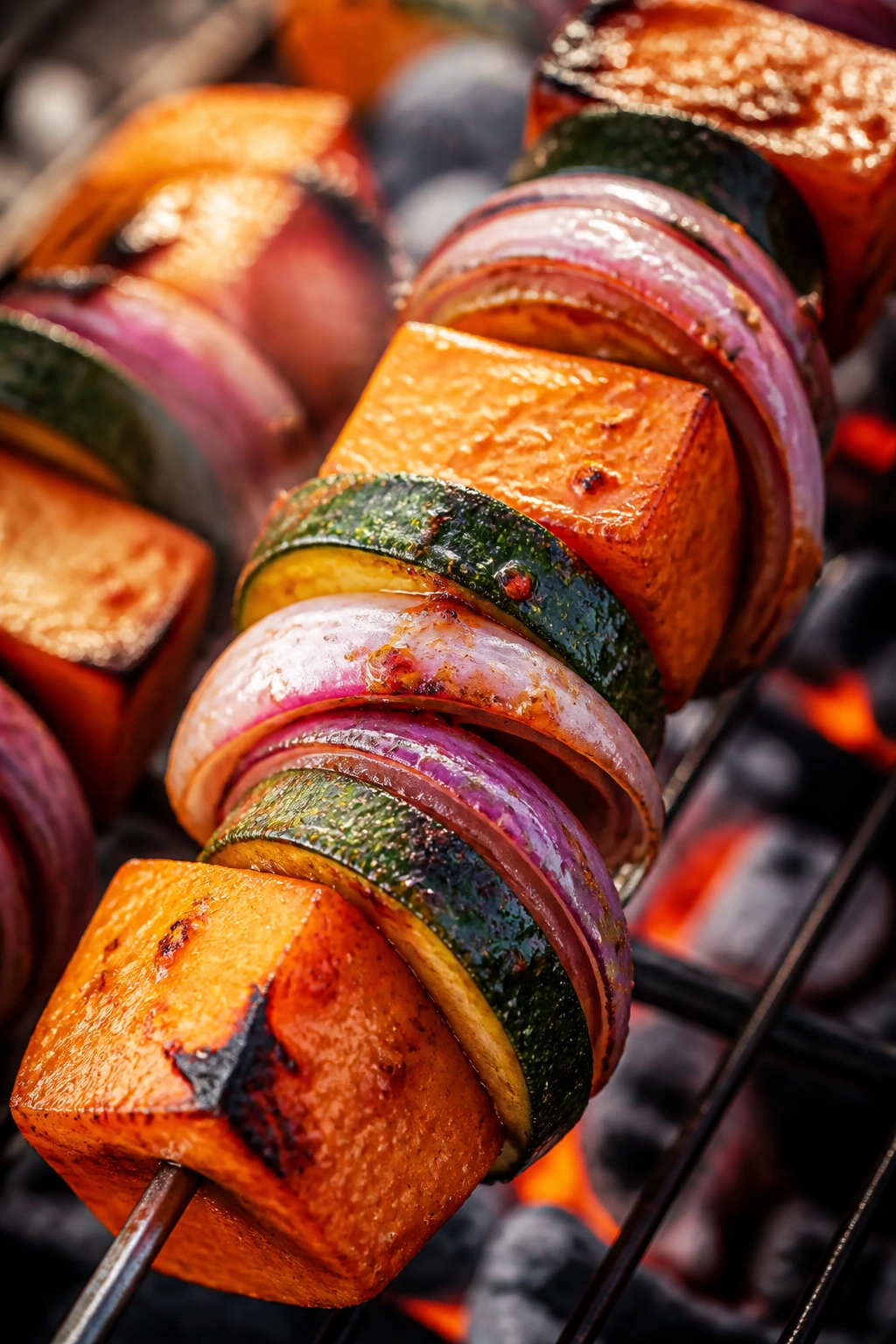
Sweet potato needs a head start, or it stays stubborn in the middle. Once you par-cook it and coat it with harissa, though, it turns smoky and tender with crisp edges. Zucchini and red onion fill in the gaps, and the whole skewer gets enough body to hold up next to grain salad or flatbread.
Why It Works:
This recipe depends on a simple trick: get the sweet potato partly cooked before it touches the skewer. That keeps the outside from overbrowning before the inside softens. Harissa brings chili heat and tomato depth, while lemon and olive oil keep the final flavor bright instead of heavy.
Key Ingredients:
- 2 medium sweet potatoes, peeled and cut into 1-inch cubes
- 2 medium zucchini, cut into thick rounds
- 1 red onion, cut into wedges
- 3 tablespoons olive oil
- 1 to 2 tablespoons harissa paste
- 1 tablespoon lemon juice
- 1 teaspoon honey or maple syrup
- 1/2 teaspoon salt
- Plain yogurt, for serving
Quick Steps:
- Boil the sweet potato cubes for 6 to 7 minutes, until the edges just start to soften.
- Whisk the olive oil, harissa, lemon juice, honey, and salt into a loose paste.
- Toss the sweet potato, zucchini, and onion in the harissa mixture.
- Thread onto skewers, alternating colors so the pieces cook at the same pace.
- Grill or broil for 10 to 12 minutes, turning once, until the sweet potato is tender and the edges are browned.
Equipment for This Recipe:
- Skewers
- Saucepan
- Mixing bowl
- Grill, broiler, or grill pan
- Tongs
How to Serve This Dish:
Spoon yogurt on the plate before laying the skewers down. A little chopped parsley and a squeeze of lemon make the sweet potato taste brighter.
Pro Tips for This Recipe:
- Don’t fully cook the sweet potato before grilling; it should still have some bite.
- Use a paste-style harissa if you want more cling and more heat.
- Keep the zucchini pieces thick or they’ll slump into the grates.
Variations on This Dish:
- Smoky Chile Version: Add a pinch of smoked paprika to the harissa mix.
- Herbed Yogurt Finish: Stir mint into the yogurt for a cooler contrast.
- Butternut Swap: Use butternut squash cubes instead of sweet potato if that’s what’s on hand.
Common Mistakes to Avoid with This Dish:
- Skipping the par-cook: Raw sweet potato won’t catch up in time.
- Using watery harissa: Thin paste won’t stick well to the vegetables.
- Overcooking zucchini: It should keep a little shape, not collapse.
8. Tempeh, Peach, and Poblano Skewers
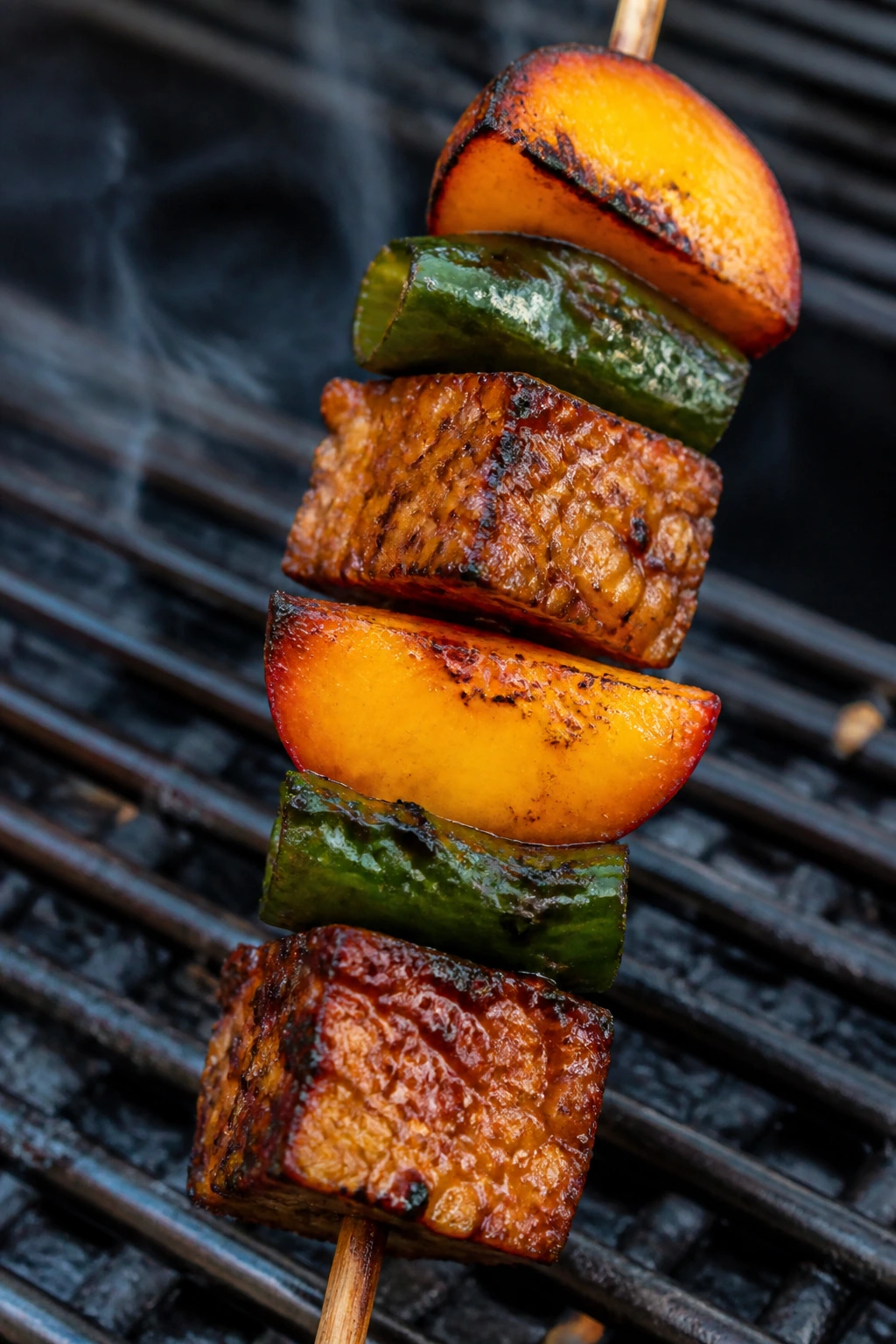
Tempeh can taste a bit nutty, a bit earthy, and a whole lot better once it meets hot metal and fruit. Peaches add a soft, sticky sweetness, poblano peppers bring gentle heat, and the maple-chipotle glaze ties the whole thing together. This is one of those kebabs that tastes like it took more effort than it did.
Why It Works:
Tempeh has a firm, dense bite, so it needs bold flavors to wake it up. A quick simmer or steam before marinating takes the edge off any bitterness and helps it soak up the glaze. Peaches char fast and turn jammy, which gives the skewer a glossy finish after about 8 to 10 minutes of cooking.
Key Ingredients:
- 8 ounces tempeh, cut into 1-inch cubes
- 2 ripe but firm peaches, cut into wedges
- 2 poblano peppers, cut into large squares
- 3 tablespoons olive oil
- 2 tablespoons maple syrup
- 1 tablespoon lime juice
- 1 teaspoon chipotle powder or minced chipotle in adobo
- 1/2 teaspoon salt
- 1 tablespoon chopped cilantro, for finishing
Quick Steps:
- Steam or simmer the tempeh cubes for 10 minutes, then drain well.
- Whisk the olive oil, maple syrup, lime juice, chipotle, and salt in a bowl.
- Toss the tempeh, peach, and poblano in the glaze and rest for 15 minutes.
- Thread the pieces onto skewers, alternating sweet fruit with the firmer tempeh.
- Grill over medium heat for 8 to 10 minutes, turning gently, until the peach has char marks and the tempeh looks lacquered.
Equipment for This Recipe:
- Skewers
- Steamer basket or saucepan
- Bowl
- Grill or grill pan
- Tongs
How to Serve This Dish:
Serve with cilantro rice or black beans and warm tortillas. A squeeze of lime right before eating wakes up the peaches and cuts the smoky heat.
Pro Tips for This Recipe:
- Steam tempeh first. It changes the texture in a way that matters.
- Choose peaches that are ripe but still firm, so they stay on the skewer.
- Brush the grill lightly with oil or the maple glaze can stick.
Variations on This Dish:
- Apricot Version: Swap in apricots if peaches are too soft.
- Mild Paprika Swap: Use smoked paprika instead of chipotle if you want less heat.
- Sesame-Lime Tempeh: Replace the chipotle with sesame oil and ginger for a different direction.
Common Mistakes to Avoid with This Dish:
- Using overripe fruit: Mushy peaches fall apart fast.
- Skipping the tempeh steam: Raw tempeh can taste dry and bitter.
- Cooking over high flame: The maple glaze will burn before the centers are hot.
9. Polenta, Broccoli, and Sun-Dried Tomato Skewers
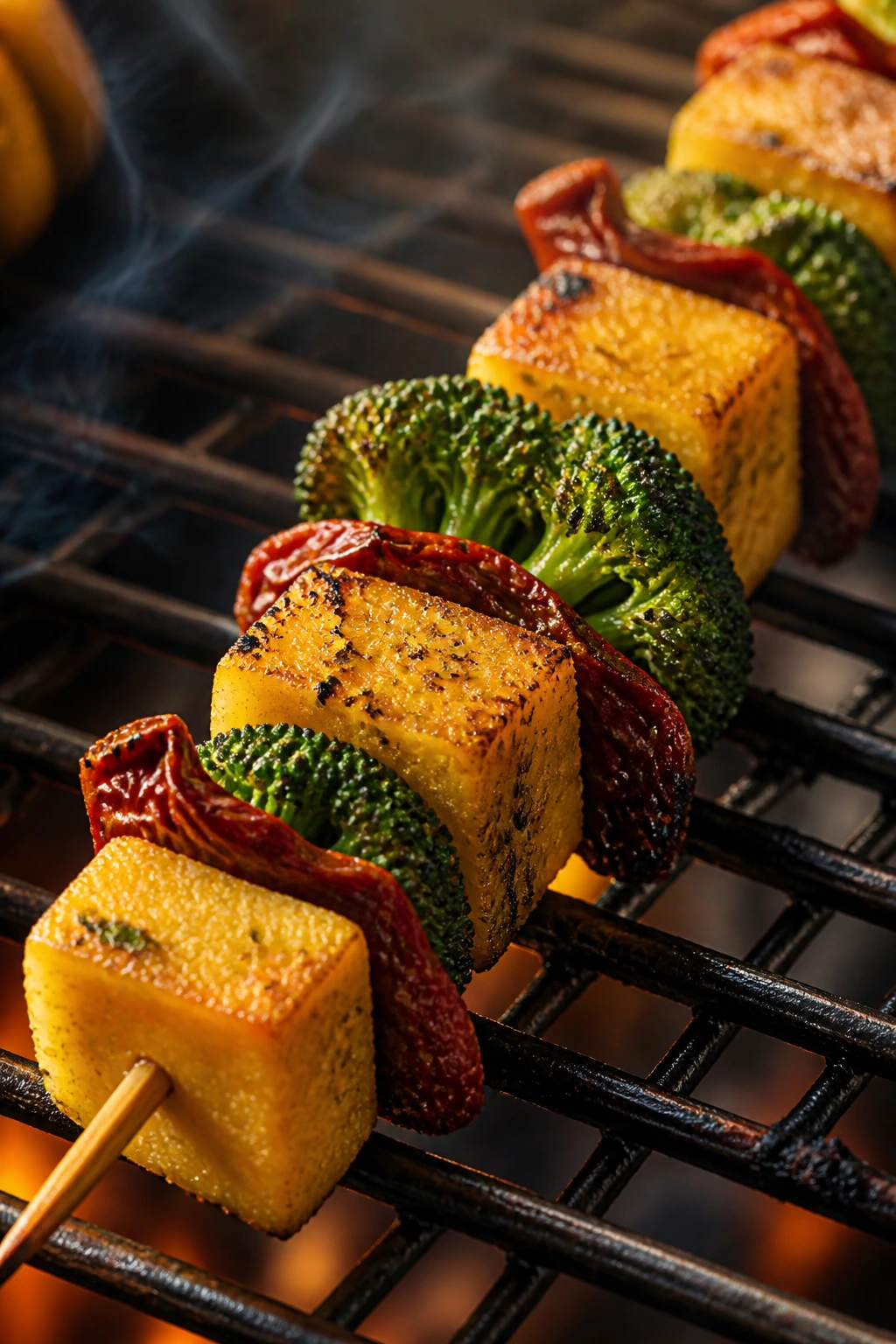
Polenta is one of those ingredients that gets ignored until you cut it into slabs and thread it between broccoli florets. Then it crisps on the outside and stays creamy inside, which is exactly the kind of texture a meatless kebab needs. Sun-dried tomatoes give the skewer a salty, concentrated punch that makes every bite taste finished.
Why It Works:
Cooked polenta behaves like a soft starch with some real structure, so it grills well if it’s chilled and cut cleanly. Broccoli brings crunch and a little bitterness, while sun-dried tomatoes add chew and salt. The skewer turns from side dish to main course once you add a garlicky oil and enough heat to brown the polenta edges.
Key Ingredients:
- 1 tube prepared polenta, about 18 ounces, cut into 1-inch cubes
- 2 cups broccoli florets
- 1/2 cup oil-packed sun-dried tomatoes, drained
- 1 red onion, cut into wedges
- 3 tablespoons olive oil
- 2 garlic cloves, minced
- 1 teaspoon Italian seasoning
- 1/2 teaspoon salt
- 1/4 teaspoon black pepper
Quick Steps:
- Cut the polenta into neat cubes and pat them dry.
- Whisk the olive oil, garlic, Italian seasoning, salt, and pepper together.
- Toss the broccoli, onion, polenta, and sun-dried tomatoes in the oil.
- Thread onto skewers, keeping the polenta near sturdier vegetables.
- Grill or broil for 10 to 12 minutes, turning once, until the broccoli has charred edges and the polenta is golden.
Equipment for This Recipe:
- Skewers
- Knife and cutting board
- Mixing bowl
- Grill, grill pan, or broiler
- Tongs
How to Serve This Dish:
Serve these with marinara for dipping or over arugula with shaved Parmesan. They also do well beside roasted mushrooms if you want a bigger spread.
Pro Tips for This Recipe:
- Chill the polenta before cutting; warm polenta can smear.
- Dry the broccoli well so it browns instead of steaming.
- If your polenta tube is soft, pop the cubes in the freezer for 10 minutes first.
Variations on This Dish:
- Pesto Polenta: Brush the skewers with pesto after grilling.
- Cheesy Finish: Add a dusting of grated Parmesan while the skewers are hot.
- Cauliflower Swap: Use cauliflower florets in place of broccoli for a milder flavor.
Common Mistakes to Avoid with This Dish:
- Using soft polenta straight from the pot: It won’t hold its shape.
- Crowding the skewer with too much polenta: The cubes need hot air around them to brown.
- Skipping the oil: Dry polenta tastes flat and can stick badly.
10. Crispy Gnocchi, Artichoke, and Cherry Tomato Skewers
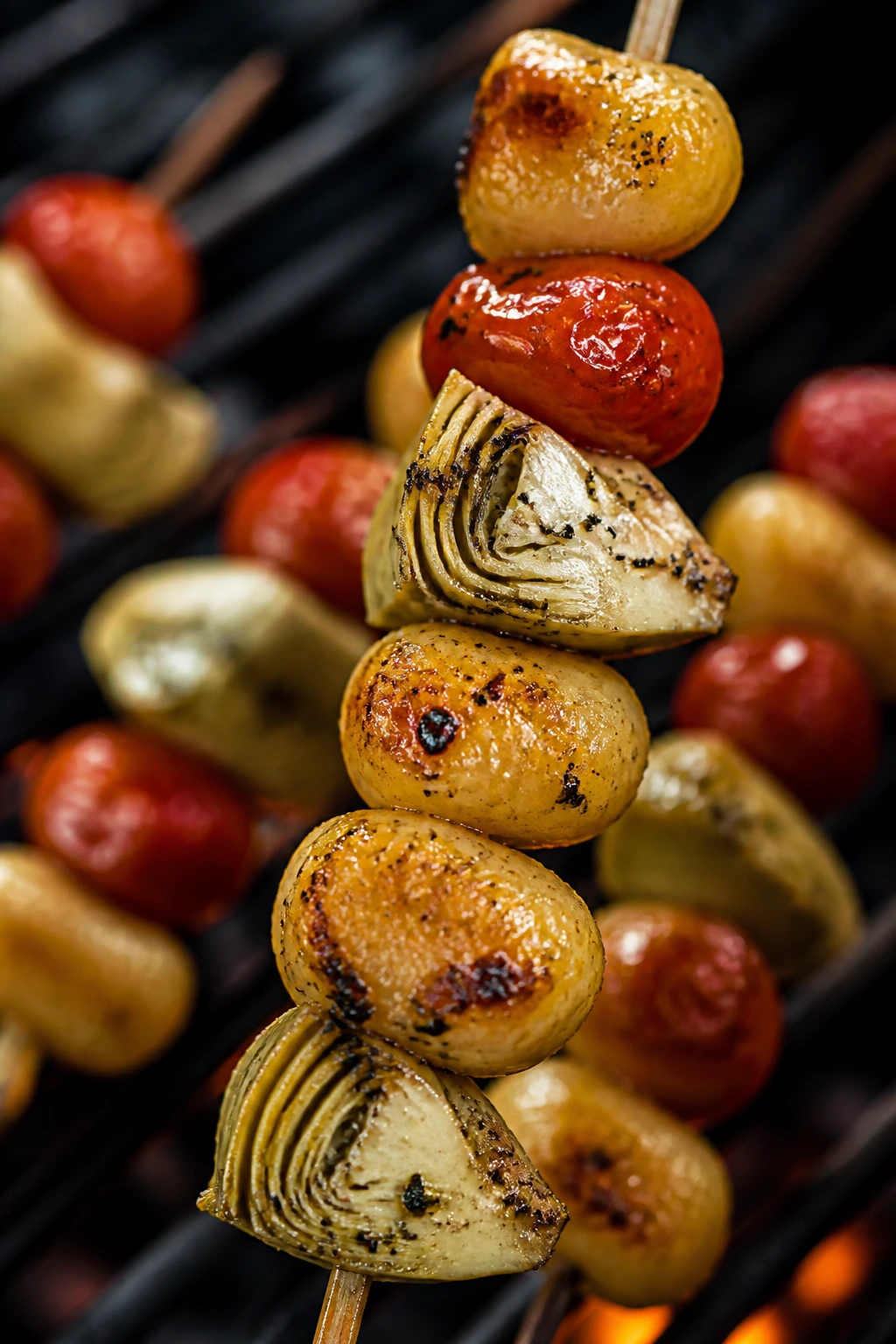
Gnocchi on a skewer sounds odd until the dumplings crisp at the edges. Then it makes perfect sense. Add artichoke hearts and cherry tomatoes, and you get a skewered pasta plate with enough starch and tang to carry dinner on its own.
Why It Works:
Shelf-stable or refrigerated gnocchi holds together long enough to be grilled, especially if you brush it with oil first. Artichoke hearts add a soft, briny bite, and cherry tomatoes collapse into sweet bursts that coat the gnocchi in juice. A basil oil at the end keeps the whole thing from feeling too heavy.
Key Ingredients:
- 1 pound potato gnocchi
- 1 cup marinated artichoke hearts, drained
- 12 to 16 cherry tomatoes
- 1 zucchini, cut into thick half-moons
- 3 tablespoons olive oil
- 1 tablespoon balsamic vinegar
- 1 garlic clove, minced
- 1/2 teaspoon salt
- 1/4 cup fresh basil leaves, chopped
Quick Steps:
- Boil the gnocchi for 1 to 2 minutes, just until they float, then drain and cool slightly.
- Whisk the olive oil, balsamic vinegar, garlic, and salt together.
- Toss the gnocchi, artichokes, tomatoes, and zucchini in the oil.
- Thread onto skewers carefully so the gnocchi doesn’t tear.
- Grill or broil for 8 to 10 minutes, turning once, until the gnocchi is golden and the tomatoes have started to burst.
Equipment for This Recipe:
- Skewers
- Saucepan
- Colander
- Mixing bowl
- Tongs
How to Serve This Dish:
Serve with extra basil, black pepper, and a bowl of pesto for dipping. A simple green salad keeps the plate from leaning too soft and starchy.
Pro Tips for This Recipe:
- Use gnocchi that is firm, not mushy. Fresh or shelf-stable both work.
- Let the gnocchi cool a few minutes before skewering so it doesn’t tear.
- Brush the skewer with oil before grilling if your grates tend to cling.
Variations on This Dish:
- Rosemary-Garlic Gnocchi: Swap basil for rosemary and add extra garlic to the oil.
- Spicy Tomato Version: Add red pepper flakes to the oil for a little heat.
- Dairy-Free Finish: Skip Parmesan and finish with chopped parsley and lemon zest.
Common Mistakes to Avoid with This Dish:
- Overboiling the gnocchi: Soft dumplings fall apart on the skewer.
- Forcing too many pieces on one stick: Leave room so the gnocchi can crisp.
- Ignoring the artichoke marinade: Drained artichokes need a little oil or they taste briny in a flat way.
11. Brussels Sprout, Butternut Squash, and Feta Skewers
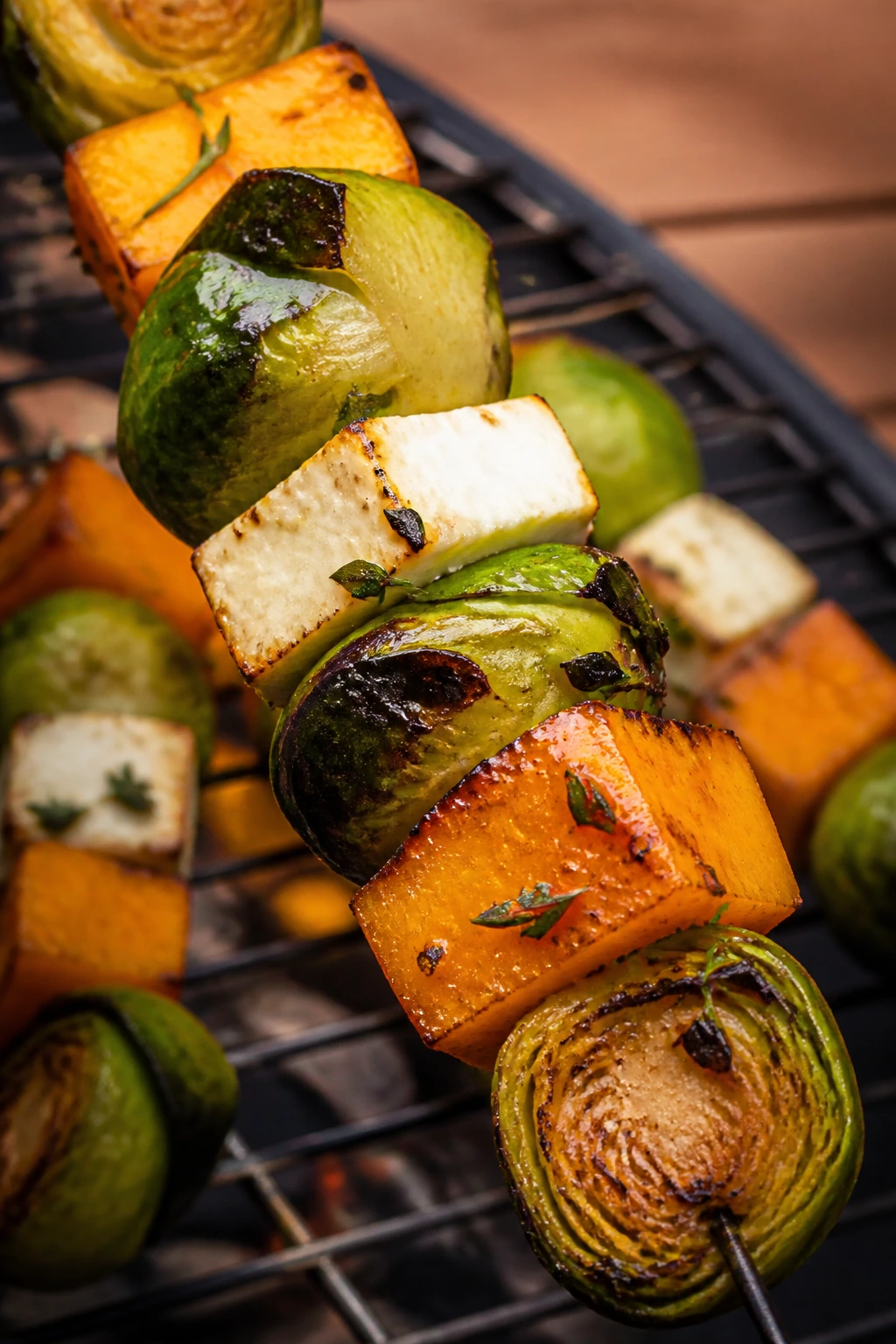
Brussels sprouts and squash both need a little patience. Once they’re cut to the right size and glazed with olive oil, maple, and thyme, they become a skewer with real autumn weight — but not the soft, bland kind. Feta brings salt and crumble, and the browned edges keep each bite lively.
Why It Works:
Both vegetables carry some natural sweetness, which means the grill has something to work with. Brussels sprouts soften and pick up a nutty edge, while butternut squash turns creamy in the center if it’s cut small enough. A quick roast or grill, about 12 minutes total, gives you color without turning the squash to paste.
Key Ingredients:
- 2 cups Brussels sprouts, trimmed and halved
- 2 cups butternut squash, peeled and cut into 1-inch cubes
- 1 red onion, cut into wedges
- 4 ounces feta, cut into thick chunks
- 3 tablespoons olive oil
- 1 tablespoon maple syrup
- 1 teaspoon fresh thyme leaves
- 1/2 teaspoon salt
- 1/4 teaspoon black pepper
Quick Steps:
- Par-cook the squash in boiling water for 4 minutes, then drain well.
- Whisk the olive oil, maple syrup, thyme, salt, and pepper together.
- Toss the vegetables in the glaze, then thread onto skewers with feta tucked between sturdier pieces.
- Grill or broil for 10 to 12 minutes, turning once, until the sprouts are browned and the squash is tender.
- Finish with a little more thyme before serving.
Equipment for This Recipe:
- Skewers
- Saucepan
- Mixing bowl
- Grill, broiler, or grill pan
- Tongs
How to Serve This Dish:
These go well with farro, wild rice, or crusty bread. A spoon of garlicky yogurt or tahini sauce makes them feel like a proper main course.
Pro Tips for This Recipe:
- Cut the squash into even cubes so it cooks at the same pace as the sprouts.
- Don’t skip the feta chunks; they break up the sweetness.
- If your Brussels sprouts are huge, quarter them.
Variations on This Dish:
- Maple-Dijon Version: Swap half the maple syrup for Dijon mustard.
- No-Cheese Option: Leave out the feta and finish with toasted pumpkin seeds.
- Herby Winter Mix: Add sage instead of thyme if you want a more savory note.
Common Mistakes to Avoid with This Dish:
- Using squash cubes that are too big: Large pieces stay firm in the center.
- Skipping the pre-cook: Brussels and squash won’t finish together if both go in raw.
- Overloading with feta: Too much cheese can melt away before the vegetables are done.
12. Seitan, Mushroom, Bell Pepper, and Onion Skewers
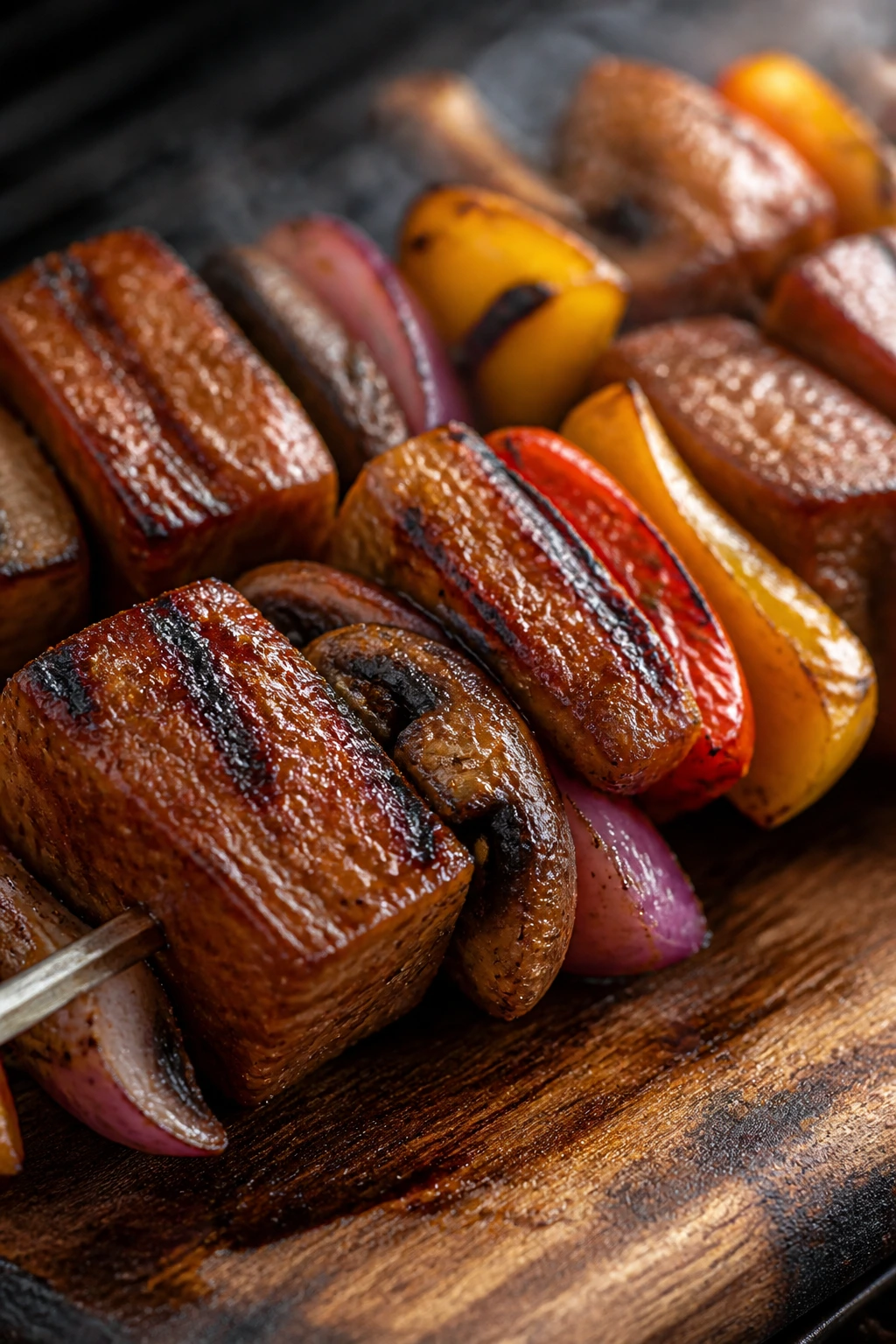
Seitan is what you reach for when you want chew. It has the dense, savory bite that makes a skewer feel like a steakhouse order, even though there’s no meat on the stick. Pair it with mushrooms, peppers, and onion, and the whole thing cooks up smoky, glossy, and plain old satisfying.
Why It Works:
Seitan already has structure, so it doesn’t need a long marinade to shine, just enough seasoning to keep it from tasting plain. Mushrooms add moisture, peppers soften at the edges, and onion gives you sweet, charred corners. A soy-garlic marinade and a hot grill are doing most of the heavy lifting here.
Key Ingredients:
- 12 ounces seitan, cut into 1-inch pieces
- 8 ounces cremini or button mushrooms
- 2 bell peppers, cut into squares
- 1 red onion, cut into wedges
- 3 tablespoons soy sauce
- 2 tablespoons olive oil
- 1 tablespoon balsamic vinegar
- 2 garlic cloves, minced
- 1 teaspoon smoked paprika
- 1/2 teaspoon black pepper
Quick Steps:
- Whisk the soy sauce, olive oil, balsamic vinegar, garlic, smoked paprika, and black pepper.
- Toss the seitan, mushrooms, peppers, and onion in the marinade for 15 to 20 minutes.
- Thread the pieces onto skewers, alternating the seitan with vegetables so each bite gets a mix.
- Grill over medium-high heat for 8 to 10 minutes, turning once, until the seitan has browned edges and the mushrooms are tender.
- Spoon any leftover marinade over the skewers after grilling if it was not used on raw ingredients.
Equipment for This Recipe:
- Skewers
- Mixing bowl
- Grill or grill pan
- Tongs
- Small brush, if you want to baste
How to Serve This Dish:
Serve with brown rice, grilled bread, or a crisp slaw. A little chimichurri is a nice move if you want a sharper finish.
Pro Tips for This Recipe:
- Cut seitan pieces large enough to stay juicy.
- Use mushrooms with closed caps so they don’t leak too much liquid.
- Wipe the grill grates lightly with oil before cooking.
Variations on This Dish:
- Teriyaki Seitan: Replace the balsamic with teriyaki sauce for a sweeter finish.
- Spicy BBQ Version: Brush with barbecue sauce during the last minute on the grill.
- Gluten-Free Swap: Use firm tofu or tempeh instead of seitan.
Common Mistakes to Avoid with This Dish:
- Cutting seitan too small: Tiny pieces can dry out fast.
- Adding too much marinade: Wet skewers steam instead of char.
- Ignoring the mushrooms: If they’re packed too tightly, they leak and cool the grill surface.
13. Corn, Poblano, Red Onion, and Cotija Skewers
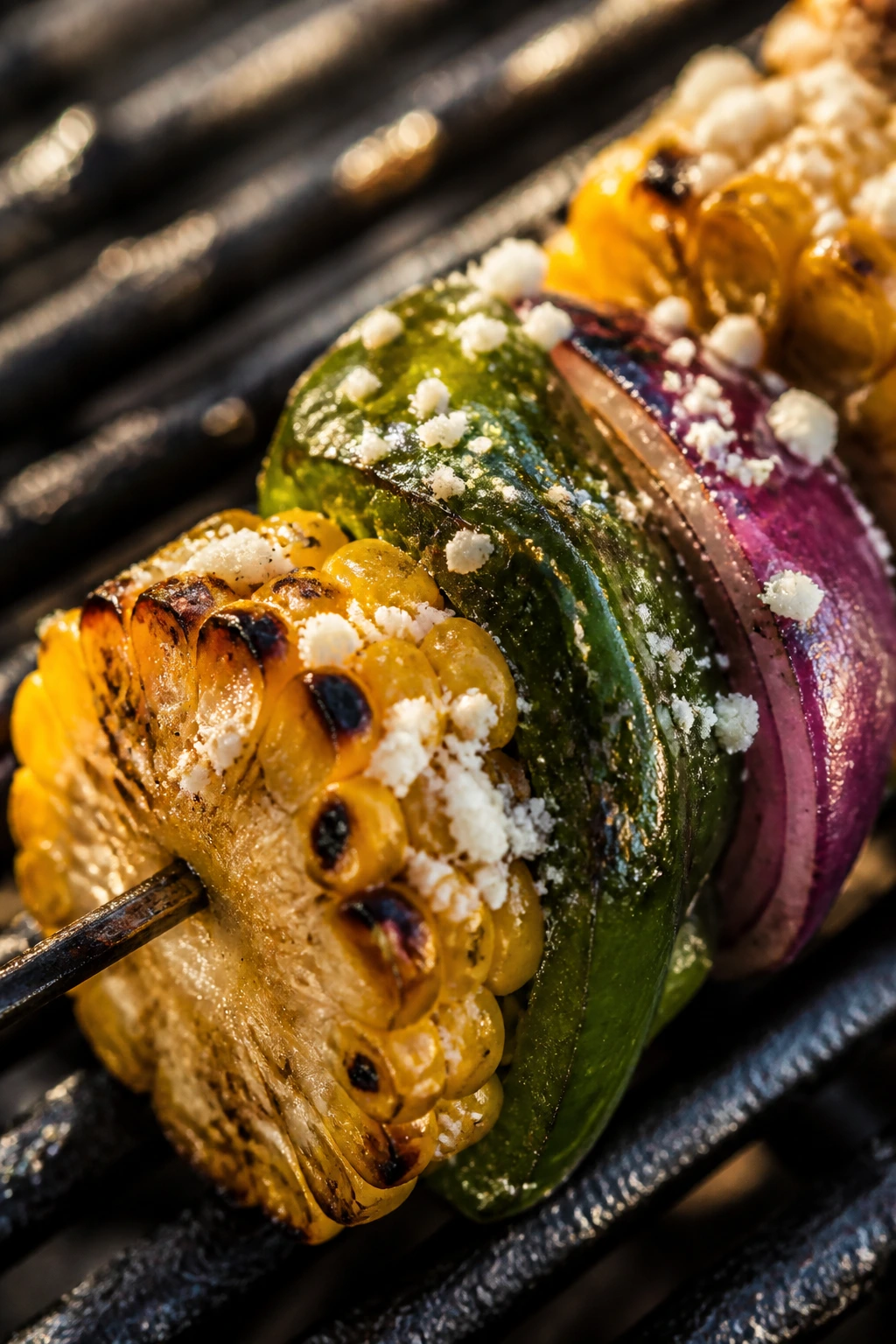
Corn is not just for butter and salt. Cut it into thick rounds, thread it with poblano and onion, and you get a skewer with sweetness, smoke, and enough bite to feel like an actual meal. Cotija gives the final salty crumble, which matters more than it sounds.
Why It Works:
Corn rounds grill cleanly, and the kernels catch char in a way that tastes almost nutty. Poblano adds gentle heat without wiping out the sweetness, while red onion softens and sweetens as it cooks. Cotija on top gives the skewer the last bit of richness and salt, so you don’t need a heavy sauce.
Key Ingredients:
- 3 ears corn, cut into 1 1/2-inch rounds
- 2 poblano peppers, cut into squares
- 1 red onion, cut into wedges
- 3 tablespoons olive oil
- 1 teaspoon chili powder
- 1/2 teaspoon salt
- 1 lime, cut into wedges
- 1/3 cup cotija cheese, crumbled
- Chopped cilantro, for finishing
Quick Steps:
- Brush the corn, poblano, and onion with olive oil.
- Sprinkle with chili powder and salt.
- Thread onto skewers, making sure the corn rounds sit flat and stable.
- Grill over medium-high heat for 8 to 10 minutes, turning to char all sides of the corn.
- Finish with cotija, cilantro, and a squeeze of lime.
Equipment for This Recipe:
- Skewers
- Sharp chef’s knife
- Grill or grill pan
- Pastry brush
- Tongs
How to Serve This Dish:
These are excellent with black beans and rice or tucked into warm tortillas. If you want a platter, add avocado slices and a spoon of salsa verde on the side.
Pro Tips for This Recipe:
- Cut the corn rounds thick enough that they don’t split on the skewer.
- Use two parallel skewers if your corn keeps spinning.
- Lime at the end matters. It cuts the sweetness and wakes up the chile.
Variations on This Dish:
- Elote-Style Finish: Add a light smear of mayo before the cotija.
- Smokier Heat: Use chipotle powder instead of chili powder.
- Dairy-Free Version: Swap cotija for toasted pepitas and a pinch of salt.
Common Mistakes to Avoid with This Dish:
- Cutting the corn too thin: Thin rounds break apart.
- Not stabilizing the skewer: Corn loves to rotate if you don’t anchor it well.
- Serving without lime: The skewer tastes too sweet and one-note.
14. Falafel, Bell Pepper, Cherry Tomato, and Red Onion Skewers
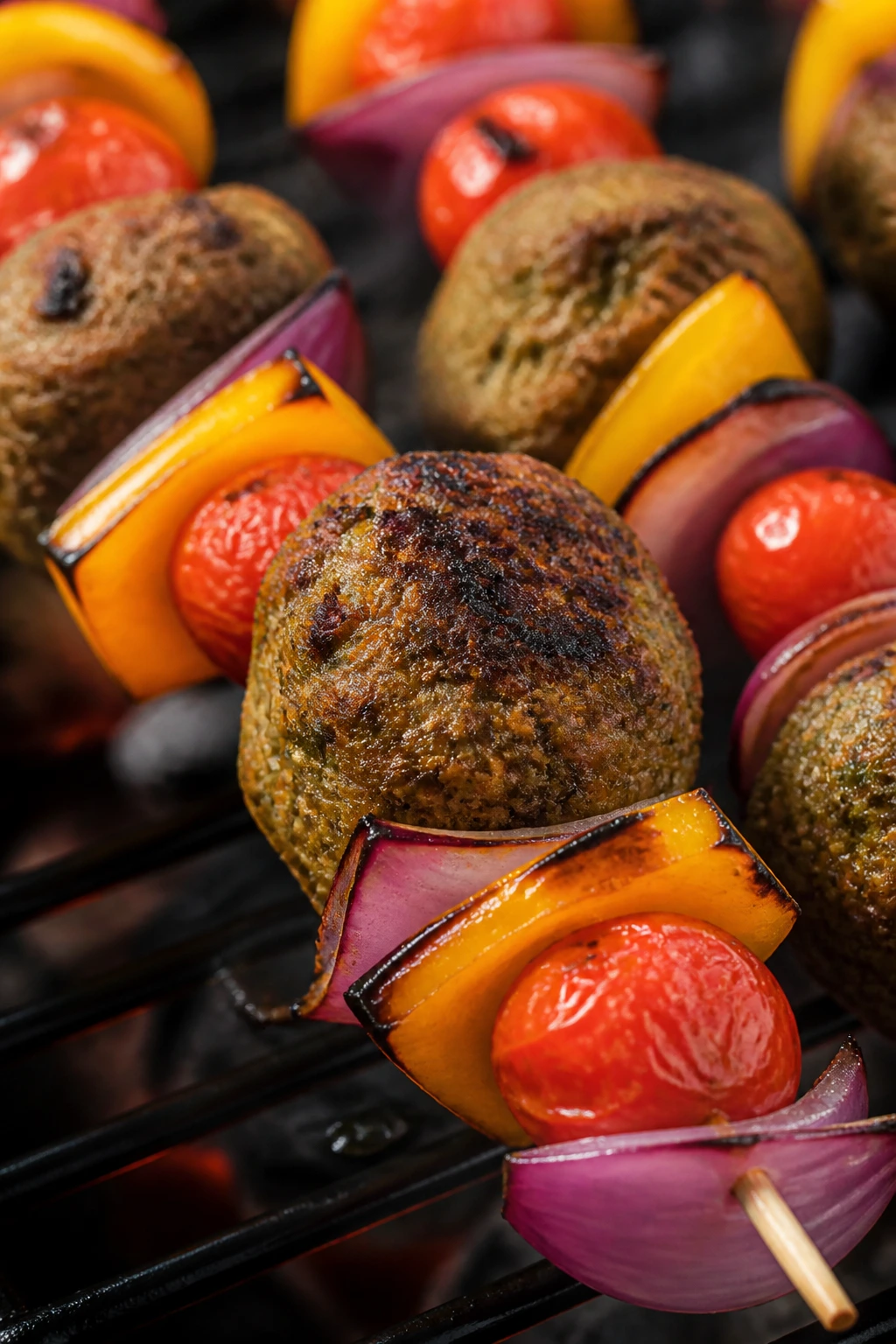
Falafel on a skewer feels like cheat-code cooking. Use sturdy baked falafel balls or store-bought ones, thread them with peppers and tomatoes, and you get a platter that tastes like lunch from a good Middle Eastern spot. The tahini drizzle is not optional in my book.
Why It Works:
Falafel already has herbs, chickpeas, and structure, so it behaves better on a skewer than most bean mixtures would. Bell peppers add sweetness, tomatoes burst with juice, and onion gives the whole thing some sharpness. A quick broil warms everything through and gives the falafel exterior a little extra crunch.
Key Ingredients:
- 12 baked falafel balls, homemade or store-bought
- 1 bell pepper, cut into squares
- 12 cherry tomatoes
- 1 red onion, cut into wedges
- 2 tablespoons olive oil
- 2 tablespoons tahini
- 1 tablespoon lemon juice
- 1 garlic clove, grated
- 1 to 2 tablespoons water
- Chopped parsley, for finishing
Quick Steps:
- Whisk the olive oil, tahini, lemon juice, garlic, and water into a smooth drizzle.
- Thread falafel balls, pepper, tomatoes, and onion onto skewers.
- Brush the vegetables lightly with olive oil.
- Broil or grill for 5 to 7 minutes, just until the vegetables have char marks and the falafel is hot through.
- Drizzle with tahini sauce and parsley.
Equipment for This Recipe:
- Skewers
- Baking sheet or grill pan
- Small bowl
- Pastry brush
- Tongs
How to Serve This Dish:
Serve with pita, shredded lettuce, and pickled vegetables. If you want more heft, add hummus and a scoop of rice.
Pro Tips for This Recipe:
- Use falafel that is firm and fully cooked before skewering.
- Don’t overheat the tomatoes or they’ll collapse before the falafel warms.
- Thin the tahini sauce enough to drizzle, not enough to run off the plate.
Variations on This Dish:
- Za’atar Falafel: Dust the vegetables with za’atar before broiling.
- Spicy Tahini: Stir a little chili paste into the sauce.
- Mini Mezze Version: Use smaller skewers for appetizer portions.
Common Mistakes to Avoid with This Dish:
- Using raw falafel mix: It won’t hold shape here.
- Overcooking the falafel: It dries out before the vegetables finish.
- Skipping the sauce: Falafel needs acid and fat to taste complete.
15. Rosemary Baby Potato, Olive, and Tomato Skewers
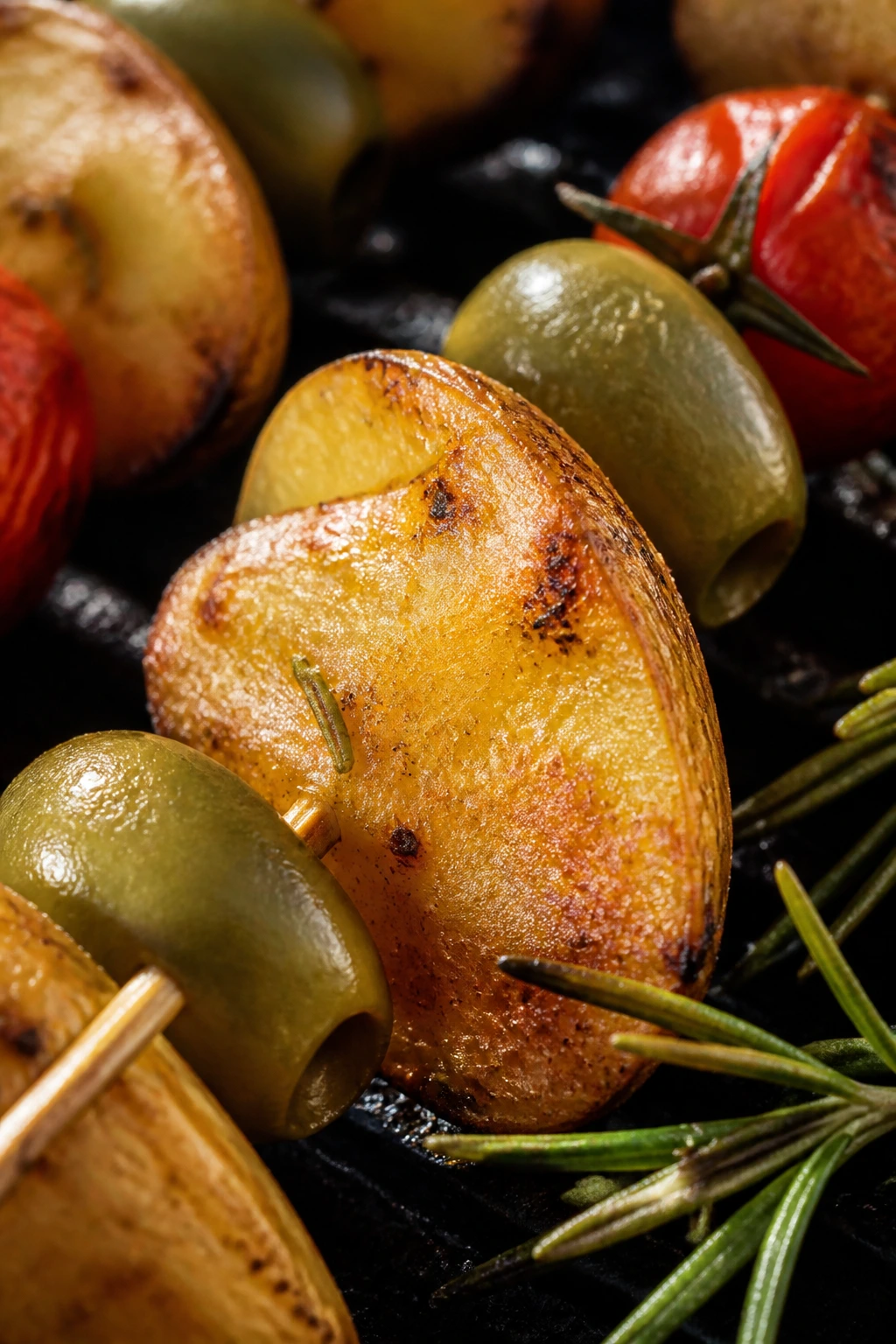
Baby potatoes give you heft without fuss. Thread them with olives and cherry tomatoes, and the skewer becomes briny, herby, and filling enough to sit beside almost anything. This one tastes especially good when the potatoes are parboiled until just tender, then crisped on the grill.
Why It Works:
Potatoes bring starch, which is the fastest route to a meatless skewer that actually satisfies. Olives add salt and punch, tomatoes add acidity, and rosemary keeps the whole thing smelling like a hot herb garden. A good coating of olive oil is enough to turn the outside golden in about 12 minutes.
Key Ingredients:
- 1 1/2 pounds baby potatoes, halved
- 1 cup cherry tomatoes
- 1/2 cup pitted olives
- 1 red onion, cut into wedges
- 3 tablespoons olive oil
- 1 teaspoon chopped rosemary
- 1 garlic clove, minced
- 1/2 teaspoon salt
- 1/4 teaspoon black pepper
Quick Steps:
- Boil the baby potatoes for 10 minutes, until just tender, then drain.
- Whisk the olive oil, rosemary, garlic, salt, and pepper together.
- Toss the potatoes, tomatoes, olives, and onion in the oil.
- Thread onto skewers, keeping the potatoes toward the ends so they anchor the stick.
- Grill or broil for 10 to 12 minutes, turning once, until the potatoes are crisp on the edges.
Equipment for This Recipe:
- Skewers
- Saucepan
- Bowl
- Grill or broiler
- Tongs
How to Serve This Dish:
These are strong with roasted fish if you’re serving a mixed table, but they stand well on their own with a green salad. A spoon of pesto or aioli doesn’t hurt.
Pro Tips for This Recipe:
- Salt the potato boiling water well. The potatoes need seasoning from the inside.
- Use small potatoes or halve larger ones so they cook evenly.
- Dry the potatoes before tossing so the oil sticks.
Variations on This Dish:
- Lemon-Caper Version: Add capers and lemon zest after grilling.
- Smoked Olive Swap: Use smoked olives if you want deeper flavor.
- Vegan Creamy Finish: Add a cashew herb sauce on the side.
Common Mistakes to Avoid with This Dish:
- Underboiling the potatoes: They’ll stay hard in the middle.
- Using giant tomato chunks: They collapse and drip too much.
- Overseasoning with olives and salt: Olives already bring plenty of salt.
16. Sesame Tofu, Mushroom, and Scallion Skewers
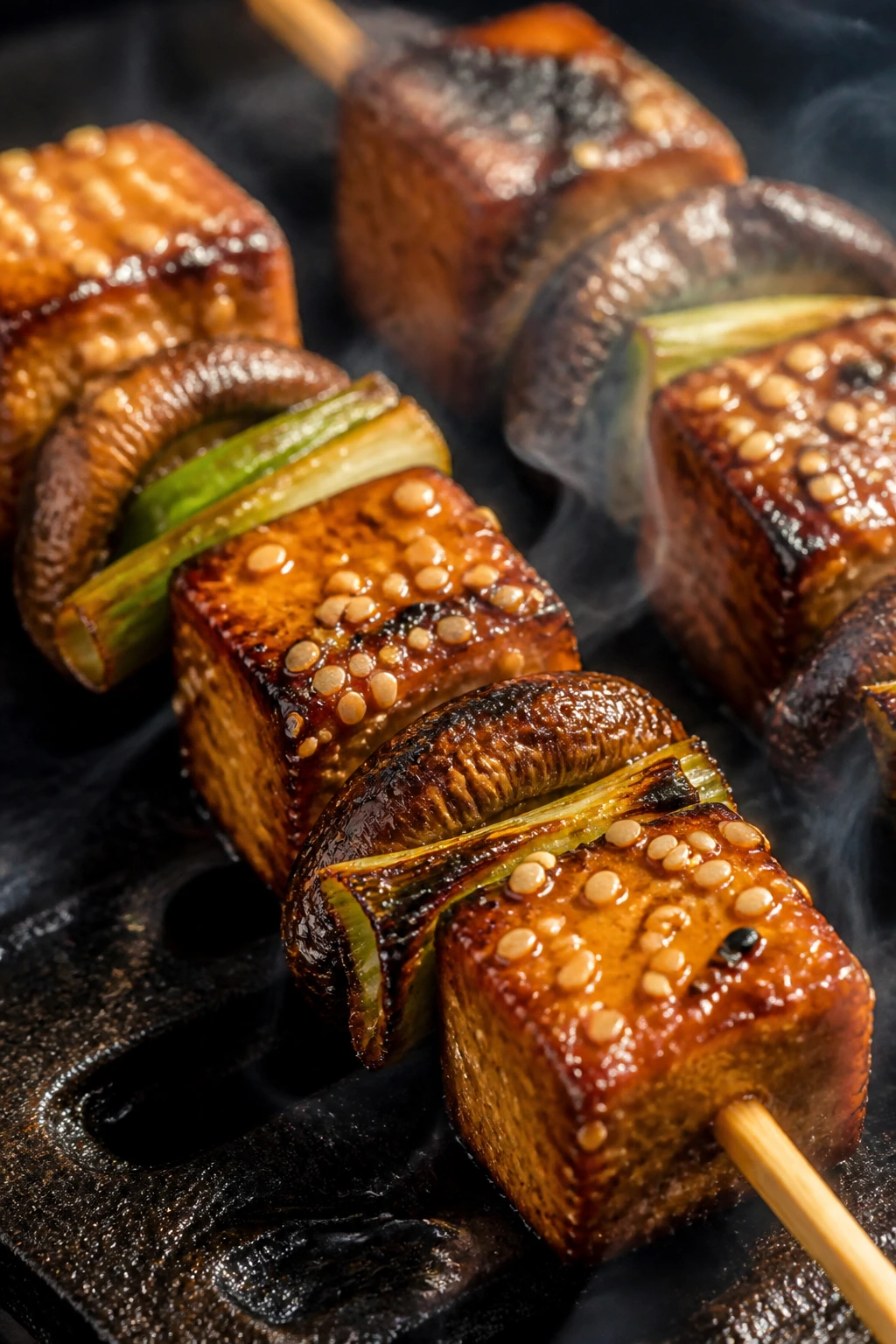
Sesame tofu with mushrooms is the kind of skewer that tastes better than it looks on paper. The tofu takes on soy and sesame oil, the mushrooms soak up the glaze, and the scallions char into something sweet at the tips. It’s tidy, savory, and the sort of thing I’d make when the fridge looks half empty but dinner still needs to feel thought-through.
Why It Works:
The trick is simple: dry tofu, hot pan or grill, short marinade. That gets you golden edges instead of pale cubes. Mushrooms bring moisture and umami, while scallions keep the flavor sharp enough that the skewers don’t feel heavy. A splash of rice vinegar at the end keeps the sesame notes from turning sleepy.
Key Ingredients:
- 14 ounces extra-firm tofu, pressed and cubed
- 8 ounces cremini mushrooms
- 6 scallions, cut into 2-inch lengths
- 3 tablespoons soy sauce
- 1 tablespoon sesame oil
- 1 tablespoon rice vinegar
- 1 teaspoon grated ginger
- 1 teaspoon maple syrup
- 1 tablespoon sesame seeds
Quick Steps:
- Press the tofu for 15 minutes, then whisk the soy sauce, sesame oil, rice vinegar, ginger, and maple syrup together.
- Marinate the tofu and mushrooms for 20 minutes.
- Thread tofu, mushrooms, and scallions onto skewers.
- Grill over medium-high heat for 8 to 10 minutes, turning once, until the tofu is browned and the mushrooms are tender.
- Sprinkle with sesame seeds and serve warm.
Equipment for This Recipe:
- Skewers
- Tofu press or towels and a plate
- Bowl
- Grill, grill pan, or broiler
- Tongs
How to Serve This Dish:
Serve with steamed rice, soba noodles, or a pile of shredded cabbage. A little chili oil on the side is a good idea if you like heat.
Pro Tips for This Recipe:
- Cut tofu into even cubes so every piece gets the same amount of browning.
- Let the mushrooms drain after marinating so they do not drip all over the grill.
- Toast the sesame seeds in a dry pan first if you want more aroma.
Variations on This Dish:
- Spicy Sesame: Stir in chili crisp or a pinch of red pepper flakes.
- Miso-Sesame Version: Add 1 teaspoon white miso to the marinade.
- Lime Finish: Swap the vinegar for lime juice if you want more brightness.
Common Mistakes to Avoid with This Dish:
- Using tofu that still feels wet: It will steam, not brown.
- Marinating too long: Mushrooms can get floppy if they sit for hours.
- Forgetting the acid at the end: Sesame and soy need a little lift.
17. Lentil Cake, Zucchini, and Cherry Tomato Skewers
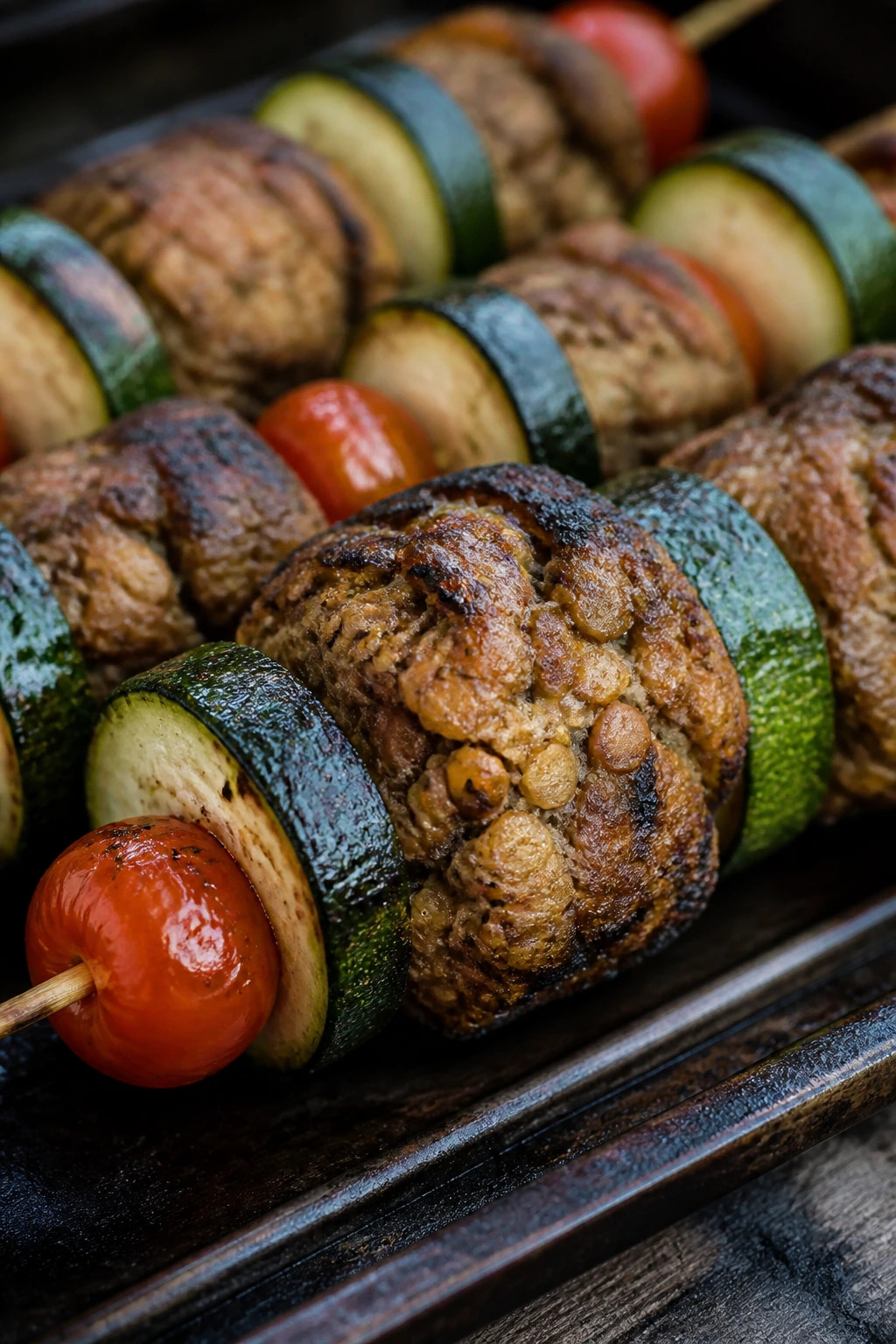
Lentil cakes are the underrated workhorse here. They give you the dense, savory bite that a skewer sometimes misses when it’s all vegetables and no ballast. Pair them with zucchini and cherry tomatoes, and you get a meatless kebab that feels sturdy enough to carry sauce, salad, and hungry people.
Why It Works:
Cooked lentils bind well with breadcrumbs and egg, which means the cakes can be baked first, then threaded onto skewers without falling apart. Zucchini softens fast, tomatoes blister fast, and the lentil base stays pleasantly firm. A cumin-garlic seasoning makes the whole thing taste grounded rather than fussy.
Key Ingredients:
- 2 cups cooked brown or green lentils, drained well
- 1/2 cup breadcrumbs
- 1 egg
- 1 garlic clove, minced
- 1 teaspoon ground cumin
- 1/2 teaspoon smoked paprika
- 1/2 teaspoon salt
- 2 medium zucchini, thickly sliced
- 12 to 16 cherry tomatoes
- 2 tablespoons olive oil
Quick Steps:
- Mash the lentils until about half of them are broken up.
- Stir in the breadcrumbs, egg, garlic, cumin, paprika, and salt until the mixture holds together.
- Shape into small oval cakes and bake at 400°F for 15 minutes, flipping once.
- Thread the baked lentil cakes, zucchini, and tomatoes onto skewers and brush with olive oil.
- Grill or broil for 5 to 7 minutes, just long enough to brown the vegetables and reheat the cakes.
Equipment for This Recipe:
- Mixing bowl
- Baking sheet
- Skewers
- Fork or potato masher
- Grill, broiler, or oven
How to Serve This Dish:
Serve with tzatziki, tahini, or a tomato relish. A grain like quinoa or bulgur makes the plate more filling without crowding the skewer.
Pro Tips for This Recipe:
- Drain the lentils well or the cakes turn soft.
- Bake the cakes before skewering; raw mixture will not hold.
- Use a light hand when threading so the cakes do not split.
Variations on This Dish:
- Herb Lentil Cakes: Add parsley and dill to the mixture.
- Spicy Version: Stir in a minced jalapeño or a pinch of cayenne.
- Gluten-Free Swap: Use gluten-free breadcrumbs or oat crumbs.
Common Mistakes to Avoid with This Dish:
- Making the cakes too wet: They need enough dryness to hold shape.
- Skipping the bake step: Raw lentil mixture will smear and fall off.
- Overhandling on the skewer: Gentle threading keeps the cakes intact.
18. Cheese Tortellini, Asparagus, and Basil Pesto Skewers
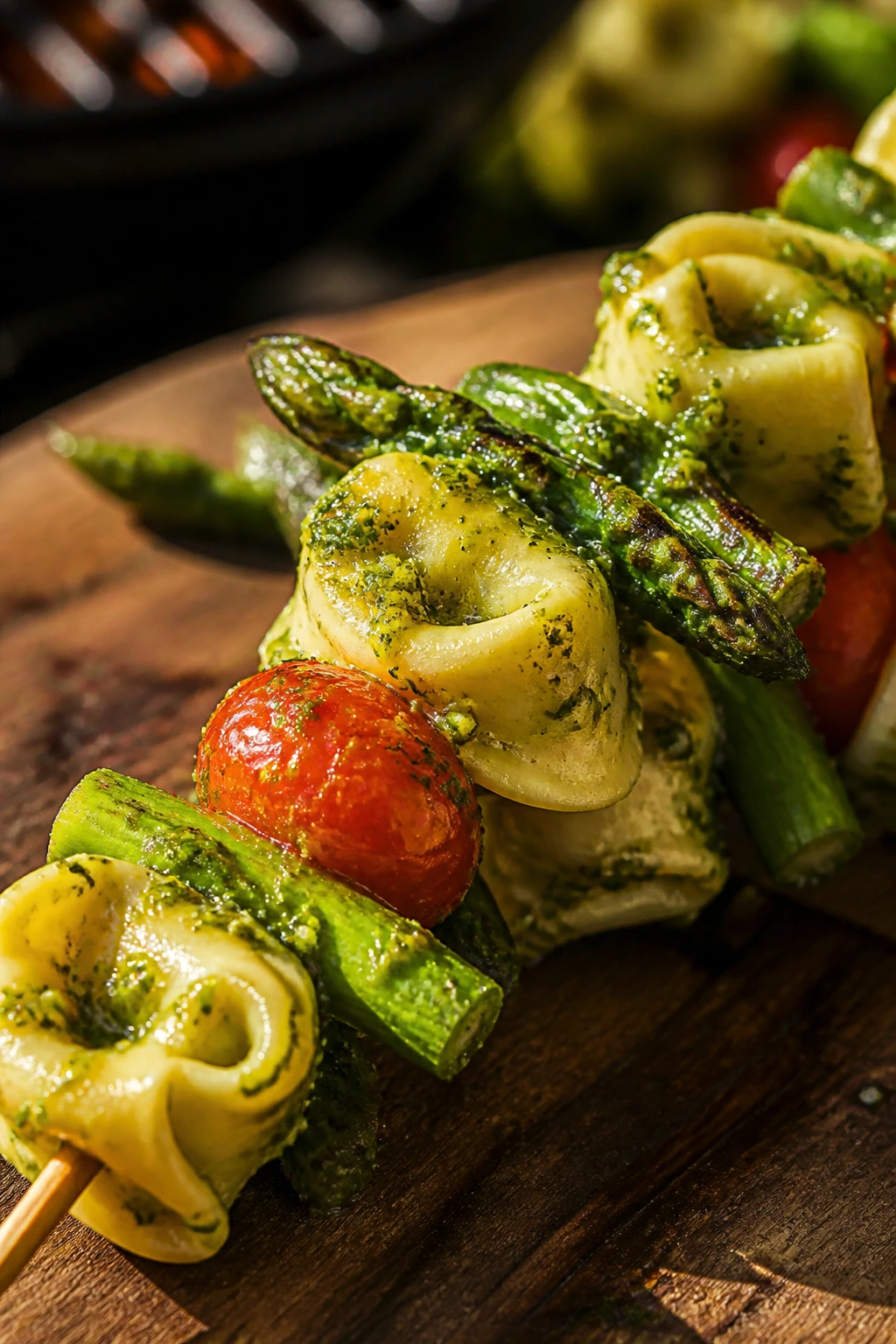
Cheese tortellini on a skewer is a little playful, and that’s exactly the point. The pasta gives you chew, the asparagus adds snap, and the pesto coats everything with garlic, basil, and Parmesan. It feels like a picnic dish that escaped the bowl and found the grill.
Why It Works:
Tortellini brings more than starch; it brings cheese and structure. When you boil it briefly and cool it just enough to handle, it firms up nicely for skewering. Asparagus grills fast, which makes it the right partner for the pasta, and pesto gives the whole thing a punchy, green finish after about 6 to 8 minutes over heat.
Key Ingredients:
- 1 pound cheese tortellini
- 1 bunch asparagus, trimmed and cut into 2-inch pieces
- 1 cup cherry tomatoes
- 1/4 cup basil pesto
- 2 tablespoons olive oil
- 1/2 teaspoon salt
- 1/4 teaspoon black pepper
- Parmesan shavings, for serving
Quick Steps:
- Boil the tortellini according to the package until just tender, then drain and cool.
- Toss the tortellini, asparagus, and tomatoes with olive oil, salt, pepper, and pesto.
- Thread the tortellini carefully with the asparagus pieces and tomatoes.
- Grill or broil for 6 to 8 minutes, turning once, until the asparagus is lightly charred and the tortellini has crisped in spots.
- Finish with Parmesan shavings and a touch more pesto if needed.
Equipment for This Recipe:
- Skewers
- Pot for boiling pasta
- Colander
- Mixing bowl
- Grill, grill pan, or broiler
How to Serve This Dish:
Serve warm with extra pesto for dipping and a simple arugula salad. These also make a good appetizer platter if you cut the skewers in half.
Pro Tips for This Recipe:
- Cook the tortellini just to al dente. Overcooked pasta tears too easily.
- Let it cool a few minutes before threading so it doesn’t split.
- Use thick pesto; watery sauce won’t cling as well.
Variations on This Dish:
- Sun-Dried Tomato Pesto: Swap the basil pesto for a red pesto if you want more tang.
- Roasted Garlic Version: Add roasted garlic to the pesto for a sweeter finish.
- Dairy-Free Swap: Use dairy-free tortellini and a vegan pesto.
Common Mistakes to Avoid with This Dish:
- Boiling the tortellini too long: Soft pasta slides apart on the stick.
- Using brittle asparagus: Thin stalks can overcook before the pasta warms.
- Skipping the oil: Pasta needs a little slickness to grill cleanly.
Why the Grill and Broiler Work So Well for Veggie Skewers
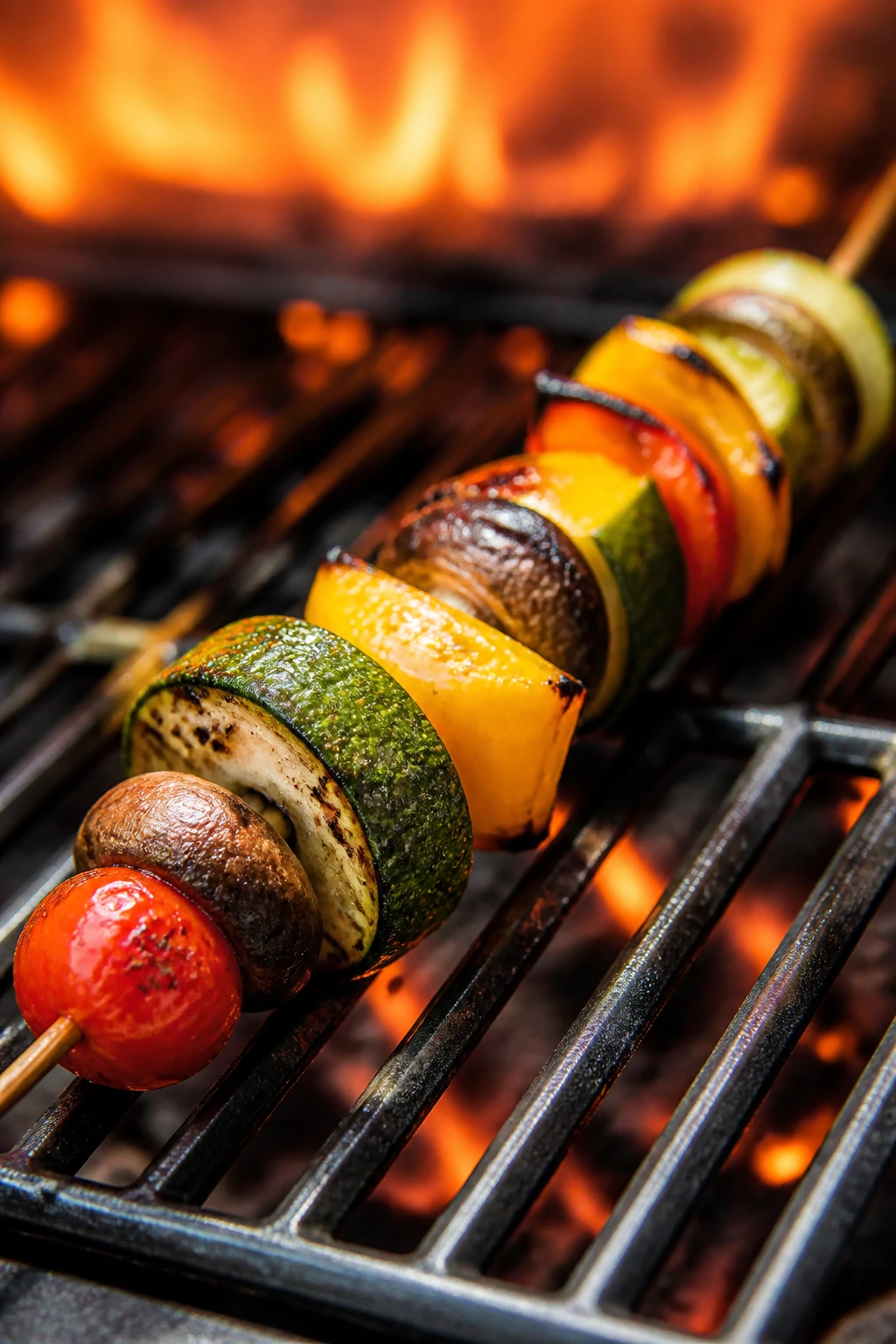
The biggest job on a meatless skewer is not cooking. It’s convincing the ingredients to taste like they belong together. That’s where direct heat earns its keep. The grill gives you char, smoke, and quick color on surfaces that would otherwise stay soft and pale. The broiler does a similar job indoors, which is why it’s such a useful fallback when an outdoor flame isn’t part of the plan.
The second trick is sizing. Dense vegetables — sweet potato, potato, squash, cauliflower — need a head start. Softer ingredients — zucchini, tomato, scallion, mushroom — need less. If you cut everything the same size just because it looks tidy, the finished skewer will eat unevenly. That’s not a small flaw. It’s the difference between a good bite and a skewer where one end tastes done and the other end still feels raw in the middle.
I like to think of kebabs as a small act of scheduling. Potatoes go in early. Tomatoes go in late. Cheese wants space. Tofu wants pressing. Fruit wants firm ripeness, not softness. Once you start thinking that way, the recipes stop feeling like a collection of separate vegetables and start reading like a system.
Essential Equipment for These Recipes
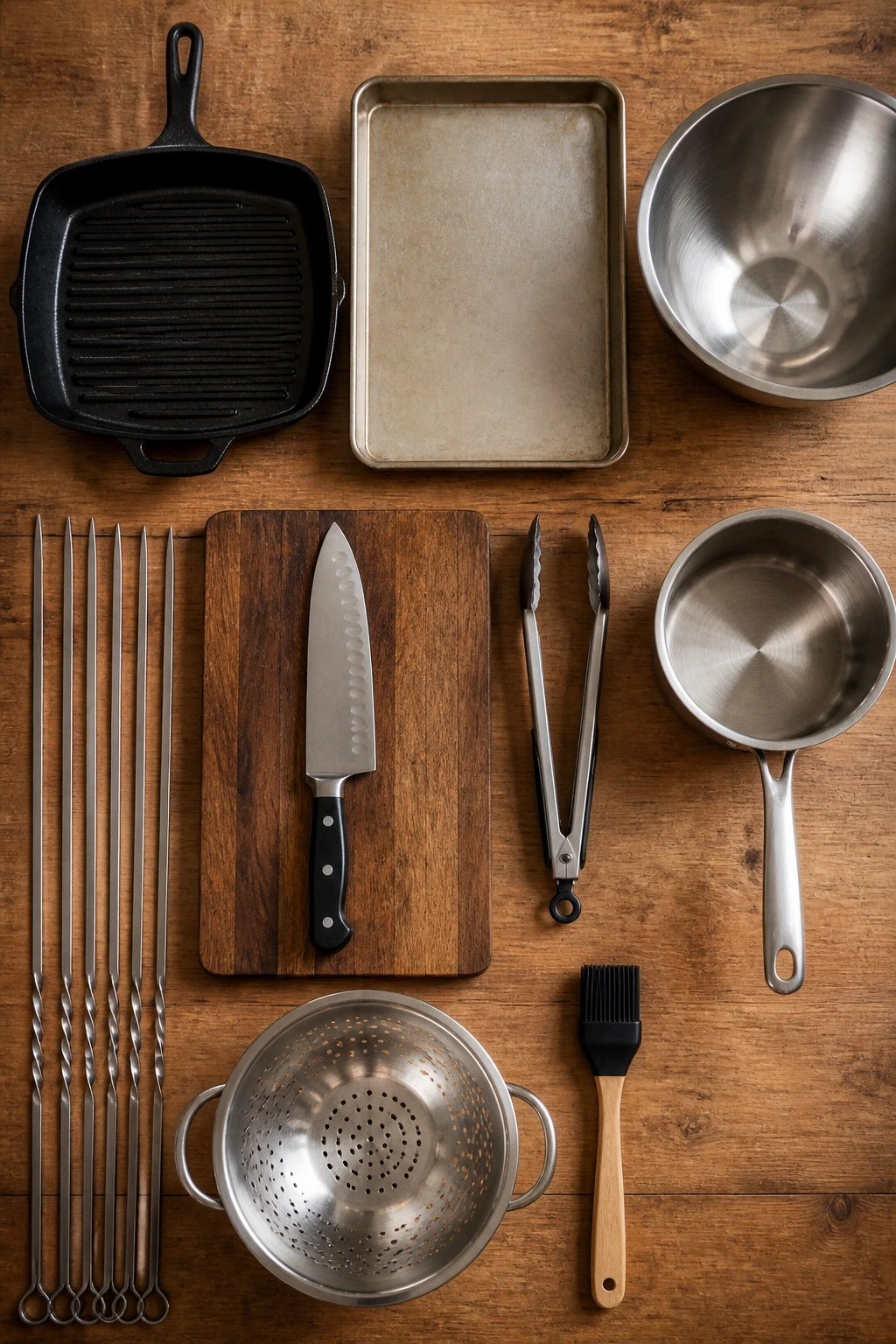
- Skewers: Metal skewers are easiest for repeated use; bamboo works fine if you soak it for 20 to 30 minutes.
- Grill or grill pan: A medium-hot surface gives the browning these kebabs need without burning the glaze.
- Broiler-safe sheet pan: Useful when you want to cook indoors and still get some char.
- Large mixing bowl: You’ll need space to coat ingredients evenly without crushing them.
- Sharp chef’s knife: Clean cuts matter here, especially for tofu, cheese, potatoes, and squash.
- Cutting board: A sturdy board keeps the pieces uniform and your fingers safe.
- Tongs: The easiest way to turn skewers without tearing soft ingredients.
- Small saucepan: Handy for reducing glazes, making sauces, or parboiling potatoes.
- Pastry brush: Useful for basting oil or glaze during the last minutes of cooking.
- Colander or strainer: Needed for pasta, potatoes, and tofu pressing cleanup.
Smart Shopping and Ingredient Tips
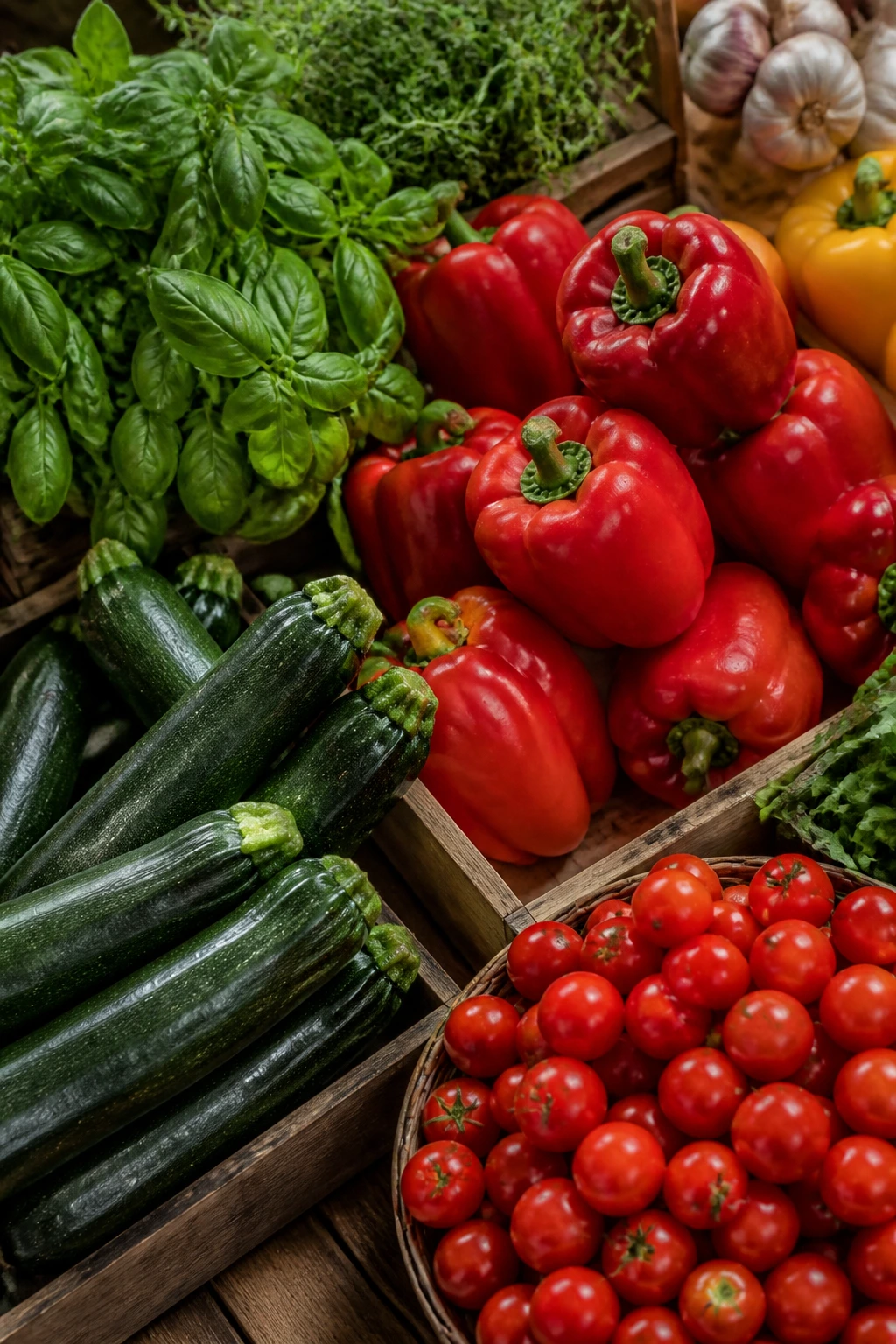
The best kebabs start in the produce aisle. Look for vegetables with firm skin and small seeds where possible. Zucchini should feel dense for its size, not spongy. Cherry tomatoes should be ripe but still hold their shape. Bell peppers need thick walls, because thin ones slump fast and turn watery on the grill.
Cheese and plant proteins matter just as much. Halloumi should feel squeaky and firm. Paneer should be fresh enough to cut without crumbling. Extra-firm tofu is the one you want for skewers; anything softer needs too much handling. Tempeh should smell nutty, not sour. Seitan should be springy and moist, not dry at the edges.
For starchier ingredients, pay attention to size and pre-cook time. Baby potatoes should be truly small, or you’ll spend too long chasing the center. Sweet potato and squash should be cut to about 1-inch cubes so they catch up with the other vegetables. Gnocchi should be firm enough to hold a skewer without collapsing, and tortellini should be cooked only to al dente before it goes anywhere near the heat.
Sauces and marinades do the flavor work, so don’t buy the thinnest version available. Thick yogurt clings better than watery yogurt. Miso pastes vary in salt level, so taste before adding much extra soy sauce. Harissa can be fiery or gentle depending on the jar; if you’re unsure, start with less and add more after grilling.
How to Serve These Recipes
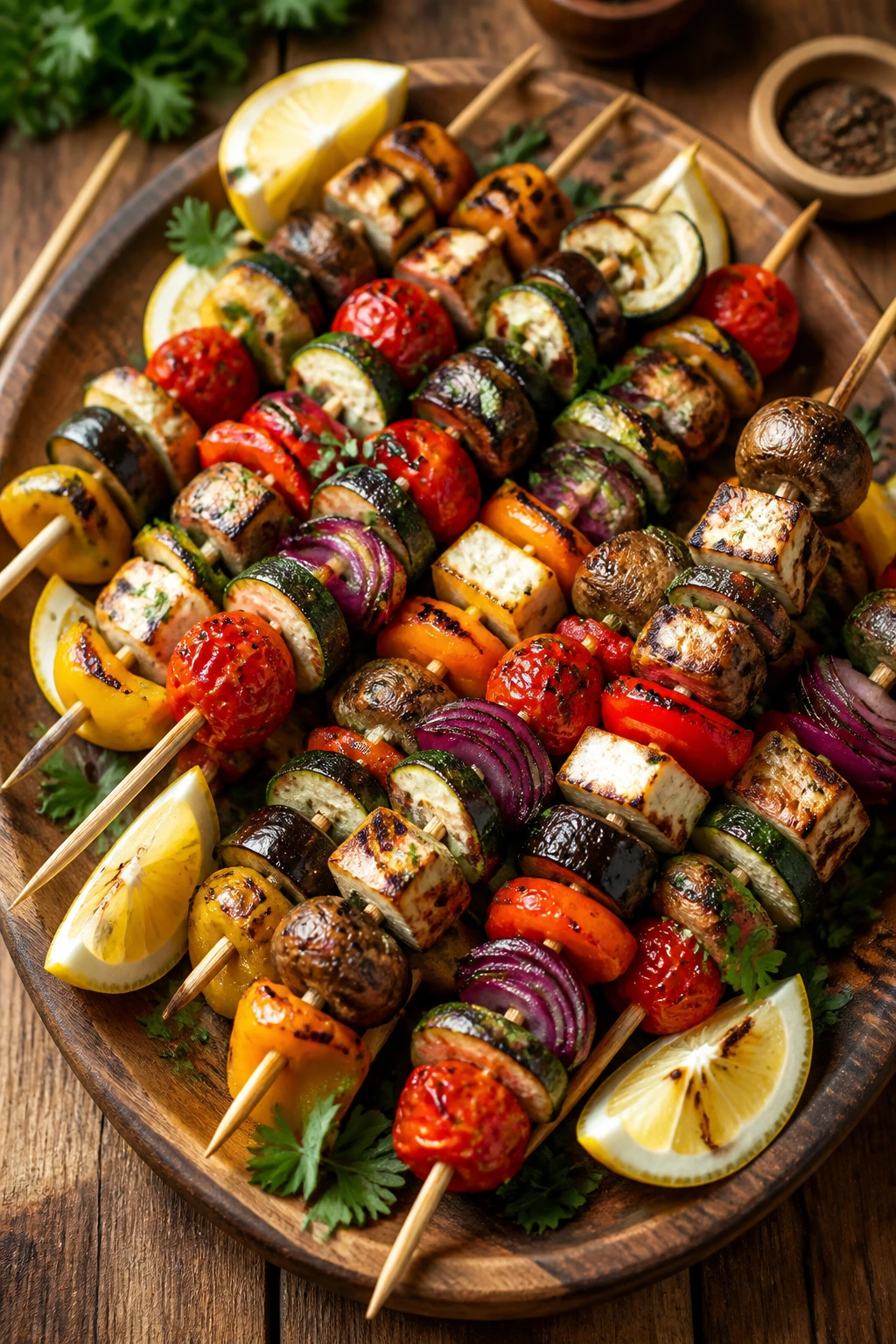
Presentation:
Stack the skewers on a wide platter so the browned edges are visible. A little garnish — herbs, sesame seeds, crumbled cheese, or a squeeze of lemon — keeps the food from looking flat. If you’re serving mixed recipes, alternate colors so the tray doesn’t blur into one brown line.
Accompaniments:
Couscous, rice, pita, naan, farro, and simple chopped salads all work across this collection. Yogurt sauces, tahini, pesto, chimichurri, and hummus are the kind of extras that make meatless kebabs feel complete without needing a second main dish.
Portions:
Plan on 2 to 3 skewers per person if the kebabs are the main event, or 1 to 2 skewers if you’re serving several sides. For heartier versions with potatoes, gnocchi, halloumi, or tortellini, two skewers often feel enough. For lighter vegetable-forward versions, add a grain or bread.
Beverage Pairing:
Sparkling water with lime is easy and clean. If you want something with more character, a crisp white wine or a dry rosé sits well next to the salt, smoke, and char. For spicier skewers, a cold lager or ginger beer keeps the heat from dominating.
Additional Tips and Flavor Boosters
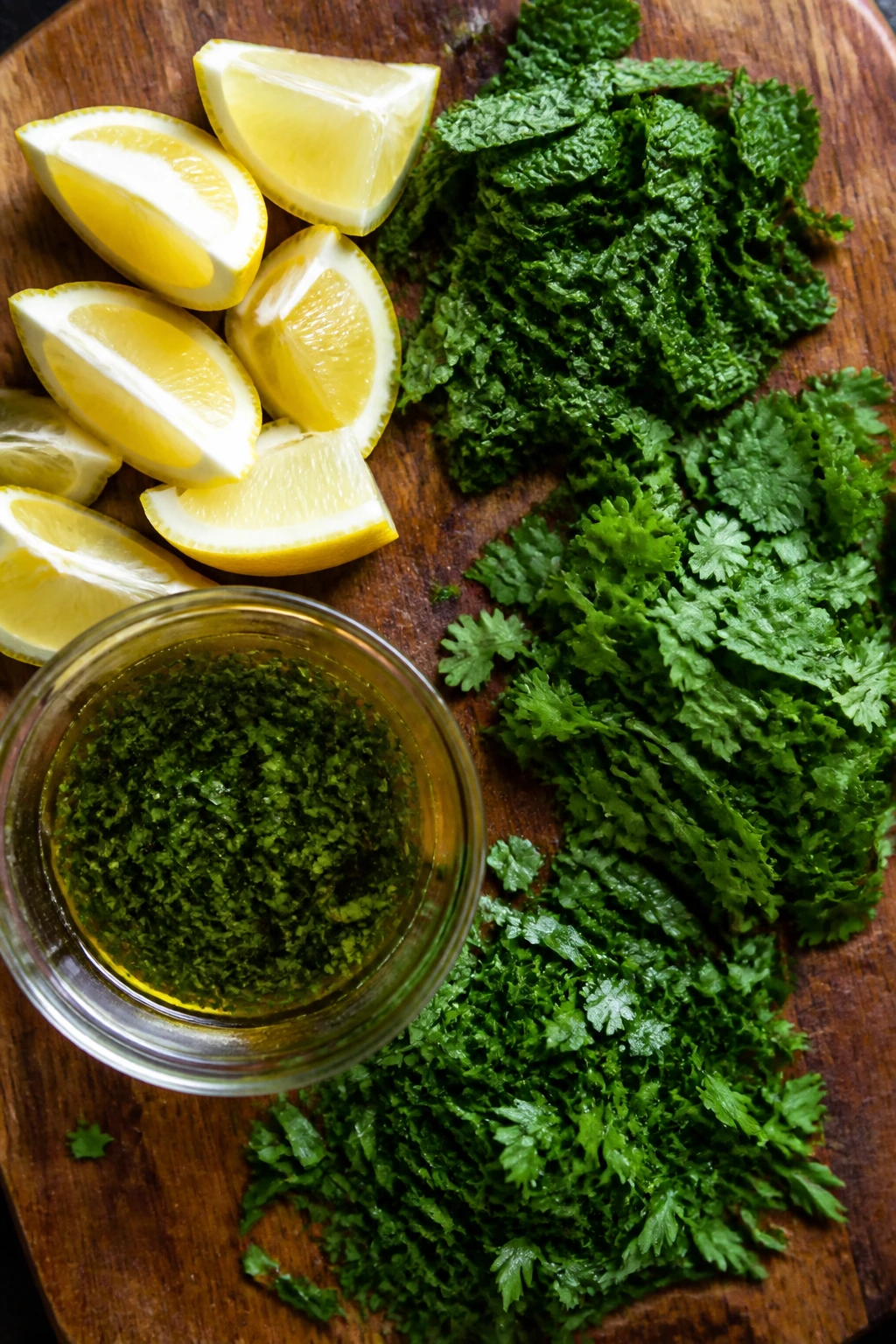
Flavor Enhancement:
A finishing acid goes a long way. Lemon juice, lime juice, or even a small splash of vinegar right before serving makes grilled vegetables taste brighter and keeps cheese-heavy skewers from feeling heavy.
Customization:
Use the same skewer formula and swap the protein or starch. Halloumi can stand in for paneer, tofu can stand in for seitan, and gnocchi can take the place of potatoes when you want a softer bite. You do not need to reinvent dinner every time.
Serving Suggestions:
Fresh herbs matter more than they get credit for. Chopped mint, cilantro, parsley, dill, or basil can pull a skewer out of the “good enough” zone in one move. Toasted nuts or seeds do the same thing if you want crunch.
Make-It-Yours:
For a dairy-free plate, lean on tofu, tempeh, seitan, or vegetable-heavy skewers and finish with tahini or herb oil. For gluten-free meals, skip seitan and use polenta, potatoes, tofu, or halloumi. For lower-sodium versions, dial back soy sauce and cheese, then lean harder on lemon, garlic, herbs, and smoke.
Make-Ahead, Storage, and Reheating Guidance
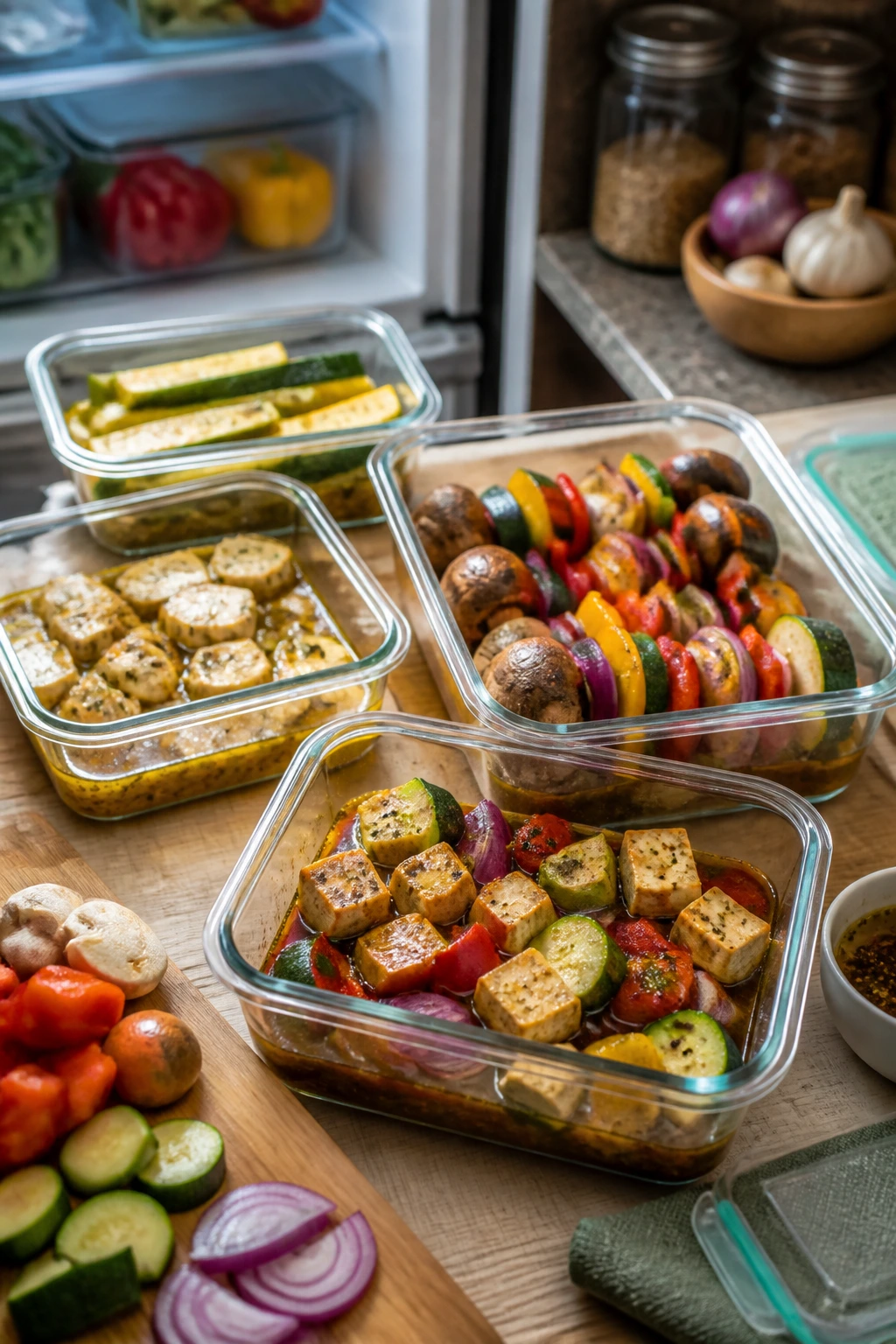
Most of these skewers can be prepped a day ahead, but the method matters. Cut the vegetables and proteins, then store them separately in airtight containers in the fridge for up to 24 hours before assembling. Marinades can be mixed ahead too. If you’re using tofu, tempeh, paneer, or seitan, marinating overnight is fine. For mushrooms, eggplant, or tomatoes, shorter marinating — 15 to 30 minutes — usually gives better texture.
Cooked skewers keep in the refrigerator for 3 to 4 days in a covered container. Halloumi and paneer are best eaten sooner rather than later, because they get firmer as they chill. Vegetable-only skewers hold up well, especially if they were not overcooked in the first place. Gnocchi and tortellini skewers are best within 2 days, because the pasta firms up and loses that crisp-soft balance.
Freezing is mixed. Cooked tofu, tempeh, seitan, lentil cakes, and roasted vegetables freeze for up to 2 months if wrapped well. Halloumi does not freeze gracefully. Potatoes and gnocchi can freeze, but the texture softens after reheating, so I only do that when I know the leftovers will become soup, salad, or a grain bowl instead of a straight replay.
For reheating, a 375°F oven for 8 to 12 minutes works better than the microwave for almost everything here. It revives the edges instead of making the vegetables limp. A skillet over medium heat is another good option for tofu, halloumi, seitan, or potatoes. Add a small splash of oil and turn the pieces once. Microwaving is fine only when texture is already gone and you care more about speed than browning.
Variations and Adaptations to Try
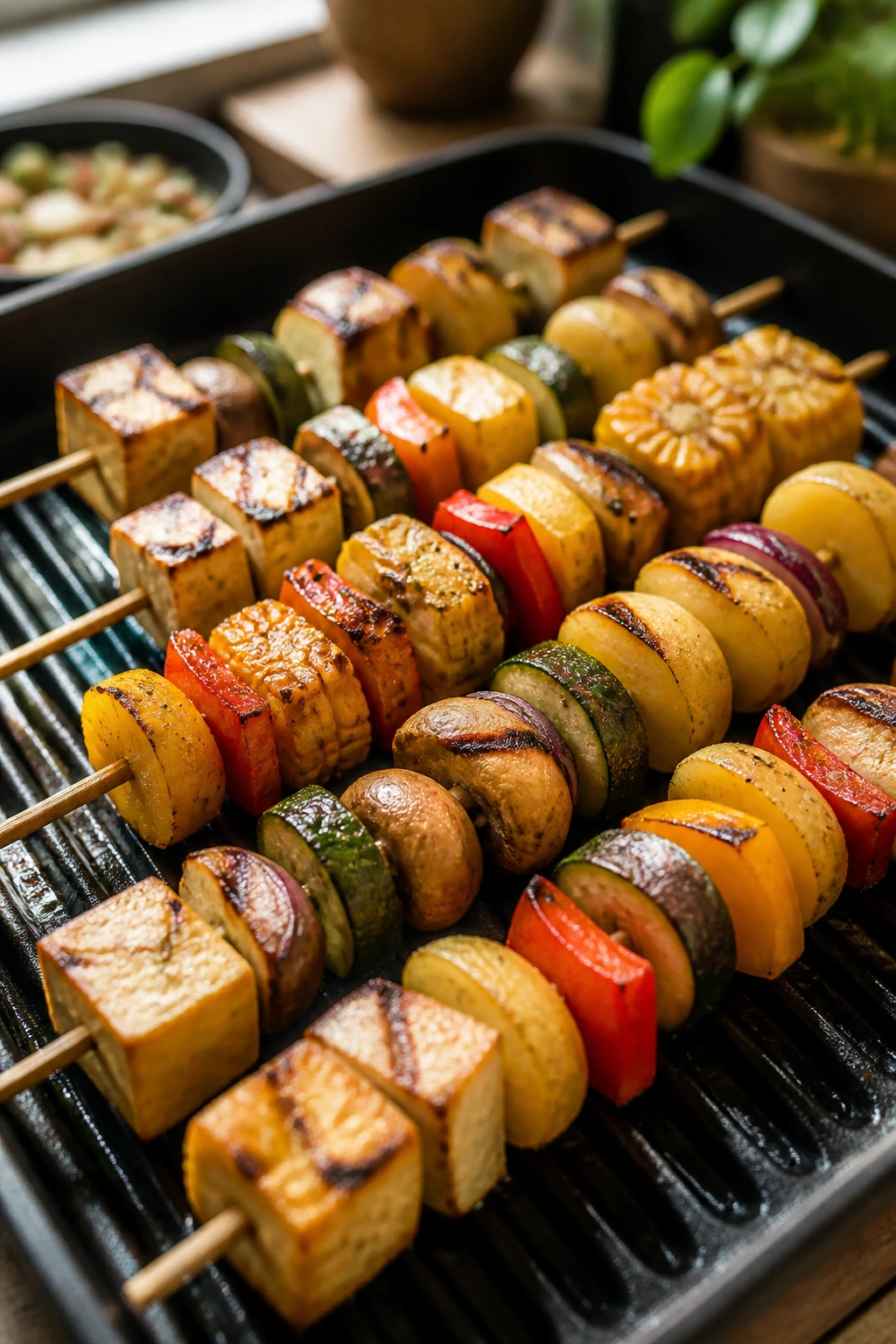
Gluten-Free Path:
Skip seitan and use tofu, tempeh, halloumi, potatoes, polenta, or gnocchi made without wheat. Check bottled sauces for soy or wheat as well, especially teriyaki and soy-based glazes.
Dairy-Free Route:
Lean on tofu, tempeh, mushrooms, eggplant, sweet potato, and hearty vegetables, then finish with tahini, herb oil, or avocado crema. Halloumi and paneer are out, but there is still plenty of weight on the plate.
Lower-Sodium Version:
Use less soy sauce, fewer olives, and smaller amounts of feta or halloumi. To replace the lost punch, add lemon zest, garlic, smoked paprika, fresh herbs, and a little vinegar.
Kid-Friendly Skewers:
Choose sweet, familiar pieces — tofu with teriyaki, gnocchi with pesto, corn with lime, or halloumi with tomatoes. Keep the spice low and cut the vegetables into tidy shapes that are easy to grab.
Spice-Level Adjustments:
For heat, use harissa, chipotle, chili crisp, or red pepper flakes in the marinade. For a softer result, keep the spice in the sauce on the side so the whole platter stays approachable.
Air-Fryer Shortcut:
Many of the sturdier skewers, especially tofu, halloumi, potatoes, and seitan, can be finished in an air fryer basket if you cut them off the skewer first. The air fryer gives good browning, but it’s best for small batches.
Common Mistakes to Avoid
Putting everything on the skewer raw and expecting the same timing:
That’s how you end up with charred onions and hard sweet potato. Par-cook the dense stuff, and keep the soft stuff for later in the thread.
Cutting pieces to different sizes just to make the platter look neat:
It looks nice for about two minutes, then the skewers finish unevenly. Uniform cutting is not decoration; it’s the difference between tender and half-raw.
Packing the skewer too tightly:
If the ingredients are jammed together, they steam each other. Leave a small gap so the heat can move around the food and the grill marks actually happen.
Using sugary marinades too early:
Maple, honey, and teriyaki can burn before the center is done. Brush them on late, or cook a little slower.
Forgetting to dry wet ingredients:
Tofu, mushrooms, zucchini, and even boiled potatoes need to be patted dry. Water is the enemy of browning.
Treating every vegetable the same:
Tomatoes, onions, squash, and cauliflower do not all cook at the same pace. Match the cut size and the cook time to the ingredient, or the skewer will feel disjointed.
Frequently Asked Questions
Can I make veggie kebabs in the oven instead of on a grill?
Yes. A hot broiler works well for most of these recipes, especially halloumi, tofu, paneer, seitan, and vegetable-heavy skewers. Put the skewers on a foil-lined sheet pan, keep them a few inches from the heat, and turn them once so the edges brown instead of scorching.
What vegetables hold up best on skewers?
Zucchini, bell peppers, red onion, cherry tomatoes, mushrooms, cauliflower, asparagus, and baby potatoes all work well when cut to the right size. Sweet potato, squash, and larger potatoes need a short pre-cook first or they lag behind everything else.
How do I keep bamboo skewers from burning?
Soak them in water for 20 to 30 minutes before threading the food. If you’re using a very hot grill, metal skewers are easier and save you the hassle. Bamboo still works fine if the tips aren’t hanging over the hottest part of the flame for too long.
Can I assemble the kebabs ahead of time?
Yes, with a few caveats. You can assemble them a few hours ahead and refrigerate them covered, but keep very juicy ingredients like tomatoes and mushrooms from sitting in a marinade too long or they’ll go soft. For the best texture, thread sturdy vegetables and proteins ahead of time, then add the most delicate pieces closer to cooking.
What if my tofu, halloumi, or paneer keeps sticking to the grill?
The grill is probably not hot enough, or the surface isn’t lightly oiled. Let the grates heat fully, brush them with a little oil, and avoid moving the skewer too early. Food that has time to sear usually releases on its own.
Are these kebabs filling enough for dinner on their own?
The ones with halloumi, tofu, paneer, seitan, gnocchi, potatoes, polenta, or tortellini usually are, especially if you add a grain, salad, or flatbread. The lighter vegetable-forward skewers work better as part of a larger spread unless you pile on a good sauce and a starch on the side.
What’s the best way to reheat leftovers without ruining them?
Use a 375°F oven or a skillet over medium heat. The oven keeps multiple skewers together and revives the edges, while the skillet is better for tofu, cheese, or seitan if you want a little fresh browning. The microwave is a last resort when texture is no longer the priority.
Can I swap the protein in any of these recipes?
Usually, yes, but keep the texture in mind. Halloumi and paneer can swap cleanly; tofu and tempeh swap cleanly; seitan and mushrooms need different timing. When you change the protein, check whether the marinade is sweet, salty, or acidic so the replacement makes sense with the rest of the skewer.
Skewers Worth Repeating
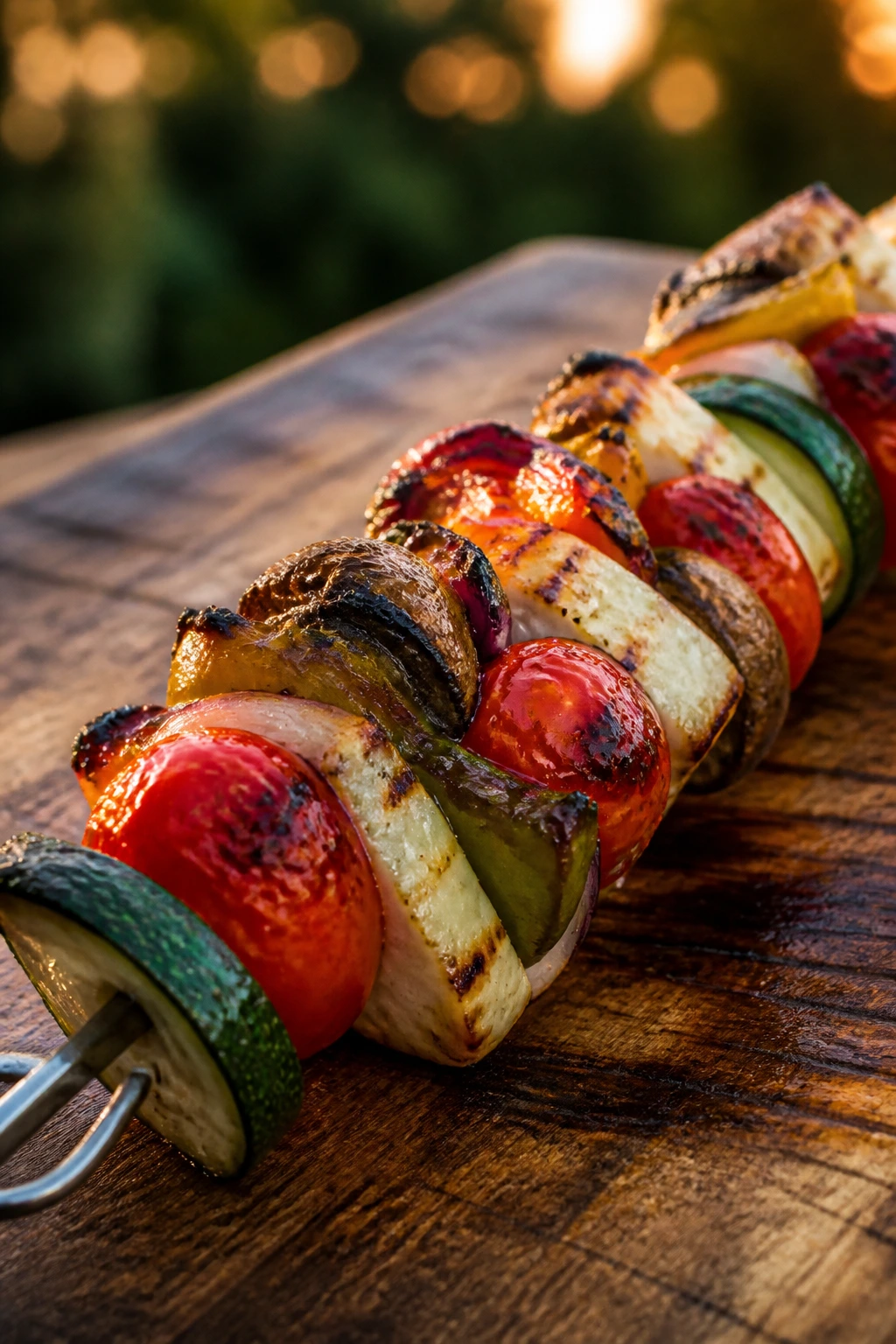
A good meatless kebab is not a compromise. It’s a specific kind of cooking, one that rewards heat, color, and smart ingredient choices more than a long ingredient list ever could. When you get the balance right — a salty cheese here, a starchy bite there, a sharp sauce at the end — dinner feels complete in a way a plate of scattered vegetables never quite manages.
The nice part is that these recipes don’t ask for much beyond timing and attention. Cut things evenly. Give dense vegetables a head start. Salt the surface. Let the grill do its work. After that, you’ve got a whole set of skewers that can carry a meal on their own, and that’s the sort of simple usefulness I’ll always keep coming back to.