



Steam is the enemy here. Roasted air fried vegetables for a healthy dinner work when the outside gets a little browned and the inside stays in that sweet spot between tender and limp. An air fryer earns its keep by blasting hot air across the cut surfaces, so you get the kind of caramelized edges that make broccoli taste nutty and cauliflower taste almost buttery without drowning everything in oil.
That only happens if you treat vegetables by density, not by wishful thinking. Broccoli and cauliflower want the basket first. Carrots need a head start. Zucchini and mushrooms, on the other hand, show up late or they collapse into a wet, tired mess. I’ve learned that the hard way, and honestly, a few burned zucchini half-moons taught me more than a dozen “easy” recipes ever did.
The nice part is that this can still feel like dinner, not a token side dish. Spoon the vegetables over quinoa, tuck them next to chickpeas, pile them onto hummus with warm pita, or finish with feta and lemon if you eat dairy. The tray does the heavy lifting; the rest is just choosing what mood you want on the plate.
Why This Tray Earns a Place in the Weeknight Rotation
-
Browning without the oven heat: The air fryer gives you toasted edges in about 20 minutes, and you don’t have to heat the whole kitchen to get there.
-
A small amount of oil goes a long way: Two tablespoons coat a full batch of vegetables, which keeps the finish glossy instead of greasy.
-
Different vegetables get different treatment: Hard vegetables and soft vegetables cook in stages, so you don’t end up with raw carrots beside collapsed zucchini.
-
Dinner can be built around the tray: Add chickpeas, quinoa, eggs, or feta and the same vegetables turn from side dish to full meal.
-
Cleanup stays sane: One cutting board, one bowl, one basket. That’s the kind of math I like on a tired evening.
-
Leftovers still have a job: Reheated in the air fryer or a hot skillet, the vegetables keep enough texture to live in grain bowls, omelets, and wraps the next day.
Timing, Yield, and the Vegetables That Play Nicely Together
A basket of vegetables sounds simple until you throw in a broccoli crown, a cauliflower head, and a zucchini and pretend they all want the same timing. They don’t. The good news is that once you know which vegetables brown fast and which need more runway, the whole process becomes almost automatic.
I also want to be blunt about basket size. A 5- to 6-quart air fryer can handle this recipe well if you keep the vegetables in a loose single layer and cook in two rounds when needed. Crowding is the fastest way to turn promising vegetables into a warm, damp pile.
Yield: Serves 4 as a side or 2 to 3 as a light main
Prep Time: 20 minutes
Cook Time: 18 to 22 minutes
Total Time: 38 to 42 minutes
Difficulty: Beginner — the only real skill is cutting the vegetables into pieces that cook at a similar pace.
Chill/Rest Time: None
Best Served: Hot, right out of the basket, with lemon at the table
A quick note on the timing: if your air fryer runs hot, start checking a minute or two early. If it runs cool or your basket is packed, add a few minutes and keep shaking the basket so the vegetables don’t brown on one side and sulk on the other.
The Ingredient List for Crisp Edges and Tender Centers
Vegetables
- 1 medium head broccoli, cut into bite-size florets, about 4 cups
- 1 small head cauliflower, cut into bite-size florets, about 4 cups
- 2 medium carrots, peeled and cut into 1/2-inch coins on the diagonal
- 1 red bell pepper, seeded and cut into 1-inch strips
- 1 small red onion, cut into 8 wedges
- 1 medium zucchini, halved lengthwise and sliced into 1/2-inch half-moons
- 6 ounces cremini mushrooms, halved if small or quartered if large
Seasoning
- 2 tablespoons olive oil
- 1 teaspoon kosher salt
- 1/2 teaspoon black pepper
- 1 teaspoon garlic powder
- 1 teaspoon smoked paprika
- 1/2 teaspoon dried oregano
For Finishing
- 1 tablespoon lemon juice, plus wedges for serving
- 2 tablespoons grated Parmesan, optional
- 2 tablespoons nutritional yeast, optional for a dairy-free finish
- 1 tablespoon chopped parsley, optional
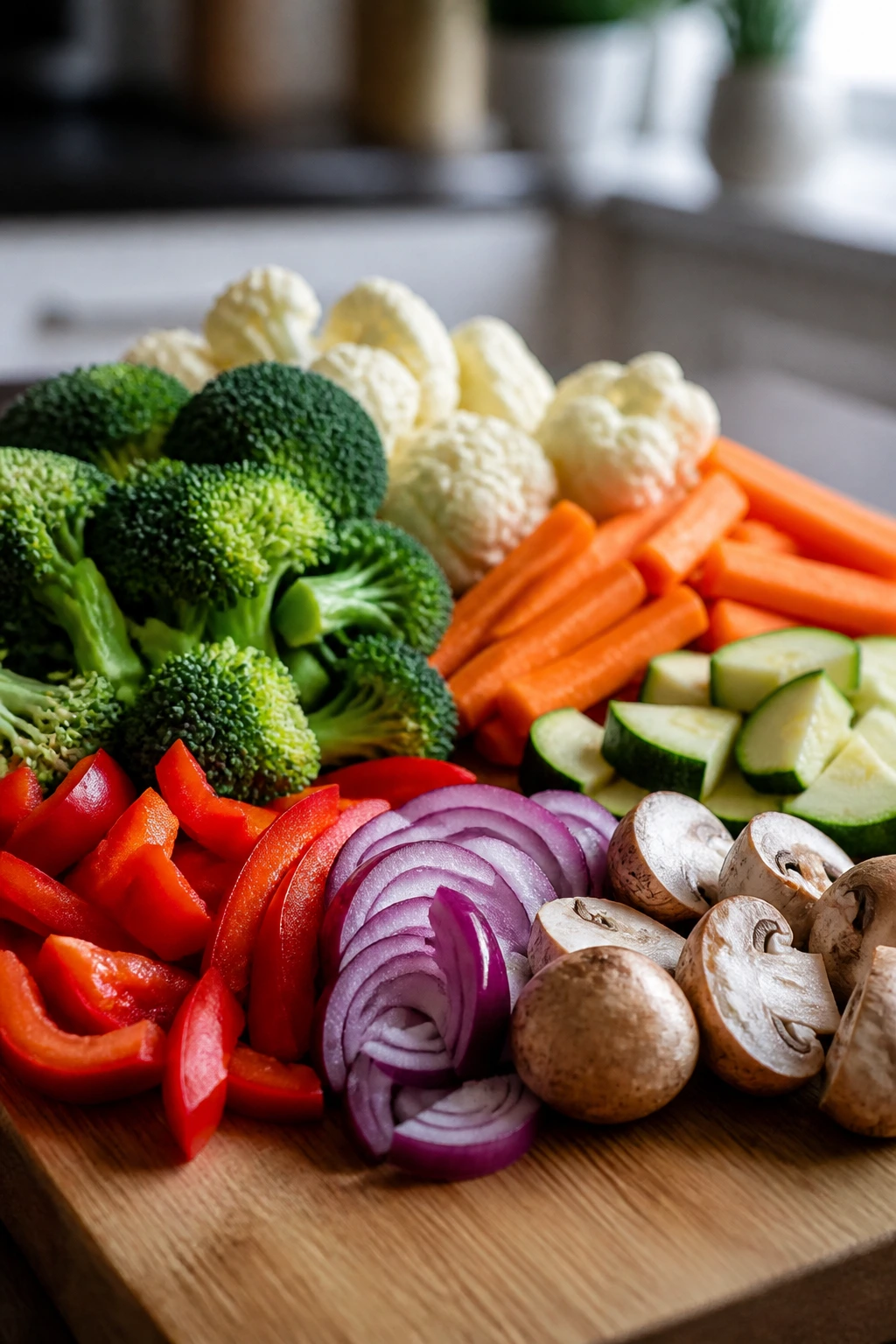
A vegetable mix like this works because it balances a few different textures in one basket. Broccoli and cauliflower bring the browned, sturdy base. Carrots add sweetness once they soften at the edges. Zucchini, mushrooms, and onion give the tray a little moisture and softness, but only if they’re added at the right time.
Why Each Vegetable Needs a Different Treatment
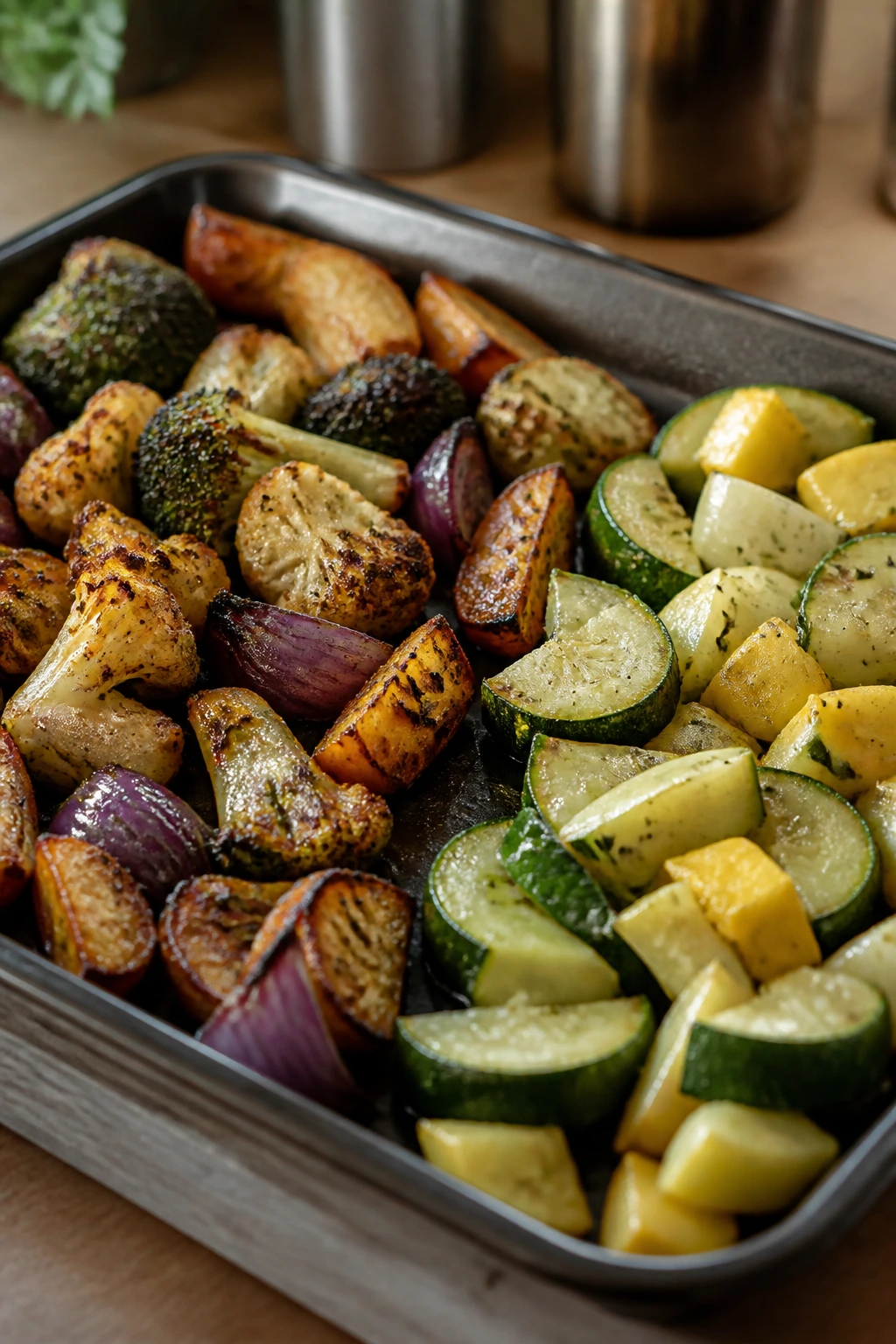
There’s a reason I don’t toss every vegetable into the basket at once and call it done. Air fryers are unforgiving in a useful way. They reward dry surfaces, even cuts, and a little attention to how fast each ingredient cooks.
Sturdy Vegetables
- What to use: 1 medium head broccoli, 1 small head cauliflower, and 2 medium carrots. These are the backbone of the dish because they hold shape under high heat and pick up browned spots without going mushy.
- Preparation: Cut broccoli and cauliflower into florets that are close to the size of a walnut, and slice the carrots into 1/2-inch coins on the bias so they don’t cook in hard little discs.
- Substitutions: Brussels sprouts, small potato cubes, or green beans can step in if you want a different mix, but potatoes need a longer cook and green beans need less.
- Tips: Dry these vegetables well after washing. A damp broccoli crown steams, and steamed broccoli is a different animal entirely.
Quick-Cooking Vegetables
- What to use: 1 red bell pepper, 1 small red onion, 1 medium zucchini, and 6 ounces cremini mushrooms. These bring color and soft contrast, but they can turn watery if they sit in the basket too long.
- Preparation: Cut the pepper into thick strips, the onion into wedges with some root intact, the zucchini into 1/2-inch half-moons, and the mushrooms into halves or quarters so they don’t disappear.
- Substitutions: Yellow bell pepper works fine. Shallots can replace the red onion if you want a sweeter bite. Baby eggplant can work in place of zucchini if you slice it thick.
- Tips: Add this group later in the cook. Mushrooms release moisture, and zucchini goes from firm to collapsed faster than people expect.
Oil and Seasonings
- What to use: 2 tablespoons olive oil, 1 teaspoon kosher salt, 1/2 teaspoon black pepper, 1 teaspoon garlic powder, 1 teaspoon smoked paprika, and 1/2 teaspoon dried oregano.
- Preparation: Mix the oil and seasonings together before adding the vegetables, or toss everything in a large bowl until the surfaces look evenly coated.
- Substitutions: Avocado oil handles the same heat. If smoked paprika isn’t your thing, use sweet paprika or a pinch of cumin for a warmer note.
- Tips: Kosher salt clings in a more even way than table salt here. You want seasoning on the vegetables, not a salty patch on one carrot and nothing on the next.
Finishers
- What to use: 1 tablespoon lemon juice, 2 tablespoons Parmesan or nutritional yeast, and 1 tablespoon chopped parsley if you want a fresh green finish.
- Preparation: Juice the lemon before you start cooking, and chop the parsley while the vegetables are in the basket so you can finish fast.
- Substitutions: Lime works if you want a sharper edge. Dill or basil can replace parsley. Nutritional yeast gives a savory, cheesy note without dairy.
- Tips: Add acid after cooking, not before. Lemon juice before the air fryer mostly turns into steam, and steam is exactly what we’re avoiding.
The Tools That Make the Vegetables Brown Instead of Steam
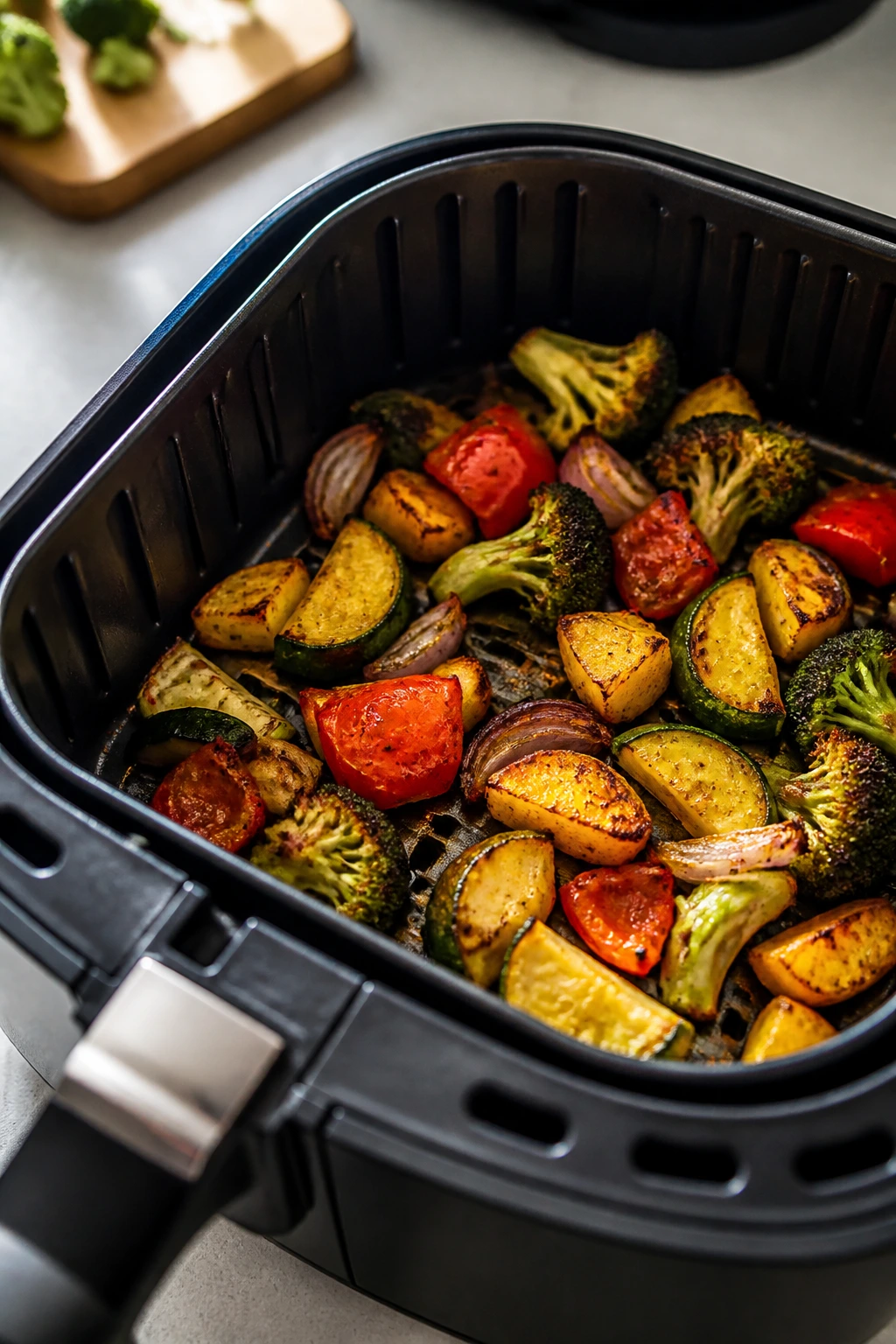
A good air fryer recipe is less about fancy gear and more about using the right basic tools. If the chopping is uneven or the basket is packed, the appliance can’t save you.
- 5- to 6-quart basket-style air fryer or tray-style air fryer: You want enough room for a loose layer of vegetables. Smaller models can still work, but they’ll need two batches.
- Large mixing bowl: A roomy bowl helps you toss the vegetables without flinging paprika across the counter.
- Chef’s knife: A sharp knife makes it easier to cut broccoli, cauliflower, and carrots into similar pieces, which matters more than people think.
- Cutting board with a stable surface: Vegetables move when they’re dry and round. A board that slides is an annoyance you do not need.
- Silicone spatula or tongs: Useful for shaking and turning the vegetables without scratching the basket.
- Measuring spoons: Oil, salt, and spices are small amounts, but they shape the whole result.
- Microplane or fine grater: Handy if you want lemon zest over the finished vegetables. It adds a bright smell before the first bite.
- Optional perforated parchment liners: These can help with cleanup, but they must be air fryer safe and perforated so the air still moves.
How to Roast Vegetables in an Air Fryer Without Steaming Them
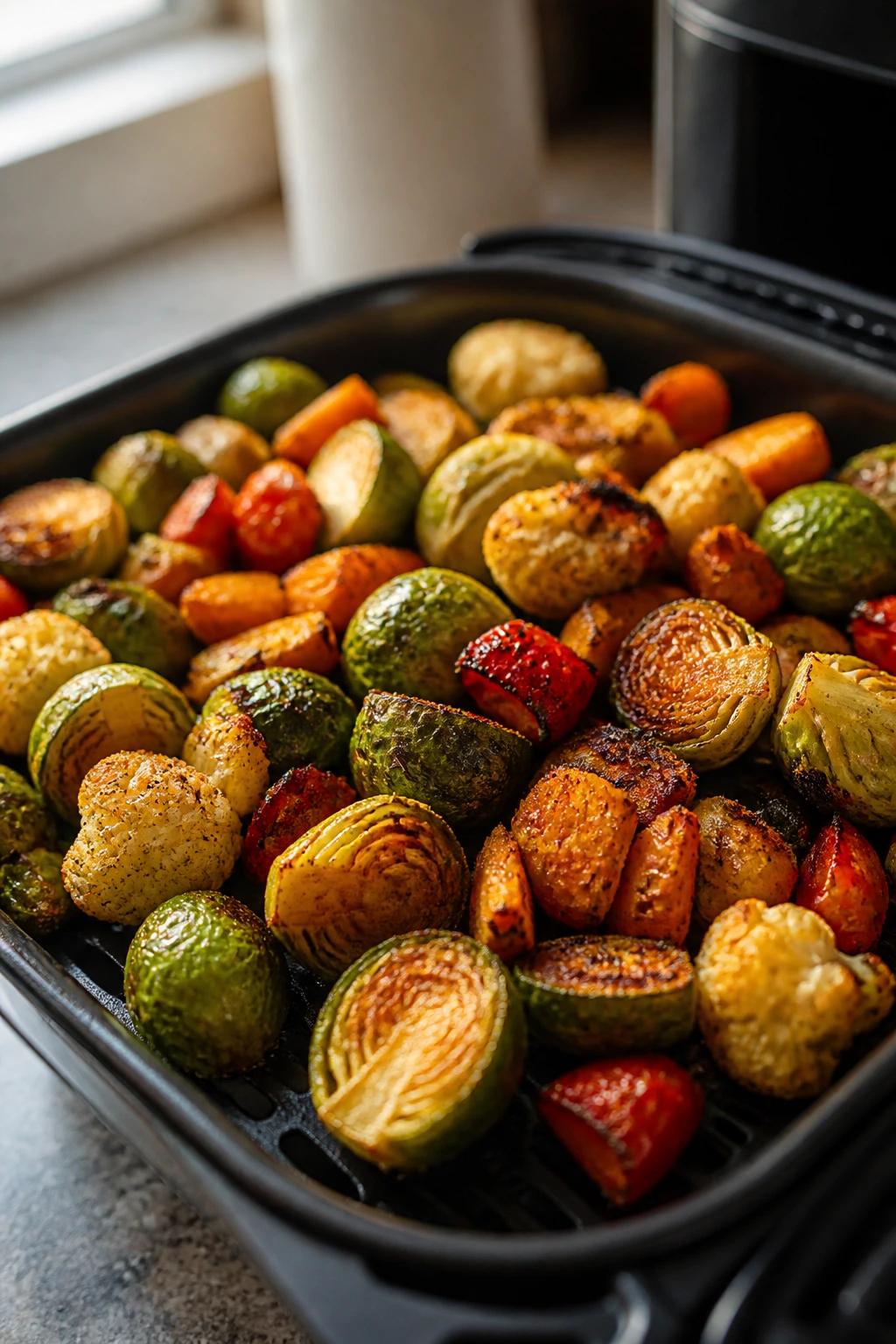
Air fryer vegetables fail for one boring reason: too much moisture trapped in too small a space. Once you fix that, the rest is straightforward. The appliance is basically a compact convection oven, so the same rules apply — dry surface, hot air, enough room to brown.
Prep the vegetables
-
Preheat the air fryer to 390°F (200°C) for 5 minutes. If your model doesn’t preheat, run it empty for a few minutes so the basket is hot when the vegetables go in.
-
Cut the broccoli, cauliflower, carrots, red pepper, onion, zucchini, and mushrooms into the sizes listed above. Keep the florets and carrot pieces close in size so they cook at the same pace. If the pieces are wildly uneven, the small ones burn before the large ones soften.
-
Pat the vegetables dry with a clean kitchen towel or paper towels if you’ve washed them recently. The surfaces should feel dry, not slick. Moisture on the outside blocks browning.
-
Toss the broccoli, cauliflower, carrots, olive oil, salt, black pepper, garlic powder, smoked paprika, and oregano in a large bowl until everything looks lightly glossy and evenly coated. Do not drown the vegetables in oil — they should shine, not drip.
Air fry in two stages
-
Transfer the broccoli, cauliflower, and carrots to the air fryer basket in a loose single layer. If your basket is small, keep the vegetables to one half of the batch and save the rest for round two. Air fry for 8 minutes, then shake the basket well. The edges should start to show brown spots, and the carrots should be just beginning to soften.
-
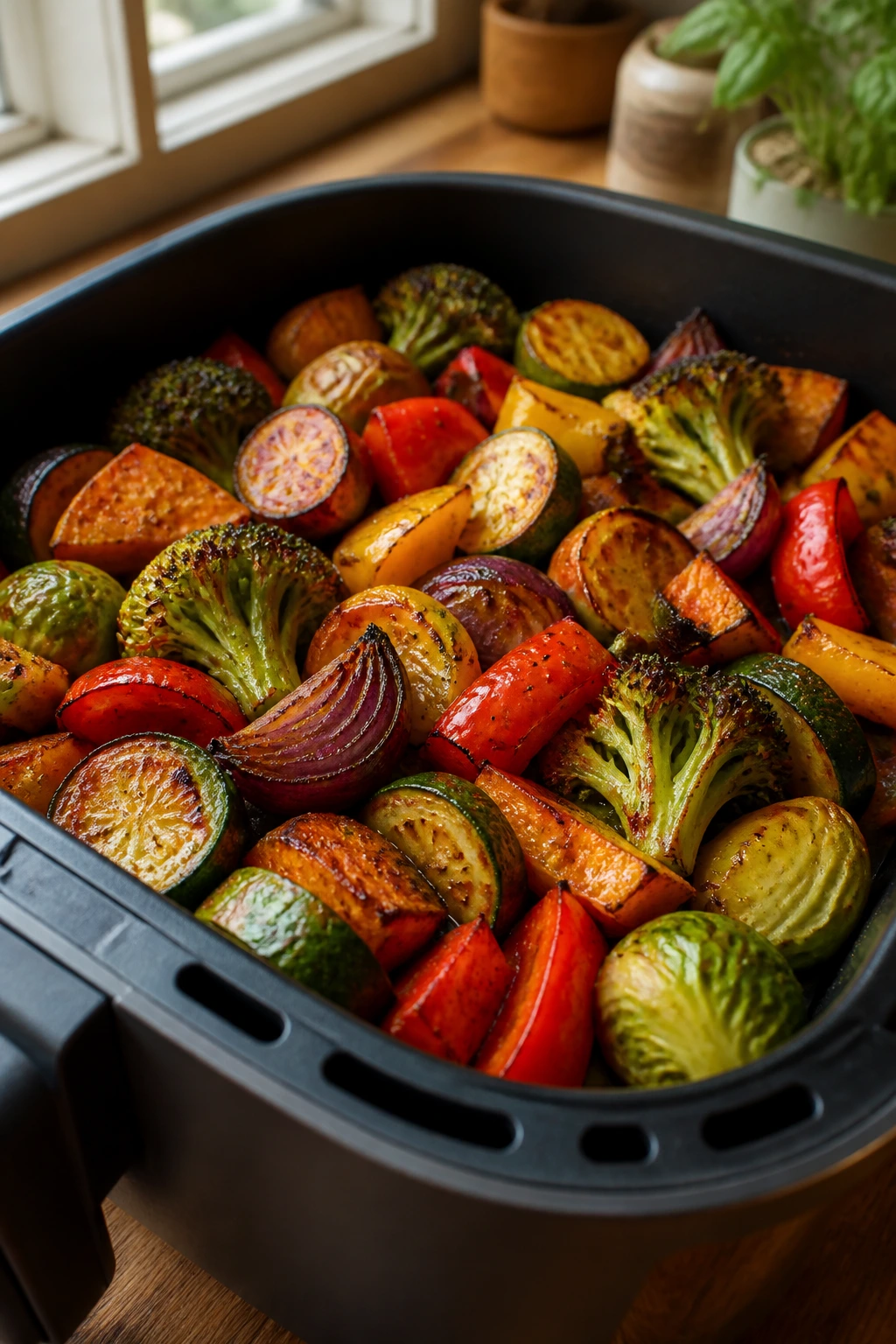
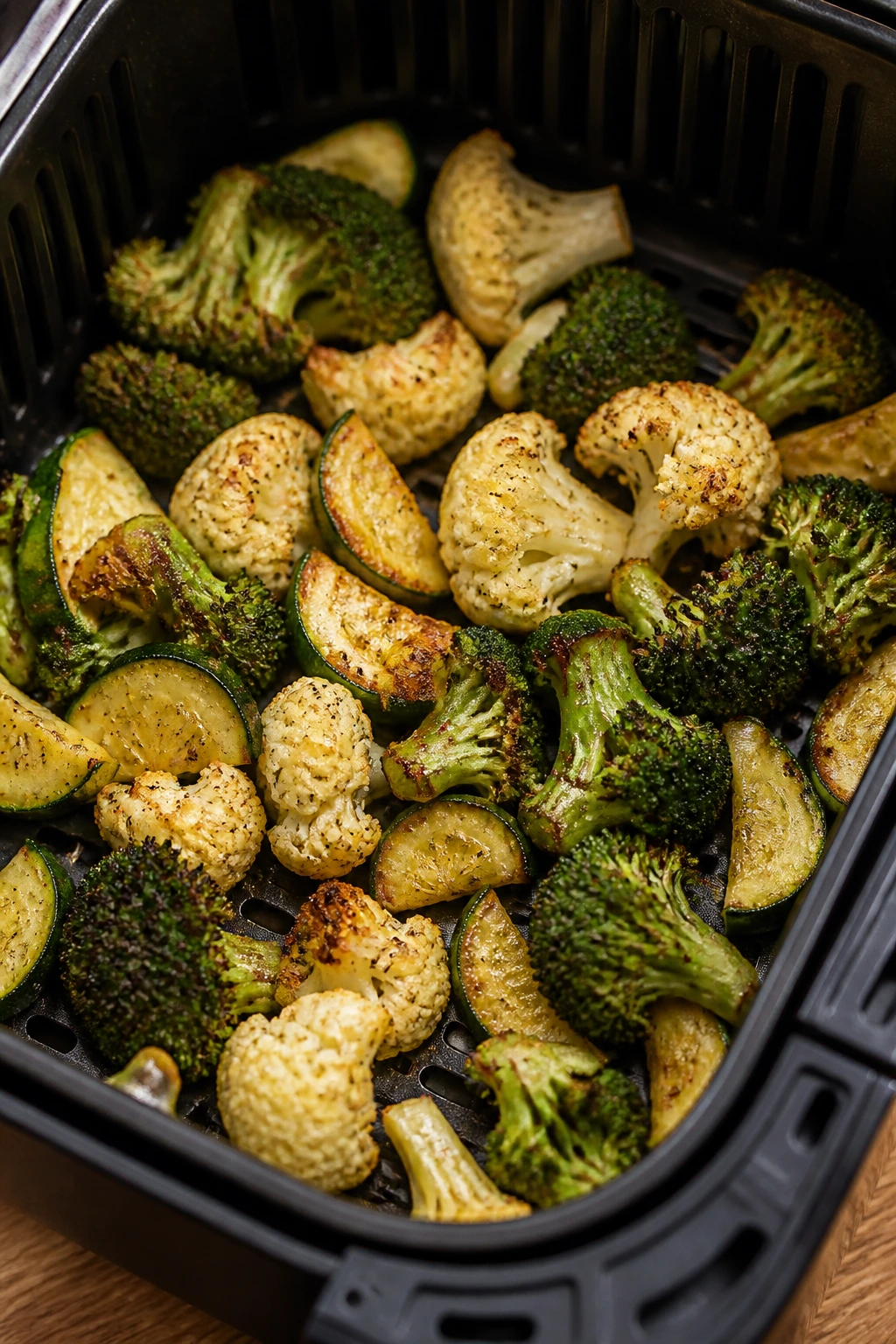
Add the red pepper, red onion, zucchini, and mushrooms to the basket. Toss quickly so the new vegetables pick up a little of the seasoned oil from the first batch. Air fry for another 6 to 8 minutes, shaking once halfway through, until the broccoli florets are browned at the tips, the cauliflower has toasted patches, the mushrooms have shrunk and turned glossy, and the zucchini is tender but still holds its shape. If your air fryer cooks hot, check at the 5-minute mark.
Finish and serve
-
Transfer the vegetables to a serving bowl the moment they’re done. Drizzle with the lemon juice, sprinkle over the parsley, and add Parmesan or nutritional yeast if you’re using it. Toss gently so the lemon coats the vegetables without soaking them.
-
Taste and adjust the seasoning with a pinch more salt or another squeeze of lemon if needed. Serve immediately while the edges are still crisp. If you let them sit in the basket, the trapped steam softens everything fast.
A small warning that saves a lot of frustration: if you are making a double batch, cook it in two separate rounds. You can keep the first batch warm on a sheet pan in a 200°F oven, but stacking the vegetables inside the basket will make them pale and rubbery.
How to Turn the Vegetables Into Dinner
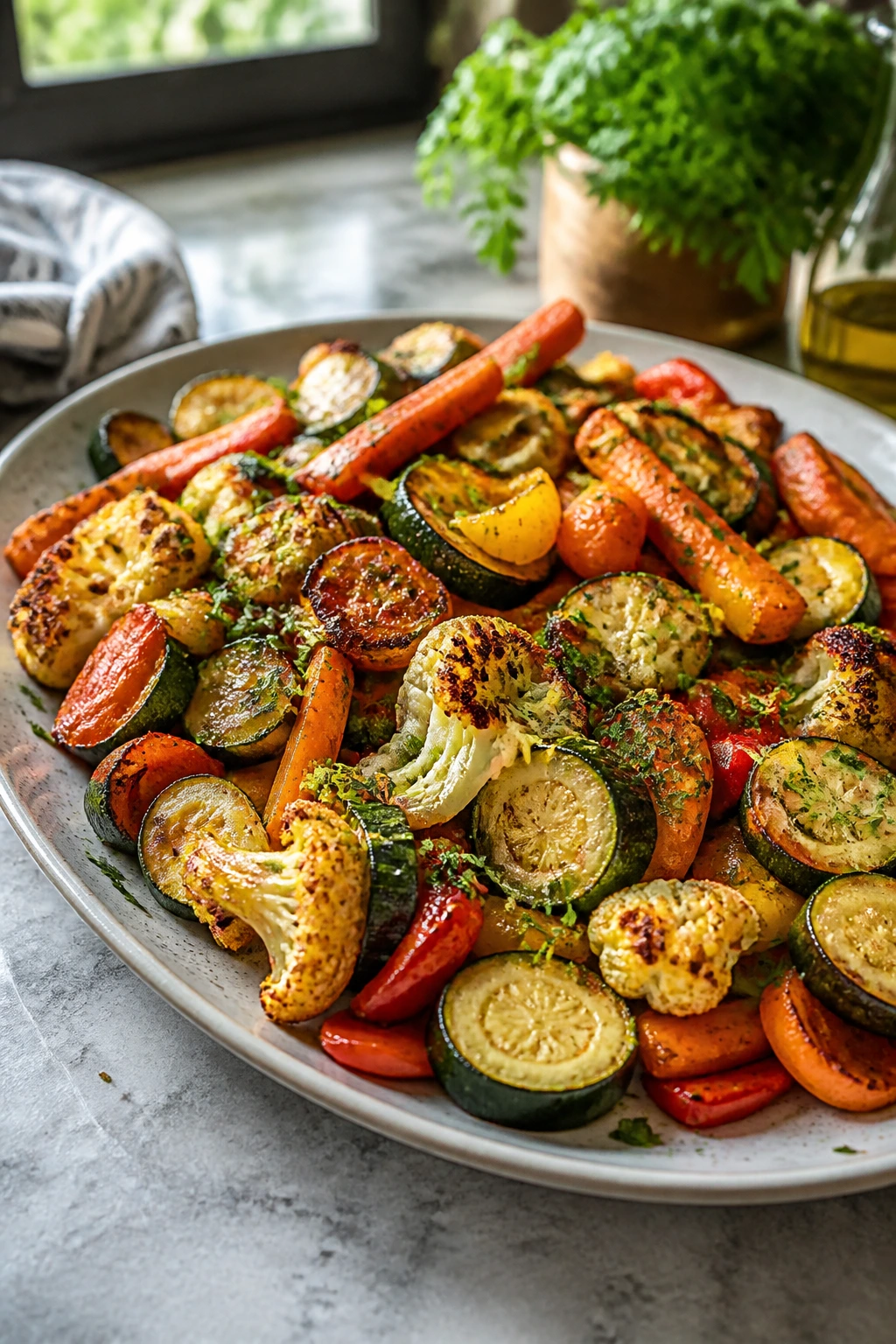
A bowl of vegetables can be dinner, but it needs a little structure. I like to think of this recipe as a base layer, the same way some people think of rice or pasta. The vegetables do the flavor work, and you build around them instead of fighting them.
Presentation: Pile the vegetables onto a wide platter or shallow bowl so the browned edges stay visible. A deep bowl traps steam and hides all the good spots, which is a waste after you’ve gone to the trouble of getting real color on the cauliflower. Finish with parsley, lemon zest, and a few flakes of salt if you want the tray to look as bright as it tastes.
Accompaniments: For a full vegetarian dinner, spoon the vegetables over 1 cup of cooked quinoa, farro, or brown rice and add chickpeas or white beans for protein. Warm pita with hummus works too, and so does a dollop of plain Greek yogurt or tahini sauce if you want something creamy next to the crisp vegetables. If you eat eggs, a fried or soft-boiled egg on top turns the whole thing into a proper meal.
Portions: As a side, this serves 4 with a modest plate of vegetables. As a main, it serves 2 to 3 once you add grains, beans, or eggs. If you’re scaling up, think in batches, not brute force. Two smaller rounds in the air fryer will always taste better than one crowded round.
Beverage Pairing: Sparkling water with lemon or cucumber keeps the plate feeling bright. If you want wine, a dry white like Sauvignon Blanc or Pinot Grigio works because it doesn’t fight the garlic and lemon. Unsweetened iced tea with a squeeze of citrus is a good non-alcoholic match if you want something a little more grounded.
Small Upgrades That Make the Flavor More Lively
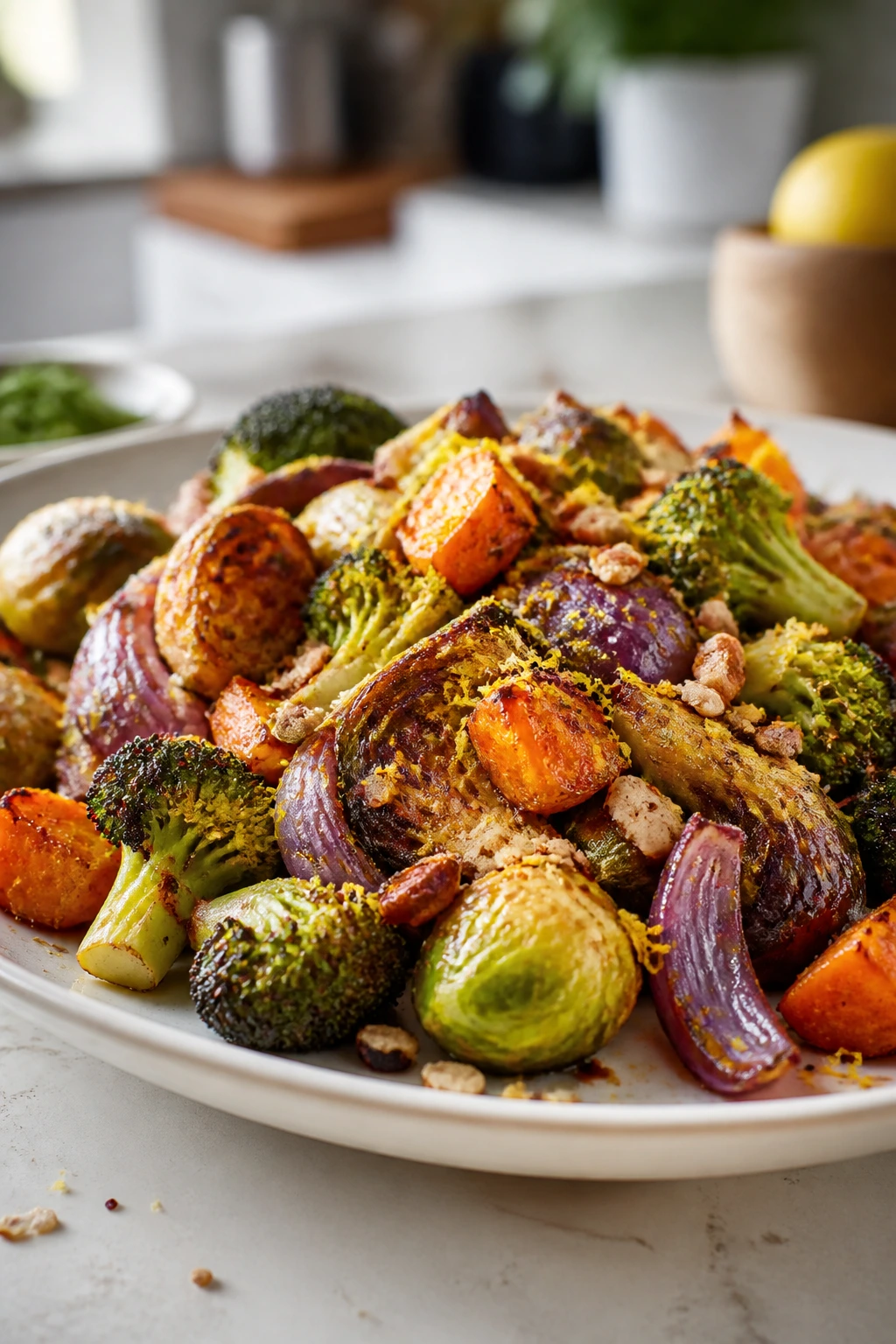
A tray like this doesn’t need much, which is exactly why the finishing touches matter. You’re not hiding weak vegetables under sauce. You’re sharpening the edges of what’s already there.
Flavor Enhancement: A little lemon zest over the hot vegetables changes the smell immediately. The juice wakes them up, but the zest is what makes the whole bowl smell fresh instead of merely seasoned. If you like a bolder finish, add a pinch of red pepper flakes or a dusting of sumac after cooking.
Time-Saver: Chop the broccoli, cauliflower, carrots, onion, and mushrooms the day before and store them in a container lined with a dry paper towel. Keep the zucchini separate until cooking day if you can. It loses firmness faster than the rest of the group.
Texture Upgrade: If you want extra crunch, toss 2 tablespoons of chopped nuts or seeds — pumpkin seeds are my favorite here — over the vegetables after they come out of the basket. They don’t need to cook. They just need to hit the hot vegetables and stay crisp.
Make-It-Yours: For a vegan dinner, use nutritional yeast instead of Parmesan and add chickpeas on the side. For a dairy version, crumble feta over the finished vegetables instead of or alongside the Parmesan. For a more filling plate, spoon everything over grains and drizzle with a quick tahini-lemon sauce.
The Mistakes That Keep Air-Fried Vegetables Limp
-
Crowding the basket: The vegetables sit on top of each other, trap steam, and come out pale. The fix is to cook in a single layer or in two batches. Yes, it takes a few extra minutes. No, it is not optional if you want browning.
-
Skipping the dry step: Wet broccoli and wet cauliflower never brown as well as dry ones. If you wash them ahead of time, dry them thoroughly before oiling. Same goes for mushrooms — if they’re wet on the surface, they’ll steam before they roast.
-
Adding zucchini too soon: Zucchini is the one that fools people. It looks sturdy, then turns soft in minutes. Add it with the quick-cooking vegetables, not with the carrots and cauliflower.
-
Cutting everything into random sizes: A huge cauliflower chunk next to a paper-thin carrot slice is a recipe for frustration. Keep the dense vegetables in similar sizes and cut the softer vegetables a little larger if you want them to survive the cook.
-
Forgetting the shake: Air fryers brown best when the vegetables get moved around once or twice. If you leave them alone, the side facing the heat source burns while the rest stays dull.
-
Waiting too long to finish with acid: Lemon juice, vinegar, or another bright finish belongs at the end. Add it before cooking and you lose the lift. Add it after, and the whole tray smells sharper and tastes cleaner.
Flavor Swaps and Easy Variations
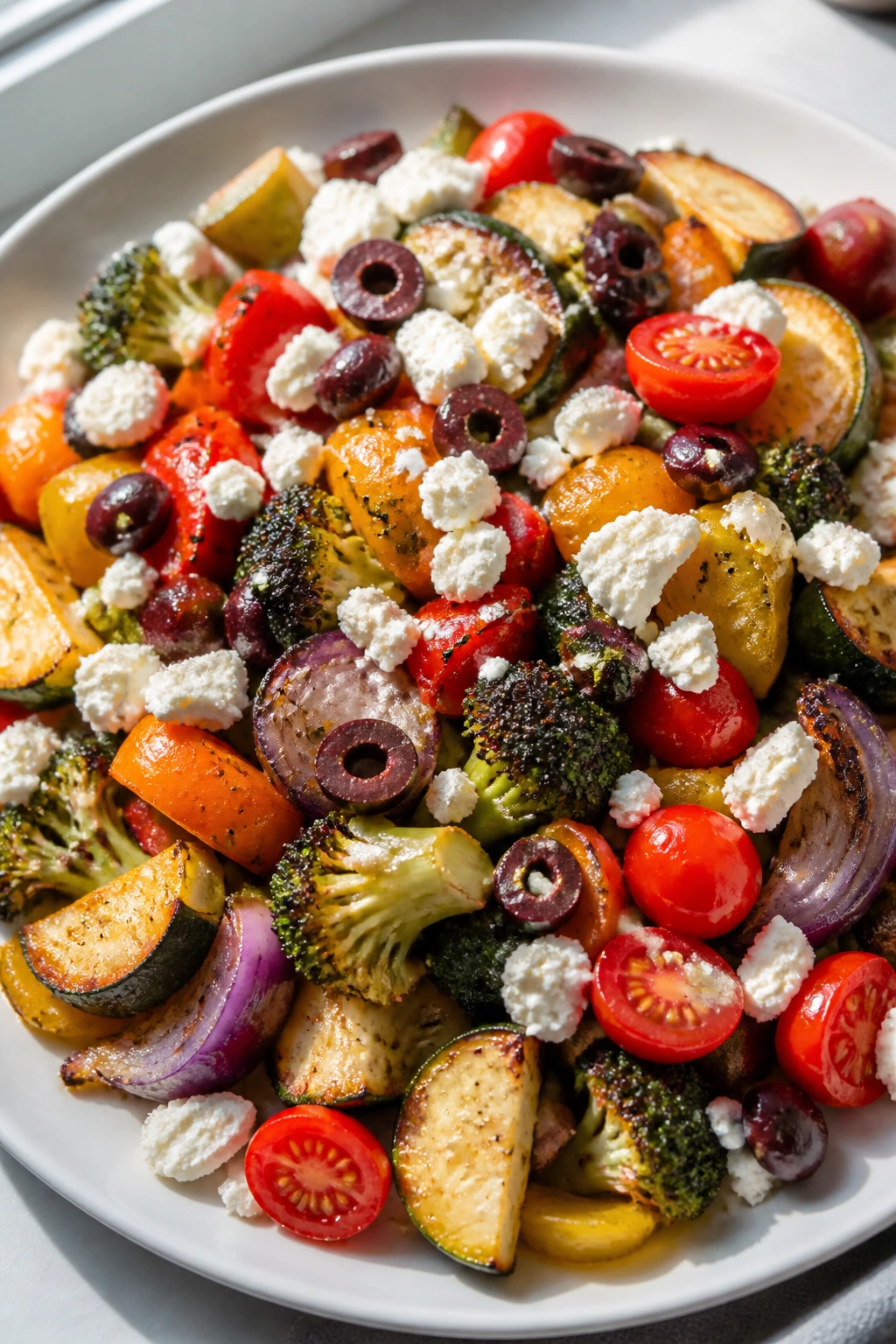
Mediterranean Market Tray
Swap the oregano for 1 teaspoon dried thyme and add 1/2 cup cherry tomatoes during the last 3 minutes of cooking. Finish with crumbled feta and sliced olives. The tomatoes burst slightly and leave a little juice in the bowl, which is a nice change if you want something less dry.
Smoky Chili-Lime Mix
Replace the smoked paprika with 1 teaspoon chili powder and 1/2 teaspoon ground cumin. Use lime juice instead of lemon at the end, then add chopped cilantro if you like it. This version works well with black beans or a scoop of rice.
Herby Parmesan Finish
Keep the base recipe the same and add the Parmesan only after the vegetables come out of the basket, along with extra parsley and black pepper. If you want more crunch, sprinkle on 2 tablespoons of toasted breadcrumbs before serving. It leans savory and a little richer, which is useful when you want the vegetables to feel more substantial.
Tahini Dinner Bowl
Serve the vegetables over quinoa with chickpeas and drizzle everything with tahini thinned with lemon juice and a spoonful of water. The sauce clings to the broccoli florets and settles into the cauliflower crevices. It’s one of my favorite ways to turn a vegetable tray into dinner without adding much work.
Root-Heavy Swap
If you want a colder-weather version, replace the zucchini and bell pepper with 1 small sweet potato, cut into 1/2-inch cubes. Add 4 to 6 minutes to the first stage so the sweet potato softens before the tender vegetables go in. The tray gets sweeter, denser, and more filling.
Make-Ahead, Storage, and Reheating
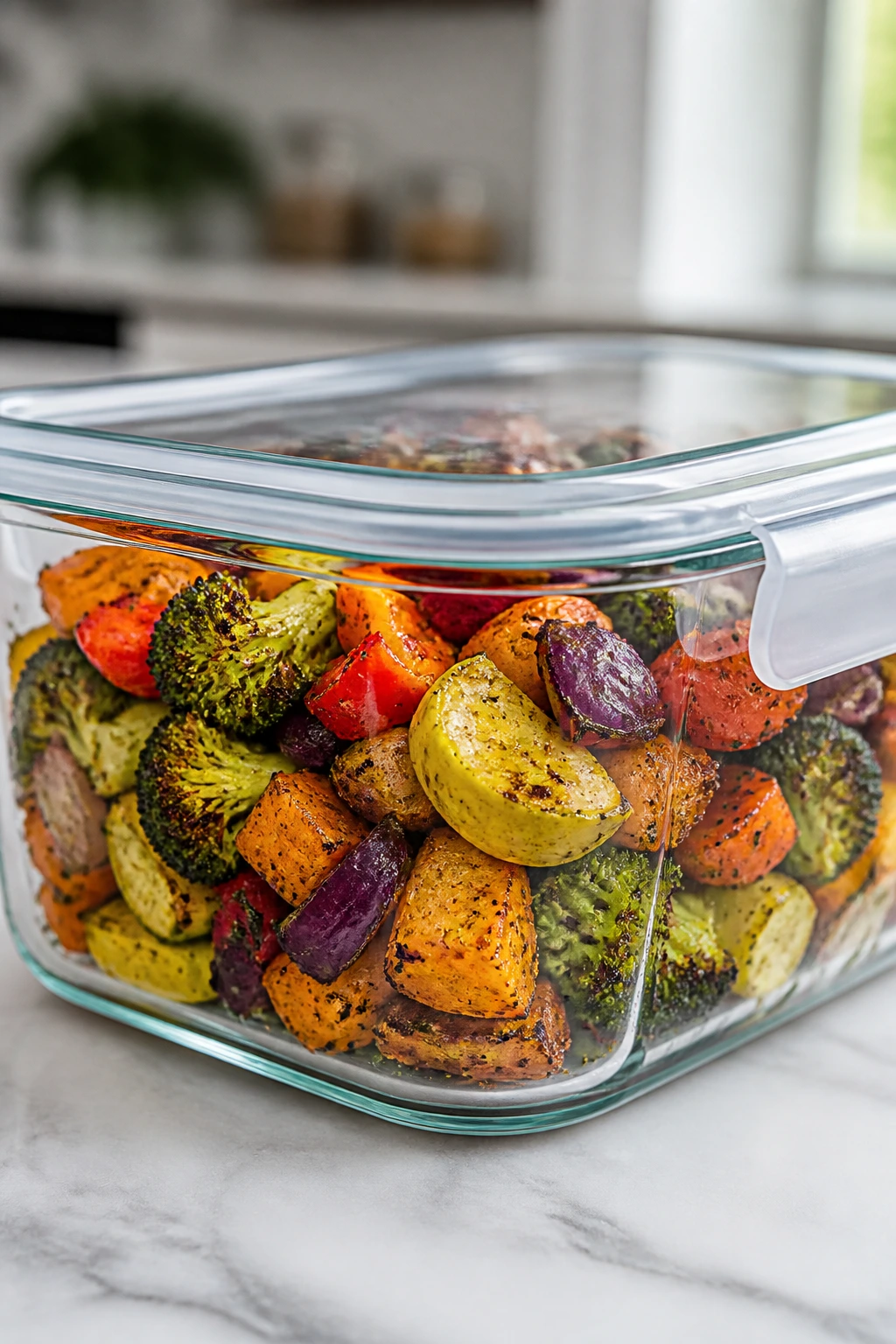
Cooked air fryer vegetables are at their best right away, but they’re not fragile if you treat them well. Let them sit around warm and uncovered for an hour, and the crisp edges soften. Put them in the fridge properly, and they’ll still be useful for the next few days.
Cool the vegetables for about 20 to 30 minutes after cooking, then pack them into an airtight container. They keep in the refrigerator for 3 to 4 days. Don’t leave them at room temperature for more than 2 hours. That’s the safe line for cooked food, and there’s no good reason to flirt with it.
If you want to make the recipe ahead, chop the broccoli, cauliflower, carrots, onion, and mushrooms up to 24 hours in advance and keep them cold and dry. Store the zucchini separately if possible. You can also mix the dry seasoning blend several days ahead and keep it in a small jar, then toss with oil when you’re ready to cook.
Freezing is possible, but I won’t pretend it’s the dream option. The vegetables will keep for up to 2 months in the freezer, though zucchini and mushrooms will soften more than the rest. If you freeze leftovers, use them in soups, pasta, or grain bowls rather than expecting the same crisp texture after reheating.
For reheating, the air fryer is the cleanest fix. Spread the vegetables in a single layer and reheat at 375°F (190°C) for 3 to 5 minutes, shaking once. The oven works too: spread them on a sheet pan and heat at 425°F (220°C) for 8 to 10 minutes. A skillet over medium-high heat with a teaspoon of oil is my favorite if I only have a small portion left. The microwave is the least flattering option, but it’s fine if you’re piling the vegetables into a bowl with grains and sauce.
Frequently Asked Questions About Air-Fried Roasted Vegetables
Can I use frozen vegetables instead of fresh?
Yes, but only with a little realism. Frozen broccoli, cauliflower, and green beans can work if you thaw them first and dry them well, but frozen zucchini and mushrooms tend to turn watery and soft. Expect a softer finish and add a few extra minutes if the vegetables start cold from the freezer.
Why do my air fryer vegetables come out soggy?
Usually it’s one of three things: the basket is crowded, the vegetables are wet, or the vegetables were cut too small. The fix is simple but annoying — dry them, give them space, and cut by density so the soft vegetables don’t cook before the hard ones catch up.
Do I need to preheat the air fryer?
I would. A preheated basket starts browning sooner, which is the whole point of using the appliance for vegetables. Five minutes of preheating can make the difference between toasted edges and vegetables that sit there steaming for the first few minutes.
How do I turn this into a full vegetarian dinner?
Add a protein and a carb. Chickpeas, white beans, quinoa, farro, or a fried egg all work without fighting the vegetables. A spoonful of hummus, tahini, or yogurt on the side gives you enough richness to make the plate feel complete.
Can I cook everything in one batch?
Only if your air fryer is large enough for a loose single layer. If the basket looks crowded or the vegetables are stacked, split the recipe into two rounds. The second batch always takes a little less time because the basket is already hot.
Is parchment paper safe in the air fryer?
Only if it’s made for air fryer use and perforated so the air can move through it. Regular parchment can block airflow or shift around if you put it in before the food. I use liners only when I know the basket is staying full enough to hold them down.
How do I keep zucchini from going mushy?
Cut it thicker than you think you need to and add it late. Half-inch half-moons hold up better than skinny slices, and zucchini should go into the basket only after the carrots, broccoli, and cauliflower have already started to brown. If you want even firmer results, pat the cut zucchini dry before oiling it.
A Tray Worth Making Again
There’s a reason this kind of vegetable tray keeps showing up in my kitchen. It does one thing well, but it does it with enough flexibility that dinner can go in a few directions without starting over. Once you understand that broccoli and cauliflower need a head start, zucchini needs restraint, and lemon belongs at the finish, the recipe stops feeling fussy and starts feeling obvious.
That’s what I like about it. Not novelty. Reliability.
The next time the crisper drawer is full and you want something that tastes like an actual meal instead of a compromise, this is the tray I’d reach for first. Give it room, give it heat, finish it with something bright, and it will do the rest.
Roasted Air Fried Vegetables for a Healthy Dinner — Recipe Card
Recipe Name: Roasted Air Fried Vegetables for a Healthy Dinner
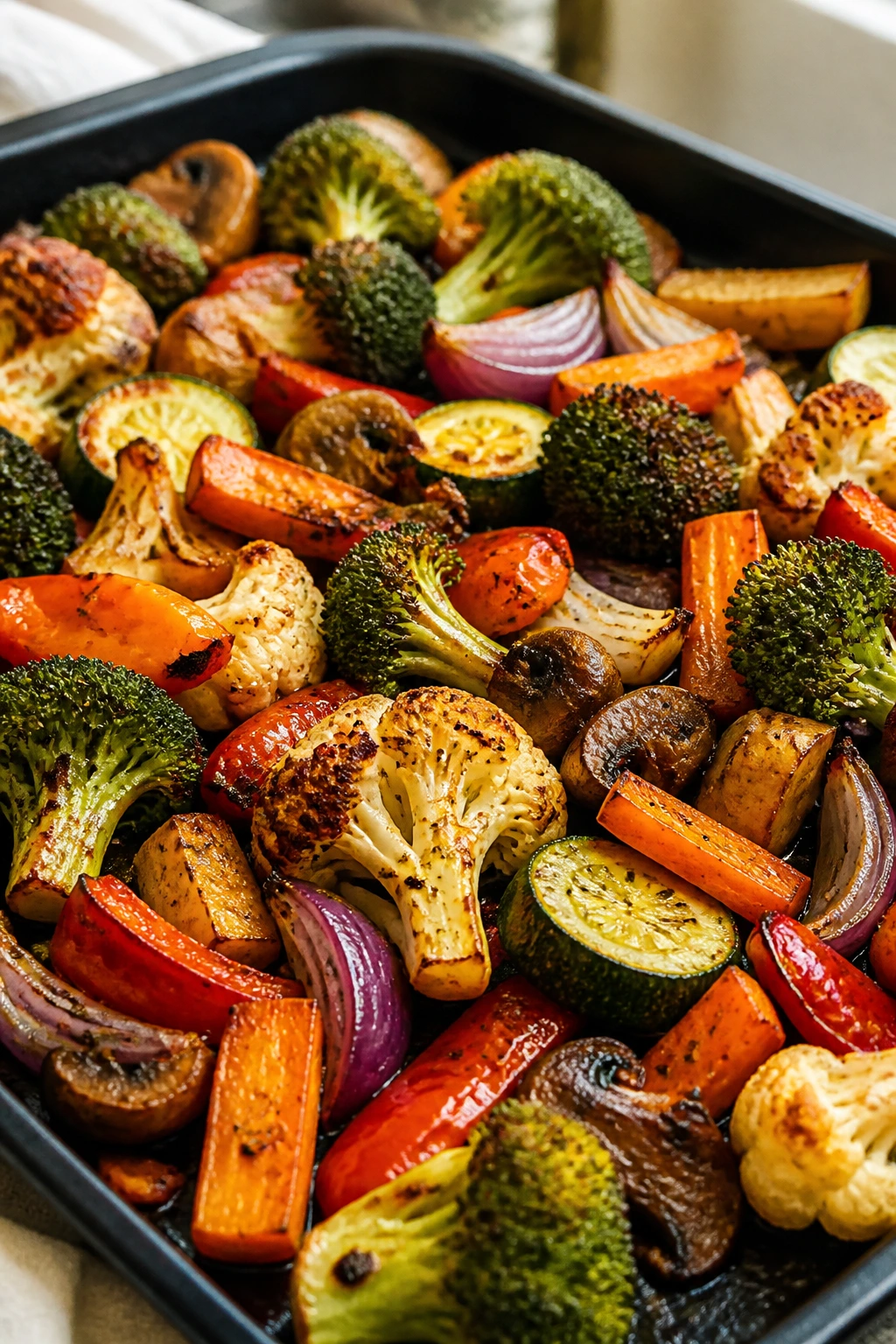
Description: A mix of broccoli, cauliflower, carrots, bell pepper, onion, zucchini, and mushrooms cooks in the air fryer until the edges brown and the centers stay tender. A final squeeze of lemon and a sprinkle of herbs make it work as a side dish or the base for a vegetarian dinner.
Prep Time: 20 minutes
Cook Time: 18 to 22 minutes
Total Time: 38 to 42 minutes
Course: Side Dish, Main Course
Cuisine: American
Servings: 4 servings as a side or 2 to 3 as a light main
Calories: About 180 kcal per serving
Ingredients
Vegetables
- 1 medium head broccoli, cut into bite-size florets, about 4 cups
- 1 small head cauliflower, cut into bite-size florets, about 4 cups
- 2 medium carrots, peeled and cut into 1/2-inch coins on the diagonal
- 1 red bell pepper, seeded and cut into 1-inch strips
- 1 small red onion, cut into 8 wedges
- 1 medium zucchini, halved lengthwise and sliced into 1/2-inch half-moons
- 6 ounces cremini mushrooms, halved if small or quartered if large
Seasoning
- 2 tablespoons olive oil
- 1 teaspoon kosher salt
- 1/2 teaspoon black pepper
- 1 teaspoon garlic powder
- 1 teaspoon smoked paprika
- 1/2 teaspoon dried oregano
For Finishing
- 1 tablespoon lemon juice, plus wedges for serving
- 2 tablespoons grated Parmesan, optional
- 2 tablespoons nutritional yeast, optional
- 1 tablespoon chopped parsley, optional
Instructions
Prep the Vegetables
- Preheat the air fryer to 390°F (200°C) for 5 minutes.
- Cut the broccoli, cauliflower, carrots, bell pepper, onion, zucchini, and mushrooms into the sizes listed above. Pat the vegetables dry if needed.
- Toss the broccoli, cauliflower, carrots, olive oil, salt, pepper, garlic powder, smoked paprika, and oregano in a large bowl until evenly coated.
Air Fry in Two Stages
4. Add the broccoli, cauliflower, and carrots to the air fryer basket in a loose single layer. Air fry for 8 minutes, then shake the basket.
5. Add the bell pepper, onion, zucchini, and mushrooms. Toss lightly, then air fry for 6 to 8 minutes more, shaking once halfway through, until browned and tender.
Finish 6. Transfer the vegetables to a bowl. Add the lemon juice, parsley, and Parmesan or nutritional yeast if using. Toss gently and serve hot.
Notes: Cook in two batches if your basket is small. Add lemon after cooking, not before, to keep the vegetables crisp. Zucchini and mushrooms belong in the second stage so they don’t soften too far.