



Vegetarian bowls are one of the few dinner formats that can hold real texture, real color, and real satisfaction on a single plate. A good bowl has a warm base, something crisp, something creamy, and a sauce that wakes everything up. When those pieces are in place, you do not miss the meat. You barely think about it.
“Healthy dinner” gets used so loosely that the phrase has started to lose meaning, but bowls earn the label by design. Beans, lentils, tofu, eggs, yogurt, grains, and vegetables can all share space without weighing the meal down, and the balance is easier to control than in a casserole or a saucy pasta. The key is giving each ingredient a job. If the grain is soft, make the vegetables sharp. If the protein is mild, make the sauce punchy.
These 28 vegetarian bowls lean hard on that formula, but they don’t all taste alike. Some are smoky and taco-like, some are bright with lemon and herbs, some have that deep, savory edge that only mushrooms or miso can bring. If dinner has been wandering between boring salad and complicated cooking, this is the lane worth staying in.
Why You’ll Keep Coming Back to These Bowls
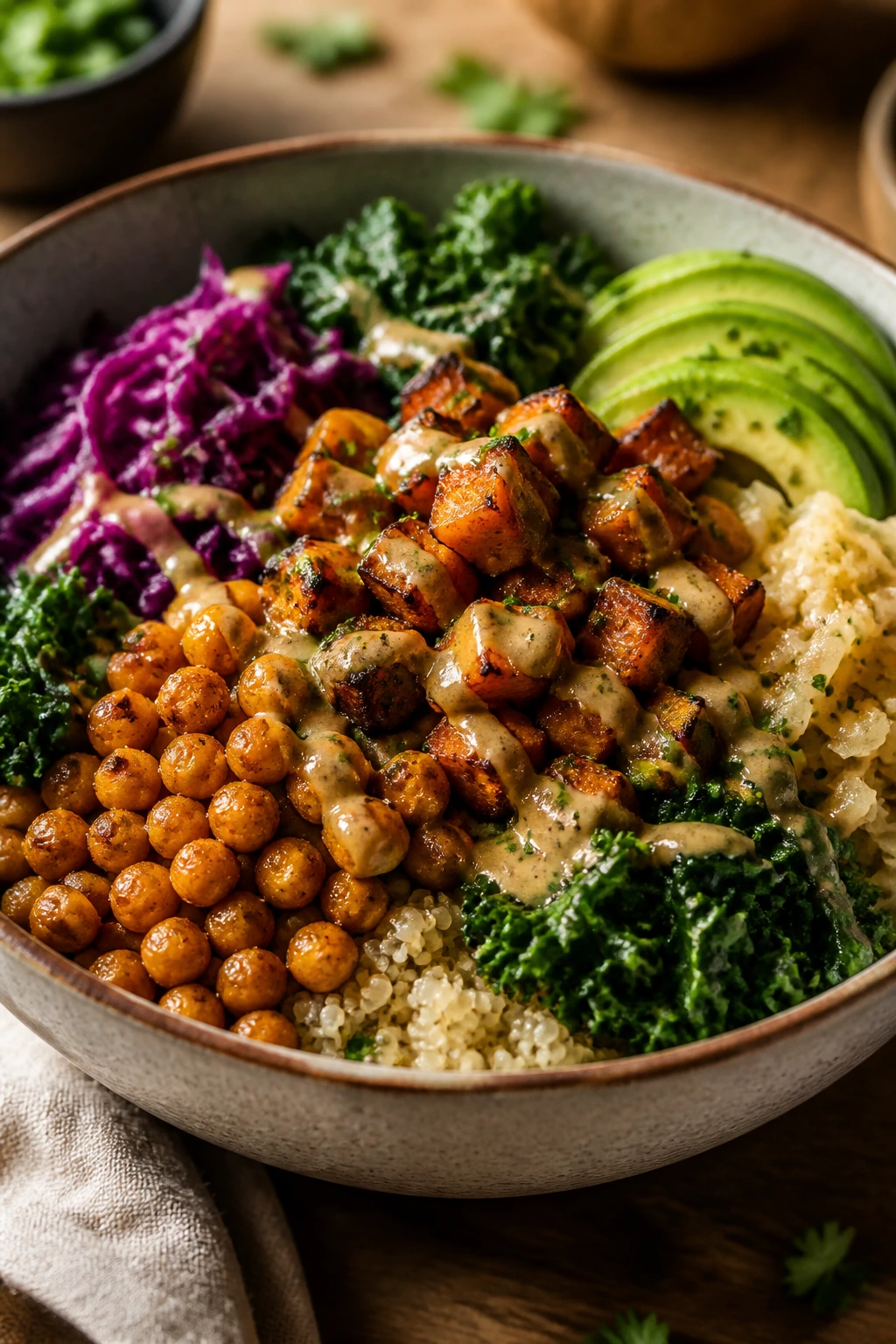
- Real dinner structure: Each bowl has a grain, starch, or green base plus a filling component, so you finish dinner fed, not vaguely “snacked.”
- Pantry-friendly building blocks: Beans, rice, lentils, tofu, eggs, and grains show up again and again, which makes shopping easier and waste lower.
- Sauce carries the flavor: Tahini, yogurt, curry, pesto, salsa, and peanut dressings do the heavy lifting, so even simple vegetables taste finished.
- Easy to stretch or shrink: Most of these vegetarian bowls work for one person, a family of four, or a lunch prep batch with the same ingredient list.
- Roasting solves a lot: A hot oven turns carrots, squash, cauliflower, and chickpeas into dinner with almost no babysitting.
- Leftovers stay useful: Cooked grains and roasted vegetables hold up well overnight, which means these bowls often taste even better the next day.
1. Mediterranean Chickpea Quinoa Bowl
A lemony chickpea-quinoa bowl is the sort of dinner that looks casual but eats like you planned it. The quinoa stays fluffy, the chickpeas go golden at the edges, and the cucumber and tomato keep the whole thing fresh instead of heavy. Feta helps, but the real reason this bowl works is the tahini-lemon dressing—it ties everything together with a little creaminess and a sharp finish.
Why It Works: Quinoa gives you a light, nutty base that doesn’t collapse under the toppings. Roasted chickpeas bring protein and crunch in the same bite, which is a nice trick for a meal built in one bowl. The cucumber, tomato, and parsley keep the texture clean, and the dressing cuts through the starch so the bowl never tastes dry. This is one of those vegetarian bowls that still feels good after a long day.
Key Ingredients:
- 1 cup dry quinoa, rinsed well
- 2 (15-ounce) cans chickpeas, drained and patted dry
- 2 tablespoons olive oil
- 1 teaspoon ground cumin
- 1 teaspoon smoked paprika
- 1 large cucumber, diced
- 2 cups cherry tomatoes, halved
- 1/2 small red onion, thinly sliced
- 1/2 cup crumbled feta
- 1/4 cup tahini
- 1 lemon, juiced
- 1 garlic clove, grated
- 2 tablespoons chopped parsley
Quick Steps:
- Cook the quinoa in 2 cups water over medium heat, covered, for about 15 minutes, until the grains are tender and the little tails show.
- Heat the oven to 425°F (220°C). Toss the chickpeas with olive oil, cumin, smoked paprika, salt, and pepper.
- Roast the chickpeas on a sheet pan for 20 to 25 minutes, shaking once, until they look dry and the edges are crisp.
- Whisk tahini, lemon juice, garlic, 2 to 3 tablespoons water, and a pinch of salt until smooth and pourable.
- Divide quinoa among bowls, then top with cucumber, tomatoes, onion, chickpeas, feta, and parsley.
- Drizzle with the dressing and serve while the chickpeas are still warm.
Equipment for This Recipe:
- Medium saucepan with lid
- Rimmed baking sheet
- Mixing bowl
- Small whisk or fork
How to Serve This Dish: Spoon it into shallow bowls so the toppings stay visible instead of sinking into the quinoa. A warm pita on the side makes sense here, but so does nothing at all if the bowl is generous enough. It serves 4 with a light lunch-style portion or 2 very hungry people.
Pro Tips for This Recipe:
- Dry the chickpeas well before roasting or they’ll steam instead of crisp.
- If your tahini tastes bitter, add another splash of lemon before you thin it out.
- Let the quinoa cool for 5 minutes before assembling so it doesn’t wilt the cucumber.
- A pinch of sumac on top gives the bowl a clean, lemony edge.
Variations on This Dish:
- Herby Green Version: Add chopped dill and mint, then swap feta for sliced avocado.
- Spicy Pantry Bowl: Stir red pepper flakes into the chickpeas and finish with hot sauce.
- No-Dairy Finish: Skip the feta and add a spoonful of hummus to the bowl for extra creaminess.
Common Mistakes to Avoid with This Dish:
- Watery chickpeas: If you skip drying them, they roast poorly. Pat them dry with a towel before oiling.
- Over-thick dressing: Tahini tightens fast. Thin it slowly with water until it flows off a spoon.
- Bland quinoa: Salt the cooking water lightly or the whole bowl tastes flat no matter how good the toppings are.
2. Roasted Sweet Potato and Black Bean Burrito Bowl
Sweet potatoes and black beans have a way of making dinner feel generous without asking much from you. The potatoes turn soft in the middle and brown at the corners, the beans pick up cumin and garlic, and the lime over the top keeps the bowl from feeling dense. Add avocado and cabbage and you get the kind of texture contrast that makes a burrito bowl worth building.
Why It Works: Sweet potatoes bring slow, caramel-like sweetness, which gives black beans a better job than just “filling.” Brown rice adds chew, but not heaviness, and the cabbage keeps every bite snappy. A lime yogurt or salsa drizzle is not optional in my book; it keeps the whole bowl alive. This is one of the easiest vegetarian bowls to make taste like a full plate.
Key Ingredients:
- 2 medium sweet potatoes, peeled and cut into 1-inch cubes
- 2 tablespoons olive oil
- 1 teaspoon chili powder
- 1 teaspoon ground cumin
- 1 (15-ounce) can black beans, drained and rinsed
- 1 cup dry brown rice
- 1 cup corn kernels, fresh or frozen
- 2 cups shredded red cabbage
- 1 avocado, sliced
- 1 lime, cut into wedges
- 1/4 cup plain Greek yogurt or salsa
- 2 tablespoons chopped cilantro
Quick Steps:
- Heat the oven to 425°F (220°C). Toss the sweet potatoes with olive oil, chili powder, cumin, salt, and pepper.
- Roast for 25 to 30 minutes, flipping once, until the cubes are browned and the centers are soft.
- Cook the brown rice according to the package directions; it usually takes about 40 to 45 minutes.
- Warm the black beans and corn in a skillet over medium heat with a pinch of salt and a splash of water, 3 to 5 minutes.
- Build the bowls with rice first, then sweet potatoes, beans, corn, cabbage, and avocado.
- Finish with lime juice, yogurt or salsa, and cilantro.
Equipment for This Recipe:
- Sheet pan
- Large saucepan with lid
- Skillet
- Sharp knife and cutting board
How to Serve This Dish: Serve it with the rice at the bottom and the avocado on top so the bowl looks layered, not mashed together. Tortilla chips are fine if you want crunch, but the bowl already has enough going on. It comfortably feeds 4.
Pro Tips for This Recipe:
- Cut the sweet potatoes into even cubes or some pieces will brown before others are tender.
- Warm the beans with a splash of water; dry beans taste dusty.
- If you want extra heat, stir a spoonful of chipotle in adobo into the yogurt.
- Add the avocado right before serving so it stays clean and green.
Variations on This Dish:
- Smoky Chipotle Bowl: Add chipotle powder to the sweet potatoes and use chipotle salsa.
- Quinoa Swap: Use quinoa instead of brown rice if you want a lighter base with more protein per spoonful.
- Cheesy Finish: Crumble queso fresco over the top for a salty finish that plays well with the lime.
Common Mistakes to Avoid with This Dish:
- Crowding the pan: If the sweet potatoes are stacked on top of each other, they steam and go soft instead of caramelizing.
- Underseasoned beans: Plain beans make the bowl taste unfinished. Warm them with cumin, salt, and a little garlic.
- Skipping acid: Lime is what keeps this bowl from tasting heavy. Don’t leave it off.
3. Crispy Tofu and Broccoli Rice Bowl
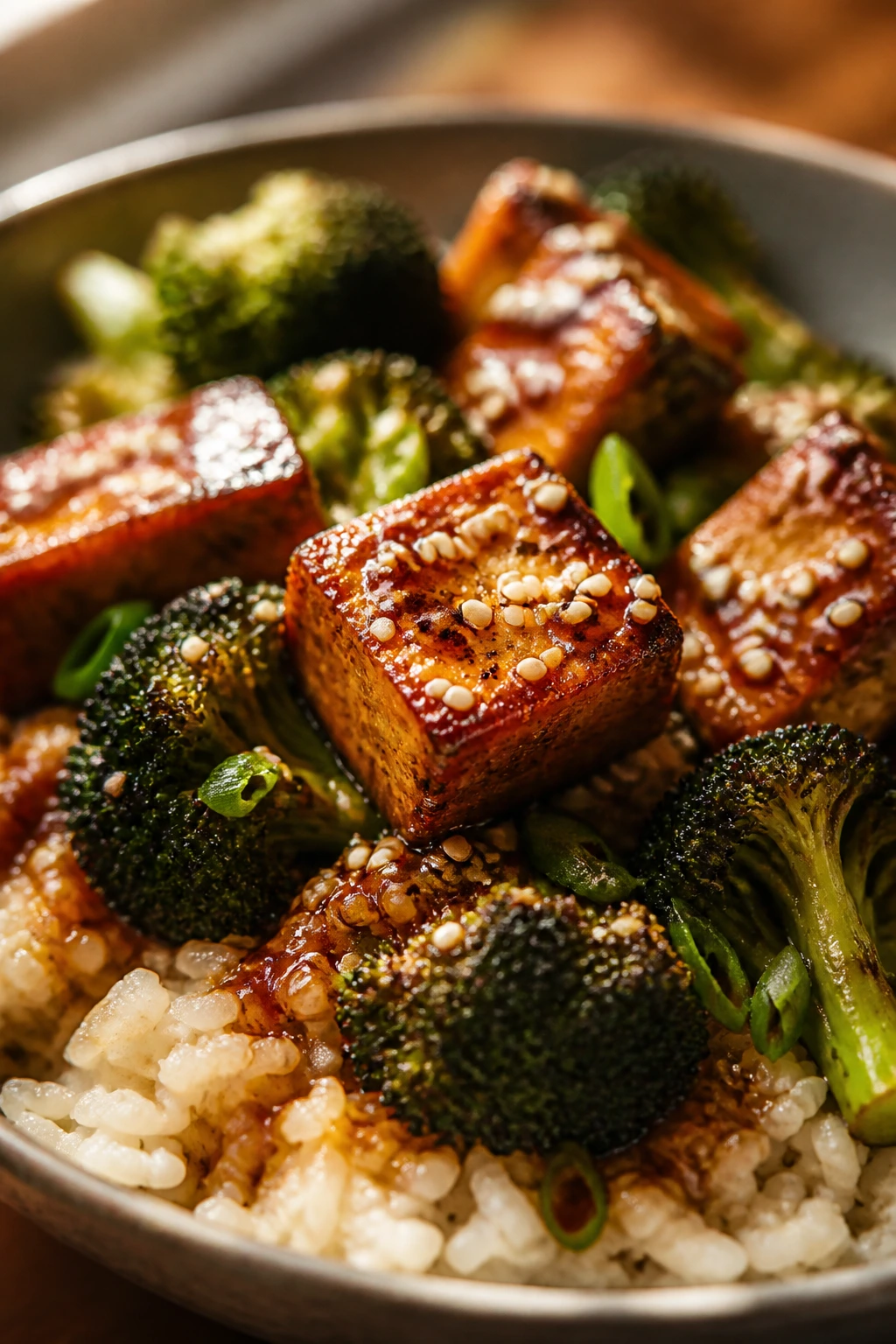
Crispy tofu can be bland or brilliant, and the difference usually comes down to two things: moisture and heat. Press it well, cut it small enough to brown, and give it a salty-sweet sauce with ginger and garlic. Broccoli roasted beside it picks up the same edges and turns the bowl into something far more satisfying than a “healthy bowl” is supposed to be.
Why It Works: Tofu brings protein without a strong flavor, which means it takes on the sauce instead of fighting it. Broccoli, when roasted at high heat, gets browned florets and tender stalks, so it carries more texture than steamed vegetables ever will. Rice gives the bowl a soft landing, and sesame oil adds that toasted note people always notice even if they can’t name it. This is a strong weeknight vegetarian bowl because one pan can do most of the work.
Key Ingredients:
- 1 block (14 to 16 ounces) extra-firm tofu
- 1 large head broccoli, cut into florets
- 1 tablespoon cornstarch
- 2 tablespoons neutral oil
- 1 cup dry jasmine or brown rice
- 3 tablespoons soy sauce
- 1 tablespoon sesame oil
- 1 tablespoon rice vinegar
- 1 tablespoon honey or maple syrup
- 1 teaspoon grated fresh ginger
- 2 garlic cloves, minced
- 2 scallions, sliced
- 1 tablespoon sesame seeds
Quick Steps:
- Press the tofu for 15 minutes, then cut it into 1-inch cubes.
- Heat the oven to 425°F (220°C). Toss the broccoli with 1 tablespoon oil, salt, and pepper.
- Toss the tofu with cornstarch, the remaining oil, and a pinch of salt.
- Roast the tofu and broccoli on separate sides of a sheet pan for 25 minutes, flipping the tofu once, until both are browned.
- Whisk soy sauce, sesame oil, vinegar, honey, ginger, and garlic in a small bowl.
- Cook the rice, then pile it into bowls and top with tofu, broccoli, scallions, sesame seeds, and sauce.
Equipment for This Recipe:
- Sheet pan
- Tofu press or clean kitchen towel
- Medium saucepan with lid
- Mixing bowl
How to Serve This Dish: This bowl likes a deep one, because the sauce should pool a little around the rice. A few cucumber ribbons on the side sharpen the plate if you want it to feel fresher. It serves 3 to 4, depending on how much rice you use.
Pro Tips for This Recipe:
- If the tofu is still wet, it will never brown properly. Press more than you think you need to.
- Cornstarch is not decoration here; it makes the crust.
- Roast the broccoli on the same pan, but keep space between the florets so the edges darken.
- A squeeze of lime at the end can brighten the soy sauce more than extra salt.
Variations on This Dish:
- Gochujang Heat: Stir 1 tablespoon gochujang into the sauce for a deeper chile kick.
- Peanut Version: Replace half the sesame oil with peanut butter whisked into the sauce.
- Cauliflower Swap: Use cauliflower florets instead of broccoli for a milder, sweeter bowl.
Common Mistakes to Avoid with This Dish:
- Skipping the press: Wet tofu turns spongy and pale. Fifteen minutes is the bare minimum.
- Saucing too early: If you toss the tofu before it crisps, the crust softens fast.
- Overcooking the broccoli: You want browned tips, not mush. Pull it when the stems are just tender.
4. Miso Mushroom Soba Bowl
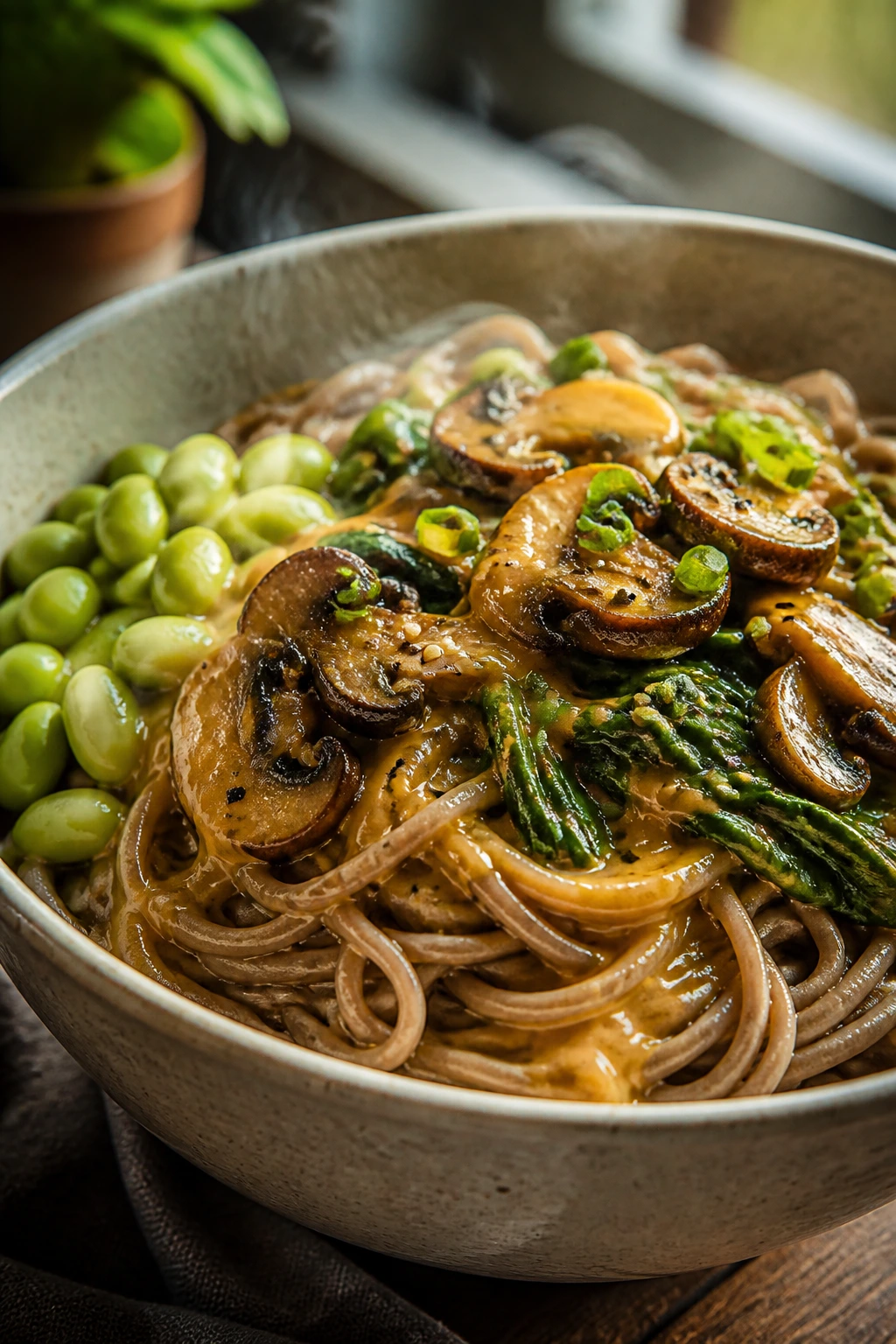
Mushrooms do a kind of quiet work that meat eaters usually miss until they taste the right bowl. Sautéed hard, they go dark and meaty at the edges, while soba noodles stay silky enough to carry a miso-sesame sauce without getting heavy. Spinach and edamame keep the bowl from feeling one-note, which matters because rich bowls need a green, clean counterweight.
Why It Works: Miso gives you salinity and depth without needing a long simmer. Mushrooms release their moisture, then reabsorb flavor once the pan dries out, which is why this bowl tastes bigger than the ingredient list suggests. Soba noodles cook in minutes, so the whole meal stays fast, and sesame oil adds a finish that lingers. If you like savory vegetarian bowls, this one tends to disappear faster than you plan for.
Key Ingredients:
- 8 ounces soba noodles
- 12 ounces cremini mushrooms, sliced
- 4 cups baby spinach
- 1 cup shelled edamame, thawed if frozen
- 2 tablespoons white miso
- 2 tablespoons soy sauce
- 1 tablespoon sesame oil
- 1 tablespoon rice vinegar
- 1 teaspoon grated ginger
- 1 garlic clove, minced
- 2 scallions, sliced
- 1 tablespoon toasted sesame seeds
Quick Steps:
- Cook the soba noodles according to package directions, usually 4 to 6 minutes, then rinse them under cool water.
- Heat a skillet over medium-high heat and cook the mushrooms dry for 3 minutes until they release liquid.
- Add sesame oil, ginger, and garlic, then sauté 2 more minutes until fragrant and the mushrooms are browned.
- Whisk miso, soy sauce, and vinegar with 2 tablespoons warm water.
- Toss the noodles, mushrooms, spinach, and edamame with the sauce over low heat just until the spinach wilts.
- Finish with scallions and sesame seeds.
Equipment for This Recipe:
- Large skillet
- Pot for noodles
- Colander
- Small bowl for sauce
How to Serve This Dish: Serve it warm, not piping hot, so the miso stays smooth. A few strips of nori on top are nice if you want extra sea-salt flavor. It feeds 2 as a full dinner or 4 as a lighter bowl.
Pro Tips for This Recipe:
- Rinse soba noodles after cooking or they glue together in the bowl.
- Don’t crowd the mushrooms; browning needs dry pan space.
- Add the spinach at the very end so it stays bright instead of swampy.
- If the sauce tastes flat, a few drops of rice vinegar usually fix it faster than more soy.
Variations on This Dish:
- Peanut-Miso Bowl: Stir 1 tablespoon peanut butter into the sauce for a rounder flavor.
- Udon Swap: Use udon noodles when you want a thicker, chewier bite.
- Extra-Green Version: Add shredded bok choy or blanched broccoli for more crunch.
Common Mistakes to Avoid with This Dish:
- Boiling the mushrooms in oil: They need room to brown after the moisture cooks off.
- Using too much miso heat: High heat can make the sauce grainy. Toss gently on low.
- Skipping the rinse on soba: The starch makes the noodles clump and dulls the sauce.
5. Greek Lentil Bowl with Dill Yogurt
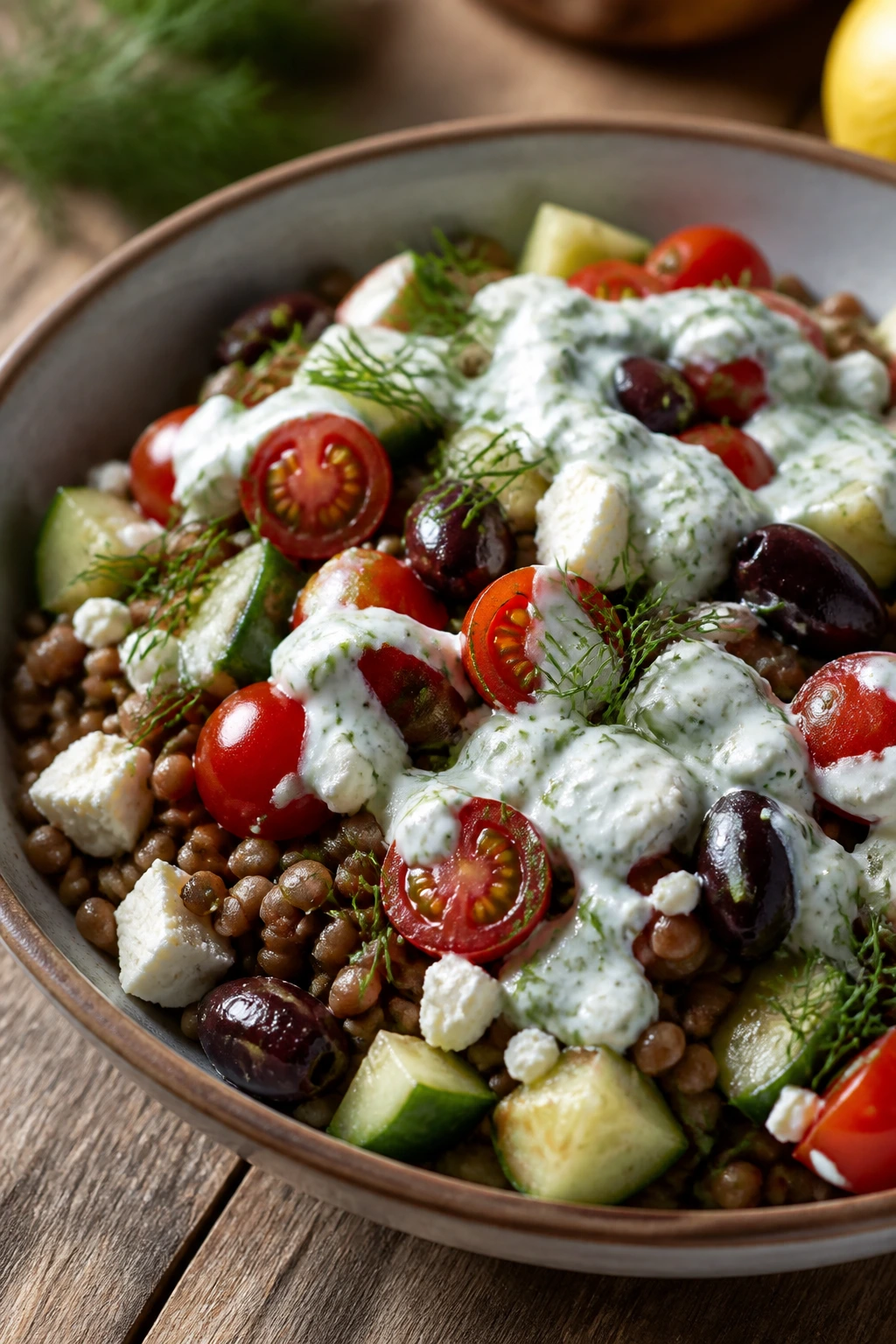
Lentils are one of the few ingredients that can feel rustic and fresh at the same time. Here, they sit under cucumber, tomatoes, olives, and a dill yogurt sauce that tastes cool enough to cut the olive oil and brine. The bowl lands somewhere between a salad and a grain plate, which is exactly why it works for dinner instead of lunch alone.
Why It Works: Lentils carry protein and a soft, earthy bite that pairs well with sharp dairy and crunchy vegetables. Quinoa or couscous makes the bowl more filling, but the lentils are the real anchor. Dill and lemon in the yogurt keep the whole dish bright, while olives add salt in a way that feels intentional instead of loud. This is one of the better vegetarian bowls when you want something that feels light but still finishes the job.
Key Ingredients:
- 1 cup dry green or brown lentils
- 1 cup dry quinoa
- 1 cucumber, diced
- 1 pint cherry tomatoes, halved
- 1/2 red onion, sliced thin
- 1/2 cup Kalamata olives, pitted and halved
- 3/4 cup plain Greek yogurt
- 2 tablespoons chopped dill
- 1 lemon, juiced
- 2 tablespoons olive oil
- 1/2 teaspoon dried oregano
- 1/3 cup crumbled feta
Quick Steps:
- Simmer the lentils in salted water for 18 to 22 minutes until tender but still intact, then drain.
- Cook the quinoa in 2 cups water for about 15 minutes until fluffy.
- Whisk yogurt, dill, lemon juice, olive oil, oregano, salt, and pepper into a spoonable sauce.
- Toss lentils with a little olive oil and salt while they’re still warm.
- Divide quinoa among bowls, then layer on lentils, cucumber, tomatoes, onion, olives, and feta.
- Spoon the dill yogurt over the top and serve.
Equipment for This Recipe:
- Two medium saucepans
- Mixing bowl
- Sharp knife
- Spoon for layering
How to Serve This Dish: This bowl looks best when the cucumber and tomatoes stay separate from the yogurt until the last minute. A warm piece of pita is useful for scooping, but the bowl already has enough bulk for a full dinner. It serves 4.
Pro Tips for This Recipe:
- Salt the lentil water lightly; unsalted lentils taste dusty.
- Let the quinoa cool for a few minutes before assembling or it will loosen the yogurt.
- If red onion is too sharp, soak the slices in cold water for 10 minutes.
- A few mint leaves give the bowl a fresher finish than parsley alone.
Variations on This Dish:
- No-Gluten Bowl: Swap quinoa for more lentils if you want to keep the bowl grain-free.
- Avocado Add-On: Add sliced avocado for creaminess instead of extra feta.
- Harissa Twist: Stir 1 teaspoon harissa into the yogurt for a warmer, spicier sauce.
Common Mistakes to Avoid with This Dish:
- Mushy lentils: Once they split, the bowl gets muddy. Stop cooking when they’re tender but still hold shape.
- Over-salting too early: Olives and feta bring a lot of salt already.
- Skipping acid: The lemon in the yogurt is what keeps the bowl from tasting flat and heavy.
6. Cauliflower Rice Taco Bowl
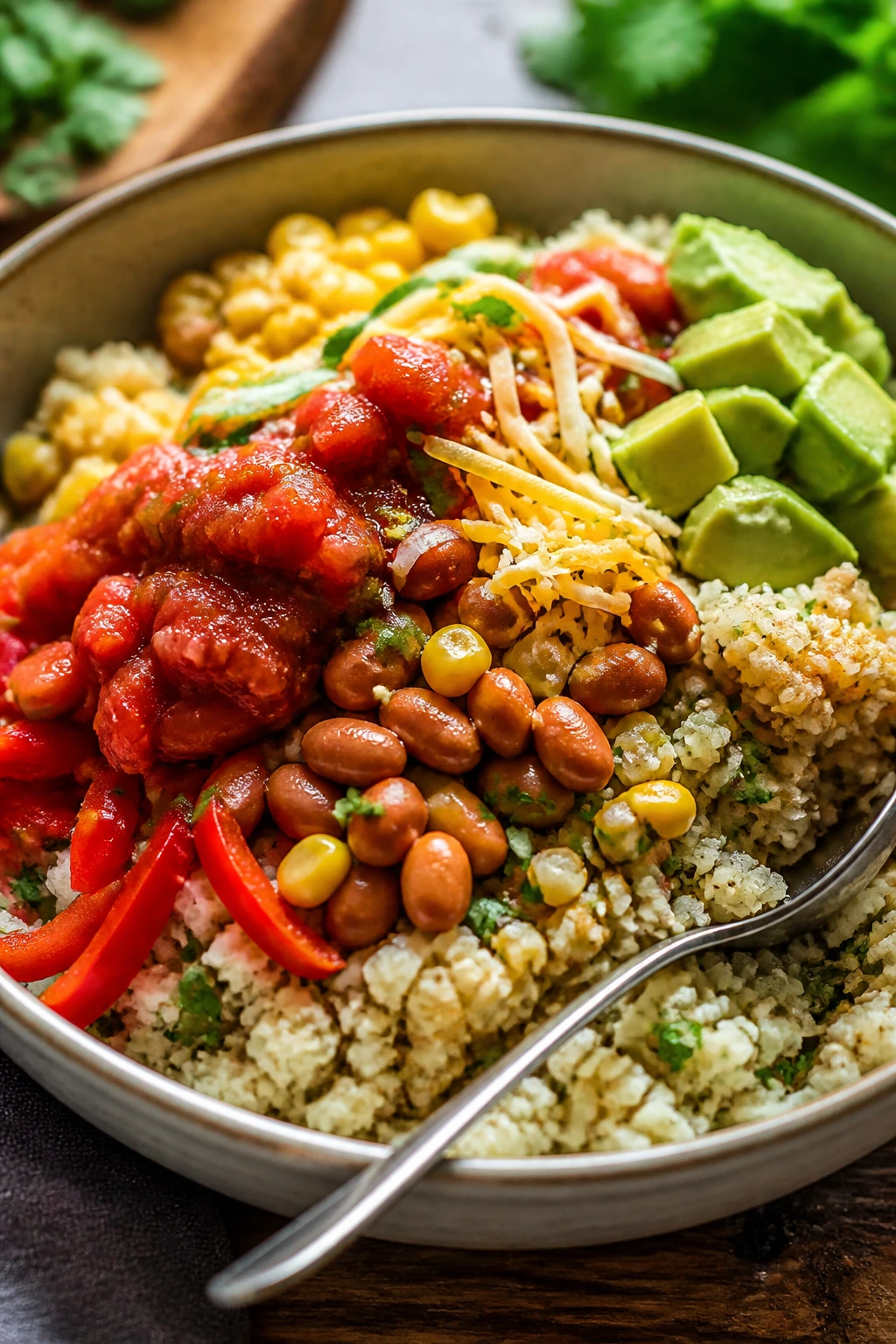
A taco bowl gets lighter fast when cauliflower rice replaces the usual base, but that only works if the toppings still bring enough weight. Pinto beans, peppers, corn, avocado, and salsa do that job with no trouble. The bowl has the same colorful messiness as a taco spread, but you eat it with a spoon and move on.
Why It Works: Cauliflower rice gives you volume with a mild flavor, which lets the beans and toppings speak loudly. The trick is to cook it just long enough to lose the raw smell without turning it wet. Bell peppers and onions bring sweetness, black or pinto beans add protein, and salsa gives you the acid and heat the bowl needs. This is one of the quickest vegetarian bowls here, and it still feels like dinner.
Key Ingredients:
- 1 large head cauliflower, riced, or 4 cups store-bought cauliflower rice
- 1 (15-ounce) can pinto beans, drained and rinsed
- 1 red bell pepper, sliced
- 1 small yellow onion, sliced
- 1 cup corn kernels
- 1 avocado, sliced
- 1 cup salsa
- 1 tablespoon olive oil
- 1 teaspoon taco seasoning
- 1 lime, cut into wedges
- 2 tablespoons chopped cilantro
- 1/4 cup shredded cheddar or crumbled queso fresco
Quick Steps:
- Heat olive oil in a skillet over medium heat and cook the onion and bell pepper for 6 to 8 minutes until softened.
- Stir in the beans, corn, and taco seasoning, then cook for 3 minutes until warmed through.
- Add the cauliflower rice and cook for 4 to 5 minutes, just until tender and the moisture cooks off.
- Taste and salt the mixture, then squeeze in a little lime juice.
- Spoon into bowls and top with avocado, salsa, cilantro, and cheese.
- Serve immediately while the cauliflower rice is still fluffy.
Equipment for This Recipe:
- Large skillet
- Knife and cutting board
- Citrus squeezer or fork
- Spoon for layering
How to Serve This Dish: Give it a wide, shallow bowl so the toppings stay distinct. Tortilla chips on the side are optional, but a crunchy chip-and-scoop moment is hard to argue with. It serves 3 to 4.
Pro Tips for This Recipe:
- Don’t overcook the cauliflower rice or it turns watery.
- If you’re using frozen cauliflower rice, cook off the extra moisture first before adding the beans.
- A few pickled onions make this bowl taste much sharper.
- Fresh lime right before serving matters more than extra salsa.
Variations on This Dish:
- Breakfast Taco Bowl: Add a fried egg on top and call it dinner-with-breakfast energy.
- Chipotle Bowl: Stir chipotle powder into the cauliflower rice for a smoky finish.
- Vegan Version: Skip the cheese and finish with a spoonful of cashew crema.
Common Mistakes to Avoid with This Dish:
- Wet cauliflower: The bowl gets mushy fast if you don’t cook off the steam.
- Cold beans in the center: Warm them with the peppers so the bowl stays cohesive.
- No acid: Without lime, the whole thing tastes starchy and one-note.
7. Thai Peanut Tempeh Bowl
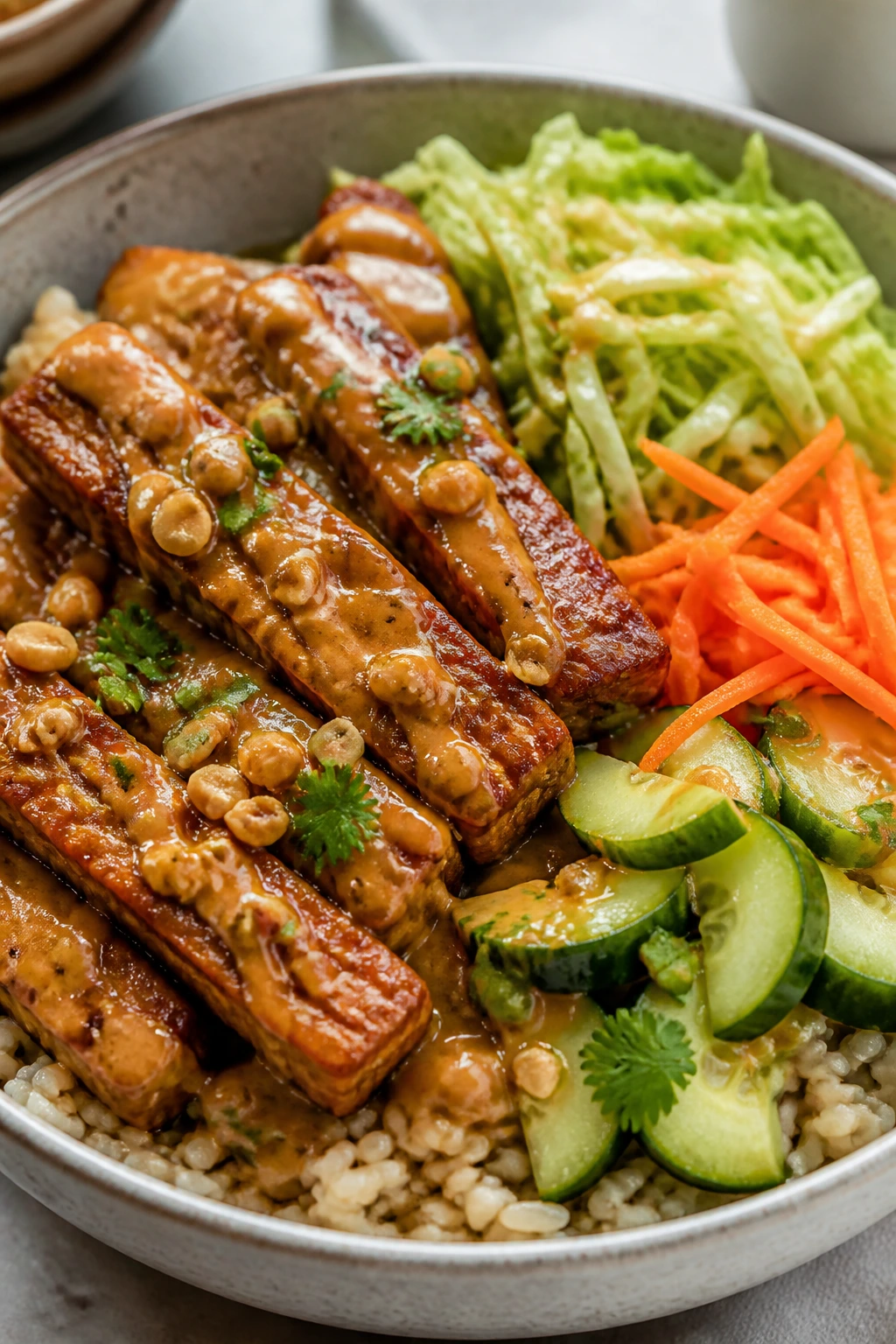
Tempeh has a firmer bite than tofu, and that’s exactly why it shines here. It soaks up a peanut-lime sauce without falling apart, and the shredded cabbage and carrots keep every forkful crunchy. The bowl tastes bright, salty, and a little nutty, which makes it feel closer to takeout than a kitchen cleanup project.
Why It Works: Tempeh gives this bowl a dense, satisfying texture that stands up to bold sauce. Peanut butter, soy sauce, lime, and ginger hit sweet, salty, sour, and spicy in one pass, so the bowl never tastes flat. Cabbage and cucumber keep it cool and crisp, and brown rice rounds everything out. If you want vegetarian bowls that feel substantial without being heavy, this one does the job.
Key Ingredients:
- 8 ounces tempeh, sliced into strips
- 1 cup dry brown rice
- 3 cups shredded green cabbage
- 2 carrots, shredded
- 1 cucumber, sliced
- 1/4 cup peanut butter
- 2 tablespoons soy sauce
- 1 tablespoon lime juice
- 1 teaspoon grated ginger
- 1 teaspoon maple syrup
- 1 teaspoon sriracha
- 2 tablespoons chopped cilantro
Quick Steps:
- Cook the brown rice according to package directions.
- Steam the tempeh strips for 10 minutes to soften the edge and reduce bitterness.
- Sear the tempeh in a skillet with a little oil over medium-high heat for 3 to 4 minutes per side until browned.
- Whisk peanut butter, soy sauce, lime juice, ginger, maple syrup, sriracha, and 2 to 4 tablespoons warm water into a smooth sauce.
- Toss the cabbage and carrots lightly with a pinch of salt.
- Assemble the rice, vegetables, tempeh, cucumber, cilantro, and peanut sauce in bowls.
Equipment for This Recipe:
- Skillet
- Medium saucepan with lid
- Small whisk
- Microplane or grater for ginger
How to Serve This Dish: I like this one piled high so the cabbage spills over the rice a little. A sprinkle of chopped peanuts gives extra crunch if you want it. It serves 2 to 3 as a main dinner.
Pro Tips for This Recipe:
- Steaming tempeh before searing takes off the bitter edge many people notice.
- Thin the peanut sauce slowly; it can go from thick to perfect to too thin fast.
- Slice the cucumber last so it stays cold and crisp.
- A pinch of brown sugar can smooth out a sauce that tastes too sharp.
Variations on This Dish:
- Sesame Version: Swap half the peanut butter for tahini.
- No-Heat Bowl: Leave out the sriracha and add grated apple for sweetness.
- Noodle Bowl: Use rice noodles instead of brown rice if you want a lighter, slurpier version.
Common Mistakes to Avoid with This Dish:
- Skipping the steam step: Tempeh can taste bitter if you go straight to the skillet.
- Too-thick sauce: Peanut sauce should drizzle, not sit in a lump.
- Warm cucumbers: Add them at the end so the bowl keeps its cool, crunchy edge.
8. Harissa Roasted Carrot and Farro Bowl
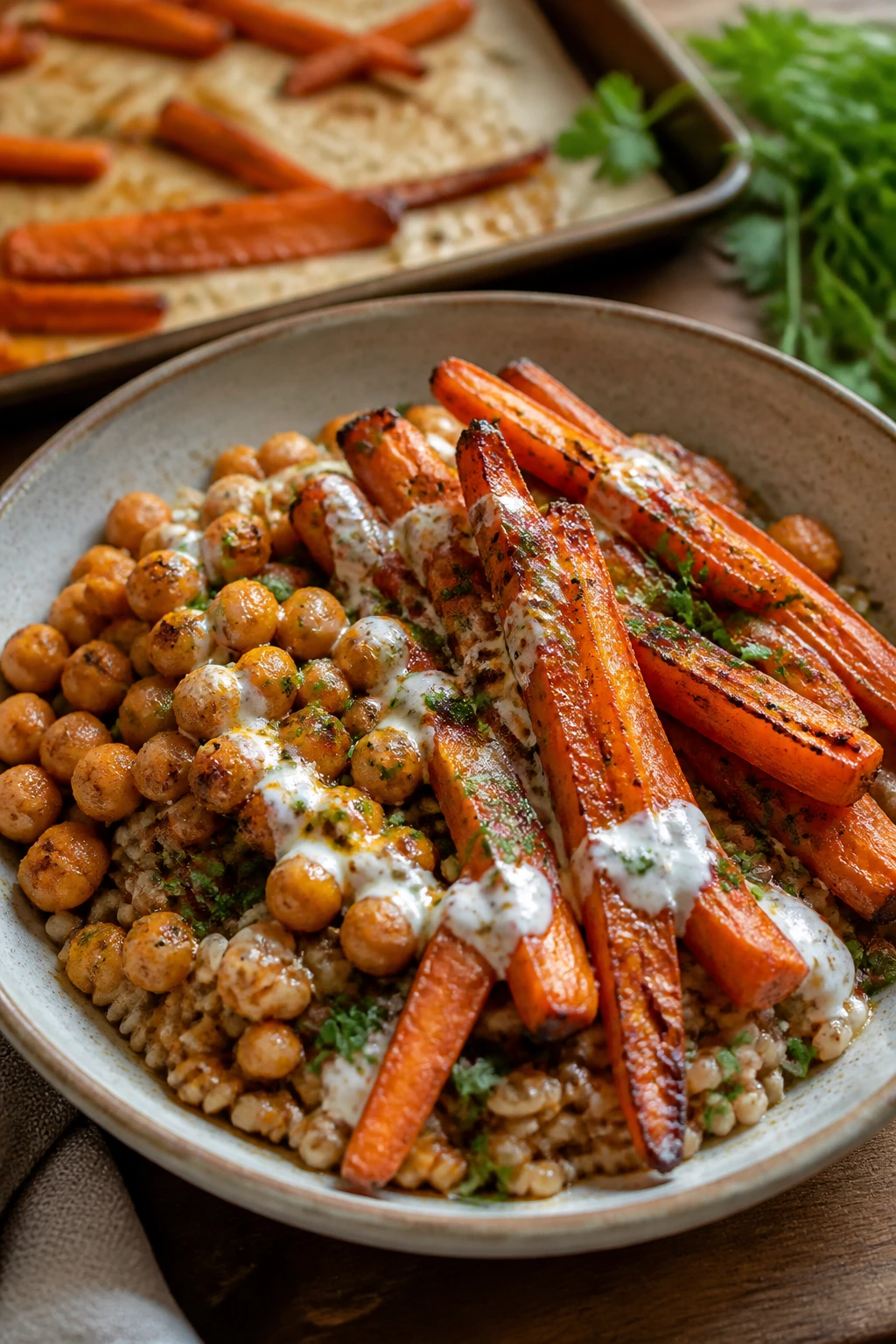
Carrots need heat to become interesting, and harissa gives them exactly that. Roast them until the edges catch a little color, and they start tasting sweet, smoky, and faintly spicy all at once. Farro makes a chewy base, chickpeas add protein, and a yogurt drizzle softens the heat without flattening it.
Why It Works: Farro has a nutty chew that holds up to roasted vegetables better than softer grains. Harissa brings chili, garlic, and warm spice, which makes carrots taste deeper than they do with olive oil alone. Chickpeas keep the bowl filling, and yogurt gives you a cooling contrast that makes each bite reset. It’s a strong bowl when you want roasted vegetables to feel like dinner and not a side dish pretending.
Key Ingredients:
- 1 cup farro
- 1 1/2 pounds carrots, peeled and cut into sticks
- 1 (15-ounce) can chickpeas, drained
- 2 tablespoons olive oil
- 1 to 2 tablespoons harissa paste
- 1/2 cup plain yogurt
- 1 lemon, juiced
- 1 teaspoon cumin
- 2 tablespoons parsley, chopped
- 2 tablespoons pumpkin seeds
Quick Steps:
- Cook the farro in salted water until tender and chewy, usually 25 to 30 minutes; drain well.
- Heat the oven to 425°F (220°C). Toss carrots and chickpeas with olive oil, harissa, cumin, salt, and pepper.
- Roast for 25 to 30 minutes, stirring once, until the carrots are browned at the edges.
- Whisk yogurt with lemon juice and a pinch of salt.
- Divide the farro into bowls, add the roasted carrots and chickpeas, and spoon yogurt over the top.
- Finish with parsley and pumpkin seeds.
Equipment for This Recipe:
- Large saucepan
- Sheet pan
- Mixing bowl
- Whisk
How to Serve This Dish: The carrots should be the first thing your eye lands on, so don’t bury them under the grains. A little extra yogurt in one corner of the bowl makes each bite more balanced. It serves 4.
Pro Tips for This Recipe:
- Harissa varies a lot in heat, so taste before dumping in a full tablespoon.
- Dry chickpeas roast better if you take a minute to pat them dry.
- If farro gets too chewy for your taste, cook it 5 minutes longer and drain well.
- Toast the pumpkin seeds for 2 minutes in a dry pan if you want a louder crunch.
Variations on This Dish:
- Sweet Version: Add roasted sweet potato cubes alongside the carrots.
- Vegan Bowl: Use unsweetened coconut yogurt instead of dairy yogurt.
- Herb Finish: Add mint with the parsley for a brighter top note.
Common Mistakes to Avoid with This Dish:
- Under-roasted carrots: Pale carrots taste dull. Let the edges brown.
- Too much harissa: It should warm the bowl, not flatten your tongue.
- Watery yogurt sauce: Thin it only slightly so it still clings to the grain and vegetables.
9. Paneer Tikka Bowl
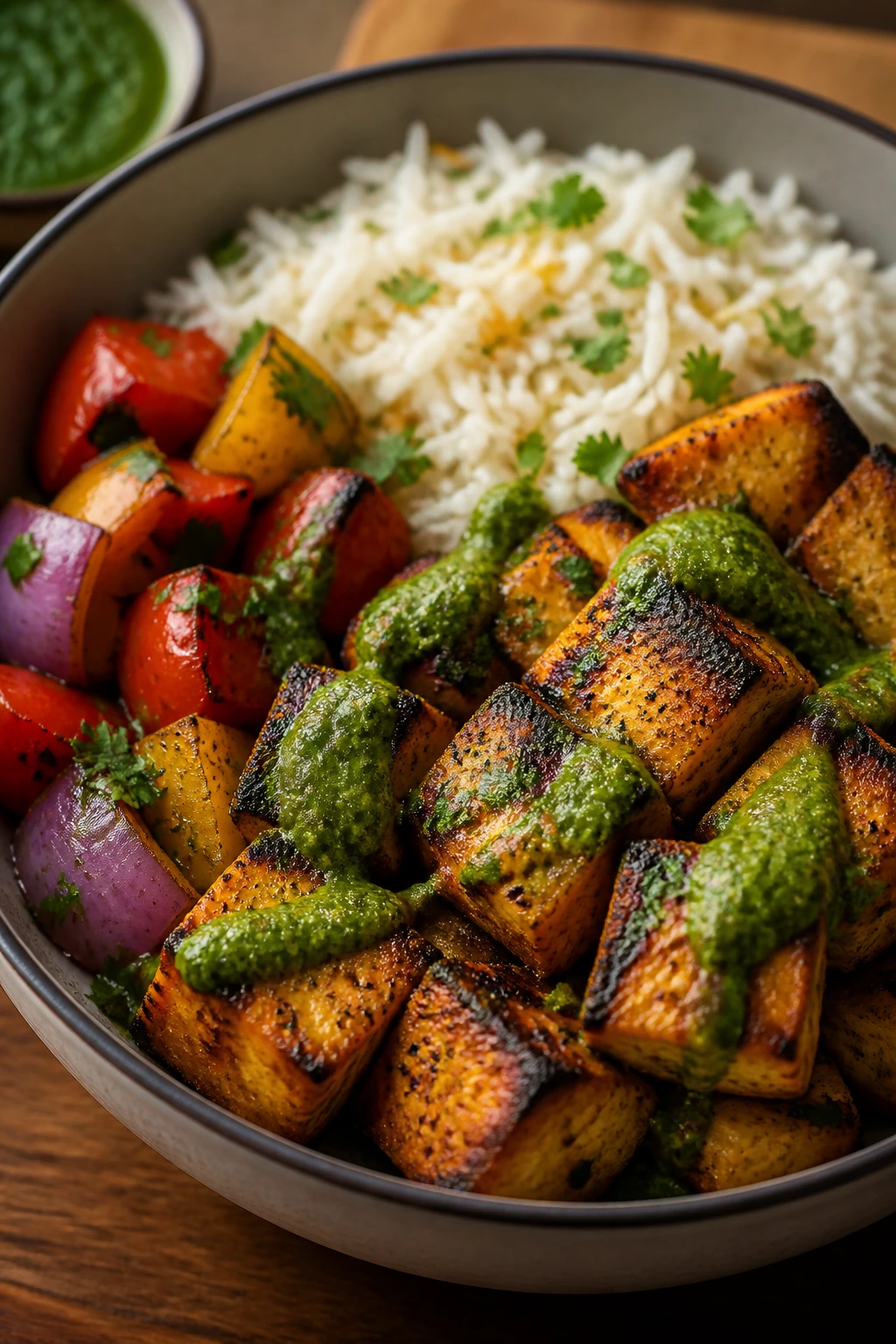
Paneer behaves like a polite cheese with a strong work ethic. It browns at the edges, holds its shape, and soaks up spice from yogurt and garam masala without turning stringy or dry. Paired with basmati rice, peppers, and a sharp mint chutney, it feels like a full dinner with a little swagger.
Why It Works: Paneer gives you a dense protein that can be grilled, seared, or roasted without melting away. The yogurt marinade keeps it tender, and the spices create a crust that tastes far bigger than the ingredient list suggests. Peppers and onions bring sweetness, basmati keeps the bowl light, and chutney or herbs keep the finish bright. This is one of the more substantial vegetarian bowls on the list, and it earns that weight.
Key Ingredients:
- 12 ounces paneer, cut into 1-inch cubes
- 1 cup plain yogurt
- 1 tablespoon garam masala
- 1 teaspoon cumin
- 1/2 teaspoon turmeric
- 1 red bell pepper, cut into strips
- 1 small red onion, cut into wedges
- 1 cup dry basmati rice
- 1 cup cherry tomatoes
- 1/4 cup mint-cilantro chutney
- 1 tablespoon lemon juice
- 2 tablespoons chopped cilantro
Quick Steps:
- Mix yogurt, garam masala, cumin, turmeric, salt, and pepper, then coat the paneer, peppers, and onion for at least 15 minutes.
- Cook basmati rice according to the package directions.
- Heat a skillet or broiler and cook the marinated paneer and vegetables until the edges char lightly, about 10 to 12 minutes total.
- Warm the cherry tomatoes in the pan for the last minute so they blister a little.
- Build bowls with rice first, then paneer, peppers, onion, and tomatoes.
- Finish with chutney, lemon juice, and cilantro.
Equipment for This Recipe:
- Mixing bowl
- Skillet or broiler pan
- Saucepan with lid
- Tongs
How to Serve This Dish: Serve it while the paneer is still warm enough to smell the spice. A spoonful of cucumber raita beside the bowl is worth making if you like a cooler finish. It serves 4.
Pro Tips for This Recipe:
- Paneer browns better when it’s not packed too tightly in the pan.
- If the yogurt marinade is very thick, loosen it with a tablespoon of water.
- Cherry tomatoes should blister, not collapse completely.
- A squeeze of lemon right before eating lifts the whole bowl.
Variations on This Dish:
- Smoky Oven Version: Roast everything at 450°F (230°C) instead of searing for a drier char.
- Tofu Tikka Swap: Use extra-firm tofu if you want a dairy-free base with the same spice profile.
- Extra-Green Bowl: Add sautéed spinach under the rice for more volume.
Common Mistakes to Avoid with This Dish:
- Overmarinating paneer: A quick marinade is enough; too long can make the surface mushy.
- No browning: Paneer tastes plain if it never meets high heat.
- Skipping the lemon: The spice needs acid to feel finished.
10. Pesto White Bean Orzo Bowl
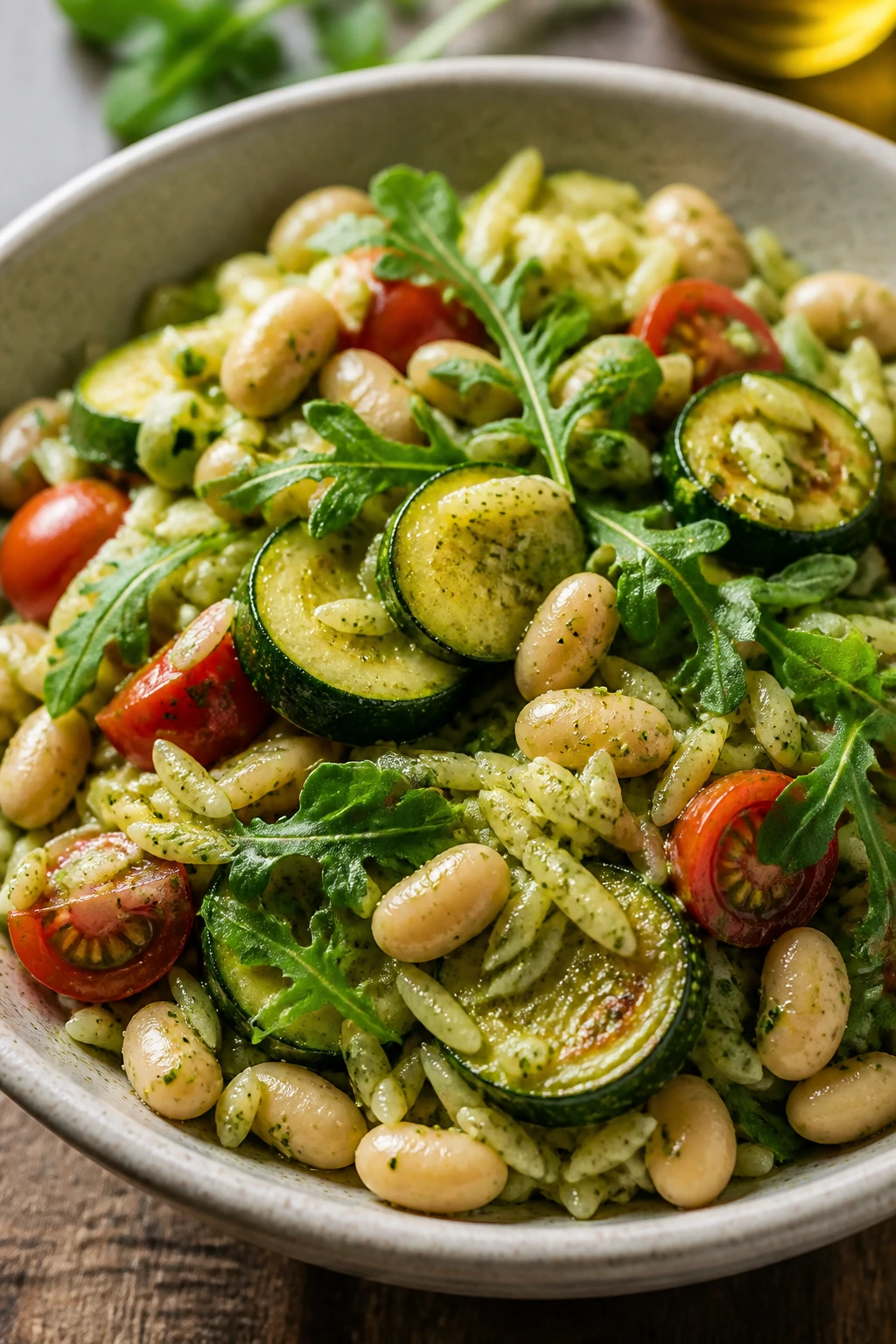
Orzo is one of those small pasta shapes that behaves almost like rice, which makes it ideal for a bowl dinner. Toss it with pesto and white beans, and you get a creamy, herby base that still leaves room for tomatoes and arugula. Zucchini adds some softness without turning the bowl mushy, which matters when a dish leans this gently.
Why It Works: White beans bring protein and creaminess without requiring a separate sauce. Pesto coats the orzo in a way that feels rich but not heavy, and lemon keeps the herbs from tasting flat. Zucchini and tomatoes give you a cooked-fresh balance, while arugula adds a peppery snap at the end. It’s a practical bowl for nights when you want vegetarian dinner to taste a little Mediterranean and a little like pasta.
Key Ingredients:
- 8 ounces orzo
- 2 (15-ounce) cans white beans, drained and rinsed
- 2 medium zucchini, sliced
- 2 cups cherry tomatoes
- 1/3 cup basil pesto
- 2 cups baby arugula
- 1/4 cup grated Parmesan
- 1 lemon, zested and juiced
- 2 tablespoons olive oil
Quick Steps:
- Heat the oven to 425°F (220°C). Toss zucchini and tomatoes with olive oil, salt, and pepper, then roast for 15 to 18 minutes.
- Cook the orzo in salted water until just tender, about 8 to 9 minutes; drain well.
- Stir the orzo with pesto, lemon juice, and lemon zest while it’s still warm.
- Fold in the white beans so they warm through without breaking apart.
- Layer arugula in bowls, add the orzo mixture, then top with roasted vegetables and Parmesan.
- Serve right away while the arugula still has some lift.
Equipment for This Recipe:
- Baking sheet
- Pot for pasta
- Large bowl
- Colander
How to Serve This Dish: I like this one in a wide bowl with the roasted tomatoes on top so they burst into the pasta with each forkful. A piece of crusty bread is useful, though not required. It serves 4.
Pro Tips for This Recipe:
- Salt the pasta water well; bland orzo is hard to rescue.
- Stir the pesto into warm orzo, not cold, so it spreads evenly.
- If the beans are very firm, warm them for 2 minutes before folding them in.
- Add the arugula last so it stays sharp instead of wilted.
Variations on This Dish:
- Sun-Dried Tomato Version: Chop in a few sun-dried tomatoes for more punch.
- Vegan Bowl: Use nutritional yeast instead of Parmesan.
- Roasted Pepper Swap: Replace zucchini with roasted red peppers if that’s what you have.
Common Mistakes to Avoid with This Dish:
- Overcooking orzo: It goes soft fast. Stop at just tender.
- Drowning it in pesto: Too much makes the bowl greasy. Start small and add if needed.
- Adding arugula too early: It should stay green and peppery, not wilt into the pasta.
11. Sesame Edamame Brown Rice Bowl
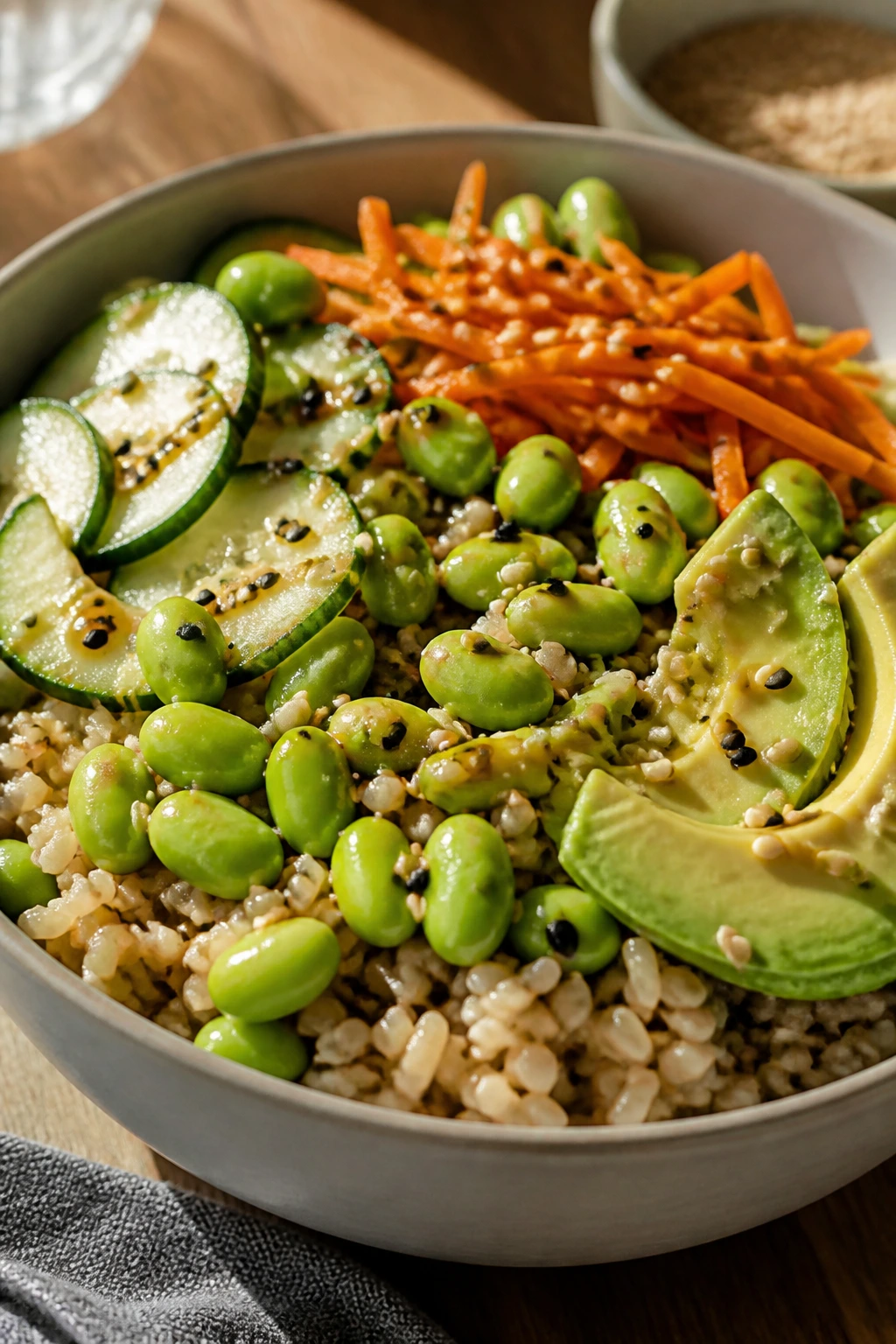
This is the kind of bowl I make when I want something clean, cold-and-warm at the same time, and very hard to mess up. Brown rice gives it substance, edamame brings a little pop, and cucumber and carrot keep the texture crisp. The sesame-soy dressing is simple, but the toasted oil and vinegar make it taste far more deliberate than the ingredient list suggests.
Why It Works: Edamame adds protein with a mild, grassy flavor that likes strong dressing. Brown rice gives you chew and a nutty base that stands up to the sesame sauce. Nori, scallions, and sesame seeds layer in savory notes, so the bowl tastes structured instead of random. This is one of the best vegetarian bowls if you like meal-prep dinners that still feel bright after a few hours in the fridge.
Key Ingredients:
- 1 cup dry brown rice
- 1 1/2 cups shelled edamame
- 1 cucumber, thinly sliced
- 2 carrots, julienned or shredded
- 1 avocado, sliced
- 1 tablespoon sesame oil
- 2 tablespoons soy sauce
- 1 tablespoon rice vinegar
- 1 teaspoon maple syrup
- 1 teaspoon grated ginger
- 2 scallions, sliced
- 1 sheet nori, cut into strips
- 1 tablespoon sesame seeds
Quick Steps:
- Cook the brown rice according to package directions, then let it steam off for 5 minutes.
- Blanch the edamame in boiling water for 2 minutes, then drain.
- Whisk sesame oil, soy sauce, rice vinegar, maple syrup, and ginger into a quick dressing.
- Build bowls with rice on the bottom and edamame, cucumber, carrot, and avocado on top.
- Drizzle with the dressing, then finish with scallions, nori, and sesame seeds.
- Serve warm or room temperature.
Equipment for This Recipe:
- Saucepan with lid
- Small bowl
- Knife or mandoline for cucumber
- Fine grater for ginger
How to Serve This Dish: This bowl looks best when the avocado sits in neat slices and the nori stays on top instead of sinking. It works well as a cool dinner on its own, or with a miso soup on the side if you want more warmth. It serves 2 to 3.
Pro Tips for This Recipe:
- Don’t skip the ginger in the dressing; it keeps the soy from tasting one-note.
- If your brown rice is dry, splash a tablespoon of water over it before assembling.
- Use ripe but firm avocado so it slices cleanly.
- Toast the sesame seeds in a dry pan for a minute if you want more aroma.
Variations on This Dish:
- Spicy Bowl: Add a dab of sriracha or chili crisp to the dressing.
- Quinoa Swap: Use quinoa if you want a lighter, faster base.
- Crunchier Version: Add shredded cabbage for a sturdier bite.
Common Mistakes to Avoid with This Dish:
- Overcooking the edamame: Two minutes is enough; longer turns it dull.
- Using too much dressing at once: Start light and add more as needed.
- Brown rice that’s too dry: It needs a little steam or the bowl feels sandy.
12. Butternut Squash, Kale, and Wild Rice Bowl
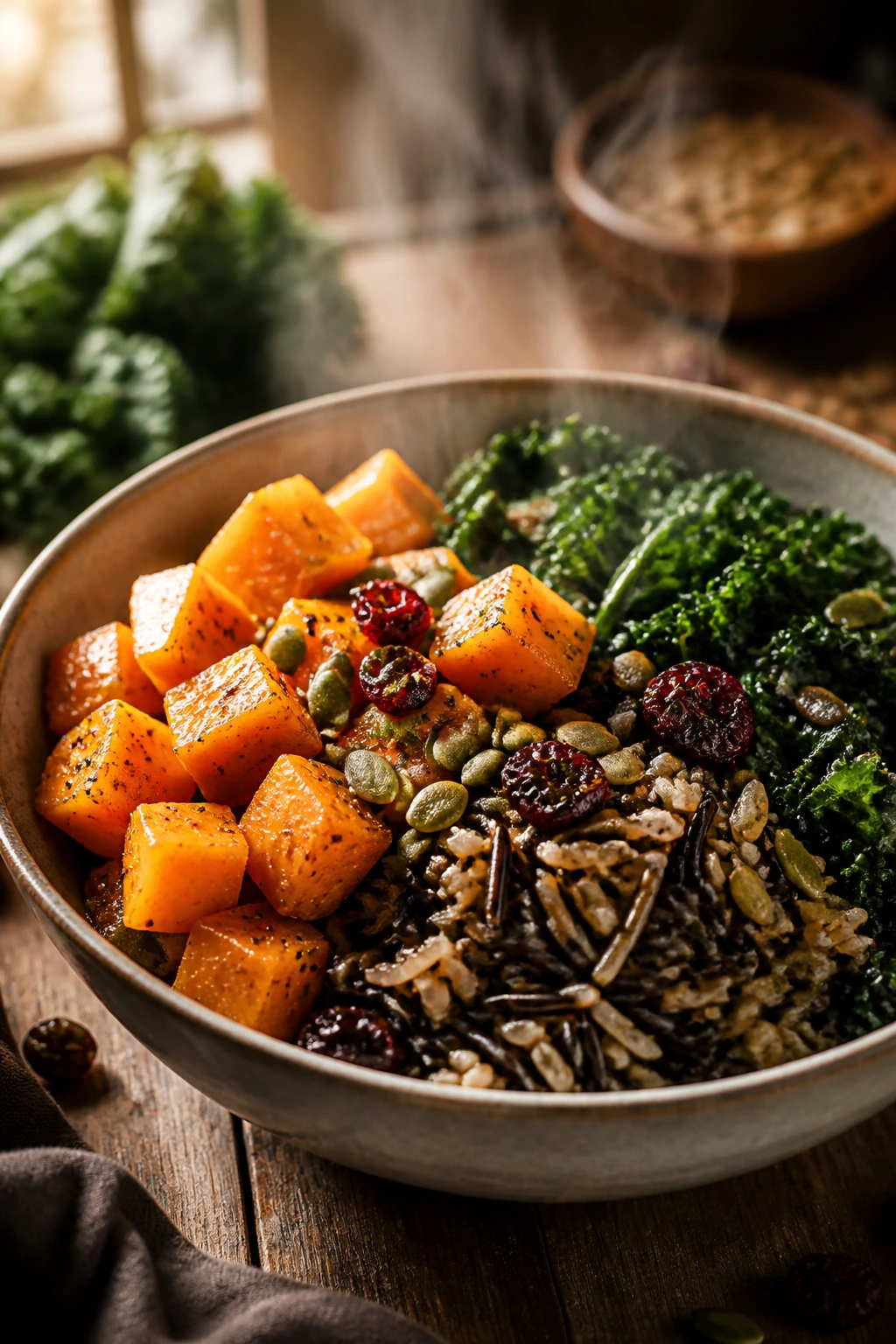
Butternut squash brings a soft sweetness that works especially well against something bitter like kale. Wild rice adds chew and a faint earthy note, while pepitas and cranberries keep the bowl from sinking into one texture. It’s a cold-weather style dinner without needing to say that out loud.
Why It Works: Roasted squash develops caramelized edges that pair well with chewy grains. Kale needs a little massage or heat to stop it from feeling stern, and a vinaigrette helps there too. Cranberries add a tart note, pepitas bring crunch, and goat cheese gives the bowl a creamy salt hit. If you want a vegetarian bowl that feels autumnal without being heavy, this one is a reliable move.
Key Ingredients:
- 1 medium butternut squash, peeled and cubed
- 1 cup wild rice blend
- 5 cups chopped kale
- 1 tablespoon olive oil
- 1/2 cup dried cranberries
- 1/3 cup pepitas
- 1/3 cup crumbled goat cheese
- 2 tablespoons apple cider vinegar
- 1 teaspoon Dijon mustard
- 1 teaspoon honey
- 2 tablespoons olive oil
Quick Steps:
- Heat the oven to 425°F (220°C). Toss the squash with olive oil, salt, and pepper, then roast for 25 to 30 minutes.
- Cook the wild rice blend according to package directions, usually 35 to 45 minutes.
- Whisk apple cider vinegar, Dijon, honey, olive oil, salt, and pepper into a vinaigrette.
- Massage the kale with a teaspoon of the vinaigrette for 30 seconds to soften it.
- Build bowls with rice, kale, squash, cranberries, pepitas, and goat cheese.
- Drizzle with more vinaigrette and serve.
Equipment for This Recipe:
- Sheet pan
- Pot with lid
- Mixing bowl
- Whisk
How to Serve This Dish: Serve it warm so the squash softens the kale a little when the bowl comes together. A thin sliced apple on the side is not required, but it fits the bowl’s sweet-savory mood nicely. It feeds 4.
Pro Tips for This Recipe:
- Cut the squash into even cubes so the roast finishes at the same time.
- If kale tastes too sharp, massage it a little longer with dressing.
- Toast the pepitas for 2 minutes for a better crunch.
- Goat cheese is best added in small crumbles, not big clumps.
Variations on This Dish:
- Tahini Bowl: Swap the vinaigrette for tahini-lemon dressing.
- Grain-Free Version: Use extra kale and squash instead of rice.
- Pomegranate Finish: Use pomegranate seeds in place of cranberries for a fresher pop.
Common Mistakes to Avoid with This Dish:
- Undercooked squash: Hard squash makes the whole bowl feel unfinished.
- Dry kale: Dressing it lightly first keeps it from tasting like rough leaves.
- Too many sweet toppings: Cranberries and squash are already sweet; don’t pile on more.
13. Caprese Farro Bowl
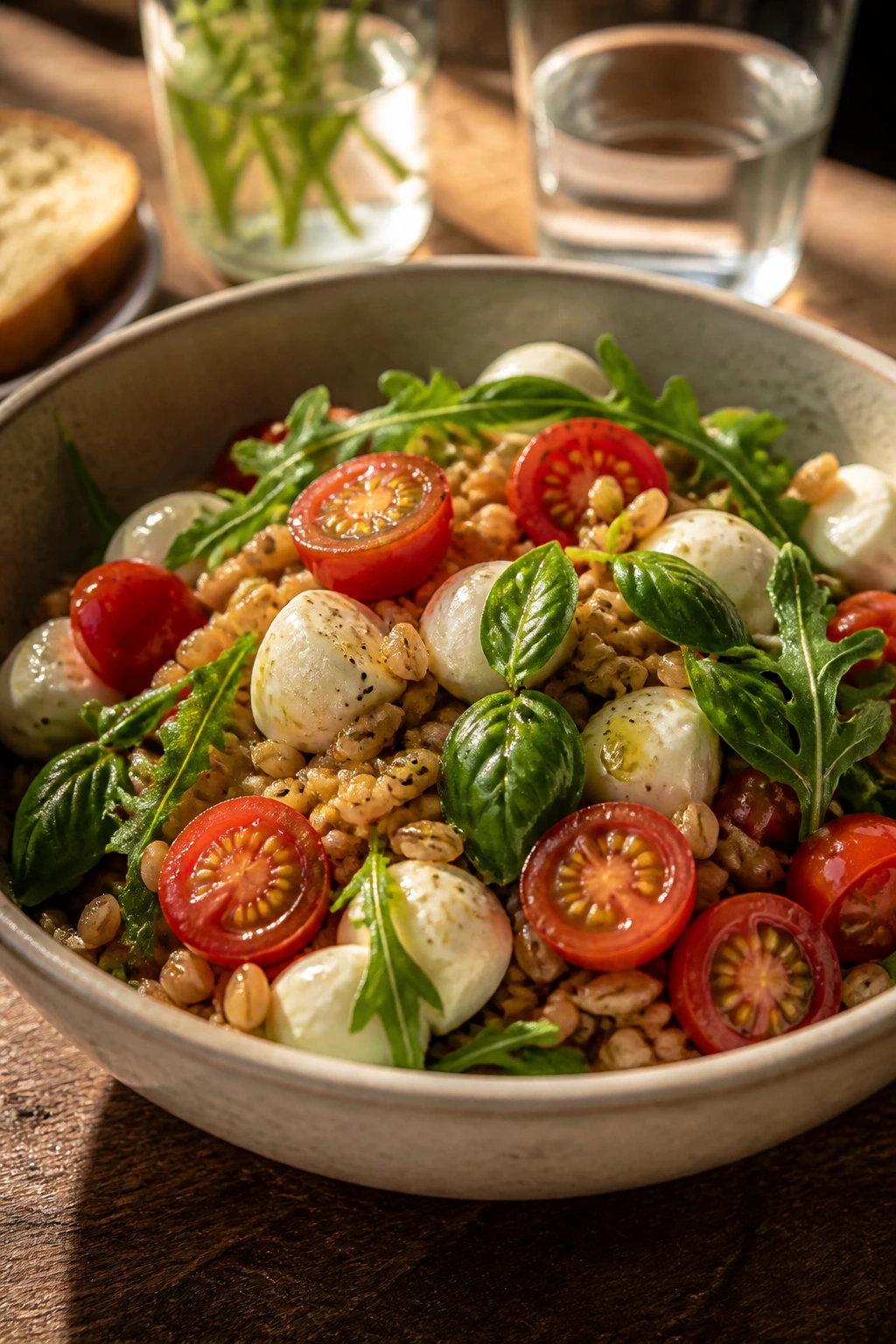
Caprese works because tomato, basil, mozzarella, and olive oil already know how to get along. Put them over farro, and the bowl gets enough chew to count as dinner instead of an appetizer in a larger disguise. A little balsamic brings the sharp edge, and arugula gives the plate a peppery lift.
Why It Works: Farro holds up better than delicate pasta or greens, which matters when juicy tomatoes are involved. Fresh mozzarella gives you creaminess without a heavy sauce, and the basil keeps the bowl smelling fresh before the first bite. Balsamic glaze adds sweetness and acid in one move, so the bowl tastes finished fast. This is a smart vegetarian bowl when you want something simple but not plain.
Key Ingredients:
- 1 cup farro
- 2 cups cherry tomatoes, halved
- 8 ounces mozzarella pearls or fresh mozzarella, torn
- 2 cups baby arugula
- 1/2 cup fresh basil leaves
- 2 tablespoons olive oil
- 1 tablespoon balsamic glaze
- 1 small zucchini, sliced and roasted or sautéed
- Salt and black pepper
Quick Steps:
- Cook the farro in salted water until tender, about 25 to 30 minutes; drain well.
- If using zucchini, roast or sauté it until just tender and lightly browned.
- Toss the farro with olive oil, a little salt, and black pepper while it’s still warm.
- Layer arugula in bowls, then add farro, tomatoes, mozzarella, basil, and zucchini.
- Drizzle with balsamic glaze and finish with more pepper.
- Serve at room temperature.
Equipment for This Recipe:
- Saucepan
- Mixing bowl
- Knife
- Spoon for drizzling
How to Serve This Dish: Serve it in broad bowls so the basil leaves don’t get buried. A slice of toasted bread works, though the farro already gives the bowl enough heft. It serves 4.
Pro Tips for This Recipe:
- Salt the farro water or the grains taste flat.
- Add the basil whole or torn, not chopped to dust.
- If tomatoes are bland, let them sit with olive oil and salt for 10 minutes first.
- Use balsamic glaze sparingly; a little goes farther than you think.
Variations on This Dish:
- White Bean Version: Add a cup of white beans if you want more protein.
- Pesto Caprese: Stir a spoonful of pesto into the farro.
- Hearty Fall Swap: Use roasted squash in place of zucchini.
Common Mistakes to Avoid with This Dish:
- Hot farro and mozzarella: Heat softens the cheese too much. Let the grain cool slightly.
- Too much glaze: It can overpower the tomatoes fast.
- Chopped basil too early: It bruises and turns dark. Tear it just before serving.
14. Spinach Shakshuka Grain Bowl
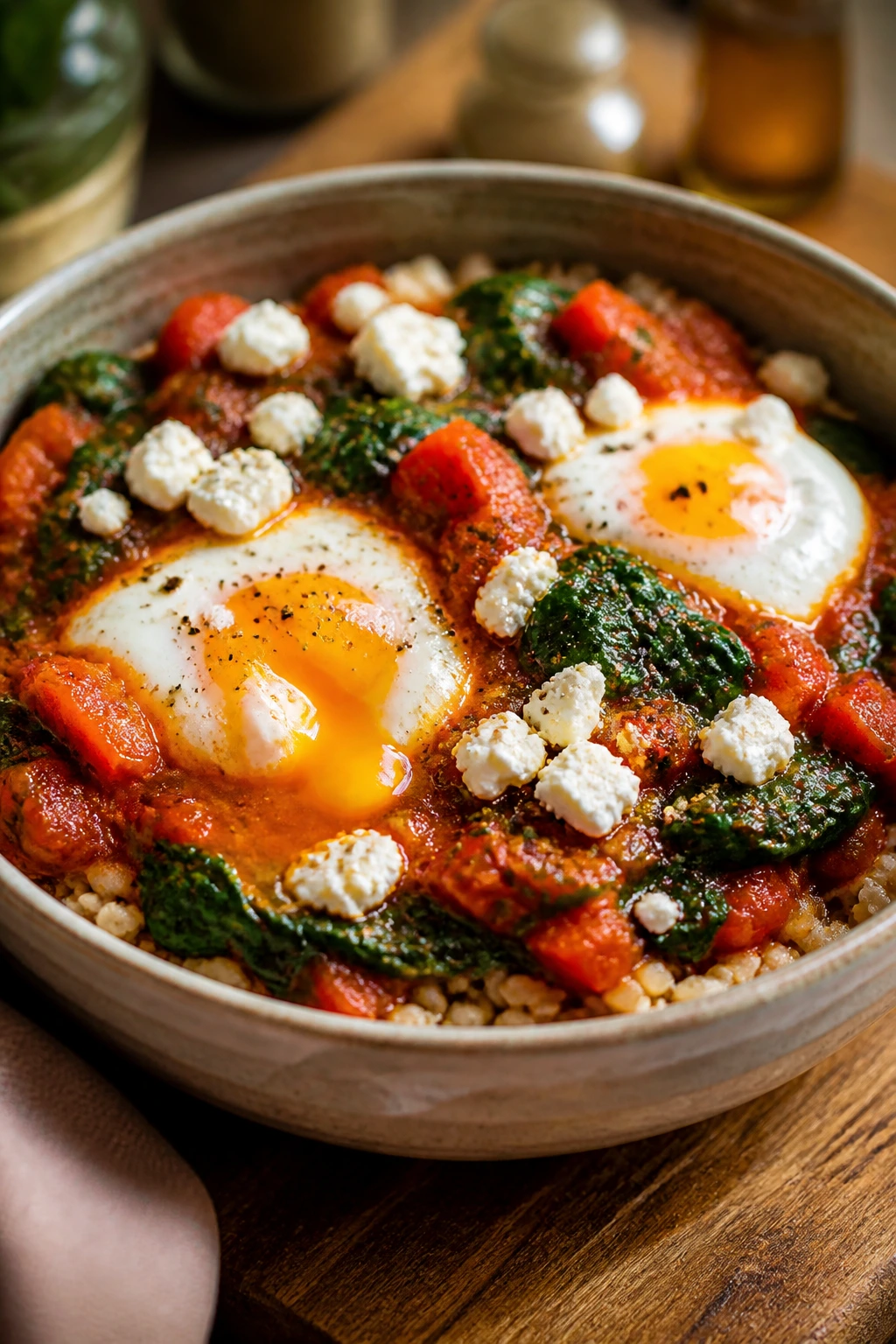
A shakshuka bowl feels like a small argument against boring breakfast-for-dinner food. Eggs poached in tomato-pepper sauce sit over grains, spinach melts into the pan, and the whole thing ends up somewhere between stew and bowl dinner. The yolks make their own sauce once you break them, which is half the fun.
Why It Works: Shakshuka already has sauce built in, so the bowl doesn’t need much else. Eggs bring protein and richness, while grains soak up the tomato base without becoming mushy. Spinach softens in seconds, feta sharpens the edges, and cumin and paprika keep the sauce from tasting like plain marinara. This is one of the more comforting vegetarian bowls on the list, but it still eats cleanly.
Key Ingredients:
- 4 to 6 eggs
- 1 tablespoon olive oil
- 1 small onion, diced
- 1 red bell pepper, diced
- 3 garlic cloves, minced
- 1 (28-ounce) can crushed tomatoes
- 1 teaspoon cumin
- 1 teaspoon smoked paprika
- 4 cups baby spinach
- 1 cup couscous or cooked polenta
- 1/3 cup crumbled feta
- 2 tablespoons chopped parsley
Quick Steps:
- Heat olive oil in a skillet over medium heat and cook onion and bell pepper for 6 to 8 minutes until soft.
- Stir in garlic, cumin, and paprika for 30 seconds until fragrant.
- Add crushed tomatoes, salt, and pepper, then simmer for 10 minutes until slightly thickened.
- Stir in spinach and let it wilt.
- Make 4 to 6 small wells, crack in the eggs, cover, and cook 5 to 7 minutes until the whites are set and the yolks are still soft.
- Spoon over couscous or polenta and top with feta and parsley.
Equipment for This Recipe:
- Large skillet with lid
- Spoon
- Small bowl for cracking eggs
- Pot for couscous or polenta
How to Serve This Dish: Bring the skillet to the table if you’re feeding everyone right away; it looks better that way. A spoon is the tool here, not a fork. It serves 4.
Pro Tips for This Recipe:
- Don’t rush the tomato simmer or the sauce tastes thin.
- Crack each egg into a small bowl first if you’re worried about broken yolks.
- The lid matters; it cooks the tops of the eggs without drying the pan.
- A little chili flakes on top gives the bowl more lift.
Variations on This Dish:
- Green Shakshuka Bowl: Add more spinach and herbs, and cut back on the tomatoes.
- Chickpea Boost: Stir in a cup of chickpeas before cracking in the eggs.
- Dairy-Free Version: Skip the feta and finish with parsley and olives.
Common Mistakes to Avoid with This Dish:
- Watery sauce: Simmer long enough to thicken before adding eggs.
- Overcooked yolks: Pull the pan when the whites are just set; carryover heat finishes the rest.
- Skipping seasoning in the sauce: Eggs need a well-salted base to taste like dinner, not breakfast.
15. Spicy Chickpea Buddha Bowl
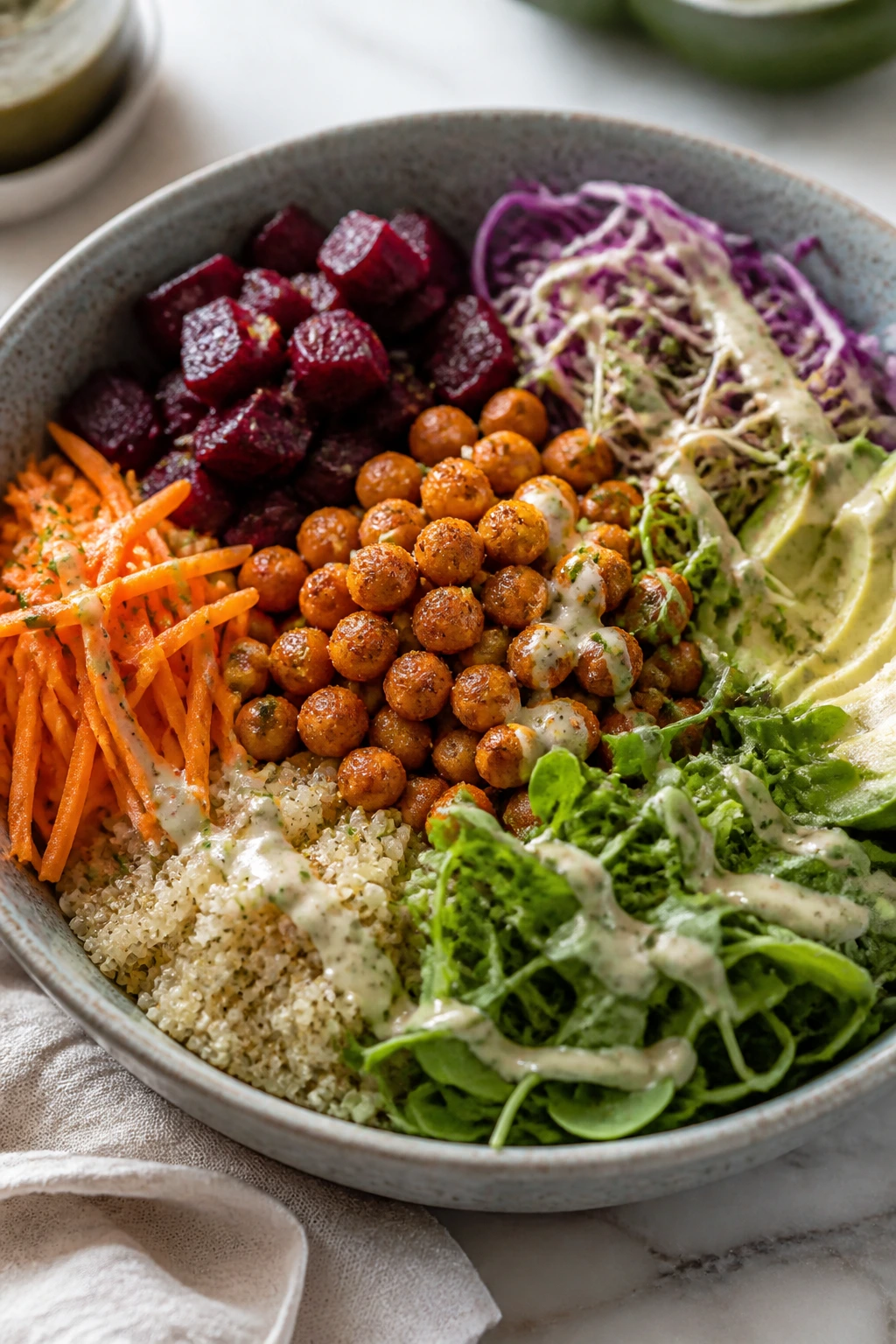
A Buddha bowl only works when each part has a different job. Here, roasted beets go earthy and sweet, carrots bring color, chickpeas bring spice, and sprouts or greens keep things crisp. The tahini dressing gives everything a creamy, nutty finish that feels richer than it looks.
Why It Works: Chickpeas roasted with spice get firmer and more interesting than plain canned beans. Beets and carrots roast at the same pace, which makes them an easy match for weeknight cooking. Quinoa gives a clean base, and sprouts or shredded cabbage add that last bit of crunch bowls need to stay awake. It’s a strong vegetarian bowl when you want a lot of produce without losing the feeling of a real meal.
Key Ingredients:
- 1 cup quinoa
- 2 medium beets, peeled and cubed
- 2 carrots, cut into sticks
- 1 (15-ounce) can chickpeas, drained and dried
- 2 tablespoons olive oil
- 1 teaspoon smoked paprika
- 1 teaspoon ground cumin
- 2 cups shredded cabbage or sprouts
- 1/4 cup tahini
- 1 lemon, juiced
- 1 teaspoon maple syrup
- 1 tablespoon chopped dill or parsley
Quick Steps:
- Heat the oven to 425°F (220°C). Toss beets, carrots, and chickpeas with olive oil, paprika, cumin, salt, and pepper.
- Roast for 25 to 30 minutes, stirring once, until the vegetables are tender and the chickpeas are slightly crisp.
- Cook the quinoa according to package directions.
- Whisk tahini, lemon juice, maple syrup, salt, and enough water to make a pourable dressing.
- Assemble quinoa, roasted vegetables, cabbage or sprouts, and herbs in bowls.
- Drizzle with dressing and serve.
Equipment for This Recipe:
- Sheet pan
- Saucepan
- Mixing bowl
- Whisk
How to Serve This Dish: Keep the dressing on top until the last second so the sprouts stay crisp. A few toasted seeds add a nice finish if you have them. It serves 4.
Pro Tips for This Recipe:
- Roast beets and carrots in a single layer or they steam.
- If the chickpeas are dry on the outside and tender inside, they’re done.
- Add the dressing in a zigzag, not a flood.
- Fresh lemon matters more than bottled juice here.
Variations on This Dish:
- Avocado Bowl: Add sliced avocado for more creaminess.
- Yogurt Version: Replace tahini with lemon yogurt if you want a lighter sauce.
- Sweet-Spicy Twist: Add a pinch of cinnamon to the roast spice mix.
Common Mistakes to Avoid with This Dish:
- Uneven vegetable cuts: Small beet chunks finish faster than carrot batons if you don’t size them carefully.
- Wet chickpeas: Dried beans roast better and taste less soft.
- Too much sauce: The dressing should coat, not drown, the bowl.
16. Tofu Poke Bowl
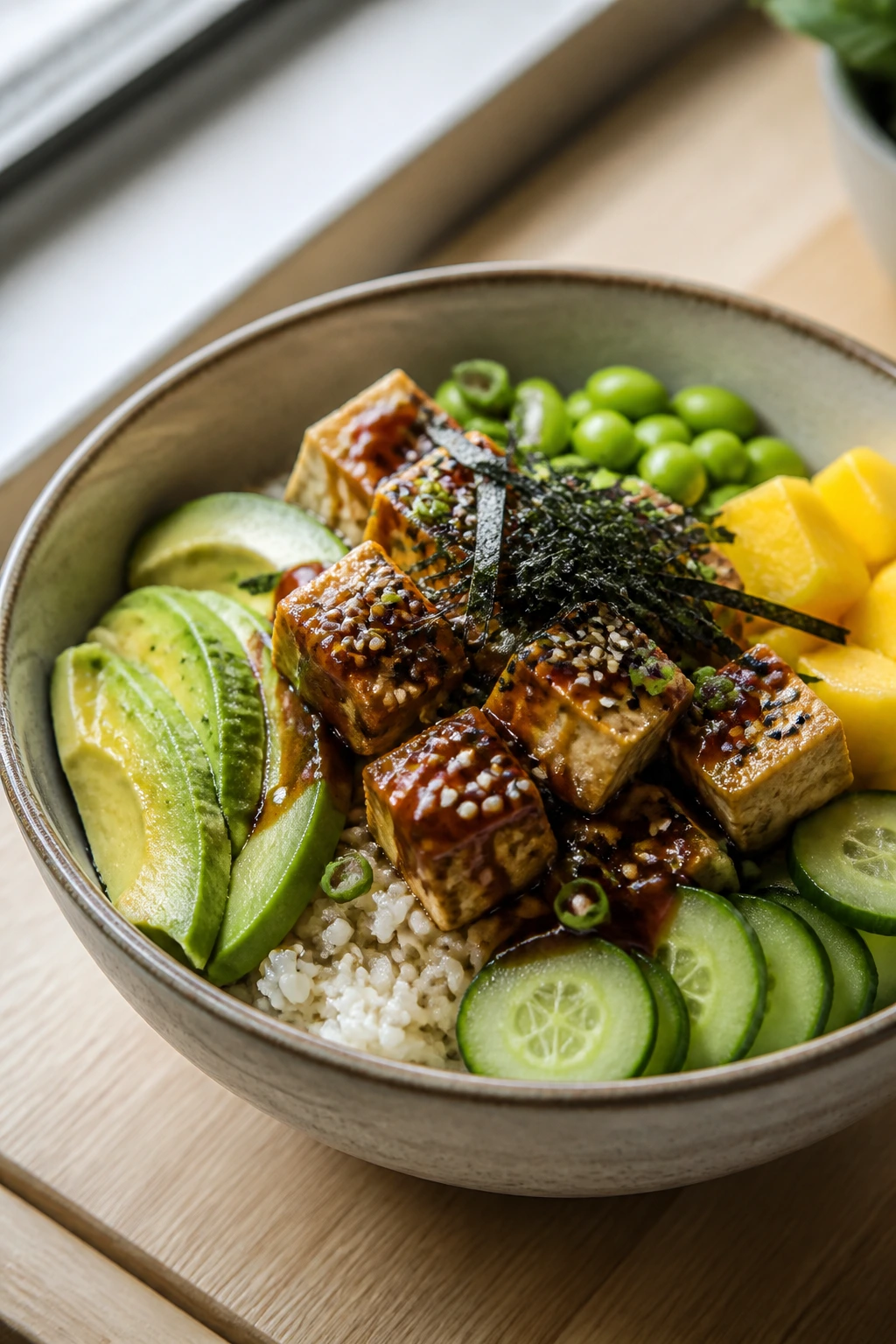
A good tofu poke bowl needs contrast more than anything else. The rice should be warm, the tofu should be cool and seasoned, and the cucumber, mango, or edamame should bring a clean snap. Soy, rice vinegar, sesame, and a little nori create that oceanic, savory edge without requiring fish.
Why It Works: Tofu takes on the soy-sesame marinade well when you give it enough time to sit. Rice provides the soft base, while cucumber and avocado keep the bowl from feeling too dense. Nori and scallions bring a salty finish that helps the bowl taste complete. It’s one of the better vegetarian bowls for anyone who likes sushi flavors without making rolls.
Key Ingredients:
- 1 block (14 to 16 ounces) extra-firm tofu
- 1 cup sushi rice or short-grain brown rice
- 1 cucumber, diced
- 1 avocado, sliced
- 1 cup shelled edamame
- 1/2 cup diced mango
- 2 tablespoons soy sauce
- 1 tablespoon rice vinegar
- 1 teaspoon sesame oil
- 1 teaspoon maple syrup
- 2 scallions, sliced
- 1 sheet nori, cut into thin strips
- 1 tablespoon sesame seeds
Quick Steps:
- Press the tofu for 15 minutes, then cut into cubes.
- Whisk soy sauce, rice vinegar, sesame oil, and maple syrup; toss with tofu and let sit while the rice cooks.
- Cook the rice according to package directions.
- Blanch the edamame for 2 minutes and drain.
- Build bowls with rice, tofu, cucumber, avocado, edamame, mango, scallions, nori, and sesame seeds.
- Spoon any leftover marinade lightly over the tofu and serve.
Equipment for This Recipe:
- Tofu press or towel
- Saucepan
- Mixing bowl
- Sharp knife
How to Serve This Dish: Arrange the toppings in little sections rather than mixing everything together. That keeps the bowl looking fresh and makes each bite different. It serves 2 to 3.
Pro Tips for This Recipe:
- Use firm tofu, not silken; the soft kind falls apart in the bowl.
- If you want more flavor, marinate the tofu for up to an hour in the fridge.
- Warm rice and cool toppings create the best texture contrast.
- A drizzle of spicy mayo works if you want more richness.
Variations on This Dish:
- Spicy Poke Bowl: Add chili crisp or sriracha to the marinade.
- Brown Rice Version: Use brown rice for a nuttier base and more chew.
- Sesame-Only Bowl: Skip the mango if you want a more savory profile.
Common Mistakes to Avoid with This Dish:
- Too-wet tofu: Pressing matters or the marinade slides off.
- Soggy rice: Let it steam off before building the bowl.
- Overmixing toppings: Poke bowls are better layered than stirred.
17. Mushroom Stroganoff Bowl
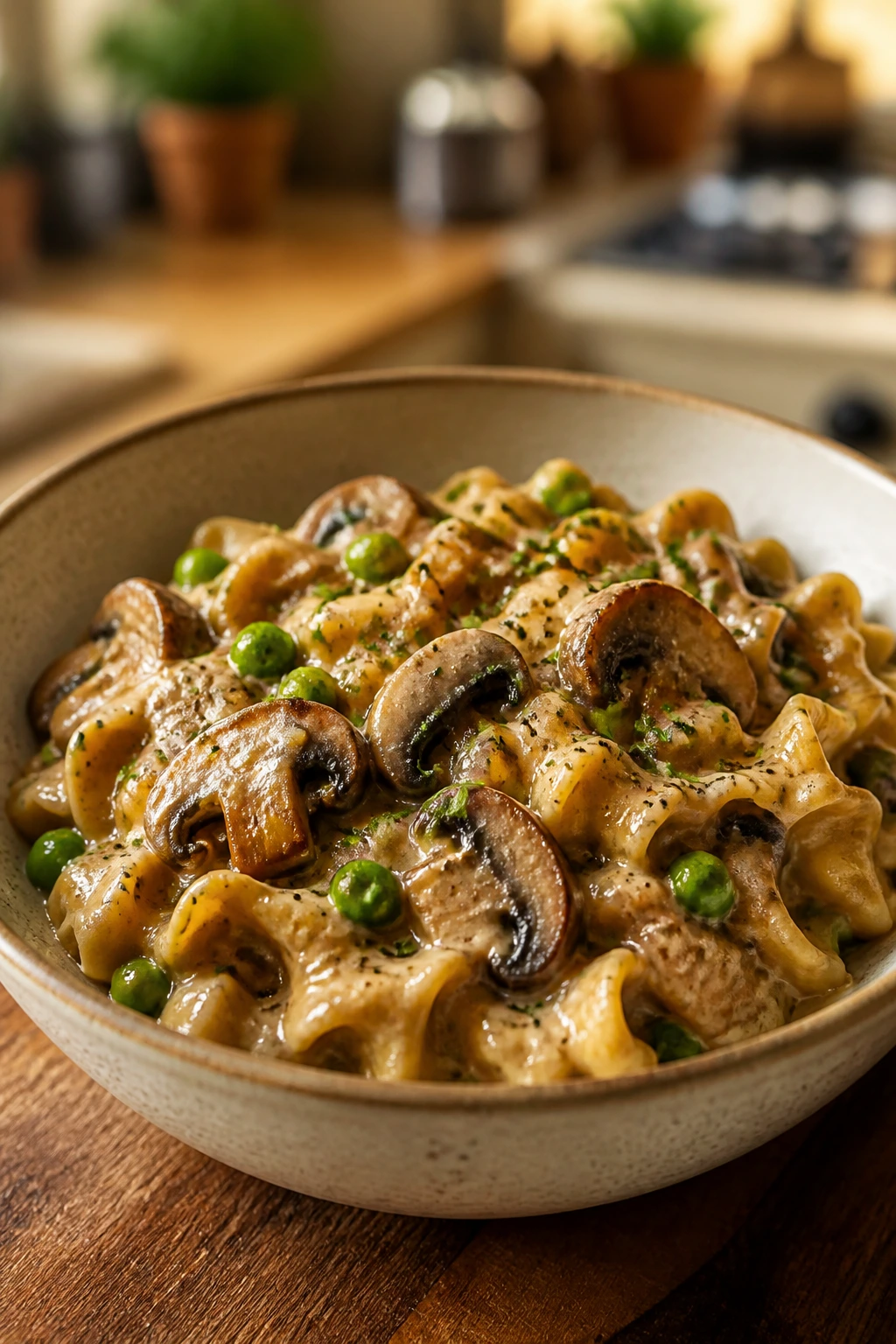
Mushroom stroganoff is one of those dinners that tastes more expensive than it is. The mushrooms brown hard, the onion and garlic build a savory base, and the creamy sauce clings to noodles like it knows exactly what it’s doing. Add peas for a little sweetness and color, and suddenly the bowl feels complete.
Why It Works: Mushrooms are the star because they take on a deep, browned flavor when you let them sit in a hot pan. Sour cream or Greek yogurt gives the sauce its classic tang, and Dijon sharpens the edges without making it taste like mustard. Noodles carry the sauce well, but the peas keep the bowl from going beige. This is one of the coziest vegetarian bowls here, and it still eats like dinner.
Key Ingredients:
- 12 ounces mushrooms, sliced
- 1 small onion, diced
- 2 garlic cloves, minced
- 8 ounces whole wheat egg noodles
- 1 cup peas, frozen or fresh
- 1 tablespoon olive oil
- 1 tablespoon butter
- 1 tablespoon Dijon mustard
- 3/4 cup sour cream or plain Greek yogurt
- 1 teaspoon paprika
- 2 tablespoons chopped parsley
Quick Steps:
- Cook the noodles according to package directions; drain and set aside.
- Heat olive oil and butter in a skillet over medium-high heat, then cook mushrooms without stirring too much until browned, about 6 to 8 minutes.
- Add onion and cook 4 minutes until soft, then add garlic and paprika for 30 seconds.
- Stir in Dijon and 1/2 cup water, scraping up the browned bits.
- Lower the heat, add sour cream, peas, and noodles, and stir just until coated.
- Top with parsley and serve right away.
Equipment for This Recipe:
- Large skillet
- Pot for noodles
- Wooden spoon
- Colander
How to Serve This Dish: Serve it in shallow bowls so the sauce pools around the noodles instead of disappearing. A peppery salad on the side makes a nice contrast, though the peas already help a bit. It feeds 4.
Pro Tips for This Recipe:
- Don’t crowd the mushrooms or they’ll steam.
- Add dairy off the heat or the sauce can split.
- If the sauce seems thin, let it sit for 2 minutes; it thickens as it rests.
- Fresh parsley at the end makes the bowl taste cleaner.
Variations on This Dish:
- Vegan Stroganoff: Use olive oil only and swap sour cream for cashew cream.
- Barley Bowl: Serve it over cooked barley instead of noodles.
- Mustard-Herb Version: Add thyme and a touch more Dijon for sharper flavor.
Common Mistakes to Avoid with This Dish:
- Pale mushrooms: Brown them properly or the sauce tastes flat.
- Boiling the cream: High heat can break it.
- Too much noodle water: Drain well before adding them back to the pan.
18. Vegan Taco Quinoa Bowl
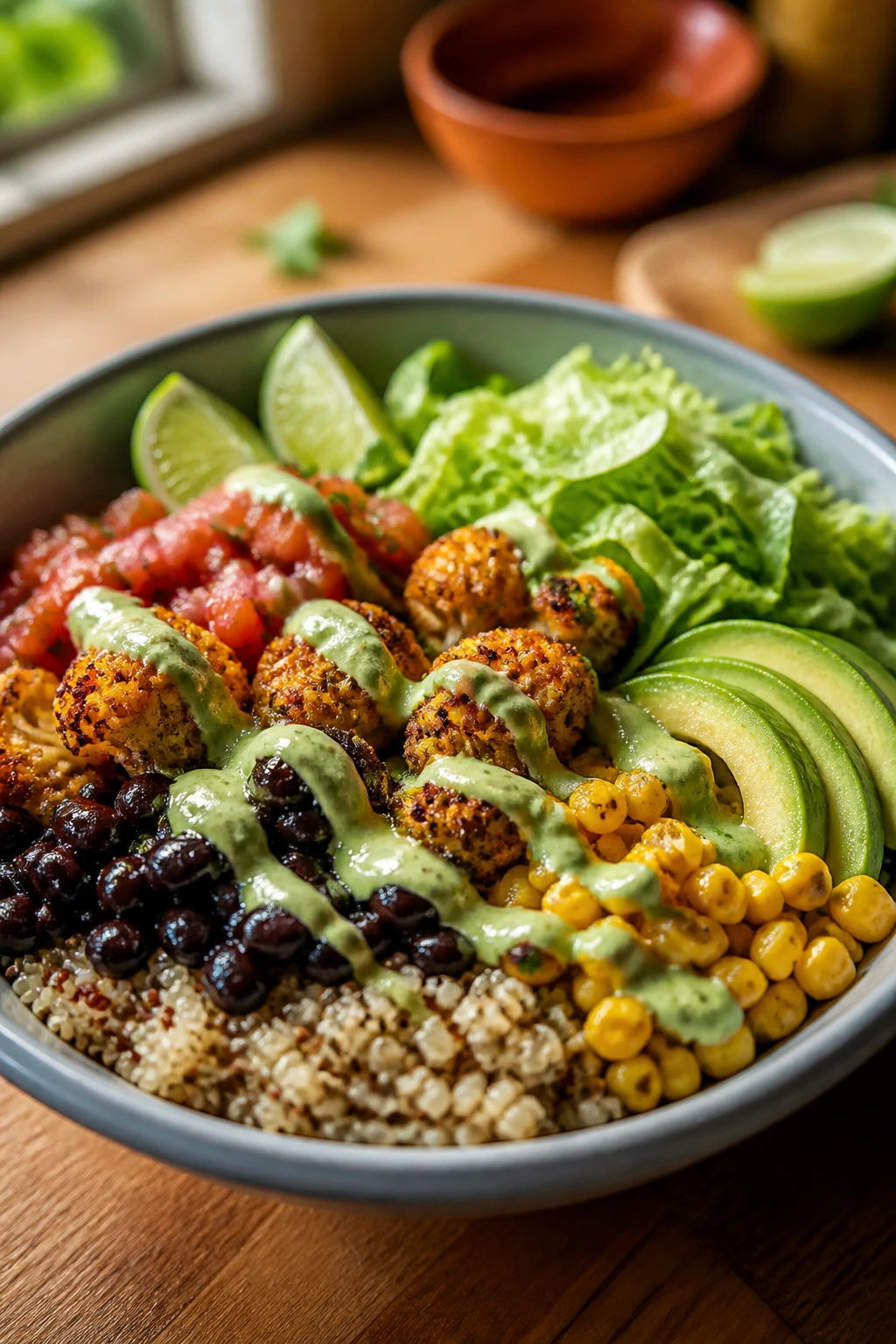
This bowl has the same loud, layered energy as a taco night, but it eats more cleanly. Quinoa gives you a nutty base, black beans bring the protein, and roasted cauliflower gives the whole thing a little chew. Salsa, avocado, and lime keep it from ever feeling dry.
Why It Works: Roasted cauliflower takes on taco seasoning better than steamed vegetables ever could. Quinoa adds lightness and protein, while beans make the bowl substantial enough for dinner. A quick lime crema or salsa gives the acidity that ties the grains and vegetables together. This is a very forgiving vegetarian bowl, which means it’s good when the fridge is a bit random.
Key Ingredients:
- 1 cup quinoa
- 1 small head cauliflower, cut into florets
- 1 (15-ounce) can black beans, drained and rinsed
- 1 cup corn
- 1 avocado, sliced
- 1 cup shredded lettuce
- 1/2 cup salsa
- 2 tablespoons olive oil
- 1 teaspoon chili powder
- 1 teaspoon cumin
- 1 lime, juiced
- 2 tablespoons cilantro
- 2 tablespoons pepitas
Quick Steps:
- Heat the oven to 425°F (220°C). Toss cauliflower with olive oil, chili powder, cumin, salt, and pepper.
- Roast for 22 to 25 minutes until browned in spots.
- Cook the quinoa according to package directions.
- Warm the black beans and corn together in a skillet for 3 to 4 minutes.
- Build bowls with quinoa, lettuce, beans, corn, cauliflower, avocado, salsa, lime juice, cilantro, and pepitas.
- Serve immediately while the cauliflower is still warm.
Equipment for This Recipe:
- Sheet pan
- Saucepan
- Skillet
- Knife and cutting board
How to Serve This Dish: Let each bowl have a little of everything in one spoonful. The lettuce gives a cold base if you want more crunch, but it’s fine to keep the bowl warmer and more grain-heavy too. It serves 4.
Pro Tips for This Recipe:
- Roast cauliflower with space around it so the edges brown.
- Pepitas taste better if you toast them for a minute in a dry pan.
- If salsa is thin, spoon it only over the top, not into the whole bowl.
- Lime juice right before eating keeps the avocado bright.
Variations on This Dish:
- Chipotle Bowl: Add chipotle powder to the cauliflower and beans.
- Rice Swap: Use brown rice if you want a softer base than quinoa.
- Creamy Finish: Add a spoonful of guacamole or dairy-free crema.
Common Mistakes to Avoid with This Dish:
- Underseasoned cauliflower: It needs salt and spice before roasting.
- Mushy beans: Warm them gently so they stay intact.
- No fresh topping: Without avocado or lettuce, the bowl can feel too dense.
19. Green Goddess Couscous Bowl
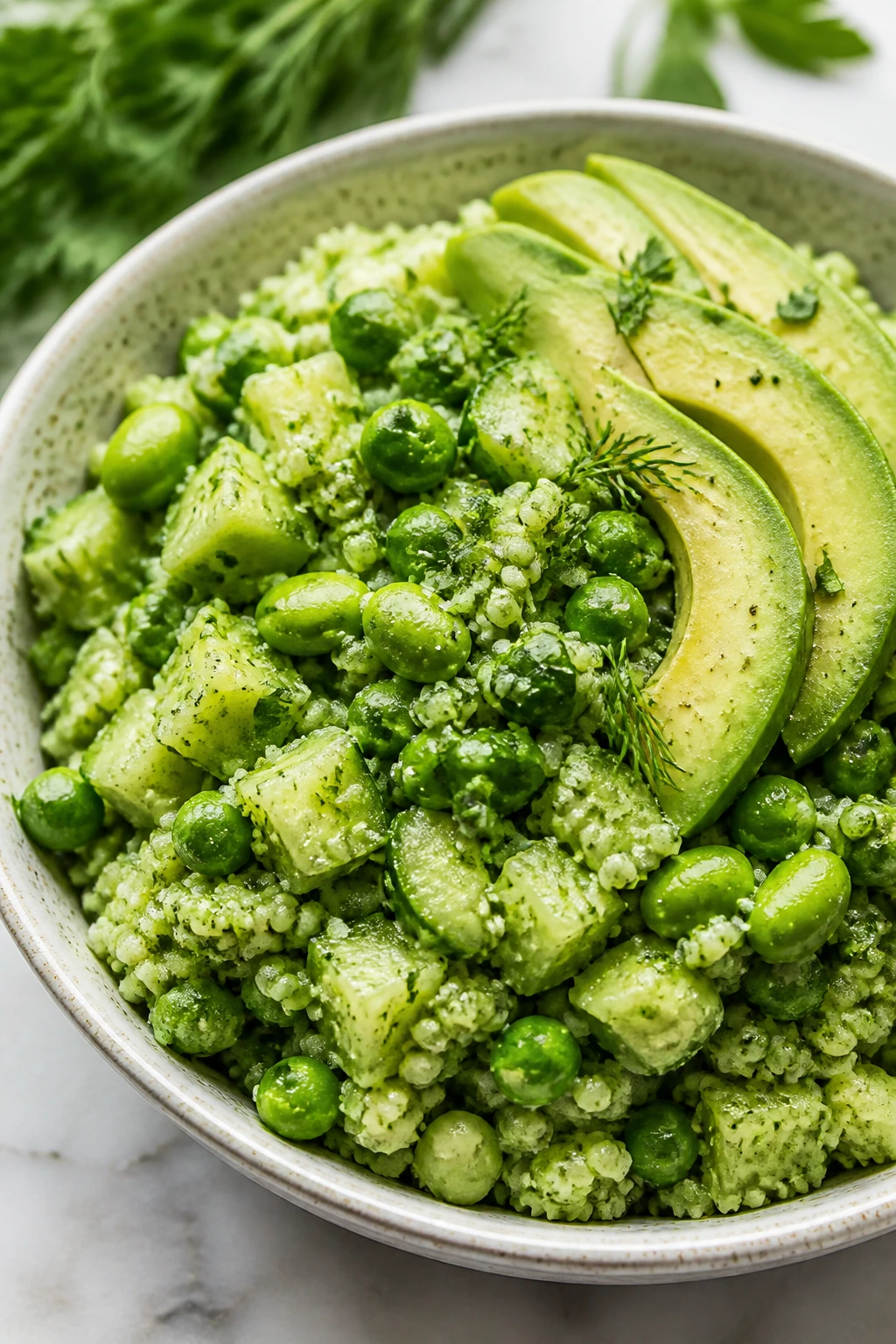
Green Goddess dressing has a way of making ordinary vegetables taste like they’ve been on a spa weekend. Here it coats couscous, peas, edamame, cucumber, and avocado, turning a pile of cold-ish ingredients into a very good dinner. It’s fast, bright, and much more filling than it looks.
Why It Works: Couscous cooks in minutes and soaks up dressing without turning heavy. Peas and edamame bring plant protein and a sweet green flavor, while herbs make the whole bowl taste fresh enough to want another bite. Yogurt or mayo in the dressing gives it body, but lemon and herbs keep it from becoming thick and dull. This is a useful vegetarian bowl when the dinner goal is speed plus freshness.
Key Ingredients:
- 1 1/2 cups couscous
- 1 1/2 cups frozen peas, thawed
- 1 cup shelled edamame, thawed
- 1 cucumber, diced
- 1 avocado, sliced
- 1 cup fresh herbs, such as parsley, dill, and chives
- 1/2 cup plain Greek yogurt
- 1 lemon, juiced
- 1 small garlic clove
- 2 tablespoons olive oil
- 1/4 cup sliced almonds
Quick Steps:
- Pour 1 1/2 cups boiling water over the couscous, cover, and let it sit 5 minutes, then fluff.
- Blend or whisk yogurt, herbs, lemon juice, garlic, olive oil, salt, and pepper into a dressing.
- Fold peas and edamame into the couscous while it’s still warm.
- Add cucumber and half the dressing, then toss lightly.
- Top with avocado and sliced almonds.
- Spoon extra dressing over the top and serve.
Equipment for This Recipe:
- Large bowl
- Whisk or blender
- Knife
- Fork for fluffing
How to Serve This Dish: This bowl feels best at room temperature, not straight from the fridge. A little extra herb on top makes it look as fresh as it tastes. It serves 3 to 4.
Pro Tips for This Recipe:
- Couscous needs only covered steaming, not boiling.
- If the dressing tastes harsh, add a pinch of salt before more lemon.
- Toast the almonds to make the bowl feel less soft.
- Add avocado last so it stays intact.
Variations on This Dish:
- Spinach Version: Blend spinach into the dressing for even more green color.
- No-Yogurt Bowl: Use olive oil and a spoon of tahini instead.
- Farro Swap: Replace couscous with farro if you want more chew.
Common Mistakes to Avoid with This Dish:
- Watery dressing: Too much lemon or not enough body makes the bowl thin.
- Cold couscous clumps: Fluff it with a fork before adding anything else.
- Skipping crunch: Almonds or cucumber keep the bowl from feeling soft all the way through.
20. Ratatouille Polenta Bowl
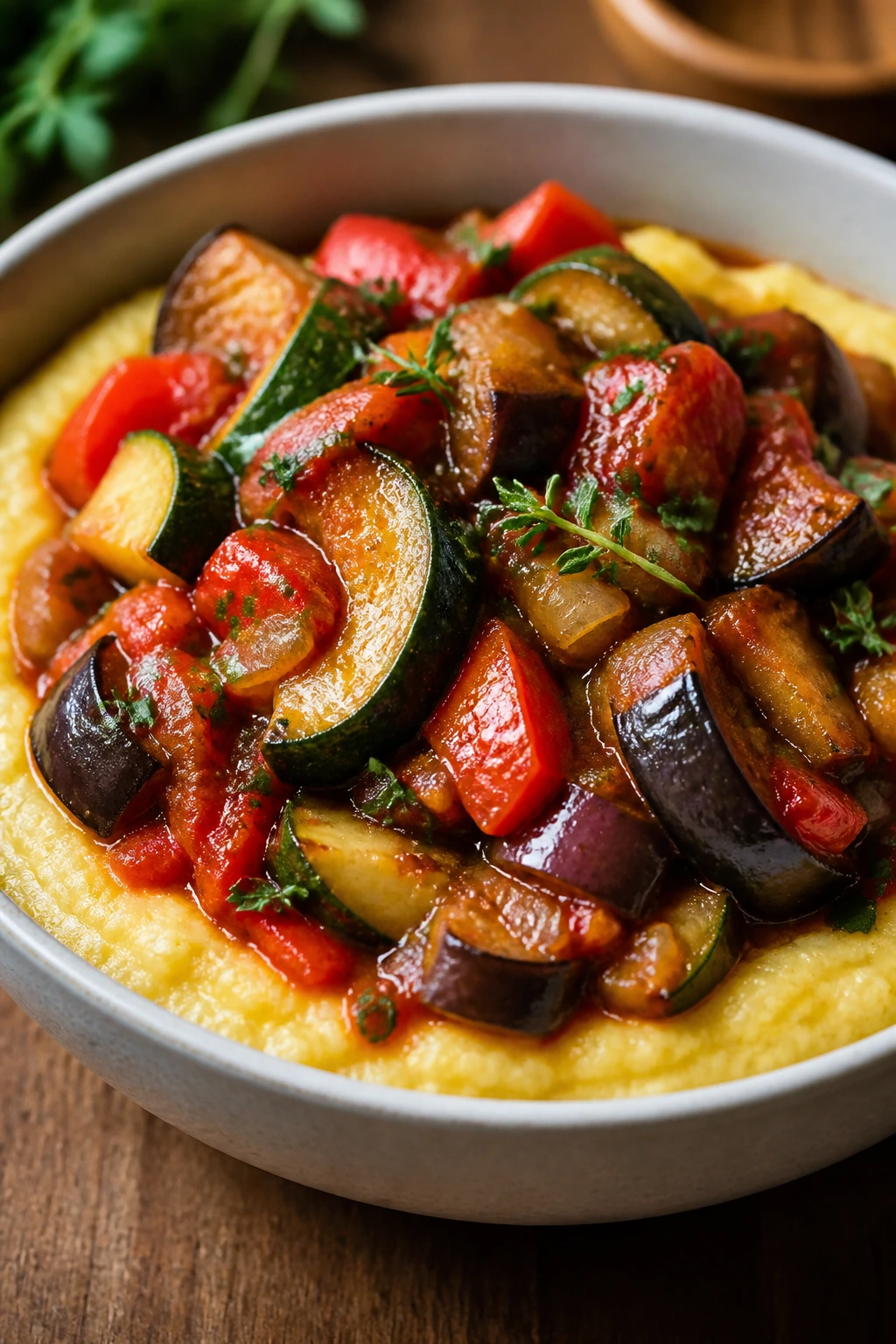
Ratatouille wants to be in a bowl. Eggplant, zucchini, peppers, and tomatoes simmer down into something silky and savory, and polenta underneath catches every bit of it. If you want a dinner that feels slow-cooked without requiring much actual attention, this one is worth keeping around.
Why It Works: Ratatouille brings concentrated vegetable flavor because the pieces break down and mingle in the pan. Polenta is the right base because it’s soft enough to scoop but sturdy enough not to disappear. Basil or Parmesan on top gives a last bright or salty note, and white beans can make the bowl even more filling if you want them. This is one of the better vegetarian bowls when you want vegetables to carry the meal without feeling like a compromise.
Key Ingredients:
- 1 small eggplant, diced
- 1 zucchini, diced
- 1 red bell pepper, diced
- 1 onion, diced
- 3 garlic cloves, minced
- 1 (14-ounce) can diced tomatoes
- 1 cup polenta
- 1/4 cup Parmesan or 1 cup white beans
- 2 tablespoons olive oil
- 1 teaspoon dried oregano
- 1/4 cup basil leaves
Quick Steps:
- Heat olive oil in a skillet over medium heat and cook onion and bell pepper for 5 minutes.
- Add eggplant and zucchini, cook 8 minutes, then add garlic and oregano for 30 seconds.
- Pour in diced tomatoes and simmer 15 minutes until the vegetables soften and the sauce thickens.
- Cook the polenta in salted water or broth according to package directions, whisking often.
- Spoon polenta into bowls and top with ratatouille.
- Finish with Parmesan or white beans and basil.
Equipment for This Recipe:
- Large skillet
- Whisk
- Saucepan
- Spoon for serving
How to Serve This Dish: Serve it hot, with the polenta still soft enough to spread under the vegetables. A drizzle of olive oil on top is simple and right. It feeds 4.
Pro Tips for This Recipe:
- Keep the vegetable dice similar so everything softens on the same timeline.
- Polenta thickens fast as it sits, so serve it promptly.
- If the tomato mixture tastes too sharp, cook it 5 minutes longer.
- Basil should go on at the end so it stays fragrant.
Variations on This Dish:
- Herbed Bowl: Add thyme and rosemary for a deeper winter flavor.
- Bean Boost: Stir white beans into the ratatouille for more protein.
- Creamy Polenta: Finish the polenta with a little butter or olive oil for richness.
Common Mistakes to Avoid with This Dish:
- Crunchy eggplant: It needs enough time to soften properly.
- Lumpy polenta: Whisk steadily and add liquid in a thin stream if needed.
- Watery ratatouille: Simmer long enough to cook down the tomatoes.
21. Red Curry Vegetable Rice Bowl
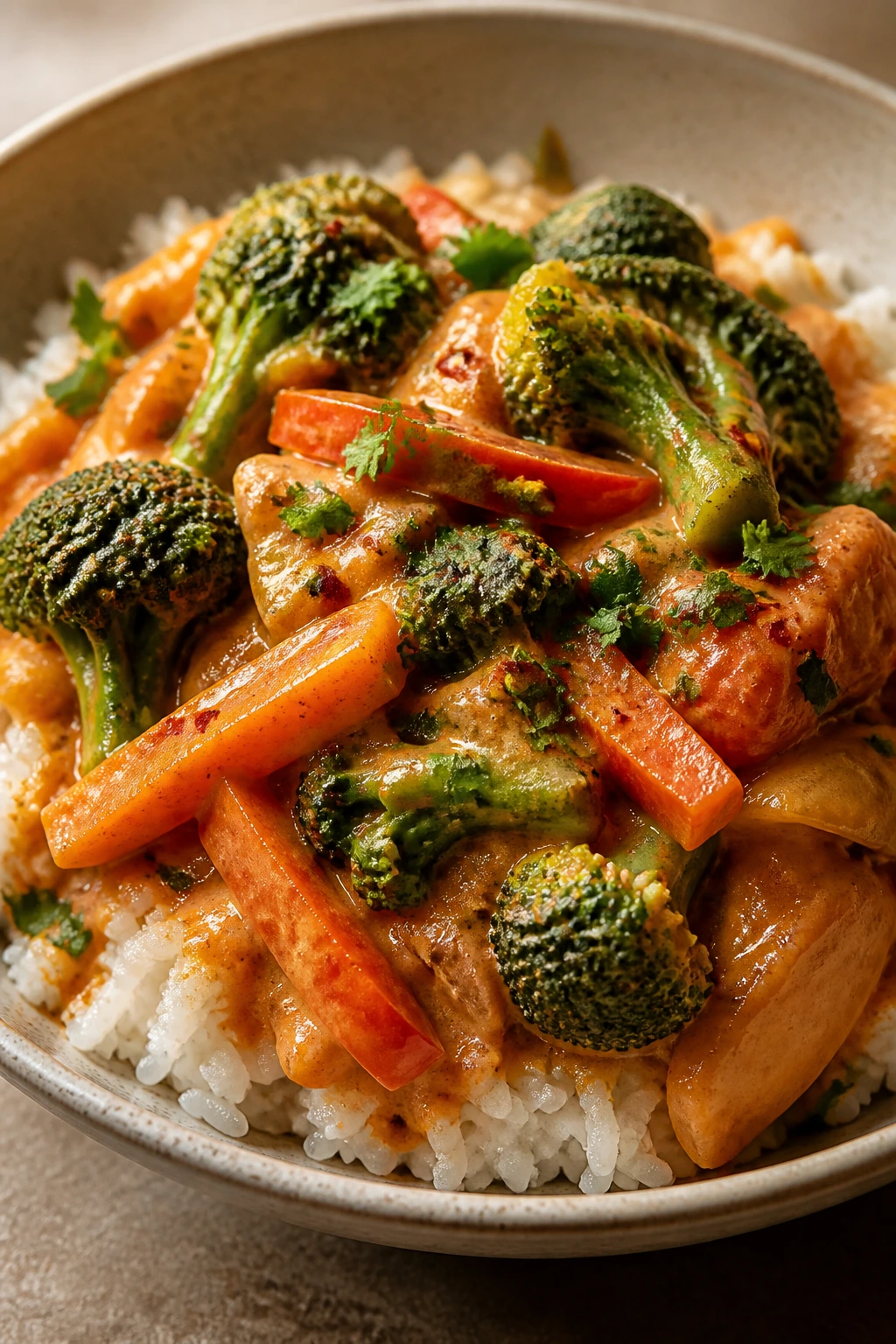
Red curry can make a refrigerator full of vegetables taste like a plan. Coconut milk gives the sauce its body, curry paste brings heat and depth, and broccoli, carrots, and bell peppers give you enough structure to keep each bite interesting. Served over rice, it lands squarely in dinner territory.
Why It Works: Red curry paste carries garlic, chile, lemongrass, and spice in one spoonful, which is why the sauce develops fast. Coconut milk softens the heat and coats vegetables in a way that feels rich without needing cream. Tofu or chickpeas give the bowl more substance, and jasmine rice keeps the whole thing familiar. If you like vegetarian bowls with a little urgency and warmth, this one delivers it.
Key Ingredients:
- 1 cup jasmine rice
- 1 tablespoon oil
- 1 tablespoon red curry paste
- 1 cup coconut milk
- 1 cup vegetable broth
- 2 carrots, sliced
- 1 cup broccoli florets
- 1 red bell pepper, sliced
- 1 cup tofu cubes or chickpeas
- 1 tablespoon lime juice
- 2 tablespoons basil or cilantro
- Salt to taste
Quick Steps:
- Cook the rice according to package directions.
- Heat oil in a skillet over medium heat and cook the curry paste for 30 seconds.
- Stir in coconut milk and broth, then add carrots, broccoli, and bell pepper.
- Simmer 8 to 10 minutes until the vegetables are tender.
- Add tofu or chickpeas and cook 3 more minutes to warm through.
- Finish with lime juice and herbs, then spoon over rice.
Equipment for This Recipe:
- Skillet or wide saucepan
- Rice pot
- Wooden spoon
- Knife and cutting board
How to Serve This Dish: Serve it with enough rice to soak up the sauce; that’s the real point. A few torn herbs on top make it look fresher and keep the coconut from feeling too rich. It serves 4.
Pro Tips for This Recipe:
- Curry paste brands vary in heat, so start with less if yours runs hot.
- Cook the paste briefly in oil before adding liquid or it tastes raw.
- Add lime at the end or it can flatten the coconut flavor.
- If the sauce seems thin, simmer uncovered for 2 minutes.
Variations on This Dish:
- Green Curry Swap: Use green curry paste and zucchini instead of broccoli.
- Chickpea Bowl: Use chickpeas if you want more pantry-friendly protein.
- Peanut Finish: Stir in a spoonful of peanut butter for a thicker sauce.
Common Mistakes to Avoid with This Dish:
- Boiling too hard: Coconut milk can split if the heat is too aggressive.
- Overcrowding the vegetables: They should simmer, not stew into mush.
- Skipping salt: Curry paste helps, but the whole sauce still needs seasoning.
22. Falafel Hummus Bowl
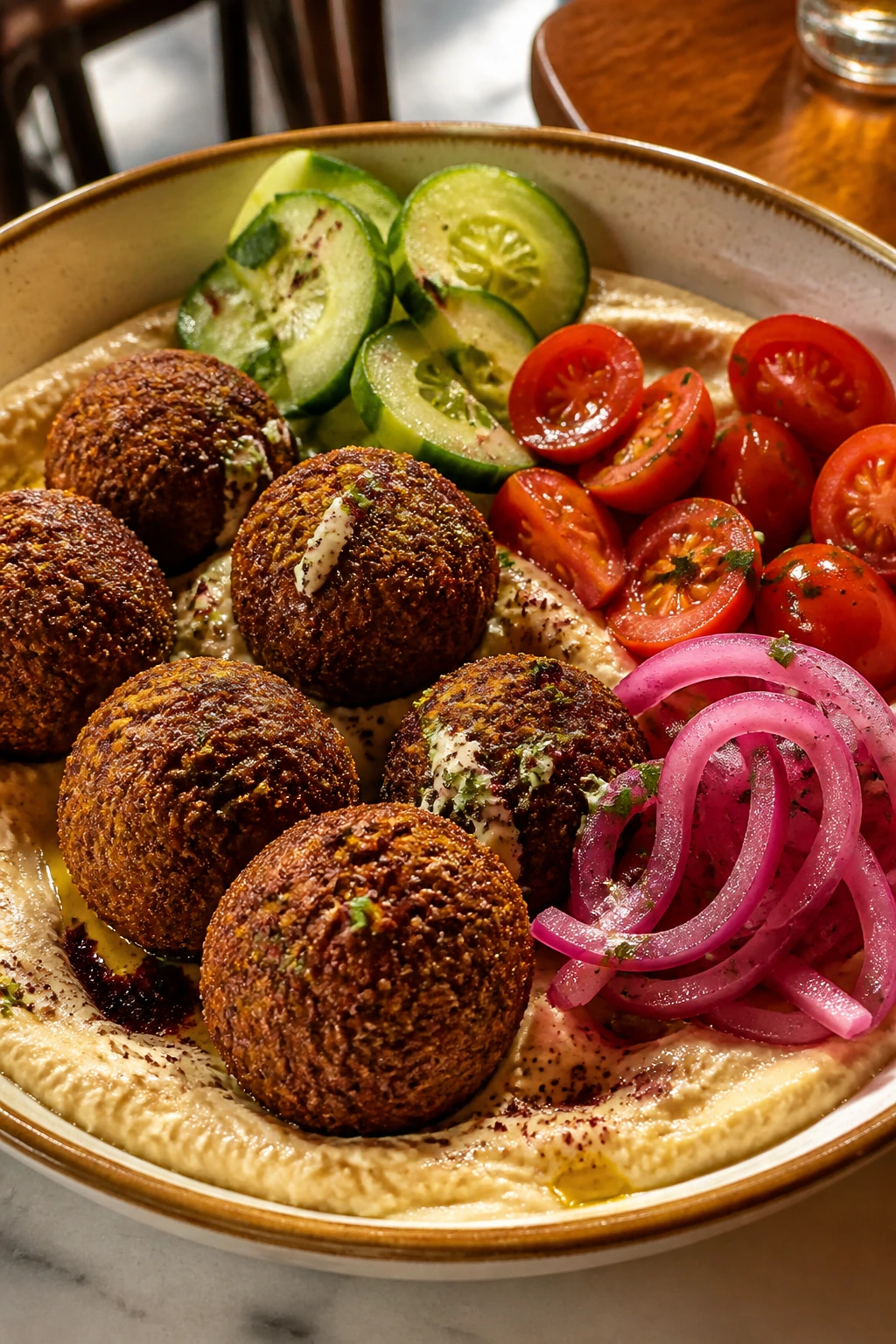
Falafel in a bowl can feel a little obvious, but the format works because the textures are so strong. Crisp falafel, cool cucumber, juicy tomato, hummus, and a grain base all pull in different directions, which keeps the plate alive. Add pickled onions and you get the sharp finish that falafel bowls always need.
Why It Works: Falafel brings crunch and a spiced chickpea flavor that stands up to creamy hummus. Quinoa or bulgur gives you a base that doesn’t overwhelm the toppings, and fresh vegetables balance the fried edges. Pickled onions cut through the richness fast, which is why this bowl tastes more complete than just falafel and dip. It’s a good vegetarian bowl when you want something familiar but still balanced.
Key Ingredients:
- 1 cup quinoa or bulgur
- 8 to 10 falafel, store-bought or homemade
- 1/2 cup hummus
- 1 cucumber, diced
- 1 cup cherry tomatoes, halved
- 1/2 cup pickled red onions
- 2 cups chopped romaine or lettuce
- 2 tablespoons chopped parsley
- 1 lemon, cut into wedges
Quick Steps:
- Cook quinoa or bulgur according to package directions.
- Bake or pan-fry the falafel until crisp and heated through.
- Prep the cucumber, tomatoes, lettuce, and parsley.
- Spread hummus in the bottom of each bowl or add it in a large spoonful on top of the grain.
- Add the grain, falafel, vegetables, pickled onions, and parsley.
- Serve with lemon wedges.
Equipment for This Recipe:
- Saucepan
- Skillet or baking sheet
- Knife
- Spoon for hummus
How to Serve This Dish: Keep the falafel on top so the crust stays crisp as long as possible. Warm pita on the side is useful, but the bowl doesn’t need it. It serves 2 to 4 depending on falafel count.
Pro Tips for This Recipe:
- Falafel tastes better hot and crisp, not sitting in the bowl for 20 minutes.
- Pickled onions are the easiest way to wake up a hummus bowl.
- If your hummus is thick, loosen it with a tablespoon of water and lemon.
- A little extra parsley keeps the bowl from feeling beige.
Variations on This Dish:
- Tahini Bowl: Replace some hummus with tahini-lemon sauce.
- No-Fry Version: Use baked falafel if you want less oil.
- Herby Grain Swap: Use tabbouleh instead of quinoa for a fresher base.
Common Mistakes to Avoid with This Dish:
- Soggy falafel: Add them at the end so the crust stays intact.
- Too much hummus: It can swamp the bowl fast. Use enough to coat, not smother.
- No acid: Lemon or pickled onions are what keep the bowl from tasting heavy.
23. Sweetcorn Avocado Black Bean Bowl
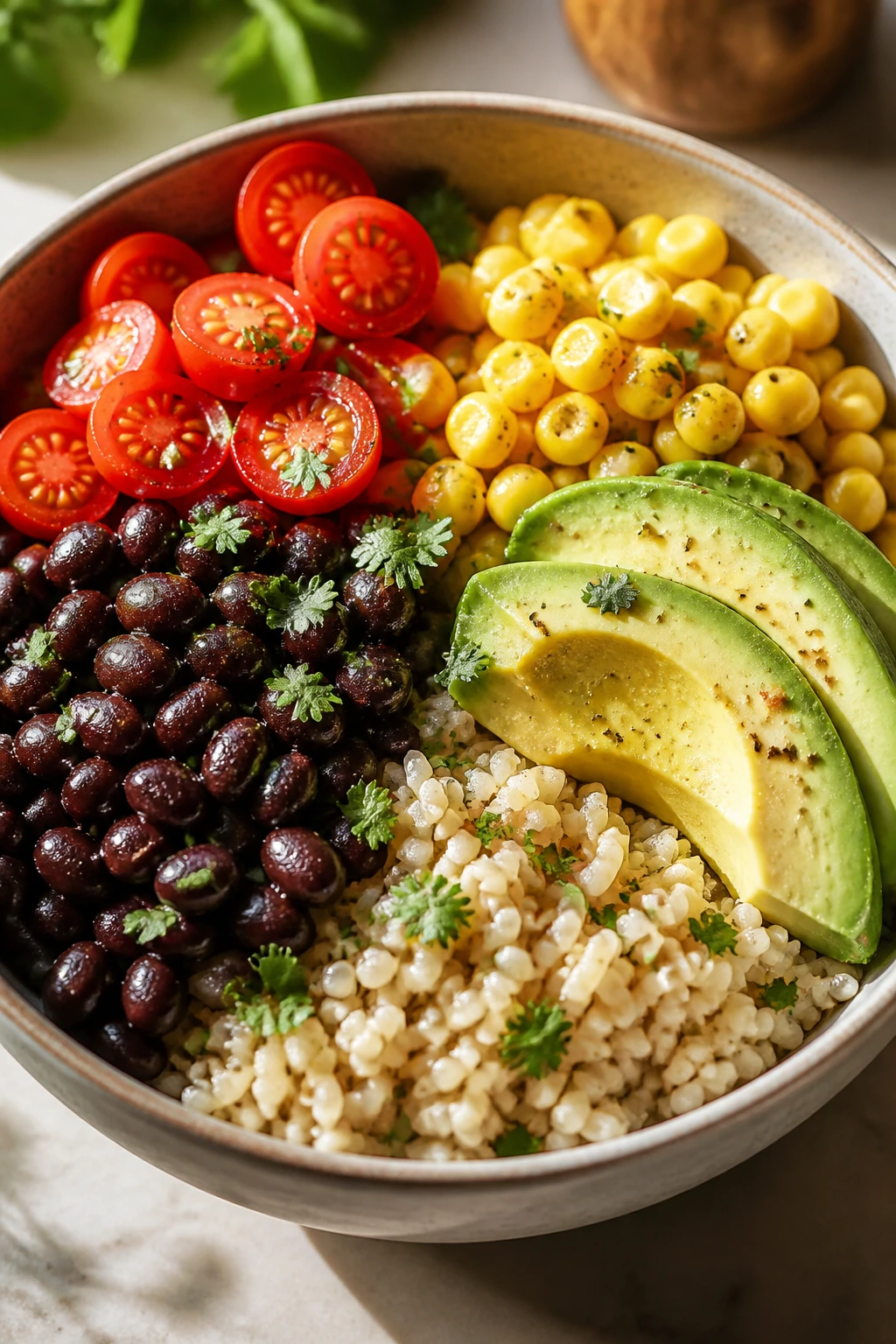
Corn, avocado, and black beans are a classic trio for a reason: each ingredient covers a hole the others leave behind. Beans give heft, corn gives sweetness and pop, avocado gives creaminess, and a chipotle yogurt or lime crema pulls the whole thing together. It’s a bright, filling bowl that does not ask much from the cook.
Why It Works: The sweetness of corn keeps the beans from tasting too earthy, and the avocado softens the sharper toppings. Brown rice or quinoa adds body, while a smoky dressing gives the bowl structure. If you char the corn a little, the flavor gets deeper fast. This is one of the most forgiving vegetarian bowls on the list, which makes it handy when dinner needs to happen without a lot of planning.
Key Ingredients:
- 1 cup brown rice or quinoa
- 2 (15-ounce) cans black beans, drained and rinsed
- 1 1/2 cups corn kernels
- 1 avocado, sliced
- 1 cup cherry tomatoes, halved
- 1/4 cup red onion, diced
- 1/4 cup plain Greek yogurt
- 1 teaspoon chipotle powder
- 1 lime, juiced
- 2 tablespoons cilantro
- Salt and pepper
Quick Steps:
- Cook the rice or quinoa according to package directions.
- Char the corn in a dry skillet over medium-high heat for 4 to 5 minutes until it picks up brown spots.
- Warm the black beans with a pinch of salt and a splash of water.
- Stir chipotle powder and lime juice into the yogurt to make a quick crema.
- Assemble rice, beans, corn, avocado, tomatoes, and onion in bowls.
- Spoon the crema over the top and finish with cilantro.
Equipment for This Recipe:
- Saucepan
- Skillet
- Small bowl
- Knife
How to Serve This Dish: Build it high and keep the avocado visible; that’s part of the appeal. Tortilla chips or a simple cabbage slaw are both good companions. It serves 4.
Pro Tips for This Recipe:
- A dry skillet gives the corn a better roasted flavor than boiling ever will.
- If the crema tastes too hot, add another spoon of yogurt.
- Warm beans taste better than cold ones and help the bowl feel finished.
- Add salt to the tomatoes early if they taste watery.
Variations on This Dish:
- Street-Corn Version: Add cotija and a little chili-lime seasoning.
- Quinoa Bowl: Swap rice for quinoa if you want more protein.
- Vegan Version: Use dairy-free yogurt or a simple lime-tahini drizzle.
Common Mistakes to Avoid with This Dish:
- Cold beans and corn: Warm them or the bowl feels patched together.
- Too much chipotle: The crema should smoke, not burn.
- Brown avocado: Add it last so it stays fresh-looking.
24. Teriyaki Eggplant Bowl
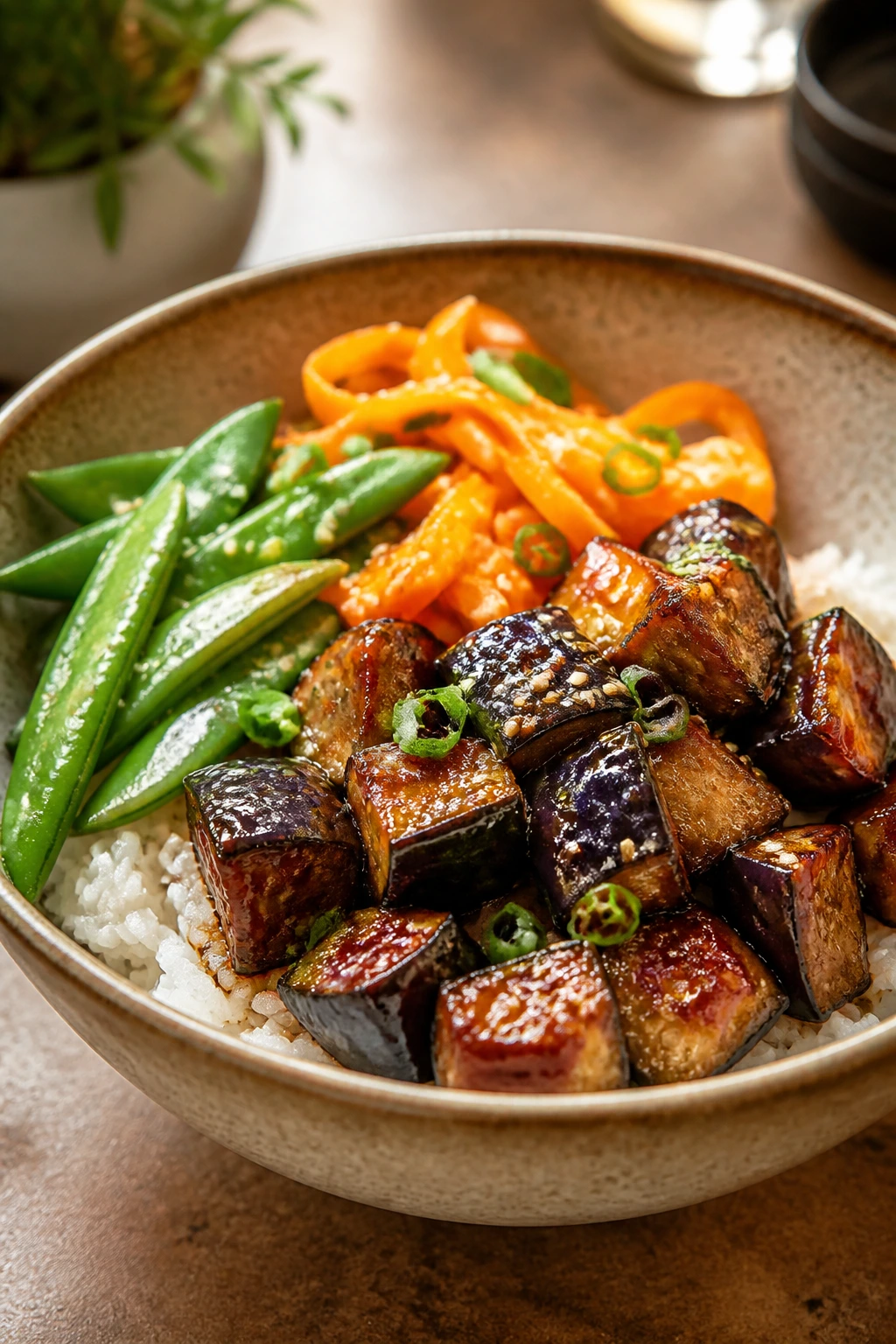
Eggplant is a tricky vegetable until you give it enough heat and a sauce that can cling to its surface. Teriyaki does exactly that, coating the pieces in a glossy, salty-sweet glaze that tastes far better than the vegetable would on its own. Add rice, snap peas, and carrots, and the bowl lands somewhere between stir-fry and dinner bowl in the best way.
Why It Works: Eggplant softens into a creamy interior once roasted or pan-seared, which makes it ideal for sauces. Teriyaki gives you salt, sweetness, and shine, while snap peas keep the bowl crisp and green. Rice is the right base because it soaks up the extra sauce instead of hiding it. This is one of those vegetarian bowls where the sauce is half the point, and I mean that as praise.
Key Ingredients:
- 2 medium eggplants, cut into 1-inch chunks
- 1 cup jasmine rice
- 1 cup snap peas
- 2 carrots, thinly sliced
- 1/3 cup teriyaki sauce
- 1 tablespoon sesame oil
- 1 teaspoon grated ginger
- 1 garlic clove, minced
- 2 scallions, sliced
- 1 tablespoon sesame seeds
Quick Steps:
- Cook the rice according to package directions.
- Roast eggplant at 425°F (220°C) with sesame oil, salt, and pepper for 20 to 25 minutes, or sauté in batches until browned.
- Add ginger and garlic to the eggplant in the last minute of cooking.
- Blanch snap peas for 1 minute and drain, or leave them raw for more crunch.
- Toss the eggplant with teriyaki sauce until coated.
- Build bowls with rice, eggplant, snap peas, carrots, scallions, and sesame seeds.
Equipment for This Recipe:
- Sheet pan or large skillet
- Saucepan
- Small bowl
- Knife
How to Serve This Dish: Give the eggplant center stage so the glaze stays visible. A few extra sesame seeds make the bowl look finished without much effort. It serves 4.
Pro Tips for This Recipe:
- Eggplant needs space and heat or it goes pale and spongy.
- Add teriyaki at the end so it glazes instead of burning.
- If carrots are too crunchy for your taste, shave them thinner.
- Scallions should go on right before serving for the best bite.
Variations on This Dish:
- Tofu Add-On: Add roasted tofu cubes for more protein.
- Spicy Teriyaki: Stir chili flakes into the sauce.
- Brown Rice Version: Use brown rice for more chew and nuttier flavor.
Common Mistakes to Avoid with This Dish:
- Skipping the browning: Pale eggplant tastes bland and soft.
- Sauce too early: It can scorch if added before the eggplant is cooked.
- Too-thick carrots: They can overpower the softer textures if sliced too large.
25. Spinach Pesto Potato Bowl
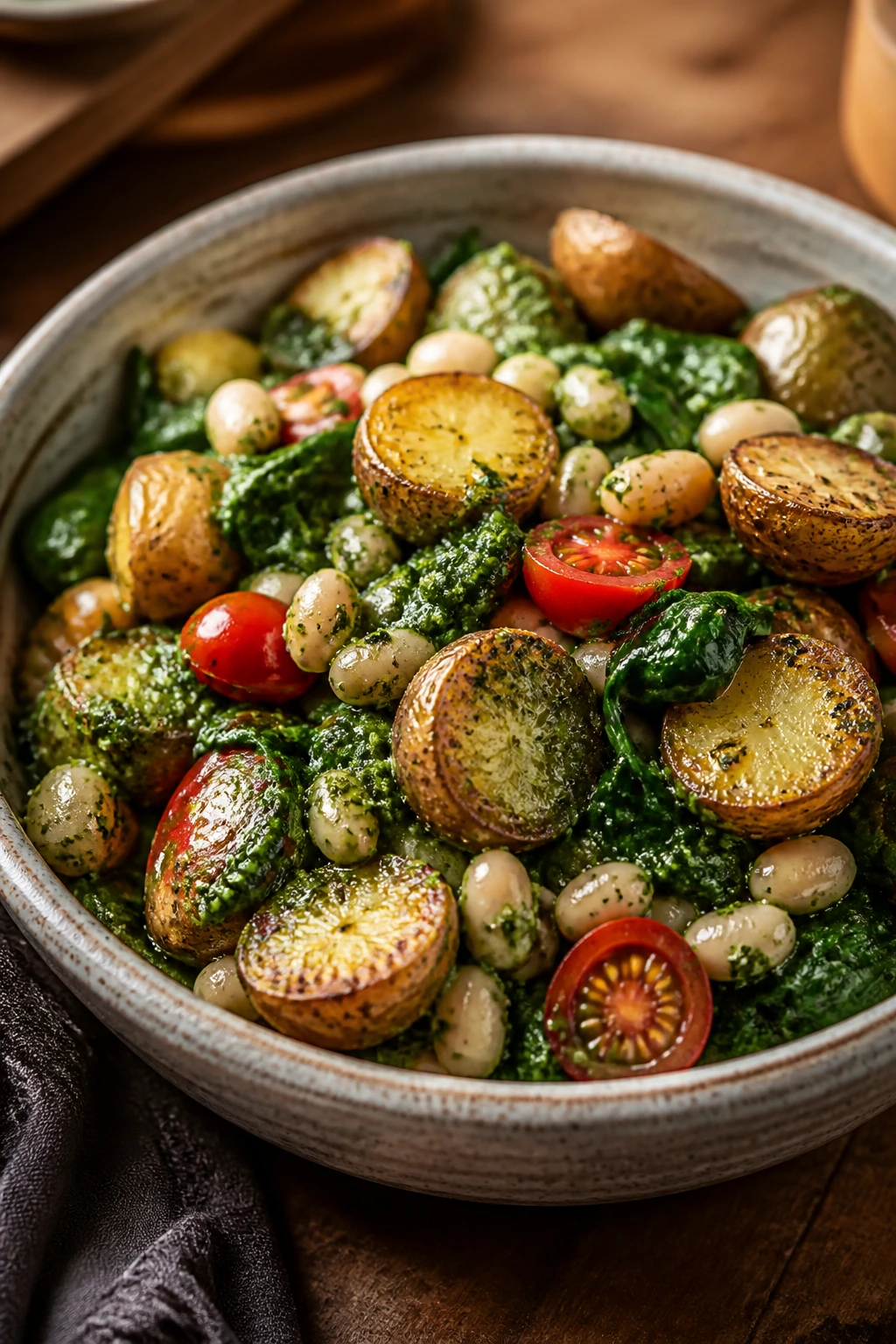
Potatoes make a bowl feel sturdy fast, and that’s the appeal here. Roast them until the edges are bronzed, then toss them with pesto and white beans so the bowl gets creamy, herby, and filling without any cream at all. Spinach and tomatoes cut through the starch and keep the plate from feeling heavy.
Why It Works: Roasted baby potatoes have both crisp skin and fluffy centers, which gives the bowl a strong texture base. White beans add protein and a soft counterpoint, while pesto carries garlic, basil, and parmesan in one spoonful. Spinach gives the dish some freshness, and tomatoes add a bright, juicy note. This is one of the better vegetarian bowls when you want something that feels like comfort food but still acts like dinner.
Key Ingredients:
- 1 1/2 pounds baby potatoes, halved
- 2 tablespoons olive oil
- 1 (15-ounce) can white beans, drained and rinsed
- 1/3 cup pesto
- 2 cups baby spinach
- 1 cup cherry tomatoes, halved
- 2 tablespoons Parmesan
- 1 lemon, juiced
- Salt and black pepper
Quick Steps:
- Heat the oven to 425°F (220°C). Toss potatoes with olive oil, salt, and pepper.
- Roast for 25 to 30 minutes until browned and tender.
- Warm the white beans in a skillet with 2 tablespoons water, then stir in pesto and lemon juice.
- Put spinach in the bowls first so the warm potatoes wilt it a little.
- Add potatoes, pesto beans, tomatoes, and Parmesan.
- Serve immediately.
Equipment for This Recipe:
- Sheet pan
- Skillet
- Mixing bowl
- Knife
How to Serve This Dish: Serve it hot so the spinach softens under the potatoes. A spoonful of extra pesto on the side is never wasted here. It serves 4.
Pro Tips for This Recipe:
- Cut potatoes in similar sizes so they roast evenly.
- Don’t drown the beans in pesto; a little goes far.
- If the spinach is tough, let the hot potatoes sit on it for a minute before adding the rest.
- Lemon juice keeps the pesto from feeling heavy.
Variations on This Dish:
- Vegan Bowl: Use vegan pesto and skip the Parmesan.
- Green Bean Version: Add blanched green beans for extra crunch.
- Egg Topping: Add a soft-boiled egg if you want more protein.
Common Mistakes to Avoid with This Dish:
- Undercooked potatoes: They need full roasting time to crisp.
- Greasy pesto overload: Too much makes the bowl slick.
- Wilted spinach from the start: Add it underneath the hot ingredients instead.
26. Gochujang Cauliflower Bowl
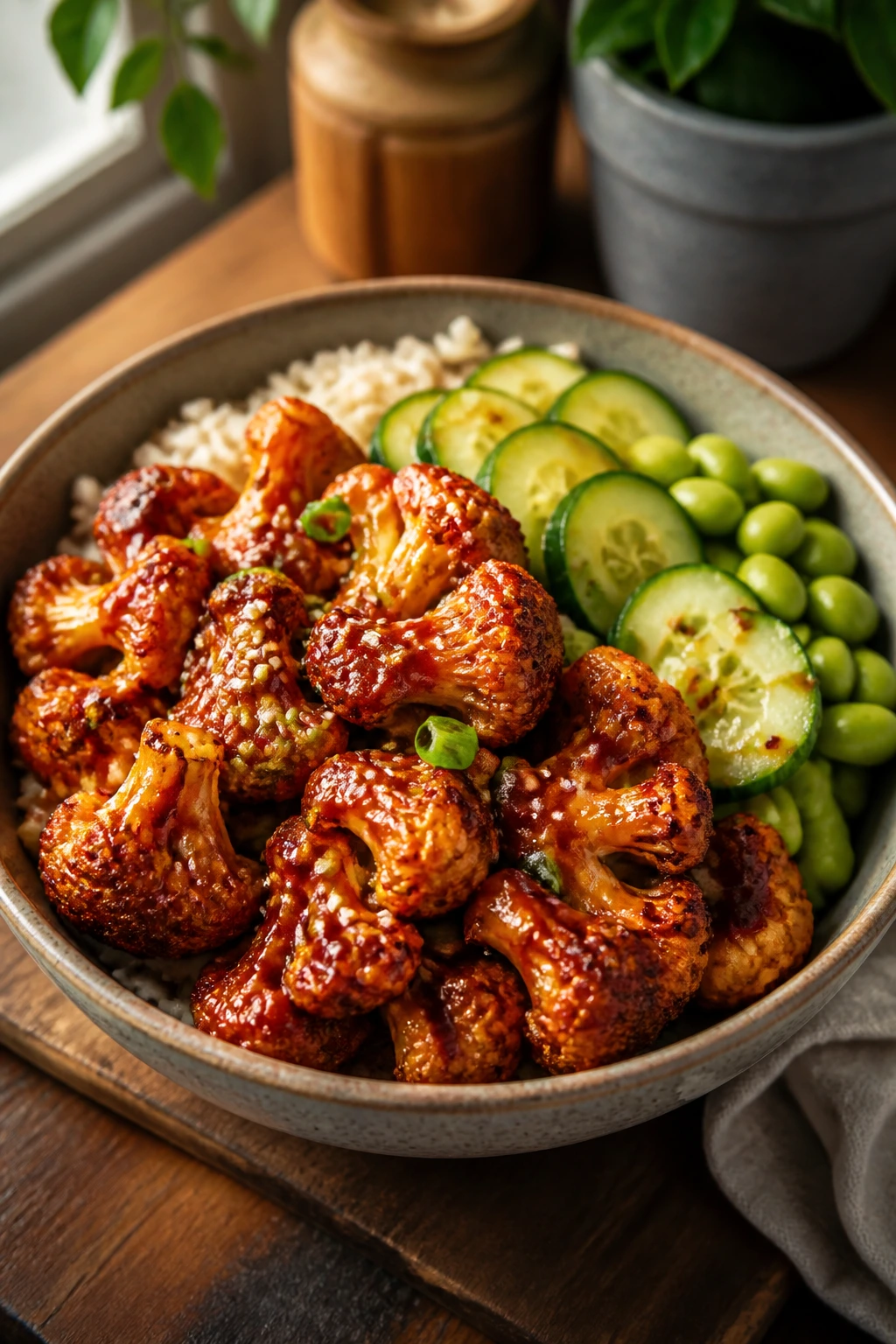
Gochujang brings heat, sweetness, and that fermented depth that makes cauliflower taste like it has a point. Roast the florets until they brown at the edges, then coat them lightly so the sauce clings instead of sliding off. Rice, cucumber, and edamame keep the bowl balanced and fresh.
Why It Works: Cauliflower takes on bold sauce better than many vegetables because its surface catches glaze in the little nooks. Gochujang gives a savory-sweet kick, while tahini or yogurt in the dressing softens the heat without dulling it. Cucumber and edamame cool things down, and rice makes the bowl feel complete. This is a strong vegetarian bowl when you want flavor that wakes you up a little.
Key Ingredients:
- 1 medium head cauliflower, cut into florets
- 1 cup rice
- 1 cup shelled edamame
- 1 cucumber, sliced
- 1 carrot, shredded
- 2 tablespoons gochujang
- 1 tablespoon olive oil
- 1 tablespoon soy sauce
- 1 teaspoon maple syrup
- 1 tablespoon tahini or Greek yogurt
- 1 teaspoon lime juice
- 1 tablespoon sesame seeds
Quick Steps:
- Cook the rice according to package directions.
- Heat the oven to 425°F (220°C). Toss cauliflower with olive oil, salt, and pepper, then roast 20 minutes.
- Whisk gochujang, soy sauce, maple syrup, tahini, and lime juice into a glaze.
- Toss the hot cauliflower with the glaze so it coats lightly.
- Assemble rice, cauliflower, edamame, cucumber, and carrot in bowls.
- Finish with sesame seeds and serve.
Equipment for This Recipe:
- Sheet pan
- Rice pot
- Small bowl
- Whisk
How to Serve This Dish: Keep the cucumber cool and the cauliflower warm; that contrast is half the point. A little extra sesame on top gives the bowl a finished look. It serves 3 to 4.
Pro Tips for This Recipe:
- Don’t over-glaze the cauliflower or the florets go sticky instead of crisp-tender.
- Tahini makes the sauce richer, yogurt makes it cooler.
- If gochujang is very thick, thin it with warm water before mixing.
- Lime at the end keeps the glaze from tasting one-note.
Variations on This Dish:
- Broccoli Swap: Roast broccoli instead of cauliflower for a greener bowl.
- Noodle Bowl: Serve the glazed cauliflower over soba noodles.
- Milder Version: Use half the gochujang and more tahini.
Common Mistakes to Avoid with This Dish:
- Sauce before roasting: It burns too fast. Add it after.
- Overcrowding the pan: The cauliflower needs space to brown.
- Skipping something cool: Without cucumber, the bowl can feel hot and heavy.
27. Cottage Cheese Grain Bowl
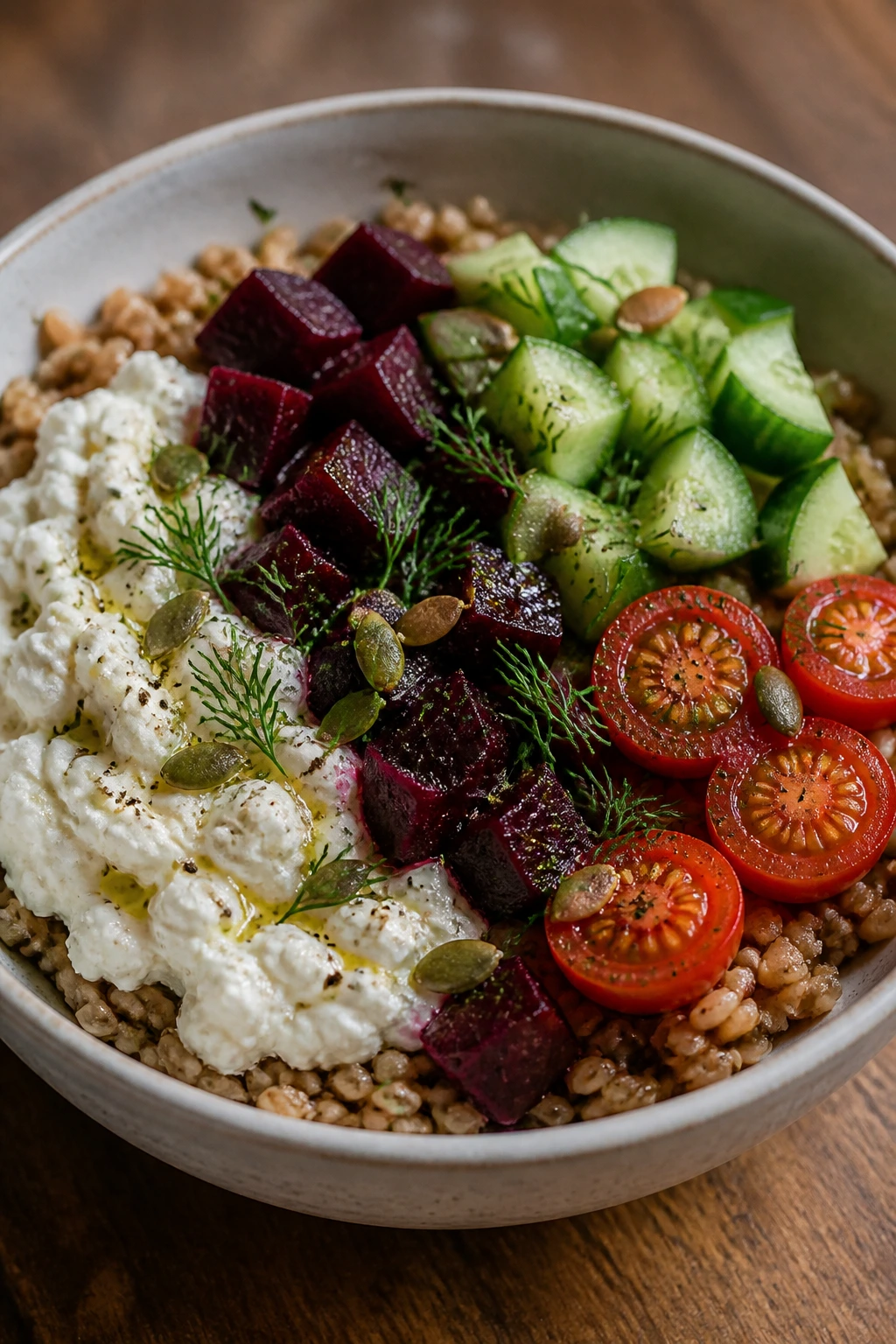
Cottage cheese bowls can go either way: bland and dutiful, or sharp and satisfying. The trick is to treat the cottage cheese like a creamy protein base instead of the whole dish. Add roasted beets, cucumbers, tomatoes, dill, seeds, and a grain, and the bowl gets enough color and texture to feel like dinner, not a diet scribble.
Why It Works: Cottage cheese is high in protein and mild enough to pair with almost anything salty or acidic. Roasted beets bring sweetness and color, while cucumbers and tomatoes keep the bowl cool and juicy. Farro or quinoa gives it chew, and dill with lemon makes the whole thing taste more alive. This is one of the quieter vegetarian bowls, but it works because the contrast is careful.
Key Ingredients:
- 1 cup farro or quinoa
- 1 1/2 cups cottage cheese
- 2 medium beets, roasted and cubed
- 1 cucumber, diced
- 1 cup cherry tomatoes, halved
- 2 tablespoons chopped dill
- 1 tablespoon olive oil
- 1 lemon, juiced
- 2 tablespoons pumpkin seeds
- Salt and black pepper
Quick Steps:
- Cook the farro or quinoa according to package directions.
- Roast beets at 400°F (205°C) until tender, about 35 to 45 minutes, if they aren’t already cooked.
- Toss the grains with olive oil, lemon juice, salt, and pepper.
- Spoon cottage cheese into bowls.
- Add grains, beets, cucumber, tomatoes, dill, and pumpkin seeds.
- Serve cold or at room temperature.
Equipment for This Recipe:
- Saucepan
- Sheet pan, if roasting beets
- Knife
- Mixing bowl
How to Serve This Dish: This bowl is best when the cottage cheese stays cool and the grain is only slightly warm. A dusting of black pepper on top helps more than people expect. It serves 2 to 3.
Pro Tips for This Recipe:
- Use cottage cheese with a texture you actually like; the curds are front and center here.
- Lemon and dill matter because the bowl needs brightness.
- If the beets are very earthy, add a few more tomatoes.
- Pumpkin seeds can be toasted for a minute if you want extra crunch.
Variations on This Dish:
- Herb Bowl: Add chives and parsley with the dill.
- Savory Breakfast Bowl: Top with a soft-boiled egg.
- No-Grain Version: Double the vegetables and keep the cottage cheese as the base.
Common Mistakes to Avoid with This Dish:
- Treating cottage cheese like a side: It needs acid and herbs to taste finished.
- Too many sweet vegetables: Beets already bring sweetness; balance them with salt and lemon.
- Using warm roasted beets straight onto the cheese: Let them cool a little so the bowl doesn’t get watery.
28. Italian Stuffed Pepper Bowl
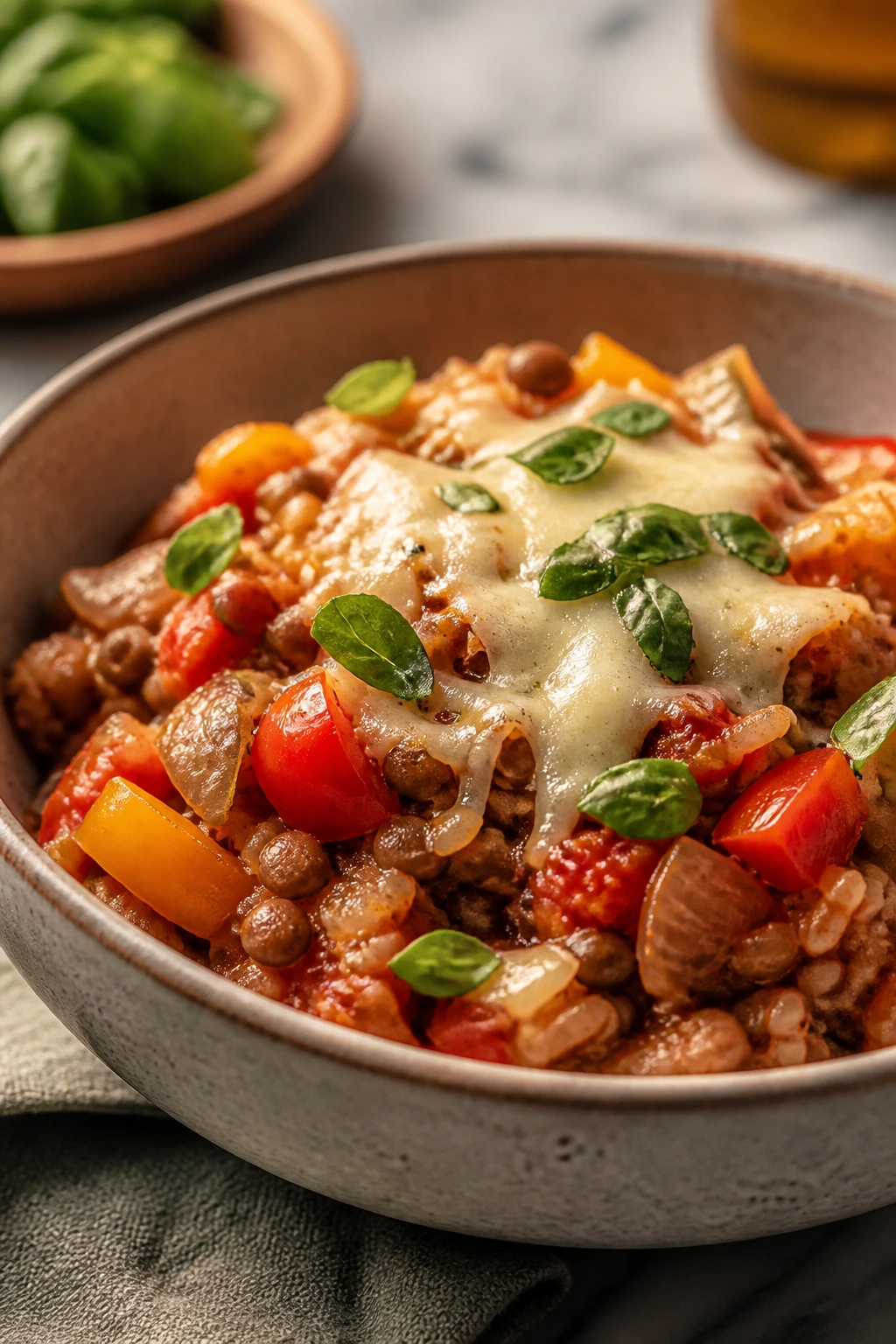
Stuffed peppers are good, but the bowl version is easier to live with. You keep the tomato, rice, lentil, and herb flavors, but you skip the fussy stuffing step and let everything mingle in one place. The peppers still bring sweetness, the lentils bring body, and the marinara keeps the bowl saucy enough to feel like dinner.
Why It Works: Bell peppers soften and sweeten when sautéed or roasted, which pairs well with lentils and rice. Marinara gives the bowl a built-in sauce, so you’re not chasing separate dressings or extras. Mozzarella or Parmesan adds richness, and basil finishes it with a clean note. This is a smart ending bowl because it tastes familiar without being dull.
Key Ingredients:
- 2 bell peppers, diced
- 1 cup cooked brown rice
- 1 1/2 cups cooked lentils
- 1 1/2 cups marinara sauce
- 1 small onion, diced
- 2 garlic cloves, minced
- 1 tablespoon olive oil
- 1/3 cup shredded mozzarella or Parmesan
- 2 tablespoons basil, torn
- 1 teaspoon Italian seasoning
Quick Steps:
- Heat olive oil in a skillet over medium heat and cook onion and peppers for 6 to 8 minutes.
- Add garlic and Italian seasoning and stir for 30 seconds.
- Stir in lentils, rice, and marinara, then simmer 5 minutes until hot and thick.
- Taste and add salt or pepper if needed.
- Spoon into bowls and top with cheese and basil.
- Serve while the cheese softens slightly on top.
Equipment for This Recipe:
- Large skillet
- Spoon
- Knife and cutting board
- Measuring cup for the rice
How to Serve This Dish: Serve it deep in the bowl so the marinara stays around the grains instead of spreading everywhere. A green salad on the side is enough if you want more volume. It serves 4.
Pro Tips for This Recipe:
- Cook the peppers until they lose their raw snap or the bowl tastes unfinished.
- Lentils should already be tender before they go in.
- If marinara is thin, simmer a few extra minutes before serving.
- Basil goes on last so it doesn’t darken.
Variations on This Dish:
- Cheesy Version: Add more mozzarella and let it melt under a lid for a minute.
- Vegan Bowl: Skip cheese and finish with nutritional yeast.
- Spicy Marinara: Add red pepper flakes or chopped Calabrian chiles.
Common Mistakes to Avoid with This Dish:
- Crunchy peppers: They need enough time to soften.
- Too much sauce water: A thin marinara turns the bowl soupy.
- Cold lentils: Warm them through so the dish feels like dinner, not assembly.
Why Vegetarian Bowls Work So Well for Dinner
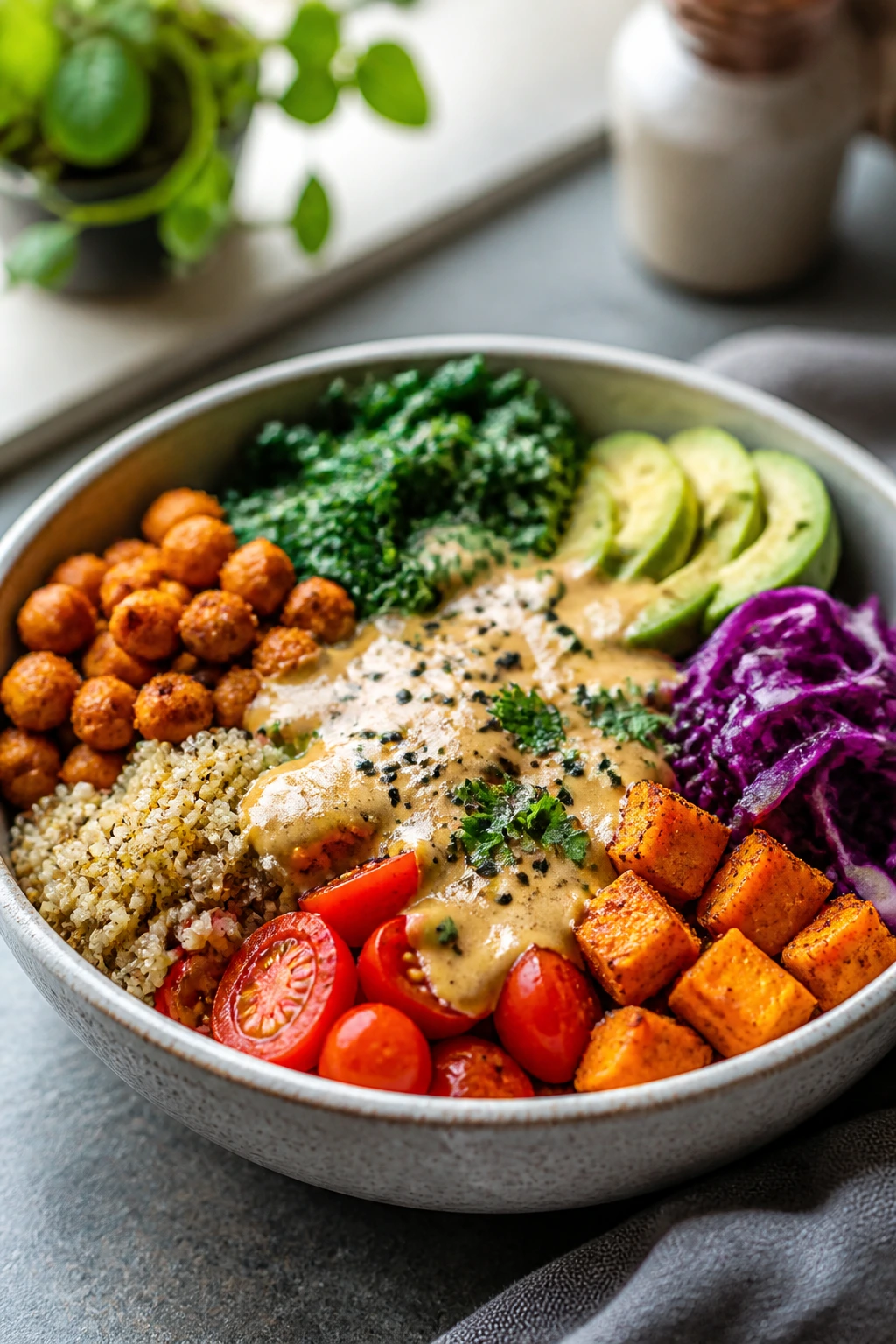
The bowl format solves a problem most home cooks know too well: how to make a vegetarian meal feel finished without turning the kitchen into a mess. A grain, a bean, a vegetable, and a sauce can cover a lot of ground, but the details matter. If the base is too soft, the whole thing slides. If the vegetables are all raw, the bowl tastes like a deli tray. If the sauce is timid, you end up chewing through separate ingredients that never quite meet.
What works here is balance, and balance is easier to manage in a bowl than in a casserole or a stir-fry. You can roast carrots until they brown, keep cucumbers cold, use leftover rice, and still end up with a plate that tastes intentional. That flexibility matters on nights when the fridge is half-full and the clock is doing that thing it does.
A good vegetarian bowl also gives you a place to use food in the state it’s best at: beans warm, grains fluffy, crunchy toppings crisp, herbs fresh, and sauces loose enough to coat. That mix keeps dinner from feeling monotonous. It also keeps leftovers useful, which is the part a lot of “healthy dinner” talk skips right past.
Essential Equipment for These Recipes
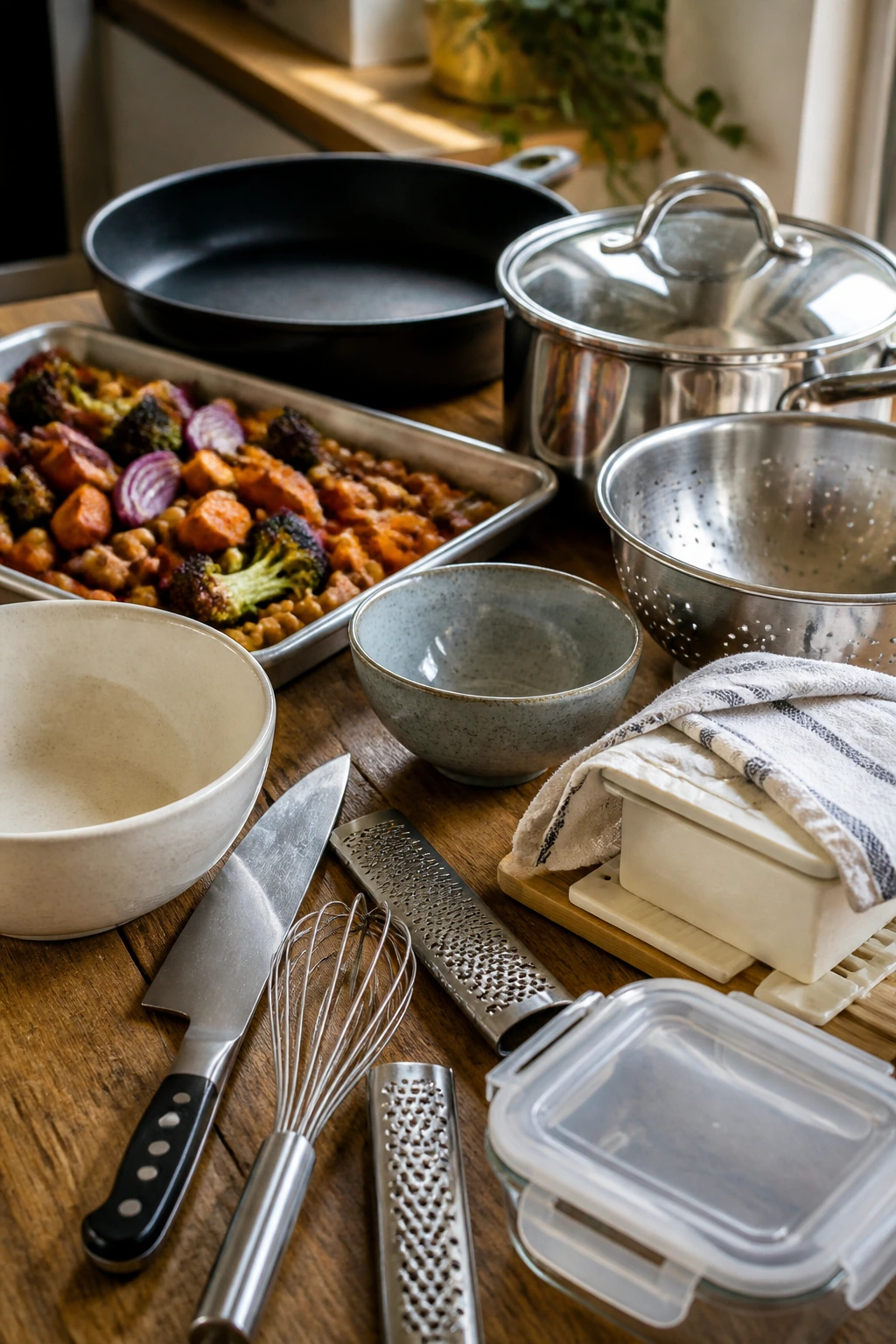
- Rimmed baking sheets: Roasting vegetables, chickpeas, cauliflower, and tofu works best when the pan can catch sauce and keep everything in one layer.
- Large skillet: A 10- to 12-inch skillet handles shakshuka, mushrooms, curry bases, and quick bean warming without crowding.
- Medium saucepan with a lid: Quinoa, rice, farro, couscous, and polenta all need a reliable pot that doesn’t scorch on the bottom.
- Fine-mesh colander: Useful for rinsing grains, draining beans, and keeping soba noodles from turning gummy.
- Sharp chef’s knife: Clean cuts matter in bowls because the pieces need to cook at the same pace and look good together.
- Mixing bowls in two sizes: One for sauces, one for tossing vegetables or grains.
- Whisk or fork: Tahini, yogurt, curry paste, and simple dressings all come together faster with a little agitation.
- Tofu press or clean kitchen towel: Not glamorous, but worth it if tofu shows up on your menu often.
- Microplane or fine grater: Garlic, ginger, and lemon zest disappear better when they’re grated instead of chopped.
- Airtight storage containers: These bowls become meal prep fast, and good containers keep the grains and vegetables from drying out.
Smart Shopping and Ingredient Tips
Grains are one of the easiest places to save money, but they need the right match for the bowl you’re building. Brown rice, quinoa, farro, and couscous all behave differently once dressed. Farro and brown rice hold up best for roasted vegetables and sauces with body; couscous is better when you want a soft, fast base; quinoa is the middle road when you want protein without much chew.
Look closely at beans and lentils. Canned beans should be intact, not split to mush, and low-sodium versions make seasoning easier. Dry lentils cook fast enough that they’re worth keeping around, especially the green and brown types that hold shape. Red lentils are fine in soups, but they disappear too quickly for most bowl setups.
For vegetables, think about water and texture. Cucumbers, tomatoes, cabbage, radishes, and herbs bring freshness, but they should sit beside something roasted or sautéed so the bowl doesn’t feel cold all the way through. Cauliflower, carrots, squash, eggplant, broccoli, and onions all do well in a hot oven. Mushrooms should look firm and dry, not slimy. Tofu should be extra-firm, and if you’re buying paneer, make sure it feels sturdy enough to brown.
Sauces matter more than people think. Tahini should be smooth and pourable, not separated in the jar. Yogurt should taste clean and not too sour. Pesto can be fresh or jarred, but taste it before using because some jars lean saltier than others. With curry paste, a little goes farther than you expect, so check the heat before you pour half the jar into the pan. A bowl lives or dies by the last spoonful, and that spoonful is usually the sauce.
How to Serve These Bowls at the Table
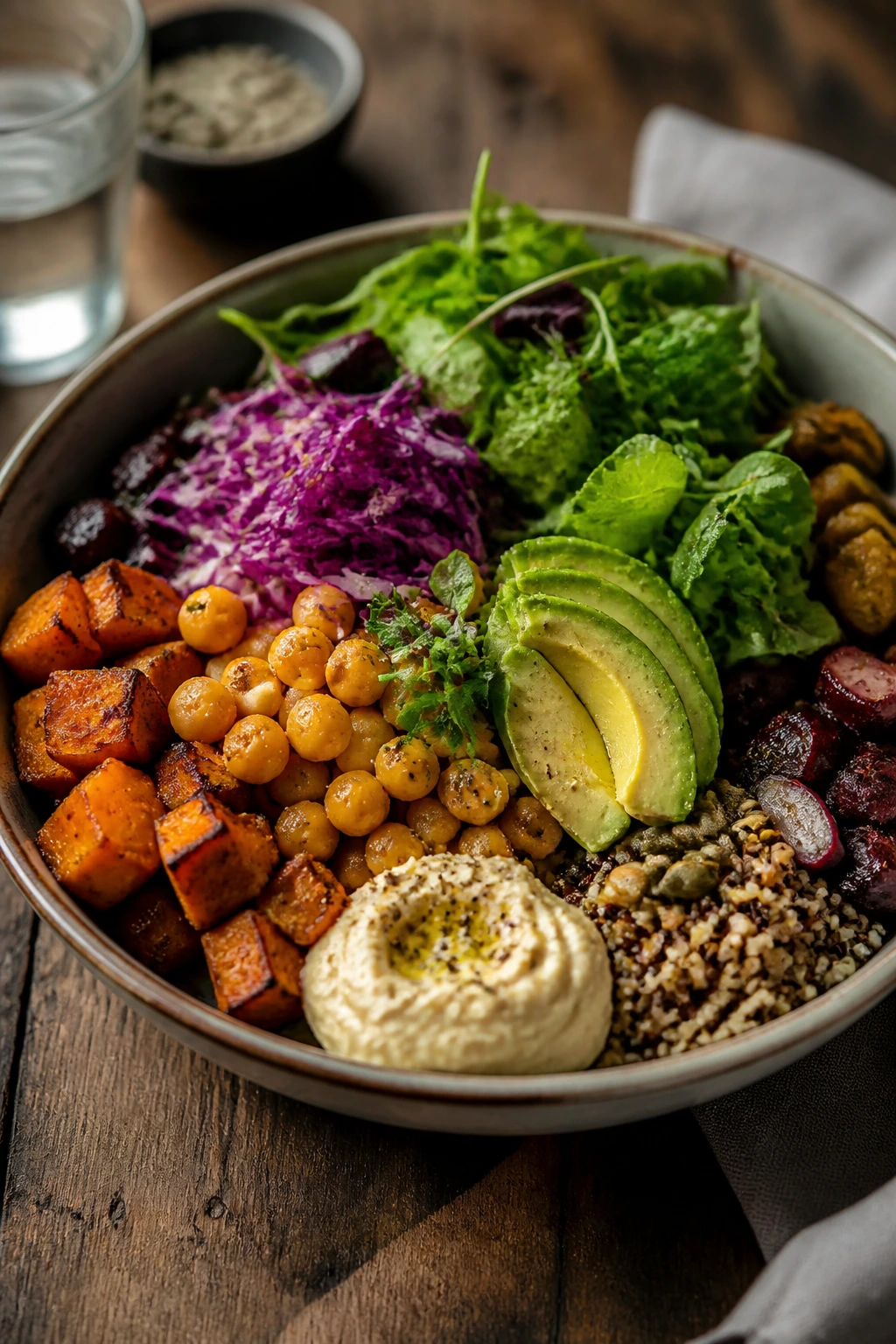
Presentation: Use shallow bowls when you want the colors to show, and deeper bowls when the sauce or curry is doing the work. Keep at least one topping visible on the surface—avocado, herbs, seeds, or a crumble of cheese—so the bowl looks layered instead of mixed into a blur.
Accompaniments: A simple green salad, toasted pita, naan, tortilla chips, or a piece of crusty bread can sit beside these bowls without stealing attention. For the bowls with sharper sauces, like peanut, tahini, or curry, a cooling side such as cucumber slices or plain yogurt makes sense. For the tomato-heavy bowls, bread or rice is often enough.
Portions: Most of these recipes land at 2 to 4 servings, depending on how grain-heavy they are and whether you add eggs, paneer, tofu, or extra beans. For a lighter dinner, build with more vegetables and less rice. For a heartier plate, keep the grain base generous and don’t skimp on protein.
Beverage Pairing: Sparkling water with lime works across almost all of them. For something with more flavor, iced mint tea suits the Mediterranean and herb bowls, while a dry cider or light lager fits the smoky, taco-style bowls. Curry and peanut bowls are good with ginger tea or a cold glass of water that actually gets used.
Additional Tips and Flavor Boosters
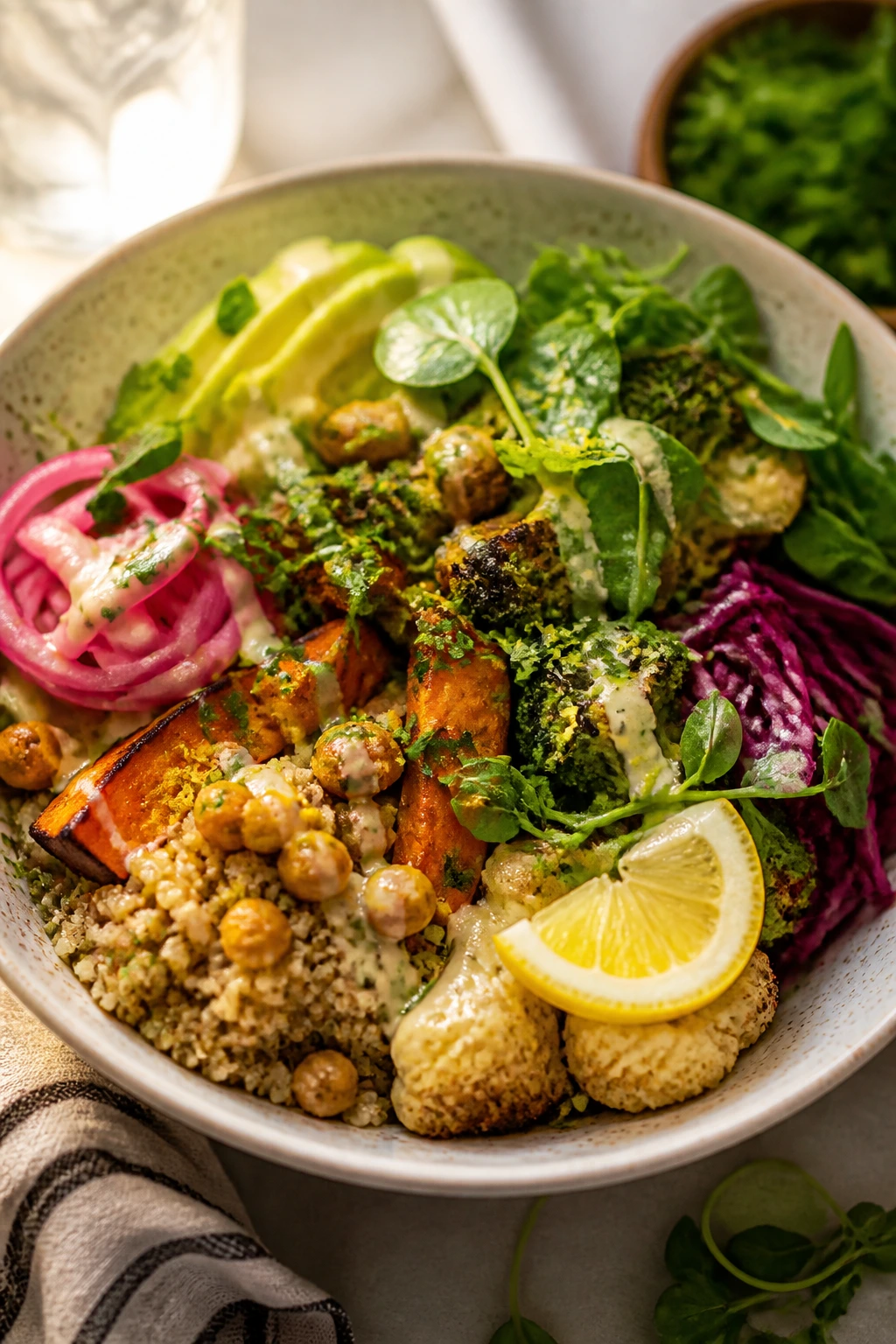
Flavor Enhancement: Add one bright finish at the end. Lemon zest, lime juice, pickled onions, or a small handful of fresh herbs can wake up a bowl faster than adding more salt.
Customization: If you want more protein, add eggs, tofu, tempeh, paneer, Greek yogurt, cottage cheese, or another half cup of beans. If you want more crunch, use cabbage, seeds, toasted nuts, or raw cucumber instead of adding another warm component.
Serving Suggestions: Keep sauces in a thin zigzag or a spooned-on stripe instead of drowning the bowl. That leaves the vegetables and grains visible and keeps each bite a little different.
Make-It-Yours: For gluten-free bowls, lean on rice, quinoa, corn, or polenta. For dairy-free versions, tahini, coconut yogurt, or hummus will cover a lot of the same ground. For lower-sodium bowls, build flavor with garlic, citrus, fresh herbs, and toasted spices instead of extra soy sauce or cheese.
Make-Ahead, Storage, and Reheating Guidance
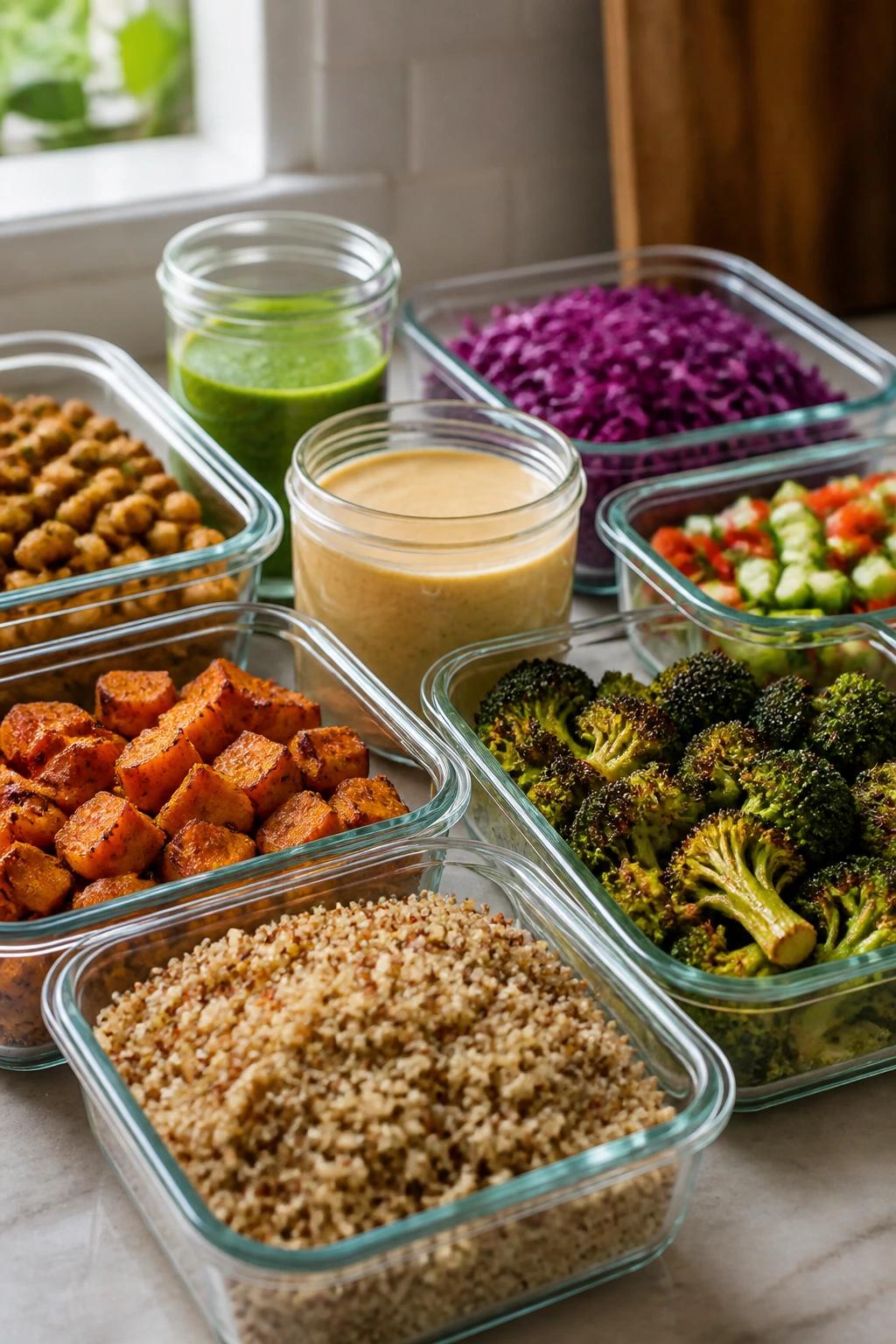
Most of these bowls do well as meal prep if you keep the parts separate. Cooked grains stay in the fridge for 4 to 5 days in airtight containers. Roasted vegetables and beans are usually good for 3 to 4 days. Sauces made with tahini, yogurt, pesto, or peanut butter keep for about 4 days, though yogurt sauces are best stirred before serving because they can loosen a bit.
The trick is to store the components in lanes, not one mixed pile. Keep grains in one container, roasted vegetables in another, and cold toppings like cucumber, herbs, and avocado separate until serving. If you mix everything too early, the vegetables shed moisture and the grains go dull. For bowls with crisp toppings, like falafel or roasted chickpeas, store those uncovered in the fridge for a short stretch or in a paper-towel-lined container so they stay drier.
Reheating depends on the base. Rice, farro, quinoa, and polenta all reheat well with a tablespoon or two of water stirred in before microwaving. A skillet over medium heat works better for tofu, mushrooms, and sauced vegetables because it brings back a little texture. Curry bowls and shakshuka-style bowls should be reheated gently so the sauce doesn’t split or dry out. If the bowl uses avocado, cucumber, or fresh tomatoes, add those after reheating. Some bowls taste better the next day, especially lentil bowls, curry bowls, and anything with roasted carrots or squash. Others, like poke-style bowls and Caprese bowls, are best assembled just before eating.
If you want to freeze components, keep it selective. Cooked grains, beans, curry sauces, and roasted squash freeze well for up to 2 months. Cucumbers, tomatoes, avocado, lettuce, and yogurt sauces do not. That part is worth saying plainly because frozen watery vegetables are a sad lunch waiting to happen.
Variations and Adaptations to Try
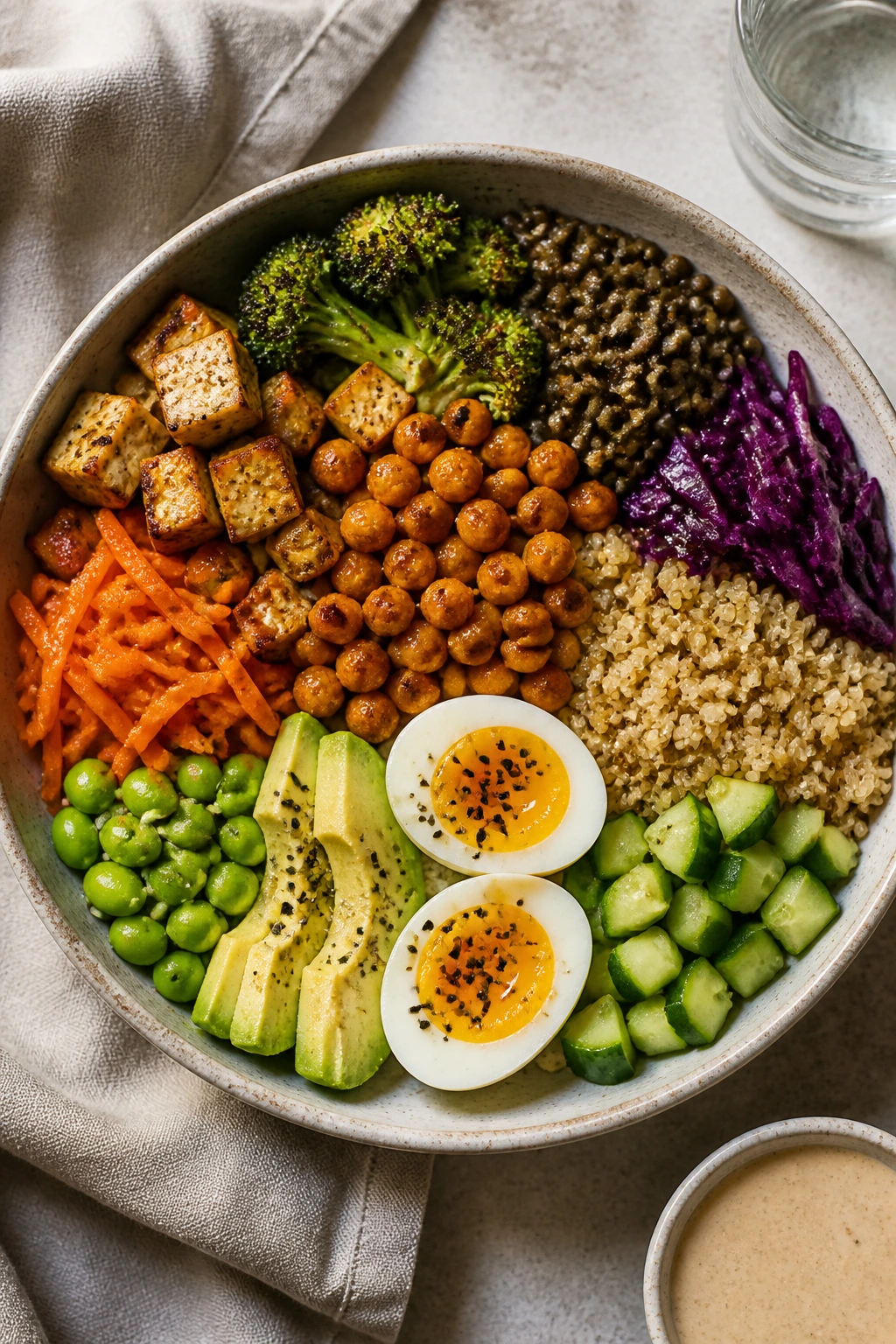
Protein-Heavy Swap: Add two soft-boiled eggs, extra tofu, or a half cup more beans to any of the grain-based bowls. This works especially well in the quinoa, farro, and rice bowls, where the extra protein won’t crowd the flavor.
Gluten-Free Route: Use quinoa, rice, polenta, or cauliflower rice instead of farro, couscous, or orzo. Watch sauces with soy sauce and swap in tamari when needed.
Dairy-Free Bowl: Replace yogurt sauces with tahini-lemon dressing, use avocado for creaminess, and skip feta, mozzarella, or Parmesan. The bowls still hold together because the acid and herbs do the same work.
Low-Sodium Build: Rely on citrus, vinegar, garlic, ginger, chilies, and fresh herbs before reaching for extra salt. Canned beans should be rinsed well, and store-bought sauces should be tasted before you use the whole amount.
Kid-Friendly Version: Keep the heat low, slice vegetables smaller, and put sauce on the side. Bowls with sweet potatoes, corn, carrots, or pesto tend to go down easier than the ones with big chile notes or strong herbs.
Spice-Lover’s Bowl: Add chili crisp, harissa, gochujang, chipotle, or crushed red pepper to the sauces and roasted vegetables. Just pick one direction per bowl or the flavors start to fight.
Common Mistakes to Avoid
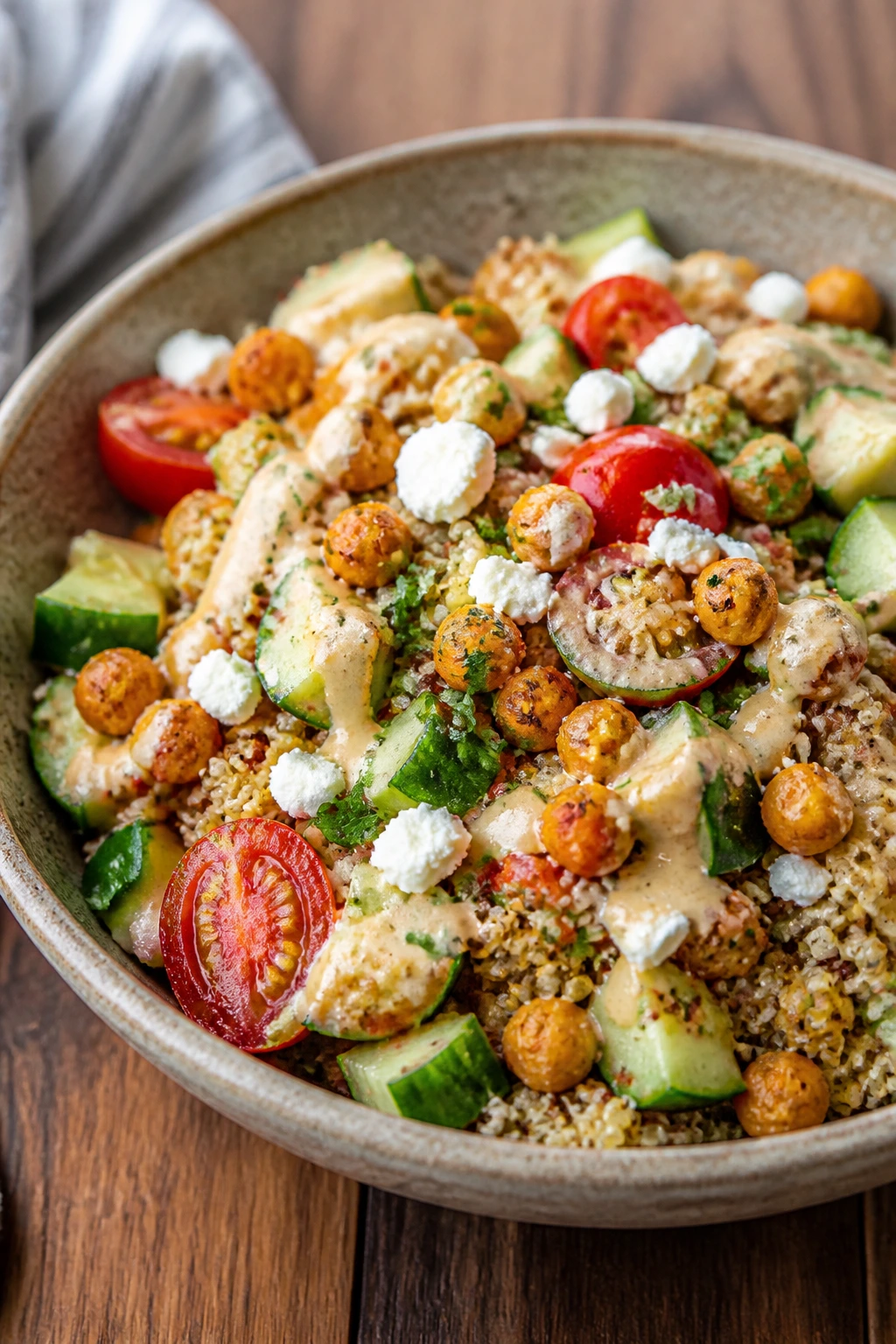
The most common bowl mistake is making every component soft. Soft grains, soft beans, soft vegetables, and soft sauce all together feel like a warmed-over lunch rather than dinner. You need at least one crisp or crunchy element—cabbage, seeds, toasted chickpeas, cucumbers, herbs, or roasted edges—to keep the texture alive.
Another problem is underseasoning the base. A bowl can look colorful and still taste flat if the grains are plain and the beans were rinsed into oblivion with no follow-up salt. Season the grains as they cook, salt the vegetables before roasting, and taste the sauce before it touches the bowl. Salt is not the whole answer, but it’s usually part of it.
People also tend to overdo the sauce. A bowl needs enough dressing to connect the ingredients, not enough to bury them. If the sauce pools at the bottom and the toppings disappear, the whole thing eats like sludge. Start with less than you think and add more at the table.
Using all cold ingredients is another easy way to make the bowl feel unfinished. A warm base or roasted element gives the meal shape. Even a salad-style bowl usually benefits from one warm part, whether that’s lentils, roasted vegetables, or a batch of rice that just came off the stove.
Last, don’t ignore acid. Lemon, lime, vinegar, pickled onions, or even a spoonful of yogurt can stop a bowl from tasting heavy. Without that sharp edge, the fats and starches start to blur together.
Frequently Asked Questions
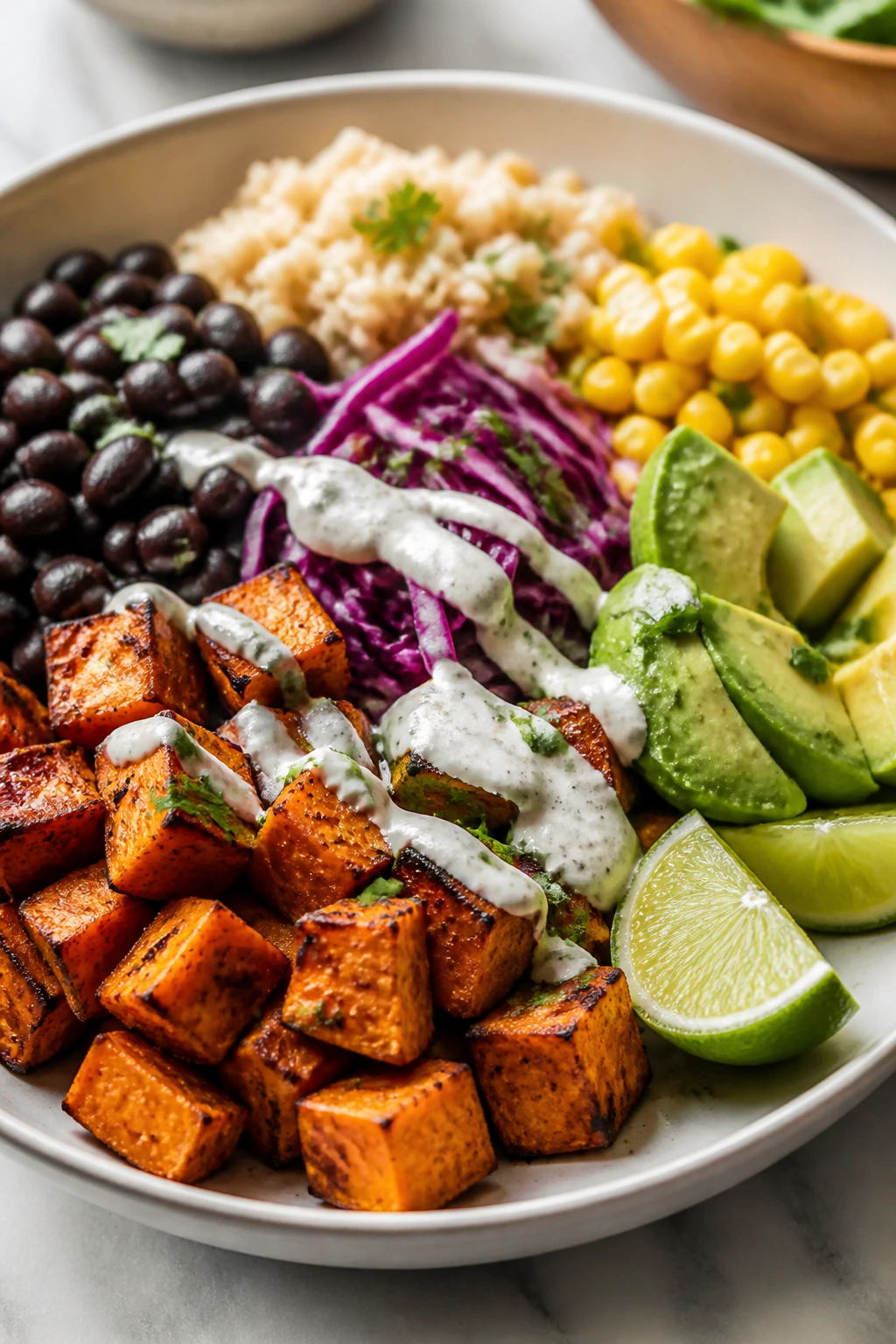
Can I use leftover rice or grains in these bowls?
Yes, and that’s one of the best ways to make these bowls fast. Leftover rice, quinoa, farro, or barley works well as long as you reheat it with a splash of water so it loosens up instead of drying into clumps.
Which vegetarian protein works best if I want the bowl to feel filling?
Chickpeas, lentils, tofu, tempeh, paneer, eggs, Greek yogurt, and cottage cheese all work, but they behave differently. For the most satisfying bite, use something with shape—crispy tofu, roasted chickpeas, lentils, or paneer usually give a better dinner feel than soft dairy alone.
How do I keep the bowl from getting soggy in meal prep?
Store warm and cold components separately. Put sauces in a small container, keep cucumber, tomatoes, and herbs apart from grains, and add avocado only when you’re ready to eat.
Can I make these bowls without an oven?
Yes. The tofu bowls, mushroom bowls, shakshuka bowl, red curry bowl, and many grain bowls can be made entirely on the stovetop. Roasting gives a different flavor, but you can pan-sear or simmer your way to a very good dinner.
What’s the best way to make these bowls higher in protein without using meat?
Add a second protein layer. That could mean beans plus tofu, lentils plus yogurt, or quinoa plus eggs. A bowl with only vegetables and grains often feels light in a way that stops short of satisfying.
Do any of these bowls freeze well?
The grains, beans, curry bases, and roasted squash or peppers freeze well for up to 2 months. Fresh toppings, dairy sauces, and avocado do not freeze well, so leave those out until serving.
How do I stop roasted vegetables from tasting bland?
Salt them before they go into the oven, give them space on the pan, and use enough heat to brown the edges. A splash of vinegar or citrus after roasting can also wake them up if they taste a little flat.
What if I only have one grain in the pantry?
Use it. The bowl format is forgiving. Rice, quinoa, couscous, farro, or even polenta can carry the rest of the ingredients if the sauce and toppings are doing their jobs.
A Bowl Worth Repeating
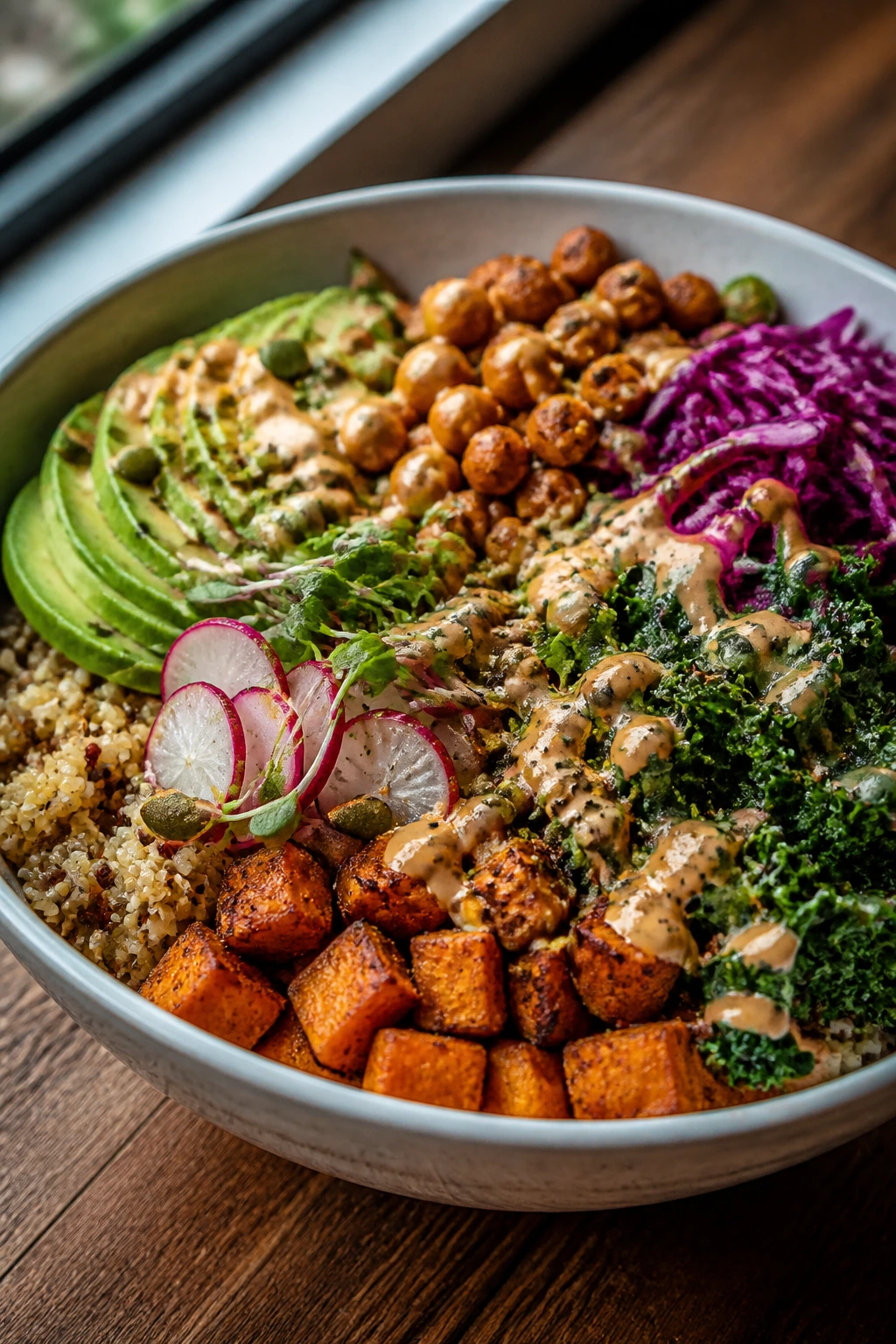
The nicest thing about vegetarian bowls is that they don’t ask for perfection. A roasted vegetable can be a little uneven, a grain can be leftover, and a sauce can be whisked together in thirty seconds, and the dinner still works because the format gives every ingredient a place to land.
If you keep one habit from this whole collection, let it be this: build the bowl in layers, not in a rush. Warm base first, then protein, then vegetables, then something sharp, then a finish that makes the last bite taste like the first one. That’s the difference between a bowl that fills the plate and a bowl that actually fills you.