



Caramelized seasonal veggies make a better dinner than most people give them credit for. Not a sad side dish. Not a polite pile next to a piece of chicken. A real dinner, with browned edges, soft centers, and enough contrast to make each bite feel built, not accidental.
What changes the whole thing is heat. Not fancy sauce. Not a pile of cheese. Just a hot oven, vegetables cut to the right size, and enough space on the pan for their surfaces to dry and brown instead of huddle together and steam. That’s the difference between limp and deeply savory. Between “we had roasted vegetables” and “I’d happily eat that again tomorrow.”
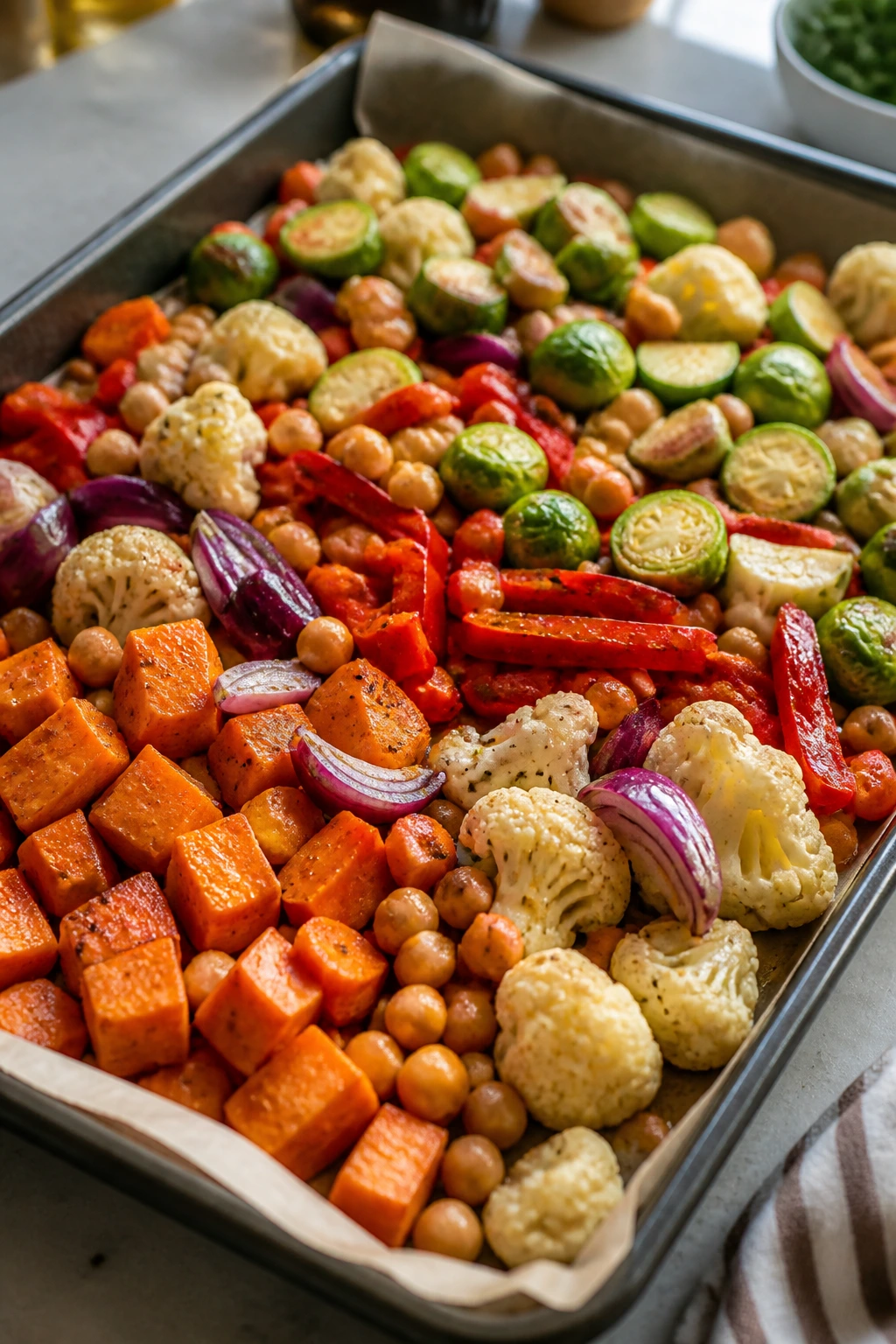
I like this kind of dinner because it respects whatever is in the crisper drawer without turning into a vague clean-out-the-fridge situation. Sweet potatoes bring starch and sweetness, Brussels sprouts go nutty at the edges, onions collapse into sticky ribbons, and chickpeas crisp up in the gaps. Add a sharp finish of lemon and herbs, and the whole tray tastes deliberate. It also happens to be the sort of meal that makes your kitchen smell warm and slightly sweet in the best possible way.
Why Caramelized Seasonal Veggies Deserve the Center of the Plate
Fast prep, slow reward.
You spend about 20 minutes chopping, and the oven does the rest. That’s a trade I’ll take every time, especially when the result has actual browned edges instead of soft, watery vegetables.
The pan does the seasoning work.
A little maple, balsamic, garlic, and smoked paprika cling to the vegetables as they roast, then tighten up into a sticky glaze. You don’t need a heavy sauce when the vegetables themselves are doing the heavy lifting.
It eats like dinner, not garnish.
Chickpeas add enough body that you’re not staring at a tray of vegetables and wondering what’s missing. If you serve it over grains, or with a fried egg, or with a spoonful of yogurt, it turns into a complete plate without getting fussy.
The method changes with the season, not the mood.
Root vegetables, brassicas, peppers, squash, zucchini — they all fit the same logic. You just stage them by cooking time. Dense vegetables go in first. Tender ones show up later. That’s the whole trick.
Leftovers don’t feel like punishment.
Cold roasted vegetables folded into grain bowls, tucked into wraps, or reheated in a skillet keep their shape better than a lot of other vegetable dinners. They’re not delicate little things that collapse overnight.
The flavor lands somewhere between sweet, savory, and sharp.
That little hit of lemon at the end matters more than people expect. It keeps the vegetables from tasting flat, especially once the maple and balsamic have browned into the pan.
Yield: Serves 4 as a main dish, or 6 as a side
Prep Time: 20 minutes
Cook Time: 30 to 35 minutes
Total Time: 50 to 55 minutes
Difficulty: Beginner — the only real skill is cutting the vegetables into sizes that finish at the same time.
Best Served: Warm, straight from the sheet pans or spooned over grains
What Goes Into the Pan
For the Tray
- 1 medium sweet potato (about 12 ounces), peeled and cut into 1-inch cubes
- 2 medium carrots, peeled and cut into 1/2-inch-thick bias slices
- 1 small head cauliflower (about 1 pound), cut into 1-inch florets
- 8 ounces Brussels sprouts, trimmed and halved
- 1 small red onion, cut into 1-inch wedges
- 1 red bell pepper, seeded and cut into 1-inch strips
- 1 medium zucchini, cut into thick half-moons
- 1 (15-ounce) can chickpeas, drained, rinsed, and patted very dry
For the Glaze
- 3 tablespoons olive oil
- 2 tablespoons balsamic vinegar
- 1 tablespoon pure maple syrup
- 2 cloves garlic, finely grated or minced
- 1 teaspoon kosher salt
- 1 teaspoon smoked paprika
- 1 teaspoon dried thyme
- 1/2 teaspoon freshly ground black pepper
- 1/4 teaspoon ground cumin
For Finishing
- 1 tablespoon lemon juice
- 2 tablespoons chopped flat-leaf parsley
- 1 ounce feta, crumbled, optional
- Pinch of flaky salt and red pepper flakes, optional
A tray like this works because it uses vegetables with different densities, then roasts them in two waves. The sweet potato and carrots need a head start. The pepper and zucchini would sulk if they were stuck in the oven for the full run. Chickpeas sit in the middle: sturdy enough to roast, soft enough to eat, and willing to soak up the glaze.
Why These Vegetables Brown Instead of Steam
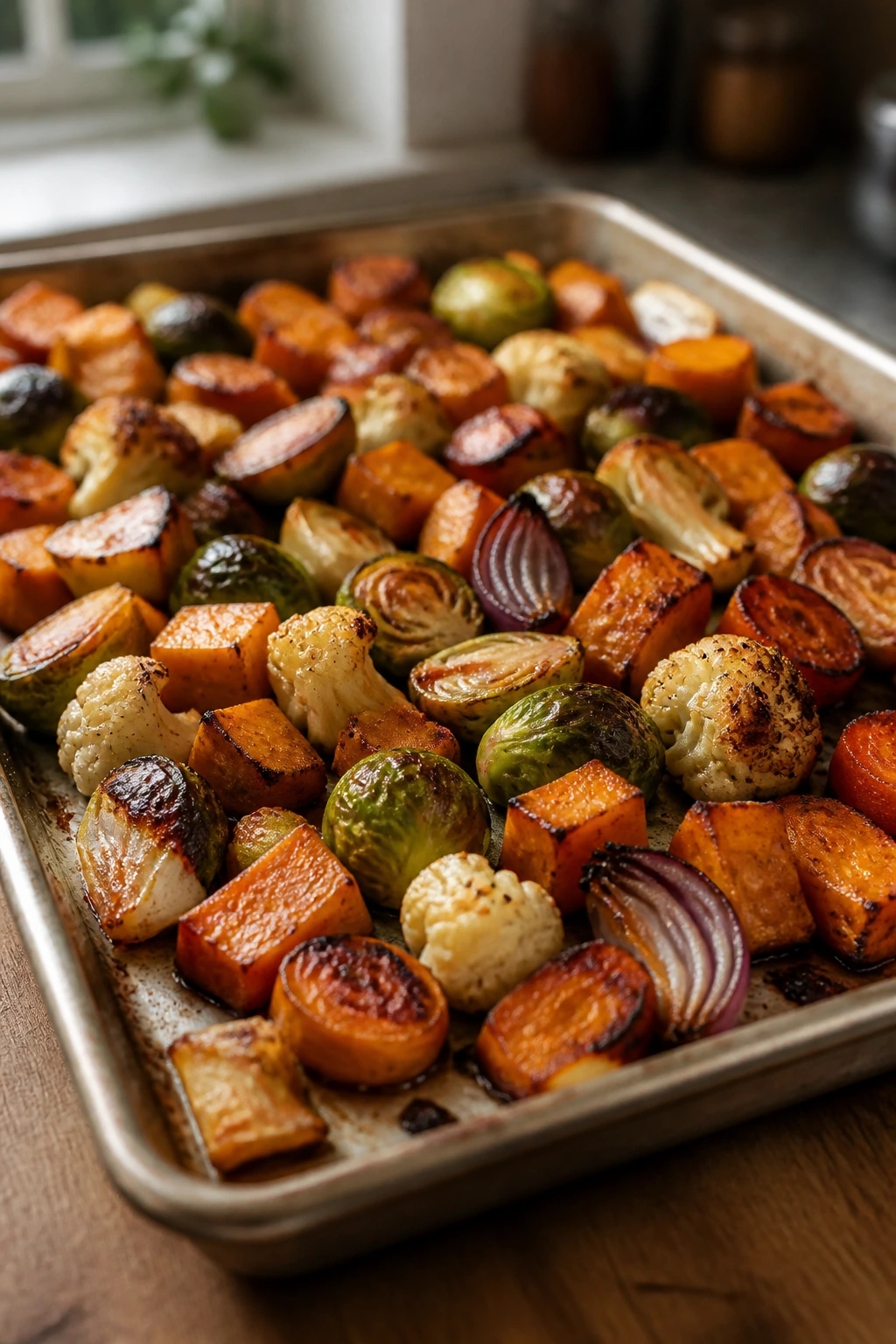
Sturdy Vegetables: Sweet Potato, Carrot, Cauliflower, Brussels Sprouts, and Onion
What to use: 1 medium sweet potato, 2 carrots, 1 small head cauliflower, 8 ounces Brussels sprouts, and 1 small red onion give you a mix of sweet, nutty, and savory flavors in one pan. The sweet potato brings softness and a little starch; the Brussels sprouts and cauliflower give you those dark edges people keep pretending they don’t chase first.
Preparation: Cut the sweet potato into 1-inch cubes, the carrots into half-inch slices, the cauliflower into bite-size florets, and the Brussels sprouts in half so their cut sides can contact the pan. Separate the onion into wedges so it softens instead of disappearing.
Substitutions: Butternut squash, parsnips, broccoli, or broccoli rabe all work if you want a different market mix. If you’re cooking in a warmer season, swap in extra cauliflower and skip the sweet potato, or keep the same method with kabocha squash in colder weather.
Tips: Dry surfaces brown faster. If your cauliflower florets are damp from washing, spread them on a towel for a few minutes before tossing them with oil. That small pause matters more than people think.
Quick-Cooking Vegetables: Red Bell Pepper and Zucchini
What to use: 1 red bell pepper and 1 medium zucchini add color and a little softness at the end. They keep the tray from feeling like a pile of roots and brassicas, which is where roasted vegetable dinners can start to feel samey.
Preparation: Cut the pepper into strips and the zucchini into thick half-moons so they don’t collapse too fast. Thin slices go limp before the rest of the pan catches up.
Substitutions: Yellow squash, cherry tomatoes, fennel, or asparagus can step in depending on what’s around. Just keep the tender vegetables for the second wave of roasting, because they need less time than the roots.
Tips: Don’t salt zucchini too early and let it sit for ages. It leaks water fast. Toss it right before it goes in the oven, and you’ll keep a little more texture.
Protein and Glaze: Chickpeas, Olive Oil, Balsamic Vinegar, Maple Syrup, Garlic, and Spices
What to use: 1 can chickpeas, 3 tablespoons olive oil, 2 tablespoons balsamic vinegar, 1 tablespoon maple syrup, 2 cloves garlic, and the spice blend do two jobs at once: they season the tray and make the vegetables feel like a finished meal. The chickpeas add enough chew that you’re not relying on grains to make the plate feel complete.
Preparation: Pat the chickpeas dry with a clean towel before they touch the pan. That’s the difference between a little crispness and a soft, wrinkled skin that never really wakes up.
Substitutions: White beans can work in a pinch, though they won’t crisp the same way. Honey can stand in for maple syrup if that’s what you have, and if you want the glaze less sweet, cut the syrup to 2 teaspoons.
Tips: The balsamic shouldn’t drown the vegetables; it should cling. If you pour too much on, you’ll get a dark, sticky puddle that tastes sharper than you want. A small amount spread evenly beats a big splash every time.
Fresh Finish: Lemon, Parsley, and Feta
What to use: 1 tablespoon lemon juice, 2 tablespoons chopped parsley, and 1 ounce feta, if you want it, bring the tray back to life after roasting. The lemon wakes up the sweet vegetables, and the parsley keeps the dish from feeling brown-on-brown.
Preparation: Chop the parsley just before serving so it stays bright. Crumble the feta by hand if you’re using it; the uneven pieces feel better on the plate than a dusting.
Substitutions: Dill, cilantro, or basil can replace the parsley, depending on the rest of the meal. For a dairy-free finish, use toasted pumpkin seeds or a spoonful of tahini sauce instead of feta.
Tips: Don’t add the lemon before roasting. Acid slows browning and flattens the roast. Finish with it after the vegetables come out, when the tray smells sweet and the edges are already where you want them.
The Tools That Make Roasting Easier
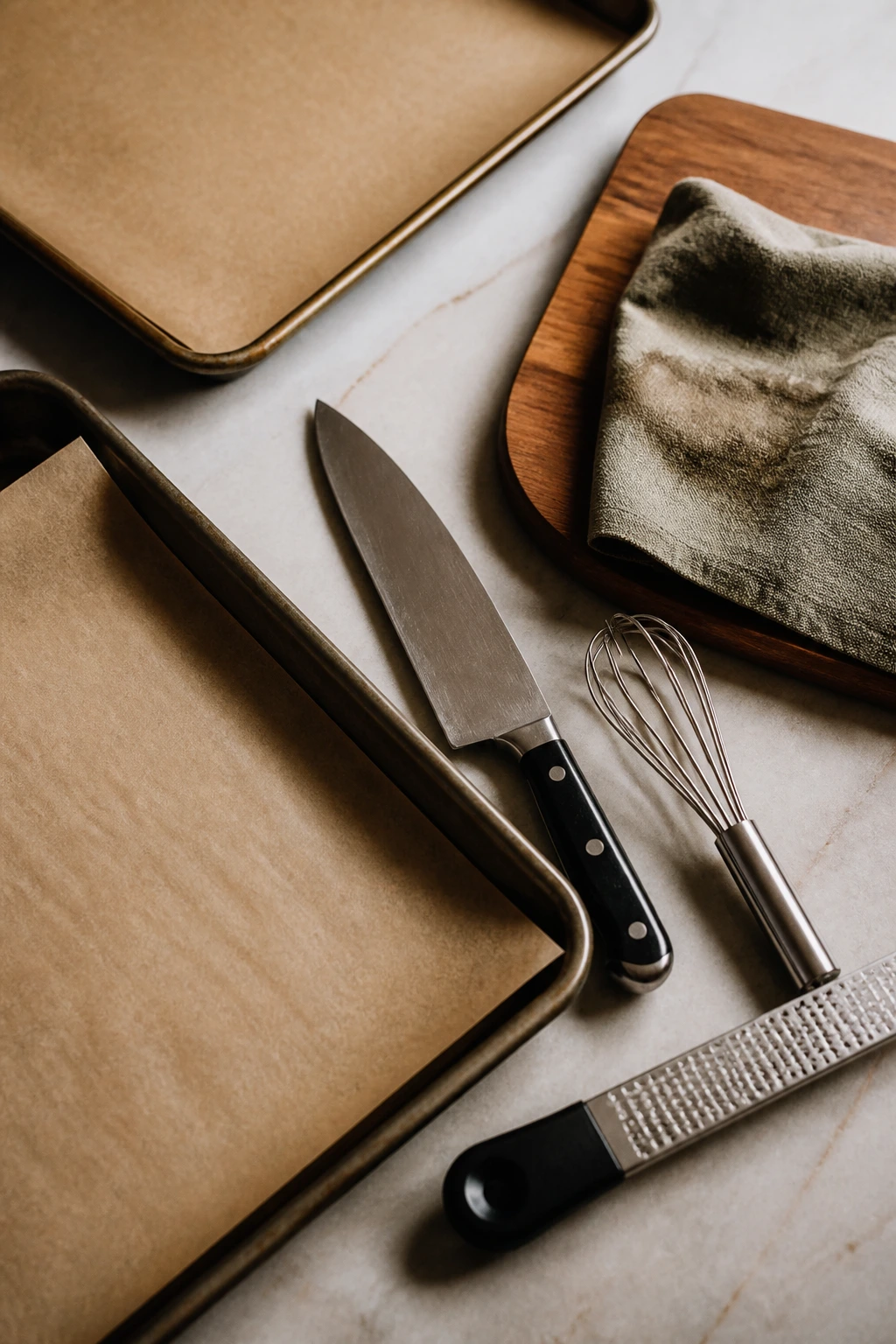
2 rimmed half-sheet pans — You need the space. Crowding the vegetables on one pan traps steam, and steam is the enemy here.
Parchment paper — It makes cleanup easier and helps the maple-balsamic glaze release instead of welding itself to the pan.
Large mixing bowl — Big enough to toss the dense vegetables without spilling sweet potato cubes across the counter.
Small whisk or fork — For the glaze. A spoon works, but a whisk gets the garlic, oil, vinegar, and syrup to blend faster.
Sharp chef’s knife — Uniform cuts matter more than perfect ones. You want the sweet potato and cauliflower to finish together, and a dull knife makes that harder.
Cutting board with a damp towel underneath — Keeps the board from sliding when you’re cutting the carrots and onion. Small thing. Huge difference.
Thin metal spatula or fish spatula — Useful for loosening the vegetables halfway through roasting without smashing the tender ones.
Microplane or fine grater — Optional, but very handy for garlic and lemon zest if you want the finish to taste brighter and less chunky.
If you only have one sheet pan, roast in batches. Do not crowd everything together and hope for the best. The vegetables need room to dry out, and that dry surface is what turns into browning.
How to Build Caramelization in the Oven
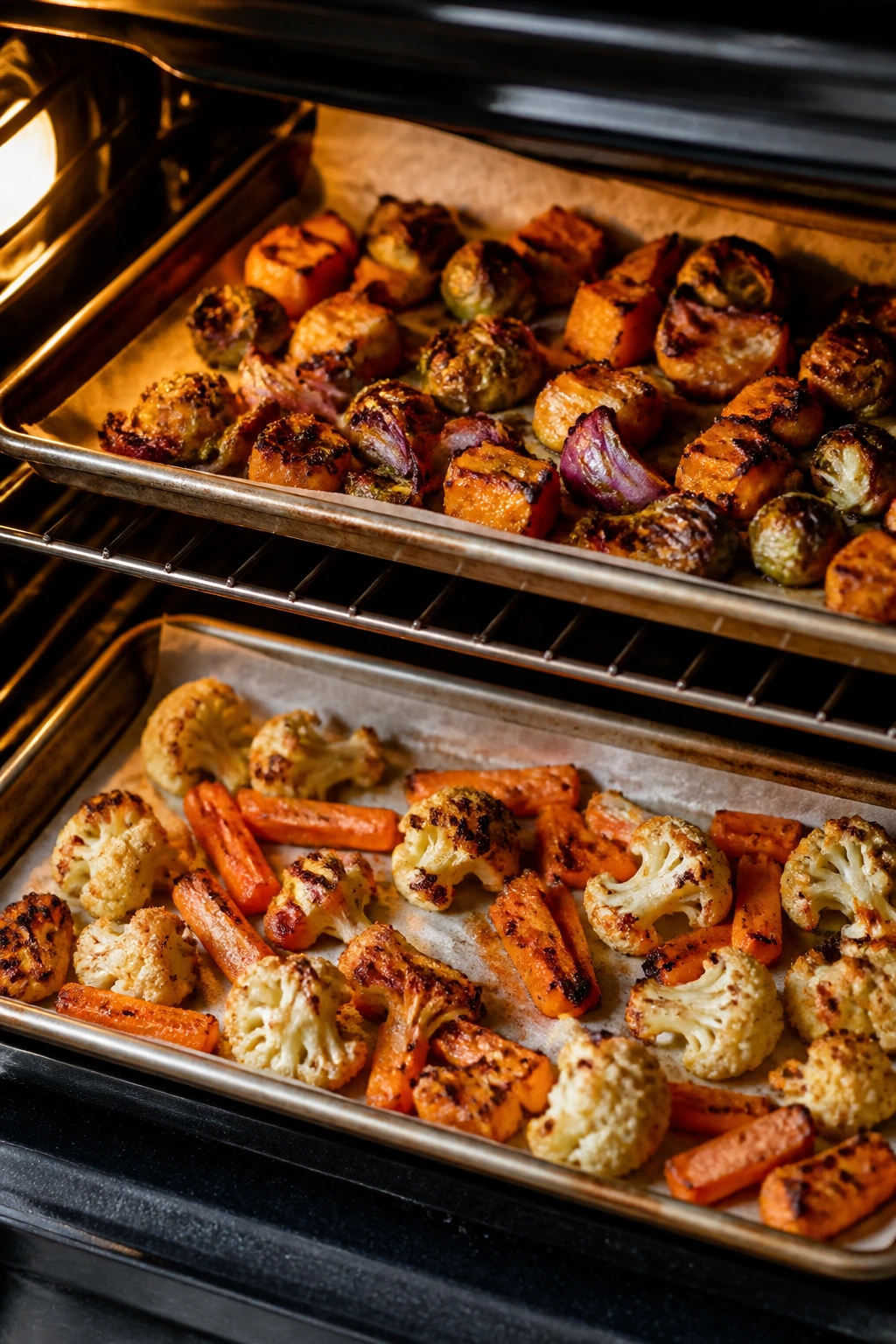
Prep the oven and the pans first.
-
Preheat the oven to 425°F (220°C) and place two racks in the upper and lower thirds. Line 2 rimmed sheet pans with parchment paper. You want the oven fully hot before the vegetables go in; lukewarm heat gives you softened edges and pale color.
-
In a small bowl, whisk together the olive oil, balsamic vinegar, maple syrup, garlic, salt, smoked paprika, thyme, black pepper, and cumin until the mixture looks glossy and the garlic is distributed evenly. It won’t be fully emulsified, and that’s fine.
Start the dense vegetables first.
3. Add the sweet potato, carrots, cauliflower, Brussels sprouts, red onion, and chickpeas to a large bowl. Pour in about two-thirds of the glaze and toss until every piece is coated in a thin film. The vegetables should look slick, not soaked.
-
Divide the mixture between the two prepared pans and spread it into a single layer. Leave visible space between pieces; if the vegetables overlap too much, they’ll soften before they brown. Do not pile them in a hill in the center of the pan.
-
Roast for 15 minutes, then pull the pans out. Stir the vegetables with a spatula, scraping up any chickpeas or onion wedges that are darkening faster than the rest. Swap the top and bottom pans between racks so the heat stays even.
Add the quick-cooking vegetables later.
6. Toss the bell pepper and zucchini with the remaining glaze in the same bowl. Add them to the pans and toss lightly with the already-roasting vegetables, aiming for open patches rather than covering the pan completely.
-
Return the pans to the oven and roast for 12 to 15 minutes more, until the sweet potatoes are tender when pierced with a fork, the cauliflower shows browned edges, and the Brussels sprouts have deep caramelized spots on the cut sides. The peppers should slump a little, and the zucchini should be soft at the edges but not collapsed.
-
If you want a little extra browning, switch the oven to broil for 1 to 2 minutes at the end. Watch the pans the entire time. The maple syrup can go from dark brown to bitter in a blink.
Finish while the tray is hot.
9. Pull the pans out and let the vegetables sit for 3 to 5 minutes. Squeeze the lemon juice over everything, scatter on the parsley, and add the feta if you’re using it. Taste a piece of sweet potato and add flaky salt or a pinch of red pepper flakes if it needs a little more snap.
- Serve warm, while the chickpeas are still a bit crisp and the glaze is glossy on the pan. That first plate should smell like browned onion, garlic, and a little smoke from the paprika.
How to Serve a Pan of Caramelized Veggies for Dinner
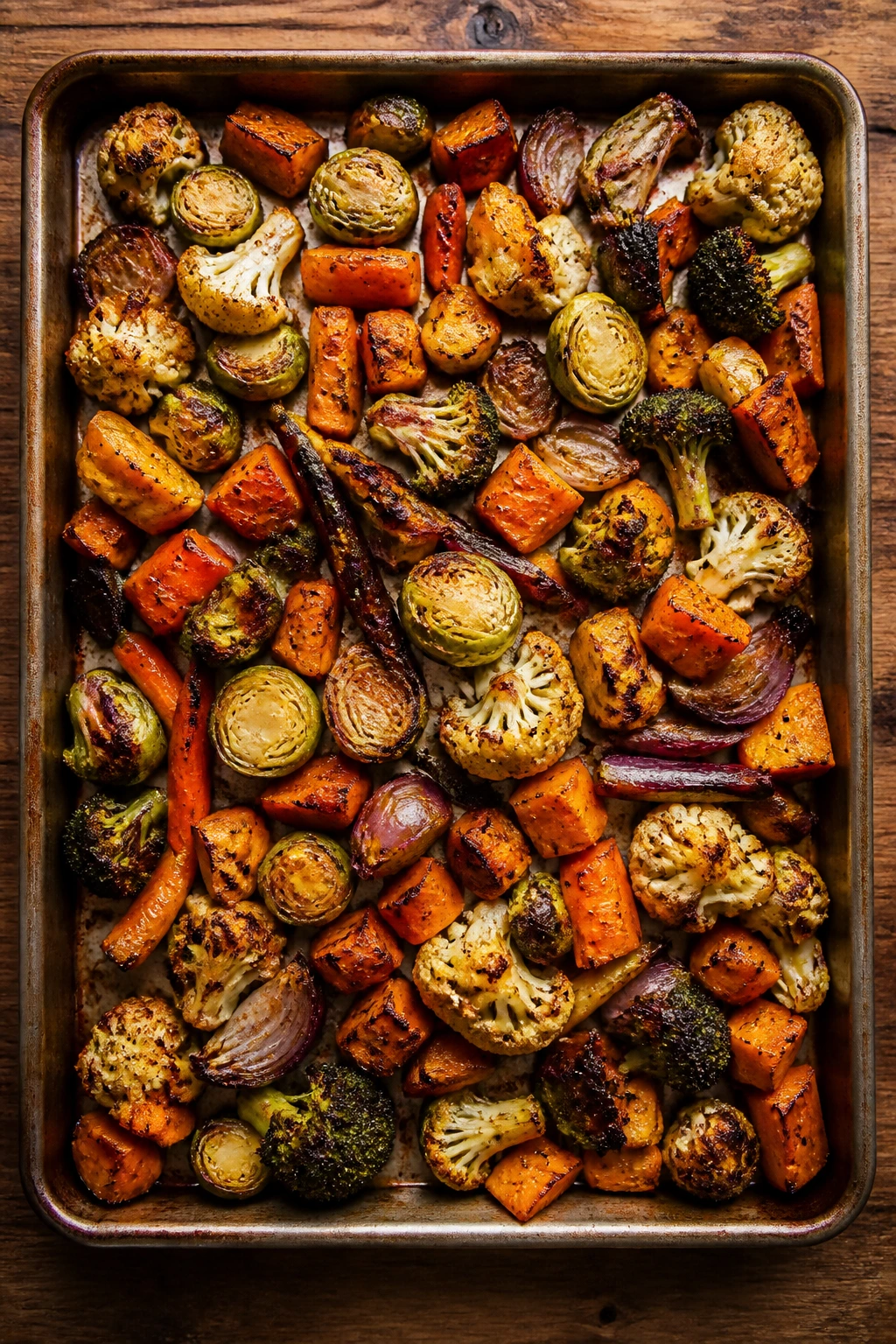
Presentation:
Pile the vegetables into a wide shallow bowl or onto a platter instead of serving them straight from the sheet pan. That one move makes the meal look intentional, and it gives the browned sides of the vegetables a chance to show. I like to keep the chickpeas on top where their crinkled skins can be seen, then finish with parsley and feta so the plate has green and white against all that gold and orange.
Accompaniments:
If you want a fuller dinner, spoon the vegetables over quinoa, farro, brown rice, or couscous. A spoonful of tahini sauce, plain Greek yogurt, or hummus on the side gives the vegetables something cool and creamy to land on. A simple green salad with cucumber and lemon dressing also works, though I’d skip anything too heavy or creamy — the tray already has enough presence.
Portions:
As written, this makes 4 main-dish servings with grains or 6 side servings. If you’re serving bigger appetites, add another can of chickpeas or serve with crusty bread and a fried egg. For a lighter meal, plate it with greens and let the vegetables be the main event.
Beverage Pairing:
A crisp Sauvignon Blanc or a dry hard cider works well with the balsamic and lemon. If you’d rather skip alcohol, try sparkling water with lime or unsweetened iced green tea. Both keep the meal feeling clean after the roasted sweetness.
Small Tweaks That Change the Result
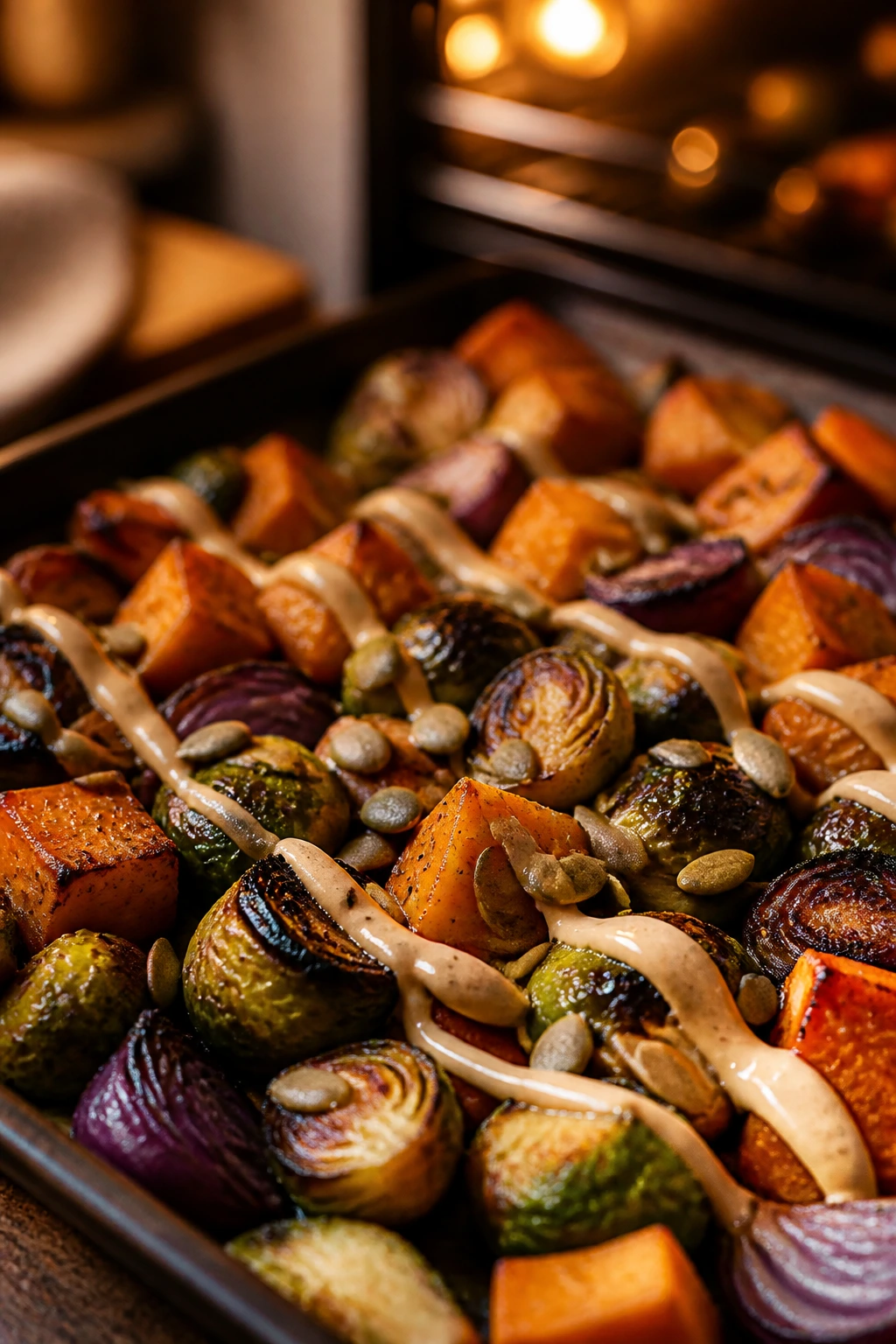
Flavor Enhancement:
A spoonful of tahini thinned with lemon juice and water turns this into a richer dinner without making it heavy. Drizzle it in narrow ribbons, not puddles, so the roasted edges stay visible.
Customization:
If you want more crunch, add a handful of toasted pumpkin seeds at the end. If you want more brightness, throw in a few thin slices of fresh chili or a pinch of sumac with the parsley.
Time-Saver:
You can chop the sweet potato, carrots, cauliflower, and Brussels sprouts up to 2 days ahead. Store them in separate containers with a paper towel in each one so excess moisture doesn’t soften the cut edges before roasting.
Make-It-Yours:
For a dairy-free plate, skip the feta and add extra herbs or a small spoonful of hummus. For a lower-sodium version, cut the kosher salt to 1/2 teaspoon and lean on lemon zest and pepper at the end. For extra protein, add another half can of chickpeas and roast them in a separate corner of the pan so they have room to crisp.
Mistakes That Keep the Vegetables Pale
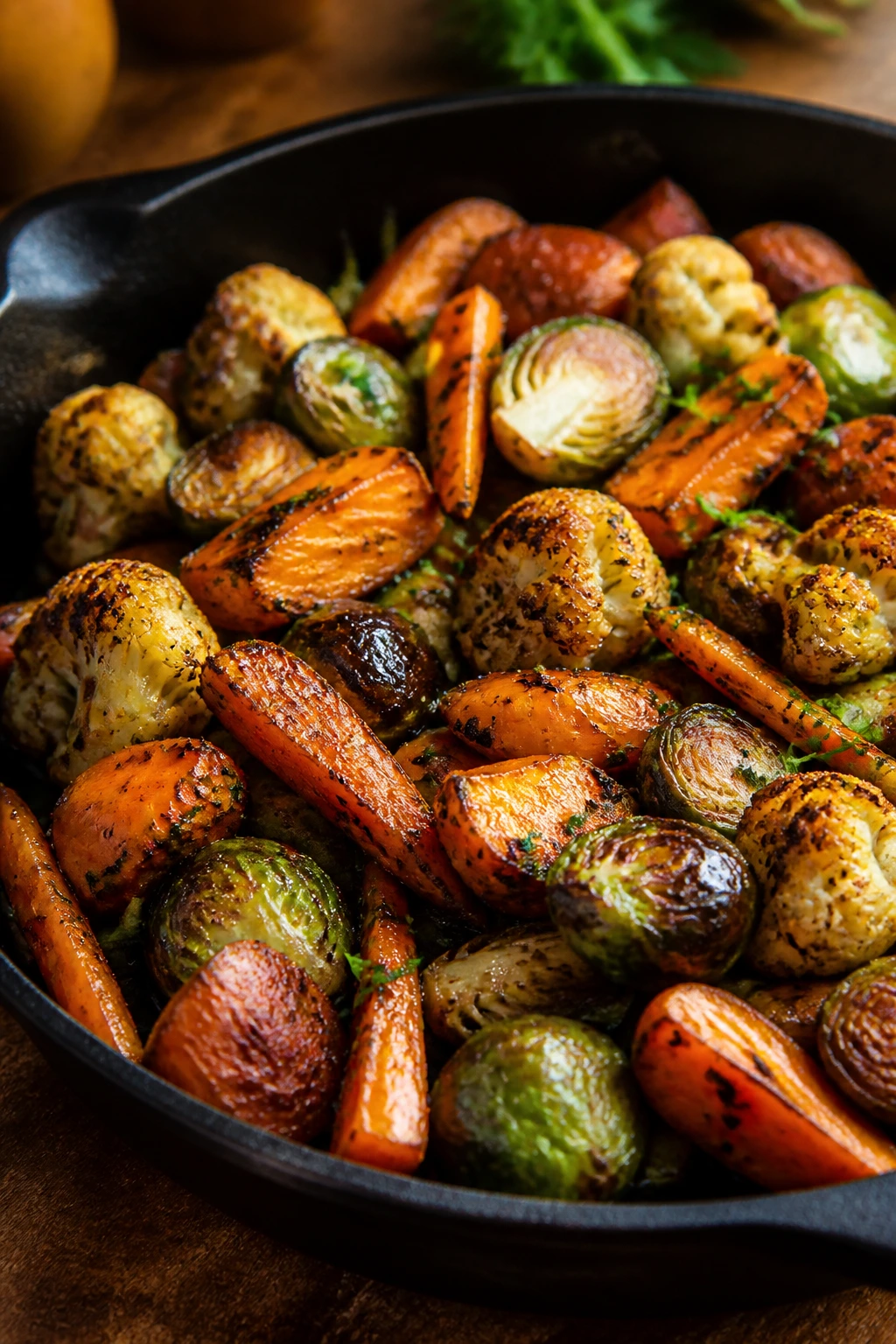
Crowding the pan.
If the vegetables are packed tight, they steam. The symptom is easy to spot: soft surfaces, pale color, and a puddle of moisture under the pan. Fix it by using two sheet pans and leaving clear space between pieces.
Cutting everything to the same size.
A zucchini slice and a sweet potato cube do not roast on the same schedule. If you chop both into the same thickness, one will slump while the other stays firm. Match the size to the vegetable’s density: small for tender pieces, a little larger for root vegetables.
Adding the zucchini too early.
Zucchini releases water fast. When it goes in at the start, it breaks down and coats the tray in moisture that keeps everything else from browning well. Add it in the second wave, after the denser vegetables have already had a head start.
Using too much maple syrup or balsamic.
A heavy hand creates a sticky glaze that darkens before the vegetables are tender. The pan may look glossy, but the flavor can turn sharp or burnt. Keep the glaze thin and spread it evenly.
Skipping the chickpea drying step.
Rinsed chickpeas hold water in their skins. If you don’t dry them well, they roast softly and never get the wrinkled, lightly crisp texture that makes them worth keeping in the dish. Pat them dry, and don’t be shy about it.
Forgetting to rotate the pans.
Ovens have hot spots. One pan can caramelize nicely while the other stays a little blonde. Swap racks halfway through and stir once during roasting; it takes a minute and saves the whole tray.
Variations for Different Seasons and Diets
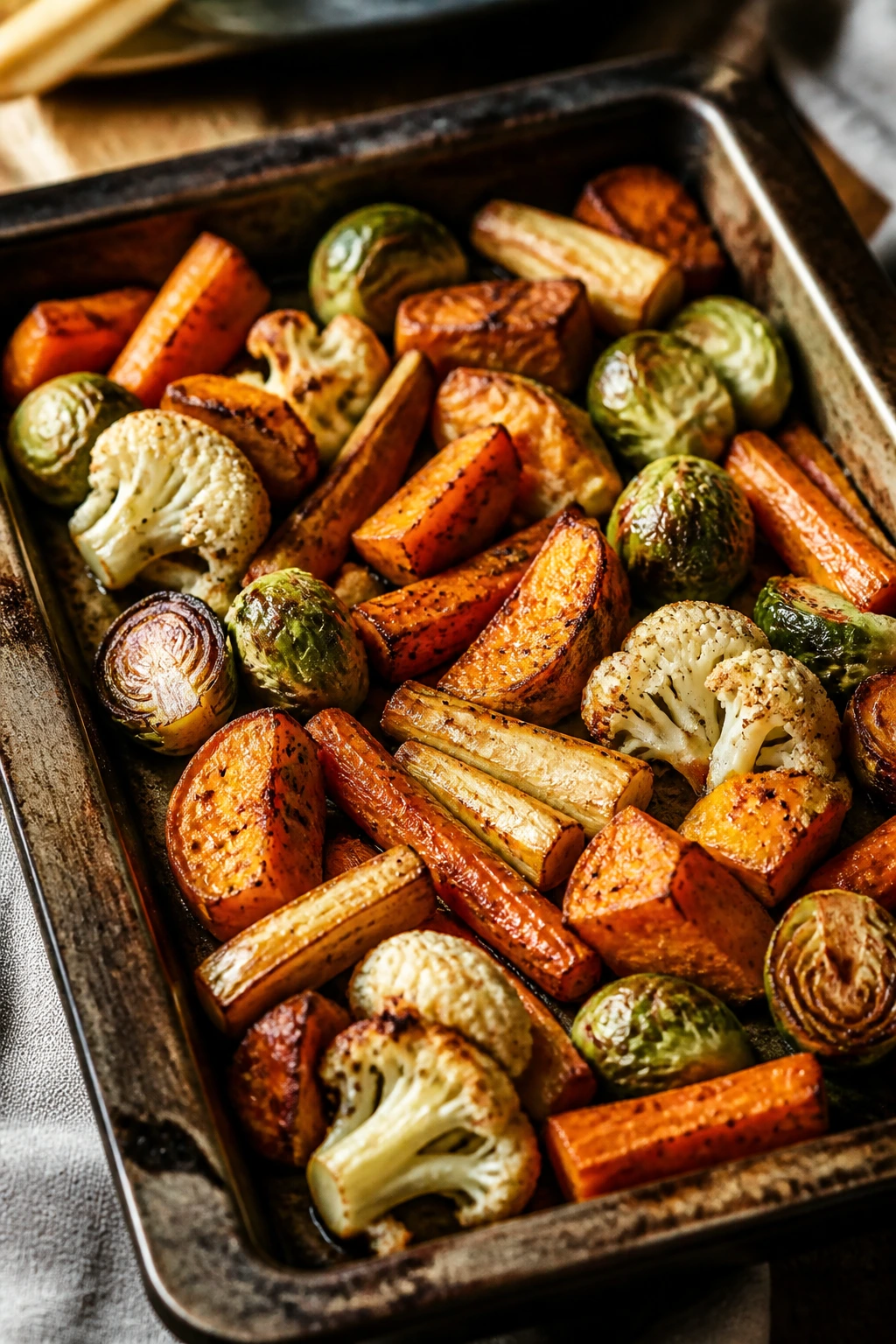
Winter Root Basket
Use sweet potato, carrots, parsnips, cauliflower, and Brussels sprouts for a colder-weather version that leans sweeter and earthier. Skip the zucchini and bell pepper, and give the roots the full roasting time since they can take the heat. A little extra black pepper works well here.
Late-Summer Market Tray
Swap in yellow squash, cherry tomatoes, red onion, and corn kernels for the pepper and zucchini. The tomatoes should go in only during the last 8 minutes, or they’ll collapse and flood the pan. This version tastes lighter and brighter, with more juices at the bottom of the tray.
Smoky Harissa Tray
Replace the smoked paprika and cumin with 1 to 2 teaspoons harissa paste mixed into the glaze. The result is spicier, deeper, and a little more savory, especially if you finish it with yogurt. I like this version with couscous because the grains catch the spiced oil.
Mediterranean Pantry Bowl
Add 1/3 cup olives and 1 tablespoon capers after roasting, then finish with parsley and a little oregano. The saltiness gives the vegetables a sharper edge, which works well if you’re serving them over rice or farro.
Extra-Protein Weeknight Plate
Keep the recipe the same, but add a second can of chickpeas and serve the vegetables over lentils or quinoa. If you want to keep the tray from feeling too heavy, leave off the feta and use lemon, herbs, and a drizzle of tahini instead.
Make-Ahead, Storage, and Reheating
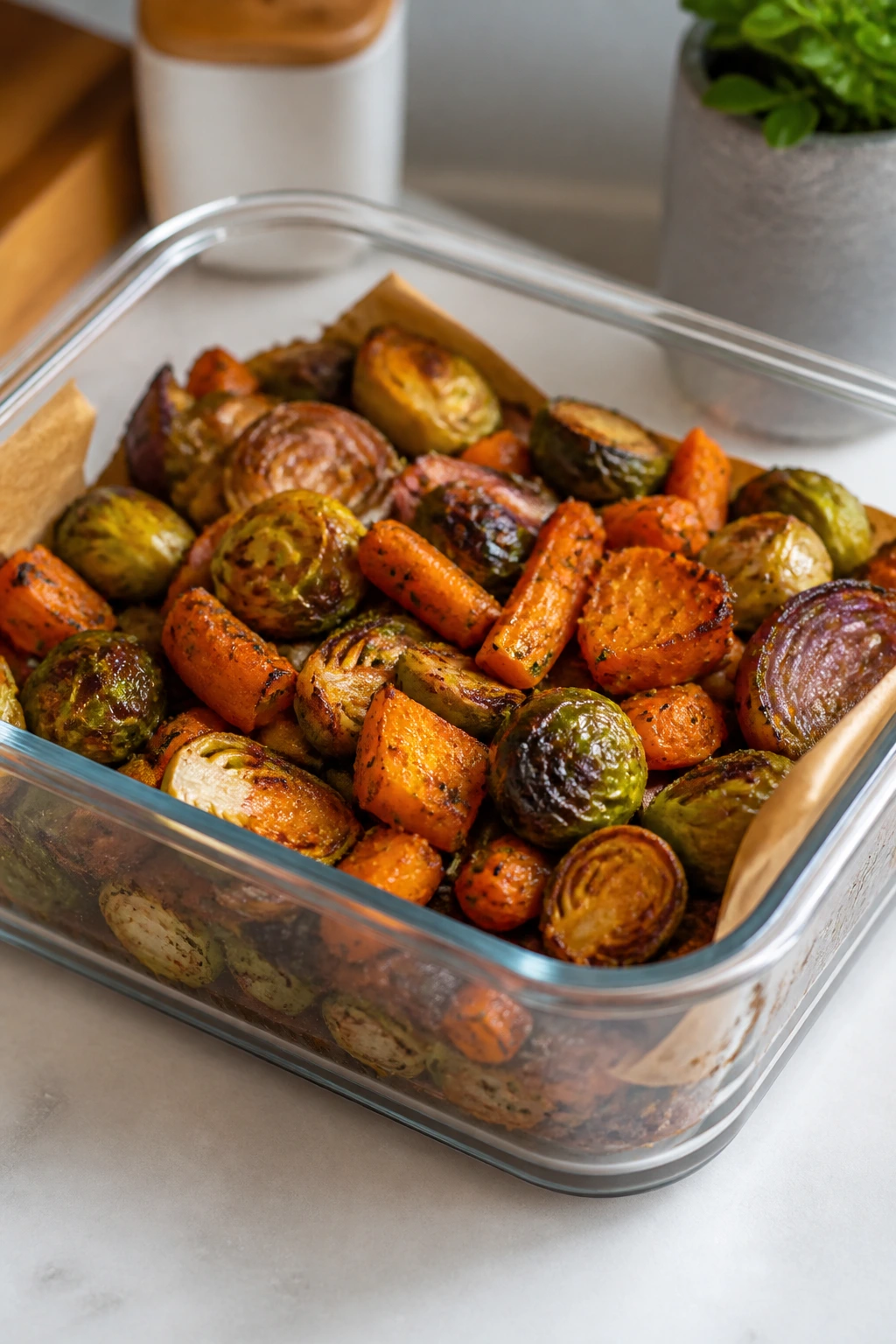
Roasted vegetables hold up better than most people expect, but they don’t stay at peak texture forever. If you want the browning to stay crisp, store them in a shallow container once they’ve cooled for about 20 to 30 minutes. Don’t trap steaming-hot vegetables in a sealed box; that’s how you lose the edges you worked for.
In the refrigerator, the tray keeps for 3 to 4 days. The chickpeas will soften a bit by day two, and the zucchini will get looser, but the flavor stays good. For the freezer, you can keep the vegetables for up to 2 months, though I’d reserve frozen leftovers for grain bowls, soups, or frittatas rather than expecting tray-fresh texture.
For reheating, the oven is the cleanest option. Spread the vegetables on a parchment-lined sheet pan and warm them at 400°F (205°C) for 8 to 12 minutes, stirring once if the pile is thick. A hot skillet over medium-high heat works too, especially if you want the chickpeas to wake back up and crisp at the edges. The microwave is fine in a hurry, but it gives you soft vegetables and very little browning.
You can make parts of the dish ahead, which saves time without sacrificing texture. Chop the sturdy vegetables and whisk the glaze 1 to 2 days ahead, then keep them separate in the refrigerator. Wait to cut the zucchini until closer to cooking if you can; once it’s sliced, it starts leaking moisture.
This dish does not need to be eaten the minute it leaves the oven, but it does taste best warm. Leftovers make excellent grain bowls with a fried egg on top, and that’s one of the few cases where I think the second-day version is almost as good as the first.
Questions People Ask Before They Roast
Can I use frozen vegetables for this recipe?
You can, but don’t expect the same browning. Frozen cauliflower or broccoli can work if you thaw them first and pat them very dry, yet zucchini and peppers from the freezer tend to turn limp. I’d use frozen vegetables only for a backup version, not the main event.
Do I really need two sheet pans?
If you want browned edges, yes. One crowded pan steams; two pans give the vegetables the breathing room they need. If you only have one pan, roast in two batches and accept that the second batch may brown a little more slowly because the pan cools down between runs.
What if my sweet potatoes are still firm when the rest is done?
Cut them smaller next time, closer to 3/4-inch cubes. For this batch, pull the finished vegetables off the pan and give the sweet potatoes another 5 to 8 minutes in the oven. A little extra time won’t hurt them, but the peppers and zucchini won’t want to stay in that long.
Can I make this without chickpeas?
Yes. The vegetables still work on their own, but the dish becomes lighter. If you leave out the chickpeas, serve the tray with quinoa, lentils, or eggs so the plate still feels like dinner instead of a side dish in disguise.
How do I keep the vegetables from turning mushy?
Dry them well, cut them in sensible sizes, and don’t drown them in glaze. Mushy vegetables usually come from too much moisture, too little heat, or a pan that’s too crowded. If you fix those three things, the difference is immediate.
Can I use honey instead of maple syrup?
Yes, though honey browns a little faster and brings a different sweetness. Use the same amount, but watch the tray closely during the last 5 minutes because honey can darken more quickly than maple. If you want a subtler result, use 2 teaspoons instead of 1 tablespoon.
Is this good for meal prep?
Very. Roast the vegetables, cool them, and pack them with grains or greens for lunches. They hold up for a few days in the fridge, especially if you keep the lemon and any yogurt or tahini sauce separate until serving.
A Tray Worth Repeating
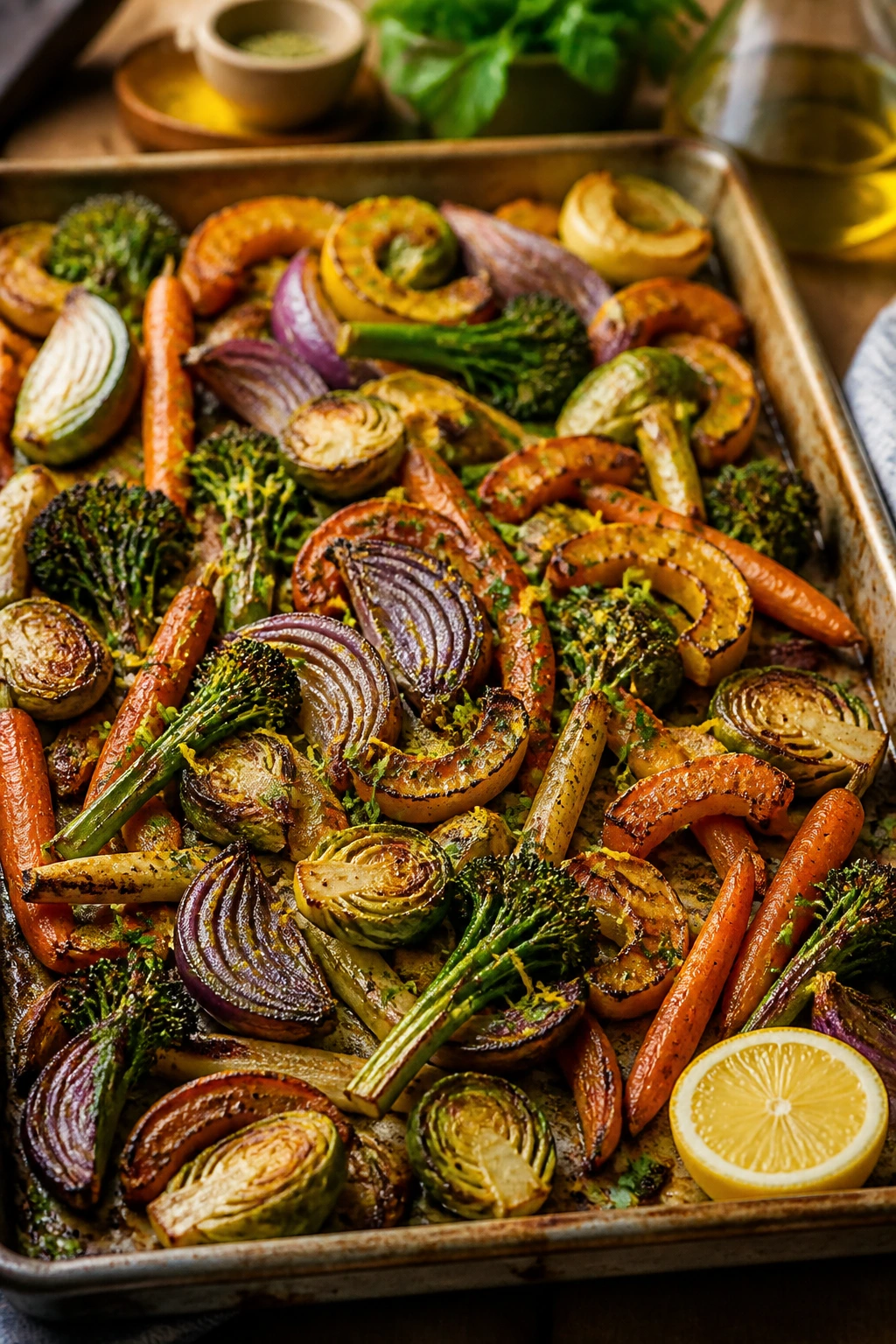
There’s something satisfying about a dinner that starts with a cutting board full of vegetables and ends with a pan of browned edges, sweet steam, and a little lemon squeezed over the top. It feels practical without feeling dull, which is rarer than it should be. And because the method doesn’t care whether you’re using Brussels sprouts and sweet potatoes or zucchini and peppers, it becomes one of those recipes you stop reading and start knowing by heart.
The real payoff is how forgiving it is once you learn the rhythm: dense vegetables first, tender vegetables later, and enough space on the pan for the oven to do its work. Keep those three things in mind and you’ll get a tray that tastes like someone paid attention.
Caramelized Seasonal Veggies for a Healthy Dinner — Recipe Card
Recipe Name: Caramelized Seasonal Veggies for a Healthy Dinner
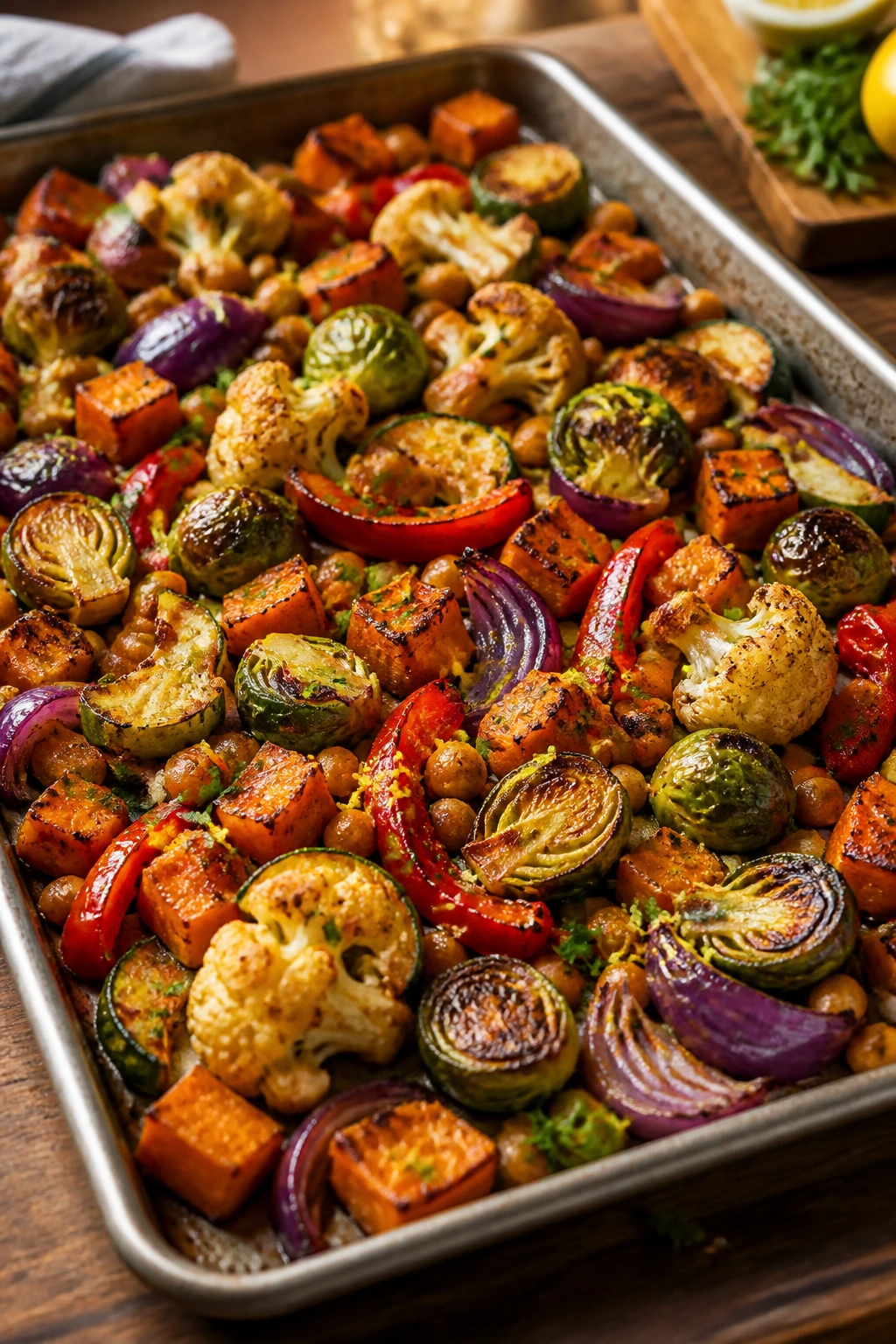
Description: A sheet-pan vegetable dinner with browned sweet potatoes, cauliflower, Brussels sprouts, carrots, onion, peppers, zucchini, and chickpeas tossed in a maple-balsamic glaze and finished with lemon and herbs. It’s filling enough for a main dish and flexible enough to change with the season.
Prep Time: 20 minutes
Cook Time: 30 to 35 minutes
Total Time: 50 to 55 minutes
Course: Main Course, Side Dish
Cuisine: American
Servings: 4 main servings or 6 side servings
Calories: About 320 kcal per serving
Ingredients
For the Tray
- 1 medium sweet potato (about 12 ounces), peeled and cut into 1-inch cubes
- 2 medium carrots, peeled and cut into 1/2-inch-thick bias slices
- 1 small head cauliflower (about 1 pound), cut into 1-inch florets
- 8 ounces Brussels sprouts, trimmed and halved
- 1 small red onion, cut into 1-inch wedges
- 1 red bell pepper, seeded and cut into 1-inch strips
- 1 medium zucchini, cut into thick half-moons
- 1 (15-ounce) can chickpeas, drained, rinsed, and patted very dry
For the Glaze
- 3 tablespoons olive oil
- 2 tablespoons balsamic vinegar
- 1 tablespoon pure maple syrup
- 2 cloves garlic, finely grated or minced
- 1 teaspoon kosher salt
- 1 teaspoon smoked paprika
- 1 teaspoon dried thyme
- 1/2 teaspoon freshly ground black pepper
- 1/4 teaspoon ground cumin
For Finishing
- 1 tablespoon lemon juice
- 2 tablespoons chopped flat-leaf parsley
- 1 ounce feta, crumbled, optional
- Pinch of flaky salt and red pepper flakes, optional
Instructions
-
Preheat the oven to 425°F (220°C) and line 2 rimmed sheet pans with parchment paper.
-
Whisk together the olive oil, balsamic vinegar, maple syrup, garlic, salt, smoked paprika, thyme, black pepper, and cumin in a small bowl.
-
Toss the sweet potato, carrots, cauliflower, Brussels sprouts, red onion, and chickpeas with about two-thirds of the glaze in a large bowl.
-
Divide the vegetables between the prepared pans and spread them in a single layer.
-
Roast for 15 minutes.
-
Toss the bell pepper and zucchini with the remaining glaze.
-
Stir the vegetables on the pans, add the bell pepper and zucchini, and return the pans to the oven.
-
Roast for 12 to 15 minutes more, until the vegetables are tender and browned in spots.
-
Broil for 1 to 2 minutes if you want extra color, watching closely.
-
Remove from the oven, let rest for 3 to 5 minutes, then finish with lemon juice, parsley, feta if using, and a pinch of flaky salt or red pepper flakes.
Notes:
The tray browns best when the vegetables are dry and spaced out. For leftovers, reheat on a sheet pan at 400°F for the best texture. If your oven runs cool, give the tray an extra 3 to 5 minutes before adding the tender vegetables.