



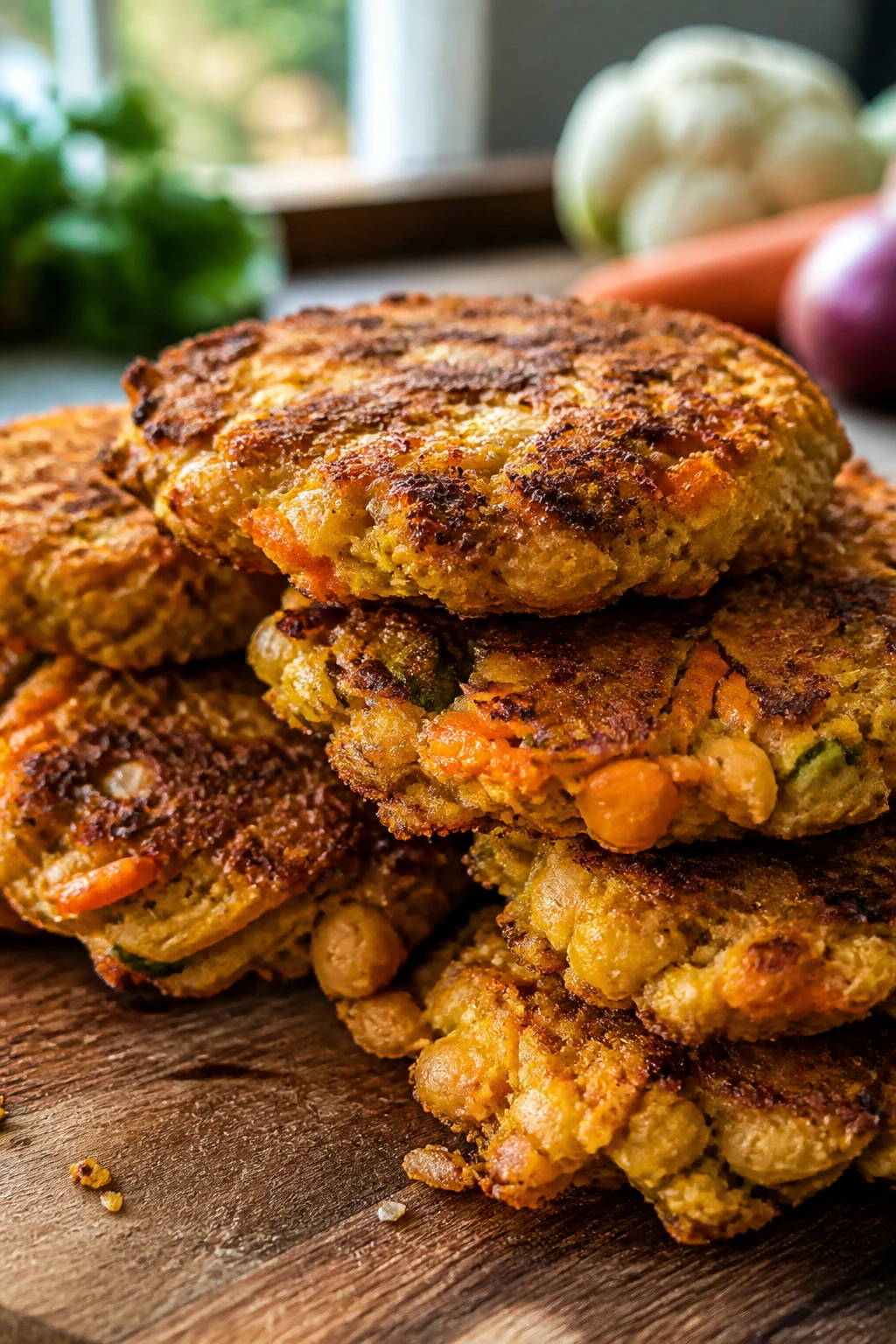
A tray of roasted veggie fritters can rescue the kind of night when the refrigerator looks half-empty but the crisper drawer is lying to you. There’s usually a head of cauliflower in there, maybe a sweet potato, a couple of carrots that have seen better days, and one onion rolling around in the corner. Roast them, mash them together, add a little binder, and suddenly you’ve got a dinner that tastes deliberate instead of improvised.
What makes roasted veggie fritters worth doing this way is the roast itself. Raw vegetables can make fritters wet, timid, and hard to hold together. Roasting changes the whole story: the edges brown, the sweetness wakes up, the moisture drops, and the vegetables start behaving like dinner rather than garnish. The skillet work after that is short and sharp. A hot pan, a little oil, and a few minutes per side are enough to give you crisp edges and a soft center that still tastes like vegetables first.
I’m picky about fritters. I don’t want a mushy pancake pretending to be healthy, and I don’t want a deep-fried hulk that needs sauce to be edible. The sweet spot is right here: roasted vegetables, chickpeas for body, eggs for structure, panko for a little lift, and a lemony yogurt sauce that cuts through the warmth. You get a plate that feels light enough for a weeknight, but sturdy enough that nobody leaves the table hungry.
Why Roasted Veggie Fritters Belong on the Dinner Table
-
Roasting fixes the texture problem: The vegetables shed extra moisture before they ever touch the bowl, so the fritters set faster and brown cleaner in the pan.
-
They eat like a real meal, not a side dish: Chickpeas, eggs, and a little Parmesan give the fritters enough backbone to stand next to a salad, grains, or a pile of greens.
-
The flavor is deeper than most fritters: Sweet potato and carrot bring sweetness, cauliflower gives body, and the onion turns soft and almost jammy once it hits the oven.
-
Cleanup stays sane: One sheet pan, one bowl, one skillet. That’s the whole mess if you move in order.
-
They work warm, room temp, or packed for lunch: The crisp edges soften a little after sitting, but the center stays tender and the flavor actually settles in.
-
The sauce matters here: A lemon-herb yogurt sauce keeps the fritters from feeling flat, and it takes about two minutes to stir together.
Yield: Serves 4 as a main dish or 6 as a side
Prep Time: 20 minutes
Cook Time: 35 minutes
Total Time: 55 minutes
Difficulty: Intermediate — the steps are straightforward, but the vegetables need to cool before mixing, and the skillet timing matters.
Chill/Rest Time: 10 minutes for the vegetables to cool, plus 10 minutes of resting for the mixture
Best Served: Warm, when the edges are crisp and the center is tender
Why Roasted Veggie Fritters Taste Better Than the Raw-Veg Version
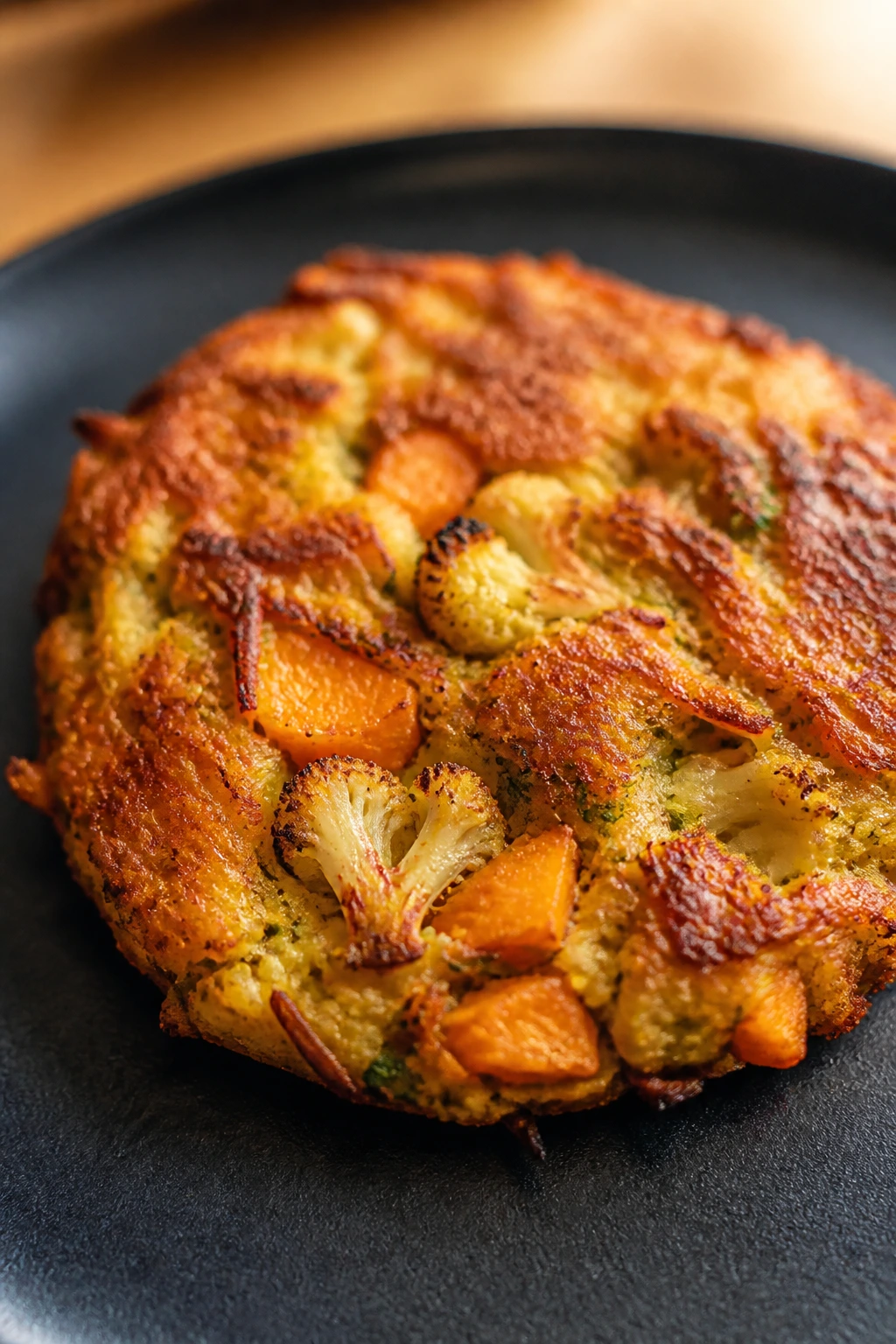
Roasted veggie fritters have a head start most fritters never get. When you roast the vegetables first, you concentrate flavor and reduce the amount of water that leaks into the batter later. That matters more than people think. Too much moisture is why fritters slump in the pan, spread into sad little disks, or taste like damp stuffing instead of something crisp and worth repeating.
The vegetables in this version are chosen on purpose. Cauliflower keeps the mixture light but substantial. Sweet potato gives body and a mellow sweetness that rounds out the sharper onion. Carrots bring color and a little bite after roasting. Chickpeas fill the gaps between the pieces and help the fritters hold together without turning bready.
I like a fritter that still tastes like vegetables after frying, not like flour with a garnish. This mix does that. The oven does the heavy lifting, the skillet finishes the job, and the sauce gives you a sharp, cool contrast. That’s the whole trick. Not fancy. Just smart.
There’s another reason this approach works for a healthy dinner: you are not relying on a heavy batter or a deep fry to create texture. A few tablespoons of oil spread across the pan are enough if the vegetables are already browned and dry at the edges. That’s the part most recipes skip. They ask the skillet to do everything. The skillet should not have to carry that burden.
What Goes Into the Bowl
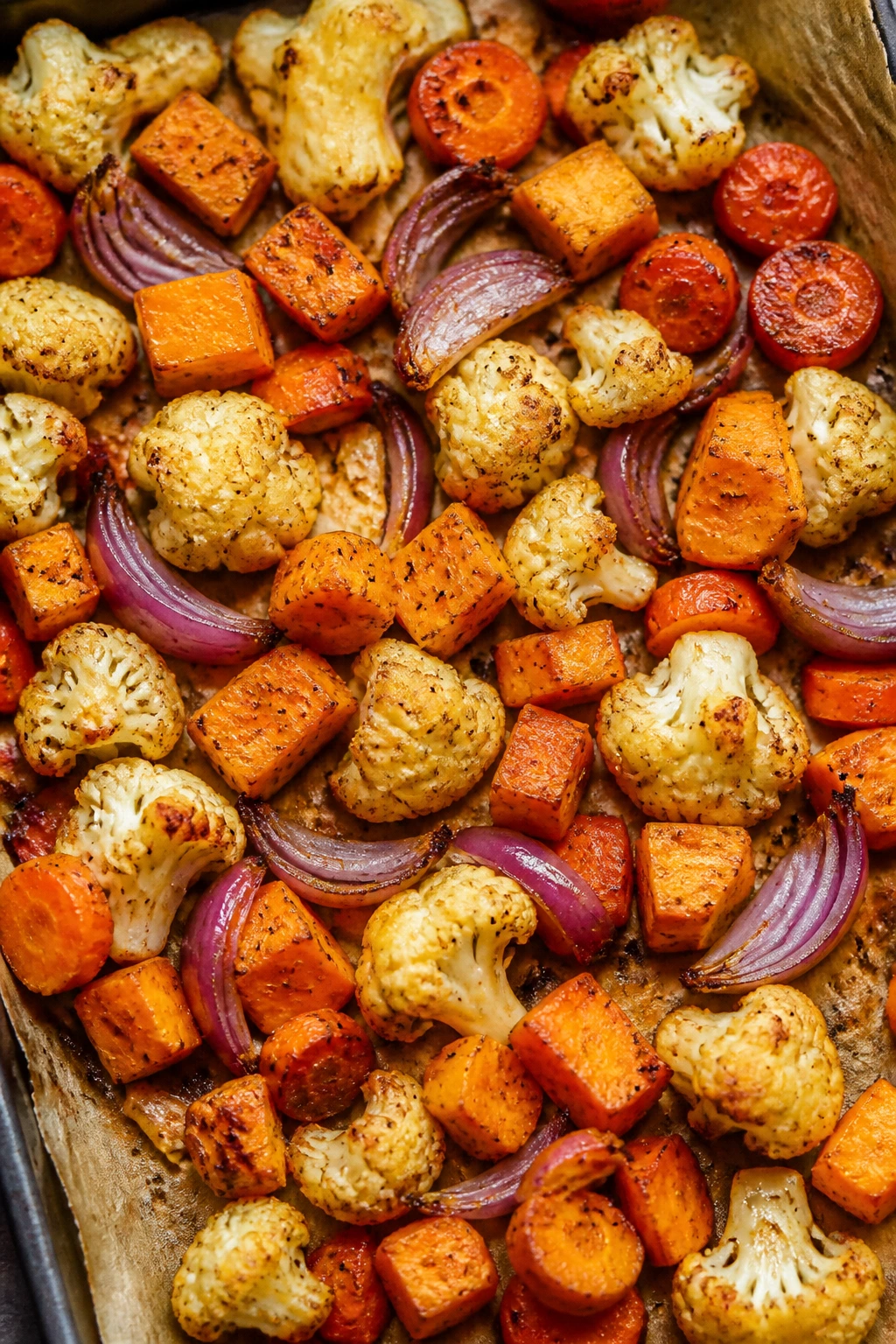
If you’ve made vegetable patties before and had them fall apart, the fix is almost always in the ratio. Too many wet vegetables. Not enough structure. Or both. This version keeps the ingredient list short enough to stay manageable and long enough to do the job.
For the Roasted Vegetables
- 1 small head cauliflower, about 1 pound, cut into 1-inch florets
- 1 medium sweet potato, about 10 ounces, peeled and cut into 1/2-inch cubes
- 2 medium carrots, about 6 ounces total, peeled and cut into 1/2-inch coins
- 1 small red onion, cut into 1/2-inch wedges
- 1 tablespoon olive oil
- 1 teaspoon kosher salt, divided
- 1/2 teaspoon black pepper, divided
- 1/2 teaspoon smoked paprika
- 1/4 teaspoon ground cumin
For the Fritter Mixture
- 1 cup canned chickpeas, drained, rinsed, and patted dry
- 2 large eggs
- 1/2 cup whole wheat panko breadcrumbs
- 1/4 cup grated Parmesan
- 2 tablespoons chopped fresh parsley
- 1 tablespoon chopped chives or thinly sliced green onions
- 1 teaspoon lemon zest
- 1 to 2 tablespoons all-purpose flour, only if needed
For the Lemon-Herb Yogurt Sauce
- 1 cup plain Greek yogurt
- 1 tablespoon lemon juice
- 1 small garlic clove, finely grated
- 1 tablespoon chopped dill or parsley
- Pinch of kosher salt
- 1 to 2 teaspoons water, only if needed to thin
Why Each Ingredient Earns Its Place
Roasted Vegetables
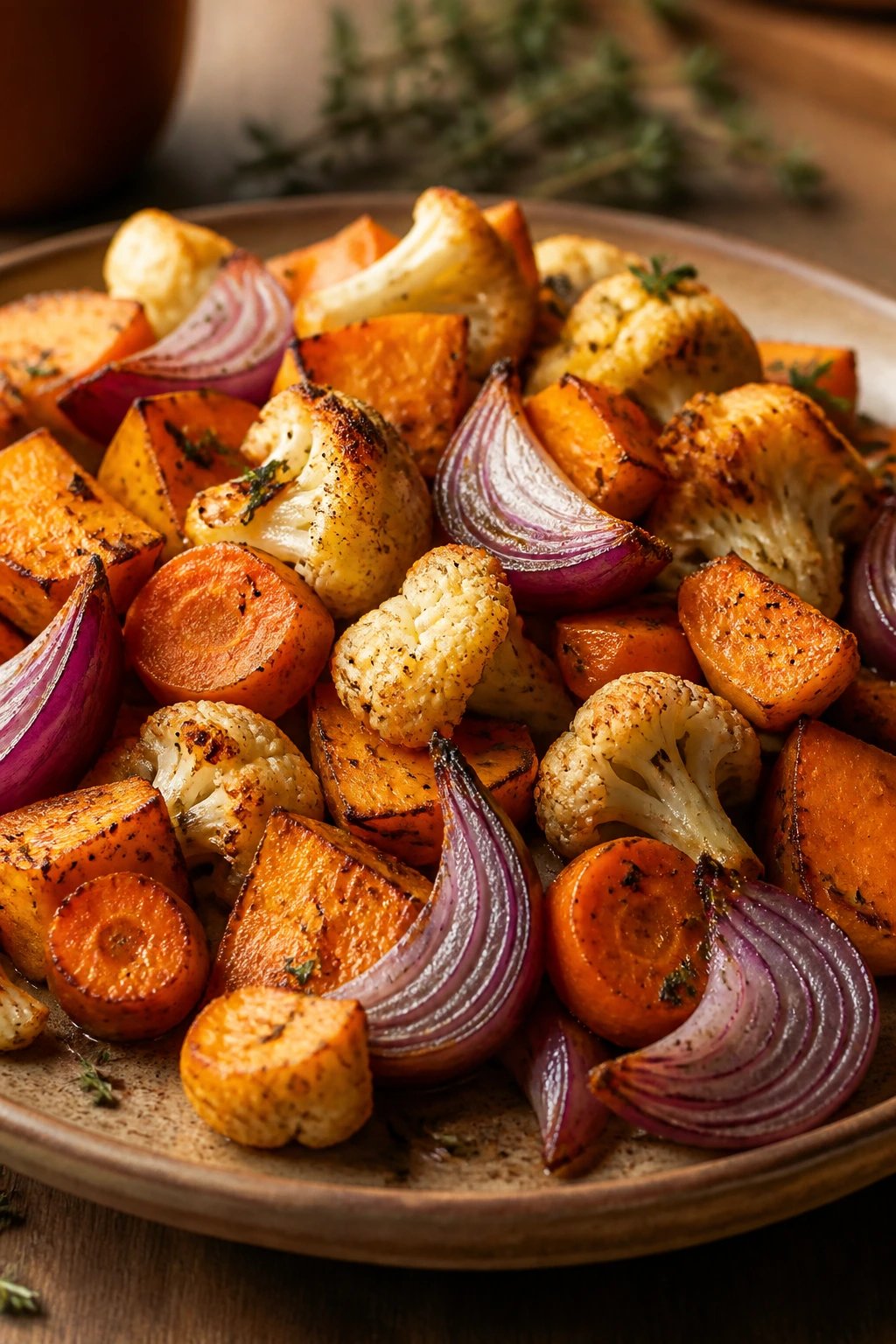
What to use: 1 small head cauliflower, 1 medium sweet potato, 2 carrots, and 1 small red onion give you a mix of soft, sweet, and savory pieces that roast at close to the same pace.
Preparation: Cut the cauliflower into small florets and keep the sweet potato cubes near 1/2 inch so the tray finishes evenly and the pieces mash into the batter without turning to paste.
Substitutions: Broccoli works in place of cauliflower, and butternut squash can stand in for sweet potato if you want a more savory finish.
Tips: Spread the vegetables in a single layer. If they pile up, they steam, and steamed vegetables make fritters that slide around in the pan.
Binder and Body
What to use: 1 cup chickpeas, 2 large eggs, 1/2 cup whole wheat panko, and 1/4 cup Parmesan form the backbone of the fritters.
Preparation: Pat the chickpeas dry before mashing or they’ll add extra water to the bowl. Beat the eggs before you add them so they distribute quickly and evenly.
Substitutions: White beans can replace chickpeas, and gluten-free panko works if you need the batch to stay gluten-free.
Tips: Don’t dump in extra flour at the start. A slightly loose mixture is fine; you can fix that with a short rest and one test fritter.
Fresh Flavor
What to use: Parsley, chives, lemon zest, smoked paprika, cumin, salt, and black pepper keep the fritters from tasting flat.
Preparation: Chop the herbs finely so they disappear into the batter and season every bite instead of clumping in one spot.
Substitutions: Dill gives the mixture a sharper edge, cilantro pushes it in a different direction, and a small pinch of chili flakes adds heat without wrecking the balance.
Tips: Zest the lemon before juicing it. Trying to do that backwards is how people end up with a slippery lemon and a grumpy cutting board.
Sauce
What to use: Greek yogurt, lemon juice, garlic, and herbs make a cool, tangy sauce that cuts through the browned edges of the fritters.
Preparation: Grate the garlic very fine so it melts into the yogurt instead of hitting you in one raw, harsh bite.
Substitutions: Sour cream works in a pinch, and tahini thinned with water makes a dairy-free option.
Tips: Make the sauce first if you like the garlic bite to soften. Ten minutes on the counter takes the edge off the raw garlic and lets the flavors settle.
Special Equipment for This Recipe
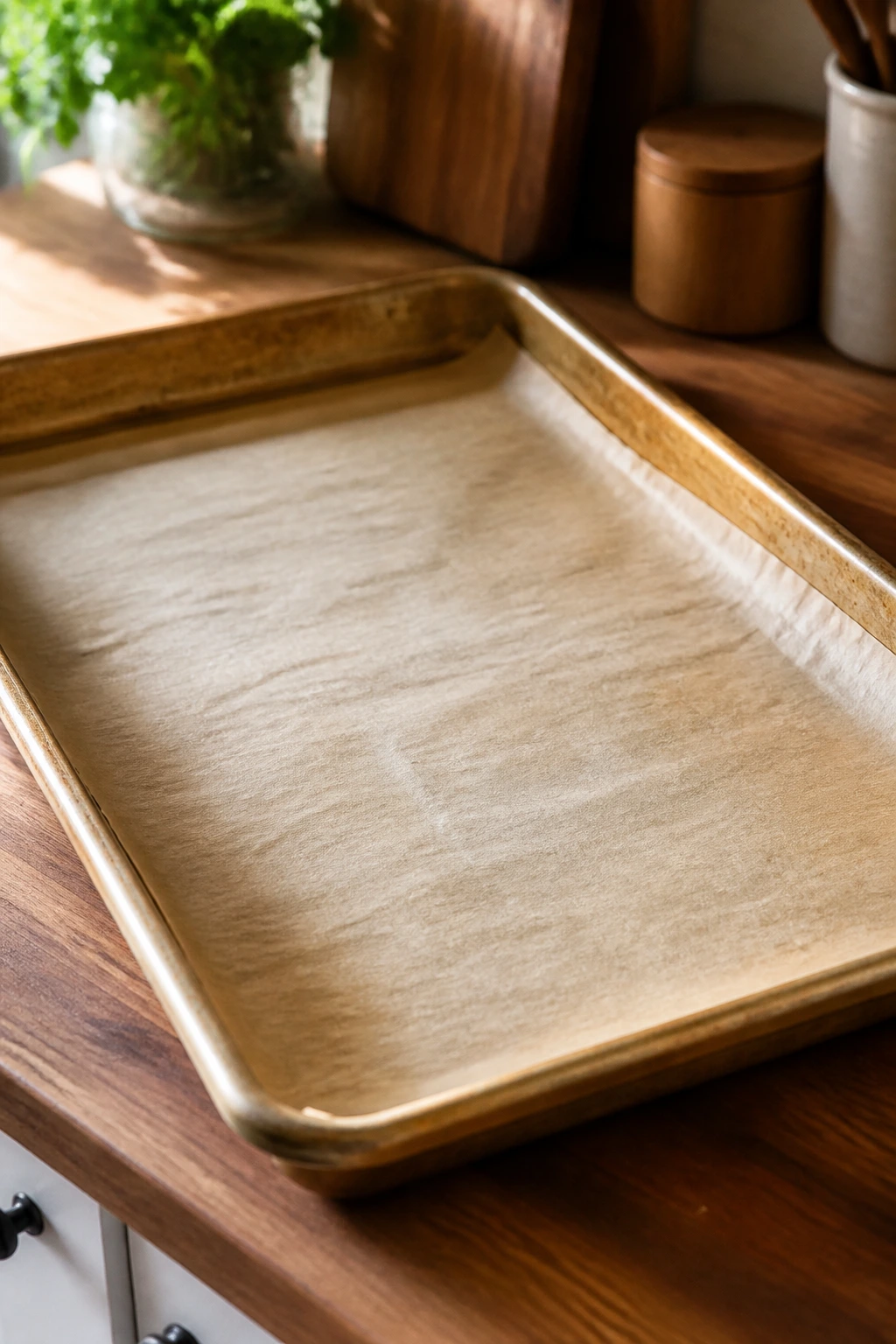
- Large rimmed sheet pan: The vegetables need room to brown, not pile up and steam.
- Parchment paper: Helpful for easy release and quicker cleanup, though a lightly oiled pan works too.
- Large mixing bowl: Wide enough to fold the fritter mixture without knocking bits over the edge.
- Potato masher or sturdy fork: Useful for breaking down the chickpeas and some of the roasted vegetables.
- 12-inch skillet: Cast iron or nonstick both work; the pan just needs enough surface area for 3 or 4 fritters at a time.
- Thin spatula or fish spatula: Makes flipping easier, especially once the fritters start crisping at the edges.
- Microplane or fine grater: Best for lemon zest and garlic in the sauce.
- Paper towels or a wire rack: For draining the fritters after frying so the bottoms stay crisp.
Roast the Vegetables Until the Edges Brown
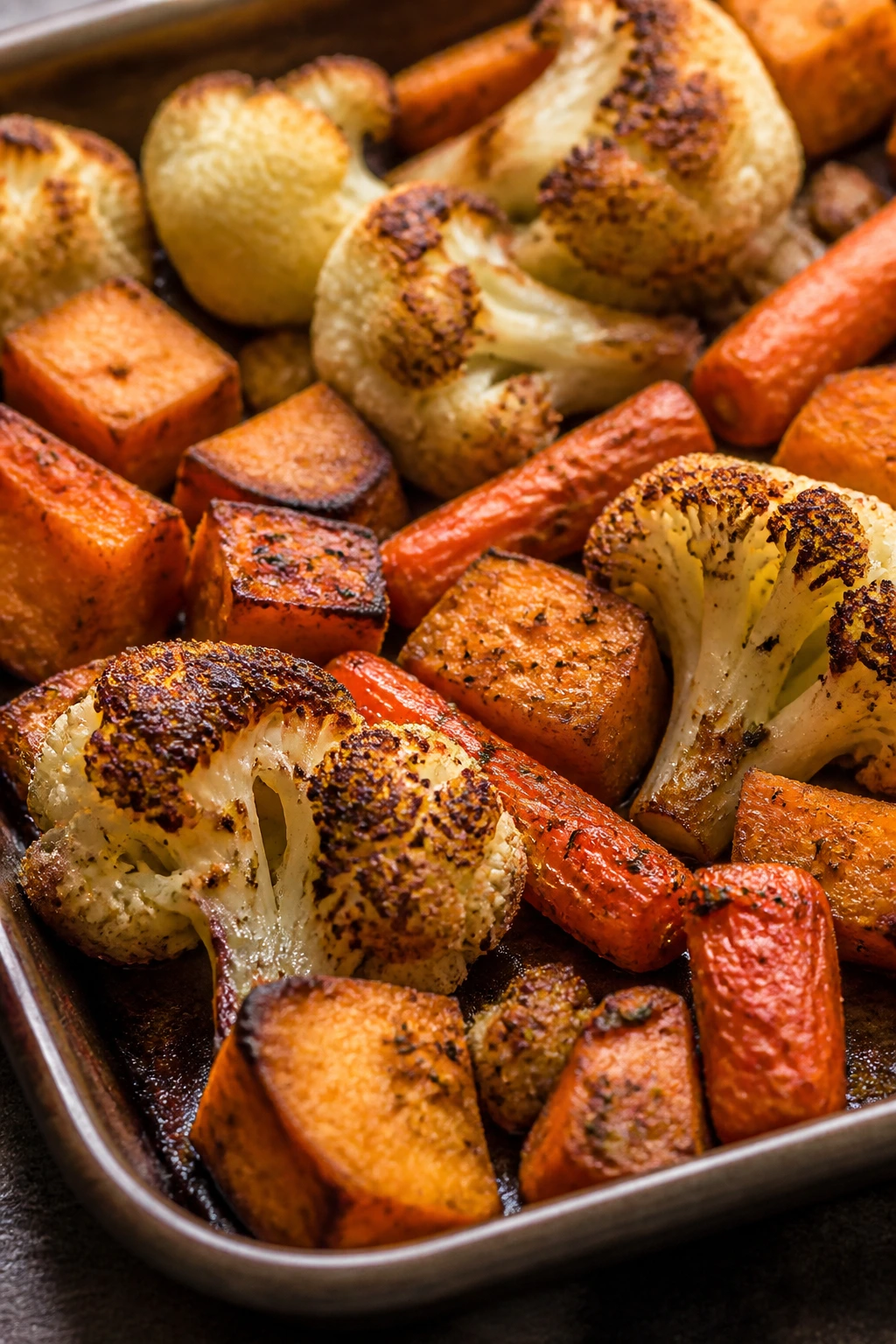
The oven is doing half the job here, so don’t rush it. A good roast gives the fritters flavor before they even hit the skillet. If you stop while the vegetables are still pale, you’ll end up depending on salt and sauce to create depth, and that’s a tiring way to cook dinner.
Prepare the Oven and Tray:
- Preheat the oven to 425°F (220°C) and position a rack in the middle. Line a rimmed sheet pan with parchment paper if you want easy cleanup.
- Put the cauliflower, sweet potato, carrots, and red onion on the sheet pan. Drizzle with the olive oil, then sprinkle over 1/2 teaspoon of the salt, 1/2 teaspoon of the pepper, the smoked paprika, and the cumin.
Roast and Brown:
3. Toss the vegetables directly on the pan until they’re lightly coated, then spread them into a single layer with space between the pieces. If the pan looks crowded, use two pans.
4. Roast for 20 minutes, then stir and flip the pieces with a spatula. Continue roasting for 8 to 12 minutes more, until the cauliflower edges are deeply golden, the sweet potato is tender when pierced, and the onion has browned spots.
5. Remove the pan from the oven and let the vegetables cool for 10 minutes. Do not mix them into the eggs while they’re steaming hot, or the eggs can start to scramble.
Cool, Chop, and Build the Fritter Mixture
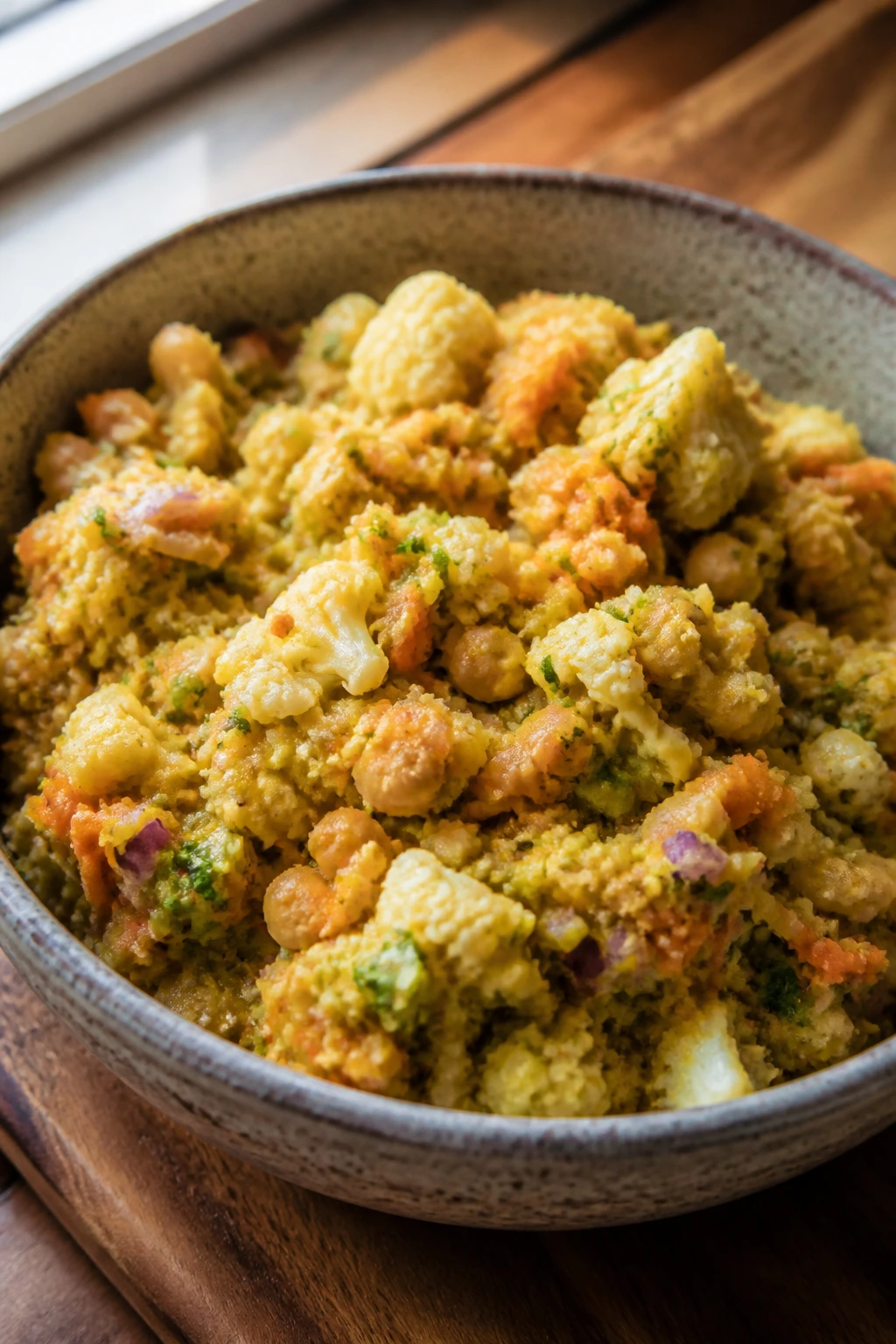
This is where the batch starts to behave like fritters instead of roasted vegetables with ambition. You want a mixture that holds together when you scoop it, but still has visible pieces of vegetable. If you mash everything into a puree, you lose the texture that makes these worth the trouble.
Make the Sauce While the Vegetables Cool:
6. In a small bowl, stir together the Greek yogurt, lemon juice, grated garlic, dill or parsley, and a pinch of salt. Add 1 to 2 teaspoons of water if you want it looser. Set it aside so the garlic loses its sharp edge.
Mash and Mix:
7. Transfer the cooled vegetables to a large bowl. Add the chickpeas and mash about half of them with a potato masher or fork. You want some chickpeas broken down and some still whole.
8. Add the eggs, panko, Parmesan, parsley, chives, lemon zest, and the remaining 1/2 teaspoon salt. Mix gently until the bowl looks cohesive and the vegetables are evenly coated.
9. Let the mixture rest for 10 minutes. The panko absorbs a little moisture during that pause, and the batter becomes easier to shape. If the mixture still feels loose after resting, add 1 tablespoon flour, mix, and test again before adding more.
Shape and Pan-Fry the Fritters
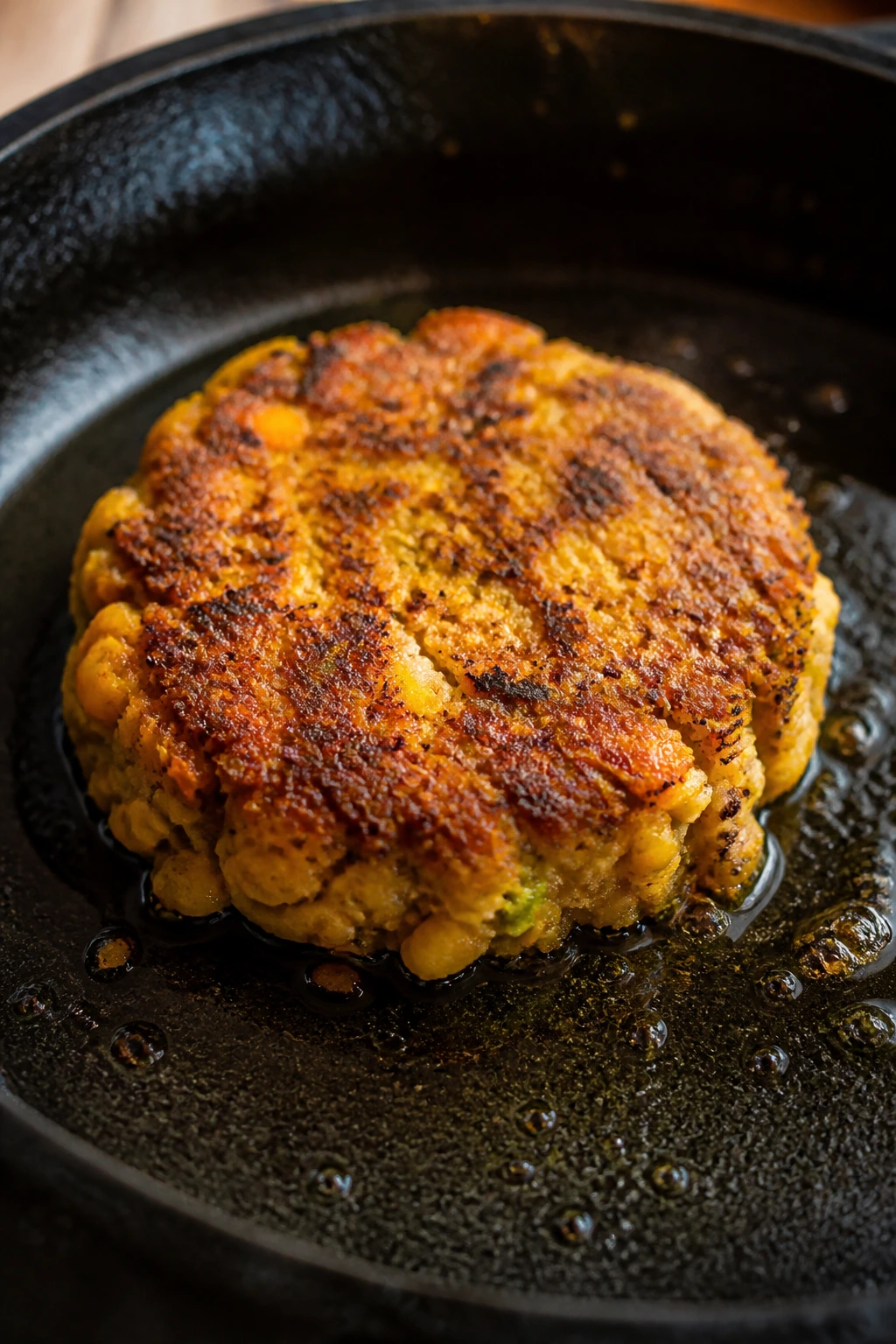
This part moves fast, so get the pan hot before you start scooping. Fritters want a steady, medium heat. Too low and they drink oil and stay pale. Too high and the outside burns before the center sets. The middle ground is the sweet spot.
Heat the Skillet:
10. Set a 12-inch skillet over medium heat and add 1 tablespoon of olive oil. When the oil shimmers and moves easily across the pan, you’re ready.
11. Scoop about 1/4 cup of the mixture for each fritter and gently flatten it into a patty about 1/2 inch thick. If the mixture sticks to your hands, wet your palms lightly with water.
Cook in Batches:
12. Lay the fritters in the skillet without crowding them. Cook for 3 to 4 minutes per side, turning once, until the outside is crisp and deep golden brown and the center feels set when pressed gently with a spatula.
13. Transfer the fritters to a paper towel-lined plate or a wire rack. Add a little more oil to the pan between batches if the surface looks dry.
14. Finish with a pinch of salt while they’re still hot. Serve right away with the yogurt sauce and a squeeze of lemon if you like a sharper edge.
How to Serve Them as Dinner
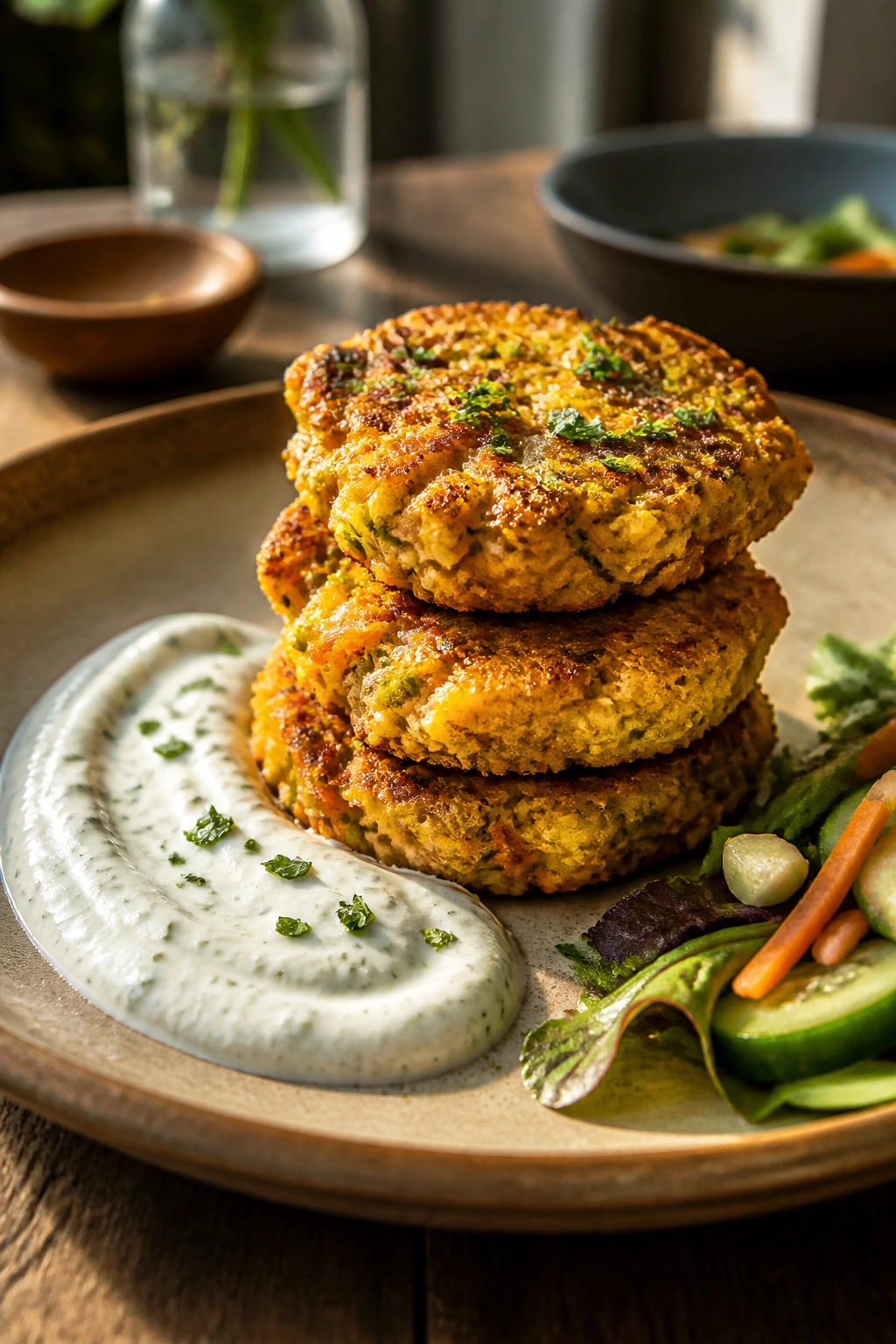
Presentation: Stack 3 fritters slightly overlapping on warm plates and spoon the yogurt sauce in a thick ribbon beside them, not over the top. That keeps the crust visible and stops the first minutes at the table from turning soggy. A little chopped parsley or chives on the plate makes the whole thing look intentional, and a lemon wedge on the side gives people control over the brightness.
Accompaniments: A sharp salad is the right move here. I like peppery arugula with shaved cucumber, or a cabbage slaw dressed with lemon and olive oil. If you want something more filling, serve the fritters with brown rice, quinoa, or a handful of warm pita on the side. The extra starch gives the plate enough weight for a full dinner without making it feel heavy.
Portions: Two fritters make a light lunch. Three fritters is the better dinner portion for most people, especially if there’s a salad or grain on the plate. If you’re serving them as a starter, plan on one or two per person and keep the sauce in a small bowl so people don’t overload the plate.
Beverage Pairing: Sparkling water with lemon is clean and practical. If you want something with more character, try a dry white wine with citrus notes, or a cold pale ale if that’s the glass you reach for on a weeknight. The yogurt sauce and roasted vegetables like a drink with some snap, not anything sweet.
Additional Tips for Better Fritters
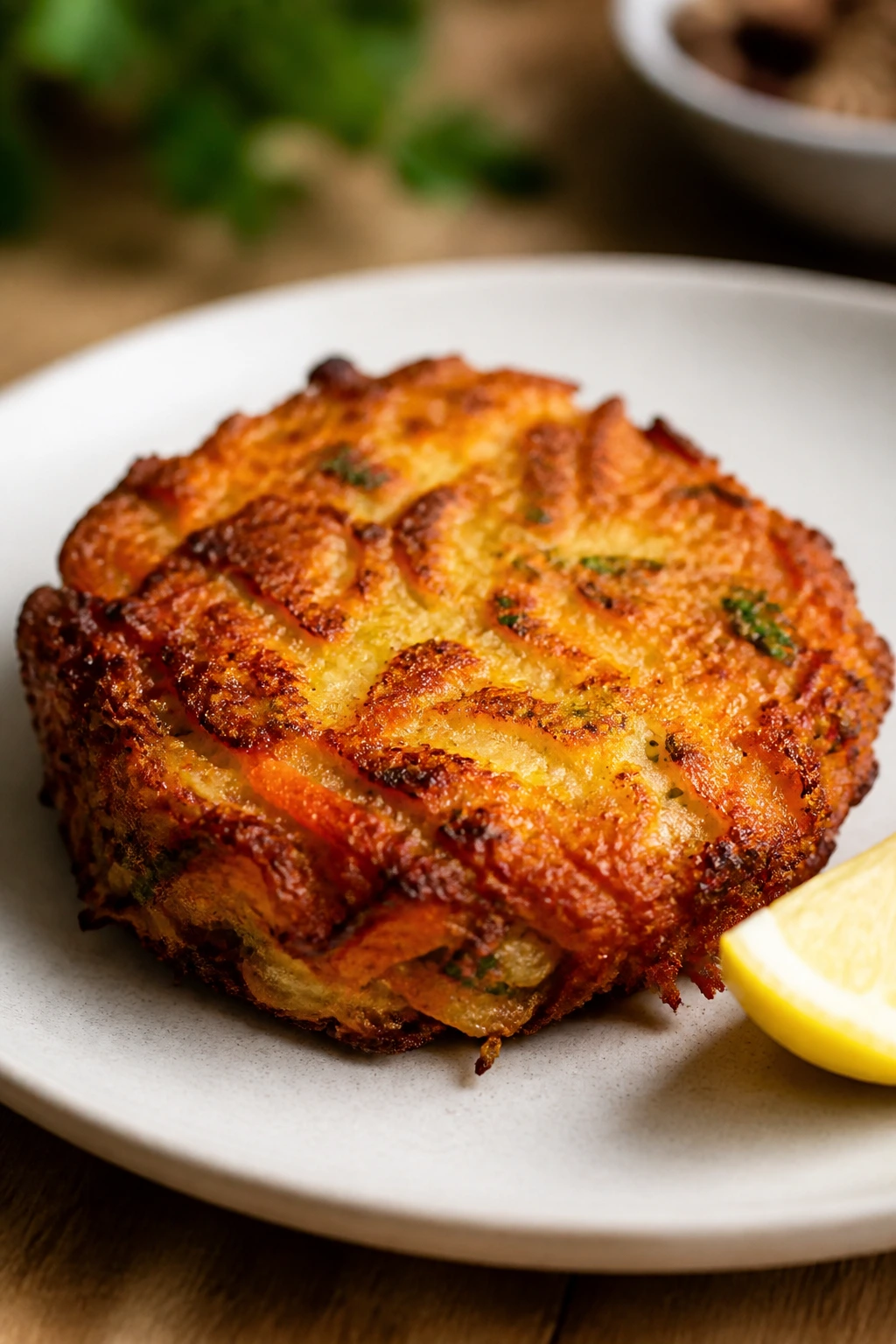
Flavor Enhancement: A tiny pinch of extra smoked paprika in the batter gives the fritters a warmer, roasted edge, especially if your vegetables browned unevenly. I also like a final squeeze of lemon over the hot fritters before serving. It wakes up the sweet potato and keeps the plate from tasting sleepy.
Time-Saver: Roast the vegetables earlier in the day, or even the day before, and keep them chilled until you’re ready to mix. Cold roasted vegetables are easier to handle, and the batter usually holds a little better because the mix starts out less steamy. You can also make the yogurt sauce ahead; it tastes better after sitting for 20 minutes.
Texture Fix: If you want a firmer fritter, mash a few more chickpeas. If you want a looser, chunkier center, mash less and keep the vegetable pieces larger. There’s a real difference between “cohesive” and “paste,” and the second one is not the goal.
Make-It-Yours: If you like more herb flavor, double the parsley and add dill. If you prefer a richer finish, fold in another tablespoon of Parmesan and cut back on the salt by a pinch. For a dairy-free plate, skip the cheese and serve with tahini sauce instead of yogurt.
Mistakes That Make Fritters Heavy or Soggy
-
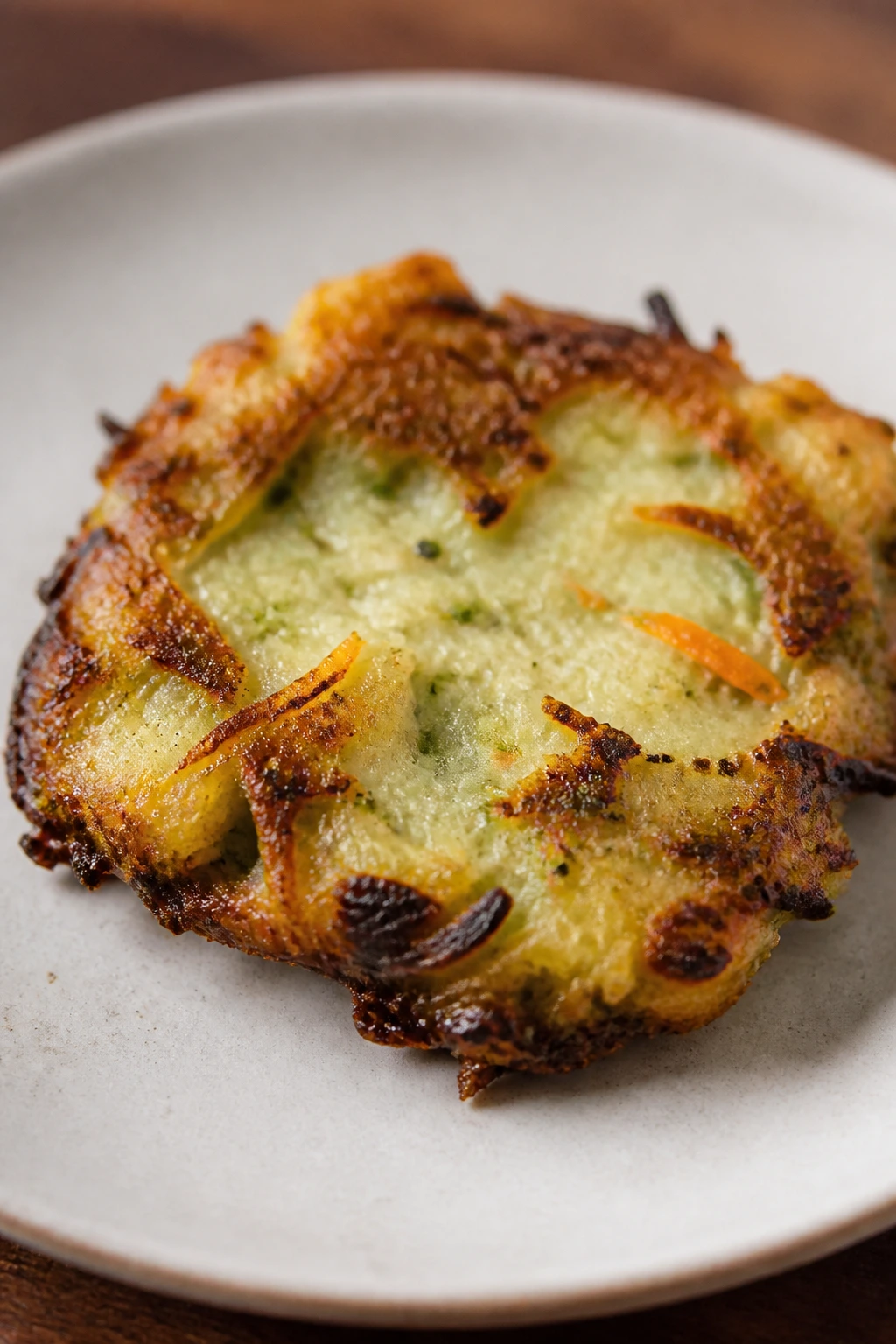
Crowding the roasting pan: If the vegetables sit on top of one another, they steam instead of browning. The symptom is pale, damp pieces that never quite crisp in the skillet. Fix it by using a larger pan or two sheet pans.
-
Adding the eggs while the vegetables are still hot: Hot vegetables can start to cook the eggs on contact, which gives you weird little ribbons instead of a smooth batter. Let the tray cool for 10 minutes before mixing.
-
Overloading the bowl with flour: Too much flour turns the fritters bready and dull. If the mixture feels loose, test-fry one fritter first; often a short rest is enough, and if it still needs help, add flour in 1-tablespoon increments.
-
Flipping too early: A fritter that hasn’t set on the bottom will tear when you turn it. Wait until the underside is deep golden and the edges look dry and firm before you reach for the spatula.
-
Using a cold or dry skillet: The fritters will stick and absorb oil unevenly. The pan should be hot enough that the oil shimmers before the batter goes in, and you should add a little more oil between batches if the pan looks bare.
-
Making them too thick: Thick patties look sturdy, but the center can stay soft while the outside over-browns. Aim for about 1/2 inch thick and keep the scoop size consistent.
Smart Variations to Try
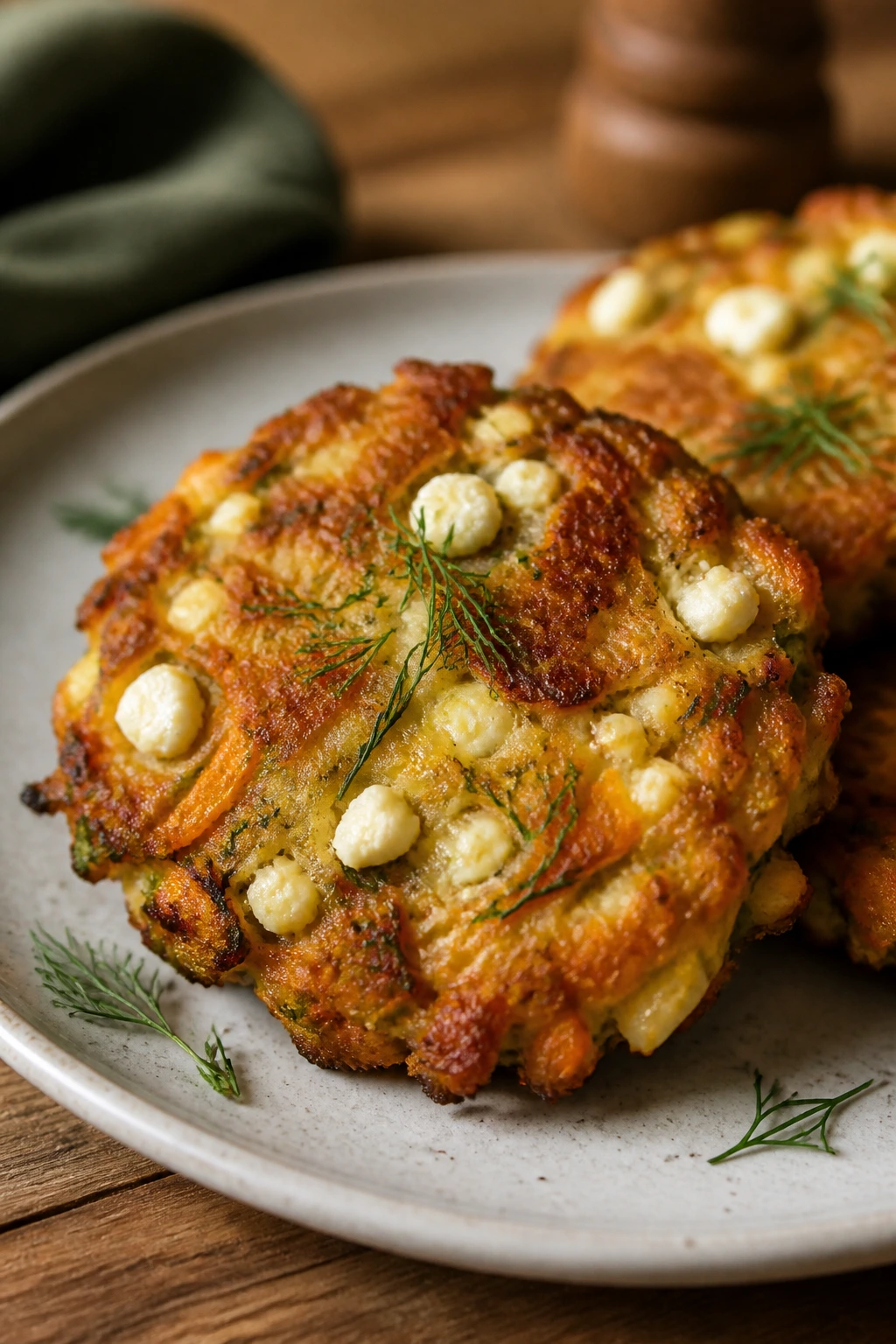
Feta and Dill Fold-In
Swap the Parmesan for 1/2 cup crumbled feta and replace the parsley with dill. The result is saltier and brighter, with a slightly more Mediterranean feel. It’s the version I’d serve with cucumber salad and extra lemon.
Smoky Chipotle Skillet
Replace the smoked paprika with 1 teaspoon chipotle powder and add a tablespoon of chopped cilantro to the batter. The heat sits in the background rather than punching through, which makes the fritters good with avocado slices or a quick tomato salsa.
Green Garden Batch
Substitute broccoli for the cauliflower and add 1 cup finely chopped spinach, squeezed dry. You’ll need to be strict about draining the spinach or the batter loosens fast, but the color is lively and the flavor stays fresh and grassy.
Gluten-Free Oat and Chickpea Version
Use certified gluten-free panko or swap the panko for 1/2 cup oat flour. The fritters brown a little more gently, but they hold together well if you give the batter a full 10-minute rest before frying.
Oven-Baked Sheet Pan Version
Scoop the fritters onto a parchment-lined sheet pan, brush the tops with olive oil, and bake at 425°F (220°C) for 14 minutes, then flip and bake 10 to 12 minutes more. They will not be as crisp as skillet-fried fritters, but the method works when you want to keep the oil down or avoid standing over the stove.
Make-Ahead, Storage, and Reheating
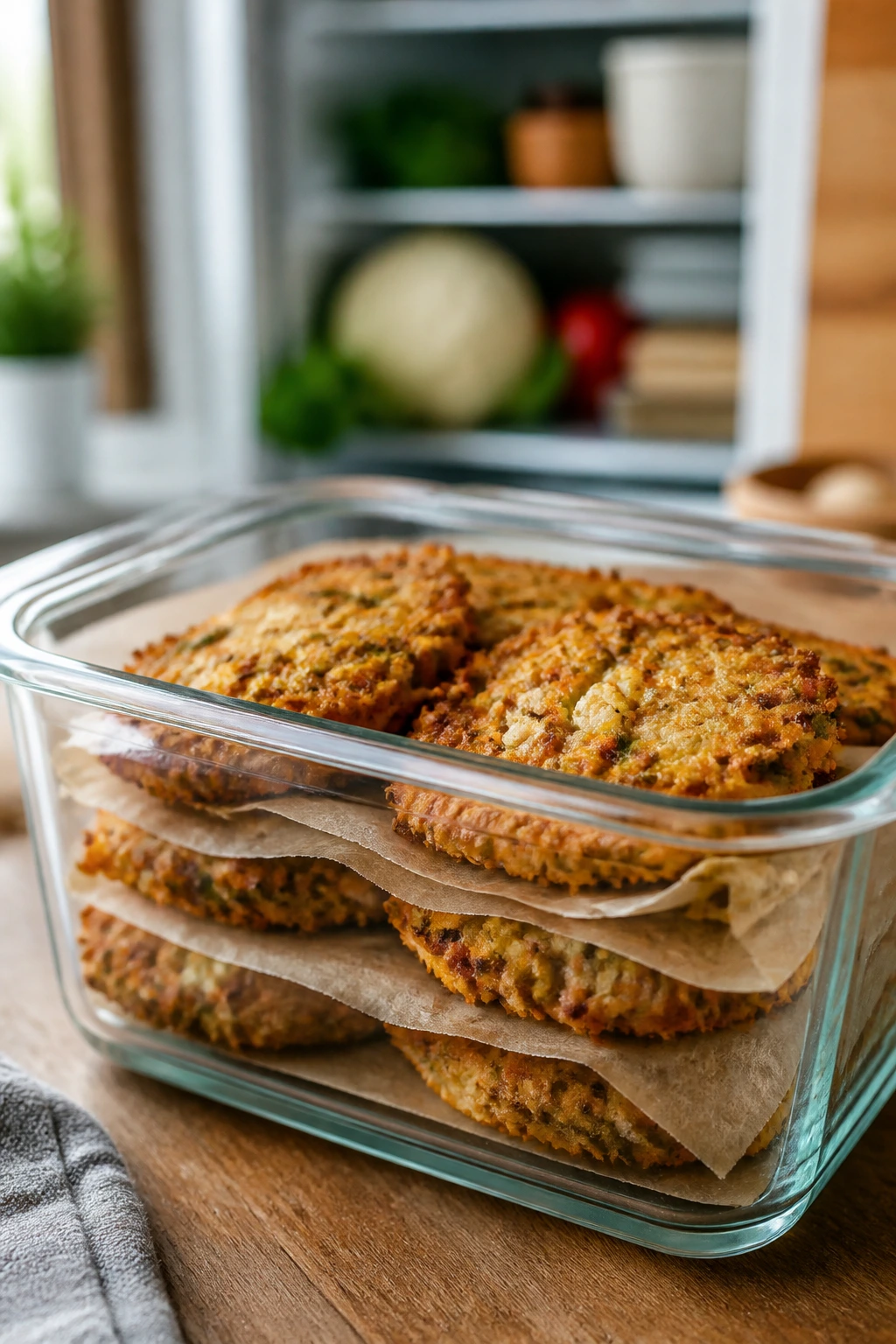
These fritters keep well, but the texture changes a little after refrigeration, so the reheat method matters. Store leftover fritters in an airtight container with parchment between layers if you’re stacking them. They hold in the refrigerator for 3 to 4 days. The yogurt sauce keeps for up to 4 days as well, though it may loosen a touch and need a stir.
For freezing, place the cooled fritters on a baking sheet and freeze them until firm, then move them to a freezer bag or container. They keep for up to 2 months. Freeze the sauce separately; yogurt sauces usually split after thawing, and I don’t bother pretending otherwise.
The best way to reheat the fritters is in a 375°F (190°C) oven for 10 to 12 minutes if they’re chilled, or 15 to 18 minutes if they’re frozen. A skillet also works well: medium heat, a thin film of oil, and about 2 minutes per side until the edges crisp again. The microwave will heat them, sure, but it also softens the crust into something floppy. If you have time for one extra pan, use the skillet.
For make-ahead cooking, roast the vegetables and mix the batter earlier in the day, then refrigerate the batter for up to 8 hours before shaping. I wouldn’t push the raw batter much beyond that because the vegetables keep releasing moisture and the panko loses some of its spring. If you need to work farther ahead, cook the fritters fully, cool them, and reheat them later. That version behaves better than half-work.
Questions Readers Ask About Roasted Veggie Fritters

Can I bake these instead of frying them?
Yes. Brush the shaped fritters with olive oil and bake them on parchment at 425°F until the tops are set and the bottoms have browned, then flip once. The baked version is a little less crisp than the skillet version, but the flavor stays strong because the vegetables were roasted first.
Why do my fritters fall apart in the pan?
Usually because the mixture is too wet or the skillet is too cool. Let the roasted vegetables cool fully, rest the mixture for 10 minutes, and cook one test fritter before the full batch. If the test patty slumps, add a tablespoon of flour or a little more panko and try again.
Can I use leftover roasted vegetables?
Absolutely, and this is one of the smartest ways to use them. Chop them small before mixing so the batter stays cohesive, and be careful with already seasoned vegetables — leftover roasted carrots and sweet potatoes can carry more salt than you think. If the leftovers are oily, blot them lightly before adding them to the bowl.
What if I don’t have chickpeas?
White beans work, though they make a softer fritter. You can also skip the beans and add another 1/4 cup of panko plus 1 tablespoon of flour, but the texture will be less sturdy and a little more delicate. Chickpeas are the easiest path because they mash into the vegetables without disappearing.
Can I make the fritters ahead for lunch boxes?
Yes, and they hold up better than you’d expect. Cool them completely, pack the sauce separately, and reheat them in a skillet or oven before packing if you want to keep the crust from turning limp. They’re good cold too, but the texture is better when they’re warmed first.
What vegetables should I avoid in this recipe?
Skip anything that dumps out a lot of water unless you’re prepared to wring it out first. Raw zucchini, tomatoes, and mushrooms all need extra handling, or they’ll loosen the mixture and make the patties fragile. If you want to include them, roast them until they’re drier than you think they need to be.
Can I make these without dairy?
Yes. Leave out the Parmesan and use tahini sauce instead of yogurt, thinned with lemon juice and water until spoonable. The fritters will still brown well because the vegetables and eggs do most of the structure work.
The Kind of Dinner That Disappears Fast
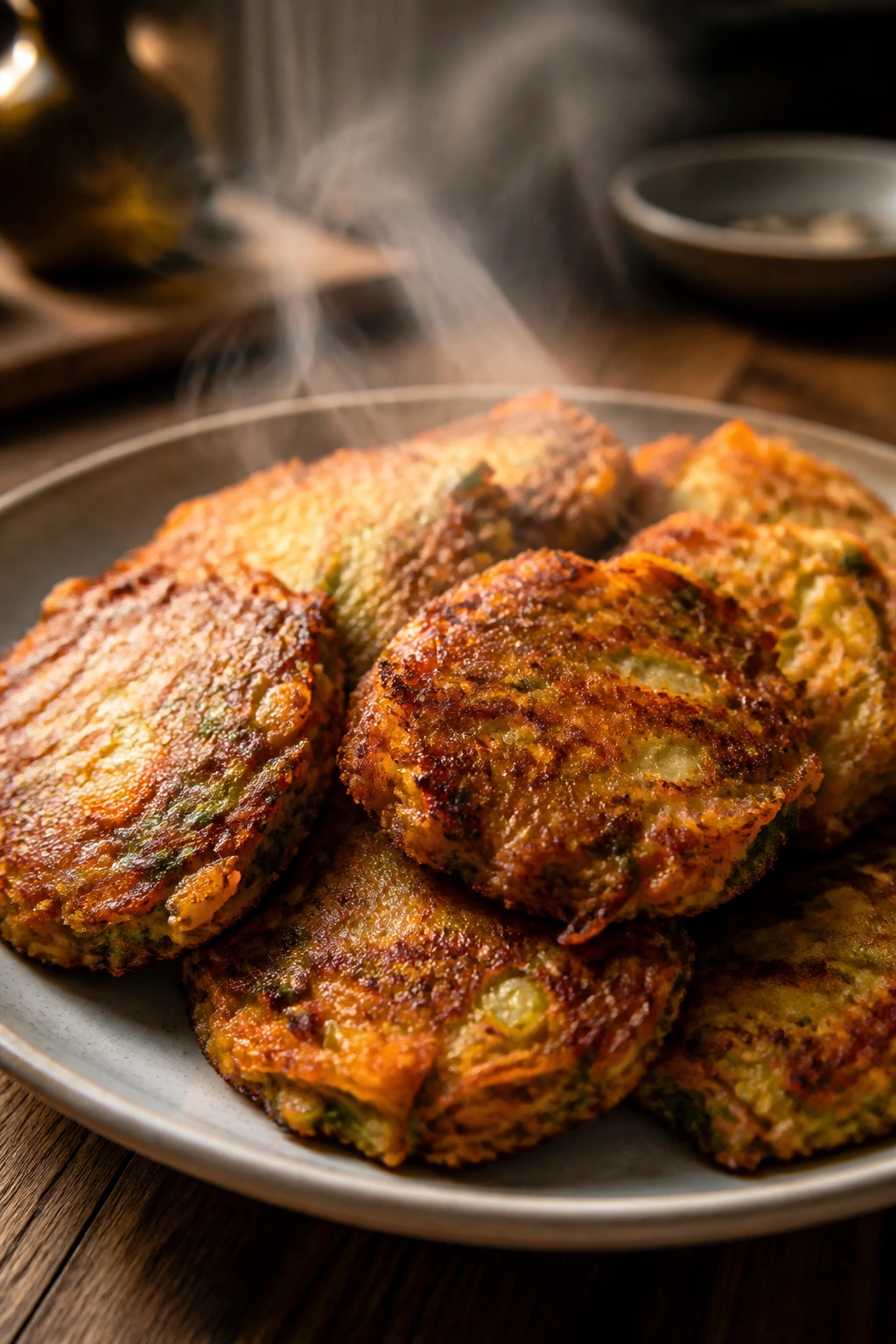
Roasted veggie fritters are the sort of dinner that makes a plain pile of vegetables feel like a plan. The oven gives them sweetness, the skillet gives them edges, and the sauce gives them the one thing a good fritter always needs: contrast. Bright on the side. Crisp where it matters. Soft in the middle.
I like recipes that solve a problem without acting like they’re heroic. This one does that. It takes a few ordinary vegetables, keeps the process calm, and lands you with a plate that feels thoughtful enough for company and easy enough for a tired Tuesday. If the crisper drawer is looking a little chaotic, this is a fine way to turn that into dinner.
Roasted Veggie Fritters — Recipe Card
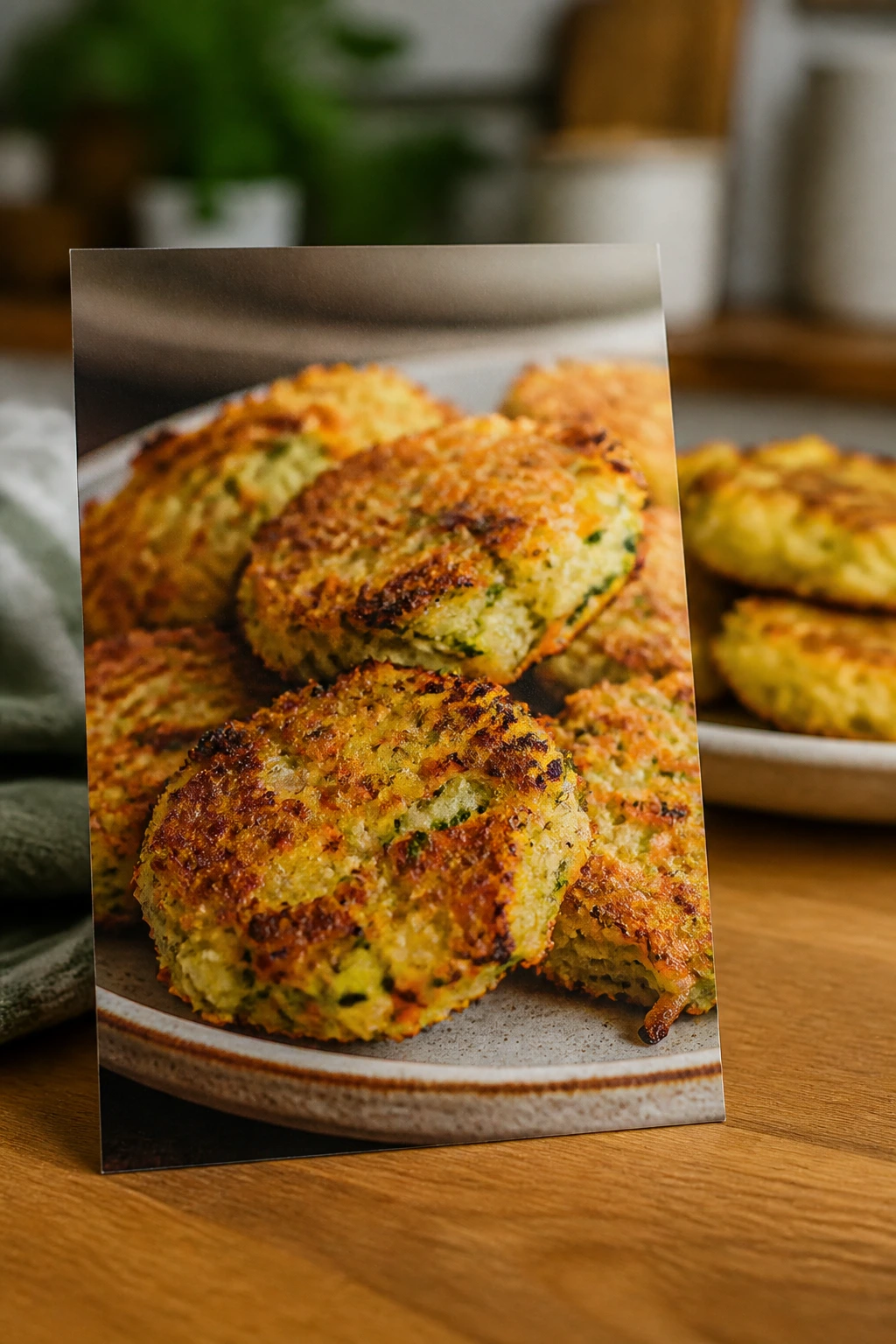
Recipe Name: Roasted Veggie Fritters with Lemon-Herb Yogurt Sauce
Description: These vegetable fritters start with roasted cauliflower, sweet potato, carrots, and onion for deeper flavor and less moisture. Chickpeas, eggs, and panko help them hold together in the skillet, while the lemon-herb yogurt sauce keeps each bite bright.
Prep Time: 20 minutes
Cook Time: 35 minutes
Total Time: 55 minutes
Course: Dinner, Main Course
Cuisine: Vegetarian, American
Servings: 4 servings
Calories: About 325 kcal per serving
Ingredients
For the Roasted Vegetables
- 1 small head cauliflower, about 1 pound, cut into 1-inch florets
- 1 medium sweet potato, about 10 ounces, peeled and cut into 1/2-inch cubes
- 2 medium carrots, about 6 ounces total, peeled and cut into 1/2-inch coins
- 1 small red onion, cut into 1/2-inch wedges
- 1 tablespoon olive oil
- 1 teaspoon kosher salt, divided
- 1/2 teaspoon black pepper, divided
- 1/2 teaspoon smoked paprika
- 1/4 teaspoon ground cumin
For the Fritter Mixture
- 1 cup canned chickpeas, drained, rinsed, and patted dry
- 2 large eggs
- 1/2 cup whole wheat panko breadcrumbs
- 1/4 cup grated Parmesan
- 2 tablespoons chopped fresh parsley
- 1 tablespoon chopped chives or thinly sliced green onions
- 1 teaspoon lemon zest
- 1 to 2 tablespoons all-purpose flour, only if needed
For the Lemon-Herb Yogurt Sauce
- 1 cup plain Greek yogurt
- 1 tablespoon lemon juice
- 1 small garlic clove, finely grated
- 1 tablespoon chopped dill or parsley
- Pinch of kosher salt
- 1 to 2 teaspoons water, only if needed to thin
Instructions
- Preheat the oven to 425°F (220°C) and line a rimmed sheet pan with parchment paper.
- Toss the cauliflower, sweet potato, carrots, and red onion with olive oil, 1/2 teaspoon salt, 1/2 teaspoon black pepper, smoked paprika, and cumin.
- Roast for 20 minutes, stir, then roast 8 to 12 minutes more until browned and tender. Cool for 10 minutes.
- Stir together the yogurt, lemon juice, garlic, dill or parsley, and a pinch of salt. Thin with water if needed.
- Mash the roasted vegetables with the chickpeas in a large bowl, leaving some chunks.
- Mix in the eggs, panko, Parmesan, parsley, chives, lemon zest, and remaining 1/2 teaspoon salt. Rest the mixture for 10 minutes. Add flour 1 tablespoon at a time only if the mix still feels loose.
- Heat 1 tablespoon olive oil in a 12-inch skillet over medium heat.
- Scoop about 1/4 cup of the mixture per fritter, flatten slightly, and cook 3 to 4 minutes per side until deeply golden and crisp.
- Transfer to a paper towel-lined plate or rack and season lightly with salt.
- Serve warm with the yogurt sauce and lemon wedges.
Notes: Roast the vegetables in a single layer for the best flavor and texture. If the batter looks loose, let it rest before adding more flour. Reheat leftovers in a skillet or 375°F oven to bring the edges back to life.