



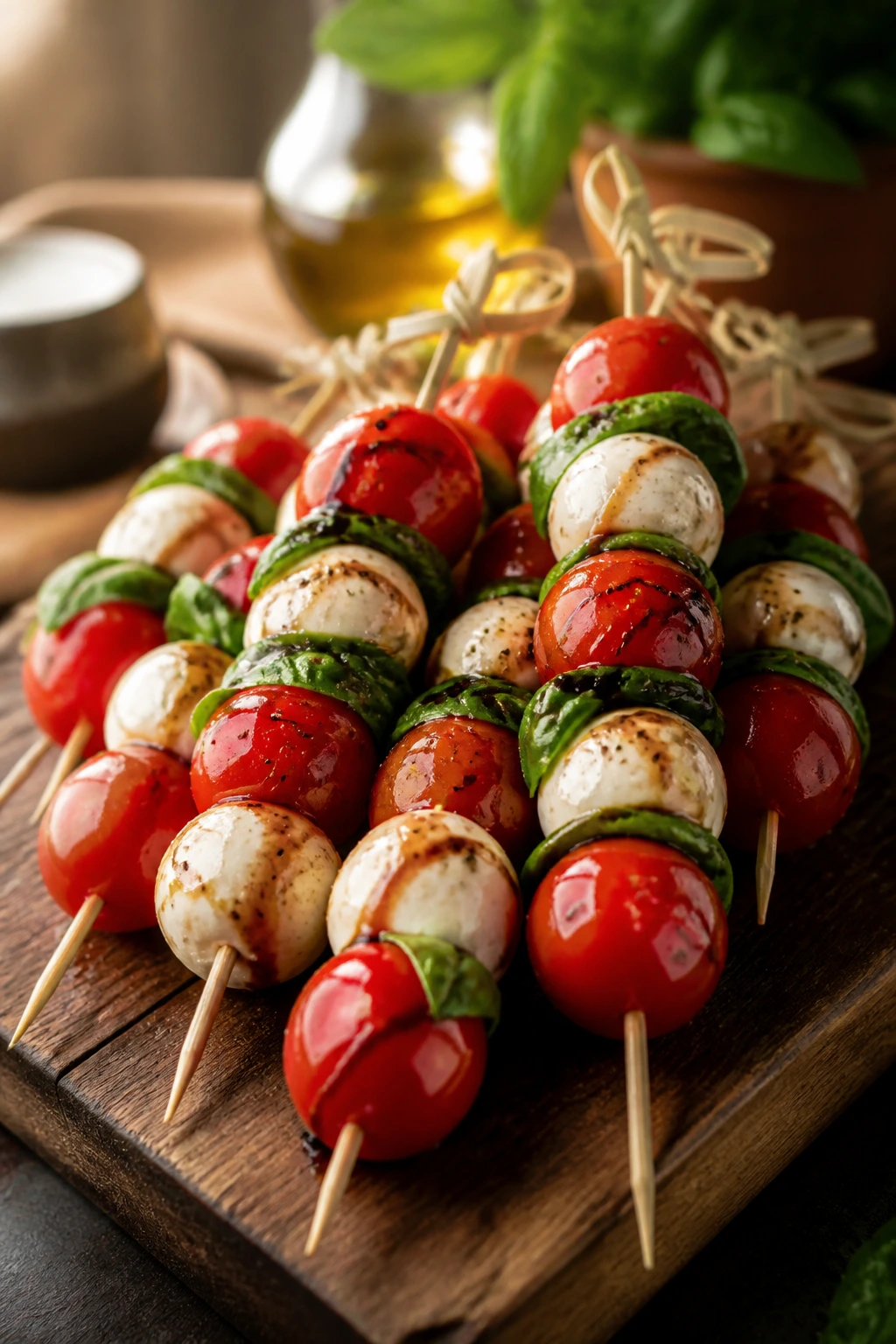
The best Caprese skewers have a little swagger. Not a lot. Just enough to make a tray disappear fast: cherry tomatoes that pop when you bite them, mozzarella that stays cool and milky, basil that smells like it was just pinched off the plant, and a ribbon of balsamic glaze that lands like dark varnish instead of a puddle. That’s the Tuscany part, really — restraint, clean flavors, olive oil that tastes grassy, and ingredients that don’t need much help.
The weak versions fail in predictable ways. The tomatoes are watery. The cheese is cold and rubbery. The basil goes limp before the tray reaches the table. Once you fix those three things, the whole idea starts to make sense. Caprese skewers stop feeling like a cute party trick and start behaving like a tidy, hand-held salad with a sharper dress code.
Some of the versions below stay close to the classic caprese formula. Others lean into Tuscan pantry territory: figs, artichokes, rosemary, prosciutto, white beans, crusty bread, even a little smoke. They all share the same basic promise — one bite, maybe two, no fork required — and they all work because the ingredients are dry, distinct, and easy to thread without collapsing into a soggy mess.
Why These Caprese Skewers Deserve Space on the Table
-
Fast assembly: Most of these skewers come together in 15 to 25 minutes because the work is mostly rinsing, drying, slicing, and threading.
-
Party-friendly bites: Guests can grab one without hunting for a plate or balancing a slippery tomato wedge on a napkin.
-
Tuscan pantry energy: Olive oil, basil, balsamic, figs, rosemary, artichokes, and prosciutto keep the flavors anchored in central Italian cooking.
-
Flexible serving temperature: Some versions taste best chilled, while the roasted, grilled, or toasted ones hold up at room temperature for a good stretch.
-
Easy scaling: Doubling a skewer recipe is almost insultingly simple. You just multiply the ingredients and keep the order of assembly the same.
-
Low mess, high payoff: When the tomatoes are dry and the balsamic is thick, the tray stays neat instead of turning into a red-and-green slip hazard.
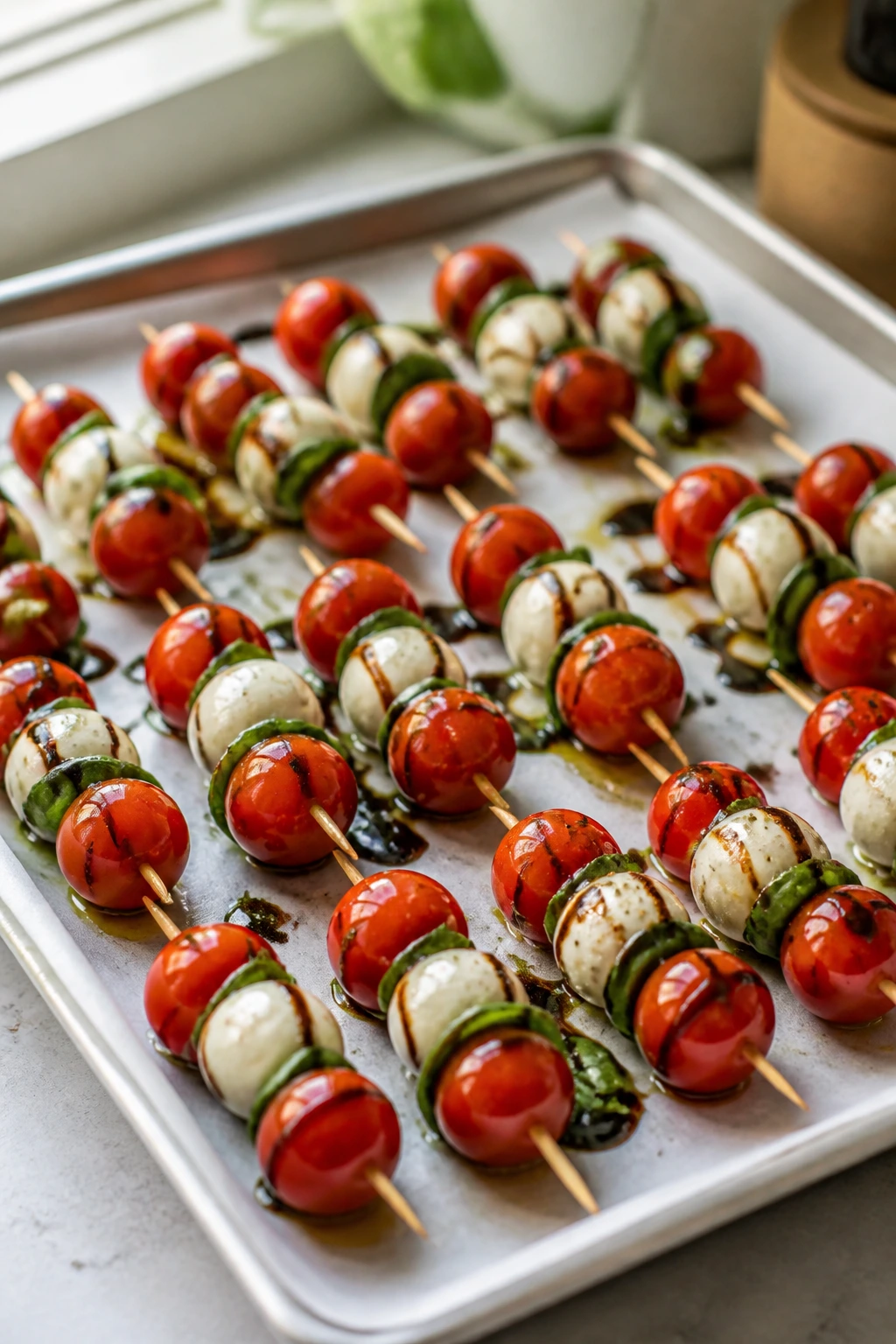
1. Classic Balsamic Caprese Skewers
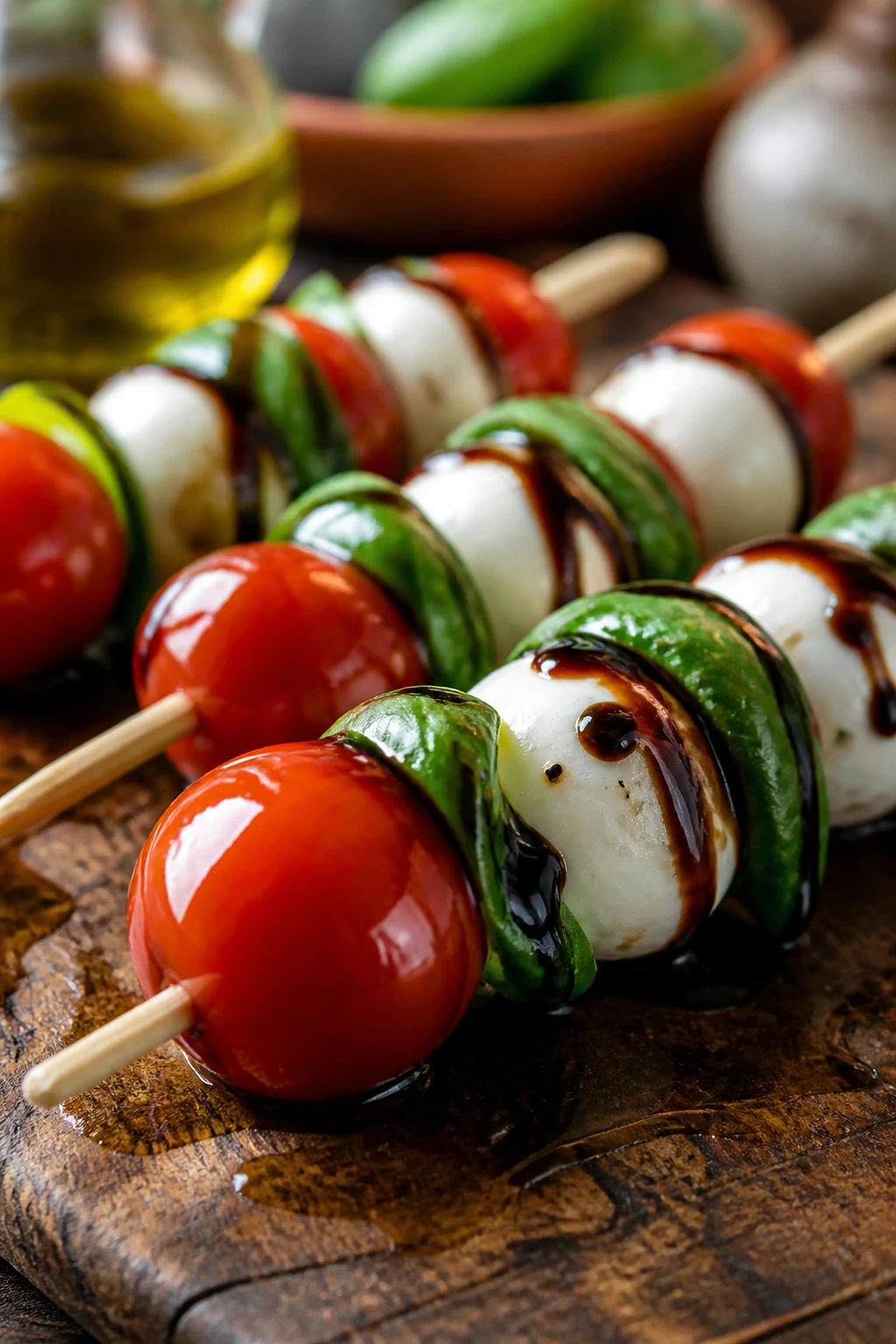
The classic version is the one people reach for first, and there’s a reason it never goes out of rotation. Sweet cherry tomatoes, cool mozzarella, and basil give you that sharp, milky, green taste that caprese is supposed to have. Add a proper balsamic glaze — thick, glossy, slightly sticky — and the skewer suddenly tastes like someone paid attention.
Why It Works:
The balance is doing the heavy lifting here. Tomatoes bring acid and juice, mozzarella brings fat, basil brings perfume, and the glaze adds a dark, sweet edge that keeps the whole bite from tasting flat. The trick is keeping every part dry enough that the skewer stays clean in the hand. If you blot the tomatoes and drain the cheese for 10 minutes, the finished tray looks better and tastes brighter.
Key Ingredients:
- 24 cherry tomatoes, rinsed and patted dry
- 12 fresh mozzarella balls, drained well
- 24 basil leaves, whole and unbruised
- 2 tablespoons extra-virgin olive oil
- 2 tablespoons balsamic glaze
- 1/2 teaspoon flaky sea salt
- 1/4 teaspoon cracked black pepper
- 12 small bamboo skewers or cocktail picks
Quick Steps:
- Pat the cherry tomatoes dry with paper towels and let the mozzarella drain in a colander for at least 10 minutes.
- Thread 2 cherry tomatoes, 1 mozzarella ball, and 2 basil leaves onto each skewer.
- Arrange the skewers on a platter in a single layer.
- Drizzle with the olive oil and balsamic glaze, then finish with flaky salt and black pepper.
- Serve right away, or chill for up to 4 hours if you want the basil a little firmer.
Equipment for This Recipe:
- 12 small bamboo skewers or cocktail picks
- Paper towels
- Small colander
- Shallow serving platter
- Small spoon for the glaze
How to Serve This Dish:
These belong on a simple white platter so the colors do the talking. A few whole basil leaves scattered around the edge look better than a pile of extra garnish.
Serve them with sliced ciabatta, marinated olives, or a bowl of melon if the rest of the spread is rich. Two skewers make a light starter; four is enough for a lunch plate with bread.
Pro Tips for This Recipe:
- Use balsamic glaze, not straight vinegar. Thin vinegar runs off and stains the platter.
- Salt at the end. Salt draws moisture from tomatoes fast.
- Keep the basil leaves whole. Torn leaves bruise and blacken faster.
- If your mozzarella sits in water, pat it dry twice.
Variations on This Dish:
- Heirloom Rainbow: Swap cherry tomatoes for mixed yellow and red heirlooms and use flaky salt only.
- Garlic Oil Finish: Replace half the olive oil with garlic-infused oil for a sharper edge.
- Rosemary Skewer Base: Use stripped rosemary sprigs as a fragrance move for special trays, but only if the stems are sturdy enough.
Common Mistakes to Avoid with This Dish:
- Wet tomatoes: The platter turns watery and slippery. Dry them well before threading.
- Thin glaze: A watery drizzle makes the tray look messy. Use a glaze that clings in a slow ribbon.
- Oversalting too early: The tomatoes start leaking. Salt at the table or right before serving.
2. Prosciutto-Ribbon Caprese Skewers
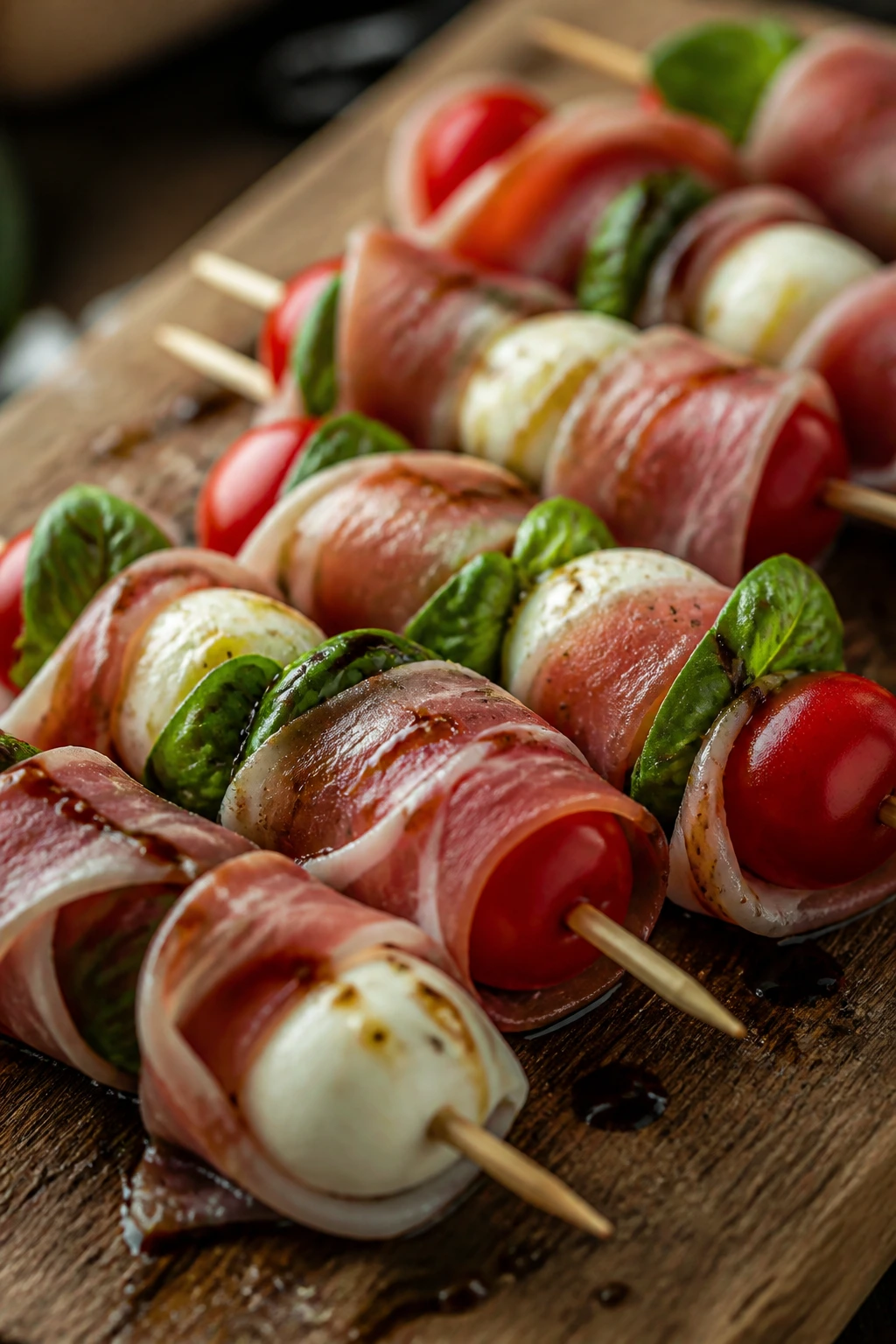
This version tastes saltier, richer, and a little more polished without getting fussy. Prosciutto wraps around the cheese and tomato like a soft ribbon, so every bite brings that clean caprese core plus a savory edge that feels closer to a proper antipasto tray.
Why It Works:
Prosciutto gives structure where the classic skewer can feel airy. The salt in the meat sharpens the tomato and makes the mozzarella taste even milkier. It also solves a practical problem: the ribbon helps lock the ingredients together, so the skewer is easier to handle on a crowded table. Thin slices matter here. Thick prosciutto gets chewy and starts fighting the cheese instead of flattering it.
Key Ingredients:
- 24 cherry tomatoes, dried well
- 12 fresh mozzarella balls
- 6 ounces very thin prosciutto, sliced into ribbons
- 24 basil leaves
- 1 tablespoon extra-virgin olive oil
- 1 tablespoon balsamic glaze
- 1/4 teaspoon black pepper
- 12 small skewers
Quick Steps:
- Split each prosciutto slice lengthwise so you get long, narrow ribbons.
- Thread 2 cherry tomatoes, 1 mozzarella ball, a folded prosciutto ribbon, and 2 basil leaves onto each skewer.
- Lay the skewers on a platter and tuck any loose prosciutto edges under the cheese.
- Drizzle lightly with olive oil and a thin line of balsamic glaze.
- Crack black pepper over the top just before serving.
Equipment for This Recipe:
- Sharp knife
- Cutting board
- 12 small skewers
- Paper towels
- Serving platter
How to Serve This Dish:
These do well beside marinated artichokes, olives, or a bowl of toasted almonds. They already bring salt and fat, so the rest of the plate can stay simple.
Set them on a slate tray or wood board and let the prosciutto curls show. One skewer makes a strong bite; two skewers with bread and fruit make a solid starter plate.
Pro Tips for This Recipe:
- Chill the prosciutto for 10 minutes before slicing if it’s too soft to handle.
- Fold the ribbon loosely. Tight wrapping squeezes the mozzarella.
- Use pepper sparingly. Prosciutto already brings enough salt.
- Don’t let the skewers sit under plastic wrap for hours. The basil will collapse.
Variations on This Dish:
- Speck Swap: Use speck instead of prosciutto if you want a smoke note.
- Fig Accent: Add a quartered fresh fig between the cheese and tomato.
- Peppery Finish: Add one tiny pinch of crushed red pepper to the glaze for a hotter bite.
Common Mistakes to Avoid with This Dish:
- Thick meat slices: They chew like leather. Ask for paper-thin slices.
- Too much glaze: The prosciutto gets sticky and loses its clean edge. Drizzle lightly.
- Warm assembly: If the meat sits out too long, it gets slippery. Keep it cold until the last minute.
3. Peach and Burrata Caprese Skewers
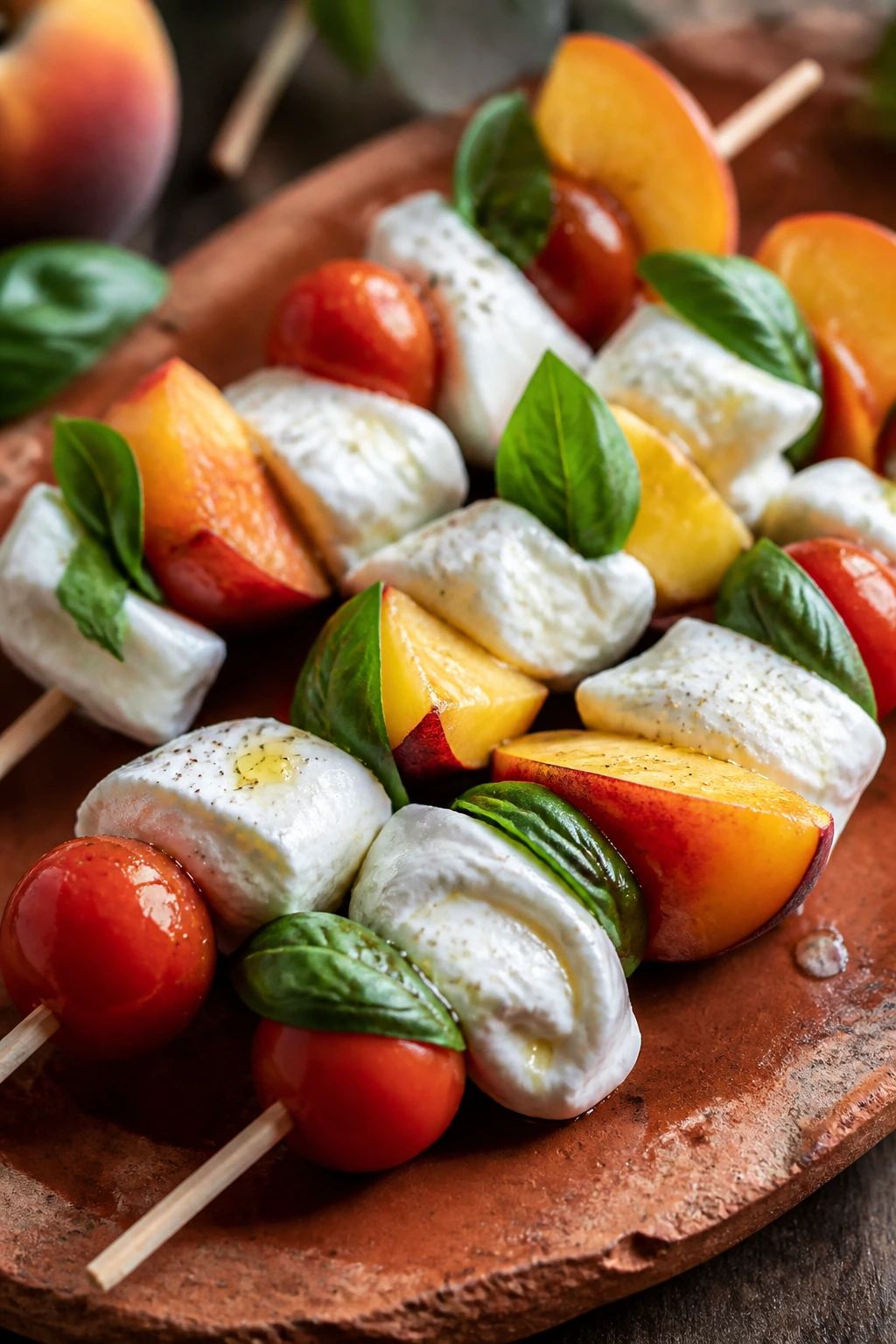
This is the one that makes people pause before they take a bite. The peach brings a soft, floral sweetness; the burrata brings cream; the basil keeps it grounded. It tastes like late lunch on a shaded terrace, with a breeze and a glass of something cold.
Why It Works:
Peaches and tomatoes share enough acidity to feel related, which is why this skewer doesn’t read like dessert even though the fruit is sweeter than the classic version. Burrata adds a softer center than mozzarella, so the bite feels lush rather than squeaky. Keep the burrata chilled and dry, and it will hold together long enough to thread without leaking all over the plate.
Key Ingredients:
- 2 ripe but firm peaches, cut into 12 wedges
- 1 ball (8 ounces) burrata, chilled
- 12 cherry tomatoes
- 24 basil leaves
- 1 tablespoon honey
- 1 tablespoon extra-virgin olive oil
- 1/2 teaspoon flaky salt
- 1/4 teaspoon black pepper
Quick Steps:
- Chill the burrata for 20 minutes so it firms up a little.
- Pat the peach wedges and tomatoes dry.
- Thread a peach wedge, a cherry tomato, a small piece of burrata, and a basil leaf onto each skewer.
- Arrange on a platter and drizzle with olive oil and honey.
- Finish with flaky salt and black pepper right before serving.
Equipment for This Recipe:
- Paring knife
- Small spoon
- 12 short skewers
- Paper towels
- Platter with a lip
How to Serve This Dish:
Serve these as the first tray out, before the more savory skewers. They’re good with sparkling water, crisp white wine, or a few salted crackers on the side.
They look best slightly scattered rather than lined up too neatly. The burrata should sit in soft little white patches between the peach and tomato.
Pro Tips for This Recipe:
- Pick peaches that give slightly when pressed, but don’t split.
- Keep burrata cold until assembly time.
- Drizzle honey lightly. Too much turns this into a dessert bite.
- Serve within 30 minutes of plating for the cleanest texture.
Variations on This Dish:
- Nectarine Version: Use nectarines for a firmer bite and less fuzz.
- Grilled Peach Version: Briefly grill the peach wedges for 60 to 90 seconds per side.
- Apricot Twist: Use ripe apricots when you want a sharper, brighter fruit note.
Common Mistakes to Avoid with This Dish:
- Overripe peaches: They smear on the skewer. Use fruit that still holds shape.
- Burrata too warm: It turns runny fast. Keep it cold until the tray is almost ready.
- Heavy honey drizzle: It buries the basil. Thin streaks are enough.
4. Grilled Zucchini Caprese Skewers
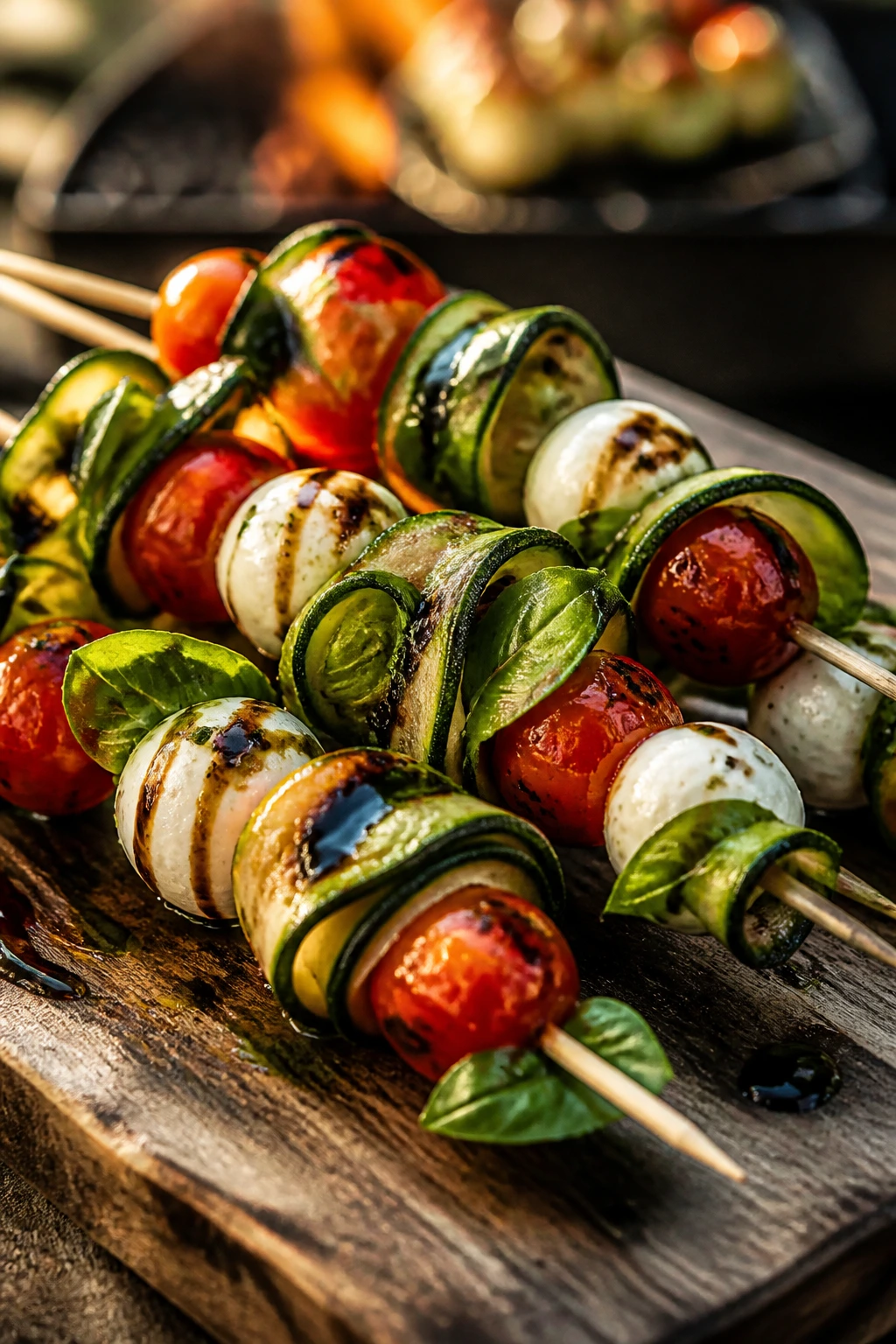
A little smoke changes the whole personality of the tray. Grilled zucchini brings a soft char and a faint sweetness that makes the tomatoes taste juicier and the cheese taste cleaner. The result feels a lot more Tuscan than a raw vegetable skewer has any right to.
Why It Works:
Zucchini is mild, which sounds boring until you grill it and let the edges brown. Then it starts acting like a frame instead of filler. The char gives the skewer depth, and the zucchini ribbon keeps the rest of the ingredients from sliding around. You get a bite that’s still fresh, but less fragile than the classic version.
Key Ingredients:
- 1 medium zucchini, sliced lengthwise into 12 thin ribbons
- 24 cherry tomatoes
- 12 fresh mozzarella balls
- 24 basil leaves
- 2 tablespoons extra-virgin olive oil
- 1 teaspoon lemon zest
- 1 tablespoon balsamic glaze
- 1/2 teaspoon kosher salt
- 1/4 teaspoon black pepper
Quick Steps:
- Brush the zucchini ribbons with 1 tablespoon olive oil and grill them on a grill pan over medium-high heat for 2 minutes per side.
- Let the ribbons cool for 5 minutes, then cut them into skewer-friendly lengths if needed.
- Thread a grilled zucchini ribbon, a tomato, a mozzarella ball, and a basil leaf onto each skewer.
- Drizzle with the remaining olive oil and the balsamic glaze.
- Finish with lemon zest, salt, and black pepper.
Equipment for This Recipe:
- Grill pan or outdoor grill
- Tongs
- 12 skewers
- Knife
- Cutting board
How to Serve This Dish:
These belong next to grilled chicken, roasted peppers, or a bowl of chickpeas dressed in olive oil. They carry enough char to sit beside warmer dishes without disappearing.
A platter lined with a few zucchini ribbons underneath looks neat and deliberate. They’re best served at room temperature, not chilled.
Pro Tips for This Recipe:
- Slice the zucchini ribbons thin enough to bend without cracking.
- Don’t overgrill. You want marks, not limp strips.
- Let the grilled zucchini cool before threading or it will steam the mozzarella.
- Lemon zest gives the whole skewer a lift at the end.
Variations on This Dish:
- Yellow Squash Version: Swap in yellow squash for a slightly sweeter note.
- Ricotta Salata Finish: Add a tiny shaving of ricotta salata over the top.
- Herbed Oil Version: Mix chopped parsley into the olive oil before drizzling.
Common Mistakes to Avoid with This Dish:
- Soggy zucchini: It happens when the ribbons are too thick or undergrilled. Keep them thin and hot.
- Hot assembly: Warm zucchini softens the cheese. Cool it first.
- Skipping the zest: Without it, the skewer tastes flatter and heavier.
5. Pesto-Dressed Caprese Skewers
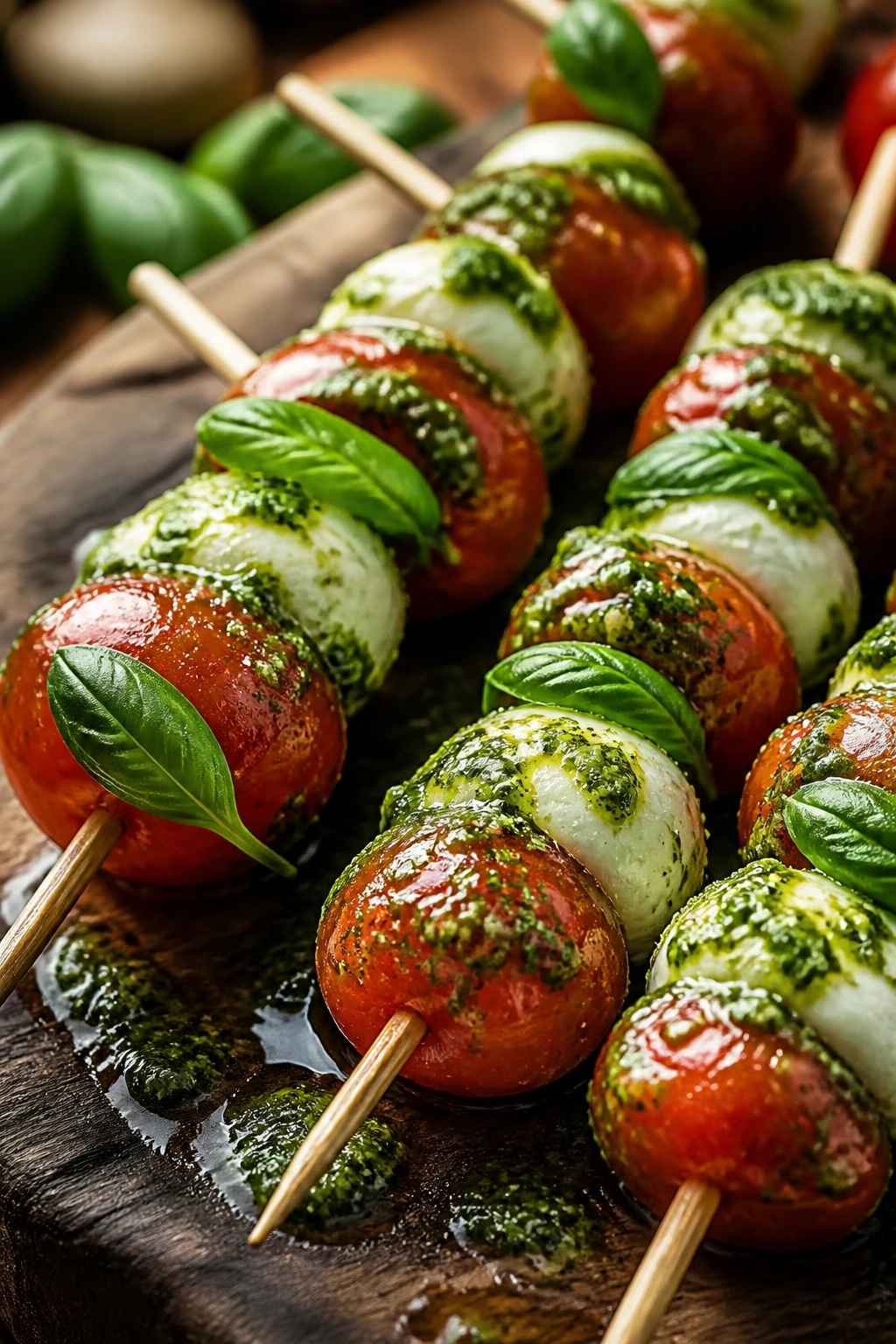
Pesto changes the mood from clean and bright to herb-packed and slightly more luxurious. It clings to the tomatoes and cheese, so every bite carries basil, garlic, and pine nut flavor without needing a separate sauce bowl. This one tastes like the green side of Tuscany.
Why It Works:
Pesto is doing two jobs at once. It adds flavor, and it acts like a dressing that sticks. Thin pesto slides around the plate; a loosened but still spoonable pesto stays on the skewers and threads the whole thing together. You only need a little. Too much pesto buries the tomatoes.
Key Ingredients:
- 24 cherry tomatoes
- 12 fresh mozzarella balls
- 3 tablespoons basil pesto
- 1 tablespoon extra-virgin olive oil
- 1 teaspoon lemon juice
- 24 basil leaves, optional but useful
- 1/4 teaspoon black pepper
- 12 skewers
Quick Steps:
- Stir the pesto with olive oil and lemon juice until it loosens slightly.
- Thread 2 tomatoes, 1 mozzarella ball, and a basil leaf onto each skewer.
- Brush or spoon a small amount of pesto over the cheese and one side of the tomatoes.
- Crack black pepper over the tray.
- Serve immediately, or chill for no more than 2 hours before the basil starts to slump.
Equipment for This Recipe:
- Small bowl
- Spoon or pastry brush
- 12 skewers
- Serving platter
- Paper towels
How to Serve This Dish:
Serve these with roasted bread, grilled vegetables, or a bowl of white beans dressed in olive oil. They’re stronger flavored than the classic version, so they can sit beside heartier bites.
A few pine nuts scattered around the platter look right here if you want extra crunch. The pesto should look like a thin green sheen, not a thick smear.
Pro Tips for This Recipe:
- Thin pesto with a little olive oil so it brushes on cleanly.
- Use a pesto with noticeable basil rather than one that tastes mostly of garlic.
- Apply the pesto after threading, not before.
- Taste the pesto first. Some jarred versions need more lemon.
Variations on This Dish:
- Arugula Pesto: Swap in arugula pesto for a sharper peppery taste.
- Walnut Pesto: Use walnut pesto when pine nuts are out of reach.
- Dairy-Free Pesto: Choose a dairy-free pesto and finish with extra lemon.
Common Mistakes to Avoid with This Dish:
- Thick pesto blobs: They slide and look heavy. Thin the sauce first.
- Too much garlic: It takes over the tomato. Start with less than you think.
- Letting it sit too long: The basil leaves underneath can wilt under the pesto.
6. Fig and Prosciutto Caprese Skewers
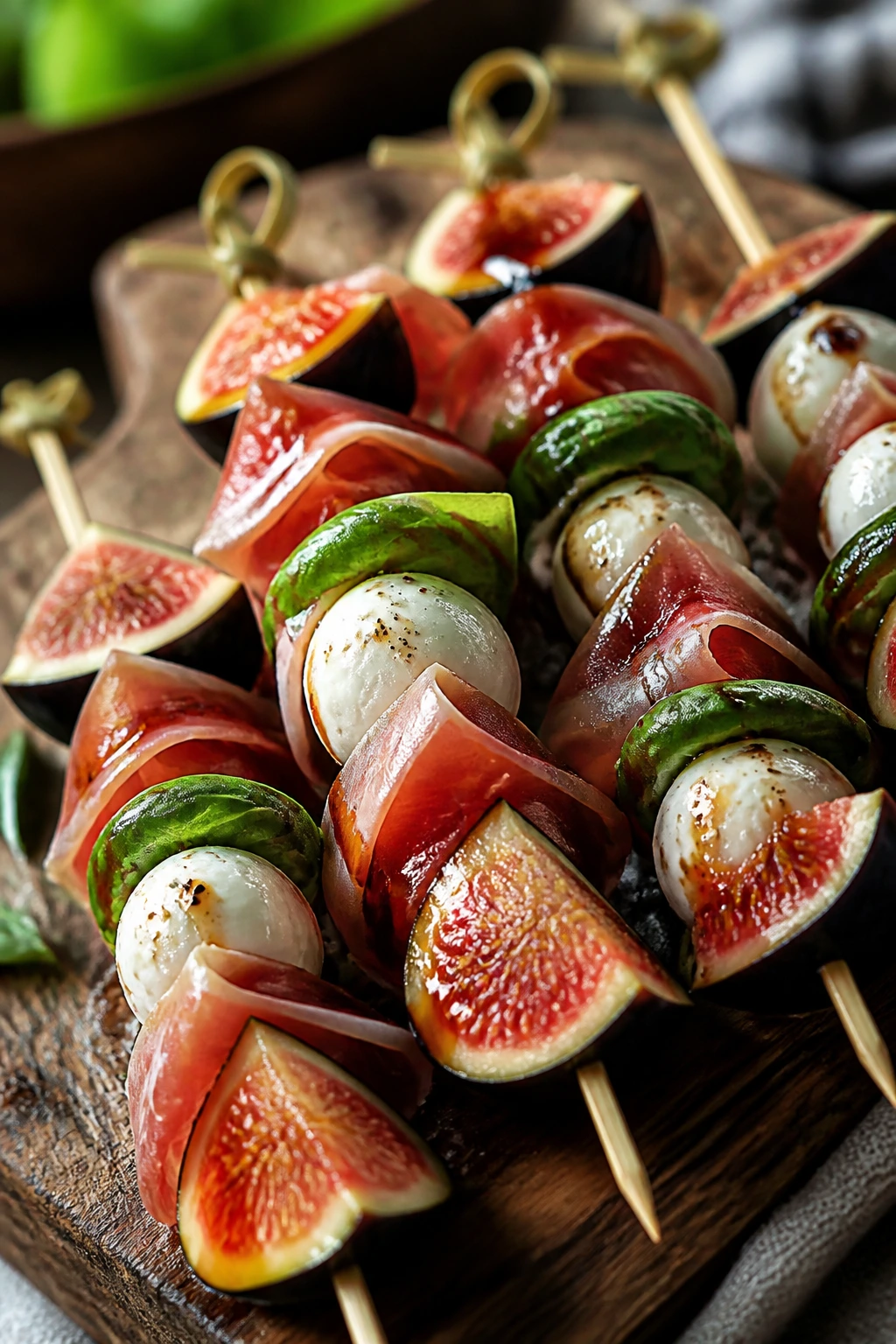
Fresh figs make these taste like a market stand in late summer, especially when you pair them with salty prosciutto and cool mozzarella. There’s no drama in the ingredients. Just ripe fruit, meat, cheese, and basil doing what each of them does best.
Why It Works:
Figs are soft, jammy, and sweet in a way that flatters prosciutto without making the skewer taste like dessert. Their skin holds together better than most stone fruit, which makes them easier to thread. The cheese gives the bite a cold center, and the basil keeps the whole thing from leaning too rich.
Key Ingredients:
- 6 fresh figs, each cut into quarters
- 6 ounces thin prosciutto
- 12 fresh mozzarella balls
- 24 basil leaves
- 1 tablespoon honey
- 1/2 teaspoon black pepper
- 1 teaspoon fresh thyme leaves
- 12 skewers
Quick Steps:
- Cut the figs into quarters and keep the pieces intact.
- Fold the prosciutto into loose ribbons.
- Thread a fig quarter, a mozzarella ball, a folded prosciutto ribbon, and a basil leaf onto each skewer.
- Drizzle with a little honey.
- Finish with thyme leaves and black pepper just before serving.
Equipment for This Recipe:
- Sharp paring knife
- 12 skewers
- Small bowl for honey
- Cutting board
- Platter
How to Serve This Dish:
These do well on a board with olives, almonds, and a hard cheese cut into shards. They’re rich enough that you only need a few on a plate.
If you want a prettier tray, tuck a few halved figs around the skewers. The dark seeds and pink flesh make the rest of the board look better.
Pro Tips for This Recipe:
- Choose figs that bend slightly instead of splitting open.
- Fold the prosciutto into a ribbon, not a tight twist.
- Use honey lightly. Figs already bring sweetness.
- Assemble close to serving time so the fig flesh doesn’t dry out.
Variations on This Dish:
- Balsamic Fig Finish: Add one small ribbon of balsamic glaze instead of honey.
- Goat Cheese Swap: Use chilled goat cheese rounds if you want a sharper tang.
- Black Fig Version: Use darker figs when you want a deeper, jammy flavor.
Common Mistakes to Avoid with This Dish:
- Split figs: They fall apart on the skewer. Use fruit that’s ripe but firm.
- Thick prosciutto folds: They overwhelm the fig. Keep the ribbons loose.
- Too much sweetener: Honey should whisper, not shout.
7. Olive-Rosemary Caprese Skewers
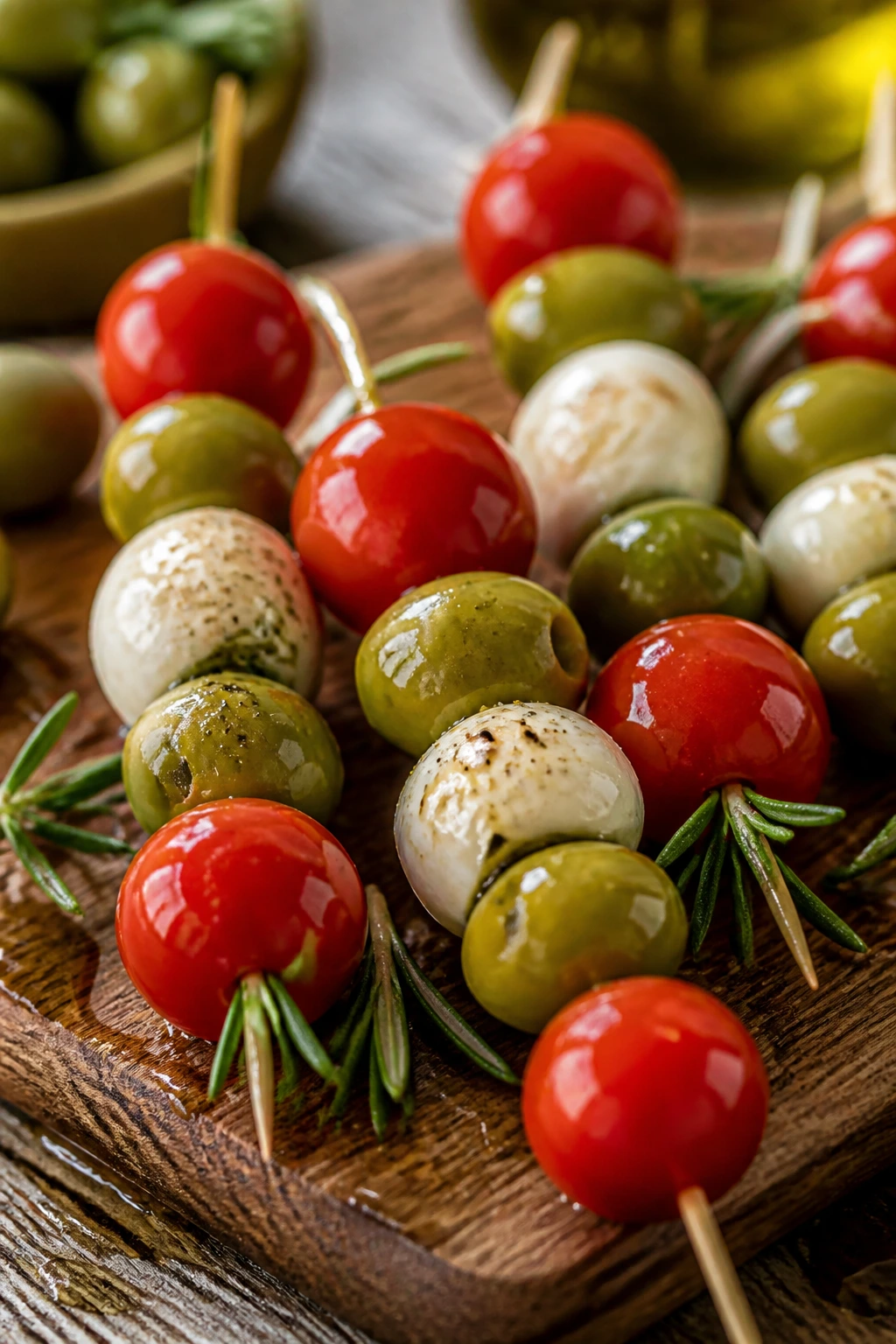
This is the savory, briny corner of the tray. Castelvetrano olives bring that buttery green bite, rosemary adds a pine note, and the mozzarella keeps it from becoming too salty. If you like antipasto more than salad, start here.
Why It Works:
Olives and rosemary are two of the fastest ways to push a caprese skewer closer to a Tuscan pantry profile. The olives bring salt and fat. Rosemary adds fragrance, but it has to be used with a light hand or it starts tasting like a fireplace. The tomato and cheese are still front and center, just with a more rustic frame around them.
Key Ingredients:
- 24 cherry tomatoes
- 12 fresh mozzarella balls
- 24 Castelvetrano olives, pitted
- 1 tablespoon fresh rosemary leaves, finely chopped
- 2 tablespoons extra-virgin olive oil
- 1 teaspoon lemon zest
- 1/2 teaspoon flaky salt
- 1/4 teaspoon black pepper
Quick Steps:
- Toss the olives with olive oil, rosemary, and lemon zest.
- Thread 2 tomatoes, 1 mozzarella ball, and 2 olives onto each skewer.
- Arrange the skewers in one layer.
- Spoon any remaining rosemary oil over the top.
- Finish with flaky salt and black pepper right before serving.
Equipment for This Recipe:
- Small mixing bowl
- Knife
- 12 skewers
- Spoon
- Platter
How to Serve This Dish:
Serve these with salami, roasted peppers, and warm bread. They have enough salt and aroma to sit next to sharper antipasti without getting lost.
A few whole rosemary sprigs on the tray make the olive smell read immediately, even before anyone bites in. That matters more than people think.
Pro Tips for This Recipe:
- Remove olive pits fully. One stubborn pit ruins the bite.
- Chop rosemary finely so it doesn’t poke people in the mouth.
- Use Castelvetrano olives if you can; they’re buttery, not bracing.
- Go easy on the salt until you taste the finished tray.
Variations on This Dish:
- Kalamata Version: Use kalamata olives for a darker, sharper bite.
- Chili Rosemary Oil: Add a pinch of chili flakes to the olive oil.
- Lemon-Rosemary Twist: Double the lemon zest for a brighter top note.
Common Mistakes to Avoid with This Dish:
- Woody rosemary pieces: They’re unpleasant to bite. Strip the leaves finely.
- Oversalted olives: The whole skewer turns harsh. Taste before seasoning.
- Wet olive marinade: Pat the olives dry or the oil will pool.
8. Cheese Tortellini Caprese Skewers
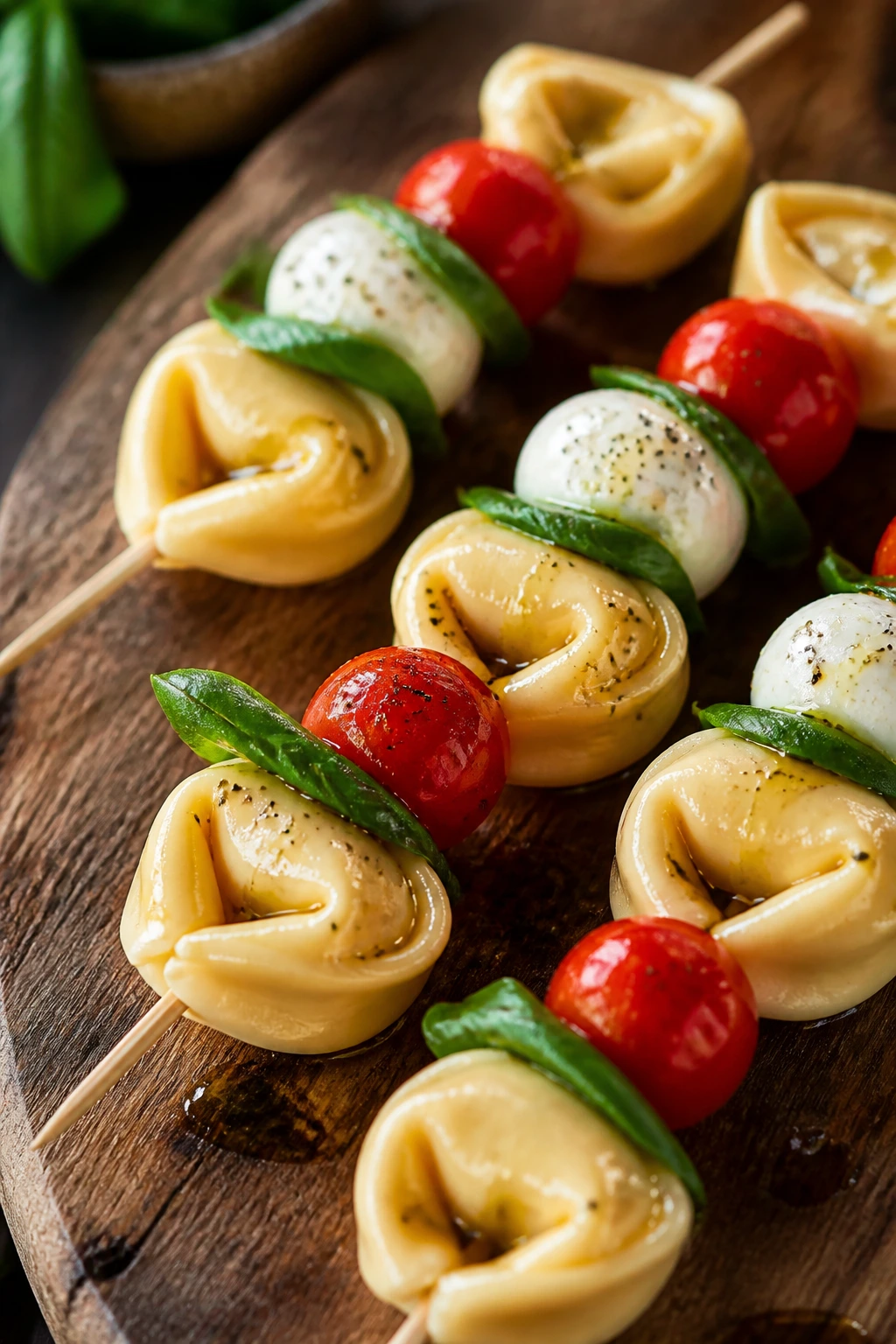
These are the most substantial skewers in the batch, which makes them useful when the crowd is hungry enough to grumble. Tortellini adds chew and structure, and the caprese ingredients keep them from feeling heavy or starchy. They’re somewhere between appetizer and snack board anchor.
Why It Works:
Pasta gives the skewer weight, which means it can hold up on a buffet longer than the more delicate versions. Tortellini also catches dressing in its folds, so a little pesto or olive oil goes farther than you’d expect. Cook them al dente, cool them fast, and dry them well or they’ll turn gummy and slip off the skewer.
Key Ingredients:
- 24 cheese tortellini, cooked and cooled
- 24 cherry tomatoes
- 12 fresh mozzarella balls
- 24 basil leaves
- 2 tablespoons extra-virgin olive oil
- 2 tablespoons basil pesto or balsamic glaze
- 1/4 teaspoon black pepper
- 12 skewers
Quick Steps:
- Cook the tortellini in salted water until just al dente, then drain and cool under cold running water.
- Toss the tortellini with 1 tablespoon olive oil so they don’t stick together.
- Thread 2 tortellini, 1 cherry tomato, 1 mozzarella ball, and 1 basil leaf onto each skewer.
- Drizzle with the remaining olive oil and a little pesto or balsamic glaze.
- Finish with black pepper and serve at room temperature.
Equipment for This Recipe:
- Saucepan
- Colander
- Bowl of ice water or cold water
- 12 skewers
- Slotted spoon
How to Serve This Dish:
These work well on a lunch buffet or as the front line of a big appetizer spread. Pair them with green salad, marinated beans, or sliced melon.
They can carry themselves on the plate, so you don’t need much around them. A drizzle of pesto makes them look more dressed than the classic version.
Pro Tips for This Recipe:
- Stop cooking the tortellini early. They should still feel firm.
- Cool them fast so the cheese inside doesn’t smear.
- Toss with oil while the pasta is still slightly warm.
- Use short skewers if you want them easier to pick up.
Variations on This Dish:
- Spinach Tortellini: Use spinach tortellini for a greener, herby look.
- Sun-Dried Tomato Tortellini: Choose sun-dried tomato pasta for extra depth.
- Pesto Over Balsamic: Use pesto if you want the skewer to eat more like a pasta salad.
Common Mistakes to Avoid with This Dish:
- Overcooked tortellini: They burst and slide apart. Drain them while they still have bite.
- Wet pasta: It makes the tray sticky. Dry before threading.
- Too many wet ingredients: Don’t drown these in dressing or they go soft fast.
9. Cannellini Bean Caprese Skewers
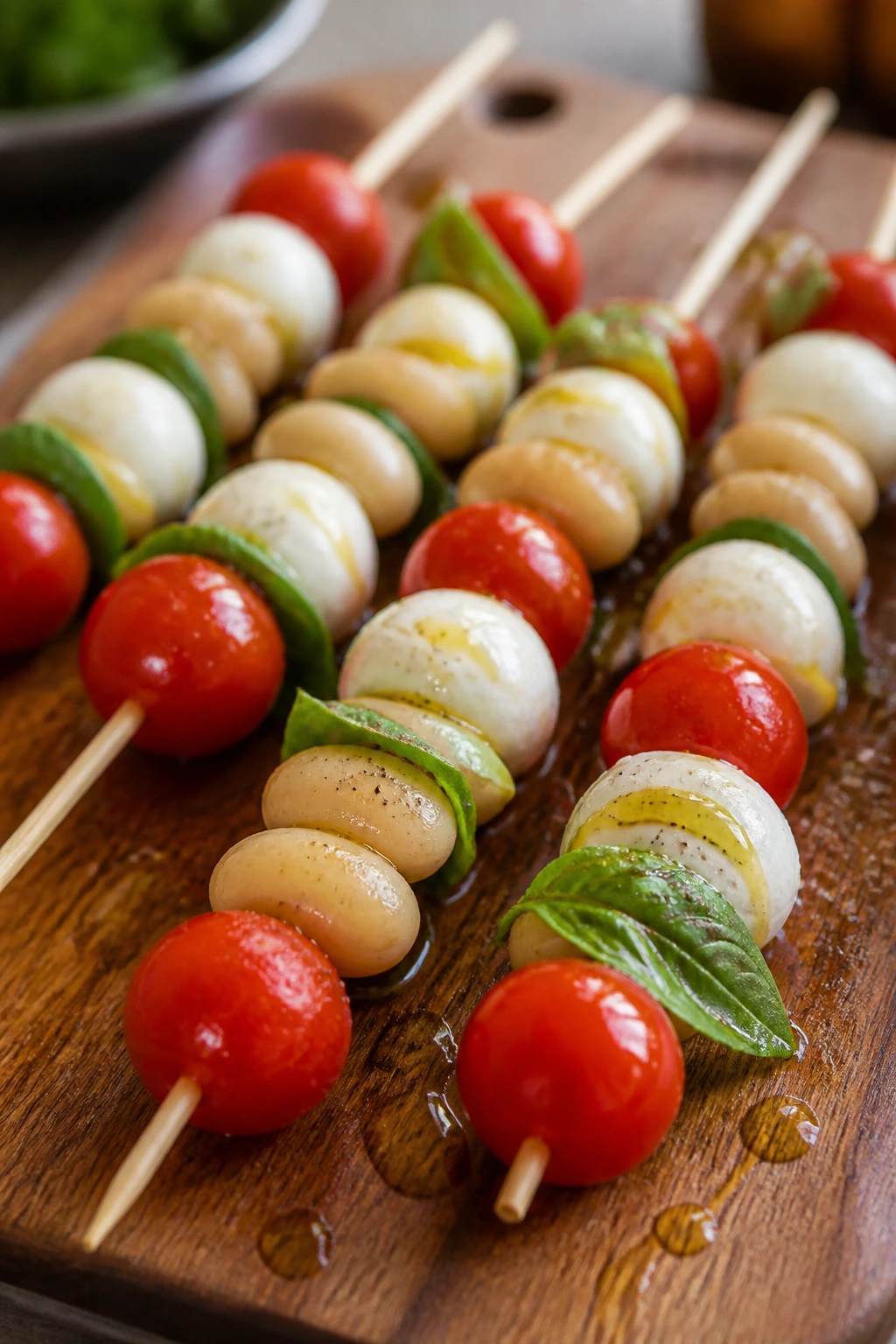
This one leans hard into the pantry side of Tuscany. Cannellini beans are soft, creamy, and mild, which sounds understated until you put them next to tomato, basil, and mozzarella. Then they make sense: a little earthy, a little filling, and far less obvious than another plain tomato skewer.
Why It Works:
The beans add a quiet, creamy middle that changes the bite without stealing the show. They also make the skewers more satisfying, especially if you’re serving them as part of a lunch spread. The catch is handling: you need beans that hold shape, and you need to dry them well. Wet beans make the skewer look dull and feel slippery.
Key Ingredients:
- 1 can (15 ounces) cannellini beans, drained, rinsed, and patted dry
- 24 cherry tomatoes
- 12 fresh mozzarella balls
- 24 basil leaves
- 1 small garlic clove, grated
- 1 tablespoon extra-virgin olive oil
- 1 teaspoon red wine vinegar
- 1/2 teaspoon kosher salt
- 1/4 teaspoon black pepper
Quick Steps:
- Toss the dried beans with olive oil, grated garlic, red wine vinegar, salt, and pepper.
- Let the beans sit for 10 minutes so they take on a little flavor.
- Thread 2 cherry tomatoes, 2 to 3 beans, 1 mozzarella ball, and 2 basil leaves onto each skewer.
- Arrange the skewers on a platter and spoon any remaining bean dressing over the top.
- Serve at room temperature.
Equipment for This Recipe:
- Small bowl
- Fine grater or microplane
- Paper towels
- 12 skewers
- Platter
How to Serve This Dish:
These are strong enough to sit beside roasted vegetables, sliced salumi, or a chickpea salad. They work especially well when you want one appetizer that eats a little more like a small snack.
A few spooned beans on the platter around the skewers make the tray look intentional. Don’t leave them floating dry and naked on the plate.
Pro Tips for This Recipe:
- Use beans that stay intact after rinsing. Split beans won’t hold the skewer cleanly.
- Dry them thoroughly before dressing.
- Grated garlic is enough. Chopped garlic can be too sharp here.
- Serve these within a couple of hours for the best bean texture.
Variations on This Dish:
- Chickpea Swap: Use cooked chickpeas if you want a firmer bite.
- Herbed Bean Version: Add chopped parsley or chives to the dressing.
- Lemon-Bean Version: Swap vinegar for lemon juice if you want a brighter finish.
Common Mistakes to Avoid with This Dish:
- Mushy beans: They fall apart. Use beans that still have shape.
- Skipping the drying step: The dressing won’t cling. Dry them well.
- Too much garlic: One small clove is enough. More gets loud fast.
10. Strawberry Caprese Skewers
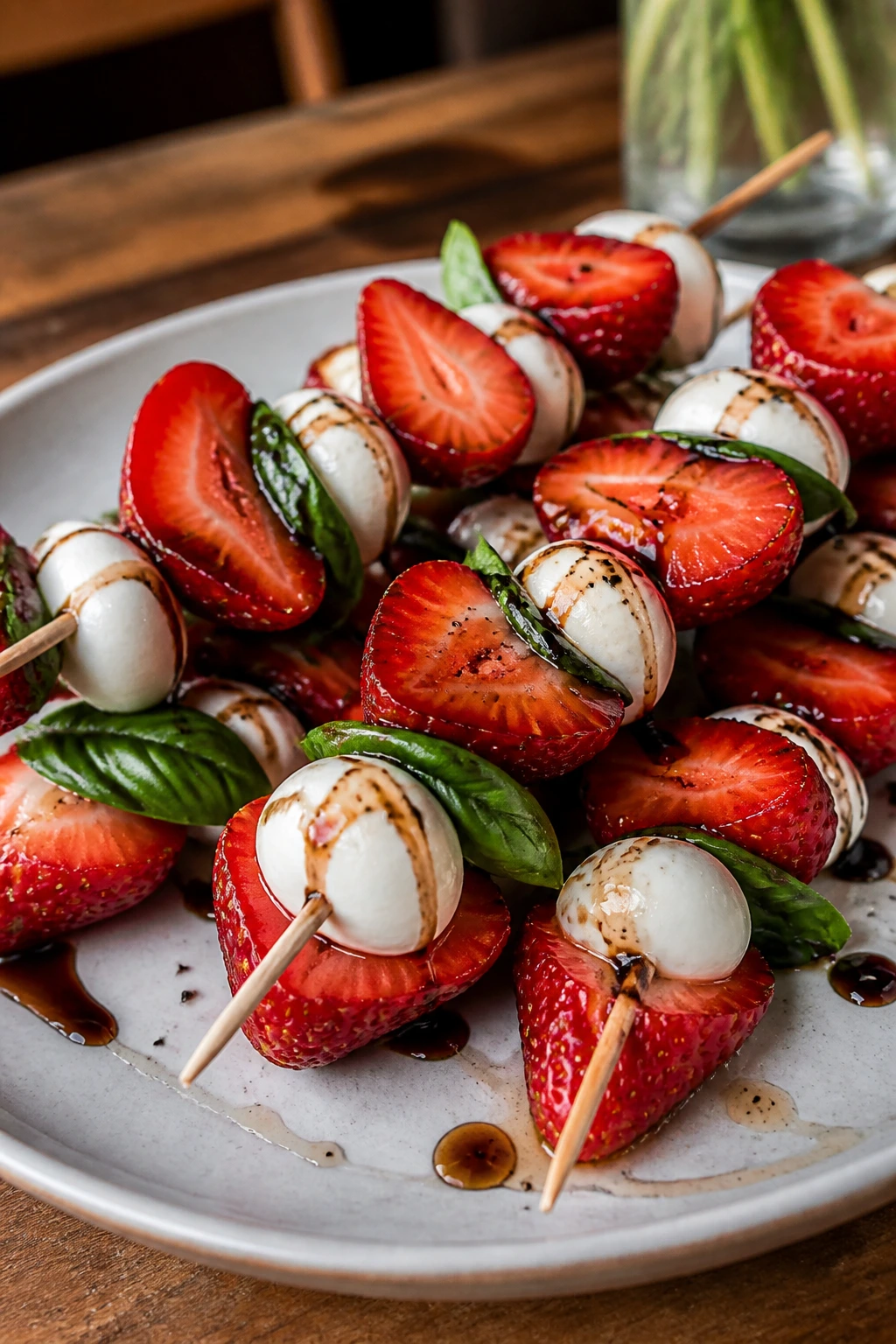
Strawberries in a caprese skewer sound odd until you try one. Then the sweetness clicks with the basil, and the mozzarella brings it back to earth. The result tastes cleaner than dessert, but softer and more playful than the standard tomato version.
Why It Works:
Strawberries have enough acidity to sit in the same family as tomatoes, which is why they can replace them without breaking the whole idea. The basil gives the skewer the herbal backbone caprese needs, and the mozzarella keeps the fruit from turning the bite into a fruit cup. Keep the berries firm, not meltingly ripe, or they’ll smear the skewer and stain everything red.
Key Ingredients:
- 12 medium strawberries, hulled and halved if large
- 12 fresh mozzarella balls
- 24 basil leaves
- 2 tablespoons balsamic glaze
- 1 teaspoon honey
- 1/4 teaspoon flaky salt
- 1/4 teaspoon black pepper
- 12 skewers
Quick Steps:
- Hull the strawberries and cut them in half if they’re oversized.
- Thread a strawberry, a mozzarella ball, and 2 basil leaves onto each skewer.
- Repeat once more on each pick if the skewer is long enough.
- Drizzle with balsamic glaze and a very small amount of honey.
- Finish with flaky salt and black pepper.
Equipment for This Recipe:
- Paring knife
- Paper towels
- 12 small skewers
- Serving platter
- Tiny spoon for the glaze
How to Serve This Dish:
Serve these with other light bites, not heavy cheese or salty meats. They work best as the bright corner of a spring or summer-style tray.
A few sliced strawberries around the platter help guests read the flavor before they pick one up. That sounds small, but it matters.
Pro Tips for This Recipe:
- Use strawberries with bright color and a firm stem end.
- Keep the honey light. You want contrast, not dessert syrup.
- Pat the berries dry so the glaze sticks.
- Assemble close to serving time so the fruit stays neat.
Variations on This Dish:
- Mint Accent: Add one mint leaf in place of one basil leaf for a cooler finish.
- Black Pepper Finish: Use extra black pepper if you like the sweet-salty edge.
- Blueberry Mix: Add one or two blueberries per skewer for a mixed-fruit version.
Common Mistakes to Avoid with This Dish:
- Soft berries: They collapse on the skewer. Use firmer fruit.
- Heavy honey: It overwhelms the basil. Keep it minimal.
- No salt: A tiny pinch makes the strawberries taste more like themselves.
11. Sun-Dried Tomato Caprese Skewers
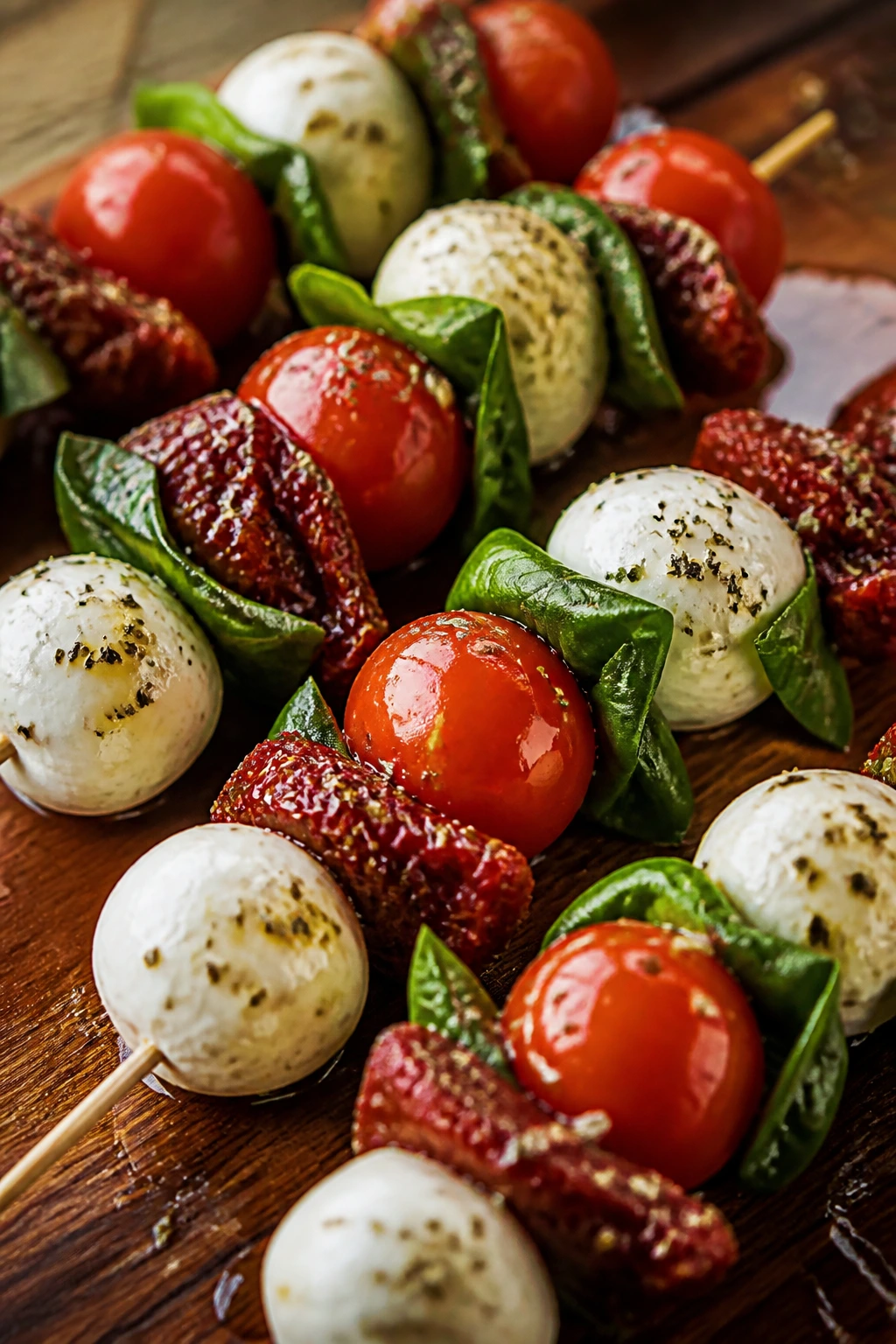
If the classic caprese skewer is a clean white shirt, this is the one in a darker jacket. Sun-dried tomatoes bring concentrated sweetness and a little chew, which means the skewers taste fuller and more savory than the fresh tomato versions. They’re especially good when the rest of the board needs something with more edge.
Why It Works:
Sun-dried tomatoes behave like flavor anchors. They bring sweetness, acidity, and a little depth from their own oil, so the skewer tastes seasoned before you even add the glaze. The trick is draining them well. Too much oil makes the whole tray greasy, and then the cheese stops tasting fresh.
Key Ingredients:
- 12 oil-packed sun-dried tomatoes, drained and halved if large
- 24 cherry tomatoes
- 12 fresh mozzarella balls
- 24 basil leaves
- 2 tablespoons extra-virgin olive oil
- 1 teaspoon dried oregano
- 1 tablespoon balsamic glaze
- 1/4 teaspoon black pepper
Quick Steps:
- Blot the sun-dried tomatoes with paper towels to remove excess oil.
- Thread a sun-dried tomato piece, a cherry tomato, a mozzarella ball, and a basil leaf onto each skewer.
- Drizzle the skewers with olive oil.
- Sprinkle with oregano and black pepper.
- Finish with balsamic glaze right before serving.
Equipment for This Recipe:
- Paper towels
- Small bowl
- 12 skewers
- Spoon
- Serving tray
How to Serve This Dish:
These fit nicely beside grilled chicken, olives, or plain toasted bread. They bring enough flavor to stand up to the salty stuff around them.
A little extra oregano on the platter helps tie the whole thing together. Use it lightly. It should smell fresh, not dried out.
Pro Tips for This Recipe:
- Drain the sun-dried tomatoes carefully so they don’t overwhelm the tray with oil.
- Use tomatoes packed in olive oil, not the hard dry kind, unless you rehydrate them first.
- A small amount of oregano goes far here.
- Serve them at room temperature so the sun-dried tomato flavor opens up.
Variations on This Dish:
- Roasted Garlic Version: Add a sliver of roasted garlic to the skewer.
- Olive Addition: Thread in a pitted olive for a stronger antipasto feel.
- Spicy Oil Finish: Use chili oil in place of part of the olive oil.
Common Mistakes to Avoid with This Dish:
- Oily tomatoes: They make the skewer slick. Blot them first.
- Too much oregano: The tray starts tasting dusty. Use a light hand.
- Skipping the glaze: The balance gets a little flat without it.
12. Roasted Grape Tomato Caprese Skewers
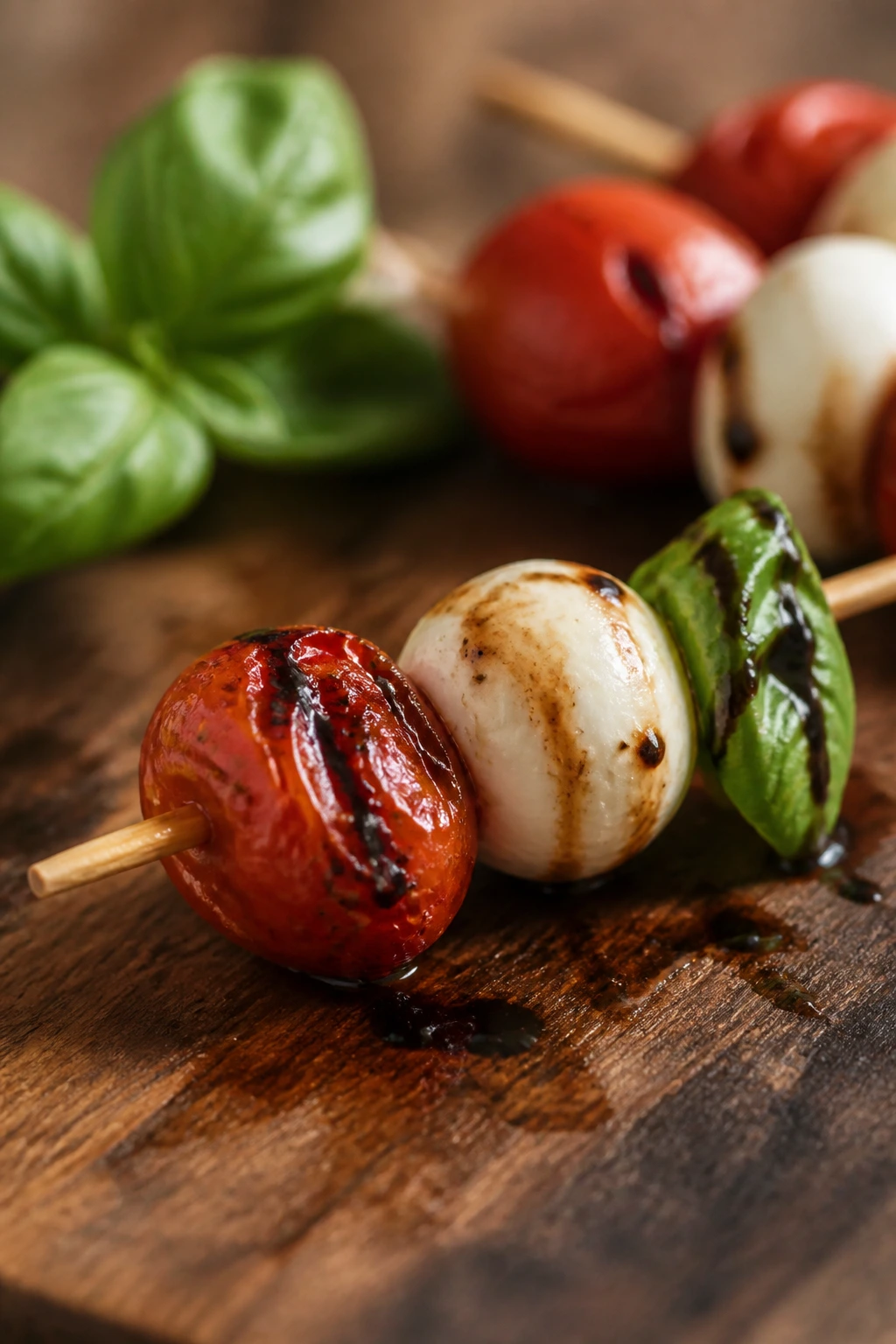
Roasting grape tomatoes changes everything. They turn jammy at the edges, sweeter in the middle, and less likely to flood the platter with juice. The finished skewer tastes warmer and rounder than the raw version, even if you serve it at room temperature.
Why It Works:
Heat concentrates tomato flavor and dries the surface just enough to make the tomatoes easier to handle. That’s the practical side. On the taste side, roasting adds a slight caramel note that plays well with basil and mozzarella. It’s one of the few ways to make a simple caprese skewer feel a little more cooked without losing the fresh feel.
Key Ingredients:
- 24 grape tomatoes
- 12 fresh mozzarella balls
- 24 basil leaves
- 2 tablespoons extra-virgin olive oil
- 1 teaspoon fresh thyme leaves
- 1/2 teaspoon kosher salt
- 1/4 teaspoon black pepper
- 1 tablespoon balsamic glaze
Quick Steps:
- Preheat the oven to 400°F.
- Toss the grape tomatoes with 1 tablespoon olive oil, thyme, salt, and pepper.
- Roast on a sheet pan for 15 to 18 minutes, until the skins wrinkle and the tomatoes slump slightly.
- Cool the tomatoes for 10 minutes.
- Thread the roasted tomatoes, mozzarella balls, and basil leaves onto skewers, then drizzle with the remaining olive oil and balsamic glaze.
Equipment for This Recipe:
- Sheet pan
- Oven
- 12 skewers
- Mixing bowl
- Spatula
How to Serve This Dish:
These pair well with grilled bread, roasted vegetables, or a bowl of olives. They’re especially good on a mixed tray where some other items are cold and some are warm.
The roasted tomatoes make the tray smell fuller, which is half the fun. People notice before they even take one.
Pro Tips for This Recipe:
- Don’t crowd the tomatoes on the pan. Give them room to roast, not steam.
- Cool them before skewering or the mozzarella starts to soften too quickly.
- Use thyme lightly. It should support the tomato, not replace basil.
- Serve the skewers the same day you roast them.
Variations on This Dish:
- Garlic Roast: Toss the tomatoes with a crushed garlic clove before roasting.
- Cherry Tomato Version: Use larger cherry tomatoes if grape tomatoes are too small.
- Herb Blend: Add a pinch of oregano along with the thyme.
Common Mistakes to Avoid with This Dish:
- Crowded pan: The tomatoes steam and stay wet. Roast in one layer.
- Overroasting: They collapse into jam. Stop when they’re wrinkled, not split open.
- Assembling while hot: The cheese softens fast. Cool them first.
13. Salami and Pepper Caprese Skewers
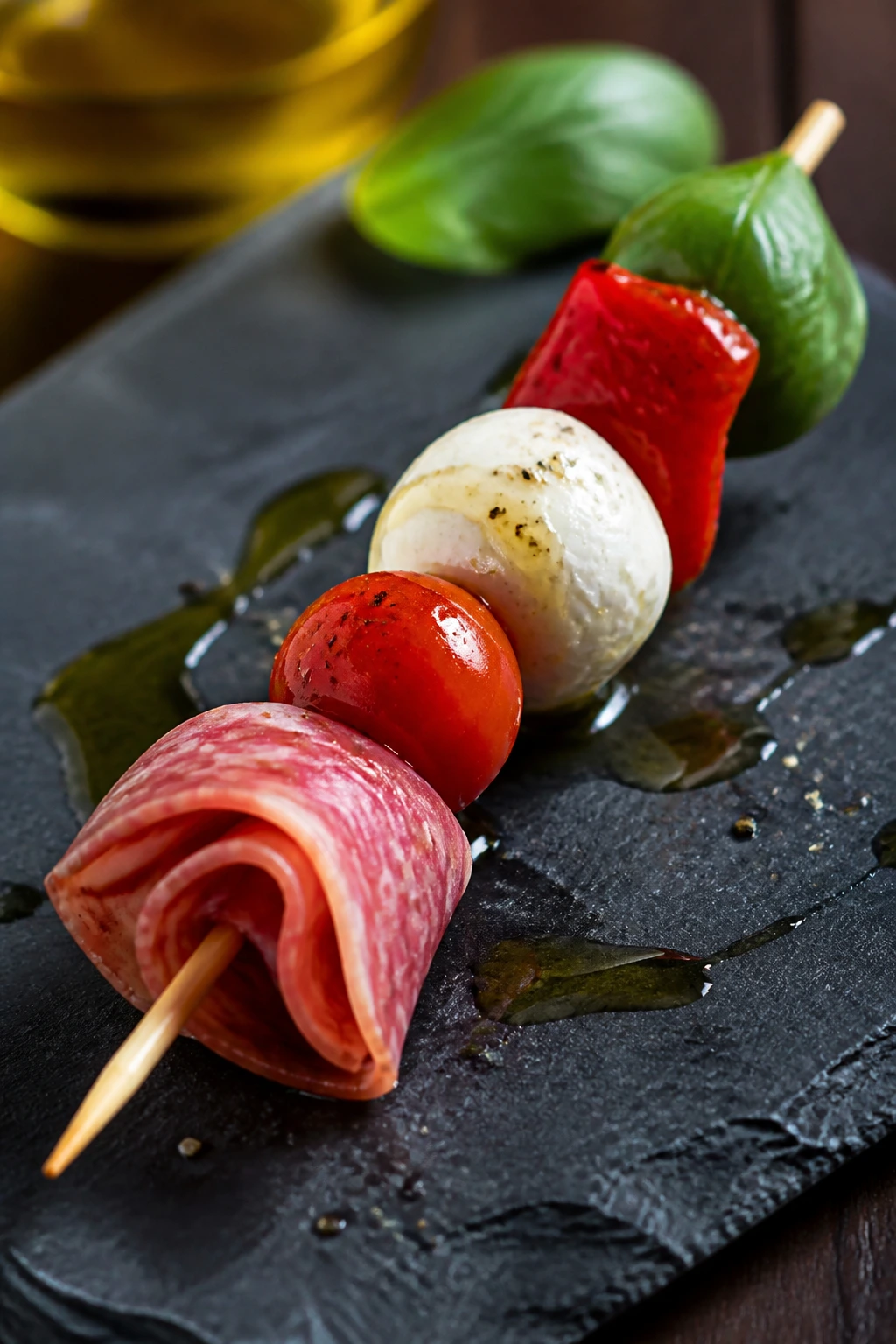
These are for the person who wants the caprese tray to behave a little more like a deli board. Salami adds spice and texture, roasted red peppers bring sweetness, and the tomatoes keep the skewer from drifting too far from its caprese roots. It’s a louder bite. Not obnoxious. Just louder.
Why It Works:
Salami gives the skewer enough body to feel substantial, while the roasted peppers soften the salt and give a little sweetness. The mozzarella cools everything down so the bite doesn’t become too sharp. Thin slices matter because you want the salami to fold, not fight. A thick round of cured meat can take over the whole thing.
Key Ingredients:
- 6 ounces thin salami, sliced into ribbons
- 24 cherry tomatoes
- 12 fresh mozzarella balls
- 12 roasted red pepper strips, well drained
- 24 basil leaves
- 1 tablespoon extra-virgin olive oil
- 1 teaspoon dried oregano
- 1/4 teaspoon black pepper
Quick Steps:
- Drain the roasted red peppers and pat them dry.
- Fold the salami slices into loose ribbons.
- Thread a tomato, a mozzarella ball, a pepper strip, a salami ribbon, and a basil leaf onto each skewer.
- Drizzle with olive oil.
- Finish with oregano and black pepper.
Equipment for This Recipe:
- Paper towels
- Knife
- 12 skewers
- Bowl
- Platter
How to Serve This Dish:
Put these near olives, breadsticks, and anything briny. They’re bold enough to anchor a tray and play well with other salty foods.
If you’re setting out a mixed board, place these near the center. They look like the serious item on the table.
Pro Tips for This Recipe:
- Use very thin salami so it folds easily.
- Dry the roasted peppers well or the tray will get slick.
- Don’t overload the skewer. One ribbon is enough.
- Oregano should be a whisper here.
Variations on This Dish:
- Soppressata Swap: Use soppressata for a deeper cured-meat flavor.
- Pepperoncini Heat: Add one pepperoncini slice for a sharper edge.
- Turkey Salami Version: Use turkey salami if you want a lighter tray.
Common Mistakes to Avoid with This Dish:
- Thick salami: It makes the skewer bulky and hard to eat. Buy the thin stuff.
- Wet peppers: They slide around the plate. Drain them well.
- Too many strong flavors: The tray starts to feel crowded. Let the tomatoes still lead.
14. Watermelon Caprese Skewers
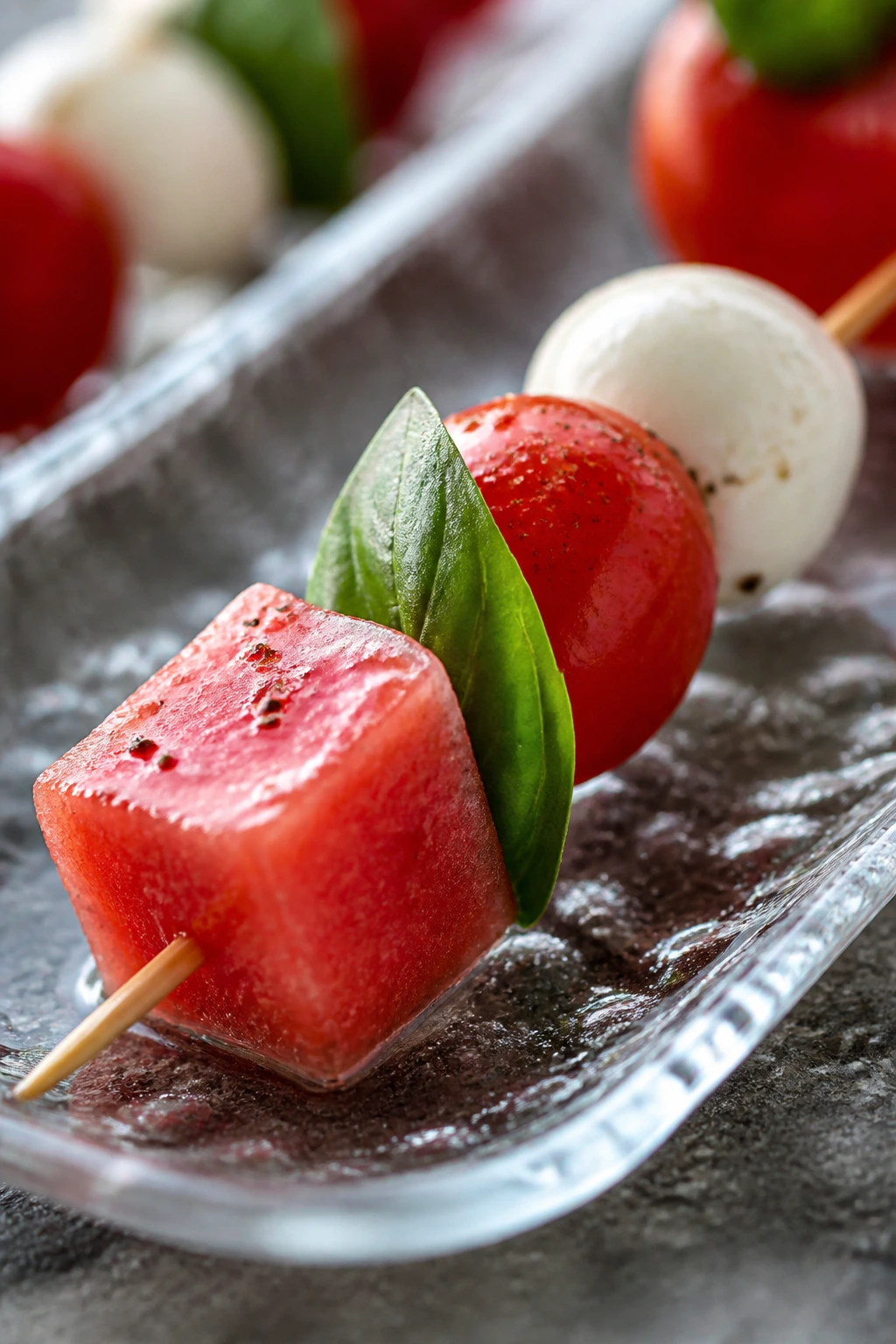
This one sounds like a dare until you taste it. Watermelon is cold, crisp, and sweet in a way that makes the mozzarella feel richer and the basil smell brighter. If the fruit is well drained and the salt stays light, the skewer tastes clean rather than chaotic.
Why It Works:
Watermelon brings a cool crunch that sharpens the rest of the ingredients. It needs the tomato and basil to keep it from drifting into fruit-salad territory. The best version uses small cubes with a dry surface and a very light finish of salt. Too much liquid and the skewer loses its shape fast.
Key Ingredients:
- 12 watermelon cubes, cut about 1 inch each
- 12 cherry tomatoes
- 12 fresh mozzarella balls
- 24 basil leaves
- 1 tablespoon extra-virgin olive oil
- 1 tablespoon balsamic glaze
- 1/2 teaspoon flaky salt
- 1/4 teaspoon black pepper
Quick Steps:
- Cut the watermelon into tidy cubes and blot the surfaces dry.
- Thread a watermelon cube, a tomato, a mozzarella ball, and 2 basil leaves onto each skewer.
- Arrange the skewers on a chilled platter.
- Drizzle lightly with olive oil and balsamic glaze.
- Finish with a small pinch of flaky salt and black pepper.
Equipment for This Recipe:
- Sharp knife
- Cutting board
- Paper towels
- 12 skewers
- Chilled serving tray
How to Serve This Dish:
These belong in the coldest part of the spread. They’re good with salty crackers, prosciutto, or nothing at all if the tray already has enough going on.
Serve them quickly after plating. Watermelon waits for no one.
Pro Tips for This Recipe:
- Use seedless watermelon with firm flesh.
- Blot the cubes dry on all sides.
- Keep the tray chilled until serving time.
- Salt lightly. The fruit should still taste like fruit.
Variations on This Dish:
- Cantaloupe Version: Swap in cantaloupe for a softer perfume.
- Mint Accent: Add mint with or instead of one basil leaf.
- Feta Turn: Use feta if you want a sharper salt note, though it leans away from classic caprese.
Common Mistakes to Avoid with This Dish:
- Watery melon: It turns the platter soggy. Dry it first.
- Too much glaze: The sweetness gets muddy. Use a thin line.
- Serving warm: The fruit gets floppy fast. Keep it cold.
15. Artichoke Heart Caprese Skewers
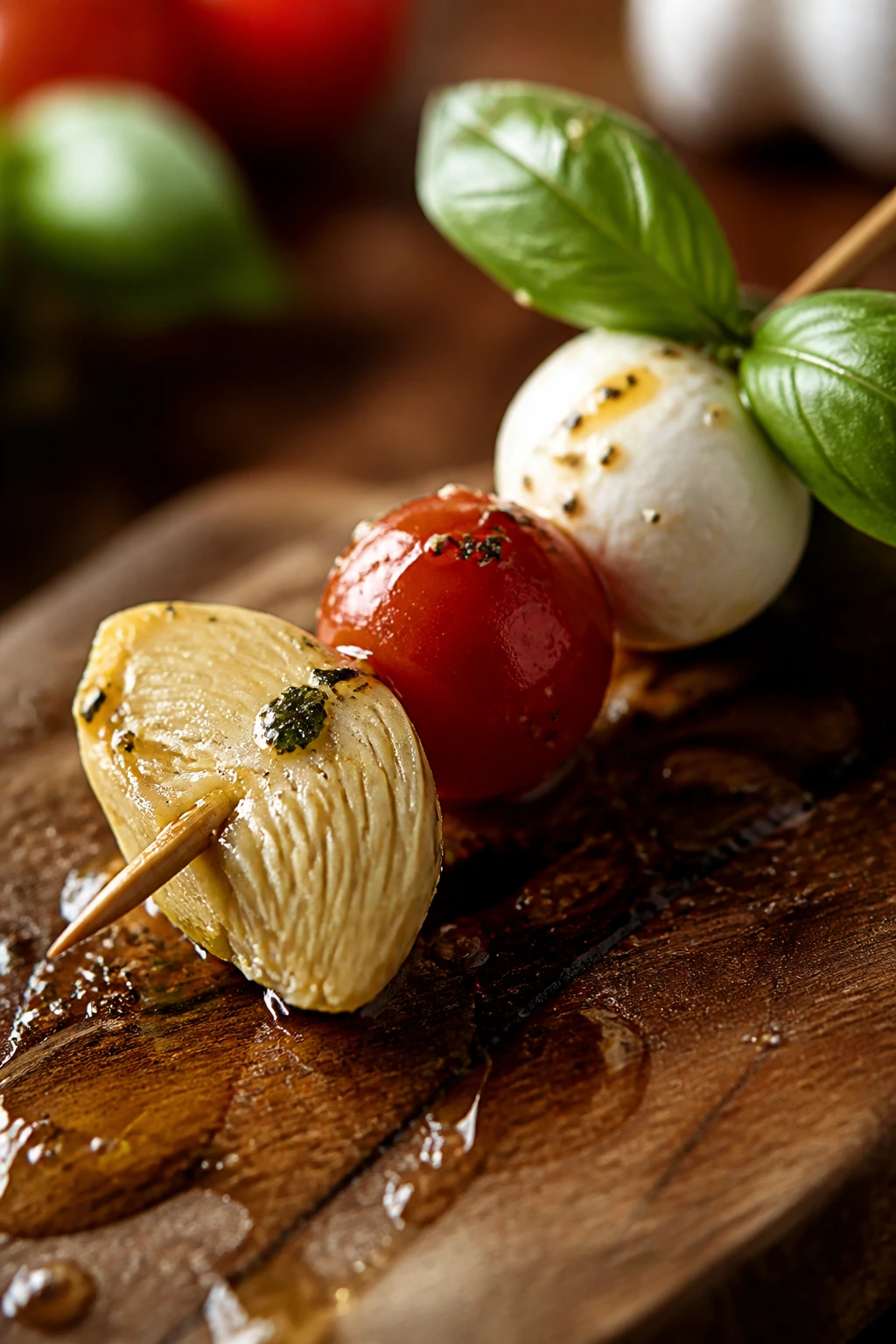
Artichokes bring a proper antipasto voice to the table. They’re tangy, earthy, and a little chewy, which makes them a useful bridge between the tomatoes and the cheese. If you want one skewer that tastes most like a Tuscan appetizer plate, this may be it.
Why It Works:
Artichokes have the right kind of bitterness. Not harsh. Just enough to keep the mozzarella from feeling too soft and the tomatoes from tasting too sweet. Marinated hearts work best as long as they’re drained well, because the oil they come packed in can make the tray greasy fast. The trick is balance and dryness, like with most of the good versions here.
Key Ingredients:
- 12 marinated artichoke heart quarters, drained and patted dry
- 24 cherry tomatoes
- 12 fresh mozzarella balls
- 24 basil leaves
- 1 teaspoon lemon zest
- 1 tablespoon extra-virgin olive oil
- 1/4 teaspoon black pepper
- 12 skewers
Quick Steps:
- Drain the artichokes and blot off excess marinade.
- Thread an artichoke quarter, a tomato, a mozzarella ball, and 2 basil leaves onto each skewer.
- Arrange the skewers on a platter.
- Drizzle with olive oil.
- Finish with lemon zest and black pepper.
Equipment for This Recipe:
- Paper towels
- Knife
- 12 skewers
- Small bowl
- Serving platter
How to Serve This Dish:
These work well beside olives, toasted bread, and sliced salami. They’re also one of the better choices if the rest of the menu leans rich and you need something sharp in the middle.
The lemon zest matters more than it sounds like it should. It wakes the artichoke back up after the oil.
Pro Tips for This Recipe:
- Dry the artichokes thoroughly before skewering.
- Use quartered hearts rather than whole ones if they’re large.
- Lemon zest is enough; you don’t need lemon juice here.
- Serve the skewers at room temperature, not chilled hard.
Variations on This Dish:
- Grilled Artichoke Version: Use grilled artichokes if you have them.
- Olive Add-In: Thread one olive after the artichoke for a saltier bite.
- Chili Lemon Finish: Add a pinch of chili flakes to the olive oil.
Common Mistakes to Avoid with This Dish:
- Too much marinade: It makes the skewer greasy. Blot well.
- Large artichoke chunks: They wobble. Cut them into manageable quarters.
- Skipping the zest: The flavor can feel heavy without a bright finish.
16. Bruschetta Caprese Skewers
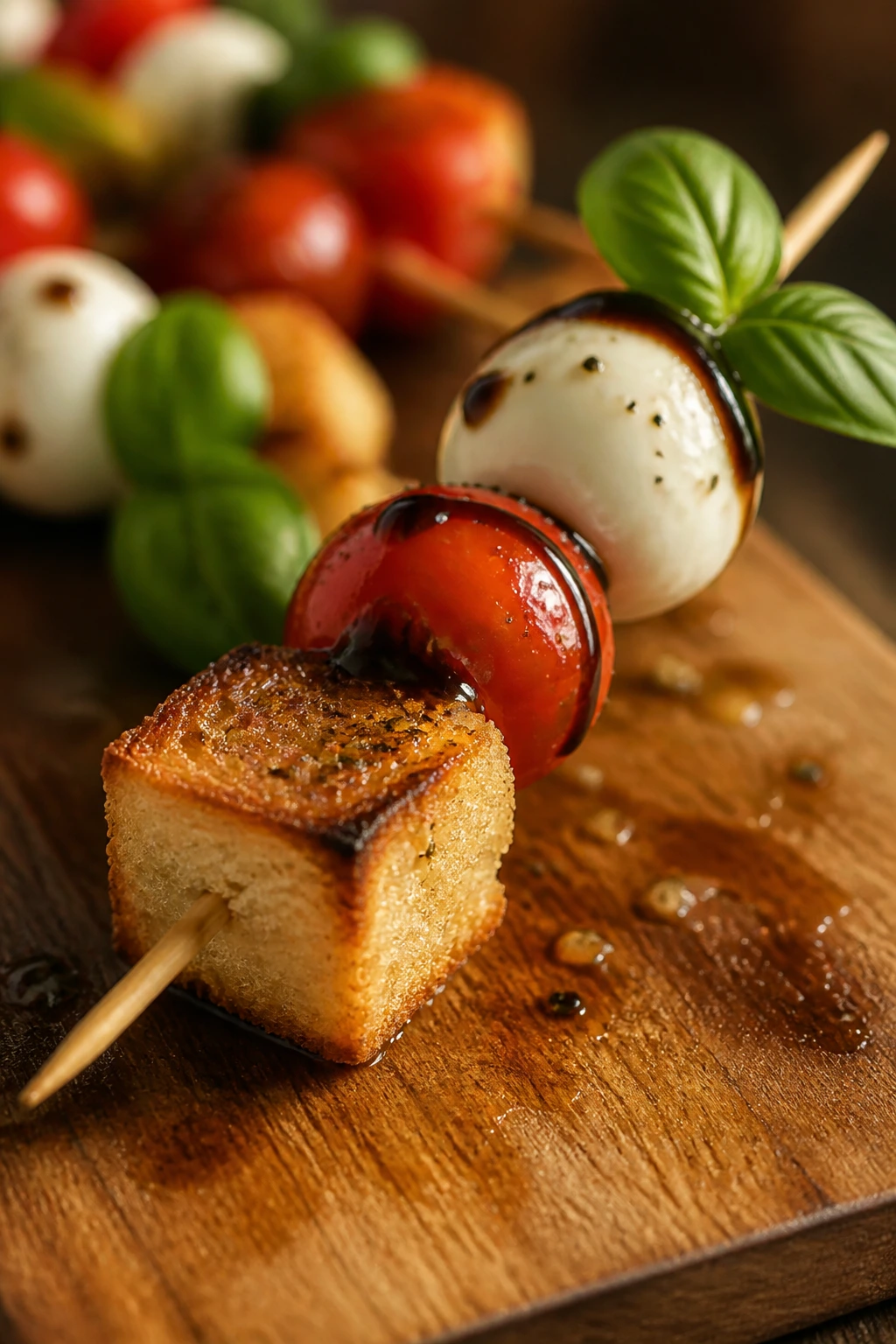
Bread changes the whole thing. A toasted ciabatta cube gives you crunch, so the skewer eats more like bruschetta than salad. The tomato juices soak into the bread just enough to make it interesting, but not enough to turn it into mush if you toast it properly.
Why It Works:
This version solves the problem of a caprese tray that disappears too fast because it has no weight. Toasted bread adds structure and a little chew, which makes each skewer more filling. The tomatoes and basil keep it in caprese territory, and the garlic oil on the bread gives the bite a clean, savory edge.
Key Ingredients:
- 12 one-inch ciabatta cubes
- 24 cherry tomatoes
- 12 fresh mozzarella balls
- 24 basil leaves
- 2 tablespoons extra-virgin olive oil
- 1 small garlic clove, halved
- 1 tablespoon balsamic glaze
- 1/2 teaspoon kosher salt
- 1/4 teaspoon black pepper
Quick Steps:
- Preheat the oven to 375°F.
- Toss the ciabatta cubes with 1 tablespoon olive oil and toast on a sheet pan for 8 to 10 minutes, until the edges are crisp and pale gold.
- Rub the warm bread lightly with the cut side of the garlic clove.
- Thread a tomato, a mozzarella ball, a basil leaf, and a bread cube onto each skewer.
- Drizzle with the remaining olive oil and balsamic glaze, then season with salt and pepper.
Equipment for This Recipe:
- Sheet pan
- Oven
- Garlic clove
- 12 skewers
- Knife
How to Serve This Dish:
These can stand in for a first course when you don’t want to set out a separate bread basket. They’re especially useful on a buffet because the bread gives them grip.
Pair them with a bowl of olives or a tomato salad if you want the board to feel more complete. They carry a little more substance than the other versions.
Pro Tips for This Recipe:
- Use day-old bread if you have it. It toasts better.
- Don’t under-toast the cubes. They need a dry, crisp surface.
- Rub with garlic while the bread is warm so the flavor sticks.
- Assemble close to serving so the bread doesn’t soften.
Variations on This Dish:
- Sourdough Version: Swap in sourdough cubes for more tang.
- Herbed Bread: Toss the bread with chopped parsley before toasting.
- Tomato-Rub Finish: Rub the toasted bread with a cut tomato half instead of garlic.
Common Mistakes to Avoid with This Dish:
- Soft bread: It turns soggy on contact. Toast it well.
- Too much glaze: The bread absorbs it fast and turns sticky.
- Assembling hours early: The bread loses its crunch.
17. Smoked Mozzarella Caprese Skewers
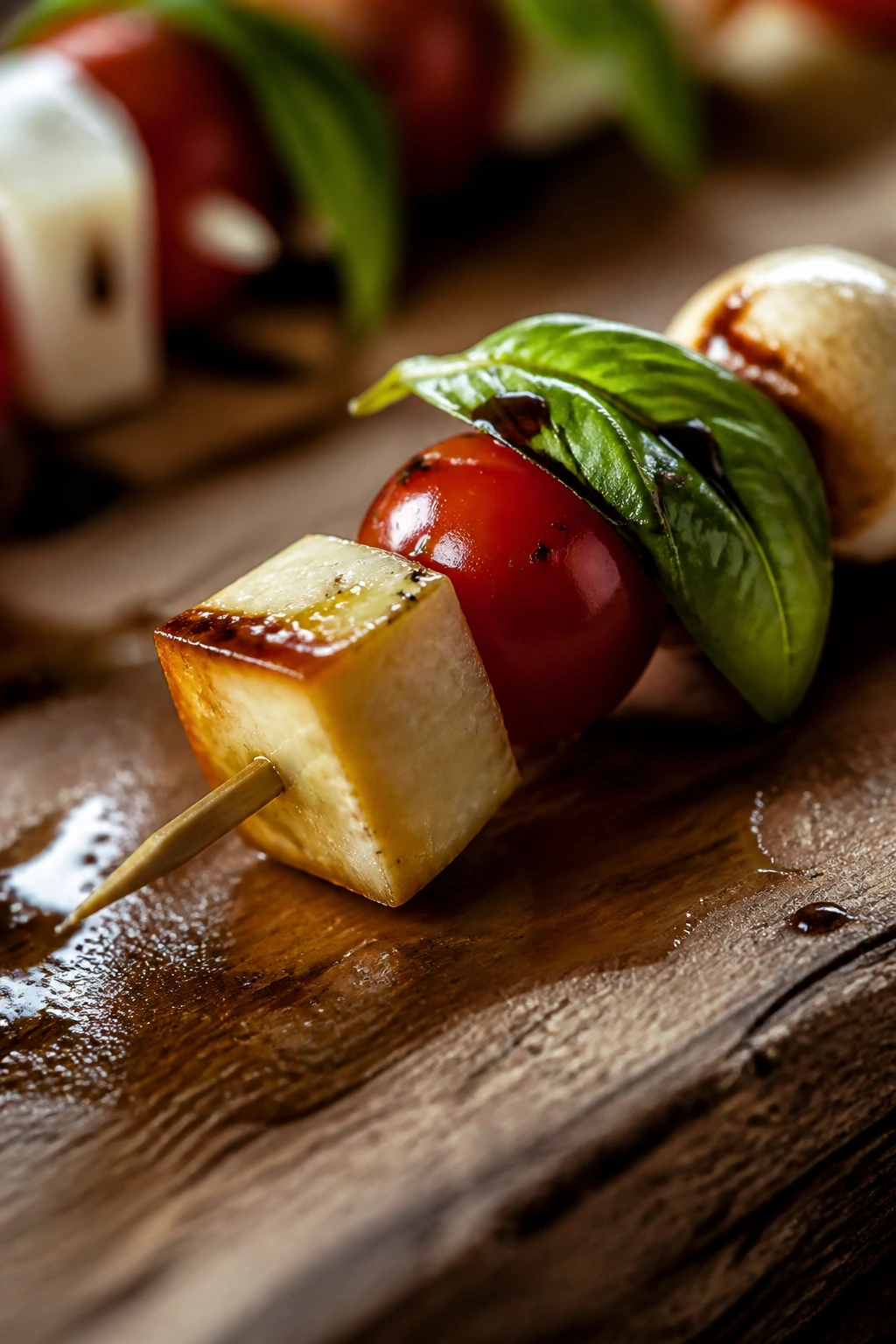
Smoked mozzarella brings an edge that feels almost wood-fired. It keeps the caprese format intact but adds a quiet campfire note that makes the tomatoes taste sweeter and the basil taste fresher. This is the version to use when you want something familiar with a little more depth.
Why It Works:
The smoke does what extra garlic or more glaze often tries to do badly: it adds body without clutter. Smoked mozzarella still has the same soft texture as fresh mozzarella, but the flavor lands darker and a bit more savory. Keep the cheese cool so it cuts and threads cleanly. At room temperature, it softens fast.
Key Ingredients:
- 24 cherry tomatoes
- 12 ounces smoked mozzarella, cut into 12 cubes
- 24 basil leaves
- 1 tablespoon extra-virgin olive oil
- 1 teaspoon lemon zest
- 1 tablespoon balsamic glaze
- 1/4 teaspoon black pepper
- 12 skewers
Quick Steps:
- Cut the smoked mozzarella into 12 even cubes.
- Thread 2 cherry tomatoes, 1 smoked mozzarella cube, and 2 basil leaves onto each skewer.
- Arrange on a platter and drizzle with olive oil.
- Sprinkle with lemon zest and black pepper.
- Add the balsamic glaze just before serving.
Equipment for This Recipe:
- Sharp knife
- Cutting board
- 12 skewers
- Small spoon
- Platter
How to Serve This Dish:
Serve these with plain crackers, roasted peppers, or thin slices of cured meat. The smoke gives them enough personality that they don’t need much help.
They look best on a dark board or slate because the white cheese and red tomatoes pop hard against it. Keep them simple.
Pro Tips for This Recipe:
- Keep smoked mozzarella chilled until cutting time.
- Use lemon zest to keep the smoke from feeling heavy.
- Don’t drown the tray in balsamic. Smoke and glaze can fight.
- Cut the cheese into even cubes so each skewer eats the same way.
Variations on This Dish:
- Smoked Provolone Version: Swap in smoked provolone if you want a firmer bite.
- Chili Oil Finish: Use a few drops of chili oil instead of extra glaze.
- Olive Accent: Add one olive per skewer for a saltier profile.
Common Mistakes to Avoid with This Dish:
- Cheese too warm: It softens and sticks to your fingers. Chill it first.
- Too much smoke elsewhere: Don’t pair it with smoky meats unless you want the flavor to crowd out everything else.
- Overglazing: The smoke disappears under sweet syrup if you overdo it.
18. Gremolata Caprese Skewers
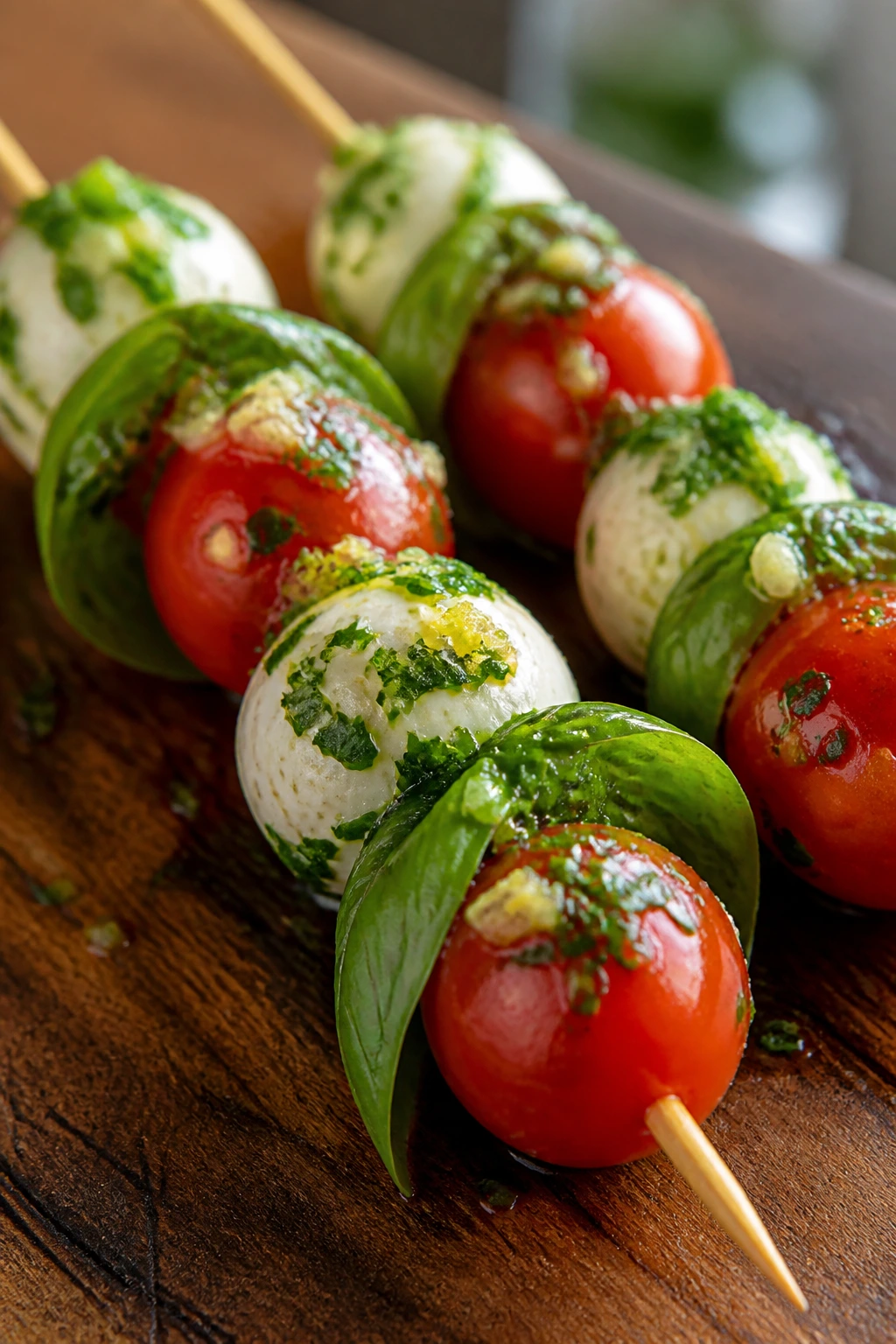
Gremolata is a small move with a big effect. Lemon zest, parsley, and garlic brighten the skewer in a way balsamic can’t quite do. It tastes fresher, greener, and a little sharper — like someone opened a window in the kitchen.
Why It Works:
Caprese is already built on contrast, and gremolata adds another clean layer of contrast without making the tray feel busy. The parsley keeps the garnish from going one-note, the lemon zest cuts through the cheese, and the garlic gives the finish a little bite. This is the skewer to choose when the tomatoes are good but not spectacular and you need a sharper frame around them.
Key Ingredients:
- 24 cherry tomatoes
- 12 fresh mozzarella balls
- 24 basil leaves
- 1 cup flat-leaf parsley leaves, finely chopped
- 1 lemon, zested
- 1 small garlic clove, minced very finely
- 2 tablespoons extra-virgin olive oil
- 1/2 teaspoon kosher salt
- 1/4 teaspoon black pepper
Quick Steps:
- Mix the parsley, lemon zest, garlic, olive oil, salt, and pepper in a small bowl.
- Thread 2 tomatoes, 1 mozzarella ball, and 2 basil leaves onto each skewer.
- Arrange the skewers on a platter.
- Spoon a little gremolata over the top of each one.
- Serve right away while the parsley is still bright.
Equipment for This Recipe:
- Microplane or fine grater
- Small bowl
- Knife
- 12 skewers
- Spoon
How to Serve This Dish:
Serve these next to roasted fish, grilled vegetables, or plain bread. They pair well with anything that could use a bright herbal counterpoint.
A little extra gremolata on the tray is enough. Don’t bury the tomatoes under it. The point is lift, not a sauce bath.
Pro Tips for This Recipe:
- Zest only the yellow part of the lemon skin.
- Chop the parsley very finely so it clings.
- Mince the garlic more finely than you think you need.
- Add the gremolata at the end so it stays vivid.
Variations on This Dish:
- Orange Gremolata: Swap half the lemon zest for orange zest.
- Mint-Gremolata Twist: Replace a small handful of parsley with mint.
- Anchovy Edge: Mash a tiny bit of anchovy into the oil for a deeper savory note.
Common Mistakes to Avoid with This Dish:
- Big parsley chunks: They fall off and look messy. Chop finely.
- Too much garlic: It can dominate the cheese. Use one small clove.
- Adding early: The herbs darken if they sit too long.
19. Panzanella Caprese Skewers
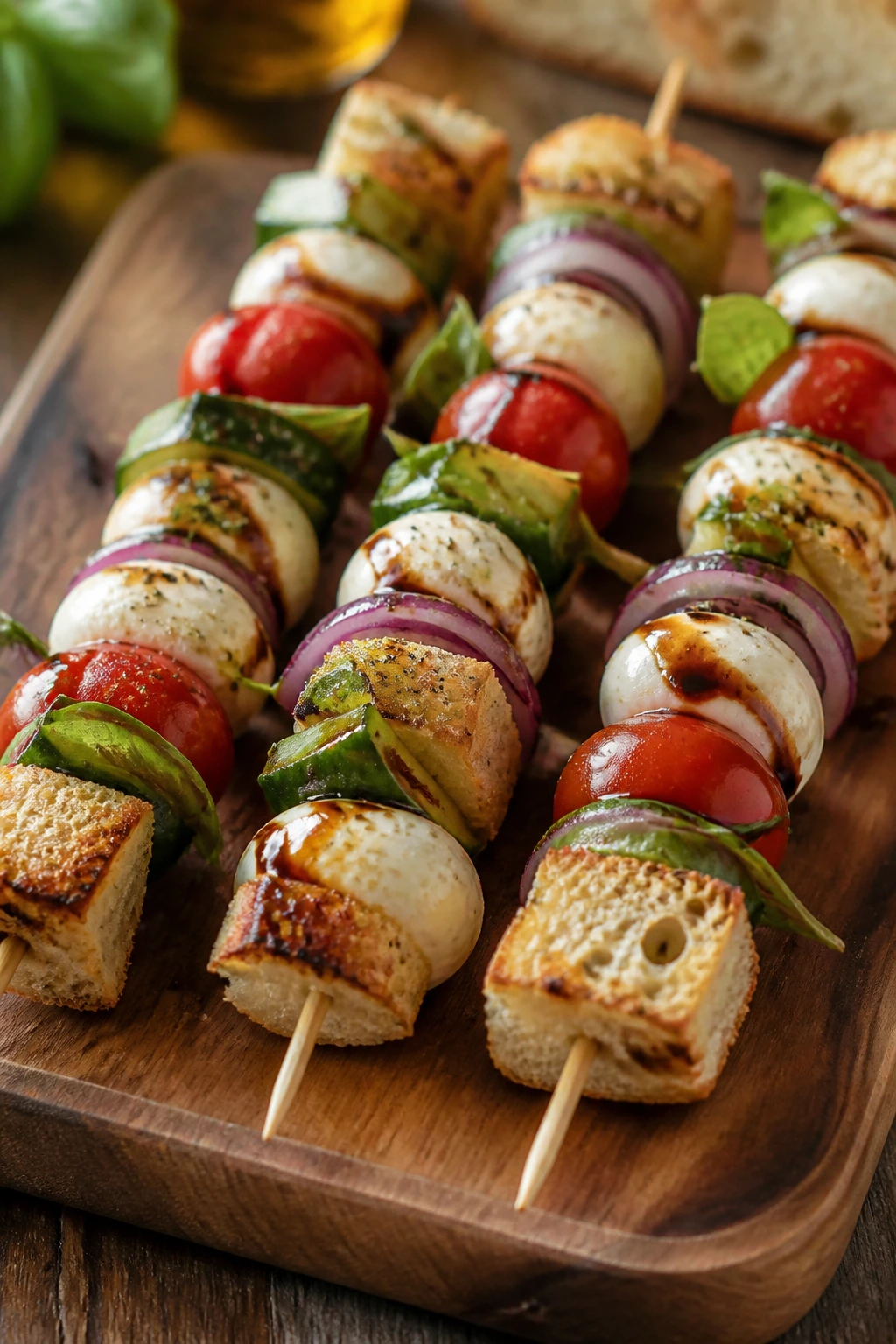
Bread, tomato, basil, vinegar — panzanella has always been the slightly rougher, more rustic cousin of caprese. Thread it onto a skewer and it becomes less of a salad and more of a lunch bite. The toast soaks up the juices, but only if you make it crisp enough first.
Why It Works:
Panzanella is about managing moisture, which makes it a natural fit for skewer treatment. You want toasted bread cubes that can take in a little tomato juice without collapsing. The cucumber adds crunch and makes the skewer feel fresher, while the mozzarella keeps it from becoming a bread-only snack. This is a smart tray when you need something hearty but not heavy.
Key Ingredients:
- 12 one-inch ciabatta cubes, toasted
- 24 cherry tomatoes
- 12 fresh mozzarella balls
- 12 cucumber cubes, peeled if the skin is thick
- 12 basil leaves
- 1 small red onion, very thinly sliced or quick-pickled
- 2 tablespoons extra-virgin olive oil
- 1 teaspoon red wine vinegar
- 1/2 teaspoon kosher salt
- 1/4 teaspoon black pepper
Quick Steps:
- Toast the ciabatta cubes at 375°F for 8 to 10 minutes until crisp at the edges.
- If using raw onion, soak the slices in ice water for 10 minutes, then drain.
- Thread a tomato, a cucumber cube, a mozzarella ball, a basil leaf, and a bread cube onto each skewer.
- Drizzle with olive oil and red wine vinegar.
- Finish with salt and black pepper just before serving.
Equipment for This Recipe:
- Sheet pan
- Oven
- Small bowl for onion
- 12 skewers
- Knife
How to Serve This Dish:
These are useful when you want one skewer to do the work of a small salad. Pair them with soup, grilled meats, or a simple bean dish.
They look best when the bread is still visibly crisp and the onion stays in thin little curls. Too much onion and the whole tray gets loud.
Pro Tips for This Recipe:
- Toast the bread harder than you think you need.
- Use seedless cucumber if the skin is tough.
- Pickle the onion if raw onion feels too sharp.
- Dress lightly so the bread stays structured.
Variations on This Dish:
- Herby Panzanella: Add chopped dill or parsley to the olive oil.
- Roasted Pepper Version: Swap cucumber for roasted red pepper strips.
- Balsamic Version: Use a light balsamic glaze instead of vinegar for a sweeter bite.
Common Mistakes to Avoid with This Dish:
- Soggy bread: It falls apart. Toast it properly.
- Too much vinegar: It overwhelms the fresh ingredients. Use a light touch.
- Raw onion overload: Thin slices are enough. More can dominate the tray.
20. Antipasto Caprese Skewers
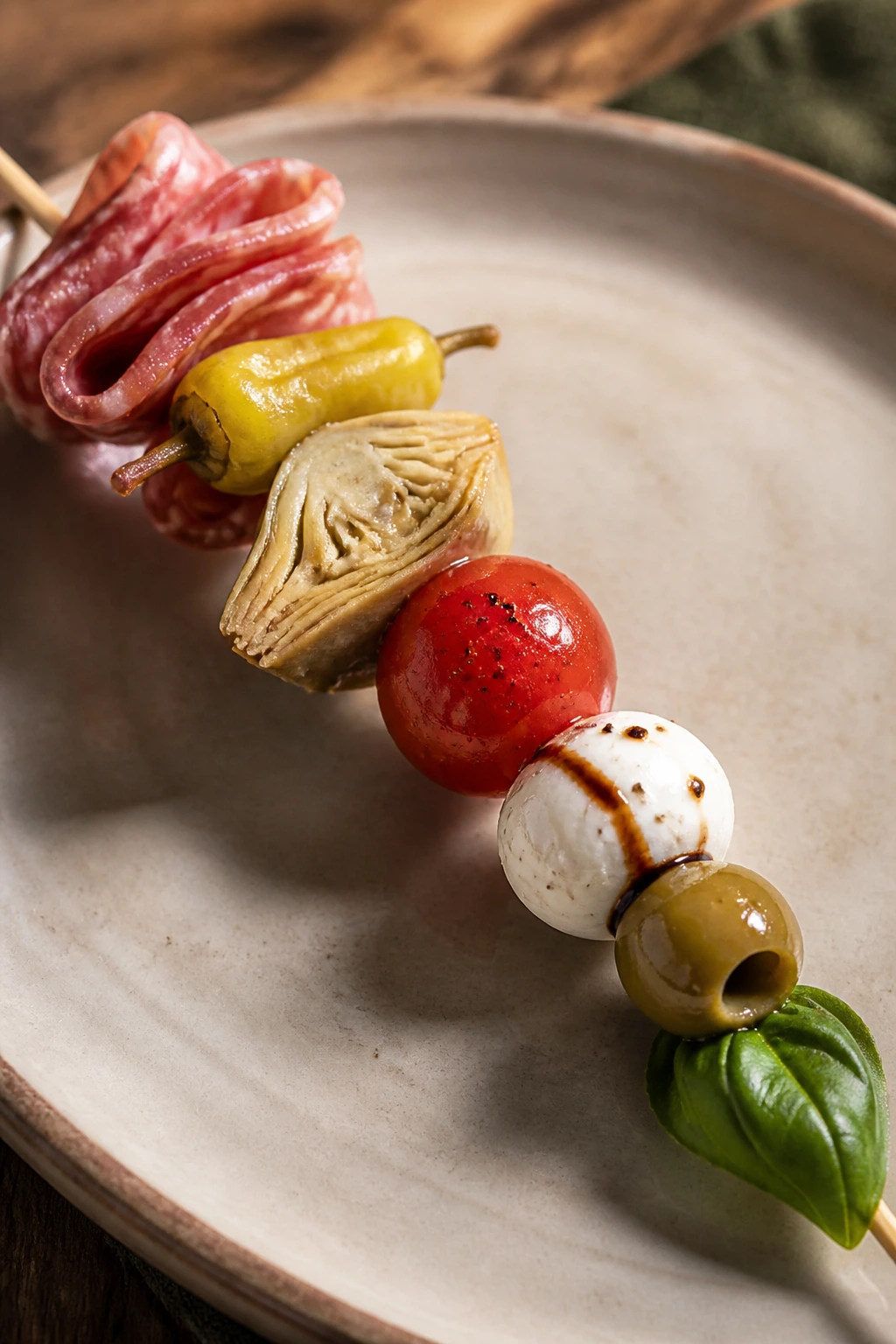
This is the generous version. Salami, olives, pepperoncini, artichokes, tomato, mozzarella, basil — all the things that make a Tuscan-leaning antipasto plate feel abundant, condensed into one neat skewer. It’s the tray people hover over.
Why It Works:
The final skewer in the set should earn its place by giving you the widest flavor range in one bite. Here, salt, acidity, fat, and herbal notes all show up. The trick is keeping the pieces small enough to eat cleanly. If the ingredients are cut too big, the skewer becomes a juggling act instead of a bite.
Key Ingredients:
- 6 ounces thin salami, folded into ribbons
- 12 pepperoncini, drained and patted dry
- 12 marinated artichoke heart quarters
- 24 cherry tomatoes
- 12 fresh mozzarella balls
- 12 Castelvetrano olives, pitted
- 24 basil leaves
- 1 tablespoon extra-virgin olive oil
- 1 teaspoon Italian seasoning
- 1/4 teaspoon black pepper
Quick Steps:
- Drain and dry the pepperoncini and artichokes very well.
- Fold the salami into loose ribbons.
- Thread a tomato, mozzarella ball, olive, artichoke quarter, pepperoncini, basil leaf, and salami ribbon onto each skewer.
- Arrange on a platter and drizzle with olive oil.
- Sprinkle with Italian seasoning and black pepper just before serving.
Equipment for This Recipe:
- Paper towels
- Knife
- 12 sturdy skewers
- Serving platter
- Small bowl
How to Serve This Dish:
These are the center-of-the-table skewers. Put them near the bread, the olives, and the wine, and let them do their thing.
They work as a starter for a crowd or as a heavy appetizer with a simple green salad. One skewer is plenty if the rest of the spread is full.
Pro Tips for This Recipe:
- Keep every component small and dry.
- Use sturdy skewers so the heavier ingredients don’t slide.
- Don’t use too much seasoning; salami and artichokes already bring a lot.
- Assemble close to serving so the pepperoncini stay crisp.
Variations on This Dish:
- Spicier Board Version: Swap in hotter pepperoncini or a sliver of pickled chili.
- Turkey Salami Version: Use turkey salami for a lighter bite.
- Vegetarian Antipasto: Leave out the salami and add another olive or pepperoncini.
Common Mistakes to Avoid with This Dish:
- Overstuffing: Too many ingredients make the skewer hard to eat. Keep it tidy.
- Wet marinated vegetables: They drip and stain the plate. Dry them first.
- Using flimsy picks: Heavy ingredients need sturdier skewers.
Why the Skewer Format Works So Well on a Tuscan-Style Table
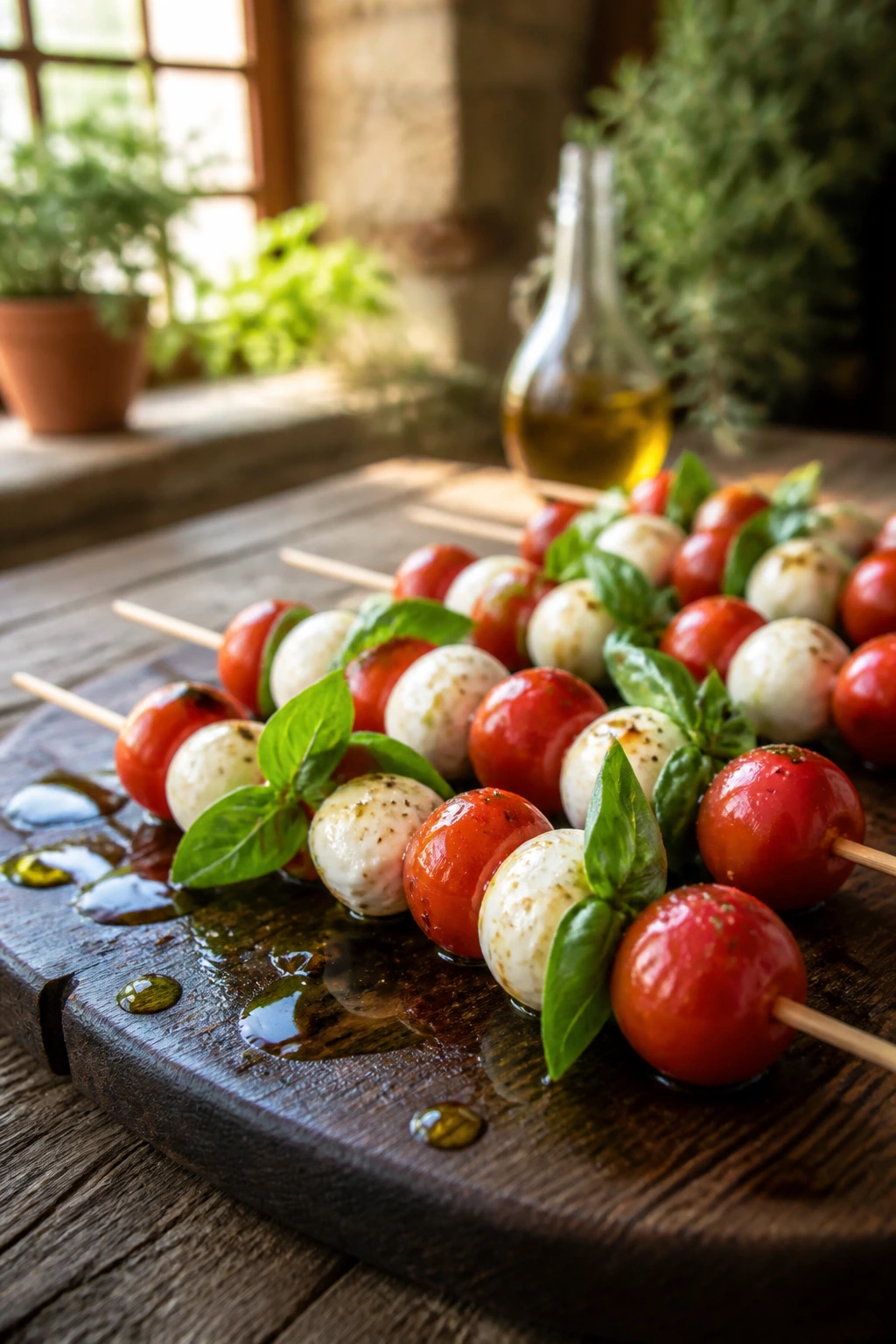
Caprese skewers solve a problem that shows up at almost every casual gathering: people want the flavor of a composed salad, but they do not want to sit down and negotiate utensils. A skewer keeps the ingredients separate enough that each bite is readable. Tomatoes still taste like tomatoes. Basil still smells like basil. The mozzarella stays cool instead of melting into the dressing.
The format also helps with timing. A plate of sliced tomatoes asks for immediate attention. A skewer can wait a little. The ingredients stay in place better, especially when you dry the tomatoes, drain the cheese, and keep wet marinades under control. That matters if you’re setting out a board with bread, cured meat, olives, and fruit. A wet salad slumps. A skewer sits up straight.
There’s another advantage that often gets ignored: portion control without the cardboard feeling of pre-portioned food. One skewer is light. Two is lunch. Four is a proper plate. You can scale the same tray for a small snack table or a long buffet line without changing the method. And because the ingredients are mostly raw, grilled, or lightly dressed, the flavors stay distinct even after they’ve been sitting out for a while.
Essential Equipment for These Recipes
-
6-inch bamboo skewers or cocktail picks: Short picks are easiest for bite-size versions; longer skewers work for the bread and tortellini versions.
-
Sharp paring knife: You’ll use it more than you think, especially for figs, peaches, artichokes, and bread cubes.
-
Cutting board with a damp towel underneath: Keeps the board from sliding while you cut fruit, cheese, and bread.
-
Paper towels: Not glamorous, but they make the difference between glossy and soggy.
-
Small colander: Useful for draining mozzarella, beans, artichokes, and roasted peppers.
-
Sheet pan: Needed for the roasted tomato, grilled bread, and zucchini versions.
-
Grill pan or outdoor grill: Optional, but worth pulling out for the zucchini version.
-
Small bowls: One for dressing, one for pesto, one for gremolata, one for the bits that need to stay separate until the end.
-
Spoon or pastry brush: Handy for balsamic glaze, pesto, and olive oil.
-
Serving platters with a lip: Keeps the glaze and tomato juices from running all over the table.
Smart Shopping and Ingredient Tips
The easiest way to improve Caprese skewers is to start with tomatoes that actually taste like something. Cherry tomatoes and grape tomatoes should feel heavy for their size, with skins that are taut but not hard. If they smell faintly sweet at the stem end, that’s a good sign. Pale tomatoes taste like water in red clothing, and no amount of glaze fixes that.
Mozzarella is the second place where quality matters. Fresh mozzarella balls packed in water are the classic choice, but they need draining. Give them at least 10 minutes in a colander, then pat them dry. If you buy a log or block of fresh mozzarella for the smoked or bruschetta versions, cut it into even cubes and dry the surface before threading. The cheese should feel cool and supple, not wet.
Basil is fragile, so choose leaves that look glossy and alive, not dark and drooping. Small leaves are often better than giant ones because they fit neatly and bruise less. If the basil starts to blacken in your hands, stop squeezing it. Fold, don’t crush.
For balsamic glaze, buy the thick stuff or reduce balsamic vinegar until it clings to a spoon. Thin vinegar runs away from the tray and makes the whole thing look tired. Olive oil should taste green and peppery enough that you notice it on its own. That’s not a luxury point; it’s the backbone of the whole collection.
When you’re using prosciutto, salami, artichokes, olives, or roasted peppers, drain and blot them well. Those ingredients bring flavor, but also excess oil and brine. A few seconds with paper towels keeps the board from turning slippery.
Fruit versions need firm fruit, not the soft, collapsing stuff that feels ready to be cut with a spoon. Peaches, figs, strawberries, and watermelon each have a narrow window where they hold shape and still taste good. Use that window.
How to Serve These Recipes
Presentation:
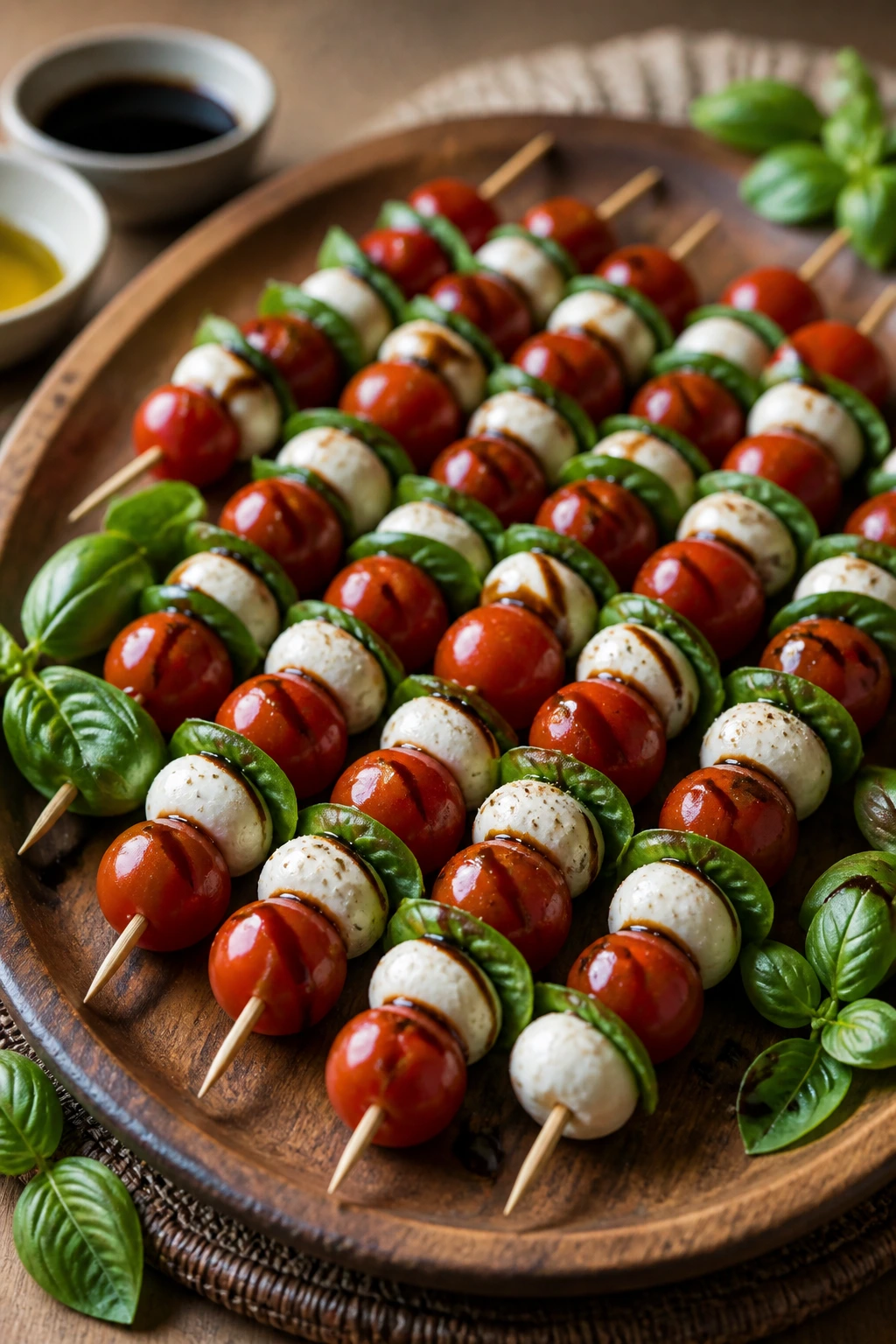
Use a wide platter, slate board, or wooden tray and keep the skewers in a single layer where possible. Scatter a few basil leaves, olive pits removed from view, or toasted bread crumbs around the edges if the tray looks too empty. The goal is clean and open, not crowded.
Accompaniments:
Serve the classic, pesto, and roasted tomato versions with sliced ciabatta or focaccia. The prosciutto, olive, artichoke, and antipasto versions like olives, almonds, roasted peppers, or a few chunks of pecorino. The peach, strawberry, and watermelon versions do better beside lighter things — crackers, melon wedges, or a simple green salad.
Portions:
Plan on 2 skewers per person for a light starter and 3 to 4 if the skewers are the main appetizer. The bread and tortellini versions eat heavier, so 1 to 2 per person is usually enough. If you’re scaling up, increase the skewers first and the glaze second; people always want more glazy garnish than you think.
Beverage Pairing:
A crisp white wine with a little snap — Verdicchio, Pinot Grigio, or Vermentino — keeps the tomato and basil tasting clean. Sparkling water with lemon works when you want the food to stay in charge. For a nonalcoholic board, blood orange soda or a tart shrub drink makes sense with the fruit-forward versions.
Additional Tips and Flavor Boosters
Flavor Enhancement: A tiny bit of flaky salt at the end is better than a heavy marinade before serving. It sharpens the tomatoes, wakes up the basil, and keeps the mozzarella from tasting flat.
Customization: If you want more Tuscan bite, use lemon zest, rosemary, oregano, or a little garlic oil in place of extra glaze. If you want softer flavors, lean on honey, peach, or burrata and keep the salt restrained.
Serving Suggestions: Add a small bowl of balsamic glaze on the side for guests who like a heavier finish. A few fresh basil sprigs, not chopped confetti, make the platter smell right as soon as it hits the table.
Make-It-Yours: For dairy-free trays, use marinated artichokes, tomatoes, olives, and basil, then skip the cheese and lean on olive oil and lemon. For gluten-free versions, avoid the bread and tortellini items and pick the classic, pesto, or fruit-forward skewers instead. For a low-salt version, use plain mozzarella, rinse brined ingredients well, and leave the cured meat off the board.
Make-Ahead, Storage, and Reheating Guidance
Most of these skewers can be assembled ahead, but not all of them want the same treatment. The classic tomato-mozzarella-basil skewers hold well for about 4 to 6 hours in the refrigerator if you keep the glaze separate and add it just before serving. Prosciutto, salami, olive, artichoke, and tortellini versions can usually sit for up to 8 hours chilled as long as the wet ingredients are drained and the tray is covered lightly.
Bread-based skewers are different. Toast the ciabatta or baguette cubes the day you need them, and assemble them no more than 1 to 2 hours before serving. After that, the bread starts to soften. Roasted tomato and grilled zucchini versions can be made ahead and held for a few hours, but they taste best at room temperature rather than ice-cold.
Fruit versions need the most caution. Peach, strawberry, fig, and watermelon skewers are best made close to serving, ideally within 30 to 60 minutes. The fruit looks best when the cut edges are fresh, and the texture stays cleaner that way.
For storage, keep assembled skewers in a single layer in a covered container lined with paper towels. They’ll usually keep in the fridge for up to 24 hours, though the basil may darken and the tomatoes may weep a little. Leftover roasted tomatoes, grilled zucchini, tortellini, and toasted bread components can be stored separately for 2 to 3 days and reassembled later.
Freezing finished skewers is not worth it. The tomatoes burst, the basil turns black, and the mozzarella changes texture in a way nobody wants. If you need to freeze anything, freeze the pesto or roasted components separately, then rebuild fresh skewers later.
There isn’t much reheating to do, but the warm versions do best with gentle heat. Roasted tomato skewers can be brought back to life in a 300°F oven for 5 to 7 minutes. Grilled zucchini or toasted bread cubes can be warmed the same way if they’ve gone cold. Keep the mozzarella out of the heat; it only needs room temperature, not actual warming.
Variations and Adaptations to Try
Dairy-Free Olive Garden Tray:
Leave off the mozzarella and build the skewer around tomatoes, olives, artichokes, basil, and a little olive oil. The cheese is what makes it caprese, but the flavor stays Tuscan if you keep the ingredients bright and briny.
Gluten-Free Picnic Picks:
Skip the bruschetta and panzanella versions and focus on the classic, prosciutto, fruit, roasted tomato, and olive skewers. Nothing else needs to change except making sure any store-bought glaze or pesto is labeled gluten-free.
Lower-Salt Summer Tray:
Use plain mozzarella, rinse the olives and artichokes well, and leave the prosciutto or salami off a few skewers. Finish with lemon zest and basil instead of extra seasoning so the tray still tastes lively.
Kid-Size Little Picks:
Shorten the skewers, keep the pieces small, and stick with the classic, strawberry, watermelon, or bruschetta versions. Kids often like the bread and fruit versions first because they can eat them without a lot of chewing.
Spicy Tuscan Edge:
Add crushed red pepper to the olive oil, tuck in a pepperoncini slice, or use a spicy salami. The point is heat in the finish, not a burn that bulldozes the basil.
Garden-Heavy Version:
Mix in cucumber cubes, grilled zucchini, artichokes, and roasted peppers, then keep the cheese smaller and the glaze lighter. This one tastes more like a composed salad on a stick and less like a cheese snack.
Common Mistakes to Avoid
The first mistake is moisture. Wet tomatoes, undrained mozzarella, oily artichokes, and brined peppers all do the same thing: they make the tray slick and tired-looking. The fix is boring but effective — drain, blot, then drain again if needed. A clean towel and a paper towel beat fancy garnish every time.
The second mistake is overbuilding the skewer. If you stack on too many heavy ingredients, the pick bends, the cheese slides, and the bite gets awkward. Keep the pieces small and let the ingredients repeat instead of piling them up. Two tomatoes, one cheese, one accent ingredient, and a finish is usually enough.
The third mistake is adding glaze, pesto, or oil too early. Once the dressing sits on basil or bread for too long, the texture starts to go soft. Save the finishing drizzle for the last minute, especially on bread, fruit, and basil-heavy skewers.
The fourth mistake is serving everything ice-cold. Straight-from-the-fridge mozzarella can taste stiff, and chilled tomatoes lose some of their smell. Let the tray sit out for 10 to 15 minutes before serving if the ingredients were refrigerated. Not longer for the fruit versions. Those need to stay cold.
The fifth mistake is using the wrong skewer length. Tiny cocktail picks are fine for classic caprese bites, but bread, tortellini, and antipasto versions need something sturdier. If the pick flexes in your hand, it will flex on the tray too.
The last mistake is treating all 20 versions the same way. Some of these skewers want basil and glaze. Some want lemon. Some want room temperature. Some want to be eaten fast. The best trays respect that difference and don’t try to force every ingredient into the same mold.
Frequently Asked Questions
Can I use toothpicks instead of skewers?
Yes, for the classic, fruit, and olive-heavy versions. Toothpicks work best when the ingredients are small and light. For bread, tortellini, salami, or antipasto skewers, use sturdier picks or short bamboo skewers so the weight doesn’t cause tipping.
How far ahead can I assemble Caprese skewers?
The safest window is 4 to 6 hours for the classic versions and up to 8 hours for the heartier ones with prosciutto, olives, or tortellini. Fruit, bread, and basil-heavy versions do better closer to serving time. If in doubt, prep the components separately and thread them late.
What mozzarella works best?
Fresh mozzarella balls, ciliegine, and bocconcini are the easiest to thread and the neatest to serve. A block of fresh mozzarella works too if you want to cut it into cubes for the smoked, bruschetta, or antipasto versions. Avoid pre-shredded cheese entirely; it doesn’t belong here.
Can I make these without balsamic glaze?
Absolutely. Lemon zest, olive oil, and a pinch of salt are enough for several of the versions, especially the grilled zucchini, gremolata, and olive skewers. If you want sweetness without glaze, a tiny drizzle of honey does the job on fruit-forward versions.
How do I keep the basil from turning dark?
Keep it dry, use whole leaves, and don’t crush it when threading. Basil bruises fast when you squeeze it, and moisture speeds up the dark spots. If you need to prep ahead, store the basil between paper towels in a container and add it late.
Can I grill the skewers?
Not the finished ones, no. The tomatoes and mozzarella won’t like direct heat. What you can grill are the zucchini ribbons, the bread cubes if you’re making the bruschetta version, or the tomatoes before assembling the roasted style.
What if my tomatoes are bland?
Use the roasted tomato, pesto, or prosciutto versions instead of the plain classic. A little salt, a good balsamic glaze, and fresh basil can rescue a mediocre tomato, but they can’t turn a watery one into a great one. Start with the best fruit you can find.
Do the bread versions get soggy fast?
Yes, if you assemble them too early or under-toast the cubes. Toast the bread until it feels dry and crisp, then add glaze at the end. If you need them to hold longer, keep the bread separate and thread it at the last minute.
Can I turn these into a meal instead of an appetizer?
The tortellini, panzanella, antipasto, and cannellini bean versions already lean that way. Pair two or three skewers with a salad and you have a light lunch without much extra work. The classic version is too delicate to stand alone unless you serve a lot of them.
A Tray That Disappears Fast
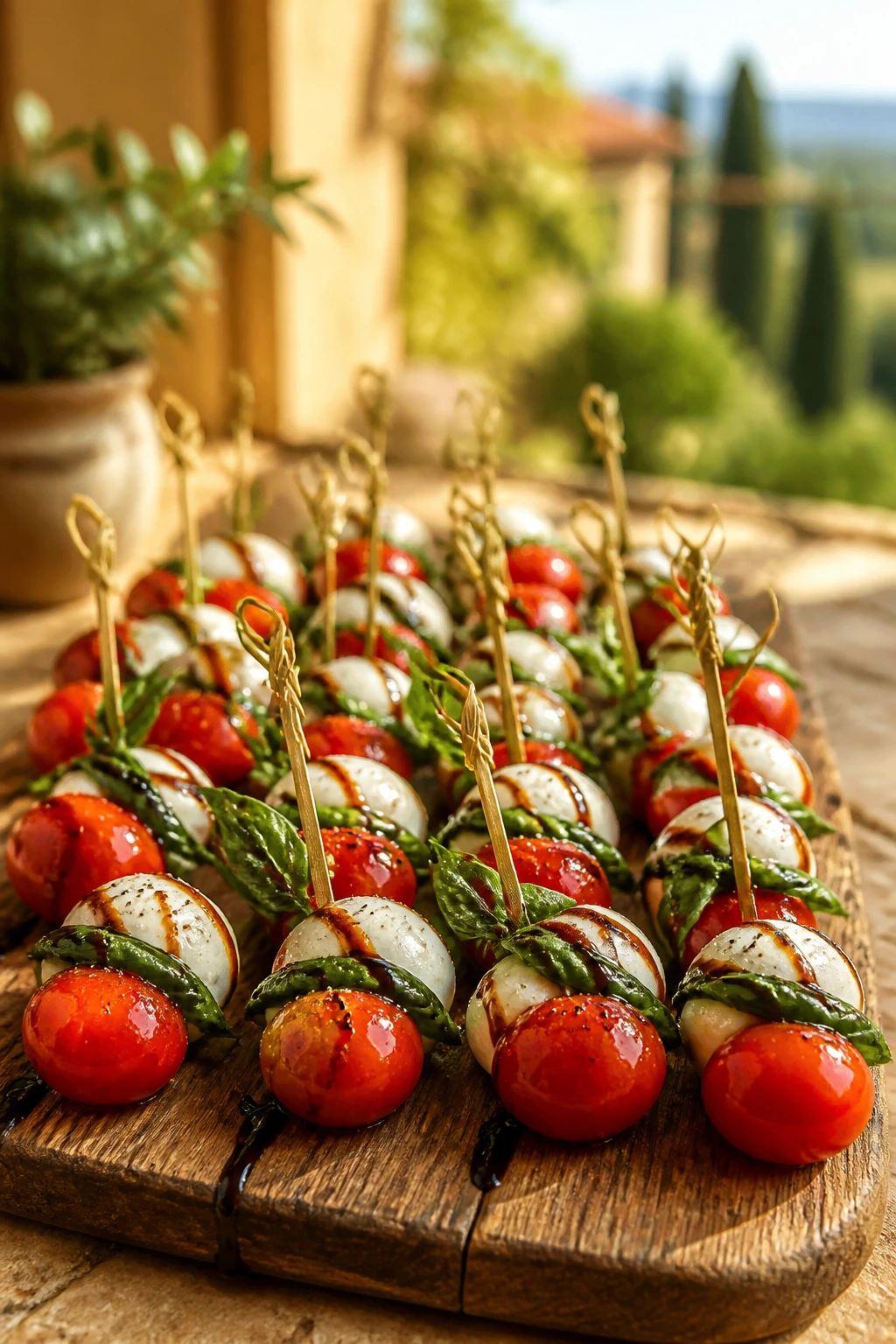
A good Caprese skewer does not need a lot of decoration. It needs ripe tomatoes, dry cheese, fresh basil, and a little discipline with the drizzle. That’s the whole story, and it’s why the best trays are usually the simplest-looking ones on the table.
Once you start leaning into the Tuscan pantry — rosemary, figs, artichokes, olives, prosciutto, bread, lemon zest — the format gets even better. You still get the clean caprese structure, but the flavors move around a little more, which is what keeps the tray interesting bite after bite.
Make one classic tray first, then choose one savory version and one fruit or bread version to round it out. That combination gives the board shape, and it keeps people coming back for another skewer before the first tray is even half gone.