



A garlicky egg pizza breakfast doesn’t smell like sleepy toast; it smells like hot olive oil, toasted dough, and garlic that has gone sweet at the edges instead of sharp and raw. That’s the moment this dish starts feeling special, even though the ingredients are plain enough to live in an ordinary fridge door. A good slice lands somewhere between pizza bianca and a soft breakfast pie, which is exactly why it works so well when you want something more satisfying than eggs on bread, but less fussy than a full brunch spread.
The version I keep coming back to is the kind you can imagine coming out of Nonna’s oven on a loud morning: a sheet of dough stretched thin, brushed with garlic oil, dotted with ricotta, blanketed with mozzarella, then finished with eggs that set just enough to hold their shape while the yolks stay glossy. It’s not trying to be refined. That’s the charm. The crust gets crisp at the rim, the cheese melts into little creamy pockets, and the garlic does its job without bullying everything else off the plate.
What makes this breakfast pizza worth making is the timing. You get the best part of pizza and the best part of breakfast in one pan, and the trickiest element — the eggs — becomes easy once the crust has had its first bake. If you’ve ever watched a runny egg slide off a slice and onto your wrist, you already know why the shallow cheese wells matter. They keep the eggs where they belong. Little detail. Big difference.
Why This Garlicky Egg Pizza Stays in the Morning Rotation
- Garlic, but mellow: Grating the garlic into olive oil gives you that warm, sweet, almost nutty flavor instead of the harsh sting you get from raw minced cloves scattered on top.
- Eggs that actually stay put: A short first bake creates little pockets in the cheese, so the eggs settle instead of skittering across the crust.
- Breakfast that eats like a meal: Ricotta, mozzarella, Parmesan, and eggs give this real staying power, which means one slice doesn’t leave you rummaging for a second breakfast ten minutes later.
- Weekday-friendly, brunch-worthy: Store-bought dough works fine, and once the dough is at room temperature, the rest moves fast.
- Flexible without getting messy: You can add greens, cured meat, or extra herbs, but the base recipe still holds together and tastes complete.
- Better hot than fussy: This is one of those dishes that wants to be eaten warm from the pan, with the cheese still soft and the crust still audibly crisp at the edge.
Timing, Yield, and the Pan I Reach For
Yield: Serves 4 to 6
Prep Time: 20 minutes
Cook Time: 16 to 19 minutes
Total Time: 36 to 39 minutes
Difficulty: Intermediate — shaping dough and timing the eggs takes a little attention, but the method is straightforward once the oven is hot.
Best Served: Warm, about 3 minutes after baking, when the cheese has settled but the crust still crackles when cut.
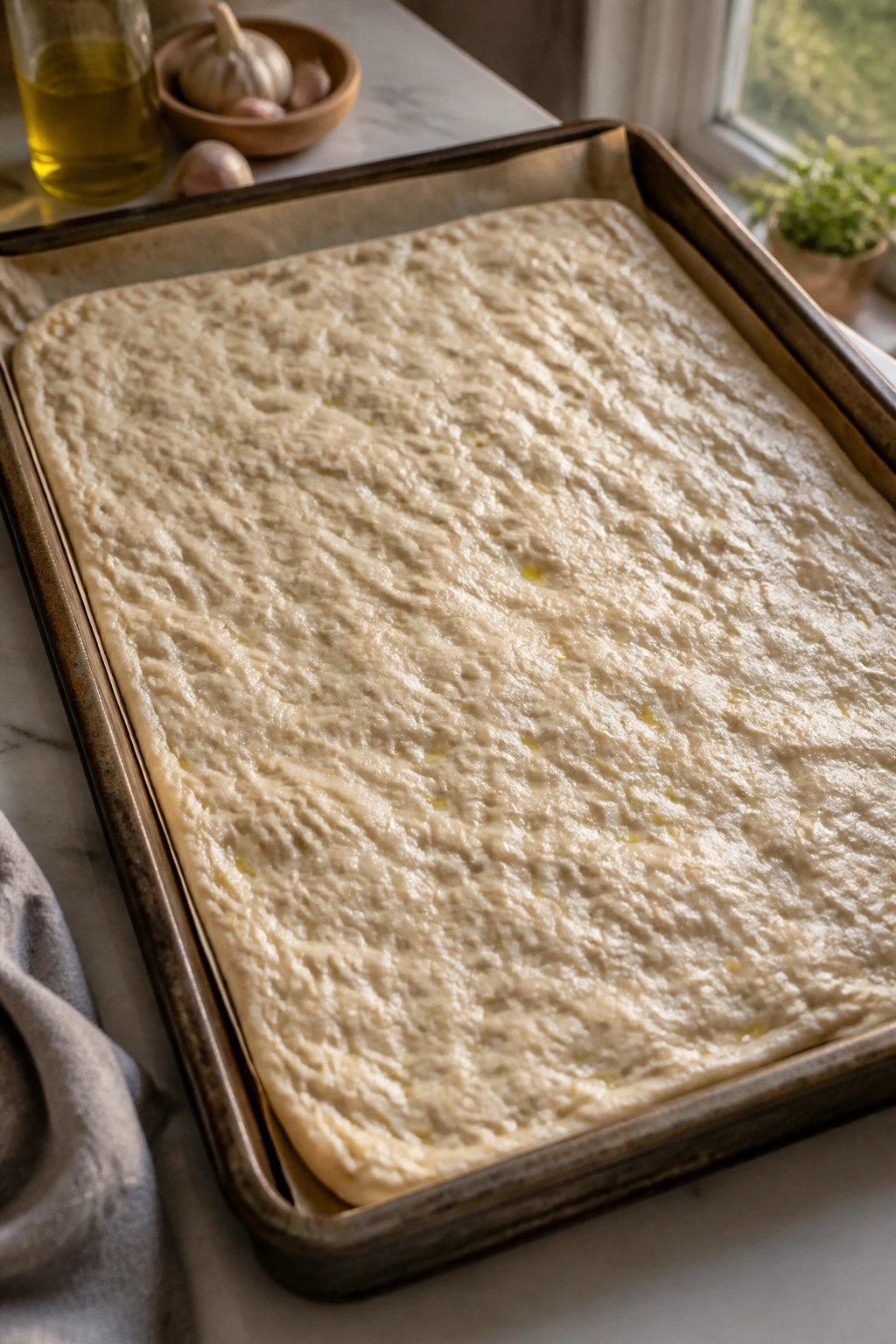
I like a 13×18-inch rimmed sheet pan for this version because it gives the dough room to spread into a thin, rustic rectangle. That shape is practical. You get more crisp edges, more surface area for cheese and eggs, and fewer moments where the center turns doughy because the toppings were piled too thick.
If your kitchen runs cold and the dough keeps shrinking back, give it time. Dough that’s still chilly fights you, and fighting dough is a waste of morning energy nobody needs.
The Ingredient List That Makes the Whole Thing Work
For the Garlic Oil
- 3 tablespoons extra-virgin olive oil
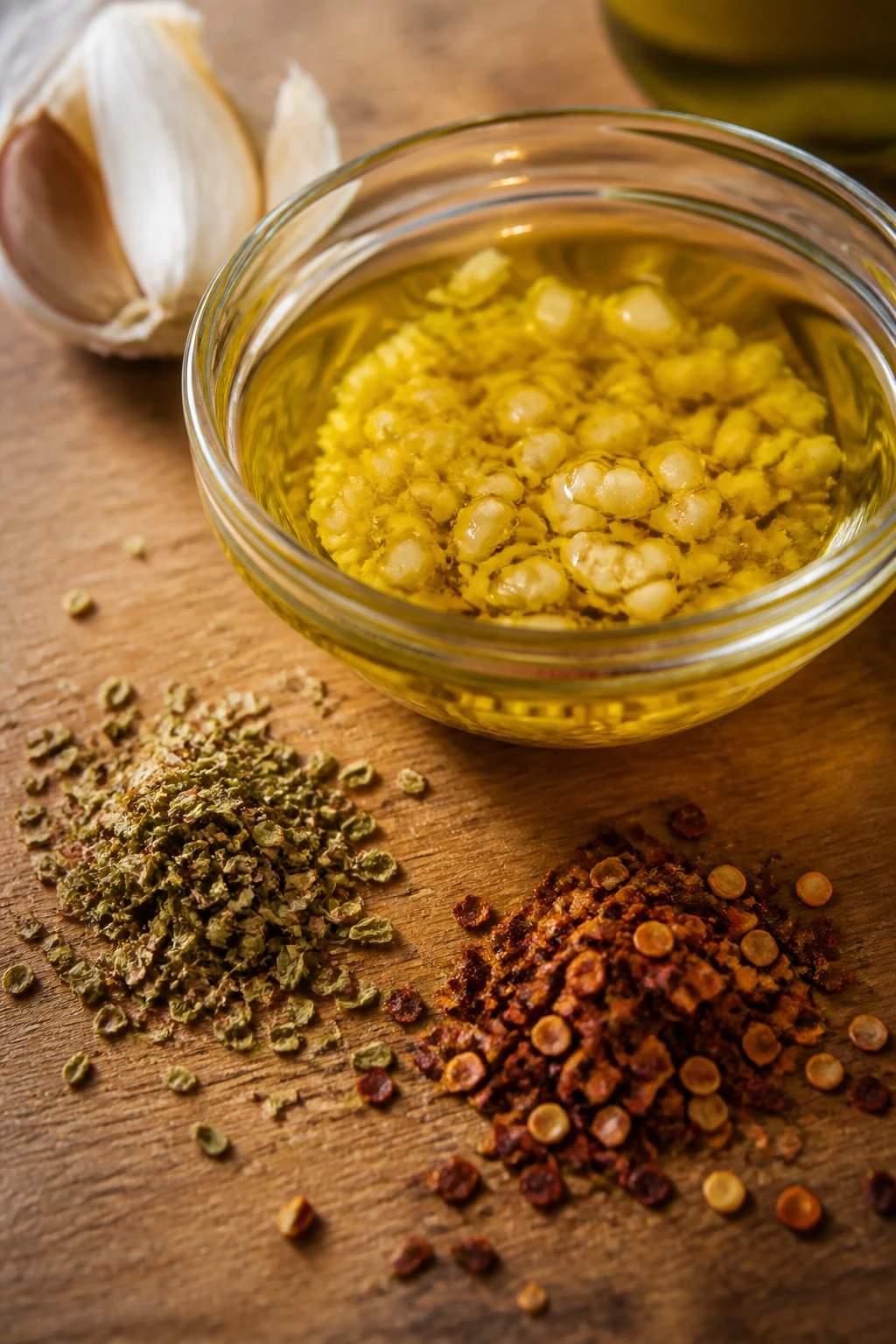
- 4 garlic cloves, finely grated or minced
- 1 teaspoon dried oregano
- 1/2 teaspoon crushed red pepper flakes
- 3/4 teaspoon kosher salt, divided
- 1/4 teaspoon black pepper
For the Pizza
- 1 pound pizza dough, room temperature
- 1 tablespoon all-purpose flour, for stretching the dough
- 1 cup whole-milk ricotta, stirred smooth
- 1 1/2 cups shredded low-moisture mozzarella, about 6 ounces
- 1/4 cup grated Parmesan or Parmigiano-Reggiano
- 4 large eggs
- 2 tablespoons chopped fresh parsley or basil
For Finishing
- Flaky sea salt, for the top
- Extra black pepper, if you like a sharper finish
Why Each Ingredient Matters in a Breakfast Pizza
Pizza Dough and the Pan
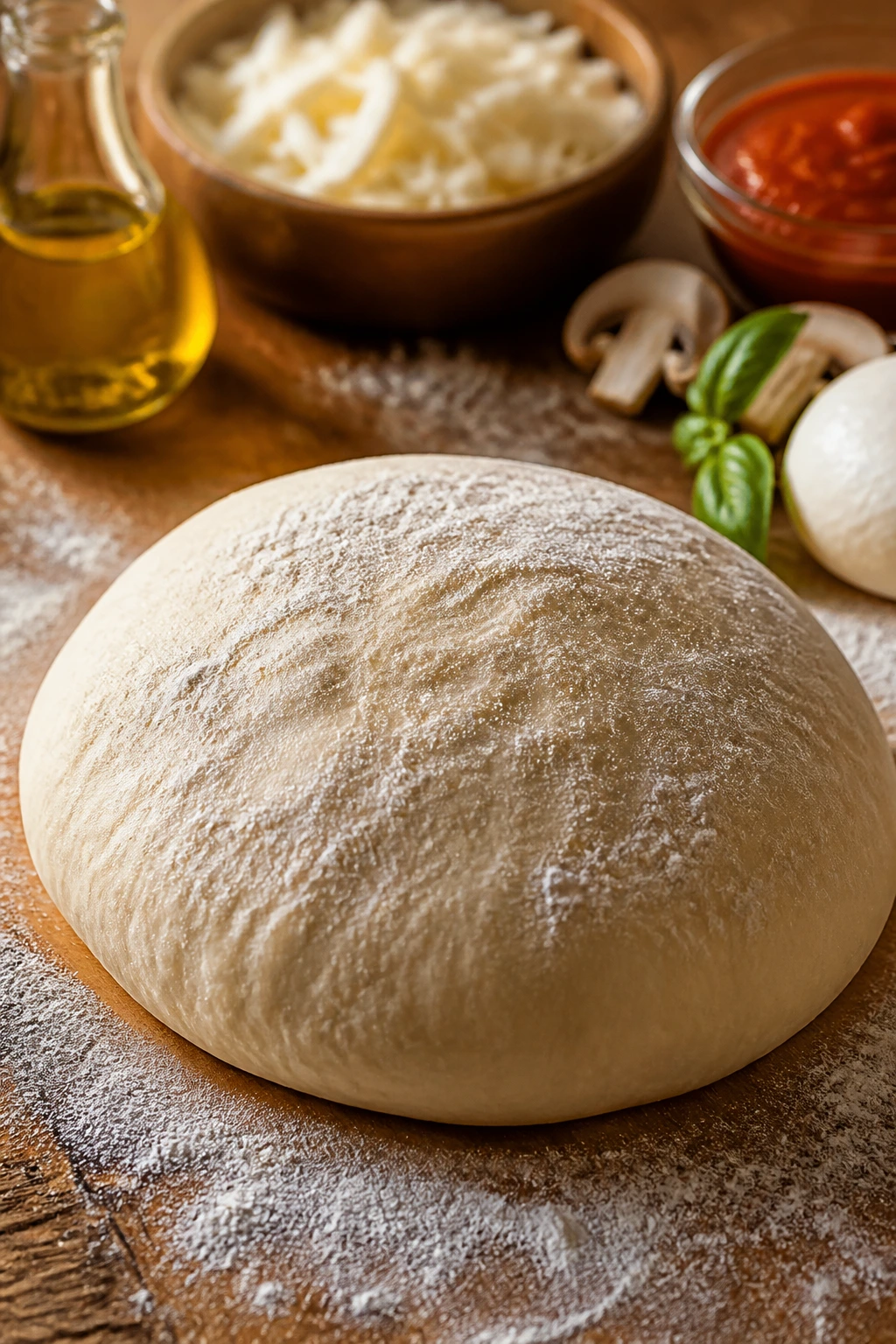
What to use: 1 pound pizza dough, brought to room temperature, plus a lightly oiled rimmed sheet pan.
Preparation: Let the dough rest on the counter until it stretches without springing back like a rubber band. A loose rectangle is better here than a perfect circle.
Substitutions: Store-bought dough is fine, and so is a good naan or flatbread if you want a thinner, faster version.
Tips: Cold dough tears more easily, and torn dough leaks oil and cheese into the pan, which is how you end up with a burnt edge and a pale middle.
The Garlic Oil
What to use: Extra-virgin olive oil, grated garlic, oregano, red pepper flakes, kosher salt, and black pepper.
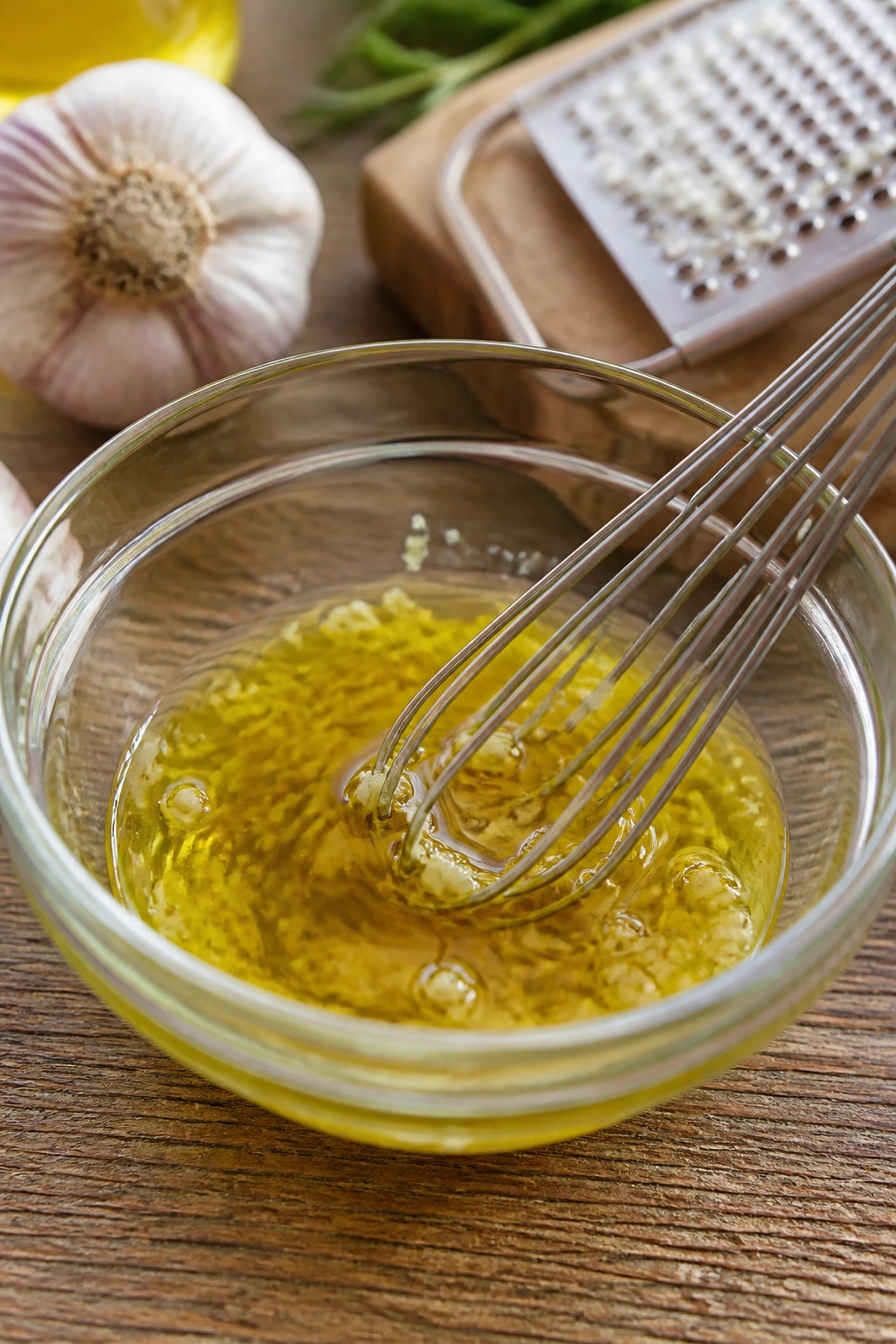
Preparation: Grate the garlic into the oil and let it sit for 5 to 10 minutes before brushing it over the dough.
Substitutions: Roasted garlic paste works if you want a sweeter, deeper garlic note; garlic confit is even softer.
Tips: Grating the garlic spreads it out so it perfumes the oil instead of sitting in little hot spots that scorch in the oven.
Ricotta, Mozzarella, and Parmesan
What to use: Whole-milk ricotta for creaminess, low-moisture mozzarella for melt, and Parmesan for salt and bite.
Preparation: Stir the ricotta so it’s smooth enough to dollop; shred the mozzarella if you have a block, because it melts more cleanly.
Substitutions: Provolone gives a sharper edge, fontina melts softly, and pecorino can stand in for Parmesan if you want a saltier finish.
Tips: Fresh mozzarella looks pretty, but it releases more water. For this pizza, low-moisture mozzarella keeps the crust drier and the cheese stretchier.
Eggs and Herbs
What to use: 4 large eggs and a small handful of parsley or basil.
Preparation: Crack each egg into a small bowl before sliding it onto the pizza; that keeps shell bits out and gives you more control.
Substitutions: If you want firmer eggs, use 5 smaller eggs and bake a minute or two longer.
Tips: Herbs are best added after baking. If they go in too early, they darken and lose the clean, green taste that makes the finished pizza smell fresh.
The Tools That Make Breakfast Pizza Easier
- 13×18-inch rimmed sheet pan: The broad surface gives you thin crust and enough room for four eggs without crowding.
- Parchment paper: It keeps the dough from sticking and makes cleanup less annoying.
- Microplane or fine grater: Best for turning garlic into a paste-like texture that melts into the oil.
- Small mixing bowl: For the garlic oil and for cracking eggs one by one.
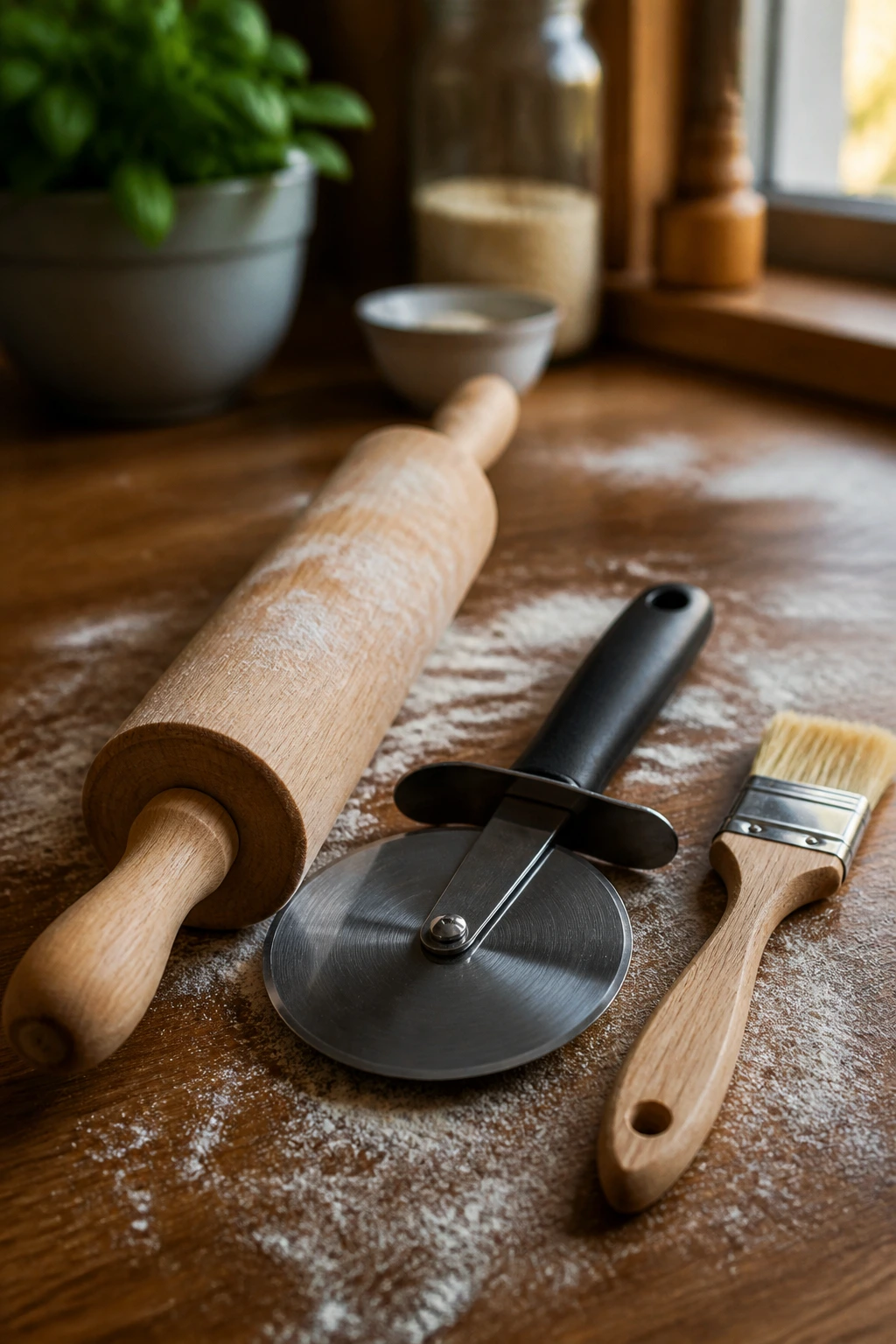
- Rolling pin or your hands: Either works; I usually start with my hands and finish with a rolling pin if the dough keeps resisting.
- Pizza wheel or chef’s knife: A wheel cuts through the crust cleanly without dragging the toppings around.
- Pastry brush or spoon: Handy for spreading garlic oil over the dough in a thin, even layer.
Stretching the Dough and Heating the Oven
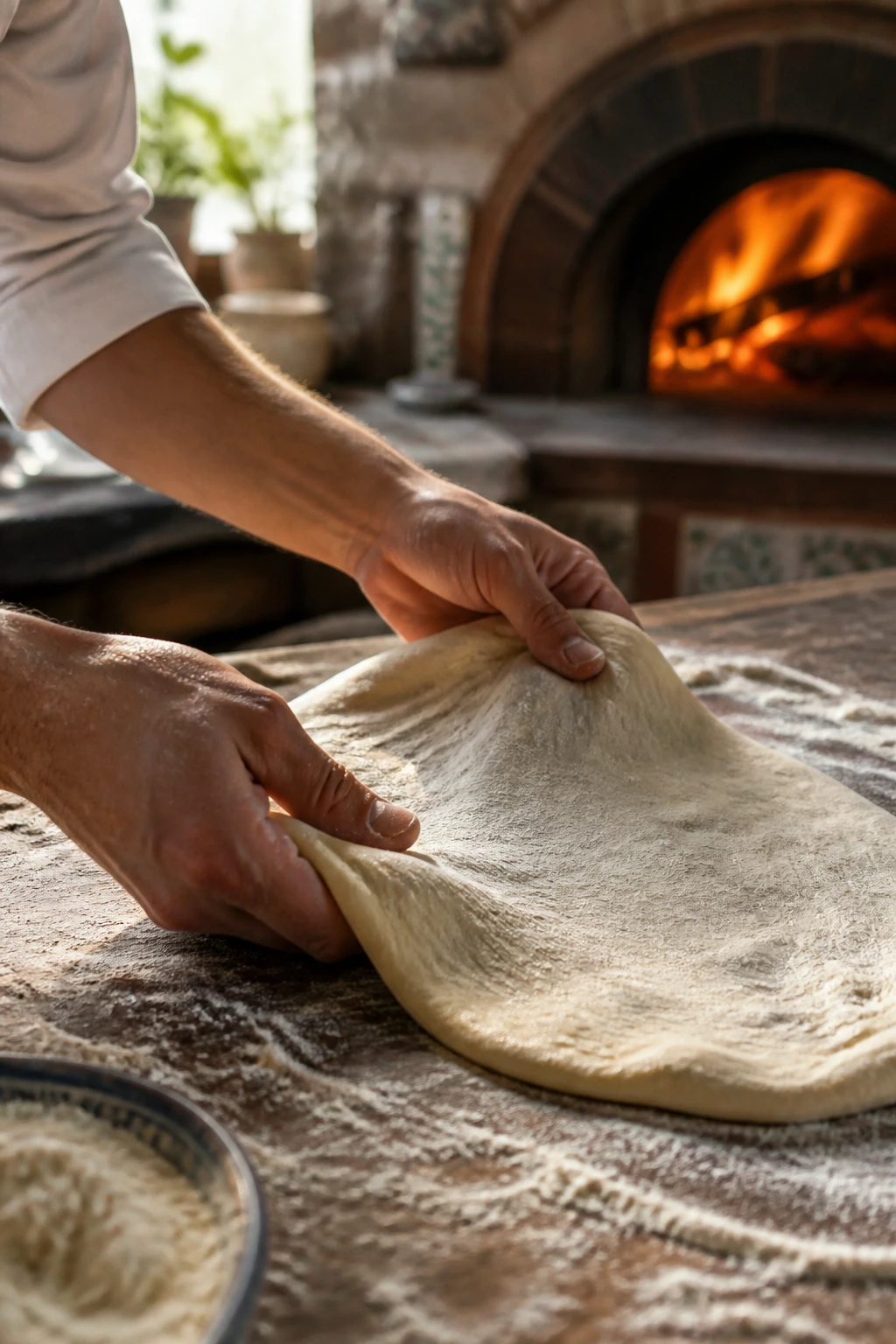
Preheat and prep the pan:
- Set the oven to 475°F (245°C) and position a rack in the lower third. Line a 13×18-inch rimmed sheet pan with parchment paper and lightly brush the parchment with olive oil.
- In a small bowl, combine the 3 tablespoons olive oil, grated garlic, oregano, red pepper flakes, 1/2 teaspoon of the kosher salt, and black pepper. Stir and let it sit while you work the dough. The garlic should smell warm, not aggressive.
Shape the crust: 3. Dust your counter with the 1 tablespoon flour and stretch the 1 pound pizza dough into a rough 12×16-inch rectangle. Don’t chase perfection. A rustic shape bakes more evenly than a thick, uneven circle. 4. Transfer the dough to the prepared pan and gently press it toward the edges. If it keeps shrinking back, walk away for 5 minutes, then stretch again. That pause matters more than brute force. 5. Brush half of the garlic oil over the surface, stopping about 1 inch from the edges. You want the border to puff and crisp, not fry.
Garlic Oil, Cheese, and the First Bake
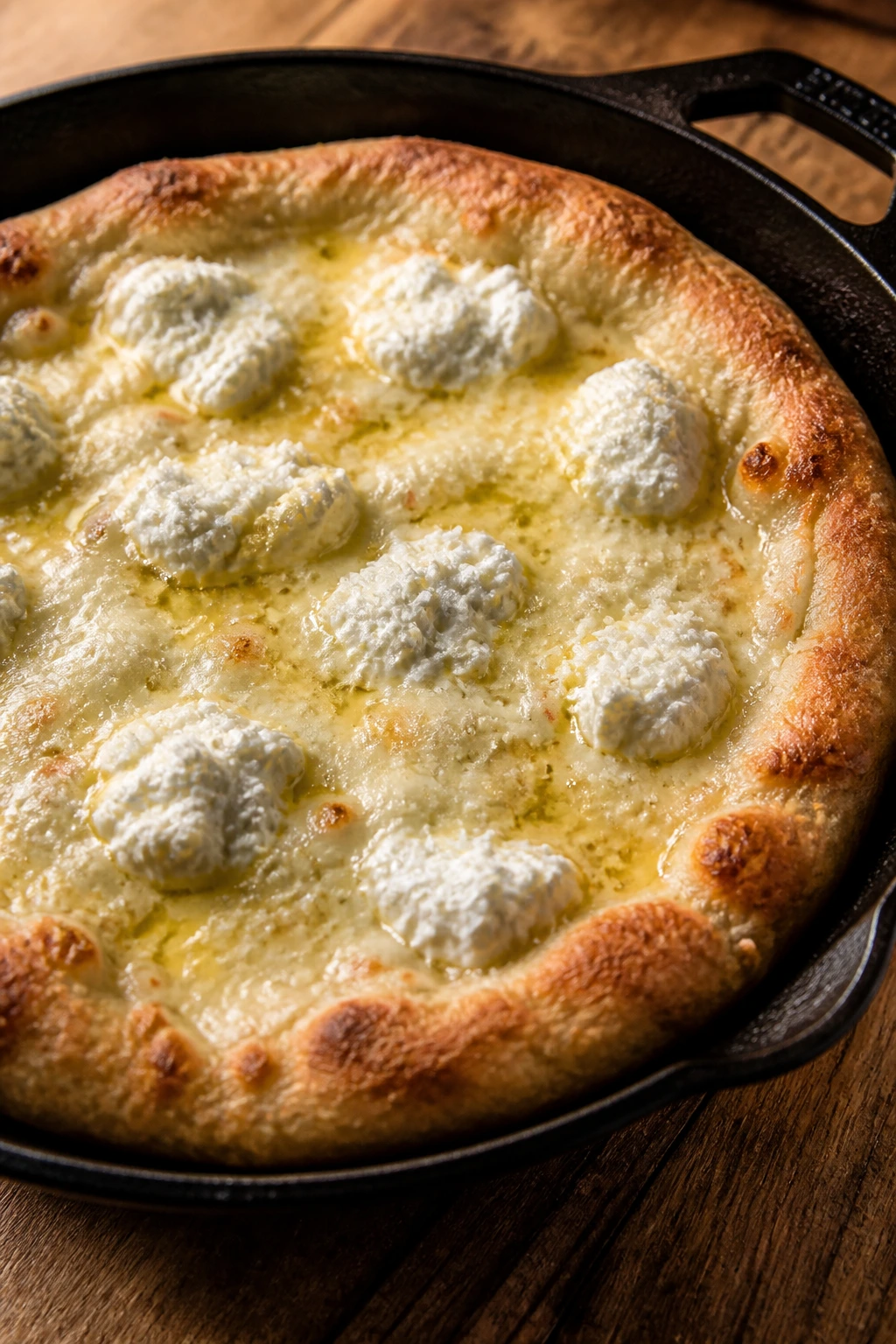
Build the base: 6. Spoon the 1 cup ricotta over the dough in small dollops, spacing them so each bite gets a little creaminess. Scatter the 1 1/2 cups mozzarella over and around the ricotta, then finish with the 1/4 cup Parmesan. 7. Bake for 8 to 10 minutes, until the crust is puffed, the edges are beginning to turn gold, and the mozzarella looks melted but not browned all over. The center should still look pale and soft. That’s what you want.
Make the egg wells: 8. Remove the pan from the oven and, with the back of a spoon, press 4 shallow wells into the cheese. Crack each egg into a small bowl first, then slide one egg into each well. Do not crack directly over the pizza if you can avoid it; it’s how shell fragments end up buried under cheese.
Cracking the Eggs and Finishing the Pizza
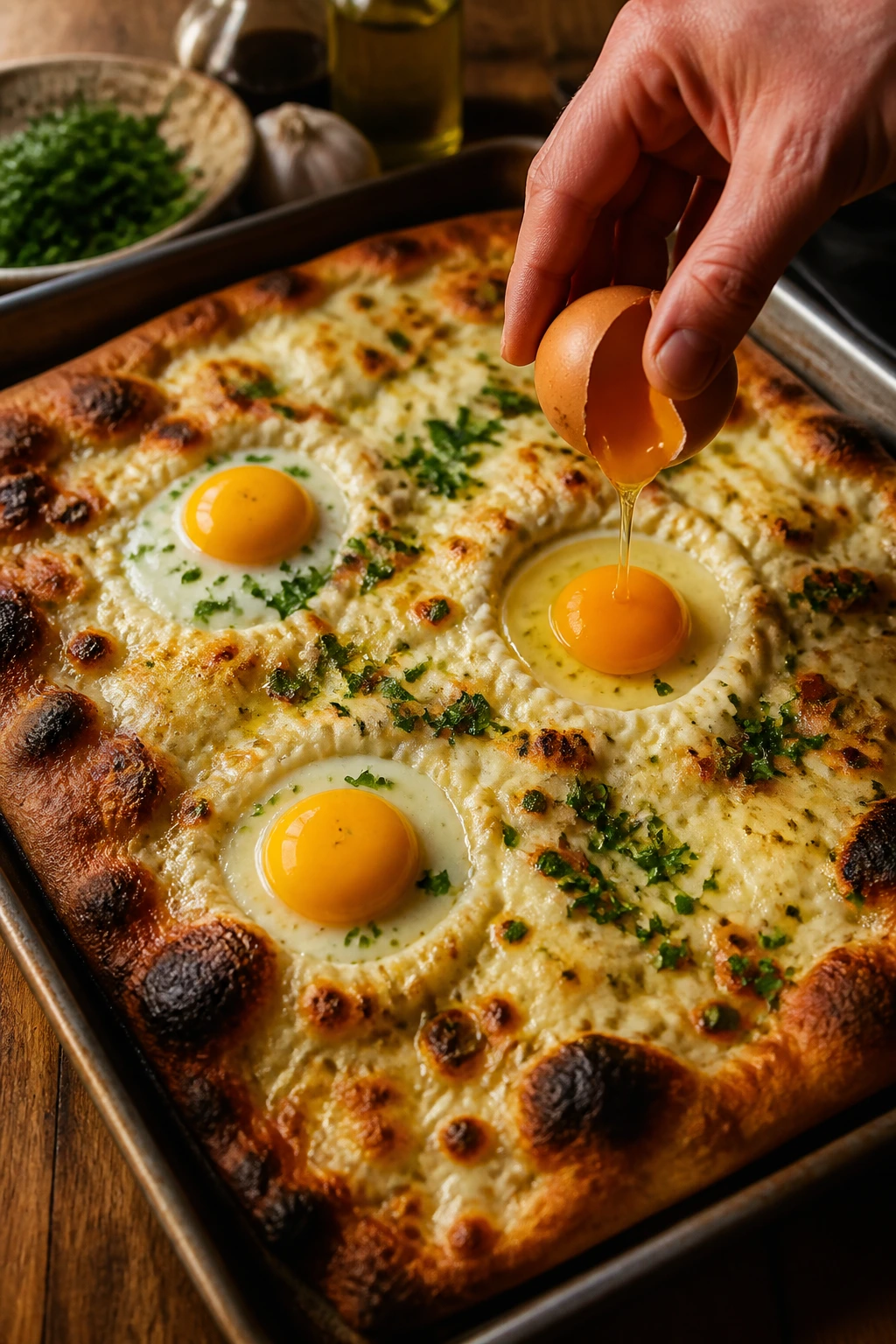
- Return the pan to the oven and bake for 6 to 9 minutes, until the whites are opaque and set and the yolks still wobble a little when you nudge the pan. If you want firmer yolks, give it 1 to 2 extra minutes. If your oven runs hot, start checking at the 5-minute mark.
- Remove the pizza and drizzle the remaining garlic oil over the top. Sprinkle with the chopped parsley or basil, the rest of the Parmesan if you held some back, and a few pinches of flaky salt.
- Let the pizza rest for 3 minutes, then cut it into 4 large squares or 6 smaller pieces. The rest time is short, but it keeps the yolks from bursting the second the knife hits the crust.
How I Like to Serve It at the Table
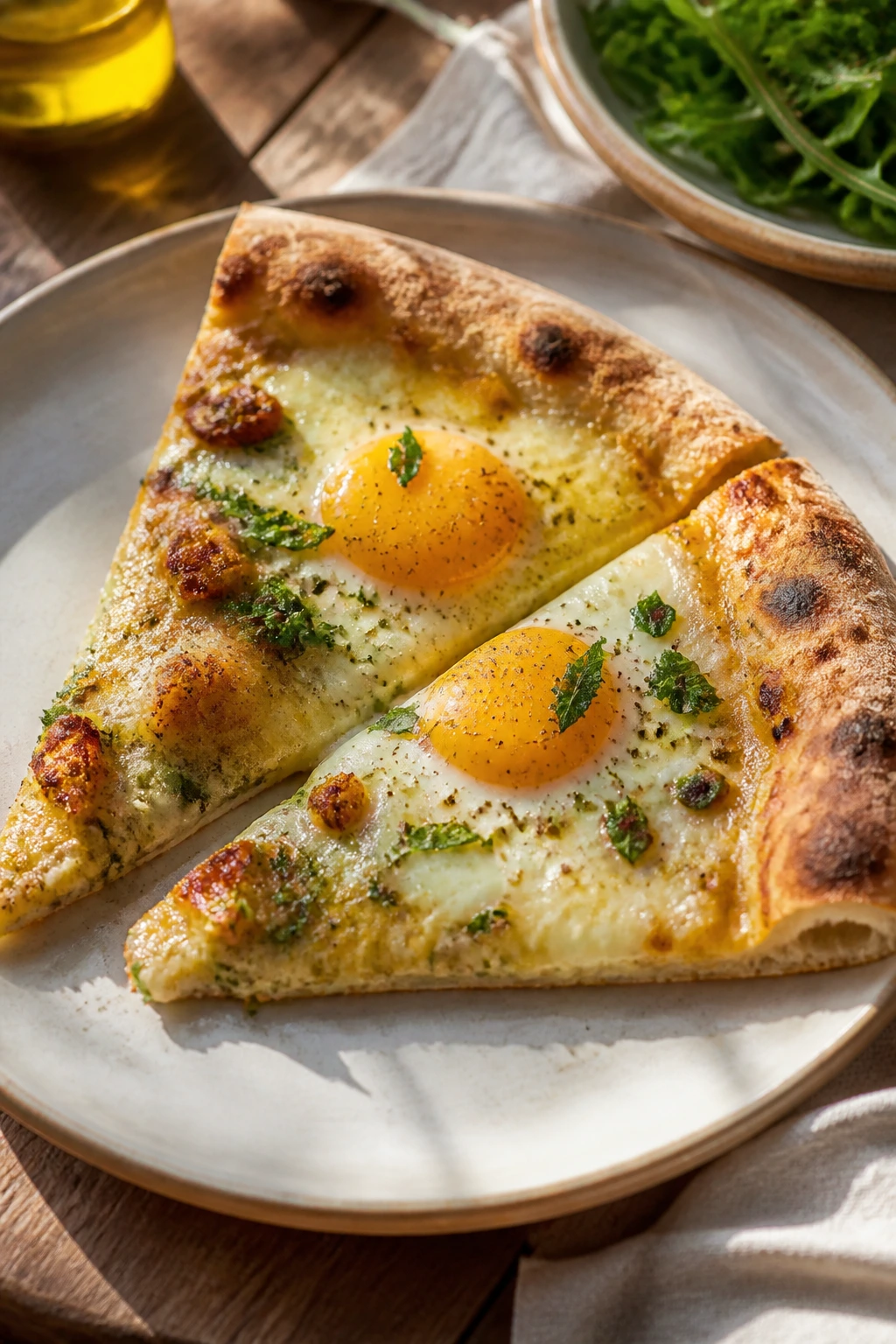
Presentation:
I cut this into wide squares and slide them onto warmed plates, because a long slice gives you more crust in every bite and keeps the eggs from feeling crowded. A little black pepper on top looks plain, but it does more than garnish. It wakes up the cheese.
Accompaniments:
Serve it with a simple arugula salad dressed in lemon juice and olive oil, or with sliced oranges and fennel if you want something brighter and more Mediterranean. If breakfast leans hearty, roasted potatoes on the side are fine too, though I usually keep the plate lighter so the pizza stays the focus.
Portions:
For a full breakfast, plan on 1 to 2 slices per person, depending on what else is on the table. If you’re serving coffee, fruit, and maybe a salad, the pizza stretches to 6 servings without feeling stingy. If it’s the whole meal, 4 servings is the honest count.
Beverage Pairing:
A strong espresso is the obvious choice, and it works because the bitterness cuts through the cheese. Cappuccino is the gentler option. If you want something non-caffeinated, sparkling blood orange juice or plain orange juice gives the eggs a nice sharp edge.
Small Moves That Improve the Whole Pie
Flavor Enhancement:
Grate the garlic straight into the olive oil instead of chopping it by hand. That tiny change gives the oil a smoother, sweeter garlic flavor, and the pieces are too fine to burn before the crust is done. If you want a little more lift, finish with a pinch of lemon zest over the herbs.
Customization:
A handful of baby spinach can go under the mozzarella if you want a greener breakfast pizza, but squeeze it dry first or it will leak water into the cheese. Thinly sliced cooked pancetta or crumbled breakfast sausage works too, though I’d use them sparingly so the eggs still taste like the point of the dish.
Serving Suggestions:
A drizzle of good olive oil after baking makes the crust smell richer. A little extra Parmesan at the table is never a bad idea, especially if someone wants more salt without covering the eggs.
Make-It-Yours:
If you need a dairy-free version, skip the ricotta and mozzarella and use a brushed garlic oil base with sautéed mushrooms, onions, and a few herbs. The pizza changes character, but it still feels like breakfast, not a compromise.
Mistakes That Turn a Good Egg Pizza Soggy
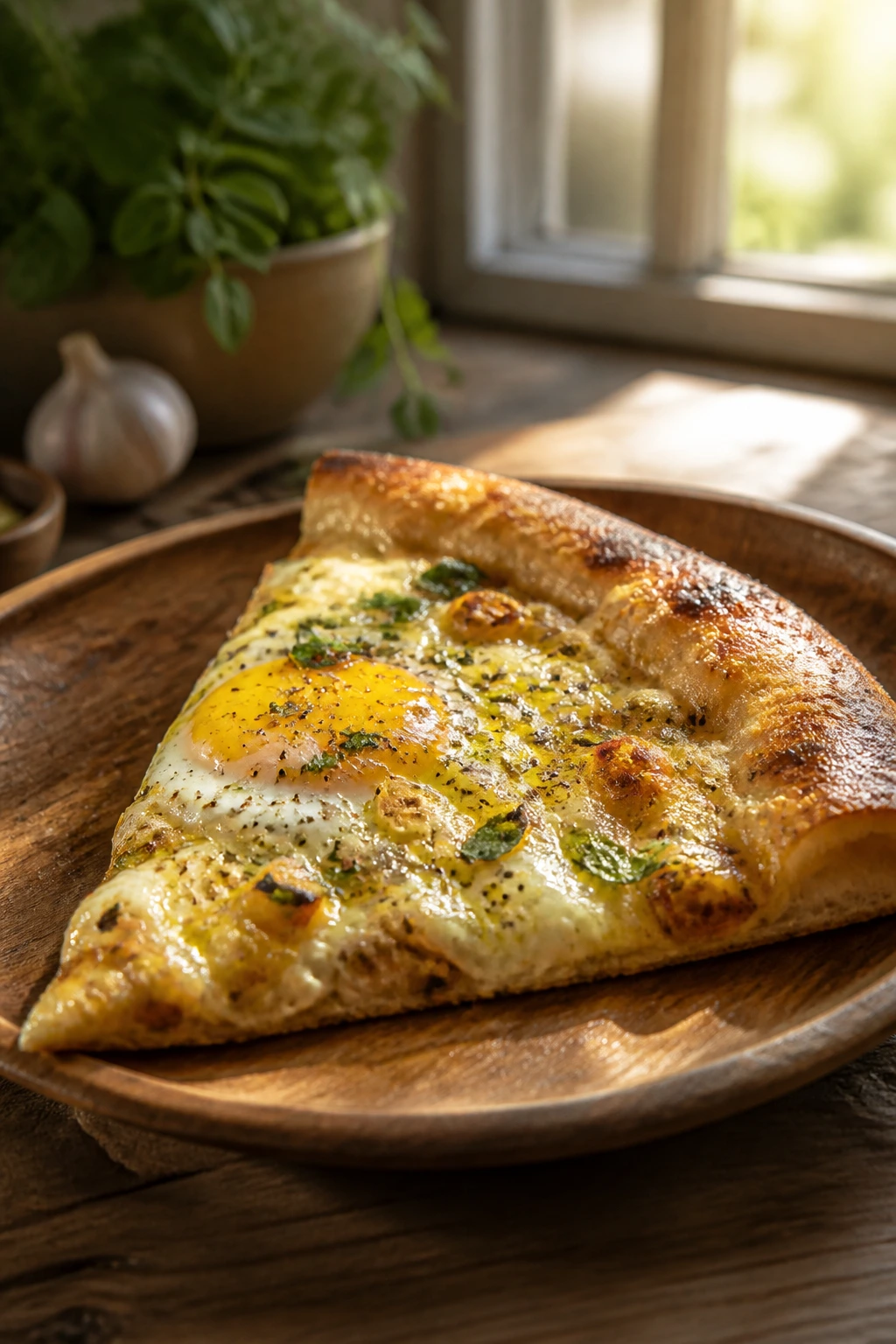
The biggest mistake is piling on too much cheese before the first bake. The pizza looks generous, but a thick layer traps steam and makes the center soft instead of crisp. Keep the ricotta in small dollops and use shredded mozzarella, not clumps.
Another common miss is baking the eggs from the start. If you crack them onto raw dough, the whites run into the sauce of melted cheese and disappear into a pale mess. The first bake builds a surface the eggs can sit on.
A third one is underseasoning the garlic oil. If the oil only tastes like oil, the whole pizza lands flat. Garlic, oregano, salt, and a little pepper need a few minutes to mingle before they go on the dough.
Then there’s the crust problem. If the dough goes into the oven while it’s still cold and tight, it can shrink and bake into a thick, bready edge instead of a crisp one. Let it rest. Seriously. Five quiet minutes saves you from fighting it twice.
And finally, don’t skip the short rest after baking. The pizza comes out looking ready, but the cheese and egg whites are still settling. Cut too soon and the yolks escape across the pan.
Variations on the Nonna Theme
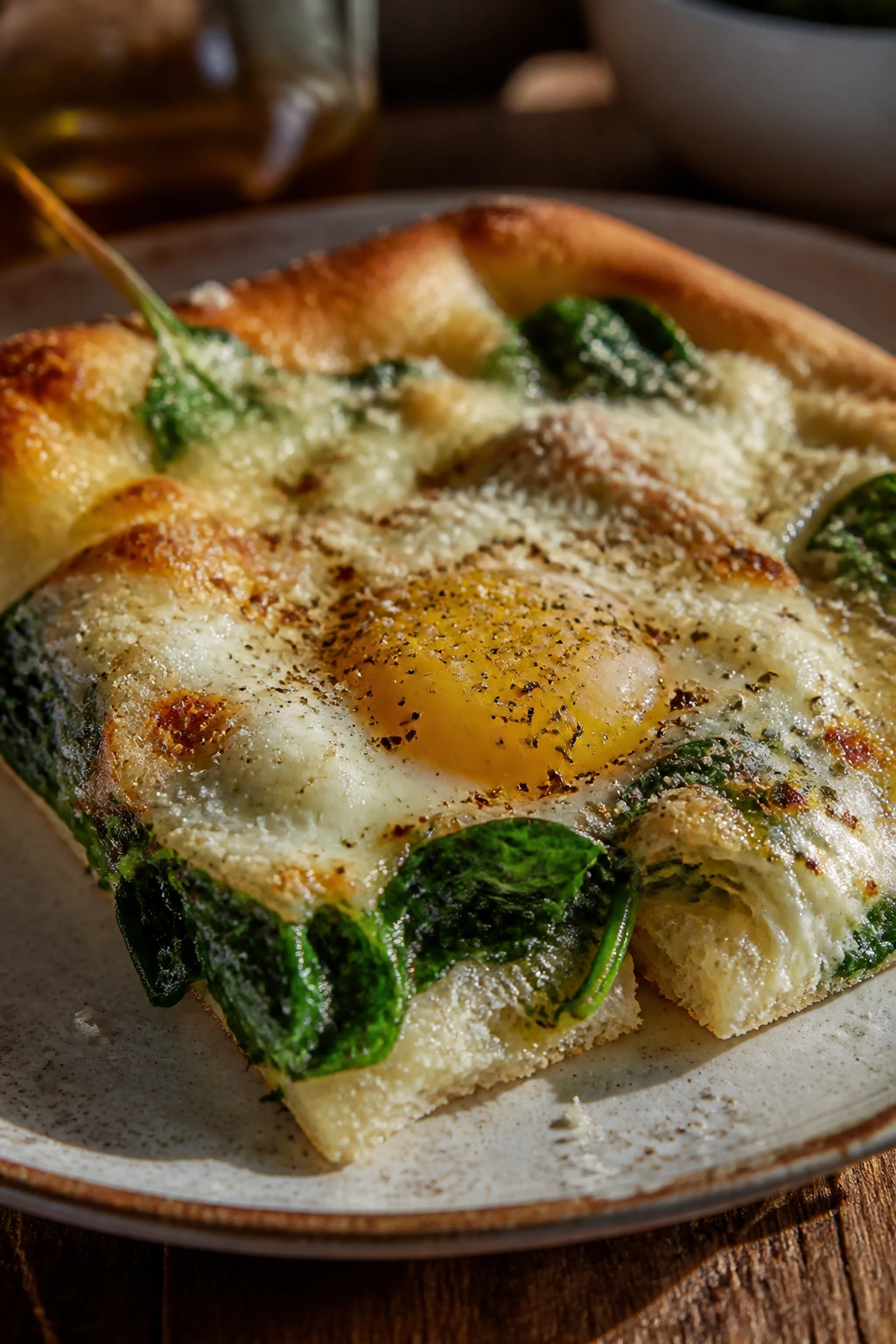
Green Garden Slice
Add 1 cup baby spinach or a handful of chopped kale under the mozzarella, plus a little extra Parmesan. The greens melt into the cheese and give the pizza a fresher, less rich profile that still feels warm and substantial.
Pancetta and Pepper
Fold 1/3 cup cooked pancetta or crisp bacon bits into the cheese layer and add an extra pinch of black pepper. This one leans saltier and more brunch-like, and it’s the version I’d make for a crowd that wants something a little louder.
Tomato Kissed White Pizza
Dot the dough with 2 to 3 tablespoons of thick tomato sauce before the ricotta, then proceed with the recipe. That small amount brings a soft red note without turning the whole thing into a tomato pizza. Good move if you want a more classic Italian breakfast table feel.
Dairy-Light Garlic Pie
Skip the ricotta and use only a light layer of mozzarella and Parmesan, then finish with extra olive oil and herbs. It tastes leaner and a little sharper, which is handy if you want the eggs and garlic to stay front and center.
Gluten-Free Sheet Pan Version
Use a sturdy gluten-free pizza dough and spread it thinner than you would a wheat dough. Gluten-free dough often benefits from a slightly longer first bake, so give it an extra 2 minutes before you crack the eggs and watch the edges for color instead of relying on the clock alone.
Storage, Reheating, and Make-Ahead
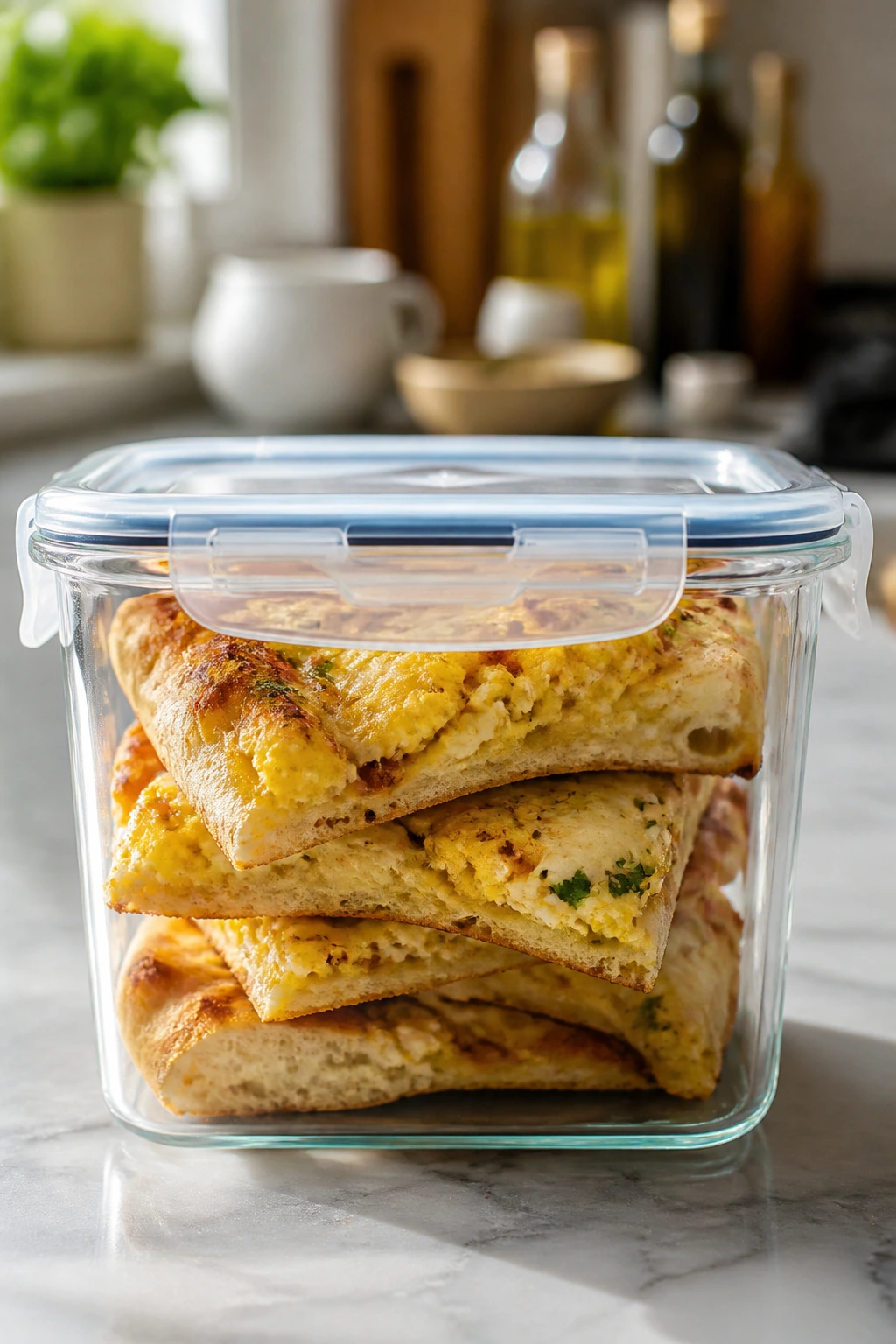
Breakfast pizza is best the day it’s baked, when the crust still has some snap and the eggs are soft. Leftovers will keep in the refrigerator for up to 3 days in an airtight container, though the yolks firm up and the crust softens a bit. That’s just what happens. It’s still worth eating.
If you want to freeze slices, wrap them individually in parchment and then foil, and freeze for up to 1 month. I’ll be blunt: the texture changes. The eggs set tighter, and the cheese loses a little of its stretch. It works in a pinch, but I would not freeze the whole thing unless you need to.
For reheating, use a 375°F (190°C) oven for 8 to 10 minutes if the slices are chilled from the fridge. That gives the crust a chance to crisp back up. A skillet works too: set it over medium-low heat, cover it, and warm the slice for 4 to 6 minutes until the bottom is hot and the cheese loosens.
The microwave is the fastest route to a limp crust and rubbery eggs. I know. It’s tempting. If you must use it, do it for 20 to 30 seconds only, then finish in a skillet or toaster oven so the base doesn’t collapse.
For make-ahead work, you can mix the garlic oil 2 days ahead, shred the cheese the night before, and let the dough sit in the fridge if it’s already portioned and lightly oiled. I don’t recommend assembling the full pizza far in advance. The cheese makes the dough sweat, and sweaty dough is the beginning of a pale, soggy bottom.
Questions People Ask Before Baking

Can I use store-bought pizza dough?
Yes, and I often do. The important part is letting it come to room temperature so it stretches instead of snapping back. A cold grocery-store dough is the same dough, only more annoying.
What if I want runny yolks?
Start checking the pizza at the 5-minute mark after the eggs go on, and pull it the moment the whites look set but the yolks still jiggle. If you’re serving people who need fully cooked eggs, keep baking until the yolks lose their shine.
Can I use naan or flatbread instead of pizza dough?
You can, but shorten the first bake because the bread is already cooked. Naan makes a faster breakfast pizza, though the edges won’t puff the way fresh dough does. It’s more of a shortcut than a true swap.
How do I keep the crust from getting soggy?
Use low-moisture mozzarella, keep the ricotta in small dollops, and don’t overload the pizza with toppings that leak water. A thin base and a hot oven matter too. Moisture is the enemy here, not flavor.
Is it safe to eat with soft eggs?
If you want fully set eggs, bake them until they’re opaque all the way through, which gets you closer to a food-safe internal temperature for egg dishes. If you prefer soft yolks, use pasteurized eggs and keep the slices moving from oven to table so they don’t sit around cooling too long.
What cheese melts best if I want a smoother top?
Low-moisture mozzarella is the cleanest choice because it melts evenly without flooding the crust. If you want more flavor, mix in a little fontina or provolone, but keep mozzarella as the main cheese so the texture stays right.
Can I make this ahead for brunch?
You can par-bake the crust and cheese layer, cool it, and finish with the eggs right before serving. That gives you the best of both worlds: less last-minute work and eggs that still taste fresh. I would not bake the eggs early unless you enjoy overcooked yolks.
A Slice Worth Waking Up For
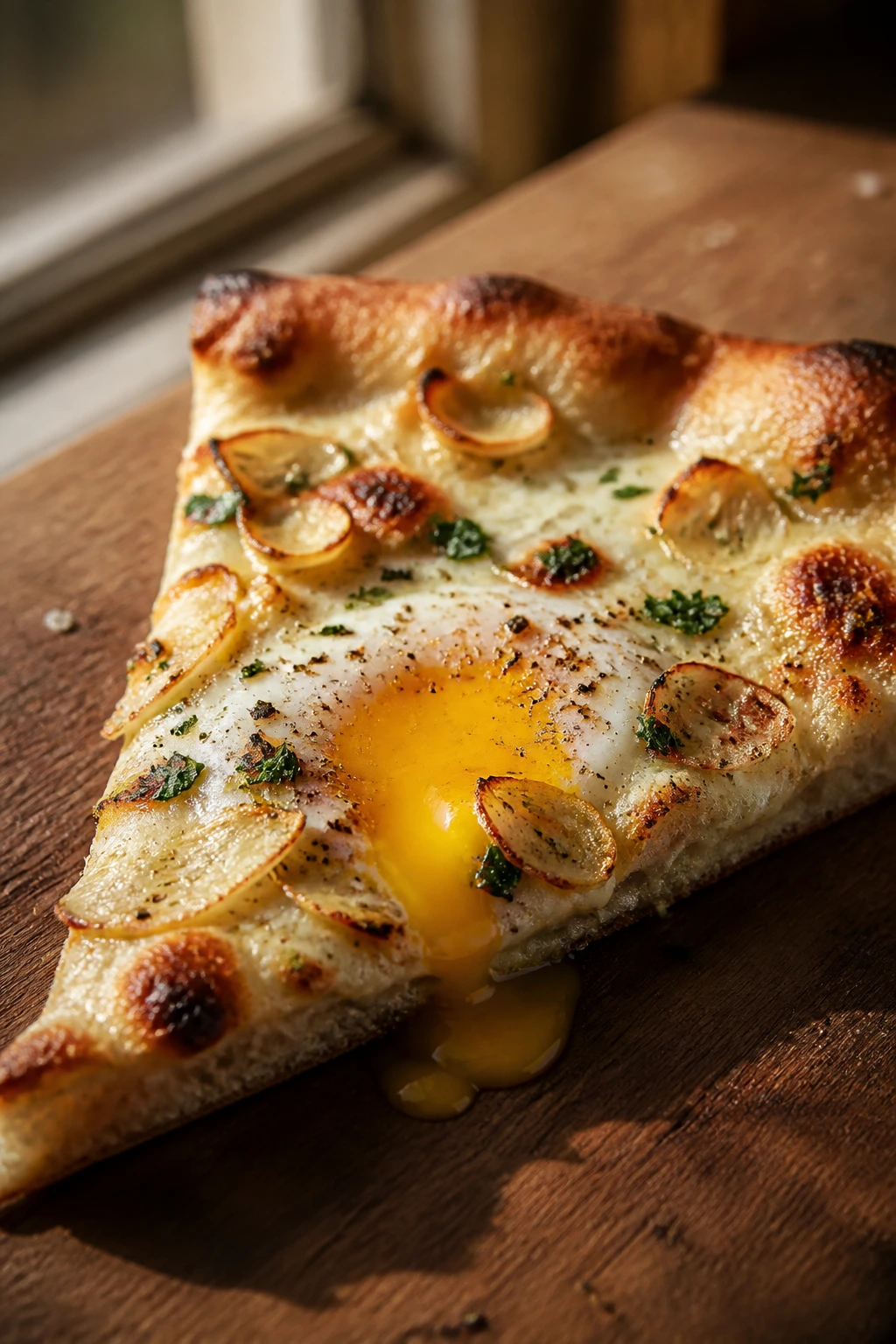
Some breakfasts are efficient. This one is a little more charming than that. The garlic oil perfumes the kitchen before anyone sits down, the crust comes out with browned edges that shatter under the knife, and the eggs turn the whole thing into something you can eat with your hands but still feel proud to serve.
What I like most is how grounded it feels. There’s nothing flashy here, nothing that tries to impress by adding twelve toppings and calling it brunch. It’s dough, garlic, cheese, eggs, herbs, and heat — the kind of cooking that rewards paying attention to a few small details instead of chasing novelty.
Garlicky Egg Breakfast Pizza — Recipe Card
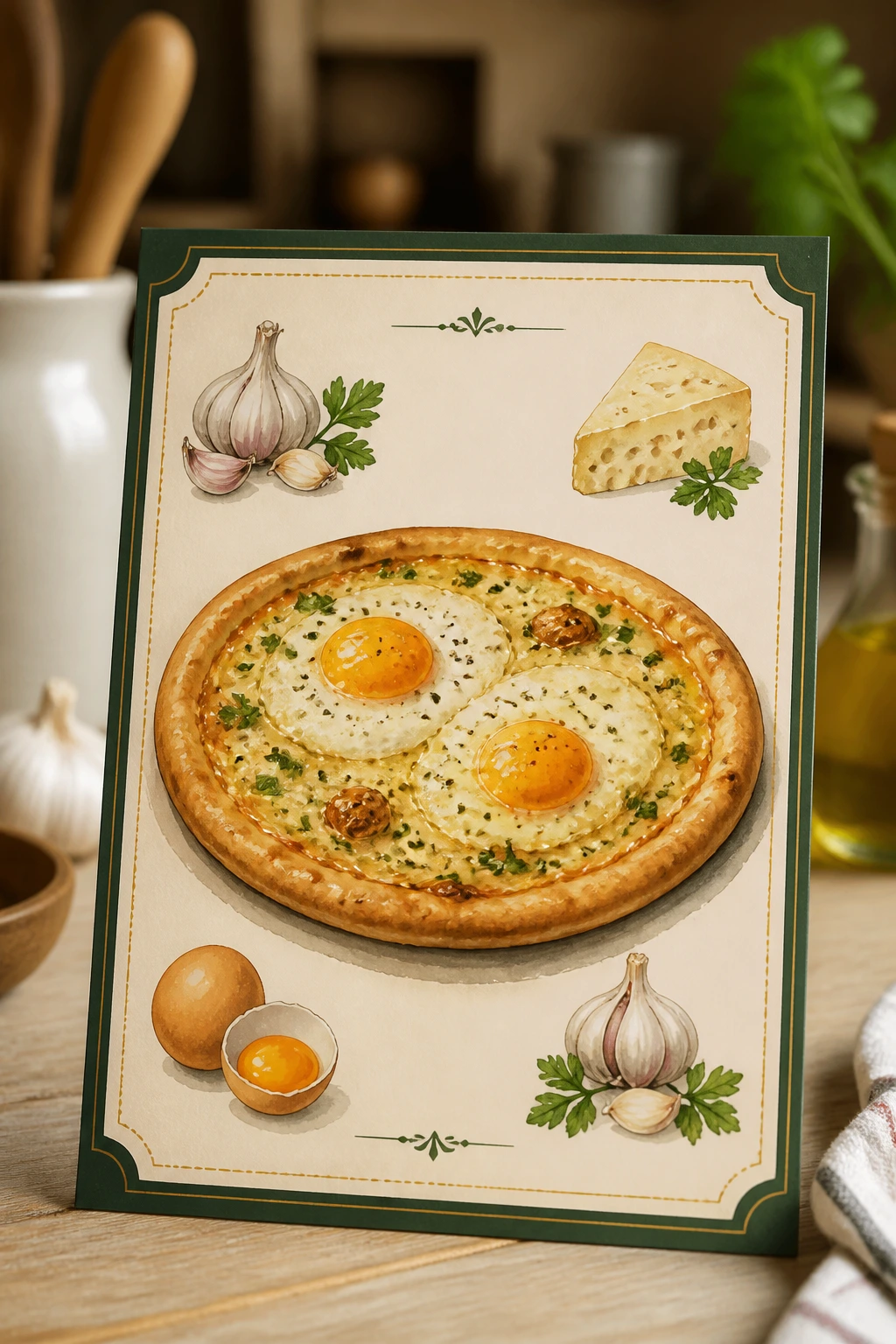
Recipe Name: Garlicky Egg Breakfast Pizza
Description: A rustic breakfast pizza with a garlicky olive oil base, ricotta, mozzarella, Parmesan, and eggs baked until the whites set and the yolks stay soft. It tastes like a white pizza and a brunch plate had a very good idea together.
Prep Time: 20 minutes
Cook Time: 16 to 19 minutes
Total Time: 36 to 39 minutes
Course: Breakfast, Brunch, Main Course
Cuisine: Italian-American, Mediterranean
Servings: 4 to 6 servings
Calories: About 460 kcal per serving
Ingredients
For the Garlic Oil
- 3 tablespoons extra-virgin olive oil
- 4 garlic cloves, finely grated or minced
- 1 teaspoon dried oregano
- 1/2 teaspoon crushed red pepper flakes
- 3/4 teaspoon kosher salt, divided
- 1/4 teaspoon black pepper
For the Pizza
- 1 pound pizza dough, room temperature
- 1 tablespoon all-purpose flour, for stretching
- 1 cup whole-milk ricotta, stirred smooth
- 1 1/2 cups shredded low-moisture mozzarella, about 6 ounces
- 1/4 cup grated Parmesan or Parmigiano-Reggiano
- 4 large eggs
- 2 tablespoons chopped fresh parsley or basil
For Finishing
- Flaky sea salt, for the top
- Extra black pepper, if desired
Instructions
- Preheat the oven to 475°F (245°C) and line a 13×18-inch rimmed sheet pan with parchment paper. Lightly oil the parchment.
- Stir together the olive oil, garlic, oregano, red pepper flakes, 1/2 teaspoon of the salt, and black pepper. Let sit while you shape the dough.
- Dust the counter with flour and stretch the pizza dough into a rough 12×16-inch rectangle. Transfer it to the prepared pan and press it gently toward the edges.
- Brush half of the garlic oil over the dough, leaving a 1-inch border. Spoon the ricotta over the surface, scatter on the mozzarella and Parmesan, and bake for 8 to 10 minutes.
- Remove the pan and make 4 shallow wells in the cheese with the back of a spoon. Crack each egg into a small bowl, then slide one egg into each well.
- Return to the oven and bake for 6 to 9 minutes, until the whites are set and the yolks still wobble slightly.
- Drizzle with the remaining garlic oil, sprinkle with the parsley or basil, the remaining salt, flaky salt, and extra black pepper if you like.
- Rest for 3 minutes, then slice and serve warm.
Notes:
Use low-moisture mozzarella for the cleanest melt. If you want firmer yolks, bake 1 to 2 minutes longer. This pizza is best eaten the day it’s made, while the crust is still crisp.