



A crockpot and Chinese takeout flavors make a stranger-to-sensible pair on paper, then a very practical pair in a real kitchen. Soy sauce, garlic, ginger, hoisin, rice vinegar, and a little sugar behave beautifully in low, steady heat; they stop tasting separate and start tasting like one sauce that has been simmering all afternoon.
These Chinese food recipes in crockpot are built for big pans of rice, long tables, potlucks, and the kind of dinner where the headcount keeps changing. They lean toward Chinese-American home cooking and takeout-style favorites — sticky chicken, glossy beef, braised pork, brothy soups — adapted for slow cooking instead of a wok over high flame.
That matters, because a slow cooker does one thing better than almost any other piece of equipment: it keeps a crowd-fed dish hot, tender, and forgiving. You lose crisp edges, yes. That’s the trade. But you gain meat that shreds without fighting back, sauces that settle into themselves, and a house that smells like ginger and scallions by the time people start asking what’s for dinner.
Why You’ll Keep Coming Back to This Crockpot Crowd Menu
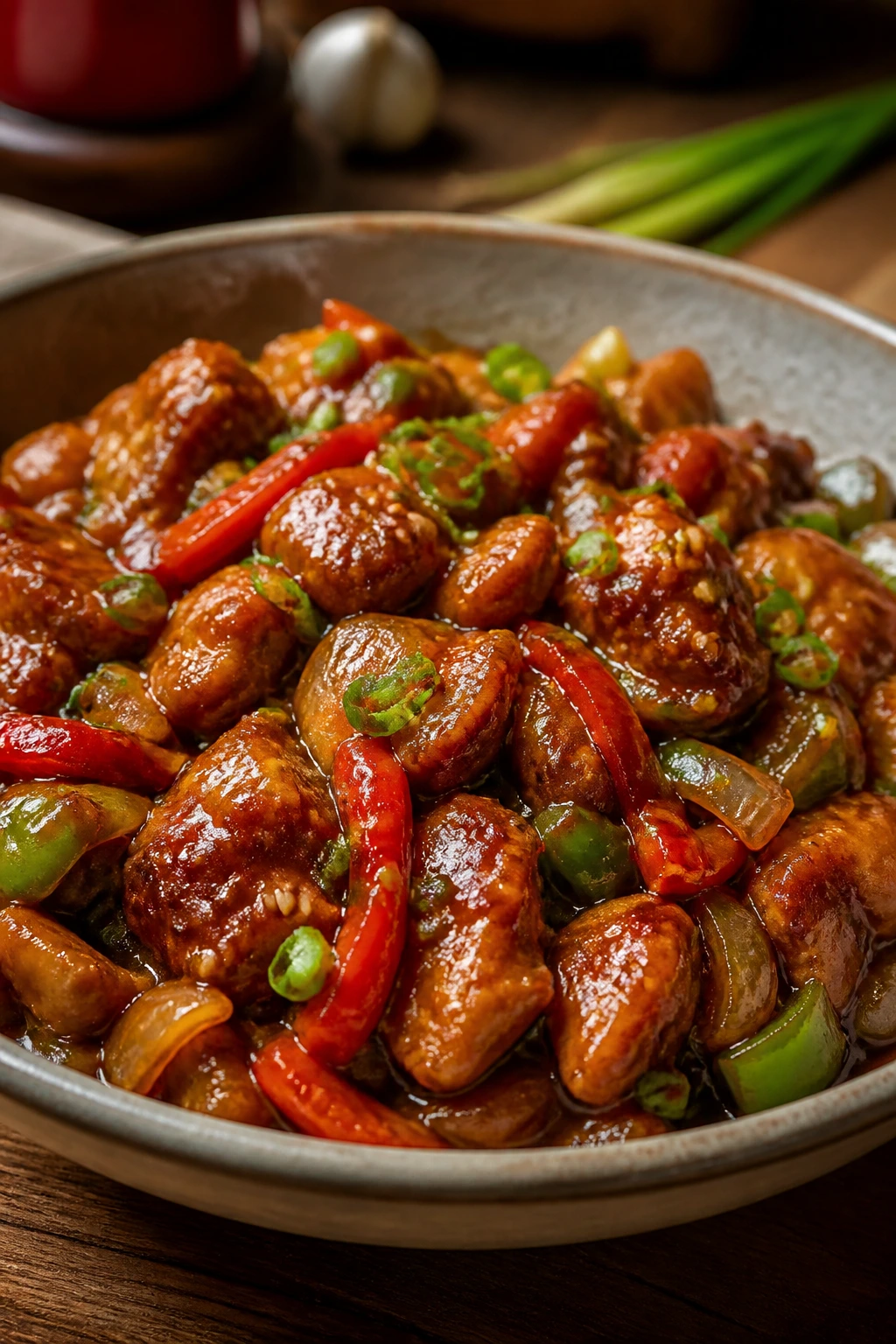
- Big-batch friendly: Most of these recipes make 6 to 10 servings, and several stretch further once you add rice, noodles, or steamed buns.
- Sauce-first cooking: The slow cooker is good at coaxing soy, garlic, ginger, hoisin, and vinegar into one glossy sauce instead of letting them scorch.
- Good leftovers: Braises, soups, and saucy chicken dishes tend to taste deeper the next day, which is rare and useful.
- Low-stress timing: A morning prep and an evening finish is the whole story for most of these recipes.
- Flexible heat: Chili crisp, dried chiles, black pepper, and Szechuan peppercorns let you push the flavor up or keep it mild for mixed crowds.
- Potluck practical: These recipes travel well, reheat cleanly, and stay appealing even after a second round on the table.
1. Slow Cooker General Tso’s Chicken
Sticky, garlicky, sweet, and a little sharp, this is the version people hope for when they order takeout. The slow cooker won’t give you a deep-fried crust, but it will give you chicken that drinks in the sauce and turns lacquered at the edges if you finish it under the broiler. I prefer thighs here because they stay juicy during a long cook and hold up better than breast meat.
Why It Works:
The sauce is built on soy, hoisin, vinegar, and brown sugar, which means it has salt, sweetness, acidity, and body before it even hits the heat. Slow cooking lets the garlic and ginger soften instead of bite back, and the cornstarch slurry at the end gives you that clingy takeout texture. If you want a stickier finish, a short broil after thickening is worth the extra minute.
Key Ingredients:
- 2½ lbs boneless, skinless chicken thighs, cut into 1½-inch pieces
- ½ cup low-sodium soy sauce
- ⅓ cup hoisin sauce
- ¼ cup rice vinegar
- ⅓ cup packed brown sugar
- ½ cup chicken broth
- 4 cloves garlic, minced
- 1 tablespoon fresh ginger, grated
- 1 teaspoon crushed red pepper flakes
- 2 tablespoons cornstarch mixed with 2 tablespoons cold water
- 1 tablespoon sesame oil
- 4 cups broccoli florets, optional
Quick Steps:
- Whisk the soy sauce, hoisin, vinegar, brown sugar, broth, garlic, ginger, and red pepper flakes in a bowl until the sugar dissolves.
- Add the chicken to a 6-quart slow cooker and pour the sauce over it. Stir once so every piece gets coated.
- Cook on low for 3 to 4 hours or high for 1½ to 2 hours, until the chicken reaches 165°F and feels tender when pressed with tongs.
- Stir in the cornstarch slurry, cover, and cook 15 to 20 minutes more until the sauce turns glossy and coats the back of a spoon. Add broccoli during the last 20 minutes if you want it in the pot.
- Finish with sesame oil, then broil the chicken on a sheet pan for 2 to 4 minutes if you want darker edges.
Equipment for This Recipe:
- 6-quart slow cooker
- Medium mixing bowl
- Whisk
- Rimmed baking sheet, optional for broiling
How to Serve This Dish:
Pile it over jasmine rice and finish with sliced scallions and sesame seeds. The sauce should pool a little around the rice, not disappear into it. If you want to stretch it further for a crowd, set out steamed broccoli and a bowl of crunchy cucumber salad.
Pro Tips for This Recipe:
- Cut the thighs into even pieces so they finish at the same time.
- Don’t add the cornstarch at the start; it dulls the sauce and can turn gummy.
- Broil only after thickening, or the sauce can slide off the chicken.
- A pinch of orange zest at the end gives the sauce a bright edge.
Variations on This Dish:
- Orange General Tso: Add 2 tablespoons orange juice and 1 teaspoon zest for a brighter, less heavy sauce.
- Extra-Spicy Batch: Stir in 1 tablespoon chili garlic sauce with the sauce mix.
- Gluten-Free Swap: Use tamari instead of soy sauce and a gluten-free hoisin.
Common Mistakes to Avoid with This Dish:
- Using chicken breast only: It can dry out fast; thighs stay tender and forgiving.
- Skipping the final thickener: The sauce stays thin and runs off the rice.
- Cooking the broccoli from the start: It turns olive-green and soft before the chicken is done.
2. Crockpot Orange Chicken
Orange chicken in a slow cooker works because the sauce is doing the heavy lifting, not the crust. The chicken turns soft and saucy, then the orange glaze wraps around each piece with a sweet citrus smell that hits the kitchen before dinner is even served. If you like the restaurant version, this is the home-cooked one that feeds more people with less fuss.
Why It Works:
Orange juice, zest, soy sauce, and marmalade make a sauce with real citrus flavor instead of plain sweetness. A little vinegar keeps it from tasting flat, and the slow cooker lets the ginger mellow instead of shouting. The last-thickener step matters here because the sauce needs body if you want it to cling to rice.
Key Ingredients:
- 2½ lbs boneless, skinless chicken thighs, cut into chunks
- ¾ cup orange juice
- 2 tablespoons orange zest
- ⅓ cup orange marmalade
- ¼ cup low-sodium soy sauce
- ¼ cup rice vinegar
- ⅓ cup brown sugar
- 2 cloves garlic, minced
- 1 tablespoon grated ginger
- 2 tablespoons cornstarch mixed with 2 tablespoons water
- 1 tablespoon sesame oil
- 2 green onions, sliced
Quick Steps:
- Whisk orange juice, zest, marmalade, soy sauce, vinegar, brown sugar, garlic, and ginger in a bowl.
- Place the chicken in the slow cooker and pour the sauce over it. Stir gently.
- Cook on low for 3 to 4 hours or high for 2 hours, until the chicken is tender and cooked through.
- Stir in the cornstarch slurry and cook 15 minutes more until the sauce looks shiny and lightly thickened.
- Finish with sesame oil and green onions. If you want a sticky edge, spread the chicken on a baking sheet and broil for 3 minutes.
Equipment for This Recipe:
- 6-quart slow cooker
- Microplane or zester
- Small bowl and whisk
- Sheet pan, optional
How to Serve This Dish:
Serve it over steamed rice with snap peas or roasted broccoli. A few extra orange zest shavings on top make the plate smell like citrus before the first bite. For a larger table, put out extra sauce in a small bowl; people always go back for more.
Pro Tips for This Recipe:
- Use marmalade with peel for deeper orange flavor.
- Don’t let the sauce boil hard after thickening or the citrus can taste harsh.
- Taste before serving; some oranges are sweeter than others, and a splash of vinegar can fix a syrupy sauce.
- If the sauce looks thin, give it 10 extra minutes after the slurry.
Variations on This Dish:
- Pineapple Orange Chicken: Swap ¼ cup of the juice for pineapple juice for a tropical edge.
- Heat-Forward Version: Add 1 teaspoon chili flakes or a spoon of chili crisp.
- Breast Meat Option: Use chicken breast pieces and shorten the cook by about 30 minutes.
Common Mistakes to Avoid with This Dish:
- Using too much orange juice: The sauce gets watery and never tightens up.
- Overcooking the citrus: The flavor turns dull and a little bitter.
- Adding zest too early: It can lose its bright smell during a long cook; finish with a little extra zest if you can.
3. Slow Cooker Beef and Broccoli
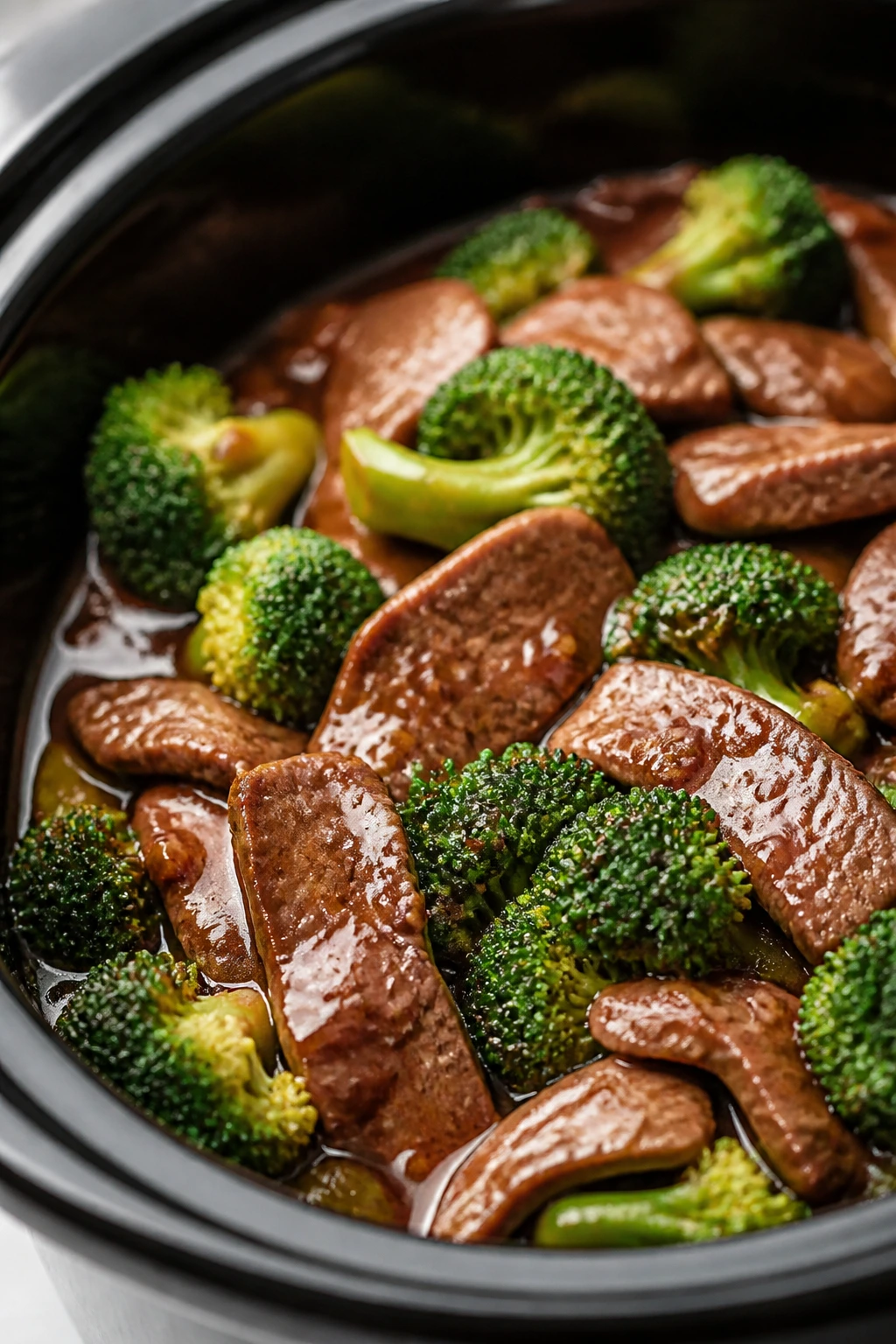
Beef and broccoli from a slow cooker should taste dark, savory, and a little glossy, not gray and tired. The beef needs enough time to soften, but the broccoli needs to show up late or it turns limp and sweet in the wrong way. Chuck roast sliced thin works better than you’d think, and the sauce gets richer as it sits.
Why It Works:
This dish needs a sauce with real backbone: soy sauce, oyster sauce, garlic, ginger, and a small amount of brown sugar. Slow heat softens the beef without drying it, especially if you slice it across the grain and keep the cook time in range. Broccoli goes in near the end so it stays green and a little firm.
Key Ingredients:
- 2½ lbs beef chuck roast, trimmed and sliced thin across the grain
- ½ cup low-sodium soy sauce
- ¼ cup oyster sauce
- ½ cup beef broth
- ¼ cup brown sugar
- 4 cloves garlic, minced
- 1 tablespoon fresh ginger, grated
- 3 tablespoons cornstarch mixed with 3 tablespoons water
- 6 cups broccoli florets
- 2 tablespoons sesame oil
- 2 tablespoons sliced scallions
Quick Steps:
- Whisk the soy sauce, oyster sauce, beef broth, brown sugar, garlic, and ginger in the slow cooker insert.
- Add the sliced beef and toss to coat. Cook on low for 4 to 5 hours, until the beef is tender but not falling apart.
- Stir in the cornstarch slurry and cook 15 minutes more until the sauce thickens.
- Add the broccoli, cover, and cook 20 to 25 minutes until it turns bright green and is just tender.
- Finish with sesame oil and scallions, then serve immediately over rice.
Equipment for This Recipe:
- 6-quart slow cooker
- Sharp knife
- Cutting board
- Tongs
How to Serve This Dish:
The cleanest pairing is white rice, though brown rice works if you like a nuttier base. Keep the broccoli on top so it doesn’t disappear into the sauce. This one also works in a big bowl with extra scallions and a spoonful of chili crisp.
Pro Tips for This Recipe:
- Partially freeze the beef for 20 minutes before slicing; it cuts cleaner.
- Don’t add the broccoli before the last 25 minutes or it loses all shape.
- If the sauce looks thin after the slurry, leave the lid off for 10 minutes.
Variations on This Dish:
- Spicy Beef and Broccoli: Add 1 tablespoon chili garlic sauce to the liquid.
- Mushroom Version: Stir in 8 ounces sliced cremini mushrooms at the start.
- Gluten-Free: Use tamari and a gluten-free oyster-style sauce.
Common Mistakes to Avoid with This Dish:
- Slicing beef too thick: It stays chewy because the slow cooker can’t soften huge strips fast enough.
- Overcooking the broccoli: It turns mushy and soaks up too much sauce.
- Skipping the cornstarch slurry: You end up with beef in soy broth instead of beef and broccoli.
4. Crockpot Mongolian Beef
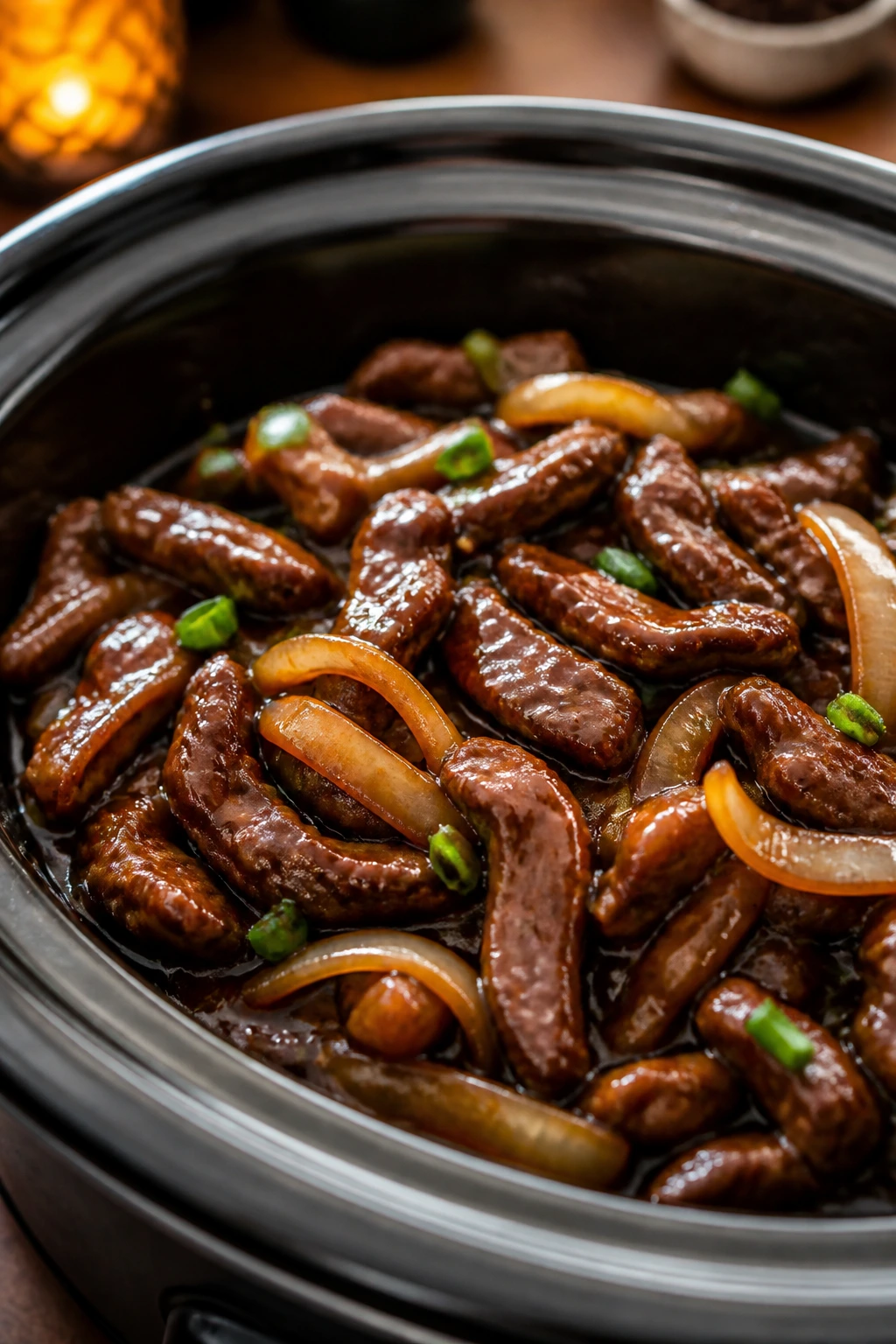
Mongolian beef wants a sweet-savory sauce with a little bite, and the slow cooker gives it that caramelized depth without needing a wok. This version leans dark and glossy, with scallions and garlic doing the work that a blazing-hot pan usually would. It feeds a crowd best when you spoon it over rice or soft noodles.
Why It Works:
Brown sugar and soy sauce create the base, but hoisin and ginger keep the sauce from tasting one-note. Thin-sliced beef soaks up the liquid as it cooks, then the cornstarch at the end makes the sauce cling to each strand of onion and meat. Scallions finish it with a fresh, sharp edge that keeps the whole dish from feeling heavy.
Key Ingredients:
- 2½ lbs flank steak, sliced thin across the grain
- ½ cup low-sodium soy sauce
- ⅓ cup brown sugar
- ¼ cup hoisin sauce
- ½ cup beef broth
- 4 cloves garlic, minced
- 1 tablespoon grated ginger
- 2 large onions, sliced
- 3 tablespoons cornstarch mixed with 3 tablespoons water
- 4 green onions, cut into 2-inch lengths
- 1 tablespoon sesame oil
Quick Steps:
- Whisk soy sauce, brown sugar, hoisin, broth, garlic, and ginger in the slow cooker.
- Add the flank steak and sliced onions, then stir to coat well.
- Cook on low for 3 to 4 hours, or until the beef is tender but still sliceable.
- Stir in the cornstarch slurry and cook 15 minutes more until the sauce is thick and shiny.
- Add green onions and sesame oil right before serving.
Equipment for This Recipe:
- 6-quart slow cooker
- Sharp knife
- Whisk
- Slotted spoon
How to Serve This Dish:
I like it over steamed jasmine rice with a bowl of simple cucumber salad on the side. If you need the meal to stretch, add a plate of stir-fried cabbage or a tray of steamed buns. The sauce should be strong enough that a little goes a long way.
Pro Tips for This Recipe:
- Cut the steak thin while it’s cold so it cooks tender instead of stringy.
- Don’t drown the pot with extra broth; the onions release enough liquid.
- Keep the green onions for the end or they lose their snap.
Variations on This Dish:
- Five-Spice Mongolian Beef: Add ½ teaspoon five-spice powder to the sauce.
- Peppery Version: Use 1 tablespoon coarsely cracked black pepper.
- Noodle Bowl Version: Serve over wide egg noodles instead of rice.
Common Mistakes to Avoid with This Dish:
- Using stew beef with no slicing plan: It can work, but it turns softer and less elegant.
- Leaving the lid off too early: The meat can dry out before the sauce thickens.
- Forgetting the onions: They’re not filler; they give the sauce body and sweetness.
5. Slow Cooker Sesame Chicken
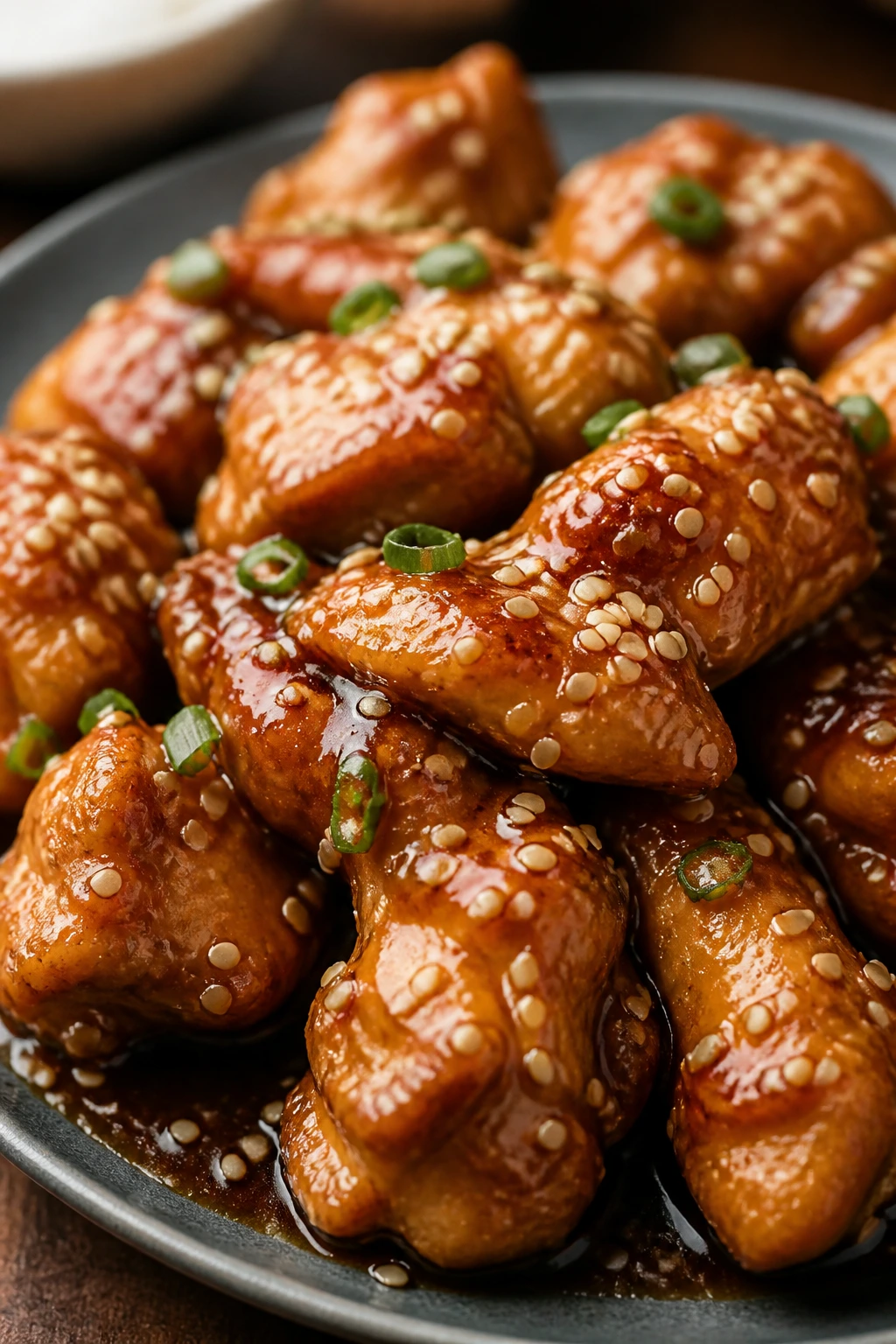
Sesame chicken lives or dies by the sauce, and this slow-cooker version understands that. The chicken gets tender, the glaze gets nutty from sesame oil, and the finish tastes faintly toasty instead of sugary. It’s one of the easiest ways to feed a group that wants something familiar without the mess of frying.
Why It Works:
Honey, soy sauce, rice vinegar, and a little ketchup build a rounded sauce that tastes like it has more ingredients than it does. The sesame oil should stay in the final stretch so it smells fresh instead of cooked flat. A final sprinkle of sesame seeds gives the dish its name and a little texture.
Key Ingredients:
- 2½ lbs boneless, skinless chicken thighs, cut into chunks
- ½ cup low-sodium soy sauce
- ⅓ cup honey
- 3 tablespoons ketchup
- ¼ cup rice vinegar
- ½ cup chicken broth
- 4 cloves garlic, minced
- 1 tablespoon grated ginger
- 2 tablespoons cornstarch mixed with 2 tablespoons cold water
- 1 tablespoon sesame oil
- 2 tablespoons toasted sesame seeds
- 3 green onions, sliced
Quick Steps:
- Whisk soy sauce, honey, ketchup, vinegar, broth, garlic, and ginger in a bowl.
- Add chicken to the slow cooker and pour the sauce over it. Stir lightly.
- Cook on low for 3 to 4 hours or high for about 2 hours, until tender.
- Stir in the cornstarch slurry and cook 15 minutes more until the sauce turns glossy.
- Finish with sesame oil, sesame seeds, and green onions.
Equipment for This Recipe:
- 6-quart slow cooker
- Mixing bowl
- Whisk
- Small skillet, optional for toasting sesame seeds
How to Serve This Dish:
Serve it over rice with broccoli or snow peas. The sauce should coat the chicken so each spoonful looks shiny, not soupy. A second scatter of sesame seeds at the table is not decoration; it helps the dish taste fresh.
Pro Tips for This Recipe:
- Toast the sesame seeds for a minute in a dry pan if you want more nutty flavor.
- If the sauce tastes too sweet, add 1 teaspoon more vinegar at the end.
- Broil the chicken for 2 minutes after thickening if you want sticky edges.
Variations on This Dish:
- Spicy Sesame Chicken: Add 1 tablespoon chili garlic sauce.
- Citrus Sesame Chicken: Stir in 1 tablespoon orange zest at the end.
- Lower-Sugar Batch: Cut the honey to ¼ cup and add 2 tablespoons extra broth.
Common Mistakes to Avoid with This Dish:
- Pouring in sesame oil too early: It loses its smell during the long cook.
- Skipping the garnish: Sesame chicken without sesame seeds tastes unfinished.
- Making the sauce too thin: It won’t cling to rice, and the whole dish feels watered down.
6. Crockpot Sweet and Sour Pork
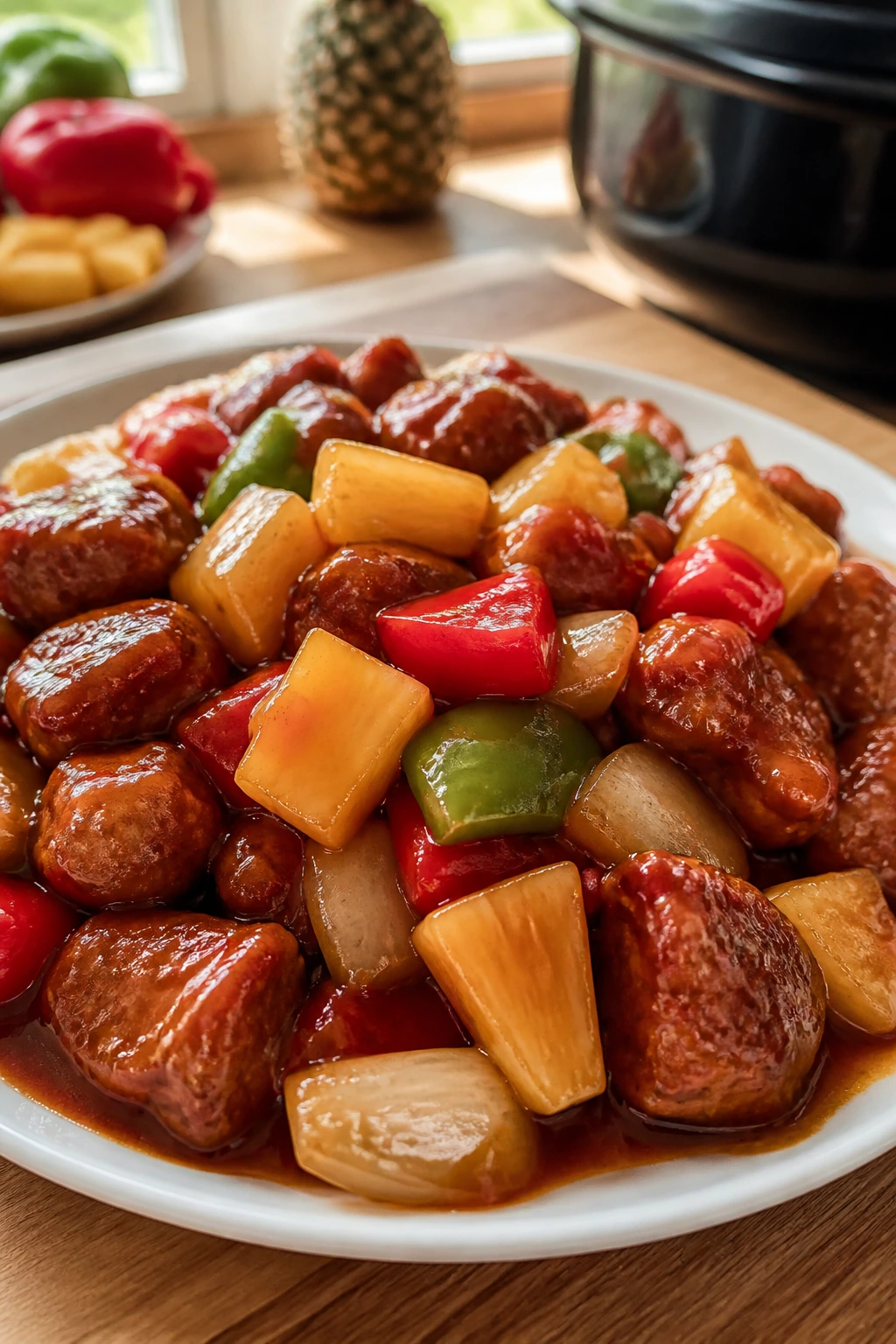
Sweet and sour pork in a slow cooker needs balance, not a sugar bomb. Pineapple gives it lift, vinegar keeps it sharp, and pork shoulder turns tender enough to hold onto the sauce without falling into mush. Bell peppers and onions soften into the liquid and make the pot smell like dinner long before the lid comes off.
Why It Works:
Pork shoulder is the right cut because it has enough fat to stay juicy over several hours. Pineapple juice and rice vinegar bring the bright side of the sauce, while ketchup and brown sugar provide body and color. The vegetables go in later than the pork so they keep some shape.
Key Ingredients:
- 3 lbs pork shoulder, cut into 1½-inch cubes
- 1 can pineapple chunks in juice, drained, with ½ cup juice reserved
- 1 red bell pepper, cut into chunks
- 1 green bell pepper, cut into chunks
- 1 large onion, cut into wedges
- ½ cup ketchup
- ¼ cup rice vinegar
- ⅓ cup brown sugar
- ¼ cup low-sodium soy sauce
- 2 tablespoons cornstarch mixed with 2 tablespoons water
- 1 tablespoon grated ginger
Quick Steps:
- Stir ketchup, pineapple juice, vinegar, brown sugar, soy sauce, and ginger in the slow cooker.
- Add pork, onion, and ¾ of the pineapple chunks. Cook on low for 6 to 7 hours or high for 3½ to 4 hours.
- Add bell peppers during the last 45 minutes so they stay bright.
- Stir in the cornstarch slurry and cook 15 minutes more until the sauce turns thick and glossy.
- Fold in the remaining pineapple chunks right before serving.
Equipment for This Recipe:
- 6-quart slow cooker
- Sharp knife
- Measuring cups
- Slotted spoon
How to Serve This Dish:
This one wants a big bowl of rice and maybe a side of steamed edamame. The pineapple should still look like pineapple when you serve it, not disappear into the sauce. For a crowd, keep extra sauce on the side; people love spooning it over rice.
Pro Tips for This Recipe:
- Drain the pineapple well or the sauce gets too sweet and thin.
- Add peppers late or they collapse into the pork.
- Pork shoulder can handle a long cook, so don’t rush it.
Variations on This Dish:
- Pineapple-Heavy Version: Add ½ cup fresh pineapple chunks at the end.
- Mild Kid-Friendly Bowl: Cut the vinegar to 2 tablespoons and add an extra 2 tablespoons pineapple juice.
- Pork-and-Tofu Swap: Replace half the pork with firm tofu added in the final 30 minutes.
Common Mistakes to Avoid with This Dish:
- Using pork loin here: It dries out before the sauce gets good.
- Adding peppers too early: They turn soft and lose their color.
- Forgetting to taste the sauce: Pineapple sweetness varies, and a splash more vinegar can save it.
7. Slow Cooker Kung Pao Chicken
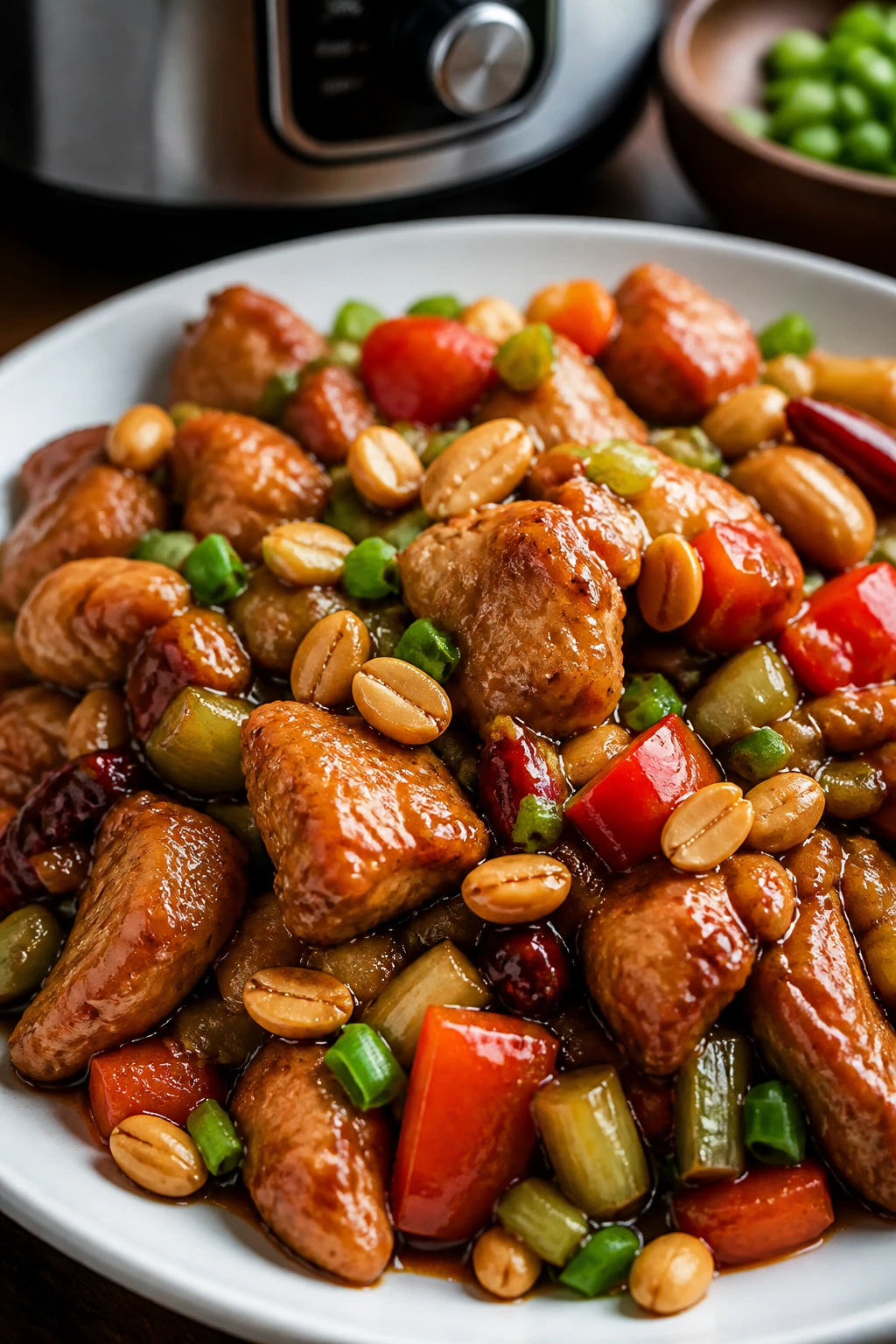
Kung Pao chicken should have heat, peanuts, and that sharp little vinegar kick that keeps you going back for one more bite. The crockpot version won’t char the chiles the way a wok does, but it still gets the flavor profile right if you finish with peanuts and scallions at the end. This is a strong choice when you need a crowd to lean in instead of drift away.
Why It Works:
The sauce needs soy sauce, rice vinegar, garlic, ginger, and chili garlic paste or dried chiles to give it backbone. Peanuts stay out of the pot until the last minute so they keep their crunch. Bell peppers and celery give the dish some shape and make it feel like a full meal when you pile it over rice.
Key Ingredients:
- 2½ lbs boneless, skinless chicken thighs, cut into chunks
- ½ cup low-sodium soy sauce
- ¼ cup rice vinegar
- 3 tablespoons hoisin sauce
- 2 tablespoons chili garlic sauce
- ½ cup chicken broth
- 4 cloves garlic, minced
- 1 tablespoon fresh ginger, grated
- 1 red bell pepper, chopped
- 2 ribs celery, sliced
- 1 cup roasted peanuts
- 2 tablespoons cornstarch mixed with 2 tablespoons water
Quick Steps:
- Whisk soy sauce, vinegar, hoisin, chili garlic sauce, broth, garlic, and ginger in the slow cooker.
- Add the chicken, bell pepper, and celery. Stir to coat.
- Cook on low for 3 to 4 hours or high for 2 hours, until the chicken is tender.
- Stir in the cornstarch slurry and cook 10 to 15 minutes more until glossy.
- Fold in peanuts right before serving.
Equipment for This Recipe:
- 6-quart slow cooker
- Whisk
- Cutting board and knife
- Small bowl for the slurry
How to Serve This Dish:
Serve over rice with a handful of extra peanuts and sliced scallions. If you want a more takeout-style plate, add a side of sautéed baby bok choy. The crunch matters here; don’t skip it.
Pro Tips for This Recipe:
- Use roasted peanuts, not raw, or the flavor falls flat.
- Add a little more vinegar at the end if the heat feels too heavy.
- If you like Szechuan heat, add a pinch of crushed peppercorns.
Variations on This Dish:
- Szechuan-Numbing Version: Add ½ teaspoon ground Sichuan peppercorns.
- Cashew Swap: Replace peanuts with cashews for a softer crunch.
- Lower-Heat Batch: Cut the chili garlic sauce to 1 tablespoon.
Common Mistakes to Avoid with This Dish:
- Adding peanuts too soon: They turn soft and lose their bite.
- Too much sweetener: Kung Pao needs sharpness as much as heat.
- Cooking the celery all day: It turns limp and watery.
8. Crockpot Garlic Ginger Chicken and Green Beans
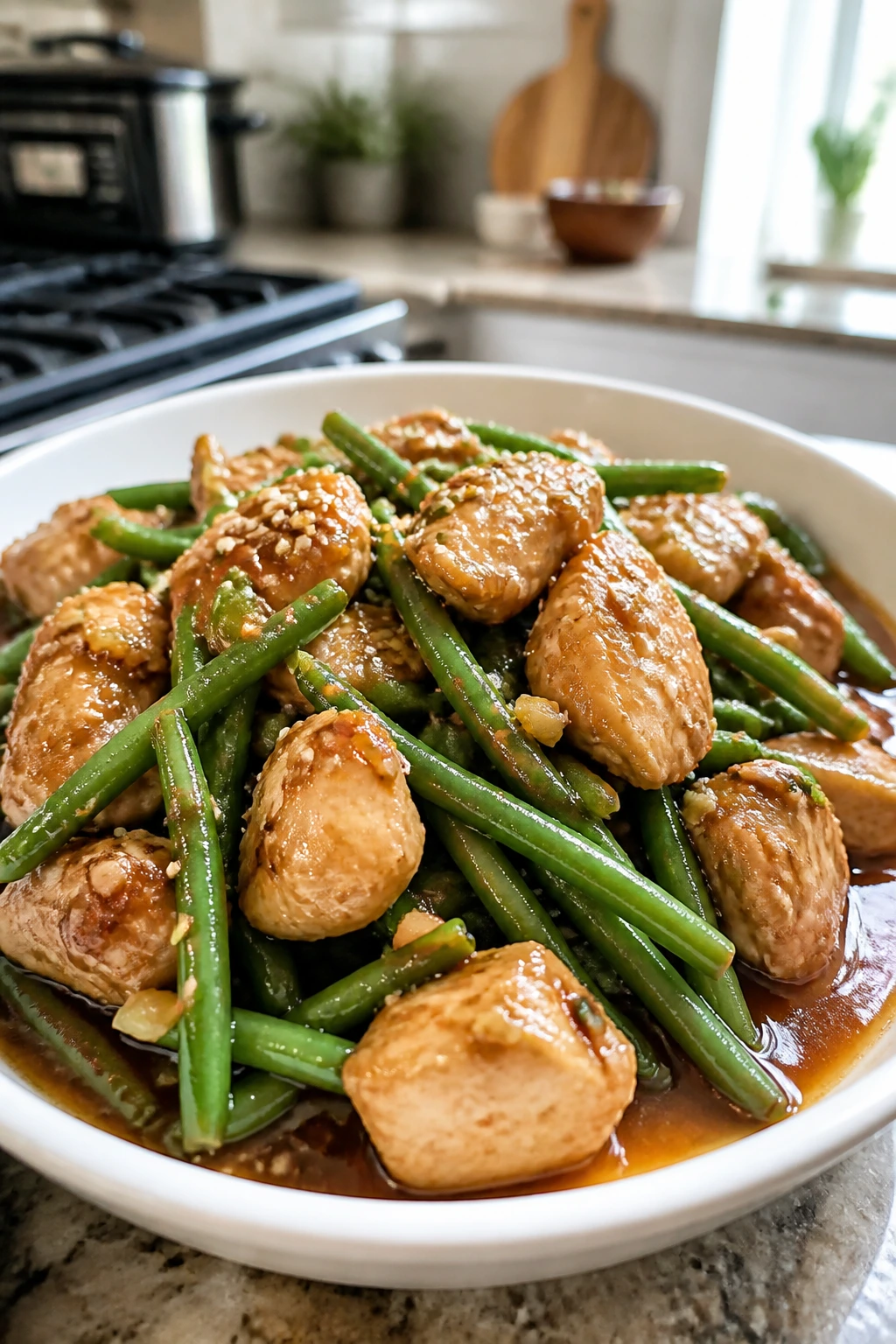
This is the cleaner, less sticky cousin in the group. Garlic and ginger lead, the green beans stay green if you add them late, and the whole pot tastes like a weeknight dinner that happens to feed a small crowd without feeling heavy. I like this one when I want rice on the side but not a mountain of sauce.
Why It Works:
Chicken thighs carry the flavor without drying out, and green beans stand up better than broccoli over a long simmer if you don’t overdo the time. Soy sauce and sesame oil make the sauce savory, while a little sugar smooths out the garlic. The slow cooker turns the ginger soft and warm instead of sharp.
Key Ingredients:
- 2½ lbs boneless, skinless chicken thighs
- 1 lb fresh green beans, trimmed
- ½ cup low-sodium soy sauce
- ½ cup chicken broth
- 4 cloves garlic, minced
- 1 tablespoon grated ginger
- 2 tablespoons brown sugar
- 1 tablespoon sesame oil
- 2 tablespoons cornstarch mixed with 2 tablespoons water
- 2 scallions, sliced
Quick Steps:
- Mix soy sauce, broth, garlic, ginger, and brown sugar in the slow cooker.
- Add chicken thighs and cook on low for 3 to 4 hours.
- Stir in the green beans during the last 30 minutes so they stay bright and crisp-tender.
- Add the cornstarch slurry, cover, and cook 10 to 15 minutes more until the sauce thickens.
- Finish with sesame oil and scallions.
Equipment for This Recipe:
- 6-quart slow cooker
- Whisk
- Tongs
- Cutting board
How to Serve This Dish:
Spoon it over rice or serve it with noodles that have a little sesame oil tossed through them. The beans should still have a snap, which keeps the dish from feeling soft all the way through. A side of sliced cucumbers makes a good cool counterpoint.
Pro Tips for This Recipe:
- Trim beans evenly so they cook at the same rate.
- Don’t add the sesame oil early; the aroma fades.
- If you want more body, add sliced mushrooms with the chicken.
Variations on This Dish:
- Mushroom-Green Bean Bowl: Add 8 ounces sliced mushrooms at the start.
- Chicken Breast Version: Use breasts, but cut the cook time by about 45 minutes.
- Spicy Ginger Version: Add 1 teaspoon chili flakes or chili crisp at the end.
Common Mistakes to Avoid with This Dish:
- Adding green beans at the start: They lose their color and turn limp.
- Using too much broth: The sauce becomes thin and soup-like.
- Forgetting to season after thickening: The cornstarch can soften the flavor; taste again before serving.
9. Slow Cooker Teriyaki Chicken
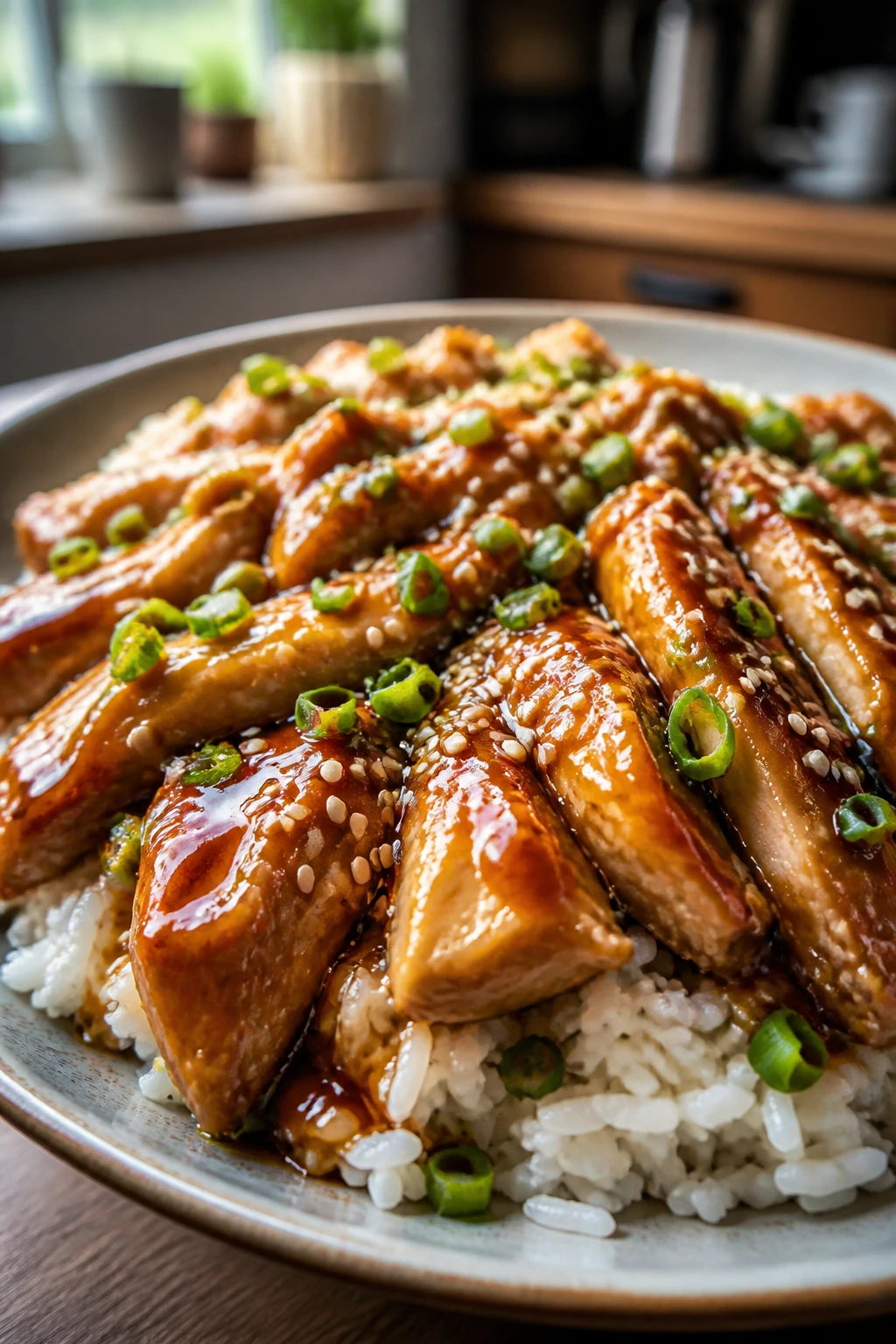
Teriyaki chicken should be glossy, sweet, and a little salty, the kind of dish that makes plain rice taste like the right move. Slow cooking gives you tender chicken and a sauce that tastes rounded instead of bottled. It feeds a crowd well because nearly everyone knows what to do with teriyaki.
Why It Works:
Soy sauce, brown sugar, garlic, and ginger make the backbone of the glaze, while pineapple juice or mirin adds that soft sweetness teriyaki needs. The slow cooker lets the sauce reduce only partly, so you still need a slurry at the end for proper cling. A little sesame oil brings the smell people expect before they even sit down.
Key Ingredients:
- 2½ lbs boneless, skinless chicken thighs
- ½ cup low-sodium soy sauce
- ½ cup pineapple juice or mirin
- ⅓ cup brown sugar
- 3 cloves garlic, minced
- 1 tablespoon grated ginger
- 2 tablespoons rice vinegar
- 2 tablespoons cornstarch mixed with 2 tablespoons water
- 1 tablespoon sesame oil
- 2 tablespoons sesame seeds
- 3 green onions, sliced
Quick Steps:
- Whisk soy sauce, pineapple juice, brown sugar, garlic, ginger, and vinegar in the slow cooker.
- Add the chicken and turn it once to coat.
- Cook on low for 3 to 4 hours or high for 2 hours, until tender.
- Stir in the cornstarch slurry and cook 15 minutes more until the glaze looks thick and shiny.
- Finish with sesame oil, sesame seeds, and green onions.
Equipment for This Recipe:
- 6-quart slow cooker
- Whisk
- Small bowl
- Measuring cups
How to Serve This Dish:
Serve with rice and steamed broccoli, or tuck it into lettuce cups with extra scallions. The glaze should be dark enough to stain the rice a little. If you need to feed more people, add a bowl of quick cucumber pickles.
Pro Tips for This Recipe:
- Use low-sodium soy sauce or the glaze can get too salty once it reduces.
- Pineapple juice works better than plain water; it gives the sauce more shape.
- Let the finished chicken sit 5 minutes before serving so the glaze settles.
Variations on This Dish:
- Spicy Teriyaki: Add 1 tablespoon chili garlic sauce.
- Pineapple Teriyaki: Stir in ½ cup pineapple chunks near the end.
- Turkey Thigh Swap: Use boneless turkey thighs and extend the cook a little.
Common Mistakes to Avoid with This Dish:
- Using too much sugar: The sauce turns cloying and heavy.
- Skipping the final thickener: It won’t coat rice or chicken properly.
- Cooking green vegetables too long in the pot: Keep them separate if you want a fresh plate.
10. Crockpot Cashew Chicken
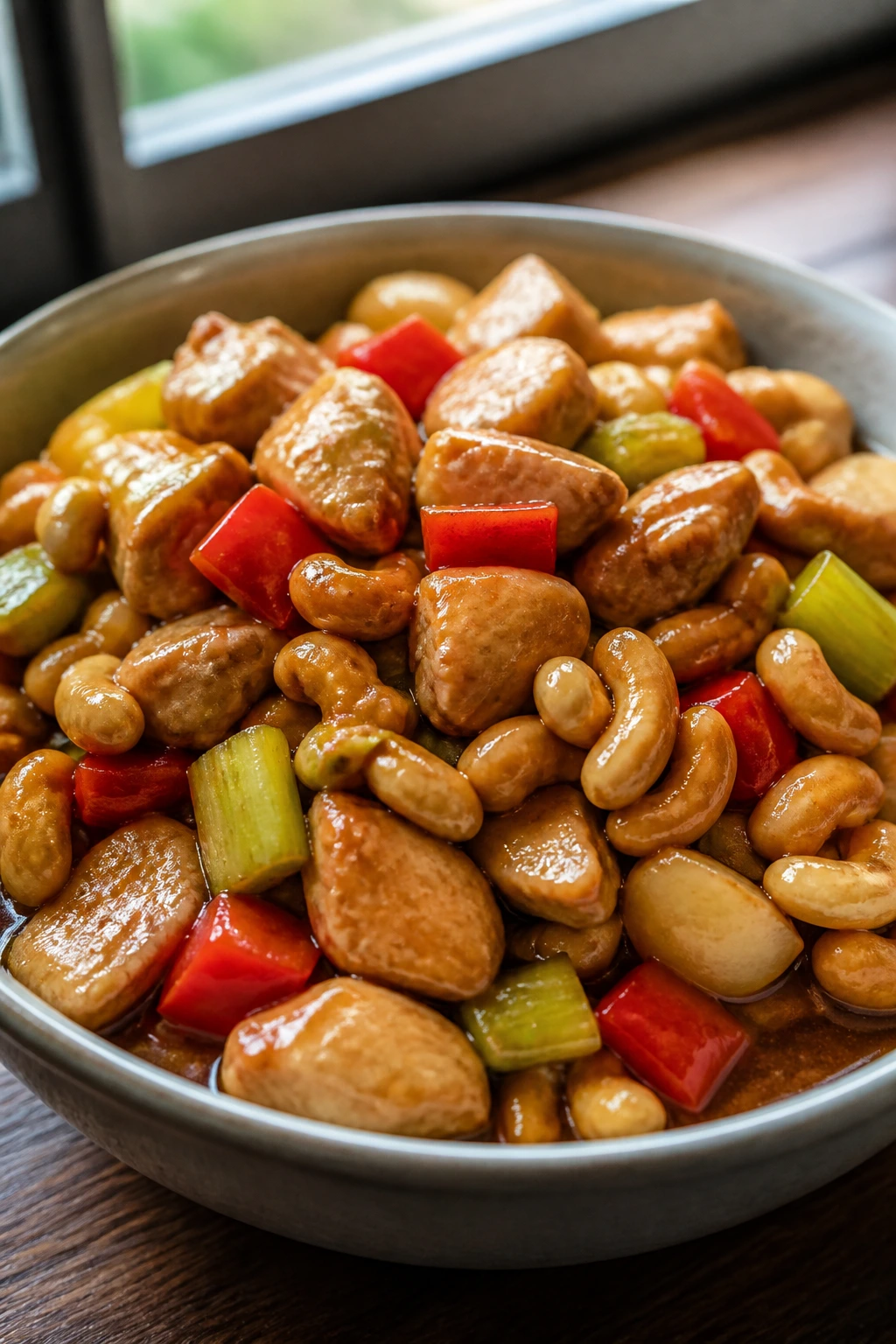
Cashew chicken is all about contrast: soft chicken, crisp nuts, and a savory brown sauce that settles into the rice. The slow cooker handles the chicken base well, but the cashews must come in late or they lose their snap. This one feels especially useful when you want a dish that’s familiar without being overly sweet.
Why It Works:
Oyster sauce and soy sauce build the savory side, while celery, bell pepper, and water chestnuts give the sauce some crunch and shape. Cashews are added at the end so they stay toasty. The chicken soaks up the brown sauce nicely, especially if you use thighs.
Key Ingredients:
- 2½ lbs boneless, skinless chicken thighs, cut into pieces
- 1 cup celery, sliced
- 1 red bell pepper, chopped
- 1 can water chestnuts, drained and sliced
- ½ cup low-sodium soy sauce
- ¼ cup oyster sauce
- ½ cup chicken broth
- 3 cloves garlic, minced
- 1 tablespoon grated ginger
- 1 cup roasted cashews
- 2 tablespoons cornstarch mixed with 2 tablespoons water
Quick Steps:
- Mix soy sauce, oyster sauce, broth, garlic, and ginger in the slow cooker.
- Add chicken, celery, bell pepper, and water chestnuts.
- Cook on low for 3 to 4 hours until the chicken is tender.
- Stir in the cornstarch slurry and cook 15 minutes more until the sauce thickens.
- Fold in cashews right before serving.
Equipment for This Recipe:
- 6-quart slow cooker
- Cutting board
- Whisk
- Slotted spoon
How to Serve This Dish:
Serve over rice with extra scallions and maybe a little chili crisp if your crowd likes heat. The cashews should still crunch when you bite them. A side of steamed bok choy makes the plate feel more complete.
Pro Tips for This Recipe:
- Add cashews at the very end; the slow cooker will soften them.
- Water chestnuts bring the crackle, so don’t skip them if you can find them.
- A splash of rice vinegar at the end brightens the sauce.
Variations on This Dish:
- Spicy Cashew Chicken: Add chili garlic sauce to the cooking liquid.
- Vegetable-Heavy Version: Add mushrooms and snap peas in the last 30 minutes.
- Gluten-Free Swap: Use tamari and a gluten-free oyster-style sauce.
Common Mistakes to Avoid with This Dish:
- Putting cashews in early: They go soft and dusty.
- Overcooking the bell pepper: It loses all bite and turns dull.
- Using breast meat without shortening the time: It can dry out faster than thighs.
11. Slow Cooker Hoisin Pork Loin
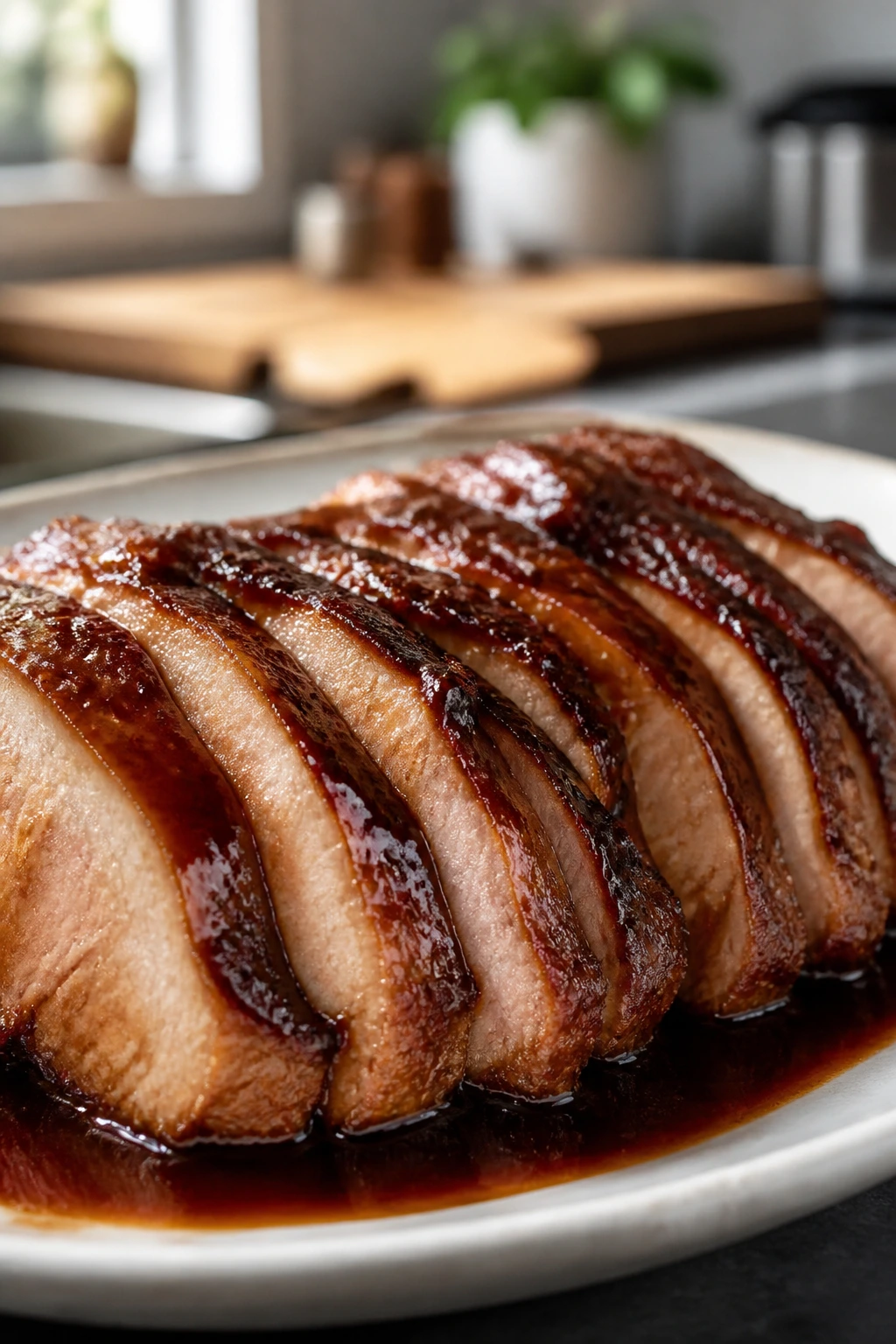
Hoisin pork loin gives you a sliced roast with sweet-savory edges and enough sauce to keep each piece moist. Pork loin is leaner than shoulder, so the trick is to stop the cook as soon as it’s done and let the sauce do the rest. It’s a good crowd dish when you want something sliceable instead of shredded.
Why It Works:
Hoisin gives the pork a deep plum-like sweetness, while soy sauce and ginger keep it from tasting sugary. A little broth helps the slow cooker do its job without burning the edges, and the quick broil at the end adds a finish that looks closer to roast than braise. The shorter cook time is part of the deal here.
Key Ingredients:
- 3 to 4 lbs pork loin roast
- ½ cup hoisin sauce
- ¼ cup low-sodium soy sauce
- ¼ cup honey
- ½ cup chicken broth
- 4 cloves garlic, minced
- 1 tablespoon grated ginger
- 1 onion, sliced
- 1 tablespoon sesame oil
- 2 tablespoons sliced scallions
- 1 tablespoon cornstarch mixed with 1 tablespoon water
Quick Steps:
- Whisk hoisin, soy sauce, honey, broth, garlic, and ginger in the slow cooker.
- Add the onion and place the pork loin on top, turning once to coat.
- Cook on low for 3 to 4 hours, until the internal temperature reaches 145°F to 150°F.
- Remove the pork and rest it for 10 minutes. Stir the cornstarch slurry into the sauce and cook 10 minutes more.
- Slice the pork and spoon the sauce over the top. Finish with sesame oil and scallions.
Equipment for This Recipe:
- 6-quart slow cooker
- Meat thermometer
- Sharp carving knife
- Small saucepan, optional for reducing sauce
How to Serve This Dish:
Slice it thin and serve with rice, steamed cabbage, or simple noodles. It looks best when the sauce is spooned over the top instead of drowning the whole platter. This is one of those dishes that benefits from a clean garnish, not a heavy one.
Pro Tips for This Recipe:
- Use a thermometer; pork loin gets dry fast if you guess.
- Rest the roast before slicing or the juices run out.
- If the sauce tastes too sweet, add a spoon of rice vinegar at the end.
Variations on This Dish:
- Five-Spice Pork Loin: Add ½ teaspoon five-spice powder to the sauce.
- Garlic-Chili Pork: Add chili garlic sauce for heat.
- Pineapple Hoisin: Add ½ cup pineapple chunks for a brighter edge.
Common Mistakes to Avoid with This Dish:
- Cooking pork loin like shoulder: They are not the same cut, and loin dries sooner.
- Slicing immediately: The meat loses too much juice.
- Skipping the sauce reduction: It can taste thin on the plate.
12. Crockpot Char Siu Pork Shoulder
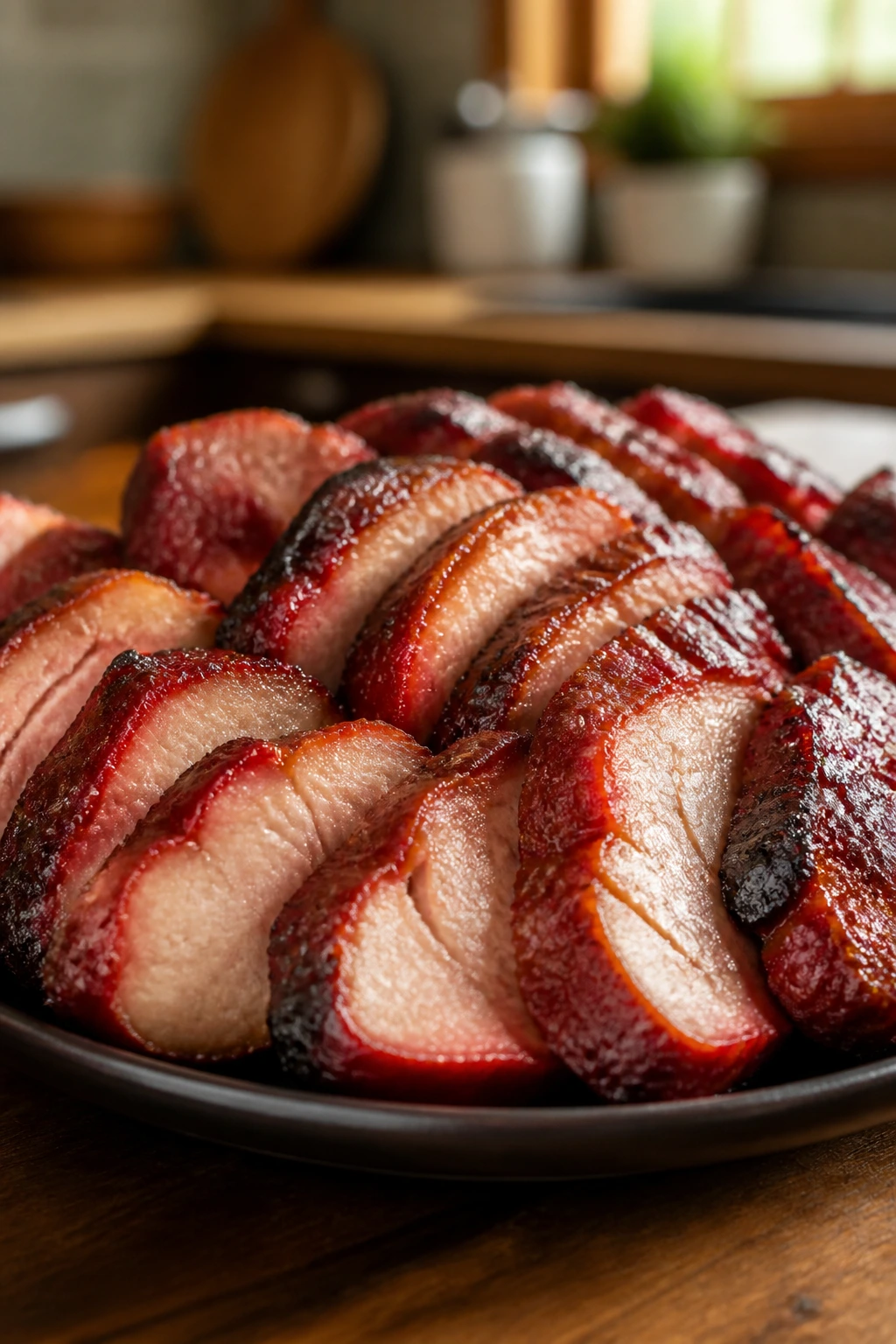
Char siu is usually roasted, but slow cooker char siu-style pork shoulder still gives you that sweet, red-tinged, glossy flavor people recognize instantly. The shoulder softens beautifully, then a quick broil at the end gives the edges some caramel. This is one of the best dishes in the whole collection for a crowd because the aroma alone brings people into the kitchen.
Why It Works:
Pork shoulder has enough fat to stay juicy over a long cook, and hoisin, honey, soy, garlic, and five-spice hit the sweet spot char siu needs. The slow cooker handles the softening, while the broiler handles the finish. If you want the classic look, you can brush on extra glaze before the broil.
Key Ingredients:
- 3 lbs pork shoulder, cut into large chunks
- ⅓ cup hoisin sauce
- ¼ cup low-sodium soy sauce
- ⅓ cup honey
- 2 tablespoons rice vinegar
- 4 cloves garlic, minced
- 1 tablespoon grated ginger
- 1 teaspoon Chinese five-spice powder
- ½ cup chicken broth
- 2 tablespoons cornstarch mixed with 2 tablespoons water
- 3 scallions, sliced
Quick Steps:
- Whisk hoisin, soy sauce, honey, vinegar, garlic, ginger, five-spice, and broth in the slow cooker.
- Add the pork shoulder and turn to coat well.
- Cook on low for 6 to 7 hours until the pork is fork-tender.
- Shred or slice the pork, then stir in the cornstarch slurry and cook 15 minutes more.
- Spread the pork on a sheet pan and broil 3 to 5 minutes until the edges darken.
Equipment for This Recipe:
- 6-quart slow cooker
- Rimmed baking sheet
- Foil
- Whisk
How to Serve This Dish:
Serve with steamed rice, soft buns, or cabbage leaves for wrapping. The broiled edges should taste caramelized, not burnt. A pile of scallions on top gives the plate a fresh finish that cuts the sweetness.
Pro Tips for This Recipe:
- Broil in a single layer so the glaze can caramelize.
- Pork shoulder can take a long time, and that’s the point.
- Add an extra spoon of vinegar if the sauce tastes too thick or sticky.
Variations on This Dish:
- Spicy Char Siu: Stir in 1 teaspoon chili paste.
- Crispier Finish: Broil twice, with a second brush of glaze between rounds.
- Pulled Pork Buns: Shred the pork and serve in steamed buns with cucumber slices.
Common Mistakes to Avoid with This Dish:
- Using pork loin instead of shoulder: It dries out before the glaze gets deep.
- Skipping the broiler: You miss the char siu edge that makes it taste finished.
- Adding too much liquid: The sauce turns soupy instead of sticky.
13. Slow Cooker Szechuan Chicken
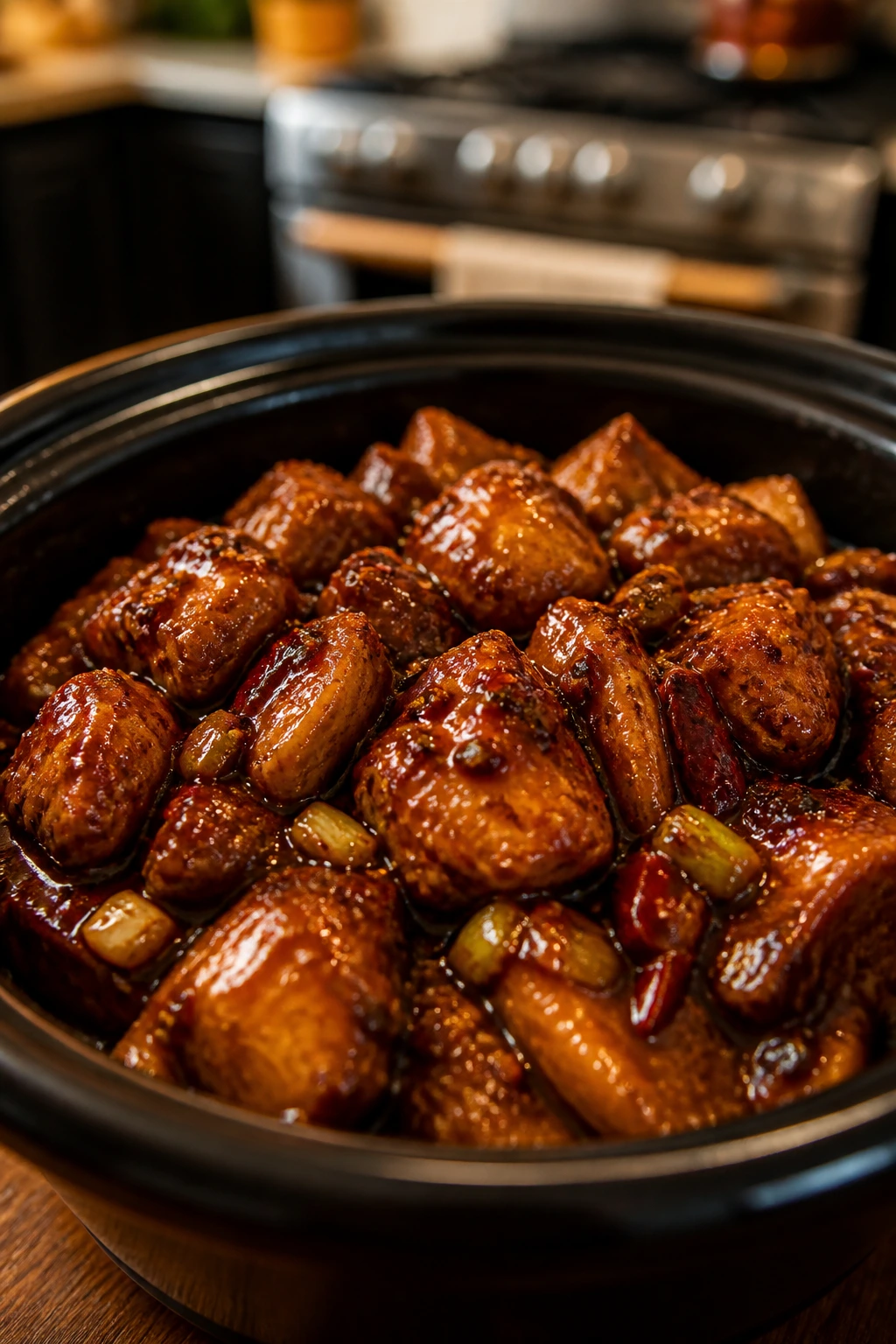
Szechuan chicken needs heat, salt, and a sharp finish that wakes up the whole plate. The slow cooker can’t mimic wok char, but it can give you a spicy braise that still feels alive if you use black vinegar and Sichuan peppercorns. This is the one I make when I want a crowd to lean forward instead of just fill up.
Why It Works:
Szechuan flavors are about layering: chili, garlic, peppercorn, vinegar, and soy all need room to show up. Slow heat softens the chicken while the peppercorns leave that brief, mouth-tingling finish people either love or remember. Bell peppers and onions make it into a proper meal, not just a sauce.
Key Ingredients:
- 2½ lbs boneless, skinless chicken thighs, cut into chunks
- ½ cup low-sodium soy sauce
- ¼ cup black vinegar or rice vinegar
- 2 tablespoons chili garlic sauce
- 2 tablespoons hoisin sauce
- ½ cup chicken broth
- 4 cloves garlic, minced
- 1 tablespoon grated ginger
- 1 red bell pepper, chopped
- 1 teaspoon ground Sichuan peppercorns
- 2 tablespoons cornstarch mixed with 2 tablespoons water
Quick Steps:
- Whisk soy sauce, vinegar, chili garlic sauce, hoisin, broth, garlic, ginger, and Sichuan peppercorns in the slow cooker.
- Add chicken and bell pepper, then stir to coat.
- Cook on low for 3 to 4 hours or high for 2 hours, until the chicken is tender.
- Stir in the cornstarch slurry and cook 15 minutes more until the sauce thickens.
- Serve with extra scallions and, if you want more bite, a few drops of chili oil.
Equipment for This Recipe:
- 6-quart slow cooker
- Whisk
- Small bowl for slurry
- Measuring spoons
How to Serve This Dish:
Serve with plain rice or garlic noodles to soften the heat. A cool cucumber salad on the side is not a luxury here; it helps. If your crowd likes heat, set out chili oil separately so people can steer their own bowl.
Pro Tips for This Recipe:
- Grind Sichuan peppercorns lightly; too much can overwhelm the dish.
- Use black vinegar if you have it. The flavor is darker and more rounded than regular rice vinegar.
- Taste the sauce before thickening and adjust the salt or vinegar.
Variations on This Dish:
- Extra-Numbing Version: Add a little more peppercorn and a spoon of chili oil at the end.
- Mild Szechuan Bowl: Cut the chili garlic sauce in half and add more vinegar.
- Tofu Version: Replace half the chicken with firm tofu added in the last 30 minutes.
Common Mistakes to Avoid with This Dish:
- Using too much peppercorn: It can turn the dish dusty and harsh.
- Making it sweet like teriyaki: Szechuan chicken should stay sharp and spicy.
- Adding tofu too early: It breaks apart and loses its shape.
14. Crockpot Hot and Sour Soup
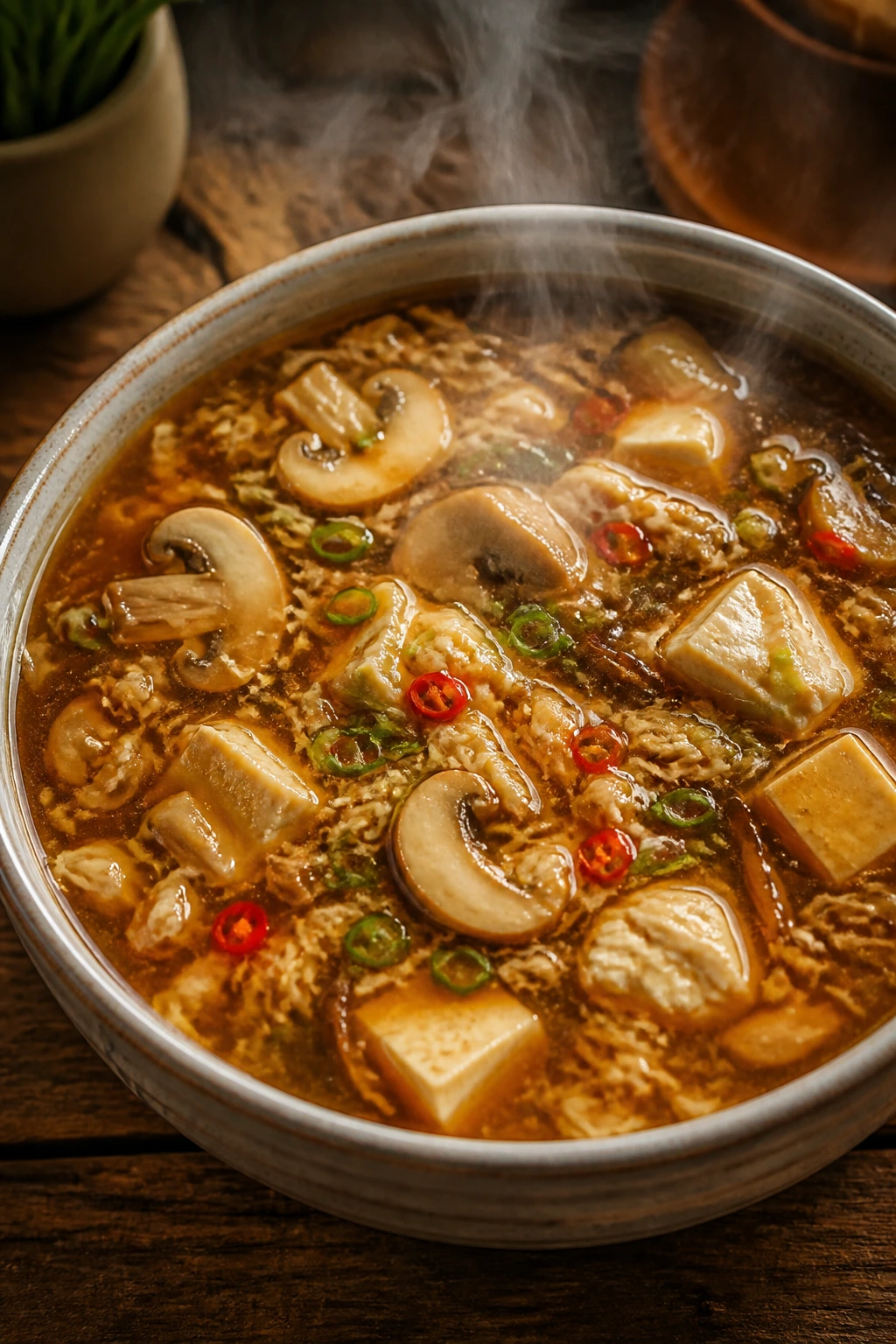
Hot and sour soup is one of those bowls that looks simple until the vinegar, pepper, mushrooms, and egg hit at the same time. In a slow cooker, it becomes a big-batch soup that tastes layered and warming without needing constant attention. The trick is to keep the vinegar and egg until the end so the soup stays bright and silky.
Why It Works:
Mushrooms and broth build the deep side of the soup, while rice vinegar and white pepper bring the sharp side. Tofu gives the bowl soft contrast, and the cornstarch gives it that slight body people expect. If you’ve only had thin hot and sour soup, the thickened version is the one that lands.
Key Ingredients:
- 10 cups chicken broth
- 8 ounces shiitake or cremini mushrooms, sliced
- 1 cup bamboo shoots, sliced
- 1 block firm tofu, cut into small cubes
- ¼ cup low-sodium soy sauce
- ¼ cup rice vinegar
- 1 to 2 teaspoons white pepper
- 2 tablespoons cornstarch mixed with 2 tablespoons water
- 2 eggs, lightly beaten
- 3 scallions, sliced
- 1 tablespoon sesame oil
Quick Steps:
- Add broth, mushrooms, bamboo shoots, soy sauce, and white pepper to the slow cooker.
- Cook on low for 3 to 4 hours so the mushrooms soften and the broth picks up flavor.
- Stir in tofu and cook 20 minutes more.
- Add the cornstarch slurry and stir until the soup lightly thickens.
- Drizzle in the beaten eggs slowly while stirring the soup in one direction, then finish with vinegar, sesame oil, and scallions.
Equipment for This Recipe:
- 6-quart slow cooker
- Whisk
- Ladle
- Small bowl for the eggs
How to Serve This Dish:
Serve hot in deep bowls with extra white pepper at the table. The soup should smell sharp and savory, not bland. A plate of scallion pancakes or steamed dumplings turns it into a full meal fast.
Pro Tips for This Recipe:
- Add vinegar only at the end or the flavor can fade.
- Stir the eggs in a thin stream so they form ribbons instead of clumps.
- White pepper has a different flavor than black pepper; use it if you can.
Variations on This Dish:
- Pork-Loaded Version: Add 1 cup shredded cooked pork at the end.
- Mushroom-Heavy Bowl: Use a mix of shiitake, oyster, and cremini mushrooms.
- Extra-Sour Version: Increase vinegar by 1 tablespoon at the finish.
Common Mistakes to Avoid with This Dish:
- Adding vinegar too early: The sour note softens during a long cook.
- Dumping eggs in all at once: They turn into scrambled clumps.
- Skipping white pepper: Black pepper changes the flavor more than people expect.
15. Slow Cooker Chicken Wonton Soup
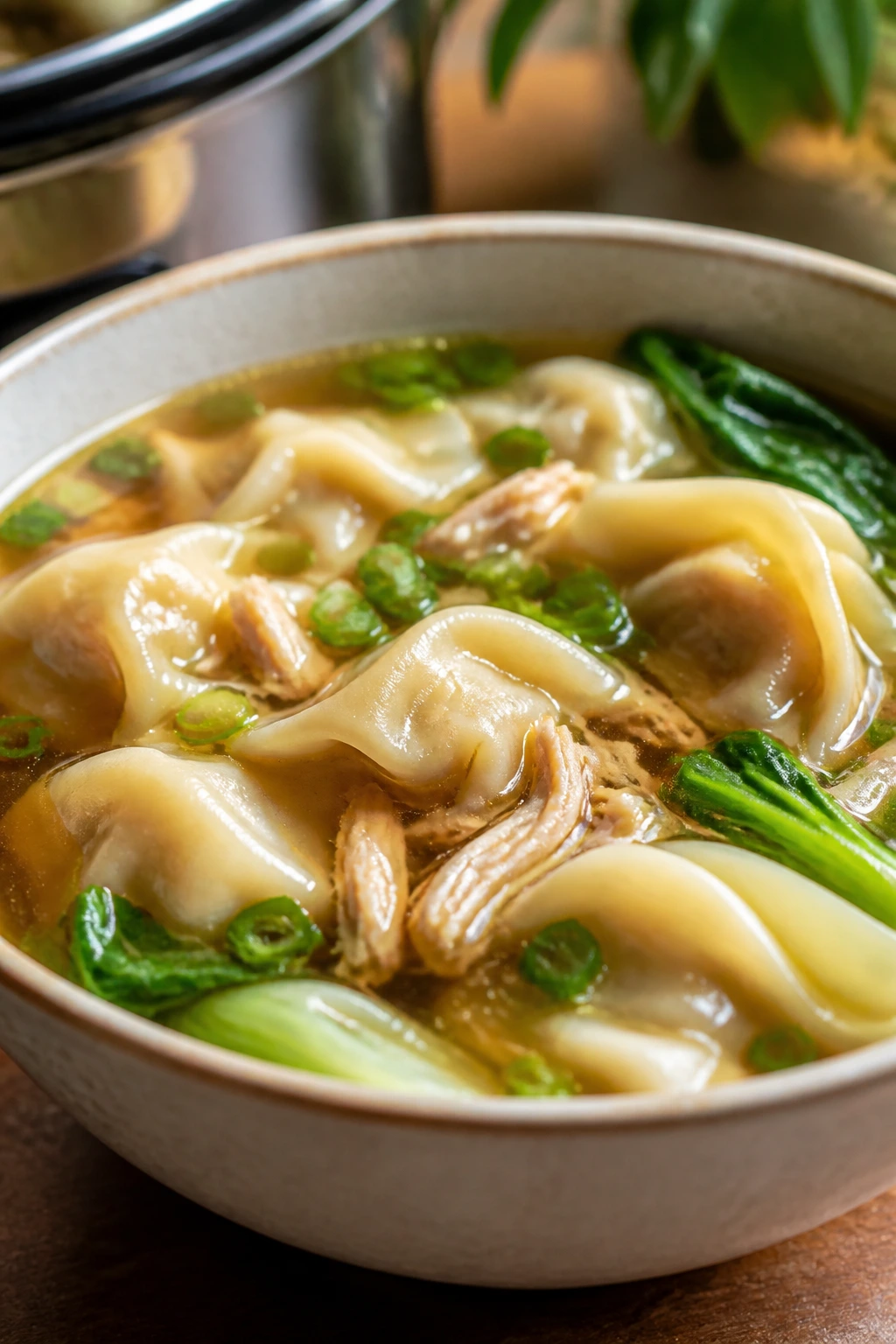
Chicken wonton soup in the slow cooker works if you treat the wontons like the last guest to arrive. The broth can simmer all day, but the wontons only need enough time to heat through or they split and go tired. The result is a big, gentle soup that feeds a crowd without feeling like cafeteria food.
Why It Works:
Ginger, garlic, chicken broth, mushrooms, and bok choy create a light but layered base. Frozen wontons hold up surprisingly well if you add them near the end, and a little sesame oil pulls the whole bowl together. It’s a practical dish for a crowd because you can keep the broth warm and add noodles or wontons as needed.
Key Ingredients:
- 8 cups chicken broth
- 1 tablespoon grated ginger
- 3 cloves garlic, minced
- 8 ounces mushrooms, sliced
- 1 cup sliced carrots
- 1 bunch baby bok choy, chopped
- 1 pound frozen chicken or pork wontons
- 2 tablespoons low-sodium soy sauce
- 1 tablespoon sesame oil
- 3 scallions, sliced
Quick Steps:
- Add broth, ginger, garlic, mushrooms, carrots, and soy sauce to the slow cooker.
- Cook on low for 4 to 5 hours until the vegetables are tender.
- Add bok choy and frozen wontons during the last 20 to 30 minutes.
- Cook until the wontons are hot through and the bok choy is just wilted.
- Finish with sesame oil and scallions.
Equipment for This Recipe:
- 6-quart slow cooker
- Ladle
- Slotted spoon
- Cutting board
How to Serve This Dish:
Serve it as a first course or a light main with extra soy sauce at the table. The broth should stay clear and aromatic, not muddy. If you need it to feed more people, keep the broth hot and add more wontons in batches.
Pro Tips for This Recipe:
- Frozen wontons need less time than you think; check early.
- Keep the bok choy in the last stretch so it stays green.
- If the broth tastes thin, add a splash more soy and a pinch of salt.
Variations on This Dish:
- Shrimp Wonton Soup: Use shrimp wontons and shorten the final cook a little.
- Spicy Bowl: Add chili oil at serving.
- Noodle Soup Version: Add cooked rice noodles to each bowl before ladling in broth.
Common Mistakes to Avoid with This Dish:
- Cooking wontons all day: They split and the filling disappears.
- Adding bok choy too early: It turns soft and drab.
- Over-salting the broth at the start: It can reduce more than you expect.
16. Crockpot Buddha’s Delight Vegetable Stew
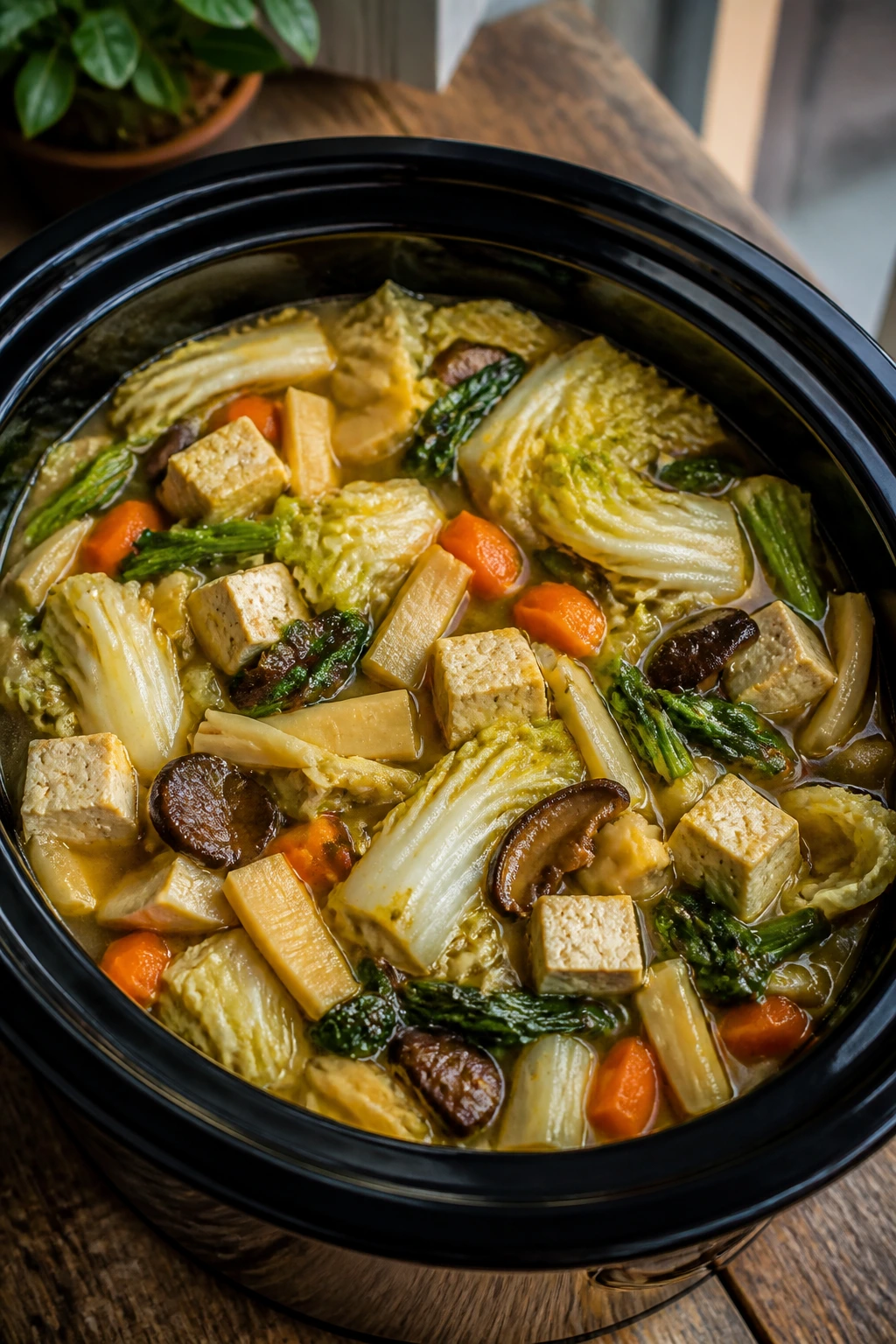
Buddha’s Delight is the quiet dish on the table that still gets finished first if the vegetables are handled well. The slow cooker gives mushrooms, cabbage, carrots, tofu, and bamboo shoots time to pick up the broth without turning them into mush. It’s one of the best crowd dishes here because it gives the meat eaters a break without acting like a compromise.
Why It Works:
The flavor comes from soy sauce, ginger, garlic, and sesame oil, which is enough when the vegetables are fresh and cut with some care. Heartier vegetables can cook longer, while bok choy and tofu should go in later. The broth ends up light but not dull.
Key Ingredients:
- 1 medium napa cabbage, chopped
- 2 carrots, sliced
- 8 ounces shiitake mushrooms, sliced
- 1 cup bamboo shoots, sliced
- 1 block firm tofu, pressed and cubed
- 1 bunch baby bok choy, chopped
- 4 cups vegetable broth
- ¼ cup low-sodium soy sauce
- 3 cloves garlic, minced
- 1 tablespoon grated ginger
- 1 tablespoon sesame oil
Quick Steps:
- Add carrots, mushrooms, bamboo shoots, broth, soy sauce, garlic, and ginger to the slow cooker.
- Cook on low for 3 to 4 hours until the carrots are tender.
- Add cabbage, bok choy, and tofu in the last 30 minutes.
- Cook until the greens wilt and the tofu is heated through.
- Finish with sesame oil and serve hot.
Equipment for This Recipe:
- 6-quart slow cooker
- Cutting board and knife
- Slotted spoon
- Measuring cups
How to Serve This Dish:
Serve it over rice or with steamed dumplings. The vegetables should still look distinct, not collapsed into one soft mass. A small drizzle of chili oil gives the bowl a little edge if you want it.
Pro Tips for This Recipe:
- Press the tofu for 15 minutes so it holds its shape better.
- Add leafy greens late; they need very little time.
- Taste before serving and add a pinch more soy if the broth feels too thin.
Variations on This Dish:
- Mushroom Supreme: Double the mushrooms and cut back on cabbage.
- Glass Noodle Version: Stir in pre-soaked glass noodles at the end.
- Spicy Vegetarian Bowl: Add chili crisp just before serving.
Common Mistakes to Avoid with This Dish:
- Cooking tofu all day: It turns spongy and fragile.
- Chopping cabbage too small: It breaks down too fast.
- Forgetting texture: Too many soft vegetables make the stew feel flat.
17. Slow Cooker Chinese Five-Spice Short Ribs
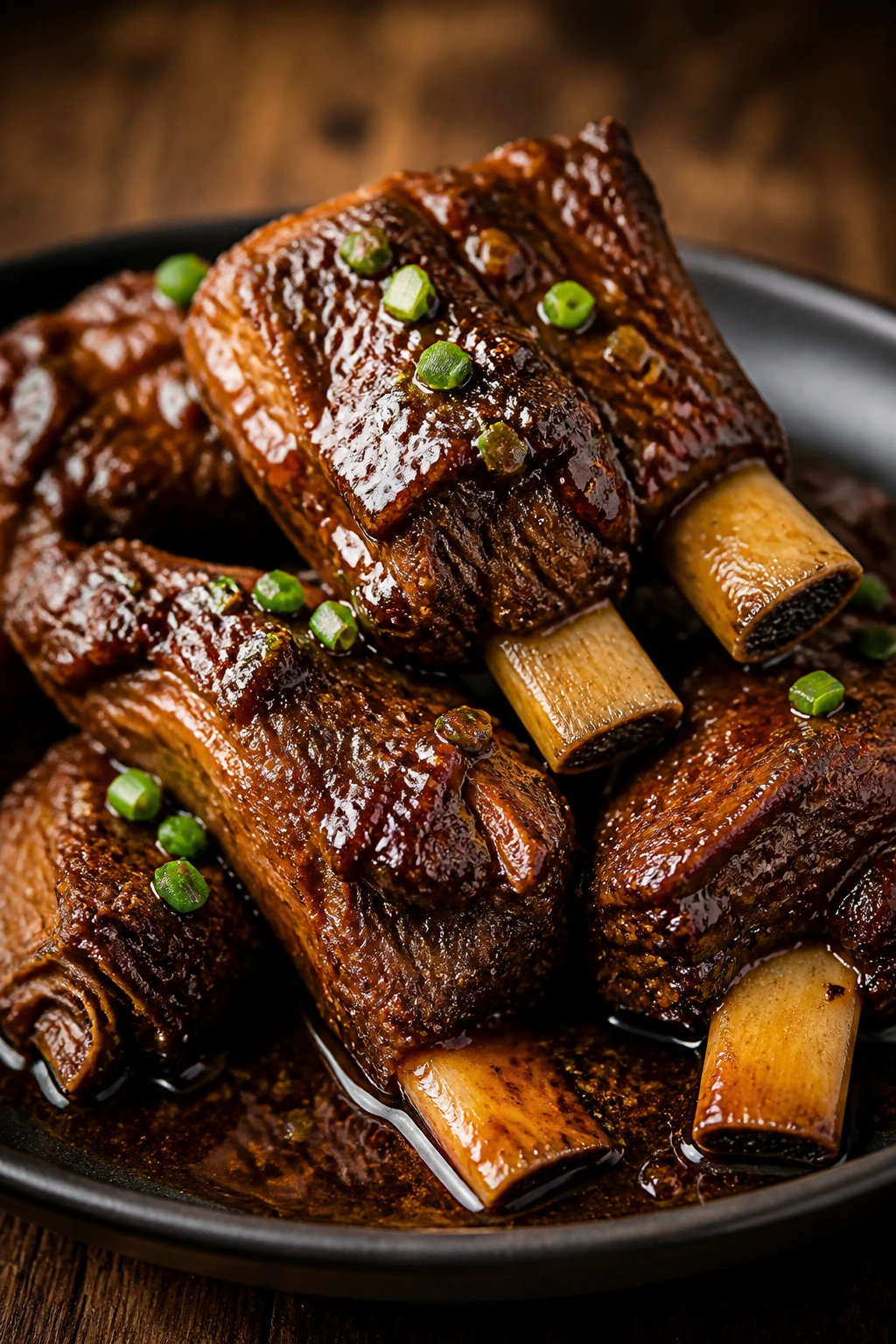
Five-spice short ribs are rich, dark, and built for a hungry crowd that wants something with weight to it. The ribs become spoon-tender in the slow cooker, and the sauce gets deep enough to taste like it has been reduced for hours. This is the dish that makes rice feel necessary rather than optional.
Why It Works:
Beef short ribs have enough fat and connective tissue to reward a long cook. Five-spice, soy, hoisin, ginger, and star anise give the sauce a warm, aromatic flavor that feels bigger than the ingredient list. A brief reduction at the end makes the sauce cling to the meat instead of pooling thinly in the pot.
Key Ingredients:
- 4 lbs beef short ribs
- ½ cup low-sodium soy sauce
- ⅓ cup hoisin sauce
- ½ cup beef broth
- ¼ cup brown sugar
- 1 tablespoon grated ginger
- 4 cloves garlic, minced
- 1 teaspoon Chinese five-spice powder
- 2 star anise
- 2 tablespoons cornstarch mixed with 2 tablespoons water
- 4 scallions, sliced
Quick Steps:
- Whisk soy sauce, hoisin, broth, brown sugar, ginger, garlic, five-spice, and star anise in the slow cooker.
- Add short ribs and turn to coat.
- Cook on low for 7 to 8 hours until the meat is nearly falling off the bone.
- Remove the ribs carefully, skim excess fat if needed, and stir in the cornstarch slurry.
- Return the ribs briefly to coat, then finish with scallions.
Equipment for This Recipe:
- 6-quart slow cooker
- Tongs
- Skimming spoon
- Slotted serving spoon
How to Serve This Dish:
Serve over rice with steamed bok choy or sautéed napa cabbage. Short ribs are rich, so a crisp vegetable side helps. If you want the bones to look clean on the platter, pull the meat from them before serving.
Pro Tips for This Recipe:
- Don’t rush the cook; the connective tissue needs time.
- If the sauce is greasy, skim the top before thickening.
- A splash of black vinegar at the end wakes up the richness.
Variations on This Dish:
- Braised Rib Bowl: Shred the meat and serve it over noodles.
- Spicy Five-Spice Ribs: Add chili paste to the sauce.
- Portion-Control Version: Use boneless short rib meat and shorten the cook a little.
Common Mistakes to Avoid with This Dish:
- Choosing lean beef here: Short ribs need fat to stay plush.
- Trying to serve immediately from the bone-in pot: The bones make plating messy.
- Skipping the sauce adjustment at the end: Rich meat needs a little acidity.
18. Crockpot Black Pepper Beef
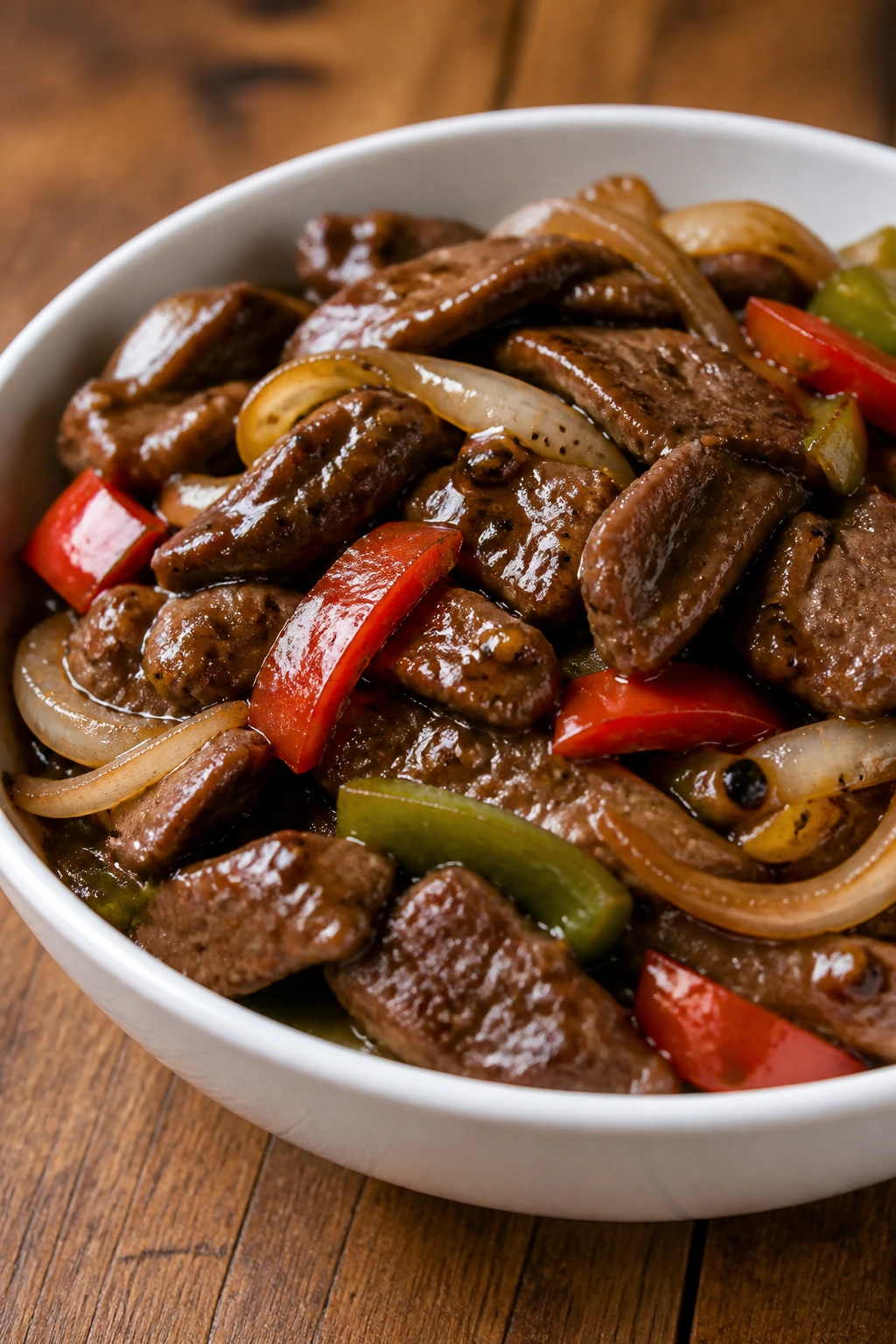
Black pepper beef is all about the pepper bite and the glossy brown sauce that catches on onions and peppers. The slow cooker gives the beef time to relax, but the pepper is what keeps the dish awake. I like this one for a crowd because it tastes bold without needing a long ingredient list.
Why It Works:
Coarse black pepper, oyster sauce, soy sauce, and garlic create a savory sauce with enough sharpness to cut through the beef. Bell peppers and onions cook down until soft but not mushy, and a cornstarch finish gives the sauce the right cling. It’s a sturdy dish that still feels lively.
Key Ingredients:
- 2½ lbs beef chuck, sliced thin
- 2 onions, sliced
- 2 bell peppers, sliced
- ½ cup low-sodium soy sauce
- ¼ cup oyster sauce
- ½ cup beef broth
- 2 tablespoons coarse black pepper
- 4 cloves garlic, minced
- 1 tablespoon grated ginger
- 2 tablespoons cornstarch mixed with 2 tablespoons water
- 1 tablespoon sesame oil
Quick Steps:
- Whisk soy sauce, oyster sauce, broth, black pepper, garlic, and ginger in the slow cooker.
- Add beef, onions, and peppers, then stir to coat.
- Cook on low for 4 to 5 hours until the beef is tender.
- Stir in the cornstarch slurry and cook 15 minutes more until thick.
- Finish with sesame oil and serve hot.
Equipment for This Recipe:
- 6-quart slow cooker
- Whisk
- Sharp knife
- Tongs
How to Serve This Dish:
Serve with white rice or garlic fried rice. A bowl of quick sautéed green beans makes the plate feel complete. If your crowd likes heat, put extra cracked pepper on the table and let them choose.
Pro Tips for This Recipe:
- Use coarse pepper, not fine powder, or the flavor disappears.
- Slice onions thick enough that they don’t vanish.
- Add a small splash of vinegar if the sauce tastes too dark.
Variations on This Dish:
- More Pepper, Less Sweet: Reduce the broth by 2 tablespoons and add more black pepper.
- Mushroom Version: Add sliced mushrooms with the onions.
- Gluten-Free Swap: Tamari and gluten-free oyster-style sauce work fine.
Common Mistakes to Avoid with This Dish:
- Using too little pepper: The dish turns bland fast.
- Overcooking the peppers: They lose their shape and color.
- Skipping the thickener: Pepper beef should coat, not pour.
19. Slow Cooker Chicken and Mushroom Brown Sauce
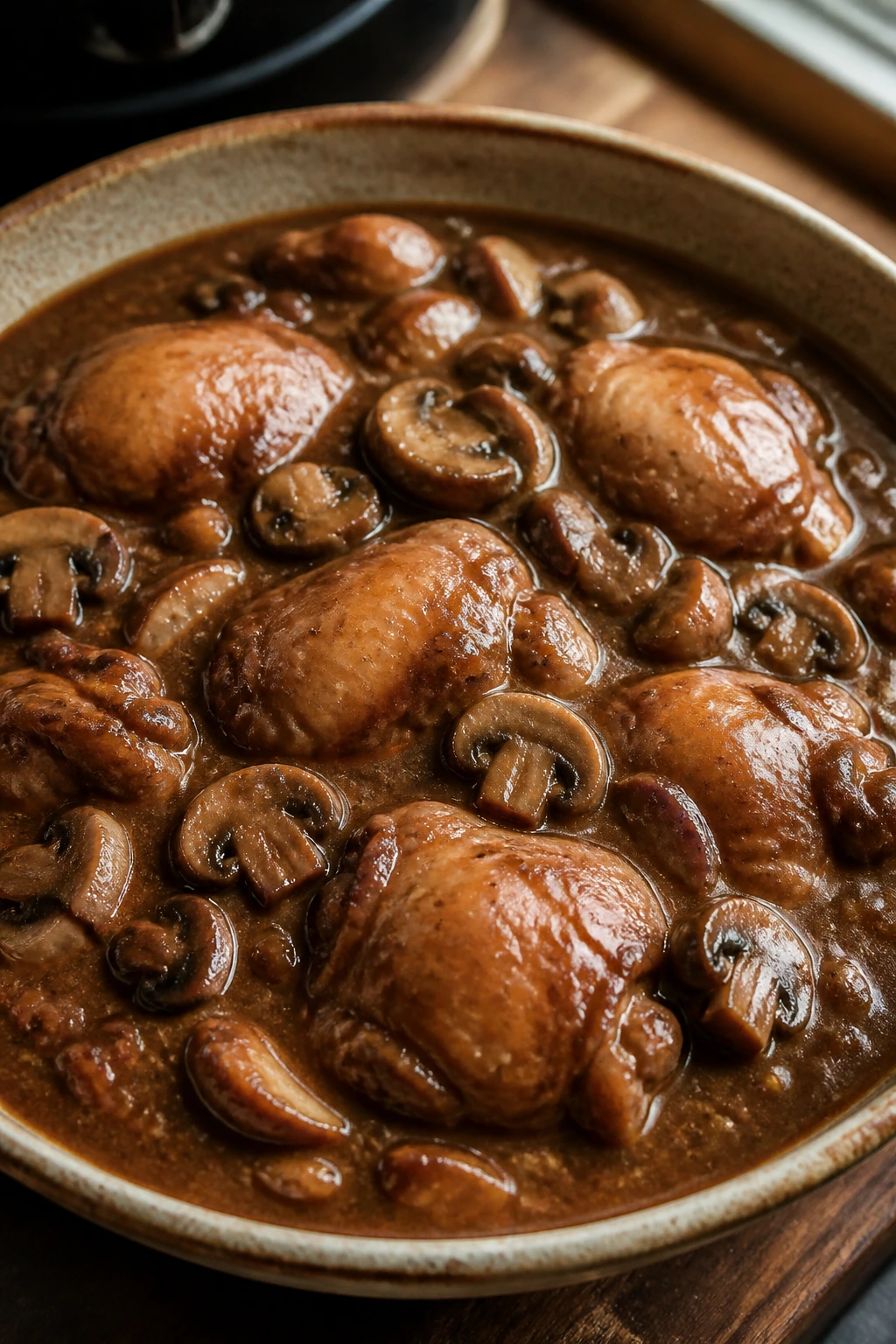
This is one of the quieter recipes on the list, and that’s part of the appeal. Chicken, mushrooms, onion, soy, and oyster sauce build a brown gravy that tastes like it came from a busy Chinese home kitchen, not a takeout box. It feeds a crowd without shouting.
Why It Works:
Mushrooms bring the earthy note, oyster sauce gives the sauce body, and chicken thighs keep the meat tender over a long cook. A small amount of broth prevents the sauce from getting too salty. Because the dish is mild, it plays well with rice, noodles, or a pile of steamed greens.
Key Ingredients:
- 2½ lbs boneless, skinless chicken thighs
- 12 ounces cremini mushrooms, sliced
- 1 onion, sliced
- ½ cup low-sodium soy sauce
- ¼ cup oyster sauce
- 1 cup chicken broth
- 3 cloves garlic, minced
- 1 tablespoon grated ginger
- 2 tablespoons cornstarch mixed with 2 tablespoons water
- 1 tablespoon sesame oil
- 3 scallions, sliced
Quick Steps:
- Add chicken, mushrooms, onion, soy sauce, oyster sauce, broth, garlic, and ginger to the slow cooker.
- Cook on low for 3 to 4 hours until the chicken is tender and the mushrooms are soft.
- Stir in the cornstarch slurry and cook 15 minutes more until the sauce looks like a light gravy.
- Finish with sesame oil and scallions.
Equipment for This Recipe:
- 6-quart slow cooker
- Knife and cutting board
- Whisk
- Slotted spoon
How to Serve This Dish:
Serve it over rice or egg noodles. Because the sauce is brown and savory rather than bright, it benefits from a green side like bok choy or broccoli. A little extra scallion on top makes the bowl look finished.
Pro Tips for This Recipe:
- Don’t skimp on the mushrooms; they’re half the flavor here.
- If the sauce tastes too salty, add ¼ cup water before thickening.
- A spoonful of rice vinegar at the end keeps the gravy from feeling heavy.
Variations on This Dish:
- Creamier Brown Sauce: Stir in 2 tablespoons of unsalted butter at the end if you want a silkier finish.
- Veggie-Heavy Bowl: Add carrots and baby corn in the last hour.
- Chicken Breast Version: Use breasts and shorten the cook a little.
Common Mistakes to Avoid with This Dish:
- Using button mushrooms only and expecting deep flavor: Cremini or shiitake taste better.
- Cooking the sauce too salty from the start: It reduces as it cooks.
- Serving without a fresh garnish: The dish needs a little brightness.
20. Crockpot Hoisin Spare Ribs
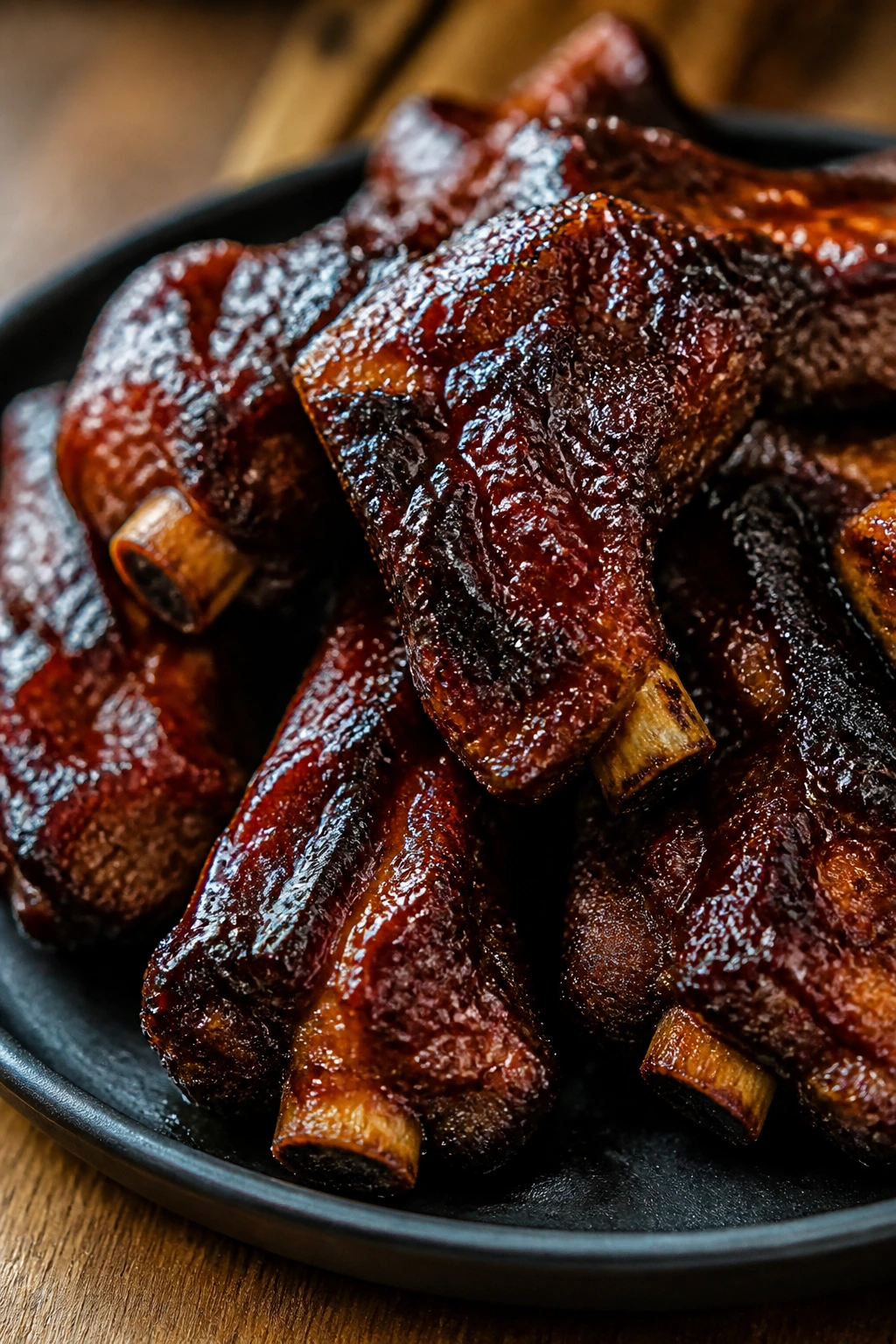
Hoisin spare ribs are sticky in the best possible way, the kind of thing people reach for with both hands and no apology. The slow cooker softens the ribs, then the sauce thickens into a lacquer that looks like it belongs on a much hotter grill. They feed a crowd easily because a rack or two goes farther than you think.
Why It Works:
Spare ribs have enough fat to stay juicy, and hoisin gives them the sweet-salty backbone they need. Rice vinegar, garlic, ginger, and five-spice keep the sauce from turning sugary. A fast broil at the end gives the ribs the sticky finish the slow cooker can’t create on its own.
Key Ingredients:
- 3 racks baby back or St. Louis ribs, cut into sections
- ½ cup hoisin sauce
- ¼ cup low-sodium soy sauce
- ⅓ cup honey
- 2 tablespoons rice vinegar
- 4 cloves garlic, minced
- 1 tablespoon grated ginger
- 1 teaspoon Chinese five-spice powder
- ½ cup chicken broth
- 2 tablespoons cornstarch mixed with 2 tablespoons water
Quick Steps:
- Whisk hoisin, soy sauce, honey, vinegar, garlic, ginger, five-spice, and broth in the slow cooker.
- Add rib sections and turn to coat.
- Cook on low for 6 to 7 hours until the meat is tender.
- Remove the ribs, stir in the cornstarch slurry, and cook 10 to 15 minutes until thick.
- Brush the ribs with sauce and broil for 3 to 5 minutes until sticky and browned.
Equipment for This Recipe:
- 6-quart slow cooker
- Rimmed baking sheet
- Tongs
- Basting brush
How to Serve This Dish:
Serve the ribs with rice, steamed cabbage, or a crisp cucumber salad. They are rich enough that a fresh side matters. A platter lined with lettuce leaves makes them easier to pass around a table.
Pro Tips for This Recipe:
- Cut the racks into sections before cooking so they fit and serve easily.
- Broil on foil for easier cleanup.
- Add a little more vinegar at the end if the glaze feels too heavy.
Variations on This Dish:
- Spicy Hoisin Ribs: Add chili paste to the glaze.
- Orange-Hoisin Ribs: Add ¼ cup orange juice and a little zest.
- Boneless Rib Version: Use boneless country-style ribs for easier serving.
Common Mistakes to Avoid with This Dish:
- Trying to skip the broil: The ribs taste soft but not finished.
- Overcrowding the pot: The glaze won’t coat evenly.
- Using too much broth: It thins the sticky sauce.
21. Slow Cooker Chicken Lo Mein Bowl Filling
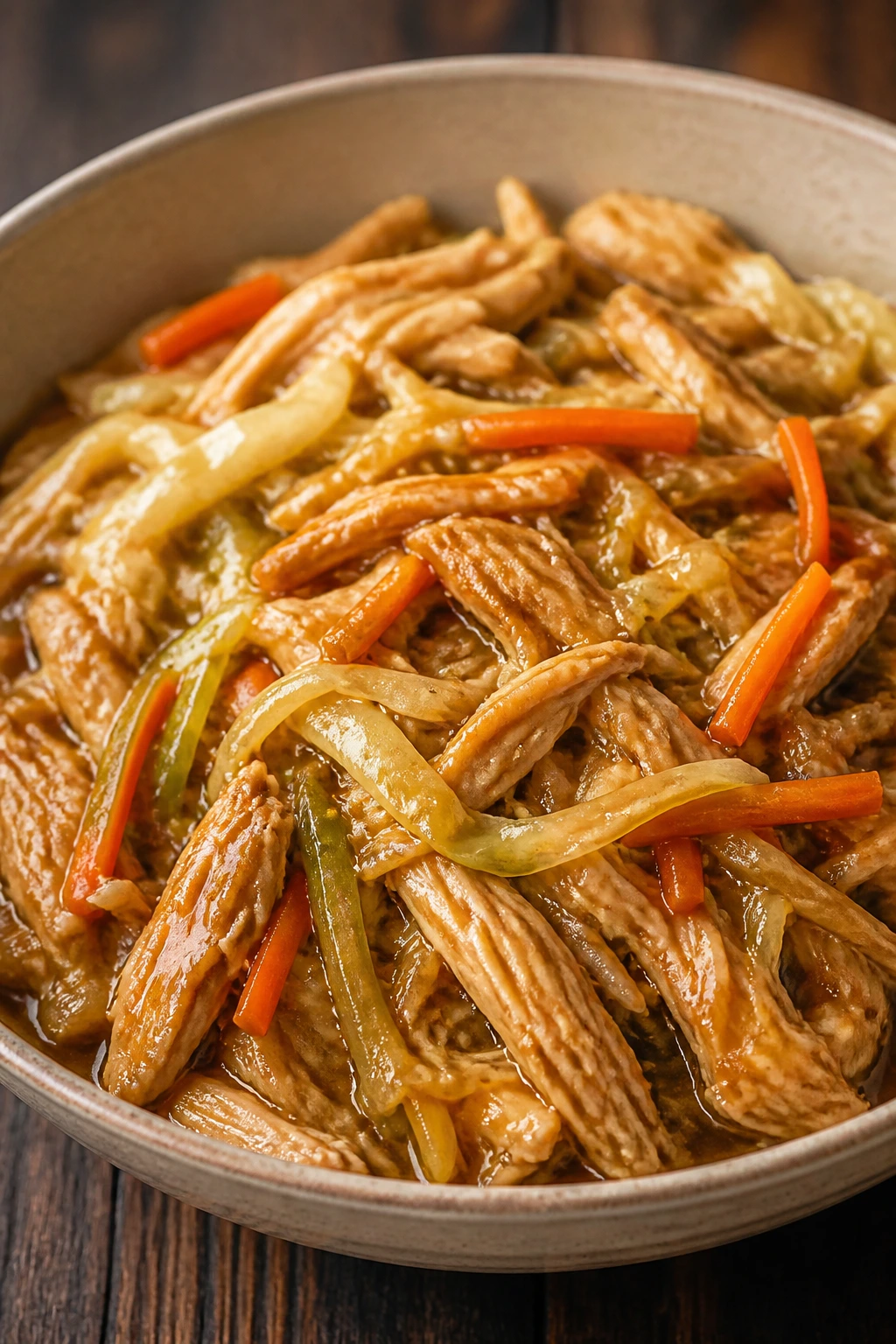
Lo mein belongs to the stove, not the slow cooker, so the move here is to make a saucy filling and toss it with cooked noodles at the end. That gives you the flavor of lo mein without turning the noodles into paste. It feeds a crowd well because the noodle pot can be stretched with extra cabbage and carrots if needed.
Why It Works:
Chicken thighs hold up in the sauce, and cabbage, carrots, and celery make the filling feel generous. Oyster sauce and soy sauce give that familiar lo mein taste, while sesame oil finishes it with the right smell. Keeping the noodles separate is the whole trick.
Key Ingredients:
- 2½ lbs boneless, skinless chicken thighs, sliced
- 4 cups shredded green cabbage
- 2 carrots, julienned
- 2 celery stalks, thinly sliced
- 1 red bell pepper, sliced
- ½ cup low-sodium soy sauce
- ¼ cup oyster sauce
- ½ cup chicken broth
- 4 cloves garlic, minced
- 1 tablespoon grated ginger
- 1 tablespoon sesame oil
- 12 ounces cooked lo mein noodles
Quick Steps:
- Combine soy sauce, oyster sauce, broth, garlic, and ginger in the slow cooker.
- Add chicken, cabbage, carrots, celery, and bell pepper.
- Cook on low for 3 to 4 hours until the chicken is tender and the vegetables are soft but not collapsed.
- Toss the filling with the cooked noodles in a large bowl.
- Finish with sesame oil and serve right away.
Equipment for This Recipe:
- 6-quart slow cooker
- Large pot for noodles
- Tongs
- Big mixing bowl
How to Serve This Dish:
Serve in wide bowls with extra scallions and a sprinkle of sesame seeds. The noodles should still have a little bite, so drain them well before tossing. If you want to stretch the meal, serve with simple dumplings or a cucumber salad.
Pro Tips for This Recipe:
- Cook noodles separately. Always.
- Pull the chicken when it’s tender but not falling apart into shreds.
- If the filling looks dry, add a splash of broth before tossing.
Variations on This Dish:
- Beef Lo Mein Filling: Swap in thin-sliced beef and shorten the cook.
- Vegetable Lo Mein: Skip the chicken and add mushrooms and snap peas late.
- Spicy Lo Mein: Add chili crisp after tossing.
Common Mistakes to Avoid with This Dish:
- Cooking noodles in the crockpot: They turn bloated and break apart.
- Using too much cabbage too early: It collapses into slush.
- Skipping the final toss: The noodles need to be coated evenly or the bowl tastes uneven.
22. Crockpot Lemon Chicken and Broccoli
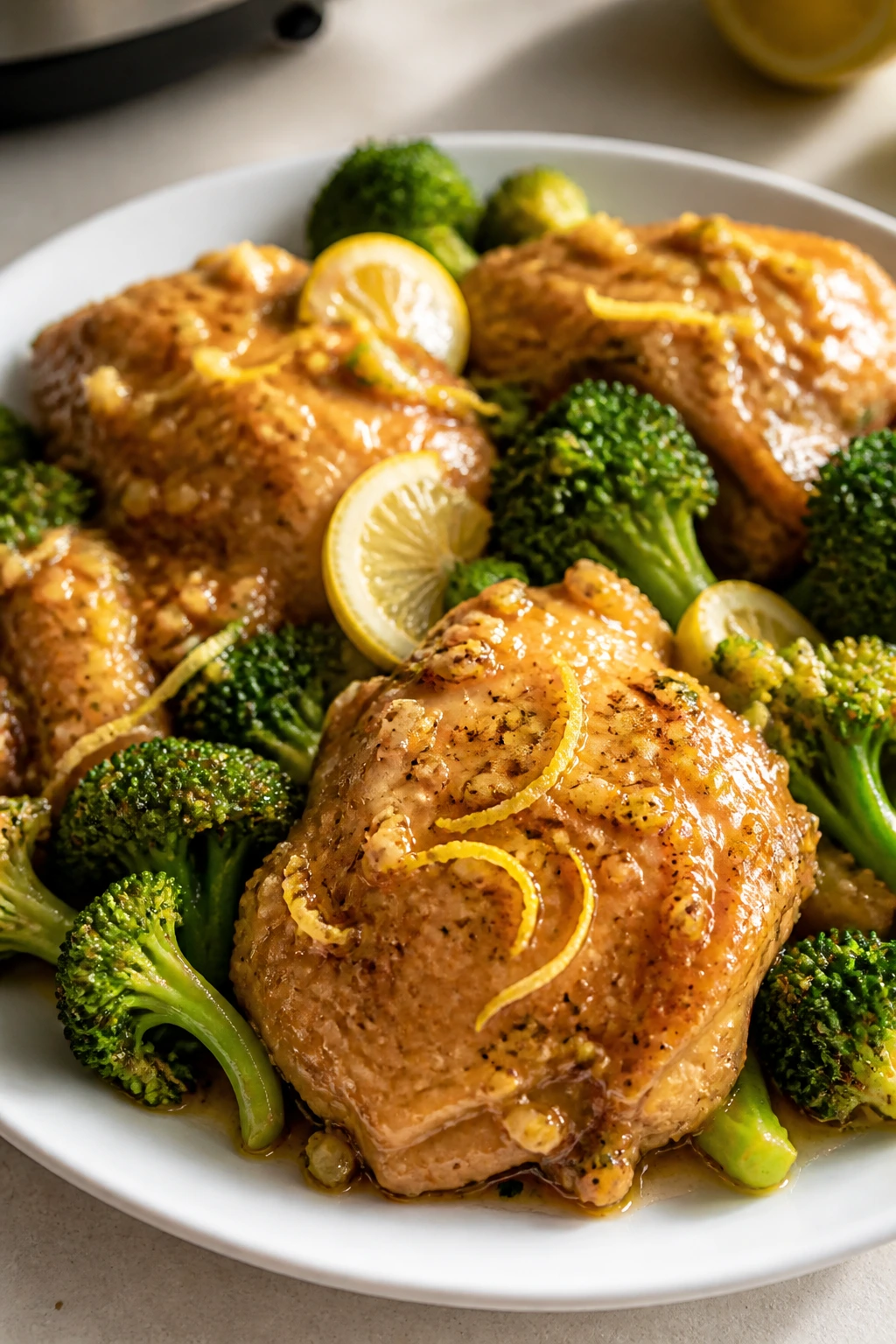
Lemon chicken in this style tastes brighter than many of the other dishes in the list, which is a nice change when a crowd starts craving something less dark. The lemon lifts the soy and garlic, and the broccoli gives you a full plate without making the dish feel heavy. It’s a practical crowd meal that still tastes fresh.
Why It Works:
Lemon juice and zest add sharpness at both the aroma and flavor level, while honey smooths the edges. Chicken thighs stay juicy, and broccoli only needs a short finish so it keeps its color. The sauce thickens into a pale glaze that feels lighter than brown-sauce dishes.
Key Ingredients:
- 2½ lbs boneless, skinless chicken thighs
- 6 cups broccoli florets
- ½ cup low-sodium soy sauce
- ⅓ cup fresh lemon juice
- 1 tablespoon lemon zest
- ⅓ cup honey
- 4 cloves garlic, minced
- 1 tablespoon grated ginger
- 2 tablespoons cornstarch mixed with 2 tablespoons water
- 1 tablespoon sesame oil
- 2 scallions, sliced
Quick Steps:
- Whisk soy sauce, lemon juice, lemon zest, honey, garlic, and ginger in the slow cooker.
- Add chicken and cook on low for 3 to 4 hours.
- Stir in the cornstarch slurry and cook 15 minutes more until the sauce turns glossy.
- Add broccoli during the final 20 to 25 minutes.
- Finish with sesame oil and scallions.
Equipment for This Recipe:
- 6-quart slow cooker
- Zester
- Whisk
- Slotted spoon
How to Serve This Dish:
Serve with jasmine rice and maybe a side of chilled cucumber slices. The sauce should be light but not watery. If you want the bowl to read as a full meal, add a handful of toasted cashews on top.
Pro Tips for This Recipe:
- Use fresh lemon juice, not bottled.
- Don’t add broccoli at the start or it turns olive and soft.
- A pinch of white pepper adds a nice little lift.
Variations on This Dish:
- Garlic-Lemon Broccoli Chicken: Double the garlic and cut the honey slightly.
- Mild Citrus Bowl: Use half lemon, half orange juice for a softer flavor.
- Thigh-to-Breast Swap: Use chicken breast and shorten the cook time.
Common Mistakes to Avoid with This Dish:
- Too much lemon zest: It can taste bitter if you overdo it.
- Overcooking broccoli: It should stay bright and tender, not mushy.
- Skipping the final taste check: Lemon changes as it cooks, so adjust salt before serving.
23. Slow Cooker Mapo Tofu with Ground Pork
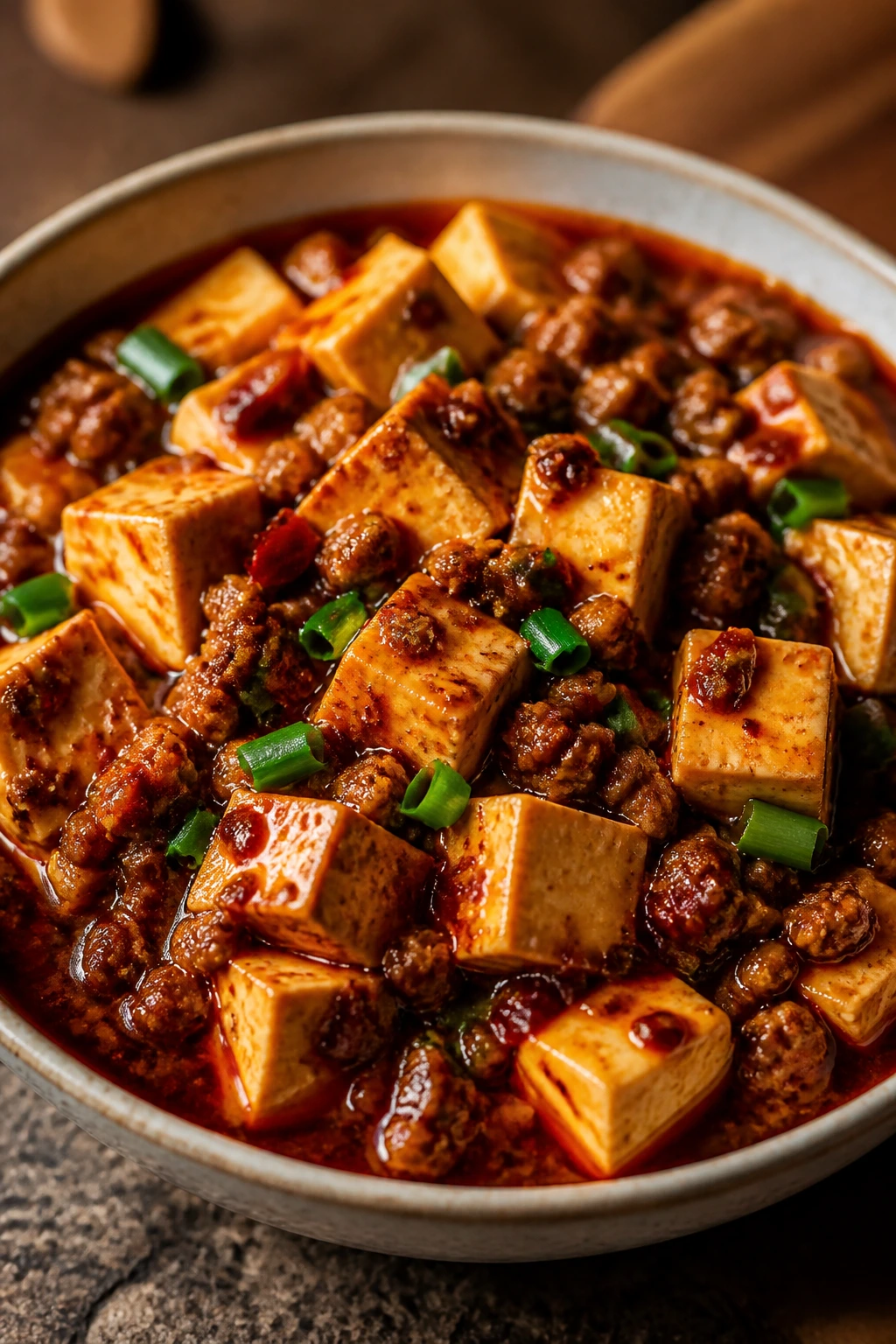
Mapo tofu is one of the best arguments for using a slow cooker without pretending the wok never existed. The base flavors — chili bean paste, soy, garlic, ginger, and Sichuan peppercorn — need enough time to mingle, and the tofu is happiest when it’s folded in gently at the end. It’s bold, savory, and built to feed a crowd with a bowl of rice.
Why It Works:
Ground pork gives the sauce fat and depth, while doubanjiang or chili bean paste brings the signature heat and fermented savoriness. Tofu is added late so it keeps its shape, and a little black vinegar sharpens the whole thing. A small cornstarch finish helps the sauce cling without making it gluey.
Key Ingredients:
- 1½ lbs ground pork
- 2 blocks firm tofu, cut into cubes
- 3 tablespoons doubanjiang or chili bean paste
- ½ cup low-sodium soy sauce
- 1 cup chicken broth
- 4 cloves garlic, minced
- 1 tablespoon grated ginger
- 1 teaspoon ground Sichuan peppercorns
- 2 tablespoons black vinegar
- 2 tablespoons cornstarch mixed with 2 tablespoons water
- 3 scallions, sliced
- 1 tablespoon chili oil, optional
Quick Steps:
- Cook the ground pork in a skillet until browned, then scrape it into the slow cooker.
- Add doubanjiang, soy sauce, broth, garlic, ginger, and Sichuan peppercorns.
- Cook on low for 2 to 3 hours so the flavors meld.
- Gently stir in tofu cubes and cook 20 minutes more.
- Add the cornstarch slurry, cook 10 minutes, then finish with black vinegar, scallions, and chili oil.
Equipment for This Recipe:
- 6-quart slow cooker
- Skillet for browning pork
- Wide spoon
- Slotted spoon
How to Serve This Dish:
Serve with steamed rice and a simple green vegetable on the side. The tofu should sit in the sauce like little cubes of custard, not break apart. A spoonful of chili oil on top is worth it if your table wants more heat.
Pro Tips for This Recipe:
- Brown the pork first; it gives the sauce a better base.
- Add tofu gently and don’t stir aggressively.
- If you can’t find doubanjiang, use chili garlic sauce plus a little miso for depth.
Variations on This Dish:
- Vegetarian Mapo Tofu: Swap ground pork for finely chopped mushrooms.
- Extra-Spicy Bowl: Add more chili oil at the finish.
- Milder Family Version: Cut the doubanjiang by half and add more broth.
Common Mistakes to Avoid with This Dish:
- Boiling the tofu hard: It can break apart fast.
- Skipping the vinegar at the end: The dish needs that sharp line.
- Using only soft tofu: Firm tofu stands up much better here.
24. Crockpot Beef and Cabbage Braise
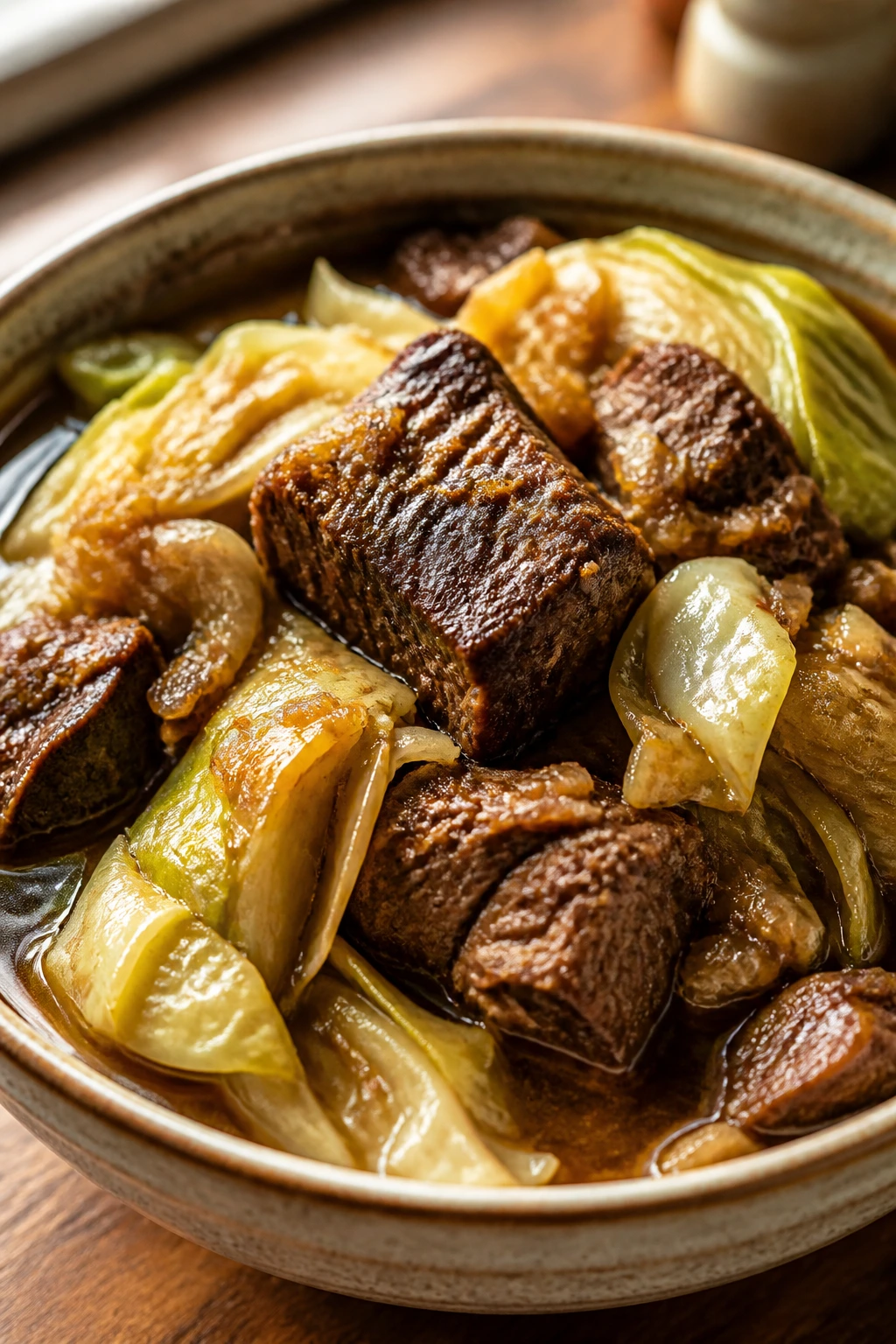
Beef and cabbage sounds plain until the broth, soy, garlic, and ginger have time to sink into the leaves. This is a hearty, economical crowd dish that gives you a full pot for not much drama. Cabbage gets sweet in the slow cooker, and beef chuck turns into the kind of meat that falls apart in big, useful chunks.
Why It Works:
Cabbage loves long braises because it softens and picks up every bit of savory liquid around it. Beef chuck brings enough connective tissue to become tender over hours, and a little black vinegar at the end keeps the dish from tasting too heavy. It is the sort of recipe that tastes even better once the lid has been off for a few minutes.
Key Ingredients:
- 2½ lbs beef chuck, cut into 2-inch pieces
- 1 large head green cabbage, cut into wedges
- 2 carrots, sliced
- 1 onion, sliced
- ½ cup low-sodium soy sauce
- 1 cup beef broth
- 4 cloves garlic, minced
- 1 tablespoon grated ginger
- 2 tablespoons black vinegar or rice vinegar
- 2 tablespoons cornstarch mixed with 2 tablespoons water
- 1 tablespoon sesame oil
Quick Steps:
- Add beef, carrots, onion, soy sauce, broth, garlic, and ginger to the slow cooker.
- Cook on low for 6 to 7 hours until the beef is tender.
- Add cabbage wedges during the last 45 minutes so they soften but still hold some shape.
- Stir in the vinegar and cornstarch slurry, then cook 15 minutes more.
- Finish with sesame oil and serve hot.
Equipment for This Recipe:
- 6-quart slow cooker
- Sharp knife
- Cutting board
- Tongs or slotted spoon
How to Serve This Dish:
Serve it in deep bowls with rice underneath or on the side. The cabbage should be soft but still recognizable, with the beef sitting in a savory broth-like sauce. A little chili oil on the top works well if your crowd likes heat.
Pro Tips for This Recipe:
- Cut cabbage into big wedges so it doesn’t vanish.
- Use chuck, not lean stew beef, or the texture gets dry.
- A splash of black vinegar at the end perks up the whole pot.
Variations on This Dish:
- Pork and Cabbage Version: Use pork shoulder instead of beef.
- Mushroom Braise: Add shiitake mushrooms for deeper flavor.
- Carb-Lighter Bowl: Serve it over shredded cabbage instead of rice.
Common Mistakes to Avoid with This Dish:
- Adding cabbage too early: It turns to soup.
- Using too much broth: The dish loses its braised feel.
- Forgetting the acidity at the end: The beef tastes flat without it.
25. Slow Cooker Shanghai-Style Braised Chicken and Potatoes
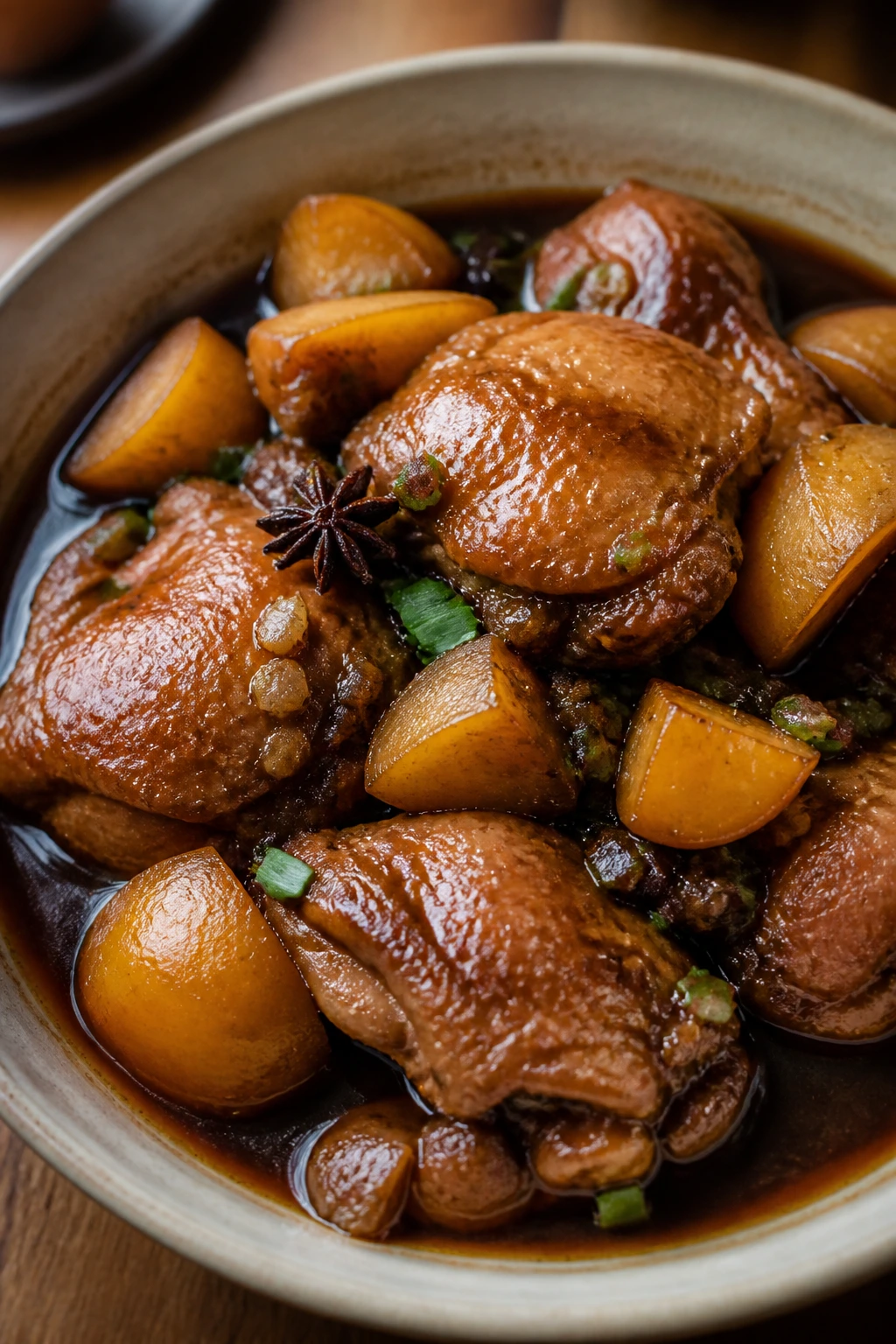
This is the kind of dish that looks humble and then quietly takes over the table. Chicken thighs, potatoes, ginger, soy, and star anise settle into a deep braise that feels homey without being dull. It feeds a crowd because the potatoes soak up the sauce and make every bowl feel larger.
Why It Works:
Shanghai-style braising leans on soy sauce, a little sugar, ginger, and star anise for that dark, savory-sweet profile. Potatoes make the meal more filling and absorb the sauce from the inside out. Chicken thighs stay juicy where breasts would dry out, especially with a long, gentle cook.
Key Ingredients:
- 3 lbs boneless, skinless chicken thighs
- 2½ lbs Yukon Gold potatoes, cut into large chunks
- ½ cup low-sodium soy sauce
- ½ cup chicken broth
- 2 tablespoons brown sugar
- 4 cloves garlic, minced
- 1 tablespoon grated ginger
- 2 star anise
- 1 tablespoon rice vinegar
- 2 tablespoons cornstarch mixed with 2 tablespoons water
- 3 scallions, sliced
Quick Steps:
- Whisk soy sauce, broth, brown sugar, garlic, ginger, and star anise in the slow cooker.
- Add potatoes and chicken thighs, turning them to coat in the sauce.
- Cook on low for 4 to 5 hours until the chicken is tender and the potatoes are fully cooked.
- Remove the star anise, stir in the rice vinegar and cornstarch slurry, and cook 15 minutes more.
- Finish with scallions and serve hot.
Equipment for This Recipe:
- 6-quart slow cooker
- Knife and cutting board
- Whisk
- Slotted spoon
How to Serve This Dish:
Serve it as a main dish over rice, though honestly the potatoes can carry a lot of the load themselves. The sauce should be dark and glossy, not watery. A side of sautéed greens makes the plate feel complete and keeps the meal from leaning too soft.
Pro Tips for This Recipe:
- Cut the potatoes large so they don’t disappear.
- Remove the star anise before serving; it’s strong enough to bite down on accidentally.
- If the sauce tastes flat, add a tiny splash more vinegar at the end.
Variations on This Dish:
- Brown Mushroom Version: Add cremini mushrooms for a deeper base.
- Spicy Braise: Stir in chili garlic sauce with the soy mixture.
- Chicken-and-Cabbage Swap: Replace half the potatoes with cabbage wedges for a lighter bowl.
Common Mistakes to Avoid with This Dish:
- Using waxy tiny potato pieces: They break down too much and muddy the sauce.
- Forgetting the final acid: Braised dishes wake up with a little vinegar.
- Overcrowding the slow cooker: The potatoes need space to cook evenly.
Why the Slow Cooker Wins on Saucy Chinese Takeout-Style Dinners
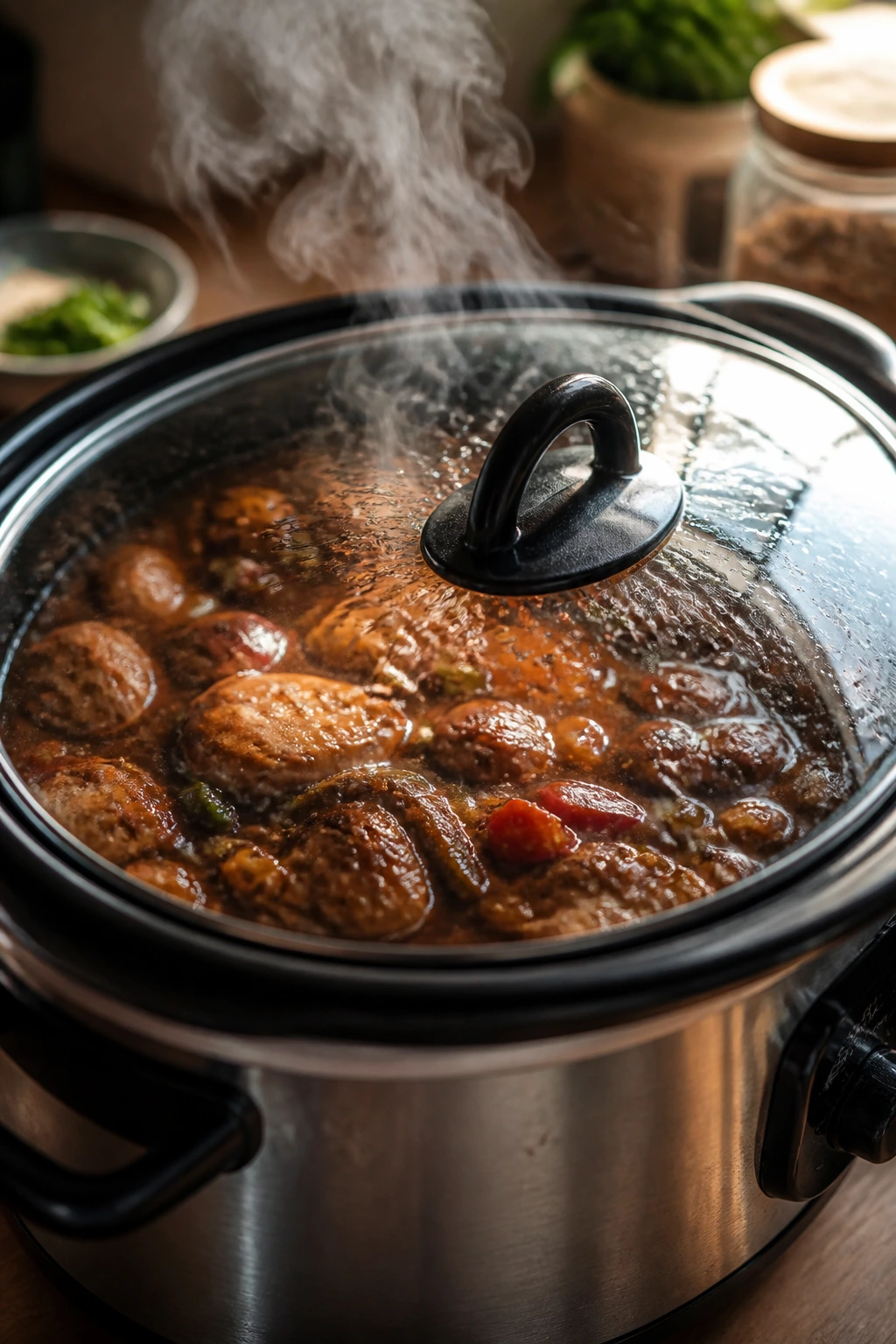
The slow cooker is at its best when a recipe needs patience more than flash. That is why so many of these dishes work: soy sauce, hoisin, vinegar, garlic, ginger, and sugar need time to blend, not just heat to sizzle. The pot keeps everything moving at a steady pace, which is the real reason the sauces taste so rounded when they’re done.
There’s a catch, and it’s a useful one. The slow cooker does not reduce sauce the way a wok or skillet does, so the end-of-cook slurry matters more here than it does in some other styles of cooking. If you skip that final thickener, you get dinner in broth form. Fine for soup. Not fine for General Tso’s chicken.
Another thing people miss: the slow cooker rewards ingredients that can handle a long bath. Chicken thighs, beef chuck, pork shoulder, ribs, mushrooms, cabbage, carrots, and tofu all do better than lean, delicate cuts. That doesn’t mean you can’t use chicken breast or pork loin, but you need to respect their shorter cooking window. The pot is forgiving. It is not psychic.
Essential Equipment for These Recipes
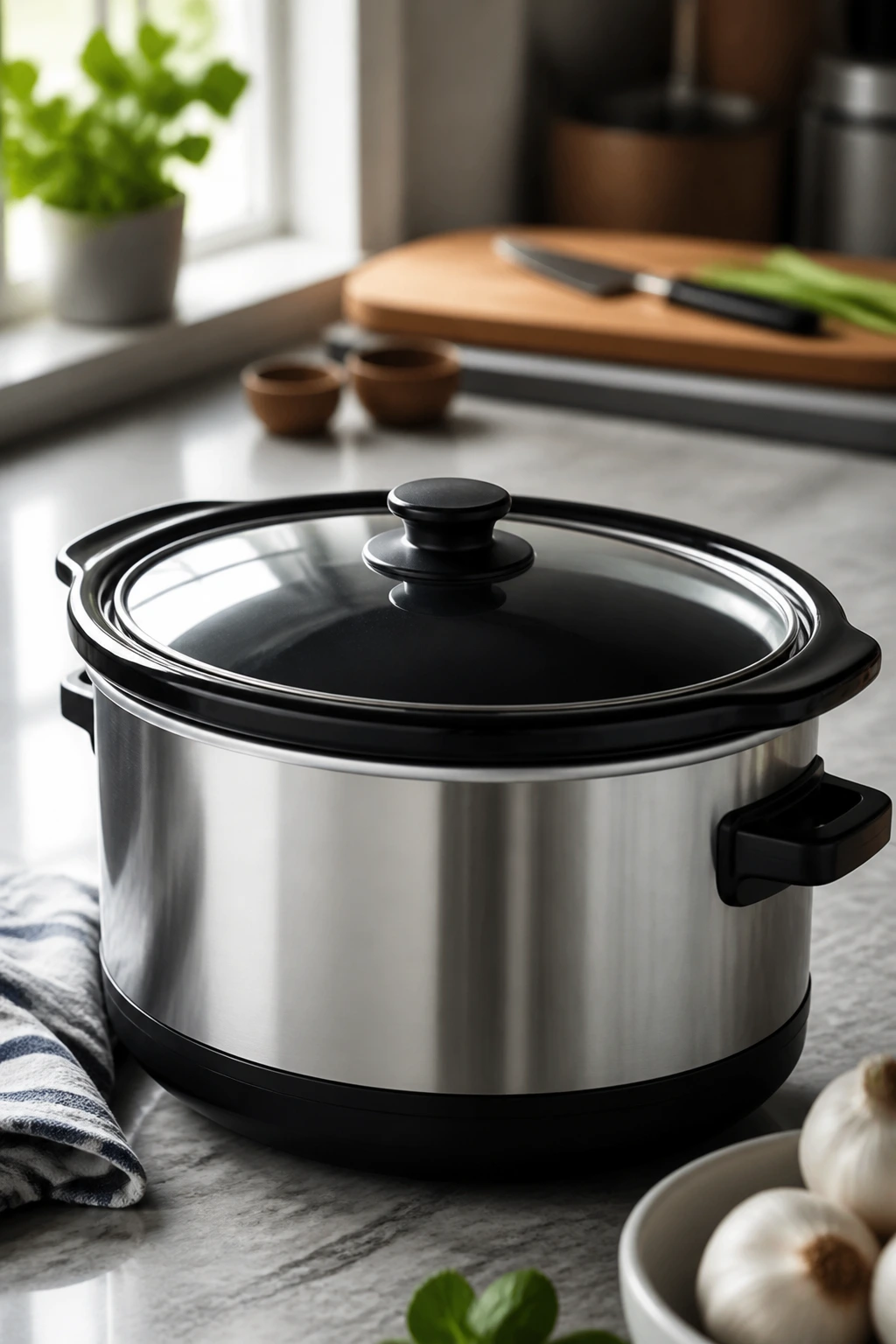
- 6- or 8-quart slow cooker: A crowd-size pot matters more than most people think; a cramped insert cooks unevenly.
- Sharp chef’s knife: Thin slicing is a big deal for beef, pork loin, and cabbage.
- Cutting board with a damp towel underneath: It keeps the board from skating when you’re slicing meat or shredding vegetables.
- Whisk and mixing bowls: Most of these sauces come together in one bowl before they hit the pot.
- Measuring cups and spoons: Garlic, vinegar, soy, and cornstarch need real measurements or the sauce goes sideways.
- Tongs or a slotted spoon: Helpful for stirring without shredding tender meat.
- Rimmed baking sheet: Useful for broiling sticky dishes like General Tso’s chicken and char siu pork.
- Fine-mesh strainer, optional: Handy for skimming broth-heavy soups or catching star anise and peppercorns.
- Rice cooker or large saucepan: Not required, but a crowd of saucy Chinese dishes needs a dependable rice side.
Smart Shopping and Ingredient Tips
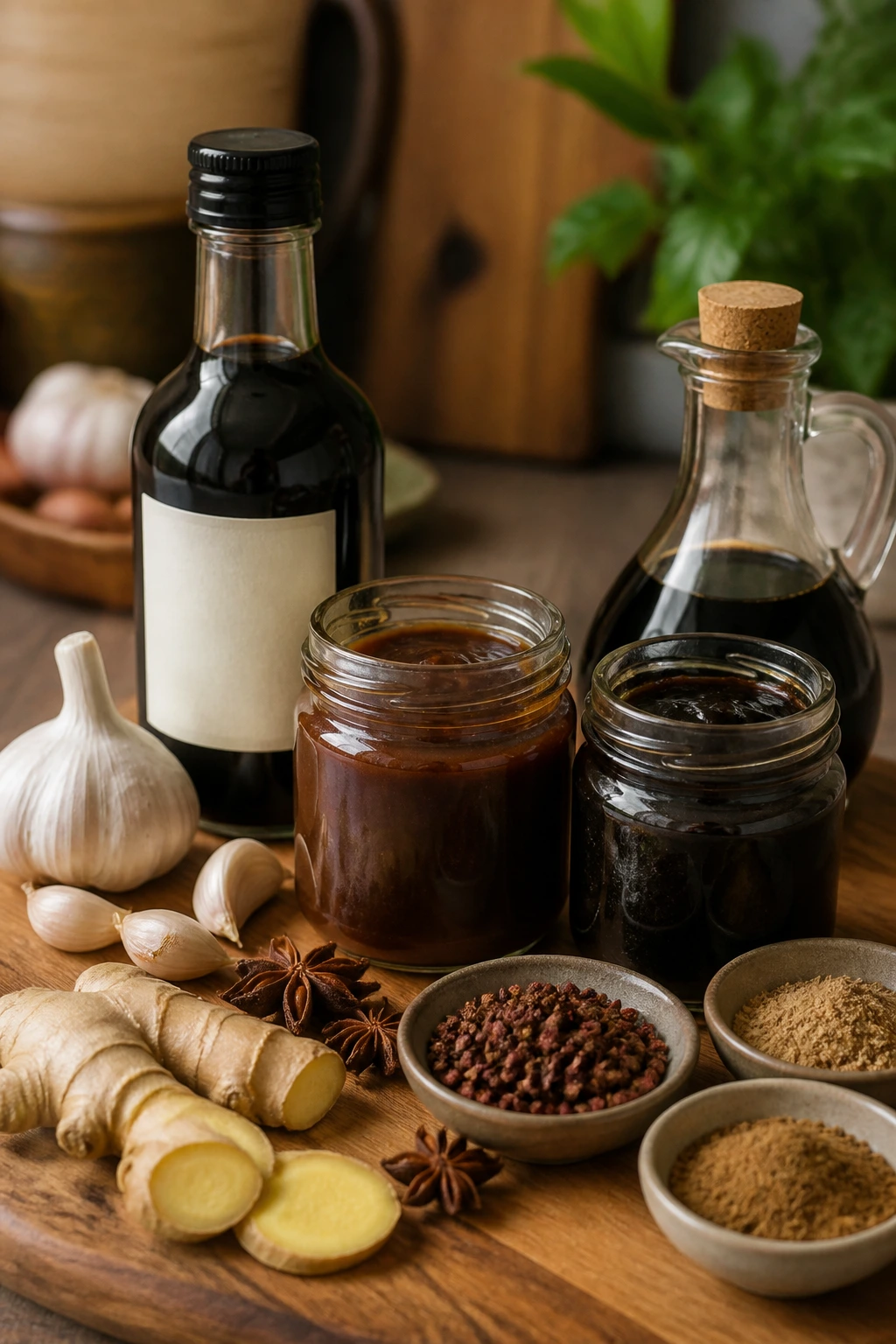
The best shopping advice here is simple: buy the sauce ingredients with intent, not as afterthoughts. Low-sodium soy sauce gives you room to season at the end. Hoisin should be thick and dark, not watery. Oyster sauce matters more than people admit; it adds body, not just salt, and it’s one of the fastest ways to make a slow-cooker sauce taste fuller.
Chicken thighs are the safe bet for most of these recipes because they stay tender when the timing gets fuzzy. For beef dishes, chuck roast and flank steak are the two lanes I trust most, but they behave differently: chuck wants time and turns soft, while flank needs to be sliced thin and cooked only until it’s tender enough. Pork shoulder is the reliable crowd cut. Pork loin is leaner and needs a thermometer, not a guess.
A few pantry items deserve real attention. Chinese five-spice should smell warm and a little sweet, not dusty. Sichuan peppercorns should feel fragrant and citrusy before you grind them. Black vinegar is worth buying if you make these dishes more than once because it gives a darker, rounder tang than regular rice vinegar. And yes, cornstarch is not a throwaway ingredient here; it’s what turns a thin braise into something that actually coats rice.
Vegetables are where you can save money without making the meal worse. Broccoli florets, green beans, cabbage, mushrooms, and carrots all take well to slow-cooker cooking if you add them at the right time. Frozen broccoli can work in a pinch, though it’s softer. Fresh bok choy, snow peas, and scallions are better left for the final stretch or the plate itself.
How to Serve These Crockpot Chinese Food Recipes
Presentation:
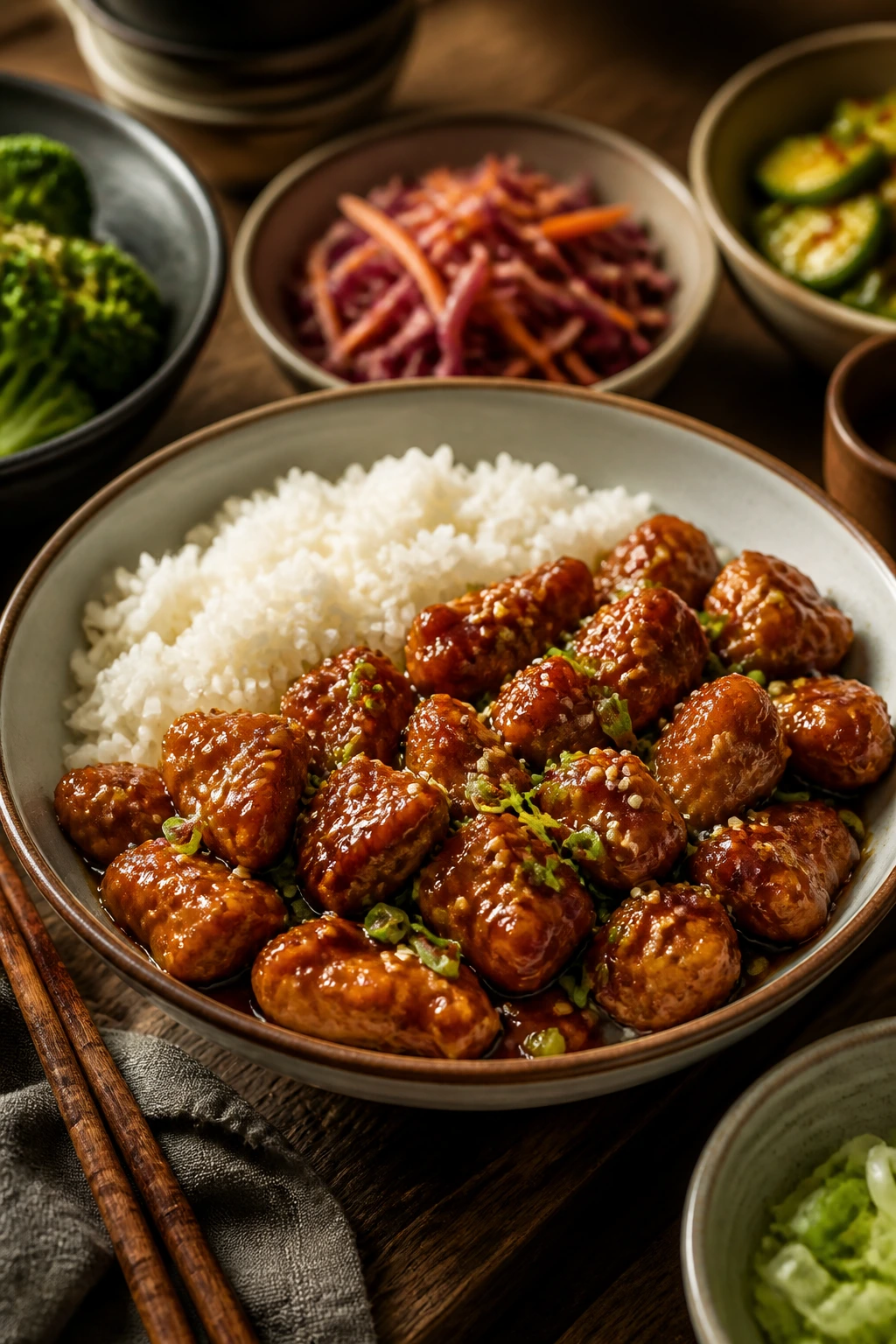
Use shallow bowls for saucy dishes and wide platters for ribs or sliced pork. A last handful of scallions, sesame seeds, or chili oil makes the food look finished without cluttering it. If the dish is brown and glossy, a white bowl helps. If it’s bright with broccoli or peppers, a dark platter can make the color pop.
Accompaniments:
Jasmine rice is the safest partner, but short-grain white rice, fried rice, lo mein noodles, and plain steamed buns all belong here. Cool cucumber salad, quick pickled carrots, steamed bok choy, and sesame cabbage are the easiest side dishes to keep around. Soups can stand on their own with dumplings or scallion pancakes.
Portions:
Most of these recipes feed 6 to 8 people as a main dish and 10 or more if rice or noodles are doing half the work. For a smaller table, freeze half before thickening if the recipe is broth-heavy, or cook the protein and sauce, then portion it out before adding delicate vegetables. Crowd cooking gets easier when you treat rice as part of the plan instead of an afterthought.
Beverage Pairing:
Cold jasmine tea is the cleanest match for sweet-salty sauces. For a richer table, light beer or sparkling water with a slice of cucumber both work well. If you’re serving hot and sour soup or Szechuan dishes, something cold and plain on the side is a good move.
Additional Tips and Flavor Boosters
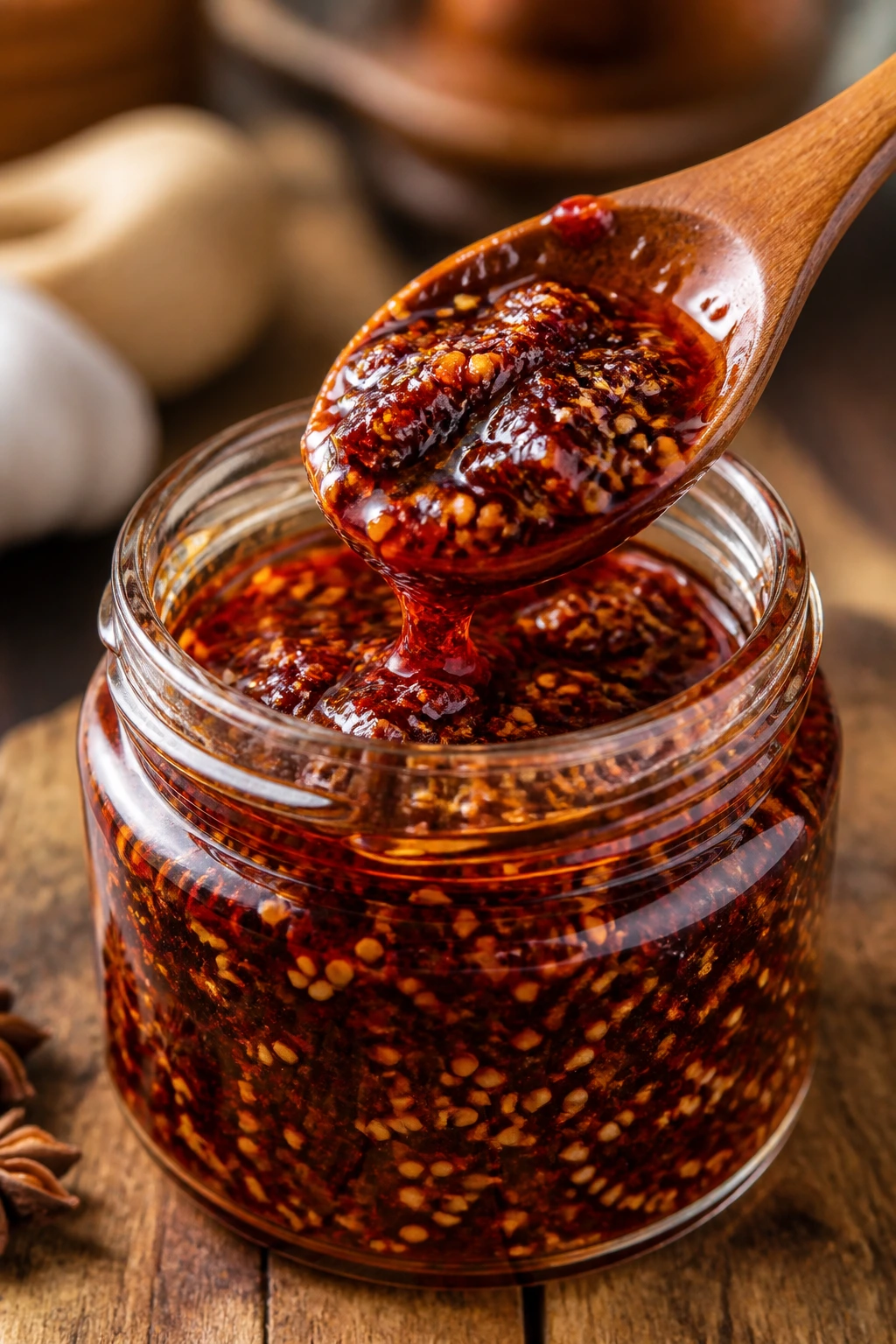
Flavor Enhancement:
A spoonful of chili crisp at the end changes a lot of these dishes more than people expect. It adds crunch, heat, and a little garlic bite that survives the slow cooker. For sweeter sauces, a splash of black vinegar or rice vinegar right before serving keeps the dish from feeling syrupy.
Customization:
If your crowd likes more vegetables, add mushrooms, cabbage, or green beans near the end instead of at the beginning. If they like heat, set out chili oil, cracked pepper, or sliced fresh chiles so people can season their own bowl. For a more savory finish, a touch of oyster sauce or a little sesame oil can fill out a thin-tasting sauce.
Serving Suggestions:
Scallions, toasted sesame seeds, chopped cilantro where it fits, and roasted peanuts all add texture that the slow cooker can’t create. For sticky dishes, a broil of 2 to 5 minutes gives you edges worth serving. For soups, a few drops of sesame oil and white pepper at the table do more than a fancy garnish ever could.
Make-It-Yours:
For gluten-free plates, tamari and gluten-free hoisin or oyster-style sauce handle most swaps cleanly. For dairy-free cooking, nothing much changes; these recipes already lean that way. For a lower-sugar batch, cut sweeteners by a third and lean harder on vinegar, scallions, and pepper for balance.
Make-Ahead, Storage, and Reheating Guidance
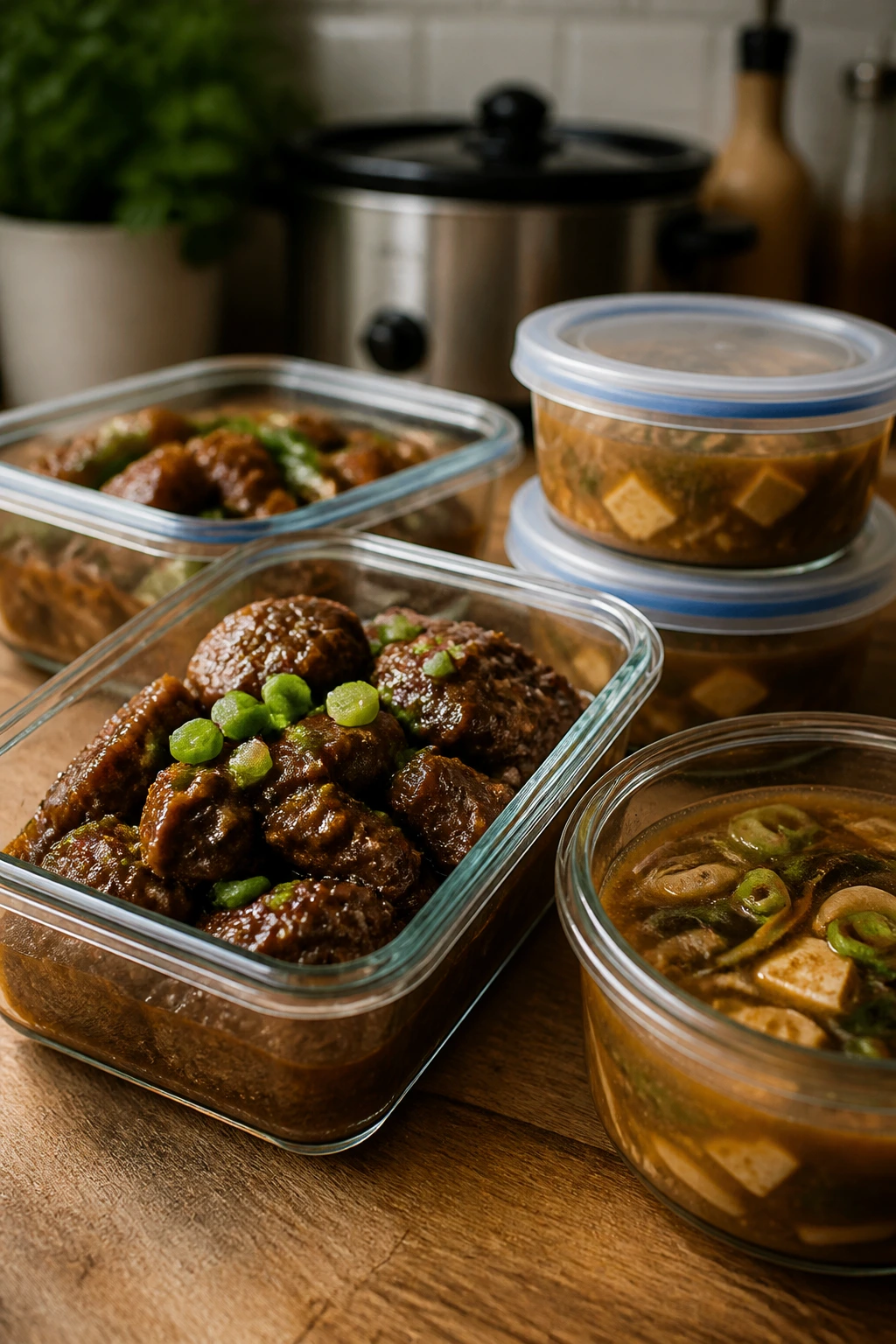
Most of these dishes keep well in the refrigerator for 3 to 4 days, and many of the braised meats and soups freeze for up to 2 to 3 months. General Tso’s chicken, sesame chicken, orange chicken, teriyaki chicken, and hoisin pork reheat best when you add a splash of water or broth before warming them. Soups like hot and sour or chicken wonton soup should be cooled quickly, stored in shallow containers, and reheated gently so the broth doesn’t separate or get cloudy.
Rice and noodles are worth handling separately. Cooked rice holds for 4 days in the fridge, but it dries out fast if you store it mixed into a saucy main. Lo mein noodles should be tossed with sauce right before serving, not hours ahead. If you want to make that dish in advance, store the filling and noodles apart, then combine them after reheating.
Frozen leftovers can be useful, but not every dish freezes equally well. Braised beef, pork shoulder, and short ribs freeze with almost no complaint. Tofu dishes freeze with a rougher texture, so I tend to eat those sooner. Broccoli and green beans soften more after freezing, which is fine in a saucy dish and less ideal in a plate that depends on crunch.
For reheating, the stovetop is usually better than the microwave for anything with a sauce. Low heat, a lid cracked open, and a few tablespoons of broth will wake the dish up without scorching the edges. Soups can go straight back into a pot. Sticky chicken and pork do well in a skillet for a few minutes, which helps the sauce come back to life.
Variations and Adaptations to Try
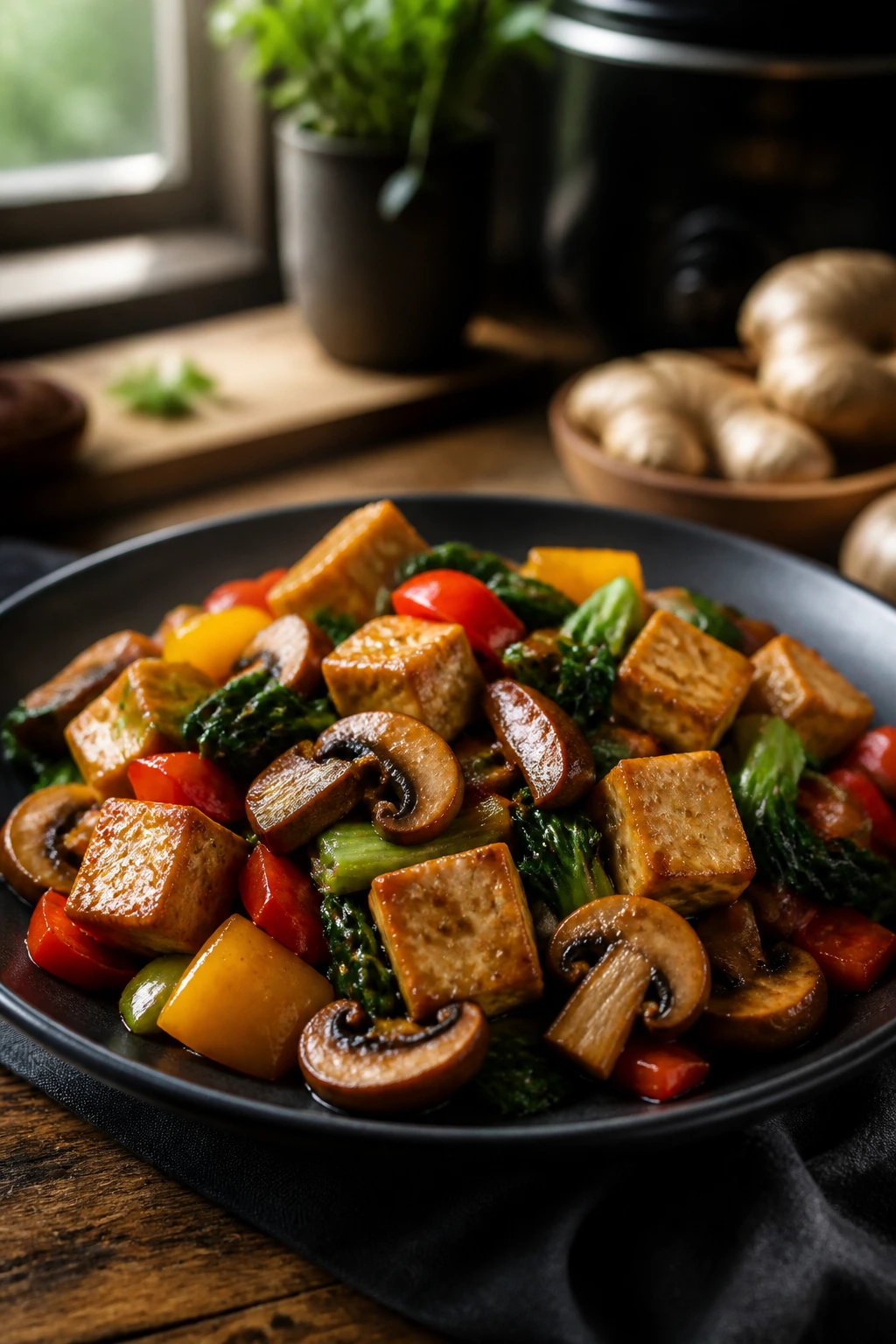
Gluten-Free Pantry Swap:
Use tamari in place of soy sauce and choose a gluten-free hoisin or oyster-style sauce where needed. Most of the recipes in this collection still work cleanly with that one change. The main thing to watch is salt, because tamari can taste a little denser than regular soy.
Low-Sugar Takeout Style:
Cut the brown sugar, honey, or marmalade by one-third and lean on garlic, vinegar, and scallions to keep the sauce lively. This works especially well for General Tso’s chicken, teriyaki chicken, and orange chicken. If the sauce feels thin after reducing sugar, a little extra cornstarch helps it hold its shape.
Vegetarian Crowd Table:
Buddha’s Delight and hot and sour soup are obvious fits, but several meat dishes can be adapted with mushrooms, tofu, or seitan. Just add delicate substitutes late and keep an eye on texture. A vegetarian table benefits from more mushrooms than people think.
Heat-Lover’s Batch:
Stir chili garlic sauce, chili crisp, dried chiles, or crushed Sichuan peppercorns into the sauce, then set a little extra on the side. Kung Pao chicken and Szechuan chicken are the easiest places to push the heat, but even sweet dishes get a better edge with one hot finishing element.
Noodle Night Conversion:
Chicken and mushroom brown sauce, teriyaki chicken, Mongolian beef, and beef and broccoli all work over noodles if you cook them separately. Use lo mein noodles, egg noodles, or even thick rice noodles depending on the sauce. The important part is tossing everything together right before serving so the noodles don’t absorb the whole pot.
Kid-Friendly Mild Batch:
Reduce vinegar and chili, keep the sauce on the sweeter side, and serve extra chopped scallions on the table instead of mixing them in. Orange chicken, sesame chicken, and chicken and mushroom brown sauce are the easiest crowd-pleasers for mixed ages. The trick is keeping the sauce familiar without making it flat.
Common Mistakes to Avoid
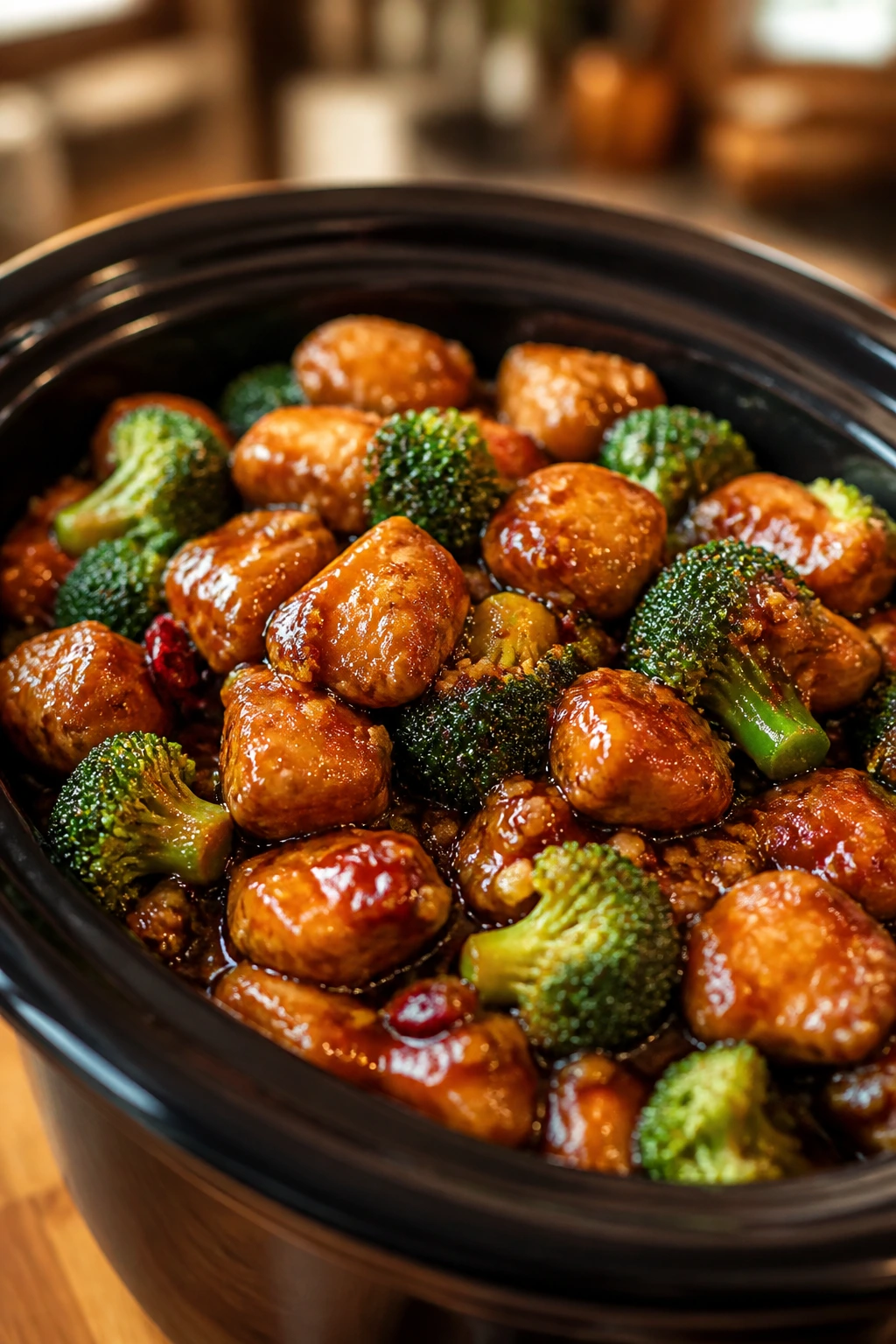
Overloading the slow cooker:
If the insert is packed to the top, the sauce doesn’t circulate and the meat cooks unevenly. Most of these recipes behave best when the pot is filled to about two-thirds. If you need more food, use two batches or a larger cooker.
Adding delicate vegetables too early:
Broccoli, green beans, bok choy, snow peas, and cabbage all get mushy if they sit in the pot for hours. Put them in late or keep them on the side. That one change saves a lot of plates.
Skipping the final thickener:
A slow cooker rarely gives you a naturally finished sauce unless the recipe is very long and low. If you want that clingy, takeout-style texture, cornstarch or a similar slurry is not optional. It is the difference between braise and broth.
Choosing the wrong cut of meat:
Lean breast meat, pork loin, and thin beef slices can all work, but only if you respect their shorter cook time. Tough cuts need time, lean cuts need caution. Mixing those up is the fastest route to dry chicken or chewy beef.
Forgetting to taste at the end:
Soy sauce, hoisin, broth, and vinegar change as they cook, and the final balance usually needs one last tweak. A little vinegar brightens, a little sugar softens, and a little salt can wake up a flat sauce. Taste before the food leaves the pot.
Cooking noodles or rice inside the crockpot:
That’s how you get mush. Cook them separately and combine at the table. The slow cooker is for the saucy part, not the starch.
Frequently Asked Questions
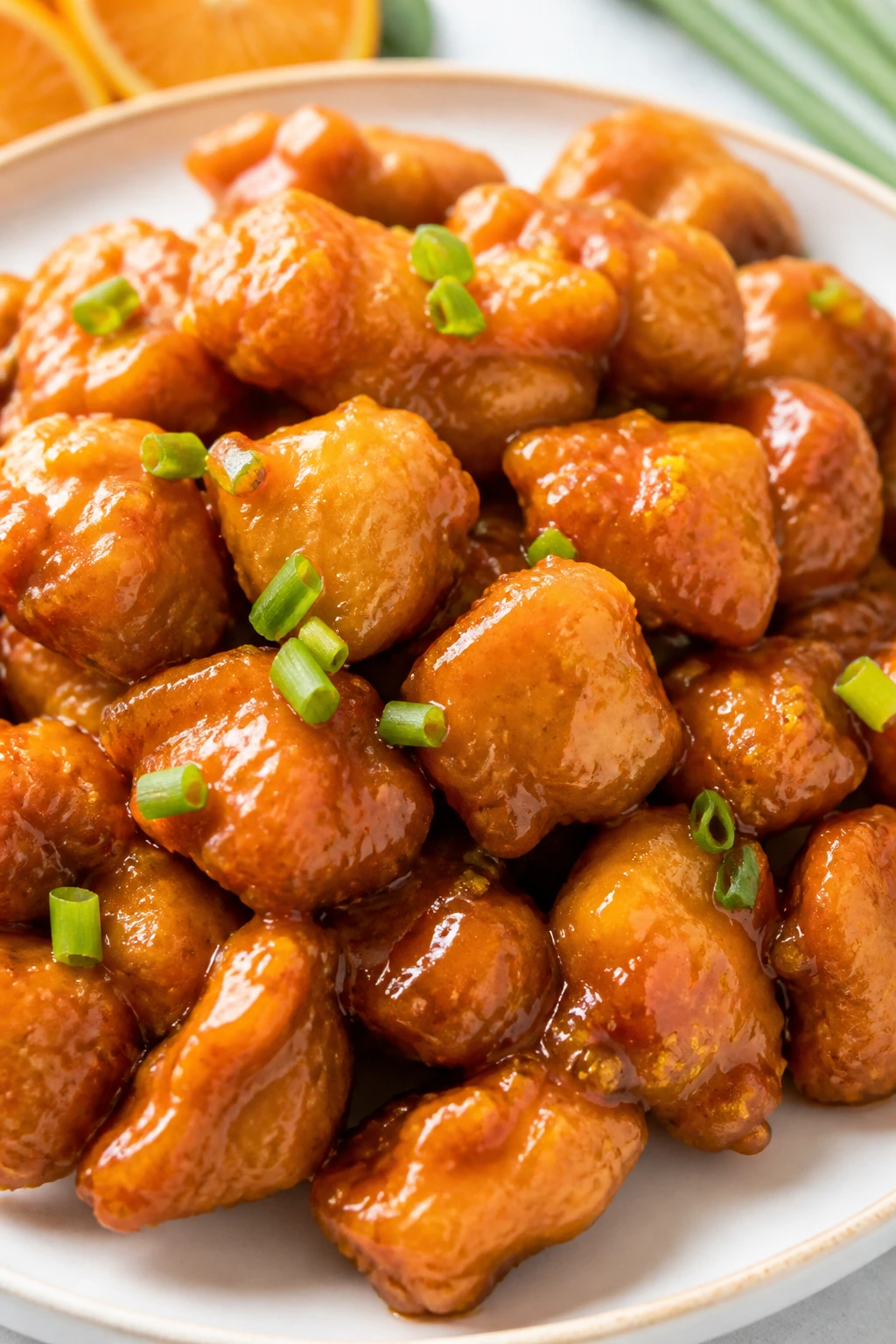
Can I use frozen chicken in these slow cooker recipes?
I wouldn’t. Frozen chicken can sit too long in the temperature range where it warms slowly, which is a food safety problem. Thaw it first, pat it dry, and you’ll get a better texture too.
What size slow cooker do I need for a crowd?
A 6-quart cooker is the safest all-around choice, and 8 quarts is better if you regularly cook for 8 to 10 people. The insert should not be packed full, or the sauce and heat won’t move well. If you’re serving a very large group, split the recipe into two cookers.
Can I substitute chicken breasts for thighs?
Yes, but shorten the cook and check early. Breasts dry out faster, especially in saucy dishes that keep cooking after the lid comes off. For the most forgiving results, thighs are still the better pick.
How do I keep broccoli from turning mushy?
Add it near the end, usually during the last 20 to 25 minutes. If you want firmer broccoli, blanch it separately and fold it into the sauce right before serving. That works well for beef and broccoli, lemon chicken, and orange chicken.
What if my sauce comes out too thin?
Mix 1 tablespoon cornstarch with 1 tablespoon cold water, stir it in, and cook uncovered for 10 to 15 minutes. If the sauce still seems loose, leave the lid off for a little longer so steam can escape. Don’t add more sugar to fake thickness; that only makes the dish heavier.
Can I make these dishes a day ahead?
Yes, and many of them taste better after a night in the fridge. Braised beef, pork, and soups are especially good the next day because the flavors settle. Keep noodles, rice, and crunchy toppings separate until serving.
Can I freeze leftovers?
Most saucy chicken, pork, and beef dishes freeze well for 2 to 3 months in airtight containers. Soups also freeze well, though tofu changes texture a bit after thawing. Broccoli and cabbage soften more after freezing, so use them in dishes where that won’t bother you.
Do I need to sear the meat first?
Not always, but sometimes it helps. Browning short ribs, beef chuck, or ground pork adds more depth, while chicken thighs usually do fine straight in the pot. If a recipe feels a little one-note, searing is the first upgrade I’d try.
How do I make these recipes less salty?
Start with low-sodium soy sauce and be careful with oyster sauce, hoisin, and broth. You can always add a little more salt at the end, but taking it back out is harder. Acid, not sugar, is usually the better fix when a sauce tastes too heavy.
A Slow Cooker Table That Actually Feels Full
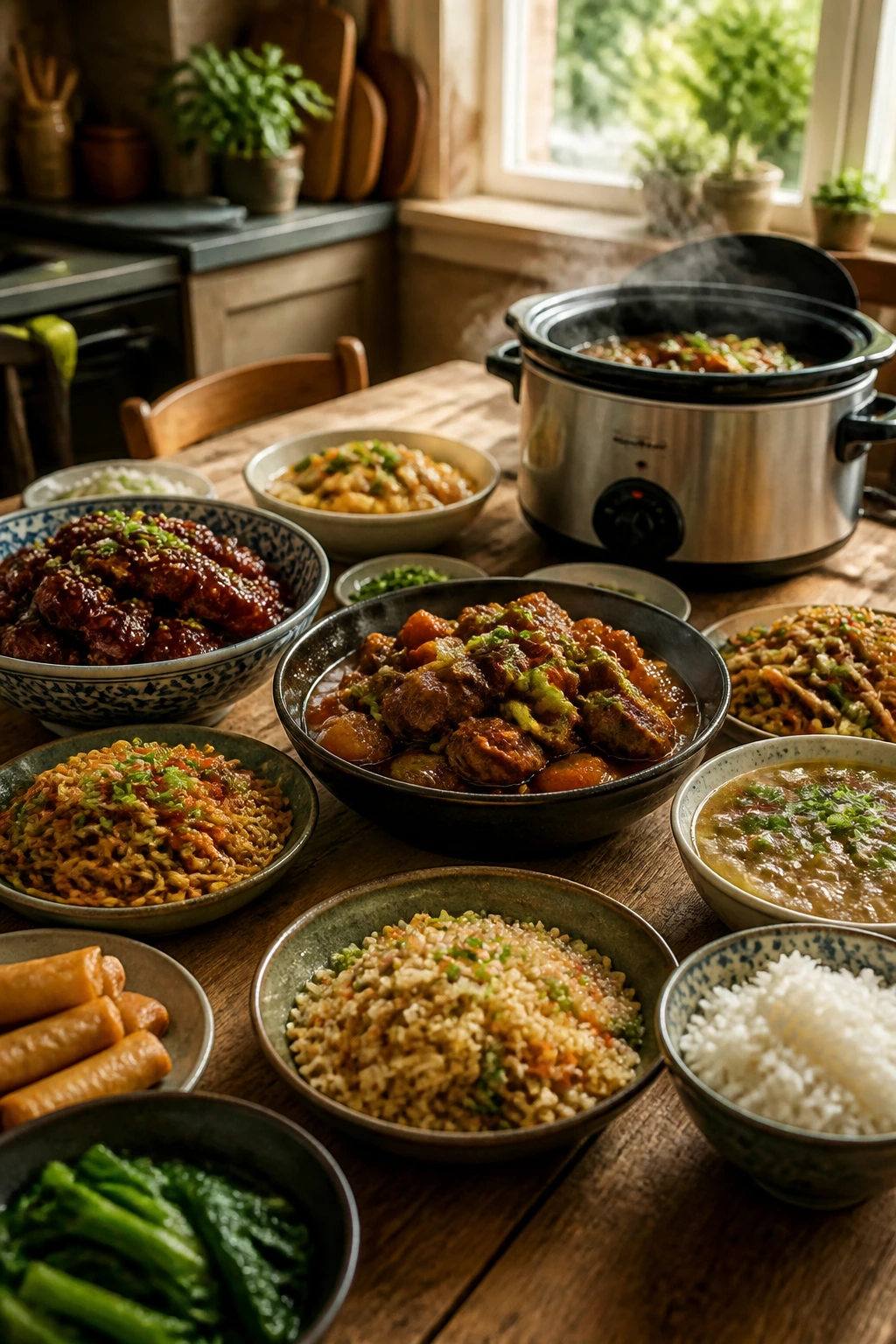
A crowded table does not need complicated food. It needs bowls that stay warm, sauces that hold together, and enough variety that the second serving doesn’t feel like a repeat. That’s where these Chinese takeout-inspired slow cooker dishes earn their keep.
The nicest part is that they don’t all behave the same way. Some are sticky and broiled at the end. Some are brothy. Some lean on rice, some on noodles, and some are rich enough to stand there with only a spoon and a stack of small plates. That mix is what makes the whole collection useful instead of repetitive.
Pick one sticky dish, one braise, and one soup, and a crowd suddenly looks easy. That’s the move I’d make first.