



Veggie skewers can do what a lot of meatless dinners fail to do: look deliberate, smell smoky, and hit the table with enough char to make nobody ask where the meat went. On a Monday, that matters. You want something that feels like a real meal, not a string of polite side dishes lined up on a stick.
The best part is that vegetable skewers are built on a simple trick: keep the pieces close in size, choose ingredients that cook at the same pace, and use heat that kisses the edges instead of steaming everything into submission. That’s why a zucchini spear can sit beside a bell pepper square, or a cube of halloumi can share a skewer with tomatoes, and the whole thing still lands in the sweet spot.
There’s also a practical side to it that I appreciate. Skewers give you portion control without measuring cups, they’re easy to mix and match with what’s already in the crisper drawer, and they work on a grill, under a broiler, or on a sheet pan when the weather is being annoying. The real win, though, is this: a skewer makes vegetables feel built, not improvised. That’s the difference between “we’re eating what’s left” and “dinner is handled.”
Why You’ll Love This Collection
-
Fast heat, short cleanup: Most of these veggie skewers go from cutting board to table in about 30 minutes, and the cleanup is usually one bowl, one sheet pan, and a few skewers.
-
Flexible ingredients: Zucchini, mushrooms, onions, peppers, tofu, paneer, halloumi, potatoes, and squash all show up here because they hold their shape and take on flavor without fuss.
-
Grill, broiler, or oven friendly: If you can’t fire up a grill, the broiler and a lined sheet pan can still give you browned edges and good color.
-
Easy to scale: Two skewers make a light lunch; six to eight skewers can carry dinner for a family, especially with rice, flatbread, or a big salad.
-
Better use of produce: This is one of the cleanest ways to use that half zucchini, the last bell pepper, or the lonely handful of mushrooms sitting in the fridge.
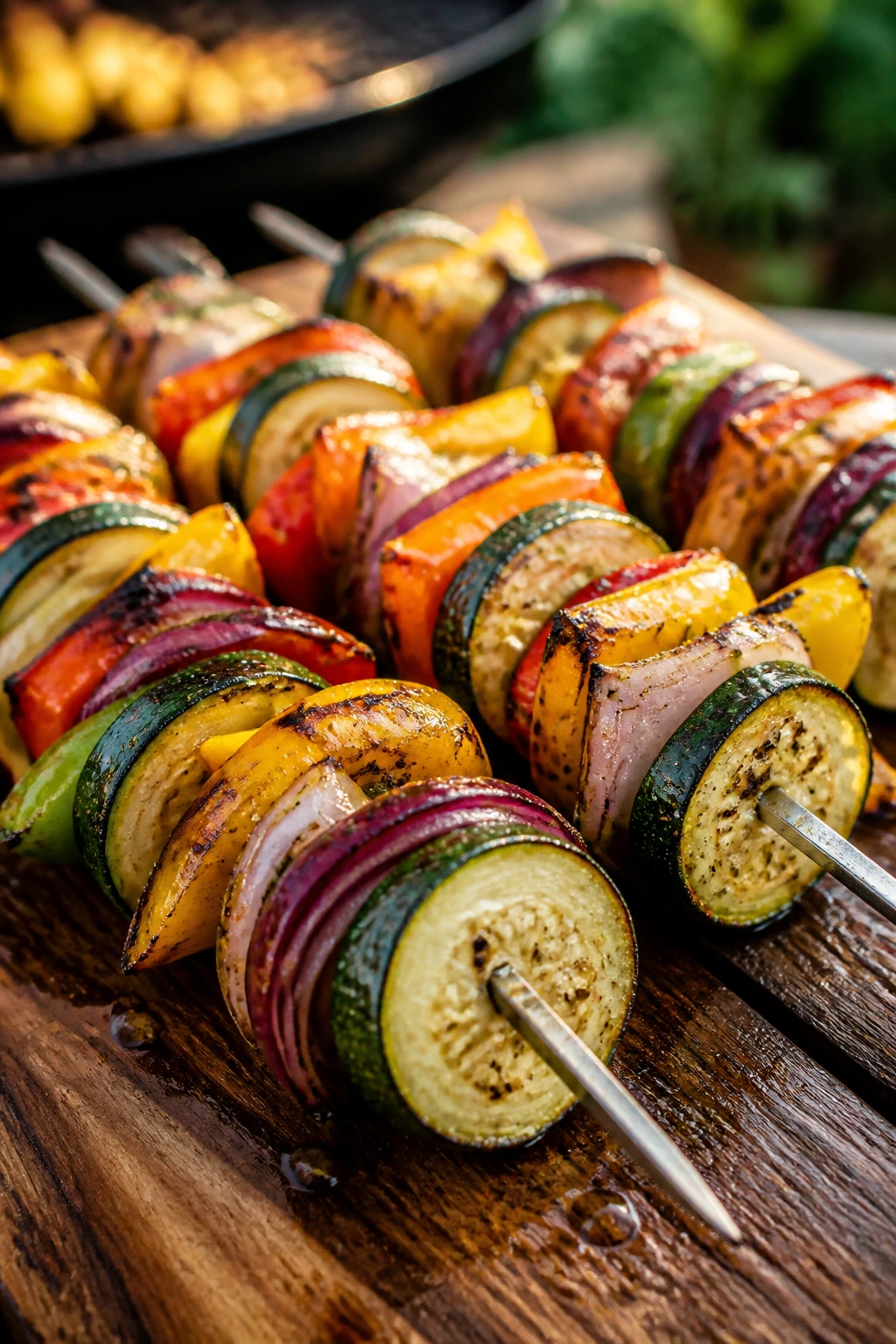
1. Charred Rainbow Bell Pepper and Zucchini Skewers
Bright peppers and zucchini are the backbone of a lot of grilled vegetable platters, but on skewers they get better. The edges blister, the onion softens, and the lemon-garlic oil seeps into the cut sides instead of running off onto the tray. You get sweetness, smoke, and enough color to make the plate look alive.
Why It Works: Bell peppers and zucchini cook at nearly the same pace when they’re cut into 1-inch pieces. A quick lemon-oregano oil gives you flavor without a heavy marinade, and the vegetables brown instead of steaming if you leave a little space between them on the skewer.
Key Ingredients:
- 2 medium zucchini, cut into 1-inch half-moons
- 3 bell peppers, any colors, cut into 1-inch squares
- 1 large red onion, cut into 1-inch chunks
- 3 tablespoons olive oil
- 2 tablespoons lemon juice
- 2 cloves garlic, finely grated
- 1 teaspoon dried oregano
- 1 teaspoon kosher salt
- 1/2 teaspoon black pepper
Quick Steps:
- Whisk the olive oil, lemon juice, garlic, oregano, salt, and pepper in a large bowl.
- Toss the zucchini, peppers, and onion in the oil mixture until coated.
- Thread the vegetables onto 8 skewers, alternating colors and leaving a small gap between pieces.
- Grill over medium-high heat for 8 to 10 minutes, turning once, until the edges are lightly charred and the zucchini is tender but still holds its shape.
- Finish with a squeeze of lemon and a pinch of flaky salt.
Equipment for This Recipe:
- 8 metal skewers or soaked bamboo skewers
- Large mixing bowl
- Grill or grill pan
- Tongs
How to Serve This Dish: Pile the skewers over herbed couscous or warm pita, then spoon any juices from the bowl over the top. A spoonful of tzatziki or hummus beside them makes the whole plate feel finished.
Pro Tips for This Recipe:
- Cut the zucchini thick enough to stay on the skewer; thin slices collapse fast.
- Keep the onion chunks large or they’ll vanish before the peppers are done.
- If you’re using bamboo skewers, soak them for 20 minutes so the ends don’t scorch.
Variations on This Dish:
- Smoky Paprika Version: Add 1 teaspoon smoked paprika to the oil for a deeper grill flavor.
- Herb-Garlic Version: Swap oregano for chopped rosemary and thyme.
- Add-Halloumi Version: Slip in 1-inch cubes of halloumi for a saltier, richer skewer.
Common Mistakes to Avoid with This Dish:
- Don’t cut everything into tiny pieces; the vegetables will overcook before they brown.
- Don’t crowd the skewer so tightly that the heat can’t reach the sides.
- Don’t add extra oil right before grilling; too much oil drips and flares.
2. Halloumi, Tomato, and Olive Skewers
Halloumi is the cheese that behaves like it wants to be grilled. It browns into a salty crust, stays springy inside, and plays nicely with tomatoes that burst the second they get hot. Add olives and basil, and you’ve got a skewer that tastes like someone paid attention.
Why It Works: Halloumi holds its shape at high heat, which makes it one of the easiest vegetarian proteins for skewers. Cherry tomatoes soften and release juice that bastes the cheese, while olives add a briny hit that keeps the whole thing from tipping sweet.
Key Ingredients:
- 8 ounces halloumi, cut into 1-inch cubes
- 2 cups cherry tomatoes
- 1 small zucchini, cut into thick half-moons
- 1/2 cup pitted kalamata olives
- 2 tablespoons olive oil
- 1 tablespoon lemon juice
- 1 teaspoon dried oregano
- 1/4 teaspoon black pepper
Quick Steps:
- Toss the halloumi, tomatoes, zucchini, olives, olive oil, lemon juice, oregano, and pepper in a bowl.
- Thread onto 6 to 8 skewers, keeping the halloumi spaced so it browns.
- Grill or broil on a foil-lined sheet pan for 6 to 8 minutes, turning once, until the cheese has deep golden edges.
- Let the skewers sit for 2 minutes before serving so the cheese firms up.
Equipment for This Recipe:
- Skewers
- Foil-lined sheet pan or grill
- Mixing bowl
- Tongs
How to Serve This Dish: Serve these with a chopped cucumber salad and warm flatbread. They’re salty enough to stand on their own, but a little yogurt sauce softens the edges in a good way.
Pro Tips for This Recipe:
- Pat the halloumi dry before cutting; it browns better.
- Use tomatoes that are small and firm so they don’t split open too early.
- Broil on the upper rack if you want faster browning without drying the cheese.
Variations on This Dish:
- Minty Greek Version: Add mint leaves between the pieces and serve with yogurt.
- Peppery Oven Version: Swap zucchini for bell pepper squares and add cracked black pepper.
- Lemon-Zest Finish: Grate lemon zest over the skewers right before serving.
Common Mistakes to Avoid with This Dish:
- Don’t overcook halloumi until it goes rubbery; 6 to 8 minutes is usually enough.
- Don’t use overly soft tomatoes, or they’ll fall apart on the skewer.
- Don’t skip the resting time; the cheese needs a minute to settle.
3. Teriyaki Tofu and Pineapple Skewers
This is the skewer that wins over people who claim they don’t like tofu. The tofu soaks up teriyaki glaze like a sponge, the pineapple goes sticky and caramelized, and the red pepper brings a crisp edge that keeps every bite from tasting the same. It’s sweet, salty, and a little glossy.
Why It Works: Extra-firm tofu gets better when pressed and cut into larger cubes, because there’s enough surface area for glaze but not so much that it breaks apart. Pineapple brings acid and sugar, which help the edges brown, while the short grill time keeps the tofu from drying out.
Key Ingredients:
- 1 block extra-firm tofu, 14 to 16 ounces, pressed and cut into 1-inch cubes
- 1 1/2 cups pineapple chunks, fresh or well-drained canned
- 1 red bell pepper, cut into 1-inch squares
- 2 scallions, cut into 2-inch lengths
- 3 tablespoons soy sauce
- 2 tablespoons maple syrup
- 1 tablespoon rice vinegar
- 1 teaspoon grated fresh ginger
- 1 teaspoon sesame oil
Quick Steps:
- Whisk soy sauce, maple syrup, rice vinegar, ginger, and sesame oil in a bowl.
- Toss the tofu gently in half the glaze and let it sit for 10 minutes.
- Thread tofu, pineapple, pepper, and scallions onto 8 skewers.
- Grill or bake at 425°F for 15 to 18 minutes, brushing with the remaining glaze halfway through.
- Cook until the pineapple is caramelized at the edges and the tofu is hot through.
Equipment for This Recipe:
- Skewers
- Grill or rimmed baking sheet
- Small bowl for glaze
- Pastry brush
How to Serve This Dish: Serve over steamed rice with sesame seeds and sliced cucumber. The glaze that drips onto the rice is half the point.
Pro Tips for This Recipe:
- Press the tofu for at least 20 minutes if you can; it soaks up glaze much better.
- Use pineapple chunks that are firm enough to stay on the skewer.
- If grilling, oil the grates lightly so the sugary glaze doesn’t glue the tofu to the metal.
Variations on This Dish:
- Spicy Ginger Version: Add 1 teaspoon sriracha to the glaze.
- Peach Swap: Use firm peach wedges when pineapple isn’t the mood.
- Coconut Rice Bowl Version: Serve the skewers over coconut rice with lime.
Common Mistakes to Avoid with This Dish:
- Don’t skip pressing the tofu; wet tofu gives you bland, soft cubes.
- Don’t brush on all the glaze at the start, or the sugar can burn.
- Don’t use pineapple that’s overripe and mushy; it won’t hold shape.
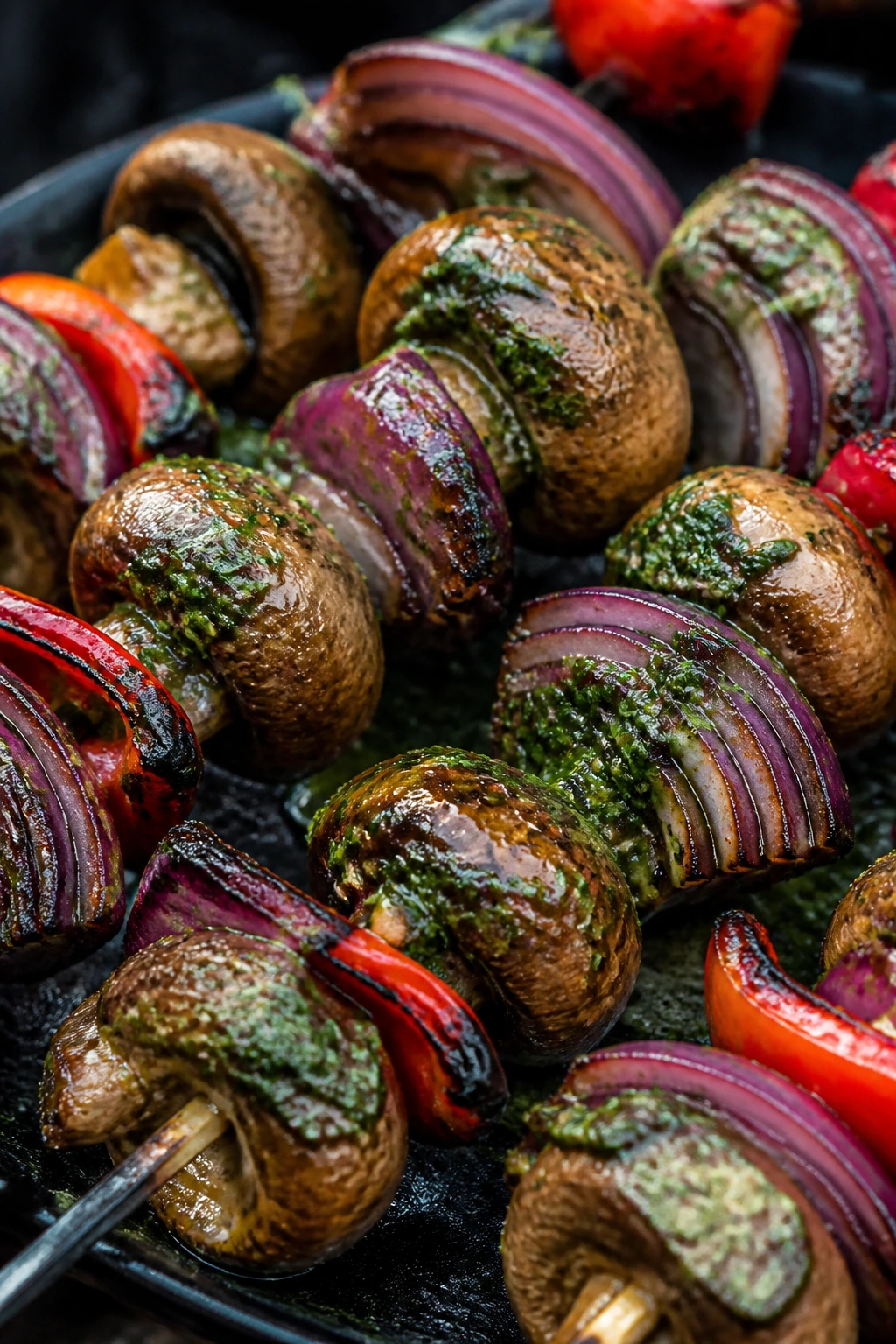
4. Chimichurri Mushroom and Red Onion Skewers
Mushrooms are the sneaky stars of the skewer world. They soak up garlic, vinegar, and herbs in a way that makes them taste meatier than they are, and red onion gives you sweet, jammy corners where it touches the heat. Chimichurri turns the whole thing sharp and green.
Why It Works: Cremini mushrooms have enough structure to sit on a skewer without collapsing, and their surface drinks up oil and vinegar fast. Chimichurri adds raw herb flavor after cooking, so you get brightness on top of the browned edges instead of cooking all the freshness out.
Key Ingredients:
- 16 ounces cremini mushrooms, stems trimmed
- 1 large red onion, cut into wedges
- 1 red bell pepper, cut into 1-inch pieces
- 2 tablespoons olive oil
- 3 tablespoons chopped parsley
- 2 tablespoons chopped cilantro
- 2 cloves garlic, minced
- 1 tablespoon red wine vinegar
- 1 teaspoon red pepper flakes
- Salt and black pepper
Quick Steps:
- Stir the parsley, cilantro, garlic, vinegar, red pepper flakes, and 2 tablespoons olive oil into a quick chimichurri.
- Toss the mushrooms, onion, and pepper with salt, pepper, and a spoonful of the chimichurri.
- Thread onto 8 skewers.
- Grill over medium-high heat for 10 to 12 minutes, turning once, until the mushrooms are browned and the onion has soft edges.
- Spoon the remaining chimichurri over the skewers before serving.
Equipment for This Recipe:
- Skewers
- Grill or broiler
- Mixing bowl
- Small knife
How to Serve This Dish: These are good over polenta, rice, or piled into a warm tortilla with crumbled cheese. I like them with extra chimichurri on the side because the herbs wake up the mushrooms.
Pro Tips for This Recipe:
- Choose mushrooms with dry caps, not slimy ones.
- Keep the mushroom pieces whole if they’re small enough; halved pieces can split.
- Add the chimichurri after grilling, not before, so the herbs stay bright.
Variations on This Dish:
- Parsley-Only Chimichurri: Skip the cilantro if you want a cleaner herb flavor.
- Smoky Grill Version: Add 1/2 teaspoon smoked paprika to the mushroom toss.
- Balsamic Version: Swap vinegar for balsamic and keep the onions a little larger.
Common Mistakes to Avoid with This Dish:
- Don’t overload the skewer with mushrooms packed tight; they’ll steam.
- Don’t cook until the mushrooms shrink into leather.
- Don’t forget salt. Mushrooms need it.
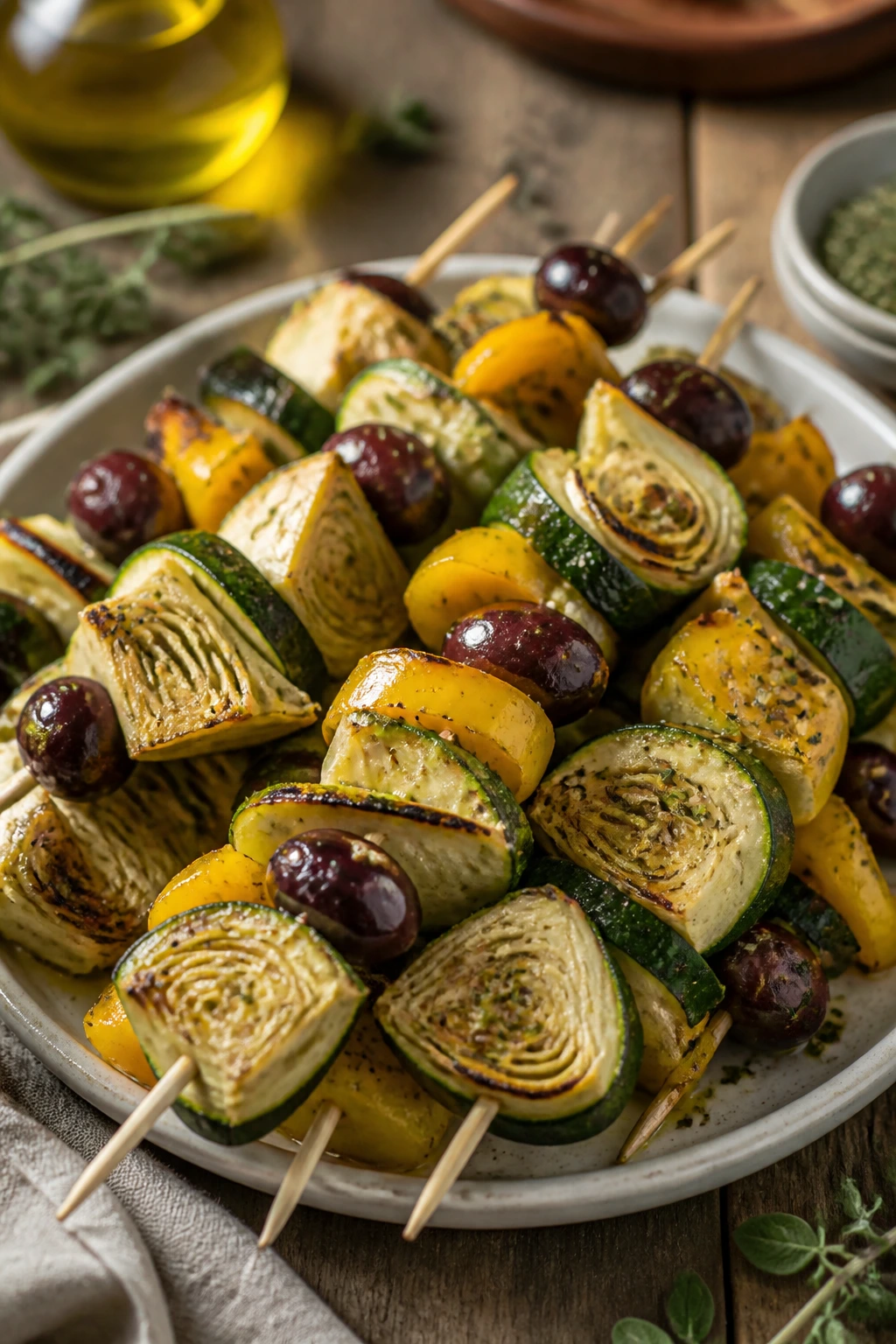
5. Mediterranean Artichoke and Zucchini Skewers
Artichoke hearts have a soft, meaty bite that works surprisingly well on skewers, especially with zucchini, olives, and peppers. The edges pick up color fast, and the lemon-oregano dressing keeps the whole thing from tasting flat. It’s the kind of skewer that feels like it wants a glass of something cold nearby.
Why It Works: Marinated artichoke hearts already bring oil and acid, which means they brown nicely and need less extra fat. Zucchini and bell pepper balance the soft artichokes with a firmer bite, and the olives add a salty punch without requiring much seasoning.
Key Ingredients:
- 1 can or jar artichoke hearts, 14 ounces, drained and halved
- 2 medium zucchini, cut into thick half-moons
- 1 yellow bell pepper, cut into 1-inch squares
- 1/2 cup pitted green olives
- 2 tablespoons olive oil
- 1 tablespoon lemon juice
- 1 teaspoon dried oregano
- 1 small garlic clove, grated
- Salt and pepper
Quick Steps:
- Whisk olive oil, lemon juice, oregano, garlic, salt, and pepper in a bowl.
- Toss the zucchini, peppers, artichoke hearts, and olives in the dressing.
- Thread onto 6 to 8 skewers.
- Grill or roast at 425°F for 12 to 14 minutes, turning once, until the zucchini is tender and the artichoke hearts are browned at the edges.
- Finish with extra lemon juice.
Equipment for This Recipe:
- Skewers
- Grill pan or sheet pan
- Mixing bowl
- Tongs
How to Serve This Dish: Serve alongside couscous, or tuck the vegetables into pita with hummus. The artichokes make these feel rich enough for dinner, not just a side.
Pro Tips for This Recipe:
- Drain the artichoke hearts well so the skewers brown instead of steam.
- Keep the zucchini pieces thick; thin slices go soft fast.
- If your olives are very briny, reduce the salt a little.
Variations on This Dish:
- Tomato-Basil Version: Add cherry tomatoes and fresh basil after cooking.
- Roasted Garlic Version: Mix in 1 teaspoon roasted garlic paste.
- Vegan Mezze Version: Serve with tahini sauce and warm flatbread.
Common Mistakes to Avoid with This Dish:
- Don’t skewer wet artichokes straight from the jar.
- Don’t make the pieces uneven; the artichokes will be done before the zucchini.
- Don’t skip the acid. Lemon keeps the flavor from going dull.
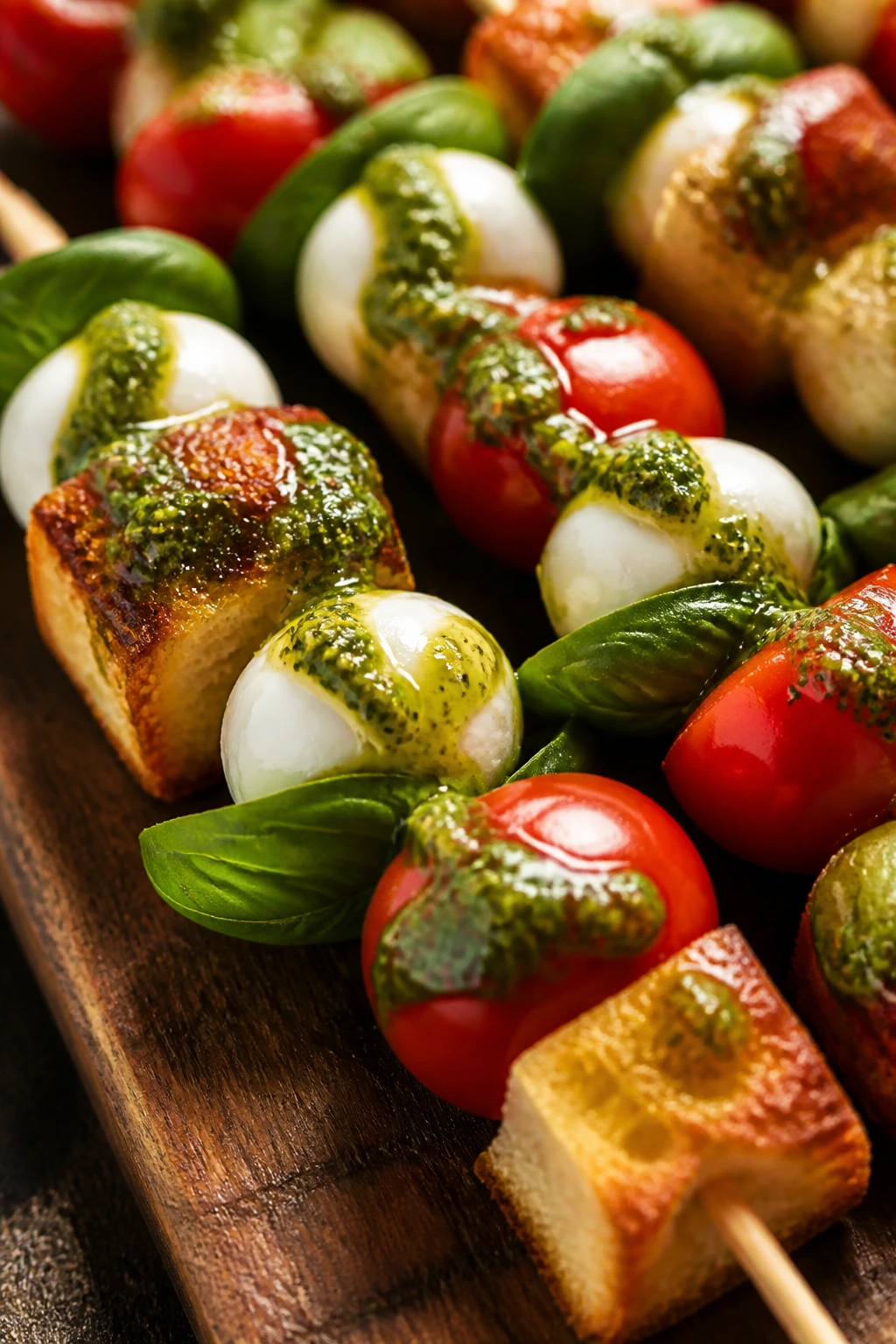
6. Caprese Skewers with Pesto Drizzle
These are the cool, no-fuss skewers that still earn a place on the table. Cherry tomatoes, mozzarella, and basil never try too hard, and that’s the charm. A pesto drizzle and a little toasted bread turn them from snacky to dinner-adjacent.
Why It Works: Caprese ingredients are all soft and fast, so the trick is using texture contrast instead of cooking time. Toasted bread cubes give you structure, basil adds freshness, and pesto acts like a built-in sauce without needing a bowl of dressing.
Key Ingredients:
- 1 pint cherry tomatoes
- 8 ounces mozzarella pearls, drained
- 24 fresh basil leaves
- 1 small baguette, cut into 1-inch cubes
- 2 tablespoons olive oil
- 1/4 cup basil pesto
- 1/4 teaspoon kosher salt
- Black pepper
Quick Steps:
- Toss the bread cubes with olive oil and toast under the broiler for 2 to 3 minutes, turning once, until golden.
- Thread tomato, basil, mozzarella, and bread onto 8 skewers.
- Arrange on a platter and drizzle with pesto.
- Season with salt and a little black pepper just before serving.
Equipment for This Recipe:
- Skewers
- Sheet pan
- Mixing bowl
- Spoon for drizzling
How to Serve This Dish: Serve these as a starter with chilled sparkling water or a light white wine. They’re also good on a board with olives and more pesto on the side.
Pro Tips for This Recipe:
- Dry the mozzarella well so the pesto doesn’t slide off.
- Use basil leaves that are large enough to fold once on the skewer.
- Toast the bread just before assembling so it stays crisp.
Variations on This Dish:
- Balsamic Version: Add a few drops of balsamic glaze right before serving.
- Grilled Version: Brush the bread with olive oil and grill it instead of broiling.
- Tomato-Free Winter Version: Swap tomatoes for marinated roasted red pepper pieces.
Common Mistakes to Avoid with This Dish:
- Don’t assemble too far ahead or the bread softens.
- Don’t use watery mozzarella straight from the package.
- Don’t drown the skewers in pesto; a thin drizzle is enough.
7. Harissa Carrot and Cauliflower Skewers
Harissa gives carrots and cauliflower the kind of heat that sticks around without turning punishing. Roast them hard enough and the edges caramelize; keep them slightly apart on the skewer and they brown instead of sagging. This is a skewer with real spine.
Why It Works: Carrots need a head start because they’re denser than cauliflower, so a quick par-cook or a small cut helps them finish at the same time. Harissa has chile, garlic, and spice already built in, which means the vegetables taste seasoned all the way through, not just on the outside.
Key Ingredients:
- 4 medium carrots, peeled and cut into thick coins or diagonal chunks
- 1 small head cauliflower, cut into bite-size florets
- 1 red onion, cut into wedges
- 2 tablespoons harissa paste
- 2 tablespoons olive oil
- 1 tablespoon lemon juice
- 1 teaspoon maple syrup
- 1/2 teaspoon salt
Quick Steps:
- Toss the carrots and cauliflower in boiling water for 3 minutes, then drain well.
- Whisk harissa, olive oil, lemon juice, maple syrup, and salt in a bowl.
- Coat the vegetables and thread onto 8 skewers with onion wedges.
- Roast at 425°F for 20 to 22 minutes, turning once, until the cauliflower is browned and the carrots are tender.
- Squeeze lemon over the top before serving.
Equipment for This Recipe:
- Skewers
- Rimmed baking sheet
- Pot for blanching
- Mixing bowl
How to Serve This Dish: These are good with cool yogurt, couscous, or a chickpea salad. The heat wants something creamy on the plate.
Pro Tips for This Recipe:
- Blanch the carrots first or they’ll stay stubbornly crunchy.
- Pat the cauliflower dry after boiling so the harissa sticks.
- Use harissa cautiously if yours is very hot; some pastes are much fiercer than others.
Variations on This Dish:
- Yogurt-Cooled Version: Serve with a lemon yogurt dip.
- Sweet-Spice Version: Add 1 teaspoon honey for a softer glaze.
- Smokier Version: Add a pinch of smoked paprika to the harissa mix.
Common Mistakes to Avoid with This Dish:
- Don’t skip the blanching step unless your carrot pieces are tiny.
- Don’t pile the florets too tightly; the steam will beat the browning.
- Don’t leave the harissa-heavy skewers under the broiler too long, or the paste can turn bitter.
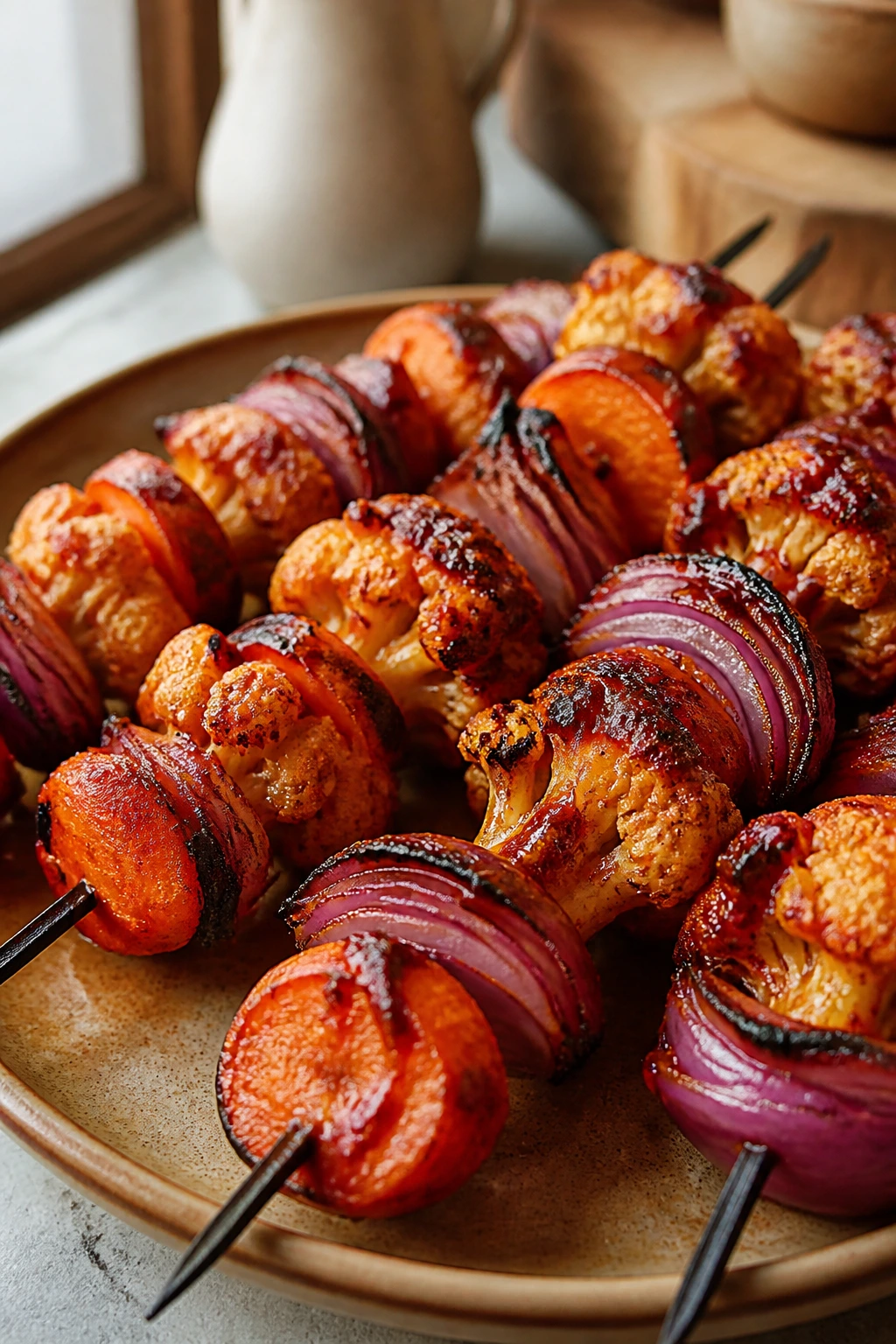
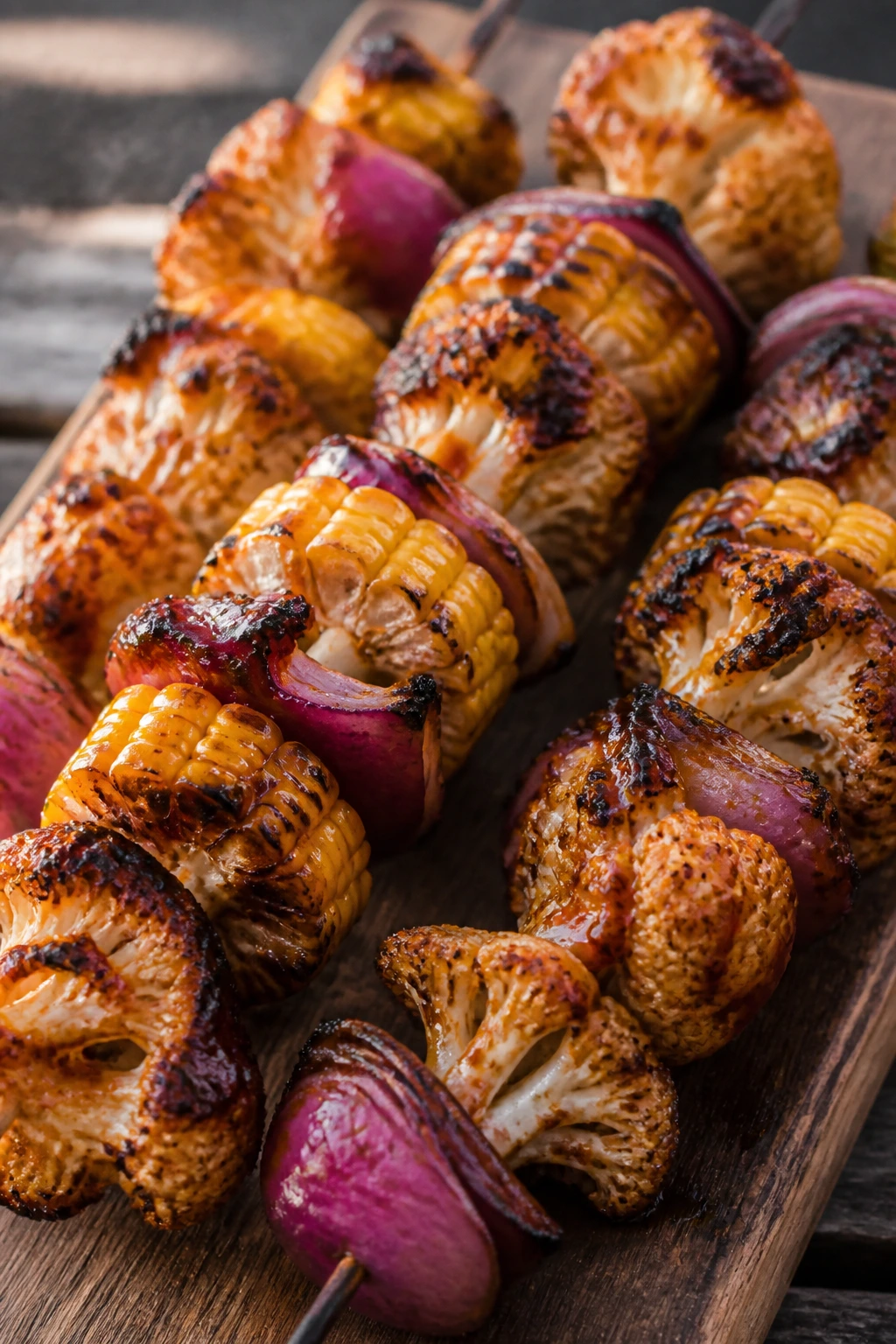
8. BBQ Cauliflower and Corn Skewers
Barbecue sauce is easy to overuse, and that’s exactly why cauliflower and corn are such good partners. The cauliflower catches the sauce in its nooks, the corn rounds give you little sweet bursts, and the red onion slips in a smoky edge. It tastes like cookout food without pretending to be something else.
Why It Works: Cauliflower florets have enough craggy surface to hold barbecue sauce, and corn rounds stay juicy when cut thick. A two-stage sauce approach helps: a light coat before cooking, then a final brush at the end so the sugar doesn’t burn.
Key Ingredients:
- 1 small head cauliflower, cut into medium florets
- 2 ears corn, cut into 1-inch rounds
- 1 red onion, cut into large chunks
- 1/4 cup barbecue sauce
- 2 tablespoons olive oil
- 1 teaspoon smoked paprika
- 1/2 teaspoon garlic powder
- Salt and pepper
Quick Steps:
- Toss the cauliflower, corn, and onion with olive oil, smoked paprika, garlic powder, salt, and pepper.
- Thread onto 8 skewers.
- Grill or roast at 425°F for 15 minutes, turning once.
- Brush with barbecue sauce and cook 3 to 5 minutes more until sticky and lightly charred.
- Serve with extra sauce on the side.
Equipment for This Recipe:
- Skewers
- Grill or sheet pan
- Pastry brush
- Bowl
How to Serve This Dish: Put these next to potato salad or slaw, and you’ve got a vegetarian cookout plate that holds up. A little extra barbecue sauce on the side never hurts.
Pro Tips for This Recipe:
- Use medium florets so they don’t fall apart on the grill.
- Cut corn rounds thick enough to stay on the skewer.
- Add the sauce late so the sugar doesn’t blacken before the vegetables finish.
Variations on This Dish:
- Spicy BBQ Version: Stir hot sauce into the barbecue glaze.
- Mustard BBQ Version: Use a mustard-based sauce for a sharper finish.
- Vegan Ranch Side: Serve with dairy-free ranch for dipping.
Common Mistakes to Avoid with This Dish:
- Don’t brush barbecue sauce on too early.
- Don’t cut the corn too thin or it’ll split.
- Don’t use tiny cauliflower florets; they dry out before they brown.
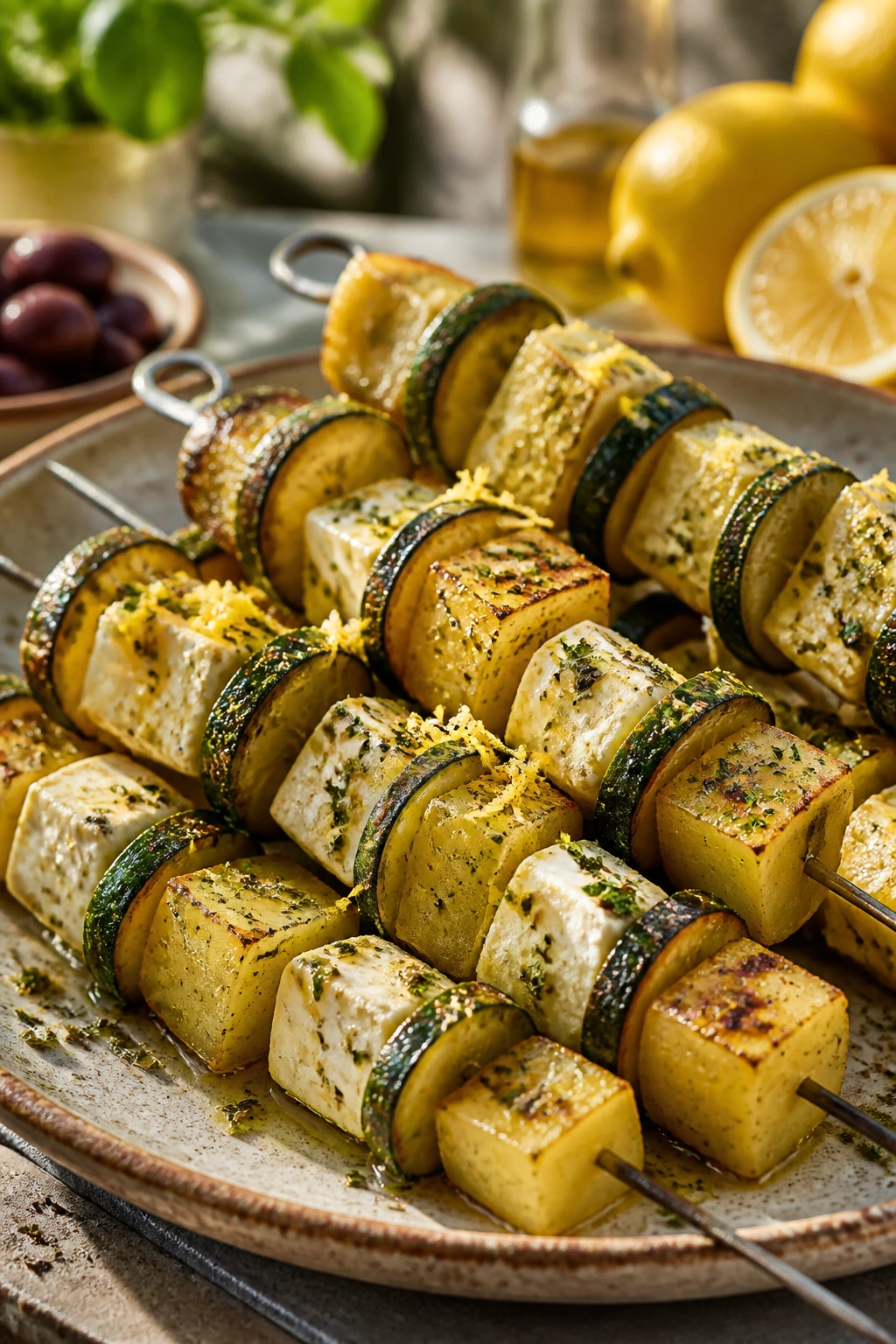
9. Greek Lemon Potato and Feta Skewers
Potatoes on a skewer only work if you treat them like the main event, not a filler. Once they’re parboiled, they take on lemon, oregano, and garlic beautifully, and the feta gives you salty little pockets that soften at the edges. These are hearty enough to carry a plate.
Why It Works: Baby potatoes need pre-cooking because raw potato cubes would take too long and dry the rest of the skewer. Once the potatoes are tender, the grill or oven finishes them with browned spots, and feta brings a creamy-salty contrast that lands in the right place.
Key Ingredients:
- 1 1/2 pounds baby potatoes
- 8 ounces feta, cut into 1-inch cubes
- 1 zucchini, cut into thick coins
- 1 lemon, zested and juiced
- 2 tablespoons olive oil
- 1 teaspoon dried oregano
- 1 clove garlic, grated
- Salt and pepper
Quick Steps:
- Boil the potatoes in salted water for 10 to 12 minutes, until just tender; drain and cool slightly.
- Toss potatoes, zucchini, olive oil, lemon zest, lemon juice, oregano, garlic, salt, and pepper.
- Thread potatoes, zucchini, and feta onto 6 to 8 skewers.
- Grill or roast at 425°F for 10 to 12 minutes, turning gently once.
- Add a final sprinkle of oregano and lemon zest.
Equipment for This Recipe:
- Skewers
- Pot for boiling potatoes
- Sheet pan or grill
- Tongs
How to Serve This Dish: Serve with tomato salad and warm pita or alongside grilled eggplant. These also work as the sturdy part of a mezze spread.
Pro Tips for This Recipe:
- Use baby potatoes that are close in size so they finish together.
- Let the potatoes steam dry after draining; wet potatoes won’t brown as well.
- Thread the feta between sturdier pieces so it doesn’t break apart.
Variations on This Dish:
- Dill Version: Add chopped dill after cooking.
- Olive Version: Slip in kalamata olives for more brine.
- No-Cheese Version: Skip the feta and finish with tahini sauce.
Common Mistakes to Avoid with This Dish:
- Don’t skewer raw potatoes and expect them to cook in time.
- Don’t over-toss the feta or it will crumble before it hits the heat.
- Don’t skip the lemon zest; it brightens the starch.
10. Miso Eggplant and Scallion Skewers
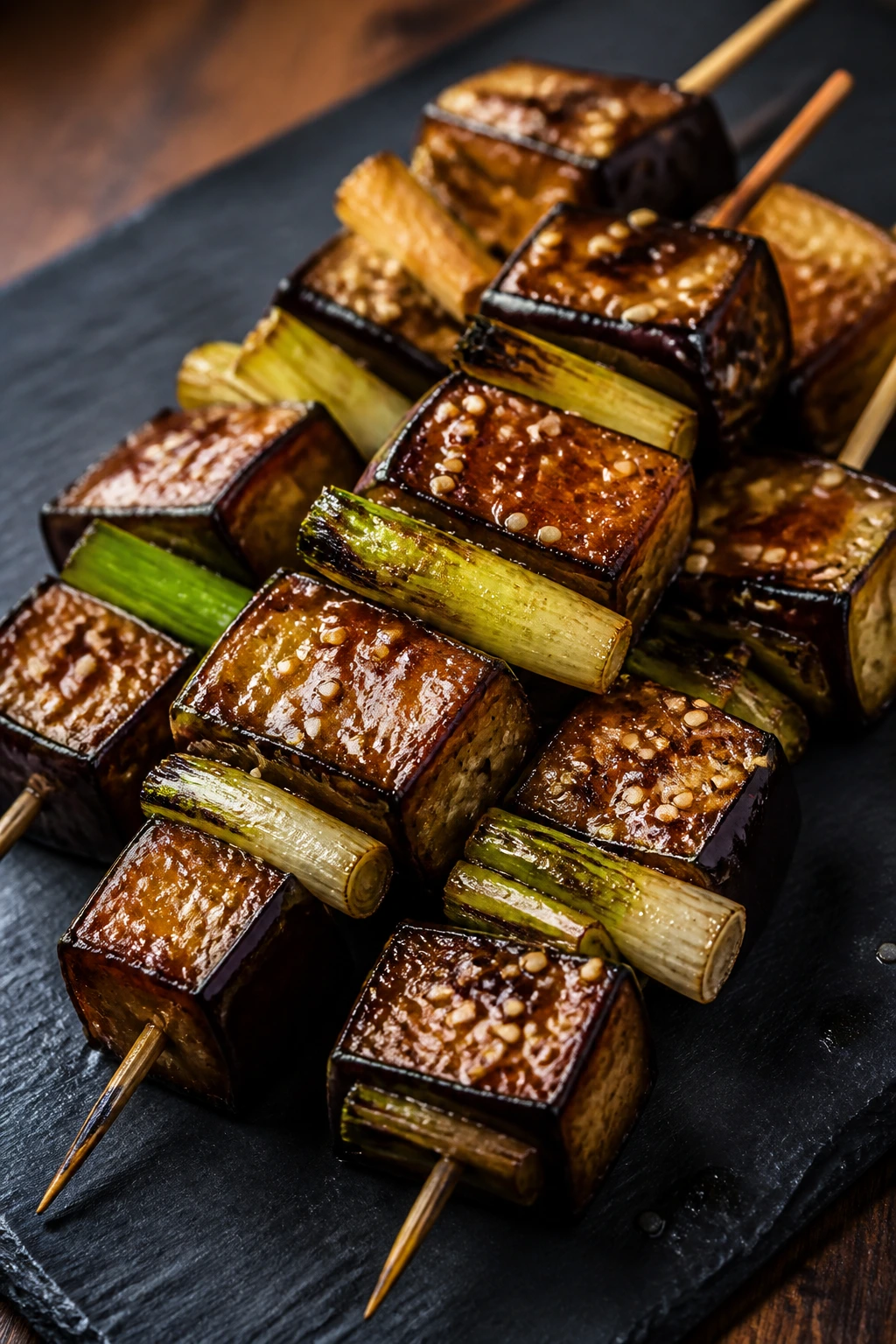
Eggplant can go mushy if you bully it, so the move is to cut it into sturdy cubes and glaze it lightly. Miso gives it a deep, savory note that feels almost smoky, and scallions char just enough at the tips to smell sweet. It’s a very good skewer for people who like bold flavor.
Why It Works: Eggplant absorbs glaze without needing a long marinade, and a hot grill or oven creates a creamy center beneath the browned skin. Miso, soy, and rice vinegar give you salt, depth, and acid in one quick sauce, which is exactly what eggplant wants.
Key Ingredients:
- 1 large globe eggplant, cut into 1-inch cubes
- 4 scallions, trimmed
- 2 tablespoons white miso
- 1 tablespoon soy sauce
- 1 tablespoon rice vinegar
- 1 tablespoon sesame oil
- 1 teaspoon maple syrup
- Sesame seeds, for finishing
Quick Steps:
- Whisk miso, soy sauce, rice vinegar, sesame oil, and maple syrup until smooth.
- Toss eggplant cubes in the glaze and let sit for 10 minutes.
- Thread eggplant and scallions onto 8 skewers.
- Grill or bake at 425°F for 18 to 20 minutes, turning once, until the eggplant is soft and browned.
- Finish with sesame seeds.
Equipment for This Recipe:
- Skewers
- Mixing bowl
- Grill or baking sheet
- Pastry brush
How to Serve This Dish: Serve these over rice with a little cucumber salad. They’re also good tucked into lettuce cups with chili crisp.
Pro Tips for This Recipe:
- Cut the eggplant evenly or the cubes will cook at different speeds.
- Don’t drown the eggplant in glaze; a thin coat is enough.
- Use scallions with firm tops so they char without disappearing.
Variations on This Dish:
- Spicy Miso Version: Add chili paste to the glaze.
- Ginger-Sesame Version: Add 1 teaspoon grated ginger.
- Tahini Finish: Drizzle with tahini and lemon after cooking.
Common Mistakes to Avoid with This Dish:
- Don’t use thin, watery eggplant slices; they collapse.
- Don’t forget to turn the skewers or one side will burn.
- Don’t serve immediately after grilling; a minute of rest helps the glaze settle.
11. Peanut Satay Tempeh Skewers
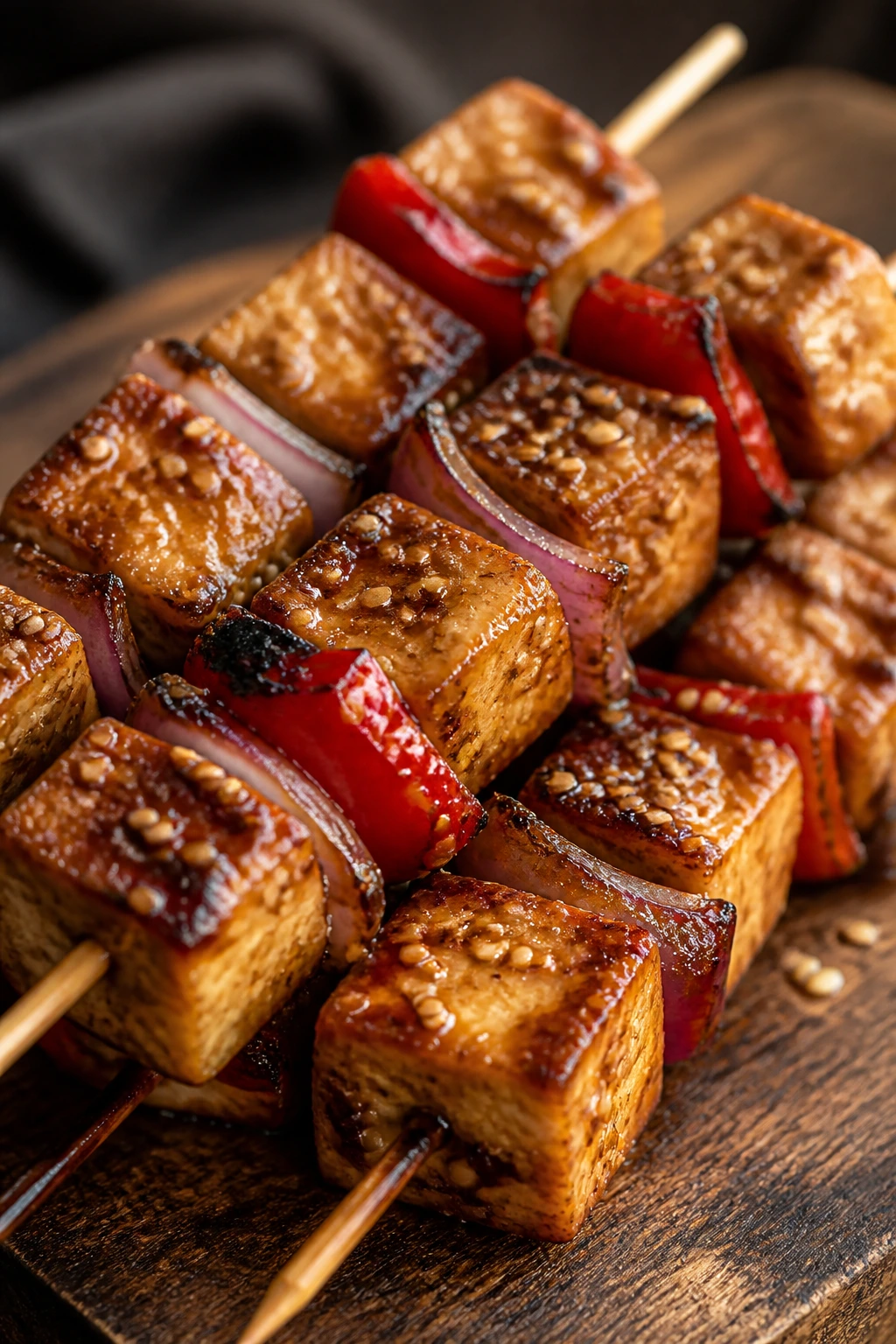
Tempeh has a nutty, firm bite that makes it a better skewer candidate than a lot of people expect. Once it gets marinated in peanut, soy, and lime, it turns rich and savory, and the peppers and onions around it add enough sweetness to keep the sauce from feeling heavy. This one eats like dinner.
Why It Works: Tempeh is dense enough to stay on the skewer and absorb flavor without crumbling. Peanut sauce clings better to tempeh than it does to softer vegetables, and a quick grill marks the cubes without drying them out.
Key Ingredients:
- 8 ounces tempeh, cut into 1-inch cubes
- 1 red bell pepper, cut into chunks
- 1 small red onion, cut into large wedges
- 1/4 cup peanut butter
- 2 tablespoons soy sauce
- 1 tablespoon lime juice
- 1 tablespoon maple syrup
- 1 teaspoon grated ginger
- 1 teaspoon sriracha, optional
Quick Steps:
- Whisk peanut butter, soy sauce, lime juice, maple syrup, ginger, and sriracha with 2 to 3 tablespoons warm water.
- Toss the tempeh in half the sauce and let it sit for 15 minutes.
- Thread tempeh, pepper, and onion onto 6 to 8 skewers.
- Grill or roast at 425°F for 12 to 14 minutes, brushing with the remaining sauce halfway through.
- Serve with lime wedges.
Equipment for This Recipe:
- Skewers
- Bowl for sauce
- Grill or sheet pan
- Brush
How to Serve This Dish: These are good with rice noodles, shredded cabbage, or a crunchy slaw. A few chopped peanuts on top give the plate some crunch.
Pro Tips for This Recipe:
- Warm the peanut butter slightly before mixing so the sauce smooths out.
- Don’t marinate tempeh forever; 15 to 30 minutes is enough.
- Keep the pepper chunks large so they don’t soften too fast.
Variations on This Dish:
- Coconut Satay Version: Stir in coconut milk for a softer sauce.
- Lemongrass Version: Add a little lemongrass paste to the marinade.
- Low-Sugar Version: Skip the maple syrup and add a touch more lime.
Common Mistakes to Avoid with This Dish:
- Don’t use thin tempeh slices; cubes stay intact better.
- Don’t let the peanut sauce burn on a very hot grill.
- Don’t skip a crunchy side; the skewer is richer than it looks.
12. Chili-Lime Sweet Potato and Poblano Skewers
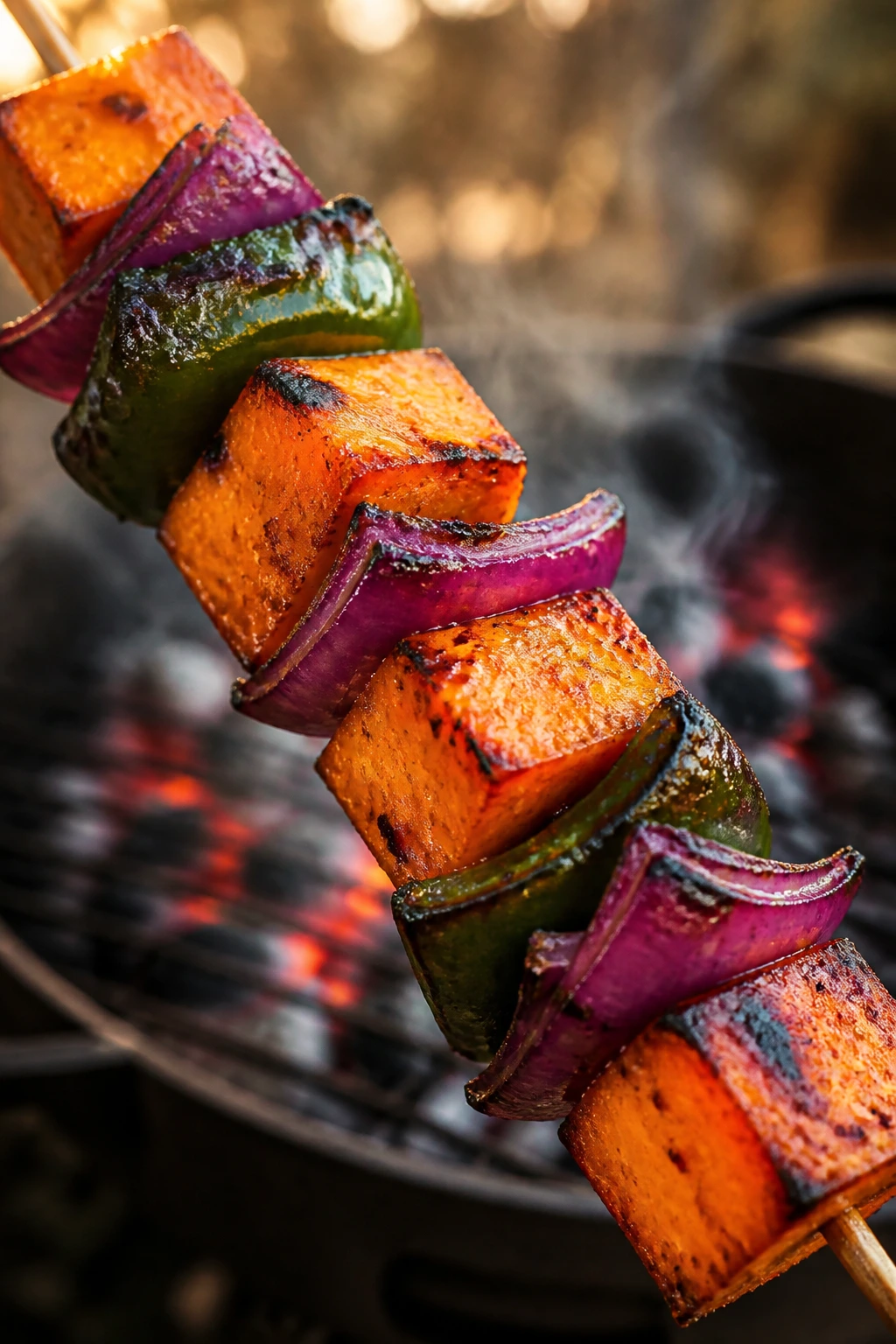
Sweet potatoes need a little help, but once they’re par-cooked they turn into candy with edges. Add poblano, red onion, and lime, and you get something smoky, bright, and sturdy enough to count as a main. It’s the kind of skewer that does not apologize for being vegetarian.
Why It Works: Sweet potato cubes need to be partially cooked before they go on the skewer, or the outside will burn before the inside softens. Chili and lime give the starch a sharper edge, while poblano keeps the sweetness grounded.
Key Ingredients:
- 2 medium sweet potatoes, peeled and cut into 1-inch cubes
- 2 poblano peppers, cut into 1-inch squares
- 1 red onion, cut into chunks
- 2 tablespoons olive oil
- 1 teaspoon chili powder
- 1/2 teaspoon ground cumin
- 1 lime, juiced and zested
- 3/4 teaspoon salt
Quick Steps:
- Boil the sweet potato cubes for 5 minutes, then drain and cool slightly.
- Toss with olive oil, chili powder, cumin, lime zest, lime juice, and salt.
- Thread sweet potato, poblano, and onion onto 8 skewers.
- Grill or roast at 425°F for 15 minutes, turning once, until the peppers are blistered and the potatoes are tender.
- Serve with extra lime.
Equipment for This Recipe:
- Skewers
- Pot for par-cooking
- Sheet pan or grill
- Bowl
How to Serve This Dish: These are strong with black bean rice, avocado, or a simple crema. They also work wrapped in warm tortillas with a handful of greens.
Pro Tips for This Recipe:
- Cut the sweet potatoes evenly or some cubes will stay firm.
- Don’t skip the lime zest; it gives the sweetness lift.
- If the poblanos are large, remove some seeds so the heat stays mild.
Variations on This Dish:
- Chipotle Version: Swap chili powder for chipotle powder.
- Feta Finish: Sprinkle crumbled feta after cooking.
- Herb Finish: Add chopped cilantro right before serving.
Common Mistakes to Avoid with This Dish:
- Don’t grill raw sweet potatoes and expect them to finish in time.
- Don’t make the cubes too small or they’ll dry out.
- Don’t overdo the cumin; it should support, not dominate.
13. Pesto Gnocchi, Tomato, and Mozzarella Skewers
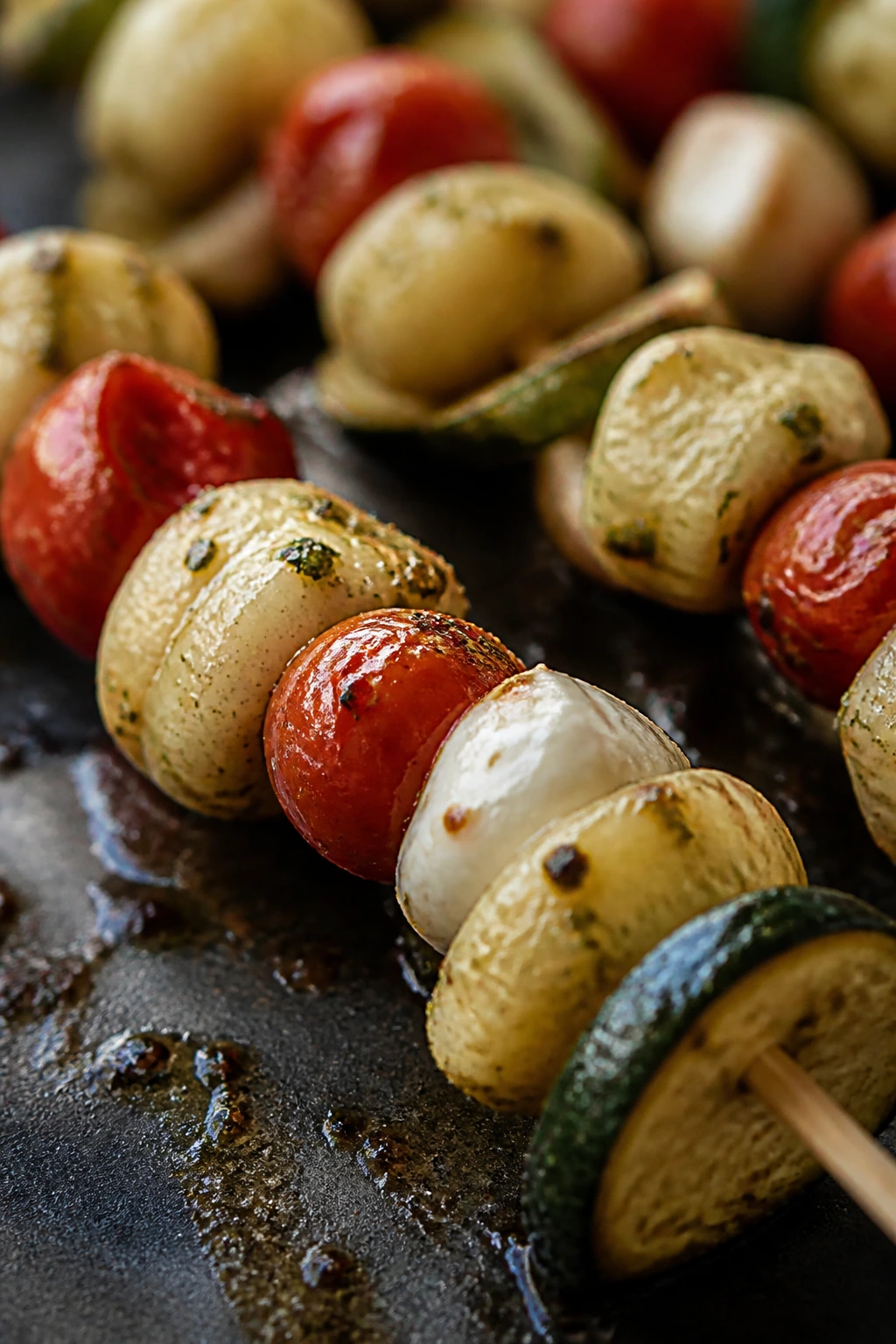
Yes, gnocchi on a skewer works. You boil them first, dry them off, and then give them just enough heat to pick up a little color. Add tomatoes, mozzarella, and pesto, and you get a skewer that tastes like a warm pasta salad with better manners.
Why It Works: Shelf-stable gnocchi firms up after boiling and cooling, which makes it sturdy enough to skewer. The pesto clings to the gnocchi and mozzarella, while cherry tomatoes give you bursts of juice that keep the bite from feeling heavy.
Key Ingredients:
- 1 pound shelf-stable potato gnocchi
- 1 pint cherry tomatoes
- 8 ounces mozzarella pearls
- 1 small zucchini, cut into thin half-moons
- 1/4 cup basil pesto
- 1 tablespoon olive oil
- Salt and black pepper
Quick Steps:
- Boil the gnocchi until they float, about 2 minutes, then drain and toss with olive oil.
- Thread gnocchi, tomatoes, mozzarella, and zucchini onto 8 skewers.
- Brush lightly with pesto.
- Grill or broil for 3 to 5 minutes, just until the gnocchi has little browned spots.
- Season with salt and pepper.
Equipment for This Recipe:
- Skewers
- Pot for boiling
- Sheet pan or grill
- Spoon or brush
How to Serve This Dish: Serve these with a crisp green salad and extra pesto on the side. They’re a little richer than the average veggie skewer, so keep the rest of the plate simple.
Pro Tips for This Recipe:
- Dry the gnocchi after boiling so the pesto sticks.
- Use small mozzarella pearls; larger pieces are harder to balance.
- Don’t grill too long or the cheese will melt off before the gnocchi browns.
Variations on This Dish:
- Sun-Dried Tomato Version: Add chopped sun-dried tomatoes between the gnocchi.
- Rosemary Version: Swap pesto for rosemary-garlic oil.
- No-Heat Version: Serve chilled if you want a picnic skewer.
Common Mistakes to Avoid with This Dish:
- Don’t leave the gnocchi wet.
- Don’t overbake; the goal is color, not crunch.
- Don’t make the skewer too heavy on one end.
14. Jerk Pineapple and Plantain Skewers
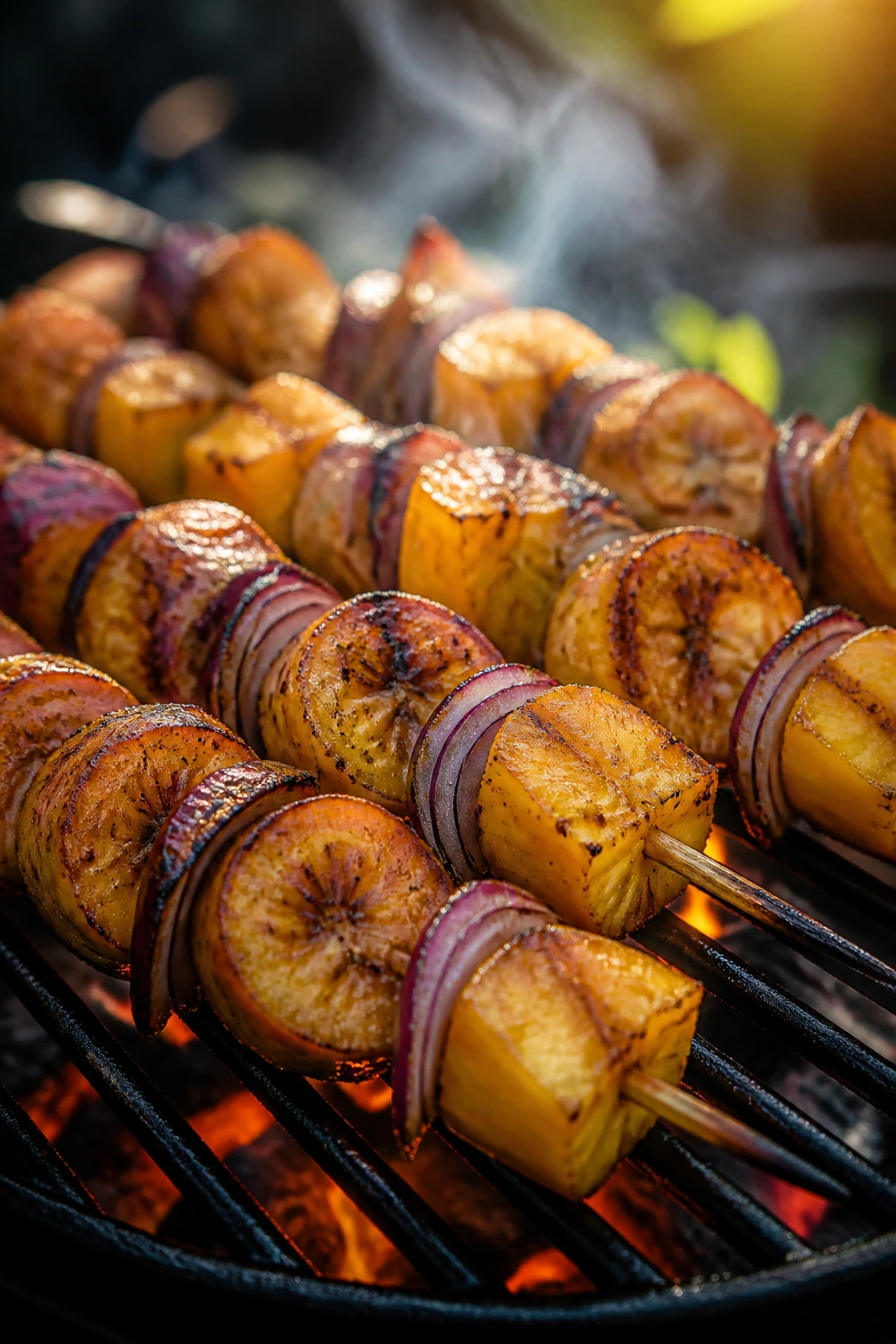
Plantain and pineapple are the skewer pair that walks right up to the line between savory and sweet and refuses to pick a side. Jerk seasoning gives them heat, the pineapple turns syrupy, and the plantain edges go deep gold if you use ripe but still firm fruit. This one is loud in the best way.
Why It Works: Ripe plantains caramelize fast, so they need to be cut thick and handled carefully. Pineapple gives acid and sugar, which helps the jerk spices bloom, and red onion adds a sharp note that keeps the skewer from reading like dessert.
Key Ingredients:
- 2 ripe plantains, peeled and cut into thick rounds
- 2 cups pineapple chunks
- 1 red onion, cut into chunks
- 2 tablespoons olive oil
- 1 1/2 teaspoons jerk seasoning
- 1 tablespoon lime juice
- 1 teaspoon brown sugar
- Pinch of salt
Quick Steps:
- Toss the plantain, pineapple, and onion with olive oil, jerk seasoning, lime juice, brown sugar, and salt.
- Thread onto 6 to 8 skewers.
- Grill over medium heat for 8 to 10 minutes, turning gently, until the plantain is browned and the pineapple is caramelized.
- Serve warm with extra lime.
Equipment for This Recipe:
- Skewers
- Grill or broiler
- Mixing bowl
- Tongs
How to Serve This Dish: These are strong with coconut rice, black beans, or grilled greens. They also work as a side next to a mild tofu dish.
Pro Tips for This Recipe:
- Use plantains that are yellow with black spots, not fully black.
- Oil the grates well; plantain sugar likes to stick.
- Turn the skewers gently so the soft fruit doesn’t break.
Variations on This Dish:
- Milder Version: Use only 1 teaspoon jerk seasoning.
- Citrus Finish: Add orange zest after grilling.
- Scotch Bonnet Kick: Add a tiny bit of hot sauce to the marinade.
Common Mistakes to Avoid with This Dish:
- Don’t use unripe plantains; they’ll stay starchy.
- Don’t cook over screaming-high heat or the sugar will burn.
- Don’t crowd the pieces too close together.
15. Sesame Broccoli and Mushroom Skewers
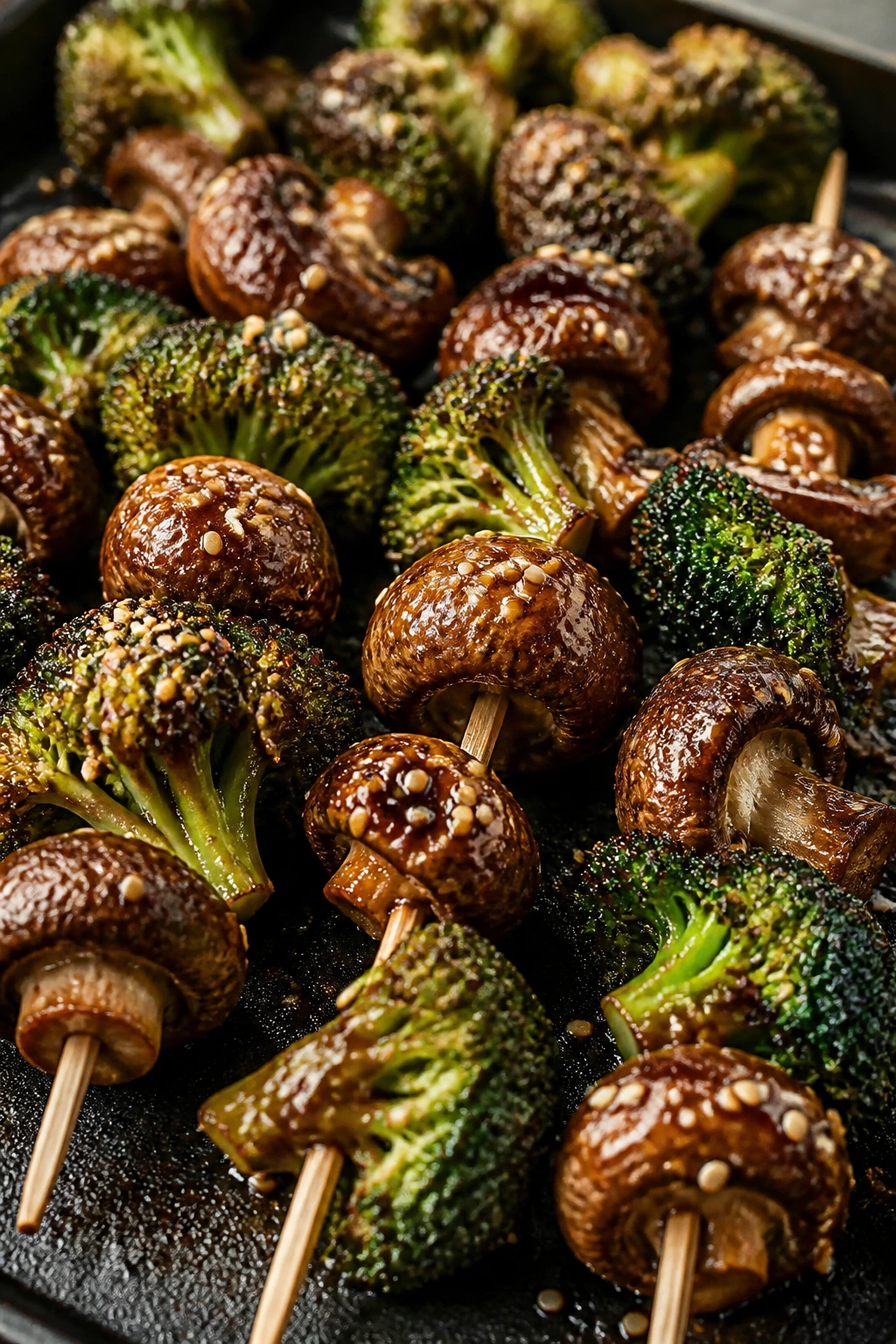
Broccoli is easy to underestimate until it gets a sesame-soy glaze and a little heat. The florets crisp at the edges, the mushrooms get juicy, and the whole thing smells like toasted sesame oil and garlic. It’s a simple skewer, but it’s not a boring one.
Why It Works: Broccoli florets hold their shape on a skewer if they’re not too large, and mushrooms add moisture so the vegetables don’t dry out. A quick sesame glaze gives you shine and salt without needing a long marinate.
Key Ingredients:
- 2 cups broccoli florets
- 12 ounces cremini or shiitake mushrooms
- 1 red onion, cut into chunks
- 2 tablespoons soy sauce
- 1 tablespoon sesame oil
- 1 tablespoon rice vinegar
- 1 teaspoon grated ginger
- 1 teaspoon honey or maple syrup
- Sesame seeds
Quick Steps:
- Whisk soy sauce, sesame oil, rice vinegar, ginger, and honey.
- Toss broccoli, mushrooms, and onion in the glaze.
- Thread onto 8 skewers.
- Grill or roast at 425°F for 12 to 14 minutes, turning once, until the broccoli edges are crisp and the mushrooms are browned.
- Sprinkle sesame seeds on top.
Equipment for This Recipe:
- Skewers
- Sheet pan or grill
- Bowl
- Tongs
How to Serve This Dish: Serve these with rice and a little chili crisp, or alongside noodles with a lime wedge. The sesame oil wants a starch underneath it.
Pro Tips for This Recipe:
- Keep broccoli florets small and compact.
- If using shiitakes, trim off the tough stems.
- Don’t add the sesame seeds until the end or they can toast too hard.
Variations on This Dish:
- Spicy Version: Add chili flakes or chili oil.
- Garlic Version: Add another clove of garlic to the glaze.
- Citrus Version: Finish with lime instead of rice vinegar.
Common Mistakes to Avoid with This Dish:
- Don’t use giant broccoli florets.
- Don’t overdo the glaze, or the vegetables will slip.
- Don’t forget the onion; it balances the earthiness.
16. Taco-Spiced Bell Pepper and Onion Skewers
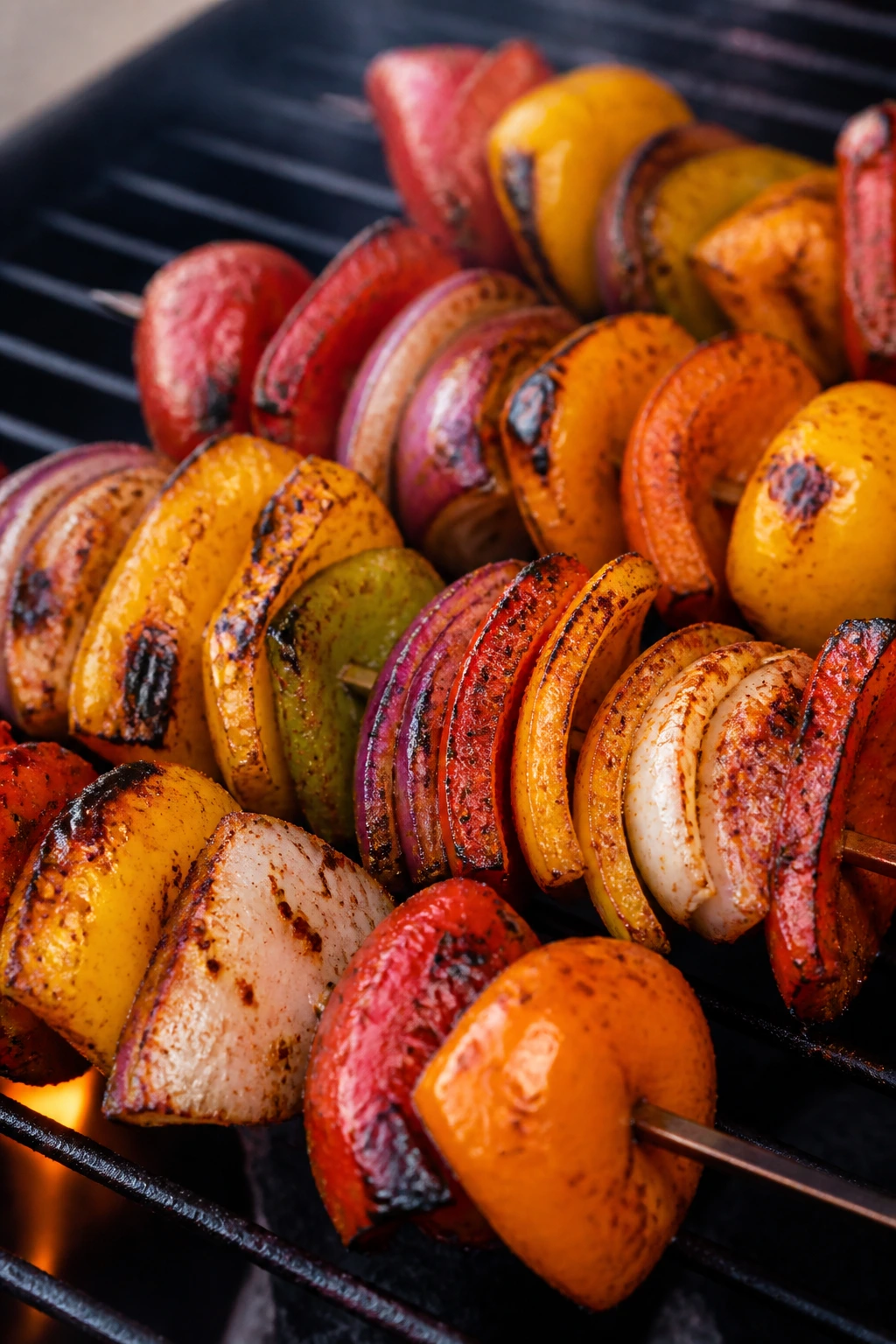
These are what happen when fajita night gets put on a skewer and stops pretending to be complicated. Peppers soften and sweeten, onions get that edge of char, and taco seasoning brings cumin, chile, and garlic into the mix without requiring three different jars. They’re fast, loud, and useful.
Why It Works: Bell peppers and onions are classic hot-weather grilling vegetables because they brown fast and keep some bite. Taco seasoning sticks well to the cut sides, and a little lime at the end keeps the flavor from feeling dusty.
Key Ingredients:
- 3 bell peppers, assorted colors, cut into 1-inch pieces
- 1 large yellow onion, cut into wedges
- 1 zucchini, cut into thick rounds
- 2 tablespoons olive oil
- 1 1/2 tablespoons taco seasoning
- 1 tablespoon lime juice
- Salt to taste
Quick Steps:
- Toss peppers, onion, and zucchini with olive oil, taco seasoning, lime juice, and a pinch of salt.
- Thread onto 8 skewers.
- Grill or roast at 425°F for 10 to 12 minutes, turning once, until the edges are charred and the zucchini is tender.
- Serve with lime wedges.
Equipment for This Recipe:
- Skewers
- Grill or baking sheet
- Bowl
- Tongs
How to Serve This Dish: These are excellent in tortillas with avocado and salsa, or over rice with beans. If you make one weeknight side from this list, it might as well be the one that can become tacos.
Pro Tips for This Recipe:
- Use a taco blend with salt already in it so the vegetables don’t taste flat.
- Cut the onion wedges large enough to stay together.
- Brush with a little extra oil if your grill grates run dry.
Variations on This Dish:
- Smoky Chipotle Version: Add chipotle powder or adobo sauce.
- Creamy Version: Serve with lime crema.
- Street-Corn Version: Add grilled corn kernels after cooking.
Common Mistakes to Avoid with This Dish:
- Don’t cut the peppers too small.
- Don’t skip the lime; it wakes up the spice.
- Don’t crowd the vegetables on the grill.
17. Cumin-Spiced Paneer and Pepper Skewers
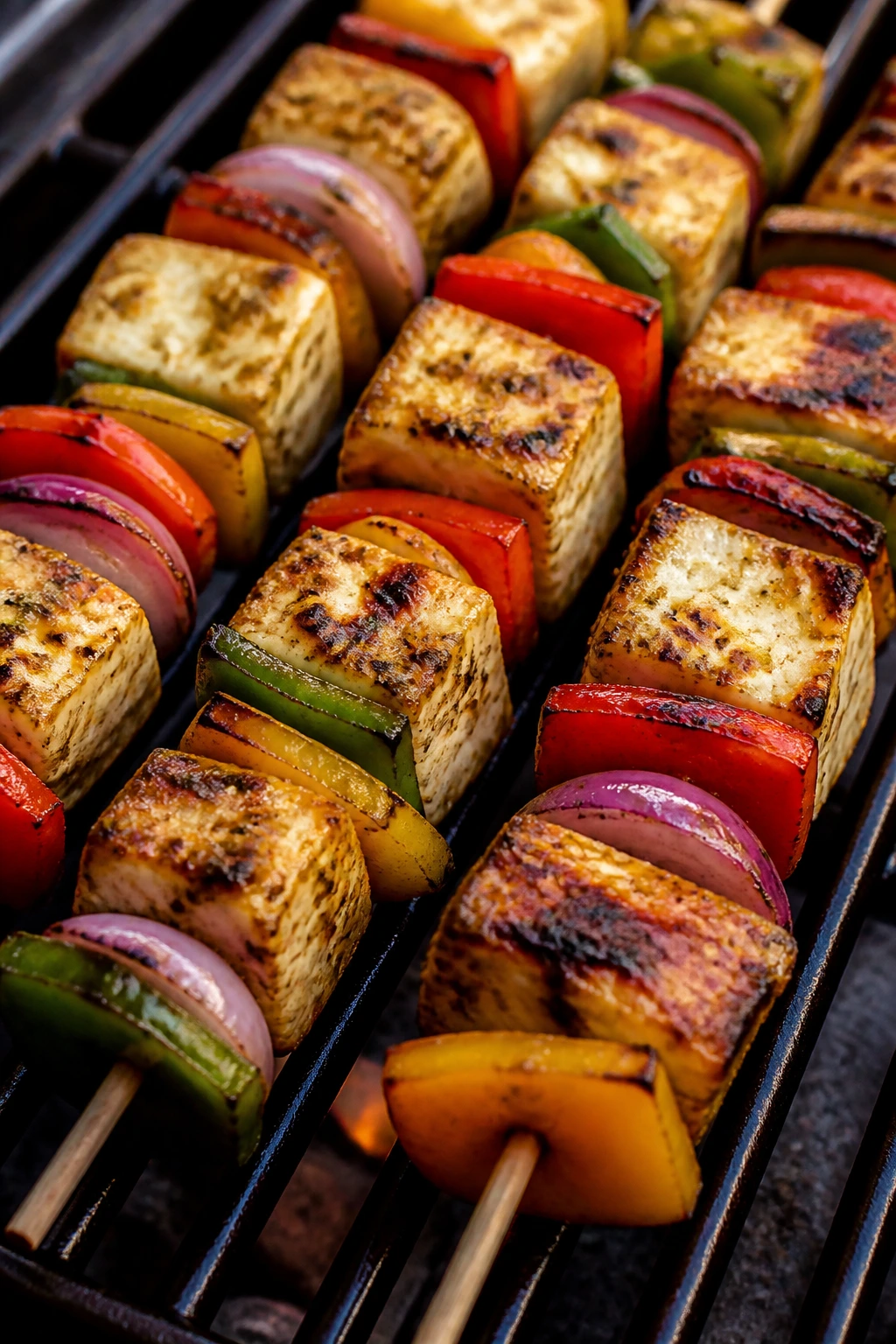
Paneer is one of the best vegetarian grill cheeses because it doesn’t melt into a puddle the second heat hits it. Instead, it browns on the outside and stays creamy inside, which is exactly what you want next to sweet peppers and onion. Cumin and coriander make the whole skewer taste warm and a little earthy.
Why It Works: Paneer is firm enough to grill, and a yogurt-spice marinade helps the surface pick up color without drying out. Peppers and onions keep the skewer juicy, while lemon at the end cuts through the richness.
Key Ingredients:
- 12 ounces paneer, cut into 1-inch cubes
- 2 bell peppers, cut into chunks
- 1 red onion, cut into wedges
- 1/4 cup plain yogurt
- 1 teaspoon ground cumin
- 1 teaspoon ground coriander
- 1/2 teaspoon turmeric
- 1 tablespoon lemon juice
- Salt and pepper
Quick Steps:
- Whisk yogurt, cumin, coriander, turmeric, lemon juice, salt, and pepper.
- Toss paneer, peppers, and onion in the marinade and let sit for 15 minutes.
- Thread onto 6 to 8 skewers.
- Grill or bake at 425°F for 10 to 12 minutes, turning once, until the paneer is browned at the edges.
- Serve with more lemon.
Equipment for This Recipe:
- Skewers
- Bowl
- Grill or sheet pan
- Brush, optional
How to Serve This Dish: These are excellent with basmati rice, naan, and a cucumber salad. A spoonful of mint chutney makes them feel finished fast.
Pro Tips for This Recipe:
- Dry the paneer lightly before marinating so the coating clings.
- Don’t marinate too long or the yogurt can make the surface soft.
- Use bell peppers with thick walls for better texture.
Variations on This Dish:
- Tandoori Version: Add tandoori spice to the yogurt.
- Green Herb Version: Mix chopped cilantro into the marinade.
- Lighter Version: Swap half the paneer for zucchini chunks.
Common Mistakes to Avoid with This Dish:
- Don’t use crumbling paneer; buy a firm block.
- Don’t overcook it or the cheese gets squeaky.
- Don’t skip salt in the marinade; paneer needs it.
18. Rosemary Potato and Mushroom Skewers
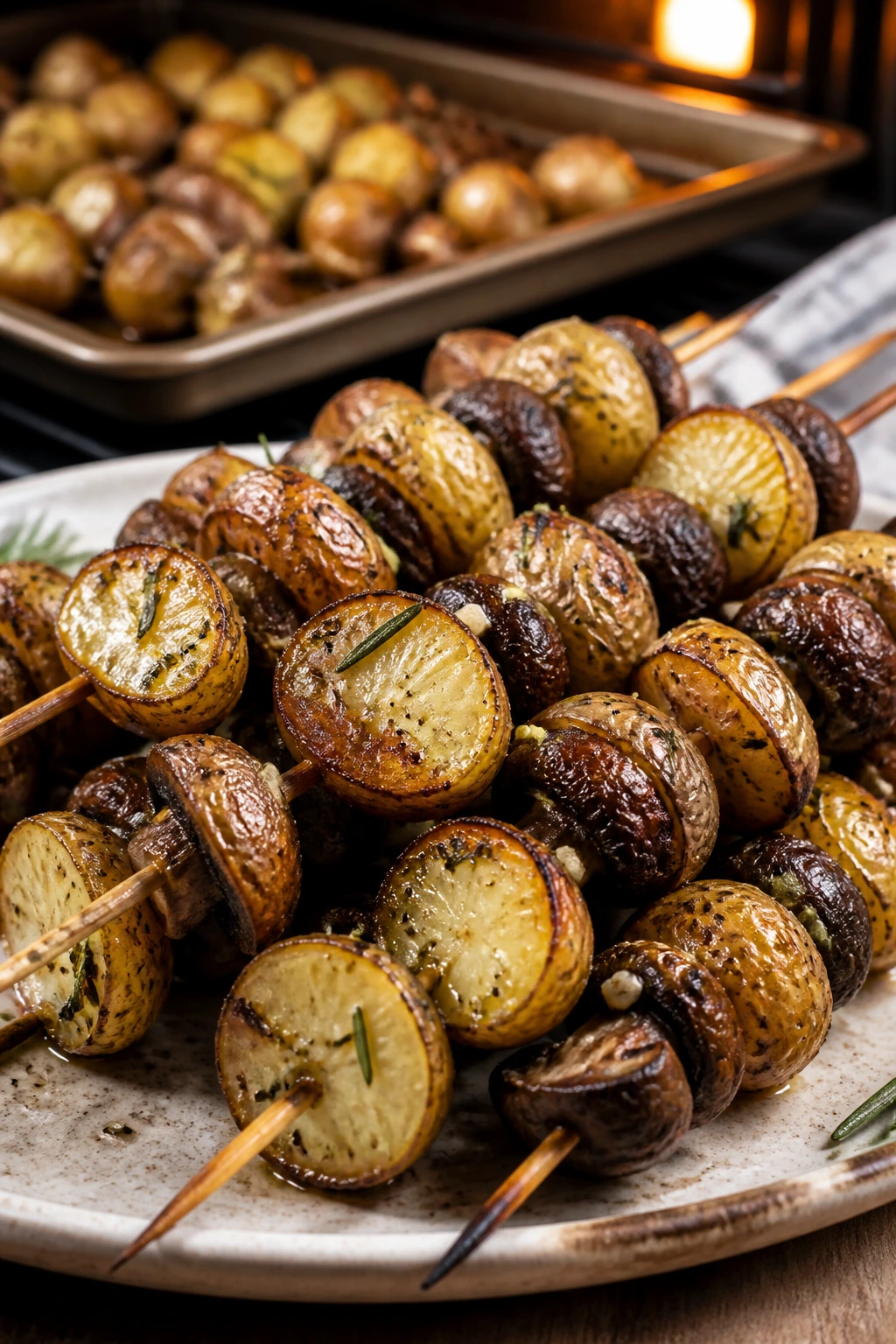
There’s nothing flashy here, and that’s exactly why it works. Potatoes and mushrooms both love rosemary, garlic, and olive oil, and when you roast or grill them together, the potatoes go creamy inside while the mushrooms pick up a deep brown edge. It’s the most dinner-like skewer in the bunch.
Why It Works: Baby potatoes hold heat well and can be par-cooked ahead, which keeps the cook time short. Mushrooms release a little moisture as they roast, so the potatoes stay from feeling dry, and rosemary gives the whole skewer a woodsy aroma.
Key Ingredients:
- 1 1/2 pounds baby potatoes
- 12 ounces cremini mushrooms
- 2 tablespoons olive oil
- 1 tablespoon chopped rosemary
- 2 cloves garlic, minced
- 1 teaspoon salt
- 1/2 teaspoon black pepper
- 1 tablespoon lemon juice
Quick Steps:
- Boil potatoes for 10 minutes, just until a knife meets slight resistance; drain.
- Toss potatoes and mushrooms with olive oil, rosemary, garlic, salt, pepper, and lemon juice.
- Thread onto 8 skewers.
- Roast at 425°F for 20 minutes or grill over medium heat for 12 to 14 minutes, turning once.
- Serve hot.
Equipment for This Recipe:
- Skewers
- Pot
- Sheet pan or grill
- Bowl
How to Serve This Dish: Serve with a green salad, roasted carrots, or a dollop of sour cream or yogurt. These skewers are the quiet workhorse of the table.
Pro Tips for This Recipe:
- Use potatoes that are all about the same size.
- Rosemary can get sharp if overused, so measure it.
- Let the potatoes cool just enough to handle before skewering.
Variations on This Dish:
- Thyme Version: Swap rosemary for thyme.
- Lemon-Pepper Version: Add more lemon zest and cracked pepper.
- Garlic-Parsley Finish: Sprinkle parsley on after cooking.
Common Mistakes to Avoid with This Dish:
- Don’t leave potatoes raw; they’ll lag behind everything else.
- Don’t use huge mushrooms unless you halve them.
- Don’t skip the lemon; potatoes need brightness.
19. Balsamic Bruschetta Skewers
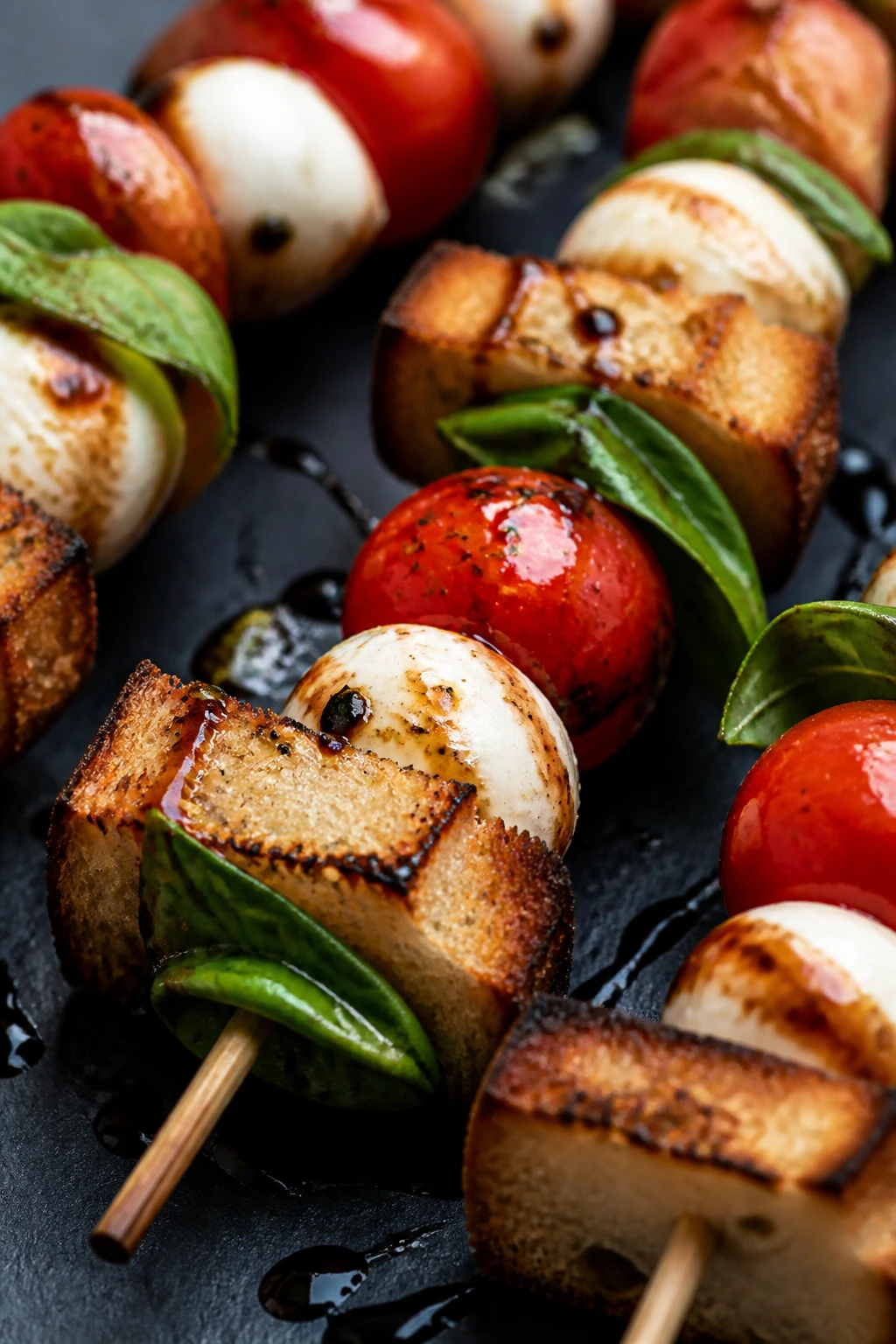
This is the skewer that takes appetizer energy and gives it some structure. Toasted bread, tomatoes, basil, and mozzarella hit the same notes as bruschetta, but threading them changes the bite just enough to keep things interesting. The balsamic glaze makes the whole thing taste finished.
Why It Works: Bread cubes stay crisp if they’re toasted hard enough before assembling, and cherry tomatoes bring juice without turning the skewer soggy. Balsamic glaze acts like a sticky accent, not a full sauce, which is the right amount here.
Key Ingredients:
- 1 baguette, cut into 1-inch cubes
- 2 cups cherry tomatoes
- 8 ounces mozzarella pearls
- 24 basil leaves
- 2 tablespoons olive oil
- 2 tablespoons balsamic glaze
- Salt and black pepper
Quick Steps:
- Toss the bread cubes with olive oil and toast under the broiler for 2 to 3 minutes.
- Thread bread, tomato, basil, and mozzarella onto 8 skewers.
- Drizzle lightly with balsamic glaze.
- Season with salt and black pepper right before serving.
Equipment for This Recipe:
- Skewers
- Sheet pan
- Spoon for glaze
- Mixing bowl
How to Serve This Dish: These sit well on a party platter with olives and marinated peppers. If you want them as dinner, add soup or a bean salad.
Pro Tips for This Recipe:
- Toast the bread cubes a little darker than you think; they soften fast.
- Assemble close to serving time.
- Use basil leaves that are dry, not wet, or they’ll cling and tear.
Variations on This Dish:
- Garlic Toast Version: Rub the toasted bread with a cut garlic clove.
- Pesto Version: Swap balsamic for a thin pesto drizzle.
- Roasted Pepper Version: Add strips of roasted red pepper.
Common Mistakes to Avoid with This Dish:
- Don’t let the bread sit in moisture.
- Don’t drown the skewer in glaze.
- Don’t use oversized basil leaves without folding them.
20. Sriracha Honey Brussels Sprout Skewers
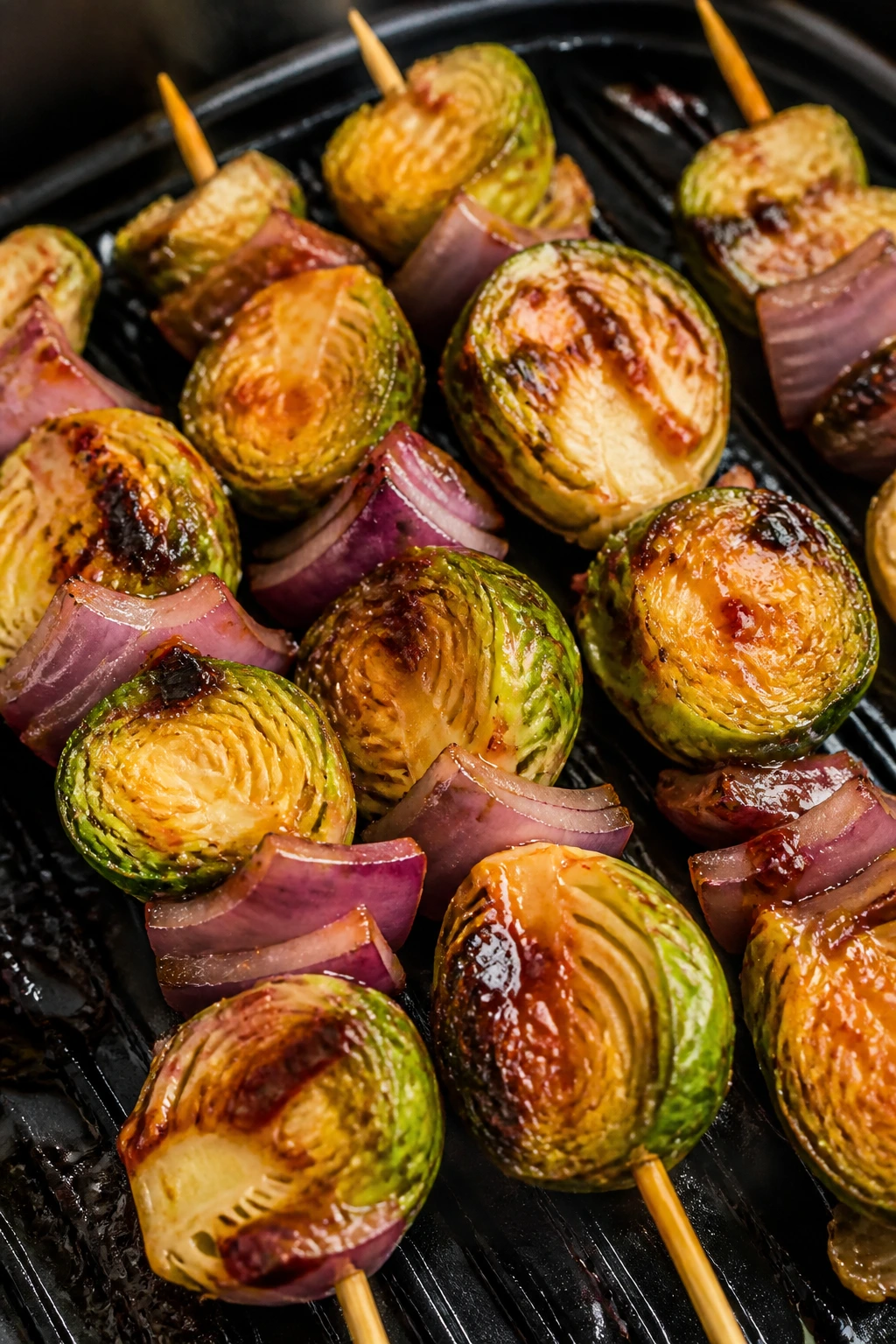
Brussels sprouts get a lot better when they’re cut, par-cooked, and glazed. The sriracha-honey mix turns sticky and sweet on the edges, while red onion and a little char keep the flavor from wandering into candy territory. These are small, punchy, and not shy.
Why It Works: Halved Brussels sprouts cook more evenly than whole ones and stay attached to the skewer better. A quick boil or steam softens the centers, and the glaze caramelizes instead of burning if you apply it near the end.
Key Ingredients:
- 1 pound Brussels sprouts, trimmed and halved
- 1 red onion, cut into chunks
- 2 tablespoons olive oil
- 1 tablespoon honey
- 1 tablespoon sriracha
- 1 tablespoon soy sauce
- 1 teaspoon lime juice
- Pinch of salt
Quick Steps:
- Steam or boil the Brussels sprouts for 4 minutes, then drain well.
- Whisk olive oil, honey, sriracha, soy sauce, lime juice, and salt.
- Toss sprouts and onion in the glaze.
- Thread onto 8 skewers.
- Grill or roast at 425°F for 15 to 18 minutes, turning once, until the cut sides are browned and sticky.
Equipment for This Recipe:
- Skewers
- Pot or steamer
- Sheet pan or grill
- Bowl
How to Serve This Dish: Serve these with rice, quinoa, or roasted tofu. They’re also strong next to a bland grain because the glaze brings the whole plate to life.
Pro Tips for This Recipe:
- Cut the sprouts evenly so the halves cook at the same rate.
- Keep the glaze light at first; you can always brush more on at the end.
- Add the lime after cooking so the acid stays bright.
Variations on This Dish:
- Maple Version: Swap honey for maple syrup.
- Garlic Chili Version: Add grated garlic to the glaze.
- Crispier Version: Finish under the broiler for 1 minute.
Common Mistakes to Avoid with This Dish:
- Don’t skip par-cooking.
- Don’t overdo the glaze or it burns before the sprouts soften.
- Don’t use very large sprouts unless you quarter them.
21. Lemon-Dill Asparagus and Baby Potato Skewers
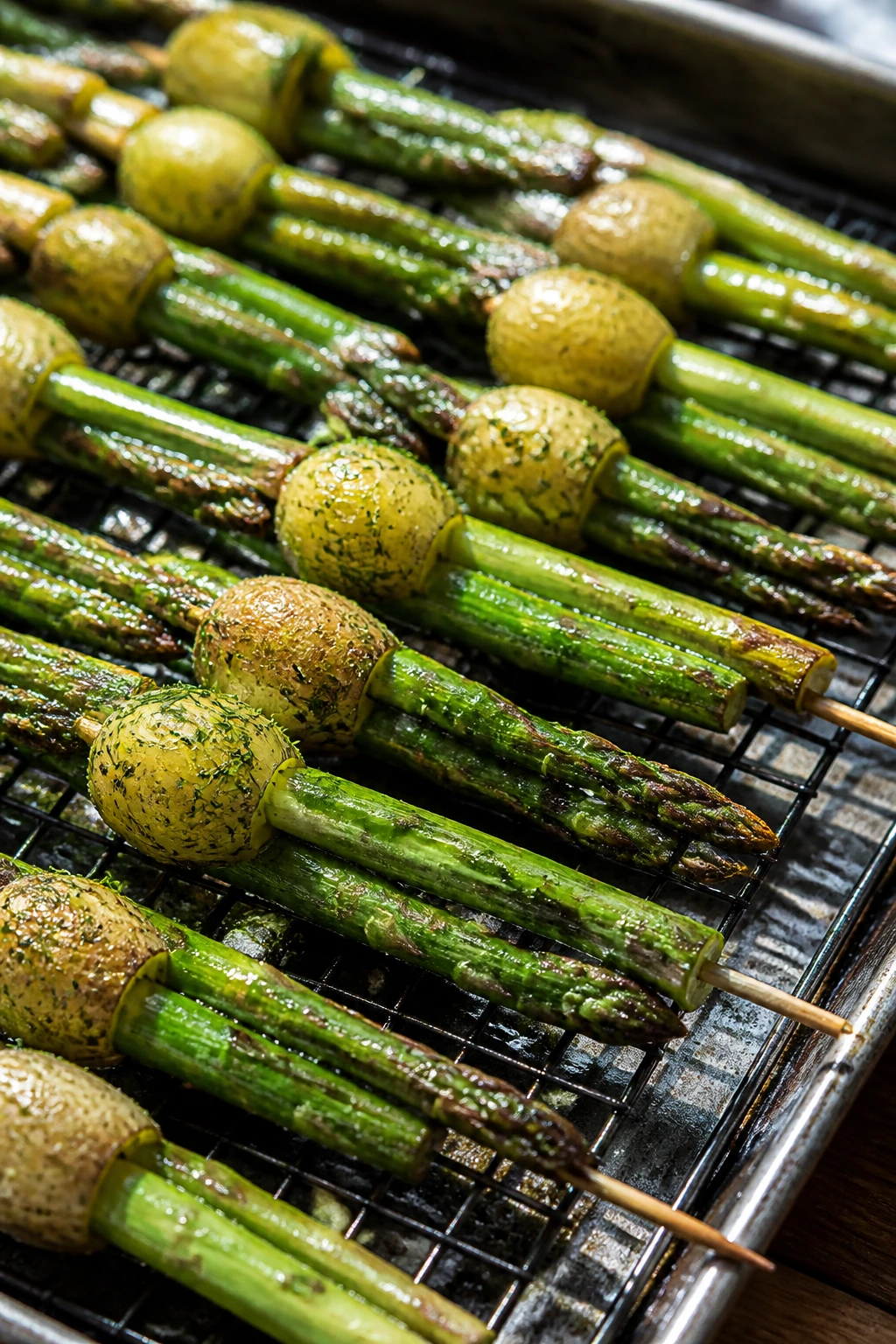
Asparagus on a skewer is a little fussy, but when you pair it with baby potatoes and give it lemon-dill butter or oil, it becomes one of the cleanest spring-style dinners you can make. The potatoes anchor the skewer, and the asparagus picks up just enough heat to stay bright-green and tender.
Why It Works: The potatoes handle the longer cook time, and asparagus finishes fast once the tips are near the heat. Lemon and dill keep the flavor sharp, which matters because potatoes can flatten everything if you don’t push back with acid.
Key Ingredients:
- 1 pound baby potatoes
- 1 bunch asparagus, trimmed and cut into 2-inch pieces
- 1 red onion, cut into chunks
- 2 tablespoons olive oil
- 1 tablespoon lemon juice
- 1 teaspoon chopped dill
- 1 teaspoon salt
- 1/2 teaspoon black pepper
Quick Steps:
- Boil the potatoes for 10 to 12 minutes until just tender, then drain.
- Toss potatoes, asparagus, and onion with olive oil, lemon juice, dill, salt, and pepper.
- Thread onto 8 skewers.
- Grill or roast at 425°F for 10 to 12 minutes, turning once, until the asparagus is tender with browned tips.
- Finish with a little extra dill.
Equipment for This Recipe:
- Skewers
- Pot
- Sheet pan or grill
- Bowl
How to Serve This Dish: Serve with grilled fish if you’re feeding mixed tables, or keep it vegetarian with couscous and yogurt sauce. The plate wants something simple, not another loud flavor.
Pro Tips for This Recipe:
- Use asparagus stalks that are medium-thick, not pencil-thin.
- Cut the asparagus after blanching if the stalks are very thick.
- Keep the potatoes whole if they’re small enough; they stay neater.
Variations on This Dish:
- Tarragon Version: Swap dill for tarragon if you want a softer herb note.
- Garlic Butter Version: Brush with garlic butter after cooking.
- Zestier Version: Add lemon zest to the oil before skewering.
Common Mistakes to Avoid with This Dish:
- Don’t use very thin asparagus; it overcooks fast.
- Don’t skip the potatoes or the skewer feels flimsy.
- Don’t overseason with dill; it should support the lemon.
22. Tandoori Cauliflower and Green Pepper Skewers
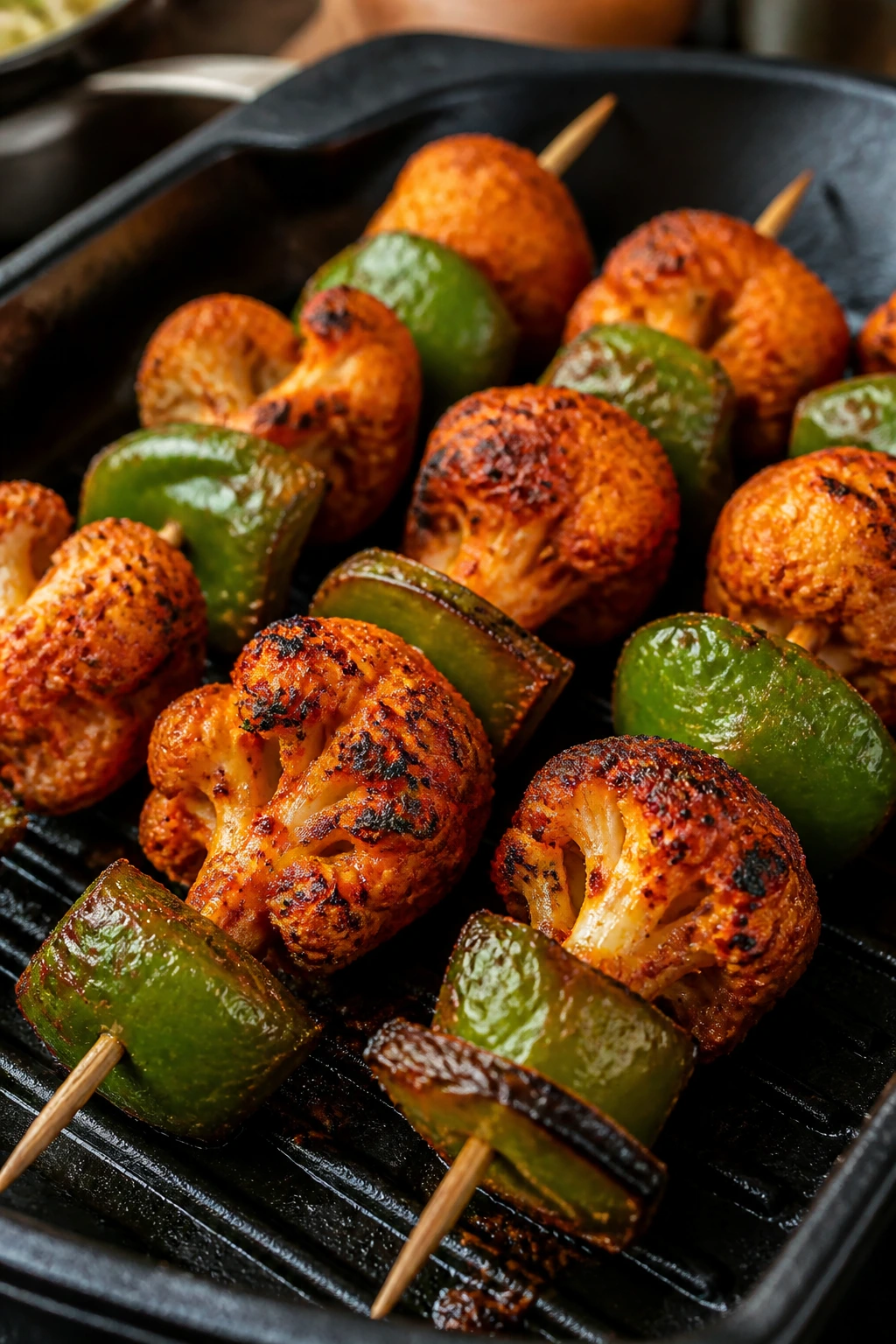
Tandoori spice gives cauliflower the kind of color and depth it needs to feel like a main dish. The yogurt marinade clings to the florets, the peppers soften and sweeten, and the whole thing comes off the heat smelling like garlic, cumin, and smoke. It’s bold without being heavy.
Why It Works: Cauliflower browns well when coated in yogurt and spices, and the yogurt helps the seasonings stick to all the little surfaces. Green pepper brings a sharper flavor than red or yellow, which balances the warm spices and keeps the skewer from turning sweet.
Key Ingredients:
- 1 small head cauliflower, cut into medium florets
- 2 green bell peppers, cut into chunks
- 1 red onion, cut into wedges
- 1/3 cup plain yogurt
- 1 1/2 tablespoons tandoori spice blend
- 1 tablespoon lemon juice
- 1 clove garlic, grated
- 1 teaspoon salt
Quick Steps:
- Whisk yogurt, tandoori spice, lemon juice, garlic, and salt.
- Toss cauliflower, peppers, and onion in the marinade and let sit for 20 minutes.
- Thread onto 8 skewers.
- Roast at 425°F for 18 to 20 minutes or grill over medium heat for 12 to 14 minutes, turning once.
- Serve with lemon wedges.
Equipment for This Recipe:
- Skewers
- Bowl
- Grill or sheet pan
- Brush, optional
How to Serve This Dish: These are excellent with basmati rice, naan, or cucumber raita. A simple mint salad on the side makes the spice feel balanced.
Pro Tips for This Recipe:
- Use a thick yogurt so the marinade stays on the cauliflower.
- Let the cauliflower sit long enough for the spice to cling.
- Don’t crowd the tray; the florets need airflow for browning.
Variations on This Dish:
- Paneer Add-On: Add paneer cubes for extra richness.
- Hotter Version: Mix in chili powder or cayenne.
- Dairy-Free Version: Use unsweetened coconut yogurt.
Common Mistakes to Avoid with This Dish:
- Don’t use a watery marinade.
- Don’t cook at too low a heat or the cauliflower turns soft without color.
- Don’t skip the onion; it helps carry the spice.
23. Sun-Dried Tomato and Mozzarella Tortellini Skewers
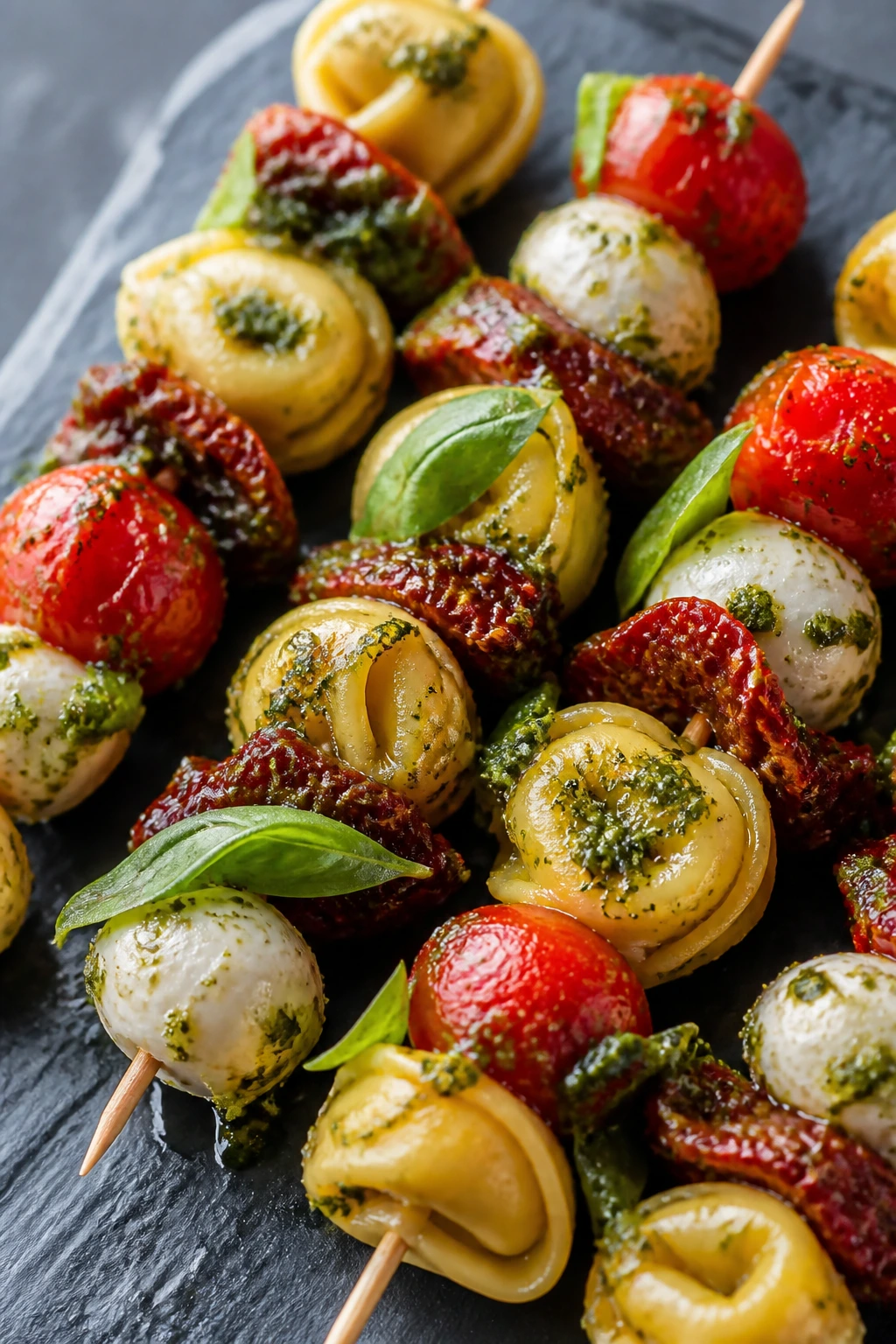
This one sits halfway between skewer and pasta salad, and I mean that as a compliment. Cooked tortellini gives you chew, mozzarella makes it creamy, and sun-dried tomatoes bring a dense, savory flavor that keeps the whole thing from tasting like party food only. It’s the easiest skewer here to make ahead.
Why It Works: Tortellini becomes sturdy after boiling and cooling, so it threads nicely without falling apart. Sun-dried tomatoes bring concentrated flavor, and a little pesto or olive oil keeps everything slick enough to move without tasting oily.
Key Ingredients:
- 9 ounces cheese tortellini
- 1 cup mozzarella pearls
- 1 cup cherry tomatoes
- 1/3 cup sun-dried tomatoes, drained and sliced if large
- 2 tablespoons basil pesto or olive oil
- 1 tablespoon lemon juice
- Fresh basil leaves
- Black pepper
Quick Steps:
- Boil the tortellini according to package directions, then drain and cool.
- Toss the tortellini with pesto, lemon juice, and black pepper.
- Thread tortellini, mozzarella, cherry tomatoes, sun-dried tomatoes, and basil onto 8 skewers.
- Serve chilled, or warm briefly on the grill for 2 minutes just to mark the tortellini.
Equipment for This Recipe:
- Skewers
- Pot for boiling
- Bowl
- Spoon
How to Serve This Dish: These are good as an appetizer platter or a lunchbox lunch with greens. If you warm them, keep it short; the cheese is better when it stays soft, not melted off the skewer.
Pro Tips for This Recipe:
- Cool the tortellini before threading or it gets sticky.
- Use sun-dried tomatoes that aren’t too oily.
- If serving warm, grill only long enough to kiss the pasta with heat.
Variations on This Dish:
- Spinach Tortellini Version: Use spinach-filled tortellini for a greener flavor.
- Olive Version: Add a few olives between the pasta pieces.
- No-Pesto Version: Toss with olive oil, lemon zest, and chopped herbs.
Common Mistakes to Avoid with This Dish:
- Don’t overcook the tortellini.
- Don’t assemble too far ahead if the pasta is still warm.
- Don’t use giant mozzarella balls; they overwhelm the skewer.
24. Smoky Squash and Red Onion Skewers
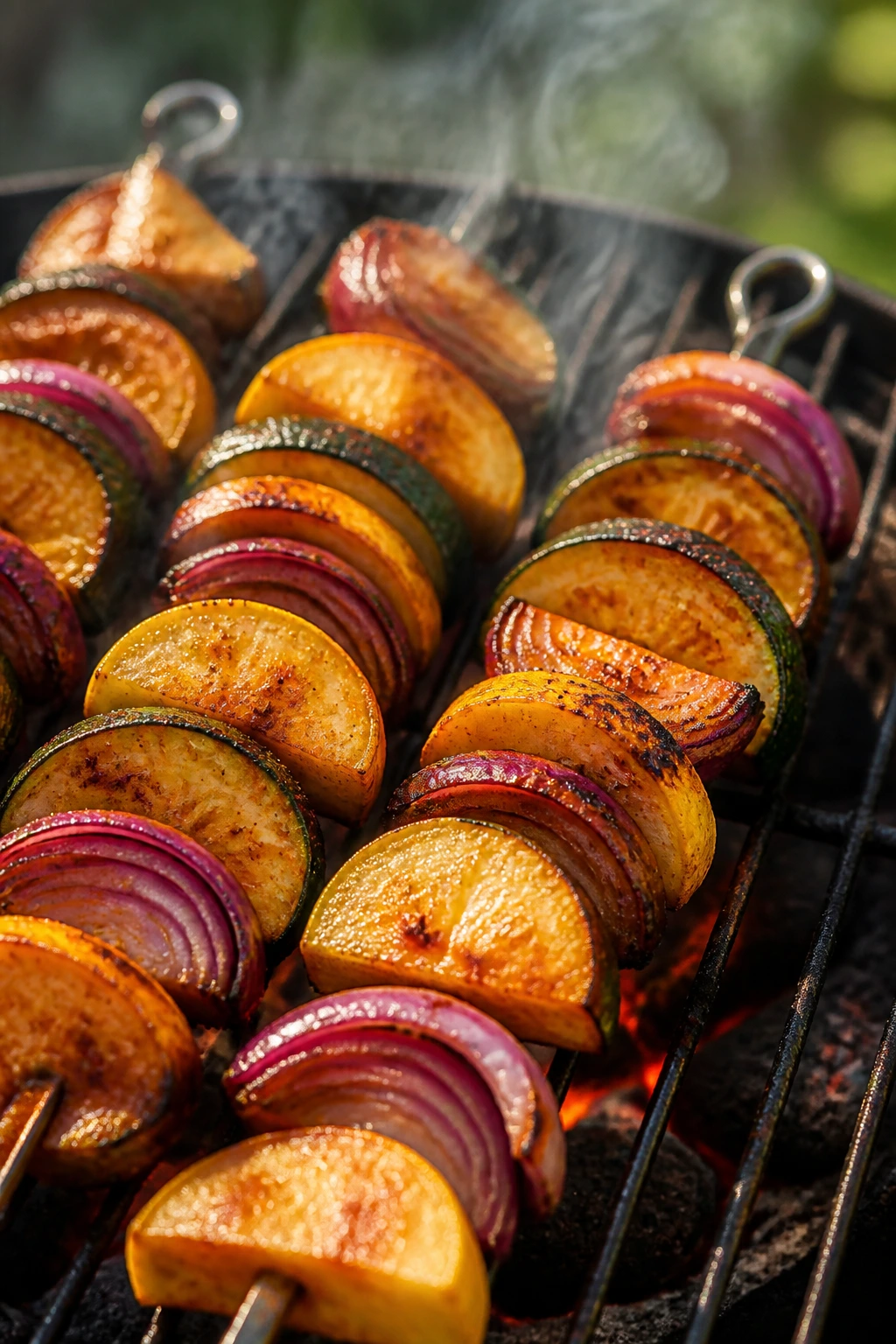
Smoky squash and red onion is the skewer you make when the drawer is full of vegetables that need a job. The squash softens and browns at the edges, the onion caramelizes, and smoked paprika gives the whole thing a campfire feel without requiring a fire. It’s simple in the best way.
Why It Works: Zucchini and yellow squash cook quickly and hold their shape if cut thick. Red onion adds sweet contrast, and smoked paprika makes a small amount of olive oil taste like it did more work than it really did.
Key Ingredients:
- 2 medium zucchini, cut into thick half-moons
- 2 medium yellow squash, cut into thick half-moons
- 1 large red onion, cut into chunks
- 3 tablespoons olive oil
- 1 teaspoon smoked paprika
- 1/2 teaspoon garlic powder
- 1 tablespoon red wine vinegar
- 3/4 teaspoon salt
Quick Steps:
- Whisk olive oil, smoked paprika, garlic powder, red wine vinegar, and salt.
- Toss squash and onion in the mixture.
- Thread onto 8 skewers.
- Grill over medium-high heat for 8 to 10 minutes or roast at 425°F for 12 minutes, turning once.
- Serve hot with extra pepper if you want it.
Equipment for This Recipe:
- Skewers
- Grill or sheet pan
- Bowl
- Tongs
How to Serve This Dish: These fit next to almost anything: beans, rice, grilled tofu, or a hunk of crusty bread. They’re also an easy side when the rest of dinner is doing the heavy lifting.
Pro Tips for This Recipe:
- Cut the squash thick enough to stay on the skewer.
- Don’t use too much paprika or the spice gets bitter.
- Roast on a hot pan if you want more browning in the oven.
Variations on This Dish:
- Herbed Version: Add thyme or oregano to the oil.
- Lemon Version: Finish with lemon zest and juice.
- Garlic-Heavy Version: Add minced garlic for a sharper flavor.
Common Mistakes to Avoid with This Dish:
- Don’t slice squash too thin.
- Don’t skip the vinegar; it keeps the flavor from going flat.
- Don’t overcook, or the squash turns watery.
Why These Skewers Make Meatless Monday Easier
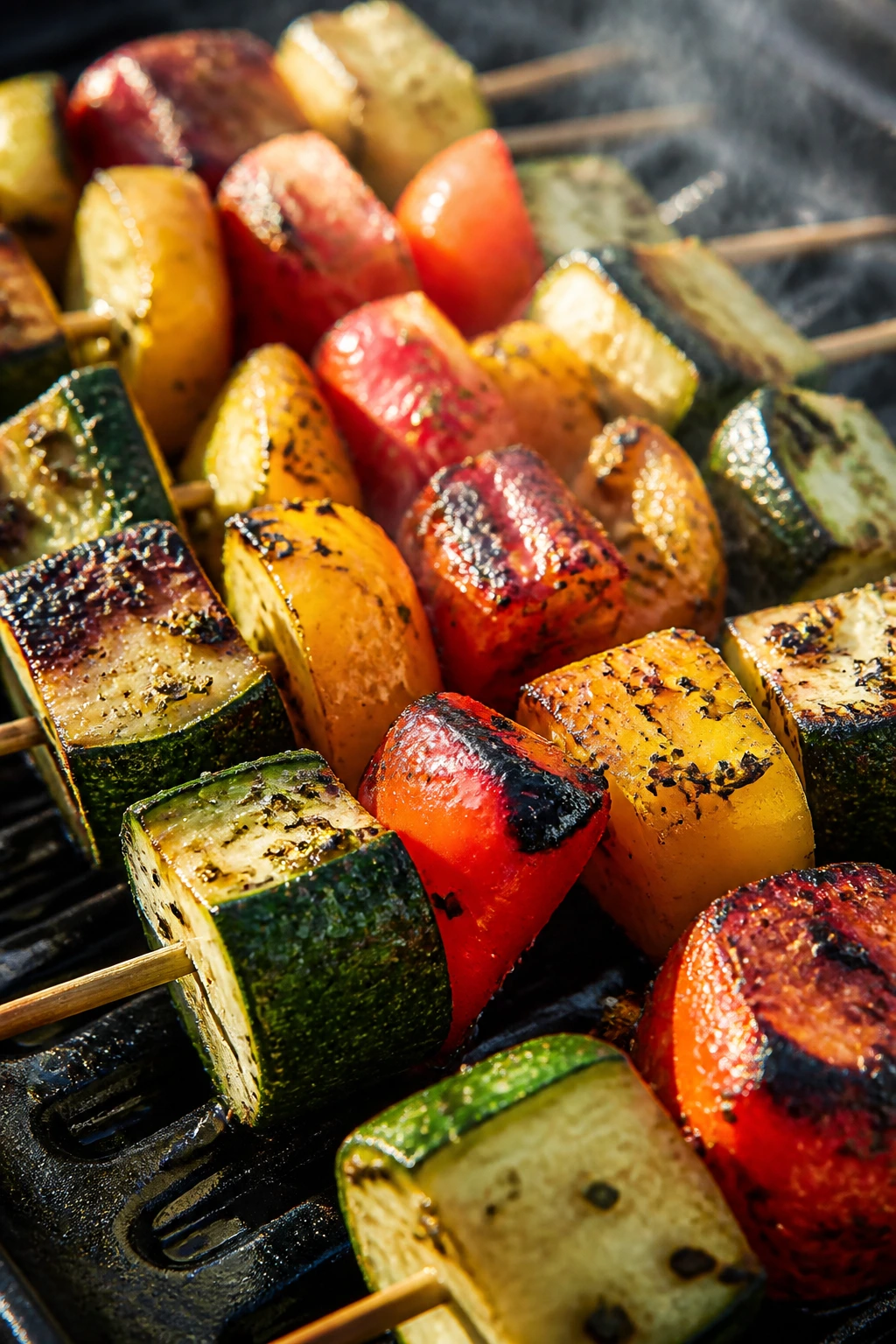
The reason veggie skewers work so well on a meatless night is simple: the format does half the thinking for you. Once the vegetables are cut to the right size, the skewer acts like a built-in portion guide, a built-in serving platter, and a built-in visual cue that dinner is actually underway. That matters more than it sounds like it should.
They also solve the old “what do I do with this random mix of produce?” problem. A zucchini can sit beside a pepper, a mushroom can sit beside an onion, and a block of tofu can carry a whole marinade without needing a long shopping list. The trick is matching density and cook time instead of forcing every ingredient to act the same.
The best versions use heat as a finishing move, not a rescue mission. Par-cooked potatoes, blanched Brussels sprouts, pressed tofu, and dry mushrooms all brown better because you’ve already done the boring part. That’s the part people skip, then wonder why the vegetables taste pale.
And frankly, skewers are forgiving in a way a lot of meatless dinners aren’t. A little char hides uneven edges. A sauce gives a common thread. A plate of mixed skewers looks more intentional than a bowl of loose vegetables ever will.
Essential Equipment for These Recipes
-
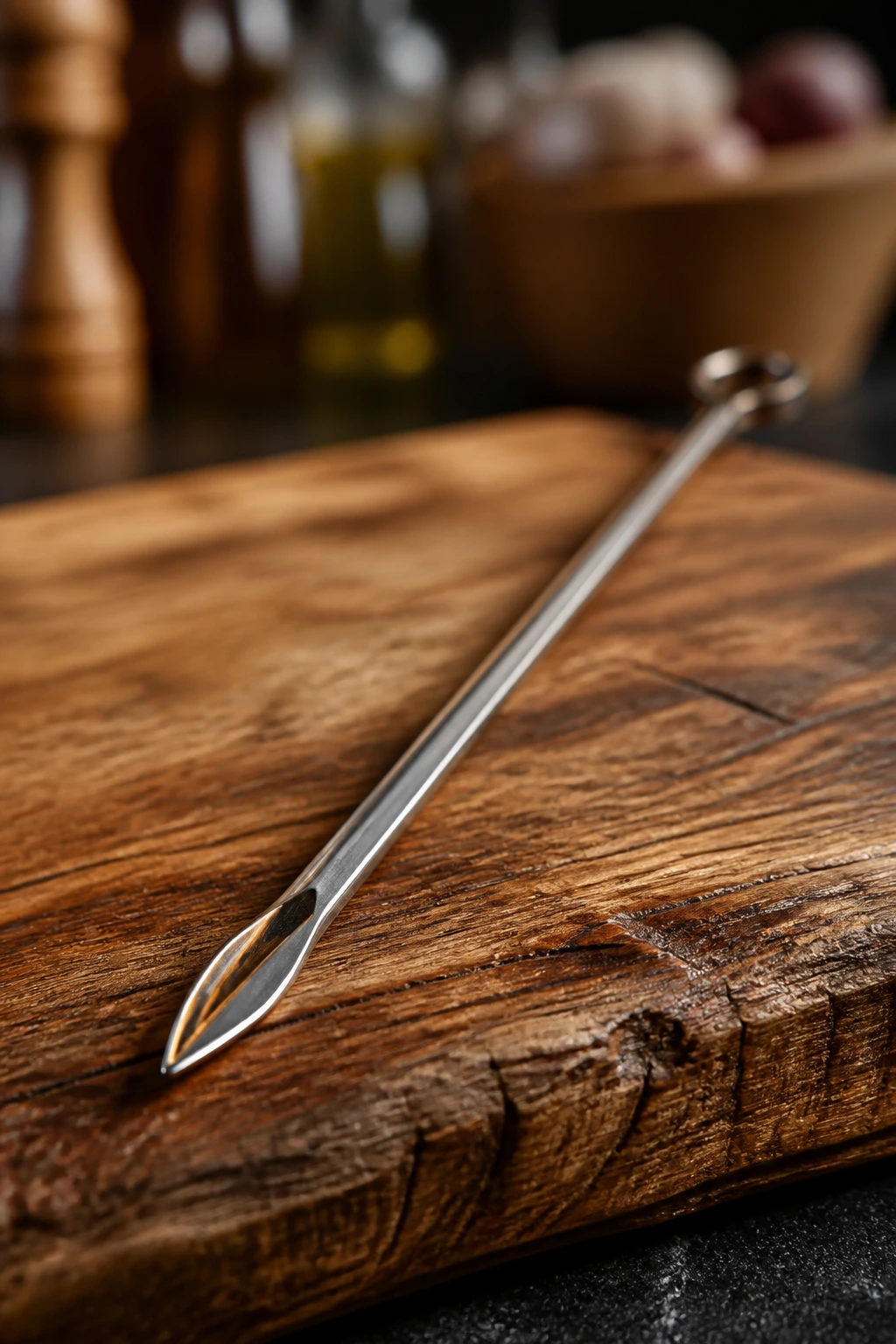
Metal skewers, 10 to 12 inches: They’re reusable and don’t need soaking, which makes them the easiest choice if you cook skewers often.
-
Bamboo skewers: Fine for most of these recipes, but soak them for 20 to 30 minutes so the ends don’t burn.
-
Rimmed baking sheets: The high sides keep glazes from running off when you roast or broil.
-
Grill or grill pan: Best for getting those browned edges and a little smoke on zucchini, mushrooms, peppers, and halloumi.
-
Tongs: Long ones are worth it; they keep your hands away from hot grates and sugary glazes.
-
Large mixing bowls: You’ll need room to toss vegetables without crushing them.
-
Pastry brush: Handy for teriyaki, barbecue, or pesto glazes that should go on in thin layers.
-
Instant-read thermometer, optional: Useful for tofu, paneer, and anything you want to confirm is hot through without overcooking the vegetables.
Smart Shopping and Ingredient Tips
Pick vegetables by how they hold up under heat, not by how pretty they look in the produce bin. Zucchini should feel firm, not bendy. Bell peppers should have thick walls and taut skin. Mushrooms should be dry on top, not slick. If you’re buying potatoes, choose small ones that are close in size so they can be par-cooked at the same pace.
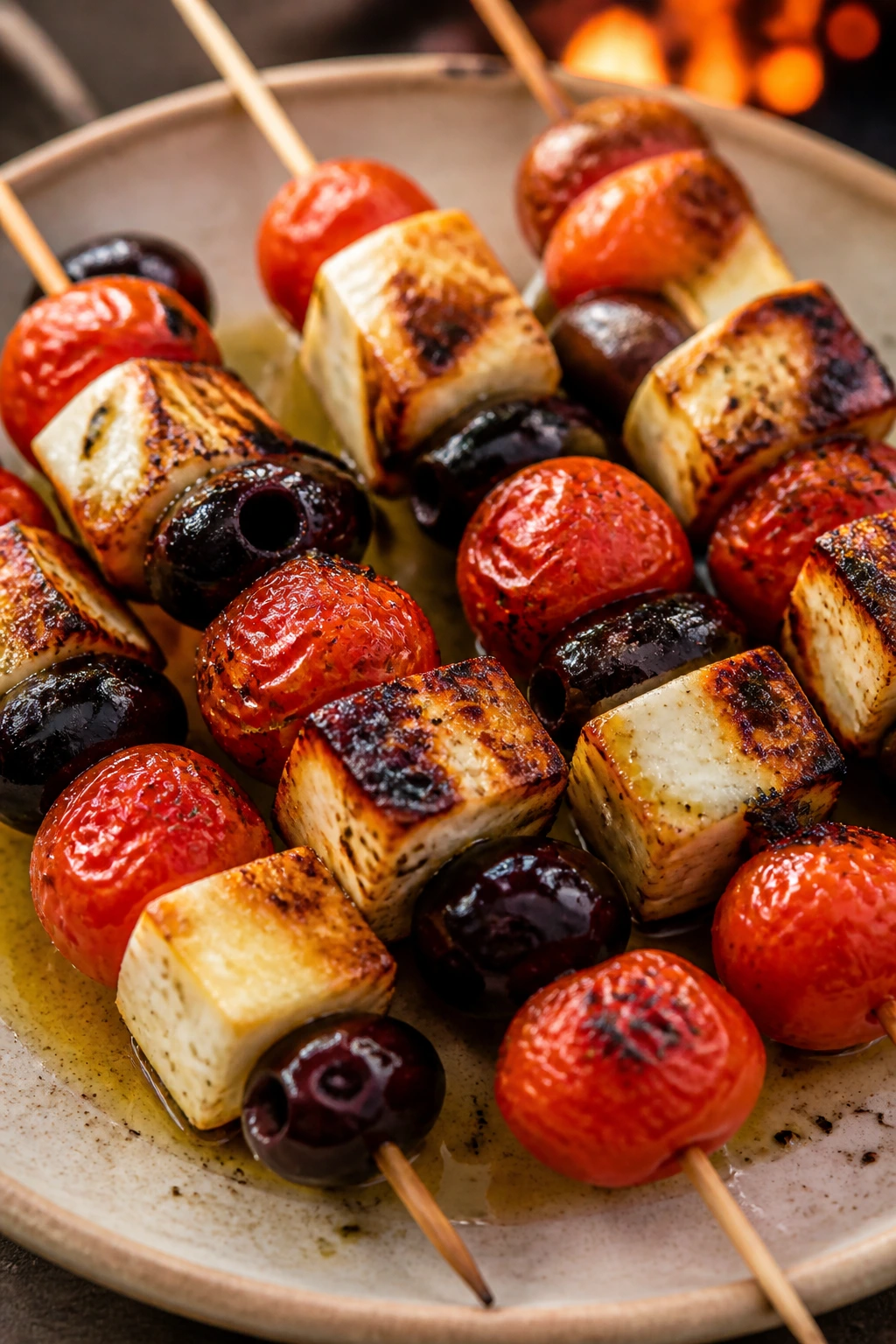
Cheese matters more than people think here. Halloumi should feel springy and dense, not crumbly. Paneer should be firm enough to cube without breaking apart in your hand. Mozzarella pearls need to be well drained, or you’ll spend the whole meal chasing slippery cheese around the skewer.
For tofu, use extra-firm and press it. Don’t skip that step. Wet tofu doesn’t brown well, and it also won’t hold glaze. Tempeh needs a sauce with salt, acid, and a little sweetener so the nutty flavor doesn’t read as dry.
The pantry ingredients deserve the same attention. Choose a barbecue sauce that isn’t so sweet it tastes like candy. Pick a teriyaki with actual soy flavor, not just corn syrup. If you’re using harissa, taste it first; some jars are smoky and mild, others are sharp enough to make you sit up straighter.
Finally, buy vegetables that fit the same cook-time family. If you want to skewer cauliflower with carrots, blanch the carrots first. If you want potatoes with asparagus, cook the potatoes partway. That one decision saves more bad dinners than any fancy seasoning ever will.
How to Serve These Recipes
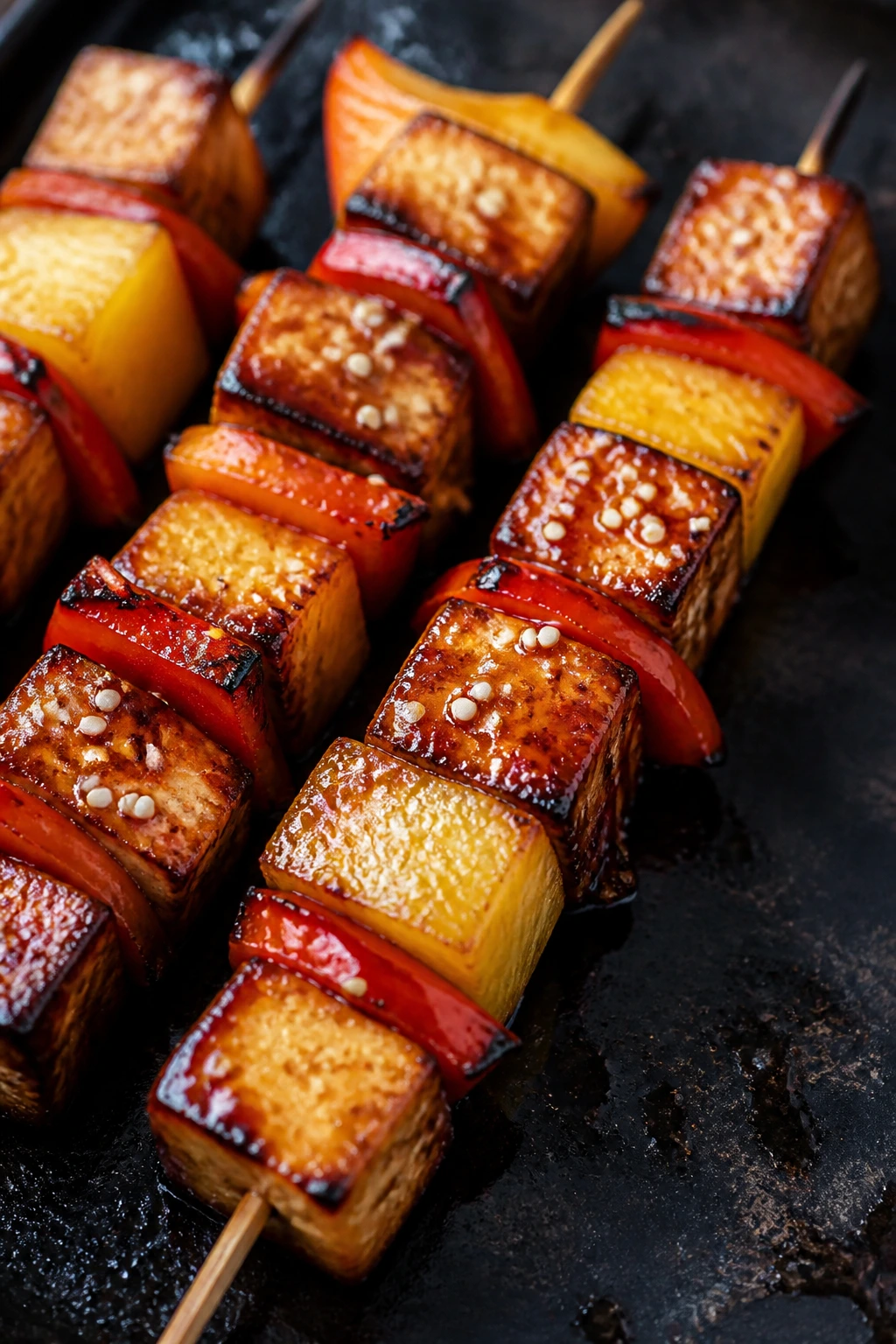
Presentation: I like to slide the skewers off onto a wide platter instead of serving them in a tight bundle. That gives the browned edges room to show, and it lets you scatter herbs, sesame seeds, or a final drizzle of sauce where people can actually see it.
Accompaniments: These skewers like simple sides that don’t fight for attention: rice, couscous, warm pita, chopped salads, lemon potatoes, slaw, yogurt sauce, hummus, tzatziki, or a bean salad. A starch helps the heartier ones like potato, paneer, tempeh, and gnocchi feel like dinner instead of an appetizer board.
Portions: For a main course, plan on 2 to 3 medium skewers per person if the skewers are loaded with potatoes, tofu, paneer, or cheese. For a lighter plate, 1 to 2 skewers with a grain and a green salad is enough. If you’re serving a mixed spread, aim for 1 skewer per person and let people circle back.
Beverage Pairing: Sparkling water with citrus and mint works across the whole collection, which is rare and useful. If you want something with more bite, a crisp lager, dry rosé, or a bright white like sauvignon blanc handles the char and acid without getting lost.
Additional Tips and Flavor Boosters
Flavor Enhancement: Finish grilled skewers with something sharp or salty: lemon juice, lime juice, flaky salt, grated parmesan, feta, or a spoonful of herb sauce. Heat does most of the work, but the final hit of acid makes the vegetables taste more awake.
Customization: If you want more protein, add tofu, tempeh, halloumi, paneer, or tortellini to the more vegetable-heavy skewers. If you want a looser, lighter plate, add extra peppers, onions, mushrooms, or squash and keep the cheese or starch to a minimum.
Serving Suggestions: Fresh herbs matter. Parsley, cilantro, basil, dill, and mint all do work here, and you do not need a giant pile. A small handful chopped over the top changes the whole plate.
Make-It-Yours: For dairy-free meals, lean on tofu, tempeh, vegetables, and sauces built from olive oil, tahini, or peanut butter. For gluten-free skewers, skip tortellini and bread cubes and use potatoes, squash, peppers, and mushrooms instead. For lower-sodium versions, go lighter on soy sauce, olives, and cured cheese, then lean harder on lemon, vinegar, garlic, and herbs.
Make-Ahead, Storage, and Reheating Guidance
Most of these skewers are best built close to cooking time, but the prep can be done ahead without ruining anything. Wash, trim, and cut the vegetables up to 24 hours in advance, then store them in airtight containers lined with paper towels if they’re especially wet. Tofu can be pressed, cubed, and marinated up to 2 days ahead. Potatoes and Brussels sprouts can be par-cooked the day before and kept covered in the fridge.
Cooked skewers keep well for 3 to 4 days refrigerated in airtight containers, though the better ones for leftovers are the sturdier recipes: tofu, tempeh, paneer, potatoes, cauliflower, mushrooms, and squash. Caprese, bruschetta, and tortellini skewers are more fragile; they’re fine the next day, but they lose their best texture fast.
Freezing is only worth doing for a few of the collection recipes. Tofu, tempeh, paneer, cauliflower, and potato-based skewers can be frozen for up to 2 months, though the texture softens a little. I would not freeze tomato-heavy, cheese-heavy, or basil-heavy skewers. They come back muddy.
For reheating, use a 375°F oven for 8 to 10 minutes on a sheet pan, or a skillet over medium heat for a few minutes if you want a little fresh browning. The microwave works in a pinch, but it’s not kind to halloumi, paneer, or bread cubes. If you’re reheating glazed skewers, keep the time short so the sauce doesn’t scorch.
Variations and Adaptations to Try
Sheet-Pan Backup: If you don’t want to thread skewers, keep the same cut sizes and roast everything on a lined sheet pan at the same temperatures. Stir once halfway through, and you’ll get the same flavor with one less tool to wash.
Air-Fryer Shortcut: Smaller batches work nicely in an air fryer at 375°F to 400°F, usually in 8 to 12 minutes. This is especially good for tofu, paneer, halloumi, and smaller vegetable pieces, but don’t overcrowd the basket or you’ll lose the browning.
Vegan Protein Boost: Swap halloumi or paneer for tofu or tempeh in any skewer that wants more heft. Press the tofu, marinate it, and give it the same treatment as the cheese. It won’t taste the same, but it will still feel complete.
Lower-Sodium Brightness: If you’re cutting back on salt, use more lemon, lime, vinegar, garlic, herbs, and black pepper. That works especially well in the Mediterranean, Greek, and pesto-style skewers, where acid can carry a lot of the flavor load.
Kid-Friendly Mild Skewers: Skip the spicy glazes and lean on sweet peppers, zucchini, potatoes, corn, pineapple, or halloumi. A little honey or maple in the marinade gives the vegetables a glossy finish without turning them into dessert.
Cookout-Style Swaps: Treat any of the vegetable-only recipes like grill sides and pair them with baked beans, slaw, potato salad, or cornbread. The flavors hold up because they’re built around char and seasoning, not fragile garnishes.
Common Mistakes to Avoid
The first mistake is mixing vegetables that need very different cook times on the same skewer and hoping the grill will sort it out. Raw potatoes with zucchini is a classic bad idea. So is throwing tiny mushrooms in with giant onion wedges. Match the density, or par-cook the hard pieces first.
Another mistake is crowding the skewer so tightly that the vegetables steam each other. You want room for hot air to hit the sides. If the pieces are jammed together, they’ll turn soft and pale instead of browned and crisp-edged.
Sugar-heavy glazes can also go wrong fast. Barbecue sauce, honey, teriyaki, and jerk marinades need late application or moderate heat. If you coat everything before the fire gets a chance to do its work, the outside burns before the middle is hot.
People also underseason vegetables because they think the sauce will handle it. Sometimes it won’t. Salt, acid, and a little oil matter before cooking, not after. The vegetables should taste seasoned on their own, even if you forget the drizzle.
Last, bamboo skewers need attention. Soak them, and don’t leave the exposed ends hanging over intense heat for too long. If you’re cooking a lot of skewers, metal ones are simpler. Less drama. Fewer charred sticks to scrape off later.
Frequently Asked Questions
Do I have to soak bamboo skewers?
Yes, if you’re using a grill, especially with longer cook times. A 20- to 30-minute soak keeps the exposed ends from burning too fast. Metal skewers skip that problem entirely.
Can I make veggie skewers in the oven instead of on a grill?
Absolutely. A hot oven at 425°F gives you good browning, and the broiler can finish the top in the last minute or two. Use a rimmed baking sheet so nothing slides off while you turn the skewers.
Which vegetables work best for skewers?
Think firm and cooperative: zucchini, peppers, onions, mushrooms, cauliflower, potatoes, asparagus, squash, and Brussels sprouts. Soft, watery vegetables need help from a glaze or a quick pre-cook if you want them to stay on the skewer.
How do I keep the vegetables from falling off?
Cut them into larger, even pieces and thread through the widest part of each piece. If a vegetable is slippery, like tomato or halloumi, sandwich it between sturdier ingredients. And don’t turn the skewer with a twisting motion; use tongs and flip gently.
Can I make these ahead for a party?
You can prep and marinate the components a day ahead, then assemble and cook close to serving time. For the no-cook skewers like Caprese or tortellini, assemble them a few hours ahead and keep them chilled, but add glaze or basil at the last minute.
What if some vegetables cook faster than others?
That’s normal. Put faster vegetables on separate skewers, or use them as the outer pieces on a mixed skewer and keep the slower ones in the center. If a skewer already needs help, par-cook the dense pieces before threading.
Can I make these in an air fryer?
Yes, for small batches. Keep the pieces slightly larger than you might for a sheet pan, and don’t overcrowd the basket. Air fryers are especially good for tofu, tempeh, cauliflower, paneer, and potatoes.
Which skewers are best for leftovers?
The sturdy ones: tofu, tempeh, paneer, potatoes, mushrooms, cauliflower, and squash. Tomato-heavy or bread-heavy skewers soften too much overnight, which is fine if you expect it, but not ideal if you want the same texture the next day.
Fire, Color, and a Better Monday Night
A meatless dinner doesn’t need to feel like a workaround. When vegetables are cut well, seasoned properly, and given a little high heat, they turn into something with shape and presence. That’s what skewers do better than almost any other format: they make the meal look finished before the first bite.
I’d start with the simplest ones if you’re new to the idea—zucchini and peppers, halloumi and tomatoes, or tofu with a strong glaze—then work toward the more structured versions like potatoes, paneer, or Brussels sprouts. Once you get used to the rhythm, it gets easier to build dinner from whatever’s in the fridge without making it feel improvised.
And that’s the part worth keeping. Not just the char, or the sauces, or the little burnt edges that people always reach for first. It’s the fact that a few well-made veggie skewers can make Meatless Monday feel like a meal you meant to make.