



A roasted vegetable dinner only earns its place at the table when the oven is hot enough to brown the edges before everything turns soft and shy. At 425°F, sweet potatoes go creamy in the middle, cauliflower picks up those nutty little brown spots, and chickpeas—if you dry them well—turn crisp enough to snap under your teeth instead of slumping on the tray.
Most roasted vegetable trays fail for a very simple reason: they’re treated like a side dish pretending to be a meal. The pan gets crowded, the vegetables are cut in wildly different sizes, and the cook expects zucchini to stay civilized for 40 minutes. It won’t. Zucchini is a diva. Treat it like one.
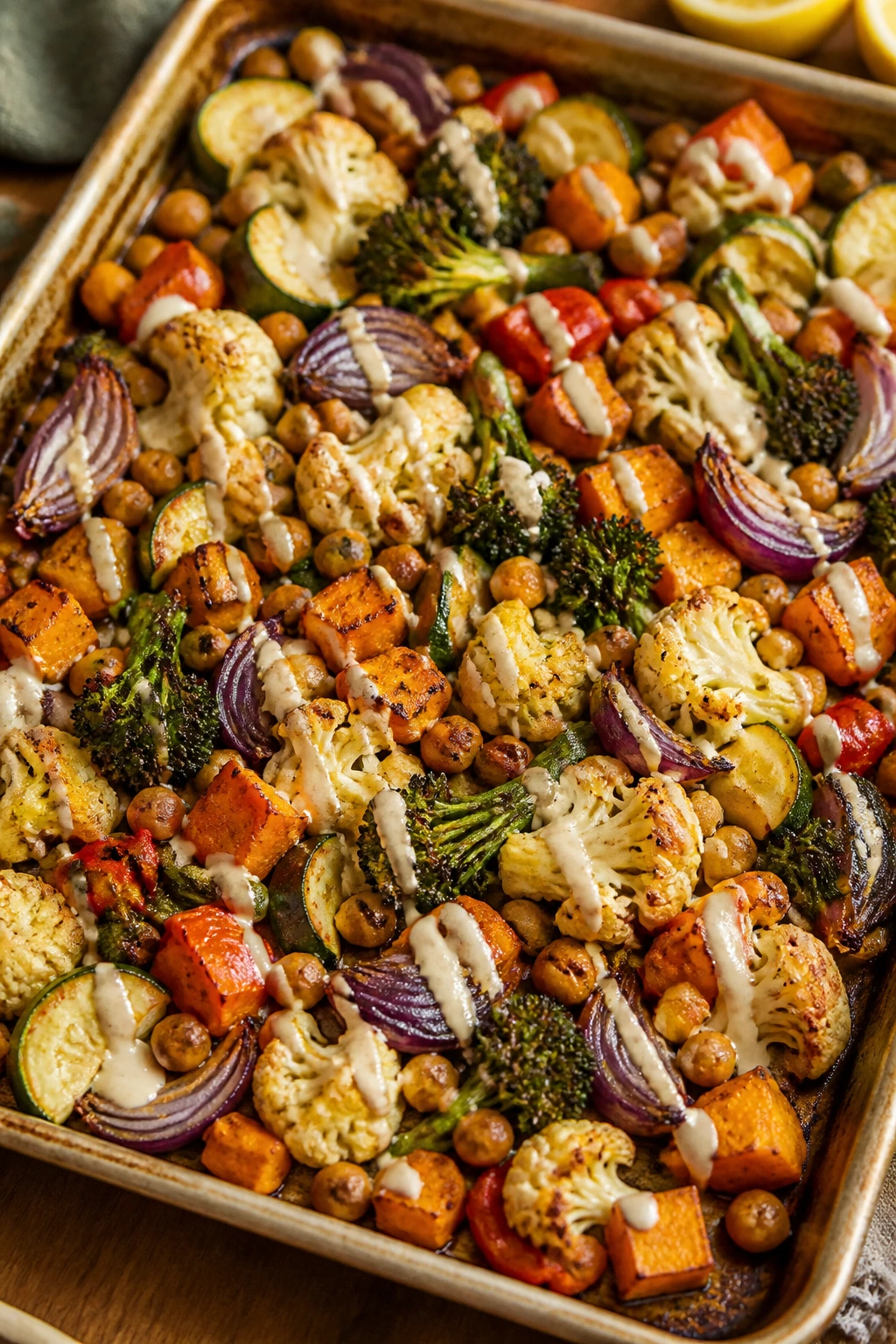
This version fixes that by staging the vegetables, using a measured amount of oil, and finishing the whole thing with lemon-tahini so the flavors taste finished instead of merely cooked. If you want a roasted vegetable healthy dinner that feels like an actual meal—not a bowl of limp produce with hopeful herbs scattered over the top—this is the one I’d make.
Why This Roasted Vegetable Dinner Works So Well
Staged roasting saves the texture. The sweet potato, carrots, cauliflower, and chickpeas get a head start, while broccoli, bell pepper, onion, and zucchini join later. That one move keeps the quick-cooking vegetables from collapsing into mush.
The pan has enough substance to stand on its own. Chickpeas bring body, fiber, and a little crunch. Without them, you’ve got a side dish. With them, you’ve got dinner.
A measured amount of oil does real work. Three tablespoons is enough for browning across the whole tray, and the vegetables still taste clean instead of slick. More oil is not better here. It just pools in the corners and makes the tray feel heavy.
The finish matters as much as the roast. Lemon juice, garlic, and tahini keep the flavor from flattening out in the oven. A lot of roasted vegetables are technically done but still taste unfinished. This tray does not have that problem.
The ingredients are flexible without becoming vague. You can swap in Brussels sprouts, parsnips, butternut squash, or even asparagus if you understand the timing. That means this recipe can live in your kitchen and not just your recipe folder.
It’s built for real dinner life. You can serve it over grains, tuck it into pita, pile it onto greens, or add eggs on top. That matters more than lofty nutrition talk. A dinner needs to feed you at 7 p.m., not impress a spreadsheet.
How a Hot Oven Turns Vegetables into Dinner
Roasting vegetables is one of those techniques that sounds plain until you taste it done well. Then it becomes hard to go back. A hot oven pulls moisture out of the surface, which lets the edges brown before the inside turns to paste. That’s the whole trick, and it’s the reason a tray of carrots can taste sweeter, a head of cauliflower can taste almost buttery, and a red onion can taste like it spent an afternoon caramelizing at a lower temperature without any babysitting.
The background of this dish is not fancy. It comes from the oldest cooking instinct in the book: put sturdy food in heat, wait for the surface to brown, and use salt and fat to make the flavors show up. That’s true in kitchens everywhere. It’s also why roasted vegetables have survived every food trend that tried to bury them under dressings, bowls, and buzzwords.
I like this version because it treats vegetables with a little respect and a little impatience. Respect, because the pieces are cut to the right size and the chickpeas are dried well before they hit the pan. Impatience, because the oven is hot and the vegetables are not asked to sit around for an hour. That balance matters. Too gentle, and you lose color. Too aggressive, and the quick-cooking vegetables dry out before the sturdy ones are done.
You can smell when it’s working. The garlic gets sweet instead of sharp. The cauliflower starts to smell nutty. The onion edges darken. If a tray of vegetables doesn’t make your kitchen smell like it has done something useful, it probably needed more heat or more room.
What Goes Into the Pan
Yield: Serves 4 as a main dish, or 6 as a side
Prep Time: 20 minutes
Cook Time: 30 to 35 minutes
Total Time: 50 to 55 minutes
Difficulty: Beginner — the method is straightforward, but the cut sizes and pan spacing matter a lot.
Best Served: Warm, within 10 minutes of leaving the oven
For the Vegetables and Chickpeas:
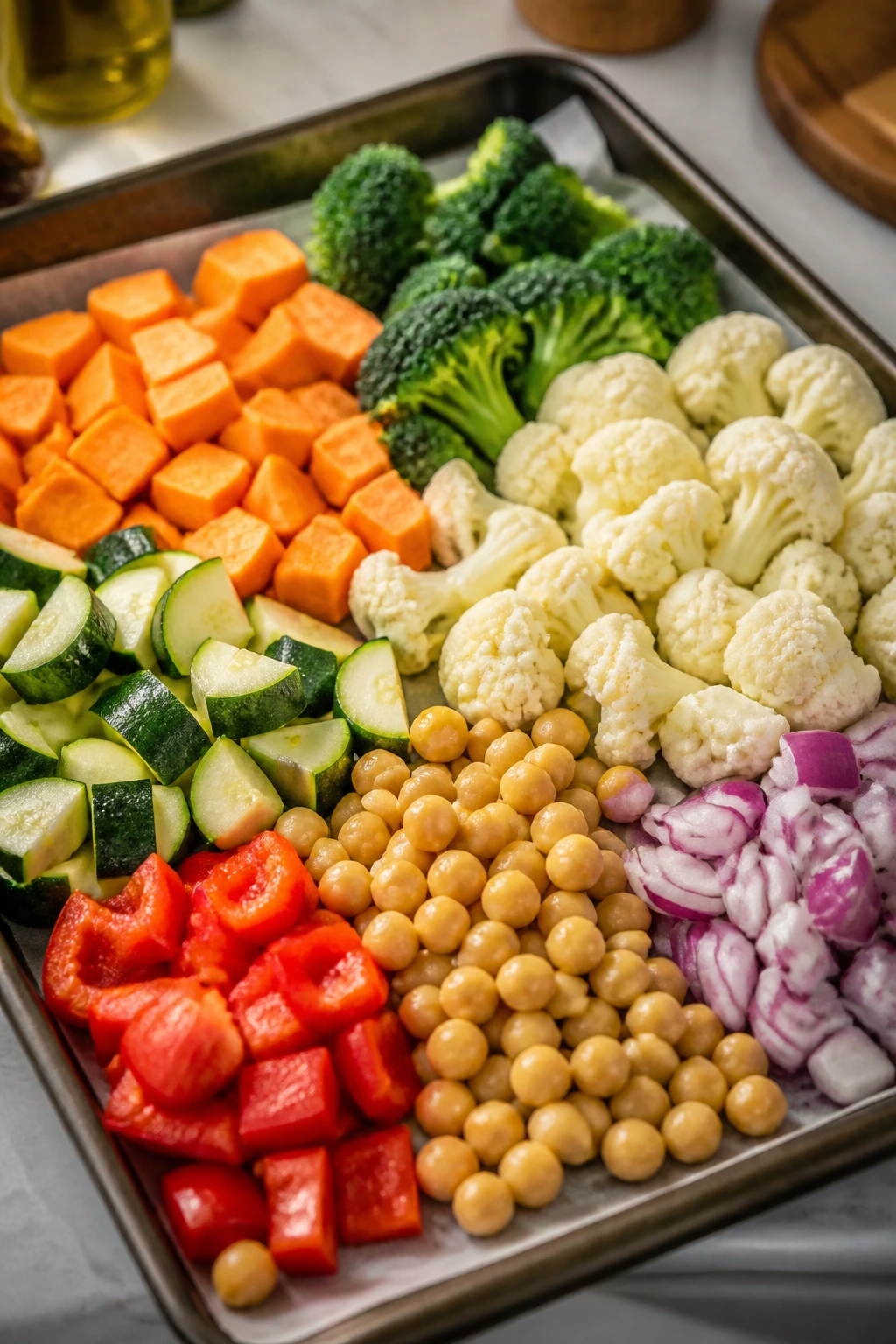
- 1 medium sweet potato, peeled and cut into 3/4-inch cubes
- 2 medium carrots, cut into 1/2-inch diagonal slices
- 1 small cauliflower, cut into 1-inch florets
- 1 small broccoli crown, cut into 1-inch florets
- 1 red bell pepper, seeded and cut into 1-inch strips
- 1 red onion, cut into 8 wedges
- 1 medium zucchini, cut into 1/2-inch half-moons
- 1 (15-ounce) can chickpeas, rinsed, drained, and patted very dry
- 3 tablespoons extra-virgin olive oil
- 3 garlic cloves, minced
- 1 1/2 teaspoons kosher salt
- 1 teaspoon black pepper
- 1 teaspoon smoked paprika
- 1 teaspoon dried oregano
- 1/2 teaspoon ground cumin
For the Lemon-Tahini Drizzle:
- 1/4 cup tahini
- 2 tablespoons fresh lemon juice
- 2 tablespoons warm water, plus more as needed
- 1 small garlic clove, finely grated
- 1/4 teaspoon kosher salt
- Pinch of cayenne, optional
For Finishing:
- 2 tablespoons chopped parsley
- 1 tablespoon toasted sesame seeds or pumpkin seeds
- 1 lemon, cut into wedges
Why Each Ingredient Matters in the Oven
Main Vegetables
What to use: 1 medium sweet potato, 2 medium carrots, 1 small cauliflower, 1 small broccoli crown, 1 red bell pepper, 1 red onion, and 1 medium zucchini give the tray a mix of dense, crisp, soft, and juicy textures.
Preparation: Cut the sweet potato and carrots smaller than the cauliflower so they can catch up in the oven. Broccoli, pepper, onion, and zucchini join later because they cook faster and can go soft if they roast for the full time.
Substitutions: Parsnips, Brussels sprouts, butternut squash, fennel, or asparagus all work well. Keep the same idea in mind: put hard vegetables in first, tender ones later.
Tips: Don’t chop everything into the same shape. A zucchini half-moon and a sweet potato cube are not the same animal, and they should not be treated like they are.
Chickpeas
What to use: 1 can of chickpeas gives the dish body and makes it feel like a finished dinner instead of a tray of vegetables.
Preparation: Rinse them, drain them, and pat them dry until they feel almost dusty on the outside. That dry surface is what lets them toast instead of steam.
Substitutions: White beans can work if you want a softer bite, and cubed extra-firm tofu can stand in if you want more protein. Both change the texture, so adjust your expectations.
Tips: Chickpeas need space. If they’re buried under wet vegetables, they’ll never crisp. They’ll just get hot and rubbery.
Seasoning Blend
What to use: Olive oil, garlic, kosher salt, black pepper, smoked paprika, oregano, and cumin give the tray a savory base without smothering the vegetables.
Preparation: Mix the spices with the oil before tossing so the seasoning sticks evenly instead of falling into a little pile on the pan.
Substitutions: Regular paprika can replace smoked paprika, and thyme can stand in for oregano. If you like heat, a pinch of chili flakes works well here.
Tips: Season before roasting, then taste again after finishing. Roasted vegetables almost always need a small final hit of salt or acid to wake them up.
Lemon-Tahini Drizzle
What to use: Tahini, lemon juice, water, garlic, salt, and a little cayenne make a thick, creamy sauce that clings to the vegetables.
Preparation: Whisk until smooth and pourable. Tahini can seize at first, which looks alarming for about 20 seconds and then settles down once you add water.
Substitutions: Plain Greek yogurt can replace tahini if you’re not keeping the dish vegan. A spoonful of hummus thinned with water also works in a pinch.
Tips: Make the drizzle loose enough to spoon, not gluey enough to sit in a lump. You want it to stripe over the vegetables, not sit there like cold peanut butter.
Finishing Herbs and Seeds
What to use: Parsley, sesame seeds or pumpkin seeds, and lemon wedges keep the final plate bright and not too heavy.
Preparation: Chop the parsley right before serving so it stays lively. Toast the seeds in a dry pan if they aren’t already toasted.
Substitutions: Cilantro, dill, or chives can replace parsley if you prefer a different herb. Sunflower seeds work too.
Tips: The final garnish is not decoration. It adds freshness, crunch, and a tiny bit of contrast, which roasted food needs more than people think.
The Tools That Keep the Pan Honest
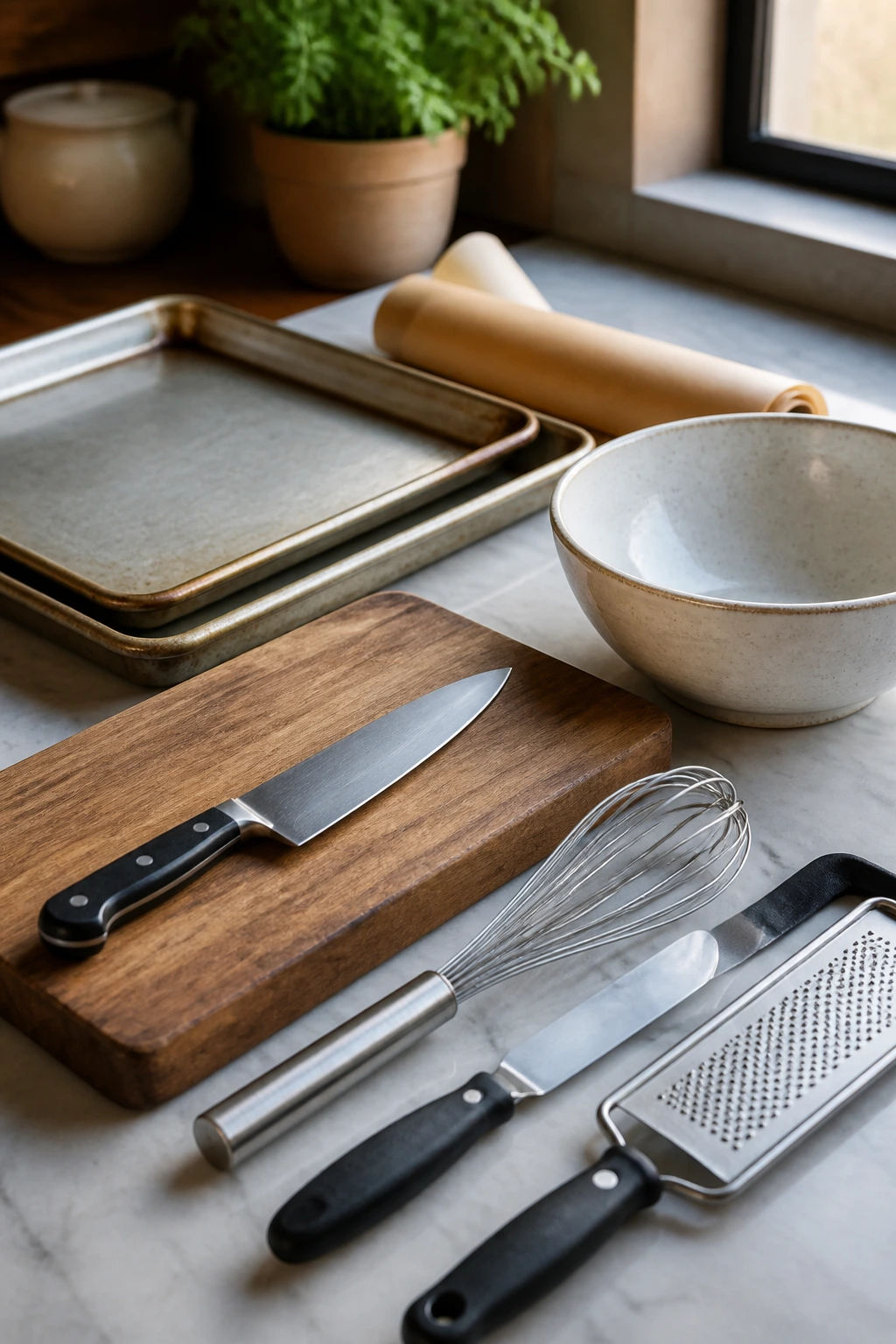
- 2 rimmed baking sheets — Two pans prevent crowding, and crowding is the enemy of browning.
- Parchment paper — Makes cleanup easier and keeps the drippings from welding to the pan.
- Large mixing bowl — Big enough to toss the vegetables without launching half of them onto the counter.
- Chef’s knife — A sharp knife matters more than people admit when you’re cutting a sweet potato into even cubes.
- Cutting board — A stable board helps you keep the vegetable pieces similar in size, which is half the battle.
- Small whisk or fork — Useful for the tahini drizzle, which needs a little agitation to turn smooth.
- Thin metal spatula — Handy for lifting browned vegetables without scraping all the good bits off the pan.
- Microplane or fine grater — Optional, but excellent for the garlic in the sauce if you want a smoother finish.
How to Roast the Vegetables Without Guesswork
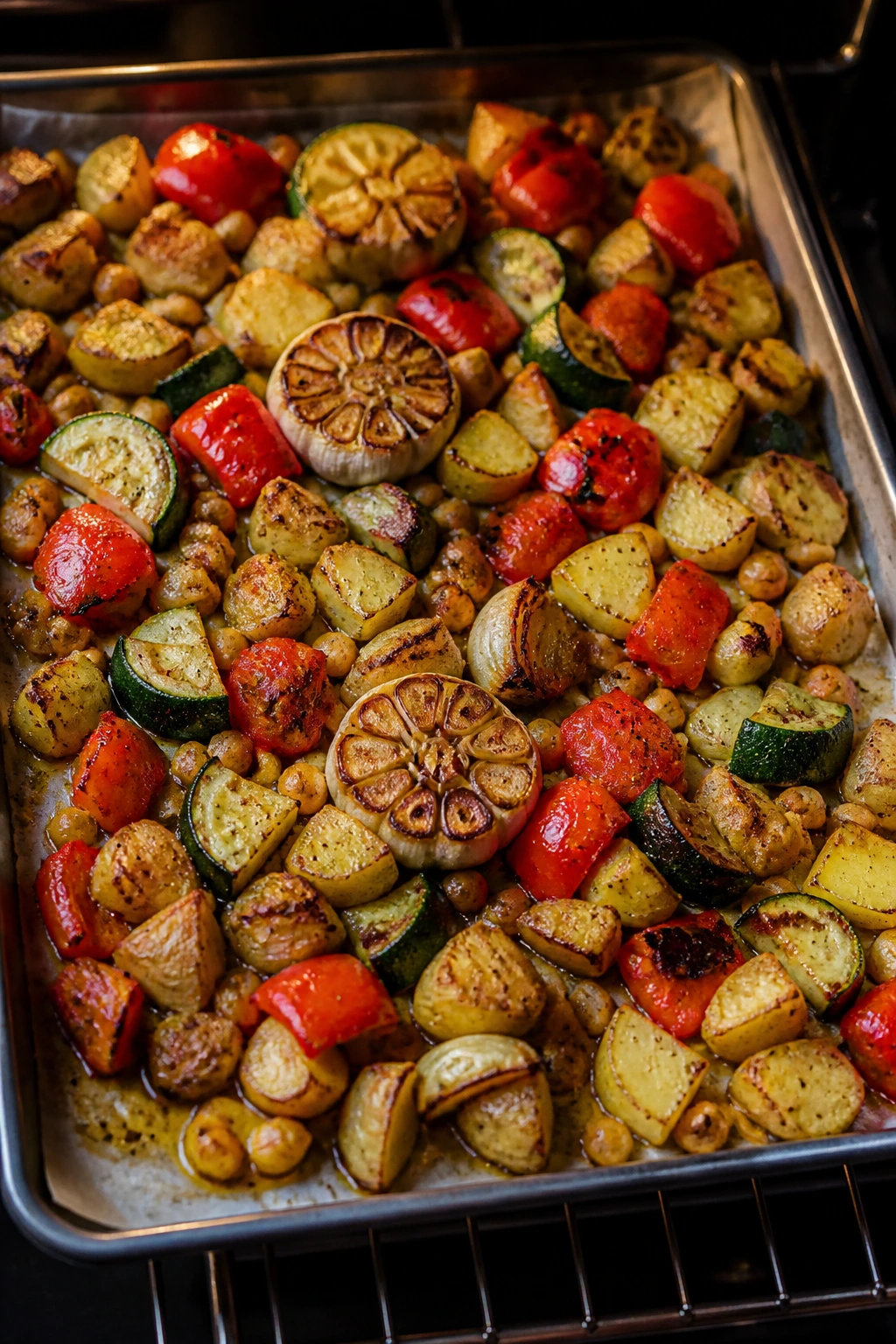
Prep the Oven and the Pans
-
Preheat the oven to 425°F (220°C) and position racks in the upper and lower thirds. Line 2 rimmed baking sheets with parchment paper.
-
Cut all of the vegetables before you start mixing anything. The sweet potato and carrots should be sturdy, the cauliflower and broccoli florets should be bite-sized, and the zucchini should be thick enough to hold its shape. Uneven cutting is the fastest way to get a pan with both burnt and raw pieces.
Build the Base Layer
-
In a large bowl, combine the sweet potato, carrots, cauliflower, and chickpeas with 2 tablespoons olive oil, half of the minced garlic, 1 teaspoon kosher salt, 1/2 teaspoon black pepper, the smoked paprika, oregano, and cumin. Toss until everything is lightly coated and the spices cling to the vegetables instead of sinking to the bottom of the bowl.
-
Divide the mixture between the two prepared baking sheets and spread it into a single layer. Leave space between the pieces. If the vegetables touch too much, they steam. Roast for 15 minutes, then switch the pans from top rack to bottom rack and rotate them front to back.
Add the Faster-Cooking Vegetables
-
While the base vegetables roast, return the empty bowl to the counter and toss the broccoli, bell pepper, red onion, and zucchini with the remaining 1 tablespoon olive oil, the rest of the garlic, 1/2 teaspoon kosher salt, and the remaining black pepper. Keep the coating light; these vegetables do not need much oil.
-
Pull the pans from the oven after the first 15 minutes. Stir the sweet potato, carrots, cauliflower, and chickpeas so the pieces on the edges do not get too dark. Scatter the broccoli, bell pepper, onion, and zucchini over the two pans, filling in the open spaces. Roast for 12 to 15 minutes more, until the sweet potato is fork-tender, the broccoli tips are browned, and the chickpeas feel crisp in spots.
Make the Drizzle and Finish the Dish
-
While the vegetables finish roasting, whisk the tahini, lemon juice, warm water, grated garlic, salt, and cayenne in a small bowl. The mixture may tighten at first. Keep whisking and add more water, 1 teaspoon at a time, until it turns smooth and pourable.
-
Transfer the vegetables to a warm serving platter or shallow bowls. Spoon the tahini drizzle over the top, scatter the parsley and seeds, and serve with lemon wedges. Do not skip the lemon at the end. The acid cuts through the oil and wakes up every other flavor on the plate.
The Best Way to Plate Roasted Vegetables for Dinner
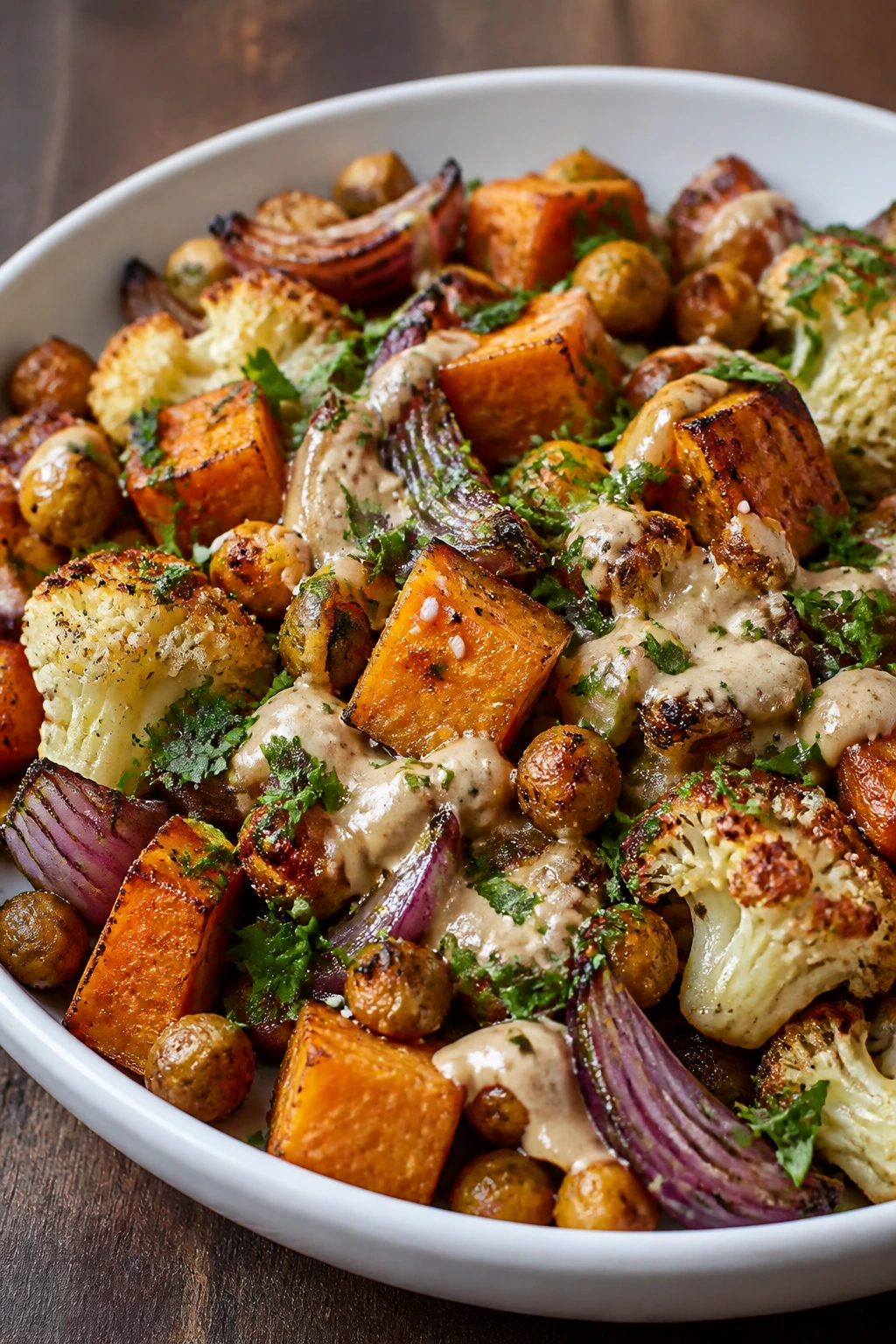
Presentation: Pile the vegetables into a shallow bowl or a wide platter instead of serving them in a deep mound. That keeps the browned surfaces visible, and it lets the tahini settle into the gaps instead of disappearing into the middle. A final scatter of parsley and seeds gives the plate a little lift.
Accompaniments: This dish sits well on top of quinoa, brown rice, farro, or couscous, and it also works beside warm pita or flatbread. If you want extra freshness, add a simple cucumber salad or a few spoonfuls of plain yogurt on the side. I also like it with a fried egg on top when I want the meal to feel more substantial.
Portions: Count on about 1 1/2 cups per main-dish serving or 3/4 cup as a side. If you’re feeding bigger appetites, add grains underneath or serve it with pita so the vegetables can stretch without feeling skimpy.
Beverage Pairing: Sparkling water with lemon keeps the plate light, and a crisp dry white wine can handle the tahini without fighting it. Mint tea works too. Simple, clean drinks are the move here.
Small Tweaks That Make the Tray Taste Better
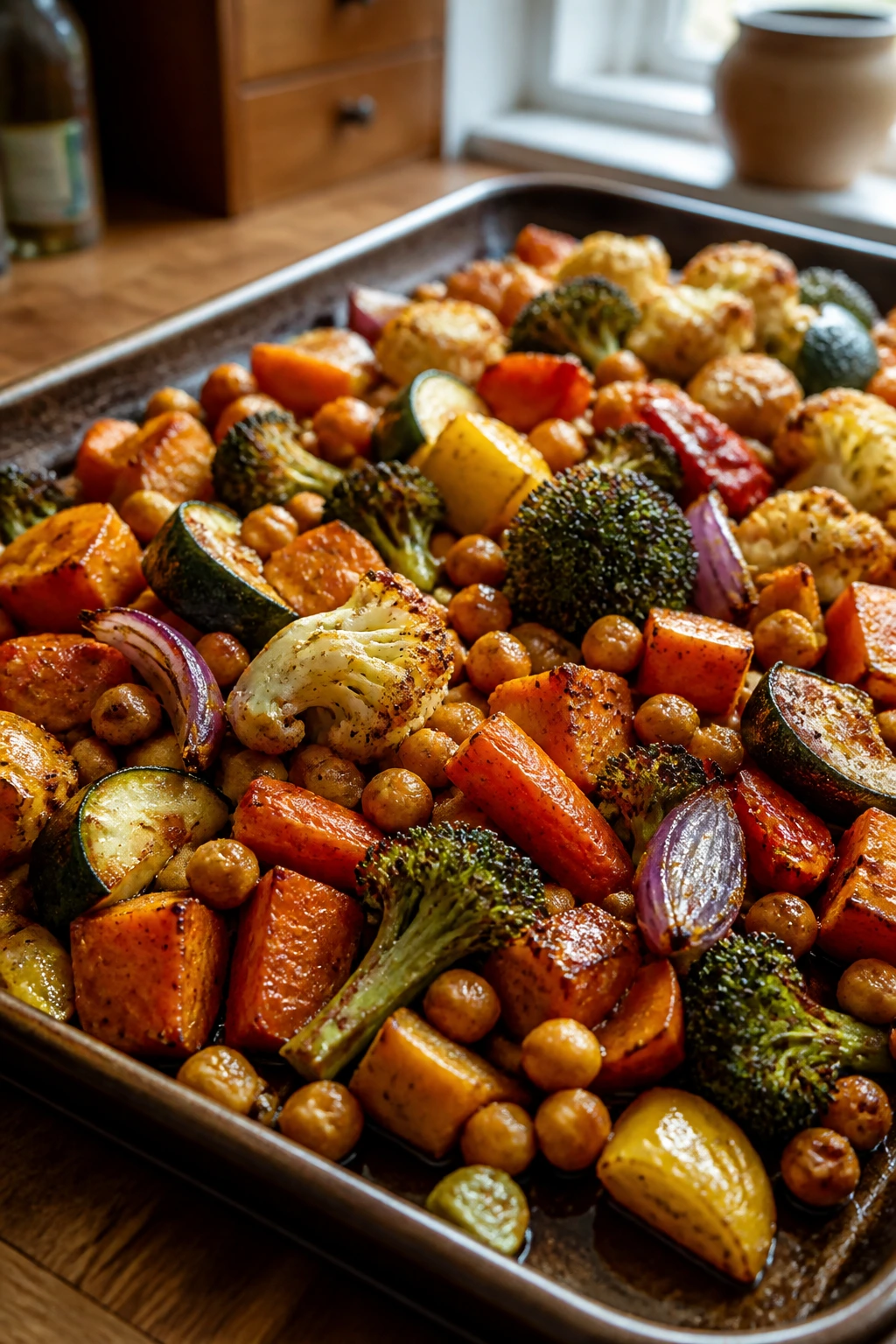
Flavor Enhancement: A little lemon zest over the finished tray does more than another splash of lemon juice. Zest brings the oil from the peel, which smells brighter and lands faster on the tongue. If you like heat, a tiny drizzle of chili crisp over the tahini is worth trying.
Customization: If you want a creamier plate, crumble feta over the vegetables after roasting. If you want more protein, tuck in a couple of fried eggs or add cubes of roasted halloumi during the last 8 minutes. Both changes make the dish feel more like dinner and less like an elaborate side.
Serving Suggestions: Toasted pumpkin seeds, sesame seeds, or even chopped pistachios add a nice dry crunch against the soft sweet potato and onions. A spoonful of hummus under the vegetables works too. It’s not subtle, but it tastes good.
Make-It-Yours: For a dairy-free, vegan plate, keep the recipe as written. For a lower-heat version, skip the cayenne and use regular paprika instead of smoked paprika. For a bigger garlic flavor, grate a second clove into the tahini sauce instead of adding more to the vegetables, where it can burn.
The Mistakes That Leave Roasted Vegetables Limp
-
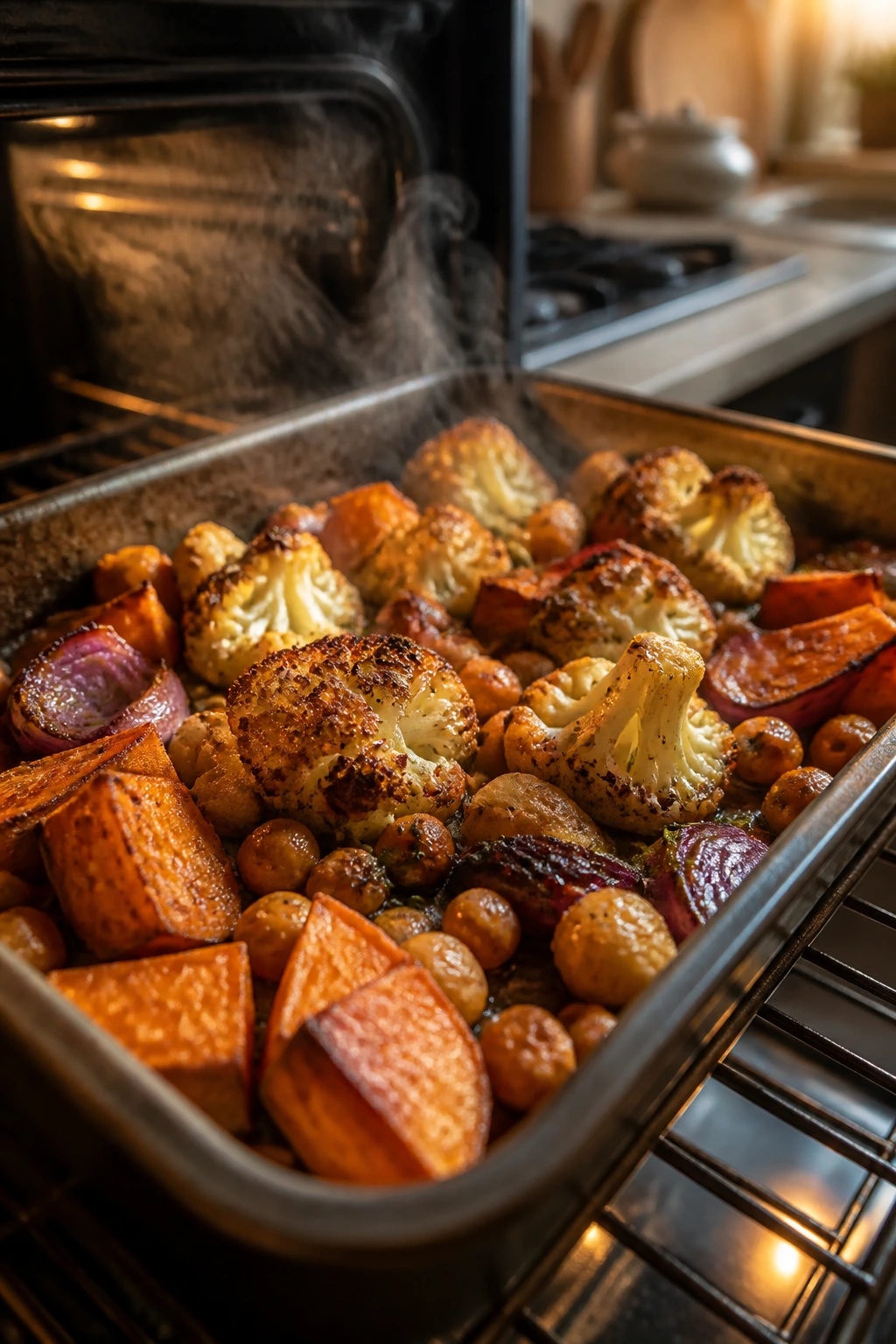
Crowding the pan. The vegetables release steam when they sit too close together, and steam kills browning. If the pieces are touching in a thick layer, split them across a second sheet pan or roast in two batches.
-
Cutting everything the same size. A sweet potato cube takes longer than a zucchini half-moon, and if you force them into the same timing, one will burn while the other stays hard. Match the cut to the vegetable’s density, not to the visual symmetry.
-
Adding zucchini too early. Zucchini is full of water and softens fast. If it goes in at the beginning, it collapses into the pan and turns the whole tray slippery.
-
Using wet chickpeas. Rinsed chickpeas that go into the oven still damp will steam, not toast. Pat them dry with a towel before seasoning, and don’t bury them under a pile of wetter vegetables.
-
Skipping the final acid. Roasted vegetables without lemon or another sharp finish can taste dull, especially if the pan is heavy on sweet potato and carrot. A squeeze of lemon after roasting is the difference between “fine” and “I want another forkful.”
-
Under-seasoning because the dish is vegetables. That habit leads to bland trays. Vegetables need salt, oil, heat, and a bright finish. Leaving out one of those pieces usually shows up in the first bite.
Flavor Swaps Worth Trying
Mediterranean Pantry Tray
Swap the oregano and cumin for more oregano, a little thyme, and a handful of halved cherry tomatoes added in the last 10 minutes. Finish with crumbled feta and chopped olives. The tomatoes burst in the oven and make their own pan juices.
Smoky Harissa Tray
Replace the smoked paprika, oregano, and cumin with 1 to 2 tablespoons harissa paste mixed into the oil. This version is hotter, deeper, and a little more assertive. A spoonful of yogurt on top cools it down nicely.
Root-Vegetable Winter Tray
Use parsnips, butternut squash, carrots, and Brussels sprouts instead of zucchini and bell pepper. The timing stays close, but the tray becomes sweeter and earthier. It’s a sturdy version that can sit next to roast chicken or stand on its own with grains.
Green-Herb Spring Tray
Use asparagus, baby broccoli, and green beans instead of some of the denser vegetables. Add them near the end so they keep a little snap. A finishing shower of dill and lemon makes the whole dish taste brighter.
Protein-Heavy Brunch Tray
Keep the vegetables as written, then top each serving with a soft-boiled or fried egg. The yolk mixes with the tahini sauce and coats the vegetables in a way that feels almost unfair. It’s one of my favorite leftovers tricks too.
Make-Ahead, Storage, and Reheating
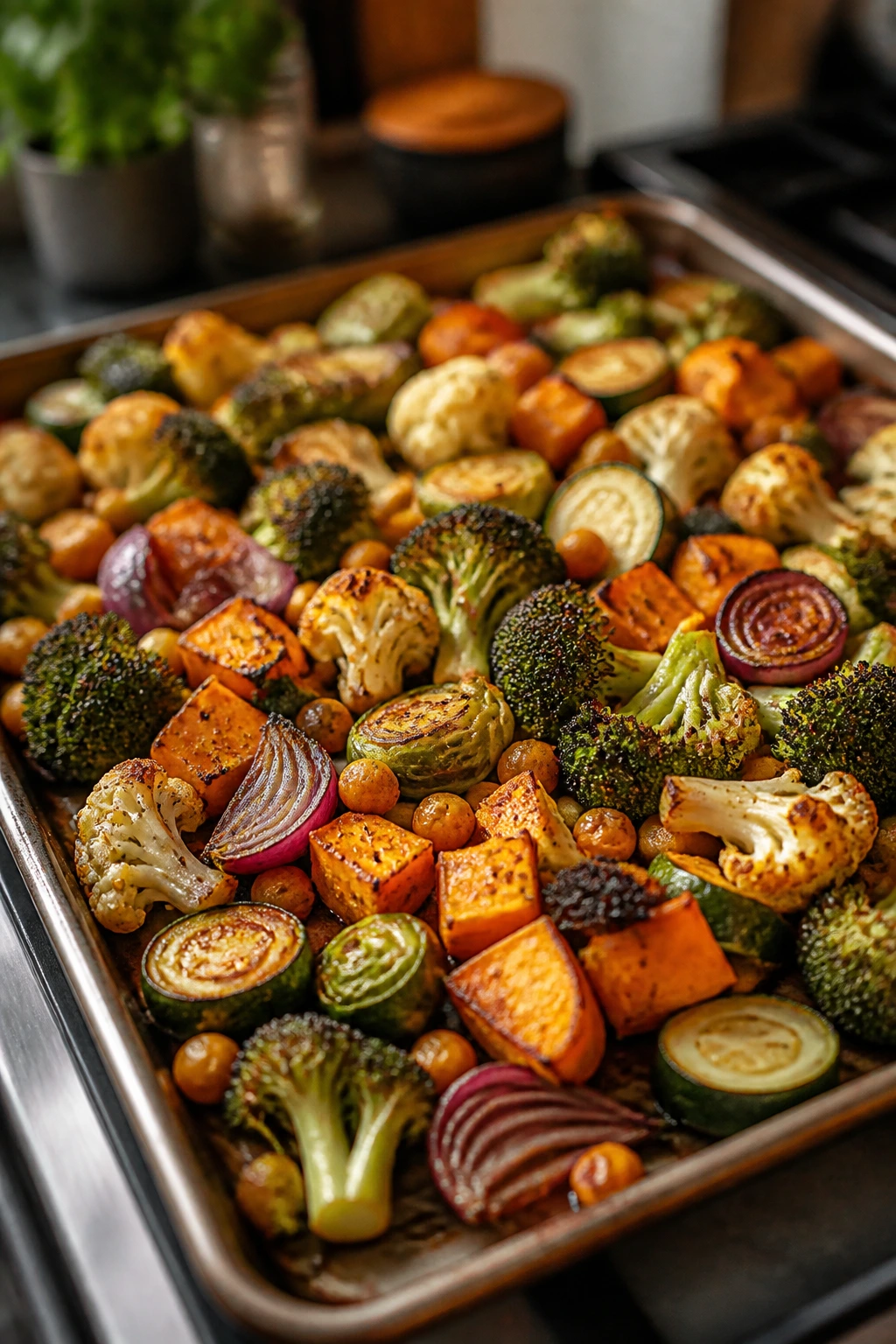
Roasted vegetables hold up better than people expect, but the texture changes once they cool. They’re best the day they’re made, especially if you want the chickpeas crisp. If you need to move work ahead, chop the vegetables and mix the tahini sauce separately. The vegetables can sit in airtight containers in the fridge for up to 24 hours before roasting, and the sauce keeps for 3 to 4 days.
Leftovers keep well in the refrigerator for 3 to 4 days in an airtight container. Keep the tahini drizzle separate if possible; it stays smoother that way. When you reheat, spread the vegetables on a baking sheet and warm them at 400°F (205°C) for 8 to 12 minutes. That method gives you the best shot at reviving the edges. The microwave works in a hurry, but the vegetables will be softer and the chickpeas lose their crisp.
Freezing is possible, though not ideal for the zucchini and bell pepper. If you want to freeze the dish, freeze the roasted vegetables without the sauce for up to 2 months. Thaw in the fridge overnight, then reheat on a sheet pan at 425°F (220°C) until hot and browned in spots. Make a fresh tahini drizzle when you serve it again.
The tahini sauce may thicken in the refrigerator. That’s normal. Just whisk in 1 to 2 teaspoons warm water until it loosens again. If you’re planning lunches, I’d roast the vegetables, cook a grain, and store the sauce separately so everything stays in better shape.
Questions People Ask Before They Roast Vegetables
Can I use frozen vegetables instead of fresh?
Yes, but choose carefully. Frozen broccoli or cauliflower works better than frozen zucchini, which tends to turn watery fast. Roast them straight from frozen on a very hot sheet pan, and expect a softer texture than fresh vegetables give you.
Do I have to peel the sweet potato?
No. If the skin is clean and the potato is firm, you can leave it on and save a little prep time. I peel it here because the rest of the tray has a soft, polished finish and the peeled cubes blend in better with the other vegetables.
Why did my vegetables steam instead of brown?
Usually the pan was too crowded or the oven ran a little cool. Spread the vegetables in a thinner layer, use two pans if needed, and make sure the oven is fully preheated before they go in. Browning needs heat and room. It doesn’t happen in a packed tray.
Can I make this without chickpeas?
You can, but the dish changes shape. Without chickpeas, it becomes more of a roasted vegetable side, unless you add another protein like halloumi, tofu, or eggs. If you skip them, consider serving the vegetables over quinoa or farro so the plate still feels complete.
What if my zucchini goes soft before the rest is done?
That usually means it was cut too thin or added too early. Keep the zucchini pieces thick—about 1/2 inch—and add them only for the final 12 to 15 minutes. If they still go soft, cut them into bigger half-moons next time.
Can I prep the vegetables ahead of time?
Yes. Chop everything up to a day ahead and keep the vegetables in separate containers if possible. I would especially keep the zucchini separate from the denser vegetables so it doesn’t sit around releasing moisture into the others.
How do I make this more filling without changing the flavor much?
Serve it over cooked farro, brown rice, or quinoa, or add a side of pita and hummus. A fried egg also works well and doesn’t compete with the lemon-tahini sauce. If you want more protein without much fuss, halloumi is the loudest but very good answer.
Can I roast everything on one pan?
You can if your pan is large enough and you’re willing to keep the layer thin. In practice, two pans give you cleaner browning and less stirring. One pan is possible. It’s just fussier.
A Tray Worth Repeating
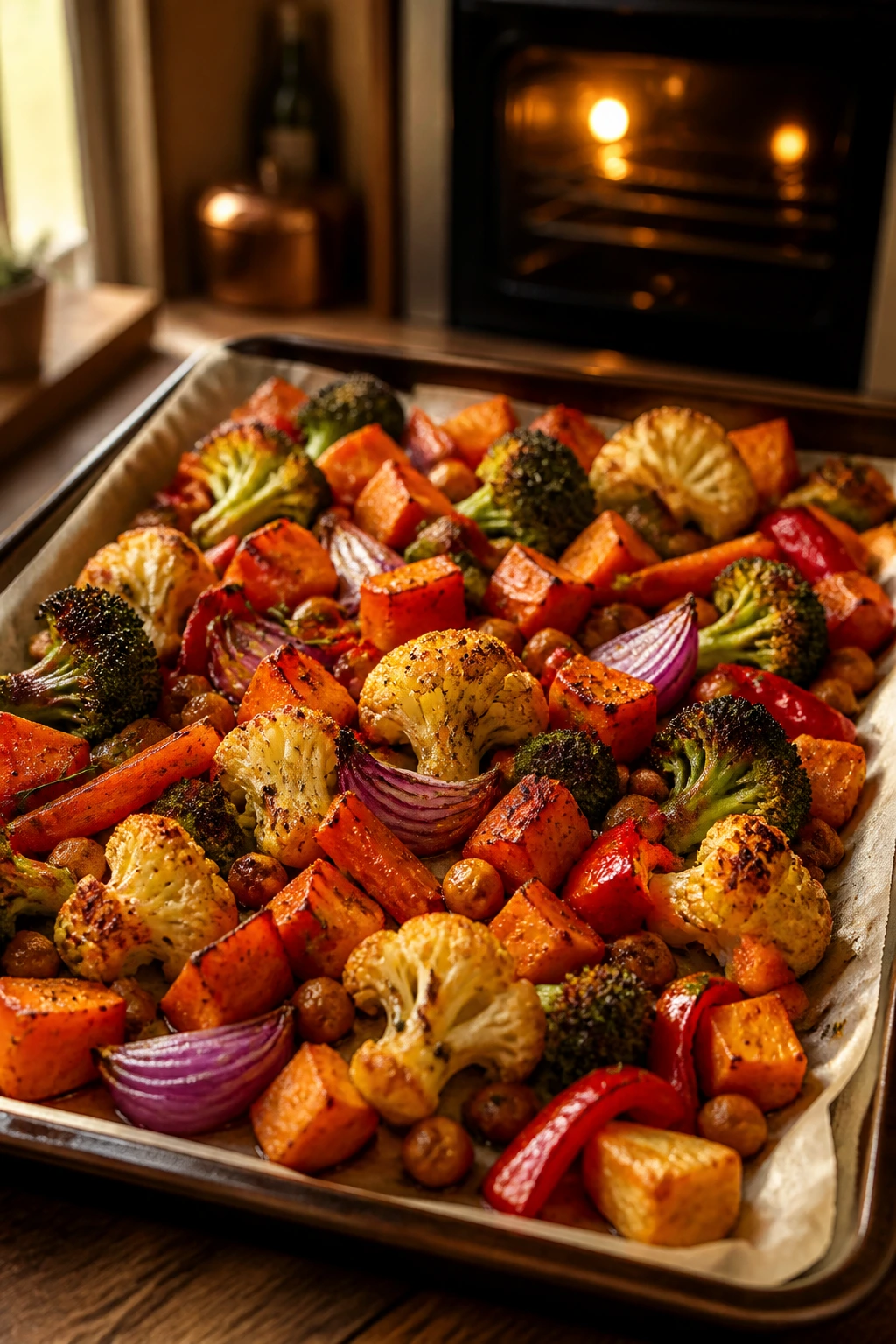
A good roasted vegetable dinner doesn’t need to apologize for being mostly vegetables. It just needs heat, salt, room on the pan, and a finish that makes the flavors snap into focus. That’s what this tray does. It gives you soft, browned, crisp, creamy, and bright all in one plate, which is more than most weeknight dinners manage.
I keep coming back to this kind of meal because it solves the right problem. You get something warm, filling, and flexible without having to haul out three pans and a prayer. The oven does the heavy lifting. You just have to stop it from being polite.
Lemon-Garlic Roasted Vegetables with Chickpeas and Tahini Drizzle — Recipe Card
Recipe Name: Lemon-Garlic Roasted Vegetables with Chickpeas and Tahini Drizzle
Description: A sheet-pan roasted vegetable dinner with sweet potato, cauliflower, broccoli, chickpeas, and a bright tahini sauce. The vegetables turn browned and tender, while the drizzle keeps the plate lively instead of heavy.
Prep Time: 20 minutes
Cook Time: 30 to 35 minutes
Total Time: 50 to 55 minutes
Course: Main Course
Cuisine: Mediterranean-Inspired
Servings: 4 servings
Calories: About 330 kcal per serving
Ingredients
For the Vegetables and Chickpeas:
- 1 medium sweet potato, peeled and cut into 3/4-inch cubes
- 2 medium carrots, cut into 1/2-inch diagonal slices
- 1 small cauliflower, cut into 1-inch florets
- 1 small broccoli crown, cut into 1-inch florets
- 1 red bell pepper, seeded and cut into 1-inch strips
- 1 red onion, cut into 8 wedges
- 1 medium zucchini, cut into 1/2-inch half-moons
- 1 (15-ounce) can chickpeas, rinsed, drained, and patted dry
- 3 tablespoons extra-virgin olive oil
- 3 garlic cloves, minced
- 1 1/2 teaspoons kosher salt
- 1 teaspoon black pepper
- 1 teaspoon smoked paprika
- 1 teaspoon dried oregano
- 1/2 teaspoon ground cumin
For the Lemon-Tahini Drizzle:
- 1/4 cup tahini
- 2 tablespoons fresh lemon juice
- 2 tablespoons warm water, plus more as needed
- 1 small garlic clove, finely grated
- 1/4 teaspoon kosher salt
- Pinch of cayenne, optional
For Finishing:
- 2 tablespoons chopped parsley
- 1 tablespoon toasted sesame seeds or pumpkin seeds
- 1 lemon, cut into wedges
Instructions
-
Preheat the oven to 425°F (220°C) and line 2 rimmed baking sheets with parchment paper.
-
Toss the sweet potato, carrots, cauliflower, and chickpeas with 2 tablespoons olive oil, half the garlic, 1 teaspoon salt, 1/2 teaspoon black pepper, the smoked paprika, oregano, and cumin.
-
Spread the vegetables in a single layer on the baking sheets and roast for 15 minutes.
-
Toss the broccoli, bell pepper, red onion, and zucchini with the remaining 1 tablespoon olive oil, the rest of the garlic, 1/2 teaspoon salt, and the remaining black pepper.
-
Stir the first batch of vegetables, add the second batch to the pans, and roast for 12 to 15 minutes more until browned and tender.
-
Whisk the tahini, lemon juice, warm water, grated garlic, salt, and cayenne until smooth and pourable.
-
Transfer the vegetables to a platter or bowls, drizzle with the tahini sauce, and finish with parsley, seeds, and lemon wedges.
Notes: Dry the chickpeas well or they’ll steam instead of crisp. Add the zucchini late so it stays tender, not soggy. Keep extra lemon wedges on the table; the final squeeze makes the whole tray taste brighter.