



A healthy dinner can still smell like garlic hitting hot oil, look glossy on the plate, and leave you full enough to skip the pantry raid an hour later. Vegan healthy meals only fail when they’re treated like a side dish with a moral lecture attached.
The better ones do a few things at once. They bring protein from beans, tofu, tempeh, lentils, or edamame. They bring real texture from roasted vegetables, chewy grains, or crisp toppings. And they use acid, salt, heat, and fat in sensible amounts so the food tastes like dinner, not a penance.
That’s the standard here. Bowls, curries, skillets, soups, pasta, tacos, and a few recipes that blur the line between them in the best possible way. Some are pantry jobs. Some ask for a sheet pan and twenty-five minutes. A few simmer long enough to make the kitchen smell like somebody actually knows how to cook. The first batch starts with the kind of bowls I keep coming back to when the fridge looks half-empty.
Why These Vegan Dinners Keep People Full
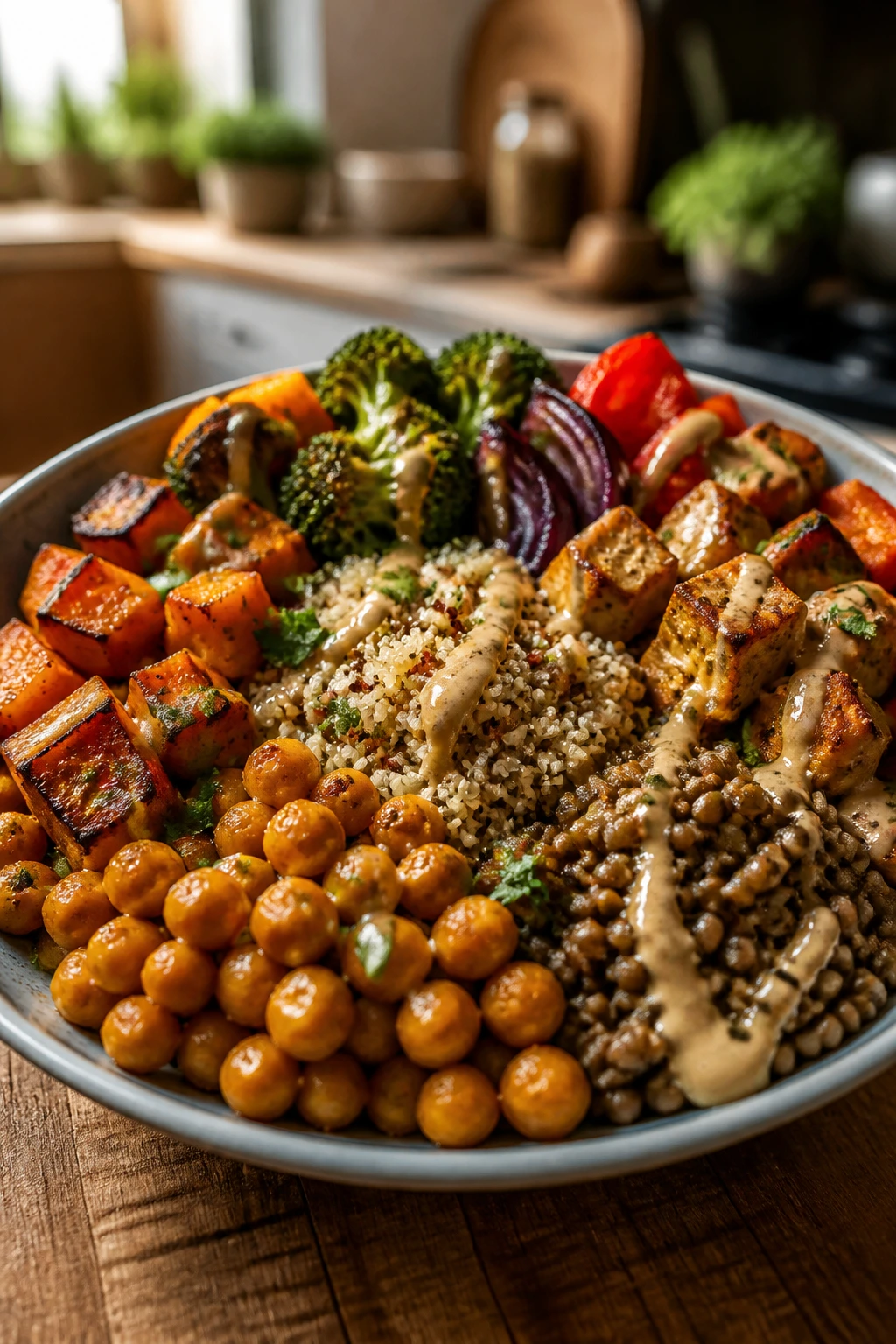
- Real protein, not garnish: Chickpeas, tofu, lentils, tempeh, edamame, and white beans do the heavy lifting, so dinner has staying power.
- Sauce matters here: Tahini, peanut sauce, curry, tomato sauces, and miso keep vegetables from tasting like an afterthought.
- Pantry-friendly bones: Rice, pasta, canned beans, noodles, and tomato products show up often because they make weeknight cooking less fussy.
- Texture is built in: Roasted edges, crisp tofu, soft grains, and crunchy seeds keep a plate from feeling flat.
- Easy to scale up: Most of these meals double cleanly for leftovers or a bigger table, which is handy when you don’t want to cook twice.
1. Lemon-Garlic Chickpea Quinoa Bowls
The smell of this bowl is what gets me first: hot garlic, lemon zest, and chickpeas turning a little nutty in the oven. The finished plate is bright, chewy, and a little creamy if you get the tahini dressing right.
Why It Works:
Quinoa gives you a light base that doesn’t turn mushy under the dressing, and roasted chickpeas bring the crunchy part most grain bowls miss. The lemon keeps the whole thing sharp, which matters because tahini can drag a bowl into paste territory if you’re heavy-handed. A quick roast at 425°F makes the chickpeas crisp at the edges instead of soft and bland.
Key Ingredients:
- 1 cup quinoa, rinsed well — cooks fluffy and keeps the bowl from feeling heavy.
- 2 cans chickpeas, drained and dried — dry them well so they roast instead of steam.
- 2 tablespoons olive oil — enough to coat the chickpeas without greasing the bowl.
- 4 cloves garlic, minced — use fresh here; powder won’t give the same hit.
- 1 lemon, zested and juiced — the acid wakes up the whole plate.
- 1 cucumber, diced — brings a cold, crisp bite.
- 4 cups baby spinach — wilts just enough under the warm quinoa.
- 1/4 cup tahini — makes the dressing creamy without dairy.
- 2 tablespoons chopped parsley — a clean finish that keeps the bowl from tasting muddy.
Quick Steps:
- Cook the quinoa: Simmer 1 cup quinoa with 2 cups water and a pinch of salt for 15 minutes, then rest 5 minutes off the heat. Fluff with a fork when the grains show tiny spirals.
- Roast the chickpeas: Toss the chickpeas with olive oil, garlic, lemon zest, 1 teaspoon cumin, 1/2 teaspoon salt, and black pepper. Roast at 425°F (220°C) for 20 to 25 minutes until the edges are golden and a few chickpeas look split.
- Make the dressing: Whisk tahini, 3 tablespoons lemon juice, 2 to 4 tablespoons water, and a pinch of salt until smooth and pourable.
- Assemble the bowls: Divide spinach, quinoa, cucumber, and chickpeas between bowls. Drizzle with dressing and finish with parsley.
- Serve right away: The chickpeas stay crisper for about 20 minutes, so don’t let them sit around.
Equipment for This Recipe:
- Rimmed sheet pan — for the chickpeas.
- Medium saucepan with lid — for the quinoa.
- Small whisk or fork — for the dressing.
How to Serve This Dish:
Serve it warm, with the spinach just barely wilted under the quinoa. A lemon wedge on the side helps if you like extra brightness, and a spoonful of hummus tucked on the edge of the bowl turns the whole thing richer without making it greasy.
Pro Tips for This Recipe:
- Pat the chickpeas dry with a towel before seasoning; damp chickpeas roast badly.
- If your tahini is thick, whisk in the water slowly so the dressing turns silky instead of clumpy.
- Add the cucumber after the chickpeas are out of the oven so it stays crisp.
Variations on This Dish:
- Mediterranean Bowl: Add cherry tomatoes, olives, and chopped dill, then swap parsley for mint.
- Spicy Harissa Bowl: Toss the chickpeas with 1 tablespoon harissa before roasting.
- Brown Rice Version: Use brown rice instead of quinoa if you want a firmer base.
Common Mistakes to Avoid with This Dish:
- Skipping the chickpea dry-off: Wet chickpeas steam, and you lose the crunch. Dry them well.
- Drowning the bowl in dressing: Tahini can take over fast. Start with half the dressing, then add more.
- Leaving the spinach under hot quinoa too long: It should wilt, not collapse into a soggy green layer.
2. Creamy Red Lentil Coconut Curry
This one smells like ginger, garlic, and coconut milk the second the pot warms up. It’s soft, spoonable, and the red lentils break down into a sauce that feels richer than the ingredient list suggests.
Why It Works:
Red lentils cook fast and thicken the curry without flour or cream. Coconut milk gives the broth body, while tomatoes and lime keep the flavor from getting sleepy. At a steady simmer, the lentils go from distinct to velvety in about 20 minutes.
Key Ingredients:
- 1 1/2 cups red lentils, rinsed — they cook fast and thicken naturally.
- 1 tablespoon olive oil — just enough to bloom the aromatics.
- 1 yellow onion, diced — builds the base flavor.
- 4 cloves garlic, minced — don’t let it brown hard.
- 1 tablespoon grated ginger — gives the curry a clean bite.
- 2 tablespoons curry powder — choose one that smells warm, not dusty.
- 1 can diced tomatoes, 14.5 ounces — adds acidity and body.
- 1 can full-fat coconut milk, 13.5 ounces — makes the sauce creamy.
- 4 cups baby spinach — stirred in at the end so it stays green.
- 1 lime — the squeeze at the end matters.
Quick Steps:
- Sauté the aromatics: Warm olive oil in a pot over medium heat. Cook onion for 5 minutes, then add garlic and ginger for 1 minute until fragrant.
- Toast the spices: Stir in curry powder, 1 teaspoon cumin, and 1/2 teaspoon salt for 30 seconds.
- Simmer the curry: Add lentils, tomatoes, coconut milk, and 2 cups water. Bring to a boil, then reduce to a low simmer for 18 to 22 minutes, stirring now and then.
- Finish the greens: Stir in spinach until just wilted. Add lime juice and taste for salt.
- Serve over rice: Spoon the curry onto brown rice or basmati while it’s still steaming hot.
Equipment for This Recipe:
- Medium Dutch oven — best for even simmering.
- Wooden spoon — helps you scrape the bottom without scratching.
- Fine grater — for ginger.
How to Serve This Dish:
Ladle it over rice and top with cilantro or sliced scallions if you have them. The curry also sits well beside naan-style flatbread, though rice is the cleaner match when you want a healthier plate.
Pro Tips for This Recipe:
- Rinse the lentils until the water runs mostly clear; it keeps the curry from tasting dusty.
- If it gets too thick, splash in hot water 1/4 cup at a time.
- Add lime at the end, not during the simmer, or the coconut flavor dulls.
Variations on This Dish:
- Sweet Potato Curry: Add 2 cups peeled sweet potato cubes with the lentils.
- Green Curry Shortcut: Use 2 tablespoons green curry paste instead of curry powder.
- Protein Boost: Stir in a can of chickpeas for a firmer bite.
Common Mistakes to Avoid with This Dish:
- Boiling too hard: Red lentils can scorch if the heat stays high.
- Forgetting the acid: Without lime, the curry tastes heavier than it should.
- Using light coconut milk: You’ll lose the creamy texture that makes the dish work.
3. Black Bean Sweet Potato Tacos
These tacos smell smoky and a little sweet when the sweet potatoes come out of the oven caramelized at the edges. They eat like real dinner, not snack food dressed up in a tortilla.
Why It Works:
Sweet potatoes bring softness and a slight caramel note; black beans keep the filling grounded and hearty. The contrast between warm filling and cold cabbage is the whole trick. A hot oven at 425°F gives the potatoes enough browning to keep them from tasting flat.
Key Ingredients:
- 2 medium sweet potatoes, peeled and cubed — aim for 1/2-inch pieces.
- 2 cans black beans, drained — rinse if you want a cleaner flavor.
- 2 tablespoons olive oil — coats the potatoes for better browning.
- 1 teaspoon cumin — gives a deep, earthy note.
- 1 teaspoon chili powder — keep it mild or add more.
- 8 small corn tortillas — warm them before filling.
- 2 cups shredded cabbage — crunch and freshness.
- 1 avocado, sliced — adds creaminess without dairy.
- 1 lime — wakes up the beans and cabbage.
Quick Steps:
- Roast the sweet potatoes: Toss cubes with olive oil, cumin, chili powder, 1/2 teaspoon salt, and pepper. Roast at 425°F (220°C) for 25 minutes, turning once, until the edges brown.
- Warm the beans: Heat black beans in a skillet with a splash of water and a pinch of salt until steamy.
- Mix the cabbage: Toss shredded cabbage with lime juice and a pinch of salt.
- Warm the tortillas: Heat in a dry skillet for 20 seconds per side or wrap in foil and warm in the oven.
- Build the tacos: Fill tortillas with sweet potatoes, beans, cabbage, and avocado.
Equipment for This Recipe:
- Sheet pan — for the sweet potatoes.
- Skillet — for the beans and tortillas.
- Citrus juicer — optional, but handy.
How to Serve This Dish:
Serve three tacos per person with extra lime wedges on the side. A spoonful of salsa verde or pico de gallo makes the plate look and taste sharper, and I’d keep the toppings simple so the sweet potatoes stay in charge.
Pro Tips for This Recipe:
- Cut the sweet potatoes evenly or some pieces will burn before the rest soften.
- Warm the tortillas directly on the skillet for better texture than a microwave.
- Don’t overfill. These are better with a little space than with filling spilling out.
Variations on This Dish:
- Chipotle Version: Add a teaspoon of chopped chipotles in adobo to the beans.
- Breakfast Taco Spin: Top with tofu scramble instead of extra avocado.
- Roasted Cauliflower Swap: Replace half the sweet potato with cauliflower florets.
Common Mistakes to Avoid with This Dish:
- Skipping the cabbage salt toss: Plain cabbage tastes rough; salt softens it.
- Cold tortillas: They tear fast and make the tacos clumsy.
- Undercooked sweet potatoes: If they’re hard in the center, the whole taco feels unfinished.
4. Mushroom Walnut Bolognese
This sauce smells like the kind of thing that should take all afternoon, even though it doesn’t. The mushrooms go dark and savory, the walnuts add a little chew, and the tomato base clings to pasta in a way that makes the whole bowl feel sturdy.
Why It Works:
Mushrooms bring umami, walnuts bring body, and tomato paste gives the sauce depth without meat. A coarse chop matters here because you want the sauce to feel rustic, not like baby food pretending to be fancy. Let it simmer long enough to darken at the edges, about 20 minutes.
Key Ingredients:
- 12 ounces whole-wheat spaghetti or linguine — holds the sauce well.
- 1 pound cremini mushrooms, finely chopped — the main savory base.
- 3/4 cup walnuts, finely chopped — adds richness and texture.
- 1 yellow onion, diced — sweetens the sauce.
- 2 carrots, finely diced — gives subtle sweetness.
- 2 tablespoons tomato paste — concentrate matters here.
- 1 can crushed tomatoes, 28 ounces — builds the body.
- 2 tablespoons olive oil — for sautéing.
- 1 teaspoon dried oregano — classic with tomato.
- 1/4 cup chopped basil — finish with freshness.
Quick Steps:
- Cook the pasta: Boil in salted water until al dente. Reserve 1 cup pasta water before draining.
- Build the base: Cook onion and carrots in olive oil over medium heat for 6 to 8 minutes until softened.
- Brown the mushrooms and walnuts: Add them and cook until the mushrooms release liquid and then turn deep brown, about 8 to 10 minutes.
- Simmer the sauce: Stir in tomato paste, oregano, crushed tomatoes, salt, and pepper. Simmer 15 to 20 minutes, adding a splash of pasta water if it gets too thick.
- Toss and finish: Add pasta, basil, and enough sauce to coat every strand.
Equipment for This Recipe:
- Large skillet or Dutch oven — for the sauce.
- Colander — for draining pasta.
- Sharp chef’s knife — the chop matters.
How to Serve This Dish:
Pile it into shallow bowls and finish with more basil and a few extra chopped walnuts if you like texture. A crisp green salad works well, but honestly, a slice of toasted whole-grain bread is the side I’d reach for.
Pro Tips for This Recipe:
- Let the mushrooms brown fully; pale mushrooms make a watery sauce.
- Chop the walnuts fine enough that they blend in, but not to powder.
- Reserve pasta water. A few tablespoons can fix a sauce that feels tight.
Variations on This Dish:
- Lentil Bolognese: Swap half the mushrooms for cooked brown lentils.
- Spicy Arrabbiata Twist: Add red pepper flakes with the tomato paste.
- Gluten-Free Bowl: Serve over chickpea pasta or polenta.
Common Mistakes to Avoid with This Dish:
- Rushing the mushroom browning: If the pan stays crowded, you lose the savory edge.
- Too much tomato paste without simmering: The sauce tastes sharp and raw.
- Overcooking the pasta: It keeps cooking once the hot sauce hits it.
5. Thai Peanut Tofu Noodle Bowls
If you’ve ever wanted dinner to smell like toasted peanut butter, lime, and ginger in the best possible way, this is the bowl. The tofu gets crisp on the outside, the noodles stay slippery, and the sauce lands somewhere between salty and bright.
Why It Works:
Tofu soaks up the sauce better when you press it first and give it heat that actually browns the surface. Peanut sauce can be heavy, so lime juice and rice vinegar keep the bowl from going dull. Use rice noodles or soba depending on how light you want the texture to feel.
Key Ingredients:
- 14 ounces extra-firm tofu, pressed and cubed — the main protein.
- 8 ounces rice noodles — soft, springy, and quick.
- 1 large carrot, julienned — for crunch.
- 1 red bell pepper, thinly sliced — brings color and sweetness.
- 1/3 cup peanut butter — the base of the sauce.
- 3 tablespoons soy sauce or tamari — salt and depth.
- 2 tablespoons lime juice — keeps the sauce awake.
- 1 tablespoon grated ginger — sharp, clean heat.
- 2 tablespoons chopped cilantro — fresh finish.
Quick Steps:
- Press and sear the tofu: Press for 15 minutes, then sear in a skillet with a little oil over medium-high heat until golden on at least two sides.
- Cook the noodles: Prepare according to the package directions, then rinse briefly so they don’t clump.
- Whisk the sauce: Mix peanut butter, soy sauce, lime juice, ginger, 1 teaspoon maple syrup, and 2 to 4 tablespoons warm water until smooth.
- Toss the vegetables: Add carrot and bell pepper to the warm noodles and tofu.
- Dress and serve: Pour sauce over the bowl and toss until everything is coated.
Equipment for This Recipe:
- Heavy skillet — for crisping tofu.
- Medium pot — for noodles.
- Small bowl and whisk — for the sauce.
How to Serve This Dish:
Serve it in wide bowls so the noodles don’t bunch up. A sprinkle of sesame seeds and extra lime makes the top look lively, and a handful of bean sprouts is a nice move if you want more crunch.
Pro Tips for This Recipe:
- Press the tofu longer than you think you need to.
- Warm water helps the peanut sauce go glossy instead of grainy.
- Add cilantro at the end so it keeps its fresh smell.
Variations on This Dish:
- Cashew Sauce Bowl: Replace peanut butter with cashew butter for a milder finish.
- Spicy Chili Crisp Version: Stir in 1 to 2 teaspoons chili crisp if you like heat.
- Noodle-Free Plate: Serve the same tofu and vegetables over shredded cabbage.
Common Mistakes to Avoid with This Dish:
- Sauce too thick: It should coat noodles, not stick in clumps. Add water slowly.
- Wet tofu in a hot pan: It steams, then sticks. Press it first.
- Skipping acid: Without lime, the peanut sauce lands heavy.
6. Sheet-Pan Roasted Vegetables with Tahini Chickpeas
Roasting makes vegetables taste like themselves, only louder. The cauliflower gets browned, the carrots turn sweet, and the chickpeas pick up a toasted edge that makes the whole tray feel more substantial than a pile of vegetables should.
Why It Works:
A sheet pan gives you direct heat and caramelization, which is the easiest way to make vegetables taste like dinner. Tahini finishes the tray with creaminess, and a squeeze of lemon keeps the roasted flavors from settling into one note. You get texture at every bite.
Key Ingredients:
- 1 head cauliflower, cut into florets — the browning is half the point.
- 2 carrots, cut on a bias — they roast evenly and look better.
- 1 red onion, cut into wedges — sweetens and softens.
- 2 cans chickpeas, drained and dried — for protein and texture.
- 3 tablespoons olive oil — enough for even coating.
- 1 teaspoon smoked paprika — adds a little depth.
- 1/4 cup tahini — for the sauce.
- 1 lemon — juice and zest both matter.
- 1 cup cooked quinoa — serves as a base.
Quick Steps:
- Heat the oven: Set it to 425°F (220°C) and line a sheet pan.
- Season the tray: Toss cauliflower, carrots, onion, and chickpeas with olive oil, smoked paprika, salt, and pepper.
- Roast: Spread in one layer and roast 25 to 30 minutes, turning once, until the vegetables are browned at the edges.
- Mix the tahini sauce: Whisk tahini, lemon juice, 2 to 3 tablespoons water, and a pinch of salt until pourable.
- Serve over quinoa: Spoon the roasted vegetables and chickpeas over quinoa, then drizzle with sauce.
Equipment for This Recipe:
- Large rimmed sheet pan — don’t crowd it.
- Mixing bowl — for tossing.
- Small whisk — for the sauce.
How to Serve This Dish:
Pile the roasted vegetables over quinoa or brown rice and finish with chopped parsley. If you want extra contrast, add a few spoonfuls of quick-pickled onions; they cut through the tahini in a clean way.
Pro Tips for This Recipe:
- Dry the chickpeas before roasting or they’ll stay soft.
- Use a second sheet pan if the vegetables are crowded.
- Add lemon after roasting, not before, or the flavors fade.
Variations on This Dish:
- Harissa Tray: Toss the vegetables with 1 tablespoon harissa paste.
- Sweet Potato Swap: Replace carrots with sweet potatoes for a heavier base.
- Herb Finish: Use dill or parsley instead of lemon zest if you want a greener flavor.
Common Mistakes to Avoid with This Dish:
- Overcrowding the pan: Steam is the enemy of browning.
- Underseasoning before roasting: Salt has to go on before the oven.
- Skipping the sauce: Tahini is what makes this dinner feel complete.
7. White Bean Kale Soup with Rosemary
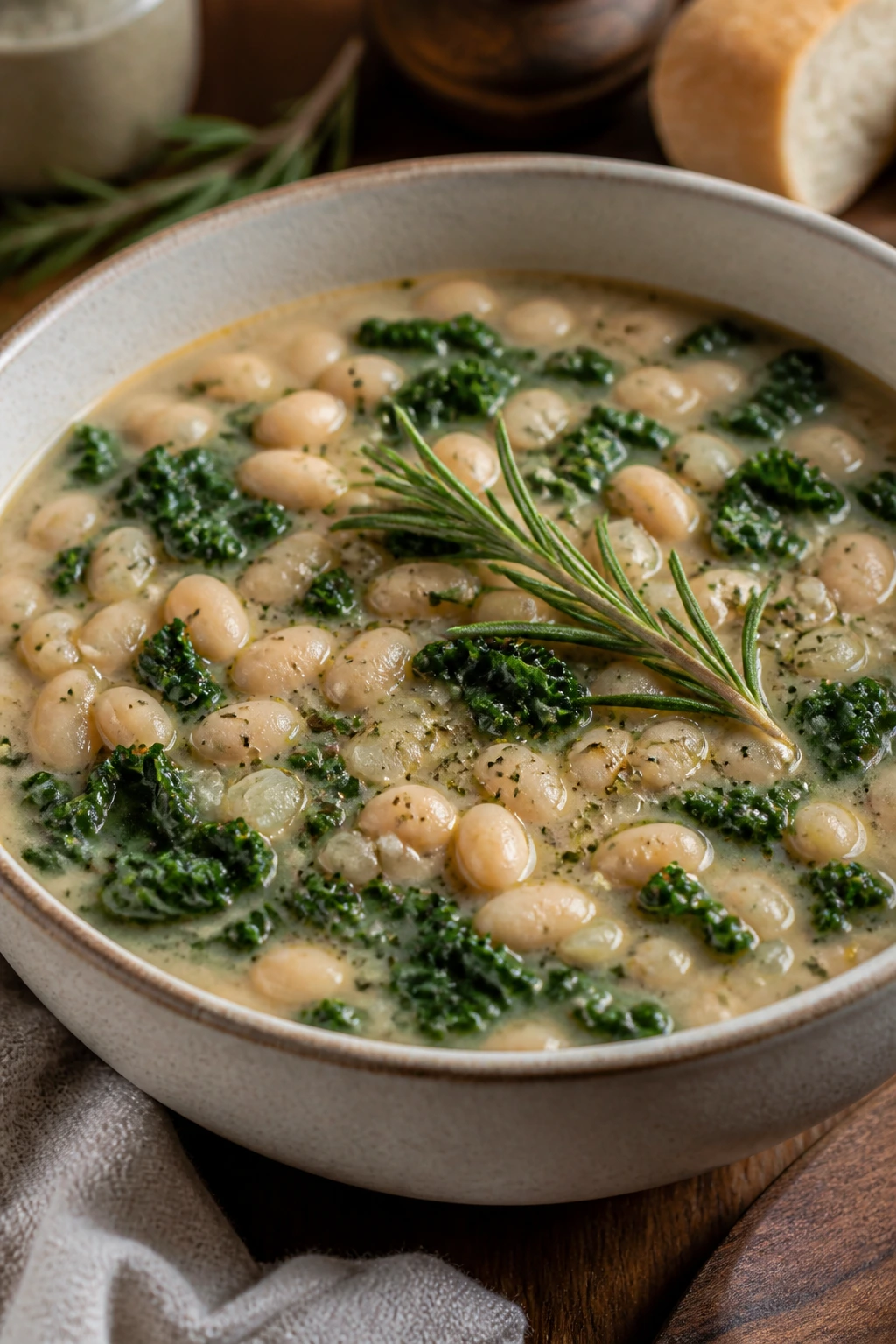
The pot smells like onion, garlic, and rosemary before the beans even go in. This soup is soft and brothy, but the potatoes and white beans give it enough body that you don’t need to hunt for bread immediately.
Why It Works:
Cannellini beans make the soup creamy without blender work, and kale keeps its shape better than spinach in a simmer. Rosemary gives it a woodsy note that fits the white beans, and lemon at the end cuts the starch. This is a smart soup when you want dinner to feel calm, not fussy.
Key Ingredients:
- 2 cans cannellini beans, drained — one can can be mashed for thickness.
- 1 bunch kale, stems removed and chopped — sturdy enough for simmering.
- 1 yellow onion, diced — the starting point.
- 2 carrots, diced — gentle sweetness.
- 2 celery stalks, diced — classic soup base.
- 2 medium Yukon Gold potatoes, cubed — makes the broth hearty.
- 4 cups vegetable broth — enough to cover everything.
- 1 teaspoon chopped rosemary — use fresh if you have it.
- 1 lemon — for finishing.
Quick Steps:
- Sauté the vegetables: Cook onion, carrots, and celery in olive oil for 6 to 7 minutes until softened.
- Add garlic and rosemary: Stir in 3 cloves minced garlic and rosemary for 30 seconds.
- Simmer the soup: Add potatoes, beans, broth, salt, and pepper. Simmer 20 to 25 minutes until the potatoes are tender.
- Stir in the kale: Cook for 5 minutes until the leaves soften but stay green.
- Finish with lemon: Taste and add lemon juice just before serving.
Equipment for This Recipe:
- Soup pot or Dutch oven — the whole dish happens here.
- Ladle — makes serving easy.
- Potato masher — optional, for thickening.
How to Serve This Dish:
Serve it hot with a crack of black pepper and a drizzle of olive oil. A slice of toasted sourdough or whole-grain bread works better here than a salad, since the soup already brings the greens.
Pro Tips for This Recipe:
- Mash about a cup of beans against the pot to thicken the broth.
- Strip kale leaves from thick stems so they don’t go leathery.
- Add lemon only after the heat drops a little; bright flavor lasts longer.
Variations on This Dish:
- Tomato Rosemary Soup: Add 1 cup crushed tomatoes with the broth.
- Creamier Version: Blend half the soup and stir it back in.
- Bean Swap: Use navy beans if that’s what you have.
Common Mistakes to Avoid with This Dish:
- Overcooking the kale: It should be tender, not dull and limp.
- Not salting the base enough: Beans swallow salt fast.
- Skipping the potato simmer: Undercooked potatoes make the broth feel thin.
8. Stuffed Bell Peppers with Lentils and Rice
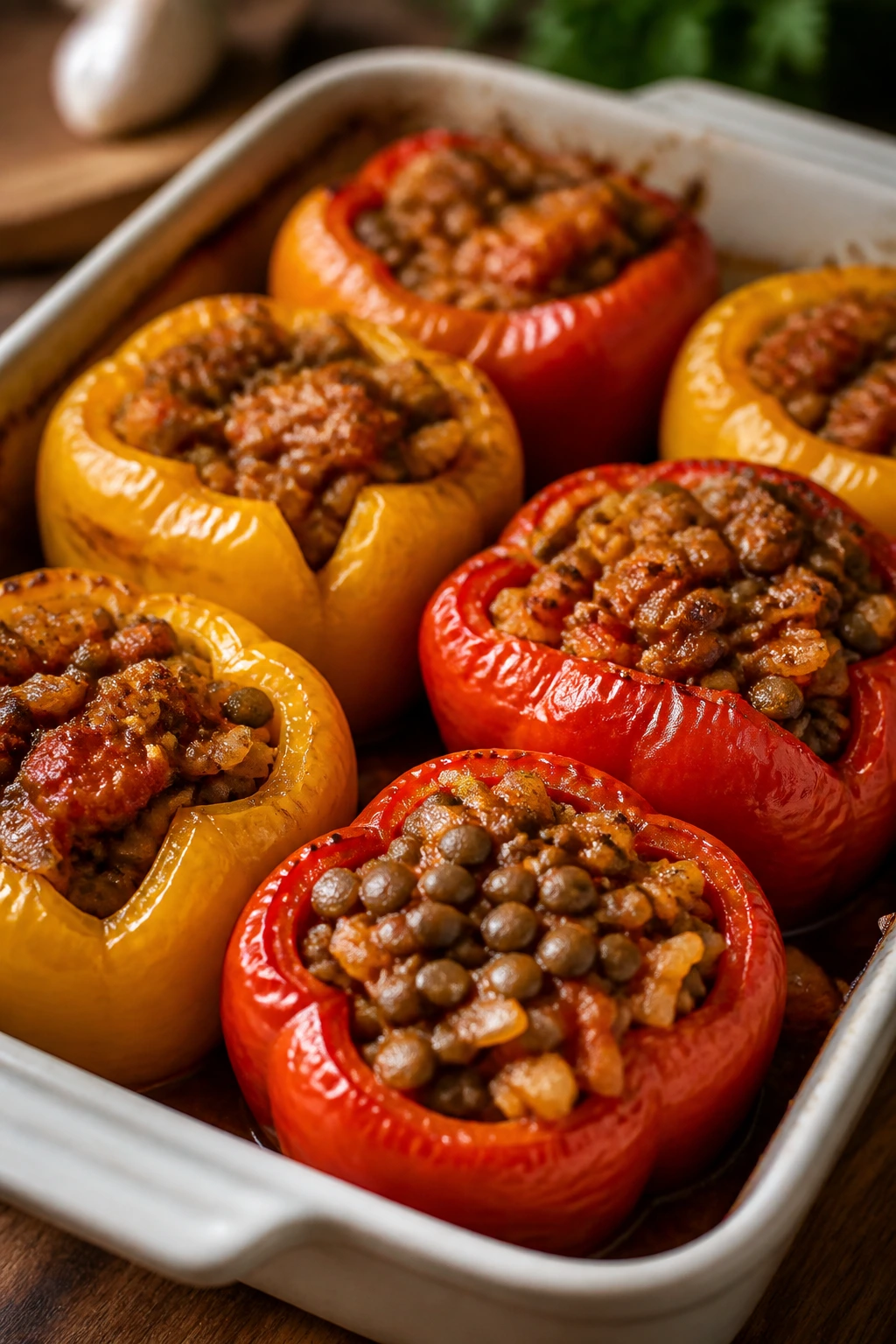
Bell peppers turn sweet in the oven, and when they’re stuffed with rice, lentils, and a tomato base, they stop being a garnish and start acting like dinner. The top gets a little wrinkled, which is exactly what you want.
Why It Works:
Lentils give the stuffing protein and chew, while rice keeps the mixture from collapsing. The peppers soften just enough if you pre-bake them, which saves you from biting into a raw shell around warm filling. Tomato paste gives the filling a deeper, almost savory-sweet finish.
Key Ingredients:
- 6 bell peppers, tops removed and seeds cleared — pick ones that sit flat.
- 1 cup brown rice, cooked — leftover rice works nicely.
- 1 cup cooked green or brown lentils — hold their shape better than red.
- 1 yellow onion, diced — the flavor base.
- 1 zucchini, diced — adds moisture and soft texture.
- 2 tablespoons tomato paste — for depth.
- 1 can diced tomatoes, 14.5 ounces — binds the filling.
- 2 tablespoons nutritional yeast — adds a savory edge.
- 1 teaspoon dried thyme — earthy and gentle.
Quick Steps:
- Prebake the peppers: Place in a baking dish with a splash of water and bake at 375°F (190°C) for 10 minutes.
- Cook the filling: Sauté onion and zucchini until soft, then stir in tomato paste, tomatoes, lentils, rice, thyme, salt, and pepper.
- Stuff the peppers: Spoon the filling into each pepper and press lightly so it settles.
- Bake again: Cover and bake 20 minutes, then uncover for 10 more until the peppers are tender.
- Rest before serving: Let them sit 5 minutes so the filling firms up.
Equipment for This Recipe:
- Baking dish — holds the peppers upright.
- Skillet — for the filling.
- Spoon with a narrow bowl — helps pack the stuffing.
How to Serve This Dish:
Serve two halves per person with a spoonful of extra tomato sauce under the peppers if you want a more polished plate. A simple green salad on the side is enough, because the peppers already bring grain, protein, and vegetables in one shot.
Pro Tips for This Recipe:
- Choose peppers with broad bottoms so they don’t tip.
- Cook the filling until the tomato paste darkens a shade; that’s where the flavor lives.
- Let the stuffed peppers rest before cutting or they’ll slump.
Variations on This Dish:
- Mexican-Style: Add cumin, corn, and black beans.
- Mediterranean Fill: Use couscous, olives, and parsley.
- Cauliflower Rice Version: Swap half the rice for cauliflower rice.
Common Mistakes to Avoid with This Dish:
- Skipping the first bake: Raw peppers stay too firm.
- Watery filling: Drain the tomatoes a bit if they look loose.
- Overstuffing: Leave a little room at the top or the filling spills out.
9. Cauliflower Fried Rice with Edamame
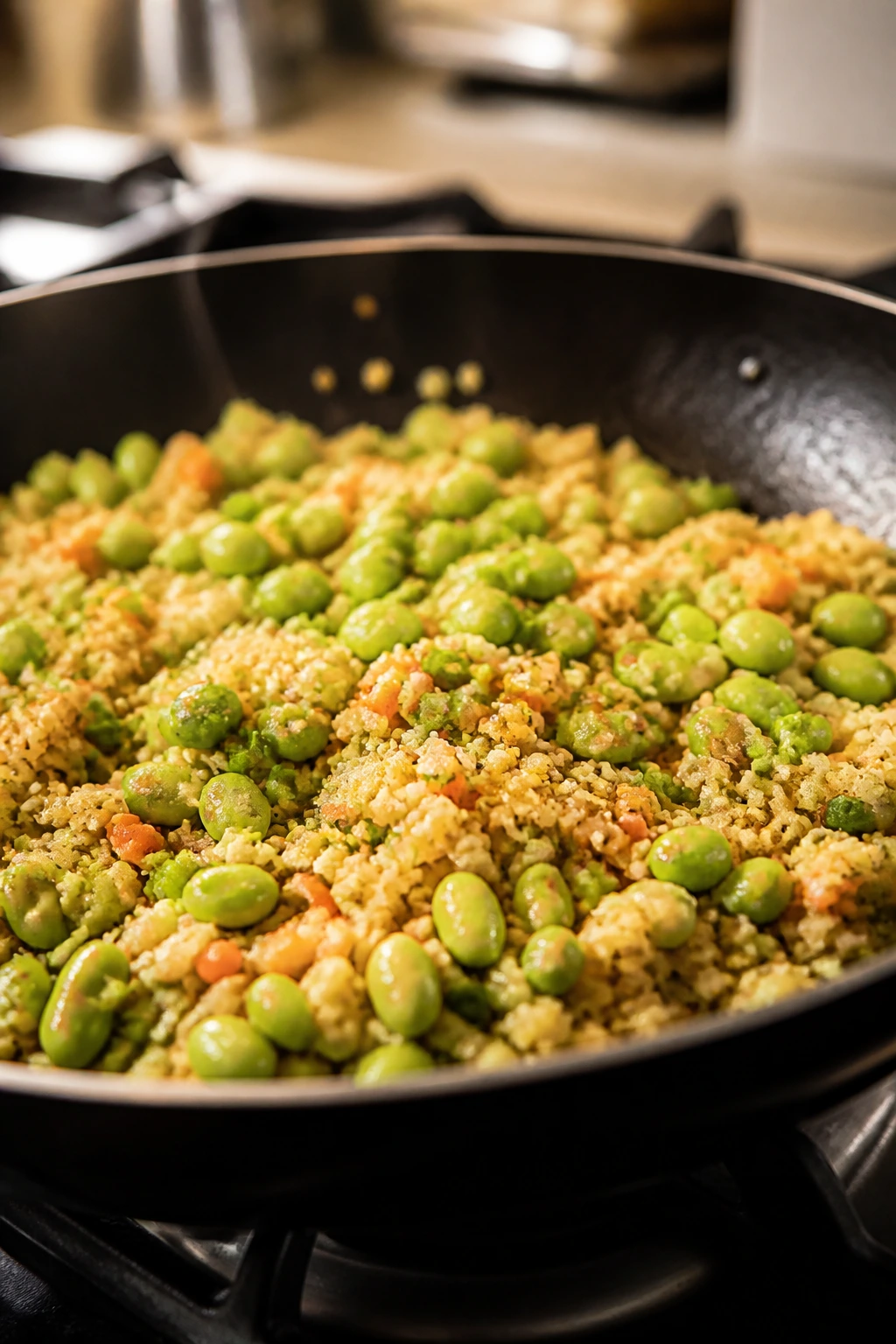
The trick here is getting the cauliflower dry enough that it browns instead of steams. Once that happens, the whole pan smells toasty and savory, and the edamame gives the dish enough bite to feel like more than a side.
Why It Works:
Cauliflower rice keeps the carb load lighter without turning the meal into a salad. Edamame adds protein, peas add sweetness, and a little sesame oil at the end makes the whole pan taste finished. The fast cook time keeps the vegetables snappy.
Key Ingredients:
- 6 cups cauliflower rice — fresh or frozen, but thaw frozen first.
- 1 1/2 cups shelled edamame — the protein anchor.
- 1 cup diced carrots — needs a little head start.
- 1 cup frozen peas — sweet and fast.
- 3 scallions, sliced — for the finish.
- 2 tablespoons soy sauce or tamari — main seasoning.
- 1 tablespoon sesame oil — a little goes far.
- 2 eggs? Not vegan, skip. Use 1/2 cup crumbled firm tofu instead — for extra texture.
- 2 cloves garlic, minced — builds flavor quickly.
Quick Steps:
- Heat the pan: Warm a large skillet or wok over medium-high heat.
- Cook the carrots and tofu: Add a little oil, then carrots and crumbled tofu. Stir-fry for 3 minutes.
- Add cauliflower rice: Cook for 4 to 5 minutes until the moisture cooks off and the grains look lightly golden.
- Season and finish: Add peas, edamame, garlic, soy sauce, and sesame oil. Stir until hot.
- Top with scallions: Serve right away so the cauliflower stays light.
Equipment for This Recipe:
- Large skillet or wok — space matters.
- Spatula — for constant tossing.
- Box grater or food processor — if you’re making cauliflower rice from scratch.
How to Serve This Dish:
Serve it in shallow bowls with extra scallions and a squeeze of lime if you like sharp edges in your food. I’d keep the side dish list short here; the pan already has vegetables, protein, and starch in one place.
Pro Tips for This Recipe:
- Don’t crowd the pan or the cauliflower turns wet.
- If using frozen cauliflower rice, thaw and squeeze it in a towel.
- Add sesame oil at the end so its aroma stays strong.
Variations on This Dish:
- Curry Fried Rice: Add a teaspoon of curry powder.
- Kimchi-Style Bowl: Stir in chopped vegan kimchi at the end.
- Brown Rice Mix: Use half cauliflower rice, half cooked brown rice.
Common Mistakes to Avoid with This Dish:
- Too much liquid in the pan: Frozen cauliflower carries water.
- Overcooking peas and edamame: They should stay bright.
- Using sesame oil too early: The flavor gets muted.
10. Smoky Tempeh Fajita Skillet
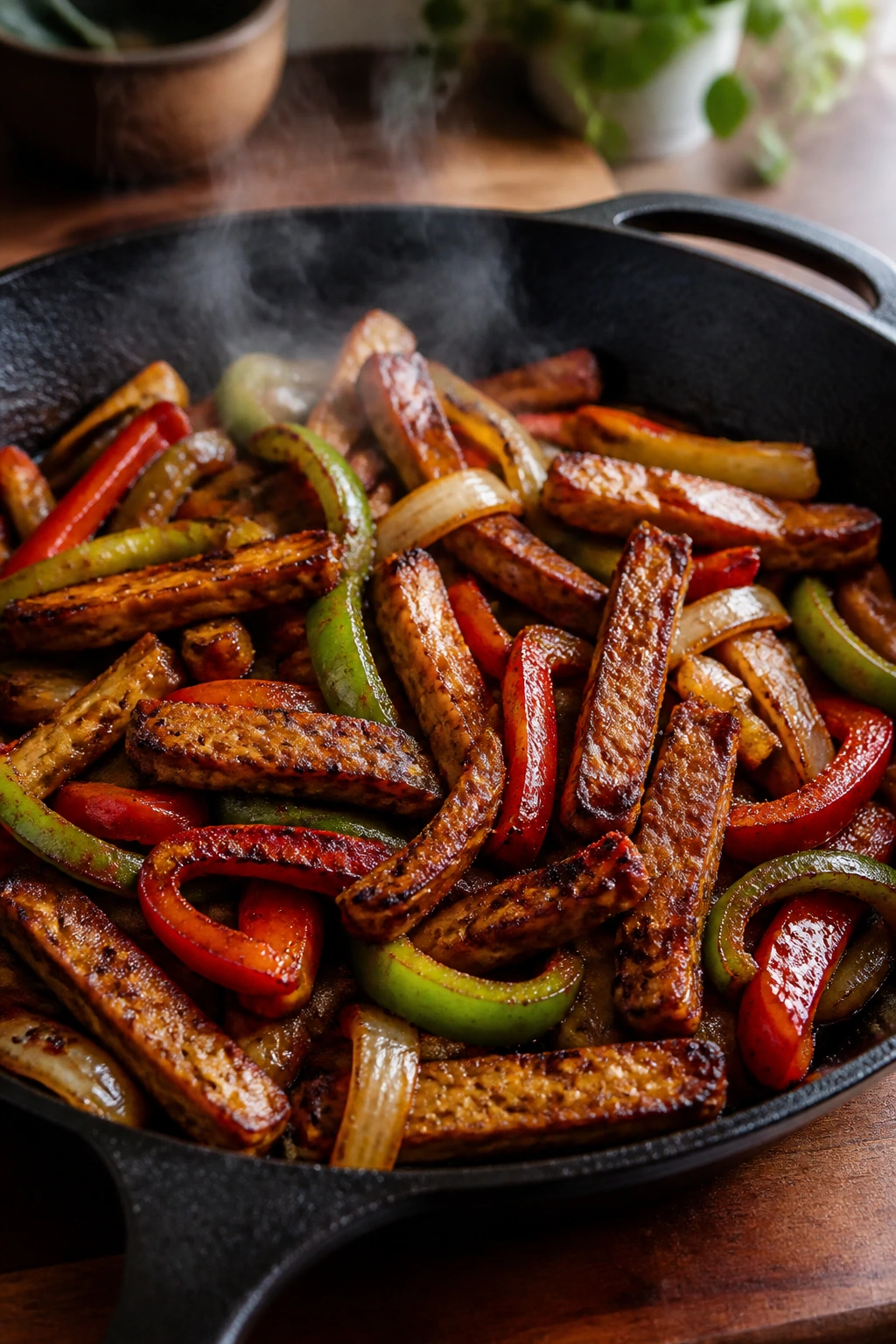
Tempeh takes a little seasoning, but once it gets it, it holds onto smoke and lime in a way tofu doesn’t. With peppers and onions in the same pan, the whole skillet smells like dinner is underway before you’ve even set the table.
Why It Works:
Tempeh has a firmer, chewier bite than tofu, which makes it ideal for fajita-style cooking. A quick steam before searing softens its edge so it takes on spice faster. The peppers and onions bring sweetness that balances the smoke.
Key Ingredients:
- 16 ounces tempeh, sliced thin — steam it first for better flavor.
- 2 bell peppers, sliced — one red, one green if you want contrast.
- 1 large onion, sliced — cooks into soft strands.
- 2 tablespoons olive oil — for the skillet.
- 1 tablespoon fajita seasoning — or a mix of cumin, paprika, garlic powder.
- 1 lime — for finishing.
- 8 small tortillas — corn or flour, depending on preference.
- 1 cup black beans — for extra staying power.
- 1 avocado, sliced — for creaminess.
Quick Steps:
- Steam the tempeh: Steam slices for 10 minutes, then pat dry.
- Sear the tempeh: Cook in a skillet with oil over medium-high heat until browned on both sides, about 4 to 5 minutes.
- Cook the vegetables: Add onion and peppers with seasoning and cook until tender-crisp.
- Add beans and lime: Warm black beans in the skillet, then squeeze lime over everything.
- Serve in tortillas: Fill and top with avocado.
Equipment for This Recipe:
- Large skillet — wide enough for the vegetables.
- Steamer basket or microwave-safe bowl — for the tempeh.
- Knife and cutting board — for clean slices.
How to Serve This Dish:
Pile the filling into warm tortillas and keep salsa or hot sauce nearby. A spoonful of shredded cabbage under the tempeh gives the tacos more crunch, and it’s a good move if you like a little bite with every mouthful.
Pro Tips for This Recipe:
- Don’t skip the steam; tempeh tastes flatter without it.
- Let the vegetables char a little at the edges.
- Warm the beans in the same skillet so they pick up the fajita spices.
Variations on This Dish:
- Chipotle Tempeh: Add chipotle powder and a spoon of adobo sauce.
- Burrito Bowl: Serve over rice instead of tortillas.
- Mushroom Mix: Add sliced mushrooms for a softer filling.
Common Mistakes to Avoid with This Dish:
- Raw tempeh straight into the pan: It can taste bitter.
- Crowding peppers and onions: They steam instead of caramelize.
- Overseasoning at the end: Fajita seasoning works best early.
11. Mediterranean Baked Eggplant and Chickpeas
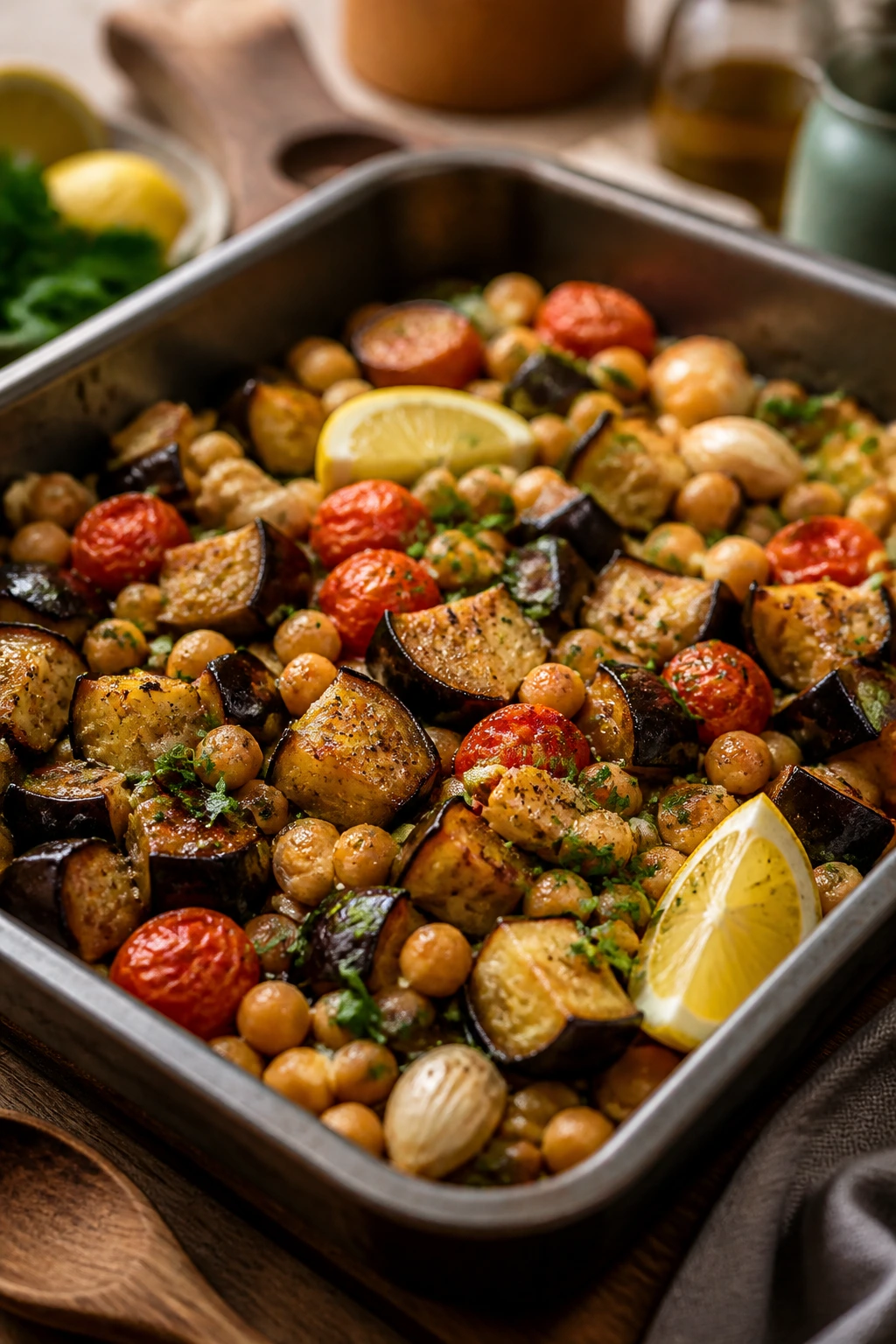
Eggplant becomes silky when the oven does its job, and chickpeas hold their shape beside it. The tomatoes burst into a light sauce, and the whole pan lands somewhere between cozy and bright.
Why It Works:
Eggplant needs enough heat to soften fully, or it can feel spongy. Chickpeas bring protein and keep the dish from becoming just roasted vegetables. Lemon and parsley at the end keep the flavors lively after all that oven time.
Key Ingredients:
- 2 medium eggplants, cut into cubes — don’t make them too small.
- 2 cans chickpeas, drained — for body and protein.
- 2 cups cherry tomatoes — they burst into the sauce.
- 4 cloves garlic, minced — use plenty.
- 2 tablespoons olive oil — enough to coat the tray.
- 1 teaspoon dried oregano — classic Mediterranean flavor.
- 1 lemon — juice for finishing.
- 1/4 cup chopped parsley — brightens the dish.
- 1 cup cooked couscous or farro — serves as the base.
Quick Steps:
- Roast the eggplant: Toss with olive oil, salt, and pepper. Roast at 425°F (220°C) for 20 minutes.
- Add chickpeas and tomatoes: Stir in chickpeas, tomatoes, garlic, and oregano, then roast 15 minutes more.
- Finish the pan: Squeeze lemon over the top and toss with parsley.
- Serve over grains: Spoon onto couscous or farro while warm.
Equipment for This Recipe:
- Large sheet pan — give the eggplant room.
- Mixing bowl — for tossing.
- Citrus juicer — optional, but useful.
How to Serve This Dish:
Serve it over couscous if you want a softer base, or farro if you want more chew. A spoonful of hummus on the side is a nice addition, but the dish stands up on its own without extra help.
Pro Tips for This Recipe:
- Salt the eggplant lightly before roasting if your eggplants tend to taste bitter.
- Use cherry tomatoes, not chopped big tomatoes; they hold shape better.
- Add parsley after roasting so it stays fresh.
Variations on This Dish:
- Za’atar Version: Swap oregano for za’atar.
- Olive-Lemon Finish: Add sliced olives at the end.
- Harissa Heat: Stir in a teaspoon of harissa before roasting.
Common Mistakes to Avoid with This Dish:
- Undercooked eggplant: It should collapse a little when pressed.
- Too much oil: Eggplant drinks oil, but you can overdo it.
- No acid at the end: Lemon is what keeps the pan from tasting heavy.
12. Miso Ginger Soba with Broccoli
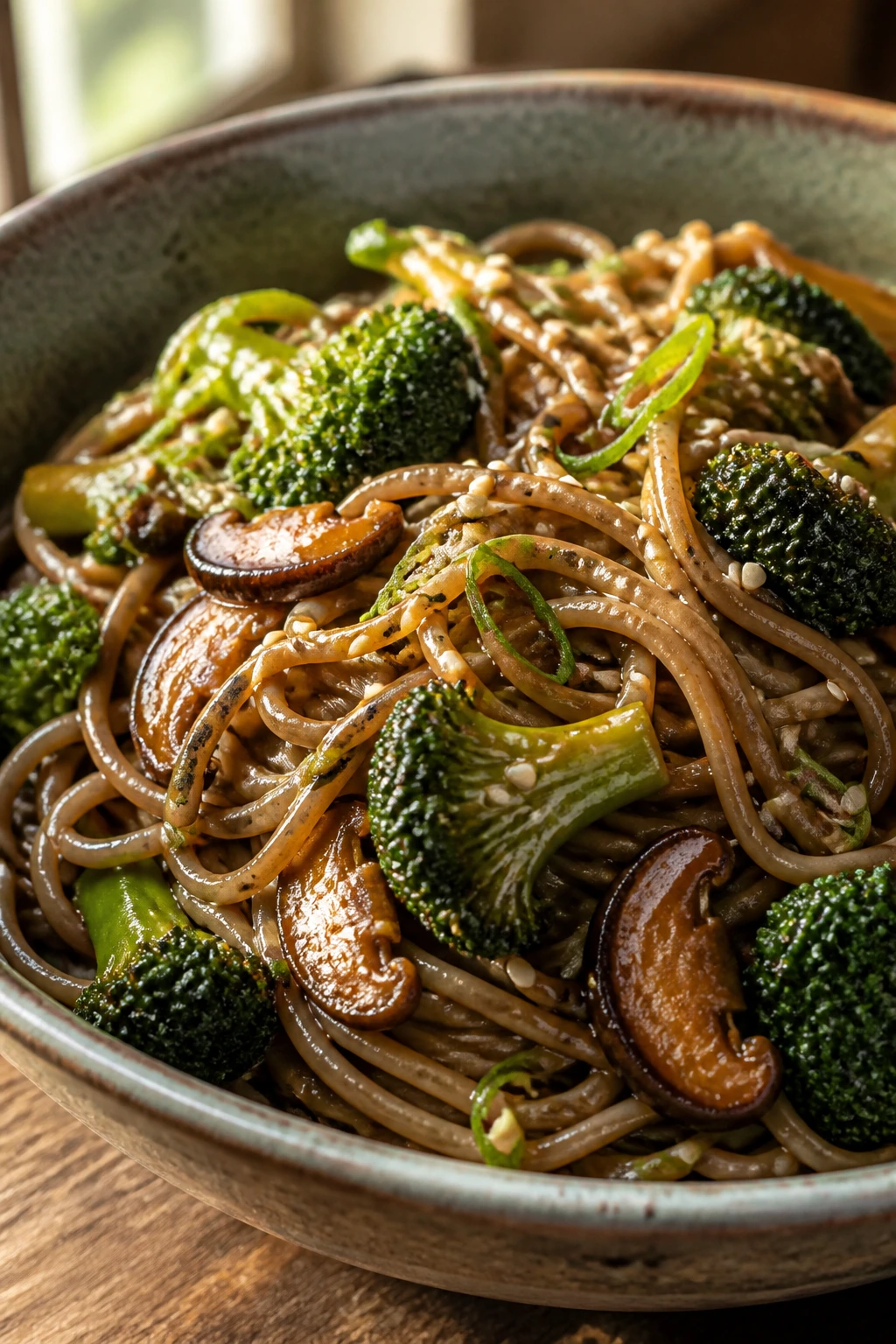
The broth-like sauce clings to soba noodles and leaves a salty, savory sheen on every strand. Broccoli stays crisp-tender, and the miso brings a depth that tastes like you spent more time than you did.
Why It Works:
Miso gives you salinity and body in one spoonful, while ginger keeps the dish sharp. Soba noodles cook quickly and hold up well under a light sauce, which is useful when you want dinner fast but not flimsy. Broccoli adds enough structure to keep the bowl interesting.
Key Ingredients:
- 8 ounces soba noodles — cook them until just tender.
- 1 head broccoli, cut into florets — keep the pieces even.
- 8 ounces shiitake or cremini mushrooms — sliced.
- 2 tablespoons white miso — the flavor base.
- 1 tablespoon grated ginger — bright and warm.
- 2 cloves garlic, minced — small but important.
- 2 tablespoons soy sauce — adds salt and color.
- 1 tablespoon sesame oil — finish with it.
- 2 scallions, sliced — for serving.
Quick Steps:
- Cook the noodles: Boil soba according to package directions, then rinse well.
- Steam or blanch the broccoli: Cook for 2 to 3 minutes until bright green and just tender.
- Sauté the mushrooms: Cook in a skillet until they release moisture and brown.
- Whisk the sauce: Combine miso, ginger, garlic, soy sauce, 2 tablespoons hot water, and sesame oil.
- Toss and serve: Mix noodles, broccoli, mushrooms, and sauce, then top with scallions.
Equipment for This Recipe:
- Pot for noodles — separate from the skillet.
- Large skillet — for mushrooms.
- Small bowl — for the miso sauce.
How to Serve This Dish:
Serve it warm rather than boiling hot so the miso aroma stays clear. A few sesame seeds or a little chili oil on top give the noodles more character, especially if you like a little heat.
Pro Tips for This Recipe:
- Rinse soba thoroughly or it turns gluey.
- Dissolve miso in warm water first; it blends better.
- Add sesame oil after the heat comes down a little.
Variations on This Dish:
- Peanut-Miso Blend: Stir in 1 tablespoon peanut butter.
- Cold Noodle Lunch: Chill and serve with cucumber ribbons.
- Edamame Add-In: Toss in shelled edamame for more protein.
Common Mistakes to Avoid with This Dish:
- Overcooked soba: It gets soft fast.
- Boiling miso hard: The flavor dulls.
- Skipping the rinse: Starch makes the noodles stick.
13. Veggie and Tofu Stir-Fry with Brown Rice
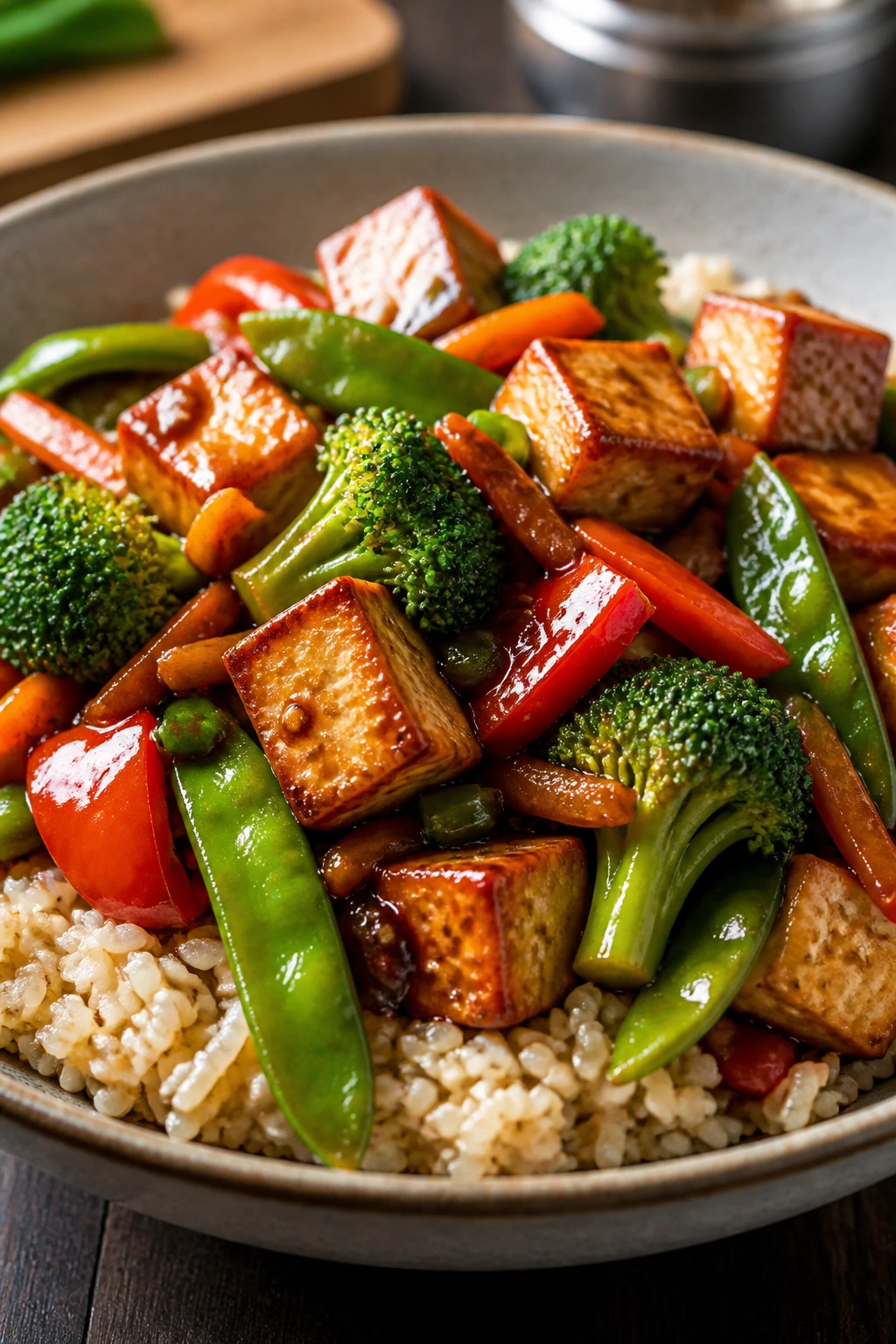
This is the sort of stir-fry that disappears before the rice pot cools. The tofu browns, the vegetables stay crisp around the edges, and the sauce coats everything without turning it wet.
Why It Works:
A hot pan gives tofu and vegetables enough contact to brown before they leak too much moisture. Brown rice adds a nutty base and keeps the meal from feeling too light. A cornstarch-thickened sauce clings better than a thin soy splash.
Key Ingredients:
- 14 ounces extra-firm tofu, pressed and cubed — for crisp edges.
- 2 cups cooked brown rice — use cold rice if you can.
- 1 broccoli crown, cut small — cooks quickly.
- 1 red bell pepper, sliced — for sweetness.
- 1 cup snap peas — keeps a clean crunch.
- 3 tablespoons soy sauce — main seasoning.
- 1 tablespoon rice vinegar — cuts the salt.
- 1 teaspoon cornstarch — thickens the sauce.
- 1 tablespoon grated ginger — gives the pan lift.
Quick Steps:
- Crisp the tofu: Brown the cubes in a skillet with oil over medium-high heat.
- Cook the vegetables: Add broccoli, pepper, and snap peas. Stir-fry 4 to 5 minutes.
- Mix the sauce: Whisk soy sauce, rice vinegar, ginger, garlic, cornstarch, and 1/4 cup water.
- Thicken in the pan: Pour in the sauce and stir until glossy.
- Add rice: Fold in the rice and heat through.
Equipment for This Recipe:
- Large skillet or wok — gives you room to toss.
- Spatula — for turning tofu without breaking it.
- Small whisk — for the sauce.
How to Serve This Dish:
Serve it in bowls with a sprinkle of sesame seeds and maybe a few sliced scallions. If you want a bigger plate, add a side of cucumber salad with rice vinegar and salt; it fits the stir-fry without stealing the show.
Pro Tips for This Recipe:
- Use cold rice so it fries instead of clumping.
- Don’t stir the tofu every second; let it brown.
- Add sauce once the vegetables are nearly done so they stay crisp.
Variations on This Dish:
- Teriyaki Twist: Swap the sauce for teriyaki.
- Cashew Stir-Fry: Add a handful of cashews at the end.
- Spicy Garlic Version: Use chili garlic sauce in the mix.
Common Mistakes to Avoid with This Dish:
- Cold, wet tofu in the pan: It won’t crisp.
- Too much sauce: The stir-fry gets soggy.
- Overcooking the vegetables: They should still have bite.
14. Butternut Squash Black Bean Chili
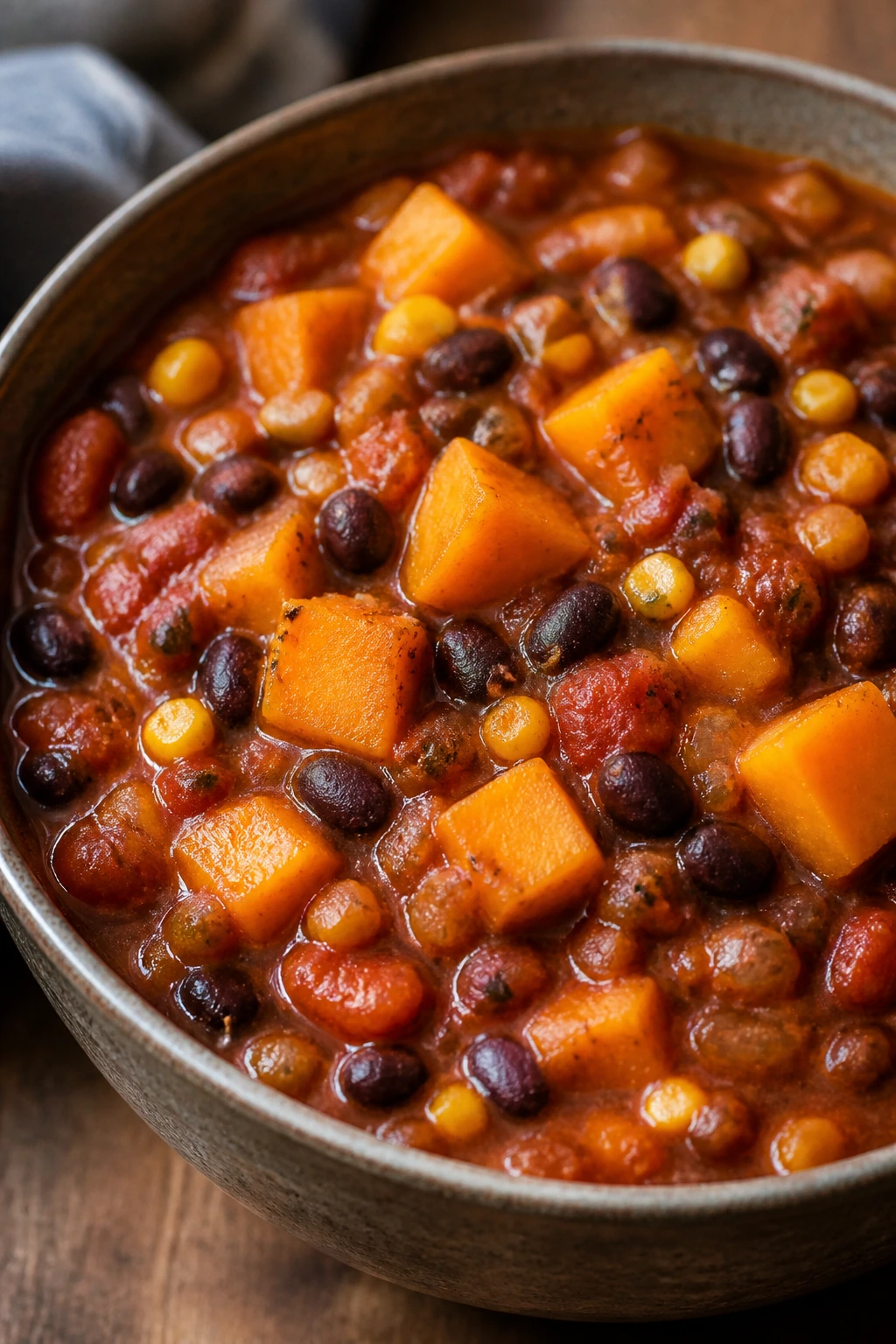
A good chili should smell like cumin, tomato, and something sweet roasting in the pot. This one has that, plus cubes of squash that soften into the broth and black beans that keep the bowl grounded.
Why It Works:
Butternut squash adds body and a subtle sweetness that balances spice. Black beans keep the chili hearty without meat, and corn brings little pops of texture. Let it simmer long enough for the squash to lose its raw edge, around 35 minutes.
Key Ingredients:
- 1 small butternut squash, peeled and cubed — about 4 cups.
- 2 cans black beans, drained — rinse if desired.
- 1 yellow onion, diced — the base.
- 1 can diced tomatoes, 28 ounces — gives the broth structure.
- 2 tablespoons chili powder — the main seasoning.
- 1 teaspoon cumin — earthiness.
- 1 cup frozen corn — add near the end.
- 4 cups vegetable broth — enough to simmer the squash.
- 2 tablespoons olive oil — for sautéing.
Quick Steps:
- Cook the onion: Sauté onion in olive oil for 5 minutes until soft.
- Bloom the spices: Stir in chili powder, cumin, garlic, and tomato paste for 30 seconds.
- Simmer the chili: Add squash, tomatoes, beans, broth, and salt. Simmer 30 to 35 minutes until the squash is tender.
- Add corn: Stir in corn for the last 5 minutes.
- Adjust and serve: Taste for salt and spoon into bowls.
Equipment for This Recipe:
- Dutch oven — best for long simmering.
- Wooden spoon — good for stirring.
- Peeler and sharp knife — for the squash.
How to Serve This Dish:
Serve with chopped cilantro, avocado, or a few crushed tortilla chips on top. A slice of cornbread works if you want something more filling, but the chili already carries the meal.
Pro Tips for This Recipe:
- Cut the squash into even cubes so it cooks at the same pace.
- If the chili tastes thin, simmer uncovered for 5 to 10 minutes.
- Add a splash of lime at the end to sharpen the sweetness.
Variations on This Dish:
- Smoky Chipotle Chili: Add minced chipotle in adobo.
- Three-Bean Version: Swap in kidney or pinto beans.
- Lime Corn Chili: Add extra corn and lime zest.
Common Mistakes to Avoid with This Dish:
- Squash cut too large: Some pieces stay hard while others break down.
- Rushing the simmer: The flavor needs time to knit together.
- Not enough salt: Chili tastes flat without a proper finish.
15. Pesto Pasta with Peas and Spinach
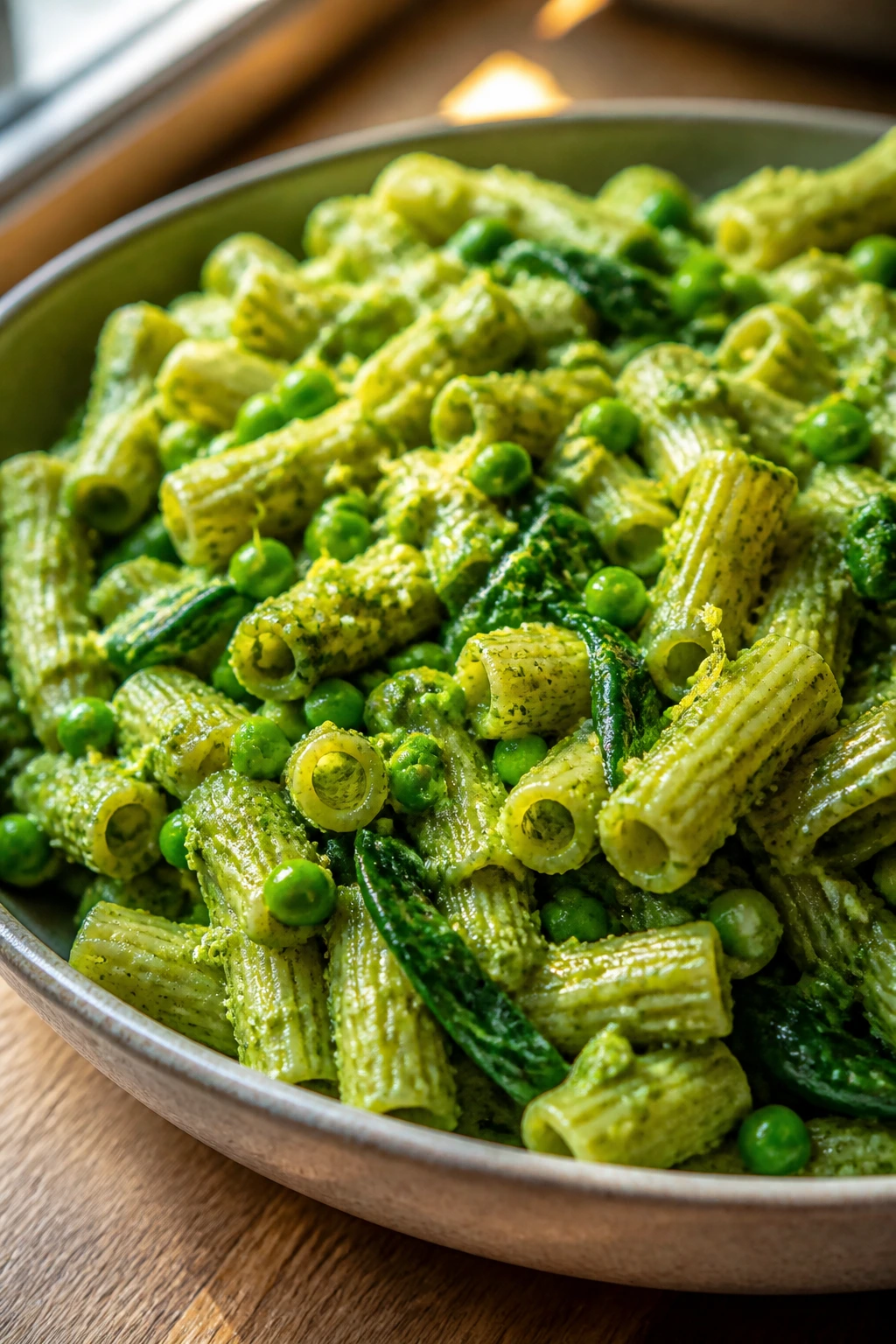
This pasta tastes green in a good way — basil, spinach, lemon, and peas all show up, but none of them shouts over the others. It’s quick, bright, and more filling than it looks when the pasta water and pesto work together.
Why It Works:
Pesto clings best to pasta while it’s still hot, and a little starchy water turns it into a loose sauce instead of a paste. Peas give sweetness, spinach melts in fast, and a vegan pesto keeps the dairy out without losing the basil punch. This is one of those dinners that rewards speed.
Key Ingredients:
- 12 ounces whole-wheat pasta — penne or fusilli both work.
- 1 cup vegan basil pesto — homemade or store-bought.
- 1 1/2 cups frozen peas — no thawing required.
- 4 cups baby spinach — wilts in seconds.
- 1 lemon — zest and juice.
- 2 tablespoons toasted pine nuts or walnuts — for crunch.
- 2 cloves garlic, minced — optional if your pesto is mild.
- Salt and black pepper — to finish.
Quick Steps:
- Cook the pasta: Boil until al dente, then save 1 cup pasta water.
- Warm the peas: Add peas to the pasta water for the last minute or warm them in a skillet.
- Toss with pesto: Drain pasta and toss with pesto, spinach, and a splash of pasta water.
- Finish with lemon: Add zest and juice until the flavor opens up.
- Top and serve: Scatter nuts on top and serve immediately.
Equipment for This Recipe:
- Large pot — for the pasta.
- Colander — for draining.
- Large bowl or pot — for tossing.
How to Serve This Dish:
Serve in wide bowls while the sauce is still glossy. A side salad is optional; I’d rather put out extra lemon wedges and a little extra basil so people can sharpen their own plate.
Pro Tips for This Recipe:
- Add pesto off the heat if it tastes delicate.
- Use whole-wheat pasta if you want more chew and fiber.
- Toast the nuts lightly; raw nuts taste flatter here.
Variations on This Dish:
- Lemony White Bean Pasta: Add a can of white beans for more protein.
- Sun-Dried Tomato Version: Stir in chopped sun-dried tomatoes.
- Arugula Swap: Use arugula instead of spinach for peppery bite.
Common Mistakes to Avoid with This Dish:
- Dry pasta sauce: Pasta water fixes the texture.
- Overheating pesto: Basil turns dull when cooked hard.
- No salt in the pasta water: The whole dish will taste underseasoned.
16. Lentil Shepherd’s Pie
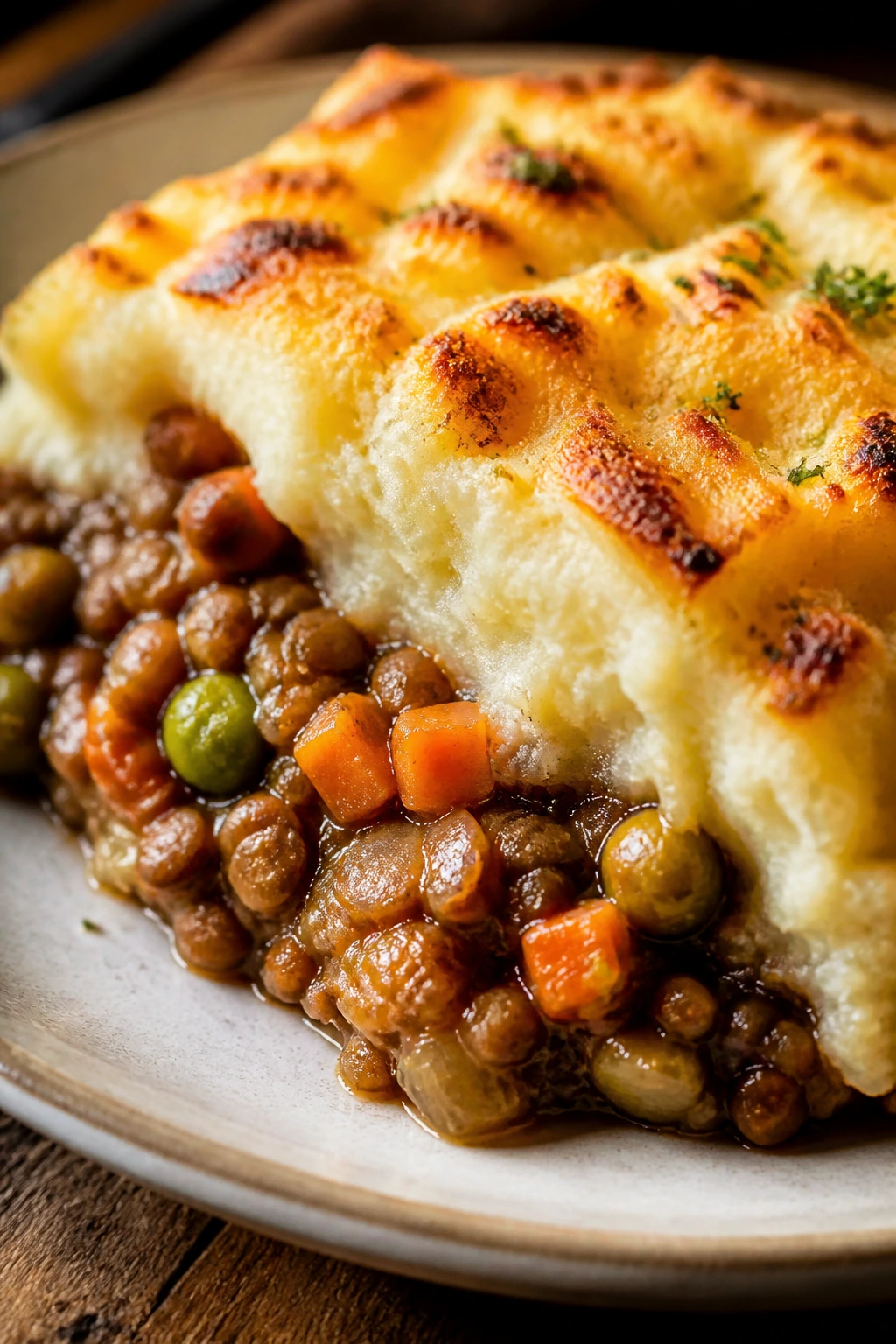
When the top is browned and the filling bubbles at the edges, this dish smells like comfort with some backbone. The lentils and vegetables make a thick, savory base, and the mashed potato layer keeps it feeling like a real supper.
Why It Works:
Brown lentils keep enough shape to give the filling texture, and a thick vegetable gravy holds everything together. The mashed potatoes act like a lid, sealing in moisture while the top browns. A short bake at 400°F helps the top set without drying the filling out.
Key Ingredients:
- 2 cups cooked brown lentils — or about 1 cup dried, cooked.
- 3 medium potatoes, peeled and chopped — for the topping.
- 1 carrot, diced — adds sweetness.
- 1 celery stalk, diced — classic base flavor.
- 1 onion, diced — the starting point.
- 1 cup frozen peas — stirred in near the end.
- 2 tablespoons tomato paste — gives depth.
- 1 cup vegetable broth — makes the gravy.
- 2 tablespoons olive oil — for sautéing and mashing.
Quick Steps:
- Cook the potatoes: Boil until tender, then mash with olive oil, salt, and a splash of plant milk if needed.
- Build the filling: Sauté onion, carrot, and celery until soft.
- Add lentils and gravy: Stir in tomato paste, broth, lentils, thyme, and salt. Simmer until thick.
- Add peas and top with potatoes: Spoon filling into a baking dish and spread the mash on top.
- Bake: Bake at 400°F (205°C) for 20 minutes until the top browns.
Equipment for This Recipe:
- Baking dish — for the assembled pie.
- Potato masher — for the topping.
- Skillet — for the filling.
How to Serve This Dish:
Serve it in generous squares so the layers stay visible. A spoonful of chopped parsley on top makes the plate look fresher, and I’d keep the side simple — maybe roasted carrots or a green salad.
Pro Tips for This Recipe:
- Make the filling thick before baking or the potatoes sink.
- Use starchy potatoes for a fluffier top.
- Rough up the mashed potatoes with a fork so they brown better.
Variations on This Dish:
- Sweet Potato Top: Use sweet potatoes instead of regular potatoes.
- Mushroom Rich Version: Add chopped mushrooms to the filling.
- Herb Crust: Stir chives or thyme into the mash.
Common Mistakes to Avoid with This Dish:
- Runny filling: It needs to be thick before the oven.
- Potatoes spread too thin: A thicker layer browns and holds shape.
- Skipping the rest: Let it sit 10 minutes or the layers slide.
17. Harissa Roasted Carrot Couscous Bowls
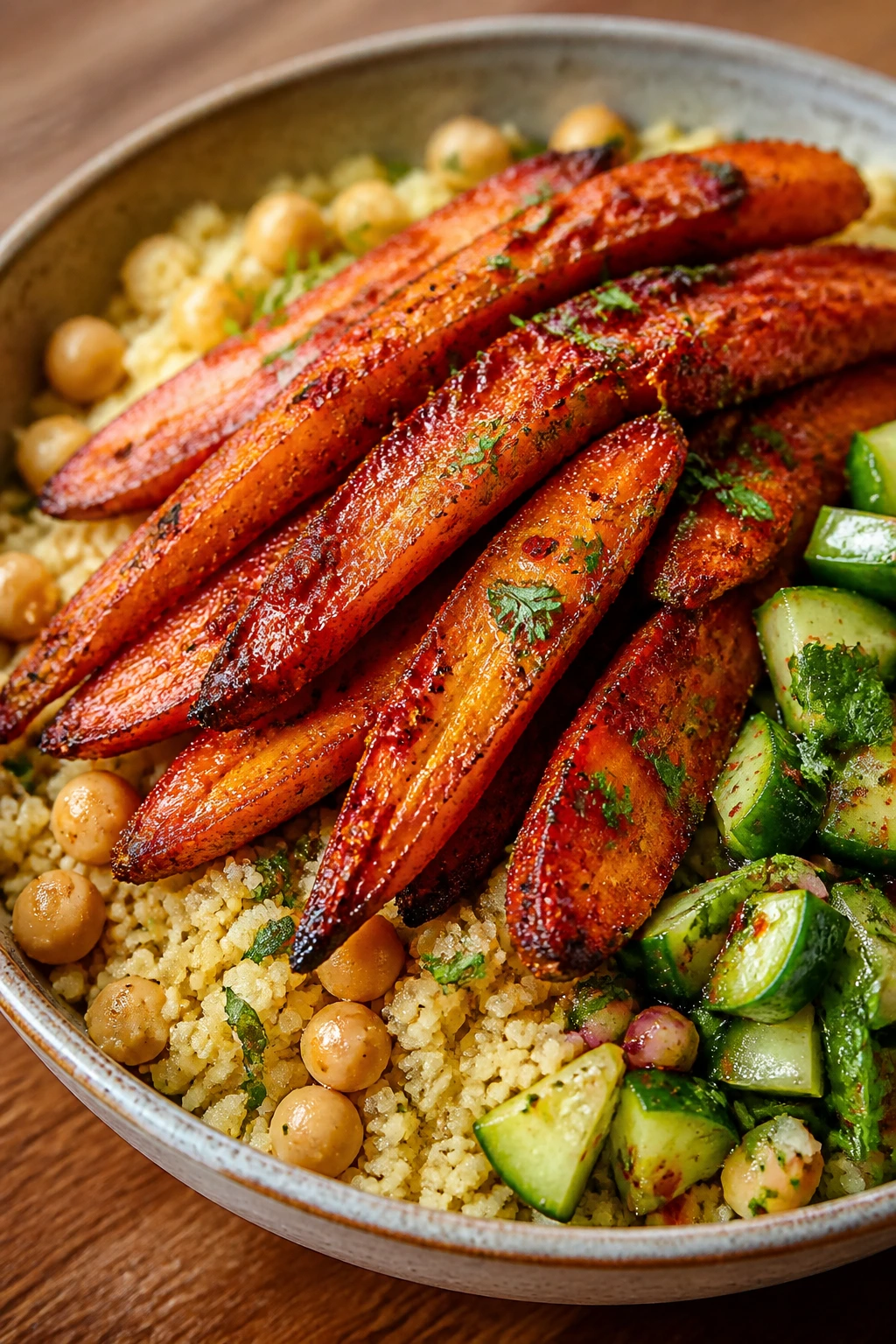
Carrots become almost candy-sweet when harissa and olive oil hit them in a hot oven. Put them over couscous with chickpeas and a cool cucumber salad, and the bowl lands somewhere between sharp and sweet.
Why It Works:
Harissa gives carrots heat and smoke without needing a long ingredient list. Couscous cooks fast, which keeps the whole meal weeknight-friendly, and chickpeas bring enough protein to make the bowl feel like dinner. A tahini drizzle ties the textures together.
Key Ingredients:
- 1 pound carrots, peeled and halved lengthwise — so they roast evenly.
- 2 tablespoons harissa paste — adjust for heat.
- 2 cans chickpeas, drained — for protein.
- 1 cup couscous — quick-cooking base.
- 1 cucumber, diced — cool contrast.
- 1/4 cup tahini — for the drizzle.
- 1 lemon — for acid.
- 2 tablespoons chopped mint or parsley — fresh finish.
- 2 tablespoons olive oil — for roasting.
Quick Steps:
- Roast the carrots and chickpeas: Toss with harissa, olive oil, salt, and pepper. Roast at 425°F (220°C) for 20 to 25 minutes.
- Cook the couscous: Pour boiling water or broth over couscous, cover, and let it stand 5 minutes. Fluff with a fork.
- Make the tahini drizzle: Whisk tahini, lemon juice, and water until loose.
- Assemble the bowls: Add couscous, carrots, chickpeas, and cucumber.
- Finish: Drizzle with tahini and herbs.
Equipment for This Recipe:
- Sheet pan — for roasting.
- Medium bowl — for couscous.
- Small whisk — for the sauce.
How to Serve This Dish:
Serve it while the carrots are still warm and the cucumber still cold. A little extra mint on top makes the bowl taste cleaner, and a few pumpkin seeds add a nice crunch if you want more texture.
Pro Tips for This Recipe:
- Don’t overdo harissa if yours is very salty.
- Couscous needs only a short rest; overworking it makes it clumpy.
- Add the lemon after roasting so the flavor stays bright.
Variations on This Dish:
- Farro Bowl: Swap couscous for farro if you want more chew.
- Roasted Cauliflower Mix: Add cauliflower florets to the pan.
- Apricot Finish: Chop a few dried apricots into the bowl for sweetness.
Common Mistakes to Avoid with This Dish:
- Crowding the pan: Carrots need room to caramelize.
- Dry couscous: Measure the liquid carefully.
- Heavy tahini sauce: Thin it until it drizzles, not plops.
18. Sushi Bowls with Tofu and Avocado
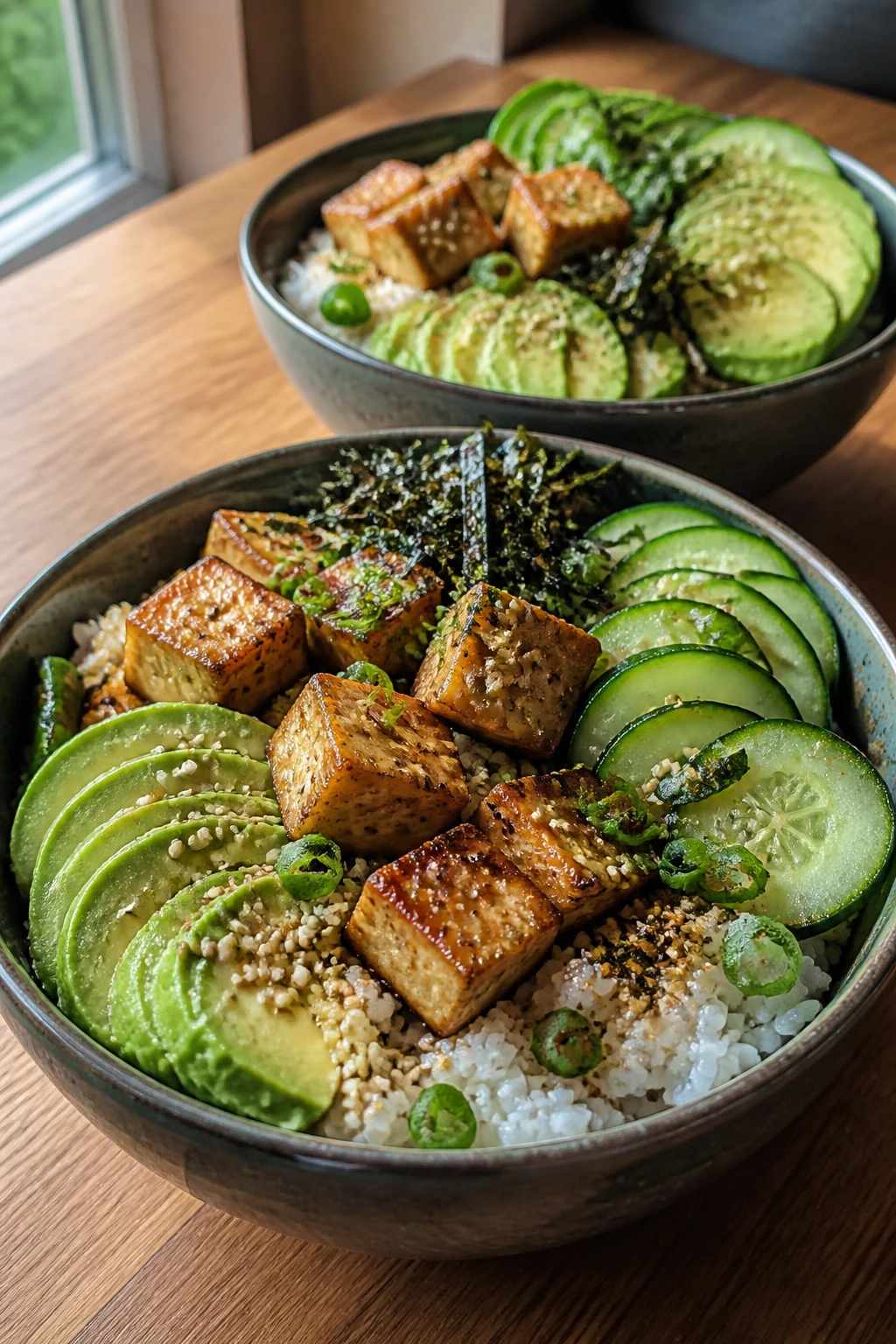
These bowls taste like a sushi roll that skipped the fuss and kept the best parts. You get seasoned rice, cool cucumber, crisp tofu, and creamy avocado in one bowl, which is a better dinner than it has any right to be.
Why It Works:
Sushi rice gives you the sticky base that holds everything together, while tofu adds clean protein and crunch when seared properly. Avocado and nori bring the sushi feeling without rolling mats. The rice vinegar seasoning matters more than people think; it’s what makes the bowl taste intentional.
Key Ingredients:
- 1 1/2 cups sushi rice — rinse until the water runs clearer.
- 14 ounces extra-firm tofu, pressed and cubed — for searing.
- 1 avocado, sliced — creamy and rich.
- 1 cucumber, sliced or diced — cool contrast.
- 1 carrot, julienned — adds crunch.
- 1 cup shelled edamame — extra protein.
- 2 tablespoons rice vinegar — seasons the rice.
- 1 sheet nori, cut into strips — for the finish.
- 2 tablespoons soy sauce — for serving.
Quick Steps:
- Cook the rice: Prepare sushi rice according to package directions, then season with rice vinegar and a pinch of salt.
- Sear the tofu: Cook in a skillet with oil until browned on all sides.
- Prep the vegetables: Slice cucumber, carrot, and avocado.
- Build the bowls: Spoon rice into bowls and arrange tofu, edamame, cucumber, carrot, and avocado on top.
- Finish: Add nori strips and soy sauce.
Equipment for This Recipe:
- Rice cooker or saucepan — for the rice.
- Nonstick skillet — for tofu.
- Sharp knife — for clean slicing.
How to Serve This Dish:
Serve the bowls slightly warm so the rice stays pleasant but doesn’t melt the avocado. A little pickled ginger on the side works well if you like sharper sushi flavors, and sesame seeds help the bowl look finished.
Pro Tips for This Recipe:
- Don’t skip rinsing the rice; it matters for the texture.
- Season the rice while it’s still hot.
- Add avocado at the very end so it doesn’t brown before serving.
Variations on This Dish:
- Spicy Mayo Bowl: Use vegan sriracha mayo as the drizzle.
- Brown Rice Version: Use brown sushi rice or short-grain brown rice.
- Seaweed Salad Spin: Add a small scoop of seaweed salad if you like that briny note.
Common Mistakes to Avoid with This Dish:
- Mushy rice: Too much water ruins the base.
- Soggy tofu: Press it and dry the pan.
- Assembling too early: Avocado browns and nori softens fast.
19. Zucchini Noodle Marinara with White Beans
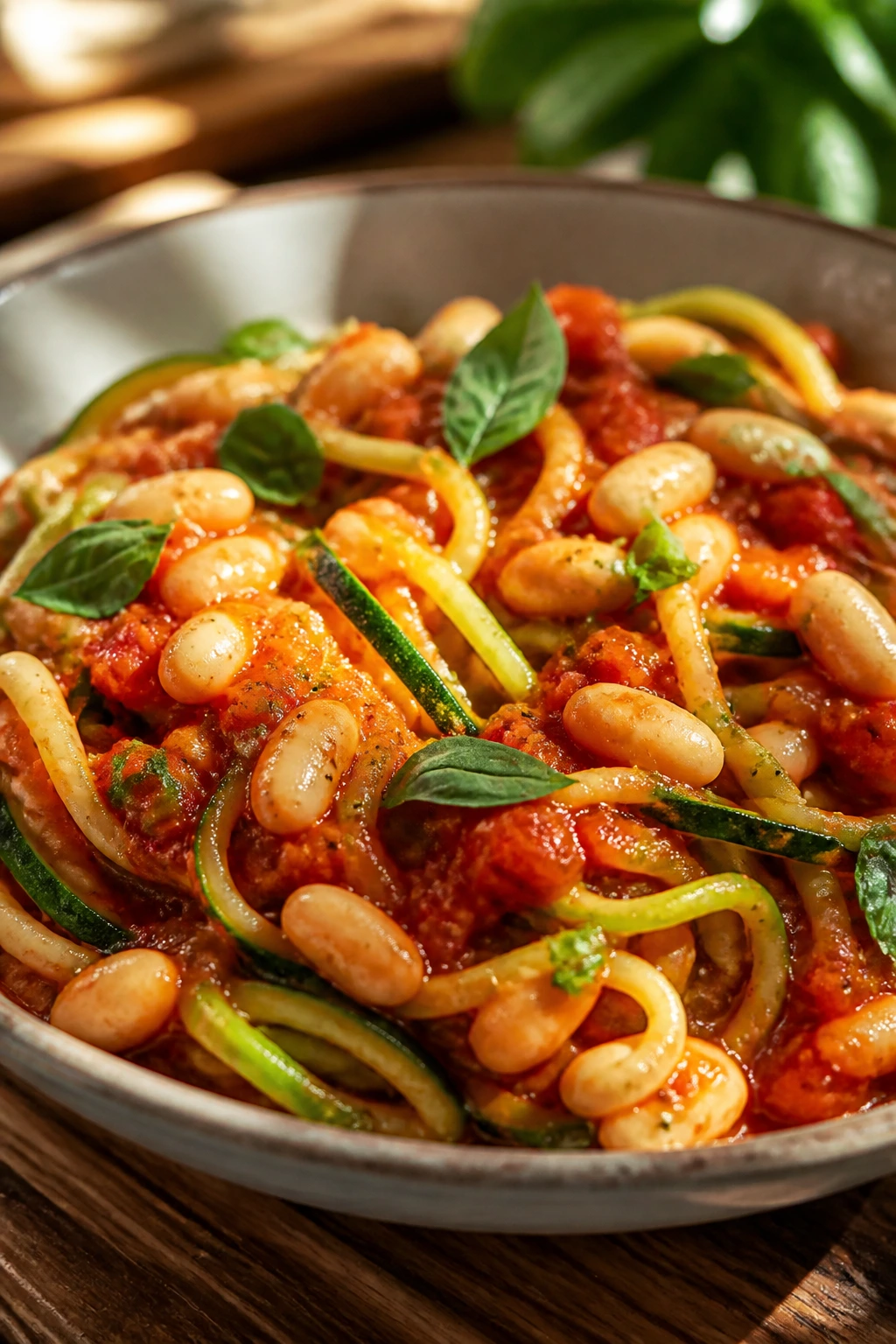
This dinner tastes like a bowl of summer tomatoes even when the zucchini is doing most of the work. The white beans make it substantial, and the marinara coats everything without weighing it down.
Why It Works:
Zucchini noodles need only a minute or two in the pan, so they stay firm and don’t collapse into watery ribbons. White beans bring protein and creaminess, which keeps the dish from feeling like a garnish. A sharp marinara does the heavy lifting here.
Key Ingredients:
- 4 medium zucchini, spiralized — don’t salt them too early.
- 1 can cannellini beans, drained — mild and creamy.
- 3 cups marinara sauce — use one that tastes like tomatoes, not sugar.
- 1 small onion, diced — for the sauce base.
- 3 cloves garlic, minced — garlic should stay fragrant, not browned.
- 2 tablespoons olive oil — for sautéing.
- 1/4 cup chopped basil — fresh finish.
- 2 tablespoons nutritional yeast — optional, for a savory note.
Quick Steps:
- Build the marinara base: Sauté onion in olive oil for 5 minutes, then add garlic for 30 seconds.
- Warm the sauce: Stir in marinara and cannellini beans. Simmer 5 minutes.
- Cook the zucchini noodles: Add zoodles to a hot skillet and toss for 1 to 2 minutes only.
- Combine: Spoon sauce over the noodles or toss quickly in the pan.
- Finish: Add basil and nutritional yeast if using.
Equipment for This Recipe:
- Spiralizer — for the zucchini.
- Large skillet — for the sauce and zoodles.
- Colander or towel — to drain the zucchini.
How to Serve This Dish:
Serve right away in shallow bowls so the zoodles don’t puddle. A piece of toasted bread on the side is optional, but I’d rather keep the meal light and let the beans do the work.
Pro Tips for This Recipe:
- Pat zucchini noodles dry before cooking.
- Warm the beans in the sauce so they taste integrated.
- Don’t overcook the zoodles or you’ll get soup.
Variations on This Dish:
- Roasted Mushroom Marinara: Add roasted mushrooms for depth.
- Chickpea Swap: Use chickpeas instead of white beans.
- Pesto Finish: Swirl in a spoonful of vegan pesto at the end.
Common Mistakes to Avoid with This Dish:
- Watery zucchini: Dry them before they hit the pan.
- Boiling the noodles: They need a quick toss, not a simmer.
- Too little sauce: The beans need enough marinara to carry the dish.
20. Spinach Artichoke Stuffed Sweet Potatoes
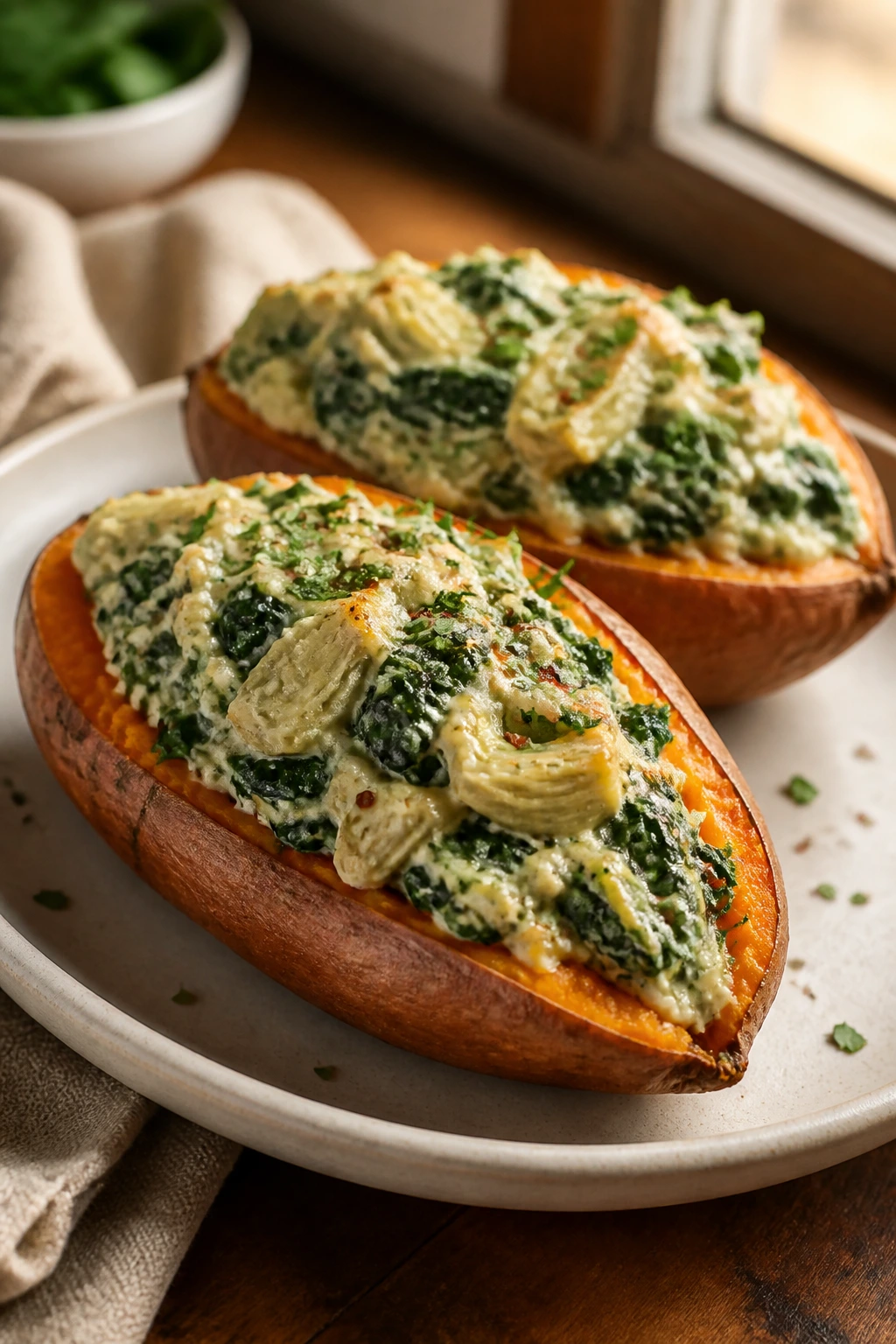
The filling tastes like the inside of a warm dip, but the sweet potato keeps the whole thing grounded. It’s creamy, savory, and just sweet enough to keep you going back for another forkful.
Why It Works:
Sweet potatoes provide the baked base, and the spinach-artichoke filling gives you a savory contrast that doesn’t feel heavy. Cashews or vegan cream cheese add creaminess, but the artichokes keep the flavor sharp. This is the kind of dinner that feels richer than the ingredient list suggests.
Key Ingredients:
- 4 medium sweet potatoes — scrubbed well.
- 1 can artichoke hearts, drained and chopped — tangy and soft.
- 5 ounces baby spinach — cooks down fast.
- 1/2 cup soaked cashews or vegan cream cheese — for creaminess.
- 3 cloves garlic, minced — essential.
- 1 lemon — juice to brighten the filling.
- 2 tablespoons olive oil — for sautéing.
- 1/4 cup chopped chives — for garnish.
Quick Steps:
- Bake the sweet potatoes: Roast at 400°F (205°C) for 45 to 55 minutes until the centers give easily.
- Make the filling: Sauté garlic, then add artichokes and spinach until wilted.
- Blend or stir the creamy base: Mix in cashews or vegan cream cheese plus lemon juice.
- Split and fill: Slice the potatoes open and fluff the insides with a fork.
- Top and serve: Spoon in the filling and finish with chives.
Equipment for This Recipe:
- Baking sheet — for the potatoes.
- Skillet — for the filling.
- Blender if using cashews — optional.
How to Serve This Dish:
Serve one stuffed potato per person with a crisp green salad or roasted broccoli on the side. A few chopped chives or parsley sprigs make the plate look brighter and keep the sweet potato from feeling too dense.
Pro Tips for This Recipe:
- Bake the potatoes until they truly yield; hard centers are annoying here.
- If using cashews, soak them in hot water for 20 minutes first.
- Salt the filling well; sweet potatoes need a savory counterweight.
Variations on This Dish:
- Mushroom Version: Add sautéed mushrooms to the filling.
- Green Onion Finish: Use scallions instead of chives.
- No-Blender Route: Use vegan cream cheese if you want to skip soaking.
Common Mistakes to Avoid with This Dish:
- Undercooked sweet potatoes: The filling needs a soft base.
- Thin filling: Cook off moisture from the spinach and artichokes.
- Underseasoning: Sweet potatoes hide bland filling fast.
21. Coconut Tofu Green Curry
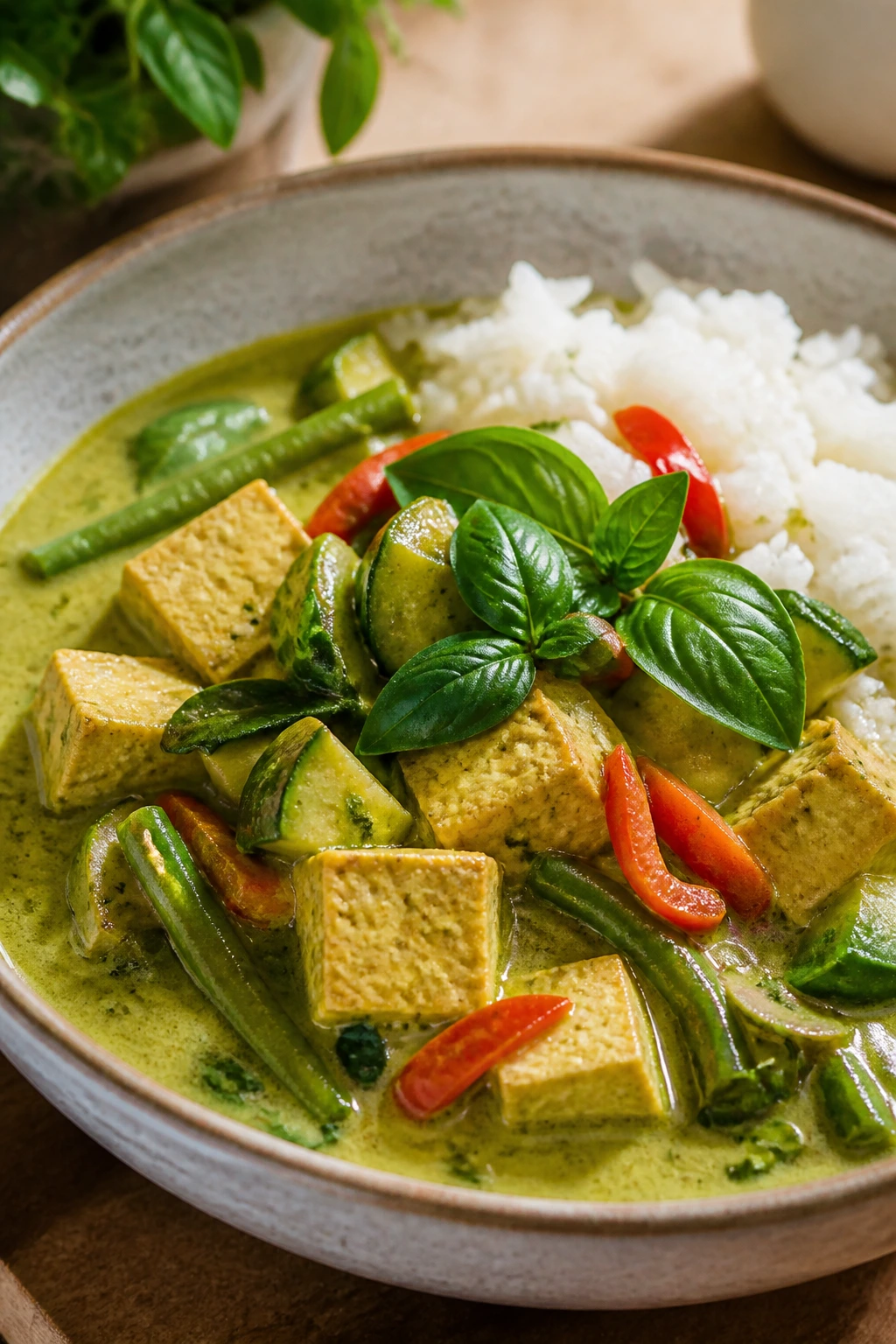
This curry smells like basil, lime, and coconut milk the second the paste hits the pot. The tofu soaks up the sauce, the vegetables stay lively, and the broth is rich enough to pour over rice without apology.
Why It Works:
Green curry paste gives you layered heat without a long spice cabinet. Coconut milk rounds out the edges, and tofu carries the sauce from spoon to spoon. Keep the vegetables cut to a similar size so they soften at the same pace.
Key Ingredients:
- 14 ounces extra-firm tofu, cubed — press it first.
- 1 can full-fat coconut milk — gives the curry body.
- 2 tablespoons green curry paste — start here and add more only if needed.
- 1 zucchini, sliced — softens quickly.
- 1 red bell pepper, sliced — sweetens the broth.
- 1 cup green beans, trimmed — stays a little crisp.
- 1 tablespoon soy sauce — for salt.
- 1 lime — finish with juice.
- 1/4 cup basil leaves — stir in at the end.
- 2 cups cooked jasmine or brown rice — for serving.
Quick Steps:
- Sear the tofu: Brown the cubes in a skillet or pot with oil.
- Bloom the curry paste: Stir the paste into the hot oil for 30 seconds.
- Add coconut milk and vegetables: Pour in coconut milk, then add zucchini, pepper, and green beans. Simmer 10 to 12 minutes.
- Season: Stir in soy sauce and lime juice.
- Finish with basil: Add basil just before serving over rice.
Equipment for This Recipe:
- Deep skillet or saucepan — for simmering.
- Spatula — for turning tofu.
- Rice pot — if your rice isn’t already made.
How to Serve This Dish:
Ladle the curry over rice and keep the bowl shallow so the sauce spreads out instead of pooling. A few thin lime wedges and extra basil leaves on top make the dish taste fresher and more finished.
Pro Tips for This Recipe:
- Fry the curry paste briefly to wake up the aroma.
- Don’t boil coconut milk hard; a gentle simmer keeps it smooth.
- Add basil off the heat so it doesn’t go dark and tired.
Variations on This Dish:
- Cauliflower Curry: Add cauliflower florets for a firmer vegetable.
- Peanut Curry: Stir in a spoon of peanut butter for depth.
- Mild Version: Use less curry paste and more coconut milk.
Common Mistakes to Avoid with This Dish:
- Too much curry paste: It can turn salty fast.
- Hard boiling: Coconut milk can split.
- Cutting vegetables unevenly: Some will collapse while others stay raw.
22. Mushroom Barley Stew
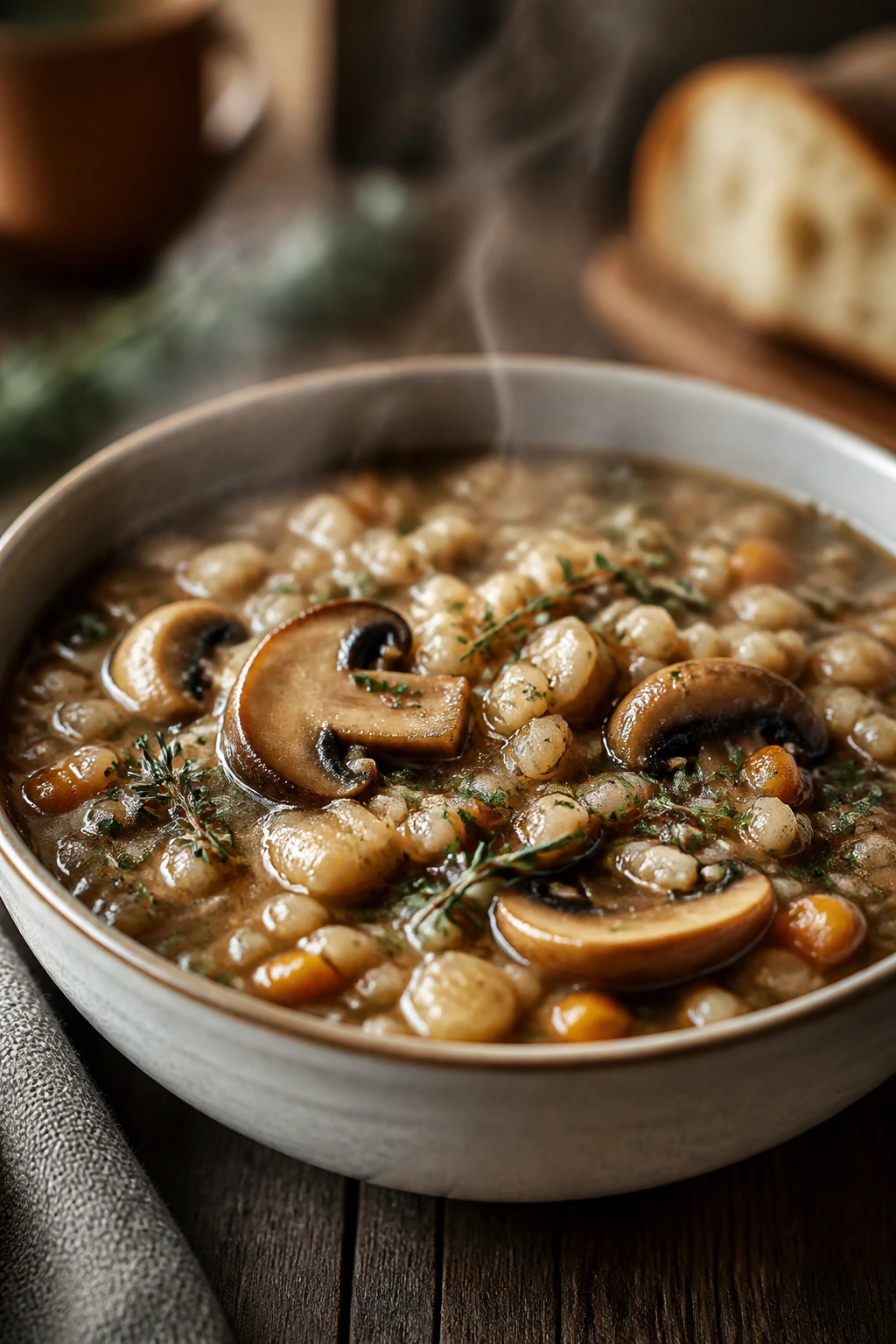
This stew smells like browned mushrooms and thyme, which is one of the better smells in a kitchen. The barley turns chewy and the broth thickens on its own, so the bowl feels complete without needing cream or flour.
Why It Works:
Pearl barley gives the stew a nutty chew that holds up well over simmering. Mushrooms bring deep savory flavor, and the slow cook lets everything taste joined rather than separately cooked. It’s the kind of dinner that gets better after it sits for ten minutes.
Key Ingredients:
- 1 cup pearl barley, rinsed — chewy base.
- 1 pound mushrooms, sliced — cremini or mixed.
- 1 onion, diced — the first layer.
- 2 carrots, diced — sweetness and color.
- 2 celery stalks, diced — classic stew backbone.
- 2 tablespoons tomato paste — deepens the broth.
- 6 cups vegetable broth — enough to simmer the barley.
- 1 teaspoon thyme — pairs well with mushrooms.
- 2 tablespoons olive oil — for browning.
Quick Steps:
- Brown the mushrooms: Cook in a hot pot with oil until they release liquid and brown.
- Add the vegetables: Stir in onion, carrots, and celery; cook 5 minutes.
- Build the stew: Add tomato paste, barley, broth, thyme, salt, and pepper.
- Simmer: Cook uncovered for 40 to 45 minutes until barley is tender and the broth thickens.
- Finish and rest: Taste, adjust salt, and let it sit 10 minutes before serving.
Equipment for This Recipe:
- Heavy pot or Dutch oven — for steady simmering.
- Wooden spoon — for scraping the bottom.
- Ladle — for serving.
How to Serve This Dish:
Serve it in deep bowls with cracked black pepper and parsley on top. A slice of dense bread works well, though the barley already gives the stew enough heft for a plain bowl dinner.
Pro Tips for This Recipe:
- Brown mushrooms in batches if your pot is small.
- Barley needs room to swell; use enough broth.
- The stew thickens as it cools, so don’t panic if it looks loose at first.
Variations on This Dish:
- Tomato-Barley Stew: Add a can of tomatoes.
- Root Vegetable Version: Add parsnips or turnips.
- Herby Finish: Stir in dill instead of thyme.
Common Mistakes to Avoid with This Dish:
- Weak mushroom browning: That’s where the flavor lives.
- Too little broth: Barley absorbs more than you think.
- Serving too soon: The flavor settles after a short rest.
23. Teriyaki Tofu Broccoli Rice Bowl
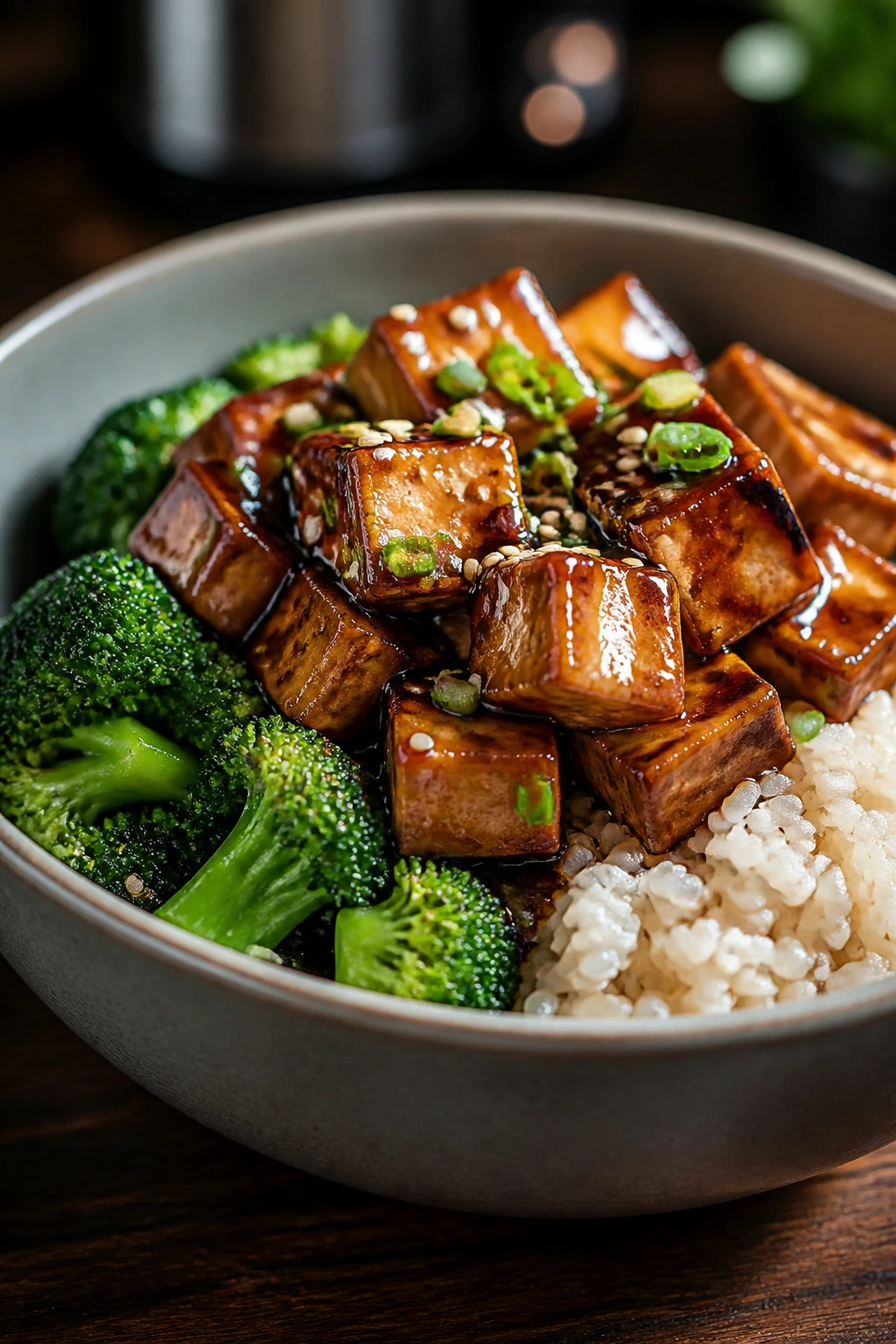
This bowl has the sticky-sweet gloss people want from takeout, but it lands lighter because the sauce is built from soy, ginger, and a restrained amount of maple syrup. Broccoli gets crisp at the edges, tofu turns golden, and rice keeps the whole thing grounded.
Why It Works:
Teriyaki works best when it clings, not floods. Pressed tofu browns well, broccoli roasts quickly, and a simple sauce made from pantry ingredients gives you control over the sweetness. The bowl tastes polished without being fussy.
Key Ingredients:
- 14 ounces extra-firm tofu, pressed and cubed — the main protein.
- 4 cups broccoli florets — roast or stir-fry until crisp-tender.
- 2 cups cooked brown rice — sturdy base.
- 3 tablespoons soy sauce — the salt anchor.
- 1 tablespoon maple syrup — enough sweetness.
- 1 tablespoon rice vinegar — keeps the sauce sharp.
- 1 teaspoon grated ginger — brightens the glaze.
- 1 teaspoon cornstarch — thickens the sauce.
- 1 tablespoon sesame seeds — finish.
Quick Steps:
- Roast or sear the broccoli: Cook until the edges brown, about 15 minutes at 425°F (220°C) or 6 minutes in a skillet.
- Brown the tofu: Sear in a skillet until golden on most sides.
- Make the sauce: Whisk soy sauce, maple syrup, rice vinegar, ginger, garlic, cornstarch, and 1/4 cup water.
- Glaze the tofu: Pour sauce into the pan and cook until glossy.
- Assemble: Serve over rice with broccoli and sesame seeds.
Equipment for This Recipe:
- Skillet or sheet pan — depending on how you cook the broccoli.
- Small saucepan or bowl — for the sauce.
- Sharp knife — for tofu cubes.
How to Serve This Dish:
Serve in bowls with extra sesame seeds and maybe scallions. If you want a little contrast, add quick-pickled cucumbers on the side; they cut through the glaze in a sharp, clean way.
Pro Tips for This Recipe:
- Press tofu long enough that it no longer feels spongy.
- Don’t let the teriyaki sauce boil too hard once the cornstarch goes in.
- Use brown rice if you want more chew and a nuttier base.
Variations on This Dish:
- Sesame Mushroom Bowl: Add mushrooms alongside the broccoli.
- Spicy Version: Stir in chili flakes or sriracha.
- Cauliflower Rice Swap: Use cauliflower rice for a lighter bowl.
Common Mistakes to Avoid with This Dish:
- Watery tofu: Press it and dry the pan.
- Too much sugar: Maple should support, not dominate.
- Overcooked broccoli: It should still have some bite.
24. Pasta e Ceci
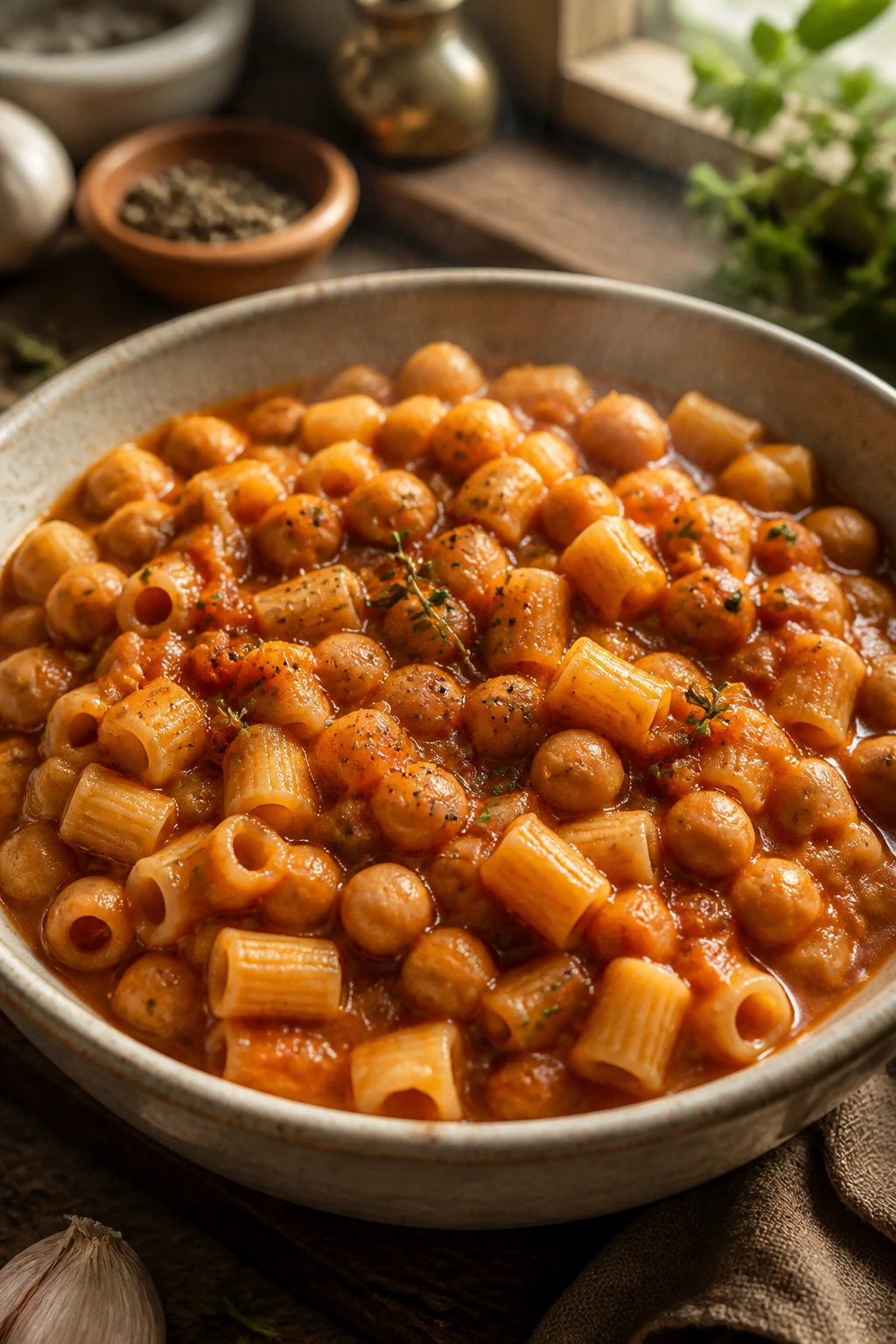
This is chickpea pasta in the cozy, brothy Italian sense, not the modern “let’s make everything a bowl” sense. The sauce is tomato-garlic-thyme, the chickpeas make it thick, and the pasta drinks some of the broth so every bite feels spoonable.
Why It Works:
Pasta and chickpeas share the work: one gives starch, the other gives protein and body. A little tomato paste and rosemary create depth without a long simmer. The trick is cooking it until some of the broth reduces, so the dish feels creamy without cream.
Key Ingredients:
- 1 can chickpeas, drained — or two for a fuller pot.
- 8 ounces small pasta — ditalini or elbows work well.
- 1 onion, diced — base flavor.
- 3 cloves garlic, minced — don’t hold back.
- 2 tablespoons tomato paste — concentrates the broth.
- 4 cups vegetable broth — enough to simmer pasta.
- 1 teaspoon rosemary or thyme — choose one.
- 2 tablespoons olive oil — for the base.
- 2 cups chopped kale or spinach — optional, stirred in at the end.
Quick Steps:
- Sauté onion and garlic: Cook in olive oil until soft and fragrant.
- Toast the tomato paste: Stir it in for 30 seconds.
- Add broth, chickpeas, and herbs: Bring to a simmer.
- Cook the pasta in the pot: Add pasta and cook until tender, stirring often so it doesn’t stick.
- Finish with greens: Stir in kale or spinach and serve warm.
Equipment for This Recipe:
- Medium pot — everything happens here.
- Wooden spoon — for stirring often.
- Ladle — for serving.
How to Serve This Dish:
Serve it in bowls with black pepper and a small drizzle of olive oil. It’s thick enough to eat with a spoon, and a little parsley or basil on top keeps it from looking too brown.
Pro Tips for This Recipe:
- Stir often once the pasta goes in; it sticks fast.
- Add extra broth if you want it soupier.
- Use small pasta so the chickpeas stay central.
Variations on This Dish:
- Lemony Version: Add lemon zest at the end.
- Tomato-Chili Style: Add chili flakes with the garlic.
- Greener Pot: Fold in extra spinach right before serving.
Common Mistakes to Avoid with This Dish:
- Dry pot: Pasta e ceci needs broth, not just a thin sauce.
- Overcooked pasta: It keeps softening in the hot broth.
- Not stirring enough: The starch can catch on the pot bottom.
25. Lentil Sloppy Joes
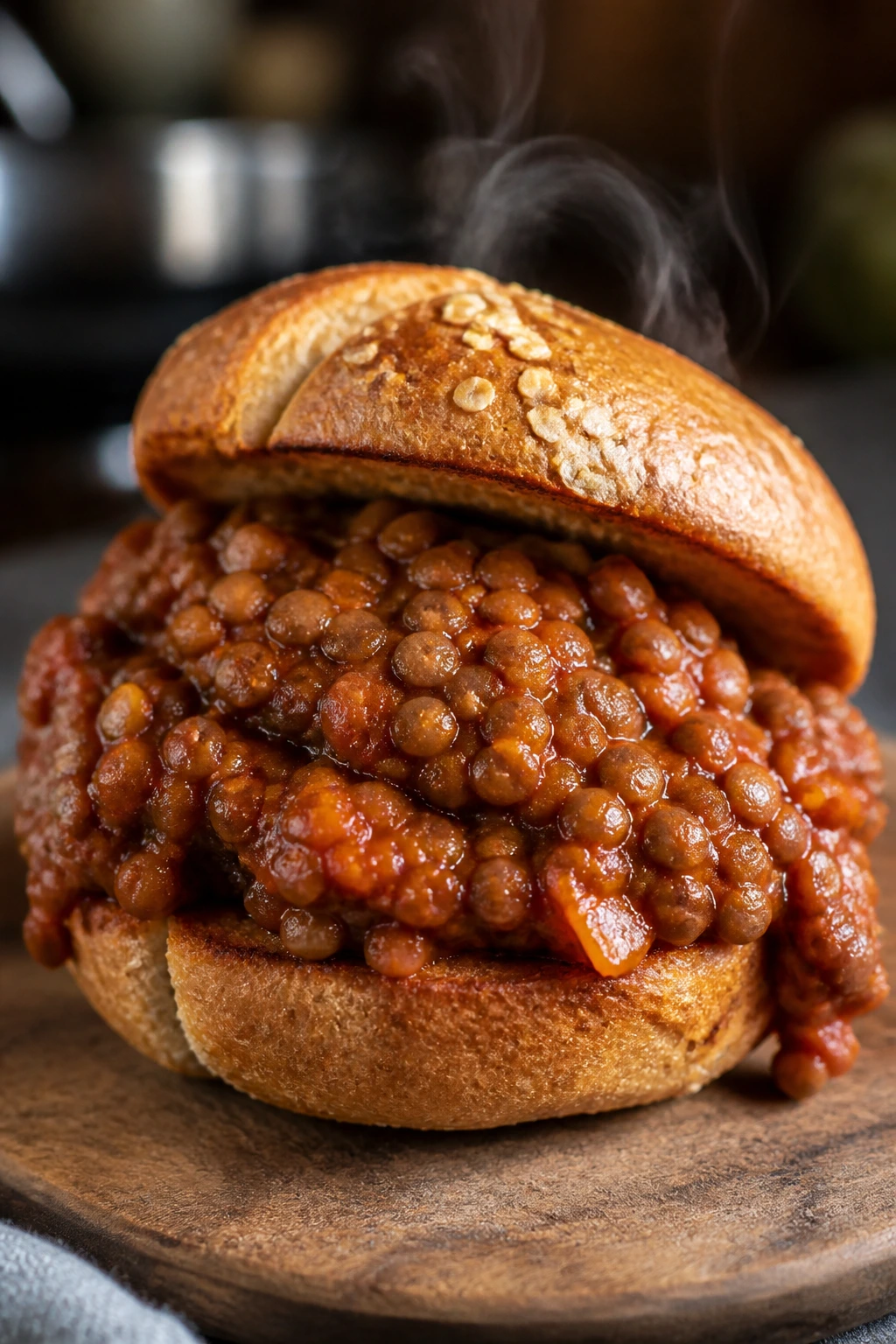
This filling smells like onion, tomato, and smoked paprika simmering down into something sticky and savory. Lentils give it the right rough texture, and on a toasted bun it eats like a proper handheld dinner, not a compromise.
Why It Works:
Cooked lentils hold their shape while still soaking up the sauce. Tomato sauce, mustard, and a little maple or ketchup bring that sloppy joe taste without the meat. The filling should be thick enough to mound, not spoon like soup.
Key Ingredients:
- 1 1/2 cups cooked brown lentils — drained well.
- 1 onion, diced — essential flavor.
- 1 bell pepper, diced — adds sweetness.
- 2 tablespoons tomato paste — deepens the sauce.
- 1 cup tomato sauce — the base.
- 1 tablespoon mustard — gives the tang.
- 1 teaspoon smoked paprika — for that familiar smoky note.
- 4 to 6 whole-grain buns — toasted if possible.
- Pickles, for serving — sharp contrast.
Quick Steps:
- Cook onion and pepper: Sauté in oil until soft.
- Add lentils and sauce ingredients: Stir in lentils, tomato paste, tomato sauce, mustard, paprika, salt, and a spoon of maple if needed.
- Simmer: Cook 10 to 15 minutes until thick and spoonable.
- Toast the buns: Do this while the filling thickens.
- Assemble: Pile onto buns and add pickles.
Equipment for This Recipe:
- Large skillet — for the filling.
- Wooden spoon — for breaking down the mixture.
- Toaster or pan — for the buns.
How to Serve This Dish:
Serve with baked potato wedges or a simple cabbage slaw. The filling is messy by design, so keep napkins nearby and don’t overfill the buns unless you enjoy chasing lentils across the plate.
Pro Tips for This Recipe:
- Cook the filling until it clings to the spoon.
- Toast the buns or they’ll collapse under the sauce.
- Add a splash of water if the lentils look dry before serving.
Variations on This Dish:
- BBQ Version: Add barbecue sauce instead of tomato sauce.
- Spicy Mustard Style: Use Dijon and cayenne.
- Open-Faced Plate: Serve over toasted bread instead of buns.
Common Mistakes to Avoid with This Dish:
- Watery filling: Simmer long enough for the sauce to tighten.
- Soft buns: Toast them.
- Overcooked lentils: Mushy lentils lose the sloppy joe texture.
26. Roasted Cauliflower Shawarma Bowls
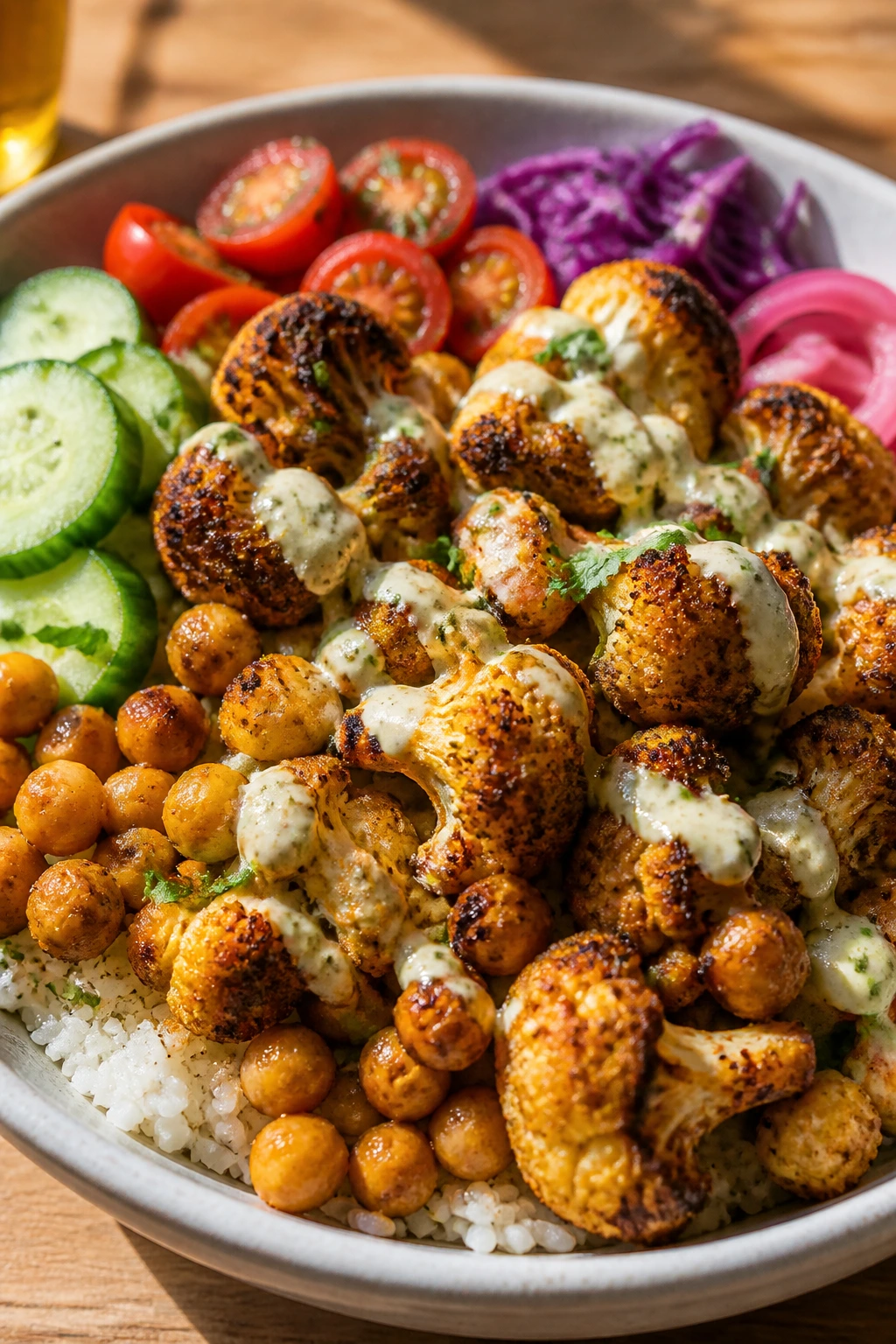
The spice blend here smells warm and a little smoky, the way good shawarma should. Roasted cauliflower and chickpeas give you two textures, and the tahini sauce cools everything down without flattening the flavor.
Why It Works:
Shawarma spices cling best to cauliflower when the florets are dry and the oven is hot. Chickpeas add extra protein, and the fresh cucumber-tomato pieces keep the bowl from feeling one-dimensional. A tahini-lemon drizzle turns the roasted tray into a finished meal.
Key Ingredients:
- 1 head cauliflower, cut into florets — keep them bite-size.
- 2 cans chickpeas, drained and dried — roast with the cauliflower.
- 2 tablespoons shawarma spice blend — or cumin, paprika, coriander, turmeric.
- 2 tablespoons olive oil — for coating.
- 1 cucumber, diced — cool crunch.
- 1 cup cherry tomatoes, halved — fresh acidity.
- 1/4 cup tahini — sauce base.
- 1 lemon — for the sauce.
- 2 cups cooked rice or pita — for serving.
Quick Steps:
- Roast the cauliflower and chickpeas: Toss with olive oil and shawarma spices. Roast at 425°F (220°C) for 25 minutes, turning once.
- Mix the sauce: Whisk tahini, lemon juice, salt, and water until it drips.
- Prep the fresh vegetables: Dice cucumber and halve tomatoes.
- Build the bowls: Spoon rice into bowls, then add roasted cauliflower, chickpeas, and fresh vegetables.
- Finish: Drizzle with tahini sauce.
Equipment for This Recipe:
- Sheet pan — for roasting.
- Small bowl — for tahini.
- Sharp knife — for clean cuts.
How to Serve This Dish:
Serve the bowls warm with the fresh vegetables kept separate until the last minute. A little chopped parsley or mint gives the bowl a brighter top note, and a few olives don’t hurt if you like a saltier edge.
Pro Tips for This Recipe:
- Dry the chickpeas well or they won’t crisp.
- Keep the sauce loose enough to drizzle.
- Don’t underseason the cauliflower; it needs bold spice.
Variations on This Dish:
- Sweet Pepper Bowl: Add roasted red peppers.
- Rice-Free Plate: Serve over chopped romaine.
- Garlic Sauce Finish: Swap tahini sauce for a vegan garlic sauce.
Common Mistakes to Avoid with This Dish:
- Crowded roasting pan: The cauliflower steams.
- Weak spice coating: The vegetables taste pale.
- Heavy sauce: Tahini should finish the bowl, not bury it.
27. Peanut-Lime Soba Salad Bowls
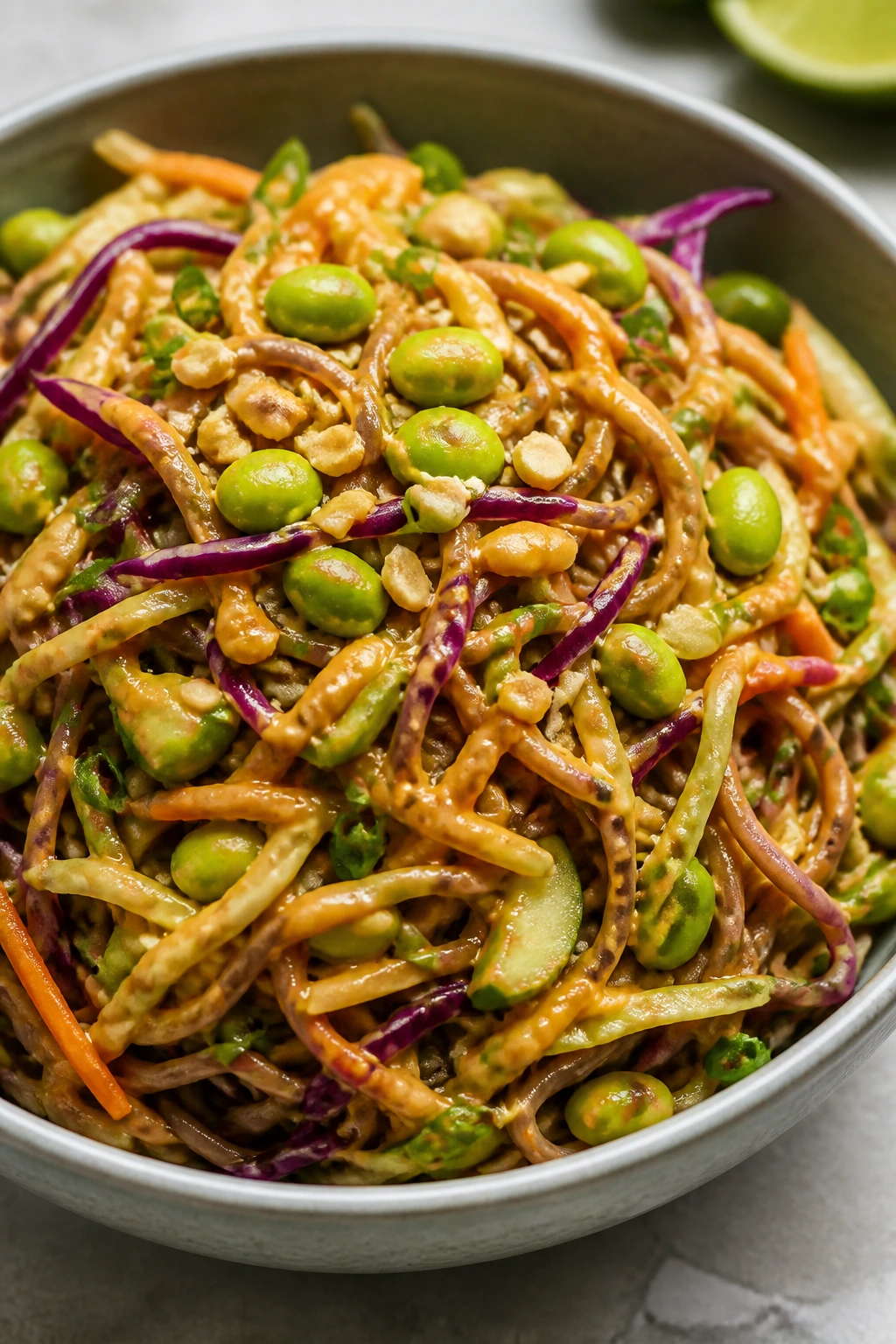
This bowl tastes cold, bright, and a little nutty, with enough chew from the soba to keep it dinner-worthy. If you like meals that can sit for a few minutes without falling apart, this one is excellent.
Why It Works:
Soba noodles stay pleasantly firm, especially if you rinse them after cooking. Peanut-lime dressing is rich enough to coat the noodles but sharp enough to keep the bowl from feeling sticky. Cabbage and carrots bring crunch that holds up well even after the dressing goes on.
Key Ingredients:
- 8 ounces soba noodles — cook until just tender.
- 2 cups shredded cabbage — crunch and volume.
- 1 cup shredded carrots — adds sweetness.
- 1 cucumber, thinly sliced — cool contrast.
- 1 cup shelled edamame — protein.
- 1/3 cup peanut butter — dressing base.
- 2 tablespoons lime juice — sharpens the dressing.
- 2 tablespoons soy sauce — salt.
- 1 tablespoon maple syrup — balances the lime.
- 2 tablespoons chopped cilantro — finish.
Quick Steps:
- Cook and rinse the soba: Drain and rinse under cool water until no starch remains.
- Whisk the dressing: Mix peanut butter, lime juice, soy sauce, maple syrup, ginger, and warm water until loose.
- Prep the vegetables: Slice cabbage, carrots, and cucumber.
- Toss everything together: Combine noodles, vegetables, edamame, and dressing.
- Serve cold or room temp: Top with cilantro.
Equipment for This Recipe:
- Pot for noodles — use enough water.
- Large mixing bowl — for tossing.
- Whisk — for smoothing the dressing.
How to Serve This Dish:
Serve it in bowls with sesame seeds or chopped peanuts if you want more crunch. It works well at room temperature, which is useful if you don’t want to wrestle with hot pots right before dinner.
Pro Tips for This Recipe:
- Rinse soba thoroughly or the dressing turns gluey.
- Thin peanut butter with warm water, not cold.
- Toss the cabbage in right before serving if you want it extra crisp.
Variations on This Dish:
- Spicy Sesame Bowl: Add chili oil.
- Noodle Salad with Tofu: Add seared tofu cubes.
- Rice Noodle Swap: Use rice noodles if soba isn’t available.
Common Mistakes to Avoid with This Dish:
- Sticky noodles: Rinsing fixes this.
- Dressing too thick: Add water slowly.
- Adding avocado too early: If you use it, add right before serving.
28. Split Pea Soup with Croutons
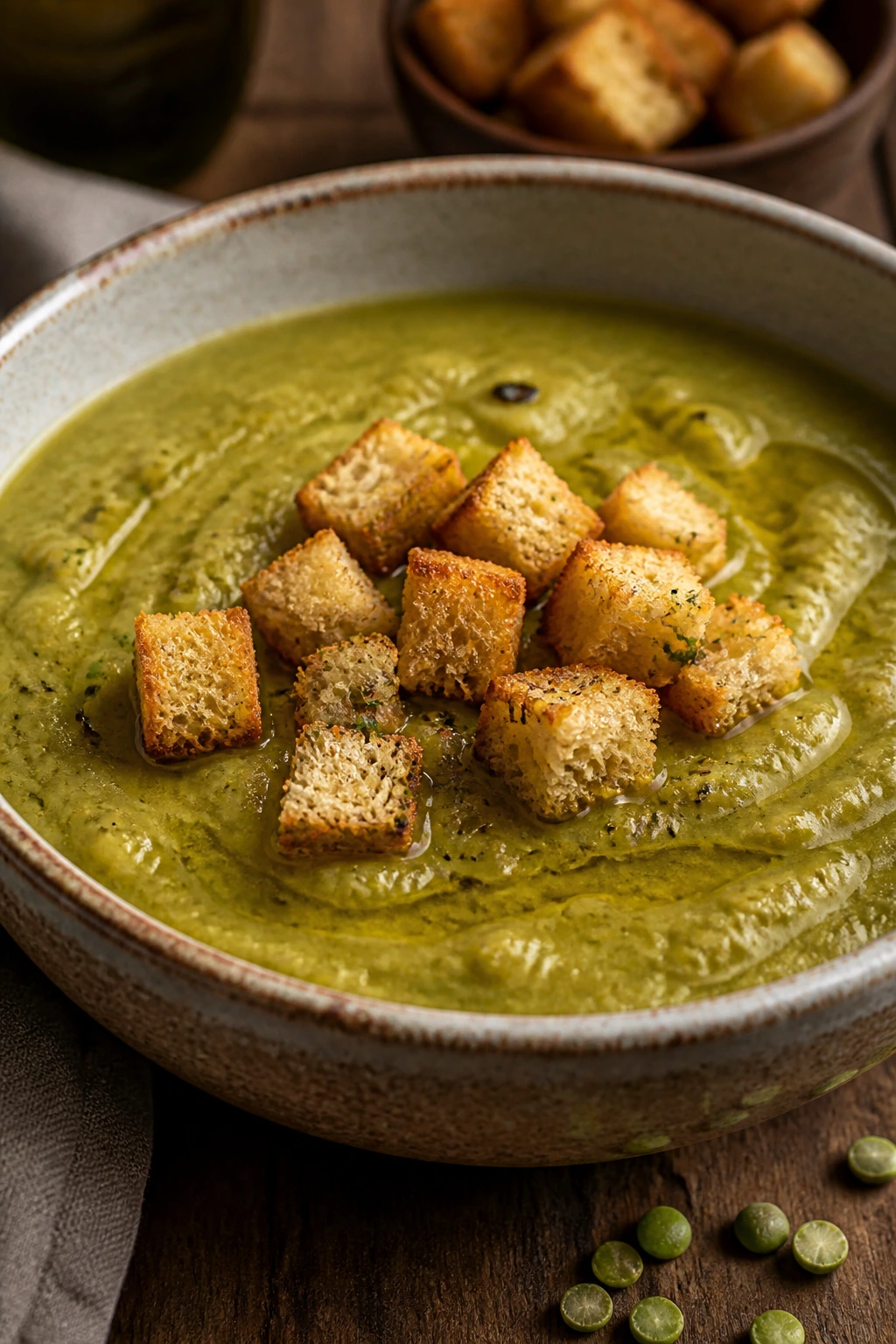
Split pea soup has a smell that settles into the kitchen in a good way — onions, bay leaf, and something earthy simmering low. The peas break down into a thick green pot of soup that feels old-fashioned without being dull.
Why It Works:
Split peas dissolve into a creamy texture on their own, so you don’t need any dairy or blender tricks. The broth thickens as the peas cook, and a final lemon squeeze keeps the flavor from going muddy. Homemade croutons give the soup something crunchy to push against.
Key Ingredients:
- 1 pound split peas, rinsed — the backbone of the soup.
- 1 onion, diced — the flavor start.
- 2 carrots, diced — gentle sweetness.
- 2 celery stalks, diced — classic soup base.
- 1 bay leaf — for slow simmering.
- 6 cups vegetable broth — enough liquid.
- 2 teaspoons thyme — earthy and simple.
- 2 tablespoons olive oil — for sautéing.
- 2 slices whole-grain bread, cubed — for croutons.
- 1 lemon — for finishing.
Quick Steps:
- Toast the bread cubes: Bake or pan-toast until crisp and golden.
- Sauté the vegetables: Cook onion, carrots, and celery in olive oil until soft.
- Add split peas and broth: Stir in peas, broth, bay leaf, thyme, salt, and pepper.
- Simmer: Cook 50 to 60 minutes, stirring now and then, until the peas break down.
- Finish: Remove bay leaf, add lemon juice, and serve with croutons.
Equipment for This Recipe:
- Large soup pot — needed for the long simmer.
- Baking sheet — for croutons.
- Wooden spoon — for scraping the bottom.
How to Serve This Dish:
Serve in deep bowls and let the croutons sit on top just long enough to soften at the edges. A little black pepper and a tiny drizzle of olive oil are enough; the soup already carries plenty of flavor.
Pro Tips for This Recipe:
- Rinse split peas so they don’t foam badly.
- Stir more often near the end, when the soup thickens.
- Add extra broth if you prefer it looser.
Variations on This Dish:
- Smoky Soup: Add smoked paprika.
- Garlic Herb Version: Stir in more garlic and parsley.
- Chunkier Bowl: Hold back a cup of peas and stir them in late.
Common Mistakes to Avoid with This Dish:
- Undercooking the peas: They need time to fully soften.
- Too little stirring: Thick split pea soup can catch at the bottom.
- Forgetting the acid: Lemon keeps the soup from tasting heavy.
29. Tofu Tikka Masala with Brown Rice
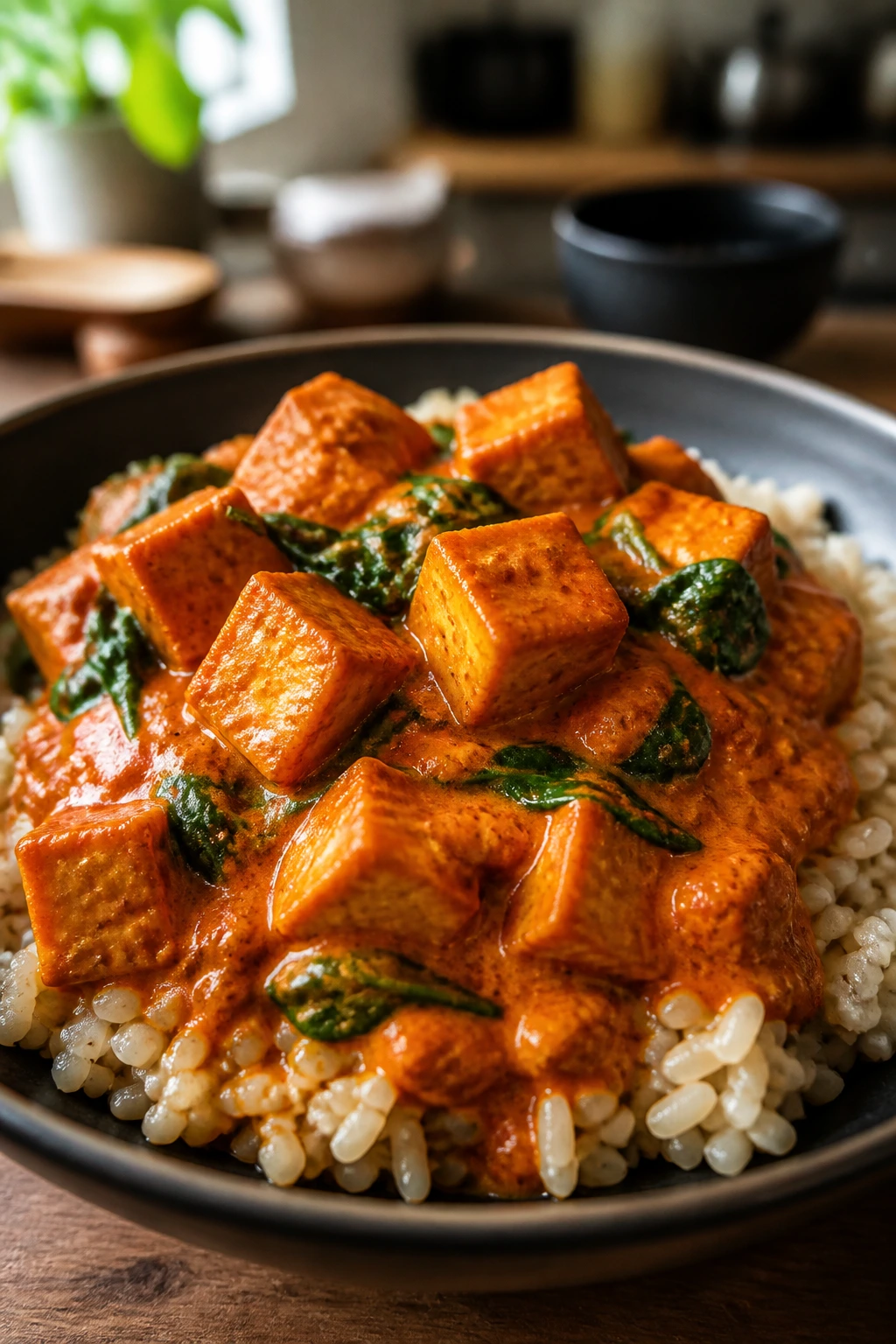
The sauce is rich, tomato-forward, and warm with spice, but the coconut milk keeps it from feeling heavy. Crisp tofu cubes soak up the masala, and brown rice gives the whole meal a steady base.
Why It Works:
Tofu is a solid stand-in here because it absorbs sauce without falling apart. Tomato sauce, coconut milk, and garam masala create a creamy spice profile that doesn’t need cream or butter. A short simmer is enough once the tofu is browned.
Key Ingredients:
- 14 ounces extra-firm tofu, pressed and cubed — for searing.
- 1 onion, diced — the first layer.
- 1 tablespoon grated ginger — bright and warm.
- 2 tablespoons garam masala — main spice.
- 1 can tomato sauce, 15 ounces — smooth base.
- 1 can coconut milk, 13.5 ounces — makes it creamy.
- 2 cups baby spinach — stirred in at the end.
- 2 cups cooked brown rice — for serving.
- 2 tablespoons oil — for browning.
Quick Steps:
- Sear the tofu: Brown cubes in a skillet until crisp on a few sides.
- Cook the onion and ginger: Sauté until soft, then add garlic and garam masala for 30 seconds.
- Build the sauce: Add tomato sauce and coconut milk; simmer 10 minutes.
- Add tofu and spinach: Stir in tofu and cook until heated through, then fold in spinach.
- Serve over rice: Taste and add salt or lime if needed.
Equipment for This Recipe:
- Large skillet or saucepan — for the sauce.
- Rice pot — if the rice isn’t pre-made.
- Spatula — for turning tofu.
How to Serve This Dish:
Serve the curry over rice with cilantro on top if you have it. If you want extra contrast, add a quick cucumber salad on the side; the cool crunch makes the sauce taste brighter.
Pro Tips for This Recipe:
- Brown the tofu before it goes into the sauce.
- Let the sauce simmer long enough to lose the raw tomato edge.
- Add spinach at the end so it stays green.
Variations on This Dish:
- Cauliflower Tikka: Add roasted cauliflower.
- Lighter Version: Use half coconut milk, half broth.
- Extra-Spicy Bowl: Add chili powder or cayenne.
Common Mistakes to Avoid with This Dish:
- Skipping tofu browning: The texture gets flat.
- Boiling the sauce hard: Coconut milk can split.
- Underseasoning rice: Plain rice needs the sauce to do all the work.
30. One-Pan Ratatouille with White Beans and Polenta
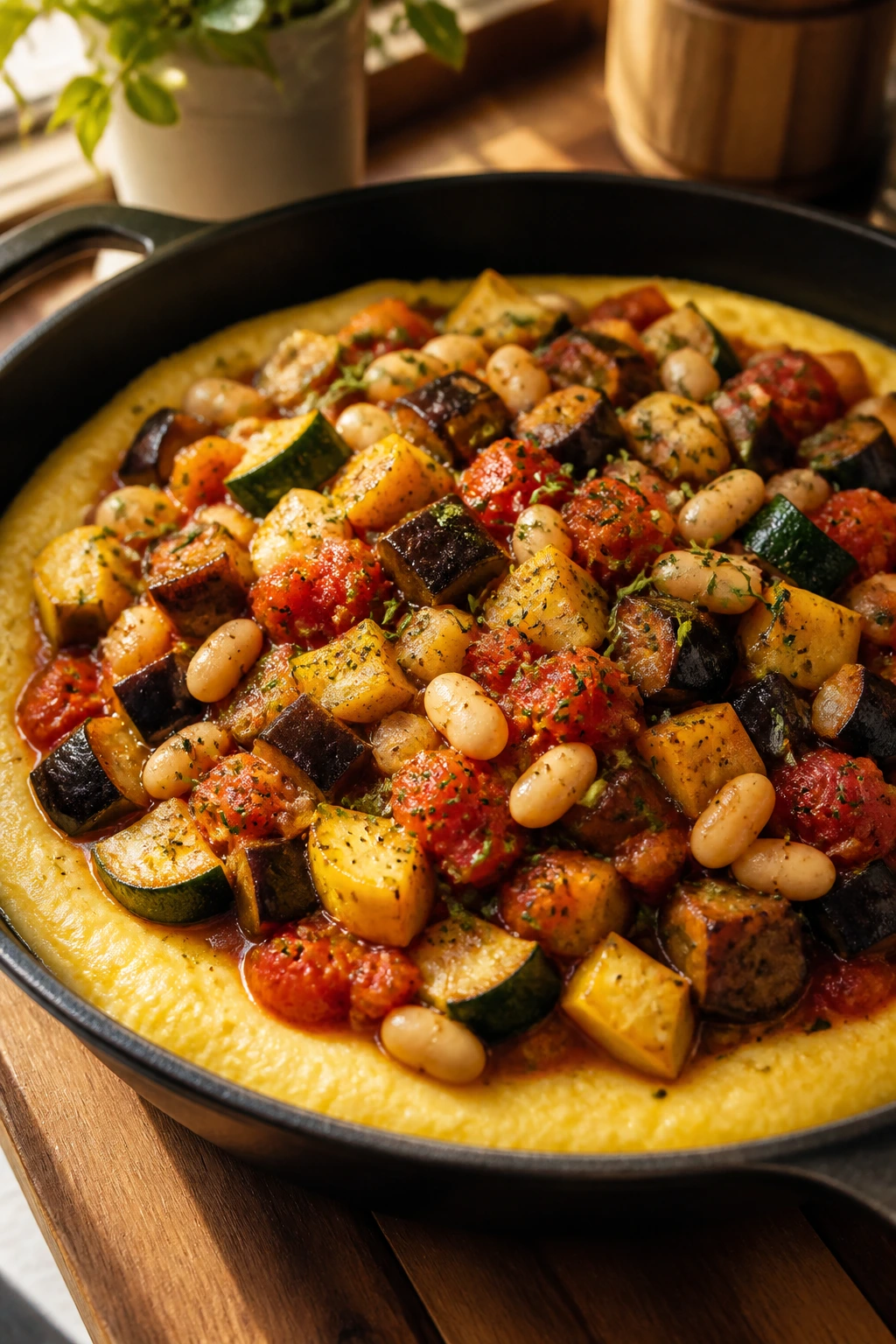
This final one smells like summer vegetables cooked down until they almost melt together. The white beans make it a dinner instead of a side, and the polenta gives you a creamy base that catches all the tomato juices.
Why It Works:
Ratatouille needs time for the eggplant and zucchini to soften without turning to mush. White beans add protein and make the skillet feel substantial, while polenta gives you a soft base that doesn’t fight the vegetables. The whole dish gets better after a few minutes of rest.
Key Ingredients:
- 1 eggplant, diced — cut into even pieces.
- 2 zucchini, diced — similar size to the eggplant.
- 1 yellow squash, diced — optional, but nice.
- 1 onion, sliced — for sweetness.
- 3 cloves garlic, minced — essential.
- 2 cups chopped tomatoes or 1 can diced tomatoes — the sauce.
- 1 can white beans, drained — for protein.
- 1 teaspoon dried thyme — classic herb note.
- 1 cup polenta — for serving.
- 3 cups vegetable broth or water — for the polenta.
Quick Steps:
- Sauté the vegetables: Cook onion and eggplant in olive oil until they start to soften.
- Add zucchini and garlic: Cook a few minutes more until the pan smells sweet and savory.
- Simmer with tomatoes and beans: Stir in tomatoes, beans, thyme, salt, and pepper. Cook until the vegetables are tender and the sauce thickens.
- Make the polenta: Simmer polenta with broth or water, stirring until creamy.
- Serve together: Spoon ratatouille over polenta and finish with basil.
Equipment for This Recipe:
- Large skillet or wide saucepan — for the ratatouille.
- Medium pot — for the polenta.
- Wooden spoon — for constant stirring.
How to Serve This Dish:
Serve the ratatouille over a generous scoop of creamy polenta so the juices have somewhere to go. A few basil leaves on top are enough, though a little cracked pepper and olive oil help the dish look finished.
Pro Tips for This Recipe:
- Cut the vegetables to similar sizes so they cook evenly.
- Stir the polenta often or it will clump.
- Let the ratatouille rest 5 minutes before serving so the flavors settle.
Variations on This Dish:
- Herb Garden Version: Add rosemary and basil together.
- Farro Base: Swap polenta for farro if you want chew.
- Olive Finish: Add a handful of chopped olives for salt.
Common Mistakes to Avoid with This Dish:
- Watery ratatouille: Cook long enough for the juices to reduce.
- Lumpy polenta: Stir from the start and keep the heat low.
- Vegetables cut too large: They need to soften at the same pace.
Why This Cooking Pattern Works
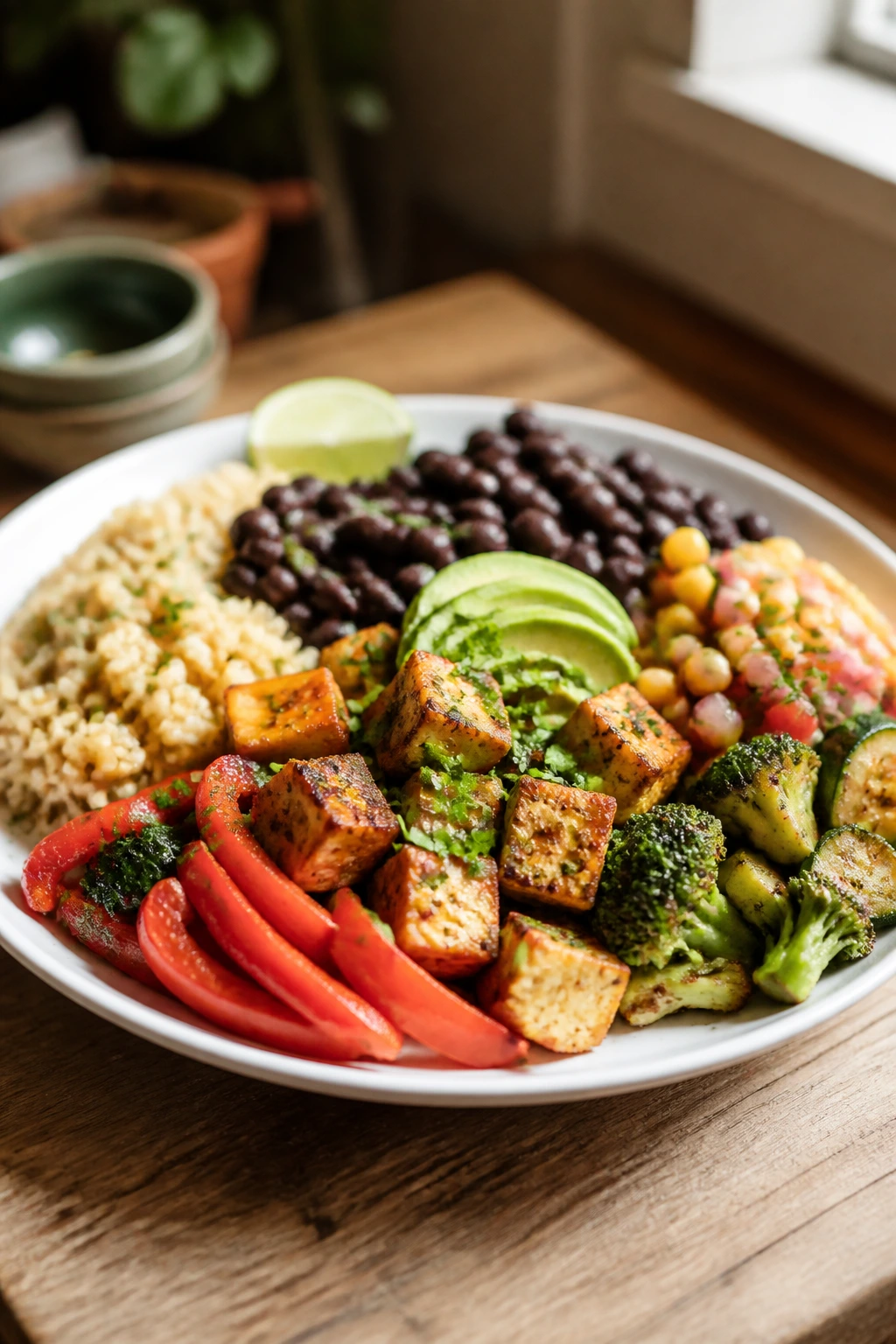
A vegan dinner works best when something on the plate pulls weight in more than one way. Beans bring protein and creaminess. Tofu gives you chew if you press and brown it right. Whole grains and pasta keep the meal from feeling delicate in a bad way. Then the vegetables do what vegetables should do: add color, bite, sweetness, and a little bitterness when the heat kisses the edges.
A lot of plant-based dinner ideas fail because they ask vegetables to stand alone. That’s a weak setup. The recipes above lean on heat, seasoning, and a sauce or dressing that actually does a job. Roasting at 425°F, simmering until the broth tightens, or whisking tahini until it turns pourable are not tiny details. They’re the difference between dinner and a bowl of effort.
Essential Equipment for These Recipes
- Rimmed sheet pans: You’ll use these for chickpeas, cauliflower, sweet potatoes, carrots, and any tray that needs air circulation.
- Large skillet or wok: Stir-fries, fajita pans, tofu browning, and fast pasta sauces all work better when the pan has room.
- Dutch oven or heavy soup pot: Curries, chili, stews, and bean soups need steady heat and a pot that won’t scorch easily.
- Medium saucepan: Good for quinoa, rice, polenta, and any smaller simmering job.
- Fine-mesh strainer or colander: Useful for rinsing beans, draining noodles, and rinsing soba well.
- Sharp chef’s knife: Vegetable prep goes faster and safer when the knife is doing the work.
- Cutting board with a damp towel underneath: A small thing, but it keeps the board from sliding when you’re chopping quickly.
- Whisk or fork: Tahini, peanut sauce, miso sauce, and curry bases all come together more cleanly with a whisk.
- Airtight storage containers: Leftovers are a real part of this meal style, and shallow containers cool food faster.
Smart Shopping and Ingredient Tips
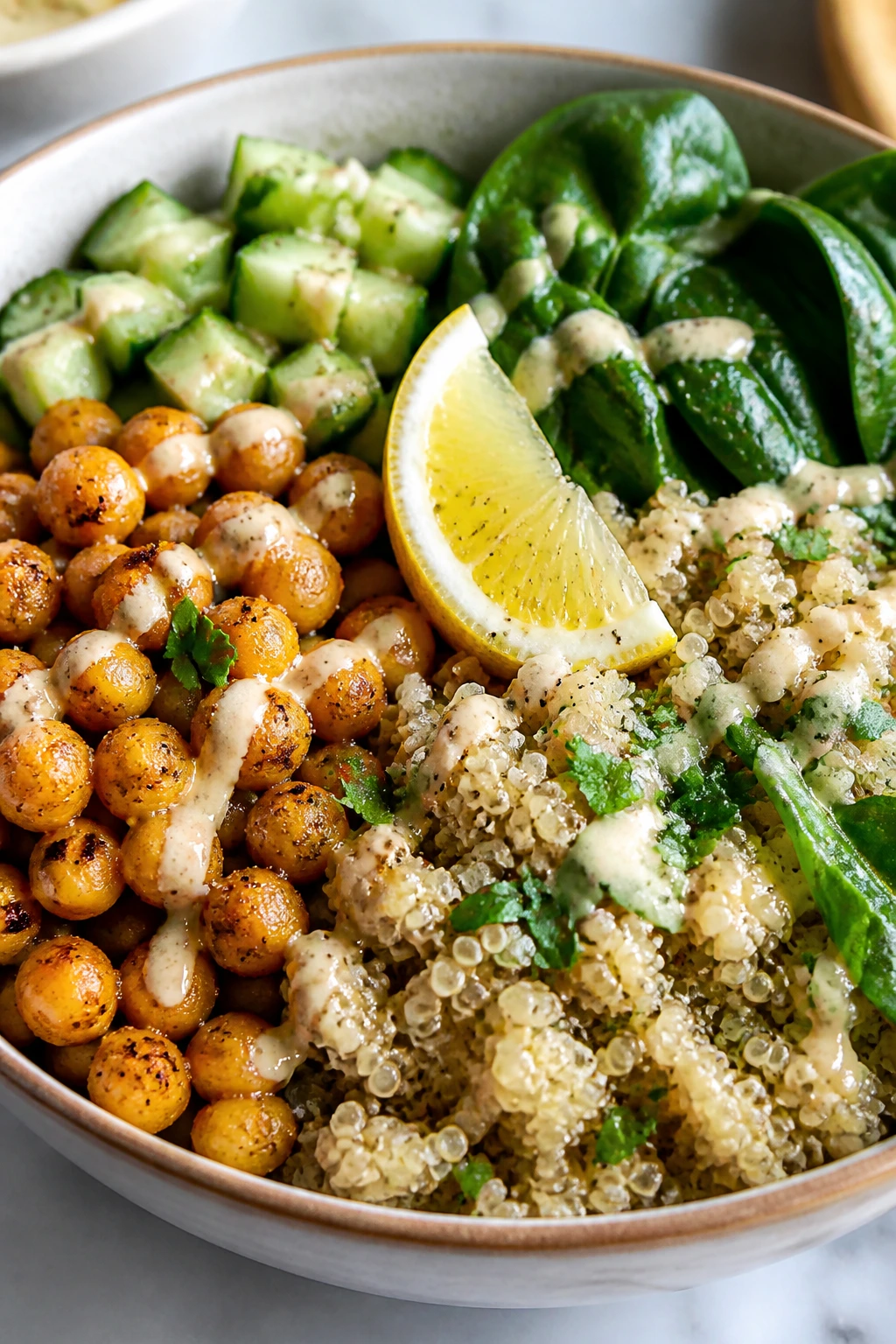
The smartest vegan dinners start with ingredients that don’t need babysitting. Buy extra-firm tofu when you want cubes that brown cleanly; soft tofu belongs in soups or blending. For beans, canned is fine — sometimes better, honestly — as long as you rinse them if the liquid tastes tinny. If you cook dried beans, aim for a batch that holds shape, because mushy beans disappear into sauces.
Vegetables matter most when they match the cooking method. Broccoli, cauliflower, carrots, peppers, and cabbage can handle heat. Spinach, kale, basil, cilantro, and scallions belong at the end. Eggplant should feel heavy for its size, with skin that looks smooth and unwrinkled. Zucchini works best when it’s firm and medium-sized; giant ones carry too much water and those pale seedy centers that make dinner slouchy.
Pantry sauces deserve a little attention too. Pick a tahini that stirs smooth, a peanut butter that tastes like peanuts rather than dessert frosting, and a curry paste that smells bright instead of muddy. Miso should be stored in the fridge after opening. Vegetable broth helps many of these meals, but the low-sodium kind is easier to control because beans, soy sauce, and miso bring their own salt.
Frozen produce is not a cheat. Frozen peas, edamame, spinach, and corn are often better than the tired fresh version sitting at the back of the fridge. The only catch is water: thaw and dry frozen vegetables when you need browning, or add them straight to soups and curries where the moisture helps.
How to Serve These Recipes
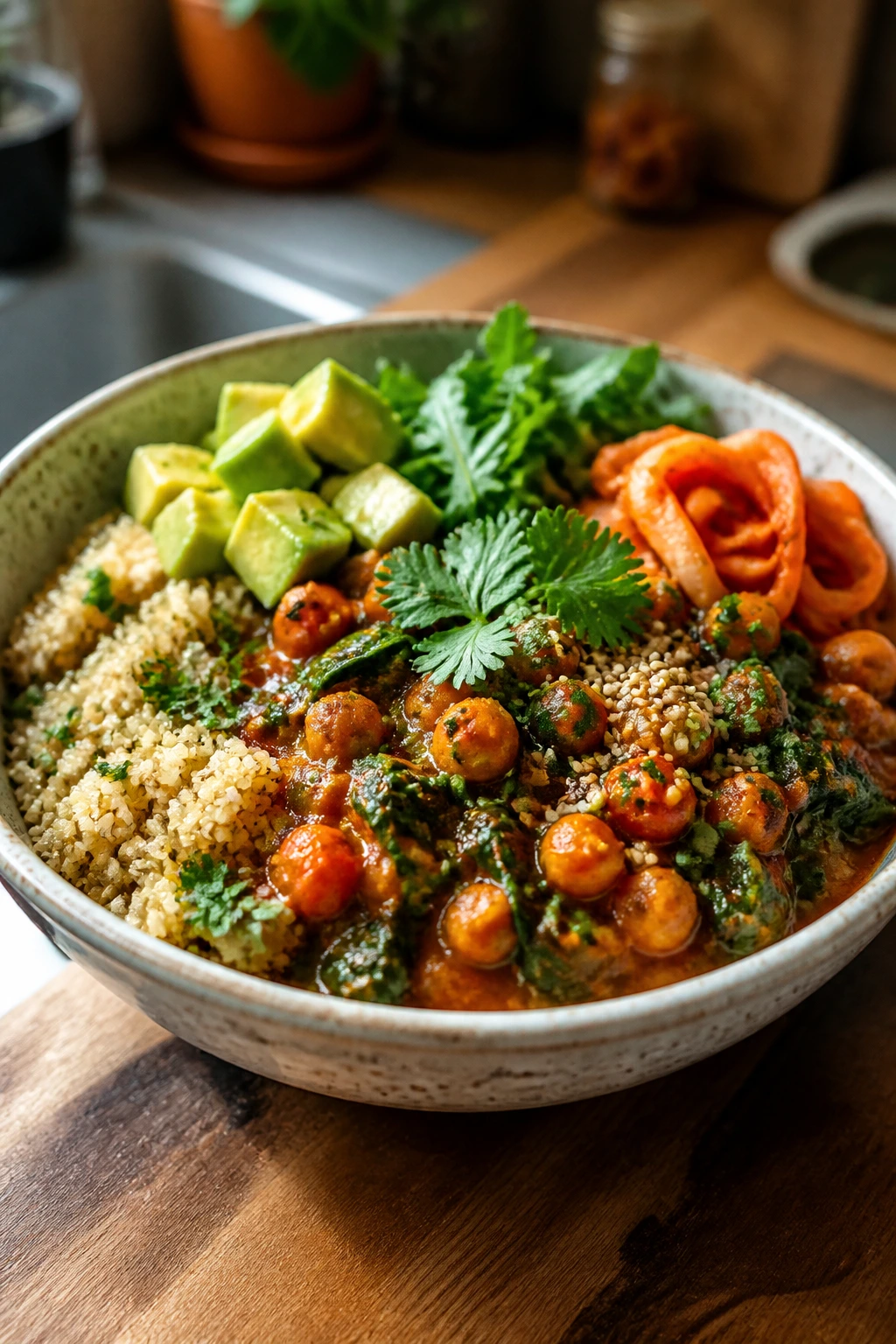
Presentation: Build bowls with contrast. Put grains or rice down first, then mound the saucy part slightly off-center, and finish with something fresh or crunchy on top. A handful of herbs, sesame seeds, chopped nuts, or sliced scallions makes a dinner look alive instead of dumped onto a plate.
Accompaniments: Keep sides simple. A green salad with lemon vinaigrette, toasted pita, crusty bread, cucumber salad, or roasted broccoli is enough for most of these meals. Soups and curries usually need bread or rice; tacos and bowls usually don’t need much beyond a quick slaw or a sharp salsa.
Portions: For bowls and curries, 1 1/2 to 2 cups per person is a useful starting point, depending on how much rice or grains you add. For soups and stews, plan on about 2 cups per serving if there’s bread on the side, a bit more if dinner is only the bowl. For tacos, three small tortillas per adult is a solid baseline.
Beverage Pairing: Sparkling water with lemon or lime works across almost everything here because it resets the palate. If you want something with more character, unsweetened iced green tea handles peanut sauce, curry, and chili well, while a dry white wine sits nicely with roasted vegetables and tomato-based dishes.
Additional Tips and Flavor Boosters
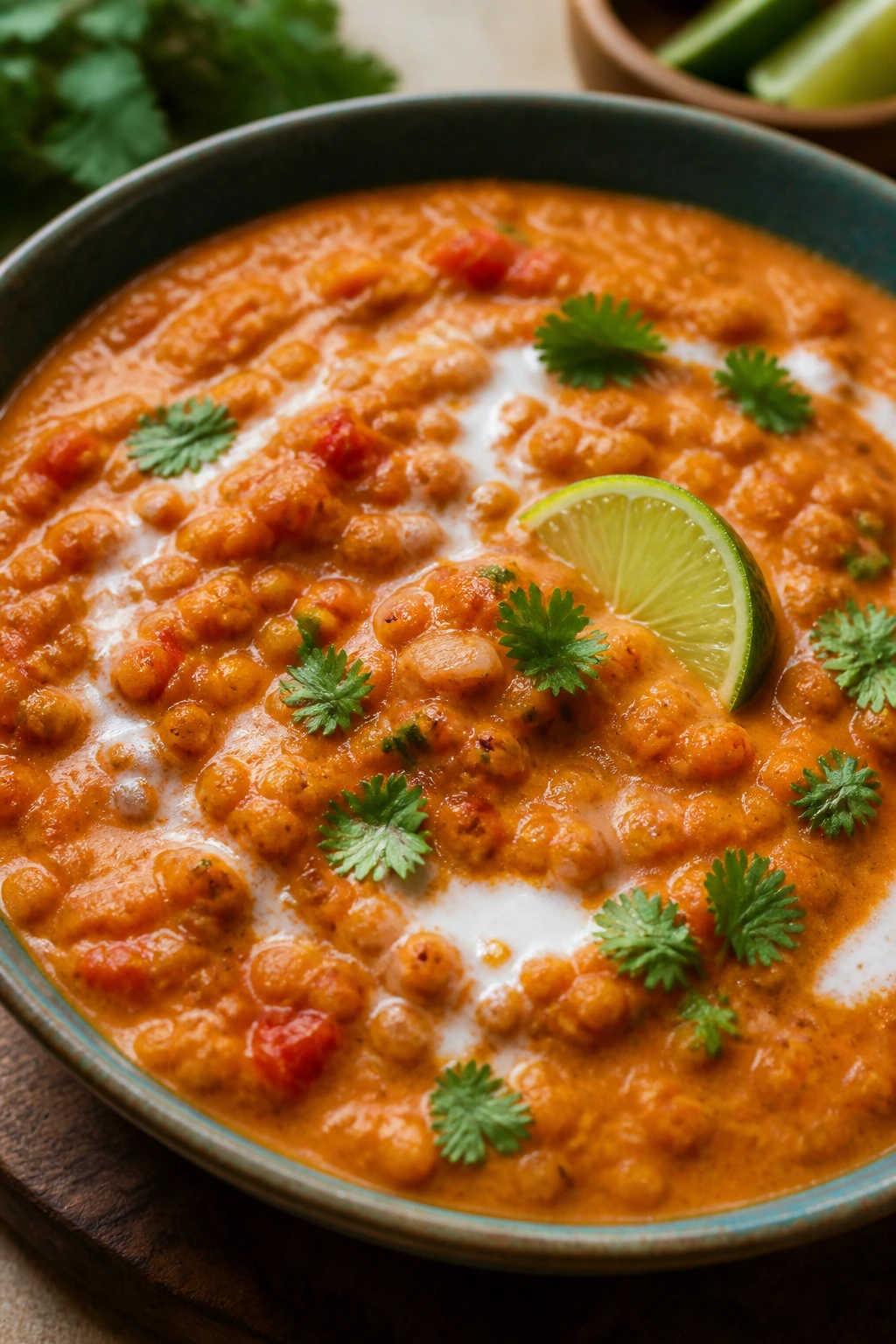
Flavor Enhancement: A squeeze of lemon, lime, or a spoon of vinegar at the end changes more than most people expect. Roasted vegetables wake up with acid. Bean soups need it. Peanut sauces and curries get less heavy when they have one sharp note at the finish.
Customization: Keep a few flexible add-ins on hand: chopped herbs, toasted seeds, pickled onions, chili crisp, avocado, and crushed nuts. Those are the little switches that let one base recipe become three different dinners without making extra work.
Serving Suggestions: If the plate feels flat, add one bright thing and one crunchy thing. A bright thing might be lemon, pickled cabbage, or a herb sauce. A crunchy thing might be toasted pumpkin seeds, sesame seeds, fried onions, or chopped peanuts. That combo solves a surprising amount of dinner boredom.
Make-It-Yours: For a higher-protein plate, add tofu, tempeh, or an extra half-can of beans. For a lower-cost dinner, lean on lentils, rice, cabbage, carrots, and canned tomatoes. For a softer, kid-friendlier version, cut the spice in half and serve the sauce on the side.
Make-Ahead, Storage, and Reheating Guidance
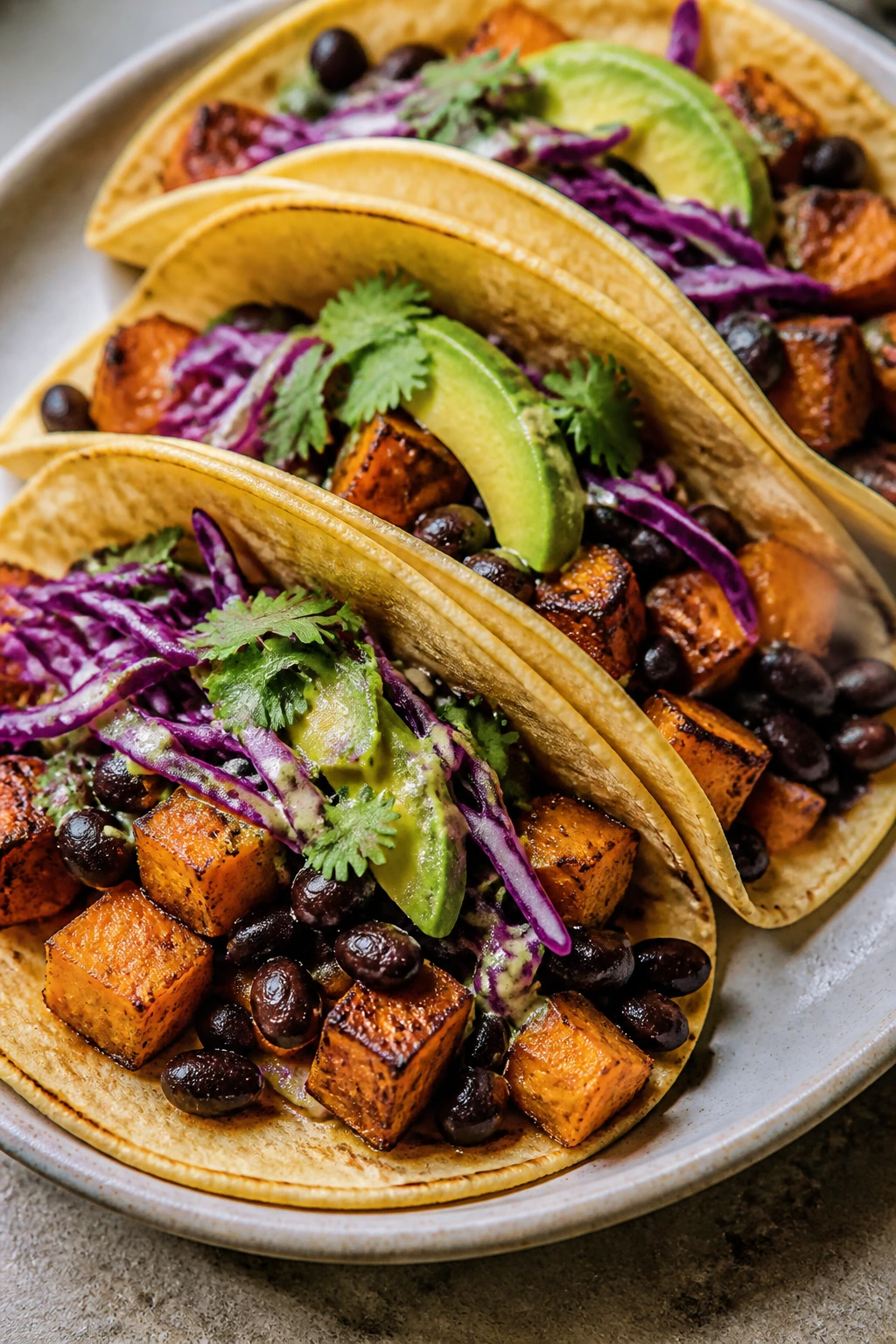
Most of these meals hold well for 3 to 4 days in the refrigerator, and a few — chili, curry, lentil stew, white bean soup, mushroom barley stew — taste even better the next day because the flavors settle in. Store grains, sauces, and crunchy toppings separately when you can. That keeps roasted chickpeas crisp, zoodles from turning wet, and noodle bowls from going past their best texture.
Freezer life depends on the recipe. Soups, chili, stews, and some curries freeze well for up to 2 to 3 months in airtight containers, leaving a little space at the top for expansion. Pasta dishes, zucchini noodles, avocado bowls, and anything with a lot of fresh cucumber or herbs are better eaten fresh or refrigerated for a short stretch. If you’re freezing something with rice, cool it fast and reheat it thoroughly later.
For reheating, use the method that respects the texture. Skillet meals and stir-fries do better in a pan with a splash of water over medium heat. Soups and curries reheat gently on the stove, stirring now and then. Roasted vegetables come back best in a 375°F oven for 10 to 15 minutes rather than the microwave, which softens them into limpness. Rice and grains can be microwaved covered with a spoonful of water, then fluffed. If a sauce looks tight after chilling, loosen it with a splash of broth or water before you judge it.
The make-ahead move that helps most is prep, not full cooking. Chop vegetables, mix spice blends, cook grains, and whisk sauces ahead of time. Then dinner turns from “start from zero” to “put things in a pan,” which is a much nicer place to be.
Variations and Adaptations to Try
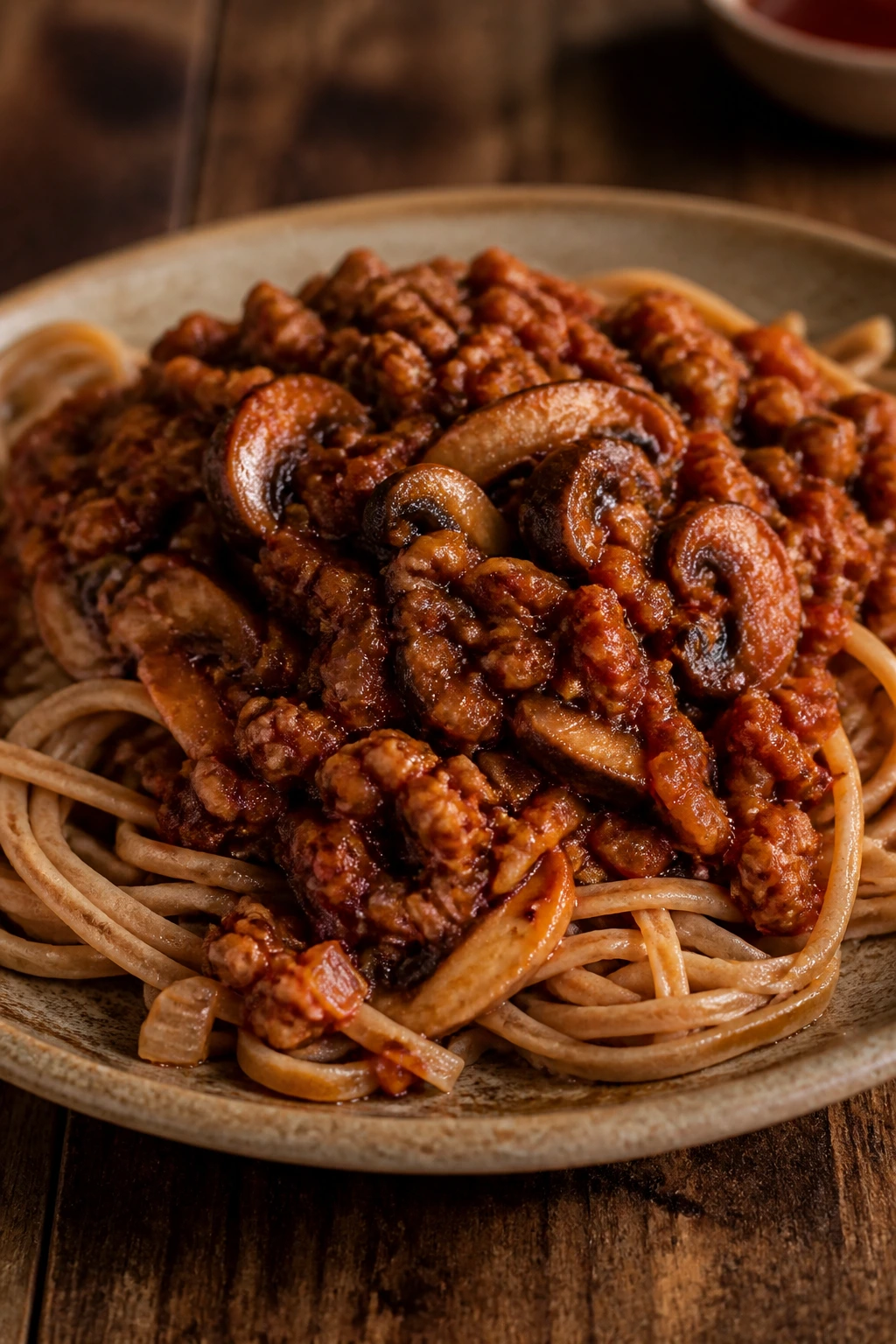
Higher-Protein Route: Add extra beans, tofu, tempeh, edamame, or hemp seeds to any of the bowls and curries. If you want a dinner to hold you longer, don’t rely on vegetables alone; pair them with one of those protein anchors and a whole grain.
Gluten-Free Swap: Use rice, quinoa, corn tortillas, rice noodles, or gluten-free pasta where needed. Soba noodles can be tricky because some brands include wheat, so check the package if that matters for your table.
Lower-Sodium Version: Choose low-sodium canned beans and broth, then season with acid, herbs, garlic, and spices instead of extra salt. You can always salt at the end, but you can’t take it out once it’s overdone.
Creamier Without Dairy: Tahini, cashew cream, coconut milk, and blended white beans all play this role well. Use them in small amounts first; vegan sauces can go from silky to heavy faster than people expect.
Kid-Friendly Mild Path: Pull back on chili, harissa, curry paste, and black pepper, then set those ingredients on the table for adults to add. Sweet potatoes, pasta, rice bowls, and stuffed peppers usually go over better than aggressively spiced dishes when the goal is a quiet dinner.
Region-Shifting Twist: Turn a chili into a taco bowl, a curry into a rice plate, or a roasted vegetable tray into a farro salad. The base ingredients change less than people think; the sauce and garnish are what move the meal around the map.
Common Mistakes to Avoid
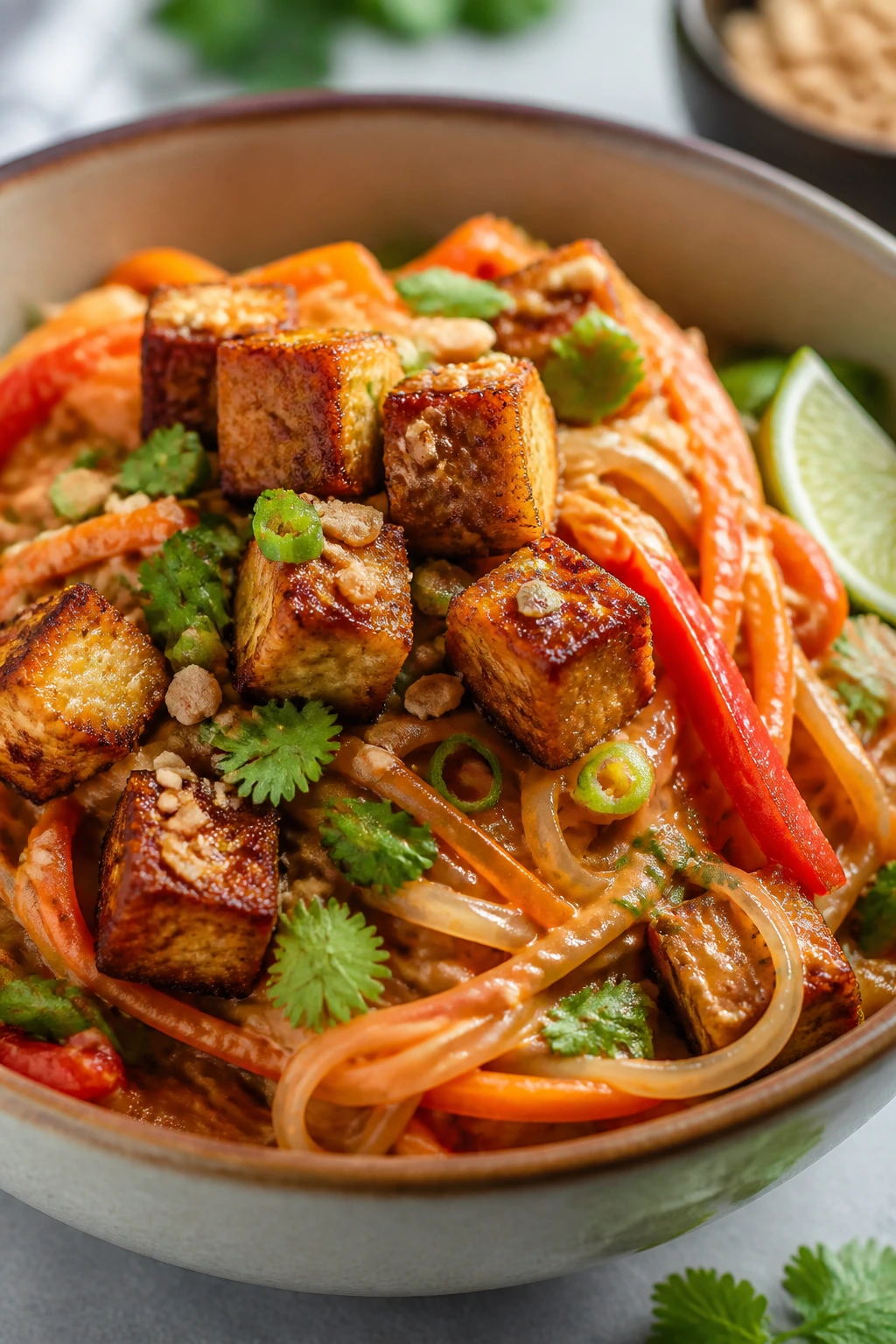
- Treating vegetables like the whole meal: A pile of roasted broccoli with no grain, bean, tofu, or sauce is a side dish. Add one protein and one starch, and dinner becomes stable.
- Underseasoning early: Salt, spice, and aromatics should go into the pan before the final minute. If you wait until the end, the food tastes separate and awkward.
- Crowding hot pans: Sheet pans and skillets need air and contact. If the vegetables or tofu are packed in too tightly, they steam, lose browning, and taste dull.
- Ignoring texture contrast: A dinner of only soft things gets boring fast. Put something crisp, chewy, or crunchy on the plate — toasted chickpeas, cabbage, nuts, seeds, or raw cucumber.
- Adding acid too soon: Lemon and lime are best near the end for most of these recipes. Early acid can flatten herbs, dull coconut milk, and make roasted flavors seem smaller.
- Microwaving everything into submission: Some dishes tolerate the microwave. Roasted vegetables, tofu, and noodles usually do better with a pan or oven when you care about the final bite.
Questions People Actually Ask About Vegan Healthy Dinners
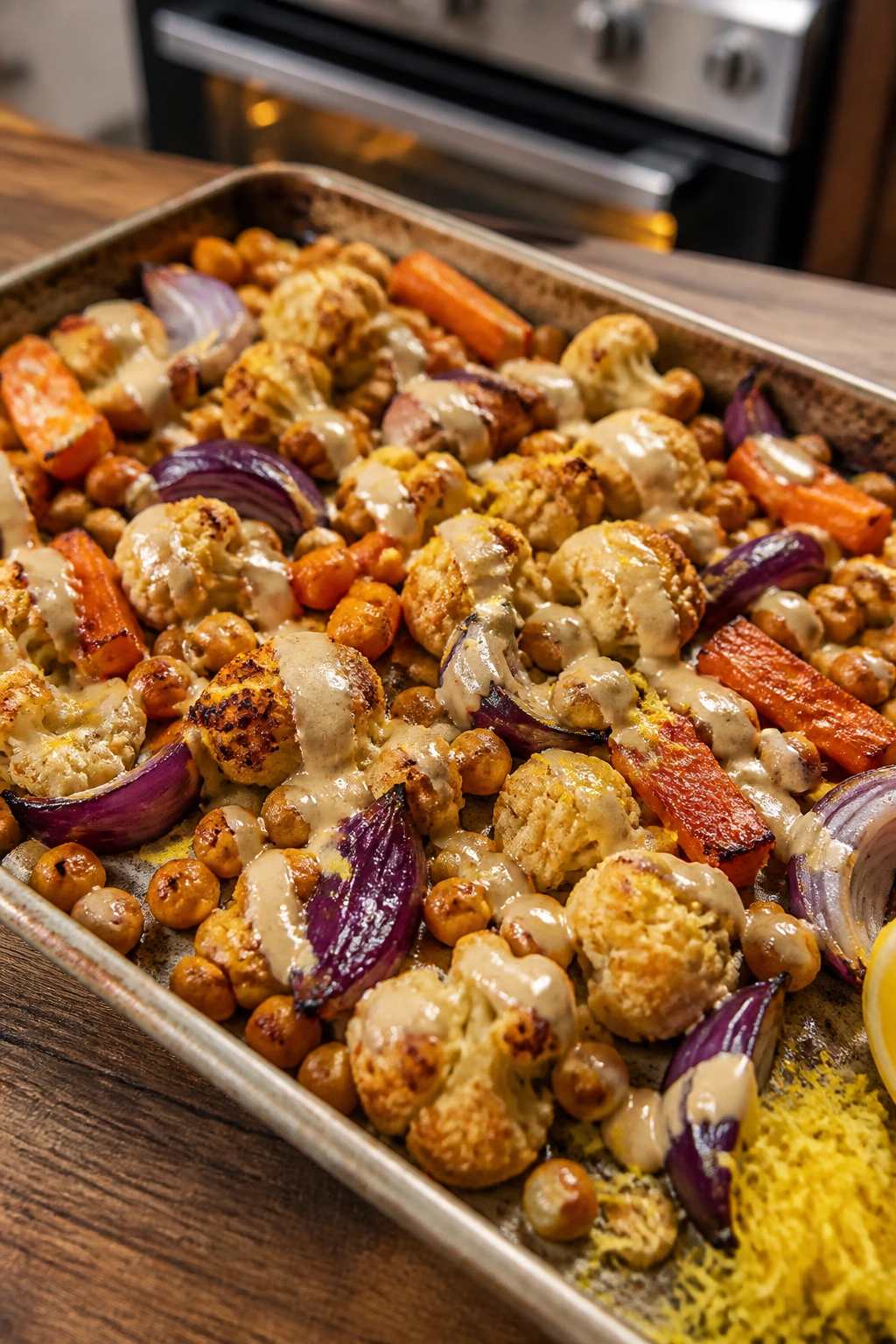
Are these meals filling enough for dinner?
Yes, if you keep protein and starch in the same bowl or skillet. Beans, lentils, tofu, tempeh, rice, quinoa, pasta, and potatoes do that job well; plain vegetables usually don’t.
What’s the easiest protein to keep around for these meals?
Canned beans and extra-firm tofu are the least fussy. Beans need a rinse and a warm-up; tofu needs pressing and heat, but both turn into dinner fast.
Can I use frozen vegetables instead of fresh?
Absolutely, especially for peas, edamame, spinach, corn, and broccoli. For anything you want browned, thaw and dry it first or it’ll dump water into the pan.
How do I make a vegan dinner taste less flat?
Use salt early, then finish with acid, fresh herbs, or a little chili. Flat vegan food usually isn’t missing “meat flavor” so much as it’s missing one sharp finish and enough seasoning in the cooking fat.
What if I don’t want to cook from scratch every night?
Cook one grain, one protein, and one sauce ahead of time. Then you can mix and match across several dinners without making each meal feel like a new project.
Can I swap grains without ruining the recipe?
Usually, yes. Quinoa, brown rice, farro, couscous, and barley all bring different textures, but the sauces and vegetables in these meals carry the personality. Pick a grain with a texture you enjoy.
How do I keep tofu from tasting bland?
Press it, brown it, and season it twice: once before cooking and once when the sauce goes on. Tofu is a sponge in the best sense, but it still needs heat to stop tasting like packaged nothing.
Which of these meals work best for leftovers?
Curries, chili, soups, lentil stew, and mushroom barley stew tend to improve after a night in the fridge. Bowls with avocado, cucumber, zoodles, or crisp chickpeas are better eaten the same day.
A Dinner Pattern Worth Keeping
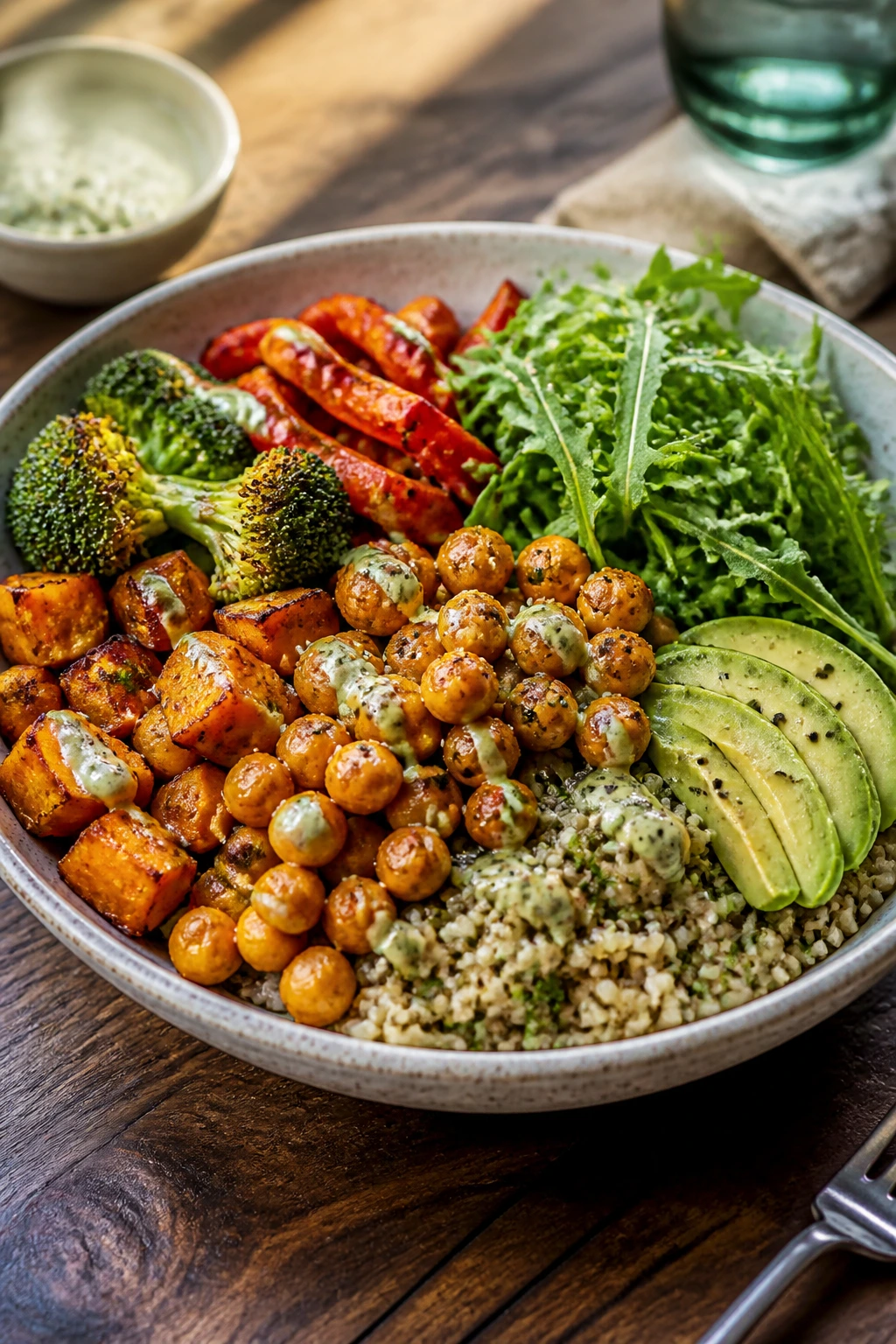
The point of these meals is not novelty. It’s building dinners that hold together on a Tuesday without turning to mush or asking for twenty specialty ingredients you’ll never use again. That means a pot of lentils, a skillet with real browning, a sheet pan that isn’t overcrowded, and a sauce that tastes like somebody meant it.
Keep a few of these patterns in your back pocket — grain bowl, curry, skillet taco, roasted tray, thick soup — and dinner gets easier without getting boring. There’s a kind of quiet relief in opening the fridge and knowing you can still make something with actual shape, flavor, and enough substance to count.