



The best Chinese New Year dishes do not arrive limp in a paper bag. Dumplings should still have a crisp skirt where they touched the pan. Fish ought to come to the table glossy with ginger, scallions, and a hiss of hot oil. Noodles should be slippery and fragrant, not clumped together in a plastic container that sat too long in a car.
That is the real advantage of cooking these meals at home. You control the last 30 seconds, and those 30 seconds matter more than people think. A splash of black vinegar at the table. A ladle of hot broth over wontons. A spoonful of rendered fat brushed over char siu while it rests. Takeout can copy the flavor map. Home cooking gets the texture right.
Chinese New Year food also carries a lot of meaning, and the meaning only works if the food tastes good enough to keep people reaching back. Long noodles for longevity. Whole fish for abundance. Dumplings that look like gold ingots. Sticky rice cakes that promise a sweeter stretch of days ahead. Those symbols are lovely, but they should sit on a plate that smells like garlic, soy, sesame oil, and steam from a just-opened lid.
Why This Collection Feels Like a Real Lunar New Year Table
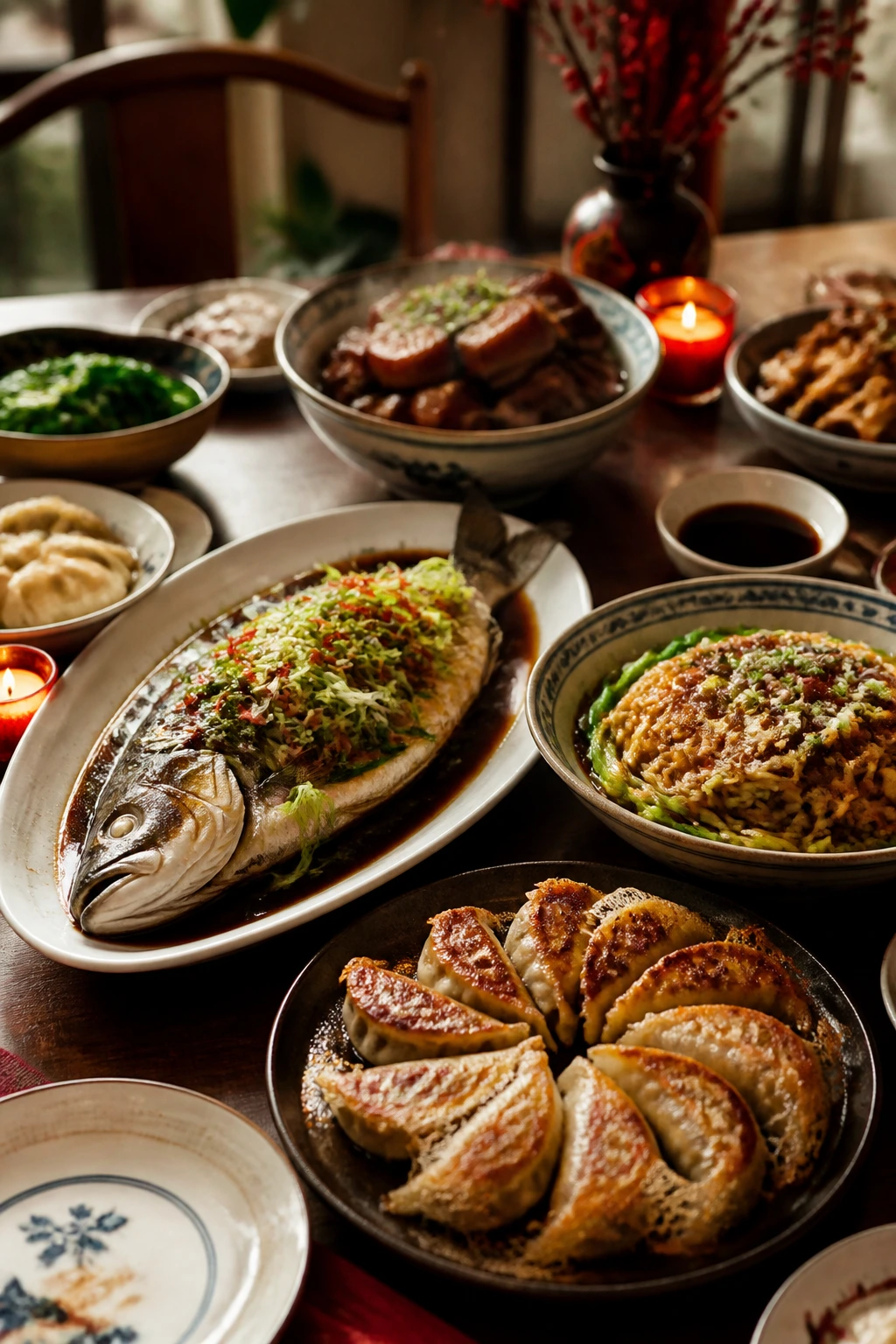
- Fresh textures matter here: steamed fish, crisp spring rolls, and pan-fried dumplings all lose something fast once they sit in a delivery bag.
- The symbolic dishes are built in: dumplings, noodles, fish, rice cakes, sesame balls, and tangyuan all show up without turning the menu into a museum piece.
- There’s a mix of fast and slow cooking: some recipes are done in 20 minutes, while braises like pork belly and short ribs get better if they sit.
- The takeout favorites taste sharper at home: you can keep orange chicken snappy, broccoli bright, and hot and sour soup properly sour instead of muted.
- Most of these dishes scale well: they work for a small family dinner or a table packed with cousins who arrive hungry and stay that way.
- The spread covers every texture: chewy, crisp, silky, brothy, sticky, and blistered. That range is what makes the table feel abundant.
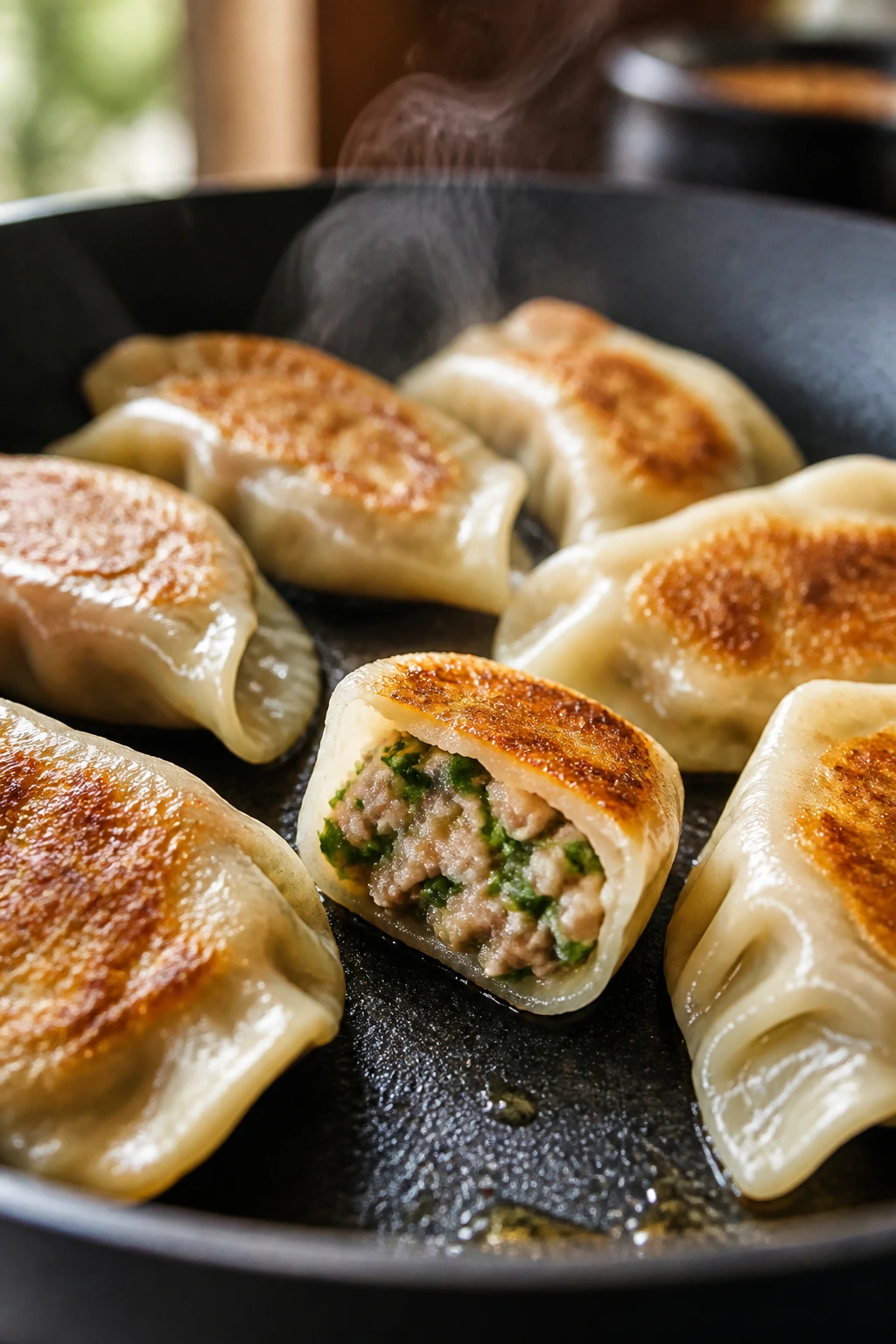
1. Pork and Chive Dumplings
Intro: These are the dumplings I reach for first when I want a Lunar New Year table to feel alive. The wrappers get golden on the bottom, the pork stays juicy, and the garlic chives bring that sharp green bite that cuts through soy and vinegar.
Why It Works: Dumplings are small, fast, and generous-looking all at once. You can freeze a tray raw, then cook them straight from frozen, which makes them one of the most practical symbolic dishes on the menu.
Key Ingredients:
- 1 lb ground pork, 20% fat if you can find it
- 2 cups garlic chives, finely chopped
- 40 round dumpling wrappers
- 2 tbsp light soy sauce
- 1 tbsp Shaoxing wine
- 1 tsp grated ginger
- 1 tsp sesame oil
Quick Steps:
- Mix pork, chives, soy, wine, ginger, sesame oil, and 1/2 tsp salt until sticky.
- Spoon 1 tbsp filling into each wrapper and seal tightly with water.
- Pan-fry in 2 tbsp oil for 2 minutes, until the bottoms are pale gold.
- Add 1/4 cup water, cover, and steam 4 to 5 minutes until the wrappers turn glossy.
- Uncover and cook 1 minute more for a crisp finish.
Equipment for This Recipe: 12-inch nonstick skillet, mixing bowl, small bowl of water for sealing.
How to Serve This Dish: Pile them on a warm platter with black vinegar, soy, and a little chili oil. They make a strong first bite next to noodle dishes and a steamed vegetable side.
Pro Tips for This Recipe:
- Chill the filling 20 minutes if it feels loose; it seals better.
- Keep finished dumplings under a damp towel so the wrappers do not dry out.
- Use medium heat. High heat burns the bottoms before the steam cooks the center.
Variations on This Dish:
- Shrimp and Chive Version: Swap half the pork for chopped shrimp for a sweeter, springier filling.
- Cabbage and Pork Version: Use napa cabbage instead of chives when that’s what the market has; squeeze it dry first.
Common Mistakes to Avoid with This Dish:
- Overfilling the wrappers: The filling bursts during steaming. Use a measured tablespoon.
- Skipping the steam step: You’ll get raw centers and pale bottoms. The lid matters.
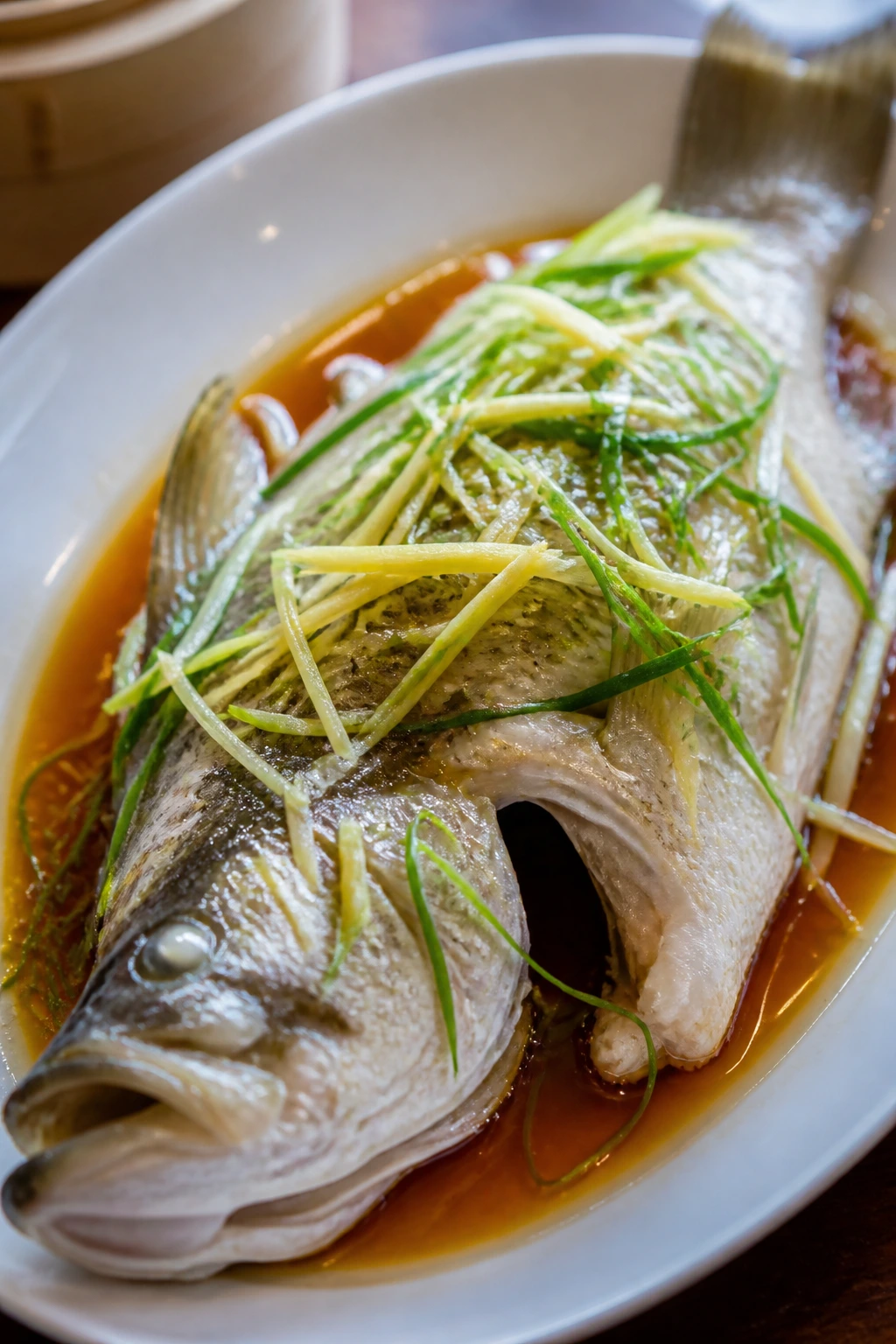
2. Whole Steamed Fish with Ginger and Scallions
Intro: A whole fish on the table changes the mood instantly. The skin stays silky, the flesh flakes in thick, clean pieces, and the ginger-scallion oil perfumes the room before anyone has picked up a chopstick.
Why It Works: Steaming keeps the fish tender instead of drying it out. The hot oil poured over scallions at the end wakes up the aromatics and gives you the same dramatic finish restaurants rely on.
Key Ingredients:
- 1 whole sea bass or snapper, 1 1/2 to 2 lb, cleaned
- 2-inch piece ginger, cut into matchsticks
- 4 scallions, cut into 2-inch lengths
- 2 tbsp light soy sauce
- 1 tbsp Shaoxing wine
- 2 tbsp neutral oil
- 1/2 tsp sugar
Quick Steps:
- Pat the fish very dry and score each side twice.
- Rub with wine and a pinch of salt, then set on a heatproof plate.
- Steam over boiling water for 8 to 12 minutes, until the flesh flakes at the thickest point.
- Scatter ginger and scallions over the fish.
- Heat oil until shimmering, then pour it over the aromatics and finish with soy and sugar.
Equipment for This Recipe: Bamboo steamer or large wok, heatproof plate, fish spatula.
How to Serve This Dish: Serve the fish whole, then lift off the flesh in large pieces at the table. It belongs beside plain rice and a simple leafy green dish so nothing competes with the sauce.
Pro Tips for This Recipe:
- Ask the fishmonger to scale and gut the fish.
- If the plate fills with liquid, pour off a spoonful before adding soy.
- Steaming time depends on thickness, not just weight.
Variations on This Dish:
- Ginger-Scallion-Only Version: Skip the soy sauce and finish with salt, hot oil, and extra scallion for a cleaner taste.
- Black Bean Version: Add a teaspoon of fermented black beans to the aromatics for a deeper, saltier finish.
Common Mistakes to Avoid with This Dish:
- Overcooking the fish: It turns chalky fast. Pull it when the center is just opaque.
- Using too much soy: The fish should taste delicate, not briny.
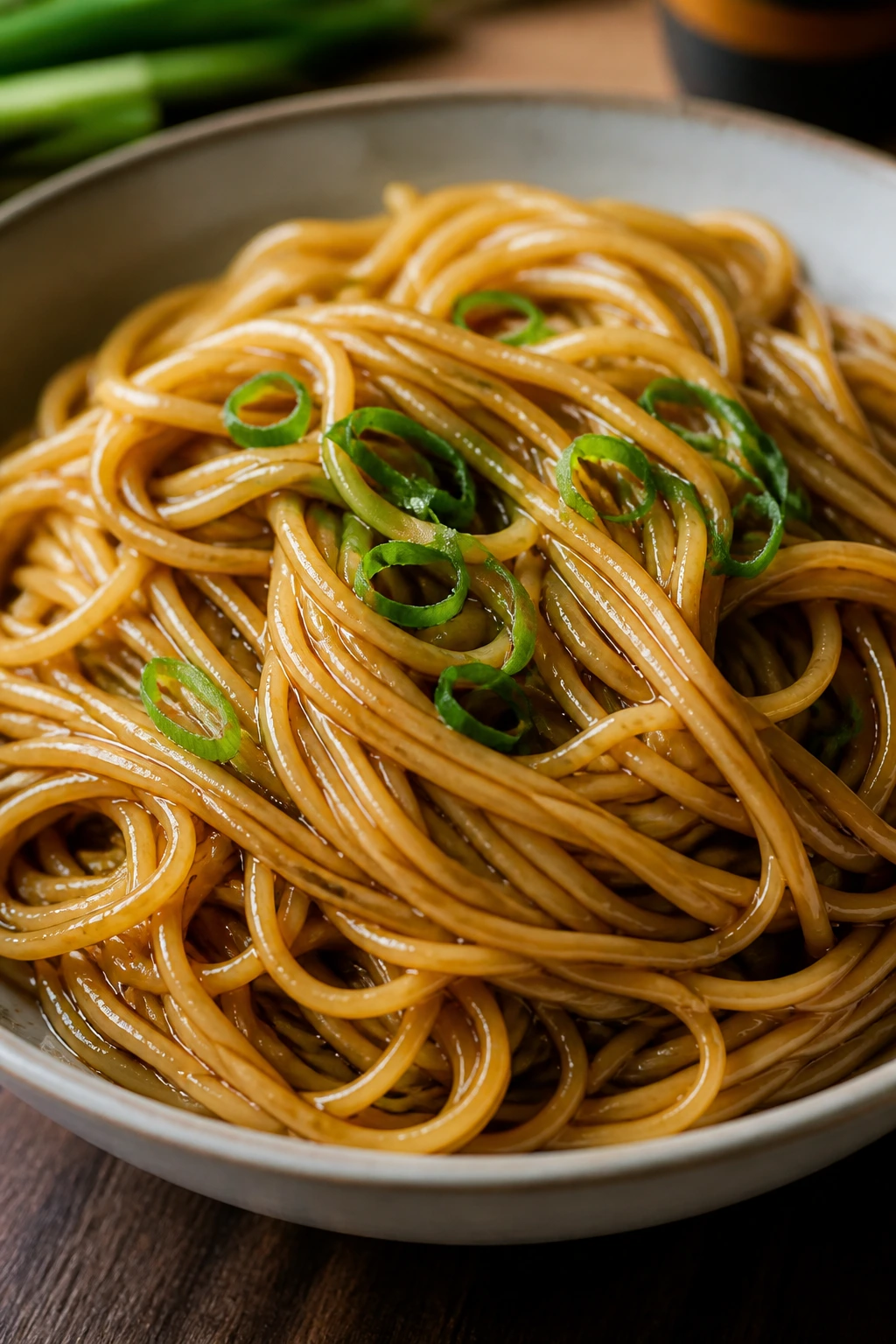
3. Long-Life Scallion Oil Noodles
Intro: These noodles look simple, and that’s the point. The scallions fry into little brown ribbons, the soy sauce clings to every strand, and the bowl stays glossy long after takeout noodles would have gone sticky.
Why It Works: This is a fast longevity dish that relies on heat, not a long ingredient list. The noodles need a slick coating and a sharp hit of scallion oil, not a heavy sauce.
Key Ingredients:
- 12 oz thin wheat noodles
- 4 scallions, sliced
- 3 tbsp neutral oil
- 2 tbsp light soy sauce
- 1 tbsp dark soy sauce
- 1 tsp sugar
- 1 tsp sesame oil
Quick Steps:
- Cook noodles until just tender, then drain well.
- Fry scallions in oil over medium heat for 2 to 3 minutes, until fragrant and lightly browned.
- Stir in soy, dark soy, sugar, and sesame oil.
- Toss noodles through the sauce for 30 seconds until shiny.
- Serve hot, with extra scallion on top.
Equipment for This Recipe: Pot, colander, wok or wide skillet.
How to Serve This Dish: Put these in shallow bowls, not deep soup bowls, so the sheen shows. They work well as the noodle course in a larger spread or next to fish and greens.
Pro Tips for This Recipe:
- Salt the noodle water lightly; the sauce is not built to do all the work.
- Reserve a splash of noodle water if the sauce looks tight.
- Use medium heat so the scallions brown, not blacken.
Variations on This Dish:
- Garlic Scallion Version: Add 2 minced garlic cloves with the scallions.
- Chili Crisp Version: Stir in 1 teaspoon chili crisp at the end for heat and crunch.
Common Mistakes to Avoid with This Dish:
- Overcooking the noodles: They will lose their bite and absorb too much sauce.
- Crowding the pan: Scallions need direct contact with the oil to turn sweet.
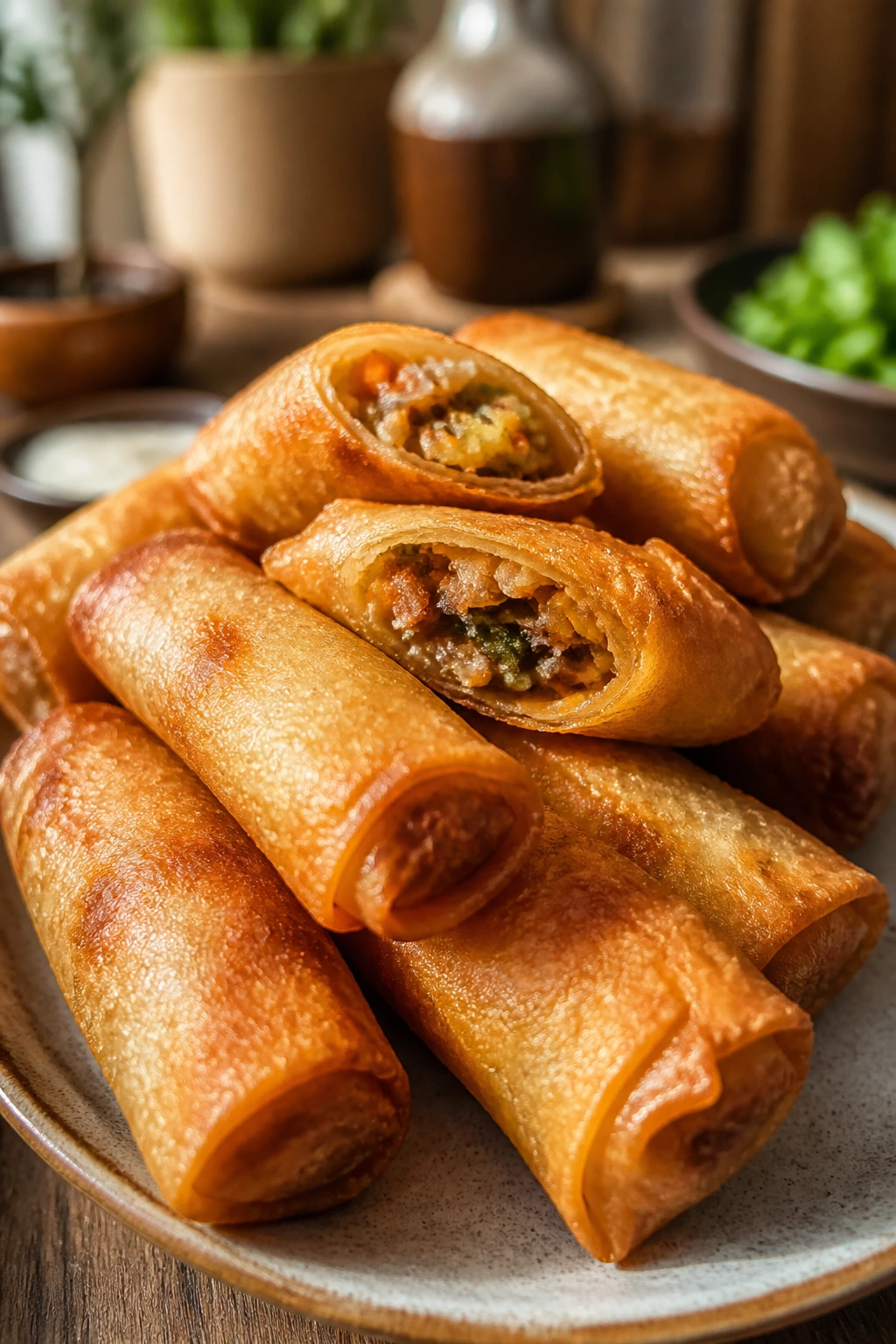
4. Crispy Spring Rolls
Intro: Spring rolls earn their place on a New Year table because they look like little bars of gold after frying. The wrapper crackles, the filling stays savory and dry, and the first bite snaps before you get to the cabbage.
Why It Works: The trick is a filling that loses as much moisture as possible in the pan before it ever meets the wrapper. That keeps the rolls crisp instead of soggy.
Key Ingredients:
- 8 spring roll wrappers
- 2 cups shredded cabbage
- 1 cup shredded carrot
- 1 cup sliced shiitake mushrooms
- 1/2 lb ground pork
- 2 tbsp soy sauce
- 1 tsp sesame oil
- 1 tbsp cornstarch mixed with 2 tbsp water for sealing
Quick Steps:
- Cook pork, cabbage, carrot, and mushrooms in a hot skillet until the pan looks dry.
- Season with soy and sesame oil, then cool the filling completely.
- Roll 2 tbsp filling into each wrapper and seal with cornstarch slurry.
- Fry at 350°F for 3 to 4 minutes, turning once, until deep gold.
- Drain on a rack, not paper towels.
Equipment for This Recipe: Deep skillet or Dutch oven, thermometer, wire rack.
How to Serve This Dish: Slice them on a sharp diagonal and serve with vinegar-based dipping sauce. They work well beside soup, dumplings, and fried rice.
Pro Tips for This Recipe:
- Cool the filling before rolling; warm filling softens the wrappers.
- Keep the oil at 350°F so the shells blister instead of soaking up grease.
- Seal the final corner well or the rolls will open in the fryer.
Variations on This Dish:
- Vegetable Version: Skip the pork and add bean sprouts for a lighter crunch.
- Shrimp Version: Replace the pork with chopped shrimp and reduce the cooking time by a minute.
Common Mistakes to Avoid with This Dish:
- Wet filling: It tears the wrapper and makes the roll blister unevenly.
- Overfilling: A small roll fries cleaner and stays tighter.
5. Red-Braised Pork Belly
Intro: This is the kind of dish that perfumes the whole apartment before dinner starts. The pork turns lacquered and soft, the fat melts into the sauce, and the soy-sugar glaze goes dark and glossy around the edges.
Why It Works: Red-braising uses sugar, soy, and slow heat to turn a rich cut into something spoon-tender. It’s one of those dishes that tastes deeper after a short rest.
Key Ingredients:
- 2 lb pork belly, cut into 1 1/2-inch chunks
- 2 tbsp sugar
- 3 tbsp light soy sauce
- 1 tbsp dark soy sauce
- 2 scallions, tied
- 3 slices ginger
- 2 star anise
- 1 cup Shaoxing wine
- 2 cups water
Quick Steps:
- Blanch pork for 3 minutes, then rinse and drain.
- Caramelize sugar in a Dutch oven until amber.
- Add pork, ginger, scallions, star anise, soy, wine, and water.
- Simmer covered on low for 1 1/2 to 2 hours, until the pork yields easily.
- Uncover and reduce the sauce until it coats a spoon.
Equipment for This Recipe: Dutch oven, spider or slotted spoon, lid.
How to Serve This Dish: Spoon it over plain rice with a few greens on the side. The sauce should pool around the rice, not drown it.
Pro Tips for This Recipe:
- Keep the caramel pale amber; dark caramel tastes bitter.
- Turn the pork once or twice during braising.
- Rest the pot 15 minutes before serving so the sauce settles.
Variations on This Dish:
- Pork Shoulder Version: Use shoulder if belly feels too rich; braise 20 minutes longer.
- Egg Version: Add peeled hard-boiled eggs for the last 20 minutes.
Common Mistakes to Avoid with This Dish:
- Burning the sugar: It turns bitter in seconds. Watch the color, not the clock.
- Skipping the blanch: That first boil removes the muddy flavor from the pork.
6. Soy-Braised Chicken with Star Anise
Intro: This is the dinner-table cousin of roast chicken, but silkier and more fragrant. The skin takes on a deep tea color, the broth turns savory-sweet, and star anise gives the whole pot a round, warm smell.
Why It Works: Bone-in chicken braises fast, so you get flavor without a long wait. The soy and aromatics season the meat all the way through, not just on the surface.
Key Ingredients:
- 2 lb bone-in chicken thighs or chopped chicken pieces
- 3 tbsp light soy sauce
- 1 tbsp dark soy sauce
- 1 tbsp Shaoxing wine
- 2 cloves garlic, smashed
- 3 slices ginger
- 2 star anise
- 1 tsp sugar
- 1 cup water
Quick Steps:
- Brown the chicken skin-side down for 4 minutes.
- Add garlic, ginger, star anise, soy, wine, sugar, and water.
- Cover and simmer on low for 25 to 30 minutes.
- Uncover and reduce until the sauce lightly coats the chicken.
- Rest 5 minutes before serving.
Equipment for This Recipe: Wide skillet with lid, tongs, spoon.
How to Serve This Dish: Serve with rice and a simple green vegetable. The sauce is strong enough to season everything on the plate.
Pro Tips for This Recipe:
- Use thighs if you want forgiveness; they stay juicy longer than breasts.
- Dark soy is for color, not salt. Do not overpour it.
- Let the sauce reduce at the end so it clings instead of running.
Variations on This Dish:
- Shiitake Chicken Version: Add a handful of soaked shiitakes to the braise.
- Spicy Version: Add dried chilies and a slice of orange peel for a brighter heat.
Common Mistakes to Avoid with This Dish:
- Boiling hard: The meat tightens and the sauce turns cloudy.
- Too much dark soy: You’ll get a muddy color and a flat taste.
7. Scallion Pancakes
Intro: A good scallion pancake should tear in layers, not fold like a tortilla. The edges go crisp and brown, the center stays chewy, and each spiral hides a ribbon of scallion and sesame oil.
Why It Works: Rested dough rolls thin without fighting you, and the coil-and-roll trick creates the flakes everyone wants. Thin layers make the pancake crackle in the pan.
Key Ingredients:
- 2 cups all-purpose flour
- 3/4 cup hot water
- 1/4 cup cold water, more if needed
- 1 tsp salt
- 4 scallions, finely sliced
- 2 tbsp sesame oil
- 3 tbsp neutral oil for frying
Quick Steps:
- Mix flour, salt, and hot water, then add cold water until a soft dough forms.
- Rest 30 minutes.
- Roll thin, brush with sesame oil, add scallions, and roll into a log.
- Coil the log into a disk and roll thin again.
- Fry 2 to 3 minutes per side until blistered and crisp.
Equipment for This Recipe: Rolling pin, skillet, pastry brush.
How to Serve This Dish: Cut into wedges and serve while still hot. They make a strong side for soup, chicken, or a cold cucumber dish.
Pro Tips for This Recipe:
- Rest the dough or it snaps back and refuses to roll thin.
- Use enough oil in the pan to brown the surface evenly.
- Press the pancake gently with a spatula so the layers make contact.
Variations on This Dish:
- Sesame Seed Version: Sprinkle sesame seeds inside the spiral before rolling.
- Five-Spice Version: Mix a pinch of five-spice into the sesame oil for a warmer aroma.
Common Mistakes to Avoid with This Dish:
- Rolling too thick: You lose the layers and get bread instead of flakes.
- Cooking too fast: The outside burns before the center firms up.
8. Sesame Balls
Intro: Sesame balls are small, shiny, and absurdly satisfying. When they fry well, the shell puffs into a hollow, crackly crust around sweet red bean paste, and the sesame seeds toast into a nutty crust.
Why It Works: Glutinous rice flour gives the chewy exterior, while the hot oil expands the dough from the outside in. The puff happens because the skin is thin and the filling is compact.
Key Ingredients:
- 2 cups glutinous rice flour
- 1/4 cup sugar
- 3/4 cup hot water
- 1 cup red bean paste, chilled into 1-inch balls
- 1/2 cup white sesame seeds
- 1 tsp baking powder
- 3 cups neutral oil for frying
Quick Steps:
- Mix flour, sugar, and baking powder, then add hot water to form a soft dough.
- Divide, flatten, and wrap each portion around a ball of red bean paste.
- Roll in sesame seeds and press lightly so they stick.
- Fry at 325°F, turning gently, until puffed and golden.
- Drain and cool 5 minutes before eating.
Equipment for This Recipe: Deep saucepan, thermometer, slotted spoon.
How to Serve This Dish: Serve warm, not blistering hot. They belong at the end of the meal with tea or sweet soup.
Pro Tips for This Recipe:
- Keep the filling chilled so it does not leak.
- Fry gently; rough handling tears the shell.
- Use enough oil for the balls to float freely.
Variations on This Dish:
- Lotus Seed Paste Version: Swap in lotus seed paste for a more floral sweetness.
- Black Sesame Version: Use black sesame paste for a richer, nuttier center.
Common Mistakes to Avoid with This Dish:
- Oil too hot: The shell browns before it puffs.
- Seam not sealed: Filling leaks and the ball splits open.
9. Cantonese Char Siu
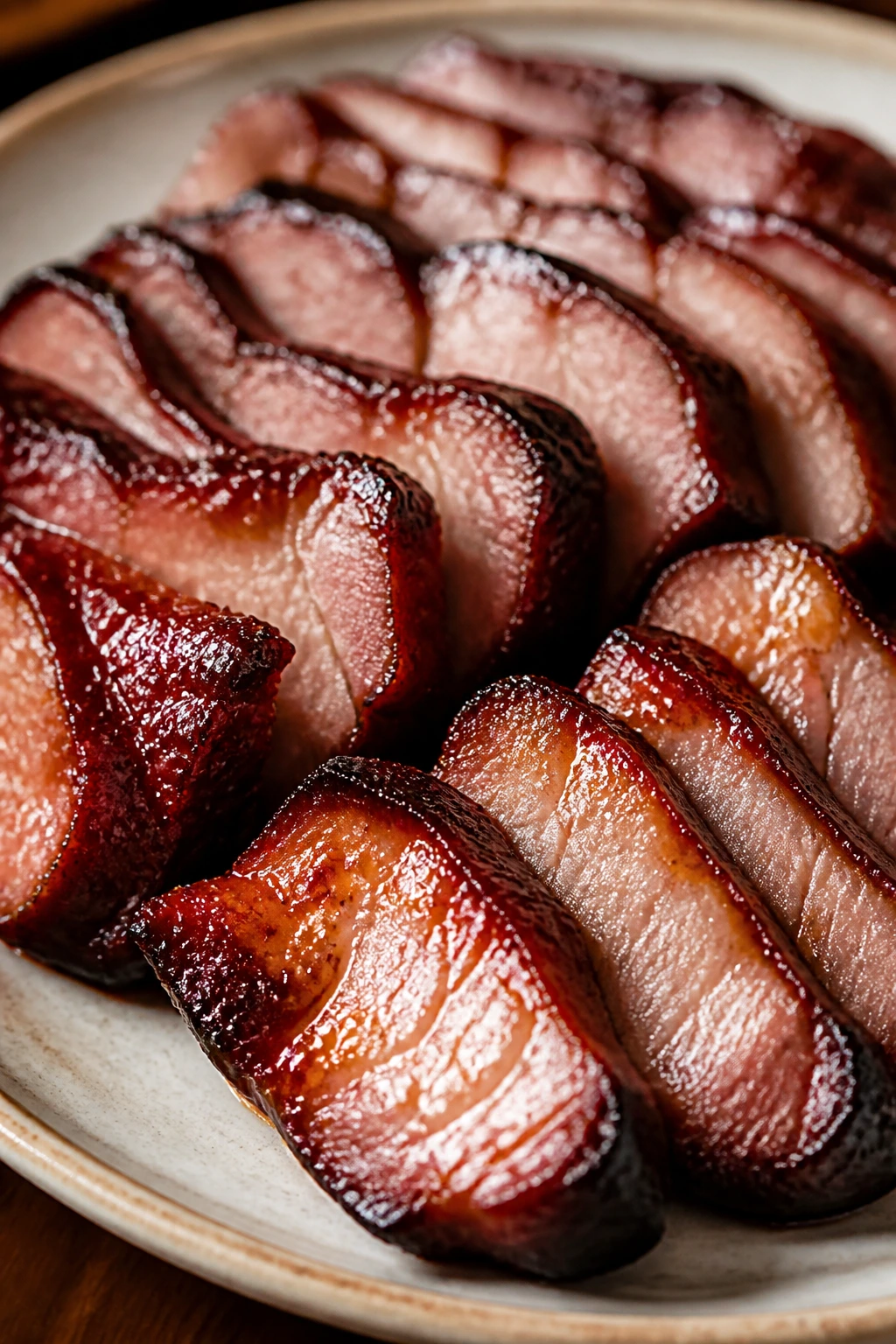
Intro: Char siu should look lacquered, not dry. The edges get sticky and caramelized, the fat turns sweet, and the first slice gives you that red-brown stripe that makes people reach for another piece.
Why It Works: A sweet-salty marinade and a high-heat finish create the glossy crust. Pork shoulder gives enough fat to stay moist, even after roasting.
Key Ingredients:
- 2 lb pork shoulder, cut into long strips
- 3 tbsp hoisin sauce
- 2 tbsp soy sauce
- 2 tbsp honey
- 1 tbsp Shaoxing wine
- 1 tsp five-spice powder
- 2 cloves garlic, grated
- 1 tbsp sugar
Quick Steps:
- Marinate the pork at least 4 hours, or overnight.
- Roast at 425°F for 20 minutes.
- Brush with marinade and honey, then roast 15 to 20 minutes more.
- Rest 10 minutes before slicing.
- Spoon pan juices over the slices.
Equipment for This Recipe: Rimmed baking sheet, rack, pastry brush.
How to Serve This Dish: Slice thin and serve over rice or with noodles. It also folds well into steamed buns or pancake wrappers.
Pro Tips for This Recipe:
- Use a rack so the sugar does not glue the pork to the pan.
- Baste only near the end or the glaze can burn.
- Slice across the grain for the softest bite.
Variations on This Dish:
- Oven-Only Version: Roast at a slightly lower temperature, 400°F, if your oven runs hot.
- Pork Loin Version: Use loin for leaner slices, but shorten the cook time.
Common Mistakes to Avoid with This Dish:
- Skipping the rest: The juices run out the minute you slice.
- Marinade too sugary early on: It scorches before the pork cooks through.
10. Lion’s Head Meatballs
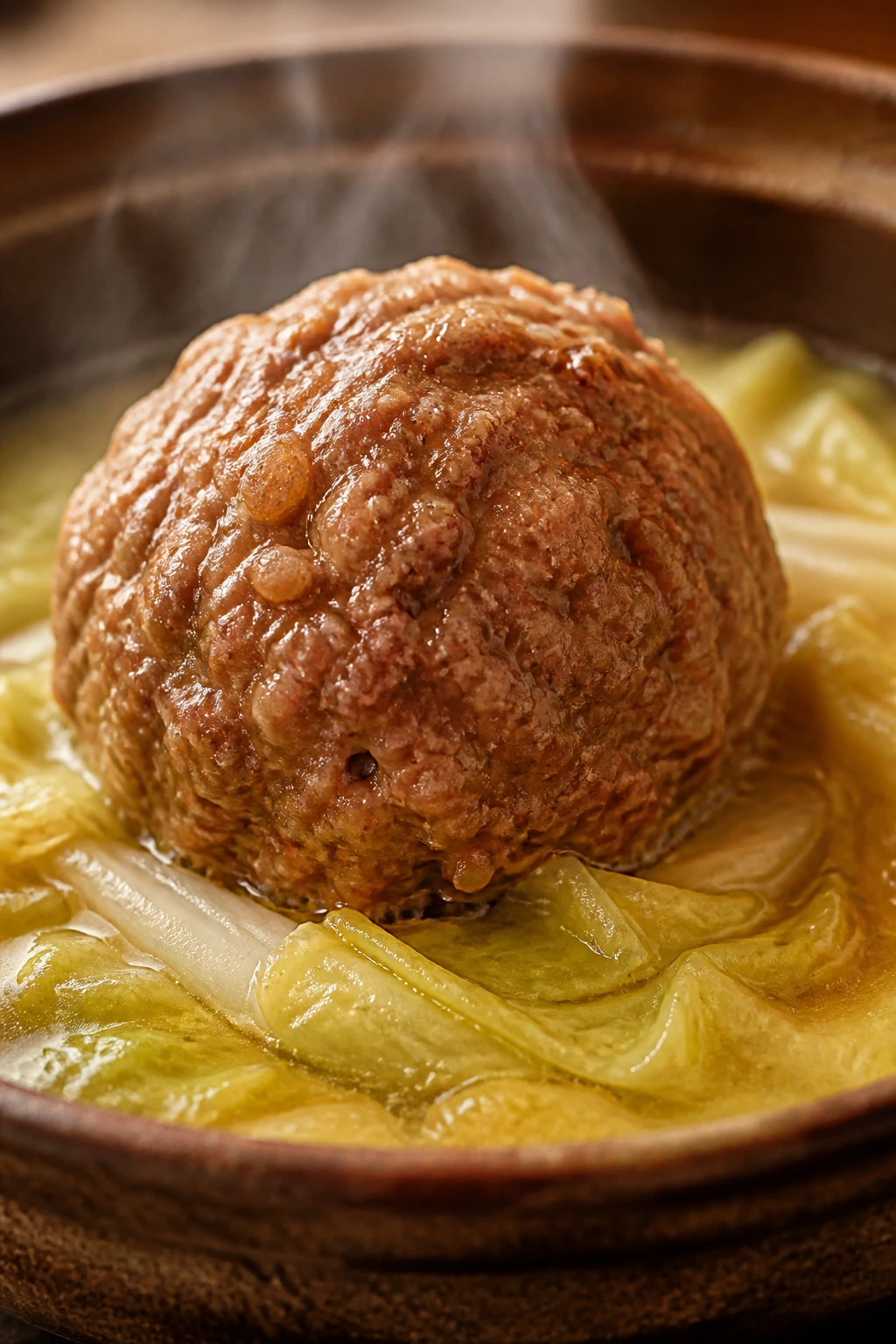
Intro: Lion’s head meatballs look grand on the table and surprisingly homey in the bowl. The pork stays tender, the cabbage softens into the broth, and each meatball tastes like a little braise all by itself.
Why It Works: Loose, lightly mixed pork stays soft after simmering. The cabbage underneath catches the juices, so nothing feels dry or heavy.
Key Ingredients:
- 1 lb ground pork
- 1/2 cup chopped water chestnuts
- 2 scallions, minced
- 1 tsp grated ginger
- 1 tbsp soy sauce
- 1 tbsp Shaoxing wine
- 1 egg
- 1 small napa cabbage, cut into wedges
Quick Steps:
- Mix pork, chestnuts, scallions, ginger, soy, wine, egg, and 1 tbsp cornstarch.
- Shape into 4 large meatballs without packing them tight.
- Nestle on cabbage in a pot with 2 cups broth.
- Simmer covered for 30 to 35 minutes.
- Spoon broth over the top before serving.
Equipment for This Recipe: Heavy pot, spoon, mixing bowl.
How to Serve This Dish: Serve one or two meatballs per bowl with cabbage and plenty of broth. Rice on the side helps catch every drop.
Pro Tips for This Recipe:
- Chill the mixture 15 minutes before shaping if it feels sticky.
- Keep the simmer gentle; a rolling boil roughs up the meatballs.
- Water chestnuts add crunch, so do not mince them into a paste.
Variations on This Dish:
- Turkey Version: Ground turkey works, but add 1 tbsp oil to keep it from drying out.
- Shiitake Version: Fold in minced shiitakes for an earthier bowl.
Common Mistakes to Avoid with This Dish:
- Packing the meat too hard: You get dense, bouncy balls.
- Skimping on broth: The cabbage needs enough liquid to soften cleanly.
11. Hot and Sour Soup
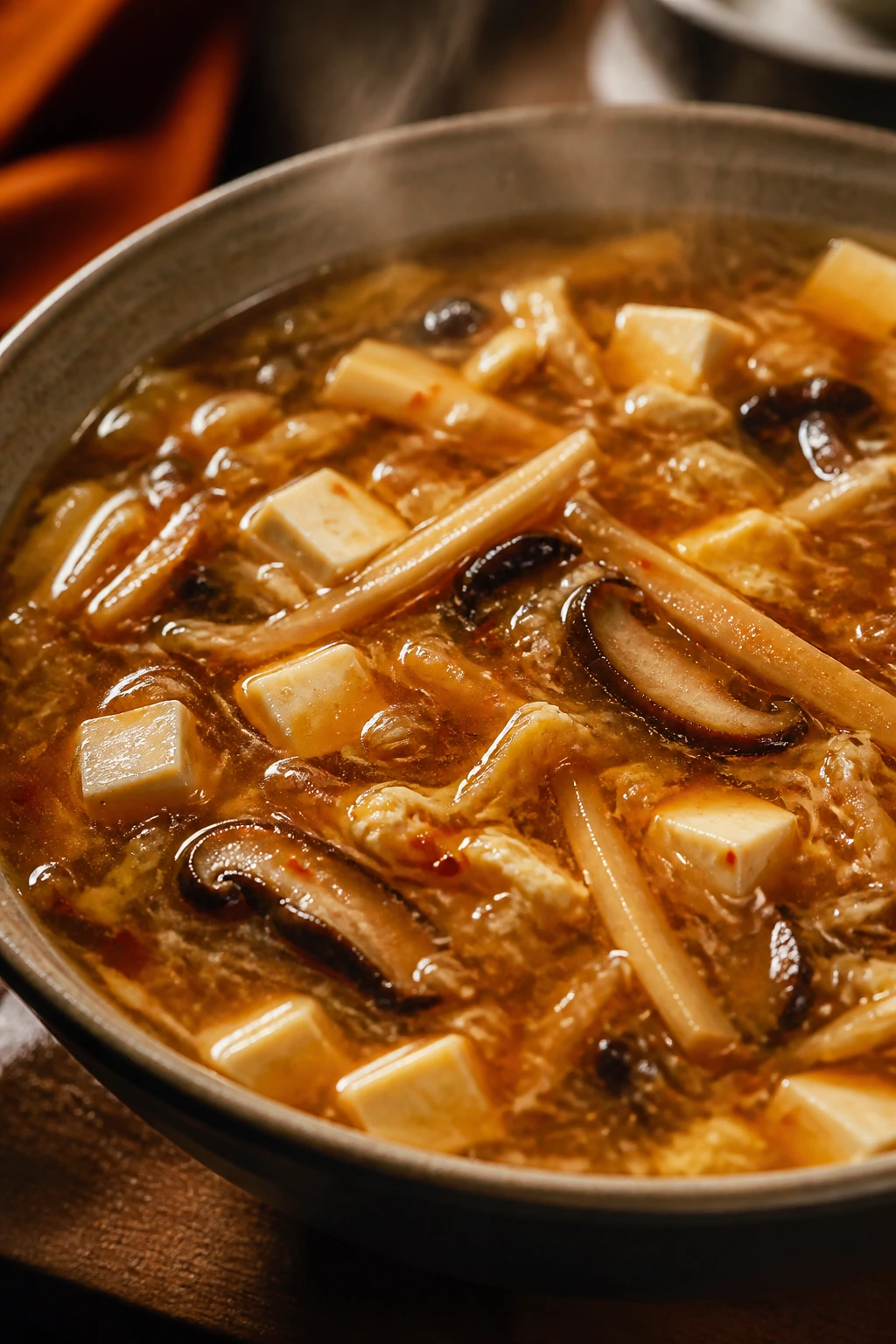
Intro: Hot and sour soup should wake you up. The vinegar hits first, then the white pepper, then the silky broth with tofu and mushrooms floating through it like little soft squares and ribbons.
Why It Works: The balance comes from adding vinegar at the end and letting cornstarch give the broth body without turning it into paste. That last-minute egg ribbon is what makes the soup feel restaurant-like.
Key Ingredients:
- 4 cups chicken or vegetable broth
- 4 dried shiitake mushrooms, soaked and sliced
- 1/2 cup bamboo shoots, julienned
- 1/2 cup firm tofu, cut into matchsticks
- 2 tbsp soy sauce
- 2 tbsp rice vinegar
- 1 tsp white pepper
- 2 tbsp cornstarch mixed with 3 tbsp water
- 1 egg, beaten
Quick Steps:
- Simmer broth, mushrooms, and bamboo shoots for 5 minutes.
- Add tofu, soy, and white pepper.
- Stir in cornstarch slurry until the broth looks lightly thickened.
- Drizzle in egg in a thin stream while stirring.
- Add vinegar at the end and serve hot.
Equipment for This Recipe: Soup pot, whisk, ladle.
How to Serve This Dish: Serve in small bowls before the heavier dishes. It resets the palate between fried and braised food.
Pro Tips for This Recipe:
- Taste before adding vinegar; the broth should already have enough salt.
- Use white pepper, not black, for the sharp, warm finish.
- Keep the soup at a simmer after the slurry goes in so it thickens evenly.
Variations on This Dish:
- Vegetarian Version: Use mushroom broth and skip the egg if needed.
- Spicier Version: Add chili oil to the bowl rather than the pot.
Common Mistakes to Avoid with This Dish:
- Adding vinegar too early: The flavor flattens during cooking.
- Too much cornstarch: It turns the soup gluey instead of silky.
12. Mapo Tofu
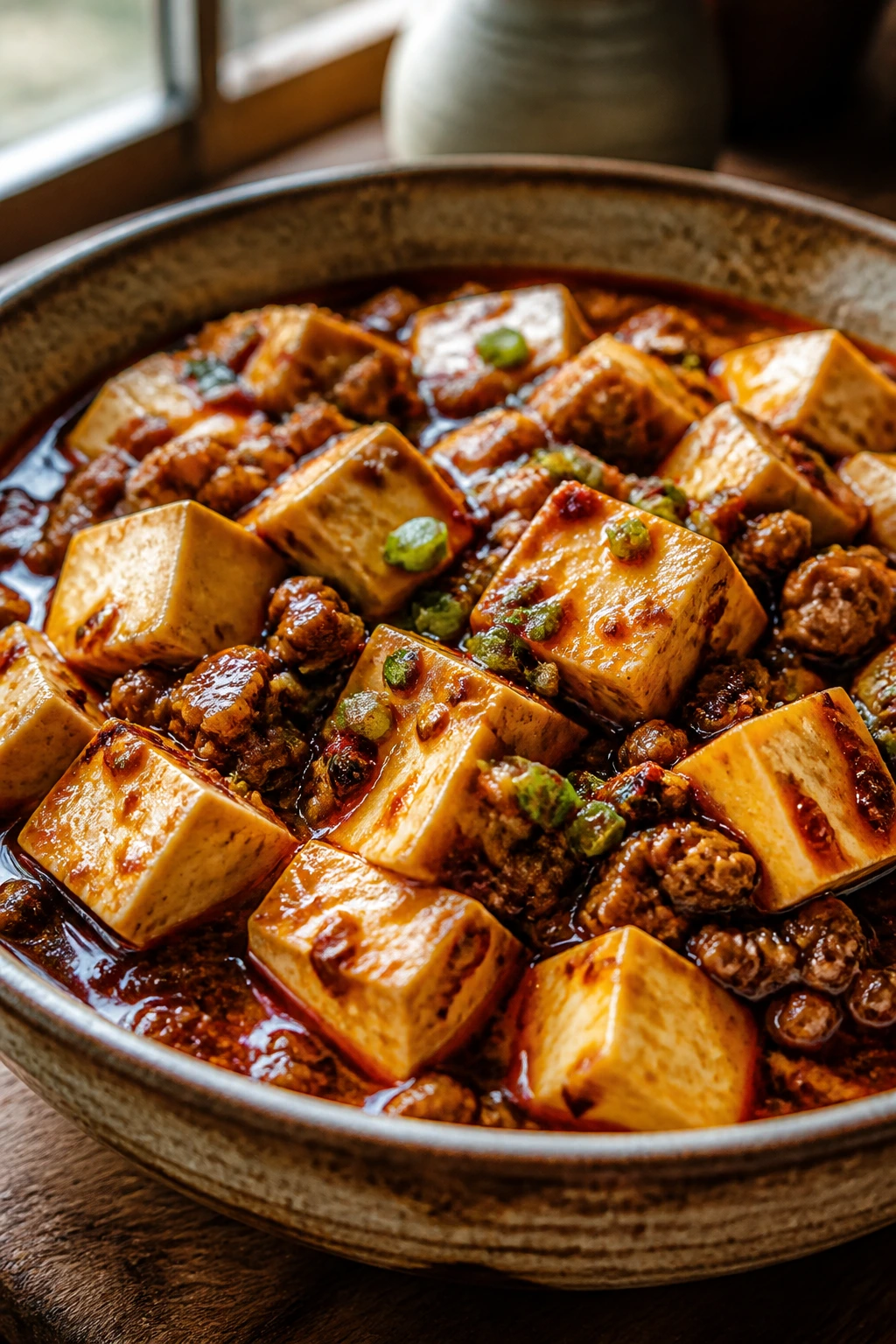
Intro: Mapo tofu is the dish that proves soft food can still have bite. The tofu is custardy, the sauce is fiery and numbingly fragrant, and the pork clings to every cube in a way that feels almost reckless.
Why It Works: Doubanjiang gives the dish its deep fermented heat, while Sichuan peppercorn leaves that buzzy finish. Soft tofu absorbs the sauce instead of fighting it.
Key Ingredients:
- 1 lb soft or silken tofu, cut into cubes
- 1/2 lb ground pork
- 1 tbsp doubanjiang
- 1 tsp fermented black beans, chopped
- 2 cloves garlic, minced
- 1 tsp grated ginger
- 1 cup chicken stock
- 1 tsp Sichuan peppercorn, crushed
- 1 tbsp cornstarch mixed with 2 tbsp water
Quick Steps:
- Brown pork with garlic, ginger, doubanjiang, and black beans.
- Add stock and bring to a simmer.
- Slide in tofu gently and cook 3 to 4 minutes.
- Stir in cornstarch slurry to coat the sauce.
- Finish with Sichuan peppercorn and scallions.
Equipment for This Recipe: Skillet or wok, spatula, small bowl for slurry.
How to Serve This Dish: Serve hot over rice, with a spoon for the sauce. It should be one of the spiciest dishes on the table, not the only one.
Pro Tips for This Recipe:
- Move the tofu with the pan, not the spatula, so it stays whole.
- Toast the peppercorn lightly before crushing for better fragrance.
- Keep some sauce loose; mapo tofu should slide, not stand still.
Variations on This Dish:
- Vegan Version: Use mushroom mince and vegetable stock.
- Extra-Numbing Version: Add a pinch of ground Sichuan pepper at the end.
Common Mistakes to Avoid with This Dish:
- Stirring tofu too much: It breaks and clouds the sauce.
- Not using enough doubanjiang: The dish ends up flat and red without depth.
13. Garlic Green Beans
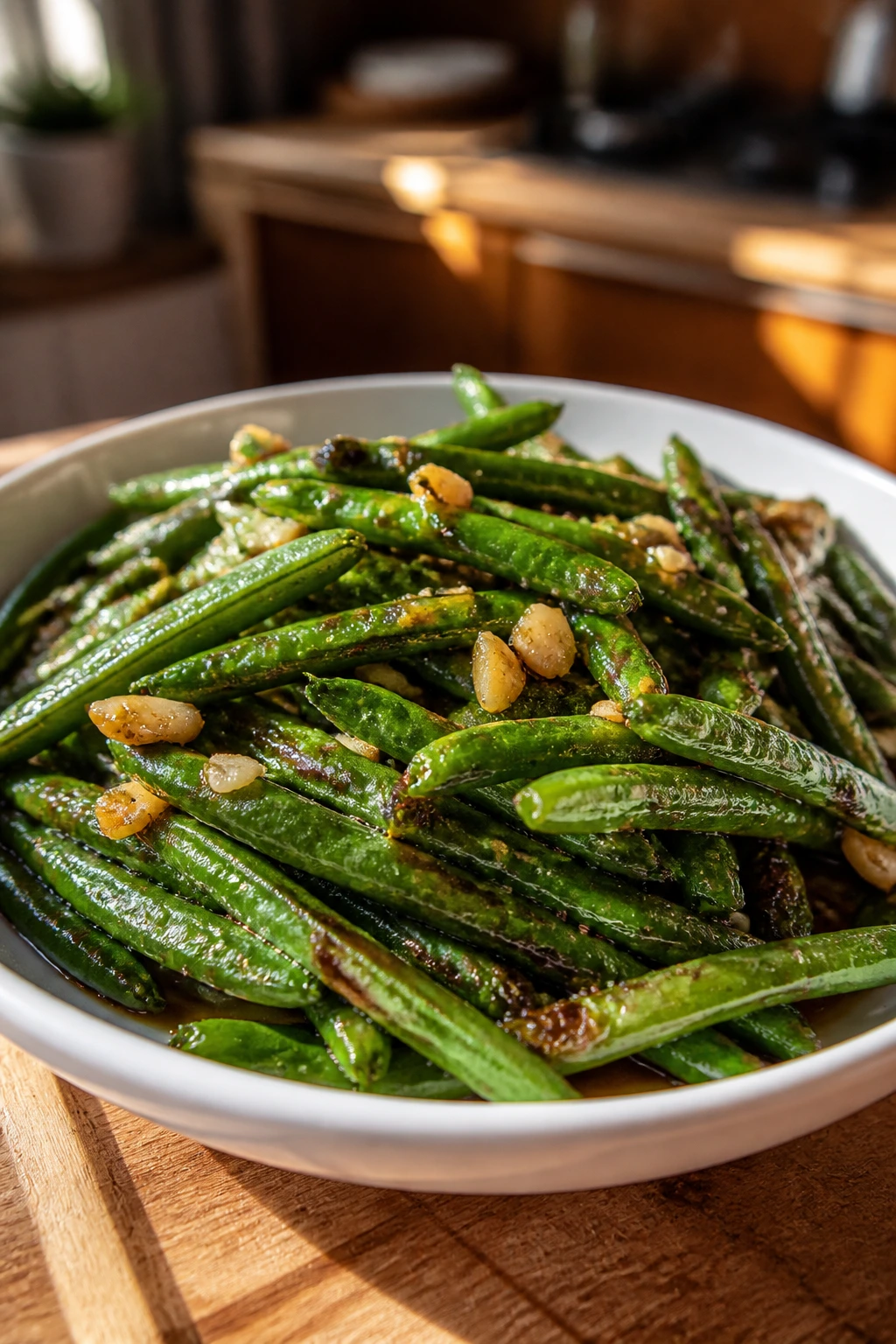
Intro: This is the vegetable dish that disappears first. The beans blister, the garlic turns sweet, and the sauce clings in a thin sheen instead of pooling at the bottom of the bowl.
Why It Works: High heat chars the beans before they go soft. That little bit of blistering gives the dish a takeout-style edge without the greasiness.
Key Ingredients:
- 1 lb green beans, trimmed
- 4 cloves garlic, minced
- 1 tbsp soy sauce
- 1 tsp oyster sauce
- 1 tsp sugar
- 2 tbsp neutral oil
- 2 tbsp water
Quick Steps:
- Blister beans in a hot skillet with oil for 5 to 6 minutes.
- Add garlic and cook 30 seconds.
- Stir in soy, oyster sauce, sugar, and water.
- Toss until the sauce disappears into the beans.
- Serve immediately.
Equipment for This Recipe: Large skillet, spatula.
How to Serve This Dish: Put these next to braised pork or fish. They bring crunch and color without stealing attention.
Pro Tips for This Recipe:
- Dry the beans after washing or they steam instead of blister.
- Use minced garlic, not sliced, for faster browning.
- Do not drown them in sauce; the point is a thin glaze.
Variations on This Dish:
- Chili Garlic Version: Add sliced chilies with the garlic.
- Fermented Black Bean Version: Add a teaspoon of chopped black beans for a saltier finish.
Common Mistakes to Avoid with This Dish:
- Crowding the pan: The beans soften instead of blistering.
- Overcooking the garlic: It turns bitter and overwhelms the dish.
14. Honey Walnut Shrimp
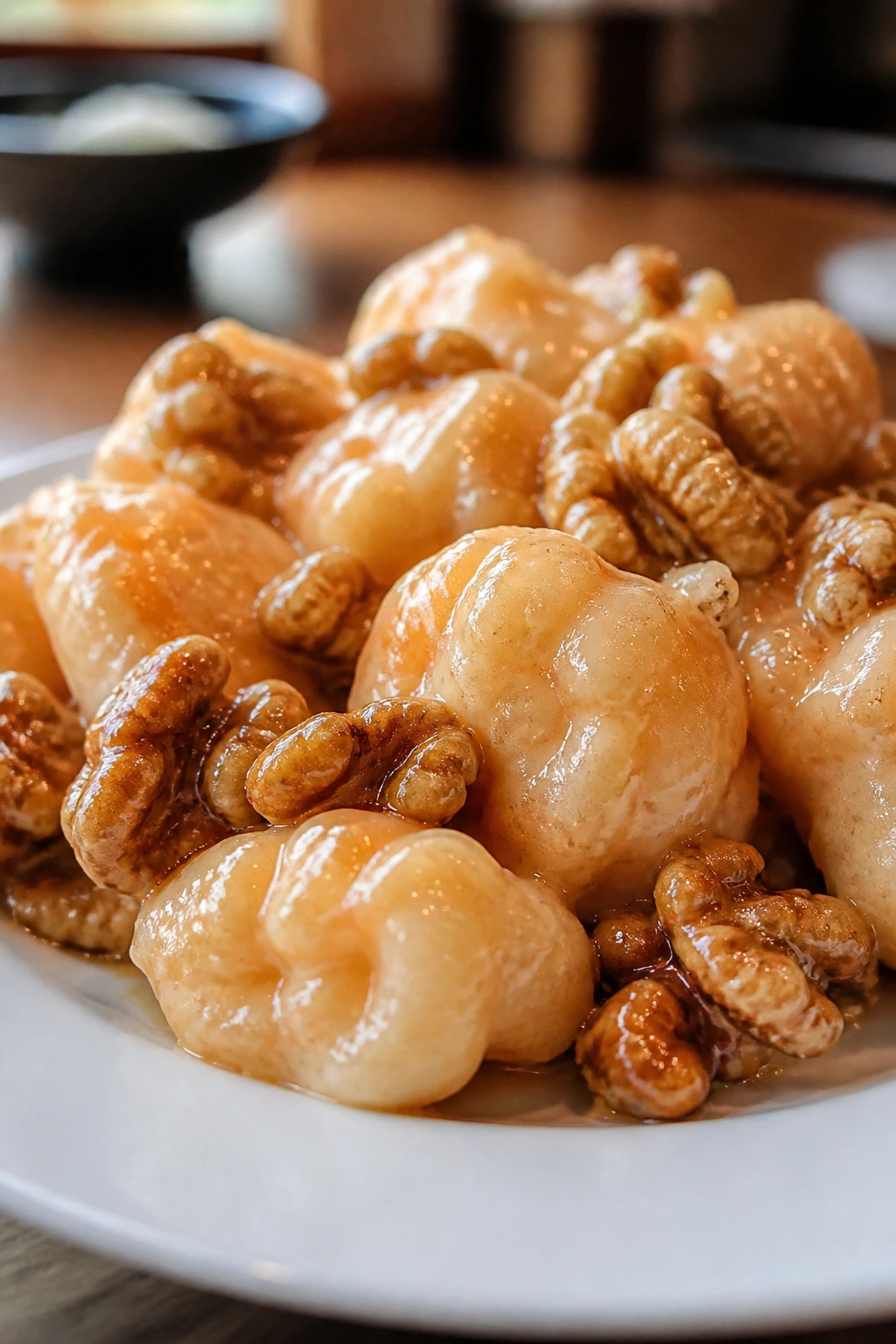
Intro: Honey walnut shrimp is pure holiday indulgence, and it works because the contrast is loud. The shrimp are crisp, the sauce is creamy and sweet, and the walnuts bring a toasted crunch that keeps the plate from feeling soft all the way through.
Why It Works: A quick batter gives the shrimp a thin shell that stays crisp long enough to coat. The sauce should be light, not heavy, so the shrimp still taste like shrimp.
Key Ingredients:
- 1 lb large shrimp, peeled and deveined
- 1 egg white
- 1/2 cup cornstarch
- 1/2 cup walnuts
- 2 tbsp sugar
- 2 tbsp honey
- 1/4 cup mayonnaise
- 1 tbsp condensed milk or more honey
Quick Steps:
- Candy the walnuts in sugar, then cool.
- Toss shrimp in egg white and cornstarch.
- Fry at 350°F for 2 to 3 minutes until crisp.
- Mix mayo, honey, and condensed milk.
- Toss shrimp with sauce and walnuts right before serving.
Equipment for This Recipe: Deep skillet, thermometer, slotted spoon.
How to Serve This Dish: Serve over lettuce or with rice, and keep the sauce light. This is one of the richer dishes on the table, so pair it with greens.
Pro Tips for This Recipe:
- Dry the shrimp well before battering.
- Toss the shrimp with sauce at the last second so the crust survives.
- Toast the walnuts even if you do not candy them; raw walnuts taste flat here.
Variations on This Dish:
- Lighter Version: Use half mayo, half Greek yogurt.
- Orange-Honey Version: Add orange zest for a brighter, less creamy sauce.
Common Mistakes to Avoid with This Dish:
- Saucing too early: The crust goes soft fast.
- Overfrying the shrimp: They turn rubbery and lose sweetness.
15. Roast Duck with Cucumber and Hoisin Pancakes
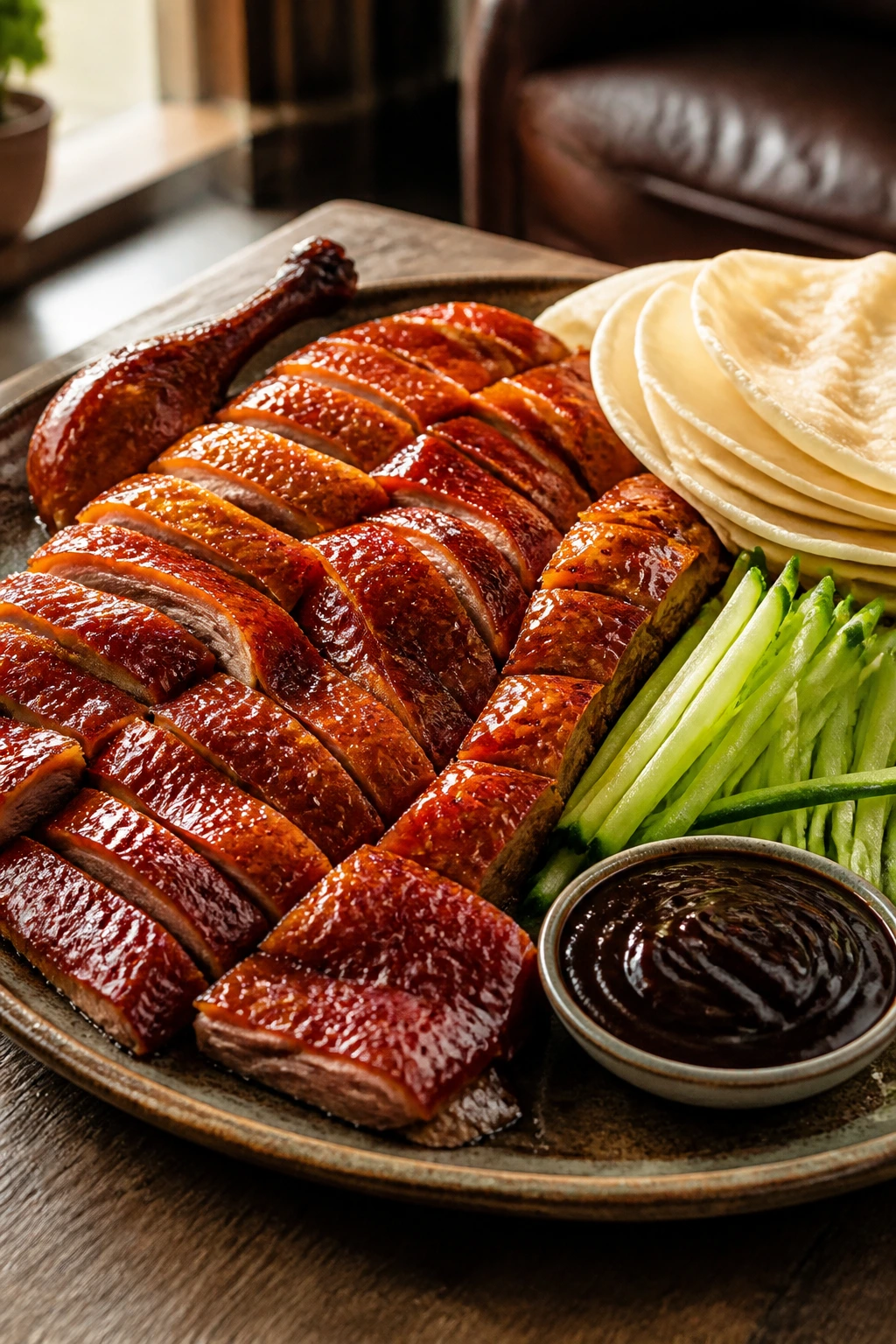
Intro: Roast duck feels festive the second you slice into it. The skin crackles, the fat runs into the meat, and the cool cucumber and hoisin keep every bite from tipping into richness.
Why It Works: Duck wants dry skin and steady heat. A brief high-temperature roast gives you crisp skin while the meat stays pink and juicy enough to slice.
Key Ingredients:
- 4 duck legs or 1 small duck, about 4 lb
- 1 tbsp salt
- 1 tsp five-spice powder
- 2 tbsp honey
- 1 tbsp Shaoxing wine
- 8 mandarin pancakes or thin scallion pancakes
- 1 cucumber, cut into matchsticks
- 1/4 cup hoisin sauce
Quick Steps:
- Dry the duck very well and season with salt and five-spice.
- Roast at 425°F for 20 minutes, then lower to 375°F until done.
- Brush with honey near the end for lacquer.
- Rest 10 minutes, then slice thin.
- Serve with pancakes, cucumber, and hoisin.
Equipment for This Recipe: Roasting rack, baking sheet, sharp knife.
How to Serve This Dish: Set everything on a big platter and let people build their own wraps. It works as a centerpiece dish, not a side note.
Pro Tips for This Recipe:
- Keep the skin dry before roasting.
- Rest the duck before slicing or the juices spill out.
- Warm the pancakes so they bend instead of cracking.
Variations on This Dish:
- Five-Spice Citrus Version: Add orange peel to the roasting pan.
- Chicken Version: Use a whole chicken if duck feels too rich or too expensive.
Common Mistakes to Avoid with This Dish:
- Slicing too soon: The meat loses its juices.
- Skipping the drying step: Damp skin will never crisp well.
16. Steamed Chicken with Ginger-Scallion Sauce
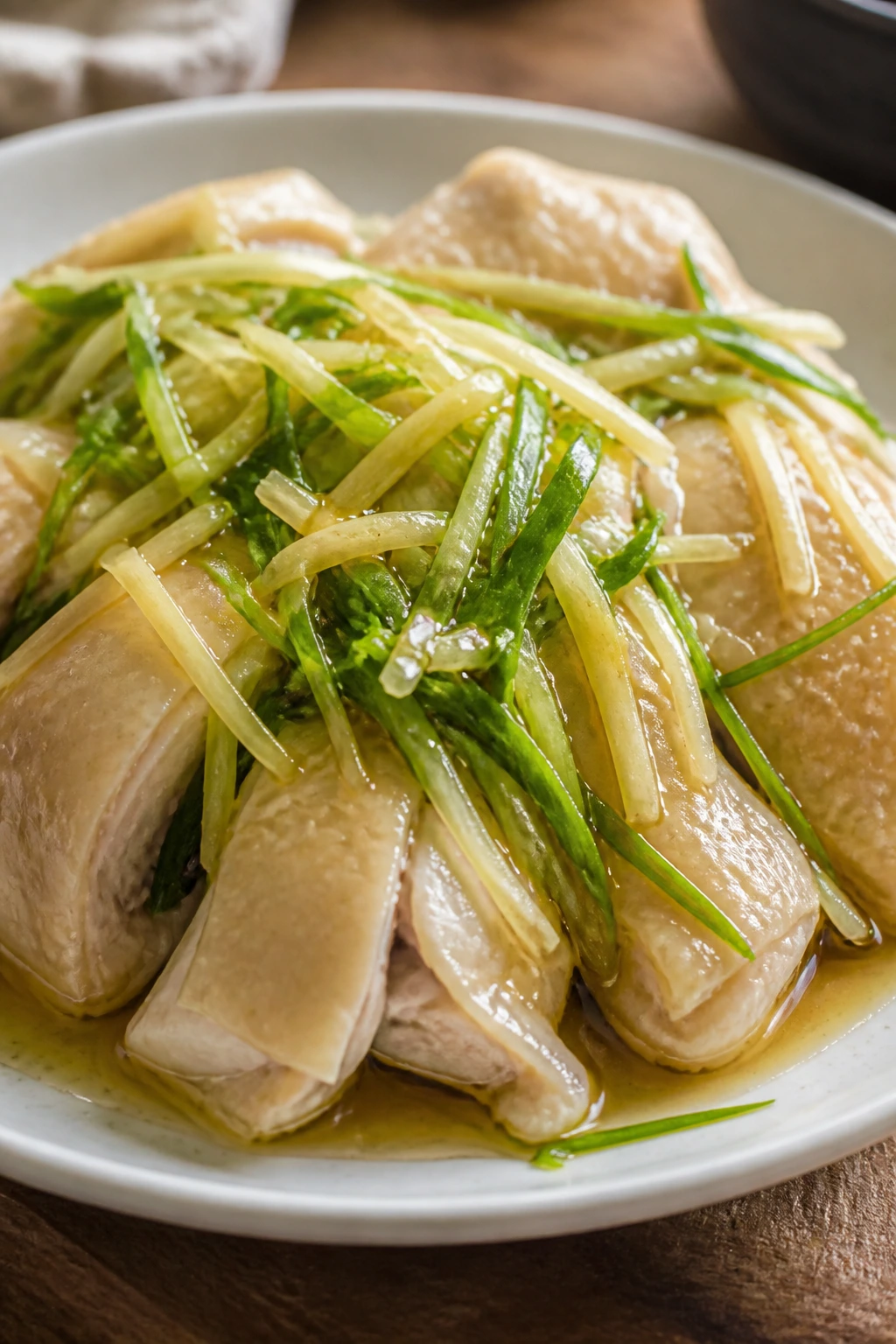
Intro: This dish looks modest, then you taste the sauce and understand why it survives on banquet tables. The chicken stays soft, the ginger stays sharp, and the scallion oil makes everything taste brighter.
Why It Works: Steaming keeps the meat tender without extra fat. The hot oil sauce carries the fragrance straight into the chicken instead of sitting on top of it.
Key Ingredients:
- 2 lb bone-in chicken thighs or a small chicken, cut up
- 2-inch piece ginger, finely julienned
- 4 scallions, sliced
- 2 tbsp neutral oil
- 1 tbsp soy sauce
- 1 tsp salt
- 1 tsp sesame oil
Quick Steps:
- Season chicken with salt and steam 25 to 35 minutes until cooked through.
- Mix ginger and scallions in a bowl.
- Heat oil until shimmering and pour over the aromatics.
- Add soy and sesame oil.
- Spoon the sauce over the chicken.
Equipment for This Recipe: Steamer, heatproof plate, small bowl.
How to Serve This Dish: Serve with rice and a plain vegetable. It’s the kind of dish that keeps a heavier menu from feeling too dense.
Pro Tips for This Recipe:
- Use chicken with bones; it tastes richer after steaming.
- Slice the ginger thin so it softens under the hot oil.
- Taste the sauce before pouring it on. It should be salty enough to season the chicken.
Variations on This Dish:
- Whole Chicken Version: Steam a small whole chicken for a more formal presentation.
- Soy-Only Version: Skip sesame oil if you want a cleaner, less nutty finish.
Common Mistakes to Avoid with This Dish:
- Overcooking: The meat turns stringy. Check the thickest piece.
- Too little sauce: The dish needs the oil to carry the aromatics.
17. Lotus Root Stuffed with Sticky Rice
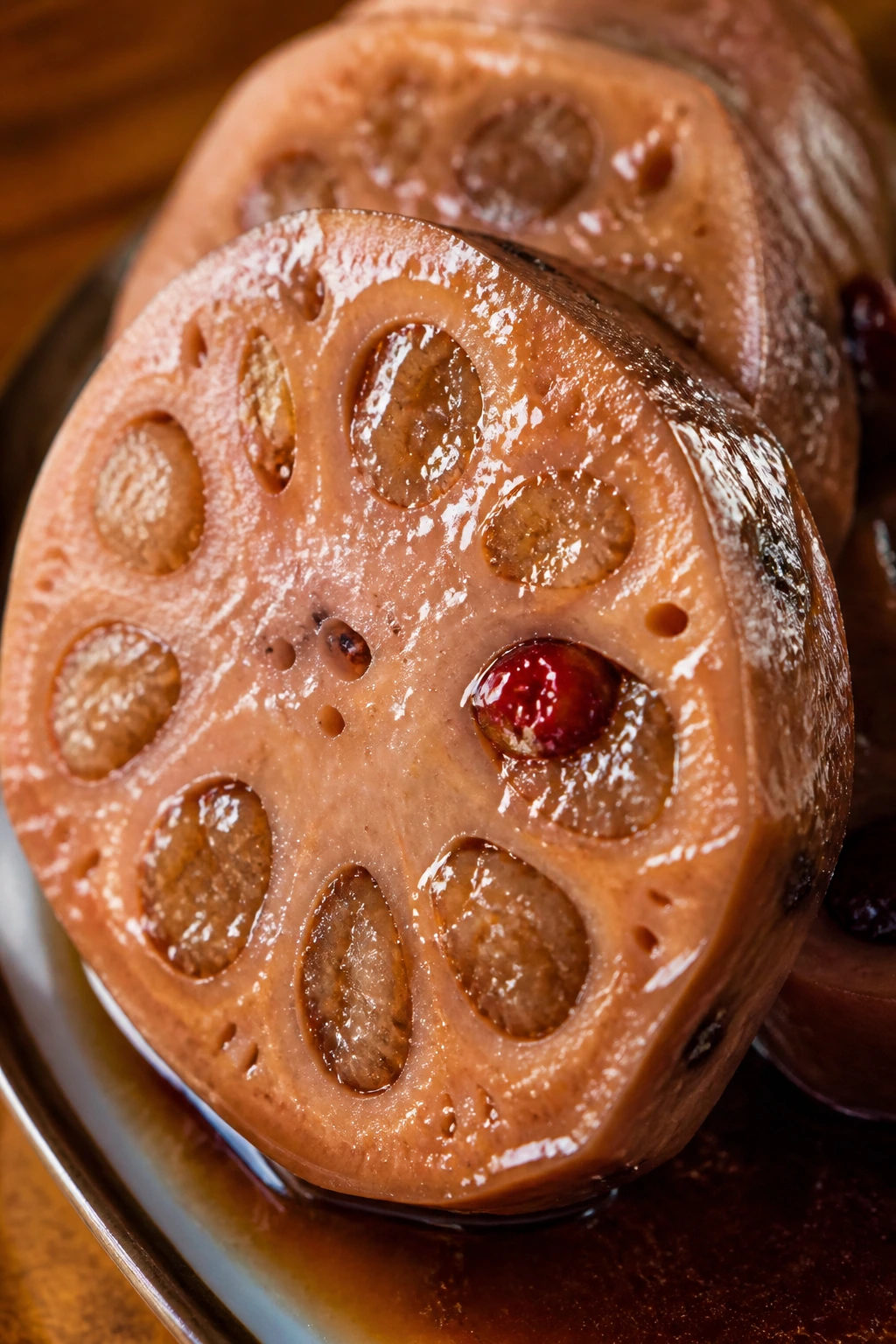
Intro: Slices of lotus root stuffed with sticky rice look like little wheels of luck. The outside stays tender, the rice inside turns glossy and sweet, and the syrup clings to the ridges in a way that’s hard not to like.
Why It Works: The rice steams inside the root and takes on a dense, chewy texture. Braising after stuffing lets the syrup seep into the lotus root without collapsing it.
Key Ingredients:
- 1 large lotus root, peeled and trimmed
- 1 cup glutinous rice, soaked 2 hours
- 1/4 cup brown sugar
- 2 red dates, sliced
- 2 tbsp honey
- Toothpicks to seal
Quick Steps:
- Soak the rice and stuff it into the lotus root openings.
- Seal the ends with toothpicks.
- Simmer with sugar and dates for 1 1/2 hours until tender.
- Cool slightly, then slice.
- Spoon syrup over the top.
Equipment for This Recipe: Heavy pot, paring knife, toothpicks.
How to Serve This Dish: Serve it as a dessert-style dish or a sweet side on the New Year table. Thin slices make the pattern in the root easy to see.
Pro Tips for This Recipe:
- Pack the rice firmly so the slices hold together.
- Soak the rice long enough or the center stays hard.
- Let it cool before slicing; it firms up as it rests.
Variations on This Dish:
- Red Bean Version: Add a spoonful of red bean paste inside the root with the rice.
- Osmanthus Version: Finish with osmanthus syrup instead of honey.
Common Mistakes to Avoid with This Dish:
- Loose stuffing: The rice falls out when you slice it.
- Boiling too hard: The root can split and lose its shape.
18. Chinese Broccoli with Oyster Sauce
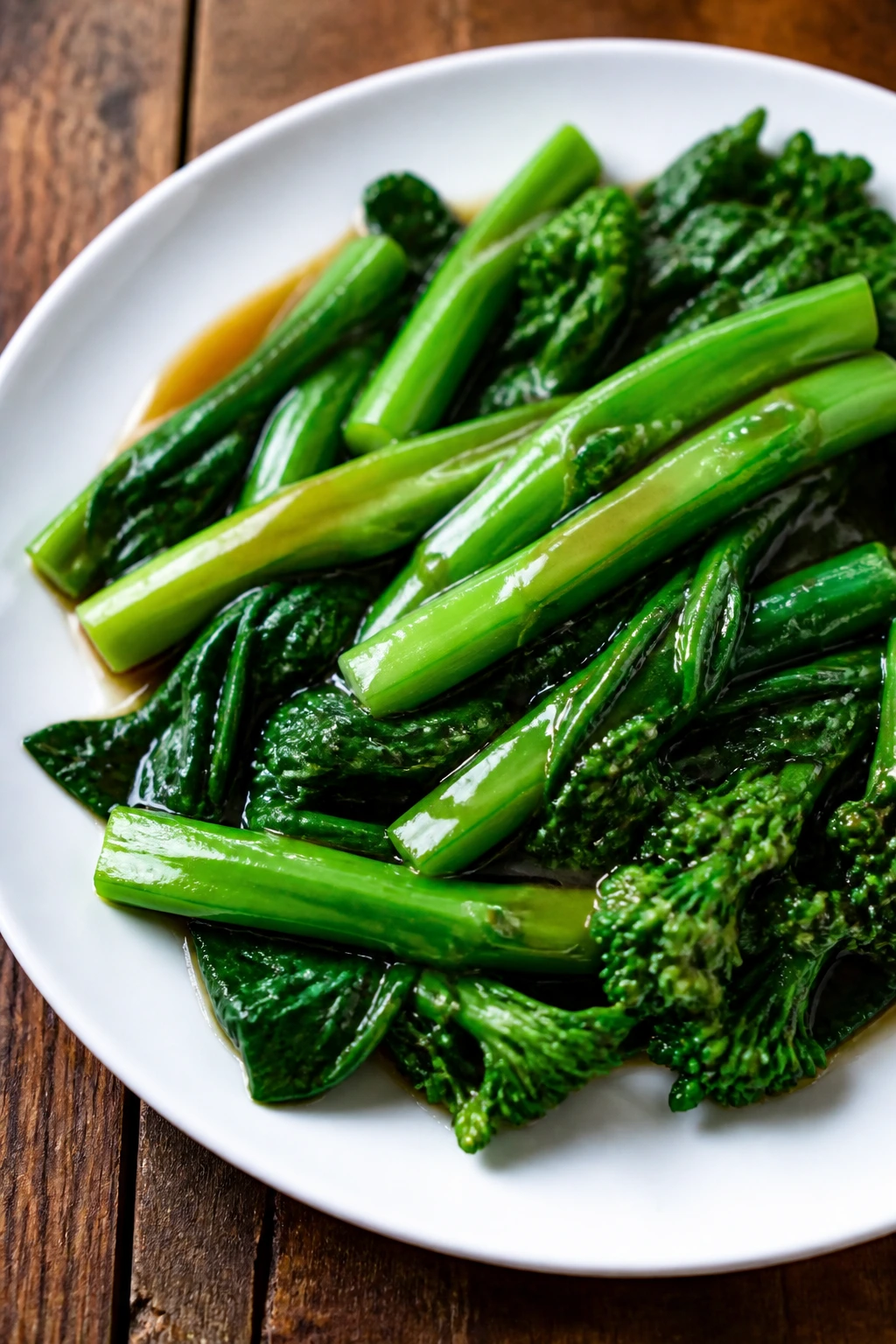
Intro: Gai lan done well is one of the cleanest things on a crowded table. The stems stay crisp, the leaves wilt just enough, and the oyster sauce adds a salty shine without burying the vegetable.
Why It Works: A quick blanch or steam keeps the broccoli-family bite intact. The sauce should be thin enough to coat, not pool.
Key Ingredients:
- 1 lb Chinese broccoli, trimmed
- 2 cloves garlic, minced
- 2 tbsp oyster sauce
- 1 tbsp water
- 1 tsp sugar
- 1 tsp sesame oil
- 1 tbsp neutral oil
Quick Steps:
- Blanch gai lan for 1 to 2 minutes until bright green.
- Drain well and arrange on a plate.
- Warm oil and garlic in a small pan.
- Add oyster sauce, water, and sugar, then spoon over the greens.
- Finish with sesame oil.
Equipment for This Recipe: Pot, colander, small saucepan.
How to Serve This Dish: Lay it in a neat row on a platter. It’s the side that makes the rest of the meal feel balanced.
Pro Tips for This Recipe:
- Trim the thick ends so the stems cook evenly.
- Dry the greens before saucing or the plate turns watery.
- Taste the sauce before pouring; some oyster sauces are saltier than others.
Variations on This Dish:
- Broccolini Version: Use broccolini and cut the blanching time by 30 seconds.
- Mushroom Version: Add sautéed shiitakes on top for more depth.
Common Mistakes to Avoid with This Dish:
- Overcooking the stems: They should still have snap.
- Too much sauce: The greens need a gloss, not a bath.
19. Wonton Soup
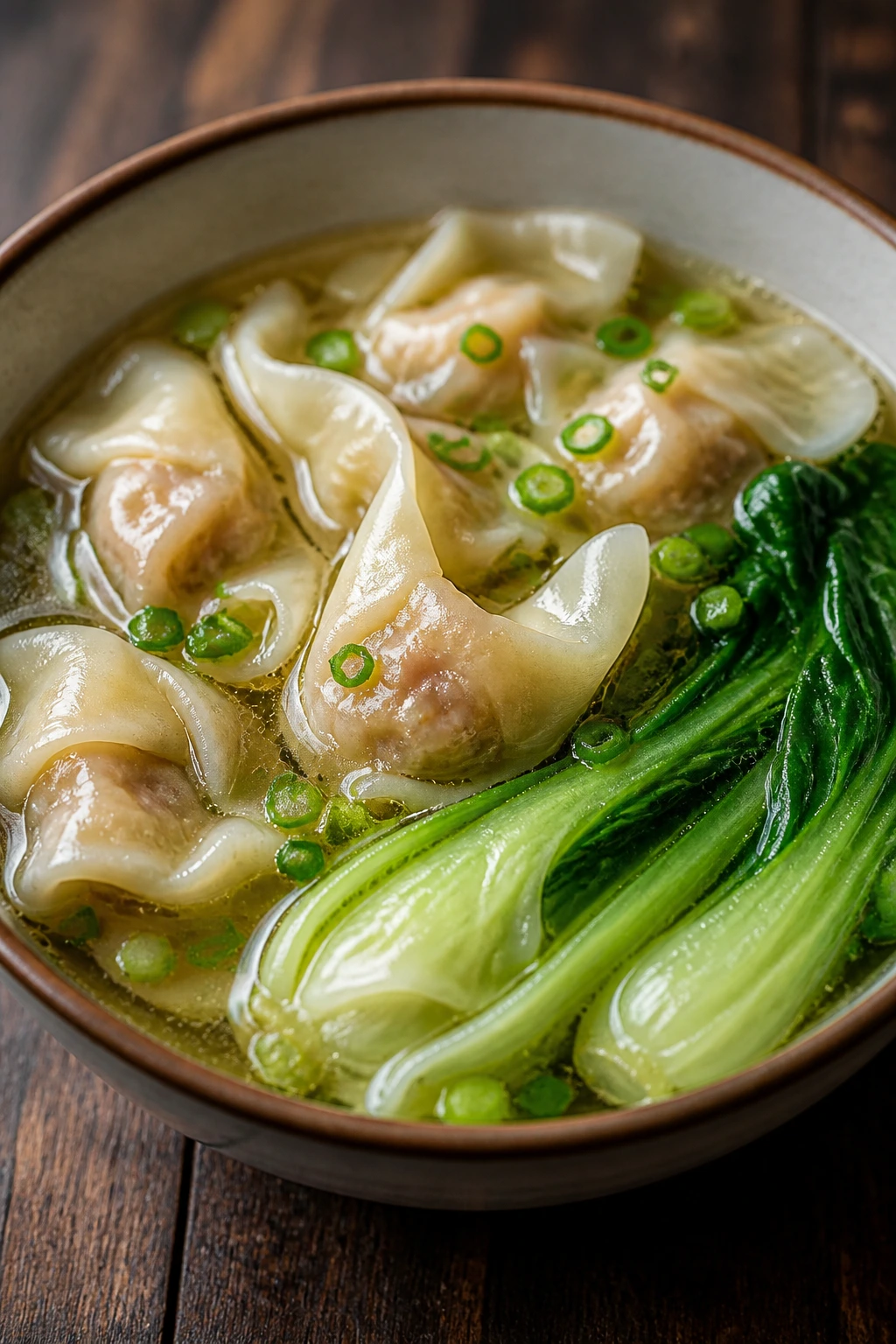
Intro: Wonton soup is what I want when the table has started to feel too heavy. The wrappers go silky, the pork filling stays tender, and the broth tastes clean enough to make you notice the ginger.
Why It Works: Small wontons cook fast, so the wrapper stays delicate. A clear broth lets the filling and scallions do the talking.
Key Ingredients:
- 40 wonton wrappers
- 1/2 lb ground pork
- 1/2 lb shrimp, chopped fine
- 2 scallions, minced
- 1 tsp grated ginger
- 1 tbsp soy sauce
- 4 cups chicken broth
- 2 cups bok choy leaves
Quick Steps:
- Mix pork, shrimp, scallions, ginger, soy, and 1 tsp sesame oil.
- Fill and fold the wontons.
- Simmer broth with bok choy for 3 minutes.
- Drop in wontons and cook 4 to 5 minutes until they float and look translucent.
- Serve immediately.
Equipment for This Recipe: Soup pot, small bowl of water, slotted spoon.
How to Serve This Dish: Serve in small bowls as a first course. A few wontons per person is enough before the heavier dishes start landing.
Pro Tips for This Recipe:
- Keep wrappers covered with a damp towel while you fold.
- Do not overcrowd the pot or they stick together.
- Add a few drops of sesame oil to the broth at the end for perfume.
Variations on This Dish:
- Mushroom Version: Replace shrimp with minced shiitake and tofu.
- Chicken Version: Use ground chicken if that’s what you have.
Common Mistakes to Avoid with This Dish:
- Overfilling: The wontons burst open during simmering.
- Boiling too hard: The wrappers tear and the broth turns cloudy.
20. Salt and Pepper Tofu
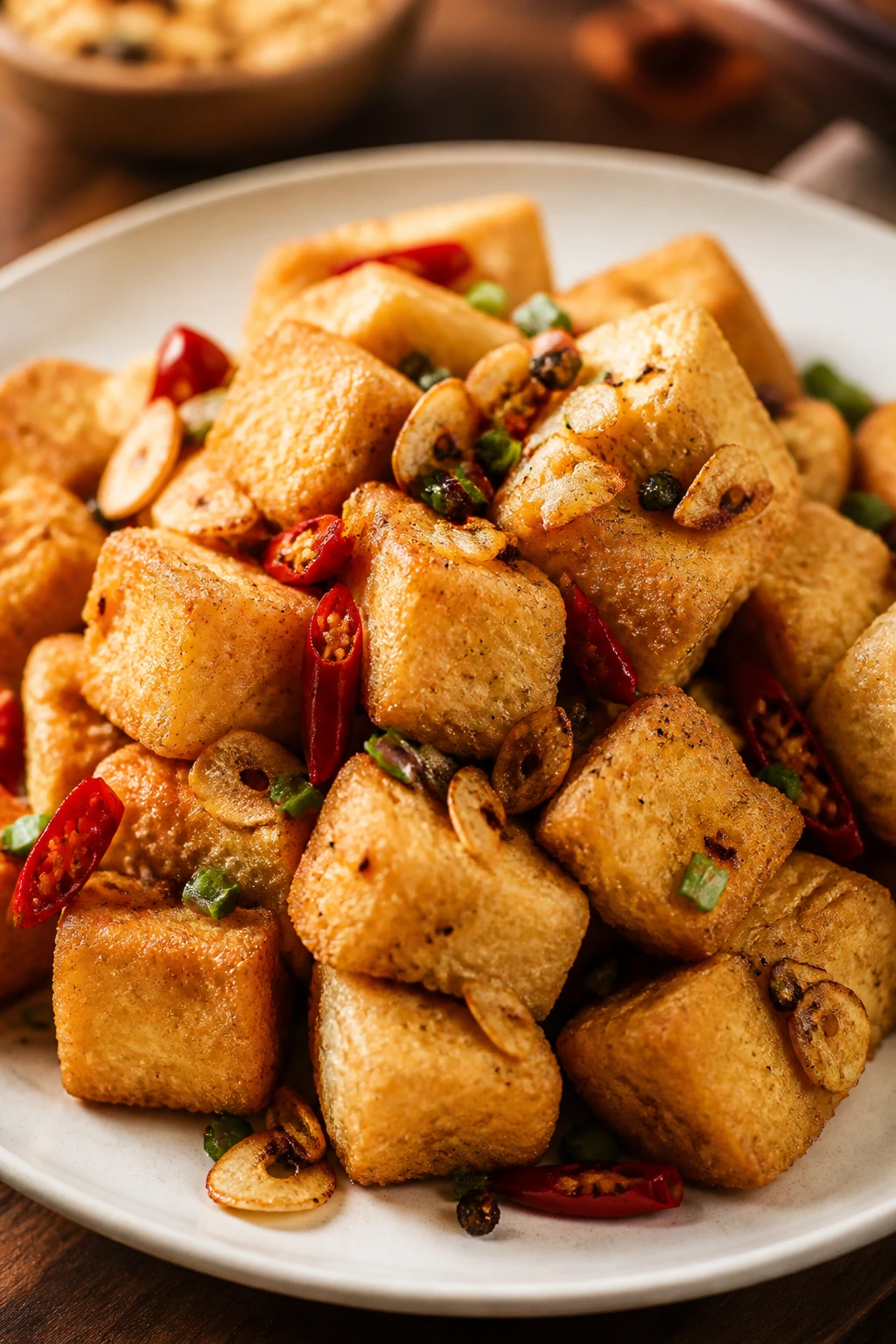
Intro: This dish is all about texture. The tofu turns crisp on the outside and soft inside, then garlic, chilies, and white pepper hit it hard enough to make each bite feel fresh.
Why It Works: A dry coating and hot oil give the tofu a shell that stands up to seasoning. The garlic and chili go in at the end so they stay fragrant, not burnt.
Key Ingredients:
- 1 lb firm tofu, pressed and cut into cubes
- 1/4 cup cornstarch
- 1 tsp salt
- 1 tsp white pepper
- 3 cloves garlic, minced
- 2 scallions, sliced
- 1 small red chili, sliced
- 3 tbsp neutral oil
Quick Steps:
- Press and cube the tofu.
- Toss with cornstarch, salt, and white pepper.
- Fry in oil until crisp on all sides, about 6 minutes.
- Add garlic and chili for 30 seconds.
- Toss with scallions and serve hot.
Equipment for This Recipe: Skillet, spatula, plate lined with a rack or paper.
How to Serve This Dish: Serve as a snack, a side, or a vegetarian main over rice. It’s strongest when it arrives at the table immediately.
Pro Tips for This Recipe:
- Press the tofu at least 20 minutes.
- Use firm tofu, not silken.
- Salt the tofu lightly before frying so the coating tastes seasoned, not plain.
Variations on This Dish:
- Shrimp Version: Use peeled shrimp instead of tofu and shorten the frying time.
- Peppercorn Version: Add crushed Sichuan pepper for a more numbing finish.
Common Mistakes to Avoid with This Dish:
- Wet tofu: The coating slides off and steams.
- Too little oil: The pieces won’t brown evenly.
21. Soy-Glazed Eggplant
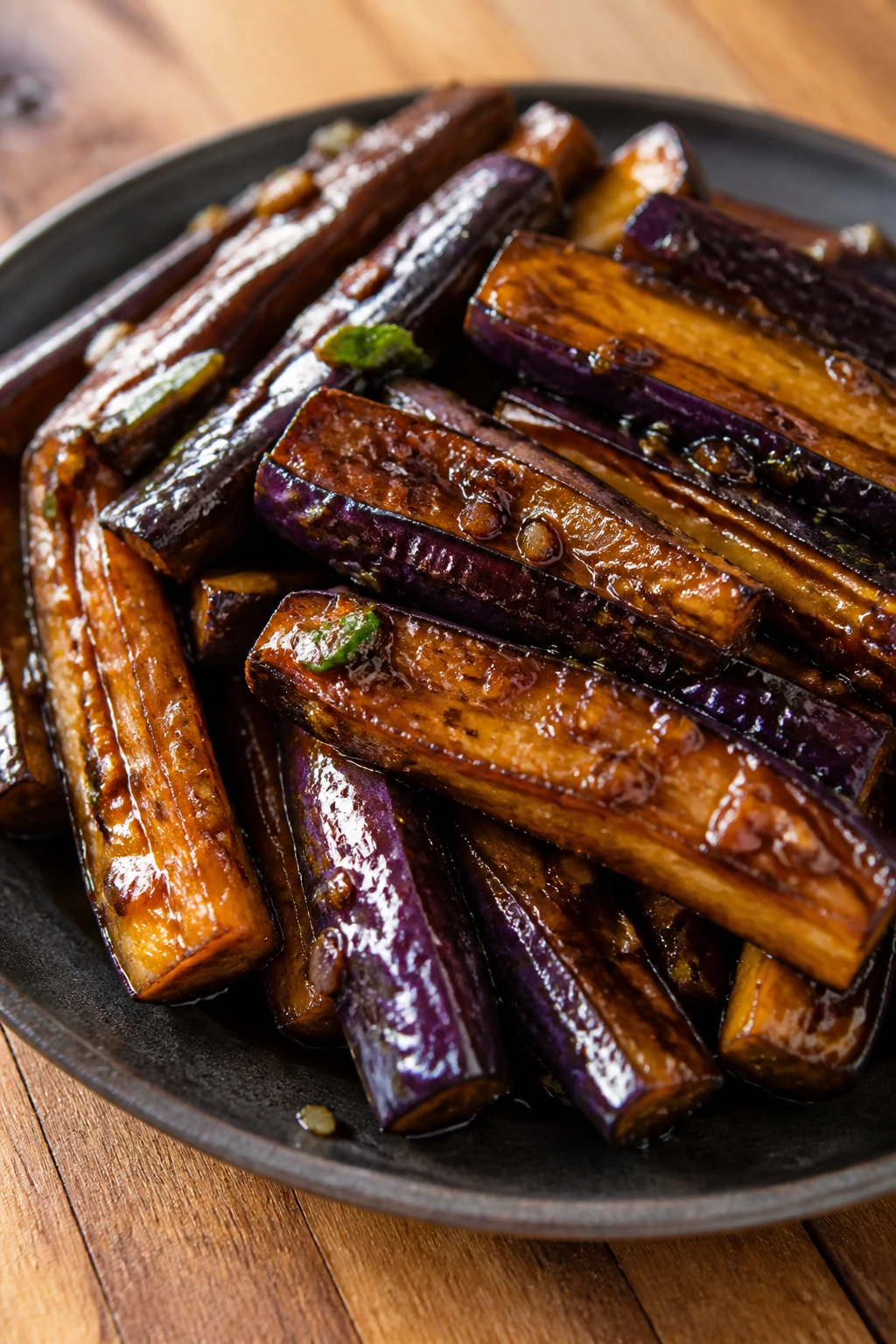
Intro: Eggplant can go silky and rich if you treat it right. This version turns soft inside, lacquered outside, and pulls the soy-garlic glaze into every wrinkle of the skin.
Why It Works: Eggplant drinks oil quickly, so the trick is to sear it first, then finish with a small amount of sauce. That keeps it lush without turning greasy.
Key Ingredients:
- 2 Chinese eggplants, cut into batons
- 3 cloves garlic, minced
- 1 tbsp soy sauce
- 1 tbsp oyster sauce
- 1 tsp sugar
- 1 tsp rice vinegar
- 1 tsp cornstarch mixed with 2 tbsp water
- 2 tbsp neutral oil
Quick Steps:
- Salt the eggplant 10 minutes, then pat dry.
- Sear in oil until browned and softening.
- Add garlic, soy, oyster sauce, sugar, and vinegar.
- Stir in cornstarch slurry to glaze.
- Serve once the sauce clings to the eggplant.
Equipment for This Recipe: Large skillet, spatula, bowl.
How to Serve This Dish: Spoon it over rice or beside fish and chicken. It brings a soft, savory note to a table full of crunch.
Pro Tips for This Recipe:
- Salt the eggplant first to draw out some water.
- Keep the sauce light; eggplant should taste glazed, not soupy.
- Chinese eggplants work better than globe eggplants because they cook evenly.
Variations on This Dish:
- Spicy Version: Add chili bean paste with the garlic.
- Miso Version: Swap half the oyster sauce for white miso and a splash of water.
Common Mistakes to Avoid with This Dish:
- Using too much oil: The dish turns heavy fast.
- Skipping the salt step: The eggplant can stay spongy in the middle.
22. Braised Shiitake Mushrooms and Bok Choy
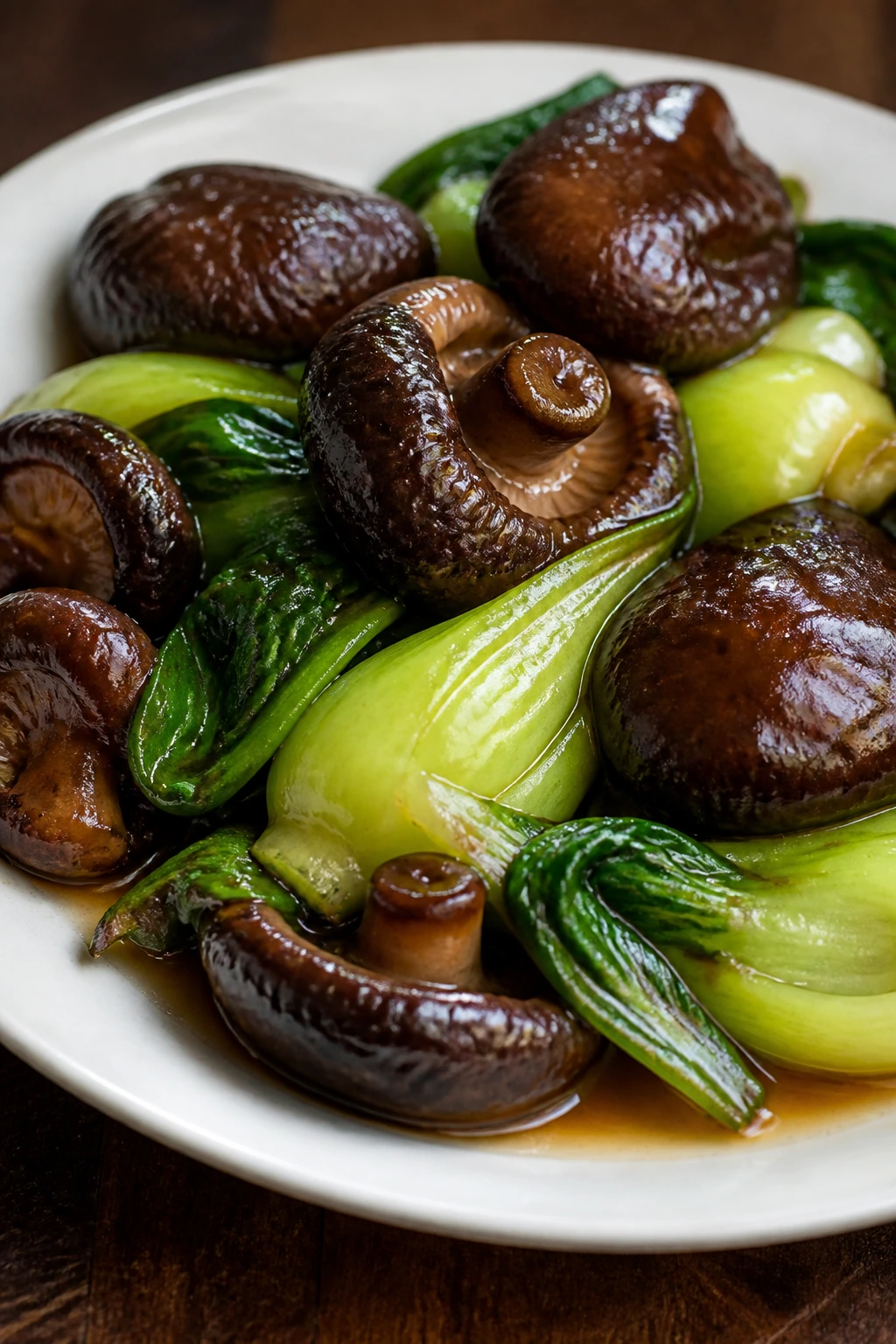
Intro: This side dish looks calm, but it is doing real work. The shiitakes bring a dark, meaty flavor, the bok choy stays bright, and the sauce ties them together like a neat little bow.
Why It Works: Dried shiitakes give more depth than fresh ones. A short braise softens them, and bok choy only needs a minute or two to stay green.
Key Ingredients:
- 8 dried shiitake mushrooms, soaked
- 4 baby bok choy, halved
- 2 cloves garlic, sliced
- 2 tbsp oyster sauce
- 1 cup mushroom soaking liquid or stock
- 1 tsp sugar
- 1 tsp cornstarch mixed with 1 tbsp water
Quick Steps:
- Simmer shiitakes in stock for 10 minutes.
- Add garlic, oyster sauce, and sugar.
- Stir in bok choy and cook 2 minutes.
- Add cornstarch slurry to gloss the sauce.
- Serve hot.
Equipment for This Recipe: Skillet or shallow braiser, tongs.
How to Serve This Dish: Arrange the bok choy around the mushrooms so the plate looks generous. It works well between braised meat and fried dishes.
Pro Tips for This Recipe:
- Strain the mushroom soaking liquid if it’s gritty.
- Keep the bok choy cut side down at first for a little color.
- Do not overreduce the sauce; it should stay light.
Variations on This Dish:
- Napa Cabbage Version: Replace bok choy with wedges of napa cabbage.
- Tofu Version: Add fried tofu puffs for more substance.
Common Mistakes to Avoid with This Dish:
- Overcooking the greens: They turn limp and lose their fresh bite.
- Not soaking the mushrooms long enough: They stay chewy in the wrong way.
23. Fried Rice with Lap Cheong and Eggs
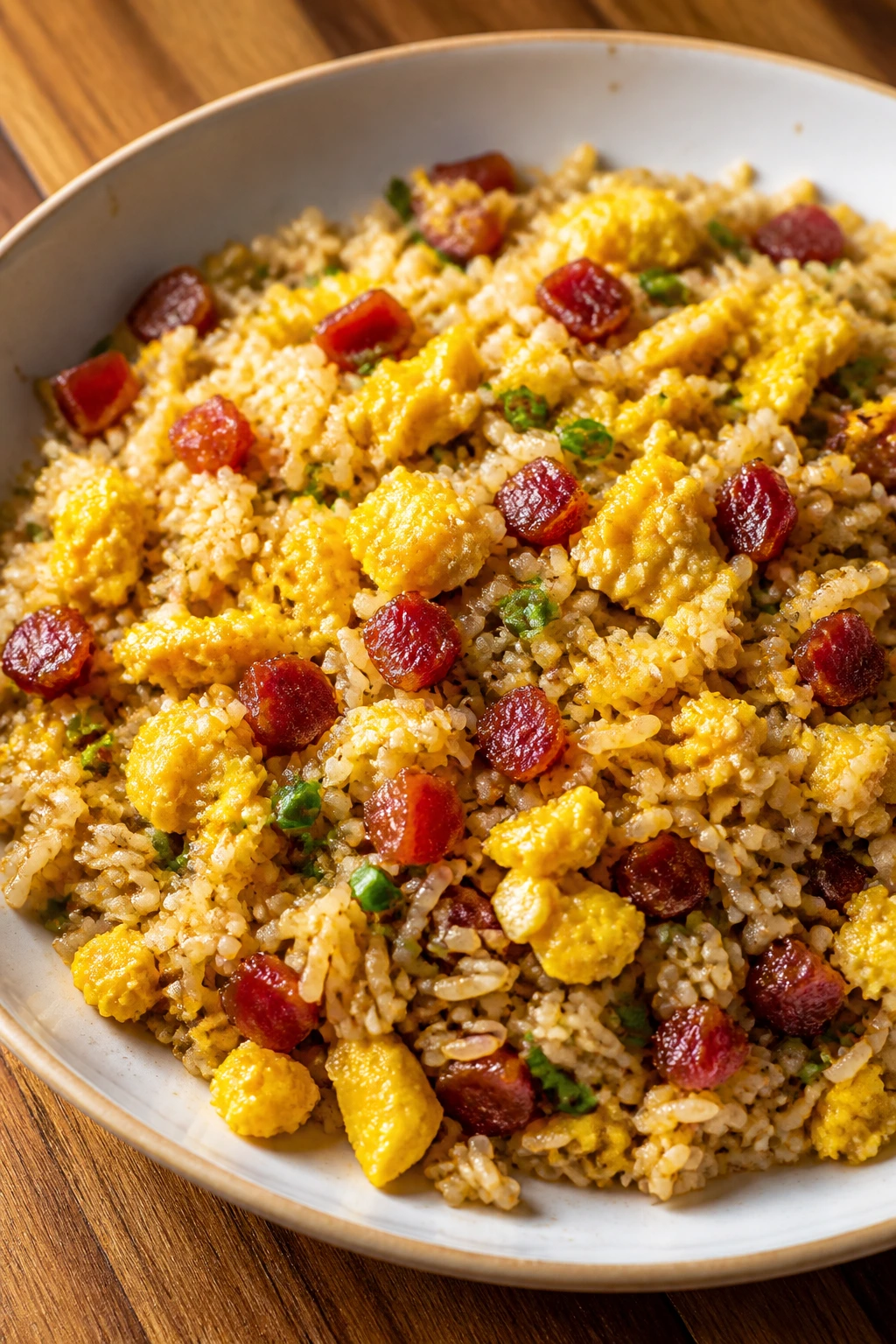
Intro: Fried rice made at home should taste smoky, not greasy. The lap cheong brings sweetness, the eggs stay fluffy, and every grain of rice stays separate enough to scoop cleanly.
Why It Works: Day-old rice fries better because the grains are drier. High heat and quick stirring give you the toasted edges that make this feel finished.
Key Ingredients:
- 4 cups cooked day-old rice
- 2 lap cheong sausages, diced
- 3 eggs, beaten
- 1/2 cup peas
- 2 scallions, chopped
- 2 tbsp light soy sauce
- 1 tsp sesame oil
- 2 tbsp neutral oil
Quick Steps:
- Crisp the lap cheong in oil for 2 minutes.
- Scramble the eggs, then push them aside.
- Add rice, peas, soy, and sesame oil.
- Stir-fry over high heat until the grains separate and steam off.
- Finish with scallions.
Equipment for This Recipe: Wok or large skillet, spatula, bowl.
How to Serve This Dish: Serve in a broad bowl so the rice stays fluffy. It can sit in the center of the table or alongside sauced dishes that need a plain counterpoint.
Pro Tips for This Recipe:
- Break up clumps of cold rice before it hits the pan.
- Keep the heat high and the motion quick.
- Add soy around the edge of the pan so it sizzles before mixing.
Variations on This Dish:
- Shrimp Version: Swap lap cheong for chopped shrimp.
- Vegetable Version: Use mushrooms and corn for a lighter bowl.
Common Mistakes to Avoid with This Dish:
- Using fresh rice: It clumps and turns soft.
- Overcrowding the pan: The rice steams instead of frying.
24. Nian Gao Stir-Fry with Cabbage and Pork
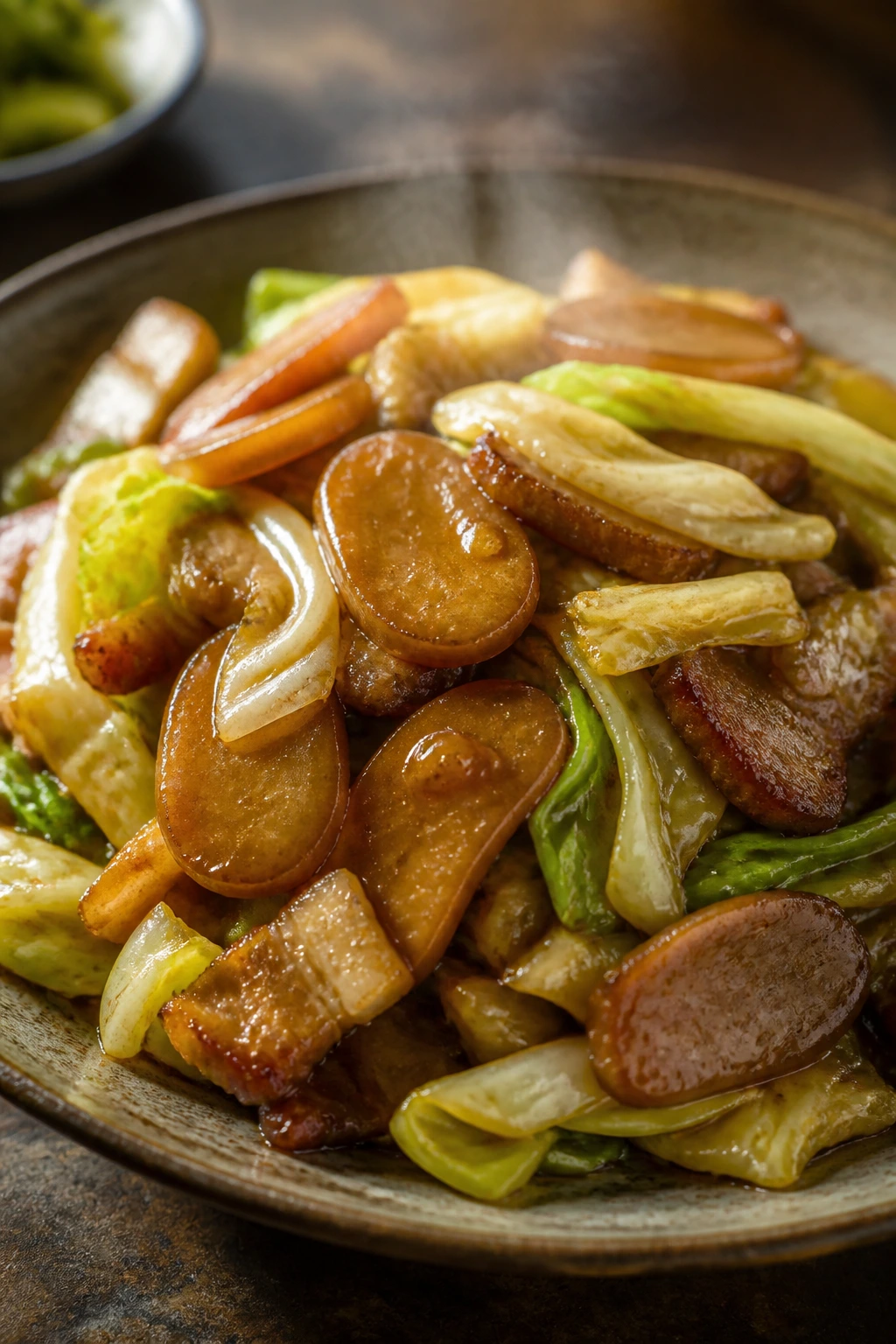
Intro: Sticky rice cake can go from plain to craveable fast if you slice it right and fry it with something savory. The chewy noodles of rice cake soak up the sauce, while cabbage and pork keep the whole pan from feeling heavy.
Why It Works: Nian gao gets better when it’s cut thin and softened before the final toss. That keeps the slices tender instead of gummy.
Key Ingredients:
- 12 oz nian gao, sliced thin
- 1/2 lb pork belly or lap cheong, sliced
- 2 cups cabbage, shredded
- 2 cloves garlic, minced
- 2 tbsp light soy sauce
- 1 tsp sugar
- 2 tbsp water
- 1 tbsp neutral oil
Quick Steps:
- Soften nian gao in warm water for 10 minutes.
- Crisp pork in oil, then add garlic and cabbage.
- Add rice cake, soy, sugar, and water.
- Toss gently for 3 to 4 minutes until glossy.
- Serve immediately.
Equipment for This Recipe: Large skillet, spatula, bowl for soaking.
How to Serve This Dish: Serve as a side or a starchy main. It belongs on a Lunar New Year table because the sticky texture feels symbolic without being precious.
Pro Tips for This Recipe:
- Slice the rice cake thin enough to bend.
- Soften it first if the cake is very firm.
- Keep the toss gentle or the slices tear.
Variations on This Dish:
- Vegetable Version: Skip the pork and add shiitakes.
- Spicy Version: Add a spoonful of chili bean paste.
Common Mistakes to Avoid with This Dish:
- Adding dry rice cake straight to the pan: It stays hard in the middle.
- Stirring too roughly: The slices break apart and clump.
25. Tangyuan in Sweet Osmanthus Syrup
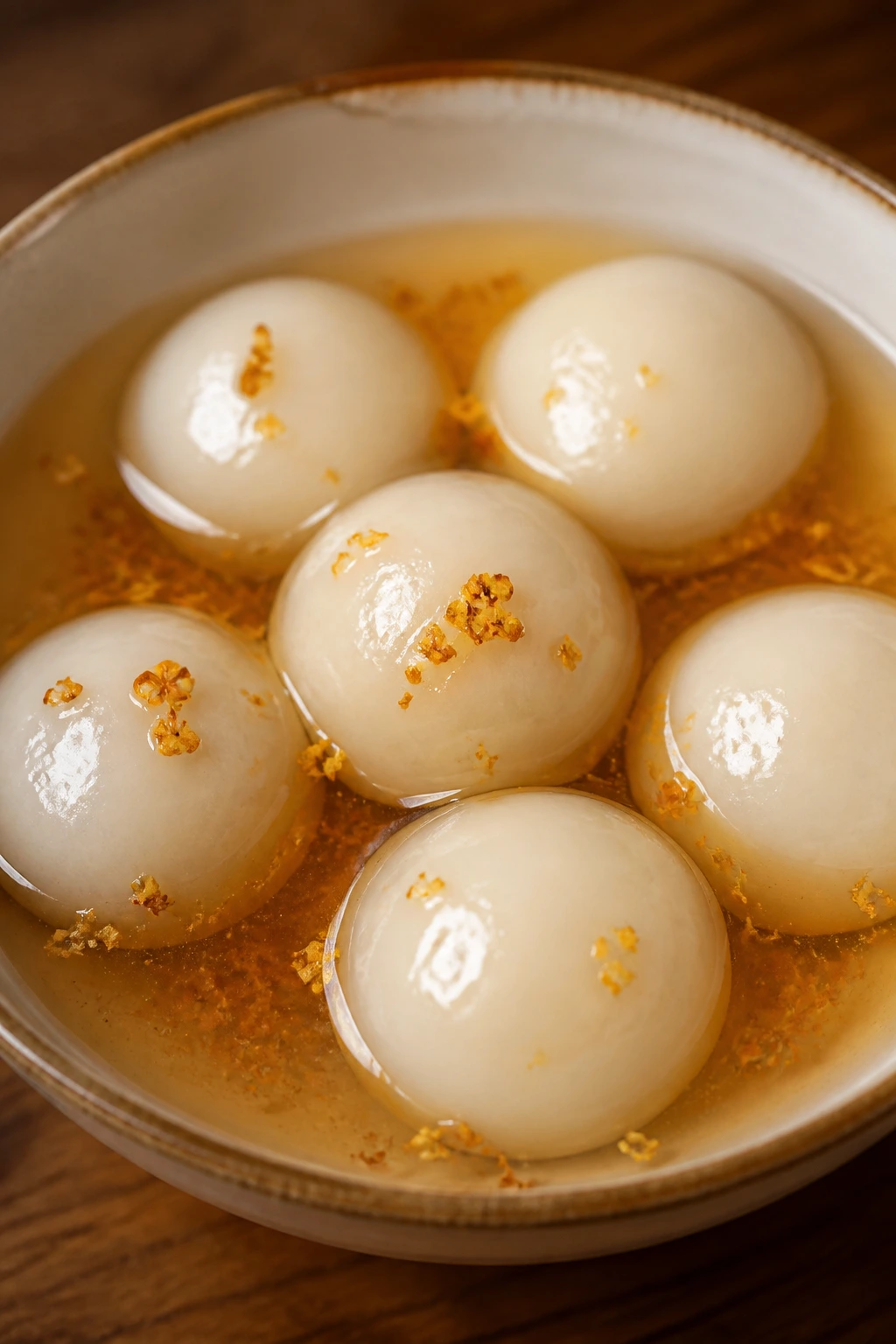
Intro: Tangyuan are the soft, warm finish that slows everybody down. The glutinous rice balls turn chewy and smooth, and the sweet syrup gives them a floral note that feels festive without being fussy.
Why It Works: The dough stays tender when you use warm water and do not overwork it. A gentle boil keeps the balls round and smooth.
Key Ingredients:
- 2 cups glutinous rice flour
- 3/4 cup warm water
- 1 cup black sesame paste or red bean paste
- 4 cups water for boiling
- 2 tbsp sugar
- 1 tbsp osmanthus syrup or 1 strip ginger
- Pinch of salt
Quick Steps:
- Mix flour and warm water into a soft dough.
- Wrap small balls of filling and seal tightly.
- Simmer in water until they float, then cook 2 minutes more.
- Heat water, sugar, and osmanthus syrup for the serving broth.
- Ladle tangyuan into bowls and spoon syrup over them.
Equipment for This Recipe: Pot, slotted spoon, mixing bowl.
How to Serve This Dish: Serve them warm in small bowls after the savory dishes clear. They should feel like a soft landing, not a heavy dessert.
Pro Tips for This Recipe:
- Keep the dough covered while you shape the balls.
- Seal the filling well or the tangyuan split.
- Cook in batches so the water does not stop boiling.
Variations on This Dish:
- Peanut Version: Use sweet peanut filling instead of sesame.
- Ginger Syrup Version: Simmer the serving liquid with sliced ginger for warmth.
Common Mistakes to Avoid with This Dish:
- Dry dough: It cracks when you seal it.
- Boiling too hard: The tangyuan can tear or deform.
26. Red Bean Buns
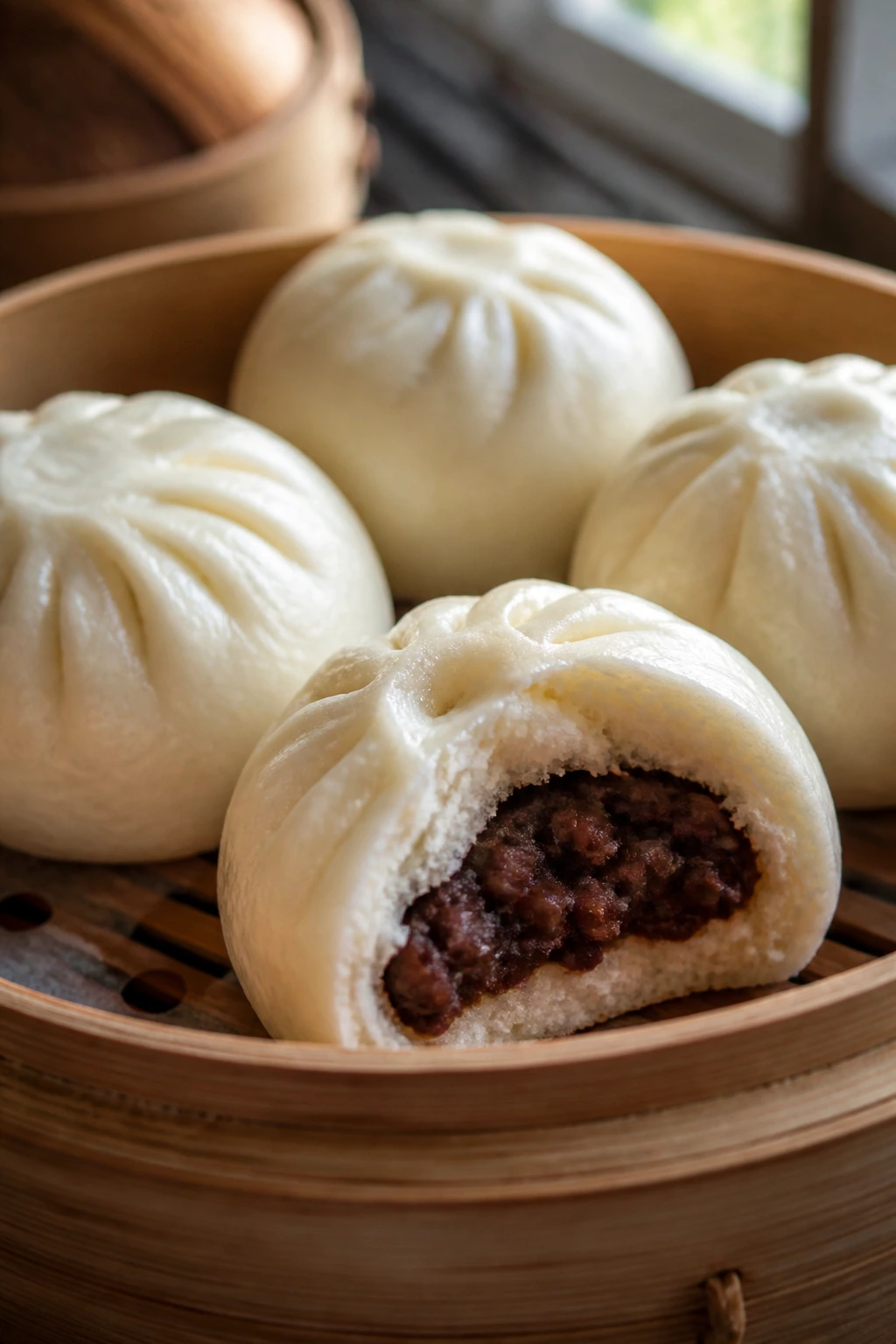
Intro: These soft buns are the kind of thing people pick up “just to try” and then finish before they know it. The dough stays plush, and the red bean paste gives each bite a gentle sweetness that never feels loud.
Why It Works: Steaming keeps the buns pillowy, and a slightly sweet dough balances the filling. They’re easy to make in batches and freeze well.
Key Ingredients:
- 3 cups all-purpose flour
- 2 tbsp sugar
- 2 tsp instant yeast
- 1 cup warm milk or water
- 1 cup red bean paste
- 1 tbsp neutral oil
- Pinch of salt
Quick Steps:
- Mix flour, sugar, yeast, salt, milk, and oil into a soft dough.
- Rise until doubled, about 1 hour.
- Divide, fill with red bean paste, and seal.
- Proof 20 minutes.
- Steam 10 to 12 minutes, then rest 5 minutes before opening the lid.
Equipment for This Recipe: Steamer, parchment squares, mixing bowl.
How to Serve This Dish: Serve warm with tea. They make a quiet dessert or a breakfast bite the next morning.
Pro Tips for This Recipe:
- Keep the buns spaced apart so they do not fuse together.
- Do not open the steamer lid immediately or the tops wrinkle.
- Use thick red bean paste so it does not leak.
Variations on This Dish:
- Lotus Seed Paste Version: Swap in lotus seed paste for a classic festival flavor.
- Baked Version: Brush with egg wash and bake if you want a slightly firmer crust.
Common Mistakes to Avoid with This Dish:
- Underproofing: The buns stay dense.
- Too much filling: The seam splits open during steaming.
27. Almond Cookies
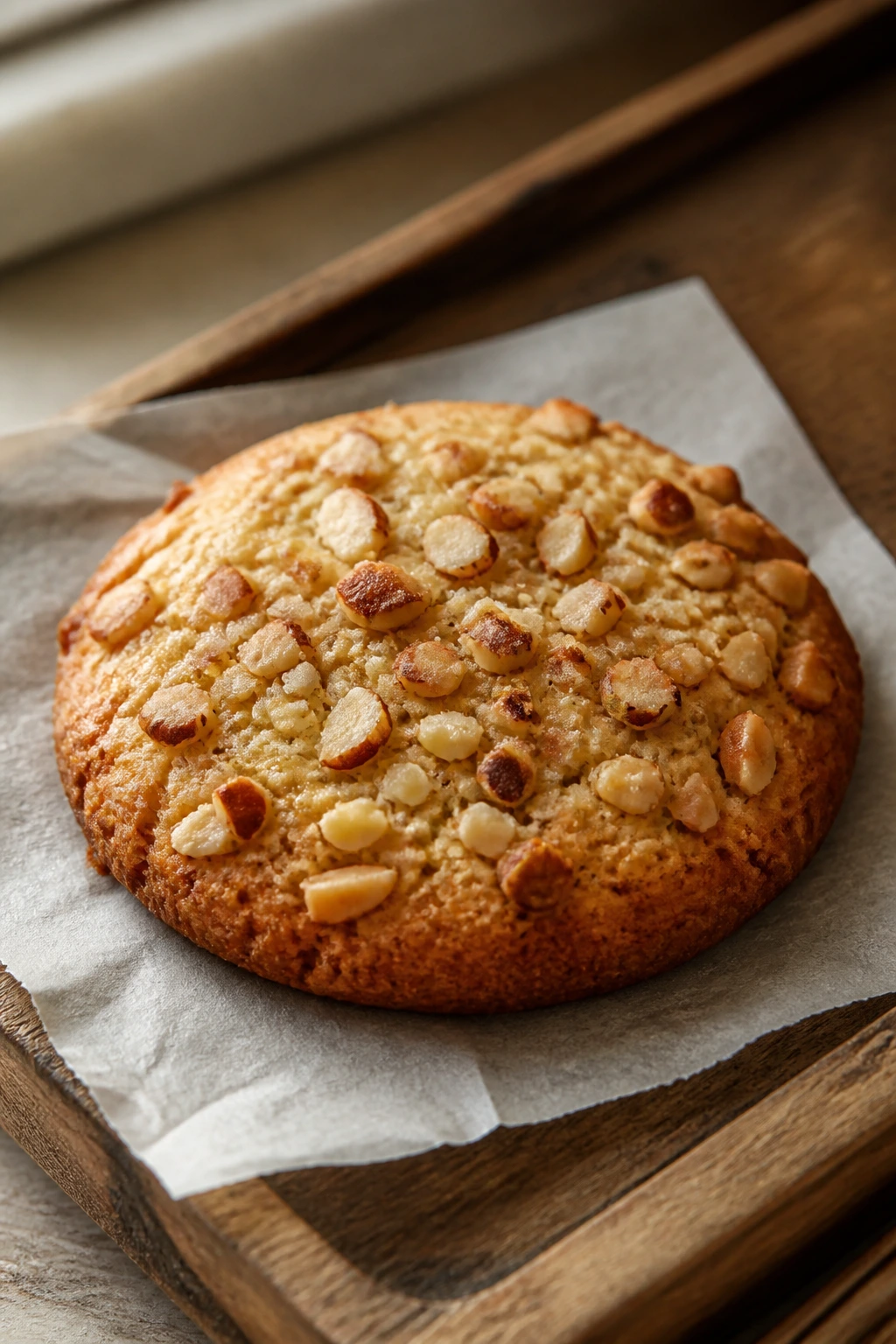
Intro: Almond cookies are small, crumbly, and sturdy enough to sit on the table for hours. They taste buttery at first, then almond-rich on the finish, with a gentle crunch from the chopped almond in the center.
Why It Works: A short dough with almond flour gives the cookie its sandy texture. The egg wash helps the tops turn bronze without drying out the middle.
Key Ingredients:
- 1 1/2 cups all-purpose flour
- 1/2 cup almond flour
- 1/2 cup sugar
- 1/2 cup softened butter
- 1 egg yolk
- 1 tsp almond extract
- 1/2 tsp baking powder
- 24 whole almonds
Quick Steps:
- Cream butter and sugar.
- Mix in yolk, almond extract, dry ingredients, and form dough.
- Shape into small rounds, press an almond into each.
- Bake at 350°F for 12 to 14 minutes.
- Cool on the sheet for 5 minutes.
Equipment for This Recipe: Baking sheet, parchment, bowl.
How to Serve This Dish: Set them out in a tin or on a small platter with tea. They’re one of the easiest sweets to make ahead.
Pro Tips for This Recipe:
- Chill the dough 15 minutes if it feels too soft.
- Pull them when the edges are set but not dark.
- Let them cool fully or they crumble.
Variations on This Dish:
- Sesame Version: Swap half the almond flour for ground sesame.
- Orange Version: Add orange zest for a brighter aroma.
Common Mistakes to Avoid with This Dish:
- Overbaking: They dry out fast and lose the tender crumb.
- Warm dough: It spreads too much on the pan.
28. Pineapple Tarts

Intro: Pineapple tarts are tiny, rich, and a little sticky in the best way. The pastry stays short and buttery while the jam fills the center with sharp sweetness that cuts through the richness.
Why It Works: A firm pineapple jam holds its shape in the oven, and a tender butter dough gives you that crumbly bite people expect from a good tart.
Key Ingredients:
- 2 cups all-purpose flour
- 1/2 cup powdered sugar
- 1 cup unsalted butter, softened
- 1 egg yolk
- 1/2 tsp vanilla extract
- 1 cup thick pineapple jam
- 1 egg yolk mixed with 1 tsp water for brushing
Quick Steps:
- Mix flour, sugar, butter, yolk, and vanilla into a soft dough.
- Chill 30 minutes.
- Shape tart bases and top with small balls of pineapple jam.
- Brush with egg wash.
- Bake at 350°F for 15 to 18 minutes until lightly gold.
Equipment for This Recipe: Baking sheet, tart mold or small round cutter, parchment.
How to Serve This Dish: Serve as part of a sweets tray with almond cookies and sesame balls. They keep nicely in a tin.
Pro Tips for This Recipe:
- Use thick jam or the tart leaks.
- Chill the shaped dough before baking so the details hold.
- Cool completely before stacking.
Variations on This Dish:
- Tangerine Version: Use thick tangerine jam for a brighter citrus note.
- Open-Face Version: Leave off the top pastry and mound the jam in the center.
Common Mistakes to Avoid with This Dish:
- Jam too wet: It oozes out during baking.
- Overworking the dough: The pastry turns tough instead of crumbly.
29. Five-Spice Short Ribs
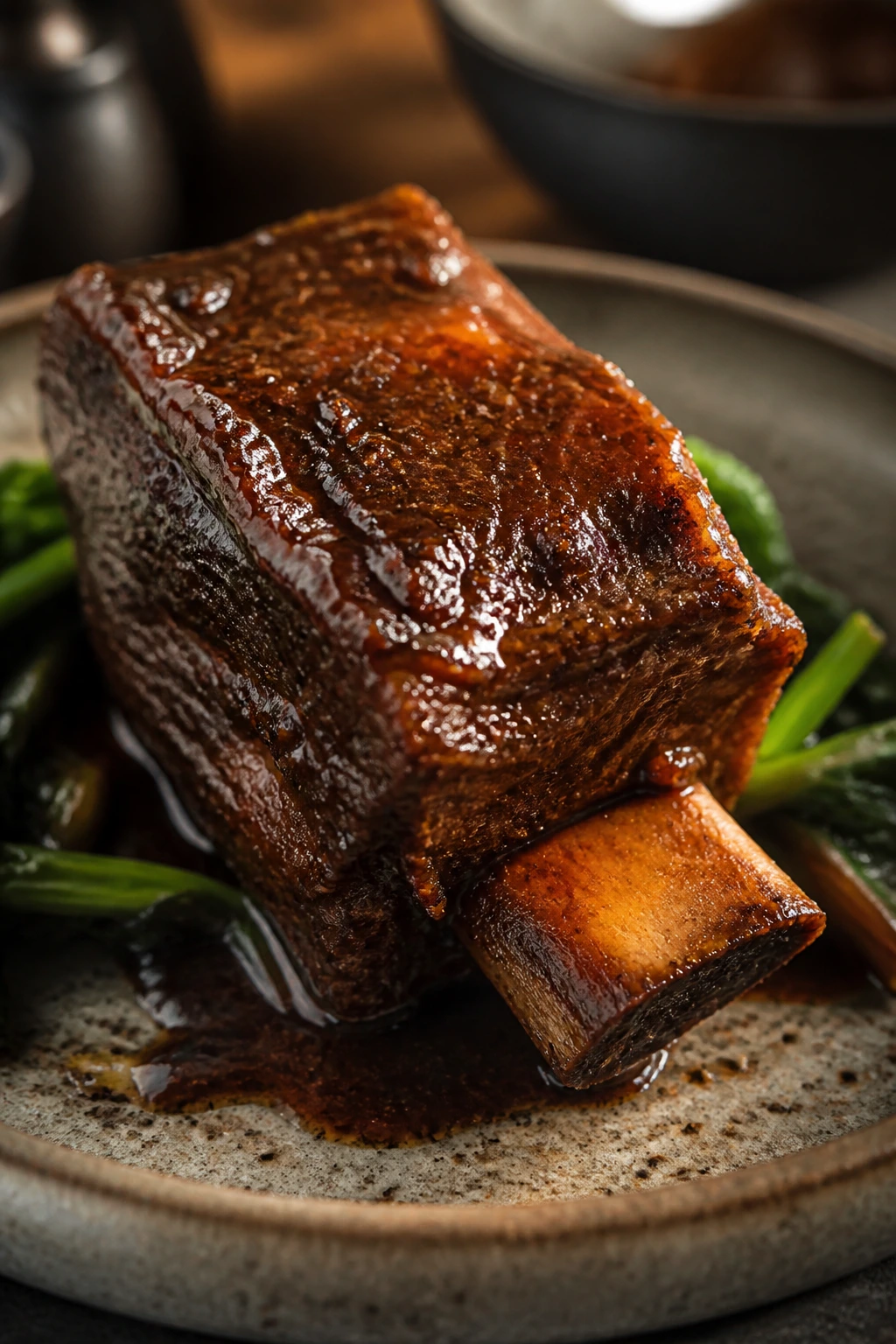
Intro: Short ribs bring the kind of deep, beefy richness that makes a holiday table feel serious. The meat loosens off the bone, the sauce turns glossy and dark, and five-spice gives the braise a warm, resinous edge.
Why It Works: Short ribs need time and moisture. A long braise turns connective tissue silky while the sauce reduces into something you can actually spoon over rice.
Key Ingredients:
- 3 lb beef short ribs
- 2 tbsp light soy sauce
- 1 tbsp dark soy sauce
- 2 tbsp Shaoxing wine
- 1 tbsp five-spice powder
- 4 cloves garlic, smashed
- 3 slices ginger
- 2 tbsp brown sugar
- 2 cups beef stock
Quick Steps:
- Brown short ribs on all sides.
- Add garlic, ginger, soy, wine, sugar, five-spice, and stock.
- Cover and braise at a low simmer or 325°F oven for 2 1/2 to 3 hours.
- Uncover and reduce the sauce.
- Rest 10 minutes before serving.
Equipment for This Recipe: Dutch oven, tongs, lid.
How to Serve This Dish: Serve one or two ribs per person over rice or mashed taro. The sauce should be thick enough to cling to the rice, not flood the plate.
Pro Tips for This Recipe:
- Brown the ribs well; color means flavor here.
- Keep the liquid at a gentle simmer.
- Strain the sauce if you want a cleaner finish.
Variations on This Dish:
- Pressure Cooker Version: Cook at high pressure for about 45 minutes, then reduce the sauce.
- Spicy Version: Add dried chilies and a little chili bean paste.
Common Mistakes to Avoid with This Dish:
- Rushing the braise: The meat stays tough.
- Not reducing the sauce: You lose the glossy finish.
30. Orange Chicken
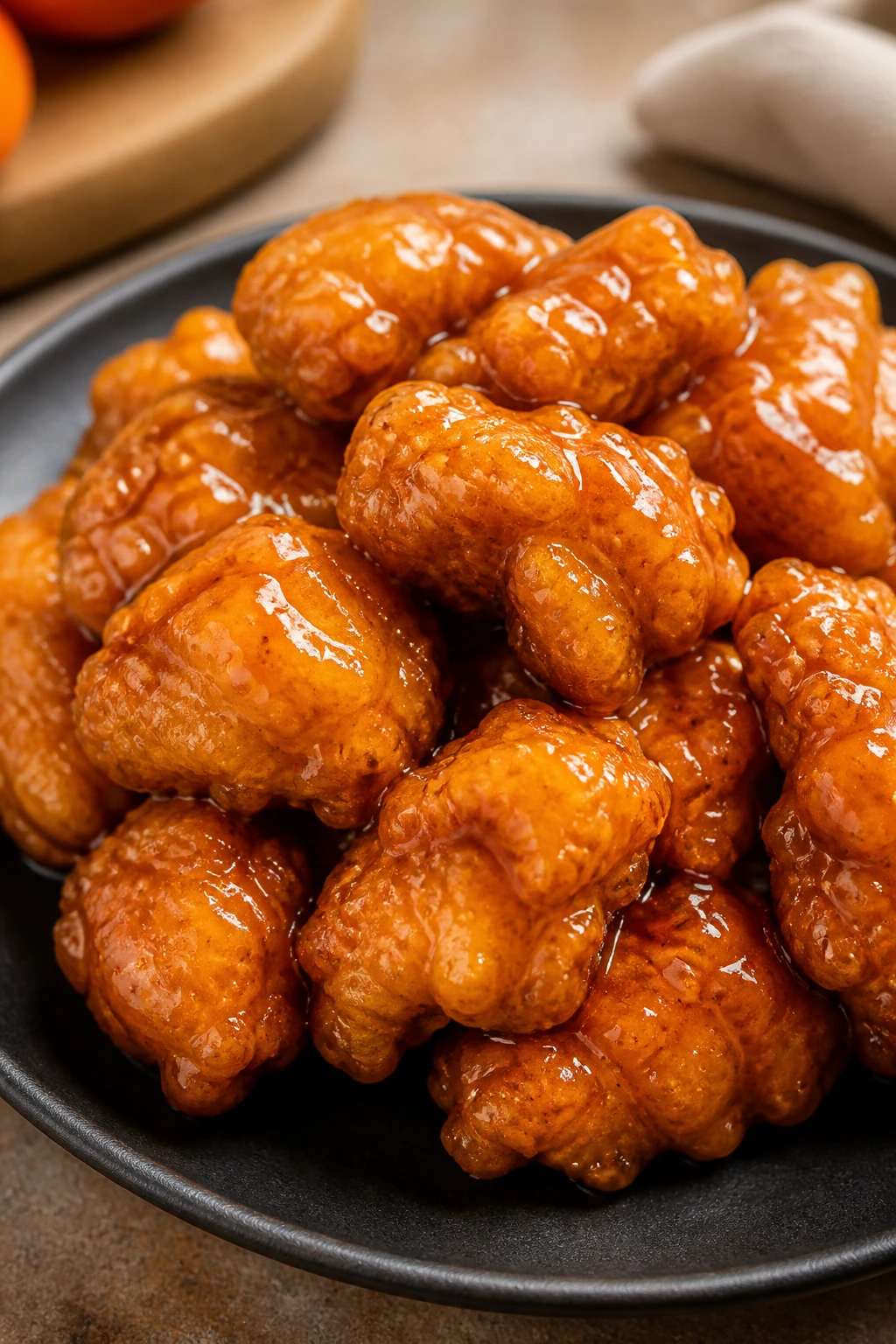
Intro: Orange chicken can be cloying when it’s done badly. At home, it can be bright, crisp, and tart enough to make you want a second serving instead of one more bite and regret.
Why It Works: A quick fry gives the chicken a shell, and the orange sauce should taste more citrus than syrup. That balance is why homemade orange chicken beats the delivery version.
Key Ingredients:
- 1 1/2 lb boneless chicken thighs, cut into bite-size pieces
- 1 egg
- 1/2 cup cornstarch
- 1/4 cup flour
- 1/2 cup orange juice
- 1 tbsp orange zest
- 2 tbsp soy sauce
- 2 tbsp rice vinegar
- 2 tbsp sugar
- 2 cloves garlic, minced
Quick Steps:
- Coat chicken in egg, cornstarch, and flour.
- Fry at 350°F until crisp and cooked through, about 5 minutes.
- Simmer orange juice, zest, soy, vinegar, sugar, and garlic until glossy.
- Toss chicken in sauce.
- Serve right away.
Equipment for This Recipe: Deep skillet, thermometer, bowl for batter.
How to Serve This Dish: Serve with rice and a plain vegetable so the sauce can shine. Keep extra sauce on the side if you like things sticky.
Pro Tips for This Recipe:
- Use thighs for a juicier center.
- Zest the orange before juicing it.
- Toss the chicken in sauce at the last second.
Variations on This Dish:
- Tangerine Version: Swap orange for tangerine juice and zest.
- Air-Fryer Version: Air-fry the coated chicken at 400°F, then toss with sauce.
Common Mistakes to Avoid with This Dish:
- Sauce too thick: It turns sugary instead of glossy.
- Overfrying: The chicken dries out and gets stringy.
31. Beef and Broccoli with Ginger
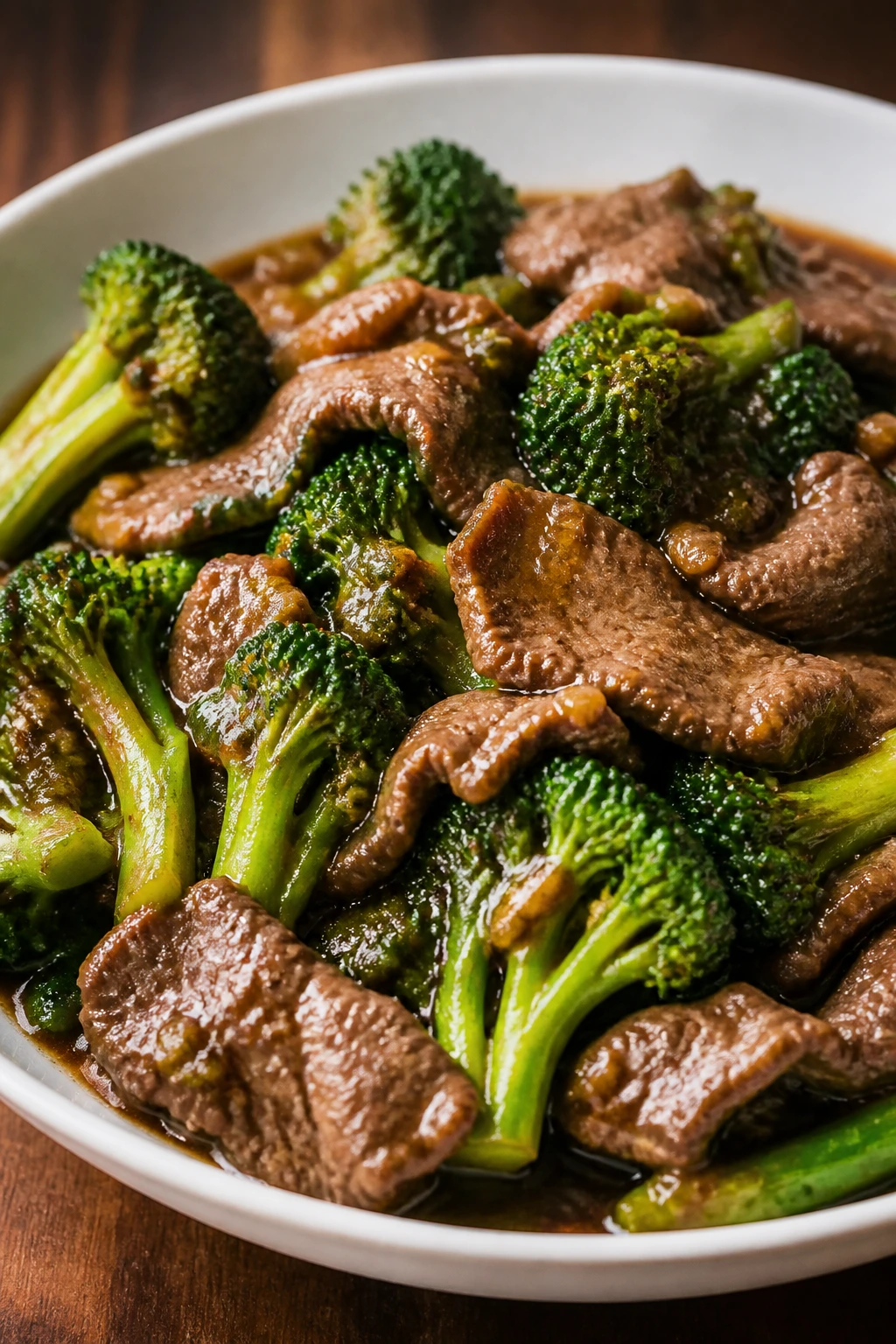
Intro: This is one of the easiest takeout dishes to improve at home. The beef stays tender, the broccoli keeps its snap, and the sauce tastes cleaner because you can control the soy and ginger.
Why It Works: Thin-sliced beef cooks fast, which keeps it soft. Broccoli needs a quick blanch or a fast stir-fry so it stays bright instead of turning army green.
Key Ingredients:
- 1 lb flank steak, thinly sliced
- 4 cups broccoli florets
- 2 cloves garlic, minced
- 1 tbsp grated ginger
- 3 tbsp soy sauce
- 1 tbsp oyster sauce
- 1 tsp sugar
- 1 tsp cornstarch mixed with 2 tbsp water
Quick Steps:
- Blanch broccoli 1 minute, then drain.
- Sear beef quickly in hot oil.
- Add garlic, ginger, soy, oyster sauce, and sugar.
- Return broccoli and thicken with slurry.
- Toss until the sauce clings.
Equipment for This Recipe: Wok or skillet, knife, bowl.
How to Serve This Dish: Serve over rice with plenty of sauce. It sits comfortably between richer braises and fried dishes.
Pro Tips for This Recipe:
- Slice the beef against the grain.
- Freeze it 15 minutes first to make slicing easier.
- Cook in batches if your pan is small.
Variations on This Dish:
- Gai Lan Version: Use Chinese broccoli for a slightly bitter edge.
- Sesame Version: Finish with sesame oil and toasted sesame seeds.
Common Mistakes to Avoid with This Dish:
- Slicing beef too thick: It turns chewy.
- Overcooking the broccoli: The florets lose their color and crunch.
32. Scallop and Glass Noodle Casserole
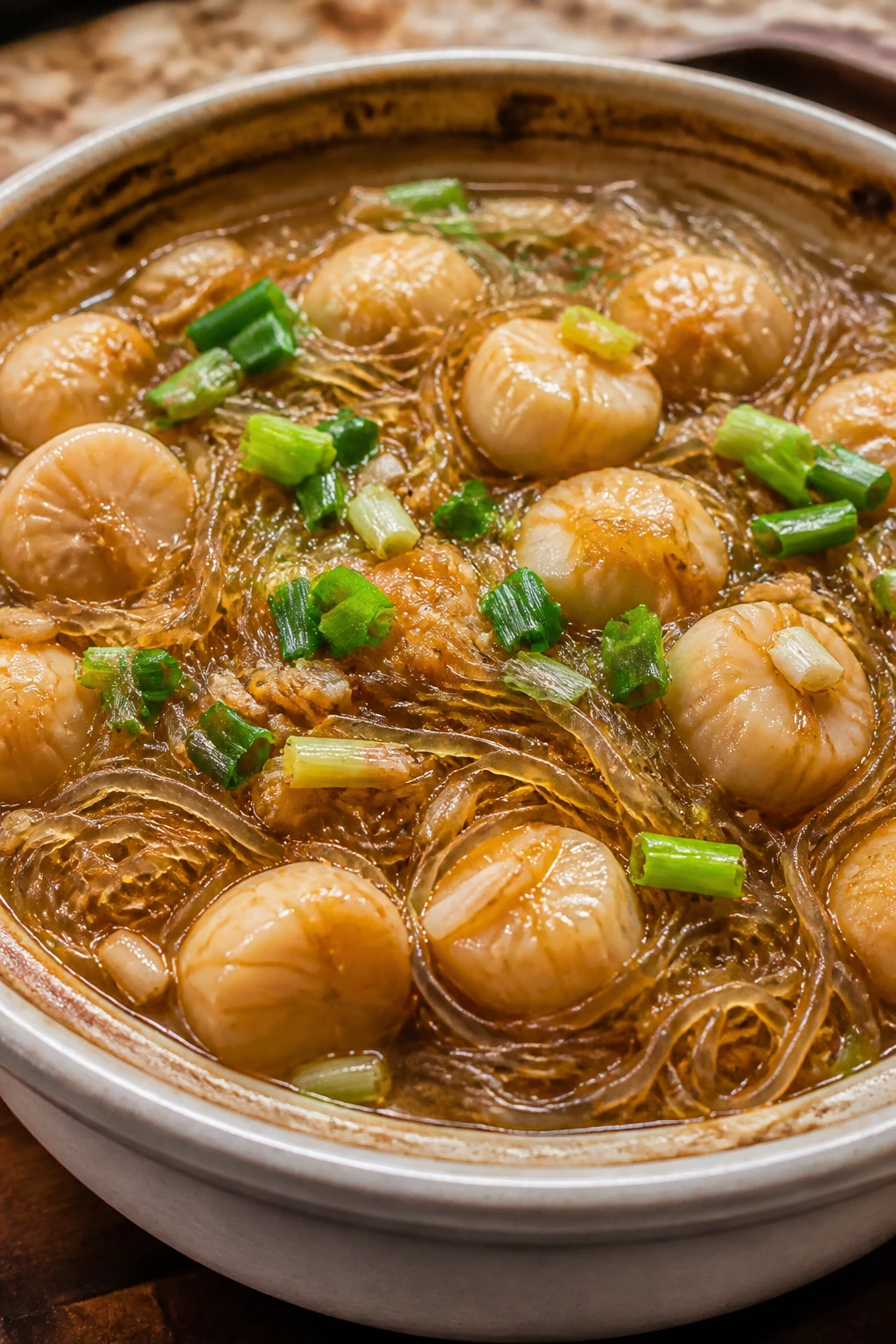
Intro: This is the dish that tastes like a banquet with a lot less fuss. The noodles soak up the garlic and seafood juices, the scallops stay sweet, and the casserole comes to the table bubbling at the edges.
Why It Works: Glass noodles act like a sponge for sauce. Once they’re soaked properly, they turn silky instead of gummy.
Key Ingredients:
- 6 oz dried glass noodles
- 12 large scallops, patted dry
- 4 cloves garlic, minced
- 2 tbsp light soy sauce
- 1 tbsp Shaoxing wine
- 1 cup stock
- 2 scallions, sliced
- 2 tbsp neutral oil
Quick Steps:
- Soak noodles until soft, then drain.
- Sauté garlic and add noodles, soy, wine, and stock.
- Nestle scallops on top.
- Cover and cook 4 to 5 minutes until scallops are just opaque.
- Finish with scallions and a drizzle of oil.
Equipment for This Recipe: Shallow casserole or skillet with lid, tongs.
How to Serve This Dish: Serve from the pan while hot. It works as a seafood centerpiece or a side in a larger meal.
Pro Tips for This Recipe:
- Pat scallops very dry so they sear rather than steam.
- Do not overcook the noodles before they go in the pan.
- Use a shallow pan so the sauce reduces properly.
Variations on This Dish:
- Shrimp Version: Replace scallops with shrimp and cut the cook time by a minute.
- Mushroom Version: Add shiitake slices for a more earthy casserole.
Common Mistakes to Avoid with This Dish:
- Overcooking scallops: They get rubbery quickly.
- Too much liquid: The noodles turn soupy instead of glossy.
33. Moo Shu Vegetables with Pancakes
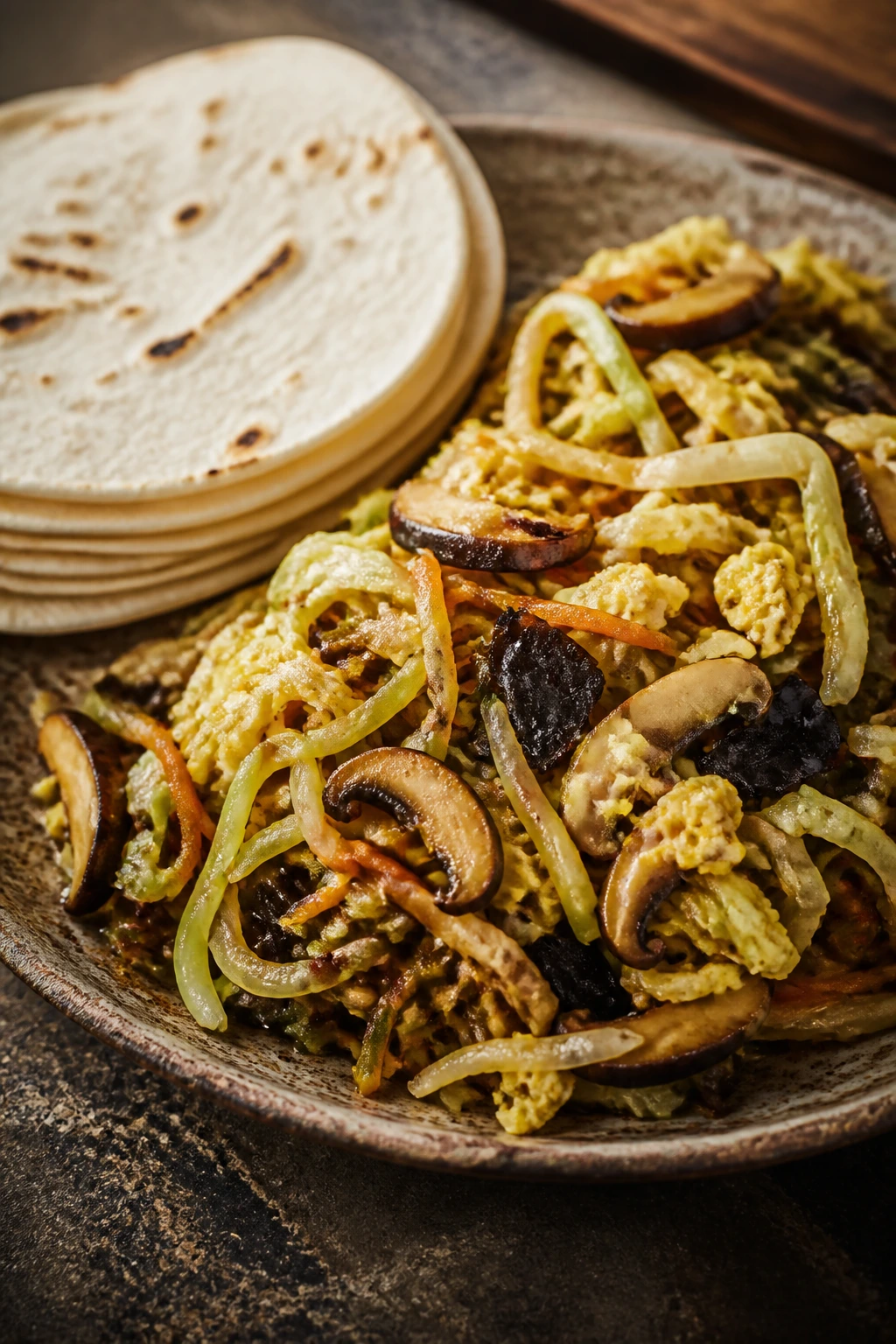
Intro: Moo shu is one of those dishes that becomes more fun the second it hits the table. The vegetables stay crisp, the eggs add softness, and the pancake wraps let everyone build their own bites.
Why It Works: The filling is cooked fast and dry, which keeps the pancakes from tearing. Hoisin gives you the sweet-salty backbone people expect.
Key Ingredients:
- 2 cups shredded cabbage
- 1 cup sliced shiitake mushrooms
- 3 eggs, lightly scrambled
- 1/4 cup sliced wood ear mushrooms
- 2 tbsp soy sauce
- 1 tbsp hoisin sauce
- 8 Mandarin pancakes
- 2 tbsp neutral oil
Quick Steps:
- Stir-fry mushrooms and cabbage over high heat.
- Add eggs, soy, and hoisin.
- Cook until the pan looks dry and the vegetables still have crunch.
- Warm pancakes in a dry skillet.
- Spoon filling into pancakes and roll.
Equipment for This Recipe: Wok, spatula, dry skillet for pancakes.
How to Serve This Dish: Set out the filling, pancakes, and extra hoisin separately. It works well as a lighter dish between richer braises.
Pro Tips for This Recipe:
- Keep the filling dry or the pancakes tear.
- Warm the pancakes before serving so they fold cleanly.
- Slice the vegetables thin for quick cooking.
Variations on This Dish:
- Pork Version: Add shredded pork shoulder to make it heartier.
- Bean Sprout Version: Fold in bean sprouts for extra crunch.
Common Mistakes to Avoid with This Dish:
- Wet filling: The wrap tears and gets soggy.
- Cold pancakes: They crack instead of bending.
34. Cold Sesame Noodles
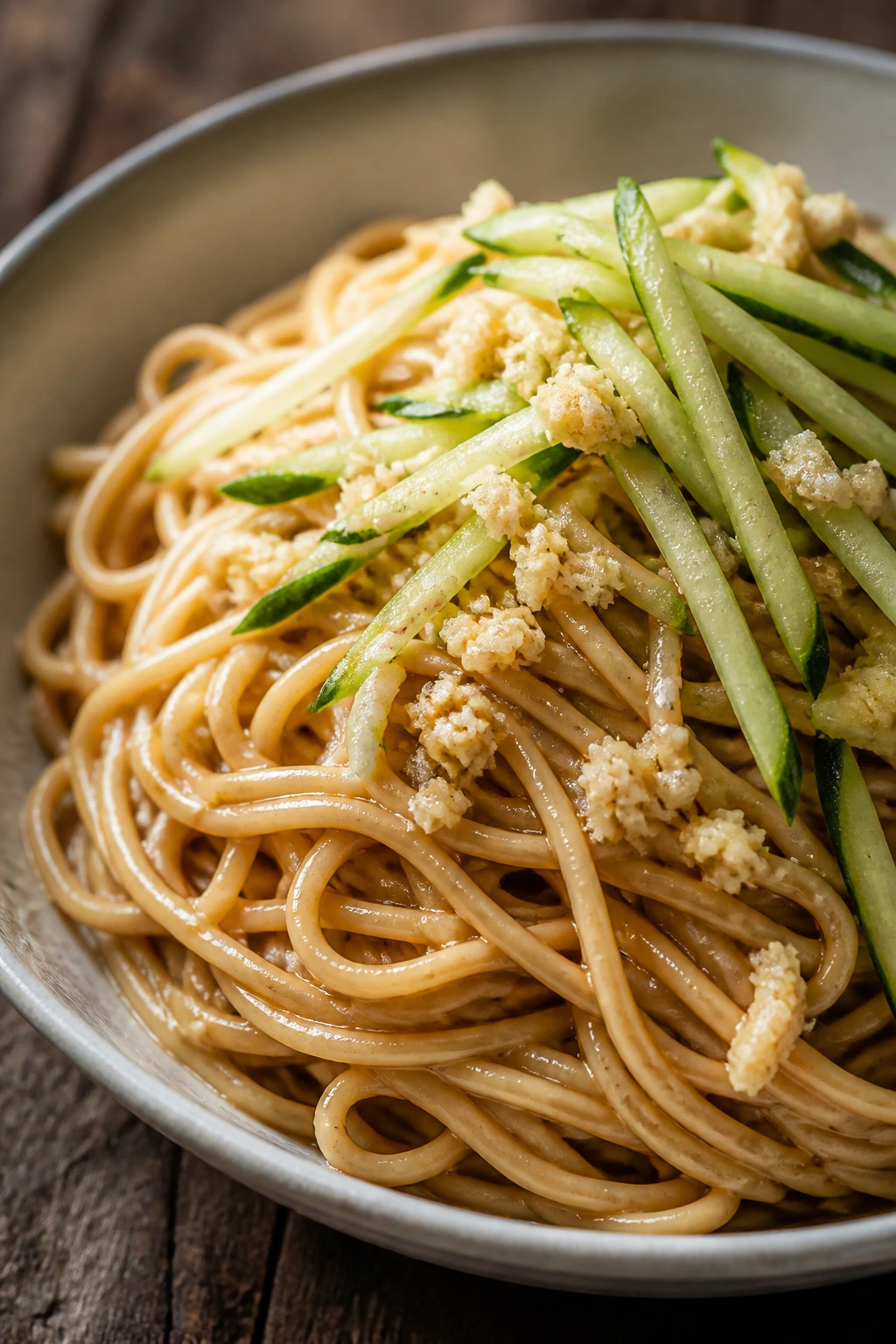
Intro: Cold sesame noodles are the kind of thing that tastes better after the sauce settles into the noodles for ten minutes. The sesame paste goes nutty, the garlic sharpens, and the cucumber keeps the bowl from feeling heavy.
Why It Works: A balanced sauce with sesame, soy, vinegar, and sugar clings to chilled noodles without turning pasty. This is the dish you want when the table needs one cool, fast item.
Key Ingredients:
- 12 oz wheat noodles
- 3 tbsp Chinese sesame paste or tahini
- 2 tbsp soy sauce
- 1 tbsp rice vinegar
- 1 tbsp sugar
- 1 clove garlic, grated
- 1 cucumber, julienned
- 1 tsp chili oil
Quick Steps:
- Cook noodles, then rinse under cold water.
- Whisk sauce ingredients until smooth.
- Toss noodles with sauce.
- Top with cucumber and chili oil.
- Chill 10 minutes before serving if you can wait that long.
Equipment for This Recipe: Pot, whisk, mixing bowl.
How to Serve This Dish: Serve in a shallow bowl as a side or a light lunch before the holiday meal starts. It balances out fried dishes well.
Pro Tips for This Recipe:
- Thin the sauce with a spoonful of warm noodle water if needed.
- Use Chinese sesame paste if you can find it; it has a deeper roasted taste.
- Keep the cucumber dry so it stays crisp.
Variations on This Dish:
- Peanut Version: Replace half the sesame paste with peanut butter.
- Spicy Version: Add more chili oil and a pinch of Sichuan pepper.
Common Mistakes to Avoid with This Dish:
- Sauce too thick: It clumps instead of coating.
- Skipping the rinse: The noodles stick and feel gummy.
35. Cucumber Salad with Chili Oil and Black Vinegar
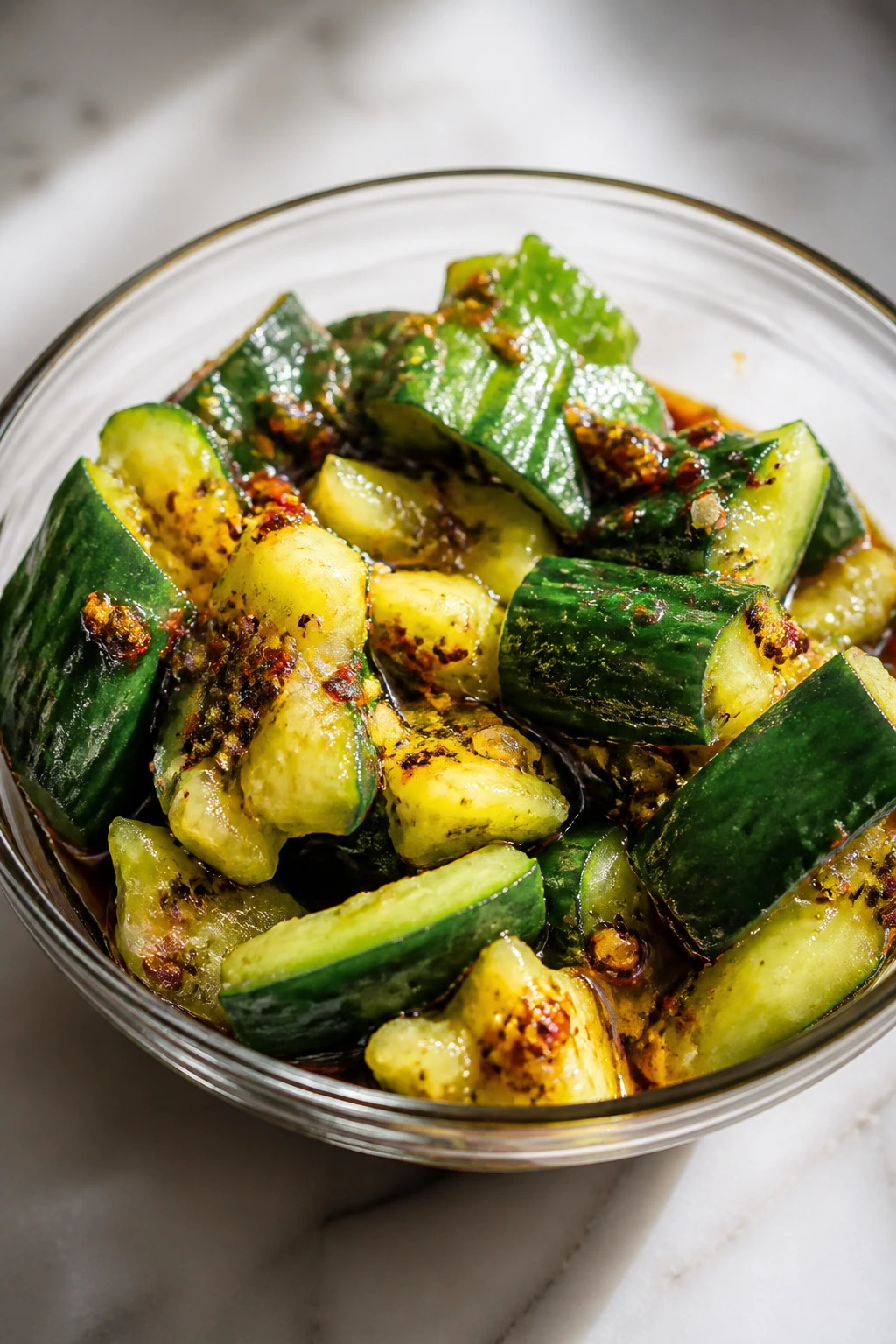
Intro: This is the sharp, cold bite that cuts through an otherwise rich table. The cucumbers get smashed, the vinegar brings acid, and the chili oil leaves a faint heat that wakes up your mouth.
Why It Works: Salting the cucumbers first pulls out water so the dressing actually sticks. Black vinegar gives a deeper tang than plain rice vinegar.
Key Ingredients:
- 2 cucumbers
- 1 tsp salt
- 1 tbsp black vinegar
- 1 tbsp soy sauce
- 1 tsp sugar
- 1 tbsp chili oil
- 1 clove garlic, minced
- 1 tsp sesame seeds
Quick Steps:
- Smash or slice cucumbers and salt for 10 minutes.
- Drain off the liquid.
- Toss with vinegar, soy, sugar, garlic, and chili oil.
- Sprinkle with sesame seeds.
- Chill 5 minutes and serve.
Equipment for This Recipe: Knife or rolling pin, bowl, colander.
How to Serve This Dish: Serve it cold in a small bowl. It should appear early on the table and keep people eating between richer plates.
Pro Tips for This Recipe:
- Use Persian or Kirby cucumbers if you want fewer seeds.
- Smash the cucumbers if you want more surface area for the dressing.
- Adjust chili oil slowly; a little goes a long way.
Variations on This Dish:
- Wood Ear Version: Add blanched wood ear mushrooms for more chew.
- Sesame-Garlic Version: Add a spoonful of tahini for a richer dressing.
Common Mistakes to Avoid with This Dish:
- Not salting first: The salad turns watery.
- Overdressing: The cucumbers should stay crisp, not swim.
36. Steamed Egg Custard
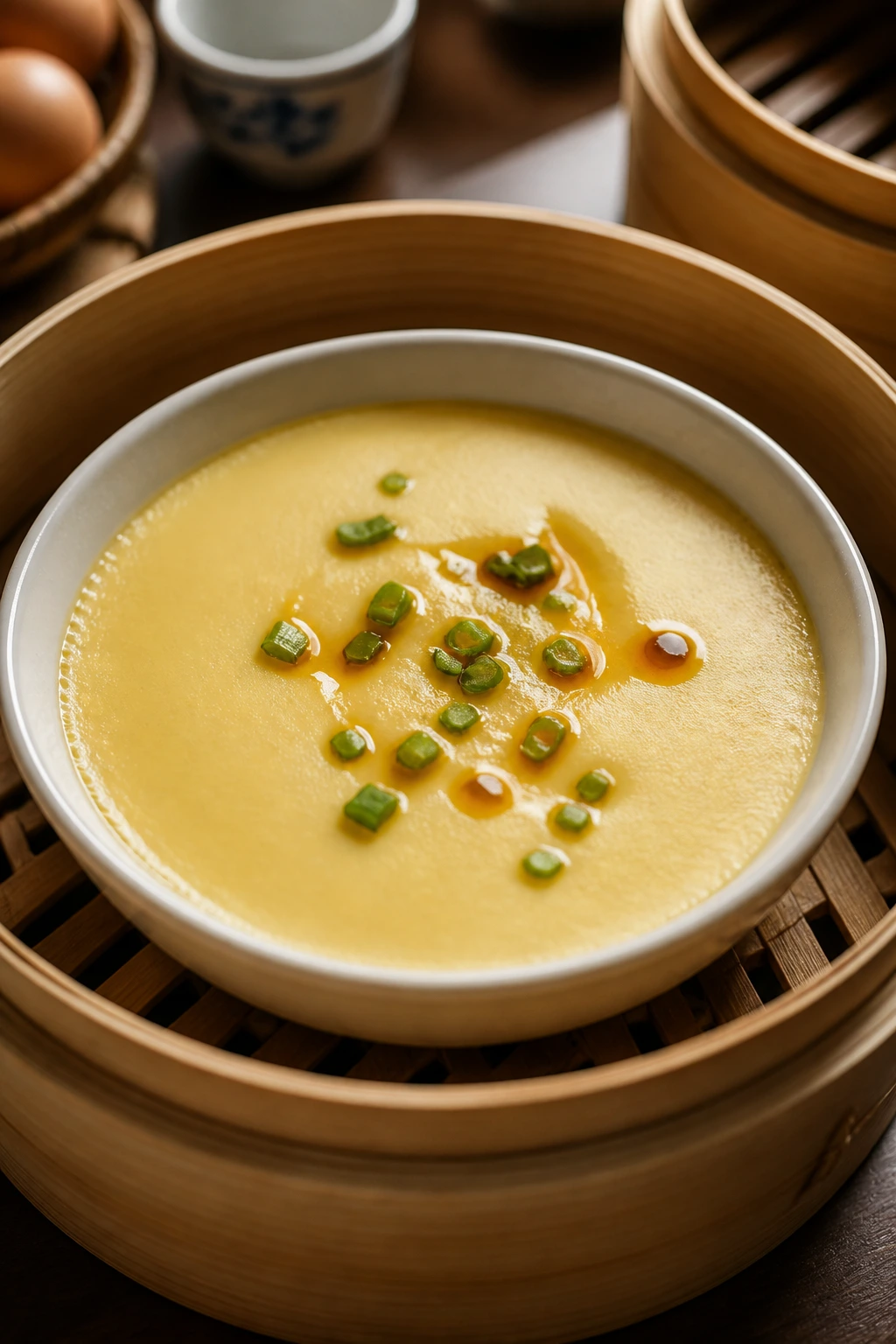
Intro: Steamed egg custard feels delicate in the bowl, but it eats like comfort food. The surface should be smooth as silk, with a jiggle in the center and a little soy and scallion on top.
Why It Works: Whisking gently and steaming low keeps the custard from turning spongy. The goal is a texture between flan and silken tofu.
Key Ingredients:
- 3 large eggs
- 1 1/2 cups warm chicken broth or water
- 1/2 tsp salt
- 1 tsp soy sauce
- 1 tsp sesame oil
- 1 scallion, sliced
- Optional: 4 shrimp, chopped small
Quick Steps:
- Whisk eggs lightly with broth and salt, then strain.
- Pour into a heatproof bowl.
- Steam over low heat for 12 to 15 minutes, covered loosely.
- Check for a slight wobble in the center.
- Top with soy, sesame oil, and scallion.
Equipment for This Recipe: Steamer, fine-mesh strainer, heatproof bowl.
How to Serve This Dish: Serve as a soft side with rice and stir-fried greens. It’s especially good in a meal that already has a lot of crunch.
Pro Tips for This Recipe:
- Strain the egg mixture for a smoother custard.
- Cover the bowl loosely so condensation does not pit the top.
- Keep the steam gentle or the custard bubbles.
Variations on This Dish:
- Shrimp Version: Add chopped shrimp before steaming.
- Mushroom Version: Add tiny diced shiitakes for a savory, meatless bowl.
Common Mistakes to Avoid with This Dish:
- Whisking too hard: You trap bubbles and get holes.
- Steaming too fast: The custard curdles or puffs unevenly.
37. Fish-Fragrant Shredded Pork
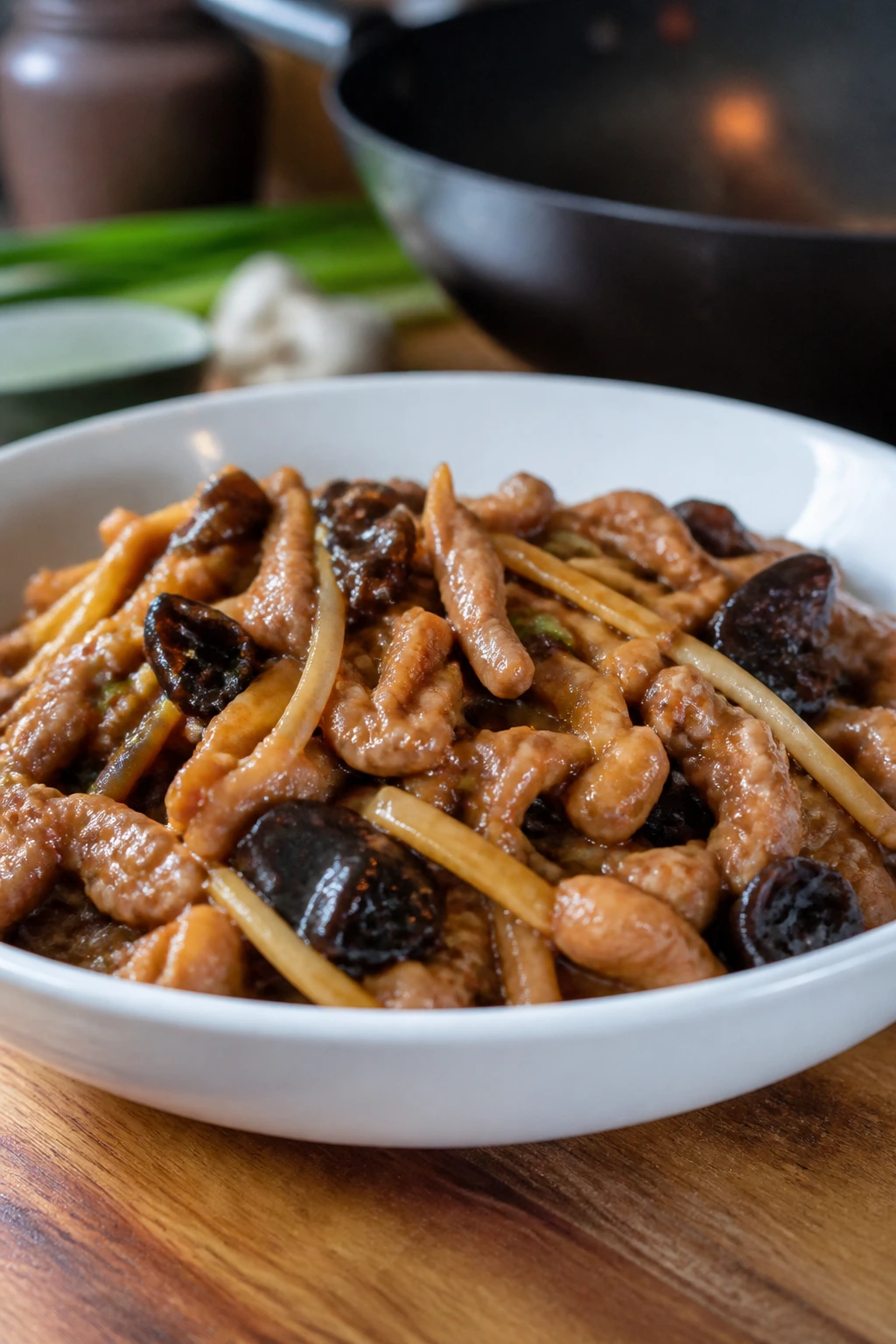
Intro: The name is odd if you have never had it before, but the flavor makes sense immediately. Sour, sweet, spicy, garlicky, and a little glossy, this is the dish that makes plain rice vanish.
Why It Works: The sauce layers vinegar, soy, sugar, and chili paste so the pork tastes lively rather than heavy. Bamboo shoots and wood ear give it crunch against the soft meat.
Key Ingredients:
- 1 lb pork tenderloin, cut into shreds
- 1/2 cup bamboo shoots, sliced
- 1/2 cup wood ear mushrooms, sliced
- 2 tbsp doubanjiang
- 2 cloves garlic, minced
- 1 tsp ginger, minced
- 1 tbsp rice vinegar
- 1 tbsp soy sauce
- 1 tsp sugar
Quick Steps:
- Stir-fry pork quickly and set aside.
- Cook garlic, ginger, and doubanjiang in oil.
- Add bamboo shoots, wood ear, soy, vinegar, and sugar.
- Return pork and toss with a small cornstarch slurry if needed.
- Serve hot.
Equipment for This Recipe: Wok, spatula, bowl.
How to Serve This Dish: Serve with plain rice and a mellow vegetable dish. The sauce is bold enough to anchor a whole plate.
Pro Tips for This Recipe:
- Slice the pork thin so it cooks in a minute or two.
- Keep the stir-fry moving once the sauce goes in.
- Taste before adding more vinegar; the dish should be bright, not sour.
Variations on This Dish:
- Chicken Version: Use chicken thigh strips instead of pork.
- Vegetable Version: Swap the pork for tofu strips and mushrooms.
Common Mistakes to Avoid with This Dish:
- Overcooking the pork: It becomes dry and stringy.
- Too much doubanjiang: It can drown the sweet-sour balance.
38. Sweet and Sour Pork
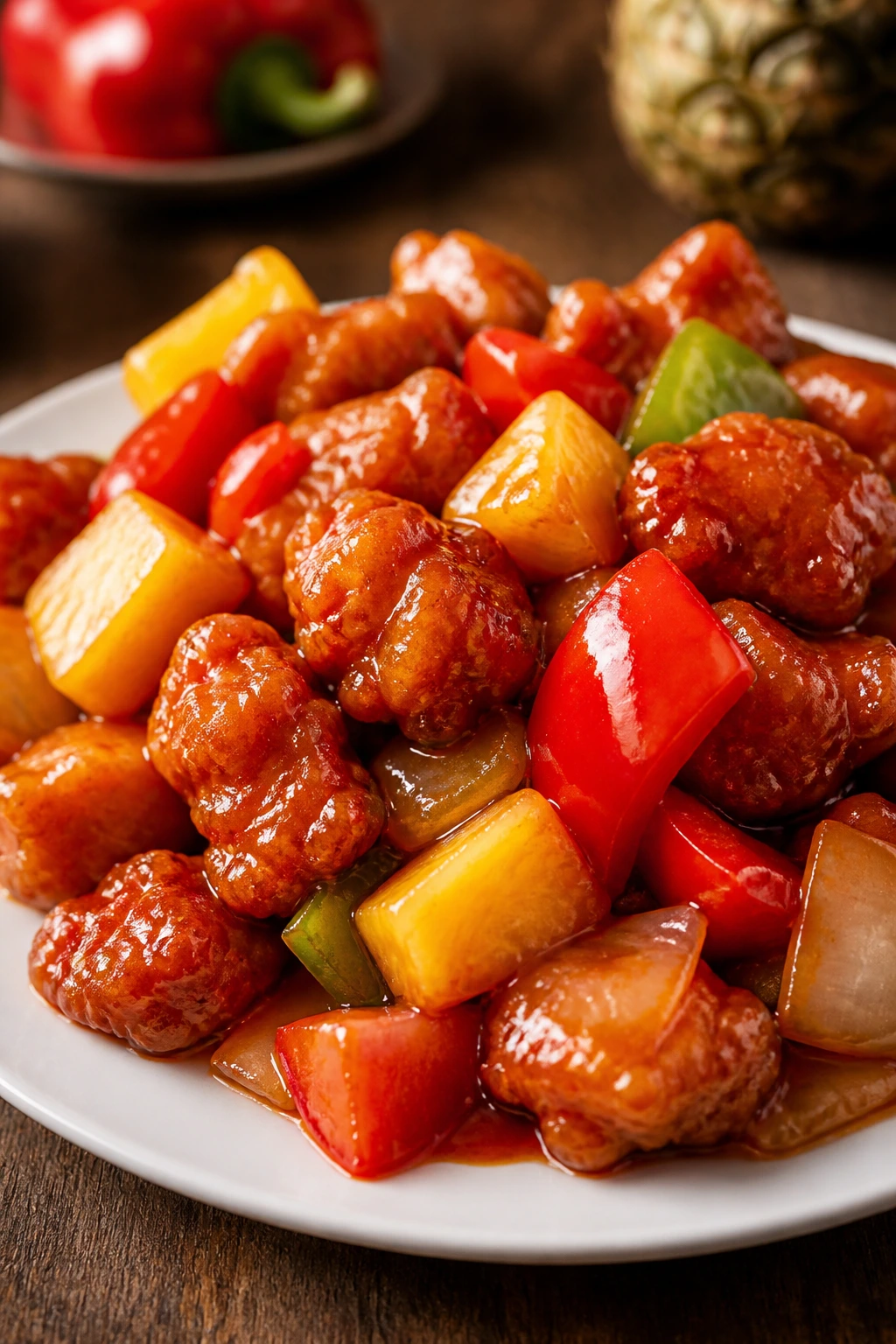
Intro: Sweet and sour pork can be clumsy when it’s too thick and neon-bright. Done properly, it has crisp edges, juicy pork, and a sauce that tastes more like fruit and vinegar than candy.
Why It Works: A light batter gives the pork a shell that survives the sauce long enough to keep some crunch. Pineapple, vinegar, and tomato paste make the flavor sharp enough to stay interesting.
Key Ingredients:
- 1 1/2 lb pork shoulder, cut into cubes
- 1 egg
- 1/2 cup cornstarch
- 1/4 cup flour
- 1/2 cup pineapple chunks
- 1/4 cup ketchup or 1 tbsp tomato paste
- 2 tbsp rice vinegar
- 2 tbsp sugar
- 1 bell pepper, chopped
Quick Steps:
- Coat pork in egg, cornstarch, and flour.
- Fry until crisp and cooked through.
- Simmer sauce ingredients until glossy.
- Add pepper and pineapple.
- Toss pork in sauce and serve right away.
Equipment for This Recipe: Deep skillet, thermometer, bowl.
How to Serve This Dish: Serve with plain rice and something green and salty. The sauce is the loudest thing on the plate, so keep the rest simple.
Pro Tips for This Recipe:
- Fry in batches so the coating stays crisp.
- Add the pork to the sauce just before serving.
- Use fresh pineapple if you want a sharper edge.
Variations on This Dish:
- Chicken Version: Swap pork for chicken thigh pieces.
- Vegetable Version: Use cauliflower florets and fry them the same way.
Common Mistakes to Avoid with This Dish:
- Sauce too sweet: It tastes flat. Keep vinegar prominent.
- Overcrowding the fryer: The coating softens before it browns.
39. Sheng Jian Bao
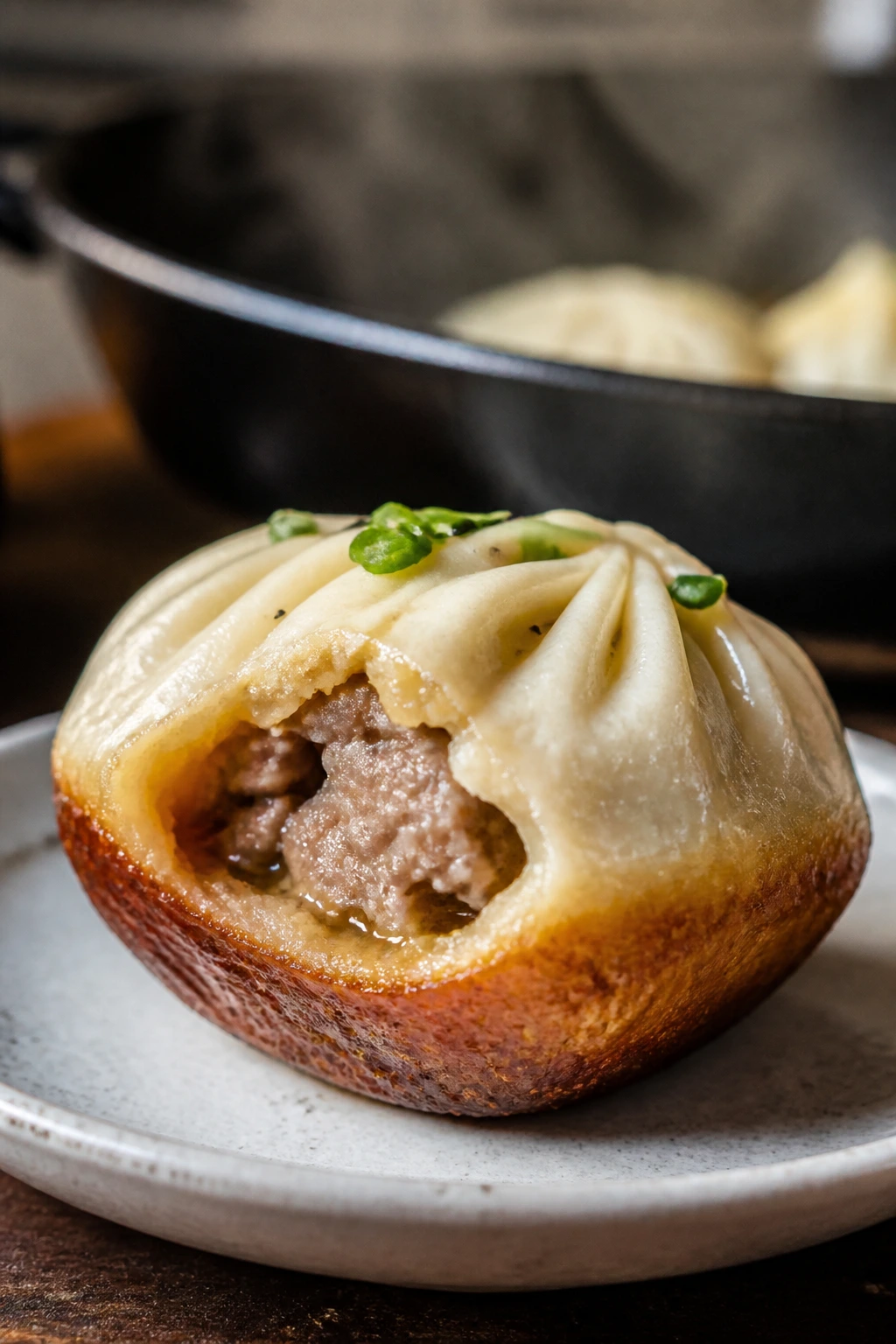
Intro: Sheng jian bao are the sort of thing that disappear fast because everyone wants the one with the most crackly bottom. The buns are fluffy on top, savory inside, and the pan-fried base gives you that golden crust that makes people reach for a second one.
Why It Works: A soft yeasted dough and a juicy pork filling give you the classic contrast. The pan-fry-then-steam method cooks the bun through while preserving the crust.
Key Ingredients:
- 3 cups all-purpose flour
- 2 tsp instant yeast
- 1 tbsp sugar
- 1 cup warm water
- 1 lb ground pork
- 2 scallions, minced
- 1 tbsp soy sauce
- 1 tsp sesame oil
- 1/2 cup water for steaming in the pan
Quick Steps:
- Make and rise the dough until doubled.
- Mix pork, scallions, soy, sesame oil, and a pinch of salt.
- Fill and pleat the buns.
- Pan-fry in oil until the bottoms turn gold, then add water and cover.
- Cook until the water evaporates and the bottoms crisp again.
Equipment for This Recipe: Nonstick skillet with lid, rolling pin, parchment squares.
How to Serve This Dish: Serve them hot, bottom-side up for a second on the plate so the crust stays crisp. They work best as a snack or opener, not a heavy main.
Pro Tips for This Recipe:
- Keep the buns spaced apart while they proof.
- Do not lift the lid too early or the steam escapes.
- A little sugar in the dough helps the top brown softly.
Variations on This Dish:
- Vegetable Version: Use minced cabbage, mushroom, and tofu filling.
- Soupier Version: Add a spoonful of gelatinized stock to the pork filling if you want the classic juicier center.
Common Mistakes to Avoid with This Dish:
- Too much filling: The seams split in the pan.
- Burning the bottoms: Once the water is gone, watch the heat closely.
40. Salt and Pepper Shrimp
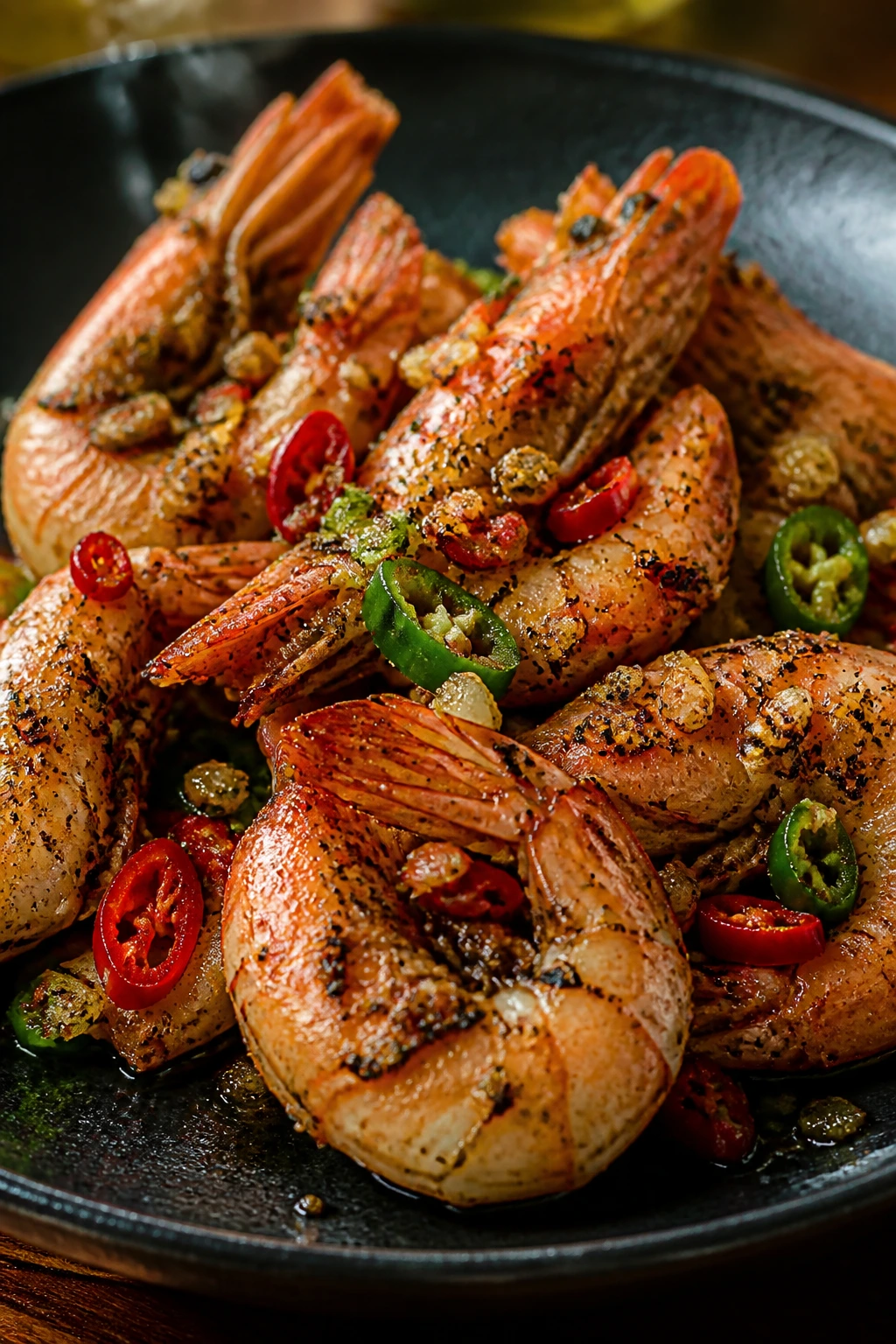
Intro: Salt and pepper shrimp is one of the fastest dishes in the whole spread, and that speed is the charm. The shells crisp if you keep them on, the garlic browns in the oil, and the shrimp taste clean and sweet under the pepper.
Why It Works: Shrimp cook in minutes, so a hot pan and a quick toss in seasoned salt are all you need. This is the kind of dish that tastes fresher than the fried version in a takeout box.
Key Ingredients:
- 1 lb large shrimp, peeled or shell-on
- 1/4 cup cornstarch
- 1 tsp salt
- 1 tsp white pepper
- 4 cloves garlic, minced
- 2 scallions, sliced
- 1 red chili, sliced
- 3 tbsp neutral oil
Quick Steps:
- Pat shrimp dry and dust lightly with cornstarch, salt, and white pepper.
- Fry in hot oil for 1 to 2 minutes per side.
- Add garlic and chili for 20 seconds.
- Toss in scallions.
- Serve immediately.
Equipment for This Recipe: Skillet or wok, tongs, plate.
How to Serve This Dish: Serve as a hot appetizer or with rice and greens for a lighter main. It wants to be eaten right away, while the garlic still smells sweet.
Pro Tips for This Recipe:
- Dry the shrimp thoroughly or the coating slips off.
- Do not overcook; shrimp go from tender to rubbery fast.
- Shell-on shrimp stay juicier and taste more like a banquet dish.
Variations on This Dish:
- Chili-Lime Version: Add lime zest at the end for brightness.
- Squid Version: Use scored squid rings and shorten the fry time.
Common Mistakes to Avoid with This Dish:
- Wet shrimp: The coating won’t stick.
- Leaving it in the pan too long: The shrimp shrivel and tighten.
Why Homemade Versions Win on the Lunar New Year Table
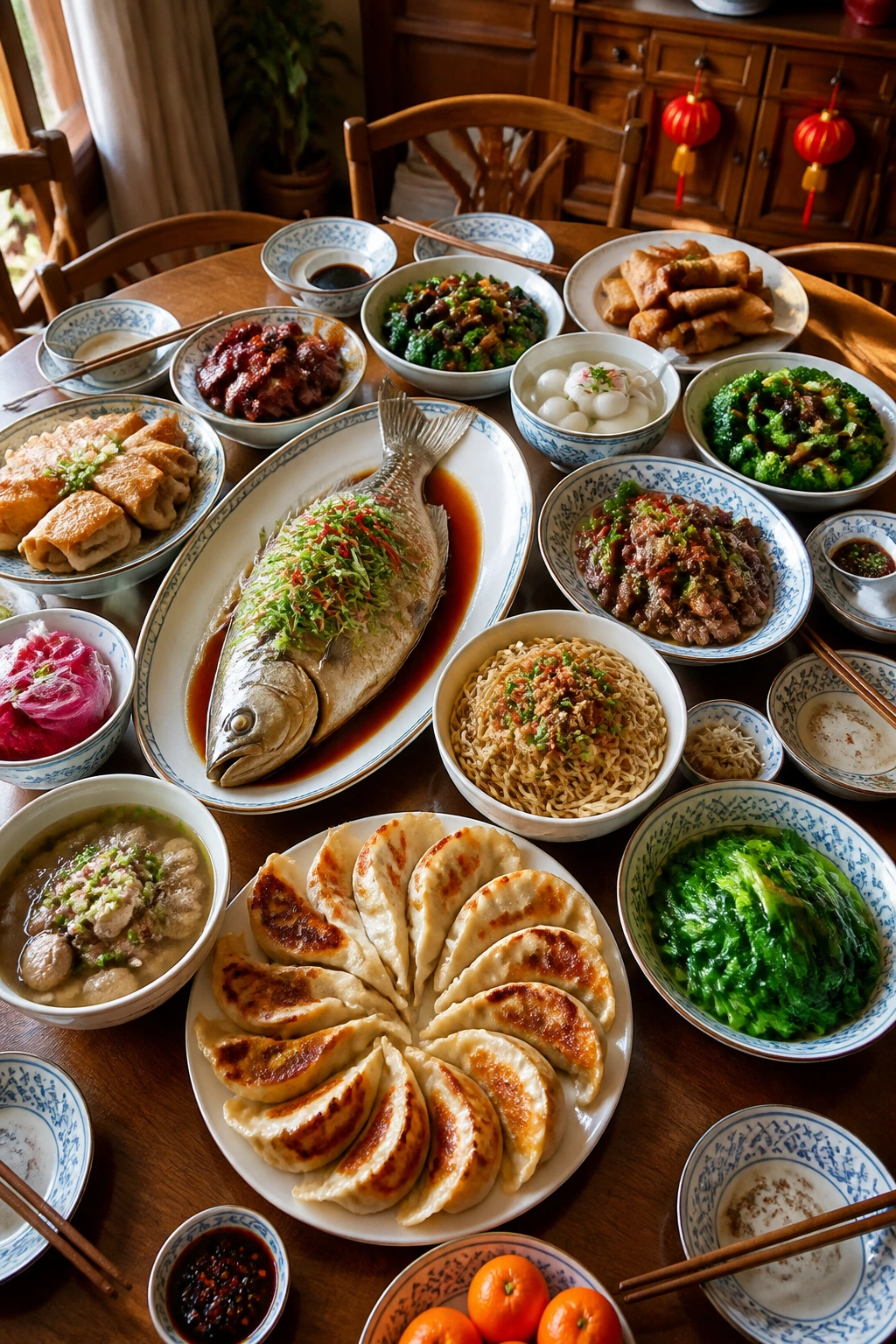
A home-cooked holiday spread has one thing takeout rarely gets right: timing. The fish lands hot. The dumplings leave the pan while the bottoms are still crisp. The broccoli keeps its green edge instead of turning olive under a lid. Even the desserts, which can sit a bit longer, taste fresher when the pastry is flaky and the filling hasn’t been boxed up with steam for half an hour.
There’s also control, which matters more than people admit. You can keep the soy lighter on the fish, use more ginger in the soup, leave the sugar a little lower in the orange chicken, or make the chili oil as fiery as your crowd can handle. That flexibility makes the table feel personal instead of standardized.
And then there is the ritual part. Someone folds dumplings. Someone stirs sauce. Someone lifts the lid on the steamer and the whole kitchen fills with that sharp, warm, fish-and-ginger smell that no delivery bag can fake. That’s the part people remember. Not perfection. Just food arriving at its best moment.
Essential Equipment for These Recipes
- Wok or large skillet: Best for quick stir-fries, fried rice, noodles, and anything that needs high heat and room to move.
- Dutch oven or heavy braiser: The safest choice for pork belly, short ribs, chicken braises, and meatballs simmered in broth.
- Bamboo steamer or steaming rack: Needed for fish, buns, custards, and chicken dishes that rely on gentle heat.
- Deep skillet or saucepan: Useful for frying spring rolls, sesame balls, shrimp, and dumplings.
- Instant-read thermometer: Worth having for frying oil and for checking chicken or duck without cutting into it too early.
- Spider or slotted spoon: Keeps fried food intact when it comes out of the oil.
- Fine-mesh strainer: Helps with custards, soups, and sauces that need a smooth finish.
- Rolling pin: Needed for scallion pancakes, buns, and any dough that gets shaped by hand.
- Mixing bowls in two or three sizes: Dumpling filling, marinades, and batters all need their own space.
- Wire rack: Better than paper towels for keeping fried food crisp while it drains.
Smart Shopping and Ingredient Tips
The ingredients that matter most here are the ones that carry the sauce. Light soy sauce gives salt and color without heaviness. Dark soy is for deep brown gloss, not for seasoning by itself. Oyster sauce should taste savory and rounded, not sugary. Black vinegar needs enough bite to cut through fried food, and Shaoxing wine gives braises a cleaner aroma than plain cooking wine.
For proteins, look for pork with enough fat to stay juicy, especially for dumplings, buns, and braises. Ground pork around 20 percent fat works better than lean. For chicken, thighs are more forgiving than breasts in braises and stir-fries. If you are buying fish, ask for something that can steam whole without collapsing: sea bass, snapper, or branzino all work well.
Frozen wrappers are not a compromise. Dumpling wrappers, wonton wrappers, and spring roll wrappers freeze well and save a lot of time. Dried shiitakes are one of the smartest pantry buys in the whole list; soak them and you get more flavor than most fresh mushrooms can give. Glutinous rice flour should be white and fine, not clumpy. If it smells stale, it will make weak tangyuan and dense sesame balls.
I’d also keep a few finishing ingredients on hand: toasted sesame oil, chili oil, white pepper, rice vinegar, black vinegar, and scallions. Those are the little things that make the plate taste finished. Fresh ginger matters more than people think, and it’s cheap enough that there’s no reason to skimp.
How to Serve These Recipes
Presentation: Build the table in layers. Put the whole fish, braises, and duck in the middle, then ring them with vegetables, noodles, dumplings, and a cold cucumber salad so the colors do the work. Keep fried food on racks or platters, not in deep bowls, or the bottoms soften before dinner starts.
Accompaniments: Plain jasmine rice, steamed rice, and simple leafy greens make the richest dishes easier to eat. I like Chinese broccoli, bok choy, or garlic green beans beside pork belly, short ribs, and honey walnut shrimp. A soup like hot and sour or wonton soup works best before the fried plates start arriving.
Portions: For a family table, plan one rice or noodle dish, one fish or chicken centerpiece, one braise, two vegetables, one soup, and one or two fried items. If you are scaling down, keep the symbolic dishes and cut the sides first. If you are scaling up, add another green vegetable before adding another heavy meat dish.
Beverage Pairing: Jasmine tea is the easiest fit because it clears the palate between rich bites. If you want something colder, lightly sweetened barley tea or sparkling water with a strip of citrus peel keeps the meal from feeling too dense.
Additional Tips and Flavor Boosters
Flavor Enhancement: Keep a small jar of scallion oil or chili crisp around. A spoonful over noodles, tofu, or steamed egg custard gives a dish a finished edge without making it taste overloaded.
Customization: If your table has mixed tastes, make one mild braise, one spicy stir-fry, and one crisp vegetable dish. That way the heat sits in one place instead of leaking into everything. You can also split sauces at the last minute so people can add vinegar or chili oil at the bowl, not the pot.
Serving Suggestions: Fried dishes love fresh herbs or sliced scallion on top, but don’t overdo it. A few toasted sesame seeds on sesame balls, char siu, or cucumber salad is enough. For braises, a glossy spoon of sauce over the top is more useful than a mountain of garnish.
Make-It-Yours: Gluten-free cooks can lean on rice-based dishes, steamed fish, custards, and stir-fried greens. Dairy-free cooking is already easy here because most of the menu does not need it. For a lower-sodium spread, use more ginger, garlic, vinegar, and scallion, then reduce soy by about one-third and taste as you go.
Make-Ahead, Storage, and Reheating Guidance
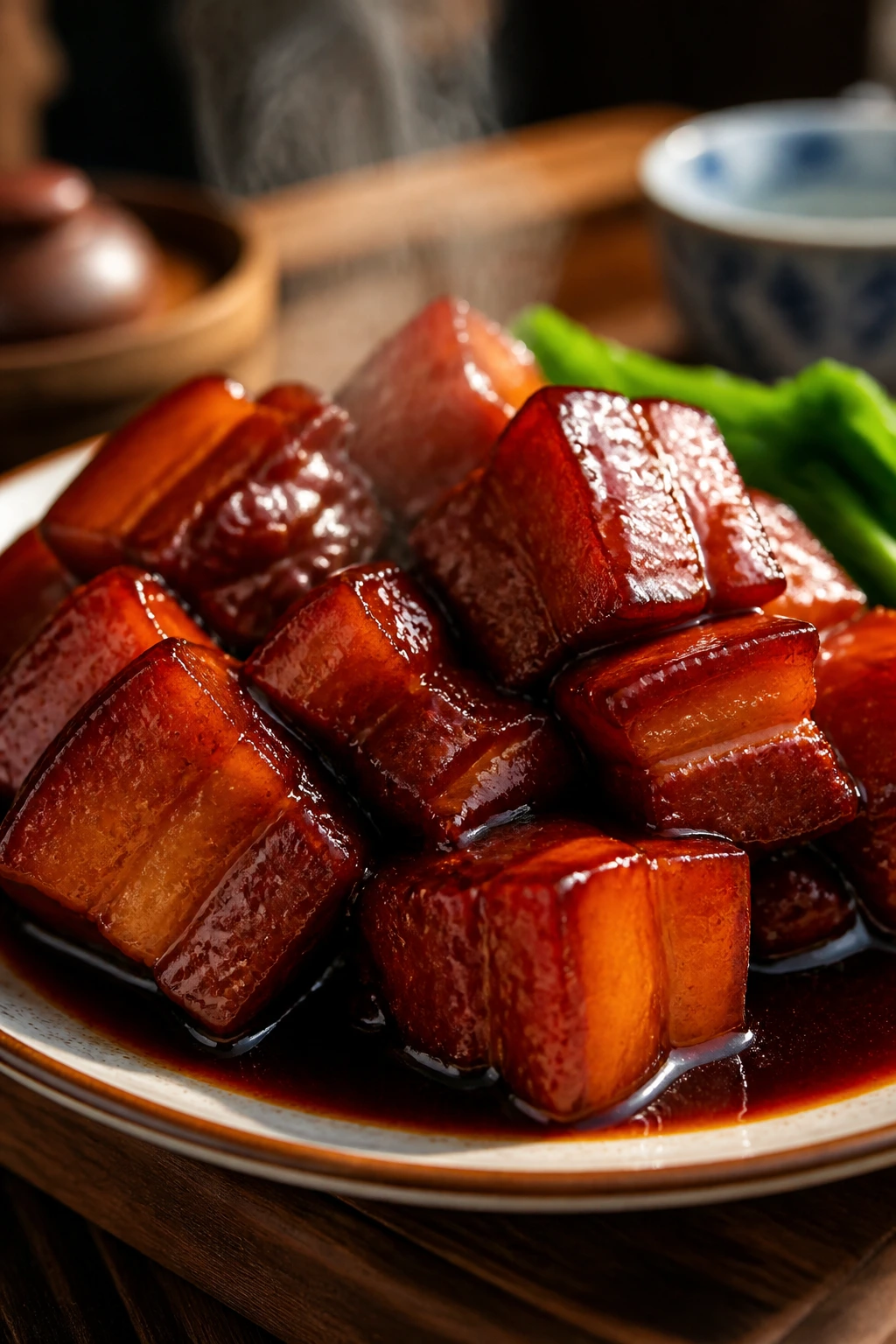
A lot of these dishes actually improve when you plan them in pieces. Dumpling filling, spring roll filling, red bean paste buns, char siu marinade, and braises all work well a day ahead. Pork belly, short ribs, soy-braised chicken, and lion’s head meatballs often taste better the next day because the sauce settles into the meat.
Fresh fried dishes are different. Spring rolls, sesame balls, salt and pepper shrimp, and orange chicken are best the day they’re made. If you need to reheat them, use a hot oven or air fryer at 375°F for a few minutes so the coating crispens again. A microwave will make the crust limp, which is exactly the wrong texture for these dishes.
Soups and steamed dishes keep for 3 to 4 days refrigerated in airtight containers. Reheat soups gently on the stovetop until steaming hot. Steamed egg custard, fish, and steamed chicken should be reheated carefully and eaten within a day or two, because the texture changes fast. Rice dishes like fried rice or nian gao stir-fry hold for 3 days in the fridge and can be revived in a skillet with a splash of water.
Freezing works best for raw dumplings, wontons, buns, and some braises. Freeze dumplings on a tray first, then bag them; they’ll keep for about 2 months. Braises also freeze well for up to 2 months, though the texture of vegetables in the sauce may soften a bit. Tangyuan can be frozen before cooking, and that’s one of the nicest tricks on this whole list.
Variations and Adaptations to Try
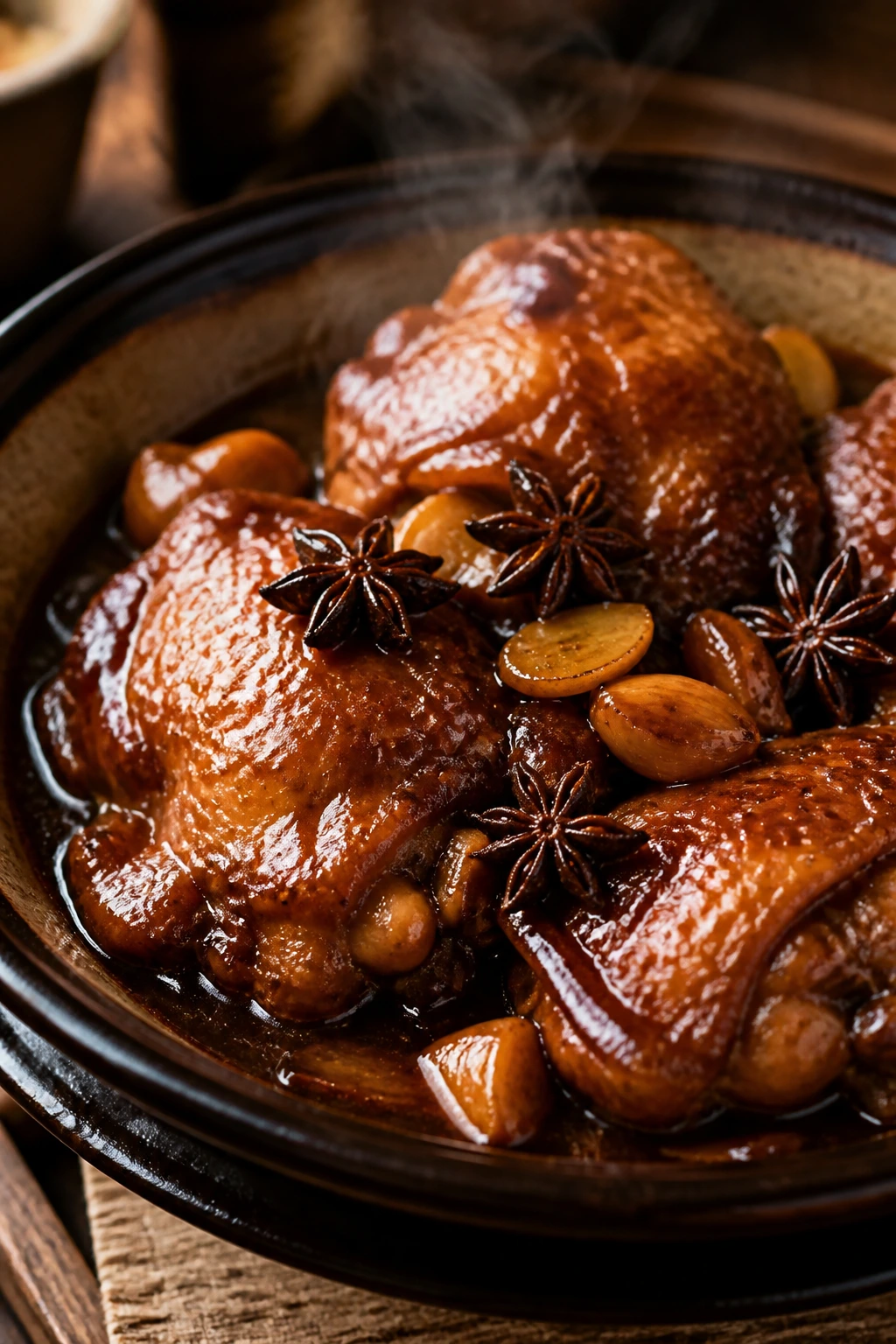
Vegetarian Lantern Table: Build a full menu around tofu, mushrooms, bok choy, cucumber salad, scallion pancakes, and sesame balls. The meal still feels complete if you keep the sauces punchy and the textures varied.
Gluten-Free Pantry Swap: Use rice noodles, rice flour, glutinous rice flour, and tamari in place of wheat wrappers and soy sauce where needed. You can still keep fish, custard, braised meats, and most greens on the menu without losing the holiday feel.
Air-Fryer Shortcut Night: Salt and pepper tofu, shrimp, orange chicken, and some spring rolls can move into the air fryer if you need less oil. The texture changes a little, but the flavors stay strong if you spray the coating lightly and cook in a single layer.
Lower-Sodium Feast: Lean on ginger, garlic, vinegar, scallion, and white pepper, then use smaller amounts of soy and oyster sauce. Fish, steamed chicken, cucumber salad, and steamed egg custard are especially good in a lighter version because they do not depend on heavy seasoning.
Spice-Lover Spread: Keep the heat in the mapo tofu, fish-fragrant shredded pork, salt and pepper shrimp, and chili-oil cucumber salad. That way the rest of the table stays balanced and the people who want heat know exactly where to find it.
Market-Day Budget Menu: Choose dumplings, fried rice, garlic green beans, hot and sour soup, and scallion pancakes as the anchor dishes. Those ingredients stretch well, use pantry staples, and still feel festive when you put them on a shared table.
Common Mistakes to Avoid
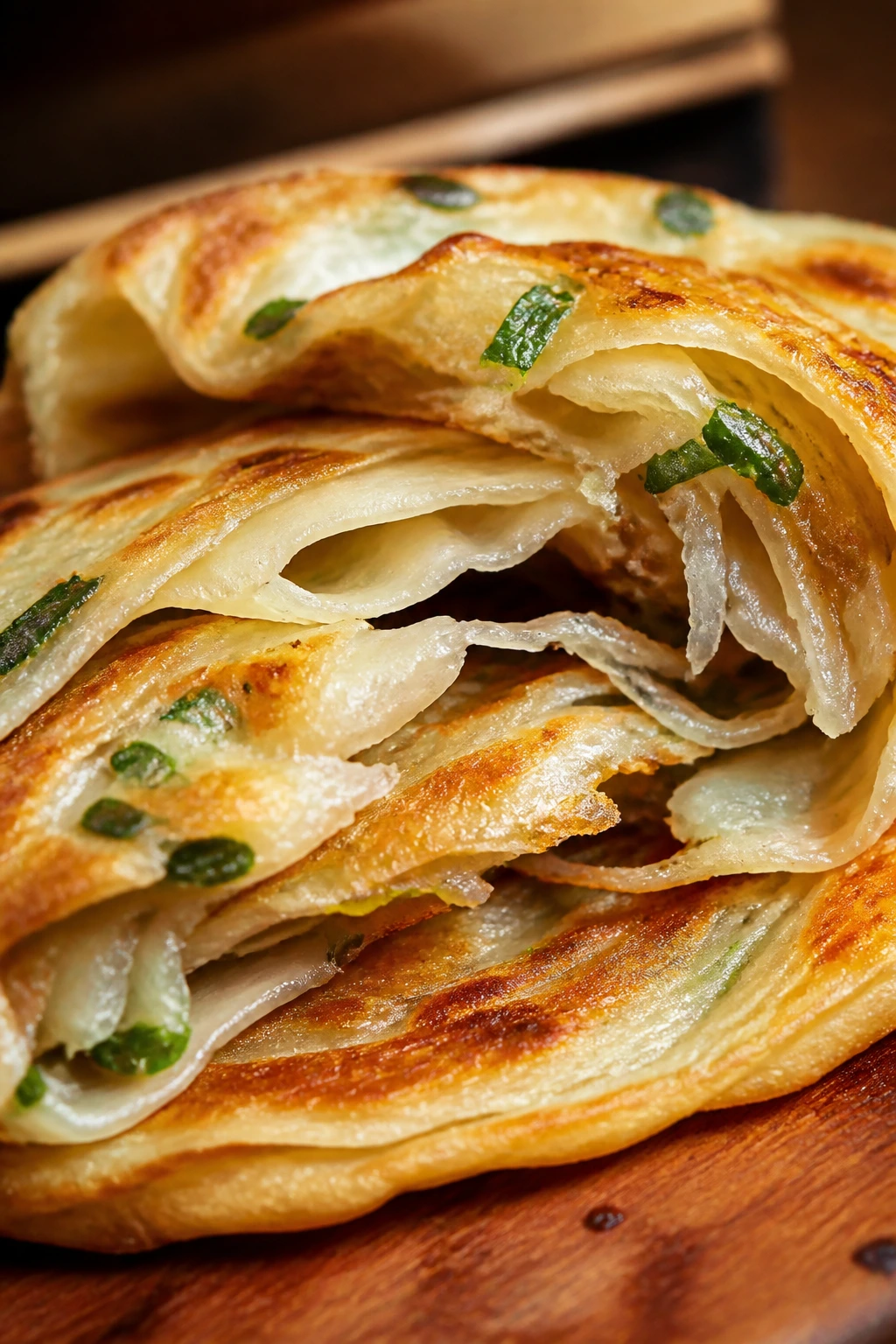
The biggest mistake is cooking every dish to the same finish point. Fried food needs to hit the table fast. Braises need time to rest. Fish needs gentle steaming and immediate serving. If you treat them all the same, one or two will suffer, and usually it’s the delicate ones.
Another common problem is too much sauce. Chinese restaurant food often arrives glossy, so people assume more sauce means better flavor. Not really. A good stir-fry clings to the food. A good braise reduces until it coats a spoon. If the plate looks like a pond, the seasoning is probably off.
Overcrowding the pan ruins more stir-fries than bad recipes do. Beef and broccoli, green beans, salt and pepper shrimp, orange chicken, and fried rice all need room and heat. If you cram in too much at once, the ingredients steam and the edges never brown. Cook in batches. It’s boring. It works.
Fish and custards are where people get nervous and then overcook them. A steamed fish should still look glossy and tender. Steamed egg custard should wobble a little when you move the bowl. If they look firm and dry in the pan, they are already past their best moment.
Finally, don’t wait until the whole meal is ready before thinking about sequencing. Start the braises first, freeze or fold dumplings while they cook, set up the steamer, then fry the crisp dishes last. Chinese New Year cooking rewards a little planning more than a giant burst of effort.
Frequently Asked Questions
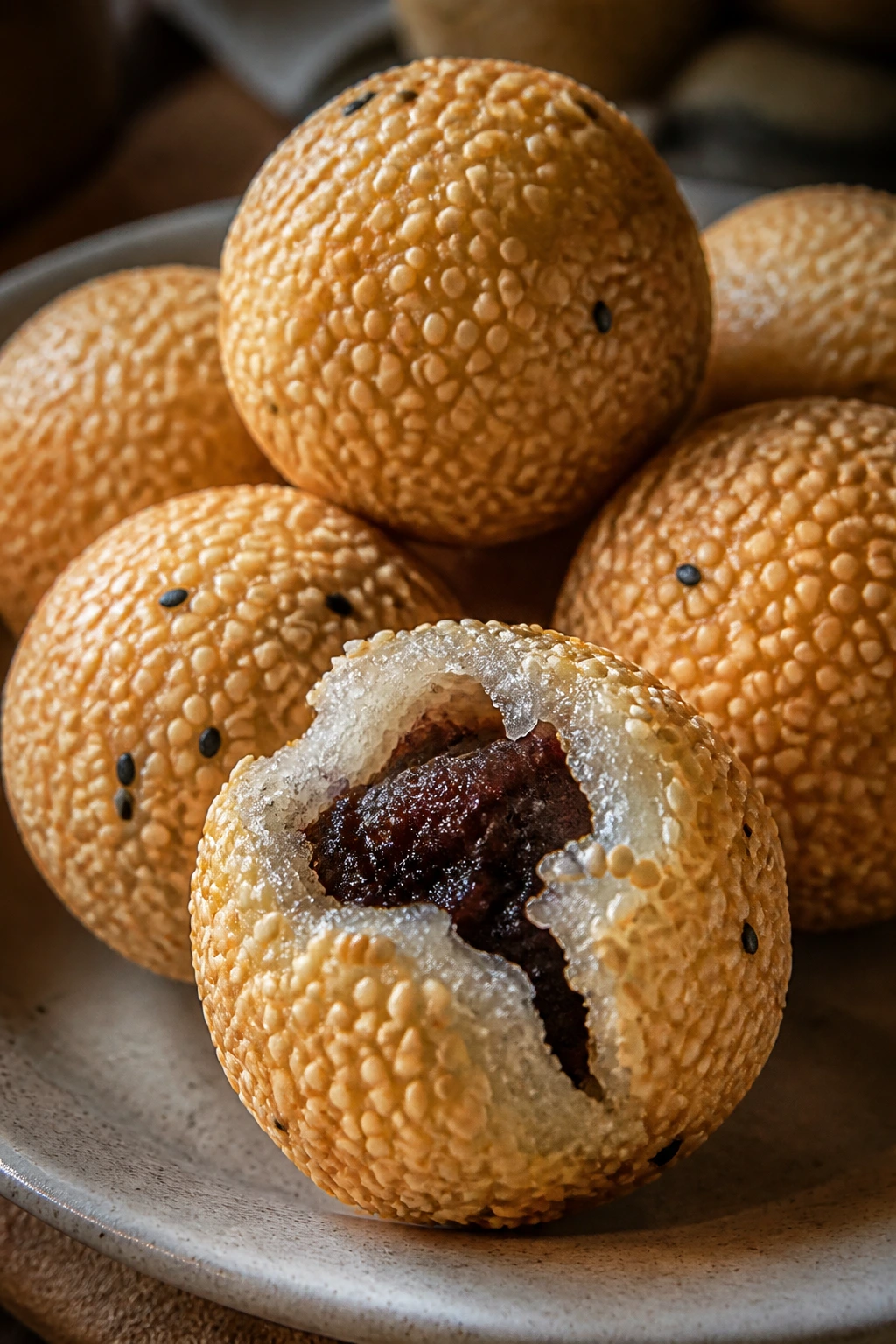
Which dishes can I make the farthest ahead?
Dumplings, wontons, buns, braises, and sauces are the easiest to prep in advance. You can fold and freeze dumplings raw, make braised pork belly a day ahead, and chill soup fillings or marinades overnight.
What if I do not own a wok?
Use a large skillet with a wide base. It won’t toss food as easily, but it will still brown meat, blister beans, and fry rice if you work in smaller batches.
Can I make a full Chinese New Year menu without seafood?
Yes. Use pork dumplings, soy-braised chicken, char siu, fried rice, scallion pancakes, green beans, braised mushrooms, and sesame balls. The table still feels festive because the textures and symbolic shapes are there.
How do I keep dumplings from sticking together in the freezer?
Freeze them in a single layer on a tray until firm, then move them to a bag. If you skip the tray step, the wrappers fuse together and tear when you try to separate them.
What is the best dish to serve first?
Soup usually belongs first, especially hot and sour soup or wonton soup. It clears the palate and gives people something warm while the fried dishes and braises finish.
Can I use store-bought wrappers and still have the food feel homemade?
Absolutely. Good wrappers save time and usually give a better result than trying to roll paper-thin dough from scratch for every item on the table. The filling and cooking method matter more.
What if my steamed fish looks watery?
That usually means the fish released liquid in the bowl. Spoon off the extra liquid before adding the soy and hot oil, and make sure the fish is dried well before steaming next time.
Which dishes reheat the best?
Braised pork belly, short ribs, soy-braised chicken, fried rice, soup, and nian gao stir-fry all reheat well. Fried shrimp, spring rolls, and sesame balls are better crisped in the oven or eaten fresh.
A Table Worth Repeating
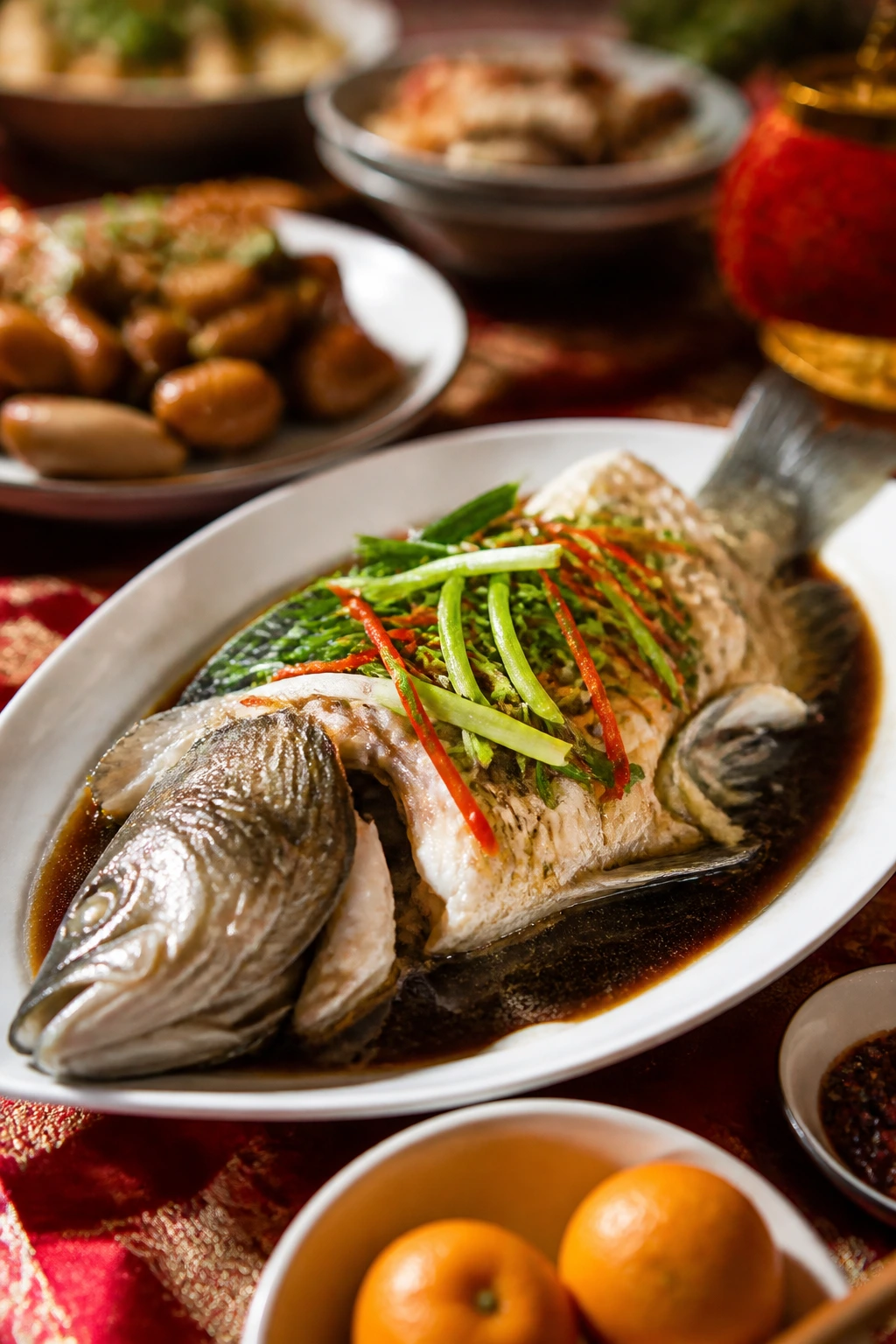
A good Lunar New Year spread is not about piling on food just to fill space. It’s about choosing dishes that mean something, then cooking them with enough care that the meaning shows up in the bite. That means crisp dumplings, glossy fish, a bowl of noodles that still slips around the chopsticks, and one sweet thing at the end that makes the whole meal feel complete.
The nicest part is that you do not need a restaurant kitchen to pull it off. You need a steamer, a hot pan, a little patience, and the willingness to cook a few pieces at the last possible minute. That is where the texture lives.