



Plain soy sauce can taste flat in the pan, which is why I keep coming back to this aromatic soy sauce alternative better than takeout whenever dinner needs more than salt and brown liquid. The first simmer smells like sliced ginger and garlic warming together, then the dried shiitake start to smell almost like broth, and suddenly the kitchen has that restaurant note that usually takes a wok, a hard flame, and a little smoke.
What I like most is the way this sauce behaves. It’s thin enough to splash over rice, but it still clings if you add the cornstarch finish. The orange peel gives a clean lift at the end, white pepper leaves a soft heat instead of a blunt burn, and sesame oil goes in after the heat is off so it stays fragrant instead of vanishing into the pot.
This is the jar I make when I want something that does more than taste salty. Stir it into noodles, spoon it over bok choy, use it as the first layer in a chicken glaze, or keep it plain and let the mushroom-ginger depth do the work. Once you have a jar in the fridge, the rest of dinner gets easier fast.
Why You’ll Want This One on Repeat
- Deeper than bottled soy sauce: Dried shiitake, ginger, garlic, scallion, and orange peel make the flavor taste cooked, not poured.
- Fast enough for a weeknight: The sauce takes about 15 minutes on the stove once the aromatics are prepped.
- Flexible on the plate: It works as a drizzle, a stir-fry base, a noodle sauce, or the starting point for a glaze.
- Easy to adjust: A little more vinegar sharpens it, a little more sugar rounds it out, and chili oil can wake it up without wrecking the balance.
- Better texture control: You can leave it thin for finishing or thicken it just enough to coat noodles without turning sticky.
Yield: About 1¼ cups, enough for 10 servings at 2 tablespoons each
Prep Time: 10 minutes
Cook Time: 15 minutes
Total Time: 25 minutes
Difficulty: Beginner — the steps are straightforward, but the simmering and seasoning balance matter.
Best Served: Warm or cooled; also good after a night in the fridge when the flavors settle.
What Makes This Sauce Taste Bigger Than Plain Soy Sauce
Plain soy sauce brings salt and fermentation. That’s useful, but it’s only one layer. A sauce that tastes like it came from a good kitchen has more going on: sweetness from long-simmered aromatics, a little lift from acid, and a finish that lingers instead of disappearing the second it hits rice.
That’s the trick with this one. The shiitake, ginger, garlic, scallion, and orange peel don’t just flavor the liquid; they change how it smells when it hits steam. You notice it most around minute six or seven, when the sharp edges soften and the kitchen starts smelling round and savory instead of raw and aggressive. That’s the point where I know the pot is doing real work.
Takeout sauces often lean on sugar, starch, and a hit of soy. They can be fine, but they’re usually one-note. Here, the mushroom note gives depth, the white pepper adds a quiet warmth, and the sesame oil lands at the end like a final brushstroke. No single ingredient shouts. That matters.
I also prefer low-sodium soy sauce here. Once the sauce reduces even a little, salt concentrates fast, and nobody wants a glossy jar that tastes like a salt lick with ambition. Low-sodium gives you room to make choices at the end, which is where good sauces are won or lost.
One more thing: this is a sauce, not a syrup. If you want it for rice bowls and dumplings, keep it lighter. If you want it to cling to vegetables or noodles, use the cornstarch finish and stop the heat the second it turns glossy. Let it go too far and it gets tacky in a hurry.
Everything That Goes Into the Pot
For the Sauce Base:
- 3 dried shiitake mushrooms, rinsed
- 1/2 cup very hot water, for soaking the mushrooms
- 1 cup low-sodium soy sauce
- 1 small shallot, thinly sliced
- 4 garlic cloves, smashed
- 1-inch piece fresh ginger, sliced into coins
- 2 scallions, cut into 2-inch lengths
- 1 star anise
- 1 strip orange peel, about 2 inches long, white pith removed
- 1 tablespoon packed light brown sugar
- 1 tablespoon rice vinegar
- 1 teaspoon toasted sesame oil
- 1/2 teaspoon freshly ground white pepper
- 1 teaspoon cornstarch mixed with 2 teaspoons cold water, optional for a thicker finishing sauce
That’s the whole lineup. Short list. Big payoff.
The ingredient list looks modest, but the details matter. Dried shiitake bring a deeper savory note than fresh mushrooms do, orange peel keeps the sauce from tasting muddy, and white pepper gives it that restaurant-style heat that sneaks in behind the salt. If you leave any of those out, the sauce still works, but the edges get flatter.
Why Each Ingredient Earns Its Place
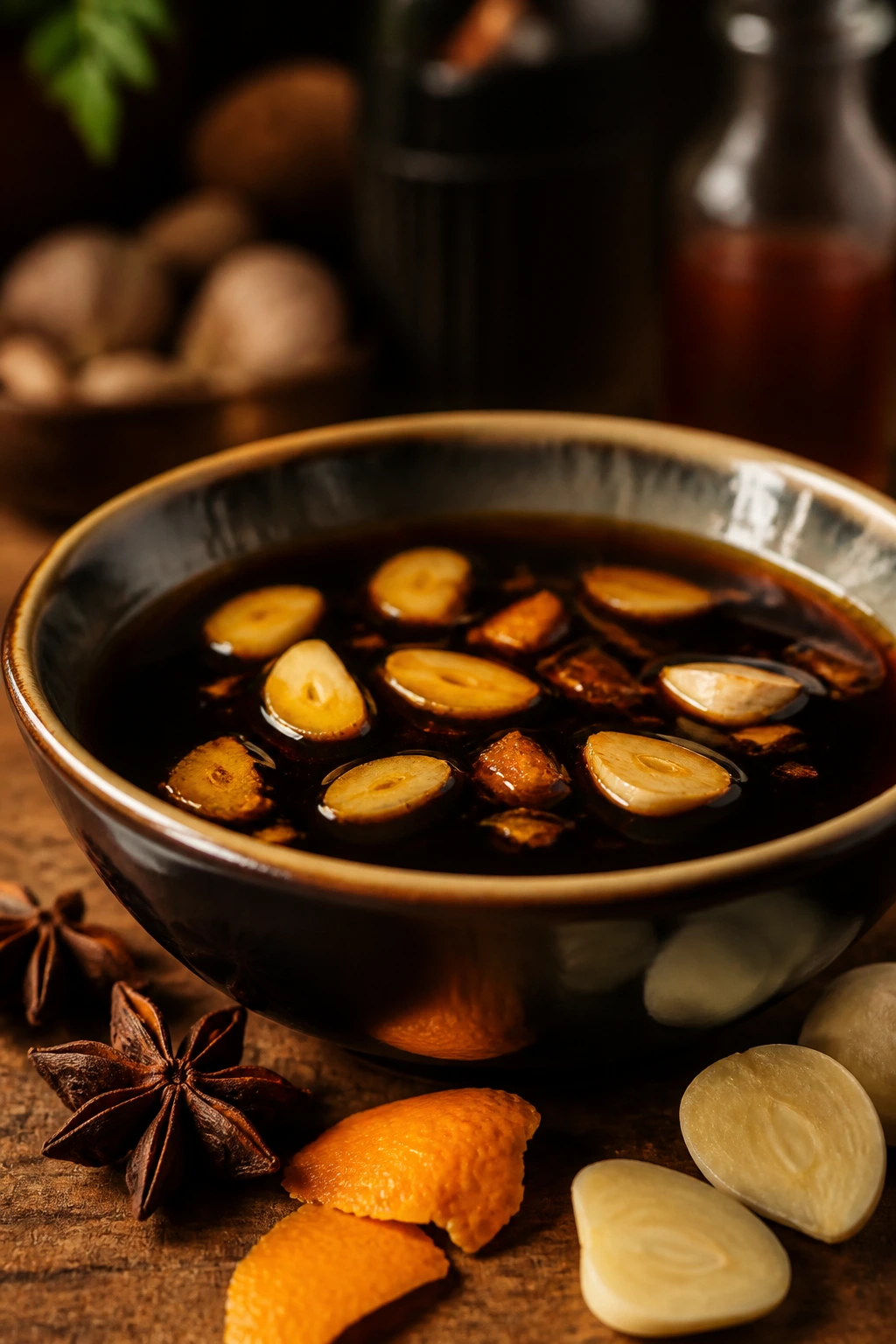
The Salty, Savory Backbone
What to use: 1 cup low-sodium soy sauce plus 1/2 cup hot water.
Preparation: Combine them in a saucepan large enough that the liquid can bubble without climbing the sides. A narrow pot makes stirring awkward and encourages splashing, which stains fast.
Substitutions: Tamari works 1:1 if you need a gluten-free version. Coconut aminos also work, but they’re sweeter and lighter, so the final sauce needs less sugar and a little more salt awareness.
Tips: Low-sodium soy gives you breathing room after the reduction. Once the liquid starts concentrating, the difference between balanced and too salty shows up fast.
The Aromatic Layer
What to use: 3 dried shiitake mushrooms, 1 small shallot, 4 garlic cloves, 1-inch piece of fresh ginger, 2 scallions, 1 star anise, and 1 strip orange peel.
Preparation: Rinse the shiitake to remove dust, slice the shallot thin, smash the garlic with the flat of a knife, and cut the ginger into coins so it can give up flavor without turning to mush.
Substitutions: No shiitake? Use 1 tablespoon mushroom powder or 1 small dried porcini, though the flavor shifts a bit. If you hate star anise, leave it out rather than forcing it; a tiny pinch of five-spice can cover some of that ground.
Tips: Don’t brown the garlic. Browned garlic turns bitter quickly in a soy-based sauce, and that bitterness sticks out even after straining.
The Sweet, Sharp, and Fragrant Finish
What to use: 1 tablespoon packed light brown sugar, 1 tablespoon rice vinegar, 1 teaspoon toasted sesame oil, and 1/2 teaspoon white pepper.
Preparation: Measure these separately and add the vinegar and sesame oil at the end, after the sauce comes off the heat.
Substitutions: Honey can stand in for brown sugar, though it tastes a touch rounder. Black vinegar adds more depth than rice vinegar if you want a darker, more old-school takeout note.
Tips: Sesame oil loses fragrance if it sits on the stove too long. Put it in last, or you’ll miss the whole point.
The Thickener, If You Want One
What to use: 1 teaspoon cornstarch mixed with 2 teaspoons cold water.
Preparation: Stir the slurry until it’s smooth and milky, with no dry clumps at the bottom.
Substitutions: Arrowroot works too, but it thickens more quickly and can go slippery if you overheat it.
Tips: Use the thickener only if you want the sauce to coat noodles or cling to vegetables. For a finishing drizzle, leave it thin and bright.
The Pan, the Strainer, and the Jar
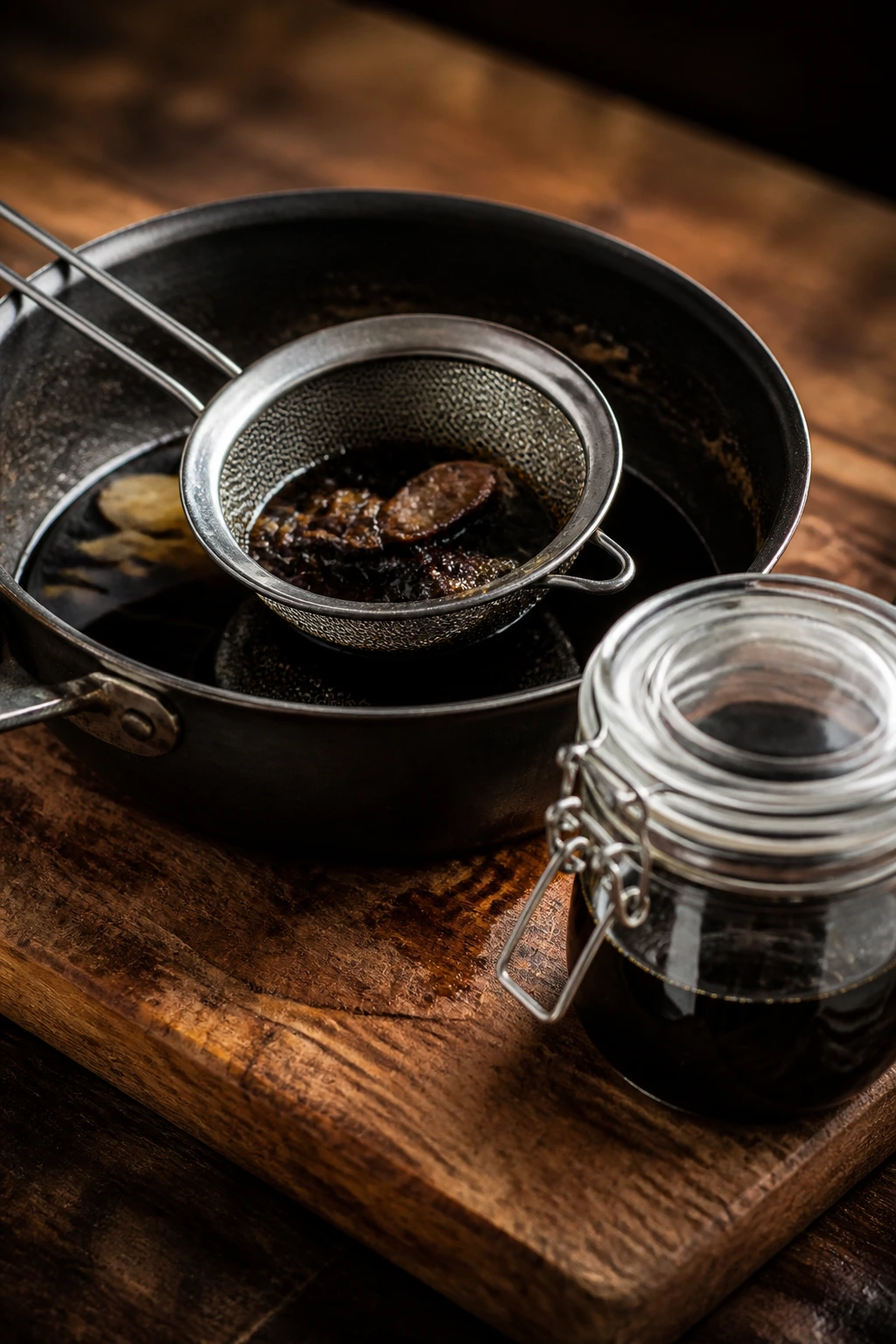
You do not need fancy gear for this. You do need the right few tools, because a sauce this dark and fragrant tends to expose sloppy technique fast.
- Small saucepan, 1½ to 2 quarts: Big enough for simmering without splashing, small enough to keep the liquid together.
- Chef’s knife: For slicing the ginger, shallot, scallions, and orange peel cleanly.
- Cutting board: A stable board matters here; soy sauce on a wobbly board is a mess waiting to happen.
- Fine-mesh strainer: This gives the sauce its clean finish and stops bits of garlic or peel from overcooking in the fridge.
- Heatproof bowl or liquid measuring cup: Handy for catching the strained sauce before you pour it into a jar.
- Whisk or fork: Useful for the optional cornstarch slurry.
- Glass jar with lid: A mason jar or old jam jar works. Dark sauce looks good in glass, and it keeps better when you can see what’s inside.
I like to set a damp kitchen towel under the cutting board so the shallot slices don’t skate around. Small detail. Saves annoyance.
Simmering the Sauce Until It Smells Like Dinner
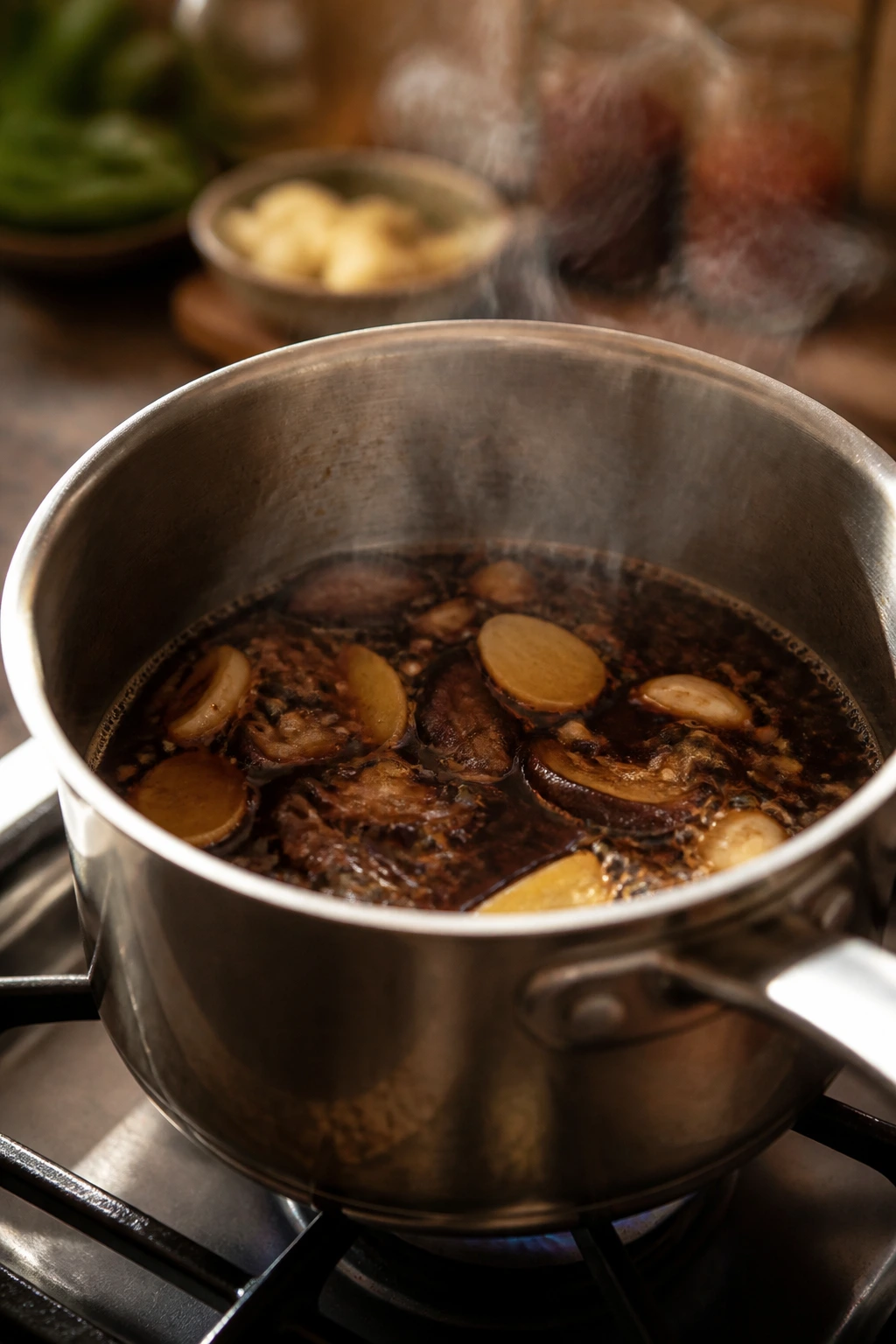
Prep the Aromatics
-
Rinse the dried shiitake mushrooms under cool water and pat them dry. If they look dusty or brittle, rub them gently between your fingers to clear the surface before soaking.
-
Put the mushrooms in a small bowl with the 1/2 cup very hot water and soak them for 10 minutes, until they soften and bend easily. The water should darken a little and smell like broth.
Build the Sauce
-
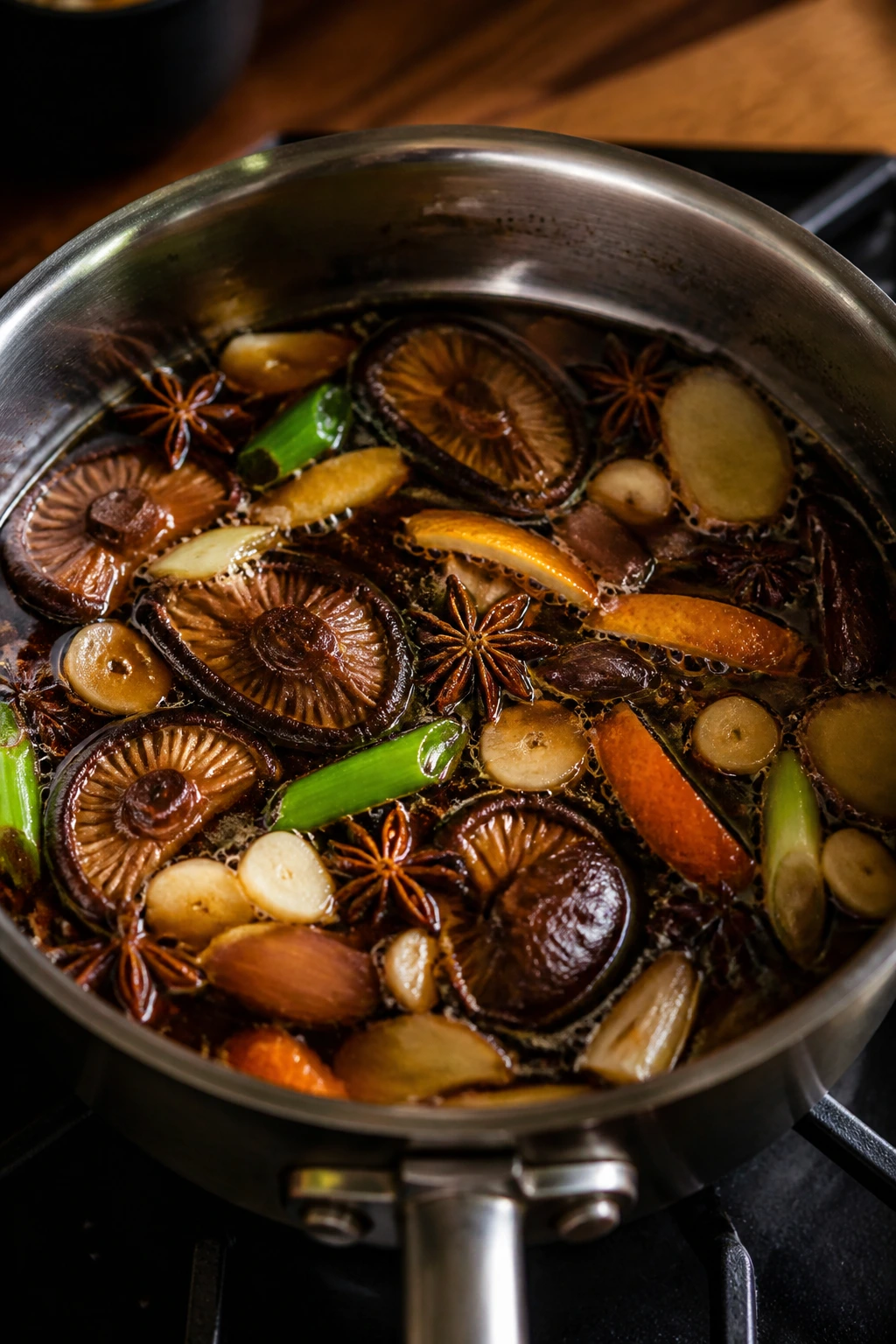
Add the soy sauce, mushroom soaking liquid, shallot, garlic, ginger, scallions, star anise, orange peel, and brown sugar to a small saucepan. Stir once or twice so the sugar starts to dissolve.
-
Set the pan over medium heat and bring it to the edge of a simmer. The first bubbles should gather around the sides, not roll furiously across the center. Lower the heat to maintain a gentle simmer for 12 to 15 minutes. Do not let it boil hard; boiling drags bitterness out of the garlic and orange peel.
-
Watch for the shallot to turn translucent and for the ginger to smell sweet instead of sharp. If the kitchen starts smelling harsh or burnt, the heat is too high.
Strain, Season, and Finish
-
Strain the sauce through a fine-mesh strainer into a heatproof bowl or measuring cup. Press the solids lightly with the back of a spoon to catch the last flavorful drops, but do not mash them through the sieve. That adds grit and cloudiness.
-
Stir in the rice vinegar, toasted sesame oil, and white pepper. Taste the sauce. If you want it to cling to noodles or vegetables, whisk in the cornstarch slurry and return the sauce to low heat for 30 to 60 seconds, stirring constantly, until it turns glossy and lightly thickened. Stop the minute it coats a spoon; it thickens a little more as it cools.
-
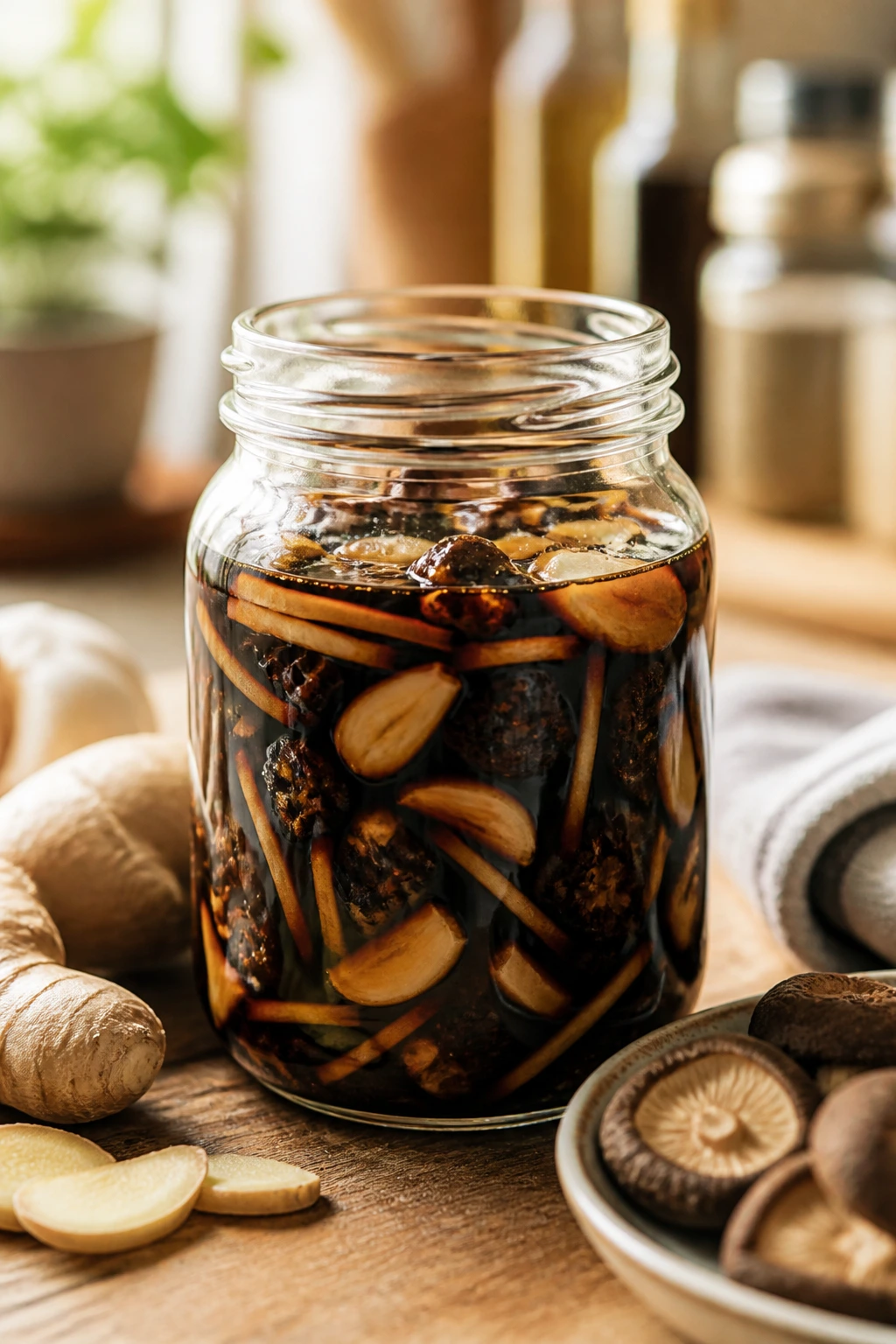
Let the sauce cool for 10 minutes before pouring it into a jar. If you’re keeping it thin for drizzling, leave it as is. If you want a lacquered finish, make the thickened version and use it the same day or the next.
That’s the whole move. No drama. Just enough time on the stove to make the aromatics pull their weight.
How I Like to Pour It Over Rice, Noodles, and Vegetables
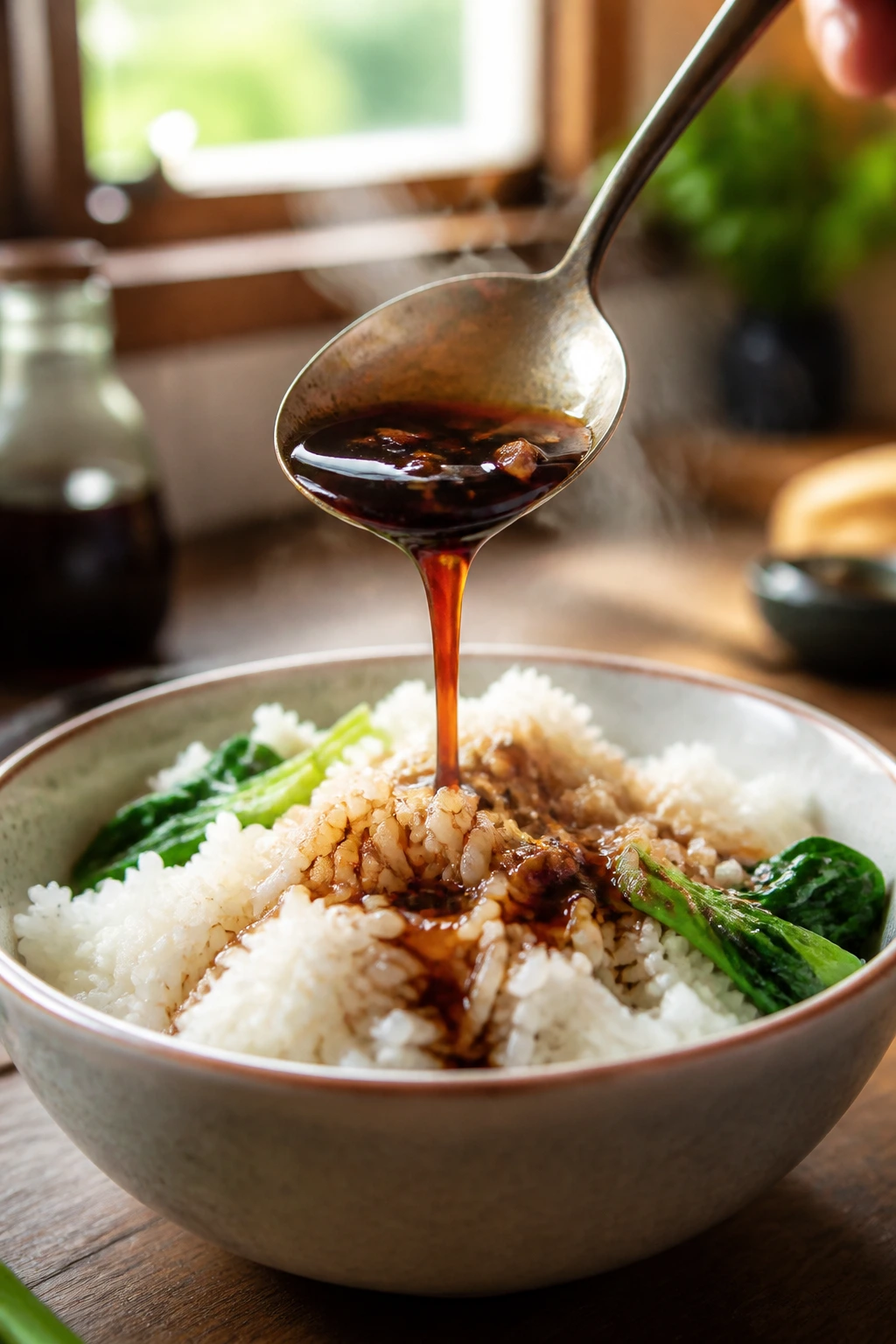
Presentation: Spoon a little sauce around the edge of a bowl of steamed jasmine rice, then let it pool under a fried egg or a pile of sautéed greens. For noodles, toss them while they’re still hot so the sauce catches on every strand instead of slipping to the bottom. A final scatter of sliced scallions or toasted sesame seeds makes the bowl look finished, not thrown together.
Accompaniments: This sauce likes plain food. Steamed bok choy, broccoli, napa cabbage, tofu, shredded chicken, mushroom stir-fries, and dumplings all benefit from it. I also like it with fried rice, especially when the rice has a little crispness from a hot pan. It’s strong enough to season vegetables but not so heavy that it buries them.
Portions: Start with 2 tablespoons per serving as a drizzle, or about 1/4 cup for a one-pan noodle or vegetable dish. If you’re using it as the main sauce for 1 pound of vegetables or noodles, taste halfway through and add more in small splashes. A jar like this is easier to add to than to subtract from.
Beverage Pairing: Hot jasmine tea makes sense because it cleans the palate without fighting the ginger and sesame. A dry lager works if dinner is casual and you want something cold. Sparkling water with a squeeze of lime is the quietest option and still does the job.
I like this sauce best when the plate looks plain at first glance. White rice, green vegetables, maybe one glossy egg. Then the sauce hits, and the whole thing wakes up.
Small Tweaks That Change the Whole Jar
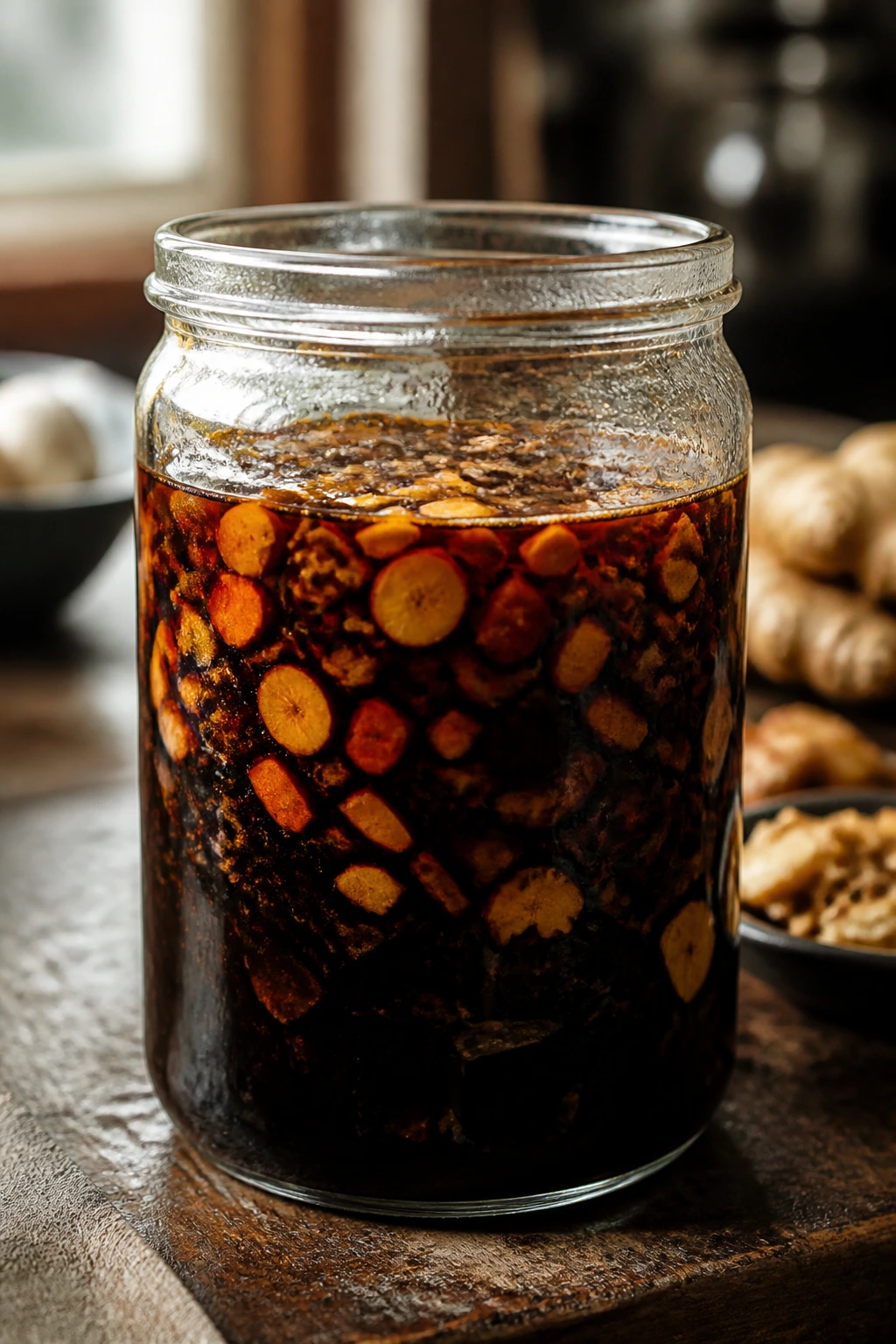
Flavor Enhancement: If you want a deeper restaurant smell, add a tiny pinch of MSG after straining. It doesn’t make the sauce taste “extra salty”; it just fills in the middle so the mushroom note and the soy note feel connected. A small pinch is enough. More than that and the sauce starts tasting crowded.
Customization: A spoonful of chili crisp turns this into a spoonable sauce for noodles or dumplings. If you prefer a darker, more intense profile, swap the rice vinegar for black vinegar and add a second strip of orange peel. A little extra ginger — even 1 teaspoon of fresh ginger juice stirred in at the end — sharpens the whole jar in a nice way.
Serving Suggestions: I like to finish the sauced bowl with thin scallion slices, toasted sesame seeds, or a few drops of chili oil. For vegetables, a squeeze of lime or a splash of black vinegar right before serving keeps the flavor from feeling heavy. If the dish is all soft textures, add something crisp on the side — cucumber spears, snap peas, or a quick cabbage slaw.
Make-It-Yours: For gluten-free, use tamari instead of soy sauce. For soy-free, use coconut aminos, reduce the brown sugar to 1 teaspoon, and add a pinch of mushroom powder to replace some of the depth. For a lower-sugar version, leave out the brown sugar entirely and add only a few drops of honey at the end if the sauce tastes too sharp.
A tiny extra move changes the whole jar. That’s the part people miss. They treat sauces like background noise, then wonder why dinner tastes flat.
Common Missteps That Flatten the Flavor
-
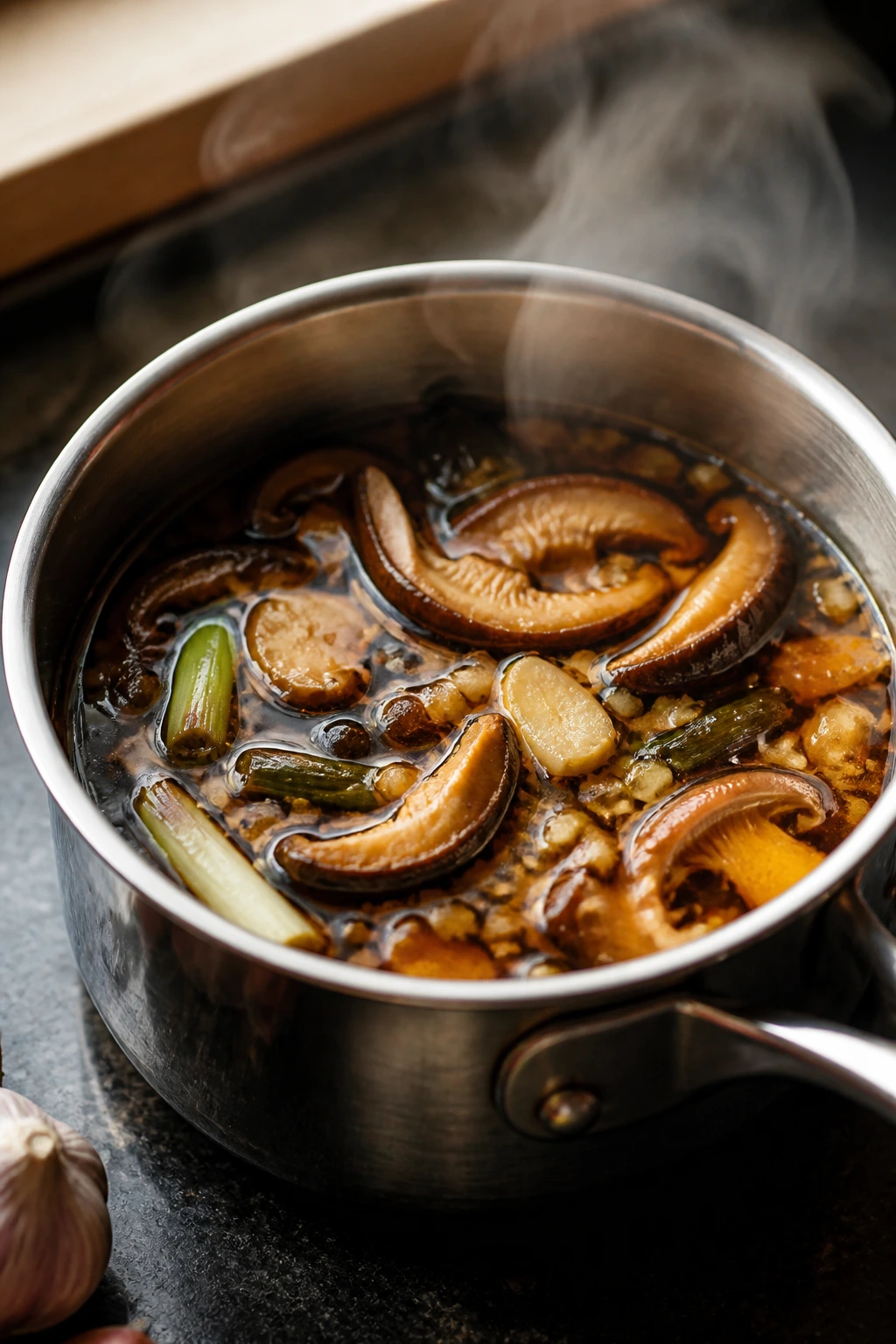
Boiling it like pasta water: A hard boil makes the garlic and orange peel taste bitter, and the sauce starts to smell harsh instead of round. Keep it at a bare simmer, with tiny bubbles around the edge of the pan.
-
Skipping the strain: Leaving the solids in the sauce seems easier, but the garlic and shallot keep releasing flavor in the fridge. The result can taste muddy by day two. Strain it, even if it feels fussy.
-
Adding sesame oil too early: Heat knocks the fragrance down fast. If you cook the sesame oil with everything else, the sauce loses that toasted finish and starts tasting flatter.
-
Over-thickening the sauce: Cornstarch turns glossy for a moment, then keeps thickening as it cools. If you let it go too far on the stove, you end up with glue instead of sauce. Stop when it lightly coats a spoon.
-
Using full-sodium soy without checking the balance: Some bottles are saltier than others. If yours is aggressive, the reduction can make the sauce taste blunt. Low-sodium soy gives you more control, and a splash of water at the end can save a batch that’s a little too sharp.
-
Forgetting the acid: Salt and sweetness alone can make a sauce feel heavy. Rice vinegar wakes it up. If the final taste seems dull but not wrong, acid is usually the missing piece.
Variations and Adaptations That Still Taste Right
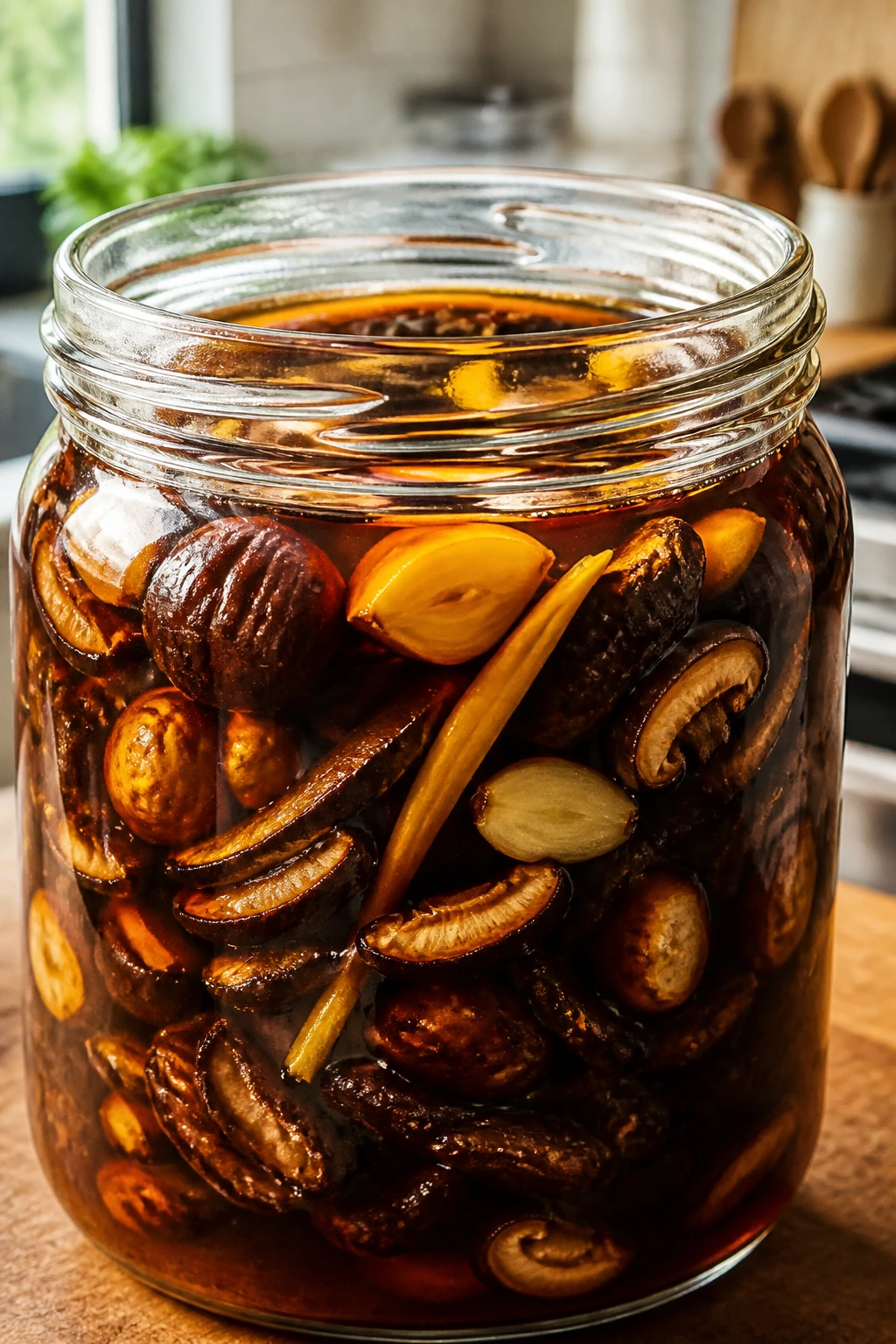
Soy-Free Coconut Aminos Jar
Use 1 cup coconut aminos instead of soy sauce, keep the 1/2 cup hot water, and cut the brown sugar to 1 teaspoon. Coconut aminos run sweeter and lighter, so a pinch of mushroom powder helps bring back the savory depth. This version is good on vegetables and rice bowls, especially when you want a softer, less salty profile.
Five-Spice Takeout Version
Add 1/4 teaspoon Chinese five-spice powder and an extra strip of orange peel to the pot. The five-spice gives the sauce a warmer, slightly roast-duck edge that works well with chicken, pork, or tofu. Don’t overdo it; five-spice can take over fast if you use a heavy hand.
Chili Oil Drizzle Sauce
Stir 1 to 2 teaspoons chili oil into the strained sauce at the end. That turns the jar into something you can spoon over noodles, dumplings, or steamed greens without needing another condiment on the table. If your chili oil has crunchy bits, keep them in for texture.
Extra-Shiitake Pantry Version
Use 4 dried shiitake mushrooms instead of 3 if yours are small, and steep them all in the hot water for a full 10 minutes before simmering. This version leans harder into mushroom umami and tastes especially good over plain rice or tofu. It’s the one I reach for when the pantry is thin and the vegetables are not doing much on their own.
Bright Ginger Finish
After straining, stir in 1 teaspoon freshly grated ginger or a teaspoon of ginger juice. That gives the sauce a sharper top note, which works better on steamed fish, leafy greens, or anything delicate that needs lift instead of weight. It’s a little brighter, a little quicker on the tongue.
Keeping a Jar Ready for the Week
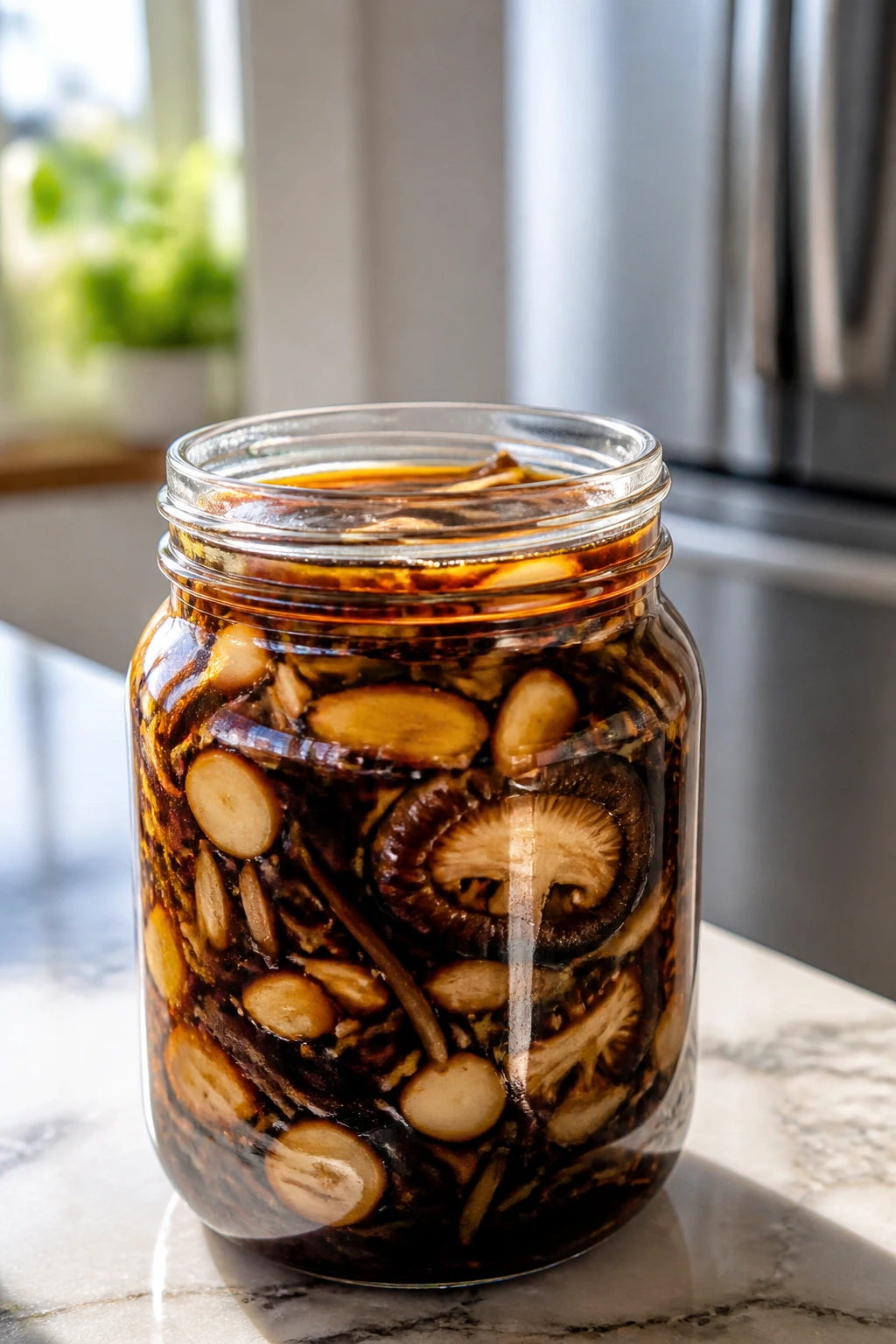
This sauce keeps well, which is part of the appeal. Once it cools, pour it into a sealed jar and refrigerate it for 5 to 7 days. If you used the cornstarch version, it may thicken or gel in the fridge; that’s normal. A minute in a small saucepan over low heat, or 15 to 20 seconds in the microwave, loosens it right back up.
For longer storage, freeze it in an ice cube tray, then transfer the cubes to a freezer bag once they’re solid. That gives you little portions you can drop into a hot pan for quick noodles or stir-fried vegetables. Frozen sauce keeps for about 2 months with good flavor. After that, it’s still safe if frozen solid, but the aromatics start to fade.
If you want to make it ahead for the week, it’s easy. In fact, the flavor settles a little overnight, which helps the mushroom and ginger notes feel smoother. I’d make the whole batch up to 3 days ahead if I knew I’d be using it for dinner later in the week.
One practical note: don’t leave it sitting on the counter for hours. Once it has cooled, get it into the fridge within 2 hours. That matters for any cooked condiment, and this one is no exception.
Frequently Asked Questions
Can I make this without dried shiitake mushrooms?
Yes, though the flavor loses some of its depth. If you skip them, add 1 tablespoon mushroom powder or use a splash of a good mushroom broth in place of part of the water. The sauce will still work, but it won’t have that quiet broth-like backbone.
Is this the same as teriyaki sauce?
Not quite. Teriyaki is usually sweeter and thicker, with a more obvious glaze feel. This sauce is lighter and more savory, so it can be used as a finishing drizzle, a stir-fry base, or a dipping sauce without tasting sugary.
Can I use this as a marinade?
Yes, and it works well on chicken thighs, tofu, mushrooms, and pork. For marinades, keep it thin and skip the cornstarch so it can move into the food instead of sitting on top. Use it for 30 minutes to 4 hours, depending on the ingredient.
How do I make it thicker for noodles?
Use the cornstarch slurry and cook it only until the sauce turns glossy and lightly coats a spoon. If you want it even thicker, add a second small slurry, but do it in tiny amounts. Cornstarch can move from perfect to paste-like fast.
What if the sauce tastes too salty?
Add 1 to 2 tablespoons of water and a small pinch of sugar or honey, then warm it gently and taste again. A little acid can help too, but water is the fastest way to pull back the edge without making the sauce taste sweet.
Can I make it gluten-free?
Yes. Use tamari instead of soy sauce, and check your chili oil or vinegar if you’re adding any extras. Tamari keeps the same dark color and deep savory character, so the sauce still tastes like the same idea.
Why bother straining it?
Because the solids keep changing the sauce after you’re done cooking. Straining gives you a clean, balanced flavor and stops little burnt bits from showing up in the jar. If you want to use the softened aromatics, chop them and stir them into fried rice or noodles.
A Jar Worth Keeping On Hand
A good sauce does more than season food. It changes how dinner feels when you’re standing at the stove with a bowl of rice, a pan of greens, and not much else. This one does that job without needing a shopping list full of special bottles or a long prep session.
I like that it can sit quietly in the fridge and still feel useful. Spoon it over leftovers, thin it with a little water for dumplings, or reduce it just enough to lacquer vegetables. The jar earns its keep fast.
When the sauce smells like ginger, garlic, shiitake, and a little orange peel, you’re no longer trying to copy takeout. You’ve made something better for your own kitchen, and that’s the version I’d rather have anyway.
Aromatic Soy Sauce Alternative Better than Takeout — Recipe Card
Recipe Name: Aromatic Soy Sauce Alternative
Description: A Chinese-inspired, umami-rich sauce built with soy sauce, shiitake, ginger, garlic, scallion, orange peel, and a clean sesame finish. Use it as a drizzle, stir-fry base, noodle sauce, or glaze starter.
Prep Time: 10 minutes
Cook Time: 15 minutes
Total Time: 25 minutes
Course: Sauce, Condiment
Cuisine: Chinese-inspired
Servings: About 10 servings
Calories: About 20 kcal per serving
Ingredients
- 3 dried shiitake mushrooms, rinsed
- 1/2 cup very hot water, for soaking the mushrooms
- 1 cup low-sodium soy sauce
- 1 small shallot, thinly sliced
- 4 garlic cloves, smashed
- 1-inch piece fresh ginger, sliced into coins
- 2 scallions, cut into 2-inch lengths
- 1 star anise
- 1 strip orange peel, about 2 inches long, white pith removed
- 1 tablespoon packed light brown sugar
- 1 tablespoon rice vinegar
- 1 teaspoon toasted sesame oil
- 1/2 teaspoon freshly ground white pepper
- 1 teaspoon cornstarch mixed with 2 teaspoons cold water, optional for thickening
Instructions
- Soak the shiitake mushrooms in the hot water for 10 minutes until softened.
- Combine the soy sauce, mushroom soaking liquid, shallot, garlic, ginger, scallions, star anise, orange peel, and brown sugar in a small saucepan.
- Bring to a bare simmer over medium heat, then reduce to low and simmer for 12 to 15 minutes.
- Strain the sauce through a fine-mesh strainer into a bowl or measuring cup.
- Stir in the rice vinegar, sesame oil, and white pepper.
- For a thicker sauce, whisk in the cornstarch slurry and cook over low heat for 30 to 60 seconds until glossy.
- Cool for 10 minutes, then transfer to a jar.
Notes: Use tamari for gluten-free cooking. For a soy-free version, swap in coconut aminos and reduce the sugar slightly. If the sauce tastes too salty, thin it with a tablespoon or two of water before serving.