



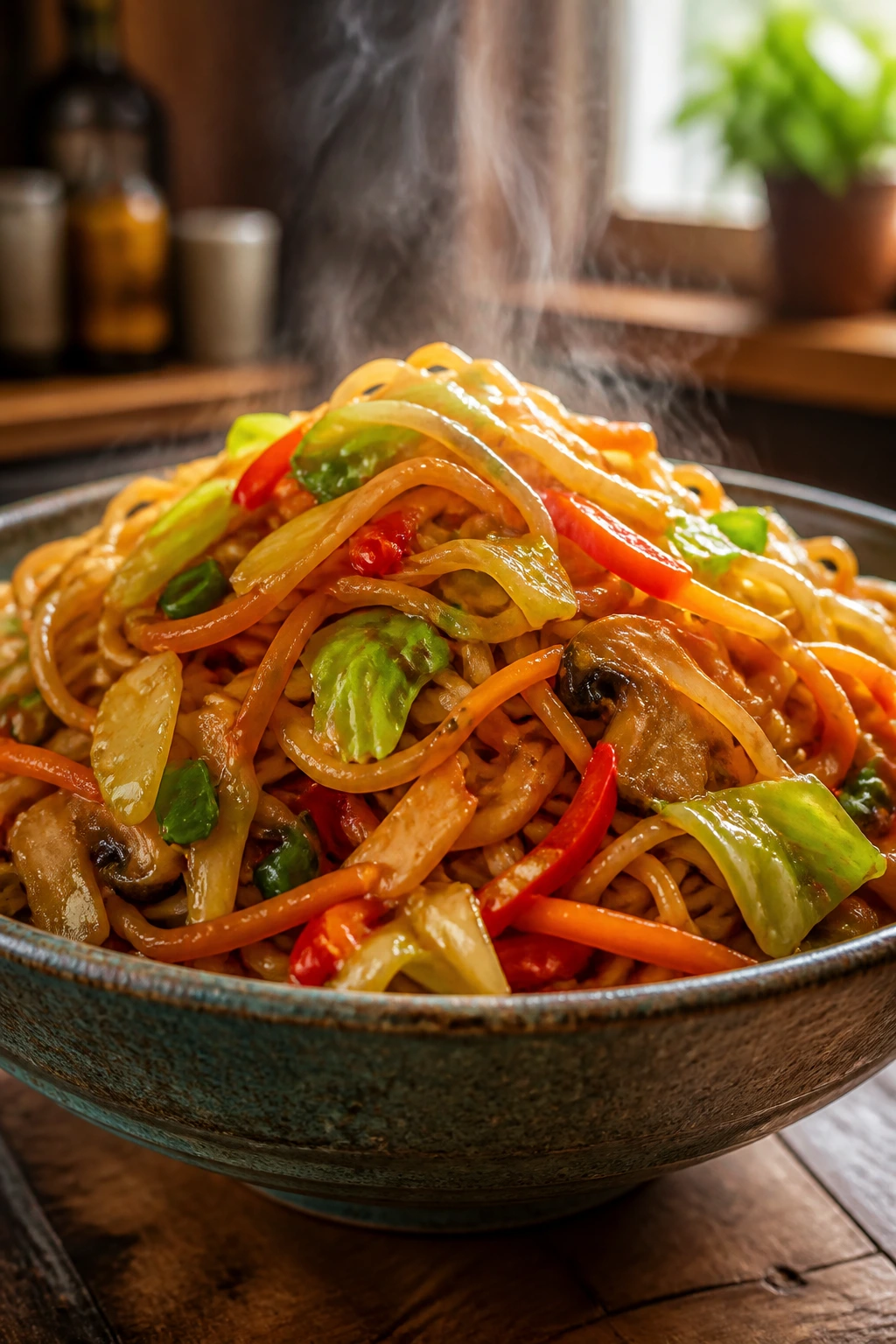
The first thing that happens when the pan gets hot is the smell. Garlic goes sweet before it goes sharp, chili wakes up the oil, and the cabbage takes on that faint, steamy edge that tells you dinner is about to turn glossy. That’s the moment spicy vegetable lo mein stops being “noodles with vegetables” and starts acting like the bowl you keep thinking about later.
Takeout lo mein often lands heavy because the noodles sit too long, the vegetables soften into submission, and the sauce pools at the bottom of the carton. A home version fixes that by putting you in charge of the heat and the timing. You get springy noodles, crisp carrots, mushrooms with browned edges, and a sauce that clings in a thin lacquer instead of flooding the bowl.
The difference is mostly in the rhythm. Cook the noodles a touch under. Stir-fry the vegetables hard and fast. Add the sauce only when the pan is hot enough to turn it glossy in seconds. That’s why this dish tastes alive instead of tired.
A good bowl of spicy vegetable lo mein should have a little tension in it. Salty, yes. Spicy, yes. But also a bite from the cabbage, a slippery strand of noodle, and that deeper savoriness that makes you go back for one more forkful even when you’re already full.
Why This Spicy Vegetable Lo Mein Works So Well
- Fast wok timing: Once the noodles are drained, the whole stir-fry moves in about 10 minutes, which keeps the vegetables crisp instead of limp.
- Gloss without puddles: A small amount of cornstarch in the sauce gives you that takeout-style shine without turning the pan soupy.
- Heat you can steer: Two tablespoons of chili garlic sauce make the bowl properly spicy, and you can dial it down or push it farther with chili oil at the end.
- Flexible vegetables: Cabbage, carrots, mushrooms, bell pepper, snow peas, or bok choy all fit here as long as the pieces are cut small enough to cook fast.
- Better leftovers than most stir-fries: Because the noodles are cooked just shy of done, they stay springy after reheating instead of collapsing into mush.
Yield: 4 main-dish servings
Prep Time: 20 minutes
Cook Time: 15 minutes
Total Time: 35 minutes
Difficulty: Intermediate — the steps are straightforward, but the pan gets hot fast and the noodle timing matters.
Best Served: Right after cooking, while the noodles are glossy and the vegetables still have a little snap.
The Noodles, Sauce, and Vegetables on the Counter
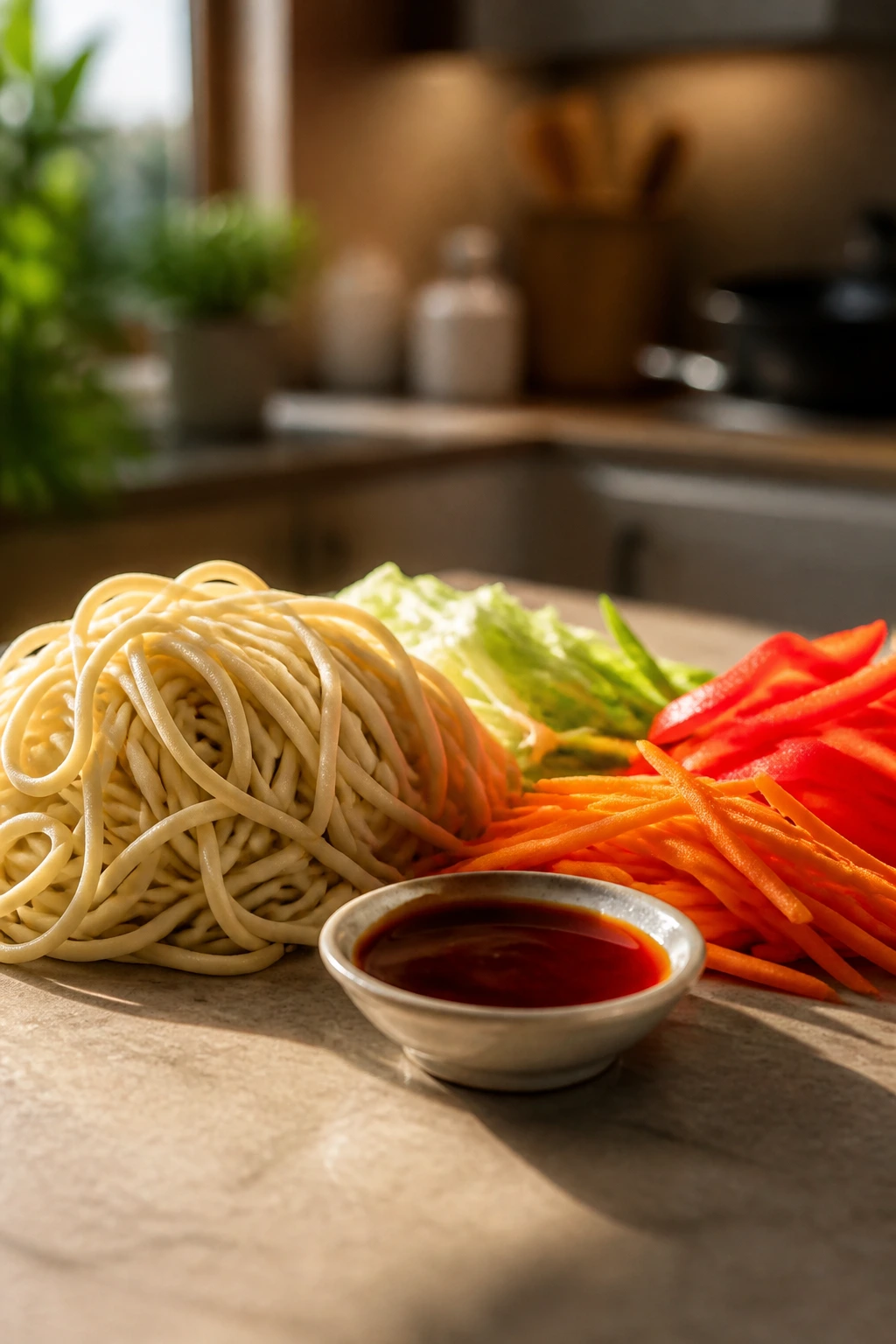
This dish doesn’t need a long shopping list, but the few things it does need have to be the right shape and size. Thinly cut vegetables matter. A sauce that tastes a touch too bold before it hits the noodles matters. And noodles that can take one more minute in the pan matter a lot.
If you’ve ever made stir-fry that tasted fine but lacked that restaurant finish, the issue was probably not “missing flavor” in some vague way. It was usually one of three things: the noodles were too soft before they hit the wok, the vegetables gave off too much water, or the sauce never got the chance to cling. This version is built to avoid all three.
For the noodles:
- 12 ounces dried lo mein noodles or dried spaghetti
- 1 tablespoon neutral oil, for tossing the noodles after draining
- 1 tablespoon kosher salt, for the noodle water
For the sauce:
- 1/4 cup low-sodium soy sauce
- 2 tablespoons mushroom oyster sauce or regular oyster sauce
- 1 tablespoon dark soy sauce
- 2 tablespoons chili garlic sauce
- 2 teaspoons sugar
- 1 teaspoon toasted sesame oil
- 1/4 cup water
- 1 teaspoon cornstarch
For the vegetables:
- 2 tablespoons neutral oil
- 1 medium yellow onion, thinly sliced
- 2 medium carrots, julienned or cut into thin matchsticks
- 1 red bell pepper, thinly sliced
- 8 ounces shiitake mushrooms or cremini mushrooms, sliced
- 3 cups shredded Napa cabbage or green cabbage
- 3 cloves garlic, minced
- 1 tablespoon fresh ginger, finely grated
- 4 scallions, sliced into 1-inch pieces
For finishing:
- 1/2 teaspoon crushed red pepper flakes, optional
- 1 tablespoon toasted sesame seeds, optional
- Chili oil, for serving, optional
What Each Ingredient Brings to the Pan
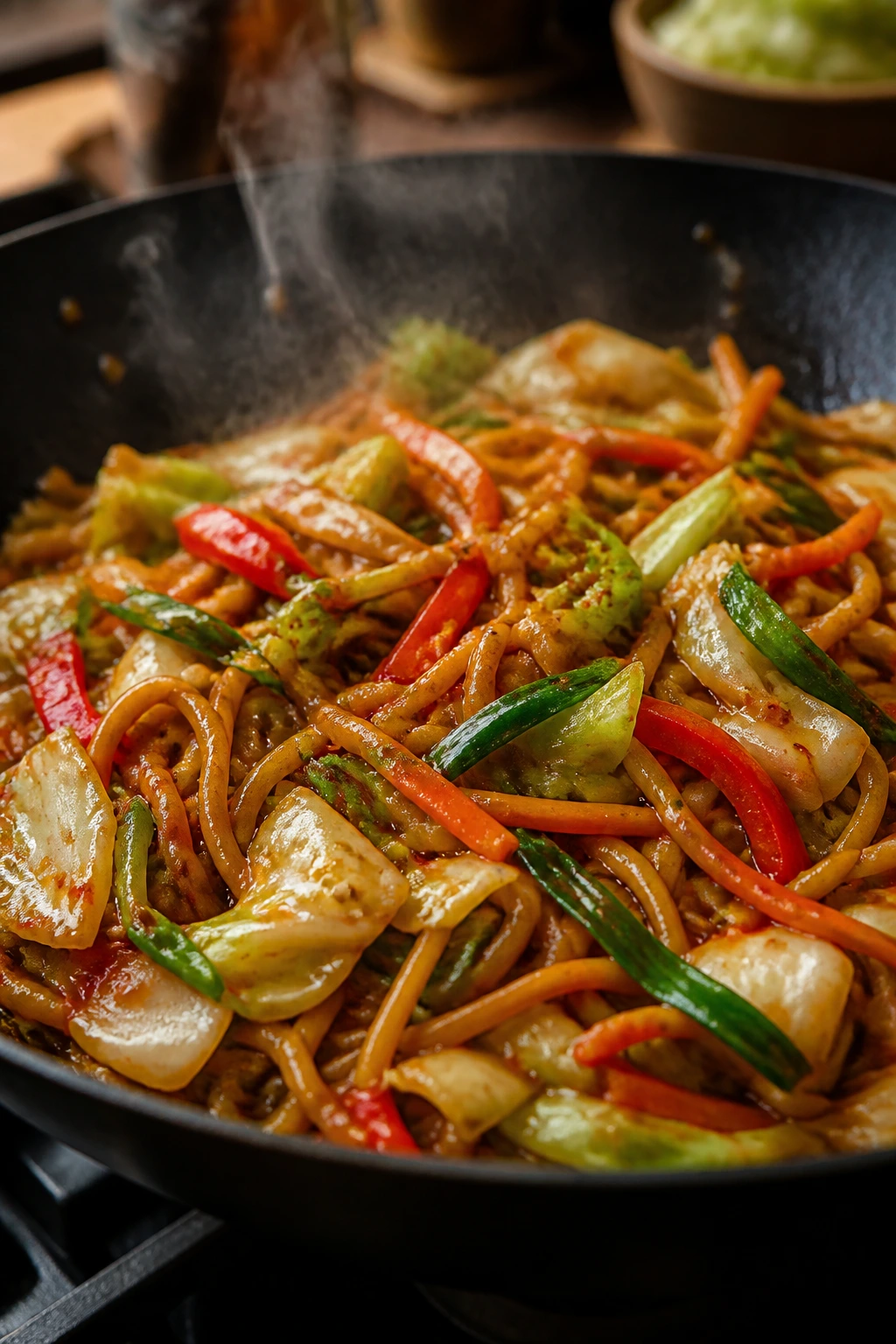
Noodles
- What to use: 12 ounces dried lo mein noodles, or dried spaghetti if that’s what you’ve got.
- Preparation: Cook them until they’re one minute shy of done, then drain and toss with 1 tablespoon neutral oil so they don’t glue themselves together.
- Substitutions: Spaghetti works better than most people expect. Fresh lo mein noodles are excellent, too, but they need a much shorter boil.
- Tips: Stop cooking while the center still has a little chew. The noodles spend more time in the hot pan, and that last minute of carryover matters more than people think.
Sauce
- What to use: 1/4 cup low-sodium soy sauce, 2 tablespoons mushroom oyster sauce or regular oyster sauce, 1 tablespoon dark soy sauce, 2 tablespoons chili garlic sauce, 2 teaspoons sugar, 1 teaspoon toasted sesame oil, 1/4 cup water, and 1 teaspoon cornstarch.
- Preparation: Whisk the sauce in a small bowl until the cornstarch disappears and the color looks even, almost like thin brown syrup.
- Substitutions: If dark soy sauce is hard to find, use another tablespoon of soy sauce plus a tiny pinch of brown sugar or molasses. If you want more heat, chili crisp can stand in for part of the chili garlic sauce.
- Tips: Taste the sauce before it hits the pan. It should be a little aggressive on its own because the noodles and vegetables will soften it once everything gets tossed together.
Vegetables
- What to use: 1 medium yellow onion, 2 medium carrots, 1 red bell pepper, 8 ounces mushrooms, and 3 cups shredded cabbage.
- Preparation: Cut everything into thin, even pieces so the hardest vegetables and the softest vegetables finish together. The carrots should be in matchsticks, not thick sticks.
- Substitutions: Snow peas, bok choy, bean sprouts, broccoli florets, or sliced napa stems all work if you keep the pieces small. If your fridge is odd and sparse, use what survives a high-heat toss.
- Tips: Mushrooms need room. If they’re crowded, they’ll steam and go gray instead of browning at the edges, so don’t be afraid to cook them in two quick batches.
Aromatics and Heat
- What to use: 3 cloves garlic, 1 tablespoon fresh ginger, and 4 scallions.
- Preparation: Mince the garlic fine, grate the ginger, and separate the scallion whites from the greens if you want a little more control over the finish.
- Substitutions: Garlic paste and ginger paste will work in a pinch, though the flavor is flatter. Dried ginger isn’t a good stand-in here.
- Tips: Garlic burns faster than people expect in a dry-hot pan. Have the cabbage ready before it goes in, because once the garlic hits the oil you’re moving.
Finishing Touches
- What to use: 1/2 teaspoon crushed red pepper flakes, 1 tablespoon toasted sesame seeds, and a little chili oil if you want more heat.
- Preparation: Keep the seeds and chili oil for the end so they stay fragrant.
- Substitutions: Toasted peanuts or cashews can replace sesame seeds if you like a little crunch.
- Tips: The sesame oil belongs mostly in the sauce, not as a heavy drizzle at the end. Too much can make the noodles smell like a bottle instead of a bowl.
Tools That Keep the Stir-Fry Moving
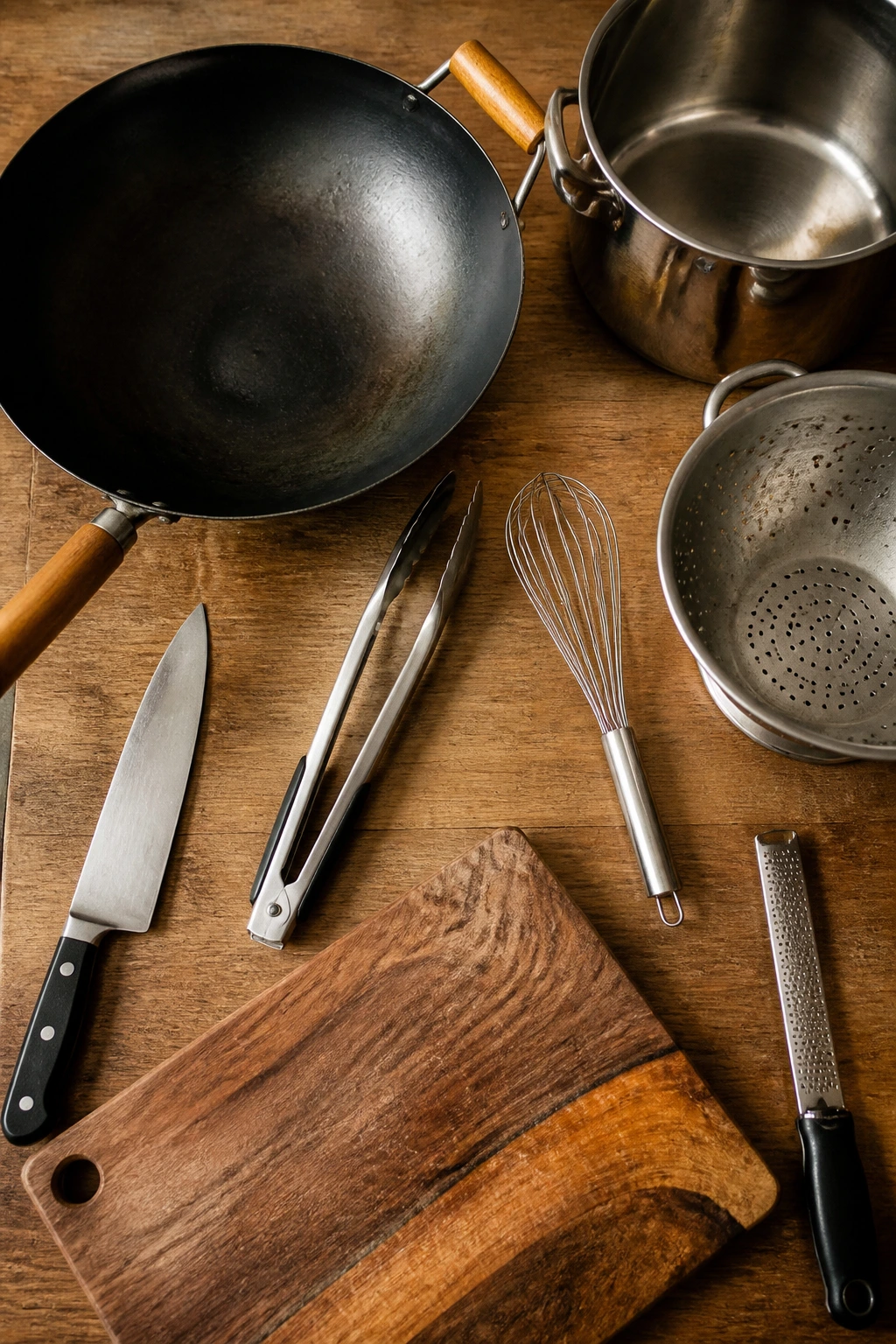
A stir-fry is one of those dishes that looks casual but rewards the right tools. You do not need a fancy setup. You do need enough surface area to keep the vegetables from steaming into a pile of soft ribbons.
A wok is the obvious choice, and it’s the best one if you have it. But a wide stainless-steel skillet works too, especially if it has sloped sides and can take real heat. The key is room. The pan should feel spacious, not crowded.
- Wok or large 12-inch skillet: Wide sides give the vegetables space so they brown instead of steam.
- Large pot: You need enough water to boil the noodles freely.
- Colander or spider strainer: Drains fast and keeps the noodle water out of the pan.
- Tongs or long chopsticks: Best for tossing the noodles without breaking them.
- Small bowl and whisk: Makes the sauce easy to mix evenly.
- Sharp chef’s knife: Thin slices matter here, and a dull knife turns carrot prep into a chore.
- Cutting board: A stable board keeps the vegetable prep fast and neat.
- Microplane or fine grater: Handy for ginger, though a small knife works if that’s what you have.
If you only own a nonstick skillet, use it on medium-high heat and keep the tosses brisk. It won’t brown quite the same way a wok does, but it still gets the job done.
The Stir-Fry Method That Keeps the Noodles Springy
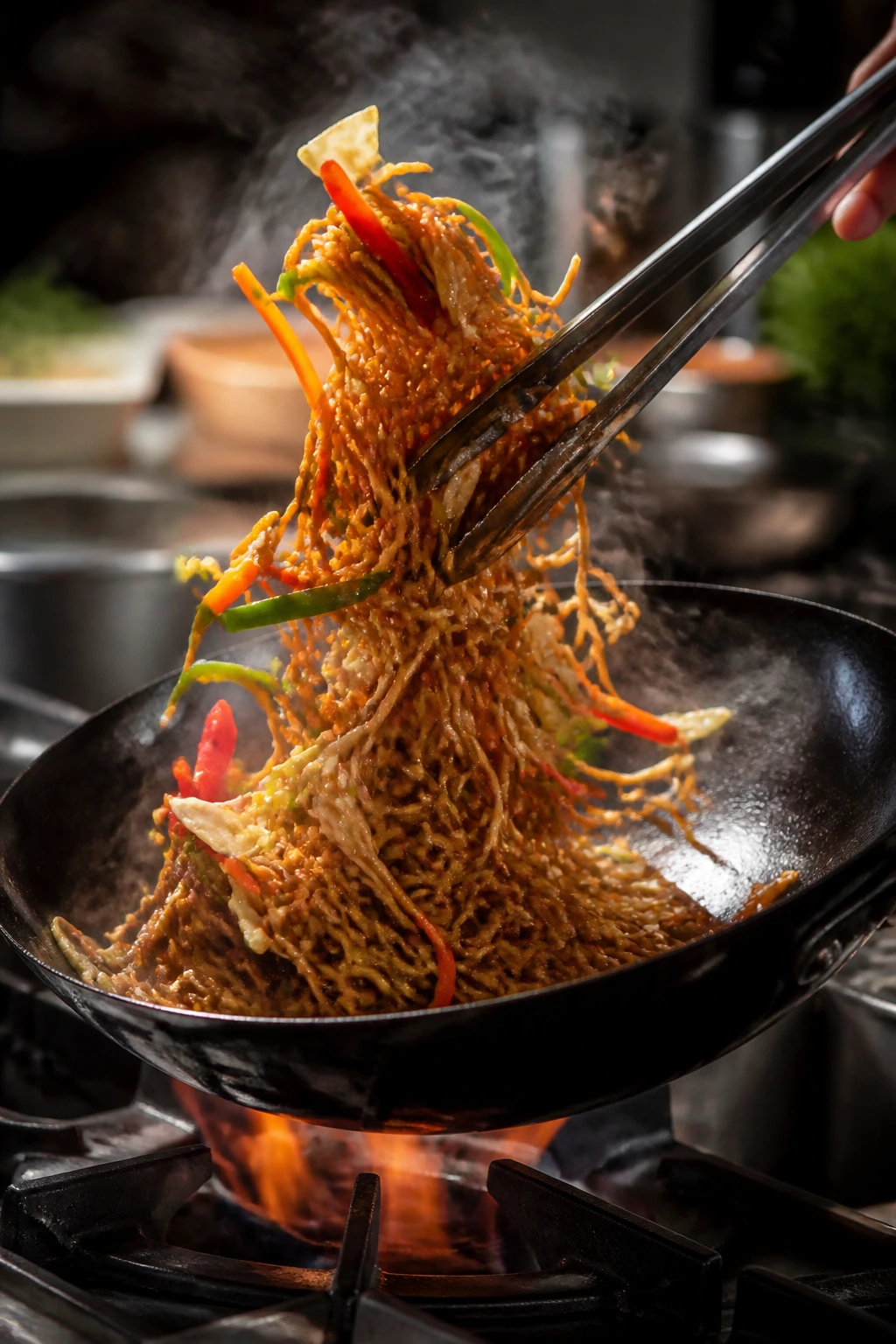
The real trick with lo mein is timing. The sauce wants heat. The vegetables want speed. The noodles want to be cooked just shy of finished before they meet either of those things. Once you see the whole dish that way, it becomes less of a recipe and more of a sequence.
A lot of home stir-fries fail because people make the sauce first and then wait too long to use it. That’s backward. Get the noodles drained, the vegetables cut, and the sauce mixed before the wok gets hot. Once the oil goes in, the pace tightens fast.
Cook the noodles
- Bring a large pot of water to a boil over high heat and salt it with 1 tablespoon kosher salt. Add the noodles and cook until they’re 1 minute shy of the package directions. If you’re using fresh lo mein noodles, boil just until they loosen, usually 30 to 45 seconds.
- Drain the noodles in a colander, then rinse briefly under cool water to stop the cooking. Toss them with 1 tablespoon neutral oil so they stay loose and slippery. Do not leave them in a wet clump; that’s how they stick before they even reach the pan.
Mix the sauce
- Whisk together the soy sauce, mushroom oyster sauce, dark soy sauce, chili garlic sauce, sugar, toasted sesame oil, water, and cornstarch in a small bowl. The sauce should look smooth and thin, with no white cornstarch streaks hiding at the bottom.
- Taste the sauce. It should be salty, spicy, and a little sweet on its own. If it tastes timid now, it will taste flat later.
Stir-fry the vegetables
- Set a wok or large skillet over high heat for 1 to 2 minutes until it feels almost uncomfortable to hold your hand over it. Add 2 tablespoons neutral oil, swirl it around, then add the onion and carrots. Stir-fry for 2 minutes, until the onion starts to soften at the edges and the carrots lose their raw stiffness.
- Add the mushrooms and bell pepper. Cook for 2 to 3 minutes, tossing often, until the mushrooms release their moisture and begin to brown in spots. The peppers should still hold their shape, but the raw crunch should be fading.
- Add the cabbage, garlic, ginger, and the white parts of the scallions. Toss for 1 to 2 minutes until the cabbage wilts by about half and the garlic smells sweet instead of harsh. If the garlic starts to color too fast, lower the heat for a few seconds and keep the vegetables moving.
Bring everything together
- Add the noodles and pour the sauce around the edges of the pan so it hits the hot metal and blooms right away. Toss with tongs for 1 to 2 minutes until the noodles turn glossy and the sauce clings to every strand. Do not walk away here; cornstarch thickens in a hurry once it boils.
- Fold in the scallion greens, crushed red pepper flakes if you’re using them, and a small drizzle of chili oil if you want more heat. Taste a strand and adjust with a splash of soy sauce, a pinch of sugar, or a little more chili oil.
- Transfer the noodles to warm bowls and finish with sesame seeds. Serve immediately while the noodles still have spring to them.
How to Plate the Bowl So It Still Looks Fresh
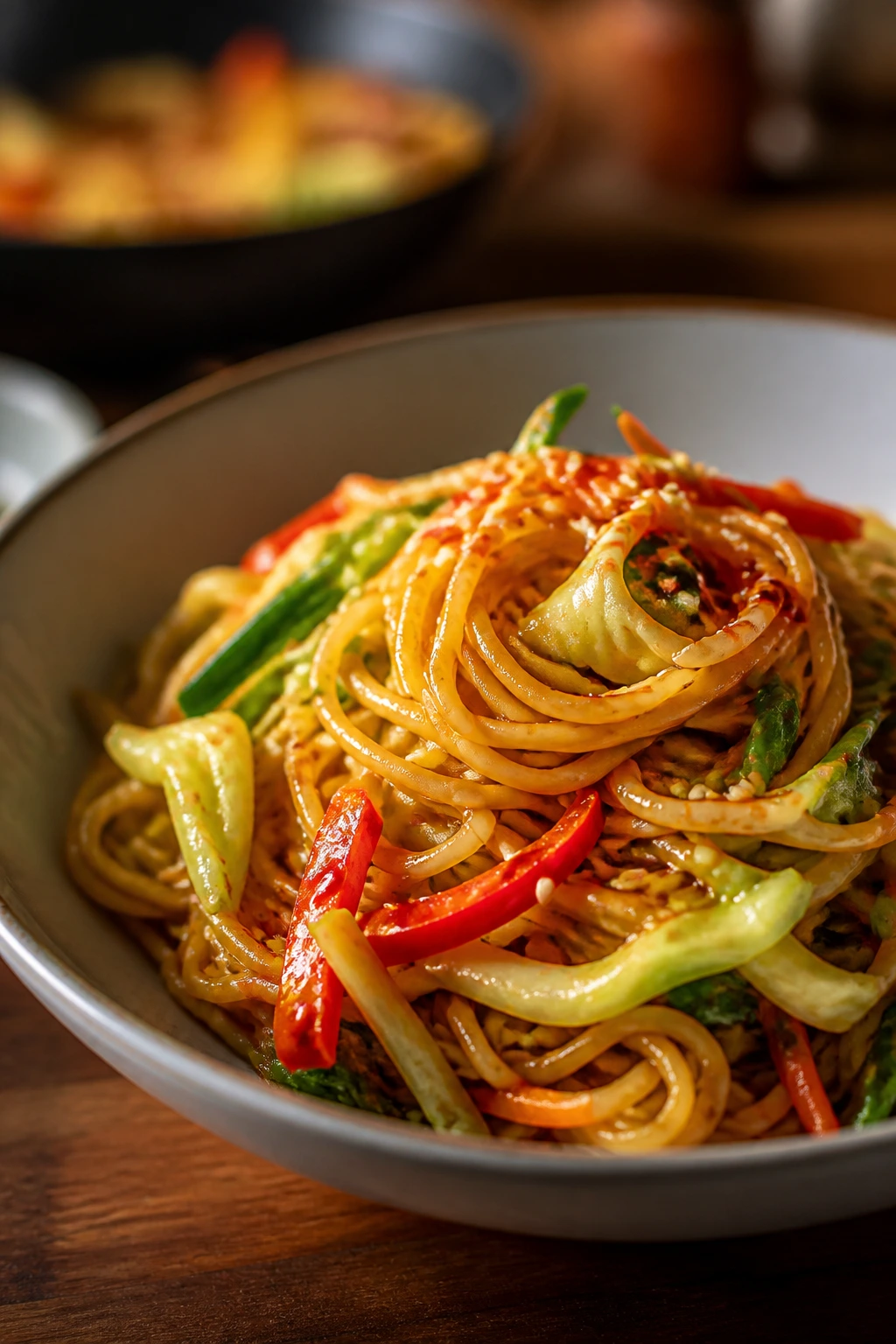
Spicy vegetable lo mein doesn’t need a fussy presentation, but it does benefit from a little shape. If you pile it flat and compact, the noodles can look dense. If you lift and twirl it into the bowl, the carrots and cabbage stay visible and the whole dish looks looser.
Presentation: Use shallow bowls or wide, low plates if you have them. Twirl a nest of noodles with tongs, then tuck the vegetables over the top so the red pepper and green scallions show. A small scatter of sesame seeds and a thin line of chili oil makes the bowl look finished without weighing it down.
Accompaniments: I like this with a crisp cucumber salad, steamed edamame, or pan-fried dumplings if you want something extra. A simple broth-based soup works too, but keep the sides light. The noodles already carry the meal; anything heavy beside them muddies the plate.
Portions: Four main-dish servings is the sweet spot here. If you’re serving it as part of a bigger spread, it stretches to six smaller portions. For a larger appetite, add a handful more cabbage or mushrooms rather than extra sauce.
Beverage Pairing: Iced jasmine tea is the cleanest match. A cold lager also works because it cuts the sesame and chili without fighting the garlic. If you want nonalcoholic and simple, sparkling water with lime keeps the last bites from feeling heavy.
Small Tweaks That Change the Whole Bowl
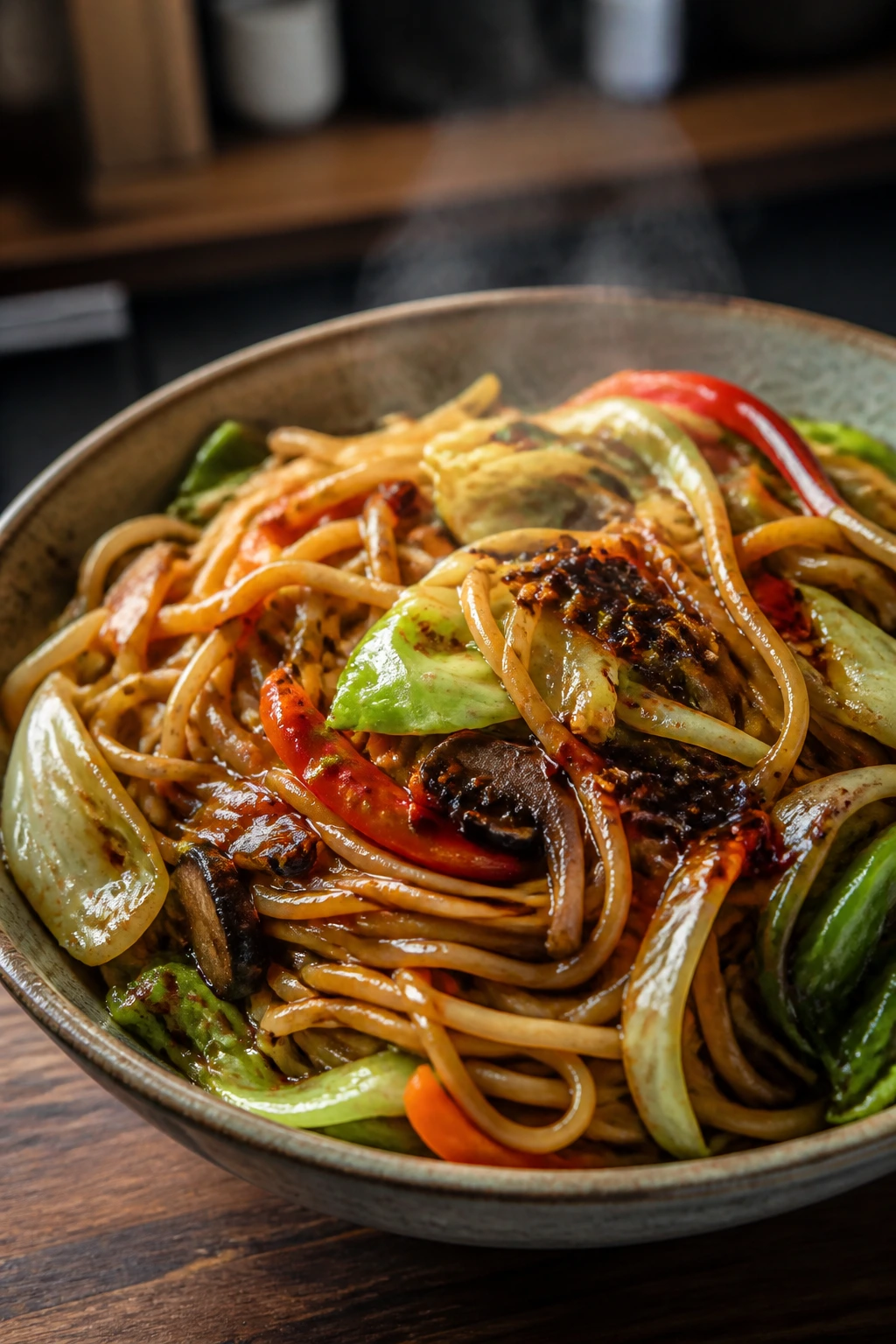
A dish like this gets better when you learn what to leave alone and what to tweak. The noodles want balance, not noise. The vegetables want heat, not time. And the sauce wants one or two strong finishing notes, not five things all yelling at once.
Flavor Enhancement: A teaspoon of Chinese black vinegar at the very end sharpens the whole bowl in a way that plain rice vinegar doesn’t. It doesn’t make the noodles sour; it just wakes up the soy and chili and gives the sauce a little snap.
Time-Saver: Chop the vegetables earlier in the day and keep them in separate containers. Carrots and peppers can share a box. Cabbage can sit with the mushrooms. Garlic and ginger should stay apart until the last minute so their flavor stays clean.
Heat Control: Chili garlic sauce does the main work, but the last hit of spice should come from the table if you’re cooking for mixed tastes. Set out chili oil or extra red pepper flakes and let people finish their own bowl. It keeps the base recipe flexible.
Texture Boost: If you want more bite, toss in a small handful of bean sprouts during the last 30 seconds. If you want a softer bowl, let the sauce boil for a few extra seconds before the noodles go in, which thickens it slightly and softens the edge of the cabbage.
Make-It-Yours: A spoonful of peanut butter turns the sauce richer and a little rounder, almost satay-like. Keep it subtle, though. One tablespoon is enough; more than that and the bowl stops tasting like lo mein.
Where Home Cooks Lose the Texture
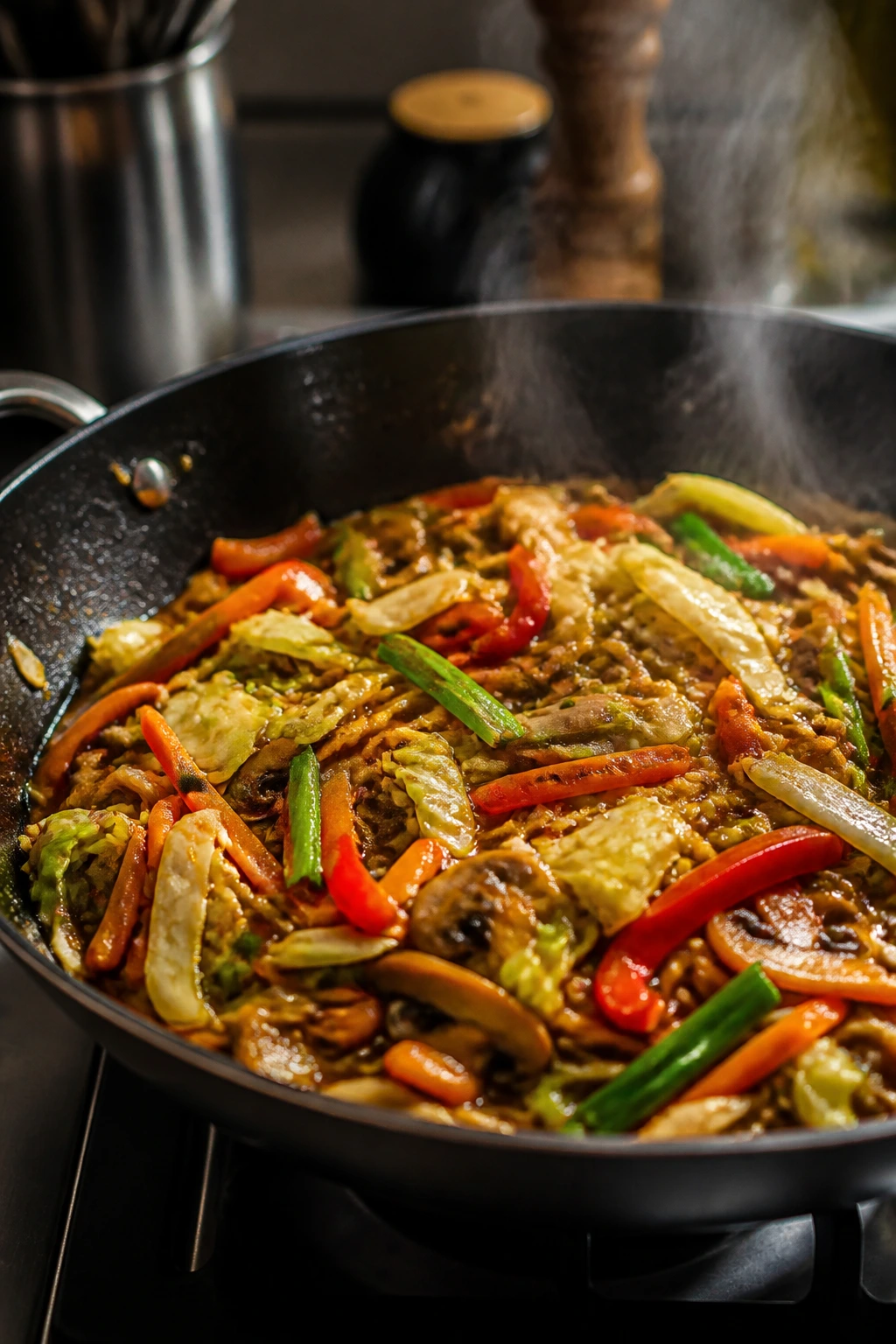
The trouble with lo mein is that the mistakes are small and fast. Nobody makes a dramatic error. People just let the pan run too cool, or boil the noodles a little too long, or add sauce to vegetables that are still dripping. The bowl still tastes fine, but it loses that taut, springy texture that makes you want another bite.
- Overcooking the noodles before they hit the wok: If they’re soft coming out of the pot, they’ll turn mushy when tossed with sauce. Stop the boil a minute early and rinse quickly.
- Using a pan that’s too small: Crowding the vegetables traps steam. Mushrooms go gray, cabbage turns limp, and the whole bowl looks tired. Use a wide skillet or cook the vegetables in two batches.
- Adding sauce before the vegetables have shed moisture: If the pan is wet, the sauce dilutes and turns muddy instead of glossy. Cook until the vegetables look hot and mostly dry before the noodles go in.
- Letting garlic burn: Burnt garlic makes the whole bowl taste harsh. Add it late, keep it moving, and give the cabbage a chance to soften right away.
- Skipping the final taste test: Noodles absorb seasoning fast. What tasted bold in the bowl can go quiet on the plate. Taste a strand and fix salt, heat, or sweetness before serving.
If the noodles ever look dull and sticky rather than glossy and loose, it’s usually one of those five things. And yes, it can still be salvaged. A splash of hot water, a little more soy, and a fast toss over heat can bring the bowl back to life.
Four Ways to Bend the Bowl to Your Mood
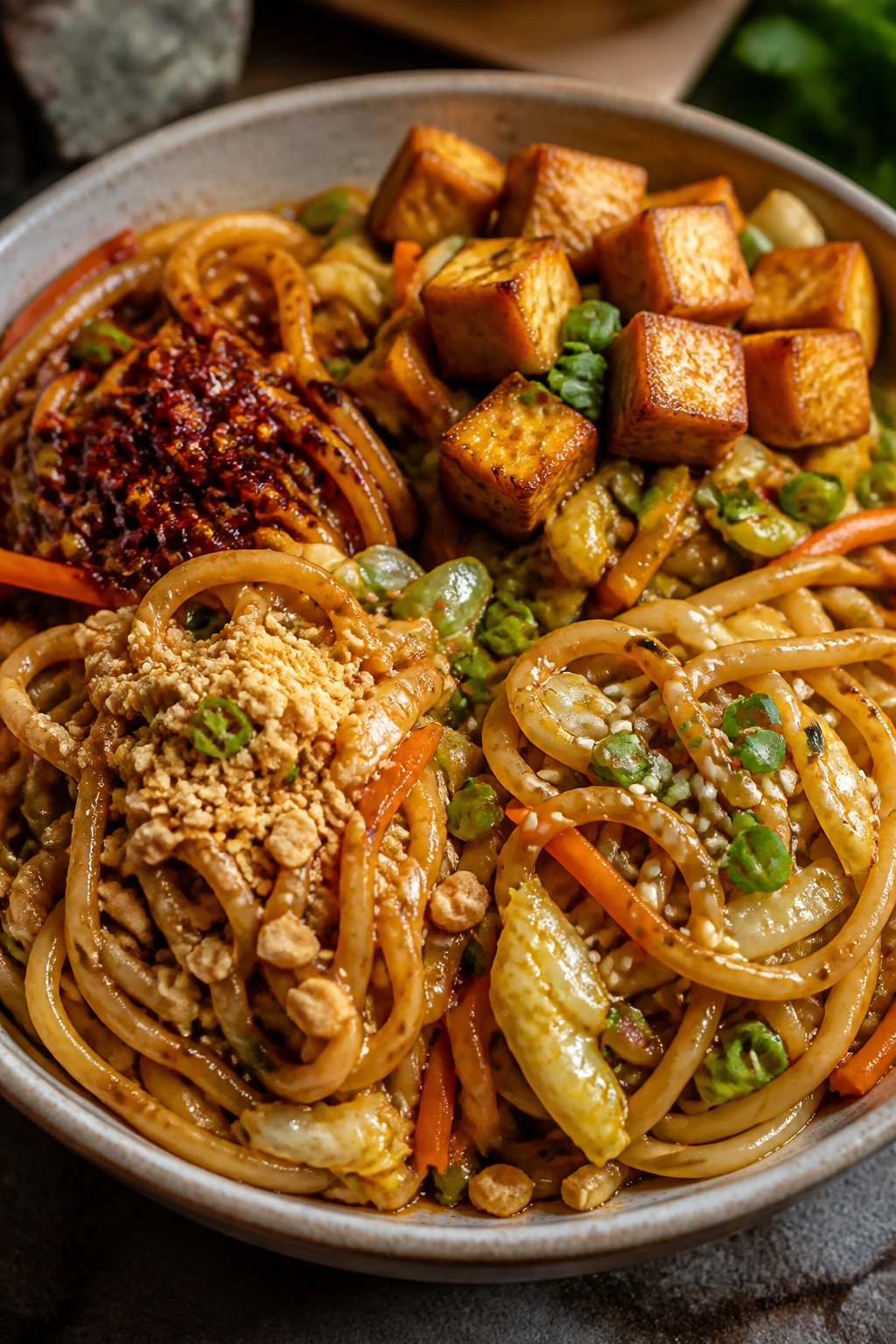
The base recipe is sturdy, which is why it takes well to changes. You can nudge it toward richer, hotter, lighter, or more filling without rebuilding the whole thing from scratch. That’s a useful trait for a noodle dish. You don’t have to start over just because the fridge looks different.
Firecracker Chili Crisp Lo Mein
Swap the chili garlic sauce for 2 tablespoons chili crisp and cut the sesame oil in the sauce down to 1/2 teaspoon. The crispy bits bring texture and a deeper roasted chili flavor, especially if you spoon a little extra over the top at the table.
Tofu and Greens Lo Mein
Press 8 ounces firm tofu for 15 minutes, cube it, and pan-fry the pieces until the edges turn gold before you stir-fry the vegetables. Fold the tofu in at the end with the noodles so it keeps its shape and soaks up sauce instead of falling apart.
Peanut-Sesame Lo Mein
Whisk 1 tablespoon peanut butter into the sauce with an extra 2 tablespoons water. The sauce becomes thicker and rounder, and the peanuts or sesame seeds on top make more sense here. It’s richer, less sharp, and especially good if you want a fuller bowl.
Mild Ginger-Sesame Lo Mein
Cut the chili garlic sauce to 1 tablespoon and add an extra teaspoon of grated ginger. The bowl still tastes alive, but the heat settles down and the ginger takes the front seat. This is the version I’d make for people who like flavor but not a burn that hangs around.
Gluten-Free Rice Noodle Swap
Use wide rice noodles and tamari instead of soy sauce. Rice noodles need a softer hand, so soak or boil them according to the package and toss them quickly once the sauce goes in. They’ll be a little less springy than wheat noodles, but the finish still works.
How to Keep the Noodles From Going Soft Later
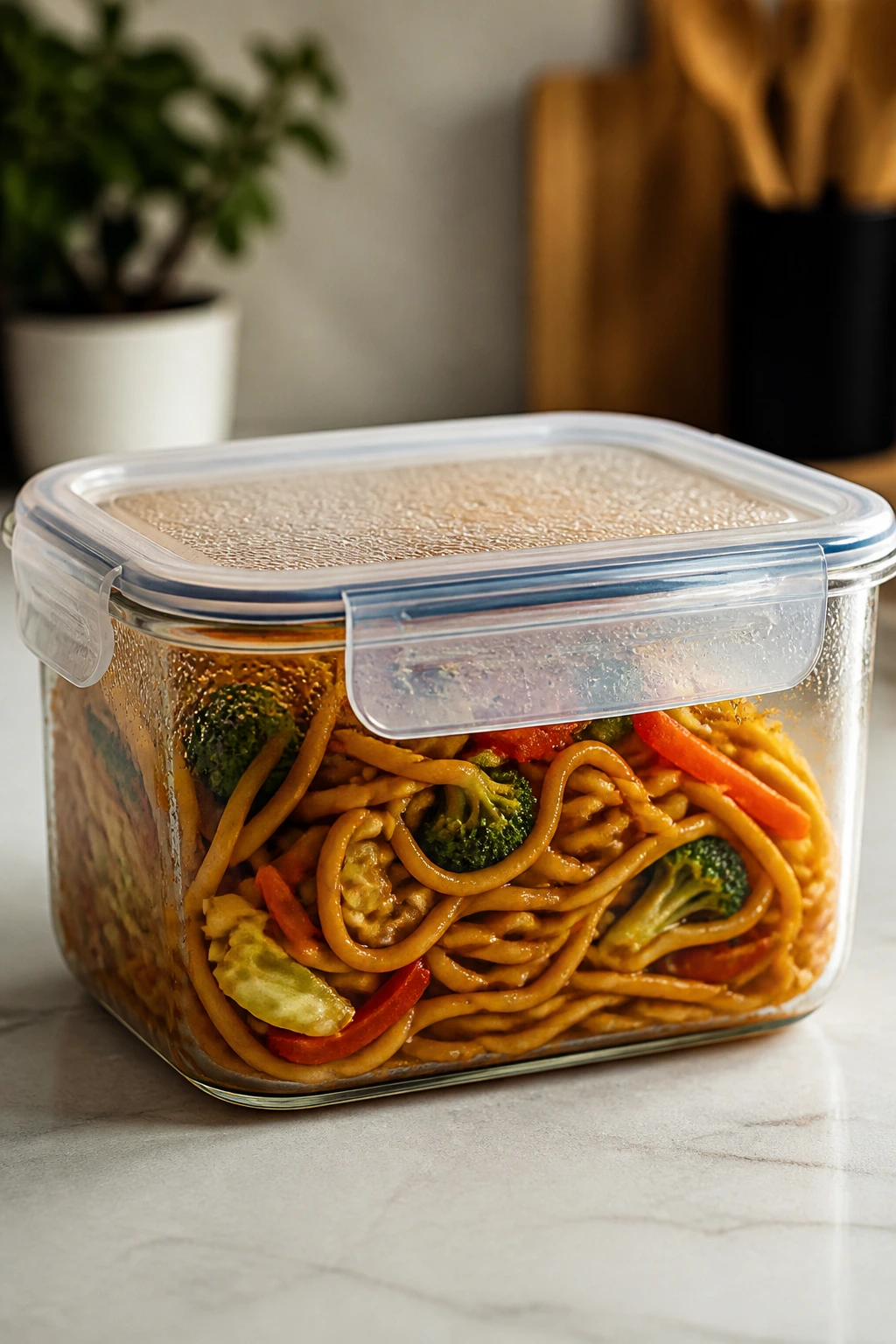
Spicy vegetable lo mein holds up better than a lot of stir-fries, but it still has limits. The noodles soak up sauce over time, and the vegetables continue to relax after they’re cooked. That’s not a flaw. It’s just how noodles behave.
For short-term storage, let the leftovers cool for 20 to 30 minutes, then pack them into an airtight container and refrigerate them. They’ll keep for 3 to 4 days. If you leave them out longer than 2 hours at room temperature, the texture and safety both start to suffer, so don’t let the bowl sit around the counter all evening.
Freezing is possible, though the noodles soften after thawing. If you know you’ll freeze some, stop the vegetables a touch earlier and keep the sauce slightly thicker than usual. Frozen lo mein keeps for up to 2 months in a sealed container. Thaw overnight in the fridge before reheating.
The best way to reheat it is in a skillet over medium heat with 1 to 2 tablespoons water. Toss gently until the noodles loosen and steam rises from the pan again. The microwave works in a pinch, but cover the bowl loosely and stop to stir halfway through so the sauce doesn’t dry at the edges. If the noodles look a little stiff after reheating, a tiny splash of soy sauce or water usually fixes them.
Make-ahead is smartest in pieces. Mix the sauce up to 5 days ahead and keep it in the fridge. Chop the vegetables the day before if you need to, but keep garlic and ginger separate until cooking time. The full dish is best the day it’s made, yet the leftovers are still good enough to pack for lunch without apology.
Questions People Ask Before the Wok Gets Hot
Can I use spaghetti instead of lo mein noodles?
Yes, and it works better than most people expect. Use regular spaghetti or linguine, cook it one minute shy of al dente, and toss it with a little oil after draining so it stays separate. The texture is a touch firmer and less chewy than fresh lo mein noodles, but the sauce still clings well.
How spicy is this recipe?
With 2 tablespoons of chili garlic sauce, the bowl lands in the medium-spicy range for most people. You’ll feel it in the back of the throat and on the lips, but it shouldn’t overpower the vegetables. If you want gentler heat, cut the chili garlic sauce to 1 tablespoon and skip the chili oil at the end.
What vegetables work if my fridge is nearly empty?
Cabbage, onion, carrots, and mushrooms give the best structure, but snow peas, bok choy stems, bell pepper, broccoli florets, and bean sprouts all fit the same format. The only real rule is to cut them small enough that they cook in a few minutes. Thick wedges turn the dish clumsy.
Can I make this vegan?
Yes. Use mushroom oyster sauce instead of regular oyster sauce, or choose a labeled vegan stir-fry sauce if that’s what you keep on hand. Everything else in the recipe is already plant-based, so the swap is straightforward. The bowl still has enough savory depth to stand on its own.
Why did my noodles stick together after draining?
Usually because they sat too long without oil or because the pot was too crowded. Rinse them briefly, drain well, then toss with the 1 tablespoon neutral oil while they’re still warm. If they’re already clumped, loosen them with clean hands or tongs before they go into the wok.
Can I cook this in advance for lunch boxes?
You can, but it’s better when the vegetables stay a little firmer than you think they should. Undercook the carrots by about 30 seconds and stop the cabbage while it still has visible structure. Reheat in a skillet if you can; the microwave works, but the noodles stay nicer when they’re warmed in a pan with a splash of water.
What if the sauce tastes too salty after I toss everything together?
Add a small splash of water and another handful of cabbage or noodles if you have them. If the dish is already assembled, a little sugar or a squeeze of lime can smooth the edge, but water is the cleanest fix. Salty lo mein usually means the sauce was too concentrated before the noodles went in.
A Bowl Worth Repeating
Spicy vegetable lo mein works because it respects three things that home cooks often ignore: heat, timing, and the difference between glossy and soggy. The vegetables need to keep some structure. The noodles need a little bite left in them. And the sauce needs to hit the pan hot enough to wake everything up instead of sitting there like dressing.
That’s why this bowl holds together so well. It tastes like you paid attention. Not in some precious, fussy way. Just enough to get the noodles springy, the vegetables crisp-tender, and the sauce clinging exactly where it should.
Keep a bag of noodles, a bottle of soy sauce, and a jar of chili garlic sauce in the pantry, and this kind of dinner stops being a project. It becomes a useful habit, which is much better.
Spicy Vegetable Lo Mein Better than Takeout — Recipe Card
Recipe Name: Spicy Vegetable Lo Mein Better than Takeout
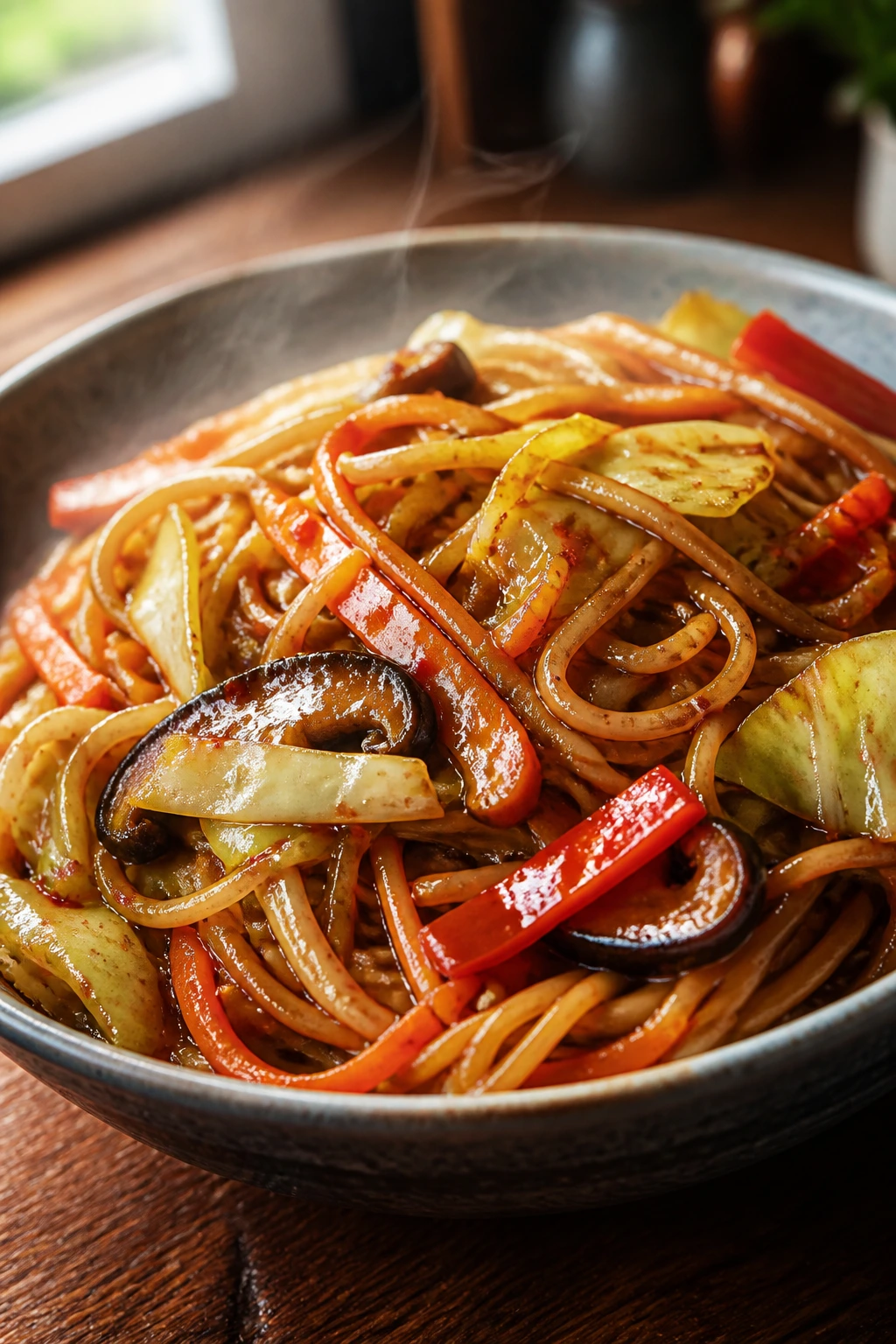
Description: A glossy, spicy, Chinese-inspired noodle bowl loaded with cabbage, carrots, mushrooms, and peppers, finished with a soy-chili sauce that clings to every strand. It’s fast, flexible, and built to stay springy instead of soggy.
Prep Time: 20 minutes
Cook Time: 15 minutes
Total Time: 35 minutes
Course: Main Course
Cuisine: Chinese-Inspired, Asian-Inspired
Servings: 4 servings
Calories: About 420 kcal per serving
Ingredients
For the noodles:
- 12 ounces dried lo mein noodles or dried spaghetti
- 1 tablespoon neutral oil
- 1 tablespoon kosher salt, for the noodle water
For the sauce:
- 1/4 cup low-sodium soy sauce
- 2 tablespoons mushroom oyster sauce or regular oyster sauce
- 1 tablespoon dark soy sauce
- 2 tablespoons chili garlic sauce
- 2 teaspoons sugar
- 1 teaspoon toasted sesame oil
- 1/4 cup water
- 1 teaspoon cornstarch
For the vegetables:
- 2 tablespoons neutral oil
- 1 medium yellow onion, thinly sliced
- 2 medium carrots, julienned or cut into thin matchsticks
- 1 red bell pepper, thinly sliced
- 8 ounces shiitake mushrooms or cremini mushrooms, sliced
- 3 cups shredded Napa cabbage or green cabbage
- 3 cloves garlic, minced
- 1 tablespoon fresh ginger, finely grated
- 4 scallions, sliced into 1-inch pieces
For finishing:
- 1/2 teaspoon crushed red pepper flakes, optional
- 1 tablespoon toasted sesame seeds, optional
- Chili oil, for serving, optional
Instructions
- Bring a large pot of water to a boil and salt it with 1 tablespoon kosher salt. Cook the noodles until 1 minute shy of package directions, then drain and rinse briefly under cool water. Toss with 1 tablespoon neutral oil.
- Whisk together the soy sauce, mushroom oyster sauce, dark soy sauce, chili garlic sauce, sugar, toasted sesame oil, water, and cornstarch until smooth.
- Heat a wok or large skillet over high heat. Add 2 tablespoons neutral oil, then stir-fry the onion and carrots for 2 minutes.
- Add the mushrooms and bell pepper. Cook for 2 to 3 minutes, tossing often, until the mushrooms brown and the peppers start to soften.
- Add the cabbage, garlic, ginger, and the white parts of the scallions. Stir-fry for 1 to 2 minutes until the cabbage wilts.
- Add the noodles and pour in the sauce around the edges of the pan. Toss for 1 to 2 minutes until the noodles are glossy and the sauce thickens.
- Fold in the scallion greens and crushed red pepper flakes if using. Taste and adjust with soy sauce, sugar, or chili oil.
- Serve immediately with sesame seeds and extra chili oil if desired.
Notes: If you can find fresh lo mein noodles, use them and boil only until they loosen. Reheat leftovers in a skillet with a splash of water. For a vegan version, use mushroom oyster sauce.