



Risotto has a funny reputation. People talk about it like it’s fussy, almost temperamental, but the version that lands on a guest table usually says something else entirely: calm heat, a little patience, and a bowl that looks like you paid attention. That is why risotto dinners for hosting guests make so much sense. They feel generous without demanding a parade of pans, and they let you finish with a flourish right at the table.
The trick is that risotto is not about drama in the pan. It’s about rhythm. Warm stock on one burner. A heavy pot. Rice that gets toasted until the edges turn translucent. A final swirl of butter and cheese that gives the whole thing that glossy, spoonable finish people always remember. If you’ve ever stood in a kitchen while guests drift toward the smell of onions, wine, and simmering broth, you know the appeal already.
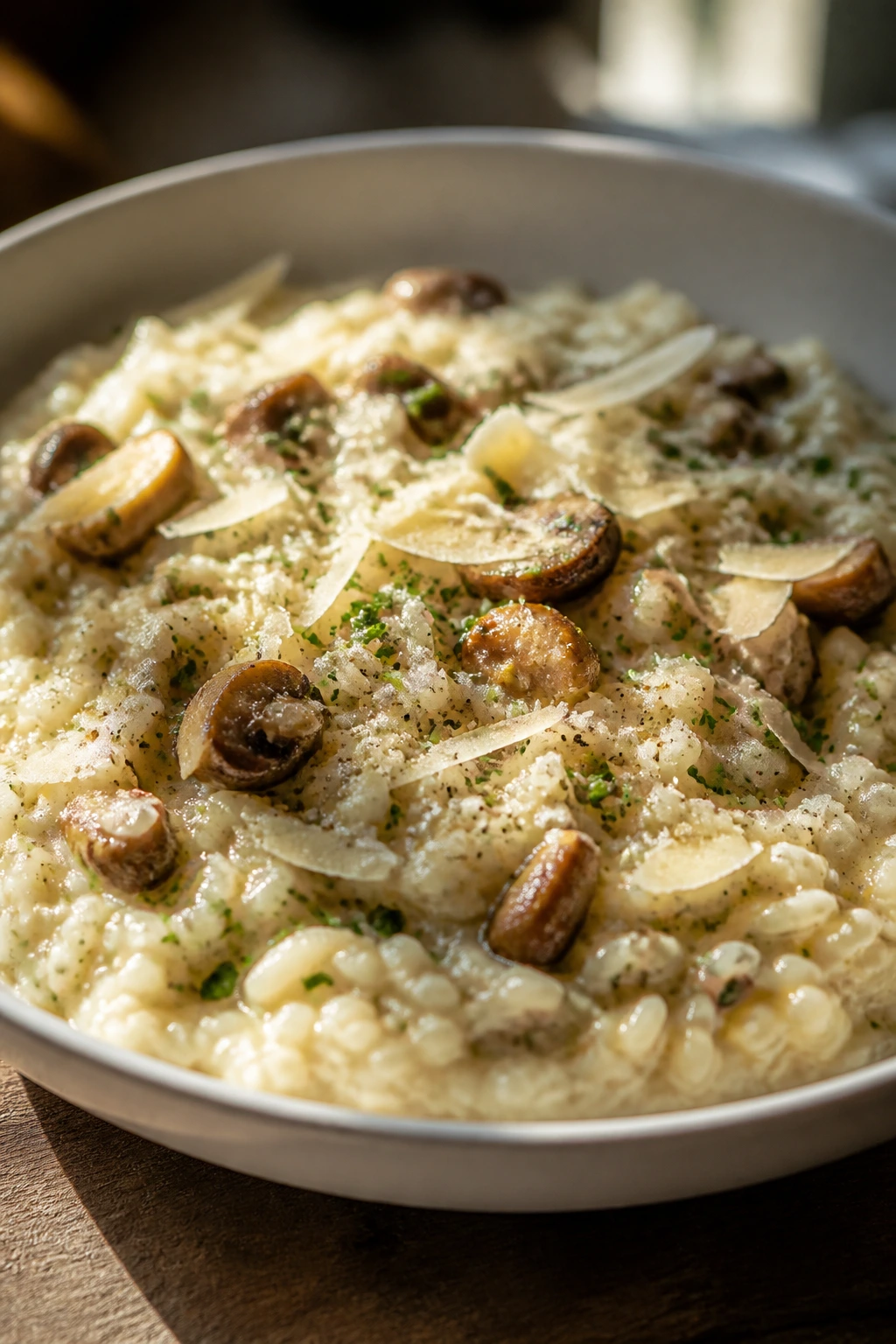
What makes risotto so useful for company is the range. You can go bright and green with lemon and asparagus, deep and earthy with mushrooms, rich with saffron and shrimp, or plush with squash and sage. The structure stays friendly. The mood changes. That’s the good part. You can build a dinner that feels special without turning your evening into a stressful production.
Why These Risotto Dinners Belong on a Guest Table
-
Elegant without effort: A bowl of properly finished risotto looks polished the second it hits the table, even if the ingredient list is short and practical.
-
Flexible for different eaters: You can keep one version vegetarian, make another with chicken, and serve seafood for the people who want something a little more dressed up.
-
Easy to pace: Risotto gives you a built-in rhythm, so you can cook while talking instead of disappearing into a long, fixed oven timer.
-
Seasonal without being fragile: Bright herbs, sweet onions, mushrooms, squash, shrimp, scallops, and tomatoes all work beautifully in this format.
-
Comforting but not heavy-handed: The rice brings richness, but the best versions still taste clean, especially when you finish them with lemon, herbs, or a little bitter green.
-
Good company food, plain and simple: Guests like the ceremony of it. They also like that it tastes finished, which is harder to fake than people think.
1. Lemon-Asparagus Risotto with Parmesan and Mint
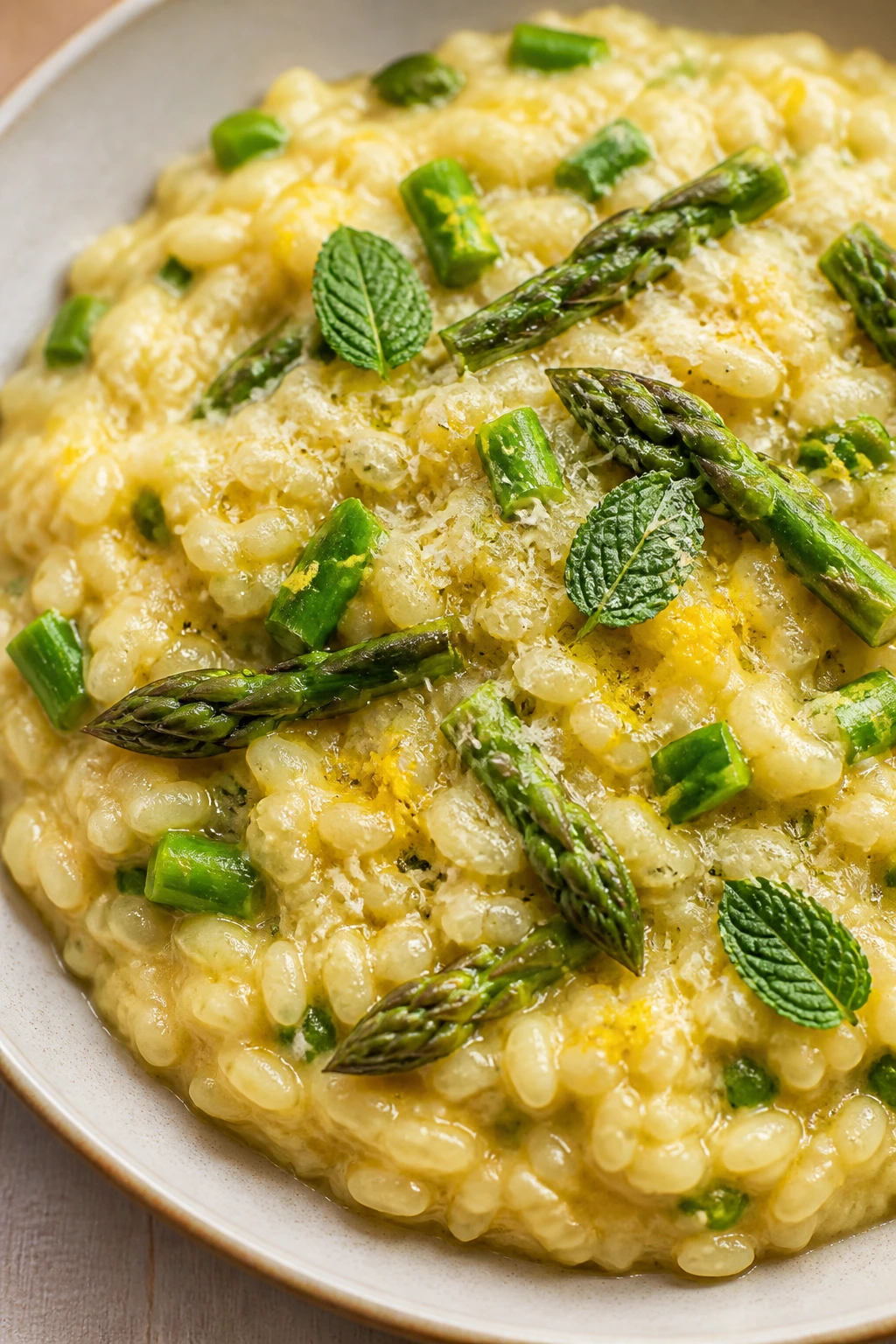
Lemon and asparagus is the risotto that wakes a table up. The bowl comes out pale gold with bright green tips, and the first bite is all creamy rice, green snap, and a clean hit of citrus at the end. It’s the kind of dish that makes people sit a little straighter.
Why It Works
Asparagus likes a short cook. Risotto likes a slow one. That sounds like a problem until you split the stalks from the tips and add them at different moments. The stalks soften into the rice, while the tips stay bright and a little crisp. Lemon zest and juice cut the starch so the dish tastes fresh, not murky, and mint keeps the whole thing from drifting into one-note richness.
Key Ingredients
- 1 1/2 cups arborio rice — Short-grain rice gives you the creamy starch release risotto needs.
- 6 cups low-sodium vegetable stock — Keep it hot on the stove so the rice cooks evenly.
- 1 lb asparagus, trimmed and cut — Separate the tips from the stalks for better texture.
- 1 small yellow onion, finely diced — A soft, sweet base beats raw onion every time.
- 2 tbsp extra-virgin olive oil — Use this to start the aromatics.
- 3 tbsp unsalted butter, divided — One spoonful helps the base, the rest finishes the dish.
- 3/4 cup finely grated Parmesan — Grate it yourself so it melts cleanly.
- 1/2 cup dry white wine — A crisp wine keeps the rice lively.
- 1 lemon, zested and juiced — The zest matters almost more than the juice.
- 2 tbsp chopped mint or flat-leaf parsley — Mint gives it a sharper, fresher finish.
Quick Steps
-
Warm the stock: Set the stock in a small saucepan over low heat and keep it steaming, not boiling. Cold stock makes risotto cook unevenly.
-
Build the base: In a wide heavy pot, heat the olive oil and 1 tablespoon butter over medium heat. Add the onion and cook for 4 to 5 minutes, until soft and translucent but not browned.
-
Toast the rice: Stir in the arborio rice and cook for 1 to 2 minutes, until the edges look glossy and slightly translucent. Pour in the wine and stir until it disappears into the rice.
-
Add stock gradually: Ladle in about 1 cup warm stock at a time, stirring often. Wait until the rice looks almost dry before adding more. This usually takes 18 to 20 minutes.
-
Cook the asparagus: Add the stalk pieces during the last 5 minutes, then fold in the tips during the last 2 minutes so they stay bright and tender.
-
Finish off the heat: Remove the pot from the burner. Stir in the remaining butter, Parmesan, lemon zest, lemon juice, and mint. Do not rush this part — the final swirl is what gives the risotto its sheen.
-
Rest and serve: Let it sit for 2 minutes, then spoon into warm shallow bowls and finish with black pepper.
Tips and Variations
- Make-ahead move: Trim the asparagus and warm the stock earlier in the day, then cook the risotto right before serving.
- Flavor shift: Swap mint for chives if you want a softer, more savory finish.
- Small warning: If the lemon tastes sharp, add a tiny extra knob of butter before serving. That usually settles it down.
2. Mushroom and Thyme Risotto with Crispy Shallots
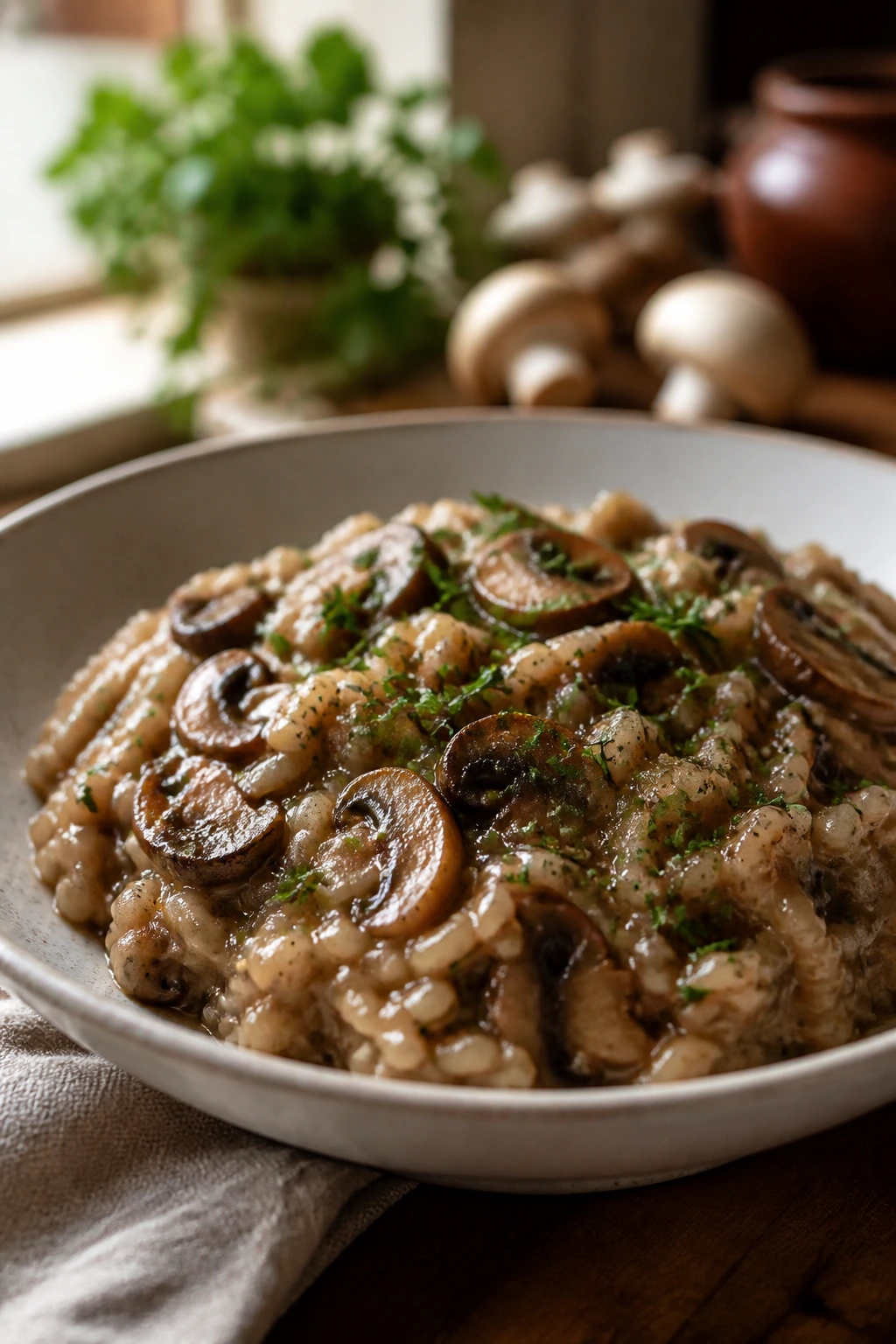
Mushroom risotto is the one that smells like the pot knows exactly what it’s doing. It’s deep, woodsy, and a little bit smoky if you brown the mushrooms properly. The crispy shallots on top are not decoration. They’re the crunch that keeps the bowl from feeling too soft.
Why It Works
Mushrooms have a lot of water, and that’s exactly why so many home cooks get disappointed by them. If you crowd the pan, they steam. If you give them room, they turn brown and taste like they belong in a better restaurant than most of us can afford. Thyme carries the earthiness, and a tiny splash of wine or stock deglazes the browned bits at the bottom. That’s where the good flavor hides.
Key Ingredients
- 1 1/2 cups arborio rice
- 6 cups chicken or vegetable stock, kept hot
- 10 oz cremini mushrooms, sliced
- 8 oz shiitake mushrooms, stems removed and caps sliced
- 1 medium shallot, finely diced
- 2 cloves garlic, minced
- 2 tbsp olive oil
- 3 tbsp unsalted butter
- 1/2 cup dry white wine
- 1 tbsp fresh thyme leaves
- 3/4 cup grated Parmesan
- 1/2 cup crispy shallots, store-bought or homemade
Quick Steps
-
Brown the mushrooms first: Heat 1 tablespoon olive oil in a large skillet over medium-high heat. Cook the mushrooms in two batches, without stirring too much, until they release their water and then turn deep brown at the edges.
-
Set them aside: Transfer the mushrooms to a bowl and season with a pinch of salt. They’ll go back into the risotto later.
-
Start the rice base: In a wide pot, warm the remaining olive oil and 1 tablespoon butter over medium heat. Add the shallot and garlic and cook for 2 to 3 minutes, until fragrant and soft.
-
Toast and deglaze: Stir in the rice and cook for 1 minute. Add the wine and stir until the pan is nearly dry.
-
Ladle in stock slowly: Add the hot stock in small additions, stirring often, until the rice is creamy but still has a slight bite, about 18 minutes.
-
Fold in the mushrooms: Add the mushrooms back in during the last 3 minutes so they stay meaty. Stir in the thyme and the remaining butter.
-
Finish with cheese and crunch: Remove from heat, fold in the Parmesan, and top with crispy shallots. Do not stir the crispy topping into the pot or you’ll lose the contrast.
Tips and Variations
- Best texture trick: Keep one-third of the mushrooms back for the final garnish if you want a prettier bowl.
- Deeper flavor: A pinch of dried porcini powder adds serious mushroom depth.
- If guests want extra richness: Finish with a spoonful of mascarpone, but only off heat.
3. Saffron Shrimp Risotto with Peas
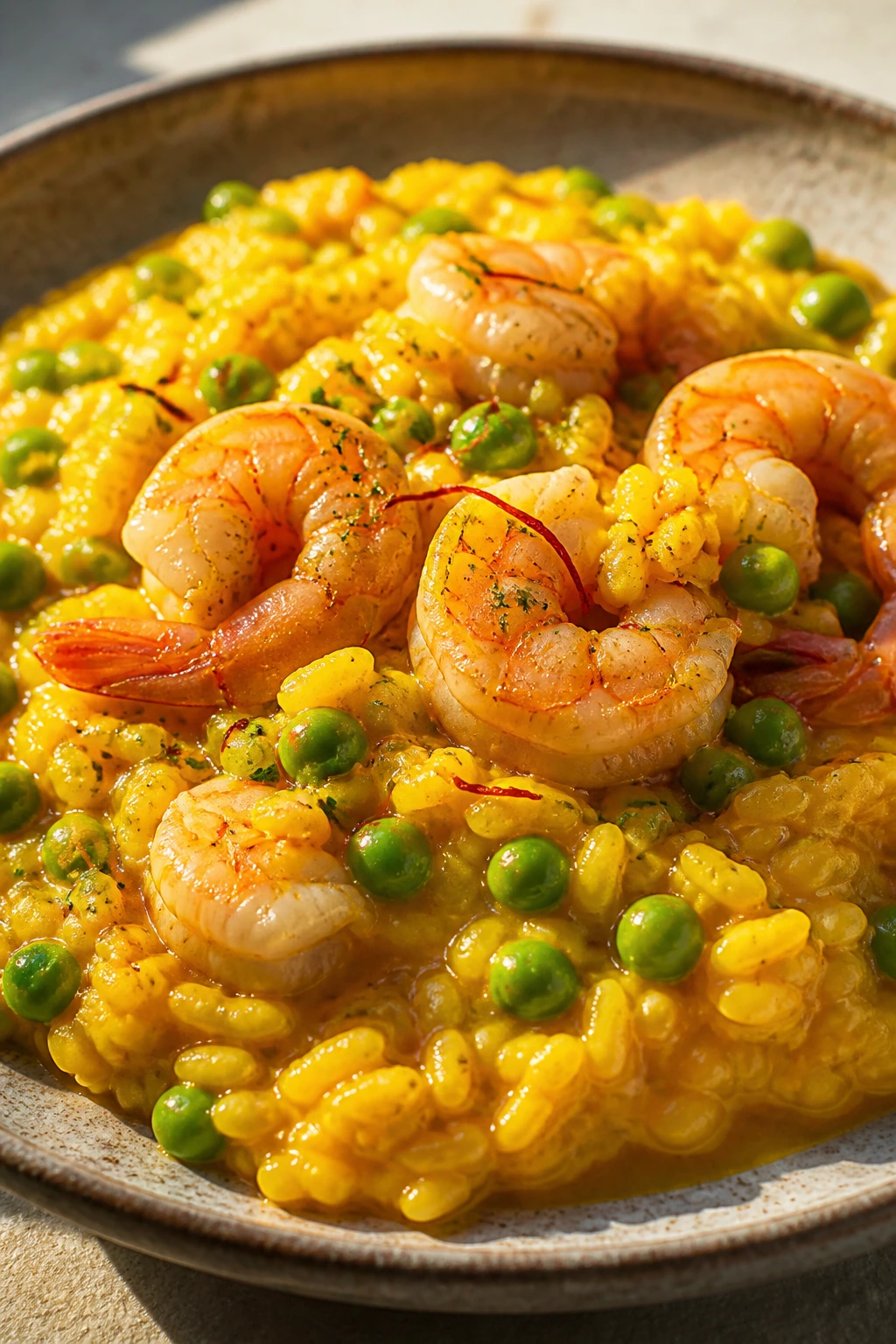
A pinch of saffron can change the whole room. This risotto comes out golden, fragrant, and a little luxurious without being showy about it. Shrimp brings a clean sweetness, and peas keep the bowl from feeling too soft or too heavy.
Why It Works
Saffron is best when it has time to bloom. Warm stock or wine pulls the color and flavor out of the threads, turning the liquid a deep gold before it ever reaches the rice. Shrimp needs the opposite treatment. It cooks fast, and if you leave it in the pot too long, it goes rubbery in a way that no amount of butter can fix. Cooking it separately and folding it in at the end solves the problem cleanly.
Key Ingredients
- 1 1/2 cups arborio rice
- 6 cups seafood stock or chicken stock
- 1 lb large shrimp, peeled and deveined
- 1 pinch saffron threads
- 1 small onion, finely diced
- 1/2 cup dry white wine
- 1 cup frozen peas
- 3 tbsp unsalted butter
- 3/4 cup grated Parmesan
- 1 lemon, cut for juice and wedges
- 2 tbsp olive oil
Quick Steps
-
Bloom the saffron: Stir the saffron into 1/2 cup warm stock and let it sit while you start the base. The liquid should turn gold within a few minutes.
-
Cook the shrimp: Heat 1 tablespoon olive oil in a skillet over medium-high heat. Season the shrimp lightly and sear them for 1 to 2 minutes per side, just until pink and opaque. Move them to a plate right away.
-
Build the risotto base: In a wide pot, heat the remaining olive oil and 1 tablespoon butter. Cook the onion for 4 minutes, until soft.
-
Toast and deglaze: Stir in the rice for 1 minute, then add the wine. Let it cook off, scraping the bottom of the pot.
-
Add stock gradually: Ladle in the saffron stock first, then continue with the rest of the hot stock, stirring until the rice is creamy and nearly tender, about 18 to 20 minutes.
-
Fold in peas and shrimp: Add the peas during the last 2 minutes, then return the shrimp just long enough to warm through.
-
Finish cleanly: Take the pot off the heat and stir in the remaining butter, Parmesan, and a squeeze of lemon. If the rice seems loose, wait 2 minutes before deciding whether it needs more liquid — risotto tightens as it rests.
Tips and Variations
- Color note: Use a small pinch of saffron, not a heavy hand. Too much can turn the flavor medicinal.
- Swap option: Small scallops work in place of shrimp if you want a slightly sweeter seafood profile.
- Serving idea: A little chopped dill on top works better than people expect.
4. Butternut Squash Risotto with Brown Butter and Sage
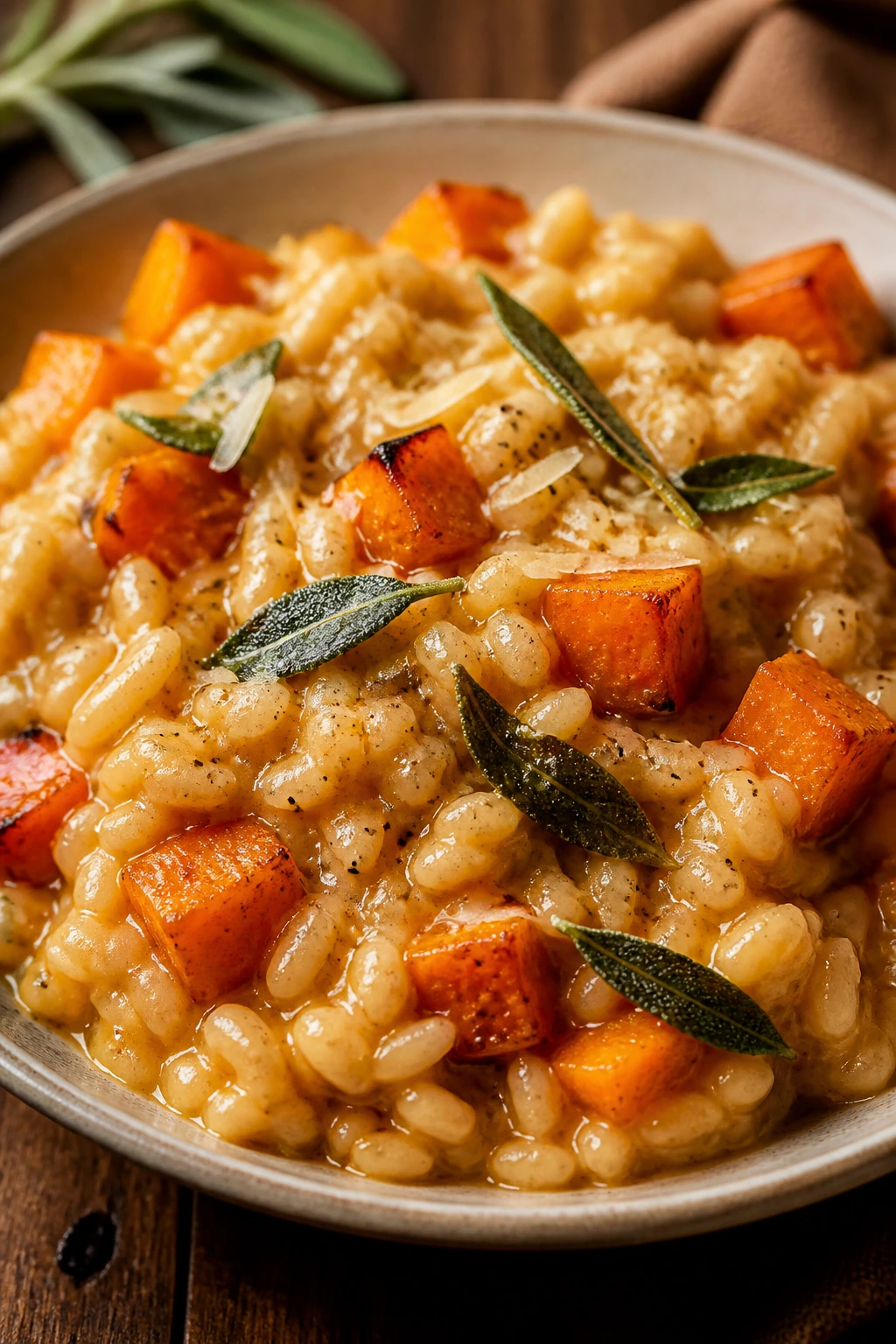
This is the risotto that makes guests slow down. The squash turns sweet and silky, the sage gets crisp in brown butter, and the whole bowl smells like toasted nuts and warm herbs. It’s cozy, but not dull. There’s a difference.
Why It Works
Roasting the squash before it touches the rice deepens the flavor in a way boiling never will. The edges caramelize, the interior softens, and the squash keeps enough shape to stand out in the bowl. Brown butter brings a hazelnut note that makes the risotto taste richer than the ingredient list suggests. Sage does the rest. One crisp leaf can change the whole mouthfeel.
Key Ingredients
- 1 medium butternut squash, peeled and cut into 1/2-inch cubes
- 1 1/2 cups arborio rice
- 6 cups vegetable or chicken stock, kept warm
- 1 small onion, diced
- 1/2 cup dry white wine
- 4 tbsp unsalted butter, divided
- 8 to 10 fresh sage leaves
- 3/4 cup grated Parmesan
- 1/4 tsp freshly grated nutmeg
- 2 tbsp olive oil
Quick Steps
-
Roast the squash: Heat the oven to 425°F (220°C). Toss the squash with olive oil, salt, and pepper, then roast for 20 to 25 minutes until the cubes are tender and caramelized at the edges.
-
Brown the butter: In a small pan, melt 2 tablespoons butter over medium heat. Add the sage leaves and cook until the butter smells nutty and the milk solids turn amber. Pull it off the heat before it goes too dark.
-
Start the risotto: Cook the onion in a wide pot with a little butter over medium heat until soft. Stir in the rice and toast for 1 minute.
-
Deglaze and simmer: Add the wine and stir until absorbed. Then add the warm stock a ladle at a time, stirring until the rice is almost tender, about 18 minutes.
-
Fold in the squash: Add the roasted squash during the last 3 minutes so some pieces break down and some stay in chunks.
-
Finish with butter and cheese: Remove from heat and stir in the brown butter, remaining butter, Parmesan, and nutmeg. The risotto should look loose when you stop stirring; it will settle into the right texture after a short rest.
-
Serve with a crisp top: Scatter the sage leaves over the bowls and add a few grinds of black pepper.
Tips and Variations
- Make-ahead win: Roast the squash up to 2 days ahead and keep it chilled.
- Dairy-free direction: Use olive oil instead of butter and finish with extra olive oil plus a little nutritional yeast.
- Texture trick: Leave a handful of squash cubes out of the pot and place them on top so the bowl has clear pieces, not only a soft mash.
5. Tomato-Basil Risotto with Burrata and Charred Zucchini
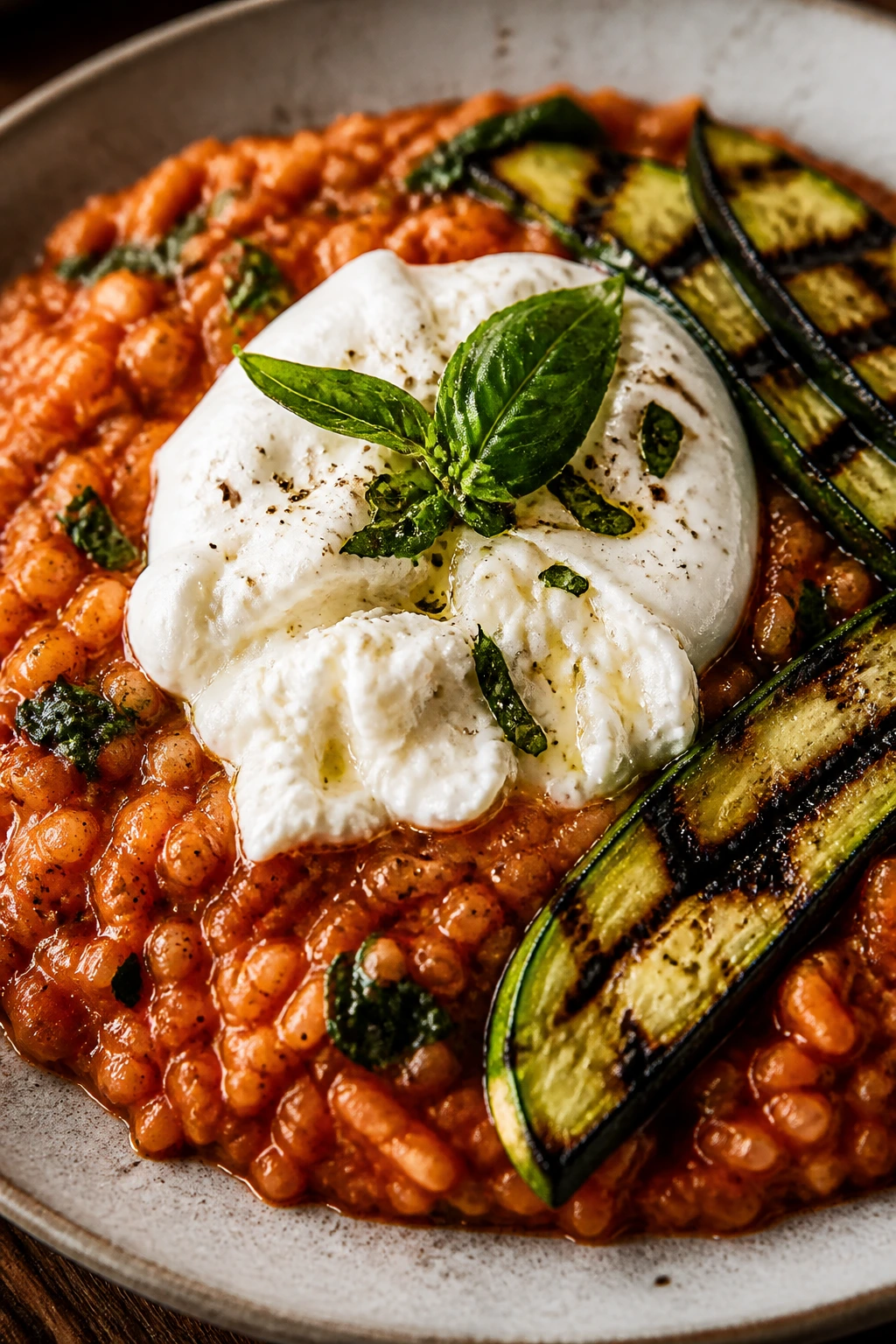
Tomato risotto sounds simple until you spoon it into a shallow bowl and the color stops the room for a second. The tomato paste gives the rice a deep red base, the basil keeps things fresh, and burrata melts into the top in the most unashamed way possible. I’m not sorry about that. Burrata deserves the drama.
Why It Works
Tomato paste needs to be cooked. Raw paste tastes flat and tinny, but when you let it darken for a minute or two in the pot, it turns sweet and concentrated. That creates a richer risotto without adding extra liquid or fuss. Zucchini gives the dish a little edge and a little bitterness from the char, which helps keep the final bowl from feeling soft from top to bottom. Burrata, added at the end, supplies the creamy center guests always lean toward first.
Key Ingredients
- 1 1/2 cups arborio rice
- 6 cups chicken or vegetable stock
- 1 small onion, finely diced
- 2 cloves garlic, minced
- 2 tbsp olive oil
- 3 tbsp unsalted butter
- 1/2 cup dry white wine
- 2 tbsp tomato paste
- 1 pint cherry tomatoes
- 1 medium zucchini, sliced into half-moons
- 1/2 cup grated Parmesan
- 8 oz burrata
- 1/2 cup torn basil leaves
Quick Steps
-
Char the zucchini: Heat 1 tablespoon olive oil in a skillet over medium-high heat. Cook the zucchini until it has browned edges and still holds its shape, about 3 to 4 minutes. Move it aside.
-
Start the base: In a wide pot, cook the onion and garlic in the remaining oil and 1 tablespoon butter over medium heat until softened.
-
Cook the tomato paste: Stir in the tomato paste and cook it for 1 to 2 minutes, until it darkens slightly and smells sweet rather than sharp.
-
Toast the rice and add wine: Stir in the rice, then pour in the wine. Stir until the wine disappears.
-
Add stock in small ladles: Continue with the warm stock, stirring often, until the rice is creamy and just tender, about 18 minutes. Fold in the cherry tomatoes during the last 5 minutes so they soften but don’t collapse entirely.
-
Finish with cheese and herbs: Remove from heat. Stir in the remaining butter, Parmesan, and basil. Top with burrata and the charred zucchini. Do not bury the burrata in the pot — it should stay whole until the table.
Tips and Variations
- Flavor boost: A few torn black olives or capers push this toward a sharper, more Mediterranean feel.
- Cheese swap: Fresh mozzarella works if you can’t find burrata, though it won’t melt as luxuriously.
- Best look: Keep a few cherry tomatoes whole and place them on top for color.
6. Chicken, Spinach, and Lemon Risotto
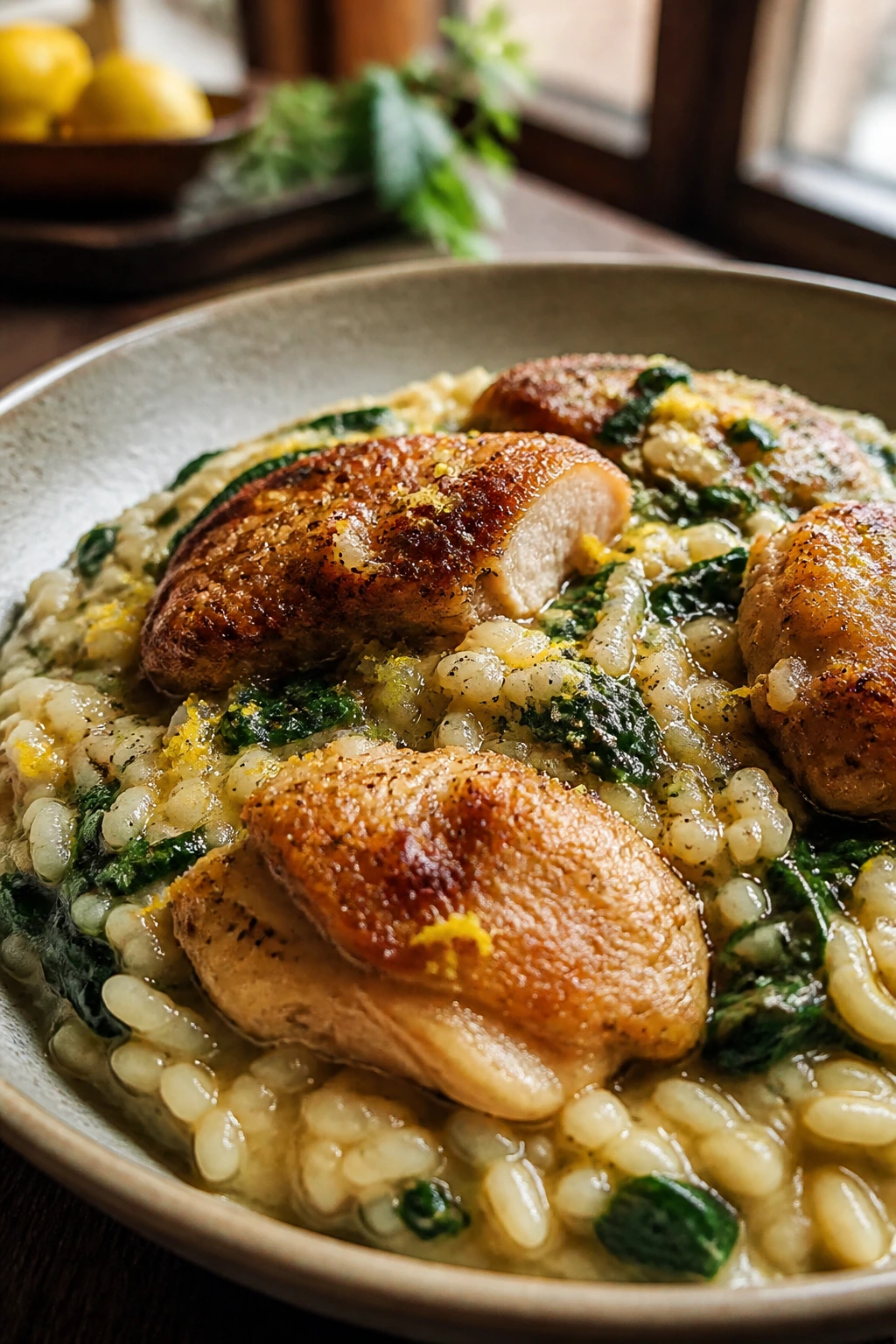
Chicken risotto earns its place because it feeds people properly. It’s not a side dish pretending to be dinner. The chicken stays juicy, the spinach melts in without turning swampy, and lemon keeps the bowl from feeling heavy after the third spoonful.
Why It Works
Chicken thighs are forgiving, which is exactly what you want when guests are arriving in waves and someone is asking where to put their coat. They brown well, stay tender, and carry flavor into the rice. Spinach should go in at the end because it collapses fast. Lemon matters here too. Without it, the dish can taste rich in the dull, tired way. With it, the risotto stays bright enough to keep eating.
Key Ingredients
- 1 1/2 cups arborio rice
- 1 lb boneless, skinless chicken thighs, cut into 1-inch pieces
- 6 cups chicken stock, kept hot
- 1 small onion, diced
- 2 cloves garlic, minced
- 1/2 cup dry white wine
- 4 cups baby spinach
- 3 tbsp unsalted butter
- 3/4 cup grated Parmesan
- 1 lemon, zested and juiced
- 2 tbsp olive oil
- 2 tbsp chopped parsley
Quick Steps
-
Sear the chicken: Heat 1 tablespoon olive oil in a large skillet or pot over medium-high heat. Cook the chicken pieces until browned on the outside and just cooked through, about 5 to 6 minutes. Move them to a plate.
-
Start the risotto base: In the same pot, add the remaining oil and 1 tablespoon butter. Cook the onion for 4 minutes, then add the garlic for 30 seconds.
-
Toast and deglaze: Stir in the rice for 1 minute. Add the wine and scrape up any browned bits from the bottom.
-
Ladle in stock: Add the hot stock gradually, stirring between additions, until the rice is creamy and nearly done, about 18 minutes.
-
Return the chicken: Stir the chicken back in during the last 4 minutes so it warms through without drying out.
-
Wilt the spinach: Add the spinach at the very end and stir until it collapses, which takes less than a minute.
-
Finish with lemon and cheese: Remove from heat, then fold in the remaining butter, Parmesan, lemon zest, lemon juice, and parsley. Taste before serving — chicken and stock both vary in salt.
Tips and Variations
- Easy shortcut: Shredded rotisserie chicken can stand in, but add it only during the last minute.
- Extra green note: A handful of frozen peas fits neatly with the spinach.
- Texture fix: If the rice thickens too much while you’re waiting on guests, loosen it with a splash of hot stock, not water.
7. Caramelized Onion and Goat Cheese Risotto with Toasted Walnuts
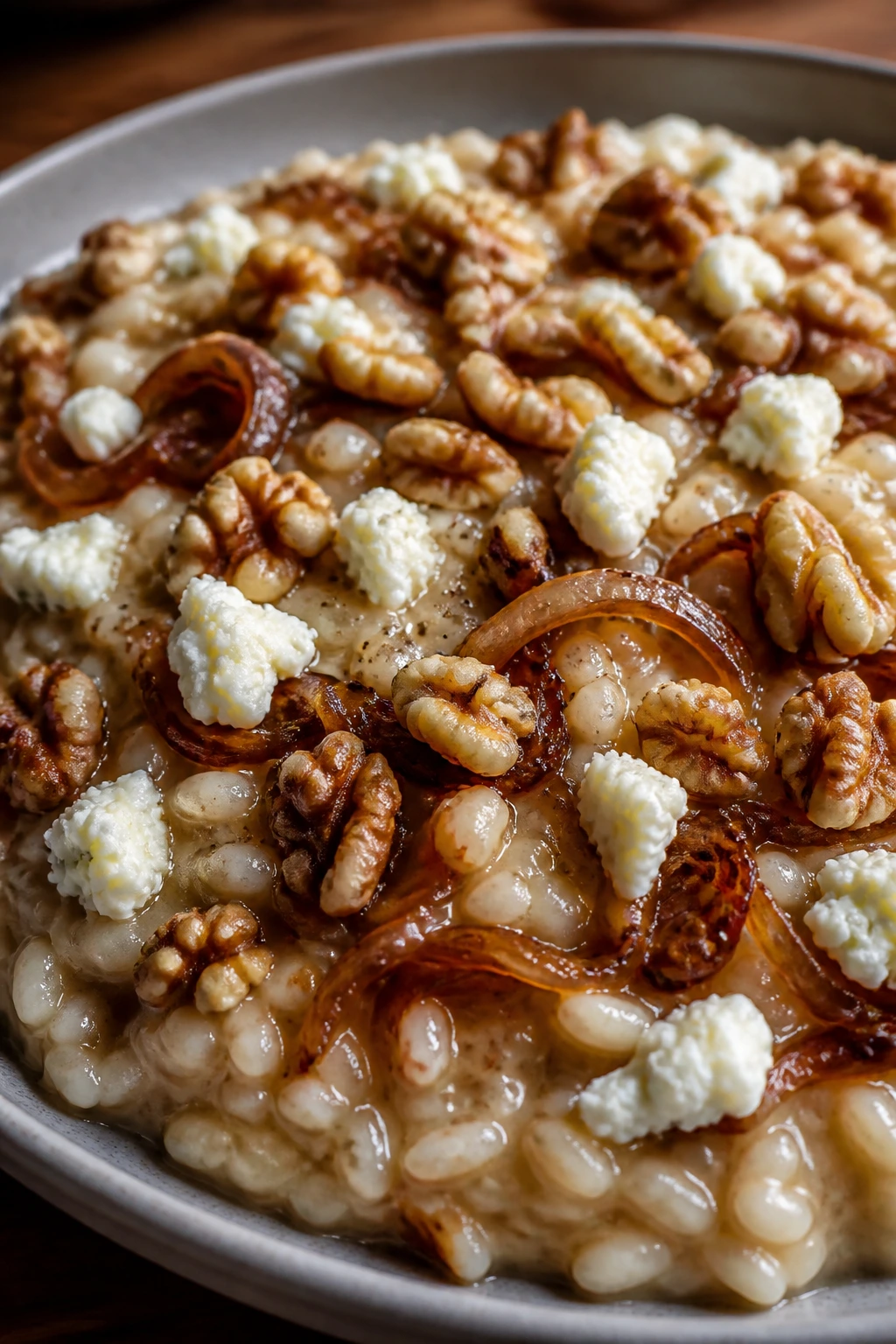
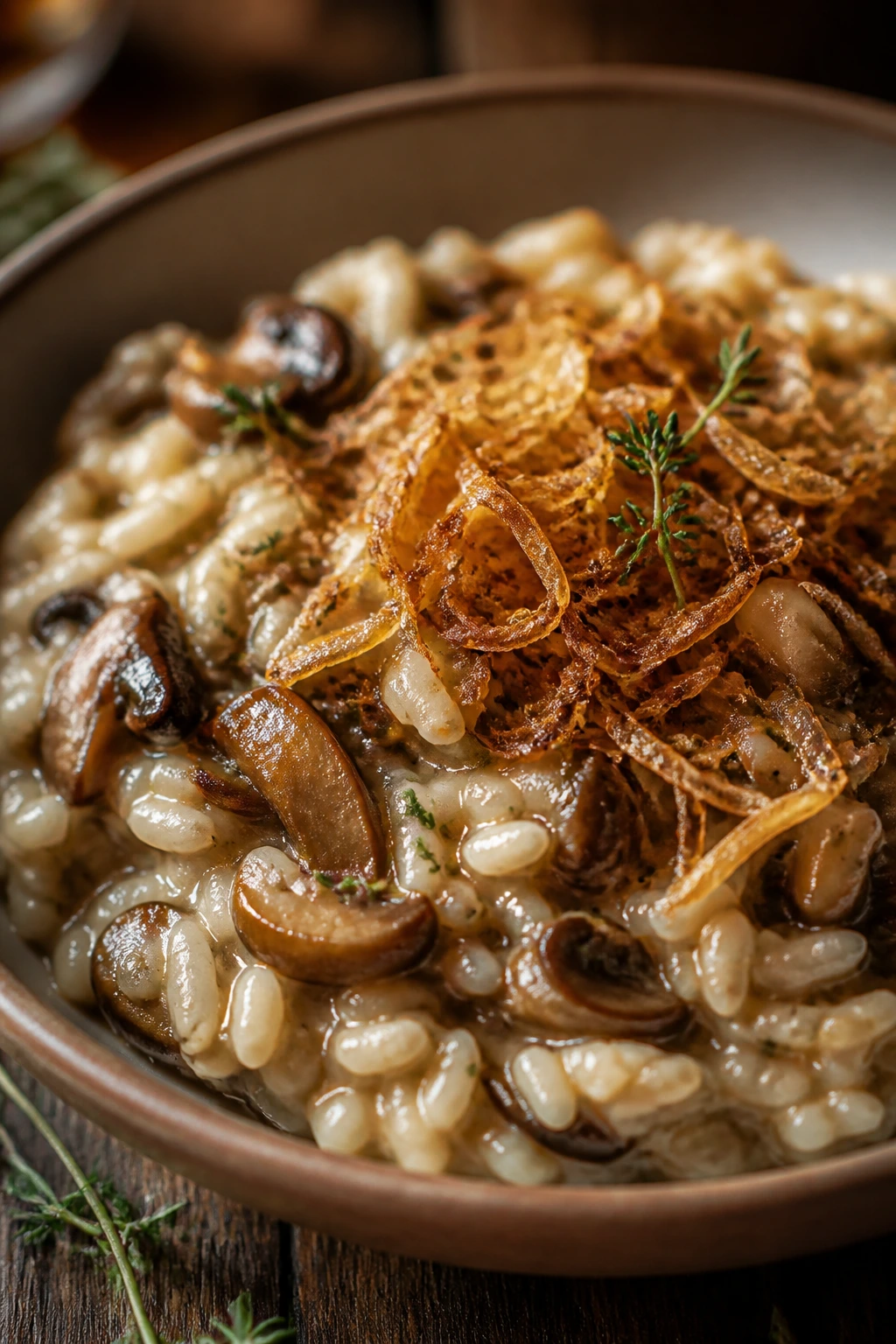
Caramelized onion risotto is what happens when patience pays its rent. The onions turn sweet and jammy, goat cheese cuts through with sharp tang, and toasted walnuts bring the crunch that keeps the bowl from going soft. Guests notice texture more than they admit.
Why It Works
Onions are at their best when they’re given time, not heat. Slow cooking pulls out sweetness and turns them from sharp and raw into something that tastes almost sticky. Goat cheese slides into the rice with less heaviness than cream, so the dish stays rich without feeling thick. Walnuts matter because risotto can get smooth in a hurry, and a little crunch changes the whole mouthfeel.
Key Ingredients
- 1 1/2 cups arborio rice
- 6 cups chicken or vegetable stock
- 3 large yellow onions, thinly sliced
- 1 small shallot, finely diced
- 1/2 cup dry white wine
- 3 tbsp unsalted butter
- 2 tbsp olive oil
- 4 oz goat cheese
- 1/2 cup toasted walnuts, roughly chopped
- 1 tsp fresh thyme leaves
- 1 tbsp balsamic vinegar
- 1/2 cup grated Parmesan
Quick Steps
-
Caramelize the onions: In a wide pot, cook the sliced onions with 1 tablespoon butter and a little olive oil over medium-low heat. Stir often for 25 to 35 minutes until they turn deep golden and soft.
-
Build the base: Add the shallot and thyme during the last 2 minutes of onion cooking. Stir in the rice and toast for 1 minute.
-
Add wine: Pour in the wine and let it bubble down until the pot looks almost dry again.
-
Cook the risotto: Add the hot stock a ladle at a time, stirring until the rice is creamy and tender, about 18 to 20 minutes.
-
Finish with tang: Stir in the remaining butter, goat cheese, Parmesan, and balsamic vinegar. Fold in most of the onions, then save a spoonful for the top.
-
Add crunch last: Scatter the walnuts over the bowls right before serving. If you add them too early, they soften fast.
Tips and Variations
- Deeper sweetness: A tiny splash of sherry works in place of some of the wine if you want more depth.
- Nut swap: Toasted hazelnuts make a strong substitute for walnuts.
- Serving idea: Spoon a little arugula on the side. Its peppery bite keeps the bowl from feeling too sweet.
8. Seared Scallop Risotto with Fennel and Chives
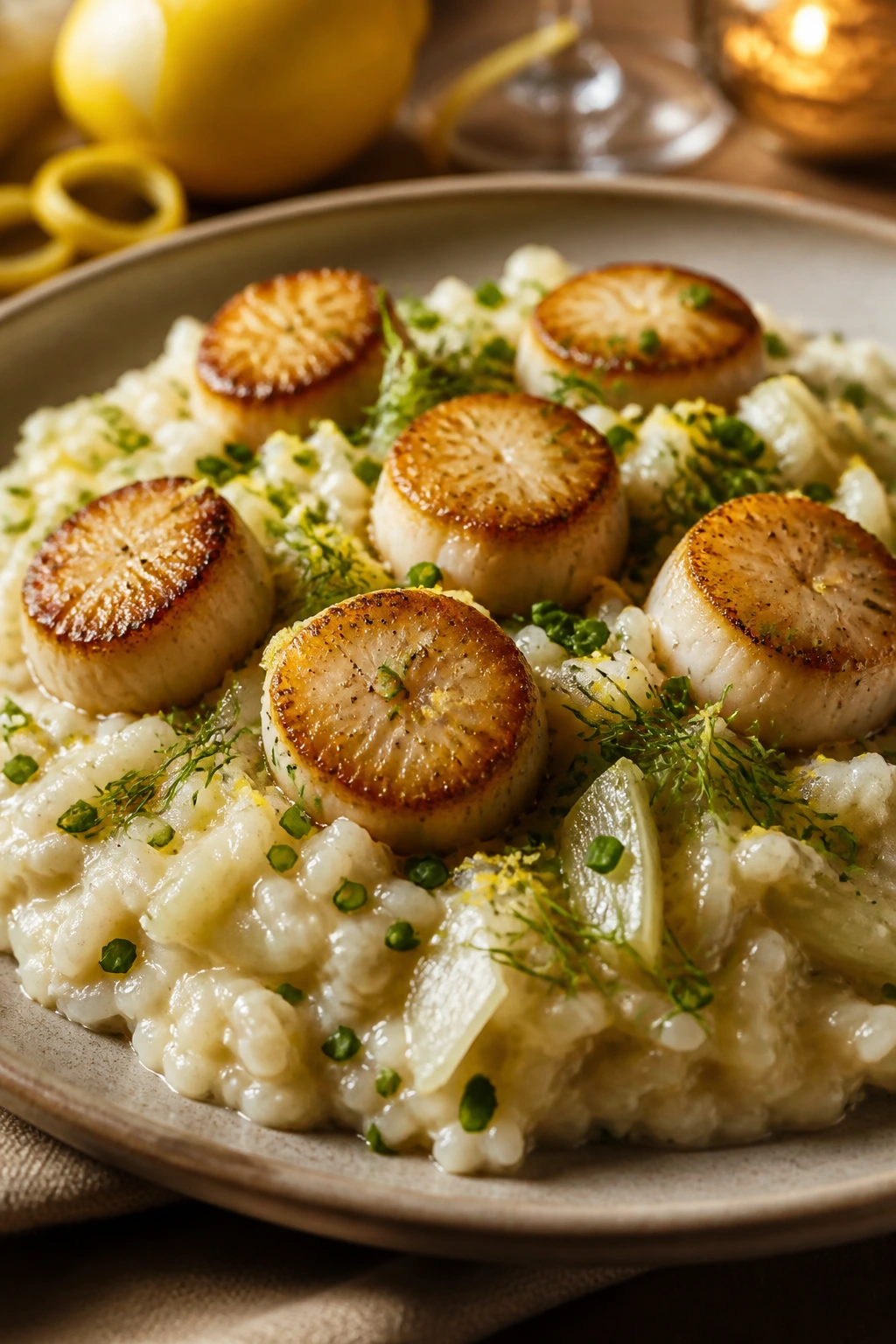
Scallops change the room when they’re done right. They need a hot pan, dry surface, and almost no fuss. Pair them with fennel risotto and you get something delicate but not flimsy, the sort of plate that looks like you meant business without pretending to be difficult.
Why It Works
Fennel is the quiet part of this dish, and that’s why it matters. Once it softens, it gives the risotto a sweet, faintly herbal note that works especially well with shellfish. The scallops stay out of the rice until the end, because they only need a minute or two per side. If they overcook, they turn chalky. If they hit the plate just seared, they stay buttery and clean.
Key Ingredients
- 1 1/2 cups arborio rice
- 6 cups seafood or chicken stock
- 1 lb dry sea scallops
- 1 fennel bulb, diced, fronds reserved
- 1 small shallot, finely diced
- 1/2 cup dry white wine
- 3 tbsp unsalted butter, divided
- 2 tbsp olive oil
- 3/4 cup grated Parmesan
- 2 tbsp chopped chives
- 1 lemon, zested and cut into wedges
Quick Steps
-
Dry the scallops well: Pat them with paper towels and let them sit uncovered for a few minutes if you can. Dry scallops sear, wet scallops steam.
-
Cook the fennel base: In a wide pot, heat the olive oil and 1 tablespoon butter over medium heat. Add the fennel and shallot, then cook for 6 to 8 minutes until soft and fragrant.
-
Toast the rice: Stir in the rice and cook for 1 minute. Add the wine and let it bubble off.
-
Build the risotto: Add the hot stock gradually, stirring until the rice is creamy and just tender, about 18 minutes.
-
Sear the scallops: While the risotto finishes, heat a skillet over medium-high heat. Add a thin film of oil and sear the scallops for 1 1/2 to 2 minutes per side, until a deep golden crust forms and the centers are still slightly translucent.
-
Finish the pot: Remove the risotto from the heat. Stir in the remaining butter, Parmesan, chives, and lemon zest. Top with scallops and fennel fronds.
-
Serve right away: Scallops wait for no one. If the risotto is too thick, loosen it with a splash of hot stock before plating.
Tips and Variations
- Herb swap: Dill or tarragon can stand in for chives if you want a more anise-like edge.
- Shellfish option: Large shrimp works if scallops are hard to find.
- Restaurant-style finish: A tiny drizzle of good olive oil over each bowl gives the plate a cleaner look and a softer mouthfeel.
Why Risotto Works So Well for Hosting Nights
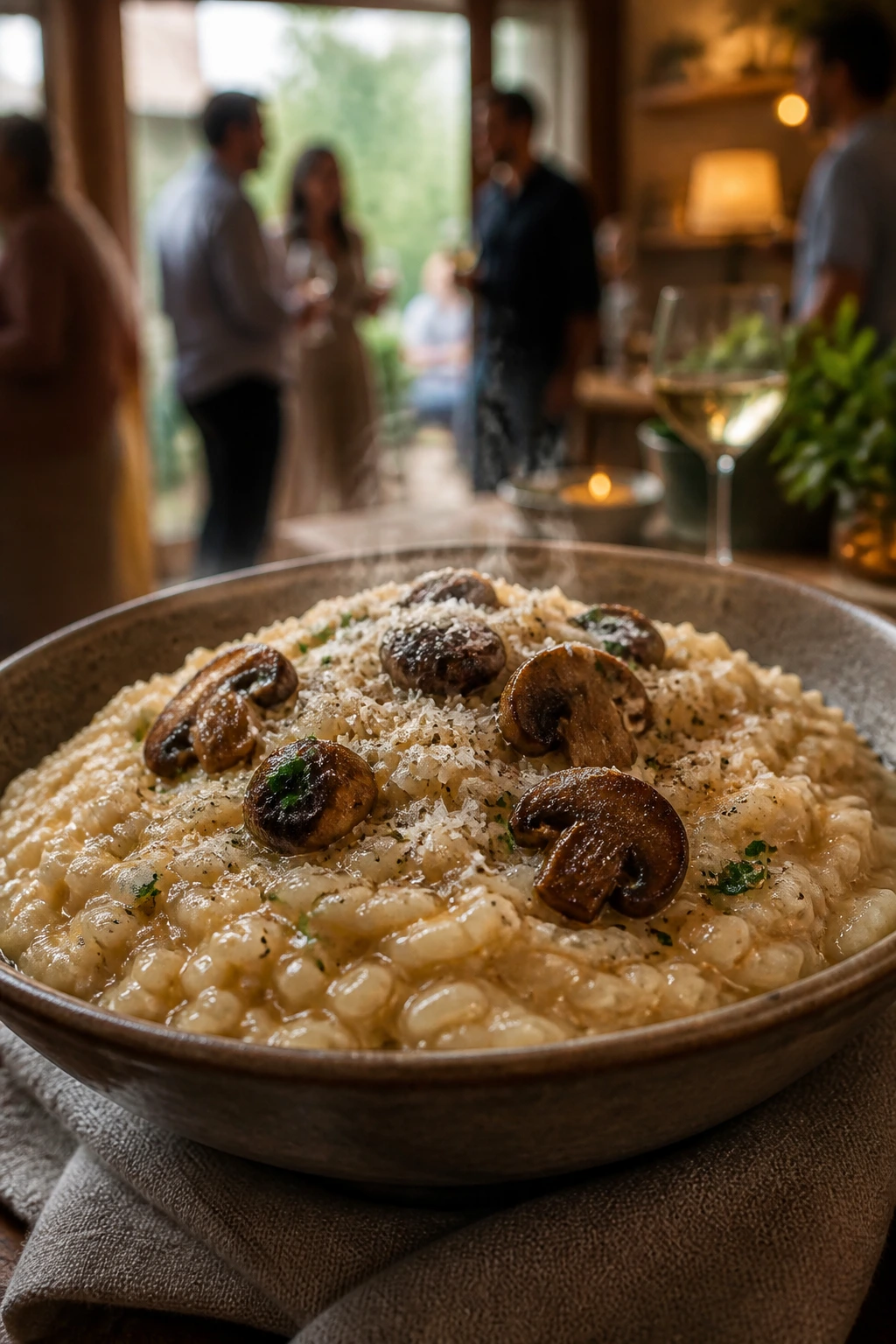
Risotto has a built-in rhythm that works beautifully when you’re cooking for people instead of racing through dinner alone. You can start the onion base, chat for a minute, add stock, and come back to the pot without a panic attack. That matters. Hosting is not just about flavor. It’s about staying present long enough to pour another glass, answer the door, and maybe even sit down before the meal gets cold.
The other reason it works is range. One pot can lean vegetarian, seafood-forward, or meaty without changing the core method. You can make the night feel formal with saffron and scallops or keep it relaxed with squash, spinach, or mushrooms. That makes risotto unusually useful for mixed groups, especially when one guest wants something lighter and another expects a little drama on the plate.
There’s also the small theatrical part, and I do mean small. A glossy risotto spooned into warm bowls just looks inviting. People trust it. They may not say that out loud, but you can feel it at the table.
Essential Equipment for These Recipes
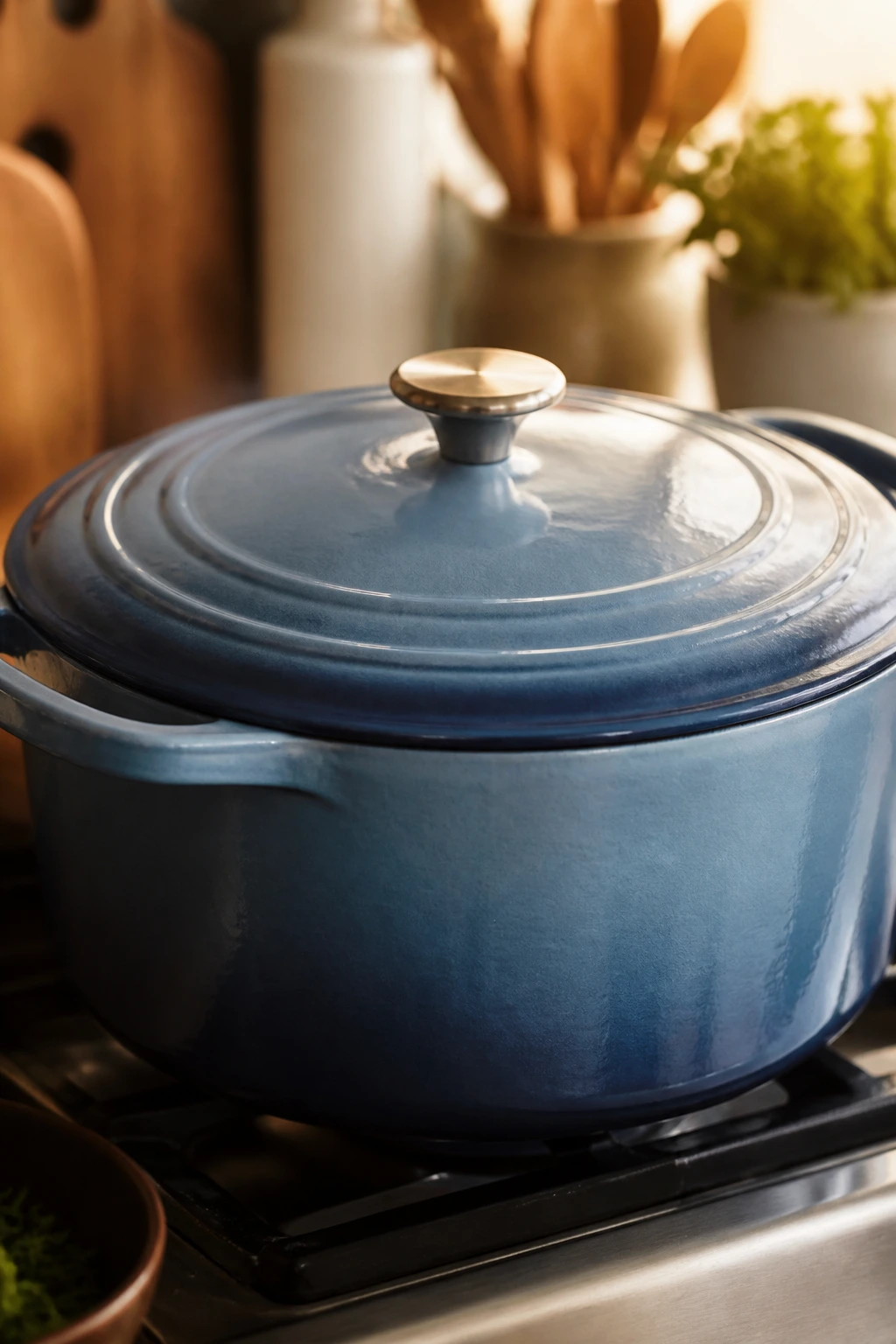
- Wide heavy pot or Dutch oven — A 4- to 6-quart pot gives the rice room to move without scorching.
- Small saucepan for stock — Keeping the stock hot makes the rice cook evenly.
- Wooden spoon or silicone spatula — You need something that can stir without dragging on the bottom of the pot.
- Ladle — The easiest way to add stock in controlled amounts.
- Large skillet — Handy for mushrooms, chicken, shrimp, scallops, or zucchini.
- Rimmed baking sheet — Useful for roasting squash or holding prepped ingredients.
- Microplane or fine grater — Freshly grated Parmesan melts better and tastes cleaner.
- Sharp chef’s knife — Risotto lives and dies on even chopping.
- Fish spatula or thin metal turner — Especially helpful for scallops and shrimp.
- Warm serving bowls — Risotto cools fast, and cold bowls steal heat immediately.
Smart Shopping and Ingredient Tips
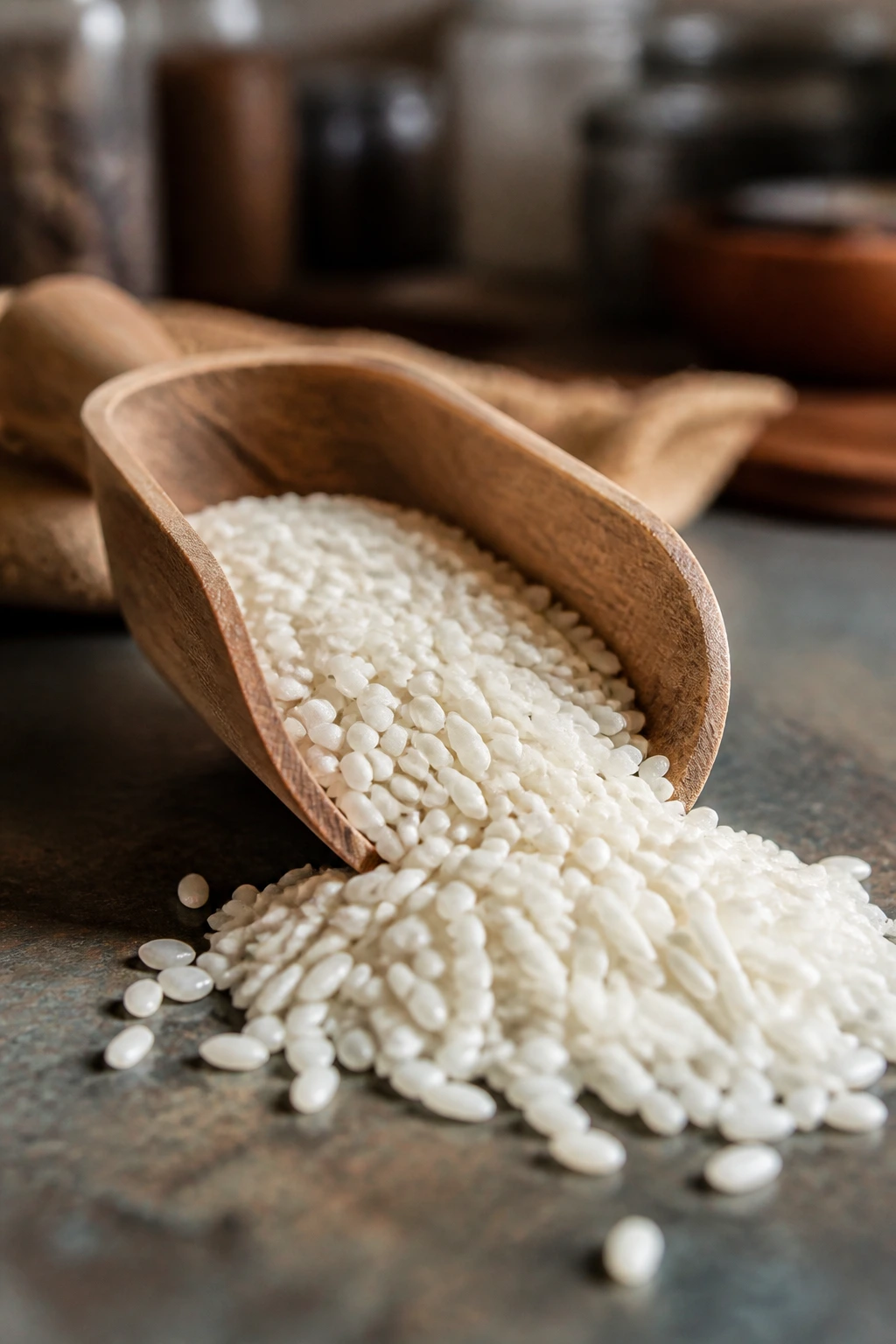
The rice matters first. Arborio is the most common choice, and it works well because it releases starch without collapsing. Carnaroli is even a little more forgiving if you can find it. Avoid long-grain rice. It will not give you the same creamy body, and no amount of stirring can fake that texture.
Stock matters almost as much. Use low-sodium stock so you can control the salt yourself, and keep it at a gentle simmer before you start. Hot stock helps the rice stay active from ladle to ladle. Cold stock slows everything down and makes the pot work harder than it needs to.
Buy Parmesan as a wedge if you can. Pre-grated cheese often has anti-caking agents, and those tiny powders can keep it from melting smoothly. The same rule applies to ingredients like fennel, asparagus, and mushrooms: choose pieces that look firm and fresh, not tired. Asparagus should snap cleanly, mushrooms should be dry rather than slimy, and fennel should feel heavy for its size.
For seafood, go for dry scallops if they’re available. Wet scallops are treated with a solution that helps them hold moisture, but it also makes browning harder. Shrimp should smell clean and briny, never fishy. If you’re buying squash, pick one with dull skin and no soft spots. A glossy squash often means it has been sitting too long.
Wine does not need to be expensive. It does need to taste decent. If you would not drink it, do not cook with it.
How to Serve These Risotto Dinners
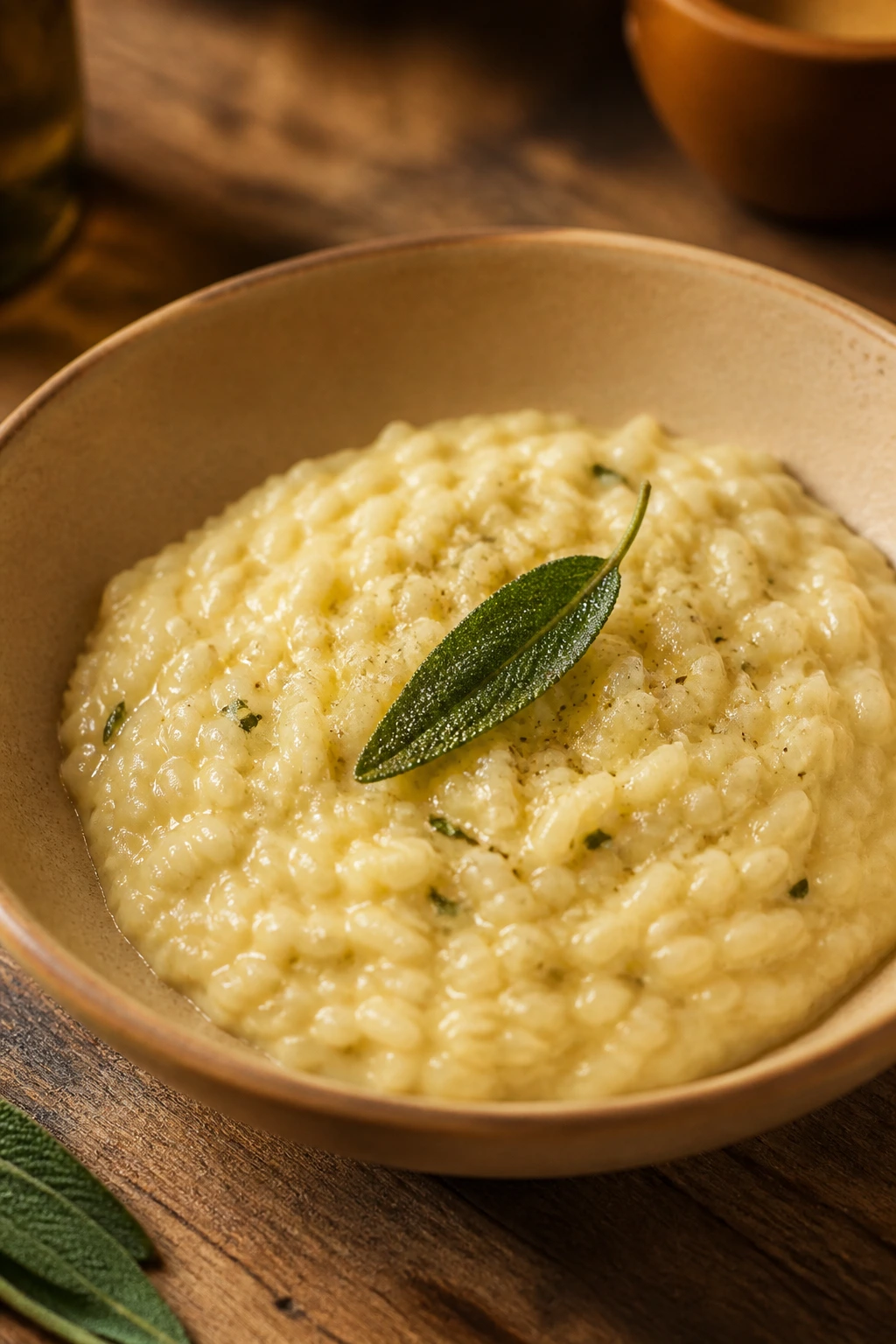
Presentation: Spoon the risotto into warm shallow bowls and spread it gently with the back of the spoon so it sits in a soft mound, not a tight blob. Finish with one visible garnish that matches the dish — asparagus tips, shaved Parmesan, a few fried sage leaves, or a single scallop on top. That little bit of restraint makes the plate look deliberate.
Accompaniments: Keep the sides simple. A bitter green salad with lemon vinaigrette, roasted broccolini, garlicky beans, or a thin slice of crusty bread is enough. Risotto is the main event. It does not need a backup band fighting for space on the plate.
Portions: Plan about 3/4 cup uncooked rice for 2 generous main-course servings, or 1 1/2 cups uncooked rice for 4 moderate main-course servings. For a first course, you can serve a smaller scoop and stretch the menu with salad and bread. For a crowd, make two different risotti rather than trying to force one giant pot to feed everyone.
Beverage Pairing: Dry white wine is the easiest match — think crisp, mineral, and not too oaky. Sauvignon Blanc works with asparagus and herbs, Pinot Grigio suits seafood, and a light Pinot Noir can handle mushroom or chicken versions. For nonalcoholic drinks, sparkling water with lemon peel or a tart, unsweetened grape spritz keeps the meal moving cleanly.
Additional Tips and Flavor Boosters
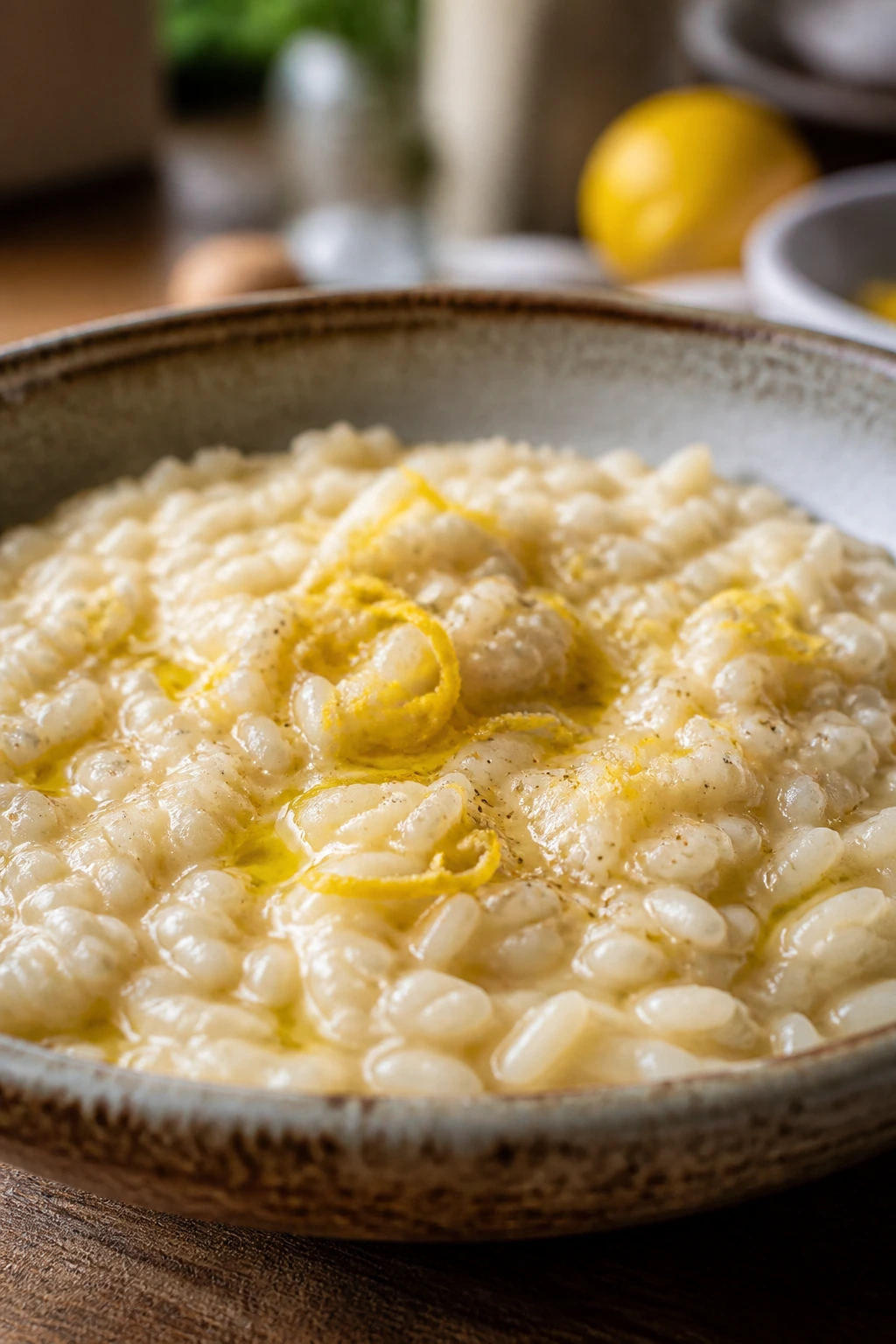
Flavor Enhancement: Finish each bowl with one small accent that changes the whole bite — lemon zest for bright versions, a drizzle of good olive oil for mushroom or squash, or a little brown butter for richer bowls. The final tablespoon often matters more than the first cup of stock.
Customization: Fold in peas, roasted peppers, wilted greens, or chopped herbs depending on what the rest of the table wants. Risotto is not delicate in the fragile sense. It can take a few sensible additions as long as they fit the texture.
Serving Suggestions: Toasted nuts on squash or onion risotto, chives on seafood, mint on asparagus, and basil on tomato all work because they add freshness or crunch right where risotto can get soft. A few extra flakes of salt on top are helpful too, especially if the dish leans sweet.
Make-It-Yours: For a vegetarian version, use vegetable stock and a vegetarian hard cheese. For dairy-light cooking, lean on olive oil and the rice’s own starch, then finish with herbs and lemon. For a little more luxury, add a spoonful of mascarpone right before serving.
Make-Ahead, Storage, and Reheating Guidance
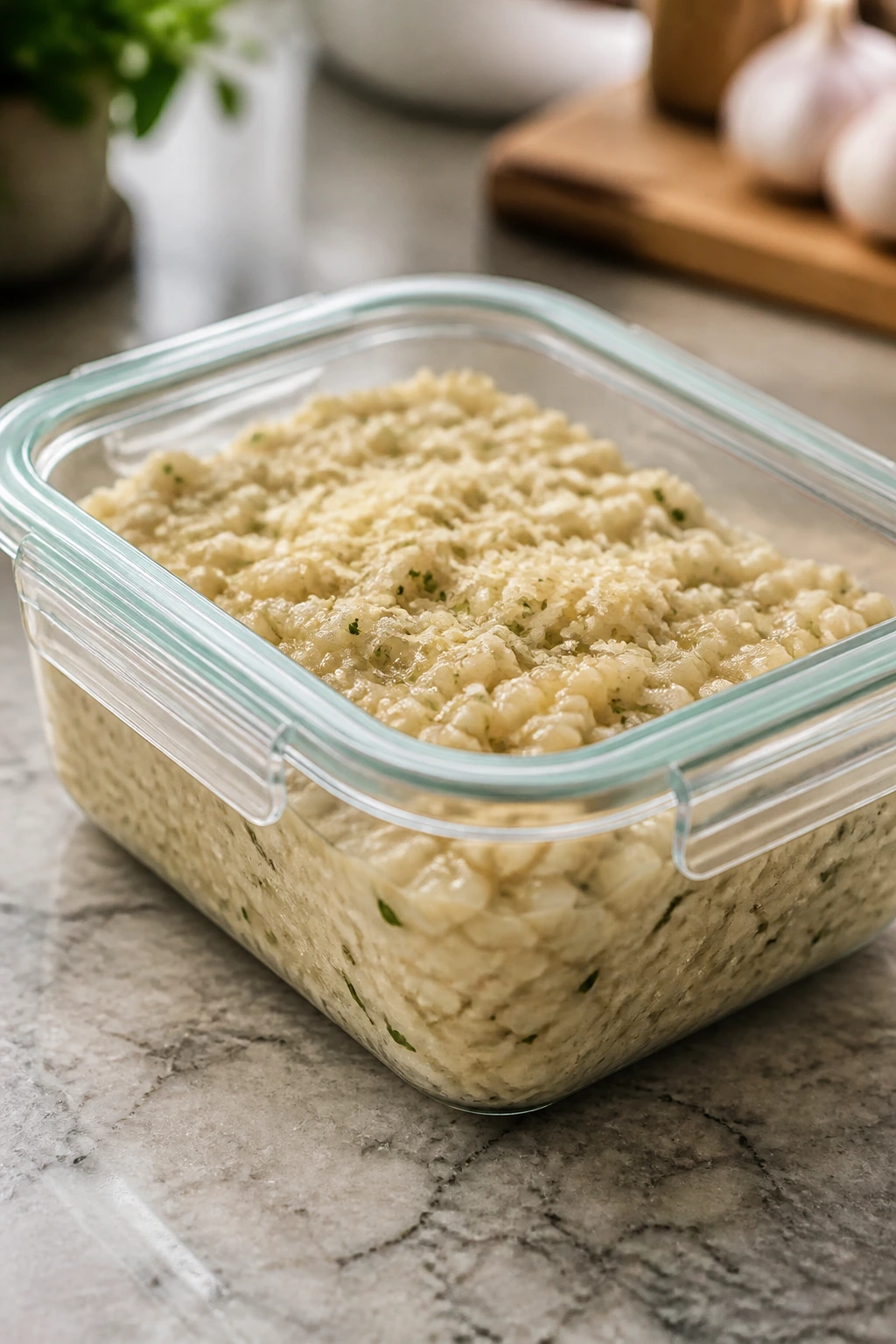
Risotto is at its best when it moves from pot to bowl with almost no delay. That is the honest answer. It can be made ahead, but it changes in the fridge, tightening up as the starch sets. If you know guests are running late, undercook it by a minute or two and keep a small pot of hot stock nearby so you can loosen it at the end.
For most versions, leftovers keep 3 days in the refrigerator in an airtight container. Mushroom, squash, chicken, and tomato risotti handle reheating better than seafood versions. Scallop and shrimp risotto is best eaten the day it’s made, and if you do save it, store the seafood separately when possible. Freeze only the versions without delicate seafood for up to 1 month. The texture changes, but it can still be turned into arancini or a baked risotto cake later.
To reheat, put the risotto in a saucepan with 2 to 4 tablespoons of stock or water per cup of risotto and warm it over low heat, stirring often. A microwave works in a pinch, but it is harsher and tends to dry the edges. If you use the microwave, cover the bowl and add a spoonful of liquid before heating in short bursts. Stir between each burst. That’s the part people skip, and then they wonder why the bowl tastes tight.
For make-ahead hosting, prep the vegetables, grate the cheese, warm the stock, and even cook the flavor base earlier in the day. You can hold the rice base slightly underdone, then finish with the last stock additions and the butter-cheese finish when guests are nearly at the table. That’s the sweet spot.
Variations and Adaptations to Try
The Vegetarian Table: Use vegetable stock, leave out the chicken or seafood, and lean harder on mushrooms, squash, asparagus, or tomato. Finish with a vegetarian hard cheese or a little nutritional yeast if you need to avoid animal rennet.
The Dairy-Light Bowl: Skip the final butter and reduce the Parmesan, then finish with extra olive oil, lemon, herbs, and a spoonful of cooked veg for body. The rice still turns creamy because the starch does a lot of the work.
The Seafood Swap: Shrimp, scallops, crab, and lobster all fit the same risotto structure. Cook each one separately, then fold it in at the last minute so it stays tender. That little separation is the difference between polished and mushy.
The Crowd-Size Version: For a bigger dinner, cook the onion base and rice in a very wide Dutch oven, then finish two smaller batches rather than one oversized pot. Rice cooks more evenly that way, and you avoid the underseasoned center problem that shows up in huge pans.
The Sharper, Brighter Finish: Add lemon zest, chives, parsley, dill, or a tiny splash of white wine vinegar right at the end if the dish tastes too soft. Acid is often the missing piece. A few drops can wake the bowl up fast.
Common Mistakes to Avoid
Cold stock, hot regret. If you add cold liquid to the pot, the rice stalls and the texture gets uneven. Keep the stock steaming gently in a separate saucepan.
Too much liquid at once. Risotto is not soup. Dumping in half the stock makes the rice boil instead of simmer, which is how you lose control over texture. Add one ladle at a time and let the rice absorb it before the next addition.
Browned-onion impatience. Some cooks crank the heat to hurry the aromatics along, and that usually gives you bitter edges instead of a sweet base. Medium heat is safer, even if it feels slow.
Seafood cooked twice. Shrimp and scallops do not like being left in the pot while the rice finishes. Cook them separately and return them only at the end, just long enough to warm through.
Under-seasoning the finish. Risotto absorbs salt as it cooks, so the pot often needs more than you expect. Taste before serving, then adjust with salt, Parmesan, lemon, or a few drops of acid.
Skipping the rest. Right after the last ladle, the pot often looks too loose. Give it 1 to 2 minutes off heat. The rice firms slightly and settles into the right spoonable texture.
Frequently Asked Questions
Can I make risotto ahead for guests?
You can get close. Cook the risotto until it is about 80 to 90 percent done, then spread it thin in a shallow pan to cool. Right before serving, return it to the pot with hot stock and finish with butter, cheese, and the final add-ins.
What rice works if I can’t find arborio?
Carnaroli is the best substitute, and vialone nano is also excellent if you see it. Short-grain sushi rice can work in a pinch, but the texture is a little different and the finish is less clean. Long-grain rice is the one to skip.
Do I have to stir constantly?
No. Constant stirring is a myth that gets repeated too often. Stir often enough to keep the rice from sticking and to help the starch release, but you can step away for short stretches as long as the pot stays at a gentle simmer.
How do I keep shrimp or scallops from overcooking?
Cook them in a separate skillet over high heat, then add them to the risotto only at the very end. They should hit the bowl warm, not sit in the pot while the rice keeps cooking. That rule saves more seafood than any other.
Can I make these recipes without wine?
Yes. Replace the wine with extra stock plus 1 to 2 teaspoons of lemon juice or white wine vinegar at the finish. The pot will lose a little aromatic depth, but it will still taste balanced.
What if my risotto gets too thick before serving?
Stir in hot stock, a splash at a time, until it loosens. If you’re serving guests and the bowl is sitting around, keep a small saucepan of stock nearby so you can refresh it fast.
Is risotto gluten-free?
The rice itself is gluten-free, but the stock, cheese, and toppings should still be checked. Some store-bought broths and crispy garnishes contain wheat, so read labels if you’re cooking for someone sensitive.
Can I turn leftovers into something else?
Absolutely. Chilled risotto can become arancini, pan-fried rice cakes, or a baked risotto casserole. Leftover mushroom, squash, and tomato versions are especially good for that because they hold flavor after chilling.
A Dinner Guests Remember
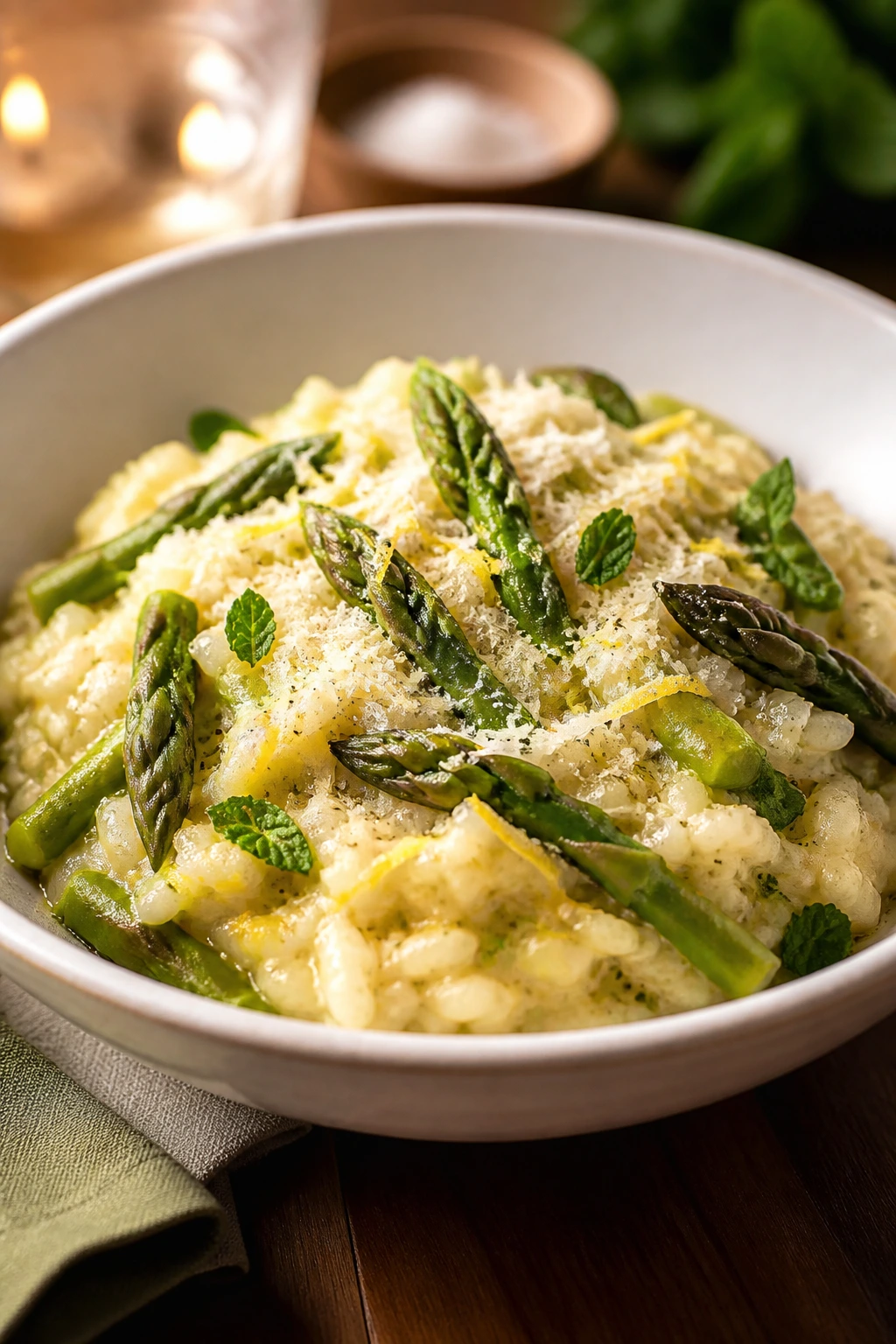
The nicest thing about risotto is that it makes room for both care and ease. You can keep the method simple and still end up with a dish that feels polished enough for guests who notice details. Bright asparagus, browned mushrooms, saffron, squash, tomato, chicken, onions, scallops — they all fit the same patient little pattern.
That’s why this kind of menu works so well. You get a dinner that is warm at the center, flexible at the edges, and surprisingly forgiving if you stay organized. Serve it in wide bowls, keep the stock hot, and finish each pot with one good final move. That last step is the one people remember.
| Recipe | Prep Time | Cook Time | Total Time | Servings | Standout Detail |
|---|---|---|---|---|---|
| Lemon-Asparagus Risotto with Parmesan and Mint | 15 min | 28 min | 43 min | 4 | Bright lemon finish |
| Mushroom and Thyme Risotto with Crispy Shallots | 20 min | 35 min | 55 min | 4 | Deep browned mushroom flavor |
| Saffron Shrimp Risotto with Peas | 20 min | 30 min | 50 min | 4 | Golden saffron color |
| Butternut Squash Risotto with Brown Butter and Sage | 20 min | 40 min | 1 hr | 4 | Nutty brown butter finish |
| Tomato-Basil Risotto with Burrata and Charred Zucchini | 20 min | 30 min | 50 min | 4 | Creamy burrata center |
| Chicken, Spinach, and Lemon Risotto | 20 min | 35 min | 55 min | 4 | One-pan main-course feel |
| Caramelized Onion and Goat Cheese Risotto with Toasted Walnuts | 15 min | 45 min | 1 hr | 4 | Sweet onions and tangy cheese |
| Seared Scallop Risotto with Fennel and Chives | 20 min | 35 min | 55 min | 4 | Crisp scallop finish |