



A good Asian slaw should crackle when the fork hits it. Not limp, not sugary, not buried under a dressing that tastes like it came out of a squeeze bottle and gave up halfway through. The best versions have a sharp little jolt from rice vinegar, a warm sesame note, and cabbage cut thin enough to catch every drop without turning soggy before you reach the table.
That’s the standard here. And it matters, because takeout slaw often misses the point: too thick, too sweet, too wet, too quiet. This version leans into the things that make cabbage sing — ginger with a clean bite, lime for lift, scallions for sting, toasted sesame for that nutty smell that hits the nose before the bowl even lands. The whole thing should taste bright enough to wake up fried rice, grilled chicken, salmon, dumplings, or a plain bowl of noodles.
I also want slaw to have texture you can hear. Tiny snap peas. Shredded cabbage with some backbone. Peanuts that still crunch after they’re chopped, not powdered into dust. If that sounds fussy, it isn’t. It’s the difference between a side dish that disappears into the plate and one you keep making because the first forkful makes the rest of dinner better.
Why This Asian Slaw Tastes Brighter Than the Takeout Tub
- The dressing pulls in three directions: Rice vinegar, lime, and a little honey keep the flavor from landing flat, which is where most bottled slaw dressings go wrong.
- The cabbage stays crisp on purpose: Thin ribbons soak up flavor fast, but they still hold their snap for hours if you don’t drown them.
- The aromatics do real work: Fresh ginger, garlic, scallions, cilantro, and mint build a layered smell that tastes cleaner than soy-sesame alone.
- The crunch is deliberate: Peanuts and sesame seeds bring a dry, toasted finish that keeps each bite from feeling soft or samey.
- It plays well with leftovers: A bowl of this can rescue cold chicken, plain rice, grilled tofu, or last night’s noodles without making the plate heavy.
Timing and Yield at a Glance
Yield: Serves 6 as a side or 4 as a light main
Prep Time: 20 minutes
Cook Time: 0 minutes
Total Time: 20 minutes, plus 10 to 15 minutes resting if you want the cabbage slightly softened
Difficulty: Beginner — there’s no heat involved, just a bit of knife work and a dressing you can whisk in one bowl
Chill/Rest Time: 10 to 15 minutes optional
Best Served: About 15 minutes after tossing, when the vegetables are glossy but still snappy
What Goes Into the Bowl
For the Slaw
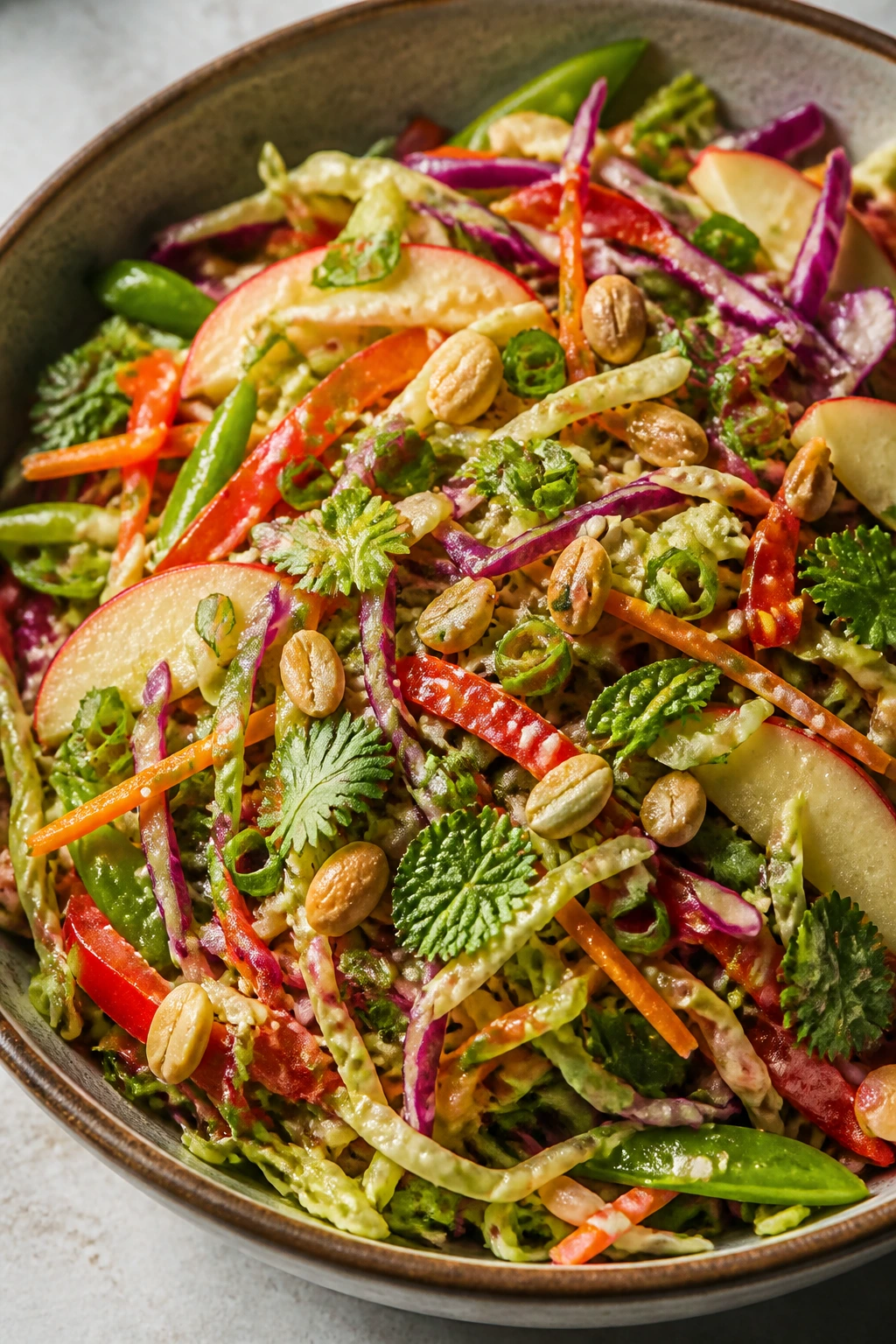
- 6 cups green cabbage, shredded into thin ribbons about 1/8 inch wide
- 3 cups red cabbage, shredded thin for color and extra crunch
- 2 cups carrots, julienned or shredded
- 1 red bell pepper, very thinly sliced
- 1 crisp apple, julienned and tossed right away with the dressing
- 1 cup snap peas, thinly sliced on a bias
- 4 scallions, thinly sliced
- 1 cup cilantro leaves and tender stems, roughly chopped
- 1/2 cup mint leaves, torn
- 1/3 cup roasted peanuts, roughly chopped
- 2 tablespoons toasted sesame seeds
For the Dressing
- 1/4 cup rice vinegar
- 3 tablespoons low-sodium soy sauce or tamari
- 2 tablespoons fresh lime juice
- 2 tablespoons honey or maple syrup
- 1 tablespoon toasted sesame oil
- 2 tablespoons neutral oil
- 1 tablespoon fresh ginger, finely grated
- 1 garlic clove, finely grated
- 1 teaspoon chili crisp or sambal oelek, optional
- 1/2 teaspoon fine sea salt, plus more to taste
- 1/4 teaspoon freshly ground black pepper
Why These Ingredients Work Together
The cabbage base needs both crunch and color
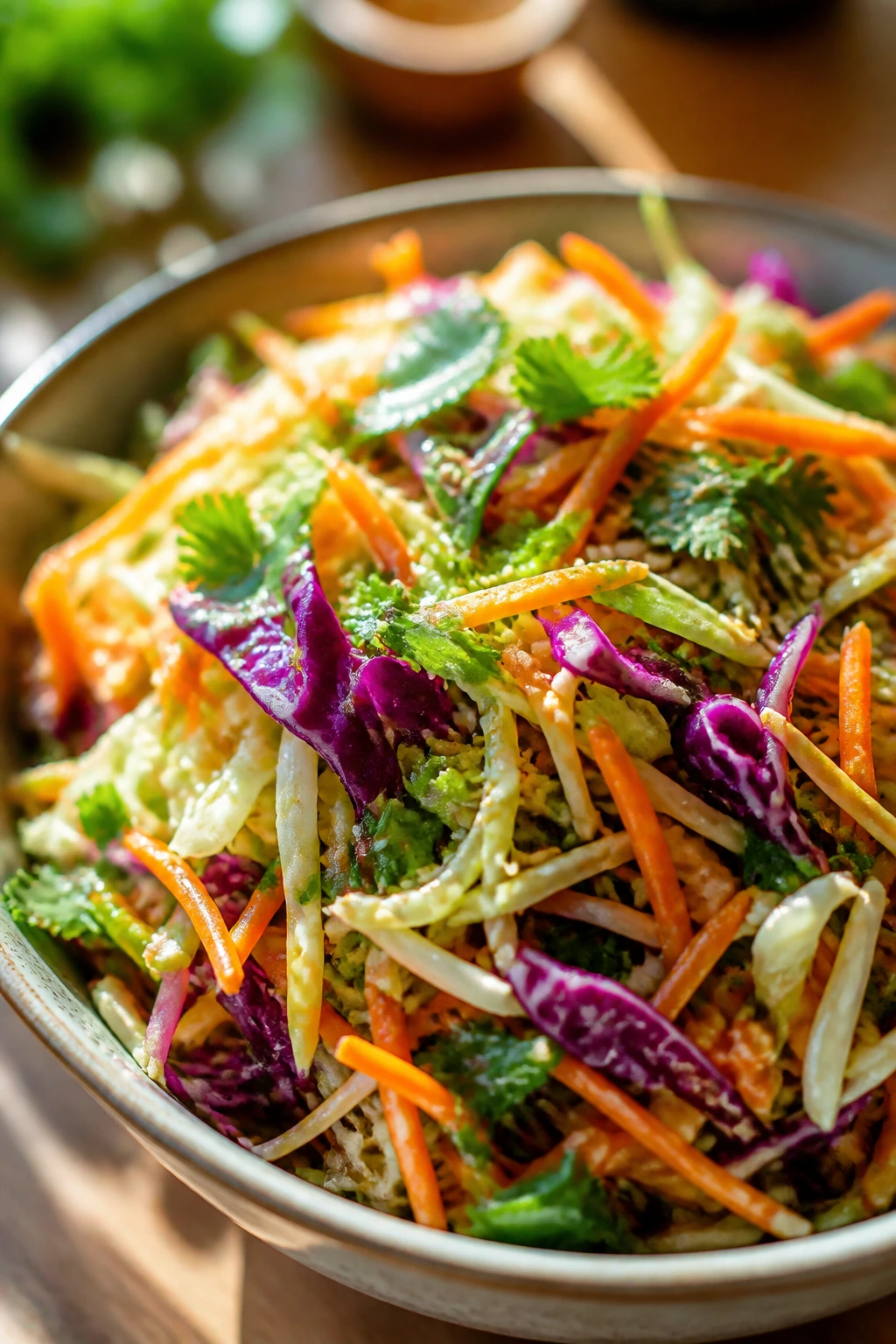
What to use: 6 cups green cabbage and 3 cups red cabbage give the slaw a sturdy base with enough body to hold dressing without collapsing.
Preparation: Shred both cabbages thinly, and if the leaves seem floppy, stack and slice them from the core side so the ribbons stay even.
Substitutions: Napa cabbage works if you want a softer bite, and a bag of plain coleslaw mix is fine when time is tight.
Tips: Buy heads that feel heavy for their size and have leaves that still snap when you bend them; limp cabbage turns watery fast.
The vegetables around the cabbage should stay sharp
What to use: 2 cups carrots, 1 red bell pepper, 1 crisp apple, and 1 cup snap peas bring sweet crunch and a little color shift in every bite.
Preparation: Cut the carrots into fine matchsticks or shred them, slice the pepper very thin, and keep the apple pieces narrow so they don’t stick out awkwardly from the rest of the slaw.
Substitutions: A firm pear can replace the apple, and shredded daikon or cucumber can stand in for the snap peas if that’s what you have.
Tips: If the apple browns while you’re working, toss it in a spoonful of the dressing right away; the lime and vinegar will take care of the color problem.
The aromatics make it taste like more than cabbage
What to use: 4 scallions, 1 cup cilantro, 1/2 cup mint, 1 tablespoon grated ginger, and 1 garlic clove give the slaw its clean, sharp top note.
Preparation: Slice the scallions thinly, chop the cilantro stems along with the leaves, and grate the ginger and garlic as finely as you can.
Substitutions: Thai basil can replace mint, parsley can stand in for cilantro if you’re one of the cilantro-averse people, and shallot can replace scallion in a pinch.
Tips: Don’t bury the herbs under the cabbage; toss them in near the end so they stay bright and don’t sink into the dressing.
The dressing should taste a little louder than you expect
What to use: Rice vinegar, soy sauce, lime juice, honey, sesame oil, and neutral oil create the sweet-sour-salty balance that makes the slaw taste finished.
Preparation: Whisk the dressing until the honey disappears and the oils look fully blended, not separated into slick little pools.
Substitutions: Tamari makes the dressing gluten-free, maple syrup works in place of honey, and a squeeze of orange juice can replace some of the lime if you want a softer citrus note.
Tips: Taste the dressing before it touches the vegetables; it should feel a touch intense on its own because the cabbage will calm it down.
The Tools That Make Prep Easier
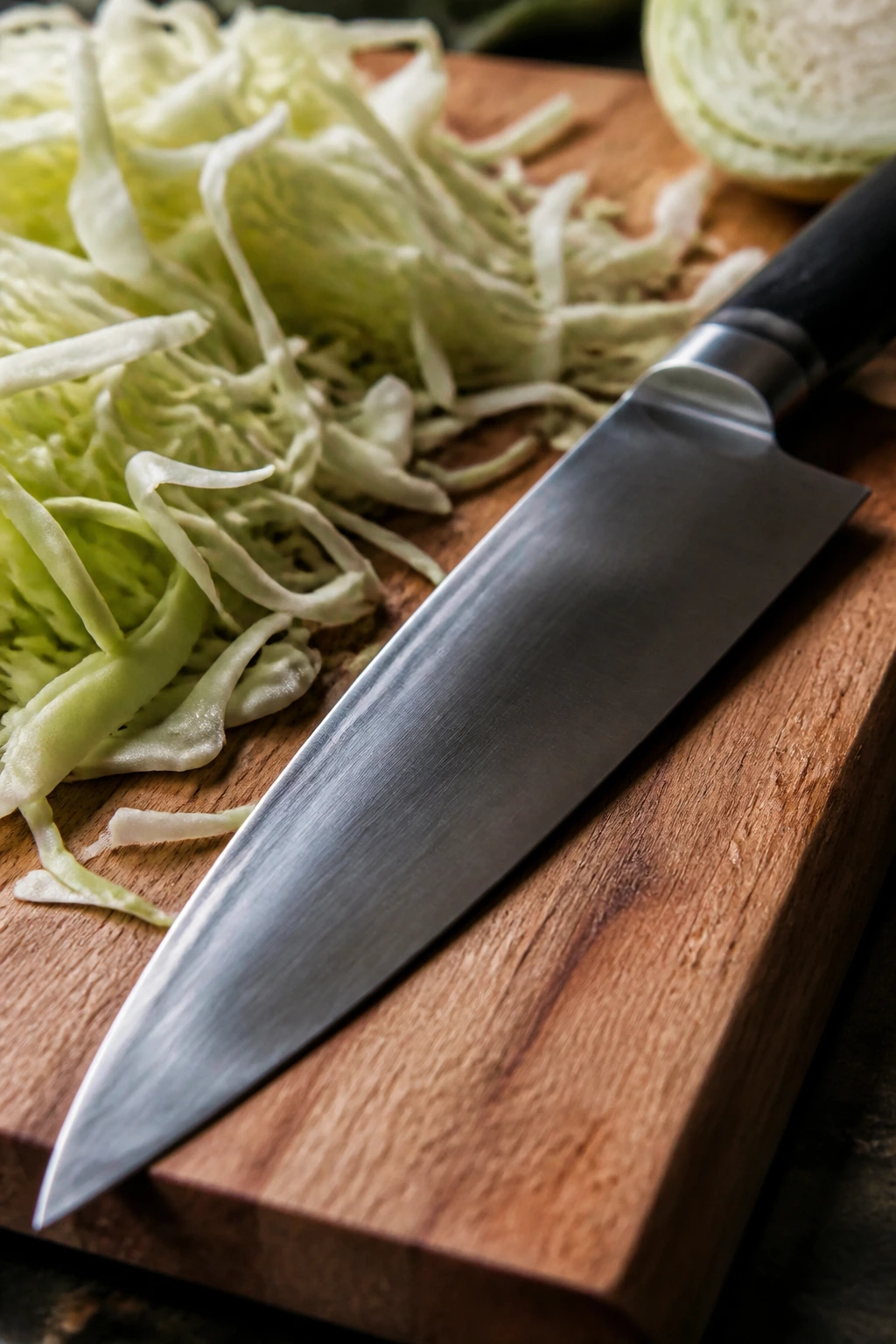
- Large cutting board: You need room to pile shredded cabbage without it skittering onto the counter.
- Chef’s knife or mandoline: A mandoline gives very even ribbons, but a sharp knife is safer if you’re not used to the blade guard.
- Large mixing bowl: Use a bowl bigger than you think you need; tossing slaw in a cramped bowl bruises the vegetables.
- Microplane or fine grater: Best for ginger and garlic, which should disappear into the dressing instead of floating around in chunks.
- Small bowl or lidded jar: Handy for whisking the dressing until it emulsifies.
- Tongs or clean hands: Tongs help toss without crushing the cabbage, though clean hands work if you’re gentle.
- Salad spinner or clean kitchen towels: Useful if you wash the herbs or cabbage and need every bit of surface water gone.
Building the Slaw, Step by Step
Make the Dressing First
-
In a small bowl or lidded jar, whisk together the rice vinegar, soy sauce, lime juice, honey, sesame oil, neutral oil, ginger, garlic, chili crisp, salt, and black pepper until the mixture looks smooth and slightly glossy. If you’re using a jar, screw on the lid and shake hard for 15 to 20 seconds until the dressing looks emulsified, not streaky.
-
Taste the dressing right away. It should be punchy — tangy first, then salty, then a little sweet at the end. Do not make it bland at this stage; the cabbage will dilute it once you toss everything together.
Prep the Vegetables
-
Shred the green cabbage and red cabbage into thin ribbons, then place them in a large mixing bowl with the carrots, bell pepper, apple, snap peas, and scallions. If you washed the herbs, dry them well first so they do not drag in extra water.
-
Add the cilantro and mint, but hold back the peanuts and sesame seeds for now. The herbs should sit loose on top of the vegetables, not hidden underneath where they get bruised in the toss.
Assemble the Slaw
-
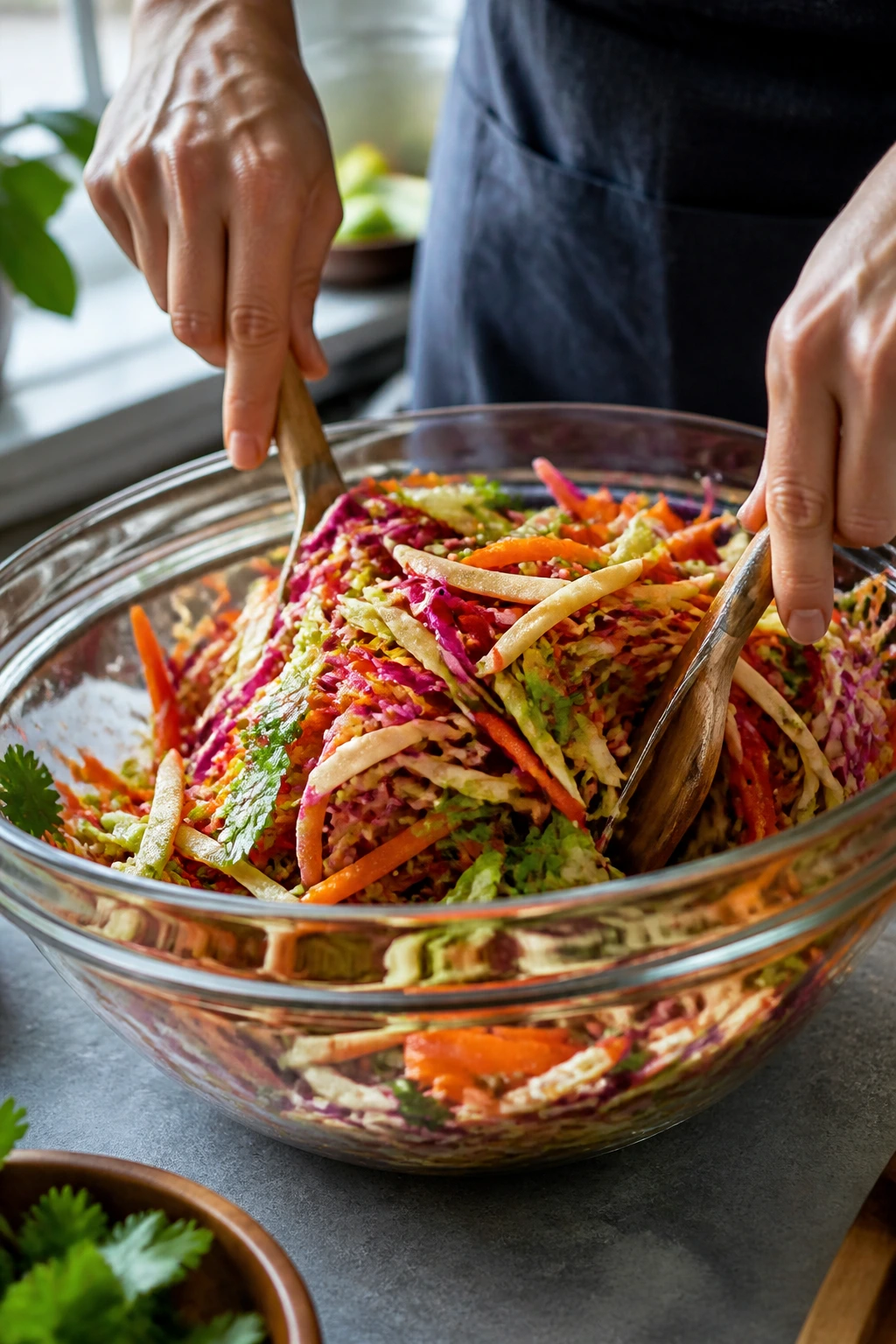
Pour about three-quarters of the dressing over the vegetables and toss with tongs for 30 to 45 seconds, lifting from the bottom of the bowl so the cabbage gets coated evenly. The slaw should look glossy and lightly seasoned, not wet or soupy.
-
Let the bowl sit for 10 minutes if you want the cabbage to soften just a little. This rest is optional, but useful if you’re serving the slaw with fried or grilled food and want it to feel a touch less raw.
-
Toss again, taste, and add more dressing only if the bowl needs it. Fold in the peanuts and sesame seeds right before serving so they stay crunchy instead of turning soft in the dressing.
How to Serve It
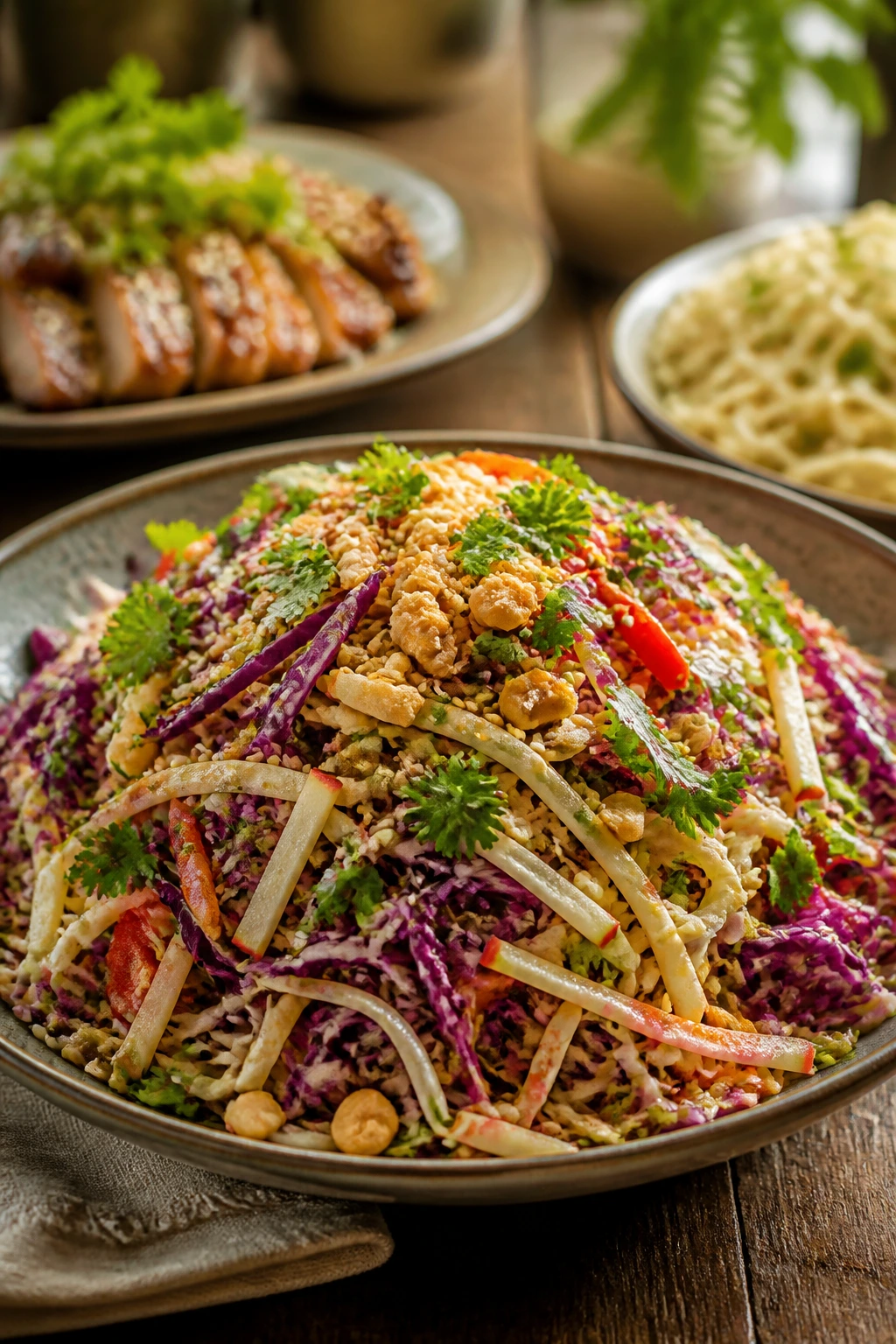
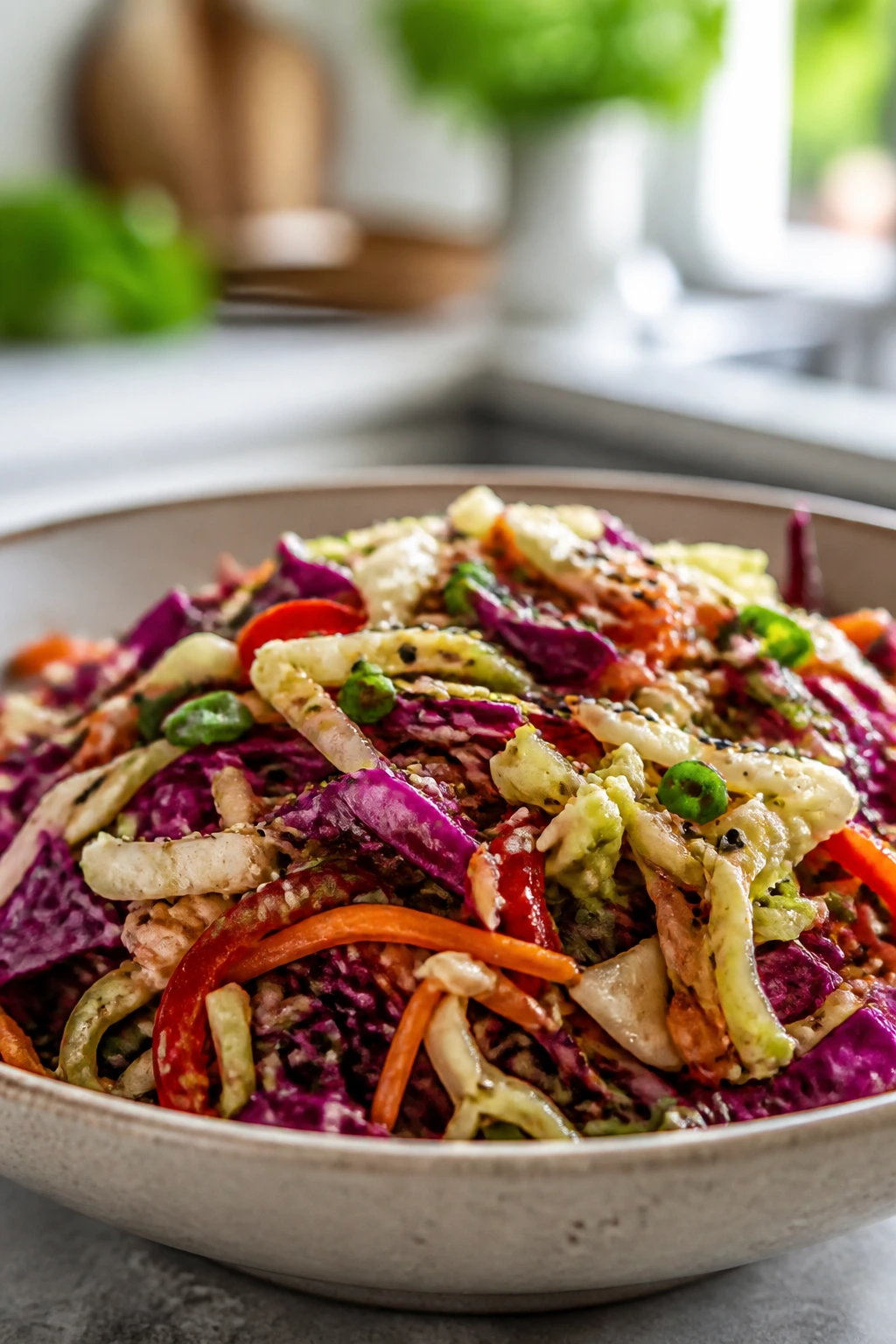
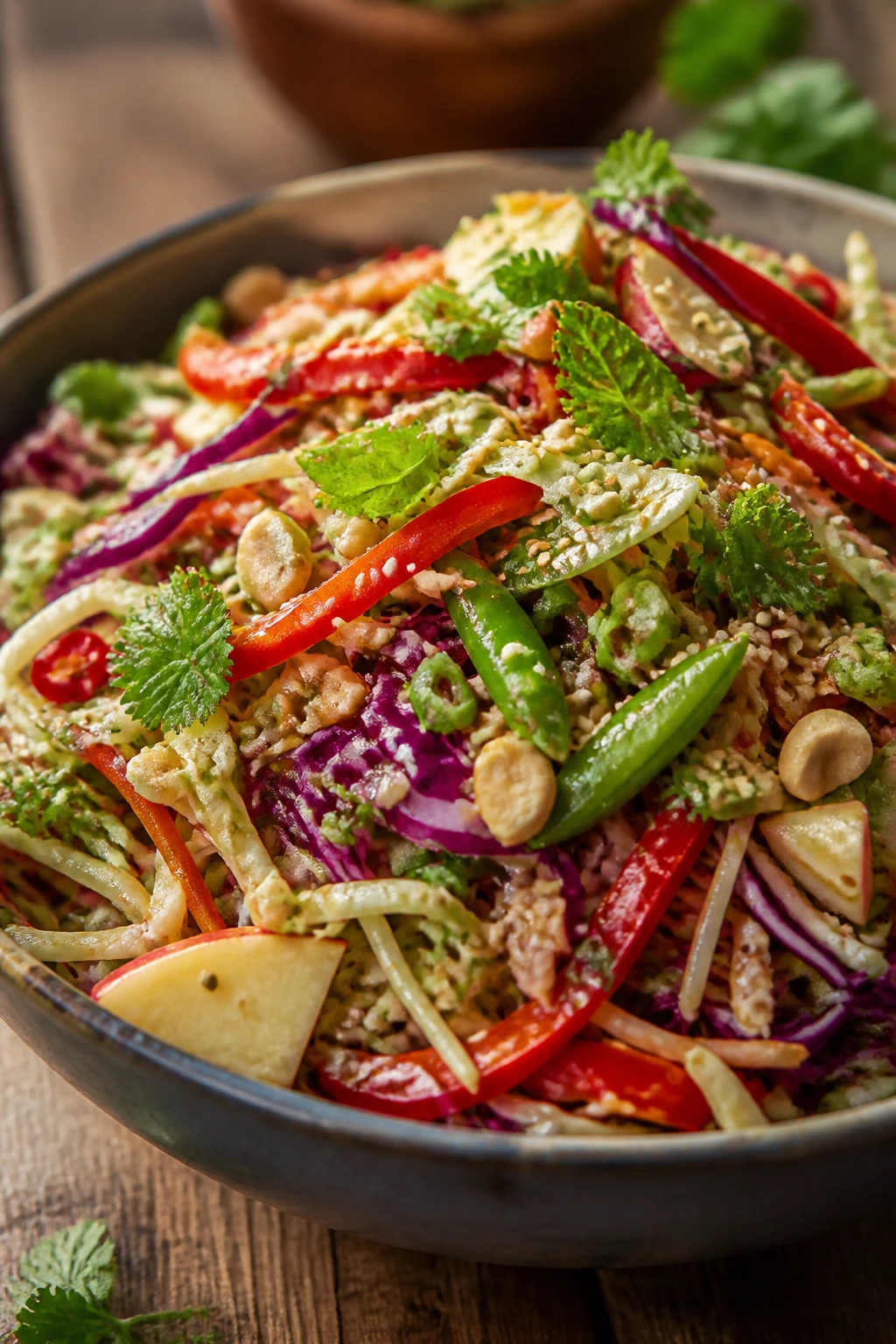
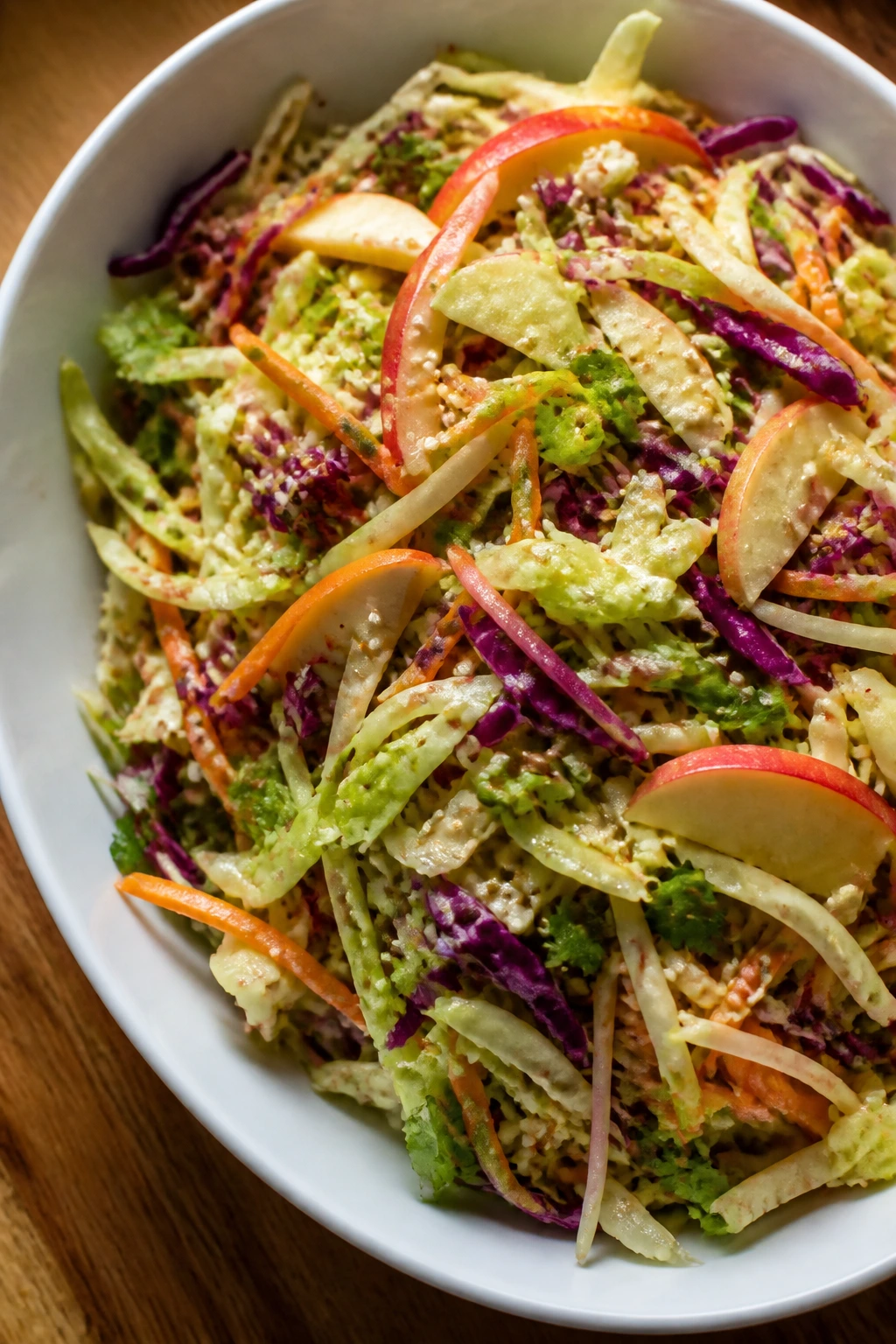
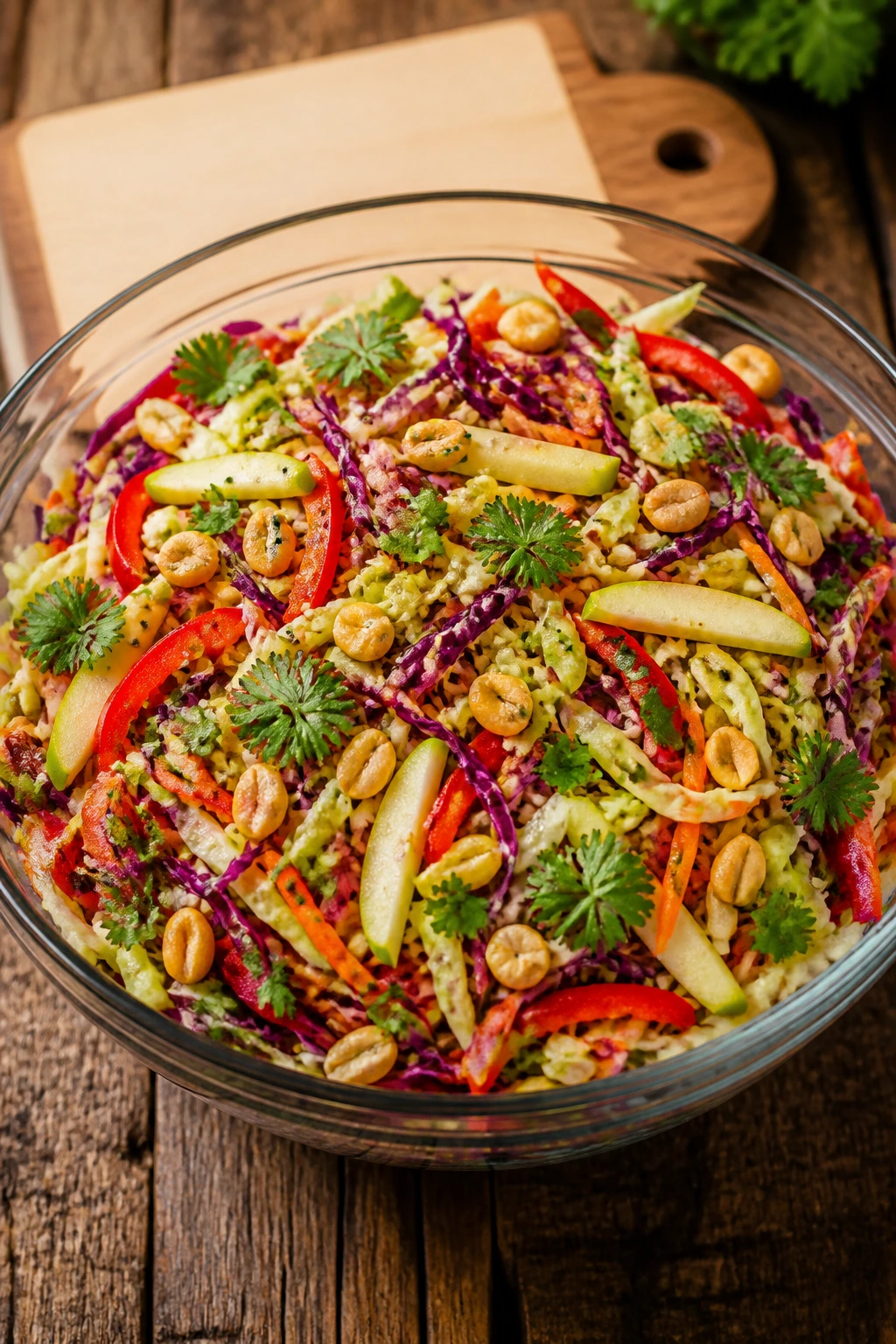
Presentation: Pile the slaw into a shallow bowl or on a wide platter so the red cabbage, green herbs, and pale ribbons of apple stay visible. A final scatter of peanuts and sesame seeds on top makes the bowl look finished without trying too hard.
Accompaniments: This sits well beside sesame chicken, grilled salmon, sticky rice, potstickers, roast pork, or tofu that’s been seared in a hot skillet. I also like it tucked into lettuce wraps or spooned over cold rice noodles with extra lime on the side.
Portions: As a side, plan on about 1 generous cup per person. As a light main, make it 4 servings and add 4 to 6 ounces of cooked chicken, shrimp, tofu, or edamame to each bowl.
Beverage Pairing: Iced green tea with lemon keeps the meal sharp, and a cold lager or light pilsner plays nicely with the sesame and ginger. Sparkling water with lime works too, especially if you want the slaw to stay the loudest thing on the table.
Tips, Tweaks, and Flavor Upgrades
Flavor Enhancement: A tiny extra drizzle of toasted sesame oil at the end can make the whole bowl smell richer, but keep it to a few drops. Too much, and the slaw starts tasting like perfume instead of dinner.
Customization: If you want more heft, add a cup of shredded rotisserie chicken, cooked shrimp, or shelled edamame. For a fruitier slant, swap the apple for a ripe pear or add a handful of mandarin segments right before serving.
Serving Suggestions: Finish with cilantro leaves left whole, not chopped, for a looser look and a more herbal bite. A few slices of fresh chili or a spoonful of chili crisp over the top also work, but only if the rest of the meal can handle the heat.
Make-It-Yours: Use tamari and maple syrup for a gluten-free, vegan version that still tastes balanced. If you like a creamier edge, whisk 1 tablespoon of smooth peanut butter into the dressing and thin it with 1 to 2 teaspoons of warm water until it runs easily off a spoon.
Where Slaw Usually Goes Wrong
-
Cutting the cabbage too thick: Big chunks chew like raw leaves and refuse to soak up the dressing. Slice thinner than you think you need, because cabbage ribbons shrink once they’re tossed.
-
Drowning the bowl in dressing: If the bottom of the bowl looks puddled, you’ve gone too far. Start with three-quarters of the dressing, toss, then add the rest only if the vegetables need it.
-
Letting the peanuts sit in the dressing too long: They lose their crunch and start tasting damp. Fold them in at the very end, or sprinkle them on top at the table.
-
Skipping the tasting step: A dressing that tastes fine in the jar can taste flat once it hits the vegetables. The fix is simple: taste after tossing and adjust with lime, salt, or a tiny extra drizzle of honey.
-
Using wet herbs or washed cabbage that’s still damp: Water thins the dressing and leaves the bowl dull. Dry everything before it meets the bowl, even if that means blotting the herbs with a kitchen towel.
-
Overdoing the sesame oil: It’s strong, and a heavy hand makes the slaw taste one-note. Use the measured tablespoon, then stop.
Variations Worth Trying
Spicy Chili Crisp Slaw
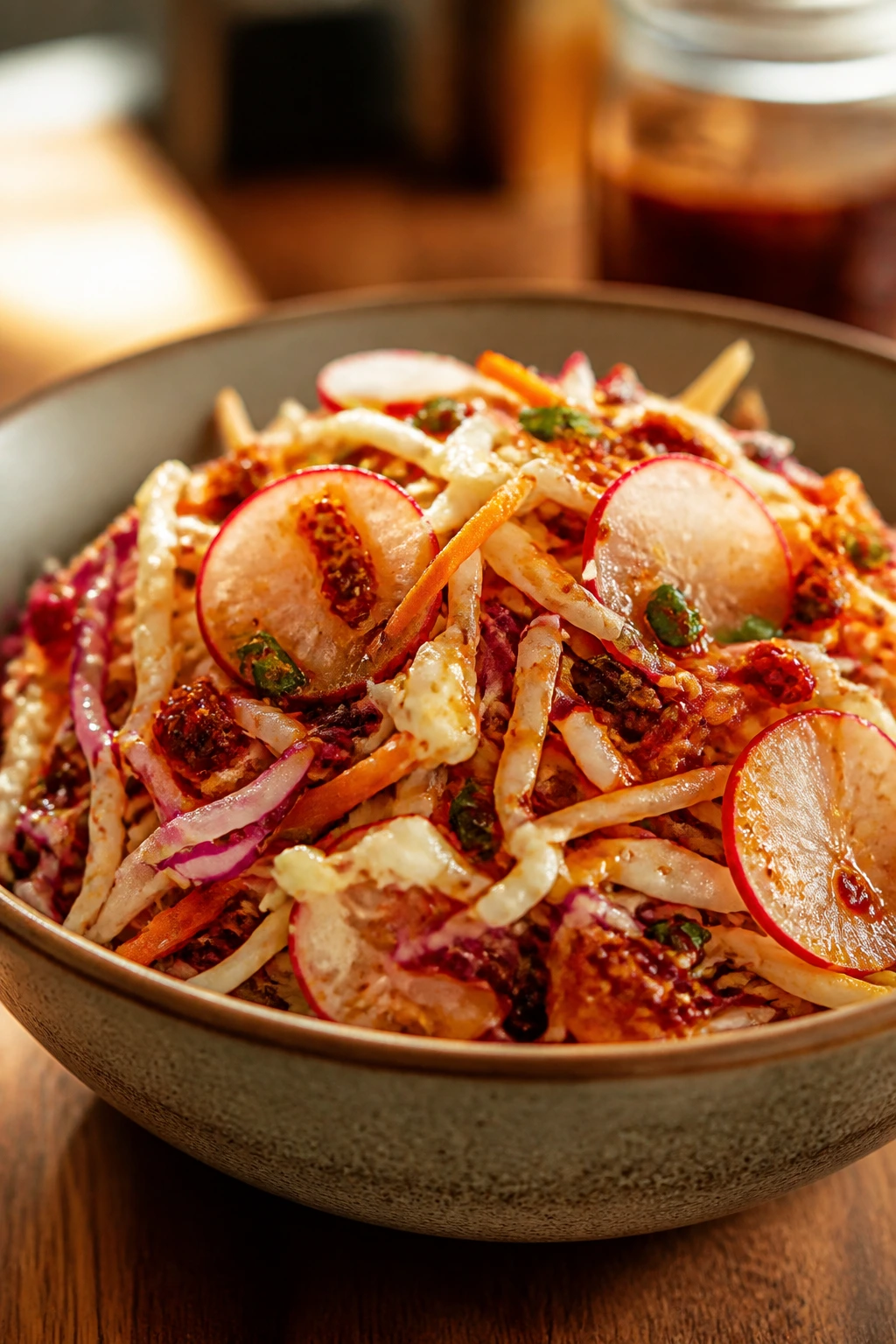
Add an extra teaspoon of chili crisp to the dressing and finish the bowl with another small spoonful at serving time. The heat stays in the background at first, then blooms after a few bites, which is exactly what I want with grilled chicken or dumplings.
Sesame-Apple Slaw with Extra Crunch
Keep the apple, add 1/2 cup thinly sliced radishes, and swap the mint for extra scallions. The radishes bring a peppery edge that makes the sweet fruit taste sharper, and the slaw feels a little more wintery without losing its snap.
Peanut-Lime Meal Bowl
Whisk 1 tablespoon smooth peanut butter into the dressing and add 1 cup shelled edamame plus shredded chicken or tofu. The bowl turns thicker and more filling, with a sauce that clings to the cabbage instead of just glossing it.
Vegan Ginger-Sesame Toss
Use maple syrup instead of honey and tamari instead of soy sauce if gluten matters. Add sliced cucumber and extra cilantro for a cooler, cleaner finish that works especially well beside rice bowls or grilled mushrooms.
Make-Ahead, Storage, and Leftovers
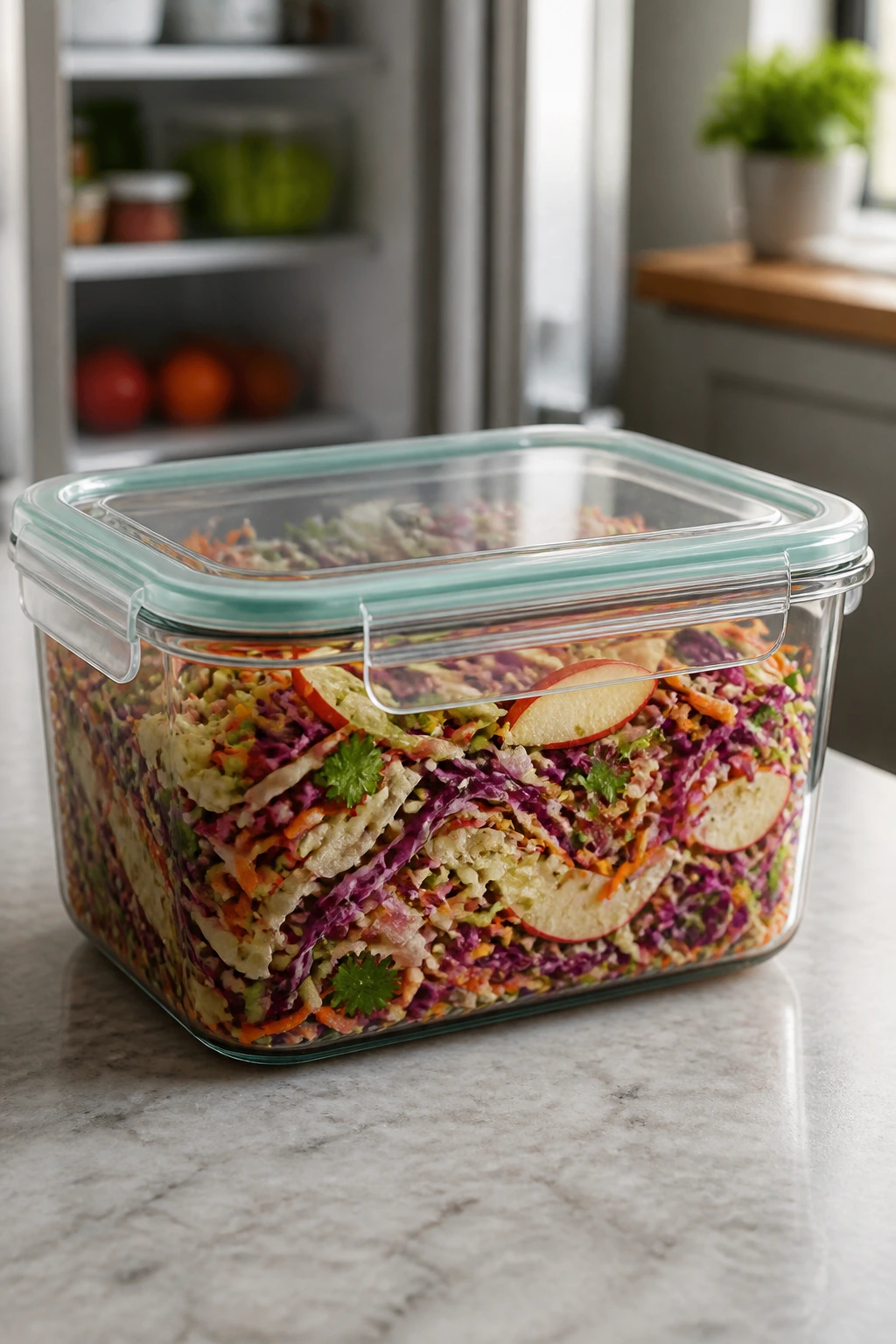
The dressing keeps well in a sealed jar in the refrigerator for up to 1 week. Give it a hard shake or whisk before using, because the oils separate a bit as it sits. If the ginger settles at the bottom, that’s normal.
The vegetables can be prepped 1 day ahead and stored separately in airtight containers with a paper towel in the bowl to catch extra moisture. Keep the peanuts and sesame seeds in a dry container at room temperature so they stay crisp. If you wash the herbs in advance, dry them thoroughly; wet cilantro goes limp fast.
Once the slaw is dressed, it’s best within 20 to 30 minutes, but it can hold in the fridge for about 1 day before the texture starts turning soft around the edges. Past that, the cabbage still tastes fine, though it loses the clean crunch that makes this dish worth making. I don’t recommend freezing the assembled slaw. The thawed vegetables turn watery and sad, and no amount of extra dressing brings back the snap.
If you’re serving it with warm protein, reheat the protein separately and spoon the slaw over it at the table. That keeps the cabbage cold and crisp, which is the whole point.
Questions People Actually Ask
Can I use bagged coleslaw mix instead of shredding cabbage by hand?
Yes, and it works well when you want speed. Choose a plain mix with cabbage and carrots only, then add the bell pepper, apple, herbs, and dressing yourself so the bowl still tastes fresh and layered.
What cabbage is best for Asian slaw?
Green cabbage gives the strongest crunch, red cabbage adds color and a slightly firmer bite, and napa cabbage makes a softer, more delicate version. I like a mix of green and red because it gives you structure without turning the bowl into a monotone pile.
How do I keep the apple from browning?
Toss the apple strips with a spoonful of dressing right after you cut them, or mix them into the slaw almost immediately. The lime juice and vinegar slow the browning, and the apple ends up tasting brighter anyway.
Can I make this slaw without sesame oil?
You can, but the flavor gets flatter and loses that toasted smell people recognize right away. If you need a substitute, use a little more neutral oil and add a pinch of toasted sesame seeds, though the flavor will still be milder.
How far ahead can I dress the slaw?
For the best crunch, dress it about 10 to 20 minutes before serving. If you need to go longer, keep the nuts separate and expect the cabbage to soften a bit by the next day.
What if the dressing tastes too salty?
Add another squeeze of lime or a teaspoon of honey, then toss again. Salt often tastes harsher before it meets the cabbage, so give it a minute after mixing before you decide it needs fixing.
Can I turn this into a main dish?
Yes, and it takes almost no extra effort. Add 4 to 6 ounces of cooked chicken, shrimp, tofu, or edamame per serving, then serve it over rice noodles or steamed rice if you want something more filling.
A Bowl Worth Reaching For
There’s a reason this kind of slaw keeps showing up next to better dinner ideas. It wakes up heavy mains, gives fried food somewhere to go, and brings real crunch to plates that need a little life. When the dressing is balanced and the vegetables are cut thin enough, the bowl stops feeling like a side dish and starts acting like the thing that ties the meal together.
The trick is restraint, not excess. A little sesame oil. Enough lime to make the ginger pop. Cabbage sliced fine enough to drink in the dressing without losing its snap. Get those details right once, and this becomes one of those recipes you make on instinct the next time the fridge is full of cabbage and your dinner needs a sharper edge.
Aromatic Asian Slaw Better than Takeout — Recipe Card
Recipe Name: Aromatic Asian Slaw Better than Takeout
Description: A crisp cabbage slaw with ginger, lime, sesame, soy, herbs, apples, and peanuts. It’s bright, crunchy, and sturdy enough to sit beside grilled meats, noodles, dumplings, or a simple rice bowl.
Prep Time: 20 minutes
Cook Time: 0 minutes
Total Time: 20 minutes, plus 10 to 15 minutes resting if desired
Course: Side Dish, Salad
Cuisine: Asian-Inspired
Servings: 6 servings
Calories: 160 kcal per serving
Ingredients
For the Slaw:
- 6 cups green cabbage, shredded into thin ribbons
- 3 cups red cabbage, shredded thin
- 2 cups carrots, julienned or shredded
- 1 red bell pepper, very thinly sliced
- 1 crisp apple, julienned and dressed right away
- 1 cup snap peas, thinly sliced on a bias
- 4 scallions, thinly sliced
- 1 cup cilantro leaves and tender stems, roughly chopped
- 1/2 cup mint leaves, torn
- 1/3 cup roasted peanuts, roughly chopped
- 2 tablespoons toasted sesame seeds
For the Dressing:
- 1/4 cup rice vinegar
- 3 tablespoons low-sodium soy sauce or tamari
- 2 tablespoons fresh lime juice
- 2 tablespoons honey or maple syrup
- 1 tablespoon toasted sesame oil
- 2 tablespoons neutral oil
- 1 tablespoon fresh ginger, finely grated
- 1 garlic clove, finely grated
- 1 teaspoon chili crisp or sambal oelek, optional
- 1/2 teaspoon fine sea salt
- 1/4 teaspoon freshly ground black pepper
Instructions
-
Whisk the rice vinegar, soy sauce, lime juice, honey, sesame oil, neutral oil, ginger, garlic, chili crisp, salt, and pepper in a small bowl or jar until smooth.
-
Shred the green cabbage and red cabbage thinly, then place them in a large mixing bowl with the carrots, bell pepper, apple, snap peas, and scallions.
-
Add the cilantro and mint, but hold back the peanuts and sesame seeds.
-
Pour about three-quarters of the dressing over the vegetables and toss until everything looks lightly glossy.
-
Rest for 10 minutes if you want the cabbage to soften slightly, then toss again and taste.
-
Add more dressing only if needed, then fold in the peanuts and sesame seeds right before serving.
Notes: Keep the peanuts separate until the last minute for the best crunch. The dressing can be made up to 1 week ahead. The assembled slaw is best the day it’s dressed, but the vegetables can be prepped a day in advance.