



A good stir fry should hit the pan with a sharp hiss, not a tired little sigh. If it steams, the vegetables go limp, the chicken turns dull, and the sauce ends up puddled at the bottom of the skillet like it gave up halfway through. That is the version people tolerate from a carton. This one is built to do better.
The phrase spicy healthy stir fry better than takeout sounds like a promise that might be trying too hard, but the method behind it is plain and practical. Hot pan. Dry vegetables. A sauce with salt, acid, heat, and a little body. That is the whole game. Once you get those pieces in the right order, the dish stops tasting like a compromise and starts tasting like dinner you planned on purpose.
Healthy does not have to mean timid. It just means the chicken stays lean, the vegetables keep their bite, and the sauce brings enough brightness to make the whole pan wake up. I like this style because it gives you the glossy, savory feel people chase in takeout, but without the slick oiliness or the sugar-heavy sauce that buries the vegetables. The trick is not a secret ingredient. It is timing. And timing, thankfully, can be learned.
Why This Spicy Healthy Stir Fry Tastes Better Than Takeout
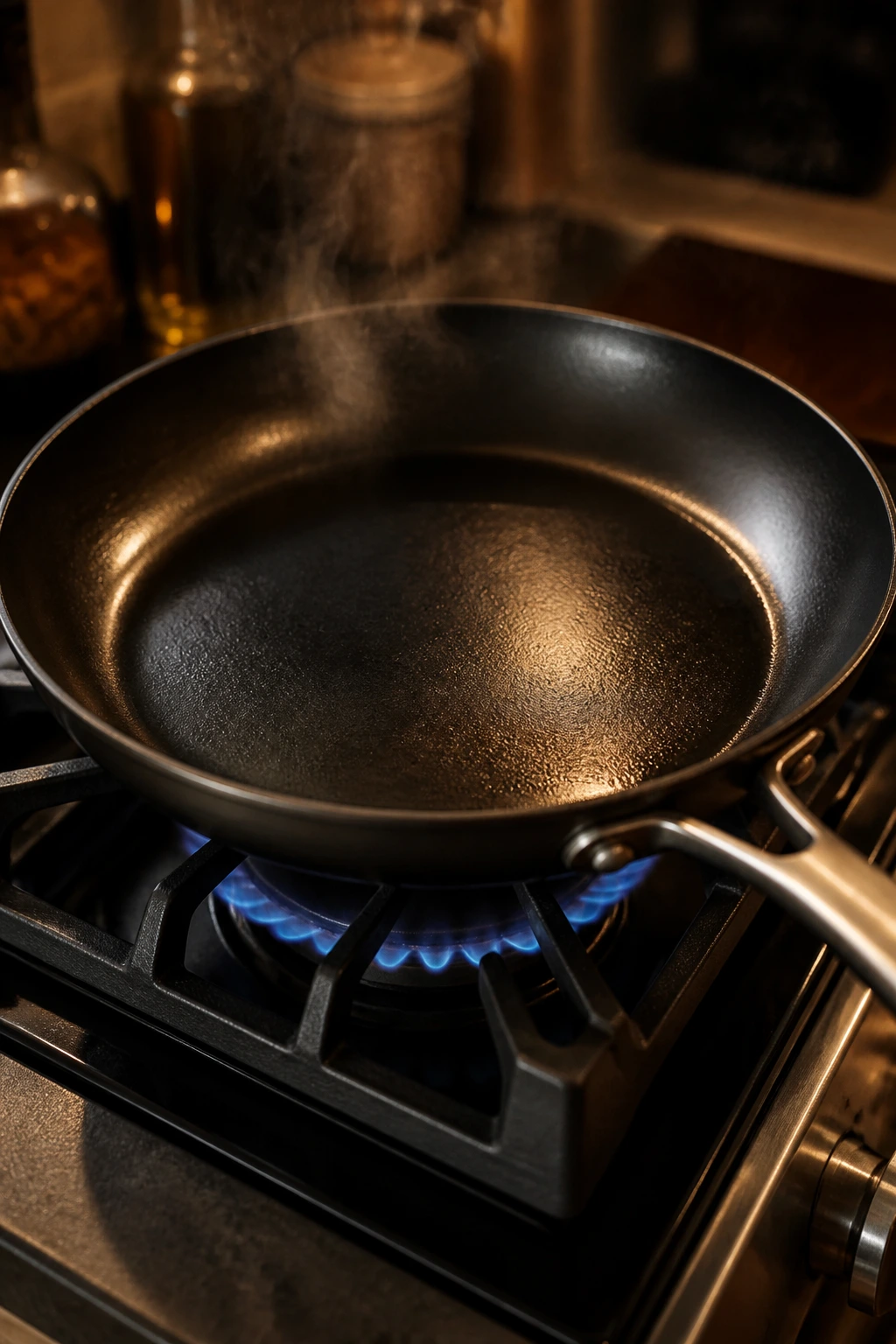
The first thing that makes this work is the heat. A stir fry needs a pan that is already hot before anything goes in, because the food should sear and glaze, not sit there waiting for the burner to catch up. Once the oil shimmers and the chicken hits the surface, you want a quick browning on the outside and just enough time for the center to finish without turning stringy.
The pan does the heavy lifting
Takeout stir fries often lean on a lot of sauce to disguise mediocre texture. Home stir fry gets to do the opposite. You can keep the sauce lighter and sharper because the vegetables still have snap, the chicken still has juice, and the whole pan tastes like separate ingredients that decided to cooperate.
That matters more than people think. A carrot sliced into thin sticks cooks in a few minutes; a broccoli floret cut to the size of a walnut stays firm instead of collapsing into mush. You taste each vegetable instead of one blur of brown sauce.
The sauce has four jobs
A good stir fry sauce is not just salt. It should do four things at once: season the food, bring heat, add a little tang, and cling to the ingredients instead of running off them. That is why this version uses low-sodium soy sauce, rice vinegar, honey, chili garlic sauce, and a small hit of cornstarch.
The cornstarch is the quiet workhorse. It thickens only after a short simmer, which is exactly what you want. The sauce goes from cloudy to glossy in less than a minute, and that sheen is what makes the finished pan look like it came from a kitchen that knows what it is doing.
The vegetables stay in control
Stir fry is one of those meals where cutting size matters almost as much as seasoning. If the onion wedges are huge and the broccoli is cut into tree trunks, the pan cooks unevenly and you end up with soft peppers beside undercooked carrots. If everything is trimmed to a similar scale, the vegetables finish together and keep their color.
I like to think of this dish as Chinese-inspired home cooking in its most practical form: fast, bright, and not fussy. You are not chasing restaurant smoke or pretending your home burner can mimic a commercial wok station. You are aiming for the more useful prize. Food that tastes awake.
Why You’ll Want to Keep This One on Repeat
-
Fast without feeling rushed: Once the cutting board is clear, the actual cooking takes about 15 minutes, and most of that time is spent stirring rather than waiting.
-
The sauce tastes layered, not sugary: Soy, vinegar, ginger, garlic, and chili sauce give you salt, acid, heat, and aroma in one bowl.
-
The vegetables still taste like vegetables: Broccoli stays green, snap peas stay crisp, and the carrot keeps a little bite instead of dissolving into the sauce.
-
One skillet does almost everything: You cook the chicken, vegetables, and sauce in the same pan, which keeps cleanup reasonable and saves the best browned bits.
-
The heat level is easy to control: One tablespoon of chili garlic sauce gives a lively burn; half that keeps the dish friendly enough for people who flinch at spice.
-
Leftovers hold up better than most stir fries: The sauce is light enough that the vegetables do not drown on day two, especially if you reheat the pan instead of blasting it in the microwave.
How Long It Takes and What You Get
This stir fry moves quickly once the knife work is done. The sauce is mixed in one bowl, the chicken gets a short coating that helps it stay tender, and the vegetables cook in a sequence that keeps each one honest. Nothing complicated. Nothing theatrical.
Yield: Serves 4
Prep Time: 20 minutes
Cook Time: 15 minutes
Total Time: 35 minutes active + 10 minutes resting
Chill/Rest Time: 10 minutes for the chicken to sit in its quick coating
Difficulty: Beginner — the knife work is the hardest part, and the pan does the rest.
Best Served: Right away, while the sauce is glossy and the vegetables still have crunch.
What Goes Into the Pan
For the Chicken:
- 1½ pounds boneless, skinless chicken breast, sliced ¼-inch thick against the grain
- 1 tablespoon low-sodium soy sauce
- 1 tablespoon cornstarch
- 1 tablespoon avocado oil or another neutral oil
- 1 tablespoon water
For the Stir Fry Sauce:
- ¼ cup low-sodium soy sauce
- ½ cup low-sodium chicken broth
- 2 tablespoons rice vinegar
- 1 tablespoon honey
- 1 tablespoon chili garlic sauce
- 1 teaspoon toasted sesame oil
- 1 teaspoon cornstarch
- ½ teaspoon crushed red pepper flakes, optional
For the Vegetables and Finish:
- 2 tablespoons avocado oil, divided
- 1 small yellow onion, cut into ½-inch wedges
- 1 red bell pepper, sliced into thin strips
- 1 medium carrot, cut into matchsticks
- 1½ cups broccoli florets, cut small
- 1 cup snap peas, strings removed
- 3 cloves garlic, minced
- 1 tablespoon fresh ginger, grated
- 2 scallions, sliced
- 1 teaspoon toasted sesame seeds
- Fine salt and black pepper, to taste
Why Each Ingredient Pulls Its Weight
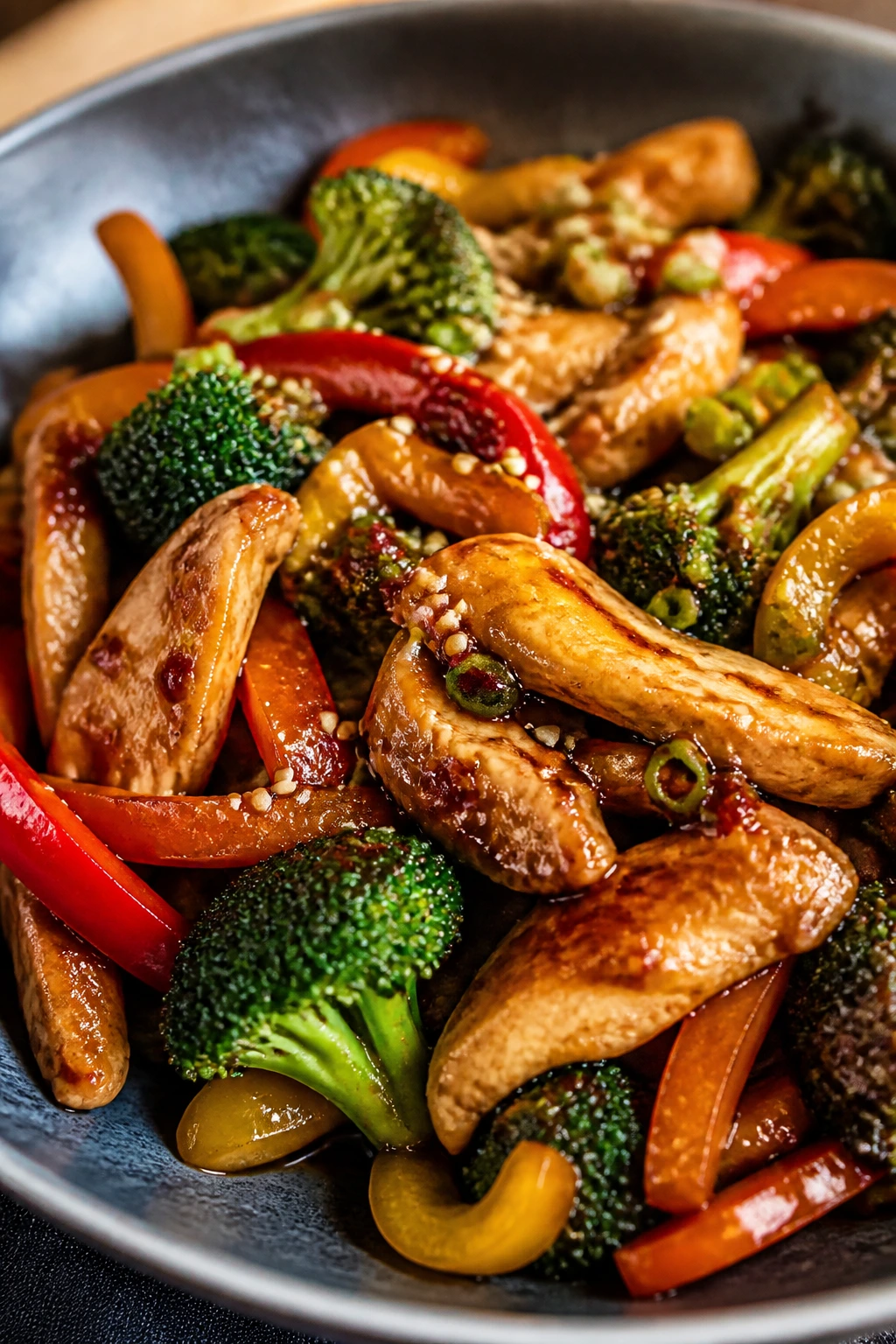
Chicken
- What to use: 1½ pounds boneless, skinless chicken breast sliced into thin strips. The slices should be about ¼-inch thick so they cook fast and pick up browning before the outside dries out.
- Preparation: Slice the chicken against the grain, then toss it with the soy sauce, cornstarch, oil, and water until the surface looks lightly slick and tacky. Let it sit while you prep the vegetables.
- Substitutions: Boneless chicken thighs work if you want a juicier bite, and extra-firm tofu can stand in if you press it first and pan-fry it until the edges firm up.
- Tips: If the chicken feels slippery or wet, pat it dry first. Too much surface moisture keeps the coating from clinging, and then you lose the light velvety texture that makes stir fry feel finished.
Stir Fry Sauce
- What to use: Low-sodium soy sauce, chicken broth, rice vinegar, honey, chili garlic sauce, toasted sesame oil, and cornstarch. The small amount of cornstarch is what makes the sauce coat the food instead of running off it.
- Preparation: Whisk everything together in a bowl until the cornstarch disappears. A few tiny white streaks are a sign you need to keep whisking; they thicken into little lumps once they hit the pan.
- Substitutions: Tamari works for a gluten-free version, vegetable broth can replace chicken broth, and sambal oelek can stand in for chili garlic sauce if that is what you have.
- Tips: Taste the sauce before it goes into the pan. It should seem a little salty and sharp in the bowl because the vegetables and chicken will mellow it once everything is combined. Sesame oil belongs at the finish, not in the frying oil.
Vegetables
- What to use: Onion, red bell pepper, carrot, broccoli, and snap peas. These give you a clean mix of sweet, grassy, and crisp textures without turning the pan into a mushy pile.
- Preparation: Cut the vegetables into pieces that finish at about the same time. Carrot matchsticks should be thin enough to soften in a few minutes, broccoli florets should be small, and the peppers should be thin strips rather than wide slabs.
- Substitutions: Baby bok choy, asparagus, green beans, mushrooms, or cabbage can take the place of one or more vegetables depending on what is in the fridge.
- Tips: Dry the vegetables well after washing. Any extra water on the surface turns the pan into a steamer, and steaming is the fastest way to flatten the texture.
Aromatics and Finish
- What to use: Garlic, ginger, scallions, and sesame seeds. These are the loudest smells in the dish, and they are the reason the kitchen starts smelling like dinner before you even add the sauce.
- Preparation: Mince the garlic finely and grate the ginger on a microplane or the small holes of a grater. Slice the scallions at the end so they stay bright and crisp.
- Substitutions: Garlic paste and ginger paste are fine in a pinch, and a pinch of white pepper can replace the red pepper flakes if you want that faint takeaway-style warmth.
- Tips: Garlic burns fast, faster than people expect. Add it late, keep it moving, and let it smell sweet for only 20 to 30 seconds before the sauce goes in.
The Tools That Make Stir-Frying Easier
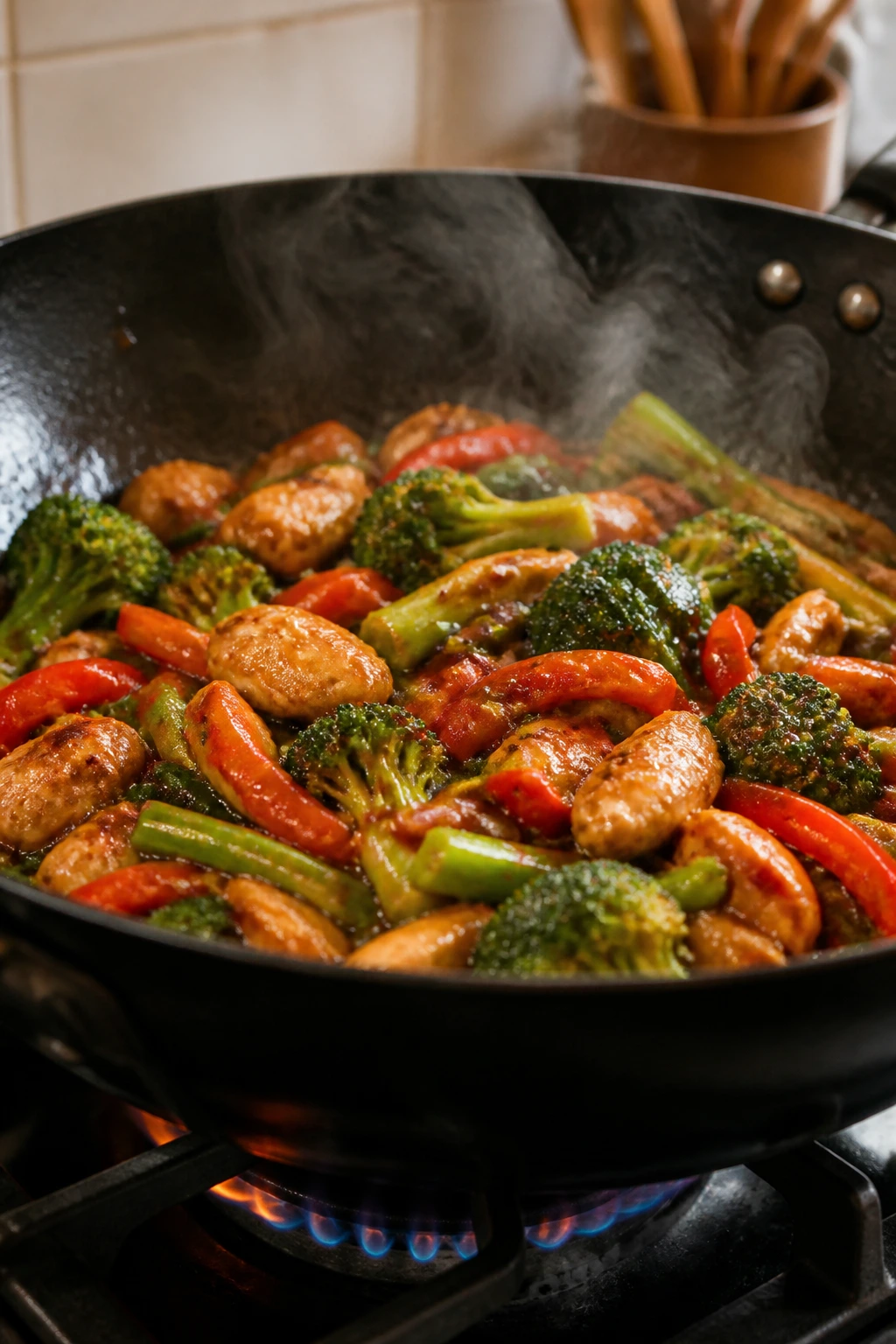
You do not need a restaurant kitchen for this, but a few specific tools make the whole process calmer. Stir fry goes quickly, and the less time you spend hunting for things, the better the pan behaves.
- 12-inch wok or large skillet: A wide surface matters more than a dramatic shape. On many home stoves, a large skillet actually browns better than a deep wok because the food stays in contact with the heat.
- Sharp chef’s knife: Thin chicken and even vegetable cuts are much easier when the knife does the work instead of you pushing through the food.
- Cutting board with a damp towel underneath: That little trick keeps the board from skating around while you slice the chicken and vegetables.
- Small whisk: The sauce needs a real whisk, not a fork jabbed around at random. Cornstarch clumps when it is ignored.
- Medium mixing bowl: Large enough to hold the sauce and coat the chicken without splashing.
- Tongs or a thin spatula: Tongs help move chicken in batches, and a thin spatula is useful if you are cooking in a skillet instead of a wok.
- Instant-read thermometer: The USDA recommends chicken reach 165°F, and this dish moves fast enough that checking the thickest piece is the simplest way to avoid dry meat.
- Microplane or fine grater: Ginger turns better when it is grated finely. Big chunks can feel stringy in the finished sauce.
How to Cook the Stir Fry Without Turning It into Steam
Prep the Sauce and Chicken
-
Whisk together the soy sauce, chicken broth, rice vinegar, honey, chili garlic sauce, toasted sesame oil, cornstarch, and red pepper flakes in a medium bowl until smooth. Set it beside the stove. Do not leave cornstarch sitting in the bowl without whisking again later; it settles fast.
-
Toss the sliced chicken with 1 tablespoon soy sauce, 1 tablespoon cornstarch, 1 tablespoon avocado oil, and 1 tablespoon water until the pieces look lightly coated and glossy. Let it rest for 10 minutes while you prep the vegetables. The coating should look tacky, not wet. That tacky layer helps the chicken stay tender and gives the sauce something to grip.
Cook the Chicken
-
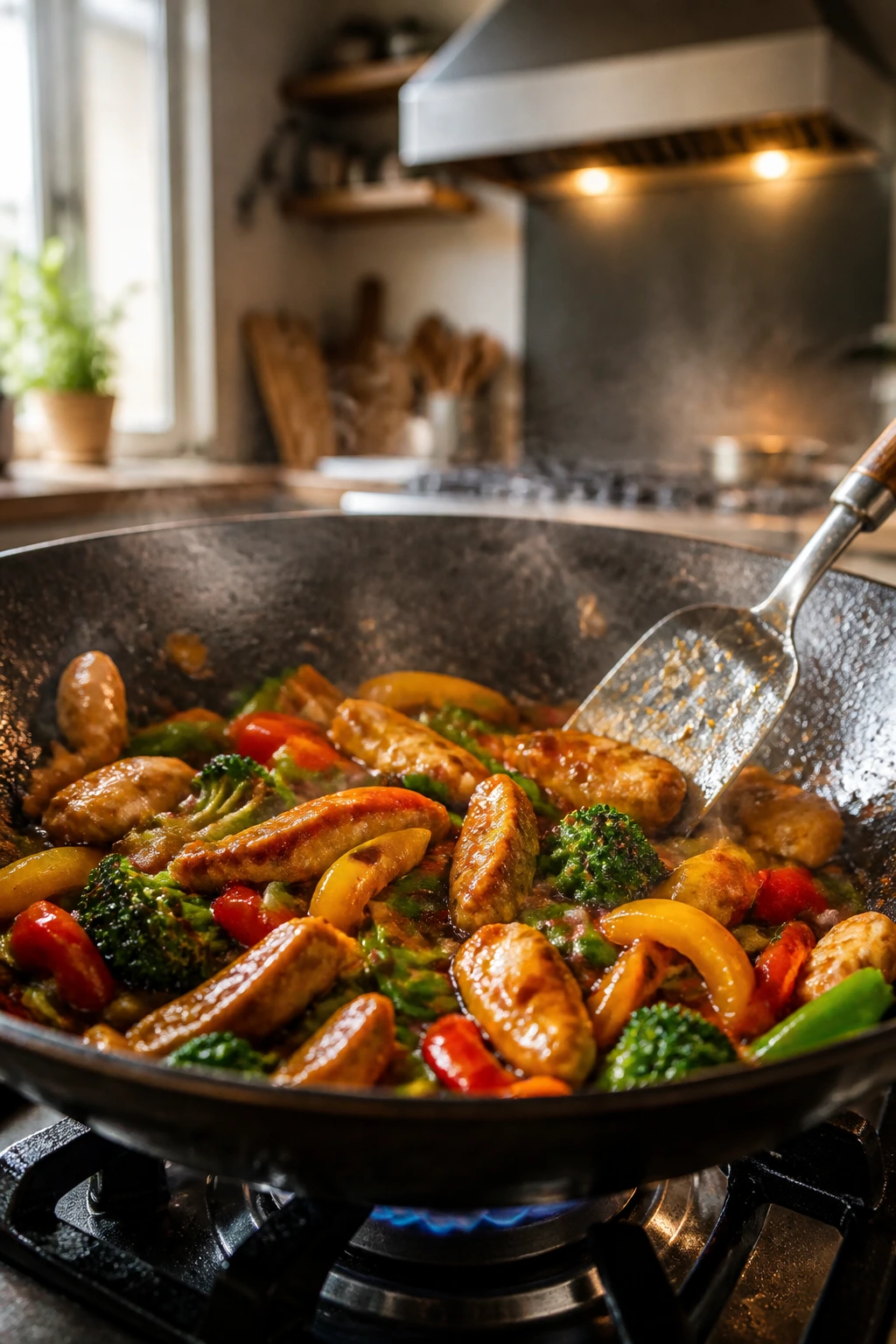
Heat a large wok or 12-inch skillet over medium-high heat for about 2 minutes, until a drop of water flicks off the surface right away. Add 1 tablespoon avocado oil and swirl it around the pan. The oil should shimmer, not smoke heavily.
-
Add half the chicken in a single layer and let it sit for 1 minute without moving it. Then stir and turn the pieces for 2 to 3 minutes more, until the outside is lightly browned and the thickest slice reaches 165°F. Transfer the chicken to a plate and repeat with the remaining oil and chicken. If the pan starts steaming, your batch is too crowded.
Cook the Vegetables and Finish
-
Add the remaining 1 tablespoon avocado oil to the pan. Stir in the onion and carrot and cook for 2 minutes, until the onion starts to turn translucent and the carrot loses its raw stiffness at the edges. The pan should smell sweet and a little savory, not burnt.
-
Add the broccoli and cook for another 2 minutes, stirring often. The florets should brighten and soften slightly while keeping their shape. Add the bell pepper and snap peas and cook for 1 to 2 minutes more, until they are crisp-tender. You want color here. You want bite.
-
Push the vegetables to the sides of the pan, add the garlic and ginger to the open spot, and stir for 20 to 30 seconds until fragrant. Do not let the garlic brown. If it starts to darken before the sauce goes in, pull the pan off the heat for a moment and stir.
-
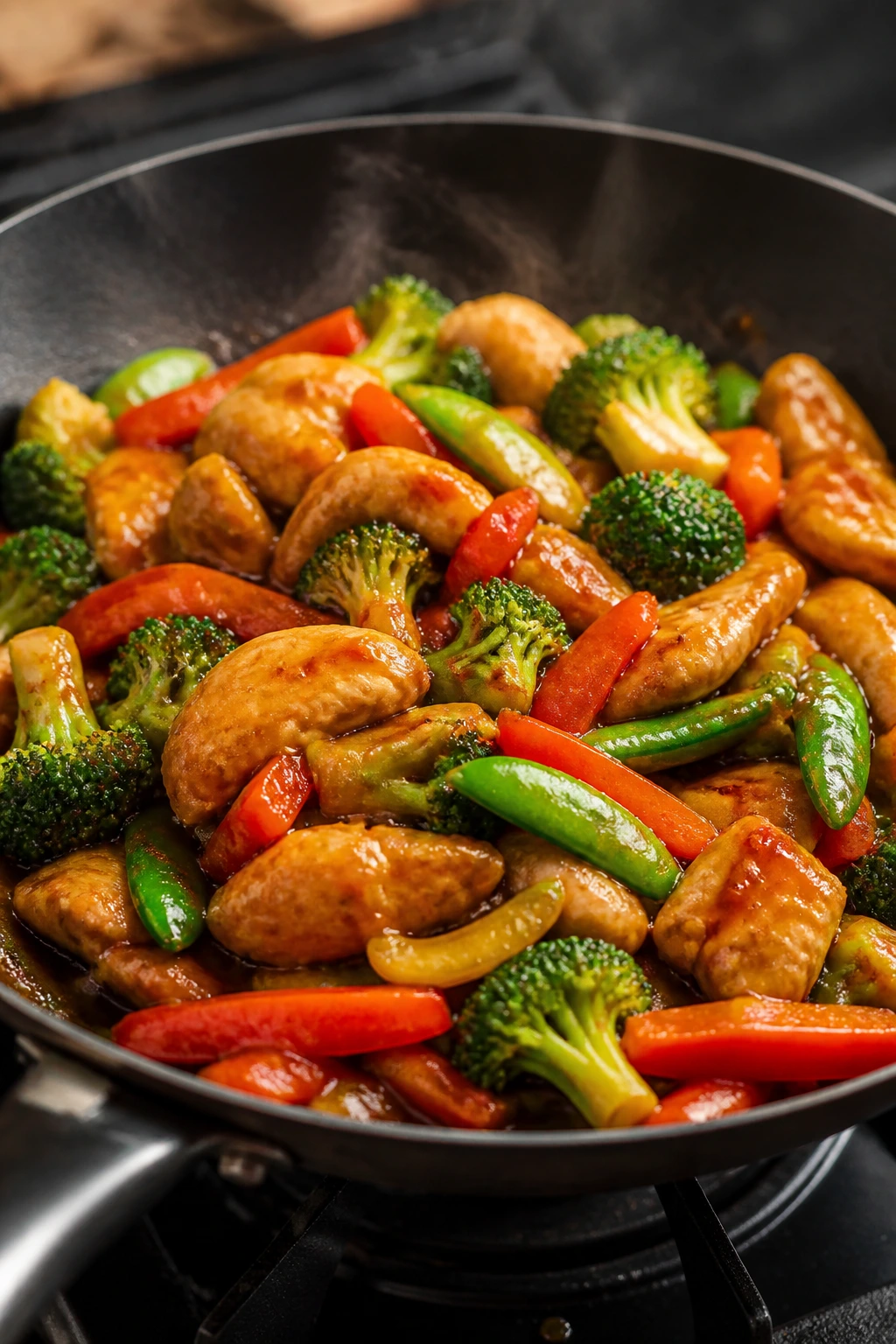
Whisk the sauce one more time and pour it into the pan. Toss everything together continuously for 30 to 60 seconds, until the sauce turns glossy and lightly thickened. It should cling to the chicken and vegetables instead of pooling in the bottom of the skillet. If it tightens too quickly, splash in 1 to 2 tablespoons water or broth.
-
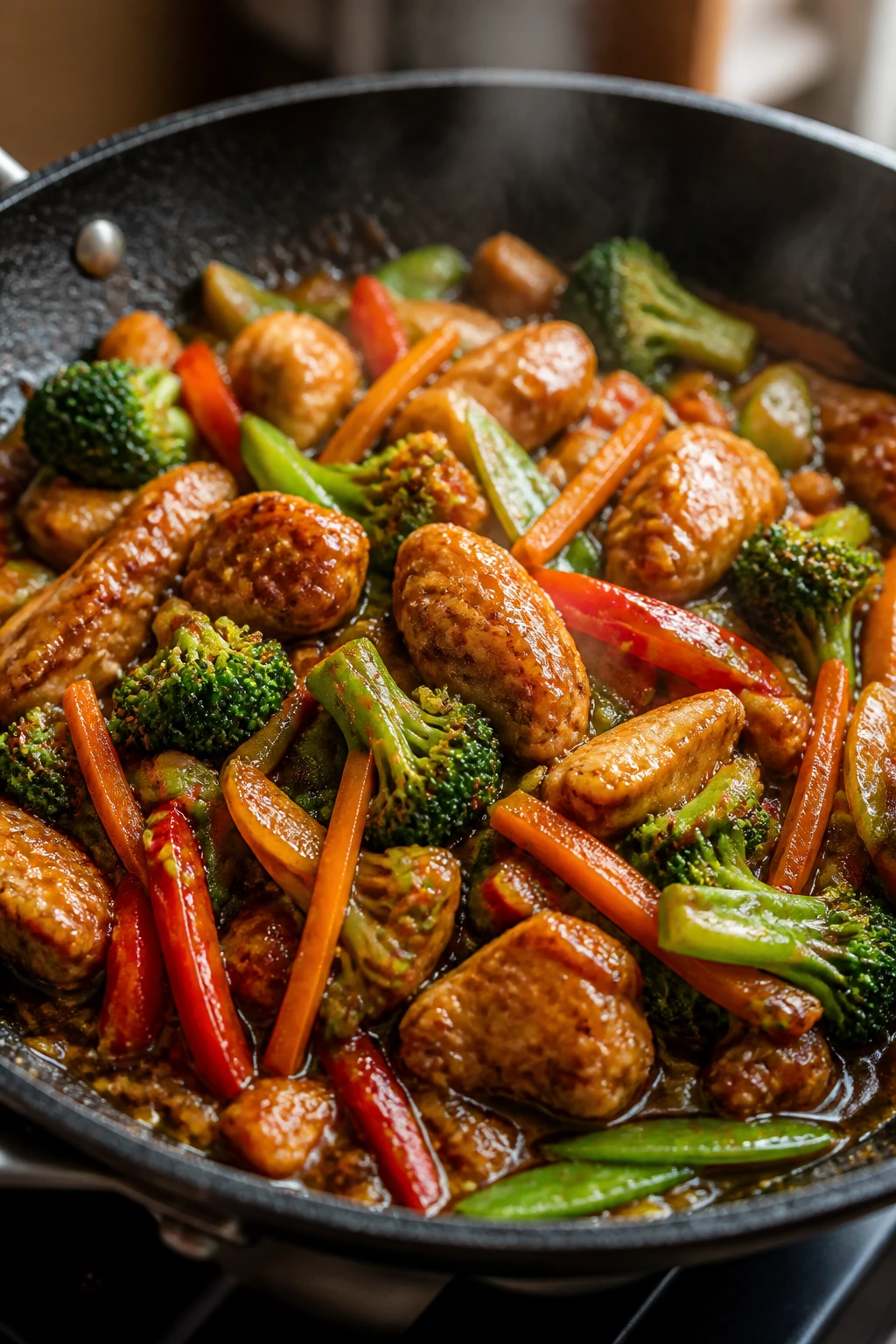
Return the chicken and any juices to the pan, add the scallions, and toss for 30 seconds more. Taste and adjust with a small pinch of salt, a splash more soy, or another teaspoon of vinegar if the flavor needs more snap. Sprinkle with sesame seeds and serve immediately. The finished pan should look shiny, with green vegetables still bright and no thick gluey sauce in sight.
How to Plate It So It Feels Like a Proper Meal
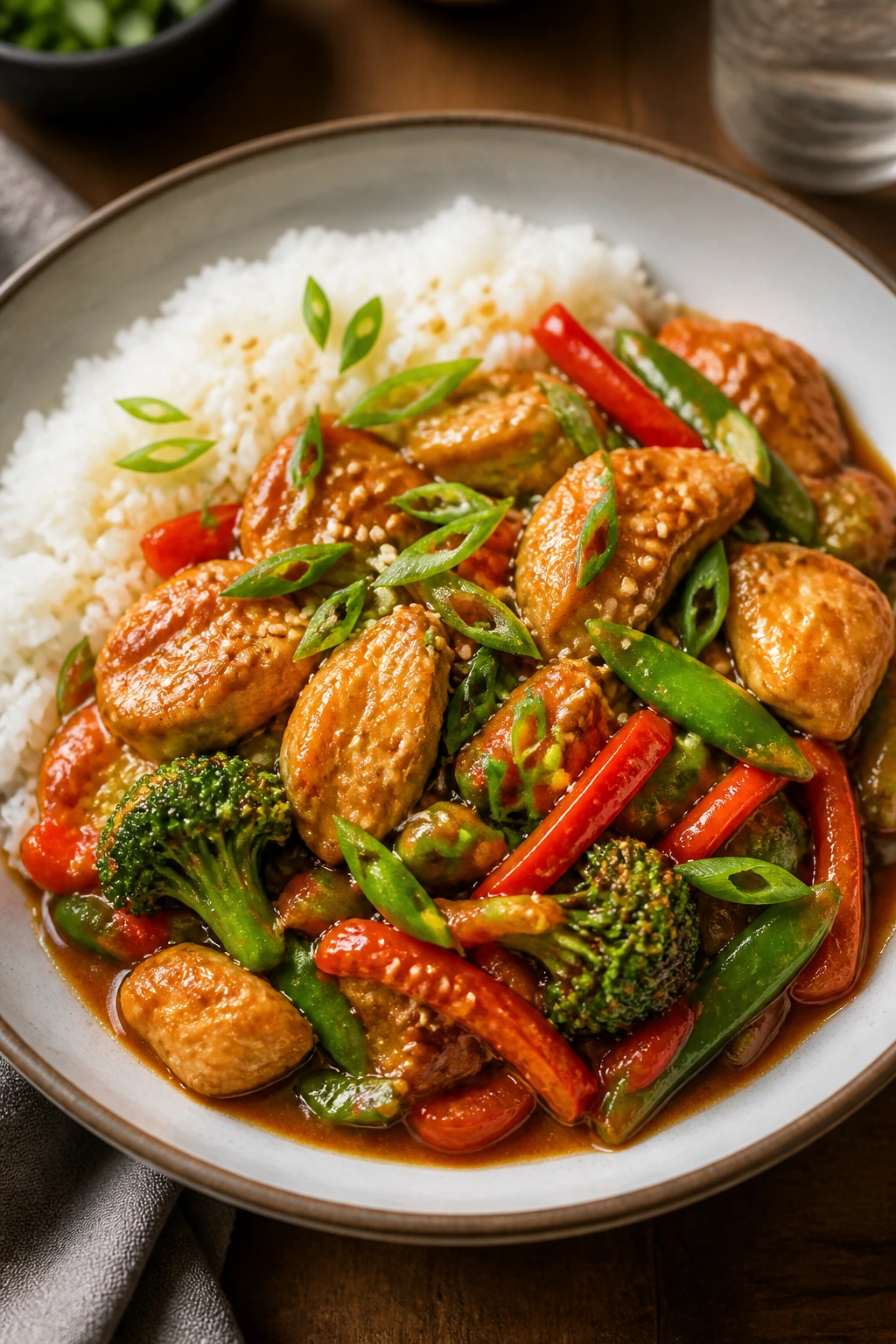
Presentation: Spoon the stir fry into shallow bowls rather than deep ones. That keeps the sauce visible and lets the vegetables sit on top instead of disappearing under a mound of rice. A final scatter of scallions and sesame seeds makes the bowl look finished without doing much work.
Accompaniments: Jasmine rice is the classic move because its soft grains catch the sauce without fighting it. Brown rice gives you more chew, while cauliflower rice keeps the plate lighter. If you want something cold beside the heat, a quick cucumber salad with rice vinegar and a pinch of salt is a clean contrast.
Portions: Four generous servings is the right range for this batch. If rice is part of the meal, 1 to 1½ cups of stir fry over ½ to 1 cup rice per person is plenty. If you are serving it as the main dish with no rice, the larger portion makes sense.
Beverage Pairing: I like cold jasmine tea or plain green tea because both cut through the garlic and chili without adding sweetness. A dry lager works too. If you want something nonalcoholic with a little more lift, sparkling water with lime keeps the heat from feeling heavy.
Small Moves That Make the Pan Brighter
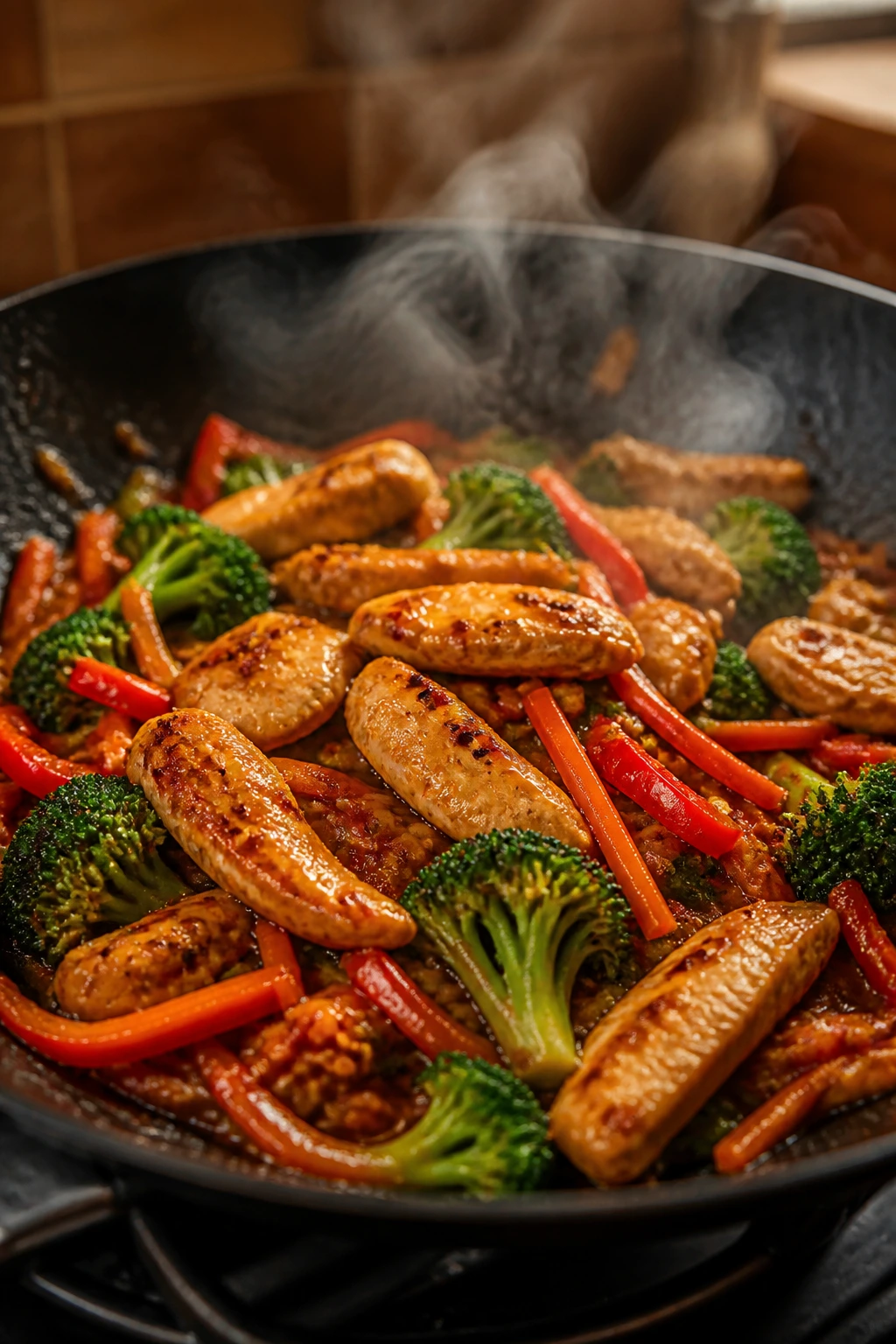
Flavor Enhancement: A tiny splash of Chinese black vinegar or a pinch of white pepper gives the finished pan more depth if you want a darker, takeout-style edge. I would add it sparingly. You are trying to sharpen the sauce, not turn it into a different dish.
Time-Saver: Chop the vegetables the night before and store them in a lined container or zip bag with a paper towel. The only things I prefer to cut right before cooking are the garlic and ginger, because their smell drops off once they sit exposed too long.
Heat Control: If your stove runs weak, give the pan an extra 1 to 2 minutes of preheating and cook the chicken in smaller batches. A crowded pan on a weak burner is a one-way street to pale chicken and soft vegetables. No shortcut fixes that.
Cost-Saver: Frozen broccoli florets or frozen pepper strips can work here if you thaw them and blot them dry with towels first. I would not throw them into the pan straight from the freezer unless you want extra water in the skillet.
Make-It-Yours: A spoonful of chili crisp at the table adds crunchy heat without changing the base recipe. Keep it as a finishing drizzle so the crisp bits stay lively instead of dissolving into the sauce.
Mistakes That Make Stir Fry Limp
-
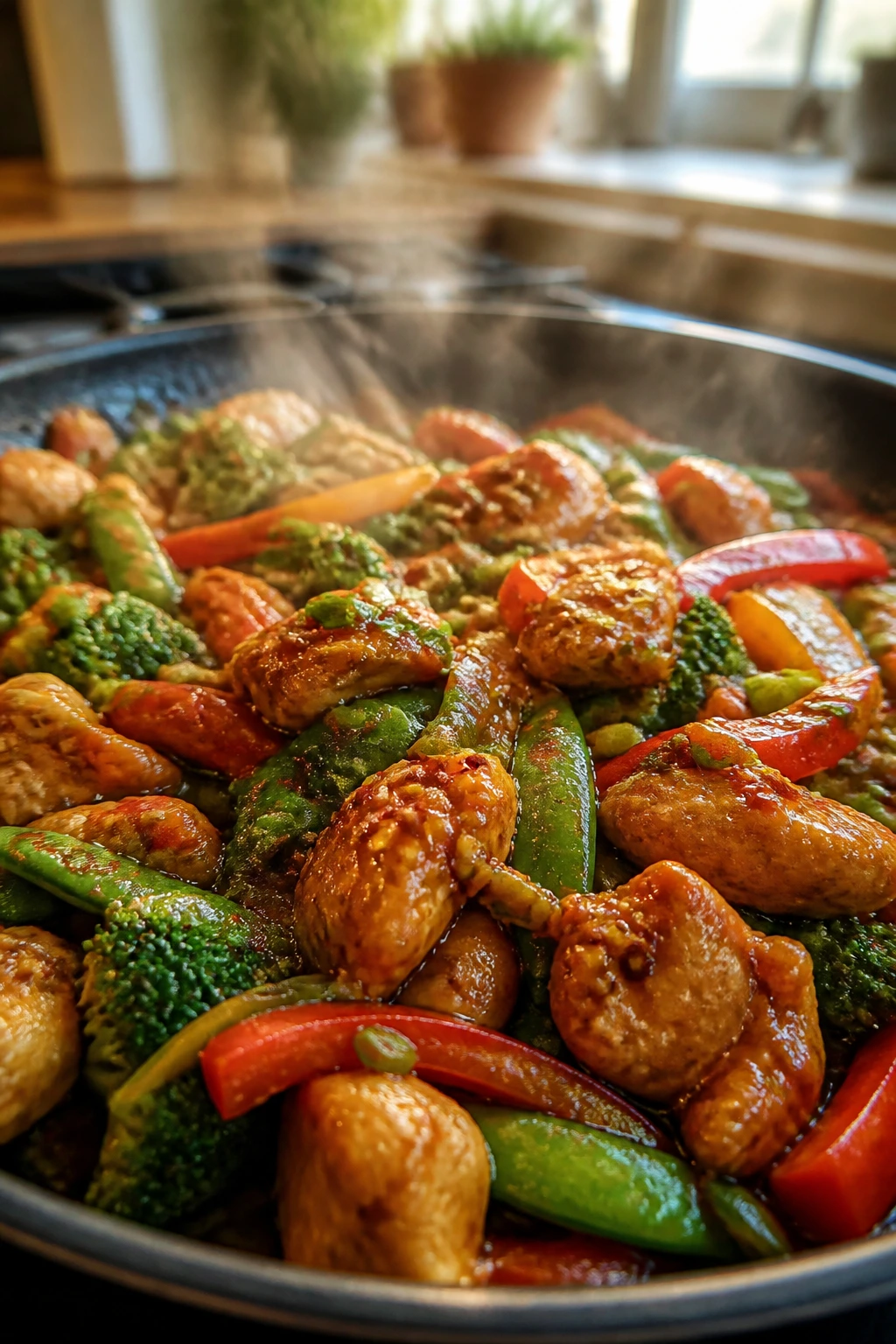
Crowding the pan with all the chicken at once: The pieces lose steam, not brown. The fix is simple: cook in two batches so the chicken can actually touch the hot surface.
-
Using wet vegetables straight from the sink: Water on the surface cools the pan and turns the vegetables soft before they can sear. Dry them on towels or let them air off for a few minutes before cooking.
-
Letting garlic sit in the hot pan too long: Burnt garlic tastes bitter and drags the whole dish down. Add it only after the vegetables are mostly done, and move it around as soon as it hits the heat.
-
Pouring in the sauce and walking away: Cornstarch thickens fast once it meets heat, and if you stop stirring, it can turn gluey. Keep the food moving and pull the pan off the burner as soon as the sauce turns glossy.
-
Using sesame oil as the frying oil: Toasted sesame oil has a strong aroma and a lower smoke point than neutral oil. It belongs at the end, where its nutty smell stays intact.
-
Skipping the final taste test: Soy sauce, broth, and vegetables all change the salt balance after the pan comes together. Taste the finished stir fry and adjust with a touch more soy or vinegar instead of assuming the first mix was perfect.
Variations and Smart Swaps
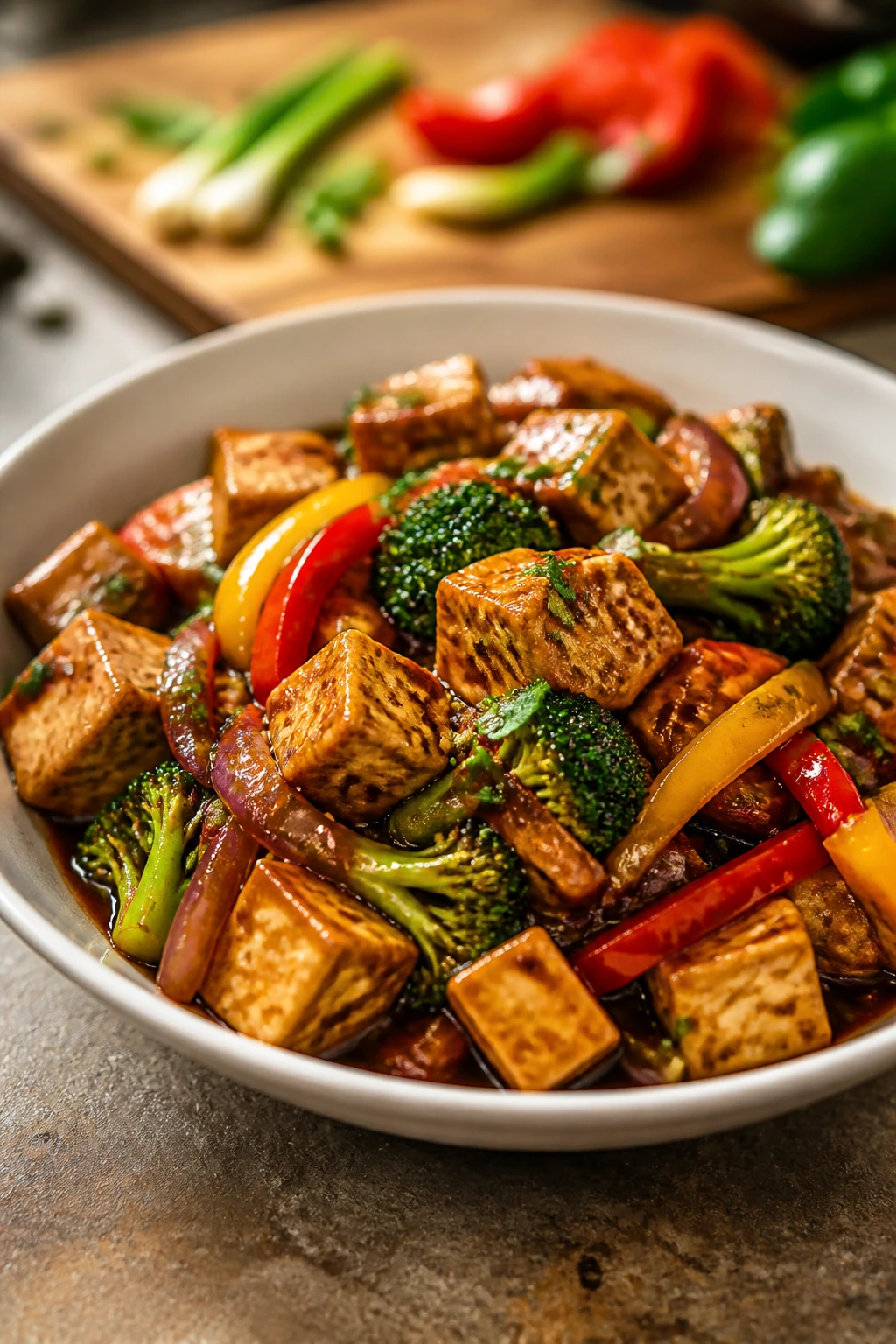
Garlic-Chili Tofu Bowl
Press 14 to 16 ounces of extra-firm tofu for 20 minutes, cube it, and toss the cubes with 1 tablespoon cornstarch before frying them until the edges are crisp. The sauce stays the same, but the tofu carries it better if you let the cubes brown before adding the vegetables.
Shrimp and Snap Pea Stir Fry
Swap the chicken for 1½ pounds peeled shrimp and cook them for only 1 to 2 minutes per side, just until they turn pink and curl into a loose C-shape. Shrimp takes on the sauce fast, which makes this a lighter version that still tastes lively.
Broccoli Beef Takeout Swap
Use 1½ pounds flank steak sliced thinly against the grain and cut the sear time to about 60 to 90 seconds per side. The sauce and vegetables stay the same, but the finished pan tastes deeper and a little more savory.
Gluten-Free Tamari Version
Replace the soy sauce with tamari and check that the broth is certified gluten-free. The rest of the recipe stays exactly the same, which is one reason this stir fry is so easy to adapt.
Milder Ginger Pan
Cut the chili garlic sauce to 1 teaspoon, skip the red pepper flakes, and add an extra teaspoon of honey if the sauce needs smoothing. The ginger and garlic still carry the flavor, but the heat stays in the background.
Storage, Reheating, and Make-Ahead
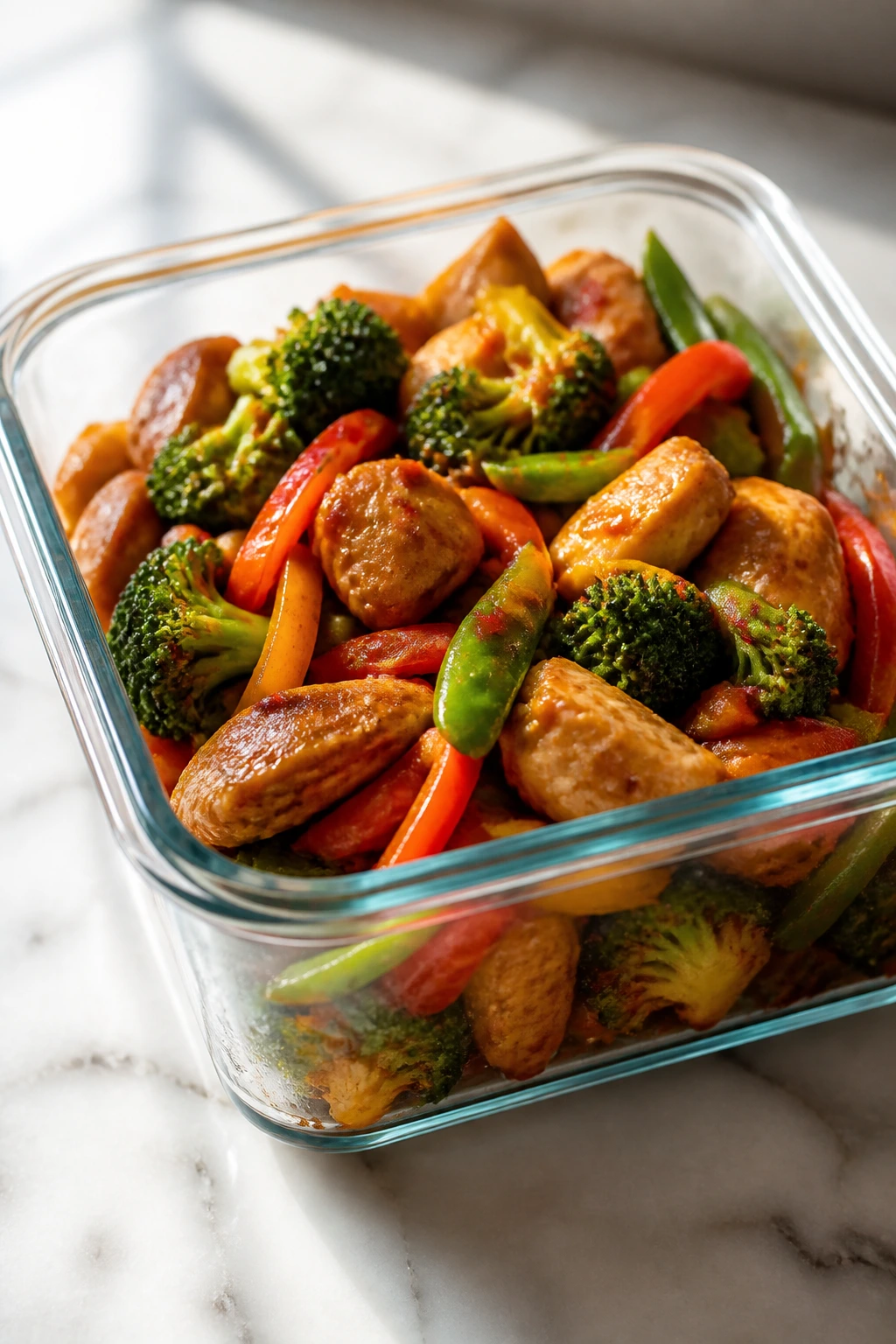
Cooked stir fry is one of those dishes that behaves well for a couple of days if you treat it right. Let it cool for no more than 2 hours before packing it into an airtight container. Food safety guidance is plain about that, and in a dish with chicken, there is no reason to gamble with it.
In the fridge, the stir fry keeps for 3 to 4 days. I like to store the rice separately if I made it, because rice drinks up sauce and can turn soft by day two. If you know you will have leftovers, leave the sesame seeds off the top until serving so they stay fragrant.
For freezing, expect a softer vegetable texture. The chicken and sauce freeze better than the broccoli and snap peas, so I would only freeze the whole dish if you are fine with a less crisp result. Pack it in a freezer-safe container for up to 2 months, and flatten the container a bit if you want it to thaw faster.
Reheat it in a skillet over medium heat with 1 to 2 tablespoons water or broth. Toss it around for 3 to 5 minutes until the chicken is hot and the sauce loosens again. The microwave works in a pinch, but use short bursts and stir between them so the chicken does not dry out at the edges. If you made the sauce ahead, whisk it once more before cooking because the cornstarch settles in the bowl.
For make-ahead work, the sauce can be mixed up to 3 days ahead, and the vegetables can be cut the day before. The chicken can sit in its quick coating for a few hours in the fridge, though I would not push that much longer because cornstarch-heavy coatings get a little odd if they sit too long. This is a dish that likes preparation, but not overplanning.
Questions People Ask Before They Cook It
Can I use frozen vegetables instead of fresh?
Yes, but thaw them first and blot them dry. Frozen vegetables release a lot of water, and that extra moisture is what turns stir fry into steam. If you start with frozen vegetables, expect to cook them a minute or two less than fresh ones once they are no longer icy.
What cut of chicken works best?
Chicken breast is leaner and gives you the cleanest version of the dish, especially if you slice it thin and do not overcook it. Chicken thighs are more forgiving and stay juicier if your stove runs a little hot or your timing is loose. Both work. The difference is mostly in texture, not flavor.
Do I really need a wok for this?
No. A wide 12-inch skillet can be easier on a home stove because the food has more contact with the flat surface. A wok shines when the burner is powerful enough to keep the sides hot, but a weak burner with a wok often just cooks the center and leaves the rest behind.
How do I make it less spicy without losing the flavor?
Cut the chili garlic sauce to 1 teaspoon and leave the vinegar, soy, ginger, and garlic alone. Those ingredients are doing the backbone work. Heat is the top note, not the whole song.
What if the sauce gets too thick too fast?
Add a tablespoon or two of water or broth and stir it in while the pan is still warm. Cornstarch thickens in seconds once it meets heat, so the fix is usually small and quick. If it keeps tightening, pull the pan off the burner and stir for a moment before adding more liquid.
Can I turn this into a noodle dish?
Yes. Cook 8 ounces of noodles, then toss them with a few spoonfuls of the sauce before adding the stir-fried chicken and vegetables. Noodles absorb sauce fast, so you may want to make an extra half batch of sauce if you plan to serve the dish that way.
Why did my chicken come out dry?
Usually the slices were too thick or the chicken stayed too long on the heat. Thin slices cook fast, and an instant-read thermometer takes the guesswork out of it. Pull the chicken the moment the thickest piece reaches 165°F, then let the sauce finish the job.
The Pan I Reach for Again
There are a lot of dinners that look easy on paper and behave badly in the pan. This is not one of them. Once the chicken is sliced thin, the vegetables are cut to the same general size, and the sauce is mixed before the burner goes on, the whole thing stays honest. Hot pan. Quick cook. Glossy finish. Done.
What I like most is that the meal tastes controlled without feeling strict. The chili garlic sauce brings heat, the vinegar keeps the whole dish bright, and the vegetables still have enough bite to make each forkful interesting. That balance is what separates a good stir fry from a soggy one, and it is the difference people notice even if they cannot name it.
Keep this one handy for the nights when you want something fast but you are tired of food that arrives in a box and tastes like it was built around sugar. A skillet, a few sharp knife cuts, and a sauce that knows what it is doing can handle the rest.
Spicy Healthy Stir Fry Better Than Takeout — Recipe Card
Recipe Name: Spicy Healthy Stir Fry Better Than Takeout
Description: A chicken and vegetable stir fry with a chili-garlic soy sauce, crisp-tender vegetables, and a glossy finish that clings instead of pooling. It is fast, bright, and built to taste like you cared about dinner.
Prep Time: 20 minutes
Cook Time: 15 minutes
Total Time: 35 minutes active + 10 minutes resting
Course: Dinner, Main Course
Cuisine: Asian-Inspired, Chinese-Inspired
Servings: 4 servings
Calories: About 330 kcal per serving
Ingredients
For the Chicken:
- 1½ pounds boneless, skinless chicken breast, sliced ¼-inch thick against the grain
- 1 tablespoon low-sodium soy sauce
- 1 tablespoon cornstarch
- 1 tablespoon avocado oil
- 1 tablespoon water
For the Stir Fry Sauce:
- ¼ cup low-sodium soy sauce
- ½ cup low-sodium chicken broth
- 2 tablespoons rice vinegar
- 1 tablespoon honey
- 1 tablespoon chili garlic sauce
- 1 teaspoon toasted sesame oil
- 1 teaspoon cornstarch
- ½ teaspoon crushed red pepper flakes, optional
For the Vegetables and Finish:
- 2 tablespoons avocado oil, divided
- 1 small yellow onion, cut into ½-inch wedges
- 1 red bell pepper, sliced into thin strips
- 1 medium carrot, cut into matchsticks
- 1½ cups broccoli florets, cut small
- 1 cup snap peas, strings removed
- 3 cloves garlic, minced
- 1 tablespoon fresh ginger, grated
- 2 scallions, sliced
- 1 teaspoon toasted sesame seeds
- Fine salt and black pepper, to taste
Instructions
-
Whisk the soy sauce, chicken broth, rice vinegar, honey, chili garlic sauce, sesame oil, cornstarch, and red pepper flakes in a bowl until smooth. Set aside.
-
Toss the chicken with soy sauce, cornstarch, avocado oil, and water until lightly coated. Rest for 10 minutes.
-
Heat a large wok or 12-inch skillet over medium-high heat for 2 minutes. Add 1 tablespoon avocado oil.
-
Add half the chicken in a single layer and cook 2 to 3 minutes, then stir and cook until browned and the thickest piece reaches 165°F. Remove to a plate. Repeat with the remaining chicken and 1 tablespoon oil.
-
Add the onion and carrot to the pan and cook for 2 minutes.
-
Add the broccoli, then the bell pepper and snap peas, and cook 3 to 4 minutes total until crisp-tender.
-
Add the garlic and ginger and stir for 20 to 30 seconds until fragrant.
-
Rewhisk the sauce, pour it into the pan, and toss for 30 to 60 seconds until glossy and lightly thickened.
-
Return the chicken and any juices to the pan, add the scallions, toss briefly, and finish with sesame seeds. Taste and adjust with salt, soy, or vinegar if needed. Serve right away.
Notes: Keep the pan hot, cook the chicken in batches, and add a splash of water if the sauce thickens too fast. Tamari works for gluten-free cooking. Leftovers keep 3 to 4 days refrigerated and reheat best in a skillet.