



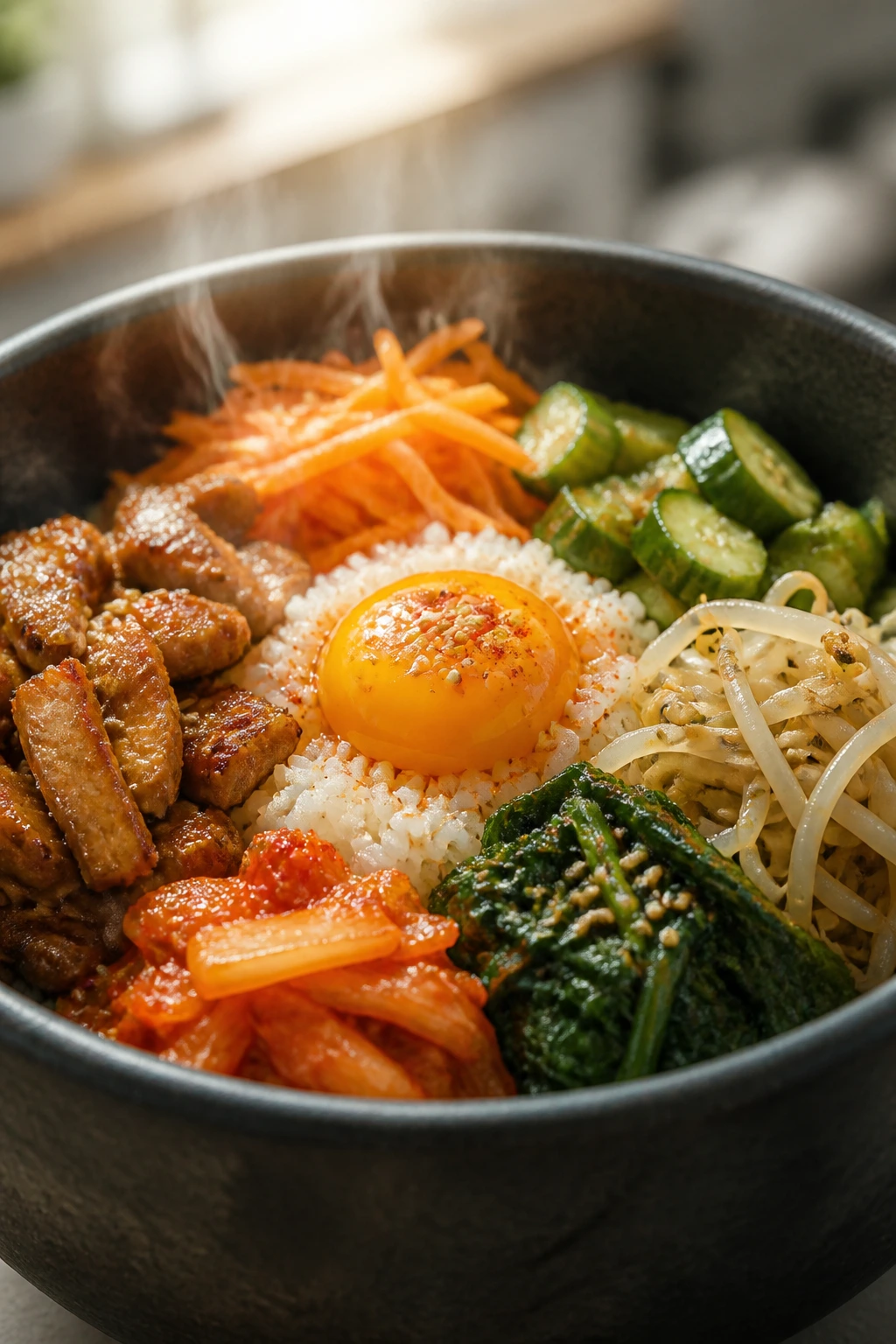
A good Sweet and Sour Bibimbap Bowl should hit the table looking organized, almost too neat to mix, and then collapse into a noisy, glossy mess the second your spoon goes in. That’s the charm. You get warm rice, sharp cucumbers, browned chicken, soft egg yolk, and a sauce that lands somewhere between tangy takeout glaze and the bright, spicy edge of Korean pantry cooking.
Most bowls that promise “better than takeout” lean on one big trick and hope you won’t notice the rest. Too sweet. Too soggy. Too beige. This one works because every component earns its place: the rice holds sauce without turning gluey, the vegetables stay crisp or barely wilted, and the chicken gets a little lacquer on the edges instead of a wet coating that slides off in one sad sheet.
Bibimbap, at its best, is a controlled mash-up. Not random. Not fussy. Controlled. You want contrast in every bite, but you also want the flavors to agree with each other instead of squabbling across the bowl. That’s what makes this version worth making at home. The sweet-and-sour sauce gives the whole thing lift, and the sesame, gochujang, and egg keep it grounded.
Why This Sweet and Sour Bibimbap Bowl Feels Complete
- Big texture contrast: You get crisp cucumber, tender chicken, soft rice, and a yolk that turns everything a little silky once it breaks. That mix is the whole point.
- The sauce does real work: The sauce is tangy first, sweet second, with enough gochujang to keep it from tasting like bottled takeout glaze.
- Nothing needs to be fancy: Short-grain rice, carrots, spinach, mushrooms, and eggs are all easy to find, and they behave well in a bowl like this.
- It eats like a full meal: Protein, starch, vegetables, and fat all show up in one bowl, so you don’t need much on the side unless you want extras.
- Leftovers make sense: The pieces can be stored separately and rebuilt the next day without turning into a sad, mixed-up mush.
- It bends without breaking: Chicken, tofu, shrimp, or even a mushroom-heavy version can all work here if you keep the sauce and texture balance intact.
Yield, Timing, and the Real-World Pace of the Recipe
Forty-five minutes is a fair estimate if you move with purpose and keep the sauce, rice, and vegetables going in parallel. If you’re the kind of cook who likes to chop while something simmers, this feels calmer than it looks on paper.
Yield: Serves 4
Prep Time: 20 minutes
Cook Time: 25 minutes
Total Time: 45 minutes
Difficulty: Intermediate — the steps are straightforward, but you’re managing rice, sauce, chicken, vegetables, and eggs at the same time.
Best Served: Right after assembly, while the rice is warm and the cucumbers still have snap.
The Ingredients That Go Into Each Bowl
For the Rice Base:
- 1½ cups short-grain white rice, rinsed until the water runs mostly clear
- 2 cups water
- ½ teaspoon fine salt
For the Quick Pickled Cucumber:
- 1 large Persian cucumber or 1 small English cucumber, thinly sliced
- 2 tablespoons rice vinegar
- 1 teaspoon sugar
- ¼ teaspoon fine salt
- 1 teaspoon toasted sesame seeds
For the Chicken:
- 1½ pounds boneless, skinless chicken thighs, cut into 1-inch pieces
- 1 tablespoon soy sauce
- 1 tablespoon cornstarch
- 1 teaspoon toasted sesame oil
- ½ teaspoon black pepper
- 1 tablespoon neutral oil, for searing
For the Vegetables:
- 1 tablespoon neutral oil
- 2 medium carrots, julienned
- 8 ounces cremini mushrooms, sliced
- 4 cups baby spinach
- 1 cup bean sprouts, optional
- 2 green onions, thinly sliced
For the Sweet and Sour Sauce:
- ⅓ cup rice vinegar
- 3 tablespoons pineapple juice or orange juice
- 2 tablespoons ketchup
- 2 tablespoons brown sugar or honey
- 1½ tablespoons soy sauce
- 1 tablespoon gochujang
- 2 cloves garlic, grated
- 1 teaspoon fresh ginger, grated
- 1 teaspoon cornstarch
- 2 tablespoons water
For the Finish:
- 4 large eggs
- 1 tablespoon toasted sesame seeds
- 1 tablespoon sliced nori or seaweed strips, optional
- Extra gochujang, for serving
Why Each Ingredient Earns Its Place in the Bowl
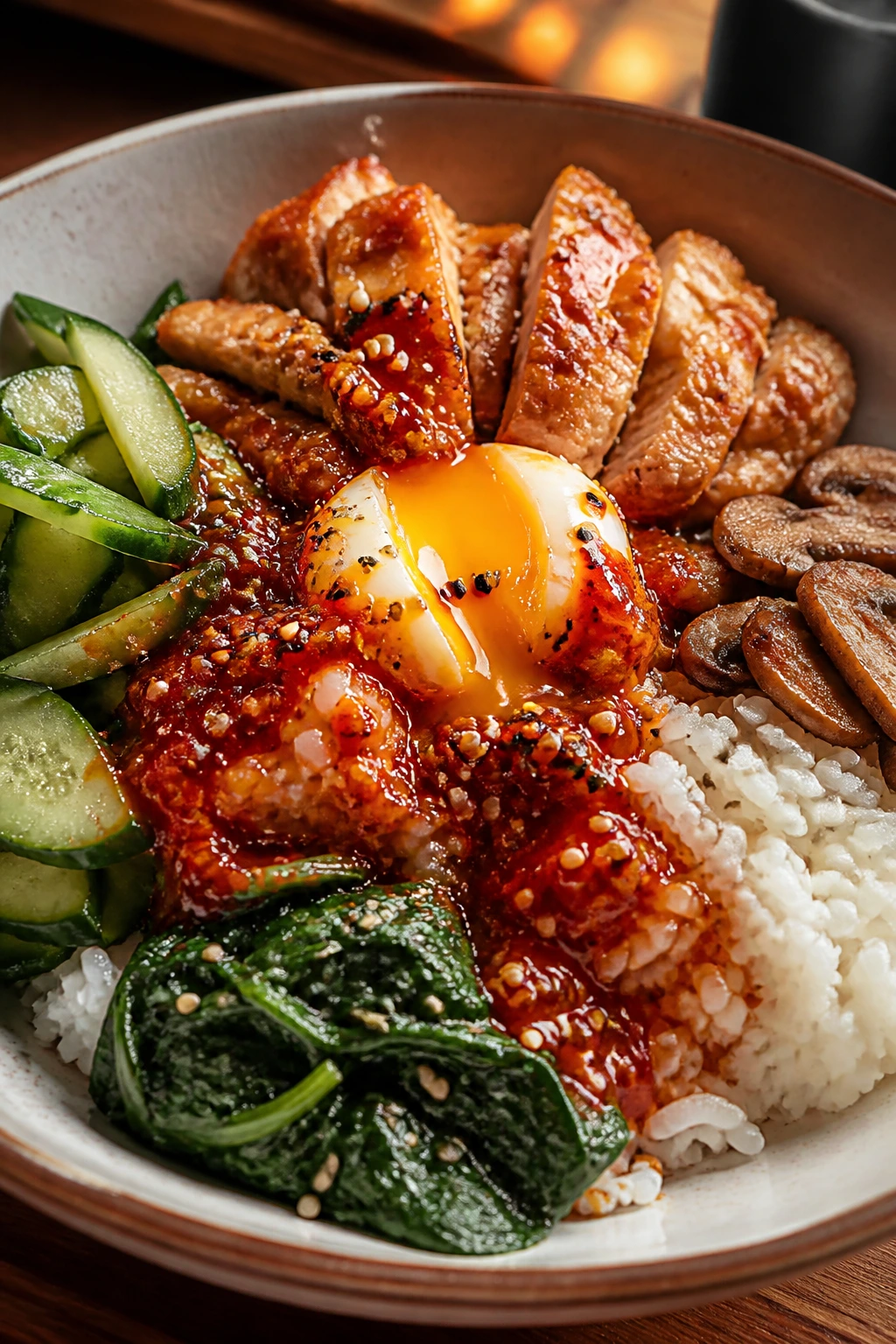
The bowl works because every element has a job, and none of them is carrying the whole thing alone. That matters here. A dish like this falls apart when one part tries to be everything.
Chicken Thighs and the Protein Base
What to use: 1½ pounds boneless, skinless chicken thighs, cut into 1-inch pieces, plus soy sauce, cornstarch, sesame oil, and black pepper.
Preparation: Cut the chicken into pieces that are small enough to brown quickly but not so tiny that they dry out in the pan. Toss it with the soy sauce, cornstarch, sesame oil, and pepper just before cooking.
Substitutions: Chicken breast works if that’s what you have, but it needs a shorter sear. Firm tofu is the best vegetarian swap, and shrimp works if you want a faster version with a little seafood sweetness.
Tips: Thighs stay juicy even when the sauce reduces around them. That’s why I prefer them here. Breast meat can work, but it’s less forgiving when the sauce gets sticky and the pan runs hot.
Short-Grain Rice and the Bowl’s Backbone
What to use: 1½ cups short-grain white rice, 2 cups water, and ½ teaspoon fine salt.
Preparation: Rinse the rice until the water looks nearly clear. That removes the loose surface starch that makes the rice gummy in a bad way. Cook it until the grains are tender but still a little sticky, the way bibimbap rice should be.
Substitutions: Brown rice gives a nuttier chew, and a brown rice–quinoa mix can work if you like a more rustic base. Jasmine rice is usable in a pinch, but it won’t hold together as neatly.
Tips: Short-grain rice is the right call because it clings just enough to catch sauce and egg yolk. If you use leftover rice, that’s fine too — honestly, it’s often better after a night in the fridge.
Vegetables for Color, Crunch, and Green Bits
What to use: Carrots, mushrooms, baby spinach, cucumbers, bean sprouts if you like them, and green onions for the finish.
Preparation: Slice the carrots into thin matchsticks so they cook fast. Leave the mushrooms in larger pieces so they brown instead of disappearing. The spinach should be wilted just enough to lose its raw volume, not cooked into a dark pile.
Substitutions: Shredded cabbage, zucchini, snap peas, or bell peppers all fit the bowl’s rhythm. If you want a louder crunch, add raw radish or shaved cabbage right at the end.
Tips: Keep at least one cool vegetable in the mix. That contrast matters. A bowl of only warm, cooked ingredients gets muddy fast, and the sweet-sour sauce tastes flatter without something fresh and sharp next to it.
The Sauce That Pulls the Bowl Together
What to use: Rice vinegar, pineapple juice or orange juice, ketchup, brown sugar or honey, soy sauce, gochujang, garlic, ginger, cornstarch, and water.
Preparation: Whisk the sauce in a small bowl before the pan gets hot. Mix the cornstarch with the water last so it doesn’t clump. You want a smooth, pourable sauce that thickens in the pan in a minute or two.
Substitutions: Orange juice makes the sauce rounder and less tropical. If you don’t keep gochujang around, a little red pepper flake plus extra soy sauce can keep the balance moving, though the bowl loses some of its Korean backbone.
Tips: The sauce should taste a little sharper than you think before it hits the rice. Rice, chicken, and egg all soften the edges. If the sauce tastes perfectly balanced in the bowl on its own, it’ll probably read sweet once everything is combined.
The Finish: Eggs, Sesame, and Seaweed
What to use: Four large eggs, toasted sesame seeds, and optional nori strips.
Preparation: Fry the eggs right before serving, sunny-side up or over-easy. You want set whites and yolks that are still loose enough to run into the rice.
Substitutions: A jammy soft-boiled egg works too. If eggs are off the menu, a spoonful of chili crisp or a second drizzle of sesame oil can help replace some of that richness.
Tips: The yolk is not decoration. It changes the bowl. It also dulls the sharper edges of the sauce, which is exactly why it belongs here.
The Tools That Keep the Bowl Moving
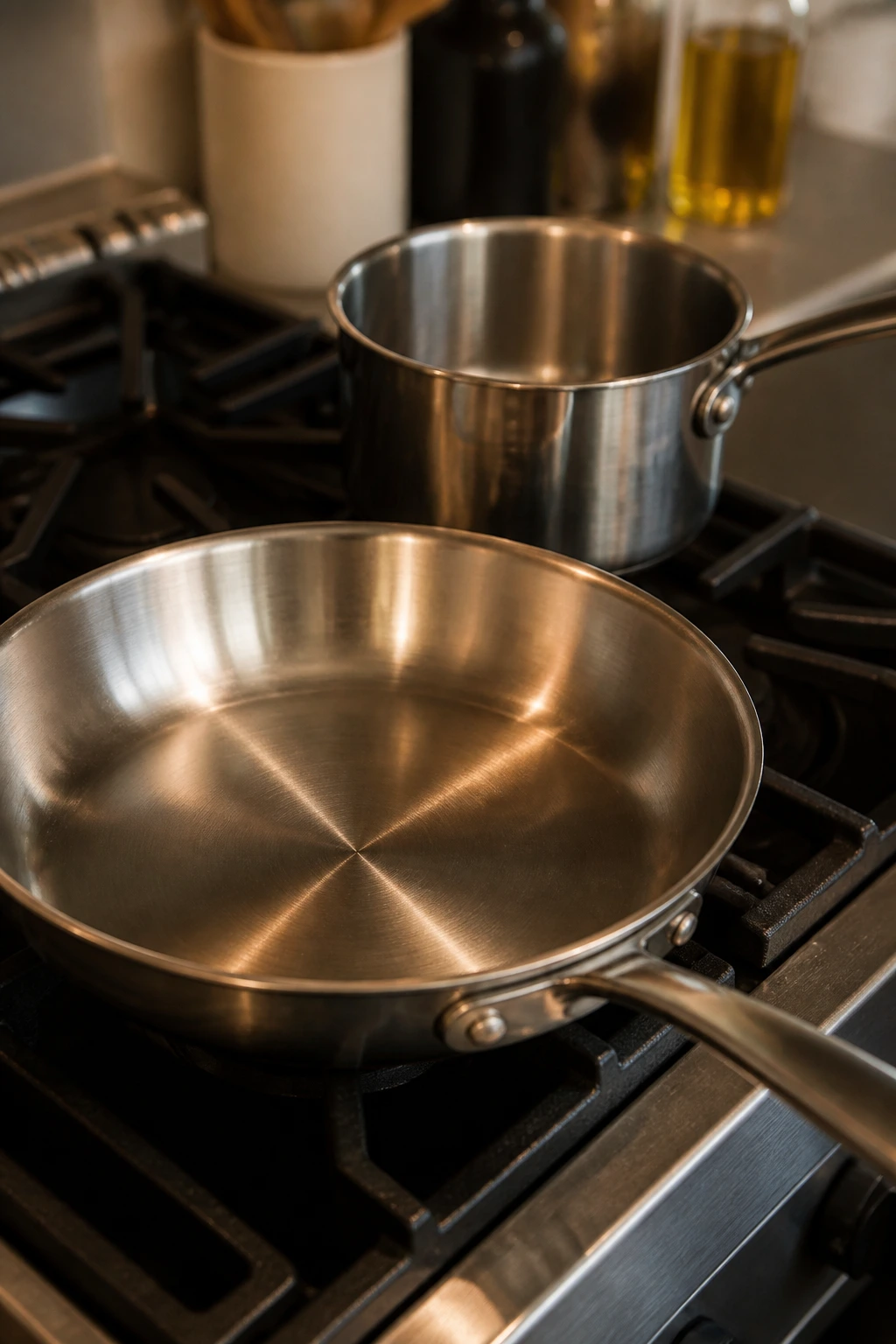
You don’t need much, but two pans make the whole process less chaotic.
- Medium saucepan with a tight lid: This cooks the rice evenly and keeps steam where it belongs.
- 12-inch skillet or wok: Big enough to brown the chicken and vegetables without crowding.
- Small bowl and whisk: For the sauce. A fork works in a pinch, but a whisk keeps the cornstarch smooth.
- Chef’s knife: You’ll be slicing carrots, mushrooms, cucumber, and chicken cleanly, and dull blades make this recipe feel twice as fussy.
- Cutting board: A large one helps because this dish has a few separate prep jobs.
- Tongs or a sturdy spatula: Useful for turning chicken and tossing vegetables fast.
- Measuring cups and spoons: The sauce depends on balance, not guesswork.
- Small skillet for eggs: If you don’t want to fry eggs in the same pan, a separate small skillet keeps the whites neat.
- Mixing bowls: At least two, so the cucumber pickle and chicken can sit apart before cooking.
Step-by-Step: Cook the Pieces in the Right Order
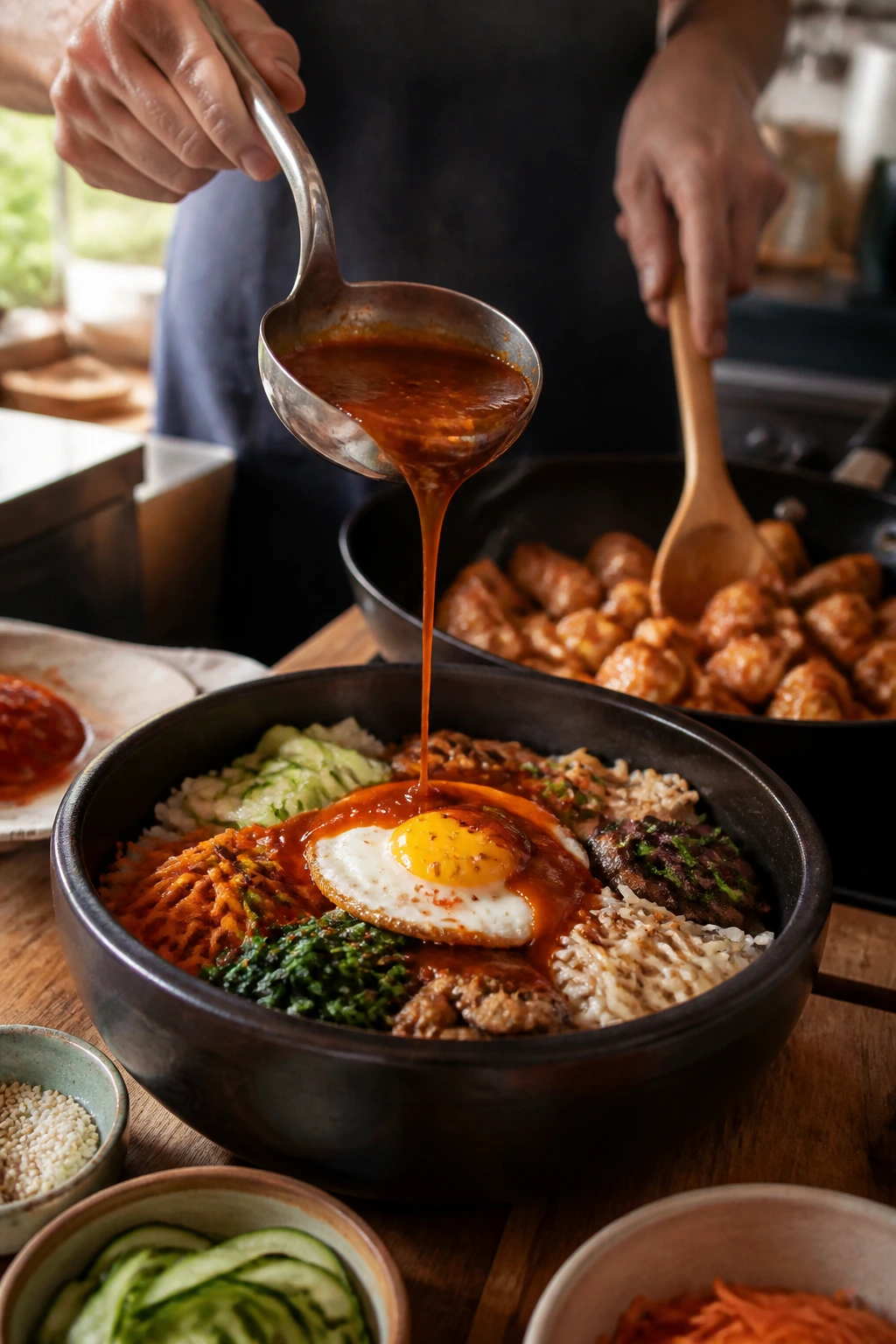
Rice first. Always. That’s the part that takes the longest, and everything else can be built around it.
Cook the Rice:
-
Rinse the rice in a fine-mesh strainer or bowl until the water runs mostly clear, then drain well.
-
Combine the rice, 2 cups water, and ½ teaspoon salt in a medium saucepan. Bring it to a boil over medium-high heat, then stir once, cover, and drop the heat to low.
-
Cook for 15 minutes, keeping the lid on the whole time. The rice is ready when the surface looks pocked and the water is absorbed.
-
Remove the pan from the heat and let it sit, covered, for 10 minutes. Fluff with a fork. Do not skip the rest — that steam finish keeps the grains tender instead of wet and crowded.
Make the Sauce and Quick Pickles:
-
Whisk together the rice vinegar, pineapple juice, ketchup, brown sugar, soy sauce, gochujang, garlic, ginger, cornstarch, and water in a small bowl until smooth.
-
Toss the cucumber with the rice vinegar, sugar, salt, and sesame seeds in another bowl. Let it stand while you cook the rest. It should soften slightly but still keep a cold, crisp bite.
Cook the Chicken and Vegetables:
-
Toss the chicken with the soy sauce, cornstarch, sesame oil, and black pepper until the pieces are lightly coated.
-
Heat 1 tablespoon neutral oil in a 12-inch skillet over medium-high heat until it shimmers. Add the chicken in a single layer. Cook for 3 to 4 minutes on the first side, then turn and cook 2 to 3 minutes more, until browned and cooked through. The chicken should reach 165°F in the thickest piece.
-
Transfer the chicken to a plate. Add the remaining tablespoon of oil if the pan looks dry, then add the carrots and mushrooms. Cook for 4 to 5 minutes, stirring occasionally, until the carrots soften at the edges and the mushrooms lose their raw smell and take on brown spots.
-
Add the spinach and bean sprouts, if using. Toss for 30 to 60 seconds, just until the spinach collapses and turns glossy. Season lightly with salt.
-
Return the chicken to the skillet, pour in the sauce, and simmer for 1 to 2 minutes, stirring, until the sauce turns glossy and coats the chicken and vegetables. If it starts to look too thick, add 1 tablespoon water. If it looks thin, give it another 30 seconds.
Fry the Eggs and Assemble:
-
Heat a small skillet over medium heat with a thin film of oil. Crack in the eggs and cook until the whites are set and the yolks are still soft, about 2 to 3 minutes for sunny-side up. Cover the pan for the last 20 seconds if the tops need a little help.
-
Divide the rice among four bowls. Spoon the chicken and sauce over one side, mound the vegetables nearby, and tuck the cucumbers into the open spaces so they stay cool.
-
Top each bowl with an egg, green onions, sesame seeds, and nori if using. Add extra gochujang at the table if you want more heat. Serve right away.
Serving It So the Bowl Stays Crisp
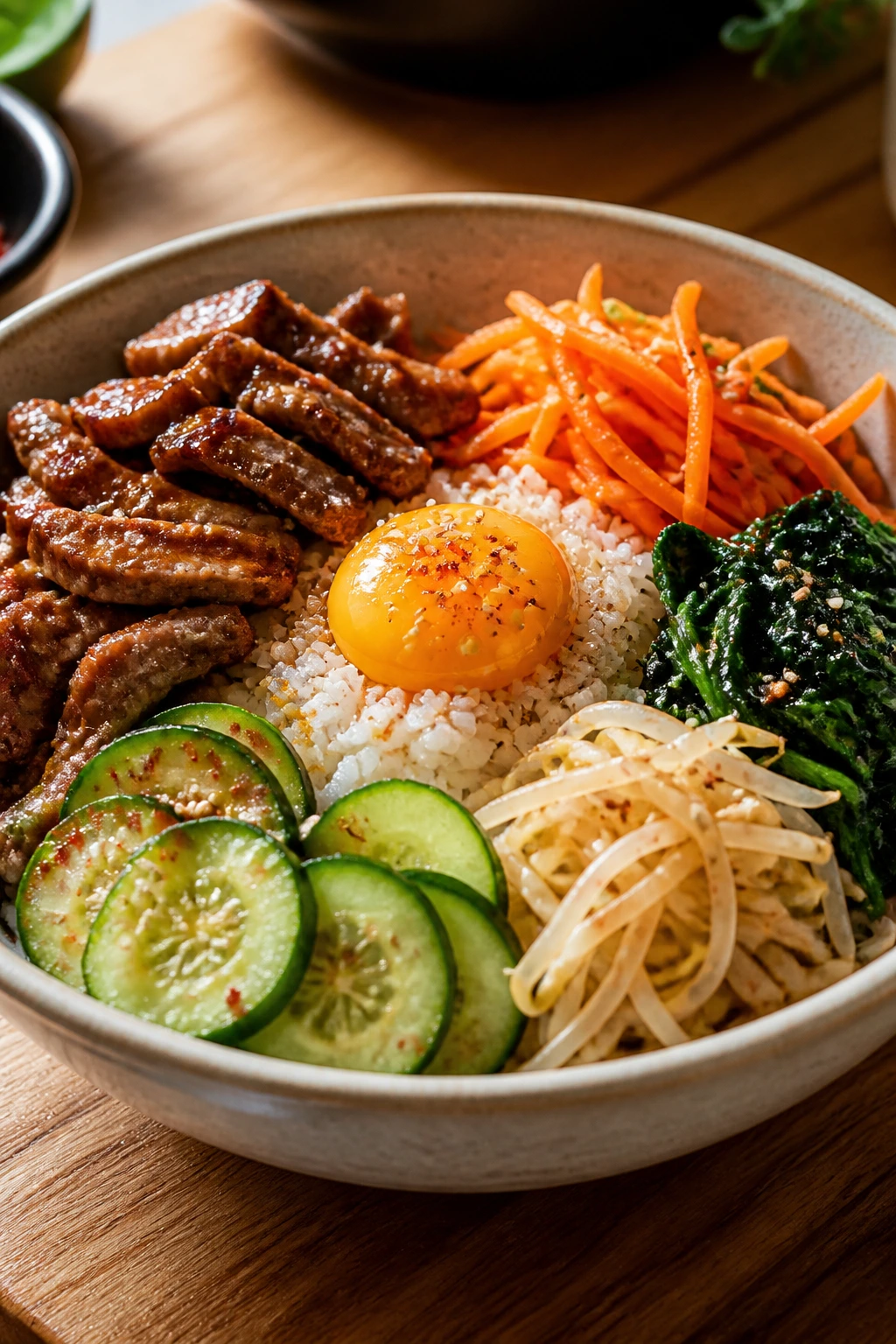
Serve this in wide, shallow bowls rather than deep soup bowls. The whole point is to let the toppings sit side by side at first, so each bite can pick up rice, sauce, and crunch without everything collapsing into the center at once.
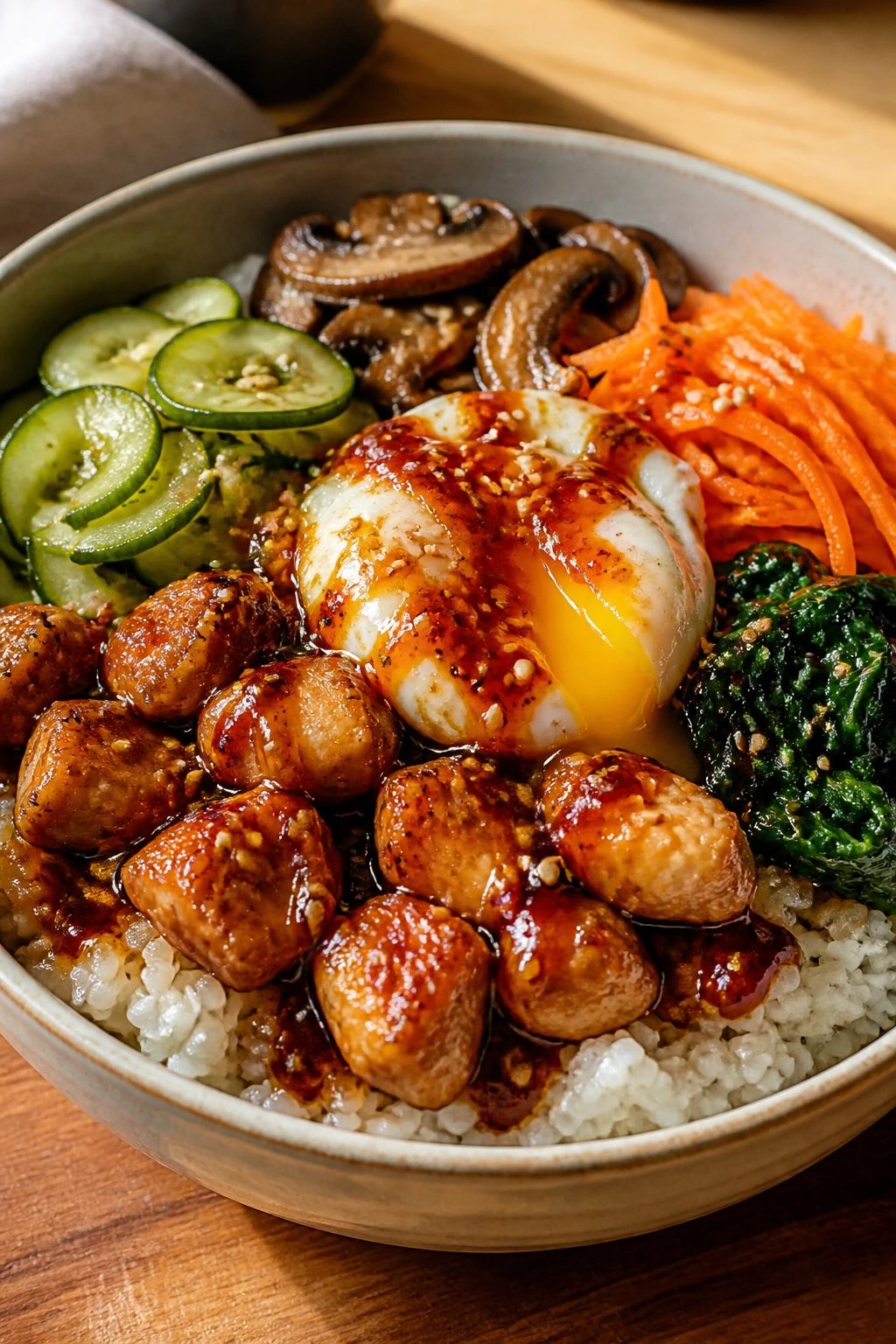
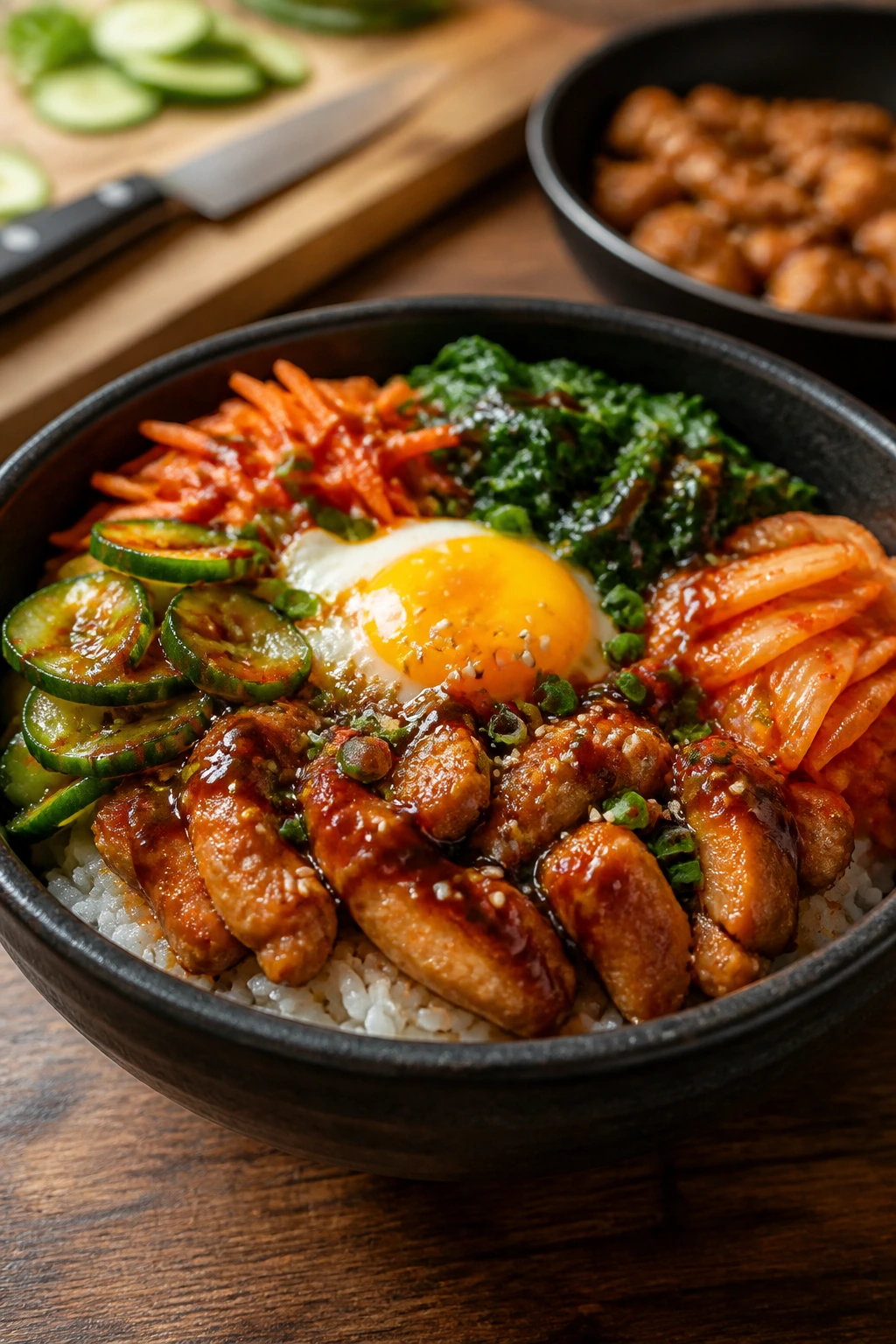
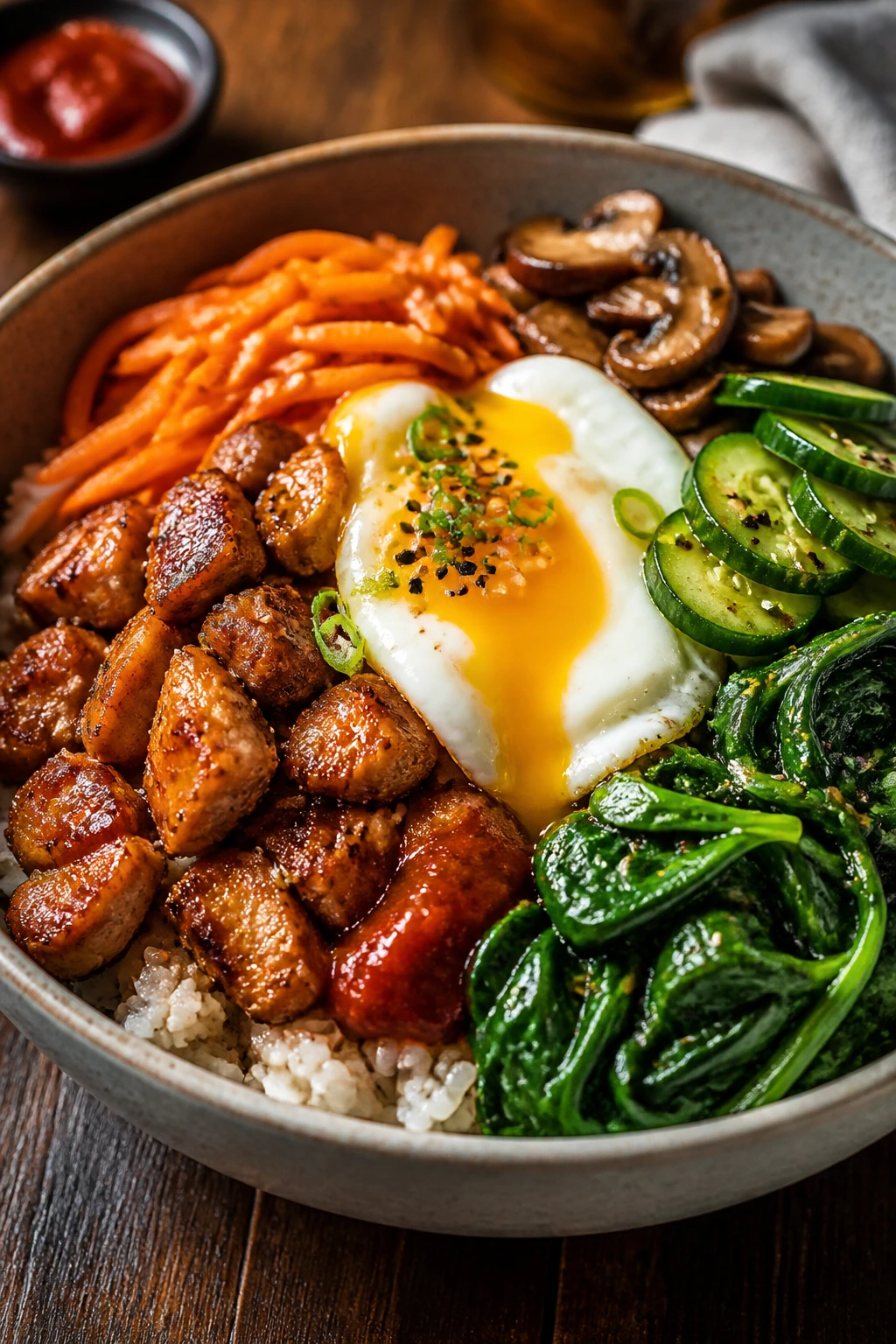
Presentation: I like to build the bowl in little sections — chicken on one side, vegetables on another, cucumbers in their own patch, egg on top. It looks cleaner, and the first few bites feel more interesting because you’re choosing your own ratio as you go.
Accompaniments: A small dish of kimchi works well beside this, as does a simple cucumber salad or a bowl of miso soup. If you want a bigger spread, add steamed edamame or a few sheets of roasted seaweed and call it done.
Portions: One bowl makes a generous dinner portion for one adult, especially with the egg and rice in the mix. If you’re serving smaller appetites, stretch it with extra cucumber, spinach, or mushrooms rather than piling on more rice.
Beverage Pairing: Cold unsweetened green tea keeps the sweet-sour edge from feeling heavy. A crisp lager works if you want something colder and more casual. Sparkling water with lime also cleans the palate nicely between bites.
Practical Tips for Better Texture and Brighter Flavor
Flavor Enhancement: Add a tiny splash of toasted sesame oil to the rice after it fluffs. Not much — ½ teaspoon is enough for the whole pot. It gives the bowl a warm, nutty smell the second it opens up.
Time-Saver: Buy matchstick carrots and pre-washed spinach if you’re short on time. I don’t usually cheer for shortcuts unless they save real work, and here they do. The recipe is already doing enough without asking you to julienne vegetables like it’s a homework assignment.
Pro Move: Keep the cucumber separate until the last second. If you drop it into the hot pan, it loses the clean, cold snap that makes the bowl feel alive against the warm rice and chicken.
Cost-Saver: Frozen spinach is fine if you thaw it and squeeze it dry. You can also swap in mushrooms more heavily and use less chicken. The bowl still feels full because mushrooms hold sauce and bring that savory, dark edge.
Finish Strong: If you like a louder top note, add a few drops of rice vinegar over the cucumbers right before serving. It wakes up the bowl fast. Same with a little extra gochujang stirred into the chicken sauce — not enough to make it hot, just enough to sharpen the back of your tongue.
Common Mistakes That Make the Bowl Heavy
Most failures here are boring ones. That’s the annoying part. The flavors are good; the execution gets sloppy.
Using rice that’s too wet: If you skip the rinse or don’t let the rice rest after cooking, the grains clump into a dense block. The fix is simple: rinse well, cook covered, then let it sit off heat for 10 minutes before fluffing.
Crowding the chicken: When too many pieces hit the pan at once, they steam instead of browning. You end up with pale chicken and a sauce that tastes flat because it has nothing browned to cling to. If your skillet isn’t wide enough, cook the chicken in two batches.
Making the sauce too sweet: A lot of sweet-sour sauces go heavy on sugar and forget to stay sharp. The bowl then tastes one-note, especially once it hits rice. If that happens, add another teaspoon of rice vinegar or a squeeze of citrus, then taste again.
Cooking the vegetables into submission: Spinach should wilt, not disappear. Mushrooms should brown, not sweat forever in their own liquid. Keep the heat high enough to move things along, and pull them while they still have shape.
Assembling too early: This is the easiest way to wreck texture. Once the sauce and rice sit together for too long, the bottom of the bowl turns soft and the top tastes less lively. Build the bowls right before eating, and keep the pickled cucumbers and eggs separate until the final second.
Skipping salt in the rice: A lot of cooks season the sauce and protein but leave the rice bland. That’s how you end up with a bowl that tastes good in spots and dull in the middle. Even ½ teaspoon of salt in the cooking water helps the whole thing feel finished.
Variations and Swaps That Still Make Sense
Once the base works, the bowl can bend in a few useful directions. Don’t mess with the balance too much, and you’ll be fine.
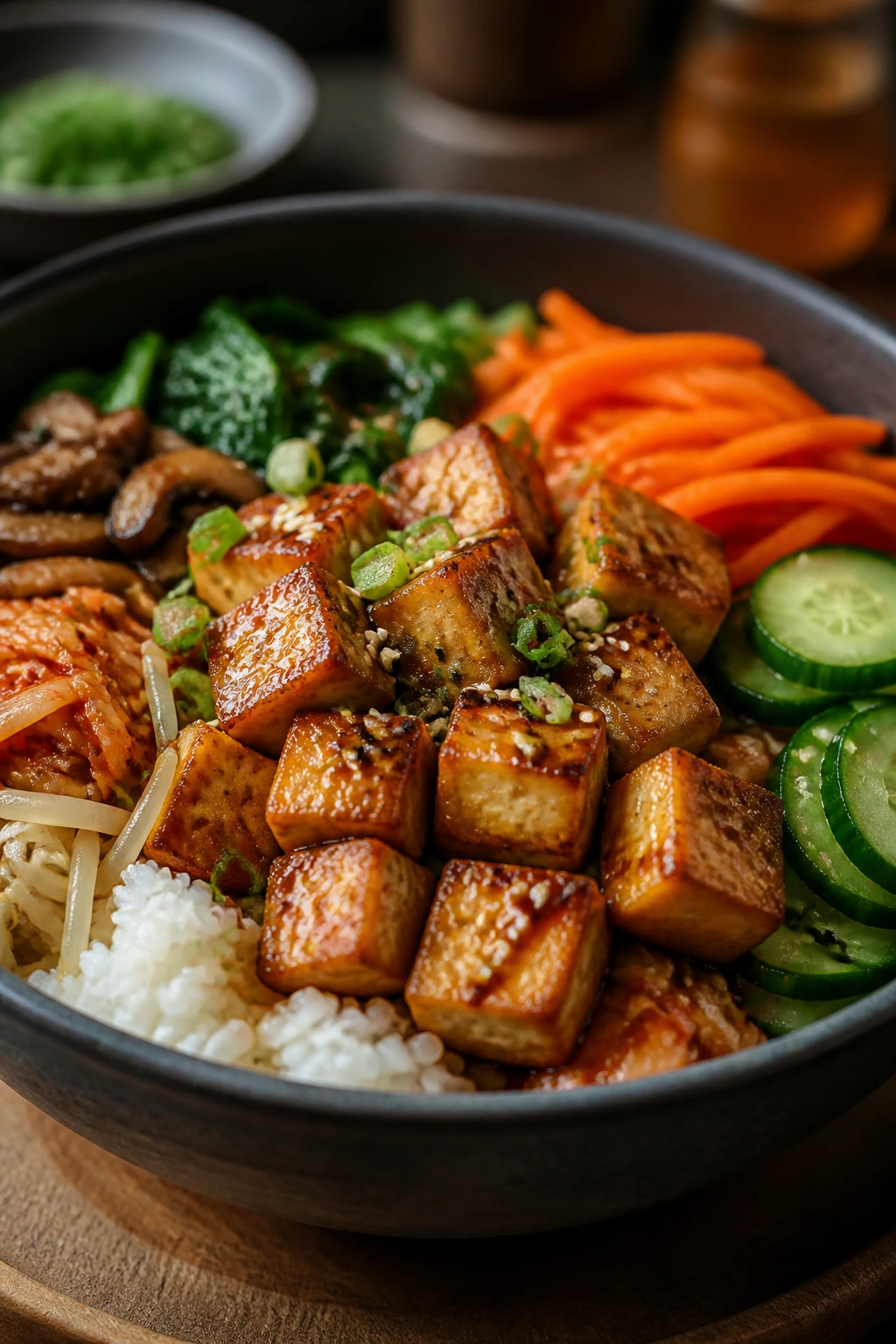
Crispy Tofu Bibimbap Bowl: Press a block of extra-firm tofu for 20 minutes, cube it, and toss it with soy sauce and cornstarch before pan-frying until the edges are crisp. The sauce clings better than you’d expect, and the tofu soaks up the sweet-sour glaze without going mushy.
Pineapple Bright Bowl: Add ½ cup diced pineapple to the skillet right at the end with the chicken. The fruit caramelizes slightly in the sauce and makes the whole bowl taste brighter, almost more like a takeout stir-fry crossed with bibimbap.
Pork and Mushroom Version: Use thinly sliced pork shoulder or pork loin instead of chicken, and add an extra handful of mushrooms. Pork likes the vinegar-sugar balance here, and it gives the bowl a richer, more savory finish.
Vegetable-Heavy Pantry Bowl: Skip the meat and double the mushrooms, spinach, and carrots. Add edamame or shelled peas for protein, and finish with a fried egg or a soft-boiled egg if you still want richness.
Extra-Spicy Gochujang Bowl: Increase the gochujang to 2 tablespoons and cut the brown sugar back by 1 tablespoon. That keeps the sauce from sliding too far into candy territory, which is easy to do when spice gets louder.
Make-Ahead, Storage, and Reheating
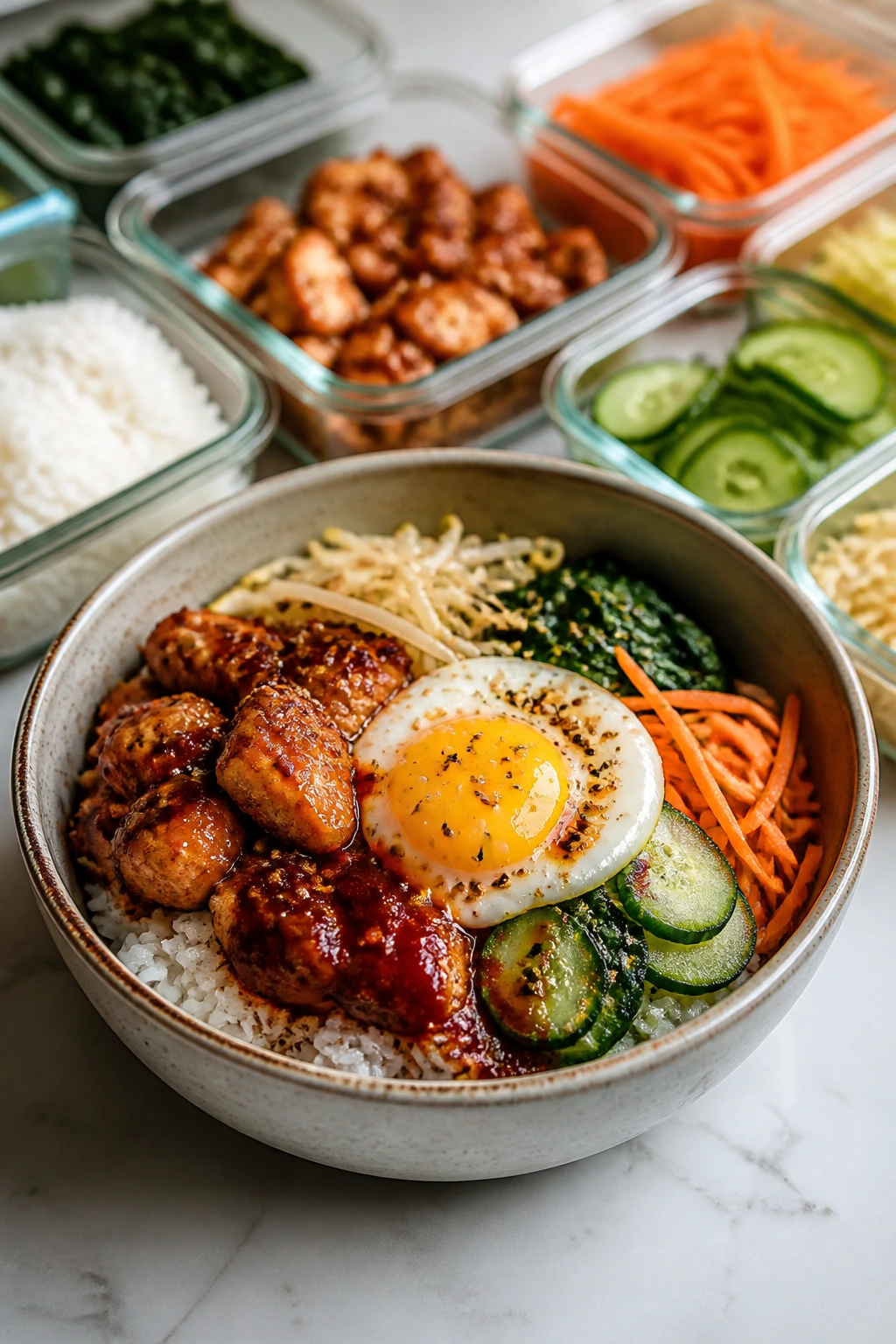
This bowl is decent for meal prep, but only if you treat the parts like separate parts. The assembled thing is not the thing to store. That’s where people go wrong.
Cooked chicken and vegetables keep well in the fridge for 3 to 4 days in airtight containers. The rice also keeps for 3 to 4 days, though it firms up a little. The sweet and sour sauce will hold for up to 1 week in the fridge, and it may thicken as it chills; just stir in a teaspoon or two of water before reheating if needed.
The cucumber pickle is best within 2 to 3 days. After that, it softens and loses the sharp snap that makes it useful. Eggs are best cooked fresh, so if you’re meal-prepping, don’t fry them ahead unless you’re fine with a firmer yolk and a less dramatic bowl.
For reheating, warm the rice with 1 tablespoon of water per cup of rice, covered, in the microwave for 45 to 90 seconds. Reheat the chicken and vegetables in a skillet over medium heat with a splash of water until hot. That keeps the sauce glossy instead of tightening into a sticky film. If you’re in a hurry, microwave the chicken in short bursts and stir halfway through, but the skillet does a better job.
Freezing is possible for the chicken and sauce together for up to 2 months, though the vegetables and cucumbers do not freeze well. Rice can also be frozen for about 1 month if packed flat in a freezer bag and reheated with a little water. I would not freeze the assembled bowl. It loses too much.
Questions People Ask Before Making It
Can I use chicken breast instead of thighs?
Yes, but keep the pieces a little larger and watch the pan closely. Breast meat dries out faster, especially once the sauce reduces, so pull it as soon as it hits 165°F.
Is this bowl too sweet for dinner?
Not if you keep the vinegar and gochujang in the mix. The sauce should taste bright and a little sharp, not like dessert sauce. If you like more tang, add 1 extra teaspoon of rice vinegar before serving.
Can I make this vegetarian?
Absolutely. Firm tofu is the cleanest swap, and mushrooms can stand in for some of the savory depth you’d lose from meat. If you go fully vegetarian, don’t skip the sesame oil and egg unless you’re replacing them with another rich finishing touch.
What if my sauce turns out too thick?
Stir in water 1 teaspoon at a time until it loosens. The sauce should coat the chicken and spoon over rice without clumping into paste.
What if my sauce is too thin?
Keep it in the pan for another 30 to 60 seconds over medium heat. If it still won’t thicken, your cornstarch may not have been fully mixed in, so whisk 1 teaspoon cornstarch with 1 tablespoon water and add that slurry carefully.
Can I use leftover rice?
Yes, and I often prefer it. Cold rice separates better during reheating and won’t turn as sticky, which makes the bowl feel cleaner and less heavy.
Do I need gochujang for this to work?
You don’t need it, but the bowl loses a lot of character without it. If you leave it out, add a pinch of red pepper flakes and a little more soy sauce so the sauce still has some depth.
Can I fry the eggs ahead of time?
You can, but I wouldn’t. Egg yolks are part of the sauce here, and once they cool, they don’t give you that silky finish. Fresh eggs take 2 to 3 minutes and are worth the extra pan.
Worth Making Again
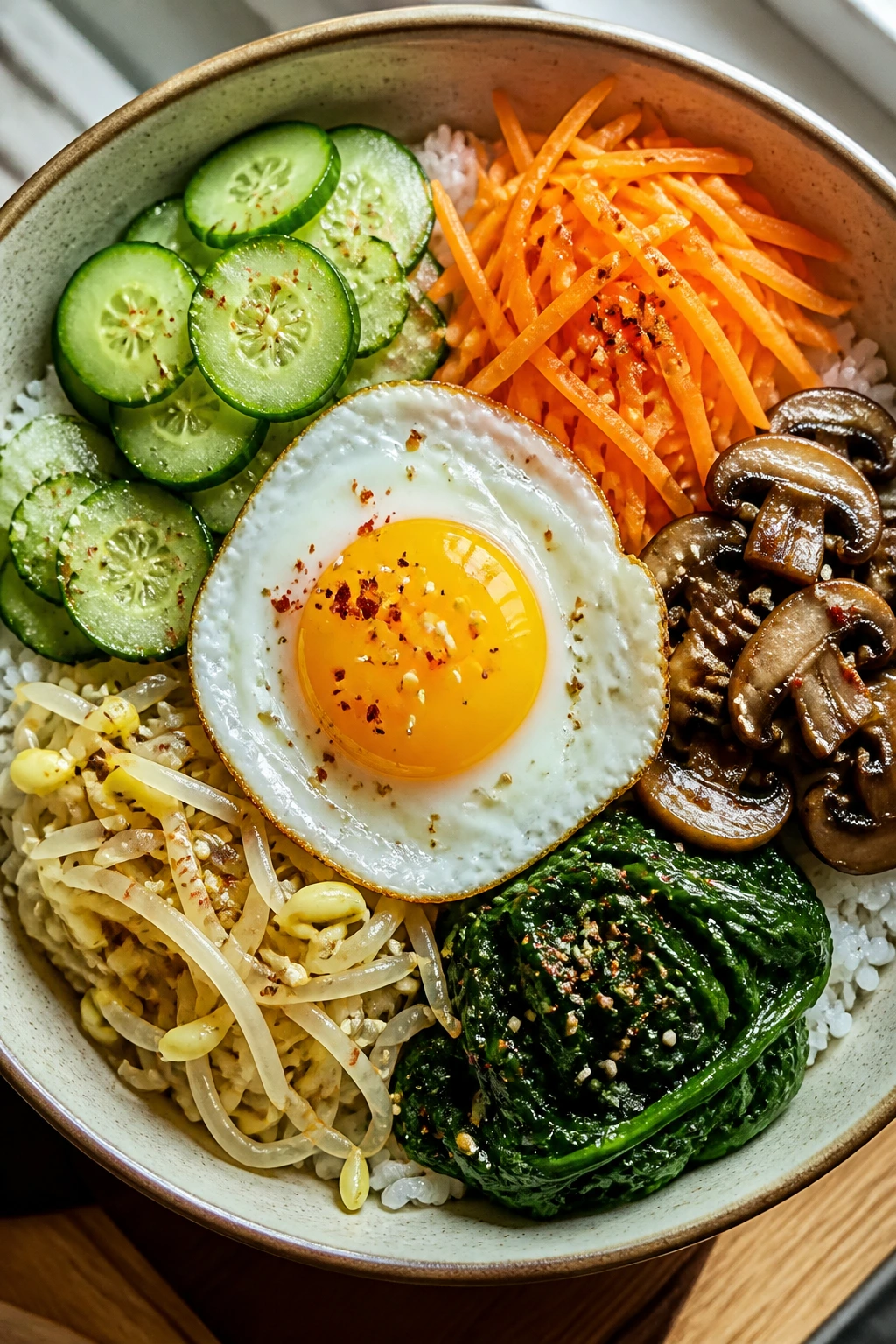
This is one of those bowls that looks a little busy until you taste it, and then the logic clicks. The rice softens the sharp sauce. The egg calms the vinegar. The cucumbers keep the whole thing from sinking under its own warmth. That balance is the reason it feels more satisfying than a lot of takeout, where the sauce usually does too much and the vegetables do too little.
Make it once the straightforward way, then tweak it. More heat. More cucumber. Tofu instead of chicken. Brown rice if that’s what’s in the cupboard. The structure holds either way, and that’s the mark of a good bowl — it gives you enough room to improvise without losing its shape.
Sweet and Sour Bibimbap Bowl — Recipe Card
Recipe Name: Sweet and Sour Bibimbap Bowl
Description: A Korean-inspired rice bowl with tender chicken, crisp vegetables, quick-pickled cucumber, fried eggs, and a tangy sweet-sour sauce that clings to every bite. It’s bright, savory, and built to keep the textures separate until the last minute.
Prep Time: 20 minutes
Cook Time: 25 minutes
Total Time: 45 minutes
Course: Main Course, Dinner
Cuisine: Korean-Inspired, Asian-Inspired
Servings: 4 servings
Calories: About 640 kcal per serving
Ingredients
For the Rice Base:
- 1½ cups short-grain white rice, rinsed until the water runs mostly clear
- 2 cups water
- ½ teaspoon fine salt
For the Quick Pickled Cucumber:
- 1 large Persian cucumber or 1 small English cucumber, thinly sliced
- 2 tablespoons rice vinegar
- 1 teaspoon sugar
- ¼ teaspoon fine salt
- 1 teaspoon toasted sesame seeds
For the Chicken:
- 1½ pounds boneless, skinless chicken thighs, cut into 1-inch pieces
- 1 tablespoon soy sauce
- 1 tablespoon cornstarch
- 1 teaspoon toasted sesame oil
- ½ teaspoon black pepper
- 1 tablespoon neutral oil, for searing
For the Vegetables:
- 1 tablespoon neutral oil
- 2 medium carrots, julienned
- 8 ounces cremini mushrooms, sliced
- 4 cups baby spinach
- 1 cup bean sprouts, optional
- 2 green onions, thinly sliced
For the Sweet and Sour Sauce:
- ⅓ cup rice vinegar
- 3 tablespoons pineapple juice or orange juice
- 2 tablespoons ketchup
- 2 tablespoons brown sugar or honey
- 1½ tablespoons soy sauce
- 1 tablespoon gochujang
- 2 cloves garlic, grated
- 1 teaspoon fresh ginger, grated
- 1 teaspoon cornstarch
- 2 tablespoons water
For the Finish:
- 4 large eggs
- 1 tablespoon toasted sesame seeds
- 1 tablespoon sliced nori or seaweed strips, optional
- Extra gochujang, for serving
Instructions
-
Rinse the rice until the water runs mostly clear. Combine it with 2 cups water and the salt in a medium saucepan, bring to a boil, cover, reduce to low, and cook for 15 minutes.
-
Remove the rice from the heat and let it rest, covered, for 10 minutes. Fluff with a fork.
-
Whisk together the rice vinegar, pineapple juice, ketchup, brown sugar, soy sauce, gochujang, garlic, ginger, cornstarch, and water.
-
Toss the cucumber with the rice vinegar, sugar, salt, and sesame seeds. Let stand while you cook the rest.
-
Toss the chicken with the soy sauce, cornstarch, sesame oil, and black pepper.
-
Heat 1 tablespoon neutral oil in a 12-inch skillet over medium-high heat. Sear the chicken for 3 to 4 minutes on the first side and 2 to 3 minutes on the second side, until browned and cooked through.
-
Transfer the chicken to a plate. Add the remaining oil if needed, then cook the carrots and mushrooms for 4 to 5 minutes. Add the spinach and bean sprouts, if using, and toss until just wilted.
-
Return the chicken to the skillet, pour in the sauce, and simmer for 1 to 2 minutes until glossy and thick enough to coat the chicken.
-
Fry the eggs in a lightly oiled skillet over medium heat until the whites are set and the yolks are still soft, about 2 to 3 minutes.
-
Divide the rice among four bowls. Top with chicken, vegetables, cucumber, and eggs. Finish with sesame seeds, green onions, nori, and extra gochujang if you like.
Notes: Keep the cucumber separate until serving for the best crunch. If the sauce gets too thick, whisk in a little water. Leftovers are best stored with the rice, chicken, vegetables, and cucumber in separate containers.