



A good authentic Italian appetizer doesn’t need a parade of ingredients or a sauce that takes half the afternoon. It needs bread with a crust that bites back a little, tomatoes that taste like they were cut five minutes ago, and olive oil with enough pepper to wake up the back of your throat.
That’s why bruschetta al pomodoro still earns its place on the table. It’s plain in the best possible way. Toast the bread, rub it with garlic while it’s hot, spoon on salted tomatoes, and stop before you get clever. If the tomatoes are watery or the bread is floppy, the whole thing falls apart. If both are handled with care, you get crunch, juice, salt, and garlic all at once. Clean. Direct. Gone in minutes.
The real trick is restraint. Nonna-style food has a way of making that look easy, which is unfair, because it isn’t casual at all. It is the result of choosing bread with some backbone, salting the tomatoes long enough for their flavor to wake up, and serving the thing before the toast has time to go soft.
Why This Authentic Italian Appetizer Still Works So Well
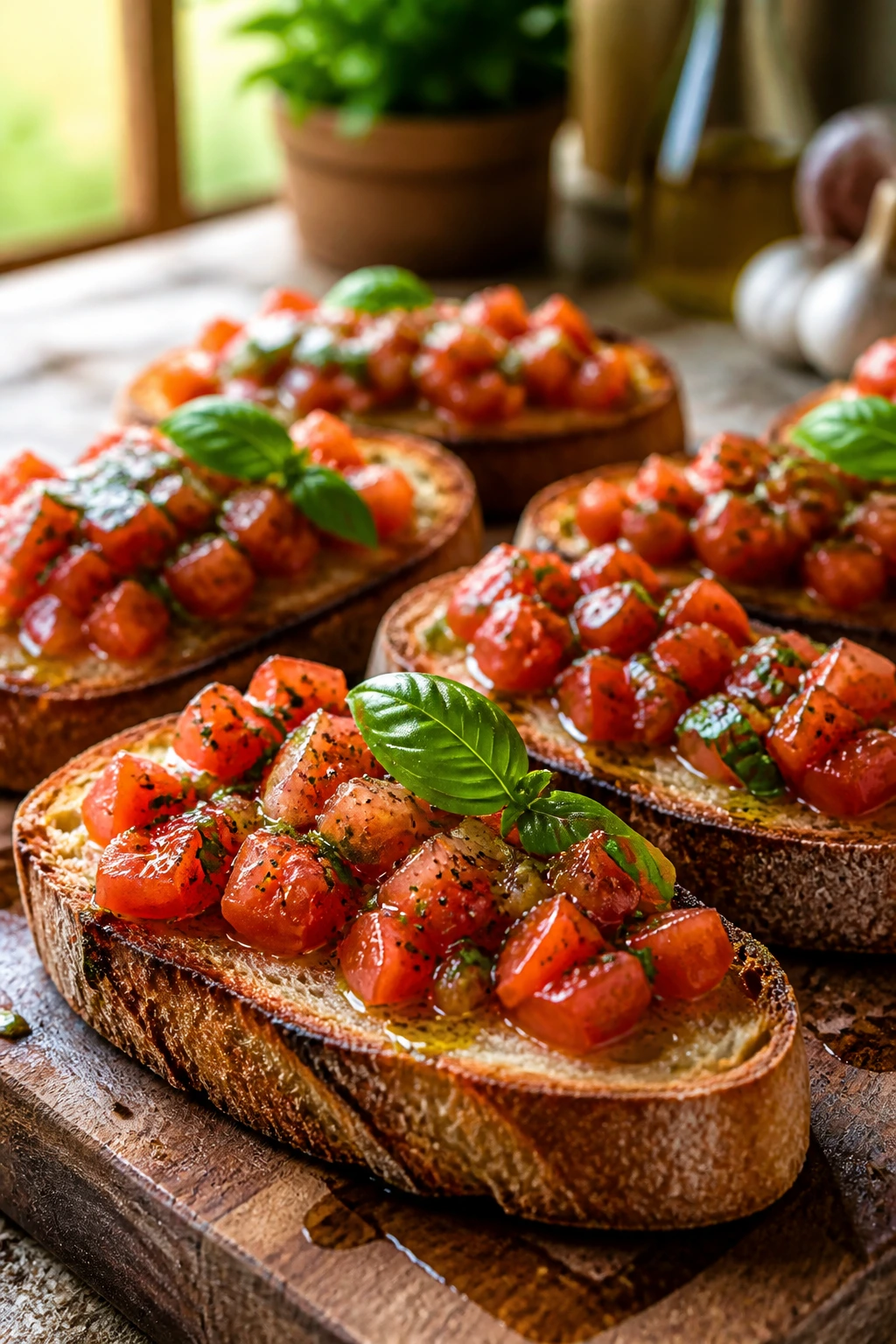
Six ingredients, one clear flavor: There’s no hiding place here, which is exactly why the dish tastes so honest when it’s done right.
Crunch meets juice in the first bite: The bread should crack a little, then give way to tomato juices that have been tamed with salt and olive oil.
No special gear, no drama: A sheet pan, a knife, a bowl, and a grater are enough to make something that tastes like it came from a real kitchen, not a checklist.
Easy to scale without losing its character: One baguette or two, a small board or a full platter — the method doesn’t change, only the number of slices.
It rewards timing more than technique: The bread and tomato topping should meet at the last possible second. That’s the whole trick. No rescue sauce. No bake-on-the-side backup plan.
A Quick Snapshot Before You Start
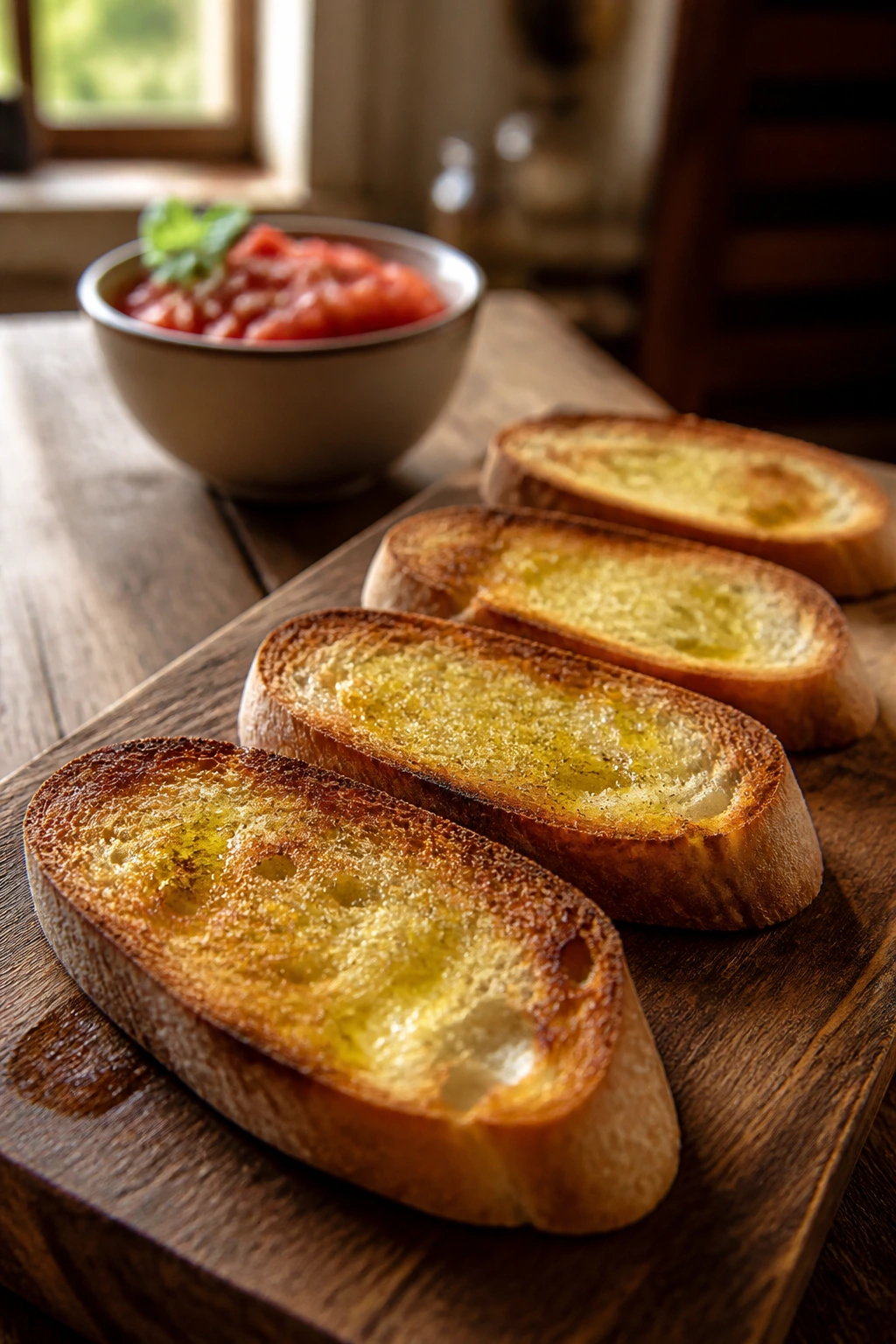
Yield: Makes 10 to 12 bruschetta pieces
Prep Time: 20 minutes
Cook Time: 10 minutes
Total Time: 30 minutes
Difficulty: Beginner — the steps are simple, but the timing matters if you want crisp bread and a topping that stays bright.
Chill/Rest Time: 10 to 15 minutes for the tomato mixture
Best Served: Right after assembly, while the toast is still warm and the tomatoes still look glossy
If your tomatoes are ripe, this comes together fast. If they are a little underwhelming, give them a stronger salt rest and lean harder on the olive oil. That won’t turn mediocre fruit into miracle fruit, but it will help.
Ingredients for Bruschetta al Pomodoro That Taste Like They Matter
For the Tomato Topping:
- 1 pound ripe plum tomatoes, seeded and diced into 1/4-inch pieces
- 1 small garlic clove, finely grated or minced
- 2 tablespoons extra-virgin olive oil
- 1 tablespoon red wine vinegar
- 1/2 teaspoon kosher salt, plus more to taste
- 1/4 teaspoon freshly ground black pepper
- 2 tablespoons torn fresh basil leaves
For the Bread:
- 1 baguette or 1 rustic Italian loaf, cut into 1/2-inch slices
- 2 tablespoons extra-virgin olive oil, for brushing
- 1 large garlic clove, peeled and halved
- Flaky sea salt, for finishing
Those are the basics. Nothing decorative. Nothing that needs a long explanation to justify itself.
The Tomatoes Need to Taste Alive
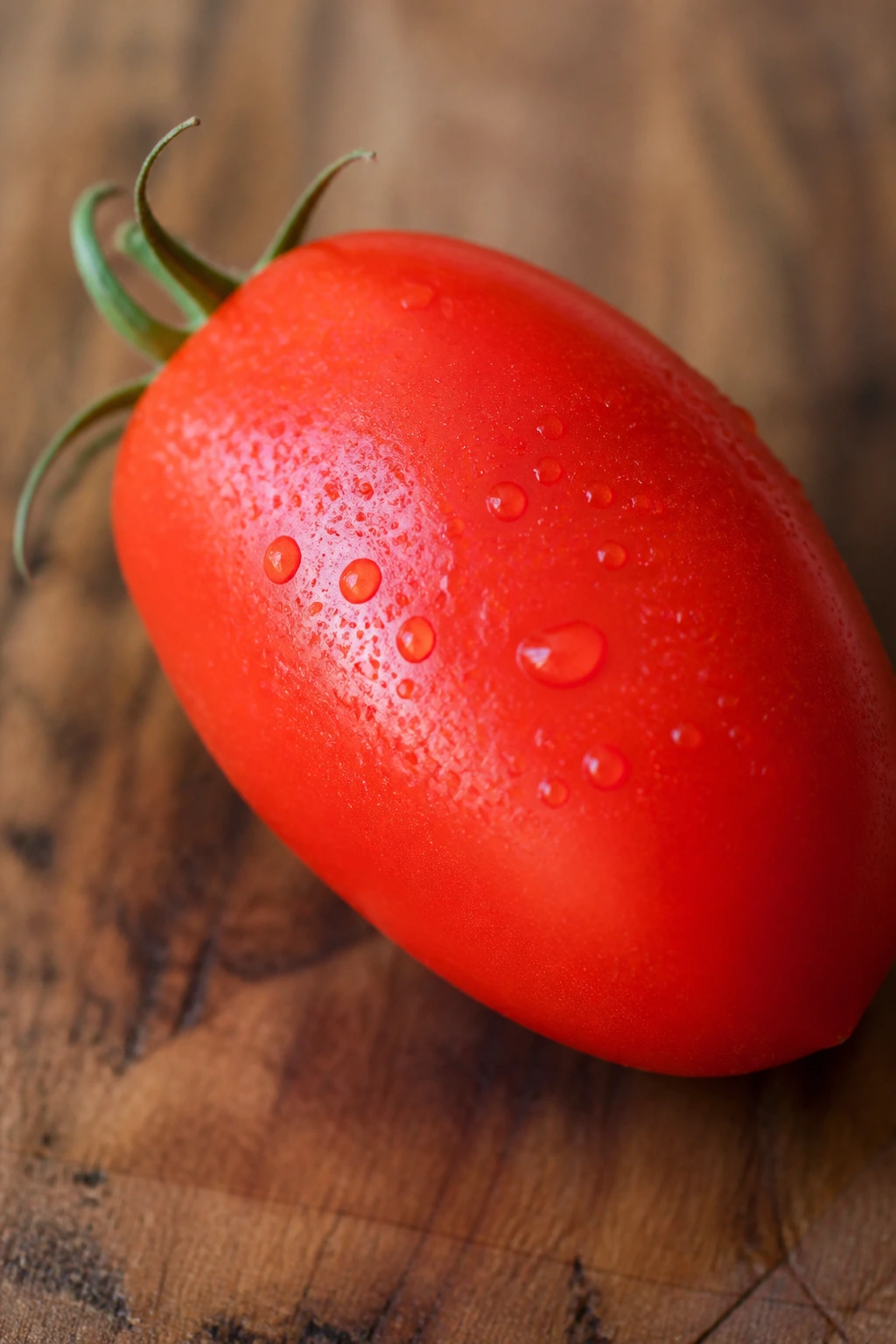
Use tomatoes that smell like tomatoes. That sounds obvious, but it’s the entire game. A ripe plum tomato should feel heavy in your hand and give slightly when pressed near the stem end. If it smells like little more than water, it’s going to taste like little more than water, and bruschetta is not forgiving enough to pretend otherwise.
What to Use
What to use: 1 pound ripe plum tomatoes, seeded and diced, plus 1 small garlic clove, 2 tablespoons olive oil, 1 tablespoon red wine vinegar, salt, pepper, and basil. Plum tomatoes are the safest choice because they carry less juice than big slicing tomatoes, which means you get a topping instead of a puddle.
Preparation
Preparation: Seed the tomatoes before dicing if they are at all soft, then cut them into 1/4-inch pieces so they hold shape on the bread. Toss them with salt, garlic, oil, vinegar, pepper, and basil, then let the bowl sit for 10 to 15 minutes so the tomatoes release some liquid and the seasoning sinks in.
Substitutions
Substitutions: Cherry tomatoes work if they are sweet and ripe; cut them into quarters and squeeze out some of the seed gel before mixing. Vine-ripened tomatoes can work too, though they usually need more seed removal. If you’re in a pinch, a mix of plum and cherry tomatoes gives the best of both worlds.
Tips
Tips: Do not make the topping too early and then forget it on the counter. That rest should be short, not casual. If the bowl fills with juice, spoon off a little before assembling, or use a slotted spoon so the bread doesn’t get soaked from the start.
The tomatoes should look glossy, not soupy. That’s the visual cue I trust most.
Bread Is Not a Background Detail
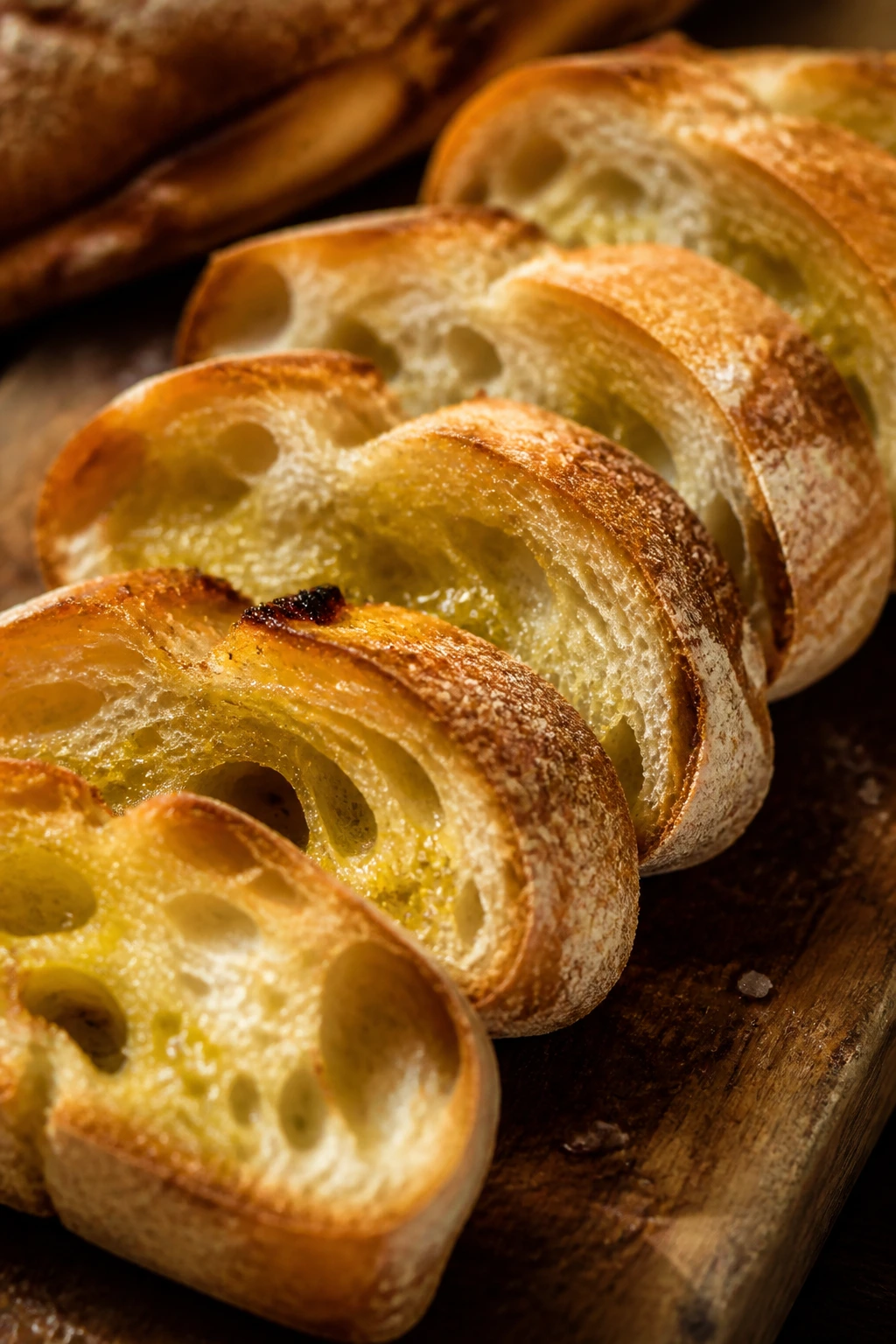
Bread is doing a job here, and it has to earn its place. Thin sandwich slices collapse. Fluffy bakery bread without a crust turns to mush. You want a loaf with a firm exterior and an interior that can absorb a little tomato juice without going limp on contact.
What to Use
What to use: 1 baguette or 1 rustic Italian loaf, sliced into 1/2-inch pieces, brushed with 2 tablespoons extra-virgin olive oil. That thickness gives you a crisp top and a center that stays chewy instead of dry and brittle.
Preparation
Preparation: Slice the bread on a slight bias if you want a little more surface area for the topping. Brush both sides lightly with olive oil, then toast until the edges are golden and the middle feels dry to the touch. If the bread is very airy, give it an extra minute so it can stand up to the tomato mixture.
Substitutions
Substitutions: Ciabatta, sourdough, and pane casereccio all work well if they have a firm crust. Even a country boule can be cut into manageable slices. Avoid soft rolls and sandwich bread; they aren’t built for this.
Tips
Tips: Stale bread is not a problem. It’s a gift. Day-old bread toasts faster and often crisps more evenly than a loaf that was just brought home. If the bread is too thick, the outside will burn before the inside loses its softness, and that’s how you get a slice that feels toasted in the teeth but floppy underneath.
A properly toasted slice should sound dry when tapped.
Olive Oil, Garlic, Basil, and the Quiet Details
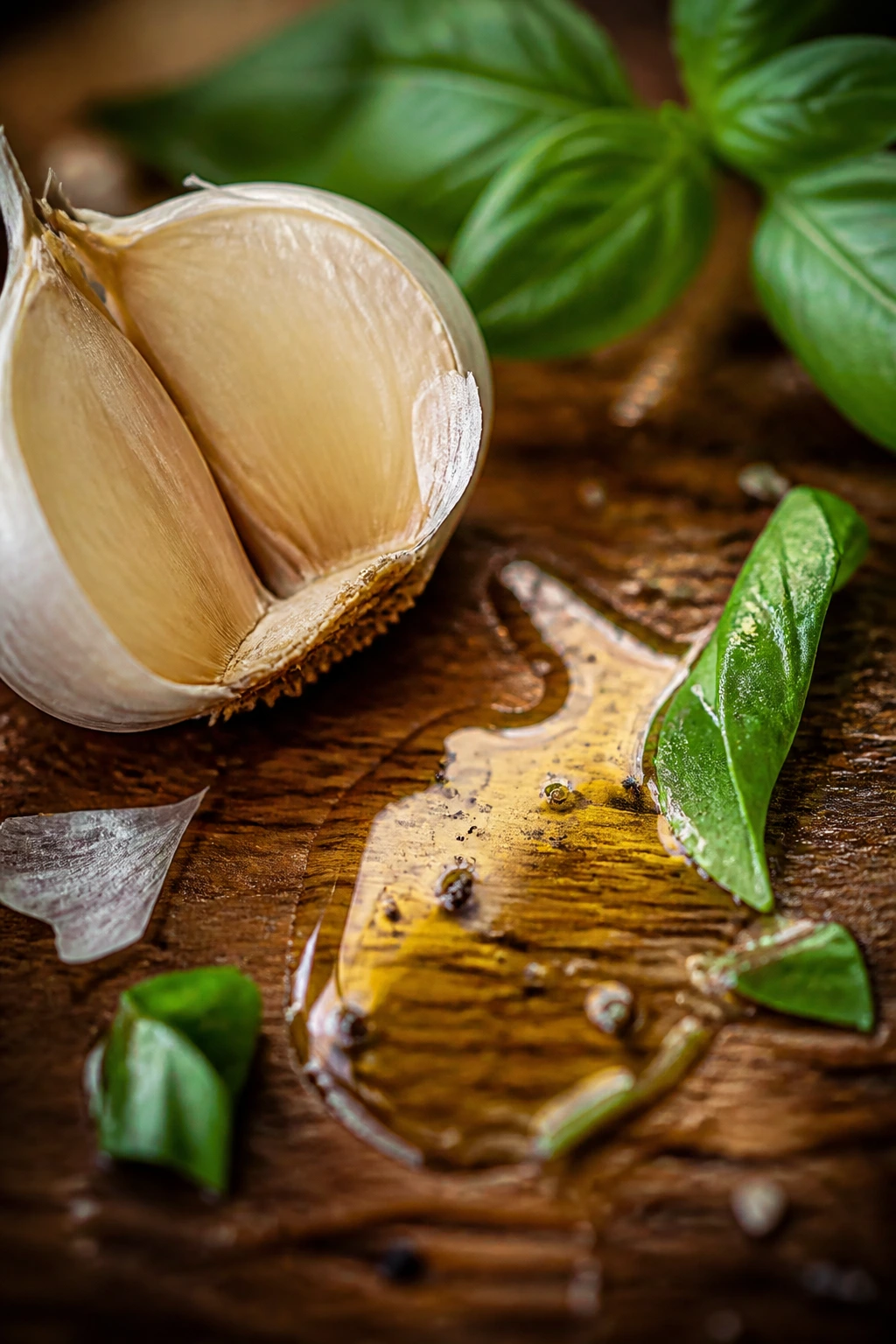
A tiny garlic clove and a peppery olive oil can carry the whole platter if you treat them with respect. This is where the dish stops being “tomato on bread” and starts tasting like someone in an Italian kitchen actually cared how it landed on the table.
What to Use
What to use: 1 small garlic clove for the tomato topping, 1 large garlic clove for rubbing the toast, 2 tablespoons olive oil in the topping, 2 tablespoons for brushing the bread, 1 tablespoon red wine vinegar, 2 tablespoons torn basil leaves, and flaky sea salt for the finish. Those are not decorative extras. They are the difference between flat and lively.
Preparation
Preparation: Grate the small garlic clove finely so it disappears into the tomatoes instead of landing in sharp little bites. Tear the basil by hand rather than chopping it with a knife if you can; bruised edges smell fresher and more herbal. Halve the larger garlic clove lengthwise so the cut face can glide over the hot toast.
Substitutions
Substitutions: White wine vinegar can replace red wine vinegar in a milder version, though the flavor loses a little edge. If basil is missing, flat-leaf parsley is the nearest backup, but it gives the dish a greener, less sweet finish. A different olive oil works too, but you want one with some bite, not a pale bottle that tastes like nothing.
Tips
Tips: Taste the tomatoes after they rest, then decide whether they need a few grains more salt or a touch more vinegar. Don’t guess. Olive oil should taste fruity and a little peppery here; if it tastes dull on a spoon, it will taste dull on bread too. And hold back the basil until the end if you’re making the topping ahead — torn herbs lose their lift fast once they sit in acid.
The little details are not little in this dish.
The Tools That Make the Job Easier
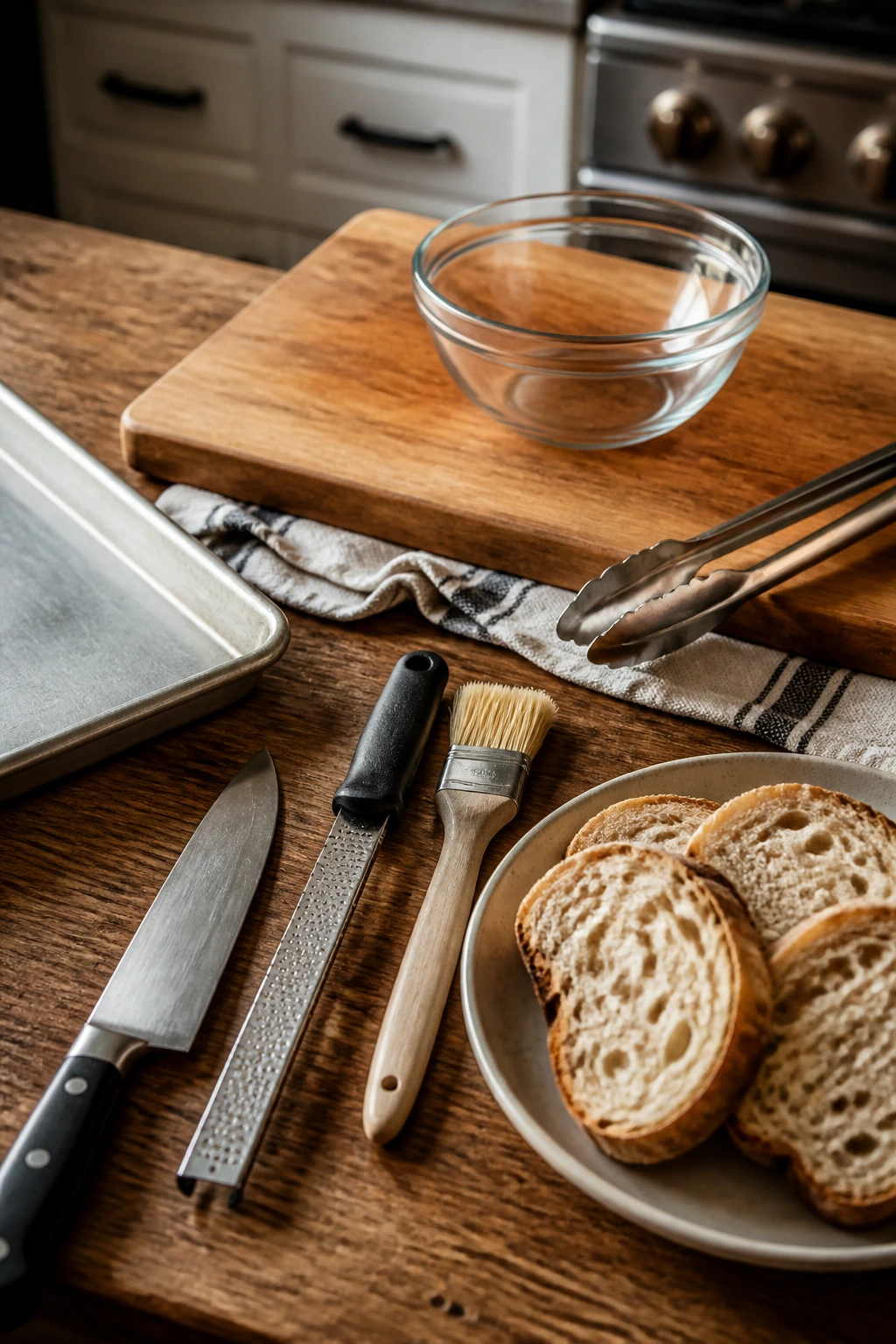
A simple appetizer still punishes sloppy tools. A dull knife crushes tomatoes instead of cutting them cleanly. A tiny bowl makes mixing annoying. A weak sheet pan steams the bread rather than crisping it.
- Rimmed sheet pan: Keeps oil and stray crumbs from sliding off when the bread bakes.
- Sharp chef’s knife: Cleaner tomato cuts mean less juice lost on the board.
- Cutting board with a towel underneath: Stops the board from skittering when you’re dicing tomatoes.
- Small mixing bowl: Just big enough to toss the topping without smashing it.
- Microplane or fine grater: Best for grating the small garlic clove into the tomato mixture.
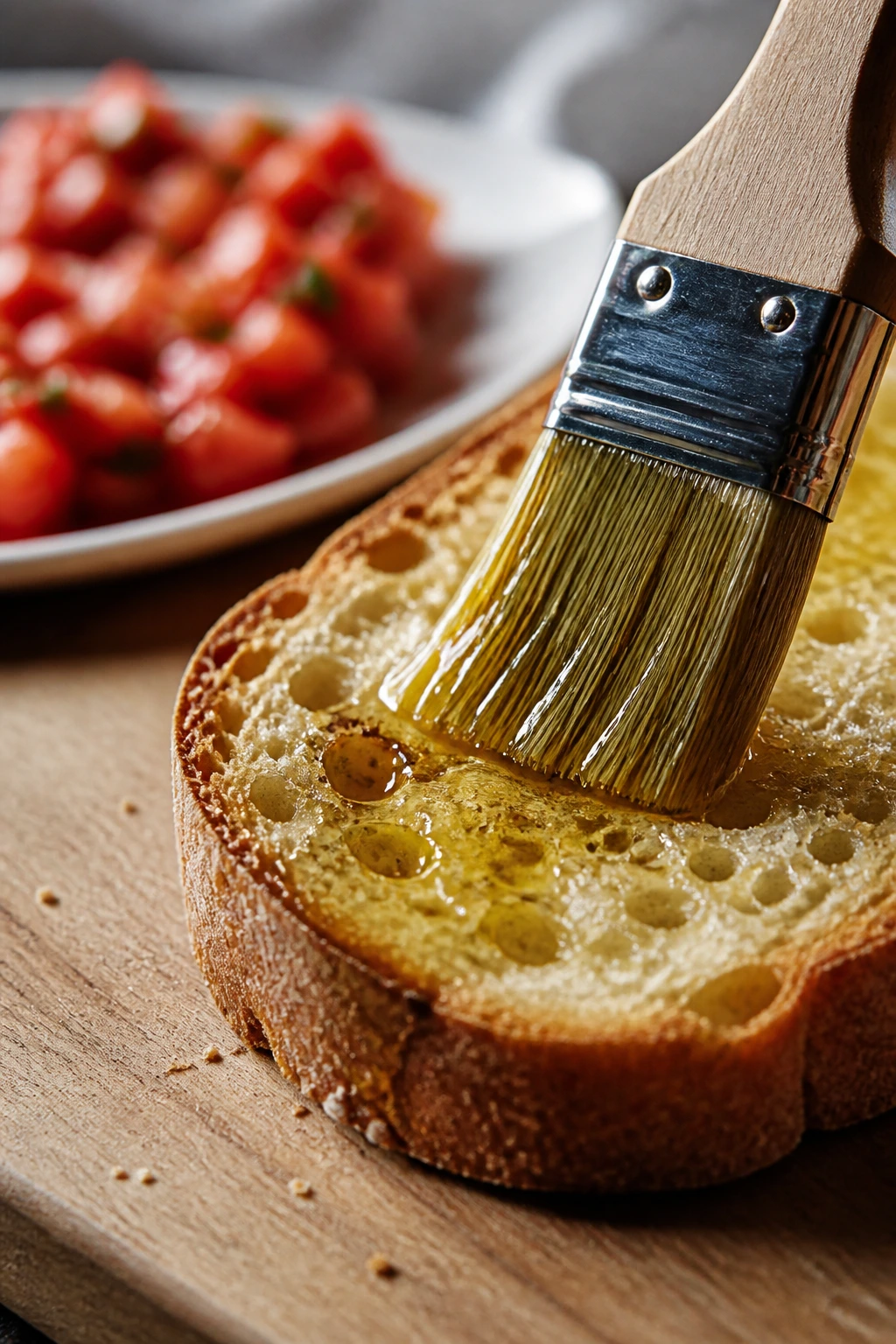
- Pastry brush: Helps you coat the bread with oil in a thin, even layer.
- Tongs or a thin spatula: Useful for turning the bread without scraping off the oil.
- Serving platter or wooden board: Lets you move fast from oven to table without stacking the toast in a bowl where it can steam itself soft.
If you have a grill pan, that works too, but it’s optional. The oven method is calmer and easier to control.
How to Make Bruschetta Without Letting It Turn Soft
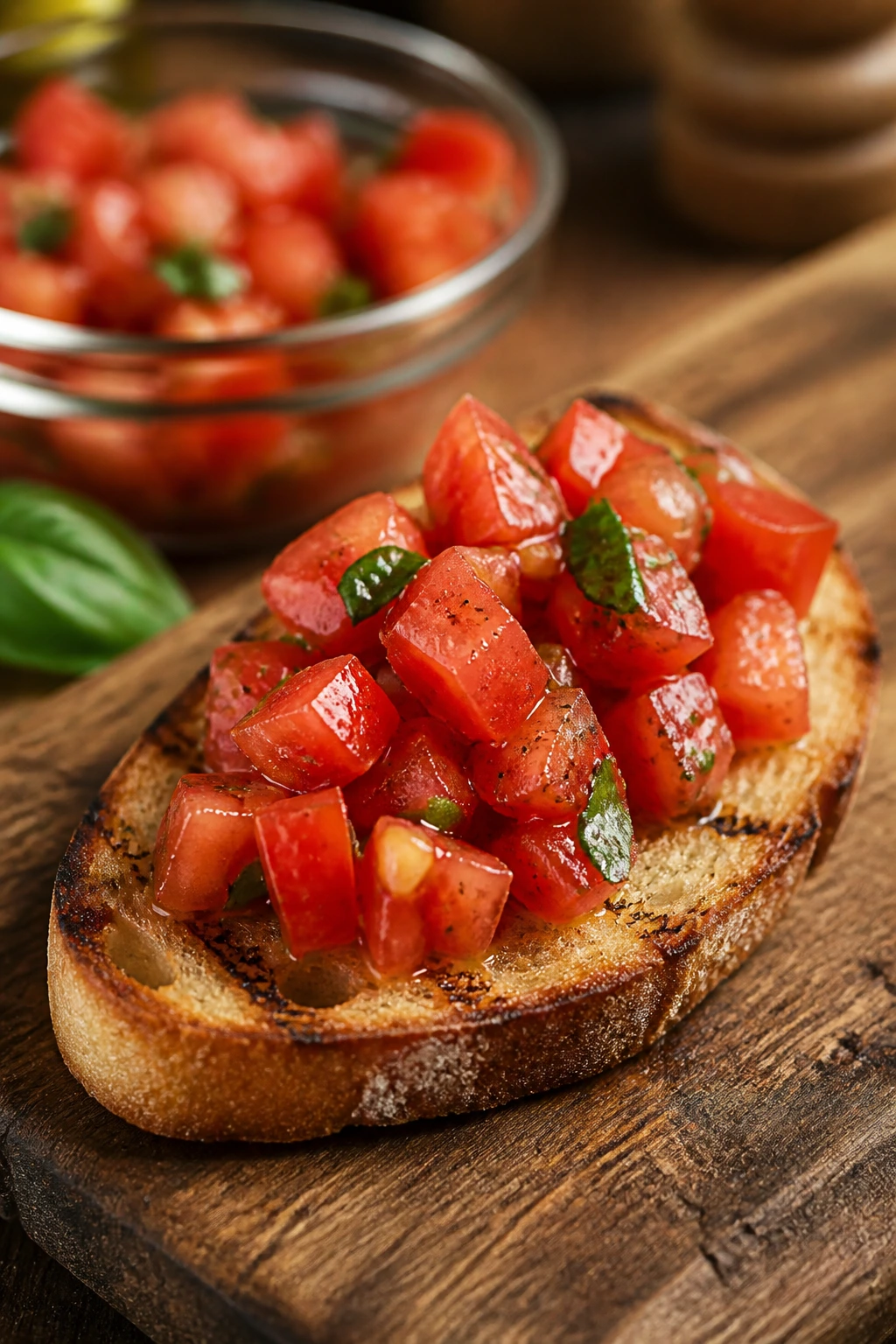
Make the Tomato Topping:
-
Dice and season the tomatoes. Cut the seeded tomatoes into 1/4-inch pieces and put them in a medium bowl with the grated garlic, olive oil, red wine vinegar, kosher salt, black pepper, and torn basil. Stir gently, just until everything looks coated and glossy.
-
Let the tomatoes rest for 10 to 15 minutes. The salt will pull out some juice, which is exactly what you want. Do not skip this rest unless the tomatoes are already very dry; the topping tastes flatter without it.
-
Taste and adjust before you toast the bread. Add a pinch more salt if the tomatoes taste dull, or a few drops more vinegar if they need sharper lift. The mixture should taste bright and seasoned, not raw and watery.
Toast the Bread:
-
Preheat the oven to 425°F (220°C). Line a rimmed sheet pan with the bread slices in a single layer. Brush both sides lightly with olive oil so the edges turn golden instead of drying out in patches.
-
Bake the bread for 6 to 8 minutes. Flip once halfway through if your oven browns unevenly. The slices should be crisp at the edges and dry in the center, with just a little give when pressed. If the bread still feels soft in the middle, give it another minute.
-
Rub the hot toast with garlic immediately. Take the halved garlic clove and swipe the cut side over each slice while it’s still warm. The heat softens the garlic enough to perfume the bread without leaving raw, harsh bits behind.
Assemble and Finish:
-
Spoon the tomato mixture onto the toast right before serving. Let a little juice drain off the spoon before you place the tomatoes on the bread. You want a generous topping, not a flood.
-
Finish with flaky salt and a final thread of olive oil. Tear a few extra basil leaves over the top if you want a fresher look. Serve at once, while the bread still crackles and the tomatoes still look bright.
If the platter sits for too long, the bread loses the whole point of being bread.
How to Serve It Without Losing the Crunch
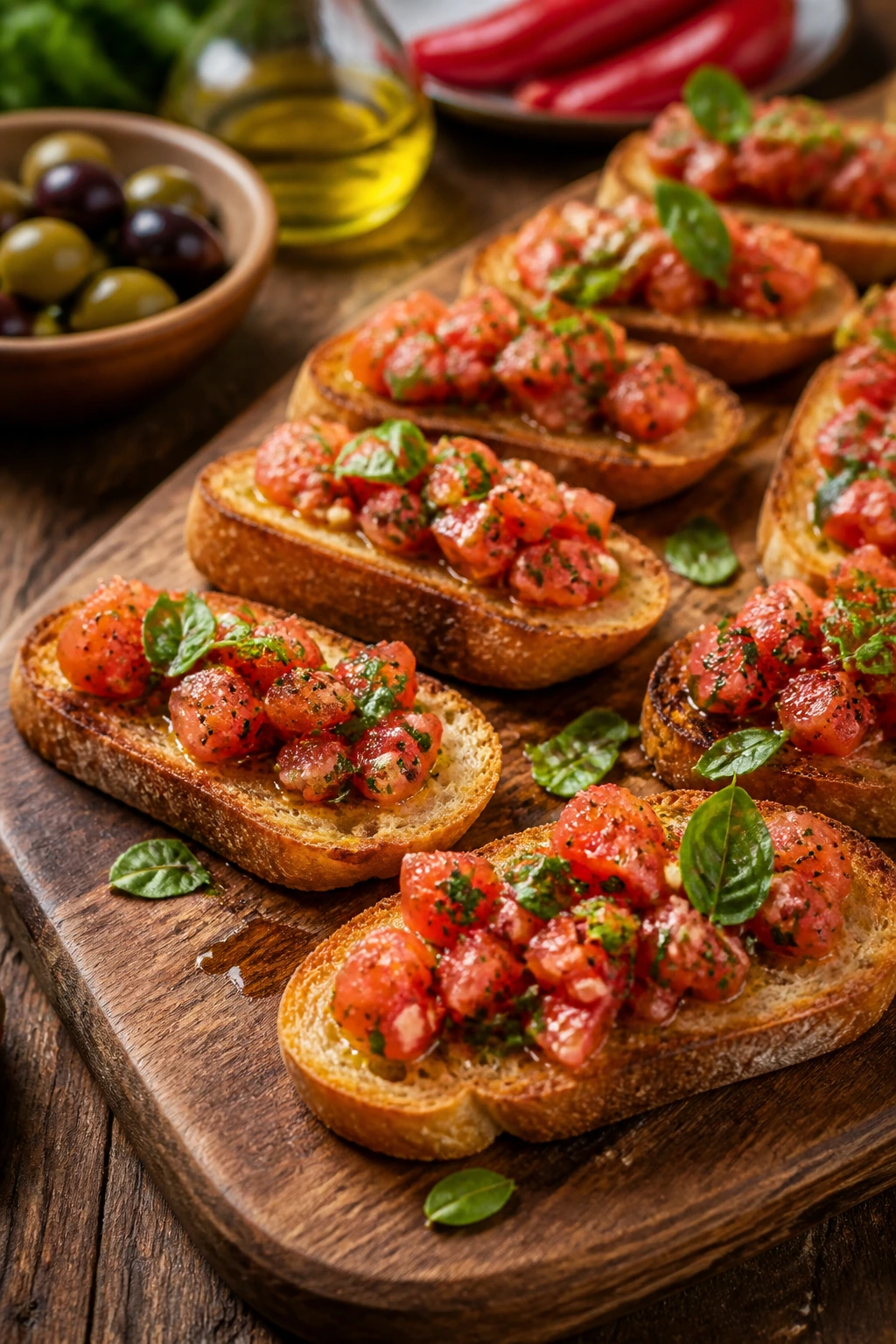
Presentation: Arrange the bruschetta on a long platter or wooden board in a single layer, not stacked. A few torn basil leaves, a light drizzle of olive oil, and the shine of the tomatoes are enough; you do not need to bury the whole thing under garnish.
Accompaniments: Put it beside marinated olives, sliced salami, roasted peppers, or a simple bowl of fennel-scented greens. It also plays well with a chilled soup, a shallow bowl of beans, or a handful of good cheese if you’re building a fuller antipasto spread.
Portions: Plan on 2 pieces per person if it’s one part of a larger starter spread, or 3 pieces if this is the main appetizer before dinner. One baguette usually makes 10 to 12 slices, depending on size. If you’re feeding a larger group, make the tomato topping first and toast the bread in batches so nothing goes soft while you work.
Beverage Pairing: A dry white wine like Vermentino or Pinot Grigio fits the tomato and basil without fighting them. A light red with low tannin can work too, especially if the bread is heavily garlic-rubbed. For a non-alcoholic choice, sparkling water with lemon keeps the palate clean between bites.
Small Moves That Make a Big Difference
Flavor Enhancement: Use the best olive oil you own, not the bottle you cook potatoes in. Bruschetta does not need a giant pour, but the oil you do use should taste clean, peppery, and a little green. That finish hangs around after the tomato juice fades.
Time-Saver: Make the tomato topping first, then preheat the oven while it rests. Those 10 to 15 minutes are enough to draw out the juices and also give you time to set the board, pull out the platter, and get the garlic ready for rubbing.
Pro Move: After rubbing the toast with garlic, give each slice one last very light brush of olive oil. Not much. Just enough to make the surface gleam. It helps the tomatoes sit on top instead of sliding around as soon as the slice hits the plate.
Cost-Saver: A sturdy loaf from the supermarket bakery section is fine if it has a real crust. You do not need a pricey country loaf for this to work. Spend the money on tomatoes and olive oil instead; those two ingredients will show their quality immediately.
Make-It-Yours: If you like a sharper bite, add a few chopped Kalamata olives to the tomato mixture. If you want a softer finish, layer on a spoonful of whipped ricotta under the tomatoes. For a dairy-free table, the classic version already fits without changes.
A good bruschetta does not need many tricks. It needs a few good ones.
What Goes Wrong and How to Fix It
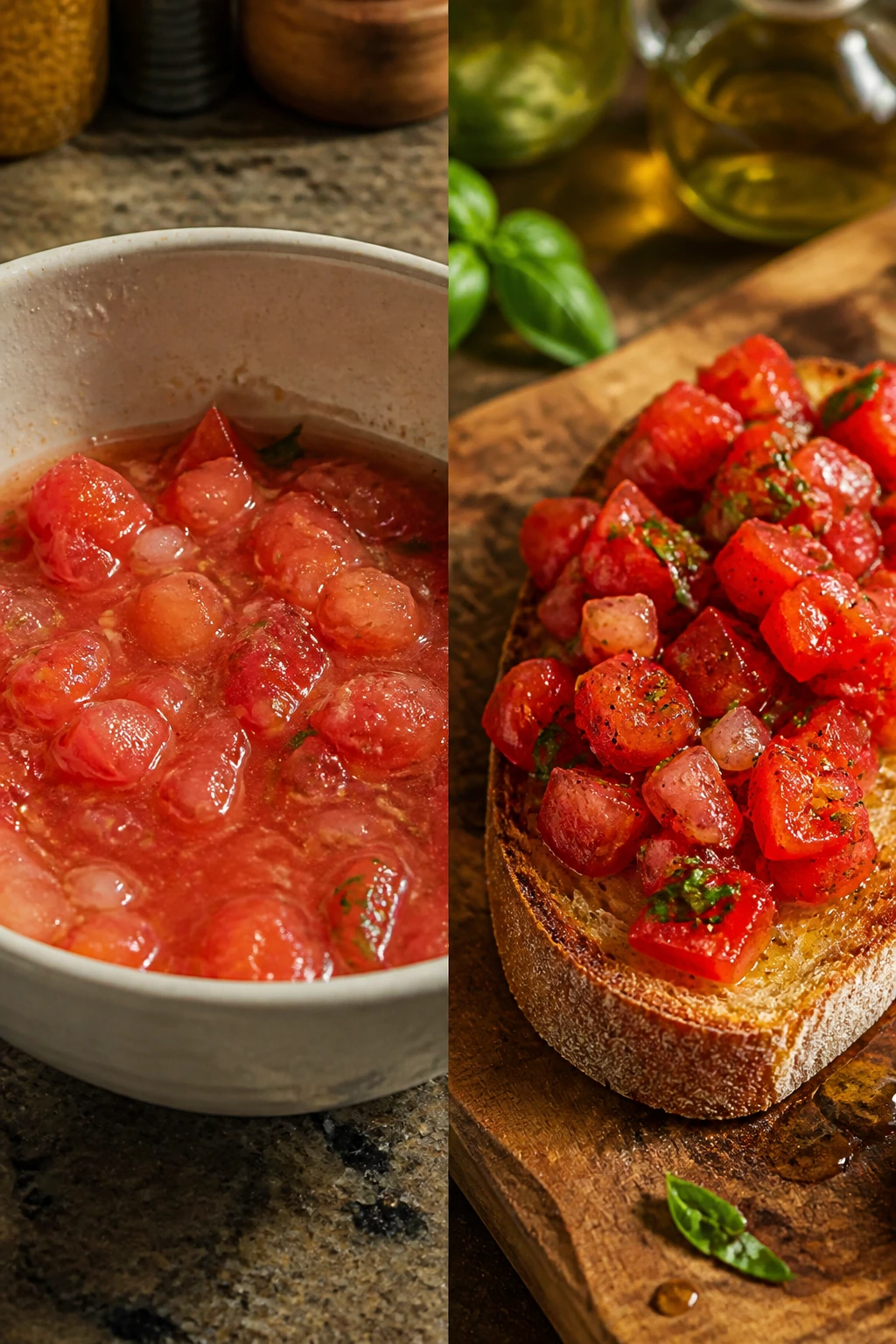
Watery tomatoes: If the topping slides off the bread and leaves a puddle on the platter, the tomatoes were too juicy or not drained enough. Seed them more carefully next time, and spoon off extra liquid after the salt rest. A slotted spoon can save the day when the bowl looks wetter than expected.
Soft bread: If the slices bend in the middle after toasting, they were cut too thick, toasted too briefly, or both. Slice closer to 1/2 inch and bake until the center feels dry when pressed. You want crisp edges and a firm base, not a warm pillow.
Too much garlic: If every bite tastes sharp and bitter, the bread was rubbed too hard or the garlic clove was too large. One halved clove should perfume the toast, not scrape it raw. If you’re nervous, start with a lighter pass and add more only if the bread still tastes flat.
Seasoning that goes missing: If the tomatoes taste bright in the bowl but dull on the toast, the bread probably needed a little more salt or the olive oil finish. Salt makes the tomato flavor pop. That tiny final sprinkle on top matters more than most people think.
Assembling too early: If the bruschetta is soft by the time it reaches the table, the topping went on too soon. Assemble only when the guests are within reach of the platter. Ten minutes is a long time here. Five is better. Two is ideal.
Sweet glaze overload: If you drench the top with balsamic glaze, the dish starts tasting like a different thing entirely. A tiny drip can work, but it should not take over the tomatoes. The classic version is fresher and cleaner without all the syrup.
Variations That Still Belong on the Table
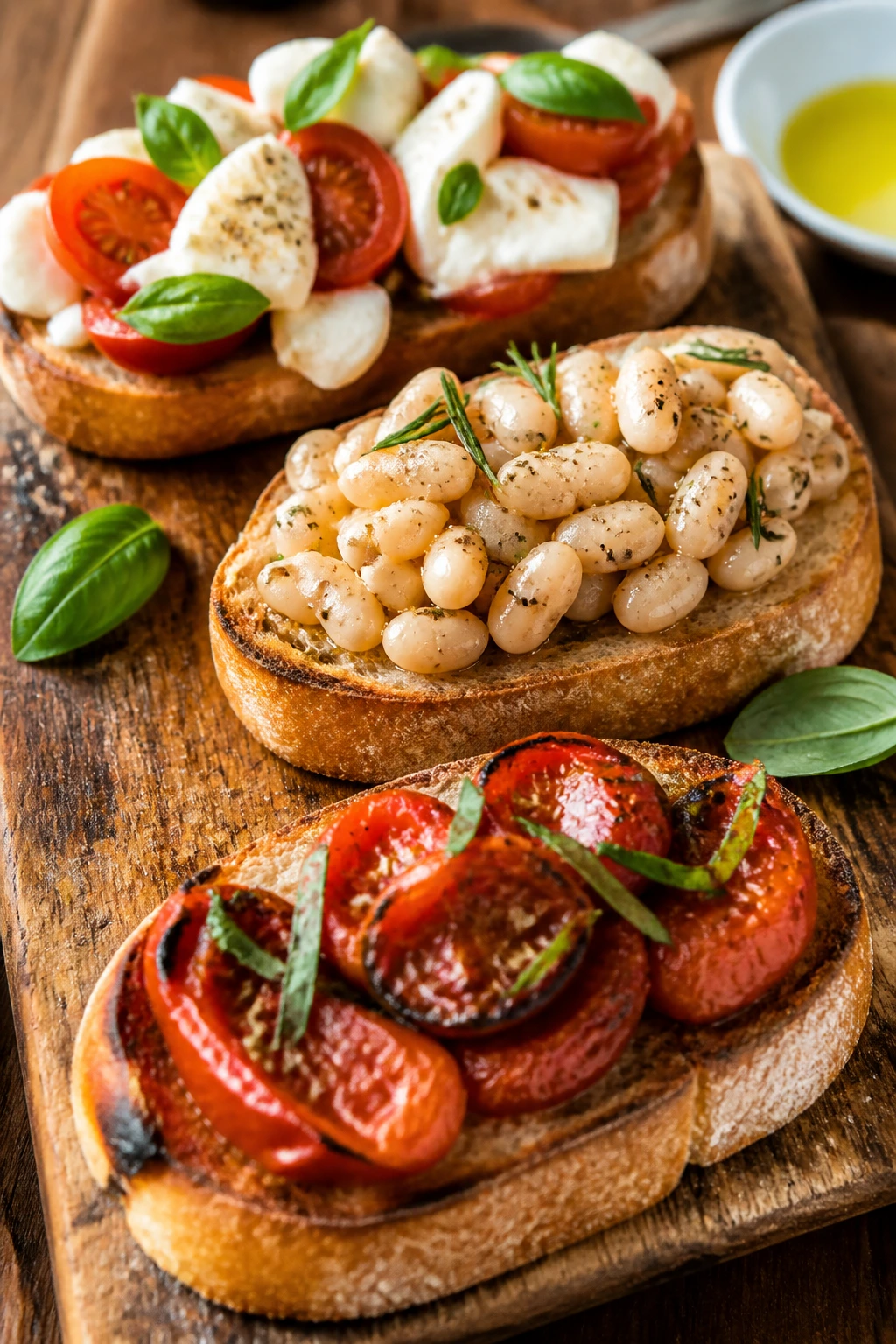
Roasted Tomato Bruschetta: If raw tomatoes are pale or mealy, roast halved plum tomatoes at 425°F for about 20 minutes with olive oil and salt, then cool them slightly before topping the bread. The flavor gets deeper and sweeter, and the texture becomes thicker, which helps when the fruit is less than perfect.
Caprese-Style Bruschetta: Add torn fresh mozzarella to the toast before the tomatoes, then finish with basil and a tiny pinch of salt. It leans richer and softer, so serve it immediately and keep the tomato mixture a little drier than usual.
White Bean and Rosemary Toast: Mash cannellini beans with olive oil, a little grated garlic, and chopped rosemary, then spread that on the toast before adding a spoonful of diced tomatoes. This version is heavier and more filling, which makes it useful if the appetizer needs to stand on its own for a while.
Anchovy and Parsley Bruschetta: Mash one anchovy fillet into the garlic oil before brushing the bread, then top with the tomato mixture and chopped parsley. It tastes saltier, more savory, and a little more Roman in attitude. Use less salt in the tomatoes if you go this route.
Grilled Pepper Antipasto Toast: Swap half the tomatoes for chopped roasted peppers and add a few capers. The result has more smoke and brine, which works well if you’re serving it with olives and cured meat.
Each variation still respects the same rule: keep the base crisp and the topping balanced.
Make-Ahead, Storage, and Reheating
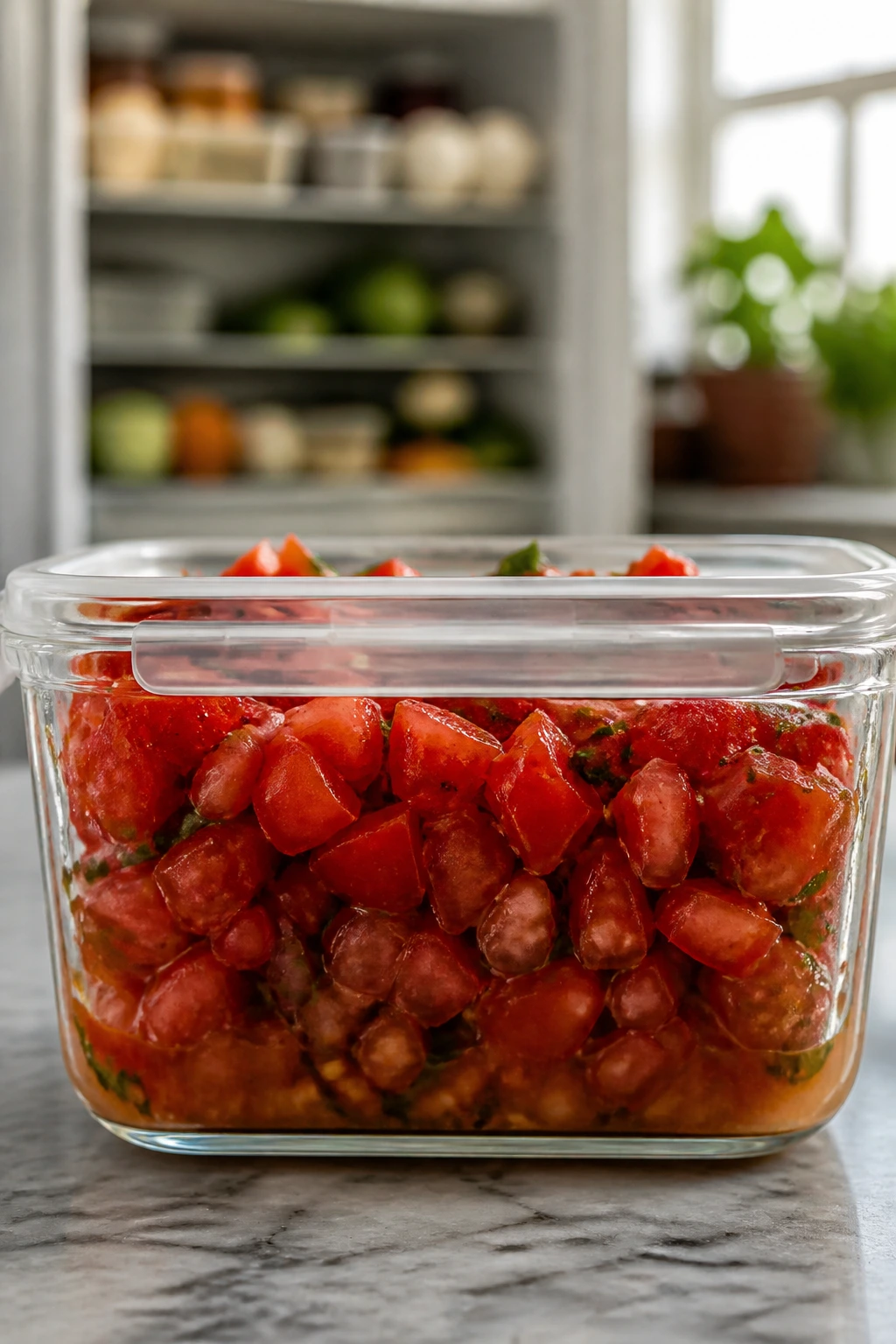
The tomato topping can be made up to 2 days ahead and kept in an airtight container in the refrigerator. It tastes best within 24 hours, when the basil still has some lift and the tomatoes haven’t gone soft. If liquid collects on the bottom, give it a quick stir and spoon off the excess before serving.
The bread can be sliced a day ahead and kept at room temperature in a paper bag or loosely wrapped in a clean kitchen towel. If you want to toast it ahead for a party, do that no more than a few hours before serving and leave the slices uncovered so they stay crisp. Once the bread softens, there’s no real rescue besides more heat.
Assembled bruschetta does not store well. That’s the hard truth. After about 20 to 30 minutes, the bread starts to lose its crunch, and the topping sinks in. If you absolutely must save leftovers, strip the tomato topping off and store it separately from the bread. Keep the topping refrigerated, and re-toast the bread before reassembling.
Reheat the bread in a 350°F (175°C) oven for 4 to 6 minutes if it has gone limp. Do not microwave it unless you enjoy disappointment. The topping itself does not need reheating; it should be cool or room temperature, not hot. Freezing is not a good option for the raw tomato mixture, because the texture turns mushy after thawing. If you want something freezer-friendly, make cooked tomato sauce instead and use a different appetizer later.
For food safety, don’t leave the assembled slices sitting out longer than 2 hours. They’ll be sad before they’re unsafe, but either way, they should be eaten quickly.
Questions People Ask Before Making It

What bread is best for bruschetta?
A rustic loaf with a firm crust and a chewy center is the best fit. Baguette, ciabatta, and country-style Italian bread all work, as long as the slices are thick enough to carry the topping without collapsing.
Can I use cherry tomatoes instead of plum tomatoes?
Yes, and sometimes they’re better if they’re sweeter than the larger tomatoes at the market. Cut them into quarters, seed them a little if they’re very juicy, and keep an eye on the salt because cherry tomatoes can taste sweeter and need a brighter finish.
Why does my bruschetta get soggy so fast?
Usually because the bread was too soft, the tomato topping was too wet, or the slices were assembled too early. Toast the bread until it is dry in the center, drain off excess tomato liquid, and wait until the last second to put everything together.
Do I need to peel the tomatoes?
No, not for this version. The skins are fine once the tomatoes are diced small, and peeling adds work without much payoff. Seeding matters more than peeling because the wet seed gel is what makes the bread go limp.
Is balsamic glaze traditional here?
Not in the basic version. A tiny drizzle can work if you like the sweet-acidic note, but the classic appetizer stays cleaner with red wine vinegar in the topping and a little olive oil at the end. I’d use glaze sparingly, if at all.
Can I grill the bread instead of baking it?
Absolutely. Grill it over medium heat for about 1 to 2 minutes per side until the surface has char marks and the center feels dry. Grill marks look nice, but the real job is still crispness.
How far ahead can I make it for guests?
The tomato topping can be made a few hours ahead, and the bread can be toasted earlier the same day. The final assembly should happen right before serving. If you want the platter to look fresh at the table, keep the components separate until the room is full.
A Tray Worth Making Again
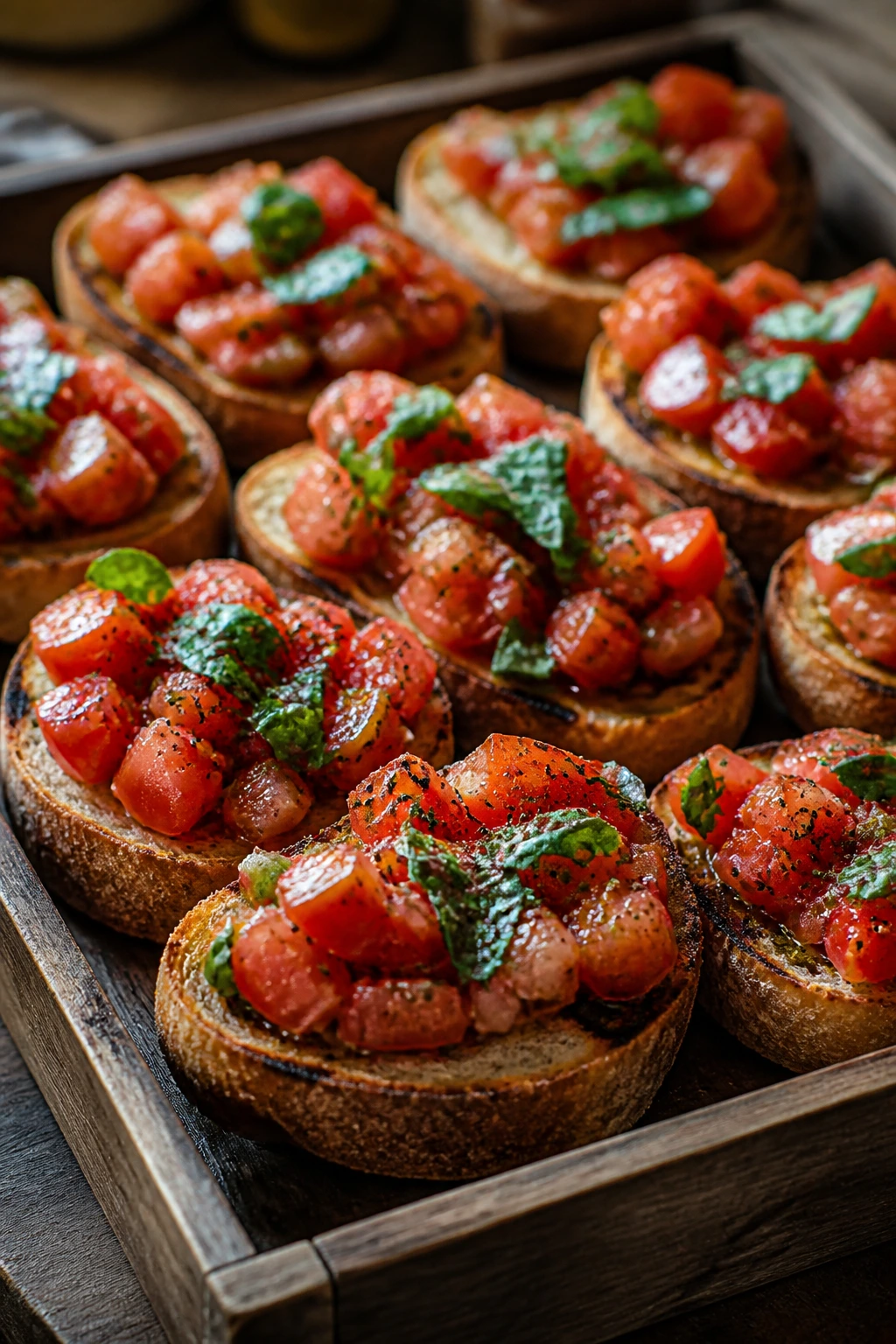
This kind of Italian appetizer teaches the same lesson every time: simple food needs decent ingredients and good timing. There’s nowhere to hide, which is part of the charm. When the bread is crisp, the garlic is gentle, and the tomatoes taste like they were treated with respect, the whole platter feels bigger than the sum of its parts.
That’s the Nonna logic I trust most. Not complicated. Not fussy. Just a small stack of well-chosen things, handled in the right order, served before the heat leaves the bread.
Rustic Bruschetta al Pomodoro — Recipe Card
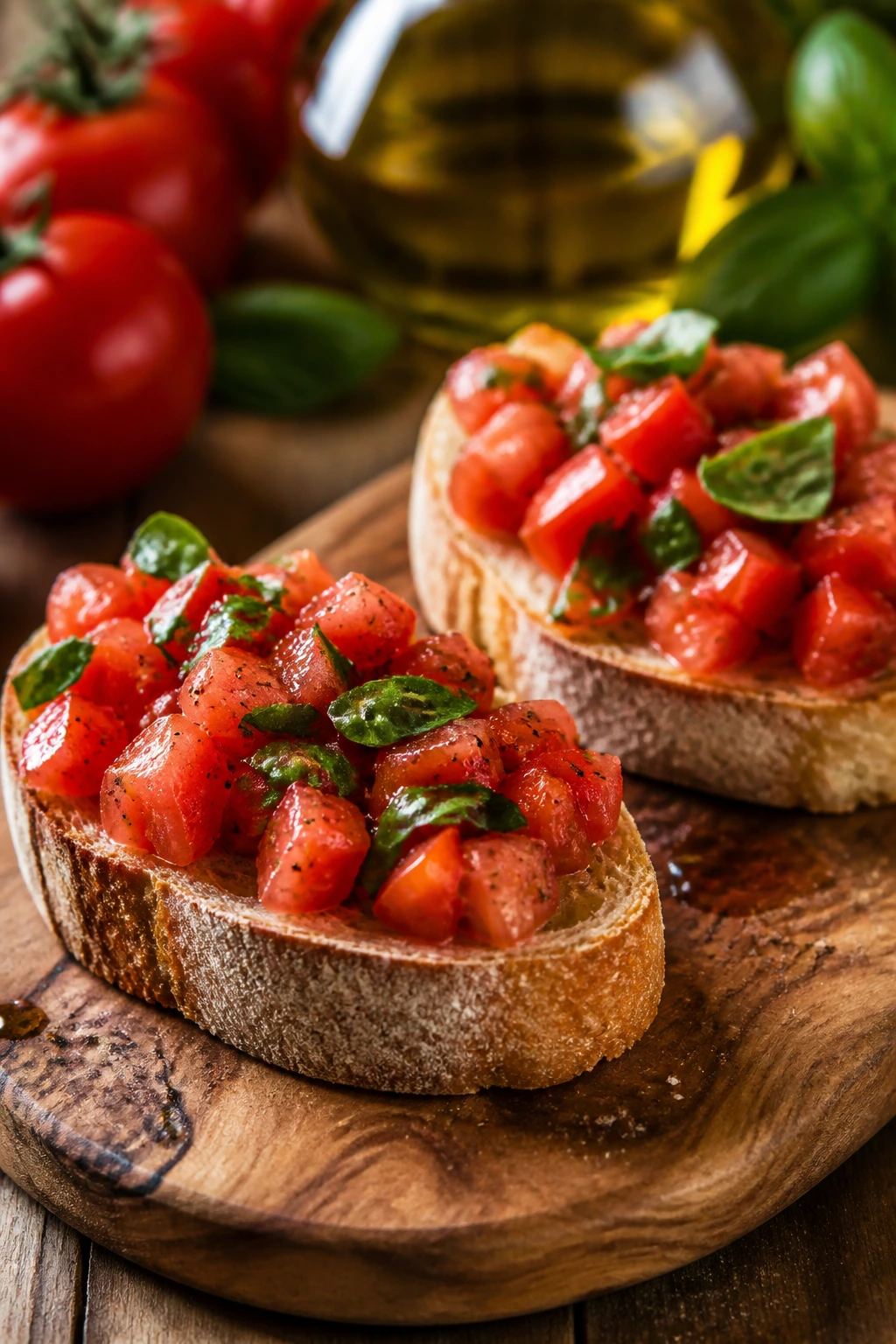
Recipe Name: Rustic Bruschetta al Pomodoro
Description: Crisp toasted bread rubbed with garlic and topped with salted tomatoes, basil, olive oil, and red wine vinegar. This classic Italian appetizer is all about ripe ingredients, sharp timing, and a clean, bright finish.
Prep Time: 20 minutes
Cook Time: 10 minutes
Total Time: 30 minutes
Course: Appetizer
Cuisine: Italian
Servings: 6 servings
Calories: About 150 kcal per serving
Ingredients
For the Tomato Topping:
- 1 pound ripe plum tomatoes, seeded and diced into 1/4-inch pieces
- 1 small garlic clove, finely grated or minced
- 2 tablespoons extra-virgin olive oil
- 1 tablespoon red wine vinegar
- 1/2 teaspoon kosher salt, plus more to taste
- 1/4 teaspoon freshly ground black pepper
- 2 tablespoons torn fresh basil leaves
For the Bread:
- 1 baguette or 1 rustic Italian loaf, cut into 1/2-inch slices
- 2 tablespoons extra-virgin olive oil, for brushing
- 1 large garlic clove, peeled and halved
- Flaky sea salt, for finishing
Instructions
-
Combine the diced tomatoes, grated garlic, olive oil, red wine vinegar, kosher salt, black pepper, and basil in a bowl. Stir gently.
-
Let the tomato mixture rest for 10 to 15 minutes, then taste and adjust seasoning if needed.
-
Preheat the oven to 425°F (220°C). Arrange the bread slices on a rimmed sheet pan and brush both sides lightly with olive oil.
-
Bake for 6 to 8 minutes, flipping once if needed, until the bread is crisp and golden at the edges.
-
Rub the hot toast with the cut side of the halved garlic clove.
-
Spoon the tomato topping onto the toast, drain off excess liquid if needed, and finish with flaky sea salt. Serve immediately.
Notes: Drain extra tomato juice before assembling, and do not wait too long to serve once the topping hits the bread. If your tomatoes are very juicy, seed them more carefully next time.