



Rosemary, garlic, and lemon can turn a plain chicken pan into something that smells like a farmhouse kitchen after lunch. That’s the appeal of Italian chicken dishes that taste like Tuscany: the ingredients are spare, but the flavor lands with warmth, tang, and a little rustic edge.
Tuscany doesn’t wear one fixed recipe. It shows up as olive oil pooling around browned chicken skin, white wine hissing in a skillet, tomatoes cooked down until they taste like themselves again, and herbs that smell green when they hit the heat. Sometimes the plate leans creamy. More often, it leans clean and savory, with beans, greens, capers, fennel, or a heel of bread soaking up the sauce.
I trust this style of cooking because it gives chicken a place to live. Thighs stay juicy in a braise, cutlets stay lively in a quick pan sauce, and a whole bird gets crisped and perfumed in the oven without much fuss. No drama. Just a lot of flavor, built in layers.
Why These Tuscan Chicken Dishes Keep Showing Up on My Table
-
Pantry ingredients do the heavy lifting: olive oil, garlic, canned tomatoes, white wine, beans, capers, and herbs can make chicken taste like it simmered all afternoon even when it didn’t.
-
The techniques stay flexible: some of these dishes roast, some braise, some pan-fry, and a few live in the middle ground where one skillet handles nearly everything.
-
Chicken breast and thighs both have a place: lean cutlets work when the sauce is quick and bright, while bone-in thighs carry long simmering, cream, or tomato without drying out.
-
Most of these plates want bread or polenta nearby: that matters more than people admit. Tuscan-style sauces are often too good to leave behind in the pan.
-
The flavors stay balanced, not heavy: lemon, wine, tomato, capers, and bitter greens keep the food from collapsing into one-note richness.
1. Tuscan Lemon-Rosemary Roast Chicken
Rosemary, lemon, and garlic hit the tray first, and the smell tells you the chicken is already halfway done in spirit. This is the kind of roast I reach for when I want dinner to look calm and taste like somebody knew what they were doing.
Why It Works: Bone-in thighs or leg quarters stay juicy at high heat, and the lemon slices soften into little jammy rounds under the chicken. White wine and broth keep the pan drippings loose enough to spoon over bread, which is where a lot of the pleasure lives.
Key Ingredients:
- 2 lbs bone-in, skin-on chicken thighs or leg quarters — the skin turns crisp while the meat stays tender.
- 2 tbsp olive oil — helps the seasoning cling and the skin brown.
- 1 lemon, sliced into thin rounds — gives the pan a bright, slow-cooked edge.
- 4 garlic cloves, smashed — they mellow as they roast.
- 2 rosemary sprigs — one of the most Tuscan smells I know.
- 1 yellow onion, cut into wedges — it sweetens the pan juices.
- 1/2 cup dry white wine — loosens the drippings and adds lift.
- 1/2 cup chicken broth — keeps the pan from drying out.
Quick Steps:
- Preheat the oven to 425°F (220°C) and pat the chicken dry with paper towels. Season it well with salt and pepper on all sides.
- Toss the onion wedges, garlic, lemon slices, and rosemary with the olive oil in a 9×13-inch roasting pan.
- Set the chicken on top, skin side up, and pour the white wine and broth around the edges.
- Roast for 40 to 45 minutes, until the skin is deep golden and the thickest part of the chicken reaches 165°F (74°C).
- Rest the chicken for 10 minutes, then spoon the pan juices over each piece before serving.
Equipment for This Recipe:
- 9×13-inch roasting pan — gives the juices room to move.
- Instant-read thermometer — the only reliable way to know when the chicken is done.
- Tongs — useful for lifting the hot chicken cleanly.
- Paper towels — dry skin is the difference between crisp and dull.
How to Serve This Dish: Serve it with crusty bread, roasted potatoes, or soft polenta. I like the plate with one piece of chicken, a few roasted onion wedges, and a glossy spoonful of pan juices around the edges.
Pro Tips for This Recipe:
- Dry the skin first. Wet chicken skin roasts up pale and chewy.
- Tuck the lemon under the chicken if it browns too fast. Direct oven heat can make the slices bitter.
- Rest before serving. Ten minutes keeps the juices in the meat instead of on the cutting board.
Variations on This Dish:
- Orange-Rosemary Roast: swap half the lemon for orange slices and use the same method for a sweeter finish.
- Olive Pan Roast: add a handful of Castelvetrano olives in the last 15 minutes for a briny edge.
- Tomato-Bed Roast: scatter cherry tomatoes under the chicken and let them burst into the drippings.
Common Mistakes to Avoid with This Dish:
- Skipping the drying step: the skin steams instead of browning; blot it well before seasoning.
- Using too much wine: the pan can become watery instead of glossy; keep the liquid to the stated amount.
- Pulling it too early: undercooked chicken near the bone is a common miss; use a thermometer.
2. Chicken Cacciatore with Peppers and Olives
Chicken cacciatore needs a little patience, and that’s exactly why it tastes so good. The peppers soften, the tomatoes deepen, and the olives bring the sort of salty bite that keeps a rich sauce from feeling flat.
Why It Works: Browning the chicken first builds the base flavor; then the vegetables and wine pick up what’s left in the pan. A slow simmer lets the tomatoes, peppers, and olives become one sauce instead of a bunch of separate ingredients.
Key Ingredients:
- 2 lbs bone-in chicken thighs — they hold up to a longer simmer.
- 1 tbsp olive oil — enough to brown without greasing the pan.
- 1 onion, thinly sliced — sweetens as it cooks.
- 1 red bell pepper, sliced — gives the sauce color and softness.
- 8 oz mushrooms, halved — they soak up the braising liquid.
- 3 garlic cloves, minced — sharp at first, then mellow.
- 1 cup crushed tomatoes — forms the body of the sauce.
- 1/2 cup dry red wine — deepens the finish.
- 1/2 cup green olives — add a briny Tuscan note.
- 1 tsp dried oregano — keeps the flavor rooted in Italian territory.
Quick Steps:
- Season the chicken thighs well, then brown them in olive oil over medium-high heat for 4 to 5 minutes per side.
- Remove the chicken and cook the onion, pepper, and mushrooms until softened and lightly browned, about 8 minutes.
- Stir in the garlic and oregano for 30 seconds, then pour in the red wine and scrape the pan clean.
- Add the crushed tomatoes, olives, and chicken. Cover and simmer over low heat for 30 minutes, until the chicken is tender.
- Uncover for the last 5 minutes if you want the sauce a little thicker.
Equipment for This Recipe:
- Large Dutch oven or deep skillet — the chicken needs room to braise.
- Wooden spoon — helps scrape up the browned bits.
- Tongs — keeps the chicken pieces intact.
- Lid that fits snugly — traps the steam during simmering.
How to Serve This Dish: Spoon it over polenta, mashed potatoes, or toasted country bread. The sauce should land thick enough to cling to the chicken and run just a little into the starch below it.
Pro Tips for This Recipe:
- Brown in batches if your pan is crowded. If the chicken steams, the sauce will taste flatter.
- Use good olives. Cheap, mushy olives can turn the whole pot muddy.
- Taste before you salt at the end. The olives can carry more salt than you expect.
Variations on This Dish:
- White Cacciatore: skip the tomatoes and use white wine, broth, fennel, and mushrooms for a lighter braise.
- Spicy Cacciatore: add red pepper flakes with the garlic for a sharper finish.
- Hunter’s Sunday Version: throw in a few rosemary sprigs and more mushrooms for a fuller, woodsy sauce.
Common Mistakes to Avoid with This Dish:
- Adding the tomatoes too soon: the vegetables need a little browning first or the sauce stays thin.
- Cooking over high heat the whole time: the chicken tightens up; low simmer is better.
- Using olives with pits and forgetting to warn people: it sounds obvious, but it’s an avoidable annoyance at the table.
3. Creamy Tuscan Chicken with Sun-Dried Tomatoes
This is the dish that made a lot of people fall in love with the phrase “Tuscan chicken.” It’s creamy, yes, but the sauce works because the sun-dried tomatoes, garlic, and spinach keep it from feeling like a heavy blanket.
Why It Works: Searing the chicken first gives the pan flavor, and the cream only goes in after the broth has picked up the browned bits. Sun-dried tomatoes bring concentrated sweetness, which means you do not need much to make the whole skillet taste finished.
Key Ingredients:
- 1 1/2 lbs boneless, skinless chicken breasts — slice them in half horizontally if they’re thick.
- 2 tbsp sun-dried tomato oil — or olive oil if the jar is dry-pack.
- 1/3 cup sun-dried tomatoes, chopped — chewy, sweet, and tangy.
- 3 garlic cloves, minced — don’t let them brown too hard.
- 1 cup chicken broth — loosens the pan and balances the cream.
- 1 cup heavy cream — gives the sauce its silk.
- 2 cups baby spinach — wilts down fast.
- 1/2 cup grated Parmesan — sharpens the sauce.
- Salt and black pepper — season the chicken before it hits the pan.
Quick Steps:
- Season the chicken and sear it in the sun-dried tomato oil over medium-high heat for 4 to 5 minutes per side.
- Move the chicken to a plate, then lower the heat and cook the garlic and sun-dried tomatoes for 1 minute.
- Pour in the broth, scrape the pan, and simmer for 2 minutes.
- Stir in the cream and Parmesan, then add the spinach and let it wilt.
- Return the chicken to the skillet for 3 to 4 minutes, just until warmed through.
Equipment for This Recipe:
- 12-inch skillet — wide enough for the sauce to reduce.
- Tongs — for flipping the chicken without tearing it.
- Grater — fresh Parmesan melts more cleanly than pre-shredded.
- Measuring cup — cream sauces go off track when poured loosely.
How to Serve This Dish: I like this over mashed potatoes, buttered noodles, or soft polenta. The sauce should coat the starch and leave a little shine on the plate.
Pro Tips for This Recipe:
- Use medium heat for the cream. A hard boil can split it.
- Thin chicken pieces cook better here. Thick breasts often finish before the sauce does.
- Add the Parmesan off the hottest part of the burner. It melts smoother that way.
Variations on This Dish:
- Dairy-Lighter Version: use half-and-half and a little extra broth; the sauce will be looser but still rich.
- Mushroom Tuscan Chicken: add sliced mushrooms with the garlic for more body.
- Basil Finish: scatter torn basil over the top right before serving for a brighter finish.
Common Mistakes to Avoid with This Dish:
- Boiling the cream hard: the sauce can turn grainy; keep it at a gentle simmer.
- Using too much spinach at once: it collapses fast, so add it in two handfuls if needed.
- Overcooking the chicken before the sauce is ready: take it out early and return it at the end.
4. Chicken Piccata with Capers and Parsley
Chicken piccata has a bright, sharp edge that makes the whole plate feel awake. The lemon and capers do most of the talking, and the butter steps in just enough to round the corners.
Why It Works: Thin cutlets cook in minutes, which means the sauce can be built in the same pan without turning the chicken dry. Flour helps the cutlets brown and also thickens the lemon-butter sauce a little as it finishes.
Key Ingredients:
- 1 1/2 lbs chicken cutlets — thin enough to cook fast and stay tender.
- 1/3 cup all-purpose flour — lightly coats the chicken.
- 3 tbsp olive oil — for browning.
- 4 tbsp butter, divided — gives the sauce its gloss.
- 1/2 cup dry white wine — sharpens the sauce before the lemon goes in.
- 1/2 cup chicken broth — keeps the pan sauce balanced.
- 3 tbsp capers, drained — the briny anchor.
- 1 lemon, juiced — the bright finish.
- 2 tbsp chopped parsley — added at the end for freshness.
Quick Steps:
- Season the cutlets, then dredge them lightly in flour and shake off the excess.
- Brown them in olive oil and 1 tbsp butter over medium-high heat, about 2 minutes per side.
- Transfer the chicken to a plate and pour in the wine, broth, and capers.
- Simmer for 2 to 3 minutes, then whisk in the remaining butter and lemon juice.
- Return the chicken to the pan for 1 minute, then shower with parsley.
Equipment for This Recipe:
- Large skillet — a wide surface keeps the sauce from crowding.
- Shallow dish — useful for dredging flour.
- Tongs — makes flipping the cutlets easier.
- Citrus juicer — keeps stray seeds out of the pan.
How to Serve This Dish: Serve it with angel hair pasta, mashed potatoes, or simple wilted greens. I usually keep the plate spare so the sauce stays front and center.
Pro Tips for This Recipe:
- Tap off the extra flour. Too much coating turns gummy.
- Use fresh lemon juice. Bottled juice tastes flat here.
- Return the chicken only at the very end. It only needs a minute to warm.
Variations on This Dish:
- Spinach Piccata: wilt a few handfuls of spinach into the sauce right before serving.
- Cream Piccata: stir in 2 tbsp cream at the end for a softer sauce.
- Herb Piccata: add a little dill or tarragon if you want a greener finish.
Common Mistakes to Avoid with This Dish:
- Overcrowding the skillet: the cutlets steam instead of browning.
- Letting the sauce boil after the butter goes in: it can break.
- Skipping the seasoning on the chicken: the sauce cannot rescue bland cutlets.
5. Chicken Marsala with Mushrooms
Marsala gives chicken a deep, winey sweetness that smells richer than the ingredient list suggests. Add mushrooms, and the sauce turns earthy enough to feel like a long-cooked Sunday dish.
Why It Works: Marsala reduces into something glossy and nutty, while mushrooms soak up the pan flavors and give the sauce body. Chicken cutlets cook quickly, so the sauce gets the time it needs without the meat drying out.
Key Ingredients:
- 1 1/2 lbs chicken cutlets — best for quick browning.
- 1/3 cup flour — helps form a light crust.
- 8 oz cremini mushrooms, sliced — earthy and sturdy.
- 1 shallot, minced — sweeter than onion here.
- 3/4 cup dry Marsala wine — the signature flavor.
- 1/2 cup chicken broth — balances the wine.
- 2 tbsp butter — gives the sauce a soft finish.
- 1 tsp fresh thyme leaves — a little woodsy note.
- Salt and black pepper — season the cutlets well.
Quick Steps:
- Season and flour the chicken, then brown it in butter and oil for 2 minutes per side.
- Remove the chicken and cook the mushrooms and shallot until they release moisture and start to color.
- Stir in the thyme, then pour in the Marsala and broth, scraping the pan.
- Simmer for 6 to 8 minutes until the sauce reduces slightly.
- Return the chicken for 2 minutes, then finish with the remaining butter.
Equipment for This Recipe:
- Large skillet — deep enough for the sauce.
- Tongs — for turning the cutlets.
- Wooden spoon — good for scraping the bottom.
- Paper towels — useful for patting the mushrooms dry if they seem damp.
How to Serve This Dish: Spoon the mushrooms and sauce over mashed potatoes, buttered egg noodles, or polenta. The sauce should feel silky, not thick like gravy.
Pro Tips for This Recipe:
- Use dry Marsala, not sweet dessert Marsala. Sweet wine makes the sauce cloying.
- Let the mushrooms brown. Pale mushrooms taste bland.
- Keep the cutlets thin. Thick pieces fight the sauce.
Variations on This Dish:
- Creamed Marsala: add 1/4 cup cream at the end for a softer, restaurant-style finish.
- Garlic Marsala: sauté 2 minced garlic cloves with the shallot.
- Wild Mushroom Version: mix in oyster or shiitake mushrooms for a deeper flavor.
Common Mistakes to Avoid with This Dish:
- Using sweet Marsala by accident: the sauce can taste syrupy.
- Salting the mushrooms too early: they can get watery before they brown.
- Over-reducing the sauce: Marsala should stay glossy, not turn sticky.
6. Chicken Saltimbocca with Sage and Prosciutto
Saltimbocca is one of those dishes that sounds fussy and eats like it was built in a hurry. The prosciutto melts into the chicken, the sage perfumes everything, and the white wine pan sauce ties it together without much effort.
Why It Works: Thin chicken cutlets cook fast, which keeps the prosciutto from turning leathery and the sage from burning. A quick wine reduction with butter gives you a pan sauce that tastes much bigger than the ingredient list.
Key Ingredients:
- 1 1/2 lbs chicken cutlets — thin pieces are essential here.
- 4 thin slices prosciutto — each piece wraps or sits neatly over the chicken.
- 8 sage leaves — the flavor backbone.
- 1/3 cup flour — for a light dusting.
- 2 tbsp olive oil — for browning.
- 3 tbsp butter — finishes the sauce.
- 1/2 cup dry white wine — deglazes the pan.
- 1/2 cup chicken broth — softens the wine.
- 1 lemon, cut into wedges — for serving.
Quick Steps:
- Lay a sage leaf and a slice of prosciutto over each cutlet, then secure with a toothpick if needed.
- Dust the chicken lightly in flour and brown it in olive oil and 1 tbsp butter for 2 to 3 minutes per side.
- Remove the chicken, add the wine and broth, and scrape up the browned bits.
- Simmer for 3 minutes, then whisk in the remaining butter.
- Return the chicken for 1 minute and serve with lemon wedges.
Equipment for This Recipe:
- Large skillet — wide enough to keep the prosciutto from bunching.
- Toothpicks — optional, but helpful if the wraps slide.
- Tongs — easier than a fork for turning.
- Small spoon — handy for basting the cutlets with sauce.
How to Serve This Dish: I like saltimbocca with creamy polenta or sautéed spinach. It also does well beside roasted potatoes if you want a sturdier plate.
Pro Tips for This Recipe:
- Keep the prosciutto thin. Thick slices turn chewy.
- Do not burn the sage. It only needs to perfume the chicken.
- Use low heat for the final butter swirl. That keeps the sauce smooth.
Variations on This Dish:
- Fontina Saltimbocca: tuck a thin slice of fontina under the prosciutto for a richer middle.
- Lemon-Only Finish: skip broth and make a sharper, smaller pan sauce with wine and lemon.
- Chicken Roll-Ups: roll the cutlets around the sage and prosciutto if you want a neater look.
Common Mistakes to Avoid with This Dish:
- Using thick chicken pieces: they cook unevenly and make the prosciutto tough.
- Over-flouring the cutlets: the coating should be dusted, not caked.
- Ignoring the pan fond: the browned bits are the sauce’s whole personality.
7. Chicken and Cannellini Bean Stew
This stew tastes like something that had no reason to be fancy and ended up better for it. Cannellini beans give the broth body, and chicken thighs make the pot feel rich without requiring cream.
Why It Works: Beans absorb the flavor of the simmering broth, while thighs stay tender through a longer cook. Rosemary, garlic, and a little tomato paste keep the stew rooted in that Tuscan pantry style.
Key Ingredients:
- 2 lbs bone-in chicken thighs — rich enough for a stew.
- 2 cans cannellini beans, drained and rinsed — creamy and mild.
- 1 onion, diced — the starting point of the broth.
- 2 carrots, diced — add sweetness.
- 2 celery stalks, diced — keeps the base savory.
- 3 garlic cloves, minced — essential here.
- 1 tbsp tomato paste — adds depth without making it red-sauce heavy.
- 4 cups chicken broth — enough liquid to simmer.
- 1 tsp chopped rosemary — a small amount goes far.
- 1 cup chopped kale — stirred in at the end.
Quick Steps:
- Brown the chicken thighs in a Dutch oven, then set them aside.
- Cook the onion, carrots, and celery until soft, then stir in the garlic and tomato paste.
- Add the broth, beans, rosemary, and chicken. Simmer covered for 30 minutes.
- Stir in the kale and cook 5 minutes more, until tender.
- Remove the chicken from the bone if you like, or serve the thighs whole.
Equipment for This Recipe:
- Dutch oven — best for even simmering.
- Wooden spoon — for scraping and stirring.
- Ladle — helpful when serving the broth-heavy pot.
- Sharp knife — a dull knife makes bean-and-veg prep miserable.
How to Serve This Dish: Serve it in shallow bowls with olive oil drizzled on top and slices of grilled bread on the side. The broth should be thick enough to cling lightly to the beans.
Pro Tips for This Recipe:
- Rinse canned beans well. It keeps the broth from getting starchy.
- Add kale at the end. Long simmering turns it drab.
- Use Parmesan rind if you have one. It adds quiet depth.
Variations on This Dish:
- Sausage-Free Ribollita Style: add torn stale bread to thicken the stew near the end.
- Tomato-Forward Version: stir in a cup of crushed tomatoes if you want a redder broth.
- Herby White Stew: finish with parsley and lemon zest for a brighter bowl.
Common Mistakes to Avoid with This Dish:
- Boiling the beans hard: they can split and turn mealy.
- Adding kale too soon: it loses color and texture.
- Forgetting to taste the broth at the end: stew needs a final salt check after simmering.
8. White Wine Braised Chicken with Artichokes
Artichokes and white wine are one of those pairings that make chicken feel more polished than it is. The sauce ends up clean, savory, and a little tangy, with the artichokes bringing their own soft bite.
Why It Works: Braising keeps the chicken moist while the wine, broth, and artichokes create a sauce that tastes focused rather than busy. A little lemon at the end keeps the braise from going dull.
Key Ingredients:
- 2 lbs bone-in chicken thighs — best for braising.
- 1 tbsp olive oil — enough for browning.
- 1 shallot, sliced — sweeter than onion in a braise.
- 3 garlic cloves, minced — adds edge.
- 1 cup dry white wine — the main braising liquid.
- 1 cup chicken broth — balances the wine.
- 1 can artichoke hearts, drained and halved — soft, briny, and very Tuscan-adjacent.
- 1 tsp fresh thyme — keeps the pot savory.
- 1 lemon, zested and juiced — for the finish.
Quick Steps:
- Brown the chicken thighs in olive oil, then remove them.
- Cook the shallot until soft, then add the garlic for 30 seconds.
- Pour in the wine and broth, scrape the pan, and add the artichokes and thyme.
- Return the chicken, cover, and simmer gently for 25 to 30 minutes.
- Finish with lemon juice and zest before serving.
Equipment for This Recipe:
- Dutch oven or deep sauté pan — braising needs depth.
- Lid — keeps the moisture in.
- Microplane — useful for lemon zest.
- Tongs — gentle handling keeps the chicken intact.
How to Serve This Dish: Serve with mashed potatoes, rice, or slices of toasted focaccia. The sauce should be spoonable, not soupy.
Pro Tips for This Recipe:
- Use artichokes packed in water or brine, not marinated oil if you want a cleaner sauce.
- Keep the simmer gentle. A hard boil makes the chicken tough.
- Add lemon at the end, not in the pot. It keeps the flavor fresh.
Variations on This Dish:
- Olive-Artichoke Braise: add a few olives for a saltier finish.
- Cream-Free Dijon Twist: whisk in 1 tsp Dijon for extra body without cream.
- Oven Braise: move the covered pot to a 325°F oven for even heat.
Common Mistakes to Avoid with This Dish:
- Using too much lemon zest early: it can turn bitter.
- Letting the wine reduce to nothing before adding broth: the sauce needs a little liquid balance.
- Skipping the browning: pale chicken makes a pale braise.
9. Sheet-Pan Chicken with Fennel and Potatoes
Fennel gets sweeter in the oven, and that is exactly why it belongs with chicken. Pair it with potatoes, rosemary, and olive oil, and you get a tray that smells like a very organized Sunday.
Why It Works: The sheet pan lets the chicken roast over the vegetables, so the drippings season everything underneath. Fennel softens and loses its sharp edge, which makes it a better match for lemon and herbs.
Key Ingredients:
- 2 lbs bone-in chicken thighs — enough fat for good roasting.
- 1 fennel bulb, sliced into wedges — turns sweet and tender.
- 1 1/2 lbs baby potatoes, halved — absorb the pan juices.
- 1 onion, cut into wedges — adds more sweetness.
- 3 tbsp olive oil — coats everything evenly.
- 2 rosemary sprigs — classic with fennel and chicken.
- 1 lemon, cut into wedges — brightens the tray.
- Salt and black pepper — season aggressively.
Quick Steps:
- Heat the oven to 425°F (220°C) and spread the fennel, potatoes, and onion on a rimmed sheet pan.
- Toss the vegetables with olive oil, salt, pepper, and rosemary.
- Nestle the chicken thighs on top, season again, and tuck the lemon wedges around the edges.
- Roast for 40 to 45 minutes, stirring the vegetables once halfway through, until the chicken reaches 165°F (74°C).
- Rest 10 minutes before serving.
Equipment for This Recipe:
- Rimmed sheet pan — keeps the juices from escaping.
- Heavy-duty spatula — useful for turning the vegetables.
- Instant-read thermometer — roast chicken needs a number, not a guess.
- Sharp knife — fennel is much easier when sliced cleanly.
How to Serve This Dish: Serve it right off the tray with a green salad or a spoonful of yogurt-herb sauce. The potatoes should catch the drippings, and the fennel should be soft enough to eat with a fork.
Pro Tips for This Recipe:
- Cut the potatoes evenly. Uneven pieces mean some are raw while others are brown.
- Don’t overload the pan. Crowding steams the vegetables.
- Use the lemon wedges at the end too. A fresh squeeze wakes up the whole tray.
Variations on This Dish:
- Sausage Swap: add sliced Italian sausage if you want a heartier pan.
- Orange-Fennel Version: use orange wedges instead of lemon for a softer sweetness.
- Garlic-Heavy Tray: add whole smashed garlic cloves for a deeper roast flavor.
Common Mistakes to Avoid with This Dish:
- Using a flat baking sheet with no rim: the drippings can spill.
- Slicing fennel too thin: it can burn before the potatoes finish.
- Forgetting to stir once: one side of the vegetables can over-brown.
10. Chicken Pappardelle in Tomato-Rosemary Sauce
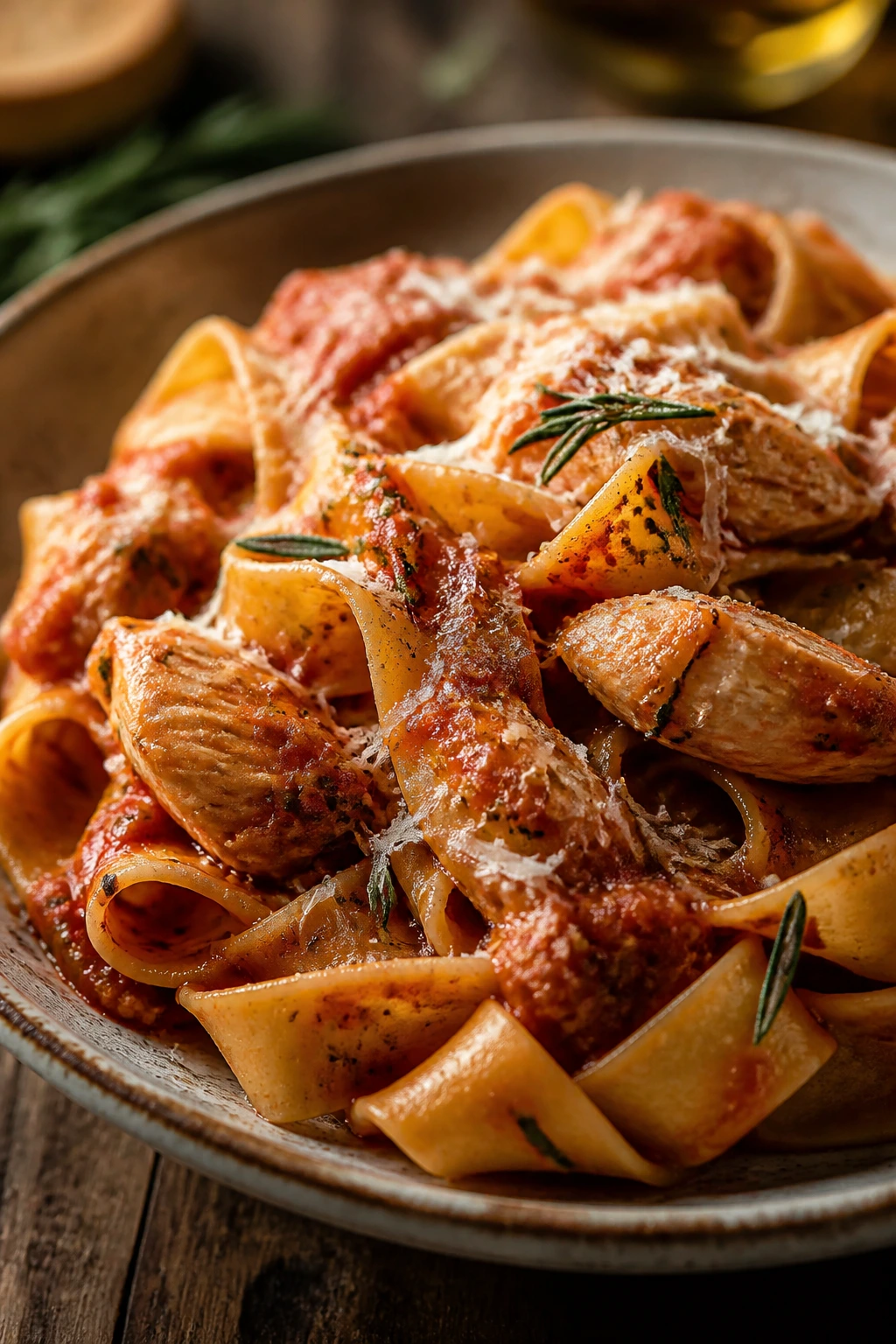
Pappardelle wants a sauce with enough body to cling to those wide ribbons, and chicken is happy to provide it. The tomato base is simple, but rosemary and garlic make it taste slower than it is.
Why It Works: A quick simmer turns crushed tomatoes into something round and savory, and the chicken adds richness without needing a long braise. Wide pasta catches the sauce better than spaghetti, which matters more than people think.
Key Ingredients:
- 1 1/2 lbs boneless chicken thighs, chopped — they stay juicy in a skillet sauce.
- 12 oz pappardelle — wide enough for the sauce to cling.
- 1 onion, finely diced — starts the sauce.
- 3 garlic cloves, minced — the usual Tuscan anchor.
- 1 can crushed tomatoes, 28 oz — forms the sauce.
- 1/2 cup dry white wine — lifts the tomato flavor.
- 1 tsp chopped rosemary — strong enough to notice, not enough to dominate.
- 1/2 cup grated Parmesan — for serving.
- 2 tbsp olive oil — for the pan.
Quick Steps:
- Brown the chicken in olive oil, then remove it.
- Cook the onion until soft, add the garlic, and stir in the rosemary for 30 seconds.
- Pour in the wine, then add the tomatoes and simmer for 15 minutes.
- Return the chicken and cook 8 to 10 minutes more, until tender.
- Toss with cooked pappardelle and finish with Parmesan.
Equipment for This Recipe:
- Large skillet or sauté pan — needs room for sauce and pasta.
- Pasta pot — salt the water well.
- Tongs — useful for lifting the noodles into the sauce.
- Grater — fresh Parmesan matters here.
How to Serve This Dish: Serve the pasta in warm bowls with extra Parmesan and black pepper. A simple salad on the side is enough; the sauce already carries the meal.
Pro Tips for This Recipe:
- Reserve a cup of pasta water. It helps the sauce cling if the pan tightens up.
- Chop the chicken small. Even pieces make the sauce easier to eat.
- Use the pasta as soon as it’s done. Pappardelle clumps if it waits around.
Variations on This Dish:
- Creamless Sunday Ragù Feel: simmer the sauce an extra 10 minutes for more body.
- Spinach Pappardelle: wilt in a few handfuls of spinach near the end.
- Mushroom Tomato Sauce: add sliced mushrooms with the onion.
Common Mistakes to Avoid with This Dish:
- Overcooking the pasta: pappardelle should still have a little bite.
- Adding the chicken too early to the tomato sauce: it can dry out.
- Using too little salt in the pasta water: the whole dish tastes flatter.
11. Crispy Chicken Parmesan with Basil
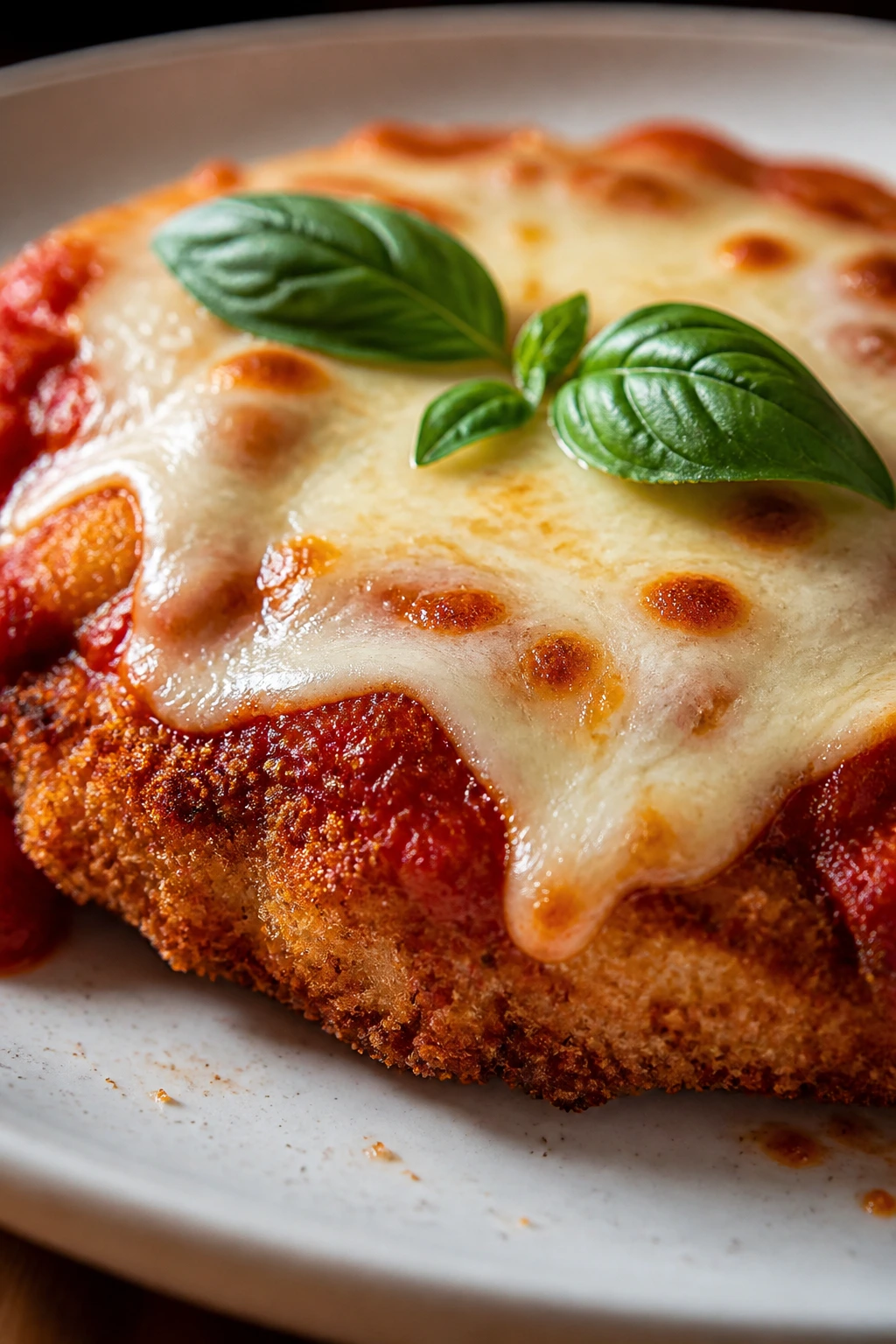
Chicken Parmesan is the loudest dish in this list, and that’s fine. When the crust is crisp, the sauce is bright, and the mozzarella goes molten at the edges, restraint would be a mistake.
Why It Works: Breaded cutlets fry or pan-sear fast, then finish under the broiler where the cheese bubbles without soaking the crust. Basil at the end keeps the tomato sauce from tasting cooked-down and heavy.
Key Ingredients:
- 1 1/2 lbs chicken cutlets — thin enough to crisp quickly.
- 1/3 cup flour — first layer of the breading.
- 2 eggs, beaten — helps the crumbs stick.
- 1 1/2 cups breadcrumbs — use fine or panko depending on the crunch you want.
- 2 tbsp olive oil — for browning.
- 1 cup marinara sauce — spooned over the cutlets.
- 8 oz mozzarella, sliced or shredded — melts over the top.
- 1/2 cup grated Parmesan — salty finish.
- Fresh basil leaves — added after baking.
Quick Steps:
- Set up flour, eggs, and breadcrumbs in separate shallow dishes.
- Dredge the chicken, then brown it in olive oil for 2 to 3 minutes per side.
- Transfer to a baking dish, top with marinara, mozzarella, and Parmesan.
- Bake at 425°F (220°C) for 10 to 12 minutes, then broil briefly until the cheese bubbles.
- Finish with basil and serve right away.
Equipment for This Recipe:
- Three shallow dishes — for the breading station.
- Large skillet — to crisp the cutlets first.
- Baking dish — holds the chicken for the oven finish.
- Broiler-safe spoon — handy for saucing.
How to Serve This Dish: Serve with spaghetti, a crisp Caesar-style salad, or roasted broccoli. I prefer it with a small pile of pasta so the cutlet stays the main event.
Pro Tips for This Recipe:
- Press the crumbs onto the chicken. Loose crumbs fall off in the pan.
- Do not drown the crust in sauce. Too much marinara makes it soggy.
- Broil only until the cheese melts. A minute too long can scorch the top.
Variations on This Dish:
- Eggplant-Parm Style: use the same method with thick eggplant slices instead of chicken.
- Pecorino Finish: replace some Parmesan with pecorino for a saltier top.
- Spicy Parm: add red pepper flakes to the marinara.
Common Mistakes to Avoid with This Dish:
- Frying the cutlets too dark before baking: they can dry out under the cheese.
- Skipping the rest after breading: the coating sticks better if it sits 10 minutes.
- Using watery sauce: thick marinara keeps the crust crisp.
12. Balsamic Chicken with Cherry Tomatoes
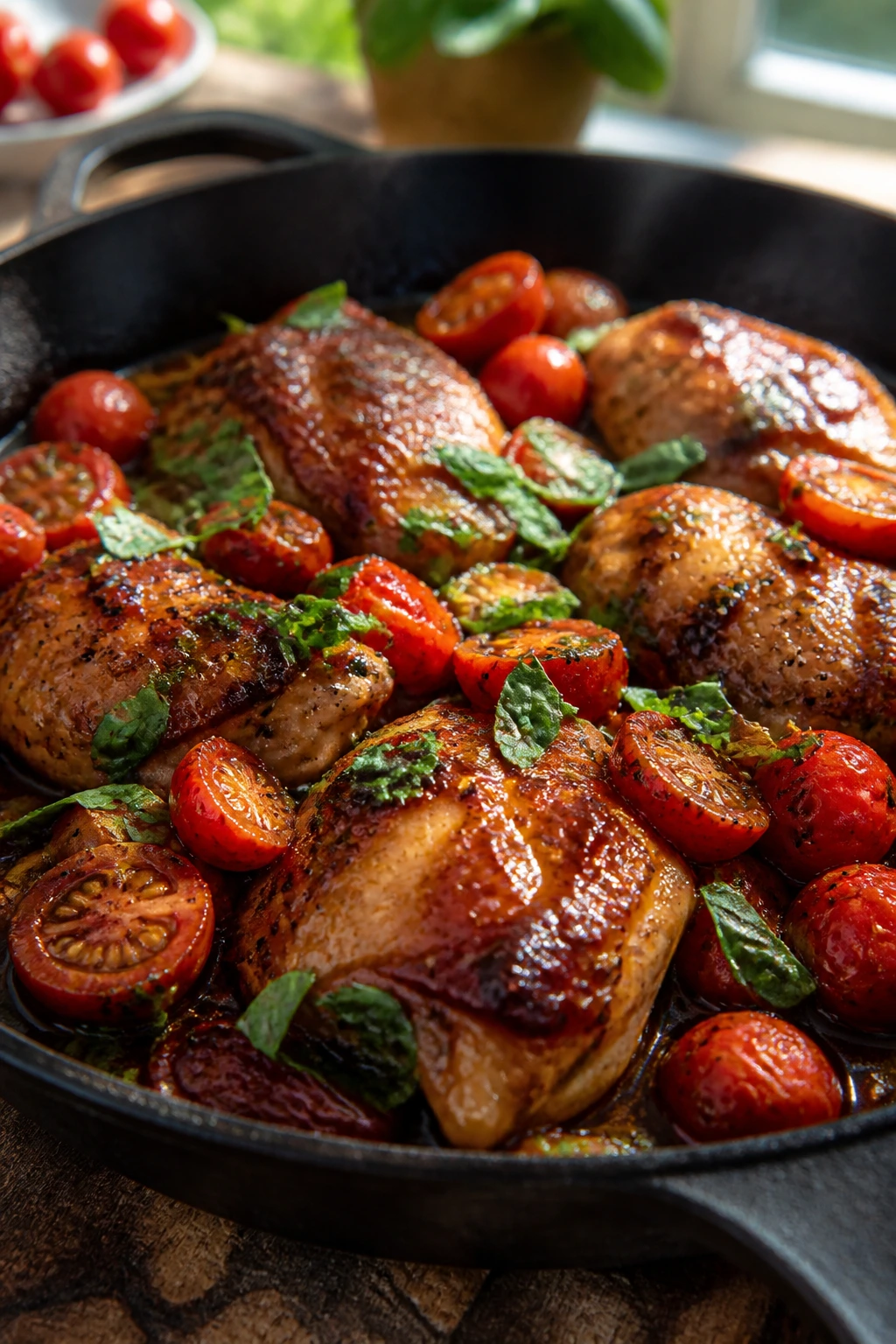
Balsamic and cherry tomatoes make a sauce that tastes sweet, sharp, and a little glossy around the edges. Chicken loves that kind of treatment, especially when the tomatoes burst and turn into their own quick jam.
Why It Works: The balsamic reduces with the tomato juices, so you get acidity without the sharpness of raw vinegar. Chicken thighs or breasts both work, but the sauce needs a brief simmer to settle into place.
Key Ingredients:
- 1 1/2 lbs chicken thighs or breasts — thighs for richness, breasts for speed.
- 2 cups cherry tomatoes — they burst into sauce naturally.
- 2 tbsp balsamic vinegar — gives the glaze its depth.
- 3 garlic cloves, minced — always worth the space.
- 1/2 cup chicken broth — keeps the skillet loose.
- 2 tbsp olive oil — for browning.
- 1/4 cup fresh basil, torn — finishes the pan.
- Salt and black pepper — season before the chicken hits the skillet.
Quick Steps:
- Season and sear the chicken in olive oil until golden on both sides.
- Add the garlic and cherry tomatoes, cooking until several tomatoes burst.
- Pour in the balsamic and broth, then simmer for 6 to 8 minutes.
- Return the chicken to the pan and spoon the sauce over it for 2 minutes.
- Finish with basil and a final pinch of salt.
Equipment for This Recipe:
- Large skillet — enough room for tomatoes to break down.
- Wooden spoon — useful for pressing the tomatoes gently.
- Tongs — helps keep the chicken intact.
- Measuring spoon — balsamic can overpower if you free-pour.
How to Serve This Dish: Serve it with couscous, rice, or crusty bread to soak up the sticky pan juices. A simple pile of arugula on the side works too.
Pro Tips for This Recipe:
- Let some tomatoes char a little. A tiny bit of browning gives the sauce more character.
- Use a decent balsamic, not syrupy glaze. The sauce should reduce on its own.
- Add basil at the end only. Heat kills its fresh smell.
Variations on This Dish:
- Olive Balsamic Chicken: add a handful of olives for a saltier, Mediterranean feel.
- Mozzarella Finish: tuck in a few torn pieces of fresh mozzarella before serving.
- One-Pan Vegetable Add-In: add zucchini or green beans during the last 10 minutes.
Common Mistakes to Avoid with This Dish:
- Using too much balsamic: the sauce can turn sticky and harsh.
- Not bursting the tomatoes enough: the sauce stays too thin.
- Adding basil too early: it loses its freshness fast.
13. Chicken with Pancetta, Peas, and Mint
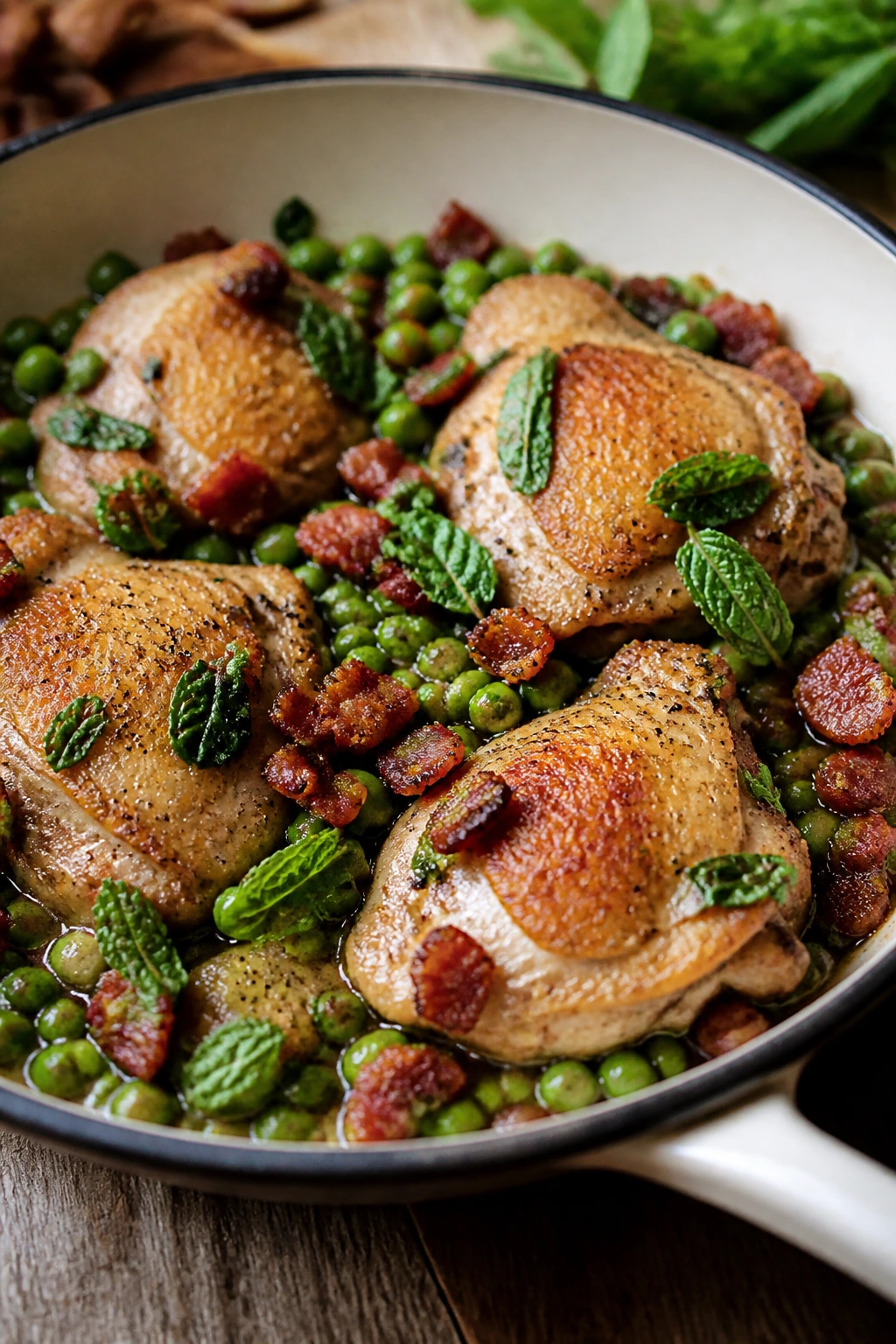
Pancetta and peas are a sharper, saltier pair than people expect, and mint pulls the whole skillet into focus. The result is light enough for spring cooking but still sturdy enough to feel like dinner.
Why It Works: Pancetta renders its fat first, which seasons the pan before the chicken goes in. Peas add sweetness late in the cook, while mint keeps the dish from tasting heavy.
Key Ingredients:
- 1 1/2 lbs chicken thighs — they stay juicy with pancetta.
- 4 oz pancetta, diced — brings salt and fat.
- 1 shallot, minced — sweet base for the pan.
- 1 cup frozen peas — no need to thaw first.
- 1/2 cup dry white wine — deglazes the skillet.
- 1/2 cup chicken broth — helps make the sauce.
- 1/4 cup fresh mint, chopped — the final lift.
- 1/4 cup grated Parmesan — optional but useful.
Quick Steps:
- Render the pancetta in a skillet until crisp, then remove it.
- Brown the chicken in the pancetta fat, then set it aside.
- Cook the shallot, pour in the wine and broth, and simmer for 3 minutes.
- Add the peas and chicken, cooking until the chicken is done and the peas are bright.
- Finish with mint, pancetta, and Parmesan.
Equipment for This Recipe:
- Skillet with a lid — helpful for the brief simmer.
- Slotted spoon — for lifting the pancetta.
- Tongs — for browning the chicken.
- Small bowl — to hold the crisped pancetta so it stays crisp.
How to Serve This Dish: It works well over rice, couscous, or creamy mashed potatoes. I also like it with a bitter green salad to balance the pancetta.
Pro Tips for This Recipe:
- Do not overcook the peas. They should stay bright green.
- Keep the mint fresh. Chop it right before serving.
- Use the pancetta fat carefully. Too much can make the dish greasy.
Variations on This Dish:
- Prosciutto Swap: use thin prosciutto if pancetta is unavailable, but add it near the end.
- Lemon Finish: a squeeze of lemon sharpens the peas and mint.
- Creamy Version: stir in 2 tbsp cream if you want a softer sauce.
Common Mistakes to Avoid with This Dish:
- Cooking the peas from frozen for too long: they turn dull and wrinkled.
- Skipping the wine reduction: the sauce needs that quick tang.
- Adding mint during the simmer: it tastes cooked and flat.
14. Tuscan Chicken and Polenta
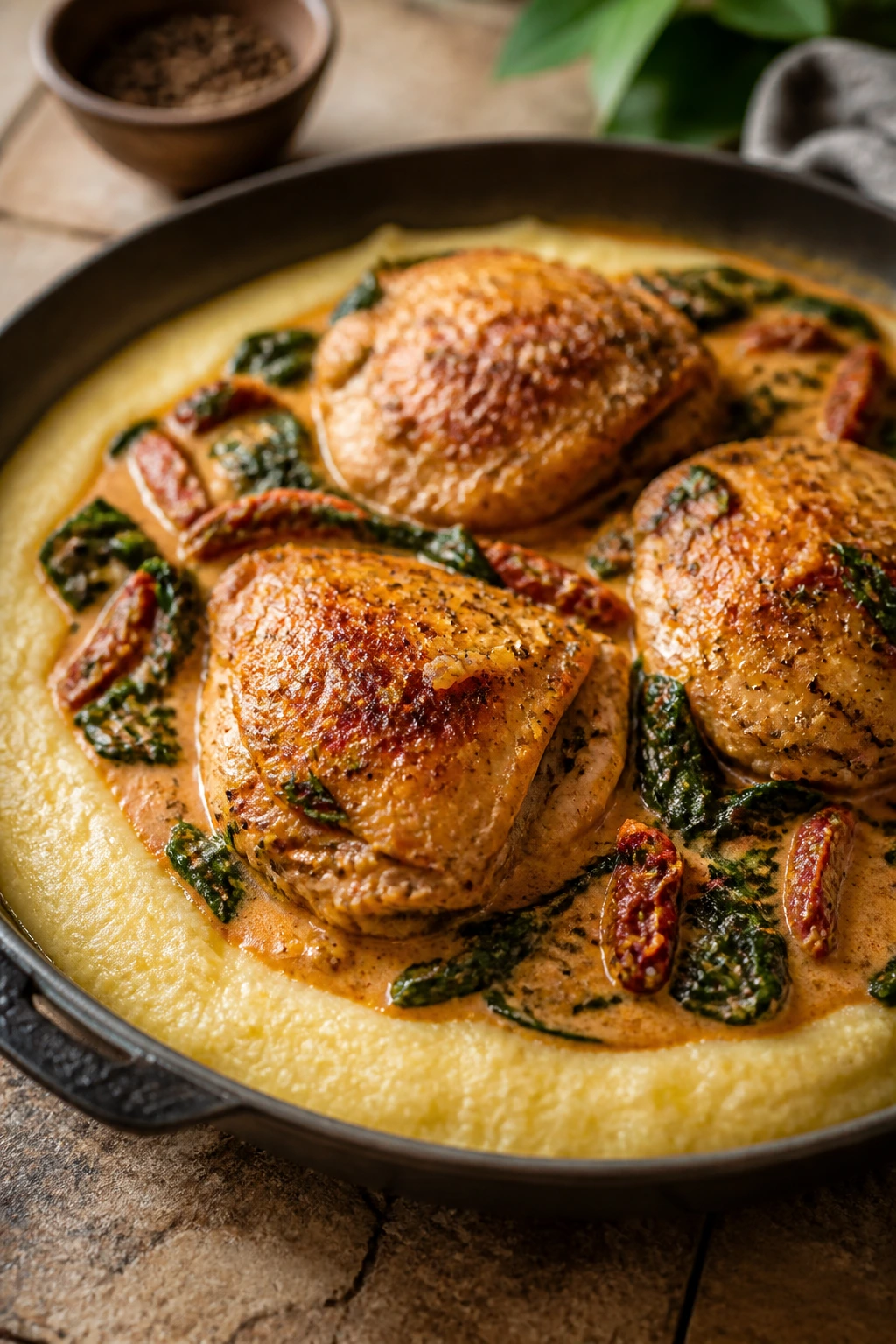
If you want one plate that feels like a wooden table in a stone kitchen, start here. Polenta gives the chicken a soft landing, and the tomato-cream sauce carries sun-dried tomatoes and spinach without getting crowded.
Why It Works: Creamy polenta behaves like a spoonable base that soaks up the sauce instead of fighting it. The chicken stays juicy, and the sauce can be rich because the polenta keeps the whole thing grounded.
Key Ingredients:
- 2 lbs chicken thighs — best for a saucy skillet.
- 1 cup polenta — the base under the chicken.
- 4 cups water or chicken broth — for cooking the polenta.
- 1 cup milk — makes the polenta creamy.
- 1 can crushed tomatoes, 14 oz — the sauce starter.
- 1/2 cup heavy cream — rounds out the sauce.
- 2 cups baby spinach — stirred in near the end.
- 1/2 cup sun-dried tomatoes, chopped — adds chew and sweetness.
- 1/2 cup grated Parmesan — for the polenta and the sauce.
Quick Steps:
- Start the polenta by whisking it into simmering water or broth, then cook until thick and smooth.
- Brown the chicken thighs in a skillet and remove them.
- Simmer the crushed tomatoes, cream, and sun-dried tomatoes in the same pan.
- Stir in the spinach and Parmesan, then return the chicken to warm through.
- Spoon the chicken and sauce over the polenta.
Equipment for This Recipe:
- Medium saucepan — for the polenta.
- Large skillet — for the chicken and sauce.
- Whisk — prevents lumps in the polenta.
- Wooden spoon — useful for the sauce.
How to Serve This Dish: Serve it in shallow bowls with a generous spoon of sauce over the polenta. The polenta should be soft enough to spread, not slice.
Pro Tips for This Recipe:
- Stir polenta often. It sticks if ignored.
- Salt the polenta well. Unsalted polenta tastes flat under a rich sauce.
- Finish with a little extra olive oil. It gives the bowl a cleaner sheen than more cream.
Variations on This Dish:
- Cheesy Polenta Version: stir in more Parmesan or a little fontina.
- Mushroom Tuscan Bowl: add sliced mushrooms with the chicken.
- Vegetable-Heavy Version: fold in zucchini or roasted red peppers.
Common Mistakes to Avoid with This Dish:
- Serving stiff polenta: it should be soft enough to catch sauce.
- Letting the tomato sauce boil hard after the cream goes in: it can split.
- Under-seasoning the base: polenta needs salt more than people expect.
15. Chicken Scaloppine with Lemon and Sage
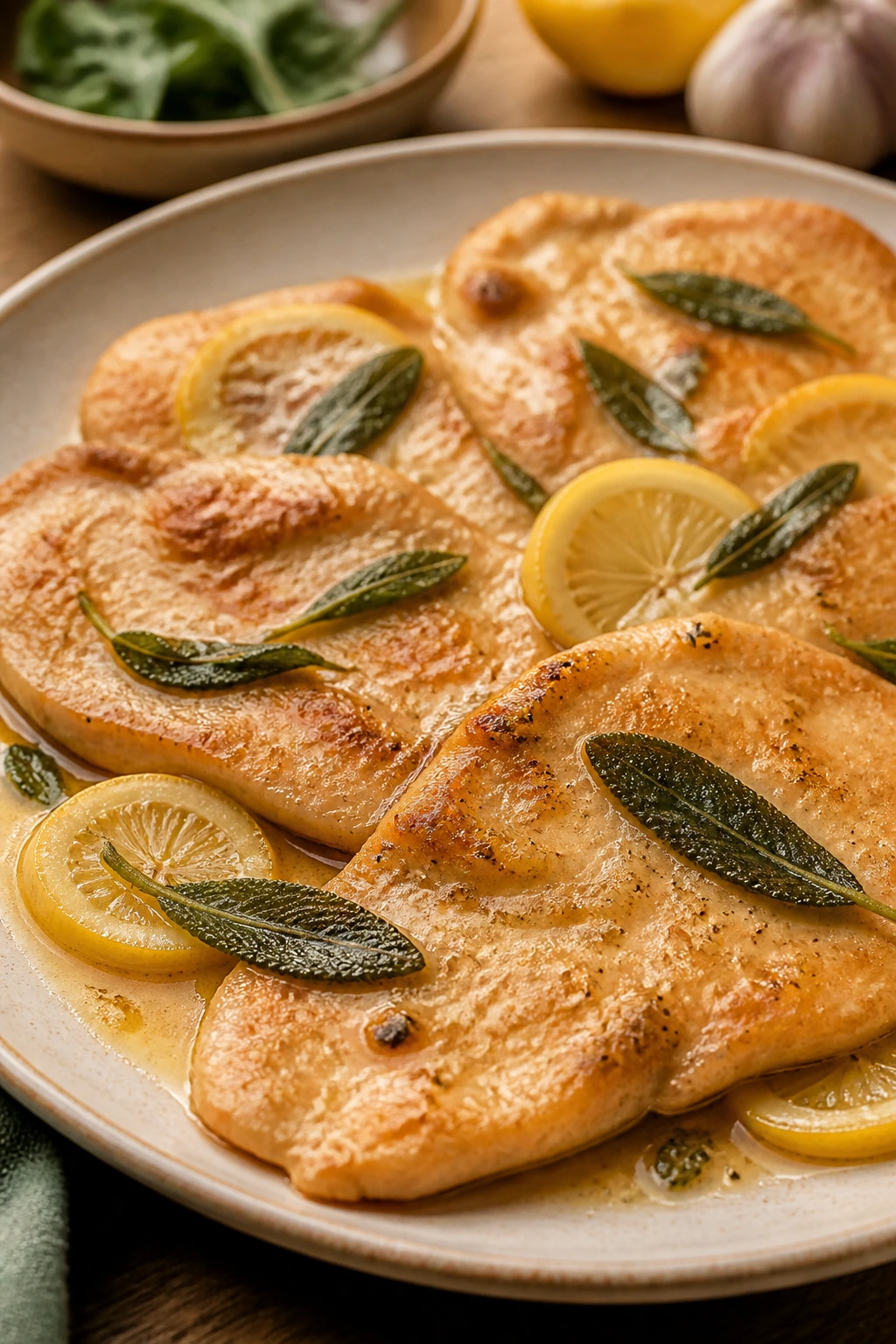
Scaloppine is quick, sharp, and almost elegant in the plainest way. Thin chicken, butter, lemon, sage. That is enough when the pan is hot and the seasoning is honest.
Why It Works: Thin cutlets cook in minutes and catch sauce instantly, so the lemon-butter never has time to get boring. Sage brings a warm herbal note that feels very Tuscan without needing a long simmer.
Key Ingredients:
- 1 1/2 lbs chicken cutlets — the thinner, the better.
- 1/3 cup flour — for a light coating.
- 8 sage leaves — the key flavor.
- 2 tbsp olive oil — for browning.
- 3 tbsp butter — for the sauce.
- 1/2 cup dry white wine — deglazes the pan.
- 1 lemon, juiced — the bright finish.
- 1/2 cup chicken broth — softens the sauce.
Quick Steps:
- Dredge the cutlets lightly in flour and season them.
- Brown the chicken in olive oil and 1 tbsp butter for 2 minutes per side.
- Remove the chicken, add the wine and broth, and scrape up the bits.
- Add sage and simmer for 2 minutes, then whisk in the remaining butter and lemon juice.
- Return the chicken to the pan for 1 minute.
Equipment for This Recipe:
- Large skillet — wide enough for quick browning.
- Tongs — prevents tearing the cutlets.
- Citrus juicer — helpful with a hot pan.
- Small whisk — smooths out the butter sauce.
How to Serve This Dish: Serve it with asparagus, roasted potatoes, or a simple arugula salad. I like the sage leaves left whole in the pan so they look like they mean business.
Pro Tips for This Recipe:
- Use medium-high heat, not screaming heat. Butter burns fast.
- Slice thick breasts into cutlets. Even thickness matters more than size.
- Finish with the lemon off the heat. It stays brighter.
Variations on This Dish:
- Capers and Sage: add a spoonful of capers to the sauce.
- Garlic Butter Scaloppine: cook one minced garlic clove in the pan for 20 seconds.
- Veal-Style Chicken: keep the coating very light for a more delicate crust.
Common Mistakes to Avoid with This Dish:
- Crowding the pan: the cutlets steam instead of browning.
- Burning the butter: it tastes bitter and throws off the whole sauce.
- Adding too much flour: the sauce can turn pasty.
16. Chicken with Roasted Grapes and Rosemary
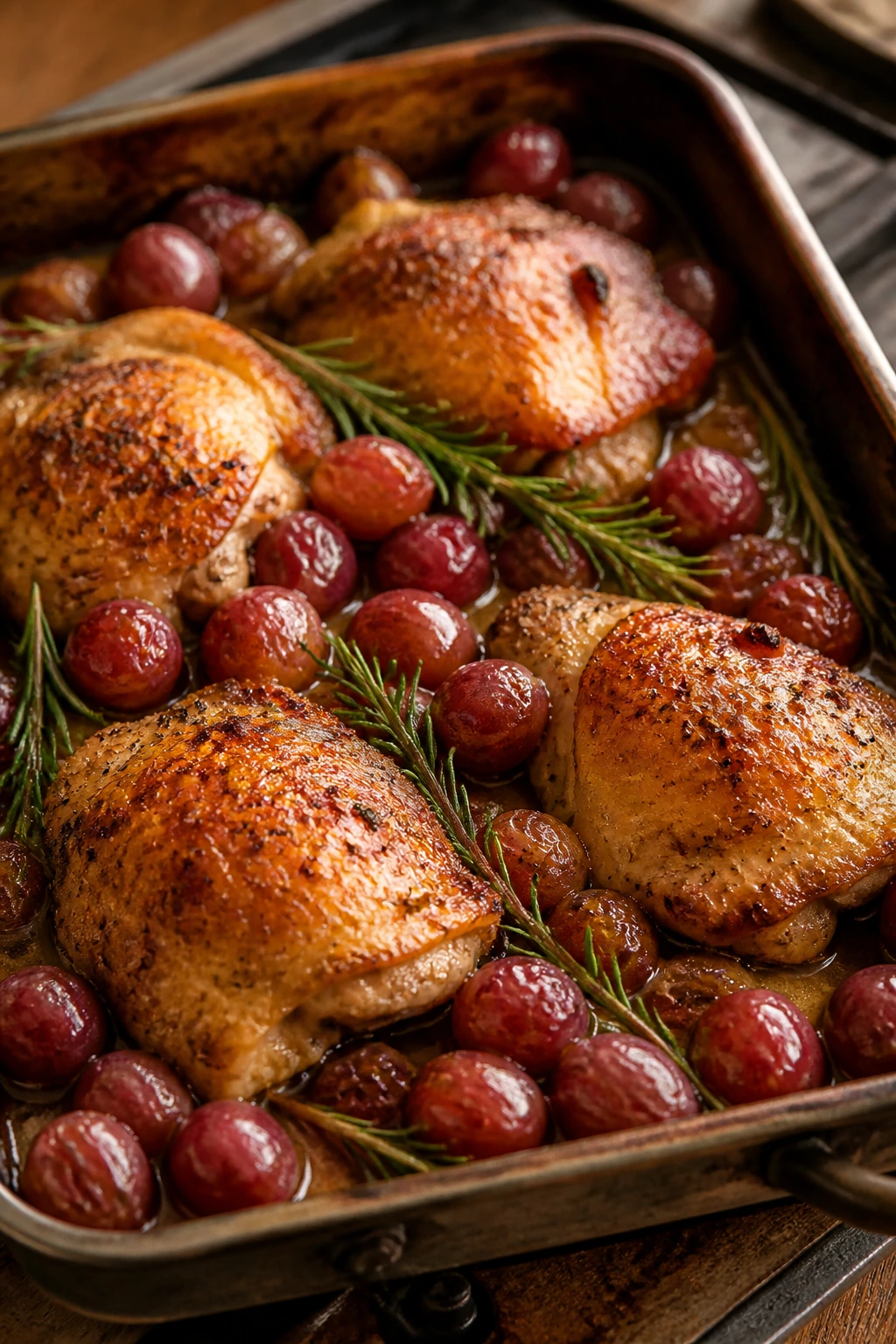
Roasted grapes sound odd until you try them with chicken. They collapse into sweet little bursts, and rosemary keeps the dish from wandering into dessert territory.
Why It Works: Chicken thighs handle the sweetness and long roast better than lean cuts, while the grapes break down into a pan sauce with barely any effort. A splash of white wine or vinegar gives the roast a clean edge.
Key Ingredients:
- 2 lbs chicken thighs — sturdy enough for roasting.
- 2 cups seedless red grapes — roast into jammy pockets.
- 1 shallot, sliced — mild and sweet.
- 2 rosemary sprigs — holds the Tuscan note.
- 3 tbsp olive oil — helps everything brown.
- 1/2 cup dry white wine — keeps the pan juices loose.
- 1 tbsp red wine vinegar — sharpens the sweet fruit.
- Salt and black pepper — season generously.
Quick Steps:
- Heat the oven to 425°F (220°C).
- Toss the grapes, shallot, and rosemary with olive oil in a roasting pan.
- Nestle the chicken thighs on top and season well.
- Roast for 35 to 40 minutes, then splash in the wine and vinegar for the last 5 minutes.
- Rest before serving so the grape juices settle.
Equipment for This Recipe:
- Roasting pan — shallow enough for browning.
- Tongs — for moving the hot chicken.
- Instant-read thermometer — especially useful with thighs.
- Spoon — for collecting the grape juices.
How to Serve This Dish: Serve with farro, roasted potatoes, or a slice of toasted bread under the chicken. The grapes make the plate look special without requiring any garnish tricks.
Pro Tips for This Recipe:
- Choose firm grapes. Overripe ones can disappear too fast.
- Let the grapes stay whole at first. They burst naturally in the oven.
- Use vinegar sparingly. Too much can overpower the fruit.
Variations on This Dish:
- Orange-Grape Version: add orange zest for more brightness.
- Olive and Grape Roast: toss in olives if you want a saltier edge.
- Chicken with Grapes and Thyme: thyme softens the rosemary’s piney note.
Common Mistakes to Avoid with This Dish:
- Using large red grapes without cutting them if they’re thick-skinned: they may need a quick split.
- Too much vinegar: the fruit flavor disappears.
- Skipping the rest: the pan juices need a minute to thicken a little.
17. Chicken Puttanesca Skillet
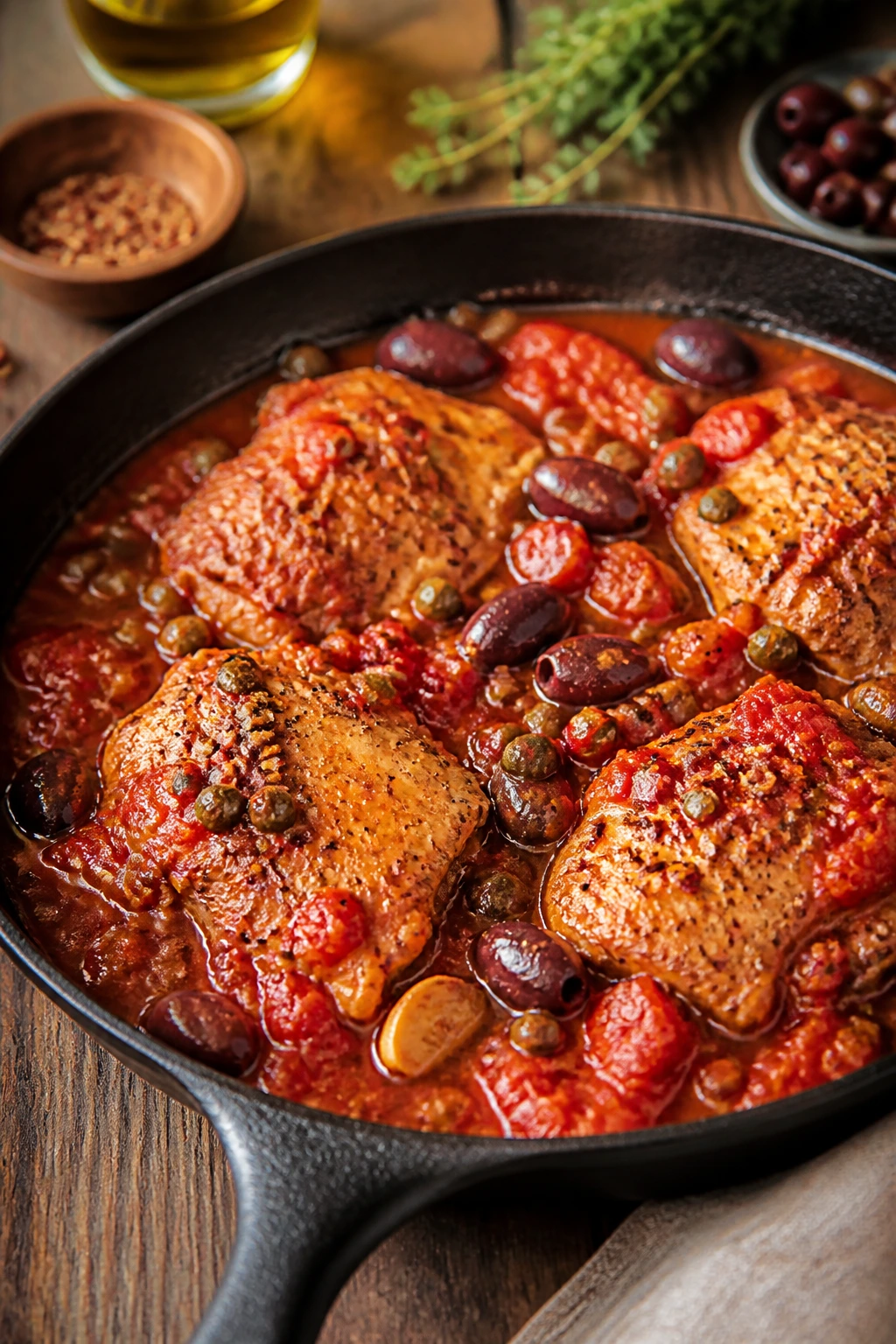
Puttanesca is aggressive in a good way. Tomatoes, olives, capers, garlic, and chili flakes come in loud, and chicken is happy to stand in the middle of that storm.
Why It Works: The sauce carries enough salt and acid to wake up chicken thighs without any cream or butter. Anchovy is optional, but even a small amount deepens the sauce in a way that tastes more like a long simmer than a shortcut.
Key Ingredients:
- 1 1/2 lbs chicken thighs — best with bold sauce.
- 1 can crushed tomatoes, 28 oz — the base.
- 1/2 cup pitted olives — black or green, your choice.
- 2 tbsp capers — bring the briny bite.
- 2 garlic cloves, minced — the usual start.
- 1/2 tsp red pepper flakes — just enough heat.
- 1/4 cup dry white wine — loosens the sauce.
- 2 tbsp olive oil — for the pan.
- Parsley for finishing — keeps it fresh.
Quick Steps:
- Brown the chicken thighs in olive oil and remove them.
- Cook the garlic and red pepper flakes for 30 seconds.
- Add the wine, tomatoes, olives, and capers, then simmer 10 minutes.
- Return the chicken and cook covered for 20 minutes, until tender.
- Finish with parsley and a final drizzle of olive oil.
Equipment for This Recipe:
- Deep skillet or Dutch oven — the sauce needs depth.
- Wooden spoon — for stirring the olives and capers evenly.
- Tongs — for handling the chicken.
- Ladle — handy if you serve this over pasta.
How to Serve This Dish: This wants spaghetti, linguine, or a thick slice of bread. The sauce should be bold enough that you notice the capers first and the chicken second.
Pro Tips for This Recipe:
- Use a low simmer after the tomatoes go in. Hard boiling makes the sauce harsh.
- Rinse capers if they’re very salty. Some jars are stronger than others.
- Add olives near the end if you like them firmer. They keep their shape better.
Variations on This Dish:
- Anchovy Boost: melt 1 anchovy fillet with the garlic for more depth.
- Green Puttanesca: use green olives and a little chopped parsley only.
- Pasta Bowl Version: toss the sauce with spaghetti instead of serving it beside it.
Common Mistakes to Avoid with This Dish:
- Over-salting too early: capers and olives bring plenty.
- Letting the garlic brown too far: it turns bitter fast.
- Using too much chili: the sauce should bite, not scorch.
18. Chicken with Spinach and Cannellini Bake
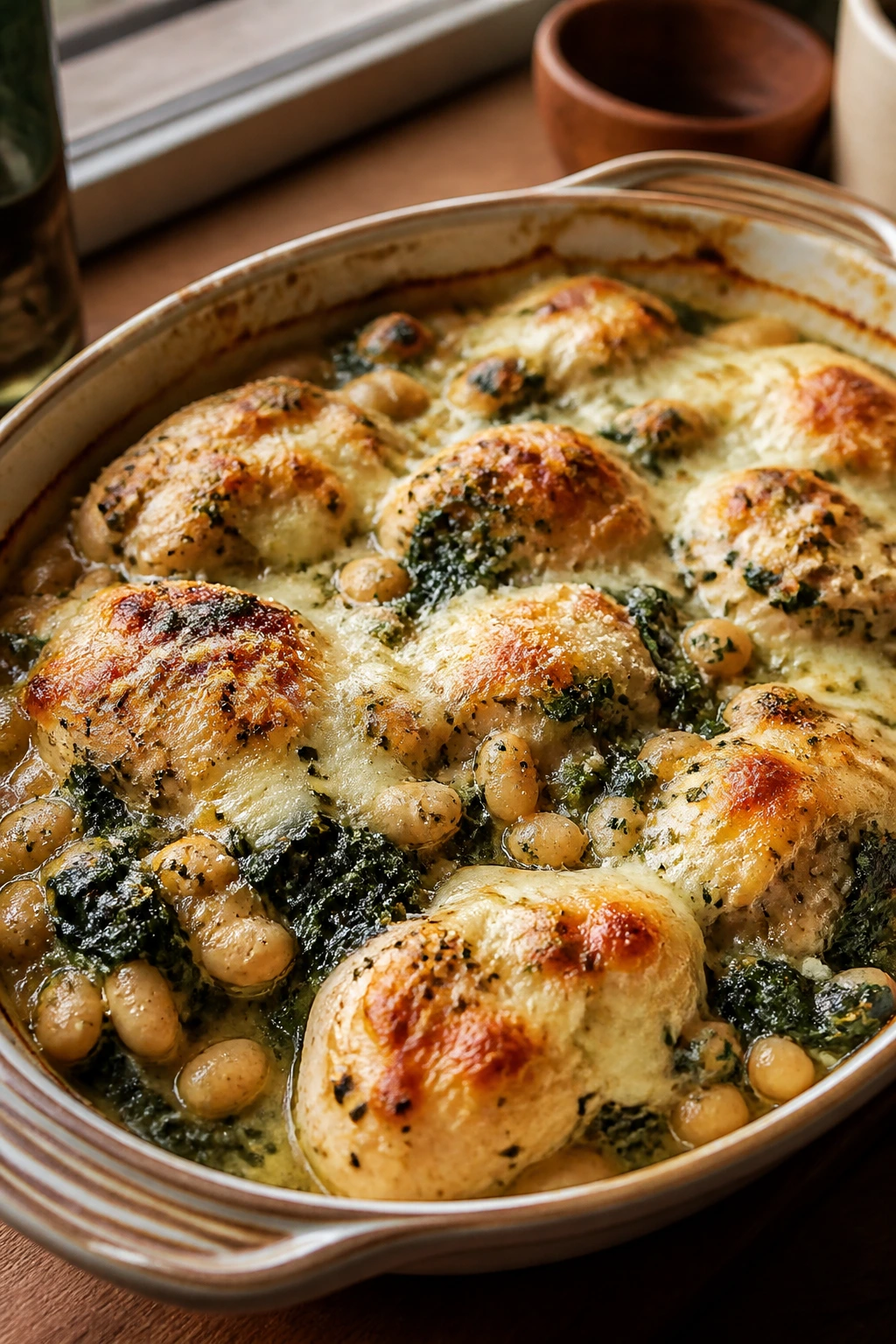
This is the casserole you make when you want the oven to do the awkward work. Beans, spinach, chicken, and a little cheese come together into something that lands between cozy and practical.
Why It Works: Cannellini beans make the dish creamy without heavy sauce, and spinach melts into the gaps between the chicken and cheese. The bake is sturdy enough for leftovers, which is more useful than people admit.
Key Ingredients:
- 2 lbs boneless chicken breasts or thighs — cut into large chunks.
- 2 cans cannellini beans, drained and rinsed — the creamy base.
- 5 oz baby spinach — wilts fast.
- 1 onion, chopped — starts the filling.
- 3 garlic cloves, minced — keeps it savory.
- 1 cup chicken broth — helps the bake stay moist.
- 1 cup shredded mozzarella — melts on top.
- 1/2 cup grated Parmesan — sharpens the flavor.
- 1 tbsp olive oil — for the skillet.
Quick Steps:
- Sauté the onion and garlic in olive oil until soft.
- Stir in the beans and broth, then fold in the spinach until wilted.
- Nestle the chicken into a baking dish and pour the bean mixture around it.
- Top with mozzarella and Parmesan.
- Bake at 400°F (205°C) for 25 to 30 minutes, until the chicken is done and the top is browned.
Equipment for This Recipe:
- Skillet — for the onion and garlic.
- 9×13-inch baking dish — holds the bake comfortably.
- Spoon — for spreading the beans.
- Foil — useful if the cheese browns too quickly.
How to Serve This Dish: Serve it with bread, rice, or a simple tomato salad. The casserole is filling enough that you do not need much else.
Pro Tips for This Recipe:
- Dry the beans after rinsing. Too much moisture thins the bake.
- Cut chicken evenly. Big and small pieces finish at different times.
- Let it sit 5 minutes before serving. The beans settle and thicken.
Variations on This Dish:
- Tomato Bake: stir in a cup of marinara for a redder dish.
- Lemony Bean Bake: add lemon zest to brighten the beans.
- Greens Swap: use chopped kale instead of spinach if you want more texture.
Common Mistakes to Avoid with This Dish:
- Using too much broth: the bake can turn soupy.
- Overbaking the cheese: it should brown lightly, not dry out.
- Skipping the seasoning in the bean layer: beans need salt more than most people think.
19. Chicken Cacciatore Bianco
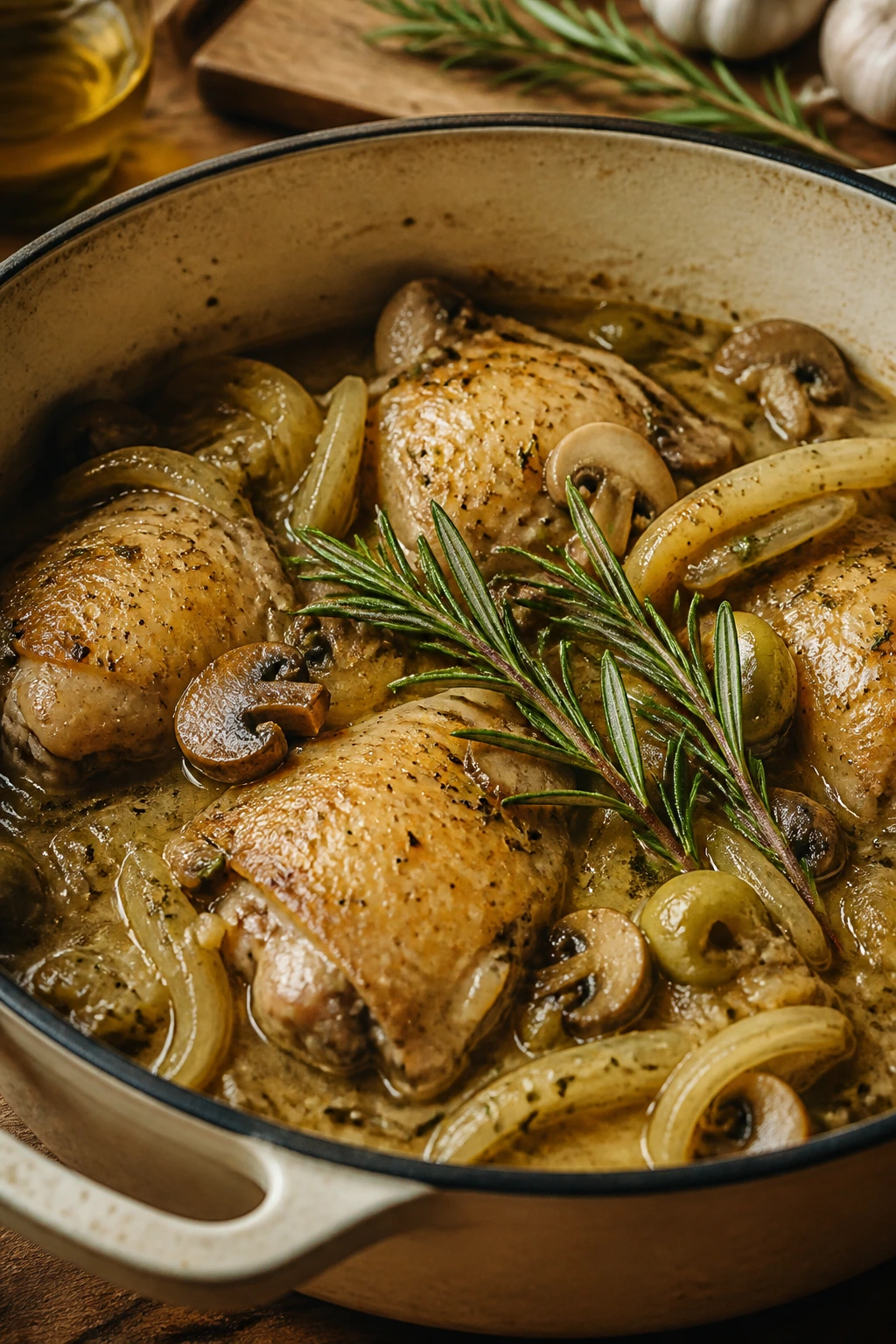
White cacciatore feels like the quieter cousin of the tomato version, and I like that about it. You still get the comfort of braised chicken, but fennel, mushrooms, and white wine keep the pot lighter and more aromatic.
Why It Works: Without tomatoes, the wine and broth have to carry the sauce, so the vegetables matter more. Fennel adds sweetness, mushrooms bring depth, and rosemary ties the whole thing to the Tuscan pantry.
Key Ingredients:
- 2 lbs bone-in chicken thighs — ideal for braising.
- 1 fennel bulb, sliced — sweetens as it cooks.
- 8 oz mushrooms, sliced — add earthiness.
- 1 onion, sliced — base flavor.
- 3 garlic cloves, minced — always.
- 1 cup dry white wine — the main liquid.
- 1 cup chicken broth — balances the wine.
- 1 tsp chopped rosemary — the herb note.
- 1/2 cup pitted olives — optional, but useful.
Quick Steps:
- Brown the chicken thighs and set them aside.
- Cook the onion, fennel, and mushrooms until softened.
- Add the garlic and rosemary, then pour in the wine and broth.
- Return the chicken, cover, and simmer for 30 minutes.
- Add olives near the end if using, and serve once the sauce has tightened slightly.
Equipment for This Recipe:
- Dutch oven — best for an even braise.
- Lid — keeps the steam in.
- Wooden spoon — for the vegetable base.
- Tongs — for turning the chicken.
How to Serve This Dish: Serve it with polenta, crusty bread, or buttered noodles. The sauce should feel pale, glossy, and full of the smell of fennel.
Pro Tips for This Recipe:
- Let the fennel get a little color. It tastes better that way.
- Choose dry white wine. Sweet wine makes the sauce vague.
- Keep the simmer low. White braises can get muddy if boiled hard.
Variations on This Dish:
- Lemon White Cacciatore: finish with lemon zest for brightness.
- Artichoke White Cacciatore: add artichokes for a more Mediterranean feel.
- Cream Touch: stir in 2 tbsp cream at the end if you want a softer sauce.
Common Mistakes to Avoid with This Dish:
- Forgetting to brown the vegetables: the sauce loses depth.
- Using too much rosemary: it can take over fast.
- Boiling away all the liquid: the chicken should braise, not dry out.
20. Ricotta and Herb Stuffed Chicken Breasts
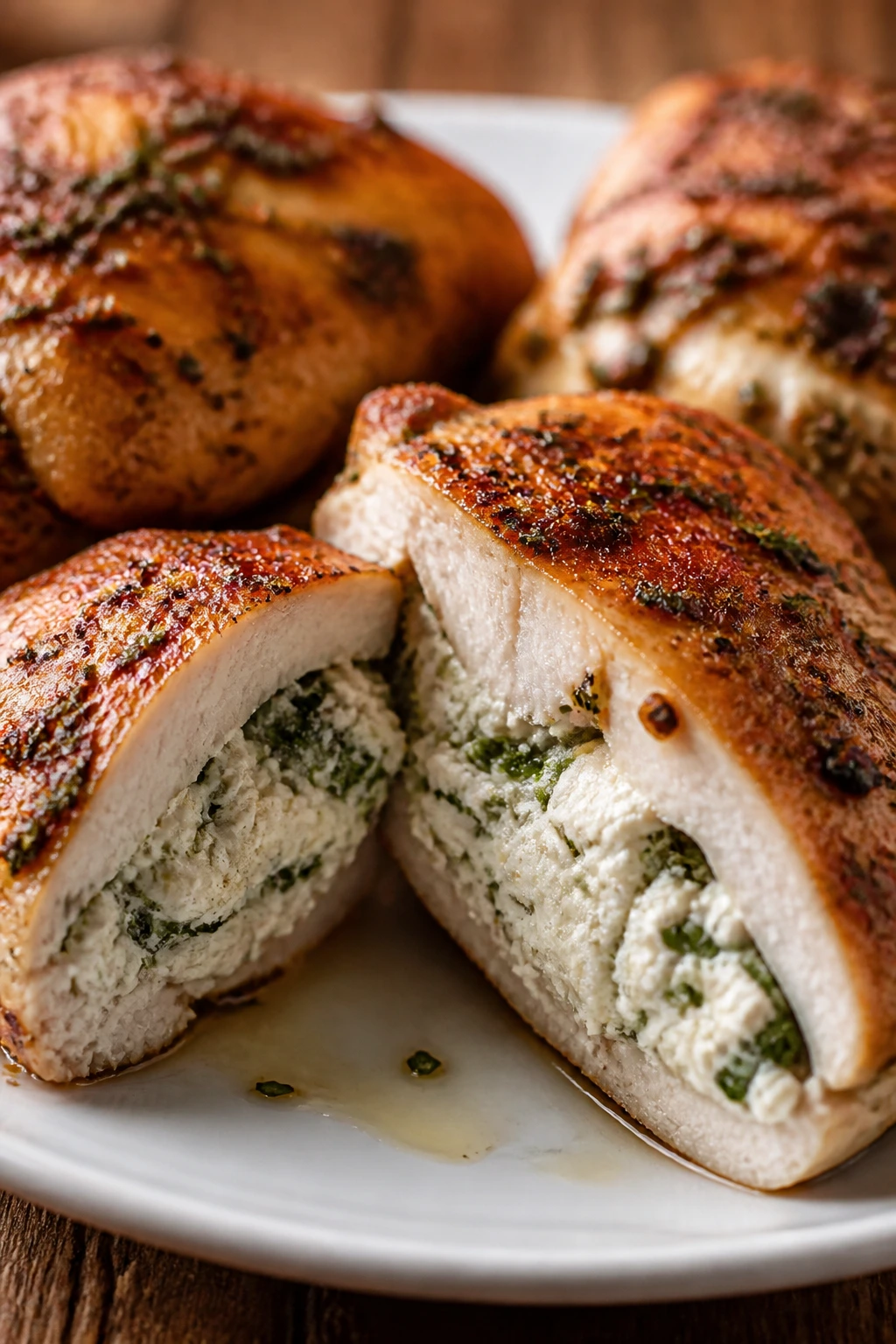
Stuffed chicken breasts are only worth doing when the filling tastes like something you’d want on its own. Ricotta, herbs, and Parmesan do that work here, and the result is soft in the middle with a tidy browned crust outside.
Why It Works: Ricotta stays creamy without leaking too much, and the herbs keep the filling from tasting milky. Searing the chicken before baking gives you color, while the oven finishes the center gently.
Key Ingredients:
- 2 lbs chicken breasts — butterflied for stuffing.
- 1 cup ricotta — the creamy filling base.
- 1/2 cup grated Parmesan — salt and sharpness.
- 1/4 cup chopped parsley — freshness.
- 1/4 cup chopped basil — sweet herbal note.
- 1 egg — holds the filling together.
- 1/2 cup breadcrumbs — helps the stuffing set.
- 1 lemon, zested — brightens the filling.
- 2 tbsp olive oil — for searing.
Quick Steps:
- Mix ricotta, Parmesan, herbs, egg, breadcrumbs, and lemon zest.
- Butterfly the chicken breasts and spoon the filling inside.
- Secure the openings with toothpicks if needed.
- Sear the stuffed breasts in olive oil for 2 minutes per side, then bake at 375°F (190°C) for 18 to 22 minutes.
- Rest before slicing so the filling stays put.
Equipment for This Recipe:
- Sharp knife — for butterflying the breasts.
- Toothpicks — useful if the filling tries to escape.
- Oven-safe skillet — lets you sear and bake in one pan.
- Mixing bowl — for the filling.
How to Serve This Dish: Serve it with roasted vegetables, a green salad, or a spoonful of tomato sauce. Slicing it at the table shows off the filling, which is half the point.
Pro Tips for This Recipe:
- Do not overfill. Too much ricotta leaks out.
- Seal the edges well. A little toothpick work saves a lot of mess.
- Use room-temperature filling. It cooks more evenly.
Variations on This Dish:
- Spinach Ricotta Version: fold in chopped cooked spinach after squeezing it dry.
- Mozzarella Center: tuck in a thin strip of mozzarella for a softer middle.
- Herb Swap: use oregano and thyme if basil isn’t around.
Common Mistakes to Avoid with This Dish:
- Cutting too deep when butterflying: the filling escapes.
- Skipping the rest after baking: the filling loosens if sliced too soon.
- Overbaking the breasts: they dry out fast, so watch the thermometer.
21. Grilled Chicken with Salsa Verde
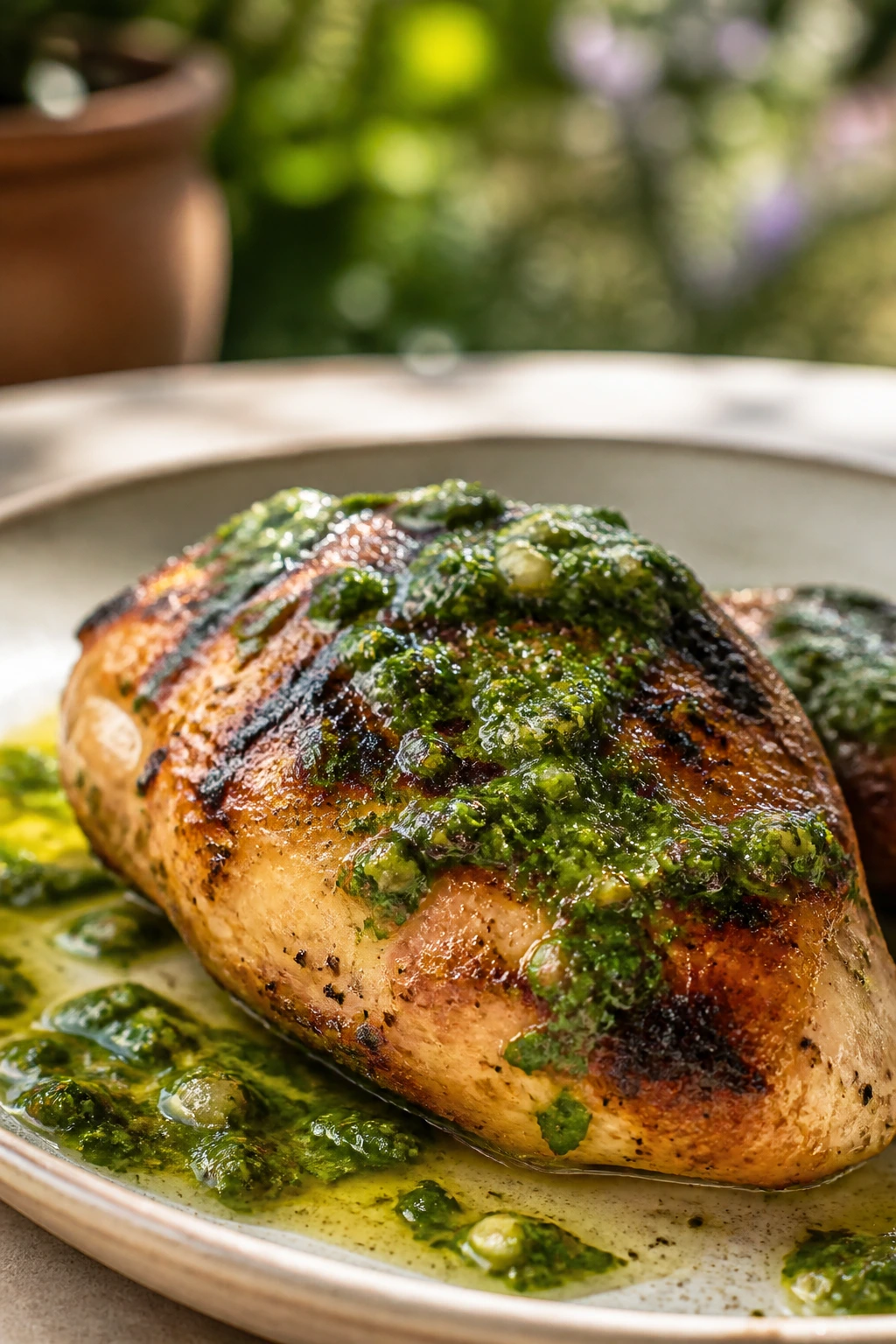
Salsa verde gives grilled chicken a bright green punch that tastes sharper than a simple marinade ever could. This is the dish I want when I’m tired of heavy sauces but still want something with real personality.
Why It Works: The herb sauce is packed with parsley, capers, lemon, and olive oil, so it cuts through the char on the chicken. Grilling keeps the meat smoky and clean, which makes the salsa pop even more.
Key Ingredients:
- 1 1/2 lbs chicken thighs or breasts — thighs are juicier, breasts grill faster.
- 1 bunch parsley — the base of the sauce.
- 1 garlic clove — raw and punchy.
- 1/4 cup capers — briny backbone.
- 1 anchovy fillet or 1 tsp anchovy paste — optional, but worthwhile.
- 1 lemon, juiced — brightens the sauce.
- 1/2 cup olive oil — carries the herbs.
- Salt and black pepper — on the chicken and the sauce.
Quick Steps:
- Blend or finely chop the salsa verde ingredients until spoonable.
- Season the chicken and grill over medium-high heat until cooked through.
- Let the chicken rest for 5 minutes.
- Spoon the salsa verde over the top or serve it on the side.
- Add an extra squeeze of lemon if the sauce tastes flat.
Equipment for This Recipe:
- Grill or grill pan — either works.
- Blender or food processor — optional if you want a smoother sauce.
- Tongs — for turning the chicken.
- Small bowl — for holding the salsa.
How to Serve This Dish: Serve it with grilled bread, potatoes, or a bean salad. The chicken should stay visible under the green sauce, not disappear into it.
Pro Tips for This Recipe:
- Do not overblend the salsa if you want texture. A little roughness is good.
- Oil the grill lightly. Chicken skin or cutlets stick fast.
- Rest the meat before saucing. The juices stay in the chicken, not the plate.
Variations on This Dish:
- Mint Salsa Verde: add a little mint for a cooler finish.
- Spicy Salsa Verde: blend in a small green chili.
- Roasted Garlic Version: roast the garlic first if you want the sauce softer.
Common Mistakes to Avoid with This Dish:
- Saucing too early: the herbs can darken and lose their punch.
- Using too little salt in the salsa: it tastes dull without it.
- Overcooking lean breasts on the grill: they dry out fast.
22. Chicken and Farro Soup
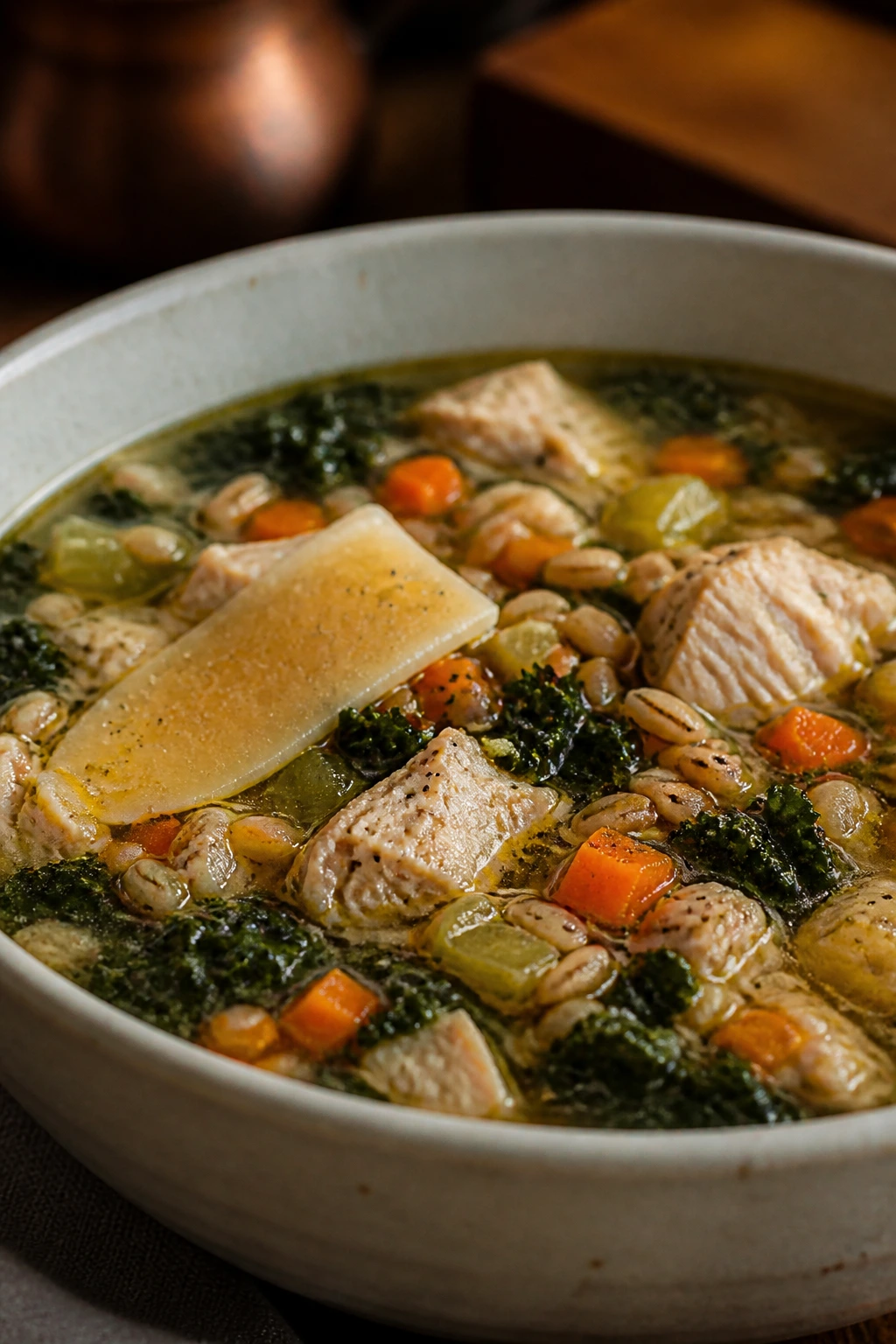
Farro soup is the kind of bowl that feels like it has a memory in it. The grain stays pleasantly chewy, the broth carries chicken and vegetables, and the Parmesan rind makes the whole pot taste older than it is.
Why It Works: Farro adds body and texture without turning the soup mushy, and chicken thighs stay tender through the simmer. A Parmesan rind in the pot adds a savory depth that plain broth does not have.
Key Ingredients:
- 1 1/2 lbs chicken thighs — ideal for shredding after simmering.
- 1 cup farro — chewy and nutty.
- 1 onion, diced — starts the broth.
- 2 carrots, diced — basic but necessary.
- 2 celery stalks, diced — rounds out the base.
- 6 cups chicken broth — enough for a proper soup.
- 1 can diced tomatoes, 14 oz — gives the broth some color.
- 1 Parmesan rind — optional, but excellent.
- 2 cups chopped kale — added at the end.
Quick Steps:
- Sauté the onion, carrots, and celery until soft.
- Add the broth, tomatoes, farro, Parmesan rind, and chicken thighs.
- Simmer gently for 30 minutes, until the farro is tender and the chicken cooks through.
- Remove the chicken, shred it, and return it to the pot.
- Stir in the kale for the last 5 minutes.
Equipment for This Recipe:
- Large soup pot — needs enough depth for grains and chicken.
- Ladle — for serving.
- Tongs — to lift the chicken out cleanly.
- Sharp knife — for even vegetable dice.
How to Serve This Dish: Serve it with toasted bread and a little olive oil drizzled on top. A squeeze of lemon at the table wakes up the grain and the broth.
Pro Tips for This Recipe:
- Cook the farro until tender but still chewy. Mushy farro ruins the bowl.
- Use a Parmesan rind if you have one. It’s one of the easiest ways to deepen broth.
- Add kale near the end. It should soften, not disappear.
Variations on This Dish:
- White Farro Soup: skip the tomatoes and use extra broth and herbs.
- Bean Farro Soup: add cannellini beans for a thicker bowl.
- Herb Finish: add parsley and basil right before serving.
Common Mistakes to Avoid with This Dish:
- Overcooking the farro: it can go soft if left too long.
- Adding kale too early: it turns drab and muddy.
- Forgetting to remove the rind before serving: it’s great for the pot, not the bowl.
23. Chicken with Roasted Peppers and Oregano
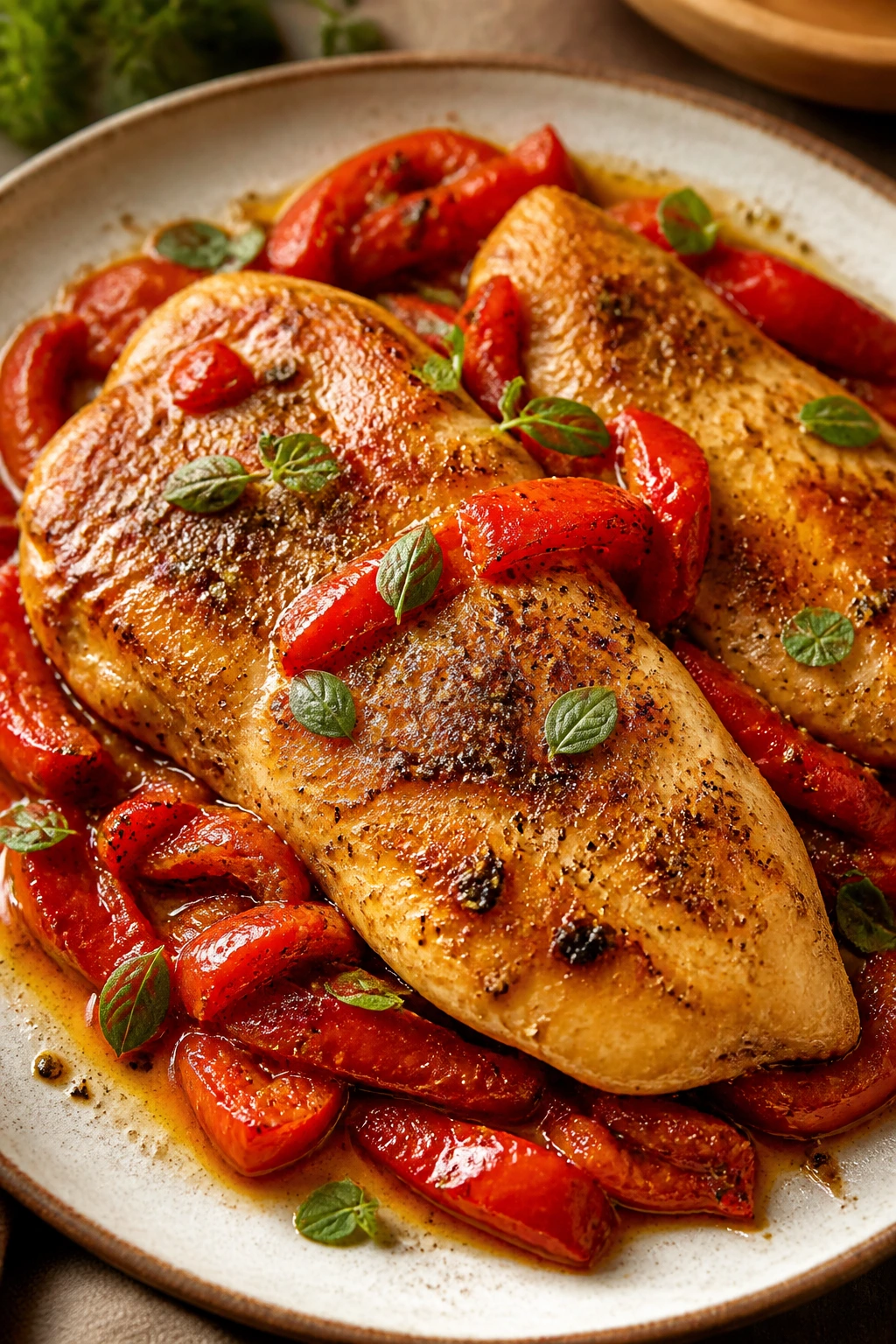
Roasted peppers bring sweetness, oregano brings that dry Mediterranean snap, and chicken holds the whole thing together. This is one of those dishes that feels sunny even when the weather isn’t.
Why It Works: Jarred roasted peppers save time without tasting cheap if you drain them well. The chicken sears first, then the peppers and oregano build a quick sauce with just enough vinegar to sharpen it.
Key Ingredients:
- 1 1/2 lbs chicken cutlets or thighs — cutlets for speed, thighs for richness.
- 1 jar roasted red peppers, drained and sliced — sweet and soft.
- 1 onion, sliced — gives the sauce body.
- 3 garlic cloves, minced — the savory anchor.
- 1 tsp dried oregano — a little goes far.
- 1/2 cup chicken broth — keeps the pan loose.
- 2 tbsp red wine vinegar — sharpens the peppers.
- 2 tbsp olive oil — for browning.
Quick Steps:
- Brown the chicken in olive oil, then remove it.
- Cook the onion until soft, add the garlic and oregano, and stir for 30 seconds.
- Add the peppers, broth, and vinegar, then simmer for 5 minutes.
- Return the chicken and cook until warmed through and tender.
- Taste and adjust salt before serving.
Equipment for This Recipe:
- Large skillet — wide enough for the peppers.
- Tongs — easy chicken handling.
- Wooden spoon — for folding the peppers through the sauce.
- Cutting board — handy for slicing the peppers if needed.
How to Serve This Dish: It’s good with rice, polenta, or a mound of crusty bread. The sauce should feel loose enough to spoon but thick enough to stay on the chicken.
Pro Tips for This Recipe:
- Drain the peppers well. Too much jar liquid makes the sauce taste flat.
- Add vinegar cautiously. It should brighten, not dominate.
- Use good oregano. Dried oregano that has lost its smell will not help much.
Variations on This Dish:
- Olive Pepper Skillet: add a handful of olives for salt and depth.
- Tomato Pepper Version: stir in a few spoonfuls of marinara for more body.
- Grilled Chicken Option: use grilled cutlets and spoon the pepper sauce over them.
Common Mistakes to Avoid with This Dish:
- Using wet peppers straight from the jar: the sauce gets watery.
- Boiling the vinegar too hard: the sharpness can turn rough.
- Skipping the final taste check: oregano and peppers need the right salt level.
24. Chicken Meatballs in Tomato Basil Sauce
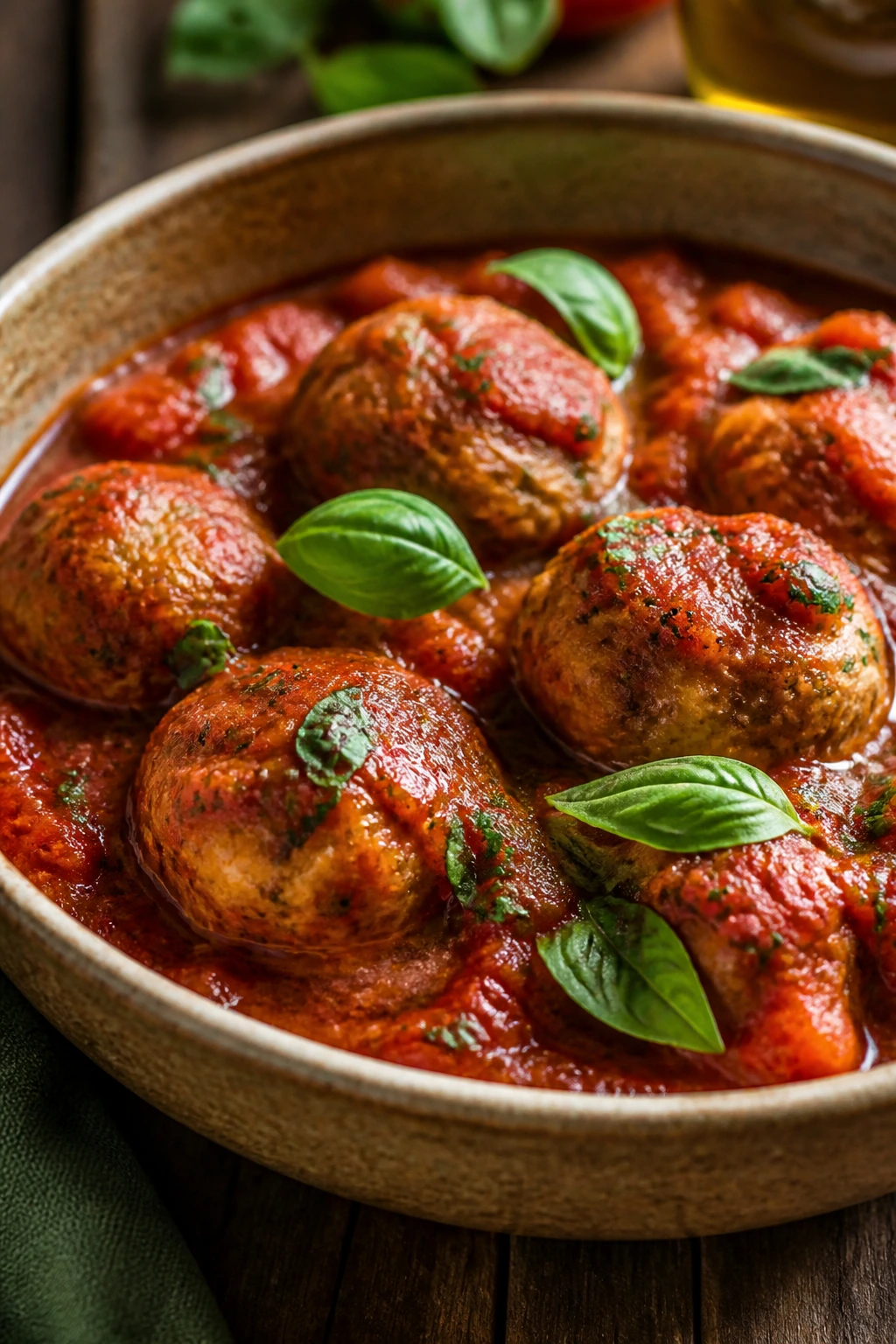
Ground chicken can be bland if you treat it badly, and excellent if you give it enough help. These meatballs stay tender because the mix includes breadcrumbs, egg, and Parmesan, and the tomato sauce gets a basil finish.
Why It Works: Ground chicken needs moisture and seasoning built in, not added as an afterthought. Baking or browning the meatballs first gives them structure before they go into the sauce.
Key Ingredients:
- 1 1/2 lbs ground chicken — the main event.
- 1/2 cup breadcrumbs — holds the meatballs together.
- 1 egg — binds the mixture.
- 1/4 cup grated Parmesan — adds salt and depth.
- 2 garlic cloves, minced — built into the meatballs.
- 1/4 cup chopped parsley — keeps the meatballs bright.
- 3 cups marinara sauce — for simmering.
- Fresh basil leaves — for the finish.
- 2 tbsp olive oil — if browning in a skillet.
Quick Steps:
- Mix the ground chicken, breadcrumbs, egg, Parmesan, garlic, and parsley gently.
- Shape into 1 1/2-inch meatballs.
- Bake at 400°F (205°C) for 12 to 15 minutes, or brown in a skillet if you want more color.
- Simmer the meatballs in warm marinara for 10 minutes.
- Finish with basil and extra Parmesan.
Equipment for This Recipe:
- Mixing bowl — for the meatball mix.
- Sheet pan or skillet — depending on your cooking method.
- Cookie scoop — optional, but useful for even meatballs.
- Saucepan — if you want to warm the marinara separately.
How to Serve This Dish: Serve with spaghetti, polenta, or toasted bread. The sauce should cling to the meatballs instead of running off them.
Pro Tips for This Recipe:
- Do not overmix. Ground chicken gets tough fast.
- Wet your hands before shaping. The meatballs roll cleaner.
- Simmer gently in the sauce. Hard boiling can break them apart.
Variations on This Dish:
- Ricotta Meatballs: add a few tablespoons of ricotta for extra tenderness.
- Herb-Rich Version: use basil and oregano together for a brighter flavor.
- Baked Parmesan Top: transfer the sauced meatballs to a dish and bake with mozzarella on top.
Common Mistakes to Avoid with This Dish:
- Packing the meatballs too tightly: they end up dense.
- Using thin sauce: it won’t coat the meatballs well.
- Skipping the sauce warm-up before adding the meatballs: cold sauce slows the whole dish down.
25. Chicken Cutlets with Arugula and Parmesan
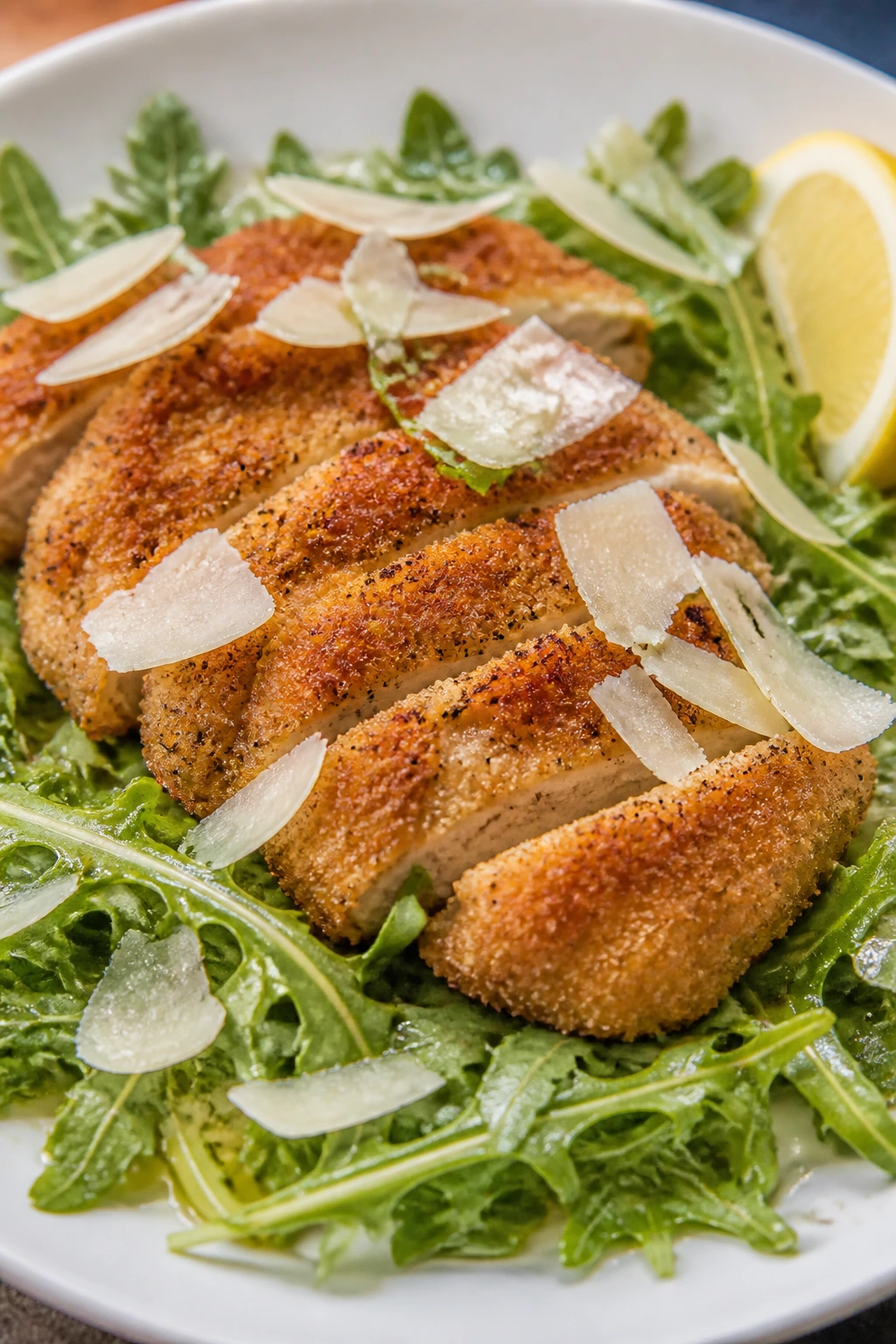
This is the kind of lunch-dinner hybrid that gets eaten fast because it looks simple and tastes sharper than expected. Crispy chicken cutlets, peppery arugula, and shaved Parmesan feel light without feeling skimpy.
Why It Works: The hot cutlets lightly wilt the arugula, while lemon and olive oil turn the salad into something that acts like a sauce. Parmesan adds salt and enough richness to make the plate feel complete.
Key Ingredients:
- 1 1/2 lbs chicken cutlets — thin and quick-cooking.
- 1/3 cup flour — light coating.
- 1 egg, beaten — for a simple breading.
- 1 cup breadcrumbs — gives the cutlets crunch.
- 4 cups arugula — peppery and fresh.
- 1/2 cup shaved Parmesan — salty finish.
- 1 lemon, juiced — for the salad dressing.
- 3 tbsp olive oil — for the pan and salad.
Quick Steps:
- Bread the chicken in flour, egg, and breadcrumbs.
- Pan-fry the cutlets in olive oil until golden on both sides.
- Toss arugula with lemon juice, olive oil, salt, and pepper.
- Top the greens with shaved Parmesan.
- Lay the cutlets over or beside the salad and serve at once.
Equipment for This Recipe:
- Skillet — for frying the cutlets.
- Shallow bowls — for the breading station.
- Salad bowl — for the arugula.
- Tongs — helps keep the crust intact.
How to Serve This Dish: Serve it as a main course with bread or as a lighter plate on its own. The salad should stay crisp under the cutlets, not drown.
Pro Tips for This Recipe:
- Season the salad well. Arugula needs salt and lemon or it tastes too raw.
- Use a hot skillet. A lukewarm pan gives you pale cutlets.
- Shave the Parmesan thin. Thick shards fight the salad.
Variations on This Dish:
- Prosciutto Arugula Plate: add a slice of prosciutto on top of each cutlet.
- Tomato Arugula Version: add cherry tomatoes for more color and sweetness.
- Lemon-Caper Cutlets: spoon a few capers into the salad dressing.
Common Mistakes to Avoid with This Dish:
- Letting the cutlets sit on paper towels too long: the crust can soften.
- Using too much dressing on the arugula: the greens wilt into mush.
- Forgetting to salt the chicken itself: the salad cannot make up for it.
26. Chicken and Lentil Stew with Rosemary
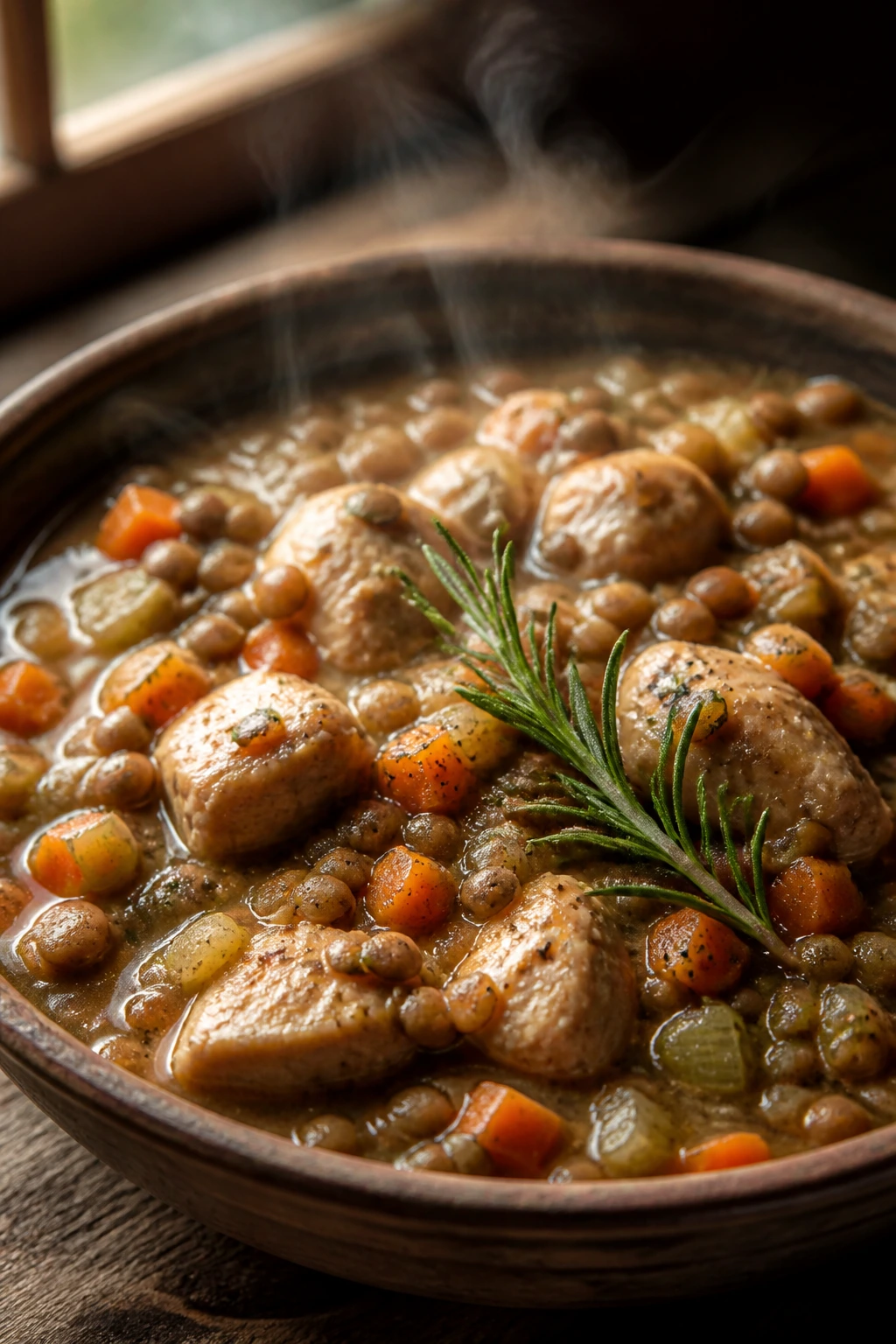
Lentils make chicken feel sturdy without making the bowl heavy. Rosemary and carrots keep the stew smelling rustic, and the broth picks up enough body that you do not miss a thickener.
Why It Works: Lentils cook in roughly the same time as the chicken if you choose brown or green ones, which means the pot can build itself in one steady simmer. Tomato paste and rosemary give the stew a savory backbone.
Key Ingredients:
- 2 lbs chicken thighs — best for a long simmer.
- 1 cup brown or green lentils — hold their shape well.
- 1 onion, diced — base of the stew.
- 2 carrots, diced — add sweetness.
- 2 celery stalks, diced — classic balance.
- 2 tbsp tomato paste — a little goes far.
- 5 cups chicken broth — enough liquid to cook the lentils.
- 1 tsp chopped rosemary — strong and piney.
- 1 bay leaf — optional, but useful.
Quick Steps:
- Brown the chicken and remove it.
- Cook the onion, carrots, and celery until soft, then stir in the tomato paste.
- Add lentils, broth, rosemary, bay leaf, and chicken.
- Simmer covered for 30 to 35 minutes, until the lentils are tender.
- Remove the chicken, shred if you want, and return it to the pot.
Equipment for This Recipe:
- Dutch oven or soup pot — the stew needs steady heat.
- Wooden spoon — for the vegetable base.
- Ladle — for serving.
- Colander — if you rinse the lentils before cooking.
How to Serve This Dish: Serve with bread and a little olive oil drizzled on top. A spoonful of parsley at the end brightens the bowl.
Pro Tips for This Recipe:
- Rinse the lentils. It clears out dust and helps with consistency.
- Add salt after the lentils start softening. Too much salt too early can slow them down.
- Use thighs, not breasts. The stew wants meat that can sit in liquid without drying out.
Variations on This Dish:
- Tomato-Lentil Stew: add canned tomatoes for a redder pot.
- Kale Lentil Stew: stir in chopped kale in the last 10 minutes.
- Smoky Version: add a pinch of smoked paprika if you want warmth without heat.
Common Mistakes to Avoid with This Dish:
- Overcooking the lentils until they split: they should stay intact.
- Using red lentils: they break down too fast for this style.
- Skipping the tomato paste browning: it tastes raw if you do.
27. Chicken with Mushrooms and Thyme in Cream
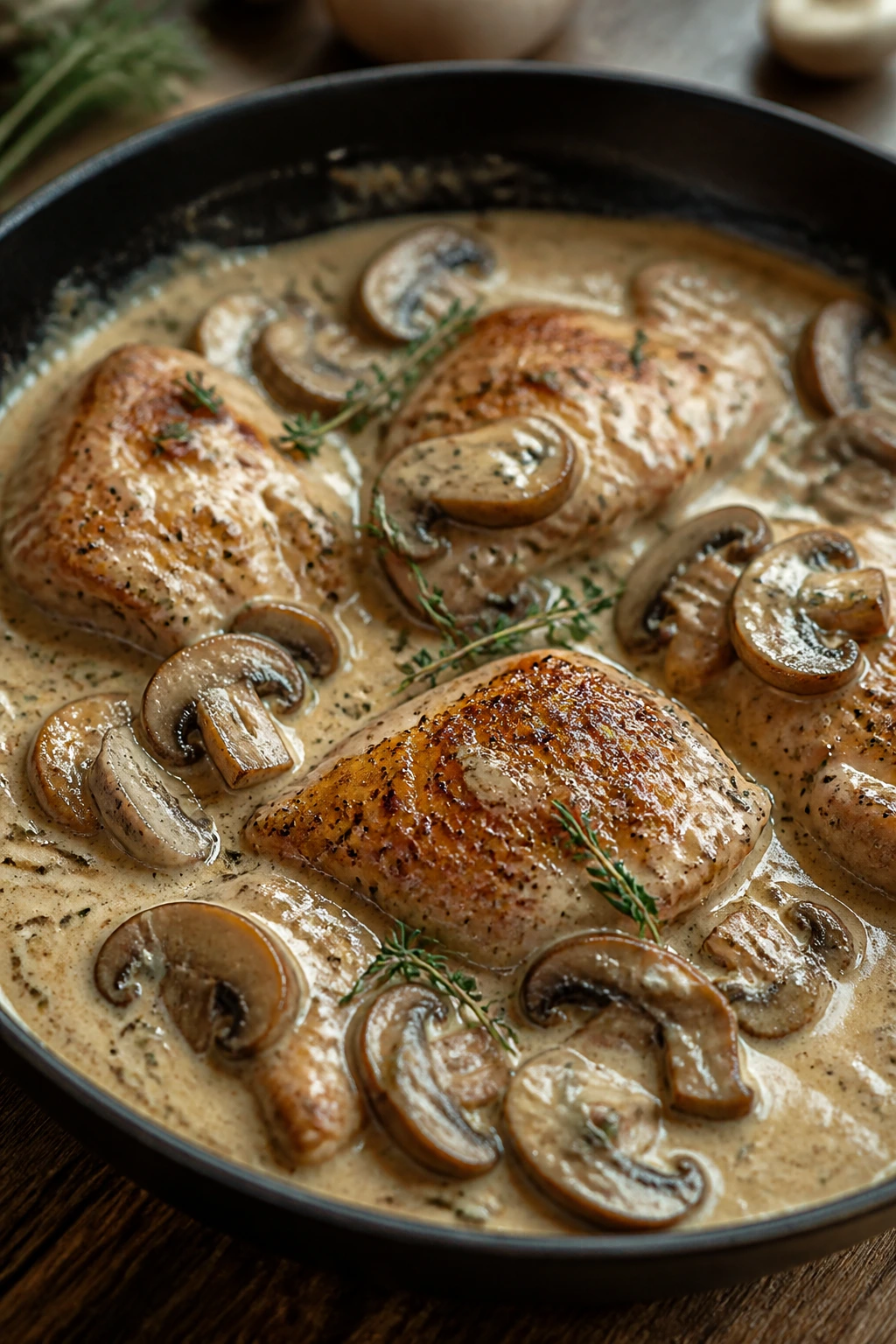
Mushrooms and thyme are the sort of pairing that can make a cream sauce taste grounded instead of flashy. The chicken soaks up the flavor, and the mushrooms give you something to chew against the softness of the sauce.
Why It Works: Mushrooms need time to release their water and brown; once they do, they taste deeper and make the sauce worth keeping. A small amount of cream is enough when the pan already has browned chicken and thyme.
Key Ingredients:
- 1 1/2 lbs chicken thighs or breasts — thighs stay juicier.
- 12 oz mushrooms, sliced — cremini or mixed.
- 1 shallot, minced — gentle sweetness.
- 1/2 cup dry white wine — deglazes the pan.
- 1 cup heavy cream — finishes the sauce.
- 1 tsp thyme leaves — classic with mushrooms.
- 1 tbsp butter — adds shine.
- 2 tbsp olive oil — for browning.
Quick Steps:
- Brown the chicken in olive oil and set it aside.
- Cook the mushrooms until they release moisture and start to color.
- Add the shallot and thyme, then pour in the wine.
- Stir in the cream and butter, then return the chicken and simmer 5 to 7 minutes.
- Serve once the sauce coats a spoon lightly.
Equipment for This Recipe:
- Large skillet — mushroom sauces need surface space.
- Wooden spoon — for stirring and scraping.
- Tongs — useful for turning the chicken.
- Measuring cup — cream tends to go overboard fast.
How to Serve This Dish: Serve it over pasta, mashed potatoes, or polenta. The sauce should look glossy, not thick like frosting.
Pro Tips for This Recipe:
- Let the mushrooms brown before adding cream. That’s where the flavor lives.
- Use medium heat once cream goes in. High heat can split it.
- Season the mushrooms well. They soak up salt and need it.
Variations on This Dish:
- Garlic Mushroom Chicken: add an extra clove or two of garlic.
- Herb Cream Version: finish with parsley and a little sage.
- Light Cream Sauce: use half cream and half broth for a thinner pan sauce.
Common Mistakes to Avoid with This Dish:
- Crowding the mushrooms: they steam instead of brown.
- Adding cream too soon: the mushrooms need color first.
- Letting the sauce boil hard: it can break and look grainy.
28. Chicken with Orange, Olives, and Fennel
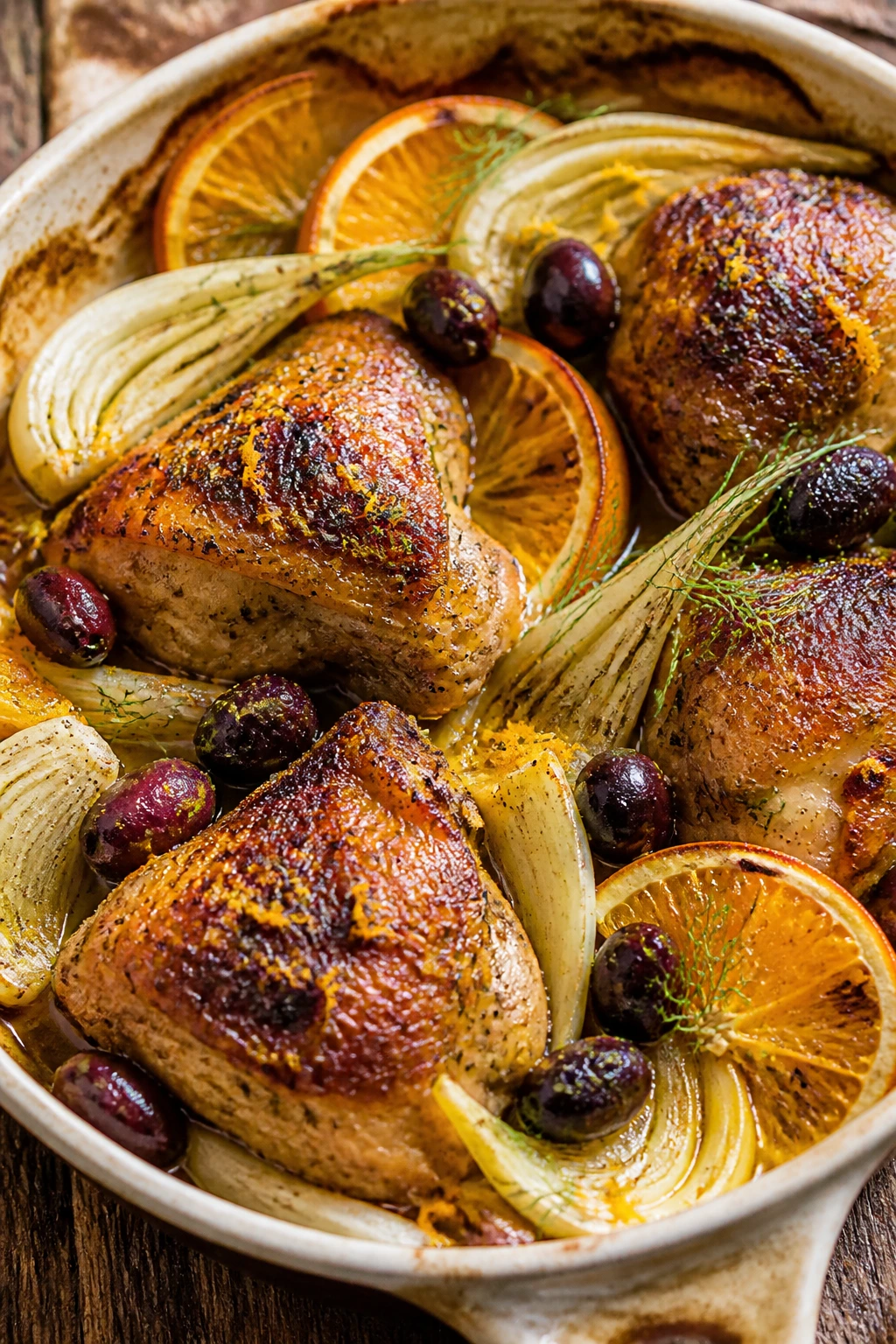
Orange and fennel are a cleaner, brighter pair than most people expect with chicken. Add olives, and the sweetness gets pulled back into savory territory where it belongs.
Why It Works: Fennel softens in the oven or skillet and gives a gentle anise note, while orange juice and zest lift the chicken without making it sweet. Olives bring the salt, and rosemary keeps the whole thing from drifting too far from Tuscany.
Key Ingredients:
- 2 lbs chicken thighs — best for this kind of roast or braise.
- 1 fennel bulb, sliced — sweetens as it cooks.
- 1 orange, zested and juiced — for brightness.
- 1/2 cup pitted olives — salty counterpoint.
- 3 garlic cloves, smashed — softens in the heat.
- 2 rosemary sprigs — herbal backbone.
- 1/2 cup dry white wine — keeps the pan moist.
- 2 tbsp olive oil — for roasting or browning.
Quick Steps:
- Toss fennel with olive oil and lay it in the pan.
- Season and add the chicken, orange zest, garlic, rosemary, and olives.
- Pour in the orange juice and wine.
- Roast at 425°F (220°C) for 35 to 40 minutes, or simmer gently if using a skillet.
- Spoon the pan juices over everything before serving.
Equipment for This Recipe:
- Roasting pan or skillet — either works.
- Microplane — useful for zest.
- Tongs — for turning the chicken.
- Citrus juicer — keeps the orange juice clean.
How to Serve This Dish: Serve with couscous, potatoes, or toasted bread. The orange should be a background note, not a sweet glaze.
Pro Tips for This Recipe:
- Use a sweet, firm orange. Very tart oranges can make the sauce harsh.
- Slice the fennel into wedges, not shavings. It needs structure.
- Add some zest at the end too. Fresh zest wakes up the pan.
Variations on This Dish:
- Lemon-Orange Mix: use half lemon, half orange for more bite.
- Tomato-Fennel Version: add cherry tomatoes if you want a fuller sauce.
- Grilled Chicken Version: grill the chicken and spoon the citrus-fennel mix over it.
Common Mistakes to Avoid with This Dish:
- Too much orange juice: it can taste sweet instead of savory.
- Slicing fennel too thin: it overcooks quickly.
- Using bitter olives without balancing them: taste first if the olives are very sharp.
29. Chicken under a Brick with Garlic and Thyme
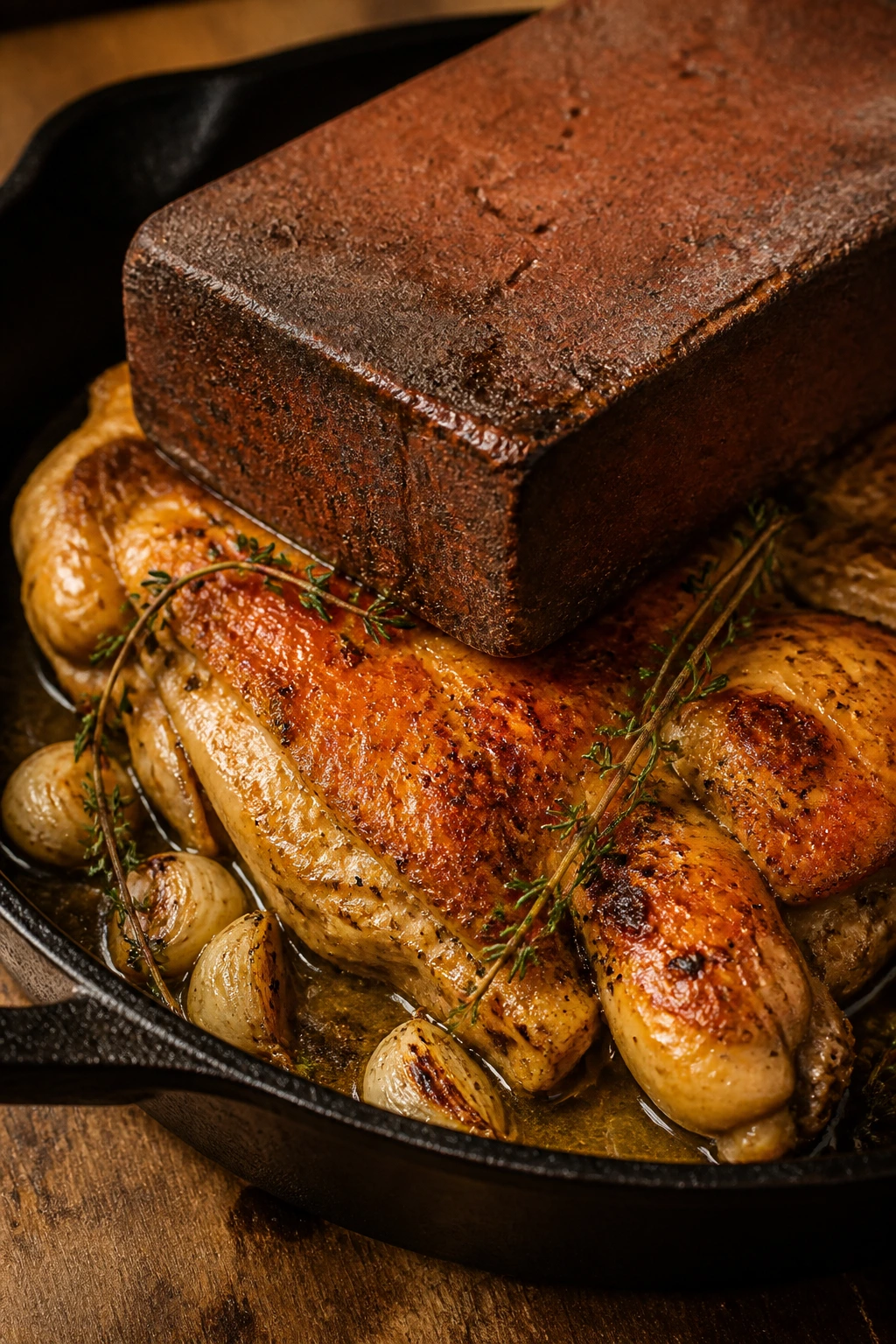
Spatchcocked chicken under a heavy pan or brick gives you one of the crispiest skins in the whole lineup. Garlic and thyme do the seasoning work, and the flat shape helps the bird cook evenly.
Why It Works: Pressing the chicken against a hot pan increases skin contact and speeds up browning. The flattened shape means the breast and thigh finish closer together, which is a gift if you dislike juggling doneness.
Key Ingredients:
- 1 whole chicken, about 4 lbs, spatchcocked — flattened for even cooking.
- 2 tbsp olive oil — coats the skin.
- 4 garlic cloves, smashed — placed under and over the chicken.
- 4 thyme sprigs — fragrant and restrained.
- 1 lemon, halved — tucked into the pan.
- 1 tsp salt per pound of chicken — the skin needs it.
- 1/2 tsp black pepper — simple seasoning.
- Optional 1 lb baby potatoes — if you want a full pan dinner.
Quick Steps:
- Spatchcock the chicken and pat it very dry.
- Rub it with olive oil, salt, pepper, garlic, and thyme.
- Heat an oven-safe skillet over medium-high heat, then place the chicken skin side down and press it with a foil-wrapped brick or heavy pan.
- Cook for 10 minutes, then flip and transfer to a 425°F (220°C) oven for 20 to 25 minutes.
- Rest 10 minutes before carving.
Equipment for This Recipe:
- Kitchen shears — for spatchcocking.
- Cast-iron or oven-safe skillet — needs heat retention.
- Heavy pan or brick wrapped in foil — the press.
- Tongs — for flipping safely.
How to Serve This Dish: Serve it with roasted potatoes or a fennel salad. The skin should crackle a little when sliced.
Pro Tips for This Recipe:
- Dry the chicken aggressively. Moist skin will not crisp.
- Press evenly. If the weight is tilted, the chicken browns unevenly.
- Let it rest before carving. Flattened chicken can still lose juices if cut too soon.
Variations on This Dish:
- Lemon-Pepper Brick Chicken: add extra lemon zest for brightness.
- Rosemary Brick Chicken: swap thyme for rosemary if you want a pineier note.
- Potato Pan Chicken: tuck potatoes around the edges and let them catch the fat.
Common Mistakes to Avoid with This Dish:
- Using a cold skillet: the skin won’t brown fast enough.
- Not weighing the chicken evenly: one side can cook faster.
- Skipping the rest: the juices run out fast when carved hot.
30. Chicken and Zucchini Skillet with Pecorino
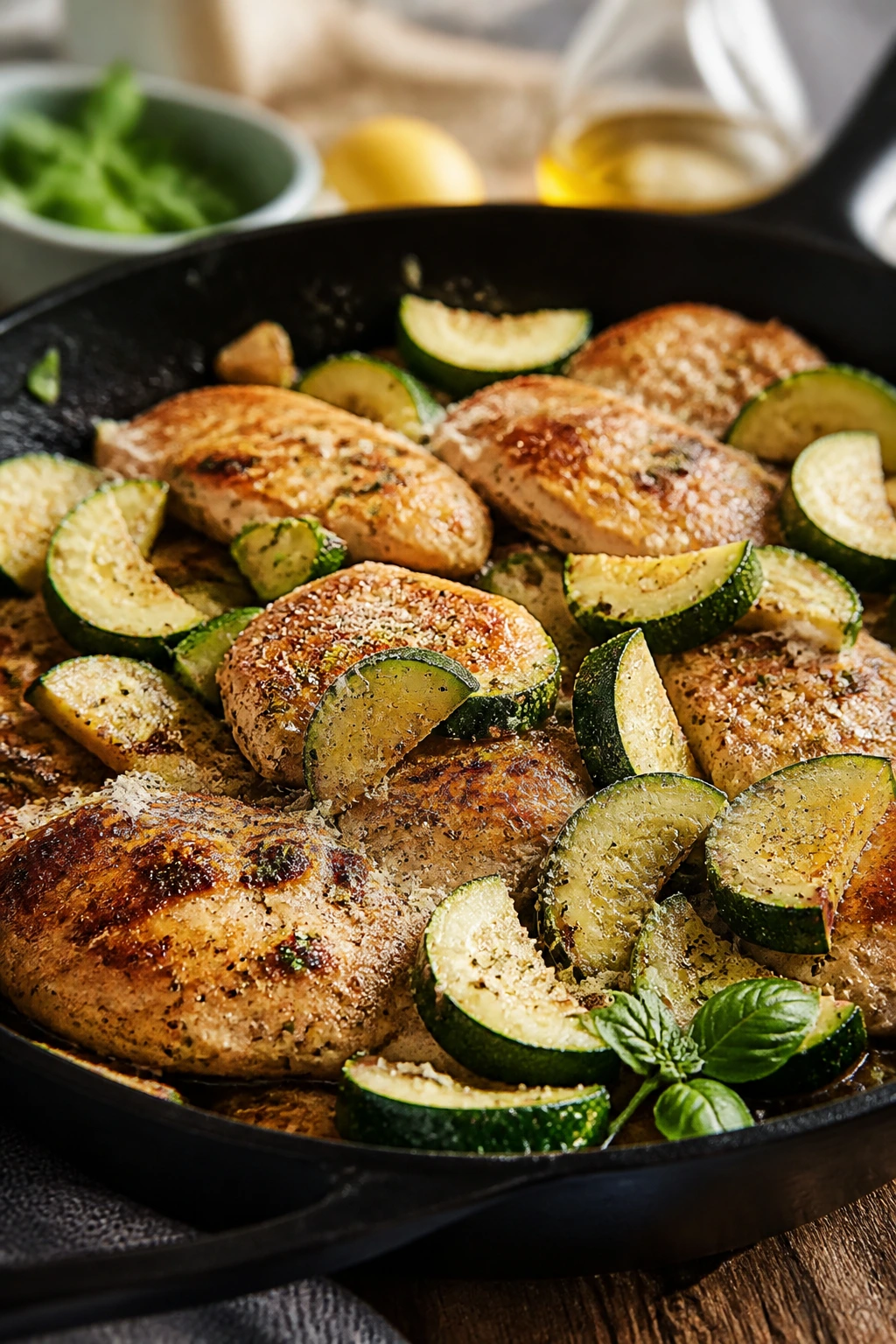
Zucchini can go limp and forgettable if you baby it too much. Here, it gets a quick sear, a little white wine, and a shower of Pecorino that makes the whole skillet taste sharper and more alive.
Why It Works: Chicken cutlets cook quickly alongside zucchini, so the vegetables stay slightly firm instead of collapsing. Pecorino brings the salty, grassy bite that makes the dish feel more Italian than plain chicken-and-vegetable fare.
Key Ingredients:
- 1 1/2 lbs chicken cutlets — quick-cooking and easy to layer.
- 2 medium zucchini, sliced into half-moons — keep them thick enough to hold shape.
- 3 garlic cloves, minced — the pan needs it.
- 1/2 cup dry white wine — deglazes the skillet.
- 1/2 cup chicken broth — keeps the zucchini from sticking.
- 1/2 cup grated Pecorino Romano — salty finish.
- 2 tbsp olive oil — for browning.
- 1 handful basil — added at the end.
Quick Steps:
- Brown the chicken cutlets in olive oil and remove them.
- Sauté the zucchini until lightly golden, then add garlic for 30 seconds.
- Pour in the wine and broth, scraping the pan clean.
- Return the chicken and simmer for 3 to 4 minutes.
- Finish with Pecorino and basil.
Equipment for This Recipe:
- Large skillet — the zucchini needs space to brown.
- Tongs — for the cutlets.
- Wooden spoon — for the quick sauce.
- Microplane or grater — Pecorino should be fine and fluffy.
How to Serve This Dish: Serve it with rice, farro, or bread. The zucchini should stay in neat pieces instead of turning into mush.
Pro Tips for This Recipe:
- Do not slice zucchini too thin. Thin slices vanish.
- Let the zucchini brown before adding liquid. That’s where the flavor comes from.
- Use Pecorino sparingly if it’s very salty. A little goes far.
Variations on This Dish:
- Lemon Zucchini Skillet: add lemon zest for a brighter finish.
- Tomato Zucchini Version: stir in cherry tomatoes if you want more sauce.
- Panko-Crusted Cutlets: bread the chicken first for extra texture.
Common Mistakes to Avoid with This Dish:
- Overcooking the zucchini: it should keep a little bite.
- Adding cheese before the heat drops: it can clump.
- Using too much broth: the skillet should stay saucy, not soupy.
31. Chicken Ragù over Pappardelle
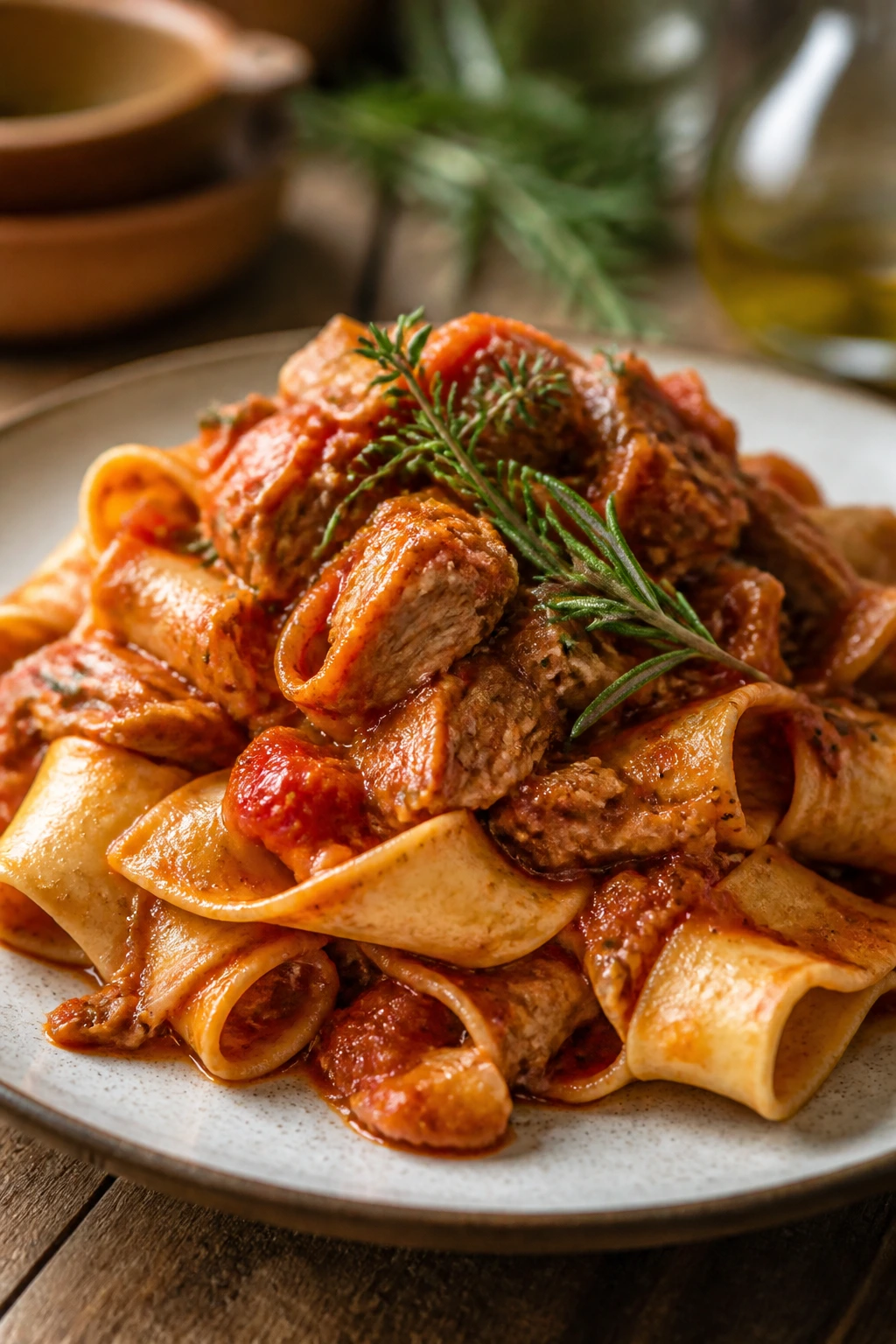
This is the long-simmer version of chicken and pasta, and it earns every minute. The chicken breaks down into a ragù that clings to pappardelle like it was always meant to be there.
Why It Works: Chopped chicken thighs absorb the tomato base quickly, and the long simmer lets the carrot, celery, and onion disappear into the sauce. Pappardelle is wide enough to catch every bit of ragù, which matters because this sauce wants to be seen.
Key Ingredients:
- 2 lbs boneless chicken thighs, chopped small — they stay juicy in the ragù.
- 1 onion, diced — starts the sauce.
- 1 carrot, diced — adds sweetness.
- 1 celery stalk, diced — rounds out the base.
- 2 tbsp tomato paste — builds concentration.
- 1 cup crushed tomatoes — the sauce body.
- 1/2 cup red wine — deepens the flavor.
- 1 cup chicken broth — keeps the ragù from tightening too much.
- 12 oz pappardelle — wide pasta for a wide sauce.
- Parmesan for serving — the last touch.
Quick Steps:
- Brown the chopped chicken in olive oil.
- Cook the onion, carrot, and celery until soft, then stir in the tomato paste.
- Add the wine, tomatoes, broth, and chicken, then simmer low for 30 to 40 minutes.
- Cook the pappardelle until just tender.
- Toss pasta and ragù together, then finish with Parmesan.
Equipment for This Recipe:
- Large Dutch oven — best for a simmering ragù.
- Pasta pot — for the noodles.
- Wooden spoon — useful for breaking up the chicken a bit.
- Tongs — for tossing the pasta.
How to Serve This Dish: Serve in warm bowls with a few basil leaves or parsley on top. The sauce should cling to the ribbons, not sit underneath them.
Pro Tips for This Recipe:
- Cut the chicken small and evenly. Large chunks take longer and feel clumsy.
- Let the ragù reduce enough. A watery sauce won’t coat the pasta.
- Save some pasta water. It helps the sauce cling.
Variations on This Dish:
- Cream-Splash Ragù: stir in 2 tbsp cream near the end for a softer finish.
- Mushroom Ragù: add chopped mushrooms with the vegetables.
- Baked Ragù Pasta: fold the ragù into baked pasta with mozzarella.
Common Mistakes to Avoid with This Dish:
- Cooking the sauce too fast: a hard simmer can make the chicken dry.
- Using too little salt in the pasta water: the noodles need seasoning.
- Tossing the pasta too early: it should meet the sauce right before serving.
32. Chicken with Gorgonzola and Walnuts
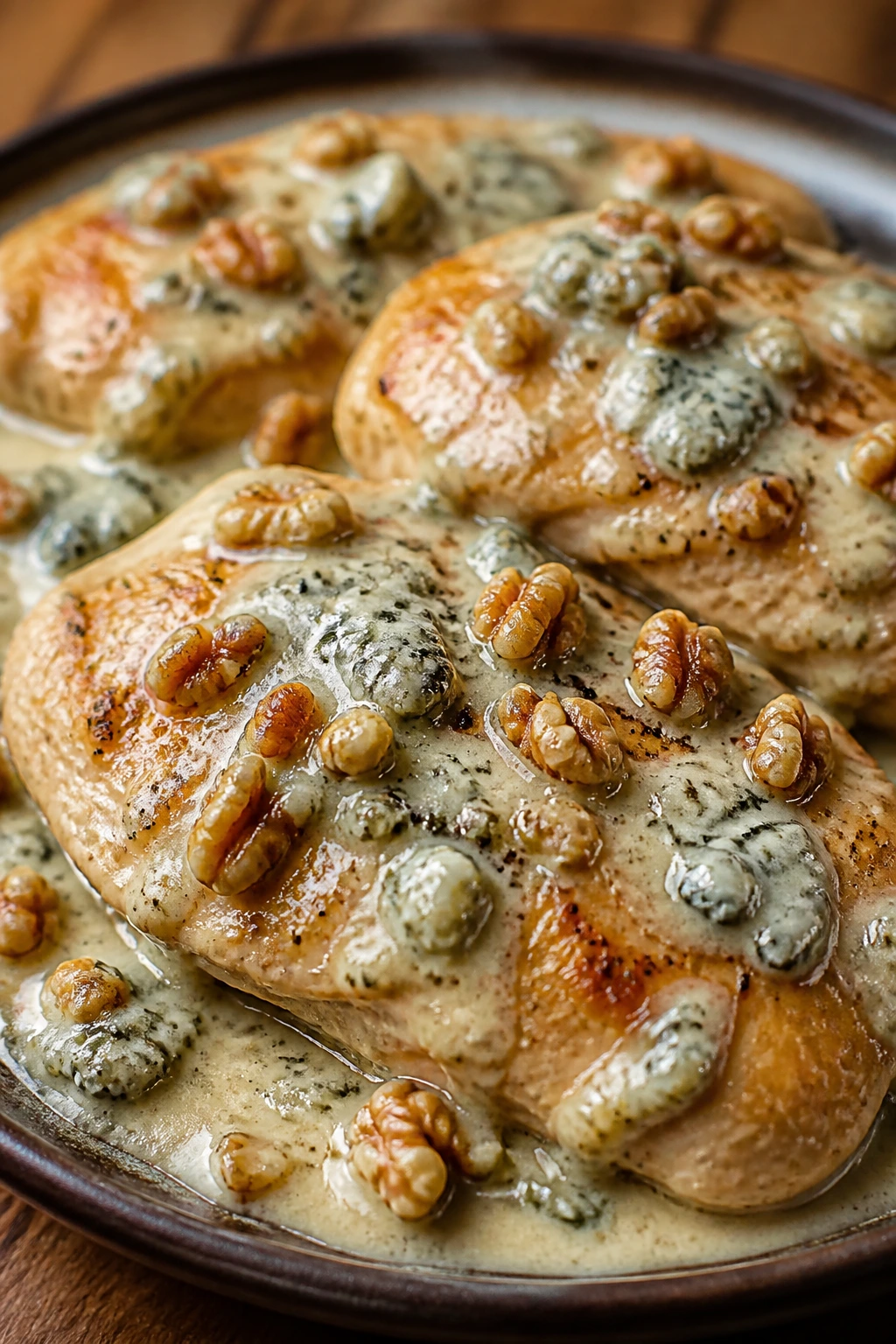
This is the bold, creamy dish in the group, and I mean that in the best way. Gorgonzola brings salt and tang, walnuts bring crunch, and chicken carries the richness without getting lost.
Why It Works: Gorgonzola melts into a sauce that tastes sharp and deep, so you need only a small amount of cream or broth to help it move. Walnuts add texture, which keeps the dish from feeling too soft.
Key Ingredients:
- 1 1/2 lbs chicken breasts or cutlets — cutlets are quicker.
- 4 oz Gorgonzola — crumbled.
- 1/3 cup walnuts, roughly chopped — toasted if possible.
- 1 shallot, minced — the base.
- 1/2 cup dry white wine — deglazes the pan.
- 1/2 cup chicken broth — lightens the sauce.
- 1 tbsp butter — smooths the finish.
- 1 tbsp olive oil — for searing.
Quick Steps:
- Sear the chicken in olive oil and set it aside.
- Cook the shallot, then add wine and broth.
- Stir in the Gorgonzola and butter until melted.
- Return the chicken and spoon sauce over it for 2 to 3 minutes.
- Sprinkle with walnuts before serving.
Equipment for This Recipe:
- Skillet — wide enough for sauce reduction.
- Tongs — for the chicken.
- Small bowl — for the walnuts.
- Spoon — for basting.
How to Serve This Dish: Serve with roasted pears, mashed potatoes, or steamed broccoli. The walnuts make a little garnish feel intentional instead of decorative.
Pro Tips for This Recipe:
- Toast the walnuts. Raw walnuts taste dull beside the cheese.
- Keep the heat low when melting the cheese. High heat can make it grainy.
- Use Gorgonzola sparingly if you’re unsure. You can always add more.
Variations on This Dish:
- Creamier Version: add 2 tbsp cream if you want a smoother sauce.
- Pear and Walnut Chicken: tuck in thin pear slices for sweetness.
- Blue Cheese Swap: use a milder blue if Gorgonzola feels too sharp.
Common Mistakes to Avoid with This Dish:
- Overheating the cheese: it can separate.
- Skipping the walnut toast: the crunch matters.
- Using too much salt before tasting: Gorgonzola already brings plenty.
33. Pappa al Pomodoro Chicken Soup
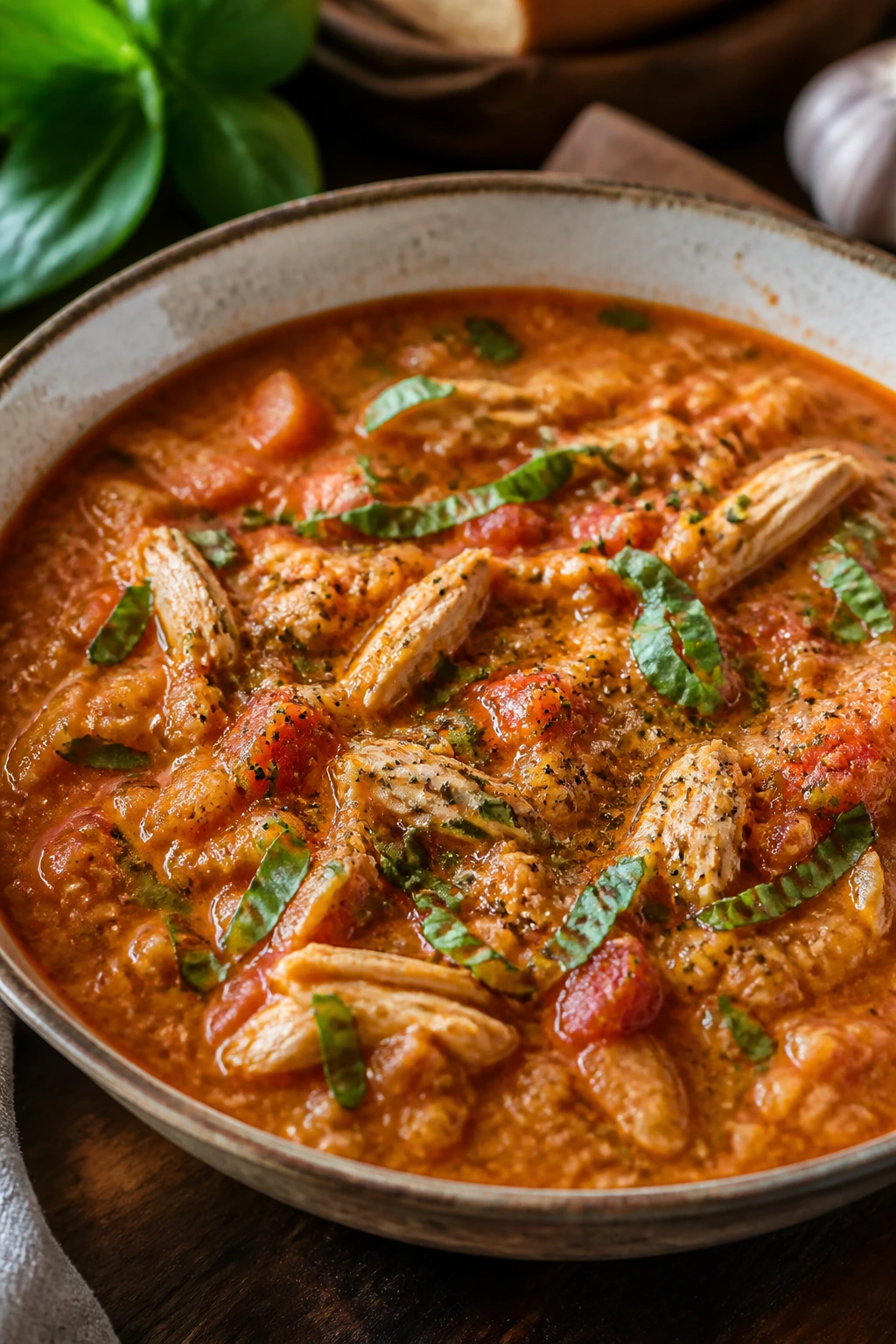
Pappa al pomodoro is bread soup, and chicken slides into it surprisingly well. The tomatoes soften the bread into a thick, spoonable base, and the chicken makes it dinner instead of a side project.
Why It Works: Stale bread thickens the soup naturally, which means you do not need cream or flour to make it satisfying. Basil and garlic give it the familiar Tuscan tomato-bread flavor, and shredded chicken adds body without fuss.
Key Ingredients:
- 1 1/2 lbs chicken thighs — for shredding.
- 8 oz stale country bread, torn — the thickener.
- 1 can crushed tomatoes, 28 oz — the tomato base.
- 1 onion, chopped — starts the pot.
- 3 garlic cloves, minced — needed here.
- 4 cups chicken broth — enough to soak the bread.
- 1 handful basil — the final flavor.
- 2 tbsp olive oil — for the pot.
Quick Steps:
- Brown the chicken, then remove it.
- Cook the onion and garlic in olive oil.
- Add tomatoes, broth, bread, and chicken, then simmer for 25 minutes.
- Remove and shred the chicken, then return it to the pot.
- Stir in basil and serve thick, not soupy.
Equipment for This Recipe:
- Soup pot — needs room for bread and chicken.
- Wooden spoon — to break the bread as it softens.
- Ladle — for serving.
- Forks — for shredding the chicken.
How to Serve This Dish: Serve it in bowls with a drizzle of olive oil and extra basil. The texture should sit between soup and stew.
Pro Tips for This Recipe:
- Use bread that has gone a little stale. Fresh bread turns gummy.
- Let the bread break down fully. That’s the whole point.
- Finish with olive oil. It gives the soup a better smell and feel.
Variations on This Dish:
- Garlic-Rich Version: add another clove if you want it punchier.
- White Bean Addition: stir in beans for a thicker bowl.
- Spicy Bread Soup: add red pepper flakes with the garlic.
Common Mistakes to Avoid with This Dish:
- Using fresh sandwich bread: it can turn gluey.
- Adding too much liquid at once: the soup should thicken naturally.
- Leaving the chicken in giant chunks: shred it so each spoonful feels complete.
34. Roasted Garlic Chicken with White Beans
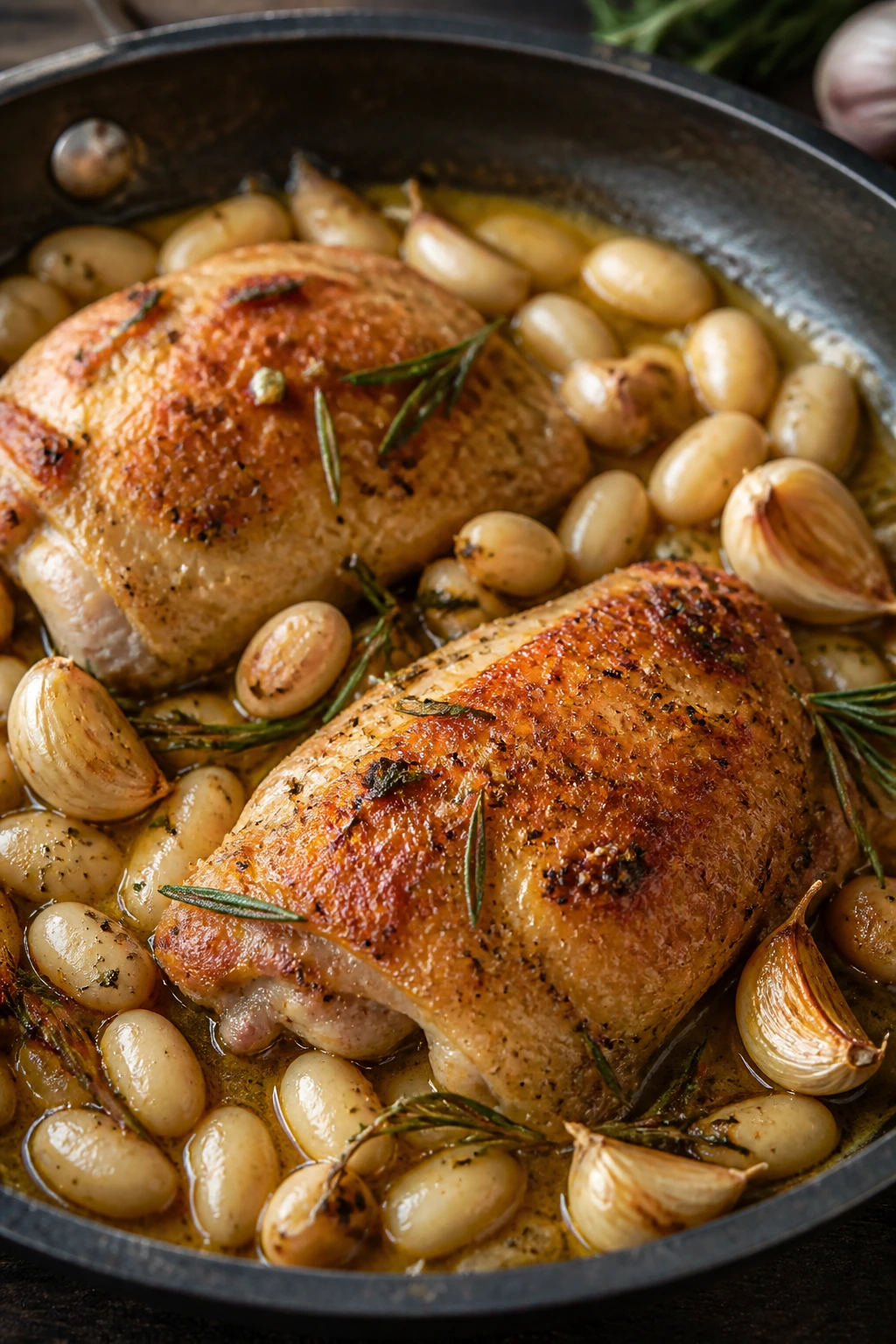
Roasted garlic changes the tone of chicken entirely. It gets sweet, soft, and almost spreadable, and when it lands in a skillet with white beans, the result is mellow but never bland.
Why It Works: Roasted garlic has none of the raw bite that can throw off a pan sauce. White beans absorb the drippings and help turn a few simple ingredients into a full meal.
Key Ingredients:
- 2 lbs chicken thighs — the richest choice here.
- 1 whole head garlic — roasted until soft.
- 2 cans white beans, drained and rinsed — the creamy base.
- 1 onion, sliced — builds the skillet.
- 1 tsp rosemary — small but important.
- 4 cups kale — optional, but useful.
- 1 cup chicken broth — helps the beans loosen.
- 1 lemon — for the finish.
Quick Steps:
- Roast the garlic until soft and golden.
- Brown the chicken thighs in a skillet and remove them.
- Cook the onion, then mash in the roasted garlic and stir in the beans and broth.
- Nestle the chicken back in and simmer until cooked through.
- Add kale near the end and finish with lemon juice.
Equipment for This Recipe:
- Oven or toaster oven — for the garlic.
- Large skillet — for the beans and chicken.
- Fork — for mashing the roasted garlic.
- Lid — helps the beans warm evenly.
How to Serve This Dish: Serve it with bread or spooned over polenta. The beans should be creamy and a little loose, not dry.
Pro Tips for This Recipe:
- Roast the garlic until soft, not burnt. Burnt garlic tastes harsh.
- Mash some beans lightly. It helps the skillet feel saucy.
- Use lemon at the end. It keeps the dish from going flat.
Variations on This Dish:
- Tomato Garlic Version: add a spoon of tomato paste if you want more color.
- Herbed Bean Skillet: finish with parsley and basil.
- No-Kale Version: use spinach instead if you want a softer green.
Common Mistakes to Avoid with This Dish:
- Using raw garlic in place of roasted: the flavor changes completely.
- Adding too much broth: the beans should stay creamy.
- Skipping the lemon: the dish needs a bright edge.
35. Chicken with Lemon, Spinach, and White Beans
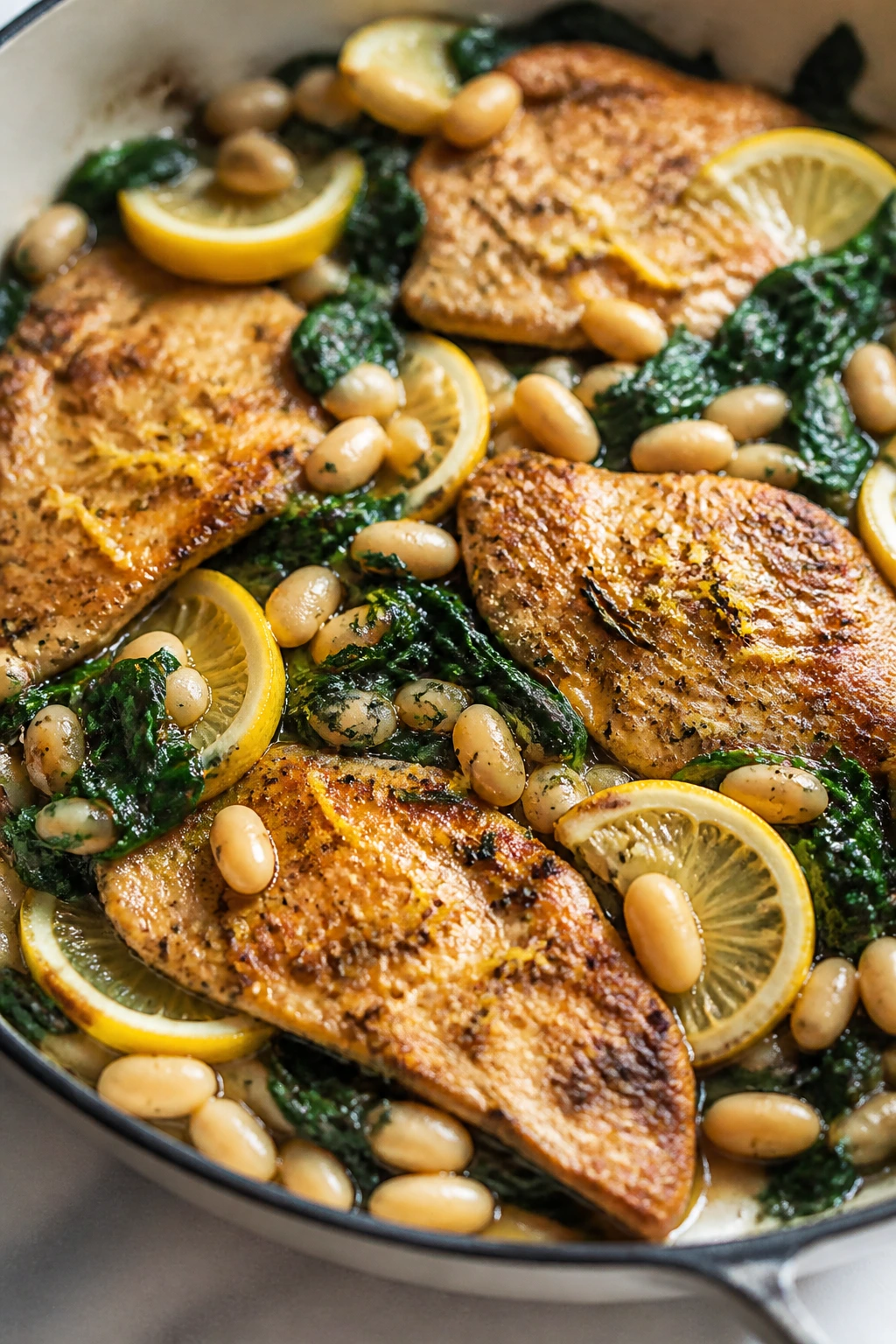
This is the bright skillet I’d hand to someone who wants Tuscan flavor without a heavy sauce. Lemon, spinach, and white beans make a clean trio, and chicken cutlets keep the whole thing moving fast.
Why It Works: Beans give the pan a creamy backbone, spinach melts into the liquid, and lemon keeps the flavors sharp. It’s a simple equation, but it works because every ingredient has a job.
Key Ingredients:
- 1 1/2 lbs chicken cutlets — quick and lean.
- 1 can white beans, drained and rinsed — soft and filling.
- 5 oz baby spinach — wilts in seconds.
- 3 garlic cloves, minced — the savory base.
- 1/2 cup chicken broth — for the sauce.
- 1 lemon, juiced and zested — the whole point.
- 1/4 cup grated Parmesan — adds body.
- 1 tbsp olive oil — for the pan.
Quick Steps:
- Brown the chicken cutlets in olive oil and set them aside.
- Cook the garlic briefly, then add the beans and broth.
- Stir in the spinach until wilted.
- Add the lemon juice, zest, and Parmesan.
- Return the chicken to warm through and serve.
Equipment for This Recipe:
- Large skillet — keeps the beans in a single layer.
- Tongs — for the cutlets.
- Microplane — the zest matters here.
- Wooden spoon — for folding the spinach into the beans.
How to Serve This Dish: Serve it with bread or alongside roasted potatoes. The beans and spinach should feel like a sauce, not a separate side.
Pro Tips for This Recipe:
- Use fresh lemon zest. It makes a bigger difference than extra juice.
- Don’t overcook the spinach. It should wilt, not disappear.
- Warm the beans gently. Hard boiling makes them split.
Variations on This Dish:
- Caper Lemon Version: add capers for more bite.
- Herb Bean Skillet: finish with parsley or dill.
- Creamier Finish: stir in 2 tbsp mascarpone if you want a softer skillet.
Common Mistakes to Avoid with This Dish:
- Too much lemon juice at once: it can dominate.
- Adding spinach too early: it turns muddy.
- Forgetting to season the beans: they need salt, not just the chicken.
36. Chicken and Eggplant Casserole
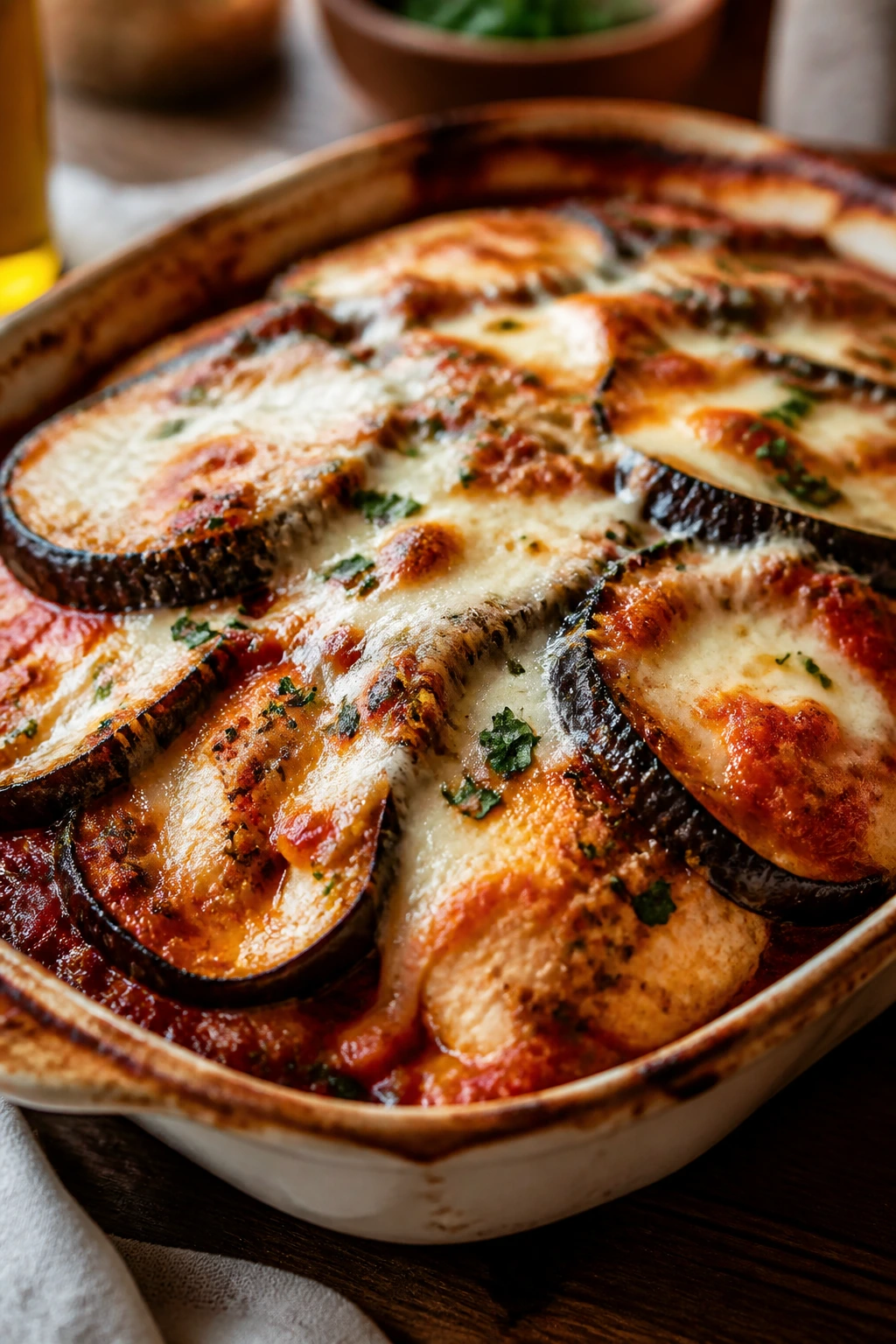
Eggplant and chicken belong together when the eggplant gets a little color first. Once it’s browned and layered with tomato sauce and cheese, the casserole feels more deliberate than it has any right to be.
Why It Works: Eggplant can soak up oil and turn mushy if you rush it, so browning first matters. Chicken stays juicy under the sauce, and mozzarella gives the bake a good stretch without drowning it.
Key Ingredients:
- 1 1/2 lbs chicken cutlets — easy to layer.
- 1 medium eggplant, sliced — brown it before baking.
- 2 cups marinara sauce — the tomato layer.
- 8 oz mozzarella, shredded — melts on top.
- 1/2 cup grated Parmesan — for sharper flavor.
- 2 tbsp olive oil — for browning.
- 1 handful basil — for finishing.
Quick Steps:
- Salt the eggplant lightly, then brown it in olive oil.
- Brown or sear the chicken cutlets.
- Layer sauce, eggplant, chicken, and cheese in a baking dish.
- Bake at 400°F (205°C) for 20 minutes, until hot and bubbling.
- Finish with basil and rest for 5 minutes before serving.
Equipment for This Recipe:
- Skillet — for browning eggplant and chicken.
- Baking dish — for the casserole.
- Knife — to slice the eggplant evenly.
- Spatula — helpful for moving the browned pieces.
How to Serve This Dish: Serve with bread, pasta, or a green salad. The casserole should cut cleanly but still look a little soft around the edges.
Pro Tips for This Recipe:
- Brown the eggplant well. Pale eggplant tastes spongy.
- Keep the sauce layer moderate. Too much marinara makes the bake sloppy.
- Let it rest after baking. It sets up better that way.
Variations on This Dish:
- Eggplant Parm Chicken Bake: add more cheese and breadcrumbs on top.
- Herb-Heavy Version: use oregano and basil together.
- Zucchini Swap: replace some eggplant with zucchini if needed.
Common Mistakes to Avoid with This Dish:
- Not browning the eggplant: it stays bland and watery.
- Overloading the dish with sauce: the layers slide apart.
- Cutting too soon after baking: the casserole needs a few minutes to settle.
37. Sage Butter Chicken with Crispy Potatoes
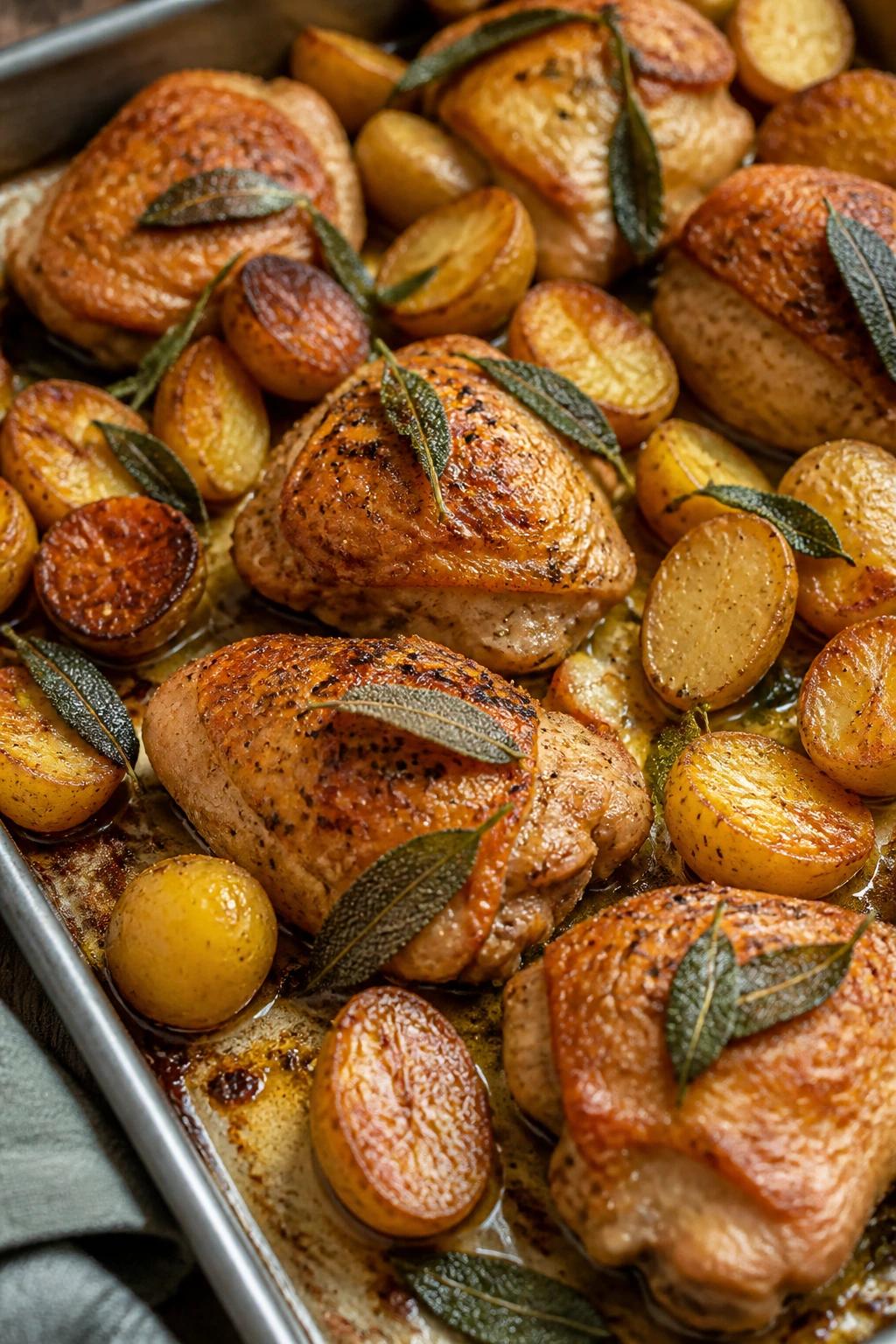
Sage butter and crisp potatoes are hard to argue with. The butter gets nutty, the sage goes brittle and fragrant, and the chicken lands somewhere between rustic and polished.
Why It Works: Potatoes roast in the same pan and absorb the fat, while the chicken cooks in the middle of the tray. Sage butter is simple, but once it hits the hot pan juices, it tastes deeper than it looks.
Key Ingredients:
- 2 lbs chicken thighs or cutlets — thighs for juicier roast chicken, cutlets for speed.
- 1 1/2 lbs baby potatoes, halved — roast until crisp.
- 8 sage leaves — the flavor signature.
- 4 tbsp butter — browned or melted.
- 2 tbsp olive oil — helps the potatoes crisp.
- 2 garlic cloves, smashed — mild after roasting.
- 1/2 cup dry white wine — optional for pan juices.
- Salt and pepper — generously.
Quick Steps:
- Toss the potatoes with olive oil, salt, and pepper and roast at 425°F (220°C) for 15 minutes.
- Add the chicken, garlic, and sage, then continue roasting until the chicken is done.
- Melt or brown the butter in a small pan.
- Spoon the sage butter over the chicken and potatoes.
- Let it rest before serving.
Equipment for This Recipe:
- Rimmed sheet pan — holds the roast and the juices.
- Small skillet — for browning the butter.
- Tongs — for arranging the chicken.
- Foil — useful if the potatoes brown too fast.
How to Serve This Dish: Serve it as a tray dinner with a green salad or simply some lemon wedges. The potatoes should catch the butter and a little chicken drippings.
Pro Tips for This Recipe:
- Give the potatoes a head start. They need more time than the chicken.
- Watch the butter closely if browning it. It goes from nutty to burnt fast.
- Use fresh sage if you can. Dried sage is not the same here.
Variations on This Dish:
- Lemon Sage Butter: add lemon zest to the butter.
- Garlic Sage Version: use more smashed garlic on the tray.
- Parmesan Potatoes: sprinkle Parmesan over the potatoes near the end.
Common Mistakes to Avoid with This Dish:
- Adding the chicken too early: it overcooks before the potatoes finish.
- Burning the sage in the butter: it turns bitter.
- Overcrowding the potatoes: they won’t crisp properly.
38. Chicken and Kale in Parmesan Broth
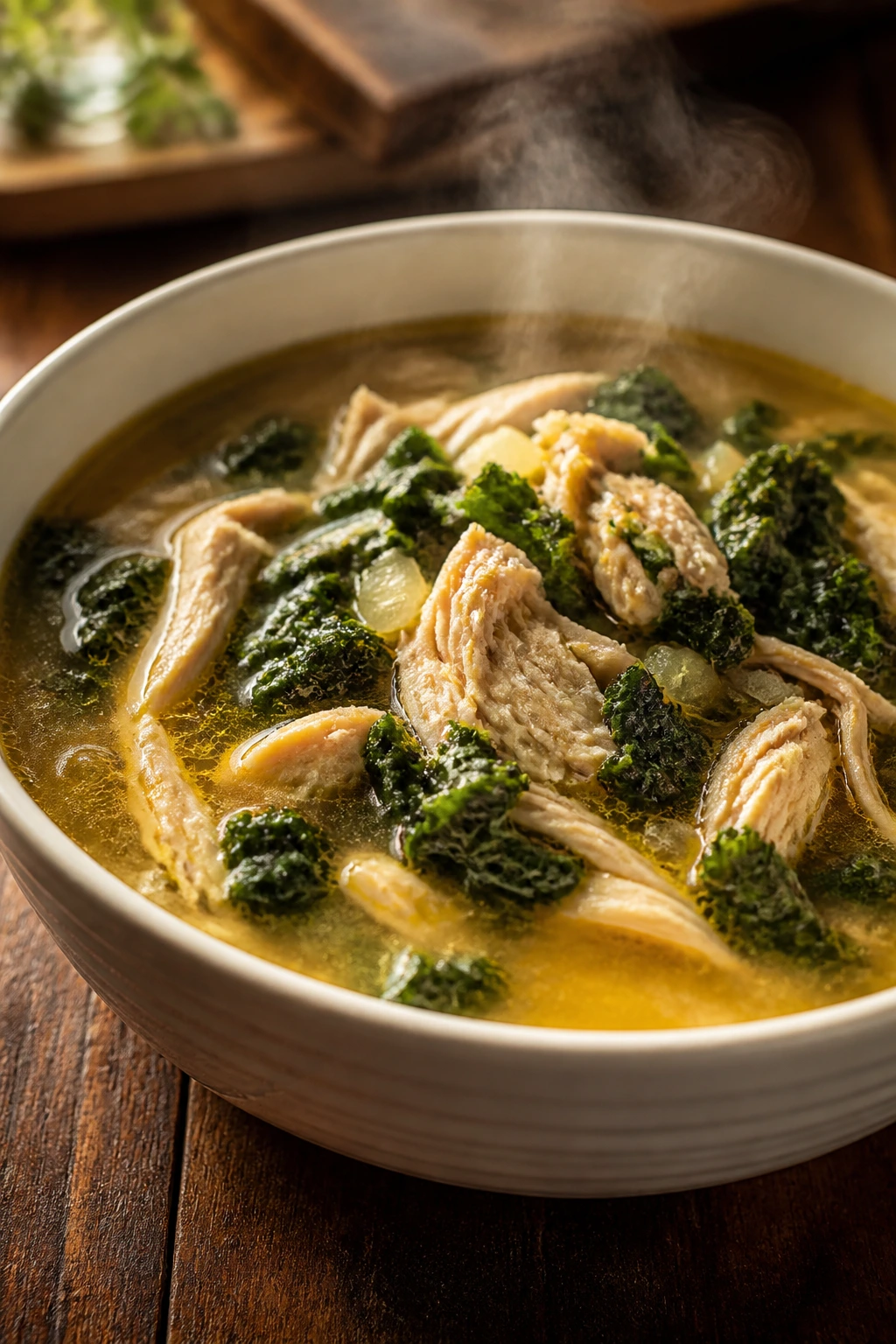
Parmesan broth sounds modest until you taste it. It has a salty, savory depth that makes kale and chicken feel like they belong in the same bowl without any extra tricks.
Why It Works: The Parmesan rind seasons the broth from the inside, while kale adds chew and color late in the cook. Chicken thighs stay tender in a broth-based dish that never tries to become soup if it doesn’t need to.
Key Ingredients:
- 1 1/2 lbs chicken thighs — good for simmering.
- 1 bunch kale, stems removed and chopped — sturdy enough for broth.
- 1 onion, diced — the first layer.
- 2 garlic cloves, minced — the second layer.
- 4 cups chicken broth — enough liquid for the pot.
- 1 Parmesan rind — the secret to the broth.
- 1 can cannellini beans, optional — makes the bowl heartier.
- 1 lemon — for the finish.
- 1 tbsp olive oil — for the base.
Quick Steps:
- Sauté the onion and garlic in olive oil.
- Add the broth, Parmesan rind, chicken thighs, and beans if using.
- Simmer until the chicken is cooked through, about 25 minutes.
- Remove and shred the chicken if you want a looser bowl.
- Stir in the kale and lemon juice, then simmer 5 minutes more.
Equipment for This Recipe:
- Soup pot or Dutch oven — for the broth.
- Ladle — for serving.
- Tongs — for handling the chicken.
- Fine grater — optional for extra Parmesan on top.
How to Serve This Dish: Serve it in deep bowls with bread or toasted croutons. A drizzle of olive oil at the table is worth doing.
Pro Tips for This Recipe:
- Use the rind, not just grated cheese. The broth gets a bigger depth from it.
- Add kale late. It should stay green and toothsome.
- Taste before adding more salt. Parmesan can bring more salt than expected.
Variations on This Dish:
- Bean-Heavy Version: double the cannellini beans for a more filling bowl.
- Lemon-Parmesan Finish: add extra zest at the end.
- Garlic Broth Version: use one more garlic clove if you want sharper flavor.
Common Mistakes to Avoid with This Dish:
- Overcooking the kale: it can turn stringy.
- Using a weak broth: the Parmesan rind can only do so much.
- Forgetting the lemon finish: the broth needs brightness.
39. Chicken with Mascarpone and Peas
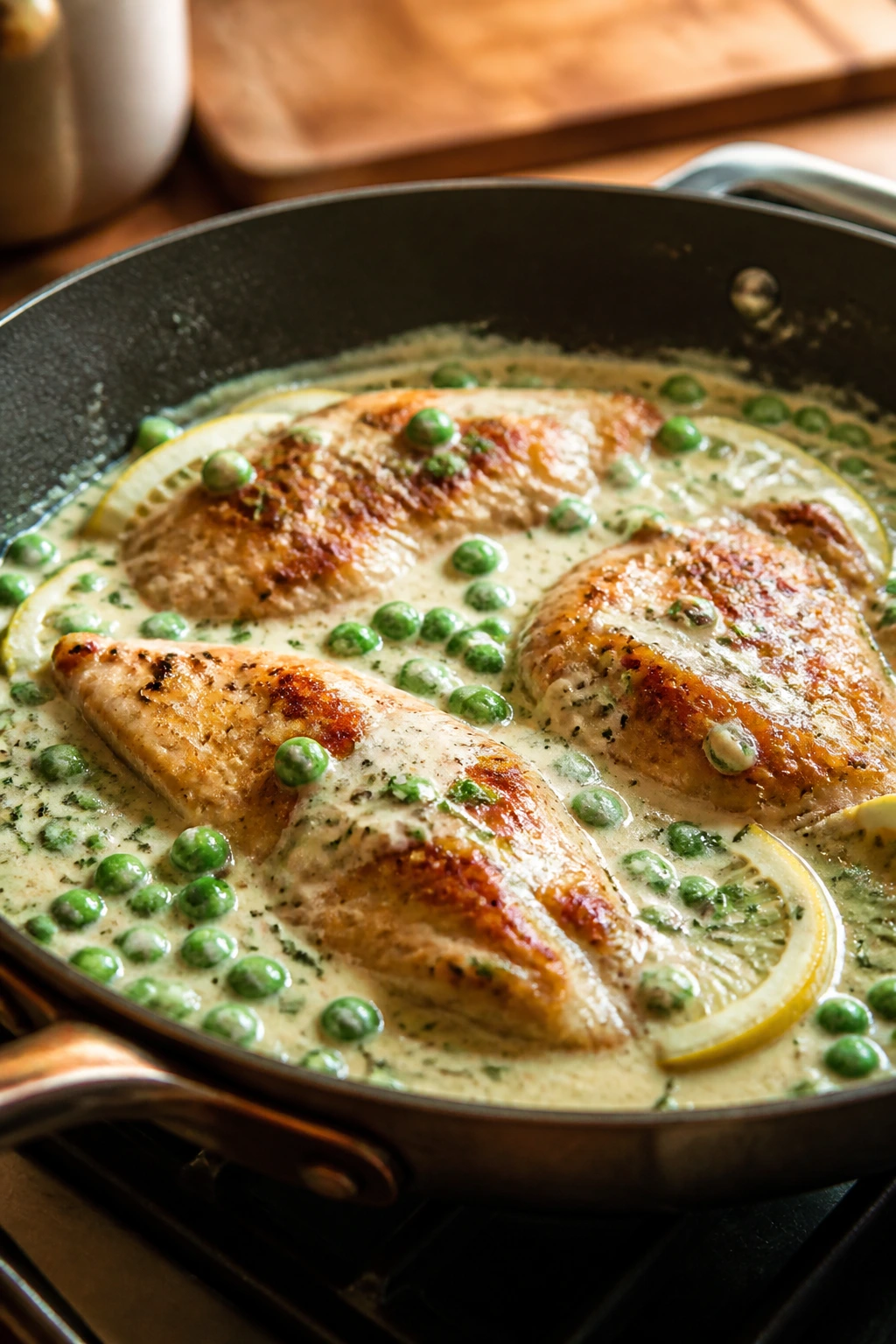
Mascarpone gives chicken a soft, creamy finish that feels gentler than a heavy cream sauce. The peas keep it fresh, and a little lemon keeps the whole skillet from settling into one texture.
Why It Works: Mascarpone melts smoothly and adds body fast, which means you can finish the dish without long reduction. Peas bring sweetness and color, and chicken breasts stay neat if you don’t overcook them.
Key Ingredients:
- 1 1/2 lbs chicken breasts — sliced thin or pounded even.
- 1/2 cup mascarpone — the creamy base.
- 1 cup peas — frozen is fine.
- 1 lemon, juiced — brightens the sauce.
- 2 garlic cloves, minced — the savory note.
- 1/2 cup chicken broth — loosens the mascarpone.
- 2 tbsp olive oil — for searing.
- 1 tbsp chopped mint or parsley — for the finish.
Quick Steps:
- Sear the chicken breasts in olive oil and set them aside.
- Cook the garlic briefly, then pour in the broth.
- Stir in the mascarpone until smooth.
- Add the peas and return the chicken to the skillet.
- Finish with lemon juice and herbs.
Equipment for This Recipe:
- Skillet — for the sauce and chicken.
- Tongs — for turning the breasts.
- Whisk — useful for smoothing mascarpone into the broth.
- Cutting board — for pounding or slicing the chicken evenly.
How to Serve This Dish: Serve with rice, potatoes, or pasta. The sauce should be pale, silky, and just thick enough to coat a spoon.
Pro Tips for This Recipe:
- Bring the mascarpone close to room temperature. It melts better.
- Do not boil after adding the cheese. It can become grainy.
- Use thin chicken pieces. Thick breasts dry out while the sauce finishes.
Variations on This Dish:
- Mint Pea Chicken: use mint instead of parsley for a cooler edge.
- Lemon-Zest Version: add zest for more aroma.
- Asparagus Swap: use asparagus pieces instead of peas when you want a firmer vegetable.
Common Mistakes to Avoid with This Dish:
- Adding mascarpone to a boiling pan: it can split.
- Overcooking the peas: they should stay bright.
- Using thick, uneven chicken breasts: they finish at different times.
40. Breaded Chicken Cutlets with Lemon Salad
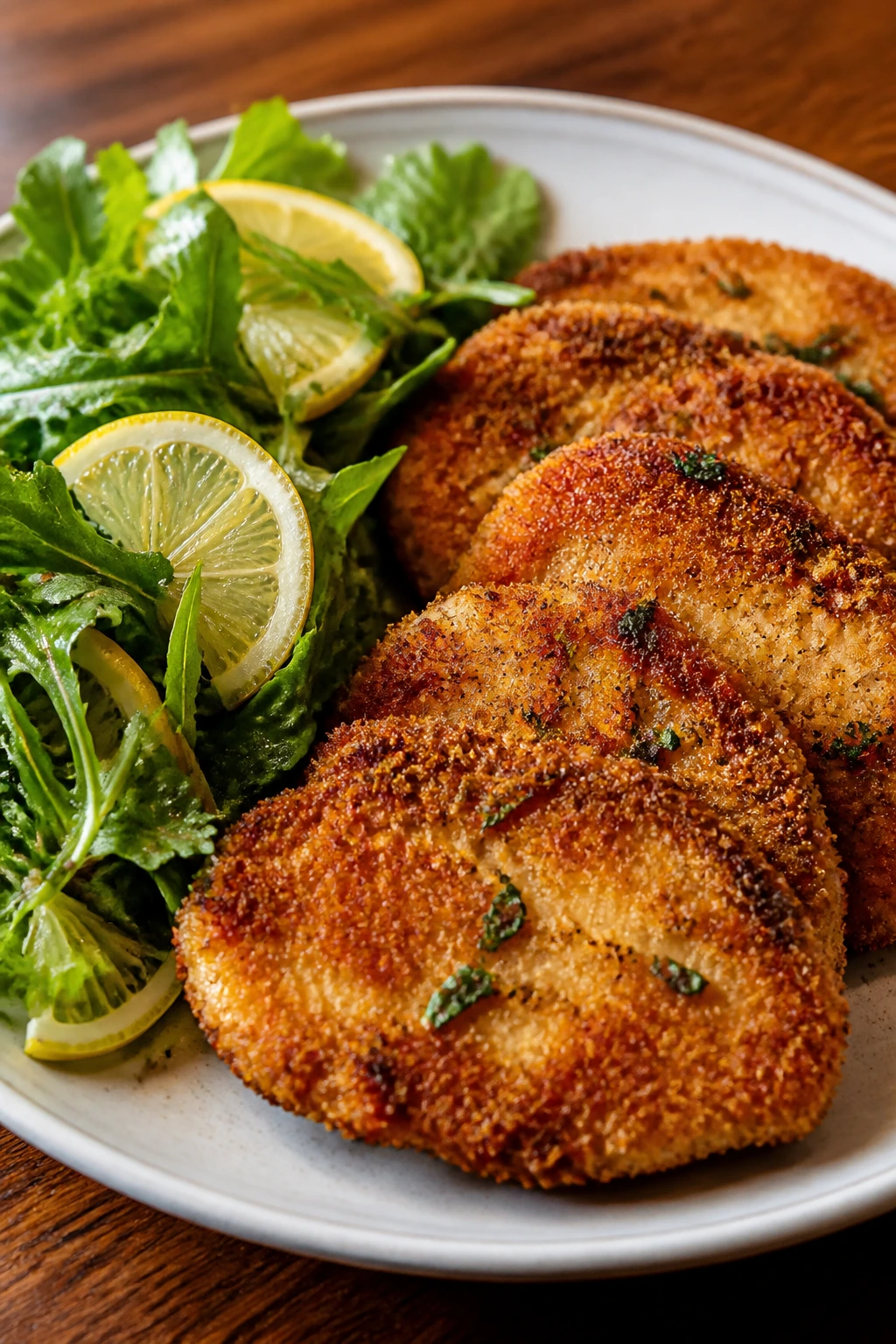
Crispy cutlets with a lemon salad are one of those plates that disappear faster than you planned. The breadcrumb crust gives the chicken crunch, and the salad keeps the whole thing from feeling fried and flat.
Why It Works: Breading creates a crisp shell that likes acid, so the lemon-dressed greens are not decoration; they’re the counterweight. A little fennel or arugula in the salad brings the Tuscan bitterness that cuts through the crust.
Key Ingredients:
- 1 1/2 lbs chicken cutlets — thin and even.
- 1/2 cup flour — first coating.
- 2 eggs, beaten — helps crumbs stick.
- 1 1/2 cups breadcrumbs — panko or fine crumbs.
- 4 cups arugula or mixed greens — the salad base.
- 1 fennel bulb, shaved thin — optional, but excellent.
- 1 lemon, juiced — for the dressing.
- 1/2 cup shaved Parmesan — for the salad.
- 3 tbsp olive oil — for frying and dressing.
Quick Steps:
- Dredge the cutlets in flour, egg, and breadcrumbs.
- Fry or pan-sear them in olive oil until crisp and golden.
- Toss the greens and fennel with lemon juice, olive oil, salt, and pepper.
- Top with Parmesan.
- Serve the cutlets alongside the salad while they’re still crisp.
Equipment for This Recipe:
- Shallow bowls — for breading.
- Skillet — for frying.
- Salad bowl — for the greens.
- Tongs — to move the cutlets without scraping off the crust.
How to Serve This Dish: Serve it on a large plate with the salad beside, not under, the cutlets if you want the crust to stay crisp. A few lemon wedges on the side are worth the extra squeeze.
Pro Tips for This Recipe:
- Press the breadcrumbs on firmly. Loose crumbs fall off in the pan.
- Let the cutlets drain on a rack, not paper towels. The crust stays crunchier.
- Dress the salad right before serving. Wilted greens are not the goal.
Variations on This Dish:
- Herb Breadcrumbs: mix parsley and oregano into the crumbs.
- Pecorino Crust: add grated pecorino to the breading.
- Tomato-Lemon Salad: add cherry tomatoes if you want more color.
Common Mistakes to Avoid with This Dish:
- Letting the cutlets sit on paper towels too long: steam softens the crust.
- Using too much salad dressing: the greens should glisten, not drown.
- Cutting the chicken immediately: a minute of rest keeps the crust in place.
What Makes These Dishes Taste Like Tuscany
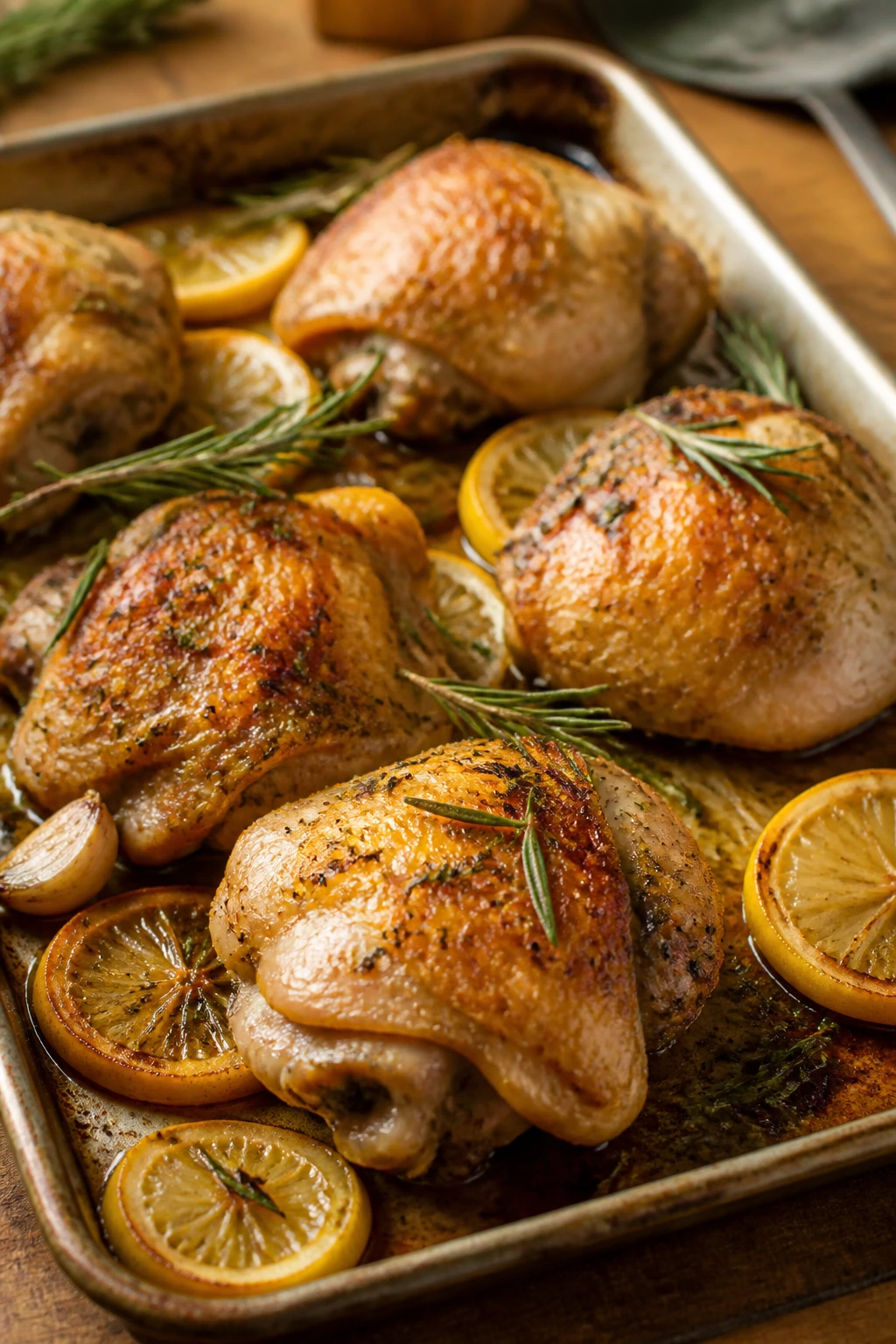
Tuscan cooking has a clear voice, and it is not loud. Olive oil, garlic, onion, rosemary, sage, thyme, white wine, tomatoes, beans, fennel, and bitter greens do the work again and again, because that combination gives chicken a place to land. The food tastes rustic, but not clumsy. It feels restrained, but not bare.
That balance matters. A lot of chicken recipes fail because they ask one ingredient to do too much. Tuscan-style cooking spreads the job around. Acid comes from lemon or wine. Salt comes from capers, olives, Parmesan, or pancetta. Body comes from beans, polenta, pasta, or bread. The chicken just has to stay juicy and carry the sauce.
I also like that these recipes move easily between fast and slow. A cutlet with capers gets dinner on the table in minutes. A braise with wine and artichokes asks for patience. Both belong to the same flavor family, and both feel right with bread nearby.
Essential Equipment for These Recipes
- 12-inch skillet — probably the most used pan in this whole collection; wide enough for cutlets, cream sauces, and quick braises.
- Dutch oven — best for cacciatore, stews, ragù, and any dish that needs steady simmering.
- Rimmed sheet pan — the workhorse for roast chicken, tray bakes, and spatchcocked chicken.
- Instant-read thermometer — the easiest way to keep chicken juicy without guessing.
- Tongs — gentle flipping matters when you want the coating or skin to stay put.
- Wooden spoon — useful for scraping browned bits and stirring sauces.
- Sharp chef’s knife — makes onions, fennel, and chicken prep less annoying.
- Cutting board — choose one with enough room for raw chicken and vegetables.
- Microplane or fine grater — best for lemon zest, Parmesan, and garlic when you want it very fine.
- Shallow dishes — breading stations need these.
- Mixing bowls — one small and one medium cover most of the recipes.
- Pasta pot — for the pappardelle and any pasta side you make alongside.
- Colander or sieve — good for rinsing beans and draining pasta.
- Roasting rack — optional, but useful for cutlets or anything that should stay crisp after cooking.
Smart Shopping for Chicken, Herbs, and Pantry Staples
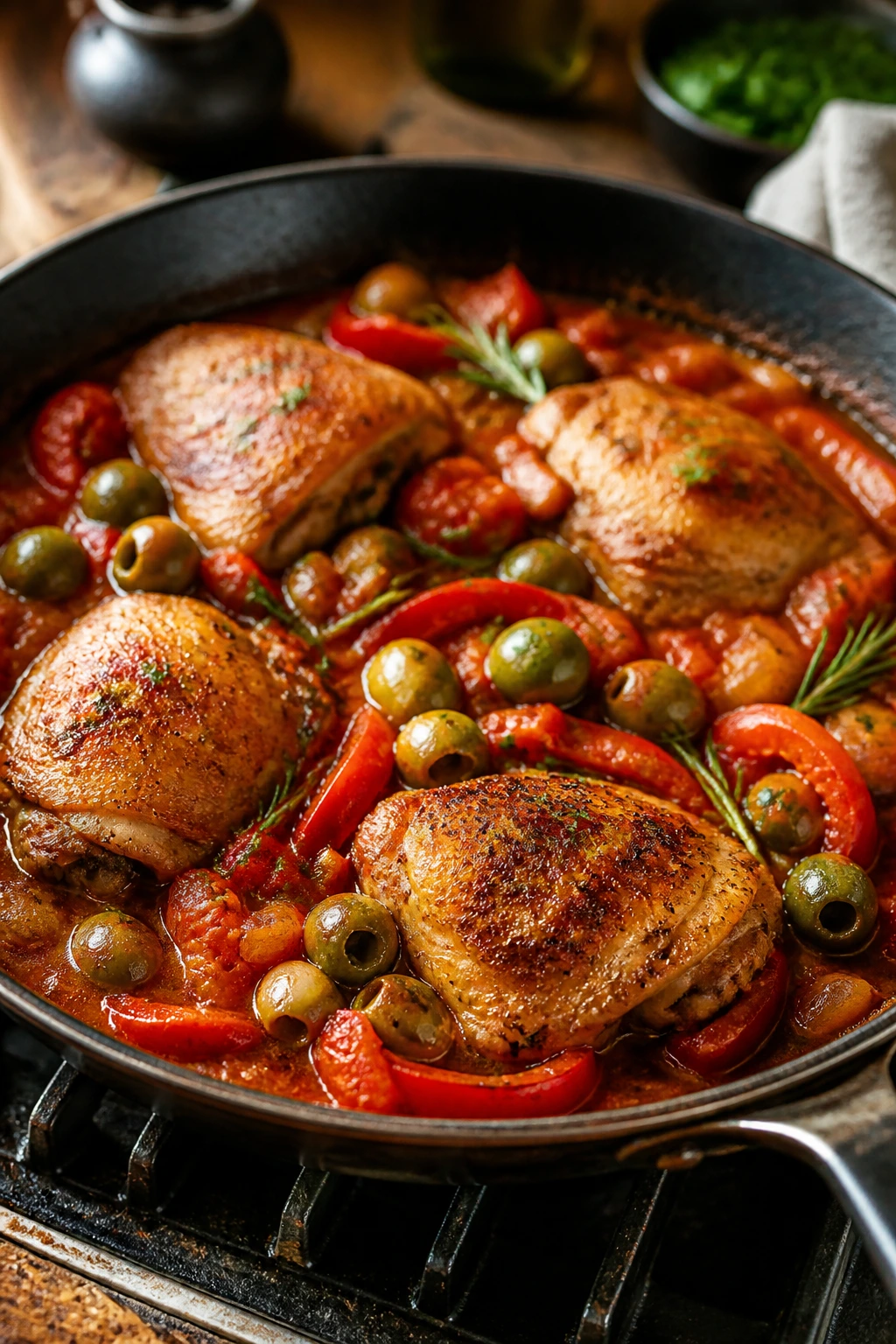
Chicken thighs are the safe bet when you want flavor that can handle braising, wine, tomatoes, or cream. Breasts work well in cutlets, stuffed versions, and quick skillet sauces, but they need more attention because they go from juicy to dry fast. If the recipe uses breasts, look for pieces that are evenly sized or buy cutlets and save yourself the knife work.
For tomatoes, I prefer canned whole peeled or crushed tomatoes over jars of pre-made sauce. Whole tomatoes give you more control, and crushed tomatoes save time without tasting overly processed. Sun-dried tomatoes packed in oil bring a softer chew and a deeper flavor than dry-packed ones, but either works if you drain them well.
White wine matters more than people think. Pick something dry that you would drink with dinner. If it smells sweet before it hits the pan, it will taste sweet after it reduces. Red wine suits cacciatore and ragù; white wine suits piccata, braises, and cream sauces where you want lift instead of weight.
Beans and olives should taste like themselves, not like the can or the brine. Rinse canned beans, taste the olives before salting the pot, and keep capers in their lane. Fresh herbs matter most at the end. Dried rosemary, thyme, and oregano can hold up to heat, but parsley, basil, mint, and lemon zest should go on last if you want that clean Tuscan finish.
How to Serve These Recipes
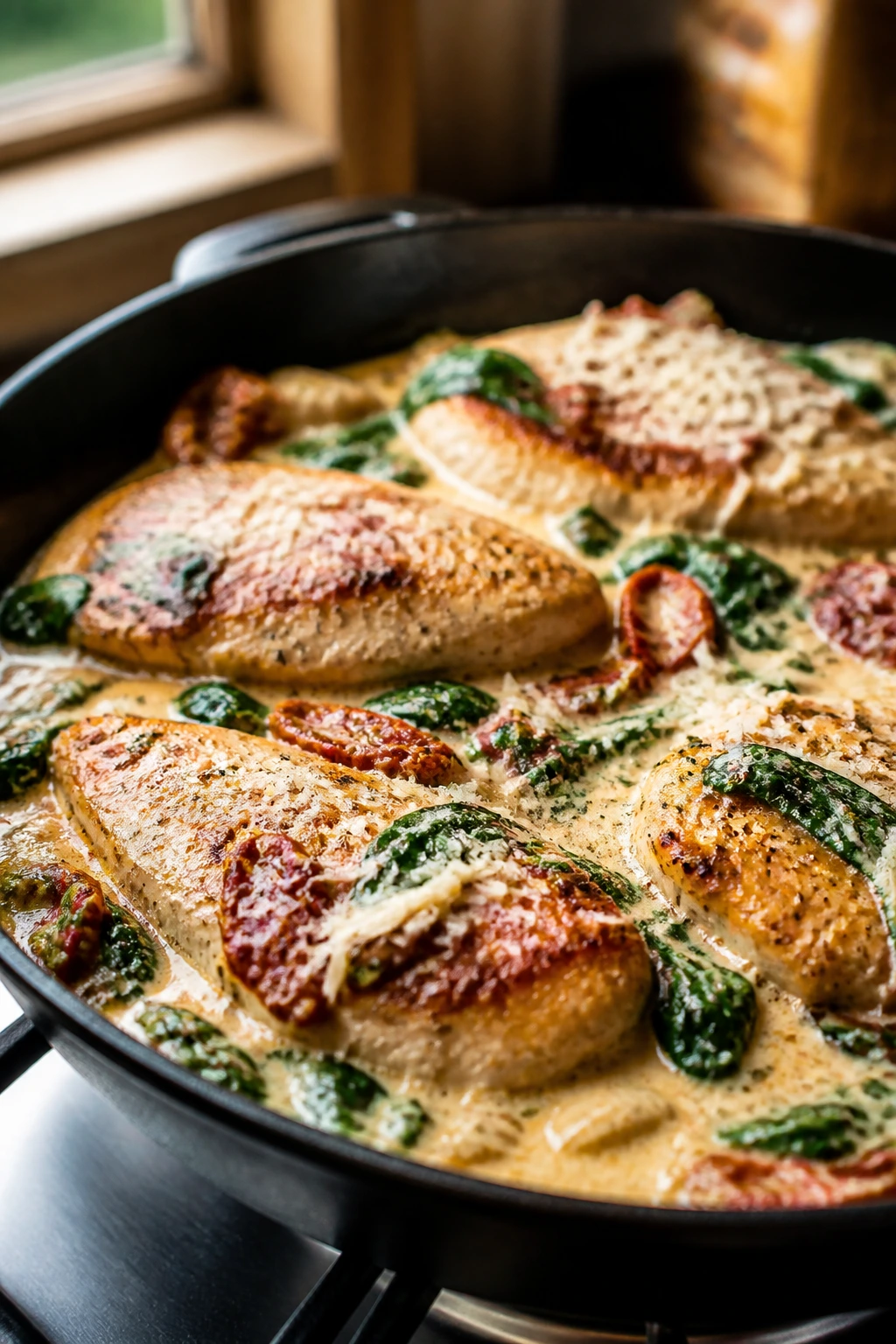
Presentation: Keep the chicken visible. Spoon sauces around it or over part of it, but do not bury the whole piece unless you are making ragù or stew. A scatter of herbs, a few lemon wedges, or a little shaved Parmesan goes farther than elaborate plating.
Accompaniments: Crusty bread, polenta, mashed potatoes, pappardelle, farro, roasted potatoes, arugula salad, and simple greens all fit this theme. If the chicken is braised or saucy, give it starch. If it is breaded or grilled, give it something bright and crisp beside it.
Portions: Plan on about 5 to 6 ounces of cooked chicken per adult, or one generous thigh piece, or two smaller cutlets. For dishes with beans, pasta, or polenta, the chicken portion can shrink a little because the plate already has body.
Beverage Pairing: A dry white like Vermentino or Pinot Grigio works with lemony, herb-heavy dishes. For tomato sauces, cacciatore, or ragù, go with Chianti or another dry red that won’t fight the acid. Sparkling water with lemon is the easy answer when wine is not the plan.
Additional Tips and Flavor Boosters
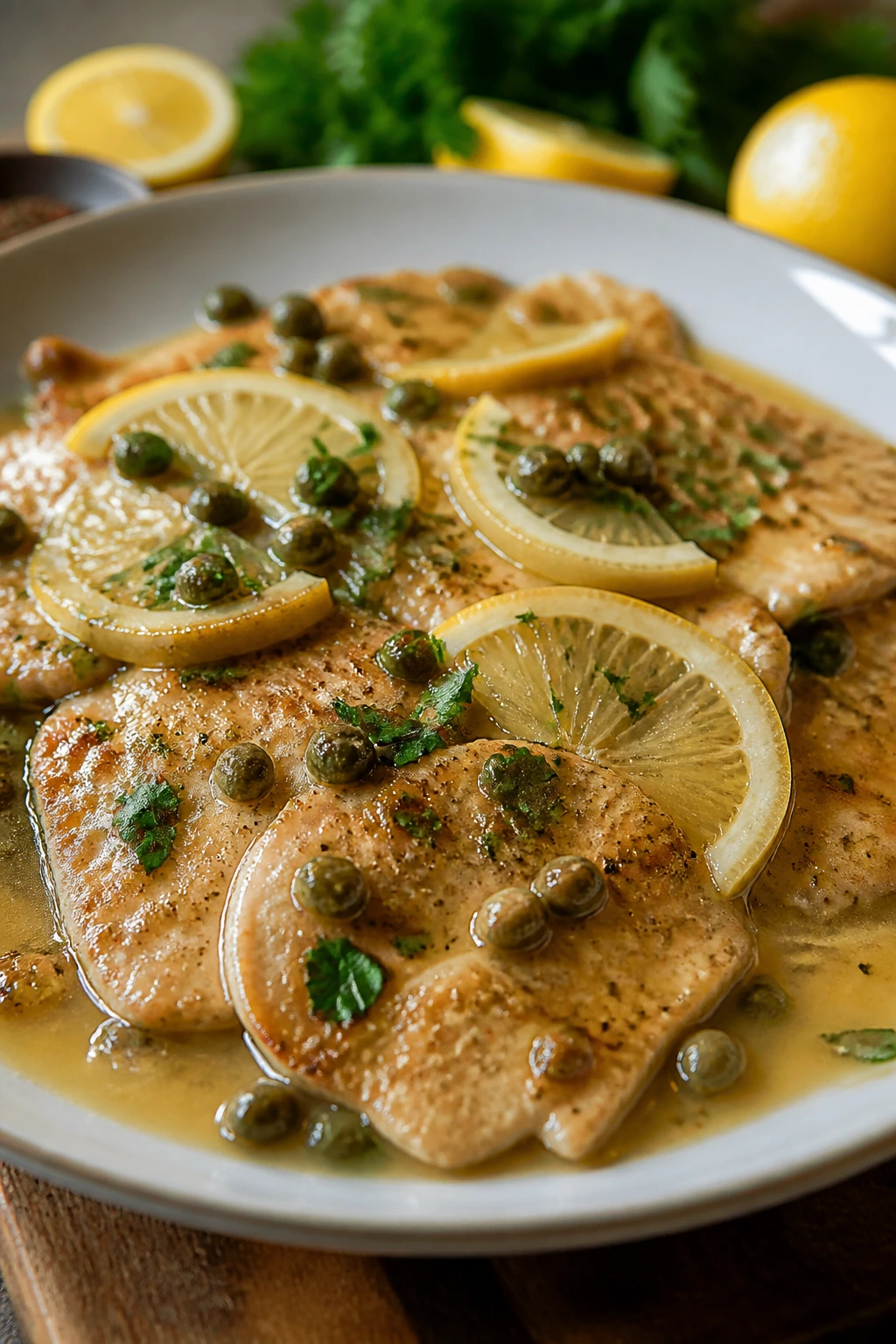
Flavor Enhancement: A Parmesan rind in stew, soup, or ragù adds quiet depth. One rind can make a pot taste like it simmered much longer than it did. A final drizzle of good olive oil does the same thing for roast chicken and grilled dishes.
Customization: If you like heat, add red pepper flakes to cacciatore, puttanesca, or tomato sauces rather than every dish. If you like more brightness, finish with lemon zest or a spoon of red wine vinegar at the end, not halfway through the cook.
Serving Suggestions: Parsley and basil are the safest finishing herbs, but mint works beautifully with peas, and sage belongs with butter and roast chicken. Shaved Parmesan or pecorino gives the plate a salty edge without requiring another sauce.
Make-It-Yours: For a dairy-free version, use olive oil and broth instead of cream, then finish with lemon and herbs. For gluten-free cooking, lean on cornstarch, rice flour, or a gluten-free breadcrumb for cutlets. For a lower-sodium plate, rinse beans and capers, go easier on olives, and season in stages instead of all at once.
Make-Ahead, Storage, and Reheating Guidance
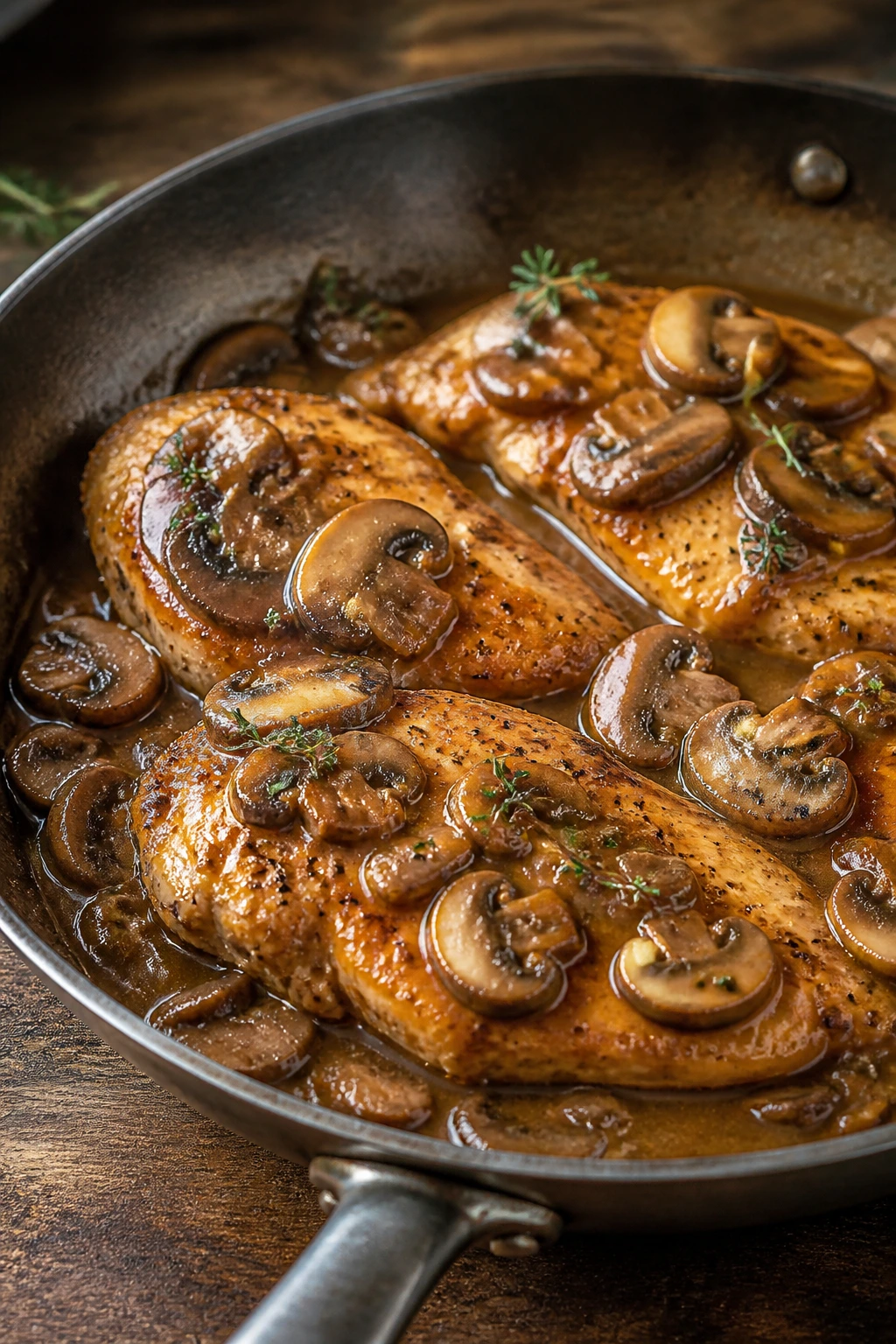
Most of these chicken dishes keep well in the refrigerator for 3 to 4 days if they’re cooled and packed in shallow containers. Braises, stews, and tomato-based sauces usually taste better the next day because the herbs and garlic have time to settle. Creamy skillet dishes are more fragile; they still keep well, but the sauce may thicken a little in the fridge.
Freeze braised chicken, ragù, soup, and cacciatore for up to 2 months. Let them cool first, then freeze in airtight containers with a little headspace. Cream sauces do not always freeze gracefully. If you know you want to freeze them, make the tomato or broth base first and stir in the cream after reheating.
Breaded cutlets are best fresh, but they can be refrigerated for 3 days. Reheat them on a wire rack in a 375°F (190°C) oven for 8 to 10 minutes so the crust has a chance to crisp again. A skillet over medium heat works too, but don’t crowd the pan or the crust softens.
For soup, stew, and braised dishes, reheat gently over low heat until steaming hot. Stir now and then so the beans, pasta, or shredded chicken warm evenly. If the sauce has thickened too much in the fridge, add a splash of broth or water before reheating. Do not boil cream sauces hard; a gentle simmer is enough.
Variations and Adaptations to Try
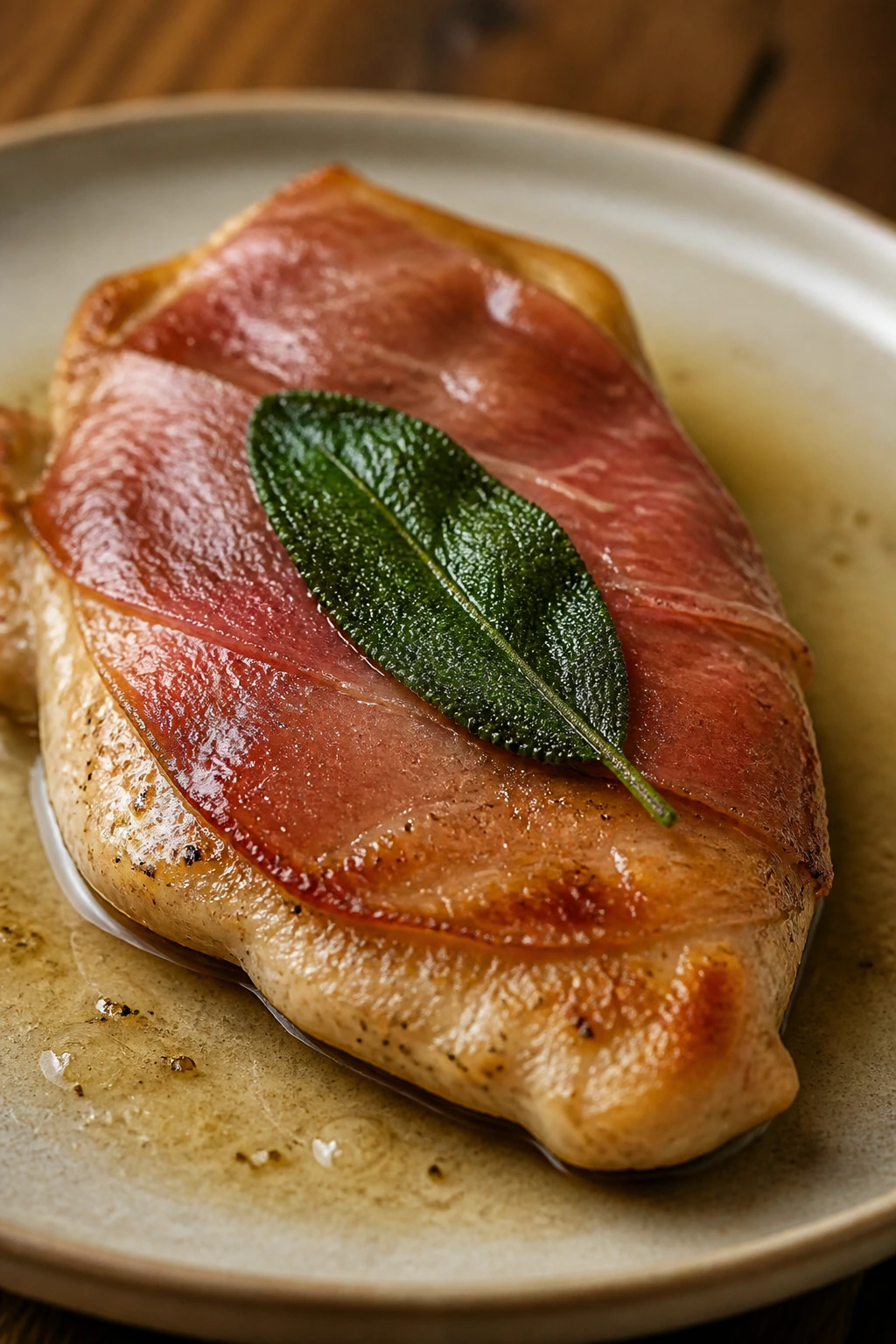
Gluten-Free Tuscan Cutlets: Use rice flour or cornstarch for dredging and gluten-free breadcrumbs for breaded dishes. Polenta, beans, and roasted vegetables make easy gluten-free sides that fit the same flavor profile.
Dairy-Light Skillet Finish: Skip heavy cream and use broth, olive oil, and a spoonful of mascarpone or Parmesan instead. The sauce will be less lush, but the herbs and wine stay clearer.
Slow-Braised Sunday Pot: Turn thighs, wine, tomatoes, beans, and herbs into a longer braise in a Dutch oven or slow cooker. This style works especially well for cacciatore, white braises, and stews.
Kid-Friendly Mild Version: Cut back on capers, olives, red pepper flakes, and strong cheese. Use tomato, lemon, and a little Parmesan instead so the flavor stays bright without the brine.
Lower-Sodium Pantry Version: Choose unsalted broth, rinse capers and beans, and use less pancetta or olives. Lean on lemon zest, fresh herbs, and garlic to keep the dish alive.
Weeknight Sheet-Pan Shortcut: Use cutlets instead of bone-in pieces when you want dinner in under 30 minutes. Pair them with quick-roasting vegetables like zucchini, fennel, or cherry tomatoes and let the oven handle the rest.
Common Mistakes to Avoid
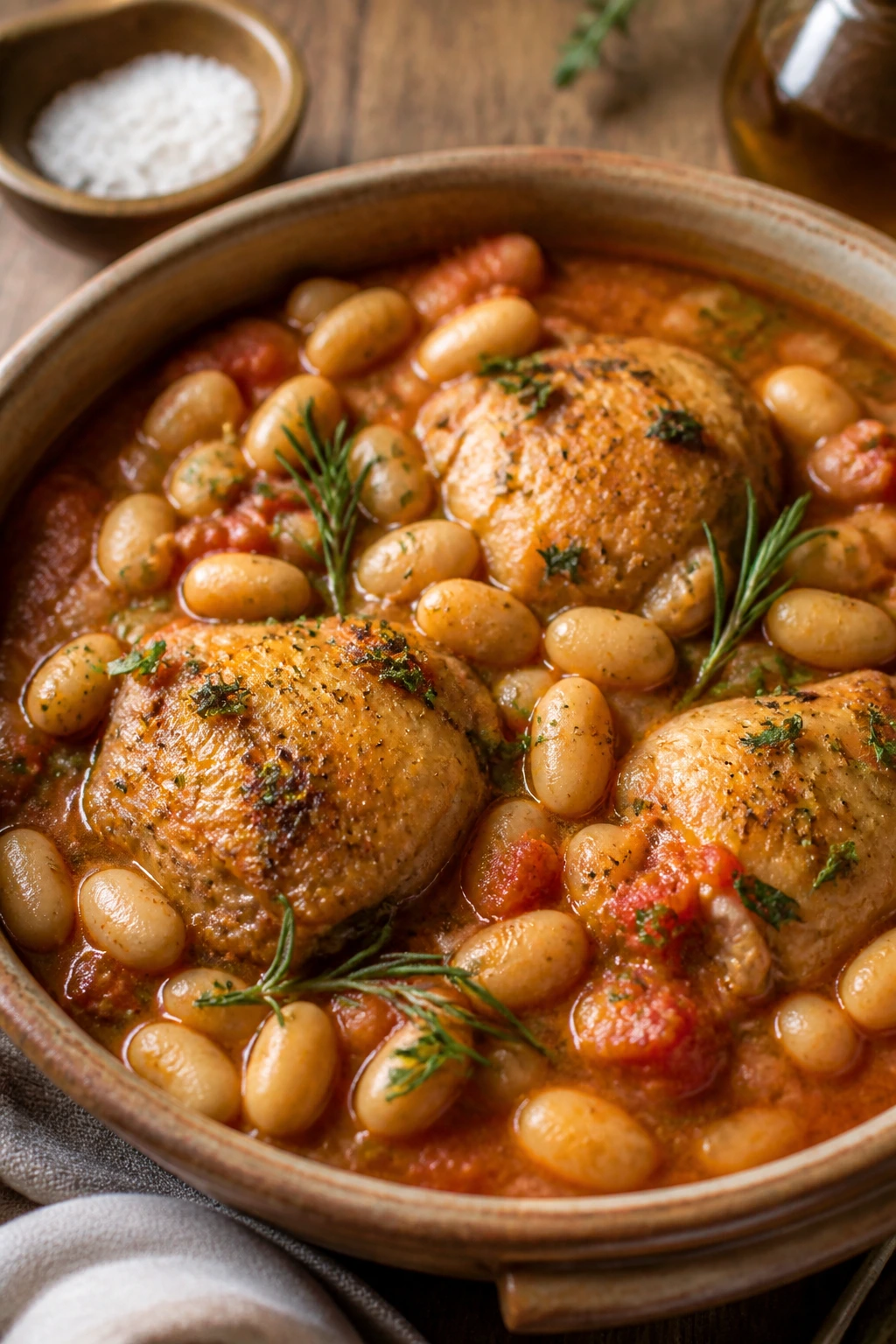
-
Crowding the pan: Chicken needs space to brown. If the skillet or sheet pan is packed too tightly, you get steam instead of color, and the sauce tastes flatter because it never picks up proper browning.
-
Using chicken breasts like they are thighs: Breasts need shorter cooking times and more attention. If you simmer them forever in a cacciatore or cream sauce, they dry out and turn stringy.
-
Adding dairy to a boiling pan: Cream, mascarpone, and cheese sauces are happiest at a gentle simmer or off the heat. Hard boiling can make them grainy or split.
-
Under-seasoning beans, grains, or bread: Cannellini beans, farro, polenta, and bread all need salt more than you expect. If the base tastes bland, the whole plate will feel muted even if the chicken is seasoned well.
-
Skipping acid at the end: Lemon juice, wine vinegar, or caper brine keeps the rich dishes from getting dull. Taste the sauce right before serving and decide if it needs a little snap.
-
Using herbs at the wrong moment: Dried herbs belong early, fresh basil and parsley belong late. If you cook the fresh herbs too long, they lose the sharp, green smell that makes the dish feel alive.
Frequently Asked Questions
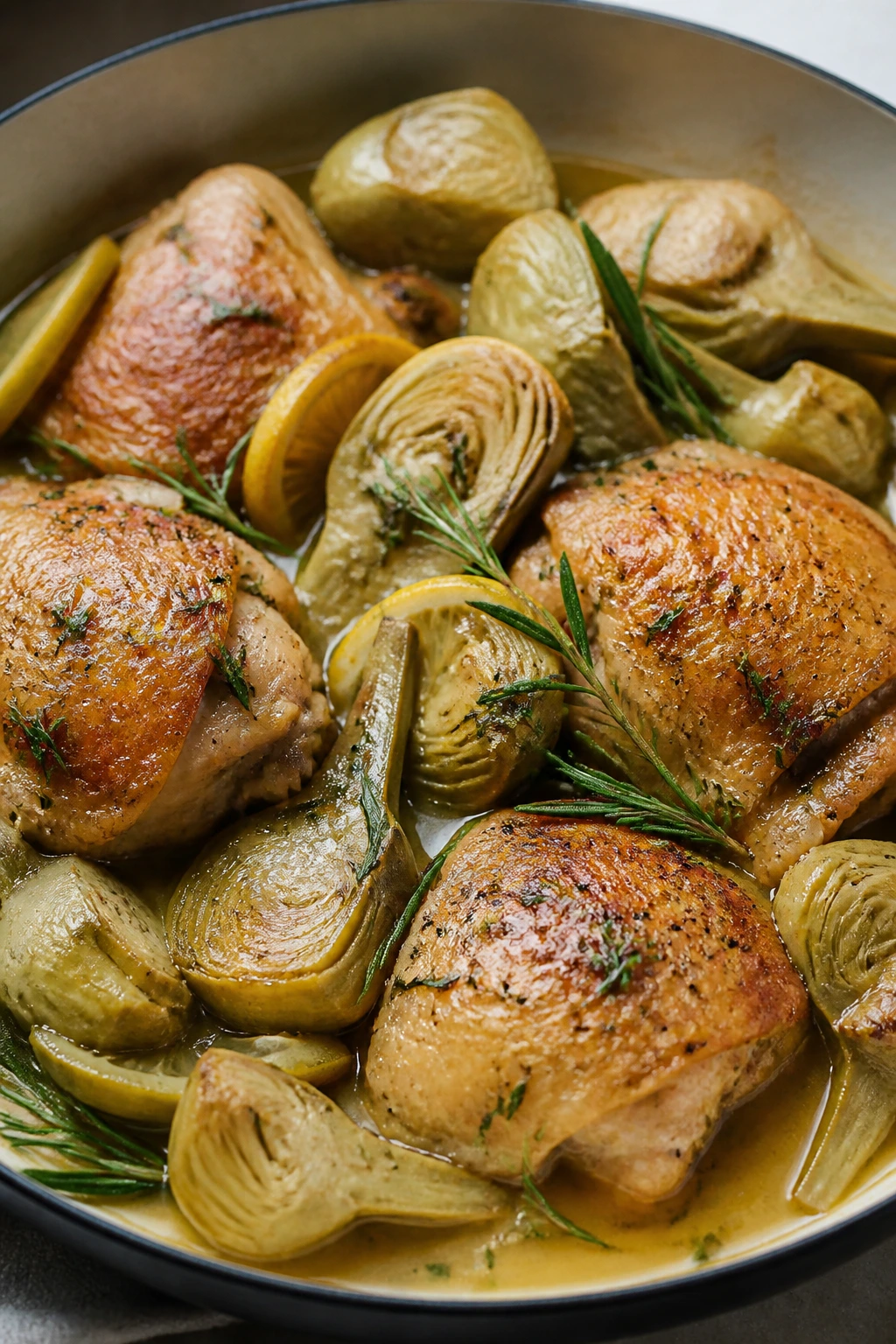
Can I use chicken breasts instead of thighs in most of these dishes?
Yes, but keep an eye on the clock. Breasts work best in piccata, scaloppine, cutlets, stuffed breasts, and quick skillet sauces; they need less time and a gentler simmer than thighs.
What wine should I cook with for these recipes?
Choose a dry wine you would drink. For white sauces and braises, Pinot Grigio, Vermentino, or another dry white works well. For cacciatore and ragù, a dry red like Chianti fits the flavor better than anything sweet or syrupy.
Do I have to use fresh herbs?
Not for rosemary, thyme, or oregano. Fresh herbs are nice, but dried versions hold up well in long-cooking dishes. Basil, parsley, and mint matter most at the end, where fresh flavor makes a real difference.
Can I freeze creamy Tuscan chicken?
You can, but the sauce may separate a little when reheated. If freezing matters, freeze the chicken and tomato or broth base first, then add cream after thawing and warming.
What’s the best side dish if I only want to make one?
Polenta is the most forgiving side for saucy chicken, because it catches everything. Bread is the simplest, and roasted potatoes are the best if you want something that can stand beside a braise without getting soggy.
How do I keep chicken breasts from drying out?
Use cutlets or pound the breasts to even thickness, then stop cooking as soon as they reach 165°F (74°C). If they are sitting in sauce, pull them slightly early and let carryover heat finish the job.
Can I use jarred sun-dried tomatoes and olives, or do they have to be fresh?
Jarred sun-dried tomatoes and good olives are absolutely fine here. Drain them well and taste them first, because both can bring more salt than you expect.
What if my sauce comes out too thin?
Let it simmer uncovered for a few minutes, or remove the chicken and reduce the sauce gently before returning it. For cream sauces, a small handful of Parmesan can help, but add it off the hottest part of the burner.
A Tuscan Table Worth Repeating
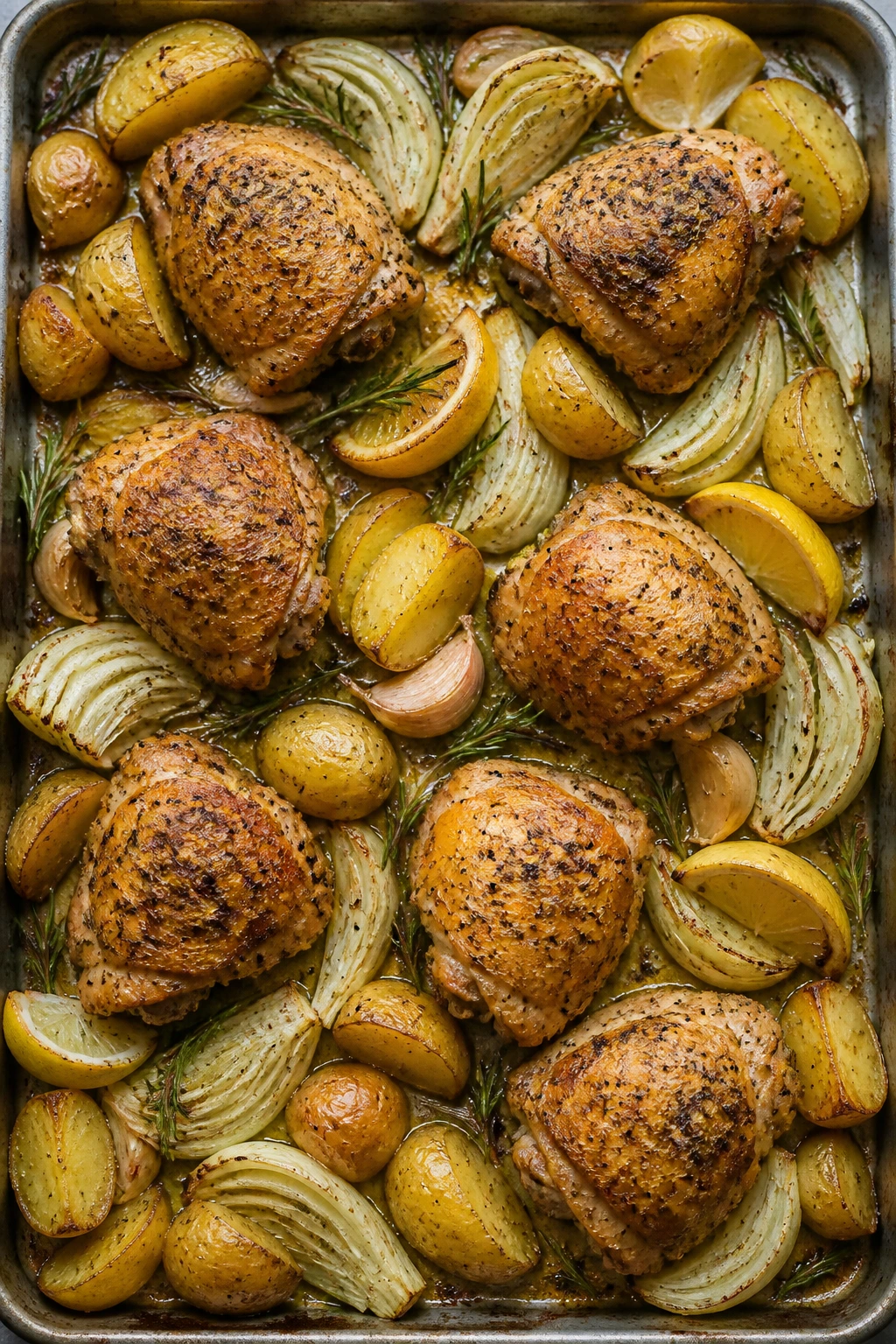
The reason these dishes work is not that they are flashy. It’s that they know what chicken wants: salt, fat, acid, and a little patience when the pot asks for it. Once you start cooking this way, the whole category of “plain chicken” stops making sense.
Some nights call for a fast cutlet with lemon and arugula. Other nights want a braise with beans, wine, and a piece of bread to chase the sauce. Both belong on the same table, and both can taste like someone cared about the details.
That’s the part I keep coming back to. The ingredients are ordinary. The finish is not.