



Authentic Mediterranean chicken like Nonna used to make starts with a hot pan and ends with a kitchen that smells like garlic, lemon peel, olive oil, and tomatoes that have softened into something deeper than sauce. That smell matters. It tells you the chicken has browned properly, the onions have gone sweet, and the whole pot has taken on that old, sturdy flavor that comes from letting ingredients cook together instead of tossing them into a pan and hoping for the best.
There isn’t one single version of Mediterranean chicken that every family would swear by, and anyone who tells you there is probably hasn’t spent much time near a real home kitchen. Some Nonne leaned more lemony. Some used olives. Some added potatoes right into the braise, because nobody in that house wanted a separate side dish if the chicken could handle the job itself. This version sits in that honest middle ground: rustic, bright, deeply savory, and built from pantry ingredients that actually belong together.
I prefer this kind of chicken in a Dutch oven, with bone-in thighs, a little wine, a good handful of olives, and enough lemon to keep the sauce awake. It’s not a cream-heavy skillet dinner pretending to be Mediterranean because it has oregano in it. It’s slower, more grounded, and much more interesting. Once the onions soften and the wine goes in, the whole pot starts speaking the same language.
Why This Mediterranean Chicken Belongs on the Sunday Table
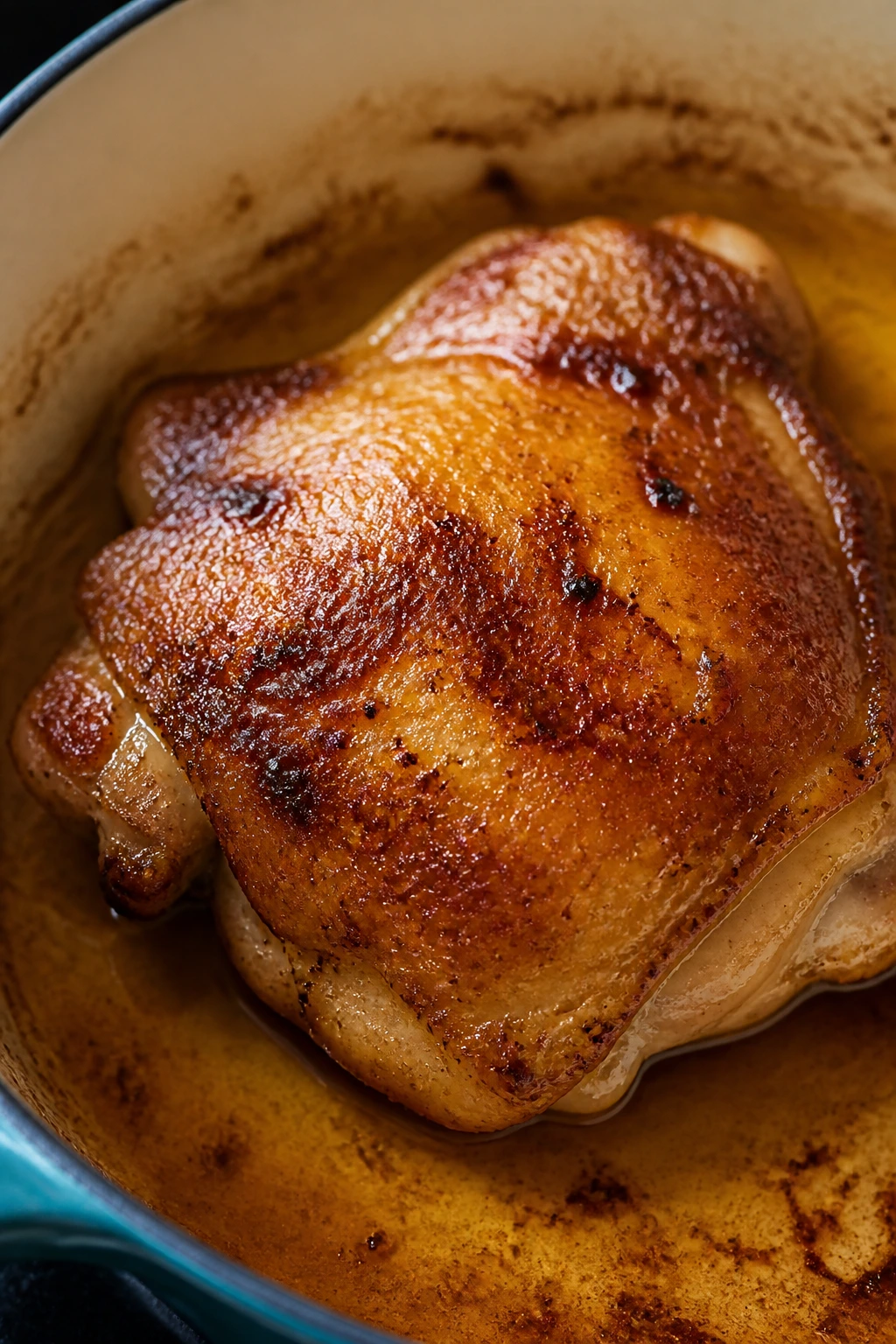
Browned chicken gives the sauce its backbone: Searing the thighs first leaves golden bits on the bottom of the pot, and those bits melt into the wine and stock instead of disappearing into plain liquid.
The lemon stays bright instead of sharp: The zest goes in during the braise, but the juice waits until the very end, which keeps the sauce lively instead of sour and tired.
The potatoes cook in the same pot: They absorb olive oil, tomato, and chicken juices while they soften, so every bite tastes like it came from the same pan for a reason.
It tastes better after a short rest: Ten minutes on the counter lets the sauce settle and the juices move back into the chicken instead of spilling out the moment you cut in.
The ingredient list is practical, not precious: Nothing here asks for a special grocery run unless your pantry is suspiciously empty. The flavor comes from the method, not from exotic extras.
It feeds people properly: One thigh, a scoop of potatoes, and a ladle of sauce is a real plate of food, not a decorative portion that leaves everyone hunting the bread basket.
Yield: Serves 4 to 6
Prep Time: 25 minutes
Cook Time: 55 minutes
Total Time: 1 hour 20 minutes
Chill/Rest Time: 10 minutes
Difficulty: Intermediate — the steps are straightforward, but the dish rewards attention when you’re searing, deglazing, and finishing the sauce.
Best Served: Warm, after a short rest, with crusty bread or a simple green salad.
The Braise That Starts with Olive Oil and Ends with Lemon
This is the kind of chicken that feels more like a meal than a recipe. There’s a difference. A recipe can be tidy and forgettable; a meal has weight, smell, and a little drama in the pot lid when you lift it.
The bones matter here. So do the thighs. That’s not romance talking. Bone-in, skin-on thighs stay juicy through a braise in a way that chicken breasts never quite manage, and the skin gives you the chance to build flavor before the oven takes over. If you want a dish that can handle a proper tomato-and-wine sauce without turning dry, thighs are the move.
The other thing that matters is restraint. A lot of “Mediterranean” chicken recipes get noisy fast — too many herbs, too much acid, too many vegetables that all want to be the main character. Nonna-style cooking, the good kind, knows when to stop. Onion, carrot, celery, garlic, tomatoes, olives, lemon, parsley. That’s enough. If the olive oil is good and the chicken is browned well, you don’t need a confession from the spice rack.
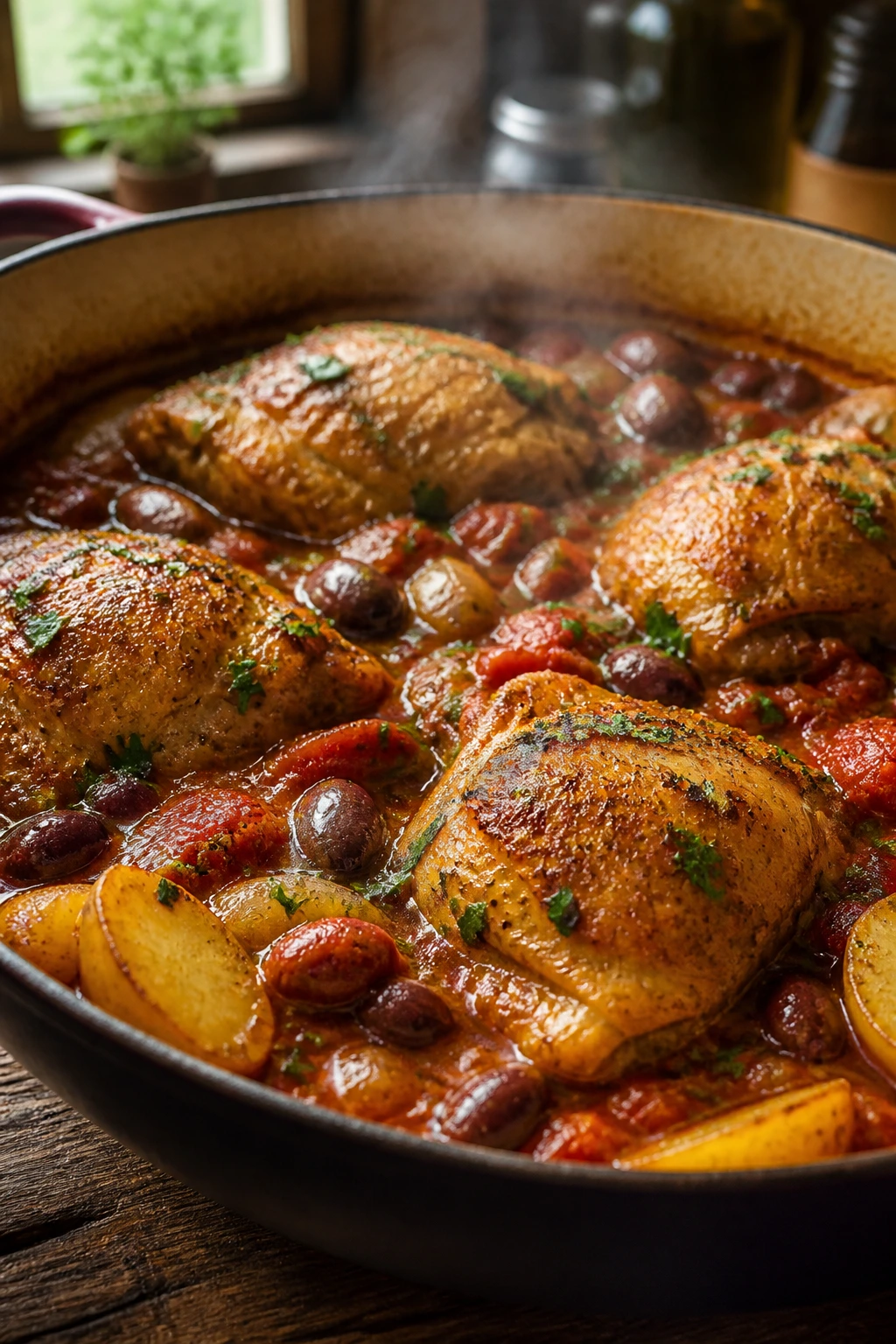
I also like that this dish lands somewhere between a stew and a roast. The chicken doesn’t drown. The potatoes don’t fall apart into mash. The sauce stays loose enough to spoon but thick enough to cling to the back of a spoon for a second before sliding off. That texture is half the pleasure. The other half is what happens when you drag crusty bread through the bottom of the pot and catch the tomato-olive juices that the spoon missed.
What Goes Into the Pan
The ingredient list is short enough to read without taking a breath, but each piece does work. Nothing here is decorative, and that’s exactly why the dish tastes like home instead of a restaurant version trying too hard.
For the Chicken
- 2 1/2 to 3 pounds bone-in, skin-on chicken thighs (6 to 8 thighs)
- 1 1/2 teaspoons kosher salt, plus more to taste at the end
- 1 teaspoon freshly ground black pepper
- 1 teaspoon dried oregano
- 1/4 teaspoon red pepper flakes, optional
- 3 tablespoons extra-virgin olive oil, divided
For the Braise
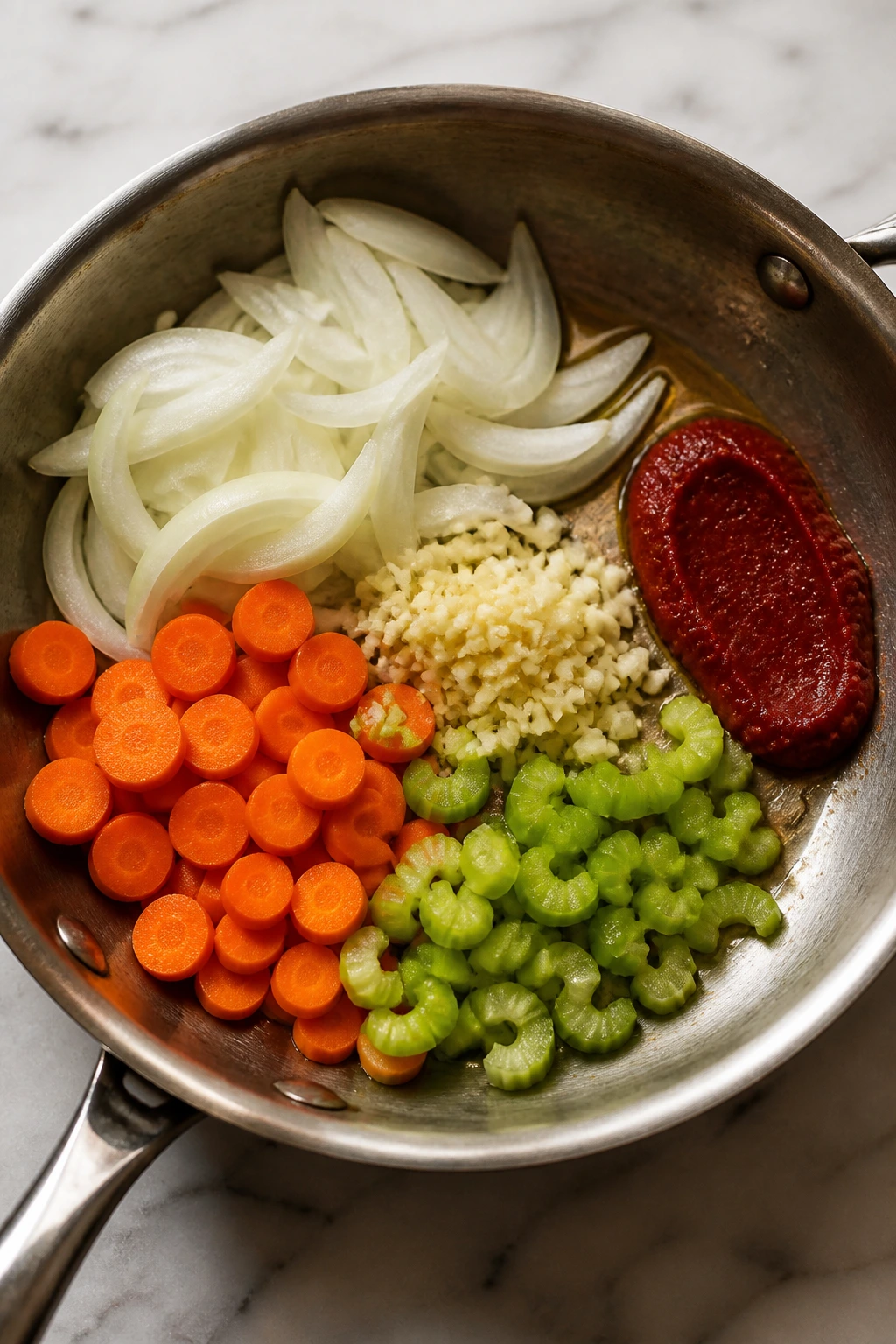
- 1 large yellow onion, sliced into thin half-moons
- 2 carrots, peeled and sliced into 1/2-inch coins
- 2 celery stalks, sliced into 1/4-inch pieces
- 4 garlic cloves, minced
- 1 tablespoon tomato paste
- 1/2 cup dry white wine
- 3/4 cup low-sodium chicken stock
- 1 1/2 cups cherry tomatoes, left whole or halved if large
- 1 pound baby potatoes, halved if larger than a golf ball
- 1/2 cup pitted Kalamata olives
- 1 bay leaf
- 1 teaspoon chopped fresh rosemary, or 1/2 teaspoon dried rosemary
For the Finish
- 1 lemon, zested and juiced
- 2 tablespoons chopped fresh parsley
Why Each Ingredient Earns Its Place
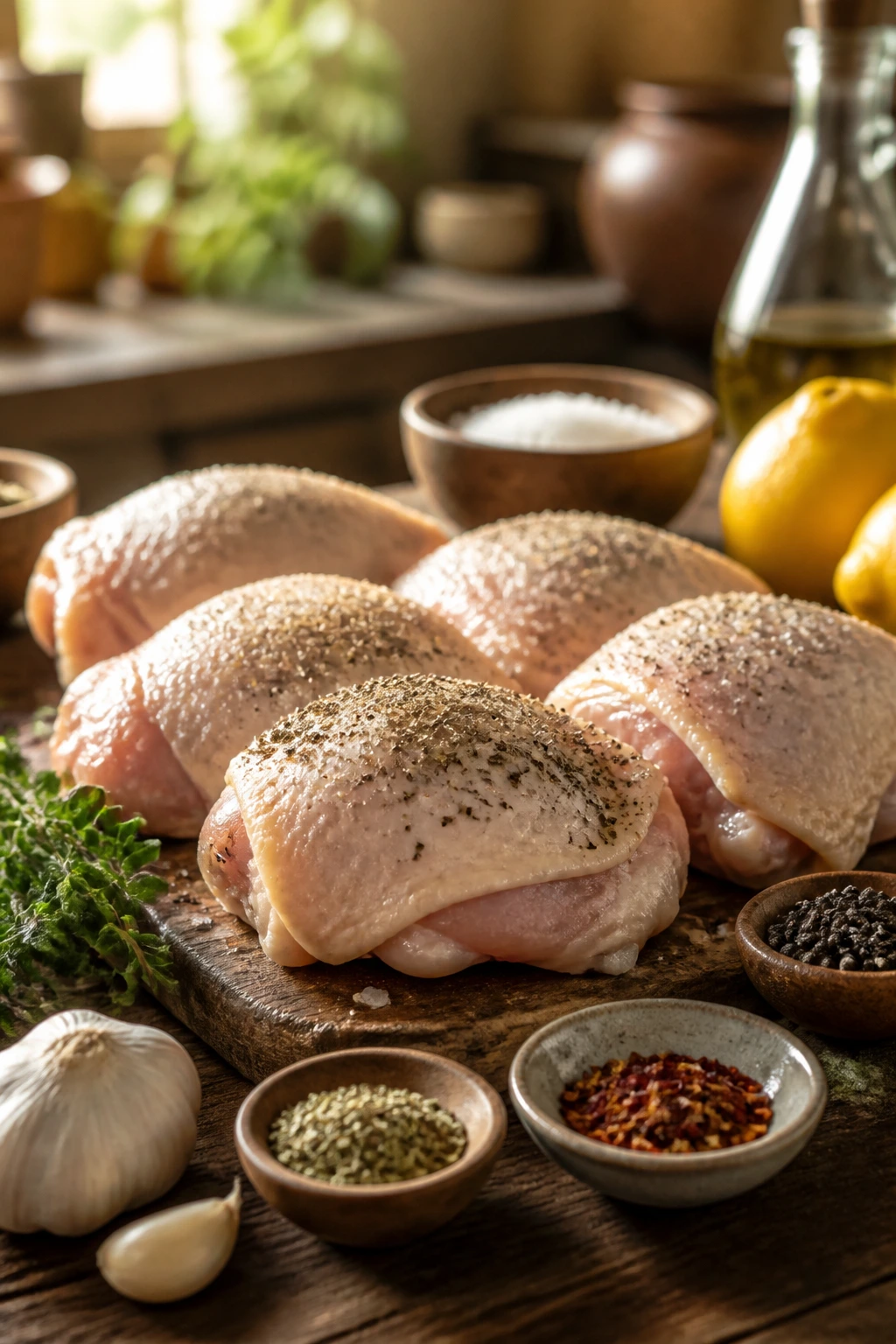
Chicken and Seasoning
What to use: 2 1/2 to 3 pounds bone-in, skin-on chicken thighs, plus kosher salt, black pepper, oregano, and a pinch of red pepper flakes if you want a little heat.
Preparation: Pat the thighs dry with paper towels before seasoning them. That dry surface is what helps the skin brown instead of steaming, and the seasoning sticks better when the chicken isn’t slick with moisture.
Substitutions: Bone-in drumsticks work if that’s what you have, and they braise well. Boneless, skinless thighs can work too, but they need less oven time and give up the crisp-skin payoff that makes this dish feel special.
Tips: I would not use chicken breasts here unless you have no other choice. Breasts cook faster, dry out more easily, and don’t give you the same rich sauce from the rendered fat and skin.
The Sofrito Base
What to use: 1 onion, 2 carrots, 2 celery stalks, 4 garlic cloves, and 1 tablespoon tomato paste.
Preparation: Slice the onion thin so it softens evenly, and keep the carrots and celery on the small side so they melt into the sauce instead of staying crunchy. Mince the garlic last so it doesn’t burn while you’re chopping everything else.
Substitutions: If you don’t like celery, use one small fennel bulb instead. It gives the braise a light anise note that feels very Mediterranean and plays well with lemon and olives.
Tips: Salt the vegetables lightly as they cook. That tiny bit of seasoning pulls moisture out and helps them soften without sticking to the bottom of the pot.
Wine, Stock, and Tomatoes
What to use: 1/2 cup dry white wine, 3/4 cup low-sodium chicken stock, and 1 1/2 cups cherry tomatoes.
Preparation: Keep the wine measured and ready before you add it, because deglazing happens fast. If your cherry tomatoes are large, halving them helps them break down into the sauce more quickly.
Substitutions: If you do not cook with wine, use extra chicken stock and finish with a teaspoon of white wine vinegar or lemon juice for brightness. A dry vermouth can work too if you like a slightly herbal edge.
Tips: Low-sodium stock gives you control, which matters because olives, tomato paste, and reduced wine all bring their own salt. A full-sodium stock can push the dish into briny too fast.
Potatoes, Olives, Herbs, and Citrus
What to use: 1 pound baby potatoes, 1/2 cup Kalamata olives, 1 bay leaf, 1 teaspoon rosemary, the zest and juice of 1 lemon, and 2 tablespoons parsley.
Preparation: Cut any large baby potatoes in half so they cook in the same window as the chicken. Keep the lemon juice for the end, and chop the parsley right before serving so it stays bright.
Substitutions: Green olives can stand in for Kalamata, but rinse them first because they can be sharper and saltier. If rosemary feels too piney to you, thyme is the cleanest swap.
Tips: The olives should be pitted. That sounds obvious until someone bites into a pit and turns a good dinner into a dental emergency. Ask me how unfun that is.
The Tools That Make It Easier
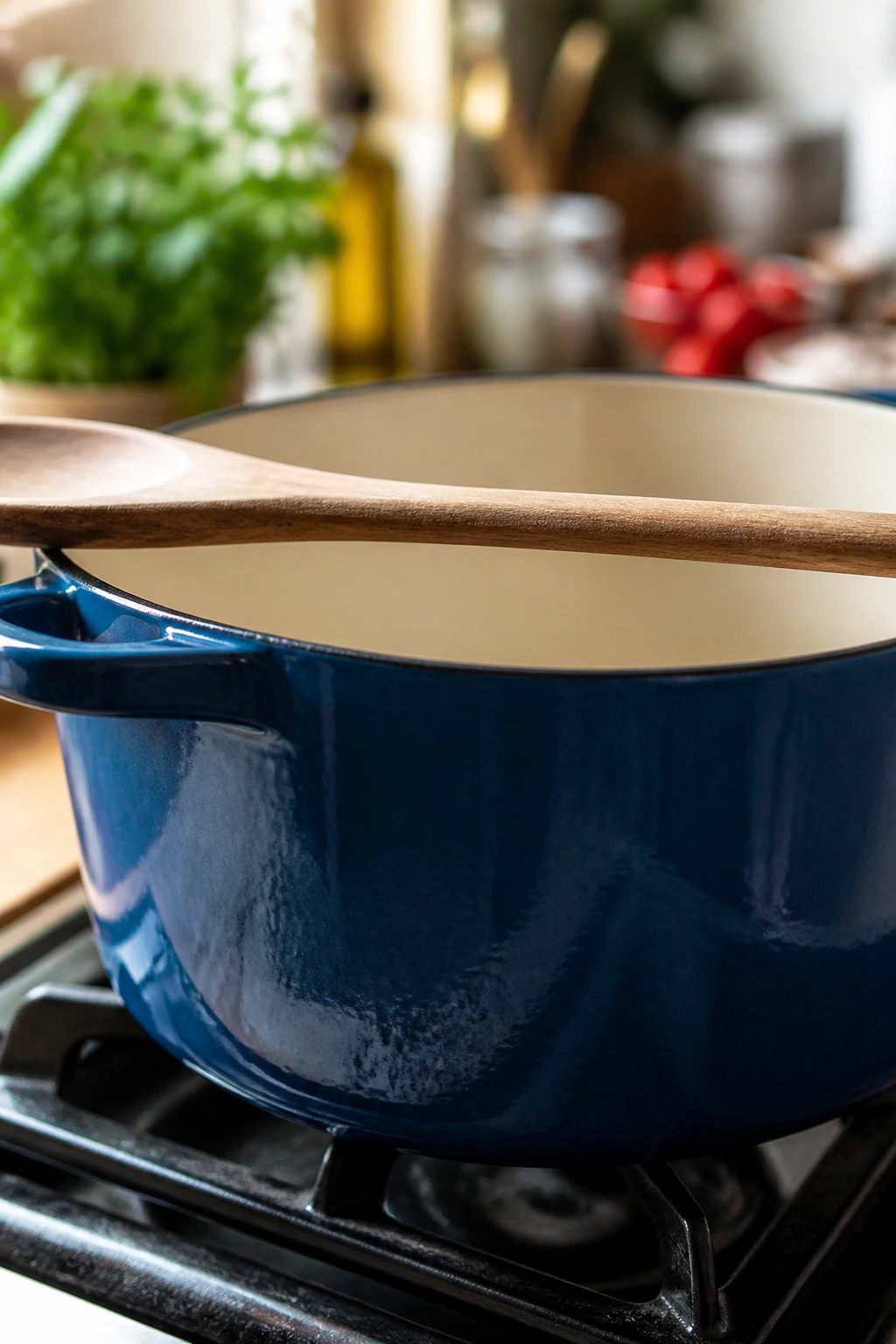
You do not need a cabinet full of gadgets for this. You need a few sturdy pieces that make braising feel calm instead of chaotic.
- 5- to 6-quart Dutch oven or oven-safe braiser — This is the main vessel. It should be wide enough for the thighs to sit in one layer and heavy enough to hold heat without hot spots.
- Tongs — They make flipping the chicken easier without tearing the skin you worked to brown.
- Sharp chef’s knife — A dull knife turns onions, carrots, and celery into a chore.
- Cutting board — A large one is better here because you’ll chop vegetables, herbs, and lemon in one go.
- Wooden spoon — Perfect for scraping up the browned bits after the wine goes in.
- Instant-read thermometer — The easiest way to know when the thighs are done without guessing or cutting into them too early.
- Microplane or fine grater — Helpful for the lemon zest, which should disappear into the pan without leaving bitter strips behind.
How to Cook It Step by Step
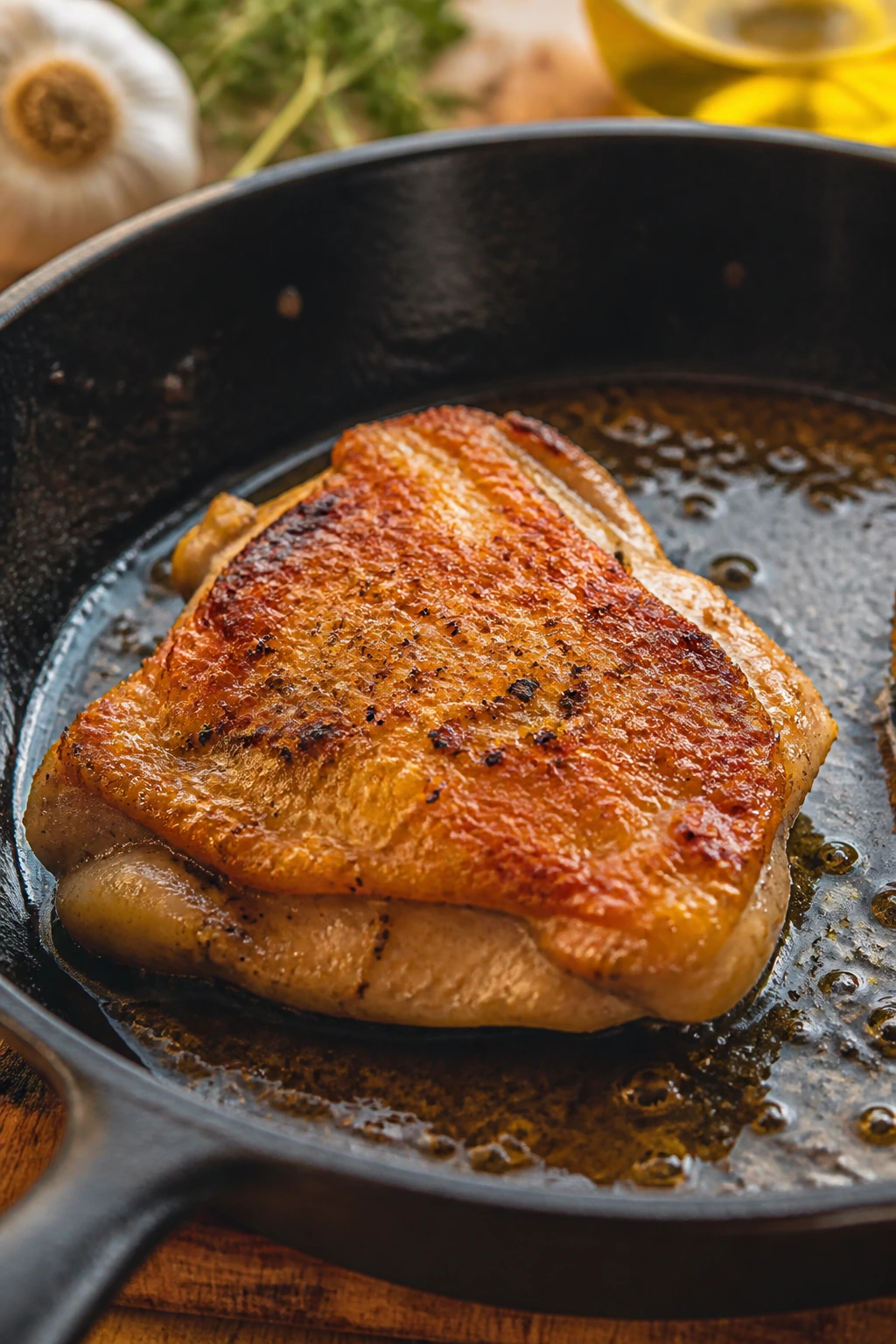
The method is simple, but the order matters. Rush the browning and you lose depth. Skip the deglazing and you throw away flavor. Keep the liquid level sane and the chicken stays roasty on top instead of drifting into soup territory.
Season and Sear
-
Preheat the oven to 375°F (190°C) and position a rack in the center.
-
Pat the chicken thighs dry with paper towels, then season them on both sides with the salt, pepper, oregano, and red pepper flakes if using. Let them sit while you prep the vegetables, even if that’s only 10 minutes.
-
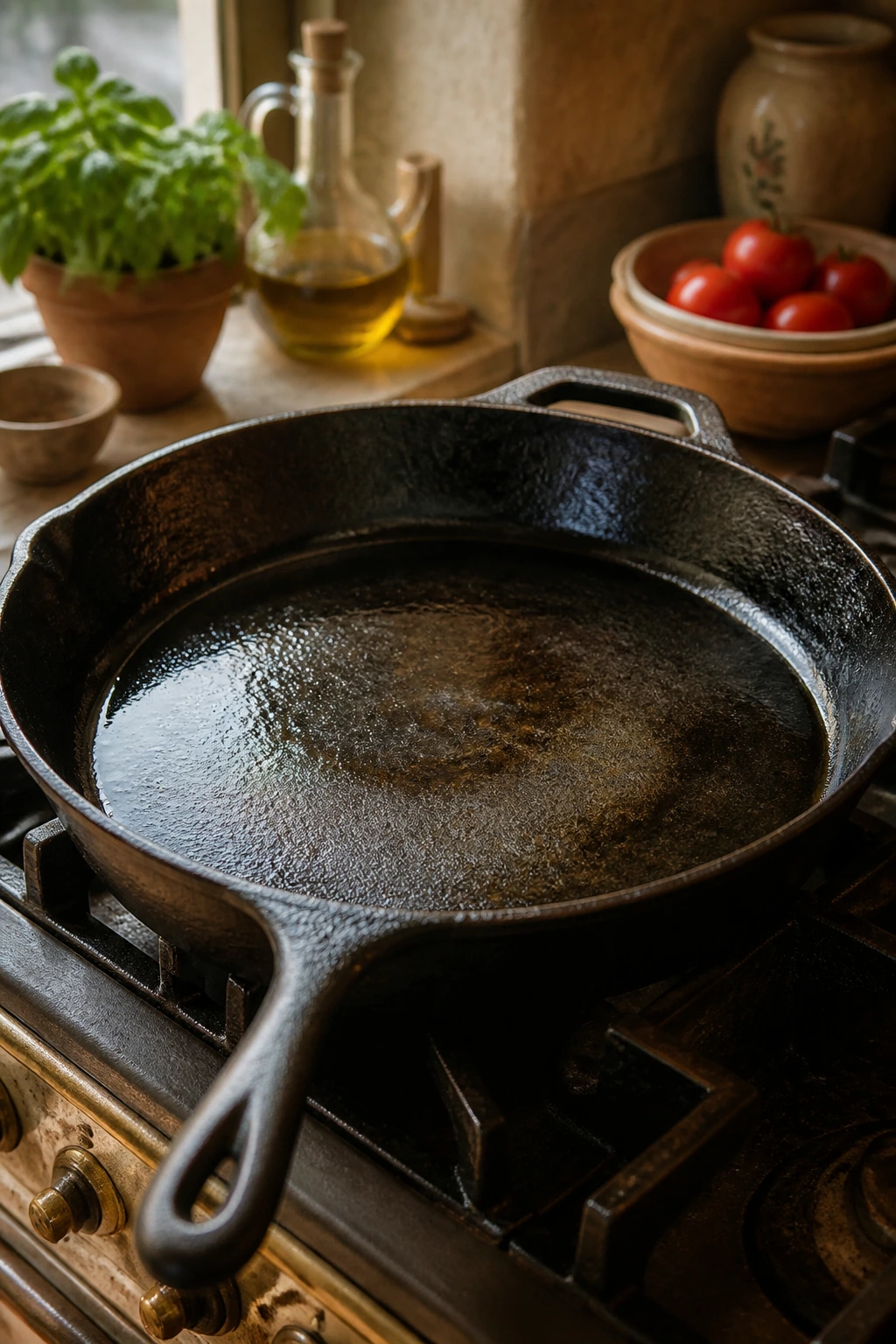
Heat 2 tablespoons of the olive oil in a large Dutch oven over medium-high heat until the oil shimmers. Add the chicken thighs skin-side down and sear for 6 to 8 minutes, without moving them, until the skin is deep golden and releases from the pot easily. Flip and sear the second side for 2 minutes. Transfer the chicken to a plate.
-
Lower the heat to medium and add the remaining 1 tablespoon olive oil if the pot looks dry. Add the onion, carrots, and celery with a pinch of salt. Cook for 6 to 7 minutes, stirring now and then, until the onion turns translucent and the carrots start to soften at the edges.
-
Stir in the garlic and tomato paste and cook for 1 minute, until the tomato paste darkens slightly and smells sweet rather than raw. Do not let the garlic take on dark brown color or it will turn bitter.
Build the Braise
-
Pour in the white wine and scrape the bottom of the pot with a wooden spoon, lifting all the browned bits. Simmer for 1 to 2 minutes until the wine reduces by about half and the sharp alcohol smell fades.
-
Add the chicken stock, cherry tomatoes, potatoes, olives, bay leaf, rosemary, and lemon zest. Stir once, then nestle the chicken thighs back into the pot skin-side up, keeping the top of the skin above the liquid as much as possible. The liquid should come partway up the sides of the chicken, not cover it.
-
Bring the pot to a gentle simmer on the stovetop, then cover it and move it to the oven. Bake for 25 minutes.
Bake and Finish
-
Remove the lid and bake for another 15 to 20 minutes, until the chicken reaches 175°F to 185°F (79°C to 85°C) at the thickest part and the potatoes are tender when pierced with a knife. If you want deeper color on the skin, broil for 2 to 3 minutes at the end, watching constantly. Step away from the oven only if you enjoy regret.
-
Discard the bay leaf, stir in the lemon juice and half the parsley, and taste the sauce. Add more salt or pepper if needed. Let the pot rest for 10 minutes, then sprinkle with the remaining parsley and serve.
How to Serve It Like Nonna Would
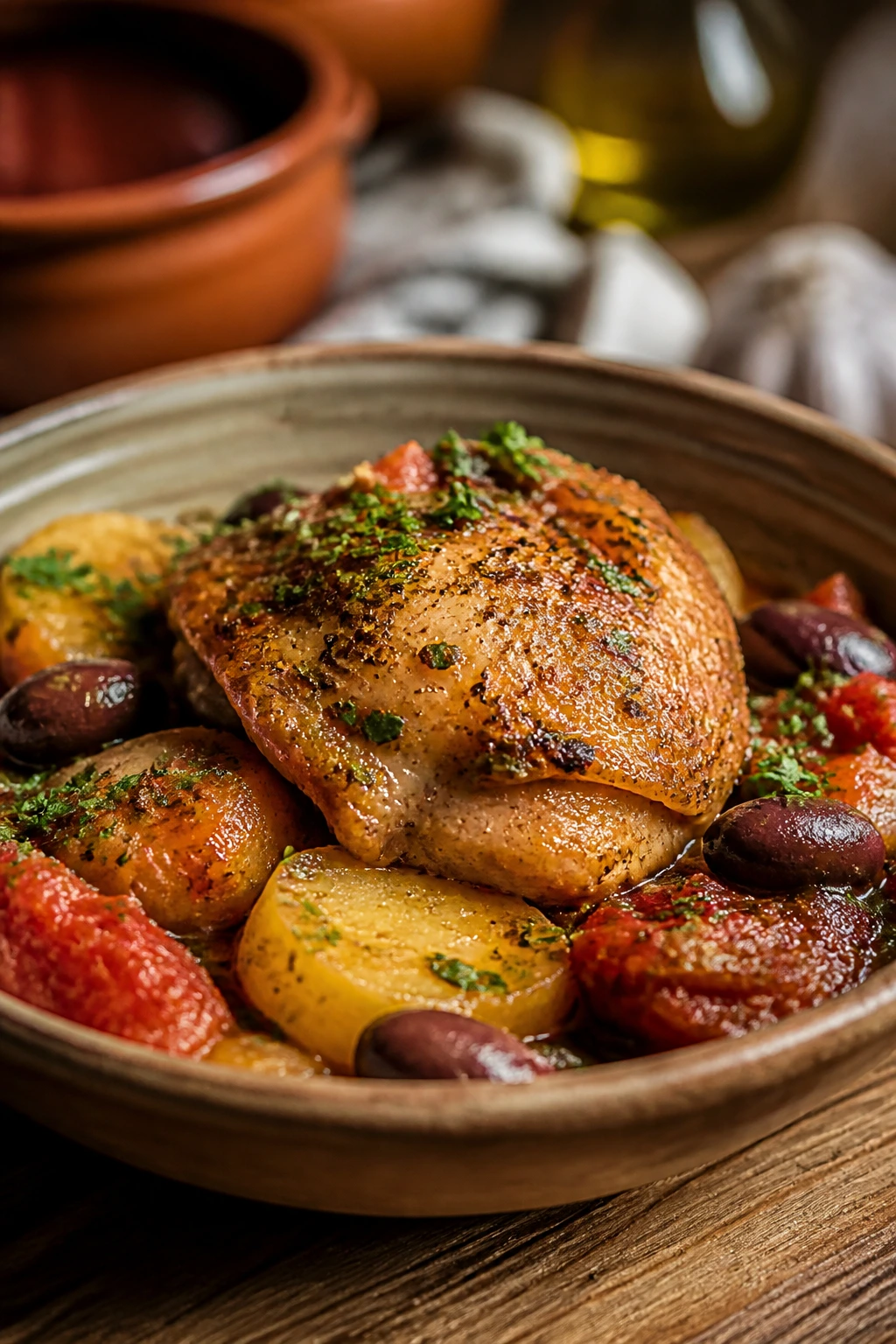
Presentation: Spoon a few potatoes into the bottom of each shallow bowl, set a thigh on top, and ladle the tomato-olive sauce around it rather than burying the skin completely. A final sprinkle of parsley and a small drizzle of olive oil make the plate look finished without turning fussy.
Accompaniments: Crusty bread is the obvious choice, and it earns that spot because it wipes the pot clean. If you want another side, keep it simple: a bitter greens salad with lemon vinaigrette, garlicky sautéed spinach, or roasted fennel with a pinch of salt.
Portions: One thigh per person is plenty for a lighter dinner, especially with potatoes and bread on the table. If the appetite level is closer to Sunday lunch than weekday supper, plan for two thighs for larger eaters and stretch the sauce with an extra loaf of bread.
Beverage Pairing: A dry white wine such as Vermentino, Pinot Grigio, or Sauvignon Blanc works nicely because it echoes the lemon and keeps the olives from feeling too heavy. If you want red, choose something light and bright, like a young Chianti.
Small Moves That Make a Big Difference
Flavor Enhancement: Save a teaspoon of parsley and a teaspoon of lemon zest for the very end, then stir them in right before serving. That tiny fresh hit makes the sauce taste like it woke up five minutes ago instead of simmering for an hour.
Time-Saver: Chop the onion, carrots, and celery the day before and keep them in a covered container in the fridge. When you get home, the actual cooking starts much faster, and nobody has to stand over the cutting board while the pot waits.
Pro Move: If the chicken gives off a lot of fat during searing, spoon off all but about a tablespoon before you add the vegetables. The finished sauce tastes cleaner, and the lemon won’t have to fight through a greasy layer on top.
Cost-Saver: Buy chicken thighs in family packs when they’re on sale and freeze them in meal-sized portions. This dish is forgiving enough to make excellent use of less expensive cuts, which is one reason I keep it in rotation.
Texture Trick: If you want a little more skin color, uncover the pot for the last 10 minutes and keep the chicken as high above the liquid as you can. The skin won’t stay glassy-crisp forever under sauce, but it can still hold enough texture to make the bite interesting.
Mistakes That Turn Rustic Chicken Flat
-
Crowding the pot during searing: The skin turns pale and steamy instead of browned. Fix it by searing in batches if needed, even if that adds five minutes. Crowding is the fastest way to turn a braise bland.
-
Burning the tomato paste or garlic: The sauce gets a bitter edge that never quite leaves. Lower the heat, stir constantly once the garlic goes in, and cook the tomato paste only until it darkens and smells sweet.
-
Letting the liquid cover the chicken skin: The top goes soft and loses the roasted look that makes the dish feel like chicken instead of stew. Keep the thighs skin-side up and add only enough liquid to come partway up the sides.
-
Using too much salt too early: Olives, stock, tomato paste, and reduced wine all bring salt to the pot. If you season aggressively at the start, the sauce can go from balanced to briny by the time it finishes.
-
Adding the lemon juice too soon: Acid that cooks too long tastes harsh and thin. Lemon juice belongs at the end, after the pot comes out of the oven, when it can brighten the sauce instead of flattening it.
-
Skipping the rest: Cut into the chicken the second it leaves the oven and you’ll lose juices onto the cutting board. Give it 10 minutes. The sauce tightens a little, and the meat stays much juicier.
The Best Ways to Change It
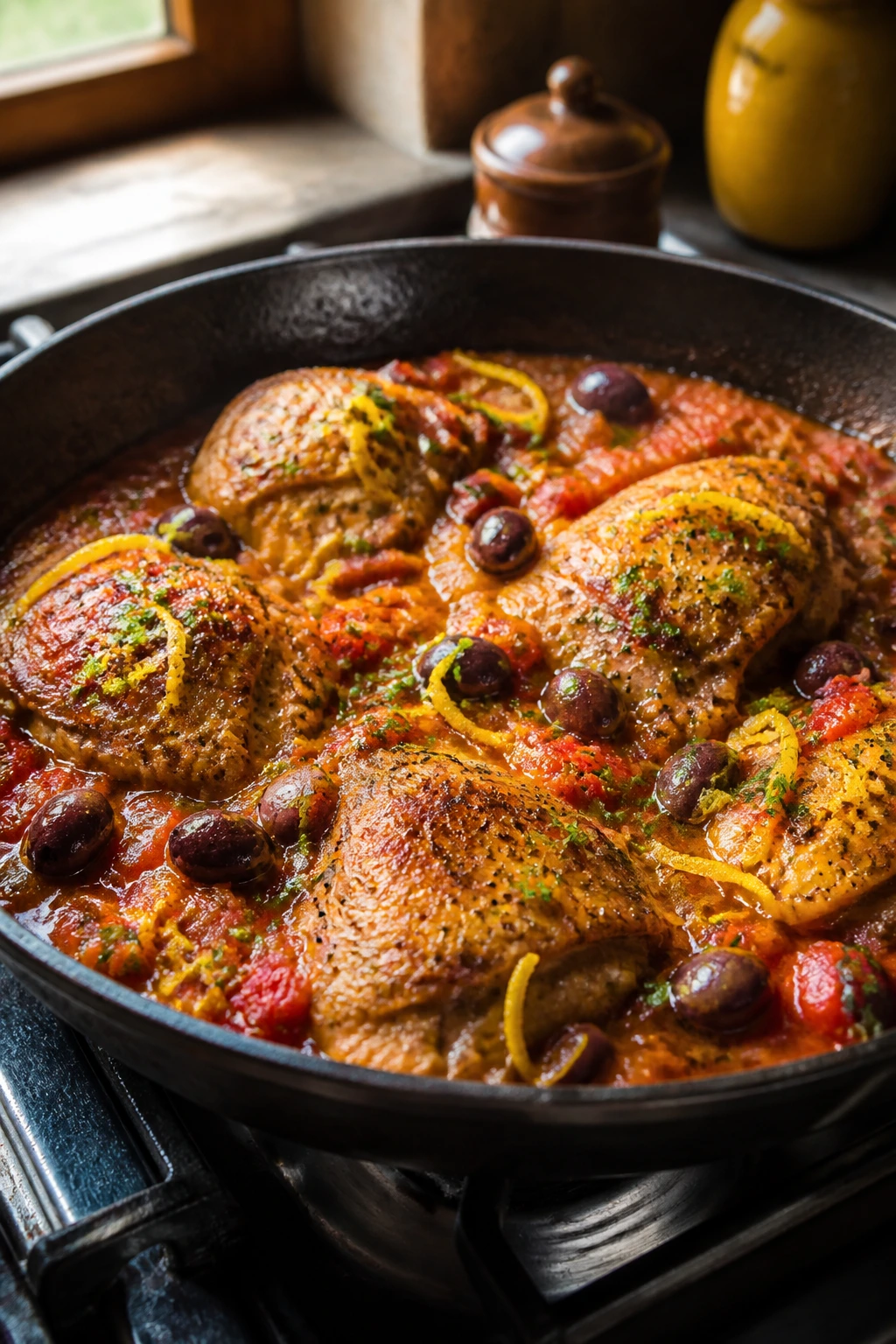
Sicilian Citrus Olive Version: Swap half the lemon zest for orange zest and use green olives instead of Kalamatas. Add a pinch of fennel seed with the onions if you want a softer, sweeter smell coming off the pot.
Hunter-Style Mushroom Braise: Add 8 ounces of sliced cremini mushrooms when the onions go in. They soak up the wine, deepen the sauce, and make the dish taste darker and earthier without changing the bones of the recipe.
Chickpea and Greens Bowl: Stir in one drained 15-ounce can of chickpeas with the potatoes for a fuller, more spoonable dinner. Finish with 3 packed cups of baby spinach in the last minute of cooking so it wilts without turning muddy.
Wine-Free Pantry Version: Use an extra 1/2 cup of chicken stock in place of the wine, then finish with 1 teaspoon white wine vinegar or a little more lemon juice at the end. You lose some depth, but the lemon, olives, and tomato still carry the dish well.
Boneless Thigh Shortcut: Use 2 1/2 pounds boneless, skinless thighs and reduce the oven time to about 20 to 25 minutes after the lid comes off. The chicken still stays tender, but you lose the skin and some of the rendered flavor, so I only reach for this version when time is tight.
Leftovers, Make-Ahead, and Reheating
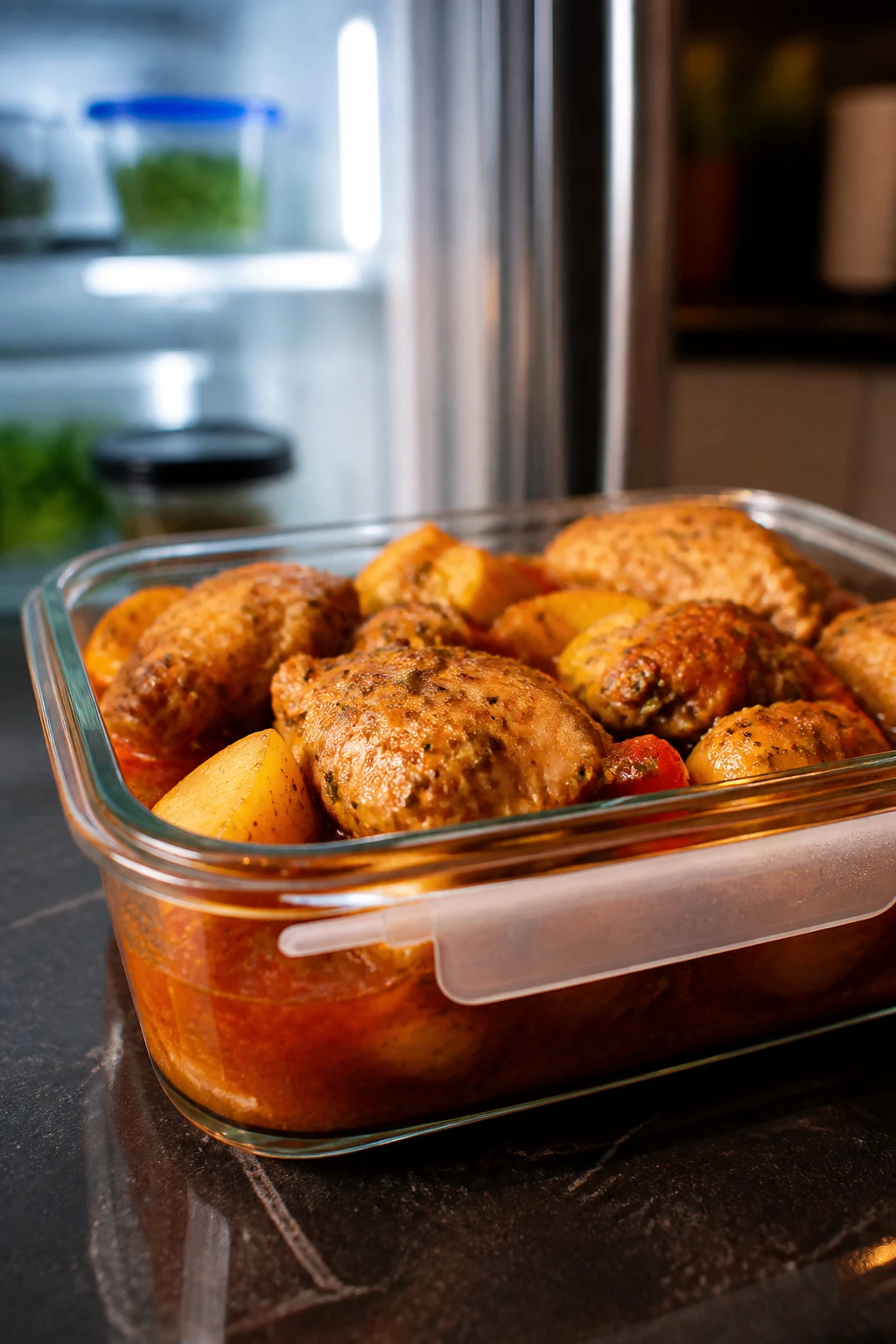
This chicken keeps well, and the sauce often tastes even deeper the next day. The only thing that gets softer is the skin, which is why I like to think of leftovers as a braise problem, not a failure.
Room Temperature: Don’t leave it out for more than 2 hours after cooking. Once the pot has cooled enough to handle, get it into containers.
Refrigerator: Store the chicken and sauce in airtight containers for 3 to 4 days. If the potatoes are in the container, they’ll soak up more of the sauce, which is not a disaster — just a different texture.
Freezer: Freeze for up to 2 months. The best way is to portion the chicken and sauce together, but if you know you’ll want the potatoes firmer, freeze the sauce and chicken separately and cook fresh potatoes when you reheat.
Reheating: For the oven, put everything in a covered baking dish at 325°F (165°C) for 20 to 25 minutes, adding 2 to 3 tablespoons of stock or water if the sauce looks thick. On the stovetop, reheat gently over low heat until the chicken is hot all the way through. A microwave works for single portions, but use 50% power and cover the dish so the sauce does not splatter everywhere.
Make-Ahead: You can season the chicken up to 24 hours ahead and keep it uncovered on a tray in the fridge for better skin texture. The onion-carrot-celery mixture can also be chopped a day ahead. If you want to cook the whole dish in advance, finish it fully, chill it, then rewarm it gently and add the parsley and fresh lemon juice right before serving.
Questions People Ask Before Making It
Can I use chicken breasts instead of thighs?
You can, but I wouldn’t call it the same dish anymore. Breasts need less oven time, and they dry out faster, so you’ll need to pull them earlier and watch them closely. If you go that route, use thick, bone-in breasts if possible and start checking around the 20-minute mark after the pot goes into the oven.
What if I do not want to cook with wine?
Use extra chicken stock and scrape the pan the same way you would with wine. To replace the little bit of brightness wine adds, finish the sauce with a teaspoon or two of lemon juice or white wine vinegar once the chicken is out of the oven.
Can I make this in a slow cooker?
Yes, but brown the chicken and vegetables first if you want the same depth. After that, cook on low for about 4 to 5 hours, then uncover near the end if you need to reduce the sauce a bit. The texture shifts toward stew, which is fine, but it won’t taste as roasted as the oven version.
How do I keep the potatoes from turning mushy?
Cut them so they’re close in size and avoid boiling the pot hard before it goes into the oven. Baby potatoes that are much larger than a golf ball should be halved, and very small ones can go in whole. If you know your oven runs hot, check them a little early.
What should I do if the sauce tastes too salty?
Add a splash of unsalted stock and a squeeze of lemon juice, then let it sit for a minute before tasting again. If the saltiness comes from very briny olives, a few extra cherry tomatoes or a spoonful of tomato sauce can help mellow it out.
Can I use green olives instead of Kalamatas?
Yes, but they tend to be sharper and more assertive, so I’d rinse them first if they’re packed in brine. Green olives work best if you like a brighter, more pungent sauce. Kalamatas give a softer, rounder finish.
What if the sauce is too thin at the end?
Take the chicken out, set it on a plate, and simmer the sauce on the stovetop for a few minutes until it thickens slightly. You can also mash one potato against the side of the pot to help the sauce thicken naturally. I’d do that before reaching for starch.
A Pan Worth Bringing Back
This is the kind of chicken that earns a permanent spot in the rotation because it knows how to behave. It browns when you need it to brown, braises when you need it to braise, and finishes with lemon instead of deadening the whole pot with heavy sauce. That’s the trick with good home cooking: nothing flashy, nothing wasted.
Make it once, and you’ll start nudging the details in your own direction. More parsley. Less rosemary. A few capers. A bigger loaf of bread. That’s how a Nonna-style dish becomes your dish — not by reinventing it, but by learning where it breathes.
The next time you want a chicken dinner that tastes like the stove stayed on for a reason, pull out the Dutch oven and let this one do its work.
Authentic Mediterranean Chicken — Recipe Card
Recipe Name: Authentic Mediterranean Chicken (Nonna-Style)
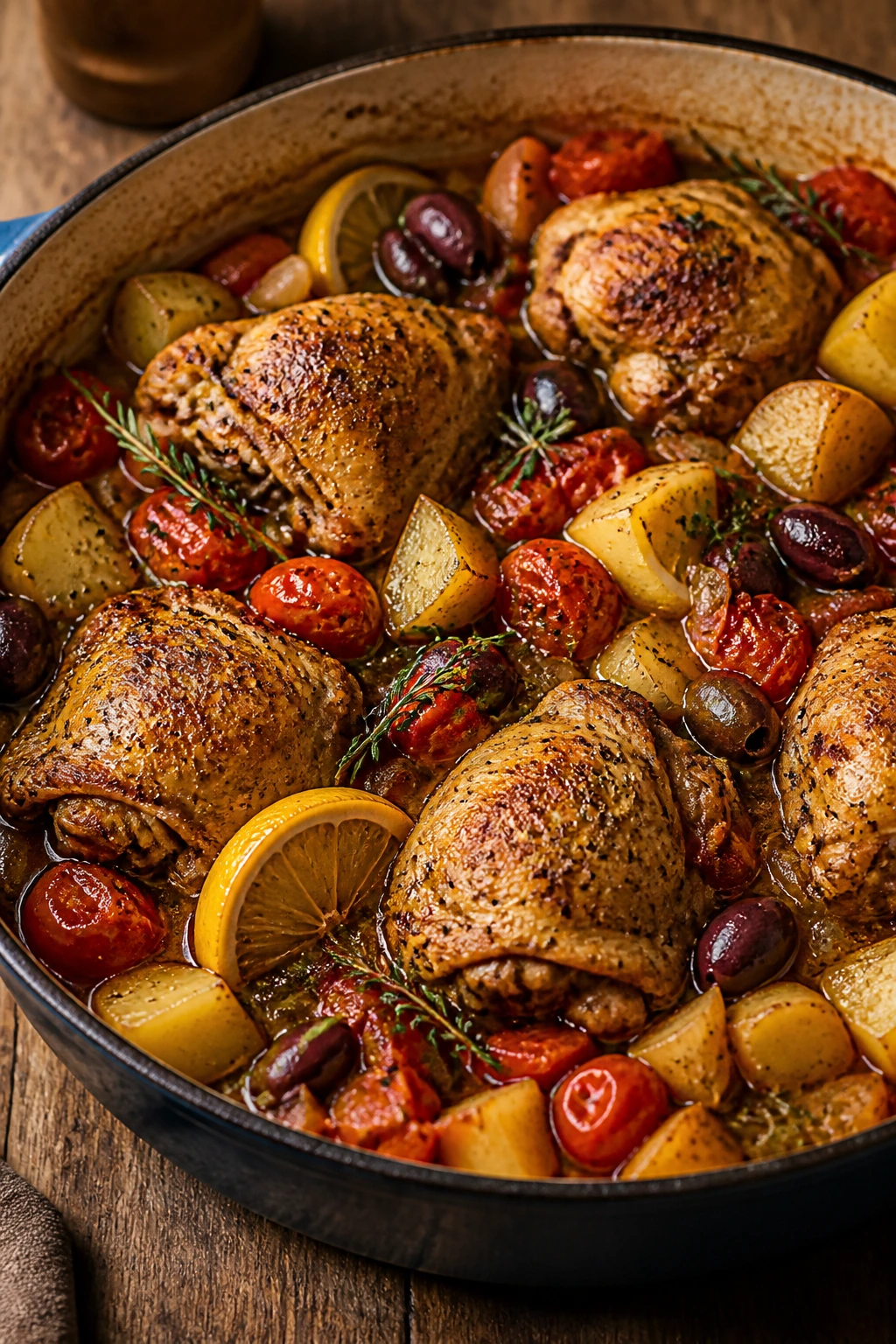
Description: Rustic braised chicken thighs with potatoes, tomatoes, olives, lemon, and herbs, cooked in one pot until the sauce turns glossy and the chicken stays juicy. This version leans Italian in spirit, with a proper sear, a slow braise, and a bright lemon finish.
Prep Time: 25 minutes
Cook Time: 55 minutes
Total Time: 1 hour 20 minutes
Chill/Rest Time: 10 minutes
Course: Main Course
Cuisine: Italian / Mediterranean
Servings: 4 to 6
Calories: About 490 kcal per serving
Ingredients
For the Chicken
- 2 1/2 to 3 pounds bone-in, skin-on chicken thighs (6 to 8 thighs)
- 1 1/2 teaspoons kosher salt, plus more to taste at the end
- 1 teaspoon freshly ground black pepper
- 1 teaspoon dried oregano
- 1/4 teaspoon red pepper flakes, optional
- 3 tablespoons extra-virgin olive oil, divided
For the Braise
- 1 large yellow onion, sliced into thin half-moons
- 2 carrots, peeled and sliced into 1/2-inch coins
- 2 celery stalks, sliced into 1/4-inch pieces
- 4 garlic cloves, minced
- 1 tablespoon tomato paste
- 1/2 cup dry white wine
- 3/4 cup low-sodium chicken stock
- 1 1/2 cups cherry tomatoes, left whole or halved if large
- 1 pound baby potatoes, halved if larger than a golf ball
- 1/2 cup pitted Kalamata olives
- 1 bay leaf
- 1 teaspoon chopped fresh rosemary, or 1/2 teaspoon dried rosemary
For the Finish
- 1 lemon, zested and juiced
- 2 tablespoons chopped fresh parsley
Instructions
-
Preheat the oven to 375°F (190°C). Pat the chicken dry, then season it with salt, pepper, oregano, and red pepper flakes if using.
-
Heat 2 tablespoons olive oil in a Dutch oven over medium-high heat. Sear the chicken skin-side down for 6 to 8 minutes until deep golden, flip for 2 minutes, then transfer to a plate.
-
Lower the heat to medium. Add the remaining 1 tablespoon olive oil if needed, then cook the onion, carrots, and celery with a pinch of salt for 6 to 7 minutes until softened. Add the garlic and tomato paste and cook for 1 minute.
-
Pour in the wine and scrape up the browned bits. Simmer for 1 to 2 minutes until reduced by about half.
-
Add the stock, cherry tomatoes, potatoes, olives, bay leaf, rosemary, and lemon zest. Nestle the chicken back in skin-side up, keeping the skin above the liquid as much as possible.
-
Bring to a gentle simmer, cover, and bake for 25 minutes.
-
Uncover and bake for 15 to 20 minutes more, until the chicken reaches 175°F to 185°F and the potatoes are tender. Optional: broil for 2 to 3 minutes at the end for deeper color on the skin.
-
Remove the bay leaf, stir in the lemon juice and half the parsley, and taste for salt and pepper. Rest for 10 minutes.
-
Garnish with the remaining parsley and serve warm.
Notes: If you want crisper skin, keep the chicken above the liquid and broil briefly at the end. Leftovers keep 3 to 4 days in the fridge and freeze for up to 2 months, though the potatoes will soften a bit after thawing.