



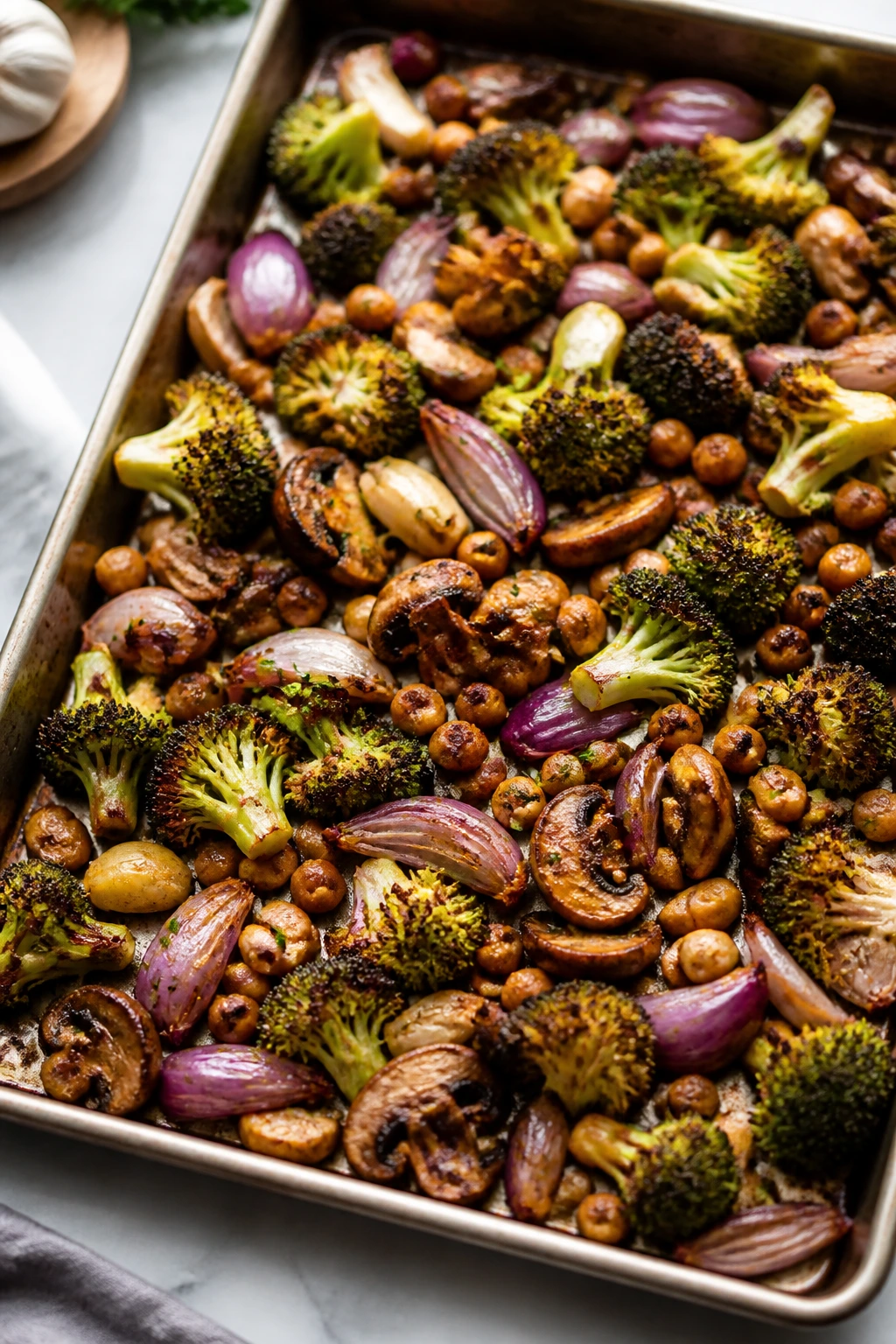
A good pan of caramelized garden veggies for a healthy dinner smells like sweet onions, browned broccoli edges, and garlic that has gone soft and nutty on the heat. Not like boiled vegetables. Not like the limp, gray tray some people call “roasted” because the oven was on and the timer went off. Real caramelized vegetables have edges with a little crunch, centers that still hold shape, and just enough gloss from olive oil and balsamic to make the whole pan look awake.
That’s the part too many vegetable dinners miss. People toss everything onto one sheet pan, crowd it until the pieces touch, and then wonder why the result tastes steamed. Heat needs breathing room. Surface needs time. And the vegetables that seem plain in the produce drawer—onions, carrots, peppers, zucchini, mushrooms, chickpeas—turn into something much better when they get a hot oven and a bit of patience.
This dish is built around that simple shift. High heat, dry surfaces, smart timing, and a glossy finish at the end. The sweet spot is not complicated, but it does reward attention: carrots and onions need a head start, zucchini needs enough room to brown instead of collapse, and balsamic belongs near the finish line so it turns sticky instead of bitter. Kitchen science keeps saying the same thing in plain language. Browning needs space, and moisture is the enemy.
Why a Hot Oven Makes These Vegetables Taste Sweet Instead of Steamed
The first thing to understand is that vegetables are not all built the same. Carrots and onions bring more natural sugar, so they brown into a deeper sweetness. Broccoli and mushrooms need dry heat to lose their raw edge. Zucchini is the delicate one in the group—the one that goes from tender to floppy if you treat it like a carrot. Chickpeas add staying power, a little chew, and enough body that the pan feels like dinner instead of a side dish pretending to be more.
Browning is doing more than “making it pretty”
When vegetables sit in a hot oven with enough room around them, the surface moisture evaporates fast. That dry surface lets the cut edges brown. Once that happens, the flavor gets richer, slightly nutty, and less one-note. Food science doesn’t need fancy language here. Water has to leave before browning can begin. That’s the whole trick.
And the oven temperature matters more than most people think. A gentle roast at 350°F often softens vegetables without pushing them into that deep caramelized zone. Bump it to 425°F, keep the pieces in a single layer, and the edges start doing the useful work. The onions turn jammy. The broccoli gets crispy at the crowns. The mushrooms shrink and concentrate. Good things happen fast.
This is the kind of dinner that likes leftovers
Roasted vegetable trays often get better after a short rest, because the salt pulls a little moisture to the surface and the flavors settle together. That’s one reason a dish like this works so well for meal prep, even if you eat the first portion straight from the oven. The pan can also wear several hats. Serve it over quinoa, tuck it into warm pita, spoon it beside eggs, or eat it as-is when you want something lighter. A plain bowl of vegetables rarely does that. A browned, glossy one does.
The other reason this method matters is nutrition without the sermon. Carrots, peppers, broccoli, and chickpeas bring fiber, vitamins, and a decent amount of satiety. Olive oil helps carry flavor and helps your body use some of the fat-soluble nutrients in the vegetables. That’s a quiet win. No drama. Just a plate that works harder than it looks like it should.
Why You’ll Love This Recipe
-
The edges get real color: two baking sheets and a hot oven give the broccoli, onions, and mushrooms browned spots instead of a soft, wet finish.
-
Dinner happens in one pan style: chickpeas turn the vegetables into a full vegetarian meal, so you do not need a separate protein or a second pot.
-
The timing is forgiving: the carrots can stay in a little longer, the zucchini can come out a little earlier, and the pan still lands in the right place.
-
The finish tastes bright, not heavy: a small balsamic glaze, parsley, and lemon keep the vegetables from tasting flat or oily.
-
Leftovers hold up well: the flavors deepen overnight, and the vegetables reheat better than most roasted dishes if you use a hot skillet or oven.
What Goes Into the Pan
Yield: Serves 4 as a main, 6 as a side
Prep Time: 20 minutes
Cook Time: 25 minutes
Total Time: 45 minutes
Difficulty: Beginner — the work is mostly chopping, tossing, and paying attention to spacing on the pan.
Best Served: Warm, within 10 minutes of roasting
For the Vegetables:
- 1 large red onion, cut into 1-inch wedges — the edges turn sweet and almost sticky in the oven.
- 2 medium carrots, scrubbed and sliced on the diagonal into 1/4-inch pieces — they need the head start and hold their shape well.
- 1 red bell pepper, seeded and cut into 1-inch strips — it softens without losing all of its bite.
- 1 yellow bell pepper, seeded and cut into 1-inch strips — the color and sweetness balance the more earthy vegetables.
- 1 medium zucchini, cut into 1/2-inch half-moons — thick slices keep it from going watery.
- 8 oz cremini mushrooms, halved — they shrink and brown in a way that makes the whole pan taste deeper.
- 1 cup broccoli florets, cut into bite-size pieces — the crowns crisp if they have room.
- 1 pint cherry tomatoes — they blister late and bring a burst of juice at the end.
- 1 (15-ounce) can chickpeas, drained, rinsed, and patted dry — they add body and a little chew.
- 3 tablespoons olive oil — enough to coat the cut surfaces without drowning them.
- 1 teaspoon kosher salt — the vegetables need more than you think.
- 1/2 teaspoon black pepper — a little edge helps the sweetness.
- 1 teaspoon dried thyme — it smells right with roasted onions and mushrooms.
- 1 teaspoon smoked paprika — gives the pan a little warmth and color.
- 1/2 teaspoon garlic powder — keeps the garlic flavor in the roast without burning.
For the Balsamic Glaze:
- 2 tablespoons balsamic vinegar — adds dark, tangy sweetness.
- 1 tablespoon honey or pure maple syrup — helps the glaze turn sticky.
- 2 tablespoons olive oil — smooths the glaze and helps it cling.
- 2 cloves garlic, grated or minced — fresher than jarred garlic here.
- 1 teaspoon Dijon mustard, optional — a small amount helps the glaze emulsify.
- 1 tablespoon lemon juice — sharpens the finish and cuts the sweetness.
For the Finish:
- 2 tablespoons chopped fresh parsley — brings a fresh, green lift.
- 1/4 cup crumbled feta, optional — salty, creamy, and good with the sweet vegetables.
- Lemon wedges, for serving — the final squeeze keeps the whole pan lively.
Why Each Ingredient Matters When the Heat Hits
Main Vegetables
What to use: 1 large red onion, 2 medium carrots, 1 red bell pepper, 1 yellow bell pepper, 1 medium zucchini, 8 oz cremini mushrooms, 1 cup broccoli florets, and 1 pint cherry tomatoes.
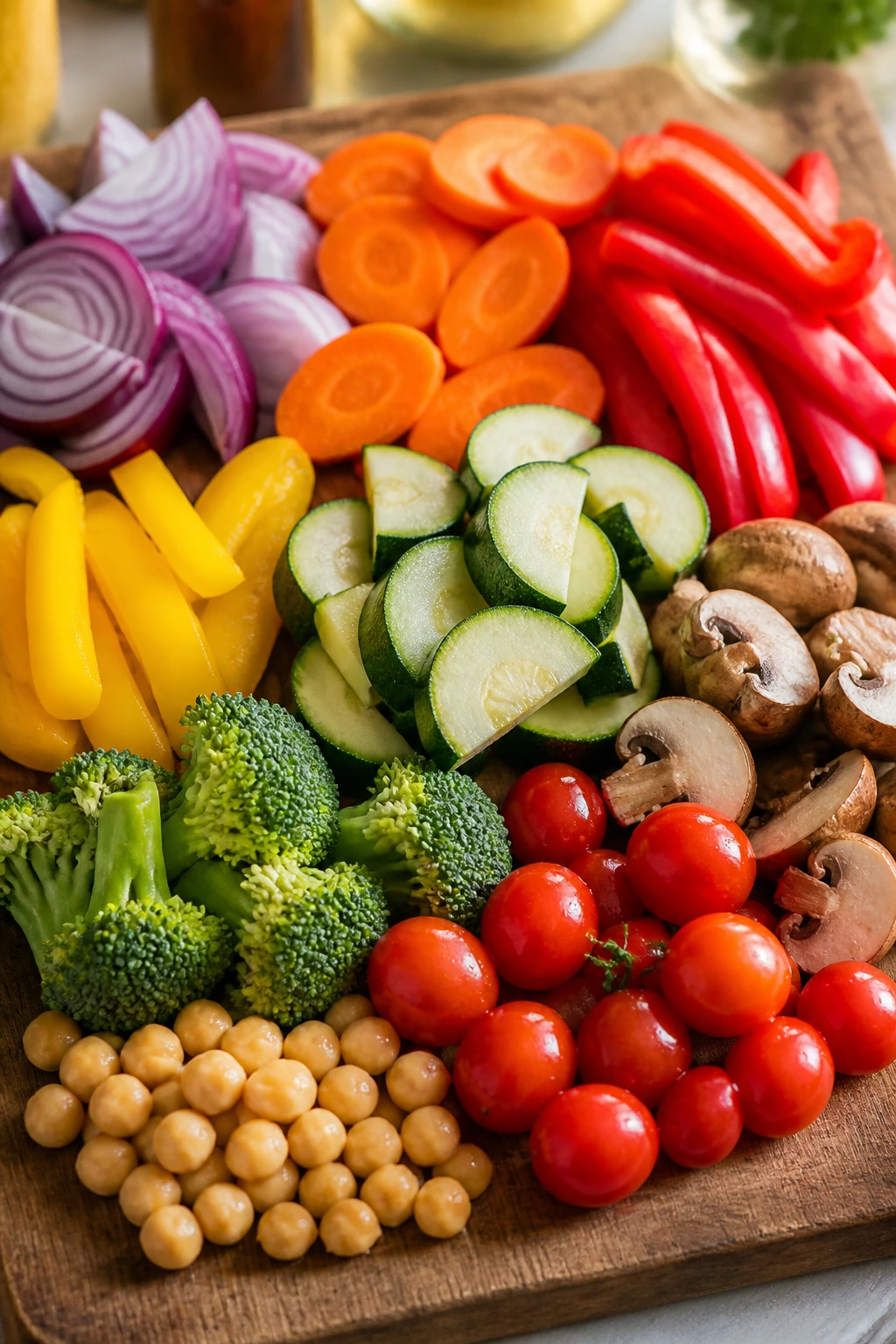
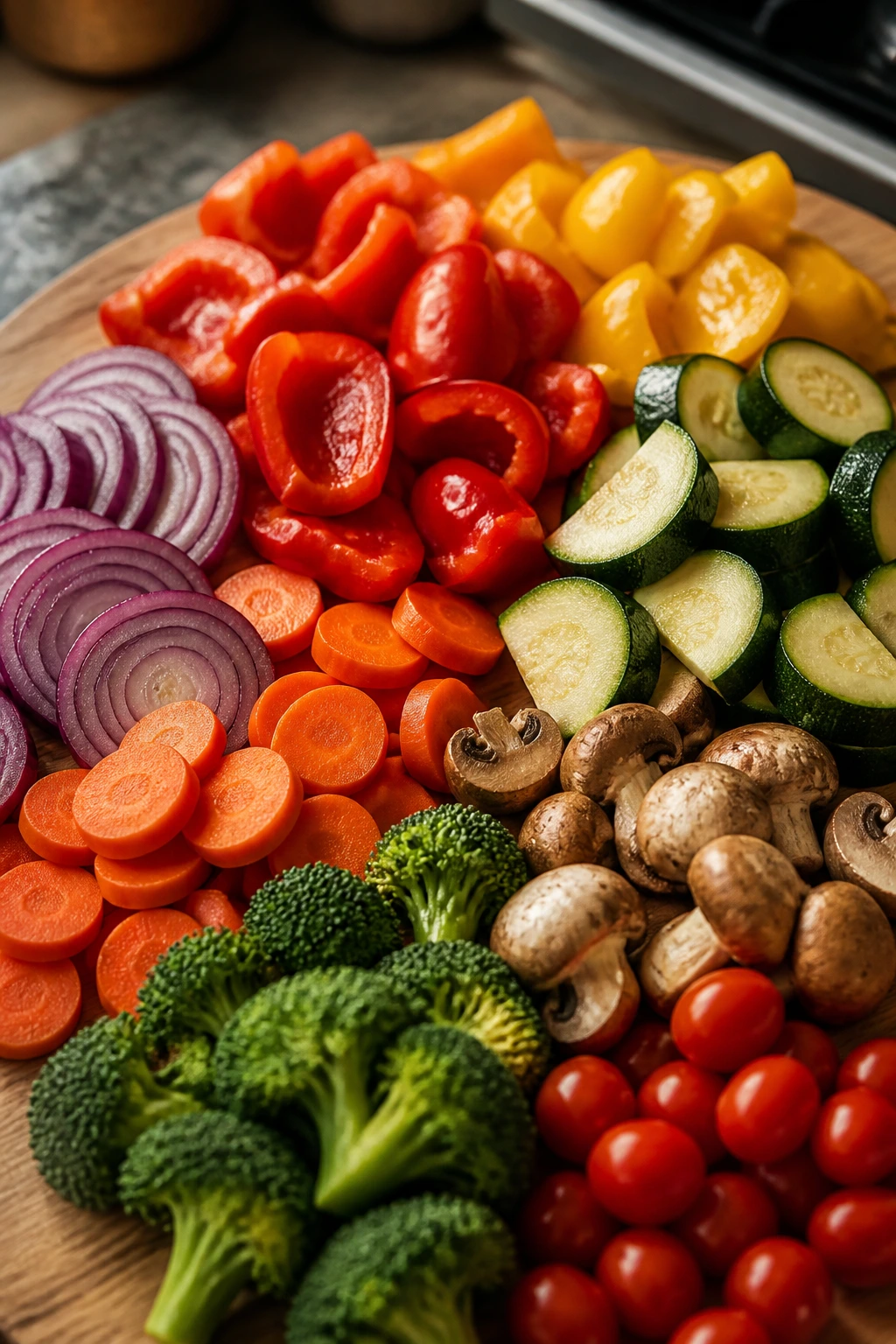
Preparation: Cut the sturdy vegetables into pieces that roast at a similar pace. The carrots should be thinner than the onion wedges, and the zucchini should be thicker than a coin so it does not collapse before the broccoli browns.
Substitutions: Cauliflower can stand in for broccoli. Sweet potato can replace carrots, though it needs a longer roast. If you only have one pepper, use it and add more onion or mushrooms.
Tips: Dry surfaces brown better than wet ones, so wash and then dry the vegetables well before cutting. Mushrooms should be halved, not sliced paper-thin, or they wilt before they can take on color.
Chickpeas
What to use: 1 (15-ounce) can chickpeas, drained, rinsed, and patted dry.
Preparation: After rinsing, spread them on a towel and blot off as much moisture as you can. The drier they are, the more they roast instead of steaming.
Substitutions: Cannellini beans can be used if you want a softer, creamier bite. Cubed extra-firm tofu works too, though it needs different timing and a little more oil.
Tips: Chickpeas are there for texture as much as protein. They should pick up a light crust in the oven, not turn hard and dusty, so don’t bury them under piles of vegetables.
Balsamic Glaze
What to use: 2 tablespoons balsamic vinegar, 1 tablespoon honey or maple syrup, 2 tablespoons olive oil, 2 cloves garlic, 1 teaspoon Dijon mustard, and 1 tablespoon lemon juice.
Preparation: Whisk the glaze just before the vegetables finish roasting. It should look smooth and loose enough to drizzle, not thick like salad dressing from a squeeze bottle.
Substitutions: Red wine vinegar plus maple syrup gives a sharper version. Pomegranate molasses works if you want a deeper, fruitier finish and don’t mind a darker color.
Tips: Keep the glaze for the last few minutes only. Sugar and balsamic can scorch fast at 425°F, and burnt sweetness turns bitter in a hurry.
Seasonings and Aromatics
What to use: 3 tablespoons olive oil, 1 teaspoon kosher salt, 1/2 teaspoon black pepper, 1 teaspoon dried thyme, 1 teaspoon smoked paprika, and 1/2 teaspoon garlic powder.
Preparation: Mix the seasonings with the oil before it goes onto the vegetables so the flavor spreads evenly across the cut surfaces.
Substitutions: Dried oregano can stand in for thyme, and regular paprika can replace smoked paprika if that is what you have. A pinch of cumin shifts the pan toward a warmer, earthier flavor.
Tips: Salt the vegetables before roasting, then taste again at the end. A single final pinch of salt can make the sweetness and acidity feel balanced instead of flat.
Finishing Ingredients
What to use: 2 tablespoons chopped fresh parsley, 1/4 cup crumbled feta, and lemon wedges.
Preparation: Chop the parsley right before serving so it stays bright and fragrant. Crumble the feta by hand so you get both small salty bits and a few larger pieces.
Substitutions: Fresh basil, dill, or cilantro can take parsley’s place depending on the direction you want. Toasted sunflower seeds or pumpkin seeds can replace feta if you want crunch without dairy.
Tips: Finishes should taste fresh, not cooked. Add them after the tray comes out of the oven, not while the pan is still blasting heat, or the herbs wilt and the lemon fades.
How to Roast Caramelized Garden Veggies Step by Step
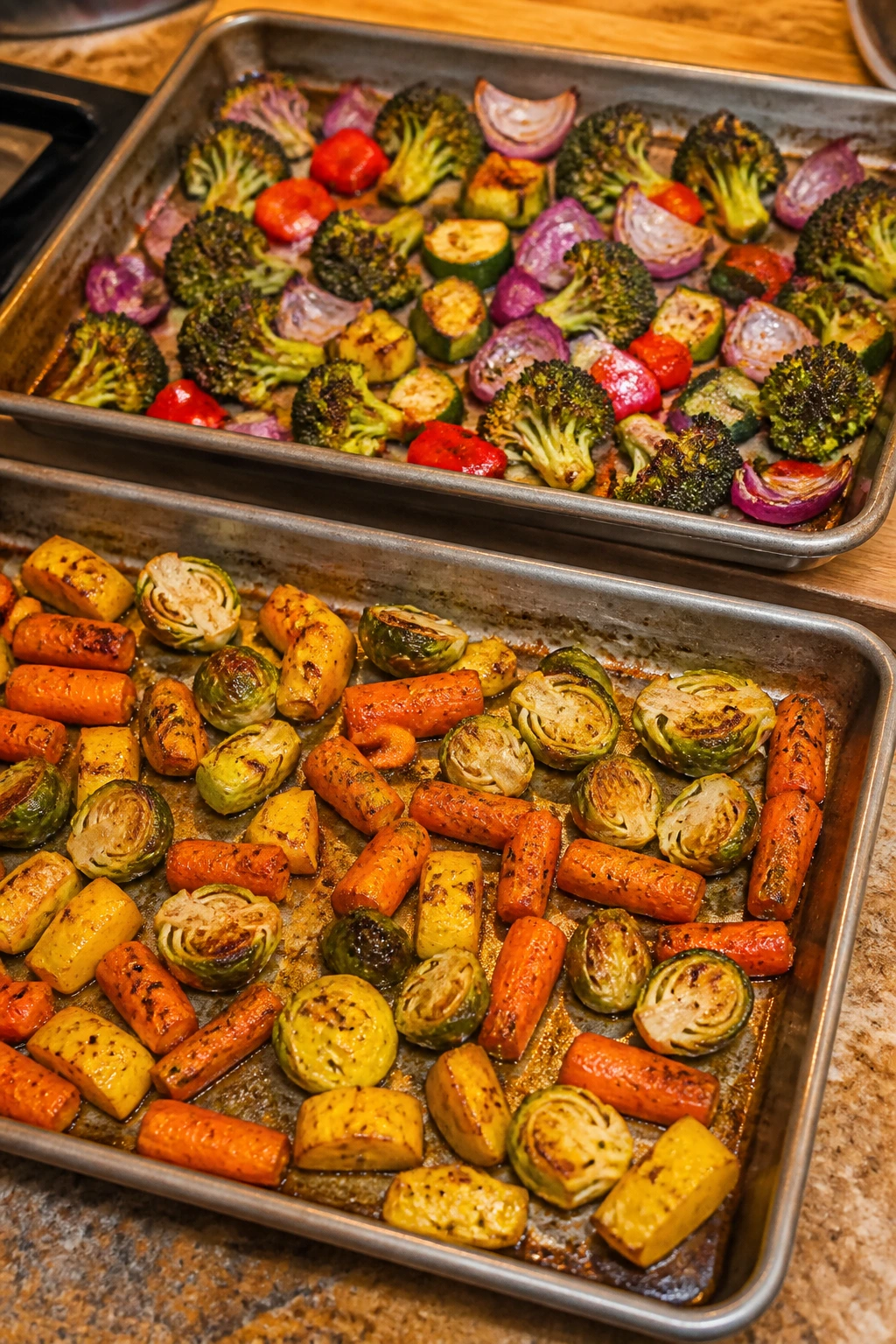
Prep the Pan
-
Preheat the oven to 425°F (220°C) and position racks in the upper and lower thirds. Line 2 rimmed baking sheets with parchment paper.
-
Drain the chickpeas, rinse them, and pat them very dry with paper towels or a clean kitchen towel. If they stay wet, they will steam and slide around instead of browning.
-
Cut the vegetables to the stated sizes: onion into wedges, carrots into diagonal coins, peppers into strips, zucchini into half-moons, mushrooms in halves, broccoli in bite-size florets. Keep the cherry tomatoes whole.
Season and Spread
-
In a large bowl, toss the onion, carrots, peppers, zucchini, mushrooms, broccoli, and chickpeas with 3 tablespoons olive oil, salt, pepper, thyme, smoked paprika, and garlic powder until every piece looks lightly coated and glossy.
-
Divide the mixture between the two prepared sheets in a single layer. Leave space between the pieces and keep the vegetables from overlapping as much as possible. Crowding is the fastest way to lose browning.
-
Roast for 15 minutes, then switch the pans from top to bottom and rotate each pan from front to back. The carrots should be starting to soften, the onions should look translucent at the edges, and the broccoli crowns should show a little color.
Build the Glaze
- While the vegetables roast, whisk together the balsamic vinegar, honey or maple syrup, olive oil, garlic, Dijon if using, and lemon juice in a small bowl. It should look smooth and loose, with no streaks of honey at the bottom.
Finish the Roast
-
Pull the pans from the oven and scatter the cherry tomatoes over the vegetables. Return the pans to the oven for 7 to 8 minutes, until the tomatoes blister and the mushrooms shrink a bit more.
-
Drizzle the glaze over both pans, then use a spoon or spatula to nudge the vegetables around so the glossy mixture coats the tops. Roast for 3 to 5 minutes more, just until the glaze looks sticky and the edges darken.
-
If you want extra color, switch the oven to broil and broil for 1 to 2 minutes at the very end, watching the pans the whole time. Do not walk away; balsamic goes from glossy to burnt in a blink.
-
Transfer the vegetables to a warm platter or serving bowl. Scatter with parsley, crumble over feta if using, and finish with a squeeze of lemon. Taste one piece before serving and add another pinch of salt if it needs it.
The Tools That Make Roasting Less Fussy
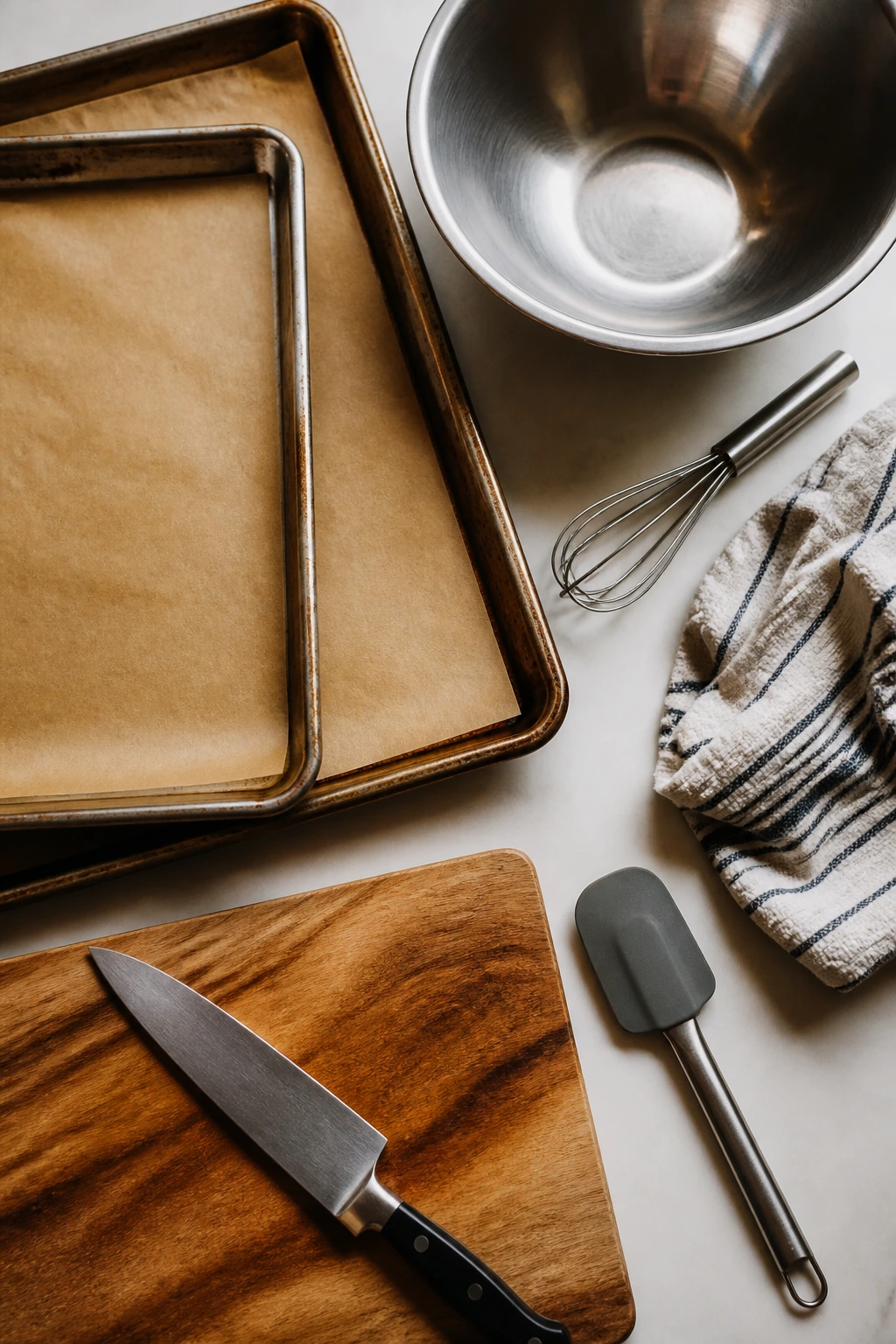
- 2 rimmed baking sheets — this is the most useful piece of equipment here; one crowded pan will not brown as well.
- Parchment paper — keeps the glaze from welding itself to the pan and makes cleanup easier.
- Large mixing bowl — big enough to toss the vegetables without spilling oil across the counter.
- Small whisk — helps the balsamic glaze stay smooth and clingy.
- Clean kitchen towel or paper towels — the best way to dry the chickpeas before roasting.
- Cutting board and sharp chef’s knife — vegetables roast more evenly when the cuts are clean and consistent.
- Thin metal spatula or wide spoon — useful for turning the vegetables without smashing the zucchini.
How to Serve the Finished Vegetables
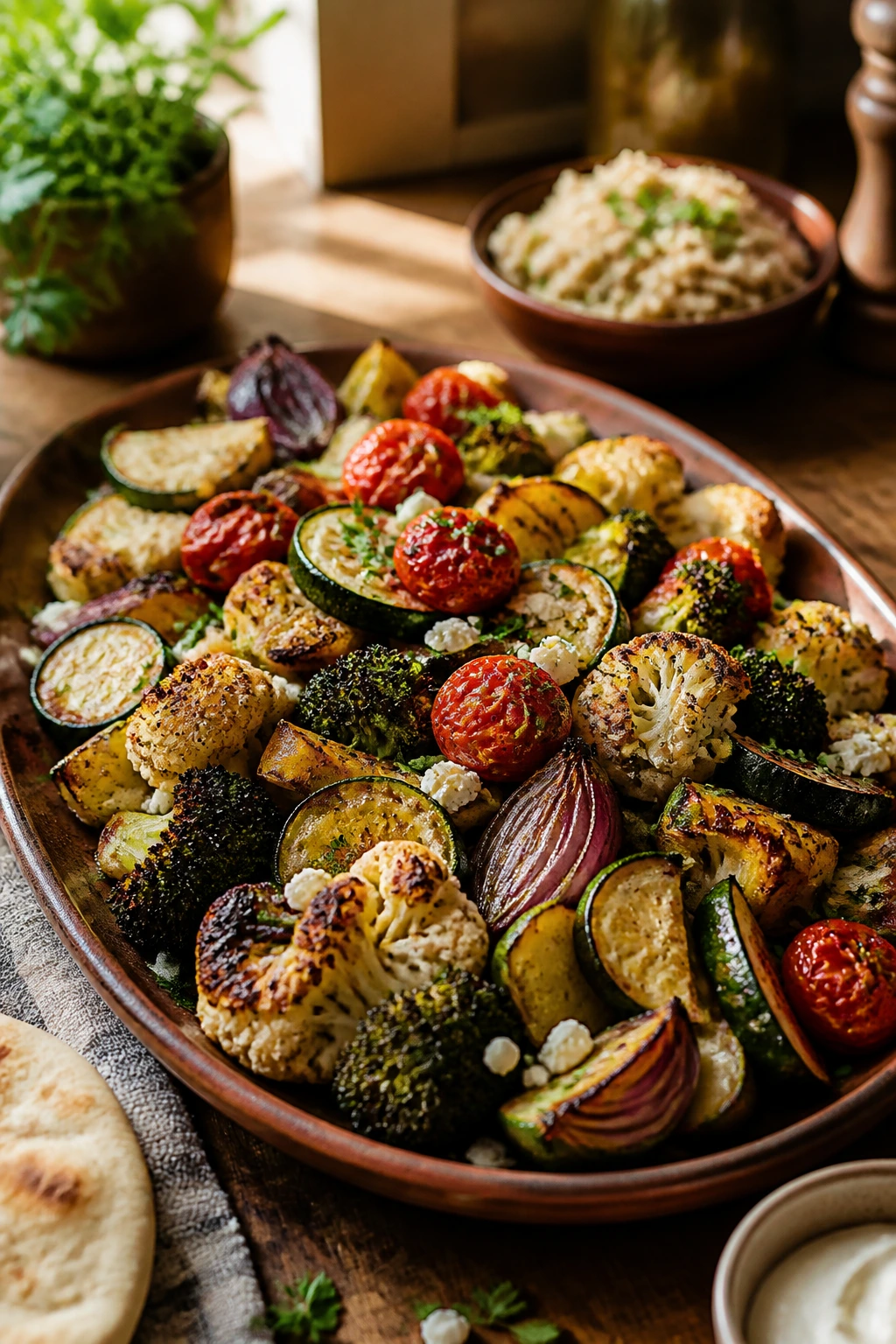
Presentation: Pile the vegetables on a warm platter so the browned edges stay visible instead of sinking into a deep bowl. Let a few tomatoes sit on top where their wrinkled skins catch the eye, then finish with parsley and feta at the table.
Accompaniments: Spoon the pan over warm quinoa, farro, brown rice, or couscous if you want a sturdier dinner. A scoop of plain Greek yogurt on the side adds cool contrast, and warm pita turns the whole thing into a proper spread. A fried egg on top works, too. Messy, in the good way.
Portions: As a main, plan on about 2 heaping cups per person. As a side, 1 to 1 1/2 cups is plenty. If you want to feed 8, use 3 sheet pans or roast in two batches so the vegetables still have room.
Beverage Pairing: A crisp Sauvignon Blanc works if you want something dry and sharp with the lemon and balsamic. For a nonalcoholic match, cold sparkling water with cucumber or lemon keeps the plate feeling light.
Small Tweaks That Lift the Flavor
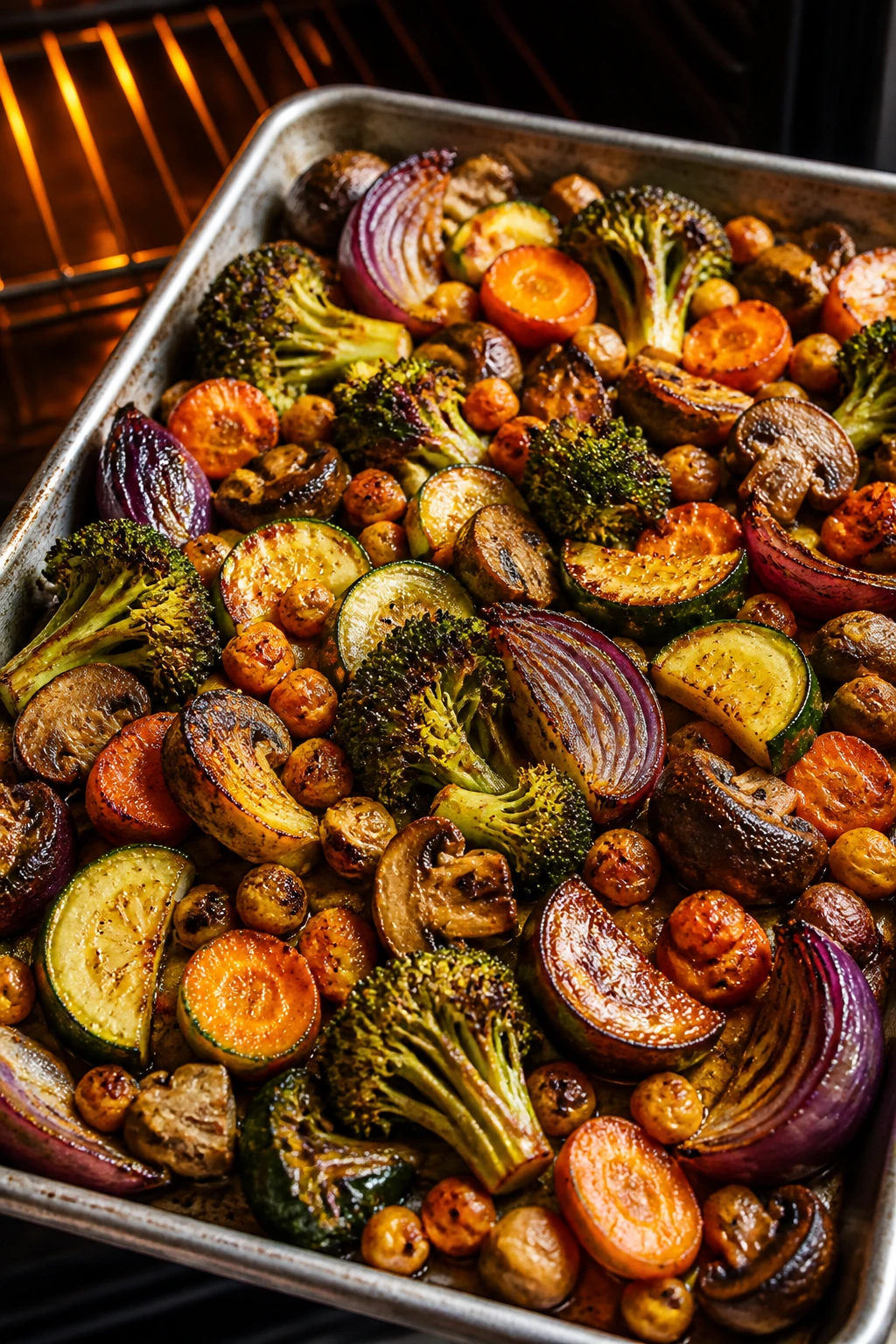
Flavor Enhancement: A tiny splash of sherry vinegar or extra lemon right at the end wakes up the whole pan. I reach for acid after roasting because heat softens it, and the vegetables need one fresh, bright note to keep the sweetness from taking over.
Customization: Add thin fennel slices, halved shallots, or a handful of torn basil if you want a different aroma. Sunflower seeds or pumpkin seeds tossed in after roasting bring crunch that the soft vegetables can’t give you on their own.
Serving Suggestions: A spoonful of tahini mixed with lemon and water can replace the feta if you want a dairy-free finish. If you like heat, a pinch of red pepper flakes over the hot pan gives the glaze a little tail of spice.
Make-It-Yours: For a vegan plate, leave out the feta and use maple syrup instead of honey. For a lower-salt version, keep the first round of salt modest and let the lemon and herbs carry more of the flavor. For a richer version, finish with a drizzle of good olive oil and a few olives.
The Mistakes That Keep Vegetables Pale and Limp
-
Crowding the sheet pan: If the vegetables sit in a tight heap, they release steam and come out soft instead of browned. The fix is simple: use two pans, leave gaps, and don’t be sentimental about spreading them out.
-
Leaving chickpeas wet: Moist chickpeas never crisp properly and tend to slip around under the glaze. Pat them dry until they look matte, not shiny, before they hit the bowl.
-
Adding the glaze too early: Balsamic and honey can burn before the vegetables are cooked through. Wait until the last few minutes, when the vegetables are already browned and almost tender.
-
Cutting zucchini too thin: Thin zucchini turns mushy and disappears into the tray. Cut thicker half-moons, and if your zucchini is huge, trim out the seedy middle first.
-
Skipping the final taste: Roasted vegetables need a last hit of salt or lemon more often than people expect. Taste one piece after plating and adjust before the table gets there.
-
Roasting everything at the same pace: Carrots and onions can take more heat time than tomatoes or zucchini. Put the fast-cooking pieces in later or cut the sturdier ones smaller so the tray finishes together.
Different Ways to Make the Same Pan Work
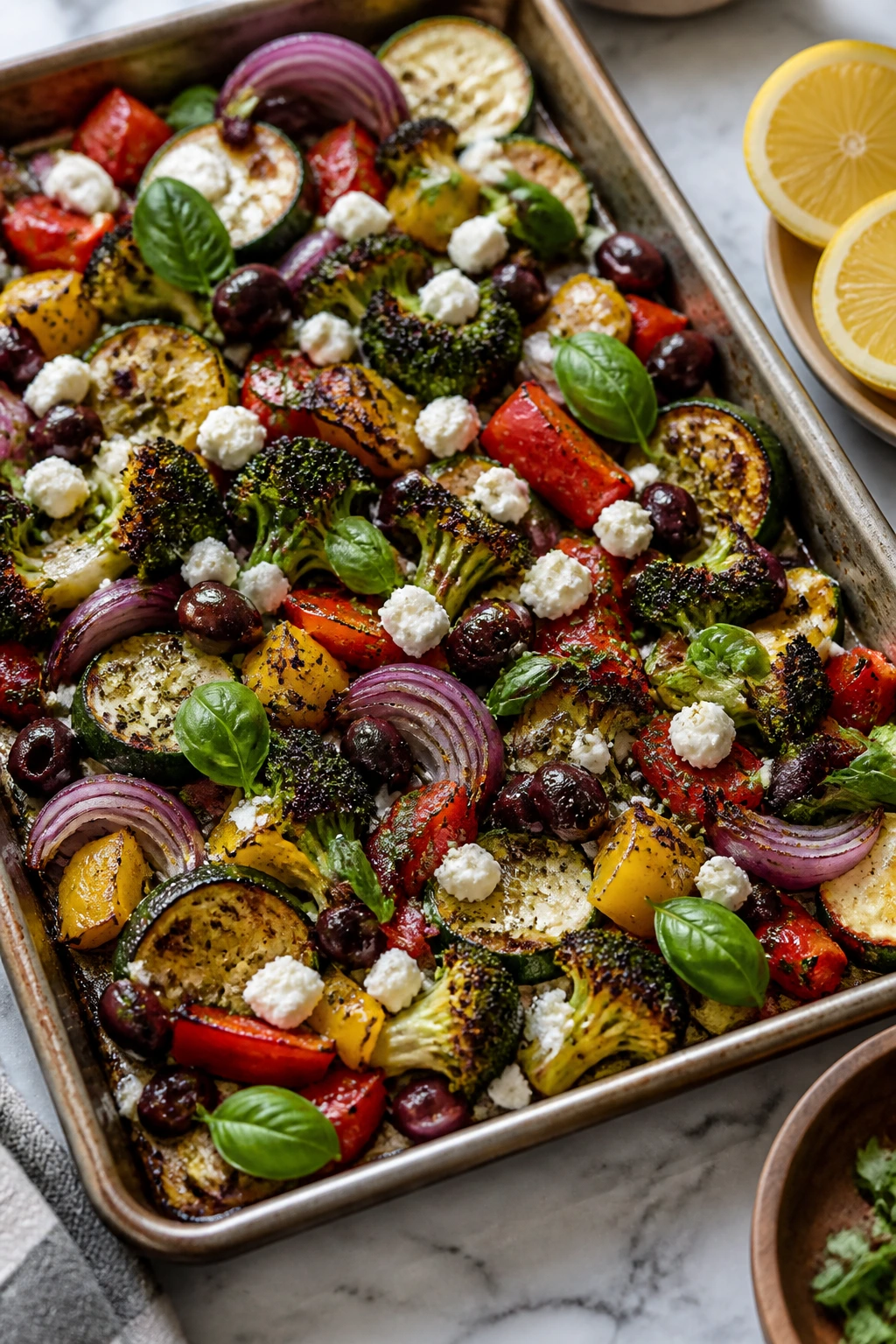
Mediterranean Market Tray
Add a handful of pitted olives, a little oregano, and a few slivers of red onion if you like sharper flavor. Swap the parsley for basil and finish with crumbled feta and extra lemon. It leans bright and salty, the sort of plate that disappears fast with warm bread.
Smoky Pantry Bowl
Replace thyme with cumin and chili powder, then serve the vegetables over rice with avocado and lime. Keep the balsamic glaze, but use maple syrup instead of honey and add a pinch of cayenne. This version tastes warmer, heavier, and a little more rugged.
Root-Veg Switch
If zucchini and peppers are not in the house, use sweet potato, Brussels sprouts, and cauliflower instead. Roast the sweet potato and Brussels sprouts for 10 to 15 minutes before adding cauliflower so everything lands at the same tenderness.
Creamy Tahini Finish
Skip the feta and whisk tahini with lemon juice, garlic, and warm water until it pours. Drizzle it over the roasted vegetables right before serving. The sauce settles into the nooks and gives the whole tray a nutty, creamy finish without adding dairy.
Protein-Heavy Plate
Add cubes of extra-firm tofu or chunks of cooked chicken on the side if you want more heft. Tofu should be pressed and roasted on a separate section of the pan so it can brown; chicken should be cooked separately and added at the end so the vegetables stay in charge of the flavor.
Storing Leftovers and Reheating Without Turning Them Soft
Room-temperature window
Roasted vegetables should not sit out for long. Once the pan is done and the food has stopped steaming, get leftovers into containers within 2 hours. After that, the texture starts going downhill fast, and the chickpeas lose what little crispness they still have.
Fridge life
Store leftovers in an airtight container for 3 to 4 days in the refrigerator. The vegetables will soften a bit, especially the zucchini and tomatoes, but the flavor usually deepens by the next day. I like to keep any extra lemon wedges or fresh herbs separate so the second serving gets a fresh finish instead of a tired one.
Freezer reality
You can freeze the roasted vegetables for up to 2 months, but the texture will be softer when they thaw. If you know you’ll freeze some, leave the tomatoes out of that batch and add fresh tomatoes when you reheat. Chickpeas freeze better than zucchini, so the tray does best if you keep the pieces large.
Reheating that keeps some color
The best method is a 425°F oven for 8 to 10 minutes on a parchment-lined sheet pan. That brings back some edge and keeps the vegetables from collapsing into a wet heap. A hot skillet over medium-high heat for 5 to 7 minutes also works well if you want a faster fix.
The microwave is the last resort. It will warm the vegetables, but it softens the edges and turns the chickpeas a little dull. If you do use it, heat in short bursts and finish with lemon or herbs so the flavor doesn’t taste flat.
Make-ahead notes
You can chop the vegetables 1 day ahead and keep them in separate containers if you want the batch to move faster later. The balsamic glaze can be whisked up to 3 days ahead and stored in the fridge; let it come back to room temperature before using. Chickpeas can be rinsed and dried ahead, but they stay crispest when they go into the oven soon after drying.
Questions Readers Usually Ask
Can I use frozen vegetables here?
Frozen broccoli or cauliflower can work in a pinch, but thaw them and dry them well first. Frozen zucchini and tomatoes are a worse fit because they release too much water and tend to collapse before they brown.
Do I really need to dry the chickpeas?
Yes, if you want even a little crispness. Wet chickpeas steam, and the glaze slips off instead of clinging to the surface. A clean towel and 30 extra seconds make a visible difference.
What if I only have one baking sheet?
Use it, but roast in two batches or expect softer vegetables. If everything is packed together, the pan traps moisture and the browning turns patchy. The second batch often tastes better because the pan is less crowded.
How do I keep zucchini from getting mushy?
Cut it into thicker half-moons and don’t roast it forever. If your zucchini is especially large, take out the seedy center first, or add the zucchini halfway through the roast so it softens without turning to mush.
Can I make this without honey?
Maple syrup works cleanly in the glaze. It brings a slightly deeper sweetness and keeps the sauce sticky enough to coat the vegetables near the end of roasting.
What vegetables can I swap in without changing the method too much?
Cauliflower, Brussels sprouts, asparagus, and fennel all play well here. Just remember that Brussels sprouts and cauliflower need more time, while asparagus needs less, so add the fast ones later or cut the sturdy ones smaller.
Why didn’t my vegetables brown?
Usually the pan was crowded, the oven ran cool, or the vegetables were wet when they went in. A hotter oven, a drier surface, and more space between pieces fix most of the problem in one go.
A Pan You’ll Keep Coming Back To
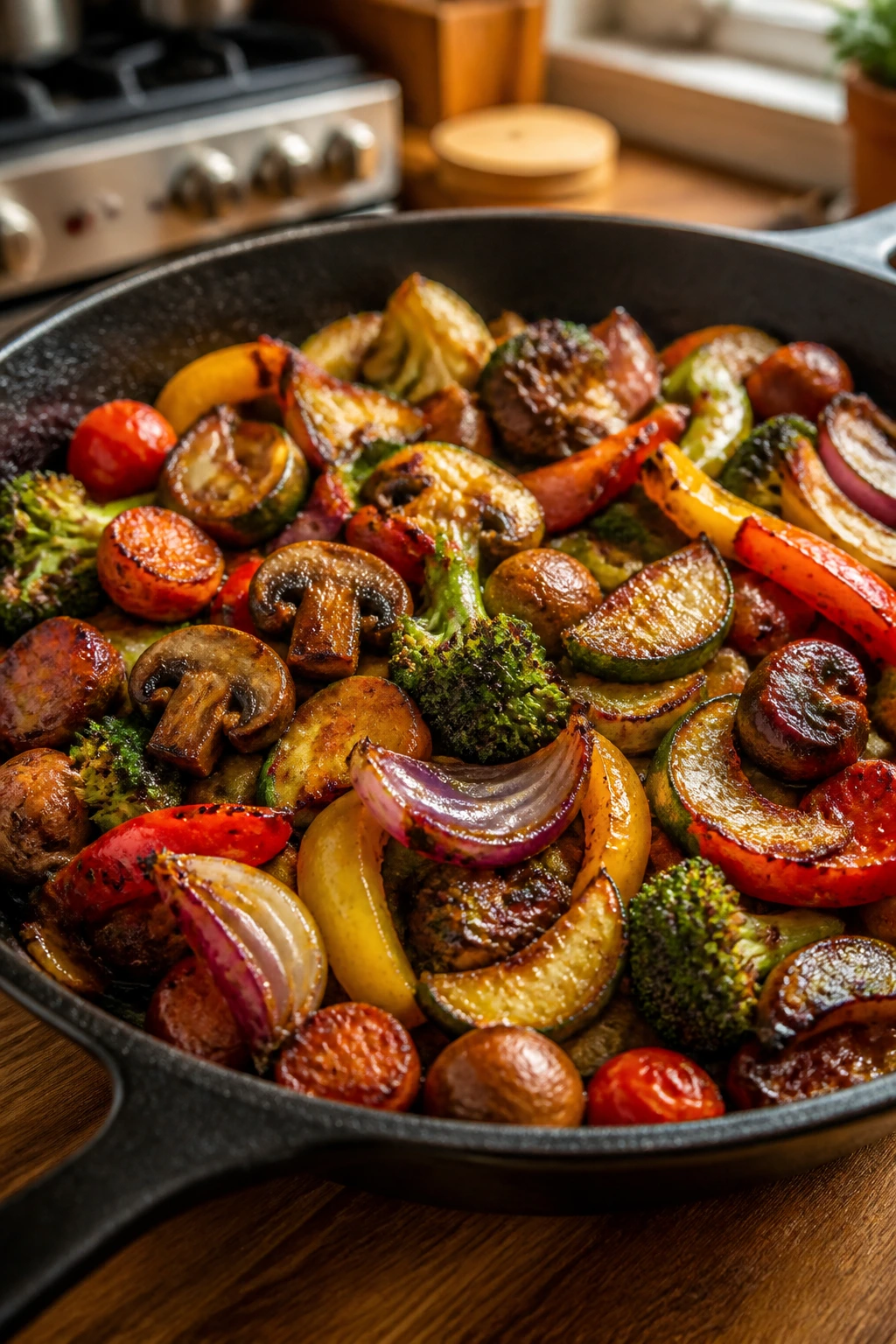
There’s something satisfying about a dinner that starts as a mess of plain produce and ends up with browned edges, sticky glaze, and enough freshness to keep each bite moving. That’s the appeal here. The vegetables stay recognizable, but they taste fuller, sweeter, and a little more serious than the raw versions that went onto the pan.
It helps that the dish is flexible without getting vague. You can shift the herbs, change the finish, add grains, or lean harder on the chickpeas, and the whole thing still makes sense. When the produce drawer is awkwardly full—half a zucchini, an onion, a pepper, a few tomatoes—this is the sort of dinner that turns odds and ends into something worth sitting down for.
Caramelized Garden Veggies for a Healthy Dinner — Recipe Card
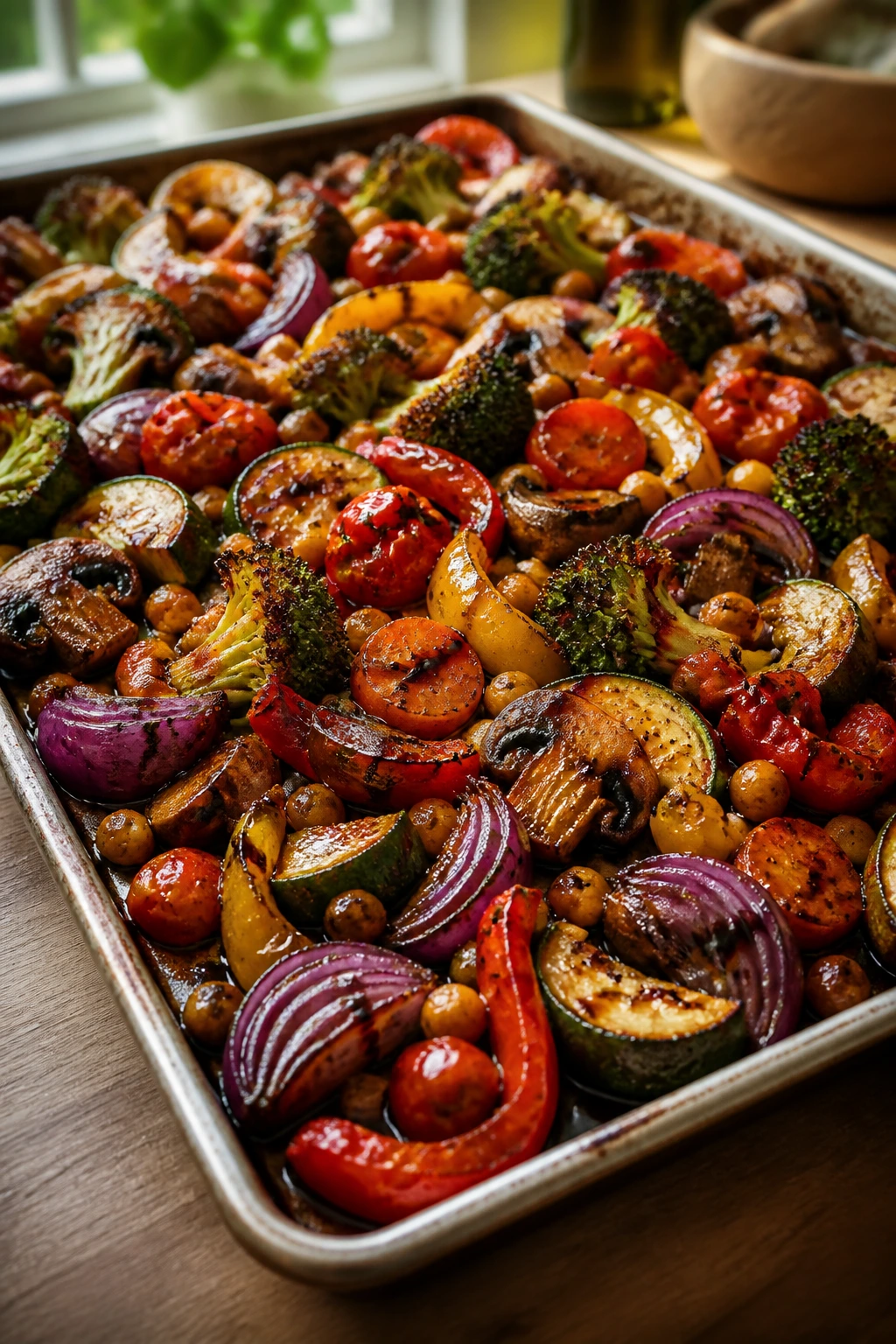
Recipe Name: Caramelized Garden Veggies for a Healthy Dinner
Description: A roasted vegetable and chickpea tray with browned edges, a sticky balsamic glaze, and a bright lemon-herb finish. It eats like a light main course and plates easily as a side.
Prep Time: 20 minutes
Cook Time: 25 minutes
Total Time: 45 minutes
Course: Dinner, Main Course
Cuisine: Mediterranean-inspired
Servings: 4 servings as a main, 6 servings as a side
Calories: About 320 kcal per serving
Ingredients
For the Vegetables
- 1 large red onion, cut into 1-inch wedges
- 2 medium carrots, scrubbed and sliced on the diagonal into 1/4-inch pieces
- 1 red bell pepper, seeded and cut into 1-inch strips
- 1 yellow bell pepper, seeded and cut into 1-inch strips
- 1 medium zucchini, cut into 1/2-inch half-moons
- 8 oz cremini mushrooms, halved
- 1 cup broccoli florets, cut into bite-size pieces
- 1 pint cherry tomatoes
- 1 (15-ounce) can chickpeas, drained, rinsed, and patted dry
- 3 tablespoons olive oil
- 1 teaspoon kosher salt
- 1/2 teaspoon black pepper
- 1 teaspoon dried thyme
- 1 teaspoon smoked paprika
- 1/2 teaspoon garlic powder
For the Balsamic Glaze
- 2 tablespoons balsamic vinegar
- 1 tablespoon honey or pure maple syrup
- 2 tablespoons olive oil
- 2 cloves garlic, grated or minced
- 1 teaspoon Dijon mustard, optional
- 1 tablespoon lemon juice
For the Finish
- 2 tablespoons chopped fresh parsley
- 1/4 cup crumbled feta, optional
- Lemon wedges, for serving
Instructions
-
Preheat the oven to 425°F (220°C) and line 2 rimmed baking sheets with parchment paper.
-
Drain the chickpeas, rinse them, and pat them very dry.
-
In a large bowl, toss the onion, carrots, peppers, zucchini, mushrooms, broccoli, and chickpeas with olive oil, salt, pepper, thyme, smoked paprika, and garlic powder.
-
Divide the vegetables between the prepared sheets in a single layer.
-
Roast for 15 minutes, then rotate and switch the pans.
-
Whisk together the balsamic vinegar, honey or maple syrup, olive oil, garlic, Dijon if using, and lemon juice.
-
Add the cherry tomatoes to the pans and roast for 7 to 8 minutes more.
-
Drizzle the glaze over the vegetables and roast for 3 to 5 minutes until sticky and caramelized. Broil for 1 to 2 minutes at the end if you want extra color.
-
Transfer to a serving bowl or platter, top with parsley and feta if using, and finish with lemon juice.
Notes: Use two pans, not one crowded pan. Add the glaze near the end so it does not burn. Reheat leftovers in a hot oven or skillet for the best texture.