



Roasted mixed vegetables are what I make when I want dinner to feel calm, not fussy. A hot oven turns broccoli, cauliflower, carrots, red onion, zucchini, and bell pepper into something with browned edges, sweet centers, and that deep, nutty smell that tells you the pan is doing real work. The trick is not dumping everything on one tray and hoping for the best — dense vegetables and tender ones roast at different speeds, and if you’ve ever pulled out a tray where the zucchini turned soft before the carrots gave up their crunch, you already know why that matters.
What I like about this roasted mixed vegetables recipe is that it respects those differences. The sturdier vegetables get a head start, the delicate ones join later, and the whole pan gets a bright finish of lemon and herbs after the oven has done the heavy lifting. That last squeeze isn’t decoration. It wakes the vegetables up and keeps the flavor from drifting into that flat, tired zone that ruins so many home-roasted pans.
There’s a reason this kind of tray earns repeat use in real kitchens: when it’s done well, it doesn’t taste like “diet food” or a random pile of leftovers. It tastes browned, sweet, a little salty at the edges, and fully thought through. And once you get the rhythm of the cuts, the timing, and the finish, the recipe stops feeling like a side dish and starts behaving like a whole dinner base.
Why Roasted Mixed Vegetables Earn a Place at Dinner
Roasting vegetables isn’t new, but the version people most often make at home is missing one small, very important thing: timing. Tossing everything together and sending it off in one layer sounds easy, and it is easy, but easy is not the same as good. Cauliflower and Brussels sprouts want a longer stay in the oven; zucchini and bell pepper want less. The difference between those two clocks is the difference between caramelized and soggy.
That’s why this recipe uses a staged roast. The firm vegetables start first, so the edges can brown and the natural sugars can concentrate before the softer vegetables ever touch the heat. When the zucchini and pepper join later, they keep their shape instead of shrinking into limp ribbons. I’ve made enough trays of vegetables to say this plainly: the order of operations matters more than the spice blend.
This approach borrows from the way a lot of Mediterranean and Middle Eastern home cooking handles vegetables — oil first, heat second, acid last. The formula is simple, but the results feel far more composed than the average sheet pan dinner. You get sweet carrots, browned onion, little crisp spots on the broccoli crowns, and just enough lemon at the end to make the tray taste fresh rather than heavy.
And yes, it can absolutely be dinner. Not “dinner, but only if you hide it under a mountain of cheese.” Dinner with a scoop of quinoa, a fried egg, a spoonful of hummus, or a piece of crusty bread that drags through the pan juices. That’s the kind of meal this is built for.
Why You’ll Love This Roasted Mixed Vegetables Recipe
-
Crisp edges, not limp vegetables: Roasting at 425°F gives cauliflower, broccoli, and Brussels sprouts the browned, almost caramelized edges that steaming can’t touch.
-
A real dinner base, not a filler side: A tray of vegetables can sit beside grains, eggs, beans, or fish without disappearing into the background.
-
The seasoning is practical, not precious: Garlic powder, smoked paprika, oregano, salt, pepper, lemon, and parsley are pantry-friendly and do not fight the vegetables.
-
It bends to what’s in the fridge: Carrots, broccoli, cauliflower, zucchini, bell pepper, onion — that mix is flexible enough to absorb swaps without falling apart.
-
The leftovers hold up better than most roasted vegetables: Reheated in a hot skillet or oven, the vegetables keep enough texture to be worth eating the next day.
-
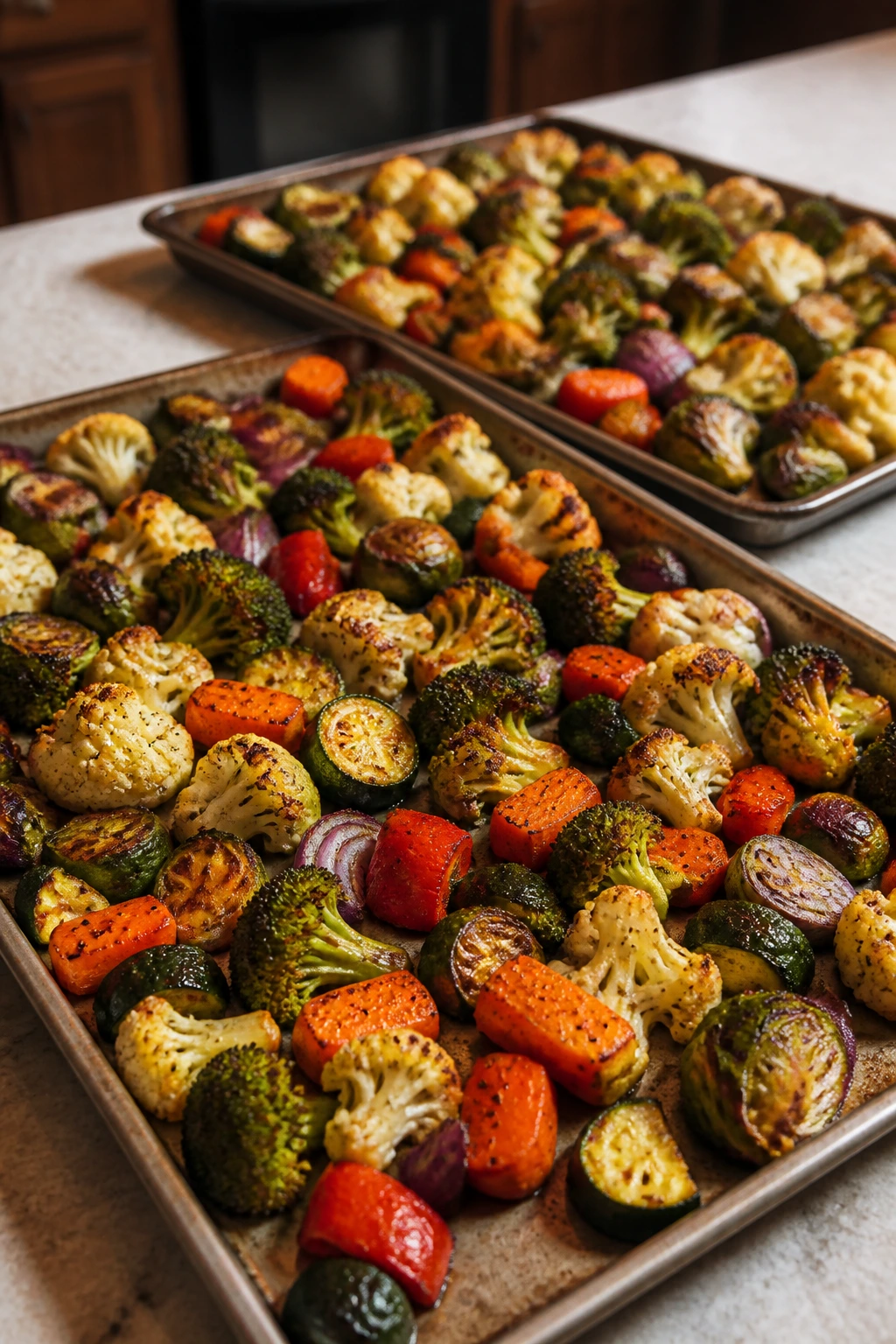
It’s easy to scale up: Two sheet pans roast better than one crowded pan, so doubling the recipe for guests doesn’t turn into a kitchen disaster.
Yield, Timing, and What Goes Into the Pan
Yield: 4 servings as a side dish or 2 generous dinner portions over grains
Prep Time: 20 minutes
Cook Time: 25 to 30 minutes
Total Time: 45 to 50 minutes
Difficulty: Beginner — the knife work takes the most attention, and the oven does the rest.
Best Served: Hot from the oven, with lemon and herbs on top
Vegetables
- 8 ounces Brussels sprouts, trimmed and halved
- 2 cups broccoli florets, cut into 1- to 1½-inch pieces
- 2 cups cauliflower florets, cut into bite-size pieces
- 3 medium carrots, peeled and sliced on a diagonal into 1/2-inch pieces
- 1 medium red onion, cut into 1-inch wedges
- 1 medium zucchini, cut into 3/4-inch half-moons
- 1 red bell pepper, seeded and cut into 1-inch strips
Seasoning and Oil
- 3 tablespoons extra-virgin olive oil
- 1 teaspoon kosher salt
- 1/2 teaspoon black pepper
- 1 teaspoon garlic powder
- 1 teaspoon smoked paprika
- 1/2 teaspoon dried oregano
- 1/4 teaspoon red pepper flakes, optional
Finishing Touches
- 1 lemon, zested and cut into wedges
- 1 tablespoon fresh lemon juice
- 2 tablespoons chopped flat-leaf parsley
What Each Ingredient Does Before It Hits the Oven
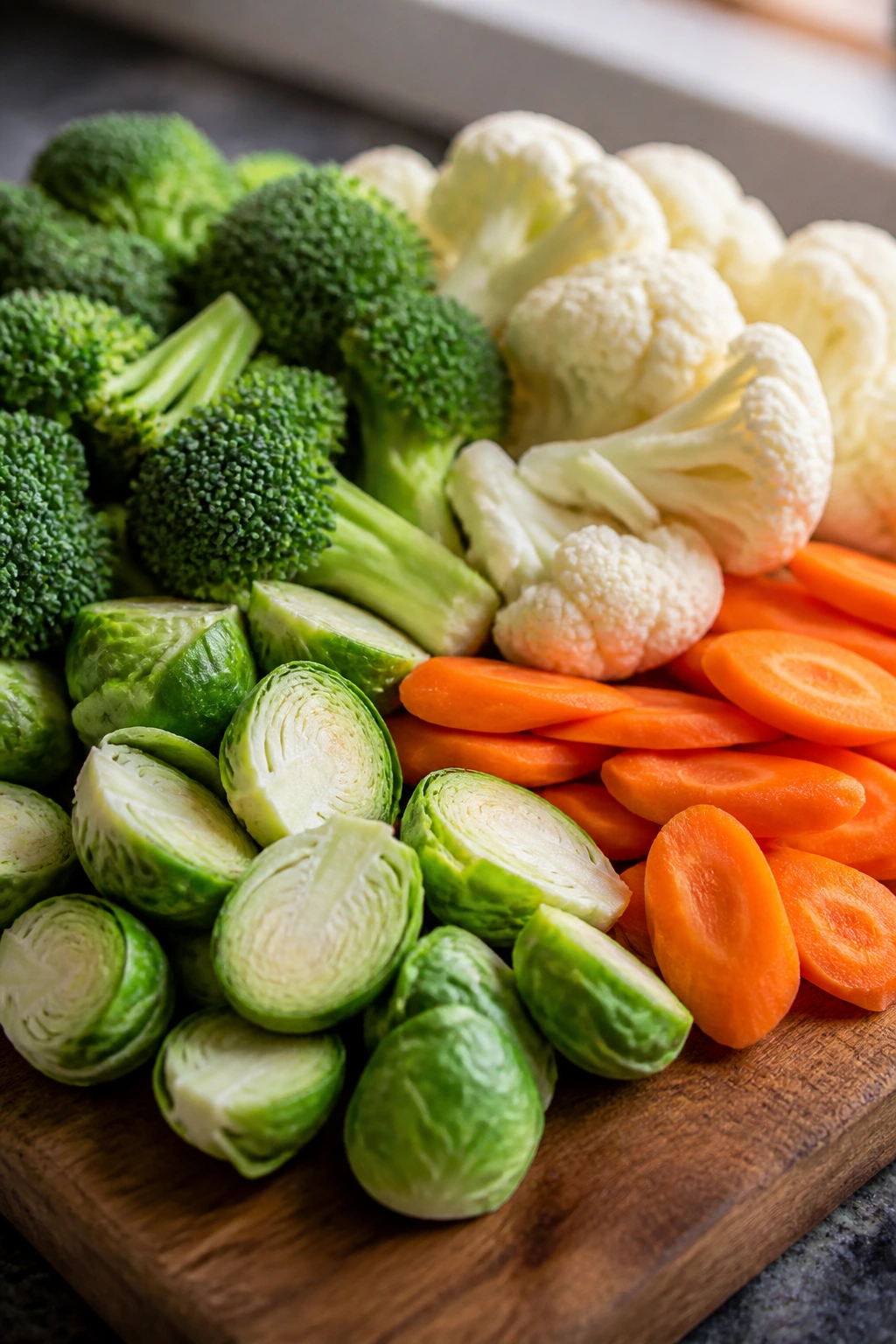
Sturdy Vegetables
What to use: 8 ounces Brussels sprouts, 2 cups broccoli, 2 cups cauliflower, and 3 medium carrots.
Preparation: Cut the Brussels sprouts in half, break the cauliflower and broccoli into small florets, and slice the carrots on a diagonal so they roast faster and catch more browned edges.
Substitutions: Parsnips, sweet potato, or small chunks of delicata squash work if you want a sweeter pan; green beans can stand in, but they belong in the last 10 minutes only.
Tips: Keep the pieces close in size. If the carrots are pencil-thin and the cauliflower is left in huge chunks, the tray will finish unevenly no matter how long you keep it in the oven.
Tender Vegetables
What to use: 1 medium zucchini, 1 red bell pepper, and 1 medium red onion.
Preparation: Cut the zucchini into thick half-moons, the pepper into wide strips, and the onion into wedges that stay intact while roasting.
Substitutions: Yellow squash can replace zucchini, shallots can replace onion, and mushrooms can join the mix if you dry them well and add them late.
Tips: These vegetables carry more water than the others, which is why they show up later in the roast. If you put them in from the start, they’ll slump before the browning is done.
Seasoning Base
What to use: 3 tablespoons olive oil, 1 teaspoon kosher salt, 1/2 teaspoon black pepper, 1 teaspoon garlic powder, 1 teaspoon smoked paprika, 1/2 teaspoon dried oregano, and 1/4 teaspoon red pepper flakes if you want heat.
Preparation: Mix the seasonings with the oil before tossing so every floret gets coated evenly instead of wearing salt in patches.
Substitutions: Avocado oil works well, and you can swap the paprika and oregano for Italian seasoning, cumin, or curry powder if you want a different direction.
Tips: Don’t skimp on the oil. Vegetables need enough fat to brown instead of drying out, but they should look lightly glossy, not slick.
Bright Finish
What to use: 1 lemon, 1 tablespoon lemon juice, and 2 tablespoons chopped parsley.
Preparation: Zest the lemon before you cut it, then chop the parsley just before serving so it stays lively and doesn’t turn bruised and dark.
Substitutions: Red wine vinegar, white balsamic, dill, or basil can stand in depending on the rest of the meal.
Tips: Acid belongs at the end. Add it before roasting and you lose the fresh edge you’re trying to create.
The Equipment That Keeps the Pan from Steaming
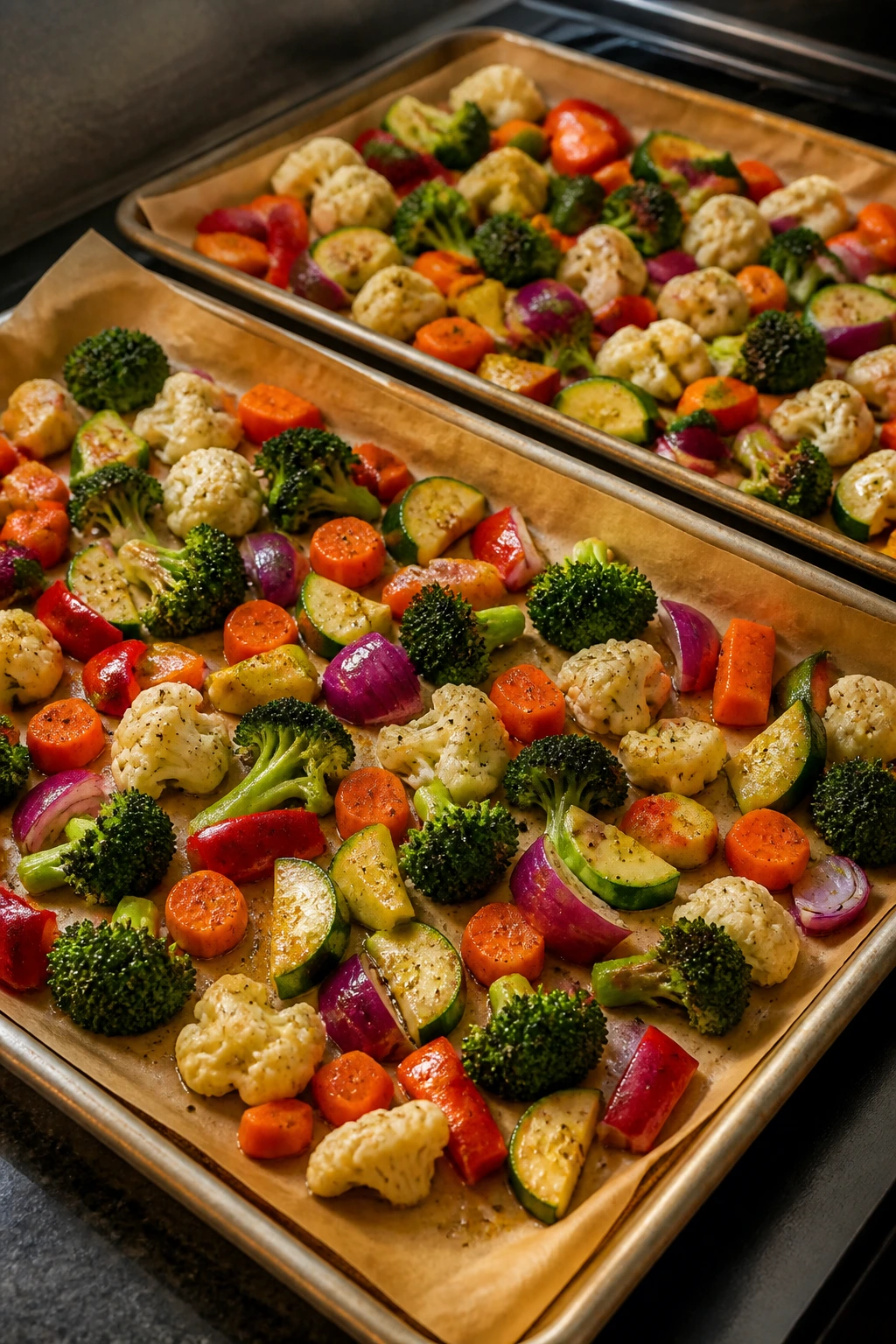
Roasted vegetables sound low-effort until you cram too much onto one tray and wind up with soft, pale pieces. Good equipment fixes that problem before it starts.
- 2 rimmed sheet pans: The rim keeps oil and juices from sliding off, and two pans give the vegetables room to brown instead of trapping steam.
- Parchment paper or foil: Useful for easier cleanup, though unlined pans brown a little better if you’re comfortable washing them afterward.
- Large mixing bowl: Big enough to toss the vegetables without chasing carrots around the counter.
- Chef’s knife: A sharp knife matters here because uneven cuts mean uneven roasting.
- Cutting board: Use one with a damp towel underneath if it likes to slide.
- Silicone spatula or metal turner: Helpful for flipping the vegetables halfway through without smashing the broccoli.
- Microplane or fine grater: Optional, but handy if you want to add a little lemon zest at the end.
- Instant-read thermometer, optional: Not needed for vegetables, but useful if you’re roasting a protein alongside them.
How to Roast the Vegetables in Stages Without Losing Texture
Prep the oven and the pans.
-
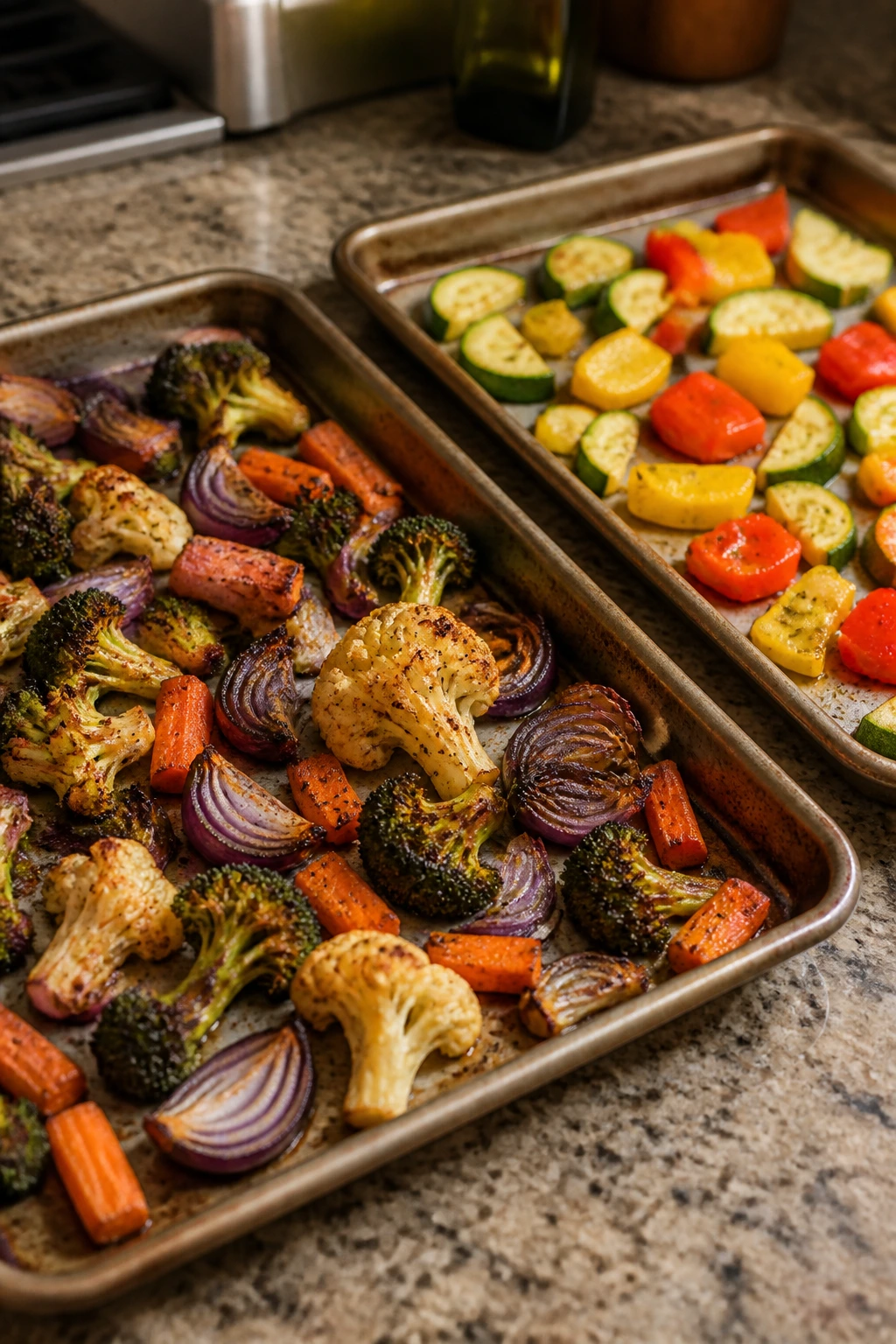
Preheat the oven to 425°F (220°C) and place two rimmed sheet pans on the counter. Line them with parchment if you want easy cleanup, or leave them unlined for a little more browning. A crowded pan is the enemy here, so use both pans even if the vegetables seem like they might fit on one.
-
Wash, dry, and cut all the vegetables before you season anything. The drying part matters. If the broccoli or zucchini is wet when it hits the oil, you’ll get slick spots and weak browning instead of a browned, dry surface.
Season the sturdy vegetables first.
3. In a large bowl, toss the Brussels sprouts, broccoli, cauliflower, carrots, and red onion with 2 tablespoons olive oil, 1 teaspoon kosher salt, 1/2 teaspoon black pepper, 1 teaspoon garlic powder, 1 teaspoon smoked paprika, 1/2 teaspoon dried oregano, and the red pepper flakes if you’re using them. Toss until the vegetables look lightly coated and the spices stop clumping in dry patches.
-
Divide the seasoned vegetables between the two sheet pans and spread them into a single layer. The pieces can touch a little, but if they’re stacked on top of one another, they will steam. That is the fastest route to soft vegetables with no browning.
-
Roast for 15 minutes, then pull the pans from the oven and turn the vegetables with a spatula. At this point, the carrots should be starting to soften at the edges, and the Brussels sprouts should have a few browned cut sides.
Add the quicker-cooking vegetables.
6. Toss the zucchini and bell pepper with the remaining 1 tablespoon olive oil and a small pinch of salt. Add them to the pans, keeping the zucchini pieces in a single layer and nestling the pepper strips around the sturdier vegetables. Return the pans to the oven for 10 to 12 minutes, until the zucchini is tender at the center but still holds its shape and the peppers have a few blistered, dark spots.
- If your oven browns unevenly, rotate the pans from top to bottom halfway through this final stage. Some ovens run hot in the back and cool near the door, and the difference can show up fast when you’re roasting at a high temperature.
Finish with brightness.
8. Remove the pans from the oven and immediately squeeze over 1 tablespoon lemon juice, then scatter the lemon zest and chopped parsley on top. Taste a piece of carrot or broccoli first, then add a pinch more salt if the vegetables need it. Let the tray sit for 2 to 3 minutes before serving so the oil and lemon settle into the vegetables instead of running off the pan.
How to Serve This Tray So It Feels Like Dinner
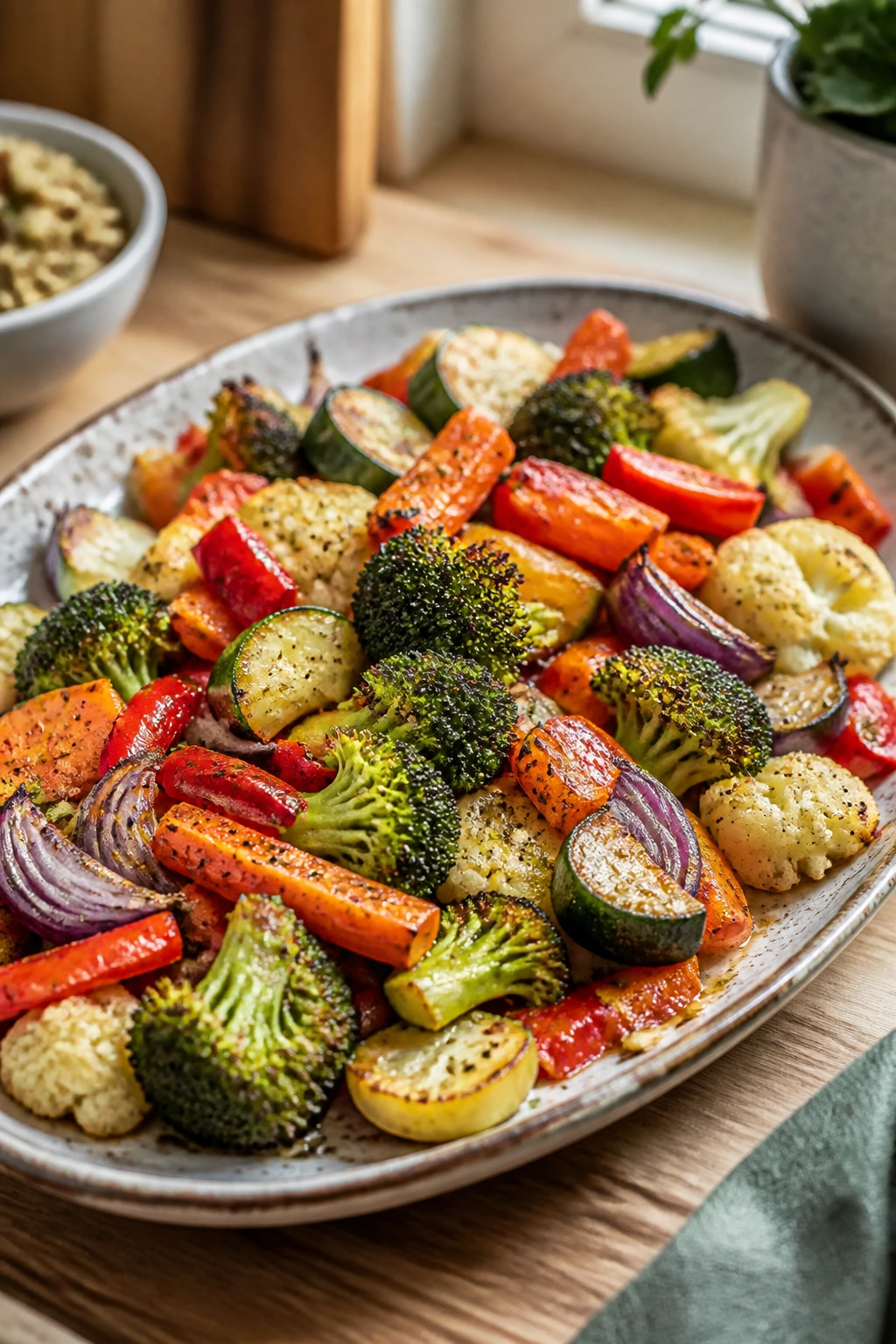
Presentation:
Pile the roasted vegetables onto a wide platter instead of serving them straight from the sheet pan. That small move makes the food look more intentional, and it lets you spoon any browned oil and lemon from the pan over the top. A little extra parsley or a few curls of lemon zest on the surface is enough; you do not need to bury the vegetables under herbs.
Accompaniments:
For a light dinner, set the tray beside quinoa, brown rice, or farro and add a protein such as baked tofu, grilled halloumi, fried eggs, or a scoop of chickpeas. If you want something simpler, serve it with warm pita and hummus or with thick slices of crusty bread that can mop up the pan juices. A spoonful of plain Greek yogurt or tahini sauce also works if you want a cooler, creamier contrast.
Portions:
As a side dish, plan on about 1 to 1½ cups per person. As a main dish, serve 2 cups per person over grains or next to beans, and don’t be shy about adding protein — vegetables are carrying the flavor, but they don’t need to carry the whole meal alone.
Beverage Pairing:
A dry Sauvignon Blanc matches the lemon and herbs without muting the roasted edges. If you want something nonalcoholic, try sparkling water with lemon slices or unsweetened iced tea with a squeeze of citrus. Cold drinks with some brightness keep the tray from feeling heavy.
Smart Tips for Bigger Flavor and Better Texture
Flavor Enhancement:
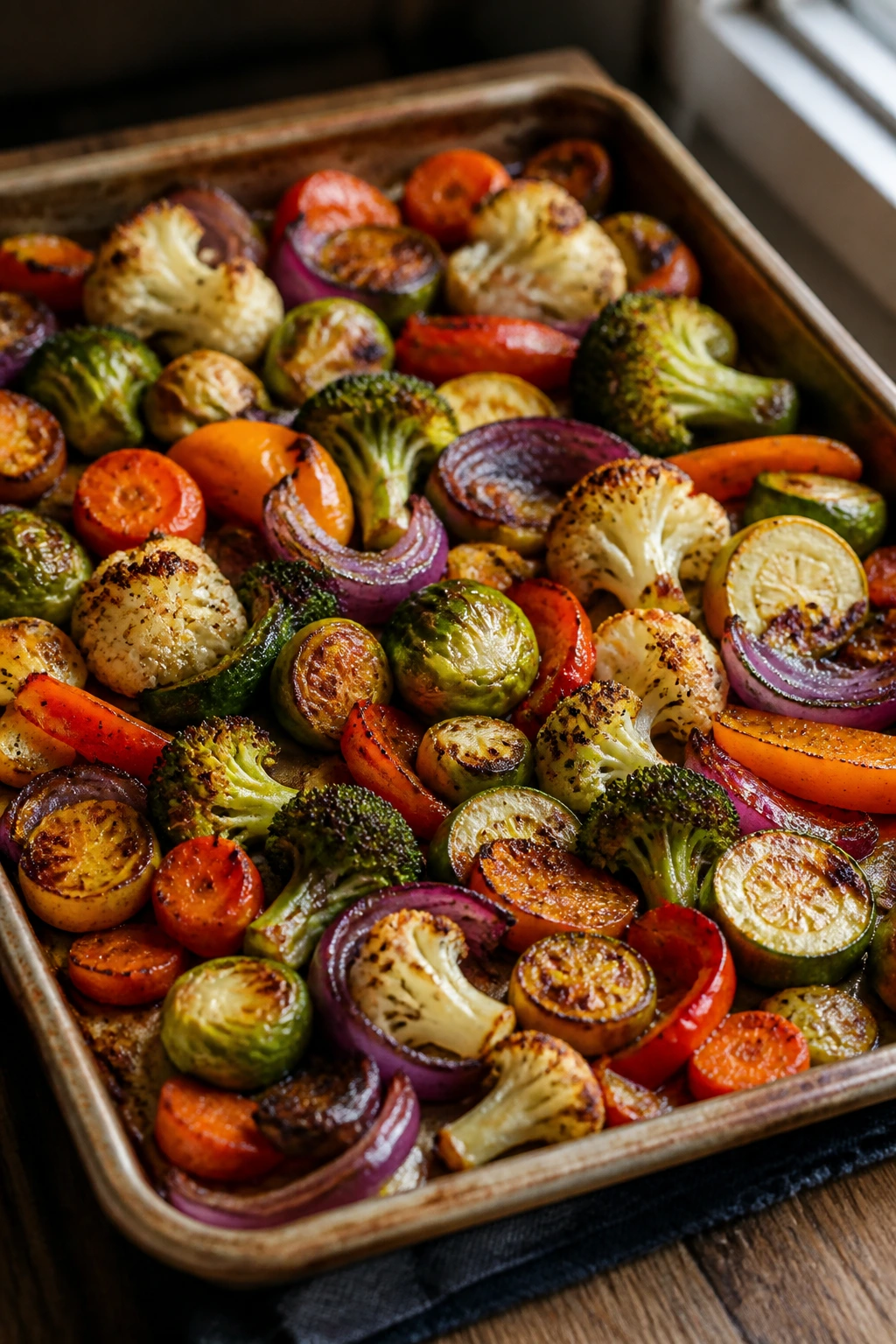
A small finishing move makes a big difference here. Toss the hot vegetables with the lemon juice while they’re still steaming on the pan, then finish with parsley and a pinch of flaky salt if you like a sharper top note. If you want more depth, add 1 teaspoon of grated lemon zest right before serving; it smells louder than the juice and makes the whole tray taste fresher.
Time-Saver:
Buy pre-trimmed broccoli and cauliflower florets if knife work is the part you dread. I’d still cut the carrots and zucchini myself, because store-cut versions are often too thick or too thin, and that throws off the roast. If you prep the vegetables the night before, keep the wetter ones — especially zucchini — in a separate container lined with a paper towel.
Cost-Saver:
Carrots, onions, cabbage wedges, and broccoli stems are usually cheaper than the “pretty” vegetables, and they roast well when cut properly. Broccoli stems, peeled and sliced, are especially underrated; they taste sweet after roasting and save you from throwing away the part many people trim off without thinking.
Make-It-Yours:
If you want more protein, add a can of chickpeas that has been drained and dried thoroughly, or tuck in cubes of extra-firm tofu tossed with a little oil and paprika. For a richer plate, crumble a small handful of feta over the vegetables after they come out of the oven. For a vegan version that still feels complete, a spoonful of tahini with lemon and water makes a quick sauce that clings to the caramelized edges.
Common Mistakes That Turn a Good Tray Soft
-
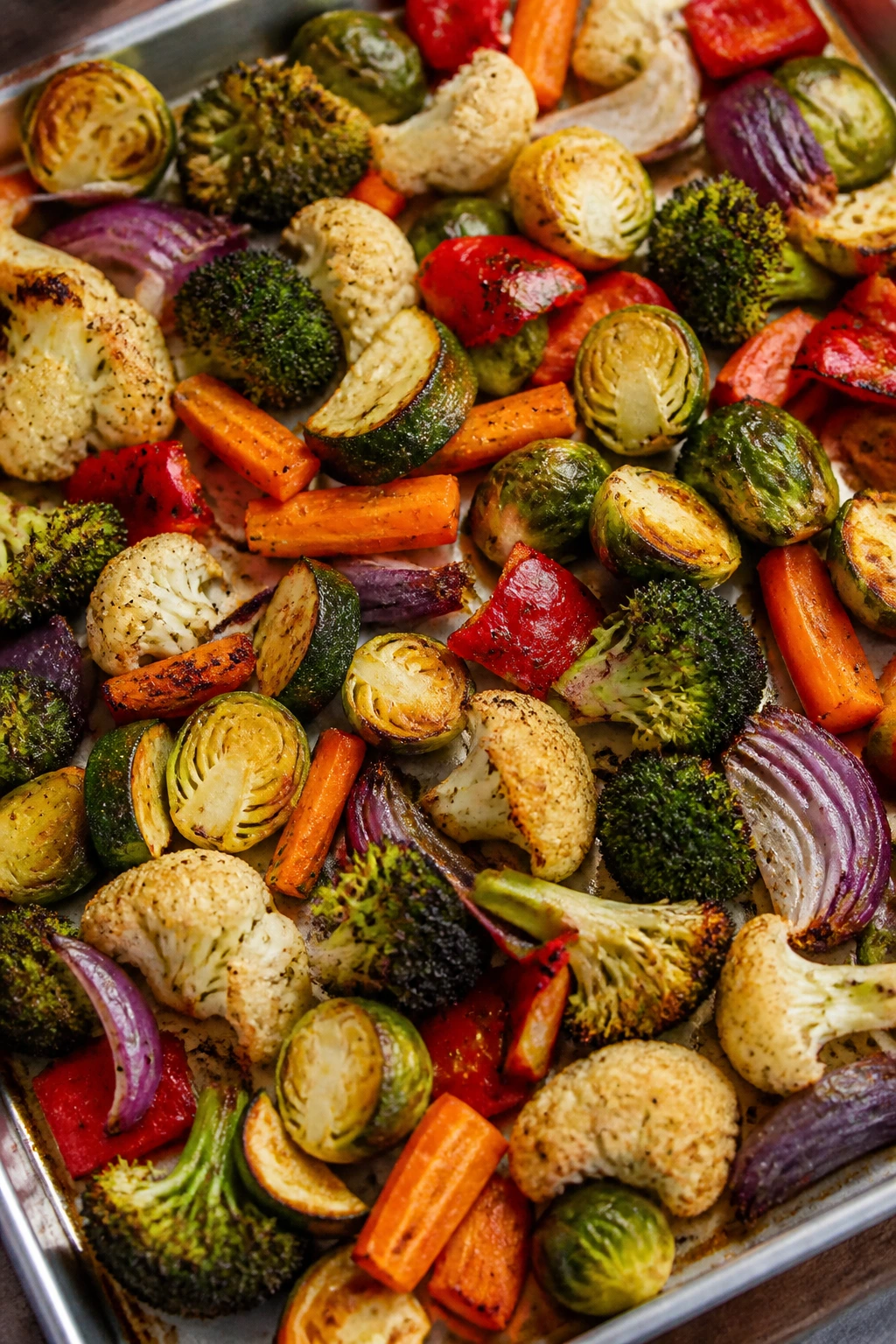
Crowding one pan until the vegetables steam: The symptom is pale, floppy vegetables with almost no browning. The fix is simple: use two pans and keep everything in a single layer, even if that means the tray looks a little sparse at first.
-
Cutting every vegetable the same size: A 1-inch zucchini chunk and a 1-inch carrot slice do not cook the same way. Dense vegetables need smaller pieces, and delicate vegetables need larger ones; if the cuts are careless, the tray will finish with some pieces raw and others collapsing.
-
Adding lemon juice before roasting: Acid dulls the browning and can make the vegetables taste oddly flat. Add lemon after the vegetables come out of the oven, when the heat has already done the caramelizing.
-
Using fresh garlic too early: Minced garlic burns fast at 425°F and turns bitter before the vegetables are done. Garlic powder handles the high heat better, or you can add fresh garlic in the last 5 minutes tucked into the vegetables so it softens instead of scorching.
-
Skipping the drying step: Wet vegetables look shiny in the bowl and then steam on the pan. Pat them dry with a clean towel, especially zucchini and any vegetables you rinsed just before roasting.
-
Pulling them too early because the edges look brown: Browning on the outside does not always mean the carrots or Brussels sprouts are tender in the middle. Pierce the denser vegetables with a fork; they should give without resistance, not feel chalky in the center.
Variations and Adaptations to Try
Mediterranean Lemon-Feta Tray
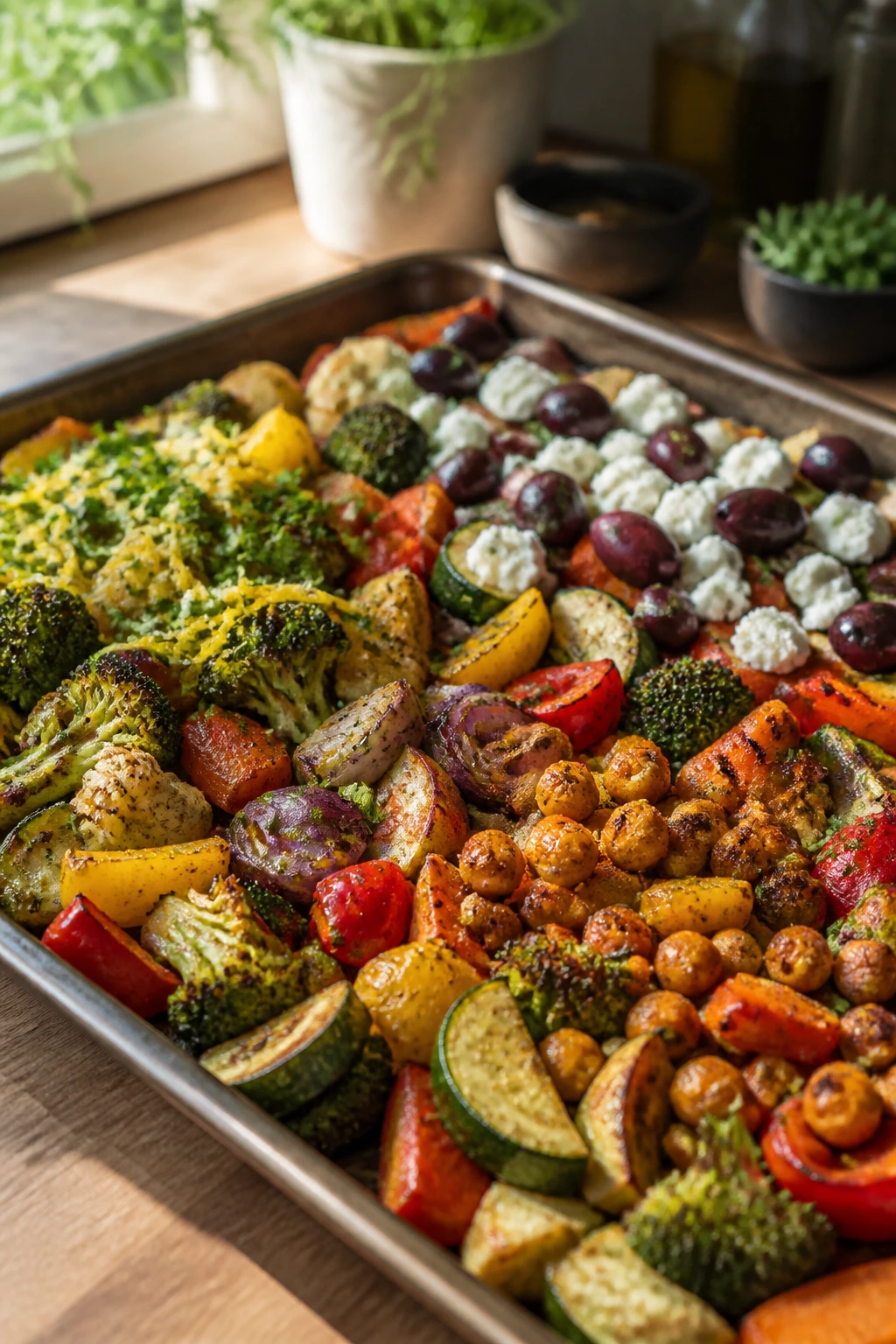
Swap the oregano for 1 teaspoon of dried thyme, add a handful of pitted Kalamata olives during the final 5 minutes, and finish with 1/4 cup crumbled feta. It turns the tray into something sharper and saltier, which works well beside grilled fish, lentils, or a simple grain bowl. If you like a little more lift, add a spoonful of chopped dill at the end.
Smoky Chickpea Dinner Bowl
Add 1 can chickpeas, drained and dried, to the pan when the sturdy vegetables go in. They brown at the edges and soak up the paprika and lemon, which makes the tray feel more like a full dinner without changing the method much. Serve it over quinoa with a spoonful of tahini sauce.
Curry-Spiced Roast with Yogurt Drizzle
Replace the smoked paprika and oregano with 2 teaspoons curry powder and a pinch of ground cumin. Finish with chopped cilantro instead of parsley and a drizzle of plain yogurt loosened with lemon juice. This version tastes warmer and works especially well if you’re serving rice on the side.
Parmesan Herb Finish
For a richer tray, sprinkle 2 to 3 tablespoons finely grated Parmesan over the vegetables during the last 3 minutes of roasting. It melts into the florets and adds a salty crust at the edges without turning the vegetables into a casserole. Skip the extra salt in the seasoning mix if you go this route.
Tahini-Lemon Bowl
Keep the base recipe the same, then whisk 2 tablespoons tahini with 1 tablespoon lemon juice, 1 to 2 tablespoons warm water, and a pinch of salt. Drizzle it over the hot vegetables right before serving. The sauce settles into the cracks and gives the tray the kind of creamy finish that makes it feel more like a composed meal.
Make-Ahead, Storage, and Reheating Guidance
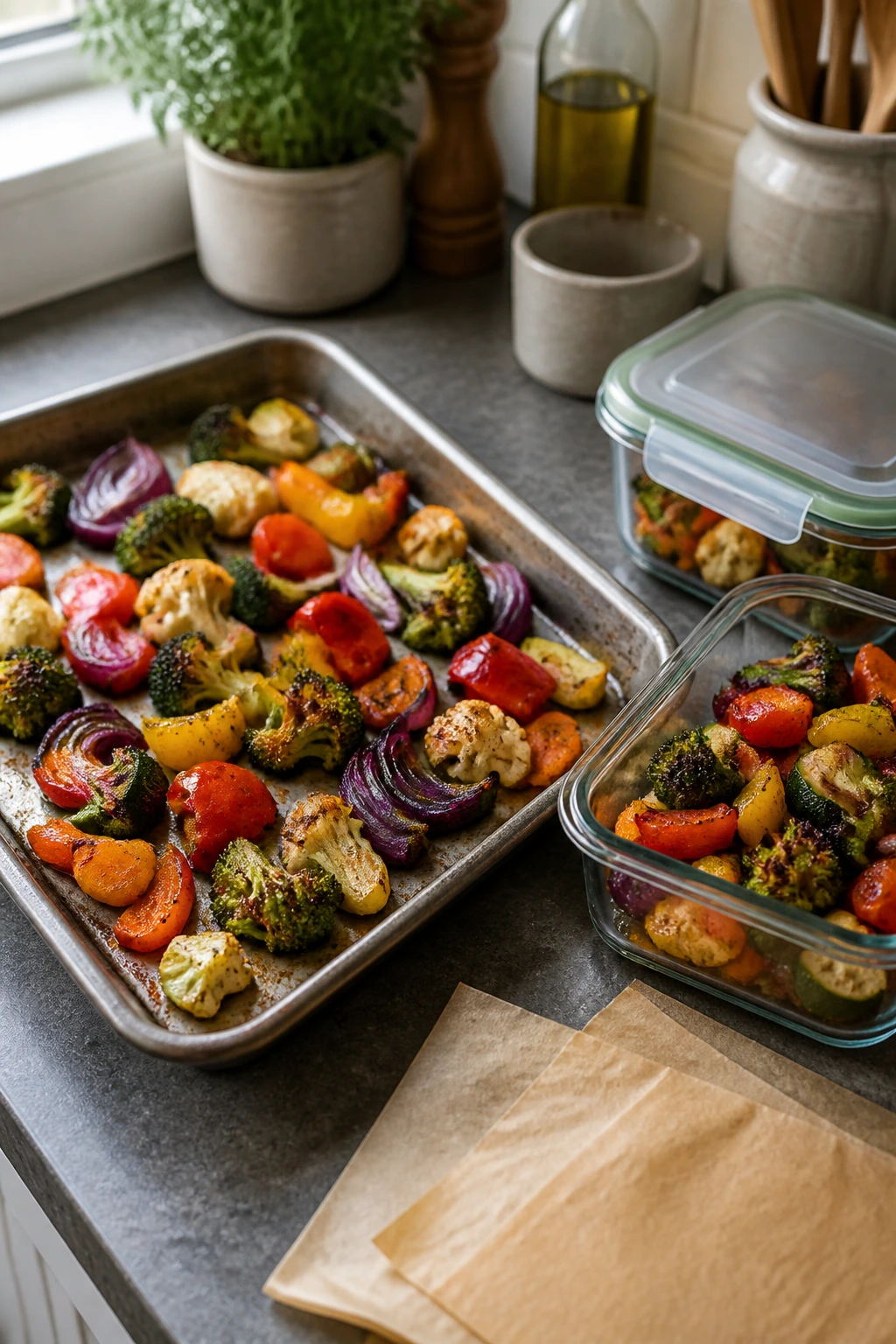
Roasted vegetables hold up better than people expect, but they still have limits. If you want to get ahead, cut the vegetables up to 1 day in advance and store them separately in airtight containers in the refrigerator. Keep zucchini in its own container with a paper towel underneath it, because it gives off more moisture than the rest and can make other vegetables soggy.
Once roasted, let the vegetables cool for no more than 2 hours before packing them away. Refrigerate leftovers in a shallow airtight container for 3 to 4 days. They’ll soften a little in the fridge, which is normal, but the flavor stays strong enough for grains, omelets, wraps, or a quick lunch bowl.
Freezing is possible, but it is not my first choice for this dish. You can freeze roasted vegetables for up to 2 months, though the zucchini and bell pepper will come back softer after thawing. If you do freeze them, spread the cooled vegetables on a tray first so they freeze in a loose layer, then transfer them to a freezer bag once solid. That makes it easier to grab just what you need.
For reheating, the oven is best. Spread the vegetables on a sheet pan and warm them at 400°F (205°C) for about 8 to 10 minutes, or until hot at the edges. A hot skillet works too; use medium-high heat with a teaspoon of oil and stir just enough to keep the vegetables from sticking. The microwave works in a pinch, but it trades away the best texture, so keep it for leftovers you plan to fold into scrambled eggs or soup.
Questions People Ask About Roasted Mixed Vegetables
Can I use frozen vegetables instead of fresh?
You can, but the texture changes a lot. Frozen vegetables usually release more water, so they roast softer and brown less, which is fine if you’re planning to use them in grain bowls or soups later. If you do use frozen vegetables, roast them straight from frozen on a very hot pan and expect a more tender result.
Do I really need two sheet pans?
If you want browning, yes, or at least enough room that the vegetables are not piled up. One overcrowded pan traps steam, and steam is the reason so many roasted vegetables come out limp. If all you have is one pan, roast in batches rather than cramming everything together.
What can I add to make this a full dinner?
The easiest route is a base of quinoa, farro, or brown rice plus chickpeas, tofu, or eggs. A spoonful of tahini or yogurt sauce also helps, because the creamy element catches the browned bits from the pan. If you’re feeding people with bigger appetites, add toasted bread on the side.
How do I keep zucchini from turning mushy?
Cut it thick — about 3/4-inch half-moons — and add it late, not at the beginning. Zucchini carries a lot of water, and thin slices go from tender to soft fast at high heat. If yours are especially large, scoop out the seedy center before cutting.
Can I roast everything at 400°F instead of 425°F?
Yes, but the vegetables will brown more slowly and can lose some of that crisp edge. If your oven runs hot, 400°F might be a better fit; if it runs cool, stay at 425°F and give the tray an extra 3 to 5 minutes. The vegetables should look browned in spots and feel tender when pierced.
Why are my vegetables browned outside but still hard inside?
That usually means the cut size was too large or the vegetables were crowded too tightly. Carrots and cauliflower need enough time for heat to travel through the center, so keep the pieces modest and use two pans if needed. If the outside starts to darken before the inside softens, lower the rack one notch and roast a little longer.
Can I prep this a day ahead and roast it later?
Yes, and that’s one of the nicer things about this recipe. Cut the vegetables and keep them chilled in separate containers, then toss with oil and seasoning right before roasting so they don’t sweat in the fridge. If you season too early, the salt pulls out moisture and the vegetables get damp.
A Pan That Earns Its Keep
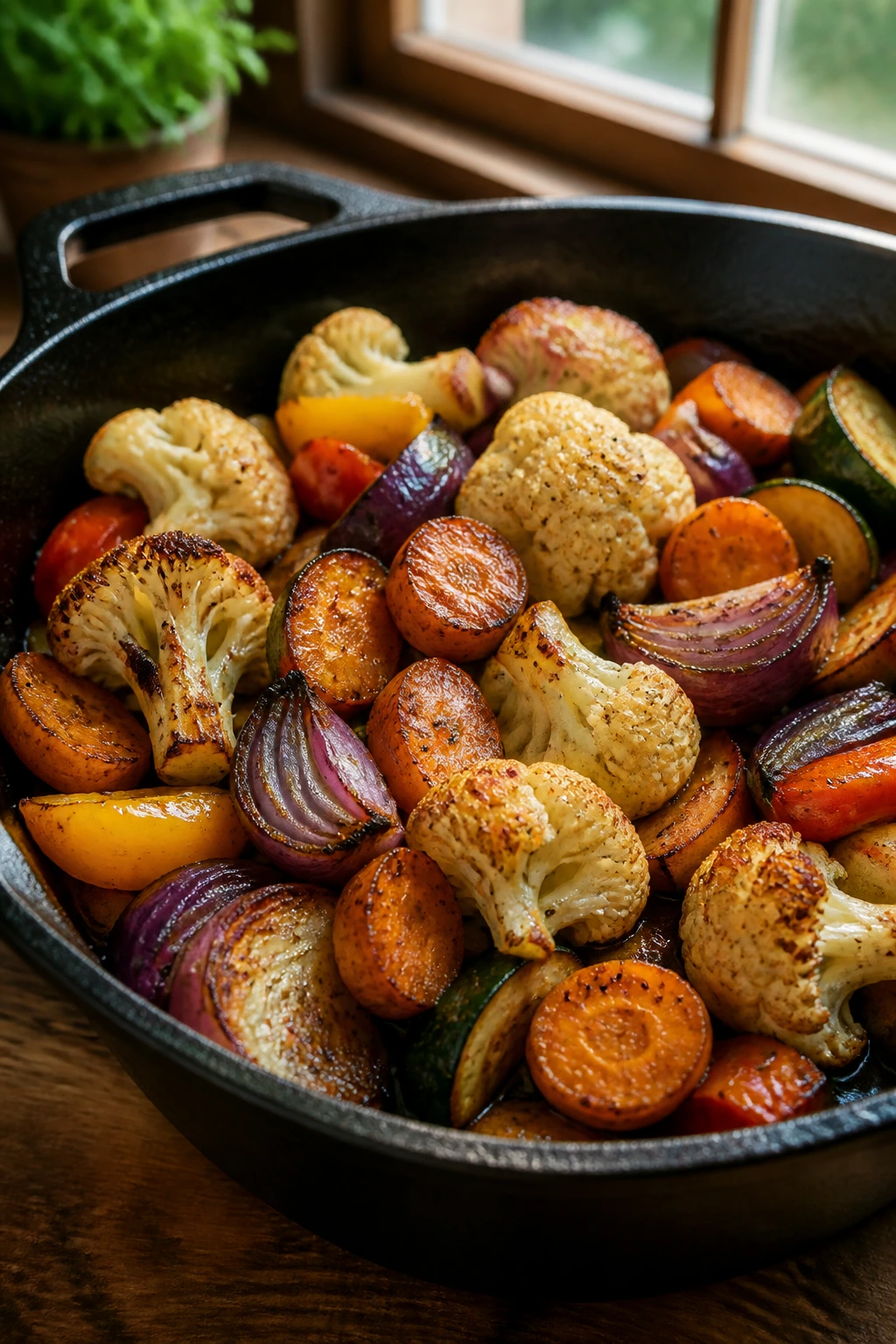
There’s a reason this tray keeps showing up in my own kitchen. It doesn’t ask for much, but it gives you a lot back: a deep brown edge on the cauliflower, sweet carrots, onion that turns soft at the corners, and enough brightness at the finish to keep the whole pan from feeling heavy. That’s a rare combination for something this plain on paper.
Once you learn the timing, you can swap vegetables without losing the structure. That’s the part worth holding onto — not the exact lineup, but the method that makes mixed vegetables taste deliberate instead of thrown together. A hot oven, a sensible cut, a little patience, and a lemon at the end. That’s enough to turn a refrigerator clean-out into dinner.
Roasted Mixed Vegetables for a Healthy Dinner — Recipe Card
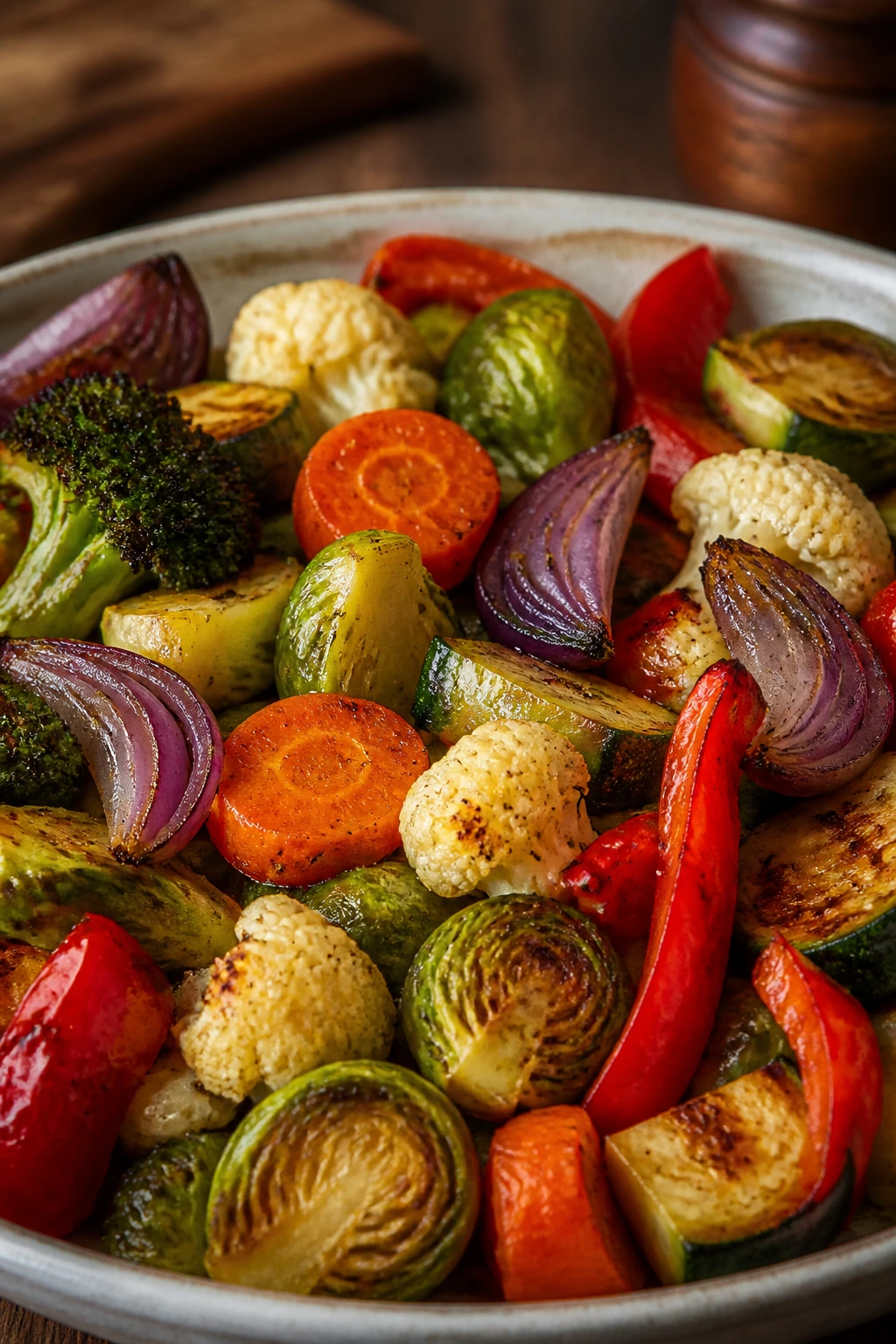
Recipe Name: Roasted Mixed Vegetables for a Healthy Dinner
Description: A colorful oven-roasted vegetable medley with browned edges, tender centers, and a bright lemon-herb finish. Serve it as a side dish or build it into a dinner bowl with grains and protein.
Prep Time: 20 minutes
Cook Time: 25 to 30 minutes
Total Time: 45 to 50 minutes
Course: Side Dish, Main Course
Cuisine: American, Mediterranean-Inspired
Servings: 4 servings
Calories: About 180 kcal per serving
Ingredients
Vegetables
- 8 ounces Brussels sprouts, trimmed and halved
- 2 cups broccoli florets, cut into 1- to 1½-inch pieces
- 2 cups cauliflower florets, cut into bite-size pieces
- 3 medium carrots, peeled and sliced on a diagonal into 1/2-inch pieces
- 1 medium red onion, cut into 1-inch wedges
- 1 medium zucchini, cut into 3/4-inch half-moons
- 1 red bell pepper, seeded and cut into 1-inch strips
Seasoning and Oil
- 3 tablespoons extra-virgin olive oil
- 1 teaspoon kosher salt
- 1/2 teaspoon black pepper
- 1 teaspoon garlic powder
- 1 teaspoon smoked paprika
- 1/2 teaspoon dried oregano
- 1/4 teaspoon red pepper flakes, optional
Finishing Touches
- 1 lemon, zested and cut into wedges
- 1 tablespoon fresh lemon juice
- 2 tablespoons chopped flat-leaf parsley
Instructions
-
Preheat the oven to 425°F (220°C) and line two rimmed sheet pans with parchment paper if desired.
-
Wash, dry, and cut all the vegetables into even pieces.
-
Toss the Brussels sprouts, broccoli, cauliflower, carrots, and red onion with 2 tablespoons olive oil, salt, pepper, garlic powder, smoked paprika, oregano, and the red pepper flakes if using.
-
Spread the seasoned vegetables across the two sheet pans in a single layer and roast for 15 minutes.
-
Toss the zucchini and bell pepper with the remaining 1 tablespoon olive oil and a pinch of salt.
-
Add the zucchini and bell pepper to the pans, turn the vegetables, and roast for 10 to 12 minutes more, until tender and browned in spots.
-
Remove from the oven and finish with lemon juice, lemon zest, and parsley. Taste and add a pinch more salt if needed.
Notes: Roast in two pans for the best browning. Add lemon after roasting, not before. For a fuller dinner, serve over quinoa or farro with chickpeas or tofu.