



If your tray of vegetables usually comes out soft at the center and pale at the edges, caramelized veggie fries are the fix. The trick is less about fancy seasoning and more about cut size, heat, and patience — the boring parts that make the difference between limp sticks and fries with actual browning.
Sweet potatoes bring the sweetness, carrots bring a little snap, and parsnips turn almost nutty when the oven gets hot enough. A teaspoon of maple syrup and a spoonful of cornstarch help the browning along without turning the whole tray sticky, and that matters more than people think.
Serve them with a lemony yogurt-tahini dip, and you get something that works as a side or a light vegetarian dinner when you add eggs, chickpeas, or a pile of greens. The tray smells warm and a little earthy. The edges go bronzy, the centers stay soft enough to bite cleanly, and the whole thing disappears faster than a normal roasted vegetable pan ever does.
Why These Caramelized Veggie Fries Earn a Spot on the Table
-
Browned Edges, Not Soggy Sticks: The oven runs hot enough to dry the surface before the inside overcooks, which is why the fries get those darker corners instead of collapsing into a soft pile.
-
Built for Real Weeknights: Sweet potatoes, carrots, and parsnips roast in roughly the same window when cut to the same 1/2-inch thickness, so you are not juggling three separate pans.
-
Dinner Feels More Complete with Dip: The lemon-tahini yogurt sauce adds sharpness, creaminess, and a little protein, which keeps the plate from tasting like a naked tray of vegetables.
-
Pantry Ingredients Do the Heavy Lifting: Olive oil, smoked paprika, garlic powder, salt, and a tiny splash of maple handle the flavor without a long shopping list.
-
Flexible Enough for Picky Eaters: You can pull the seasoning toward smoky, herby, or spicy without changing the method, which makes this one of those recipes that quietly stays useful.
A Quick Look at the Clock and Portions
Yield: 4 side servings or 2 light dinner servings
Prep Time: 20 minutes
Cook Time: 25 to 30 minutes
Total Time: 45 to 50 minutes
Difficulty: Beginner — the method is straightforward, but the cut size and spacing on the pan matter.
Best Served: Hot from the oven, after a brief 2-minute rest
How Roasted Vegetable Fries Became Worth Keeping
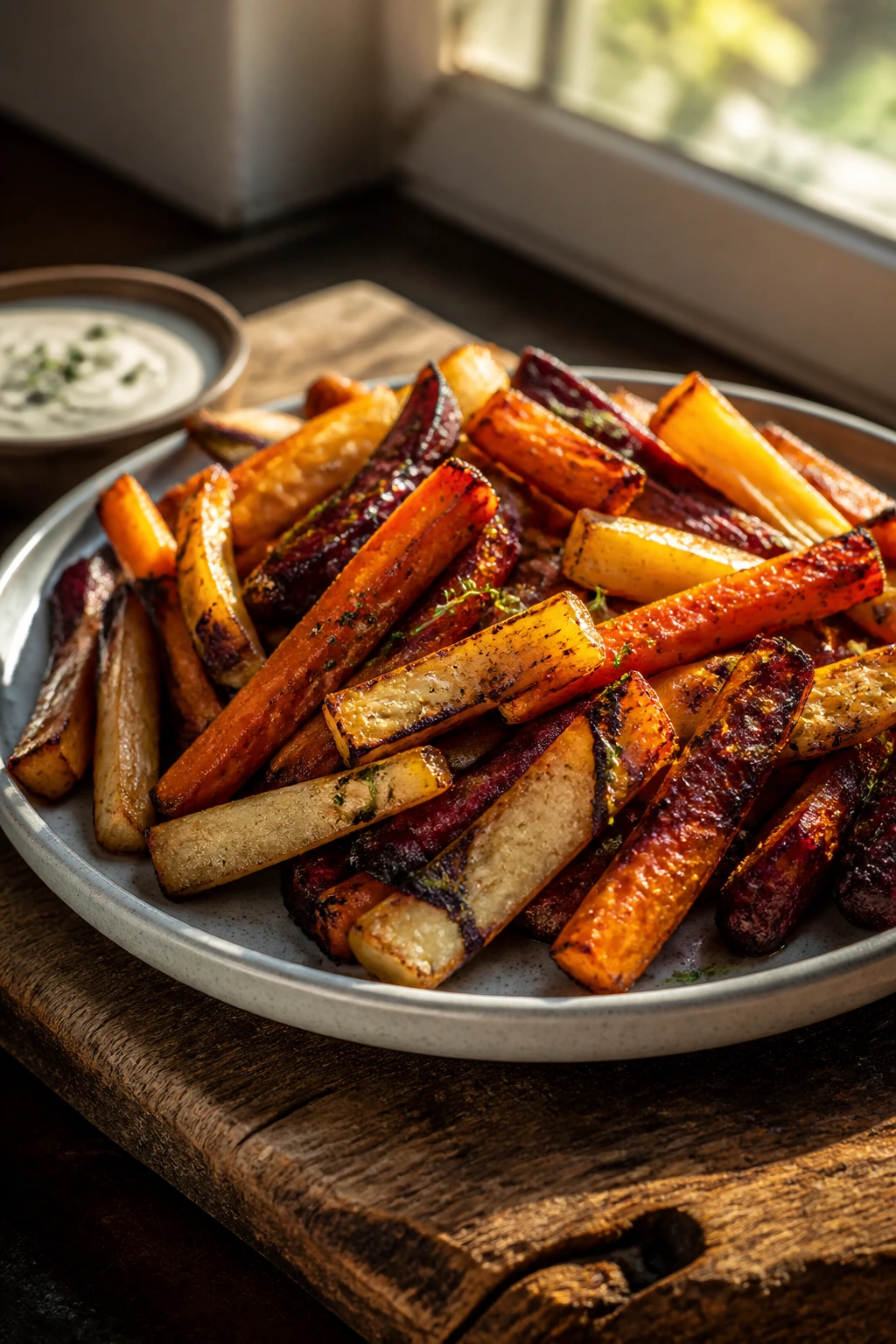
Carrot fries and sweet potato fries have been floating around home kitchens for years, usually as a hopeful substitute for the real thing. I’ve cooked enough of them to know the trap: if you treat every vegetable the same, one turns mushy, one burns, and one lands somewhere in the middle looking confused.
The version here is more deliberate. Sweet potatoes carry the tray because they hold their shape and give you that soft, creamy middle. Carrots and parsnips bring a firmer bite, and they brown at the edges in a way that smells a little like maple and toast. That scent is the giveaway. When the kitchen starts smelling faintly sweet and roasted instead of just hot, you know you’re on the right track.
The dip matters too. A plate of roasted vegetables can feel austere fast, and I’m not interested in dinner that behaves like a lecture. The yogurt-tahini sauce adds tang and body, and it gives the fries somewhere to go besides your mouth. That sounds obvious, maybe, but it changes the whole plate.
The Ingredient List for the Fries and Dip
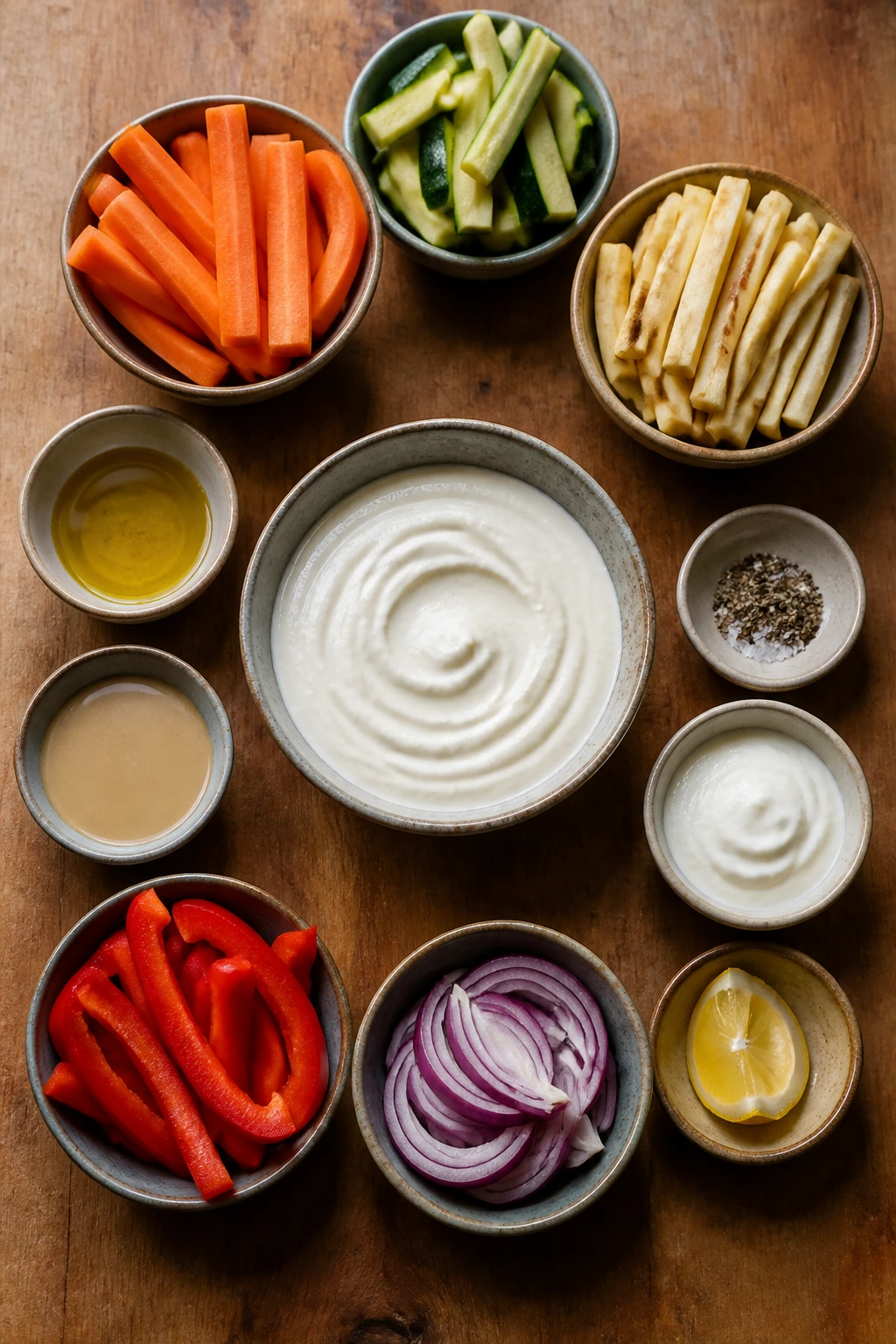
For the Veggie Fries:
- 2 medium sweet potatoes, about 1 1/2 lb total, peeled if the skins are rough, cut into 1/2-inch fries
- 3 large carrots, about 12 oz total, peeled and cut into 1/2-inch fries
- 2 medium parsnips, about 8 oz total, peeled and cut into 1/2-inch fries
- 2 tablespoons olive oil
- 1 teaspoon pure maple syrup
- 1 tablespoon cornstarch
- 1 teaspoon kosher salt
- 3/4 teaspoon smoked paprika
- 1/2 teaspoon garlic powder
- 1/4 teaspoon freshly ground black pepper
- 1/4 teaspoon ground cumin, optional
For the Lemon-Tahini Yogurt Dip:
- 3/4 cup plain Greek yogurt
- 1 tablespoon tahini
- 1 tablespoon lemon juice
- 1 small garlic clove, finely grated or pressed
- 1 tablespoon water, plus 1 to 2 teaspoons more as needed
- 1/4 teaspoon kosher salt
- 1 tablespoon chopped parsley or dill
For Finishing:
- 1 tablespoon chopped fresh parsley
- Flaky salt, optional
Why Each Ingredient Pulls Its Weight
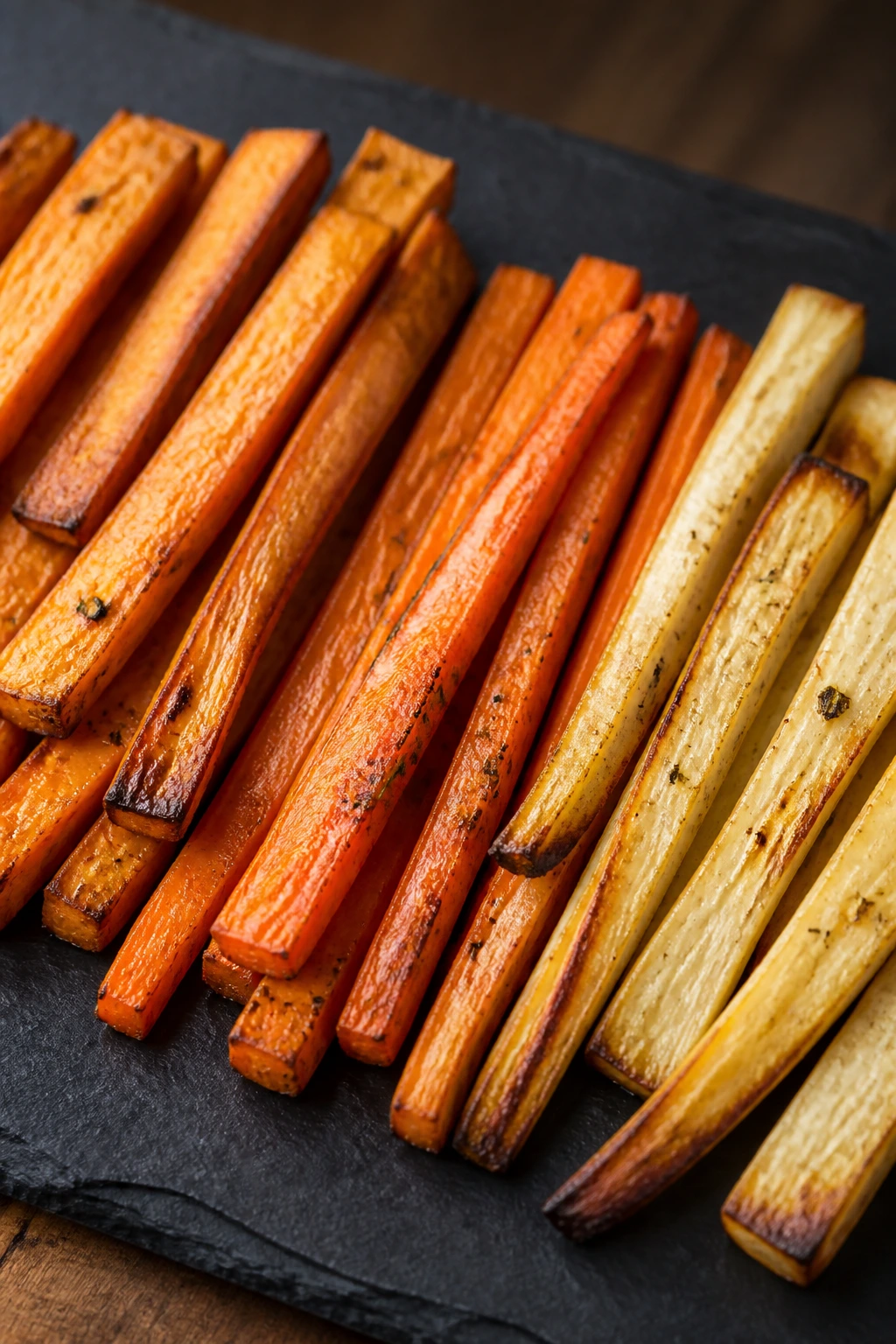
Root Vegetables
What to use: 2 medium sweet potatoes, 3 large carrots, and 2 medium parsnips, cut into 1/2-inch sticks.
Preparation: Keep the sticks close in size so they roast at the same pace. I like to cut the carrots and parsnips a little thinner at the ends, because those tapered bits cook faster than the thick center chunks.
Substitutions: Turnips, rutabaga, and peeled butternut squash all work, though squash softens faster and wants a little less time in the oven. If you want a cleaner, sweeter tray, use all sweet potatoes and carrots.
Tips: Dry the cut vegetables well before seasoning them. Moisture is the enemy here. It makes the fries steam, and steam is what gives you pale surfaces and limp edges.
The Browning Coating
What to use: 2 tablespoons olive oil, 1 teaspoon maple syrup, and 1 tablespoon cornstarch.
Preparation: Toss the vegetables in the oil first, then add the maple syrup and cornstarch so the starch clings to the dry spots and the oil coats everything lightly.
Substitutions: Avocado oil works in place of olive oil. Arrowroot or potato starch can replace cornstarch if that’s what you keep on hand.
Tips: The coating should look thin and matte, not slick and wet. If the fries look shiny or heavy, they’ll roast, but they won’t brown as well.
Seasoning Base
What to use: 1 teaspoon kosher salt, 3/4 teaspoon smoked paprika, 1/2 teaspoon garlic powder, 1/4 teaspoon black pepper, and 1/4 teaspoon cumin, if you want a warmer note.
Preparation: Mix the seasonings together in a small bowl before they go onto the vegetables. That keeps the salt from landing in one clump and the paprika from disappearing into the bowl wall.
Substitutions: Regular paprika is fine, though it won’t bring the same depth. Onion powder can stand in for garlic powder if that’s what you have, and chili powder works if you want more heat.
Tips: Smoked paprika burns if you go too far on the broil, so keep an eye on the pan during the last minute. It should smell sweet and smoky, not sharp.
The Dip and Finish
What to use: 3/4 cup Greek yogurt, 1 tablespoon tahini, 1 tablespoon lemon juice, 1 small garlic clove, 1 tablespoon water, 1/4 teaspoon salt, and chopped parsley or dill.
Preparation: Whisk the dip until smooth, then let it sit while the fries roast. The garlic softens a little after 10 minutes, and the sauce tastes less raw.
Substitutions: Use unsweetened dairy-free yogurt if you want a vegan version. Cashew cream also works, though it’s richer and a little less tangy.
Tips: Thin the dip slowly. One tablespoon of water may be enough, but if you want a spoonable sauce, add a teaspoon at a time until it slides off the whisk instead of sticking in thick ribbons.
The Tools That Keep the Fries from Steam
-
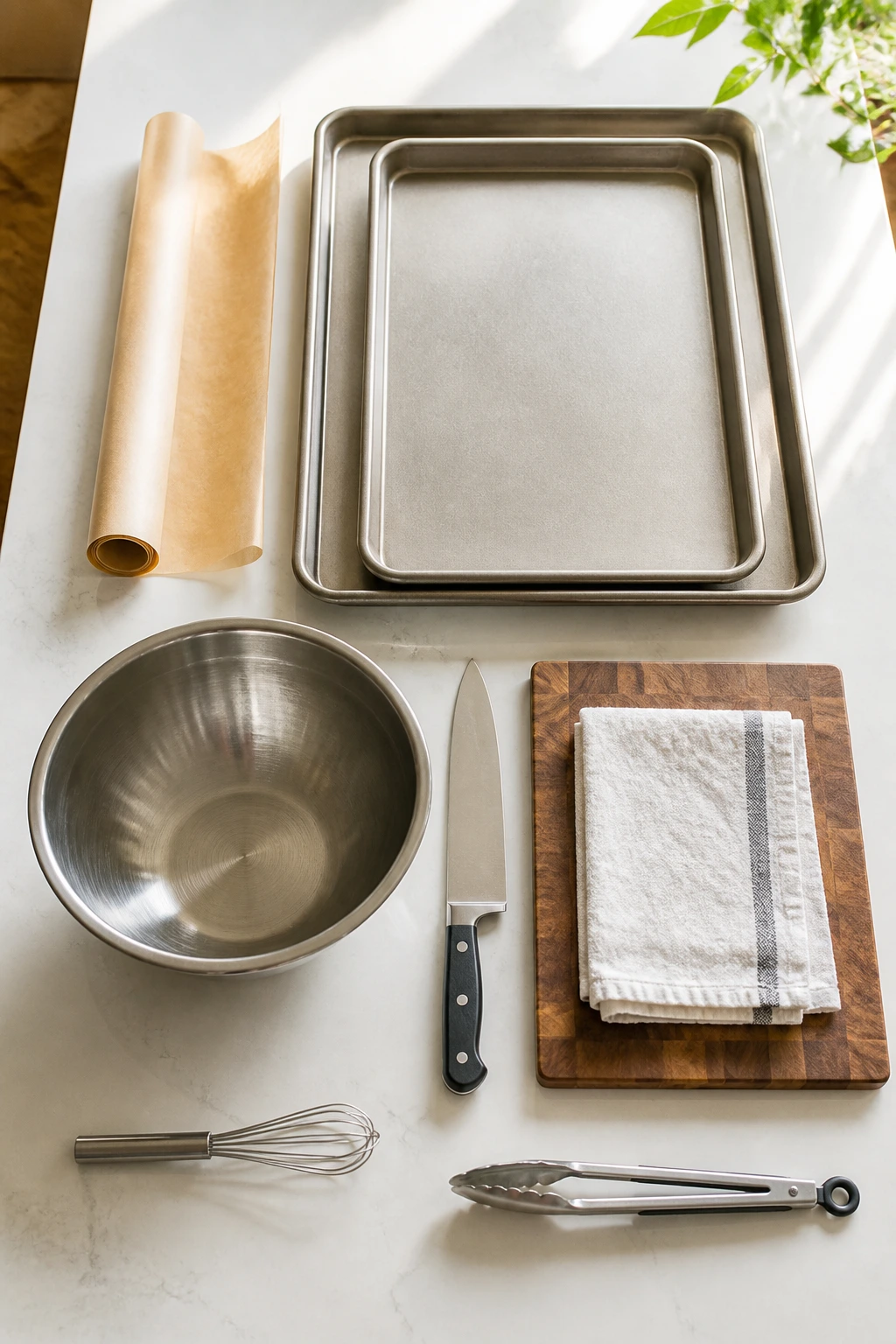
2 rimmed sheet pans — Two pans let you keep the fries in a single layer, which is the whole game here.
-
Parchment paper — Makes cleanup easier and keeps the starch coating from welding itself to the pan. If you want deeper browning, use lightly oiled bare pans instead.
-
Large mixing bowl — You need space to toss the vegetables without crushing the thinner carrot edges.
-
Sharp chef’s knife — A dull knife makes uneven sticks, and uneven sticks roast unevenly. No one needs that drama.
-
Cutting board with a damp towel underneath — Keeps the board from skidding when you’re slicing hard vegetables.
-
Small whisk or fork — For the yogurt-tahini dip. A fork works if you’re not in the mood to wash another tool.
-
Thin spatula or tongs — Helpful for flipping the fries without tearing the browned sides off.
How to Roast Caramelized Veggie Fries Until the Edges Darken
Prep the Oven and Dip
-
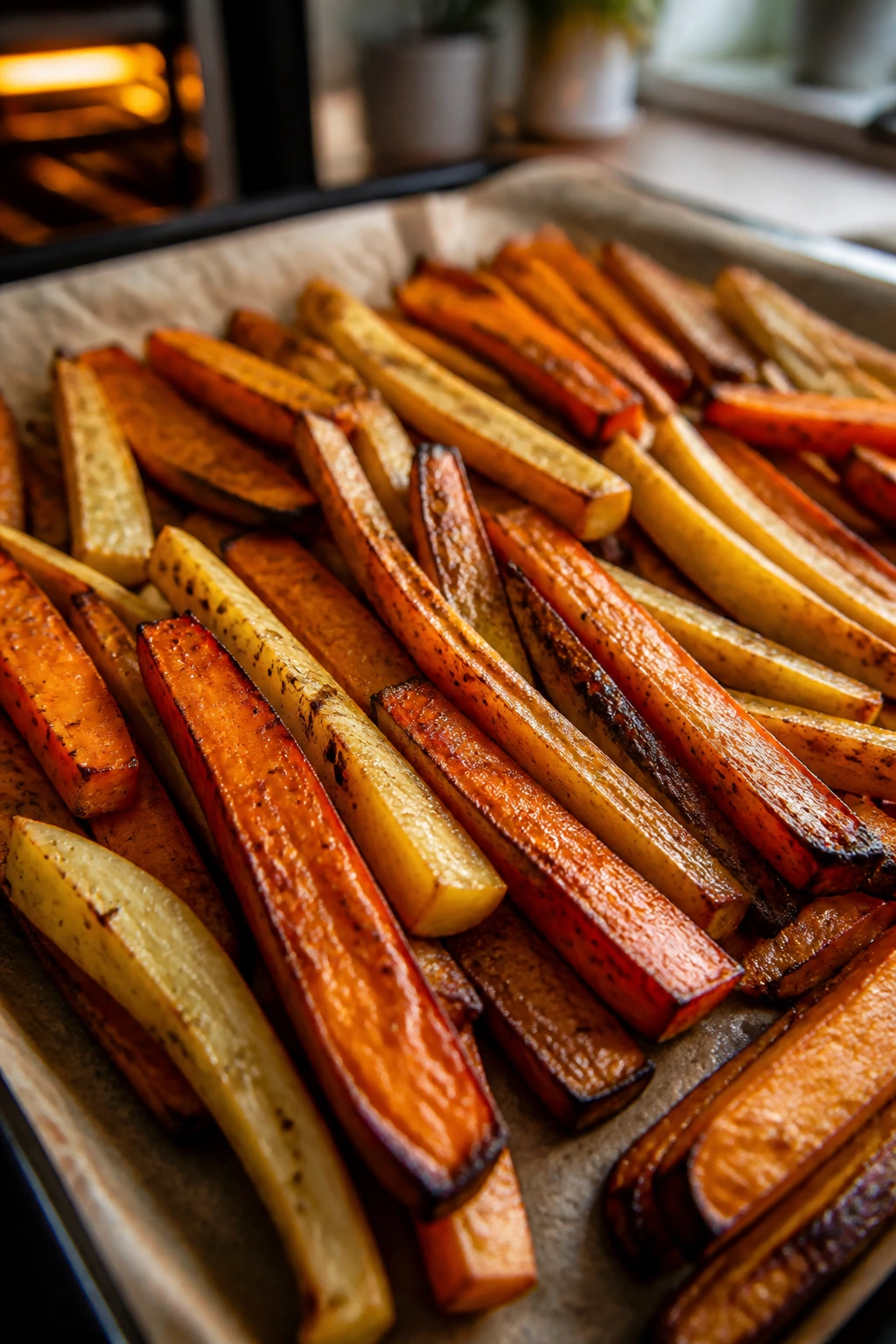
Preheat the oven to 450°F (232°C). Line 2 rimmed sheet pans with parchment and set one rack in the upper third of the oven and one in the lower third.
-
In a small bowl, whisk together the Greek yogurt, tahini, lemon juice, grated garlic, water, salt, and chopped parsley until smooth. Set it aside while you work; the dip gets better after a short rest.
Cut and Coat the Vegetables
-
Peel the sweet potatoes, carrots, and parsnips. Cut them into 1/2-inch fries that are as even as you can manage. Pat them dry with a clean kitchen towel. If the vegetables are wet, they will steam instead of caramelize.
-
Put the vegetables in a large bowl. Add the olive oil, maple syrup, cornstarch, salt, smoked paprika, garlic powder, black pepper, and cumin, if using. Toss until every piece looks lightly coated and a little matte rather than glossy.
Roast and Finish
-
Divide the fries between the two sheet pans in a single layer. Leave space around each piece. If the fries touch in a mound, they soften before they brown.
-
Roast for 15 minutes, then switch the pans from top to bottom rack and rotate them front to back. Flip the fries with a spatula, then roast for 8 to 12 minutes more, until the edges are deep gold and the thinner tips are darker than the centers.
-
If you want extra color, broil for 1 to 2 minutes, watching the pans the whole time. Pull them the moment the edges darken a shade or two. Broilers do not forgive distracted cooks.
-
Let the fries rest for 2 to 3 minutes, then scatter over the chopped parsley and a pinch of flaky salt, if using. Serve with the dip while the fries are still hot and slightly crisp at the edges.
How to Turn the Tray into Dinner
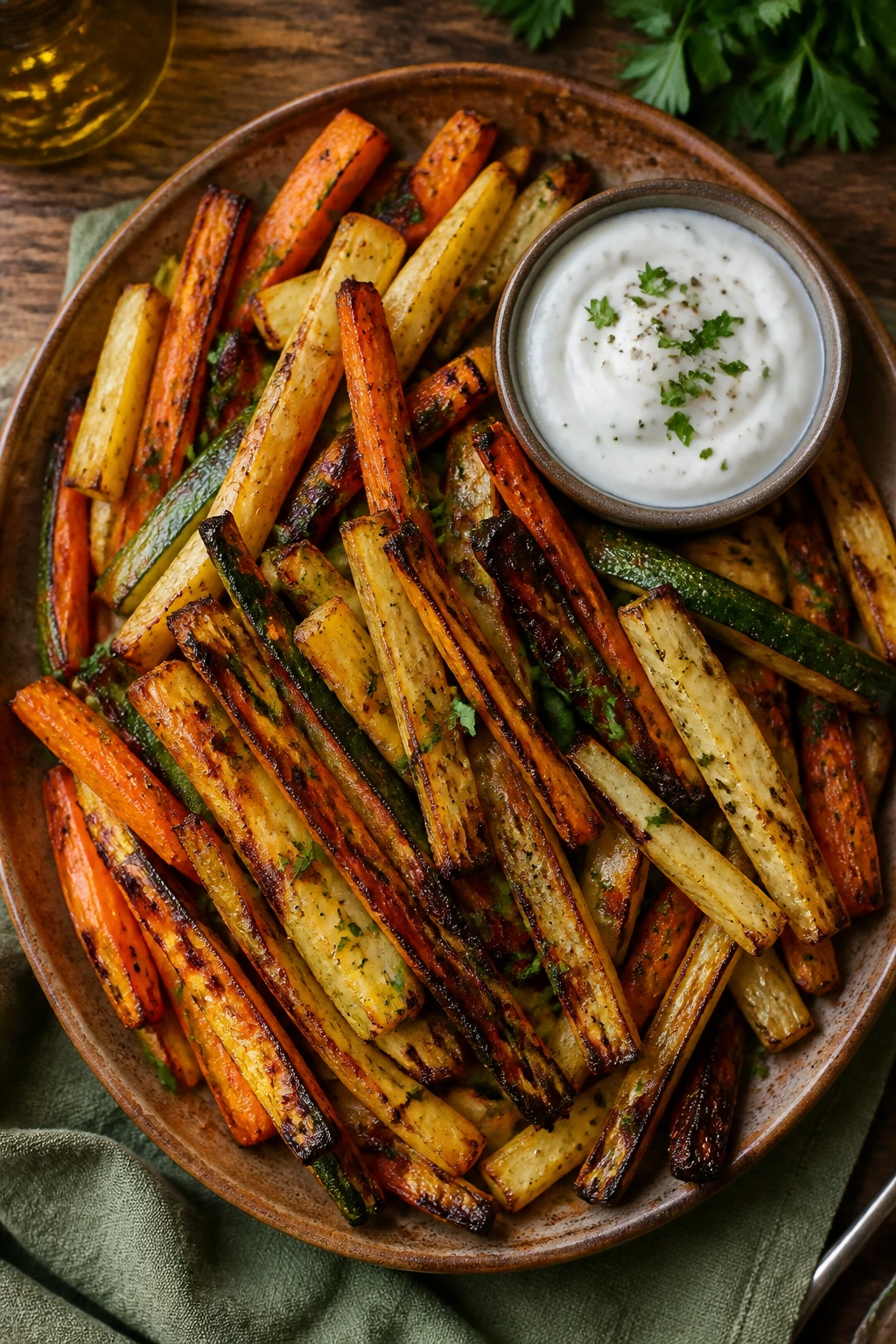
Presentation: Pile the fries onto a warm platter and leave the darker edges visible. Spoon the dip into a small bowl on the side, or drag a thick stripe of it across the plate if you want the tray to look a little more finished. A shower of parsley at the end makes the whole thing look deliberate.
Accompaniments: These fries sit nicely next to soft-scrambled eggs, a chickpea salad, grilled halloumi, or a simple cucumber-tomato salad with lemon. If you want the plate to feel fuller, add a scoop of lentils or a fried egg on top.
Portions: As a side, plan on about 1 generous cup per person. As a light dinner, go closer to 2 cups per person and add a protein on the side so the plate has enough heft to carry you through the evening.
Beverage Pairing: Sparkling water with lemon keeps the flavors bright, and iced mint tea works if you want something cold and clean. If you’re pouring wine, a dry white with a little citrus snap fits better than anything oaky.
Small Moves That Make the Fries Better
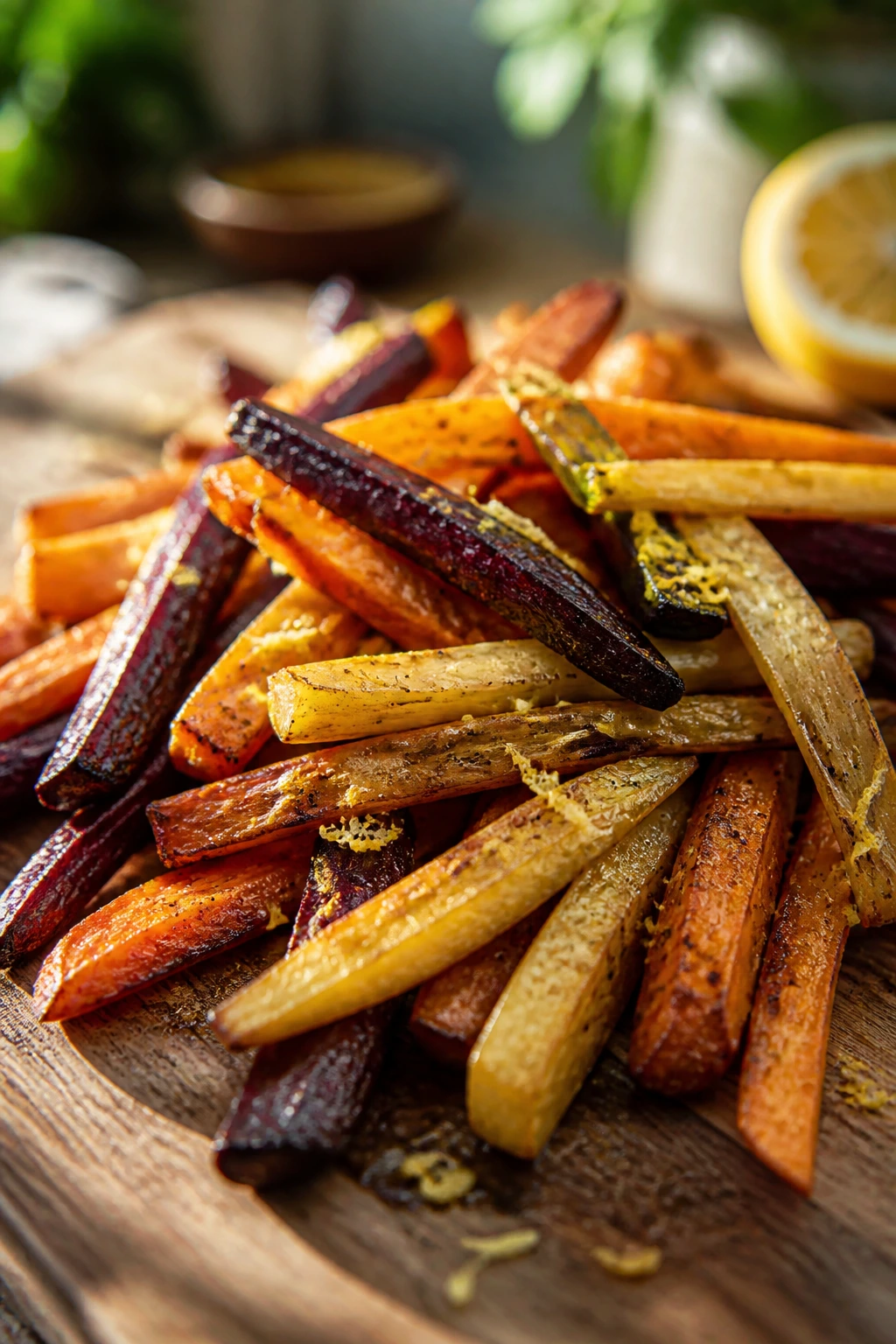
Flavor Enhancement: A squeeze of lemon over the fries the second they come out of the oven gives the sweetness a sharper edge. I like the smallest bit of zest too, but only after roasting — add zest before baking and it can taste oddly bitter.
Customization: Swap the smoked paprika for curry powder if you want a warmer, more fragrant tray. Za’atar is good here too, especially if you like sesame and thyme with your roasted vegetables. For a kid-friendlier version, cut the cumin and keep the garlic powder, then add a light dusting of Parmesan after baking.
Serving Suggestions: If the fries are going out as dinner, tuck a handful of arugula or baby spinach onto the plate under them. The heat barely wilts the greens, and the peppery bite keeps the plate from feeling one-note.
Make-It-Yours: For a vegan version, use unsweetened dairy-free yogurt in the dip and double-check that your maple syrup is pure. For lower oil, trim the olive oil to 1 1/2 tablespoons and roast on a preheated dark sheet pan; you’ll lose a little richness, but the edges still brown.
The Mistakes That Turn Crispy Fries Soft
-
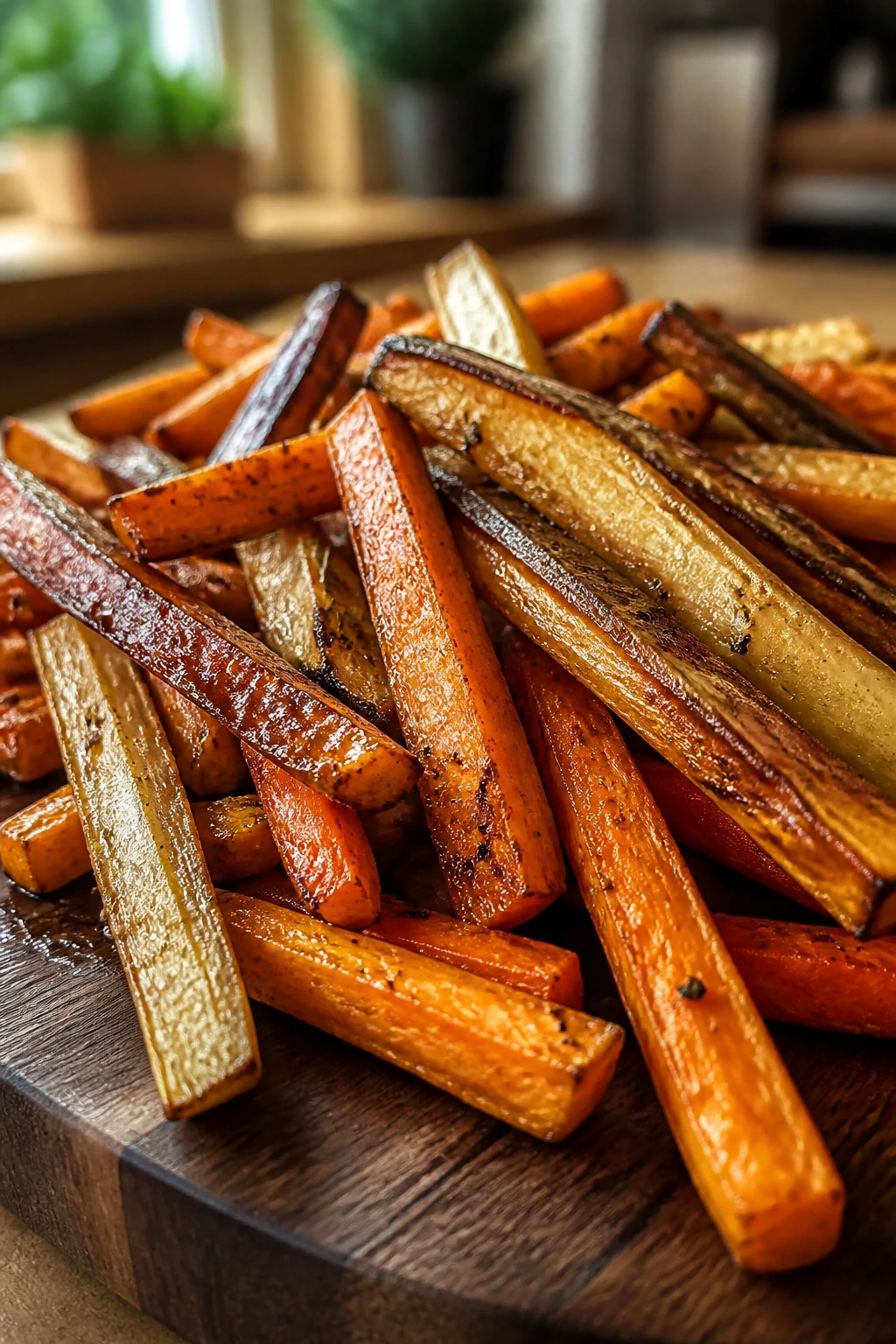
Cutting the fries at wildly different sizes: Thick sweet potato chunks and skinny carrot shavings do not cook on the same clock. The symptom is a pan with burnt tips and raw centers. Cut with intention, even if that means taking an extra five minutes at the board.
-
Skipping the drying step: Wet vegetables look harmless, but they shed steam in the oven and keep the surfaces pale. If you see water beads on the cut sides, blot them before seasoning. That tiny step changes the texture more than most people expect.
-
Crowding the pan: A heaped tray is a soft tray. If the fries are touching edge to edge, they trap moisture and roast more like a casserole than fries. Use two pans, or roast in batches. It’s tedious. It works.
-
Using too much maple syrup or oil: More is not better here. Too much sweetener makes the fries sticky before they brown, and too much oil gives you a shiny finish that never really dries down. Keep the coating light; the oven does the rest.
-
Walking away during the broil: That last minute is where the edges go from bronzed to burnt. If you choose the broiler, stay in front of the oven and watch the tips. Once you smell a sharp, toasted note, you’re near the line.
-
Salting too late, then forgetting the dip: The fries need salt in the seasoning bowl and a little extra finish if you like. Without both, the carrots taste flatter than they should. And without the dip, the tray can feel oddly bare, especially if you’re serving it as dinner.
Variations for Different Tastes and Dietary Needs
Za’atar Lemon Fries
Swap the smoked paprika and cumin for 1 1/2 teaspoons za’atar and finish the tray with extra lemon zest. This version tastes brighter and more herb-heavy, which works well if you’re serving the fries with hummus or a cucumber salad.
Curry-Scented Veggie Fries
Use 1 1/2 teaspoons mild curry powder in place of the paprika, then serve the fries with the yogurt dip and a few chopped scallions. The curry should smell warm and toasty, not hot, so choose a mild blend if you want the vegetables to stay in front.
Parmesan Herb Fries
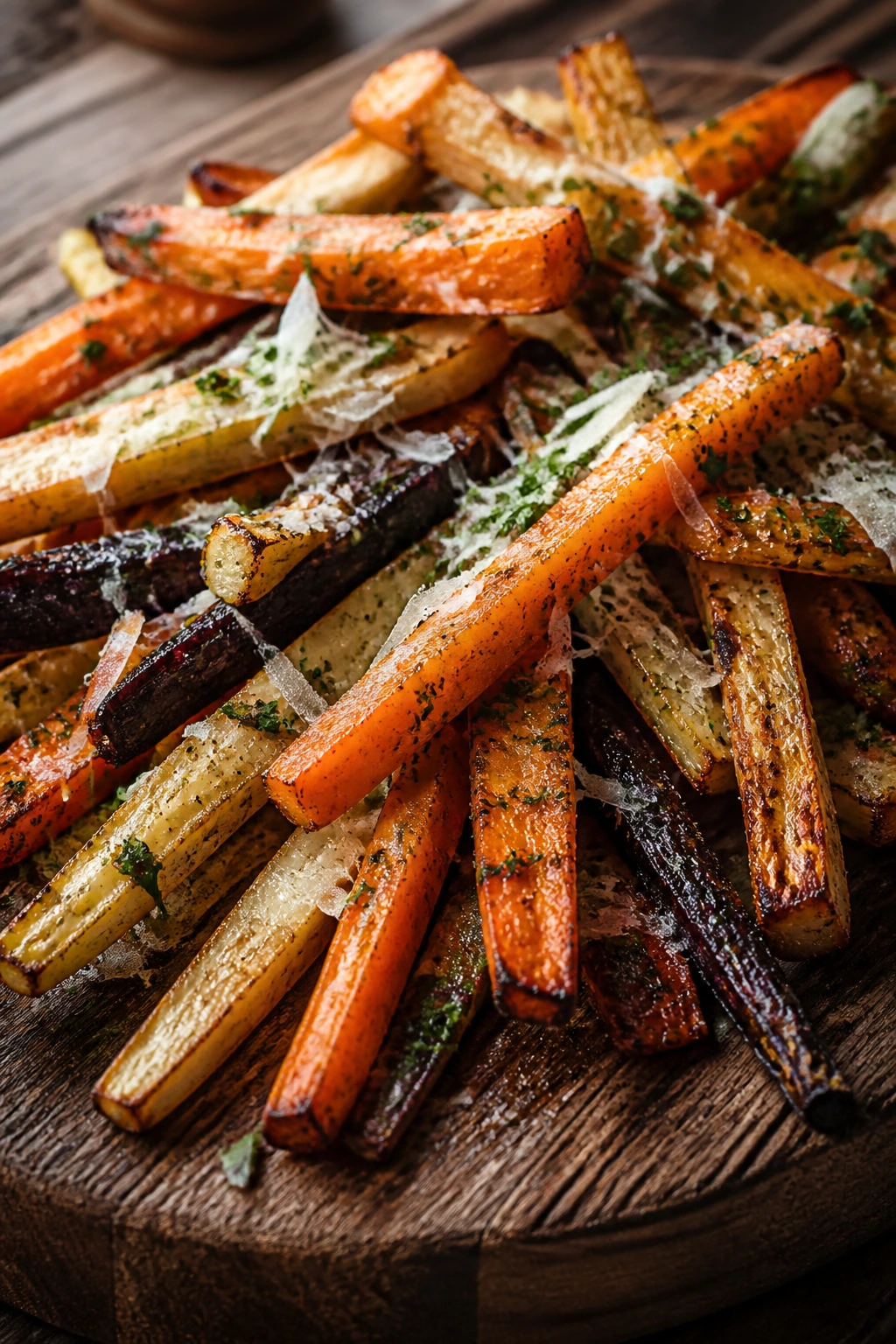
After roasting, toss the fries with 1/4 cup finely grated Parmesan and chopped parsley. The cheese clings best while the tray is still hot, and it gives the edges a salty, almost nutty finish that makes the pan feel more substantial.
Air Fryer Batch Fries
If you want smaller batches with sharper edges, cook the fries at 390°F in an air fryer for 14 to 18 minutes, shaking halfway through. You’ll need to work in batches, and the fries will brown fast, so check early rather than late.
Spicy Chili-Crunch Fries
Add 1/2 teaspoon chili flakes to the seasoning mix and drizzle the finished tray with 1 teaspoon chili crisp. This one leans bolder and richer, and it’s the version I reach for when I want the vegetables to feel less like a side and more like the center of the plate.
Storage, Reheating, and Make-Ahead Notes
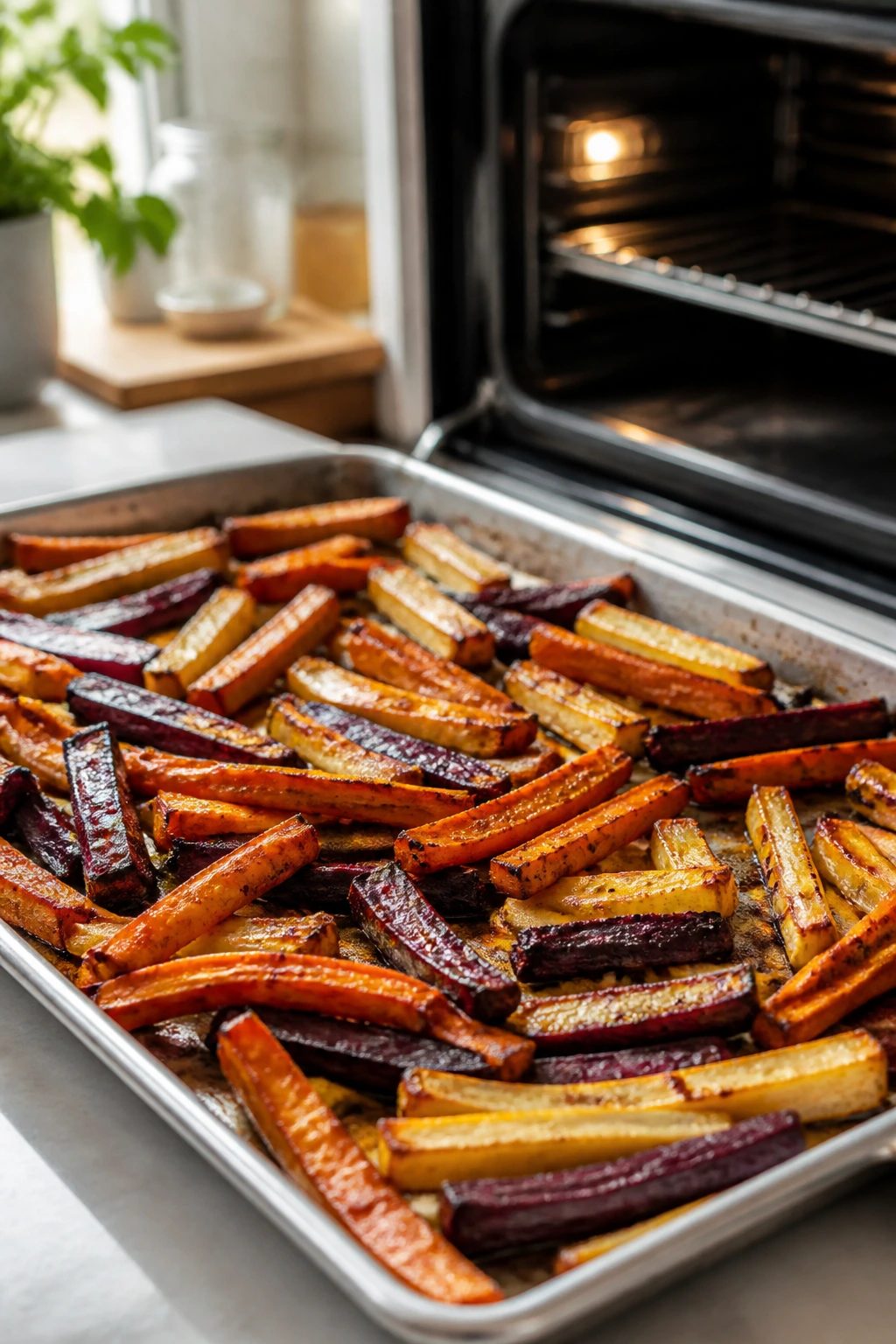
Leftover fries keep best in an airtight container in the refrigerator for 3 to 4 days. They’ll soften as they sit, which is normal, but they still taste good if you reheat them the right way. I would not leave them out on the counter for more than 2 hours.
The dip keeps separately for up to 3 days in the fridge. If it thickens, stir in 1 teaspoon of water or lemon juice before serving. The garlic gets a little stronger after a day, so taste it again before putting it back on the table.
For reheating, the oven is the best route. Spread the fries on a sheet pan and bake at 425°F (218°C) for 8 to 10 minutes, flipping once. An air fryer works too — 375°F for 4 to 6 minutes usually does the trick. A skillet over medium heat is the quickest option; add a teaspoon of oil and let the fries sit undisturbed for a minute or two before stirring so they can pick up a little color again.
You can also prep the vegetables ahead. Cut them up to 24 hours in advance and store them in separate airtight containers lined with paper towels, or in a covered bowl with a dry towel over the top. I prefer dry storage over water for this recipe because excess moisture is the fastest way to lose the crisp edge you worked for. Toss them with the oil and seasonings only right before roasting.
Questions People Ask Before the Tray Goes In

Can I use other vegetables besides sweet potatoes, carrots, and parsnips?
Yes, but choose vegetables that roast on a similar timeline. Turnips and rutabaga work well, and peeled butternut squash does too, though it softens faster and may need a shorter roast. Skip watery vegetables like zucchini unless you’re okay with a softer result.
Do I have to peel the sweet potatoes?
No, not if the skins are smooth and clean. I peel them when the skins look rough or the potatoes are especially thick, because a smoother cut helps the fries brown evenly. Carrots and parsnips are worth peeling for a cleaner texture.
Why did my fries come out soft instead of caramelized?
Usually it’s one of three things: the pan was crowded, the vegetables were wet, or the oven ran too cool. Check the spacing first, because that’s the most common problem. A hot oven and dry vegetables do more work than extra oil ever will.
Can I make these in advance for a dinner party?
You can prep the vegetables and the dip ahead, but I would roast the fries close to serving time. Reheated fries are still tasty, yet the edges will not stay as sharp as they do fresh from the oven. If you need to split the work, roast them 80 percent of the way earlier, then finish them for 5 to 7 minutes right before dinner.
Can I make the dip without yogurt?
Yes. Unsweetened dairy-free yogurt is the cleanest swap, and cashew cream is richer if you want something thicker. If you skip both, a lemon-tahini sauce with water and garlic works, though it will be less creamy.
How do I keep the fries from sticking to the pan?
Use parchment or a lightly oiled bare sheet pan, and don’t try to move the fries too soon. They usually release more easily after the first roast. If you force them too early, you can tear off the browned surface that you actually want to keep.
What if my carrots are still firm when the sweet potatoes are done?
That usually means the carrot sticks were cut a little too thick. You can pull the soft fries, give the carrots 3 to 5 extra minutes, and return the pan to the oven. Next time, cut the carrots just a touch thinner than the sweet potatoes.
A Tray Worth Repeating
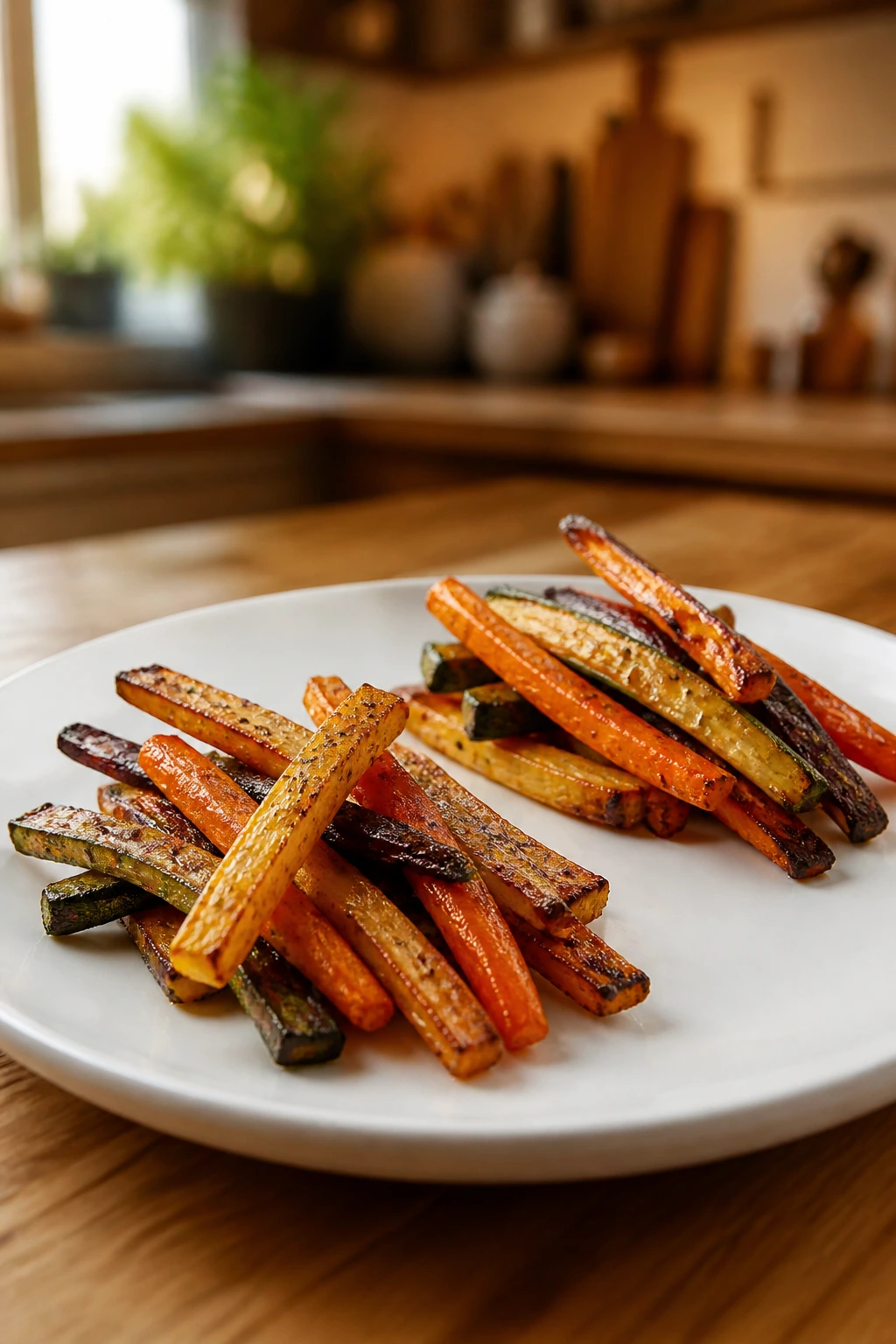
There’s a reason this recipe works so well when plain roasted vegetables feel forgettable. The cut is intentional, the heat is high, and the seasoning stays out of the way until the very end. That’s what gives you browned edges instead of soft compromise.
And the dip matters more than it looks on paper. A hot tray of vegetable fries needs something cool, sharp, and creamy nearby, or the whole thing can feel a little one-note. Once you put the two together, the pan starts to taste less like a side and more like a dinner you’d make again without checking the recipe twice.
Caramelized Veggie Fries for a Healthy Dinner — Recipe Card
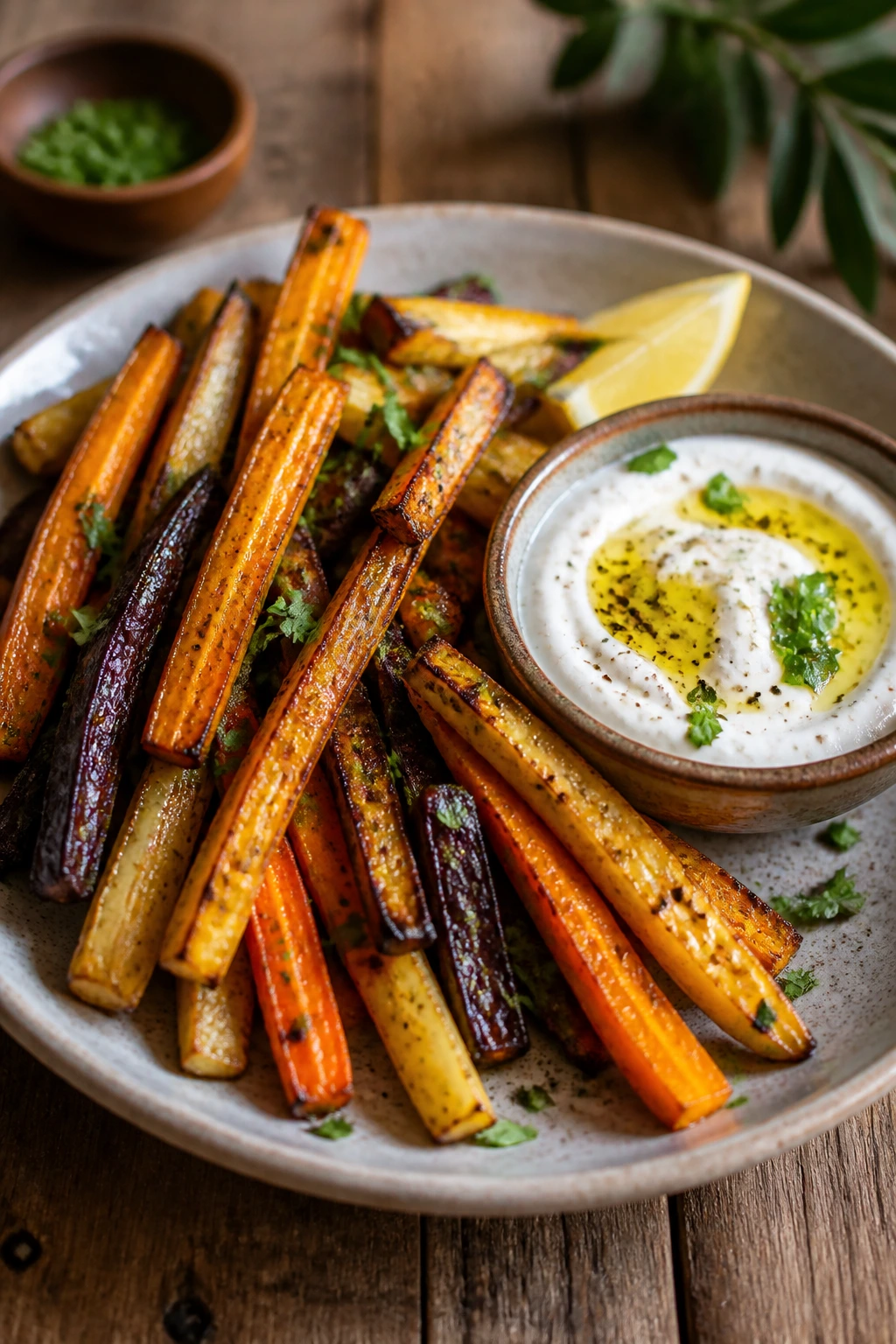
Recipe Name: Caramelized Veggie Fries for a Healthy Dinner
Description: Sweet potatoes, carrots, and parsnips roast until the edges brown and the centers stay tender, then get served with a lemon-tahini yogurt dip. It’s a simple sheet-pan recipe with enough texture and flavor to work as a side or a light vegetarian dinner.
Prep Time: 20 minutes
Cook Time: 25 to 30 minutes
Total Time: 45 to 50 minutes
Course: Side Dish
Cuisine: American
Servings: 4 side servings or 2 light dinner servings
Calories: About 210 kcal per serving
Ingredients
For the Veggie Fries:
- 2 medium sweet potatoes, about 1 1/2 lb total, peeled if rough, cut into 1/2-inch fries
- 3 large carrots, about 12 oz total, peeled and cut into 1/2-inch fries
- 2 medium parsnips, about 8 oz total, peeled and cut into 1/2-inch fries
- 2 tablespoons olive oil
- 1 teaspoon pure maple syrup
- 1 tablespoon cornstarch
- 1 teaspoon kosher salt
- 3/4 teaspoon smoked paprika
- 1/2 teaspoon garlic powder
- 1/4 teaspoon freshly ground black pepper
- 1/4 teaspoon ground cumin, optional
For the Lemon-Tahini Yogurt Dip:
- 3/4 cup plain Greek yogurt
- 1 tablespoon tahini
- 1 tablespoon lemon juice
- 1 small garlic clove, finely grated or pressed
- 1 tablespoon water, plus more as needed
- 1/4 teaspoon kosher salt
- 1 tablespoon chopped parsley or dill
For Finishing:
- 1 tablespoon chopped fresh parsley
- Flaky salt, optional
Instructions
-
Preheat the oven to 450°F (232°C). Line 2 rimmed sheet pans with parchment and set the racks in the upper and lower thirds of the oven.
-
Whisk together the Greek yogurt, tahini, lemon juice, garlic, water, salt, and parsley in a small bowl. Set aside.
-
Cut the sweet potatoes, carrots, and parsnips into even 1/2-inch fries, then pat them dry.
-
Toss the vegetables with the olive oil, maple syrup, cornstarch, salt, smoked paprika, garlic powder, black pepper, and cumin, if using.
-
Spread the fries on the prepared sheet pans in a single layer with space between pieces.
-
Roast for 15 minutes, then rotate the pans, flip the fries, and roast for 8 to 12 minutes more until the edges are deep gold and browned.
-
Broil for 1 to 2 minutes if you want extra color, watching closely.
-
Rest for 2 to 3 minutes, then finish with parsley and flaky salt. Serve with the dip.
Notes: Dry vegetables brown better than wet ones. Use two pans if needed. The dip thickens as it sits; stir in a little water if it gets too dense.