



Kids are suspicious of anything that arrives in a perfect square. They know when dinner has been rearranged to look “fun,” and they know when cheese is being used as camouflage. Cheesy family baking kids will actually eat works when the pan tastes familiar before it tries to be clever — warm noodles, soft potatoes, toast edges, a mild cheese pull, and maybe one vegetable they can tolerate if it stays out of the spotlight.
That’s the real trick. Not trickery. The best kid-friendly baked dishes do not hide every green thing under a blanket of cheddar and call it victory. They build a base kids already trust, then layer in cheese that melts cleanly instead of turning oily or gritty, and finally finish with a crust or browned top that makes the whole pan smell like you’ve got your act together. A pan of broccoli mac and cheese with a crisp breadcrumb cap, a biscuit-topped chicken bake, or a hash brown casserole with mild cheddar has a better shot at disappearing than anything shouting “healthy” from the oven.
I’ve always liked this corner of home cooking because it rewards common sense more than showmanship. You do not need rare cheese, twelve seasonings, or a dramatic garnish. You need the right melt, enough salt, a sauce that stays together, and a texture that gives kids something they can identify at first glance. Get that part right, and dinner stops feeling like negotiations at the table.
What Kids Taste First in a Cheesy Bake
The first thing kids notice is usually not the flavor. It’s the shape.
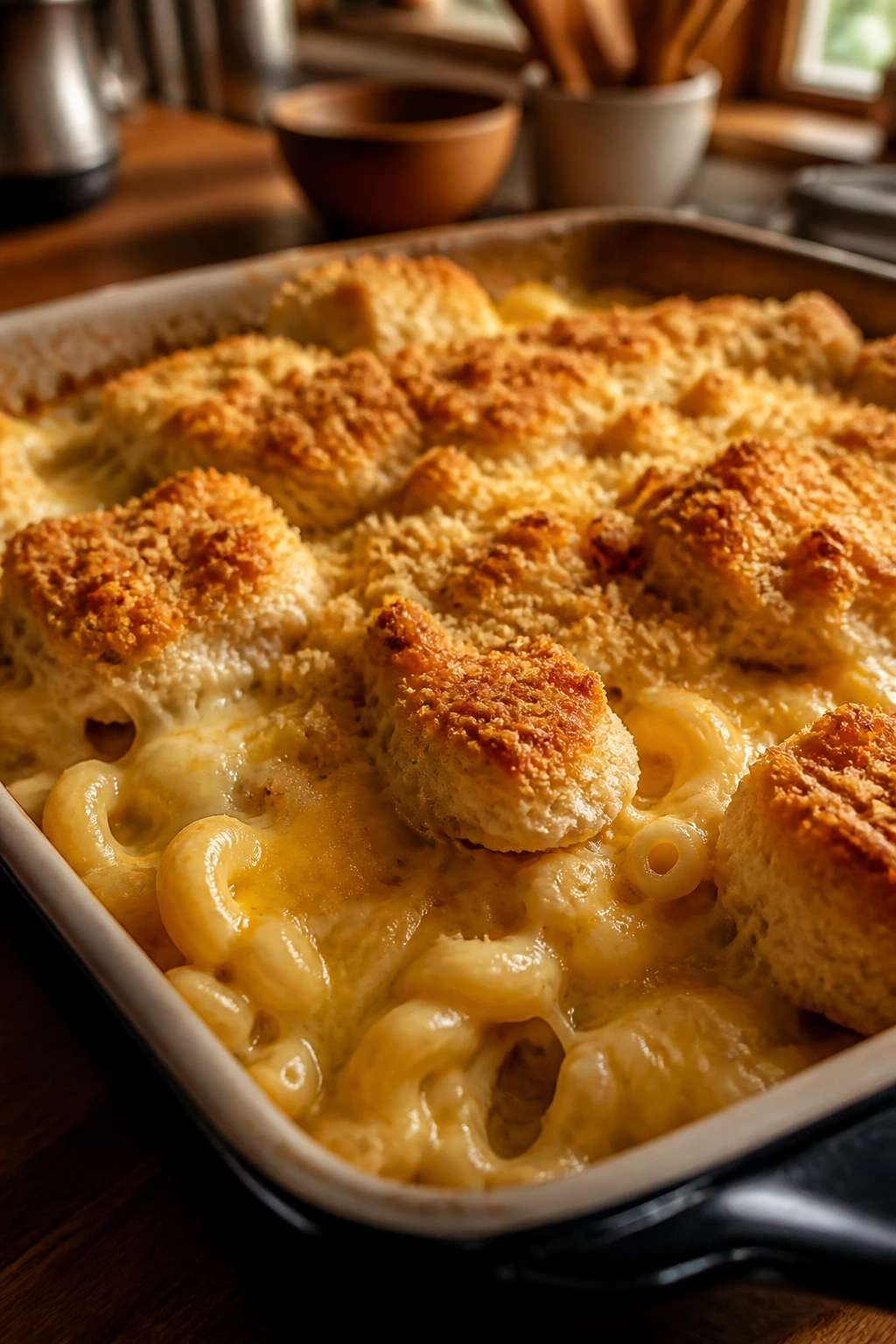
A baked dish with visible noodles, biscuit tops, potato slices, or a golden breadcrumb crust feels legible to a child in a way a bowl of creamy soup never will. That matters more than most adults want to admit. A kid who can point to the noodle, the cube of ham, or the breadcrumb topping has already taken one step toward eating. The pan has become something they can map.
Smell counts too. Toasty cheese, butter, and browned edges do a lot of quiet selling before the first fork hits the pan. If the whole kitchen smells sweet and savory at the same time — not sharp, not sour, just rich and warm — you’ve already done half the work. A casserole that emerges pale and wet can still taste fine, but it will never seduce the table the way a pan with amber spots and bubbling edges does.
Familiar shapes beat clever camouflage
Kids generally trust food that looks like food they already know. Spirals, small pasta shells, diced potatoes, biscuit pieces, and shredded chicken all read as safe because they are visible and familiar. That’s one reason a mac-and-cheese bake or a biscuit-topped skillet dinner wins where a blended puree sometimes fails. The more the ingredients keep their own identity, the less suspicious the first bite feels.
There’s a practical side to this, too. Familiar shapes make serving easier. You can scoop a square of baked pasta, slide under a biscuit top, or cut a potato casserole into tidy portions without the whole thing slumping into a puddle. Dinner gets cleaner. So does the mood.
Salt, browning, and smell do more convincing than labels
A cheese casserole needs enough salt to wake up the dairy, but not so much that the first bite feels loud. Mild cheddar, mozzarella, Colby Jack, and Monterey Jack are friendly because they bring melt and comfort before they bring attitude. Sharp cheeses can come in later as a small accent.
Browning helps in a way that’s almost unfair. The same cheese that tastes flat on top of a pale casserole suddenly feels deeper once the edges have toasted. Kids may not use the words Maillard reaction, but they know when the top smells like toasted crackers and butter. They notice.
The Cheese Blend That Keeps Cheesy Family Baking Smooth
What cheese actually melts the way you want? Not all of them do. That’s where a lot of family bakes go sideways, because the cheese in the fridge is treated like one big category when it behaves more like a cast of characters.
Low-moisture mozzarella brings stretch. Mild cheddar brings the taste most kids recognize. Colby Jack stays soft and forgiving. A little Parmesan adds a salty top note, but it should not be the main event unless you want the pan to taste older and sharper than the rest of the dish. Goat cheese, blue cheese, and extra-sharp aged cheddar can be lovely in the right bake, but they ask for more from a young palate than most weeknight dinners can spare.
Why mild cheddar keeps the peace
Mild or medium cheddar melts more smoothly than extra-sharp cheddar because it hasn’t aged as long, so it’s less likely to separate into a greasy layer when heated. It still tastes like cheese — the important part — but it doesn’t bring the bite that makes some kids start negotiating before they’ve taken a forkful. I like using sharp cheddar as a supporting player, not the whole choir.
Block cheese grated at home gives you the cleanest melt. The shreds are fresher and you control the size. Pre-shredded cheese is not a sin, though. In a baked casserole, the anti-caking coating on packaged shreds can actually help the cheese stay separate enough to distribute evenly, which is useful when you want cheese in every bite and not one giant clump in the center.
How mozzarella and Jack fill the gaps
Mozzarella has the stretch kids expect from pizza, and that matters more than adults sometimes admit. It softens the flavor of cheddar and gives you those thin, stringy pulls that make a bake feel playful instead of stern. Monterey Jack does something similar but with a little more body and a slightly richer finish.
A smart blend for most family bakes is simple: two parts melty cheese to one part flavor cheese. That means mozzarella or Jack carrying the melt, cheddar carrying the taste, and maybe a little Parmesan on top for the crust. That ratio is not magic, but it is dependable.
When the cheese wants to fight back
Some cheeses seize or turn grainy when they’re overheated, especially if the pan runs dry or the sauce has no starch to hold it together. That’s why cheese sauce often behaves better when it’s built with a little flour or cornstarch, or when it’s mixed into a starchy base like pasta or potatoes. The starch gives the fat and water something to cling to.
If you want a smooth pan, don’t chase the strongest cheese in the shop. Chase the cheese that melts into the rest of dinner without making a scene.
Familiar Bases That Feel Safe at the Table
The base of a cheesy bake is doing more psychological work than it gets credit for. A child who likes noodles, biscuits, potatoes, or rice already has a foothold. Cheese makes the foothold wider.
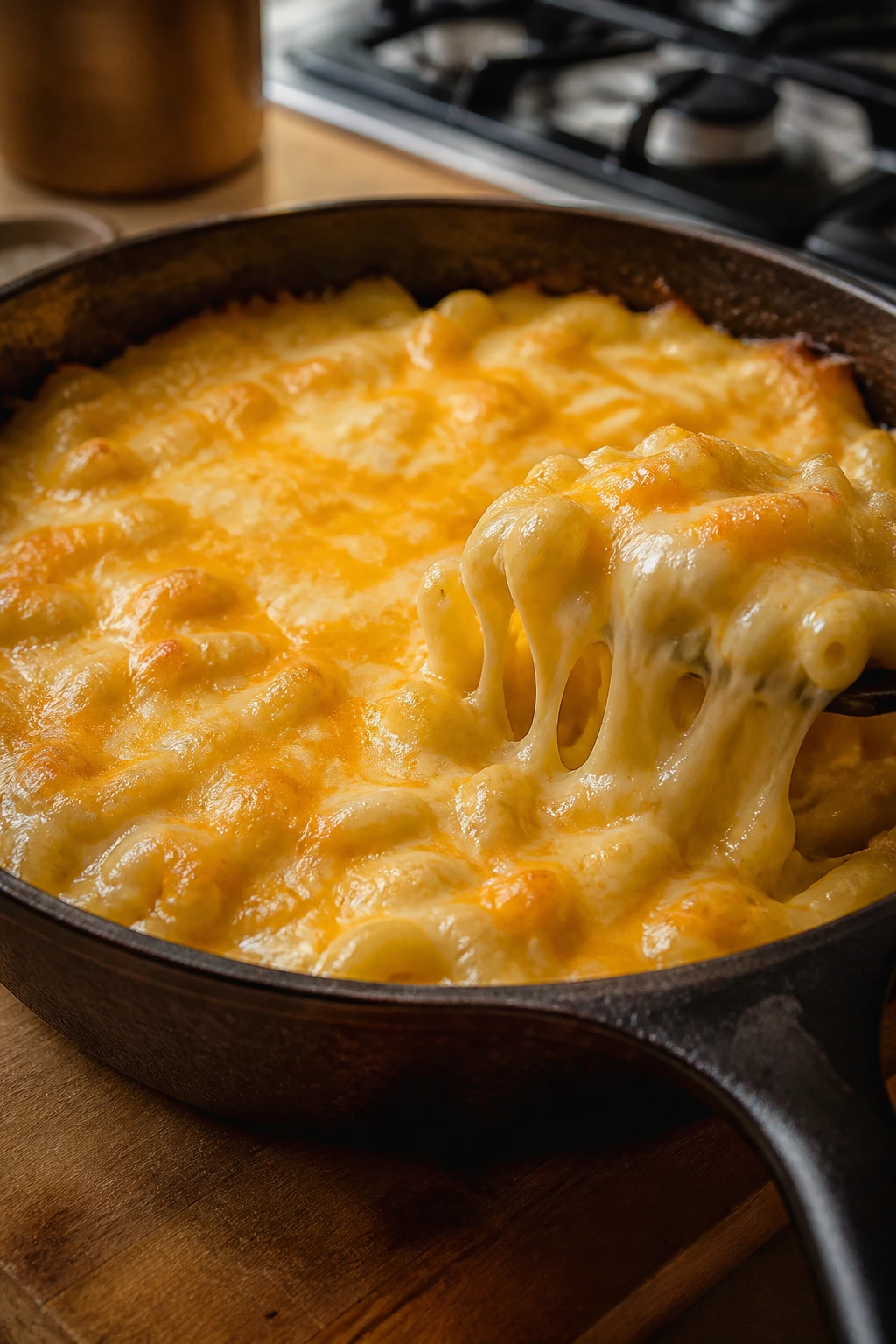
Pasta is the easy winner because it gives kids a shape they can grab, twirl, or stab with a fork. Elbows, shells, rotini, and penne all catch sauce in different ways, and that little pocket of cheese inside the noodle matters. Baked mac and cheese works because every bite has the same soft-chewy rhythm. No surprises. No weird texture hiding in the corner.
Potatoes are a different animal. They turn a bake into something more like a skillet supper, especially if they’re sliced thin enough to go tender without collapsing. Hash browns, diced roast potatoes, or thin Yukon Gold slices give a casserole a soft center and a browned top. Kids often accept potatoes faster than almost any vegetable, which is not exactly shocking, but it’s useful.
Bread, biscuits, and anything with a crust
Bread-based bakes and biscuit-topped casseroles have a charm that pasta can’t match. The crust gives each serving a handle. That matters. A biscuit top, a pull-apart loaf, or cheesy toast squares tell a child where to start, and that first clean bite reduces the drama around the plate.
Biscuit dough especially works because it bakes into a crisp top and a tender bottom where the filling touches it. You get two textures in one bite, and that keeps the dish from feeling monotonous. A loaf pan filled with cheese and herbs feels much more approachable than a deep dish full of unknowns. Kids like edges. Edges are obvious.
Rice and grains when the pantry is thin
Rice bakes are underrated, though they need more seasoning than pasta because rice itself is quieter. Brown rice gives more chew and nuttiness; white rice disappears into the pan faster. I prefer rice when there are already strong flavors in the mix — ham, roasted chicken, broccoli, onion, and a generous cheese sauce — because the grain becomes the steady base instead of the star.
Farro, quinoa, or barley can work, but they change the message of the dish. Fine for some families. Less natural for picky eaters. If the goal is a pan kids will actually eat, stay close to foods they already know by sight and texture. That’s not being timid. It’s being smart.
The Texture Trifecta: Soft Center, Crisp Edges, No Soggy Middle
A cheesy bake lives or dies by texture. The flavor can be lovely, but if the middle is wet and the top is dull, the pan will sit on the table looking wounded.
The best bakes have a soft, spoonable center, crisp or browned edges, and a surface that gives a little crack when you cut into it. That contrast matters because kids are much more willing to eat something that feels complete in the mouth. Pure softness gets boring. Pure crunch gets dry. Together, they keep each other honest.
Moisture is the enemy when it’s uncontrolled. Not all moisture is bad — cheese sauce needs some, and vegetables bring their own water — but too much of it makes the bake slump. A watery pan tastes flatter because the flavor gets diluted. You can smell this before you see it. Instead of a rich, toasty aroma, you get steam.
Dry the vegetables first
Broccoli, zucchini, spinach, mushrooms, and tomatoes can all dump water into a casserole if they go in raw or undercooked. Spinach needs to be wilted and squeezed dry. Mushrooms need to be sautéed until their liquid evaporates. Zucchini often needs a salting-and-draining step or at least a quick sauté so the pan doesn’t end up soupy.
I’m blunt about this because it saves dinner. Raw watery vegetables can turn a promising bake into something the spoon sinks through. That’s not texture. That’s collapse.
Starch is the quiet stabilizer
Flour, cornstarch, and pasta starch are doing more than thickening. They hold the cheese sauce together so it doesn’t separate into oil and curdled bits under heat. A proper roux — butter and flour cooked together for a minute or two — gives you a smoother sauce than dumping cheese into milk and hoping for the best.
If you’re making a casserole with potatoes or pasta, the starch from the base helps too. That’s one reason baked mac and cheese often feels steadier than a plain cheese sauce over vegetables. The noodles are working. The sauce knows it.
Resting is not a delay, it’s part of the recipe
A pan pulled from the oven is still moving. The cheese is loose, the steam is trapped, and the center hasn’t settled yet. Letting it rest for 10 to 15 minutes gives the sauce time to thicken and the slices time to hold. If you cut too soon, the first serving spreads across the plate like a rumor.
One more thing: the top often firms up during the rest, which gives you cleaner squares and less mess when little hands dig in.
Vegetables That Vanish Into the Pan
Broccoli is not the enemy. Neither is cauliflower. The problem is how they’re handled.
When vegetables are chopped too large, left too wet, or buried under a sharp sauce, kids notice them as interruptions. But when the pieces are bite-sized and cooked to the same tenderness as the rest of the pan, they start to feel like part of the story. That’s why broccoli-cheddar bake works so much better than broccoli on a plate next to cheese sauce. Same ingredients. Different mood.
Carrots need to be cut small or shredded if you want them to disappear into a cheesy base. Raw carrot coins can stay firm for too long and stand out in an unwelcome way. Peas are easier because they’re tiny and sweet. Corn is even more forgiving. Green beans can work in a casserole, but they need to be cut small and cooked first. Whole zucchini slices are the hardest sell unless the child already likes zucchini.
The vegetables that behave best
Broccoli florets, chopped cauliflower, peas, shredded carrots, finely chopped spinach, and corn usually work because they soften at a manageable pace and bring a little sweetness. Broccoli and cauliflower should be cut smaller than you think — about the size of a nickel or a small grape if you want them to vanish into a creamy bake.
Spinach should be treated like a wet towel. Wilt it, then squeeze or press out the liquid before it touches the pan. One cup of wet spinach can dump enough water to loosen a casserole and make the cheese slide around.
When vegetables need a head start
Harder vegetables like carrots or cauliflower sometimes need a short blanch, a quick steam, or a 5- to 7-minute sauté before they go into the casserole. That little head start matters. It keeps the bake from turning into a timer race where the top is done before the vegetables are.
Mushrooms are a special case. Cook them until their liquid is gone and the slices start to brown. If you skip that step, they’ll release moisture in the oven and the whole dish will smell a little muddy. That’s one of those details people skip when they’re in a hurry, and it shows.
Don’t bury every green thing
A small amount of visible vegetable can actually help. Really. A dish that shows a few broccoli crowns or bright peas looks more like dinner and less like an intervention. The goal is not to erase the vegetables so completely that they become suspicious. The goal is to place them where they feel friendly, small, and already accepted.
Flavor for Grown-Ups Without Turning the Pan Into a Science Project
Adults want a little more from dinner than melted cheese and a smiling casserole dish. Fair enough. The trick is giving them a deeper flavor line without scaring the kids away.
A mild pan can still taste layered. Onion powder brings sweetness. Garlic powder adds background warmth. Dry mustard wakes up cheddar without making the dish taste like mustard. Smoked paprika gives a gentle campfire note that reads as savory, not spicy. A splash of Worcestershire or a teaspoon of soy sauce in a savory bake can deepen the whole thing without anyone identifying the source. That’s the kind of quiet magic I actually respect.
Acid is useful too, though people forget it in cheese bakes because they’re chasing richness. A teaspoon of Dijon in a sauce, a squeeze of lemon over a broccoli-cheddar casserole, or a few chopped pickles on the side can make the cheese taste less heavy. Not sour. Just awake.
Use spice like a whisper
If you want heat, keep it layered and optional. Crushed red pepper in the serving bowl. Hot sauce on the table. A little pepper jack mixed into the top layer for the adults. The bake itself should stay mild enough that nobody has to brace before the first forkful.
This is where a lot of “kid-friendly” recipes fail. They swing bland because they’re afraid of upsetting anyone, then adults eat three bites and move on. Better to season the base properly, keep the sharp edges in check, and let people add more at the table if they want it.
The finishing move matters
A buttery breadcrumb top, a shower of Parmesan, or a scatter of chives can change the whole mood. You get contrast. You get something to hear when the spoon goes in. That crunch tells the brain the pan has more going on than soft cheese and starch.
I like finishing a family bake with just enough detail to feel cared for, not decorated. A little browned panko, a few cracks of black pepper, maybe a handful of chopped parsley if it won’t freak anyone out. Keep it grounded. Keep it edible. Nobody needs a garnish that falls off on the way to the mouth.
Baking Temperature, Doneness, and That Golden Top

A cheesy bake can look done long before it is done. That’s the trap.
The top browns first. The edges bubble. The center may still be cool, especially in a deep dish or a pan packed with cold ingredients from the fridge. That’s why baking temperature matters so much. Most family casseroles do well between 350°F and 375°F, with some crisp-topped versions running a bit hotter if they’re shallow. The goal is steady heat that warms the center before the top burns.
If you’re baking with eggs, poultry, or sausage, a thermometer is not optional in my book. Food safety guidance is plain about this: poultry should reach 165°F, and ground meats should reach 160°F in the center. Eggy casseroles should be fully set in the middle, not loose or glossy. A browned top is a clue, not proof.
What bubbling actually tells you
Bubbling around the edges means the pan is hot. Good. Bubbling in the center means the filling has heated through. Better. But don’t confuse surface activity with full doneness. A deep dish can bubble on the rim while the middle still feels cool to the spoon.
That’s why I like checking the center with a thermometer for anything dense. If the pan is mostly cheese, pasta, or potatoes, the visual cues are usually enough: browned top, edges pulling slightly away from the dish, and a center that jiggles only a little, not sloshes.
Foil is a tool, not a punishment
If the top is getting too dark before the middle is hot, lay a loose sheet of foil over the dish. Not tight. Loose. You want to slow the browning while the heat finishes the center. This works especially well for breadcrumb tops and shredded cheese layers, which can go from golden to bitter faster than people expect.
Resting changes the cut
The pan keeps cooking for a few minutes after it leaves the oven. That residual heat is useful, but it also means the texture keeps changing. Let the bake sit before serving. Ten minutes is the sweet spot for many casseroles. Fifteen for deeper ones. Less than that, and you’re serving a moving target.
Serving Cheesy Family Baking So Kids Reach for It First
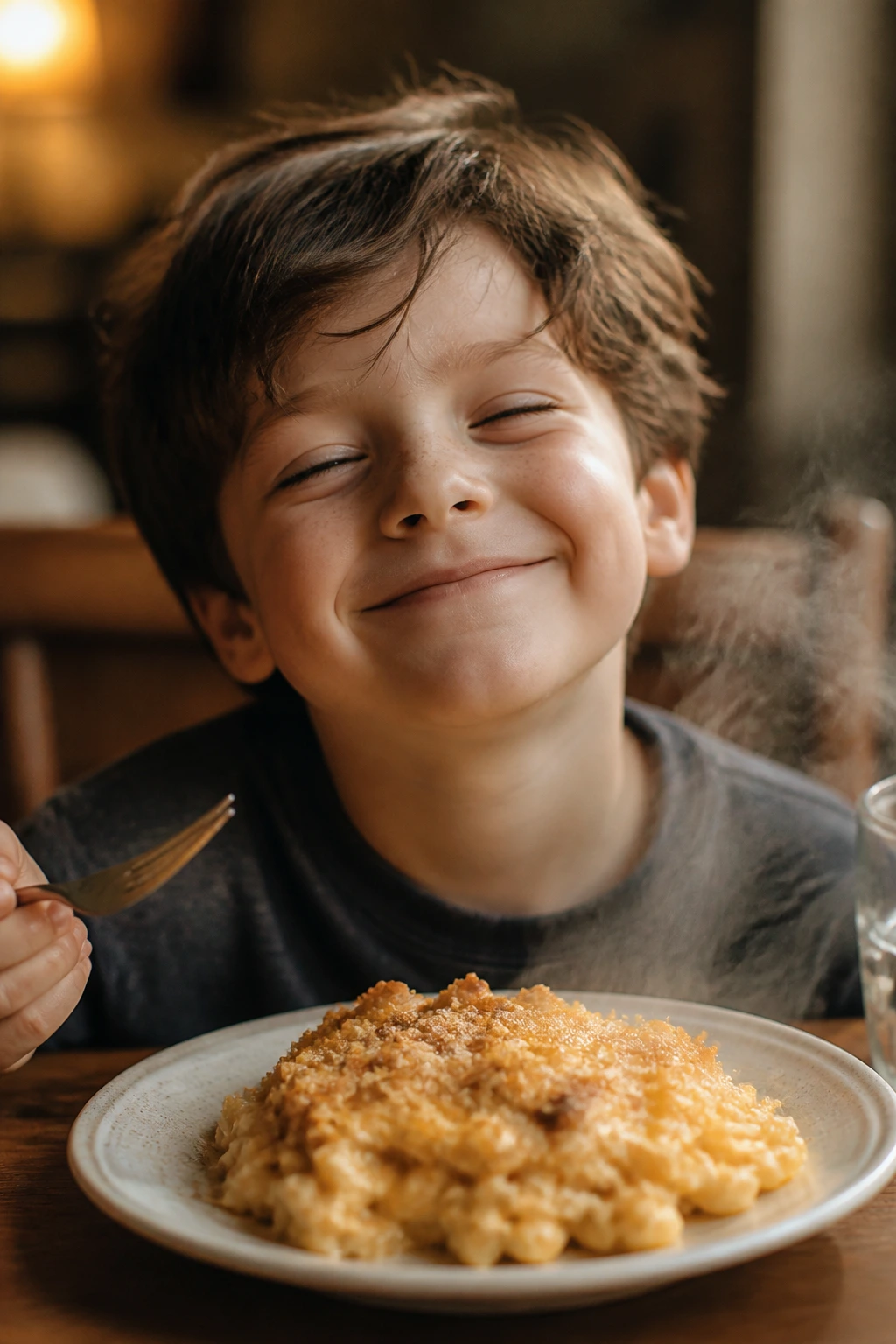
A casserole can be delicious and still lose at the table if it’s plated like a chore. Kids eat with their eyes long before they admit that’s what they’re doing.
Cut baked dishes into neat squares or scoop them into shallow bowls with a visible top layer. That sounds obvious, but the way food is served changes how much of it gets eaten. A square of mac and cheese with a browned cap looks like a complete object. A loose pile from the spoon can look half-finished before anyone touches it.
I also like serving hot cheesy bakes with one cold, crisp side. Sliced cucumbers, apple wedges, carrot sticks, or a simple salad with a light dressing gives the plate contrast and keeps the whole meal from feeling sticky. Children often eat more of the main dish when the side is something they can crunch. It breaks the monotony.
Presentation: make the top visible
If the pan has a crunchy lid, let people see it. Spoon from the side so the browned surface stays intact on top of each portion. With biscuit-topped casseroles, I’ll sometimes place a whole biscuit square on the plate instead of stirring everything together. It looks more deliberate. Kids notice that.
Accompaniments: keep them familiar
Cheesy bakes pair well with plain fruit, steamed green beans, roasted carrots, apple slices, a simple green salad, or buttered peas. Bread is useful if the bake is saucy. A slice of toast or a soft dinner roll gives children a way to scoop without making a mess. Just don’t overload the plate. Too many sides can make dinner feel like a test.
Portions: small first, seconds later
A child-sized portion is usually smaller than the grown-up eye expects. Start with a modest scoop or one square. If the plate is empty in five minutes, offer more. That’s better than piling on a mountain of casserole and watching it go cold while the kid decides whether to engage with it.
Beverage pairing: keep it simple
Milk is the obvious one, and it works because it softens salty cheese. Water is fine too, especially if the bake is rich. For grown-ups at the table, sparkling water with lemon or an unsweetened iced tea cuts the heaviness without fighting the dish.
Small Moves That Make Cheesy Family Baking Easier on Busy Nights
Flavor Enhancement: Stir a teaspoon of Dijon mustard, a pinch of dry mustard, or a spoonful of pickle brine into the sauce. The bake won’t taste “mustardy”; it just tastes less flat. That one small note keeps cheddar from feeling heavy.
Time-Saver: Keep a bag of frozen broccoli, a block of cheddar, and a jar of breadcrumbs in rotation. If you also have cooked chicken or a can of beans, you’re halfway to dinner. The best weeknight pan is the one you can assemble without a trip to the store.
Cost-Saver: Buy cheese in blocks and grate only what you need. A pound block usually stretches farther than pre-shredded bags, and the flavor is cleaner. If the budget is tight, use a stronger cheese as the top layer and a milder, cheaper cheese inside the casserole where it won’t need to work as hard.
Texture Fix: If a bake leans wet, add a handful of panko, crushed crackers, or a little extra pasta before the final bake. If it leans dry, add a splash of milk or broth before reheating and cover it for the first part of baking. Little adjustments keep you from throwing out the whole pan.
Kid-Friendly Trick: Reserve some cheese for the top so children can see it from across the table. Visible cheese is reassuring. It says the pan has not forgotten its job.
Tools That Make Cheesy Family Baking Easier
-
9×13-inch baking dish — The standard size for family casseroles; shallow enough for browning, roomy enough for leftovers.
-
Medium saucepan or deep skillet — Useful for building cheese sauce, sautéing vegetables, or combining a filling before it goes in the oven.
-
Box grater — Gives you better melt than bagged shreds and lets you control the size of the cheese pieces.
-
Whisk — Essential for smoothing flour into milk or breaking up a cheese sauce before it thickens.
-
Silicone spatula — Better than a spoon for scraping sauce into corners and folding pasta without smashing it.
-
Instant-read thermometer — Especially useful for casseroles with poultry, eggs, or sausage; it removes the guesswork.
-
Rimmed sheet pan — Smart under a bubbly dish in case of spills, and useful if you’re roasting vegetables before they go into the bake.
-
Fine-mesh strainer or colander — Helps drain pasta, rinse vegetables, and squeeze moisture out of spinach or thawed frozen veg.
-
Airtight storage containers — Keep leftovers from drying out in the fridge and make lunch portions easier to pack.
Make-Ahead, Storage, and Reheating That Keep the Crust Intact
Most cheesy bakes hold up well for 3 to 4 days in the refrigerator if they were cooled properly and packed in a covered dish or airtight container. If the bake includes a lot of watery vegetables, the texture will soften faster, so I’d eat those sooner rather than later. For freezing, most casserole-style bakes keep for up to 2 months if wrapped well and stored in a freezer-safe container. Pasta bakes and potato bakes freeze better than custard-heavy egg bakes, which can turn a little grainy on thawing.
Room temperature is a short window. Don’t leave the pan out more than 2 hours. That’s the food-safety line most home cooks know, and it’s a good one to respect, especially with dairy-heavy dishes.
Make-ahead strategy
You can assemble many cheesy family bakes up to 24 hours ahead and keep them covered in the refrigerator before baking. If the dish has a breadcrumb or cracker topping, add that topping right before it goes into the oven so it stays crisp. Cold pans usually need extra bake time, often 10 to 20 minutes more, because the center starts out chilled.
Reheating without wrecking the top
For full casseroles, the oven is the safest choice. Cover loosely with foil and warm at 325°F to 350°F until hot in the center, usually 15 to 25 minutes depending on thickness. Remove the foil for the last few minutes if you want the top to crisp back up.
For single portions, the microwave works, but add a spoonful of milk or water near the edge of the container and cover loosely. Heat in short bursts so the cheese doesn’t split. If the dish had a crunchy top, the microwave won’t save that texture. A toaster oven or conventional oven is better for that.
One useful habit
Let leftovers cool before sealing them. If you trap steam inside a hot container, the top softens and the sauce can thin out. A casserole that starts dry and neat often turns soggy because it was boxed up too soon. Little thing. Big difference.
Mistakes That Make the Pan Go Untouched
-
Using too much wet vegetable
The symptom is a puddle at the bottom of the dish or a spoonful that slides apart on the plate. Fix it by cooking watery vegetables first, draining them well, and keeping the ratio sane; a casserole should taste like dinner, not like steam. -
Choosing only sharp, aged cheese
The pan can turn greasy, grainy, or flat-out loud for picky eaters. Blend sharp cheese with mozzarella, Jack, or mild cheddar so you get flavor without a hard edge. -
Under-seasoning the base
If the sauce tastes bland before it goes into the oven, the finished bake will taste bland too. Salt the sauce, taste the filling, and remember that cheese needs help from onion powder, garlic powder, or mustard to feel complete. -
Baking until the top looks perfect and the center is still cool
This is the classic trap. Cover with foil if the top browns too fast, and use a thermometer when poultry, eggs, or sausage are in the pan. -
Cutting too early
The first serving collapses, the cheese runs, and the dish looks messier than it needs to. Let the bake rest 10 to 15 minutes so it firms up enough to slice or scoop cleanly. -
Piling in every leftover from the fridge
More is not always better. Too many add-ins crowd the pan, block the cheese from binding the ingredients, and turn the dish into a confused heap. Keep add-ins to a level that still lets the base hold together.
Variations That Change the Mood Without Changing the Method
Breakfast-For-Dinner Bake
Use hash browns or cubed potatoes as the base, add scrambled or lightly beaten eggs, and fold in cheddar, scallions, and diced ham or breakfast sausage. It’s a sturdy evening pan, and kids often accept breakfast flavors at dinner more easily than they admit.
Mini Muffin-Tin Bites
Spoon a cheesy pasta or potato mixture into a greased muffin tin and bake until set and browned on top. The small shape gives you built-in portions for lunchboxes or little hands, and the edges get crisp in a way a full casserole can’t match.
Hidden-Veggie White Cheddar Bake
Blend steamed cauliflower into the sauce, then finish with white cheddar and breadcrumbs. The cauliflower disappears into the texture, but the bake still tastes creamy and familiar. Good for families that need a softer vegetable pitch.
Sausage-and-Mozzarella Pan
Brown mild sausage, mix it with pasta or potatoes, and use mozzarella plus a little Parmesan on top. The sausage brings enough seasoning to carry the whole dish, so the final pan tastes fuller without becoming spicy.
Gluten-Free Crunch-Top Version
Swap in gluten-free pasta, rice, or potatoes, and finish with crushed gluten-free crackers or cornflakes for the top. The texture stays close to the original, which matters more than most people think when you’re feeding picky eaters.
Questions Parents Ask Before They Preheat the Oven
Can I use pre-shredded cheese, or do I really need to grate it myself?
You can use pre-shredded cheese, and in a weeknight bake that’s often the right call. Freshly grated cheese melts a little smoother, but pre-shredded is fine when the dish is going into the oven and not being turned into a delicate sauce.
How do I keep the casserole from turning greasy?
Use a cheese blend instead of one heavy aged cheese, and don’t overheat the pan. A little flour or cornstarch in the sauce also helps keep fat and liquid from separating.
What if my child refuses visible vegetables?
Start with vegetables that can disappear into the texture — spinach, cauliflower, finely chopped broccoli, shredded carrot, or corn. Keep the pieces small and cook them properly first so they blend into the pan instead of announcing themselves.
Can I make cheesy bakes ahead of time?
Yes. Assemble the dish, cover it, and refrigerate it for up to 24 hours before baking. Just hold back any crunchy topping until the last minute so it doesn’t soften in the fridge.
How do I freeze a cheesy casserole without wrecking it?
Cool it fully, wrap it well, and freeze it in a container that seals tight. Pasta and potato bakes freeze better than egg-heavy versions, and they usually keep for about 2 months before the texture starts to drift.
What if the top is brown but the middle still feels cold?
Cover the dish loosely with foil and keep baking at a moderate temperature. Deep or crowded pans need more time in the center than the top suggests, and foil buys you that time without burning the surface.
Is a crispy topping worth the extra step?
Yes, especially for kids. Breadcrumbs, crushed crackers, or toasted panko give a baked dish a clear texture change, which makes every bite feel more finished. Without that contrast, creamy bakes can taste a little one-note.
Can I make these recipes in smaller portions?
Absolutely. A muffin tin, loaf pan, or 8×8-inch dish can scale a family bake down cleanly. Just shorten the bake time and keep an eye on the center instead of trusting the clock alone.
The Quiet Win at Dinner
The nicest thing about cheesy family baking is that it doesn’t need a speech. It just needs the right pan, the right cheese, and enough care to keep the texture honest. When the top is browned, the middle is hot, and the vegetables have been handled like they belong there, even picky eaters tend to soften a little.
That’s the part I keep coming back to. Not the hiding, not the gimmicks. A good cheesy bake gives kids a familiar first bite and gives adults enough flavor to stay interested. If you build it that way, dinner gets quieter in the best possible sense, and the empty pan at the end says more than a stack of compliments ever could.