



The first good sign in Mongolian beef is the sound. Thin steak hits a hot skillet, gives off a sharp hiss, and the edges go bronze in under a minute if you’ve sliced it right. That’s the part a lot of home cooks miss: this dish is not about long simmering or fancy ingredients. It’s about heat, timing, and the small decisions that keep the beef juicy instead of tired.
Mongolian beef is one of those American Chinese takeout staples that gets mislabeled all the time, and honestly, I don’t think the name matters much once the skillet is going. It isn’t a traditional Mongolian dish in the geographic sense. It’s a very specific sweet-salty beef stir-fry built around soy sauce, brown sugar, garlic, ginger, scallions, and a fast sear that leaves the meat glossy, not soggy.
What makes it worth making at home is control. You decide how thin the steak gets, how dark the sauce runs, and whether the final bite tastes sharply savory or a little too sugary, which is the main sin of bad restaurant versions. Get the slice right, and you get tender meat with a clean chew. Rush the pan, and it turns stringy, gray, and dull. The recipe below leans hard into the good version.
Why Mongolian Beef Works as a Hearty Dinner
Fast heat does more than save time — it builds the whole dish. A hot skillet gives the steak those browned edges people chase in takeout, and it does it before the meat has time to dry out. That’s why this dinner feels satisfying instead of heavy; the beef stays tender, and the sauce sits on top of it like a lacquer instead of soaking everything into mush.
The sauce has just enough sweetness to feel full, but not so much that it turns cloying. Brown sugar carries the soy sauce and gives it shine, while rice vinegar keeps the whole thing from flattening out. I like that contrast. A Mongolian beef recipe without a little acid tastes like it forgot to wake up.
This is a real bowl dinner, not a garnish situation. Spoon it over jasmine rice, and the sauce threads into the rice in a way that feels complete. Serve it with noodles, and it clings in long glossy strands. Either way, the beef carries the meal, which is exactly what you want on a night when nobody at the table is in the mood for delicate food.
It plays well with leftovers, which is more useful than people admit. The flavors settle overnight, and the sauce thickens a bit in the fridge. Reheat it gently, and it comes back in good shape. Reheat it too hard, and the beef gets stingy and the scallions slump. There is a difference.
Choosing the Right Cut for Juicy Mongolian Beef
Flank steak is the sweet spot here. It has enough beef flavor to stand up to the soy-based sauce, and when you slice it thinly across the grain, it turns tender fast. I reach for flank steak first because it gives you those long, neat strips that look right in the pan and eat right on the fork.
Top sirloin is the second choice if flank isn’t around. It’s a little less dramatic in flavor, but it slices cleanly and stays tender if you don’t abuse it with heat. Skirt steak can work too, though it’s narrower and sometimes a little looser in texture, so you need to pay attention when you slice it. Cut too thick and it gets chewy. Cut too thin and it can fall apart before the sauce even hits the pan.
How to Make Slicing Easier
A short chill in the freezer — about 15 to 20 minutes — helps the knife move through the steak in neat, thin slices. You’re not freezing it solid. You just want the outside to firm up so the meat doesn’t wobble under the blade. That tiny bit of resistance saves you from ragged strips and uneven cooking.
The grain matters more than almost anything else in this recipe. If you can see the long fibers running through the steak, cut perpendicular to them, not parallel. That’s the difference between a strip that bends nicely and one that feels like it wants to fight back. I keep coming back to this because it really is the turning point.
What Thin Actually Means
For Mongolian beef, thin means about 1/8 inch. Not paper-thin. Not thick enough to look like a steak bite. You want a strip that can brown fast and still keep its center soft. If the knife starts making little jagged tears, stop and firm the steak a little longer before continuing.
What Goes Into the Pan for This Mongolian Beef Recipe
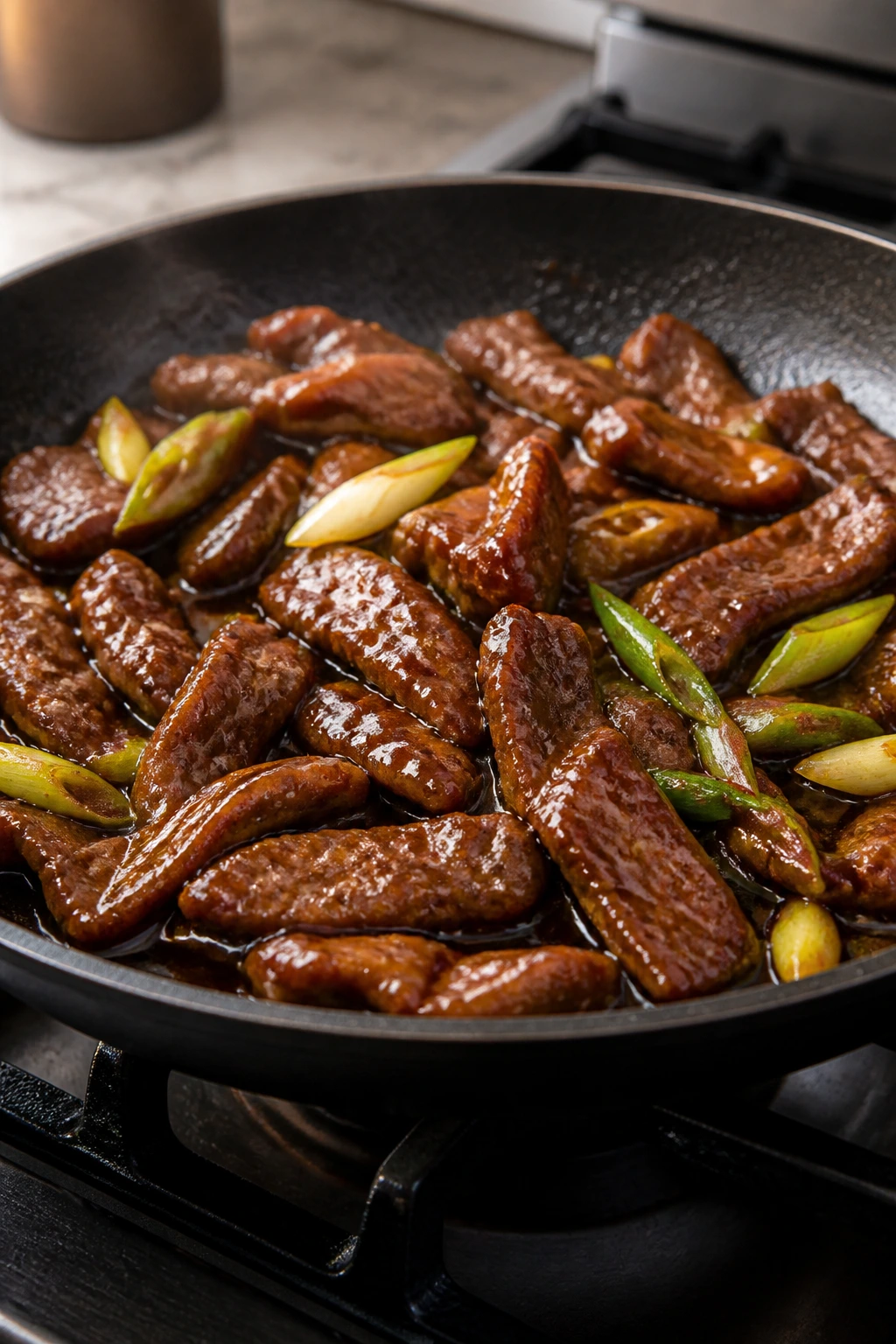
Timing and Yield
Yield: Serves 4
Prep Time: 20 minutes
Cook Time: 15 minutes
Total Time: 35 minutes
Difficulty: Intermediate — the method itself is straightforward, but slicing the beef thinly and searing it fast takes attention.
Optional Chill Time: 15 to 20 minutes, if you want to firm the steak before slicing
Best Served: Right away, while the beef is still glossy and the scallions still have a little snap
Clean Ingredient List
For the Beef
- 1 1/2 pounds flank steak, thinly sliced against the grain into 1/8-inch strips
- 1/4 cup cornstarch
- 1/2 teaspoon kosher salt
- 1/2 teaspoon black pepper
- 4 tablespoons neutral oil, divided
For the Sauce
- 1/2 cup low-sodium soy sauce
- 1/2 cup water
- 1/3 cup packed light brown sugar
- 1 tablespoon rice vinegar
- 2 teaspoons cornstarch
- 1 teaspoon toasted sesame oil
For the Aromatics
- 6 scallions, cut into 2-inch pieces and separated into white/light green and dark green sections
- 4 garlic cloves, finely minced
- 1 tablespoon fresh ginger, grated
- 1/2 teaspoon crushed red pepper flakes
What Each Piece Is Doing
The Beef
- What to use: 1 1/2 pounds flank steak, sliced into thin strips.
- Preparation: Trim any obvious silver skin, chill briefly if needed, and slice across the grain so the strips stay tender.
- Substitutions: Top sirloin is the easiest swap; skirt steak works if you’re careful with thickness.
- Tips: Pat the meat dry before coating it. Damp steak steams instead of browning, and that’s where a lot of home versions lose their edge.
The Starch Coating
- What to use: 1/4 cup cornstarch, plus the salt and pepper.
- Preparation: Toss it with the beef until every strip has a light, dusty coating.
- Substitutions: Arrowroot can stand in for cornstarch if needed, though the finish is a touch less crisp.
- Tips: You want a thin coat, not a paste. If the steak looks caked, shake off the excess before it ever reaches the pan.
The Sauce
- What to use: Soy sauce, water, brown sugar, rice vinegar, cornstarch, and sesame oil.
- Preparation: Whisk until the cornstarch disappears completely; if you still see white specks, keep whisking.
- Substitutions: Tamari works for gluten-free cooking. If you only have regular soy sauce, cut back a little on the salt at the beef stage.
- Tips: The sauce should taste balanced before it hits the pan. Too salty, and you’ll know it. Too sweet, and the vinegar won’t be enough to rescue it later.
The Aromatics
- What to use: Scallions, garlic, ginger, and crushed red pepper flakes.
- Preparation: Keep the scallion whites separate from the dark green tops so they can go in at different moments.
- Substitutions: Fresh grated ginger matters most here, but in a pinch, ground ginger can work — use about 1/2 teaspoon.
- Tips: Garlic and ginger burn quickly. They go in after the beef comes out, not before, and they need only a short kiss of heat.
The Tools That Make Stir-Frying Easier
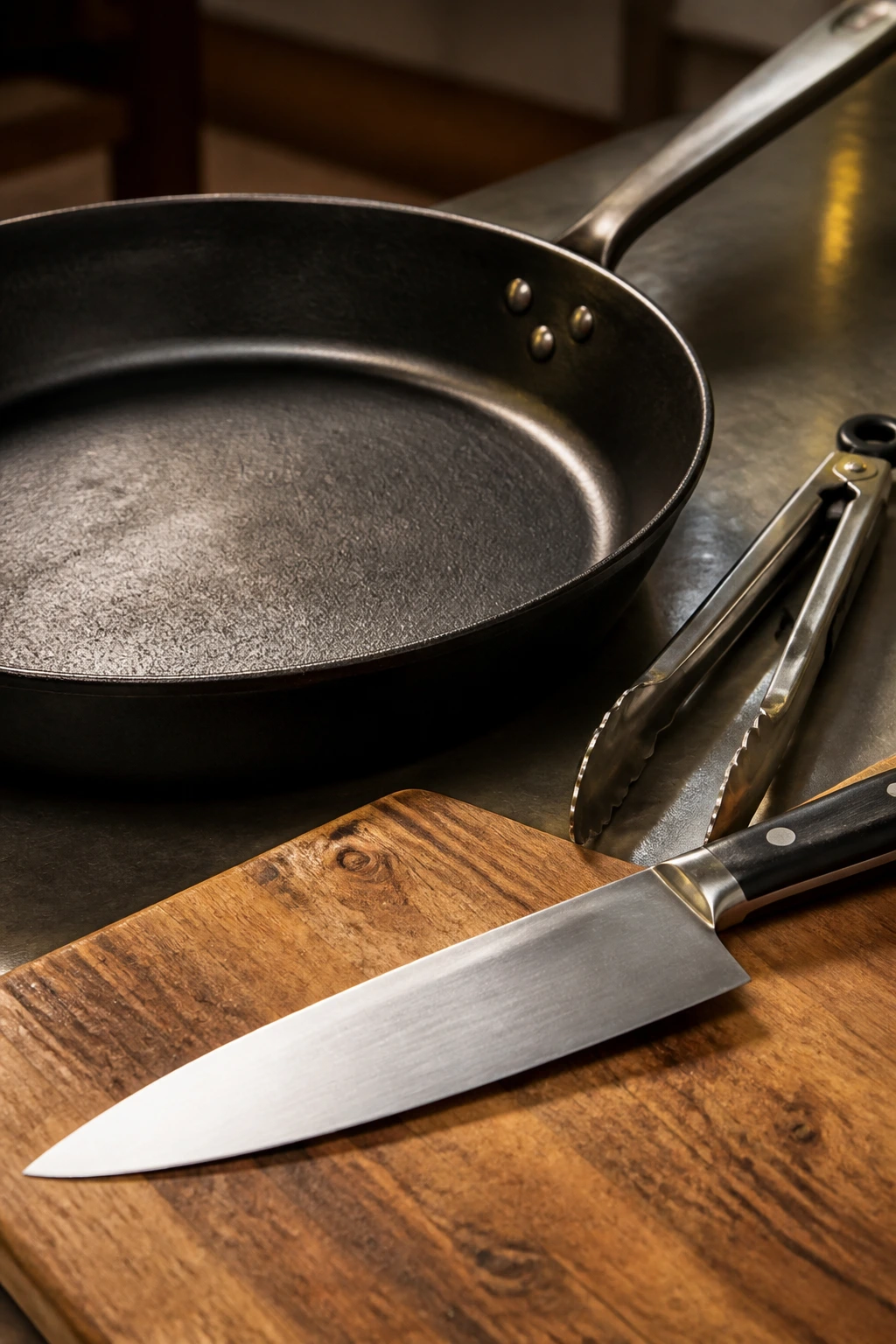
You do not need restaurant equipment for this. You do need a pan that holds heat well, because a flimsy skillet cools down the second the beef goes in and then the whole thing starts steaming.
- 12-inch heavy skillet or wok: A heavy skillet is my first choice on a home burner; it keeps the heat steadier than a thin pan.
- Sharp chef’s knife: Thin slicing is half the recipe, and a dull blade tears the meat instead of cutting it.
- Cutting board: A large board gives you room to slice cleanly without crowding.
- Mixing bowl: You’ll use it for the cornstarch coating and for the sauce.
- Whisk: This keeps the cornstarch from clumping in the sauce.
- Tongs or a thin spatula: Tongs help you move the beef quickly without shredding the crust.
- Small plate or tray: Handy for holding the beef after it sears; line it with a paper towel if you want to catch a little extra oil.
- Microplane or fine grater: Useful for the ginger. A mince is fine, but grated ginger disappears into the sauce better.
Slicing, Drying, and Coating the Beef
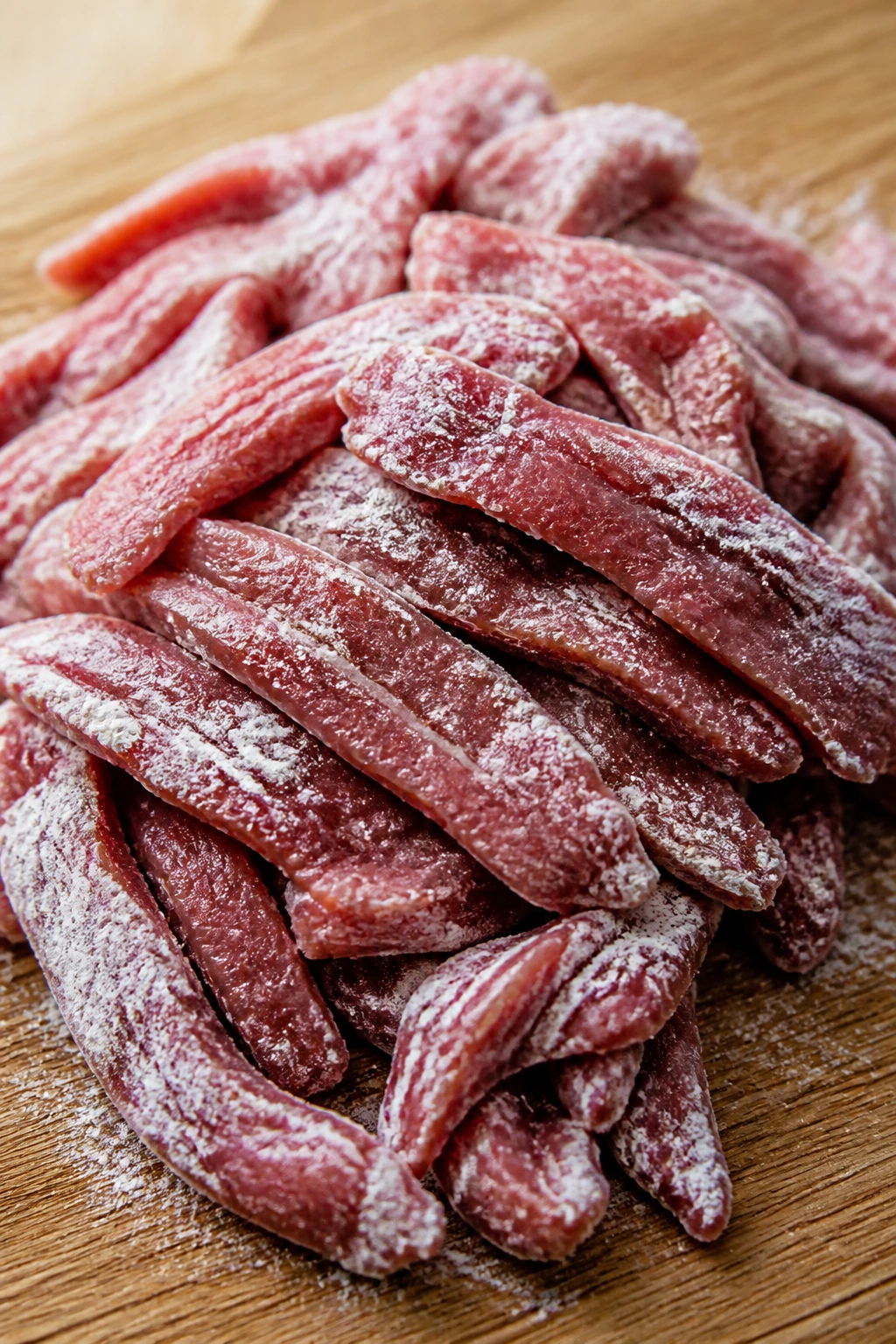
The beef needs to be dry before it sees the cornstarch. That’s the first thing. If you skip it, the starch turns gummy and clings in odd patches instead of making a light jacket around the meat.
I like to slice the steak while it’s still a touch firm from the freezer. The knife moves more cleanly, and the strips come out closer in size, which matters more than people think. A Mongolian beef pan cooks fast enough that one thick strip and one thin strip do not finish at the same time. The thin one overcooks while the thick one catches up.
Why the Coating Matters
Cornstarch does two jobs here. It helps the steak keep a little moisture by forming a very thin barrier, and it gives the sauce something to grab. Without it, the sauce slides off and pools in the skillet. That sounds like a small problem until you taste the difference. It isn’t small.
What the Coated Beef Should Look Like
The coated strips should look lightly dusty, almost like they’ve been tossed in flour and shaken off. Not white. Not pasty. If there’s starch piled in the bottom of the bowl, you used too much or the steak wasn’t dry enough. I usually toss with my hands for about 30 seconds, then stop as soon as the coating looks even.
Building the Sauce for Mongolian Beef
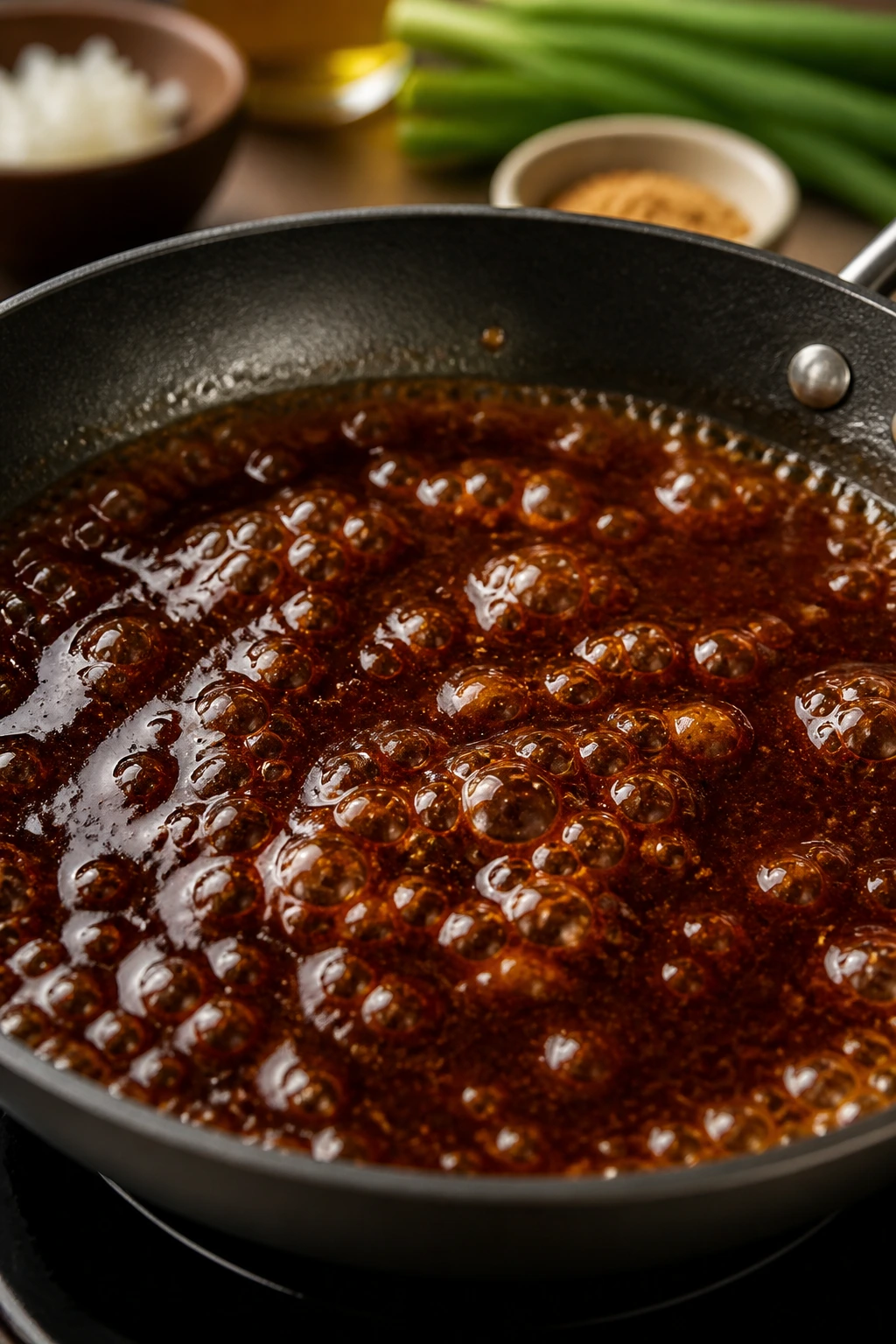
The sauce is short, but every ingredient earns its place. Soy sauce brings salt and depth. Brown sugar adds the sticky gloss people expect from this dish. Rice vinegar keeps the sweetness from getting heavy. Sesame oil gives a quiet nutty finish that lingers after the bite.
The cornstarch in the sauce is there for texture, not drama. You’re not making gravy. You’re making a thin glaze that thickens just enough to cling to the beef and the scallions. If the sauce boils hard and long, the sugar can climb too high and the whole thing turns sticky in a way that feels blunt rather than glossy.
I like a small hit of vinegar because Mongolian beef can drift sweet fast. A tablespoon is enough to keep the sauce bright without making it taste sharp. If you want a slightly darker, rounder profile, you can let the brown sugar carry more weight. If you want something cleaner, add a few extra drops of vinegar at the end. Taste, don’t guess.
What Good Sauce Looks Like in the Pan
When the sauce is ready, it should bubble in thick, lazy blips and coat the back of a spoon in a thin, even film. If it runs off like water, simmer another 30 to 45 seconds. If it turns into sticky sludge, the heat was too high or it stayed on too long. You want shine, not glue.
Cooking the Beef Fast Enough to Keep It Tender
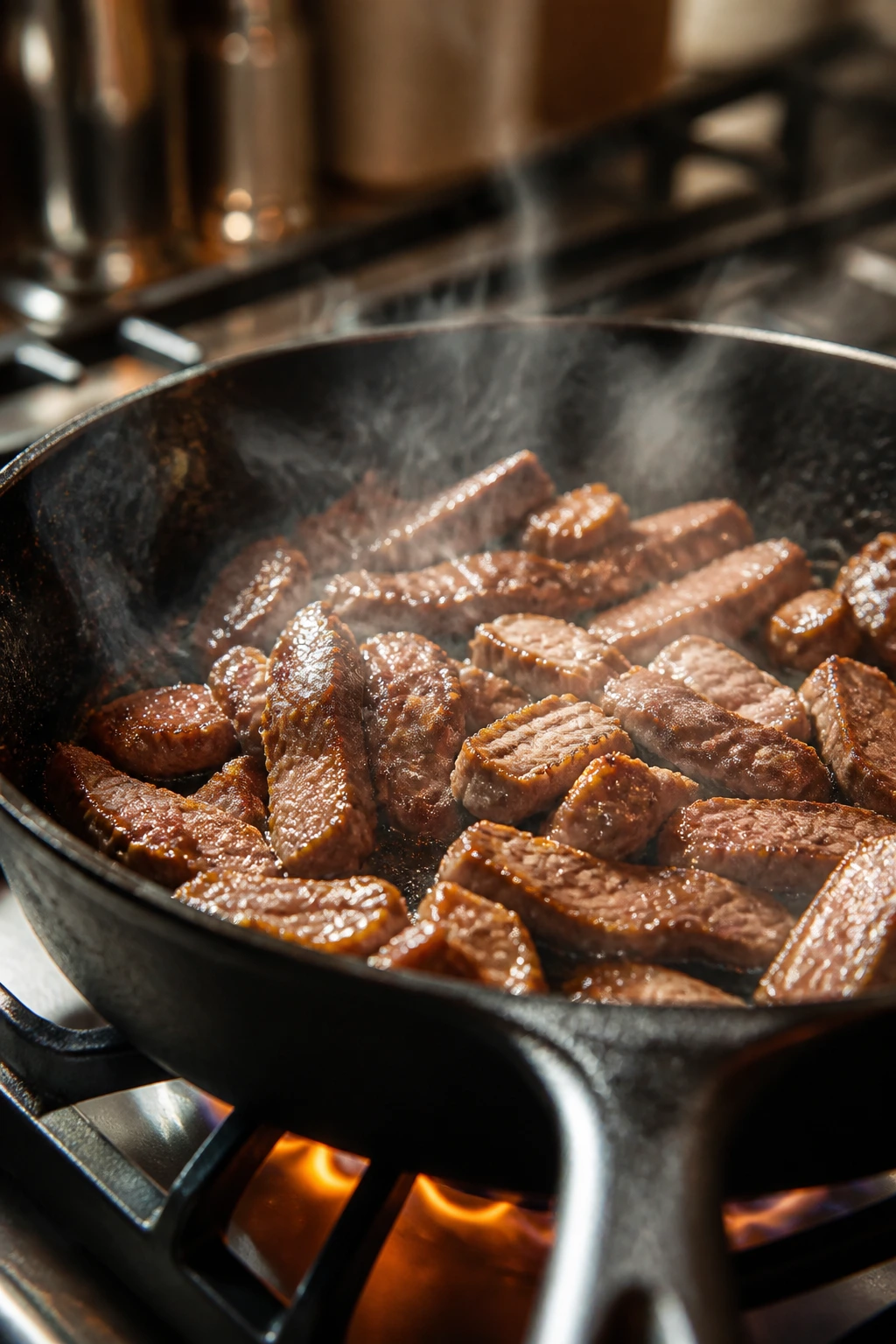
Hot pan. Short sear. That’s the whole point.
The minute the beef goes in, the clock starts. If you let it sit too long in one batch, it loses the crust and starts to gray. If you add the sauce too early, the starch softens before the beef has finished browning. This dish rewards a little decisiveness. Not aggression. Just decisiveness.
Prepare the Beef and Sauce:
-
Chill the steak if needed. If the flank steak feels floppy, place it on a plate and freeze it for 15 to 20 minutes until the outside firms slightly. You want it cold enough to slice cleanly, not frozen solid.
-
Slice the steak against the grain. Cut the beef into 1/8-inch strips, working across the long muscle fibers. If the strips start to get uneven, stop and re-square the steak before you keep going.
-
Season and coat the beef. In a large bowl, toss the sliced steak with 1/2 teaspoon kosher salt, 1/2 teaspoon black pepper, and 1/4 cup cornstarch until every strip is lightly coated. Let it sit for 5 minutes so the starch hydrates just a bit.
-
Whisk the sauce. In a separate bowl, whisk together 1/2 cup low-sodium soy sauce, 1/2 cup water, 1/3 cup packed light brown sugar, 1 tablespoon rice vinegar, 2 teaspoons cornstarch, and 1 teaspoon toasted sesame oil until smooth.
Sear and Finish:
-
Heat the skillet. Set a 12-inch skillet over high heat and add 2 tablespoons neutral oil. Heat until the oil shimmers and moves easily in the pan, about 1 minute. If it smokes heavily, lower the heat a notch.
-
Sear the first batch. Add half the beef in a single layer. Do not crowd the pan. Let it sit undisturbed for 45 to 60 seconds, then turn the strips and cook 30 to 45 seconds on the second side, until the edges are browned and the centers are still just a little pink.
-
Transfer the beef. Move the first batch to a plate. Add the remaining 2 tablespoons oil and repeat with the second batch. If the second round looks a little faster, that’s normal — the pan is already hot.
-
Cook the aromatics. Lower the heat to medium. Add the garlic, ginger, crushed red pepper flakes, and the white/light green scallion pieces. Stir for 20 to 30 seconds, just until the garlic smells sweet and the ginger loses its raw edge. If the garlic starts browning, move immediately to the next step.
-
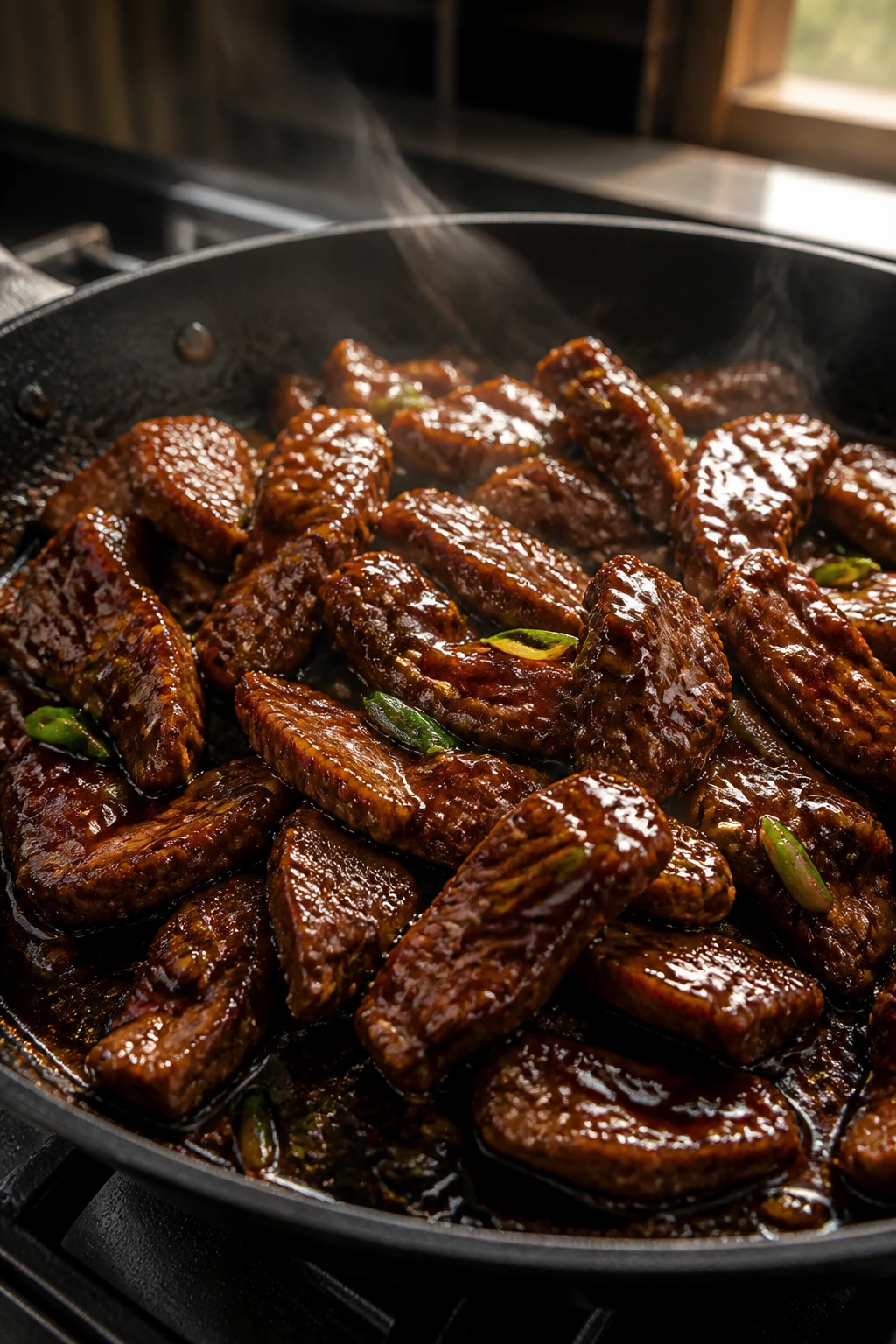
Add the sauce. Pour the sauce into the skillet and stir for 1 to 2 minutes. It should bubble and thicken into a glossy glaze that coats the spatula and leaves faint trails when you drag it across the pan.
-
Return the beef. Add the seared beef and the dark green scallion tops. Toss for 30 to 45 seconds until the beef is hot, coated, and still tender. Turn off the heat as soon as everything looks lacquered.
-
Serve right away. Spoon the Mongolian beef over rice or noodles while the sauce is still fluid enough to soak in a little at the edges.
How to Serve Mongolian Beef at the Table
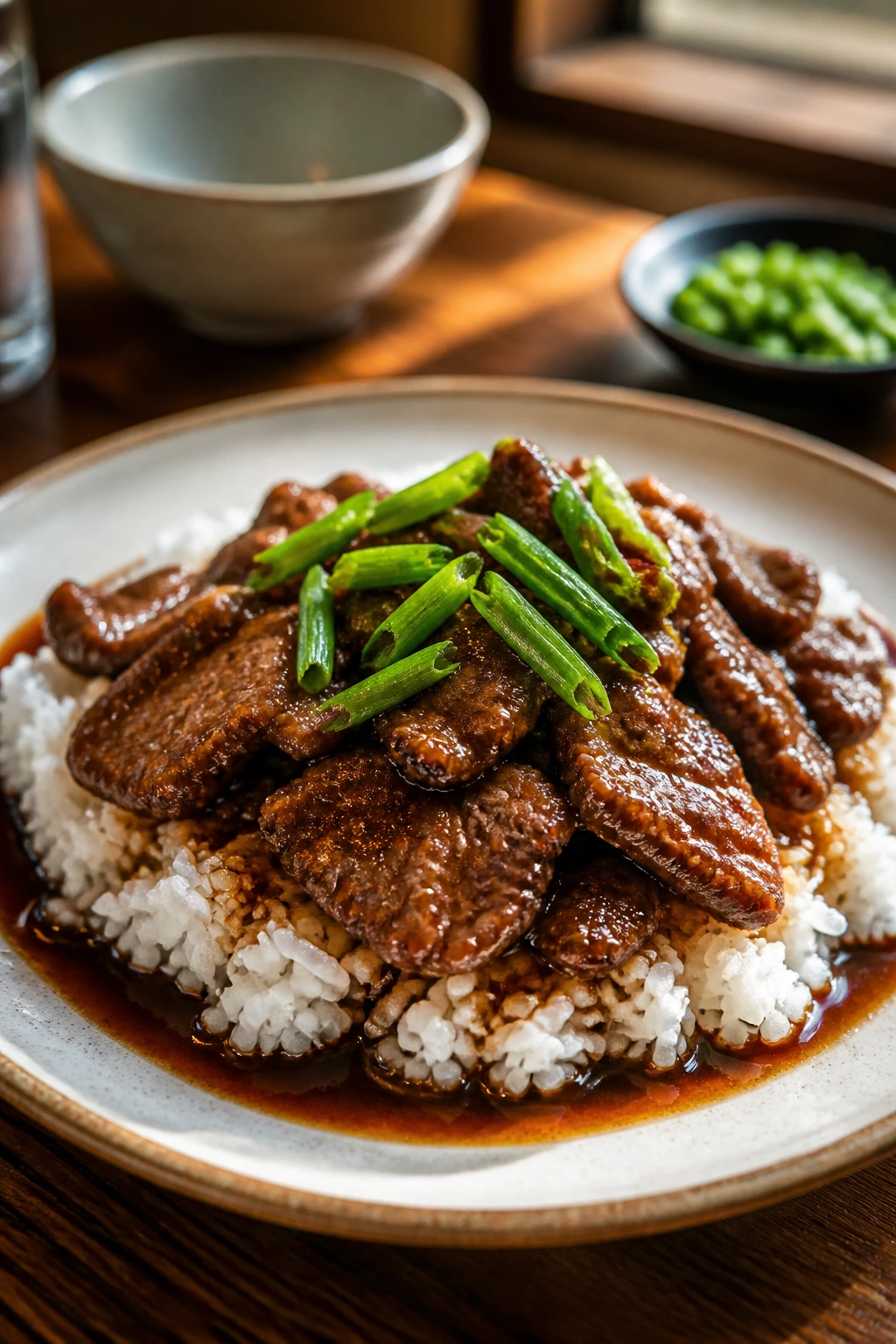
Presentation: Spoon the beef into a wide, shallow bowl or onto a platter over a bed of hot jasmine rice. Let some of the sauce pool around the edges; that’s part of the appeal. A few bright green scallion tops on the surface make the whole dish look fresher than it is.
Accompaniments: Jasmine rice is the obvious partner, and I’m not apologizing for that. Lo mein noodles work too if you want something more slurpy. On the side, I like steamed broccoli, garlicky bok choy, or a crisp cucumber salad with a little rice vinegar and salt. The dish is rich enough that it benefits from something clean and a little crunchy beside it.
Portions: Four servings is realistic if you serve it with rice and a vegetable. If you’re feeding bigger appetites, stretch the meal with extra rice and a second vegetable instead of piling on more beef; the sauce goes farther than you’d expect. For a lighter plate, reduce the rice and keep the beef portion generous.
Beverage Pairing: Cold jasmine tea is an easy fit. A dry lager works if you want something sharper. If you prefer wine, an off-dry Riesling handles the sweet-salty sauce better than a bone-dry white, which can taste brittle next to the brown sugar.
Ways to Make This Recipe Even Better
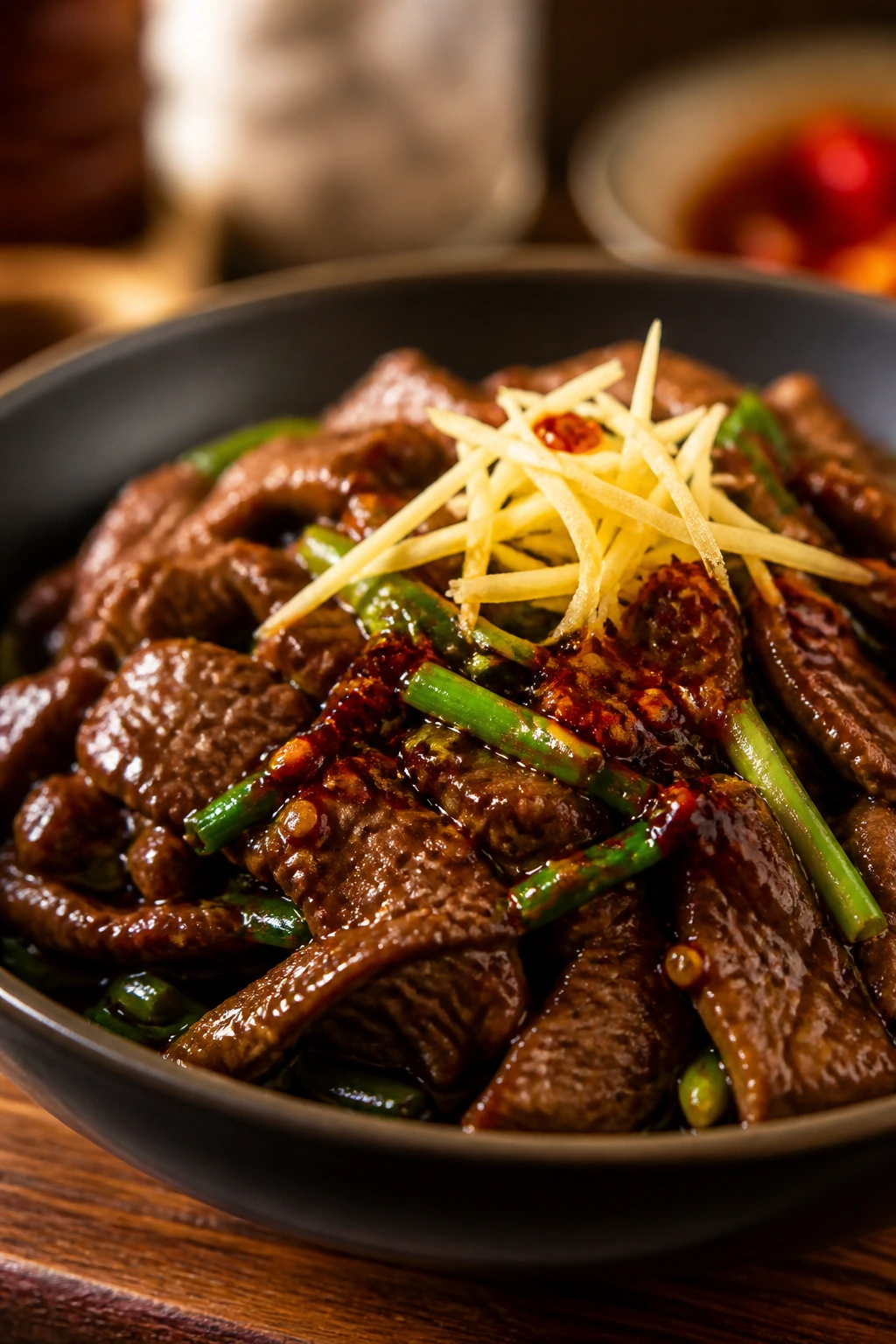
Flavor Enhancement: A teaspoon of freshly grated ginger added at the very end makes the whole pan feel brighter. If you like a little heat, a spoonful of chili crisp on top gives the sauce some crunch and a deeper chili note than red pepper flakes alone.
Time-Saver: Slice the beef and whisk the sauce earlier in the day, then keep them separate in the fridge. The actual cooking is fast enough that you can get from raw steak to dinner in under 20 minutes once the prep is done.
Cost-Saver: If flank steak is priced higher than you want to spend, top sirloin is the most reliable swap. Buy one whole piece and slice it yourself instead of paying for pre-cut beef strips, which are usually thicker than they should be and cost more per pound.
Serving Suggestions: Toasted sesame seeds add a little nuttiness and a faint crunch, but only if you use them sparingly. I also like to scatter a few thin cucumber slices on the side of the bowl; they cut through the sauce without stealing the show. If you serve it over noodles, a quick drizzle of the pan sauce over the top before the beef goes on keeps the bowl from feeling dry.
Common Mongolian Beef Mistakes and How to Avoid Them
-
Cutting the steak with the grain: The beef comes out stringy and takes more chewing than it should. Fix it by turning the steak and slicing across the long fibers, even if that means slowing down for a minute.
-
Crowding the skillet: The beef steams instead of sears, and the sauce turns dull. Cook in two batches, keep the strips in a single layer, and wait for the pan to recover heat between rounds.
-
Using a wet surface on the beef: Cornstarch clumps and the meat looks patchy, not glossy. Pat the steak dry with paper towels before coating it, and don’t let it sit in liquid while you prep the rest.
-
Letting the garlic burn: Burnt garlic makes the whole dish taste bitter in a way that no amount of sauce can hide. Keep the aromatics moving and add the sauce as soon as the garlic smells sweet and fragrant.
-
Overcooking after the sauce goes in: The beef gets firm and the scallions collapse into olive-green strands. Once the sauce has thickened and coated the meat, turn off the heat. The residual heat in the pan finishes the job.
-
Making the sauce too sweet or too thin: If it tastes flat, the sugar has taken over. Add a small splash of rice vinegar and simmer for another 20 to 30 seconds; if it’s too thin, give it a brief simmer rather than dumping in more starch.
Variations and Swaps That Still Fit the Dish
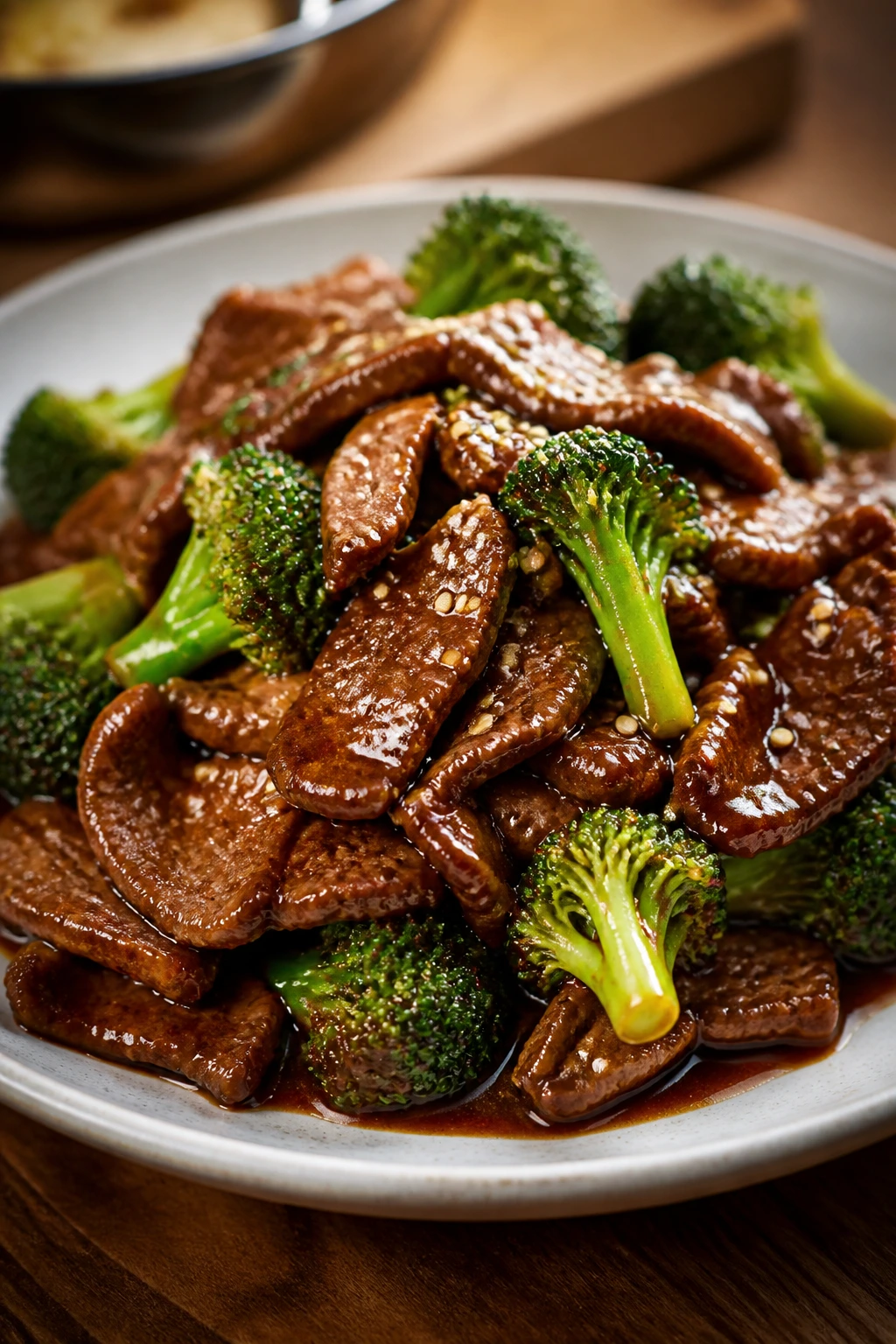
Chili-Crisp Mongolian Beef
Stir 1 to 2 tablespoons of chili crisp into the finished sauce for a deeper heat and a little crunch. I’d cut the brown sugar back by 1 tablespoon if you go this route, because chili crisp already brings its own richness.
Broccoli Bowl Version
Steam 3 cups of broccoli florets until just tender, then toss them into the pan during the last minute so they pick up the sauce without turning limp. This is the version I make when I want the meal to feel a little more complete without starting a second pan.
Ground Beef Skillet Shortcut
Use 1 1/2 pounds lean ground beef instead of sliced steak, brown it well, and drain off any excess fat before adding the aromatics and sauce. You lose the silky strip texture, but the flavor profile stays close, and the whole thing becomes a faster one-pan dinner.
Gluten-Free Tamari Version
Swap the soy sauce for tamari and keep the rest of the recipe the same. Check that your rice vinegar and cornstarch are plain and unflavored, and you’ll keep the sauce glossy without changing the shape of the dish.
Lighter, Brighter Version
Reduce the brown sugar to 1/4 cup and add an extra teaspoon of rice vinegar. That gives you a cleaner, less sticky sauce that still feels like Mongolian beef, just less dessert-like.
Storing, Reheating, and Making It Ahead
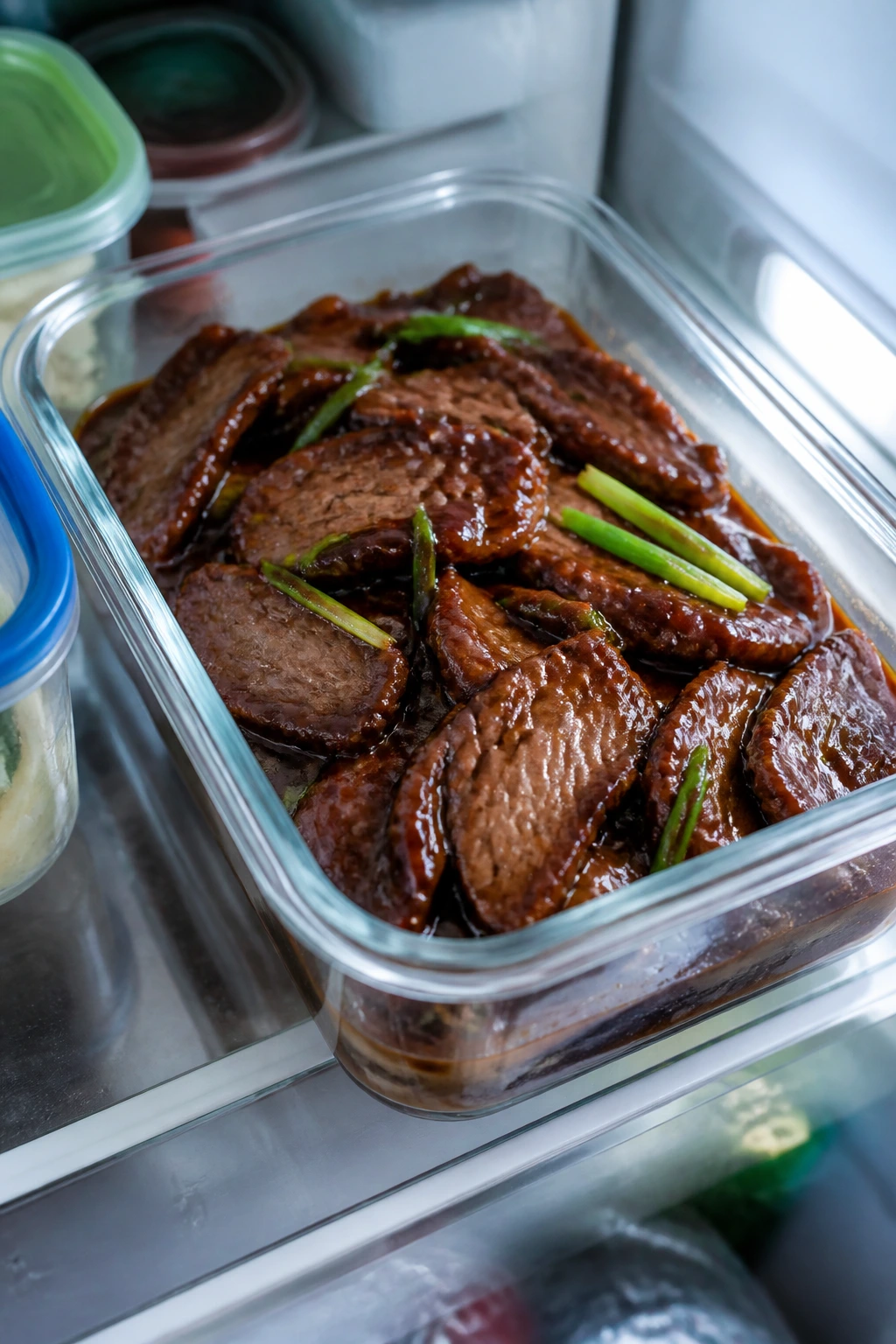
Mongolian beef keeps well, but it changes texture a little in the fridge. The sauce thickens, the scallions soften, and the beef loses a touch of its edge. That is normal. It’s still good.
Store leftovers in an airtight container in the refrigerator for 3 to 4 days. If you’re planning to freeze it, keep it for up to 2 months. The beef is best frozen with the sauce already on it, though the scallions will soften more after thawing. If you want a cleaner result, freeze the beef and sauce separately, then combine them after reheating. Rice should always be stored on its own.
For reheating, a skillet is the best tool. Put the beef in a skillet over medium-low heat with 1 to 2 tablespoons of water, stir gently, and warm until the sauce loosens and the beef is hot all the way through. That usually takes 3 to 5 minutes. The microwave works in a pinch, but use short bursts and stir between them so the sauce doesn’t seize on the edges of the bowl.
Make-ahead is easy at the prep stage. You can slice the beef a day ahead and keep it tightly wrapped in the fridge. The sauce can be whisked 2 to 3 days ahead and stored separately. I would not coat the beef with cornstarch too far ahead of time, because the starch can turn sticky and odd while it waits. Coat it right before it hits the pan and you’ll keep the texture cleaner.
Mongolian Beef Questions People Ask
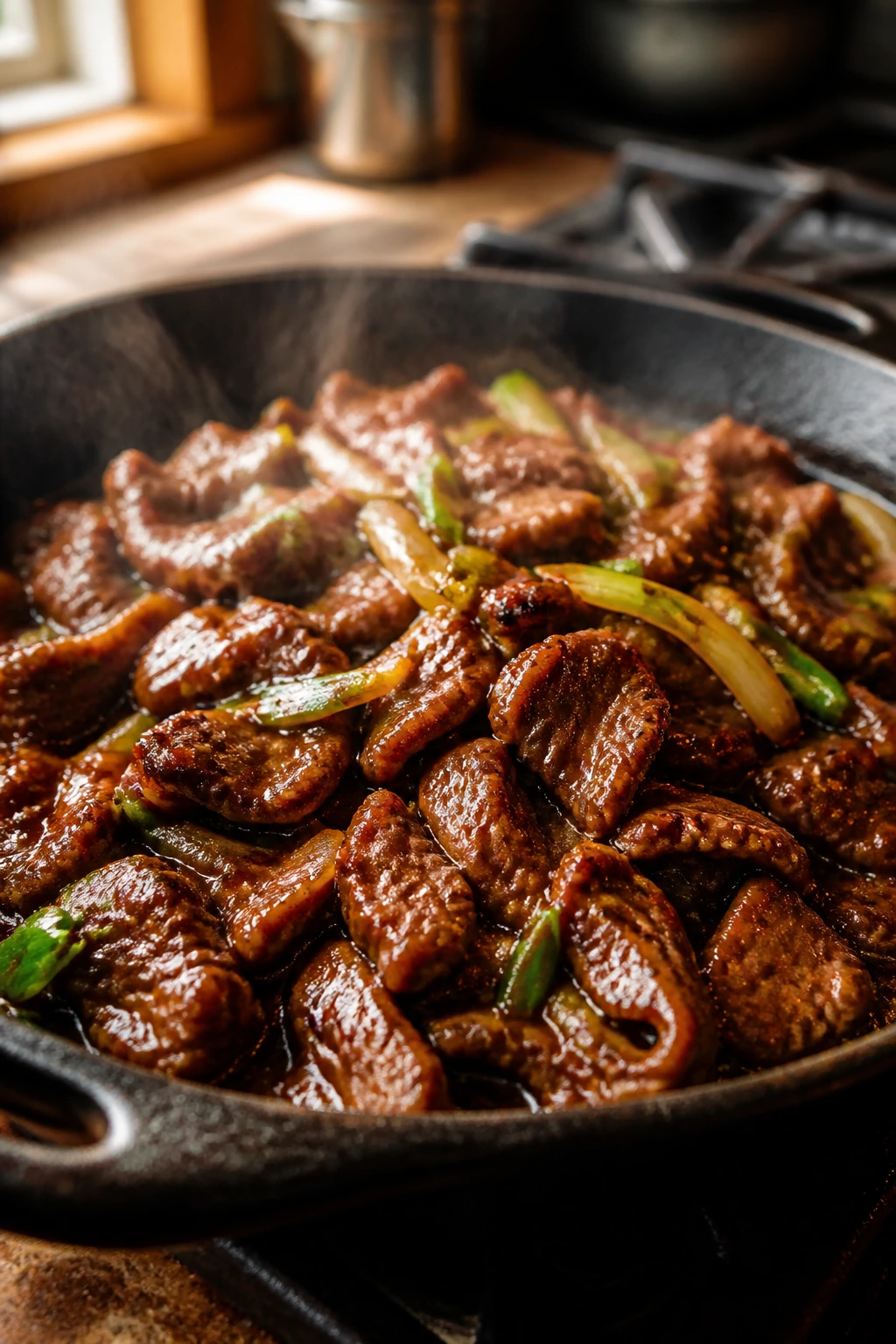
Can I use top sirloin instead of flank steak?
Yes. Top sirloin is one of the easiest swaps because it slices neatly and stays tender if you keep the cooking fast. It won’t have quite the same pronounced beef flavor as flank, but it’s a solid substitute.
Why did my Mongolian beef turn tough?
Usually it’s one of two things: the steak was sliced with the grain, or it stayed in the pan too long. Thin slices across the grain and a very short sear are what keep the meat supple.
Do I need a wok for this recipe?
No. A heavy 12-inch skillet actually works better on a home stove if your burner doesn’t get screaming hot. The pan just needs to hold heat so the beef browns instead of steaming.
Can I make Mongolian beef less sweet?
Yes. Drop the brown sugar to 1/4 cup and add an extra teaspoon of rice vinegar. That keeps the sauce balanced and pulls the flavor away from the syrupy end of the spectrum.
What if my sauce is too thin?
Let it simmer another 20 to 45 seconds before you reach for anything else. If it still looks loose, the next time you make it, whisk the cornstarch into the sauce a little more thoroughly before it hits the pan.
Can I make this with ground beef?
You can, and it’s a good shortcut when you want the flavor without the slicing. Brown the meat well, drain off excess fat, and then add the sauce and scallions just as you would with sliced beef.
How do I keep the scallions from going limp?
Add the white parts with the garlic and ginger, then toss in the green tops only at the very end. They need a few seconds in the pan, not a minute. More than that and they lose the bright snap that keeps the dish lively.
What should I serve if I don’t want rice?
Lo mein noodles, rice noodles, or even steamed cabbage work well. The important part is giving the sauce something mild to land on, because it’s too good to eat on its own with a spoon.
Worth Repeating
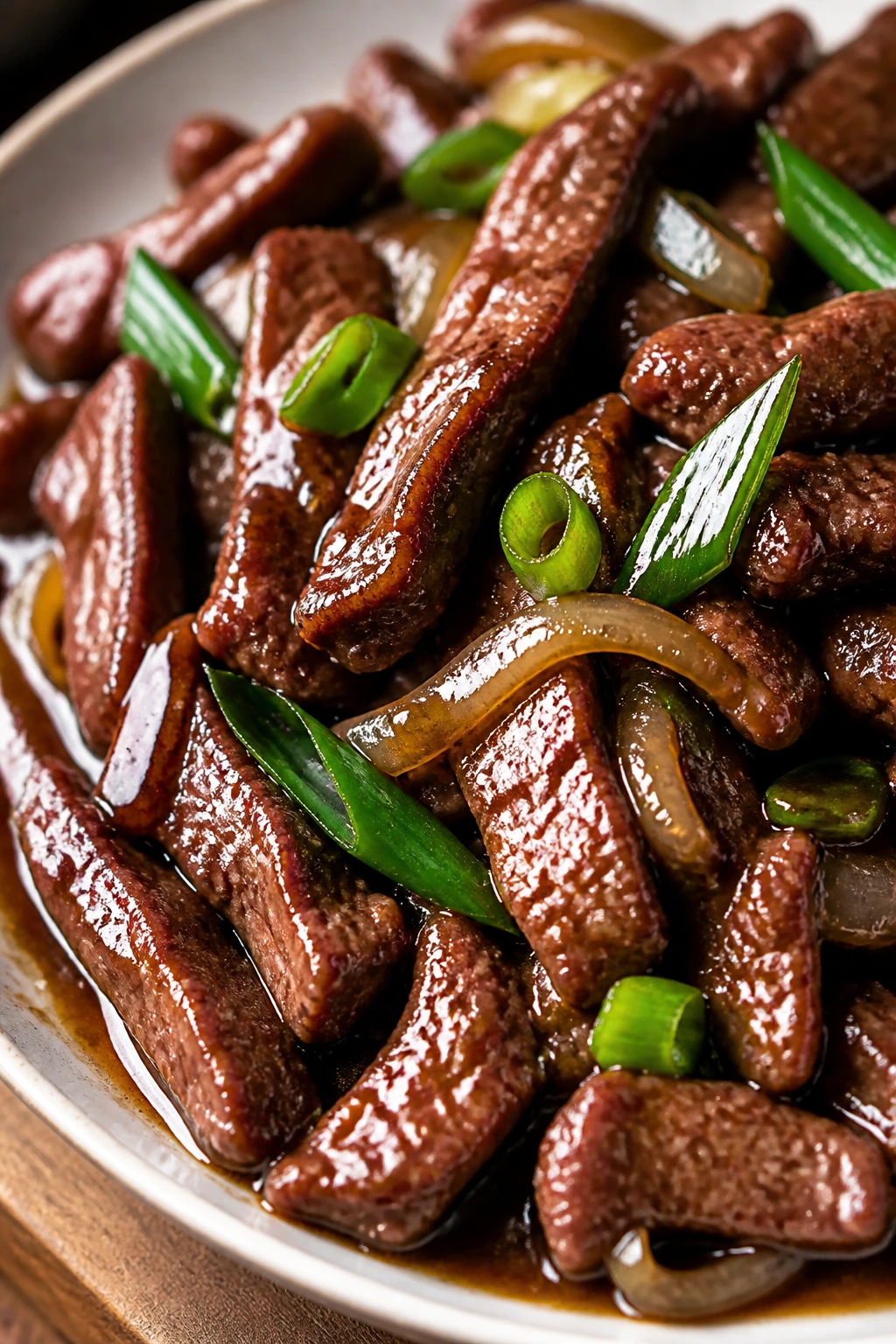
Mongolian beef doesn’t ask for a huge ingredient list or a deep pot of patience. It asks for a hot pan, a sharp knife, and the willingness to stop cooking before the beef loses its softness. That’s a fair trade, and it’s one reason this dish keeps hanging around in home kitchens long after the first takeout craving has passed.
The version that lands best is the one with clear slices, a glossy sauce, and scallions that still taste like scallions. Get those three things right, and dinner feels deliberate in the best way — simple, fast, and far better than the sad, overcooked version that too many people assume is normal.
Juicy Mongolian Beef for a Hearty Dinner — Recipe Card
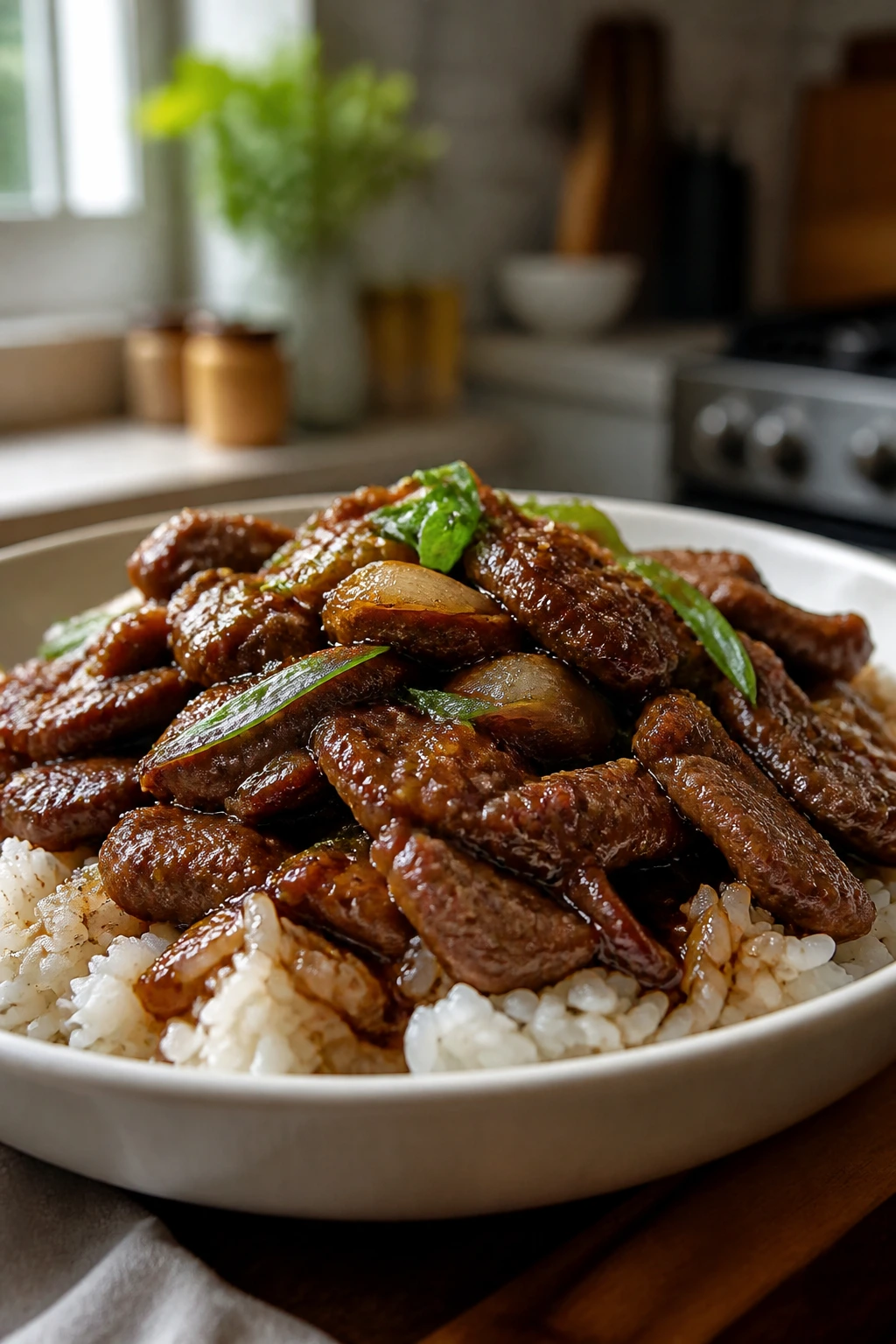
Recipe Name: Juicy Mongolian Beef for a Hearty Dinner
Description: Thin-sliced flank steak seared hot and fast, then tossed in a glossy soy, brown sugar, ginger, garlic, and scallion sauce. Serve it over rice or noodles for a filling Chinese-American skillet dinner.
Prep Time: 20 minutes
Cook Time: 15 minutes
Total Time: 35 minutes
Course: Main Course
Cuisine: Chinese-American
Servings: 4 servings
Calories: 420 kcal
Ingredients
For the Beef
- 1 1/2 pounds flank steak, thinly sliced against the grain into 1/8-inch strips
- 1/4 cup cornstarch
- 1/2 teaspoon kosher salt
- 1/2 teaspoon black pepper
- 4 tablespoons neutral oil, divided
For the Sauce
- 1/2 cup low-sodium soy sauce
- 1/2 cup water
- 1/3 cup packed light brown sugar
- 1 tablespoon rice vinegar
- 2 teaspoons cornstarch
- 1 teaspoon toasted sesame oil
For the Aromatics
- 6 scallions, cut into 2-inch pieces and separated into white/light green and dark green sections
- 4 garlic cloves, finely minced
- 1 tablespoon fresh ginger, grated
- 1/2 teaspoon crushed red pepper flakes
Instructions
-
If needed, freeze the steak for 15 to 20 minutes until slightly firm, then slice against the grain into 1/8-inch strips.
-
Toss the beef with cornstarch, salt, and pepper until lightly coated.
-
Whisk together the soy sauce, water, brown sugar, rice vinegar, cornstarch, and sesame oil until smooth.
-
Heat 2 tablespoons oil in a 12-inch skillet over high heat. Sear half the beef for 45 to 60 seconds per side, then transfer. Repeat with the remaining oil and beef.
-
Lower the heat to medium. Add garlic, ginger, crushed red pepper flakes, and the white/light green scallion pieces; cook 20 to 30 seconds.
-
Pour in the sauce and simmer 1 to 2 minutes until glossy and thick enough to coat a spoon.
-
Return the beef and dark green scallion tops. Toss for 30 to 45 seconds until hot and coated, then serve immediately.
Notes: Slice the steak thinly against the grain, do not crowd the pan, and serve right away over rice or noodles for the best texture.