



Ground beef and broccoli do not need much theater to make dinner feel complete. A hot skillet, a little fat, and the smell of onion hitting the pan are enough to make the kitchen feel alive.
Juicy hamburger broccoli is the kind of dinner that looks plain for about five minutes, then suddenly starts smelling like you know exactly what you’re doing. The beef browns into savory little crumbles, the broccoli keeps its green edge, and the sauce turns glossy instead of watery.
If you’ve ever made a beef-and-broccoli dinner that came out dry, bland, or weirdly soupy, the problem usually wasn’t the ingredients. It was timing. Broccoli wants a short, sharp cook. Ground beef wants room to brown. Sauce wants a minute to tighten up before the cheese goes on top. Get those details right, and the whole skillet tastes richer than the ingredient list has any right to suggest.
Why This Hamburger Broccoli Skillet Earns a Spot at the Table
One skillet does the heavy lifting: The onion, beef, sauce, broccoli, and cheese all build in the same pan, which means every browned bit gets folded back into dinner instead of getting rinsed away.
The beef stays juicy instead of dry: I use 85/15 ground beef here—lean enough to stay tidy, fatty enough to keep the skillet tasting full and savory.
The broccoli keeps some bite: The florets go in late, after the sauce has already started to thicken, so they come out crisp-tender instead of soft and drab.
It lands like a full meal: Spoon it over rice, mashed potatoes, or buttered noodles and it feels substantial, not like a side dish stretched into an entrée.
The flavor is sturdy, not fussy: Tomato paste, Worcestershire, soy sauce, and a little Dijon give the beef a deep, browned taste without turning the dish into something complicated.
It forgives small mistakes: If your stove runs a little hot or your broccoli pieces are uneven, the recipe still holds together as long as you watch the last few minutes.
The Story Behind This Weeknight Skillet
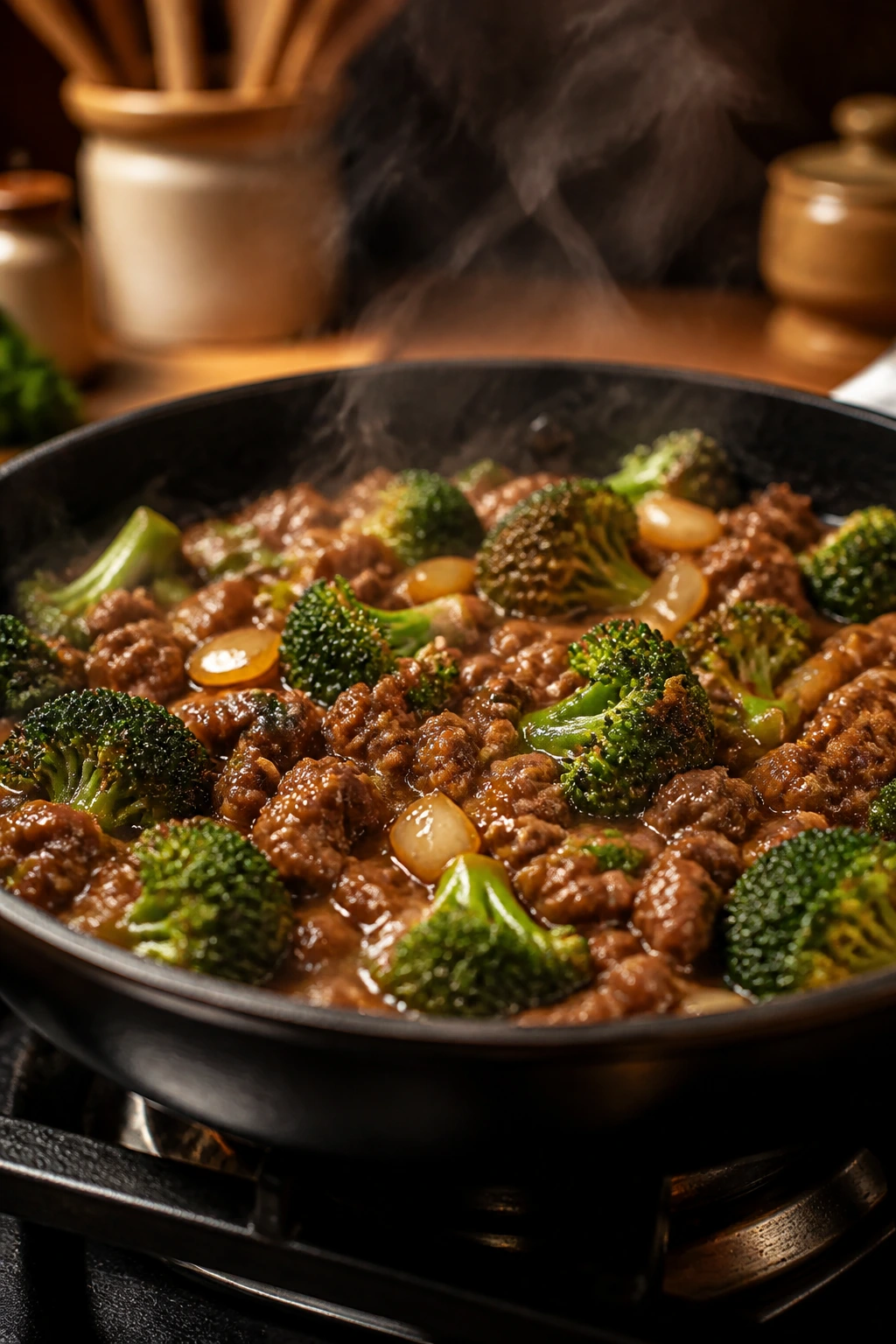
Hamburger and broccoli have been paired in home kitchens for a long time because they solve the same problem from two angles: you want dinner to feel hearty, and you want it on the table without a lot of fuss. Ground beef brings fast browning and a rich base. Broccoli brings texture, color, and the kind of bite that keeps a skillet dinner from feeling flat.
I like this version because it borrows the good part of beef-and-broccoli takeout—the glossy sauce and the savory hit—without forcing you to slice steak thin or babysit a wok. Ground beef gives you more browned surface area per minute, which means more flavor in less time. That matters. A lot.
There’s also a nice practical trick hiding in the broccoli. If you cut the florets small enough—about walnut size—they cook at the same pace as the stems once the lid goes on. And if you peel and slice the stems, which most people throw out, you get extra vegetable with almost no extra effort. Waste less. Eat more.
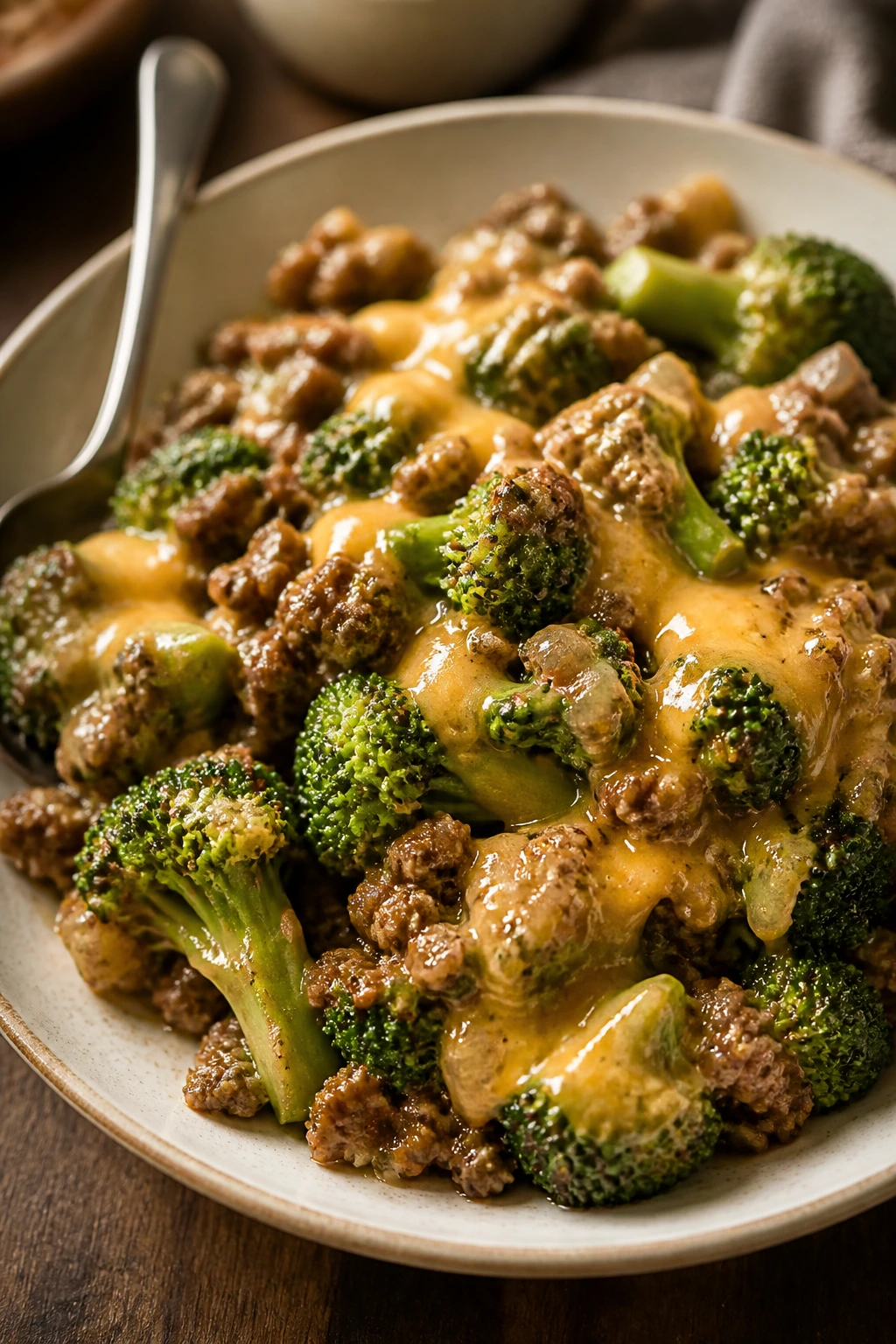
The cheese finish is the part people argue about, which I find mildly funny. Some cooks want the sauce to stay fully savory and skip dairy entirely. I get that. But a handful of sharp cheddar at the end melts into the sauce and gives the whole pan a more grounded, dinner-ish feel. Not cheese sauce. Not casserole. Just enough to make the beef feel cushioned and the broccoli taste like it belongs there.
Timing, Yield, and the Texture You Should Expect
Yield: Serves 4 to 6
Prep Time: 15 minutes
Cook Time: 25 minutes
Total Time: 40 minutes
Difficulty: Beginner — the steps are straightforward, but the last few minutes matter because broccoli can go soft fast and cheese should melt off heat, not boil.
Best Served: Right away, while the broccoli still has a little snap and the cheese is soft and glossy.
If you’re serving this over rice, potatoes, or noodles, start that starch first. The skillet moves quickly once the beef is in the pan, and nobody wants to stand there with the lid on while the rice finishes by inches. The finished dish should be thick enough to cling to a spoon, not thick enough to sit in a brick on the plate.
What Goes Into a Juicy Hamburger Broccoli Dinner
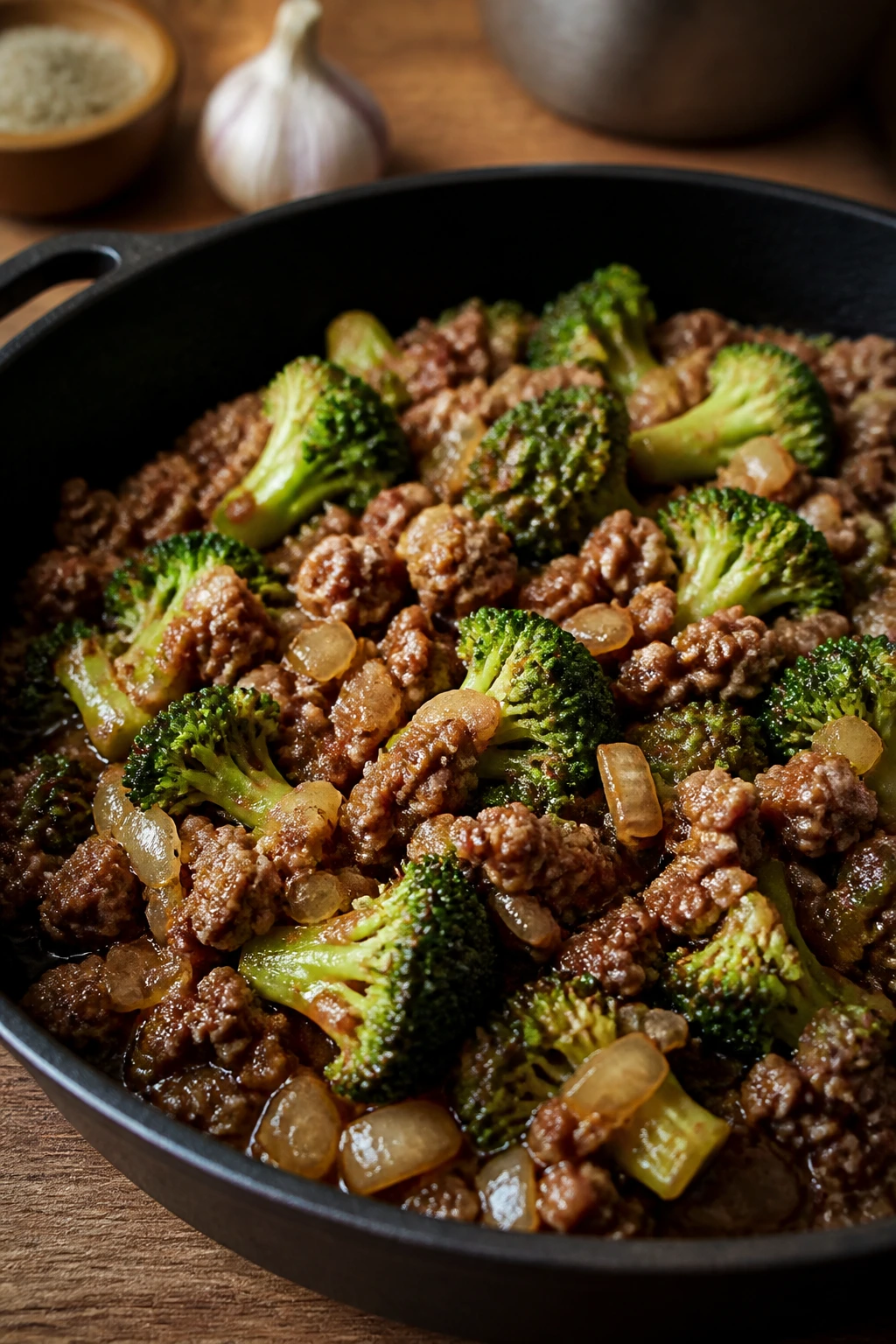
For the Skillet Base:
- 1 tablespoon olive oil
- 1 small yellow onion, finely diced
- 1 pound ground beef (85/15 or 90/10)
- 3 cloves garlic, minced
- 4 cups broccoli florets (about 12 ounces), cut into bite-size pieces
For the Sauce:
- 2 tablespoons tomato paste
- 1 tablespoon Worcestershire sauce
- 1 tablespoon low-sodium soy sauce or tamari
- 1 teaspoon Dijon mustard
- 1/2 teaspoon smoked paprika
- 1/2 teaspoon dried thyme
- 1/2 teaspoon kosher salt, plus more to taste
- 1/4 teaspoon black pepper
- 1 cup low-sodium beef broth
- 1 tablespoon cornstarch
- 2 tablespoons cold water
For the Finish:
- 1 cup shredded sharp cheddar cheese
- 1 tablespoon unsalted butter, optional
- Pinch red pepper flakes, optional
The ingredient list is short on purpose. You don’t need a cabinet raid for this. You need a few things that know how to work together.
Why Each Ingredient Pulls Its Weight in the Pan
Main Protein
What to use: 1 pound ground beef, ideally 85/15, though 90/10 will work if you want a slightly leaner skillet.
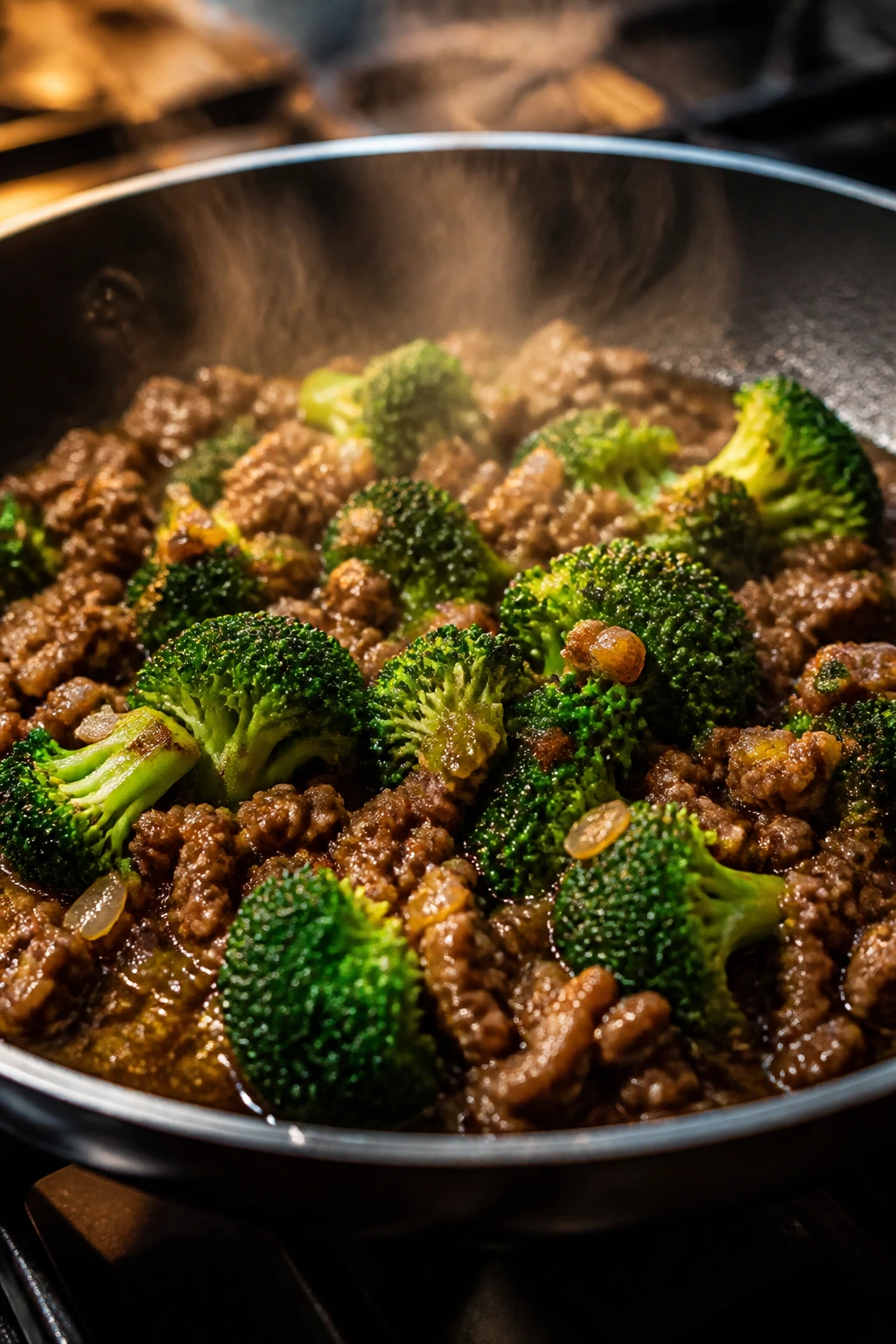
Preparation: Break the beef into large chunks when it first hits the pan, then keep breaking it up as the edges brown. You want crumbles, not paste.
Substitutions: Ground turkey or ground chicken can step in, but they need an extra tablespoon of oil and a little more salt because they bring less fat to the party.
Tips: If your beef is very lean, don’t try to squeeze every drop of fat out of it. A teaspoon or two left in the pan helps the onion and garlic taste fuller.
Broccoli and Aromatics
What to use: 1 small yellow onion, 3 cloves garlic, and 4 cups broccoli florets, about 12 ounces.
Preparation: Dice the onion small so it disappears into the sauce. Cut the broccoli into even bite-size pieces, and if the stems are thick, peel the outer layer and slice them thin.
Substitutions: Shallots can replace the onion for a sweeter flavor, and frozen broccoli can stand in for fresh if you add it straight from frozen.
Tips: Keep the broccoli pieces small enough that the stems and crowns finish together. Huge florets are the fastest way to get one part mushy and another part underdone.
Sauce Builders
What to use: Tomato paste, Worcestershire sauce, soy sauce or tamari, Dijon mustard, smoked paprika, thyme, beef broth, cornstarch, and cold water.
Preparation: Stir the cornstarch into cold water before it goes into the skillet. That keeps the sauce smooth instead of speckled with little lumps.
Substitutions: If you need gluten-free, use tamari and a certified gluten-free broth. If you want a little more tang, add 1 teaspoon cider vinegar at the end.
Tips: Tomato paste needs a short minute in the heat to lose its raw edge. When it darkens slightly and smells sweet, not sharp, you’re in the right place.
Cheese and Finish
What to use: 1 cup shredded sharp cheddar, plus 1 tablespoon butter if you want a richer finish.
Preparation: Shred the cheese before you start cooking so it’s ready the second the heat comes down.
Substitutions: Monterey Jack melts more smoothly. Parmesan gives a saltier finish, but use less—about 1/2 cup—because it can take over the pan fast.
Tips: Add cheese after the skillet is off the direct boil. If the sauce is bubbling hard, the cheese can turn greasy instead of creamy.
The Tools That Make the Skillet Easier
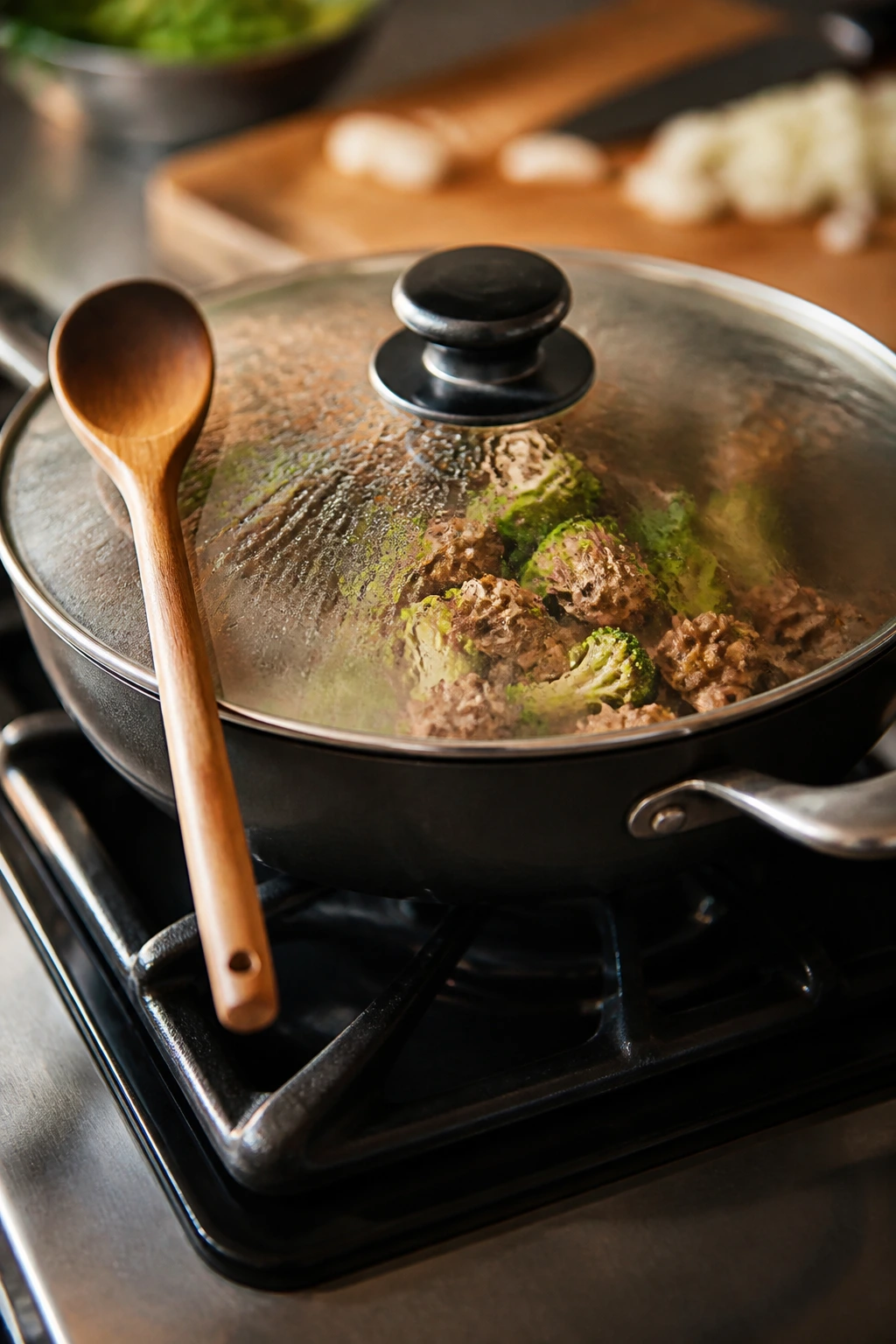
- 12-inch skillet with a lid: Big enough to brown the beef instead of steaming it, and the lid helps the broccoli soften without overcooking.
- Wooden spoon or sturdy spatula: You need something that can break up beef and scrape the browned bits from the bottom of the pan.
- Sharp chef’s knife: A dull knife makes broccoli and onion work twice as annoying.
- Cutting board: A roomy board helps you prep the broccoli and onion without chasing pieces all over the counter.
- Small bowl and whisk: Useful for mixing the cornstarch slurry so it stays smooth.
- Instant-read thermometer: Not glamorous, but helpful. Ground beef should reach 160°F / 71°C.
- Box grater or pre-shredded cheese: Either works. Pre-shredded cheese is fine here; the tiny starch coating actually helps it melt more evenly.
How to Build the Beef, Sauce, and Broccoli Step by Step
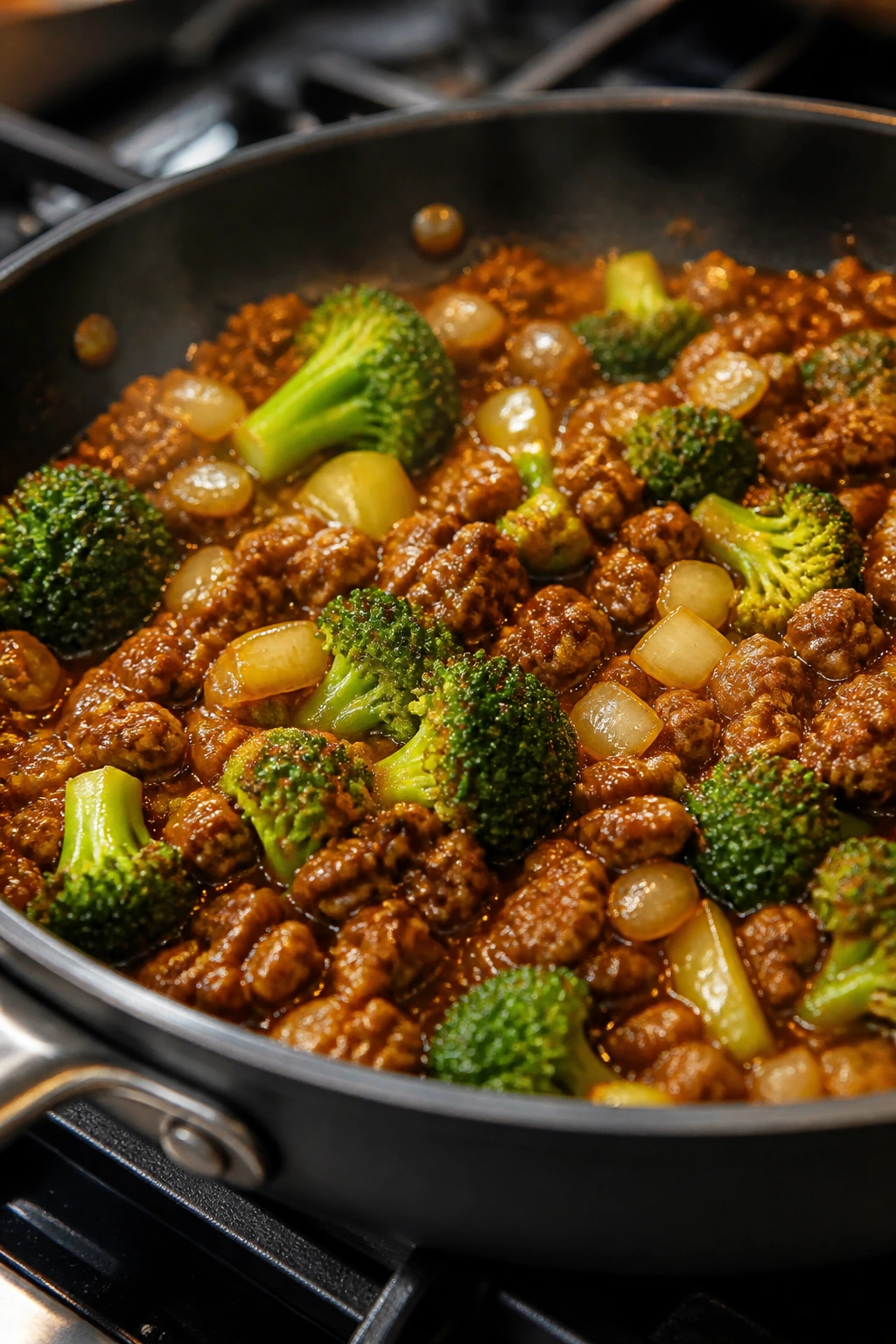
Prepare the Skillet
-
Heat a 12-inch skillet over medium-high heat for 1 minute, then add the olive oil and diced onion. Cook for 3 to 4 minutes, stirring occasionally, until the onion looks glossy and the edges start to turn pale gold.
-
Add the ground beef to the skillet, then season with the kosher salt and black pepper. Cook for 5 to 7 minutes, breaking the meat into crumbles, until the beef is browned and no pink remains. If there is more than about 1 tablespoon of excess fat in the pan, carefully drain some off.
-
Add the garlic, tomato paste, smoked paprika, and thyme. Stir for 30 to 45 seconds, just until the tomato paste darkens a shade and smells sweeter. Do not walk away here; garlic goes bitter fast when the heat is high.
Build the Sauce
-
Pour in the Worcestershire sauce, soy sauce, Dijon mustard, and beef broth. Scrape the bottom of the skillet with your spoon so the browned bits melt into the liquid. Let the mixture come to a lively simmer for 2 minutes.
-
In a small bowl, whisk the cornstarch with the cold water until smooth, then stir it into the skillet. Simmer for 1 to 2 minutes, stirring often, until the sauce turns glossy and lightly thickened. It should coat the back of a spoon, not slide off like water.
Bring in the Broccoli and Finish
-
Add the broccoli florets, then stir to coat every piece in the sauce. Cover the skillet and cook over medium heat for 4 to 6 minutes, until the broccoli is bright green and crisp-tender. If you like softer broccoli, give it one extra minute, but do not let it lose its color.
-
Uncover the skillet and check the beef temperature; it should read 160°F / 71°C in the thickest parts. Reduce the heat to low, sprinkle the cheddar over the top, and add the butter if you’re using it. Cover for 1 minute, just until the cheese melts into soft ribbons.
-
Taste the skillet and adjust with a pinch more salt, a few flakes of red pepper, or a splash of broth if the sauce tightened too much. Serve hot. The broccoli should still have a little bite, and the sauce should cling instead of pooling.
How to Serve It for a Hearty Plate
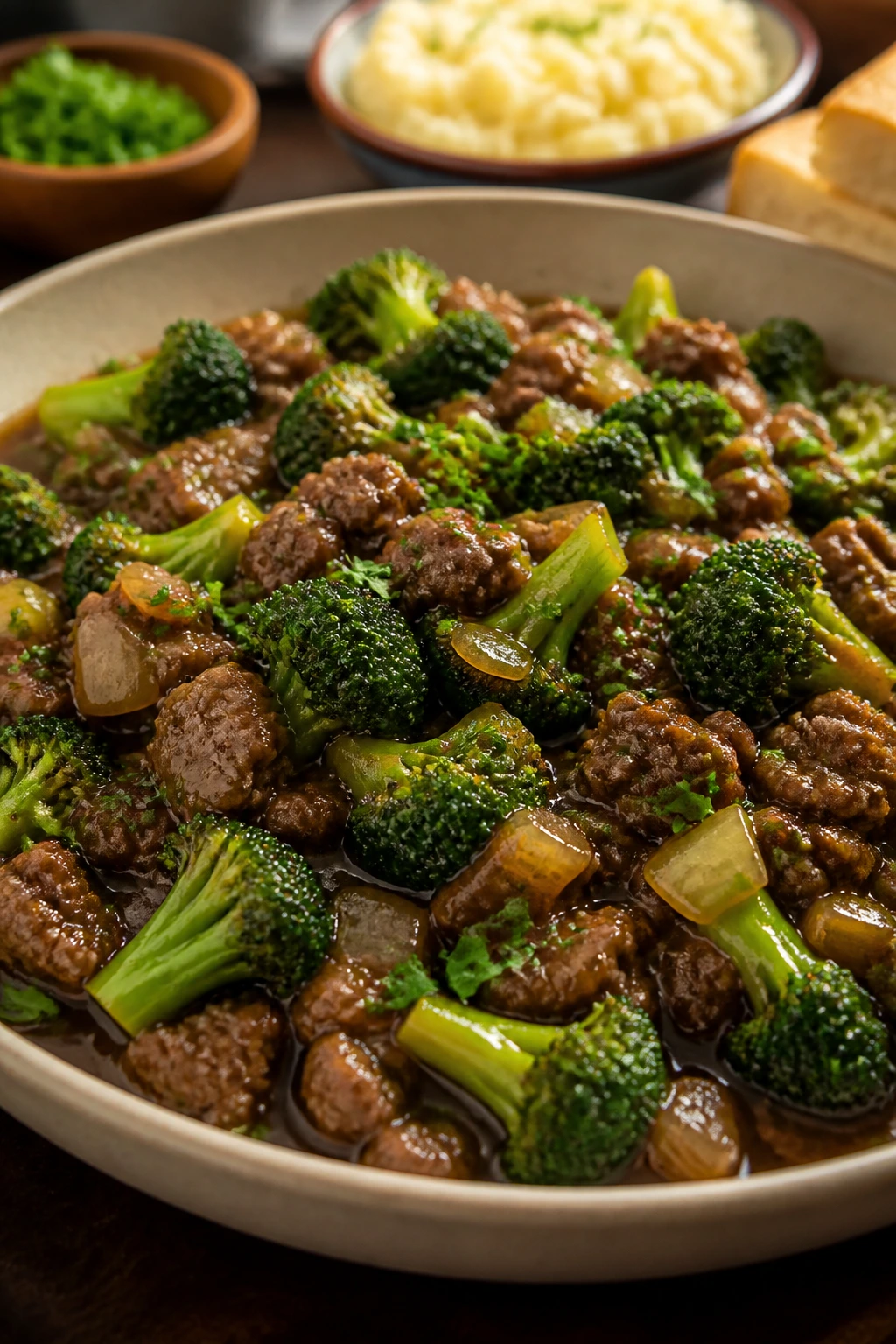
Presentation: Spoon the hamburger broccoli into shallow bowls so the sauce spreads instead of stacking up. A little chopped parsley or sliced green onion on top makes the skillet look less heavy and gives the cheese a clean finish.
Accompaniments: Buttered rice is the simplest path. Mashed potatoes make it richer, and egg noodles give the sauce something to snag on. If you want a lighter plate, a crisp cucumber salad or plain green salad keeps the meal from feeling too dense.
Portions: Plan on about 1 1/2 cups of the skillet mixture per adult if you’re serving it with rice or noodles. If it’s the whole dinner in the bowl, you may want closer to 2 cups per person.
Beverage Pairing: A cold lager works well because it cuts through the beef and cheese. Unsweetened iced tea is the no-drama option. Sparkling water with lemon is fine too, especially if you serve the skillet over something starchy.
Small Upgrades That Make the Flavor Stronger
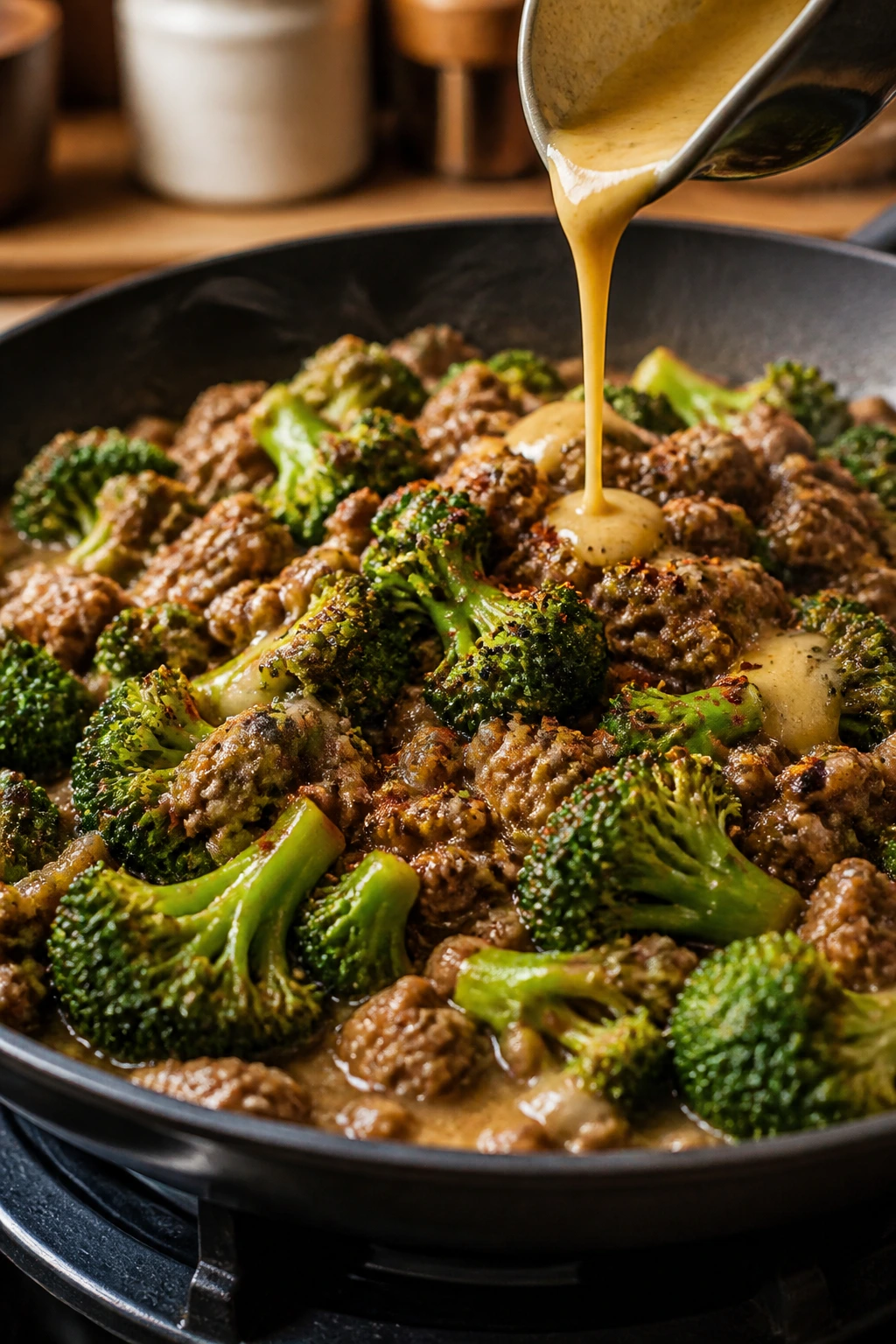
Flavor Enhancement: Stir in 1 teaspoon Dijon mustard even if you think the tomato paste and Worcestershire already cover the savory notes. Dijon doesn’t make this taste mustardy; it gives the beef a tighter, cleaner finish.
Texture Control: Cut the broccoli pieces smaller than you think you need. Walnut-size florets cook evenly, and the stems stay tender without forcing the crowns into a mushy place.
Time-Saver: Use pre-cut broccoli florets and pre-shredded cheddar if that’s what gets dinner on the table. This recipe does not reward heroics at the cutting board.
Cost-Saver: If 85/15 beef isn’t your usual buy, go with 90/10 and add the tablespoon of butter at the end. That little bit of extra fat keeps the skillet from tasting thin.
Make-It-Yours: Add a pinch of red pepper flakes for warmth, or finish with a few drops of sesame oil if you want a faint takeout-style note. Keep it subtle. The broccoli should still taste like broccoli.
Common Mistakes That Flatten the Dish
-
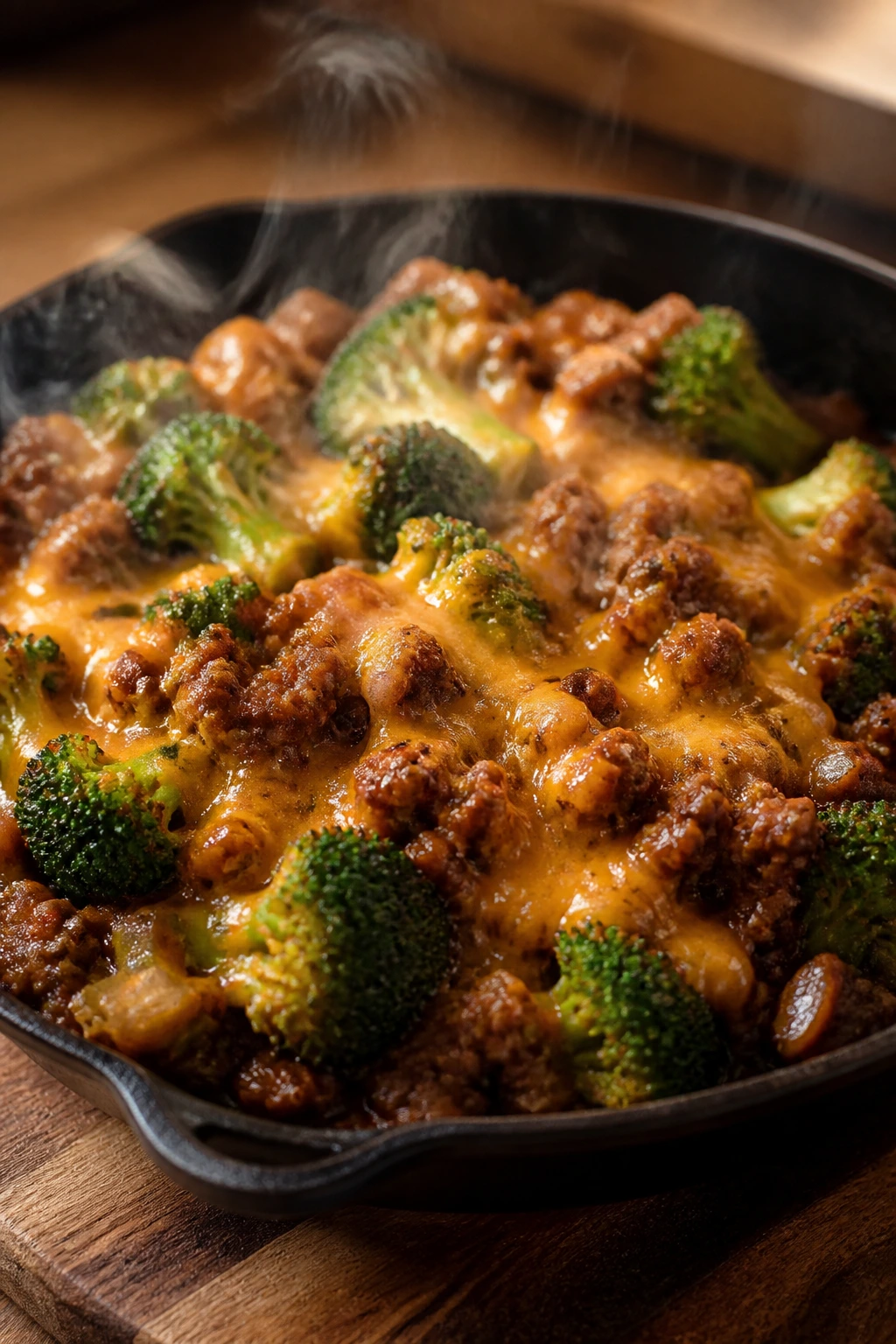
Browning the beef too softly: If the meat sits in the pan and steams instead of browning, the finished skillet tastes flat and gray. Use medium-high heat, give the beef a minute to take on color, and only then start breaking it up more aggressively.
-
Adding the broccoli too early: The symptom is limp, dark broccoli and sauce that tastes diluted. Fix it by waiting until the sauce is already thickened before the florets go in, then cover just long enough to soften the stems.
-
Pouring cheese into a boiling sauce: That usually gives you slick, grainy cheese instead of a smooth melt. Turn the heat down, or pull the pan off the burner for a minute, before you scatter the cheddar.
-
Skipping the cornstarch slurry: The sauce may taste good but sit like broth at the bottom of the pan. If that happens, whisk another 1 teaspoon cornstarch with 2 teaspoons cold water and stir it in, then simmer for 1 minute.
-
Underseasoning after the broth goes in: Broth, soy sauce, and beef can make you think the skillet is seasoned enough when it isn’t. Taste at the end. A pinch more salt often wakes the whole thing up.
-
Using a pan that’s too small: If the skillet is crowded, the beef steams and the broccoli turns soft before it ever gets a chance to keep its shape. A 12-inch skillet is the safe size; if you double the recipe, use two pans or a very wide Dutch oven.
Variations Worth Trying on the Same Base
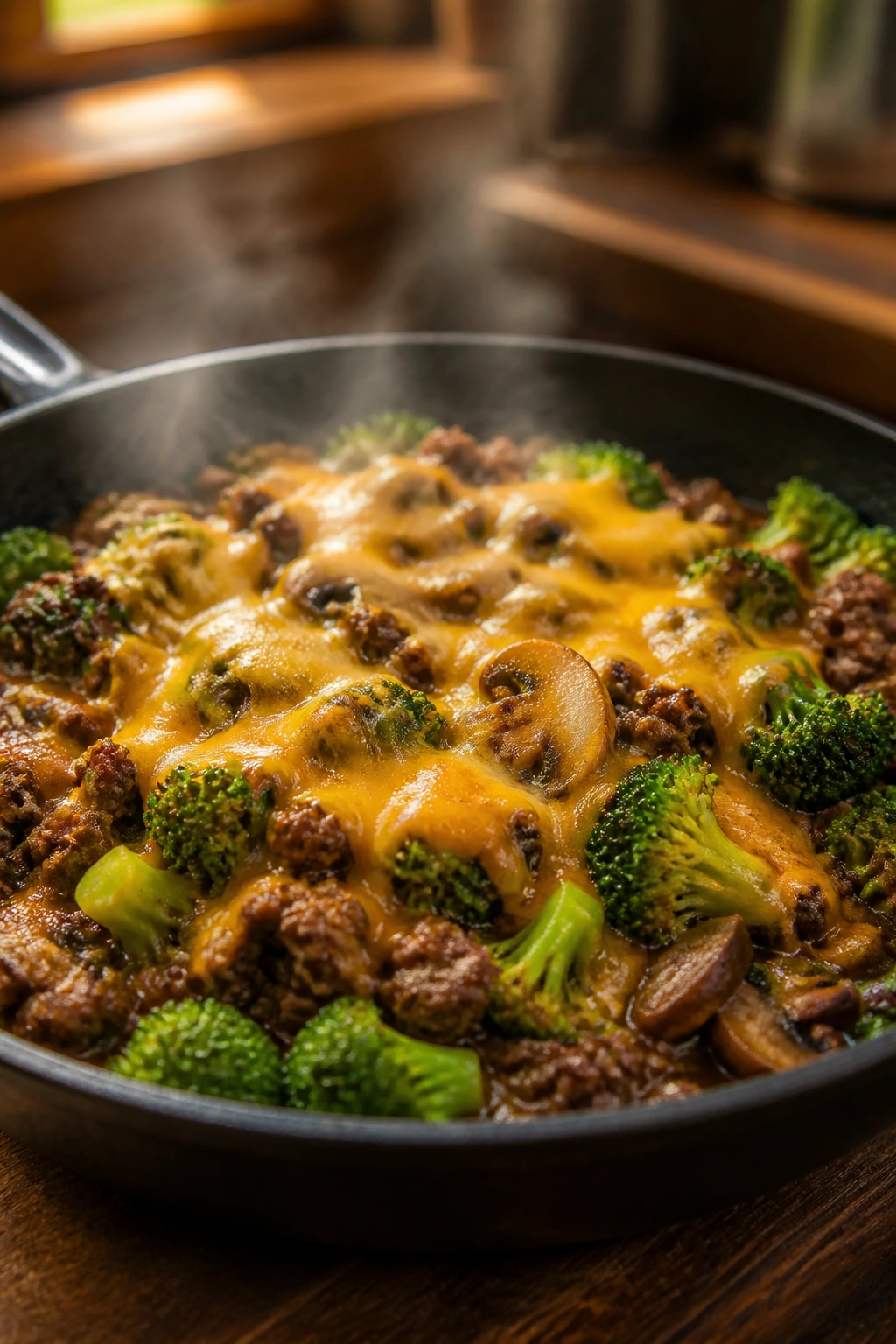
Cheddar Ranch Skillet: Stir 1 tablespoon ranch seasoning into the broth and use a little extra cheddar on top. This version leans creamier and saltier, so I’d skip the extra butter unless you want a richer pan.
Mushroom-Broccoli Beef: Add 8 ounces sliced mushrooms after the onion and cook them until they give up their liquid and start to brown. The mushrooms make the skillet taste earthier and stretch the beef a bit farther without changing the shape of the dish.
Spicy Sesame Beef and Broccoli: Swap the soy sauce for tamari, add 1 teaspoon sesame oil at the end, and finish with red pepper flakes or a spoonful of chili crisp. This one tastes a little closer to a takeout stir-fry, especially if you serve it over rice.
Low-Carb Comfort Bowl: Serve the skillet as-is, then add a spoon of sour cream or a little extra melted butter on top. It becomes a richer bowl without needing potatoes or noodles under it.
Rice-Loaded Family Skillet: Stir 2 cups cooked rice into the finished pan with an extra 1/4 cup broth. It turns the recipe into a full one-pan dinner that stretches farther, which is handy when the table is crowded.
Storage, Make-Ahead, and Reheating Without Soggy Broccoli
Room temperature: Don’t leave the skillet out longer than 2 hours. Cheese, beef, and broccoli all slip into awkward territory if they sit around too long.
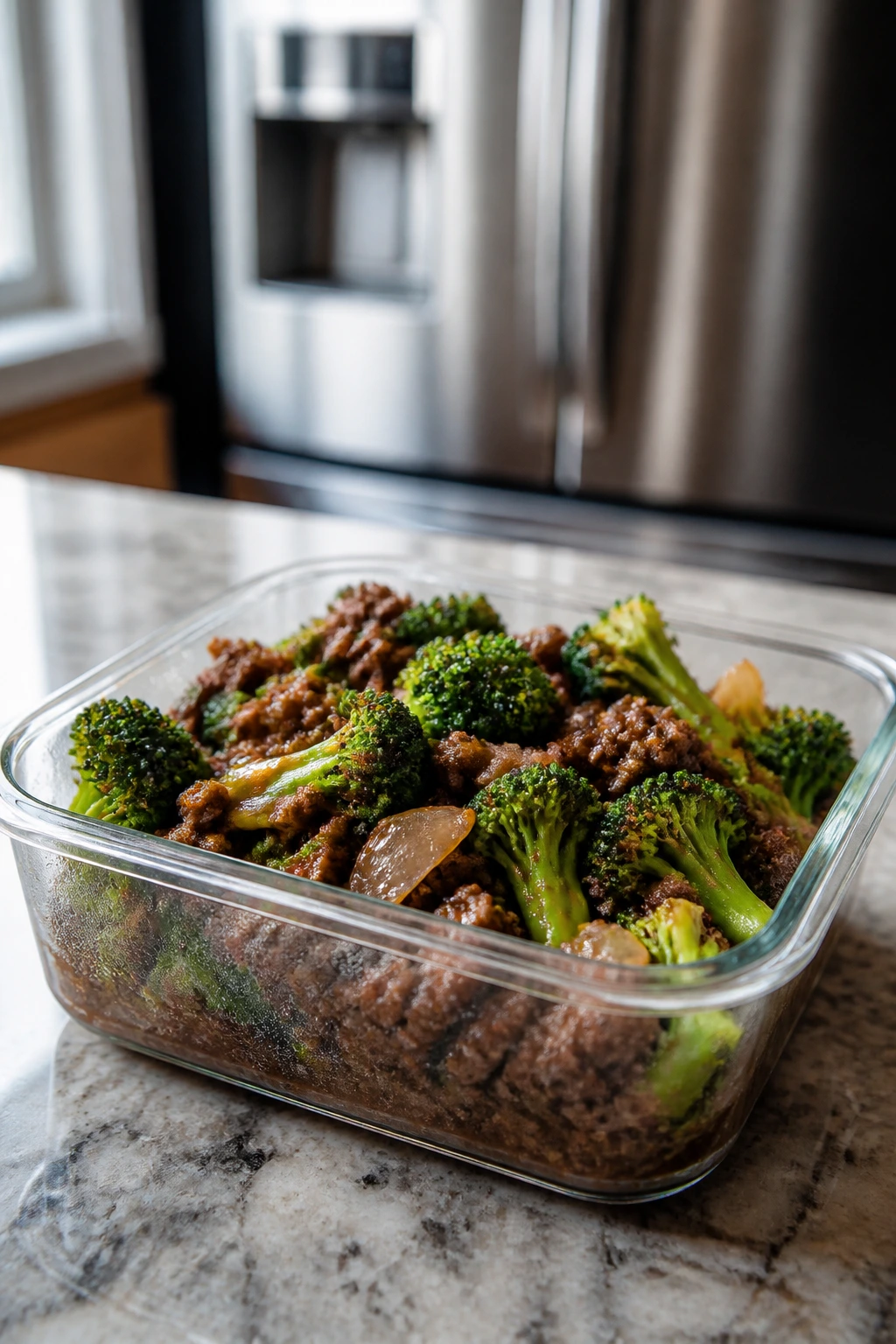
Refrigerator: Store leftovers in an airtight container for 3 to 4 days. The flavor holds up well, but the broccoli softens a little more each day, which is normal for a dish like this.
Freezer: Freeze for up to 2 months in a sealed container. The beef sauce freezes better than the broccoli, so if you know ahead of time that you want freezer portions, undercook the broccoli by 1 minute before packing it up.
Reheating: Reheat gently in a skillet over medium-low heat with 1 to 2 tablespoons of beef broth or water. That keeps the sauce loose and stops the cheese from turning rubbery. A microwave works too; use 50% power in 45- to 60-second bursts, stirring between rounds so the heat spreads evenly.
Make-ahead: You can cook the beef-and-sauce base a day or two in advance, cool it, and refrigerate it without the broccoli or cheese. Add the broccoli during reheating, cover the pan for a few minutes, then finish with the cheese right before serving. That keeps the vegetables from going muddy.
Questions People Ask Before Making Hamburger Broccoli

Can I use frozen broccoli instead of fresh?
Yes, and it works better than people expect. Add it straight from frozen, cover the skillet, and give it 2 to 3 extra minutes; just know it will release a little more water than fresh florets.
What ground beef fat percentage is best?
85/15 gives the best balance for this skillet. 90/10 is fine if you add the butter at the end, and anything much leaner starts to taste dry unless you’re generous with the broth and cheese.
Can I make this without cheese?
You can. Skip the cheddar, then finish with a small pat of butter or a spoonful of sour cream off the heat if you want the sauce to feel less sharp. The dish will be more savory and less rich, but it still holds together.
How do I keep the sauce from getting watery?
Let the broth simmer before the broccoli goes in, and don’t overpack the skillet. If you add broccoli too soon, it dumps water into the pan and thins everything out. A second minute of simmering usually fixes a loose sauce.
Can I serve this over something other than rice?
Absolutely. Mashed potatoes are the richest option, egg noodles catch the sauce nicely, and toasted bread does the job when you want something simple. The skillet is sturdy enough to sit on almost any starch.
What if the broccoli is still hard when the beef is done?
Leave the lid on and give it another minute over medium heat. If the stems are thick, the problem is usually cut size, not the recipe. Tiny florets cook with no drama; giant ones usually need a longer steam.
Can I double the recipe for a bigger group?
Yes, but use a wider pan or cook the beef in batches so it browns properly. Crowding a skillet is the fastest way to end up with pale meat and broccoli that turns soft before dinner is ready.
Why This Dinner Keeps Coming Back

There’s something satisfying about a skillet that doesn’t waste your time. You brown the beef, coax the sauce into shape, tuck in the broccoli at the last minute, and end up with a dinner that feels fuller than the work you put into it.
That’s why this hamburger broccoli recipe sticks around. It’s not delicate. It’s not fussy. It’s the sort of meal you make once because you need dinner, then make again because the pan came out cleaner than expected and the leftovers were gone before lunch the next day. Keep one pound of ground beef, a head of broccoli, and a bit of cheddar in reach, and this one is never far away.
Juicy Hamburger Broccoli Skillet — Recipe Card
Recipe Name: Juicy Hamburger Broccoli Skillet
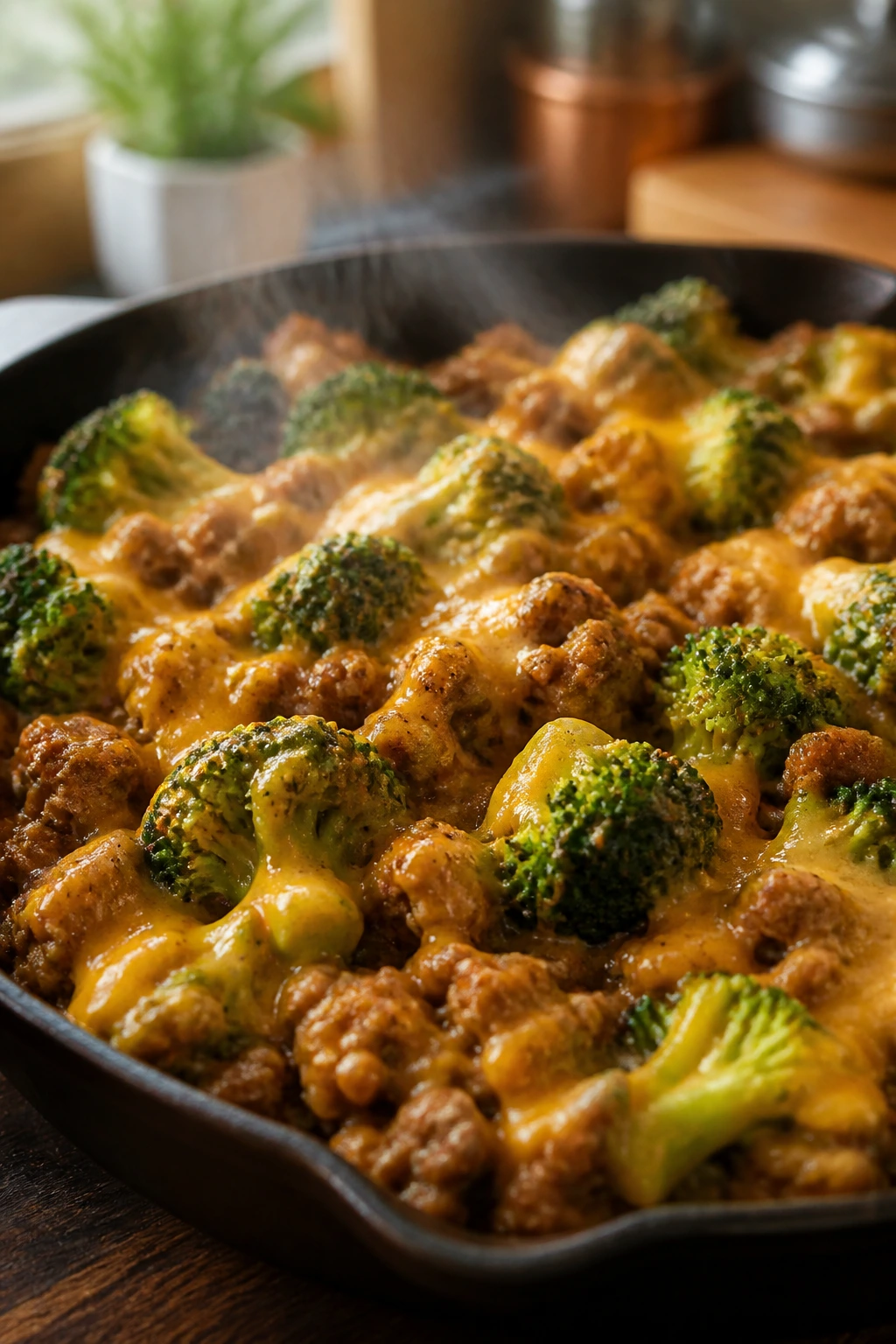
Description: Ground beef, broccoli, and a glossy savory sauce come together in one skillet, then finish under a layer of melted cheddar. Serve it over rice, mashed potatoes, or noodles for a hearty dinner with a little bite left in the broccoli.
Prep Time: 15 minutes
Cook Time: 25 minutes
Total Time: 40 minutes
Course: Dinner, Main Course
Cuisine: American
Servings: 4 to 6 servings
Calories: About 430 kcal per serving
Ingredients
For the Skillet Base:
- 1 tablespoon olive oil
- 1 small yellow onion, finely diced
- 1 pound ground beef (85/15 or 90/10)
- 3 cloves garlic, minced
- 4 cups broccoli florets (about 12 ounces), cut into bite-size pieces
For the Sauce:
- 2 tablespoons tomato paste
- 1 tablespoon Worcestershire sauce
- 1 tablespoon low-sodium soy sauce or tamari
- 1 teaspoon Dijon mustard
- 1/2 teaspoon smoked paprika
- 1/2 teaspoon dried thyme
- 1/2 teaspoon kosher salt, plus more to taste
- 1/4 teaspoon black pepper
- 1 cup low-sodium beef broth
- 1 tablespoon cornstarch
- 2 tablespoons cold water
For the Finish:
- 1 cup shredded sharp cheddar cheese
- 1 tablespoon unsalted butter, optional
- Pinch red pepper flakes, optional
Instructions
-
Heat the olive oil in a 12-inch skillet over medium-high heat. Add the onion and cook for 3 to 4 minutes until glossy and lightly golden.
-
Add the ground beef, salt, and black pepper. Cook for 5 to 7 minutes, breaking it up as it browns, until no pink remains and the beef reaches 160°F / 71°C. Drain excess fat if needed.
-
Stir in the garlic, tomato paste, smoked paprika, and thyme. Cook for 30 to 45 seconds until fragrant.
-
Add the Worcestershire sauce, soy sauce, Dijon mustard, and beef broth. Scrape up the browned bits and simmer for 2 minutes.
-
Whisk the cornstarch with the cold water in a small bowl, then stir it into the skillet. Simmer for 1 to 2 minutes until the sauce is glossy and lightly thickened.
-
Add the broccoli florets and stir to coat. Cover and cook for 4 to 6 minutes until the broccoli is bright green and crisp-tender.
-
Reduce the heat to low, sprinkle the cheddar over the top, and add the butter if using. Cover for 1 minute until the cheese melts.
-
Taste and adjust with more salt, a pinch of red pepper flakes, or a splash of broth if needed. Serve hot.
Notes: Cut the broccoli small so it finishes evenly; if the sauce thickens too much, loosen it with 2 tablespoons of broth. For a leaner version, use 90/10 beef and keep the butter at the end.