



Creamy basil pesto chicken solves the Tuesday-night problem that a lot of chicken dinners create: dry meat, dull sauce, and a sink full of pans. The basil brings a sharp green bite, the cream rounds it out, and the chicken gets coated in a sauce that clings instead of sliding off into a puddle on the plate. It feels more considered than the effort it asks from you.
What makes this version worth keeping around is the balance. Pesto on its own can taste loud and a little oily if you treat it carelessly. Cream can turn heavy fast. Put them together the right way, with a hit of lemon and enough chicken broth to loosen the pan, and the sauce tastes lush without becoming sleepy.
I reach for boneless chicken thighs here because they stay tender even if you pause to answer the phone or check the rice. Breasts can work, but they demand more attention and a sharper eye on the thermometer. Either way, the skillet does the hard work. The chicken browns, the garlic softens, the pesto melts into the cream, and dinner starts behaving like it had a plan all along.
Why This Creamy Basil Pesto Chicken Earns a Place in the Rotation
-
Fast without tasting hurried: The chicken sears in one skillet, and the sauce builds in the same pan with the browned bits left behind, so the flavor climbs quickly without dragging out the process.
-
The sauce actually sticks: A light flour coating on the chicken and a little Parmesan in the sauce keep the pesto cream from acting thin and slippery.
-
Store-bought pesto is welcome here: A decent jar works fine, which means you can make this with pantry ingredients and a few refrigerated staples.
-
Chicken thighs forgive small mistakes: Thighs stay juicy if the pan runs a minute hot, which makes this a lot less fussy than a breast-based dinner.
-
The plate wants a starch: Rice, orzo, mashed potatoes, polenta, or a piece of toasted bread all catch the sauce instead of letting it pool under the chicken.
-
Leftovers reheat with good manners: The sauce softens, sure, but it doesn’t turn into soup if you warm it gently with a splash of broth.
Yield: 4 servings
Prep Time: 15 minutes
Cook Time: 25 minutes
Total Time: 40 minutes
Difficulty: Beginner — the steps are straightforward, the ingredients are easy to find, and the skillet does most of the work.
Best Served: Right away, while the sauce is glossy and the spinach still looks fresh.
The Ingredient List That Makes the Sauce Stick
For the Chicken:
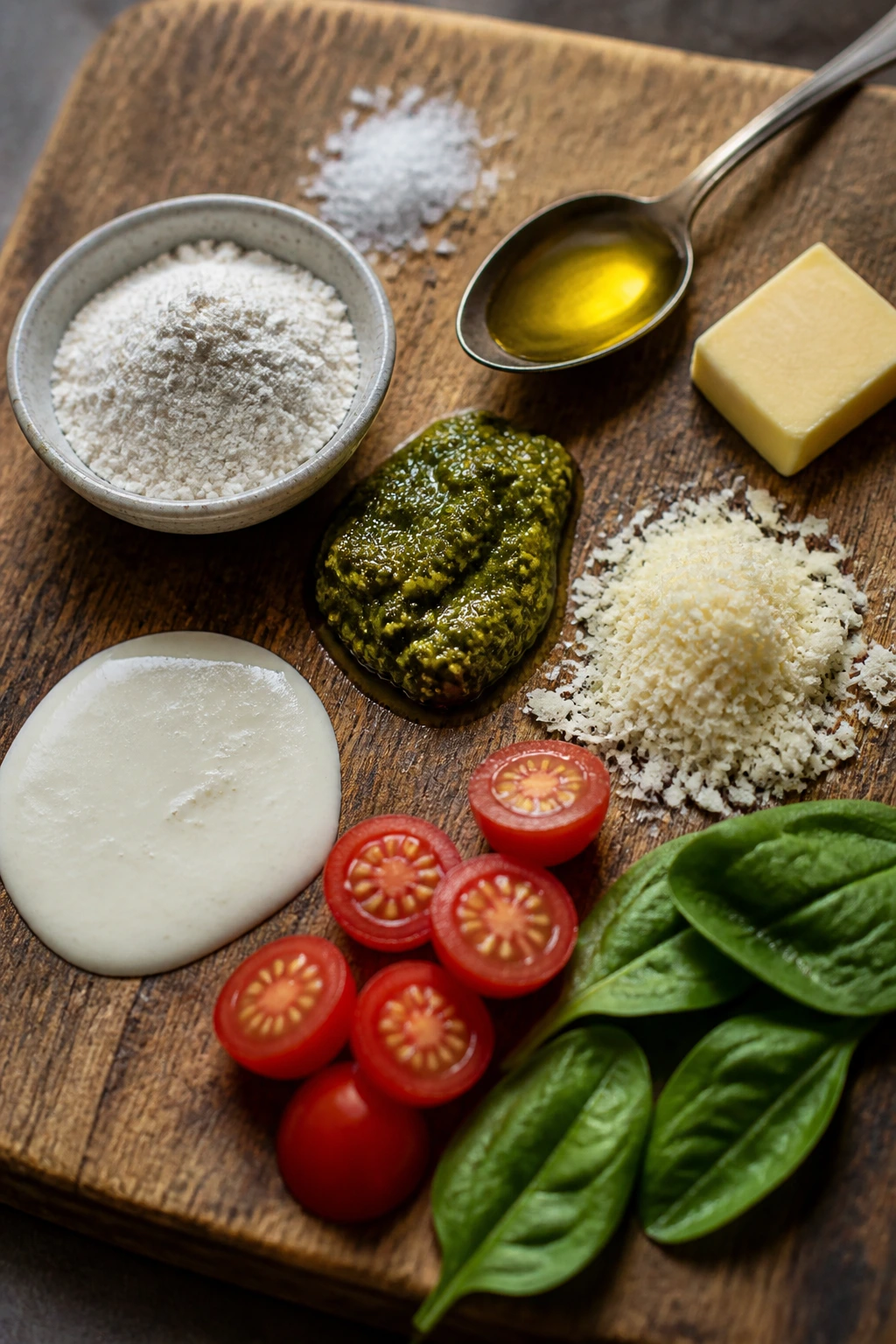
- 1 1/2 pounds boneless, skinless chicken thighs, patted dry and trimmed of excess fat
- 1 teaspoon kosher salt
- 1/2 teaspoon black pepper
- 1/2 teaspoon garlic powder
- 1/4 cup all-purpose flour, or a gluten-free flour blend for dredging
- 1 tablespoon olive oil
- 1 tablespoon unsalted butter
For the Creamy Pesto Sauce:
- 1 small shallot, finely minced
- 2 cloves garlic, minced
- 3/4 cup low-sodium chicken broth
- 1/2 cup heavy cream
- 1/3 cup basil pesto, stirred if separated
- 1/3 cup finely grated Parmesan cheese
- 1 tablespoon fresh lemon juice
- 1 cup cherry tomatoes, halved
- 2 cups baby spinach, loosely packed
- 1/4 teaspoon red pepper flakes, optional
- Salt and black pepper, to taste
For Serving:
- Fresh basil leaves, torn
- Extra Parmesan, for finishing
- Cooked rice, orzo, mashed potatoes, polenta, or crusty bread
How Each Ingredient Changes the Final Pan Sauce
Chicken Thighs and the Light Flour Coating
What to use: 1 1/2 pounds boneless, skinless chicken thighs, 1 teaspoon kosher salt, 1/2 teaspoon black pepper, 1/2 teaspoon garlic powder, and 1/4 cup flour. Thighs give you a richer bite than breasts, and the flour makes a thin crust that helps the sauce grab onto the meat.
Preparation: Pat the thighs dry before seasoning them. Then coat them lightly in flour, shaking off the excess so you do not end up with a paste in the skillet.
Substitutions: Boneless chicken breasts work if you pound them to even thickness. Gluten-free flour blends and rice flour both stand in well for the dredge, and thin chicken cutlets shorten the cook time by a few minutes.
Tips: Dry chicken browns; damp chicken steams. That one detail changes everything. If the thighs are stacked in the pan, sear them in batches so the surface can actually get color instead of turning pale and rubbery.
Basil Pesto and Why It Needs Gentle Heat
What to use: 1/3 cup basil pesto, stirred if the oil has separated. A jar is fine, though homemade pesto gives you a brighter basil note and more control over salt.
Preparation: Taste the pesto before it goes in. Some jars are garlic-heavy, some lean salty, and a few are thick enough to need a spoonful of broth to loosen them before they hit the skillet.
Substitutions: Spinach-basil pesto, arugula pesto, or even a mild kale pesto all work. Sun-dried tomato pesto changes the personality of the dish, but if you like a deeper, sweeter edge, it’s a useful detour.
Tips: Pesto loses its fresh green look when it boils hard. Keep the heat low once it goes into the pan, and it will stay greener and taste cleaner.
Cream, Parmesan, Broth, and Lemon
What to use: 3/4 cup low-sodium chicken broth, 1/2 cup heavy cream, 1/3 cup finely grated Parmesan, and 1 tablespoon lemon juice. This is the part that turns a pile of ingredients into a sauce.
Preparation: Grate the Parmesan finely so it melts fast and doesn’t clump. Measure the cream before you start cooking; once the garlic is sizzling, you won’t want to fumble around for a cup.
Substitutions: Half-and-half can replace the cream if you want a lighter sauce, though it will be a bit thinner. If you need a dairy-free route, use unsweetened coconut cream and a spoonful of nutritional yeast, knowing the flavor shifts away from classic pesto chicken.
Tips: The broth scrapes up the browned bits from the skillet, and those bits matter. They are not debris. They are the good stuff. Lemon goes in at the end, not early, because the acid should wake up the basil instead of curdling the cream.
Tomatoes, Spinach, Shallot, and Garlic
What to use: 1 small shallot, 2 cloves garlic, 1 cup cherry tomatoes, 2 cups baby spinach, and 1/4 teaspoon red pepper flakes if you want a little heat. These ingredients keep the sauce from tasting one-note and heavy.
Preparation: Mince the shallot finely, halve the tomatoes, and wash the spinach so it can go straight into the pan. Garlic wants a small chop, not a rough one, because big pieces burn before the sauce finishes.
Substitutions: Thin zucchini half-moons, peas, chopped asparagus, or baby kale can all step in. If tomatoes are out of season or not worth buying, a few chopped roasted red peppers bring a similar sweet edge.
Tips: Spinach should go in at the very end and wilt from the heat already in the sauce. If you cook it too long, it turns drab and loses that bright green look that makes the whole dish feel fresh.
Why Pesto and Cream Stay Friendly in One Skillet
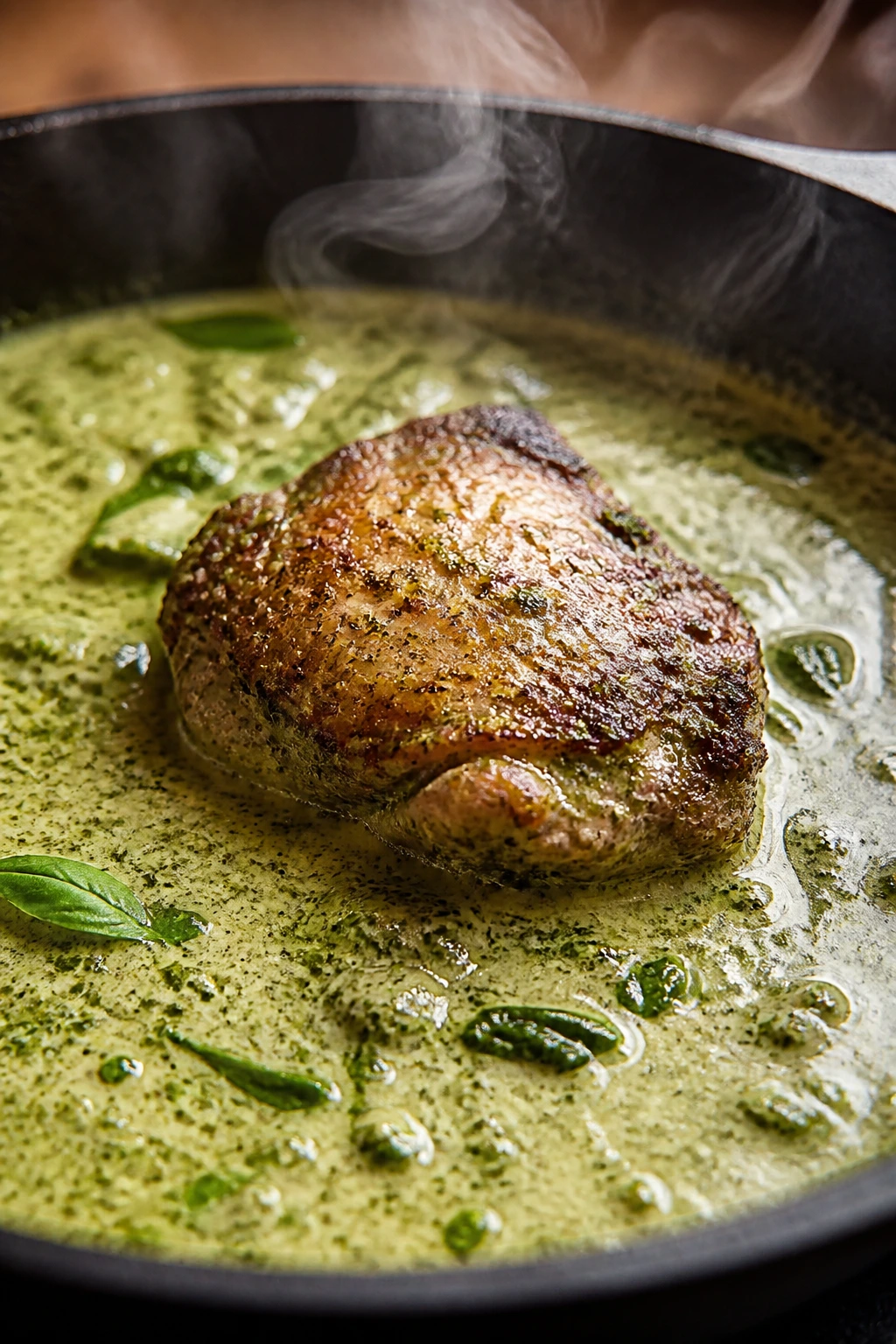
Creamy basil pesto chicken is not a traditional Genovese pesto dish, and that’s fine. Traditional pesto is built around basil, garlic, pine nuts, oil, and hard cheese, mashed into a vivid, sharp paste that tastes alive. Cream is the practical weeknight addition. It smooths the edges, helps the sauce coat chicken instead of sitting in little oily patches, and softens the garlic so it doesn’t bark at you.
The trick is heat. Too much heat and the dairy starts misbehaving, the cheese can tighten up, and the pesto goes from bright green to tired olive. Keep the skillet at a bare simmer once the cream goes in, and the sauce stays glossy. That small adjustment is the difference between a restaurant-looking pan sauce and a broken skillet full of regret.
What the Basil Brings to the Pan
Basil doesn’t act like parsley or spinach. It has a peppery, almost sweet edge that wakes up as soon as the fat hits it. That is why pesto works so well with chicken thighs, which have enough richness of their own to carry basil without flattening it.
Why the Sauce Needs Fat and Acid
Heavy cream and Parmesan bring body, but they also dull flavor if you let them run unchecked. Lemon juice fixes that. A single tablespoon at the end sharpens the sauce, pulls the basil forward, and keeps the finish from feeling heavy after two bites. Don’t skip it. The sauce gets louder, in a good way.
Why the Pan Brown Bits Matter
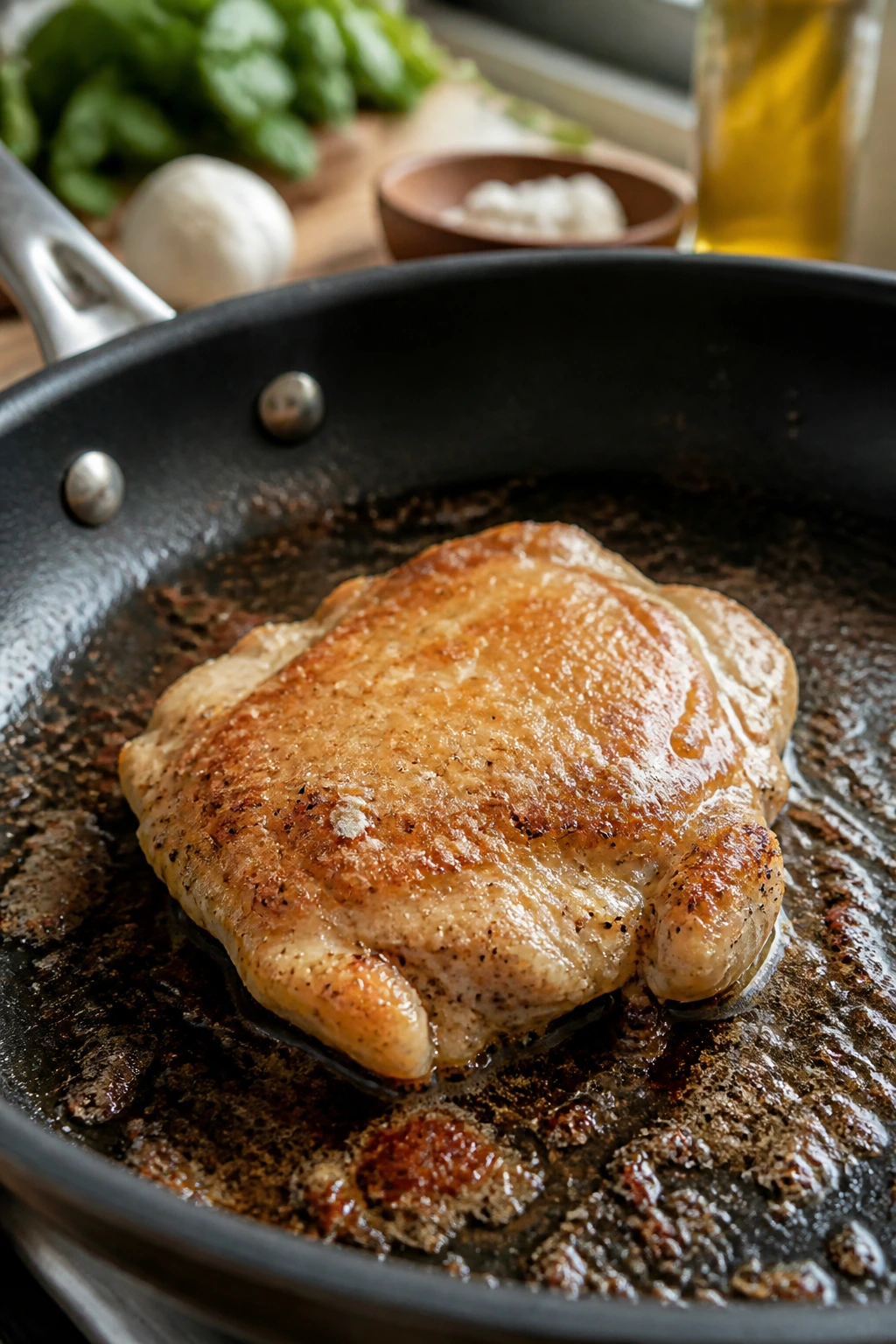
After the chicken sears, the bottom of the skillet will look messy. Good. That mess is concentrated flavor. The broth loosens it, the shallot and garlic absorb it, and the whole sauce starts with more depth than any cream-and-pesto combination made from a clean pan.
Step-by-Step: Browning the Chicken and Building the Sauce
Prep the Chicken
-
Pat the chicken thighs dry with paper towels. If the pieces are unevenly thick, press them lightly with your hand so they sit closer to the same level in the pan.
-
Season both sides with the kosher salt, black pepper, and garlic powder. Sprinkle the flour over the chicken and toss until each piece has a thin coating. Shake off the excess flour; a heavy coating will turn gummy in the sauce.
Sear and Build the Base
-
Heat the olive oil and butter in a large 12-inch skillet over medium-high heat. When the butter foams and the foam starts to subside, lay in the chicken in a single layer. If the pan looks crowded, cook in two batches.
-
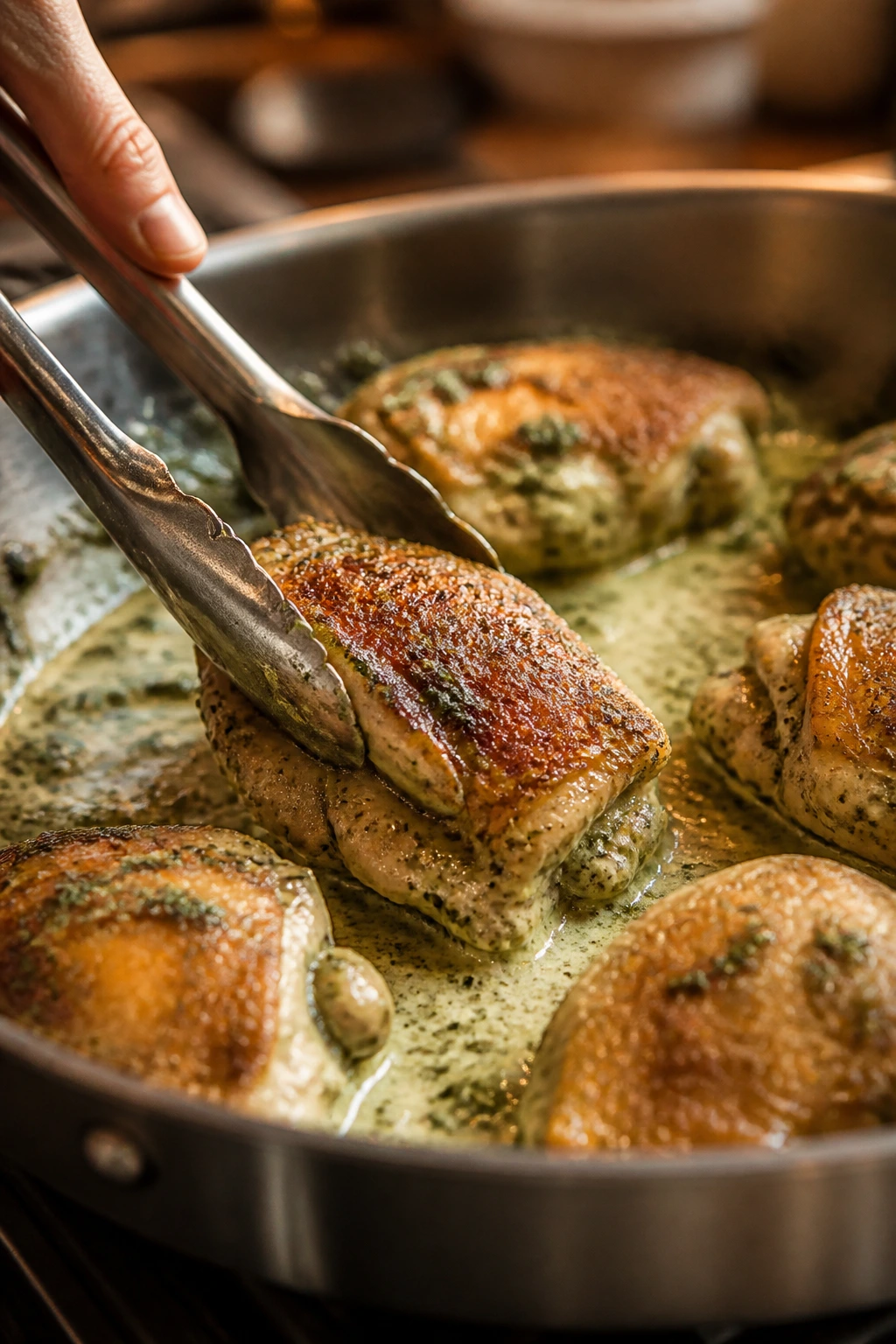
Cook the chicken for 4 to 5 minutes on the first side, until the underside is deep golden brown. Flip and cook for another 3 to 4 minutes. The chicken does not need to be fully cooked yet; you are building color and flavor first.
-
Transfer the chicken to a plate. Leave the browned bits in the skillet. That’s the point.
Make the Creamy Pesto Sauce
-
Lower the heat to medium. Add the shallot to the skillet and cook for 1 to 2 minutes, stirring often, until it softens and turns translucent at the edges. Add the garlic and red pepper flakes, if using, and cook for 30 seconds, just until fragrant. If the garlic starts to brown, pull the pan off the heat for a moment.
-
Pour in the chicken broth and stir, scraping the bottom of the skillet with a wooden spoon to loosen all the browned bits. Let the broth simmer for about 1 minute, until it reduces slightly and the pan smells savory instead of sharp.
-
Stir in the heavy cream and basil pesto. Keep the heat at medium-low and let the sauce come to a gentle simmer, not a boil. Whisk in the Parmesan a little at a time until the sauce looks smooth and lightly thickened. It should coat the back of a spoon, not pour off it like milk.
-
Add the cherry tomatoes and simmer for 2 to 3 minutes, until they soften and start to wrinkle at the skins. Return the chicken and any juices from the plate to the skillet. Spoon sauce over the top and cook for 3 to 5 minutes more, until the chicken reaches 165°F in the thickest part. For thighs, a little extra time until 170°F gives a softer bite.
Finish and Serve
-
Fold in the spinach and cook for 30 to 60 seconds, just until it wilts into the sauce. Stir in the lemon juice and taste for salt and pepper. Add the lemon at the end so the sauce stays smooth and the basil stays bright.
-
Remove the skillet from the heat and let it sit for 2 minutes. Spoon the sauce over the chicken, finish with torn basil and a little Parmesan, and serve immediately.
What the Finished Plate Should Look Like
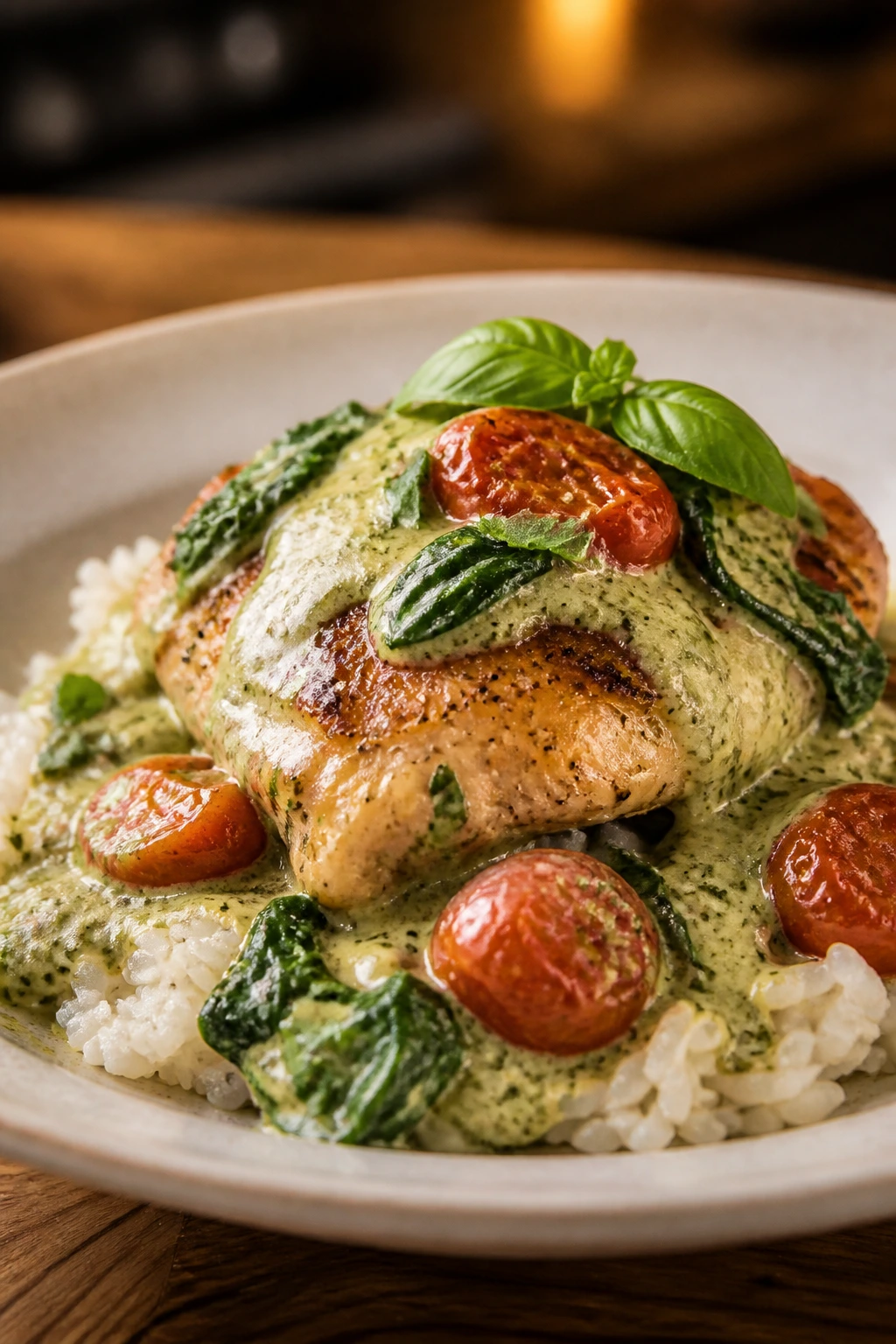
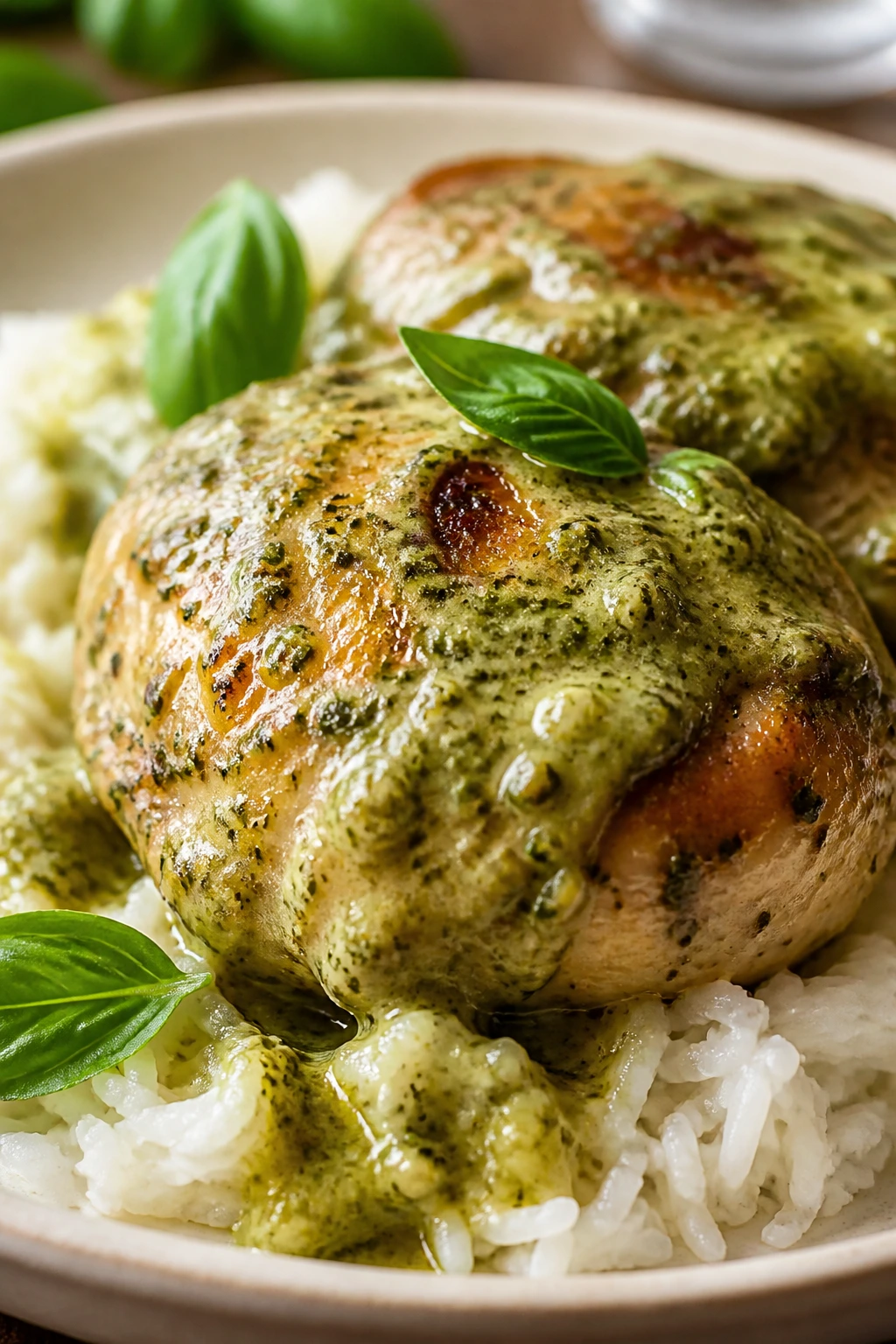
The plate wants contrast. Spoon a bed of rice, orzo, mashed potatoes, or polenta onto warm plates, then lay the chicken on top and drag a generous spoonful of sauce over each piece so it falls down the sides instead of sitting in a separate pool. That makes the dish feel integrated, not assembled.
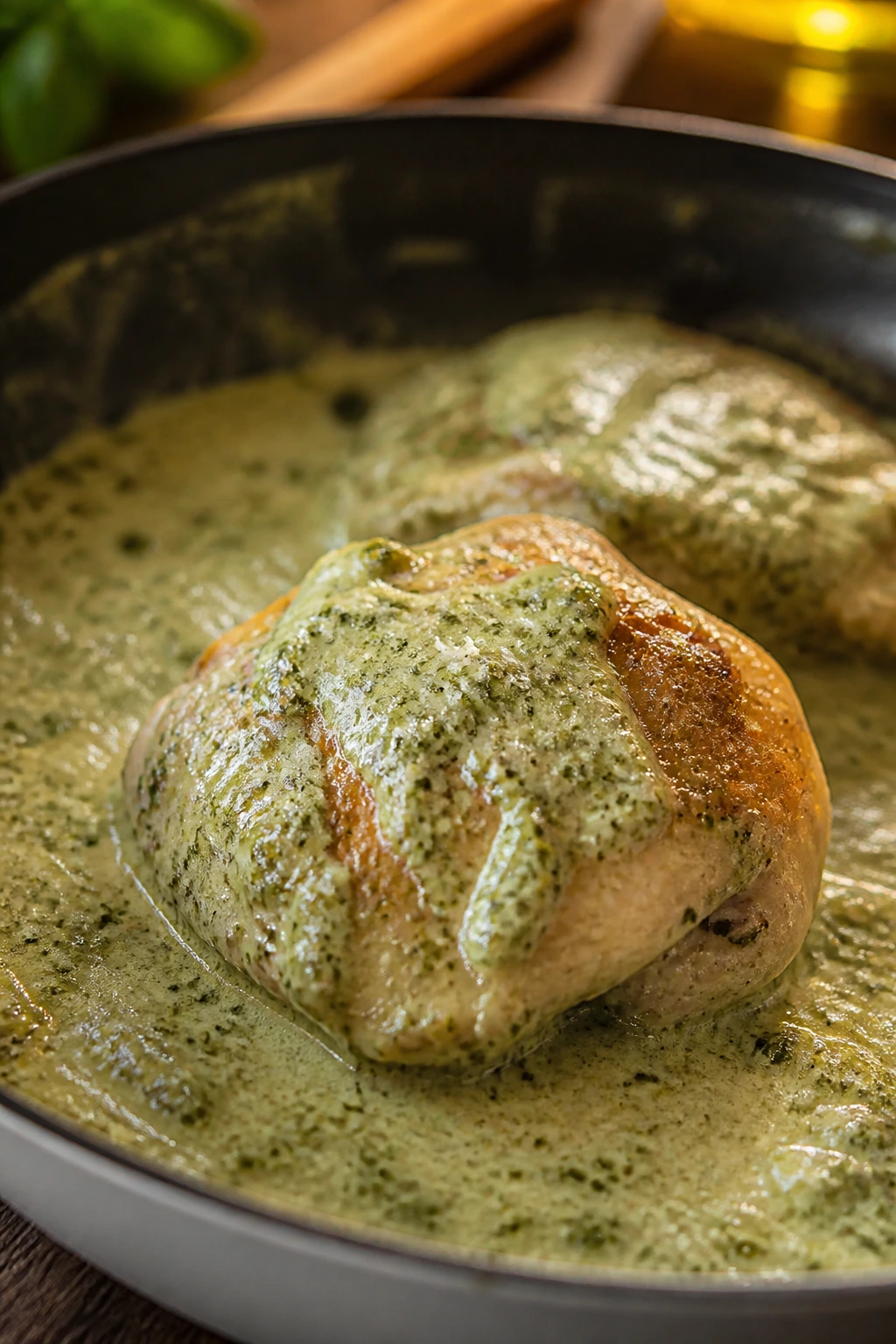
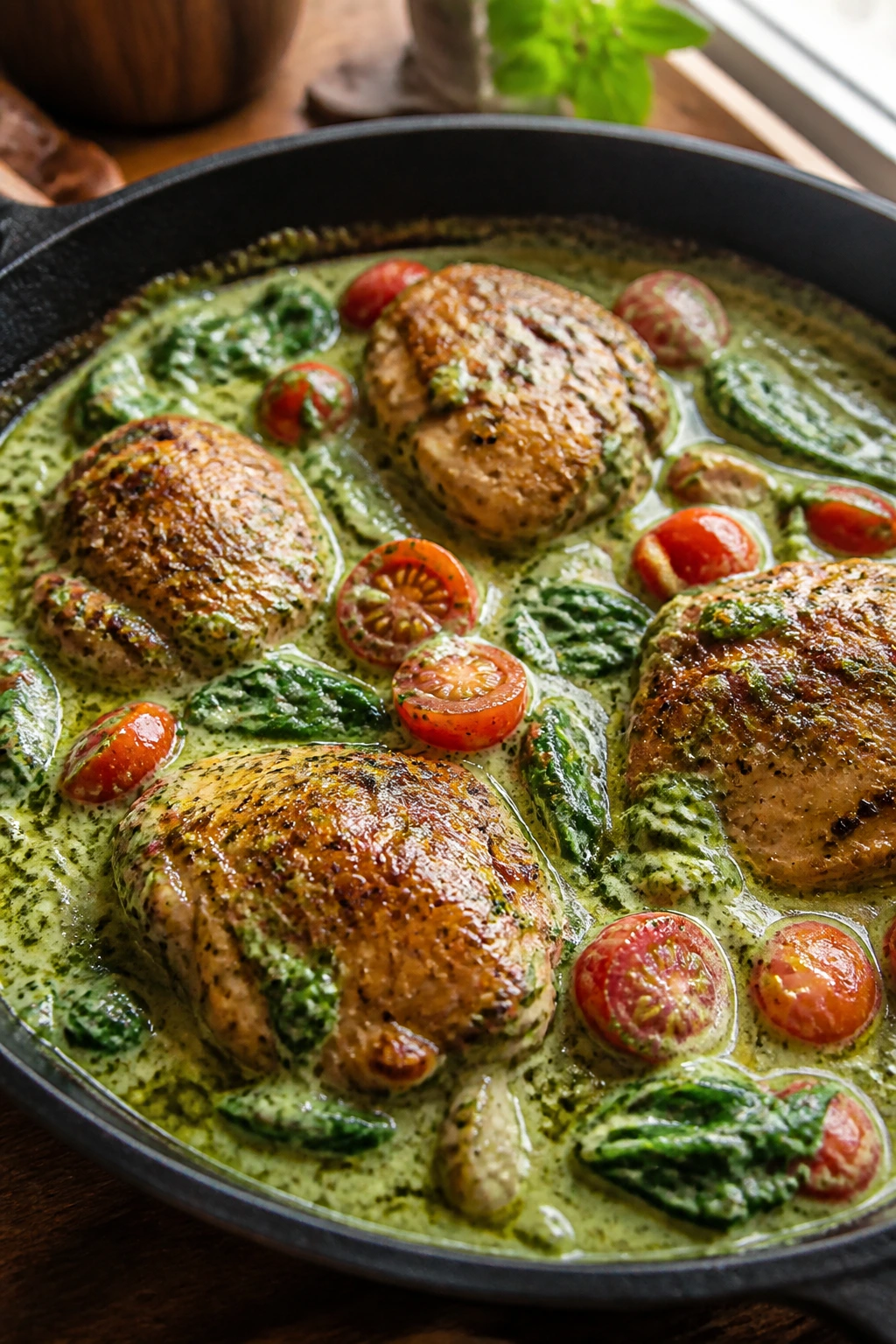
Cherry tomatoes should look softened and a little wrinkled. The spinach should be wilted but still green. If the sauce is the color of pale green velvet and not dull olive sludge, you handled the heat correctly.
I like this with something plain underneath because the sauce has enough personality for the whole plate. If you serve it with a highly seasoned side, the pesto gets crowded out. Let the chicken be the loud thing.
Presentation: Nest the chicken over a starch and spoon the sauce so it drapes over the meat. A few torn basil leaves and shaved Parmesan make the top look finished without cluttering the pan sauce.
Accompaniments: Buttery orzo, steamed rice, mashed potatoes, polenta, garlic bread, or a thick slice of toasted sourdough all catch the sauce. A simple arugula salad with lemon vinaigrette keeps the plate from feeling too rich.
Portions: Four servings is the sweet spot here: one to two thighs per person, depending on size. If you’re feeding bigger appetites, make a second pan of rice or bread rather than stretching the chicken too thin.
Beverage Pairing: A crisp Sauvignon Blanc, Pinot Grigio, or an unoaked Chardonnay works well because the acid cuts through the cream. If you want something nonalcoholic, sparkling water with lemon or chilled black tea with a slice of lime keeps the meal light.
Small Tweaks That Make Weeknight Cooking Easier
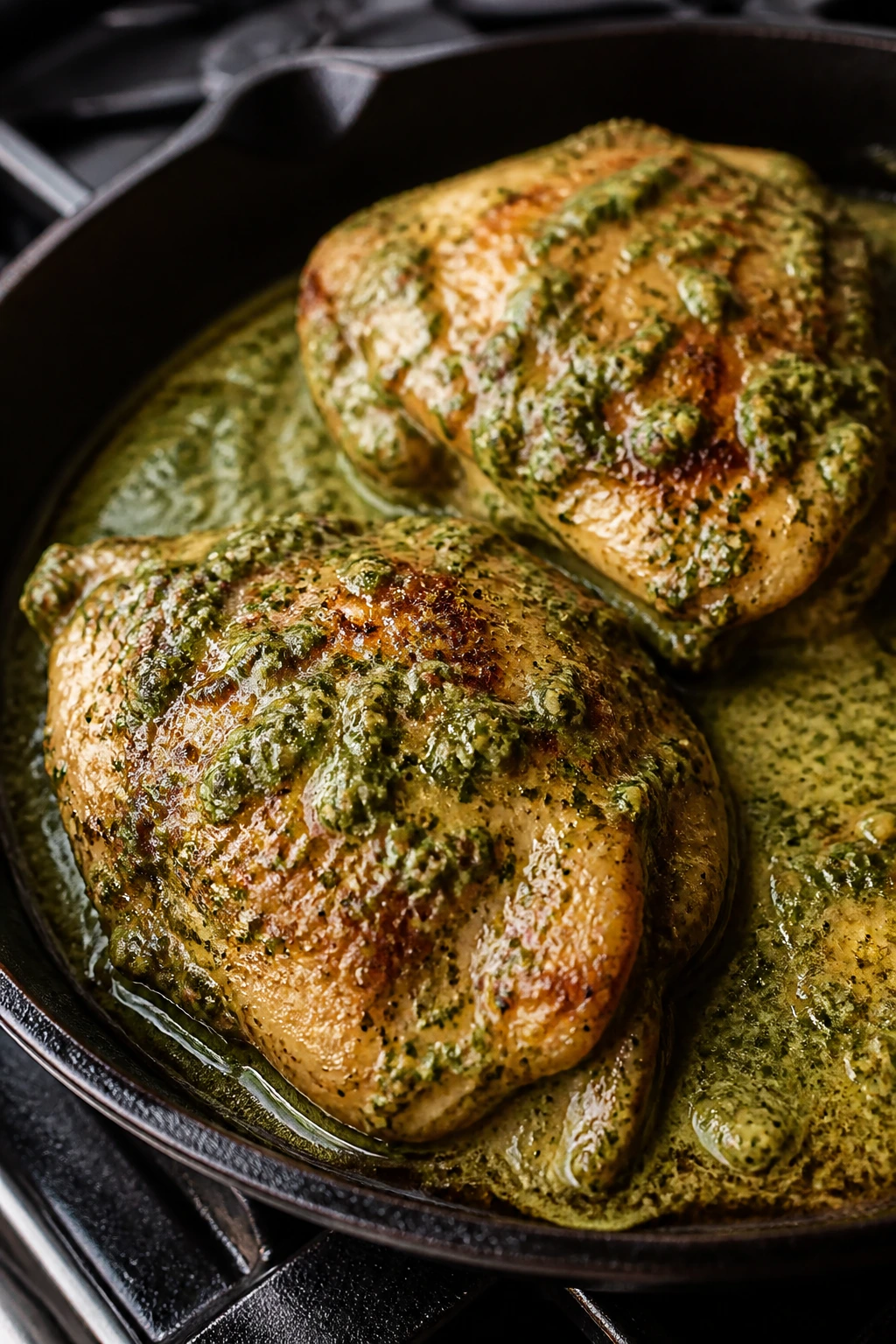
Flavor Enhancement: A teaspoon of lemon zest stirred in with the lemon juice makes the basil pop without adding more liquid. If you want a deeper finish, a pinch of extra Parmesan at the very end gives the sauce a saltier, more savory edge.
Time-Saver: Buy chicken thighs that are already trimmed, or use thin-cut chicken cutlets if your grocery store carries them. They cook faster and brown more evenly, though they do need less time in the sauce.
Cost-Saver: Store-brand pesto usually works fine here if the ingredient list starts with basil and oil rather than filler. Pair that with thighs instead of breasts and you get a dinner that tastes more expensive than it is.
Pro Move: Warm the broth slightly before it goes into the skillet. Cold broth isn’t a disaster, but warm broth scrapes the fond off faster and keeps the sauce moving in a cleaner, more even way.
Make-It-Yours: If you like a sharper edge, stir in a spoonful of chopped parsley or a few chopped capers at the end. If you want more comfort-food weight, serve it over mashed potatoes and let the sauce sink in.
Mistakes That Make the Sauce Split or Turn Flat
-
Crowding the skillet: If the chicken pieces are packed too tightly, they steam instead of browning. The fix is simple: cook in batches or use a larger pan. Pale chicken gives you a flat sauce, because the fond never gets a chance to form.
-
Boiling the cream hard: A rolling boil can make the sauce separate or take on a grainy look. Keep it at a gentle simmer once the cream and pesto go in. If the sauce starts bubbling aggressively, lower the heat right away.
-
Adding pesto too early: Pesto that cooks for too long turns darker and loses its fresh basil smell. Stir it in after the broth has done its work, then keep the heat low. The sauce should smell green, not cooked down.
-
Dumping in Parmesan all at once: Cheese added in a big clump can seize and make the sauce lumpy. Sprinkle it in gradually while stirring. Finely grated Parmesan melts faster and behaves better than chunky shreds.
-
Skipping the deglaze: Those brown bits on the bottom are flavor, not cleanup. If you leave them stuck to the pan, the sauce tastes thinner than it should. A half cup of broth and a wooden spoon fix that in seconds.
-
Forgetting to taste the pesto first: Some pestos are salty, some are sweet, and some are so garlicky they take over the whole pan. Taste before you season the sauce at the end, or you may end up with a dish that needs more acid instead of more salt.
Easy Variations Worth Trying
Lemon-Herb Brightened Version: Add 1 teaspoon lemon zest with the lemon juice and finish with an extra tablespoon of chopped basil and parsley. This version tastes sharper and a little lighter, which helps if you’re serving it with mashed potatoes or buttered noodles.
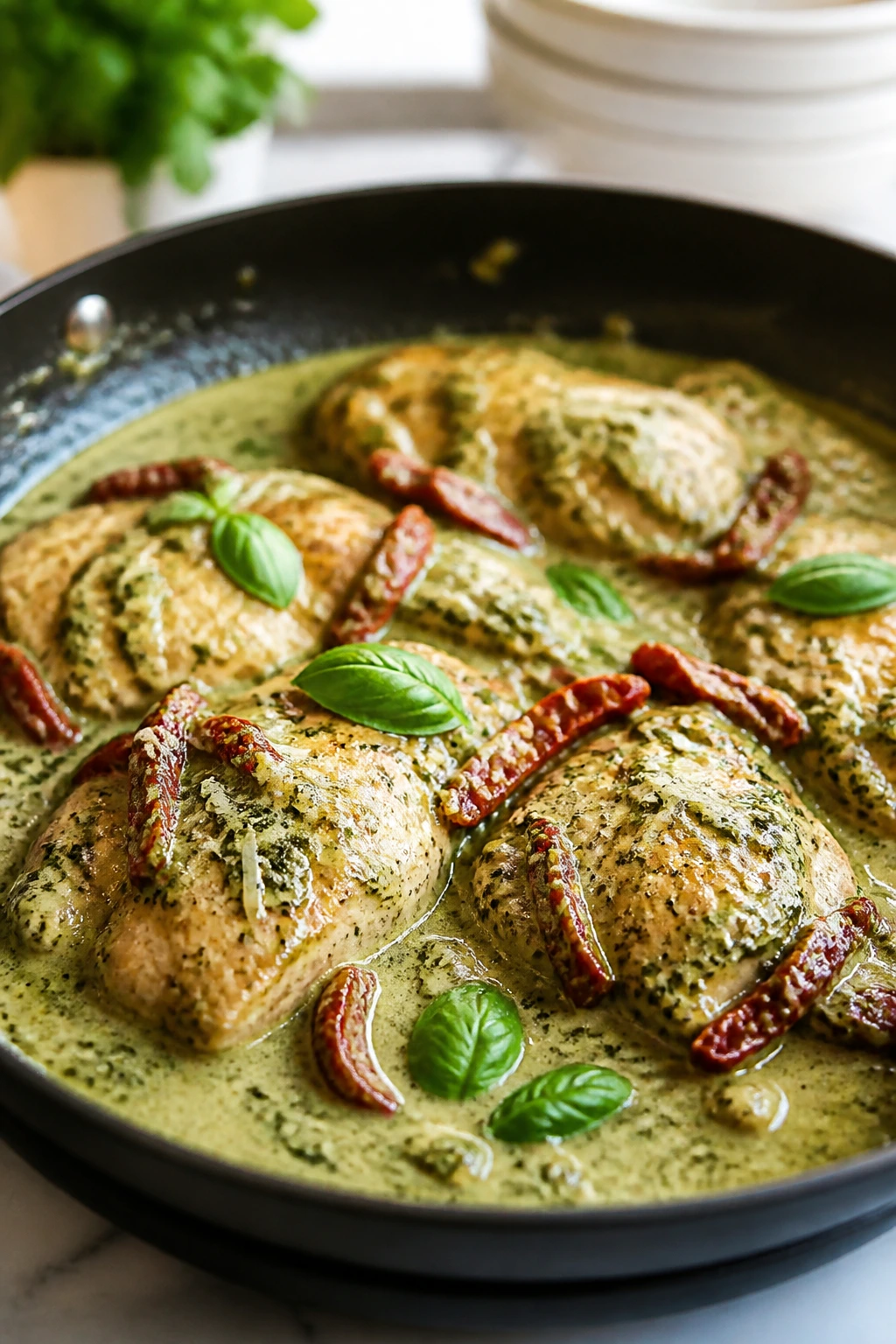
Sun-Dried Tomato Pesto Chicken: Replace 1 tablespoon of the basil pesto with chopped sun-dried tomatoes and use the oil from the jar in place of part of the butter. The sauce takes on a deeper, sweeter edge, and the tomatoes give it a little more chew.
Dairy-Lighter Skillet: Swap the heavy cream for half-and-half and stir in 2 tablespoons of cream cheese to thicken the sauce. It’s not as plush, but it still coats chicken well and keeps the dish from feeling too heavy.
Spicy Calabrian Pesto Chicken: Stir 1 teaspoon Calabrian chili paste into the sauce with the pesto, or use extra red pepper flakes if that’s what you have. The heat stays in the background and gives the cream a little more tension.
Green Garden Version: Add 1 cup of thin asparagus tips or a handful of peas with the tomatoes. If you like the color contrast, a small handful of chopped zucchini can go in before the broth and soften right in the pan.
Tools That Keep This Dinner Moving
- 12-inch skillet with straight sides: Big enough for browning the chicken without crowding and deep enough to hold the sauce comfortably.
- Tongs: Helpful for turning the chicken without tearing off the flour coating.
- Wooden spoon or silicone spatula: Best for scraping up the browned bits without scratching the pan.
- Instant-read thermometer: The easiest way to know when the chicken is done without guessing.
- Microplane or fine grater: Grates the Parmesan into a form that melts smoothly.
- Chef’s knife and cutting board: For the shallot, garlic, tomatoes, and any extra basil you want to scatter on top.
- Measuring cups and spoons: The sauce behaves best when the cream, broth, and pesto are measured instead of eyeballed.
- Lid, optional: Useful if you want to trap a little steam for the spinach or finish thicker chicken pieces a touch faster.
Make-Ahead, Storage, and Reheating Notes
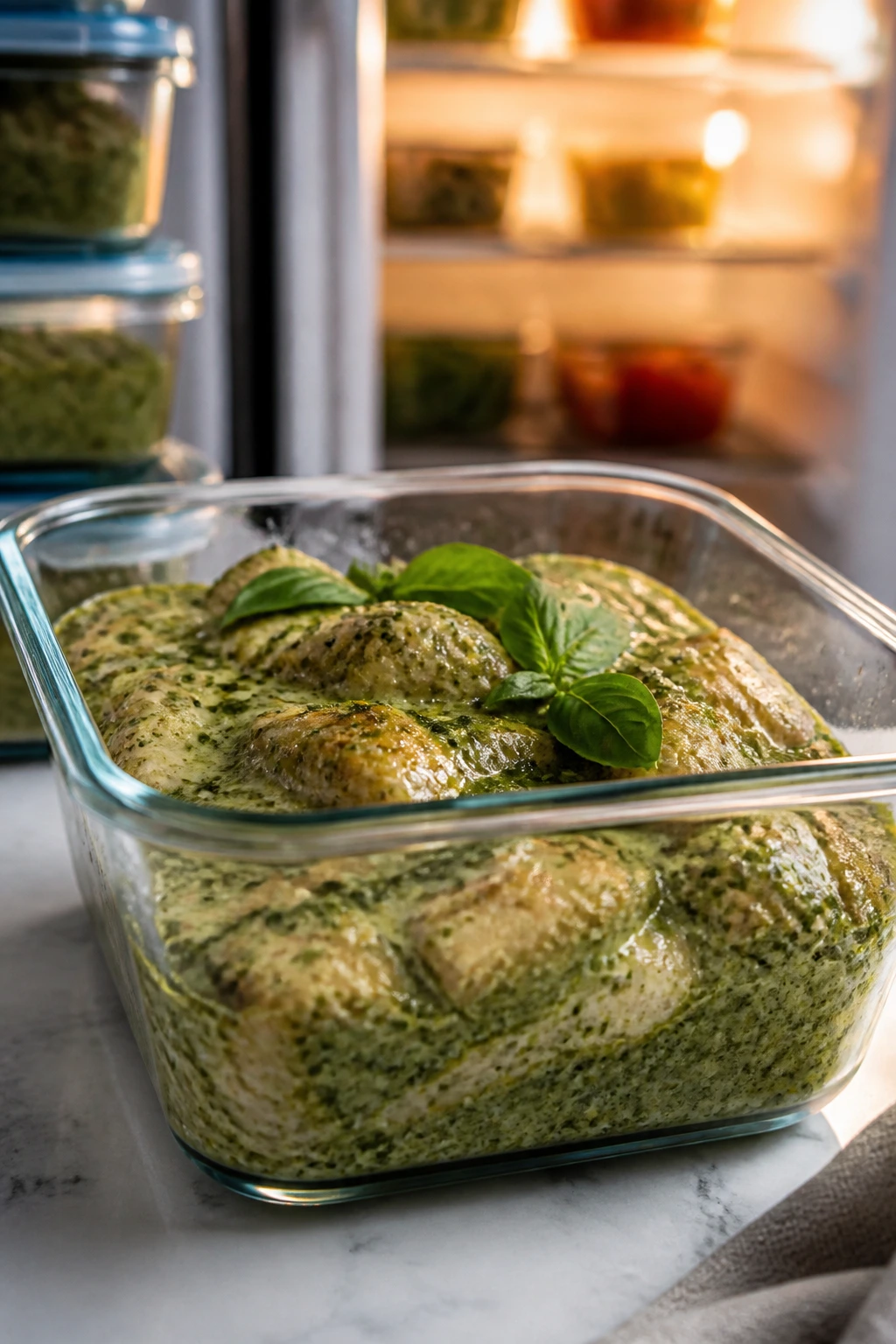
Creamy basil pesto chicken keeps well in the refrigerator for 3 to 4 days in an airtight container. Cool it within 2 hours of cooking, then refrigerate it promptly. The sauce may thicken as it chills, and that’s normal.
If you want to freeze it, pack the chicken and sauce together in a freezer-safe container for up to 2 months. The texture of the cream can soften a little after thawing, so don’t expect it to look as silky as the day you made it. It will still taste good, especially if you reheat it gently and add a small splash of broth.
The best reheating method is a covered skillet over low heat with 1 to 3 tablespoons of broth, water, or cream stirred in to loosen the sauce. Take your time. High heat is the enemy here. A microwave works in short bursts at 50% power, stirring between rounds so the cream doesn’t break in one hot corner.
For make-ahead prep, season and flour the chicken up to 24 hours ahead and store it covered in the refrigerator. You can also mince the shallot, garlic, and basil garnish the day before. If you want to cook the whole dish ahead, it holds better if you wait to add the spinach until reheating so it doesn’t go limp and gray.
The flavor is decent the next day, but the texture is best if you keep the sauce a little loose on day one. A spoonful of broth during reheating brings it right back.
Questions People Ask Before the Pan Hits the Stove
Can I use chicken breasts instead of thighs?
Yes, but pound them to an even thickness first so they cook at the same rate. Breasts should be pulled as soon as they hit 165°F in the thickest part, or they’ll dry out faster than thighs.
Is jarred pesto okay, or do I need homemade?
Jarred pesto works fine, and I’d rather have a decent jar in the fridge than skip the dish while waiting for perfect basil. Choose one where basil is near the top of the ingredient list, then taste it before adding extra salt because brands vary a lot.
What pasta or starch works best under the sauce?
Orzo, mashed potatoes, rice, and polenta all do the job. I like something with a little surface area, because the sauce needs a place to settle rather than slide away.
How do I keep the sauce from separating?
Keep the heat low once the cream and pesto go in, and don’t let the pan boil hard. If it starts to look oily, pull it off the heat and whisk in a spoonful of broth or cream to bring it back together.
Can I make this without dairy?
Yes, though the flavor changes. Unsweetened coconut cream gives you body, while a dairy-free pesto and a spoonful of nutritional yeast replace some of the cheese note. The result is closer to a coconut-herb sauce than classic creamy pesto chicken, but it still works.
What if my sauce gets too thick?
Add broth, 1 tablespoon at a time, while the pan is still warm. The sauce should coat the chicken and move slowly when you tilt the skillet; it should not sit in a stiff mound.
Can I freeze leftovers safely?
Yes. Freeze them in an airtight container for up to 2 months, then thaw overnight in the refrigerator before reheating. Warm it slowly and stir often so the cream comes back in one piece instead of looking broken.
Can I make it spicier without drowning out the basil?
Use red pepper flakes or a small spoonful of chili paste, not a heavy hand with hot sauce. Basil gets buried fast when the heat is too blunt, so I like a slow-building pepper note rather than a sharp burn.
A Bowl of Green, Creamy Comfort for Busy Evenings
Creamy basil pesto chicken earns its keep because it doesn’t ask for much and still lands like you paid attention. The chicken browns. The sauce comes together in minutes. The basil stays bright if you keep the heat in check, and the whole pan tastes bigger than the ingredient list looks on paper.
The part I keep coming back to is the texture. You get browned chicken, silky sauce, softened tomatoes, and spinach that still has a little life in it. That mix keeps the dish from feeling flat, which is where a lot of creamy skillet dinners go wrong. Serve it with something that catches the sauce, and the whole thing behaves like dinner with a backbone.
Keep a jar of pesto in the fridge, and this one stays within reach on the nights when you want one pan, one starch, and a plate that looks more deliberate than the clock would suggest.
Creamy Basil Pesto Chicken — Recipe Card
Recipe Name: Creamy Basil Pesto Chicken
Description: Tender chicken thighs simmer in a glossy basil pesto cream sauce with garlic, shallot, tomatoes, spinach, and a bright squeeze of lemon. Serve it over rice, pasta, or mashed potatoes and spoon plenty of sauce over the top.
Prep Time: 15 minutes
Cook Time: 25 minutes
Total Time: 40 minutes
Course: Main Course, Dinner
Cuisine: American-Italian Inspired
Servings: 4 servings
Calories: About 510 kcal per serving
Ingredients
For the Chicken:
- 1 1/2 pounds boneless, skinless chicken thighs, patted dry and trimmed of excess fat
- 1 teaspoon kosher salt
- 1/2 teaspoon black pepper
- 1/2 teaspoon garlic powder
- 1/4 cup all-purpose flour, or a gluten-free flour blend
- 1 tablespoon olive oil
- 1 tablespoon unsalted butter
For the Creamy Pesto Sauce:
- 1 small shallot, finely minced
- 2 cloves garlic, minced
- 3/4 cup low-sodium chicken broth
- 1/2 cup heavy cream
- 1/3 cup basil pesto, stirred if separated
- 1/3 cup finely grated Parmesan cheese
- 1 tablespoon fresh lemon juice
- 1 cup cherry tomatoes, halved
- 2 cups baby spinach, loosely packed
- 1/4 teaspoon red pepper flakes, optional
- Salt and black pepper, to taste
For Serving:
- Fresh basil leaves, torn
- Extra Parmesan, for finishing
- Cooked rice, orzo, mashed potatoes, polenta, or crusty bread
Instructions
-
Pat the chicken thighs dry and season them with salt, pepper, and garlic powder. Coat lightly with flour and shake off the excess.
-
Heat the olive oil and butter in a 12-inch skillet over medium-high heat. Sear the chicken for 4 to 5 minutes per side, until golden brown. Transfer to a plate.
-
Lower the heat to medium. Add the shallot and cook for 1 to 2 minutes, then add the garlic and red pepper flakes and cook for 30 seconds.
-
Pour in the chicken broth and scrape up the browned bits from the pan. Simmer for about 1 minute.
-
Stir in the heavy cream, basil pesto, and Parmesan. Keep the heat at medium-low and simmer gently until the sauce is smooth and lightly thickened.
-
Add the tomatoes and return the chicken and juices to the skillet. Cook for 3 to 5 minutes, or until the chicken reaches 165°F.
-
Fold in the spinach and lemon juice, then taste and adjust the salt and pepper. Serve hot with basil and extra Parmesan.
Notes: Keep the heat low after the cream goes in so the sauce stays smooth. Thin the sauce with a splash of broth if it gets too thick. Leftovers keep for 3 to 4 days in the fridge and reheat best on the stovetop over low heat.