



Roasted Herbed Chicken for Weeknight Dinners has a way of making an ordinary kitchen smell like you planned ahead: garlic softens in the heat, rosemary turns piney at the edges, thyme goes almost sweet, and the skin tightens into a bronzed crackle that makes people drift toward the oven before you even call them to the table.
No sauceboat required. No special marinade. Just chicken, herbs, a hot oven, and enough attention to keep the skin dry and the meat juicy.
I reach for thighs here because they forgive the kind of scattered cooking that happens on a Tuesday night, when the phone rings, the rice steams over, and somebody asks where the good fork went. Bone-in, skin-on chicken thighs roast evenly, stay moist at a higher temperature, and give you enough fat in the pan to turn garlic, lemon, and herbs into something that tastes far more deliberate than it is. The trick is not complication. It’s restraint.
A lot of roasted chicken recipes get fussy where they should get practical. This one stays on the right side of the line: a short herb paste, a dry pan, a temperature you can trust, and a 10-minute rest that keeps the juices where they belong. If you’ve ever pulled chicken out of the oven and wondered why the skin looked promising but tasted soft, the answer is usually moisture, crowding, or an underpowered roast. Fix those three things and dinner starts behaving.
Why This Roast Keeps Its Place on Busy-Night Menus
-
It’s fast enough to matter: The oven does most of the work in about 40 to 45 minutes, which leaves you time to make rice, toss a salad, or stare into the fridge for a minute without dinner collapsing.
-
The skin gets real texture: Bone-in, skin-on thighs roast best when the surface is dry and the oven is hot; that’s how you get browned edges instead of pale, rubbery chicken skin.
-
The flavor stays straightforward: Garlic, rosemary, thyme, lemon, and Dijon give the chicken a clean, savory profile that tastes more layered than the ingredient list suggests.
-
Leftovers stay useful: Cold slices hold up in grain bowls, wraps, and chopped salads, so the second round of dinner does not feel like a punishment.
-
The pan drippings matter: The juices under the chicken are not an afterthought; a spoonful over potatoes, bread, or steamed rice makes the whole plate taste more finished.
Yield: Serves 4
Prep Time: 15 minutes
Cook Time: 40 to 45 minutes
Total Time: 55 to 60 minutes
Difficulty: Beginner — the steps are simple, and chicken thighs give you a wider safety margin than breast meat.
Chill/Rest Time: Optional 15 minutes for a quick dry-brine, or up to 24 hours uncovered in the fridge for deeper seasoning and crisper skin.
Best Served: Warm, after a 10-minute rest, while the skin is still crisp and the herbs smell sharp.
The Ingredient List for Crispy-Skinned Herb Chicken
Keep the list short on purpose. Roasted chicken gets into trouble when the seasoning pile becomes a grocery-store project, and this version does not need one.
-
8 bone-in, skin-on chicken thighs, about 3 pounds — thighs hold up to high heat and stay juicy even if the oven runs a little hot.
-
2 1/2 teaspoons kosher salt — enough to season the meat without making the herb paste taste harsh.
-
1 teaspoon freshly ground black pepper — gives the skin a little bite and keeps the flavor from going flat.
-
3 tablespoons extra-virgin olive oil — helps the herbs spread and keeps the surface glossy enough to brown.
-
1 tablespoon unsalted butter, melted — adds roundness; if you want dairy-free, use another tablespoon of olive oil.
-
4 garlic cloves, finely grated or mashed to a paste — raw garlic that’s too chunky can burn; the paste melts into the oil more evenly.
-
1 tablespoon fresh rosemary leaves, finely chopped — rosemary likes high heat and brings the woodsy note that makes the chicken smell like a real roast.
-
1 tablespoon fresh thyme leaves — thyme softens in the oven and gives the chicken that savory, almost old-school roast flavor.
-
2 tablespoons fresh parsley, finely chopped, plus more for serving — parsley keeps the finished chicken from tasting heavy.
-
1 teaspoon Dijon mustard — a small amount binds the paste and gives the pan juices a subtle tang.
-
Zest and juice of 1 lemon — the zest goes into the herb paste; the juice wakes up the finished chicken.
-
1 teaspoon smoked paprika — optional, but it adds a faint warmth and helps the skin color more evenly.
-
1 lemon, cut into wedges for serving — squeeze it over the chicken at the table, not before roasting.
Why Each Ingredient Matters in the Pan
Chicken
What to use: 8 bone-in, skin-on chicken thighs, about 3 pounds total.
Preparation: Pat them dry with paper towels, then trim any loose flaps of skin that would burn before the thickest part is done.
Substitutions: Drumsticks roast on the same schedule; chicken breasts work too, but they need a shorter cook time and closer temperature checks.
Tips: Choose pieces that are roughly the same size so the tray finishes together instead of leaving one thigh pale and another dry.
Herb Paste
What to use: 3 tablespoons olive oil, 1 tablespoon melted butter, 4 grated garlic cloves, 1 tablespoon rosemary, 1 tablespoon thyme, 2 tablespoons parsley, 1 teaspoon Dijon, 1 teaspoon smoked paprika, and the zest of 1 lemon.
Preparation: Stir everything into a thick paste, not a runny marinade. It should cling to a spoon and spread over the chicken without sliding off in oil.
Substitutions: If fresh herbs are thin on the ground, use 1 teaspoon dried rosemary and 1 teaspoon dried thyme instead; dried parsley can stand in, though it won’t bring much flavor.
Tips: Grated garlic behaves better than chopped garlic here because it disperses through the paste and is less likely to scorch on the skin.
Salt, Pepper, and Lemon
What to use: 2 1/2 teaspoons kosher salt, 1 teaspoon black pepper, and 1 lemon’s juice in the paste.
Preparation: Salt the chicken evenly on all sides before adding the herb mixture so the seasoning gets beneath the surface, not just on top.
Substitutions: Fine sea salt works at 1 1/2 teaspoons; if you only have table salt, reduce a little more because it packs tightly.
Tips: Lemon juice belongs mostly in the paste and at the table. Too much acid before roasting can dull browning if the surface gets wet.
Finish and Serving
What to use: Extra parsley and a second lemon cut into wedges.
Preparation: Chop the parsley right before serving so it stays bright and doesn’t look tired on the platter.
Substitutions: Chives work for a softer onion note, or a few leaves of tarragon if you want the chicken to lean more French than rustic.
Tips: A last squeeze of lemon right after the chicken rests is better than dumping it on during roasting. The pan stays glossy, not soggy.
The Tools That Make Roasting Easier
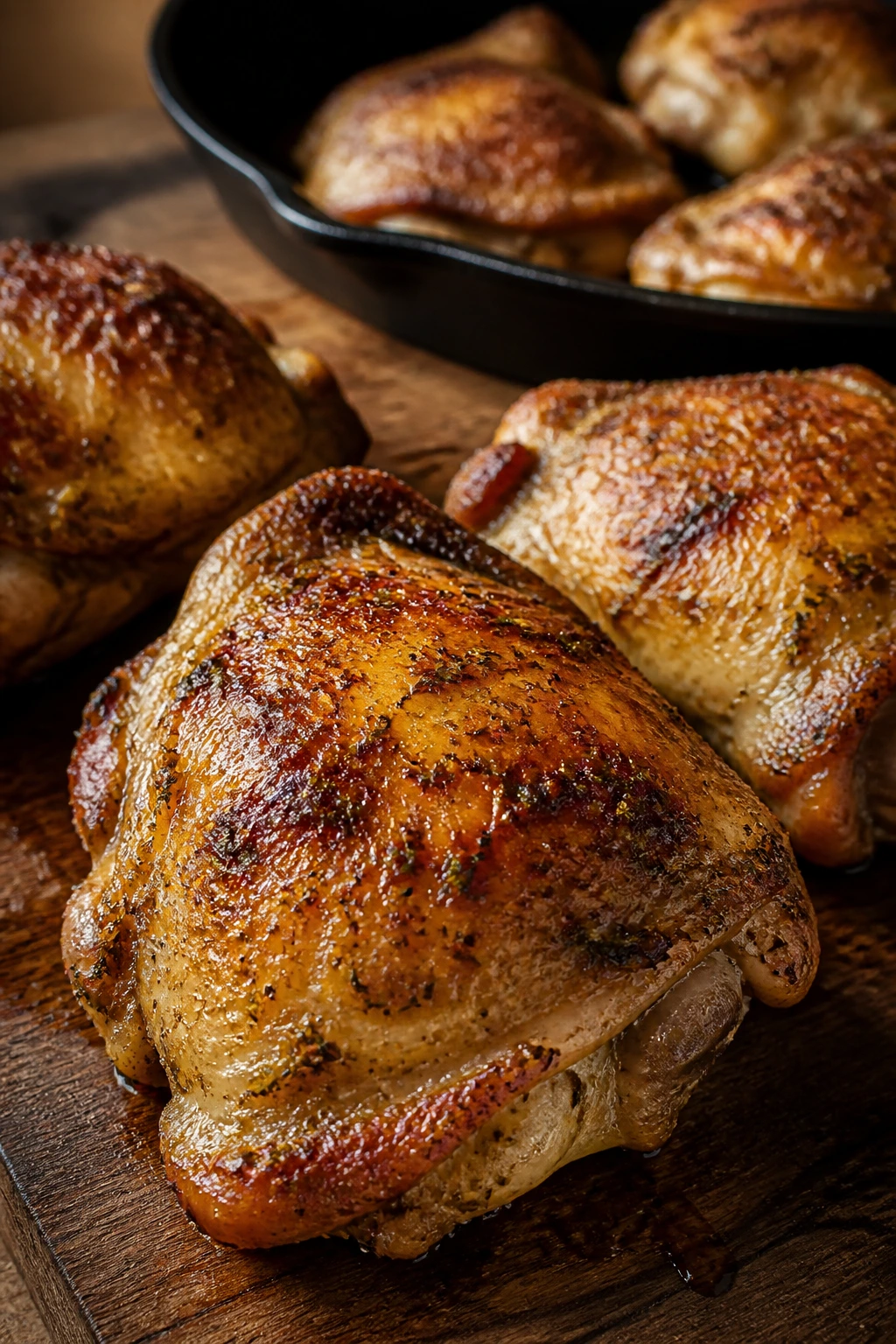
You do not need a fancy setup for this, and that’s part of the appeal. A good roast like this rewards simple equipment that does its job.
-
Rimmed half-sheet pan — the wide surface gives the thighs room to brown instead of steam; this is the best everyday choice.
-
Instant-read thermometer — the one tool that keeps you from guessing; with chicken, guessing is where dry meat happens.
-
Small mixing bowl — useful for making the herb paste without chasing oil and garlic around a giant bowl.
-
Microplane or fine grater — best for the lemon zest and garlic, which both need to disappear into the paste.
-
Tongs — helpful for moving the chicken in and out of the pan without ripping the skin.
-
Paper towels — not glamorous, but they matter more than most kitchen gadgets when crisp skin is the goal.
-
Optional wire rack — if you like even more airflow under the chicken, set the thighs on a rack over the pan; I still like direct contact with the sheet pan for easier drippings.
Dry Skin, Better Browning, More Flavor
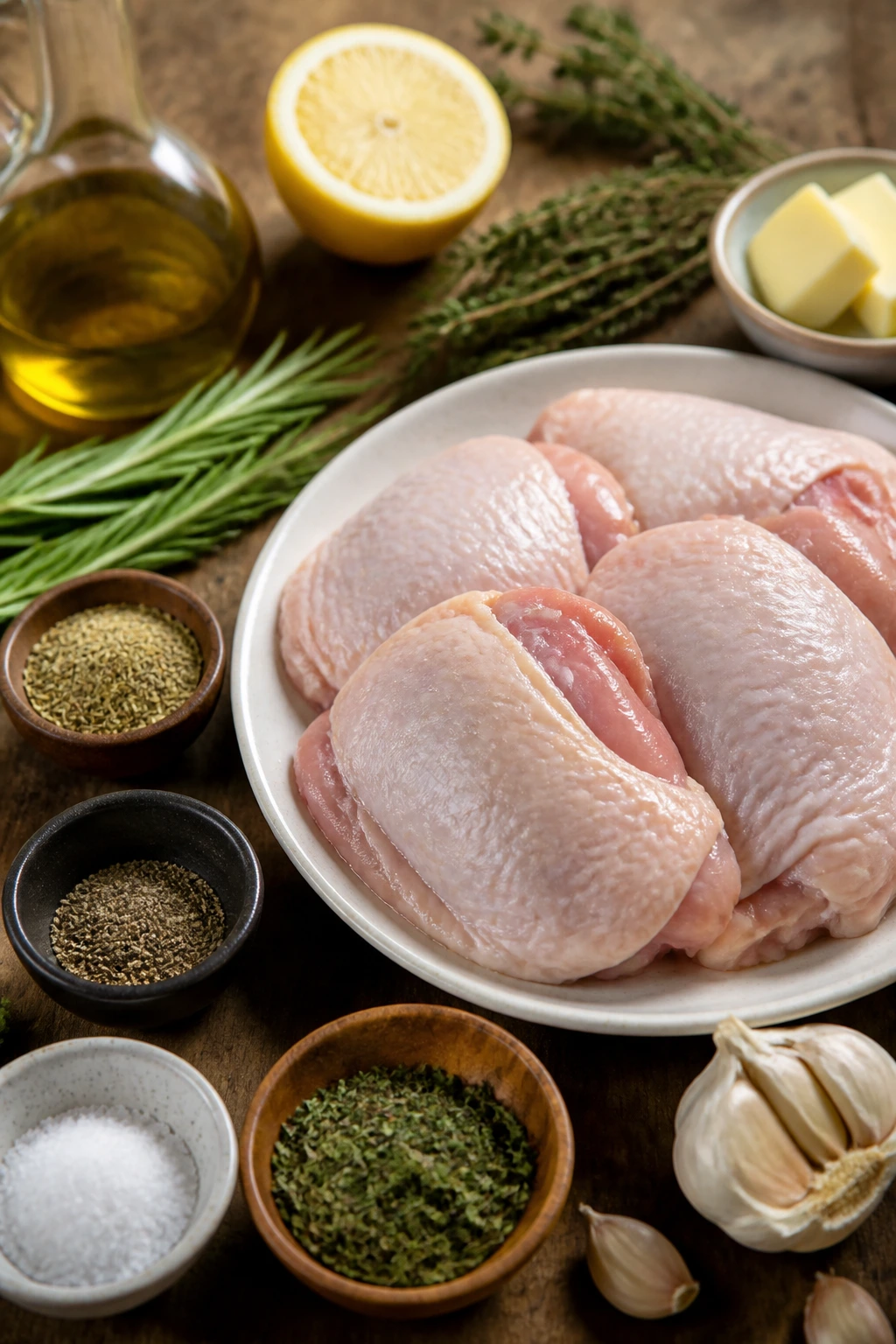
Moisture is the enemy here. If the chicken comes out of the package damp, blot it until the paper towel looks nearly clean, then let the pieces sit skin-side up for a few minutes while the oven heats. That tiny pause matters more than people think.
Salt helps in two ways. It seasons the meat, yes, but it also draws a little surface moisture out of the skin so the skin can roast instead of steam. If you have time, salt the chicken up to 24 hours ahead and leave it uncovered in the fridge on a plate or small tray. The fridge air dries the skin and the result is a tighter, darker roast.
The paste should be thick enough to spread. Thin, oily marinades look generous and cook badly. They slide into the pan, brown unevenly, and leave the chicken tasting more like hot oil than herbs. A spoonable paste sticks to the skin and keeps the garlic, mustard, and lemon zest where the heat can work on them.
Why I Don’t Overdo the Acid
Lemon is part of the personality of this dish, but it’s a late-game player. You want the zest and a measured splash of juice in the herb paste, then more lemon at the table. That gives you brightness without sabotaging the skin.
A Small Dry-Brine Goes a Long Way
If you have 15 minutes, salt the chicken first and leave it uncovered on the counter while the oven heats. If you have 12 hours, season it and refrigerate it uncovered overnight. The longer rest is better, but even a short dry-brine improves the skin enough that you can see the difference on the pan.
Roasting the Chicken Step by Step
Prep the Oven and the Chicken
-
Preheat the oven to 425°F (220°C) and position a rack in the center. If you’re using a sheet pan, line it with foil for easier cleanup or leave it bare for slightly better browning; either way, lightly oil the surface.
-
Pat the chicken thighs dry with paper towels, then season both sides with the 2 1/2 teaspoons kosher salt and 1 teaspoon black pepper. Let them sit while you mix the herb paste, or leave them uncovered in the fridge if you already seasoned them ahead of time.
Mix and Apply the Herb Paste
-
Stir together the olive oil, melted butter, grated garlic, rosemary, thyme, parsley, Dijon mustard, lemon zest, and smoked paprika in a small bowl until you have a thick, green-speckled paste. It should smell sharp and herbal, not watery.
-
Rub a little paste over the underside of each thigh, then spread the rest over the skin side, nudging a bit under the skin if it lifts easily. Do not bury the chicken in a wet layer; a thin, even coat browns better and tastes cleaner.
-
Arrange the thighs skin-side up on the prepared pan with at least 1 inch of space between pieces. Crowding leads to steaming, and steaming is how a roast turns pale and soft.
Roast and Finish
-
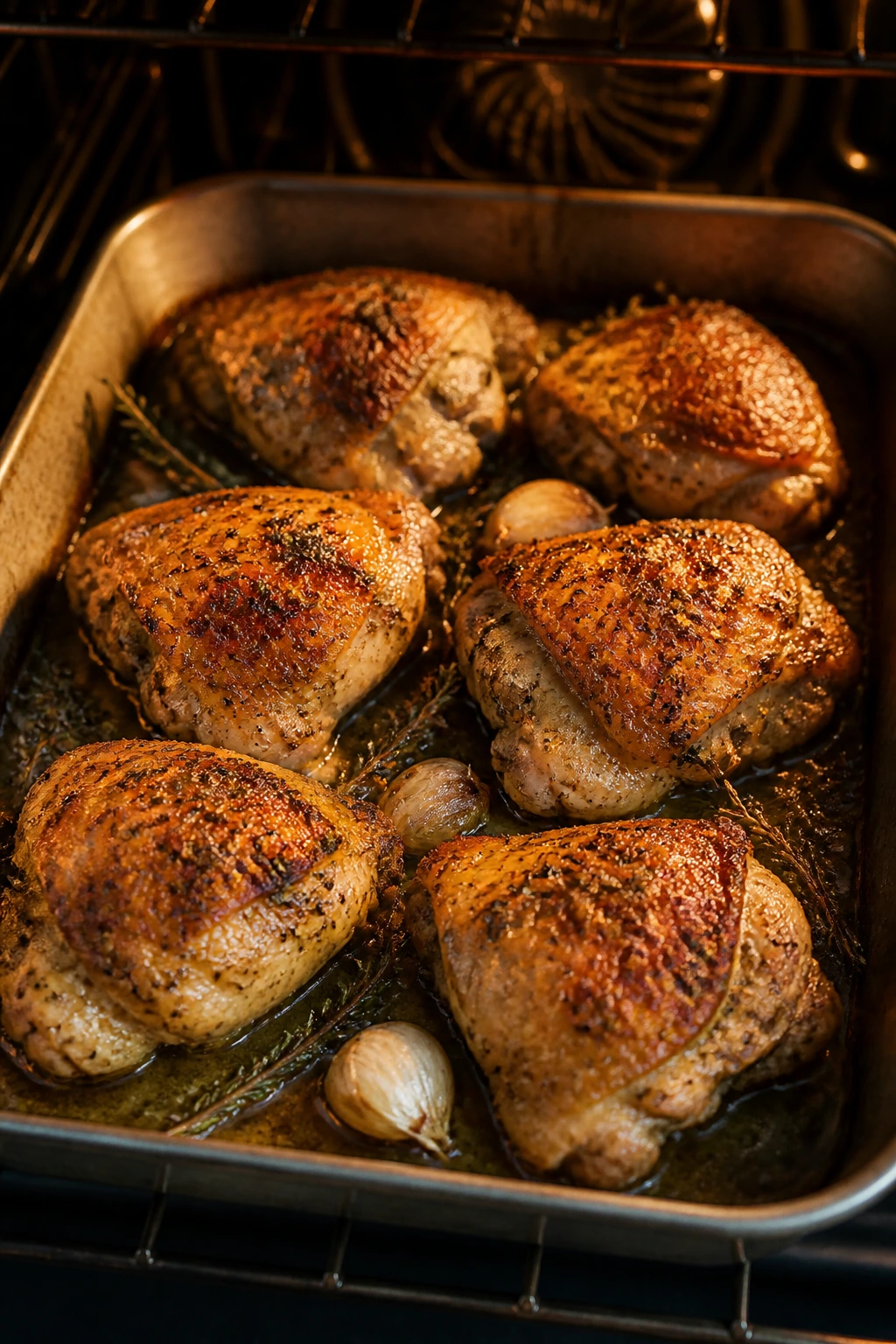
Roast for 20 minutes, then rotate the pan front to back for even color. Continue roasting for 18 to 25 minutes more, until the skin is deep golden and an instant-read thermometer inserted into the thickest part of the thigh reads 175°F to 180°F. If the skin is browning too quickly, tent the pan loosely with foil.
-
Broil for 1 to 2 minutes only if you want extra color at the end. Stand close; garlic and herb bits can go from bronzed to bitter fast.
-
Rest the chicken on the pan for 10 minutes, then move it to a platter, spoon over any pan juices, and finish with extra parsley and lemon wedges. Skip the rest and you’ll watch the juices flood the cutting board instead of staying in the meat.
How to Tell the Chicken Is Done
The thermometer is the anchor here. For bone-in thighs, 175°F to 180°F gives you the best texture: safe, juicy, and relaxed enough that the meat pulls cleanly from the bone. The USDA safe minimum for poultry is 165°F, and that number matters, but thighs are one of those cuts that improves when you let them go a little farther.
The skin will tell you a story too. It should look deep golden with a few darker freckles, not pale with one or two burnt garlic patches. The edges will feel taut, and the chicken should look like it has tightened slightly in the pan. If the skin is still dull and soft, it needs a few more minutes.
The Temperature Check That Saves Dinner
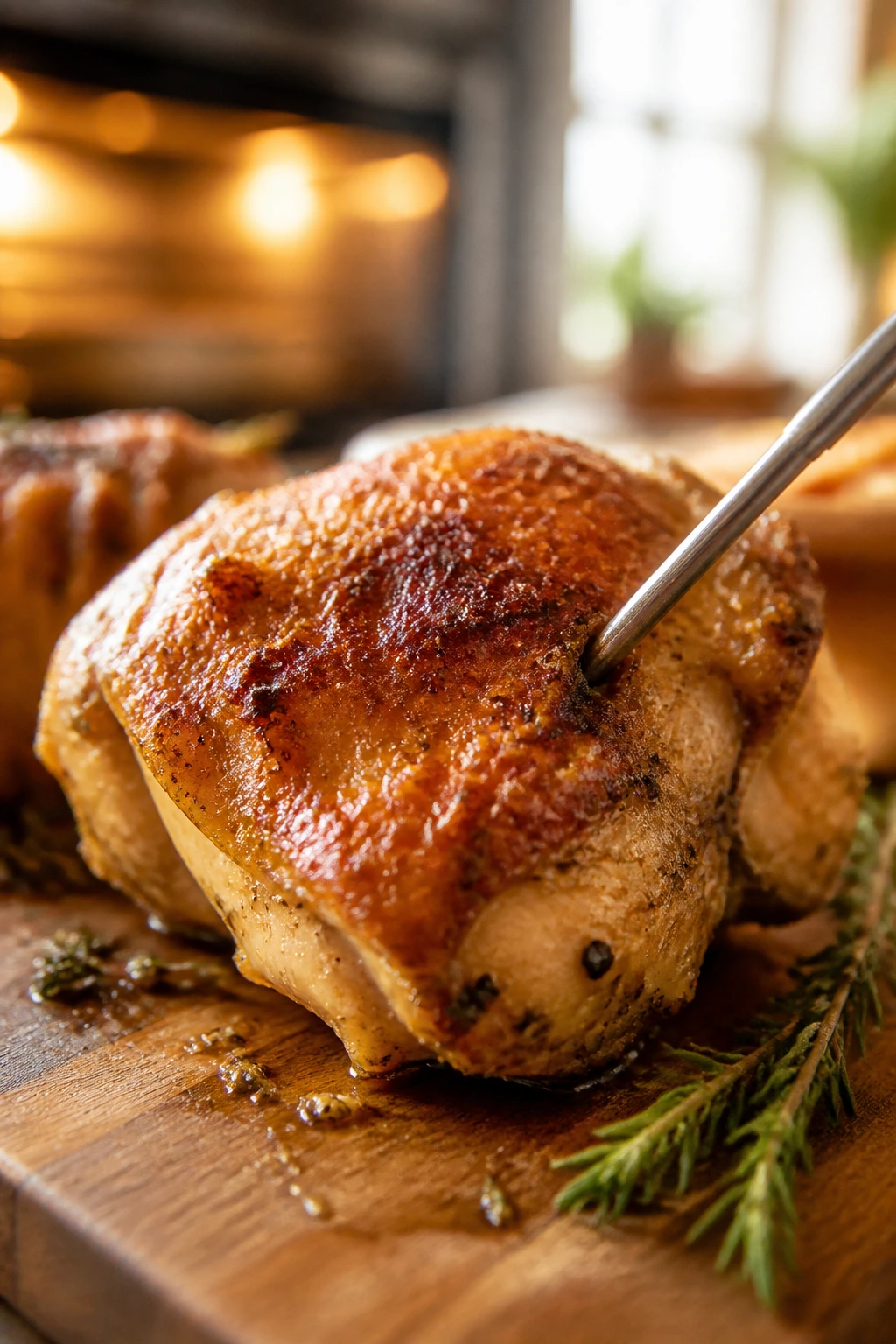
Slide the thermometer into the thickest part of the thigh without touching bone. Bone reads hotter than meat, and bone contact gives you a false sense of readiness. If you hit 172°F or 173°F, give it another minute or two, then check again. A thigh at 178°F after resting will still eat juicy.
What Carryover Cooking Does
Hot chicken keeps cooking once it leaves the oven. Those 10 minutes of rest are not decorative. They let the juices settle back into the meat and usually add a few degrees of carryover heat, which is why chicken that looks a little under at first often lands in the right place by the time it reaches the platter.
Serving the Chicken Without Overthinking Dinner
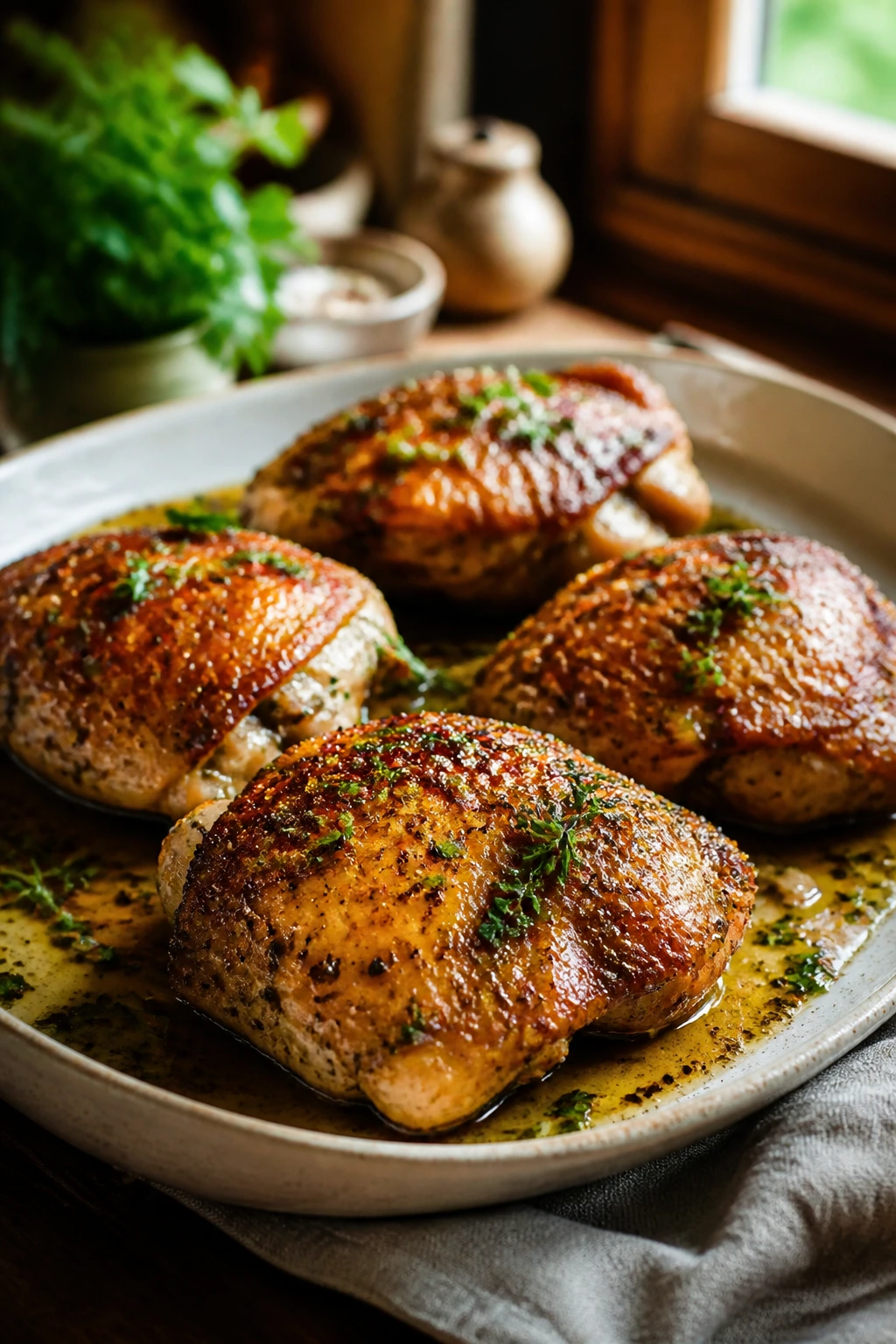
Presentation: Move the thighs to a warm platter, then spoon the glossy pan juices over the top and scatter more chopped parsley across the chicken. The little green flecks look simple and fresh, and they stop the plate from reading as all-brown food.
Accompaniments: Serve it with buttered rice, mashed potatoes, couscous, or a piece of crusty bread that can mop up the drippings. On the vegetable side, blistered green beans, roasted broccoli, or a bitter salad with lemon vinaigrette all work without stepping on the herbs.
Portions: Two thighs make a solid serving for most adults if you’re serving one or two sides. If you’re stretching the meal with potatoes and salad, one thigh plus sides works fine, and the leftover thighs reheat well for lunch the next day.
Beverage Pairing: A crisp white like Sauvignon Blanc, an unoaked Chardonnay, or a dry sparkling cider suits the lemon and herbs without fighting the garlic. If you’re skipping alcohol, cold sparkling water with a lemon wedge keeps the plate feeling light.
Small Upgrades That Make the Roast Taste Fuller
Flavor Enhancement: A final grating of lemon zest over the chicken right after it comes out of the oven wakes up the whole tray. Heat opens the citrus oils, and that little burst makes the herbs seem fresher than they already are.
Time-Saver: Mix the herb paste in the morning and keep it covered in the fridge. At dinner time you only need to pat the chicken dry, coat it, and roast it, which cuts the active work down to almost nothing.
Cost-Saver: Dried rosemary and thyme work well if fresh bunches are expensive or tired-looking. Use about 1 teaspoon dried rosemary and 1 teaspoon dried thyme, crush them between your fingers before mixing, and let the olive oil sit with them for a few minutes so they soften.
Pro Move: If you’ve got 15 extra minutes, season the thighs and leave them uncovered in the fridge before roasting. That dry-brine improves both salt penetration and skin texture, and it’s the one upgrade that still feels worth doing on a busy night.
Serving Suggestions: Spoon the pan drippings over rice or bread instead of leaving them in the tray. They’re salty, herby, and deeply chicken-y, which is the kind of detail that makes the meal feel finished even if the side dish is just a bagged salad.
Mistakes That Dry Out Herb-Roasted Chicken
-
Starting with wet skin: Damp thighs steam before they brown, and the skin ends up pale and soft. Pat the chicken dry until the paper towels come away almost clean, and let it sit uncovered if you have the time.
-
Crowding the pan: If the pieces touch, the tray traps moisture and the edges don’t color properly. Use a larger sheet pan or split the chicken across two pans; the skin needs breathing room.
-
Using too much loose marinade: A wet herb bath looks useful, but it slides into the pan and leaves the skin patchy. The fix is a thick paste that clings to the meat and browns on contact.
-
Pulling the thighs at 165°F and calling it done: Safe, yes. Tender enough for thighs? Not always. Thigh meat gets silkier closer to 175°F, and that extra stretch in the oven is worth the minute it takes.
-
Skipping the rest: Slice or serve too soon and the juices run out onto the board. Give the chicken 10 minutes to settle; the texture gets better, not worse, while you wait.
Flavor Swaps and Smart Variations
-
Lemon-Zest Roast: Double the lemon zest and add a few extra wedges to the pan during the last 10 minutes. The chicken comes out brighter and more direct, with a sharper citrus line running through the herbs.
-
Dijon Rosemary Chicken: Increase the Dijon to 2 teaspoons and lean harder on rosemary than thyme. The flavor shifts a little more savory and assertive, which works well if you’re serving roasted potatoes or creamy polenta.
-
Smoky Paprika Chicken: Bump the smoked paprika to 2 teaspoons and add a pinch of cayenne if you want heat. This version gives the skin a deeper color and a more campfire-like smell without losing the herb backbone.
-
Pantry Herb Chicken: If fresh herbs are thin on the ground, use dried rosemary and thyme, keep the parsley only as a garnish, and add an extra tablespoon of olive oil. The chicken loses a bit of lift, but it stays sturdy, comforting, and very weeknight-friendly.
-
One-Pan Dinner Upgrade: Scatter small potato chunks or halved baby potatoes around the chicken after the first 15 minutes of roasting. They catch the herb drippings, but they need enough room to brown, so don’t pack the pan tight.
Make-Ahead, Storage, and Reheating

Make-Ahead
The herb paste can be mixed up to 3 days ahead and kept in a covered container in the fridge. The flavor actually settles a little, which helps the garlic and rosemary mellow.
Seasoned raw chicken can sit uncovered in the fridge for up to 24 hours before roasting. That gives you better skin and deeper seasoning. If you only have a short window, even 15 to 30 minutes of salt time helps.
Refrigerator Storage
Cool the chicken, then store it in an airtight container for 3 to 4 days in the refrigerator. Keep the pieces with a spoonful of their juices if possible; that helps them stay moist when reheated.
Freezer Storage
Cooked chicken freezes well for up to 2 months. Wrap each thigh tightly or place portions in freezer bags with the air pressed out. Freeze the meat separately from any side dishes if you want it to reheat evenly.
Reheating
For the best texture, reheat the chicken in a 325°F (165°C) oven, covered loosely with foil, for 15 to 20 minutes or until the thickest part reaches 165°F again. If you want the skin to recover some crispness, uncover it for the last 5 minutes or give it a quick finish under the broiler.
A skillet works too. Set the chicken skin-side down in a lightly oiled pan over medium-low heat for a few minutes, then flip and warm the other side. That method won’t make the skin as crisp as the oven, but it keeps the meat from drying out.
Questions Home Cooks Ask About Roasted Herbed Chicken
Can I use chicken breasts instead of thighs?
Yes, but you need to watch the clock closely. Breasts usually finish sooner, around 22 to 30 minutes depending on size, and they’re better pulled at 160°F to 162°F so carryover heat can finish them without drying them out.
Do I really need fresh herbs?
Fresh herbs taste brighter, but dried herbs absolutely work here. Use about one-third the amount of dried rosemary and thyme, and rub them into the oil before spreading the paste so they soften a little.
Can I make this without butter?
Yes. Replace the butter with another tablespoon of olive oil and the chicken will still brown nicely. Butter adds a rounder flavor, but it is not doing the heavy lifting.
Why is my skin not crisping?
Usually it’s one of three things: the chicken wasn’t dried well, the pan was crowded, or the oven ran too cool. Fix those three and you’ll see better browning. A short broil at the end can help, but it is a rescue move, not a substitute.
Can I roast vegetables on the same pan?
Yes, but pick vegetables that cook at roughly the same speed as the chicken or give the dense ones a head start. Small potatoes, onion wedges, or carrots cut on the small side work; big chunks of root vegetables usually need more time than the chicken.
Can I double the recipe?
Definitely. Use two pans instead of stacking everything on one tray, and rotate the pans halfway through roasting. If you crowd a doubled batch onto one sheet pan, you’ll get pale chicken and steamed edges.
Can I make this in a cast-iron skillet instead of a sheet pan?
You can, and cast iron gives you a little extra browning under the thighs. The catch is space: if the skillet is too small, the chicken steams in its own juices, so use a skillet large enough that the pieces sit in a single layer with room around them.
Back in the Dinner Rotation
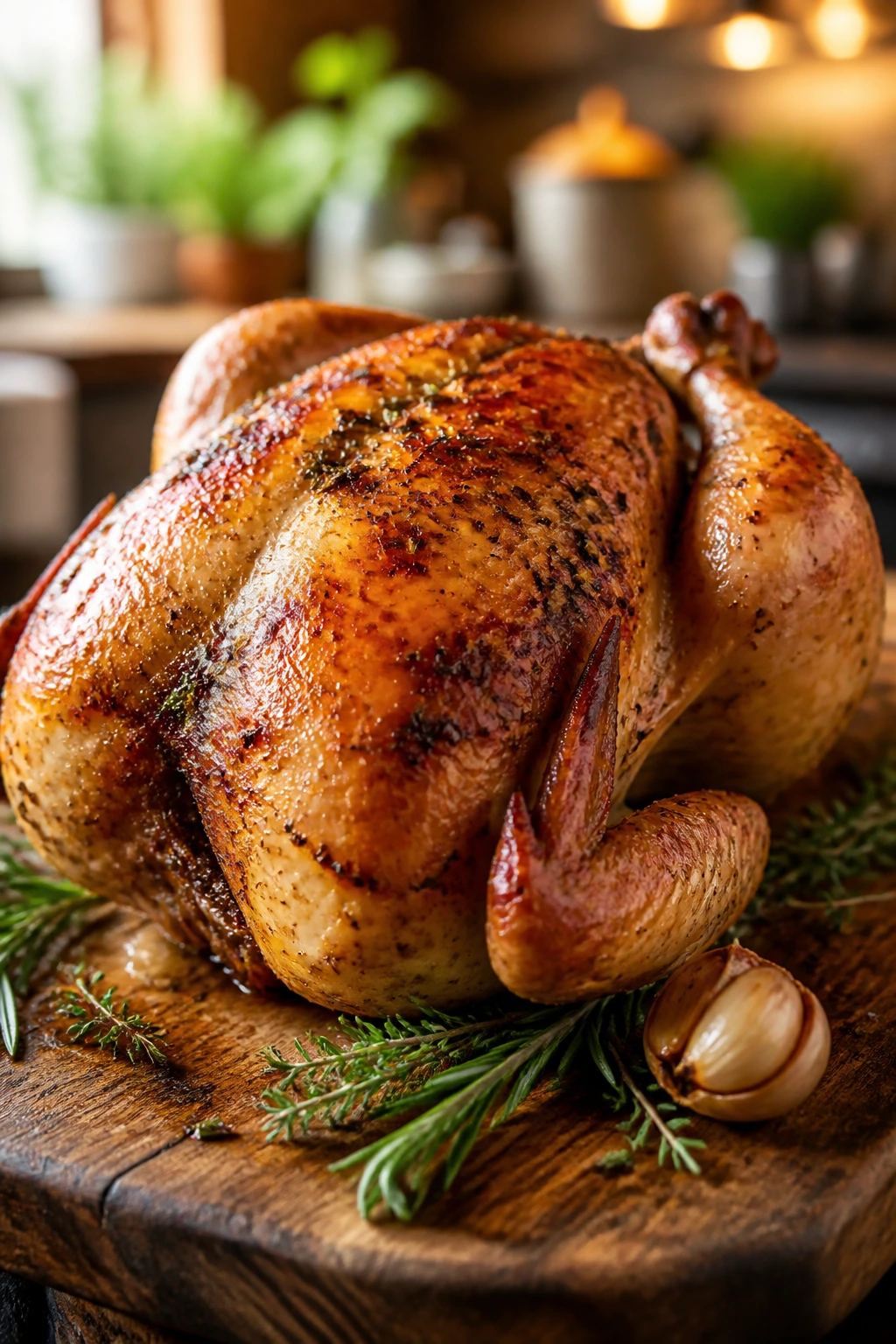
This is the kind of chicken that earns repeat status because it behaves. It doesn’t ask for a long marinade, a complicated stuffing, or a sauce that needs babysitting. It asks for dry skin, a hot oven, and a thermometer, then it gives you crisp edges, juicy meat, and a pan of drippings that tastes like you did more work than you did.
That’s the part I like most. The recipe feels sturdy enough for an ordinary night, but the finished chicken still smells like the kitchen got its act together. Keep the herb paste simple, let the heat do its job, and this roast will keep showing up when dinner needs to be reassuring instead of exciting.
Roasted Herbed Chicken for Weeknight Dinners — Recipe Card
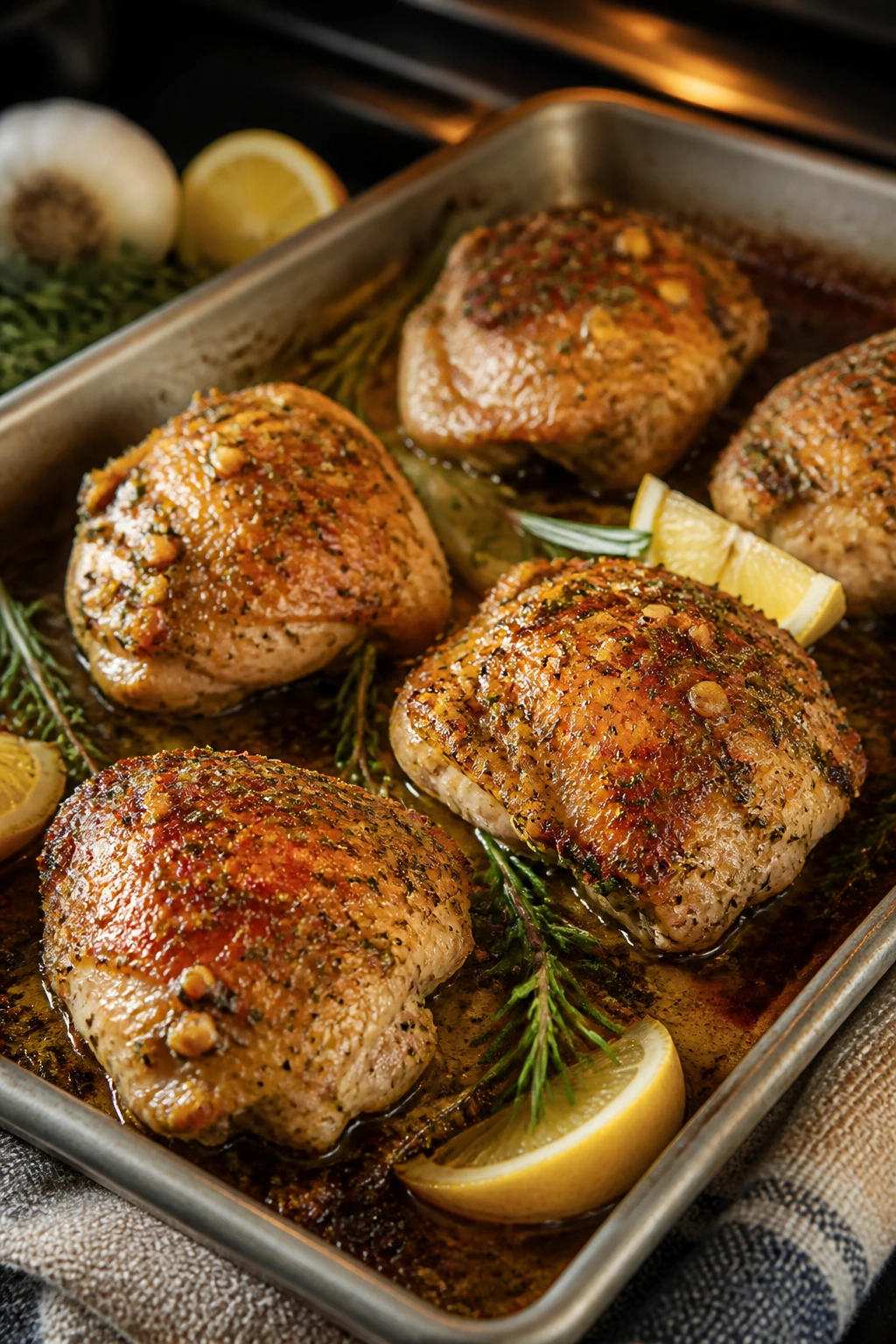
Recipe Name: Roasted Herbed Chicken for Weeknight Dinners
Description: Bone-in, skin-on chicken thighs are coated in a garlic-herb paste with lemon, Dijon, and paprika, then roasted until the skin turns crisp and the meat stays juicy. The pan juices are bright enough for bread, rice, or potatoes.
Prep Time: 15 minutes
Cook Time: 40 to 45 minutes
Total Time: 55 to 60 minutes
Course: Dinner, Main Course
Cuisine: American
Servings: 4
Calories: About 480 kcal per serving
Ingredients
- 8 bone-in, skin-on chicken thighs, about 3 pounds
- 2 1/2 teaspoons kosher salt
- 1 teaspoon freshly ground black pepper
- 3 tablespoons extra-virgin olive oil
- 1 tablespoon unsalted butter, melted
- 4 garlic cloves, finely grated or mashed to a paste
- 1 tablespoon fresh rosemary leaves, finely chopped
- 1 tablespoon fresh thyme leaves
- 2 tablespoons fresh parsley, finely chopped, plus more for serving
- 1 teaspoon Dijon mustard
- Zest and juice of 1 lemon
- 1 teaspoon smoked paprika
- 1 lemon, cut into wedges for serving
Instructions
-
Preheat the oven to 425°F (220°C) and position a rack in the center. Prepare a rimmed sheet pan with a light coating of oil or a sheet of foil.
-
Pat the chicken thighs dry, then season them with salt and black pepper.
-
Stir together the olive oil, melted butter, garlic, rosemary, thyme, parsley, Dijon, lemon zest, lemon juice, and smoked paprika in a small bowl.
-
Rub the herb paste over the chicken and arrange the thighs skin-side up on the pan with space between each piece.
-
Roast for 20 minutes, rotate the pan, then roast for 18 to 25 minutes more until the skin is deep golden and the thickest part of the thigh reaches 175°F to 180°F.
-
Rest the chicken for 10 minutes, then transfer to a platter, spoon over pan juices, and serve with extra parsley and lemon wedges.
Notes: Pull thighs at 175°F for the best texture. For extra-crisp skin, season the chicken ahead and leave it uncovered in the fridge for up to 24 hours. Dried rosemary and thyme can stand in for fresh at about one-third the amount.