



Roasted lemon chicken thighs have a way of making a weeknight look more put together than it really is. A few bone-in thighs, a couple of lemons, some garlic, and a hot oven turn into crisp skin, soft onions, and pan juices that taste far brighter than the short ingredient list suggests. It smells sharp, savory, and a little sweet at the edges when the citrus hits the heat.
The part I keep coming back to is the texture. Thighs hold up to high heat in a way chicken breasts often don’t, which means you can roast them hard enough to get bronzed skin without crossing your fingers and hoping the meat stays juicy. That’s the real advantage here. You get a dinner that feels deliberate, not fussy, and the oven does the heavy lifting while you deal with everything else that lives on a weeknight.
The lemon matters, but timing matters more. Put the citrus in the right place and it wakes the chicken up; put it in too early and it turns the skin soft and the flavor flat. Once you know where the heat, salt, and lemon belong, this becomes one of those recipes you can make almost on autopilot—almost, which is usually enough.
Why Roasted Lemon Chicken Thighs Belong on the Weeknight Short List
Crisp skin without a panful of drama: Bone-in, skin-on thighs give you enough fat to brown properly at 425°F without hovering over a skillet or fussing with constant flips.
Lemon that tastes fresh, not muddy: Zest in the seasoning and fresh juice at the end keep the citrus bright, while the roasted slices add perfume and a little charred edge.
Forgiving timing: Thighs stay juicy even if dinner gets delayed by a few minutes, which is why they’re a better fit than leaner cuts when the stove and the rest of life are both busy.
Pan juices you’ll actually want to spoon over rice: The rendered fat, onion, garlic, and herbs make a loose, savory drizzle that tastes like you meant to make a sauce.
One pan, fewer decisions: Chicken, onion, garlic, and lemon roast together, so you’re not juggling three burners and a stack of dishes just to get dinner on the table.
Leftovers that still make sense: Cold thigh meat slices cleanly and reheats without turning stringy, which makes tomorrow’s lunch less sad.
What to Pull From the Fridge and Pantry
Yield: Serves 4 to 6
Prep Time: 15 minutes
Cook Time: 35 minutes
Total Time: 50 minutes, plus 5 to 10 minutes resting
Rest Time: 5 to 10 minutes
Difficulty: Beginner — the method is straightforward, and chicken thighs give you a wider margin than lean cuts.
Best Served: Warm, right after resting, while the skin is still crisp and the lemon is freshly squeezed.
The ingredient list is short on purpose. The order matters more than the count.
For the Chicken:
- 6 bone-in, skin-on chicken thighs, about 2 1/2 to 3 pounds, patted dry
- 2 tablespoons olive oil, enough to coat the chicken and help the seasoning cling
- 1 1/2 teaspoons kosher salt
- 1 teaspoon freshly ground black pepper
- 1 teaspoon garlic powder
- 1 teaspoon dried oregano
- 1/2 teaspoon smoked paprika
For the Lemon and Aromatics:
- 2 lemons, 1 zested and juiced, 1 thinly sliced and seeded if needed
- 5 garlic cloves, smashed with the flat side of a knife
- 1 small yellow onion, cut into 8 wedges
- 2 tablespoons chopped fresh parsley
- 1 tablespoon unsalted butter, optional, for glossing the pan juices at the end
How Lemon, Garlic, and Chicken Skin Behave in the Oven
Chicken Thighs
What to use: 6 bone-in, skin-on thighs, about 2 1/2 to 3 pounds total. Try to buy pieces that are close in size so they finish together.
Preparation: Pat the skin very dry with paper towels and let the thighs sit out for 10 to 15 minutes while you mix the seasoning. That small pause is boring, but it pays off in browning.
Substitutions: Bone-in drumsticks work with this same method, though they usually need 5 to 10 extra minutes. Boneless thighs can step in too, but you lose the crackly top that makes this version so satisfying.
Tips: Look for thighs with skin that covers most of the top surface. If the skin is torn or the pieces are wildly uneven, the thin parts dry out before the thick ones are done.
Lemon
What to use: 2 lemons, one zested and juiced, one sliced thin. If your lemons are tiny and stingy with juice, use 3.
Preparation: Scrub the lemons before zesting, then keep the juice separate from the seasoning rub. Lemon juice on raw chicken can dull the skin before it has a chance to crisp.
Substitutions: Meyer lemons bring a softer, sweeter edge. Limes work if that’s what you have, but the flavor moves in a sharper direction and loses some of the classic roast-chicken feel.
Tips: Zest only the yellow outer layer; the white pith underneath tastes bitter. If the lemon slices have thick pith, trim the ends first so the roasted rounds don’t turn sharp and woody.
Garlic and Onion
What to use: 5 garlic cloves and 1 small yellow onion cut into wedges.
Preparation: Smash the garlic instead of mincing it. Smashed cloves perfume the pan without turning dark, and the onion wedges catch the chicken fat as it renders.
Substitutions: Shallots give a sweeter result, and fennel wedges add a faint anise note if you want something a little less familiar.
Tips: Keep the garlic beside or under the chicken, not on top of the skin. Exposed garlic can scorch before the thighs finish, and burnt garlic is loud in the wrong way.
Seasoning and Finish
What to use: 2 tablespoons olive oil, 1 1/2 teaspoons kosher salt, 1 teaspoon black pepper, 1 teaspoon garlic powder, 1 teaspoon dried oregano, 1/2 teaspoon smoked paprika, 2 tablespoons parsley, and 1 tablespoon butter if you want a little gloss at the end.
Preparation: Mix the dry seasonings with the oil before rubbing them over the chicken. That keeps the paprika from clumping and helps the rub spread into an even, thin coat.
Substitutions: Thyme can replace oregano, and sweet paprika can stand in for smoked paprika if you want a softer flavor. If you skip butter, finish with another teaspoon of olive oil instead.
Tips: Salt does more than season here; it helps draw moisture to the surface and then dries it enough to brown. Parsley belongs at the end, not in the oven, because it stays green and sharp that way.
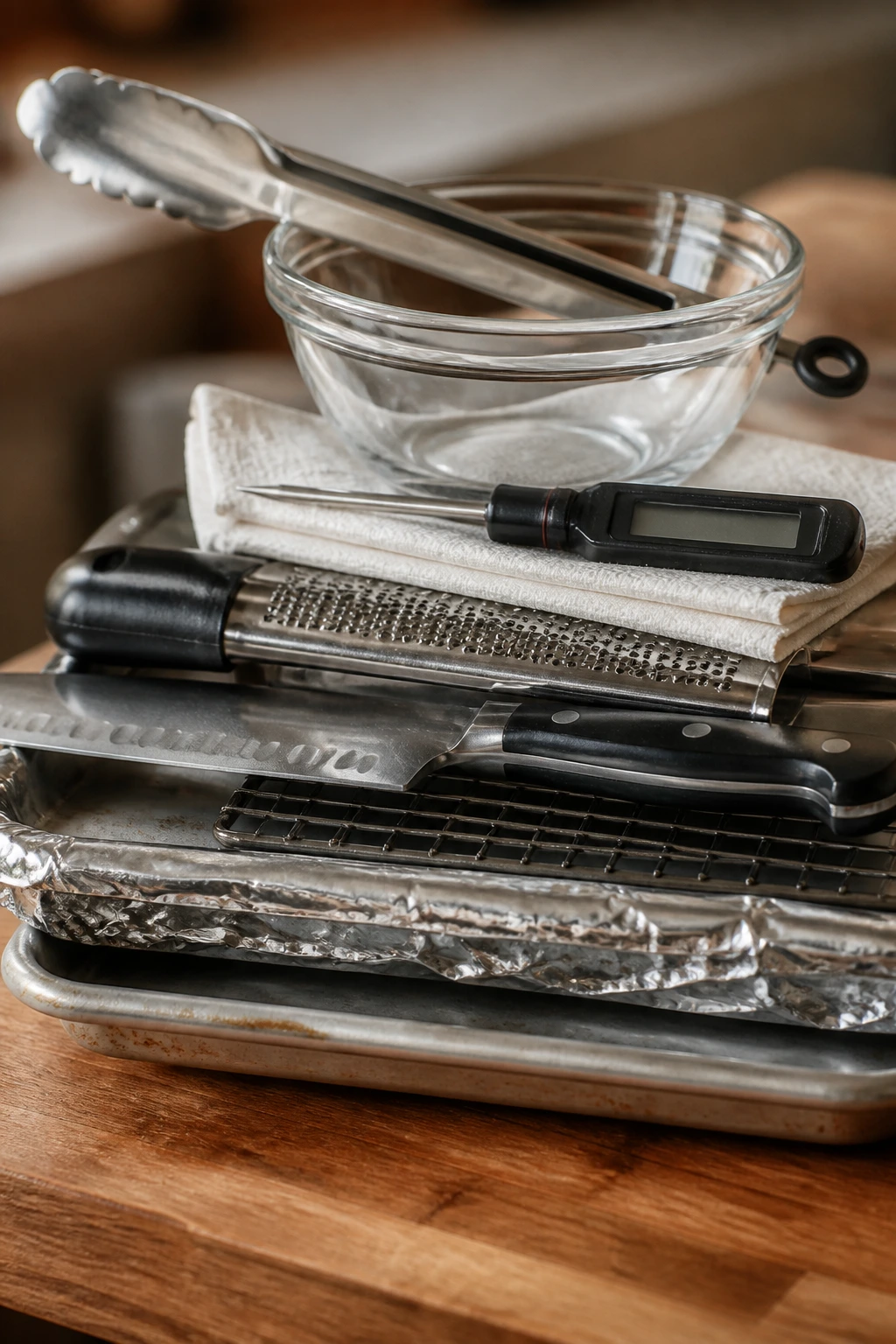
The Small Stack of Tools That Makes the Roast Easy
- Rimmed 18×13-inch sheet pan or large cast-iron skillet — A wide surface keeps the thighs from steaming; if you crowd them, you lose crisp skin.
- Instant-read thermometer — The cleanest way to know when thighs are done; it takes the guesswork out of dark meat.
- Microplane or fine grater — Best for the lemon zest, which should be fine enough to disappear into the seasoning.
- Tongs — Easier than forks, and they leave the skin intact when you move the chicken.
- Small mixing bowl — Handy for making the seasoning paste so it coats evenly.
- Paper towels — Not glamorous, but absolutely useful here; dry skin roasts better.
- Chef’s knife and cutting board — For lemon, onion, and garlic prep.
- Foil, optional — Good for easier cleanup, though the pan browns better if you keep the surface exposed.
- Wire rack, optional — Useful if you want to reheat leftovers without softening the skin too much.
Roasted Lemon Chicken Thighs From Raw Pan to Crisp Edges
Prep the Oven and Pan:
-
Preheat the oven to 425°F (220°C) and position a rack in the center of the oven. If you’re using a sheet pan, line it with foil for easier cleanup and lightly oil the foil so the rendered fat doesn’t glue the skin down.
-
Pat the chicken thighs dry with paper towels, then trim away any ragged bits of skin. Let them sit on the counter for 10 to 15 minutes while you finish the rest of the prep. Dry skin browns better than wet skin, and cold chicken roasts less evenly.
Build the Seasoning:
-
In a small bowl, stir together the olive oil, salt, black pepper, garlic powder, oregano, smoked paprika, and lemon zest until the mixture looks like a loose paste. Rub it over all sides of the chicken, and if you can do it without tearing the skin, tuck a little under the top layer near the thickest part of each thigh.
-
Scatter the onion wedges, smashed garlic, and lemon slices across the pan. Set the chicken thighs skin-side up on top of the aromatics, leaving about 1 inch of space between pieces. Do not pour the lemon juice over the chicken now; save it for the end so the skin stays crisp.
Roast and Finish:
-
Roast for 30 to 35 minutes, until the skin is deep golden and the thickest part of each thigh reads 175°F to 185°F on an instant-read thermometer. The safe floor is 165°F, but thighs get better once the connective tissue has had time to soften.
-
If the skin needs a little more color, move the pan to the upper rack and broil for 1 to 2 minutes, watching closely the whole time. That final burst is quick. Blink and you can go from bronzed to bitter.
-
Transfer the chicken to a serving platter and let it rest for 5 to 10 minutes. Squeeze the remaining lemon juice over the top, spoon the pan juices over the chicken, and finish with parsley. If you’re using butter, dot it into the hot pan juices and swirl until they look glossy.
-
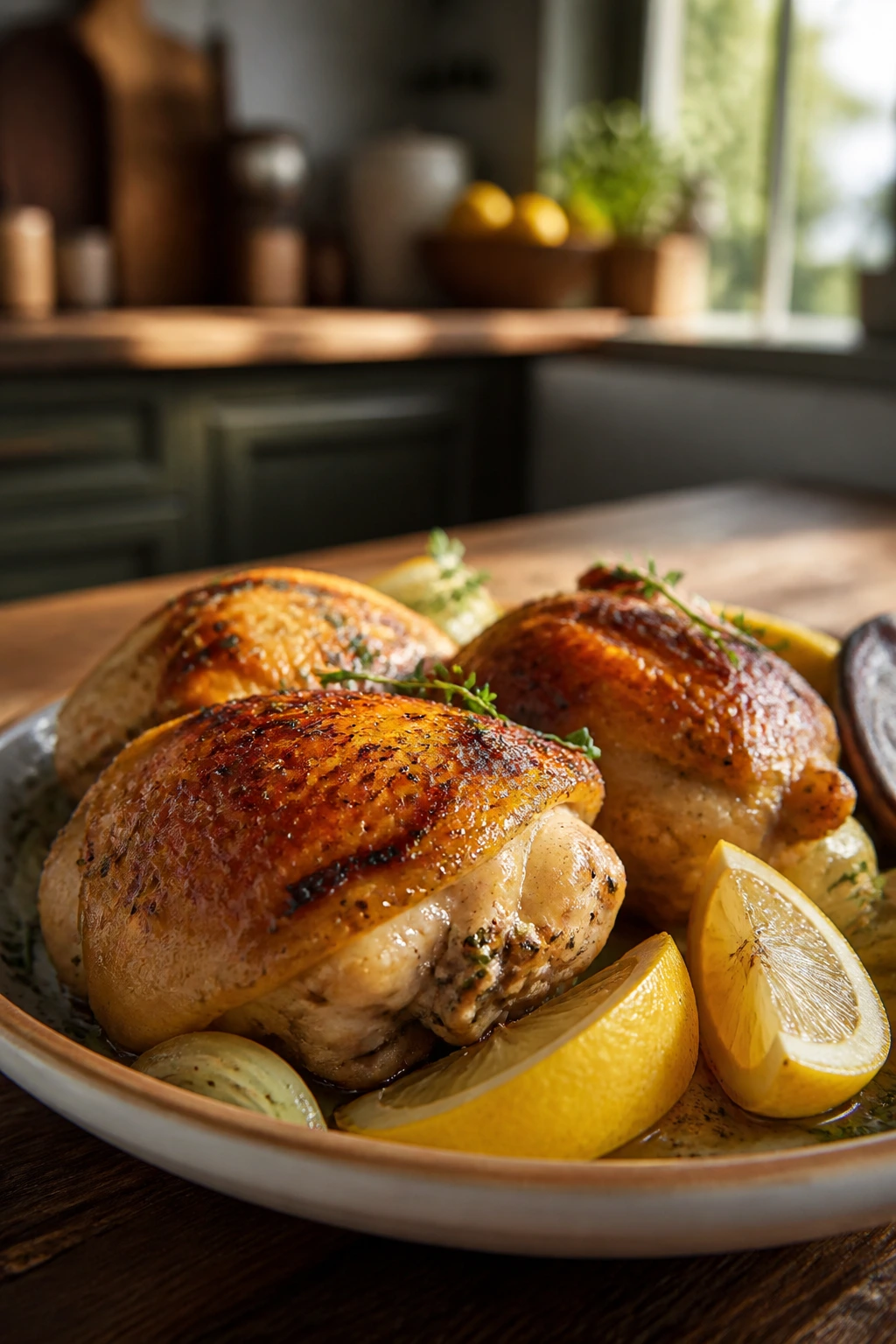
Serve the thighs while the skin still has some crunch. The onions will be soft, the garlic sweet, and the lemon bright rather than sharp.
How to Plate This Chicken So the Whole Meal Feels Finished
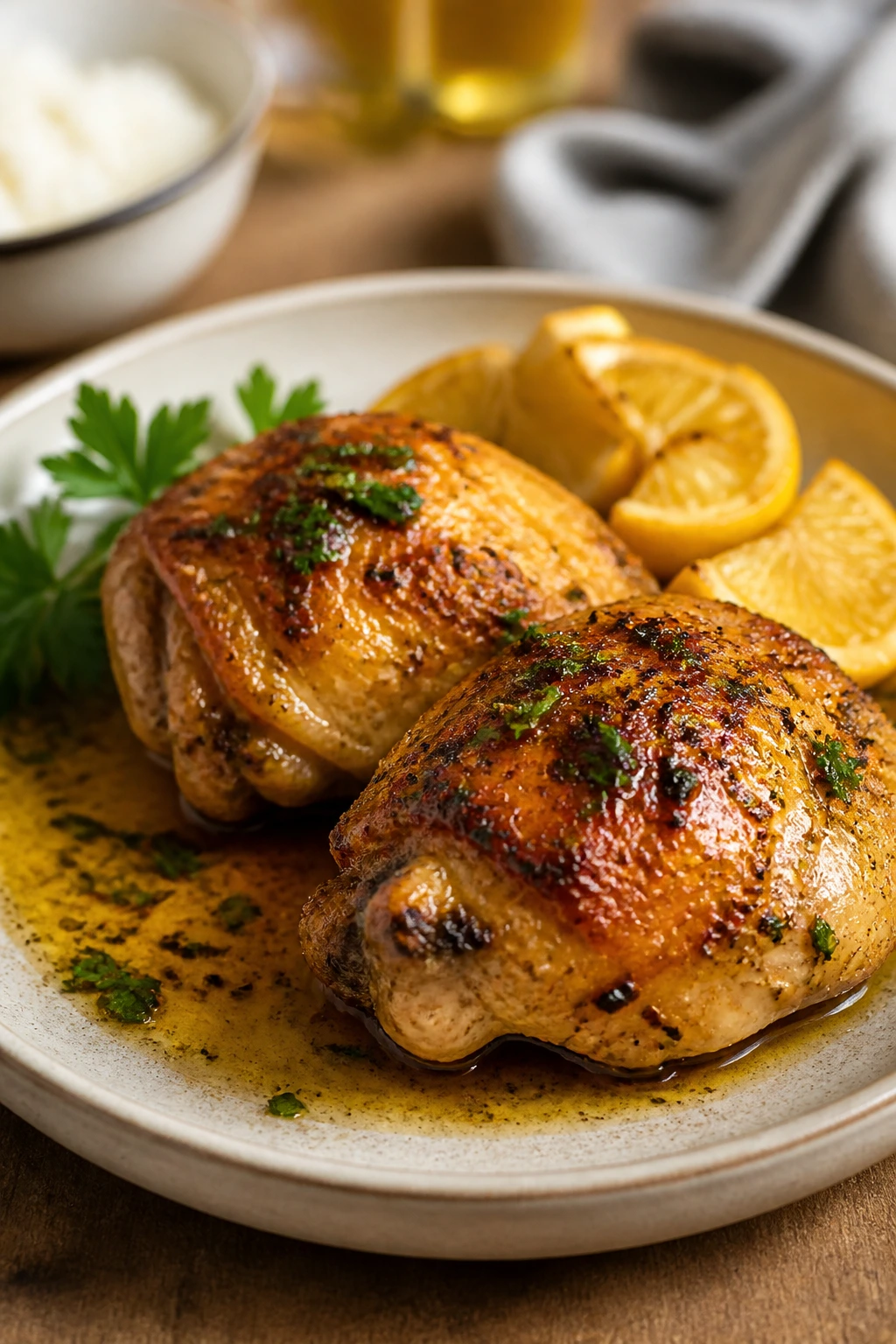
Presentation: Put one or two thighs on a warm platter, then spoon a little of the onion, garlic, and pan juices around them instead of drowning the skin. A few lemon wedges and a scatter of parsley make the plate look deliberate without trying too hard.
Accompaniments: Plain rice is the easiest landing spot for the pan juices, and it’s the side I reach for most often. Roasted potatoes, buttered couscous, orzo, green beans, and a sharp cucumber salad all work, but I especially like this chicken with something soft underneath and something crisp beside it.
Portions: Plan on 1 thigh per person for lighter appetites or 2 thighs per person if the meal is the main event and the sides are simple. If you’re stretching the recipe for more people, add another starch rather than squeezing extra thighs onto the same pan.
Beverage Pairing: A dry white wine such as Sauvignon Blanc or Pinot Grigio matches the lemon without fighting it. If you want something nonalcoholic, sparkling water with a lemon twist and a small pinch of salt sounds plain on paper and tastes surprisingly right with the chicken.
Small Tweaks That Add More Flavor Without More Fuss
-
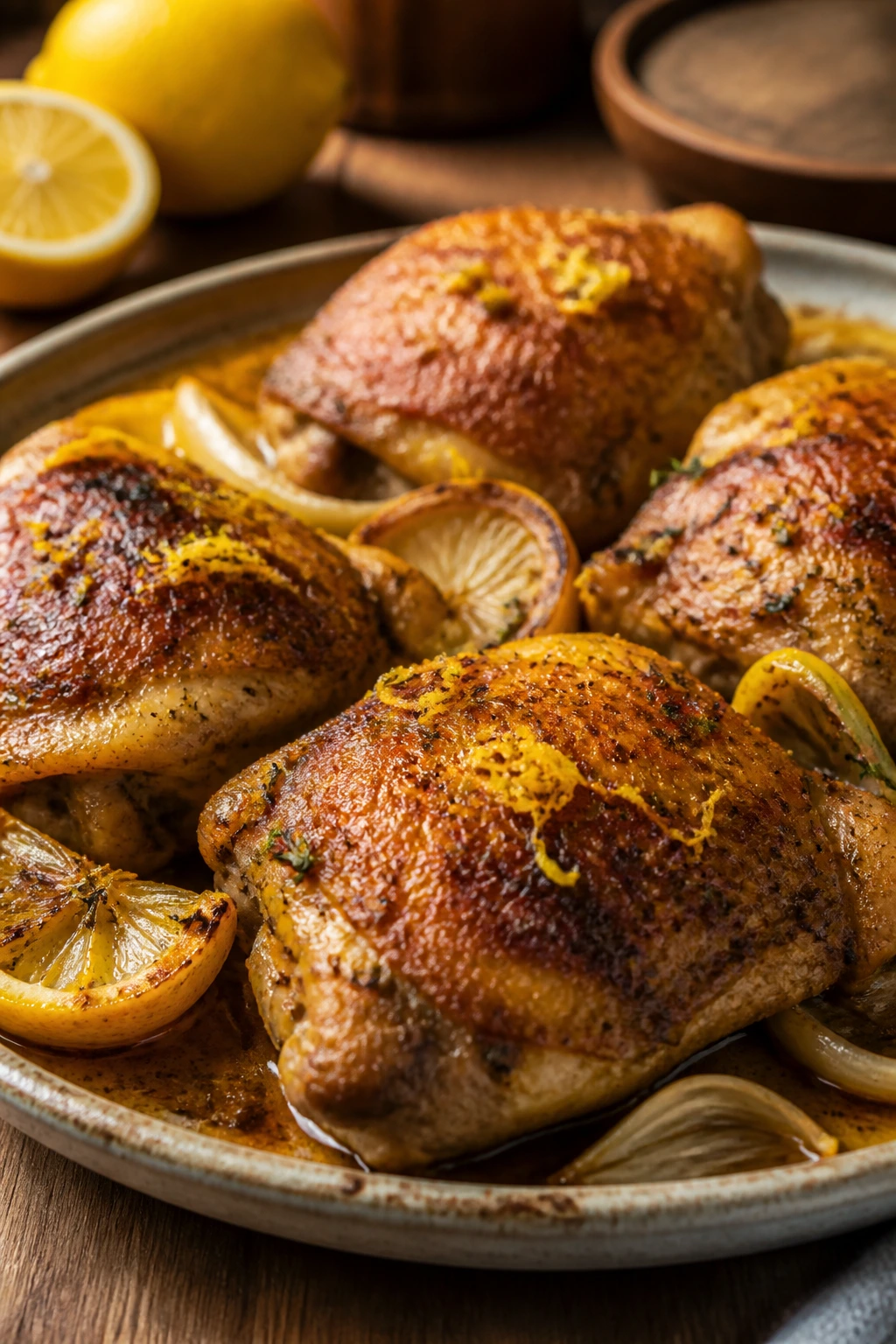
Flavor Enhancement: Grate an extra teaspoon of lemon zest into the seasoning rub. Zest carries the smell of lemon without the raw acidity, so you get more citrus aroma and no soggy skin.
-
Time-Saver: Season the thighs in the morning and leave them uncovered in the fridge on a plate or rack. By dinner, the skin will be drier, which helps it brown faster in the oven.
-
Pro Move: Slide a little seasoning under the skin over the thickest part of each thigh. That tiny extra step gives the meat itself more flavor, not just the outside.
-
Cost-Saver: Buy thighs when they’re on sale, then freeze them in two-thigh portions with the dry seasoning mix already added. Thaw overnight in the fridge and add the lemon fresh when you cook.
-
Serving Suggestions: Finish with flaky salt and a few extra parsley leaves right before serving. If you like a sharper edge, a teaspoon of capers in the hot pan juices turns the whole dish saltier and more interesting.
The Mistakes That Leave Chicken Pale, Soggy, or Flat
-
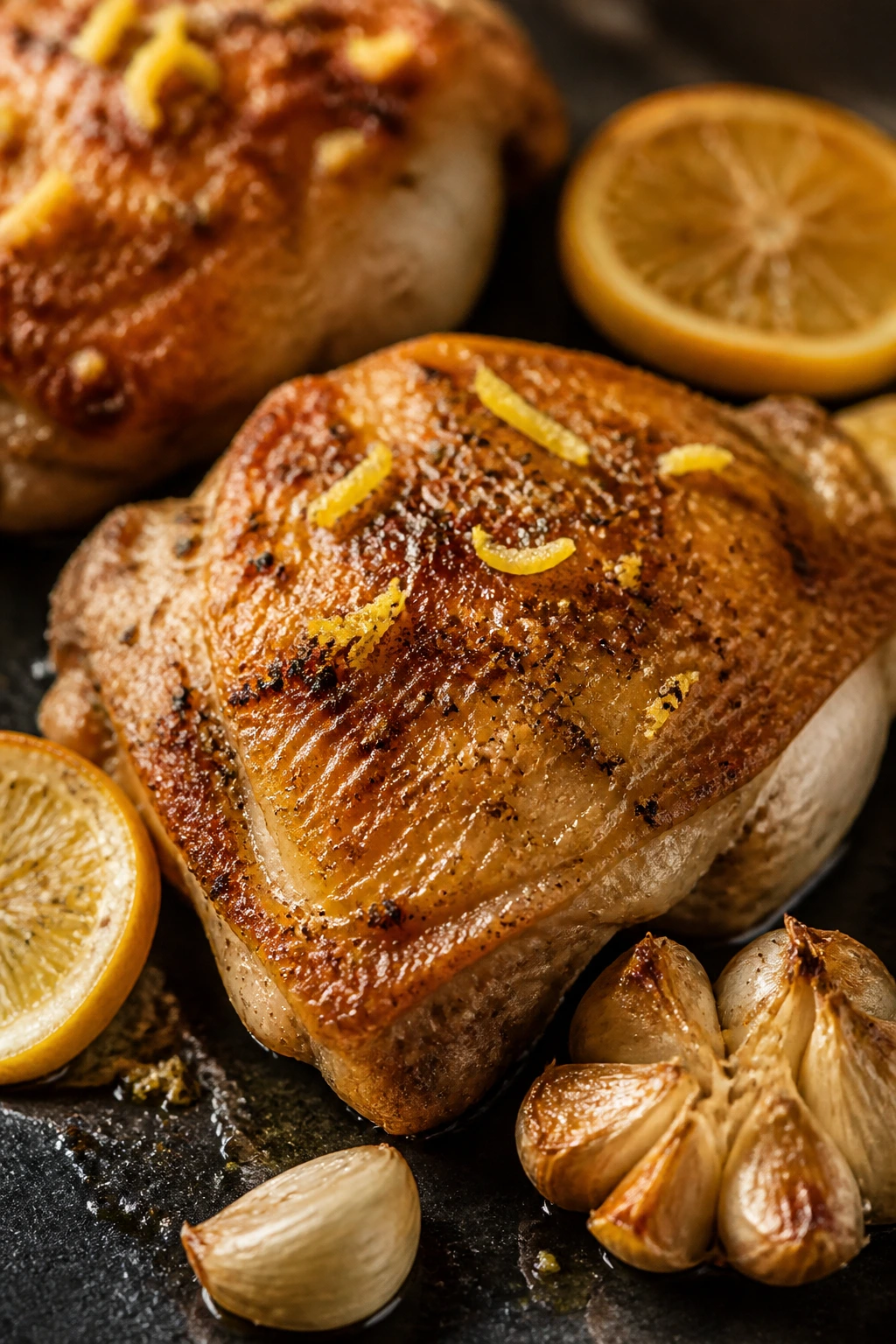
Starting with damp skin: Wet skin steams before it browns, and the surface can turn rubbery instead of crisp. Pat the thighs dry very well, then let them sit out briefly so the air can do a little more of the drying for you.
-
Adding lemon juice too early: The citrus flavor ends up muted, and the skin can soften before it browns. Use zest in the seasoning, roast the lemon slices with the chicken, and squeeze the juice on at the end.
-
Crowding the pan: Pieces packed shoulder to shoulder trap steam and block the hot air that creates color. Give the thighs space, even if that means using two pans.
-
Pulling the chicken at 165°F and calling it done: Thighs are safe there, but they still have that slightly tight, almost bouncy texture. Let them cook to 175°F to 185°F for a softer bite.
-
Skipping the rest: Cut too soon and the juices flood the cutting board instead of staying in the meat. Five to ten minutes is enough to settle everything.
-
Using a deep baking dish instead of a shallow pan: Tall sides trap steam and rob the skin of heat. A rimmed sheet pan or cast-iron skillet gives you much better browning.
Variations That Still Taste Like the Same Dinner
-
Honey-Lemon Shine: Whisk 1 tablespoon honey with 1 tablespoon fresh lemon juice and brush it over the chicken during the last 5 minutes of roasting. The skin gets a faint glaze, not a sugary coat, and the finish tastes a little rounder.
-
Olive and Caper Roast: Add 1/4 cup pitted green olives and 1 tablespoon capers to the pan in the last 15 minutes. The brine plays nicely with lemon and turns the pan juices sharper and saltier.
-
Rosemary-Garlic Version: Swap the oregano for 2 teaspoons chopped rosemary and use whole smashed garlic cloves instead of partially minced pieces. This leans more woodsy and savory, which I like with roasted potatoes.
-
Boneless Shortcut Thighs: Use 2 1/2 pounds boneless, skinless thighs and roast them at 425°F for about 20 to 22 minutes. You lose the crackly skin, but the flavor stays close and the timing gets shorter.
-
Fennel and Red Onion Tray: Replace the yellow onion with 1 fennel bulb and 1 red onion, both cut into wedges. The fennel turns sweet in the oven and gives the whole dish a softer, almost perfume-like finish.
Make-Ahead, Storage, and Reheating Without Drying It Out
Make-Ahead
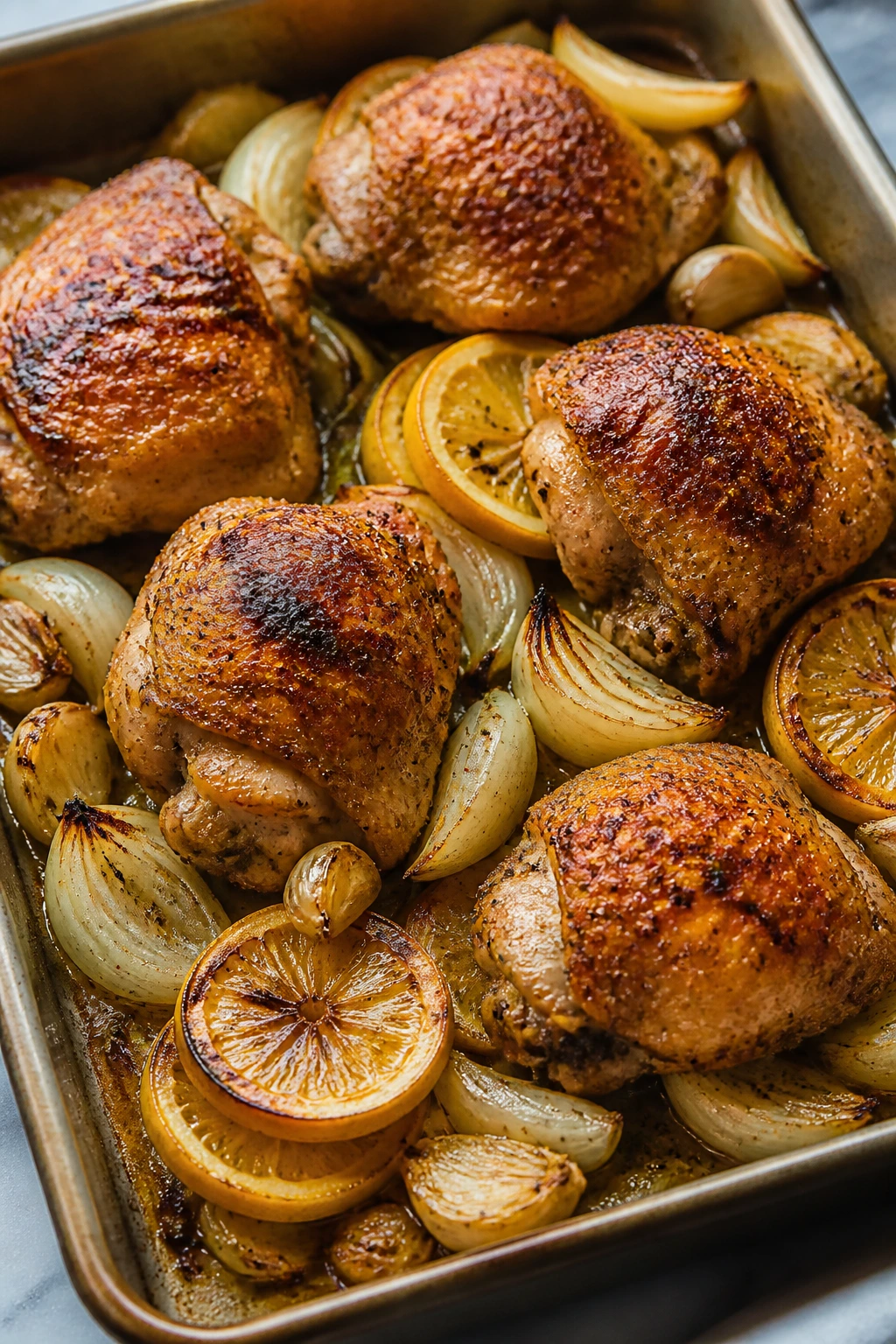
You can season the chicken up to 24 hours ahead and keep it in the refrigerator, lightly covered or uncovered if you want the skin extra dry. I would keep the lemon sliced and the parsley separate until cooking day, because both lose some of their spark if they sit too long with the chicken.
Fridge
Cooked thighs keep well for 3 to 4 days in an airtight container in the refrigerator. If possible, store the chicken with a spoonful of the pan juices so the meat stays moist, but keep extra lemon wedges separate so they do not soften the skin any more than necessary.
Freezer
Cooked chicken thighs freeze for up to 2 months if you wrap them tightly and tuck them into a freezer bag or container. I like to freeze them with a little of the pan juice; once thawed, that small bit of fat and herb flavor keeps them from tasting flat. Thaw overnight in the refrigerator before reheating.
Reheating
For the best texture, reheat the thighs in a 375°F oven for 12 to 15 minutes, loosely covered with foil for the first half, then uncovered for the last few minutes to bring back some skin texture. If you want the skin crisper, set the thighs on a wire rack over a sheet pan so the bottom doesn’t sit in its own steam.
A skillet also works: place the thighs skin-side down over medium-low heat for 3 to 4 minutes, then flip and warm the other side briefly. Microwave reheating is possible, but the skin goes soft fast, so I only use it when the oven is out of the question.
Food Safety and Timing
Do not leave cooked chicken at room temperature for more than 2 hours. If the room is warm, cut that down a bit. That rule is boring, but food safety always is until someone ignores it and spends the next day regretting it.
Questions Home Cooks Ask Before They Roast the Chicken
Can I use boneless, skinless thighs instead of bone-in thighs?
Yes, and the flavor still works, but the texture changes. Boneless thighs need less time, usually around 20 to 22 minutes at 425°F, and they won’t give you the same crisp skin or the same rich pan drippings.
Do I need to marinate the chicken in lemon juice?
No, and I’d skip it. Lemon juice on the raw chicken can soften the skin before it roasts, and the final flavor is brighter when you season with zest and finish with fresh juice after the chicken comes out of the oven.
Can I use bottled lemon juice?
You can use it in a pinch, but fresh lemons do more work here because the zest carries a big part of the aroma. If bottled juice is all you have, use it for the final squeeze and try to keep at least one fresh lemon for zest.
Why won’t my chicken skin crisp up?
The usual culprits are damp skin, a crowded pan, or an oven that runs cooler than it claims. Pat the chicken dry, give the pieces space, and broil for a minute or two at the end if the color looks pale.
Can I roast vegetables with the chicken?
Yes. Potatoes, carrots, fennel, and onions all work well, but cut them into pieces that will finish in about 35 minutes. Dense vegetables should go under or beside the chicken so they catch the fat and brown instead of drying out.
Can I use a cast-iron skillet instead of a sheet pan?
Absolutely. A cast-iron skillet holds heat well and gives the underside of the onions a little more color, but do not crowd it. If the chicken is packed too tightly, the skillet traps steam just like any other pan.
Can I make this in an air fryer?
You can, though the results are a little different. Cook the thighs in batches at 380°F to 390°F for about 18 to 22 minutes, depending on size, and check for 175°F to 185°F in the thickest part. You’ll get good crispness, but you won’t have the same pan juices, which is half the pleasure of the oven version.
Why It Stays in the Rotation
A dinner like this earns its keep because it doesn’t ask for much and gives back a lot. Lemon, garlic, onion, and chicken thighs are humble ingredients, but once they hit a hot oven in the right order, they taste sharper, richer, and more finished than the shopping list suggests.
That’s the part worth remembering when weeknights get crowded. A good roasted chicken recipe should work with your schedule, not against it, and this one has enough structure to be reliable without becoming fussy. Keep a couple of lemons around, dry the skin well, and the rest has a habit of taking care of itself.
Roasted Lemon Chicken Thighs — Recipe Card
Recipe Name: Roasted Lemon Chicken Thighs for Weeknight Dinners
Description: Bone-in chicken thighs roast with lemon, garlic, onion, oregano, and smoked paprika until the skin turns crisp and the meat stays juicy. Fresh lemon juice and parsley go on at the end for a bright, savory finish.
Prep Time: 15 minutes
Cook Time: 35 minutes
Total Time: 50 minutes, plus 5 to 10 minutes resting
Course: Dinner, Main Course
Cuisine: American
Servings: 4 to 6
Calories: About 390 kcal per serving
Ingredients
For the Chicken:
- 6 bone-in, skin-on chicken thighs, about 2 1/2 to 3 pounds, patted dry
- 2 tablespoons olive oil
- 1 1/2 teaspoons kosher salt
- 1 teaspoon freshly ground black pepper
- 1 teaspoon garlic powder
- 1 teaspoon dried oregano
- 1/2 teaspoon smoked paprika
For the Lemon and Aromatics:
- 2 lemons, 1 zested and juiced, 1 thinly sliced and seeded if needed
- 5 garlic cloves, smashed
- 1 small yellow onion, cut into 8 wedges
- 2 tablespoons chopped fresh parsley
- 1 tablespoon unsalted butter, optional
Instructions
- Preheat the oven to 425°F (220°C) and line a rimmed sheet pan with foil if desired.
- Pat the chicken thighs dry and mix the olive oil, salt, pepper, garlic powder, oregano, smoked paprika, and lemon zest into a seasoning paste.
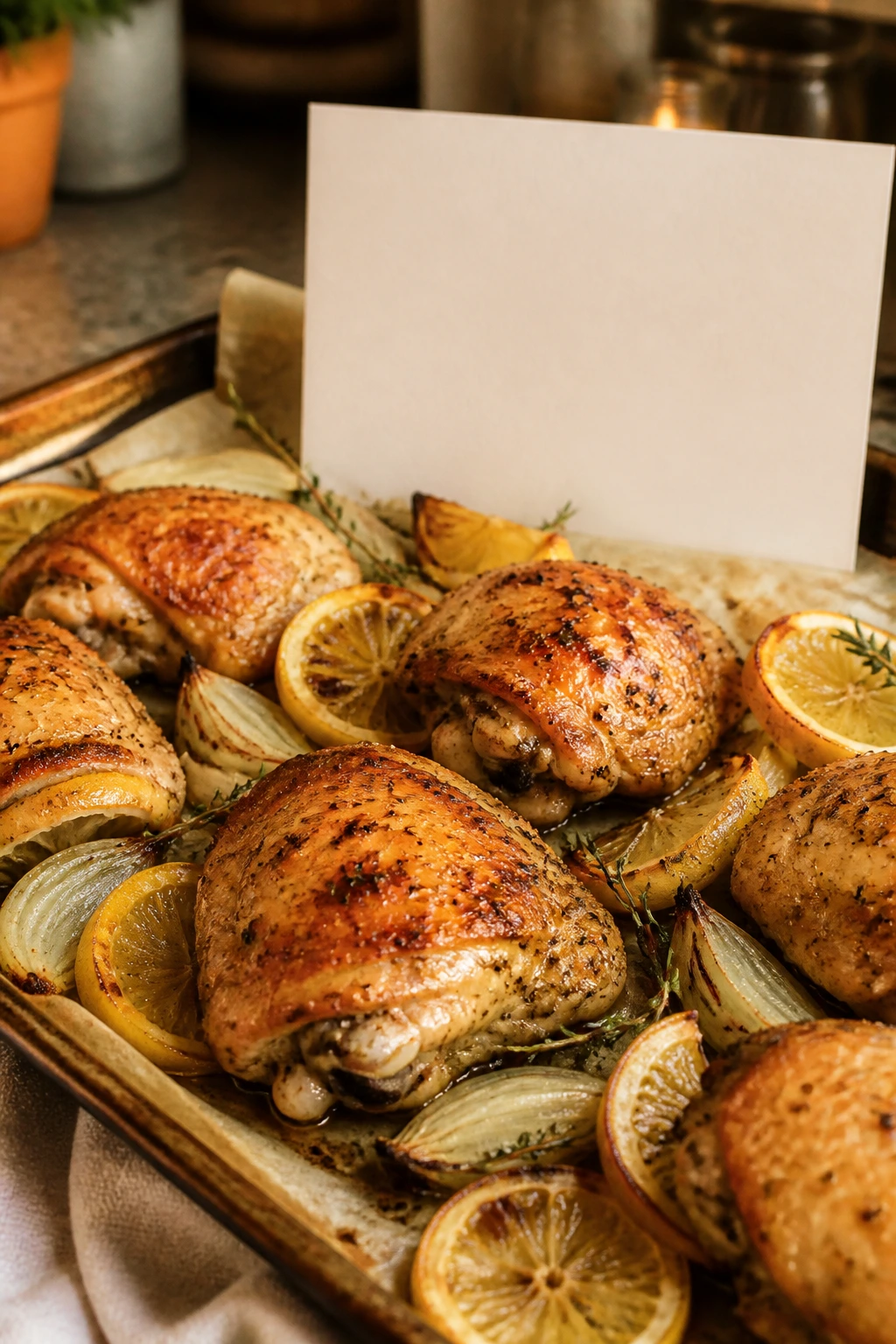
- Rub the seasoning over the thighs, then scatter the onion wedges, smashed garlic, and lemon slices on the pan.
- Set the chicken skin-side up on the pan with space between the pieces.
- Roast for 30 to 35 minutes, until the thickest part reaches 175°F to 185°F and the skin is deep golden. Broil for 1 to 2 minutes if you want more color.
- Rest for 5 to 10 minutes, then squeeze over the fresh lemon juice, spoon the pan juices over the chicken, and finish with parsley and butter if using.
Notes: Pat the thighs dry before seasoning, and save the fresh lemon juice for the end so the skin stays crisp. Leftovers keep for 3 to 4 days in the fridge.