



Creamy chicken and rice for weeknight dinners has a job to do: feed people fast, use one pan, and still taste like someone paid attention.
That’s the bar. Not “fine for a Tuesday.” Not “edible if you’re tired.” I mean a skillet with browned chicken, soft onion, rice that has soaked up broth and milk instead of sitting there like an afterthought, and a sauce that clings to the grains without turning them into paste. When it works, the smell alone tells you you’ve done something right — garlic sweetening in butter, thyme going quiet in the steam, Parmesan melting into the edges of the rice.
The version I keep coming back to uses chicken thighs, long-grain rice, a splash of cream, and a proper simmer. No canned soup. No mystery mush. The rice gets toasted first, which sounds like a tiny thing until you taste the difference; it keeps the grains separate enough to feel creamy, not collapsed. The whole dish lands in that sweet spot between comfort food and practical cooking, and that’s a spot worth protecting.
Why This Creamy Chicken and Rice Keeps Making Sense on Busy Nights
-
One pan means the flavor stays put: The browned chicken bits, onion, and rice all cook in the same skillet, so nothing gets lost in a second pot of plain water.
-
The rice does more than fill space: Long-grain rice pulls in the chicken drippings, broth, milk, and cream, which gives every bite seasoning all the way through instead of on the surface.
-
Thighs stay forgiving: Boneless thighs can sit in a gentle simmer a little longer without drying out, which matters when the rice needs a few extra minutes.
-
It eats like a full meal: You get protein, starch, and enough sauce to keep the bowl from feeling dry, so there’s no scramble to cook a side dish unless you want one.
-
Leftovers reheat better than most creamy dishes: If you add a splash of broth or water when warming it up, the rice loosens back into a spoonable texture instead of locking up.
-
It still feels like dinner: The first spoonful tastes slow-cooked even though the whole thing comes together in a single skillet on an ordinary evening.
Timing, Yield, and the Rhythm of the Recipe
Yield: Serves 4
Prep Time: 15 minutes
Cook Time: 30 minutes
Total Time: 45 minutes
Chill/Rest Time: 5 minutes
Difficulty: Beginner — the steps are straightforward, but you do need to keep the heat low once the rice goes in so the dairy stays smooth and the grains cook evenly.
Best Served: Hot from the skillet after a short rest, when the sauce has settled and the rice is still soft at the center.
Where This Dish Sits Between Casserole Comfort and Skillet Dinner Speed
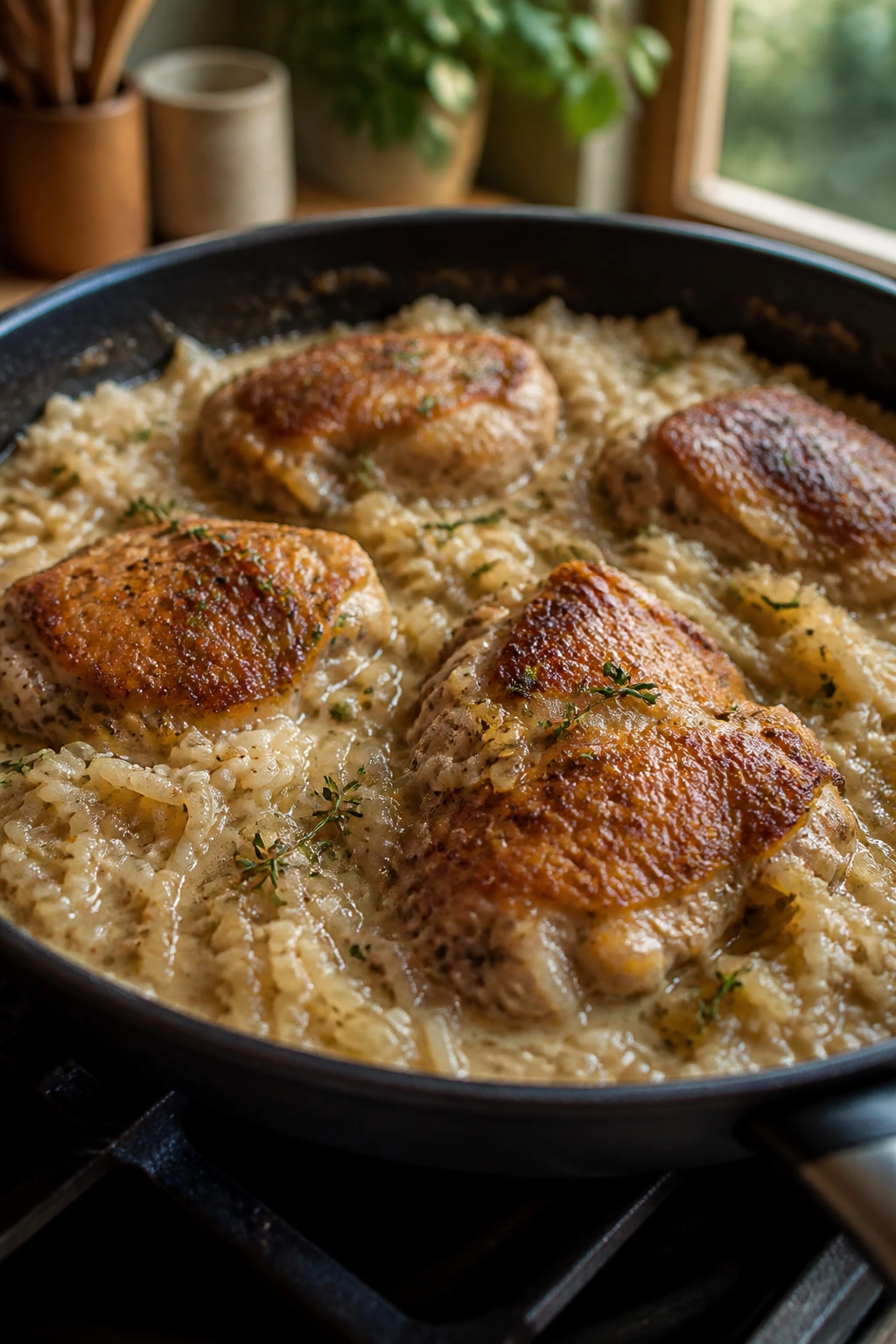
There’s a family resemblance here to old-school chicken-and-rice casseroles, the kind that leaned on canned soup and came out from the oven with a soft, unified texture. This version keeps the comfort, but the texture is better. The rice stays distinct. The sauce is creamy instead of gluey. The chicken keeps a browned edge that a baked casserole usually loses.
That little shift matters. A casserole can be great, but it often commits too early; everything goes in at once and comes out with the same temperature, the same softness, the same mood. A skillet like this has a few distinct stages. First you brown. Then you build the base. Then you simmer gently and let the rice drink in the good stuff. The order is the difference between a pot that tastes flat and a pot that tastes layered.
I also like that this style gives you control. If your stove runs hot, you can turn it down. If the rice looks thirsty before it’s tender, you can add a splash of broth. If the sauce feels a little loose at the end, five minutes off the heat will tighten it up. That kind of flexibility is the reason this recipe earns its keep on nights when nobody wants a dramatic dinner project.
The Ingredient List, Measured and Ready
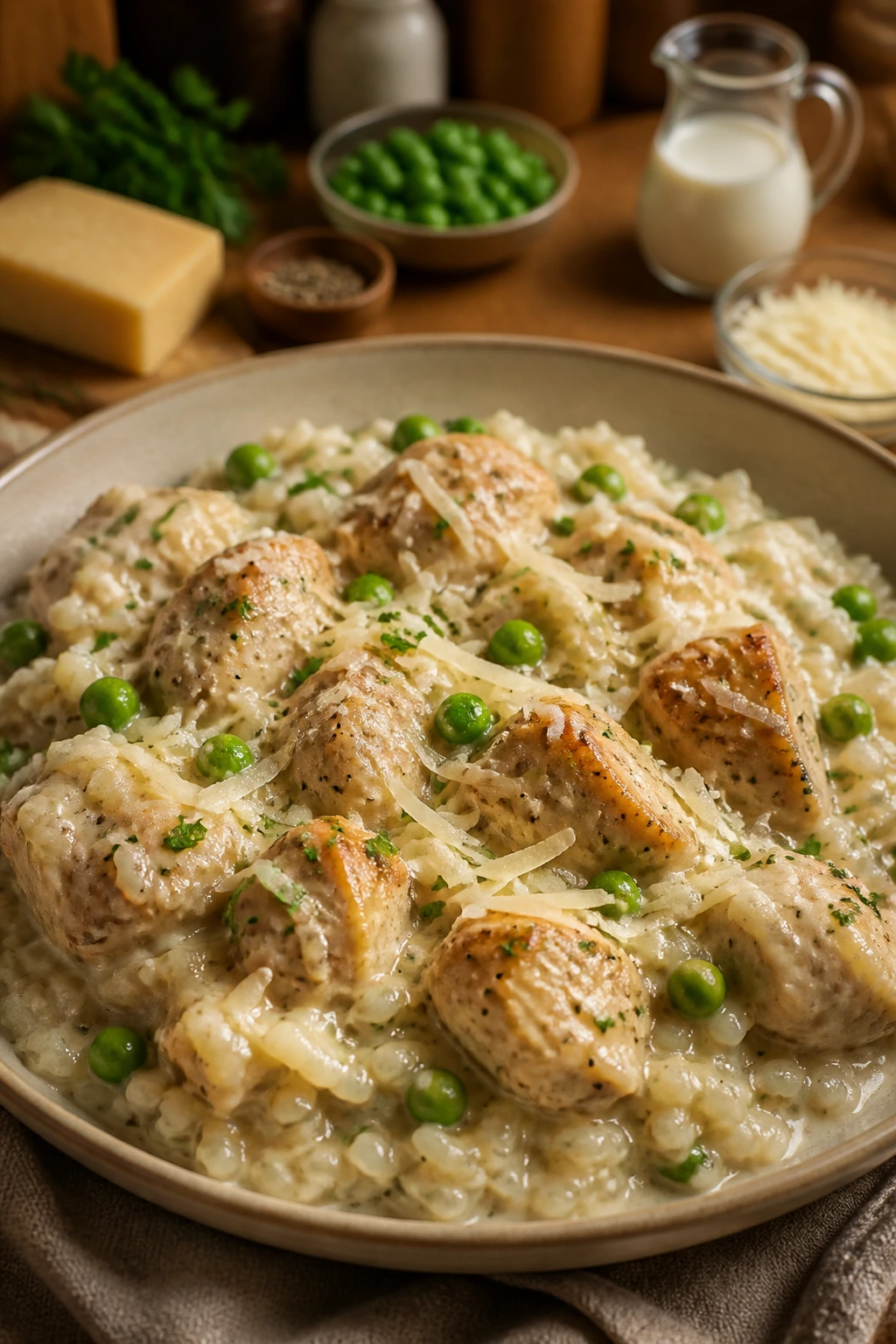
For the Chicken:
- 1 1/2 pounds boneless, skinless chicken thighs, cut into 1-inch pieces
- 1 1/2 teaspoons kosher salt
- 1/2 teaspoon black pepper
- 1 teaspoon garlic powder
- 1/2 teaspoon paprika
- 2 tablespoons olive oil
For the Creamy Rice:
- 1 tablespoon unsalted butter
- 1 medium yellow onion, finely diced
- 2 celery stalks, finely diced
- 3 cloves garlic, minced
- 1 1/4 cups long-grain white rice, rinsed and drained
- 2 cups low-sodium chicken broth
- 1 cup whole milk
- 1/2 cup heavy cream
- 1 teaspoon dried thyme
- 1 bay leaf
For the Finish:
- 1 cup frozen peas
- 1/2 cup finely grated Parmesan cheese
- 2 tablespoons chopped fresh parsley
- 1 teaspoon lemon juice
Why Each Ingredient Matters in the Pan
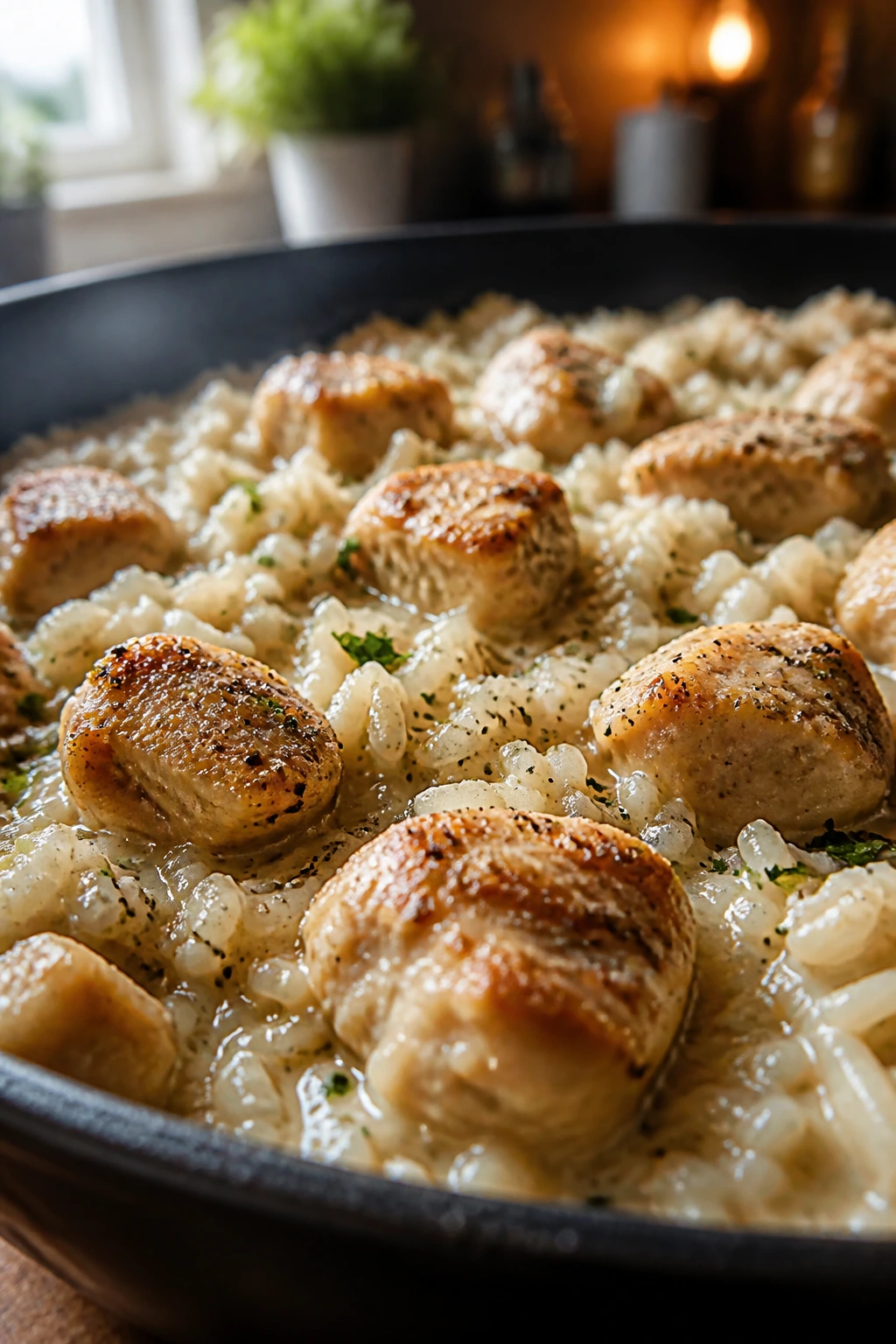
Chicken Thighs
What to use: 1 1/2 pounds boneless, skinless chicken thighs, cut into 1-inch pieces.
Preparation: Pat them dry before seasoning so they brown instead of steaming.
Substitutions: Chicken breasts work if that’s what you have, though they need less simmer time and a little more watchfulness.
Tips: Thighs are the safer bet here because they stay juicy while the rice finishes, and they hold up to a second round of heat after the lid comes off.
Long-Grain White Rice
What to use: 1 1/4 cups long-grain white rice, rinsed until the water runs mostly clear.
Preparation: Rinse and drain it well so the final sauce stays creamy, not starchy and heavy.
Substitutions: Jasmine rice works with a slightly softer, more fragrant result; short-grain rice will go stickier, which I would avoid in this dish.
Tips: Toasting the rice in the skillet for a minute or two gives it a faint nutty edge and helps the grains stay a little more separate.
Broth, Milk, and Cream
What to use: 2 cups low-sodium chicken broth, 1 cup whole milk, and 1/2 cup heavy cream.
Preparation: Keep the dairy cold until you use it, but don’t add it to a screaming-hot pan.
Substitutions: Half-and-half can stand in for the milk and cream together if that’s what’s in the fridge, though the sauce will be a little lighter.
Tips: Low-sodium broth gives you room to season at the end, which matters because Parmesan brings its own salt.
Aromatics, Seasonings, and Finishers
What to use: 1 medium onion, 2 celery stalks, 3 cloves garlic, 1 teaspoon dried thyme, 1 bay leaf, 1 cup frozen peas, 1/2 cup Parmesan, 2 tablespoons parsley, and 1 teaspoon lemon juice.
Preparation: Dice the onion and celery small so they soften into the rice base rather than sitting in chunky bits.
Substitutions: Frozen mixed vegetables can replace the peas if you want more color; chopped spinach can go in at the end if you prefer a greener bowl.
Tips: Finely grated Parmesan melts better than thick shreds, and the lemon juice at the end wakes up the cream without making the dish taste sharp.
The Pan, Tools, and Small Things That Save the Rice
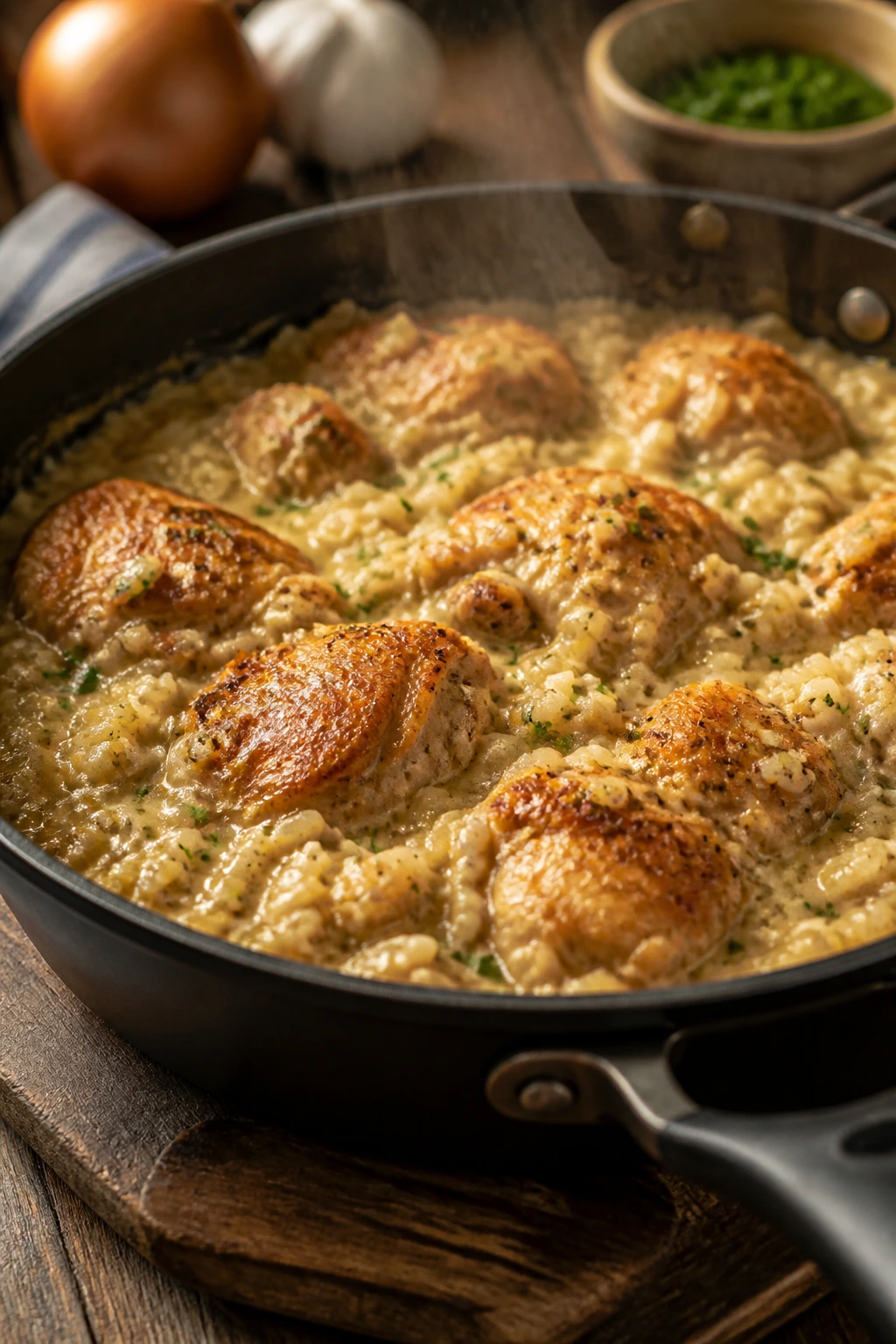
A recipe like this doesn’t need a fancy setup, but the right tools make the difference between a smooth simmer and a frustrating one.
-
12-inch deep skillet with a tight-fitting lid — This is the sweet spot. You need enough surface area to brown the chicken, but the pan also has to be deep enough to hold the rice and liquid without splashing.
-
Dutch oven — A perfectly good stand-in if you have one. It holds heat evenly, which helps the rice cook without hot spots on the bottom.
-
Wooden spoon or heatproof spatula — You’ll use it to scrape up browned bits and to fold in the cheese at the end without tearing the rice apart.
-
Sharp chef’s knife — Dicing the onion, celery, and chicken into even pieces keeps the texture consistent. Big chunks can leave you with some soft bites and some undercooked ones.
-
Cutting board — A damp towel under the board keeps it from sliding while you work. Small detail. Big relief.
-
Instant-read thermometer — Not mandatory, but useful. Chicken thighs are done at 165°F in the thickest piece, and the guesswork disappears when you check it once.
-
Fine grater or microplane — Best tool for the Parmesan. The cheese melts into the sauce instead of sitting in tiny clumps on top.
How to Make Creamy Chicken and Rice, Step by Step
Prep and Brown the Chicken
-
Season the chicken: Pat the chicken thighs dry with paper towels. Toss them in a bowl with 1 1/2 teaspoons kosher salt, 1/2 teaspoon black pepper, 1 teaspoon garlic powder, and 1/2 teaspoon paprika until every piece is lightly coated.
-
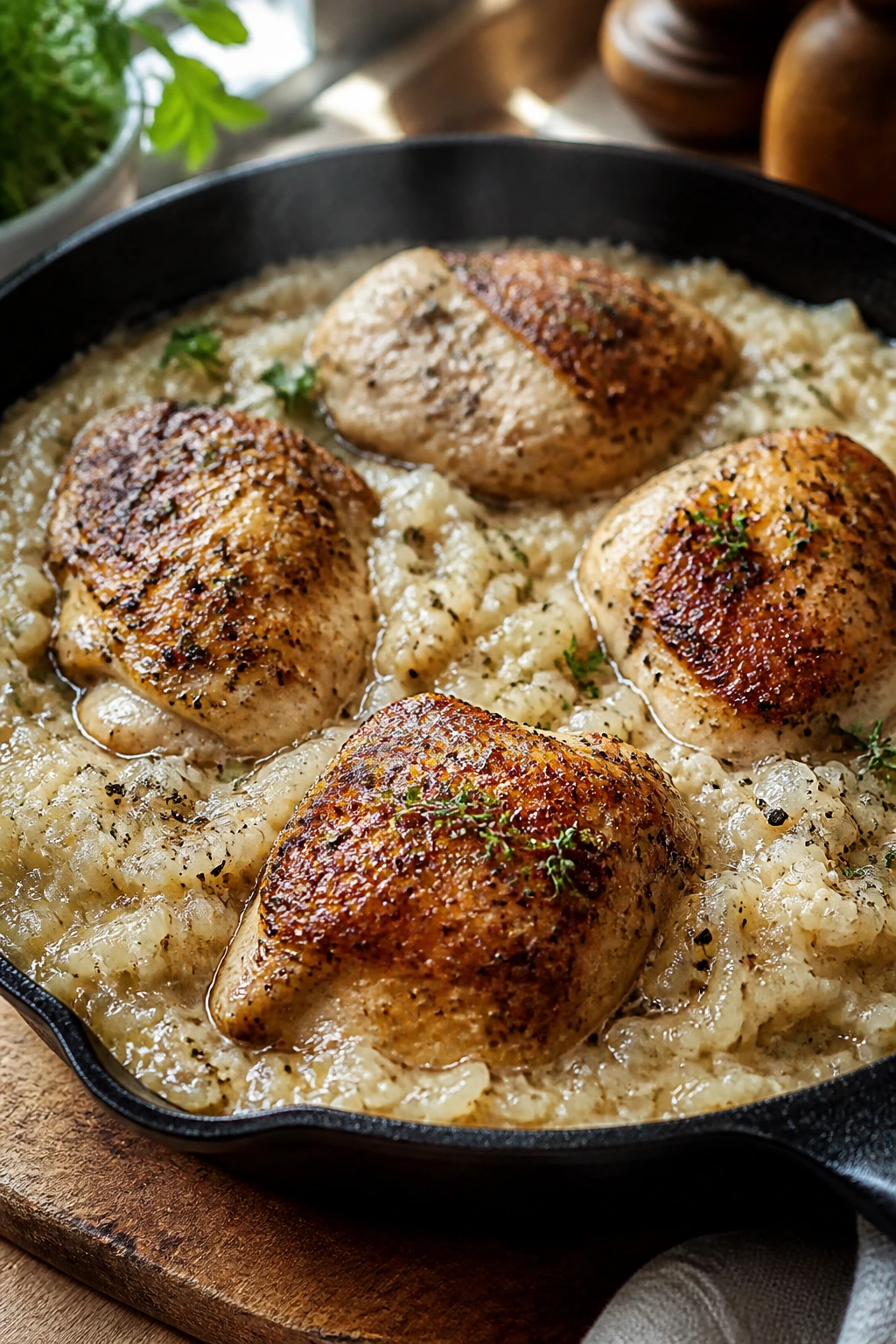
Sear the chicken: Heat 2 tablespoons olive oil in a 12-inch deep skillet or Dutch oven over medium-high heat until the oil shimmers. Add the chicken in a single layer and cook for 3 to 4 minutes per side, just until browned on the outside. Do not crowd the pan — work in two batches if needed. Transfer the chicken to a plate; it does not need to be cooked through yet.
Build the Rice Base
-
Soften the vegetables: Reduce the heat to medium and add 1 tablespoon unsalted butter to the same pan. Stir in the diced onion and celery and cook for 5 to 6 minutes, stirring now and then, until the onion turns translucent and the celery loses its raw crunch.
-
Add the garlic and toast the rice: Stir in the minced garlic and cook for 30 seconds, just until it smells sweet. Add the rinsed rice and stir for 1 to 2 minutes until the grains look glossy and a few edges turn slightly translucent. That tiny toasting step matters more than people think.
-
Pour in the liquids: Add 2 cups chicken broth, 1 cup whole milk, 1/2 cup heavy cream, 1 teaspoon dried thyme, and 1 bay leaf. Scrape the bottom of the pan with your spoon to loosen the browned bits. Bring the mixture to a gentle simmer over medium heat.
Simmer and Finish
-
Return the chicken and cook gently: Nestle the browned chicken and any juices back into the pan. Cover, reduce the heat to low, and cook for 18 to 20 minutes. Stir once halfway through, fast and gently, to keep the rice from sticking. Keep the heat low — if the liquid boils hard, the milk can separate and the rice can go uneven.
-
Add the peas and cheese: Stir in 1 cup frozen peas and cook, covered, for 2 minutes. Remove the pan from the heat, discard the bay leaf, and stir in 1/2 cup finely grated Parmesan and 1 teaspoon lemon juice until the sauce turns glossy and creamy.
-
Rest and finish the skillet: Let the pan sit uncovered for 5 minutes. Taste and adjust with a pinch more salt or pepper if needed. Sprinkle with 2 tablespoons chopped parsley and serve while the rice is still soft and the sauce clings to the spoon.
How I’d Serve It on an Ordinary Evening
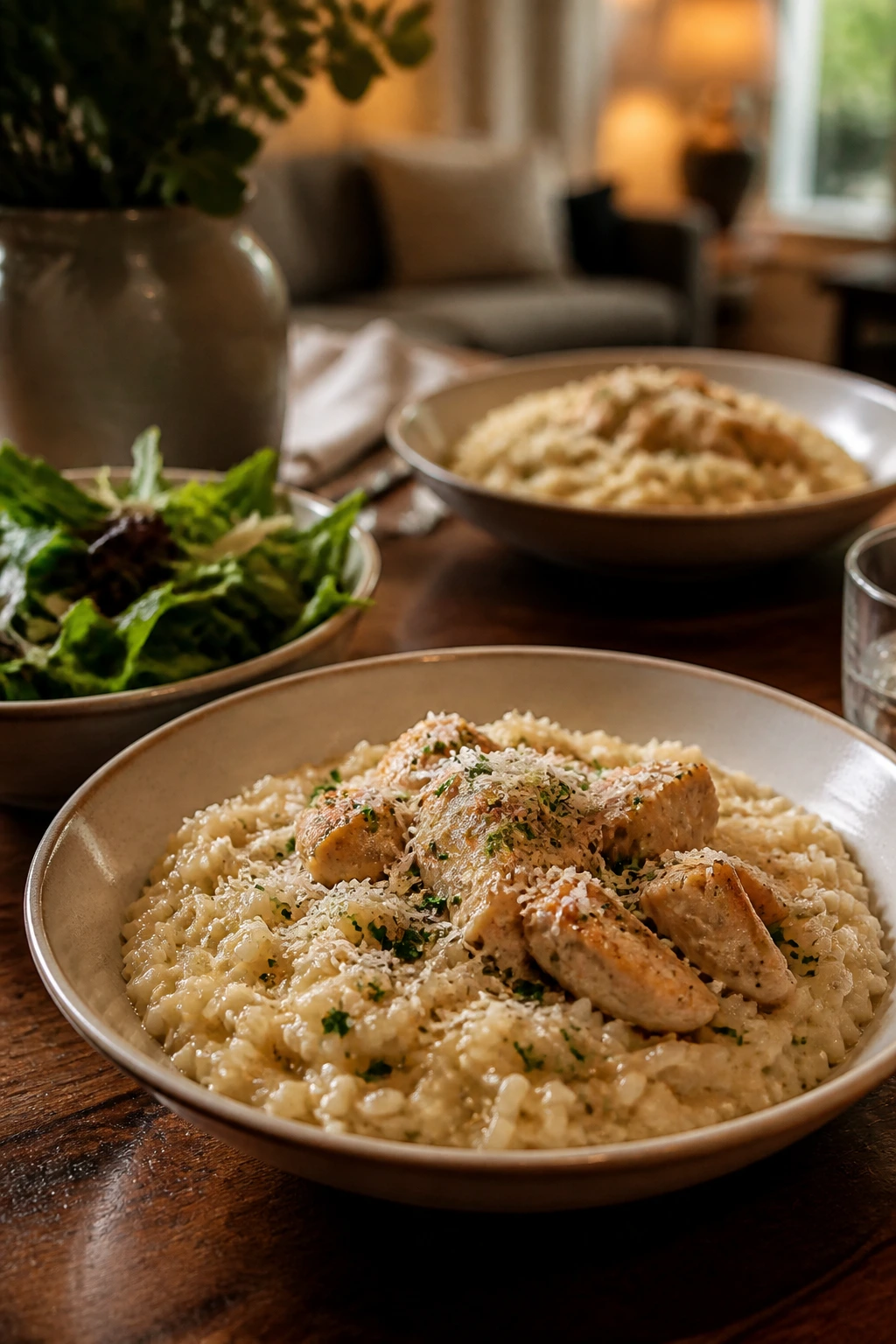
Presentation: Spoon the creamy chicken and rice into shallow bowls rather than deep soup bowls. A shallow bowl shows off the chicken pieces and keeps the rice from disappearing into a mound; the parsley and Parmesan sit on top in a way that looks intentional without fuss.
Accompaniments: A simple green salad with lemony dressing keeps the meal from feeling heavy. Buttered green beans, steamed broccoli, or a slice of crusty bread all fit here, though I usually prefer something crisp and green over a second starch.
Portions: Four hearty servings is the honest read. If you’re feeding smaller appetites, it stretches to five, especially if you add a salad or vegetables. For a bigger crew, serve it with bread and call it a full spread.
Beverage Pairing: A chilled glass of Sauvignon Blanc works well because the acidity cuts through the cream. If you’re skipping wine, sparkling water with lemon or unsweetened iced tea does the same job without fighting the sauce.
Little Upgrades That Make the Bowl Taste Deeper
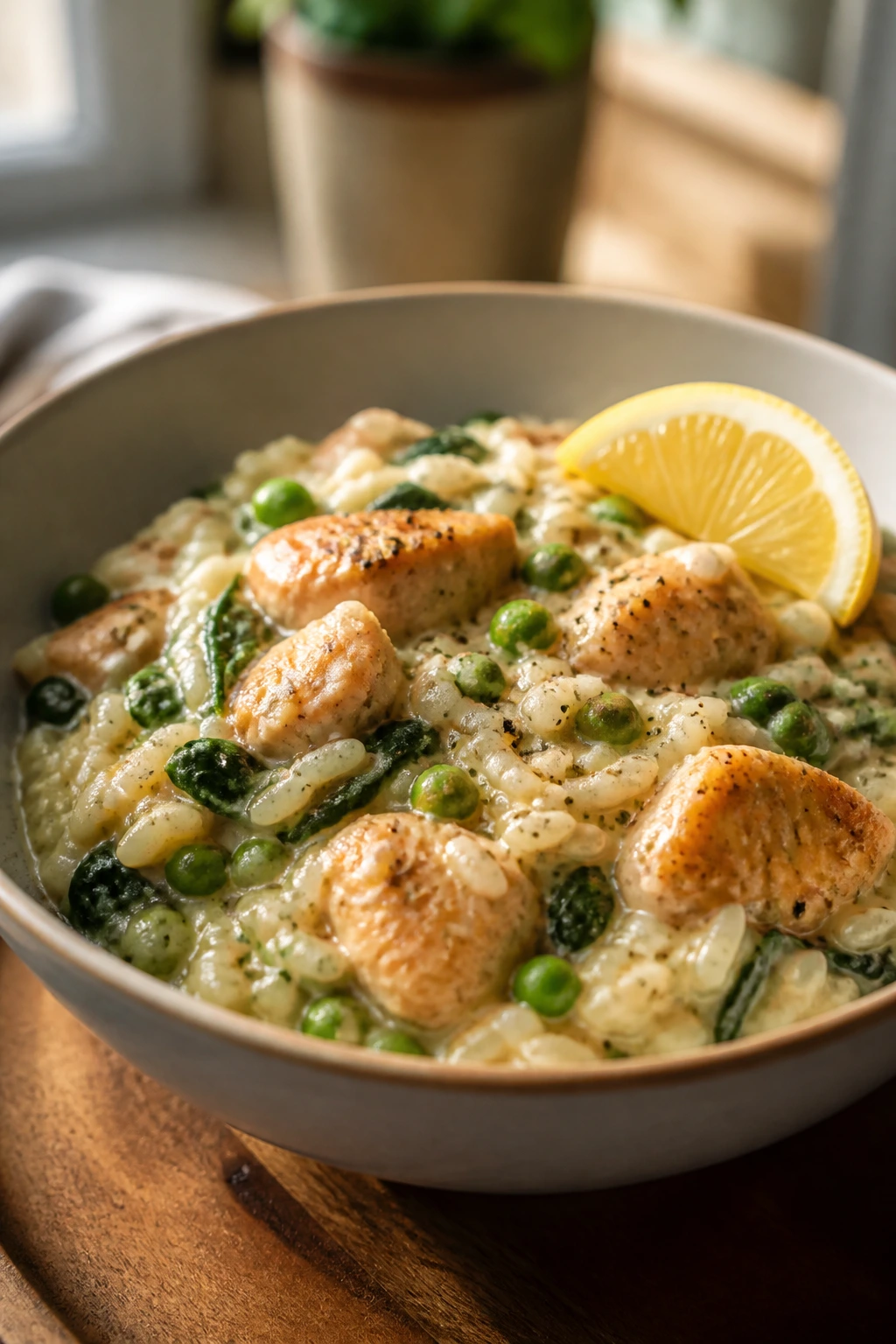
Flavor Enhancement: A small squeeze of lemon at the end is not decorative here. It cuts through the richness and keeps the Parmesan from making the dish feel heavy after three bites. You only need 1 teaspoon, maybe 2 if your lemon is mild.
Time-Saver: Dice the onion, celery, and garlic earlier in the day and keep them in a covered container in the fridge. You can also season the chicken ahead of time and leave it covered for up to 24 hours; the salt gives the meat a more even bite.
Texture Fix: If the skillet looks a little too loose at the end, let it rest uncovered for 5 to 7 minutes before serving. Rice keeps absorbing liquid off the heat, and the sauce usually tightens right where you want it. If it’s too thick, splash in 2 to 4 tablespoons of warm broth and stir.
Make-It-Yours: A handful of baby spinach folded in with the peas gives you a greener finish without changing the flavor much. If you like more bite, add sliced mushrooms after the onion and let them brown hard before the rice goes in. That browned mushroom flavor changes the whole pot.
Mistakes That Turn a Good Skillet into Mush
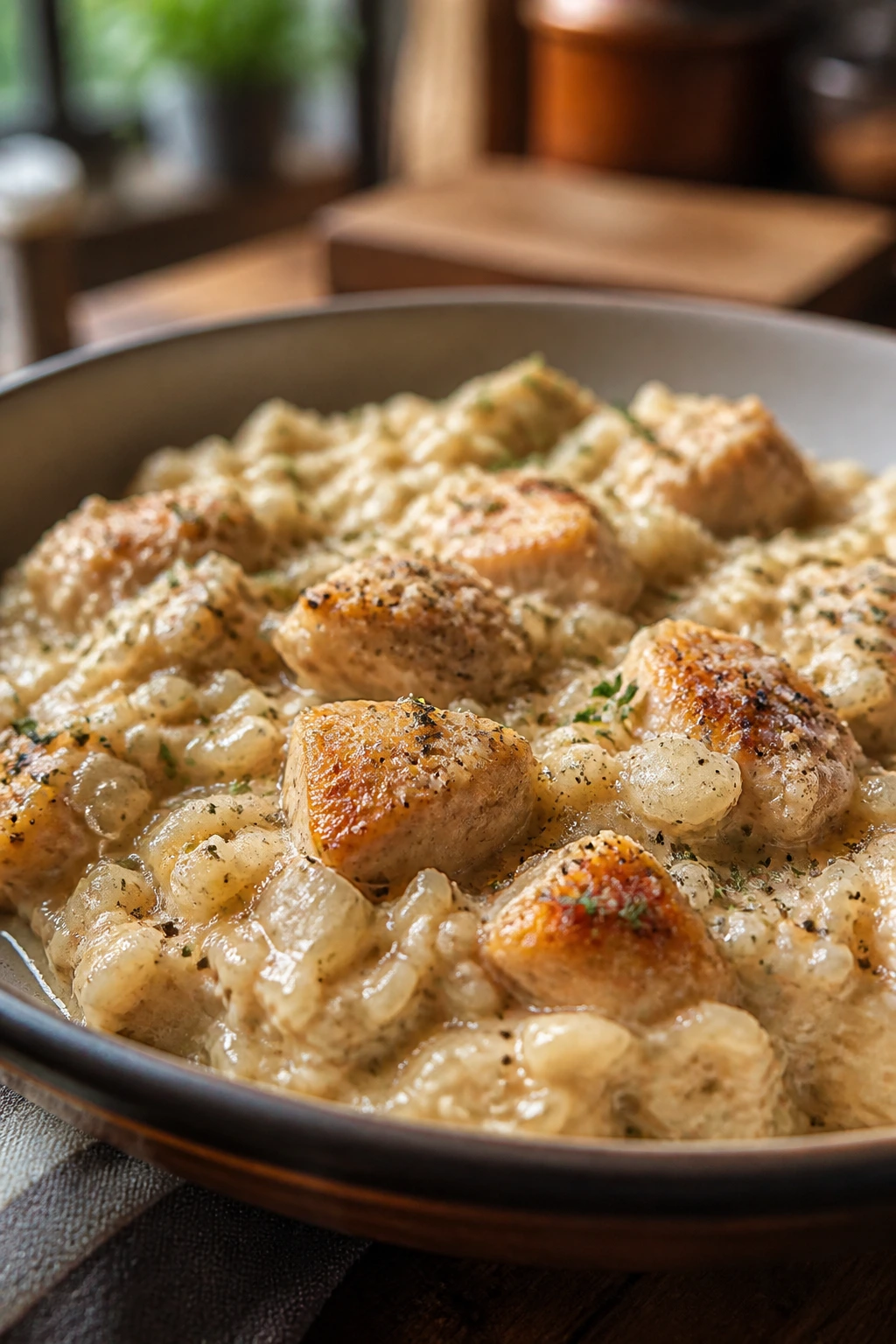
Using the wrong rice. Instant rice or parboiled quick-cook rice will not behave the same way here. It can go soft and odd before the sauce has a chance to settle. Stick with long-grain white rice, or move to a different liquid ratio and timing if you insist on brown rice.
Crowding the chicken while browning. If the pieces sit too close together, they steam instead of sear, and the pan loses the browned flavor that helps the whole dish taste deeper. The fix is simple: cook in two batches and give the pieces space. A little extra time here pays off.
Boiling the dairy hard. Once the broth, milk, and cream go in, the heat needs to drop. A hard boil can split the dairy and leave the sauce grainy or thin. You want a lazy, bubbling simmer, not a rolling boil.
Walking away from the rice. Rice cooked in a creamy skillet can stick faster than plain rice because of the dairy and the starch. Stir once halfway through and check the liquid level. If the pan looks dry before the grains are tender, add 1/4 cup warm broth and keep cooking covered.
Adding Parmesan while the pan is raging hot. Cheese thrown into a boiling skillet can clump or turn stringy. Pull the pan off the heat first, then stir in the Parmesan so it melts into the sauce instead of sitting in little rubbery strands.
Skipping the rest. The five-minute rest is not decorative. The rice finishes absorbing the last bit of liquid, and the sauce stops sloshing around. Cut that rest short and the bowl can look runnier than it should.
Variations Worth Trying When the Fridge Looks Bare
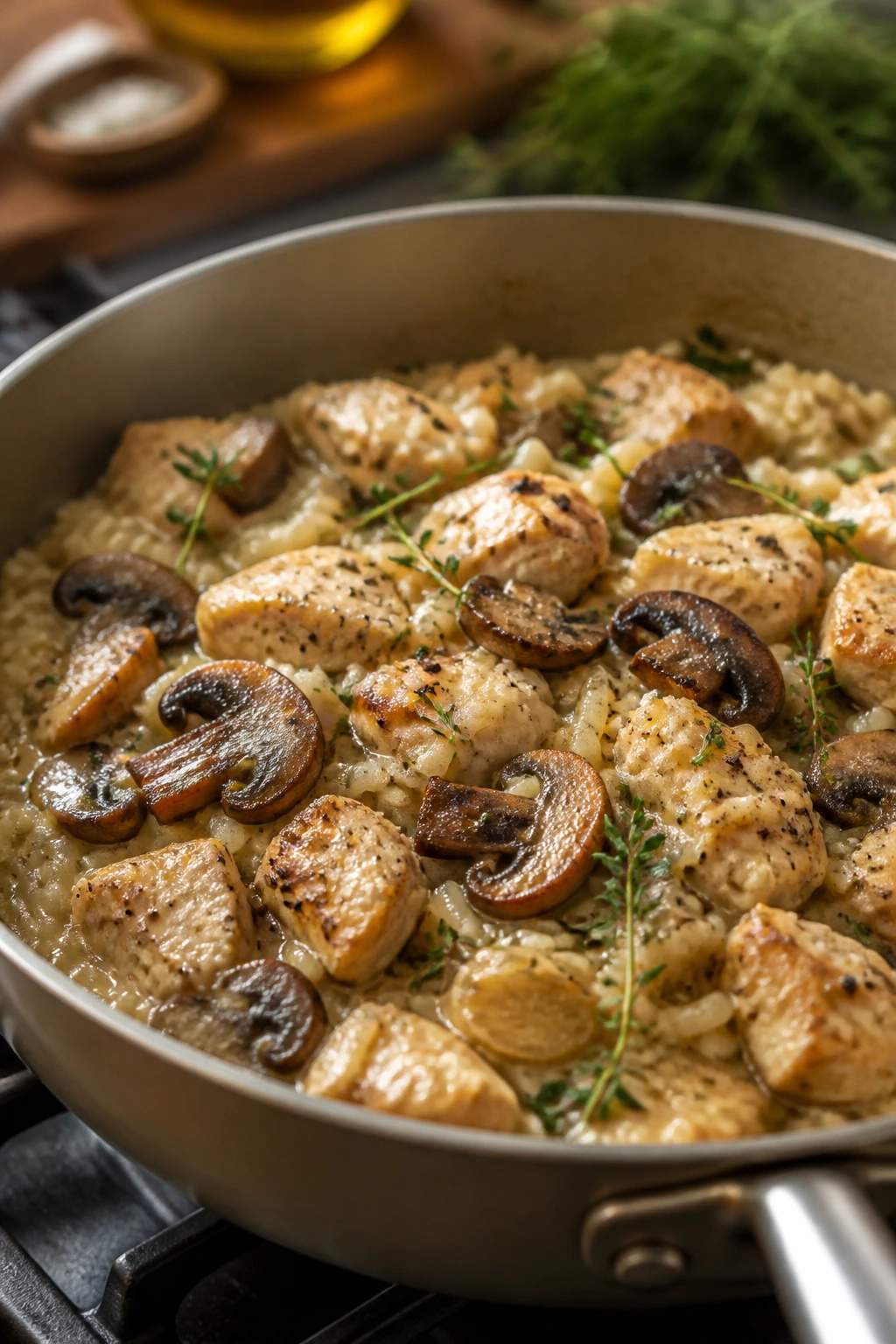
Mushroom and Thyme Skillet
Add 8 ounces of sliced cremini mushrooms after the onion and celery, and cook them until they give off their moisture and start to brown on the edges. The extra savory depth makes the dish feel older and earthier, especially if you swap the parsley for chopped chives at the end.
Lemon-Pepper Chicken and Rice
Increase the lemon juice to 2 teaspoons, add 1/2 teaspoon extra black pepper, and finish with a little lemon zest. This version tastes sharper and lighter, which is handy if you want the cream to read as silky instead of rich.
Broccoli and Cheddar Version
Stir in 1 1/2 cups small broccoli florets during the last 5 minutes of simmering, then replace the Parmesan with 1/2 cup sharp cheddar off the heat. It turns the skillet into a more kid-friendly bowl with a stronger cheese pull and a firmer vegetable bite.
Rotisserie Shortcut Bowl
Skip the chicken sear and fold in 3 cups shredded rotisserie chicken after the rice has cooked. The flavor is a little less deep than browned thighs, but it gets dinner on the table fast and still tastes like someone tried.
Dairy-Light Creamy Rice
Use 1 cup evaporated milk in place of the whole milk and cream. The result is still creamy, but the flavor is a little cleaner and less lush, which works if you want something lighter without losing the sauce entirely.
Storage, Reheating, and Make-Ahead Notes
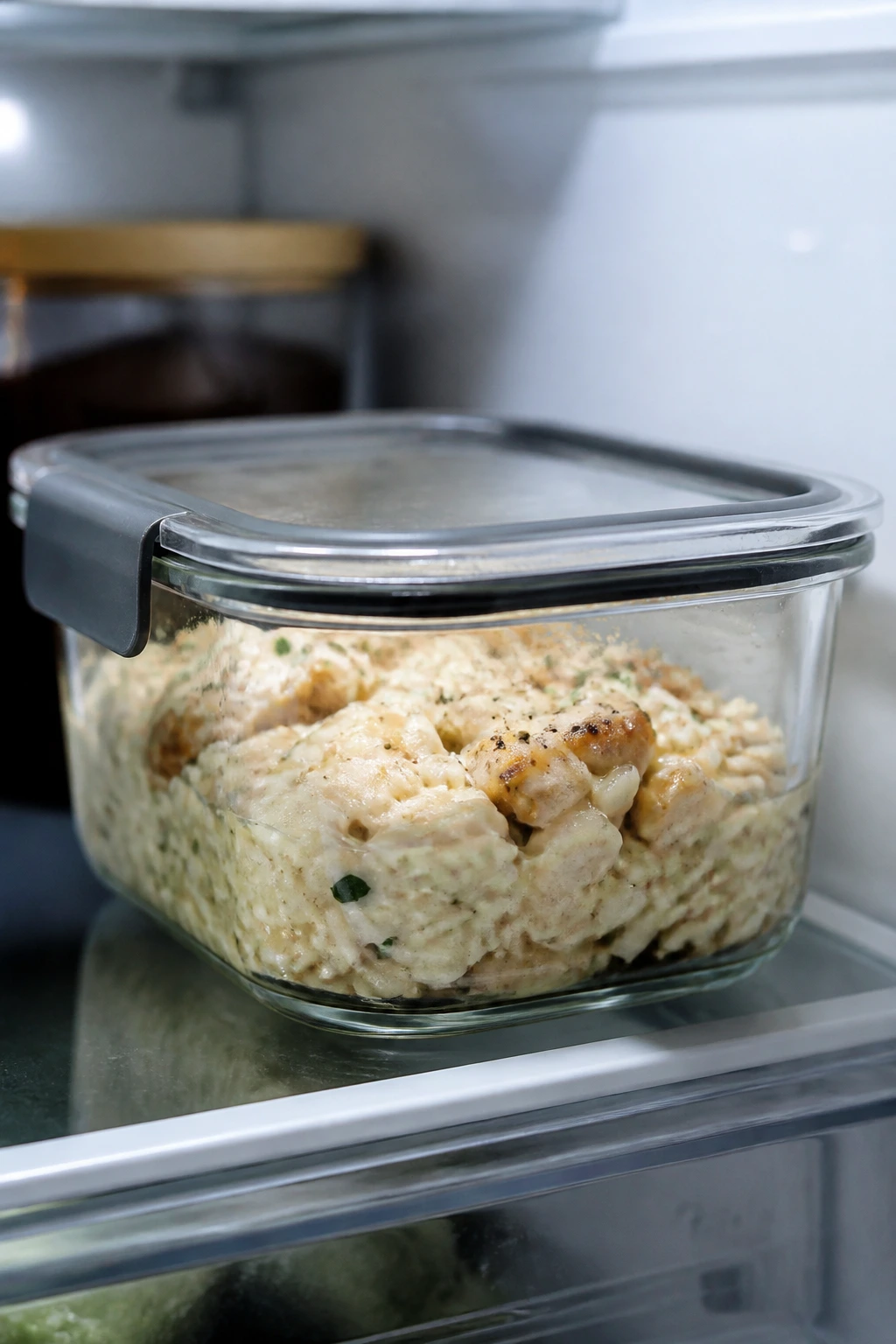
Refrigerator: Cool the chicken and rice within 2 hours, then store it in an airtight container for 3 to 4 days. Spread it into a shallow container if you want it to chill quickly and evenly; a deep bowl traps heat longer than you’d think.
Freezer: Freeze for up to 2 months, though the rice will soften a little on thawing. Portion it into single-serving containers if you can. That makes reheating easier, and you won’t end up thawing more than you need.
Reheating on the stovetop: Put the leftovers in a skillet with 2 to 4 tablespoons of broth, water, or milk over low heat. Cover and warm gently, stirring once or twice, until the rice loosens and the chicken is hot through. This is the best method if you want the texture to stay close to the original.
Reheating in the microwave: Add a splash of liquid, cover loosely, and heat in 45-second bursts, stirring between each round. A damp paper towel over the bowl helps trap steam. If the rice looks dry, another teaspoon or two of liquid fixes it faster than more heat.
Make-ahead: You can season and brown the chicken a day ahead, then refrigerate it separately. The onions and celery can be chopped ahead too. I would not fully cook the whole dish too far in advance if you want the rice at its best, but it does hold up well overnight and often tastes even more settled the next day.
Questions People Ask About Creamy Chicken and Rice
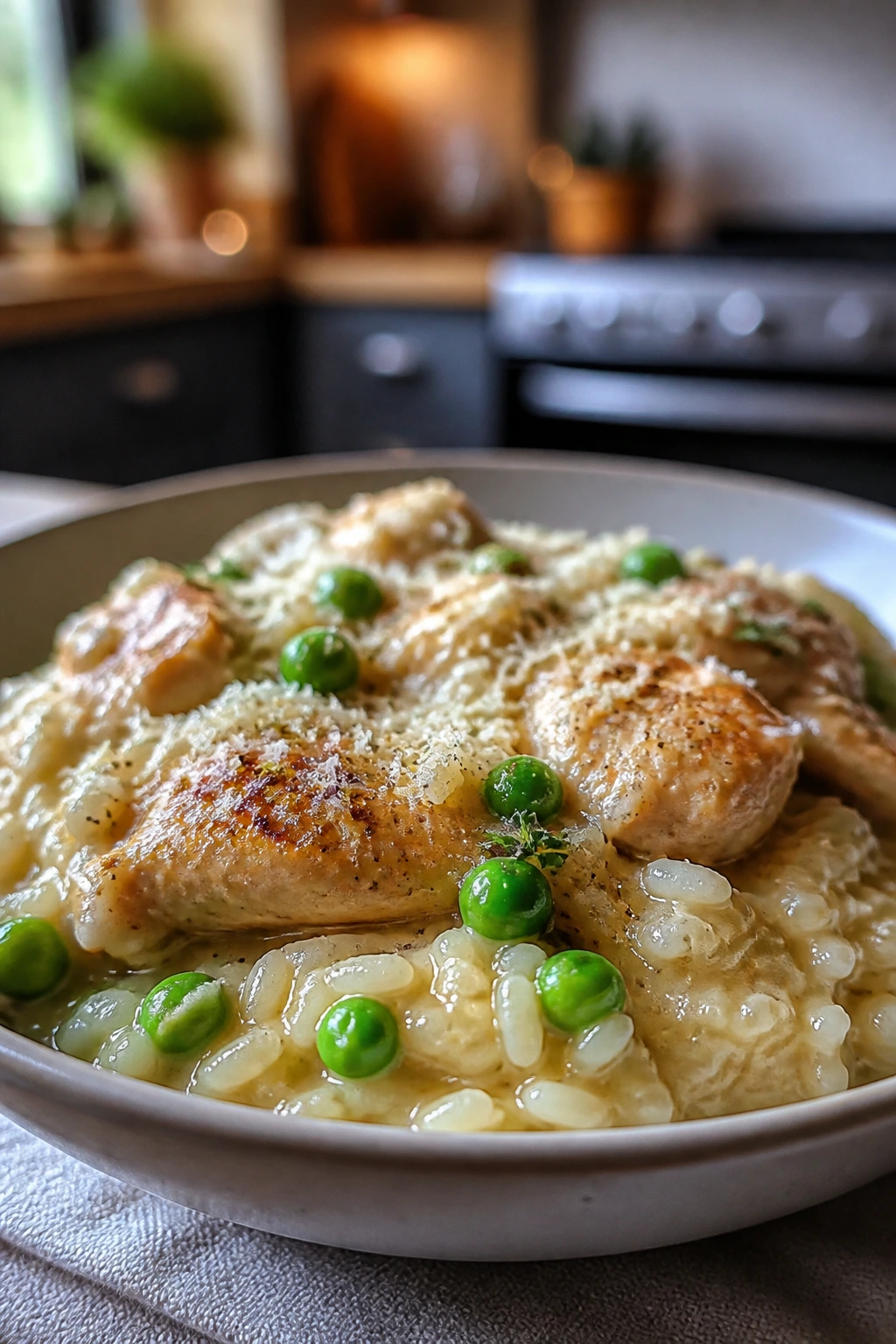
Can I use chicken breasts instead of thighs?
Yes, but cut them into larger bite-size pieces and watch the simmer closely. Breasts dry out faster than thighs, so the key is to pull the pan from the heat as soon as the rice is tender and the chicken reaches 165°F.
Do I have to rinse the rice?
I recommend it. Rinsing removes some surface starch, which helps the final dish stay creamy instead of turning gummy. If you skip it, the sauce will thicken faster, and you may need a little extra broth near the end.
Can I make this with brown rice?
You can, but it needs more liquid and a longer cook time, and the creamy texture changes quite a bit. Brown rice usually needs closer to 40 to 45 minutes of gentle simmering, plus more broth along the way, so I treat it as a different recipe rather than a straight swap.
What if the rice is still crunchy when the liquid is gone?
Add 1/4 to 1/2 cup warm broth, cover the pan, and cook on low for 5 more minutes. Crunchy rice usually means the heat was a little high or the lid let too much steam escape. Another 5 minutes fixes most of those cases.
Can I freeze leftovers with the cream in them?
Yes, but expect the texture to soften slightly once thawed. The best fix is a gentle reheat with a splash of broth and a fresh pinch of Parmesan, which brings the sauce back together.
Can I add more vegetables?
Definitely. Peas are the easiest because they cook fast and stay bright. Small broccoli florets, chopped spinach, or diced carrots all work if you match the timing to the vegetable; carrots need to go in earlier, spinach goes in at the end.
Can I make this in the oven or slow cooker instead of on the stove?
An oven version is doable, but you still need a stovetop step to brown the chicken and build flavor. A slow cooker softens the rice more than I like here, so I reserve it for soups and braises, not this particular skillet.
A Skillet Dinner to Keep Around
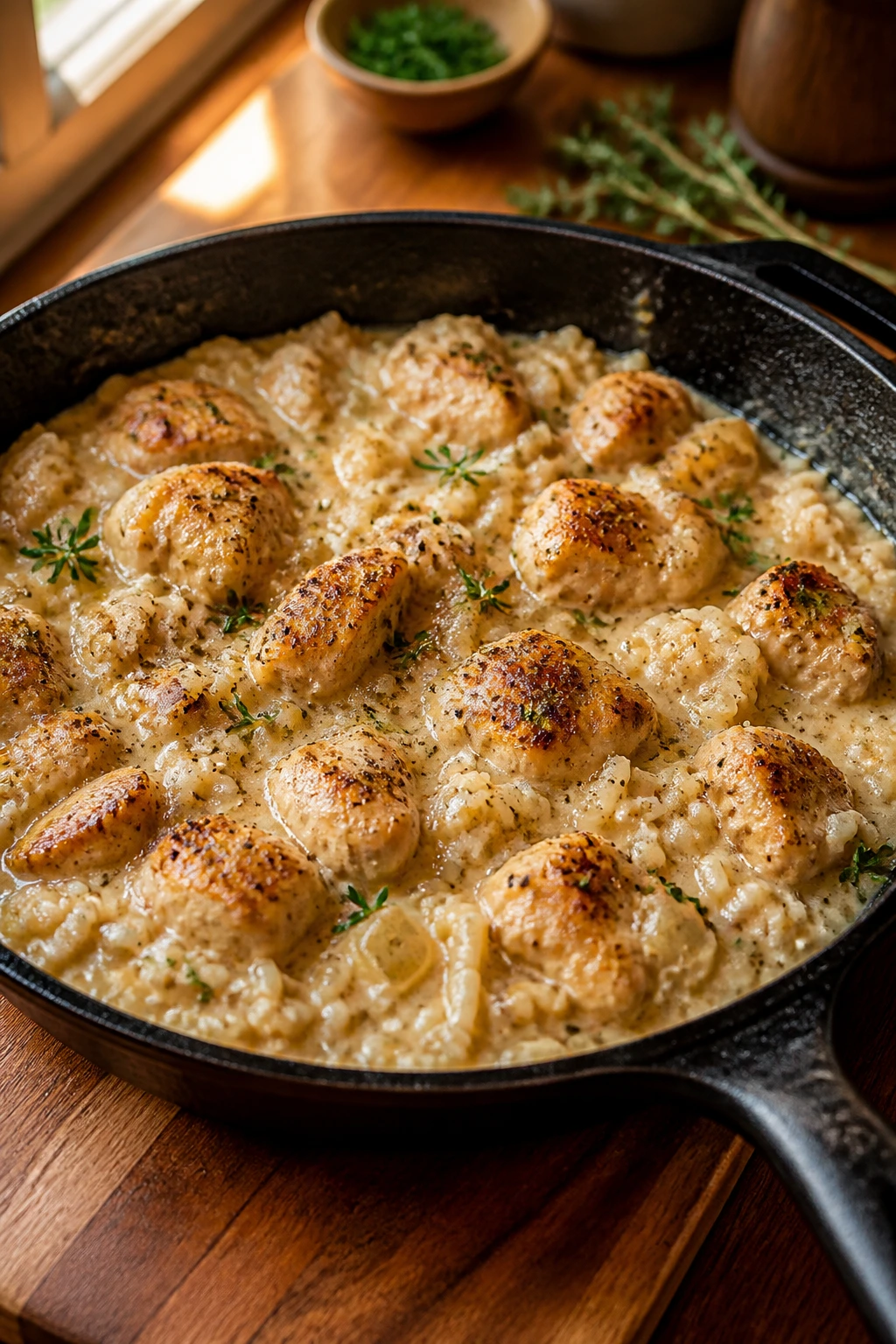
There’s a reason creamy chicken and rice keeps showing up in real kitchens. It uses ordinary ingredients, but the order matters: brown first, simmer gently, rest before serving. That rhythm gives you a bowl that tastes full and finished instead of assembled at the last minute.
And honestly, that’s what makes it worth keeping in rotation. The recipe doesn’t ask for much, but it gives back a lot — a creamy spoonful, a little Parmesan salt, soft rice that still has shape, chicken that stays tender to the end. Make it once with thighs and a proper simmer, and the skillet starts to feel like a useful habit.
Creamy Chicken and Rice for Weeknight Dinners — Recipe Card
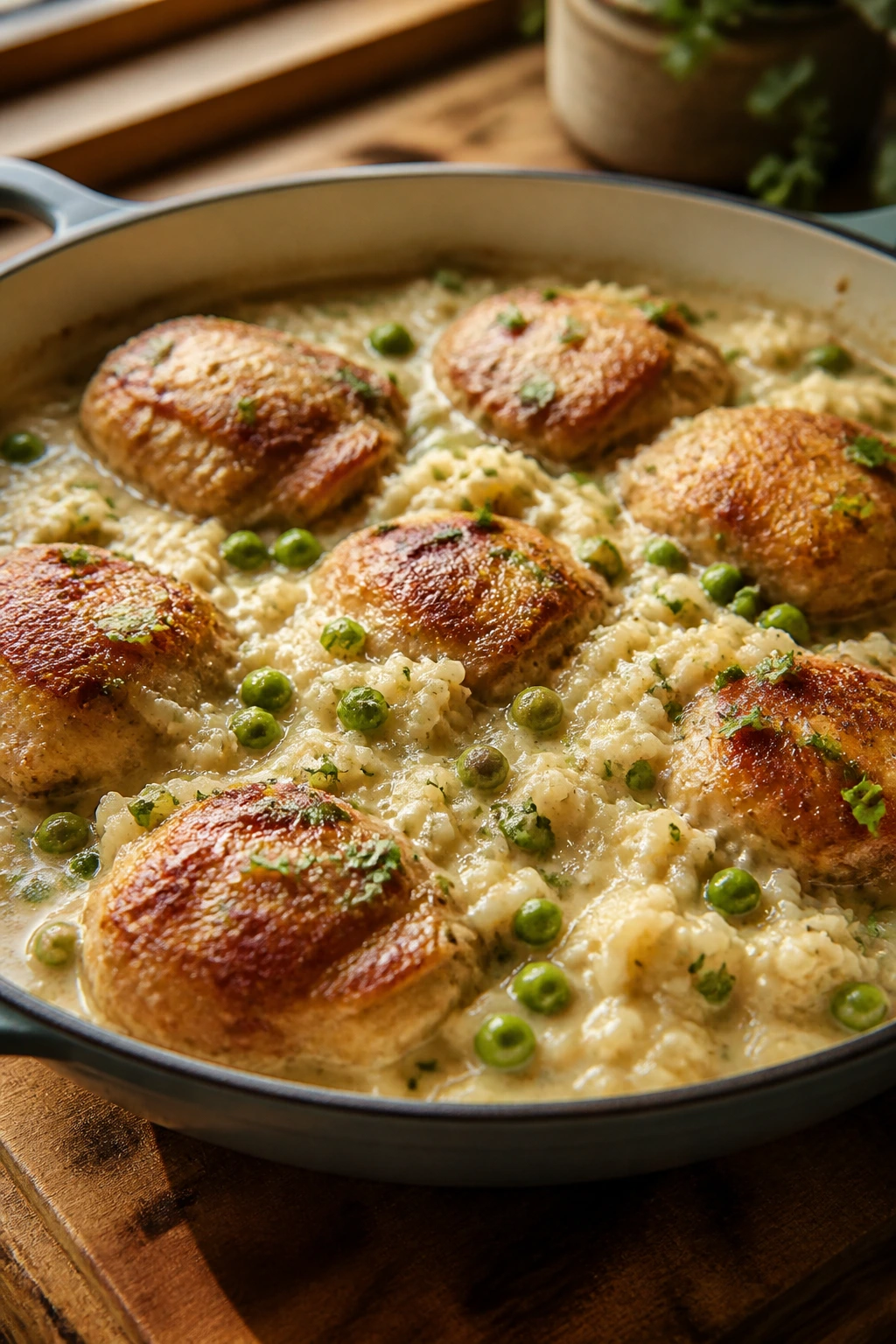
Recipe Name: Creamy Chicken and Rice for Weeknight Dinners
Description: Tender chicken thighs, long-grain rice, and a creamy Parmesan sauce come together in one skillet for a rich, spoonable dinner with peas and parsley on top.
Prep Time: 15 minutes
Cook Time: 30 minutes
Total Time: 45 minutes
Course: Main Course
Cuisine: American
Servings: 4
Calories: About 560 kcal per serving
Ingredients
For the Chicken:
- 1 1/2 pounds boneless, skinless chicken thighs, cut into 1-inch pieces
- 1 1/2 teaspoons kosher salt
- 1/2 teaspoon black pepper
- 1 teaspoon garlic powder
- 1/2 teaspoon paprika
- 2 tablespoons olive oil
For the Creamy Rice:
- 1 tablespoon unsalted butter
- 1 medium yellow onion, finely diced
- 2 celery stalks, finely diced
- 3 cloves garlic, minced
- 1 1/4 cups long-grain white rice, rinsed and drained
- 2 cups low-sodium chicken broth
- 1 cup whole milk
- 1/2 cup heavy cream
- 1 teaspoon dried thyme
- 1 bay leaf
For the Finish:
- 1 cup frozen peas
- 1/2 cup finely grated Parmesan cheese
- 2 tablespoons chopped fresh parsley
- 1 teaspoon lemon juice
Instructions
-
Season the chicken with salt, pepper, garlic powder, and paprika.
-
Brown the chicken in olive oil over medium-high heat, then transfer it to a plate.
-
Cook the onion and celery in butter over medium heat until softened, then add the garlic.
-
Stir in the rice and toast for 1 to 2 minutes.
-
Add the broth, milk, cream, thyme, and bay leaf, then bring the pan to a gentle simmer.
-
Return the chicken to the skillet, cover, and cook on low for 18 to 20 minutes, stirring once halfway through.
-
Stir in the peas and cook for 2 minutes, then remove the bay leaf.
-
Turn off the heat and stir in the Parmesan and lemon juice.
-
Rest for 5 minutes, then finish with parsley and serve hot.
Notes: Use a deep skillet with a lid so the rice cooks evenly. Add a splash of broth if the pan looks dry before the rice is tender. Stir the Parmesan in off the heat for the smoothest sauce.