



Juicy cheese stuffed chicken only works if two things happen at once: the filling stays thick enough to stay inside, and the breast stops cooking before it turns dry and stringy. Miss either piece, and you get a pan full of escaped mozzarella, a split pocket, and the kind of chicken dinner that looks more complicated than it tastes.
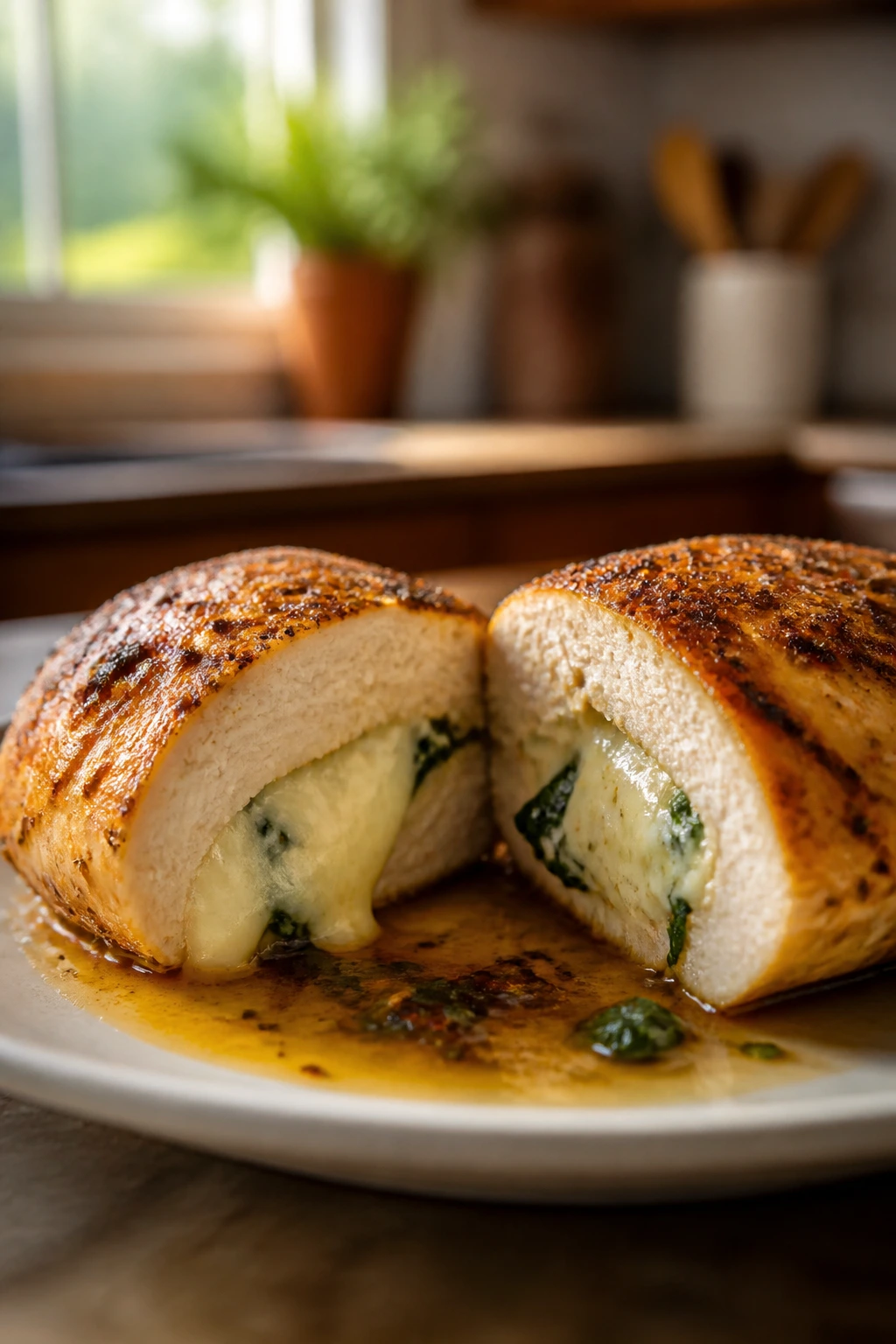
This version is built for weeknight dinners without pretending to be a shortcut that cheats the food. The chicken is butterflied or pocket-cut, filled with a creamy mix of cream cheese, low-moisture mozzarella, Parmesan, spinach, and garlic, then seared for color and finished in the oven. The outside gets a bronzed crust. The center turns soft and stretchy, not watery.
I reach for low-moisture mozzarella here because fresh mozzarella brings too much water, and I keep the filling cold so it doesn’t squish out the second the knife touches the meat. That sounds fussy. It isn’t. It’s the difference between chicken that looks like it came from a restaurant and chicken that ends up with cheese welded to the skillet.
Why This Juicy Cheese Stuffed Chicken Works on a Busy Night
Stuffed chicken has a reputation for being a little dramatic, and honestly, that’s fair. A lot of versions look good in photos and then collapse the second you move them with a spatula. The trick is to keep the filling thick, keep the pocket shallow, and keep the cooking method simple enough that you can repeat it without a recipe card taped to the fridge.
What makes this one useful is that it gives you a full meal feeling from a basic package of ingredients. Chicken breast can taste dry if you push it too far. Cheese inside the pocket slows that down because the filling brings fat, salt, and moisture right into the middle of the meat. The spinach keeps the filling from tasting one-note, and the lemony pan sauce stops the whole plate from feeling heavy.
I also like that this is a real “one skillet, one dinner” kind of dish. You sear, bake, and finish the sauce in the same pan, which means the browned bits stay where the flavor lives. That matters more than people admit. A clean skillet is nice. A skillet with sticky brown bits and a quick splash of broth is better.
And there’s another quiet advantage here: the method scales. Make two breasts for a small dinner, or four for a full table. The technique doesn’t change, and you won’t need a second pan unless your skillet is too small to hold them without crowding.
Why You’ll Love This Recipe
- Fast enough for a weeknight: The full cook runs about 40 to 45 minutes, and most of that is hands-off oven time while you clear the cutting board or toss a salad.
- The filling stays put: A thick cream cheese and mozzarella mix holds together better than loose ricotta or a watery cheese blend, so you get less leak-out in the skillet.
- The chicken stays juicy: Searing first gives the outside color, then the oven finishes the center gently instead of blasting it dry.
- The ingredients are familiar: Nothing here asks for a specialty store run; you’re working with chicken breast, common cheese, spinach, garlic, and broth.
- It plates like a real dinner: Slice one breast on the diagonal, spoon the pan sauce over the cut face, and it looks more composed than the cooking time suggests.
- Leftovers reheat well: The filling stays creamy the next day if you warm it gently and don’t nuke it into rubber.
Timing, Yield, and Difficulty
Yield: Serves 4
Prep Time: 20 minutes
Cook Time: 20 to 25 minutes
Total Time: 40 to 45 minutes
Difficulty: Intermediate — the steps are straightforward, but you do need a steady hand for the pocket cut and a thermometer for the finish.
Best Served: After a 5-minute rest, while the cheese is still soft and the chicken juices have settled.
Ingredients for Juicy Cheese Stuffed Chicken
For the Chicken
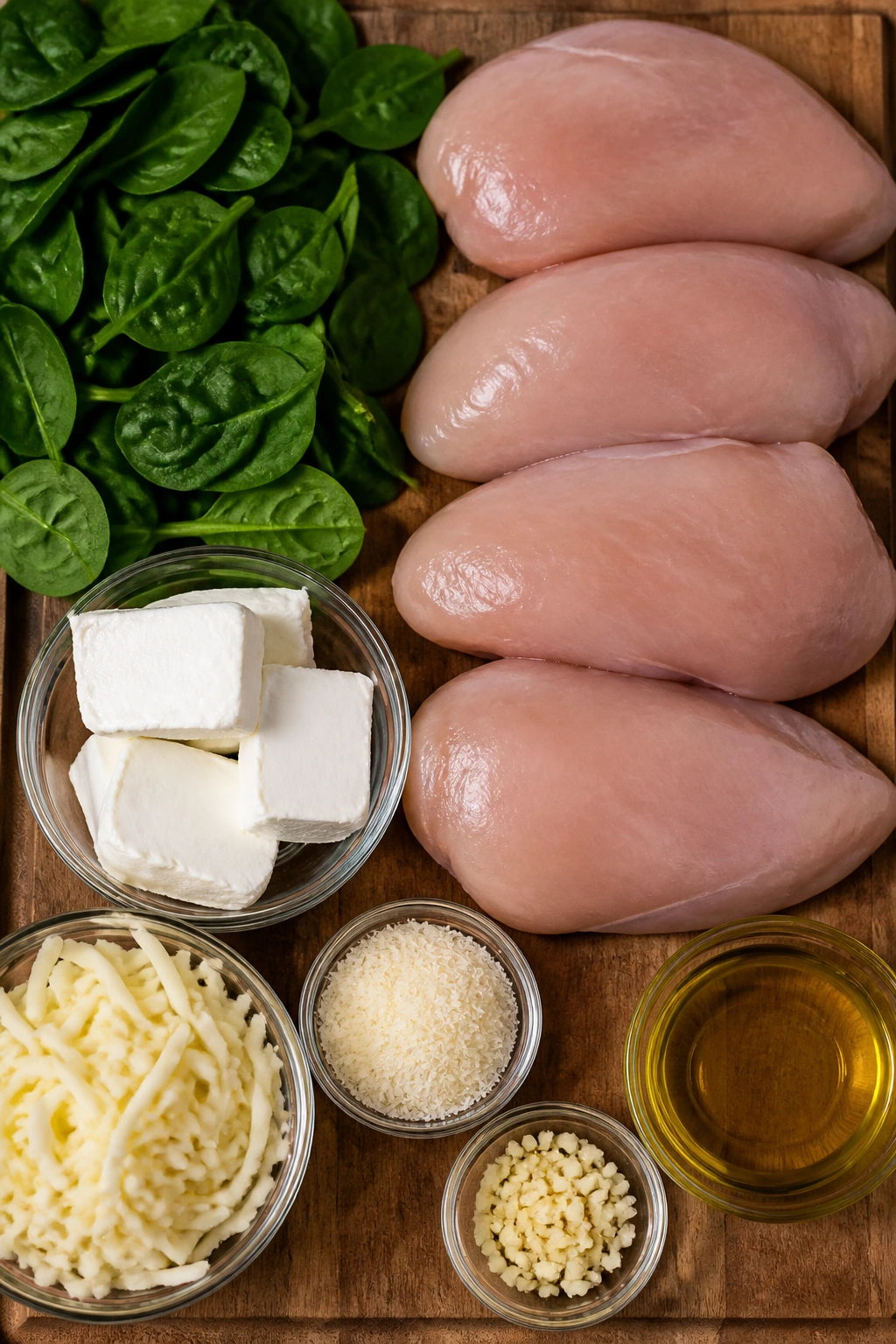
- 4 boneless, skinless chicken breasts, 7 to 8 oz each
- 1 1/2 teaspoons kosher salt
- 1/2 teaspoon black pepper
- 1 teaspoon garlic powder
- 1 teaspoon Italian seasoning
- 2 tablespoons olive oil
For the Cheese Filling
- 4 oz cream cheese, softened
- 1 cup shredded low-moisture mozzarella
- 1/4 cup grated Parmesan
- 1 cup fresh spinach, finely chopped and squeezed dry
- 1 small garlic clove, minced
- 1/4 teaspoon crushed red pepper flakes, optional
For the Pan Sauce
- 1/2 cup low-sodium chicken broth
- 1 tablespoon lemon juice
- 1 tablespoon unsalted butter
- 1 tablespoon chopped parsley, for garnish
What Each Ingredient Does to Keep the Chicken Juicy
Chicken Breasts
- What to use: 4 boneless, skinless chicken breasts, 7 to 8 oz each, with a similar thickness so they finish close to the same time.
- Preparation: Pat them dry, then cut a horizontal pocket into the thickest side, stopping about 1/2 inch from the far edge. If one side is much thicker, tap it lightly between parchment so the breast cooks evenly.
- Substitutions: Boneless turkey cutlets can work folded around the filling, and very large breasts can be split into thinner cutlets and rolled instead of pocketed.
- Tips: Pick breasts that feel firm and smooth, not spongy or waterlogged; the more evenly shaped they are, the less likely they are to split open in the skillet.
Cheese Filling
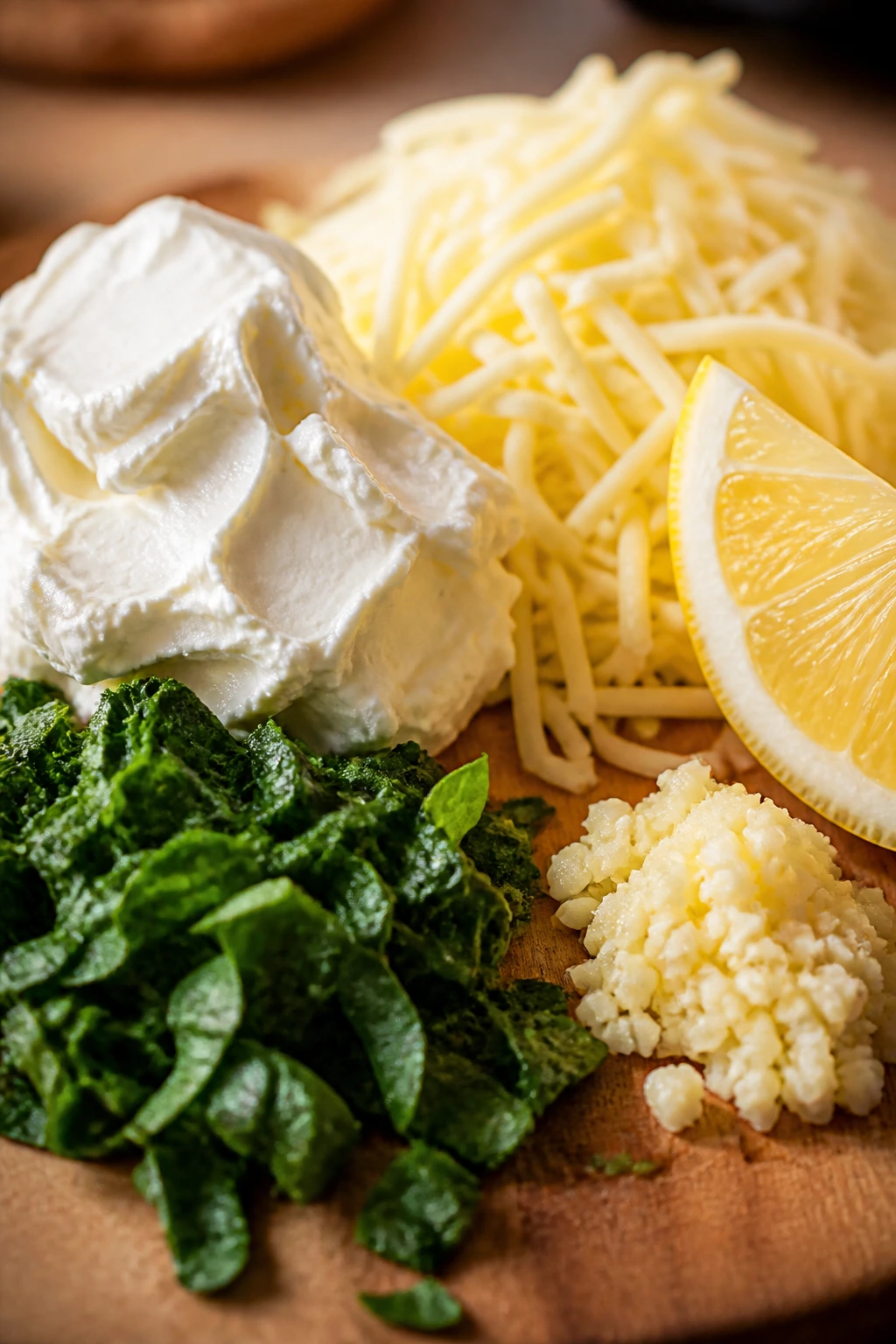
- What to use: 4 oz softened cream cheese, 1 cup shredded low-moisture mozzarella, 1/4 cup Parmesan, 1 cup chopped spinach, and 1 minced garlic clove.
- Preparation: Let the cream cheese sit at room temperature until it presses easily with a spoon, and squeeze the spinach dry with your hands or a clean towel so the filling stays thick.
- Substitutions: Fontina, provolone, or Monterey Jack can replace mozzarella, and chopped roasted red peppers or finely chopped sautéed mushrooms can stand in for the spinach if you dry them well first.
- Tips: Low-moisture mozzarella melts into long strands without flooding the pan; fresh mozzarella can leak enough water to thin the filling and make the pocket harder to seal.
Seasoning and Surface Flavor
- What to use: 1 1/2 teaspoons kosher salt, 1/2 teaspoon black pepper, 1 teaspoon garlic powder, 1 teaspoon Italian seasoning, and 2 tablespoons olive oil.
- Preparation: Mix the dry seasonings together first so the coating stays even, then rub them over the outside of the chicken before it hits the skillet.
- Substitutions: Swap the Italian seasoning for dried oregano and thyme if that’s what’s in the cupboard, or add a pinch of smoked paprika for a warmer, more roasted flavor.
- Tips: Season the outside generously enough that the first bite tastes like chicken, not just cheese; the filling carries richness, but the crust needs its own salt.
Pan Sauce and Finish
- What to use: 1/2 cup low-sodium chicken broth, 1 tablespoon lemon juice, 1 tablespoon butter, and 1 tablespoon chopped parsley.
- Preparation: Measure the broth and lemon before the chicken goes into the oven so you can deglaze the pan without pausing to hunt for ingredients.
- Substitutions: Dry white wine can replace half the broth if you want a sharper sauce, or use a spoonful of cream at the end if you prefer a richer finish.
- Tips: The lemon keeps the sauce from tasting flat after all the cheese; without that little bright edge, the plate can feel heavier than it needs to.
The Tools That Make Stuffing Easier
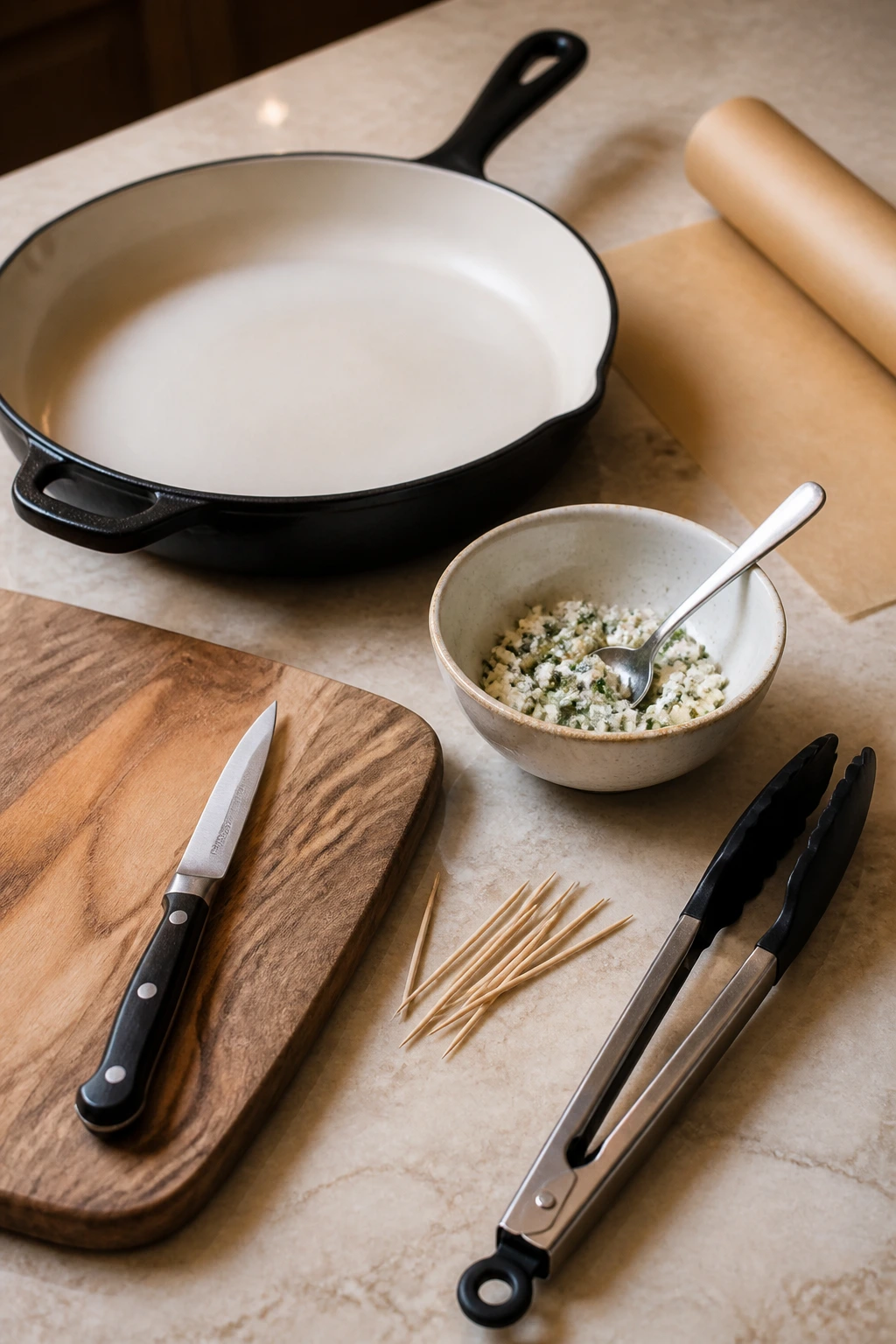
- 12-inch oven-safe skillet: This is the cleanest way to sear and bake in one pan; cast iron or stainless steel both work if they’re oven safe.
- Sharp paring knife: A short blade gives you control when you cut the pocket, which matters more than using a big chef’s knife for this job.
- Cutting board: Use a sturdy board with enough room to rest the chicken flat while you cut and season.
- Plastic wrap or parchment paper: Handy for gently flattening a thick end of the breast without tearing the meat.
- Small mixing bowl: You want enough room to stir the filling until it’s smooth and thick.
- Spoon or small spatula: This helps pack the filling into the pocket without smearing it across the outside of the chicken.
- Tongs: Better than a fork for turning the breasts in the skillet without puncturing the meat and losing juices.
- Instant-read thermometer: The most useful tool in the whole setup; stuffed chicken needs a temperature reading, not a hopeful guess.
- Toothpicks: Use 2 or 3 per breast to keep the seam closed while the chicken sears and bakes.
Cutting the Pocket and Packing the Filling
Prep the Chicken:
-
Preheat the oven to 400°F (200°C) and set a rack in the center. Lightly oil a 12-inch oven-safe skillet so the chicken doesn’t cling to the surface later.
-
Pat the chicken breasts dry with paper towels. If the thick end of a breast is much higher than the rest, place it between parchment and tap that end lightly with a meat mallet or rolling pin until the thickness evens out a bit. Do not flatten the whole breast into a thin cutlet; you need enough thickness left to hold the filling.
-
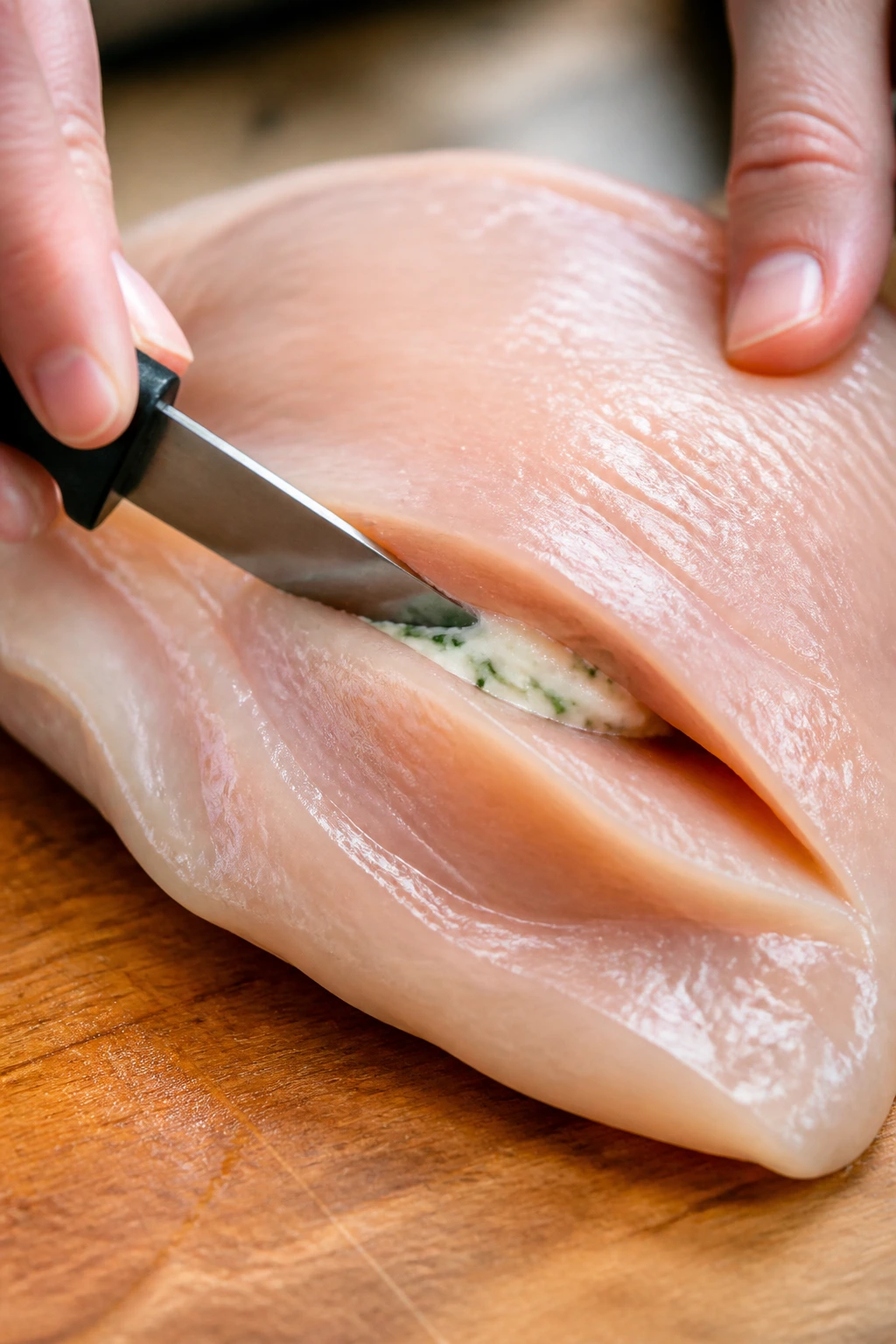
With a sharp paring knife, cut a pocket into the thickest side of each breast. Slide the blade in horizontally and stop about 1/2 inch from the opposite edge, making a deep pocket without cutting all the way through. If you slice through the back wall, the filling will leak before the chicken finishes cooking.
Make the Filling:
-
In a small bowl, stir together the softened cream cheese, mozzarella, Parmesan, chopped spinach, minced garlic, and red pepper flakes if you’re using them. Mix until the filling looks thick, even, and spreadable, like cold frosting. If the spinach leaves the mixture wet, squeeze it once more with your hand or a clean towel.
-
Divide the filling among the four breasts, using about 2 to 3 tablespoons per breast. Spoon it into the pocket, then press the opening closed and secure it with 2 or 3 toothpicks inserted at a slight angle. Season both sides of each breast with the salt, pepper, garlic powder, and Italian seasoning.
A quick note before you move on: If the breasts are especially large, give them another minute to think about the filling before you force it all inside. Overstuffing is the fastest route to a split seam.
Searing and Baking Until the Cheese Melts
-
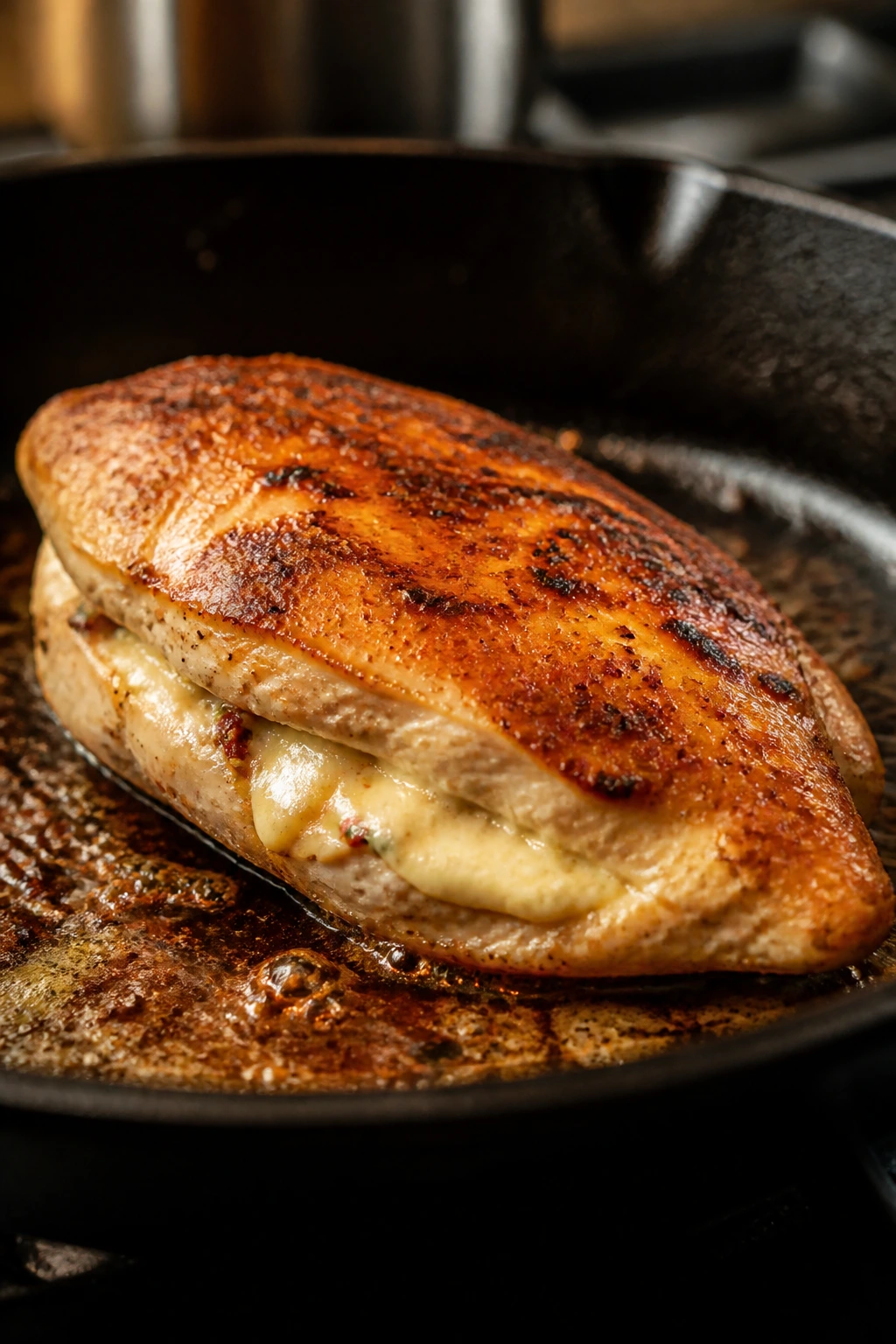
Heat the olive oil in the oven-safe skillet over medium-high heat until it shimmers. Set the stuffed breasts in the pan seam-side up first if possible, then sear for 2 to 3 minutes per side until the outside takes on a deep golden color. The chicken should not be cooked through yet; you’re building color here, not finishing the dish.
-
Pour the chicken broth and lemon juice around the chicken, not directly over the tops, and dot the butter into the liquid. Slide the skillet into the oven and bake for 12 to 15 minutes, or until the thickest part of the chicken reaches 160°F (71°C) on an instant-read thermometer. If the top is browning faster than you like, lay a loose sheet of foil over the skillet for the last few minutes.
-
Transfer the chicken to a cutting board and let it rest for 5 minutes. While it rests, set the skillet over medium heat and simmer the pan juices for 1 to 2 minutes, just until they turn glossy and slightly reduced. Remove the toothpicks, spoon the sauce over the chicken, and finish with parsley. Do not cut into the chicken early; resting gives the juices time to settle instead of spilling onto the board.
How to Serve It
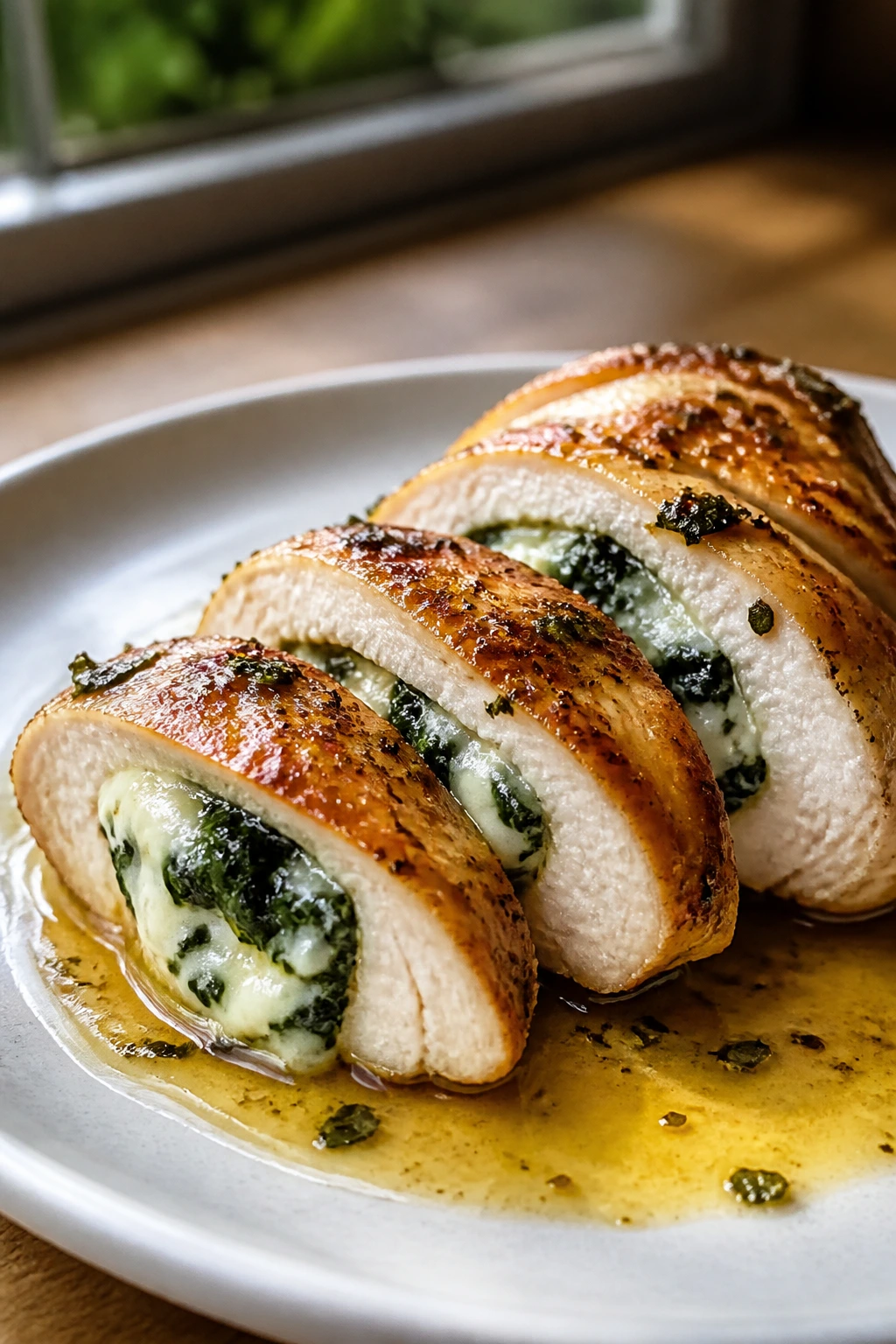
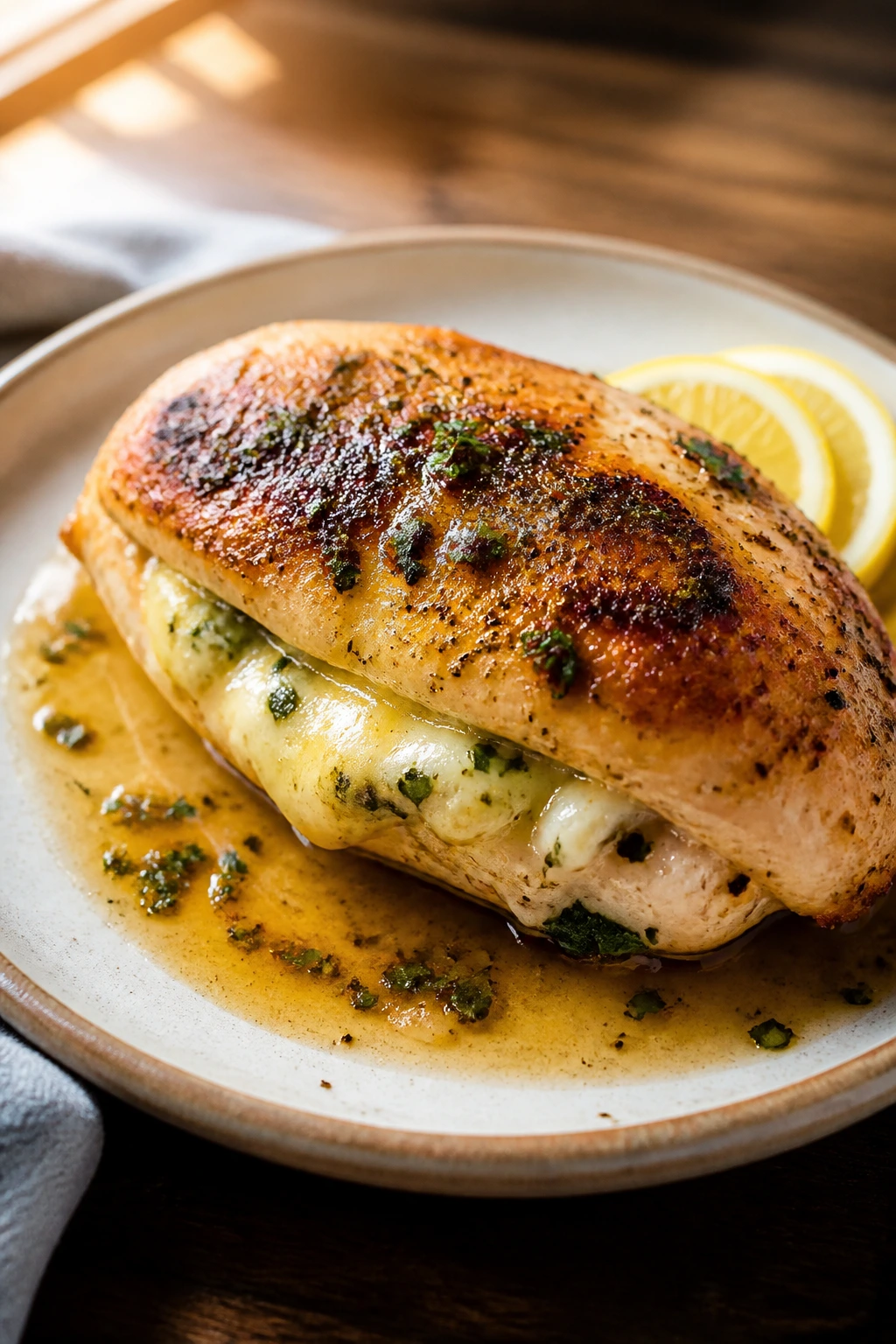
Presentation: Slice each breast on a slight diagonal so the filling shows in the center, then spoon the lemon-butter pan sauce over the cut face instead of drowning the whole plate. I like a white or pale plate here because the browned chicken and green spinach look sharp against it.
Accompaniments: Roasted broccoli, garlicky green beans, or a simple buttered rice pilaf all work without fighting the cheese. If you want a starch that catches the sauce, mashed potatoes or orzo are the two I reach for most often. A crisp green salad with lemon vinaigrette keeps the plate from feeling too rich.
Portions: One stuffed breast usually serves one adult with a side and maybe a salad. If the breasts are large, slice them in half after resting and serve the halves with extra sauce so the plate still feels generous.
Beverage Pairing: A dry Riesling, an unoaked Chardonnay, or sparkling water with lemon all fit the creamy filling and the bright pan sauce. I’d skip anything heavily sweet; the cheese already brings enough richness.
Extra Tips for Better Flavor
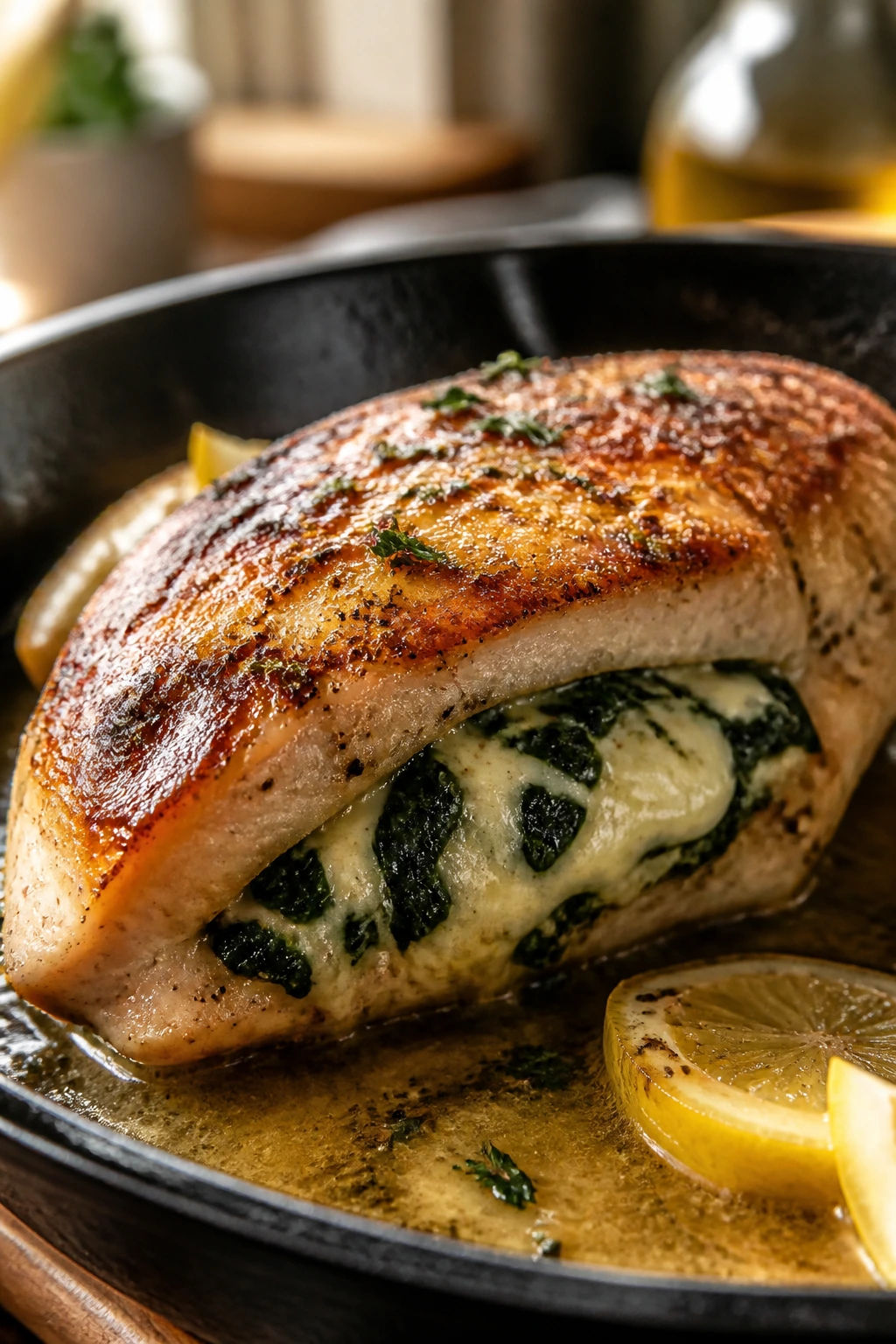
Flavor Enhancement: A teaspoon of Dijon mustard whisked into the cheese filling gives the middle a quiet tang that cuts through the richness. It doesn’t turn the dish into mustard chicken; it just keeps the cheese from tasting flat after a few bites.
Time-Saver: Mix the filling up to 24 hours ahead and keep it covered in the fridge. When dinner time arrives, the filling is already thick and easy to spoon into the pockets, which is the part that tends to slow people down.
Pro Move: Chill the stuffed breasts for 10 minutes before they hit the skillet if your kitchen is warm. A colder filling holds the seam better during the first sear, which is when most leaks start.
Cost-Saver: Spend the money on chicken breasts that are similar in size and save on the cheese blend. A good store-brand mozzarella and a block of Parmesan you grate yourself do the job well; the expensive part here is consistency, not boutique cheese.
Serving Suggestion: If you want the plate to look a little more composed, spoon a thin line of sauce onto the plate first, set the sliced chicken partly on top, and scatter parsley over the pan juices. It takes 20 seconds and makes the meal feel finished.
Common Mistakes to Avoid
-
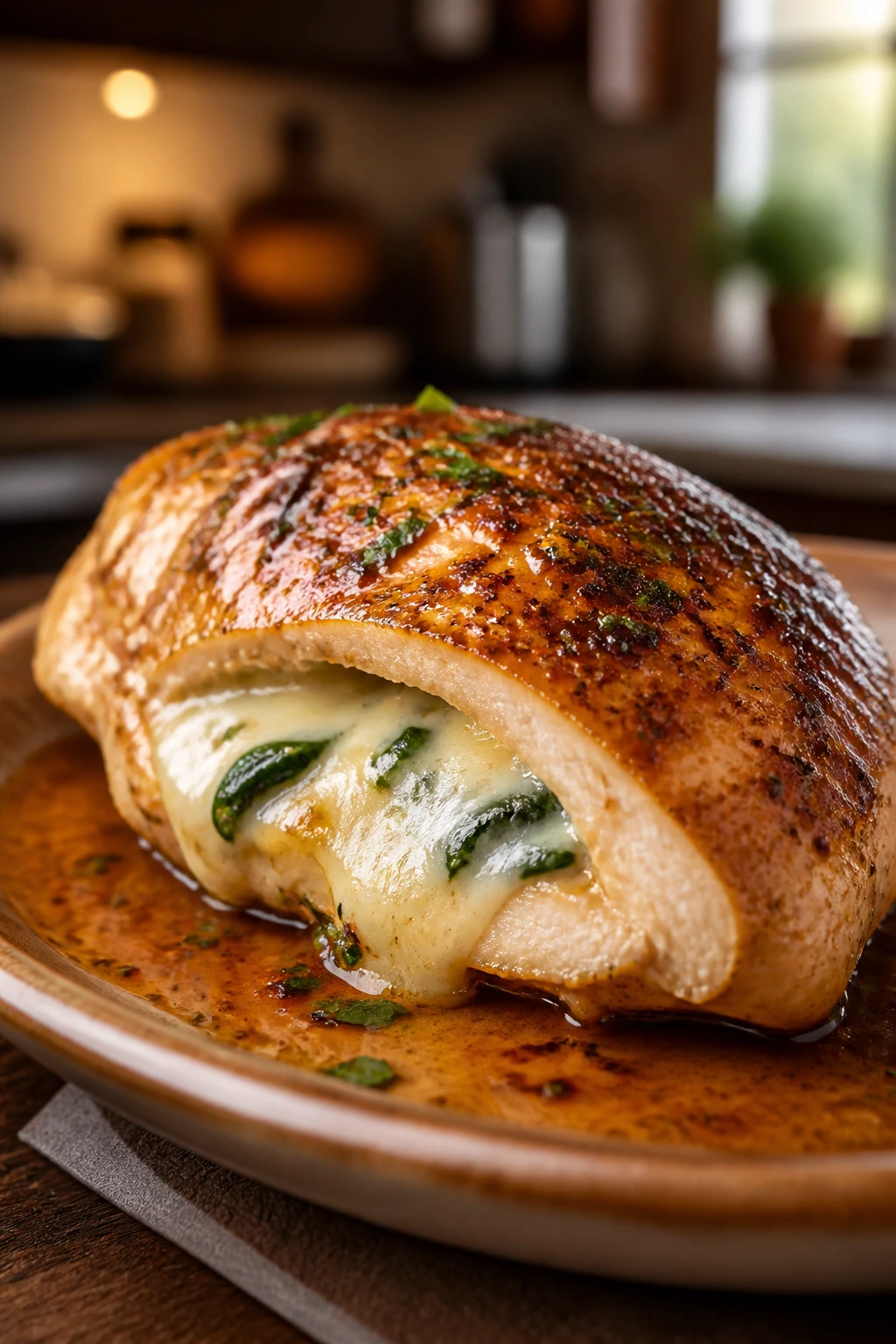
Cutting the pocket too deep: If the knife goes through the back wall, the filling will escape as soon as the chicken tightens in the skillet. The fix is simple: stop early and keep the slit about 1/2 inch from the far edge, even if the pocket feels smaller than you expected.
-
Overfilling the breasts: More filling does not mean a better stuffed chicken. Too much cheese pushes the seam open, and you end up with melted filling around the pan instead of inside the meat; stick to 2 to 3 tablespoons per breast.
-
Using wet filling: Spinach that isn’t squeezed dry, or fresh mozzarella that drips water, makes the mixture loose and hard to seal. If the filling looks sloppy in the bowl, it will only get looser in heat, so tighten it before you stuff.
-
Skipping the thermometer: Chicken breast can go from fine to dry fast, and stuffed chicken cooks unevenly because the center has extra mass. Pull the pan when the thickest part hits 160°F, then rest it to finish at the safe 165°F mark.
-
Crowding the skillet: If the breasts are pressed into each other, they steam instead of sear, and the outside stays pale while the pocket leaks. Use a larger skillet or cook in two rounds if needed; a little space between the pieces pays off.
Variations Worth Trying
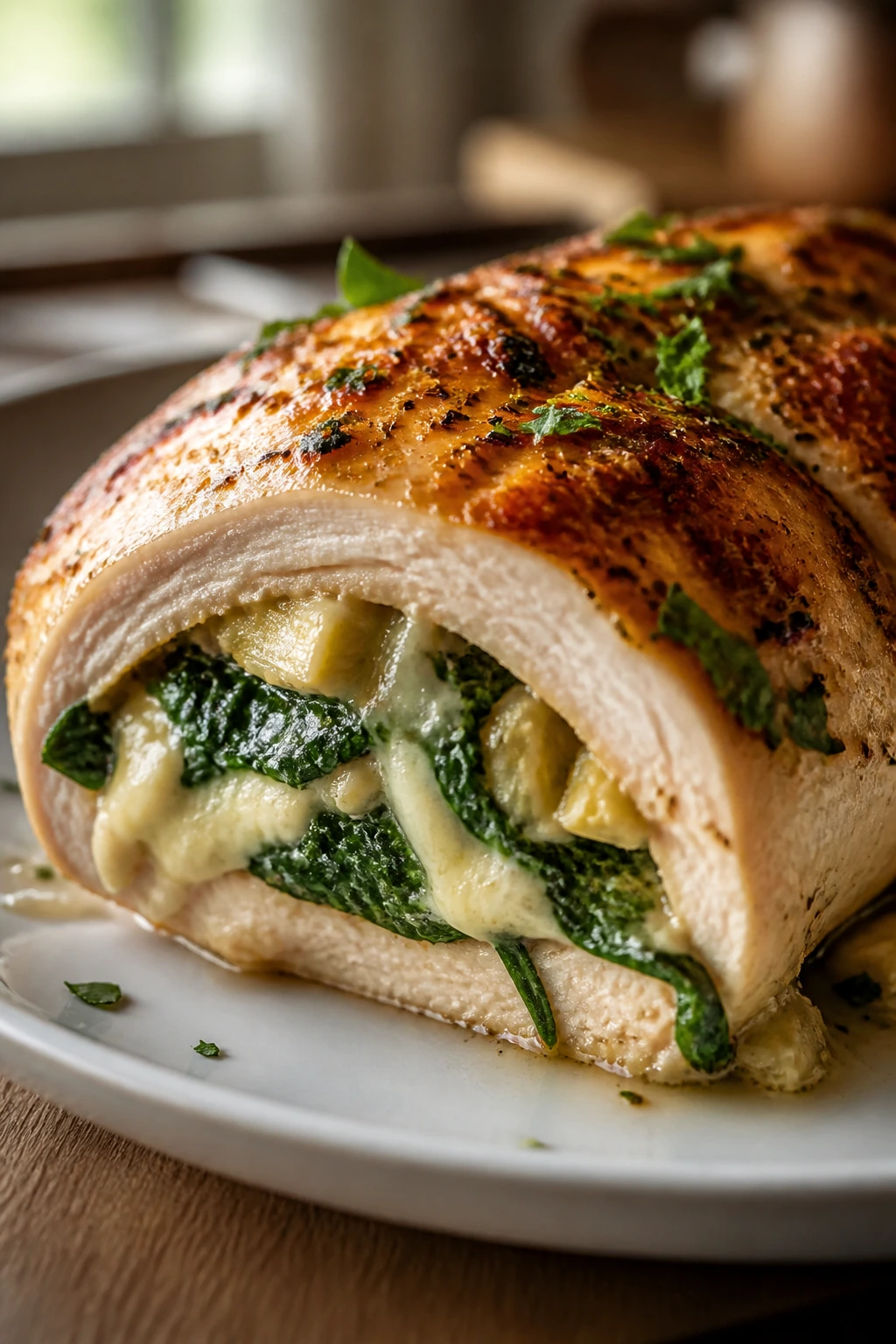
Spinach Artichoke Chicken: Add 1/4 cup finely chopped, well-drained artichoke hearts to the filling and bump the Parmesan to 1/3 cup. It tastes like the dip wandered into a chicken breast and decided to stay.
Pizza-Style Stuffed Chicken: Replace the spinach with 2 tablespoons chopped pepperoni and 1 teaspoon dried oregano, then serve with warm marinara on the side instead of the lemon-butter sauce. The filling gets saltier and more savory, so keep the outside seasoning a touch lighter.
Jalapeño Cheddar Chicken: Swap the mozzarella for sharp cheddar and mix in 1 to 2 tablespoons finely diced pickled jalapeños. The cheddar melts a little less neatly than mozzarella, but the pepper bite works well if you like the cheese filling to have some heat.
Mushroom and Gruyère Chicken: Sauté 1/2 cup finely chopped mushrooms until their moisture cooks off, cool them, then stir them into the filling with shredded Gruyère instead of mozzarella. This version feels earthier and a little richer, which is useful when you want the dish to lean more savory than creamy.
Dairy-Light Version: Use plant-based cream cheese and a meltable dairy-free shredded cheese blend, then keep the filling cold before stuffing. The texture changes, but the pocket still works, and the lemon pan sauce helps bring the plate back into balance.
Storage, Reheating, and Make-Ahead Notes
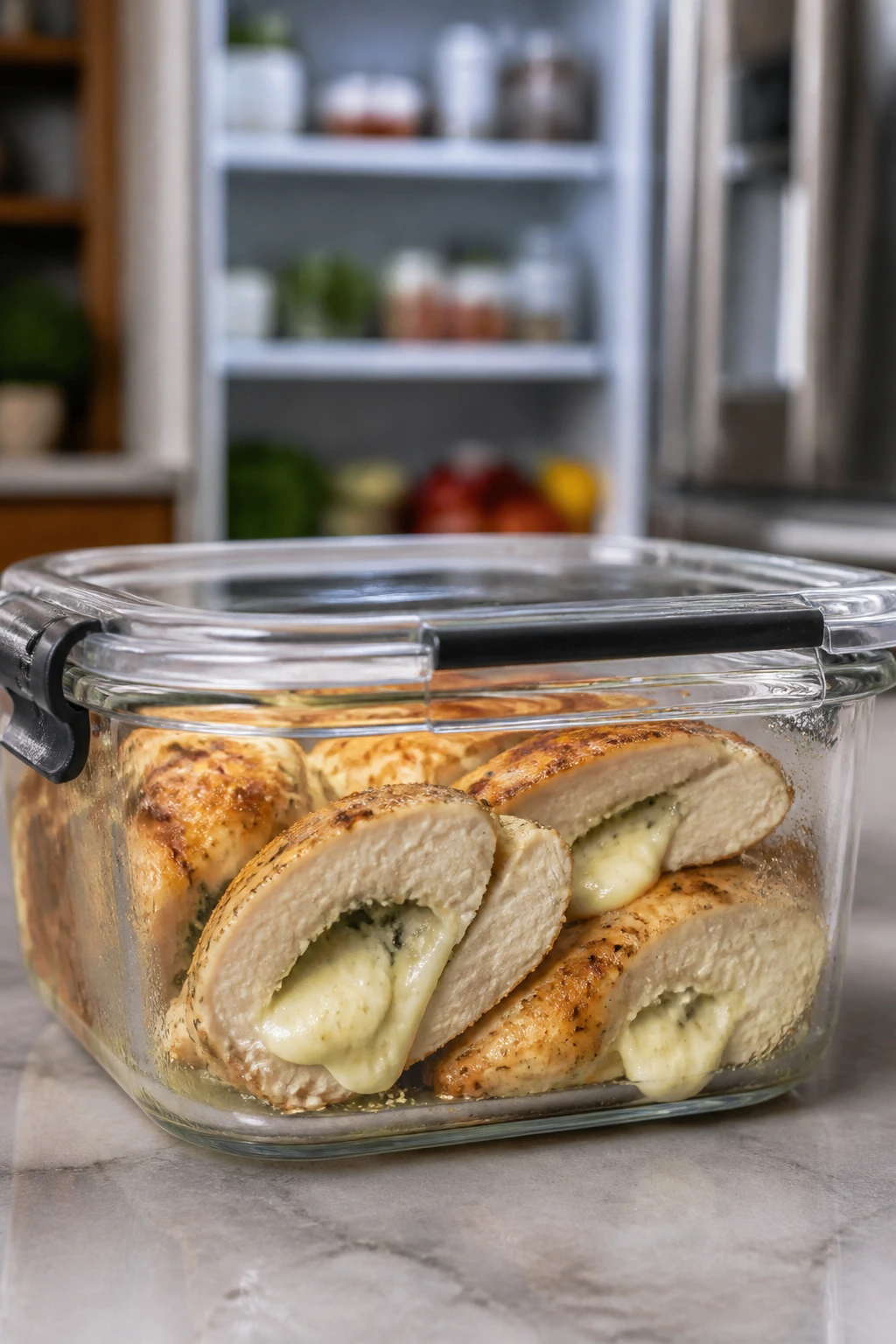
Cooked stuffed chicken keeps well in the fridge for up to 3 days when stored in an airtight container. If you’re stacking pieces, slip a small sheet of parchment between them so the melted cheese doesn’t glue the pieces together. For the best texture, let leftovers cool before sealing the container, but do not leave them out more than 2 hours.
To reheat, the oven wins. Set the chicken in a baking dish, splash a teaspoon or two of broth over the bottom, cover loosely with foil, and warm it at 325°F (165°C) for 12 to 15 minutes, or until the center is hot and the chicken reaches 165°F again. That method keeps the filling creamy instead of turning it grainy. The microwave works in a pinch, but use 50% power in 30-second bursts so the cheese doesn’t erupt.
The uncooked stuffed breasts can be assembled up to 24 hours ahead and held in the fridge, tightly covered. If you do that, keep them on a plate or tray so they sit flat and the seam stays closed. I wouldn’t push them much farther than a day ahead; the salt starts drawing moisture from the chicken, and the filling can loosen.
Freezing works if you need it. Freeze the raw stuffed chicken on a tray until firm, then wrap each breast tightly and store for up to 2 months. Thaw overnight in the fridge before cooking. Cooked leftovers can also be frozen for up to 2 months, but the cheese filling will be a little less silky after reheating. That’s the tradeoff.
Questions People Ask About Stuffed Chicken
Can I make this without an oven-safe skillet?
Yes. Sear the chicken in any skillet you have, then move it to a baking dish for the oven step. Pour the broth and lemon into the baking dish around the chicken so you still get some juices for serving.
What cheese works best if I don’t have mozzarella?
Provolone, fontina, Monterey Jack, or mild cheddar all melt well, but each changes the flavor a little. I still prefer low-moisture mozzarella because it gives you those soft cheese pulls without flooding the pan.
How do I know the chicken is done if the cheese is hiding the center?
Use an instant-read thermometer inserted into the thickest part of the meat, not into the filling pocket. The chicken should read 160°F when it comes out of the oven, then rest to 165°F.
Can I bake the chicken without searing it first?
You can, but the outside won’t have the same color or flavor. If you skip the sear, bake at 425°F and check a little earlier, around 18 to 22 minutes depending on thickness.
What if the cheese leaks out during cooking?
A little leakage is normal, and the browned cheese on the pan is still worth scraping into the sauce. If it leaks a lot, the pocket was probably overfilled, cut too deep, or sealed with filling that was too wet.
Can I use chicken thighs instead of breasts?
Not in the same pocket style. Thighs are smaller and more irregular, so they work better rolled around the filling or flattened into cutlets. Breast meat gives you the cleanest stuffed shape.
Can I make it ahead for guests?
Yes, and that’s one of the nicer things about it. Stuff the breasts earlier in the day, chill them covered, then sear and bake just before serving so the outside stays crisp and the filling stays soft.
A Chicken Dinner Worth Repeating
There’s a reason cheese stuffed chicken keeps showing up in home kitchens: it gives you a little ceremony without requiring a long ingredient list or a lot of cleanup. The filling brings richness right into the middle of the meat, and the quick pan sauce ties the whole plate together with a bright edge that keeps the cheese from taking over.
The best part is how repeatable it becomes once you’ve made it once or twice. Keep the filling thick, keep the pockets shallow, and trust the thermometer instead of the clock. After that, the recipe stops feeling like a project and starts feeling like one of those dinners you reach for because it behaves.
Juicy Cheese Stuffed Chicken — Recipe Card
Recipe Name: Juicy Cheese Stuffed Chicken
Description: Boneless chicken breasts are filled with a creamy mozzarella-Parmesan mixture, seared for a browned crust, then baked until juicy and safe. A quick lemon-butter pan sauce keeps each slice bright and rich.
Prep Time: 20 minutes
Cook Time: 20 to 25 minutes
Total Time: 40 to 45 minutes
Course: Dinner, Main Course
Cuisine: American
Servings: 4 servings
Calories: About 450 kcal per serving
Ingredients
For the Chicken:
- 4 boneless, skinless chicken breasts, 7 to 8 oz each
- 1 1/2 teaspoons kosher salt
- 1/2 teaspoon black pepper
- 1 teaspoon garlic powder
- 1 teaspoon Italian seasoning
- 2 tablespoons olive oil
For the Cheese Filling:
- 4 oz cream cheese, softened
- 1 cup shredded low-moisture mozzarella
- 1/4 cup grated Parmesan
- 1 cup fresh spinach, finely chopped and squeezed dry
- 1 small garlic clove, minced
- 1/4 teaspoon crushed red pepper flakes, optional
For the Pan Sauce:
- 1/2 cup low-sodium chicken broth
- 1 tablespoon lemon juice
- 1 tablespoon unsalted butter
- 1 tablespoon chopped parsley, for garnish
Instructions
-
Preheat the oven to 400°F (200°C) and lightly oil a 12-inch oven-safe skillet.
-
Pat the chicken dry, then cut a horizontal pocket into the thickest side of each breast without slicing through the back.
-
Mix the cream cheese, mozzarella, Parmesan, spinach, garlic, and red pepper flakes until thick and smooth.
-
Divide the filling among the breasts, close the openings, and secure each one with 2 or 3 toothpicks. Season the outside with salt, pepper, garlic powder, and Italian seasoning.
-
Heat the olive oil in the skillet over medium-high heat and sear the chicken for 2 to 3 minutes per side until golden.
-
Add the broth and lemon juice around the chicken, dot with butter, and bake for 12 to 15 minutes until the thickest part reaches 160°F (71°C).
-
Rest the chicken for 5 minutes, then simmer the pan juices for 1 to 2 minutes until glossy.
-
Remove the toothpicks, spoon the sauce over the chicken, and finish with parsley.
Notes: Keep the filling cold and thick so it stays inside the pocket. If the breasts are very large, add 2 to 3 minutes in the oven and check the center with an instant-read thermometer.