



A skillet of chicken and mushrooms can look plain right up until the pan starts talking back. First comes the butter-soft smell of shallot and garlic, then the mushrooms give off that earthy, damp scent before they turn bronze at the edges, and suddenly the whole thing feels deeper than a 45-minute dinner has any right to be.
Mushrooms are moody.
I reach for boneless chicken thighs here because they stay plush after a hard sear and a short simmer. Breasts can work, but they ask for more babysitting, and weeknight cooking already asks enough. Thighs forgive a little distraction; breasts punish it. That’s not theory. That’s dinner-at-6:40 reality.
The real trick is simple, and a little stubborn: dry chicken, enough space for the mushrooms to brown, and a gentle finish once the cream goes in. Miss those three, and you get something thin, pale, or oddly tight around the edges. Get them right, and the skillet tastes like you took your time even when you didn’t.
Why You’ll Love This Recipe
-
One pan, not three: The chicken browns, the mushrooms caramelize, and the sauce finishes in the same skillet, which means the flavor stays in the pan instead of getting washed down the sink.
-
Thighs stay juicy: Boneless, skinless chicken thighs hold up better than breasts when they’re seared hot and simmered briefly in sauce.
-
Mushrooms actually matter here: Cremini mushrooms don’t just fill space; they give the sauce body, soak up the fond, and turn savory once their water cooks off.
-
Fast without feeling rushed: From first chop to first bite, this lands in about 45 minutes, and most of that time is active but calm, not frantic.
-
Easy to serve in different ways: Rice, egg noodles, mashed potatoes, polenta, or a thick slice of toast all work because the sauce is doing the heavy lifting.
-
Leftovers behave well: The sauce loosens back up with a splash of broth, so lunch the next day doesn’t feel like reheated compromise.
The 45-Minute Timeline
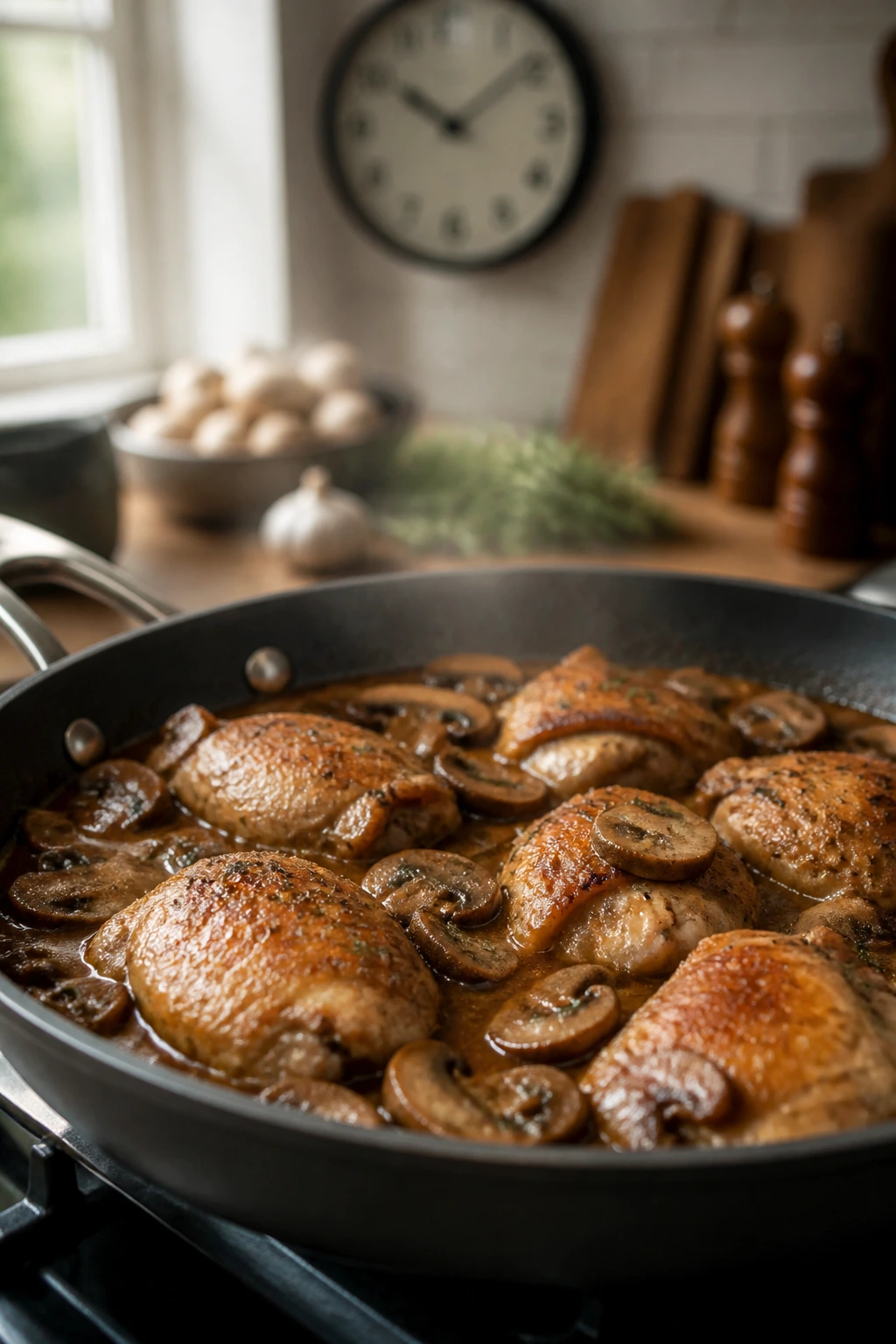
Yield: Serves 4
Prep Time: 15 minutes
Cook Time: 30 minutes
Total Time: 45 minutes
Difficulty: Beginner — the method is straightforward, and an instant-read thermometer removes most of the guesswork.
Chill/Rest Time: None
Best Served: Right away, while the sauce is glossy and the chicken is still tender enough to cut with the side of a fork.
One small note before you start: once the mushrooms go in, stay nearby. A pan sauce can move from fine to split fast if you wander off to answer a text or check on rice.
The Short Ingredient Lineup
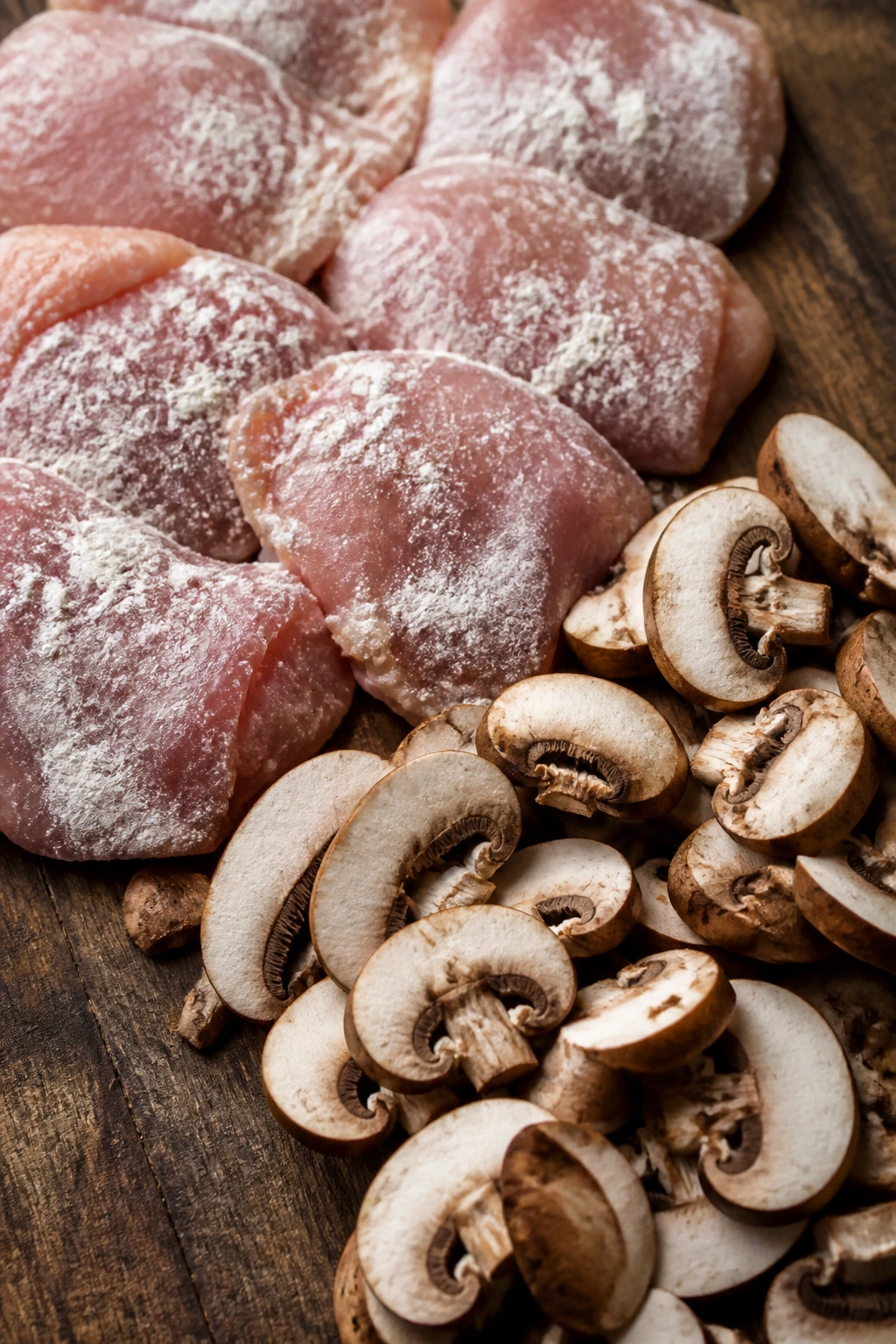
The list is lean, which is part of the appeal. There’s no long shopping list, no extra sauce pan, and no ingredient that only exists to look clever. Everything here has a job.
For the Chicken
- 1 1/2 pounds boneless, skinless chicken thighs, patted dry and trimmed of excess fat
- 1 teaspoon kosher salt
- 1/2 teaspoon black pepper
- 1/2 teaspoon garlic powder
- 2 tablespoons all-purpose flour, for a light dredge
- 1 tablespoon olive oil
- 1 tablespoon unsalted butter
For the Mushroom Cream Sauce
- 12 ounces cremini mushrooms, sliced 1/4 inch thick
- 1 medium shallot, finely chopped
- 3 garlic cloves, minced
- 1 teaspoon fresh thyme leaves or 1/2 teaspoon dried thyme
- 1/2 cup dry white wine or extra chicken broth
- 1 cup low-sodium chicken broth
- 1 tablespoon Dijon mustard
- 1 teaspoon Worcestershire sauce
- 1/2 cup heavy cream
- 1 tablespoon lemon juice
- 2 tablespoons chopped parsley
Why These Ingredients Keep the Chicken Tender
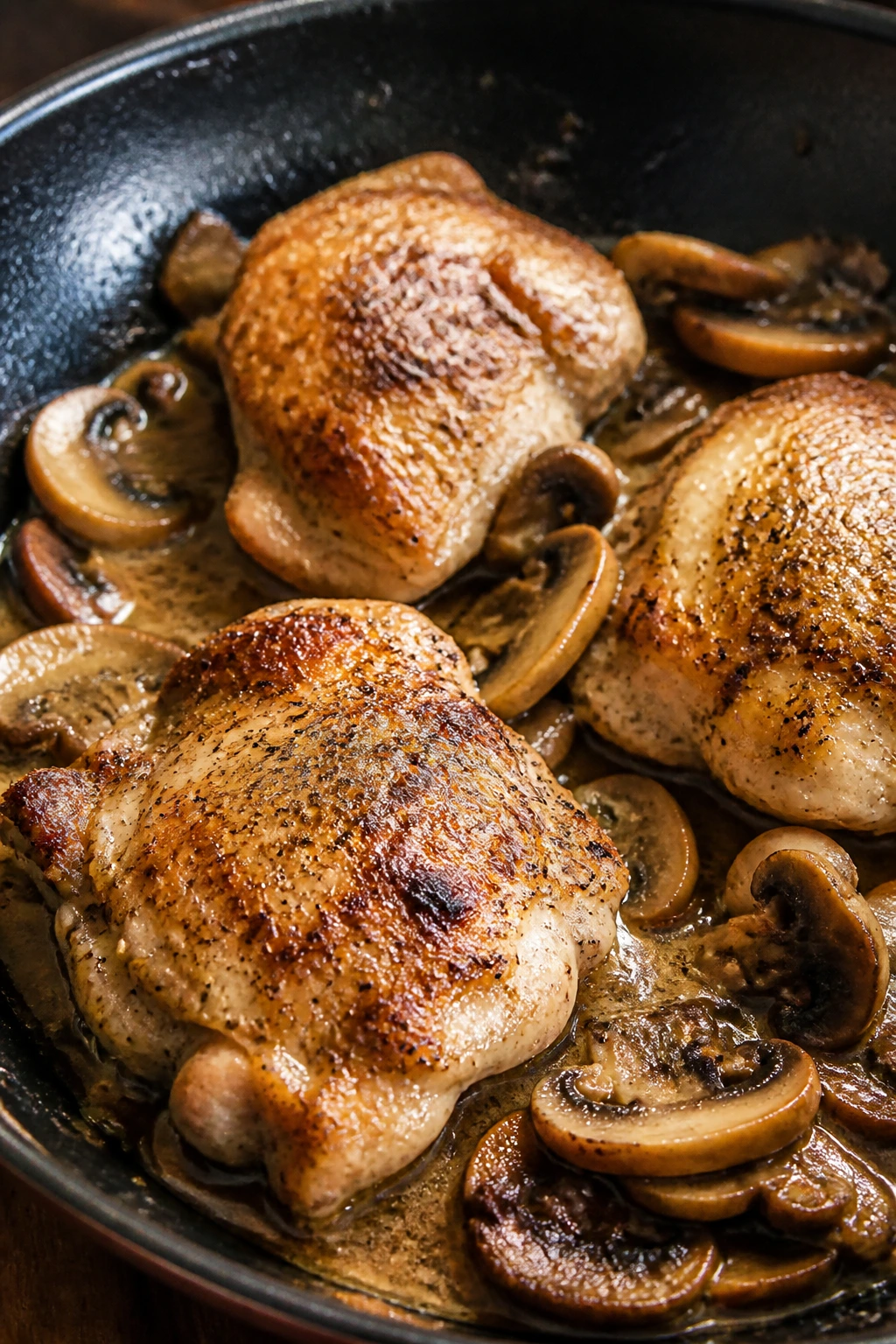
Chicken and mushrooms have been sharing pans for a long time, but the version people usually remember is the one with a little reduction, a little cream, and enough browning to make the sauce taste like more than dairy and salt. This skillet leans into that. The flour on the chicken helps the surface brown and gives the sauce a touch of body. The mushrooms, once they’ve dropped their moisture and turned a little nutty, pull the whole thing together.
Chicken Thighs and the Light Flour Dredge
What to use: 1 1/2 pounds boneless, skinless chicken thighs, preferably pieces that are close in size so they finish together.
Preparation: Pat the thighs dry with paper towels, trim any loose fat, and coat them lightly in the seasoned flour mixture. You want a thin, even dusting, not a thick breading.
Substitutions: Boneless chicken breasts work if you pound them to an even 1/2-inch thickness. Turkey cutlets can stand in too, though they need a shorter sear and a gentler finish.
Tips: Dry chicken browns; damp chicken steams. That tiny difference decides whether you get a golden crust or a gray surface that tastes tired.
Cremini Mushrooms and the Brown Bits They Leave Behind
What to use: 12 ounces cremini mushrooms, sliced about 1/4 inch thick. If you only have white button mushrooms, they’ll work, but cremini bring more flavor right out of the gate.
Preparation: Wipe mushrooms clean with a damp paper towel or cloth. Don’t soak them. Slice them thick enough to hold shape but thin enough to brown instead of sitting there forever.
Substitutions: A mix of cremini and shiitake gives you a deeper, woodier sauce. Portobello works too if you cut the caps into firm strips.
Tips: Mushrooms are mostly water. If you crowd them, that water has nowhere to go, and you end up steaming them in their own liquid. Give them room, and the skillet rewards you.
Broth, Wine, Cream, and Dijon
What to use: 1/2 cup dry white wine, 1 cup low-sodium chicken broth, 1 tablespoon Dijon mustard, 1 teaspoon Worcestershire sauce, and 1/2 cup heavy cream.
Preparation: Measure these before you start cooking. Once the mushrooms brown, the sauce comes together fast, and you do not want to be fumbling with lids while the pan gets too hot.
Substitutions: Skip the wine and use extra broth if that’s what you have. Half-and-half can replace the cream in a pinch, though the sauce will be looser and a little less plush.
Tips: Reduce the wine until it smells less sharp and more round before adding the broth. That step matters. It takes the sauce from “liquid in a pan” to something with a little backbone.
Shallot, Garlic, Thyme, Lemon, and Parsley
What to use: 1 medium shallot, 3 garlic cloves, 1 teaspoon fresh thyme leaves, 1 tablespoon lemon juice, and 2 tablespoons chopped parsley.
Preparation: Chop the shallot finely so it softens into the sauce, and mince the garlic just before you need it. Parsley should be chopped right before serving so it stays bright and not limp.
Substitutions: A small yellow onion can stand in for the shallot. Rosemary or tarragon can swap in for thyme, though I’d keep the hand light; too much herb can crowd the mushrooms.
Tips: Add the lemon at the end. Acid wakes up cream sauce, but if you add it too early, the whole pan tastes flatter than it should.
The Tools That Keep the Pan Honest
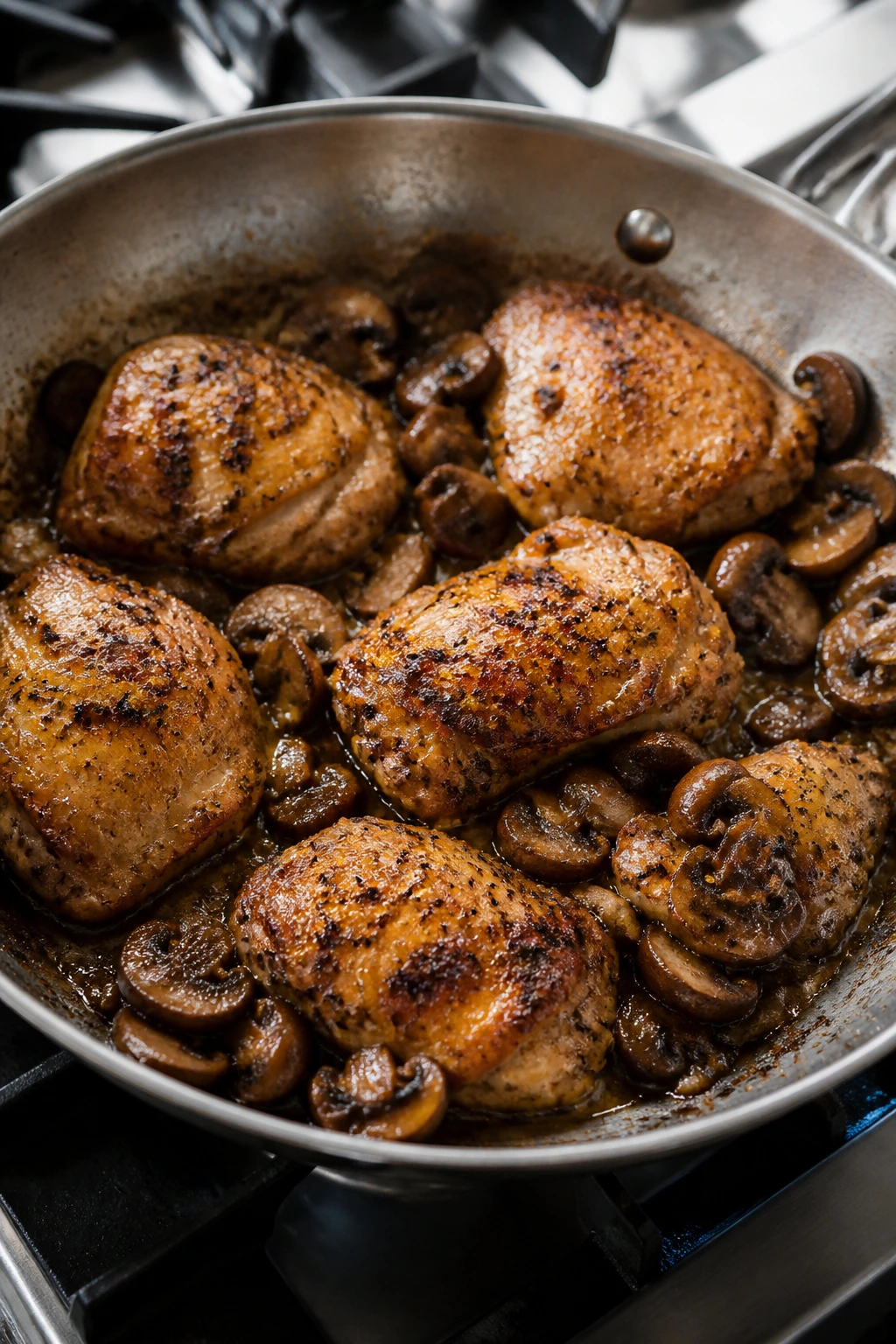
Could you do this in a smaller skillet? Technically, yes. Would I recommend it? Not unless you enjoy babysitting steam. Surface area matters here.
-
12-inch skillet with straight sides, ideally stainless steel or cast iron: You need enough room for the mushrooms to brown instead of crowding into a wet pile. A wide Dutch oven can work if the base is broad.
-
Tongs: The easiest way to turn the chicken without tearing the coating or losing juices.
-
Instant-read thermometer: This is the difference between “probably done” and exactly done. Aim for 165°F / 74°C in the thickest part.
-
Wooden spoon or flat spatula: You’ll use it to scrape up the fond when the wine goes in.
-
Small bowl: Handy for mixing the seasoning and flour before the chicken goes in.
-
Sharp knife and cutting board: The mushrooms and shallot slice faster when your knife isn’t fighting you.
-
Paper towels: Dry chicken browns better. Wet chicken cooks worse. That’s the whole argument.
Season, Dredge, and Sear the Chicken
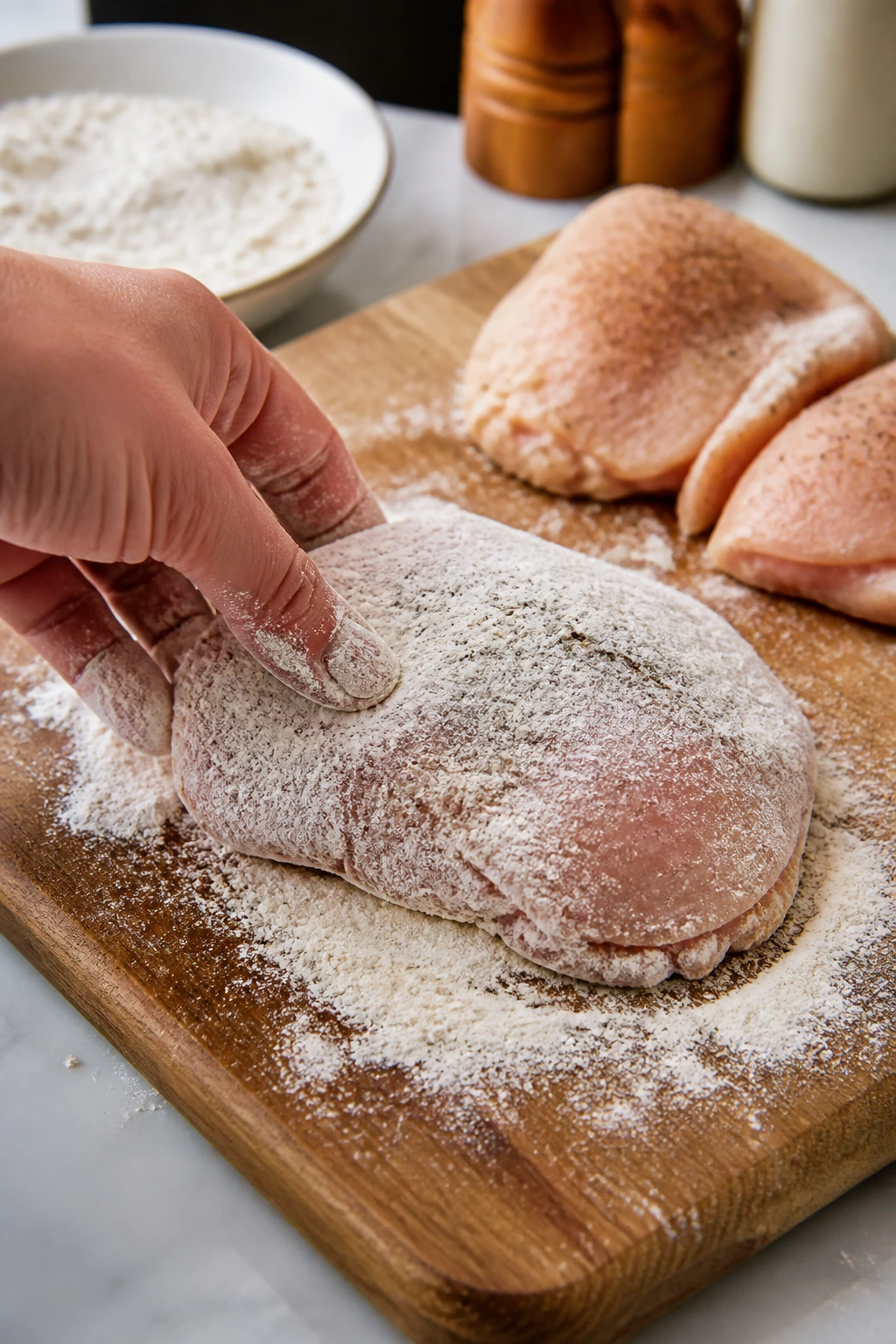
Prep the Chicken
-
Pat the chicken thighs dry with paper towels and trim away any loose fat. Season both sides with the salt, black pepper, and garlic powder.
-
Put the flour in a shallow bowl and dredge each thigh lightly, shaking off any excess. The coating should look dusted, not caked.
-
Set a 12-inch skillet over medium-high heat. Add the olive oil and butter. When the butter foams and the foam begins to settle, the pan is ready.
-
Lay the chicken in the skillet in a single layer. Sear for 4 to 5 minutes without moving it. You’re waiting for a deep golden underside that releases on its own.
-
Flip the thighs and cook for another 3 to 4 minutes. Transfer them to a plate once both sides are browned. The centers may still look a touch underdone. That’s fine. They finish later in the sauce, and the final internal temperature should reach 165°F / 74°C.
Heat matters more than faith.
If the pan looks crowded, stop and work in batches. A cramped sear turns into steam fast, and steam is the enemy of a good crust. I’d rather spend an extra 3 minutes searing in two rounds than rescue pale chicken later.
Brown the Mushrooms Until They Turn Nutty
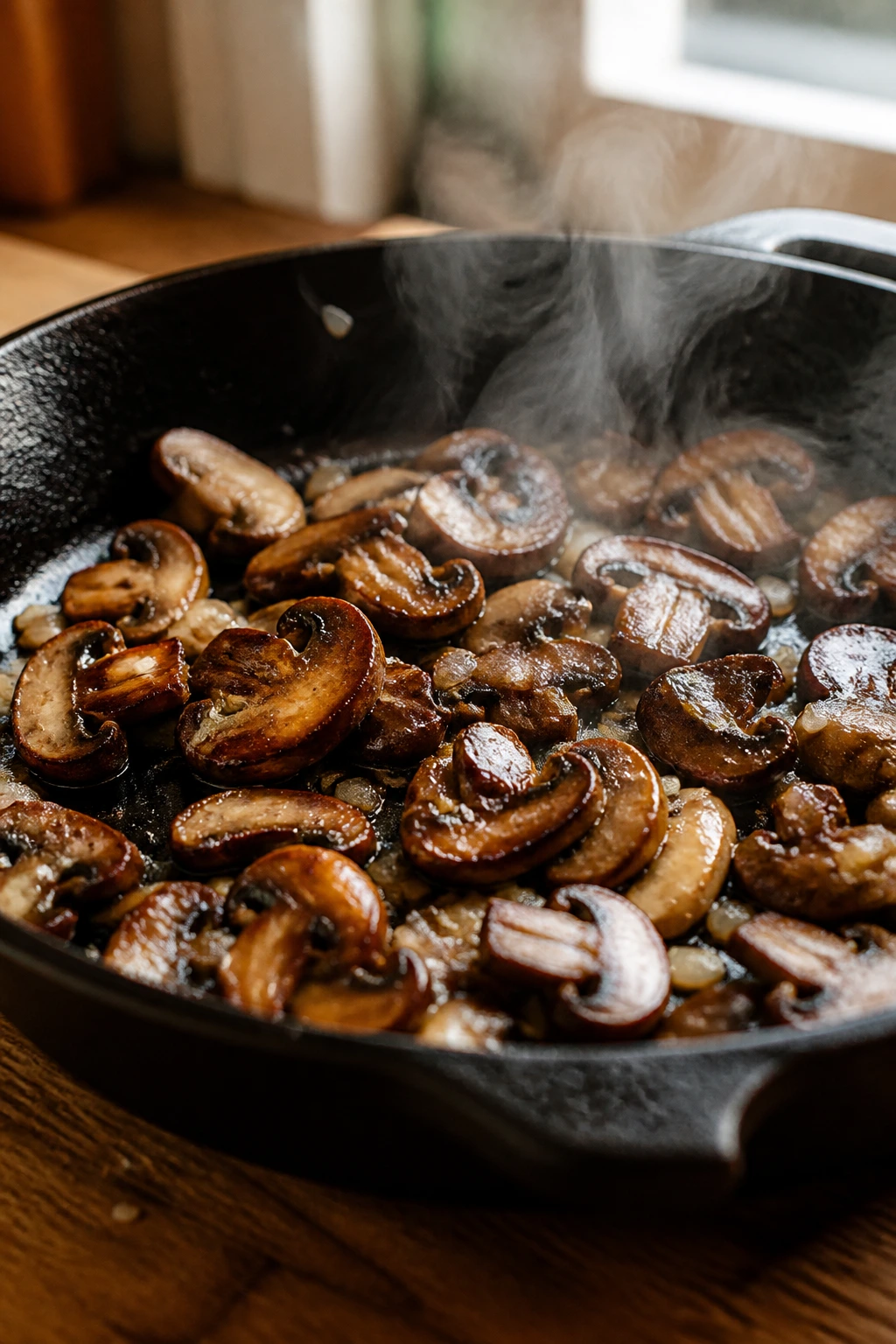
Build the Mushroom Base
-
Add the mushrooms to the same skillet, even if the pan looks a little messy. That mess is flavor. Spread them out as much as you can and let them sit for 2 to 3 minutes before stirring.
-
Continue cooking for another 4 to 5 minutes, stirring now and then, until the mushrooms give up their moisture and the edges start to brown. The sound should shift from a loud wet hiss to a quieter, drier sizzle.
-
Stir in the shallot and cook for 2 minutes until it softens and smells sweet. Add the garlic and thyme and cook for 30 seconds, just until fragrant. Do not let the garlic brown; it turns bitter fast.
-
Pour in the white wine and scrape the bottom of the skillet with a wooden spoon, lifting every browned bit. Simmer for 2 to 3 minutes until the wine reduces by about half and the sharp smell fades.
That reduction step is not decorative. It’s where the sauce earns its depth.
The mushrooms should look darker, smaller, and a little glossy by the time you move on. If they still look pale and soggy, keep cooking. They aren’t ready for the liquid yet.
Build the Sauce and Bring the Chicken Back
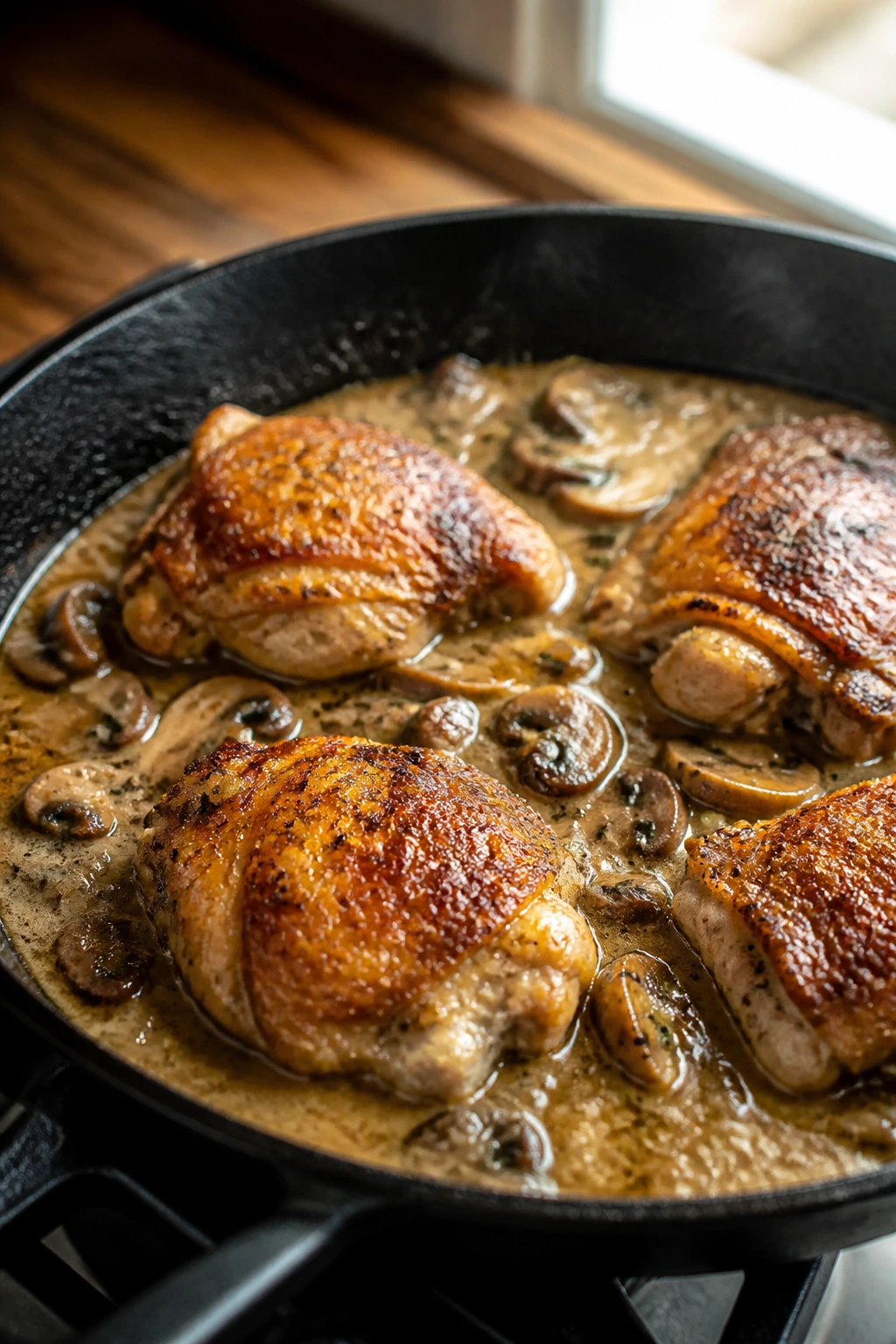
Finish the Pan Sauce
-
Add the chicken broth, Dijon mustard, and Worcestershire sauce. Stir until the Dijon disappears into the liquid, then let the mixture simmer for 2 minutes. The broth should taste savory, not thin.
-
Stir in the heavy cream and return the sauce to a gentle simmer over medium heat. Cook for 3 to 4 minutes, stirring now and then, until it lightly coats the back of a spoon. Do not boil hard once the cream is in.
-
Return the chicken and any juices from the plate to the skillet. Nestle the pieces into the sauce and simmer for 3 to 5 minutes, turning once, until the thickest part of the chicken reads 165°F / 74°C on an instant-read thermometer.
-
Turn off the heat. Stir in the lemon juice and parsley, then taste and adjust with a little more salt or pepper if needed. If the sauce seems too thick, loosen it with 1 to 2 tablespoons of broth. If it seems thin, let it sit on the turned-off burner for a minute or two.
The sauce should look glossy, not heavy. Thick enough to cling. Loose enough to spoon. That middle ground is what makes the dish feel finished.
How to Serve It on a Busy Night
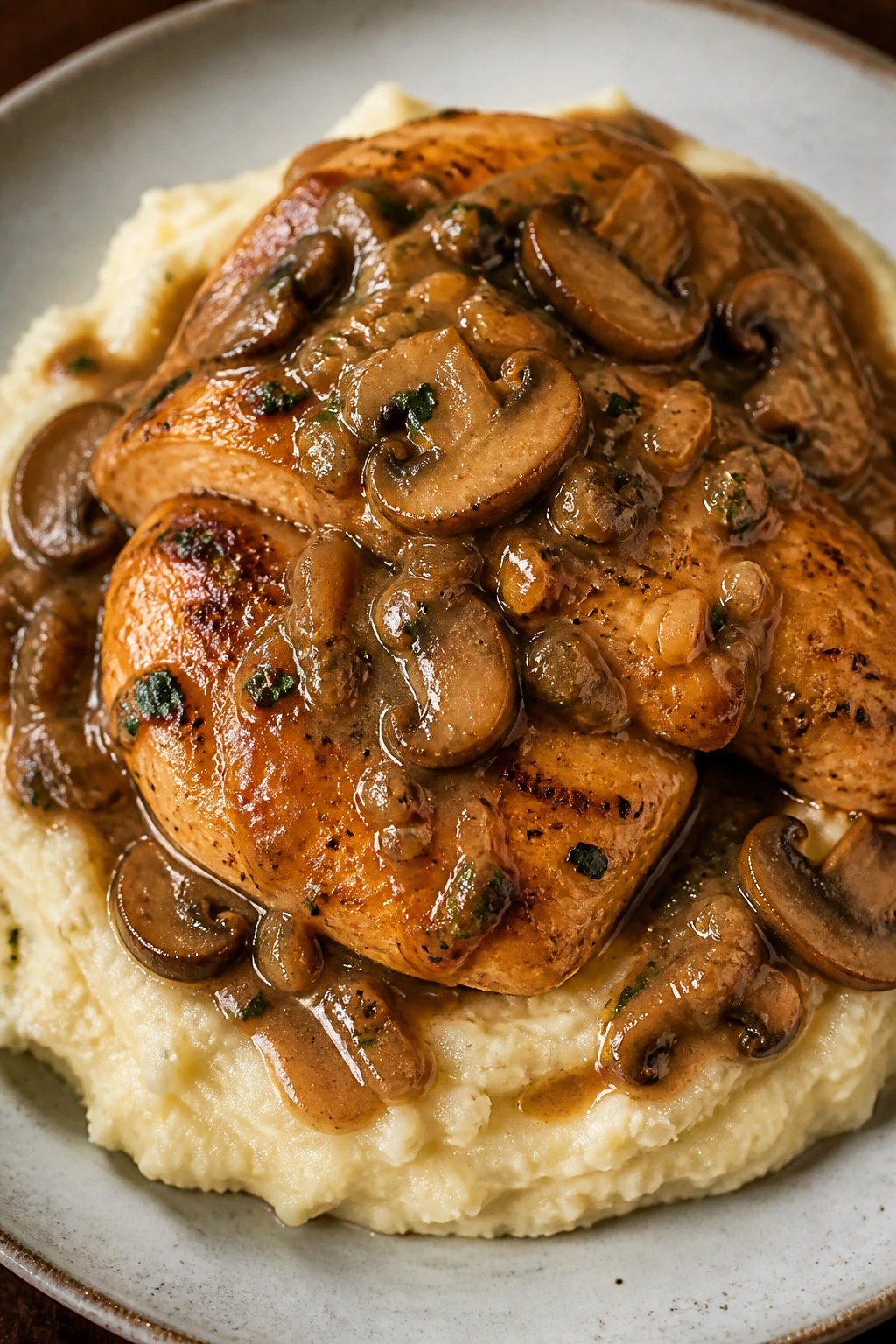
Presentation: Spoon the chicken over mashed potatoes, buttered egg noodles, or a scoop of rice, then drag the mushroom sauce over the top so some of the chicken still shows. A little parsley on the surface is enough; you do not need a green snowstorm.
Accompaniments: I like steamed green beans, roasted broccoli, or a sharp arugula salad on the side. Crusty bread helps too, because the sauce will end up on the bread whether you planned it or not.
Portions: Plan on one to two thighs per person, depending on size and what else is on the table. If you’re serving it over pasta or potatoes, stretch the sauce with a few extra spoonfuls of broth so it reaches every corner of the plate.
Beverage Pairing: A dry Sauvignon Blanc or an unoaked Chardonnay handles the cream and mushrooms well. If you want something non-alcoholic, sparkling water with lemon or a lightly bitter tonic-style soda keeps the plate from feeling too rich.
Small Finishing Moves That Matter More Than You’d Think
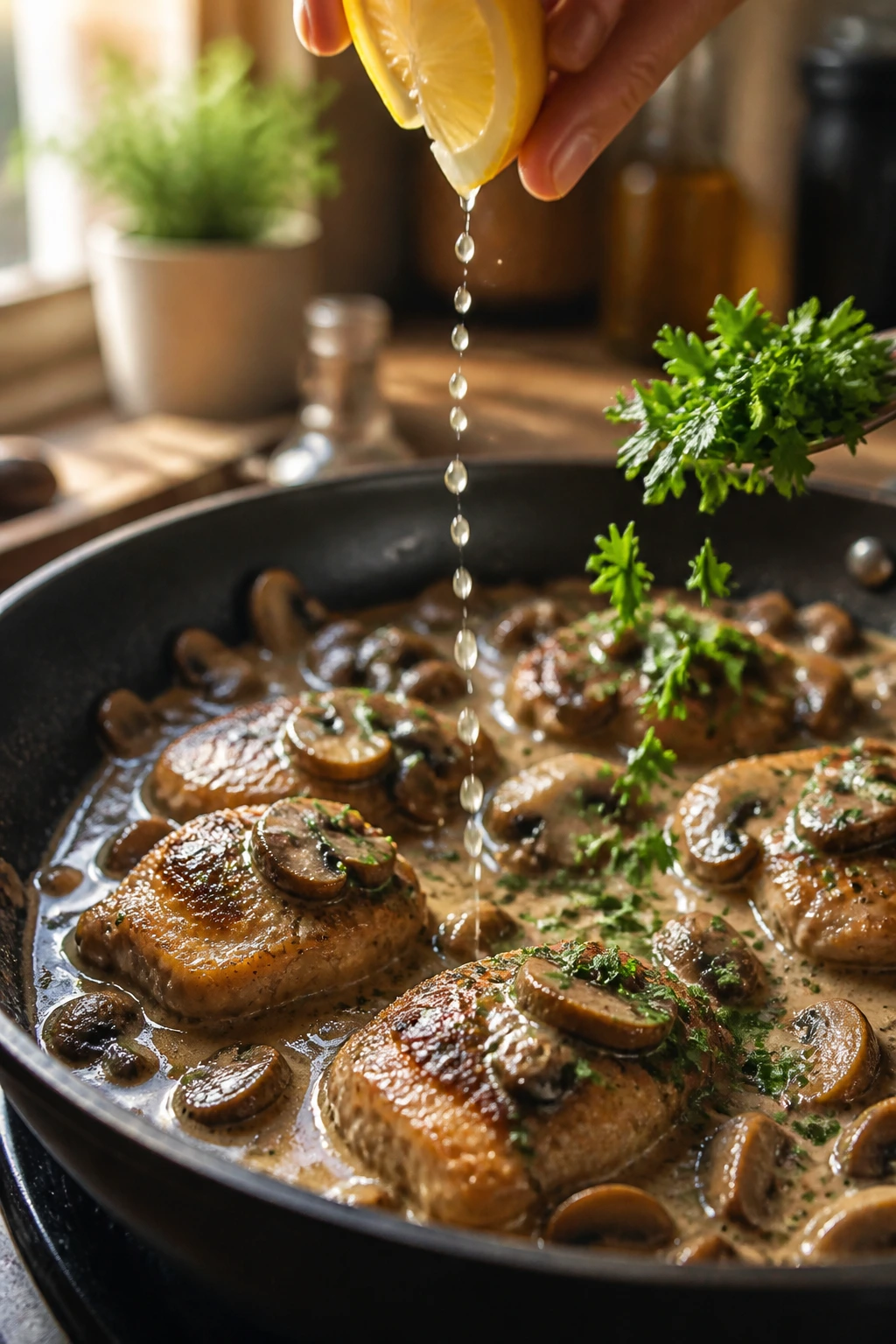
A dish like this does not need a dozen clever additions. It needs the right tiny habits. That’s the part people skip because the habits feel boring, but boring is often what saves dinner.
Flavor Enhancement: Hold back the lemon until the heat is off. If the sauce tastes a little heavy after the cream goes in, that final tablespoon of lemon juice is what wakes it up. Without it, the dish can feel flat and a little muddy.
Time-Saver: Slice the mushrooms and mince the shallot before the skillet goes on the burner. Once the chicken is searing, the rest of the recipe moves fast enough that you’ll be glad every ingredient is already waiting.
Pro Move: Pull the chicken at 160°F / 71°C and let the sauce finish carrying it the last few degrees. That small buffer keeps the thighs juicy instead of firming up while you stand over the stove.
Cost-Saver: Use button mushrooms if cremini are harder to find. They need a little more browning time, but once they get there, they still make a solid sauce. I wouldn’t pay extra for fancy wild mushrooms unless you want a deeper, earthier finish.
A small pinch of salt at the end can do more than another splash of cream.
Mistakes That Make the Sauce Thin or the Chicken Tough
-
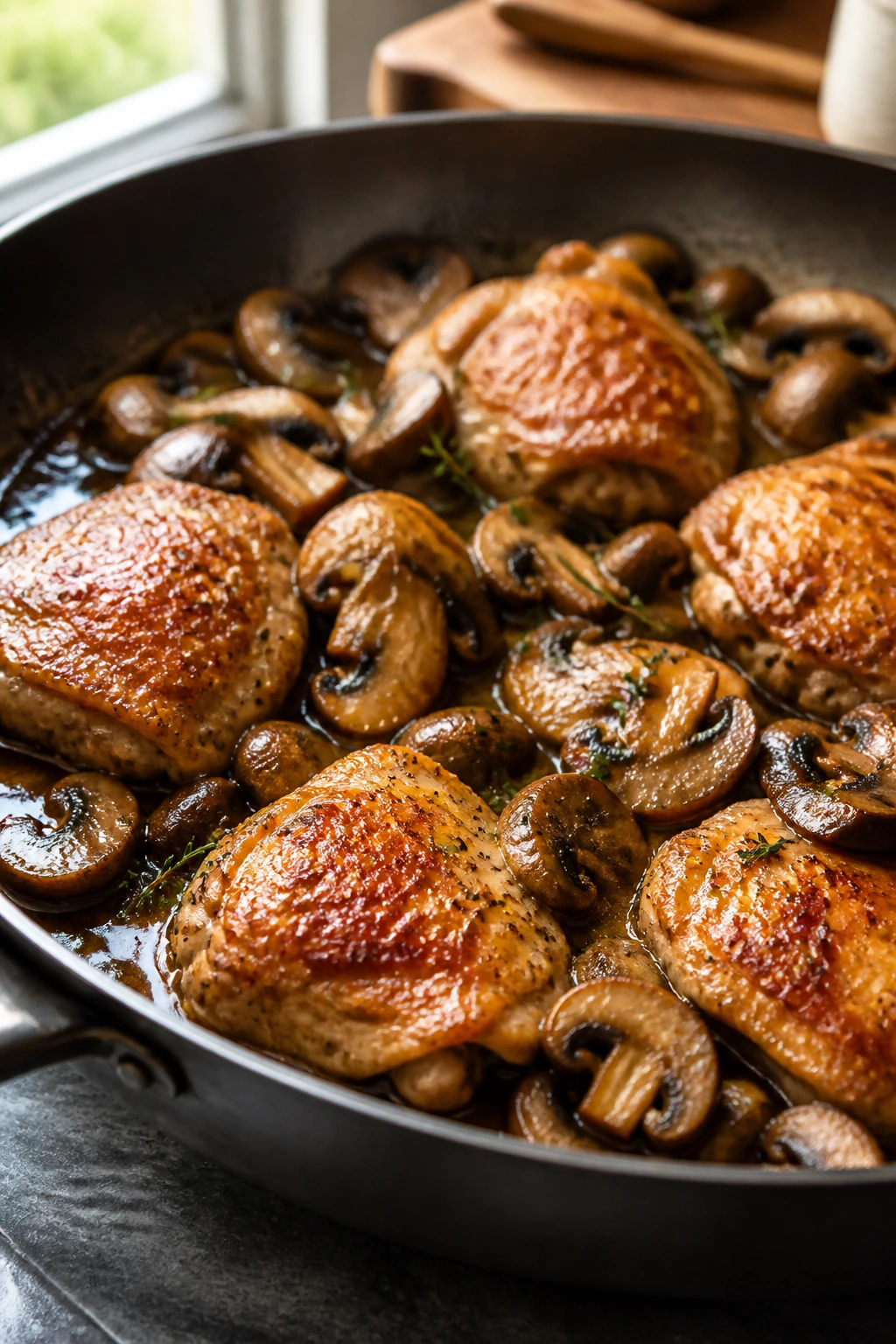
Crowding the mushrooms: They turn pale, watery, and oddly rubbery when they sit on top of one another. Use a 12-inch skillet or cook them in two batches.
-
Starting with damp chicken: Wet thighs steam before they brown, and the flour clings in clumps instead of making a thin crust. Pat them dry until the paper towels come away nearly clean.
-
Boiling the cream: A hard boil can make the sauce look broken or greasy. Keep it at a lazy simmer and stir often enough that nothing sticks.
-
Trusting color instead of temperature: Chicken can look done before it actually is, especially near the bone or in a thick thigh. Check the thickest part with a thermometer and stop at 165°F / 74°C.
-
Adding lemon too early: Acid can flatten the sauce and make the cream taste less round. Stir it in only after the heat is off.
-
Walking away during the wine reduction: If the wine cooks down too far, the garlic and shallot underneath can scorch. Stay near the pan and add the broth once the sharp alcohol smell fades.
Five Flavor Swaps for the Same Skillet
Sharper Lemon-Thyme Skillet
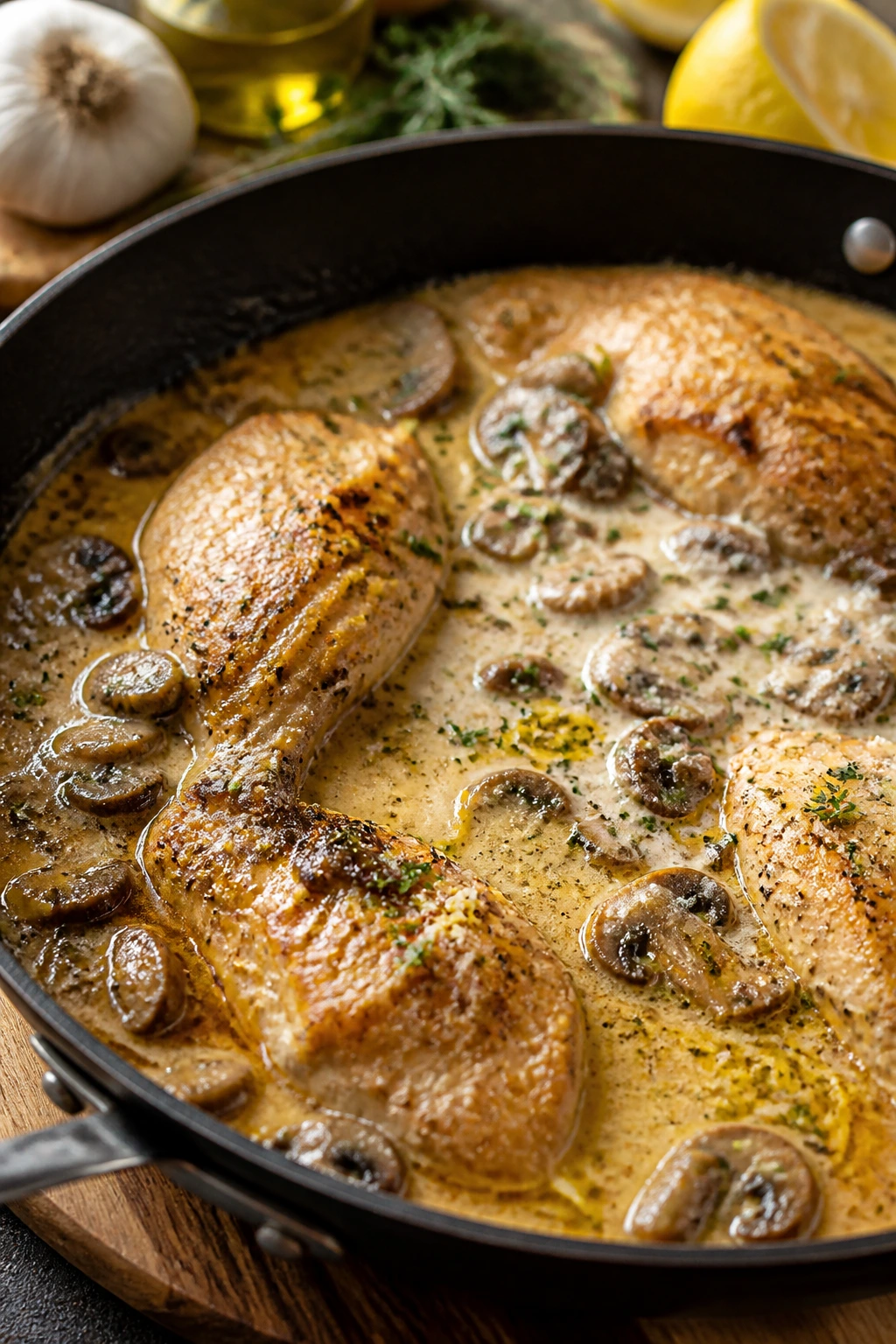
Use an extra teaspoon of lemon juice and a little lemon zest at the end, then keep the cream modest. The result tastes lighter and brighter, which works well if you’re serving the chicken over rice or couscous instead of mashed potatoes.
Garlic-Parmesan Finish
Stir in 1/4 cup finely grated Parmesan after the skillet comes off the heat. It thickens the sauce a bit and gives it a saltier, more savory edge. Good over noodles. Less good if you already ran heavy on salt earlier, so taste first.
Gluten-Free Pan Sauce
Swap the all-purpose flour for rice flour or a gluten-free flour blend. The sear still helps, and the sauce can still thicken; it just may need an extra minute of simmering before it looks right. If you skip dredging altogether, you can also whisk 1 teaspoon cornstarch into 1 tablespoon cold water and stir it in near the end.
Dairy-Free Creamy Skillet
Replace the heavy cream with full-fat coconut milk or an unsweetened dairy-free cooking cream. The flavor changes, and I think it’s fair to say that out loud; it won’t taste exactly the same. Still, the sauce stays lush enough for the mushrooms and chicken to feel like a proper meal.
Spinach and White Bean Stretch
Stir in 3 cups baby spinach and 1 cup drained cannellini beans after the chicken returns to the pan. The spinach wilts in under a minute, and the beans turn the skillet into a fuller dinner with almost no extra work. This is the version I’d make when I want more bulk without turning it into a casserole.
Keeping Leftovers Tender, Not Soggy
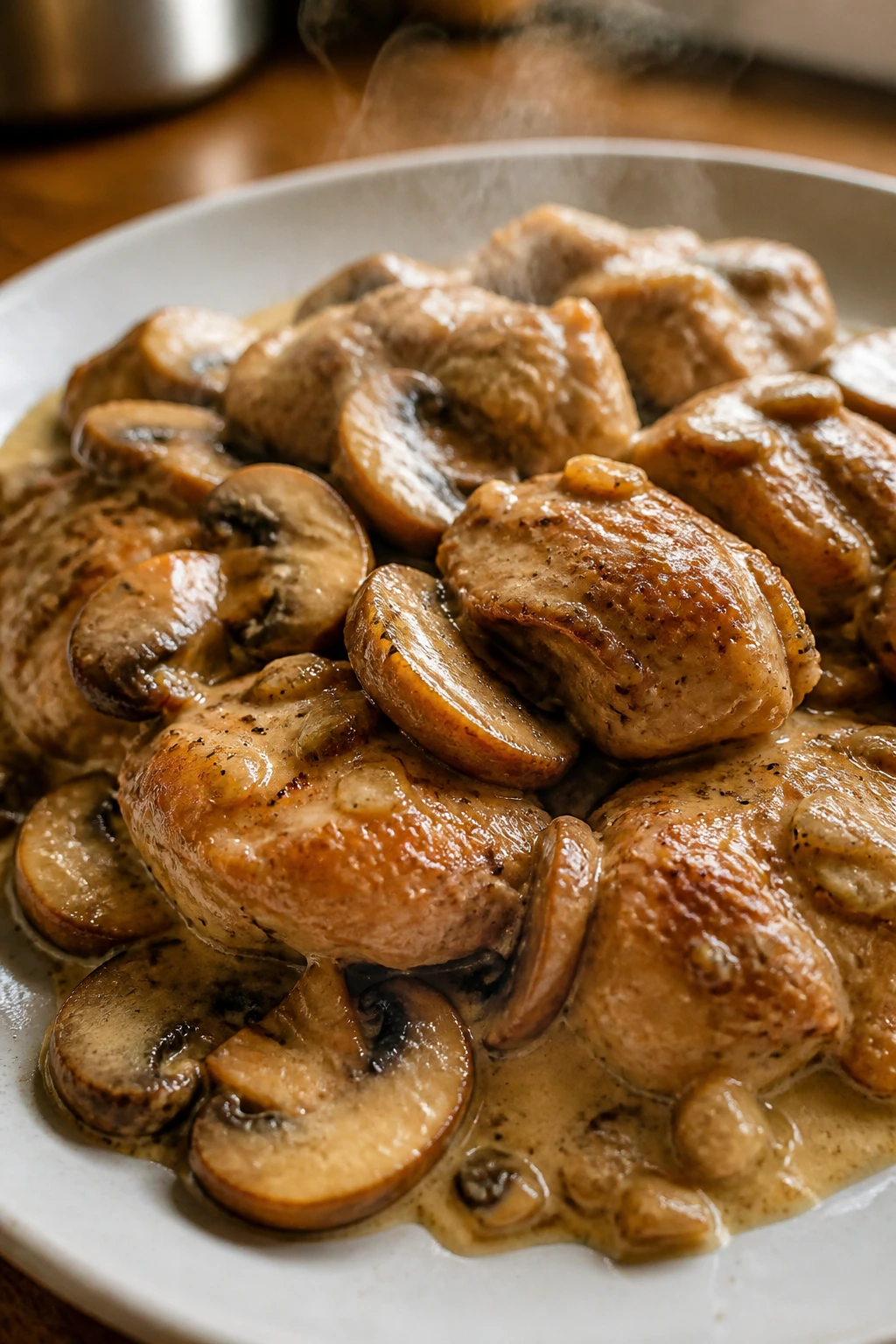
In the Fridge: Cool the chicken and mushroom skillet within 2 hours, then store it in an airtight container for up to 3 to 4 days. A shallow container helps the food cool faster and keeps the sauce from sitting in a thick hot mass too long.
In the Freezer: Freeze for up to 2 months if you want to keep it longer. Cream sauces can loosen a little after thawing, so the texture won’t be identical, but it still reheats well enough for a second dinner. If freezing is the plan, the cleanest move is to cool the dish quickly and freeze it in portions.
Reheating: Reheat gently on the stovetop over low heat with 1 to 2 tablespoons of broth, stirring every minute or so until steaming hot. If you use a microwave, cut the power to 50% and heat in 45-second bursts so the cream doesn’t split. Either way, stop once the chicken is hot through; more heat only dries it out.
Make-Ahead: You can season and flour the chicken up to 8 hours ahead and keep it covered in the fridge. Mushrooms can be sliced a day ahead and stored in a paper towel-lined container. If you want the best texture after cooking, hold the lemon juice and parsley until the very end, even if you make the sauce base ahead.
The one food-safety rule I never ignore: cooked poultry should be refrigerated promptly, not left lounging on the counter while you answer messages or clean up.
Questions People Ask Before They Cook It

Can I use chicken breasts instead of thighs?
Yes, but pound them to an even thickness first so they cook at the same pace. Sear them for less time than thighs, and pull them as soon as the center reaches 160°F / 71°C, because they’ll finish in the sauce and dry out faster if you let them go too far.
What mushrooms work best if I can’t find cremini?
White button mushrooms work fine, though they need a little longer in the pan before they taste browned instead of plain. Shiitake add a deeper, meatier note if you slice off the stems and keep the pieces medium-thick.
Can I make this without wine?
You can. Use the same amount of chicken broth and add a touch more lemon at the end to replace the brightness that wine usually gives you. Let the broth reduce a little longer so the sauce still tastes layered.
Why did my sauce split or look greasy?
The heat was too high after the cream went in, or the sauce hit a hard boil. Take the pan off the burner, whisk in a splash of broth, and keep it at a gentle simmer. If it’s only slightly broken, that usually brings it back.
Can I make it ahead for dinner later in the day?
Yes. Cook it through the sauce stage, then cool and refrigerate. When you reheat, do it slowly and finish with lemon juice and parsley right before serving so the flavor doesn’t fade into the background.
Can I freeze the finished dish?
Yes, though the cream sauce may look a little different after thawing. If freezing is part of the plan, I’d freeze the chicken and mushroom base without the cream, then add the cream after thawing and reheating. That gives you a smoother sauce.
Can I make this in a slow cooker or oven instead of a skillet?
You can, but the flavor changes because the browning step matters so much. If you go slow cooker, sear the chicken and brown the mushrooms first, then cook on LOW for 3 to 4 hours and add the cream at the end. A covered Dutch oven in a 325°F / 163°C oven works too, though I still think the skillet version tastes better because the fond has nowhere to hide.
A Skillet Worth Repeating
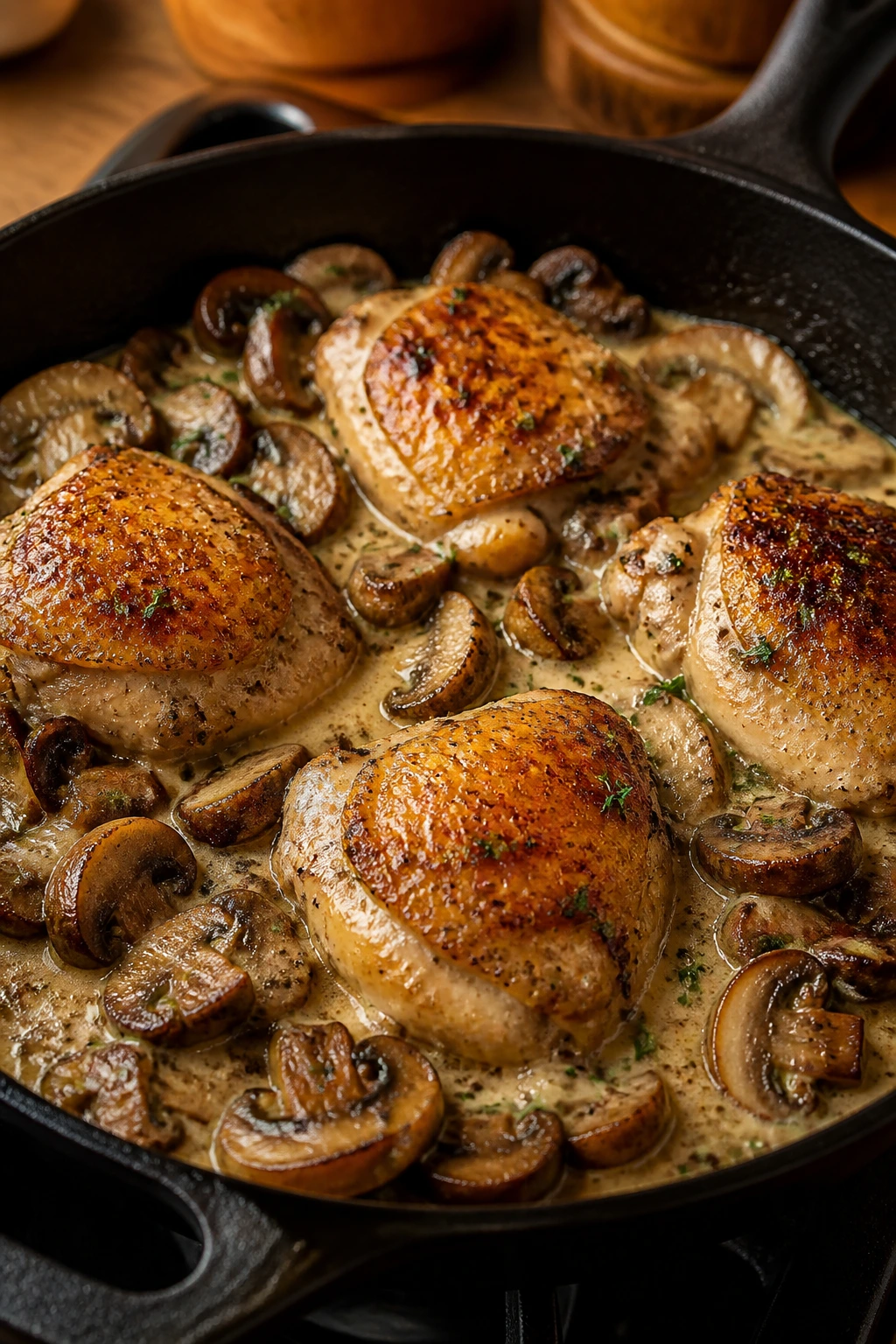
This isn’t show-off dinner. It’s better than that. The dish works because it respects a few simple truths: chicken needs dryness before it meets heat, mushrooms need space before they can brown, and cream needs a gentle hand once it hits the pan.
That’s the part I like most. Not the speed, although speed helps. Not the short ingredient list, although I’m a fan of that too. It’s the way a few small choices turn a weekday skillet into something you’d happily make again, maybe with more thyme next time, or a little extra lemon, or a bigger pile of mushrooms because you know the pan can handle it.
Tender Chicken and Mushroom Skillet — Recipe Card
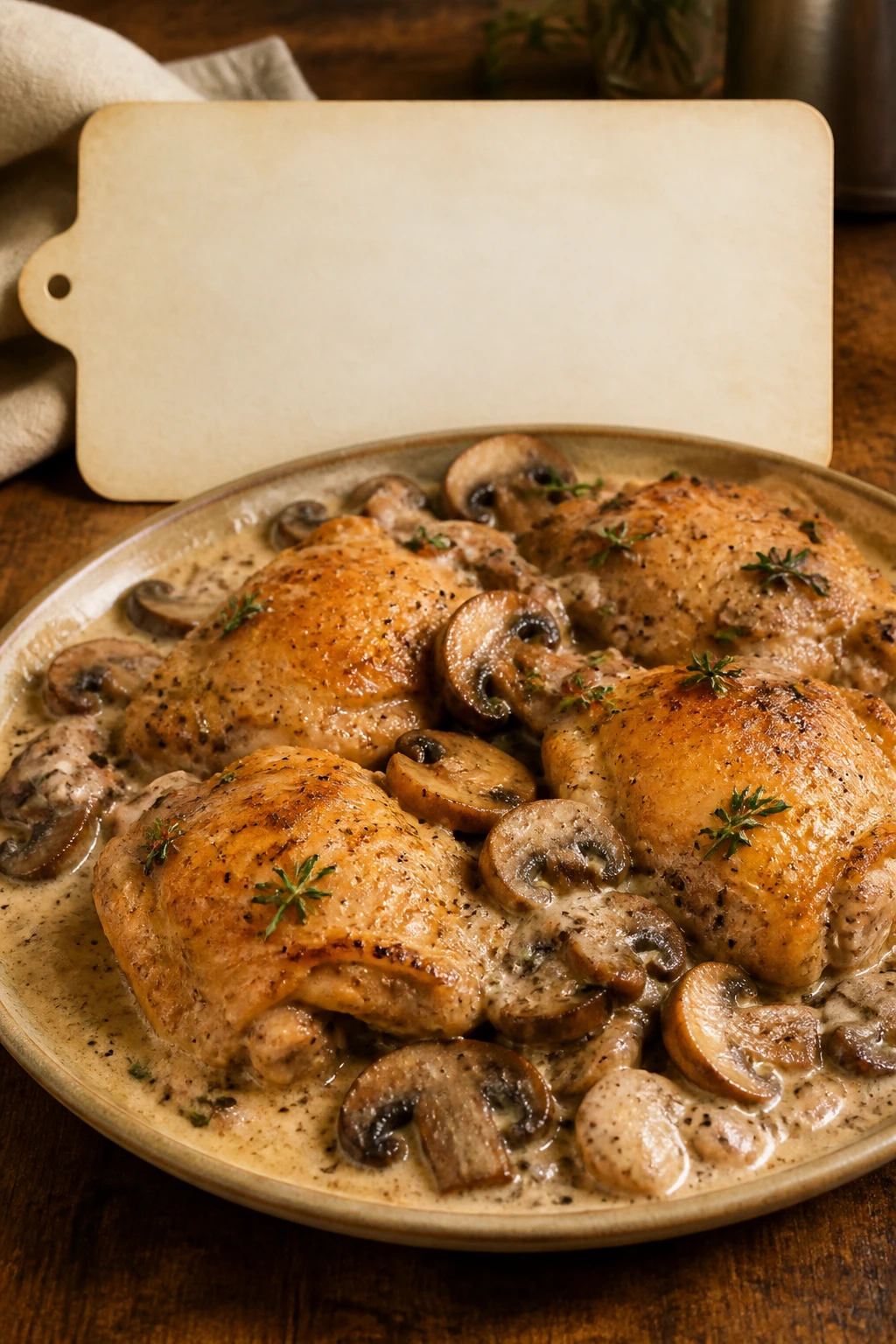
Recipe Name: Tender Chicken and Mushroom Skillet
Description: Golden chicken thighs and browned cremini mushrooms simmer in a Dijon cream sauce with thyme, garlic, and lemon. It’s a one-skillet dinner that lands rich, savory, and spoonable without feeling fussy.
Prep Time: 15 minutes
Cook Time: 30 minutes
Total Time: 45 minutes
Course: Main Course
Cuisine: American
Servings: 4 servings
Calories: About 470 kcal per serving
Ingredients
For the Chicken
- 1 1/2 pounds boneless, skinless chicken thighs, patted dry and trimmed of excess fat
- 1 teaspoon kosher salt
- 1/2 teaspoon black pepper
- 1/2 teaspoon garlic powder
- 2 tablespoons all-purpose flour, for a light dredge
- 1 tablespoon olive oil
- 1 tablespoon unsalted butter
For the Mushroom Cream Sauce
- 12 ounces cremini mushrooms, sliced 1/4 inch thick
- 1 medium shallot, finely chopped
- 3 garlic cloves, minced
- 1 teaspoon fresh thyme leaves or 1/2 teaspoon dried thyme
- 1/2 cup dry white wine or extra chicken broth
- 1 cup low-sodium chicken broth
- 1 tablespoon Dijon mustard
- 1 teaspoon Worcestershire sauce
- 1/2 cup heavy cream
- 1 tablespoon lemon juice
- 2 tablespoons chopped parsley
Instructions
-
Pat the chicken dry, season it with the salt, pepper, and garlic powder, then lightly dredge it in the flour.
-
Heat the olive oil and butter in a 12-inch skillet over medium-high heat, then sear the chicken for 4 to 5 minutes per side until golden. Transfer it to a plate.
-
Add the mushrooms to the skillet and cook until they release their moisture and begin to brown. Stir in the shallot, garlic, and thyme.
-
Pour in the wine and scrape up the browned bits from the bottom of the pan. Simmer until the wine reduces by about half.
-
Add the chicken broth, Dijon mustard, and Worcestershire sauce, then stir in the cream and simmer gently until the sauce lightly coats a spoon.
-
Return the chicken and its juices to the skillet and cook until the thickest part reaches 165°F / 74°C.
-
Turn off the heat, stir in the lemon juice and parsley, and adjust seasoning. Serve warm.
Notes: Use a wide skillet so the mushrooms can brown instead of steam. If you skip the wine, add extra broth and an extra teaspoon of lemon juice. The sauce thickens a little more after it sits for a few minutes off the heat.