



Some nights want tea. Cold winter nights want a bowl that steams the kitchen, fogs the windows, and lands on the spoon with enough weight to feel like dinner.
That’s where a creamy comfort soup earns its keep. Not the thin, polite kind. I mean the sort that gives you soft potatoes, tender chicken, a little smoke from bacon, and a broth that sits somewhere between silky and substantial. The spoon should come up coated, not dripping like dishwater.
The trick is balance. Yukon Gold potatoes bring starch without turning the pot into paste, chicken thighs stay juicy through the simmer, and the dairy goes in late so the soup stays smooth instead of split. That order matters more than people think, and once you get it right, the whole pot starts behaving.
Why This Bowl Keeps Getting Made
- Silky, not heavy: The flour, potatoes, and a partial blend thicken the broth so it feels plush without eating like gravy.
- Built like dinner: Chicken thighs, bacon, and potatoes turn one bowl into a full meal, especially when you drag it through a hunk of bread.
- Flexible when the pantry is thin: Cooked chicken or leftover turkey can slide in at the end if that’s what you have.
- Better after a rest: The onion, thyme, and potato settle together after 20 minutes, so leftovers taste even rounder the next day.
- One pot after the chopping: Everything finishes in the same Dutch oven, which keeps cleanup sane on a night when nobody wants extra dishes.
- Still bright at the end: A small hit of lemon and parsley keeps the cream from tasting sleepy.
Yield: 6 generous servings
Prep Time: 20 minutes
Cook Time: 40 minutes
Total Time: 1 hour
Difficulty: Beginner — the steps are straightforward, but the heat needs a steady hand once the dairy goes in.
Best Served: Hot, within 10 minutes of finishing, with black pepper and crusty bread
The Ingredients That Give the Bowl Its Weight
For the Soup:
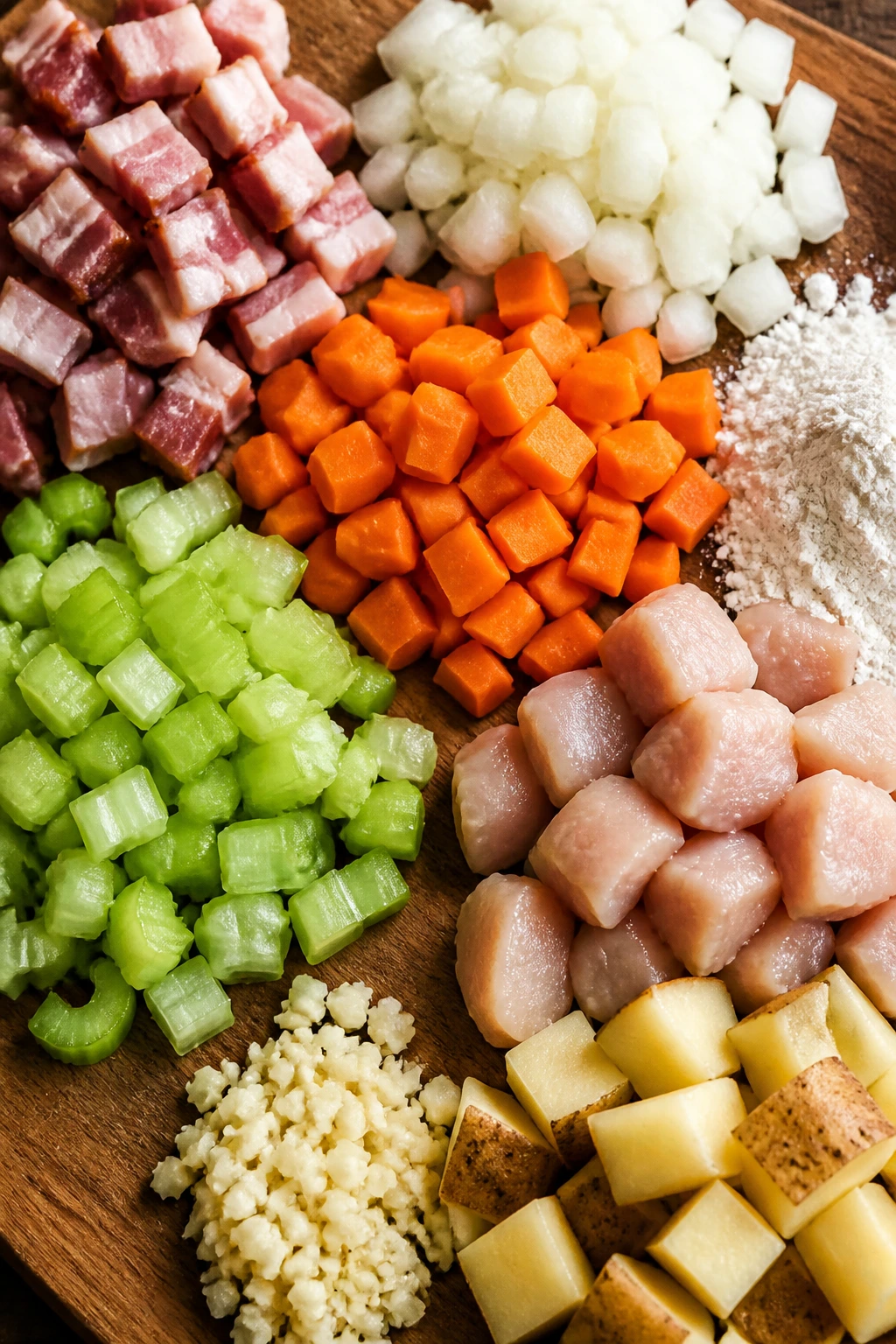
- 4 slices thick-cut bacon, diced into small pieces
- 1 tablespoon olive oil
- 1 tablespoon unsalted butter
- 1 large yellow onion, diced
- 2 medium carrots, peeled and diced into 1/4-inch pieces
- 2 celery stalks, diced into 1/4-inch pieces
- 2 cloves garlic, minced
- 3 tablespoons all-purpose flour
- 1 teaspoon kosher salt, plus more to taste
- 1/2 teaspoon black pepper, plus more for serving
- 1 teaspoon dried thyme
- 1/2 teaspoon dried rosemary, crushed between your fingers
- 1 teaspoon Dijon mustard
- 6 cups low-sodium chicken broth
- 1 1/2 pounds Yukon Gold potatoes, scrubbed and cut into 1/2-inch cubes
- 1 bay leaf
- 1 1/2 pounds boneless, skinless chicken thighs, trimmed and cut into 1-inch pieces
- 1 cup frozen peas
- 1 cup half-and-half
- 1/2 cup heavy cream
- 2 tablespoons fresh parsley, chopped
- 1 tablespoon lemon juice, optional but useful
Why Each Ingredient Has a Job
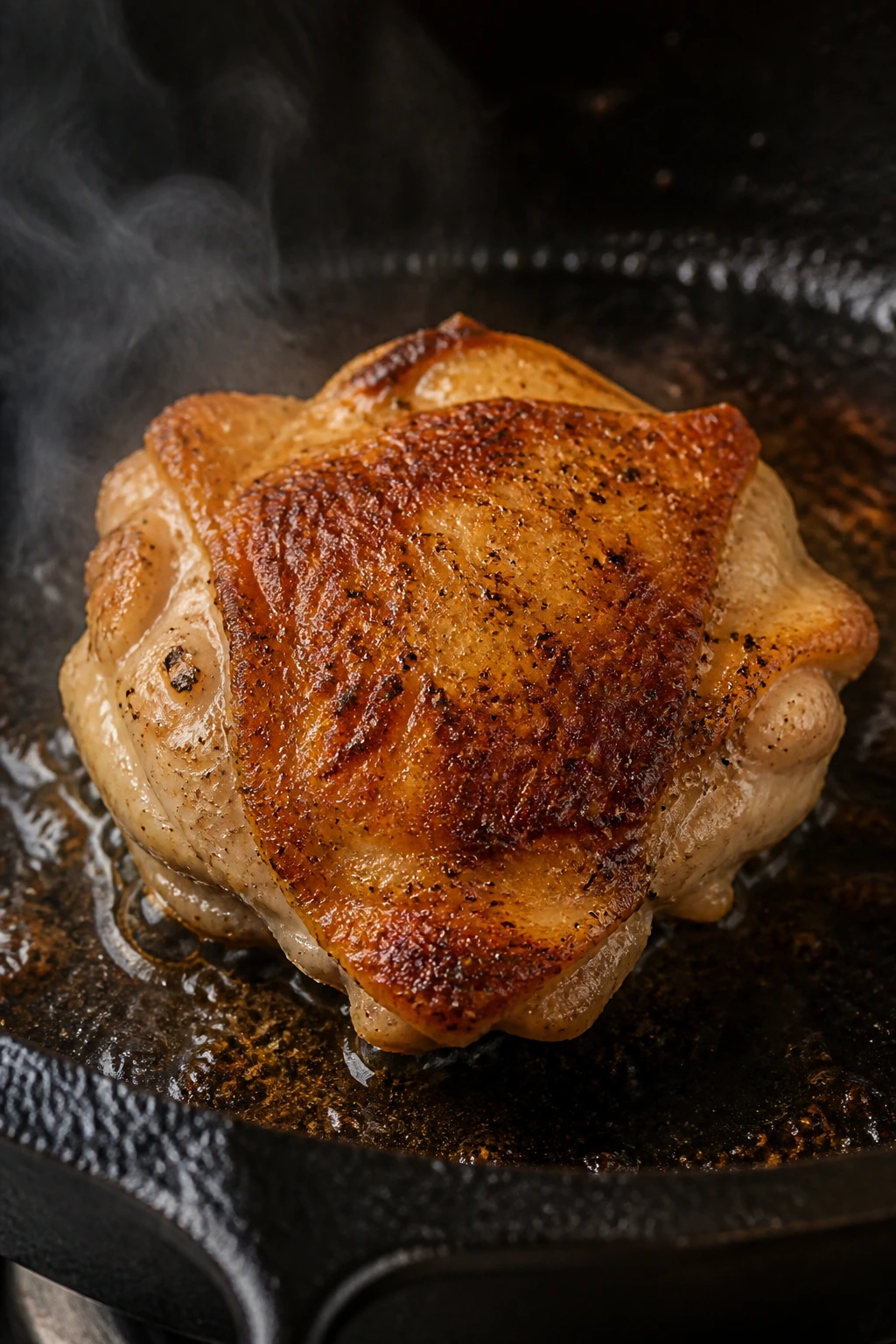
Chicken and Bacon
What to use: 1 1/2 pounds boneless, skinless chicken thighs and 4 slices thick-cut bacon. The thighs stay tender through the simmer, and the bacon gives the pot a smoky base without asking for a long ingredient list.
Preparation: Cut the chicken into 1-inch pieces and pat it dry so it browns instead of steaming. Dice the bacon small enough that it renders evenly and doesn’t curl into little rubbery strips.
Substitutions: Rotisserie chicken or leftover turkey can step in, but add them near the end. If you want a pork-free version, skip the bacon and start with the olive oil and butter.
Tips: Brown the chicken in batches if the pot feels crowded. A little color on the bottom of the pan matters here; pale chicken tastes fine, but browned chicken gives the soup a deeper, almost roasted flavor.
Potatoes, Onion, Carrot, and Celery
What to use: 1 large onion, 2 carrots, 2 celery stalks, and 1 1/2 pounds Yukon Gold potatoes. That mix gives you sweetness, a little vegetal backbone, and enough starch to make the broth feel full.
Preparation: Keep the dice small and even, about 1/4 to 1/2 inch. The potatoes can be a touch larger than the carrots and celery, but not by much, or you’ll end up with hard cubes and mushy edges in the same pot.
Substitutions: Russets work if that’s what’s in the kitchen, though they break down more and cloud the broth. Sweet potatoes shift the soup toward sweeter, earthier territory, and parsnips can replace part of the carrot if you want a sharper edge.
Tips: Yukon Golds are the sweet spot because they soften without collapsing. I leave the skins on if they’re thin and clean; it saves time, and the soup looks a little more rustic in a good way.
Broth, Flour, and Dairy
What to use: 6 cups low-sodium chicken broth, 3 tablespoons flour, 1 cup half-and-half, and 1/2 cup heavy cream. The broth carries the flavor, the flour gives the base structure, and the dairy smooths the finish.
Preparation: Measure the broth before you start cooking so you can pour it in without hunting around for a carton while the flour sits in the pot. Keep the half-and-half and cream cold until the end; they don’t need to warm up first.
Substitutions: Vegetable broth works if you skip the chicken, and whole milk can replace the half-and-half if you add 1 extra tablespoon flour for body. Evaporated milk is a sturdy middle ground when you want creaminess without the full richness of cream.
Tips: Add the dairy only after the soup has dropped to a gentle simmer. Boiling cream soup is the fastest route to a split surface and a slightly grainy mouthfeel.
Seasonings and the Bright Finish
What to use: 1 teaspoon thyme, 1/2 teaspoon crushed rosemary, 1 teaspoon Dijon mustard, 1 bay leaf, 1 cup peas, 2 tablespoons parsley, 1 tablespoon lemon juice, 1 teaspoon salt, and 1/2 teaspoon black pepper. These are the small pieces that keep the soup from tasting like one long beige note.
Preparation: Crush the rosemary with your fingers so it disperses through the broth instead of floating in poky little needles. Chop the parsley fine enough that it actually lands on the spoon instead of sliding off the bowl.
Substitutions: Dill can stand in for parsley if you like a greener finish, and chives work if you want a sharper onion note. If you don’t have Dijon, a teaspoon of whole-grain mustard or a small splash of white wine vinegar can help the broth taste fuller.
Tips: The peas go in at the very end so they stay sweet and bright. Dijon doesn’t make the soup taste like mustard; it just makes the cream taste rounder.
The Order That Keeps the Soup Silky
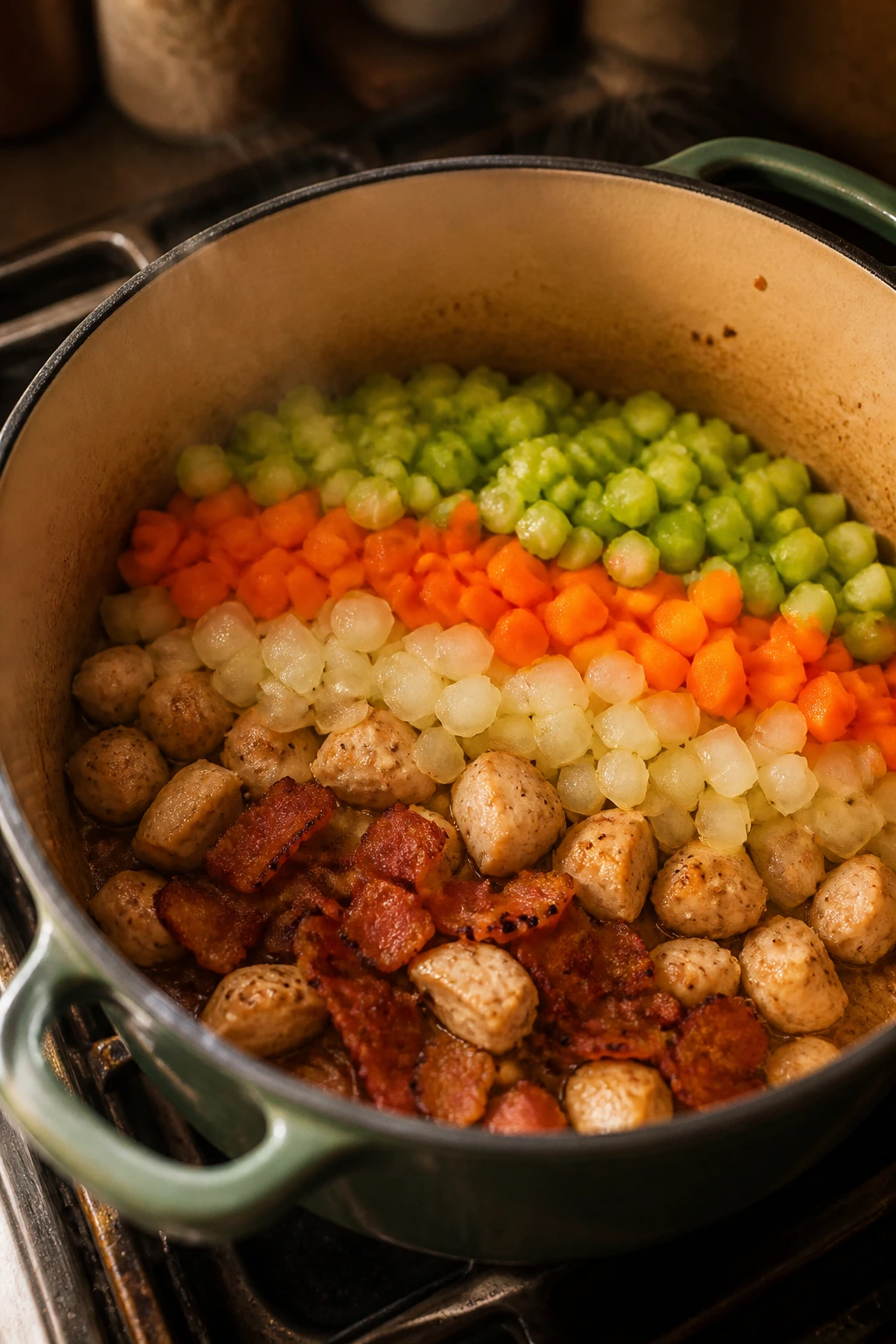
The order is the whole trick.
Bacon and chicken go first because they leave browned bits on the bottom of the pot. Those bits melt into the broth later and make the soup taste like you cooked all afternoon, even when you didn’t. Onion, carrot, and celery come next so they soften in the fat instead of boiling blandly in liquid.
The flour needs a full minute with the vegetables to lose its raw taste. Broth comes in after that, potatoes go in before the dairy, and the cream waits until the heat drops back to a gentle simmer. I like to keep the surface of the pot shivering, not bubbling hard; that tiny distinction keeps the soup smooth.
A partial blend matters too. You do not need to puree the whole pot. A few pulses with an immersion blender, or a quick mash in one corner of the pot, gives the broth body while leaving enough potato chunks to make the bowl feel honest. Too much blending and the soup starts to feel sticky instead of creamy.
The Tools That Keep the Pot Moving
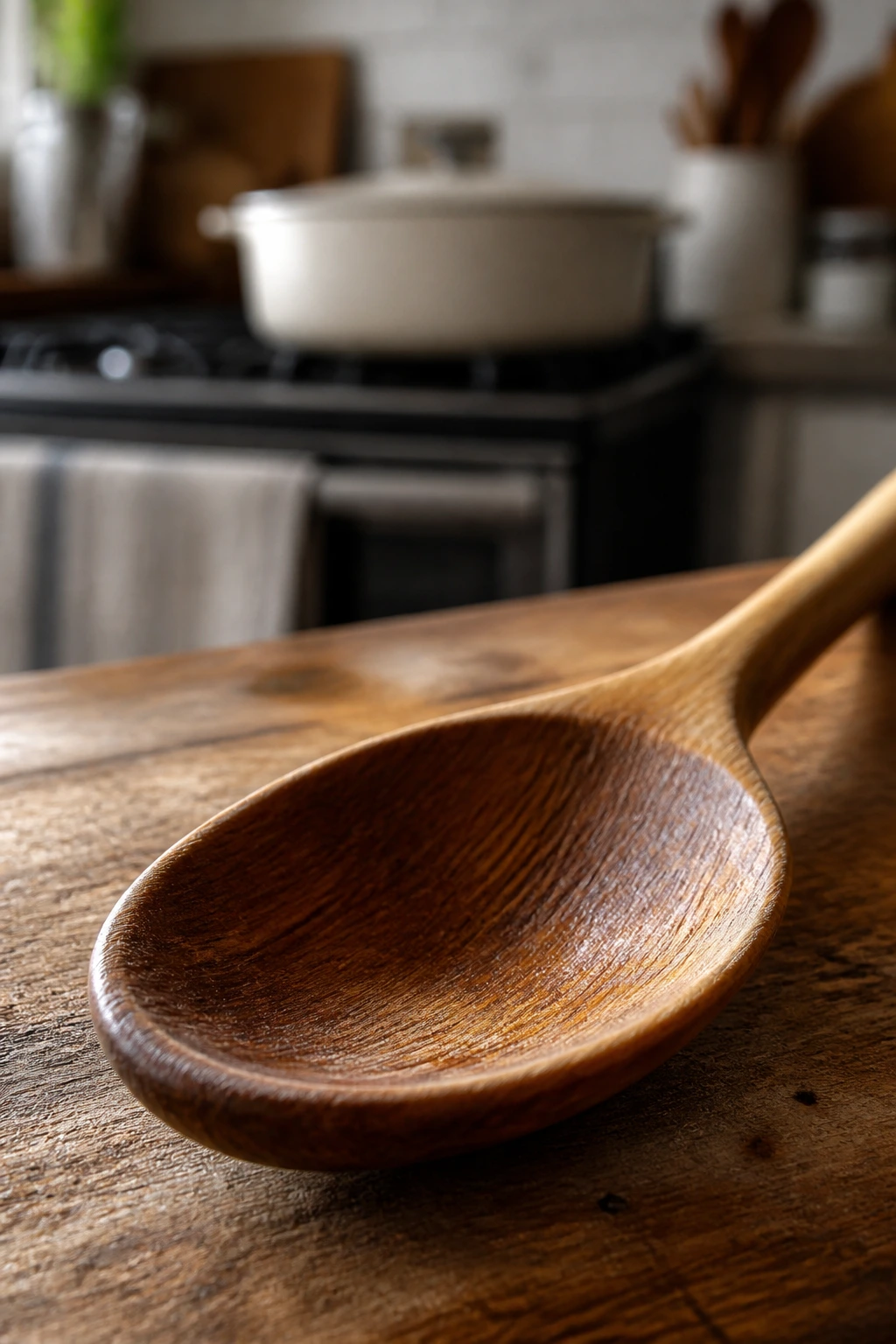
- 6-quart Dutch oven or heavy soup pot: The thick sides keep the bottom from scorching while you brown the meat and simmer the potatoes.
- Wooden spoon or heatproof spatula: Better than a whisk for scraping browned bits and stirring the flour into the vegetables.
- Sharp chef’s knife: You’ll notice the difference when the onion, carrot, celery, and potatoes are cut to similar sizes.
- Cutting board with a damp kitchen towel underneath: Keeps the board from skating around when you’re chopping wet potatoes or celery.
- Measuring cups and spoons: The flour and broth amounts matter here; eyeballing them usually means the soup ends up too thin or too thick.
- Immersion blender or potato masher: The blender gives you a smoother soup, while a masher keeps the texture rustic and chunkier.
- Ladle: Not glamorous, but useful when you want to serve without sloshing the cream soup all over the stove.
How to Build the Soup, One Stage at a Time
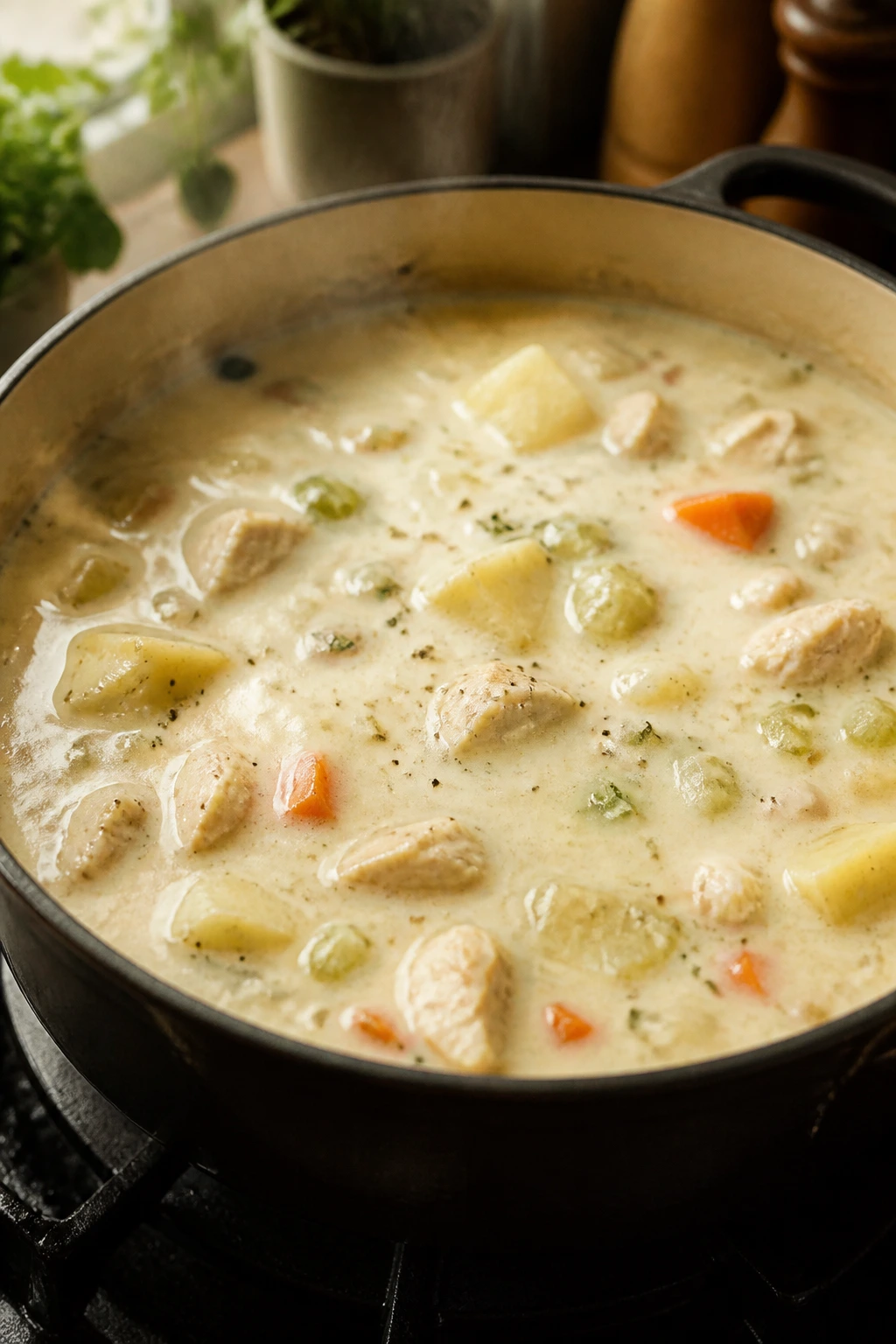
Brown and Build Flavor
-
Set a 6-quart Dutch oven over medium heat. Add the diced bacon and cook for 5 to 7 minutes, stirring often, until the fat renders and the pieces turn deep golden. Scoop the bacon onto a plate with a slotted spoon, leaving the fat in the pot. If you’re skipping bacon, add the olive oil and butter now and move straight to the chicken.
-
Add the chicken pieces to the pot in a single layer and season with 1/2 teaspoon salt and 1/4 teaspoon black pepper. Brown for 3 to 4 minutes per side, just until the outside loses its raw sheen; transfer the chicken to the plate with the bacon. Do not crowd the pot — if the chicken sits on top of itself, it steams instead of sears.
-
Add the olive oil and butter if needed, then stir in the onion, carrots, and celery. Cook for 6 to 8 minutes over medium heat until the onion turns translucent and the carrot edges soften. Stir in the garlic, thyme, rosemary, Dijon mustard, remaining salt, and remaining pepper, and cook for 30 seconds until fragrant.
-
Sprinkle the flour over the vegetables and stir constantly for 1 minute. The mixture should look pasty and smell a little toasted, not raw. That minute matters; if you rush it, the soup can taste floury later.
Simmer and Finish
-
Pour in 1 cup of the broth and scrape the bottom of the pot until the browned bits lift. Add the remaining broth, potatoes, and bay leaf, then bring the soup to a boil. Lower the heat to a steady simmer and cook for 15 to 20 minutes, until the potatoes are tender enough to break cleanly with a fork.
-
Remove the bay leaf. Use an immersion blender for 4 to 6 short pulses in one corner of the pot, or mash about 2 cups of soup with a potato masher. Leave most of the potatoes intact; the goal is body, not puree.
-
Return the chicken and bacon to the pot and simmer for 6 to 8 minutes, until the chicken reaches 165°F and the soup is gently bubbling again. If the liquid looks a little loose at this stage, give it another 2 minutes uncovered before adding the dairy.
-
Stir in the peas, half-and-half, heavy cream, and lemon juice. Keep the heat low and warm the soup for 2 to 3 minutes, just until steam rises and the peas are hot. Do not let it boil hard once the dairy goes in.
-
Turn off the heat, stir in the parsley, and taste for salt and pepper. Ladle into warm bowls and finish with a few extra cracks of black pepper if you like a sharper edge.
How to Serve a Bowl This Rich
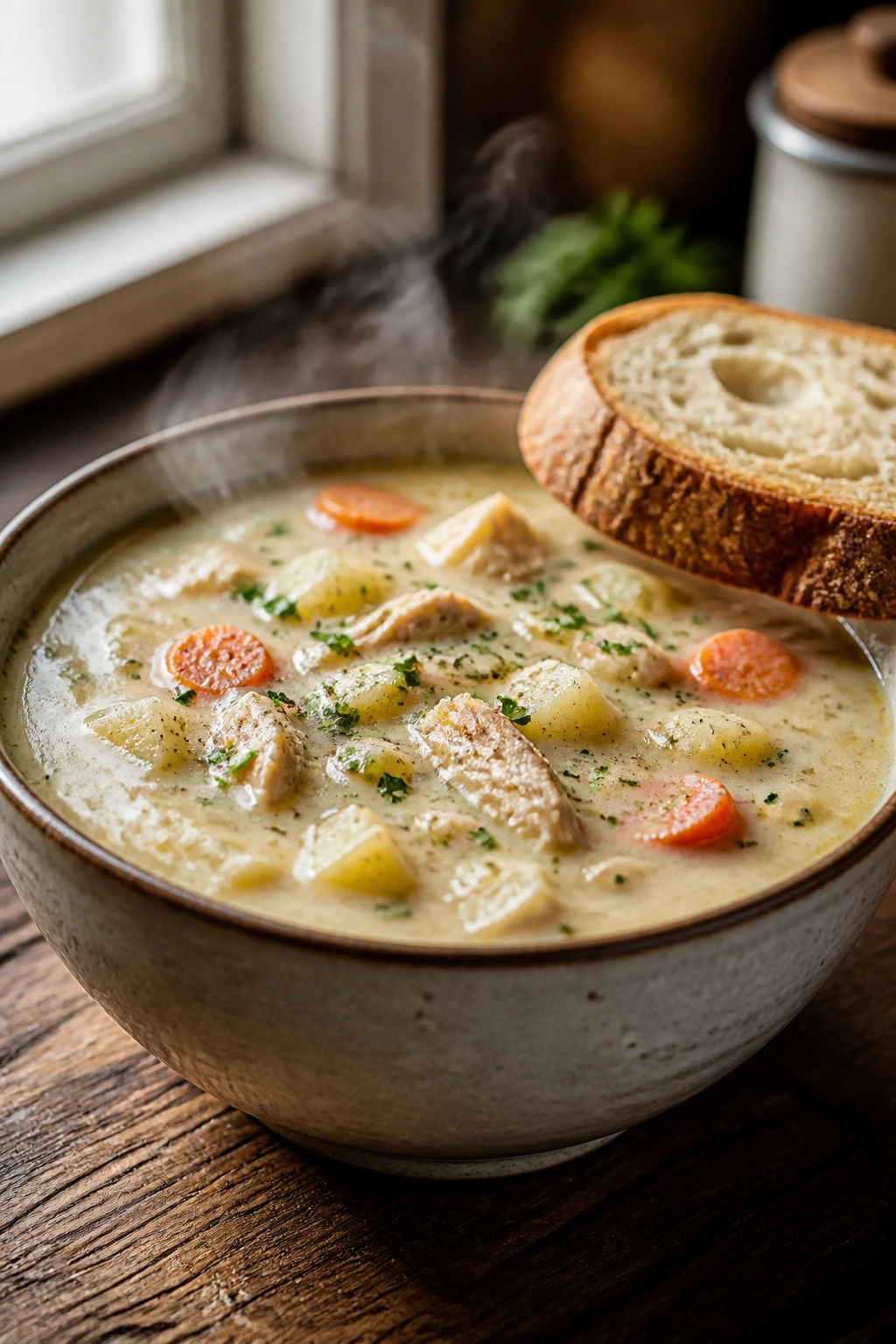
A wide bowl and a hunk of bread change everything. The soup is rich enough to stand on its own, but it feels more complete when something crisp or crusty is on the side to drag through the last creamy streaks.
Presentation: Ladle the soup into warm bowls so the steam stays trapped for the first few minutes. Sprinkle the parsley over the top right before serving, then add black pepper in a loose shower rather than a fine dusting; it looks better, and it tastes brighter in the first spoonful.
Accompaniments: Sourdough is my first choice because its chewy crust stands up to the broth. Buttered biscuits are good here too, especially if you want the whole meal to feel softer and more old-fashioned. A simple green salad with a sharp vinaigrette keeps the plate from leaning too rich.
Portions: Six generous bowls is the right yield, though you can stretch it to eight smaller servings if bread and salad are part of the meal. For hungry people, plan on about 1 1/2 cups per bowl; that amount feels substantial without putting you into nap territory.
Beverage Pairing: A dry cider fits the creamy broth better than a sweet drink does. If you want something with less sweetness, a light lager or a glass of unoaked Chardonnay keeps the meal clean instead of heavy. For a nonalcoholic option, hot black tea with lemon works better than a sugary soda.
Small Moves That Make It Taste Deeper
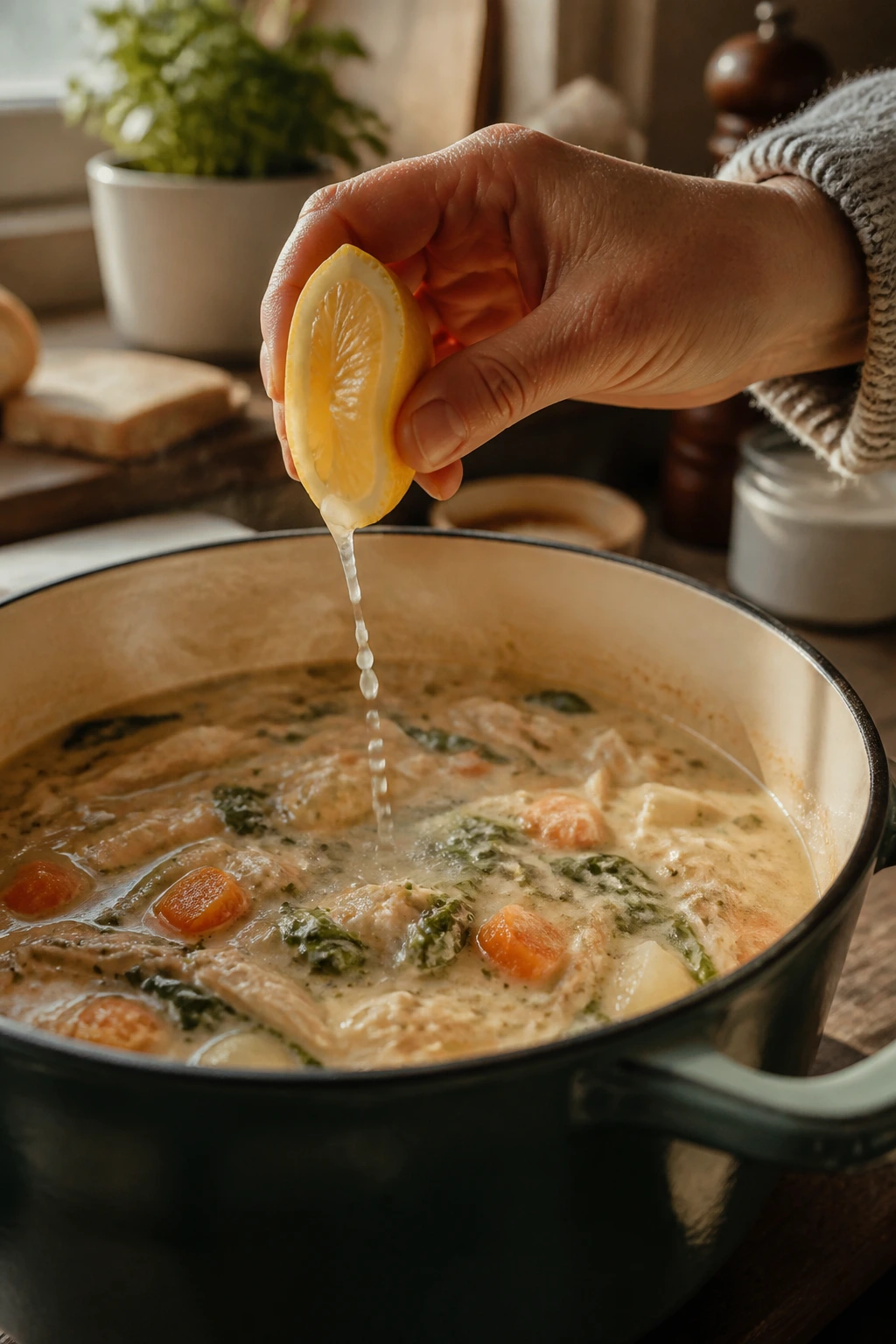
Flavor Enhancement: Stir the lemon juice in off the heat, not while the soup is boiling. That tiny pause keeps the brightness crisp and stops the dairy from tasting faintly cooked. If you want a slightly deeper edge, add the smallest pinch of smoked paprika when you season the chicken.
Time-Saver: Chop the onion, carrots, and celery earlier in the day and keep them in one container with a paper towel under the lid. The vegetables stay dry enough to sauté cleanly, and the soup gets onto the stove a lot faster.
Texture Move: If you want a thicker bowl without changing the flavor, mash only the potatoes along one side of the pot. One minute of mashing does more than ten minutes of extra simmering, and it keeps the soup from turning gluey.
Cost-Saver: Use all chicken thighs and skip the bacon if you need to trim the grocery list. You lose a little smoke, but the thighs and thyme still give the broth enough depth to feel complete.
Pro Move: Warm the bowls for 5 minutes in a 200°F oven before serving. It sounds fussy until you notice how much longer the soup stays steaming at the table.
Common Mistakes That Weaken the Soup
-
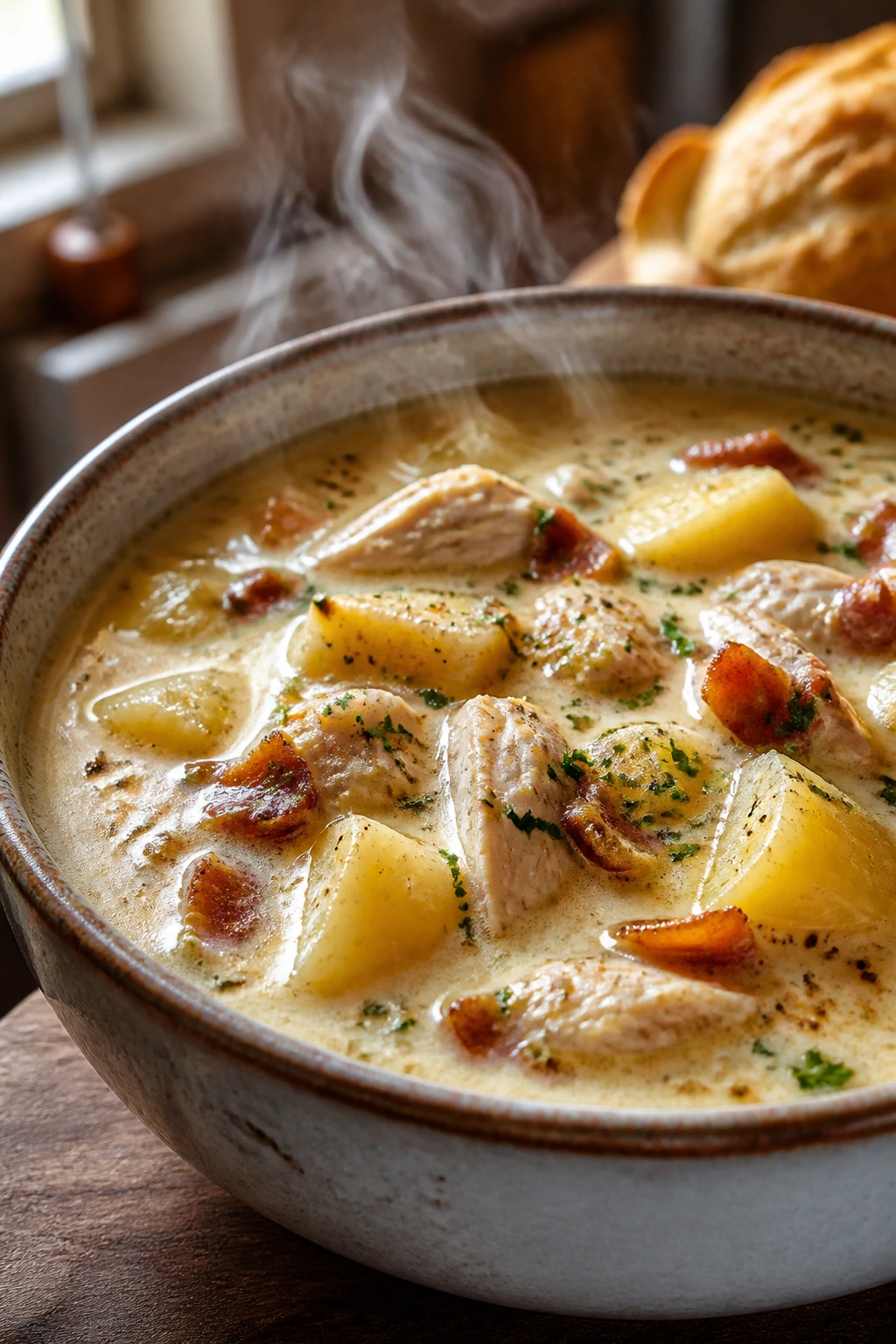
Boiling after the dairy goes in: The surface starts to look speckled or greasy, and the soup can taste split. Fix it by dropping the heat to low and stopping at a bare simmer once the cream is added.
-
Skipping the flour step: The broth stays thin even after the potatoes soften. Fix it by cooking the flour with the vegetables for a full minute so the starch has a chance to thicken the liquid later.
-
Cutting the potatoes unevenly: Some pieces stay hard while others fall apart into mush. Fix it by keeping the cubes close to 1/2 inch and adding a few extra minutes of simmering only if the largest pieces still resist a fork.
-
Overblending the pot: The soup goes from creamy to sticky, and the potato starch makes the texture feel heavy. Fix it by pulsing the immersion blender only a few times, or mashing just a small corner of the pot.
-
Underseasoning at the end: Cream softens salt, so a bowl that tasted fine before the dairy can taste flat afterward. Fix it by tasting after the final simmer and adding salt in small pinches until the broth wakes up.
-
Adding the peas too early: They lose their bright color and turn soft. Fix it by stirring them in with the cream during the last few minutes so they stay sweet and green.
Variations That Change the Mood
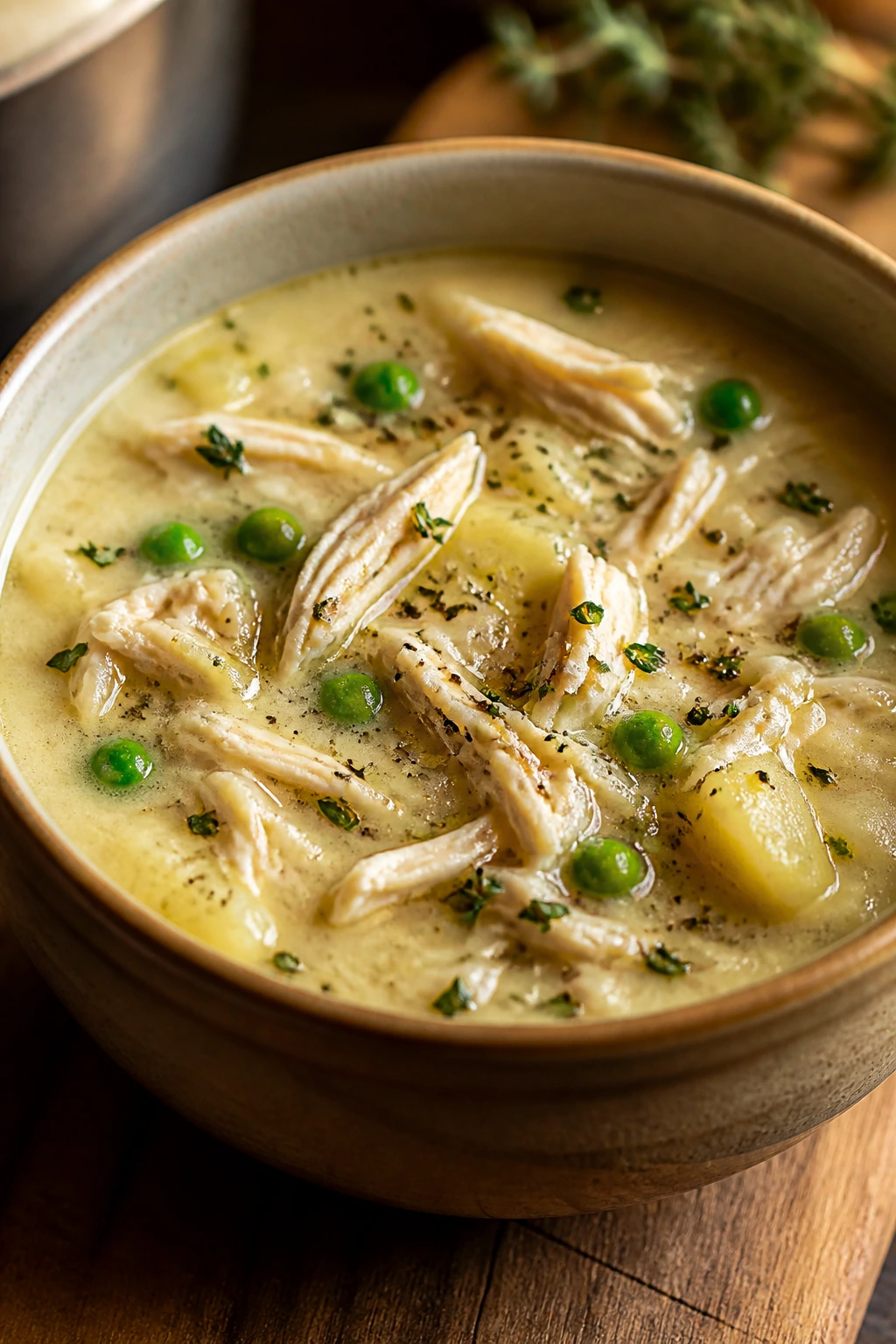
Rotisserie Shortcut Bowl
Use 3 cups shredded rotisserie chicken instead of raw thighs and add it with the peas, half-and-half, and cream. You lose the chicken browning step, but the soup gets faster and still tastes full once the potatoes and thyme do their work.
Mushroom-and-White-Bean Version
Skip the bacon and chicken, then sauté 12 ounces sliced cremini mushrooms with the onion, carrot, and celery. Use vegetable broth and stir in 1 can drained cannellini beans at the same time you’d return the chicken; the bowl turns earthier, creamier, and fully vegetarian.
Kale-and-Corn Winter Bowl
Stir in 2 cups chopped kale with the peas and add 1 cup frozen corn at the end. The kale softens in the hot broth without going limp, and the corn gives the soup a little sweetness that plays nicely against the cream.
Dairy-Lighter Pot
Swap the half-and-half and heavy cream for 1 1/2 cups whole milk plus 1/2 cup evaporated milk. The soup stays smooth, but it feels less lush on the tongue, which is useful if you want the bowl to sit a little lighter.
Smoky Paprika Chowder Turn
Add 1/4 teaspoon smoked paprika with the thyme and serve the finished soup with oyster crackers instead of bread. It nudges the recipe toward chowder without turning it into a different dish.
Make-Ahead, Storage, and Reheating
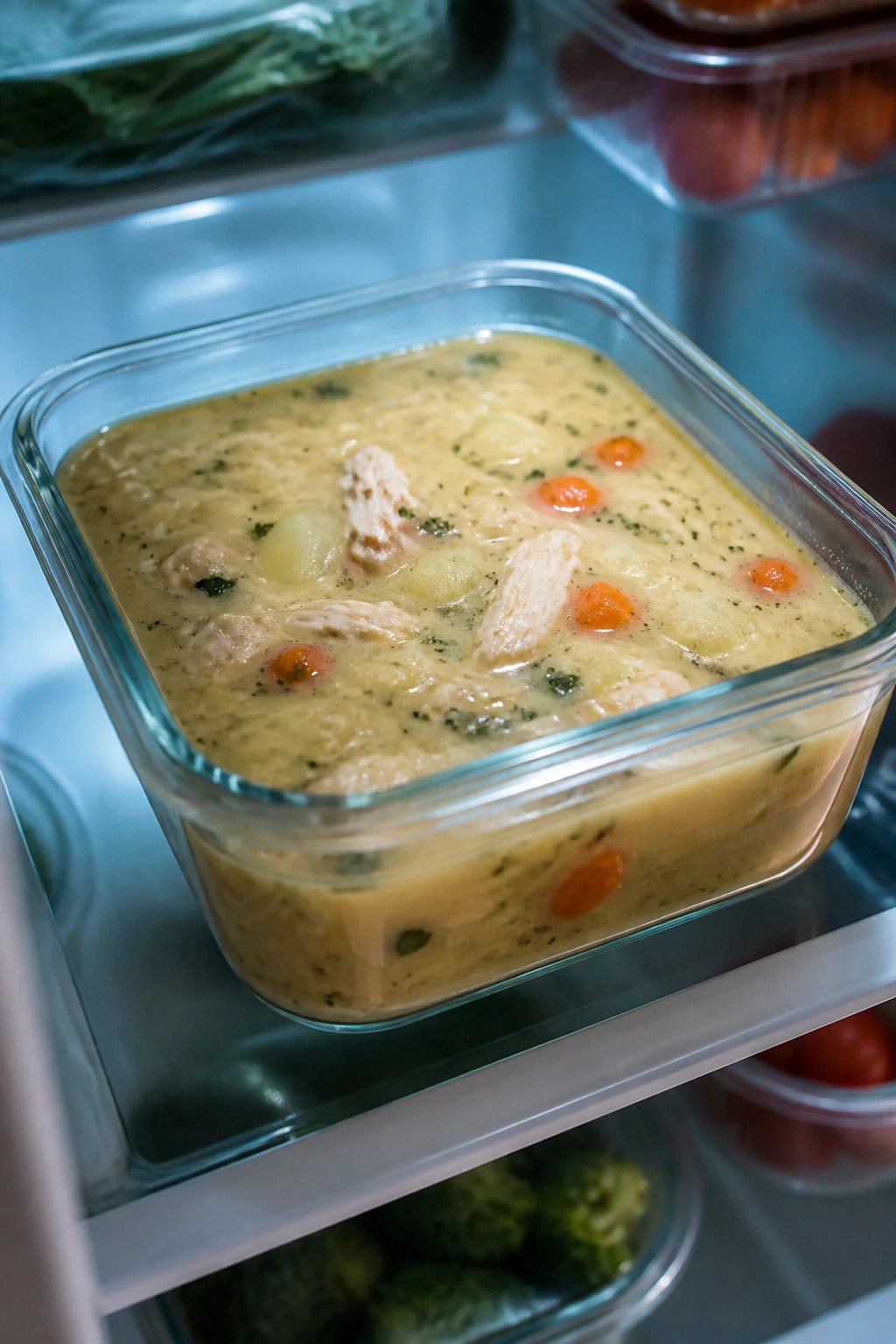
Make-Ahead: You can chop the vegetables and chicken up to 24 hours ahead and keep them covered in the fridge. If you want to get further ahead, cook the soup through the potato stage and stop before the dairy; that base holds well for 2 days and finishes quickly on the day you plan to serve it.
Fridge: Cool the soup within 2 hours of cooking, then move it into shallow airtight containers. It keeps for 3 to 4 days in the refrigerator, though the potatoes will drink up some of the broth overnight, so expect the soup to thicken.
Freezer: For the cleanest texture, freeze the soup before the half-and-half and cream go in. The base keeps for up to 2 months in the freezer, and you can add the dairy after thawing and reheating. If you freeze the finished soup, leave a little space at the top of the container; dairy soups expand, and the surface may look slightly mottled after thawing.
Reheating: Warm the soup over low heat on the stove, stirring often, and add broth a few tablespoons at a time if it has thickened too much. For a single bowl, the microwave works at 50% power in 60-second bursts, with a stir between each round. The goal is hot soup, not a boiling pot.
Best Texture Tip: If the soup looks a little loose on day one, give it 5 minutes off the heat before serving. It settles down fast, and the potatoes keep the broth from separating in the way some cream soups do.
Questions People Ask Before the First Pot
Can I use chicken breast instead of thighs?
Yes, but keep the pieces a little larger and watch the simmer closely. Chicken breast dries out sooner than thighs, so it’s better if you add it later and pull the pot off the heat as soon as it reaches 165°F.
Can I use rotisserie chicken or leftover turkey?
Absolutely. Add cooked chicken during the last few minutes with the peas and dairy so it warms through without turning stringy. Leftover turkey works too, especially if you give the broth a little extra thyme and a splash more lemon at the end.
Can I make the soup thicker without adding more cream?
Yes. Mash another cup of potatoes against the side of the pot, or simmer the soup uncovered for 5 extra minutes before the dairy goes in. Both methods thicken the broth without making it taste richer or heavier.
What if the soup gets too thick after chilling?
That’s normal. Stir in warm broth a quarter cup at a time while reheating until the texture loosens back to where you want it; potatoes keep absorbing liquid in the fridge, so the change is expected.
Can I freeze it?
Yes, and the base freezes better than the fully finished version. If you know you’ll freeze part of it, stop before adding the half-and-half and cream, then finish the dairy after thawing and reheating.
Can I make this in a slow cooker or Instant Pot?
Yes, but brown the bacon and chicken first if you can. In a slow cooker, finish with the dairy during the last 20 minutes; in an Instant Pot, use sauté mode for the base, pressure-cook the potatoes for about 5 minutes, then stir in the cream after release.
How do I make it dairy-free?
Use unsweetened oat cream or full-fat coconut milk and add it only after the heat drops. Oat cream stays closest to the original flavor; coconut milk works too, though you’ll taste a little coconut in the finished bowl.
Do I have to blend part of it?
No, but the partial blend gives the soup its plush texture without adding more starch. If you want a looser, chunkier bowl, skip the blending and let the potatoes break down on their own during the simmer.
A Bowl Worth Keeping in Rotation
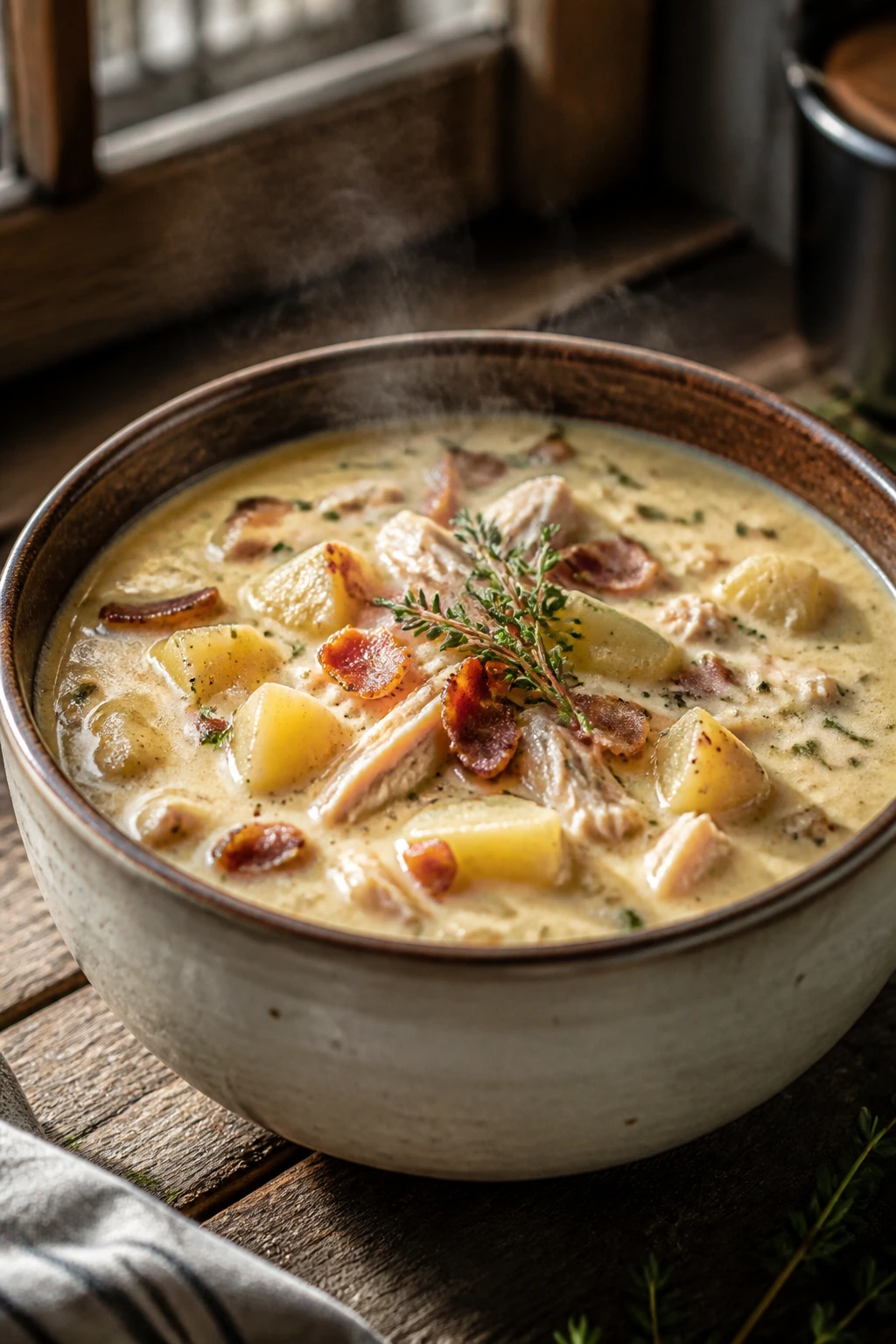
A pot like this doesn’t need much ceremony. It starts with bacon, onion, and thyme, then slowly turns into something thicker and kinder than the sum of its parts. That’s the whole reason cream soups keep showing up when the weather gets sharp.
The best part isn’t the cream. It’s the way the potatoes, broth, and chicken settle into each other after a few minutes in the pot, like they were meant to do this all along. Keep the ingredients around, and the next cold night gets a lot easier to handle.
Creamy Chicken and Potato Comfort Soup — Recipe Card
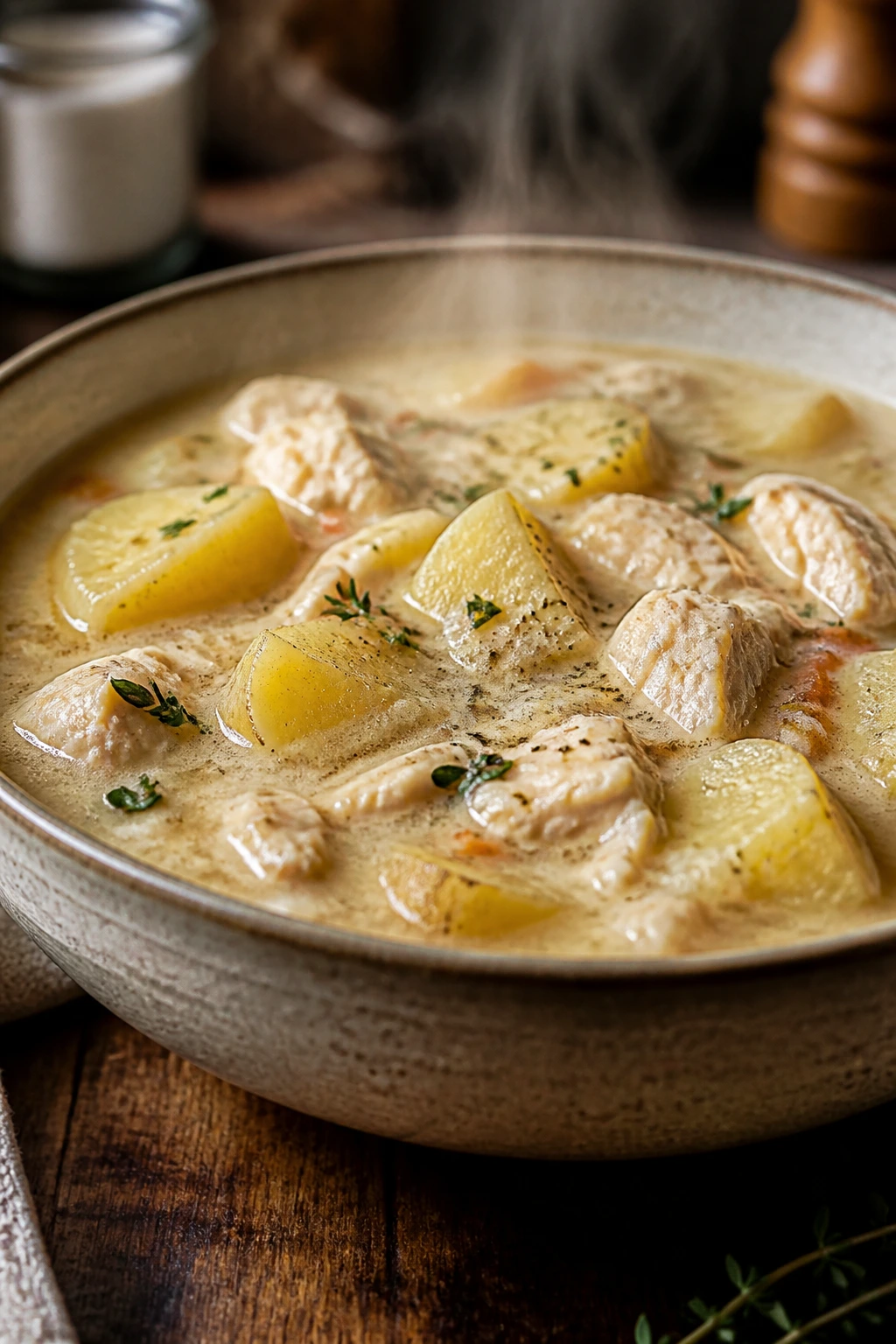
Recipe Name: Creamy Chicken and Potato Comfort Soup
Description: A thick, cozy chicken soup with Yukon Gold potatoes, bacon, thyme, and a gentle cream finish. It’s sturdy enough for dinner and smooth enough to reheat without falling apart if you warm it slowly.
Prep Time: 20 minutes
Cook Time: 40 minutes
Total Time: 1 hour
Course: Main Course, Soup
Cuisine: American
Servings: 6
Calories: about 480 kcal per serving
Ingredients
For the Soup:
- 4 slices thick-cut bacon, diced into small pieces
- 1 tablespoon olive oil
- 1 tablespoon unsalted butter
- 1 large yellow onion, diced
- 2 medium carrots, peeled and diced into 1/4-inch pieces
- 2 celery stalks, diced into 1/4-inch pieces
- 2 cloves garlic, minced
- 3 tablespoons all-purpose flour
- 1 teaspoon kosher salt, plus more to taste
- 1/2 teaspoon black pepper, plus more for serving
- 1 teaspoon dried thyme
- 1/2 teaspoon dried rosemary, crushed between your fingers
- 1 teaspoon Dijon mustard
- 6 cups low-sodium chicken broth
- 1 1/2 pounds Yukon Gold potatoes, scrubbed and cut into 1/2-inch cubes
- 1 bay leaf
- 1 1/2 pounds boneless, skinless chicken thighs, trimmed and cut into 1-inch pieces
- 1 cup frozen peas
- 1 cup half-and-half
- 1/2 cup heavy cream
- 2 tablespoons fresh parsley, chopped
- 1 tablespoon lemon juice, optional but useful
Instructions
-
Render the bacon in a 6-quart Dutch oven over medium heat for 5 to 7 minutes, until the pieces are deep golden. Remove the bacon and leave the fat in the pot.
-
Brown the chicken pieces in the bacon fat for 3 to 4 minutes per side, then transfer them to a plate. Do not crowd the pot.
-
Add the olive oil and butter, then sauté the onion, carrots, and celery for 6 to 8 minutes. Stir in the garlic, thyme, rosemary, Dijon, salt, and pepper for 30 seconds.
-
Sprinkle in the flour and stir for 1 minute. Pour in 1 cup of the broth and scrape the bottom of the pot clean.
-
Add the remaining broth, potatoes, and bay leaf. Bring to a boil, then reduce to a simmer and cook for 15 to 20 minutes, until the potatoes are fork-tender.
-
Remove the bay leaf. Blend a portion of the soup with an immersion blender, or mash some of the potatoes, until the broth looks thicker but still rustic.
-
Return the chicken and bacon to the pot and simmer for 6 to 8 minutes, until the chicken reaches 165°F.
-
Stir in the peas, half-and-half, heavy cream, and lemon juice. Warm gently for 2 to 3 minutes over low heat, without boiling.
-
Turn off the heat, stir in the parsley, and adjust the salt and pepper before serving.
Notes: For a thicker bowl, mash a little more potato before adding the dairy. If you plan to freeze it, stop before the half-and-half and cream, then add them after reheating.