



Creamy barley soup for cold winter nights has a smell that gets people drifting into the kitchen before the bowls are even out. Butter, onion, mushrooms, thyme, and that faintly nutty barley aroma start working together long before the soup looks finished. That’s the part I love most. It announces itself in stages.
Barley is the reason this pot feels different from the usual creamy soup. The grains stay pleasantly chewy while they give up starch into the broth, so the soup thickens without turning muddy or gluey. If you’ve only had barley in a side dish or a grain salad, the soup version can feel almost rude in how much more satisfying it is. One spoonful and you get broth, vegetables, cream, and grain all in the same bite.
The trick is restraint. Build the flavor early, let the barley do its slow work, and keep the dairy for the end so the soup stays smooth. That little sequence matters more than most people think. Get it right, and you end up with a pot that tastes like it took all evening, even though it didn’t.
Why This Soup Feels Like a Blanket
-
Silky without a flour bomb: Pearled barley releases enough starch to thicken the broth on its own, so the soup lands creamy instead of heavy and pasty.
-
The bowl eats like a meal: Onion, carrot, celery, mushrooms, and barley give you enough substance that you do not need a second dish to feel fed.
-
One pot keeps the flavor honest: Browning the mushrooms and softening the vegetables in the same Dutch oven leaves behind those browned bits that make the broth taste deeper.
-
It settles in your favor: Barley keeps sipping broth after the heat goes off, which means leftovers taste rounder the next day, not flatter.
-
Easy to steer in either direction: A little chicken, extra greens, or another splash of broth can make it lighter or heartier without changing the whole pot.
Yield, Timing, and the Texture You’re Aiming For
Yield: Serves 6 generous bowls
Prep Time: 20 minutes
Cook Time: 40 minutes
Total Time: 1 hour
Difficulty: Beginner — the process is mostly chopping, simmering, and adding the dairy at the end with a little care.
Rest Time: 10 minutes
Best Served: Hot, after the soup has rested briefly and thickened just enough to coat a spoon.
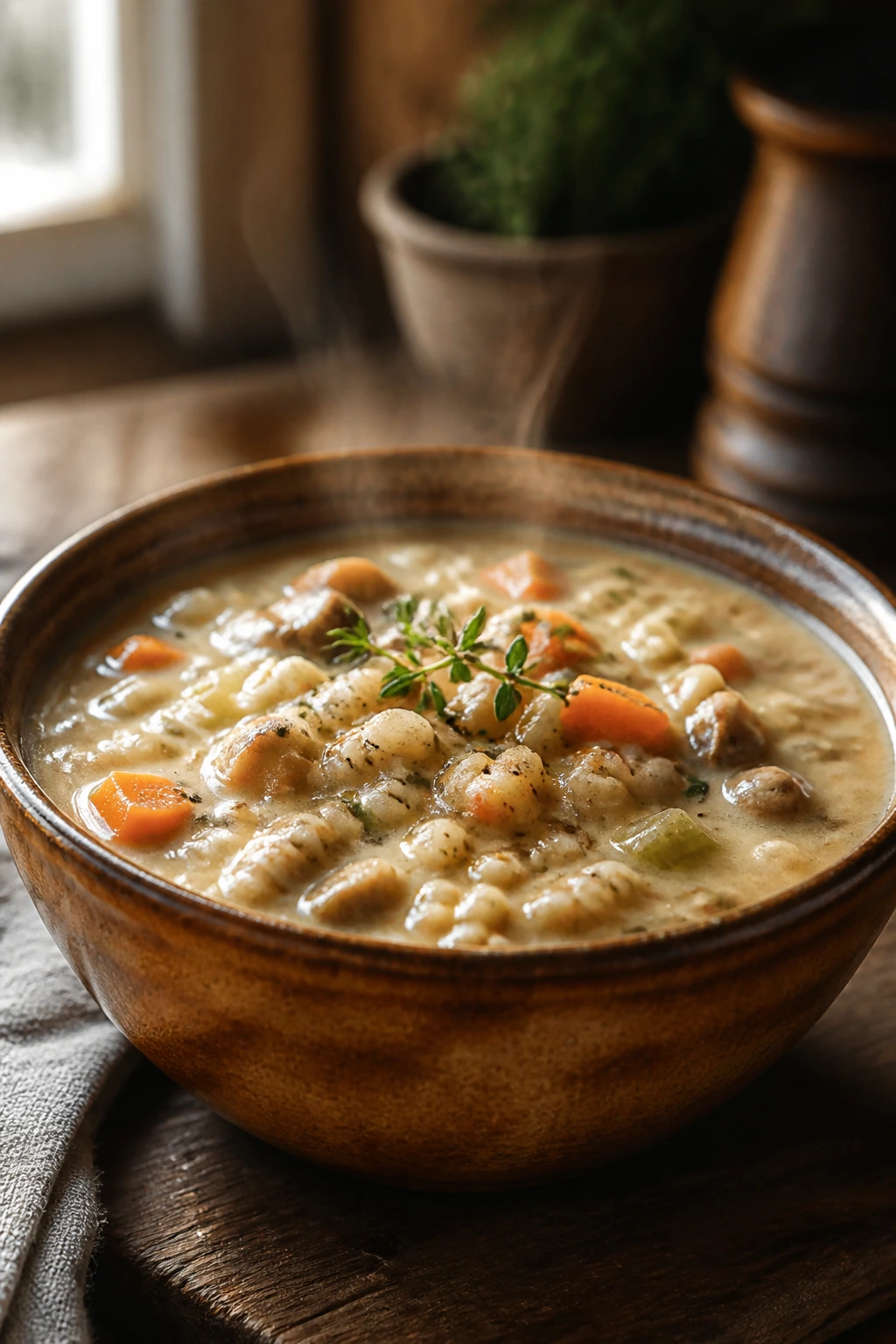
A good creamy barley soup should not look like porridge, and it should not look thin enough to pass for broth. You want something in the middle: the barley should be tender with a little chew, the vegetables soft but still recognizable, and the liquid glossy enough that it clings to the back of a spoon for a second before sliding off. That texture is the sweet spot.
Pearled barley is the best fit here because it cooks in a reasonable window and gives off enough starch to help the soup turn velvety. Hulled barley can work, but it needs more time and more liquid. If you swap grains without changing the timing, you’ll notice it right away. The barley will stay stubbornly firm while the vegetables drift toward mush.
The Ingredient List That Builds a Creamy Barley Soup
For the Soup
- 2 tablespoons unsalted butter
- 1 tablespoon olive oil
- 1 medium yellow onion, diced small
- 2 medium carrots, peeled and diced
- 2 celery ribs, diced
- 8 ounces cremini mushrooms, sliced
- 4 cloves garlic, minced
- 1 teaspoon kosher salt, plus more to taste
- 1 teaspoon dried thyme
- 1/2 teaspoon dried rosemary, crushed between your fingers
- 1/2 teaspoon black pepper
- 2 tablespoons all-purpose flour
- 1 cup pearled barley, rinsed and picked over
- 6 cups low-sodium chicken broth or vegetable broth
- 1 bay leaf
- 1 cup whole milk
- 1/2 cup heavy cream
- 2 cups chopped lacinato kale or baby spinach, optional
- 1 tablespoon lemon juice
To Serve
- 2 tablespoons chopped fresh parsley
- Flaky salt and extra black pepper
Why Each Ingredient Earns Its Place in the Pot
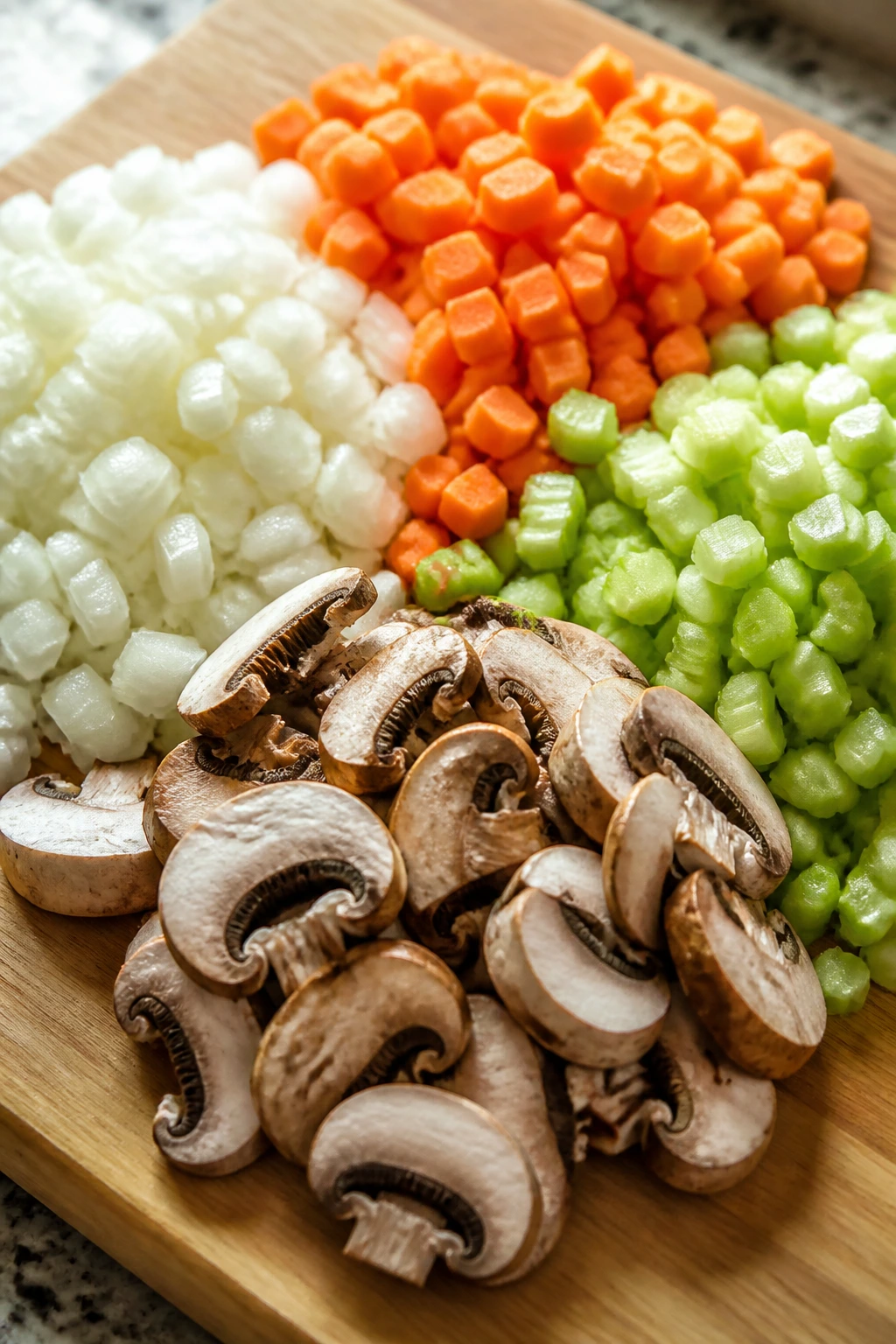
Vegetables and aromatics
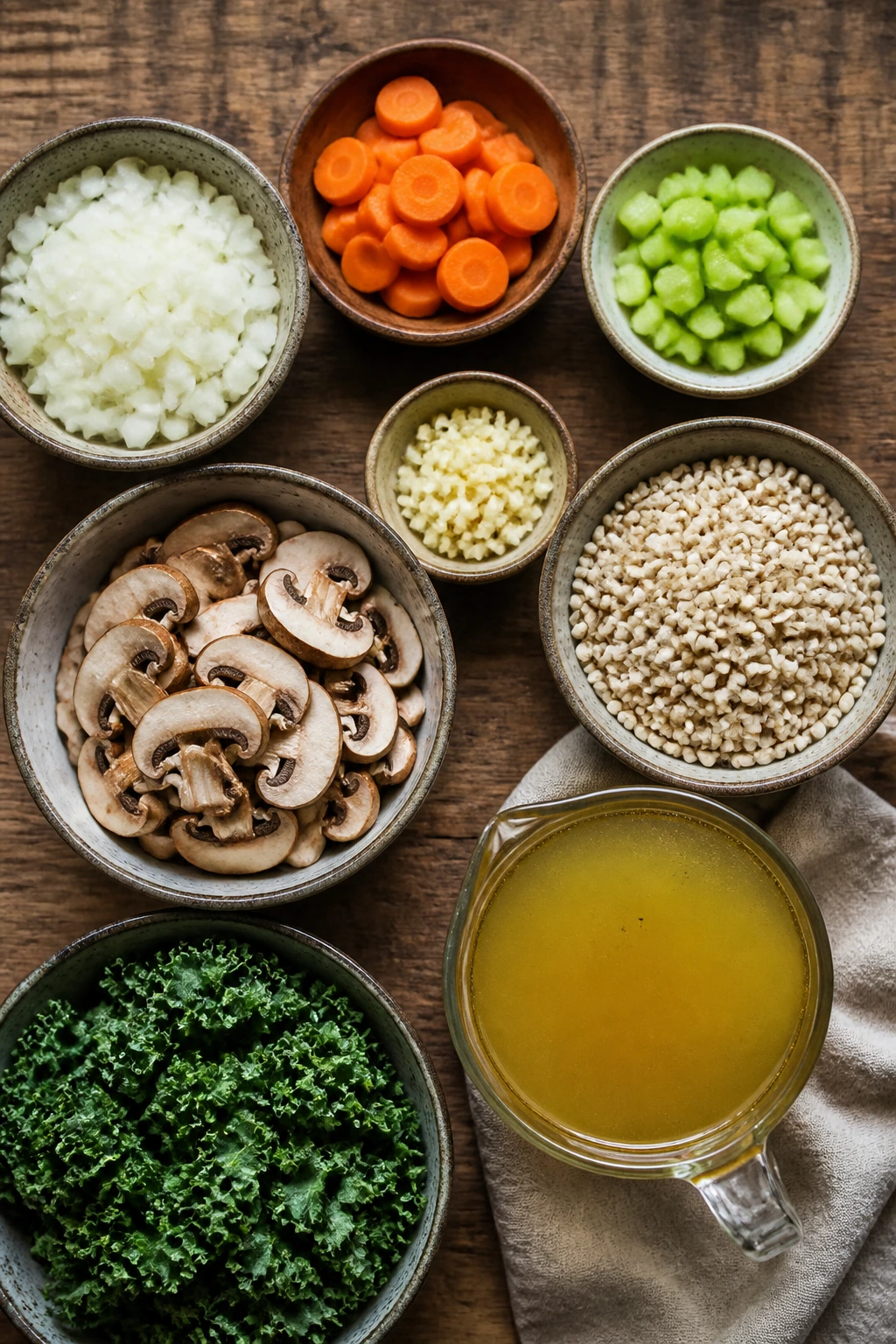
What to use: 1 medium onion, 2 carrots, 2 celery ribs, 8 ounces cremini mushrooms, and 4 cloves garlic. That mix gives the soup its backbone before the barley and dairy show up.
Preparation: Dice the onion, carrots, and celery into small, even pieces so they soften at roughly the same pace. Slice the mushrooms thick enough to brown instead of disappearing into the broth.
Substitutions: White button mushrooms work if that’s what you have, though they taste a little lighter. Leeks can replace half the onion if you want a sweeter, softer base.
Tips: Let the mushrooms cook long enough to lose their water and brown at the edges. That browned layer in the pot is flavor, not grime.
Barley and broth
What to use: 1 cup pearled barley and 6 cups low-sodium broth. This is the part that turns the soup from “vegetable soup with cream” into something with body.
Preparation: Rinse the barley in a fine-mesh strainer and pick out any tiny stones or dust. It only takes a minute, and it keeps the broth cleaner.
Substitutions: Hulled barley can be used, but expect a longer simmer and a firmer, nuttier grain. If you want a chicken-forward soup, use chicken broth; if you want it meatless, vegetable broth keeps the flavor clean.
Tips: Start with low-sodium broth so you can season in layers. Barley softens the salt edge as it cooks, and broth that tastes “fine” at the start can taste flat by the end.
Dairy and thickener
What to use: 2 tablespoons all-purpose flour, 1 cup whole milk, and 1/2 cup heavy cream. The flour gives the soup a little hold, and the milk-and-cream finish keeps it smooth.
Preparation: Sprinkle the flour over the cooked vegetables and stir for about a minute before adding the broth. Warm the milk and cream a little if your kitchen is cold, which helps them blend in faster.
Substitutions: A cornstarch slurry can replace the flour if you need a gluten-free route, and half-and-half can stand in for both milk and cream if you want one dairy product instead of two.
Tips: Do not add the dairy while the soup is boiling. Gentle heat keeps the finish glossy; hard bubbling can make it grainy.
Finishing flavors and greens
What to use: 1 bay leaf, 1 tablespoon lemon juice, and 2 cups chopped kale or spinach if you want a green edge. These are the details that keep the soup from tasting heavy.
Preparation: Tear kale into small pieces and strip out the tough stems, or use baby spinach and skip the extra prep. Squeeze the lemon fresh so the finish stays bright.
Substitutions: A teaspoon of white wine vinegar can replace the lemon juice in a pinch. Dill or parsley can step in for the greens if you want a lighter herb finish instead.
Tips: Acid matters here. A spoonful of lemon juice at the end wakes up the broth and keeps the cream from tasting sleepy.
The Tools That Make the Pot Behave
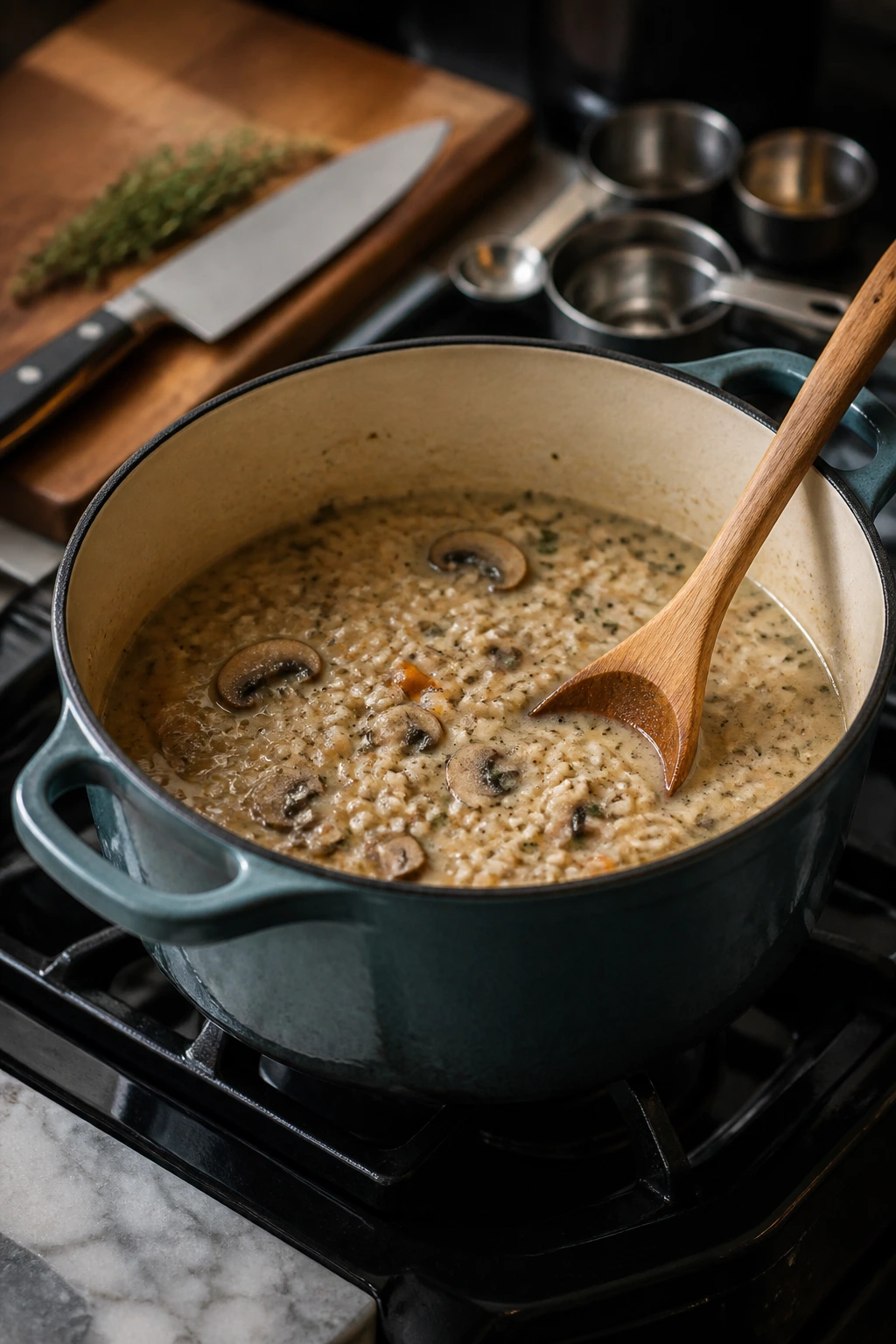
A soup like this doesn’t need a pile of gadgets, but a few sturdy tools make the whole process smoother.
-
5- to 6-quart Dutch oven: The heavy bottom helps the vegetables brown without scorching, and the extra room matters once the barley starts swelling.
-
Chef’s knife: You’ll use it for the onion, carrots, celery, mushrooms, and any greens you decide to add.
-
Cutting board: A large board gives you enough space to keep the diced vegetables separate so nothing gets mixed before it should.
-
Wooden spoon or silicone spatula: Either one works for stirring the vegetables and scraping up the browned bits after the broth goes in.
-
Fine-mesh strainer: Best for rinsing barley quickly and for catching any grit before it reaches the pot.
-
Measuring cups and spoons: The flour, barley, broth, milk, and cream all benefit from being measured instead of eyeballed.
-
Ladle: Not glamorous. Still the thing you’ll reach for when the pot starts smelling finished.
The Stovetop Method, Step by Step
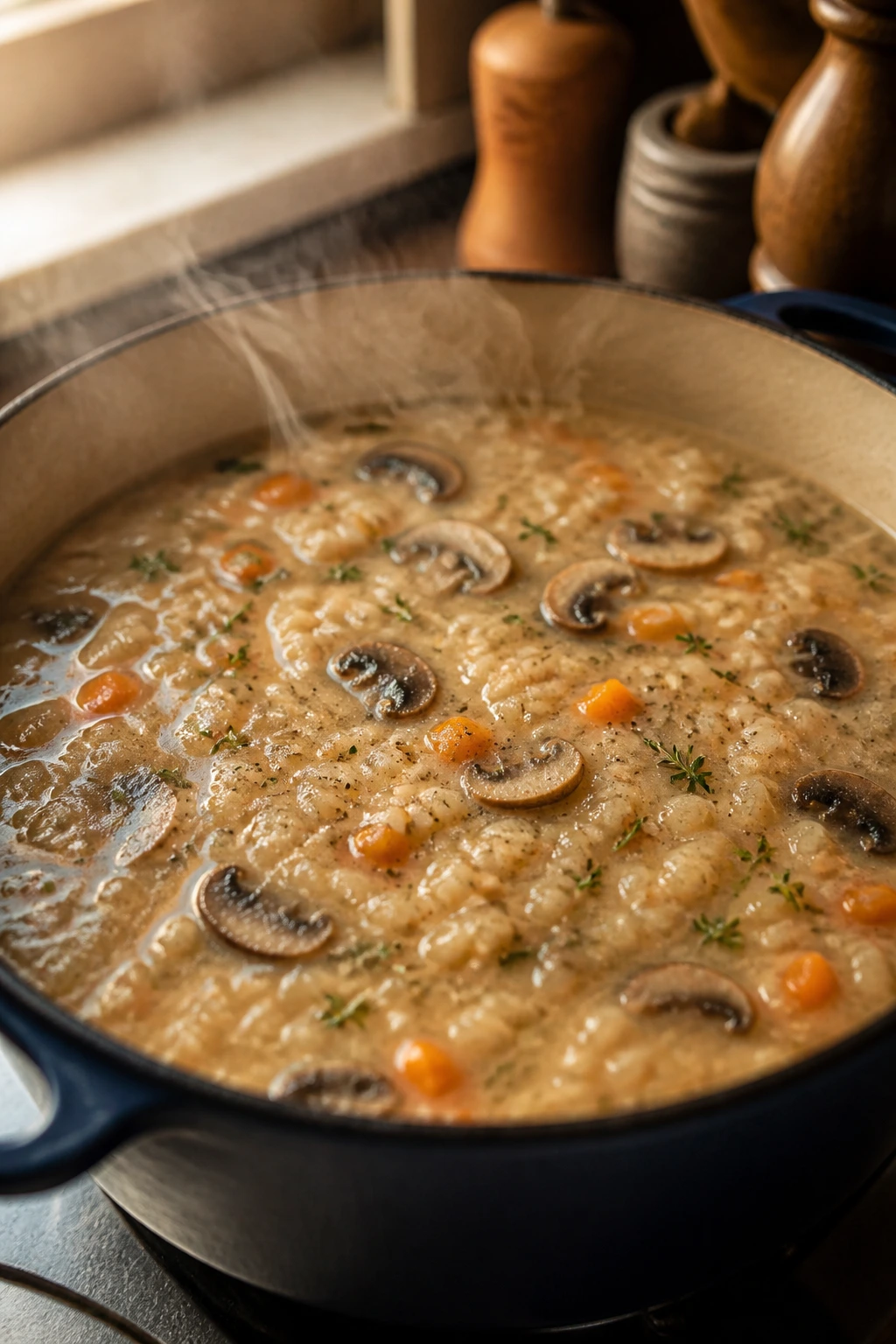
Build the savory base
-
Set a 5- to 6-quart Dutch oven over medium heat. Add the butter and olive oil, and let the butter foam. Stir in the onion, carrots, celery, and 1/2 teaspoon of the salt, then cook for 5 to 7 minutes, stirring every minute or so, until the onion turns translucent and the carrots lose their raw crunch. If the vegetables start browning too fast, lower the heat.
-
Add the sliced mushrooms and cook for 6 to 8 minutes, stirring only occasionally, until they release their liquid, the liquid cooks off, and the edges turn deep golden brown. The pot should smell earthy and a little sweet by now. That’s the sign you’re in the right place.
-
Stir in the garlic, thyme, rosemary, black pepper, and flour. Cook for 1 minute, stirring constantly, until the flour no longer smells raw and the vegetables look lightly coated. Do not skip this minute — uncooked flour tastes chalky and shows up fast in the finished soup.
Simmer the barley
-
Add the rinsed barley, broth, and bay leaf. Scrape the bottom of the pot with your spoon to loosen any browned bits. Raise the heat to high and bring the soup to a boil, then drop it to a steady low simmer.
-
Simmer partially covered for 30 to 35 minutes, stirring every 10 minutes, until the barley is tender with a little chew and the broth looks lightly thickened. If you’re using hulled barley instead of pearled barley, give it more time and another splash of broth. The grains should be plump, not split into mush.
Finish with cream
-
Stir in the milk, heavy cream, and the optional kale or spinach. Keep the heat low and cook for 3 to 5 minutes, just until the greens wilt and the soup is hot through. Do not let the soup boil after the dairy goes in. Gentle steam is fine; aggressive bubbling is what splits cream.
-
Remove the bay leaf. Stir in the lemon juice, then taste and adjust with more salt and pepper. If the soup feels too thick, add a splash or two of broth until it moves the way you like. Rest it off the heat for 10 minutes before serving so the barley can settle and the broth can thicken slightly.
How to Serve It on a Cold Night
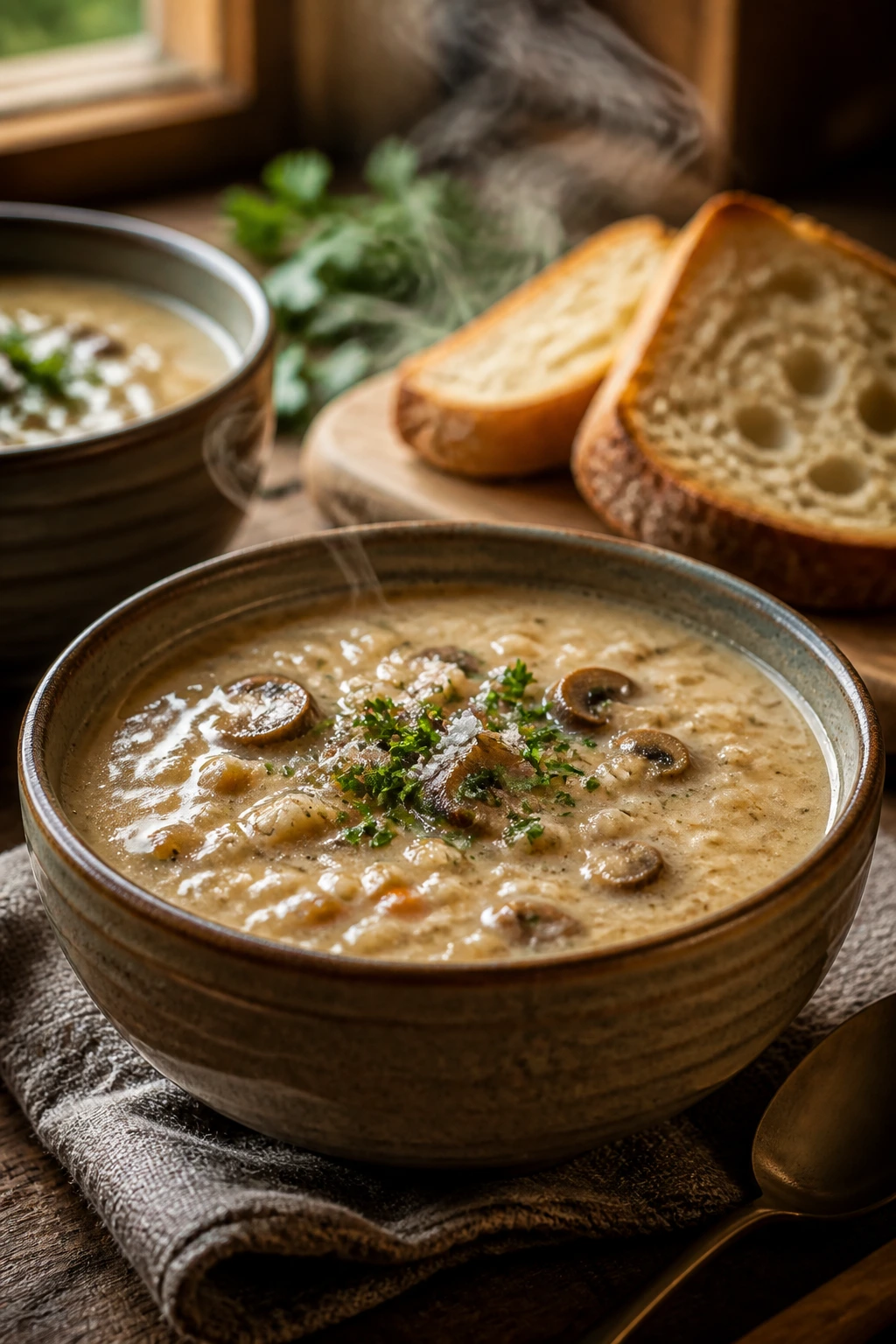
Presentation: Ladle the soup into warmed bowls so it stays hot longer. A pinch of parsley, a few grinds of black pepper, and a tiny pinch of flaky salt on top make the surface look finished without turning fussy.
Accompaniments: Thick slices of sourdough or rye bread fit the soup’s texture better than a soft dinner roll. If you want something beside the bowl, keep it sharp and crisp: a green salad with mustard vinaigrette, a grilled cheese with aged cheddar, or roasted Brussels sprouts with a squeeze of lemon.
Portions: A first-course serving is about 1 1/2 cups. For dinner, plan on 2 cups per person, a little more if the bread basket is empty. If you’re feeding a bigger group, stretch the soup with an extra cup of broth and a handful more greens rather than thinning it with water.
Beverage Pairing: A dry cider cuts through the cream and likes the barley’s nuttiness. If you want something nonalcoholic, sparkling water with lemon or a mug of black tea keeps the meal bright instead of heavy.
Practical Tips That Make the Soup Better
Flavor Enhancement: Stir in a teaspoon of soy sauce or Worcestershire sauce with the broth if the mushrooms are a little weak. It won’t make the soup taste salty or weird; it just deepens the savory note that mushrooms are already trying to give you.
Time-Saver: Slice the mushrooms first and let them cook while you chop the onion, carrot, and celery. That little shuffle saves a few minutes and keeps the vegetables from sitting around cut and drying out.
Pro Move: If you know you’ll have leftovers, pull the soup off the heat when the barley still has the tiniest bit of resistance. The grains keep softening in the hot liquid, and tomorrow’s bowl will land right where you want it instead of drifting into mush.
Cost-Saver: Use vegetable broth, not chicken broth, if you already have mushrooms doing the heavy flavor lifting. The soup doesn’t need expensive stock to taste full. Good mushrooms, decent thyme, and a real simmer do most of the work.
One more thing. If the soup tastes flat at the end, the answer is usually not more cream. It’s salt and acid. A pinch of salt, then another teaspoon of lemon juice, tends to do more than a splash of dairy ever will.
Mistakes That Make Barley Soup Flat or Gloppy

-
Crowding the mushrooms: If the pan is packed, the mushrooms steam and turn pale instead of browning. Fix it by cooking them in a wide pot and letting them sit untouched for a minute or two at a time.
-
Boiling after the dairy goes in: Hard bubbles can make the milk and cream separate or look grainy. Keep the heat low once the dairy enters the pot, and stop as soon as the soup is steaming hot.
-
Underseasoning early: Barley drinks broth and softens the edge of the salt. If you wait until the end to season, the vegetables and grain can taste bland even if the broth seems okay.
-
Cooking barley until it loses all bite: Overdone barley turns the soup into a thick paste. Pull it from the heat when the grains are tender but still have a little chew, then let resting finish the job.
-
Forgetting the leftover effect: Soup that looks perfect in the pot can become a brick in the fridge. Add extra broth when reheating, and don’t be shy about loosening each bowl with a splash right before serving.
-
Using hulled barley like it’s pearled barley: Hulled barley is chewier and slower. If you swap it in, plan on a longer simmer and more liquid, or you’ll end up with grains that feel stubborn and underdone.
Variations That Still Taste Like Barley Soup
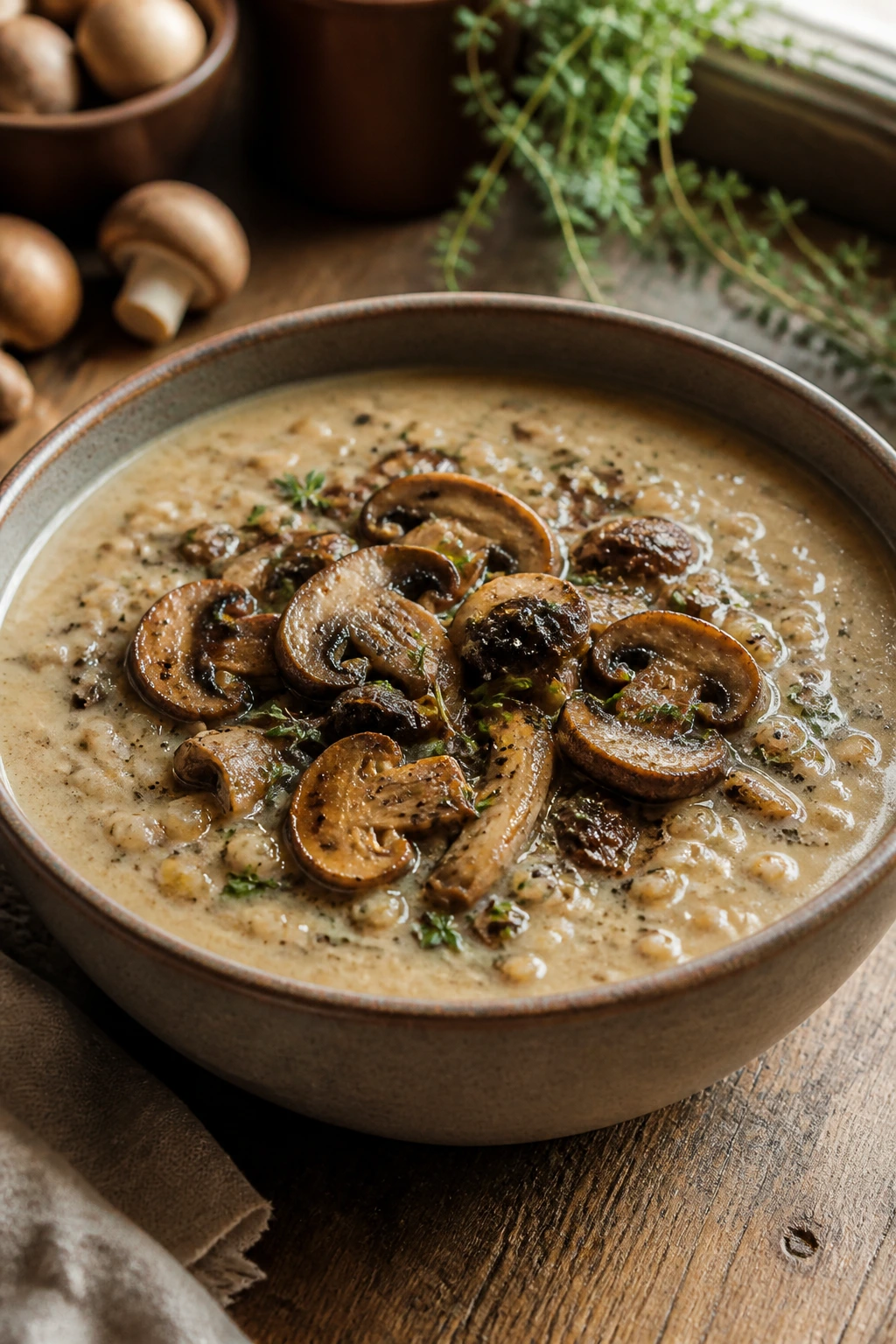
Mushroom-Forward Winter Bowl
Double the mushrooms to 1 pound, use vegetable broth, and add 1 teaspoon soy sauce with the broth. This version leans darker and earthier, with enough mushroom flavor to make the barley feel almost buttery.
Chicken and Kale Pot
Add 2 cups shredded cooked chicken during the last 5 minutes of simmering, and use chicken broth instead of vegetable broth. A little extra thyme and a handful of kale make it taste like a soup that started on purpose and finished by accident from leftovers.
Dairy-Free Silky Version
Swap the butter for another tablespoon of olive oil, replace the milk and cream with 1 1/2 cups unsweetened oat milk, and stir in 1/2 cup blended white beans for body. The result stays creamy without leaning on dairy, and the beans disappear into the background more than you’d expect.
Slow-Cooker Barley Soup
Sauté the vegetables and mushrooms on the stove first, then transfer everything except the milk, cream, lemon juice, and greens to a slow cooker. Cook on low for 4 to 5 hours, stir in the dairy near the end, and keep a close eye on the barley so it doesn’t go soft past the point of interest.
Make-Ahead, Storage, and Reheating
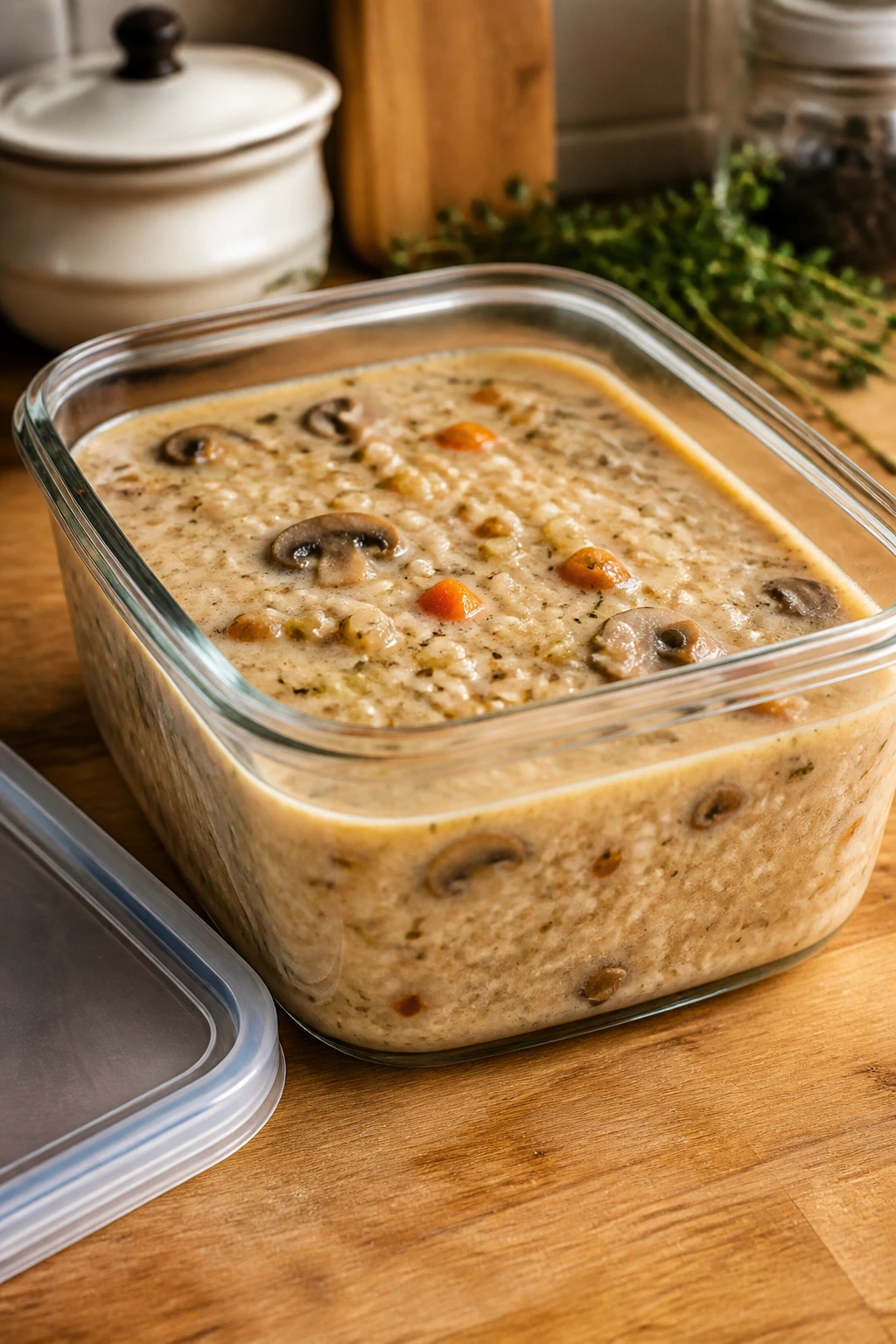
Barley soup is a little needy after it sits. Not difficult — needy. The grain keeps drinking liquid, so what looks loose on day one can set up thick on day two. That’s normal.
If you want to make it ahead, cook the soup through the barley stage, then cool it and refrigerate it before adding the milk and cream. When you’re ready to serve, warm it gently, stir in the dairy, and finish with lemon juice and greens. That gives you a cleaner texture than reheating the whole thing twice.
For leftovers, let the soup cool and move it into airtight containers within 2 hours. It keeps well in the refrigerator for 3 to 4 days. When you reheat it on the stove, use medium-low heat and stir in 1/4 to 1/2 cup broth per serving until it loosens again. The microwave works too, but use short bursts and stir between them so the cream doesn’t separate around the edges.
Freezing is possible, but the best version to freeze is the soup before the dairy goes in. Freeze the base for up to 2 months, then thaw it in the refrigerator overnight and add the milk and cream when you reheat. If you freeze the finished soup, the texture can get a little grainy when it comes back to life. Not ruined. Just less smooth than it was.
A small note that matters: chilled barley soup thickens more than you expect. If you open the container and it looks like stew, don’t panic. Add broth, not water if you have it, and stir until the bowl moves again.
Questions People Ask Before They Start
Can I use hulled barley instead of pearled barley?
Yes, but it needs more time and more liquid. Hulled barley keeps more of its outer layer, so it stays chewier and can take 15 to 25 minutes longer to soften. If you use it, start checking the grains before you add the dairy.
What if my soup gets too thick in the pot?
That’s easy to fix. Stir in warm broth, a half-cup at a time, until the texture loosens. Barley keeps absorbing liquid while it sits, so thinning at the end is normal, not a sign that you did something wrong.
Can I make this dairy-free?
Yes. Use olive oil instead of butter and replace the milk and cream with unsweetened oat milk or another neutral dairy-free milk. For more body, blend a small handful of white beans into the broth or use a touch more flour early on.
Does this work with chicken added in?
It does. Shredded rotisserie chicken or leftover roasted chicken fits neatly here, especially if you stir it in near the end so it stays tender. The soup still tastes like barley soup, which is the point.
How do I keep the barley from turning mushy?
Watch the simmer and taste the grains before the clock runs out. Pearled barley should be tender but still a little springy, and it will keep softening after the heat is off. Pull it a hair earlier than feels natural if you expect leftovers.
Can I make this in a slow cooker?
Yes, but brown the vegetables and mushrooms first. That step matters more in a slow cooker version because it gives you flavor before the long, gentle cook. Stir in the dairy only at the end so the finish stays smooth.
What if the soup tastes bland even after I salt it?
Try acid before you try more cream. A spoonful of lemon juice or a tiny splash of white wine vinegar can wake up the barley, the mushrooms, and the broth all at once. Bland soup often needs brightness, not richness.
A Bowl Worth Coming Back To
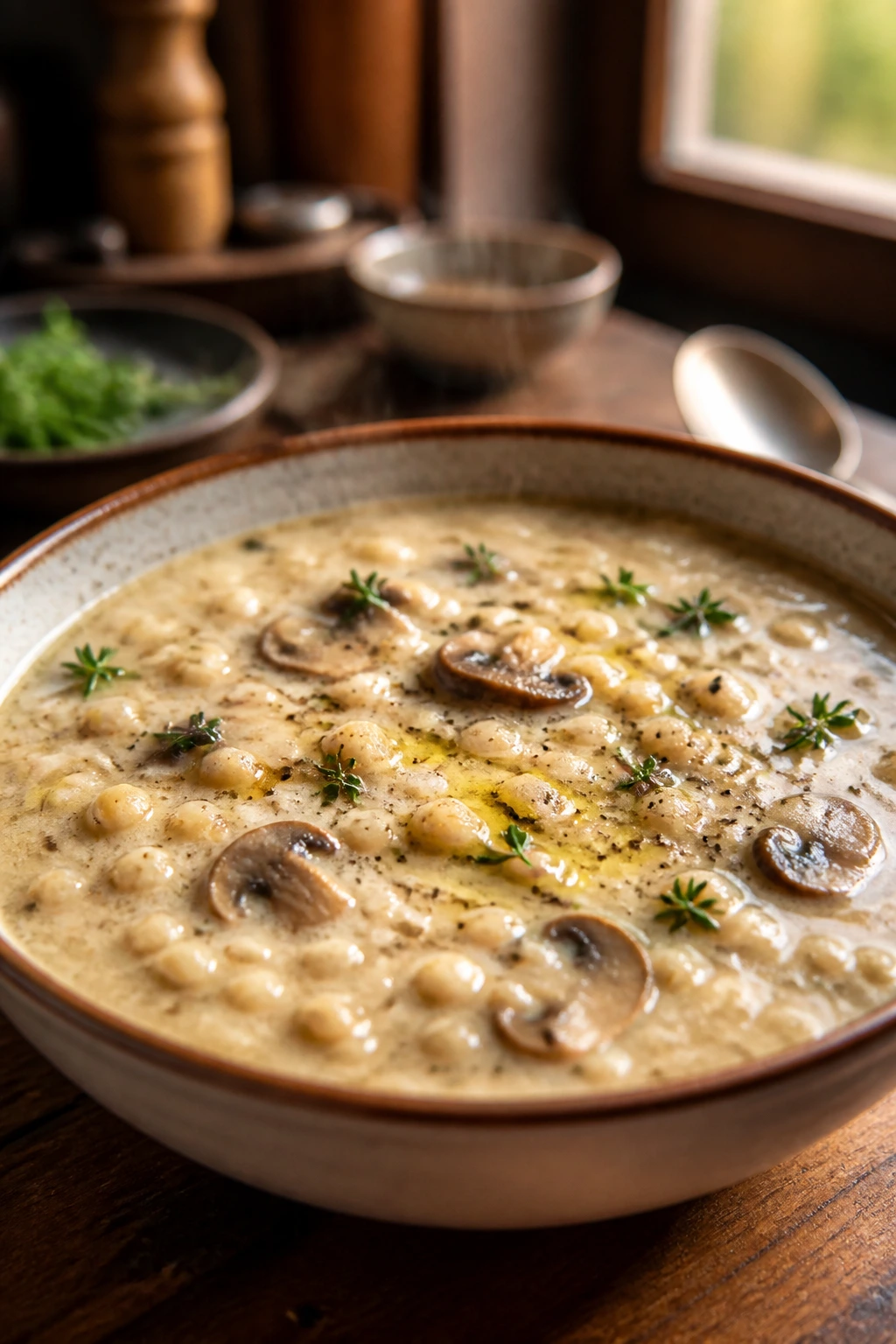
This is the kind of soup I make when the kitchen feels cold before dinner has even started. It has enough body to stand on its own, enough butter and cream to feel soft around the edges, and enough barley to keep each spoonful moving instead of sinking into sameness. That balance is the whole game.
Keep pearled barley and a good carton of broth in the pantry, and the next cold night gets easier before you even turn on the stove. One pot, a little patience, and a very full bowl. That’s usually enough.
Creamy Barley Soup for Cold Winter Nights — Recipe Card
Recipe Name: Creamy Barley Soup for Cold Winter Nights
Description: A one-pot barley soup with browned mushrooms, tender vegetables, and a creamy finish that stays smooth if you add the dairy at the end. The barley thickens the broth naturally, and a little lemon at the finish keeps the flavor bright.
Prep Time: 20 minutes
Cook Time: 40 minutes
Total Time: 1 hour
Course: Dinner, Soup
Cuisine: American
Servings: 6 servings
Calories: about 300 kcal per serving
Ingredients
For the Soup
- 2 tablespoons unsalted butter
- 1 tablespoon olive oil
- 1 medium yellow onion, diced small
- 2 medium carrots, peeled and diced
- 2 celery ribs, diced
- 8 ounces cremini mushrooms, sliced
- 4 cloves garlic, minced
- 1 teaspoon kosher salt, plus more to taste
- 1 teaspoon dried thyme
- 1/2 teaspoon dried rosemary, crushed
- 1/2 teaspoon black pepper
- 2 tablespoons all-purpose flour
- 1 cup pearled barley, rinsed and picked over
- 6 cups low-sodium chicken broth or vegetable broth
- 1 bay leaf
- 1 cup whole milk
- 1/2 cup heavy cream
- 2 cups chopped lacinato kale or baby spinach, optional
- 1 tablespoon lemon juice
To Serve
- 2 tablespoons chopped fresh parsley
- Flaky salt and extra black pepper
Instructions
-
Heat the butter and olive oil in a 5- to 6-quart Dutch oven over medium heat. Add the onion, carrots, celery, and 1/2 teaspoon of the salt, then cook for 5 to 7 minutes until the onion is translucent.
-
Add the mushrooms and cook for 6 to 8 minutes until they release their liquid and brown at the edges. Stir in the garlic, thyme, rosemary, black pepper, and flour, and cook for 1 minute.
-
Add the barley, broth, and bay leaf. Bring to a boil, then reduce to a low simmer.
-
Simmer partially covered for 30 to 35 minutes, stirring occasionally, until the barley is tender with a little chew.
-
Stir in the milk, heavy cream, and optional greens. Cook on low for 3 to 5 minutes until hot through and the greens wilt.
-
Remove the bay leaf. Stir in the lemon juice, taste, and add more salt and pepper if needed.
-
Rest for 10 minutes, then ladle into bowls and finish with parsley, flaky salt, and black pepper.
Notes: Add extra broth when reheating, because barley keeps absorbing liquid. For freezing, chill the soup base before adding the dairy, then stir in milk and cream after thawing and reheating.