



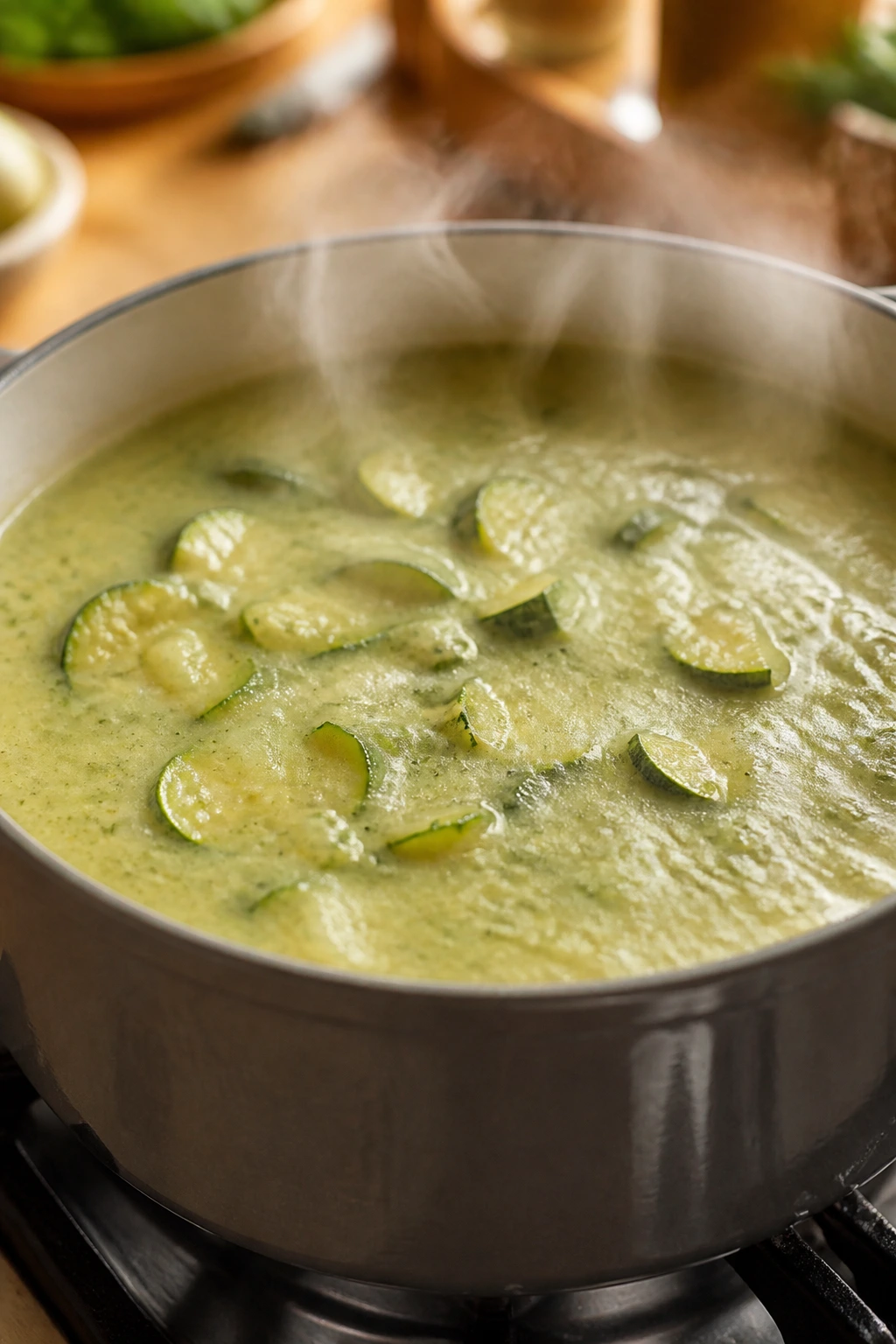
A pot of creamy zucchini soup can rescue a cold night faster than another blanket ever will. The first thing you smell is the good part: onions softening in butter, garlic going sweet instead of sharp, zucchini losing its raw edge and turning mellow in the steam. The best version is not thin green broth with cream poured in at the end. It should move in the bowl with a soft, velvet body and leave a light coat on the spoon.
Zucchini does a funny thing in soup. By itself, it can taste almost too quiet, almost watery, which is why so many versions land flat. But give it salt, a potato for structure, enough time for the onion to cook properly, and a finish of cream and lemon, and the whole pot wakes up. The result tastes calm, not boring. There’s a difference.
I keep coming back to this soup because it solves a very specific problem: you want something warm and soothing, but you do not want the kitchen to smell heavy or feel overloaded. A good creamy zucchini soup has that rare balance of lightness and substance. It’s the kind of bowl that feels sensible and indulgent at the same time, and that’s a trick worth knowing.
Why You’ll Want This Soup in Rotation
-
It turns a watery vegetable into dinner: Zucchini needs structure, and the potato plus cream give it exactly that without burying the flavor.
-
The texture can be genuinely silky: If you blend it after the vegetables are fully soft, the soup finishes smooth enough to feel polished, not rustic in a lazy way.
-
It cooks fast without tasting rushed: About 40 minutes from start to spoon, but the onion and garlic still get time to build flavor.
-
It fits a lot of kitchens: Use vegetable broth for a vegetarian pot, chicken broth if that’s what you have, or coconut milk if you want to skip dairy.
-
It tastes even better the next day: The zucchini, onion, and potato settle into each other overnight, so leftovers are not a consolation prize.
-
It plays well with bread: That may sound obvious, but a thick, creamy soup like this begs for a piece of sourdough or a grilled cheese with a browned, crackly crust.
A Quick Timing Snapshot Before You Start
Yield: 6 servings
Prep Time: 15 minutes
Cook Time: 25 minutes
Total Time: 40 minutes
Difficulty: Beginner — the steps are straightforward, but the onion, simmer, and blending stages all reward close attention.
Chill/Rest Time: 5 minutes of cooling before blending, if you’re using a countertop blender
Best Served: Warm, right after finishing, when the soup still has that glossy, just-blended look
The Ingredient Lineup That Makes It Creamy
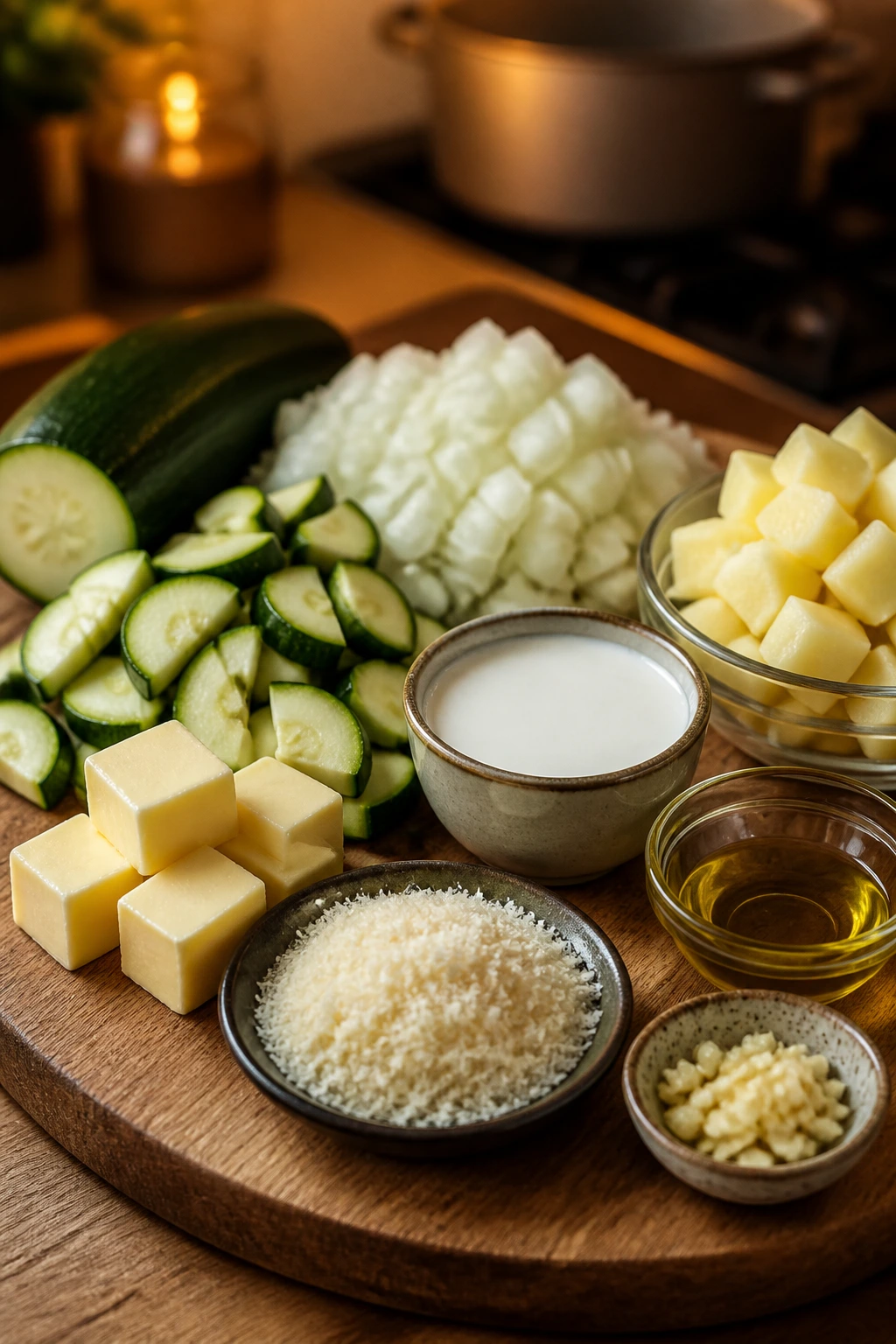
Clean Ingredient List
For the Soup:
- 2 tablespoons unsalted butter
- 1 tablespoon extra-virgin olive oil
- 1 large yellow onion, diced
- 4 garlic cloves, minced
- 2 pounds zucchini, trimmed and sliced into 1/2-inch half-moons
- 1 medium Yukon Gold potato, peeled and diced into 1/2-inch cubes
- 4 cups low-sodium vegetable broth
- 1 bay leaf
- 1 teaspoon fine sea salt, plus more to taste
- 1/2 teaspoon black pepper
- 1/4 teaspoon ground nutmeg
- 1/2 cup heavy cream
- 1/4 cup grated Parmesan cheese
- 1 to 2 tablespoons fresh lemon juice
For Serving:
- 2 tablespoons chopped chives or dill
- Extra grated Parmesan
- A small drizzle of olive oil, if you want a little shine
Why Each Ingredient Matters in the Pot
The vegetables that carry the bowl
What to use: 2 pounds zucchini, 1 large yellow onion, and 1 medium Yukon Gold potato are the backbone here. The zucchini brings the soft, green flavor; the onion gives the sweet base; the potato gives the soup enough body to feel full instead of thin.
Preparation: Slice the zucchini into even half-moons so they cook at the same pace, dice the onion small enough that it softens without hanging around, and cut the potato into 1/2-inch cubes so it turns tender at the same time as the zucchini.
Substitutions: Yellow squash works in place of zucchini if your market has more of it, and a peeled russet potato will thicken the soup a little more than Yukon Gold. Cauliflower can stand in for part of the potato if you want fewer starch notes, though the flavor gets a little cleaner and less round.
Tips: Pick medium zucchini with firm skin and a glossy finish; oversized ones often have seedy centers that make the soup watery. I leave the skin on because it gives the soup color and keeps the flavor from going pale and anonymous.
Liquids and dairy
What to use: 4 cups low-sodium vegetable broth, 1/2 cup heavy cream, 1/4 cup grated Parmesan, and 1 to 2 tablespoons fresh lemon juice. The broth carries the vegetables, the cream makes the body feel plush, the Parmesan adds salt and depth, and the lemon keeps the whole bowl from tasting sleepy.
Preparation: Warm the broth if you can; it helps the pot return to a simmer faster after the vegetables go in. Let the cream sit out for 10 to 15 minutes so it doesn’t hit the pot ice-cold.
Substitutions: Chicken broth is fine if vegetarian cooking is not a goal. Half-and-half makes a lighter bowl, while full-fat coconut milk gives a dairy-free version a soft, slightly sweet finish. If you skip Parmesan, a spoonful of nutritional yeast brings back some savory edge.
Tips: Add the cream only after blending and keep the soup below a hard boil. That keeps the texture smooth and stops the dairy from tasting flat.
Aromatics and seasoning
What to use: 2 tablespoons butter, 1 tablespoon olive oil, 1 teaspoon fine sea salt, 1/2 teaspoon black pepper, 1/4 teaspoon ground nutmeg, and 1 bay leaf. Butter gives flavor, oil keeps the butter from browning too fast, and the spices make zucchini taste fuller than it does on its own.
Preparation: Dice the onion evenly so it softens instead of browning in random patches. Mince the garlic finely; tiny pieces melt into the base and disappear in the blend.
Substitutions: Shallots can replace the onion if you want a softer, sweeter base. A small pinch of white pepper is a good swap for black pepper when you want the soup to stay pale. Thyme also fits here if nutmeg is not your thing.
Tips: The onion stage matters more than people want to admit. If the onion tastes raw or the garlic scorches, the whole pot gets dragged down by it.
Finishing ingredients and garnishes
What to use: 2 tablespoons chopped chives or dill, extra Parmesan, and a small drizzle of olive oil. These are not decoration for the sake of decoration; they sharpen the final bowl and keep the creamy base from feeling heavy.
Preparation: Chop the herbs right before serving so they stay bright. Juice the lemon after the soup is blended, not earlier, so you can taste the final balance and adjust it with a steadier hand.
Substitutions: Parsley gives a cleaner finish than dill. If you want a faint herbal sweetness, a little tarragon works, though I’d use it sparingly. Crème fraîche can stand in for a garnish if you want more tang.
Tips: Acid at the end matters. A spoonful of lemon juice can make zucchini taste greener and more alive, and it keeps the cream from flattening everything.
The Tools That Give You a Smooth Pot
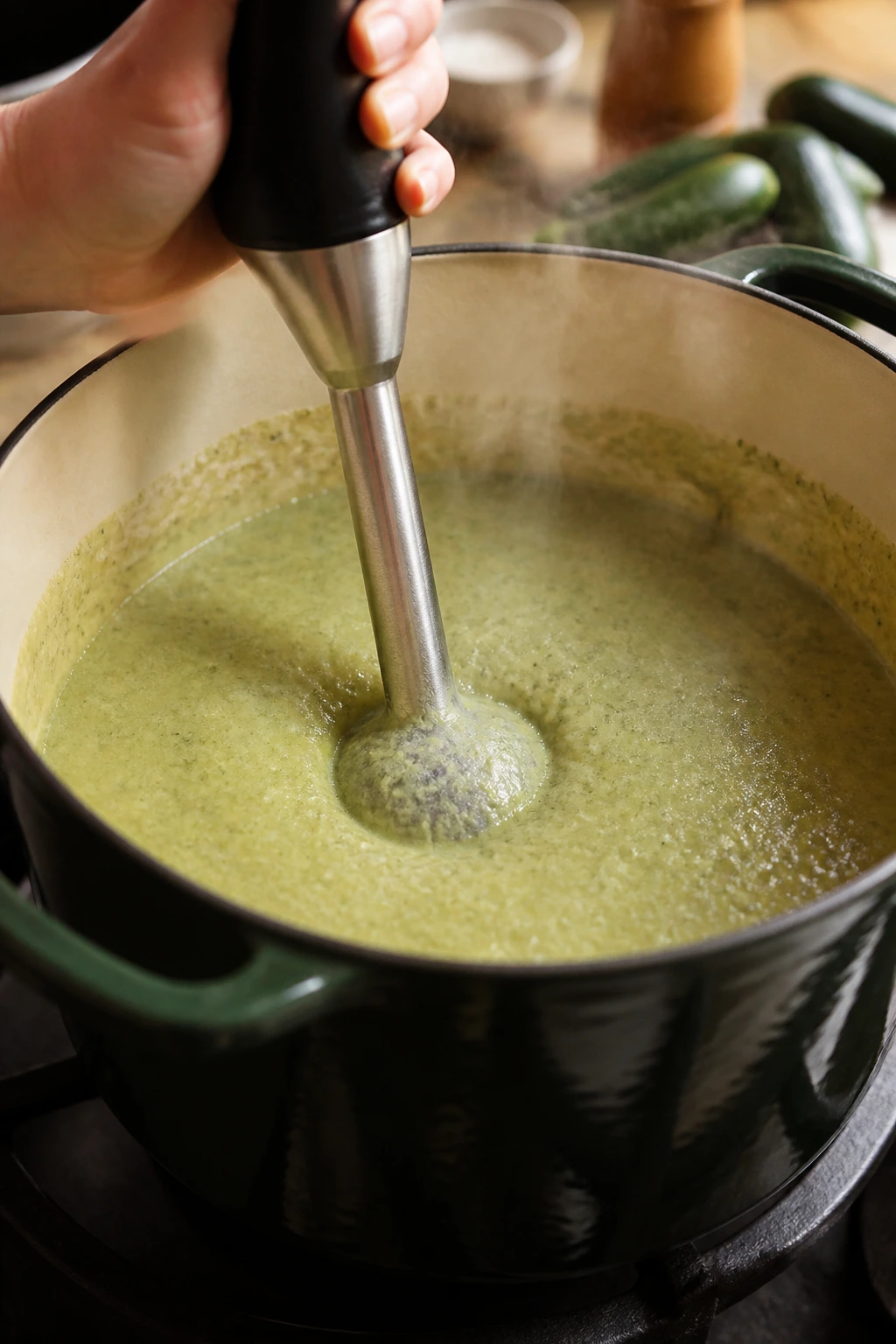
The equipment list here is not fancy. That’s part of the charm.
-
Large Dutch oven or heavy soup pot: A 5- to 6-quart pot gives the vegetables room to soften without crowding, and the heavy base helps prevent scorching at the bottom.
-
Chef’s knife: You want a knife that can slice zucchini and dice onion in a few confident strokes, not one that crushes everything.
-
Cutting board with a stable grip: A damp towel under the board keeps it from sliding when you’re trimming the zucchini and dicing the onion.
-
Immersion blender: The easiest way to finish the soup in the pot. It keeps cleanup low and lets you control how smooth the texture gets.
-
Countertop blender: Use this if you want the silkiest finish possible. Work in batches and leave room for steam.
-
Ladle: Useful for moving hot soup into the blender and then back into bowls without sloshing half of it onto the stove.
-
Wooden spoon or heat-safe spatula: Good for stirring the onion, scraping up anything sticking to the bottom, and folding in the cream at the end.
-
Measuring cups and spoons: Not glamorous, but they keep the salt and broth where they should be.
The Step-by-Step Method That Keeps the Soup Silky
Prep the vegetables:
-
Wash and trim the zucchini, then cut it into 1/2-inch half-moons. Dice the onion into small, even pieces and peel and cube the potato into 1/2-inch chunks. Mince the garlic finely. Keeping the pieces close in size helps them cook at the same pace.
-
Set out the broth, cream, Parmesan, lemon juice, and seasonings before you heat the pot. Once the onions start cooking, the pace picks up fast, and it’s annoying to stop and hunt for the nutmeg.
Build the flavor base:
-
Warm the butter and olive oil in a large Dutch oven over medium heat until the butter melts and the surface shimmers. Add the onion and 1/2 teaspoon of the salt, then cook for 7 to 8 minutes, stirring often, until the onion is translucent and the edges are just starting to turn pale gold. Do not rush this part; blond onion gives the soup a sweeter, rounder base.
-
Stir in the garlic, black pepper, nutmeg, and bay leaf. Cook for 30 to 45 seconds, just until the garlic smells sweet and warm. If the garlic starts browning, lower the heat right away — bitter garlic is hard to hide later.
Simmer until everything softens:
-
Add the zucchini, potato, vegetable broth, and the remaining 1/2 teaspoon salt. Stir once, raise the heat to bring the pot to a gentle simmer, then reduce to medium-low. Cover partially and cook for 15 to 18 minutes, stirring once or twice, until the zucchini looks fully collapsed and the potato breaks apart easily when pressed with the spoon.
-
Remove the bay leaf. Taste the broth before blending. If it tastes flat, add a pinch more salt now rather than trying to fix it after the cream goes in.
Blend and finish:
-
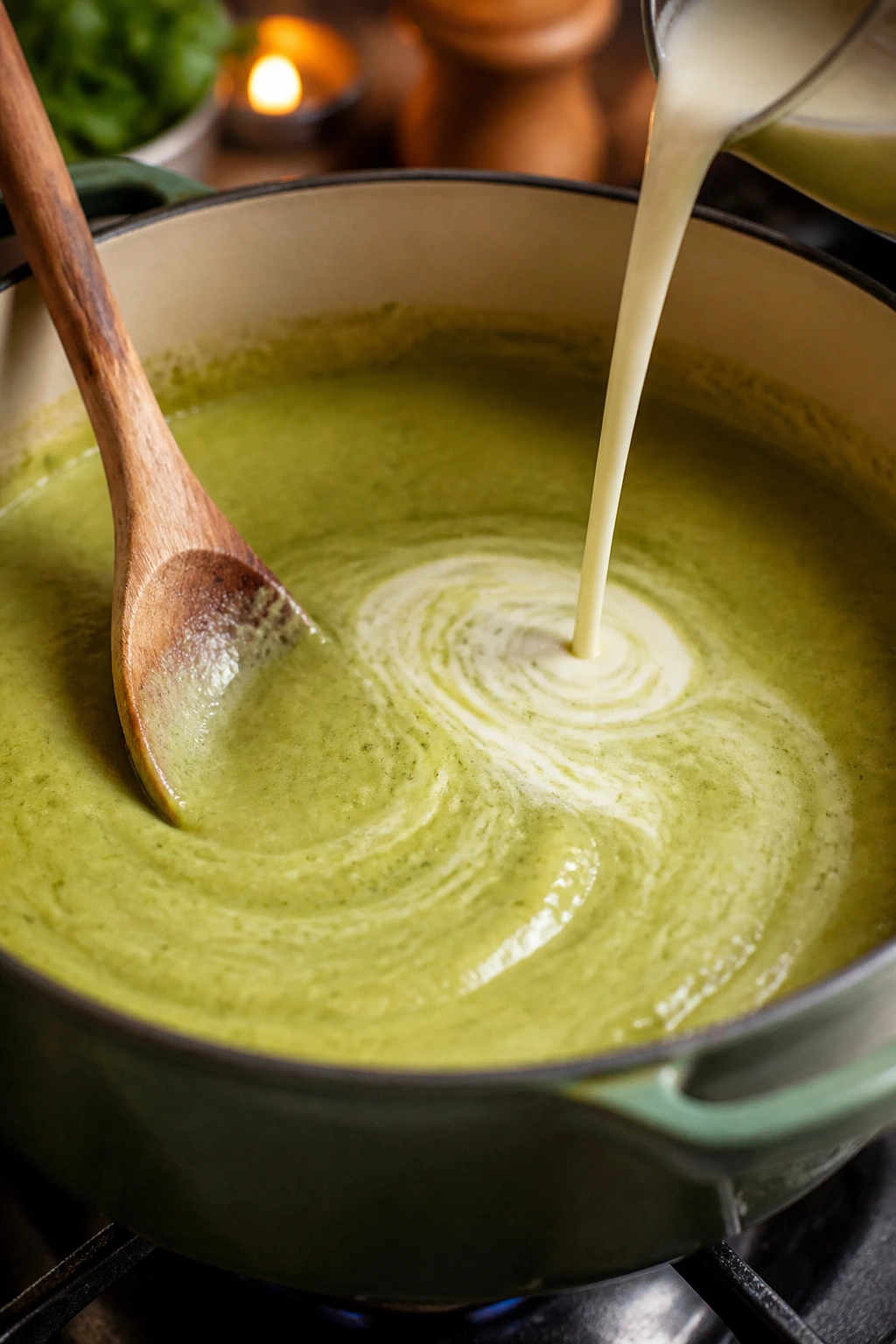
Use an immersion blender to puree the soup directly in the pot until smooth, or transfer it in batches to a countertop blender. If you use a countertop blender, cool the soup for 5 minutes first and never fill the jar more than halfway. Hold the lid with a folded kitchen towel so steam can escape safely. Hot soup expands fast. If you seal it tightly, it will fight back.
-
Return the soup to low heat, then stir in the heavy cream and Parmesan. Cook for 2 to 3 minutes, stirring, until the cheese melts fully and the soup looks glossy and slightly thicker. Do not let it boil hard after the cream goes in.
-
Stir in the lemon juice, taste again, and adjust with more salt or pepper if needed. Ladle into warm bowls and finish with chives or dill, a little extra Parmesan, and a thin drizzle of olive oil if you want the surface to shine.
What to Put Beside the Bowl
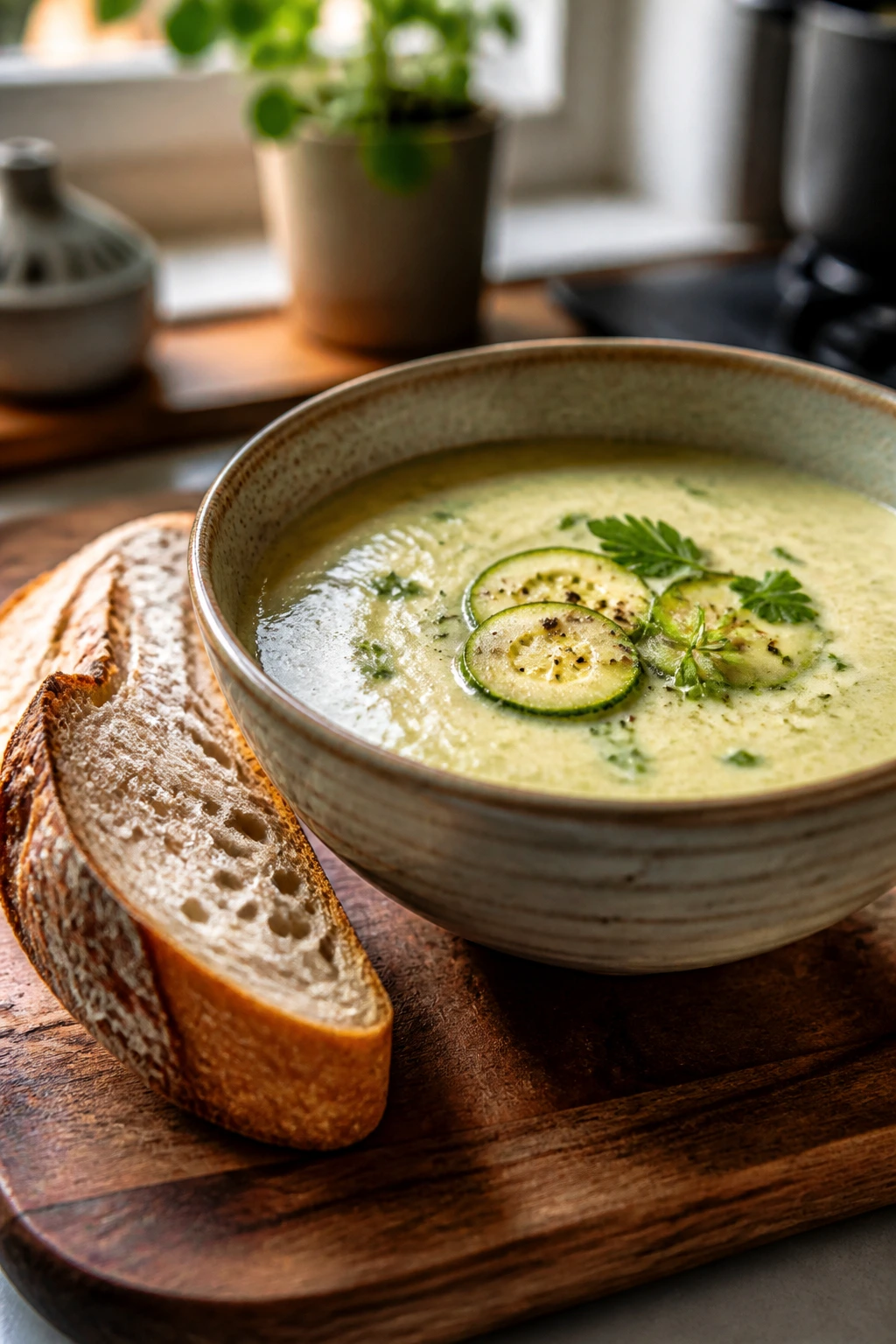
A soup like this is not asking for a complicated plate. It wants one or two sensible partners and maybe a little crunch.
Presentation: Ladle the soup into warmed bowls so it stays hot long enough to eat comfortably. A scatter of chives across the top gives the pale green surface a sharp, fresh look, and a few curls of Parmesan make the bowl look finished without turning it fussy.
Accompaniments: Toasted sourdough is my first choice because it can stand up to the thickness without going soft in 30 seconds. A grilled cheese with sharp cheddar and a thin swipe of mustard is the more indulgent move, and a simple salad with lemony vinaigrette keeps the meal from feeling too heavy. If you want something heartier, add roasted mushrooms or a slice of crusty rye.
Portions: Figure on about 1 1/2 cups per person for a light lunch and closer to 2 cups for dinner. The recipe makes 6 modest servings, or 4 larger ones if you’re pairing it with bread and salad. If you want to stretch it, add an extra cup of broth at the end and recheck the seasoning.
Beverage Pairing: A crisp white wine like Sauvignon Blanc works because the acid keeps pace with the cream. If you want something nonalcoholic, sparkling water with lemon or a dry apple cider does the job without fighting the soup.
Small Flavor Moves Worth Trying
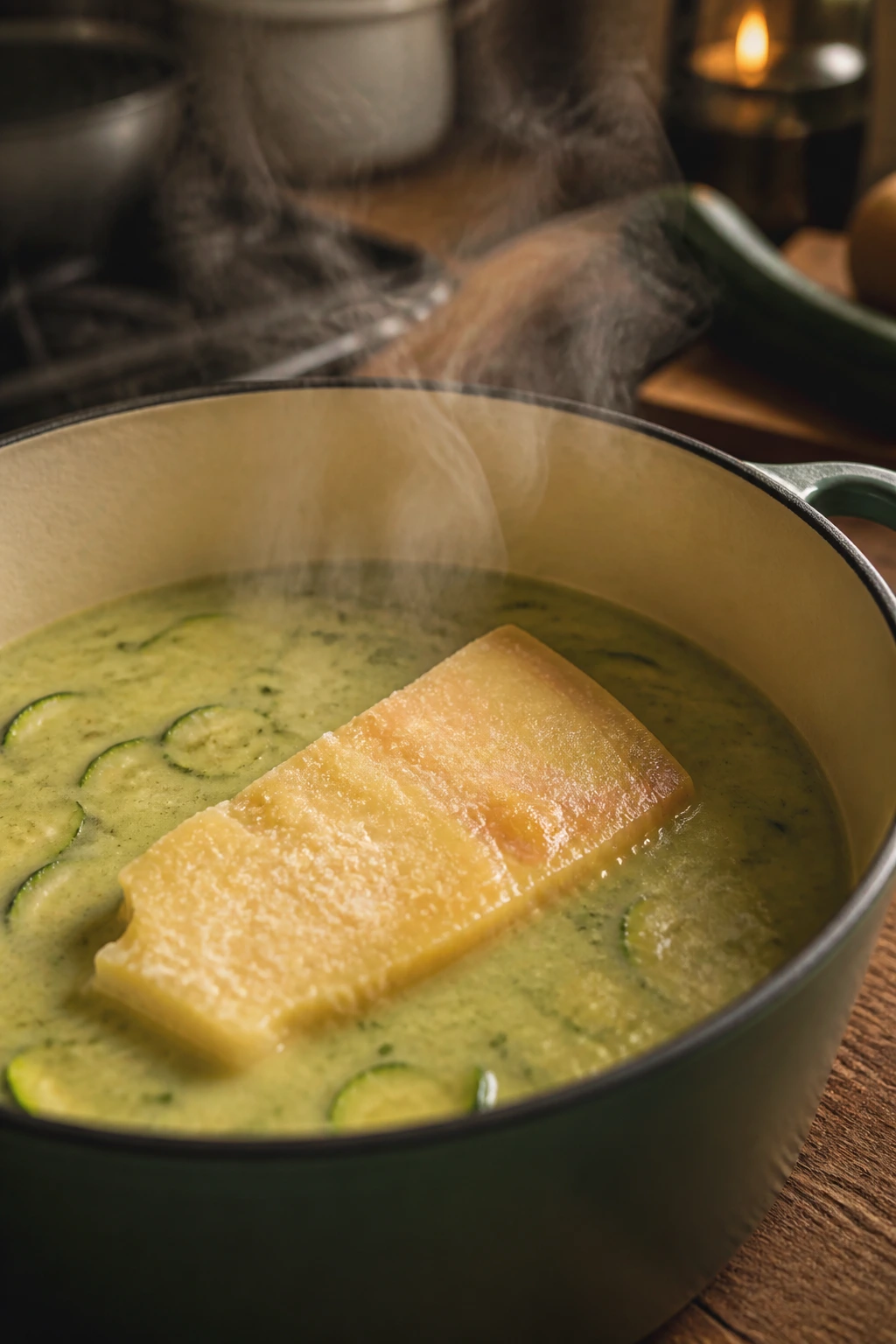
Flavor Enhancement: A Parmesan rind simmered with the broth gives the soup a deeper savory backbone. Fish it out before blending, and you’ll get a quiet salinity that makes the zucchini taste more like itself. A tiny pinch of red pepper flakes can go in with the garlic if you want the bowl to warm up a little slower and finish with a flicker.
Time-Saver: Cut the onion and zucchini while the pot is warming, not after. The soup cooks fast enough that the prep can feel like the slowest part, and this way you move from chopping to sautéing without leaving the stove empty and cooling down. If you have pre-minced garlic that tastes decent, it will work here.
Texture Fix: If the soup feels thin after blending, simmer it uncovered for 5 to 8 minutes and stir often. The zucchini carries a lot of water, so a little reduction can change the whole mouthfeel. If it still feels too loose, add half of another cooked potato and blend again.
Make-It-Yours: A spoonful of sour cream, Greek yogurt, or crème fraîche on top gives the finished bowl a cooler, tangier note. Dill leans the soup in a more Northern, herb-heavy direction; chives keep it classic; parsley keeps it clean. If you like heat, a few drops of chili oil on the surface are better than dumping chili flakes into the whole pot.
Cost-Saver: You do not need top-shelf zucchini for this. Medium zucchini with firm skin are enough, and the soup forgives imperfect shape because it gets blended anyway. The place to spend a little more is the broth and Parmesan; those two choices show up in the final taste more than extra-pretty zucchini ever will.
Mistakes That Can Wreck the Texture
-
Using oversized zucchini with seedy centers: Giant zucchini can make the soup watery and a bit dull, especially if the flesh has turned spongy. Stick with medium zucchini when possible, and if the only ones available are large, scoop out the seedy core before slicing.
-
Cooking the garlic too long: If the garlic browns before the broth goes in, the whole soup can pick up a bitter edge that lingers under the cream. Keep the garlic in the pot for only 30 to 45 seconds, then move on quickly.
-
Blending boiling-hot soup in a sealed blender: Steam pressure is no joke. Let the pot cool for 5 minutes first, work in batches, and leave the blender lid vented or slightly loose with a towel over the top.
-
Adding cream before the vegetables are soft: If the potato is still firm, the soup will never blend as smoothly as you want, and you’ll spend too long chasing lumps. The potato should fall apart with almost no effort from the spoon.
-
Skipping the final salt and acid check: Zucchini can taste meek after blending, and cream tends to quiet the seasoning even more. Taste after the lemon goes in, then adjust salt a pinch at a time until the flavor actually wakes up.
-
Boiling hard after the dairy goes in: High heat can make the soup look greasy or split at the edges. Keep the pot at low heat once the cream and Parmesan are added, and stir until the surface looks glossy again.
Variations for Different Kitchens and Diets
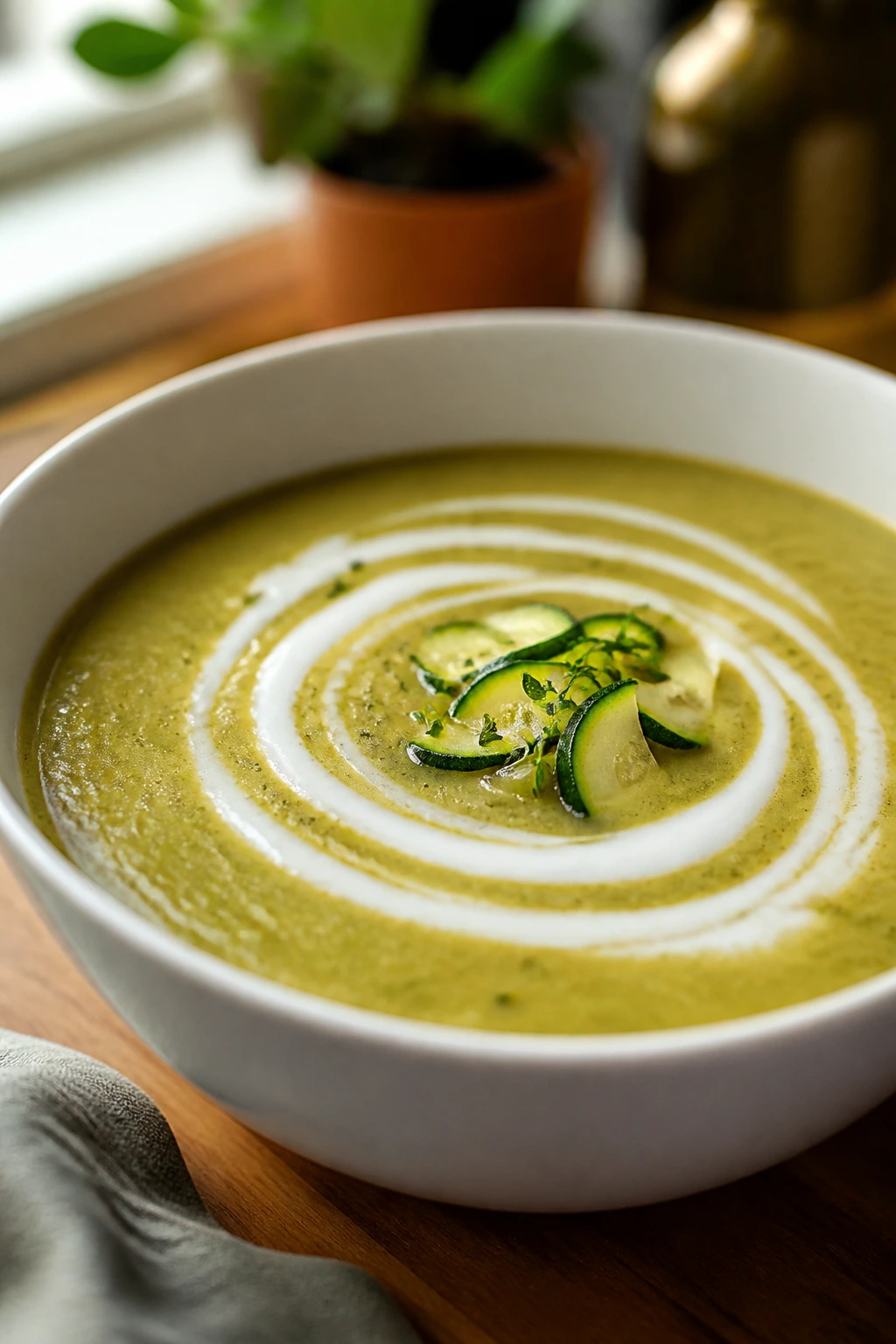
Dairy-Free Coconut Silk: Swap the butter for all olive oil, replace the cream with 1/2 cup full-fat coconut milk, and skip the Parmesan. Add 1 tablespoon of nutritional yeast and a squeeze of lime instead of lemon for a softer, rounder finish. The soup turns a little sweeter, but it stays smooth and pleasant.
Roasted Zucchini Depth: Roast the zucchini and potato on a sheet pan at 425°F for about 20 minutes with a little olive oil before adding them to the broth. The edges pick up a light golden color, which gives the soup a deeper, less grassy flavor. This version takes longer, but the taste is worth it when you want something a little more layered.
Leek and Herb Version: Replace the onion with 2 trimmed leeks, sliced thin and rinsed well, then add a handful of chopped parsley with the lemon at the end. Leeks give the base a softer, sweeter edge, and parsley keeps the green color bright. I like this one when I want the soup to taste cleaner and less rich.
Smoky Bacon and Thyme: Render 4 strips of chopped bacon in the pot, use 1 tablespoon of the fat plus the butter or oil, and add 1 teaspoon fresh thyme leaves with the garlic. Crumble the bacon over the finished bowls. This version is more savory and less delicate, which is useful if you’re serving it as dinner instead of a first course.
Extra-Cheesy Potato Bowl: Increase the Parmesan to 1/2 cup and add another small potato for a thicker, almost chowder-like texture. It’s the move for anyone who wants the soup to feel more substantial, but you should keep the lemon at the end so the cheese doesn’t take over the whole bowl.
Storing, Freezing, and Reheating Without a Sad Bowl
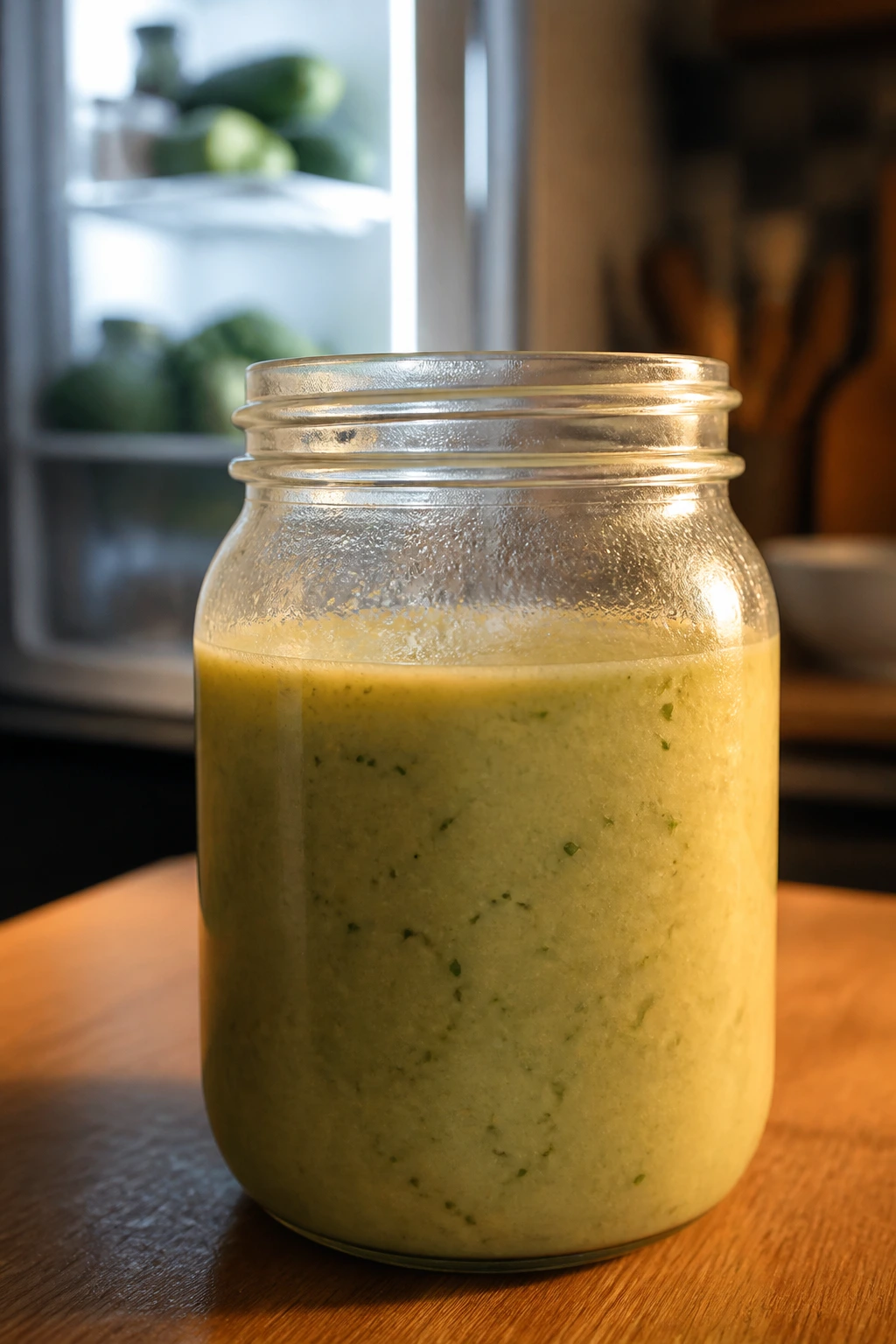
This soup holds up well in the fridge, but dairy changes the rules a little. In a sealed container, it keeps for 3 to 4 days refrigerated. The flavor often settles overnight, which is good, but the texture thickens as it sits, so expect to loosen it with a splash of broth or water before reheating.
For the freezer, the cleanest method is to freeze the soup before adding the cream and Parmesan. The zucchini-and-potato base freezes for up to 2 months in airtight containers or freezer bags laid flat. When you’re ready to eat it, thaw it overnight in the fridge, reheat it gently, then stir in the cream, Parmesan, and lemon at the end.
If you already finished the soup with dairy, you can still freeze it, but the texture may separate a little after thawing. A quick whisk or another short blend usually brings it back together, especially if you add a spoonful of broth while reheating. Use low heat on the stovetop and stir often. Microwave reheating works too, but keep it at 50% power and stop every 45 to 60 seconds to stir.
Make-ahead is easy. You can chop the onion, zucchini, and potato up to 24 hours ahead and keep them in separate containers in the fridge. You can also cook the soup base, without the cream, 1 to 2 days ahead, then finish it with dairy and lemon right before serving. That’s the version I’d choose if I wanted dinner to feel easy without tasting like it came from a shortcut.
Questions People Ask Before They Make It

Can I use frozen zucchini instead of fresh?
Yes, and it works better than people expect, especially if the soup is being blended. Frozen zucchini releases more water, so you may need to simmer the finished soup uncovered for a few extra minutes to tighten the texture. Pat the thawed pieces dry if they’re swimming in ice crystals before they go into the pot.
Do I need to peel the zucchini first?
No. The skins soften fully during simmering and help give the soup its pale green color. Peeled zucchini makes the soup look flatter and costs you some flavor, which is not a useful trade.
How do I make the soup thicker without adding more cream?
Simmer it uncovered for 5 to 10 minutes after blending, or add a little more potato and blend again. A handful of white beans works too if you want extra body without changing the flavor too much. The trick is to thicken it with vegetables, not with a mound of flour that makes the soup taste pasted together.
Can I blend it in a regular blender if I don’t own an immersion blender?
Absolutely. Work in small batches, let the soup cool for 5 minutes first, and vent the lid so steam can escape. Never fill the blender jar more than halfway with hot soup or you’ll end up with a messy lid and a burned hand.
What if the soup tastes bland after I blend it?
Add salt in small pinches and taste after each one. Then add the lemon juice, which usually does more than people expect. Zucchini needs both salt and acid to stop tasting soft and quiet.
Can I make this soup richer without making it heavy?
Yes. A Parmesan rind simmered in the broth, a spoonful of crème fraîche at the end, or a small drizzle of good olive oil can all add depth without turning the bowl into something dense. I’d choose one of those instead of piling on all three.
Is this a good soup for meal prep?
Very. It reheats cleanly if you keep the heat low and loosen it with broth when needed. If you’re planning ahead for a few days, store the herbs separately and add them at serving time so the top of the soup still tastes bright.
A Bowl Worth Repeating
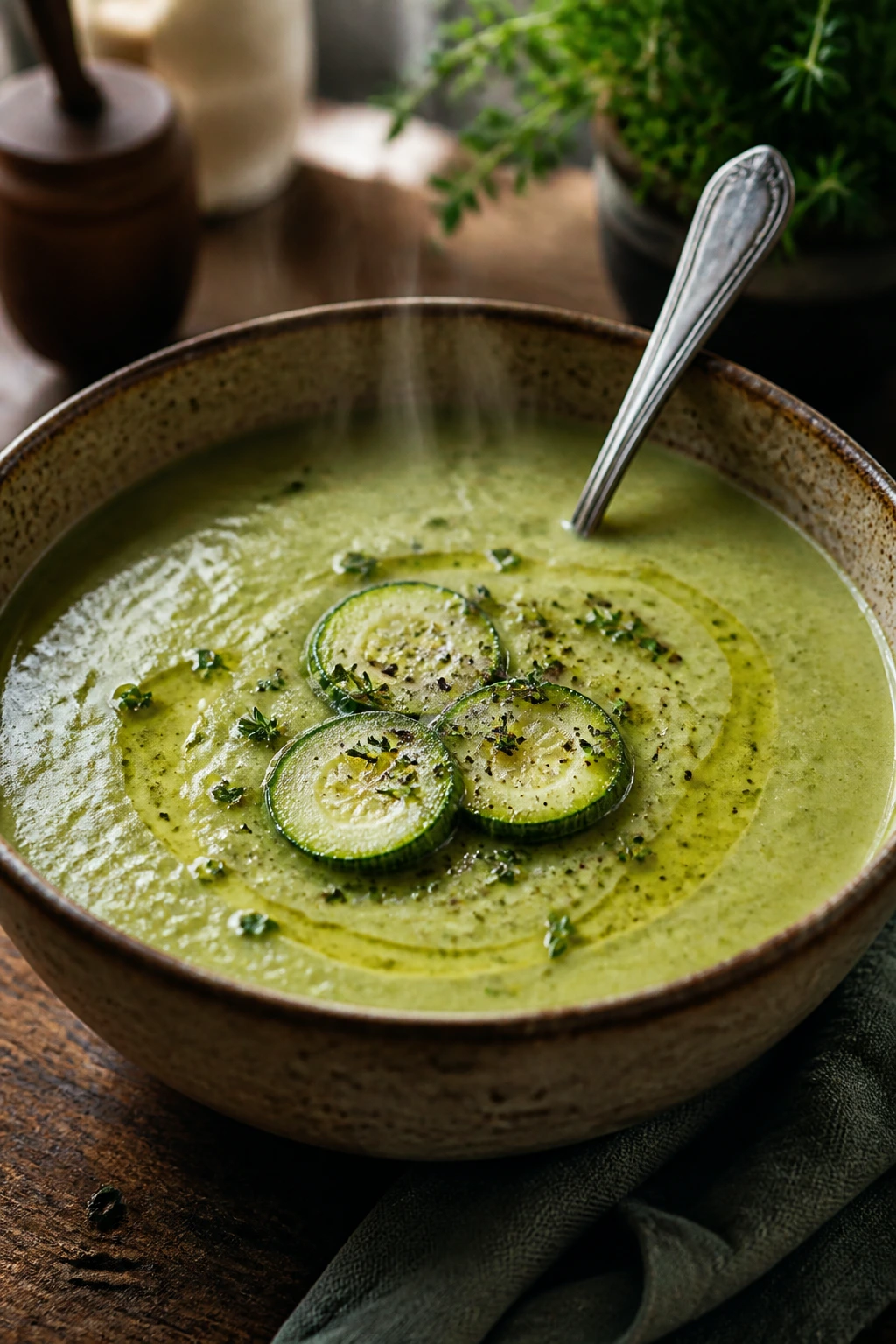
A soup like this earns its place because it knows what it is. It doesn’t try to be flashy, and it doesn’t need twenty ingredients to prove anything. The onion, zucchini, potato, cream, and lemon do all the work that matters, which is usually how the best everyday food behaves.
The part I like most is how quietly reliable it is. One pot, one blend, one finish of salt and acid, and you have something that feels warm without turning heavy. Keep a few zucchinis and a potato around, and this becomes the kind of dinner you can make on a cold night without thinking too hard about it.
Creamy Zucchini Soup — Recipe Card
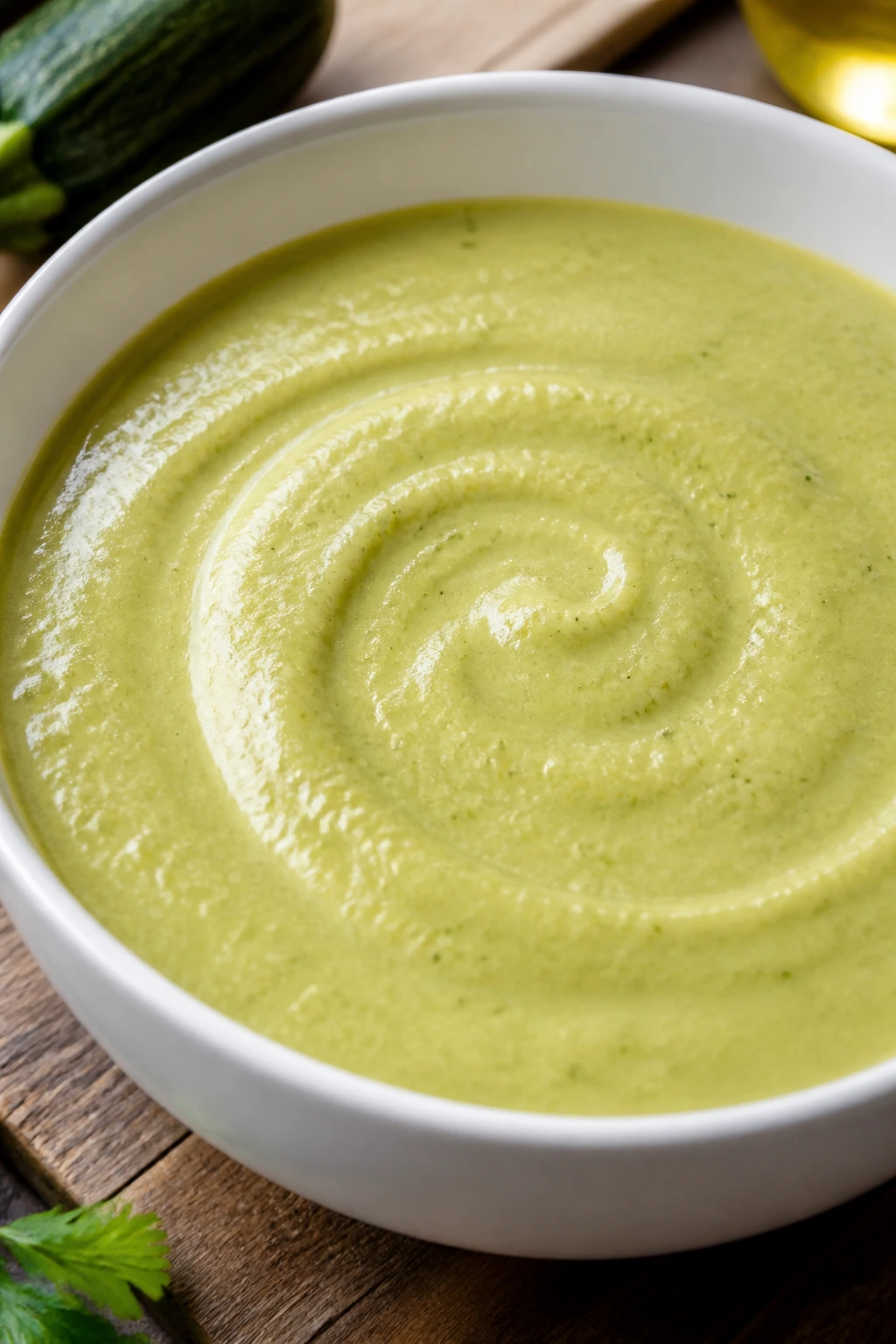
Recipe Name: Creamy Zucchini Soup for Cold Winter Nights
Description: A smooth, pale-green zucchini soup built with onion, potato, broth, cream, and a bright finish of lemon. It tastes gentle at first and then deepens with each spoonful.
Prep Time: 15 minutes
Cook Time: 25 minutes
Total Time: 40 minutes
Course: Soup, Main Course, Starter
Cuisine: American
Servings: 6 servings
Calories: About 195 kcal per serving
Ingredients
For the Soup:
- 2 tablespoons unsalted butter
- 1 tablespoon extra-virgin olive oil
- 1 large yellow onion, diced
- 4 garlic cloves, minced
- 2 pounds zucchini, trimmed and sliced into 1/2-inch half-moons
- 1 medium Yukon Gold potato, peeled and diced into 1/2-inch cubes
- 4 cups low-sodium vegetable broth
- 1 bay leaf
- 1 teaspoon fine sea salt, plus more to taste
- 1/2 teaspoon black pepper
- 1/4 teaspoon ground nutmeg
- 1/2 cup heavy cream
- 1/4 cup grated Parmesan cheese
- 1 to 2 tablespoons fresh lemon juice
For Serving:
- 2 tablespoons chopped chives or dill
- Extra grated Parmesan
- A small drizzle of olive oil, optional
Instructions
-
Wash and trim the zucchini, then slice it into 1/2-inch half-moons. Dice the onion, mince the garlic, and peel and cube the potato.
-
Warm the butter and olive oil in a large Dutch oven over medium heat. Add the onion and 1/2 teaspoon of the salt, then cook for 7 to 8 minutes until translucent and lightly golden at the edges.
-
Stir in the garlic, black pepper, nutmeg, and bay leaf. Cook for 30 to 45 seconds until fragrant.
-
Add the zucchini, potato, broth, and remaining 1/2 teaspoon salt. Bring to a gentle simmer, then reduce to medium-low and cook for 15 to 18 minutes until the vegetables are very soft.
-
Remove the bay leaf. Blend the soup until smooth with an immersion blender, or cool slightly and blend in batches in a countertop blender.
-
Return the soup to low heat. Stir in the cream and Parmesan and cook for 2 to 3 minutes until smooth and glossy.
-
Stir in the lemon juice, taste, and adjust with more salt or pepper if needed. Serve hot with chives or dill and extra Parmesan.
Notes: For the smoothest texture, blend thoroughly after the vegetables are fully soft. If freezing, freeze the base before adding cream and Parmesan. Reheat gently over low heat and add a splash of broth if it thickens.