



A crisp chicken Caesar salad with homemade dressing lives or dies on tiny decisions. Warm chicken dumped onto wet romaine turns the whole bowl dull. Dressing that tastes too thick, too sweet, or too shy never clings to the leaves the way it should. And croutons that sit around too long lose the one job they were born to do: crack under the fork.
The version worth making has a colder, sharper personality. Romaine should stay loud and snappy. The chicken should be browned on the outside, juicy at the center, and seasoned enough that it tastes like more than a salad topping. The homemade dressing should hit that narrow space between creamy and punchy, with enough garlic, lemon, Parmesan, and anchovy to taste complete without turning fishy or heavy.
Caesar salad has always been a dish of strong edges, not delicate ones. That’s the charm. A good bowl should taste salty, bright, and a little decadent, with enough texture contrast that every bite feels fresh instead of blended into submission. When the chicken is crisp at the edges and the dressing is made from scratch, the whole thing becomes more than lunch in a hurry. It turns into the kind of dinner you keep thinking about while you’re washing the bowl.
Why This Crisp Chicken Caesar Salad Earns a Spot on the Table
-
The texture contrast is the whole point: Cold romaine, warm chicken, and crunchy croutons make each bite change shape instead of flattening into one note.
-
The homemade dressing tastes fuller than bottled Caesar: Mayo, lemon, Dijon, anchovy paste, and Parmesan give the sauce a salty, sharp backbone that bottled dressing usually misses.
-
The chicken actually tastes seasoned: A quick pan sear with salt, pepper, garlic powder, and olive oil gives the meat browned edges and a real savory crust.
-
It works as a full meal, not a side salad: Four ounces of chicken per serving plus croutons and Parmesan makes this sturdy enough for dinner.
-
The components hold up well when kept separate: Dressing, chicken, croutons, and romaine each store differently, which makes leftovers a little more forgiving than most salads.
-
The whole thing comes together fast once the prep is done: While the croutons toast, the chicken cooks. While the chicken rests, the greens get chopped. No dead time.
Why This Salad Has More Going On Than a Bowl of Lettuce
Caesar salad is one of those dishes that looks simple until you make a bad version. Then every tiny flaw jumps out. The romaine gets watery. The dressing tastes thin. The chicken tastes like it was added because someone told you protein was important. All the parts are familiar, but the balance is fragile.
The original Caesar formula is built on salt, acid, fat, and umami. That’s why the good versions feel almost addictive after the first forkful. Lemon keeps the dressing bright. Parmesan adds sharpness and salt. Anchovy paste disappears into the sauce and deepens everything around it. None of those ingredients should shout on its own. Together, they make the salad taste finished.
This version leans into that structure and keeps the chicken from bulldozing the rest of the bowl. I like the chicken seared in a skillet rather than boiled, baked into blandness, or covered in a sugary crust. The browned surface matters. So does the rest time. If you slice too early, the juices run out and end up on the cutting board instead of on the romaine where they belong.
Timing, Yield, and the Best Moment to Serve It
Yield: Serves 4 as a main course or 6 as a side
Prep Time: 20 minutes
Cook Time: 20 minutes
Total Time: 40 minutes
Difficulty: Intermediate — the steps are straightforward, but you’re juggling dressing, chicken, and croutons at once, and the timing matters.
Chill/Rest Time: 5 to 10 minutes for the dressing and chicken rest
Best Served: Right after tossing, while the chicken is warm and the romaine is cold
Caesar salad doesn’t improve with a long sit after it’s dressed. That’s the blunt truth. Once the leaves meet the dressing, the clock starts. You have a small window where the romaine still snaps and the croutons still sound like croutons. After that, everything starts sliding toward limp.
That’s why the best rhythm is simple: make the dressing first, toast the croutons next, sear the chicken while those cool, and toss the salad at the very end. If you line up the pieces in that order, the whole bowl lands at the table with the textures in sync instead of fighting each other.
What Goes Into a Caesar That Actually Tastes Like One
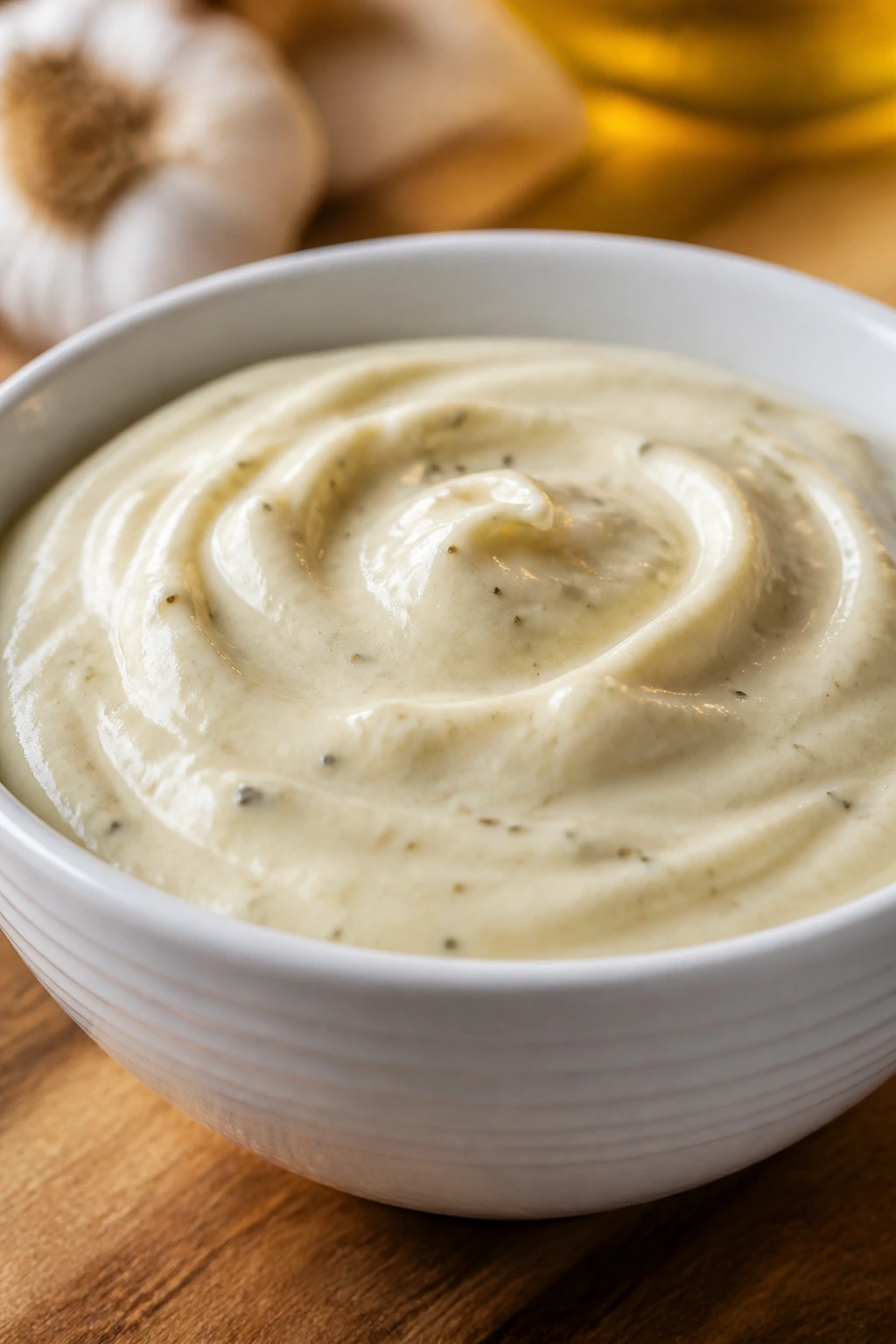
For the Chicken:
- 1 1/2 pounds boneless, skinless chicken breasts, pounded to an even 3/4-inch thickness
- 1 1/2 tablespoons olive oil
- 1 teaspoon kosher salt
- 1 teaspoon black pepper
- 1/2 teaspoon garlic powder
For the Croutons:
- 4 cups day-old sourdough or ciabatta, torn or cut into 1-inch pieces
- 2 tablespoons olive oil
- 1/2 teaspoon garlic powder
- 1/4 teaspoon fine salt
- 2 tablespoons finely grated Parmesan, optional
For the Homemade Caesar Dressing:
- 1/2 cup mayonnaise
- 2 tablespoons fresh lemon juice
- 2 teaspoons Dijon mustard
- 1 small garlic clove, finely grated or minced
- 2 teaspoons anchovy paste
- 1 teaspoon Worcestershire sauce
- 3 tablespoons finely grated Parmesan
- 3 tablespoons extra-virgin olive oil
- 1 to 2 tablespoons cold water, as needed to thin
- 1/4 teaspoon black pepper
- Pinch of salt, to taste
For the Salad:
- 2 large romaine hearts, chopped, washed, and dried very well
- 1 cup shaved Parmesan
- 1 lemon, cut into wedges
- Extra black pepper, for finishing
If you want the chicken to feel even more pronounced, add a little more garlic powder and black pepper to the seasoning mix. If you want the dressing sharper, add another teaspoon of lemon juice, not more salt. That’s the kind of adjustment that keeps the sauce lively instead of muddy.
How Each Ingredient Pulls Its Weight
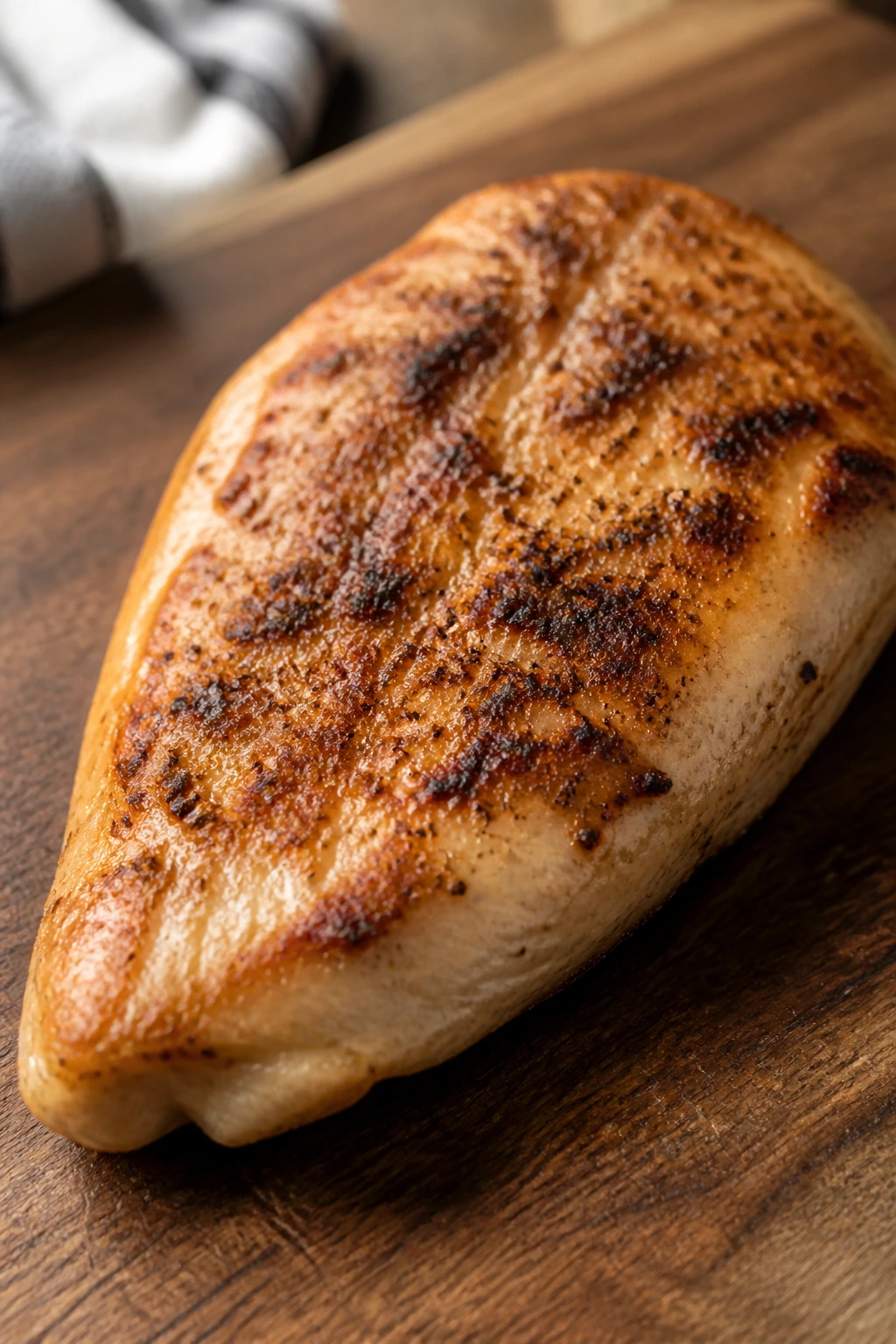
Chicken
What to use: 1 1/2 pounds of boneless, skinless chicken breasts gives you enough protein for a proper dinner salad without burying the greens.
Preparation: Pound the breasts to an even thickness so they cook at the same rate from end to end.
Substitutions: Boneless thighs work if you want richer flavor and don’t mind a slightly softer texture. A rotisserie chicken works in a pinch, though you lose the browned crust.
Tips: Dry the chicken with paper towels before seasoning. Moisture on the surface makes the pan steam instead of sear.
Homemade Dressing
What to use: Mayonnaise, lemon juice, Dijon, garlic, anchovy paste, Worcestershire, Parmesan, olive oil, and a little water form the base.
Preparation: Grate the garlic finely so it disappears into the dressing instead of landing in harsh little bites.
Substitutions: If you want a lighter dressing, swap half the mayo for plain Greek yogurt. If anchovy paste makes you nervous, white miso gives the sauce savory depth without the fish note.
Tips: Whisk in the water gradually. Caesar dressing should coat a spoon, not sit there like frosting.
Romaine
What to use: Two large romaine hearts give you enough volume for four main servings.
Preparation: Wash the leaves, spin or pat them dry, and chop them into bite-size pieces that fit on a fork.
Substitutions: Little gem lettuce works nicely. A romaine-kale blend can work too, but the kale should be massaged first so it doesn’t chew like rope.
Tips: Dry greens matter more than fancy greens. If the romaine is wet, the dressing slides off and the salad tastes watered down.
Croutons
What to use: Day-old sourdough or ciabatta is sturdy enough to toast into sharp-edged croutons without turning to dust.
Preparation: Tear or cut the bread into 1-inch pieces so you get irregular bits with different crunch levels.
Substitutions: Baguette, country loaf, or gluten-free bread all work if they’re stale enough to hold shape.
Tips: Don’t start with fresh, soft bread unless you like croutons that taste chewy in the middle. Slightly dry bread toasts better and takes on oil more evenly.
Parmesan and Finishing Ingredients
What to use: Freshly shaved Parmesan on top and finely grated Parmesan in the dressing give you two textures from the same cheese.
Preparation: Shave the cheese just before serving so the curls stay neat instead of drying out.
Substitutions: Pecorino Romano is saltier and sharper; use a little less if you swap it in.
Tips: Buy a hard wedge and grate or shave it yourself. Pre-grated Parmesan can taste dusty and won’t melt into the dressing as smoothly.
The Tools That Make the Work Easier
-
Large cast-iron or stainless-steel skillet: A heavy pan gives the chicken a better sear than a thin nonstick skillet.
-
Rimmed baking sheet: Needed for the croutons so they toast in one layer instead of steaming.
-
Mixing bowl or medium jar with lid: Either works for the dressing; a jar is handy if you want to shake it later.
-
Whisk: Helps the dressing come together fast and keeps the Parmesan from clumping in one corner.
-
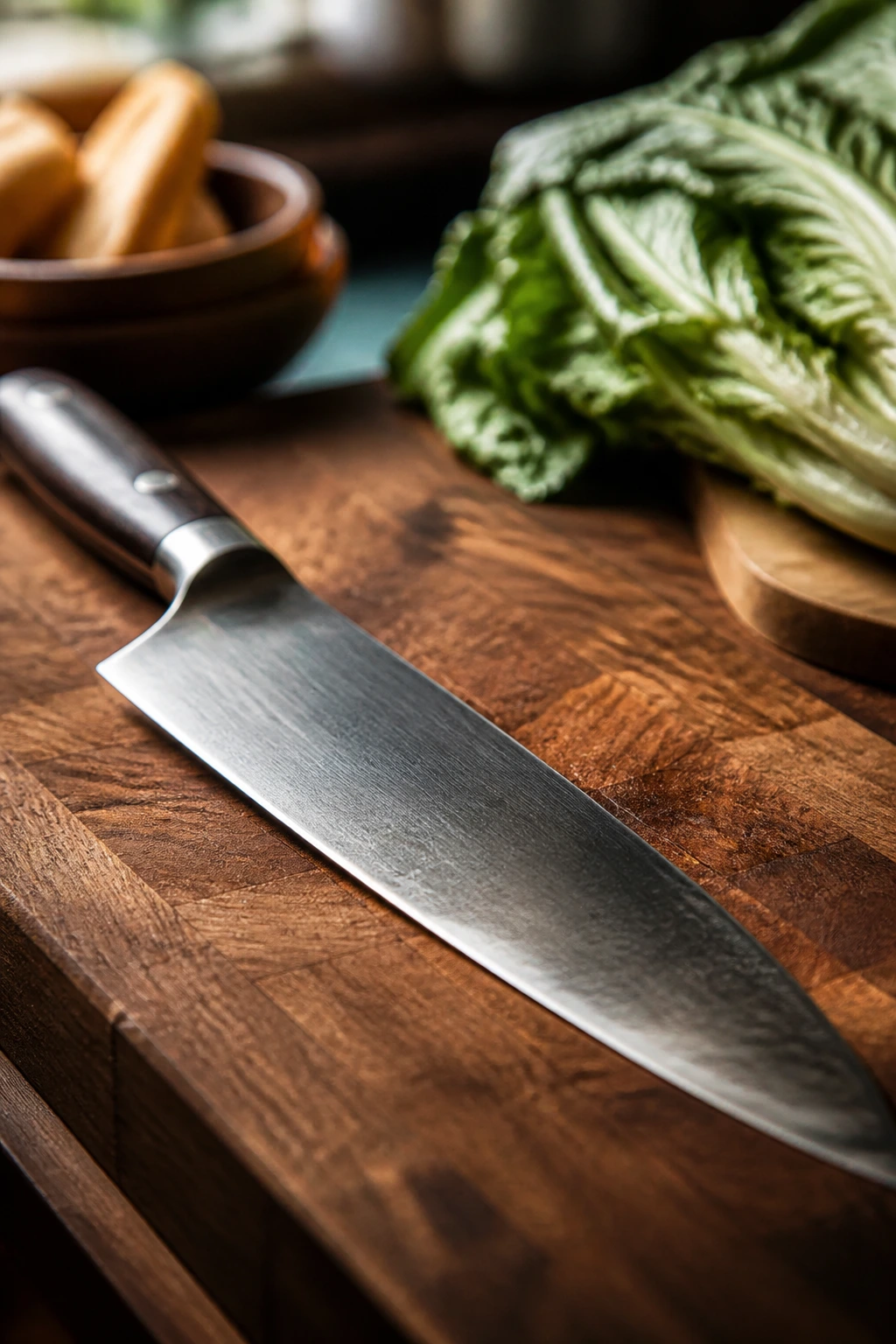
Chef’s knife: You’ll use it for romaine, garlic, chicken slicing, and crouton prep.
-
Cutting board: Use one with enough room to rest the chicken and chop the lettuce without crowding.
-
Tongs: Useful for turning chicken and tossing croutons halfway through roasting.
-
Microplane or fine grater: Best for the garlic and the Parmesan in the dressing.
-
Salad spinner or clean kitchen towels: Dry greens are non-negotiable here. A spinner helps, towels work fine.
Make the Dressing and Sear the Chicken
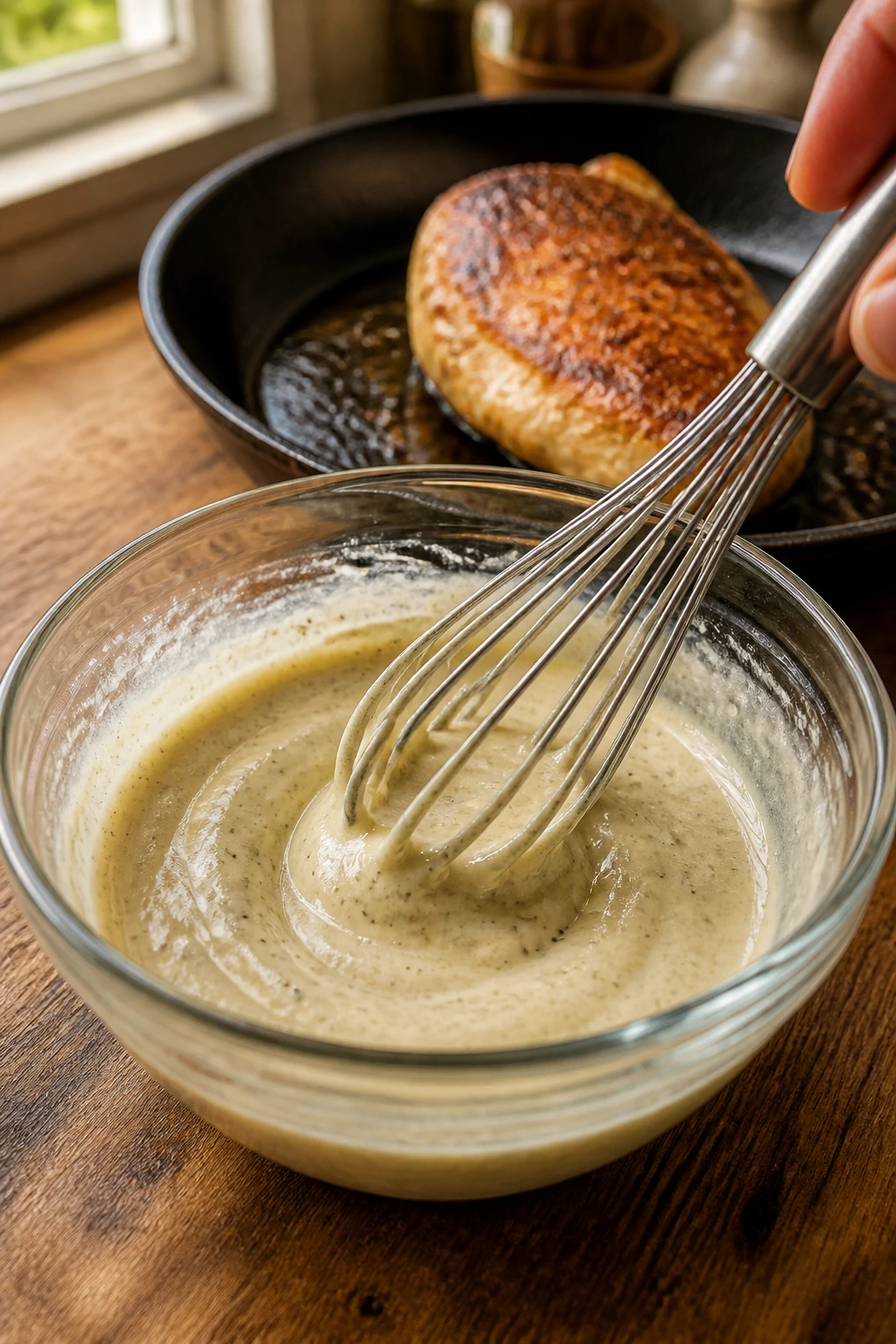
Make the Caesar dressing:
-
In a medium bowl, whisk together the 1/2 cup mayonnaise, 2 tablespoons lemon juice, 2 teaspoons Dijon mustard, 1 small grated garlic clove, 2 teaspoons anchovy paste, 1 teaspoon Worcestershire sauce, 3 tablespoons finely grated Parmesan, 1/4 teaspoon black pepper, and a pinch of salt until smooth.
-
Drizzle in the 3 tablespoons extra-virgin olive oil while whisking. The dressing should thicken slightly and look glossy, not broken or oily.
-
Add 1 tablespoon of cold water, whisk, then add the second tablespoon only if you want a looser texture. The right consistency coats a spoon and falls off in a slow ribbon. If it tastes flat, add lemon before you add more salt. The Parmesan and anchovy already bring salt to the party.
-
Set the dressing aside for 5 to 10 minutes while you handle the rest. The garlic softens a little during that rest, which takes the harsh edge off the raw bite.
Prepare and cook the chicken: 5. Pat the chicken breasts dry with paper towels, then pound them to an even 3/4-inch thickness between two sheets of plastic wrap or parchment. Season both sides with 1 teaspoon kosher salt, 1 teaspoon black pepper, and 1/2 teaspoon garlic powder.
-
Heat 1 1/2 tablespoons olive oil in a large skillet over medium-high heat until it shimmers. Lay in the chicken and cook for 5 to 7 minutes per side, without moving it too much, until the exterior is deeply browned and the center reaches 165°F / 74°C. Do not overcrowd the pan; if the skillet looks crowded, cook in batches.
-
Transfer the chicken to a cutting board and rest it for 5 minutes. The juices settle back into the meat during that pause. Slice the chicken against the grain into 1/2-inch strips.
Toast the Croutons and Dry the Romaine
-
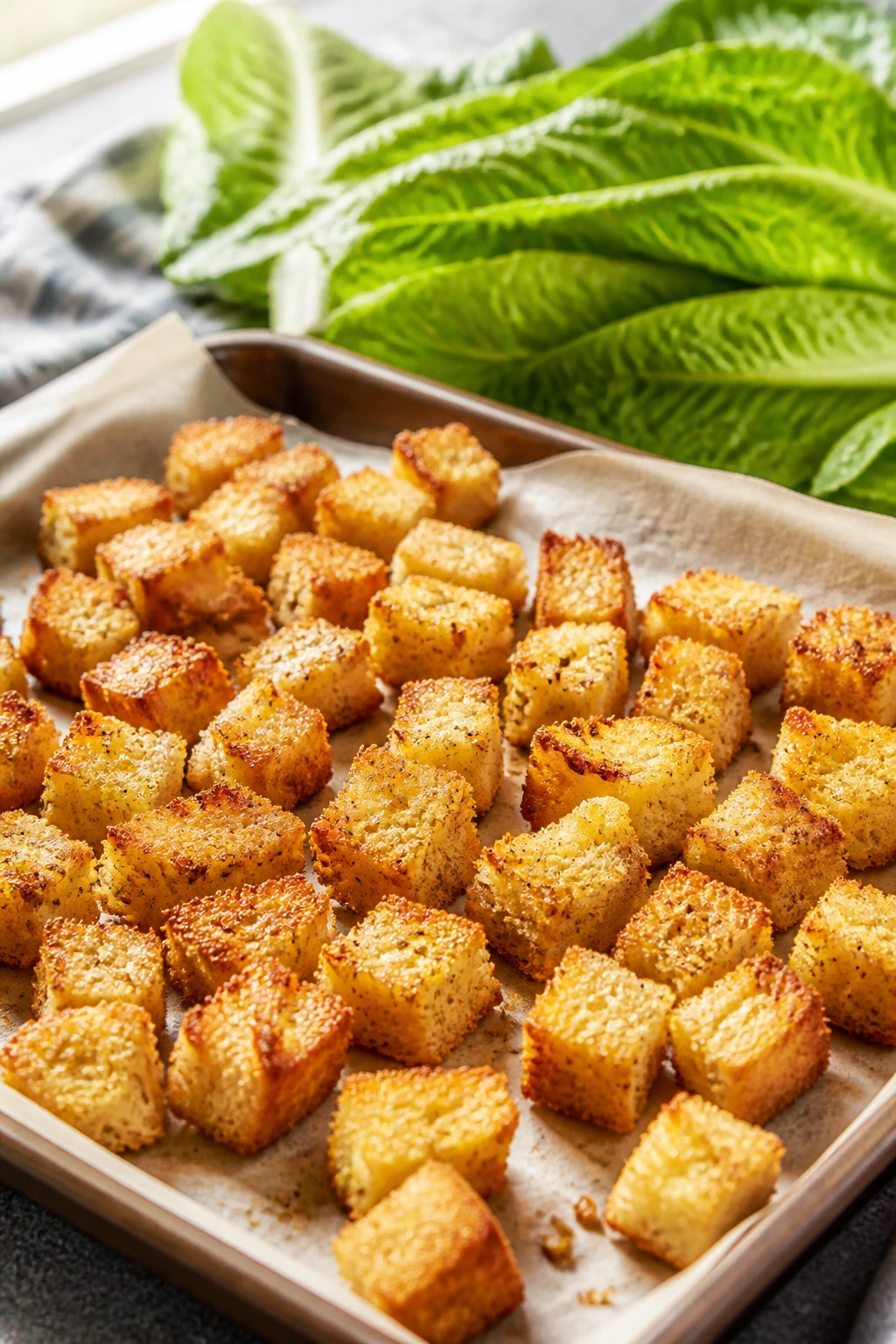
Heat the oven to 400°F / 200°C and line a rimmed baking sheet with parchment if you want easier cleanup. Toss the 4 cups bread pieces with 2 tablespoons olive oil, 1/2 teaspoon garlic powder, 1/4 teaspoon fine salt, and the optional 2 tablespoons Parmesan until the cubes look lightly coated but not soaked.
-
Spread the bread out in a single layer and bake for 10 to 12 minutes, turning once halfway through, until the croutons are golden at the edges and dry in the center. They should sound hollow when you tap one against the tray. Let them cool on the sheet; they crisp more as they cool.
-
Wash the romaine, spin or towel-dry it until the leaves feel dry to the touch, and chop it into fork-friendly pieces. If the lettuce feels damp, blot it again. Wet romaine is the fastest way to ruin the texture of a Caesar salad.
Toss, Slice, and Build the Salad
-
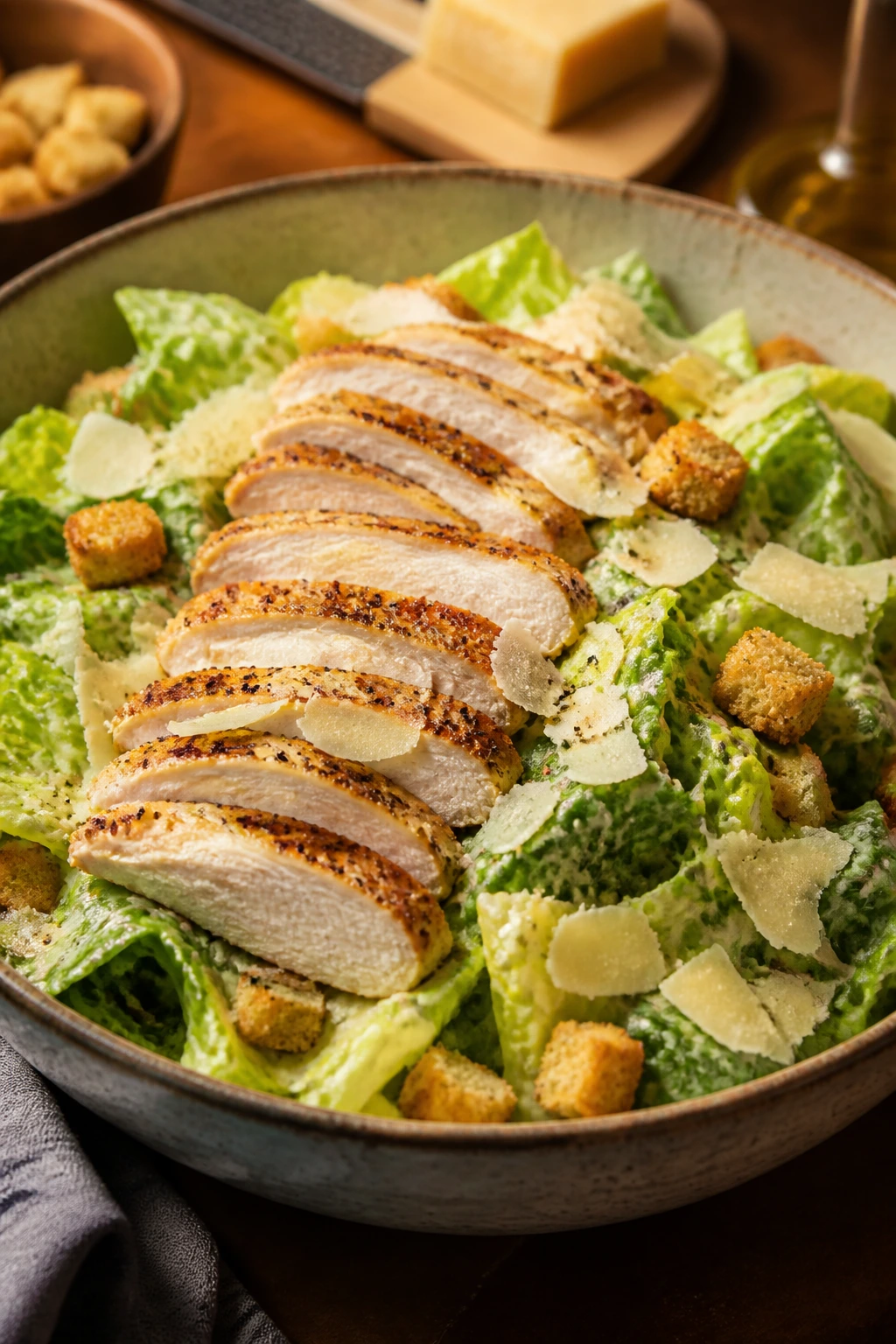
Put the chopped romaine in a large serving bowl. Add about half of the dressing and toss thoroughly until every leaf is lightly coated and glossy, but not dripping. Add more dressing a spoonful at a time if needed. You want a thin film, not a sauce bath.
-
Add about half of the shaved Parmesan and half the croutons, then toss once more. Pile the sliced chicken over the top, scatter on the remaining Parmesan and croutons, and finish with a few turns of black pepper. Serve with lemon wedges on the side for people who like an extra hit of acid.
How to Serve It Without Losing the Crunch
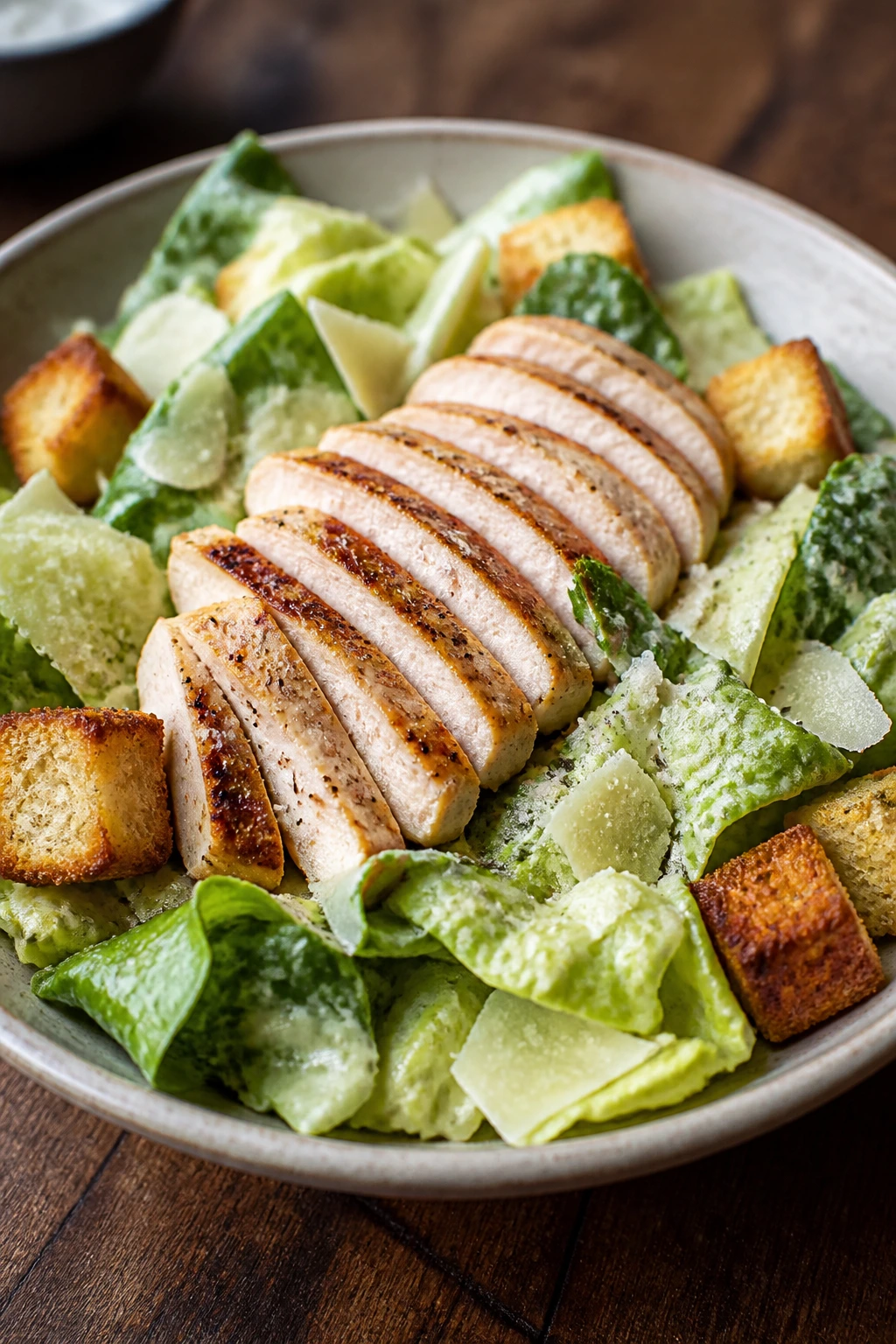
Presentation: Use shallow bowls or a wide platter instead of a deep serving bowl. The chicken can sit on top in a neat fan, the Parmesan can fall in loose curls, and the croutons stay visible instead of disappearing under the greens. A cold plate helps more than people think.
Accompaniments: If this is dinner, I like it with a slice of toasted sourdough, a cup of tomato soup, or a pile of roasted baby potatoes on the side. For a lighter lunch, a handful of sliced cucumbers or a few cherry tomatoes keeps the plate fresh without crowding the Caesar itself.
Portions: Four ounces of cooked chicken per person is a solid main-course portion here. If you’re serving the salad as a side, halve the chicken and use fewer croutons so the bowl doesn’t turn into a meal-sized pile by accident.
Beverage Pairing: A chilled glass of sauvignon blanc suits the lemon and Parmesan very well. If you want something nonalcoholic, sparkling water with lemon or a dry cucumber soda keeps the palate clean between bites.
Practical Tips for Better Flavor and Texture
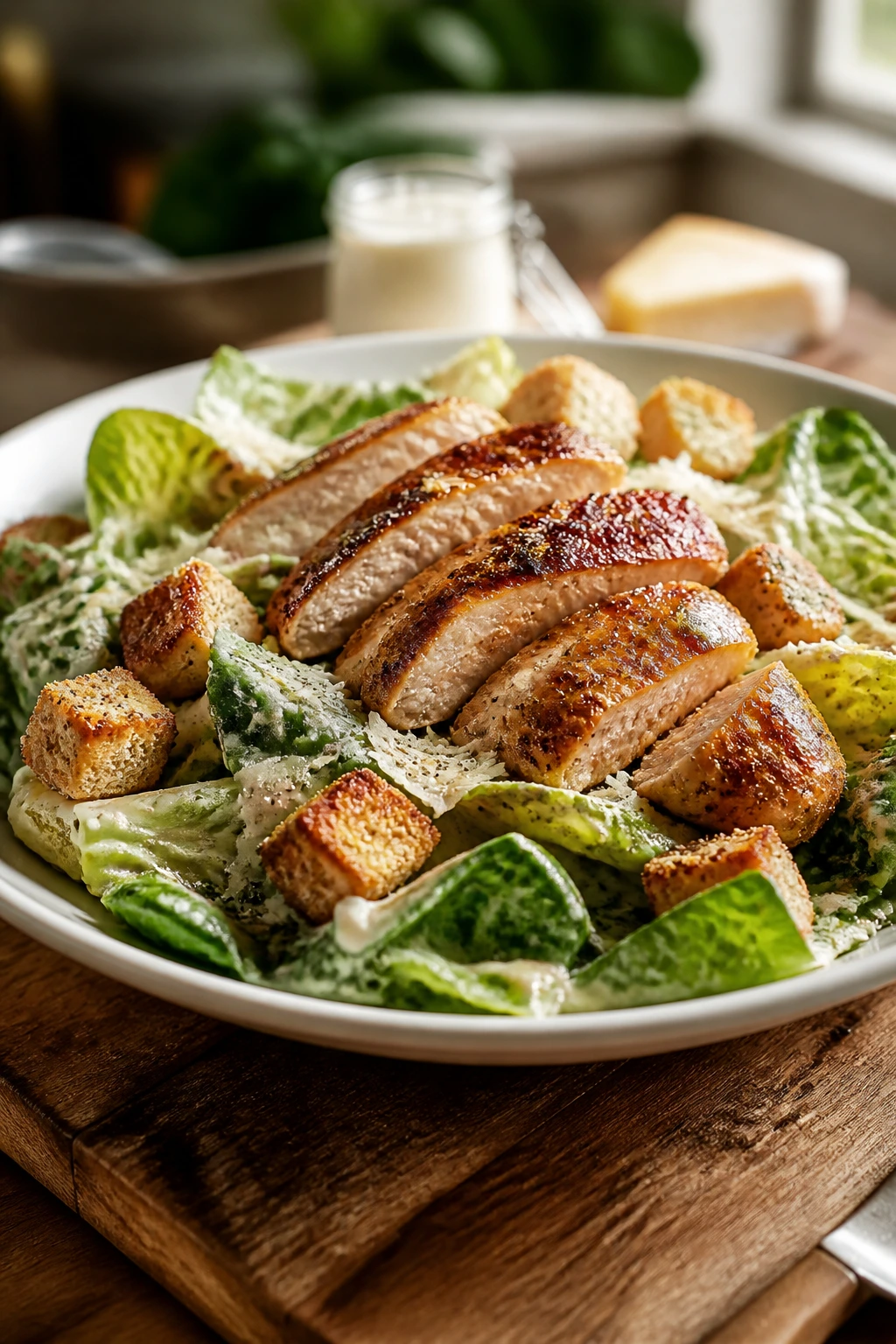
Flavor Enhancement: Add a little lemon zest to the dressing, not a lot—about 1/2 teaspoon is enough. It brightens the sauce without thinning it, which matters because Caesar can start tasting heavy if the acid is too low.
Time-Saver: If you’re short on time, make the dressing a day ahead and keep it in a jar. It thickens slightly overnight, so whisk in a teaspoon or two of cold water before serving.
Texture Move: Dry the romaine twice if you have to. Spin it, then spread it out on a clean towel for five minutes while you cook the chicken. That extra minute pays off when the dressing goes on.
Finishing Touch: Shave the Parmesan with a vegetable peeler instead of grating every last bit into dust. The larger curls land on top of the salad and give you salty little hits instead of one uniform cheese layer.
Mistakes That Flatten the Salad
-
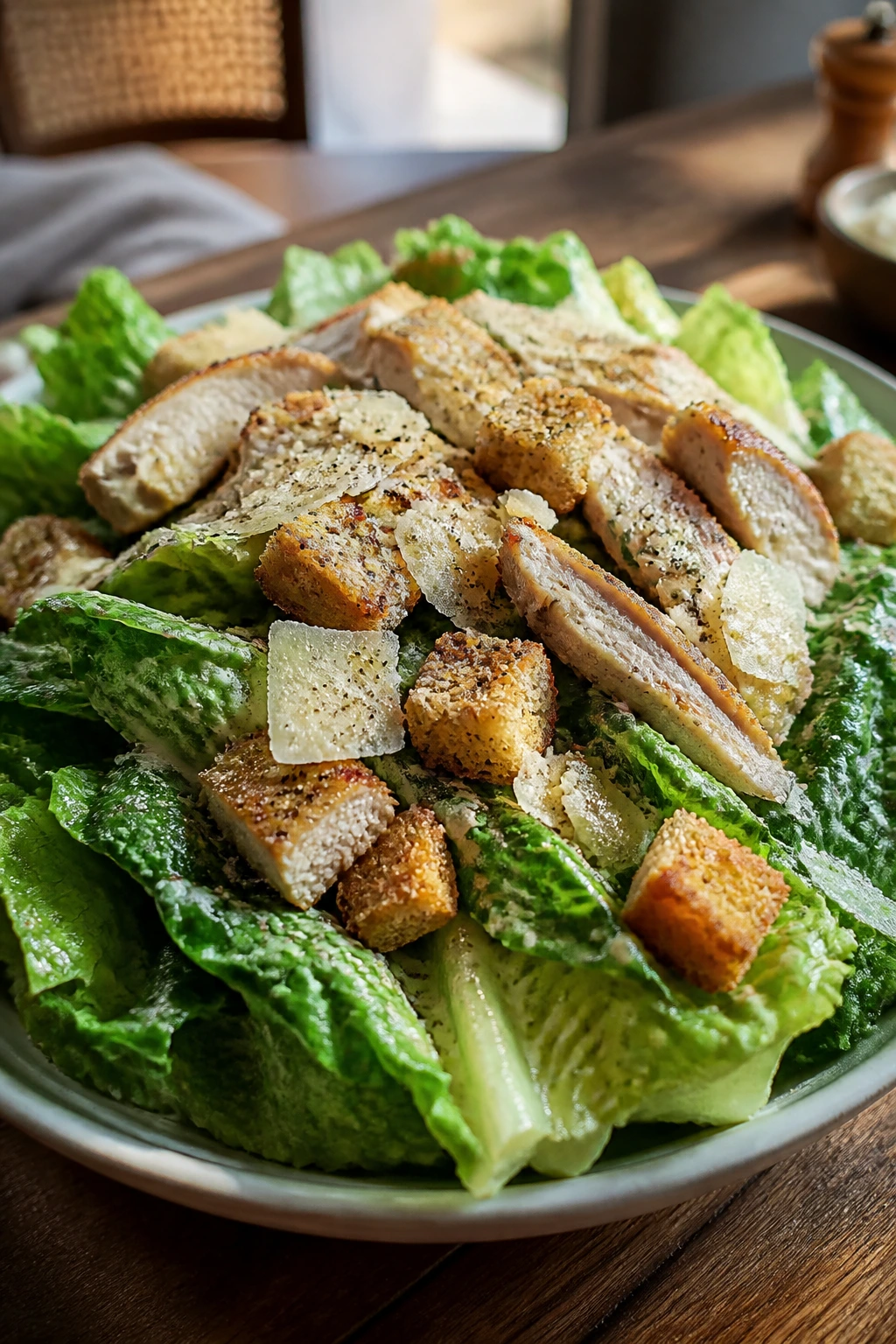
Dressing the greens too early. The leaves start glossy, then collapse into a soft tangle if they sit more than 10 or 15 minutes dressed. Toss right before serving, and keep a spoonful of dressing back in case the bowl needs a little more at the end.
-
Using wet romaine. If the lettuce still has water in the folds, the dressing won’t cling. It will slide. The fix is annoyingly simple: spin it dry, blot it, and let it air for a few minutes if needed.
-
Cooking the chicken until it’s dry and stringy. Thin breasts can cross from juicy to chalky fast. Pound them evenly, sear over medium-high heat, and use a thermometer so you’re not guessing.
-
Letting the croutons get too dark. Once they go from golden to brown, they start tasting bitter. Pull them from the oven while the edges are still the color of toasted bread, because they keep crisping on the tray.
-
Making the dressing too salty before tasting. Parmesan, anchovy paste, Worcestershire, and salt all stack up quickly. Taste first, then adjust with lemon or water before reaching for more salt.
Variations That Still Feel Like Caesar
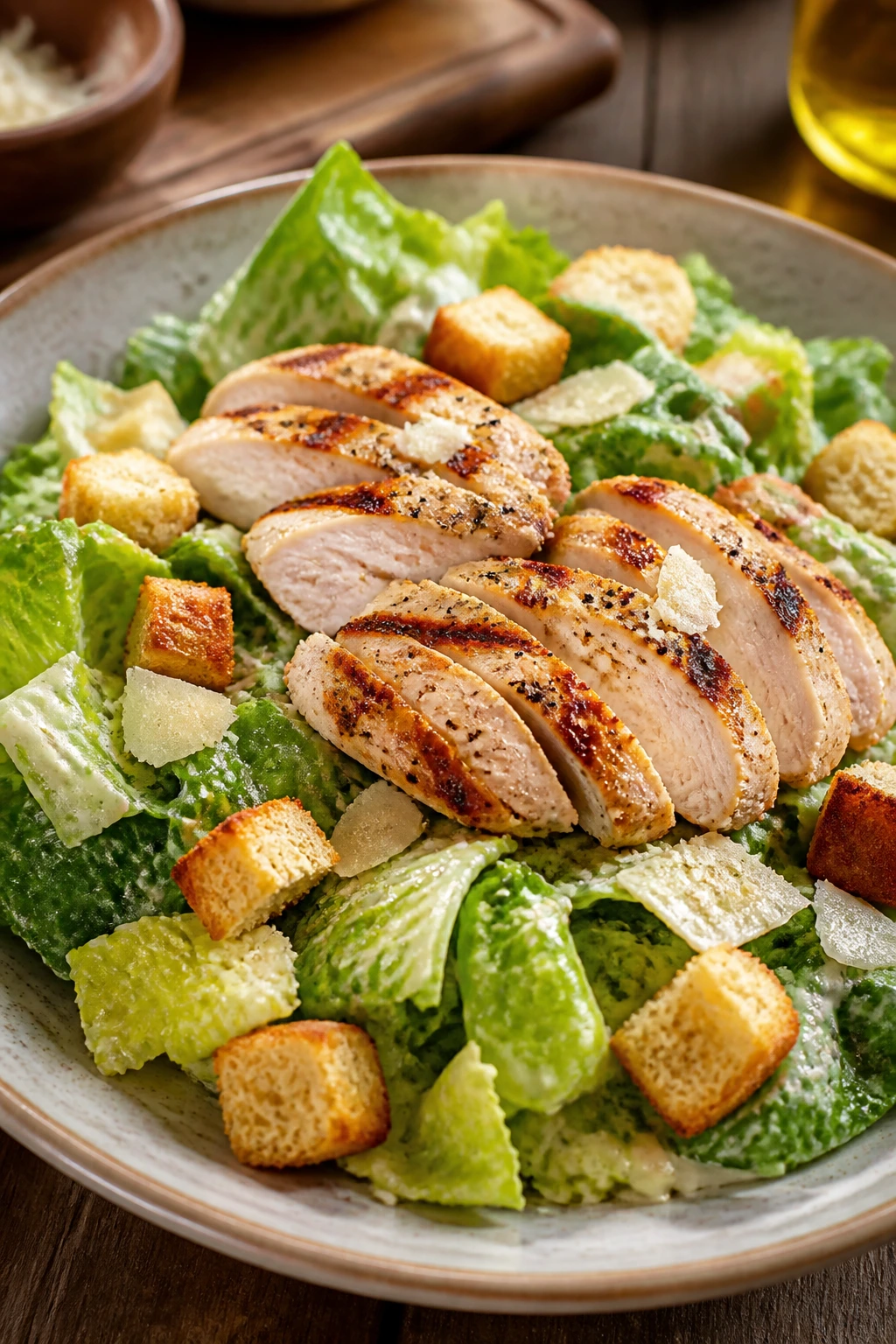
Grilled Chicken Caesar Swap the skillet for a grill or grill pan and cook the chicken over medium-high heat until marked and just cooked through. The faint smokiness changes the tone of the salad without wrecking the Caesar character. I like this one when the weather is warm enough that the stove feels like a bad idea.
No-Anchovy Caesar Leave out the anchovy paste and stir in 1 teaspoon white miso plus an extra splash of Worcestershire or tamari. You lose a little of the classic fishy depth, but the dressing still gets that savory pull that keeps it from tasting like lemon mayo.
Kale-Romaine Blend Use 1 head of chopped romaine and 2 packed cups of thinly sliced kale. Massage the kale with a spoonful of dressing for 30 seconds before tossing everything together. This gives the bowl a sturdier bite, though I still wouldn’t skip the romaine.
Rotisserie Shortcut Use about 3 cups of shredded rotisserie chicken instead of cooking fresh breasts. Warm it gently in a skillet with a teaspoon of olive oil and a pinch of pepper so it doesn’t taste cold straight from the carton. This is the move for nights when the idea of another pan feels like too much.
Make-Ahead, Storage, and Leftover Strategy
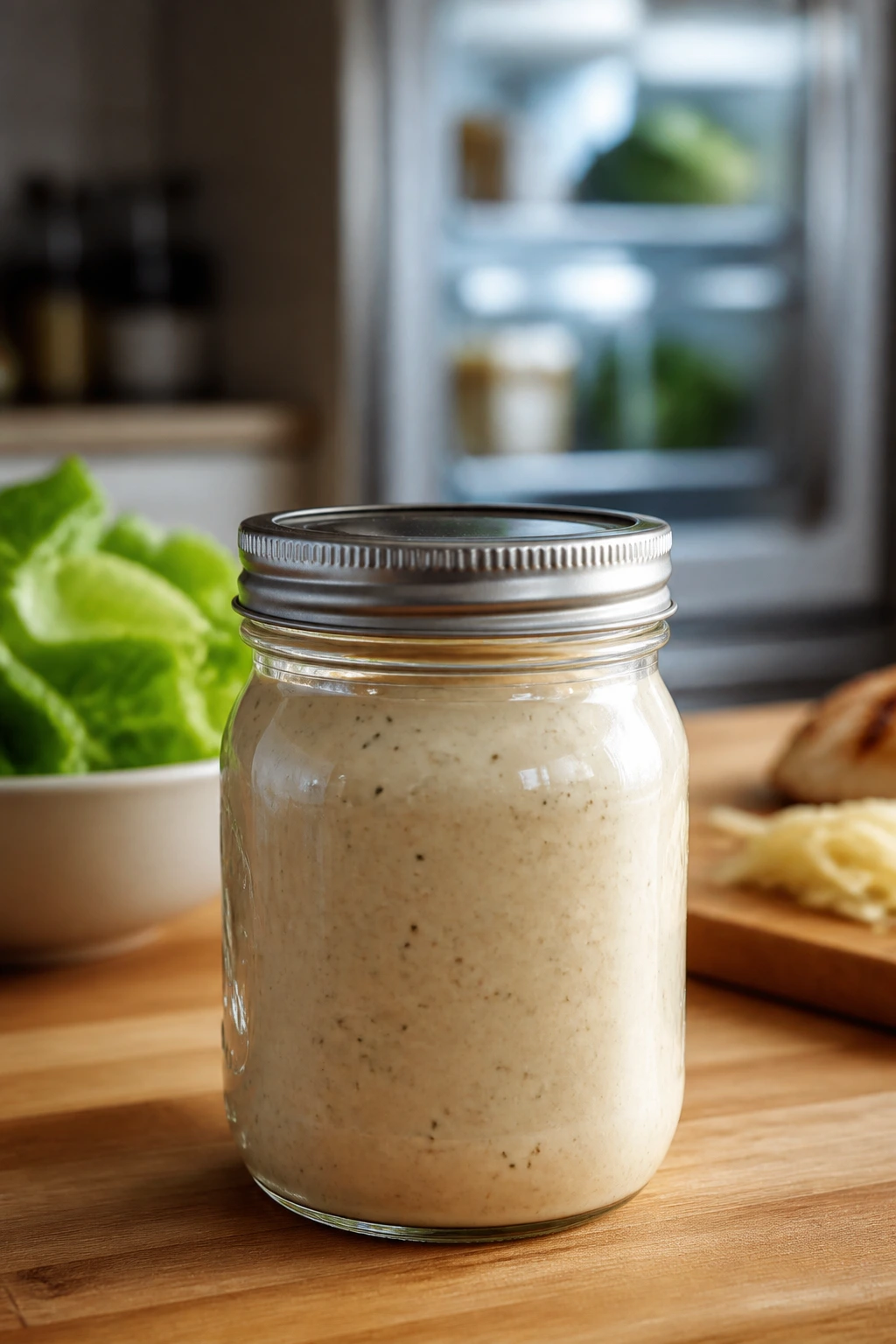
The dressing keeps well in a sealed jar in the refrigerator for up to 5 days. It will thicken as it chills, especially because of the mayonnaise and Parmesan, so give it a good whisk or shake before using. If it feels stiff, loosen it with 1 teaspoon of cold water at a time.
The cooked chicken stays good for 3 to 4 days refrigerated in an airtight container. It also freezes for up to 2 months, though the texture is best when you thaw it slowly in the refrigerator overnight and reheat it gently. For reheating, a skillet over low heat with a small splash of water or a covered 300°F / 150°C oven for about 8 to 10 minutes works better than the microwave, which tends to dry the edges.
Croutons keep for 4 to 5 days in an airtight container at room temperature. If they soften a little, spread them on a baking sheet and toast them at 325°F / 165°C for 3 to 5 minutes. They perk right back up.
The romaine is the fragile piece. Washed and dried leaves keep for 2 to 3 days in the fridge if you wrap them in paper towels and store them in a bag or container with a little air space. Once the salad is dressed, though, it’s best eaten right away. A dressed Caesar does not become a better leftover.
If you want to do some work ahead, make the dressing and croutons the day before and cook the chicken earlier in the day. Then all that’s left at dinner time is slicing, tossing, and pretending it took more effort than it did.
Frequently Asked Questions
Can I make the dressing without anchovy paste?
Yes, though you’ll lose some of the deep savory note that makes Caesar taste like Caesar. White miso is the cleanest swap if you want to keep the sauce rich without the fish flavor, and a tiny splash of tamari helps too.
What’s the best chicken cut for this salad?
Boneless, skinless chicken breasts are the cleanest fit because they slice neatly and stay lean. If you prefer richer meat, boneless thighs work too; they just come out a little softer and usually need an extra minute or two in the pan.
Can I use store-bought croutons?
You can, and on a busy night I won’t pretend otherwise. Still, homemade croutons taste better here because they pick up the garlic and Parmesan and stay crisper around the edges.
How do I keep the romaine crisp after washing?
Spin it dry, then blot the leaves with a towel and let them sit for a few minutes before chopping. If you need to store it, wrap the dried leaves in paper towels and keep them in a bag or container with a little room for air.
Can I make the dressing ahead of time?
Yes. It actually benefits from a short rest because the garlic and Parmesan soften into the mayo base. Make it up to 5 days ahead, chill it in a jar, and whisk in a bit of water before serving if it has thickened.
What if the dressing tastes too sharp or too thick?
If it tastes sharp, add a little more mayonnaise or Parmesan before reaching for extra salt. If it’s too thick, thin it with cold water one teaspoon at a time. The goal is a spoon-coating dressing, not a paste.
Can I grill the chicken instead of searing it?
Absolutely. Grill over medium-high heat until the thickest part reaches 165°F / 74°C. You’ll get a little smoke and char that changes the flavor in a good way, especially if the rest of the salad is kept cold and crisp.
A Bowl Worth Repeating
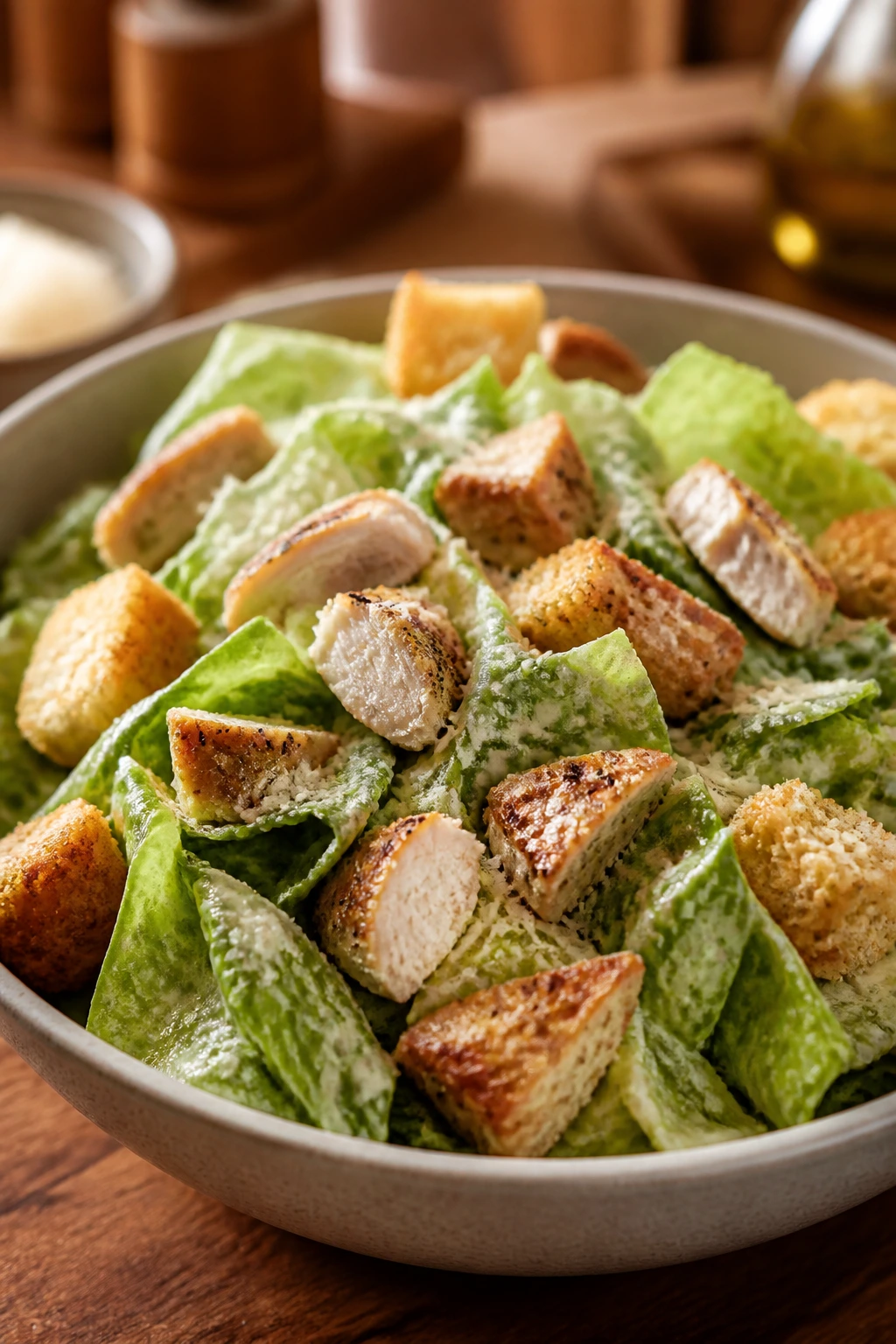
A salad like this works because each piece knows its job. The romaine stays cold and crisp. The chicken brings substance and browned flavor. The dressing does the heavy lifting without smothering everything in cream. Nothing in the bowl is there by accident, and that’s why it tastes so much better than the average deli-counter Caesar.
Make it once and the little habits tend to stick: dry the lettuce harder than feels necessary, season the chicken like you mean it, and toss the greens at the last possible second. Those three moves change the whole salad. After that, it’s hard to go back to the limp, forgettable version.
Crisp Chicken Caesar Salad with Homemade Dressing — Recipe Card
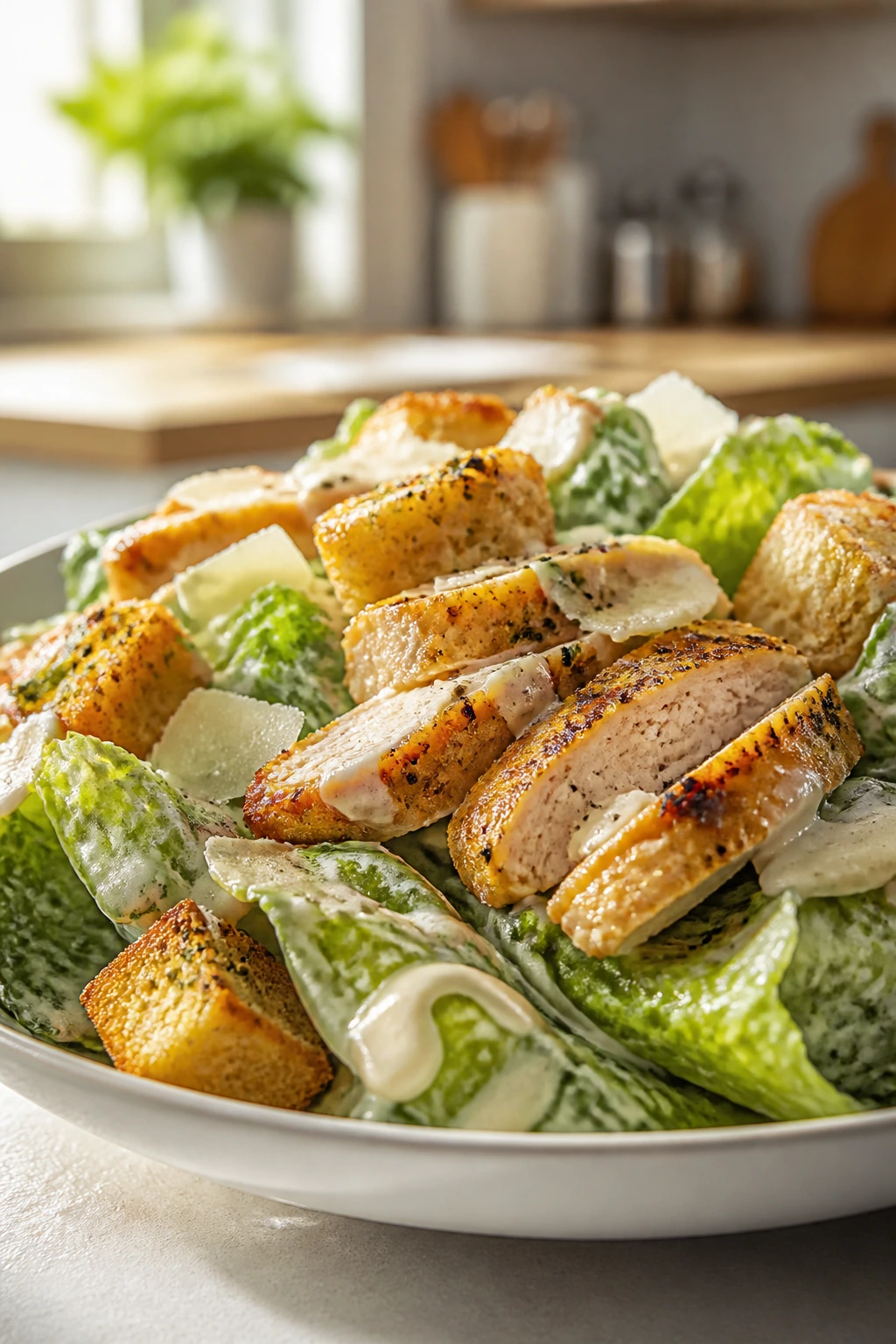
Recipe Name: Crisp Chicken Caesar Salad with Homemade Dressing
Description: Crisp romaine, browned chicken, crunchy croutons, and a tangy homemade Caesar dressing built with lemon, Parmesan, Dijon, and anchovy paste.
Prep Time: 20 minutes
Cook Time: 20 minutes
Total Time: 40 minutes
Course: Main Course, Salad
Cuisine: American-Italian
Servings: 4 servings
Calories: About 620 kcal per serving
Ingredients
For the Chicken:
- 1 1/2 pounds boneless, skinless chicken breasts, pounded to an even 3/4-inch thickness
- 1 1/2 tablespoons olive oil
- 1 teaspoon kosher salt
- 1 teaspoon black pepper
- 1/2 teaspoon garlic powder
For the Croutons:
- 4 cups day-old sourdough or ciabatta, torn or cut into 1-inch pieces
- 2 tablespoons olive oil
- 1/2 teaspoon garlic powder
- 1/4 teaspoon fine salt
- 2 tablespoons finely grated Parmesan, optional
For the Homemade Caesar Dressing:
- 1/2 cup mayonnaise
- 2 tablespoons fresh lemon juice
- 2 teaspoons Dijon mustard
- 1 small garlic clove, finely grated or minced
- 2 teaspoons anchovy paste
- 1 teaspoon Worcestershire sauce
- 3 tablespoons finely grated Parmesan
- 3 tablespoons extra-virgin olive oil
- 1 to 2 tablespoons cold water, as needed to thin
- 1/4 teaspoon black pepper
- Pinch of salt, to taste
For the Salad:
- 2 large romaine hearts, chopped and dried well
- 1 cup shaved Parmesan
- 1 lemon, cut into wedges
- Extra black pepper, for finishing
Instructions
-
Whisk together the mayonnaise, lemon juice, Dijon, garlic, anchovy paste, Worcestershire, Parmesan, black pepper, and salt. Stream in the olive oil, then thin with cold water until spoonable.
-
Pat the chicken dry, pound it to even thickness, and season both sides with salt, pepper, and garlic powder.
-
Heat olive oil in a skillet over medium-high heat and sear the chicken for 5 to 7 minutes per side, until browned and cooked to 165°F / 74°C. Rest 5 minutes, then slice.
-
Heat the oven to 400°F / 200°C. Toss the bread pieces with olive oil, garlic powder, salt, and optional Parmesan. Bake for 10 to 12 minutes, turning once, until golden and crisp.
-
Place the romaine in a large bowl and toss with half the dressing until lightly coated.
-
Add half the Parmesan and half the croutons, toss once more, then top with the sliced chicken, remaining Parmesan, remaining croutons, and black pepper.
-
Serve immediately with lemon wedges.
Notes: Dress the salad right before serving. Add water to loosen the dressing if it thickens in the fridge. Store chicken, dressing, croutons, and romaine separately for the best texture.