



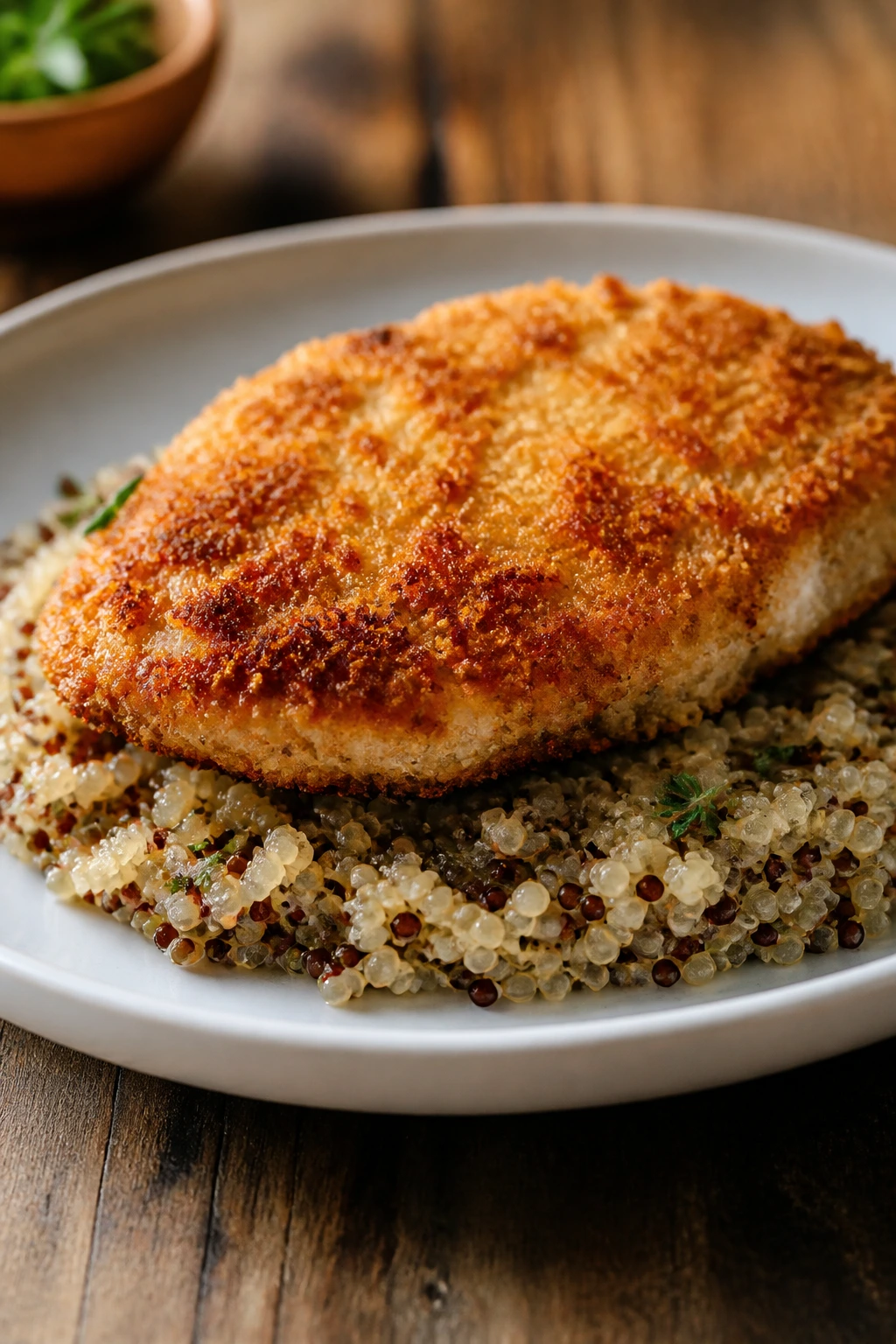
Crispy chicken and quinoa can go badly in a very specific way: the chicken turns soft under its own steam, the quinoa tastes like damp sand, and the whole thing lands on the table looking like it gave up halfway through cooking. I’ve watched plenty of weeknight dinners make that exact mistake. The fix is not fancy. It’s a hot skillet, a dry chicken surface, a proper breadcrumb crust, and quinoa that gets rinsed, toasted, and seasoned instead of boiled into submission.
What I like about this combination is that it gives you contrast on one plate without needing a second pan full of drama. The chicken brings the crackle. The quinoa gives you something nutty and fluffy to sit under it. Then a little lemon, garlic, and green stuff keep the whole thing from feeling heavy. That balance matters more than people admit. Dinner gets boring when every bite feels the same.
There’s also a practical reason this works so well on a weeknight: the timing is tidy. Quinoa cooks while you bread the chicken. The chicken browns fast if you pound it to an even thickness. And once you know how to keep the crust from steaming itself into mush, the whole meal turns into one of those dependable dinners you can pull off without staring at the stove like it owes you money.
Why This Chicken-and-Quinoa Plate Keeps Its Crunch
-
The crust stays crisp because the chicken is patted dry and cooked in a hot skillet. Wet chicken is the enemy here; a dry surface gives the flour and panko something to cling to instead of slipping off in patches.
-
Quinoa earns its place instead of acting like filler. Toasting it for a minute in oil before the broth goes in adds a nutty edge that plain boiled quinoa never gets.
-
You get a full dinner without a sink full of cookware. One saucepan handles the grain, one skillet handles the chicken, and that’s basically the end of the story.
-
It holds up better than most breaded chicken meals. Slice the chicken after a short rest and spoon it over the quinoa, and you still get crunch on the first few bites instead of a soggy pile.
-
It is easy to shift toward what you already have. Chicken breasts, chicken thighs, spinach, peas, parsley, dill, lemon — the recipe is sturdy enough to take substitutions without collapsing.
-
The plate tastes finished without a heavy sauce. Lemon juice, herbs, and a little Parmesan in the crust do the job that cream sauce would normally do, only with less weight.
Timing and Yield at a Glance
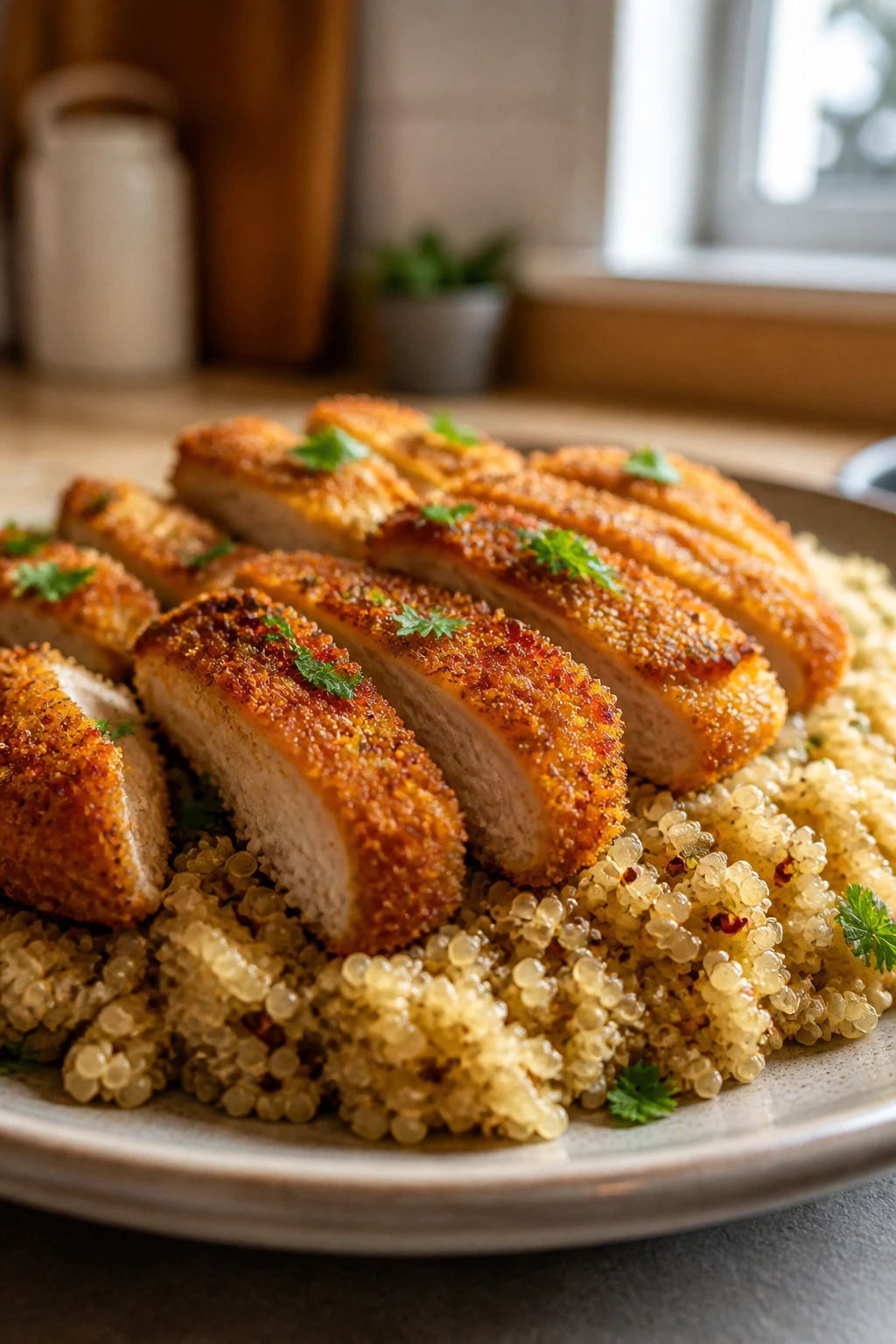
Yield: Serves 4
Prep Time: 20 minutes
Cook Time: 25 minutes
Total Time: 45 minutes
Difficulty: Intermediate — the steps are straightforward, but the breading, skillet heat, and chicken thickness all need a little attention.
Chill/Rest Time: 5 minutes resting for the chicken
Best Served: Right after cooking, while the crust is still crisp and the quinoa is hot and fluffy
What Goes Into the Pan and the Bowl
For the Chicken:
- 1 1/2 pounds boneless, skinless chicken breasts, pounded to 1/2-inch thickness
- 1 teaspoon kosher salt
- 1/2 teaspoon black pepper
- 1 teaspoon garlic powder
- 1 teaspoon smoked paprika
For the Breading Station:
- 1/2 cup all-purpose flour
- 2 large eggs
- 2 tablespoons milk or water
- 1 1/2 cups panko breadcrumbs
- 1/4 cup finely grated Parmesan
- 1/2 teaspoon garlic powder
- 1/2 teaspoon smoked paprika
For the Quinoa:
- 1 cup quinoa, rinsed well
- 2 cups low-sodium chicken broth
- 1 tablespoon olive oil
- 1 small shallot, finely diced
- 2 cloves garlic, minced
- 1/2 teaspoon kosher salt
For the Finish:
- 2 cups baby spinach, loosely packed
- 1/2 cup frozen peas, thawed
- 1 teaspoon lemon zest
- 2 tablespoons fresh lemon juice
- 2 tablespoons chopped parsley
- Pinch of red pepper flakes, optional
- Lemon wedges, for serving
Why Each Ingredient Matters
Chicken Cutlets and the Crisp Coating
What to use: 1 1/2 pounds boneless, skinless chicken breasts, pounded to a 1/2-inch thickness, plus salt, pepper, garlic powder, and smoked paprika.
Preparation: Pound the chicken between two pieces of parchment or plastic wrap so the thick end and thin end cook at the same pace. Pat it dry before seasoning; that dry surface is what keeps the coating from sliding off in the skillet.
Substitutions: Boneless, skinless thighs work if you want a juicier result, though you may need an extra minute or two in the pan. If you only have tenderloins, keep them in one layer and trim the cook time down sharply.
Tips: Even thickness matters more than size. A chicken breast that is 3/4 inch thick on one end and 1/4 inch on the other will overcook before the whole piece turns golden.
The Breading Station That Actually Sticks
What to use: 1/2 cup flour, 2 eggs, 2 tablespoons milk or water, 1 1/2 cups panko, 1/4 cup Parmesan, and a little extra paprika and garlic powder.
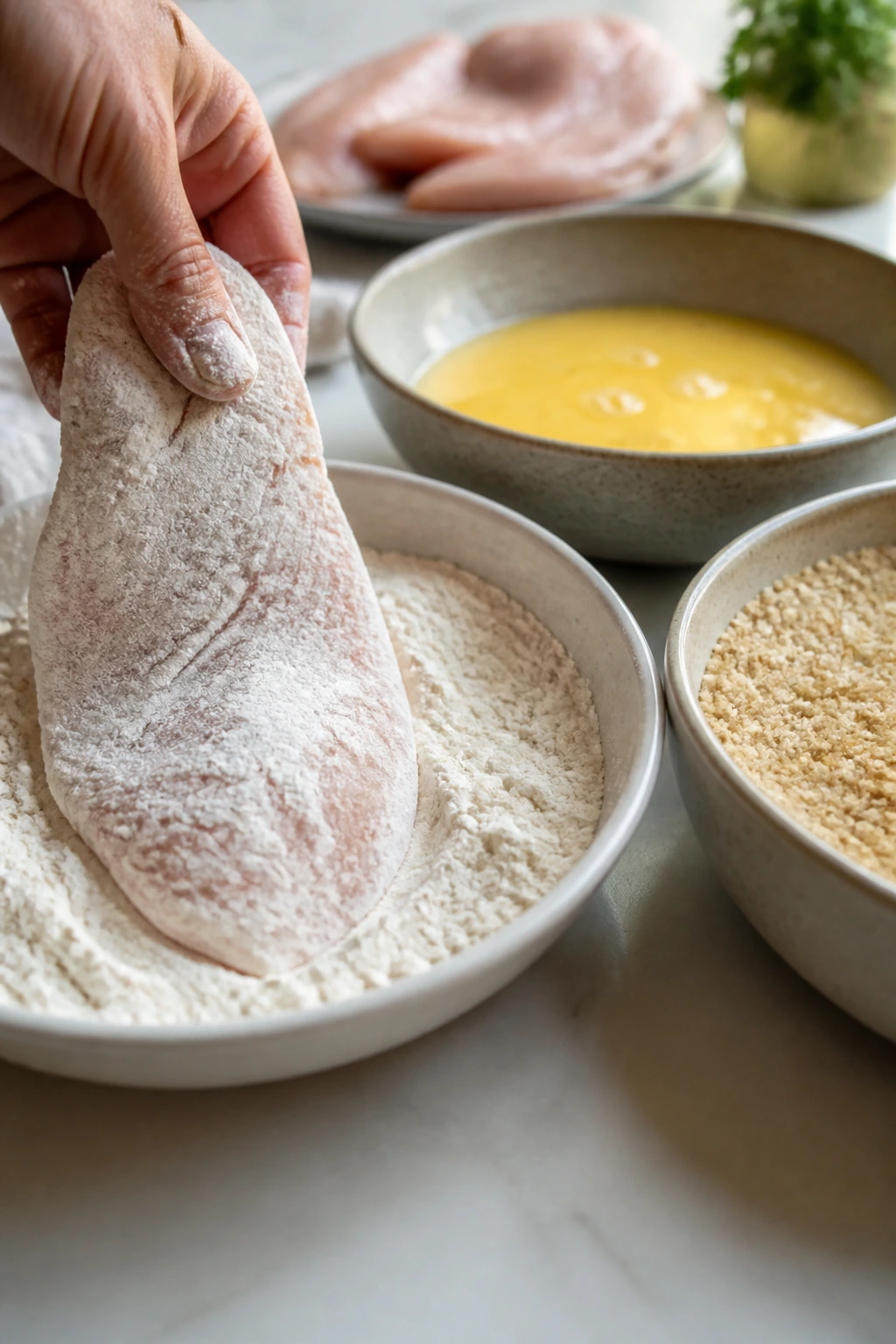
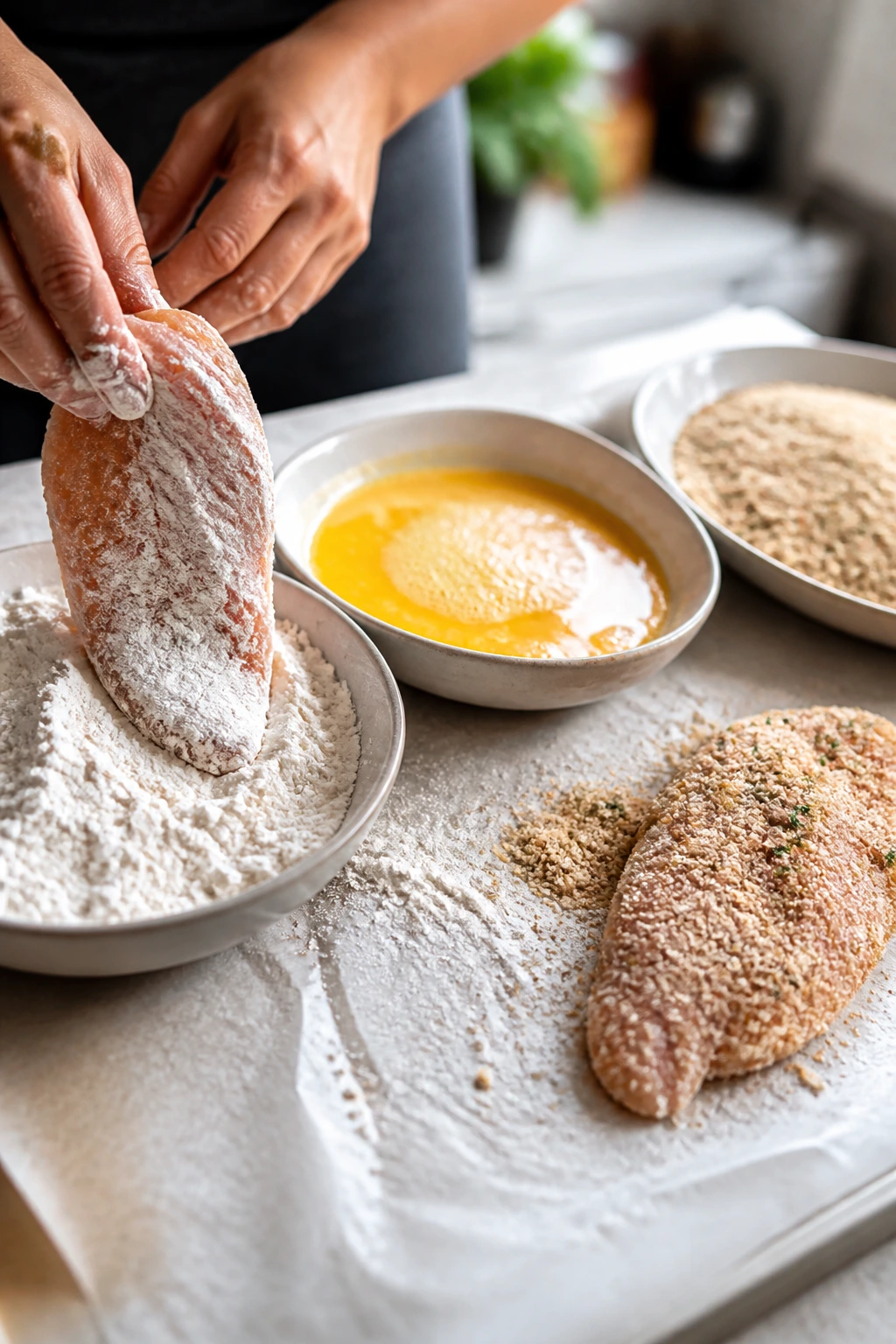
Preparation: Set up the bowls in the usual order — flour, egg wash, breadcrumbs — and season each layer lightly. The flour grabs moisture, the egg acts like glue, and the panko gives you the shattery texture that regular breadcrumbs rarely deliver.
Substitutions: Use gluten-free panko if needed. Crushed cornflakes also work, though they brown faster, so you need to watch the heat. Skip the Parmesan if you want a dairy-free crust, and add an extra pinch of salt to the panko instead.
Tips: Press the chicken into the crumbs gently, then stop. If you pack the coating on like wallpaper paste, it tends to fall off in the pan in big sheets.
Quinoa, Broth, and the Grain Base
What to use: 1 cup quinoa, 2 cups low-sodium chicken broth, 1 tablespoon olive oil, and 1/2 teaspoon kosher salt.
Preparation: Rinse the quinoa in a fine-mesh sieve until the water runs mostly clear. That wash removes the natural saponins on the outside of the grain, which can taste bitter if you skip the step.
Substitutions: Vegetable broth works if that’s what you have, and water is fine in a pinch, though the grain tastes flatter. White, red, or tri-color quinoa all work; white cooks the most evenly, while red stays a little firmer.
Tips: Toasting the rinsed quinoa in oil for 45 to 60 seconds before adding the liquid gives it a deeper, nuttier flavor. It’s a tiny step. It matters.
Aromatics and Greens
What to use: 1 small diced shallot, 2 minced garlic cloves, 2 cups baby spinach, and 1/2 cup thawed peas.
Preparation: Dice the shallot finely so it disappears into the quinoa instead of sitting in chewy little chunks. Add the garlic after the shallot softens; garlic burns quickly, and burnt garlic brings a bitter edge that never leaves.
Substitutions: A small yellow onion can stand in for the shallot. Kale works instead of spinach if you chop it small and give it a minute or two longer in the hot quinoa. Frozen edamame can replace peas if you want a little more protein.
Tips: Frozen peas can go straight into the warm quinoa after thawing. They bring little pops of sweetness and keep the bowl from feeling too monotone.
Lemon, Herbs, and the Finish
What to use: 1 teaspoon lemon zest, 2 tablespoons lemon juice, 2 tablespoons parsley, and a pinch of red pepper flakes if you like a little heat.
Preparation: Zest the lemon before you juice it. Once the fruit is halved and slippery, the grater starts to behave like a bad idea.
Substitutions: Dill gives the dish a cooler, brighter finish. Basil is softer and sweeter. Mint sounds odd here until you try it with peas and lemon, then it makes sense.
Tips: Add the lemon juice after the quinoa comes off the heat so the flavor stays fresh and sharp. Heat dulls citrus quickly, and you want that brightness to sit on top of the bowl, not vanish into it.
The Tools That Make the Job Easier
-
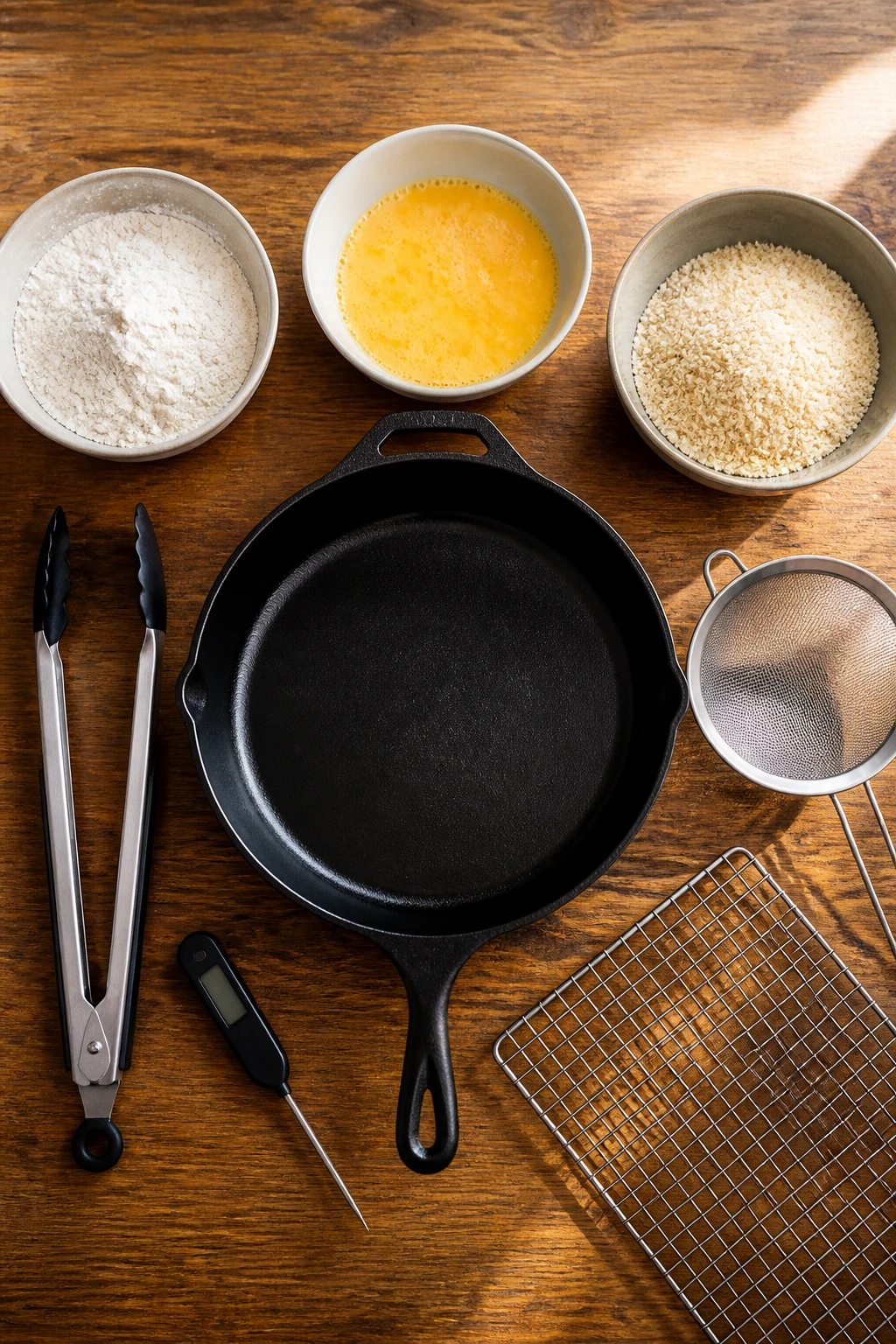
12-inch skillet, preferably stainless steel or heavy nonstick — big enough to hold two cutlets without crowding, which is the difference between crisp and steamy.
-
Medium saucepan with a tight-fitting lid — quinoa needs steady, low heat and a lid that doesn’t rattle loose.
-
Fine-mesh sieve — the fastest way to rinse quinoa without losing half the grains down the drain.
-
Three shallow bowls or pie plates — one for flour, one for egg wash, one for panko. If you skip the shallow shape, the breading job turns messy fast.
-
Tongs — useful for flipping chicken without tearing the crust.
-
Instant-read thermometer — the cleanest way to know when the chicken hits 165°F without cutting into it and losing juices.
-
Wire rack — not glamorous, but worth the drawer space. It keeps the bottom of the chicken from sweating on a plate.
-
Microplane or fine grater — best for lemon zest and Parmesan.
How to Make Crispy Chicken and Quinoa
Prep the Chicken and the Grain:
-
Rinse the quinoa in a fine-mesh sieve under cool water for 30 to 45 seconds, swirling it with your hand until the water runs mostly clear. Drain it well and set it aside.
-
Place the chicken breasts between two sheets of parchment or plastic wrap and pound them to an even 1/2-inch thickness. Season both sides with the kosher salt, black pepper, garlic powder, and smoked paprika.
-
Set up three shallow bowls: one with the flour, one with the eggs beaten with the milk or water, and one with the panko, Parmesan, garlic powder, and paprika mixed together.
Cook the Quinoa Base:
-
Heat 1 tablespoon olive oil in a medium saucepan over medium heat. Add the diced shallot and cook for about 2 minutes, stirring often, until it looks translucent and soft around the edges.
-
Stir in the garlic and cook for 30 seconds, just until it smells fragrant. Add the quinoa and toast it for 45 to 60 seconds, stirring constantly, until it smells nutty.
-
Pour in the chicken broth and add the 1/2 teaspoon salt. Bring the pot to a gentle boil, then cover, lower the heat to the smallest simmer, and cook for 15 minutes. Do not stir while it cooks — that’s how quinoa turns sticky.
-
Turn off the heat and keep the lid on for 5 minutes. Then fluff the quinoa with a fork, add the spinach, peas, lemon zest, lemon juice, parsley, and red pepper flakes if using, and fold everything together until the greens wilt and the mixture looks bright and loose.
Bread and Fry the Chicken:
-
Dredge each chicken breast in the flour, shaking off the excess, then dip it into the egg wash, then press it into the panko mixture until every surface is coated. Set the breaded cutlets on a plate and let them sit for 5 minutes if you have the time. That short rest helps the coating cling better.
-
Heat 2 tablespoons of oil in the skillet over medium to medium-high heat until it shimmers. Lay in two cutlets at a time and cook for 3 to 4 minutes on the first side, until deep golden brown, then flip and cook for another 2 to 4 minutes, until the internal temperature reaches 165°F at the thickest part.
-
Transfer the chicken to a wire rack and let it rest for 5 minutes. Add the remaining 1 tablespoon oil if the pan looks dry before cooking the second batch. Do not stack the chicken on a plate or cover it with foil — both will soften the crust.
Assemble and Finish:
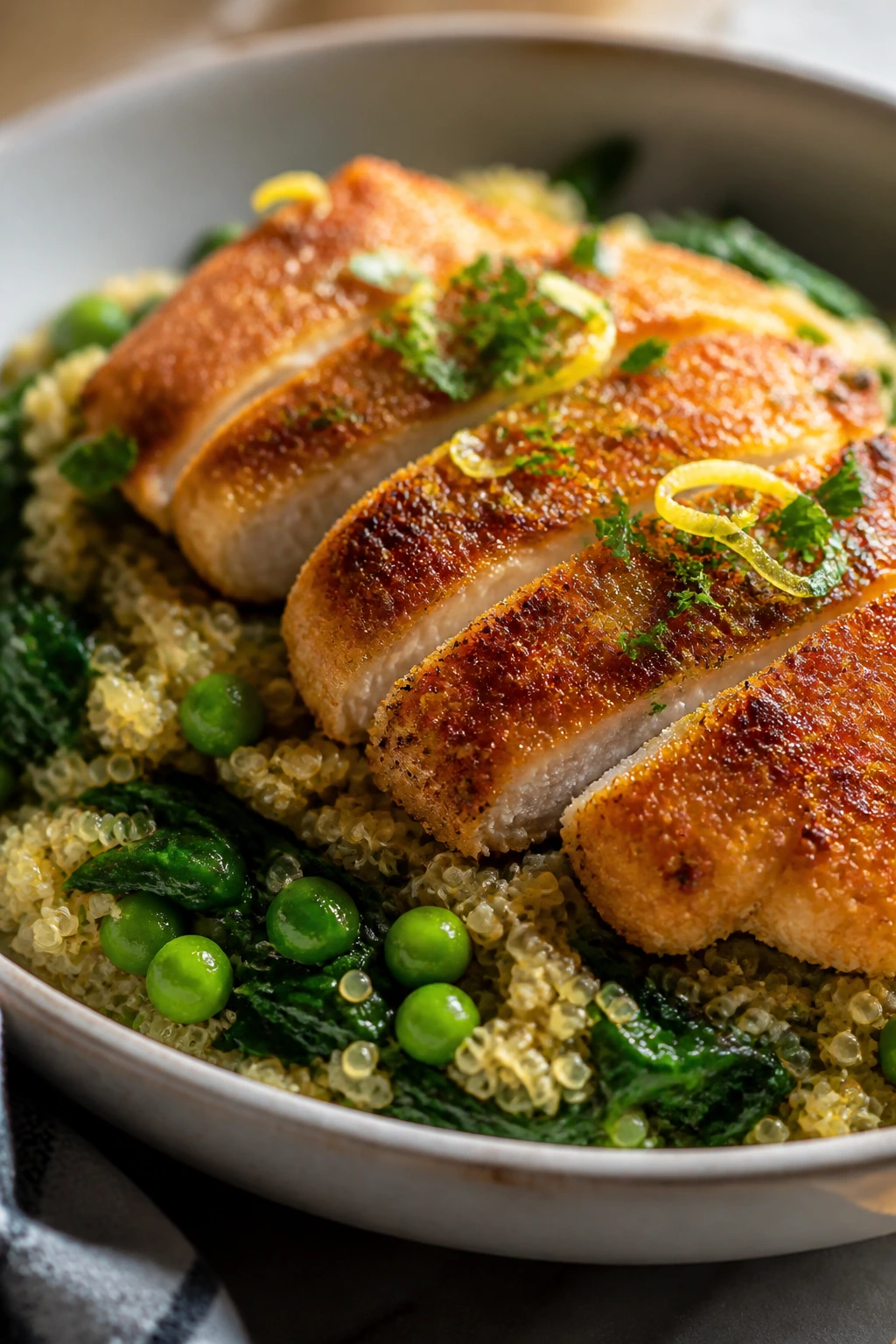
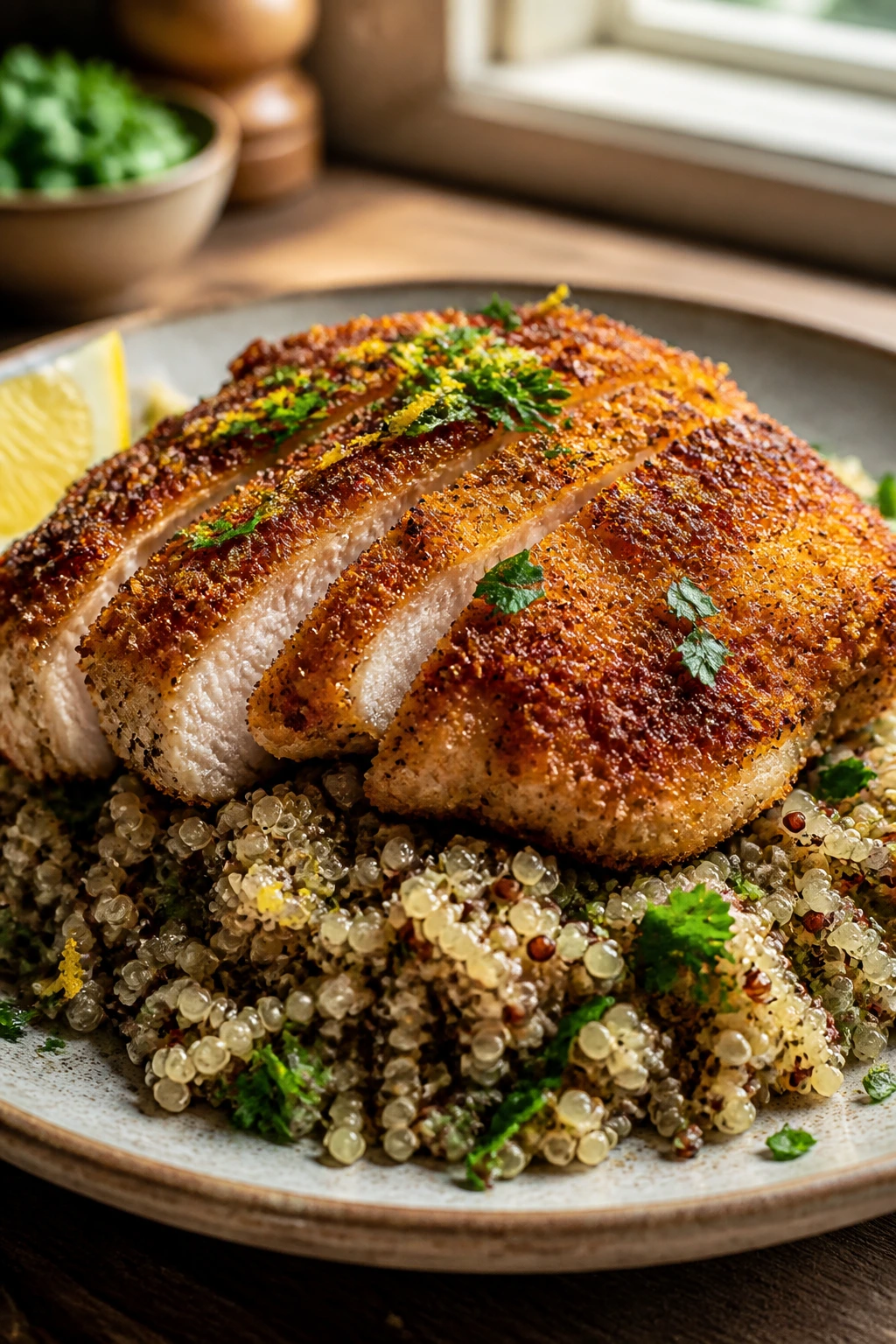
- Spoon the quinoa into shallow bowls or onto plates. Slice the chicken on a diagonal if you want a cleaner look, then lay it over the quinoa and finish with extra parsley, a squeeze of lemon, and a pinch more Parmesan if you like.
How to Plate It So the Chicken Stays Crisp
Presentation: Use shallow bowls or wide dinner plates instead of deep soup bowls. A shallow base lets the chicken sit partly above the quinoa instead of sinking into it, which keeps the crust visible and the bottom from steaming. Slice the chicken only after its short rest, and fan the pieces so the browned coating stays in view.
Accompaniments: A crisp cucumber salad, roasted broccoli, or shaved fennel on the side gives the plate a cold, crunchy counterpoint. If you want something warmer, a tray of blistered cherry tomatoes works well because the sweetness plays nicely with lemon and Parmesan. A little Greek yogurt with salt and lemon can sit off to the side for spooning, but keep it away from the crust.
Portions: One cutlet plus about 3/4 cup to 1 cup of quinoa per person is a solid dinner-sized portion. If you’re feeding heavier eaters, serve two smaller cutlets per plate and stretch the quinoa with an extra handful of spinach or peas. For lighter portions, slice the cutlets and pile them higher; the visual trick makes the plate feel fuller.
Beverage Pairing: A dry white wine like Sauvignon Blanc matches the lemon and herbs without overpowering the crust. If you’re skipping alcohol, sparkling water with lemon or unsweetened iced tea keeps the meal crisp and clean. I’d avoid sugary drinks here; they make the lemon taste flatter.
Small Moves That Improve Flavor and Texture
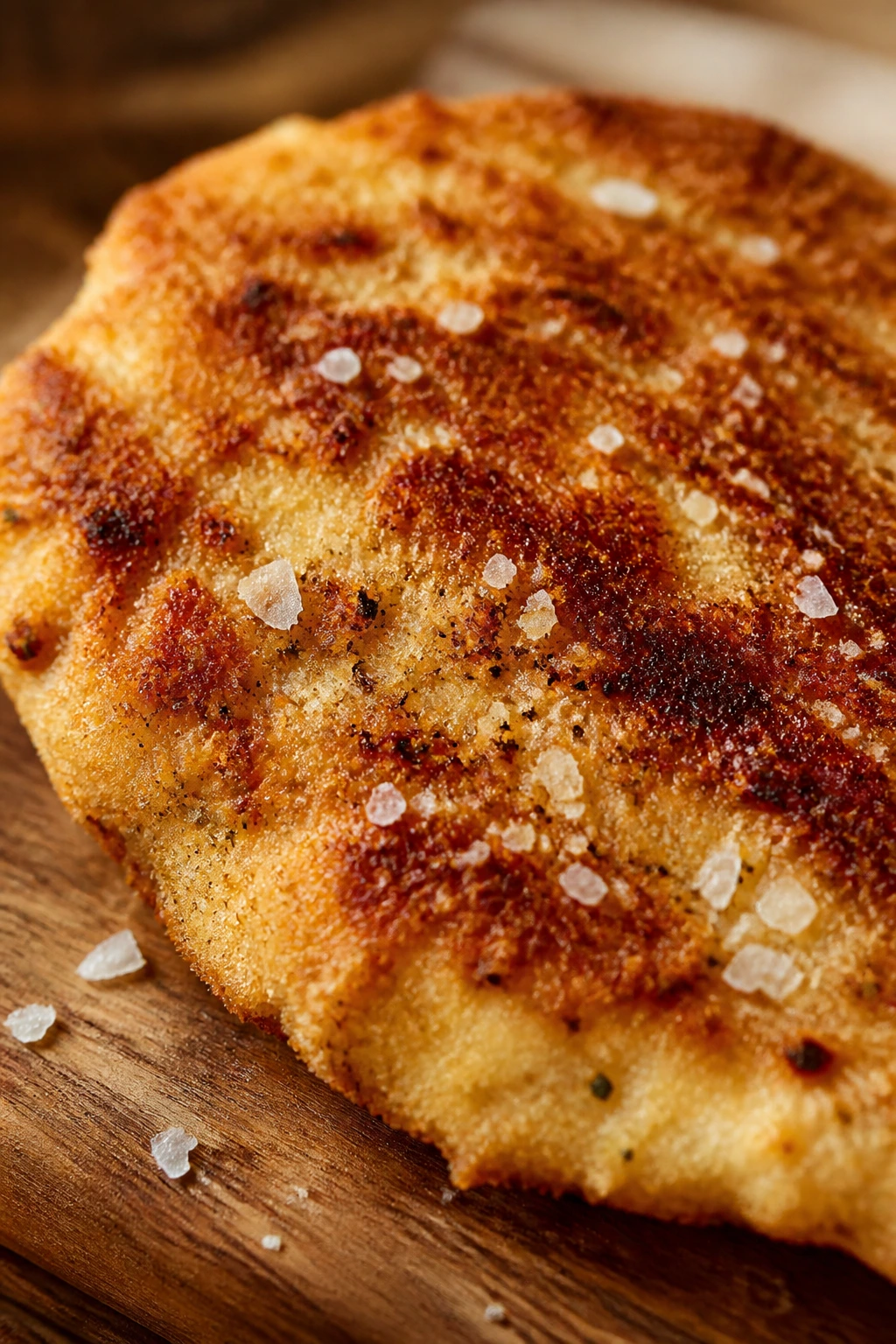
Flavor Enhancement: Toast the quinoa in the pan for a minute before the broth goes in. That one little step gives it a roasted, almost hazelnut-like note that makes the whole bowl taste more deliberate. I also like to finish the chicken with a tiny pinch of flaky salt right after it comes off the rack. It wakes up the crust.
Time-Saver: Bread the chicken earlier in the day and keep it on a rack in the fridge for up to 2 hours before cooking. The surface dries a bit, which can actually help the coating brown. While that sits, you can chop the shallot, mince the garlic, and rinse the quinoa. The dinner then moves fast.
Cost-Saver: Chicken thighs are usually cheaper than breasts and stay juicy even if the skillet runs a little hot. If you use thighs, trim the extra fat and keep the pieces even. Frozen peas are also a smart buy here; they’re bright, cheap, and already shelled, which is more than I can say for many fresh greens in the dead middle of a fridge cleanout.
Make-It-Yours: If you like a bolder finish, add a spoonful of crumbled feta at serving, or stir chopped dill into the quinoa instead of parsley. For heat, a pinch of Aleppo pepper or red pepper flakes gives the bowl a soft burn without turning it into a fire alarm. If dairy is an issue, skip the Parmesan and add a touch more lemon zest so the flavor still has lift.
Common Missteps That Soften the Chicken
-
Skipping the quinoa rinse. If you cook quinoa straight from the bag without washing it, the bowl can taste faintly bitter or dusty. Rinse it in a fine-mesh sieve for at least 30 seconds, even if the package claims it’s pre-washed. I still rinse mine. Every time.
-
Crowding the skillet. Two cutlets fit comfortably in a 12-inch skillet. Three is where the trouble starts. The oil cools, the chicken steams, and the crust goes from crisp to patchy. If your pan is smaller, cook in batches and keep the finished pieces on a wire rack in a low oven.
-
Using heat that’s too low. A timid skillet gives you pale, oily breading. You want the oil shimmering before the chicken goes in, not smoking hard, but hot enough that the crumbs sizzle the moment they hit the pan. If the crust browns too quickly before the center cooks, lower the heat a notch and give it another minute.
-
Covering the chicken after frying. Foil traps steam, and steam ruins crust. The chicken should rest on a rack, open to the air, for 5 minutes. That tiny pause lets the juices settle without softening the outside.
-
Cooking the quinoa like pasta. Quinoa does not want to bob around in a pot of excess water. It wants a measured 2:1 liquid ratio and a quiet simmer. Stirring it too much while it cooks turns the grain gummy around the edges and mushy in the middle.
-
Forgetting the acid at the end. Chicken, panko, and quinoa can all start to feel flat if you skip the lemon. A couple of tablespoons of juice sounds modest, but it brightens the whole bowl in a way salt alone cannot.
Ways to Change the Flavor Without Relearning the Recipe
Lemon-Dill Market Bowl: Swap the parsley for chopped dill and add thin cucumber ribbons over the quinoa right before serving. The result tastes cooler and cleaner, almost like a cross between a grain bowl and a deli salad, which is not a bad place to be on a busy night.
Smoky Paprika Crunch: Add 1/2 teaspoon chipotle powder to the panko mixture and use an extra pinch of smoked paprika on the chicken. The crust picks up a warmer, deeper heat, and the lemon keeps it from feeling heavy. I’d pair this version with roasted corn or charred peppers.
Parmesan-Free Crisp: Leave out the Parmesan and increase the panko by 1/4 cup. Add 1 teaspoon nutritional yeast if you want a savory edge without dairy. The crust stays light and crackly, and nobody at the table has to do the dairy math.
Air-Fryer Cutlets: Bread the chicken exactly the same way, then spray the cutlets lightly with oil and cook them in an air fryer at 400°F for 10 to 12 minutes, flipping halfway through. The crust won’t taste exactly like skillet-fried chicken, but it gets close enough for a weeknight. The quinoa part stays unchanged.
Mushroom-Garlic Quinoa: Add 8 ounces sliced mushrooms to the saucepan after the shallot softens, and cook them until they release their moisture and the edges brown. Then add the garlic and continue with the recipe. The mushrooms make the quinoa taste deeper and earthier, which is handy if you want the dish to lean a little less bright.
Leftovers, Make-Ahead, and Reheating
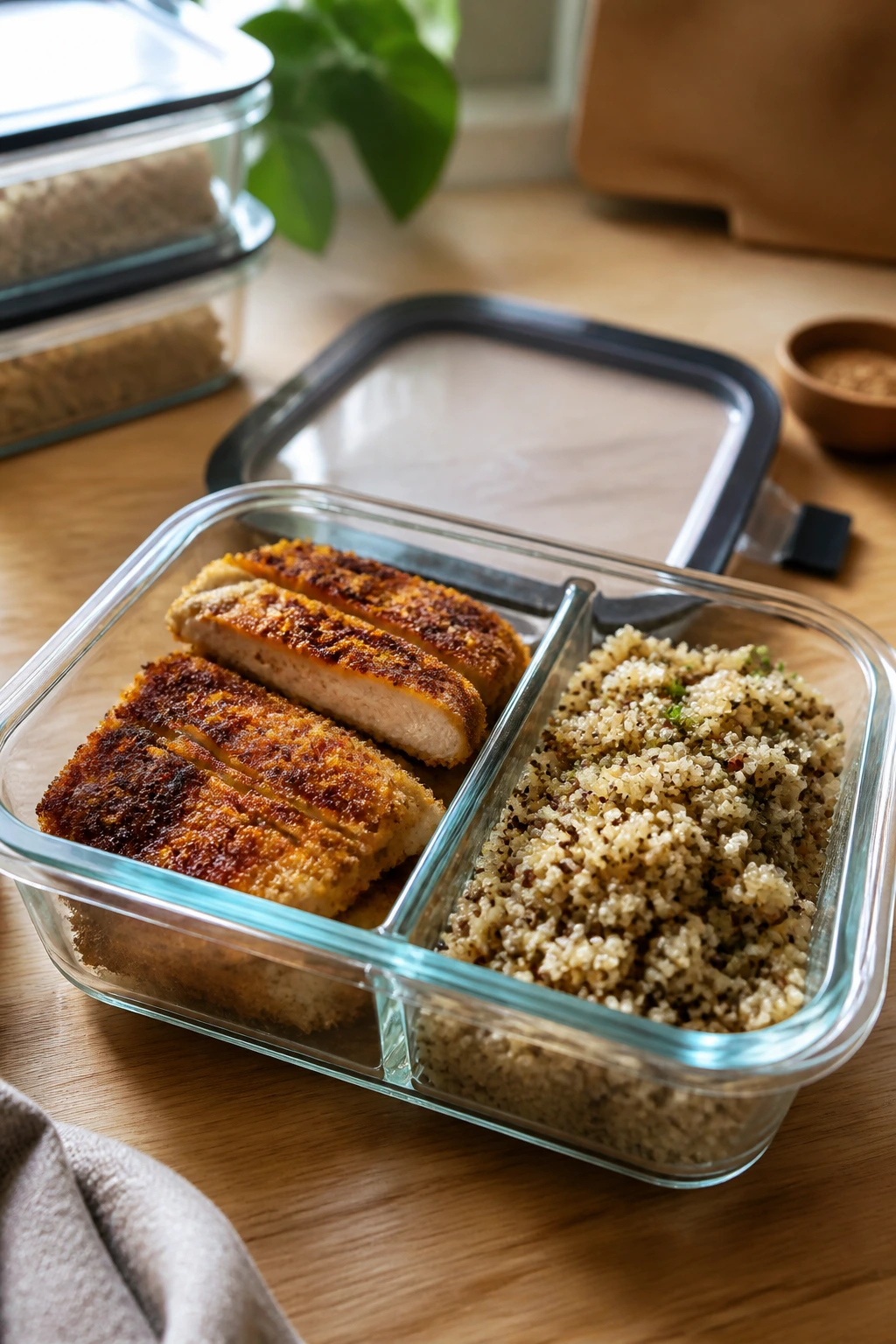
Store the chicken and quinoa separately if you can. That one habit makes leftovers far better than piling everything into one container and hoping for the best. The chicken will keep in the refrigerator for 3 to 4 days in an airtight container. The quinoa keeps for the same window, though it can dry out a bit faster if you don’t cover it well.
For the freezer, cooked chicken cutlets can be frozen for up to 2 months. Wrap each one individually or separate them with parchment so the crust doesn’t freeze into one stubborn slab. Quinoa also freezes well for about 1 month, tucked into a freezer bag or container with the air pressed out. It thaws fast and doesn’t mind a little freezer time nearly as much as breaded chicken does.
Reheat the chicken in a 375°F oven or air fryer until warmed through and the crust perks back up, usually 6 to 10 minutes depending on thickness. The microwave works in a pinch, but the breading goes soft. If you care about the crunch — and at this point, you probably do — avoid that route unless you’re planning to chop the chicken and hide the softness under sauce or yogurt.
Quinoa is friendlier. Warm it in a saucepan over low heat with a splash of broth or water, stirring gently until it loosens and steams. The microwave works fine too; cover it with a damp paper towel and heat in short bursts, fluffing between rounds. If you made the quinoa ahead, you can revive it with extra lemon juice and parsley right before serving, which helps it taste freshly cooked instead of yesterday-adjacent.
For make-ahead work, cook the quinoa up to 1 day ahead and refrigerate it. Bread the chicken up to 2 hours ahead and keep it on a rack in the fridge if possible. I do not recommend breading the chicken the night before unless you enjoy a crust that clings to the plate instead of the meat.
Questions People Ask Before Cooking It
Can I use chicken thighs instead of breasts?
Yes, and they’re a smart choice if you want richer flavor or a little more forgiveness in the skillet. Boneless thighs usually need about 1 extra minute per side, depending on thickness, and they can handle a slightly hotter pan without drying out as fast as breasts.
Do I really need to rinse quinoa?
You do. The rinse removes saponins, which can leave a bitter or soapy edge if they stay on the grain. A quick pass in a fine-mesh sieve under cool water is enough, and it takes less time than arguing with bland-tasting quinoa later.
Can I bake the chicken instead of frying it?
Yes. Put the breaded cutlets on a wire rack set over a sheet pan, spray lightly with oil, and bake at 425°F for about 15 to 18 minutes, flipping once halfway through. The crust won’t be quite as crackly as skillet-fried chicken, but it’s still a solid option if you want less stovetop attention.
Why is my breading falling off?
Usually the chicken was wet, the skillet wasn’t hot enough, or the cutlets were moved too early. Pat the chicken dry, press the panko gently but firmly, and let the crust set for a minute or two in the pan before flipping. Flipping too soon is the classic mistake; the coating needs time to bond.
Can I make the quinoa ahead of time?
Yes, and it’s one of the few parts of this dinner that actually benefits from a head start. Cook it, cool it, and refrigerate it for up to 1 day. Reheat with a splash of broth and fold in the spinach, peas, lemon, and herbs at the end so they stay bright.
How do I keep the chicken crispy after cooking?
Use a wire rack, not a plate, and avoid tenting it with foil. If you’re waiting for the quinoa to finish, keep the chicken in a 200°F oven on the rack for a few minutes, uncovered. Any hotter, and you risk drying it out before the table is ready.
Is this recipe gluten-free?
Not as written, because of the flour and panko. But it’s easy to adjust: use gluten-free flour for the dredge and gluten-free panko or crushed gluten-free cereal for the crust. The quinoa itself is naturally gluten-free, so the main swap is in the breading.
What if my quinoa turns mushy?
The liquid ratio was probably too high, or the pot stayed on the heat too long after the liquid absorbed. Next time, measure the broth carefully, keep the simmer low, and let the pot rest covered off the heat instead of stirring until you can’t think straight. Mushy quinoa can still be saved by spreading it on a tray for a few minutes to let steam escape.
A Dinner Worth Keeping in Rotation
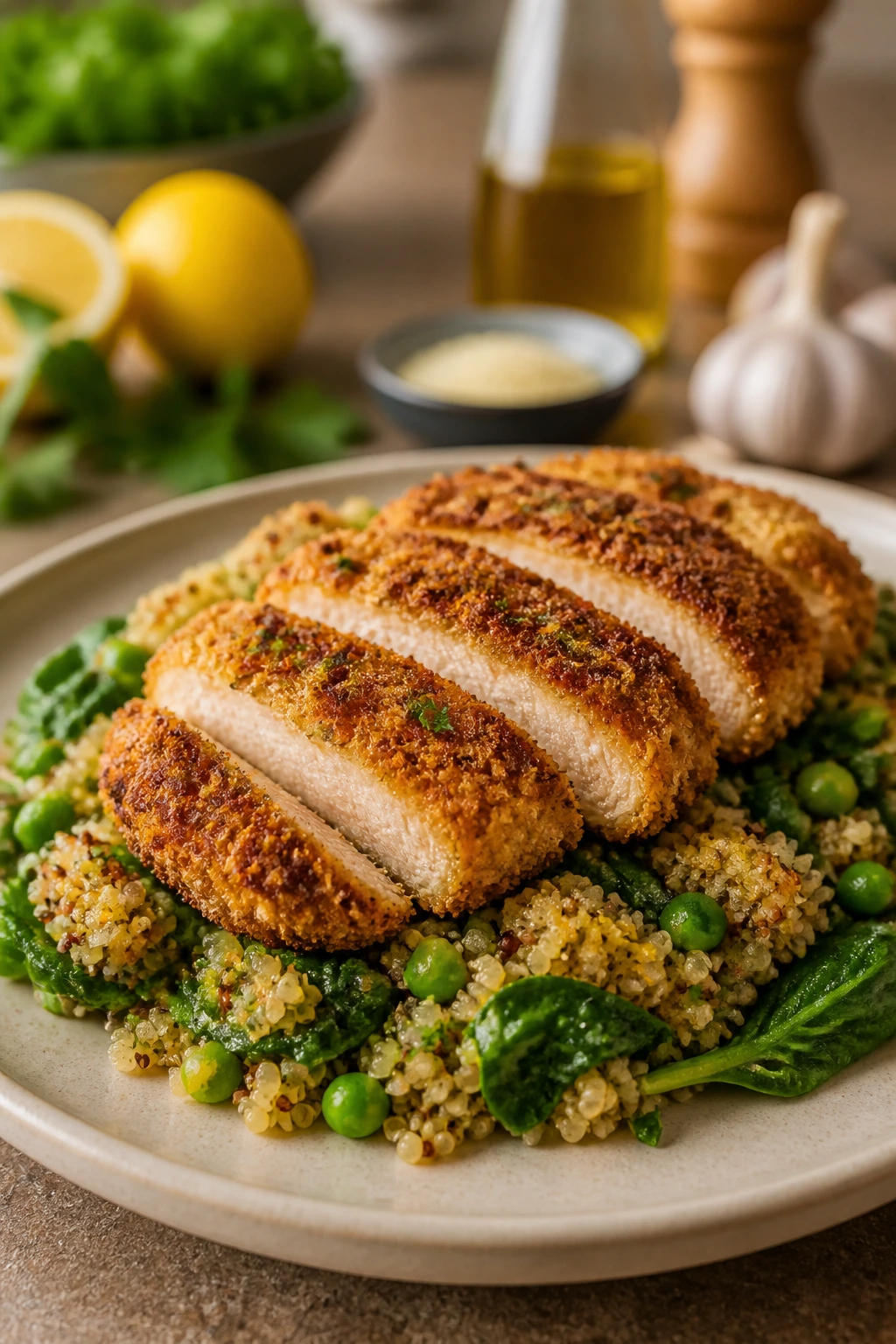
The appeal of crispy chicken and quinoa isn’t that it’s clever. It’s that it solves a real dinner problem with ordinary ingredients and a few firm habits: dry the chicken, toast the grain, keep the heat honest, and don’t let steam ruin what the pan just did. That’s the whole trick, really.
I like dinners that feel calm while they’re happening and satisfying when they hit the plate. This one does both. The chicken brings the crunch you were after, the quinoa keeps the meal grounded, and the lemon at the end wakes everything up without making you chase down a sauce recipe.
Crispy Chicken and Quinoa for Weeknight Dinners — Recipe Card
Recipe Name: Crispy Chicken and Quinoa for Weeknight Dinners
Description: Breaded chicken cutlets with a crisp panko-Parmesan crust served over lemon-herb quinoa with spinach and peas. The chicken stays crunchy, the quinoa stays fluffy, and the whole plate lands with enough brightness to keep it from feeling heavy.
Prep Time: 20 minutes
Cook Time: 25 minutes
Total Time: 45 minutes
Course: Main Course, Dinner
Cuisine: American
Servings: 4
Calories: About 500 kcal per serving
Difficulty: Intermediate
Chill/Rest Time: 5 minutes resting for the chicken
Best Served: Right away, while the chicken is crisp and the quinoa is hot
Ingredients
For the Chicken:
- 1 1/2 pounds boneless, skinless chicken breasts, pounded to 1/2-inch thickness
- 1 teaspoon kosher salt
- 1/2 teaspoon black pepper
- 1 teaspoon garlic powder
- 1 teaspoon smoked paprika
For the Breading Station:
- 1/2 cup all-purpose flour
- 2 large eggs
- 2 tablespoons milk or water
- 1 1/2 cups panko breadcrumbs
- 1/4 cup finely grated Parmesan
- 1/2 teaspoon garlic powder
- 1/2 teaspoon smoked paprika
For the Quinoa:
- 1 cup quinoa, rinsed well
- 2 cups low-sodium chicken broth
- 1 tablespoon olive oil
- 1 small shallot, finely diced
- 2 cloves garlic, minced
- 1/2 teaspoon kosher salt
For the Finish:
- 2 cups baby spinach, loosely packed
- 1/2 cup frozen peas, thawed
- 1 teaspoon lemon zest
- 2 tablespoons fresh lemon juice
- 2 tablespoons chopped parsley
- Pinch of red pepper flakes, optional
- Lemon wedges, for serving
Instructions
- Rinse the quinoa in a fine-mesh sieve until the water runs mostly clear and drain well.
- Pound the chicken to 1/2-inch thickness and season both sides with salt, pepper, garlic powder, and smoked paprika.
- Set up three bowls: flour in one, beaten eggs mixed with milk or water in the second, and panko mixed with Parmesan, garlic powder, and paprika in the third.
- Heat olive oil in a saucepan over medium heat. Cook the shallot for 2 minutes, add the garlic for 30 seconds, then stir in the quinoa and toast for 45 to 60 seconds.
- Add the broth and salt, bring to a gentle boil, cover, reduce heat to low, and cook for 15 minutes.
- Turn off the heat and let the quinoa sit covered for 5 minutes, then fluff with a fork and fold in spinach, peas, lemon zest, lemon juice, parsley, and red pepper flakes if using.
- Dredge each chicken breast in flour, dip in egg wash, then coat in the panko mixture and press lightly.
- Heat oil in a skillet over medium to medium-high heat. Cook the chicken for 3 to 4 minutes per side, until golden and the thickest part reaches 165°F.
- Transfer to a wire rack and rest for 5 minutes.
- Spoon quinoa into bowls, top with sliced chicken, and finish with lemon wedges and extra parsley.
Notes:
- Keep the chicken on a wire rack, not a plate, if you want the crust to stay crisp.
- Quinoa can be cooked a day ahead and reheated with a splash of broth.
- If the skillet browns the crust too fast, lower the heat and finish the cutlets a minute longer.