



A creamy chicken dish can go wrong in three very specific ways: the chicken dries out, the sauce splits, or the whole pan tastes like it never quite decided what it wanted to be. The version I keep coming back to fixes all three by doing something plain but smart — browning the chicken first, building the sauce in the same skillet, and finishing with cream and Parmesan only after the heat has come down a notch. That last part matters. A lot.
This is the kind of weeknight dinner that feels calm while it’s happening. One pan. A short ingredient list. A sauce that turns glossy instead of heavy if you give it the right heat and the right patience. The mushrooms go deep brown, the garlic softens for just a minute, and the spinach falls into the sauce at the end so it stays bright instead of faded and swampy.
I like this style of cooking because it respects the clock without cooking like it’s in a hurry. You still get a proper pan sauce, not a thin splash of cream pretending to be dinner. And when the chicken comes back to the skillet, it picks up the sauce instead of floating in it, which is the difference between a forgettable creamy dinner and one you make again because the pan is licked clean.
Why This Skillet Earns Its Spot on a Weeknight Table
-
The sauce starts with browned bits, not a packet: The fond left in the skillet after searing the chicken gives the cream sauce a roasted, savory base that tastes built, not poured together.
-
Chicken thighs stay forgiving: Boneless thighs hold moisture even if they sit in the pan for an extra minute or two, which is exactly the kind of buffer a weeknight needs.
-
Mushrooms do more than fill space: Cremini mushrooms soak up the garlic, thyme, and broth, then release that flavor back into the sauce instead of turning mushy.
-
The finish stays light enough to eat with bread or pasta: A small handful of Parmesan and a splash of lemon keep the sauce from feeling sticky or flat.
-
It scales up without drama: Double the recipe in a wide skillet or a Dutch oven, and it still works, which is handy when one pan dinner needs to feed more than four.
How Fast Dinner Comes Together
Yield: Serves 4
Prep Time: 15 minutes
Cook Time: 22 to 25 minutes
Total Time: 37 to 40 minutes
Difficulty: Beginner — the steps are straightforward, but you do need to watch the heat so the cream stays smooth and the chicken browns instead of steaming.
Best Served: Right away while the sauce is glossy and the spinach still looks fresh.
Ingredient List for the Skillet
For the Chicken:
- 1 1/2 pounds boneless, skinless chicken thighs, trimmed of excess fat
- 1 teaspoon kosher salt
- 1/2 teaspoon black pepper
- 1 teaspoon paprika
- 2 tablespoons all-purpose flour, for light coating
For the Sauce and Vegetables:
- 2 tablespoons olive oil
- 1 tablespoon unsalted butter
- 8 ounces cremini mushrooms, sliced
- 1 small yellow onion, finely diced
- 4 cloves garlic, minced
- 1/2 teaspoon dried thyme
- 1/2 cup dry white wine or low-sodium chicken broth
- 1 cup low-sodium chicken broth
- 3/4 cup heavy cream
- 1 teaspoon Dijon mustard
- 1/3 cup finely grated Parmesan cheese
- 2 cups baby spinach
- 1 tablespoon fresh lemon juice
For Finishing:
- 1 tablespoon chopped flat-leaf parsley
- Pinch of red pepper flakes, optional
Why These Ingredients Matter
Chicken
What to use: 1 1/2 pounds boneless, skinless chicken thighs, trimmed and patted dry.
Preparation: Pat the thighs dry with paper towels before seasoning. If one end is much thicker than the other, press it gently so the piece sits more evenly in the skillet.
Substitutions: Boneless skinless chicken breasts work too, but pound them to an even 3/4-inch thickness first. Thin cutlets cook fast, but they also punish you if you walk away.
Tips: Thighs are the safer choice for a creamy chicken skillet because they stay juicy while the sauce finishes. If you use breasts, pull them the second they reach 165°F so they do not turn stringy.
Dairy and Sauce Base
What to use: 3/4 cup heavy cream, 1/3 cup finely grated Parmesan, 1 teaspoon Dijon mustard, and 1 tablespoon unsalted butter.
Preparation: Grate the Parmesan finely so it melts without leaving sandy clumps. Keep the cream close by; once the pan is hot, you want to move in a clean line.
Substitutions: Half-and-half can work in a pinch, but the sauce will be thinner and less plush. For a slightly lighter finish, evaporated milk is steadier than regular milk.
Tips: Parmesan adds salt as well as body, so taste before adding more salt at the end. Dijon sounds small, but it helps the cream taste less flat and more composed.
Aromatics and Vegetables
What to use: 8 ounces cremini mushrooms, 1 small yellow onion, 4 cloves garlic, and 2 cups baby spinach.
Preparation: Slice the mushrooms evenly so they brown at the same rate. Dice the onion finely; large chunks stay crunchy longer than they should in a quick skillet sauce.
Substitutions: Baby bella mushrooms, white mushrooms, or a mix of mushrooms all work. If spinach is not around, baby kale or chopped Swiss chard can stand in, though they need an extra minute or two.
Tips: The mushrooms need space to brown. If your skillet is small, cook them in two batches, or they’ll dump out water and go gray.
Seasoning and Finishing
What to use: 1 teaspoon paprika, 1/2 teaspoon dried thyme, 1 tablespoon fresh lemon juice, parsley, black pepper, and kosher salt.
Preparation: Measure the paprika and thyme before you start cooking. Once the pan is hot, there’s no time to dig through a spice drawer with greasy hands.
Substitutions: Smoked paprika gives the dish a deeper, campfire edge. A small pinch of red pepper flakes adds heat without turning the sauce into a spicy recipe.
Tips: Lemon juice belongs at the end. If you add it too early, it can make the cream taste sharp instead of bright.
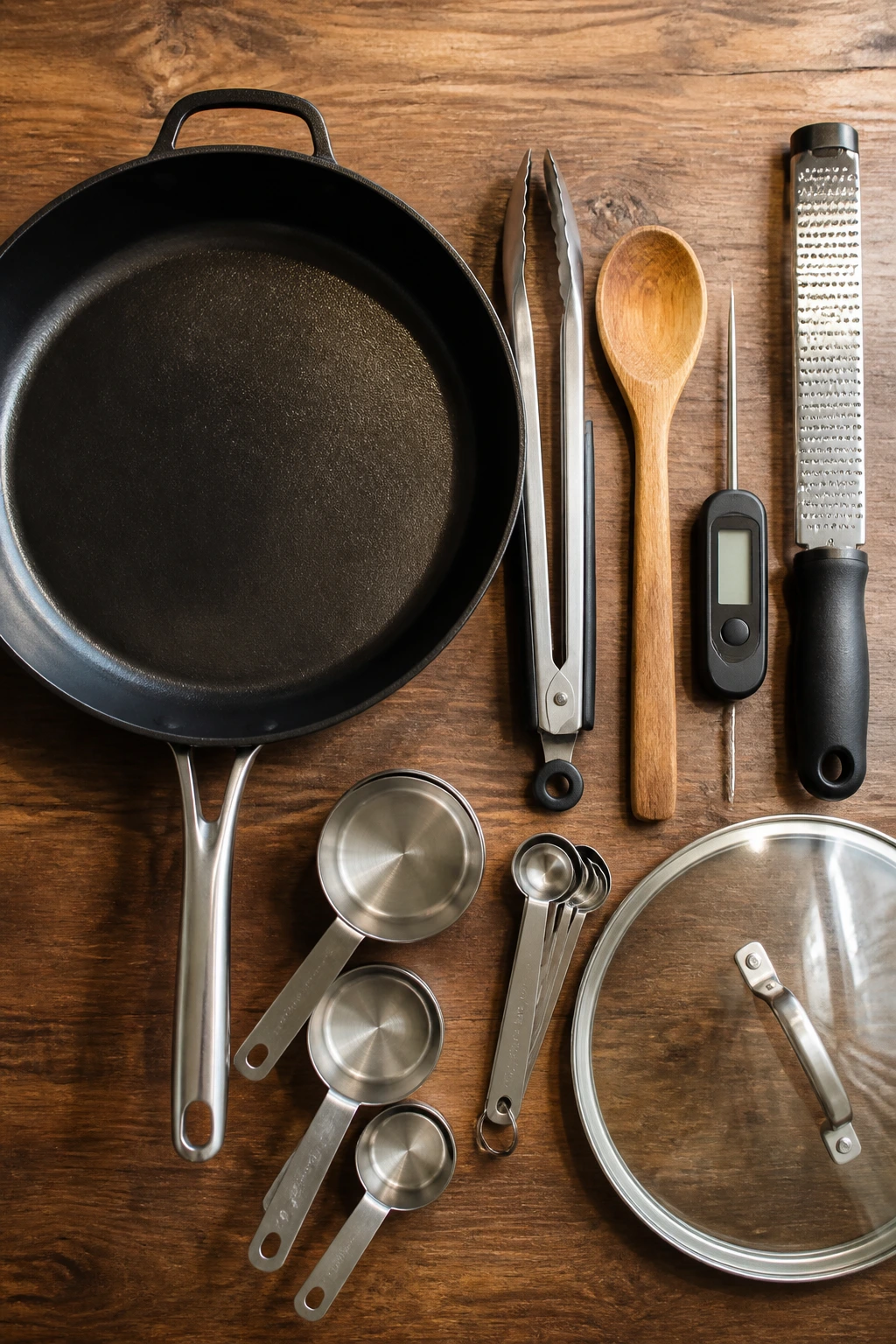
Tools That Make the Pan Behave
-
12-inch skillet with straight sides: A wide skillet gives the chicken room to brown and leaves enough surface for the sauce to reduce without crowding.
-
Tongs: You’ll flip the chicken more cleanly with tongs than with a fork, which keeps the juices inside the meat instead of in the pan.
-
Wooden spoon or silicone spatula: Either one is good for scraping up the browned bits after the wine or broth goes in.
-
Instant-read thermometer: This takes the guesswork out of chicken. Pull the chicken at 165°F in the thickest part, not when the clock says so.
-
Microplane or fine grater: Parmesan melts better when it’s finely grated. The big shreds sold in tubs tend to sit there like wet confetti.
-
Measuring cups and spoons: Cream sauces are not the place to eyeball everything. A little extra cream or broth changes the texture more than you’d think.
-
Lid or sheet of foil: Useful if you want to trap a little steam while the chicken finishes in the sauce, especially if you use thicker pieces.
Why This Skillet Earns Its Spot on a Weeknight Table
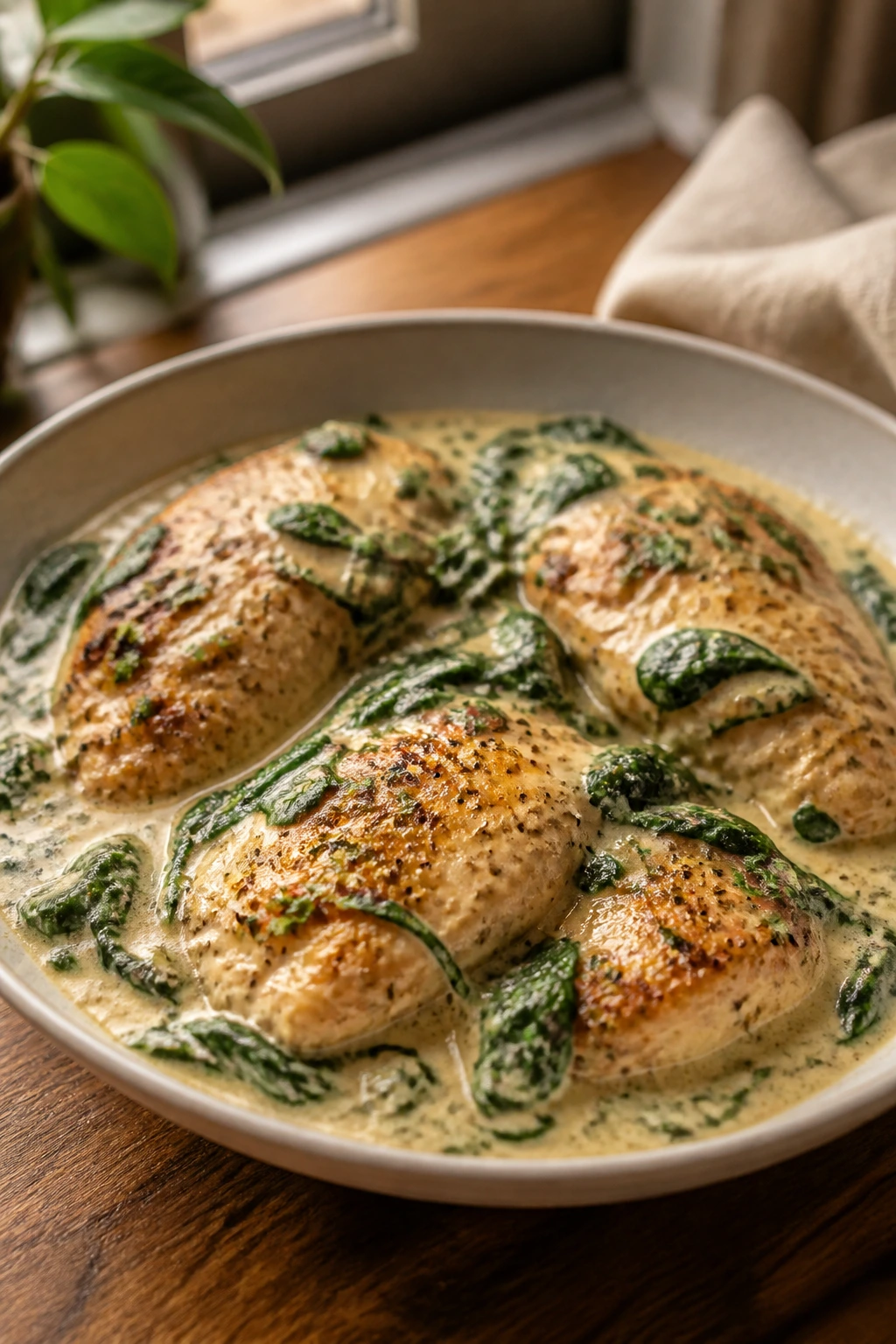
A creamy chicken skillet succeeds because each part has a job. The chicken is there for richness and substance. The mushrooms bring depth. The onion and garlic give the sauce its backbone. The cream softens everything without erasing the browned flavor underneath.
What I like most is the pace. The first 10 minutes feel a little busy, then the pan settles into a steady rhythm. Sear, soften, deglaze, simmer. That pattern is why skillet dinners work so well on ordinary nights: the pan does half the thinking for you.
There’s also a useful bit of restraint here. Some creamy chicken recipes throw in bacon, sun-dried tomatoes, peas, and three cheeses, then wonder why the sauce tastes crowded. This one stays focused. It tastes like chicken, mushrooms, thyme, cream, and Parmesan — not a pantry drawer emptied into a skillet.
Step-by-Step: Building the Sauce and Cooking the Chicken
Prep the Chicken
-
Pat the chicken thighs dry with paper towels, then season both sides with the kosher salt, black pepper, and paprika.
-
Sprinkle the flour over the chicken and rub it lightly so each piece gets a thin coat. Do not add a thick layer; too much flour makes the sauce pasty instead of silky.
Sear and Brown
-
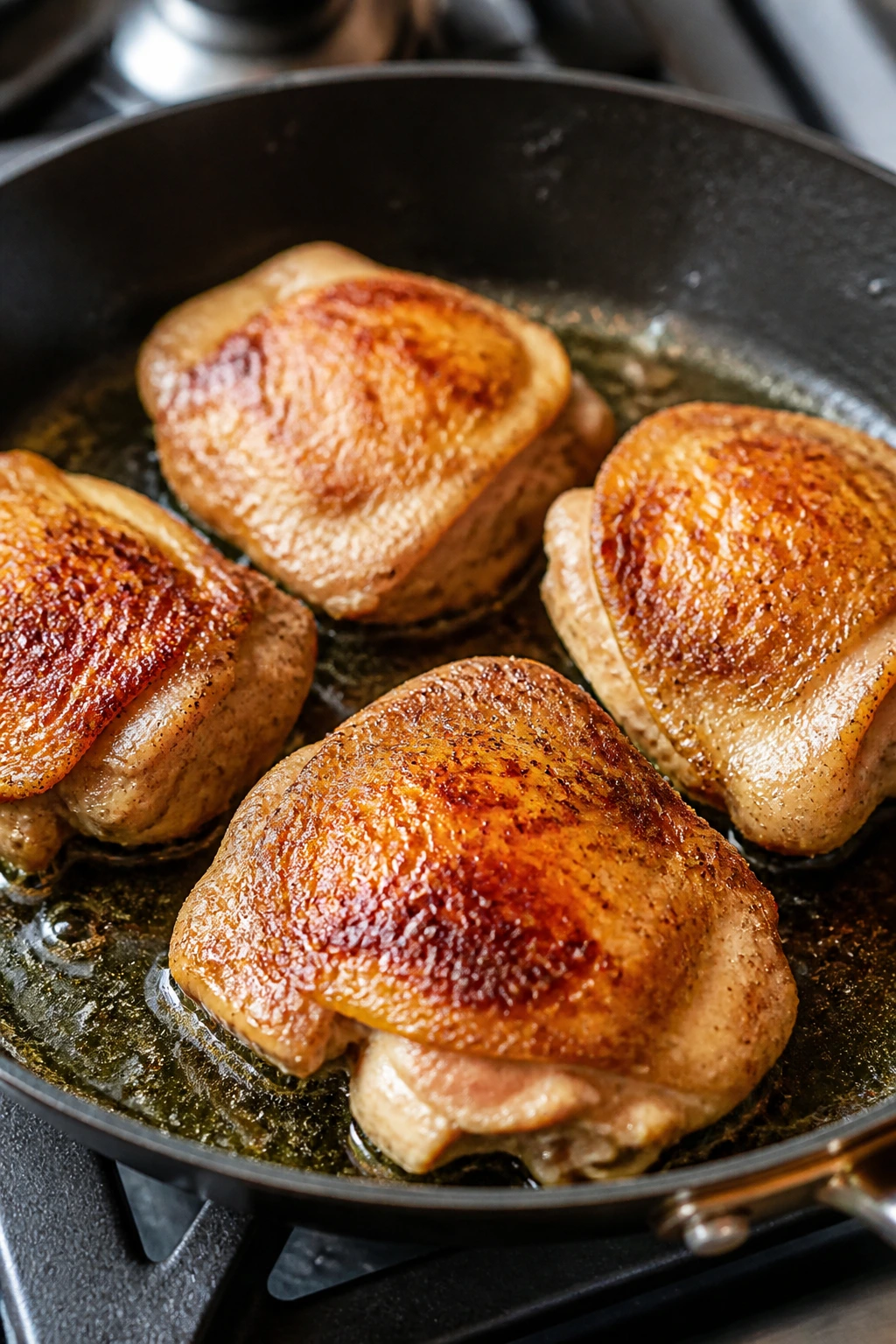
Set a 12-inch skillet over medium-high heat and add the olive oil and butter. When the butter foams and settles, lay in the chicken in a single layer.
-
Cook for 4 to 5 minutes on the first side, then flip and cook for another 3 to 4 minutes, until both sides are deeply golden. The chicken does not need to be fully cooked yet, but it should look browned at the edges and release fairly easily from the pan.
-
Transfer the chicken to a plate. Leave the browned bits in the skillet. Those bits are flavor, not mess.
Build the Sauce
-
Lower the heat to medium and add the mushrooms. Cook for 4 to 6 minutes, stirring only every minute or so, until the mushrooms give up their liquid and the edges turn brown.
-
Add the onion and cook for 2 to 3 minutes, stirring often, until it softens and turns translucent. Stir in the garlic and thyme and cook for 30 seconds, just until the garlic smells sweet and not sharp.
-
Pour in the wine or broth and scrape the bottom of the skillet with a wooden spoon, lifting every brown bit into the liquid. Let it bubble for 1 minute so the harsh edge cooks off.
-
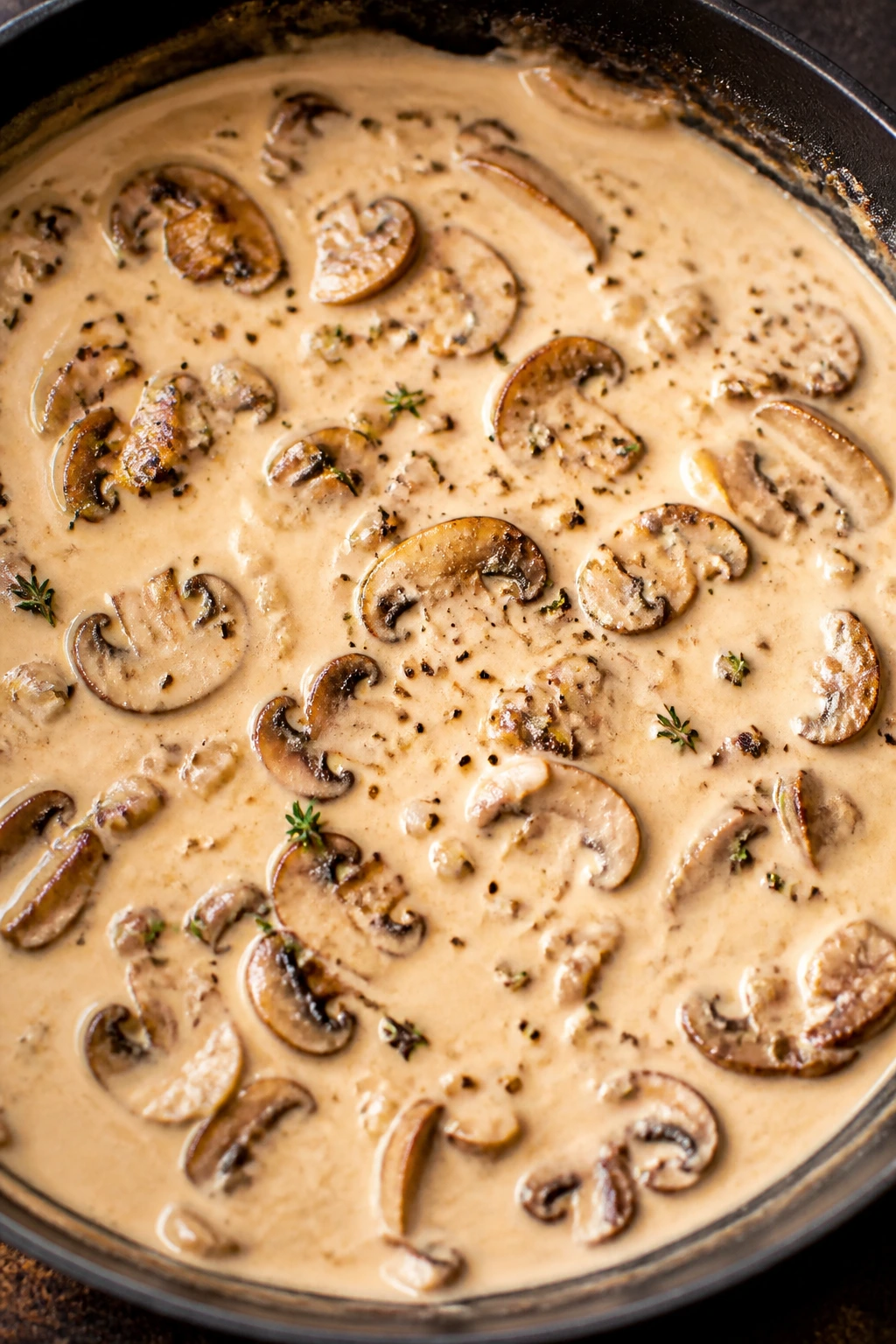
Add the chicken broth, heavy cream, and Dijon mustard. Stir well and bring the sauce to a gentle simmer over medium heat. Do not let it boil hard; cream sauces behave better when they barely move.
-
Simmer for 3 to 4 minutes, stirring now and then, until the sauce thickens enough to coat the back of a spoon.
Finish the Pan
-
Stir in the Parmesan, then add the spinach by handfuls and let it wilt for 30 to 60 seconds. The sauce should look glossy, not grainy.
-
Return the chicken and any juices from the plate to the skillet. Spoon sauce over the top and simmer for 2 to 3 minutes, until the chicken reaches 165°F in the thickest part.
-
Turn off the heat and stir in the lemon juice. Taste the sauce and add a pinch more salt or pepper if needed. Finish with parsley and red pepper flakes, if using.
How to Plate It Without Fuss
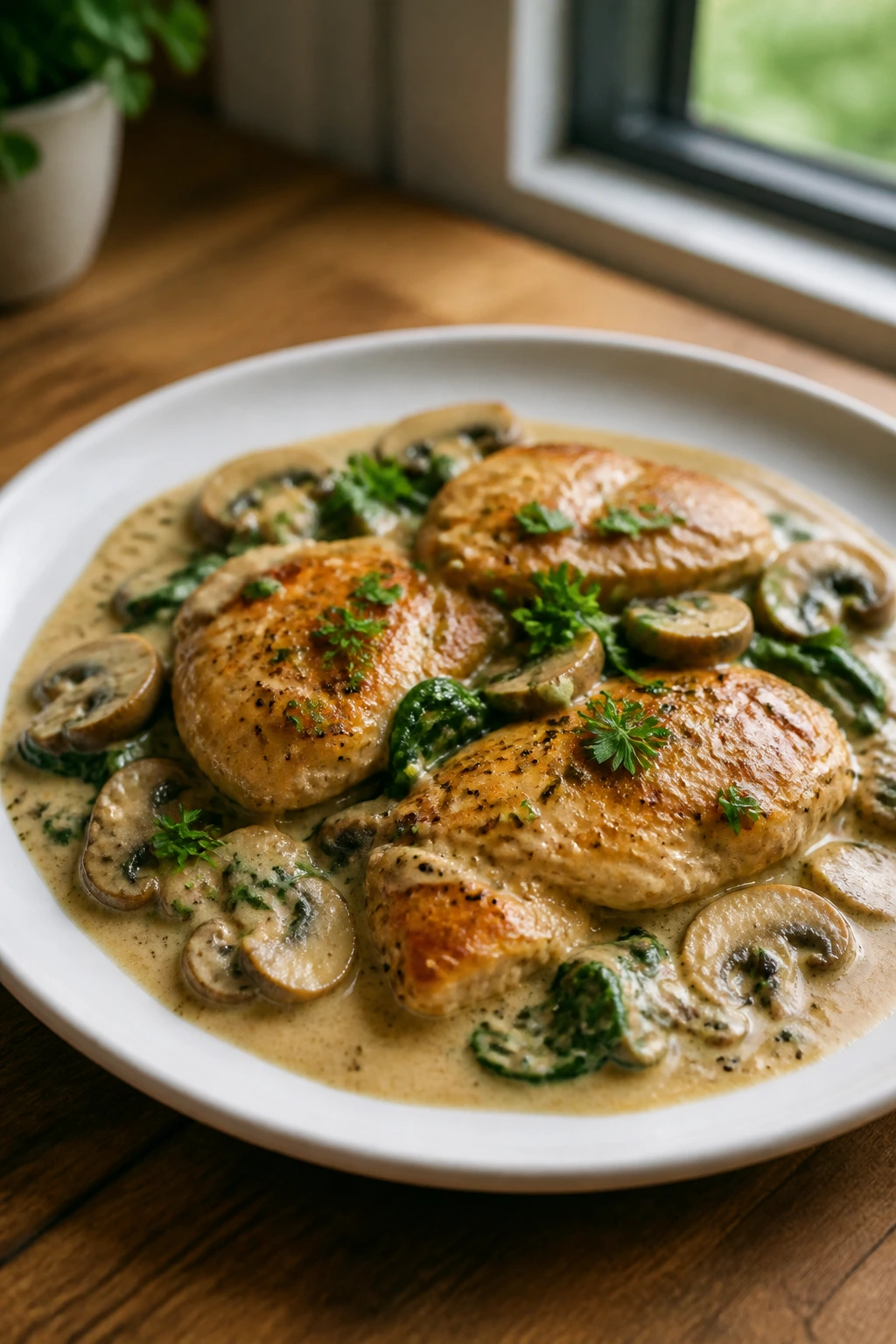
Presentation: Spoon the chicken into a shallow bowl or onto a wide dinner plate, then ladle the sauce over the top so the mushrooms and spinach are visible, not buried. A little parsley on the surface gives the dish a clean finish, and a squeeze of lemon at the table wakes up the cream without making it taste acidic.
Accompaniments: Buttered egg noodles are the obvious move, and I mean that in the best way. Mashed potatoes catch the sauce in a heavier, more comfort-food direction, while rice or orzo makes the pan stretch farther. If you want something green, a sharp salad with lemon vinaigrette cuts the richness nicely. A chunk of crusty bread is not optional in my kitchen. It’s the mop.
Portions: Four servings is the sweet spot with 1 1/2 pounds of chicken. If you’re serving very hungry people, count on 6 ounces of chicken and about 1/3 cup sauce per plate, then add noodles or potatoes underneath. For smaller appetites, this stretches well because the mushrooms and sauce carry plenty of volume.
Beverage Pairing: A dry white wine such as Sauvignon Blanc or Pinot Grigio fits the lemony cream sauce without fighting it. If you want something non-alcoholic, sparkling water with lemon or unsweetened iced tea works better than a sweet drink, which can make the sauce feel heavier.
Practical Tips That Save the Sauce
Flavor Enhancement: Stir in 1 teaspoon of lemon zest with the parsley at the end if you want the sauce to smell brighter without tasting sour. The zest sits on top of the cream in a way juice cannot.
Time-Saver: Slice the mushrooms and onion before you start heating the pan. Once the chicken is in, the whole recipe moves fast enough that you won’t want to stop and chop halfway through.
Pro Move: After the mushrooms release their water, let them sit untouched for a full minute before stirring again. That little pause encourages the browned edges people usually miss when they stir constantly.
Cost-Saver: If Parmesan is expensive where you shop, buy a smaller wedge and grate it fine. A little goes farther in a sauce than pre-shredded cheese ever will, and the texture is better.
Make-It-Yours: Add 1/2 cup frozen peas at the same time as the spinach if you want more green in the pan. A spoonful of capers is a nice twist too, but use them sparingly; they can hijack the whole skillet if you get enthusiastic.
Mistakes That Turn Creamy Chicken Gritty or Bland
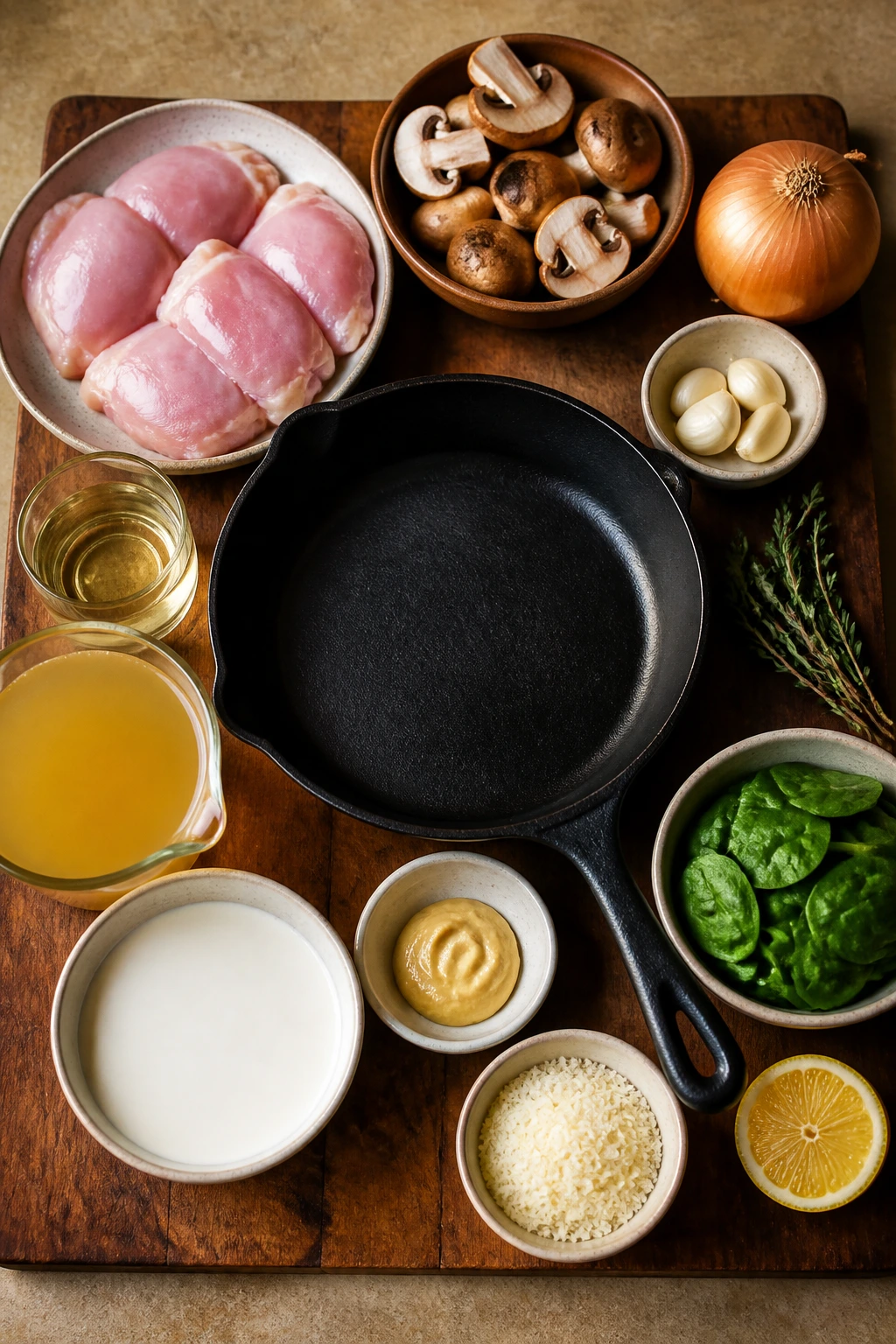
Crowding the chicken is the first error I see most often. If the pieces touch too much, they steam instead of browning, and the sauce loses that dark, savory base. Use a wide skillet and leave space between each piece, or sear in two batches.
Boiling the cream hard is another easy way to wreck texture. A rolling boil can make the sauce look split or greasy around the edges, especially once Parmesan goes in. Keep the heat at a gentle simmer and lower it before adding the cheese.
Using pre-shredded Parmesan can work, but it’s not my favorite here. The anti-caking agents make it slower to melt, which leaves tiny grains in the sauce. Grate it fresh and fine if you can. The difference is not subtle.
Skipping the deglaze is a shame, because all the good stuff sits stuck to the pan after searing. A splash of wine or broth pulls that flavor into the sauce and keeps the skillet from tasting one-note. If the pan looks dark, that’s not failure. That’s dinner getting deeper.
Adding the spinach too soon makes it dull and limp. Spinach only needs 30 to 60 seconds in the hot sauce, so wait until the very end. Any longer and it disappears into a green blur.
Variations That Fit Different Kitchens
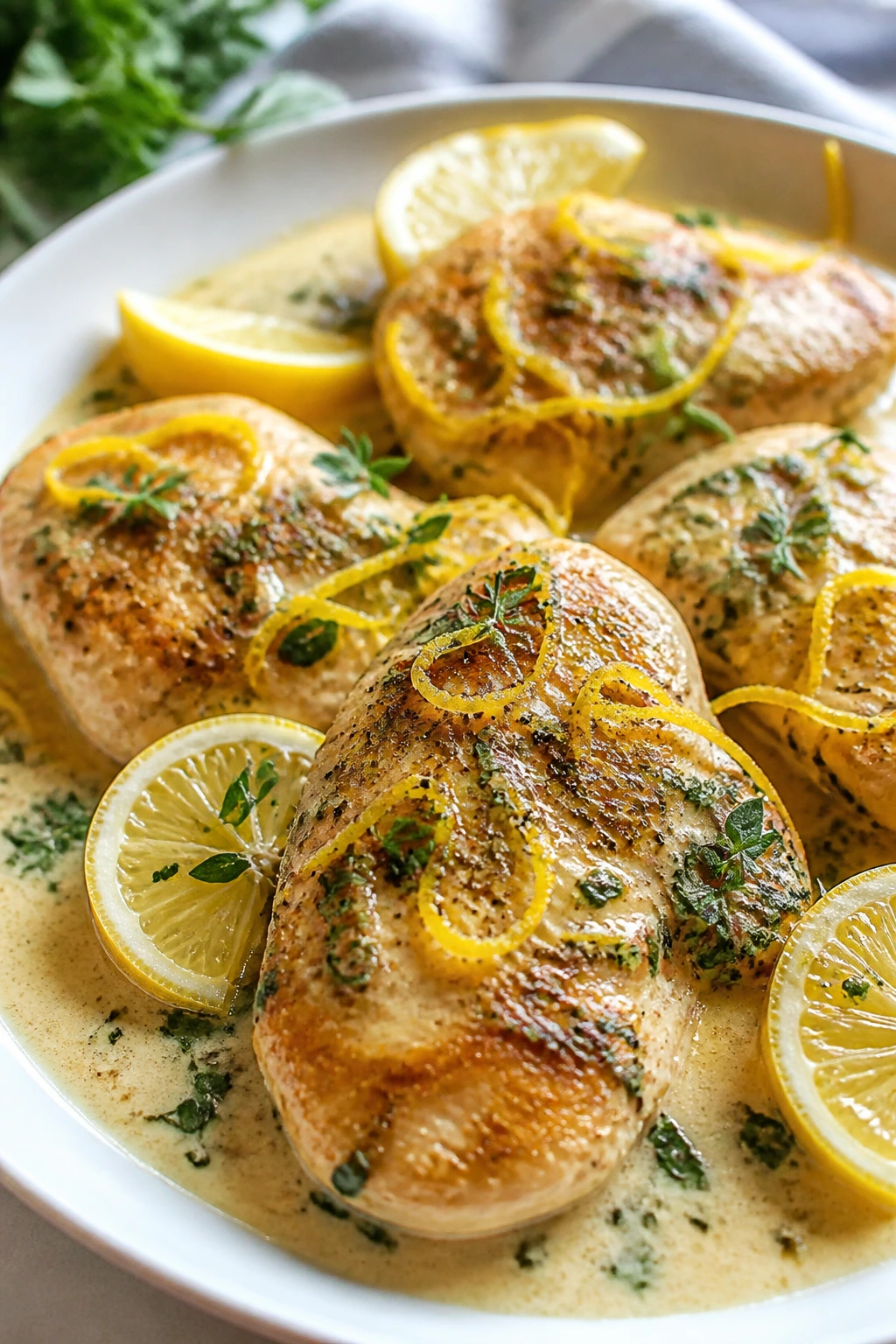
Bright Lemon-Herb Chicken: Add 2 teaspoons of lemon zest, swap the thyme for 1 tablespoon chopped tarragon or dill, and finish with an extra squeeze of lemon. This version tastes sharper and a little lighter, which is useful when you’re serving it with potatoes or buttered noodles.
Mushroom-Heavy Bistro Version: Double the mushrooms to 1 pound and add 1 tablespoon dry sherry with the broth. Let the mushrooms brown hard before you touch the sauce. This one leans deeper and earthier, and I reach for it when I want the skillet to taste like the main event.
Tomato-Basil Cream Pan: Stir in 1/3 cup chopped sun-dried tomatoes after the garlic goes in, then finish with 1 tablespoon torn basil instead of parsley. The tomato gives the cream sauce a sweeter edge and makes it feel a little more Mediterranean without turning it into pasta sauce.
Dairy-Changed Creamy Chicken: Use 3/4 cup unsweetened coconut cream or plain oat cream in place of the heavy cream, skip the Parmesan, and add 2 tablespoons nutritional yeast plus 1 teaspoon cornstarch mixed with 1 tablespoon cold water. The sauce will taste different, but it still turns silky and spoonable.
Gluten-Free Skillet: Replace the flour on the chicken with 2 tablespoons cornstarch or a gluten-free flour blend. The crust will brown a little differently, but the sauce thickens fine as long as you still simmer it down before adding the chicken back.
Make-Ahead, Storage, and Reheating
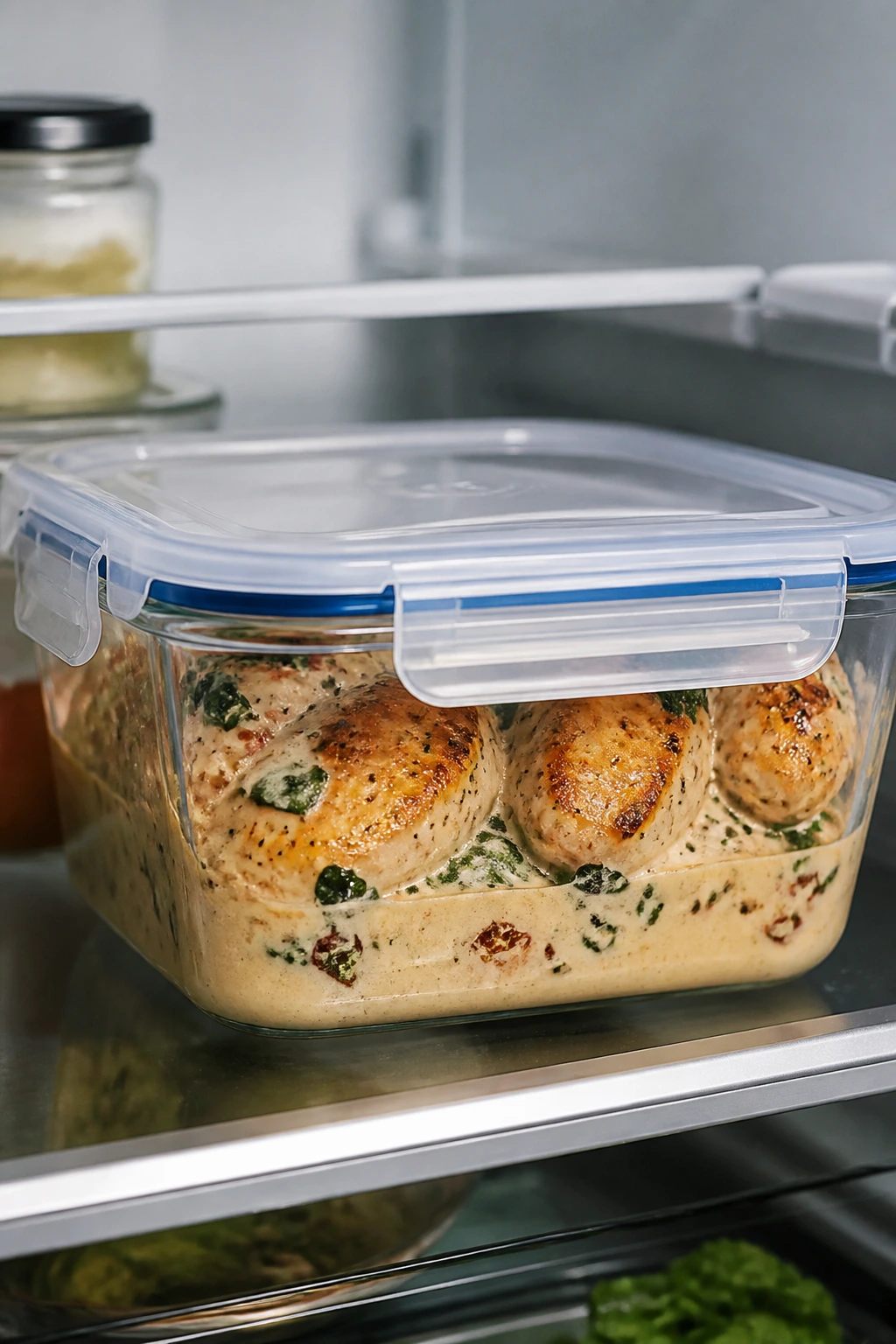
This skillet keeps well in the fridge for 3 to 4 days in an airtight container. The sauce will thicken as it chills, which is normal, and the mushrooms usually hold up better than people expect. Let it cool for about 20 to 30 minutes before refrigerating, but don’t leave it out longer than 2 hours.
Freezing is possible for up to 2 months, though cream sauces can separate a little when thawed. If you want the cleanest result, freeze the chicken and sauce together in a freezer-safe container, then thaw overnight in the fridge. Stir well when reheating; a little separation can usually be fixed with low heat and a splash of broth.
For reheating on the stovetop, use low heat and add 1 to 2 tablespoons of chicken broth, water, or cream to loosen the sauce. Stir often and stop as soon as the chicken is hot all the way through. High heat is the enemy here. It pushes the sauce apart before the center of the chicken warms.
The microwave works if you are in a hurry, but use 50% power and heat in 45-second bursts, stirring between bursts if the sauce has enough room. If the sauce looks a little tight after reheating, a small splash of broth fixes it fast.
For make-ahead cooking, you can season the chicken and slice the vegetables a day ahead. If you want to do even more in advance, cook through the mushroom and broth stage, chill that base, then add cream, Parmesan, spinach, and the seared chicken when you’re ready to serve. That keeps the sauce fresher and reduces the chance of a split texture.
Questions Home Cooks Ask About Creamy Chicken
Can I use chicken breasts instead of thighs?
Yes, and they work well if you treat them gently. Pound them to even thickness, sear them just until golden, and watch the internal temperature closely so they don’t dry out. Breasts give you a leaner skillet, but thighs are still more forgiving.
What if my sauce turns out too thin?
Let it simmer for another 2 to 3 minutes before adding the chicken back. The sauce should coat a spoon, not run off like broth. If it still looks loose, stir in another tablespoon of Parmesan or simmer it a little longer with the chicken out of the pan.
Can I make this without wine?
Absolutely. Use the same amount of chicken broth and scrape the pan well after the mushrooms and garlic cook. Wine adds a little brightness and edge, but broth gets the job done if that’s what you have.
How do I keep the Parmesan from clumping?
Lower the heat before you add it and grate it finely. If the sauce is boiling when the cheese goes in, the fat and proteins can tighten up and leave little flecks behind. Warm sauce plus fine cheese gives you a smoother finish.
Can I add pasta directly to the skillet?
Not in this form. The sauce is rich, but it does not have enough liquid to cook dry pasta properly. Cook the pasta separately, then toss it with the sauce right before serving so it stays glossy and doesn’t drink the whole skillet.
What should I do if the sauce splits?
Take the pan off the heat right away and whisk in 1 to 2 tablespoons of broth, then add a small splash of cream if needed. Sometimes a split sauce just needs gentler heat and a bit of liquid to come back together. A rapid boil is often the culprit.
Can I make this one day ahead for guests?
Yes, but the best version comes from stopping before the final cream finish, then reheating gently and adding the cream, cheese, spinach, and lemon at the end. That keeps the sauce from tasting dull and keeps the spinach from turning tired. It’s a little more work later, but the plate looks fresher.
Why This Pan Dinner Earns Repeat Status
A good creamy chicken dinner does not need a lot of tricks. It needs a skillet hot enough to brown, a sauce handled gently, and enough salt and acid to keep the cream awake. Once you’ve made it this way once or twice, the rhythm becomes second nature.
The part I like most is the balance. The chicken is rich but not heavy, the mushrooms give the sauce a deep, earthy note, and the lemon at the end keeps the whole pan from sitting flat on the tongue. That’s what makes it a weeknight keeper instead of a one-off.
If you put this on the table with noodles, rice, or bread and a green salad on the side, nobody is going to ask whether it was complicated. They’ll be too busy scraping the pan.
Creamy Garlic Parmesan Chicken Skillet — Recipe Card
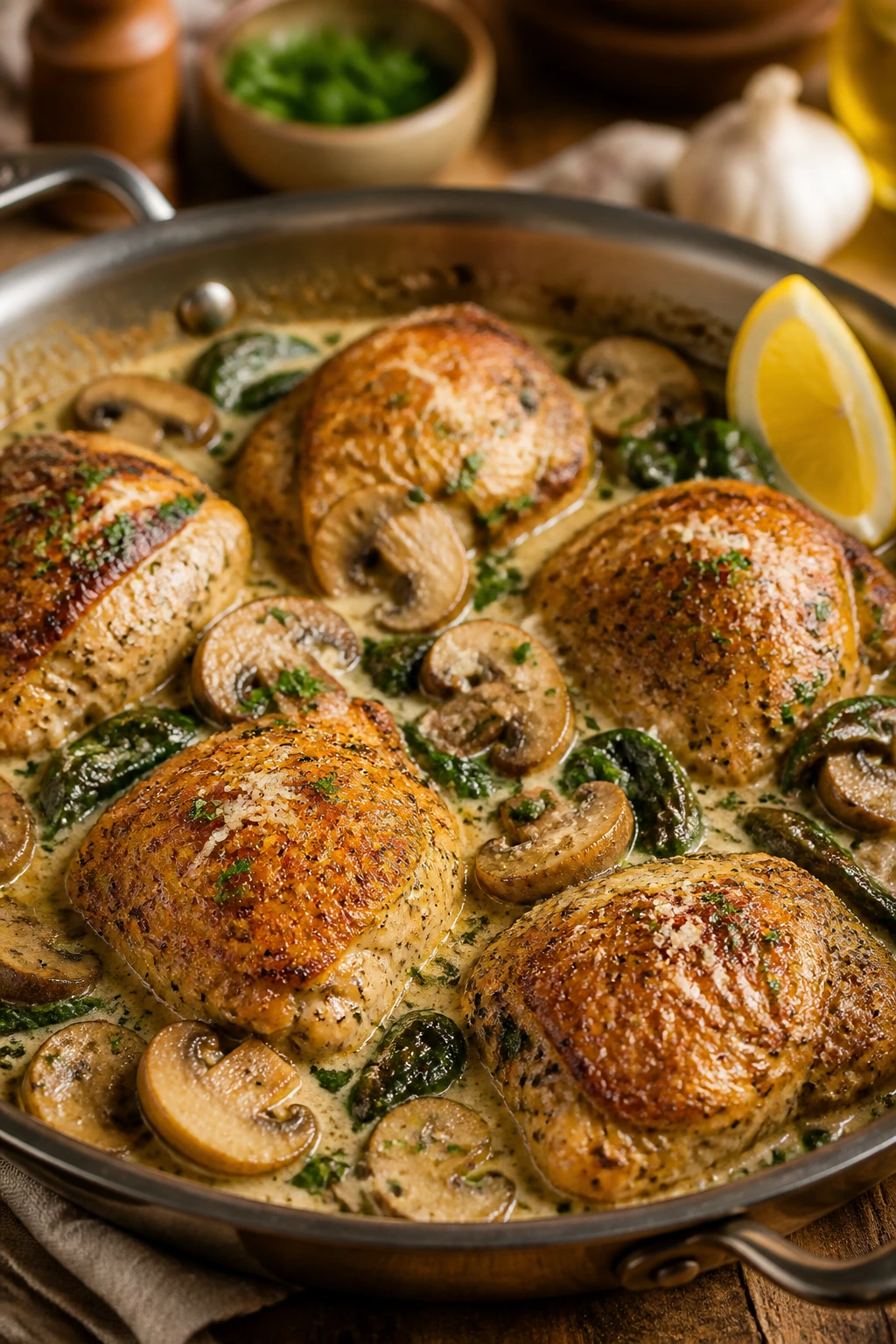
Recipe Name: Creamy Garlic Parmesan Chicken Skillet with Mushrooms and Spinach
Description: Tender chicken thighs seared in one skillet, then finished in a glossy garlic-Parmesan cream sauce with mushrooms, spinach, and a bright squeeze of lemon. It’s rich, savory, and built for an ordinary night when you want dinner to feel more composed than a frozen tray or a takeout bag.
Prep Time: 15 minutes
Cook Time: 22 to 25 minutes
Total Time: 37 to 40 minutes
Course: Main Course, Dinner
Cuisine: American
Servings: 4 servings
Calories: About 510 calories per serving
Ingredients
For the Chicken:
- 1 1/2 pounds boneless, skinless chicken thighs, trimmed of excess fat
- 1 teaspoon kosher salt
- 1/2 teaspoon black pepper
- 1 teaspoon paprika
- 2 tablespoons all-purpose flour, for light coating
For the Sauce and Vegetables:
- 2 tablespoons olive oil
- 1 tablespoon unsalted butter
- 8 ounces cremini mushrooms, sliced
- 1 small yellow onion, finely diced
- 4 cloves garlic, minced
- 1/2 teaspoon dried thyme
- 1/2 cup dry white wine or low-sodium chicken broth
- 1 cup low-sodium chicken broth
- 3/4 cup heavy cream
- 1 teaspoon Dijon mustard
- 1/3 cup finely grated Parmesan cheese
- 2 cups baby spinach
- 1 tablespoon fresh lemon juice
For Finishing:
- 1 tablespoon chopped flat-leaf parsley
- Pinch of red pepper flakes, optional
Instructions
-
Pat the chicken thighs dry, season with salt, pepper, and paprika, then lightly coat with flour.
-
Heat the olive oil and butter in a 12-inch skillet over medium-high heat. Sear the chicken for 4 to 5 minutes per side, until golden. Transfer to a plate.
-
Add the mushrooms to the skillet and cook over medium heat for 4 to 6 minutes, until browned and their moisture cooks off.
-
Add the onion and cook for 2 to 3 minutes, then add the garlic and thyme and cook for 30 seconds.
-
Pour in the wine or broth and scrape up the browned bits. Simmer for 1 minute.
-
Add the chicken broth, heavy cream, and Dijon mustard. Bring to a gentle simmer and cook for 3 to 4 minutes, until lightly thickened.
-
Stir in the Parmesan and spinach. Add the chicken and any juices back to the skillet and simmer for 2 to 3 minutes, until the chicken reaches 165°F.
-
Turn off the heat, stir in the lemon juice, and finish with parsley and red pepper flakes if using.
Notes: Use chicken thighs for the juiciest result. Keep the sauce at a gentle simmer, not a boil. Freshly grated Parmesan melts smoother than pre-shredded cheese.