



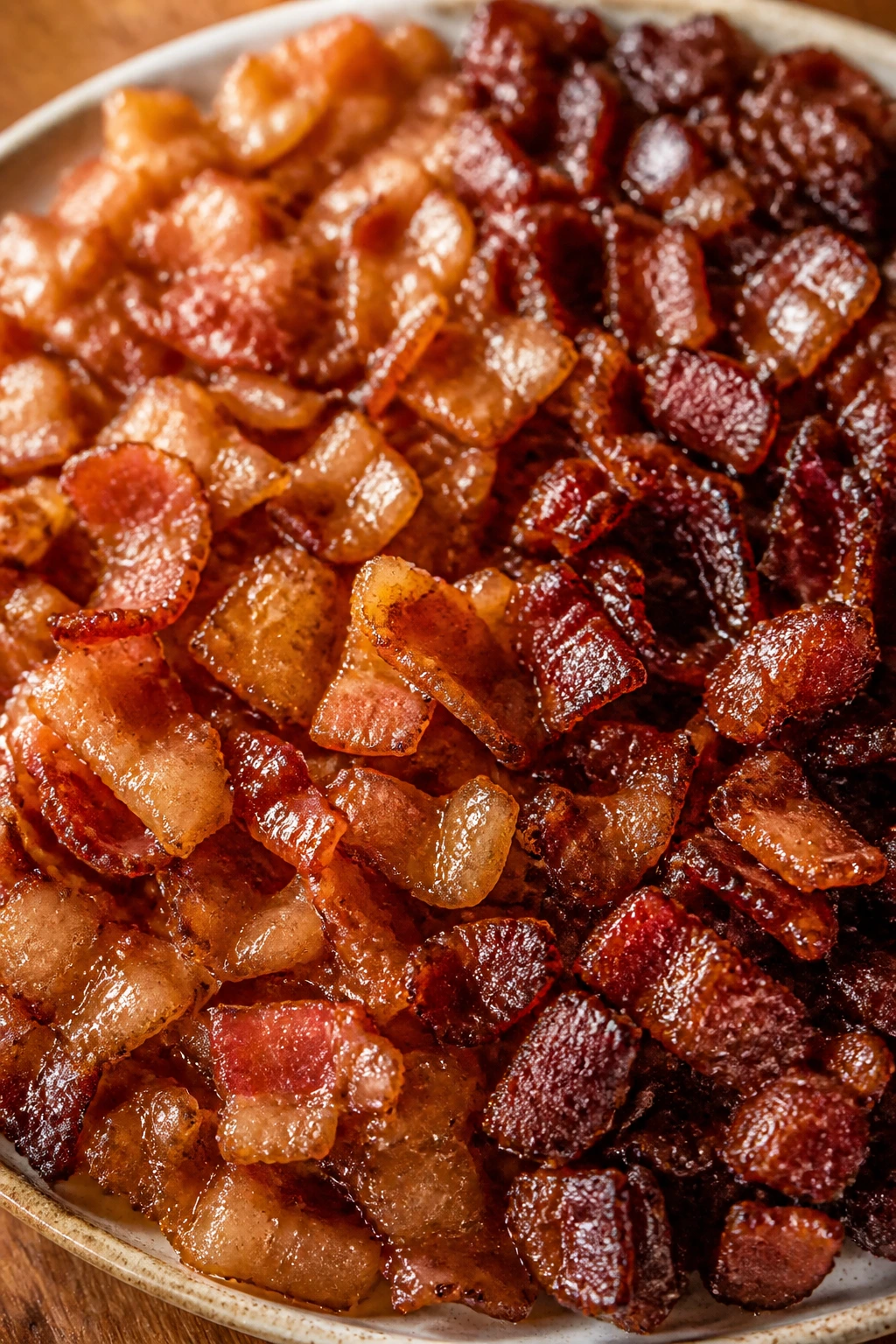
The pan smells like breakfast and toffee at the same time, and that is usually the moment people drift into the kitchen pretending they were headed there for something else. Juicy crumbled bacon with brown sugar glaze has that effect. The bacon stays salty and meaty, the sugar melts into a glossy shell, and the edges go dark enough to taste caramelized without crossing into burnt, bitter mess.
I like this kind of bacon because it does a specific job well. It is not trying to be candy. It is trying to be the crisp, sticky, salt-heavy topping that wakes up a plate of eggs, a wedge salad, roasted Brussels sprouts, or a plain baked potato that needed a little backbone. The trick is restraint. Too much sugar, and you get a brittle shell that tastes one-note. Too little heat, and the glaze sits there like damp sand.
That balance is the whole story here. Give the sugar enough warmth to turn shiny, give the bacon enough time to render, and keep your eye on the tray during the final minutes — that is where the good stuff happens. The smell changes first. Then the edges darken. Then the glaze bubbles into little amber blisters, and you know you are about thirty seconds away from something people will ask about later.
Why You’ll Keep Making This Bacon
-
Sticky without being cloying: The brown sugar melts with a splash of water and vinegar, so it clings to the bacon instead of sitting on top in dry granules.
-
Useful all day long: A small pile works on scrambled eggs in the morning, then turns a salad or roasted vegetable side into something with actual personality by dinner.
-
Thick-cut bacon gives you better texture: The slices hold their shape long enough for the glaze to set, which means the finished crumbles stay a little juicy instead of turning into dusty shards.
-
Cleanup stays reasonable: A parchment-lined sheet pan catches the rendered fat and the caramelized glaze, so you are not scraping sticky sugar off bare metal.
-
It scales without drama: Double the tray, double the glaze, and the method still behaves. You do not need special gear or a candy thermometer.
-
Better at room temperature than plain bacon: The glaze firms as it cools, so the crumbles stay crisp longer than unglazed bacon bits that go limp the second they leave the pan.
Why This Bacon Tastes Like a Better Diner Tray
Brown sugar on bacon is an old move. Diners, brunch counters, and holiday buffets have been leaning on it forever because the pairing makes sense on a basic level: bacon brings salt, smoke, and fat; brown sugar brings molasses depth and that faint chew you only get from sugar that has actually melted. The odd part is how often people overdo it. They pour on too much sugar, crank the oven too hot, and end up with burnt caramel glued to scorched bacon. Not this version.
The version I trust uses just enough liquid to help the sugar melt into a glaze. A teaspoon of apple cider vinegar cuts the sweetness so the bacon still tastes like bacon. A spoonful of water helps the sugar loosen and spread. That is all it takes. Once the heat hits, the glaze turns shiny and starts to bubble around the edges of each strip, which is what you want to see before you even think about crumbling it.
I also prefer thick-cut bacon here, and I am stubborn about that. Thin bacon can taste fine, but it races to the finish line. By the time the sugar has lacquered the surface, the meat underneath has already gone crisp and a little brittle. Thick-cut gives you a short window where the fat is rendered, the glaze is set, and the center still has enough body to break into real crumbles instead of bacon dust.
One more thing. The bacon keeps cooking after it leaves the oven. Not dramatically, but enough. If you wait until it looks completely dry in the pan, you will overshoot. Pull it when the glaze is dark amber and the slices still bend slightly when lifted. They will firm up as they cool, and the crumbles will have a cleaner snap.
Bacon at a Glance
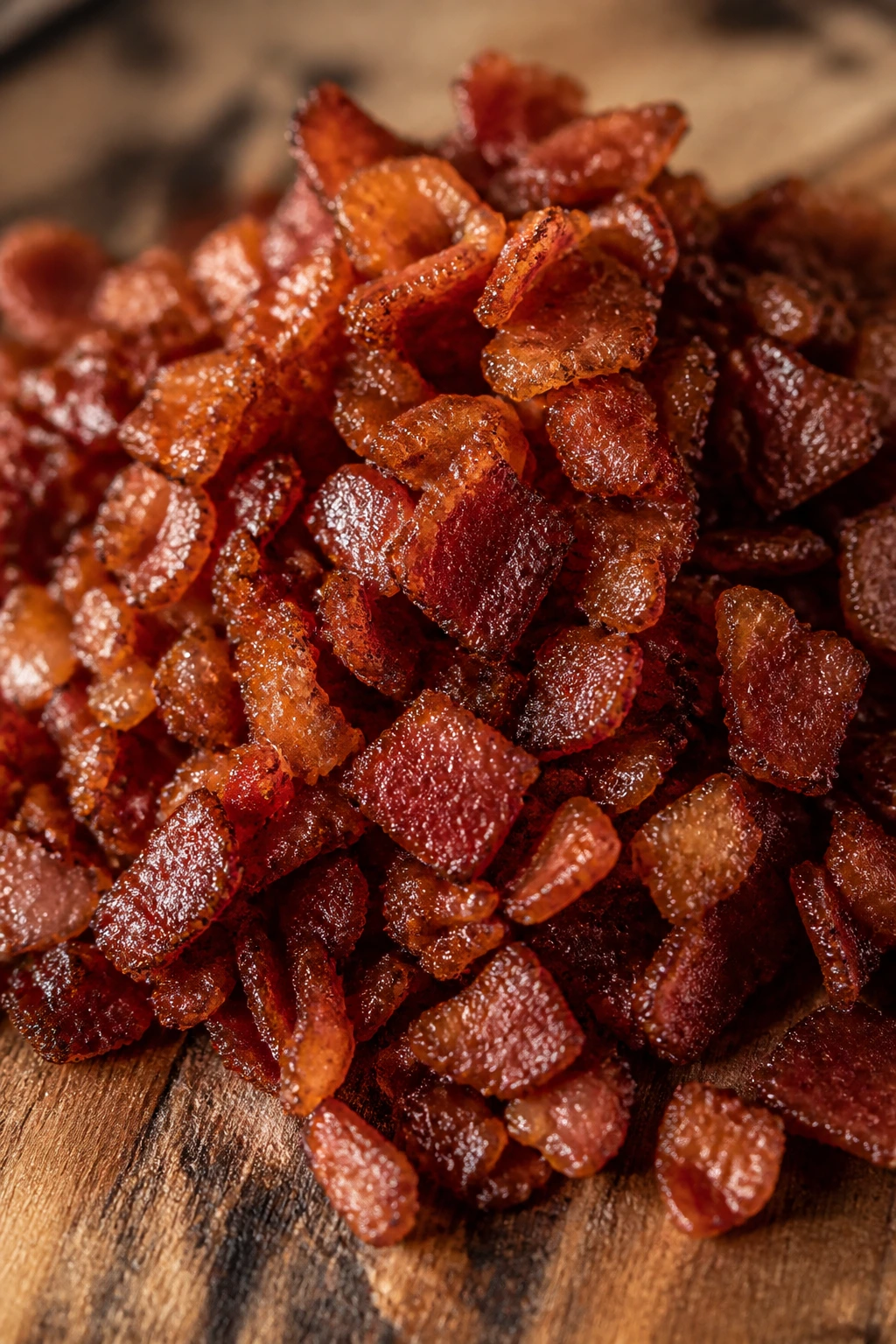
Yield: About 1½ to 2 cups crumbled bacon
Prep Time: 10 minutes
Cook Time: 18 to 22 minutes
Total Time: 30 minutes
Chill/Rest Time: 5 minutes cooling before crumbling
Difficulty: Beginner — the steps are simple, but the last few minutes need your full attention.
Best Served: Warm or at room temperature the same day
Ingredients for the Bacon and the Glaze
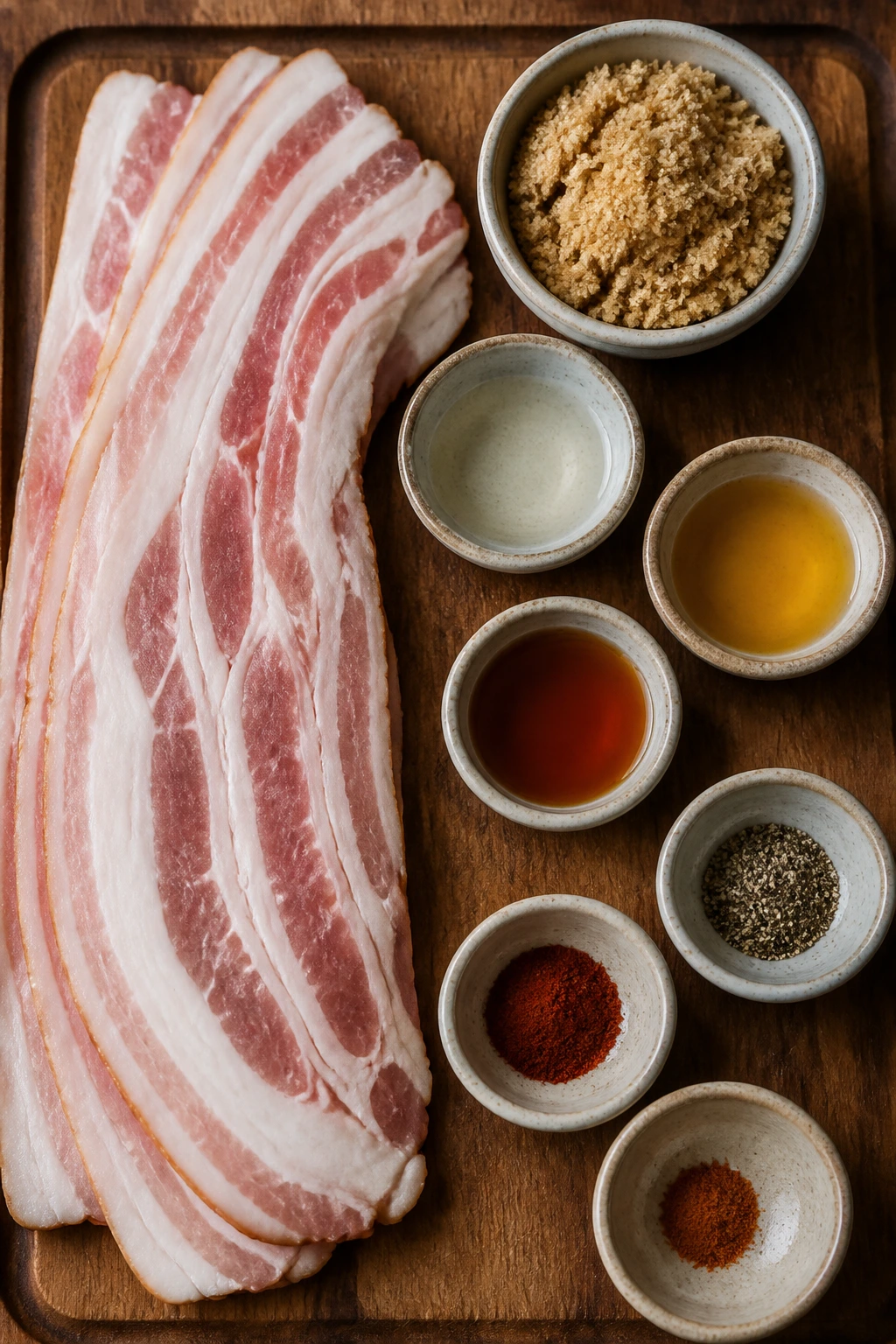
For the Bacon:
- 1 pound thick-cut bacon, about 10 to 12 slices
For the Brown Sugar Glaze:
- 1/3 cup packed light brown sugar
- 1 tablespoon water
- 1 teaspoon apple cider vinegar
- 1 teaspoon pure maple syrup
- 1/2 teaspoon freshly ground black pepper
- 1/4 teaspoon smoked paprika
- 1 pinch cayenne pepper, optional
Why Each Ingredient Matters
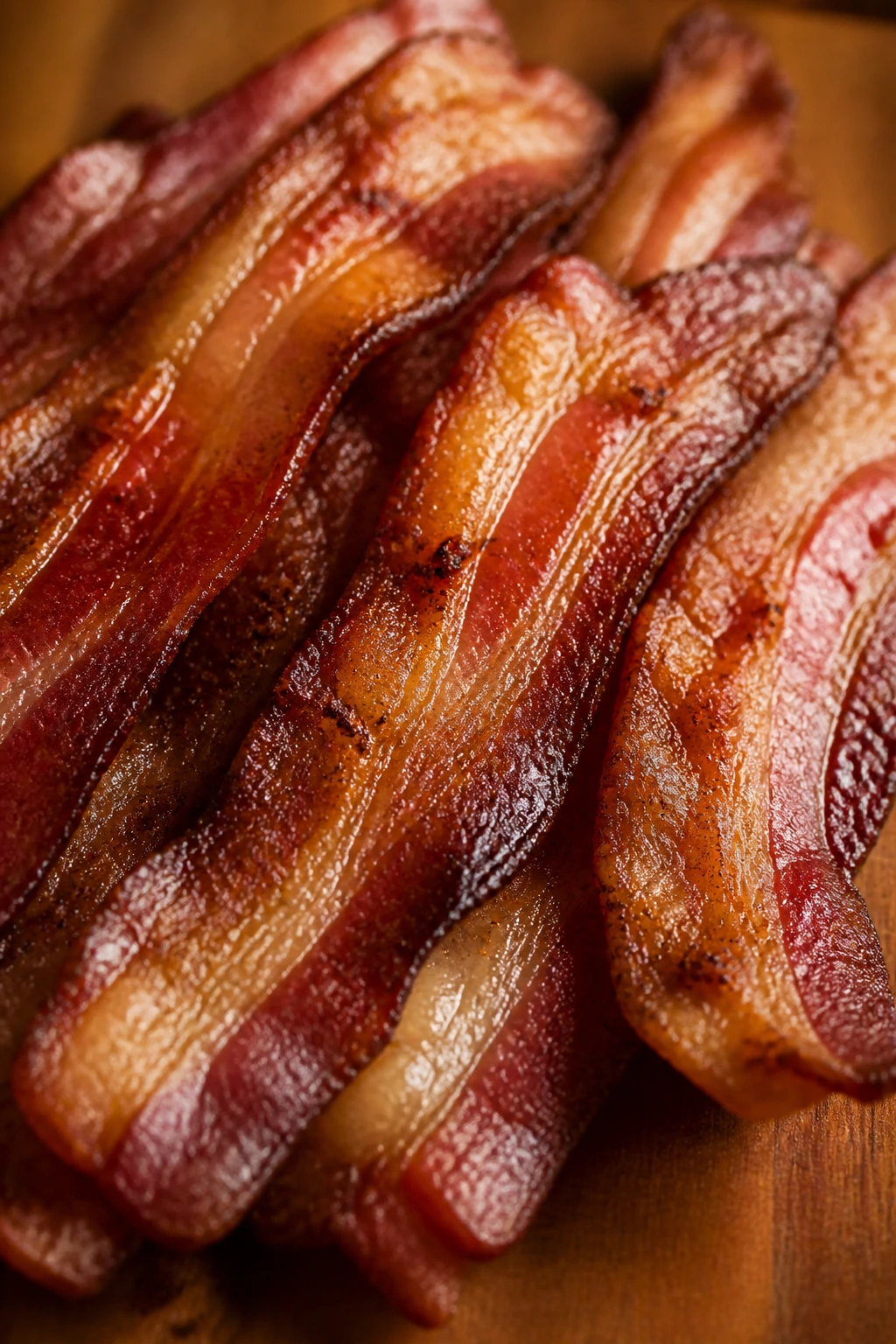
Thick-Cut Bacon
-
What to use: 1 pound thick-cut bacon, usually 10 to 12 slices depending on the brand and pack size.
-
Preparation: Keep it cold until the pan is ready, then lay the slices in a single layer with no folding or bunching. If a slice is longer than your sheet pan, cut it in half crosswise so it sits flat.
-
Substitutions: Regular-cut bacon works if that is what you have, but it will finish sooner. Peppered bacon gives the glaze more bite, while applewood-smoked bacon gives you a softer, sweeter smoke.
-
Tips: Thick-cut bacon gives you more room between rendered and ruined. That tiny cushion matters when sugar is involved.
Brown Sugar Glaze
-
What to use: 1/3 cup packed light brown sugar, 1 tablespoon water, 1 teaspoon apple cider vinegar, 1 teaspoon pure maple syrup, 1/2 teaspoon black pepper, 1/4 teaspoon smoked paprika, and a pinch of cayenne if you like heat.
-
Preparation: Stir the glaze until it looks like damp sand that can be spread with a spoon. A few small lumps are fine; they melt in the oven.
-
Substitutions: Dark brown sugar gives a deeper molasses flavor. Honey can stand in for maple syrup, though it browns a little faster and tastes softer.
-
Tips: The vinegar does quiet work here. You will not taste vinegar, but you will taste the difference between sweet-bacon and bacon that tastes layered.
Optional Finishers
-
What to use: A few grinds of black pepper or a pinch of flaky salt if your bacon is unusually mild.
-
Preparation: Add them after the bacon comes out of the oven, while the glaze is still tacky, so they stick to the surface.
-
Substitutions: A tiny sprinkle of crushed red pepper gives the same kind of contrast with more heat. Chopped chives also work if you are serving the bacon on eggs or potatoes.
-
Tips: Keep finishing touches small. Bacon already brings salt. The goal is to sharpen the flavor, not bury it.
The Tools That Keep the Glaze From Burning
-
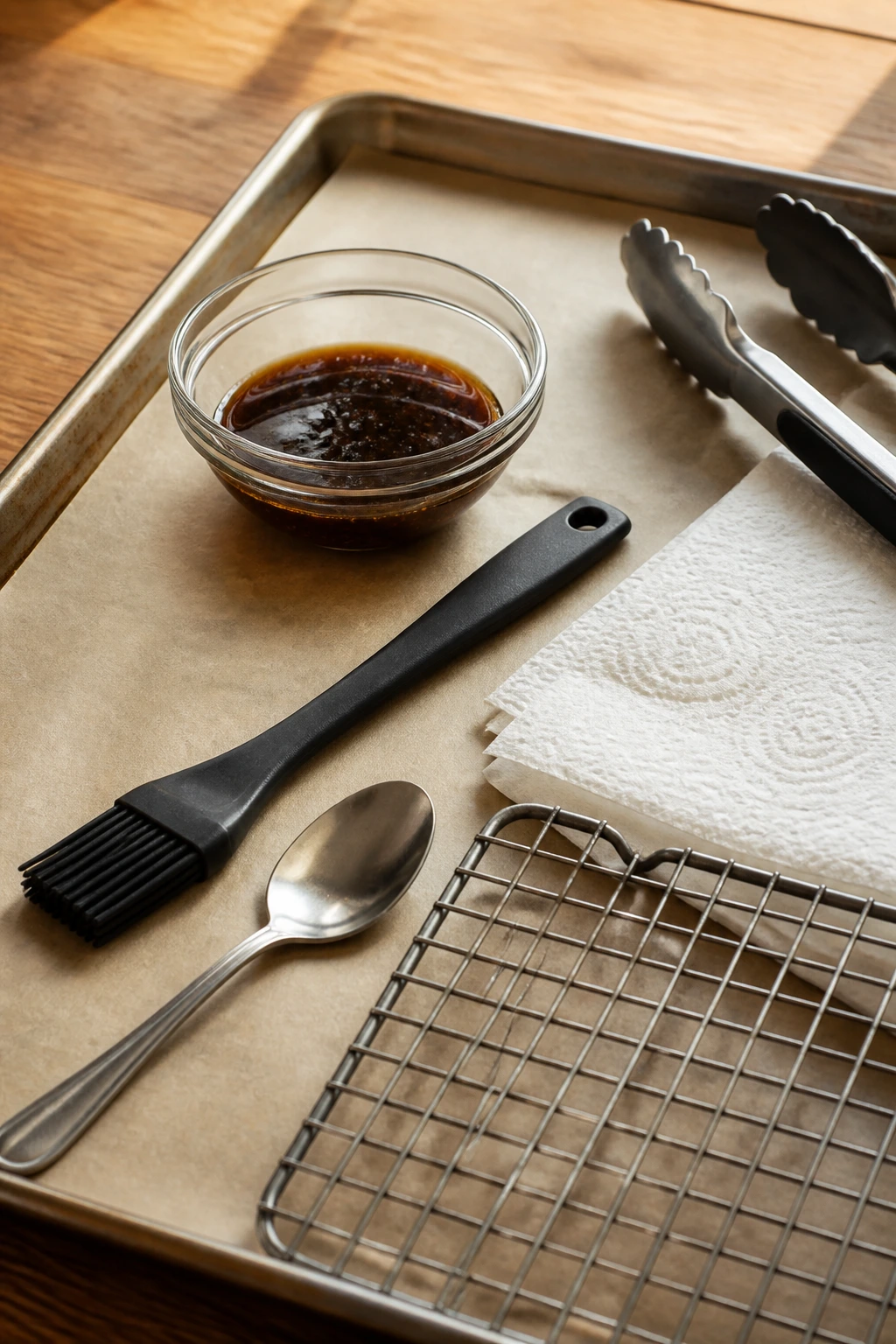
Rimmed baking sheet: The sides keep rendered fat and melted sugar from sliding onto your oven floor. Use a standard half-sheet if you have one.
-
Parchment paper: This is the cleanest surface for glazed bacon. Foil works in a pinch, but parchment makes lifting and cleanup easier.
-
Small mixing bowl: You want a bowl just big enough for the glaze so you are not chasing brown sugar around a giant bowl.
-
Pastry brush or teaspoon: A brush gives you better control, but a spoon works if you are careful. The glaze is simple enough that either tool does the job.
-
Tongs: Useful for shifting slices if one curls too hard or sticks together.
-
Paper towels or a wire rack: Paper towels soak up surface grease; a rack keeps the crumbles a little crisper. Pick the one that fits your texture preference.
How to Make Juicy Crumbled Bacon with Brown Sugar Glaze
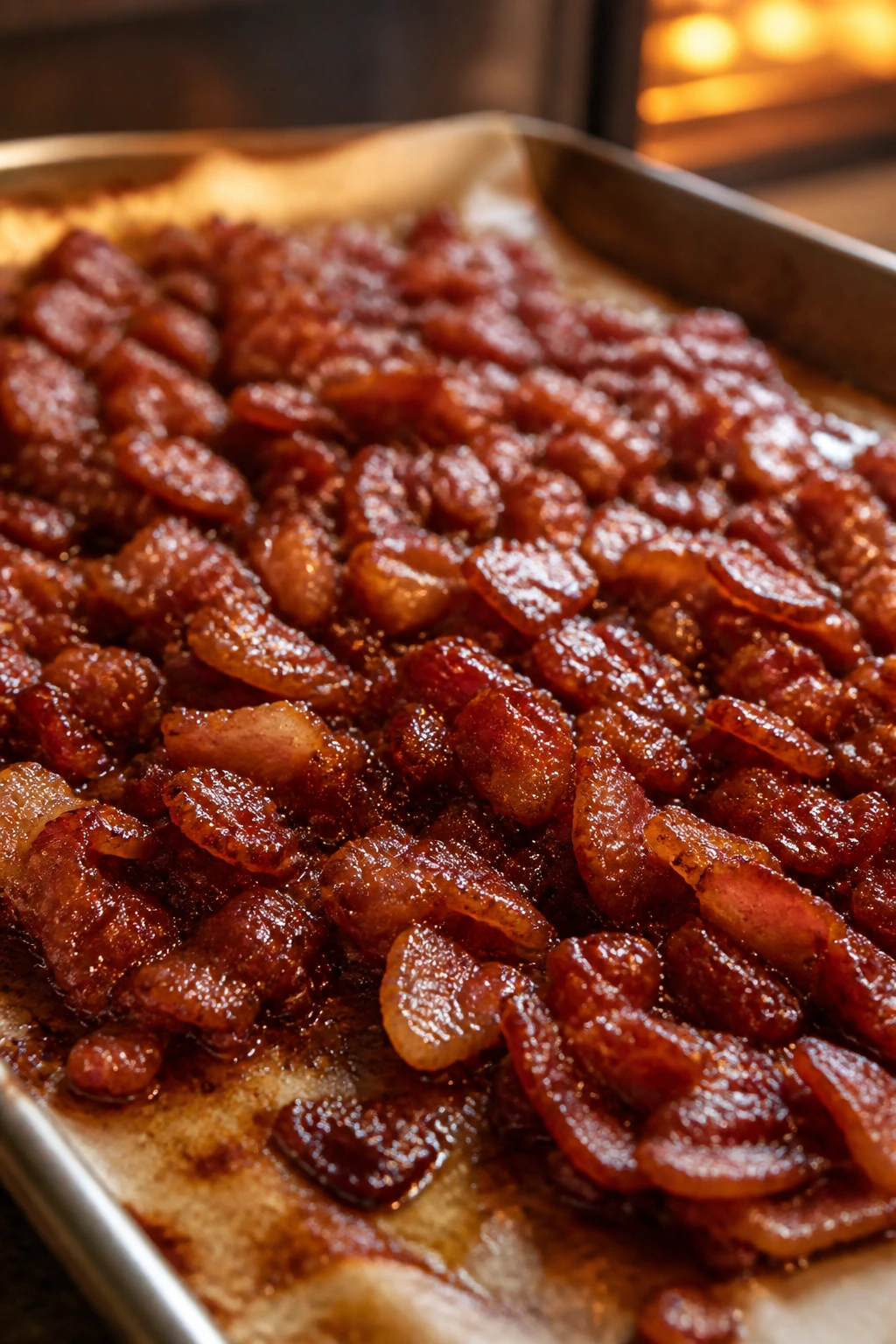
Set Up the Pan
-
Preheat the oven to 375°F (190°C) and position a rack in the center. Line a rimmed baking sheet with parchment paper, letting it come up the sides a little so the glaze does not seep underneath.
-
Stir the glaze in a small bowl with the brown sugar, water, apple cider vinegar, maple syrup, black pepper, smoked paprika, and cayenne if using. The mixture should look glossy and thick, not watery. If it clumps a bit, that is fine; it will melt in the oven.
Bake the Bacon in Two Stages
-
Arrange the bacon in a single layer on the prepared sheet pan. Leave a little space between slices if you can. If the strips touch, they will glue together before the glaze has a chance to spread evenly.
-
Bake for 8 to 10 minutes, until the bacon has started to render fat and the edges are just beginning to curl. You want the strips flexible, not stiff. Do not add the glaze too early; if the bacon is still raw-looking, the sugar will slide around instead of clinging.
-
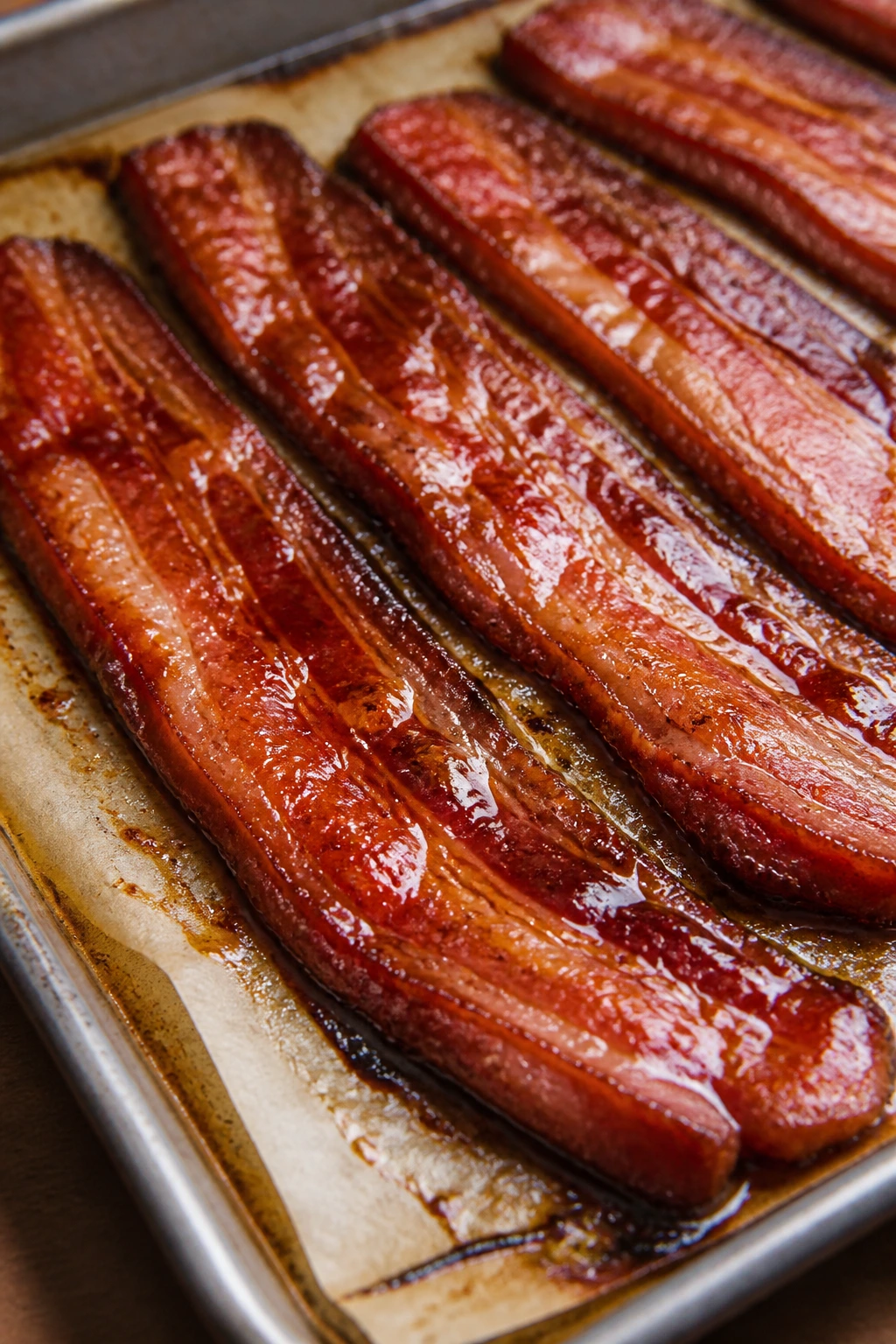
Carefully spoon or brush half of the glaze over the bacon, focusing on the top surface. Slide the pan back into the oven for 4 to 5 minutes. The glaze should start bubbling and darkening to a clear amber sheen.
-
Check the pan and spoon off excess fat if the tray looks flooded. Leave a thin layer of fat — that helps the sugar finish melting — but if the bacon is swimming, the glaze can thin out and drip off. Do not pour the fat down the sink. Use a heatproof jar or can once it cools.
-
Brush on the remaining glaze and return the pan to the oven for 3 to 5 minutes more, until the bacon looks glossy, the sugar has tightened around the edges, and the strips are deeply browned with a few darker spots at the edges. Watch closely now. Sugar goes from caramelized to burnt with no drama and no warning.
Cool and Crumble
-
Transfer the bacon to a clean sheet of parchment or a wire rack and let it cool for 5 minutes. It will firm up as it rests. If you want cleaner crumbles, wait until it is warm rather than piping hot.
-
Crumble or chop the bacon into bite-size pieces. Use your hands for rustic pieces, or a knife if you want more even bacon bits for salads and potatoes. Serve right away, or let it finish cooling if you are packing it up for later.
How to Serve It Without Losing the Crunch
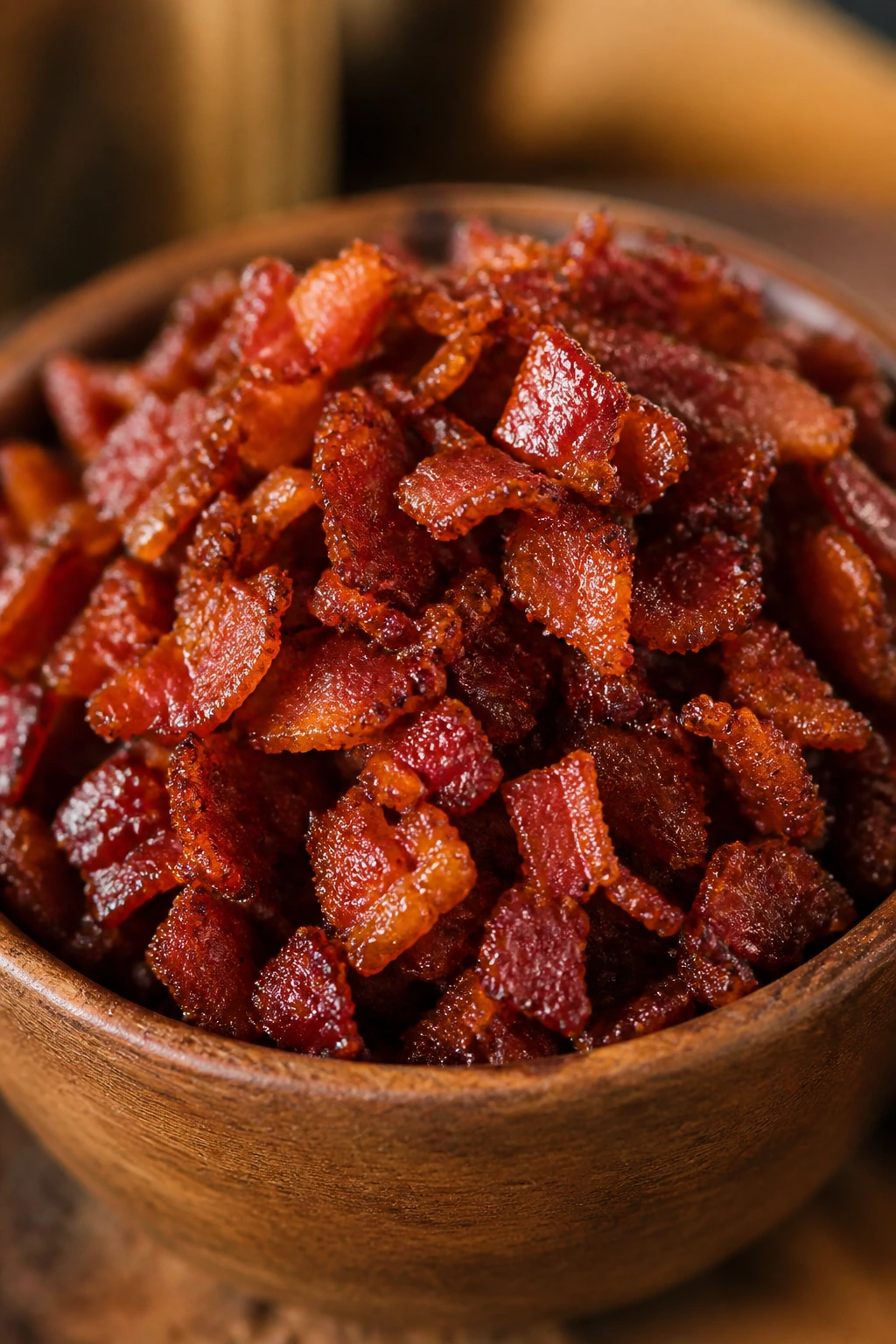
Presentation: I like to pile the crumbles in a shallow bowl or scatter them over the dish at the very last second. That keeps the glaze glossy and the pieces sharp at the edges. If you are serving them as a topping, use a small spoon so you can control the amount; a little goes a long way.
Accompaniments: Warm scrambled eggs, buttermilk biscuits, deviled eggs, baked potatoes, wedge salads, roasted Brussels sprouts, mac and cheese, and simple cheddar grits all benefit from a spoonful or two. The bacon is sweet enough to cut through rich dishes but salty enough to wake up mild ones. It is especially good over something creamy, because the texture contrast matters.
Portions: One pound of bacon usually gives you enough for 6 to 8 side portions or 12 deviled eggs, depending on how generously you sprinkle. If you are topping a main dish like mac and cheese, figure on 1 to 2 tablespoons per serving. For a brunch spread, I usually leave the bowl out with a small spoon and let people add their own.
Beverage Pairing: Black coffee is the obvious match for breakfast, but unsweetened iced tea works better than most people expect because it keeps the sweetness in line. If this bacon is heading toward brunch, a dry cider is the nicest drink alongside it; the crisp finish keeps the glaze from feeling heavy.
Small Tweaks That Change the Whole Batch
Flavor Enhancement: A tiny pinch of espresso powder in the glaze makes the brown sugar taste deeper without turning the bacon into coffee-flavored bacon. You only need 1/8 teaspoon, stirred in with the sugar. It gives the glaze a dark, roasted edge that reads as richer rather than sweeter.
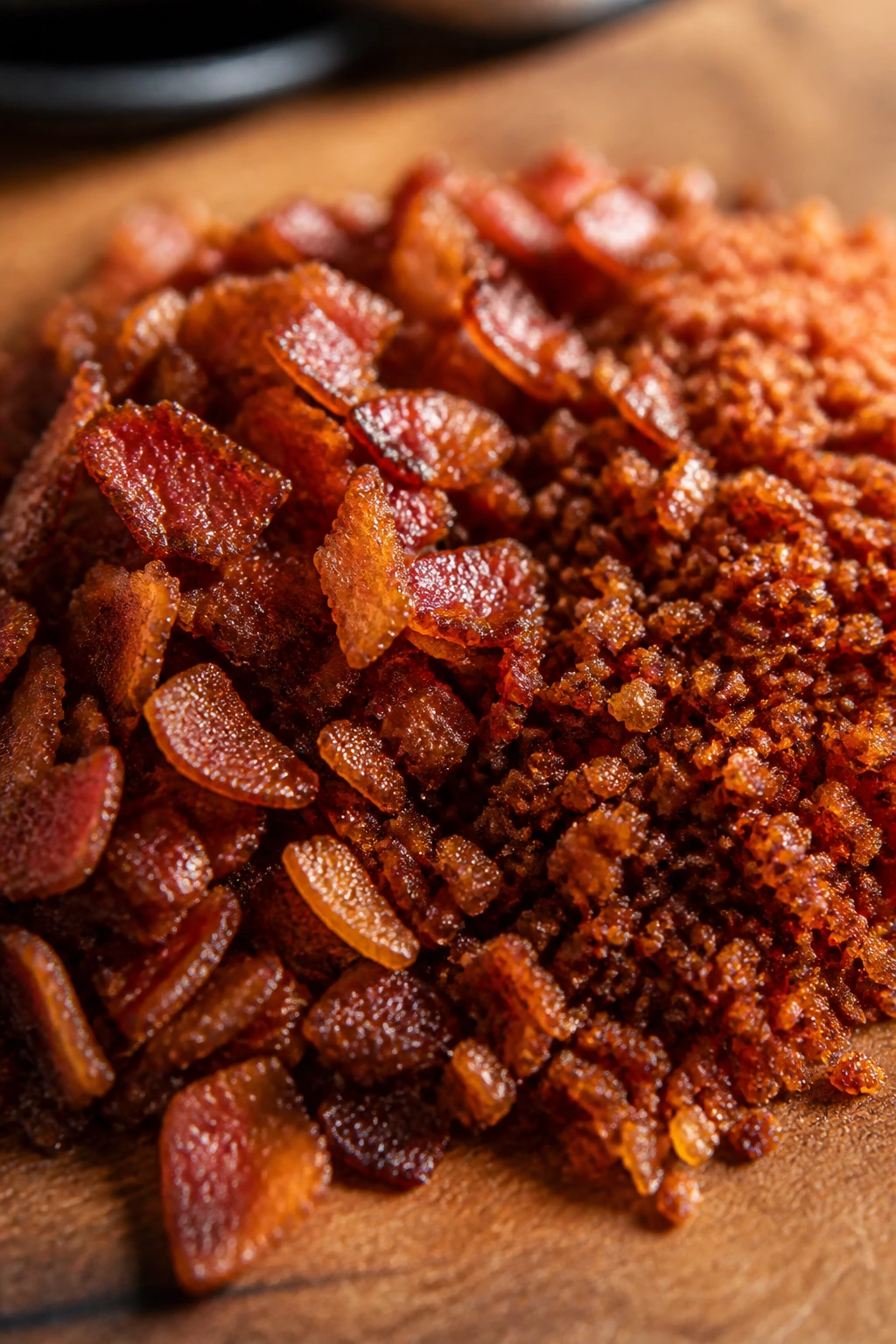
Texture Control: If you want bacon crumbles with some bigger, jagged pieces for salads, pull the tray when the center is still slightly bendy. If you want tighter bacon bits for baked potatoes or deviled eggs, let it go until the strips are just shy of brittle. Same recipe. Different finish.
Time-Saver: Mix the glaze up to 3 days ahead and keep it covered in the fridge. The sugar may settle a little, so give it a quick stir before using. That saves you from measuring while the oven is preheating and the bacon is waiting on the counter.
Make-It-Yours: If you want less sweetness, cut the brown sugar back to 1/4 cup and keep the vinegar in place. If you want a warmer, spicier profile, add a pinch of cayenne and a few extra grinds of black pepper. For a more breakfast-style finish, a spoonful of maple syrup and a dusting of cinnamon can push it in that direction, though I would keep the cinnamon faint.
What Usually Goes Wrong
-
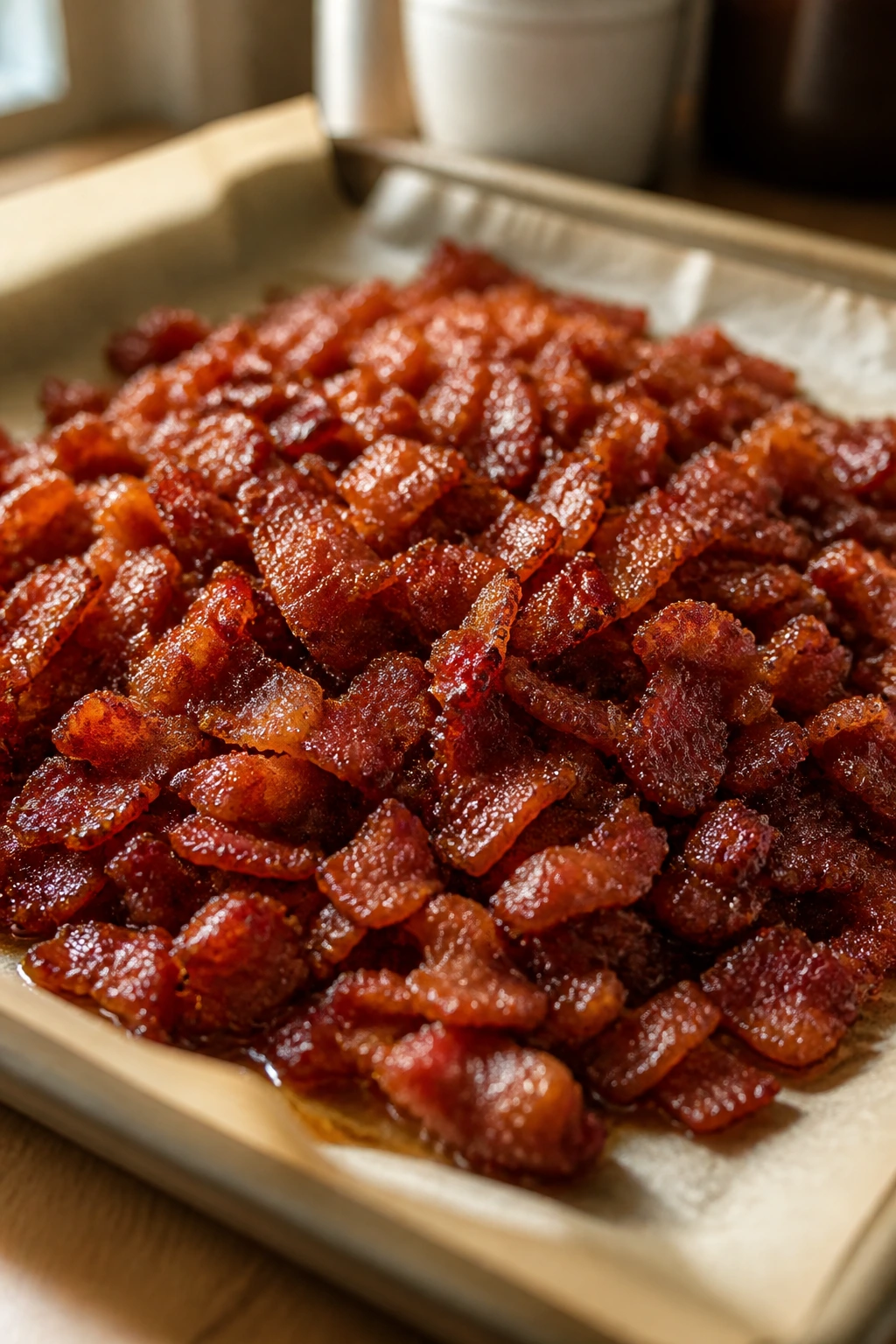
Glazing the bacon too soon: If the slices are still soft and pale when the sugar goes on, the glaze slides off and pools on the parchment. Wait until the bacon has rendered a little fat and the edges are starting to curl.
-
Crowding the pan: Bacon packed shoulder to shoulder steams before it crisps. The sugar also melts into one sticky sheet. Give the slices breathing room, even if that means using two pans.
-
Walking away during the final minutes: Sugar does not give a polite warning. The shift from amber to black can happen fast, especially if your oven runs hot or the pan sits too close to the top element.
-
Using very thin bacon: Thin slices can get brittle before the glaze sets. You end up with brittle sugar and overcooked bacon instead of clean crumbles. Regular-cut bacon works, but thick-cut is more forgiving and gives better texture.
-
Crumbling while it is blazing hot: Fresh from the oven, the bacon is fragile and greasy. Wait those 5 minutes. The glaze firms up, the fat settles, and you get proper pieces instead of a greasy mash.
-
Skipping parchment: The sugar and rendered fat fuse into a stubborn film on bare metal. Parchment saves the pan and saves your patience.
Variations Worth Trying
Maple-Pepper Bacon Bits
Swap the 1 teaspoon maple syrup in the glaze for 2 teaspoons if you want a softer, more breakfast-forward finish. Add an extra 1/4 teaspoon black pepper so the sweetness does not take over. This version is excellent on biscuits and scrambled eggs.
Smoky Heat Batch
Keep the glaze the same, then add an extra 1/4 teaspoon smoked paprika and 1/4 teaspoon cayenne. The heat shows up late, after the brown sugar, so the bacon tastes warm instead of spicy-hot. I like this one on mac and cheese and roasted sweet potatoes.
Bourbon-Gloss Bacon
Stir 1 tablespoon bourbon into the glaze and reduce the water to 2 teaspoons. The alcohol cooks off, but the bourbon leaves a toasted oak note that works well with thick-cut bacon. Watch the pan closely near the end, because the extra sugar and bourbon can darken fast.
Salad-Ready Crunch
Bake the bacon on a wire rack set over the sheet pan if you want drier, crisper crumbles for wedge salads and greens. Skip the last minute of glazing if you like the pieces a little lighter and less sticky. This version is the one I reach for when I do not want the bacon to soften the lettuce.
Storage, Reheating, and Make-Ahead Notes
Cooked glazed bacon holds well, but the texture changes a little once it cools. That is normal. Treat it like cooked meat, not shelf-stable candy. Keep it out no longer than 2 hours at room temperature, and if it is sitting on a warm buffet, shorter is better.
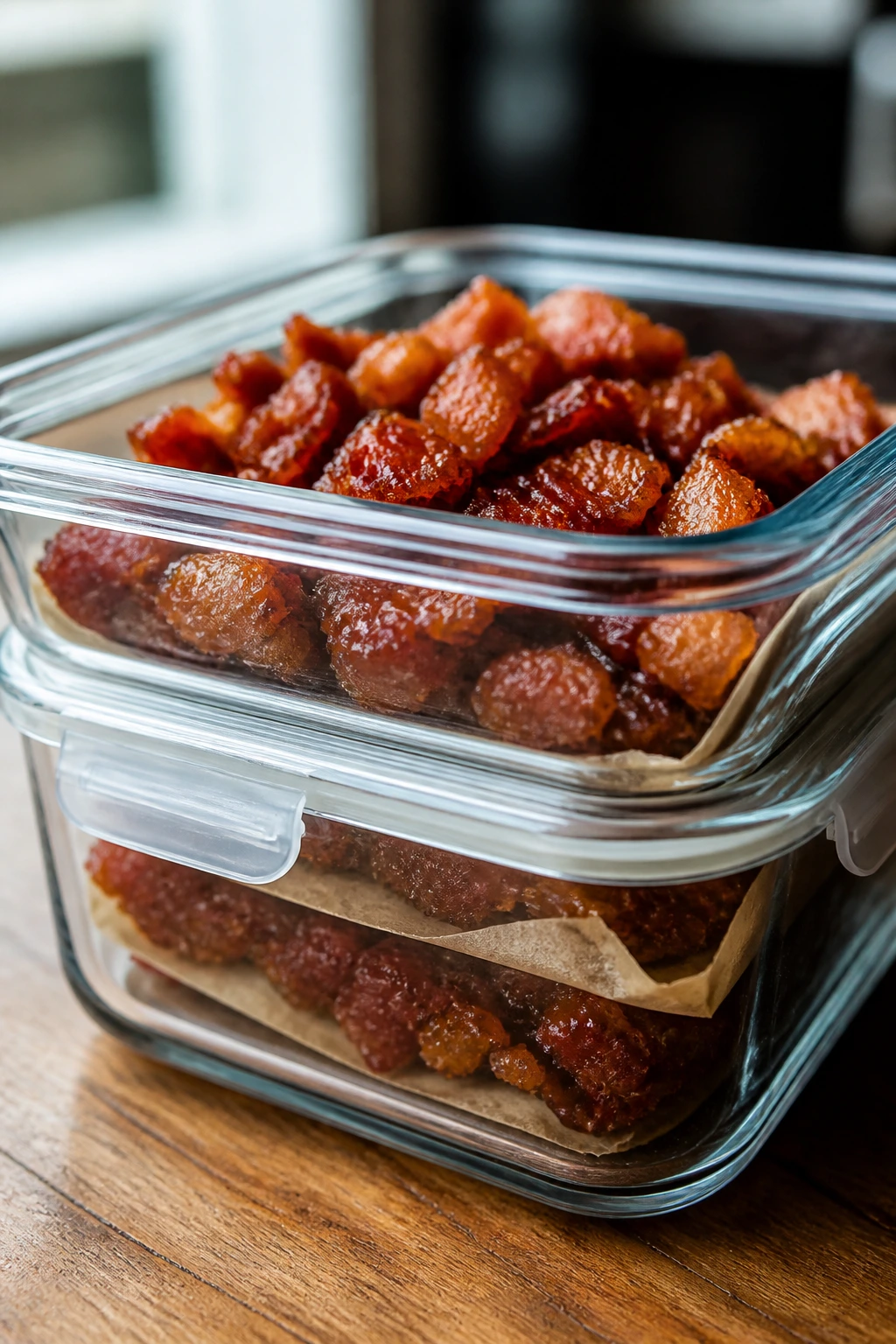
For the fridge, tuck the cooled crumbles into an airtight container with a small piece of parchment between layers if you stacked them. They keep for 3 to 4 days. The glaze may soften a little in the cold, but the flavor stays good, and a quick reheat brings back the edge. If you are using them on eggs or potatoes, you can also warm a spoonful in a dry skillet for 30 to 45 seconds over medium-low heat.
For the freezer, spread the crumbles on a parchment-lined tray and freeze them in a flat layer first. Once they are firm, move them to a freezer bag or airtight container. They will keep for up to 2 months. This method keeps the pieces from turning into one solid block, which matters more than people expect once bacon bits are involved.
Reheating works best in a 350°F oven for 4 to 6 minutes on a parchment-lined tray. A toaster oven does the same job in smaller batches. The microwave is faster, but it softens the glaze and makes the bacon a little limp, so I only use it if the bacon is going straight into scrambled eggs or a casserole where texture is no longer the main event.
If you want to make this ahead for brunch, cook the bacon the day before, cool it fully, and store it uncovered for a short while so the steam leaves the surface before sealing it up. Then reheat briefly in the oven just before serving. The glaze will not be quite as brittle as it was the first minute out of the oven, but it will still taste right.
Questions People Ask About Glazed Bacon
Can I use regular-cut bacon instead of thick-cut?
Yes, and it will still taste good. Regular-cut bacon just finishes faster, so start checking it about 3 to 4 minutes earlier than the recipe window and pull it as soon as the edges look caramelized. It gives you smaller, crisper crumbles, which some people prefer for salads.
Do I have to use the oven, or can I make this in a skillet?
You can make it in a skillet, but the sugar needs more attention because the heat is direct. If you go that route, keep the burner at medium-low, add the glaze near the end, and stir or turn the bacon often so the sugar does not scorch in one spot. I still think the oven is easier and cleaner.
Why did my brown sugar glaze turn hard and black?
The pan was too hot, the bacon was too close to the top heat source, or the sugar cooked too long after the moisture had already evaporated. Next time, keep the oven at 375°F, use parchment, and pull the tray when the glaze looks dark amber rather than deep brown. One minute matters here.
Can I make it less sweet?
Yes. Drop the brown sugar to 1/4 cup and keep the vinegar and black pepper in place. You will still get a glazed finish, but the bacon will taste more savory and smoky. If you want even less sweetness, skip the maple syrup and use only the brown sugar, water, and vinegar.
How do I keep the crumbles from sticking together?
Cool the bacon for 5 minutes, then crumble it while it is still warm enough to separate cleanly. If you let it cool all the way into a solid sheet, the glaze can make pieces cling together. A wire rack during cooling also helps.
Can I freeze it after cooking?
Yes. Freeze the cooled bacon in a single layer first, then pack it into a container or bag. It will keep for about 2 months, and you can reheat the crumbles straight from frozen in a 350°F oven for a few minutes. The texture is a little softer than fresh, but the flavor stays solid.
Will this work on turkey bacon?
It will, but the result is different. Turkey bacon has less fat, so the glaze clings a little differently and the final bite is drier. If you use turkey bacon, shorten the cooking time and watch the final glaze stage closely so it does not turn sticky in a bad way.
Sticky, Salty, and Gone Fast
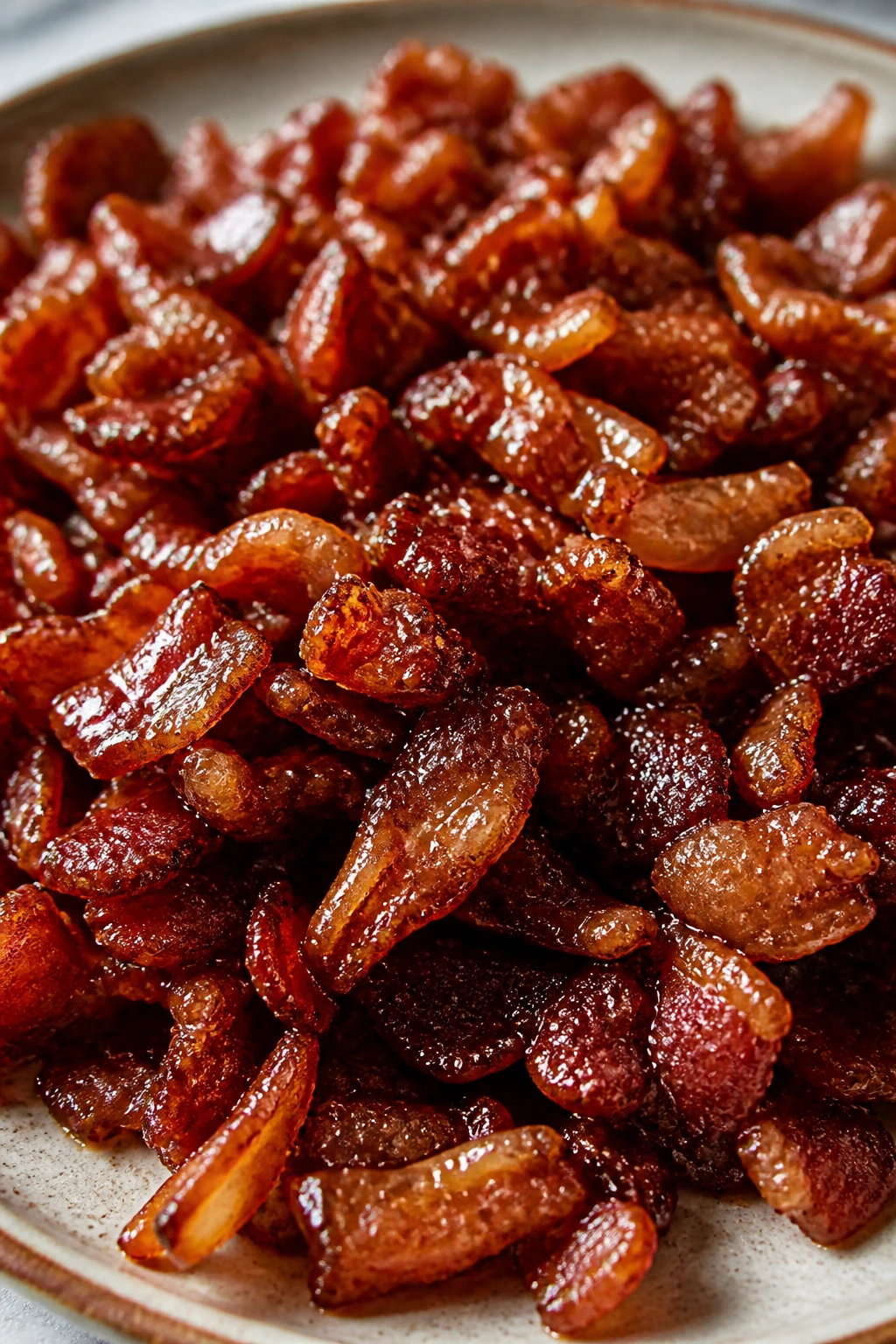
There is a reason this kind of bacon shows up at brunches and vanishes before the coffee cools. It is simple, but not plain. The brown sugar brings a dark sweetness that tastes like more effort than it actually took, and the bacon keeps enough chew to feel like food instead of garnish.
What I like most is that it does not try to be the center of the plate and still ends up there anyway. A spoonful over eggs changes breakfast. A scatter over greens changes lunch. A handful on roasted vegetables can rescue a side dish that was drifting toward forgettable.
Make one tray. Keep an eye on the last few minutes. Then let the crumbles cool just enough to handle, because that is when the glaze firms up and the whole thing turns into the sort of topping you start inventing excuses to use.
Juicy Crumbled Bacon with Brown Sugar Glaze — Recipe Card
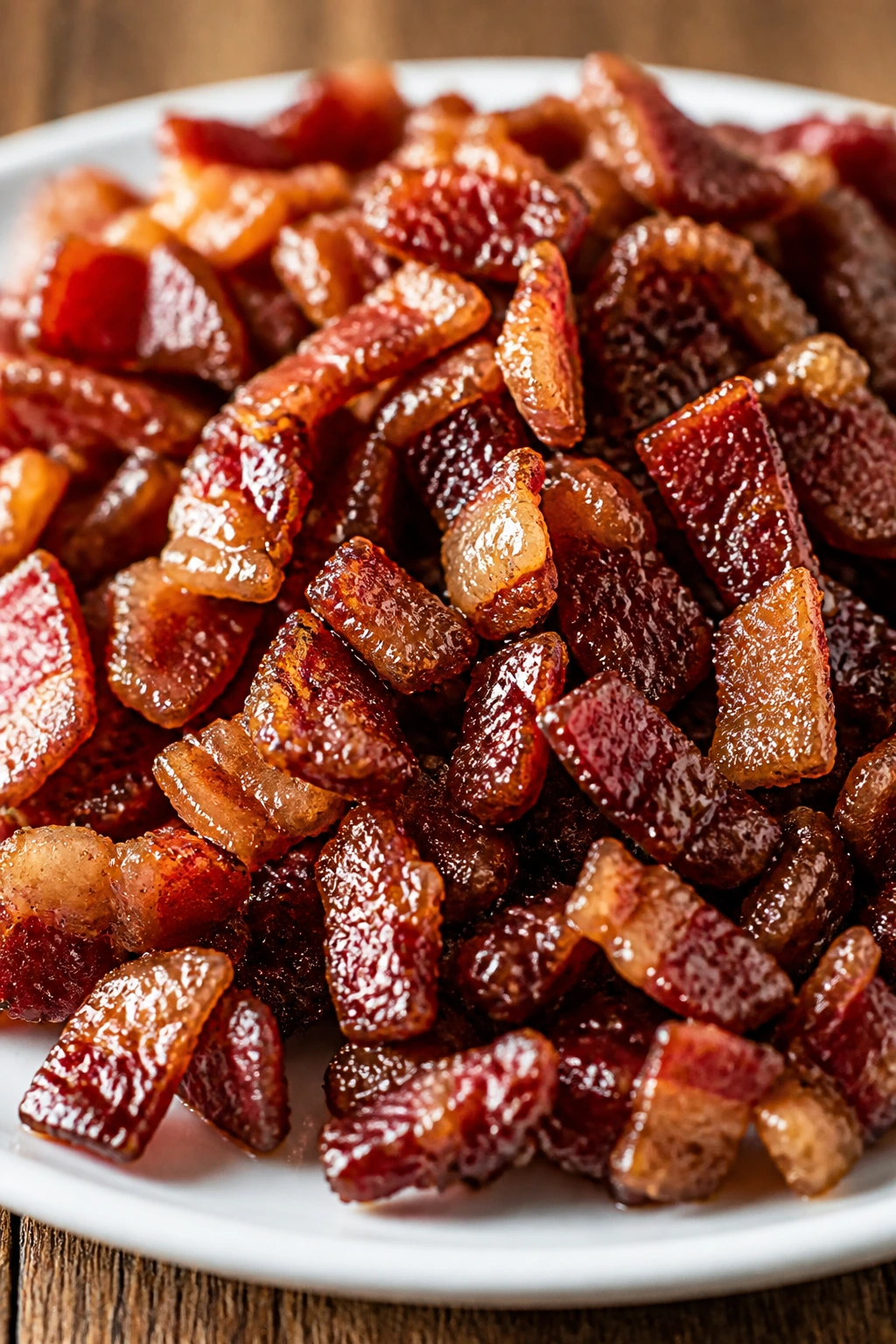
Recipe Name: Juicy Crumbled Bacon with Brown Sugar Glaze
Description: Thick-cut bacon gets brushed with a simple brown sugar glaze, then baked until the edges turn glossy and caramelized. Crumble it over eggs, salads, potatoes, or anything that needs a salty-sweet kick.
Prep Time: 10 minutes
Cook Time: 18 to 22 minutes
Total Time: 30 minutes
Course: Breakfast, Topping, Condiment
Cuisine: American
Servings: 8 servings
Calories: About 175 kcal per serving
Ingredients
For the Bacon:
- 1 pound thick-cut bacon, about 10 to 12 slices
For the Brown Sugar Glaze:
- 1/3 cup packed light brown sugar
- 1 tablespoon water
- 1 teaspoon apple cider vinegar
- 1 teaspoon pure maple syrup
- 1/2 teaspoon freshly ground black pepper
- 1/4 teaspoon smoked paprika
- 1 pinch cayenne pepper, optional
Instructions
-
Preheat the oven to 375°F (190°C) and line a rimmed baking sheet with parchment paper.
-
Stir together the brown sugar, water, vinegar, maple syrup, black pepper, smoked paprika, and cayenne if using.
-
Arrange the bacon in a single layer on the prepared sheet pan.
-
Bake for 8 to 10 minutes, until the bacon starts to render fat and the edges begin to curl.
-
Spoon or brush half of the glaze over the bacon, then bake for 4 to 5 minutes.
-
Spoon off excess fat if the pan looks flooded, then brush on the remaining glaze.
-
Bake for 3 to 5 minutes more, until the bacon is glossy, dark amber, and just crisp at the edges.
-
Transfer to parchment or a wire rack and cool for 5 minutes.
-
Crumble or chop into bite-size pieces and serve warm or at room temperature.
Notes: If your bacon is thin-cut, start checking a few minutes early. For extra crunch, cool the bacon on a wire rack instead of paper towels.