



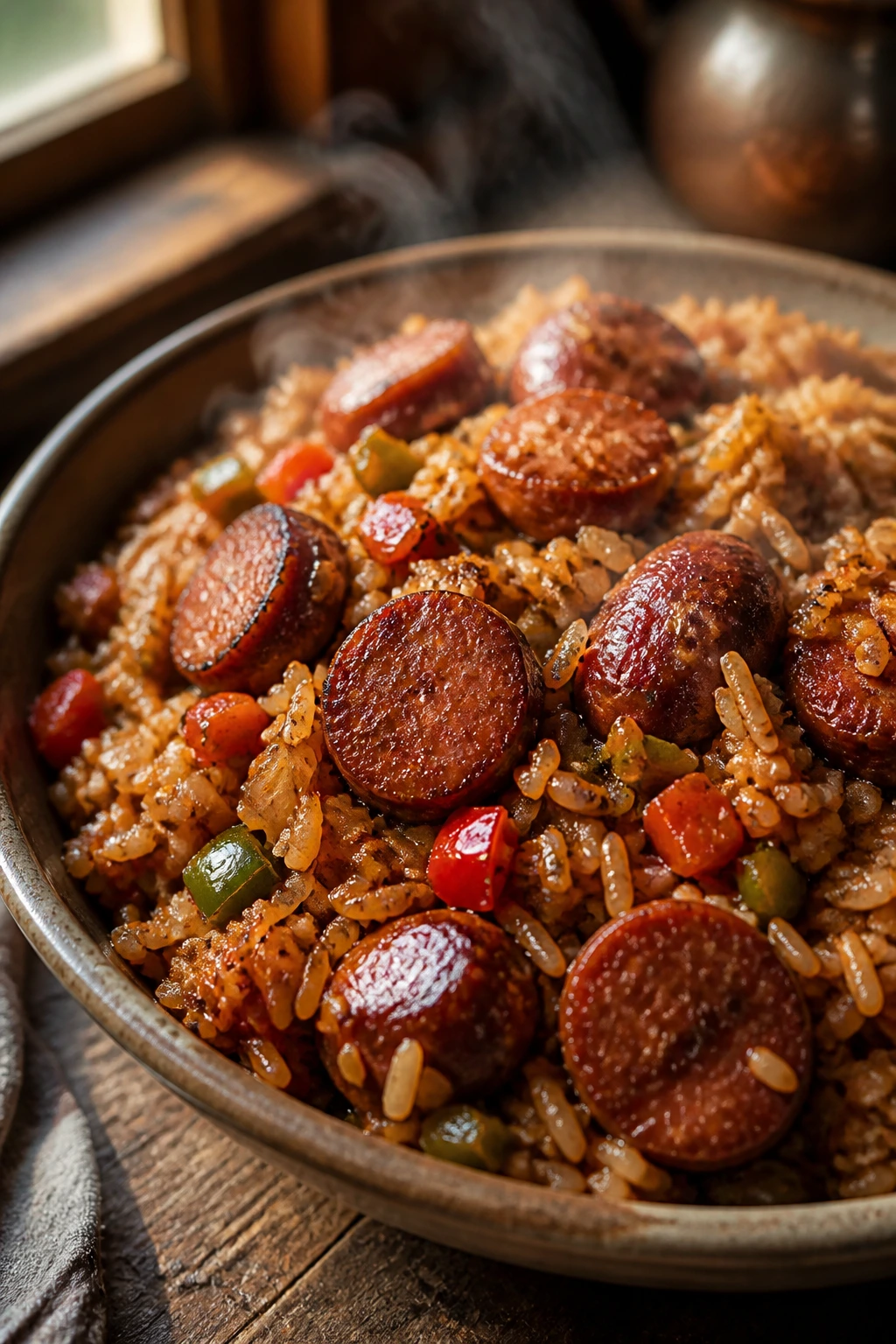
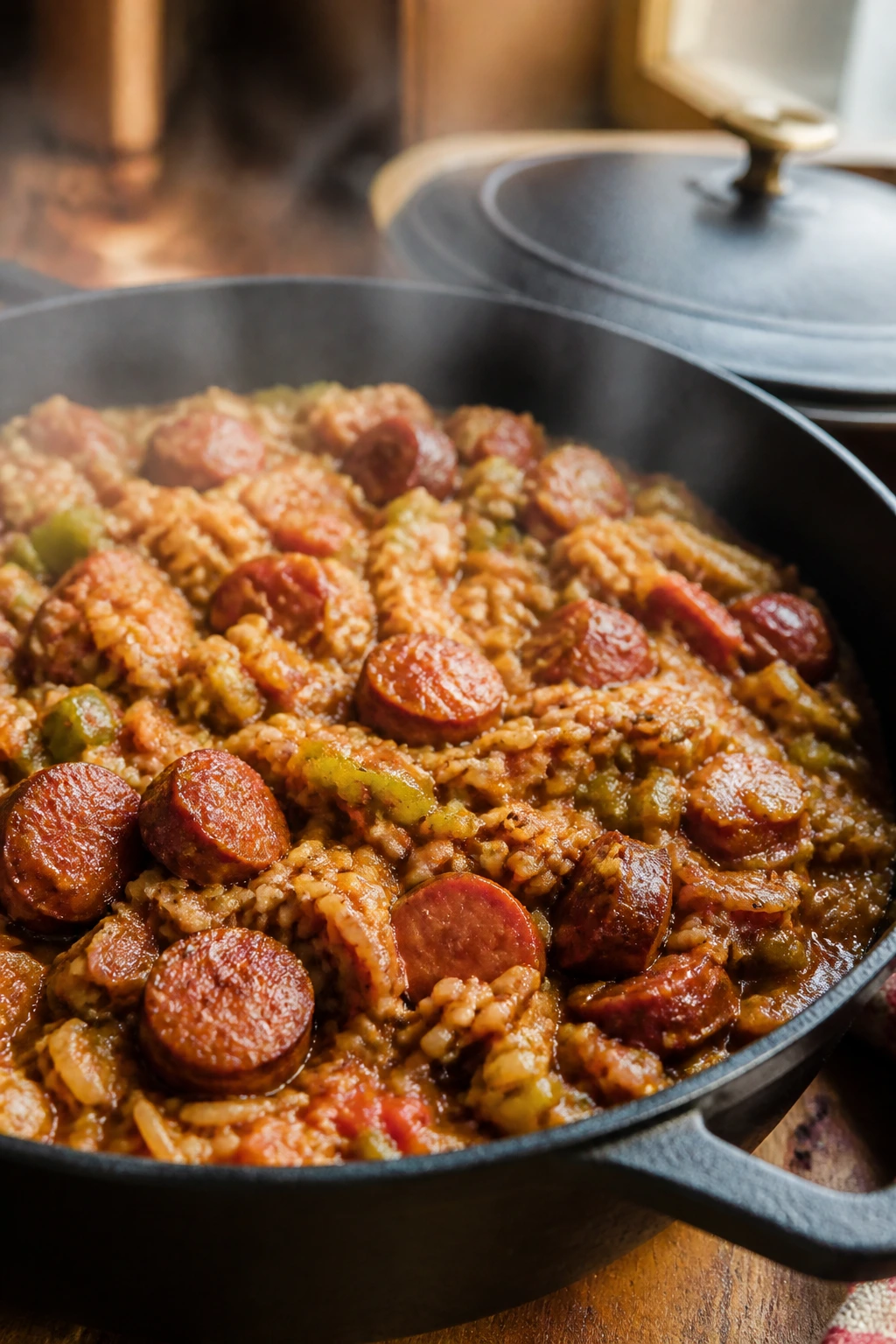
A good jambalaya should smell like onions hitting hot fat and rice waiting its turn. Tender Sausage Jambalaya with Brown Sugar Glaze does that, then slides in a dark, glossy sweetness that clings to the sausage without turning the whole pot sugary. The first bite should give you smoke, pepper, tomato, and a little caramel at the edges — not dessert, not barbecue, just a rounder, deeper savory bowl.
I’m suspicious of jambalaya recipes that treat the rice like an afterthought. That’s where things go wrong. The sausage can be excellent, the glaze can be shiny, and the whole thing can still collapse into mush if the rice is wrong, the heat is sloppy, or somebody keeps lifting the lid every four minutes like the pot is going to confess something.
This version leans Creole in the sense that tomatoes are in the pot, but the seasoning stays rooted in the Cajun side of the aisle: smoky, peppery, and built for a heavy Dutch oven. The brown sugar glaze is not there to make the dish taste sweet. It’s there to help the sausage brown harder, taste meatier, and carry a little lacquer into the rice. Small move. Big payoff.
Why This Bowl Works So Well
Smoky sausage does most of the heavy lifting.
Andouille or another smoked sausage brings salt, fat, and a little pepper heat, which means the pot starts with flavor already built in. That matters because jambalaya doesn’t want a shy protein.
The brown sugar glaze stays in the background.
Two tablespoons of brown sugar, a splash of vinegar, and Worcestershire sauce make a thin glaze, not a sticky barbecue coating. The point is to sharpen the edges of the sausage, then let the rice pull that flavor through the rest of the pot.
Long-grain rice keeps its shape.
This is not a place for medium-grain rice or the quick-cook stuff from the back of the pantry. Long-grain white rice stays separate, so you get distinct kernels instead of a soft paste.
One pot gives you better texture than a pile of separate pans.
The onions, peppers, celery, tomato paste, and spices all share the same fat and browned bits from the sausage. That fond at the bottom is where the good stuff hides.
Leftovers behave better than you might expect.
A rested bowl of jambalaya tastes more settled the next day, especially if you add a spoonful of broth while reheating. The rice drinks a little more flavor overnight. It’s one of the few dishes I actually like seeing again.
Brown Sugar in a Jambalaya Pot
Some cooks hear “brown sugar glaze” and assume the recipe is trying to sneak into dessert territory. That’s not what’s happening here. The sugar never gets a full, shiny-candy treatment; it only has enough time to melt, coat the sausage, and catch a little darkness around the edges before the vegetables go in.
That little sweetness matters because sausage, especially smoked sausage, can taste blunt if you just slice it and throw it into rice. Brown sugar softens the salt for a second, then the vinegar and Worcestershire yank it back into balance. The result is not sweet-salty in the cheap snack-food sense. It’s more like the sausage gets a polished coat and the tomatoes stop tasting so sharp.
Creole jambalaya usually makes room for tomatoes, while Cajun versions often skip them. This bowl sits in that tomato-friendly lane and uses the glaze as a bridge between the sausage fat and the acid in the tomatoes. I like that balance. It tastes like the pot had a plan.
One more thing. The glaze should look thin and shiny, not thick enough to sit in clumps on the sausage. If it starts looking like taffy, the heat is too high or the sugar sat on the flame too long. Pull it back. Fast.
Timing, Yield, and the Kind of Night It Fits
Yield: Serves 6
Prep Time: 20 minutes
Cook Time: 35 minutes
Total Time: 1 hour 5 minutes
Difficulty: Intermediate — the steps are straightforward, but the rice needs steady heat, a tight lid, and a little patience.
Chill/Rest Time: 10 minutes
Best Served: Warm, after the covered rest, with fresh scallions on top
This is the kind of dinner that likes a little structure. Chop the vegetables before the burner goes on. Rinse the rice before you start browning anything. Have the broth measured out. Once the sausage hits the pot, the pace gets faster, and you do not want to be hunting for the bay leaf while the glaze is trying to decide whether it wants to burn.
A heavy pot helps a lot here. Thin cookware gives you hot spots, which is how a few grains on the bottom turn from toasted to bitter while the top still needs five more minutes. If you only own a thinner Dutch oven, just lower the heat a bit sooner and listen for the simmer instead of staring at the clock like it owes you money.
What Goes in the Pot
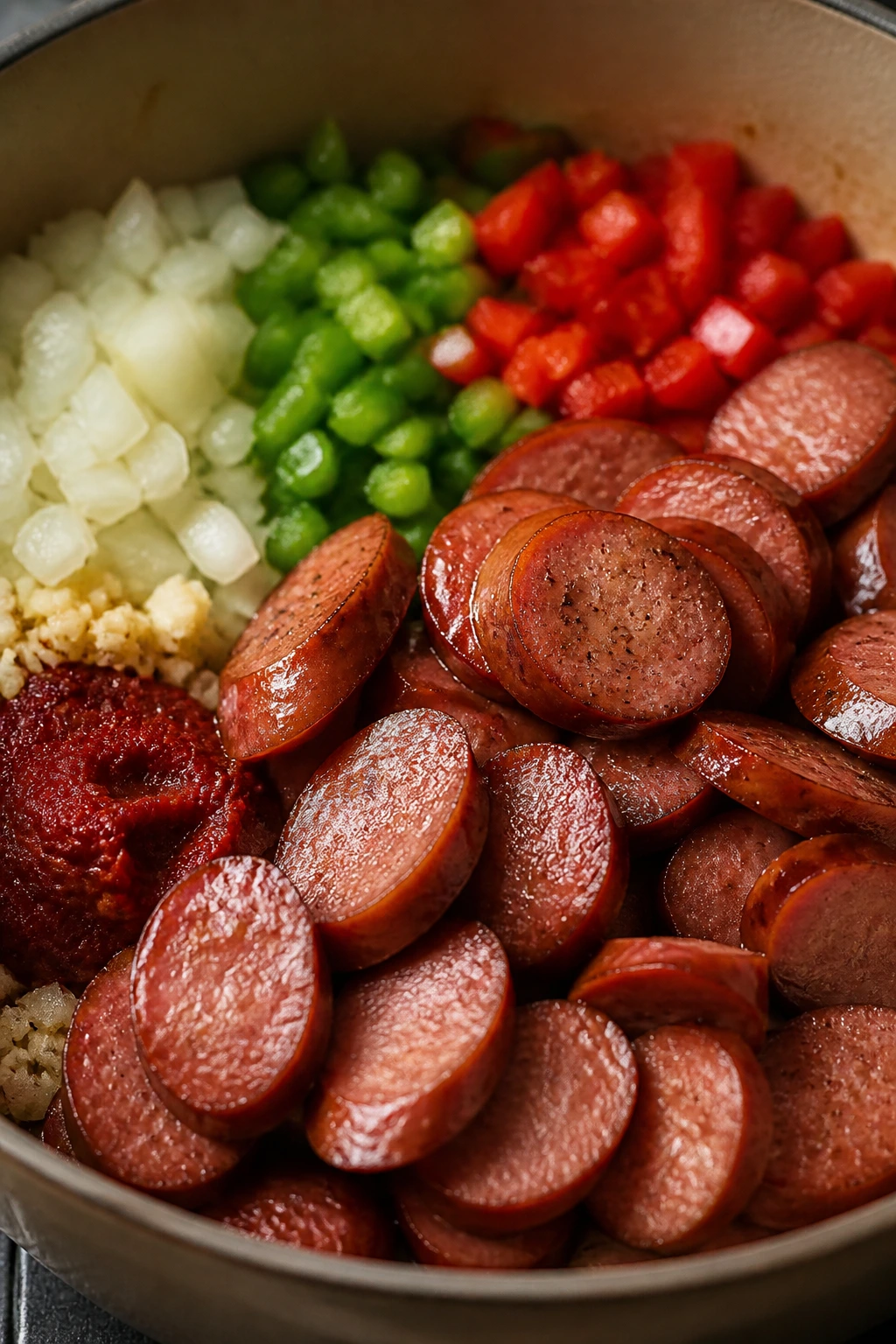
- 1 ½ pounds smoked andouille sausage, sliced into ½-inch rounds
- 1 tablespoon olive oil
- 2 tablespoons light brown sugar, packed
- 1 tablespoon apple cider vinegar
- 1 tablespoon Worcestershire sauce
- 1 tablespoon low-sodium chicken broth
- 1 large yellow onion, diced
- 1 green bell pepper, diced
- 1 red bell pepper, diced
- 3 celery stalks, diced
- 4 garlic cloves, minced
- 2 tablespoons tomato paste
- 1 ½ cups long-grain white rice, rinsed and drained
- 1 can (14.5 ounces) diced tomatoes, with juices
- 2 cups low-sodium chicken broth
- 2 teaspoons Cajun seasoning
- 1 teaspoon smoked paprika
- ½ teaspoon dried thyme
- ¼ to ½ teaspoon cayenne pepper, depending on how much heat you want
- 1 bay leaf
- 1 teaspoon kosher salt, plus more to taste
- ½ teaspoon black pepper
- 2 tablespoons unsalted butter
- 3 scallions, thinly sliced
- 2 tablespoons chopped fresh parsley
- Hot sauce, for serving, optional
Why Each Ingredient Pulls Its Weight
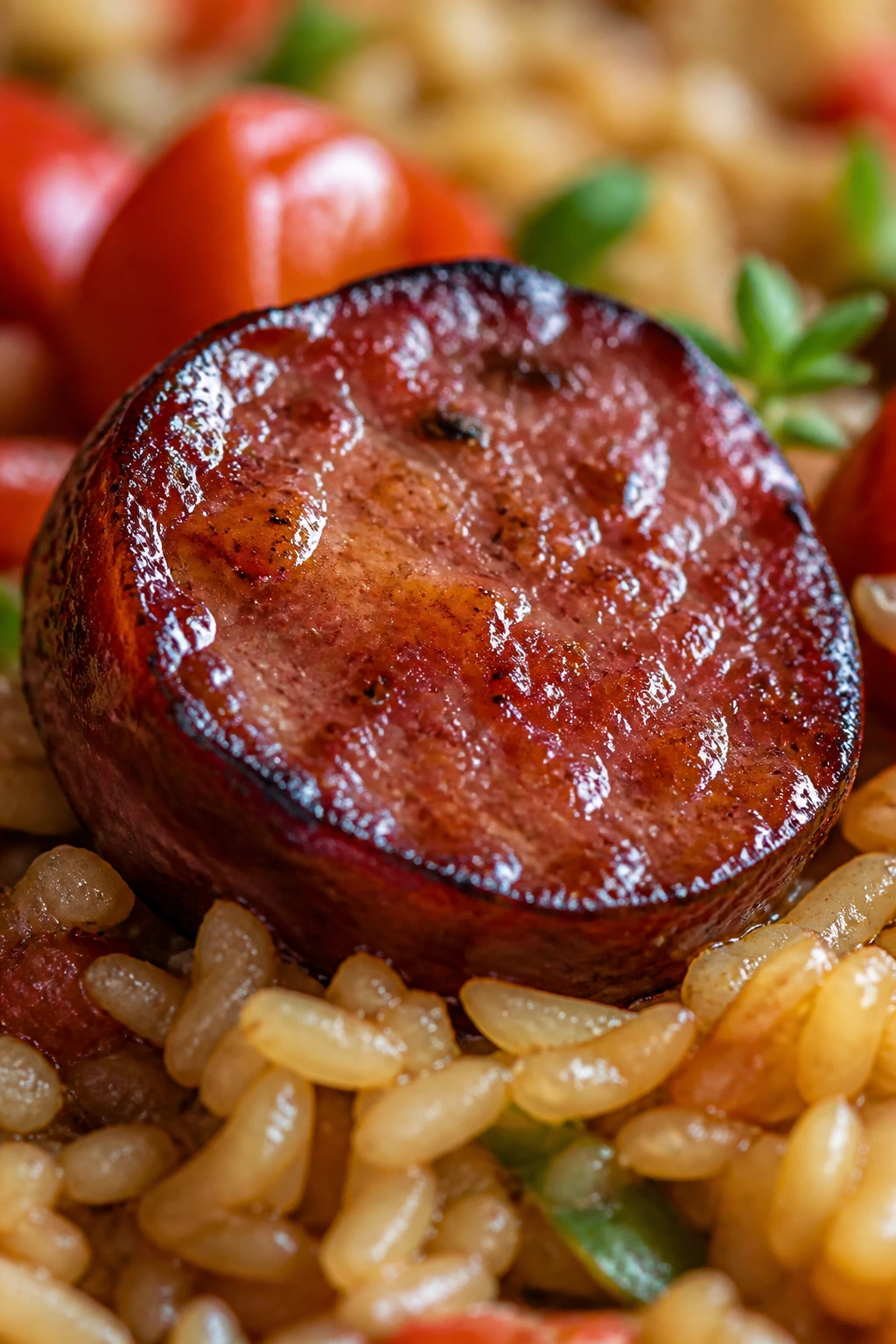
Sausage and Glaze
What to use: 1 ½ pounds smoked andouille sausage, sliced into ½-inch rounds, plus 2 tablespoons light brown sugar, 1 tablespoon apple cider vinegar, 1 tablespoon Worcestershire sauce, and 1 tablespoon low-sodium chicken broth.
That mix gives you the glazed sausage without drowning the pot in sweetness.
Preparation: Slice the sausage before the pan heats up, and pat the pieces dry with a paper towel. Dry sausage browns more cleanly, which is what you want before the glaze goes on.
Substitutions: Kielbasa is milder and a little rounder; turkey smoked sausage works if you want less fat, though you’ll want an extra splash of olive oil in the pan. If andouille is easy to find, use it — the pepper bite is worth it.
Tips: Add the brown sugar only after the sausage has browned. If it goes in too early, it can stick and scorch before the vinegar has a chance to loosen it into a glaze.
Rice, Tomatoes, and Broth
What to use: 1 ½ cups long-grain white rice, 1 can diced tomatoes with juices, 2 cups low-sodium chicken broth, and 2 tablespoons tomato paste.
This is the core of the pot and the part most people underthink.
Preparation: Rinse the rice until the water loses its cloudy look, then drain it well. You’re not washing away flavor; you’re removing excess surface starch so the grains stay separate.
Substitutions: Parboiled rice can work, but it needs a touch more liquid and sometimes a longer simmer. Brown rice is possible, though I wouldn’t call it the same recipe anymore — the timing changes enough that the sausage and rice stop finishing together.
Tips: Use low-sodium broth unless the sausage you bought is unusually bland. The sauce gets salt from the sausage, the Worcestershire, and the Cajun seasoning, so a salty broth can push the whole thing too far.
The Holy Trinity and Aromatics
What to use: 1 large yellow onion, 1 green bell pepper, 1 red bell pepper, 3 celery stalks, and 4 garlic cloves.
That’s the backbone of the pot, and the trinity should look generous, not stingy.
Preparation: Dice the onion, peppers, and celery into pieces close to the size of the sausage rounds. That way the bites feel even, and no single spoonful tastes like all rice or all veg.
Substitutions: If you only have one color of bell pepper, use it. The dish still works. If celery tastes too sharp to you, trim the leaves off and cut the stalks a little finer.
Tips: Don’t rush the sauté. The vegetables should look glossy and slightly soft before the garlic goes in, or the final pot will taste raw and a little harsh.
Seasonings and Finishing Ingredients
What to use: 2 teaspoons Cajun seasoning, 1 teaspoon smoked paprika, ½ teaspoon dried thyme, ¼ to ½ teaspoon cayenne, 1 bay leaf, 1 teaspoon kosher salt, ½ teaspoon black pepper, 2 tablespoons unsalted butter, 3 scallions, and 2 tablespoons parsley.
This is where the pot gets its shape.
Preparation: Measure the spices before you turn the heat up. Once the pot is hot, you want to move in one clean rhythm instead of opening cabinet doors with a spoon in one hand.
Substitutions: If your Cajun seasoning is salt-heavy, cut the added kosher salt back to ½ teaspoon and taste at the end. Hot sauce can stand in for part of the cayenne if you want a brighter heat.
Tips: The butter goes in at the end, not during the simmer. It smooths the rice and helps the glaze cling without making the pot greasy.
The Tools That Keep the Pot Honest
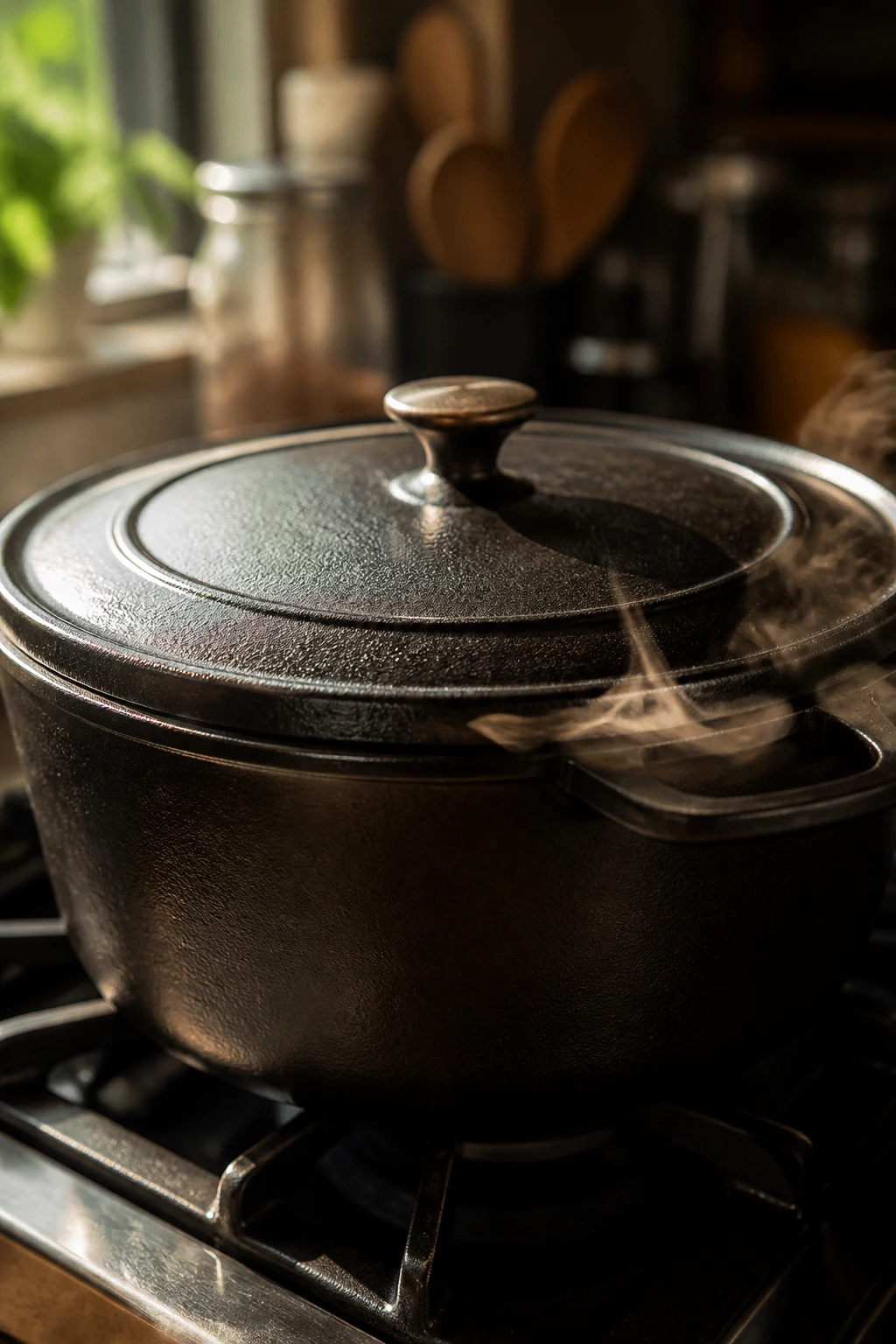
- 5- or 6-quart Dutch oven with a tight lid — The heavy base keeps the rice from scorching and gives you a wider surface for browning the sausage.
- Sharp chef’s knife — Slicing the sausage and dicing the vegetables goes faster, and the cuts look more even in the bowl.
- Cutting board with a damp towel underneath — A sliding board is annoying with any recipe, and it’s especially annoying when you’re moving fast.
- Wooden spoon or flat spatula — You want something sturdy enough to scrape the bottom when you deglaze, but not so sharp that it tears at the pot.
- Measuring cups and spoons — The rice-to-liquid ratio is not the place to wing it.
- Fine-mesh strainer — Optional, but it makes rinsing the rice much easier and keeps stray grains from slipping down the drain.
- Lid that seals well — If the lid rattles or leaks steam badly, wrap a clean kitchen towel around it for the last part of the simmer, keeping the towel ends tucked safely away from the flame.
A heavy pot matters more than a fancy one. If the base is thin, the bottom of the rice gets overcooked before the center finishes, and you spend the rest of dinner trying to pretend that toasted patch was intentional.
Browning the Sausage and Coating It in Glaze
Brown the sausage first:
-
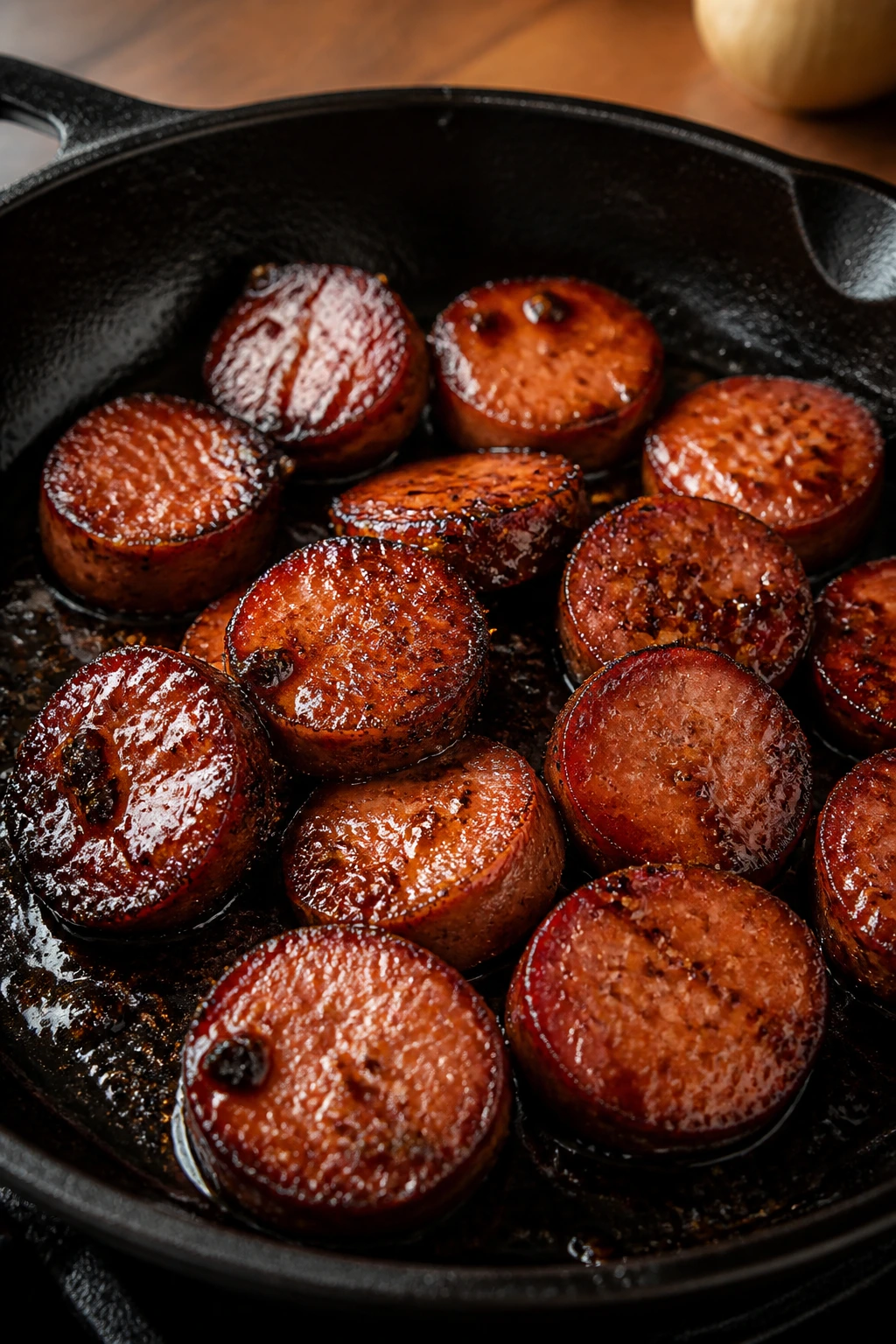
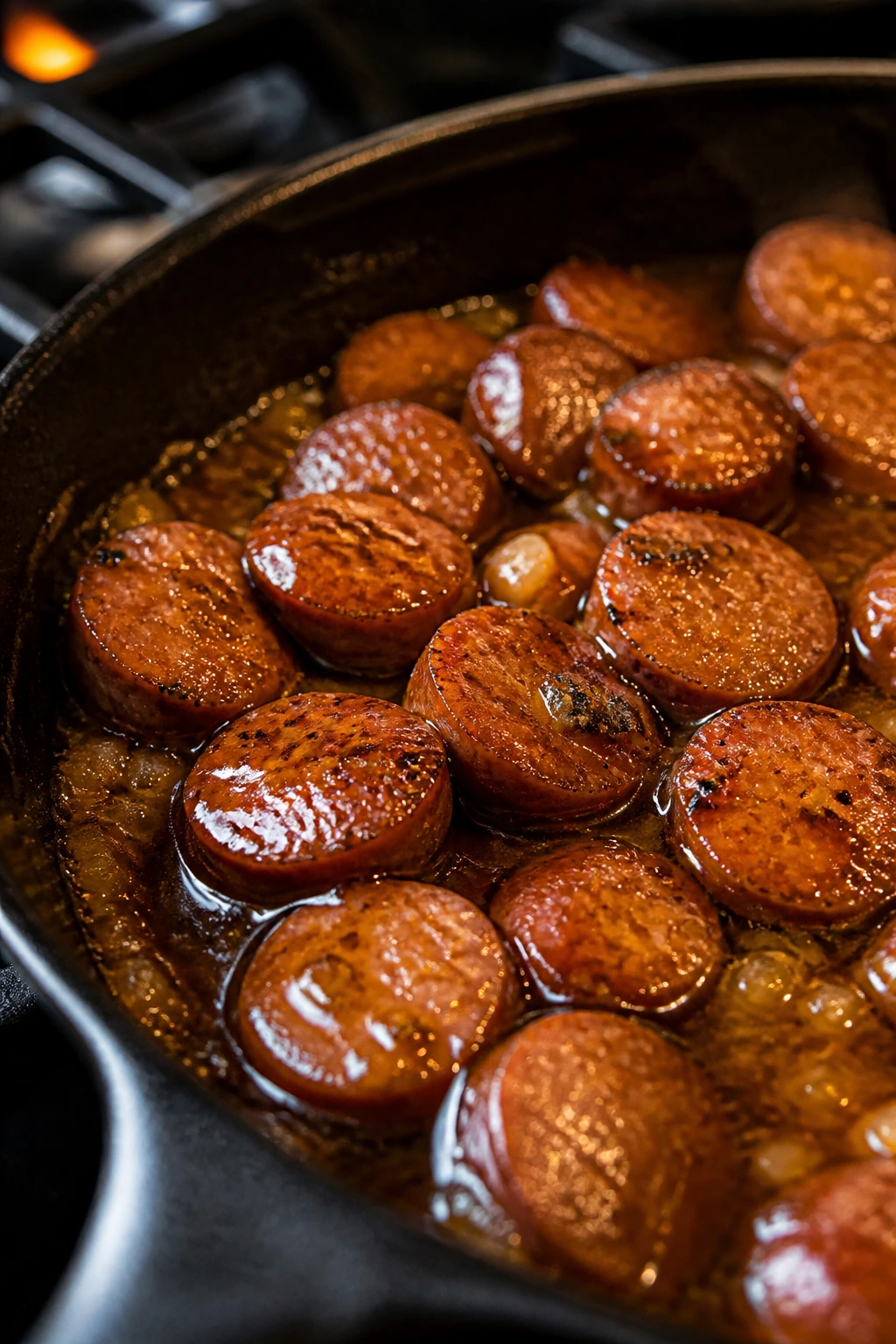
Heat the olive oil in a 5- or 6-quart Dutch oven over medium-high heat until it shimmers. Add the sausage in a single layer and cook for 2 to 3 minutes per side, until the edges are well browned and you can see little caramelized spots on the cut faces.
-
Reduce the heat to medium. Stir in the brown sugar, apple cider vinegar, Worcestershire sauce, and chicken broth. Keep the sausage moving for 30 to 45 seconds, just until the sugar melts and the sausage looks glossy and lightly lacquered. Do not walk away here; the glaze can go from shiny to scorched fast. Transfer the sausage and glaze to a plate, leaving the drippings in the pot.
The sound changes when the sausage is ready. At first it sizzles hard and fierce. Then the pan goes a little quieter, and the edges look a shade darker than the center. That’s the point where the glaze can do its job without fighting raw meat juices.
If your sausage gives off a lot of fat, great. You can leave most of it behind when you move the sausage to the plate. If the pot looks dry, don’t panic; the vegetables will sweat enough moisture to pick up the browned bits later.
Building the Rice Base Without Clumping
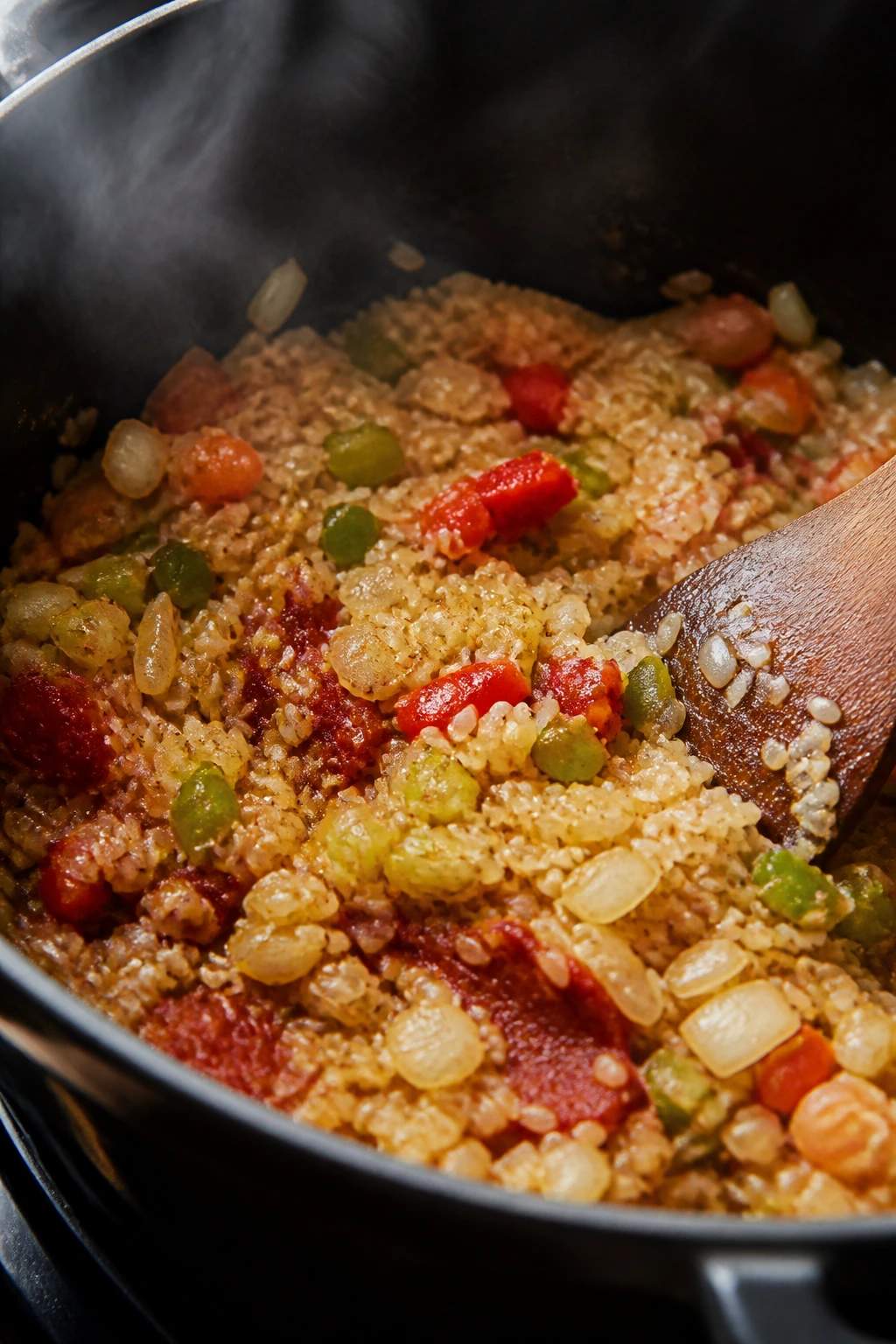
Make the vegetable foundation:
3. Add the onion, green bell pepper, red bell pepper, celery, and kosher salt to the pot. Cook over medium heat for 5 to 7 minutes, stirring now and then, until the vegetables soften and the onion turns translucent with a few golden edges.
-
Stir in the garlic, tomato paste, Cajun seasoning, smoked paprika, thyme, cayenne, and black pepper. Cook for 45 seconds to 1 minute, stirring constantly, until the tomato paste darkens a shade and the spices smell warm rather than raw.
-
Stir in the rinsed rice and cook for 1 minute, coating each grain in the fat and seasoning. Add the diced tomatoes with their juices, the 2 cups of chicken broth, and the bay leaf. Bring the pot to a gentle simmer, then nestle the sausage and any collected juices back into the pot.
This is the moment where a lot of people get nervous and start stirring too much. Don’t. The rice needs contact with the liquid, not constant agitation. One good stir to combine is enough. After that, let the pot settle into a steady simmer and trust the process.
The mixture should look loose at first. That’s fine. Rice swells as it cooks, and tomatoes carry their own liquid, so the pot always looks wetter at the start than it will at the finish. If you use the full amount of broth here, the finished texture should land tender and separate, not dry.
Simmering Until the Rice Turns Tender
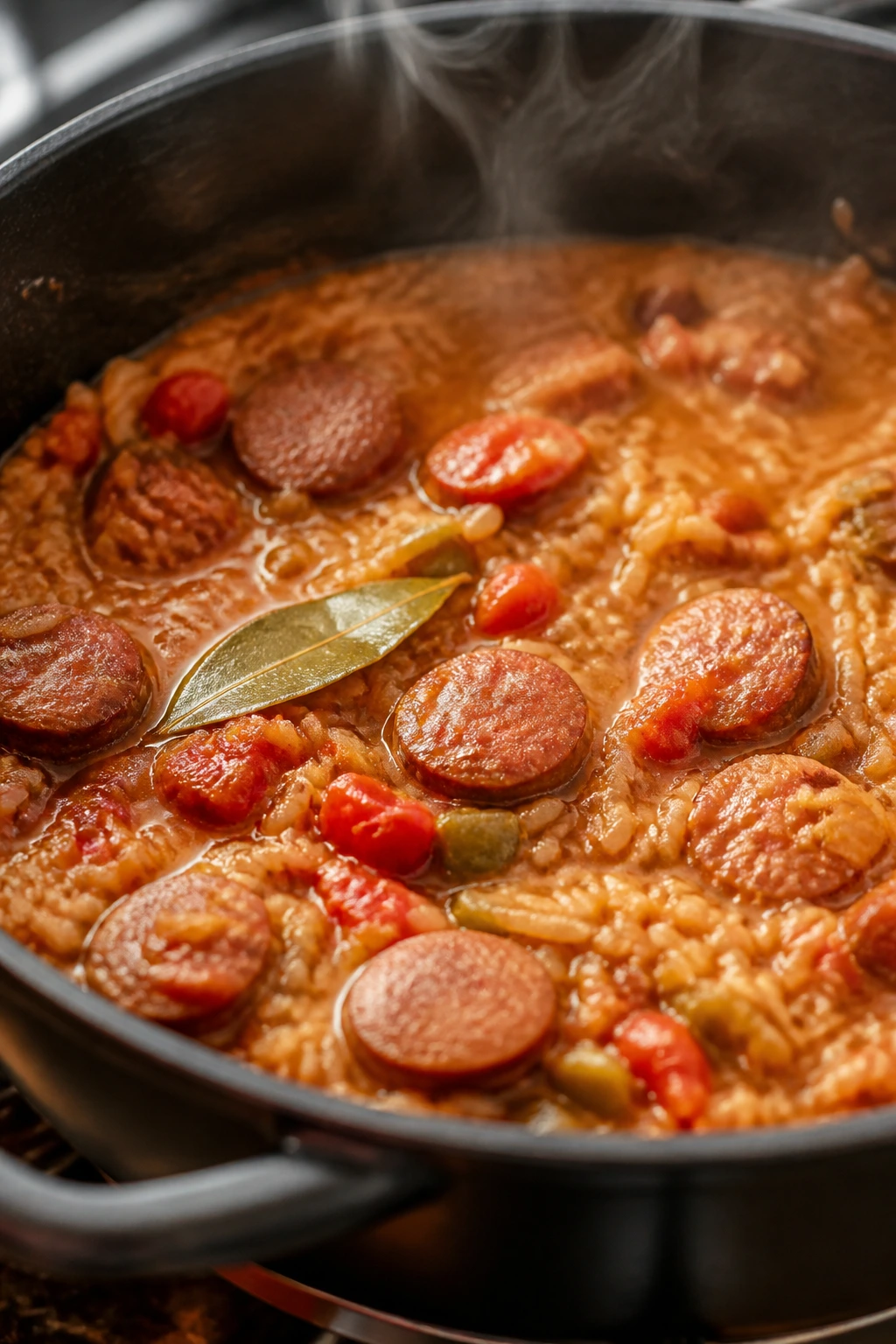
Cover and let the pot work:
6. Put the lid on, reduce the heat to low, and cook for 18 minutes without lifting the lid. The simmer should be soft and steady, not a hard boil. If your burner runs hot, slide the pot to a cooler part of the stove or use your smallest burner.
- After 18 minutes, lift the lid once and check the rice. If the grains are tender and the liquid has been absorbed, move on. If the top still looks a little wet but the bottom is not scorching, cover it again for 3 to 5 minutes. If the rice is still firm and the pot looks dry, add ¼ cup broth, cover, and cook a few minutes more. Do not keep stirring to “help” it along — that turns the grains into paste.
The first time you make this, you may be tempted to peek twice. Resist that urge. Every lift releases steam, and steam is part of the cooking liquid here. A sealed lid is not a minor detail; it’s the difference between tender grains and a pot you have to rescue with extra broth.
The rice is ready when the grains look plump, the liquid has disappeared, and a taste from the center gives you no chalky bite. If a little toasted patch forms on the bottom, that’s not a disaster. A faint crust can be useful. Bitter smoke, though, is not.
Letting the Pot Rest and Finishing the Top
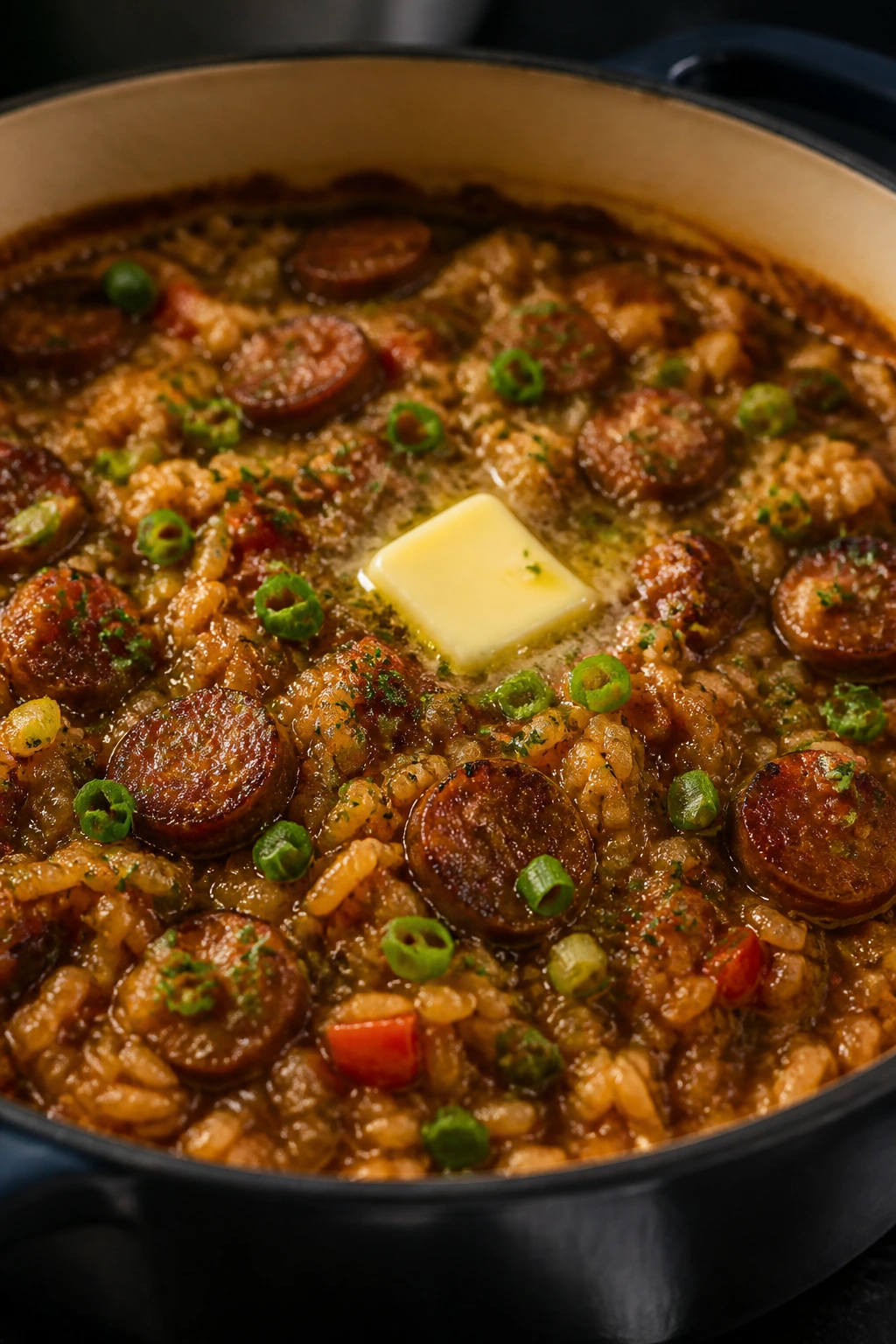
Finish the texture and flavor:
8. Turn off the heat and let the jambalaya rest, covered, for 10 minutes. Remove the bay leaf, fluff the rice gently with a fork, then fold in the butter, scallions, and parsley. Taste and add more kosher salt or a few dashes of hot sauce only if the pot needs it.
That rest does a lot of work. The rice finishes absorbing steam, the sausage settles back into the grains, and the whole pot loses the wet look that makes people think dinner is not ready yet. It is ready. Just let it sit.
The butter is not there to make the pot rich in a heavy way. It rounds off the edges. If you skip it, the dish is still solid, but the final spoonfuls feel a little sharper and drier. I like the smoother version better.
How to Serve It Without Fuss
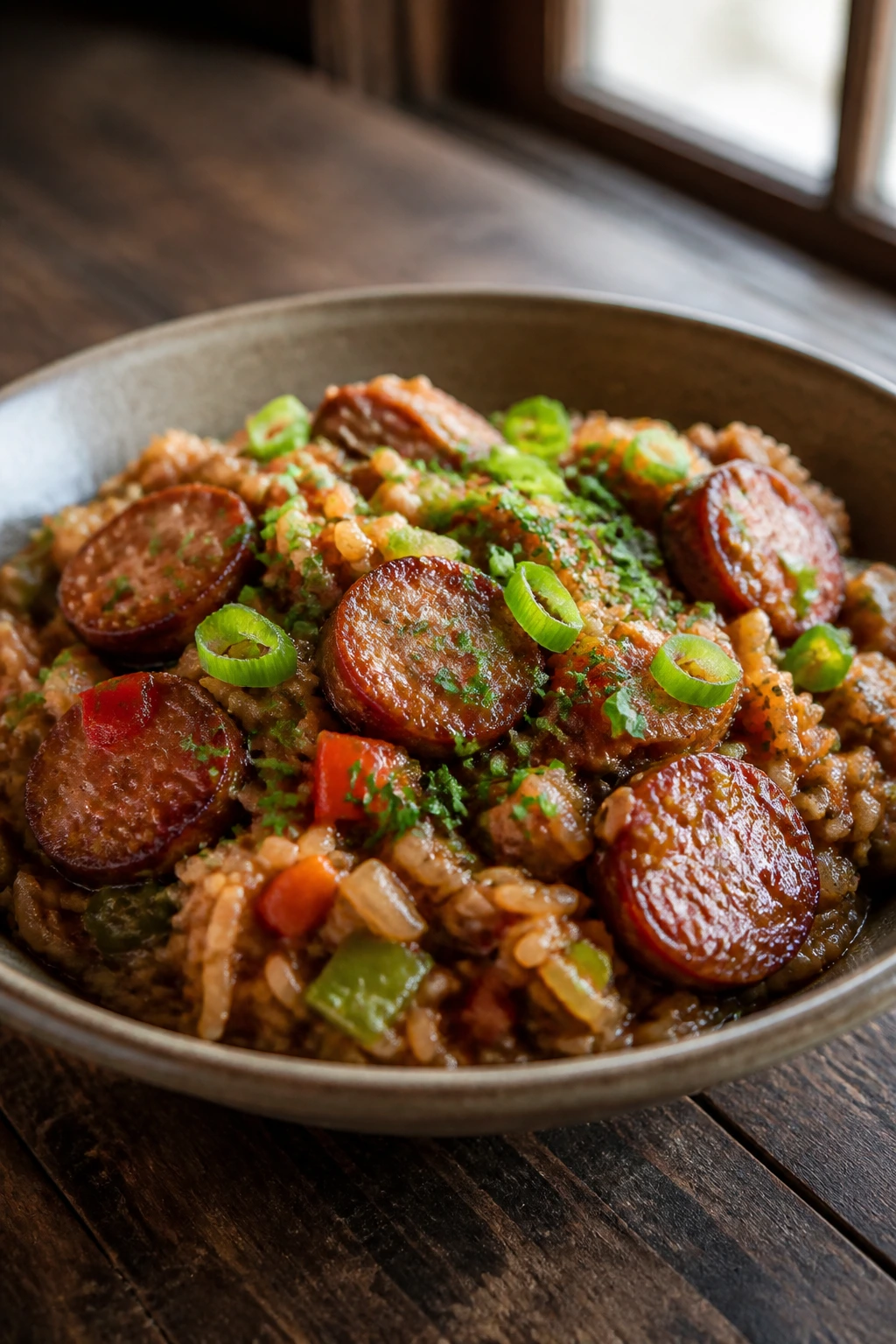
Presentation: Spoon the jambalaya into wide shallow bowls rather than deep ones. That gives the sausage coins room to show and keeps the rice from collapsing into a dense mound. A scatter of scallions and parsley on top makes the pot look lively, and a few drops of hot sauce across the surface give the bowl a little shine.
Accompaniments: Cornbread is the obvious partner, and I don’t think that’s a problem. A plain green salad with a sharp vinaigrette works even better than you might expect because the acidity cuts through the sausage glaze. Pickled okra, collard greens, or buttered green beans fit the plate without fighting the rice.
Portions: Figure about 1 ½ cups per person if you’re serving this as the main event. If you’re pairing it with cornbread and a salad, you can stretch it to 8 smaller portions. For a hungrier crowd, serve it in a shallow bowl with a second spoonful on top rather than making the first serving enormous.
Beverage Pairing: An ice-cold lager keeps the glaze and spice from feeling heavy. Unsweetened iced tea does the same job if you want something non-alcoholic. Sparkling water with a squeeze of lemon is the quiet option, and it works because it doesn’t try to compete with the sausage.
I like to keep the garnishes simple here. No cheese. No pile of fried onions. No dramatic restaurant drizzle. The pot already has enough going on, and the best serving move is to let the glossy rice and browned sausage speak for themselves.
Tips That Make the Pot Taste Deeper
Flavor Enhancement: Stir in a teaspoon of apple cider vinegar or a few drops of hot sauce right at the end. That tiny bit of acid wakes up the tomatoes and keeps the brown sugar from flattening the heat.
Time-Saver: Dice the onion, bell peppers, and celery up to a day ahead and store them in one sealed container. Keep the garlic separate so it stays sharp and doesn’t perfume the whole box.
Pro Move: Use a wide Dutch oven instead of a deep soup pot. More surface area means better sausage browning, less steaming, and a better shot at getting that little toasted edge on the rice without scorching it.
Cost-Saver: Buy the sausage in a rope or link instead of pre-sliced rounds. It usually costs less, and you can cut the slices yourself into the thickness you want. Thick coins hold their shape better in the pot.
Make-It-Yours: If you want a brighter bowl, add a handful of chopped scallions and parsley at the table rather than only in the pot. If you want more heat, add sliced pickled jalapeños or a sharper hot sauce instead of piling on more cayenne.
A small note on salt. Sausage brands are not all built the same. Some are heavy-handed and some barely season the meat at all. Taste after the rest, not before, and don’t be surprised if the final adjustment is a pinch of salt rather than a full spoonful.
Common Mistakes That Lead to Mushy or Dry Rice
-
Using the wrong rice. Medium-grain rice can go soft and sticky here, and instant rice turns to mush almost on contact. Long-grain white rice gives you the separate grains jambalaya needs, so buy that on purpose.
-
Stirring the pot too often. If you keep lifting the lid and scraping the spoon through the rice, you break the grains and release starch. The symptom is a pot that starts out promising and ends up dense on the bottom with a gluey top. Stir once to combine, then leave it alone.
-
Letting the glaze burn. Brown sugar is fast. If the heat is too high when it hits the sausage, the coating can turn bitter before the vinegar has a chance to loosen it. Keep the glaze thin and quick, and move on as soon as it looks glossy.
-
Adding too much liquid too early. It’s easy to look at the tomatoes and broth and think the pot looks dry, but rice changes the whole equation as it cooks. If you pour in extra broth before checking the texture near the end, you can end up with soup instead of jambalaya. Add liquid in small splashes only when the rice is still firm and the pot is genuinely dry.
-
Skipping the rest. Cutting into the pot the second the burner goes off is a rookie move. The rice is still steaming, and the top layer needs those 10 minutes to settle. Without the rest, the spoonfuls look loose and the flavor feels unfinished.
-
Under-seasoning because the sausage looks salty enough. Smoked sausage brings salt, yes, but rice and tomatoes mute it. If the final pot tastes flat, it usually needs a pinch more salt or a splash of hot sauce, not another tablespoon of brown sugar.
The annoying part is that each mistake has a different face. Mushy rice, dry rice, bitter sausage, flat flavor. Jambalaya punishes laziness in specific ways, which is why the recipe rewards a little attention in a way a casserole never will.
Variations Worth Trying
Smokier Cajun Pot
Use andouille sausage, keep the brown sugar at 2 tablespoons, and add an extra ½ teaspoon smoked paprika. This version tastes deeper and more pepper-forward, especially if you finish it with hot sauce at the table.
Kielbasa Weeknight Bowl
Swap in smoked kielbasa for the andouille and drop the Cajun seasoning to 1 ½ teaspoons if the sausage is already heavily seasoned. Kielbasa gives a rounder, gentler smoke, which is useful if you want the glaze to read a little sweeter and the spice to stay in the background.
Chicken-and-Sausage Version
Add 1 pound boneless, skinless chicken thighs, cut into 1-inch pieces, and brown them before the vegetables go in. The chicken soaks up the rice seasoning and makes the bowl feel fuller, but the sausage still gives the pot its shape.
Shrimp Finish
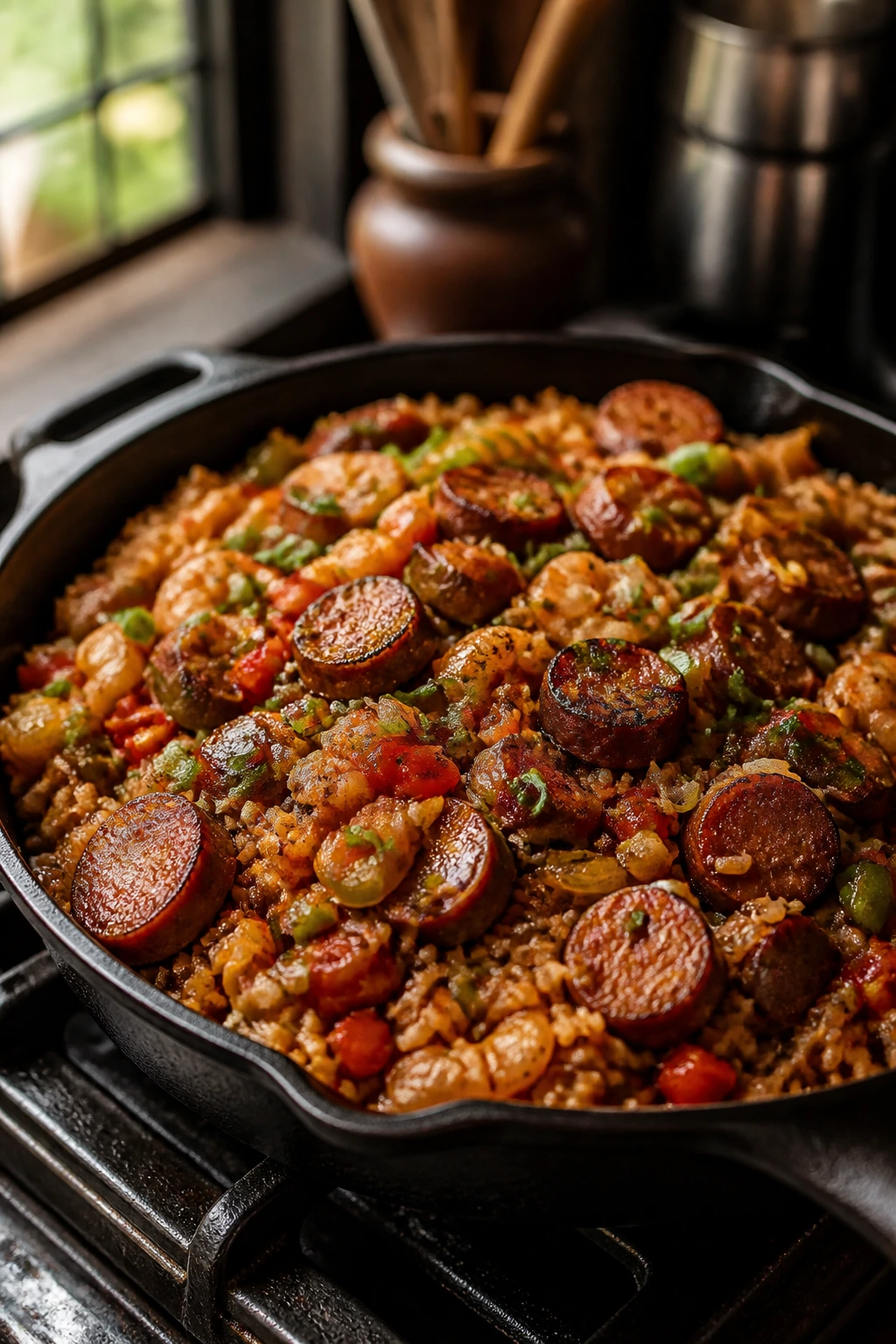
Cook the jambalaya as written, then fold in 1 pound peeled, deveined shrimp during the last 5 minutes of simmering. Shrimp cook fast, and if you add them too early they go rubbery and dull. This variation keeps the sausage front and center while adding a cleaner seafood note at the end.
Bolder Tomato Pot
Add an extra ½ cup diced tomatoes and another teaspoon of tomato paste if you want a more red, sauce-forward bowl. The rice will still stay separate, but the finished dish lands richer and a little more Creole in tone.
If you want to make this dish leaner, turkey sausage can step in without breaking the structure. You lose some of the fat that helps the glaze cling, so add a little more olive oil at the start and be generous with the parsley at the end. It’s not the same bowl, but it holds together.
Make-Ahead, Storage, and Reheating
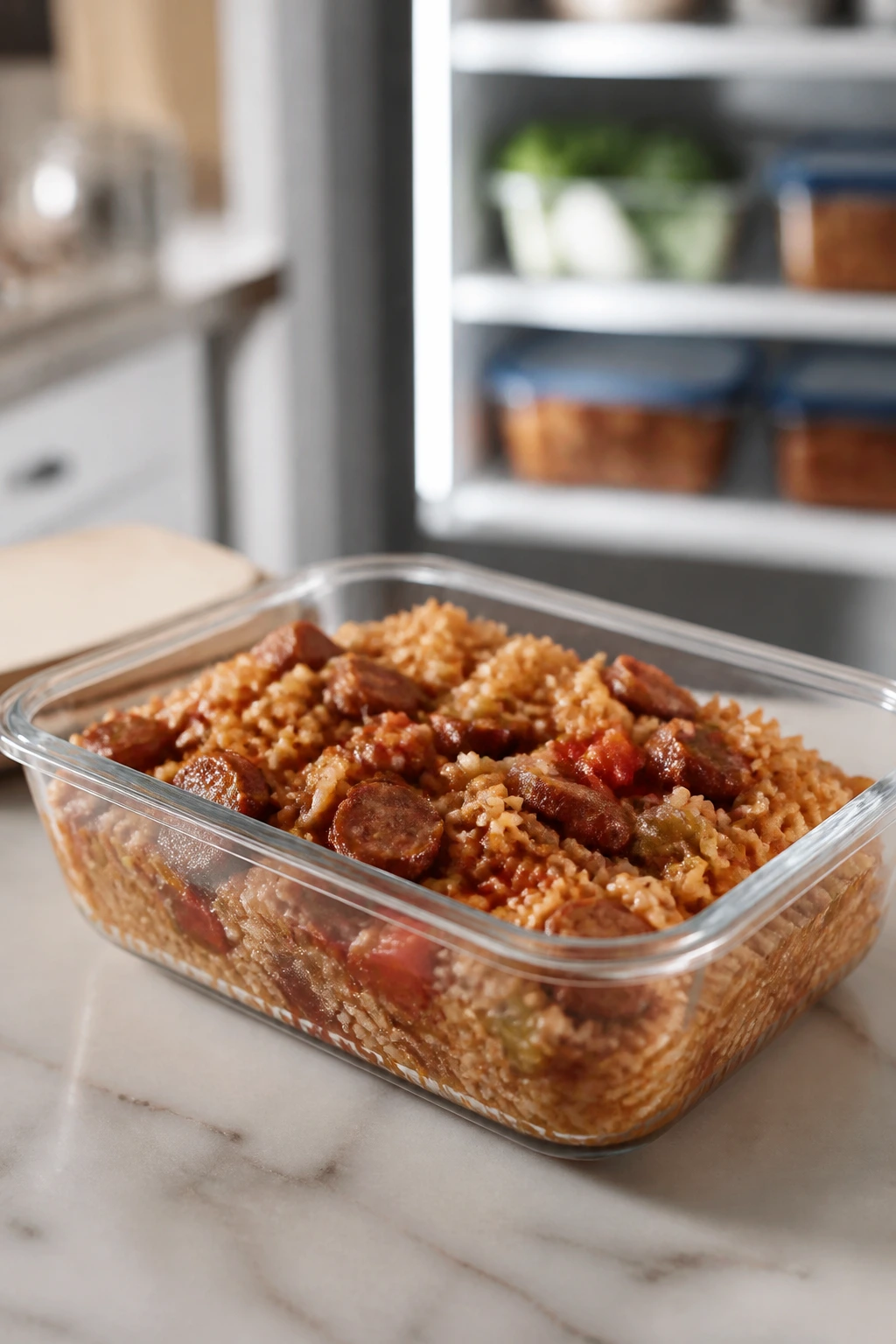
Jambalaya keeps well if you treat the rice with respect. Cool it quickly, don’t leave it sitting in the pot, and get it into shallow containers within 2 hours of cooking. Refrigerated leftovers hold for 3 to 4 days. Frozen, they keep for up to 2 months, though the rice softens a little when thawed, which is normal.
For the fridge, I like to portion it into single-serving containers while it’s still warm enough to move but not steaming hard. That makes weekday reheating easier and keeps you from reheating the whole pot when you only want one bowl. If you plan to freeze some, stop while the rice still has a touch of firmness. It will soften a little after thawing.
The best stovetop reheat is gentle: put the jambalaya in a skillet or small Dutch oven with 1 to 2 tablespoons of broth per cup of rice, cover, and warm it over low heat until hot. Stir once or twice, just enough to keep the bottom from sticking. On the microwave side, use a covered bowl and add a spoonful of broth before heating in short bursts, stirring between them.
It actually tastes deeper the next day. The rice catches more of the sausage glaze, the tomatoes calm down, and the whole dish feels more settled. What it loses in brightness, it gains in cohesion, so I usually save the extra scallions and hot sauce for after reheating to bring back a little lift.
Questions People Ask Before They Cook It
Can I use regular smoked sausage instead of andouille?
Yes, and it’s a smart move if you want a milder pot. Andouille brings more pepper and smoke, but a good smoked sausage still gives you enough fat and flavor to build the jambalaya properly. If the sausage is mild, just leave the cayenne on the higher end of the range.
Do I really need to rinse the rice?
You don’t have to, but I strongly prefer it here. Rinsing removes the powdery starch that makes the grains cling together, and jambalaya tastes better when each kernel stays separate. If you skip rinsing, reduce stirring and watch the liquid closely, because the pot will thicken faster.
Can I make this in an Instant Pot or slow cooker?
You can, but the texture changes. I would still brown the sausage and make the glaze on the sauté setting first, then move on with the rest of the ingredients. A slow cooker works for the simmering part, but rice in a slow cooker can turn softer than I like unless you’re paying very close attention near the end.
What if the rice is still crunchy after the cooking time?
Add ¼ cup broth, cover, and keep it on low for 3 to 5 more minutes. Crunchy rice usually means the lid leaked steam, the heat was too low, or the pot needed just a little more liquid. Don’t panic and don’t stir hard; more steam, not more stirring, is the fix.
What if the jambalaya turns out too wet?
Take the lid off and let it sit on very low heat for a few minutes, gently fluffing once or twice. If the top is done but the bottom is loose, the pot probably had too much liquid for your stove. Next time, hold back a splash of broth and add it only if the rice still looks dry near the end.
Can I make it less sweet?
Yes. Drop the brown sugar to 1 tablespoon and keep the vinegar and Worcestershire the same. You’ll still get the lacquered sausage effect, but the sugar will step out of the way and let the spices show more.
Can I freeze leftovers without wrecking the rice?
Absolutely, but freeze them in flat, shallow containers so they thaw evenly. When you reheat, add a spoonful of broth for each cup of jambalaya and cover the dish so the rice can steam back to life. The texture won’t be identical to day one, but it stays good enough that I don’t mind reaching for it later.
What’s the easiest way to keep the bottom from scorching?
Use a heavy pot, keep the simmer low, and avoid stirring once the lid goes on. If your stove runs hot, move the pot to a smaller burner halfway through and check for aggressive bubbling through the lid edge. A little toast at the bottom is fine; a burnt smell means the heat needs to come down right away.
A Bowl Worth Keeping
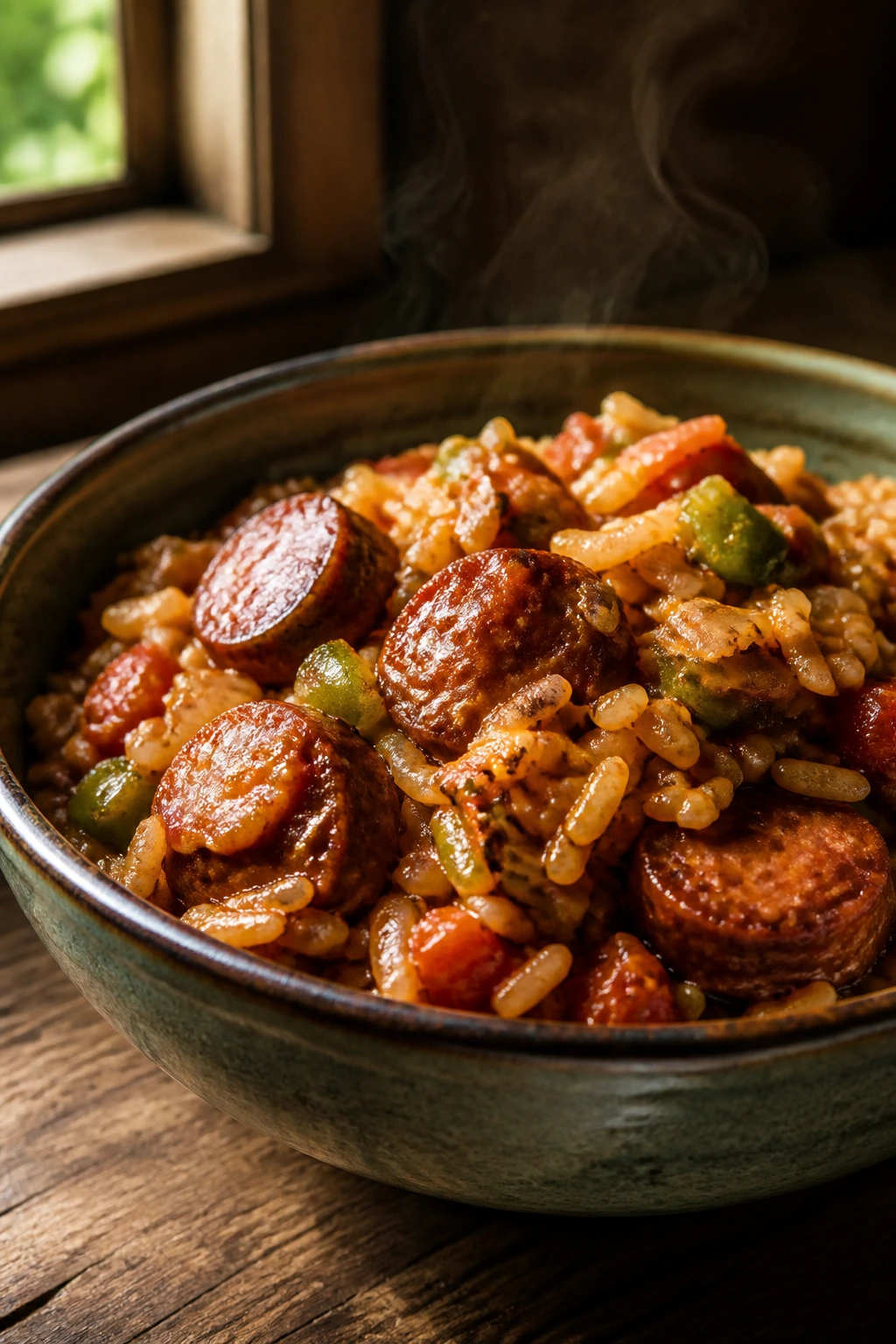
The nice thing about this jambalaya is that it doesn’t need tricks. It needs a heavy pot, a watchful hand, and enough confidence to let the sausage brown before the rice joins in. The brown sugar glaze is the smallest part of the recipe, and still it changes the whole mood of the bowl — just enough sweetness to round the smoke, just enough acid to keep the pot awake.
Make it once and you’ll understand why I’m fussy about the rice. Make it twice and you’ll start trusting the resting time, which is where the bowl really settles into itself. Keep a rope of smoked sausage, a can of tomatoes, and a bag of long-grain rice around, and dinner stops being a question mark.
Tender Sausage Jambalaya with Brown Sugar Glaze — Recipe Card
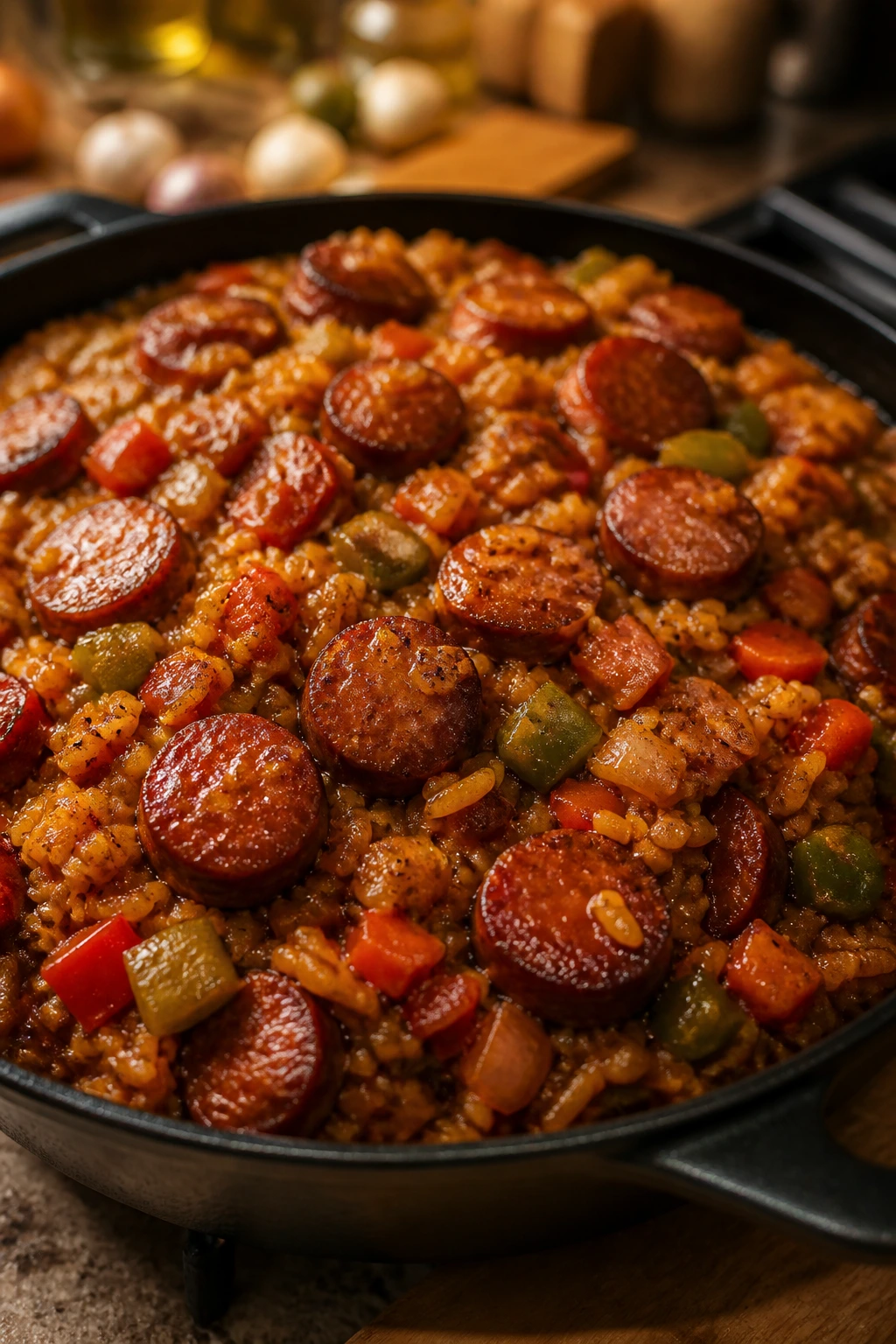
Recipe Name: Tender Sausage Jambalaya with Brown Sugar Glaze
Description: Smoky sausage, tender long-grain rice, and a thin brown sugar glaze come together in one pot with tomatoes, Cajun seasoning, and the holy trinity. The glaze stays subtle, coating the sausage with a glossy edge instead of turning the dish sweet.
Prep Time: 20 minutes
Cook Time: 35 minutes
Total Time: 1 hour 5 minutes
Course: Dinner, Main Course
Cuisine: Louisiana-inspired, Creole-style
Servings: 6 servings
Calories: About 430 kcal per serving
Ingredients
For the Sausage and Glaze:
- 1 ½ pounds smoked andouille sausage, sliced into ½-inch rounds
- 1 tablespoon olive oil
- 2 tablespoons light brown sugar, packed
- 1 tablespoon apple cider vinegar
- 1 tablespoon Worcestershire sauce
- 1 tablespoon low-sodium chicken broth
For the Jambalaya Base:
- 1 large yellow onion, diced
- 1 green bell pepper, diced
- 1 red bell pepper, diced
- 3 celery stalks, diced
- 4 garlic cloves, minced
- 2 tablespoons tomato paste
- 1 ½ cups long-grain white rice, rinsed and drained
- 1 can (14.5 ounces) diced tomatoes, with juices
- 2 cups low-sodium chicken broth
- 2 teaspoons Cajun seasoning
- 1 teaspoon smoked paprika
- ½ teaspoon dried thyme
- ¼ to ½ teaspoon cayenne pepper
- 1 bay leaf
- 1 teaspoon kosher salt, plus more to taste
- ½ teaspoon black pepper
- 2 tablespoons unsalted butter
- 3 scallions, thinly sliced
- 2 tablespoons chopped fresh parsley
- Hot sauce, for serving, optional
Instructions
-
Heat the olive oil in a 5- or 6-quart Dutch oven over medium-high heat. Add the sausage and brown it for 2 to 3 minutes per side.
-
Reduce the heat to medium. Stir in the brown sugar, apple cider vinegar, Worcestershire sauce, and chicken broth, and cook until the sausage is glossy. Transfer the sausage and glaze to a plate.
-
Add the onion, bell peppers, celery, and salt to the pot. Cook for 5 to 7 minutes, until softened and lightly golden.
-
Stir in the garlic, tomato paste, Cajun seasoning, smoked paprika, thyme, cayenne, and black pepper. Cook for about 1 minute.
-
Stir in the rice and cook for 1 minute. Add the diced tomatoes with juices, chicken broth, and bay leaf. Bring to a gentle simmer, then return the sausage and juices to the pot.
-
Cover, reduce the heat to low, and cook for 18 minutes without lifting the lid.
-
Check the rice. If needed, cook 3 to 5 minutes more, or add ¼ cup broth if the pot looks dry before the rice is tender.
-
Turn off the heat and rest, covered, for 10 minutes. Remove the bay leaf, fluff with a fork, and fold in the butter, scallions, and parsley. Taste and adjust seasoning before serving.
Notes:
- If your sausage is salty, cut the added kosher salt to ½ teaspoon and taste at the end.
- A tight lid matters here; steam is part of the cooking liquid.
- Add hot sauce at the table if you want the glaze to feel sharper and less sweet.