



A hot skillet does something to sausage that the oven never quite manages: it pulls the fat to the surface, darkens the edges, and turns each coin into something crisp enough to crack when you bite into it. That is the whole trick behind a Crispy Sausage Skillet with Brown Sugar Glaze. The sugar is there, sure. But it’s not there to make candy. It’s there to catch on the browned bits, glaze the onions, and give the sausage a sticky shine that tastes deeper than plain sweetness.
The version I reach for uses fully cooked smoked sausage or kielbasa, because that gives you a real shot at crisp edges without babysitting a raw link through a long cook. A quick hit of Dijon, apple cider vinegar, and soy sauce keeps the brown sugar from flattening into a one-note glaze. That sharp-salty backbone matters. Without it, the pan can taste like it’s wearing cologne.
I like this kind of dinner when the fridge is half-full and I still want something that feels deliberate. A skillet of sausage, onions, peppers, and a brown sugar glaze does that job without asking for a second pan or a complicated side dish. Spoon it over mashed potatoes, pile it into rice, or eat it with a hunk of bread and let the glossy bits at the bottom of the pan do the heavy lifting. They’re the best part anyway.
Why This Skillet Earns a Spot in the Rotation
-
Fast Browning: Fully cooked sausage only needs a few minutes per side in a hot skillet, so you get dark edges before the rest of dinner gets tired.
-
Sweet-Savory Balance: Brown sugar brings the gloss, but Dijon and cider vinegar keep the glaze from tasting flat or sugary.
-
One Pan, Real Cleanup: Onions, peppers, apple, and sausage all cook in the same skillet, which means fewer dishes and more flavor clinging to the pan.
-
Flexible Serving: The finished skillet works over rice, potatoes, noodles, cabbage, or straight from the pan with bread.
-
Built for Leftovers: The glaze tightens in the fridge and clings again when you reheat it, so tomorrow’s lunch doesn’t feel like a compromise.
-
Easy to Scale: Use one pound or two, keep the ratio the same, and the method still works. The skillet is forgiving as long as you don’t crowd it.
Why the Brown Sugar Glaze Clings Instead of Pooling
Brown sugar on its own is blunt. It melts, it bubbles, and if you’re not paying attention, it slides into the corner of the pan and sits there like syrup that missed the memo. The reason this glaze behaves better is simple: it has acid, salt, and rendered sausage fat working with it, not against it.
Heat Gives You the Browning You Actually Want
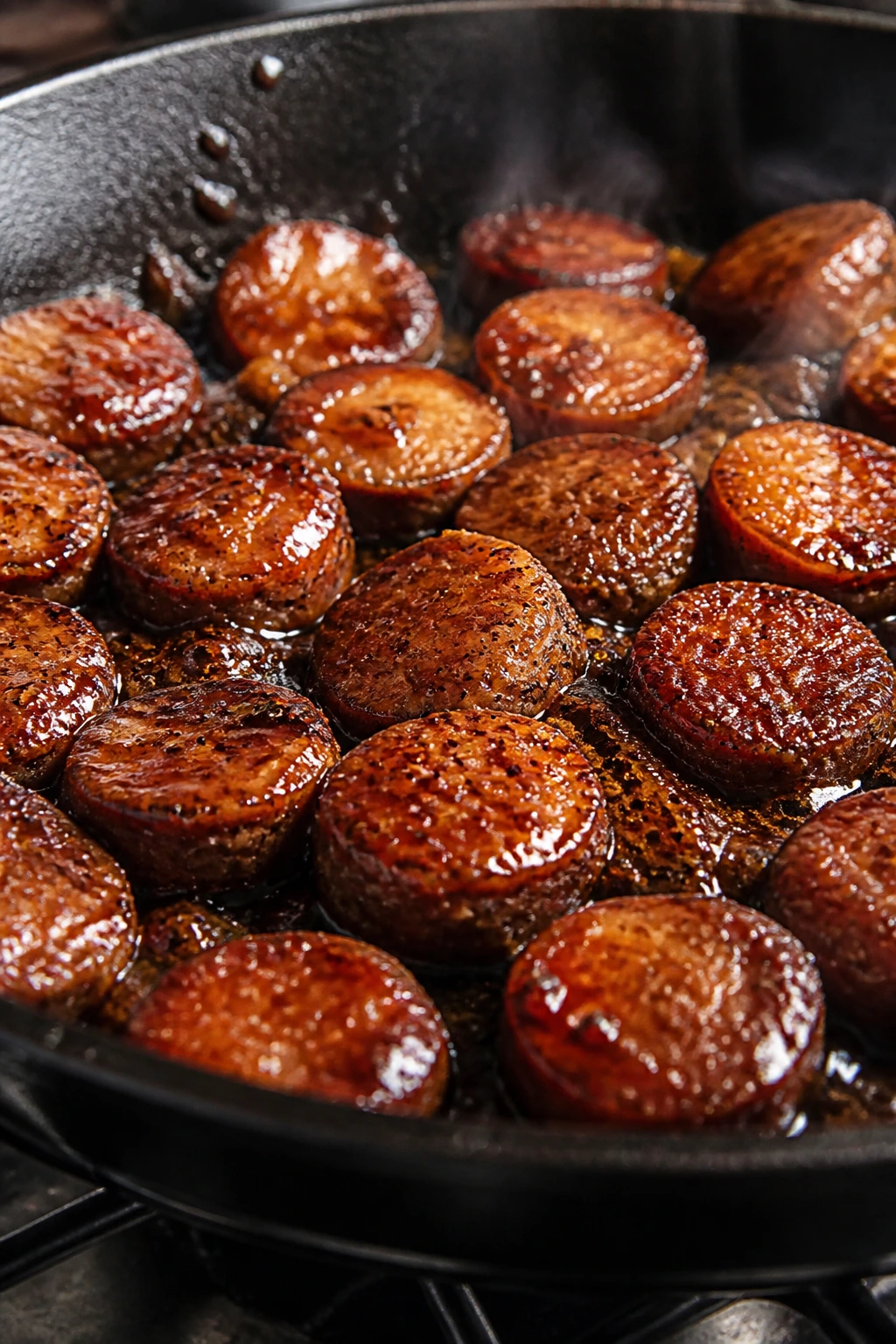
The sausage needs to go first, before the glaze. When the cut sides of the sausage hit a hot skillet, they release a little fat and brown in the same move. That browning is not decorative. It gives you the little dark spots that hold the glaze later. If you skip that step and rush straight to sauce, the whole dish tastes softer and less defined.
Acid Keeps the Glaze From Reading as Dessert
Apple cider vinegar is doing the work that plain brown sugar cannot. It brightens the sweetness, cuts through the pork fat, and gives the sauce a sharper finish that wakes up the onions. Dijon mustard helps too. It brings a little heat, a little tang, and enough body to keep the glaze from looking watery.
Fond Is the Real Flavor Driver
Once the sausage browns, those browned bits on the bottom of the pan matter. That’s fond. Fancy word, simple idea. When the glaze goes in, it loosens those bits and folds them back into the sauce, which is why the finished skillet tastes deeper than a quick stir-fry ever does. The glaze is not just coating the sausage. It is dragging the pan’s best flavors along with it.
Keep the heat at medium once the sugar hits the skillet. Hot enough for bubbling. Not so hot that the sugars turn bitter before the sausage gets a chance to shine.
Choosing Sausage That Actually Crisps
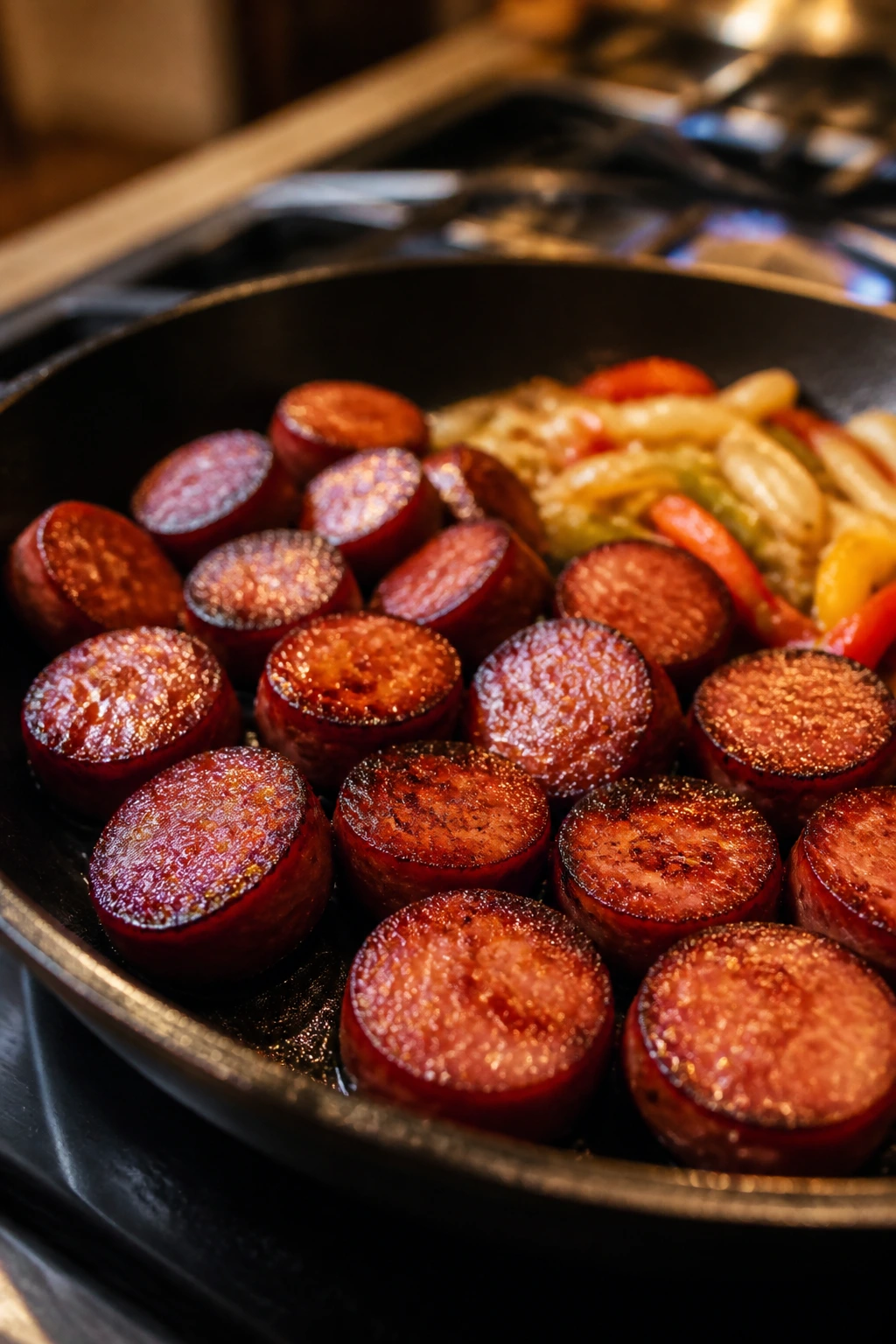
Not every sausage behaves the same in a skillet, and this is where a lot of recipes get slippery. The best choice here is fully cooked smoked sausage or kielbasa. It slices cleanly, browns quickly, and already has enough seasoning to stand up to a sticky glaze. That matters because the glaze is sweet, and sweet food needs a savory partner that knows how to hold its own.
I prefer sausage with a firm casing and visible marbling. You want coins that stay intact when you flip them, not soft rounds that slump into the pan and smear their fat before they brown. A little firmness is a good sign. So is a smell that leans smoky rather than aggressively garlicky.
If you want to swap in another style, do it with your eyes open.
Good Choices
- Kielbasa: Mild smoke, a little garlic, and enough fat to crisp without drying out.
- Andouille: Spicier and more assertive; it pushes the dish toward Cajun territory fast.
- Turkey Sausage: Leaner and lighter, though it needs a touch of oil because it gives off less fat.
- Chicken Sausage: Works well if it’s fully cooked and not overloaded with herbs that fight the glaze.
Choices That Need More Care
- Fresh raw sausage links: They can work, but only if you cook them through first and then slice them. If you slice raw sausage too soon, the outside overcooks while the middle lags behind.
- Very thin breakfast links: They tend to dry out before they brown in any meaningful way. You want something with enough diameter to take a sear.
What I Avoid
Soft, pale sausage that feels wet in the package. That usually means more steam, less crust. If the link squishes easily between your fingers, it’s not the best candidate for a crisp skillet dinner.
The Ingredients That Do the Heavy Lifting
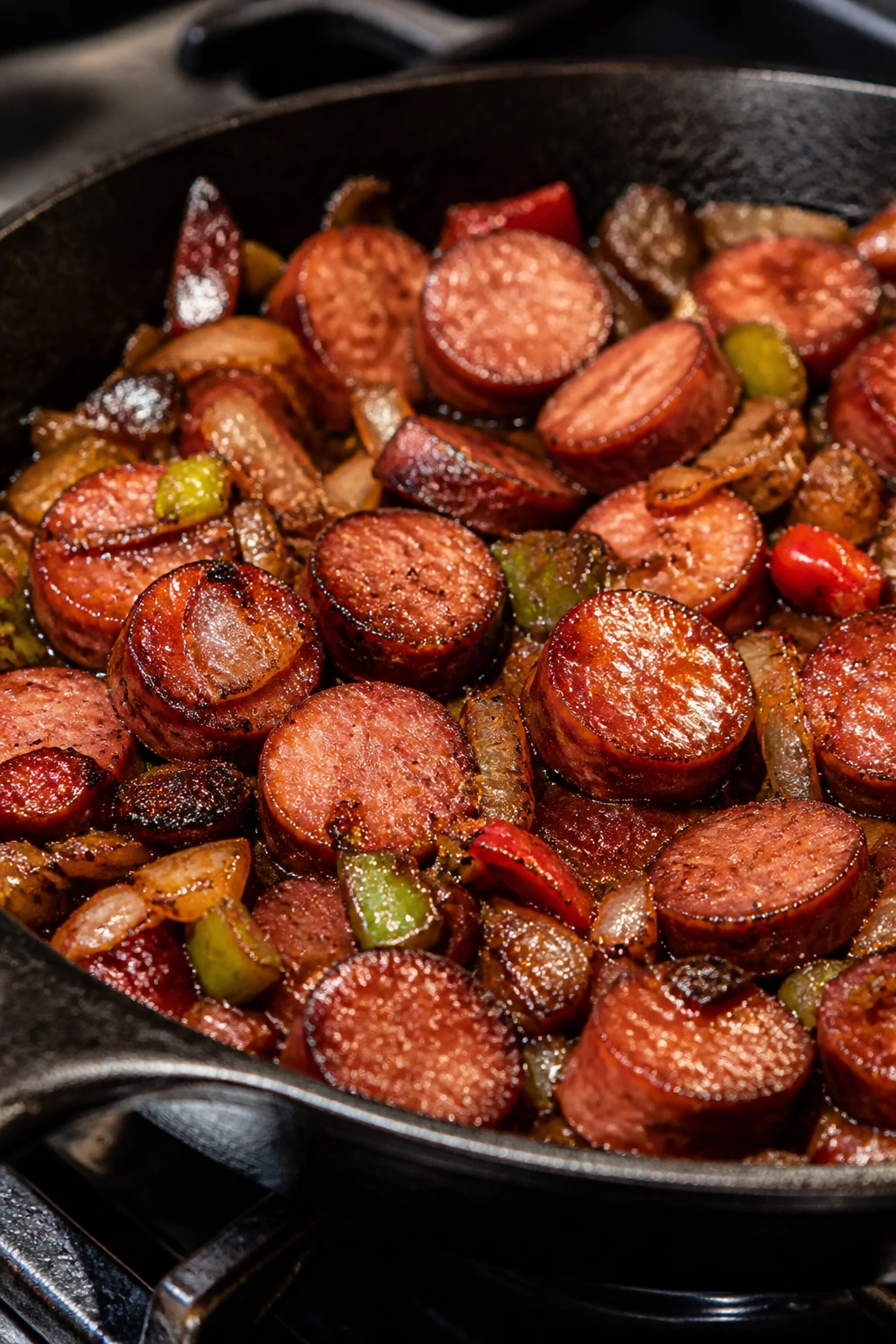
The ingredient list is short, which is a blessing. Fewer moving parts means every choice matters more, and this recipe rewards small upgrades. The sausage gives the dish its body. The glaze gives it the shine. The vegetables keep the whole thing from tasting like it was built in a hurry.
Smoked Sausage
What to use: 1 1/2 pounds fully cooked smoked sausage or kielbasa, sliced into 1/2-inch coins.
Preparation: Pat the sausage dry with paper towels before it hits the skillet. If the surface is damp, it will steam first and brown later, which is the wrong order.
Substitutions: Andouille gives more heat, turkey sausage trims some fat, and chicken sausage works if you want a lighter finish. Fresh raw sausage is a separate project and needs longer cooking.
Tips: Look for links with a firm casing and a savory smell. The sausage should feel dense, not spongy.
Brown Sugar Glaze
What to use: 1/3 cup packed light brown sugar, 2 tablespoons Dijon mustard, 2 tablespoons apple cider vinegar, 1 tablespoon low-sodium soy sauce, 1 teaspoon smoked paprika, 1/4 teaspoon black pepper, 1/4 teaspoon crushed red pepper flakes if you like heat, and 2 tablespoons water only if needed to loosen the sauce.
Preparation: Whisk the glaze in a bowl before the sausage goes into the pan. That keeps the sugar from scorching while you fumble with measuring spoons at the stove.
Substitutions: Dark brown sugar gives a deeper molasses note. Maple syrup can stand in for part of the sugar, though the glaze will be looser. Tamari works in place of soy sauce.
Tips: Dijon matters here. It does more than season the glaze; it gives the sauce backbone. If you leave out the vinegar, the sweetness gets blunt fast.
Vegetables and Fruit
What to use: 1 large yellow onion, 1 red bell pepper, 1 green bell pepper, 1 medium apple if you want that sweet-tart edge, plus 2 garlic cloves and 1 tablespoon unsalted butter.
Preparation: Slice the onion into thin crescents and the peppers into narrow strips. Thin slices cook at the same pace as the sausage coins, which keeps the pan from turning into a soft pile under a crisp top.
Substitutions: Use one pepper instead of two if that’s what you have. Cabbage, Brussels sprouts, or mushrooms can step into the vegetable role without changing the logic of the dish.
Tips: A tart apple, like Granny Smith, holds its shape better than a mealy sweet one. If you skip the apple, add a little more onion for volume.
Finishing Touches
What to use: 1 tablespoon chopped parsley or sliced green onions.
Preparation: Keep the herbs dry and add them at the end.
Substitutions: Chives work too, and a few threads of fresh thyme can make the glaze taste a little woodsy.
Tips: Fresh green garnish matters more than you’d think. It keeps the skillet from looking and tasting too heavy.
The Pan and Tools I’d Actually Pull Out
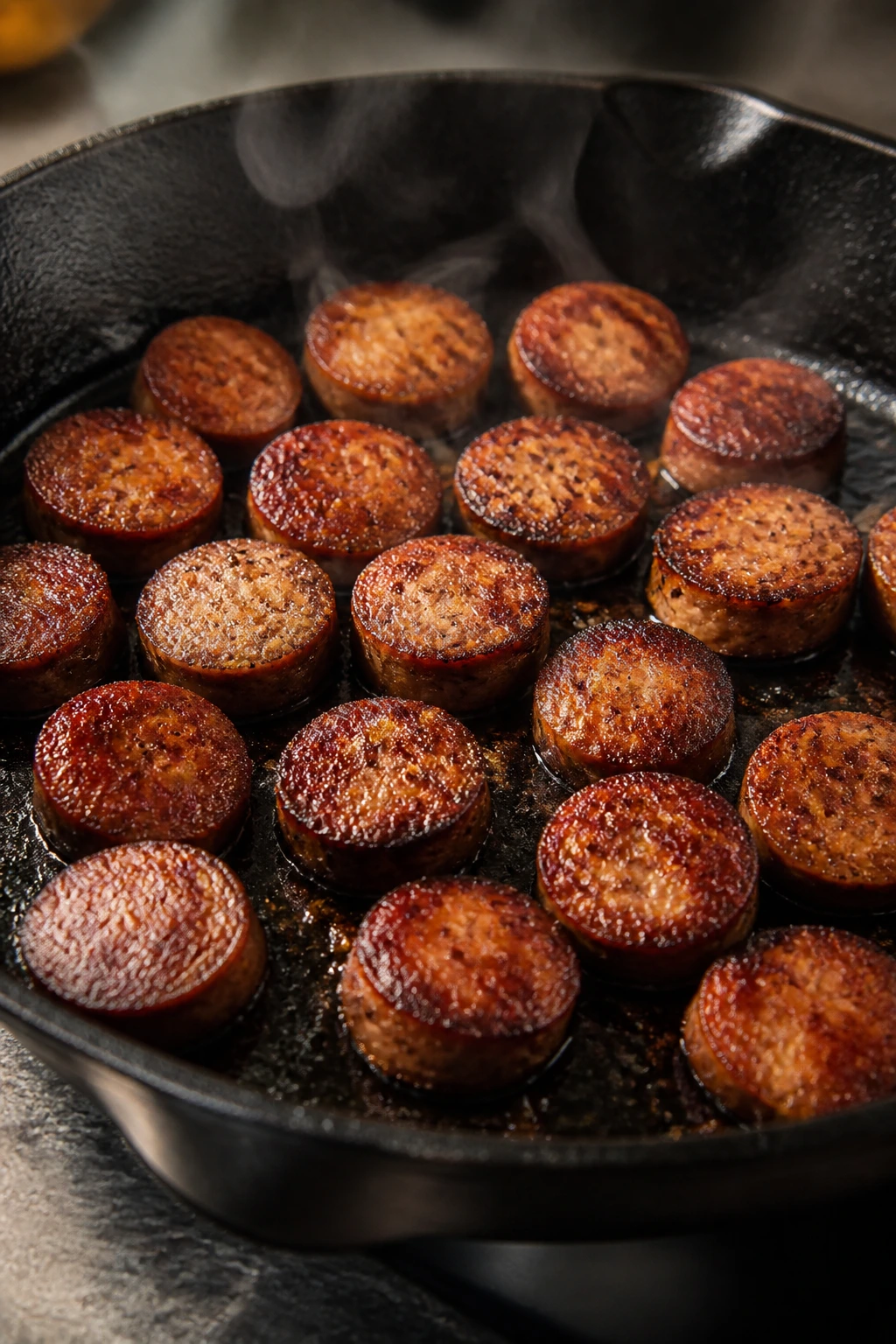
A recipe like this doesn’t need much equipment, but the right pan changes the whole story. I’d reach for a 12-inch cast-iron skillet first. Heavy stainless steel works too. Thin nonstick is the least interesting option because it won’t hold heat as steadily, and heat is what makes the sausage crisp instead of limp.
- 12-inch cast-iron or heavy stainless skillet — big enough for a single layer of sausage coins, which is how you get browning instead of steaming.
- Thin metal spatula — useful for flipping sausage without scraping away the crust.
- Chef’s knife — for clean sausage slices, even onion crescents, and tidy pepper strips.
- Cutting board — ideally one with enough room that the sausage doesn’t roll around while you work.
- Small mixing bowl — the glaze comes together fast when it’s mixed before the heat goes on.
- Measuring spoons and cups — this glaze depends on balance, so winging the sugar or vinegar is a bad habit here.
- Wooden spoon or silicone spatula — better than metal for stirring the glaze once the sugar is bubbling.
- Paper towels — for drying the sausage so the pan can brown it properly.
- Tongs — optional, but handy if you’re moving peppers and sausage around in a crowded skillet.
If your skillet runs hot, cast iron can get aggressive. That is good for the browning stage and slightly annoying for the glaze stage. Keep the heat honest, and don’t be shy about dropping it a notch once the sugar hits the pan.
How to Build the Crispy Base
Mix the Glaze First:
- In a small bowl, whisk together the brown sugar, Dijon mustard, apple cider vinegar, soy sauce, smoked paprika, black pepper, red pepper flakes, and water until the sugar starts to dissolve. It does not need to look perfectly smooth. A few grainy bits will disappear once the skillet gets hot.
Brown the Sausage:
-
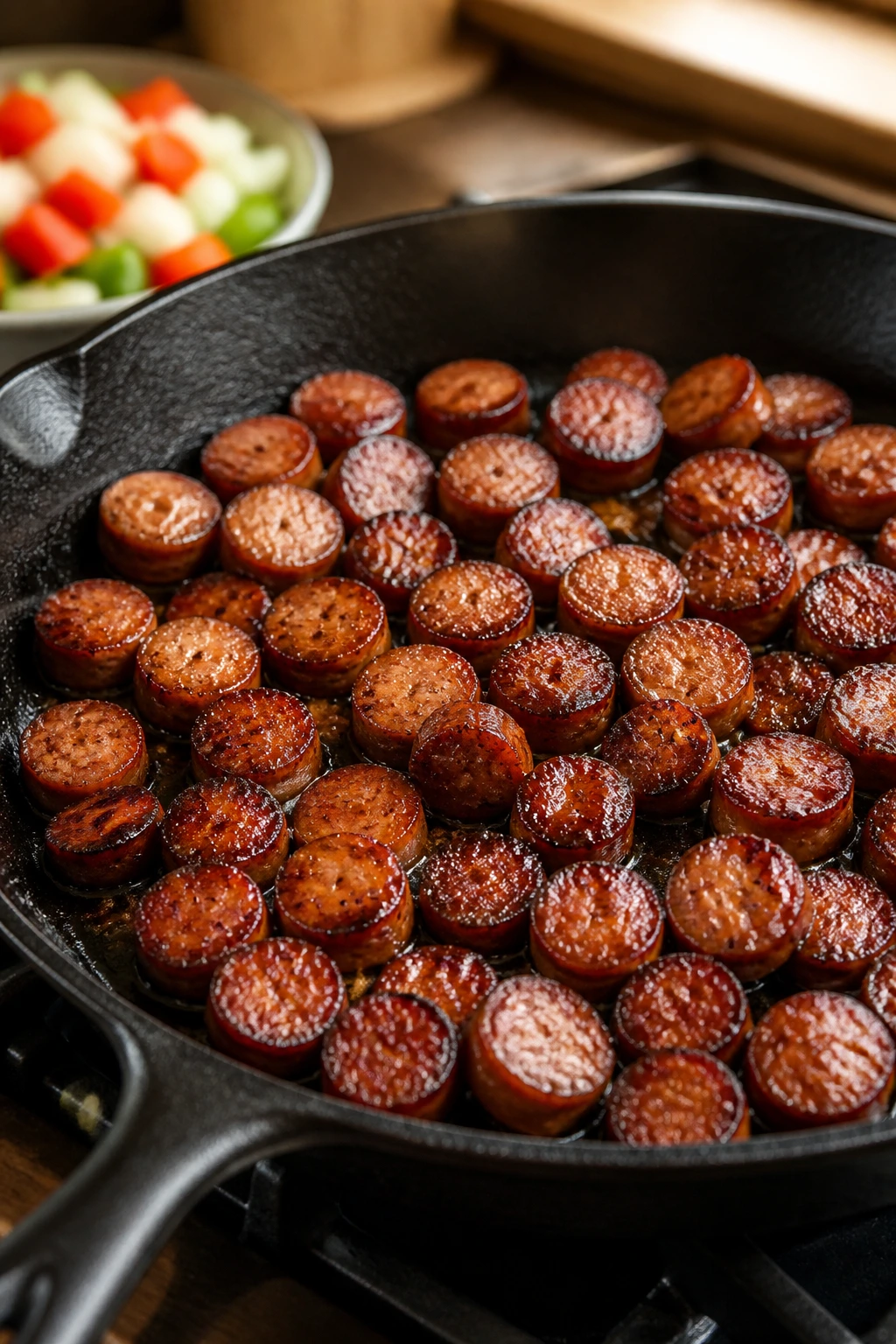
Set a 12-inch cast-iron skillet over medium-high heat and let it warm for about 2 minutes. Add the sausage slices in a single layer. If the pan looks crowded, brown the sausage in two batches. Crowding the pan is the fastest route to pale, steamed sausage.
-
Cook the slices for 2 to 3 minutes on the first side without moving them, then flip and cook the second side for another 2 minutes, until the edges are dark gold and the centers are hot through. If the sausage gives off a lot of fat, spoon off the excess, but leave a thin coating in the pan for the vegetables.
Soften the Vegetables:
- Add the butter to the skillet, then scatter in the onion and bell peppers. Cook for 4 to 5 minutes, stirring only once or twice, until the onion turns translucent and the pepper strips soften at the edges. Add the apple during the last 2 minutes if you’re using it. Stir in the garlic for the final 30 seconds, just until fragrant. Garlic burns fast, and burnt garlic tastes bitter in a sauce this sweet.
Glaze and Finish:
-
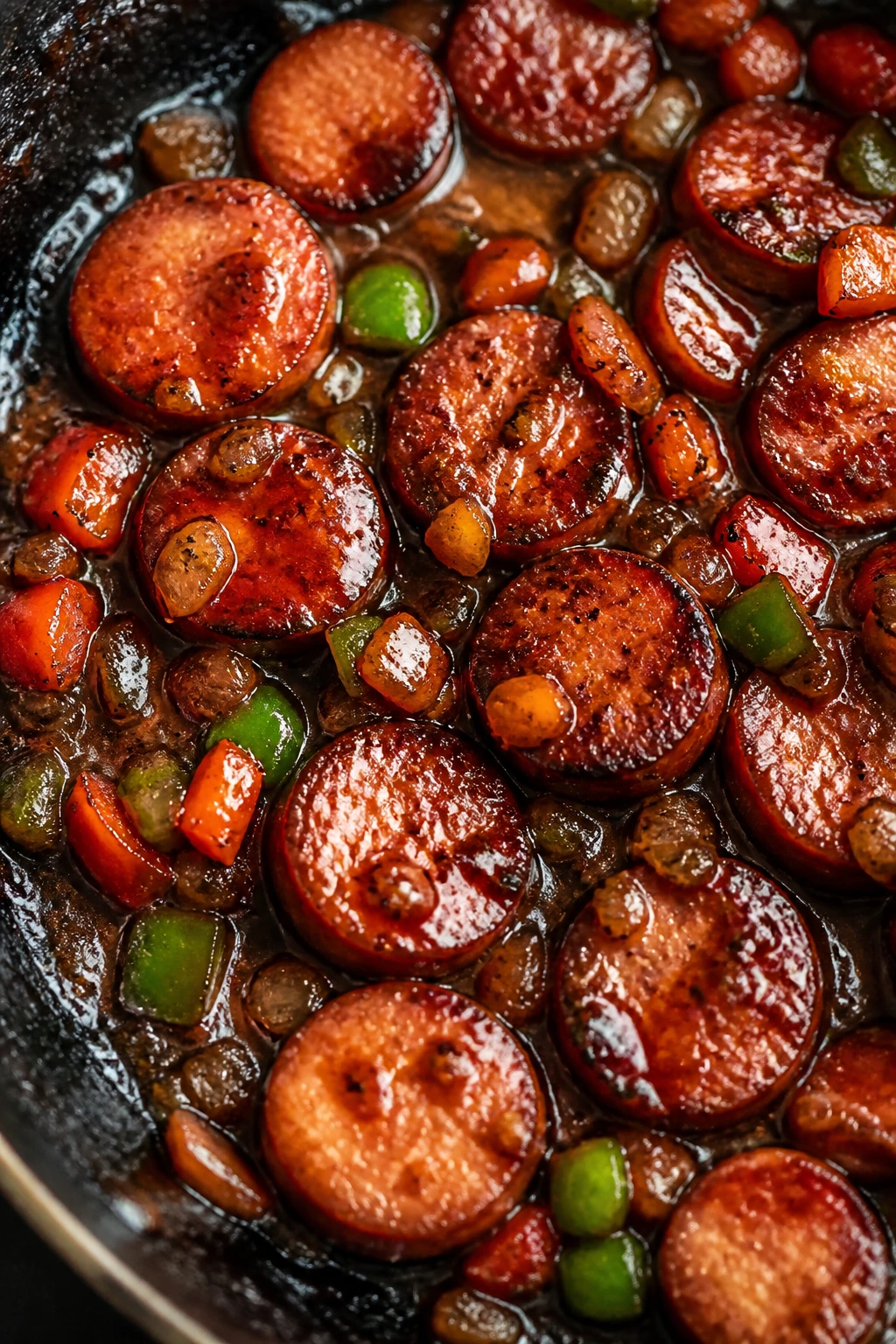
Return the sausage to the skillet and pour in the glaze. Stir quickly to coat every piece, then let it bubble over medium heat for 1 to 2 minutes until the sauce turns glossy and thick enough to cling to the sausage coins. If it feels too tight, add 1 tablespoon water. If it still looks thin after a minute, keep it moving until the bubbles slow down and the glaze starts to lacquer the sausage.
-
Remove the pan from the heat and scatter parsley or green onions over the top. Serve immediately while the edges are crisp and the glaze is still shiny. If you wait too long, the sausage softens and the sauce settles into the pan.
How to Serve It So It Feels Like Dinner
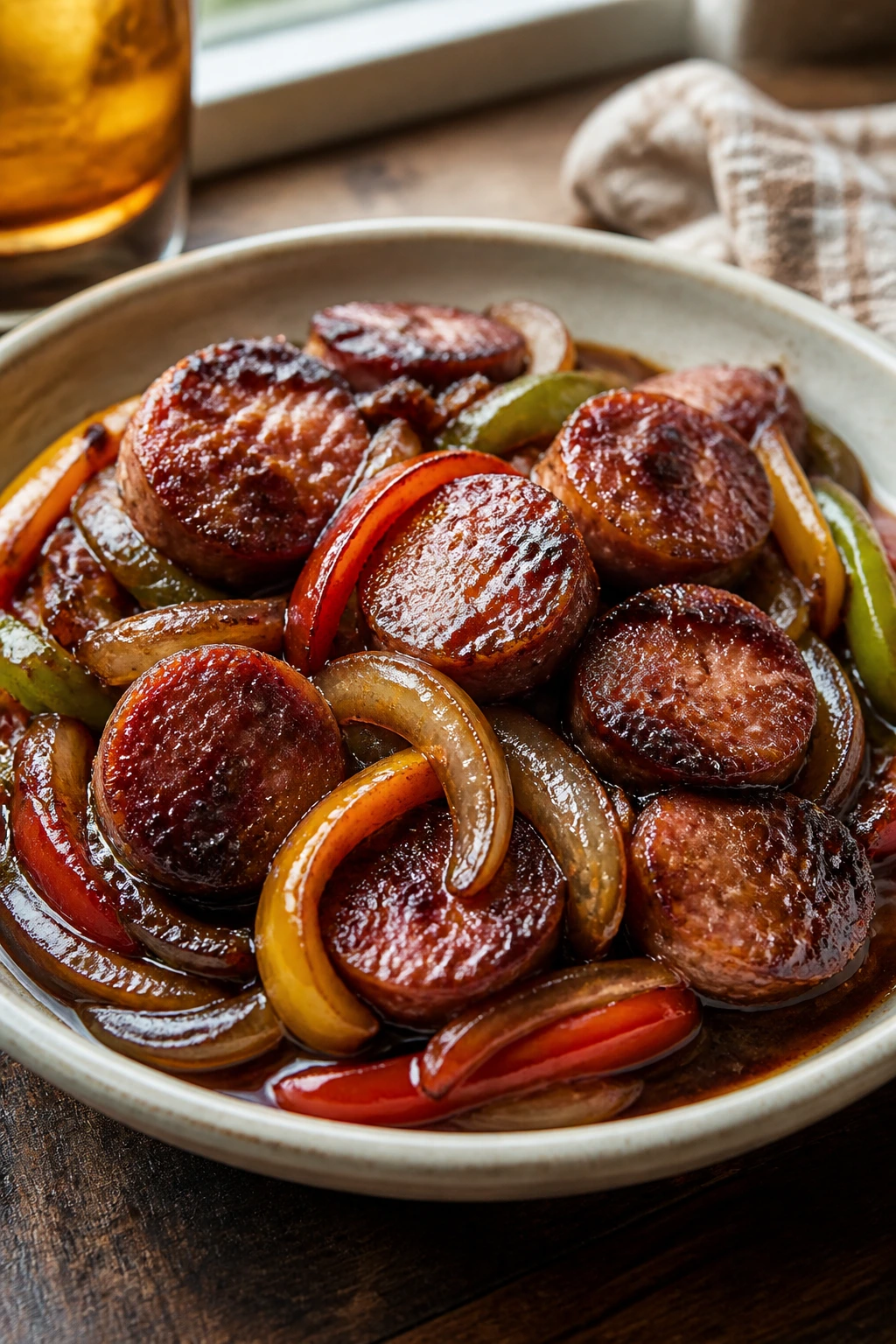
Presentation: Spoon the sausage and vegetables into a shallow bowl or a wide platter instead of a deep soup bowl. The glaze should stay visible, pooled in little dark amber streaks around the onions and sausage. A sprinkle of green herbs on top helps the whole dish look less heavy.
Accompaniments: Mashed potatoes are the obvious comfort move, but buttered rice, egg noodles, or crusty bread work just as well. If you want the plate to feel more balanced, serve a sharp cabbage slaw or a plain green salad on the side. Something acidic is smart here; it cuts through the sugar and sausage fat without making you think about it too hard.
Portions: As a main dish, this serves 4 hungry people or 6 smaller servings if you’re pairing it with starch and salad. Figure on about 4 ounces of sausage per person, plus a good spoonful of onions and peppers. If you scale it up, use a wider pan or brown the sausage in batches. A crowded skillet is where the crust goes to die.
Beverage Pairing: Cold hard cider is my favorite match because it echoes the apple and vinegar in the glaze. A light lager or pilsner works too. If you want something nonalcoholic, sparkling water with lemon keeps the plate from feeling too sweet.
Extra Tips for Better Texture and Balance
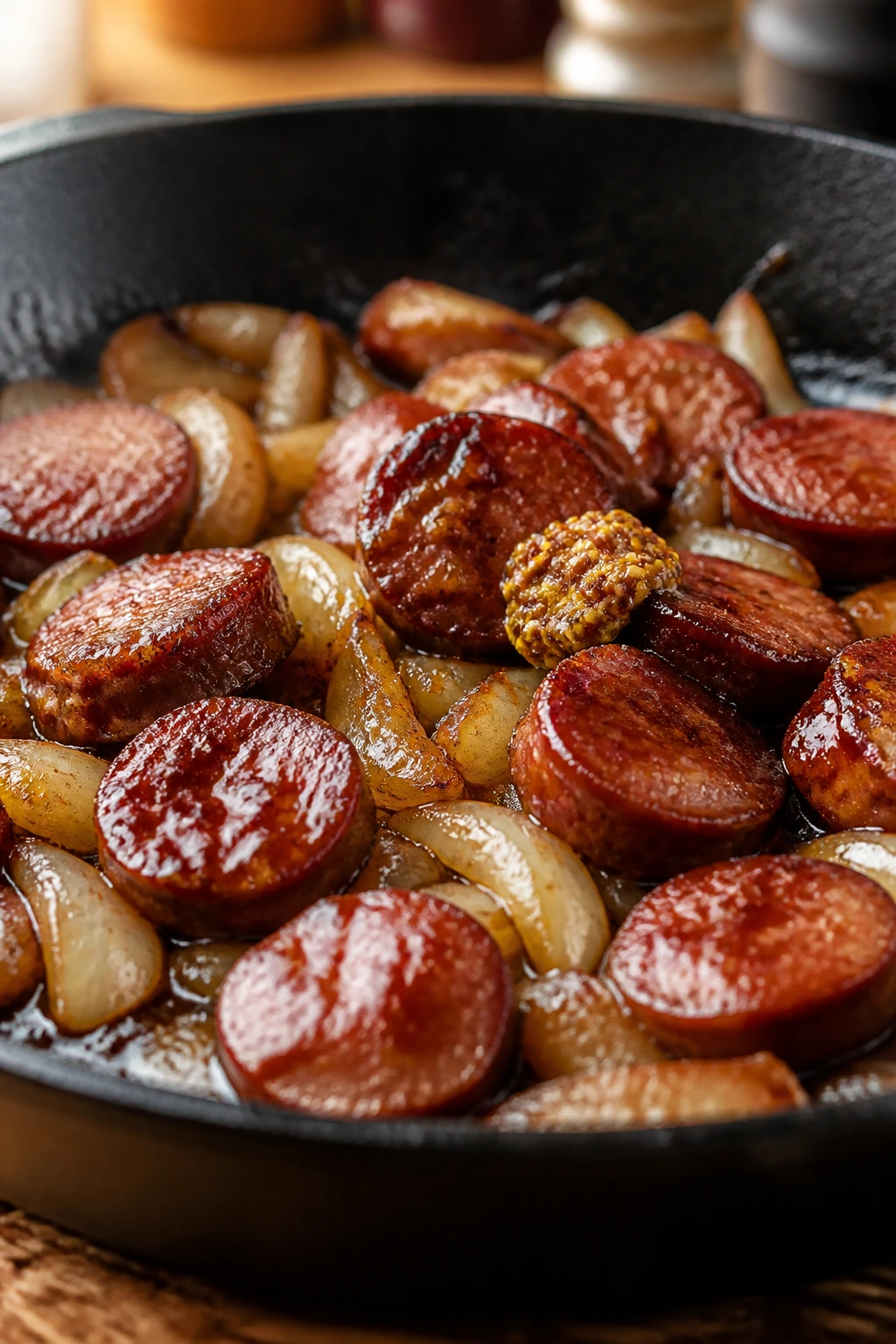
Flavor Enhancement: Stir 1 teaspoon of whole-grain mustard into the glaze if you want more texture and a little mustard seed pop. For a deeper, rounder sweetness, replace 1 tablespoon of the brown sugar with maple syrup or apple butter. That tiny change makes the glaze feel less linear and more savory.
Time-Saver: Slice the onion, peppers, and apple while the sausage browns. That’s the cleanest way to keep the cook time under control. If you prep the glaze first and set it near the stove, the final toss takes less than 2 minutes.
Pro Move: If your sausage is especially fatty, spoon off all but about 1 tablespoon of rendered fat before you add the vegetables. The glaze will cling better, and the finished dish won’t look greasy. I do this more often with kielbasa than with turkey sausage, which is naturally leaner.
Cost-Saver: Store-brand smoked sausage is fine here. The glaze, not the price tag on the link, is what makes the skillet feel finished. Spend the extra money on good Dijon and fresh cider vinegar instead. Those two ingredients shape the sauce more than a fancier package of sausage ever will.
Make-It-Yours: Add thin cabbage strips if you want more bulk without much extra cost. If you like heat, a pinch of cayenne or a spoonful of hot sauce stirred in at the very end gives the glaze a little edge. For a milder plate, skip the red pepper flakes and lean on black pepper instead.
Mistakes That Flatten the Flavor
-
Crowding the skillet. The sausage comes out tan, not crisp, and the pan fills with steam. Fix it by browning in a single layer, even if that means using two batches.
-
Adding the glaze too early. If the sausage hasn’t browned, the pan has no fond, and the whole dish tastes flatter than it should. Wait until the coins have dark edges before you pour in the sauce.
-
Letting the sugar cook on high heat. Burnt sugar smells sharp and bitter, and the sauce will turn sticky in the wrong way. Drop the heat to medium as soon as the glaze goes into the pan.
-
Skipping the vinegar or mustard. The dish ends up sweet in a dull, one-note way. The acid is not optional if you want the glaze to taste finished.
-
Cutting the vegetables too thick. Thick onions stay sharp and thick peppers keep a raw crunch that feels out of place here. Slice them thin so they soften in the same window as the sausage browns.
-
Walking away during the glaze stage. Brown sugar goes from glossy to scorched faster than people expect, especially in cast iron. Stay close, stir, and pull the pan the moment the sauce clings instead of sloshing.
Variations for Heat, Smoke, and Sweetness
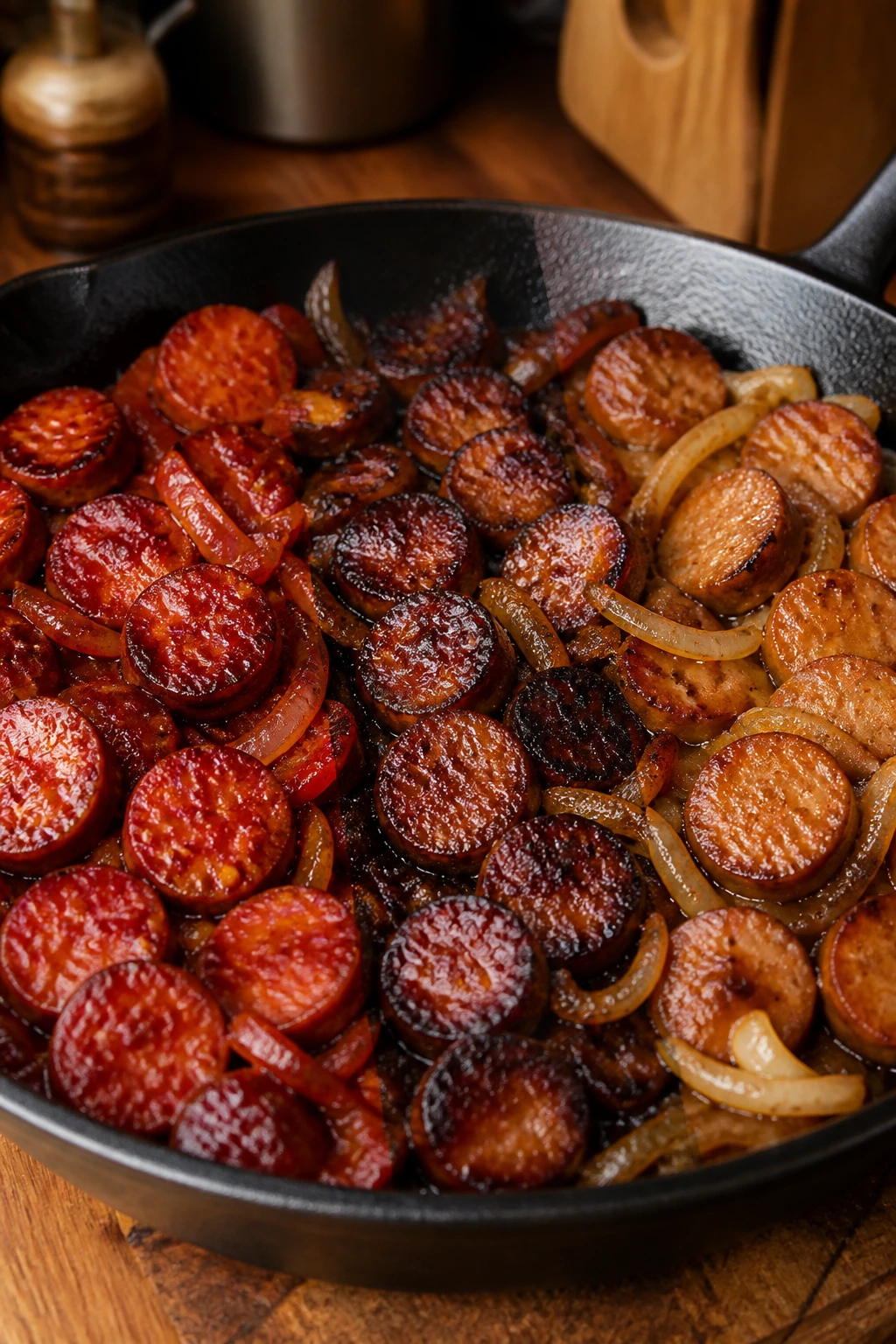
Apple Orchard Skillet: Keep the apple in and add a pinch of dried thyme or sage. That leans the dish a little closer to fall flavors, which works especially well with kielbasa and onions.
Cajun Fire Skillet: Swap the smoked sausage for andouille, add 1 teaspoon Cajun seasoning to the glaze, and cut the brown sugar back to 1/4 cup. The heat and smoke sit right next to the sweet glaze instead of fighting it.
Maple-Dijon Switch: Replace half the brown sugar with pure maple syrup and use whole-grain mustard instead of smooth Dijon. The sauce turns a little looser and darker, which is nice over roasted sweet potatoes or rice.
Bacon-Backed Version: Cook 4 slices of chopped bacon first, then use the rendered fat to brown the sausage. That gives the skillet more smoke and a little extra salt, which is handy if your sausage is mild. Don’t add more salt until you taste it; bacon is bossy.
Breakfast-Style Hash: Add diced par-cooked potatoes and finish with fried eggs on top. The yolk mixes with the glaze and makes the whole skillet feel richer without needing another sauce.
Make-Ahead, Storage, and Reheating
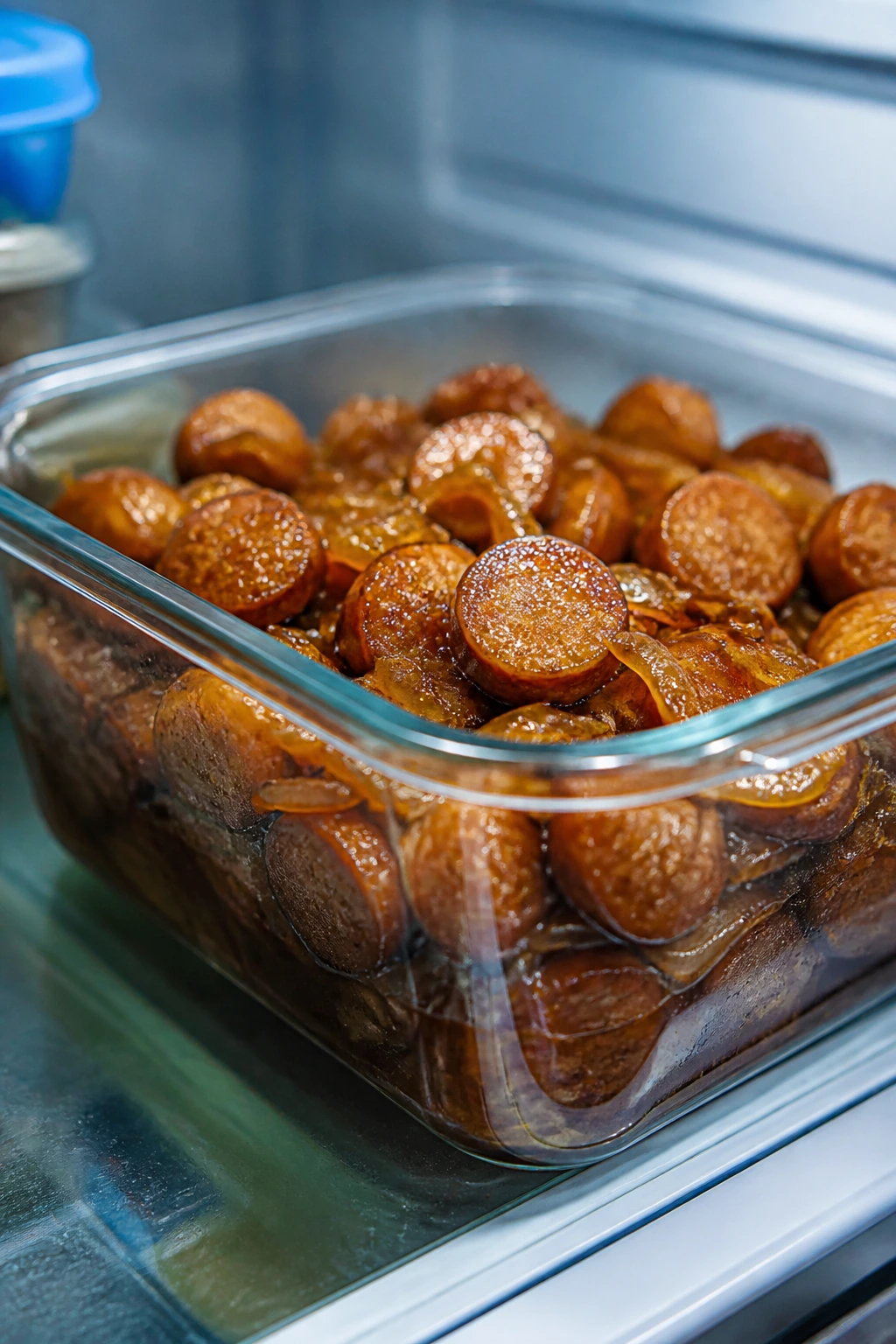
This skillet holds up better than a lot of quick dinners, but the texture changes a little after the first night. If you plan to eat it later, cool it quickly and get it into the fridge within 2 hours. That matches standard food-safety guidance and keeps the glaze from hanging around in the danger zone.
In the refrigerator, the cooked skillet keeps for 3 to 4 days in an airtight container. The sausage stays fine, the onions soften more, and the glaze tightens a bit. That tightening is normal. It usually loosens again once heat hits it.
For the freezer, portion the cooled skillet into airtight containers or freezer bags and freeze for up to 2 months. The peppers and onions will soften more after thawing, so frozen leftovers are better over rice, mashed potatoes, or noodles than eaten straight from the container. If you used apple, expect it to break down a little more in the freezer. That is fine. It just reads more like a hash later.
Reheat on the stovetop if you can. Put the leftovers in a skillet over medium-low heat with 1 to 2 tablespoons of water, cover for 2 minutes, then uncover and stir until the sausage is hot all the way through and the glaze loosens again. If the pan looks dry, add a small splash more water or cider vinegar. The microwave works in a pinch, but it softens the crust and gives the sauce less shine. Reheat until the food reaches 165°F in the center if you want to be precise about it.
If you want to make parts ahead, slice the sausage and vegetables the day before, and whisk the glaze a few hours ahead. Don’t glaze early. The final toss should happen right before serving, when the pan is hot and the sausage still has a little edge.
Questions People Ask Before Making It
Can I use raw sausage links instead of smoked sausage?
Yes, but you need a different approach. Cook the raw links through first, ideally to 160°F for pork sausage, then slice and glaze them. If you slice raw sausage before it’s cooked, the outside overbrowns while the middle still needs time.
What if I don’t like Dijon mustard?
Use whole-grain mustard for a milder bite, or swap in yellow mustard if that’s what you have. The dish does need some sharpness, though, so don’t skip the mustard-family ingredient entirely unless you also increase the vinegar a little.
Can I make the glaze less sweet?
Yes. Cut the brown sugar to 1/4 cup and keep the vinegar and soy sauce the same. That still gives you shine and stickiness, but it moves the flavor closer to savory than candy.
Does turkey sausage work here?
It does, and I use it when I want a lighter plate. Turkey sausage gives off less fat, so add the full tablespoon of butter and keep an eye on the browning so the pan doesn’t dry out.
What if the glaze gets too thick in the pan?
Pull the skillet off the heat and add 1 tablespoon of water at a time, stirring between additions. It thickens fast once it cools, so stop a little earlier than you think you should. Thin glaze is easier to fix than burnt glaze.
Can I add potatoes to make it a bigger meal?
Absolutely, but par-cook them first. Raw potato chunks will not soften fast enough in the same window as the sausage and glaze. Small cubes that have been boiled or roasted ahead of time are the better move.
Can I bake this instead of using the stove?
You can finish it in the oven, but the skillet version tastes deeper because the sausage browns in its own fat and the glaze hits the fond directly. A sheet pan version works in a pinch, though the glaze won’t cling as tightly.
The Kind of Skillet Dinner You Keep Coming Back To
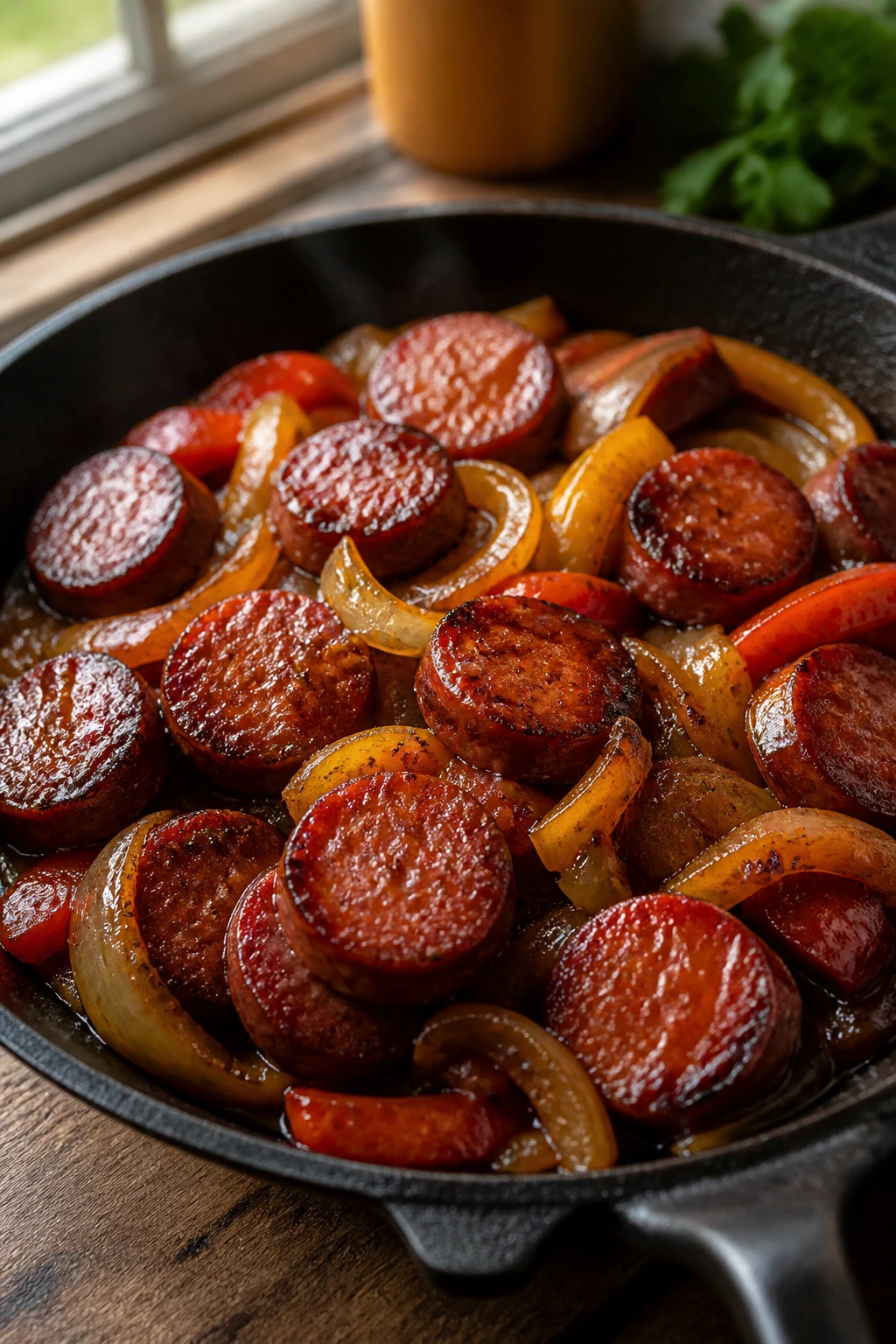
What makes this dish stick in your memory is not the sugar. It’s the way the sugar behaves after it meets browned sausage, sharp vinegar, and the onion’s slow sweetness. The glaze turns glossy, the edges pick up a little chew, and the whole pan ends up tasting more deliberate than the ingredient list suggests.
That’s the part I like most. It feels casual when you make it, but the result has enough contrast to keep the plate interesting: crisp, soft, sweet, sharp, smoky. Keep a pack of smoked sausage, an onion, and a jar of Dijon around, and this stops being a “maybe someday” dinner. It becomes the thing you make when the skillet is already hot and you want the rest of the evening to take care of itself.
Crispy Sausage Skillet with Brown Sugar Glaze — Recipe Card
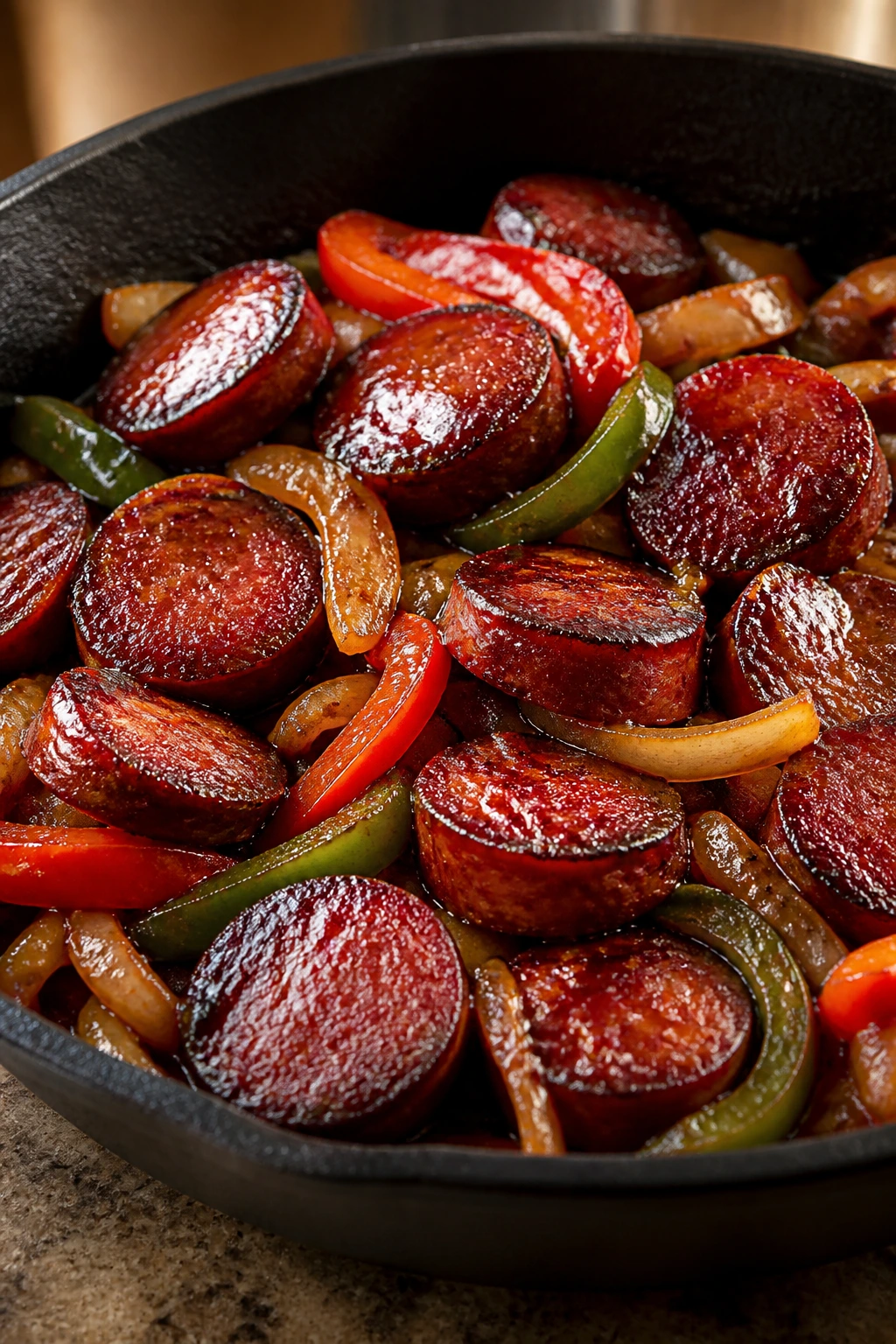
Recipe Name: Crispy Sausage Skillet with Brown Sugar Glaze
Description: Smoked sausage gets seared until the edges turn crisp, then tossed with onions, peppers, and a sticky brown sugar glaze built with Dijon, apple cider vinegar, and soy sauce. The finished skillet is smoky, glossy, and balanced enough to serve over potatoes, rice, or bread.
Prep Time: 15 minutes
Cook Time: 20 minutes
Total Time: 35 minutes
Course: Main Course, Dinner
Cuisine: American
Servings: 4 to 6 servings
Calories: About 340 kcal per serving
Ingredients
For the Skillet:
- 1 1/2 pounds fully cooked smoked sausage or kielbasa, sliced into 1/2-inch coins
- 1 large yellow onion, sliced into thin crescents
- 1 red bell pepper, sliced into strips
- 1 green bell pepper, sliced into strips
- 1 medium apple, cored and thinly sliced, optional but recommended
- 2 garlic cloves, minced
- 1 tablespoon unsalted butter
- 1 tablespoon neutral oil, only if the sausage is lean or the pan looks dry
For the Brown Sugar Glaze:
- 1/3 cup packed light brown sugar
- 2 tablespoons Dijon mustard
- 2 tablespoons apple cider vinegar
- 1 tablespoon low-sodium soy sauce
- 1 teaspoon smoked paprika
- 1/4 teaspoon black pepper
- 1/4 teaspoon crushed red pepper flakes, optional
- 2 tablespoons water, only if needed to loosen the glaze
For Finishing:
- 1 tablespoon chopped parsley or sliced green onions
Instructions
-
Whisk the brown sugar, Dijon mustard, apple cider vinegar, soy sauce, smoked paprika, black pepper, red pepper flakes, and water in a small bowl until combined.
-
Heat a 12-inch cast-iron or heavy skillet over medium-high heat for about 2 minutes. Add the sausage slices in a single layer and brown for 2 to 3 minutes per side until the edges are crisp and dark gold. Work in batches if needed.
-
Add the butter, then the onion and bell peppers. Cook for 4 to 5 minutes, stirring only once or twice, until the onion softens and the peppers begin to brown at the edges. Add the apple during the last 2 minutes, then stir in the garlic for the final 30 seconds.
-
Return the sausage to the skillet and pour in the glaze. Stir to coat, then cook for 1 to 2 minutes over medium heat until the sauce turns glossy and clings to the sausage. Add a splash of water if needed.
-
Remove from the heat and finish with parsley or green onions. Serve immediately.
Notes: Keep the heat at medium once the glaze goes in so the sugar doesn’t scorch. If you want a sharper sauce, add an extra teaspoon of vinegar at the end. Leftovers reheat well in a skillet with a splash of water.