



The difference between a dull vegetable dinner and one you keep thinking about all evening is often one hot pan. Give broccoli, carrots, or Brussels sprouts enough space, enough heat, and a little oil, and crispy veggies stop acting like a side note and start acting like the point of the plate. Browned edges. Sweet centers. That faint nutty smell that rises when the metal is doing its job. It’s a small thing, but it changes the whole mood of dinner.
Healthy dinner does not have to feel like a penalty. A tray of cauliflower with charred tips, green beans with blistered skins, or cabbage that’s gone crisp at the rim but still juicy in the middle eats like real food, not a chore you’re trying to get through. That lines up neatly with the logic behind USDA MyPlate and Harvard’s Healthy Eating Plate: vegetables belong in the biggest share of the meal, and they’re a lot easier to keep there when they actually have texture.
The trick is less mysterious than people expect. Most soggy vegetable problems come from moisture, weak heat, or too many pieces jammed together, and once you know how those three behave, the result gets predictable in the best way. A few smart cuts, the right temperature, and a better finish at the end can do more than a drawer full of seasoning blends.
Why Crispy Veggies Earn Their Place at Dinner
Texture makes vegetables feel like food, not homework. When broccoli has browned edges or carrots pick up a little caramelized sweetness, people tend to take a second scoop without being asked.
You don’t need much oil. A pound of vegetables usually only needs about 1 to 2 tablespoons, which is enough to help browning without turning the pan greasy.
They’re easy to build around. A tray of roasted cauliflower can sit next to quinoa, chickpeas, tofu, eggs, feta, or a quick yogurt sauce and still feel like dinner.
The method works across the year. Sturdy vegetables, delicate vegetables, and even some frozen options can all be pushed toward crispness if you treat moisture like the enemy it is.
Cleanup stays sane. One sheet pan, one bowl, maybe one skillet if you’re doing a stovetop version. That matters on nights when the sink is already crowded.
What Crispy Actually Means on a Vegetable Plate
Crisp is not the same thing as dry. That distinction matters more than most people realize. You’re not trying to dehydrate vegetables into chips unless that’s the goal; you’re trying to evaporate enough surface moisture that the cut edges brown while the centers stay tender.
That browning has a name: Maillard browning. It’s the same thing that gives roasted onions their sweetness and seared tofu its deeper flavor. On vegetables, it shows up as a bit of darkness at the corners, a slight blistering on the skin, and that roasted smell that feels richer than raw produce ever can.
The bite should have contrast. A broccoli floret might have a crisp top and a juicy stem. A carrot coin might be browned on one side and soft in the middle. That little split between textures is what makes the plate feel finished.
Soggy vegetables usually happen when the pan temperature is too low or the pieces are packed together so tightly that the moisture has nowhere to go. Then everything steams. Not ideal. Not even close.
The Vegetables That Brown Best Without Fuss
Broccoli, cauliflower, Brussels sprouts, carrots, cabbage, and green beans are the vegetables I reach for first when I want crisp edges without a lot of drama. They’re sturdy enough to stand up to a hot oven or a loud skillet, and they reward patience with real browning.
The sturdy crew
Broccoli and cauliflower are the easiest place to start. Their florets have all those little ridges that catch oil and brown fast, and the stems can soften at the same rate if you cut them with a little thought. Brussels sprouts are even better when halved, because the cut side can sit flat against the pan and turn almost mahogany if you leave it alone long enough.
Green beans belong here too. They blister nicely in a skillet or air fryer, and they don’t collapse into mush the way softer vegetables do. If you like the snap in a green bean stir-fry, this is the family of vegetables that gives you that feeling.
The sweet browning group
Carrots, parsnips, sweet potatoes, and red onions lean sweeter as they cook, which means they can take on deep color without tasting burnt. I like carrots cut on a bias, not into perfect little coins, because the angled slices give you more surface area and better browning. Red onions get especially good when the edges curl and darken.
Sweet potatoes are a little trickier. They brown, yes, but they also carry more sugar, so they can go from caramelized to blackened faster than you expect if the pieces are too small. Bigger chunks, hotter heat, and enough space to breathe. That’s the whole game.
The trickier vegetables
Zucchini, mushrooms, and bell peppers can crisp, but they demand more handling. Zucchini is a water balloon in disguise. Mushrooms release liquid early and need enough heat to drive it off. Bell peppers soften before they brown unless you use a hot skillet or a very hot oven.
Cabbage sits somewhere in the middle and is honestly underrated. Cut into wedges or thick shreds, it can char at the edges and stay sweet inside. I think cabbage is one of the best cheap vegetables on the board for this exact reason.
How to Cut Vegetables So They Crisp Instead of Steam
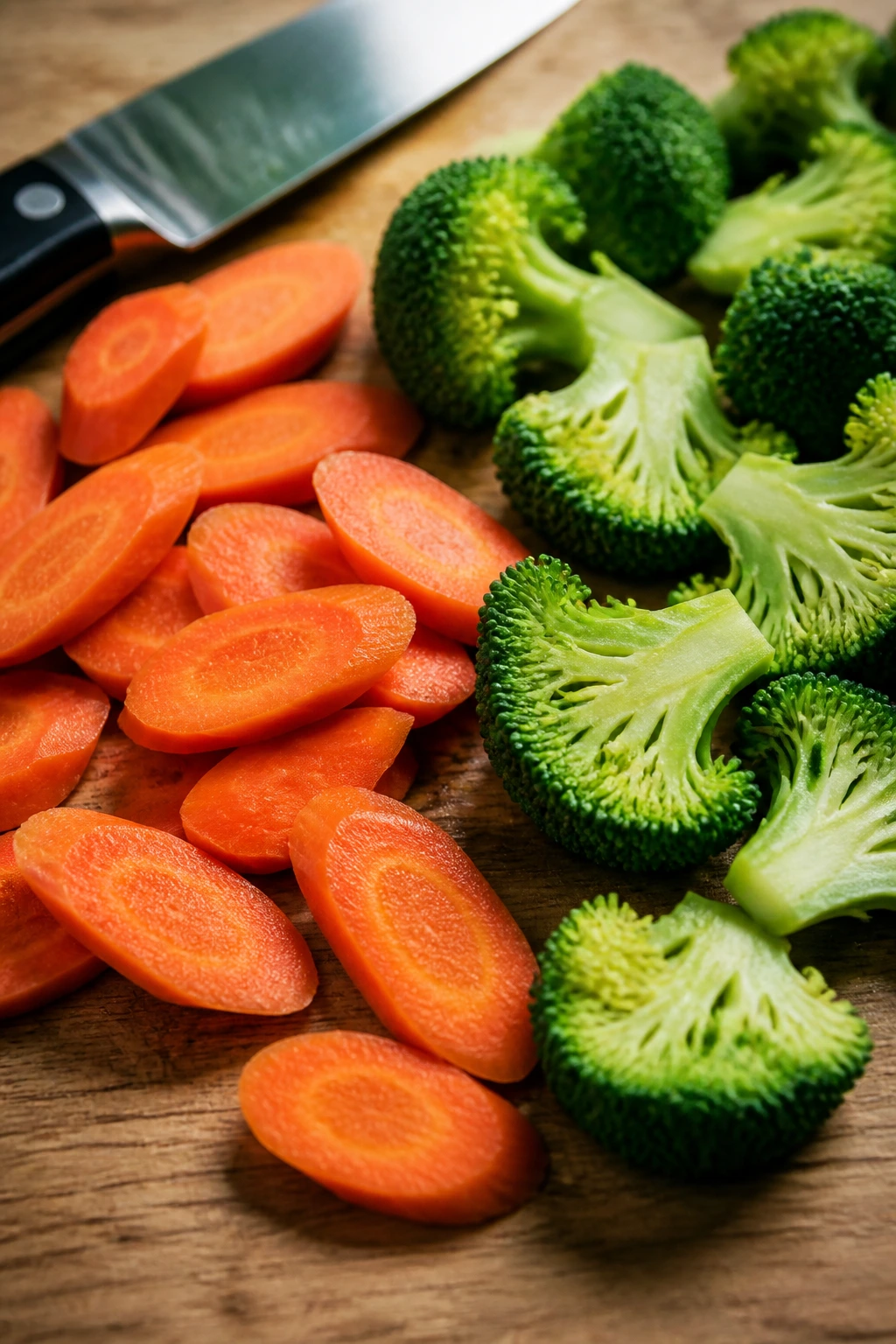
Shape changes everything. A vegetable can be identical in weight and taste completely different depending on how it’s cut. The more flat sides you create, the more places there are for the pan or oven to make contact, and that contact is where crispness starts.
For broccoli and cauliflower, aim for florets about 1 to 1½ inches across, with a bit of stem still attached. That stem gives structure, and the flat cut surface browns better than a ragged break. If the florets are tiny, they dry out before the stems soften; if they’re huge, the tips char while the centers stay stubborn.
Brussels sprouts should be halved from top to stem so the cut face can sit flat on the pan. If they’re especially large, quarter them. You want pieces that are big enough to stay juicy but small enough to brown without a long wait.
Carrots want diagonal slices around ¼ to ½ inch thick. That slight angle is not decorative fluff. It exposes more surface and gives the pan more work to do. Same idea for parsnips and thick green beans. Long, narrow cuts are prettier in photos; the bias cut is better on the plate.
Give watery vegetables more room
Zucchini and mushrooms should not be cut too small if you’re chasing crispness. Thick chunks hold together better and lose water in a more controlled way. Thin slices go soft fast, which can still taste good, but it’s a different result.
Bell peppers work best in wide strips. Cabbage can be cut into wedges with the core left intact so the leaves don’t fall apart before the edges brown. That core is annoying when you’re trying to eat the last bite, but it holds the structure together long enough to make the whole thing better.
The Dryness Step That Changes the Whole Pan
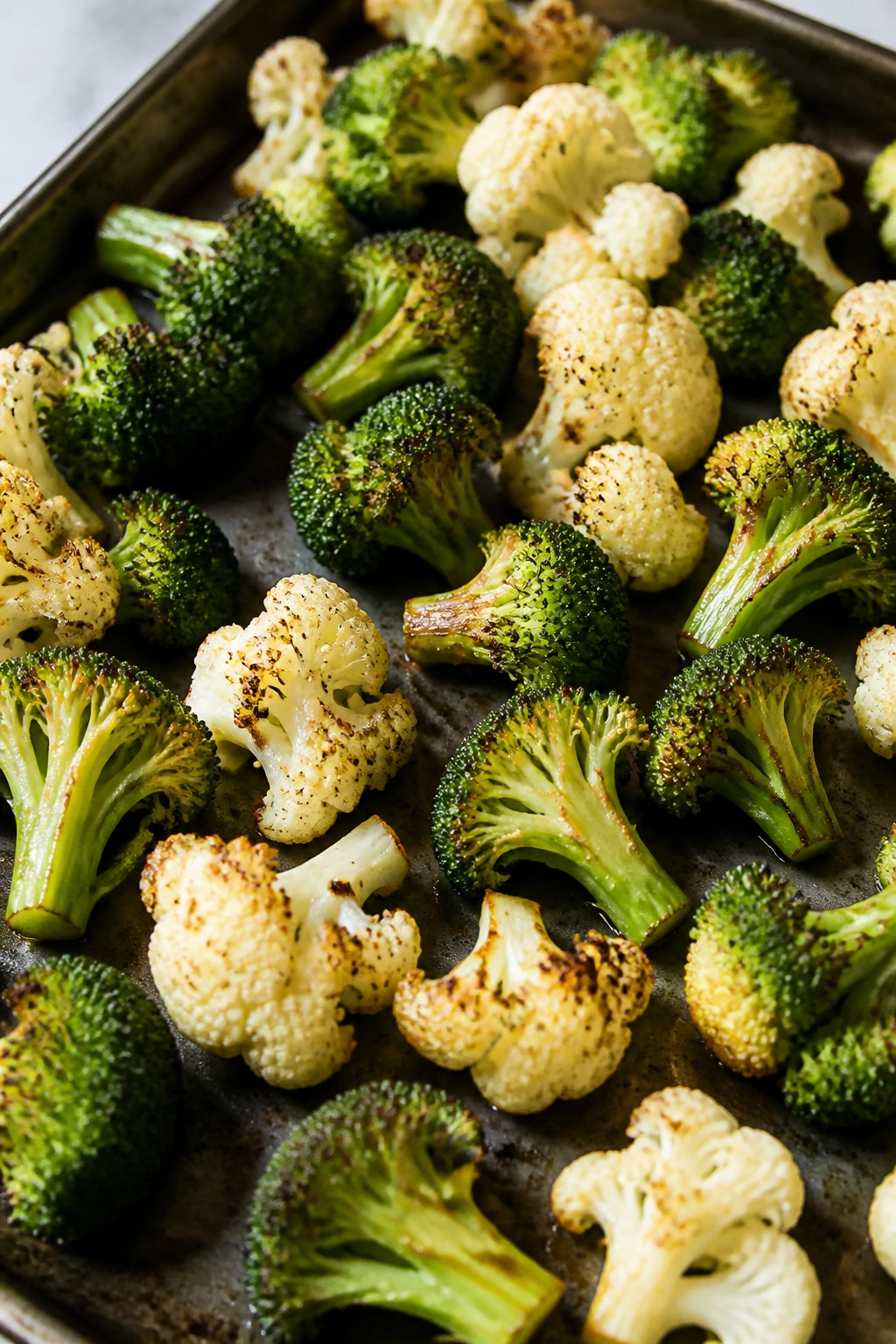
A hot oven cannot rescue wet vegetables. It can only make wet vegetables less wet, slowly, while they sit there sighing and steaming. Drying sounds boring because it is boring, and that’s probably why people skip it. Bad trade.
After washing, give the vegetables a real dry-down. A salad spinner handles greens and herbs. Clean kitchen towels or paper towels work for broccoli, cauliflower, carrots, and Brussels sprouts. If you see droplets clinging to the creases, keep going. The surface should look matte, not glossy.
Mushrooms deserve special treatment. Do not soak them in water and then hope for the best. Wipe them clean with a damp towel or a brush, then get them into heat quickly. They release moisture as they cook, and if you add extra water from washing, you’ve basically doubled the problem.
Salt timing matters
With sturdy vegetables like broccoli and cauliflower, you can salt before roasting or sautéing. With zucchini, mushrooms, and eggplant, I prefer to salt lightly closer to cooking or after the first browning pass. Too much early salt pulls out water, which is not what you want if crispness is the goal.
There’s one more small move that helps: preheat the pan when the vegetables are sturdy enough to handle it. A hot sheet pan gives the bottoms a head start. You’ll hear a faint hiss when the vegetables hit it, and that sound is a good sign. Quiet trays usually mean weak browning.
Oven Roasting for Deep Edges and Tender Centers
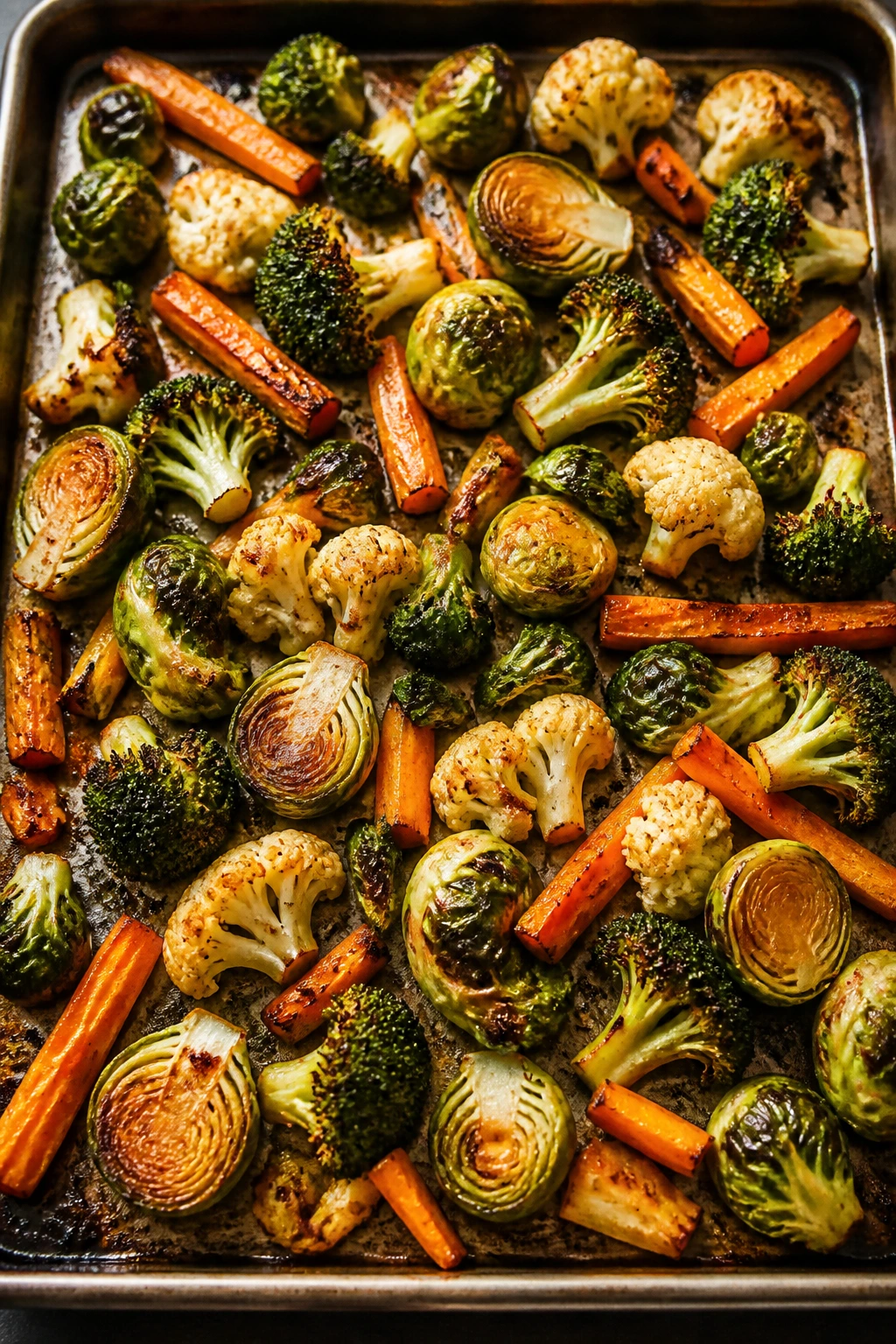
The oven is the easiest way to get crispy vegetables without babysitting them. It’s not the fastest method, but it gives you space, which is usually the thing dinner needs most. If you want browning without standing over the stove, this is the method to lean on.
Set the oven between 425°F and 450°F. Lower than that, and you spend too long waiting for moisture to leave the vegetables. Higher than that can work for carrots, cauliflower, and Brussels sprouts, but delicate vegetables can go from crisp to scorched in a blink. I usually land at 425°F for mixed trays and 450°F for sturdier single vegetables.
Use a rimmed metal sheet pan. Bare metal browns better than glass and tends to crisp the underside more reliably than a deep baking dish. If sticking worries you, a light film of oil is usually enough. Parchment is fine when the vegetables have a sticky glaze, but it can soften the bottom a little. That’s the tradeoff.
Spread the vegetables like you mean it
A crowded tray is the enemy here. Give the vegetables enough room that you can still see patches of metal between them. If a pound of broccoli or cauliflower covers the whole pan in one layer with no gaps, you probably need a second tray.
Toss the vegetables with 1 to 2 tablespoons of oil per pound, plus salt, pepper, and any dry seasonings you’re using. Then spread them out with the cut side down where possible. Brussels sprouts and cauliflower both benefit from this. It’s the flat face that gives you the best browning, not the rounded side.
Time it by vegetable, not by faith
Broccoli and cauliflower usually take about 18 to 25 minutes depending on size. Brussels sprouts often need the same range, maybe a little longer if they’re large. Carrots can need 25 to 35 minutes if they’re thick. Stir once halfway through if you want even color, but do not keep tossing every few minutes. You’re not making a salad.
The vegetables are ready when the edges look deep gold to brown, the centers yield to a fork, and the smell turns sweet and roasty. If you want an extra punch, finish with lemon juice, vinegar, or a spoonful of yogurt sauce right after the tray comes out. Acid wakes up roasted vegetables in a way salt alone cannot.
Skillet and Wok Cooking for Fast Weeknight Crunch
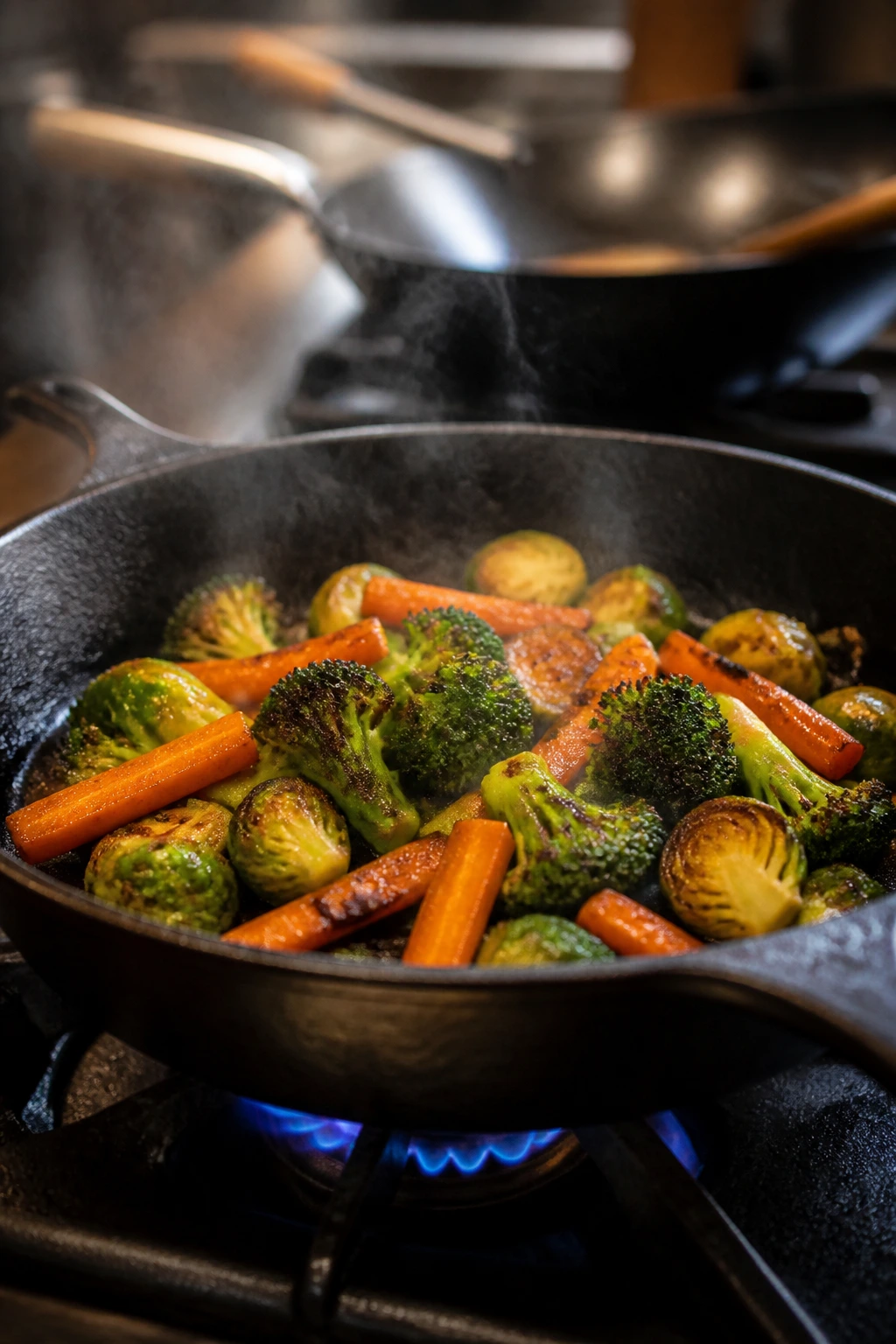
Crowding a skillet is the fastest route to limp vegetables. The pan needs room, heat, and a little patience, or the vegetables will steam in their own moisture and sulk about it. A good skillet version is louder and faster than roasting, and sometimes that’s the whole point.
Use cast iron if you have it, because it holds heat well and doesn’t lose temperature the moment cold vegetables hit the surface. Heavy stainless steel works too. Nonstick is easy to clean, but it usually gives you less browning, so I reach for it only when sticking is a real problem.
Heat the pan over medium-high to high heat until the oil shimmers. Not smokes. Shimmers. Add the vegetables in a single layer, and leave them alone long enough for one side to darken before you toss or stir. If you move them too early, you keep resetting the browning.
Best vegetables for the skillet
Green beans, broccoli florets, cabbage shreds, bok choy, snap peas, mushrooms, and thin carrot slices all do well here. They respond quickly, which makes them good for nights when you need dinner on the table in 10 to 15 minutes. A little garlic powder, a pinch of salt, and a splash of soy sauce at the end can make them feel complete with almost no effort.
The wok trick that works
A wok can be excellent, but only if it’s hot enough and you’re using enough heat to keep the vegetables moving without drowning them. This is where people get impatient and start stirring every 15 seconds. Don’t. Let the vegetables sit, brown, then toss.
For especially firm vegetables like green beans or broccoli stems, a brief steam-and-brown approach helps. Add a tablespoon or two of water, cover for a minute, then uncover and let the water burn off while the edges crisp. It sounds like a contradiction, but it works because it softens the interior just enough to keep the cooking time short.
Air Fryer Batches When You Want Speed Over Scale
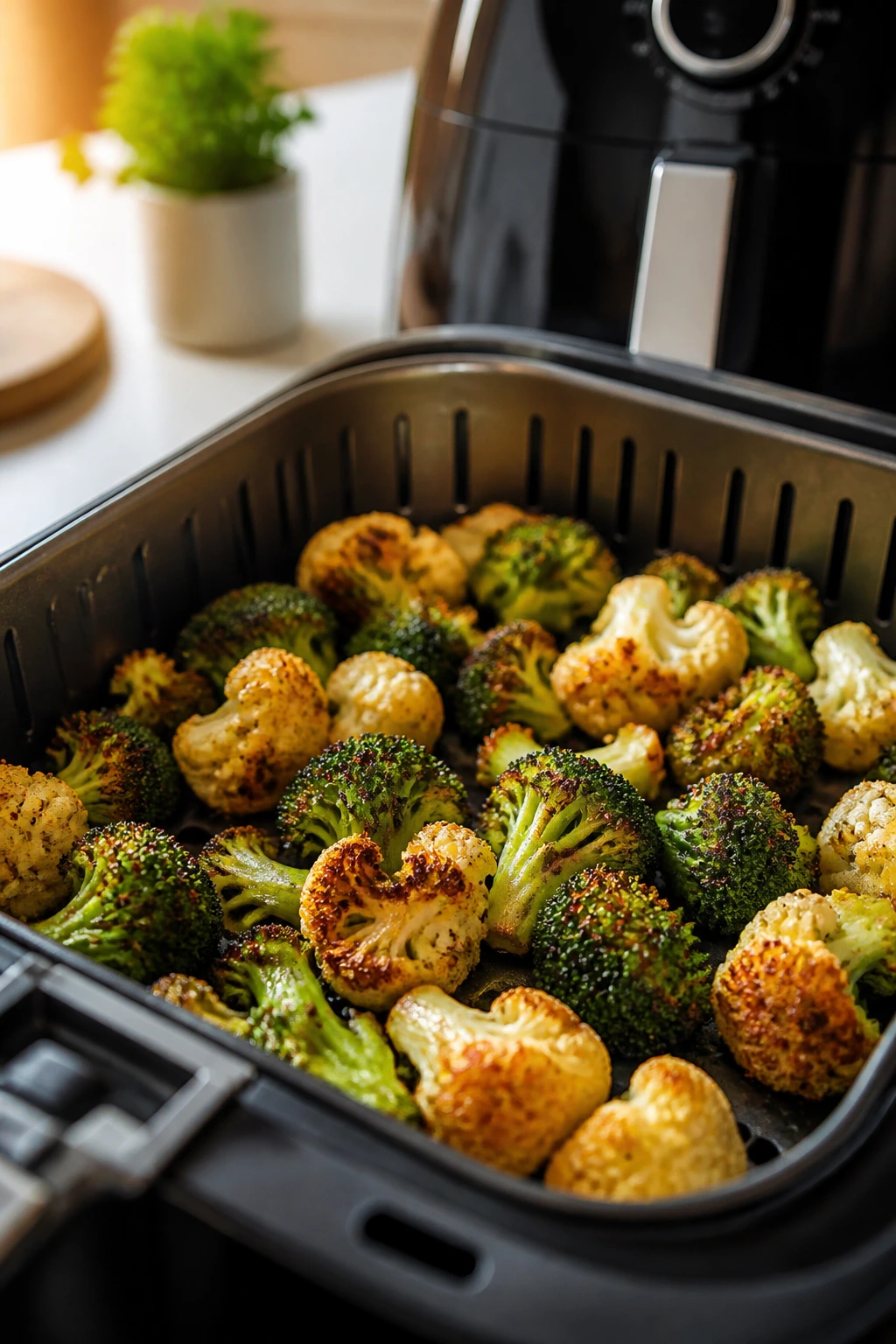
Air fryers are good at one thing: pushing hot air around a small pile of food very quickly. That makes them excellent for crisp vegetables in small batches, and less useful when you try to cram in half a cabbage and hope for a miracle.
Set the air fryer between 375°F and 400°F. Broccoli, cauliflower, Brussels sprouts, green beans, and chickpeas are the best bets. Toss them with a light coat of oil, a dry seasoning blend, and a pinch of salt, then spread them in a single layer. If the basket is full, the edges will soften. That’s not an air fryer problem. That’s a crowding problem.
Shake the basket once halfway through, not every minute. The vegetables need contact time against the hot surface to brown. Constant shaking keeps them moving too much. A few pieces will get darker than others, and that’s fine. Actually, that’s part of the appeal.
Where the air fryer shines
It’s good for quick side dishes, meal-prep boxes, and last-minute additions to grain bowls. It’s also useful for smaller households because you can make a serving or two without heating the whole oven. Roasted broccoli or cauliflower in an air fryer can be done in 8 to 12 minutes, depending on size and how crowded the basket is.
Where it falls short
Zucchini gets soft fast in an air fryer. Mushrooms shrink and can turn chewy if they’re cut too small. Delicate vegetables that need a lot of surface area but little time can work, but the line between crisp and tired is thin. If you want the strongest browning on a large volume of vegetables, the oven still wins.
Seasonings, Sauces, and Finishes That Stick
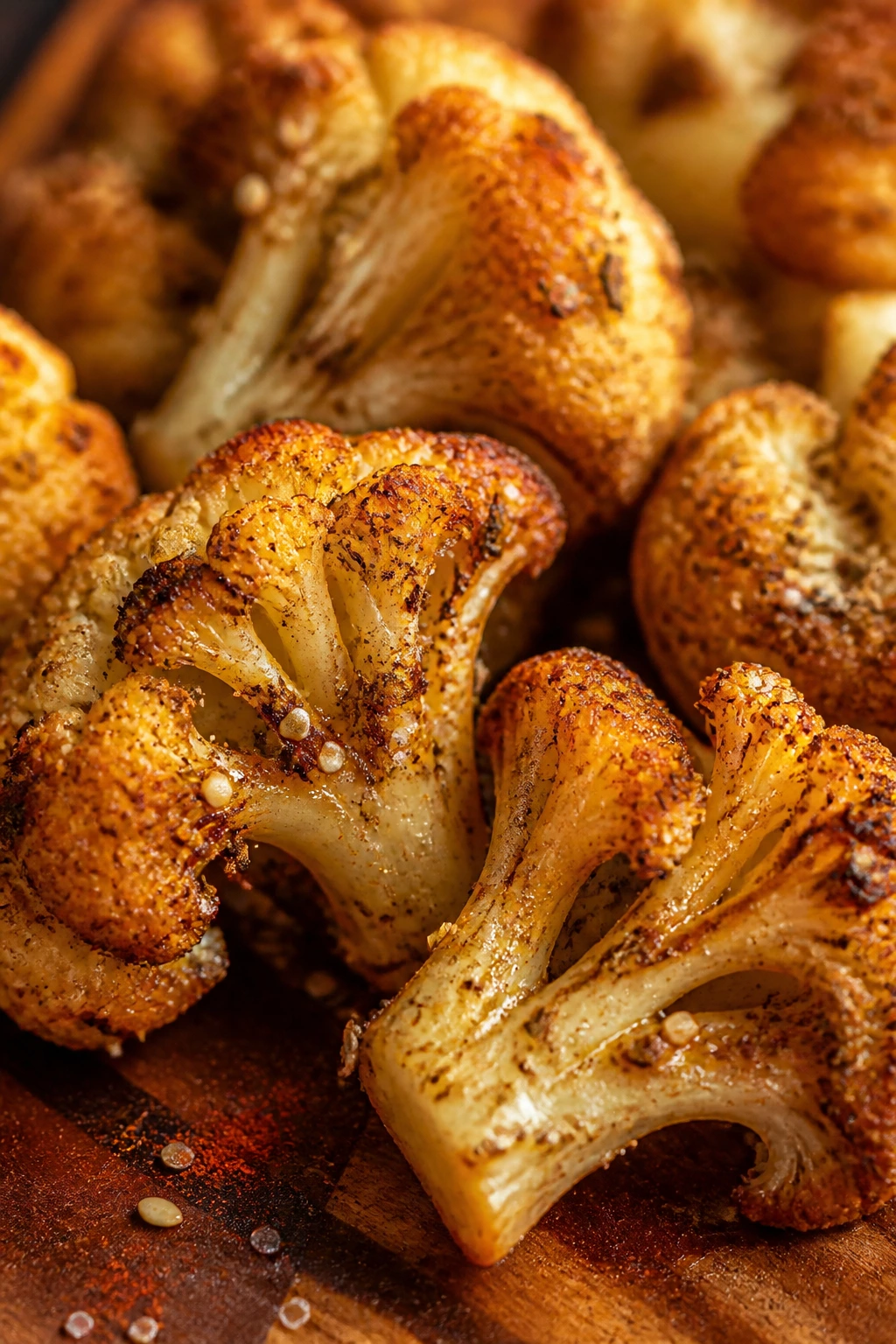
Dry seasonings before heat. Fresh things after heat. That order saves a lot of disappointment. Garlic powder, onion powder, smoked paprika, cumin, chili flakes, and black pepper all behave well on hot vegetables. Fresh minced garlic does not. It burns before the vegetables finish, and then you get bitterness where you wanted aroma.
A simple oil-and-spice mix can carry a tray. Think olive oil, garlic powder, smoked paprika, salt, and pepper for cauliflower. Cumin and coriander are very good with carrots and sweet potatoes. Za’atar belongs on broccoli and cabbage. Sesame oil works in tiny amounts with green beans or Brussels sprouts, but it’s a finishing note more than a cooking oil.
Sauces that keep the crunch
If you want to keep the crisp edges intact, use sauces that can be drizzled instead of mixed hard into the vegetables. A lemon-tahini sauce is the classic. Greek yogurt with garlic and dill is another good one. A spoon of miso whisked with warm water, a little maple syrup, and rice vinegar can coat vegetables without turning them soggy if you add it at the end.
Fresh herbs should go last. Parsley, cilantro, dill, chives, and basil all lose their snap if they cook too long. A handful chopped over the finished tray makes the colors and textures feel brighter. Same with lemon zest. It gives you perfume without extra liquid.
Three pairings I keep coming back to
- Broccoli + garlic powder + lemon juice + Parmesan
- Cauliflower + cumin + tahini + chopped parsley
- Brussels sprouts + smoked paprika + maple mustard drizzle
None of those takes much work. That’s the point.
How to Turn Crispy Veggies Into a Healthy Dinner
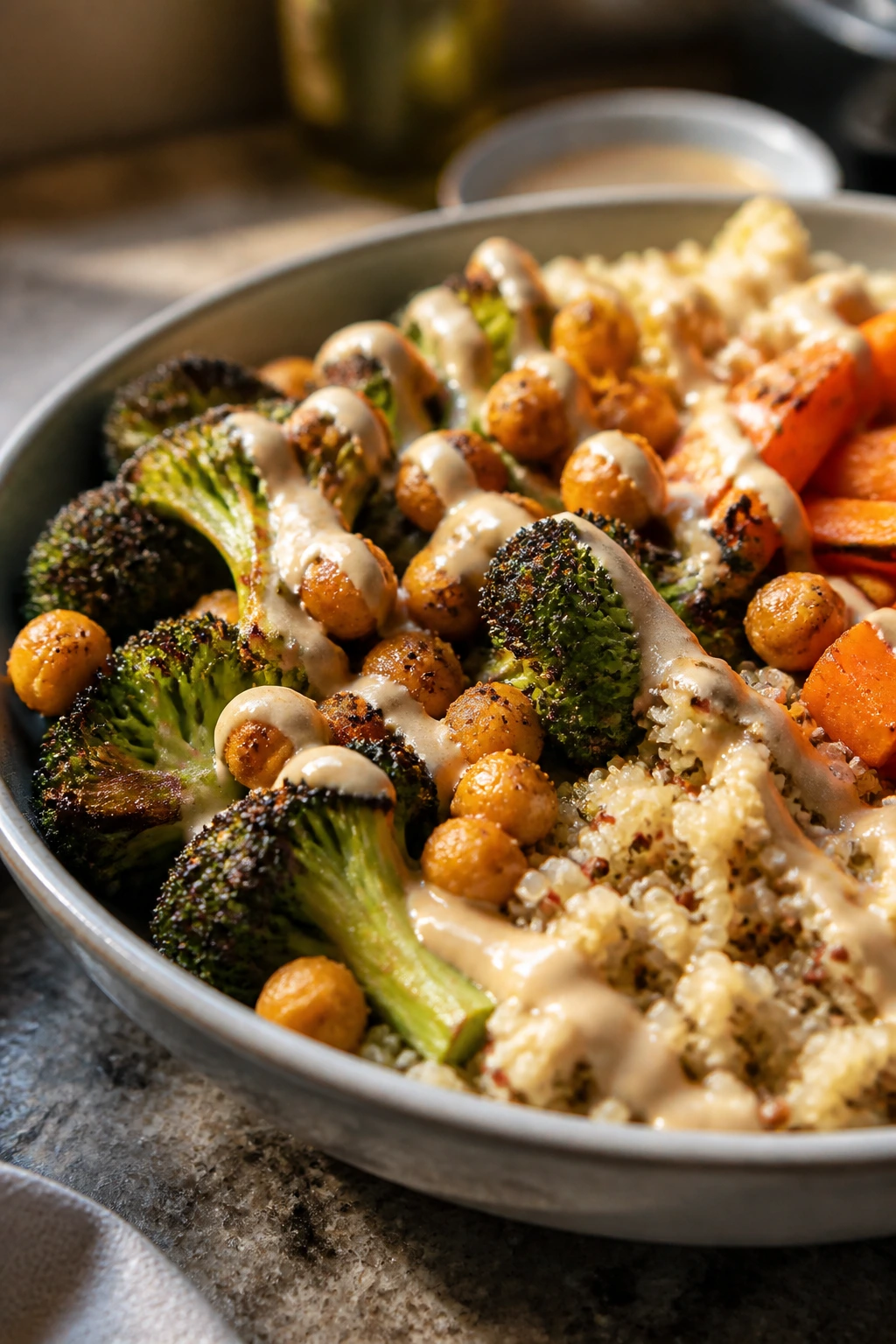
A pile of roasted vegetables is good. A dinner plate with structure is better. Crispy veggies become a real meal when you give them a protein, a starch, and a finishing sauce that doesn’t bury the crunch. That’s the plate logic behind MyPlate and Harvard’s Healthy Eating Plate, and it works because it keeps vegetables at the center instead of hiding them under everything else.
Think in parts. One part is the vegetables themselves, hot from the pan. One part is protein: chickpeas, tofu, tempeh, lentils, eggs, or Greek yogurt-based sauces. One part is a starch if you want it: quinoa, farro, brown rice, couscous, potatoes, or warm bread. The last part is the thing that wakes the bowl up — herbs, citrus, or a sauce spooned over at the end.
Build the plate around texture
If the vegetables are the crispy part, the rest of the plate should make them shine. Creamy avocado, soft grains, and a bright sauce all do that. So do crunchy toppings like toasted seeds or chopped nuts. A dinner bowl with broccoli, chickpeas, farro, and tahini has enough contrast to stay interesting past the first few bites.
Here’s the part people often miss: you do not need to make the plate huge. You need to make it balanced. A medium serving of vegetables with a small scoop of grains and a real protein source can feel more satisfying than a giant bowl of mushy pasta with a few token peas on top.
A few combinations that actually work
- Roasted cauliflower + chickpeas + quinoa + lemon-tahini
- Brussels sprouts + fried eggs + toast + chili crisp
- Carrots + lentils + farro + yogurt-dill sauce
- Broccoli + tofu + brown rice + sesame-soy glaze
- Cabbage wedges + white beans + potatoes + parsley oil
If you’re cooking for someone who claims not to like vegetables, this is where the argument usually ends. Give them browned edges, salt, and something creamy alongside. Most people are not anti-vegetable. They’re anti-sog.
Tools That Make the Job Easier
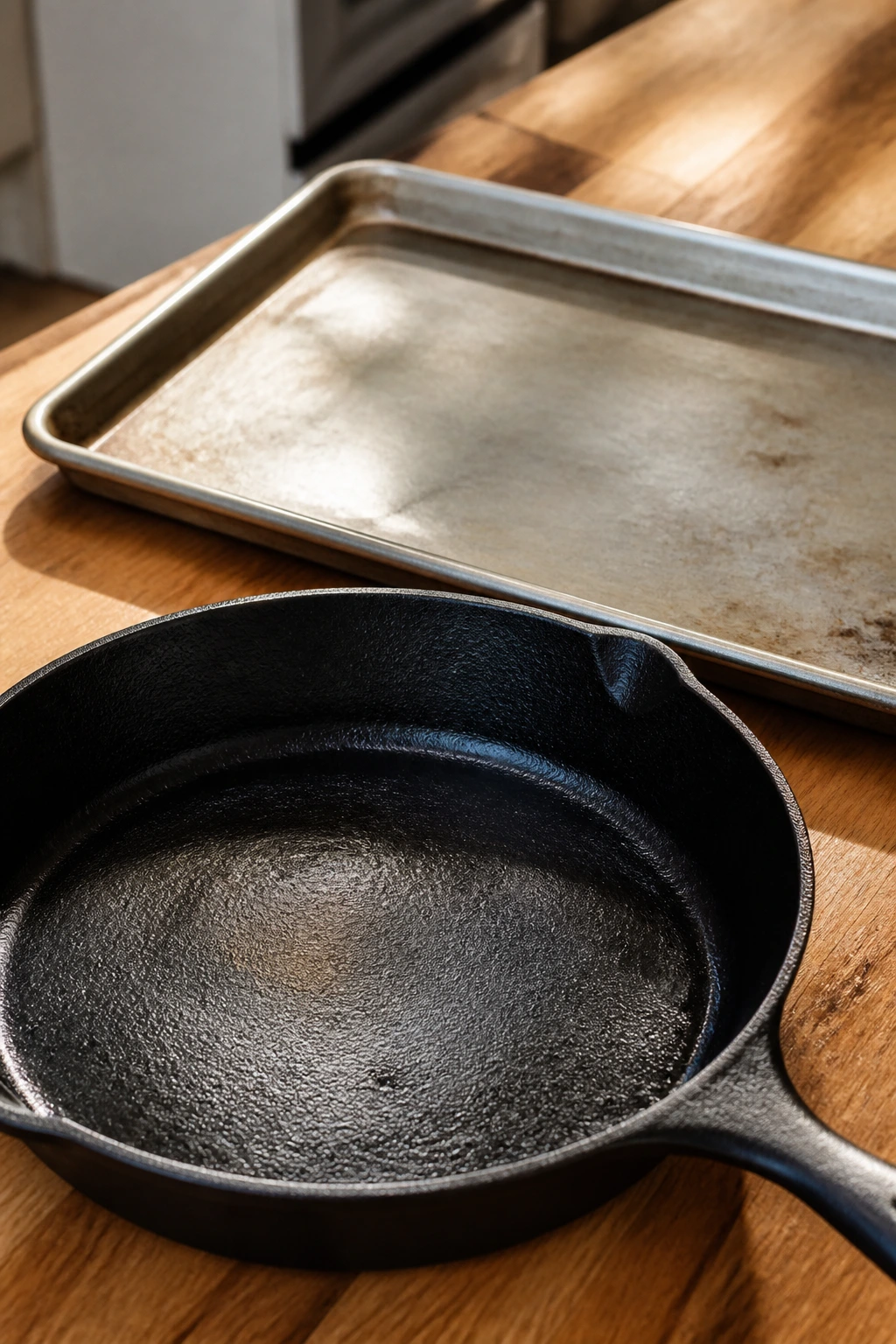
You do not need a kitchen full of gadgets to pull this off. A few solid tools make crisp vegetables much easier, though, and some of them matter more than people realize.
- Rimmed half-sheet pans — These give vegetables room and catch any oil or juices that escape; use two if you’re cooking more than 2 pounds.
- Sharp chef’s knife — Clean cuts brown more evenly than torn pieces, especially on broccoli stems, carrots, and cabbage.
- Large cutting board — You want space to cut without sending florets across the counter.
- Big mixing bowl — Tossing vegetables in a roomy bowl coats them more evenly than doing it on the tray.
- Salad spinner or clean kitchen towels — Drying is half the battle with watery vegetables and greens.
- Tongs or a thin spatula — Helpful for turning vegetables without crushing the browned sides.
- Cast-iron skillet or heavy stainless pan — Best for stovetop crisping and fast caramelization.
- Air fryer basket — Optional, but handy when you want small-batch crunch fast.
- Parchment paper — Useful for sticky glazes; less ideal if you’re chasing the deepest underside browning.
- Wire rack — Optional for reheating leftovers so hot air can move around them again.
If your tray feels too shallow or your pan too small, that’s usually not a tiny issue. That’s the whole issue.
Mistakes That Turn Crunch Into Sog
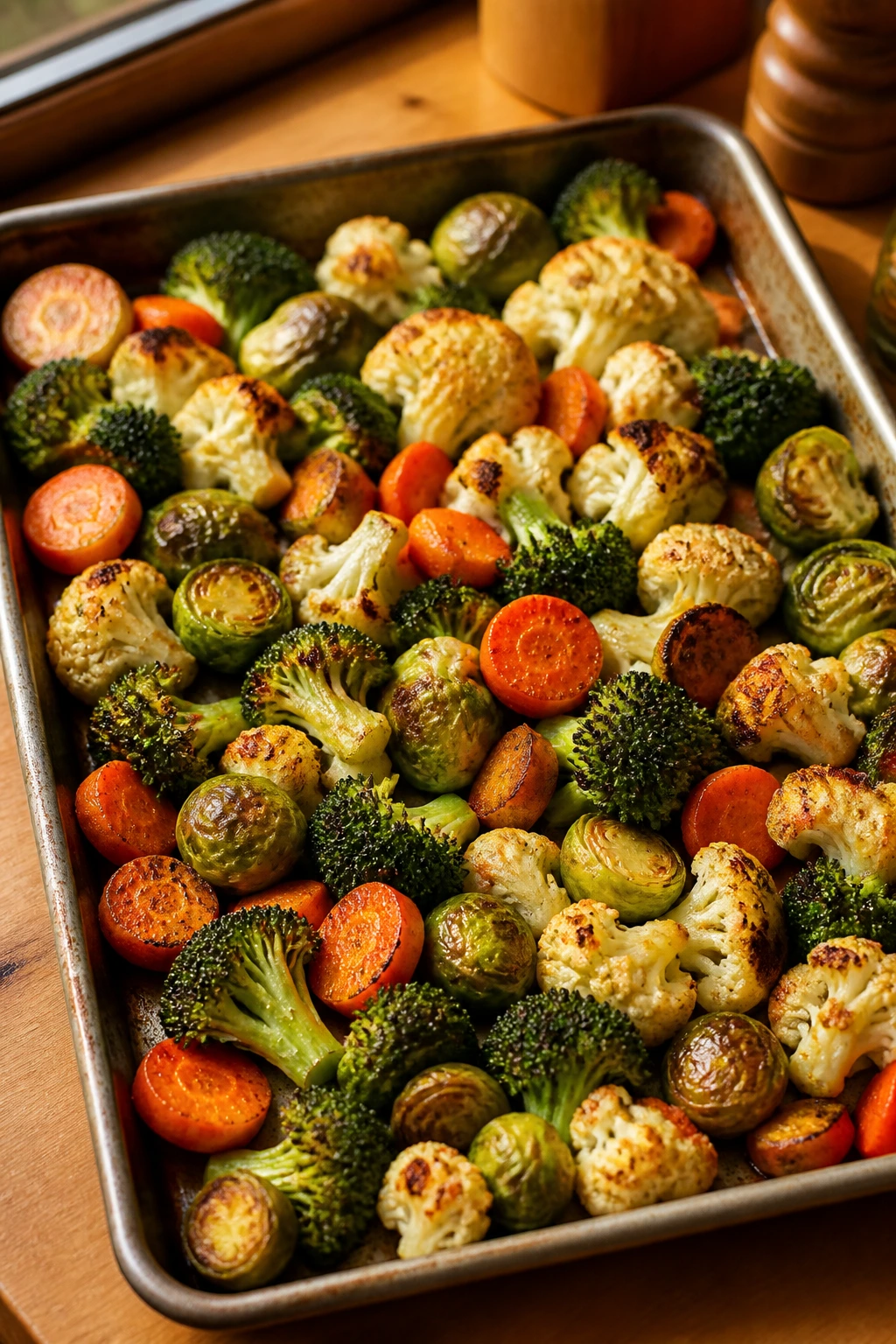
Crowding the pan is the classic mistake. The vegetables sit too close together, moisture has nowhere to go, and the whole tray starts steaming itself. The fix is simple: use two pans, or roast in batches.
Skipping the dry step is next. You wash the vegetables, toss them with oil while they’re still wet, and then wonder why the tray comes out pale. Dry them with towels, use a spinner for greens, and give mushrooms a wipe instead of a soak.
Too much oil can backfire. A glossy coating is fine; pooled oil is not. Too much oil weighs the vegetables down and can make them feel slippery instead of crisp. Start with about 1 tablespoon per pound for delicate vegetables and up to 2 tablespoons for dense ones, then stop there unless the tray looks dry.
Low heat is a slow kind of sabotage. At 375°F, many vegetables soften before they brown. That’s fine if tenderness is your only goal. If you want crisp edges, push the heat higher and watch the pieces carefully near the end.
Saucing too early ruins the crust. If you toss hot vegetables in a wet glaze right away, the surface loses its crispness fast. Add thick or wet sauces at the table, or drizzle them lightly right before serving.
Cutting everything the same size creates uneven results. Hard vegetables and soft ones cook at different rates. If your carrots are thick and your zucchini is thin, the zucchini will collapse before the carrots finish. Group vegetables by density or give them staggered start times.
Flavor Variations and Alternative Approaches
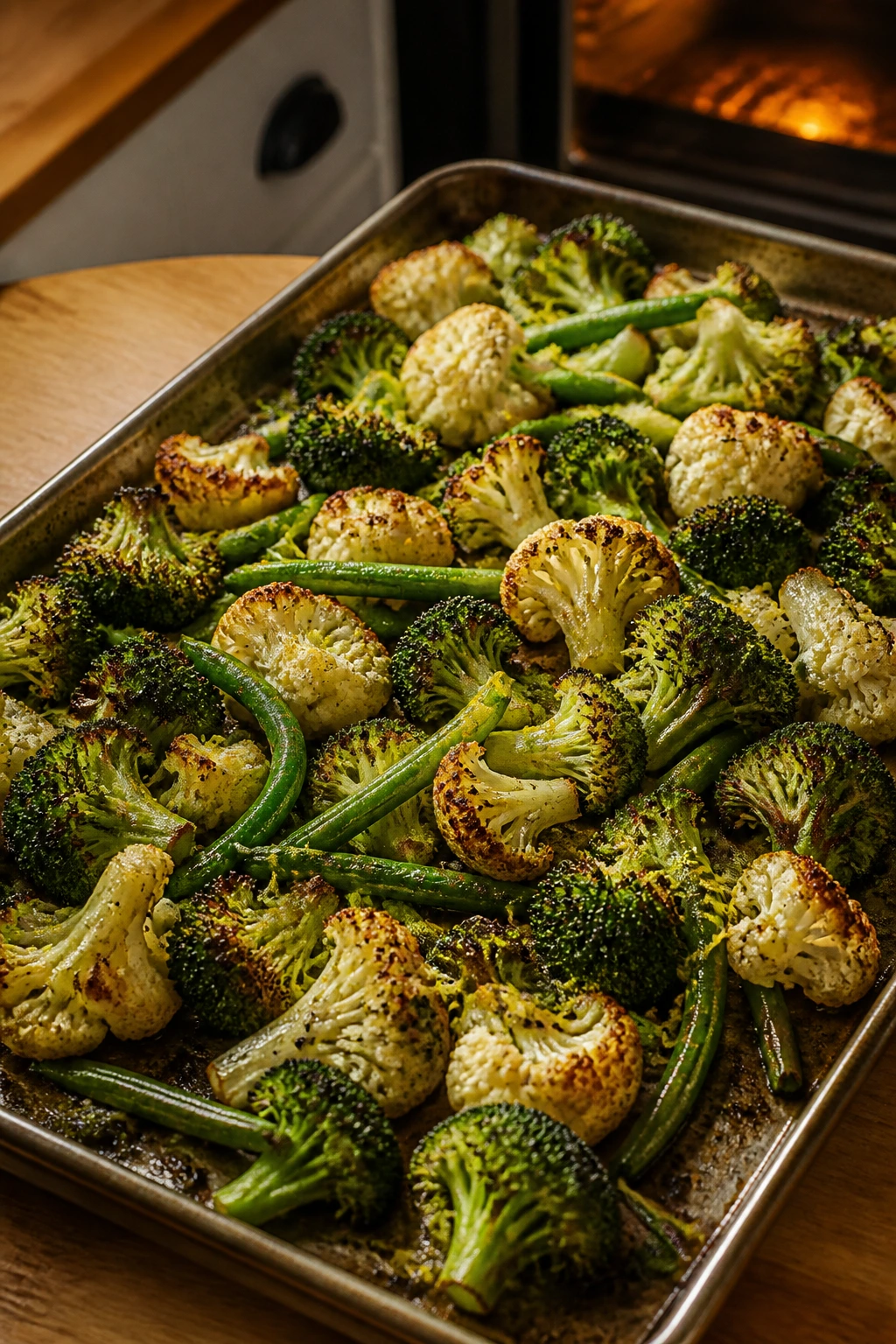
Lemon-Herb Tray
Broccoli, cauliflower, and green beans get tossed with olive oil, garlic powder, black pepper, and lemon zest. Finish with lemon juice and chopped parsley after roasting. It’s bright, simple, and it works with almost any protein or grain.
Smoky Root Veg Mix
Carrots, parsnips, sweet potatoes, and red onions love smoked paprika, cumin, and a pinch of chili flakes. Roast them hot, then finish with a spoon of plain yogurt or a drizzle of tahini if you want contrast. The sweetness gets deeper, not cloying.
Sesame-Soy Cabbage Bowl
Cabbage wedges or thick shreds, plus mushrooms and green beans, cook well in a hot skillet. Toss with a little soy sauce, rice vinegar, and sesame oil at the end, then scatter sesame seeds on top. This is the version I make when I want dinner to feel fast and a little sharper in flavor.
Za’atar and Tahini Plate
Cauliflower and Brussels sprouts do especially well with za’atar before roasting. A thin tahini-lemon sauce over the top makes the whole thing feel dinner-worthy without much extra work. Add chickpeas if you want more protein in the same bowl.
Dairy-Free Green Bowl
Broccoli, peas, edamame, and asparagus stay clean and crisp with olive oil, garlic powder, and a squeeze of lime at the end. A spoon of green herb sauce or avocado on the side gives you creaminess without dairy. This is a nice one for warmer plates and lighter dinners.
Make-Ahead, Storage, and Reheating Without Sog
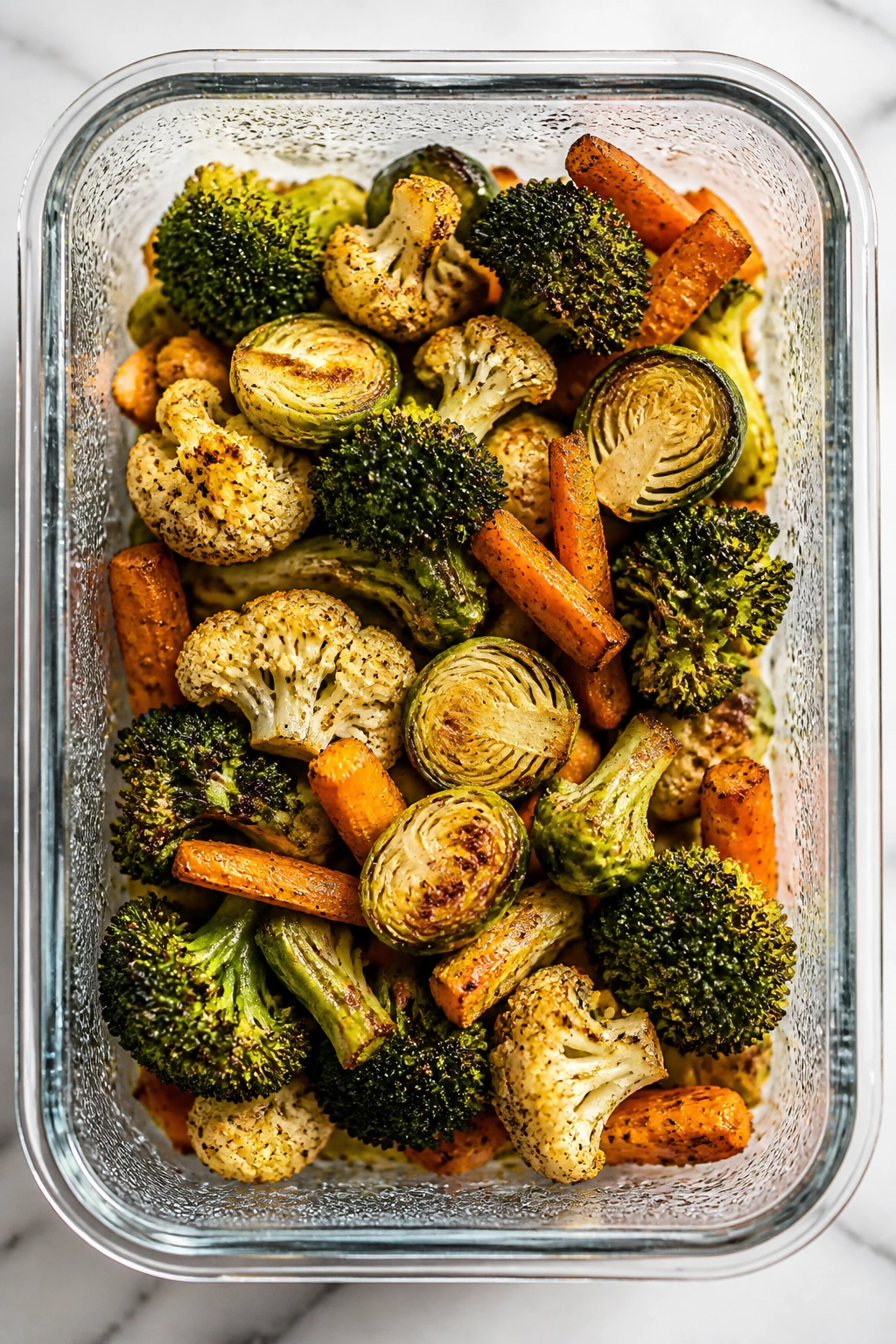
Cooked vegetables keep for about 3 to 4 days in the refrigerator if you cool them first and store them in a shallow airtight container. A paper towel in the bottom helps absorb a little extra moisture. Don’t pile them into a deep bowl while they’re still steaming hot. That trapped steam softens the edges before they even get to the fridge.
Raw prep can be done ahead too. Cut broccoli, cauliflower, carrots, and Brussels sprouts a day in advance, then dry them well and store them in a lined container or zip-top bag with most of the air squeezed out. If the vegetables look damp on day two, dry them again before cooking.
Reheating for crispness
The best way to bring the texture back is a 425°F oven or an air fryer at 375°F to 400°F. Give the vegetables 5 to 10 minutes in the oven, or 4 to 8 minutes in the air fryer, depending on their size and how cold they are. A skillet on medium-high heat works too, especially for green beans, cabbage, and Brussels sprouts. You want dry heat again, not steam.
Microwaving is the emergency option, not the best one. It reheats the vegetables, but it also softens the crust. If you use it, keep the time short and finish the vegetables in a hot pan for a minute or two.
Freezing
Most crispy vegetables do not freeze well once cooked. Broccoli and cauliflower are the most forgiving, and even then the texture softens after thawing. If you freeze them, aim to use them within 1 to 2 months and expect a less crisp result. Frozen vegetables are better for soups, grain bowls, or casseroles than for trying to restore a fresh roast.
Common Questions About Crispy Veggies for Dinner
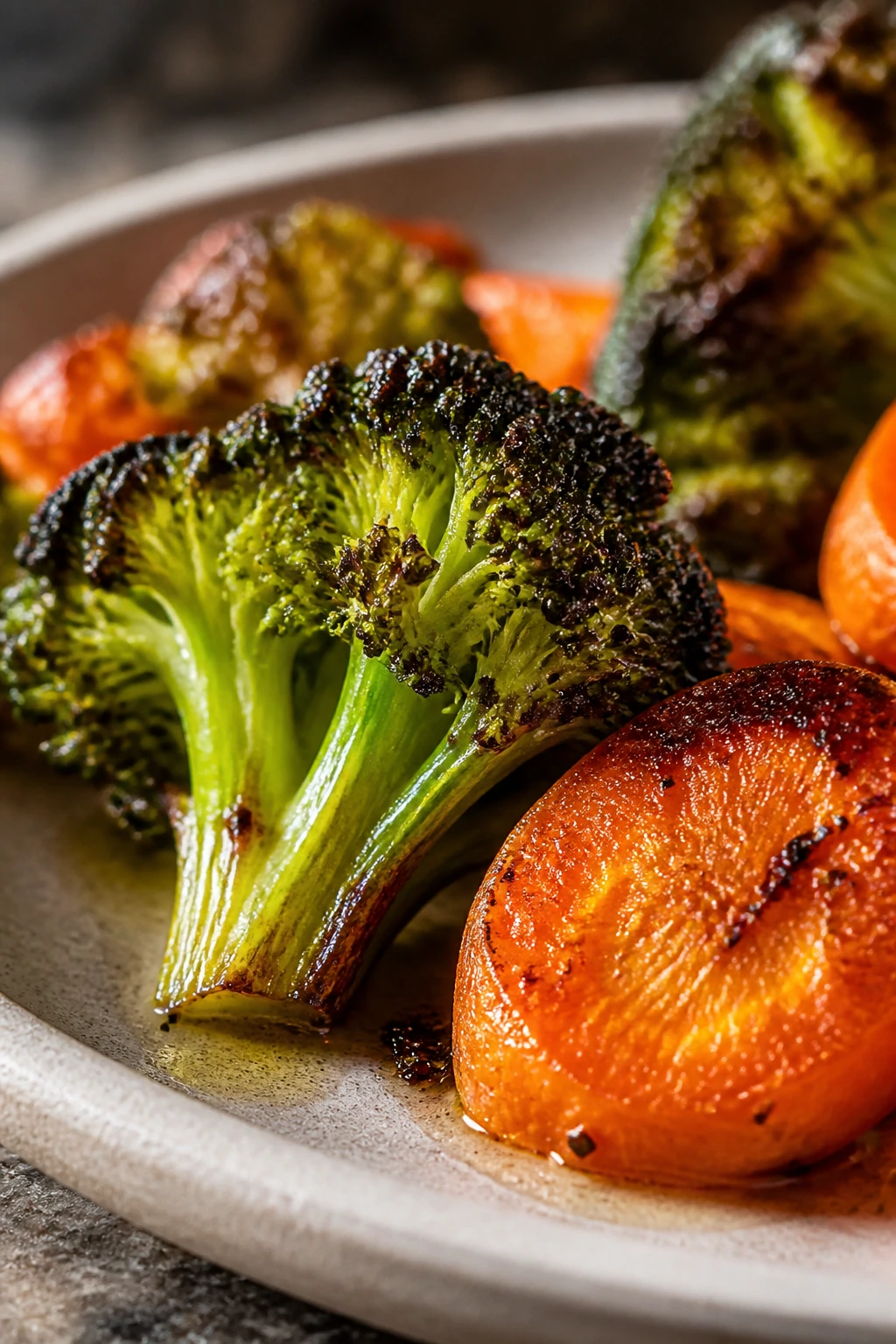
Which vegetables get the crispiest without breading?
Broccoli, cauliflower, Brussels sprouts, cabbage, and green beans are the easiest wins. They have enough structure to brown well without needing flour, crumbs, or batter. Carrots and sweet potatoes also do well, though they lean sweeter and softer at the center.
Can I make crispy veggies with very little oil?
Yes, but not zero oil if you want real browning. A light coating helps the surface conduct heat and develop those browned spots. A spray bottle or a brushed-on layer can keep the amount low while still doing the job.
Why do my vegetables go soft after five minutes on the plate?
Usually because they were undercooked, crowded, or sauced too early. Another common issue is condensation from putting hot vegetables into a closed container or a covered bowl. Let them sit on the tray for a minute or two before serving, and keep wet sauces on the side when you can.
Is parchment paper bad for crisping?
Not bad, just a little less aggressive than bare metal. Parchment is helpful when sticky seasoning or sugar is involved, but a plain sheet pan usually gives you a better browned underside. If sticking has been a problem, use parchment and accept a softer bottom.
Can frozen vegetables work for a crispy dinner?
They can, but you need a bit of realism. Frozen broccoli, cauliflower, and green beans can brown if they’re spread out and dried well, but they usually won’t get the same texture as fresh. I like them best in the air fryer or a hot skillet, where the moisture can burn off fast.
What’s the best way to keep vegetables crisp while I finish the rest of dinner?
Hold them on a wire rack in a low oven, around 200°F, for up to 20 minutes. That keeps air moving around them better than a bowl or a covered dish. If you cover them tightly, the steam will undo the work almost immediately.
Do I need to blanch vegetables first?
Usually not. Blanching can help with very tough vegetables or if you’re preparing ahead, but for weeknight crispy vegetables it’s one more step than most people need. A good cut, proper drying, and enough heat usually do more than enough.
How do I keep garlic from burning?
Use garlic powder before cooking or fresh garlic only at the very end. Minced garlic in the pan is fine for a low-heat sauté, but it scorches quickly in a 425°F roast or a blazing hot skillet. If you want the fresh flavor, stir it into a sauce instead.
A Plate Worth Repeating
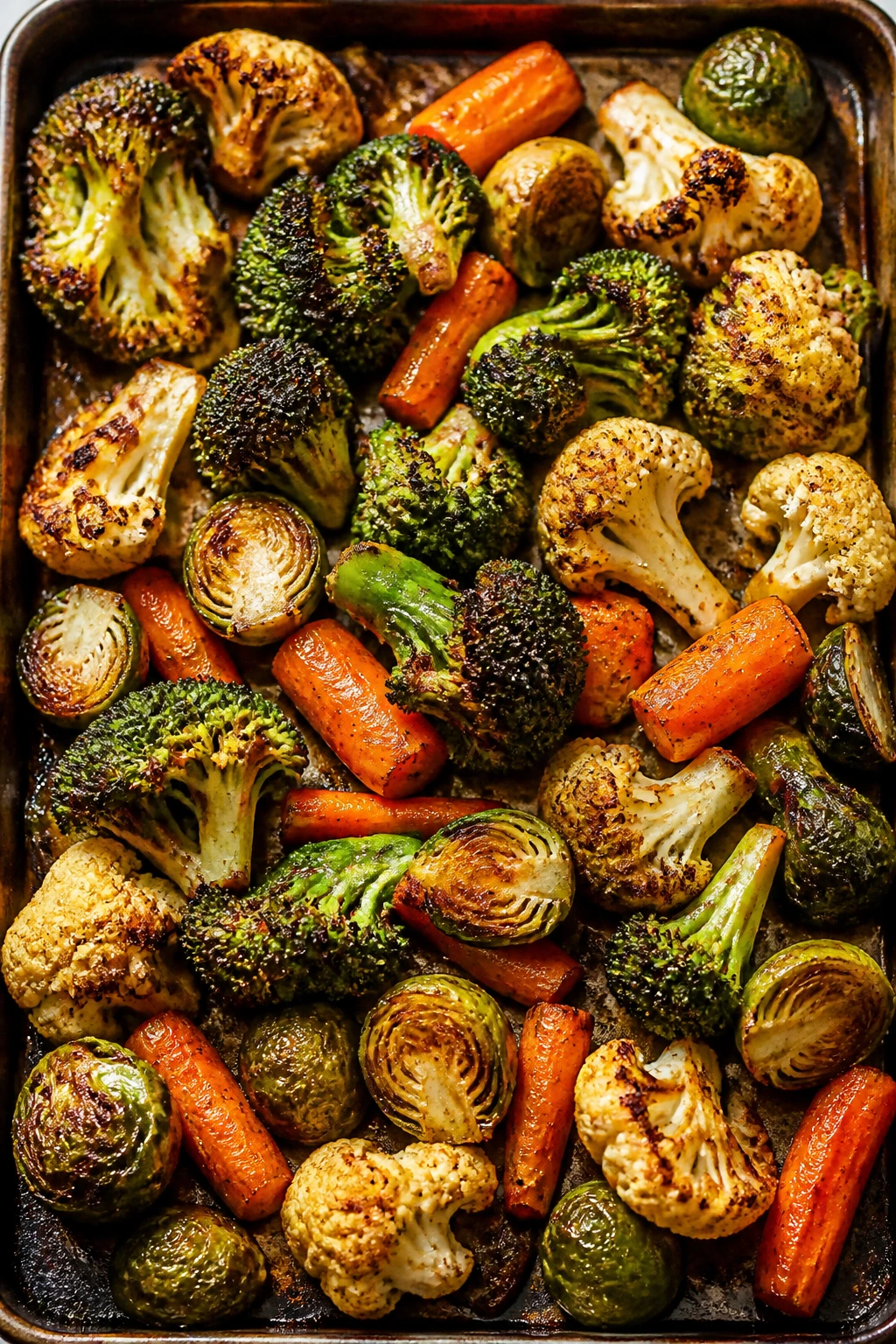
A good vegetable dinner does not need to apologize for itself. When the edges are browned, the centers stay tender, and the seasoning lands in the right order, the vegetables stop feeling like the thing you “should” eat and start feeling like the thing you want first. That shift matters. A lot.
The small moves are the ones that keep paying off: dry the vegetables, give them room, use heat with confidence, and finish them with something bright. Once you get those pieces in place, a tray of broccoli or a skillet of cabbage can carry a whole evening without much help.
Tonight, give the vegetables the hot pan they deserve.