



Roasted meat and vegetables for a healthy dinner sounds almost suspiciously plain until the pan comes out of the oven with browned chicken edges, sticky sweet potato corners, and Brussels sprouts that smell nutty instead of boiled. The whole kitchen changes in about 30 minutes. Garlic softens, paprika warms up, lemon wakes everything back up.
The oven does the work.
The trick is not more ingredients. It is spacing, heat, and the right cuts. A measured amount of olive oil, vegetables cut to the same rough size, and a piece of meat that can take 425°F without sulking—that is the whole game.
I like dinners like this because they feel complete without getting heavy. You get a lot of vegetables on the plate, enough protein to make it satisfying, and a bright finish that keeps the whole thing from tasting like a beige casserole. One pan. Real browning. No drama.
If the pan is crowded, the vegetables steam. If the chicken is wet, it steams too. That is where most versions go wrong, and it is also why a good sheet-pan roast feels almost unfairly easy once you know the rhythm.
Why This Roast Earns Its Spot on a Real Table
-
One Pan, Fewer Dishes: Everything roasts on a single rimmed sheet pan, which means you are not juggling a skillet, a saucepan, and a baking dish just to get dinner on the table.
-
Lean Enough to Feel Balanced: Using boneless, skinless chicken thighs keeps the meat juicy without needing a heavy sauce, and the vegetables do most of the volume on the plate.
-
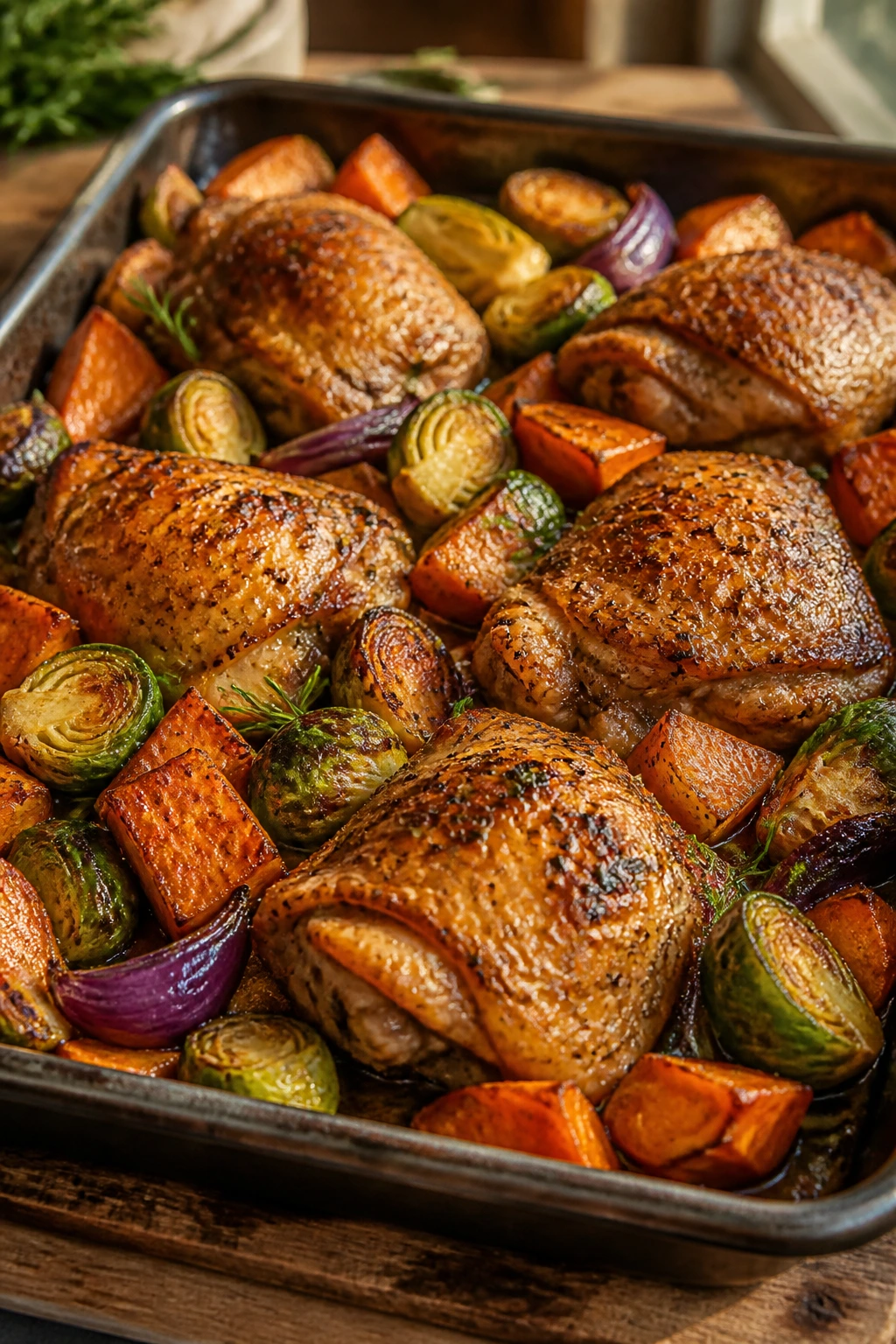
The Vegetables Brown, Not Blur: Sweet potatoes, Brussels sprouts, carrots, and red onion all handle a hot oven well when they are cut to roughly the same size and given space.
-
Bright Finish, Not Heavy Finish: Lemon zest, lemon juice, and parsley make the pan taste fresh at the end, which matters more than people think when the base flavors are roasted and savory.
-
Good Leftovers Without Sadness: The flavor is built from browned edges, garlic, and olive oil, so leftovers reheat well instead of turning into a limp sauced mess.
-
Easy to Adjust for Bigger Appetites: You can add more vegetables or split the load onto a second pan without changing the basic method, which is useful when the fridge has a few odds and ends that need using up.
The Timing Window and What the Pan Feeds
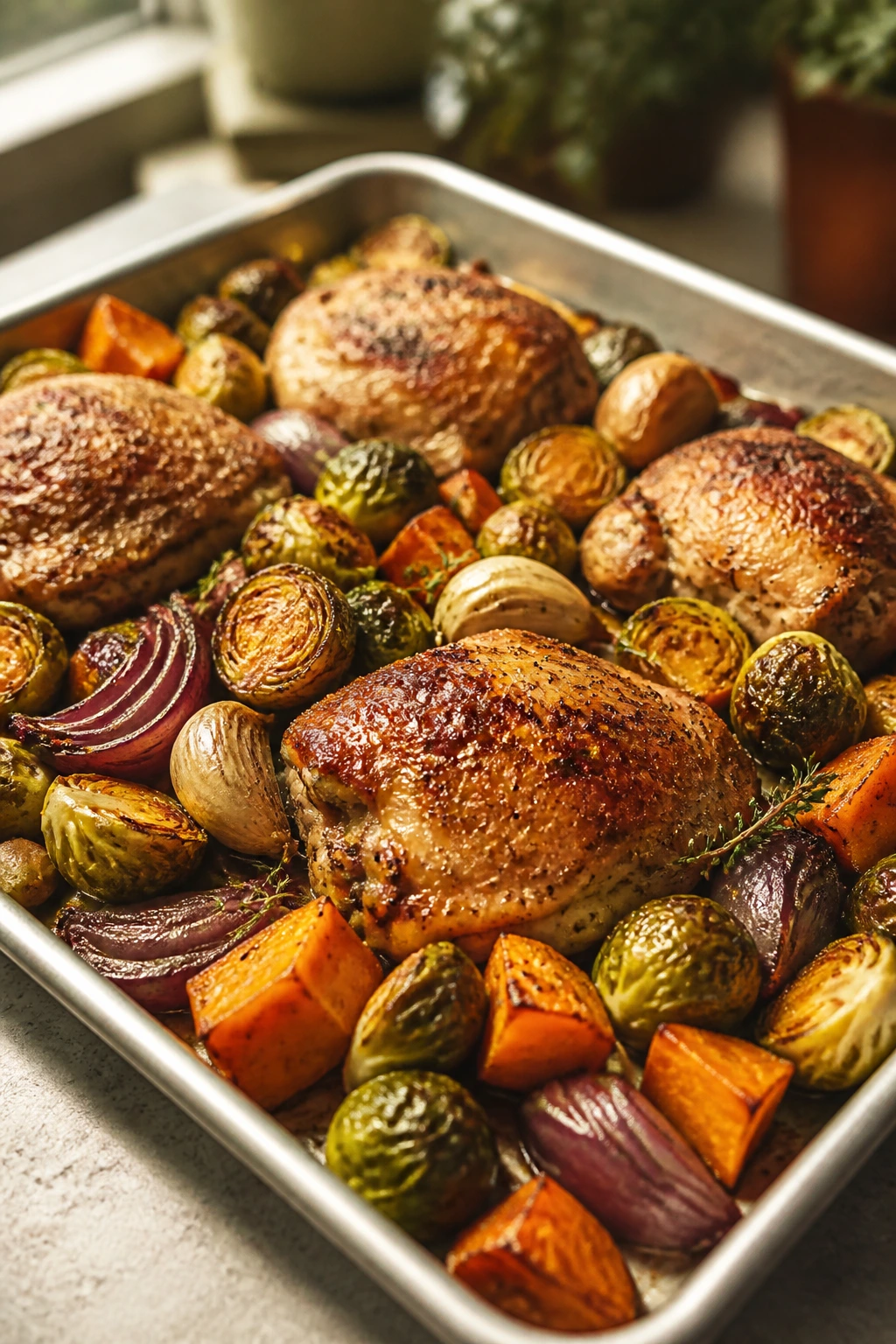
A roast like this is all about timing, and the best part is that the timing is forgiving once you cut the vegetables properly. The sweet potatoes need a head start, the chicken needs enough heat to brown, and the Brussels sprouts need enough room to get edges that actually crisp.
Yield: Serves 4 to 5
Prep Time: 20 minutes
Cook Time: 28 to 32 minutes
Total Time: 48 to 52 minutes
Difficulty: Beginner — the work is mostly chopping, tossing, and checking for doneness with a thermometer.
Rest Time: 5 minutes
Best Served: Hot from the oven, right after the lemon and parsley go on
What Goes Into the Pan
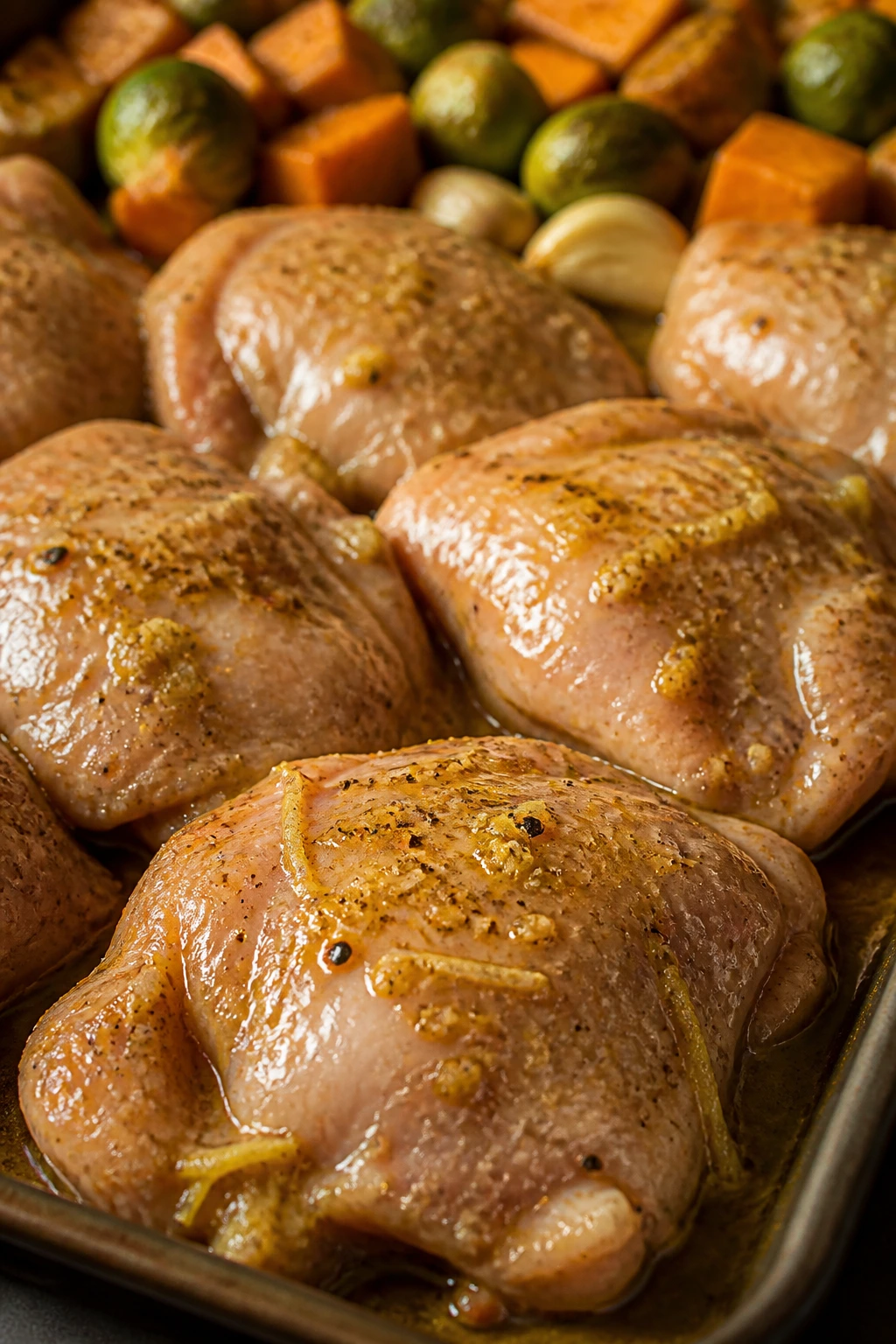
The ingredient list is short on purpose. Every part here has a job, and nothing is decorative.
For the Chicken
- 1 3/4 lb boneless, skinless chicken thighs, trimmed of excess fat
- 1 tbsp olive oil
- 1 tbsp Dijon mustard
- 2 garlic cloves, minced
- 1 lemon, zested and juiced
- 1 tsp kosher salt, divided
- 1/2 tsp black pepper, divided
- 1 tsp smoked paprika, divided
- 1 tsp dried thyme, divided
- 1/4 tsp crushed red pepper flakes, optional
For the Vegetables
- 1 lb sweet potatoes, peeled if you like, cut into 1-inch cubes
- 12 oz Brussels sprouts, trimmed and halved
- 4 medium carrots, cut on a diagonal into 1-inch pieces
- 1 medium red onion, cut into 8 wedges
- 2 tbsp olive oil
- 1/2 tsp kosher salt
- 1/4 tsp black pepper
- 1/2 tsp smoked paprika
- 1/2 tsp dried thyme
For Finishing
- 2 tbsp chopped parsley
- 1 lemon, cut into wedges
What Each Ingredient Is Doing in the Oven
Chicken
What to use: 1 3/4 lb boneless, skinless chicken thighs give you meat that stays moist at 425°F without needing a long braise or a sauce.
Preparation: Trim off any ragged fat, then pat the thighs dry with paper towels before seasoning. If the pieces vary a lot in thickness, press the thicker side lightly so they sit flatter on the pan.
Substitutions: Boneless chicken breasts work if you want a leaner result, and pork tenderloin also fits this same flavor set if you adjust the cook time.
Tips: Dry surfaces brown better than damp ones. That is not a theory thing; it is the difference between a roasted pan and a steamed one.
Sweet Potatoes
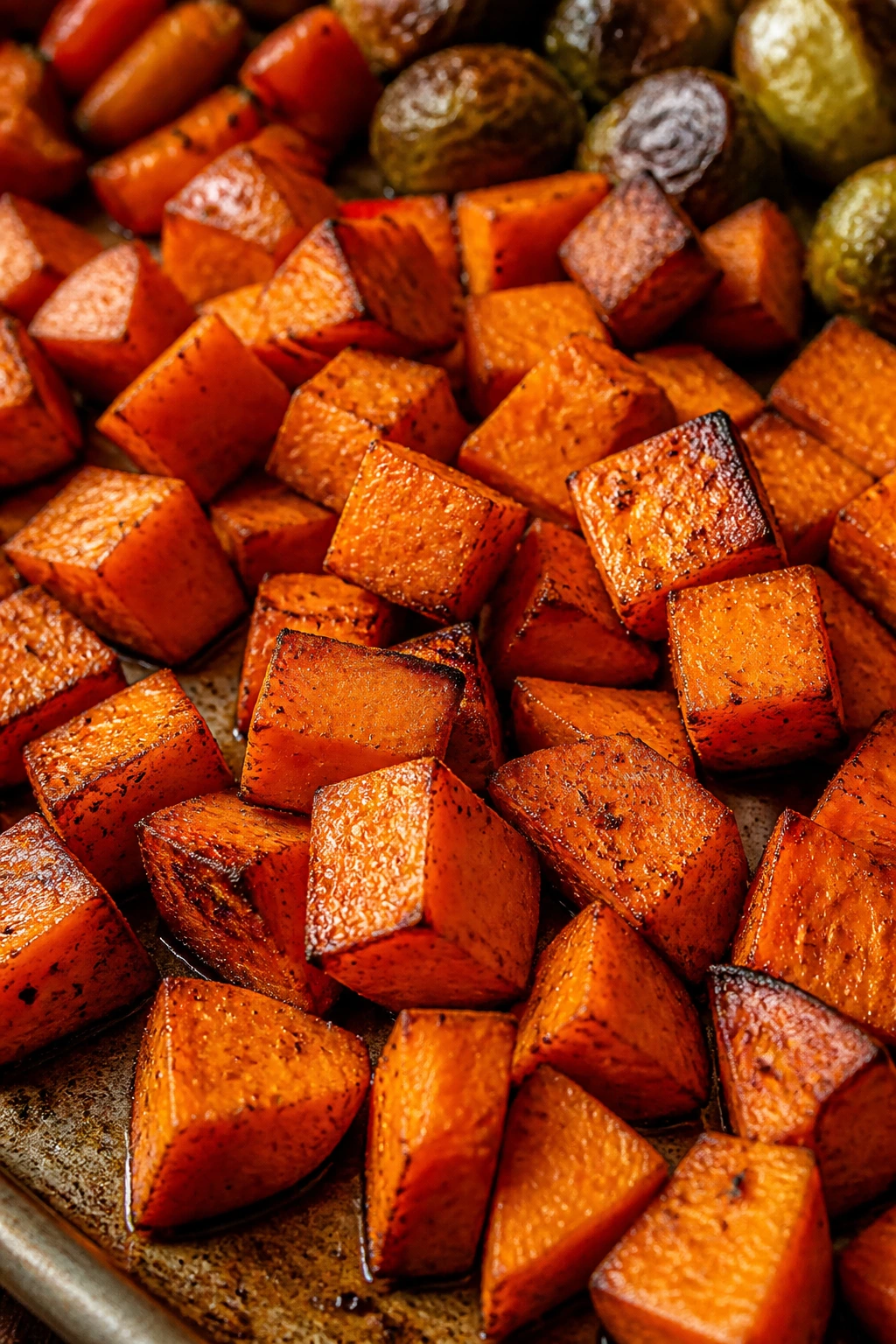
What to use: 1 lb sweet potatoes cut into 1-inch cubes gives you enough starch to make the meal feel complete without drowning the pan in heavy carbs.
Preparation: Peel them if the skins are rough, then keep the cubes close to the same size so they soften at the same rate.
Substitutions: Regular Yukon Gold potatoes, butternut squash, or kabocha all work, though they change the texture a bit.
Tips: Bigger chunks take too long and force the chicken to wait. I like sweet potatoes around the size of a large sugar cube. Smaller is better than bigger here.
Brussels Sprouts, Carrots, and Red Onion
What to use: 12 oz Brussels sprouts, 4 carrots, and 1 red onion give the pan enough color and flavor to stand up to the chicken.
Preparation: Trim the sprouts, halve them, cut the carrots on the diagonal, and slice the onion into wedges that hold together.
Substitutions: Cauliflower florets, parsnips, or fennel are the easiest swaps if that is what is in the fridge.
Tips: Put the cut side of the sprouts down against the pan. That flat surface browns instead of shriveling, and it tastes better too.
Seasoning, Acid, and Finish
What to use: Olive oil, Dijon, garlic, lemon, thyme, smoked paprika, parsley, salt, and pepper keep the roast savory without making it heavy.
Preparation: Whisk the chicken seasonings into a thick little paste so it clings instead of sliding off the meat.
Substitutions: Oregano can replace thyme, and chopped dill works at the end if you want a cooler herbal note.
Tips: Use most of the lemon in the seasoning, then finish with fresh wedges after roasting. That second hit of acid is what makes the whole pan taste alive.
The Tools That Make the Job Easier
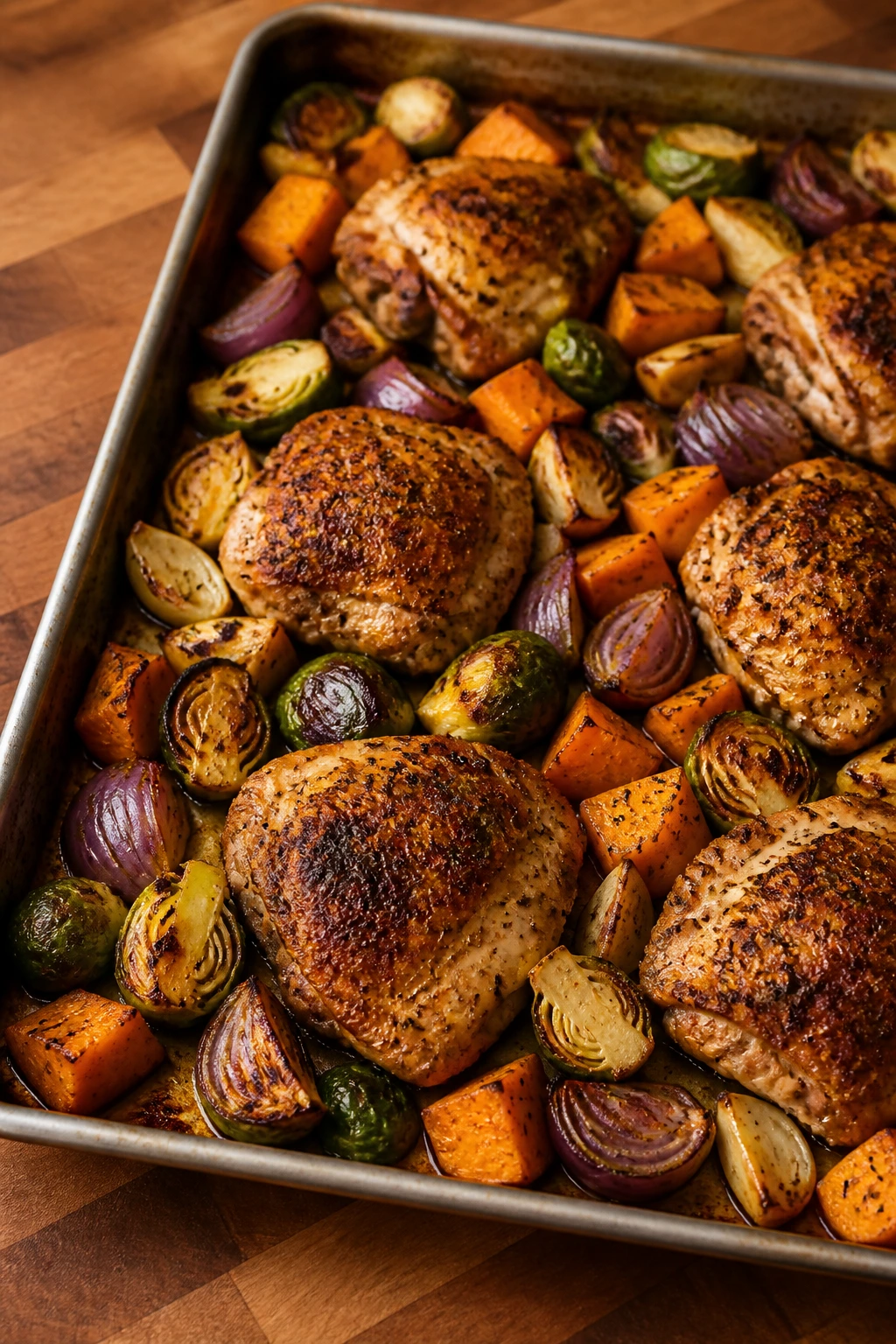
- Large rimmed sheet pan, 18 x 13 inches: Space matters here; if the tray is too small, the vegetables steam and the browning disappears.
- Parchment paper or foil: Foil gives the deepest browning and is easiest to broil under; parchment is fine if you skip the broiler step at the end.
- Large mixing bowl: Helpful for tossing the vegetables without knocking half of them onto the counter.
- Sharp chef’s knife: A dull blade turns sweet potatoes into a wrestling match.
- Cutting board with a damp towel underneath: Keeps the board from sliding while you cut the carrots and onion.
- Microplane or fine grater: Best for lemon zest; a big grater gives you too much white pith.
- Instant-read thermometer: This is the tool that turns “I think it’s done” into “it is done.”
- Tongs or a thin spatula: Useful for nudging the chicken and turning the vegetables without smashing them.
How to Roast Everything in the Right Order
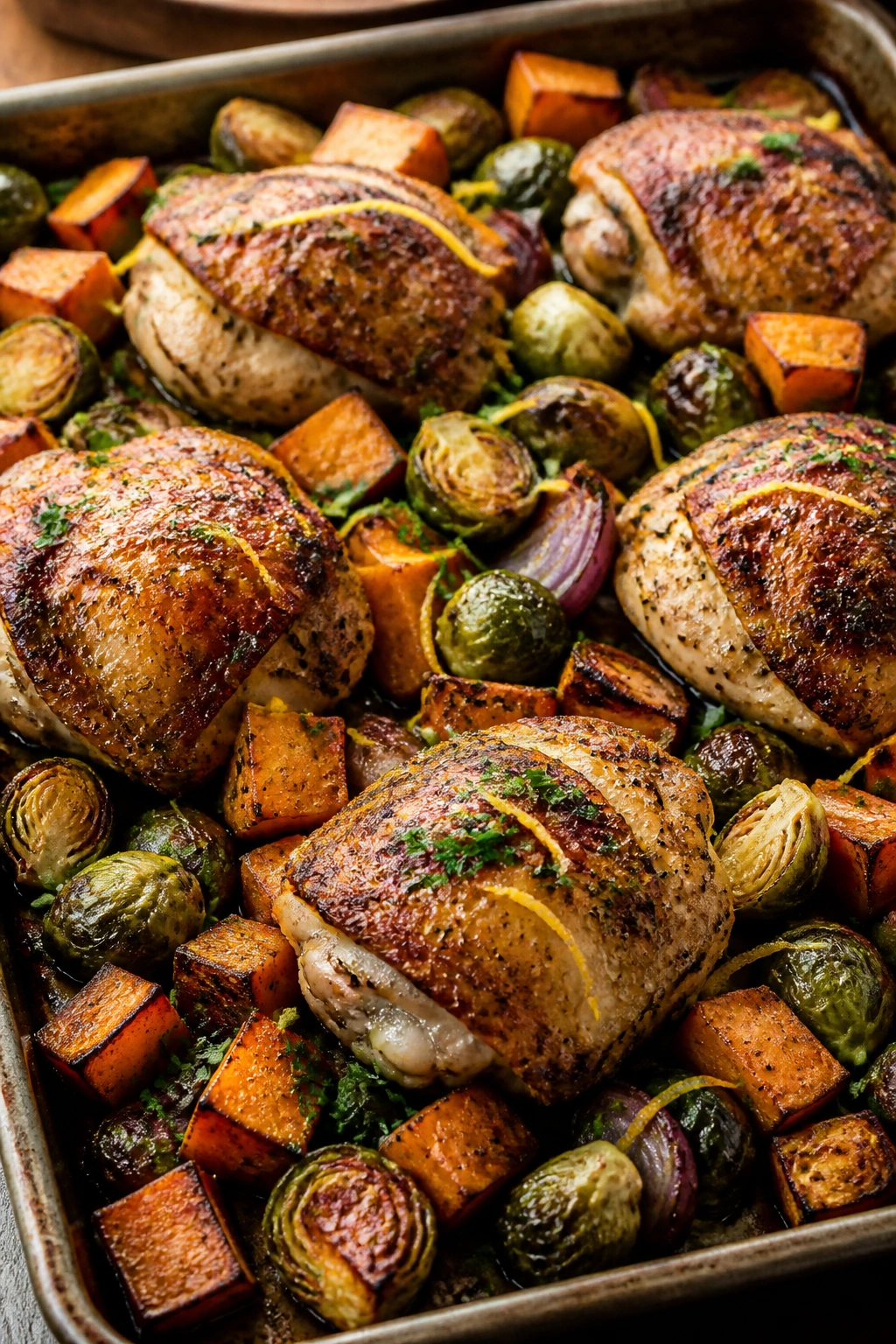
Start the Vegetables First:
- Preheat the oven to 425°F (220°C) and position a rack in the center. If you are using foil, line the sheet pan now; if you want deeper browning, leave the pan bare.
- In a large bowl, toss the sweet potatoes, Brussels sprouts, carrots, and red onion with 2 tbsp olive oil, 1/2 tsp kosher salt, 1/4 tsp black pepper, 1/2 tsp smoked paprika, and 1/2 tsp dried thyme until every piece looks lightly coated. Spread the vegetables on the sheet pan in a single layer, with the Brussels sprouts cut side down where possible.
- Roast the vegetables for 12 minutes. They should start to soften at the edges and take on a faint bit of color, but they will not be finished yet.
Season the Chicken While the Vegetables Get Their Head Start: 4. In the same bowl, stir together the chicken thighs, 1 tbsp olive oil, Dijon mustard, minced garlic, lemon zest and juice, 1 tsp kosher salt, 1/2 tsp black pepper, 1/2 tsp smoked paprika, 1/2 tsp dried thyme, and the red pepper flakes if using. The mixture should look glossy and cling to the meat instead of pooling at the bottom. 5. Let the chicken sit for 5 to 10 minutes while the vegetables continue roasting. That is enough time for the flavors to settle on the surface without letting the lemon work too long on the meat.
Finish the Roast: 6. Remove the sheet pan from the oven and use tongs to make little open spaces among the vegetables. Nestle the chicken thighs on the pan in a single layer, spacing them apart instead of stacking them. Return the pan to the oven and roast for 16 to 20 minutes. 7. Check the chicken with an instant-read thermometer in the thickest part. You want 165°F for safe doneness; if you like thighs a little softer and more tender, 170°F is a good landing point. The vegetables should be browned at the edges and easy to pierce with a fork. 8. If the chicken needs a little more color, switch the oven to broil for 1 to 2 minutes and watch it closely. Garlic can go from golden to bitter fast, and nobody needs that mess. 9. Rest the pan for 5 minutes, then scatter over the parsley and serve with the lemon wedges. If the vegetables are done before the chicken, pull the chicken to a plate, cover it loosely, and give the vegetables another few minutes in the oven.
Serving the Pan While It Still Hisses
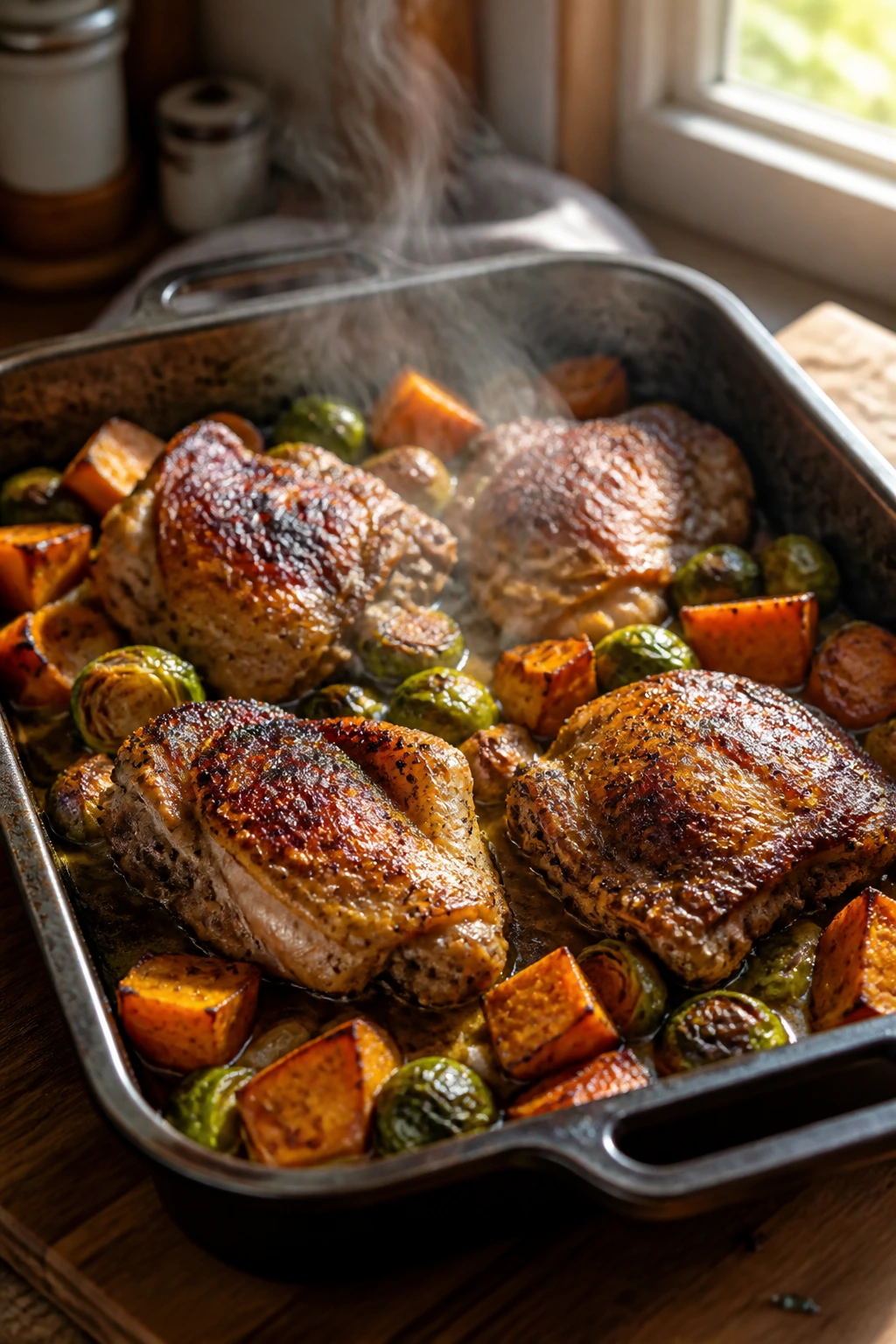
Presentation: Pile the vegetables across a warm platter, lay the chicken on top, and spoon the pan juices over everything. The chicken should look lacquered, not wet, and the sweet potatoes should have browned corners, not soft ones.
Accompaniments: I like this with a crisp green salad dressed in lemon and olive oil, or a scoop of plain Greek yogurt mixed with minced garlic if you want a cool, sharp contrast. If you need more starch, a small portion of brown rice or farro works well, though honestly the pan already carries most of the meal.
Portions: Plan on about 1 thigh plus 1 to 1 1/2 cups vegetables per person if you are serving 5. For larger appetites, build a second tray of vegetables instead of piling this one higher; space is what keeps the edges browned.
Beverage Pairing: Sparkling water with lemon keeps the plate feeling bright. If you want wine, a dry Sauvignon Blanc or a light, dry rosé has enough acidity to keep up with the lemon and Dijon without overpowering the chicken.
Small Upgrades That Change the Flavor
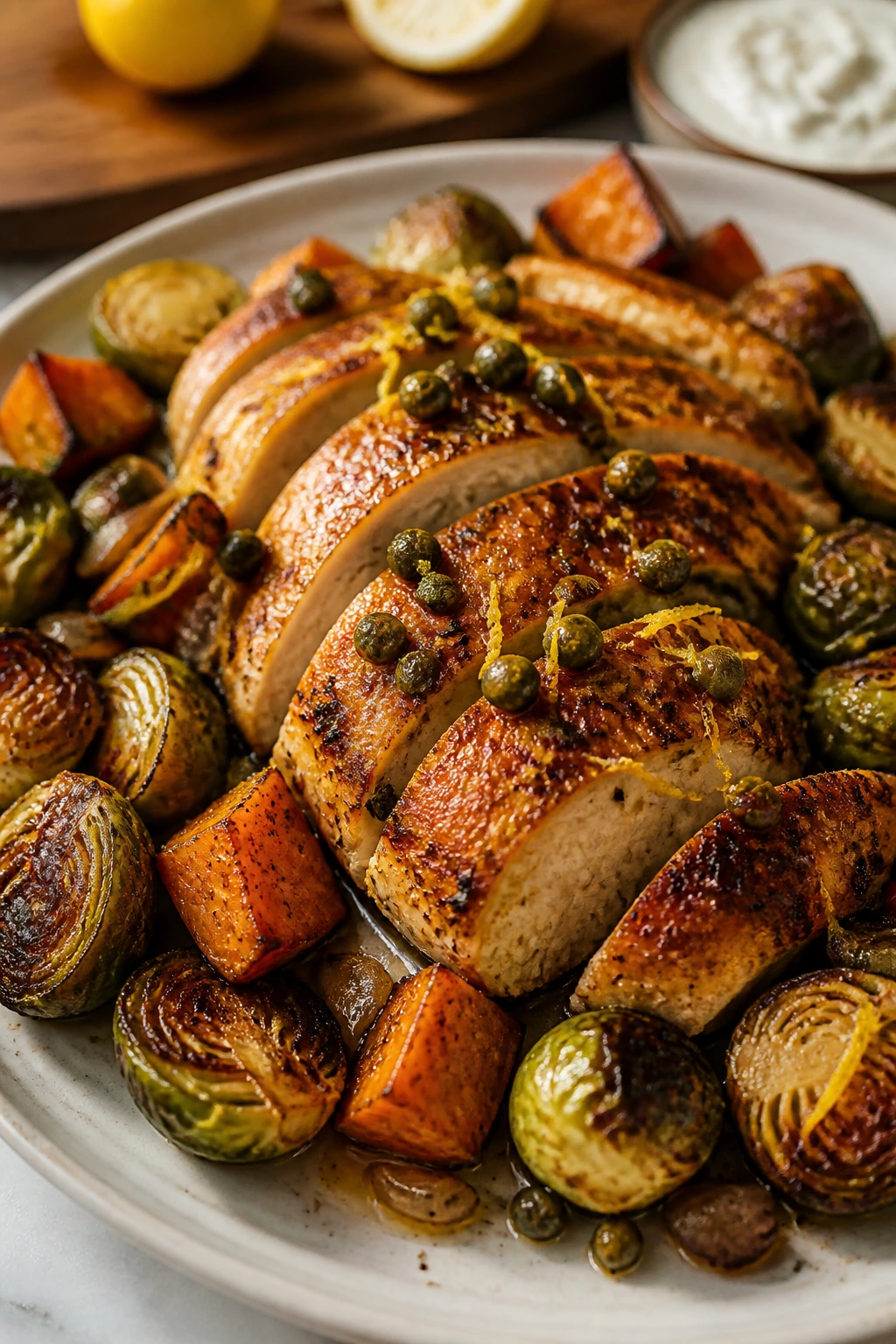
Flavor Enhancement: A teaspoon of capers stirred over the finished pan gives the whole dish a salty pop that plays well with lemon. I also like a pinch of lemon zest at the end if the fruit is fragrant, because the fresh oil on the peel smells sharper than juice alone.
Customization: If you want a softer, sweeter roast, swap half the Brussels sprouts for cauliflower. If you want more bite, add a handful of sliced fennel with the carrots; it turns silky and almost sweet at the edges.
Serving Suggestions: A spoonful of garlicky yogurt or tahini thinned with a little water makes the plate feel complete without turning it into a creamy dish. Fresh parsley is the default, but dill or chopped chives work if that is what you have.
Make-It-Yours: For a lower-sodium version, drop the added salt to 3/4 teaspoon on the chicken and 1/4 teaspoon on the vegetables, then finish with extra lemon. For a spicier plate, keep the red pepper flakes and add a small pinch of cayenne to the chicken paste.
What Usually Goes Wrong on the Sheet Pan
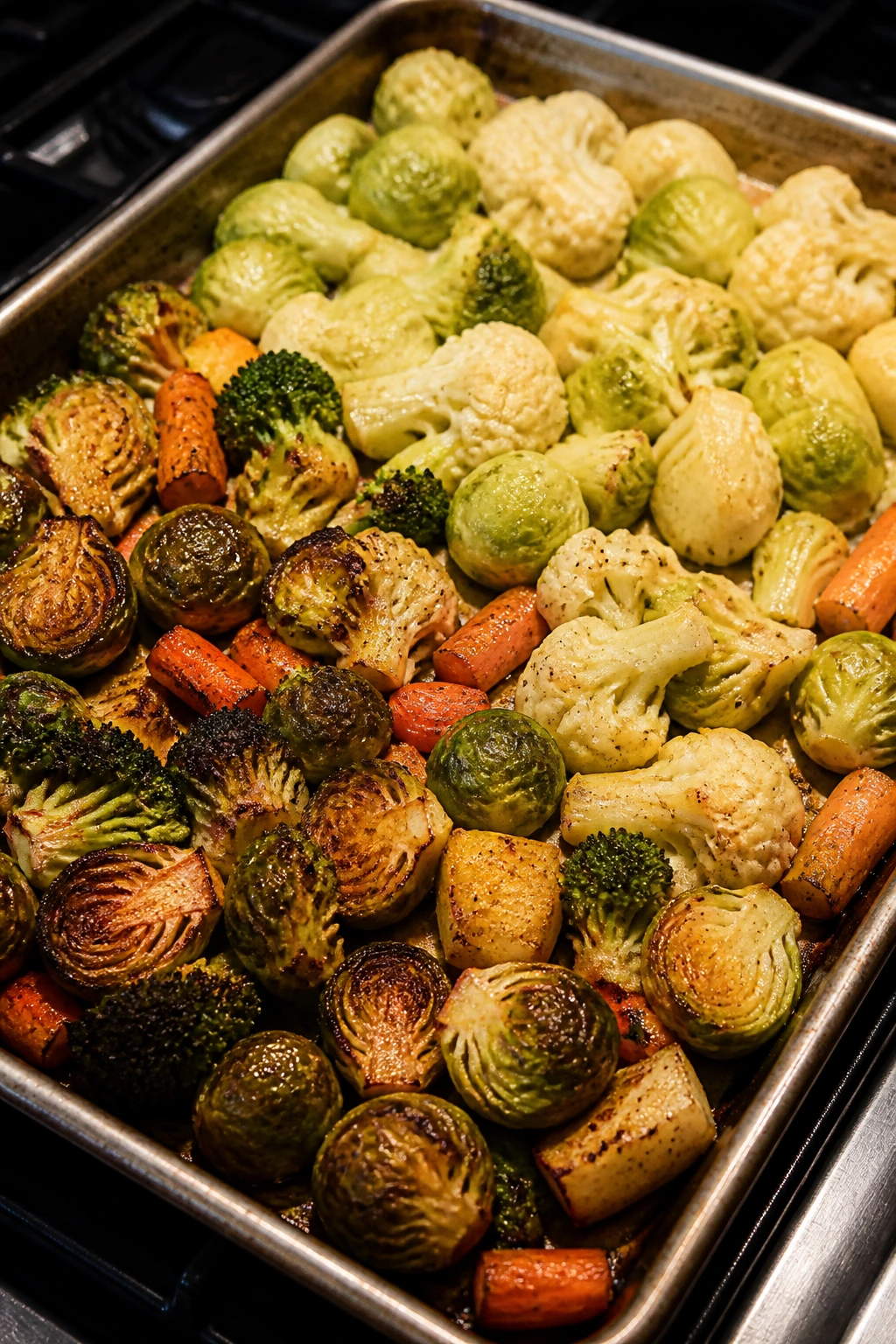
Crowding the Pan: This is the fastest way to ruin a roast. When the vegetables sit on top of one another, the moisture has nowhere to go, so they turn soft and pale instead of browned. Use a larger pan or split the vegetables onto two sheets if needed.
Cutting the Vegetables Too Large: Huge sweet potato chunks and thick carrot coins take too long to soften, which means the chicken overcooks while you wait. Aim for pieces around 1 inch so they roast in the same time window as the meat.
Skipping the Drying Step on the Chicken: Wet chicken drags the whole pan toward steam. Pat it dry before seasoning, and if you rinse your vegetables, dry them too. Water on the surface is the enemy of browning.
Overdoing the Lemon Early: Lemon is great here, but too much acid sitting on the meat for too long can make the surface feel a little dull and soft. Ten minutes of rest after seasoning is enough; after that, the oven should take over.
Trusting the Clock Instead of the Thermometer: Ovens vary. A chicken thigh that looks golden can still be underdone inside, and one that looks pale can be perfectly safe. Check the thickest part at 165°F, then give it a minute or two more if the texture still feels a little tight.
Using a Tiny Drizzle of Oil and Expecting Crisp Edges: Healthy does not mean stingy. The vegetables need enough oil to coat their surfaces lightly so they brown instead of drying out and tasting chalky. Three tablespoons across the whole pan is not excessive for this amount of food.
Ways to Bend the Roast Without Breaking It
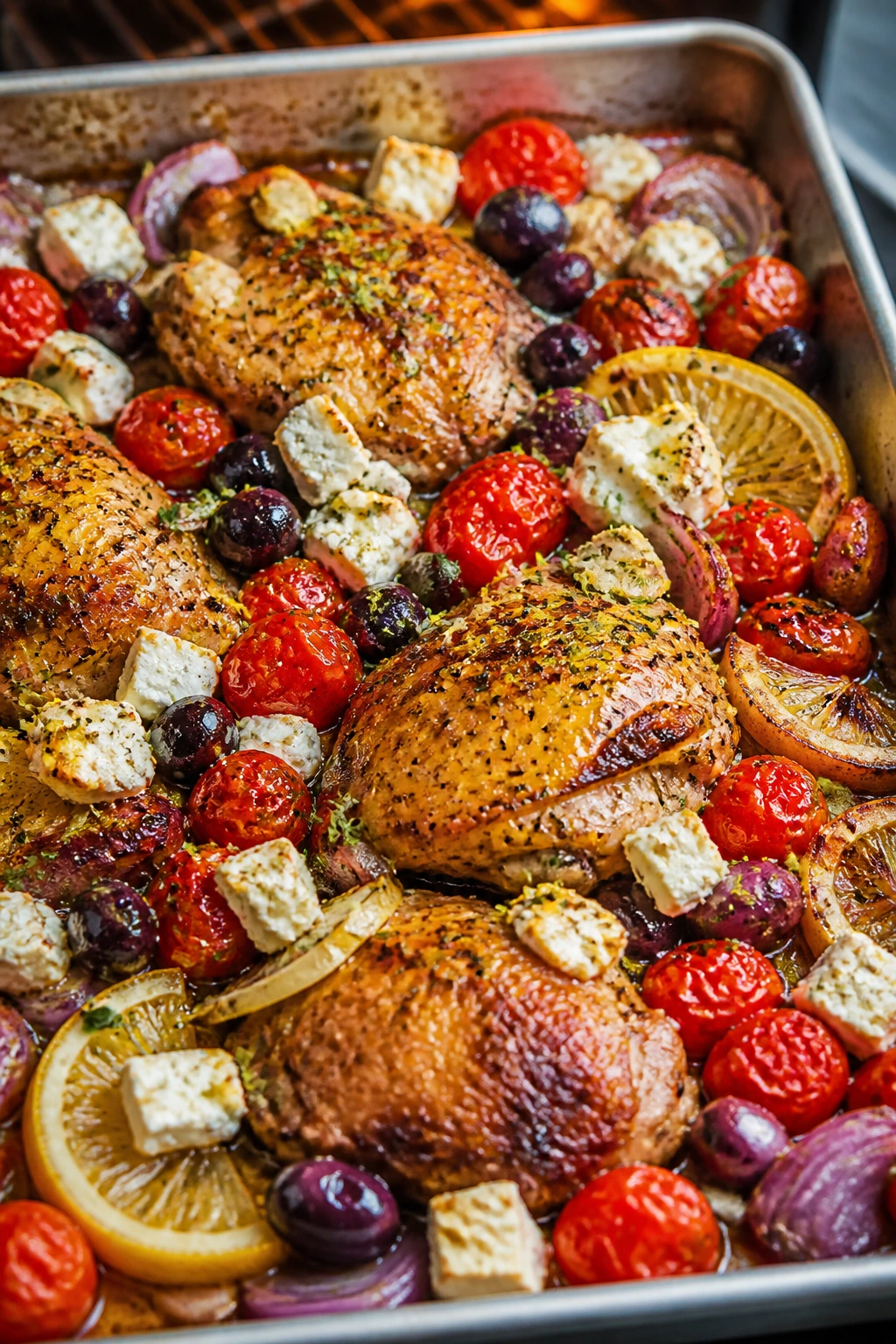
Mediterranean Lemon-Oregano Roast: Replace the thyme with oregano, add a handful of cherry tomatoes for the last 8 minutes, and finish with chopped olives and a little crumbled feta. The tomatoes burst into the pan juices and give you a brighter, saltier finish.
Pork Tenderloin and Apple Pan: Swap the chicken thighs for 1 1/2 lb pork tenderloin and use wedges of firm apple instead of some of the sweet potatoes. Roast the pork until it reaches 145°F, then rest it before slicing; the apples should be soft at the edges and still hold their shape.
Chicken Breast and Cauliflower Shortcut: Use boneless, skinless chicken breasts cut into large cutlets or thick chunks, and swap the sweet potatoes for cauliflower florets. The cooking time drops by a few minutes, and you will want to pull the chicken as soon as it reaches 160°F so it stays juicy after resting.
Chickpea and Vegetable Version: If you want a meatless pan, replace the chicken with 2 cans chickpeas, rinsed, drained, and patted dry. Toss them with the same seasoning and roast them with the vegetables from the start; they crisp at the edges and give the meal enough protein to stand on its own.
Keeping Leftovers Worth Eating
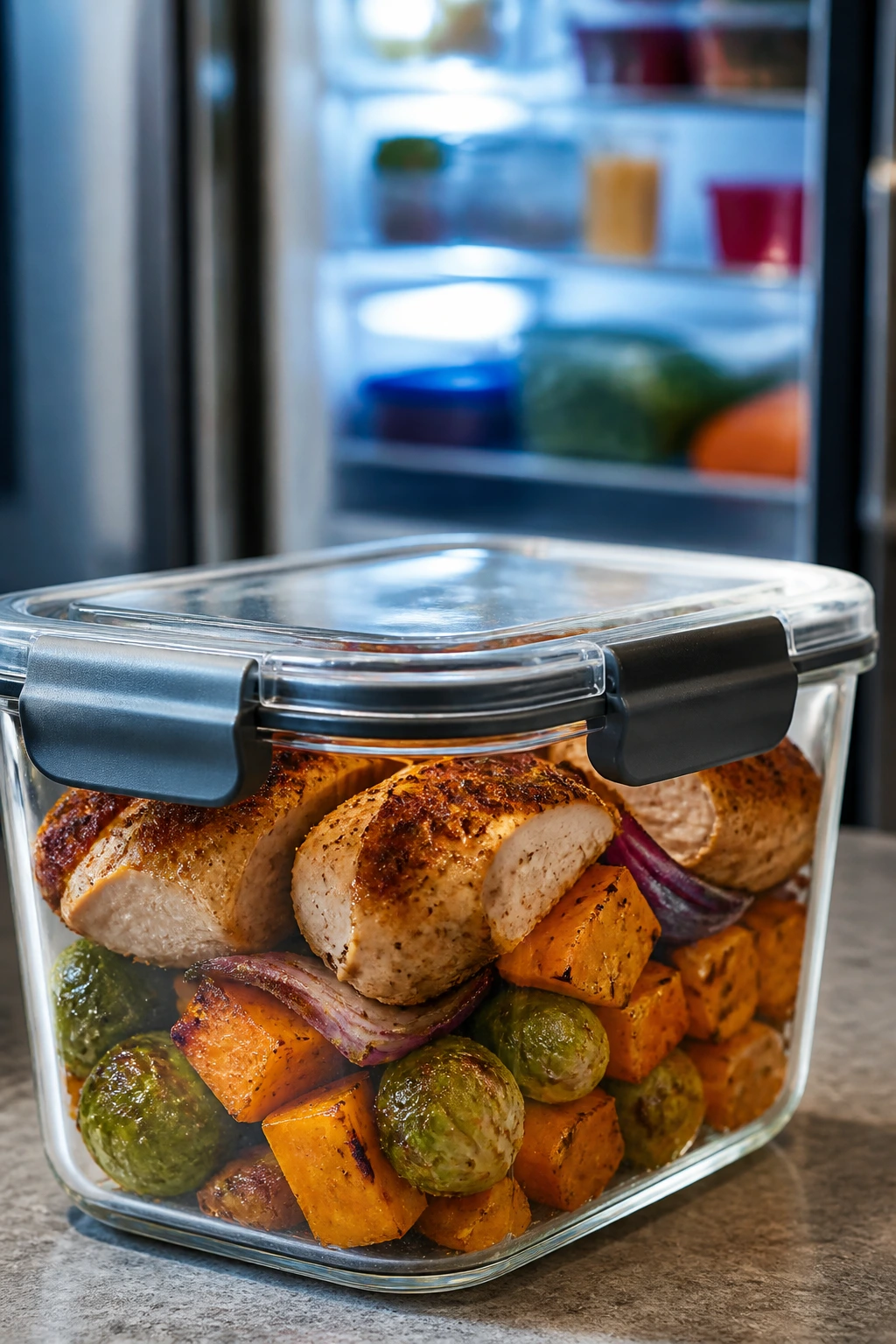
Roasted chicken and vegetables are fine at room temperature for about 2 hours, but after that they belong in the fridge. Pack them into airtight containers once they are no longer steaming, because trapped steam softens the vegetables faster than time does.
In the refrigerator, the leftovers keep well for 3 to 4 days. I like to store the lemon wedges separately so they do not make everything soggy, and if I have any yogurt sauce or tahini on the side, that goes into its own container too. The chicken reheats better when it is not buried under the vegetables, so I usually tuck those into separate compartments if the container allows it.
The freezer works, but with a warning. Chicken freezes well for up to 2 months, while roasted vegetables lose some of their edge and turn softer after thawing. If you know you want to freeze part of the batch, freeze the chicken and sweet potatoes together and accept that the texture will be more tender when reheated. Brussels sprouts are the most likely to soften.
For reheating, the oven is the best route. Spread the leftovers on a sheet pan and warm them at 375°F (190°C) for 10 to 12 minutes until hot, or use a skillet over medium heat with a teaspoon of oil if you want some of the browning back. The microwave works in a pinch, but use 70% power in short bursts so the chicken does not turn stringy before the vegetables are warm.
If you want to make part of this ahead, chop the vegetables a day in advance and keep them covered in the fridge with a paper towel in the container. Mix the dry spices and mince the garlic ahead too, but add the lemon to the chicken only right before roasting.
Questions About the Roast That Come Up a Lot
Can I use chicken breasts instead of thighs?
Yes, but keep an eye on them. Breasts dry out faster than thighs, so it helps to cut them into thick cutlets or large chunks and pull them as soon as they hit 160°F. The carryover heat during the rest will finish the job.
Do I have to marinate the chicken for a long time?
No. For this recipe, a short coating of Dijon, garlic, lemon, and spices is enough. Ten minutes while the vegetables get their head start is plenty; a long lemon soak is more likely to soften the surface than improve the flavor.
Can I use frozen vegetables?
You can, but they will not brown as well because they carry extra water. If frozen vegetables are the only option, thaw them first, pat them dry, and expect a softer finish. Fresh vegetables give you the better roast.
What if my pan is too crowded?
Split the vegetables across two pans and rotate them halfway through the cook. Crowding is the main reason a sheet-pan dinner turns limp, so using a second pan is not fussy—it is the fix.
How do I know the chicken is done without cutting it open?
Use an instant-read thermometer in the thickest part of the thigh. At 165°F, the chicken is safe; at 170°F, thighs usually taste a little softer. A thermometer saves you from the guesswork that ruins a lot of otherwise decent dinners.
Can I make this with bone-in chicken pieces?
Yes, but bone-in pieces need more time and the vegetables may need a longer head start. Start the vegetables as written, then add the chicken when the edges begin to color and roast until the thickest piece reaches 165°F at the bone.
What if the vegetables are still firm when the chicken is done?
Pull the chicken to a plate, cover it loosely, and let the vegetables keep roasting for another 5 to 8 minutes. That is one of the reasons thighs are useful here—they hold while the vegetables catch up.
Can I add another sauce?
You can, but I would keep it light. A spoonful of yogurt with garlic, a drizzle of tahini, or a little caper butter all work; a heavy cream sauce would drown the roast flavor that makes this dinner worth making.
A Roast Worth Keeping in Rotation
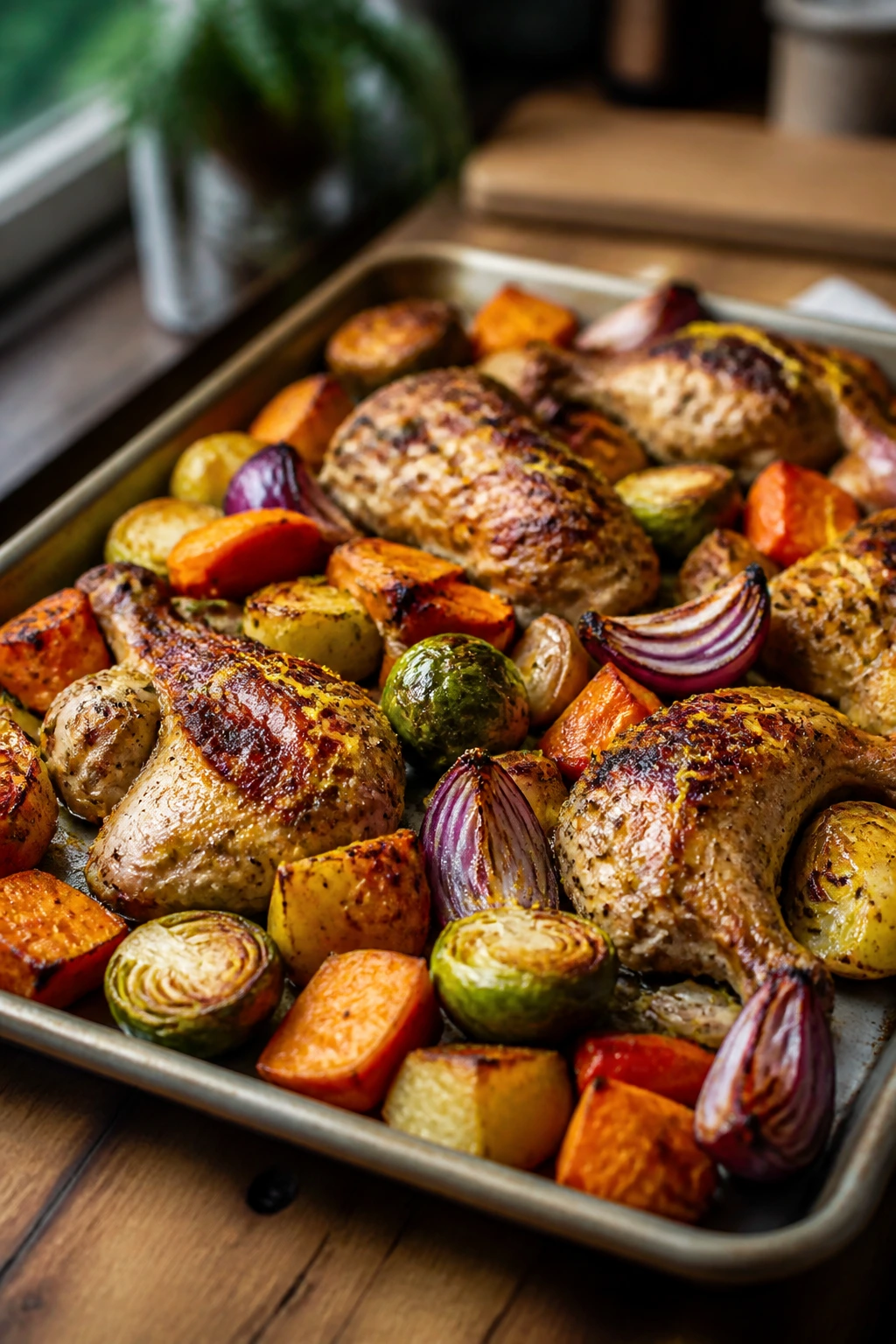
The nicest thing about a pan like this is that it does not ask for much. Cut the vegetables to size, keep the pan uncrowded, and pay attention to the thermometer. That is enough to turn a pile of ordinary ingredients into dinner with browned edges and a clean, lemony finish.
I also like that it leaves room for small judgments. Want more sharpness? Add extra lemon. Want a deeper herb note? Swap thyme for oregano. Want fewer dishes? Use a lined pan and skip the broil. The structure stays the same, and the meal still feels like yours.
Roasted Meat and Vegetables for a Healthy Dinner — Recipe Card
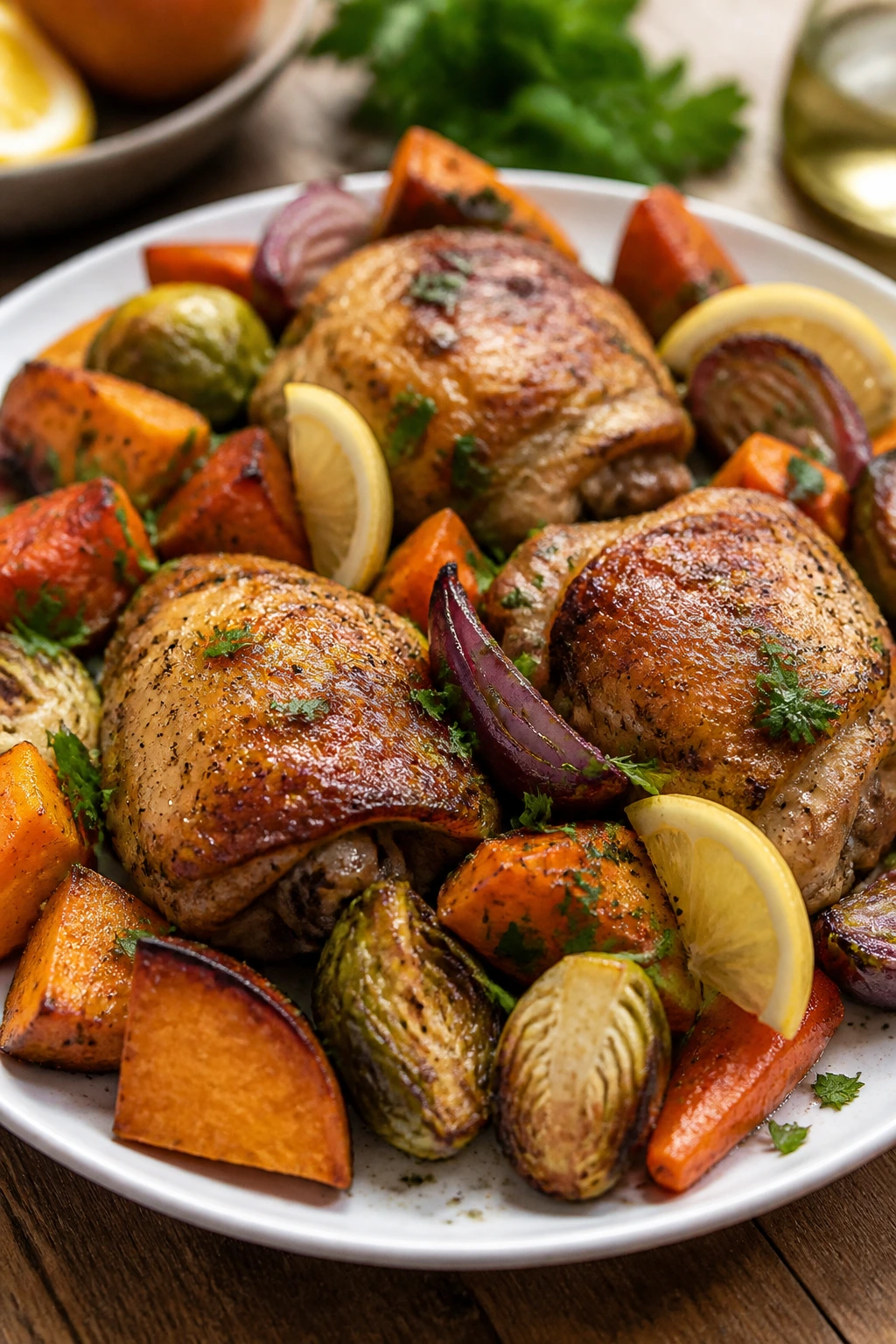
Recipe Name: Roasted Meat and Vegetables for a Healthy Dinner
Description: A sheet-pan dinner of lemon-Dijon chicken thighs with sweet potatoes, Brussels sprouts, carrots, and red onion. It roasts in one pan, finishes with parsley and lemon, and lands with browned edges instead of a heavy sauce.
Prep Time: 20 minutes
Cook Time: 28 to 32 minutes
Total Time: 48 to 52 minutes
Course: Dinner
Cuisine: American
Servings: 4 to 5 servings
Calories: About 530 kcal per serving
Ingredients
For the Chicken
- 1 3/4 lb boneless, skinless chicken thighs, trimmed of excess fat
- 1 tbsp olive oil
- 1 tbsp Dijon mustard
- 2 garlic cloves, minced
- 1 lemon, zested and juiced
- 1 tsp kosher salt, divided
- 1/2 tsp black pepper, divided
- 1 tsp smoked paprika, divided
- 1 tsp dried thyme, divided
- 1/4 tsp crushed red pepper flakes, optional
For the Vegetables
- 1 lb sweet potatoes, peeled if desired and cut into 1-inch cubes
- 12 oz Brussels sprouts, trimmed and halved
- 4 medium carrots, cut on a diagonal into 1-inch pieces
- 1 medium red onion, cut into 8 wedges
- 2 tbsp olive oil
- 1/2 tsp kosher salt
- 1/4 tsp black pepper
- 1/2 tsp smoked paprika
- 1/2 tsp dried thyme
For Finishing
- 2 tbsp chopped parsley
- 1 lemon, cut into wedges
Instructions
-
Preheat the oven to 425°F (220°C) and line a large rimmed sheet pan with foil if you want easy cleanup, or leave it bare for deeper browning.
-
Toss the sweet potatoes, Brussels sprouts, carrots, and red onion with 2 tbsp olive oil, 1/2 tsp kosher salt, 1/4 tsp black pepper, 1/2 tsp smoked paprika, and 1/2 tsp dried thyme. Spread in a single layer on the pan and roast for 12 minutes.
-
Mix the chicken thighs, 1 tbsp olive oil, Dijon mustard, garlic, lemon zest and juice, 1 tsp kosher salt, 1/2 tsp black pepper, 1/2 tsp smoked paprika, 1/2 tsp dried thyme, and red pepper flakes until the chicken is evenly coated.
-
Remove the pan, make space in the vegetables, and nestle the chicken in a single layer. Roast for 16 to 20 minutes, until the chicken reaches 165°F in the thickest part and the vegetables are browned and tender.
-
Broil for 1 to 2 minutes if you want more color, watching closely so the garlic does not burn.
-
Rest for 5 minutes, then finish with parsley and serve with lemon wedges.
Notes: If your pan is small, use two sheets instead of crowding one. The vegetables brown better with space, and the chicken stays juicier when it is not squeezed into the middle of the tray.